
Stream Real Life Network Now

WATCH NOW
Biblical Worldview

Faith & Culture
25 min
The Wisdom of Ecclesiastes for the Age of Superintelligence
As AI safety researchers warn about the risks of superintelligence, questions about the industry's priorities are growing. Discover why technological advancement must be guided by wisdom, and how Scripture calls Christians to trust God rather than fear the future.
The artificial intelligence community just waved goodbye to yet another top safety and regulation official — and he offers a unique angle in his warning to the world.
David Robinson had been leading safety reports for OpenAI, the maker of ChatGPT. Robinson resigned in the first week of October, stating that the industry’s approach to safety has been stemming from a broken culture. He penned the following words in a piece for The Atlantic, which contain more truth than perhaps he even knows: “The future depends on wisdom that Silicon Valley lacks.”
We’ll come back to that.
His departure comes on the heels of several other prominent AI safety researchers abandoning the industry. Their exits have paired with dreadful public warnings about the future of this technology, leaving the American people to grapple with the headlines and the unknown.
Take Jacob Coxon, for example. After leaving Claude developer Anthropic in September, he wrote on X that top tech labs are “gambling with our lives” by racing toward self-improving superintelligence. He went on to reveal that the people building AI “earnestly believe that it could kill us all by the end of the decade.”
Comforting.
For clarity, the industry term “superintelligence” refers to a hypothetical AI system that developers believe could surpass humans in overall knowledge and capability. This could happen through recursive self-improvement (RSI) in which AI models design and continually improve their own successors.
While the Trump administration has taken to using the term as a reference to AI more broadly, Coxon used it as the industry intends: the potential nightmare of AI evolving beyond our ability to contain.
Let’s go back to David Robinson for a second. Beyond diagnosing the issue of a “lack of wisdom,” he went on in his article to describe the kind of wisdom that is desperately needed — the kind that shows us “how to handle dangerous technology and, more fundamentally … what it means to care for people.”
This kind of wisdom has only one source.
Proverbs 4:7 states, “The beginning of wisdom is: Acquire wisdom; And with all your acquiring, acquire understanding.” The natural question is, how can true wisdom be acquired? Well, it is not gained by happenstance or by any means of passivity.
The word of God teaches that wisdom is found only, “if you look for it as for silver and search for it as for hidden treasure” (Proverbs 2:4).
That same proverb states that when wisdom enters the human heart, it bears fruits of knowledge, discretion, and understanding. Knowledge is pleasant, discretion brings protection, and understanding guards the one who finds it.
If those spearheading AI labs begin searching for wisdom with the same fervency as they do innovation, capital gain, and victory in the arms race, perhaps we might reap the benefits of honing a brilliant technology for human flourishing, rather than threatening it entirely.
In the absence of wisdom, we ought not to expect flourishing. Thus, the need for appropriate guardrails toward that end is becoming increasingly dire.
Whistleblowers coming forward to expose carelessness in the industry is a good thing. Speaking up when danger is on the horizon is profitable. What is not profitable, however, is responding in fear.
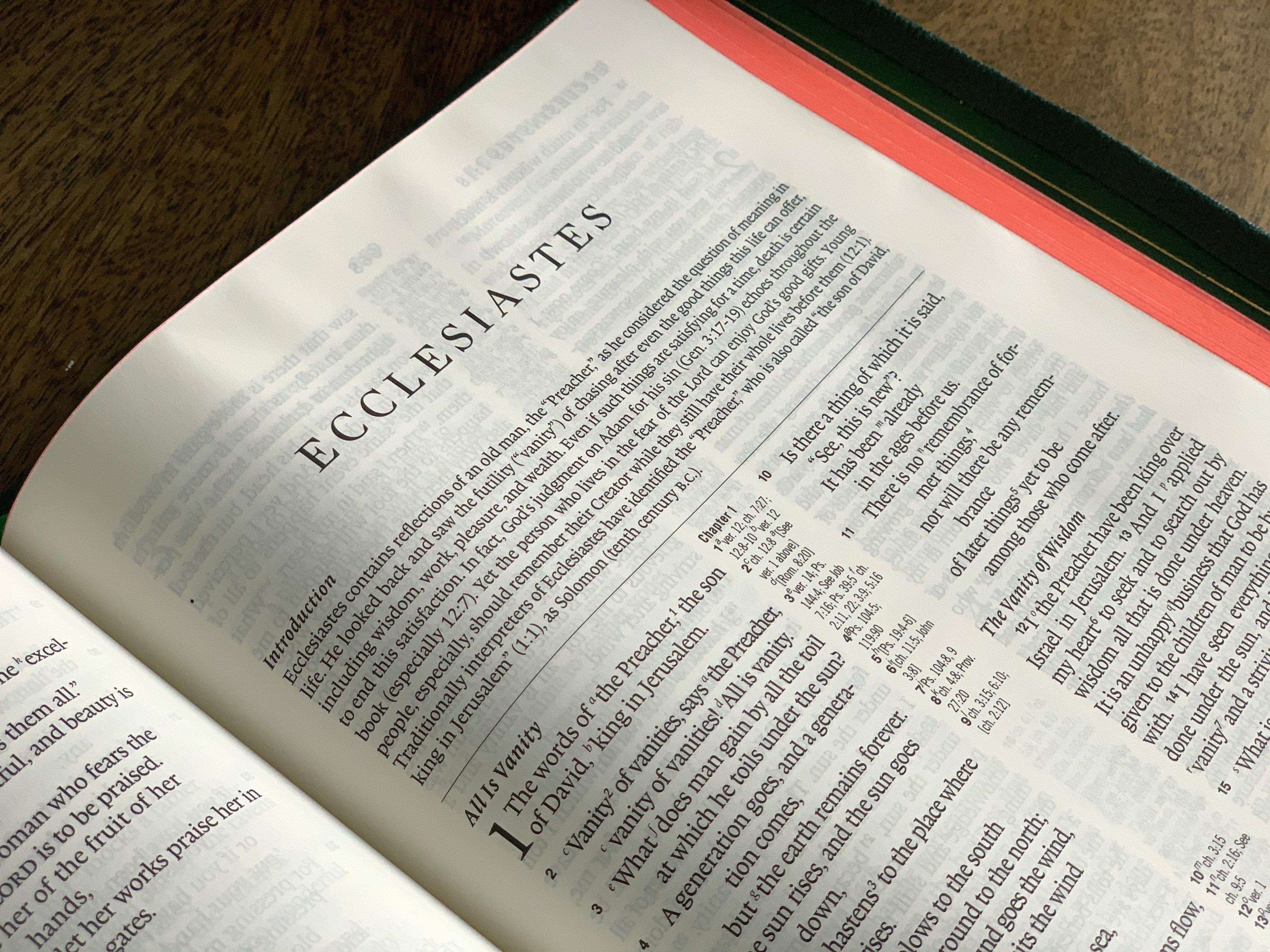
The wisest man in history, King Solomon, tells us, “There is nothing new under the sun” (Ecclesiastes 1:9).
The pride of man has reared its head through the latest technology and means of production before. As soon as human beings had the chance, they took brick and mortar and built the tower of Babel, aiming to reach as high as heaven to make a name for themselves — not for the God who gave them clay, water, and sun in the first place.
Today, we are seeing the latest expression of that sinful pride: men thinking they can hold infinite knowledge without it destroying them. Casting wisdom aside, they trust in their own minds and technical ability rather than in God.
In the Garden of Eden, Adam and Eve fell to the temptation of wanting to be all-knowing, like God. He judged that decision then, and He will not be mocked now (Galatians 6:7).
There is nothing more urgent for the unbeliever than to humble themselves, fall on their knees, and cry out to the Creator for salvation. There is, likewise, nothing more urgent for the believer than to refuse every temptation to fear in these times — to live the joyful, abundant life offered to them in Christ.
It is not a suggestion to be unafraid. It is a commandment given us by God, time and time again throughout the Scriptures.
Do not stifle your witness to the watching world.
The book of Ecclesiastes warns us that there are many dark days in this life under the sun, and that we will encounter circumstances which are difficult, perplexing, and often don’t make sense. Yet, there are a few things that author King Solomon found to be good: “Behold, what I have seen to be good and fitting is to eat and drink and find enjoyment in all the toil with which one toils under the sun the few days of his life that God has given him, for this is his lot” (Ecclesiastes 5:18).
New threats to our livelihood may come at alarming rates, but our responsibility as Christians remains the same: Do not dread the future or fear the potential of “superintelligence.” Rather, “fear God and keep his commandments, for this is the whole duty of man” (Ecclesiastes 12:13).
So, keep breaking bread with those you love. Keep enjoying the toil and the lot that God has given you with a grateful heart. Regardless of the news cycle, and whatever may come out of Washington and Silicon Valley — rejoice in what you have been given.
Our lives are but a vapor, a mist, Solomon says. The years go by quickly, and soon, we will return to dust.
That need not be depressing — in fact, let it be motivating as you live the most upright, joyous, and noble life possible along the way. Be encouraged, for we have all the instruction we need to please God in every circumstance, including the ones out of our control.
God says, “I am the Alpha and the Omega, the first and the last, the beginning and the end” in Revelation 22:13. If God is the Omega just as much as He is the Alpha, what is there to fear?
At the end of all things, just as much as at the beginning — He is there. And He rules and reigns at every point in between.
Human history was born from and ends in perfect wisdom, and God will tie the final bow on our story.
Not Sam Altman, or Dario and Daniela Amodei, or Donald Trump, or Xi Jinping — but Jesus Christ will do it, who is the same “yesterday, today, and forever” (Hebrews 13:8).
This article was written by Erica Mendel and originally published on The Washington Stand. For more content like this, visit Real Life Network.
.jpg)
Is It Time to Replace Noisy Entertainment with Faith-Based Family Media?
Is your family’s entertainment adding value or just noise? Discover how faith-based movies, documentaries, and programs can help Christian families make intentional media choices, encourage meaningful conversations, and create a more Christ-centered home.
Entertainment has never been more accessible. A television, phone, or tablet can provide an endless stream of movies, shows, short videos, news, games, and social media without ever reaching the bottom of the screen.
But having more to watch doesn’t necessarily mean families are better served by what they’re watching.
For many households, entertainment has become noisy in more ways than one. Programs compete for attention with faster pacing, stronger language, darker storylines, sexualized content, graphic imagery, and increasingly provocative themes. Algorithms encourage one more episode or video, while families can end an evening having consumed hours of media without feeling particularly rested, encouraged, or connected.
That raises a worthwhile question: Is it time to replace some of that noise with faith-based family media?
For Christian families, the answer may have less to do with watching less and more to do with choosing better.
What Does “Noisy Entertainment” Really Mean?
Noise isn’t necessarily about volume.
Media can be noisy when it constantly demands attention without giving anything meaningful in return. It can be entertainment built around shock, conflict, outrage, anxiety, or relentless stimulation. It can also be content filled with ideas and assumptions that compete with what parents are trying to teach their children.
Even material that isn’t overtly inappropriate can leave viewers feeling distracted or spiritually empty.
Philippians 4:8 gives Christians a useful standard for what deserves sustained attention, directing believers toward things that are true, noble, just, pure, lovely, and praiseworthy. That doesn’t mean every program needs to quote Scripture. But it does challenge families to think about what repeatedly occupies their minds.
Your Family’s Media Diet Matters
The phrase “media diet” is useful because entertainment has something in common with food: what is consumed occasionally matters less than what becomes normal.
One movie is unlikely to define a child’s worldview. Hundreds of hours of stories, characters, values, jokes, and messages over many years can have a much greater influence.
Children learn from stories. They notice which behaviors are rewarded, which relationships are celebrated, which beliefs are mocked, and what characters consider normal.
Adults aren’t immune either. Constant exposure to cynicism, fear, anger, or sexualized entertainment can gradually make those things feel ordinary.
Choosing faith-based media gives families an opportunity to put more spiritually nourishing material into that mix.
Replacing Is Often Easier Than Restricting
Parents can spend enormous energy saying no.
No, you can’t watch that show. No, that movie isn’t appropriate. No, we’re skipping this episode.
Boundaries are sometimes necessary, but they become much easier when there is also a good answer to, “What can we watch instead?” Faith-based streaming provides that replacement.
A family movie night could feature C.S. Lewis: The Most Reluctant Convert, opening conversations about doubt, reason, and conversion. A documentary such as The Listening Road can introduce thoughtful conversations about how people from different backgrounds think about faith. 7 Days in the Holy Land can help families visually connect places in Israel with biblical events.
The goal isn’t simply to remove entertainment. It is to replace some of it with stories and ideas worth carrying into the next day.
Faith-Based Media Can Start Conversations
One of the greatest advantages of watching Christian content together is what happens afterward. A program can naturally lead to questions that might otherwise feel forced:
- What would you have done?
- Why do you think that person responded that way?
- What does Scripture say about this?
- Do you agree with what was said?
Those conversations help turn viewing into family discipleship.
A documentary such as The Call, for example, can lead to discussion about the Great Commission and what evangelism looks like in ordinary Christian life. Way of the Master can prompt older children and adults to think about how they would talk about Jesus with someone who doesn’t share their beliefs.
The screen becomes the beginning of the conversation rather than the end of it.
Not Everything Has to Feel Like Bible Study
Replacing noisy entertainment with Christian media doesn’t mean turning every evening into a classroom. Families still need stories, laughter, discovery, music, and relaxation.
Faith-based media can include movies, animation, travel programs, interviews, biographies, documentaries, podcasts, and conversations. Some content teaches Scripture directly. Other programs simply tell compelling stories shaped by faith, courage, forgiveness, or hope.
That variety matters because healthy family media should still be enjoyable.
The distinction is that entertainment doesn’t need to undermine a family’s beliefs in order to hold its attention.
A Quieter Media Environment Can Help Families Slow Down
Another benefit of intentional viewing is simply reducing the constant demand for stimulation. Mainstream digital media often encourages viewers to keep going. Finish one episode and another begins automatically. Watch one short video and dozens more appear. Attention itself has become valuable currency.
Faith-based streaming can help families establish a different rhythm.
Choose one documentary. Watch a devotional together. Listen to a meaningful conversation. Then turn the television off and talk.
Programs such as Groundworks with Steve Wiggins are particularly suited to this approach because brief, Scripture-centered episodes can provide meaningful input without consuming an entire evening. Living Fearless with Andy and Hedieh can similarly encourage thoughtful conversation about faith and everyday challenges.
The objective isn’t to fill every available minute with Christian programming. It’s to make more intentional choices about which voices receive the family’s attention.
Parents Set the Tone
Children eventually make their own media choices. Before that happens, parents have an opportunity to model discernment. That includes more than policing what children watch. Kids also notice what their parents consume.
If adults spend hours immersed in angry commentary, dark entertainment, or endless scrolling while telling children to make healthier choices, the message can become confusing.
Christ-centered leadership in the home means asking the same questions of adult entertainment that parents ask about children’s programming.
- Is this helping or hurting?
- What is this normalizing?
- Is it worth the time being given to it?
- What could take its place?
Those questions can gradually reshape a family’s media habits without requiring an overnight purge of every mainstream platform.
Real Life Network Offers an Alternative
Real Life Network was created to provide a different kind of streaming environment.
Rather than placing biblical programming beside an enormous catalog of conflicting content, RLN carefully curates its library around Christian faith and biblical truth. Viewers can move between films, documentaries, podcasts, Bible teaching, cultural discussions, devotional programs, kids’ content, and live events without leaving that foundation.
That gives families something increasingly difficult to find in modern entertainment: a place where they can discover rather than constantly defend.
Parents still decide what fits the age and needs of their particular family. But the starting point is very different.
Replacing noisy entertainment doesn’t require rejecting technology, storytelling, or even every mainstream show. It means becoming more intentional about what receives a family’s limited time and attention.
Some entertainment merely fills a room. Better media can fill conversations, reinforce truth, encourage faith, and give families something meaningful to carry with them after the screen goes dark.
For Christian households, that makes faith-based family media more than an alternative. It can become one practical way to cultivate a home in which entertainment supports, rather than competes with, what matters most.
Explore biblically curated movies, documentaries, family programs, devotionals, and more anytime on Real Life Network.

World News
25 min
National Security, Israel, and the Questions Behind the 2026 Midterms
As the 2026 midterms approach, national security deserves attention alongside the economy. From Iran and Israel to domestic terrorism and rising antisemitism, congressional decisions carry consequences for American families, religious freedom, and public safety.
The economy matters. Groceries, gas prices, housing costs, and the pressure on American families deserve serious attention. But national security belongs in that conversation, too. The decisions made in Washington affect more than household budgets. They shape the country's ability to confront terrorism, protect religious communities, secure its borders, and respond to threats abroad.
Those connections deserve closer examination. Through The Daniel Cohen Show on Real Life Network, the intersection of faith, national security, Israel, and American politics remains central to understanding the headlines.
The approaching November 3 midterms raise questions that go well beyond which party controls Congress. Who sets national security priorities? How should America respond to Iran and its terrorist proxies? What responsibilities do elected officials have when antisemitism and political violence reach American communities?
National security is not an abstract debate reserved for Washington. Its consequences can reach neighborhoods, schools, houses of worship, and ordinary families.
Iran, Israel, and the Responsibility to Confront Terrorism
Iran remains central to the discussion about American national security and the Middle East. Its support for armed groups, including Hezbollah and Hamas, has made its regional influence a continuing concern for the United States and Israel.
Yet political disagreements over Iran and Israel often become tangled in arguments about military assistance, international law, and America's responsibilities overseas.
Michigan's Senate contest illustrates those competing priorities.
Abdul El-Sayed has argued against unconditional American military assistance to foreign governments, including Israel. In interviews, his position has emphasized applying international law consistently and restricting weapons transfers to governments accused of violating it.
That approach raises legitimate questions about American foreign policy. Military assistance is not an unlimited obligation, and elected officials have a responsibility to scrutinize how taxpayer money is spent.
But the discussion cannot stop there.
Israel faces rocket and missile threats from hostile armed groups and regional adversaries. Defensive systems such as Iron Dome exist to intercept incoming projectiles and protect civilian populations. Any proposal to restrict military assistance therefore deserves careful examination of its potential consequences for defensive capabilities as well as offensive operations.
There is also an important distinction between criticizing a government's military decisions and excusing terrorism directed against its citizens.
The March attack against Temple Israel in West Bloomfield, Michigan, brought that distinction much closer to home. A vehicle carrying incendiary materials was driven into a synagogue complex that also serves children and families. The incident prompted renewed concerns about antisemitic violence and the reach of conflicts originating thousands of miles away.
Political leaders can disagree about Israel's government, military operations, and American foreign assistance. Those disagreements do not diminish the obligation to condemn attacks against Jewish civilians and religious institutions.
No disagreement over foreign policy can justify threatening Jewish families or treating American religious communities as extensions of a foreign government.
The same principle must apply to every community. A synagogue, church, mosque, or school should never become a target because of anger over events elsewhere.
Why National Security Belongs in Congressional Debates
The connection between national security and congressional elections is more substantial than campaign rhetoric might suggest.
Congress controls federal appropriations, establishes statutory authorities, conducts oversight, and plays a central role in shaping the agencies responsible for national defense and domestic security. The Senate also exercises its constitutional responsibility to provide advice and consent on presidential nominations requiring confirmation.
Those responsibilities make congressional debates over homeland security, intelligence gathering, immigration enforcement, and counterterrorism consequential.
An alleged ISIS-inspired plot involving the Mall of America in Minnesota offers an example of the threats federal investigators seek to identify before violence occurs.
According to the account presented by federal authorities, an 18-year-old suspect had communicated about supporting ISIS and allegedly considered carrying out an attack in the United States after plans to travel overseas did not materialize. The allegations require the usual distinction between prosecutors' claims and facts established in court.
But the broader issue remains significant: preventing terrorism requires investigative resources, intelligence cooperation, appropriate legal authorities, and effective oversight.
Protecting the public also requires precision.
Terrorist organizations are responsible for their own violence. Their actions must not become an excuse to assign collective guilt to immigrants, Muslims, or particular ethnic communities. Effective counterterrorism depends upon identifying actual threats rather than confusing religious identity or national origin with criminal conduct.
That is why national security policy requires more than slogans about being tough or compassionate.
The public deserves to understand how candidates would approach terrorism investigations, border security, intelligence oversight, civil liberties, and the constitutional limits of government authority.
Those questions belong alongside debates about inflation, healthcare, education, and taxation.
Antisemitism, Political Rhetoric, and the Limits of Party Loyalty
Three years after the Hamas-led October 7 attack, the anniversary remains a painful occasion for Jewish communities around the world.
Approximately 1,200 people were killed in the attack, and 251 were taken hostage. The consequences have extended far beyond Israel, including heightened security concerns and incidents of antisemitism in the United States.
New York City's response to the anniversary illustrates how difficult the public conversation has become.
Mayor Zohran Mamdani's remarks acknowledging the suffering caused by October 7 while criticizing Israel's subsequent military actions became a point of contention among activists with sharply different expectations.
The controversy reflects a larger problem in contemporary politics: expressions of sympathy, criticism, and disagreement are increasingly measured against demands for complete ideological agreement.
Recognizing the suffering of Israeli victims does not require ignoring Palestinian civilian suffering. Likewise, expressing concern for Palestinians does not require minimizing the October 7 atrocities or excusing antisemitism.
Both truths can be maintained without contradiction.
Political movements become less capable of honest debate when every disagreement is treated as betrayal. Acknowledging suffering should not depend upon whether the victims belong to a preferred political or religious community.
For Christians, Scripture establishes a higher standard than political loyalty. Human beings bear God's image, and the obligation to speak truthfully does not disappear when truth becomes inconvenient to a favored party or cause.
Proverbs 18:17 reminds readers that the first account of a dispute may sound persuasive until it is examined. That principle applies to viral videos, campaign statements, accusations of extremism, and claims about political opponents.
Christian discernment requires consistency: condemn terrorism without qualification, reject antisemitism without hesitation, and examine political claims without surrendering judgment to party loyalty.
The approaching midterms will generate enormous attention around polling, turnout, and campaign strategies. Those subjects are part of the political process, but they should not obscure the governing responsibilities attached to the offices being contested.
A Senate vote can affect national security appointments. A congressional appropriation can determine resources available to federal agencies. Legislative oversight can expose failures or strengthen accountability.
Understanding those responsibilities provides a more useful framework than treating every political development as a contest between personalities.
The same seriousness belongs in discussions about Israel, Iran, and religious freedom. American foreign policy involves real tradeoffs, and domestic security decisions can affect both public safety and constitutional liberties.
No political party possesses a monopoly on wisdom, and no candidate should be exempt from difficult questions.
The standard should remain consistent: evidence before accusations, clarity before slogans, and responsibility before political convenience.
Follow the intersection of biblical truth, Israel, national security, and American current events through The Daniel Cohen Show, streaming free on Real Life Network
World News
25 min
New California Law Requires Churches to Implement Pro-LGBT ‘Anti-Hate Speech’ Training
California’s new workplace anti-hate speech training law is raising religious liberty concerns. Christian advocates warn that vague language could pressure churches and religious employers to provide training that conflicts with their biblical beliefs.
A newly enacted law in California that requires virtually all employers to give employees “anti-hate speech” training is raising red flags, as experts say that the mandate could force churches to provide training that conflicts with sincerely held biblical beliefs regarding sexuality, gender, and marriage.
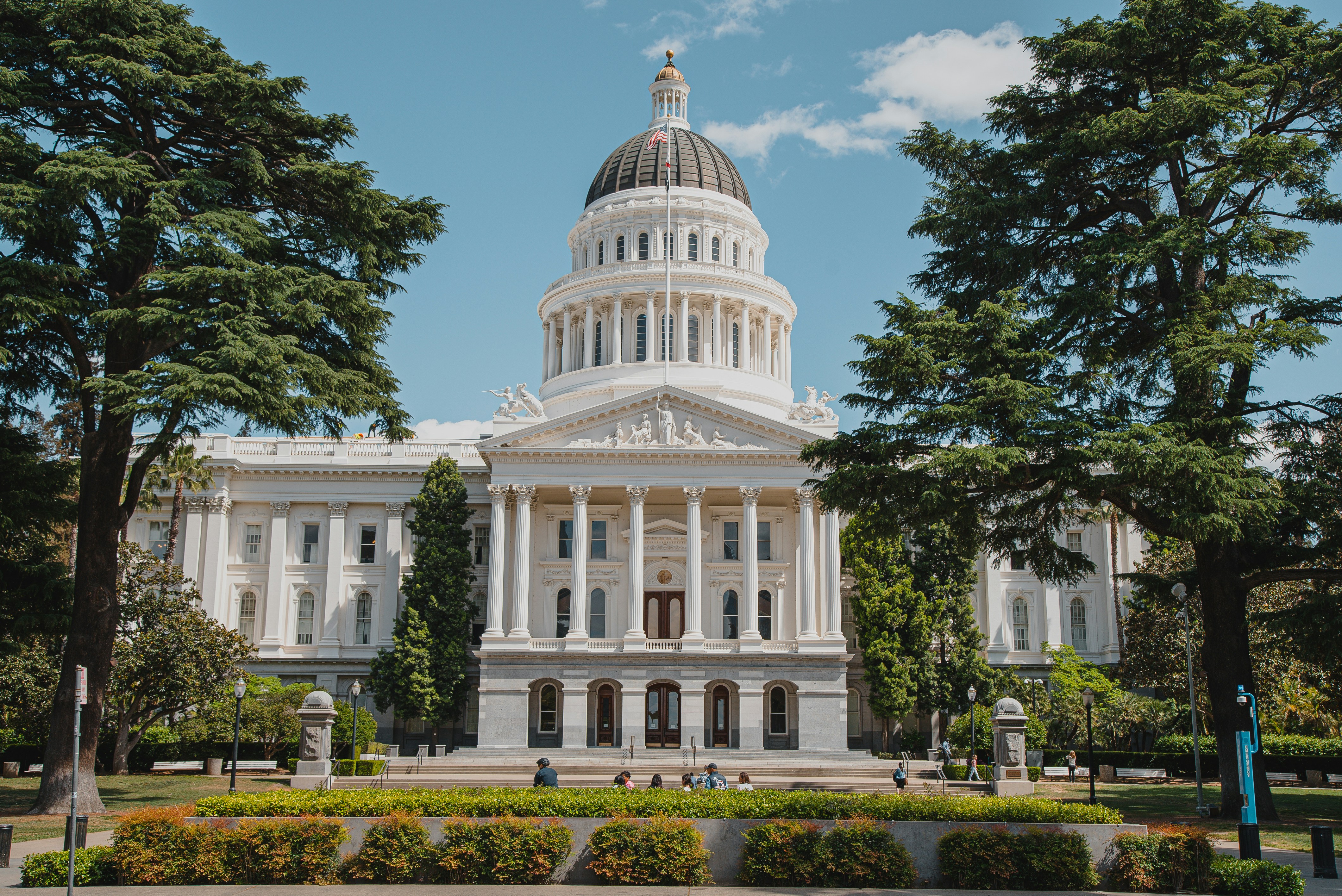
Late last month, California Governor Gavin Newsom (D) signed into law AB 1803, a measure that requires all employers with five or more workers, including all churches and other nonprofit religious organizations, to provide employees with “anti-hate speech” instruction. But as observers like the California Family Council (CFC) are pointing out, the legislation does not define “hate speech,” instead handing the job to the state’s Civil Rights Department. The bill mandates that the training must confront workplace speech that “vilifies, humiliates, or incites hatred” against individuals based on what the state has already deemed a protected characteristic, which includes sex, gender identity, gender expression, and sexual orientation.
The CFC goes on to observe that the statute, which will go into effect on January 1, 2028, never mentions churches or religious nonprofits and their First Amendment rights to hold sincerely held religious beliefs about sexuality and gender. It also “fails to separate protected expression from unlawful conduct,” noting that the Supreme Court held in 2017 that “the First Amendment has no hate speech exception.”
Greg Burt, who serves as vice president of CFC, further pointed out the problems with AB 1803’s vague language regarding key terms that it says constitute “hate.”
“What does it mean to vilify? What speech actually humiliates?” he wondered during “Washington Watch with Tony Perkins” Tuesday. “[M]any times legislators consider many Christian beliefs when they’re expressed — especially regarding sexuality or gender — they accuse us of hating people. That’s [the] farthest thing from my mind. But we are simply advocating for our view that sex is determined by biology, and God created us both male and female. Well, to many people that is humiliating and that incites hatred. And so that’s the problem with this legislation.”
Burt went on to clarify that AB 1803 is being folded into a previously enacted statute that mandates sexual harassment training, which already specifies that using accurate biological pronouns constitutes “harassment.” “[Businesses are] already required to go through sexual harassment training, and we found out several years ago they redefined what sexual harassment means to include gender identity,” he explained. “… [The] California Civil Rights Department says misgendering is harassment, and so this training is on top of that already egregious training.”
As for how employers can fulfill the required training, Burt noted that hiring outside trainers is allowed, but the state-provided training that includes pro-LGBT messaging is free. “Right now, the state puts together a free curriculum — that’s how they do it with sexual harassment training, but you’re not required to use that training. You can come up with your own. But we don’t know exactly what ‘anti-hate’ is going to include, right? [Their] definition of speech that ‘humiliates’ — what does that mean? It really depends on the person who’s receiving the language.”
Burt further urged churches and other religious organizations in the Golden State to push back vigorously against the mandate. “What I think the state is doing is it’s trying to intimidate churches into following through with this,” he lamented. “They should not be receiving any kind of ideological training from the state on any moral issue. That’s why what churches need to be doing is asking for religious accommodations. The federal law and the state law already require businesses to accommodate people’s faith if they’re being required to do something that violates their faith. … [T]his is one of those points in history here in California where civil disobedience is going to be necessary.”
Burt concluded by emphasizing that state officials in California are counting on churches to kowtow to their demands instead of standing up for the constitutional freedoms, which has already proven to be a winning strategy.
“I’m sure they’re already thrilled that they get to retrain the entire population to believe what they believe regarding gender identity,” he reflected. “And so once we get accustomed to this and say, ‘Well, this is just what California requires, I guess we have to do it.’ No, you don’t. Folks, you’ve got to resist, and that includes individual employees. That’s what we are encouraging people to do. And we are having success. We have some attorneys we’re working with, and when people have been asking for religious accommodations, they have been accommodated.”
This article was written by Dan Hart and originally published on The Washington Stand. For more content like this, visit Real Life Network.

World News
25 min
Unhappiness and Isolation Are Rising among Young People, but Those Who Are Religious Are Thriving
As loneliness and unhappiness rise among young Americans, research links religious faith and marriage with greater happiness, stronger relationships, and better educational outcomes, while Christian leaders urge Gen Z to put biblical truth into practice.
Social science data continues to emerge showing that America’s young people are increasingly non-religious, isolated, and unhappy. But the data also shows that young people who are religious are thriving, with higher levels of happiness, more friends, are more likely to be married, and better educational outcomes than their non-religious peers.
Research released by the Institute for Family Studies (IFS) notes that since 2000, reports of unhappiness among young people aged 20 to 35 has more than doubled, surging from 11% to 23%. This has coincided with an era where young people are isolating at unprecedented levels as they immerse themselves in screens, pornography, social media, video games, and AI chatbots. “Socializing among young men and women is down more than 50%, from 12 hours to 5 hours per week,” IFS observes. Unsurprisingly, this has led to a precipitous decline in relationships and dating, with two thirds of young people not in serious relationships and teen dating down 50%.
As unhappiness and loneliness has risen among young people, so too has secularism. In March, Arizona Christian University’s Cultural Research Center reported that only 1% of Gen Z (ages 18 to 22) and 4% of adults in general has a biblical worldview (defined as “individuals whose beliefs and behaviors are consistently aligned with biblical principles”). The figure is down significantly since 1994, when 12% of adults reported a biblical worldview.
But married and religious young people seem to be largely escaping the unhappiness trap, with 50% saying they are “very happy” compared to just 16% of their secular, unmarried peers. As IFS points out, “faith and family remain two of the strongest bulwarks against loneliness and despair.”
For young men in particular, religion appears to be the hinge that catapults them into a future of contentment and success. Data shows that religious men are more likely to desire and attain marriage than those who are non-religious. They are also almost twice as likely to report feeling “very happy” and to say that life feels “purposeful/meaningful” than secular men. Religious men also report less mental health issues, anxiety, and depression. They also have bachelor’s degrees at far higher rates than non-religious men (46% vs. 16%) and report finishing trade school/apprenticeships at 29% (vs. 14% of secular men).
Where a happier minority of young people find meaning and purpose in religion, a far larger percentage appear to hold politics and government as their primary focal point, especially with the rising popularity of socialism.
“[M]y generation has grown up in a very hyper political age,” Counteract USA Founder and CEO Abigail DeJarnatt contended during “Washington Watch” Friday. “… [Many believe that] government can be the arbiter of morality. That’s what happens when Marxism infuses into our society. And that’s just what we’ve grown up with. So when you’re online and you’re on TikTok [watching] recipe videos, there’s also political ideologies that are being pushed on and talked about amongst Gen Z. So it’s not surprising at all that this is where we’re at, and I think we’ll just continue to see a lot more of it among young people.”
DeJarnatt further explained how her ministry is attempting to engage Gen Z with truth. “The primary thing that we’re focusing on with Gen Z Christians is teaching them a framework of biblical critical thinking,” she explained. “Because the reality is, a lot of Gen Z’s world is unfolding online. A lot of the conversations, online friendships, relationships. … What we’re trying to teach Gen Z to do is look at what they’re seeing online and ask, ‘Is it true? Is it not?’ … We’re trying to tell Gen Z [to] ask questions as fast as we’re scrolling online. Slow down. … And as Christians, we have to weigh that against the Bible itself.”
DeJarnatt went on to argue that a sense of self entitlement undergirded by Marxism has heavily influenced young people to abandon a solid biblical ethic. “[T]his Marxism that’s invaded our culture, just the hyper individualism in Gen Z,” she emphasized. “[Much of] Gen Z is [saying], ‘We aren’t happy with either political party.’ I think we have this idea that we can have it all. [It’s the] same framework of pick and choose our own ideology to the Bible. … [W]e think, ‘I like this, I don’t like this. I’m going to choose this. I’m not going to choose this.’”
DeJarnatt concluded by urging young believers to move beyond their comfort zones in order to spread the gospel to an isolated and unhappy wider culture.
“We see so many young Christians who are taught all these amazing things and their amazing churches that are Bible-based,” she noted. “They’re in Bible-based families that are going back to Scripture, but we need to teach Gen Z to take all the things that they know and actually apply them to the key conversations happening around us, having the conversations, just getting Gen Z to talk to each other … articulating those beliefs so that they actually become effective in wielding the sword of the spirit in the spiritual battle that’s raging all around us. They have the tools. They just need to know how to use them well.”
This article was written by Dan Hart and originally published on The Washington Stand. For more content like this, visit Real Life Network.

World News
25 min
Red States Combine Forces to Choke Off Abortion Pill Pipeline
A woman’s account of being forced to take abortion pills is fueling renewed scrutiny of mifepristone, mail-order prescribing, state abortion laws, and shield laws protecting providers who send the drug across state lines.
Like a lot of girls her age, Rosalie Markezich knew the standard talking point about mifepristone. Don’t worry, the online sites say. It’s just like taking a Tylenol. “Well, I’ve taken a lot of Tylenol in my lifetime,” she tells people now, and “it has never killed my child. It has never ruined my life, and it has never made me bleed for over a week.”
Unlike most moms, Rosalie never got the chance to hear that lie from her doctor, because she didn’t ask for a prescription in the first place. Her boyfriend ordered the pills in her name, and without any sort of ID or verification, the drugs magically showed up at her house. “I told him, ‘No thank you. I do not want you to do that, and I do not want them.’ Well, [he] found the website. He filled it out all with my personal information that I did not give him to use … [and] $150 later, he successfully ordered abortion pills through the mail from a [California] doctor named Remy Coeytaux, shipped directly to my doorstep.”
When he forced her to swallow them, her plan was to go inside and throw them up. But it was too late. “That night, I laid on a blood-soaked towel by myself, choking on my own breath. I remember my body rejecting it, rejecting its own breath — the one thing that it needs. I was praying to God, ‘Please take me too.’” Now, filled with grief and anger at how the government has robbed her of everything the Left insists this debate is about — choice, privacy, and safety — she’s fighting back.
“The FDA was wrong,” Rosalie said emotionally at the Pray Vote Stand Summit. “They allowed these drugs. They allowed them to go through the mail. They knew the warnings. They knew what could happen. And yet they are still sending them through the mail after seeing firsthand what it has done to women and children.”
We’re talking about a drug, Alabama Attorney General Steve Marshall (R) reiterated, “that is facilitating domestic abuse and even murder.” And yet, four years ago, he shook his head, pro-lifers were at this same event celebrating the overwhelming victory of Dobbs, a success story a half-century of prayers and activism in the making. “But I don’t think any of us that were on that stage left the stage believing that we would have more abortions today than we had at that time.” All because of mifepristone — and the presidents since 2022 who have turned a blind eye to the violent consequences.
“It’s why, frankly, [we] are still amazed at this administration — which talks about being the most pro-life administration — simply burying their head in the sand on what we know is going on around us.” With a single signature, President Trump could turn this whole situation around, Marshall insists. “The data is there. … They have the capacity to be able to do it. The question is whether or not they have the political will.” And so far, they have not.
Instead, they’ve created a black market for abortion drugs that not only puts women who voluntarily take the pill in life-threatening situations, but sets fire to every pro-life state law in America. Right now, it doesn’t matter whether you live in Louisiana or New York, abortionists are illegally flooding every zip code of the country with mifepristone — and getting away with it.
If the Trump administration had the nerve to enforce the federal laws already on the books, Rosalie would be the happy mom of a two-year-old right now. Under the Comstock Act, the Justice Department should be cracking down on anyone shipping abortion pills through the mail — let alone to pro-life states whose voters have already made their voices heard on the issue. But instead, for reasons no one who witnessed the first Trump term can understand, Republican attorneys general like Louisiana’s Liz Murrill (R) are having to fight their way to the Supreme Court just for the right to have their laws respected.
Murrill, who’s already battling the FDA over its ridiculously lax standards on the drug, is expanding the war to states that are knowingly protecting the criminals sending pills into pro-life states. Together with Marshall and Arkansas Attorney General Tim Griffin (R), the trio is suing New York, California, and Massachusetts to try to dismantle the “shield laws” in blue states that refuse to punish anyone mailing mifepristone.
“They shield the doctor, they shield the pharmacist, they shield anybody who is involved with what I call the pill pipeline, sending those pills into our state,” Murrill told Family Research Council President Tony Perkins on “This Week on Capitol Hill.” “And they are doing it for a political purpose. They are doing it because they disapprove of the laws that our state has passed. And so they want to flood our state with those pills illegally.”
To get away with it, the prescribers leave no trace on the bottles. “They sanitize it. And so, you will never you may never know who actually prescribed those pills. … [They’re] filling the prescription bottle and sending it into our state with no name on it, no pharmacy on it, no recipient name.”
Murrill explained that her team actually tested the current market, having agents order drugs online. Asked if there’s any kind of consultation with a medical person, she replied no. “There’s none. They’re not even verifying who’s even buying them. … They mail them to anybody who basically fills out a form on the internet. So it’s extraordinarily irresponsible.” Not to mention, she added, that “they are directly trying to nullify our laws.”
And regardless of whether the women are coerced or ordering these of their own will, the AG sadly acknowledged that the number of emergency room visits is skyrocketing — mainly because no one is adhering to the FDA’s 10-week limit for the drug. “Is any other drug treated like this?” Perkins wanted to know. “None,” Murrill replied. “None,” she repeated. “That’s why I say over and over again … this is not health care. There is nothing about this that is health care. I mean, there is no situation in the medical field where they would do this with drugs or patients.”
That’s why red-state AGs sued the FDA in the first place, because it’s so shocking and unconscionable that a pill sending 10% of women to the ER doesn’t even require a doctor’s visit or approval. “Those rules are not in place anymore. And so, you know, it really poses a significant risk to women all over the country.”
Imagine, she emphasized, if blue states “mailed us cocaine or they mailed us fentanyl.” There would be legal consequences. Or, Perkins suggested, “What if … Louisiana said, ‘You know, we’re not going to work with California and New York on anything related to the Second Amendment. I don’t care what your laws say. We’re not going to support you in that.’” It’s like saying, “I’m going to mail guns to anybody who wants them,” Murrill agreed. “… They have laws that restrict gun ownership and possession in ways that we don’t. … [What if] I decided to violate those laws? And they wouldn’t be able to enforce them if we had a shield law similar to that. But we haven’t done that.”
At the end of the day, this is not a minor issue, the FRC president argued. Not for the baby, not for the mother, not for the constitutional process, and certainly not for state sovereignty. “You know,” Marshall underscored, “we can solve [this] problem right now. We have the ability to do it with the administration that’s in place. And it’s why not only is our prayer so important, but also our ability to stand together is so critical. Because the reality is it’s not about Republican or Democrat. It’s about protecting women’s health and preserving life. That’s our issue. That’s important — and on it, we’re right.”
This article was written by Suzanne Bowdey and originally published on The Washington Stand. For more content like this visit Real Life Network.
Thank you! Your submission has been received!
Oops! Something went wrong while submitting the form.
Faith & Culture
If the internet can be trusted, we spend one third of our life at the office.
That’s a lot of time.
Work is all around us. It’s unavoidable. For most people, work involves hanging out with coworkers, stressing over projects, and joining the rest of the commuters on the highway heading home. Jobs can feel mundane, boring, routine, unspiritual. But that couldn’t be farther from the truth. Your job is your ministry, whether it’s considered “spiritual” or not.
Every occupation has a chance to be more than clocking in and out every day. All good work, ecclesiastical or otherwise, is a launchpad for kingdom work. The danger happens when we believe “secular” work is less meaningful than “sacred” work (occupations deemed “religious,” such as biblical counselors, church leaders, ministry partners).
Just as it takes a calling to be a pastor or spiritual leader, it also takes a calling to be a technician or a car salesman or a high school teacher or a stay-at-home mom. Each person is equipped with unique talents to serve the body of Christ and minister to the world. To paraphrase the Apostle Paul, we can’t all be eyes or ears. Someone’s gotta be the toes. And the beauty is that we can only step forward when everyone is working at the thing they are best at. Just as it would be wrong to force an eye to carry the weight of the body, so it is also wrong to force toes to use glasses.
English writer Dorothy Sayers provocatively puts it this way: “Let the Church remember this: that every maker and worker is called to serve God in his profession or trade — not outside it. The Apostles complained rightly when they said it was not meet they should leave the word of God and serve tables; their vocation was to preach the word. But the person whose vocation it is to prepare the meals beautifully might with equal justice protest: It is not meet for us to leave the service of our tables to preach the word.”
The mistake of categorizing work into sacred and secular is that we steal dominion from God. In essence, we’re saying “religious” work glorifies the Lord more than “non-religious” jobs do not. But this isn’t the case. As Abraham Kuyper famously said, “There is not a square inch in the whole domain of our human existence over which Christ, who is Sovereign over all, does not cry, Mine!” God seeks glory from the most mundane of tasks: eating and drinking (1 Cor 10:31). The God who blesses the farmer (2 Cor 9:10), cares for the field laborer (Ruth 2:19), and provides for tentmakers (Acts 18:3) is intensely interested in all good occupations. God demands more than just religious jobs; to him, all worthy jobs belong to the realm of sacred.
At the end of the day, it’s not what the job is (assuming it’s a non-sinful occupation), but rather how the job’s done. In Jesus’s parable of the Talents, it wasn’t ultimately about the sum of money the three servants received. The point was how they did — or didn’t — steward that money in the ruler’s absence. Jesus delights in faithfulness to small things. Erik Cooper, who (among many roles) serves as an executive leader for a nonprofit real estate company, comments, “There was never intended to be a sacred-secular divide. Whether we’re putting our hands to closing loans, making films, or accounting, it all matters to God. It is all part of his forming, filling, and subduing. It can all be redeemed by the finished work of Jesus because it was always intended to be part of God’s work in the world.”
As stewards in God’s kingdom, our calling is to labor well. God’s dominion extends far beyond the walls of church buildings. He cares about how you cultivate that one-third of your life. No task is too small or insignificant to go unnoticed by the King. Jon Bloom, co-founder of Desiring God, sums it up nicely, “According to 1 Corinthians 7:17-24, your job (assuming it’s not inherently unethical or immoral) is a ministry assignment from God. It may not be your career assignment, but it’s today’s assignment. And God wants you to carry out that assignment with dependent faith, diligence, and excellence.”
This article was orginally written by Hannah Tu and published on The Washington Stand. For more content like this, visit Real Life Network.
25 min

May 21, 2026
The Washington Stand
World News
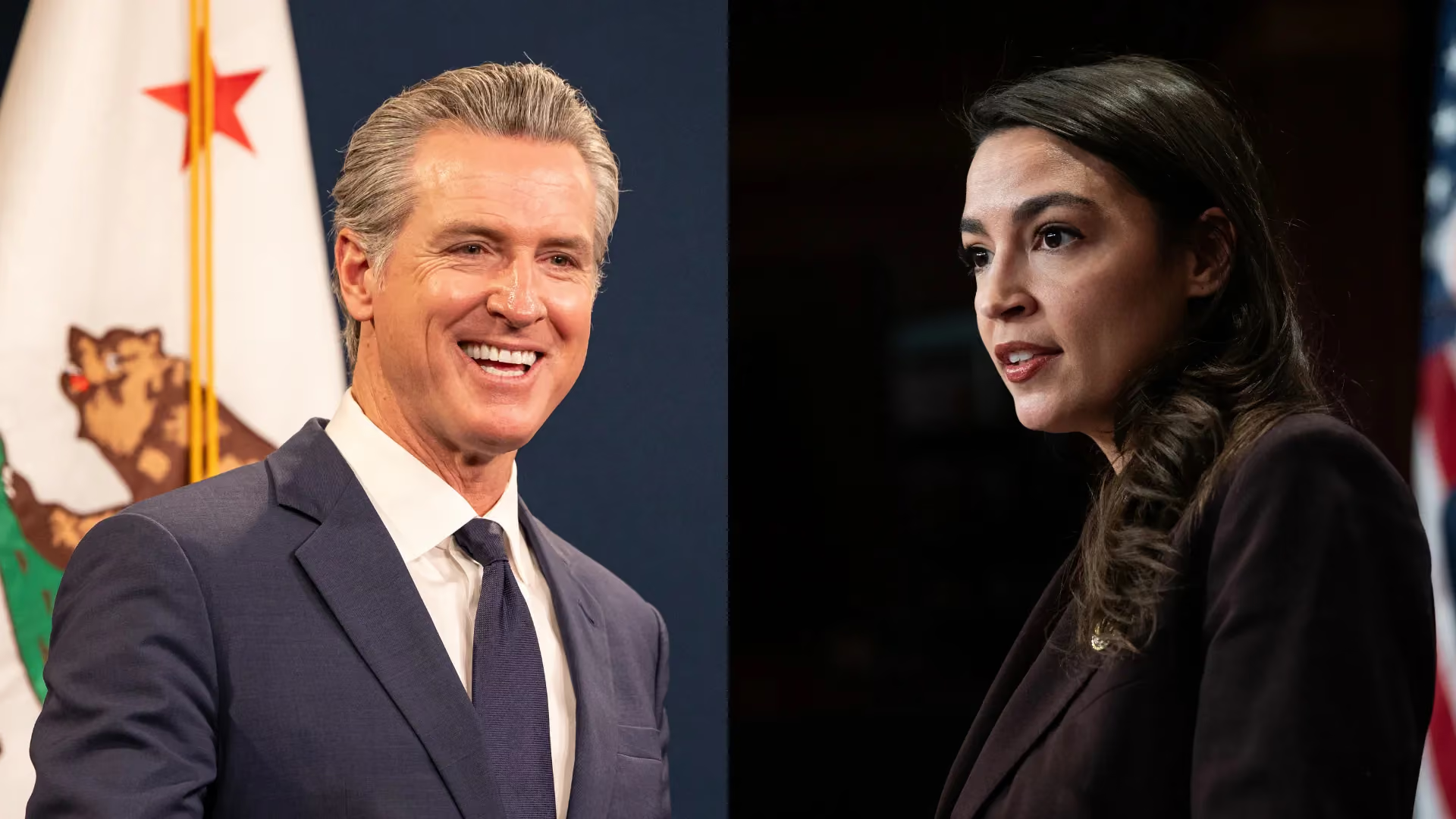
In today’s online news, politics, and Christian streaming environment, debates surrounding socialism, border security, government power, Israel, and the future direction of America are becoming impossible to ignore. On Real Life Network and through The Daniel Cohen Show, viewers are engaging with analysis that cuts through political branding and media narratives to examine what competing visions for America would actually look like in practice. From Gavin Newsom’s California record to Alexandria Ocasio-Cortez’s growing influence inside the Democrat Party, from Kamala Harris’s role in the border crisis to concerns over socialism and American decline, these conversations are revealing a larger struggle over leadership, truth, and national identity.
The stakes are no longer theoretical.
The direction of the next decade is already being debated in real time.
The 2028 Democrat Field and the Politics of Managed Decline
The latest polling surrounding the Democrat presidential field for 2028 revealed a dramatic shift inside the party. Alexandria Ocasio-Cortez surged into first place among potential candidates, ahead of Pete Buttigieg, Gavin Newsom, and Kamala Harris.
That polling matters because it reflects where energy inside the Democrat Party is moving.
AOC represents a movement built around expansive government power, aggressive climate mandates, identity politics, open border policies, and socialist-style economic restructuring. At the same time, Gavin Newsom continues positioning himself as the polished face of progressive governance despite California’s mounting problems involving homelessness, crime, taxation, illegal immigration, and population loss.
The contrast between rhetoric and reality has become increasingly difficult to ignore.
Political branding can shape perception for a season, but reality eventually exposes whether policies are actually working.
California remains central to that debate.
Despite billions spent on homelessness initiatives, the crisis continues growing. Businesses and families continue leaving the state. Infrastructure failures, rising living costs, and public safety concerns continue fueling frustration among ordinary residents.
At the same time, Newsom’s critics increasingly point to what they describe as a pattern of symbolic politics replacing practical governance. Whether discussing lockdown hypocrisy during COVID, taxpayer-funded programs for prison inmates, or escalating state spending with little measurable improvement, opponents argue California reflects a model of governance many Americans do not want exported nationally.
For more biblically grounded reporting on politics, culture, and current events, continue watching on Real Life Network and The Daniel Cohen Show.
Socialism, Government Power, and the Appeal of Free Everything
Beyond personalities, the larger ideological battle inside the Democrat Party revolves around the role of government itself. Figures like AOC continue promoting Medicare for All, the Green New Deal, expanded welfare systems, student debt forgiveness, and sweeping economic redistribution policies.
The messaging is emotionally effective.
Promises of free healthcare, free education, free childcare, and government-provided security resonate strongly with younger voters struggling financially in an uncertain economy.
But critics argue those promises ignore economic reality.
The promise of socialism often sounds compassionate until someone asks who ultimately pays the cost.
This debate is not merely theoretical. Around the world, examples of socialist governance have repeatedly produced economic collapse, shortages, inflation, and growing government dependency. Venezuela remains one of the clearest modern examples.
At the same time, polling data showing rising support for democratic socialism among younger Americans has intensified concern among conservatives who believe many young voters are increasingly disconnected from the historical consequences of centralized government power.
The issue also intersects with broader cultural messaging.
Many progressive leaders increasingly frame success itself with suspicion, arguing wealth creation is inherently exploitative. Critics counter that entrepreneurship, innovation, and private industry are precisely what historically fueled American prosperity.
That contrast became especially visible in debates surrounding Elon Musk, Jeff Bezos, and private sector innovation versus government inefficiency. While companies like Tesla built massive global charging networks through private investment, federal programs backed by billions in taxpayer funding struggled to produce measurable results.
Stay connected to biblically grounded cultural analysis through Real Life Network and The Daniel Cohen Show.
Border Security, Israel, and the Future of American Leadership
At the same time, concerns surrounding border security and foreign policy continue shaping the broader political conversation. Kamala Harris’s role overseeing border policy during the Biden administration remains a central point of criticism among conservatives who point to millions of illegal crossings occurring during her tenure.
For many Americans, the issue extends beyond immigration itself.
It involves questions of sovereignty, law enforcement, economic pressure, and national identity.
When a nation loses control of its borders, it eventually struggles to maintain confidence in every other institution tied to national stability.
Those same concerns now intersect with growing anxiety surrounding America’s role on the world stage.
Daniel Cohen’s perspective from Israel adds another dimension to the discussion. Living in Israel during October 7 and the ongoing regional conflict with Iran, he repeatedly emphasized the importance of strong American leadership and unwavering support for Israel’s security.
That concern becomes especially significant given rising anti-Israel sentiment among portions of the progressive left. AOC and other Democrat Socialists of America members have openly pushed to reduce or eliminate support for Israel, including opposition to defensive systems like Iron Dome.
For Israelis living under constant missile threats, these are not abstract political debates.
They are life-and-death realities.
At the same time, broader geopolitical instability following the Afghanistan withdrawal, escalating Iranian aggression, and rising tensions involving China and Russia continue fueling concerns about American weakness abroad.
The question voters increasingly face is not simply which policies sound appealing.
It is which leadership vision appears capable of maintaining stability in an increasingly unstable world.
In a moment where socialism, border security, government power, and foreign policy are all converging in the national conversation, discernment matters more than ever. These debates are not isolated headlines. They reflect competing visions for America’s future and fundamentally different understandings of freedom, leadership, and responsibility.
Understanding those differences requires more than political slogans or emotional appeals.
It requires wisdom grounded in truth.
For more biblically grounded reporting connecting current events to a biblical worldview, visit Real Life Network and watch The Daniel Cohen Show.
Related Articles
25 min
2028 Democrats, Socialism, and the Growing Debate Over America’s Future
May 19, 2026
Daniel Cohen
Faith & Culture
Humans are lonelier than ever before. Even before the pandemic, almost five out of 10 U.S. adults reported experiences of loneliness. For young adults aged 15-24, time spent in-person with friends has fallen almost 70% from 2003 to 2020, from about two and half hours down to 40 minutes per day. The lack of meaningful interaction comes with a cost. Research finds that a lack of social connections can be as dangerous to our health as smoking 15 cigarettes a day. Humans were designed for community, not for isolation. But the solution is always trickier than it first appears.
In a culture that values independence and autonomy, making time for community seems tangential or even burdensome. For some, the mere thought of a social event depletes their personal energy battery. In a fallen world, relationships are complicated. People can be our best friends, and cruelest enemies. We get burned, withdraw, and then experience loneliness while making little effort to socialize.
Our society subtly reinforces the concept that reality is something to flee or escape; a bad dream to smother underneath a barrage of entertainment, information, or other forms of distraction. With the proliferation of smartphones, unplugging from the current situation and escaping into the digital sphere has never been so easy or so tempting. Additionally, many in-person connection points have now moved to screens. Online college options, virtual training, and remote jobs are increasingly prevalent. That’s not to say that online spaces are somehow bad or should be avoided; rather, with every advantage (think flexibility, cost, and time-savings), there is always a disadvantage (a sense of association without the anchor of relationships).
The issue is that we don’t reinvest the time and resources gained by the virtual world back into in-person relationships and interactions. The data provides the proof. In 2018, Pew Research Center found, “A majority of Americans (59%) say they feel some attachment to their local community, but only 16% say they feel very attached; 41% say they are not too or not at all attached to the community where they live. Adults in urban, suburban and rural areas report nearly identical levels of attachment to their local community.”
Our immediate community often lacks the tailoring, diversity, and ability to fast-forward that the digitalscape so frequently offers. Marketers call this phenomenon fragmentation: the splintering of groups defined by distinct preferences or requirements. When we get used to such customization to our preferences, we naturally grow more isolated from one another as we become increasingly defined by what sets us apart.
But there’s no easy fix. After all, relationships are the result of time, energy, effort, and being authentic about ourselves and with others (not to mention the emotional stakes that come with the drama and messiness of other sinners). But that’s the interesting thing. Redemptive history starts with two people in a garden and reaches its climax as a cultivated city: a sanctified arena when God’s creation and a multitude of people coexist in community. Human flourishing happens in fellowship, not in isolation. And more than ever, Christians need to lead by example.
Brian Brown understands this tension well. He’s the founder and executive director of The Anselm Society, a Colorado-based organization dedicated to a renaissance of the Christian imagination and recapturing the sense of shared community among kingdom-minded creatives. “We live in a culture that has made escapism into a virtue. We’re encouraged by a million cues to be anywhere but here, anyone but who God made us to be,” he remarked to The Washington Stand. “In the face of that, the person who chooses to show up has tremendous power — to see and be seen, to invite others in, to treat the local church and the dinner table as essentials rather than extras. But to do that, we have to dare to see ourselves as God sees us: as beloved bearers of His image.”
As images of God, we reflect him best in our collectiveness and diversity. It’s when the body of Christ comes together in fellowship that we get a more accurate glimpse at the vastness and depth of divine character (Ephesians 4:11-13; 15-16). Through the Messiah’s redemptive work, Christians have the opportunity, indeed the calling, to work towards restoration of the vision.
Despite the digital advances in communication and connection points, people are lonelier than ever before. It’s easy to run with the culture, burying ourselves in the endless mountain of “extra things,” perhaps even attempting to fill our own ache for meaningful connection. There is both pain and reward in pulling our heads out of the mountain and “showing up” in acts of simple relationship-building. “Showing up” doesn’t need to be elaborate, but it needs to be essential and intentional if we are serious about changing the tide of isolation.
In a hurting world, the simple act of being there for someone matters. If Christians are to be known by our love for one another (John 13:35; 2 Corinthians 13:11), we must be willing to demonstrate it.
This was orginally written by Hannah Tu and published on The Washington Stand. For more content like this, visit Real Life Network.
25 min
The Wilderness of Social Isolation and the Christian Calling to Community

May 18, 2026
The Washington Stand
Faith & Culture
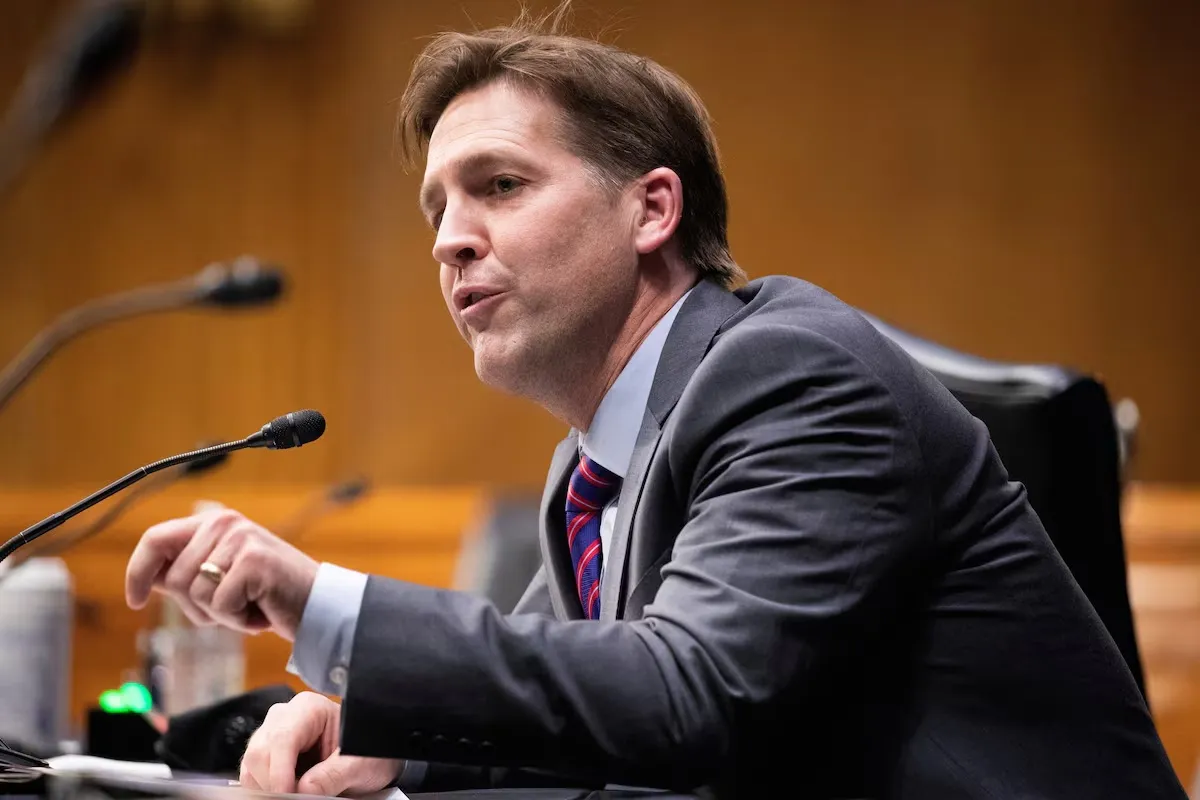
Fifty-four-year-old former Nebraska senator, husband, and father of three, Ben Sasse, was tragically diagnosed only six months ago with stage 4 pancreatic cancer and told he had three to four months to live. While the clinical trial that his doctors put him on has given him more time on earth than doctors predicted, the cancer has sadly continued to spread to his liver, lymph nodes, lung, and vascular system.
Each day that he lives is a miracle. Knowing this has caused Sasse to focus on what is truly important, and he has graciously shared his wisdom in several interviews recently. The following are five insights that we would all be wise to listen to and reflect upon.
1. Spend More Time with Family, Including Extended Family
In a recent extended interview on “60 Minutes,” Scott Pelley asked Sasse, “If you had another 30 years, what would your priority be?”
Sasse reflected, “I wish we’d had more babies. We have three great kids. I wish we had four or five. If I had 30 years left from now, I’d be working hard to take my zealous achiever daughters and try to figure out how you build something that’s a little bit like a family compound. How do you build something where you can have different generations come and go from it and have a thickness and a support system? How could you spend more time around your cousins or build the opportunity for your kids and your grandkids to spend more time around their cousins?”
He went on to share his regret of having a period where he spent too much time working and not enough time with his family: “I would travel a little bit less for work. … I spent way too many nights in hotel rooms. And I don’t know if my family even knows this, but I never really threw away any of my hotel keys. I’d come back from every trip, and I threw them in a box in a closet in my office, and there are thousands and thousands of hotel room keys, and sometimes I just look at it and feel a heaviness of regret. I would make better decisions about that.”
Later in the interview, Sasse expressed how tragic it is that people around the world have stopped having babies. He explained, “Having a baby is a bet on the future. And almost everywhere in the world — and the world is richer and richer and richer statistically than it’s ever been — people have decided, ‘Ah, actually babies are kind of an inconvenience.’ Babies have always been an inconvenience and the most glorious thing you can do to enrich your family and to make a bet on the future. … We’ve stopped making babies. We’ve decided that being distracted by a dopamine hit around a Candy Crush might be a good way to spend your time. Not if you’re fully human.”
2. Observe the Sabbath: Instead of Trying to Be Self-Sufficient, Rest in Almighty God
Similar to fellow Christian Charlie Kirk, Sasse sees the importance of following God’s Fourth Commandment to remember the Sabbath day and keep it holy. In an interview with Focus on the Family President Jim Daly, he shared:
“I have repented to my family. It started before this diagnosis, but we’ve talked about it a lot more intentionally since then. I have repented to my family about not having been a good leader about the Lord’s day. We never missed Sunday morning worship, but often by [2:00 or 3:00] in the afternoon, our hearts and affections and attentions were getting on to all the achievements we had to do, starting Monday morning and all the work we needed to do. And a lot of that work is important and meaningful, but man, the feast day of the soul is more important than I gave it attention to. And I now want my kids to view the glory of not needing to strive from Saturday night to Sunday night as an unbelievable blessing that we get to rest.
“Martin Luther’s great ‘A Mighty Fortress’ is based on Psalm 46, and if you read Psalm 46, there’s pretty obviously three movements. There’s you don’t have to fear anything. You’re going to be fine. God’s got this. And then this command: ‘Be still.’ It means stop trying to be self-sufficient. You get to be a child of the eternal king. And every Sunday, we can live that. I didn’t do that enough.”
Similarly, when Daly asked Sasse what advice he would give dads, he reiterated the importance of family worship time on the Sabbath:
“Let’s be humble with our kids and say … it’s glorious to get to reflect on the things of the Lord. What can we read together as a family this Sunday? How can we lock up our phones? How can we set aside time on the Lord’s Day to just linger and reflect back on the sermon, not have to get out of church the second it’s over, but go find the folks who are in need there or the visitors there. But I’d say two of the most practical operationalizable ones for us: we lock up our phones most of Sunday and we read aloud together a lot.”
3. Help Government Restrain Evil and Protect Freedoms
During CBS News’s “Things That Matter” townhall, a member of the audience asked Sasse how a Christian’s faith should impact his politics. He responded by emphasizing that Christians should seek to maintain order through government, not try to force religion on citizens. He explained:
“The secular sphere is still God’s space and God’s sphere, but it’s a question of whether or not explicit revealed theology is guiding our government. And I think that the purposes of government are to maintain order. It’s not to be theologically precise or accurate about what anybody should believe. The First Amendment is the most glorious inheritance anybody’s ever gotten in the history of government. Government is not the most important thing in the world, but it is glorious that our First Amendment has freedom of religion, speech, press, assembly, protest or redress of grievances. But that means that what I want government to do is create a space that is free from violence.
“So people can worship as they see fit, whether I agree with them or disagree with them. As a neighbor, I might want to wrestle with theology with somebody, but I don’t want to use the state to accomplish theological ends. I want to maintain order for a secular sphere that is free from violence.
“So I don’t subscribe to views of geopolitics as God is accomplishing a precise thing in those places. I think our servant leaders are responsible for using their time in office to try to minimize violence, maximize order [and] human liberty. In my view, the future of geopolitics 10 or 40 years from now is going to be more U.S.-led or more Chinese Communist Party-led, and I would rather have open navigation of the seaways, freedom of religion, human rights, commerce, trade, transparent contracts. And so, I would rather have there be more U.S.-led freedoms for the world — but not because the U.S. is an eternal entity. The U.S. is just the best experiment in government we’ve ever known. But governments are going to pass away ultimately. At the end of days, when we all wrestle through and with the questions around our own mortality, there will be no more tears, there will be no more cancer, there will also be no more government. Government is a tool. It’s a really important tool, but it’s a time-limited tool.”
In his interview with Daly, he explained, “Government is about restraining evil. It’s not about the glory of what happens at worship. It’s not about the warmth around your dinner table where you’re telling your kids how much you love them and asking them about their day. Government is just about a framework for ordered liberty. And so our passions [have to] hold moderately to certain institutions like government because they’re important, but they’re passing away.”
4. Community Is Essential: Escape Social Media Echo Chambers and Learn from Others
Sasse believes that how society handles the current communication revolution (especially social media and AI) is crucial, telling Daly, “I think a hundred years from now, if the Lord hasn’t returned yet, when we look back on this moment, we’re not going to talk very much about public policy. We’re going to talk about the fact that social media created a completely different kind of information ecosystem. And there [are] these grand temptations to steal our attention all the time. We know that only about 12% of Americans will read a book this year.”
Sasse told Pelley, “We’re living through a technological revolution which is creating an economic revolution. Let’s be clear, we’re the rich middle-class median. Americans are the richest people any time and place in all of human history. And yet, the economic revolutions that we’re living through are unsettling culture and place,” he pointed out. “And so people are incredibly rich at a material level statistically. And yet we’re pretty impoverished spiritually and communally in that we don’t have fit community. We don’t know our cousins. We don’t know the people who live two doors away from us. And we don’t feel like we’re in a common cause with people right now. And politics wants to trivialize that by screaming there’s some bad political actor somewhere. And if only that person were ripped out of the public square, politicians could fix all this. No, neighbors are going to have to fix this.”
He went on to say, “I do think social media is one of the fundamental problems that we’re dealing with right now. Right now, almost all politicians’ impulses and incentives … is to go narrow but deep and to do a lot of fan service. It doesn’t encourage a lot of self-scrutiny. It doesn’t encourage a lot of humility. It doesn’t encourage someone saying, ‘You know what, I used to believe this, but I listened to somebody else, and I realized I was wrong, and I’ve learned this new thing. There’s no audience for that. You want to just say more of, ‘We’re definitely right, and they’re definitely wrong.’ And that tribalism makes us pretty stupid.”
He continued, “One of the glorious things about the American experiment is believing in souls that can do deferred gratification. We can do deliberation that says, ‘Maybe I don’t have all the answers right now at my fingertips, and maybe the glories of a big and diverse creation is I can learn a lot from my neighbors.’”
5. Put Your Trust in Sovereign God, the Source of Peace
In the “60 Minutes” interview, Pelley observed, “You are completely devoted to your faith: what’s known as Reformed Christianity or Calvinism. And one of the tenets of that faith is that God ordains everything. And I wonder why you think God has put you to this test?”
Sasse answered, “Death is wicked. Death is evil. Death is not how it’s supposed to be. And me getting a cancer diagnosis again is pretty small on the grand scheme of things, but it’s a touch of grace because it forces me to tell the truth. And the lie I want to tell myself is that I’m the center of everything, and I’m going to be around forever, and I can work harder and store up enough that I can atone for my own brokenness. I can’t. And so, I hate cancer, but I’m also grateful for it. I tell a lot more truth to myself than I used to … when I thought I was super omnipotent and interesting.”
The most emotional and inspirational part of these interviews came at the end of this conversation. Everyone should listen and learn from this man of deep Christian faith.
Pelley, on the verge of tears, managed to say, “I make no comparison to what you’re going through, but there was a moment on 9/11 at the World Trade Center that I knew I was dead. And in that lightning flash of an instant, the only thing that crossed my mind was leaving my family behind. And I wonder how you reconcile that.”
Sasse responded, “Yeah … I’m incredibly blessed. My wife Melissa … we’ve been married 31 years. …We’re going to be apart for a time. But she’s tough and gritty and theologically rooted, and she’s going to be fine. My daughters are 24 and 22, and they’re extraordinary. I want to walk them down the aisle when they get married,” he paused, getting emotional. “That’s not likely to be. That’s not the math of my timecard. My son, we have a providential surprise. He’s a decade younger than big sisters. He’s … going to be fine, and he’ll have other wise men and women to put a hand on his shoulder. But I’m super bummed to not be there at 16 and 18 and 20 years old in his life. I want to give him more advice than he wants, and I want to put my arm on his shoulder, and I want his shoulders to get taller. But it’s not a surprise to God.”
Pelley noted, “And God, you believe, has a plan.”
Sasse, without hesitation, answered, “Absolutely. There are no maverick molecules in the universe.”
This article was written by Kathy Athearn and originally published at The Washington Stand. For more content like this, visit Real Life Network.
25 min
5 Insights from Ben Sasse as He Faces His Last Days on Earth
May 8, 2026
The Washington Stand
Entertainment & Lifestyle
Reaching younger generations has become one of the most important conversations within churches and ministries today. Teens and young adults are growing up in a digital-first world, where content is fast, accessible, and constantly competing for attention.
That reality raises an important question: How do Christian streaming platforms reach younger generations in a meaningful way?
The answer isn’t simply by adding more content. It’s by understanding how younger audiences engage, what they value, and how faith can be communicated clearly in the environments where they already spend time.
Meeting Younger Viewers Where They Already Are
Younger generations don’t typically wait for scheduled programming. They are used to accessing content on demand through phones, tablets, and streaming devices. Christian platforms have adapted by making content:
- Available anytime, not tied to a schedule
- Accessible across multiple devices
- Easy to navigate and discover
- Designed for shorter attention spans as well as deeper learning
By aligning with how younger viewers already consume media, faith-based platforms remove barriers that once made engagement more difficult.
Offering Content That Speaks to Real Questions
Younger audiences are asking thoughtful and often challenging questions about identity, purpose, truth, and faith. They are not looking for surface-level answers; they want clarity and honesty. Christian streaming platforms are increasingly providing content that addresses:
- Doubt and skepticism
- Cultural pressures and identity
- Science and faith
- Purpose and calling
- Real-life struggles and decisions
Programs like I Don’t Have Enough Faith to Be an Atheist, The Creation Today Show, and discussion-based formats such as Bridge Bible Talk help younger viewers explore these topics in a way that feels relevant and grounded.
Using Storytelling That Connects Emotionally
Story remains one of the most effective ways to reach younger generations. Documentaries, testimonies, and narrative-driven content allow viewers to see how faith plays out in real life. Faith-based platforms use storytelling to:
- Show how others navigate challenges
- Illustrate biblical truths through lived experience
- Create emotional connection alongside intellectual understanding
This kind of content helps younger viewers move from abstract ideas to personal engagement.
Creating a Safe and Consistent Environment
One of the biggest challenges for younger viewers is navigating a media environment filled with mixed messages. Many platforms present conflicting ideas about truth, identity, and purpose.
Christian streaming platforms offer a more consistent alternative. Instead of constantly filtering content, younger viewers can engage in an environment that:
- Reinforces biblical values
- Encourages thoughtful reflection
- Avoids unnecessary confusion or contradiction
- Supports spiritual growth over time
For parents, this consistency is especially important when guiding teens and children.
Balancing Depth and Accessibility
Younger generations are capable of engaging deeply when content is presented clearly and accessibly. Christian platforms are learning to balance:
- Short-form content that fits busy schedules
- Longer teaching for deeper study
- Conversational formats that feel approachable
- Structured series that build understanding over time
This flexibility allows viewers to engage at their own pace while still growing in their understanding of faith.
Encouraging Participation, Not Just Viewing
One key shift in reaching younger audiences is moving from passive viewing to active engagement.
Faith-based streaming content often becomes a starting point for:
- Conversations with parents or mentors
- Small group discussions
- Personal reflection and journaling
- Questions that lead to deeper study
Platforms like Real Life Network support this by offering a variety of content types—teaching, podcasts, documentaries, and discussion-based programs—that naturally lead into engagement rather than ending with the video itself.
The Role of Parents and Church Leaders
While platforms play a role, they are not the primary influence. Younger generations are most impacted by relationships—parents, pastors, and mentors who guide them. Christian streaming works best when it is:
- Introduced intentionally
- Watched together when possible
- Discussed afterward
- Connected back to Scripture
When adults use these tools wisely, they become part of a broader discipleship strategy rather than a replacement for it.
How Real Life Network Fits In
Real Life Network brings together a range of content that helps engage younger audiences without compromising biblical truth. From apologetics and cultural discussions to teaching and storytelling, RLN provides a platform where younger viewers can explore faith in a way that is both accessible and grounded.
By offering content across different formats and topics, RLN helps bridge the gap between traditional teaching and modern media habits.
Reaching younger generations requires understanding of how they think, what they value, and how they engage. Christian streaming platforms are rising to that challenge by meeting viewers where they are, addressing real questions, and providing content that encourages both understanding and growth.
When paired with strong relationships and intentional discipleship, these platforms can play a meaningful role in helping younger generations develop a steady, thoughtful faith.
Explore content designed to engage and encourage the next generation anytime on Real Life Network.
Related Articles
- How Does Streaming Faith-Based Content Strengthen My Faith by Real Life Network
- Best Faith-Based Documentaries to Watch for Free by Real Life Network
- Where Can I Find Clean Cartoons for My Kids? by Real Life Network
25 min
How Do Christian Streaming Platforms Reach Younger Generations?

May 4, 2026
Real Life Network
Faith & Culture
On April 26, I spoke at Hickory Hammock Baptist Church in Milton, Florida, about AI’s impact on children and families. After the service, parents and grandparents lingered with questions — not about geopolitics or corporate boardrooms, but about what was already happening inside their own households. They wanted practical steps to protect their children. Their concern is well-founded.
Picture the moment: a child sits at the kitchen table, struggling with homework. He doesn’t ask a parent — he opens an AI app and types the question. Within seconds, a clear, confident answer appears. No friction. No conversation. No one who loves him is involved at all. Across the room, his mother consults her own parenting app for guidance on how to handle his behavior. The moment looks utterly ordinary, and that is the problem.
The question those parents in Milton were asking is the right one: who is raising our children — the parent or the algorithm?
A Pew Research Center survey of 1,458 U.S. teenagers found that 64% now use AI chatbots — including 12% who have sought emotional support from these tools and more than half who turn to them regularly for schoolwork. A companion Pew report found that only 51% of parents believe their teenager uses AI regularly, while 30% have no idea. What parents don’t see, they cannot shape.
The Brookings Institution, drawing on input from more than 500 participants across 50 countries, concluded in January 2026 that the risks of AI in children’s education “overshadow its benefits” — because those risks strike directly at foundational development: attention, reasoning, social relationships, and independent judgment. Children often cannot recognize, question, or even see the technologies quietly shaping their earliest experiences. This is not simply a technology problem. It is an authority problem.
For generations, parents controlled which outside voices entered the home. A television could be turned off. A book could be closed. A teacher could be called. AI operates differently. It is embedded in the devices children already carry, available at any hour, and patient in ways no human being can sustain. It does not raise its voice or express disappointment. It does not ask what the child thinks before delivering an answer. Those qualities feel reassuring to a child — which is precisely what makes them quietly formative.
A RAND Corporation study found student use of AI for schoolwork jumped from 48 to 62% in just seven months during 2025, with 67% of students acknowledging the practice weakens their critical thinking. In one conversation I had recently, a college student told me she has watched her Christian peers consult AI the way they would a pastor. That is not a metaphor any parent or pastor should let pass without reflection.
There is a relational cost embedded in all of this that rarely gets named. Real formation — the kind that produces character, judgment, and wisdom — happens through friction. When a child shares a tough question with a parent, they gain more than any AI can offer: the parent’s wisdom, a strong relationship, and an appreciation for patience. AI systems are engineered to be responsive, affirming, and conflict-free — optimized for engagement, not formation. Engagement sustained over years becomes its own kind of formation, only one running in a vastly different direction.
Scripture understood this before algorithms existed. “Train up a child in the way he should go; even when he is old he will not depart from it” (Proverbs 22:6). That charge was given to parents — not to AI platforms. The Hebrew verb for “train” — chanak — carries the sense of dedication, of establishing a direction through habitual influence. Formation is cumulative. Every time a child turns to an algorithm instead of a parent — and every time a parent turns to AI for guidance on how to respond — that cumulative process is quietly redirected.
Artificial intelligence has no conscience. It is not accountable to God. It cannot love your child, discern his heart, or distinguish between what he wants to hear and what he needs to know. As I examine at length in “AI for Mankind’s Future,” unchecked reliance on algorithmic systems erodes the very human judgment those systems were meant to supplement. The voice is confident, the answer is instant, and children are not equipped to evaluate what they are being handed. “Trust in the Lord with all your heart, and do not lean on your own understanding” (Proverbs 3:5). A child trained by habit of leaning on an algorithm rather than a parent is being pointed in a fundamentally wrong direction — not by malice, but by the steady drift of convenience.
Parents who think they are managing this problem by monitoring screen time are already behind it. Treating AI like a hazard to be filtered addresses the symptom while missing the cause. A more effective response means being present in the conversation — asking the question before the AI app gets to it, discussing what the app provided, modeling the slower and more honest work of thinking through a problem. It means teaching children that truth is different from a confident answer delivered in two seconds by a machine. Moses understood the principle: “You shall teach them diligently to your children, and shall talk of them when you sit in your house, and when you walk by the way” (Deuteronomy 6:7). The home was always the first classroom. Parents have always been the first teachers. AI has not changed that assignment — it has only made it more urgent.
Pastors need to address this with the same directness they bring to any other threat to spiritual formation. AI is shaping how young people think, relate to authority, and understand where truth comes from — and that is not a secondary concern. Policymakers need to move beyond phone bans — a political band-aid on a deeper wound — and confront the design incentives that make these systems so compelling, because removing a phone from a classroom does not fix a platform engineered to capture students’ attention the moment school ends.
In “The New AI Cold War,” I argue that the future security of this nation depends as much on the character and discipline of its people as on its technology. That argument starts in the home. A generation shaped more by algorithms than by parents will not have the judgment, resilience, or relational depth to defend what they have inherited.
The AI is already in your home. It is neither neutral nor passive, and it is not going away. The parents who understand that clearly will still have a chance to answer the question those families in Milton were asking. The ones who are still waiting to take it seriously may find the answer has already been made for them.
This article was originally written by Robert Maginnis and published on The Washington Stand. For more content like this, visit Real Life Network.
25 min
Who Is Raising Your Children - the Parent, or the Algorithm?

May 3, 2026
The Washington Stand
Faith & Culture
The new report released this week by the Department of Justice’s Task Force to Eradicate Anti-Christian Bias is a wake-up call.
The task force, led by Acting Attorney General Todd Blanche, has produced one of the most, if not the most, substantive works of this administration. The report, entitled “Eradicating Anti-Christian Bias within the Federal Government,” lays bare what is at the heart of the Left’s disdain for religious freedom: it is a clash of “worldviews” over abortion, gender ideology, and sexual orientation.
Before detailing abuses across the federal government, the 550+ page report lays the foundation for why the anti-Christian bias, pervasive in the Biden administration, is a threat to our nation.
Beginning with an extensive quote from the farewell address of America’s first president, George Washington, the report provides the historical context for why vibrant Christian faith should be embraced, not suppressed.
“Of all the dispositions and habits which lead to political prosperity, religion and morality are indispensable supports. In vain would that man claim the tribute of patriotism who should labor to subvert these great pillars of human happiness, these firmest props of the duties of men and citizens.” Washington went on to write, “let us with caution indulge the supposition that morality can be maintained without religion.”
If morality rests on transcendent truth, then to suppress the Christian faith, as the Biden administration did, is to weaken the moral foundation that sustains our political freedoms.
The report goes on to acknowledge that “The Nation’s origin and system of government bear the imprint of a Christian worldview and ethic, even as its laws strive to protect religious pluralism.”
Following the Left’s truncated view of religious freedom, the report highlights how the Biden administration “tolerated religious beliefs that were privately held but zealously pursued actions to limit Christians’ ability to live out their faith.” This is the essence of religious freedom: not merely belief, but the freedom to act on those biblical beliefs and convictions.
The report provides insight into how the Biden administration used government power against those who opposed its agenda — pressuring, penalizing, and, in some cases, prosecuting individuals unwilling to abandon their convictions, including the use of the Freedom of Access to Clinic Entrances Act, or the FACE Act, against pro-life advocates.
Aligned with organizations like the Southern Poverty Law Center and Planned Parenthood, this whole-of-government approach marginalized dissent and created a chilling effect for Christians in the public square.
What many suspected is now documented: an intentional effort to extend hostility toward Bible-believing Christians beyond the federal government by pressuring states and the private sector.
States were pressed into denying or revoking licenses for Christian foster care families and agencies. Educational institutions were forced into compliance with the administration’s view of human sexuality. At the same time, efforts targeted certain forms of Christian counseling, limiting the ability to help those struggling with gender dysphoria.
So what must be done with this report? The federal government is already using it to identify policies that must change. But the stakes are higher than policy alone.
Now is the time to establish safeguards at the federal, state, and local levels to prevent future administrations from hollowing out the First Amendment, and to preserve the truth that sustains both our freedom and our future. And it is also a time for boldness, boldness in proclaiming the gospel that transforms hearts and minds. Because that transformation does not remain private; it shapes how we live, how we act… and yes, how we vote.
This article was originally published on The Washington Stand. For more content like this, visit Real Life Network.
25 min
New Report Thaws the Chill of Bias against Christians

May 2, 2026
Tony Perkins
Faith & Culture
On January 20, 2026, historian Yuval Noah Harari stood before the World Economic Forum at Davos and issued a direct challenge to Christians worldwide. “If religion is built from words, then AI will take over religion,” he said, then named Christianity by name: “This is particularly true of religions based on books, like Islam, Christianity, or Judaism.” And he left this question in the air: “What happens to the religion of a book when the greatest expert on the holy book is an AI?”
The clip accumulated 1.2 million views within days. The room at Davos did not object.
A Documented Shift, not a Conspiracy
Harari’s 2026 remarks are the current edge of a worldview shift building for years — visible in the public statements of the most powerful technologists of our time, spanning five distinct domains of the human person.
It was Harari himself who told the same World Economic Forum in 2020 that we are “no longer mysterious souls — we are now hackable animals.” Six years later, he has moved from contesting human identity to contesting the authority of Scripture. The trajectory is not random.
OpenAI CEO Sam Altman wrote in 2017 that “the merge has already started” — that phones and algorithms already “control us” and “decide what we think.” By 2025, he had enlarged that frame: an essay titled “The Gentle Singularity” described AI as “building a brain for the world,” projected brain-computer interfaces, and suggested “some people will probably decide to ‘plug in.’” Venture capitalist Marc Andreessen has called AI development a “moral obligation” and envisions every person equipped with an AI “assistant, coach, mentor, tutor… therapist” — roles Scripture reserves for God, parents, pastors, and community.
Billionaire, AI investor, and co-founder of Palantir Technologies Peter Thiel has said, “I’ve always had this really strong sense that death was a terrible, terrible thing… I prefer to fight it,” investing millions to turn mortality into an engineering problem. Anthropic CEO Dario Amodei, writing in more restrained terms, envisions AI-enabled biology offering “control and freedom over our own biological processes” addressing conditions “we currently think of as immutable parts of the human condition” — potentially including a doubling of the human lifespan.
These statements come from different people with different assumptions. What they share is a common direction: the human being as improvable hardware, death as a bug to be patched, and — in Harari’s own words before world leaders — the Bible as a database awaiting a more capable administrator.
The Contest That Matters More than the One We’re Watching
In “The New AI Cold War,” I document how China, Russia, and Iran are weaponizing artificial intelligence to surveil populations and export digital tyranny worldwide. That geopolitical contest is real and urgent. But the deeper one is being fought inside Western civilization itself — on the terrain of human identity and, as Harari’s Davos appearance confirmed, on the terrain of Christian faith. The architects of AI understand this better than most Christians do.
What Scripture Actually Says
No technological development alters what Scripture says about human beings. “Then God said, ‘Let us make man in our image, after our likeness’” (Genesis 1:26). That declaration is the load-bearing wall of Christian anthropology — the reason human dignity is inherent and not a function of what AI can do with our genome or our sacred texts.
In “AI for Mankind’s Future,” I examine what it means to bear the imago Dei when machines imitate human intelligence. Harari’s question has a Christian answer no algorithm can produce: the Holy Spirit, not processing power, illuminates Scripture. The soul is real and not reducible to data. The body is not hardware — it will be raised imperishable. Death is an enemy, but the resurrection of Jesus Christ has already answered that claim. “Trust in the LORD with all your heart, and do not lean on your own understanding” (Proverbs 3:5) is not a devotional sentiment — it is the posture Scripture commands for this moment.
The Jurisdiction That Is Quietly Changing Hands
The most consequential shift in AI is not technological. It is jurisdictional. AI is migrating from tool to authority — not by coercion, but through the frictionless convenience of daily use. Algorithms already shape what millions of people read and believe, mediate education, and form moral character. Andreessen’s vision of AI as universal tutor, therapist, and life guide is not a distant scenario. It is the operational goal of every major platform already in your household.
When a digital system begins answering the questions of identity, purpose, and meaning that once belonged to God, to parents, and to community, it does not remain a tool. Romans 1:25 describes the exchange in which Paul warns against trading the truth of God for the created thing. Harari is more candid than most about where that exchange leads — and at Davos, he named your Bible specifically.
The Response Christians Cannot Afford to Delay
AI produces genuine benefits — in medicine, national security, and communication — and “AI for Mankind’s Future” acknowledges them. The argument here is against surrender: surrendering judgment to the algorithm, and the formation of the next generation to systems whose designers have already decided the human being is improvable hardware and the Bible is a word-processing problem.
Christians must engage AI with discernment — using the technology without adopting its embedded anthropology. That means defending what the technologists are actively contesting: that human dignity is a gift of the Creator, not a product of code, and that the authority of Scripture cannot be transferred to any machine. “There is a way that seems right to a man, but its end is the way to death” (Proverbs 14:12).
Harari posed the right question at Davos, and the answer has not changed since Moses received it at Mount Sinai. What remains is whether the church will say it loudly enough, and soon enough, for the world to hear.
This article was originally written by Robert Maginnis published on The Washington Stand. For more content like this, visit Real Life Network.
25 min
The New Religion of AI: Who Gets to Define What It Means to Be Human?

May 1, 2026
The Washington Stand
World News
In today’s online news, politics, and Christian streaming environment, questions of authority, accountability, and truth are converging in ways that are becoming harder to ignore. On Real Life Network and through The Daniel Cohen Show, viewers are engaging with analysis that connects biblical truth to the most pressing headlines. From the indictment of former FBI Director James Comey to broader questions about justice, leadership, and global instability, these stories are not isolated. They reveal a deeper pattern about how power is exercised and how truth is handled in the modern age.
This is not simply about one individual. It is about a system.
Accountability and the Question of Power
For years, Americans have heard a consistent message. No one is above the law. That principle is foundational to the nation’s identity. It reflects the belief that justice should be applied equally, regardless of position or influence.
Now, that principle is being tested.
The indictment of former FBI Director James Comey represents a moment that goes beyond legal proceedings. It raises a larger question about whether accountability applies equally at every level of leadership. The charges stem from actions that are now being examined through the lens of federal law, with potential consequences that are significant.
At the same time, it is important to recognize the distinction between an indictment and a conviction. The legal process is designed to evaluate evidence and determine truth through due process.
Accountability is not declared in headlines. It is established through truth tested over time.
This moment reflects more than a legal case. It reflects a shift in how authority is being viewed. When institutions that once operated with little scrutiny begin to face examination, it signals a change in public expectation.
That expectation is rooted in fairness.
For deeper analysis grounded in truth and a biblical worldview, continue watching on Real Life Network and The Daniel Cohen Show.
Trust, Media, and the Shaping of Perception
Beyond the legal case, there is a broader issue that continues to surface. Trust in media and institutions has been declining for years. That decline is not based on a single event. It is the result of repeated moments where perception and reality appear misaligned.
When narratives are presented in ways that omit key details or emphasize selective information, the result is confusion. Over time, that confusion leads to skepticism.
When people begin to question whether they are being told the full truth, trust does not fade slowly. It breaks.
This breakdown in trust creates a fragmented information environment. Individuals turn to sources that reinforce their existing beliefs, rather than challenge them with balanced perspectives.
The consequences are significant.
A society without a shared understanding of truth struggles to engage in meaningful dialogue. Differences become amplified. Common ground becomes harder to find.
This is why clarity is essential.
It is not enough to simply consume information. It must be evaluated carefully, consistently, and through a framework that prioritizes truth over narrative.
Stay grounded in clear, biblically rooted analysis through Real Life Network and The Daniel Cohen Show.
Global Signals and Cultural Direction
While domestic issues dominate headlines, global developments continue to send important signals about the direction of the world. Decisions made on the international stage often reflect deeper priorities and values.
Recent developments involving global institutions and leadership choices highlight a growing tension between stated goals and actual outcomes. When organizations tasked with maintaining stability make decisions that appear contradictory, it raises questions about consistency and credibility.
When leadership decisions contradict stated values, confidence in those institutions begins to erode.
At the same time, economic pressures and policy decisions are affecting everyday life. Rising costs, shifting energy strategies, and regulatory environments are shaping how people live and work.
These realities are not disconnected.
They are part of a larger pattern that reflects how leadership choices impact both national and global outcomes. Understanding that pattern requires more than observation. It requires discernment.
A biblical worldview provides that discernment.
It emphasizes truth, accountability, and stewardship. These principles offer a consistent lens through which to evaluate both cultural and geopolitical developments.
In a moment where legal accountability, media trust, and global instability are intersecting, the need for clarity has never been greater. The stories shaping the world are complex, but the principles needed to understand them remain constant.
Truth matters.
And the ability to recognize it is essential.
For more biblically grounded content that helps you navigate today’s most important issues, visit Real Life Network and watch The Daniel Cohen Show.
The Hope of the Gospel
Amid shifting institutions, cultural uncertainty, and questions of justice, Scripture directs attention to a deeper truth. The greatest need is not simply better systems or more effective leadership. It is reconciliation with God.
The Bible teaches that all people have sinned and are separated from Him. This separation cannot be resolved through human effort or any institution. No system can restore what has been broken.
But God has provided a way.
Jesus Christ lived a perfect life, died on the cross for sin, and rose again. Through Him, forgiveness is offered to all who repent and believe. This is not earned. It is given by grace.
This truth transforms everything.
A changed heart leads to changed action. A renewed mind leads to a renewed perspective. The clarity that society seeks begins with truth found in Christ.
In a world searching for answers, the gospel provides what nothing else can. Truth that remains and hope that endures.
Related Articles
- Rhetoric, Responsibility, and the Cost of What Is Said by Daniel Cohen
- A Nation Under Strain: Violence, Rhetoric, and the Search for Clarity by Daniel Cohen
- Power, Policy, and the Direction of the Moment by Daniel Cohen
25 min
Comey Indictment and the Crisis of Trust in Media, Government, and Global Leadership

April 30, 2026
Daniel Cohen
Business & Finance
The world can change faster than most people realize. History proves it. In 1977, Iran was considered a stable ally of the United States. Less than two years later, the Islamic Revolution transformed the nation into one of America’s most persistent adversaries. What was once an “island of stability” became a focal point of global conflict.
Today, the headlines suggest we may once again be standing at a pivotal moment, not just geopolitically, but economically. Because what’s happening overseas doesn’t stay overseas. It affects your wallet, your savings, and your financial future.
Watch this full episode on Pirate Money Radio, streaming now on the Real Life Network.
How Iran Reshaped the Global Economic Landscape
The Iranian Revolution didn’t just alter political alliances, it reshaped global markets. When the Ayatollah seized power, Iran transitioned from a pro-Western economic partner to a destabilizing force in the Middle East. The consequences have played out over decades, influencing energy markets, military conflicts, and international trade.
Today, Iran remains deeply connected to global economic tensions. Its actions in critical regions like the Strait of Hormuz continue to threaten oil supply chains, creating ripple effects that impact fuel prices and inflation worldwide. This is not abstract policy. It is a direct factor in what Americans pay at the pump and the grocery store.
Oil Prices, Inflation, and Economic Pressure
Whenever instability rises in the Middle East, oil markets react quickly. Even the threat of disruption can drive prices upward. Short-term spikes in oil prices often translate into broader inflationary pressure. Transportation costs increase. Manufacturing expenses rise. Consumers ultimately bear the burden.
Inflation, in many ways, acts like a hidden tax. It erodes purchasing power and places the greatest strain on working families trying to make ends meet. Yet history also shows that markets adjust. Supply chains adapt. Strategic reserves are deployed. While volatility creates short-term challenges, it can also lead to long-term corrections.
Understanding that balance is essential for wise financial decision-making.
What appears chaotic on the surface often has deeper strategic implications. Major geopolitical moves rarely exist in isolation. Actions involving Iran, energy markets, and global trade frequently intersect with broader economic competition, particularly involving nations like China and Russia.
From an economic standpoint, these dynamics influence currency strength, trade flows, and investment patterns. For example, shifts in oil availability can reshape global alliances and force major economies to adjust their strategies. This is where economic policy and national security converge. Decisions made on the world stage carry real consequences for everyday people, underscoring the importance of wisdom and long-term thinking.
Stream Pirate Money Radio on the Real Life Network.
Why Financial Stability Requires More Than Policy
While governments play a role in stabilizing markets, lasting financial security cannot depend solely on policy decisions. Economic systems are inherently vulnerable to disruption—whether through conflict, debt, or mismanagement. That reality highlights the need for individuals to take responsibility for their own financial future.
Preparation, discipline, and careful planning become essential in times like these. One of the most important lessons from economic volatility is the importance of sound money. Over time, the U.S. dollar has lost significant purchasing power. While it remains the world’s dominant currency, it is not immune to inflation or policy-driven devaluation.
That reality has led to renewed interest in alternatives such as gold and silver. In recent years, several states have taken steps to recognize precious metals as legal tender, opening the door for what is often called transactional gold. This allows individuals not only to hold gold, but to use it as a functional form of money.
It is not about abandoning the dollar. It is about creating stability and flexibility in an uncertain world.
The Future: Risk and Opportunity
Financial uncertainty often leads to reactive decisions. But reaction is not a strategy.
Periods of volatility call for a steady, disciplined approach to managing money. That includes thoughtful decisions about saving, spending, and investing, even when conditions feel unpredictable. It also means keeping a long-term perspective—recognizing that short-term disruptions are part of broader economic cycles.
Despite the challenges, there is reason for cautious optimism. Global markets are resilient. Innovation continues to drive productivity. And even in times of conflict, opportunities emerge for those who are prepared.
Energy markets may stabilize. Supply chains may improve. New technologies may reshape economic growth in ways we are only beginning to understand. At the same time, risks remain. Debt levels, geopolitical tensions, and currency volatility all require careful attention. Navigating this environment requires both awareness and action.
The situation in Iran is more than a geopolitical story. It is part of a larger narrative about how global events shape economic realities. For individuals and families, the takeaway is clear: financial stewardship matters more than ever.
In a world where markets can shift overnight, building a strong financial foundation, grounded in discipline, preparation, and wise decision-making, is essential for long-term stability.
Stream Pirate Money Radio on the Real Life Network.
Related Articles
- Protests, Power, and the Long March Through Institutions by Kevin Freeman
- Homeschooling for Liberty and Future-Proof Education by Kevin Freeman
- Economic Justice, Real Money, and America’s Future by Kevin Freeman
25 min
Iran’s Turn, and America’s Economic Strategy

April 28, 2026
Kevin Freeman
World News
For years, one organization has quietly shaped how Americans are told to think about extremism.
The Southern Poverty Law Center has not just observed the national conversation. It has influenced it. Its reports are cited by the media, relied upon by institutions, and used to define who is considered dangerous, who is considered legitimate, and who is pushed outside the boundaries of acceptable public discourse.
That level of influence carries consequences.
It also raises a fundamental question. Who is holding the gatekeeper accountable?
Because the story surrounding the SPLC is no longer just about the groups it labels. It is about the credibility of the institution doing the labeling.
Over the years, concerns have steadily grown. Critics have pointed to the organization’s “hate map,” arguing that it does more than identify threats. It collapses categories, placing mainstream Christian and conservative organizations alongside violent extremists. That kind of classification is not neutral. It shapes perception. It influences behavior. And in some cases, it has contributed to real-world danger.
One of the clearest examples came in 2012, when a gunman targeted the Family Research Council after using the SPLC’s map to identify his target. He later admitted his intent was mass violence. The attack was stopped, but the implications were unmistakable. When an organization labels broadly, the consequences do not remain theoretical.
At the same time, the SPLC has faced its own internal crises. Leadership shakeups, allegations of misconduct, and the firing of founder Morris Dees exposed cracks in the image of moral authority the organization had carefully built. When an institution presents itself as a watchdog, its own conduct becomes part of the story.
I have personally examined this pattern before. In my book, Living Fearless in Christ, I documented how even federal agencies have, at times, leaned on SPLC reporting to inform investigations, including inquiries into so-called “radical” Catholics. That should concern every American. When one private organization’s classifications begin influencing government action, the stakes move from cultural to constitutional.
For more biblically grounded content that helps you navigate today’s headlines with clarity, visit Real Life Network and watch Living Fearless.
Allegations, Indictments, and Expanding Concerns
Now, that story has taken a far more serious turn.
According to a federal indictment posted by the Department of Justice, the SPLC is accused of engaging in deceptive financial practices and misrepresenting how donor funds were used. The indictment alleges that money raised under the premise of combating extremism was, in part, directed toward individuals connected to extremist groups themselves.
Even more striking are the claims regarding embedded “field sources.” The indictment alleges that individuals operating within extremist networks were actively participating in those environments while under SPLC supervision. In some cases, those same individuals were allegedly contributing to the very activity the organization publicly condemned.
The document goes further, stating that one such source was present in online leadership discussions tied to the planning of the 2017 Unite the Right rally in Charlottesville, even assisting with coordination efforts for attendees .
If these allegations are accurate, the implications are profound.
Because Charlottesville was not just another event. It became a defining moment in modern American political life. The violence and the tragic loss of life rightly drew condemnation. No moral society excuses that. No Christian justifies hatred.
But what followed was something broader. Charlottesville became a symbol. It was used to define entire movements, to blur distinctions, and to cast suspicion far beyond those directly responsible. Millions of Americans found themselves associated with something they had no part in.
That narrative shaped public opinion. It influenced institutions. It affected reputations.
And now, there are serious allegations suggesting that the forces behind that moment may not have been as straightforward as the public was led to believe.
Truth, Accountability, and the Standard That Remains
If individuals connected to extremist groups were being engaged, influenced, or even indirectly supported in ways that were not disclosed, while their actions were used to construct a national narrative, then the issue is no longer just bias. It is whether perception itself was being shaped in ways the public did not understand.
That is a serious charge. And it demands serious scrutiny.
This does not excuse wrongdoing by those who committed acts of violence. Accountability remains where it belongs. But justice also demands that the full truth be known. It demands that narratives be accurate, not constructed. It demands that influence be transparent, not concealed.
Scripture speaks directly to this kind of moment. We are warned against false witness. We are warned against dishonest scales. We are warned that those who judge will themselves be judged by the same measure. These are not abstract ideals. They are standards.
The SPLC has built its influence by defining others. It has drawn lines, labeled groups, and shaped how Americans understand extremism. That authority carries weight. It carries consequences. And it carries responsibility.
If the allegations now before the public raise credible concerns about whether that responsibility has been upheld, they cannot be ignored.
Because this is not just about one organization.
It is about whether power can operate without scrutiny. It is about whether narratives can be shaped without accountability. It is about whether institutions that claim to stand for justice are willing to be measured by the same standard they impose on everyone else.
Truth is not a partisan tool. It is a standard. And a standard applied only to others is not justice. It is control.
The Southern Poverty Law Center has spent years defining who should be questioned.
Now it must answer a far more serious question.
What happens when the institution that judges everyone else is finally judged itself?
For more biblically grounded content that helps you navigate today’s headlines with clarity, visit Real Life Network and watch Living Fearless.
Related Articles
- When Peace Requires Courage: The Christian Case for Just War in Iran by Hedieh Mirahmadi Falco
- Agape Love: Obedient, Courageous, Costly by Hedieh Mirahmadi Falco
- Why do Christian Kids Convert to Islam? by Hedieh Mirahmadi Falco
25 min
The SPLC & Charlottesville: The Story We Were Never Told

April 27, 2026
Hedieh Mirahmadi Falco
World News
In today’s online news, politics, and Christian streaming landscape, the gap between political power and political action is becoming more visible. On Real Life Network and through The Daniel Cohen Show, viewers are engaging with content that connects biblical truth to the headlines shaping the United States and beyond. From election integrity debates to policy failures in California and the broader cultural moment, the stories dominating the news are not isolated. They point to deeper questions about leadership, truth, and responsibility that require discernment.
This is not simply about policy. It is about direction.
Power Without Action and the Cost of Delay
One of the most significant political stories right now is not about who holds power, but how that power is being used. The party that currently holds the House, the Senate, and the White House has the ability to act decisively, yet key legislation remains stalled.
The Save America Act is a clear example. The purpose of the bill is straightforward. It aims to ensure that only American citizens vote in federal elections by requiring proof of citizenship and identification. For most Americans, this is not controversial. Polling shows overwhelming support across political affiliations.
Yet the bill remains in limbo.
When a clear mandate is not acted upon, confidence in leadership begins to erode.
The explanation often comes down to procedure. Senate rules, vote thresholds, and the filibuster all play a role. These are real constraints, but they also raise a larger question. At what point does process become an excuse for inaction?
At the same time, opposition voices remain active and engaged. Even without formal power, they continue to shape the conversation and influence outcomes.
For deeper, biblically grounded analysis of leadership and cultural direction, continue watching on Real Life Network and The Daniel Cohen Show.
Strategy, Influence, and the Battle for Momentum
While legislative efforts stall, political strategy continues to move forward in other ways. Redistricting, messaging, and long term planning are shaping the future landscape of elections.
In states like Virginia, recent actions have significantly altered the balance of representation. These decisions are not temporary. They have lasting impact on how power is distributed and maintained.
Momentum is not built in a single moment. It is built through consistent, strategic action over time.
This is where urgency becomes critical. Political outcomes are not determined only on election day. They are shaped in the months and years leading up to it.
At the same time, public perception plays a key role. Voters are watching not just what leaders say, but what they do. When action does not match expectation, trust is affected.
The contrast between strategy and hesitation is becoming more apparent. Those who act with clarity and consistency often shape the outcome, even without holding formal authority.
Stay informed with clear, biblical analysis of political and cultural trends through Real Life Network and The Daniel Cohen Show.
Policy Outcomes and the Reality on the Ground
Beyond Washington, policy decisions are producing visible consequences in states like California. What happens at the policy level does not stay theoretical. It impacts real people in real ways.
Recent reports of large scale fraud within healthcare systems illustrate this clearly. Instances of fake operations and misuse of funds highlight deeper issues of oversight and accountability.
When systems lack accountability, the consequences are both financial and moral.
At the same time, economic policies continue to shape everyday life. High taxes, rising costs, and regulatory challenges are influencing where people live, work, and invest. The effects are measurable and ongoing.
These outcomes raise important questions about leadership and responsibility. They also highlight the importance of evaluating policy not just by intention, but by result.
A biblical worldview provides a framework for that evaluation. It emphasizes truth, accountability, and stewardship. These principles are essential when considering how resources are managed and how decisions affect others.
In a moment where political power, strategic action, and policy outcomes are all intersecting, the need for clarity is clear. The issues shaping the nation are complex, but the principles needed to understand them are not.
Truth matters.
And the ability to recognize it is essential.
For more biblically grounded content that helps you navigate today’s headlines with clarity, visit Real Life Network and watch The Daniel Cohen Show.
The Hope of the Gospel
Amid political debates and cultural shifts, Scripture points to a deeper and more lasting truth. The greatest need is not simply better leadership or improved policy. It is reconciliation with God.
The Bible teaches that all people have sinned and fall short of His standard. This separation cannot be resolved through human effort or systems. No law or institution can restore what has been broken.
But God has provided a way.
Jesus Christ lived a perfect life, died on the cross for sin, and rose again. Through Him, forgiveness is offered to all who repent and believe. This is not something that can be earned. It is a gift of grace.
This truth changes everything.
It provides not only clarity, but transformation. In a world searching for direction, the gospel offers what nothing else can. Unchanging truth and lasting hope.
Related Articles
- Israel’s Remembrance, New Alliances, and the Question of Moral Clarity by Daniel Cohen
- A Shift in Support for Israel and the Cost of Policy at Home by Daniel Cohen
- Conflicting Signals Abroad and Consequences at Home by Daniel Cohen
25 min
Power, Policy, and the Direction of the Moment
April 24, 2026
Daniel Cohen
Business & Finance
Americans are thinking about money more than ever before, and for good reason. A recent study shows the average person spends hours each day worrying about finances, from rising costs to paying bills. That constant pressure reflects something deeper than economics. It reveals a system under strain, and a culture searching for answers.
But what if the answer isn’t just financial strategy? What if it’s spiritual? From my perspective, after more than four decades in the financial world, the real issue isn’t just money. It’s how we think about money. And that’s where Christian economics offers clarity in a time of confusion.
Watch this full episode on Pirate Money Radio, streaming now on the Real Life Network.
Why Money Dominates Our Thinking
Money has always been a central concern in human life, but today it feels overwhelming. Families are navigating inflation, debt, and uncertainty about the future. It’s no surprise that financial stress consumes so much mental energy. Yet Scripture makes something very clear: money itself is not the problem. The issue is the relationship we have with it.
Money is a tool, useful, necessary, and powerful. But when it becomes the focus of our trust, it leads to fear, anxiety, and poor decision-making. That’s why biblical teaching consistently redirects our attention away from money and back toward God. Christian economics starts with that foundation: money is a resource entrusted to us, not something to be worshiped.
A Simpler Biblical Framework for Money
There’s a timeless principle that captures the essence of biblical financial wisdom. It comes from the teachings of John Wesley, who summarized money management in three simple actions: earn, save, and give.
At first glance, it sounds almost too simple. But in practice, it reshapes everything. Earning reflects diligence and productivity. Saving reflects discipline and foresight. Giving reflects generosity and trust. Most people today focus heavily on earning and worrying. Far fewer think intentionally about giving. Yet Christian economics places generosity at the center of financial life, not the margins. That shift alone can transform how individuals and families approach money.
At the heart of Christian economics is the concept of stewardship. Everything we have ultimately belongs to God. That includes income, savings, investments, and opportunities. The question is not whether we own these things, but how we manage them.
This perspective changes how we approach financial decisions. It reframes spending, saving, and investing as acts of responsibility rather than personal entitlement. Even investing takes on new meaning. It’s no longer just about maximizing returns, it’s about aligning resources with values. That raises an important question: where is your money actually going?
What Is Biblically Responsible Investing?
In today’s financial markets, investors often unknowingly support companies and causes that conflict with their beliefs. That’s where biblically responsible investing comes into focus. This approach evaluates investments not only on financial performance, but also on alignment with biblical values. Ownership matters. When you invest in a company, you become a participant in its activities. That reality forces a deeper level of accountability.
Christian economics doesn’t reject investing. In fact, Scripture encourages wise investment and growth. But it challenges believers to invest in ways that reflect integrity and conviction. It’s not just about avoiding harm, it’s about actively supporting what is good. One of the most common concerns people have is whether it’s possible to invest responsibly without sacrificing returns. The answer is yes, but it requires intentionality.
Today, there are tools, research platforms, and financial resources designed to help individuals evaluate companies through both financial and ethical lenses. This includes analyzing business practices, partnerships, and broader influence. The goal is not perfection, but alignment.
Christian economics calls for wisdom in navigating a complex financial system, balancing practical knowledge with spiritual conviction.
Capitalism, Socialism, and the Future of Young Americans
A growing number of young Americans are questioning capitalism and showing interest in socialism. This shift reflects frustration with affordability, opportunity, and economic inequality. But there’s a deeper issue at play.
When people lose sight of purpose, productivity loses meaning. Systems that promise provision without responsibility often remove the very incentives that drive growth, creativity, and fulfillment.
From a Christian economics perspective, work is not a burden, it is part of God’s design. Productivity brings purpose. Contribution brings dignity. History has shown that systems detached from these principles struggle to sustain hope, let alone prosperity.
The challenge today is helping the next generation rediscover that connection between faith, work, and opportunity. While cultural and philosophical shifts are important, there is also a very real economic threat looming over the country: the national debt.
At current levels, debt and deficit spending pose long-term risks that cannot be ignored. If left unchecked, they could lead to inflation, currency instability, and a loss of economic leadership. This is where Christian economics intersects with policy. Sound money, disciplined spending, and accountability are not just political ideas, they are moral ones.
A system built on endless debt ultimately shifts burdens to future generations. Stewardship requires a different path.
Hope in Uncertain Economic Times
Despite the challenges, there is reason for optimism. Economic cycles shift. Policies change. Markets adjust. Even now, there are signs of price corrections in key sectors, offering some relief after years of rising costs.
More importantly, hope is not rooted in economic systems alone. Christian economics reminds us that while financial strategies matter, ultimate security does not come from markets, governments, or even gold. It comes from faith, discipline, and wise stewardship.
That doesn’t eliminate risk, but it provides a framework for navigating it. At the end of the day, every financial decision reflects a deeper belief system. How we earn, spend, save, and invest reveals what we value most.
Christian economics offers a path forward that integrates faith with financial reality. It doesn’t ignore the challenges of modern markets, it addresses them with timeless principles. In a world where money dominates attention and anxiety, that perspective is more relevant than ever.
The conversation around money is changing. Economic pressures are forcing people to ask harder questions about stability, purpose, and long-term security. Christian economics provides a framework that answers those questions with clarity. It calls for stewardship over consumption, purpose over fear, and alignment over compromise.
And in doing so, it offers something many Americans are searching for right now, not just financial strategy, but financial peace.
Stream Pirate Money Radio on the Real Life Network.
Related Articles
- Homeschooling for Liberty and Future-Proof Education by Kevin Freeman
- Pirate Money Radio: Biblical Economics with Bob McEwen by Kevin Freeman
- Economic Justice, Real Money, and America’s Future by Kevin Freeman
25 min
Faith, Finance, and Biblically Responsible Investing

April 17, 2026
Kevin Freeman
World News
In today’s online news, politics, and Christian streaming environment, the conversation around Israel, Iran, and U.S. leadership is changing in ways that cannot be ignored. On Real Life Network, viewers are engaging with analysis that cuts through media narratives to examine what is actually happening. From Senate votes impacting Israel’s defensive systems to cultural and policy decisions shaping life in California and beyond, the headlines point to something deeper. A biblical worldview is essential to understand the direction of both global conflict and domestic policy.
This is not simply a political moment. It is a test of moral clarity.
Changing Support for Israel and a Question of Clarity
For decades, support for Israel’s Iron Dome missile defense system was one of the few issues that crossed political lines. It was widely understood as a defensive necessity. Iron Dome exists for one purpose, to intercept rockets before they strike homes, schools, and hospitals.
That clarity is now being challenged.
Recent Senate votes attempted to block portions of funding tied to Israel’s defense capabilities. While those efforts ultimately failed, the number of lawmakers supporting the measure increased significantly. That shift matters.
A purely defensive system should not require political justification, yet that is exactly what is happening.
The arguments against funding are often framed in terms of budget priorities or broader critiques of military aid. On the surface, those arguments may appear reasonable. However, when examined closely, they fail to account for the reality on the ground.
Iron Dome does not escalate conflict. It does not target civilians. It exists to stop incoming threats. The moral distinction is clear.
At the same time, threats against Israel remain active. Hezbollah continues to operate along the northern border. Iran’s influence and missile capabilities continue to grow. The idea that Israel can simply absorb these threats without defensive support is not grounded in reality.
For deeper, biblically grounded insight into Israel and global conflict, continue watching on Real Life Network.
Seeing the Threat Up Close
Understanding Israel’s position requires more than headlines. It requires seeing the reality firsthand.
On the northern border, underground tunnel systems built by Hezbollah reveal the scale and sophistication of the threat. These tunnels are not improvised structures. They are engineered pathways with electricity, ventilation, and communication systems, designed to move weapons and personnel into Israeli territory.
This is not theoretical. It is operational.
When threats are hidden beneath the surface, ignoring them does not remove the danger.
Israel’s response to these tunnels is straightforward. They are either destroyed or filled with cement to prevent use. These actions are defensive in nature, aimed at preventing infiltration and protecting civilians.
Yet even these measures are criticized by some policymakers.
This raises a serious question. What is the alternative?
Allowing these systems to remain intact would create ongoing risk. Neutralizing them is not escalation. It is prevention.
The broader context includes multiple groups that have openly declared their intent to attack Israel. These are not isolated actors. They are part of a coordinated network supported by larger regional powers.
Discernment requires acknowledging this reality rather than minimizing it.
Stay anchored in truth by engaging content that prioritizes clarity over narrative on Real Life Network.
Policy at Home and the Consequences of Decisions
While global conflict captures attention, domestic policy decisions carry their own consequences.
In states like California, economic and regulatory choices are reshaping industries and communities. Proposals such as significant minimum wage increases are presented as solutions to economic challenges. However, the practical impact often tells a different story.
Businesses operate on basic principles. They must remain sustainable. When costs rise beyond what a business can support, adjustments are made. In many cases, that means reducing staff or increasing automation.
Economic policy does not operate in theory. It produces measurable outcomes in people’s lives.
Examples of automation replacing entry level jobs are becoming more common. What were once opportunities for early work experience are increasingly replaced by machines. This is not driven by a lack of compassion. It is driven by economic necessity.
At the same time, concerns about fraud and accountability continue to surface. Reports of significant financial mismanagement raise questions about oversight and responsibility. When investigations are blocked or delayed, public trust erodes.
Leadership decisions matter.
They shape economic conditions, public safety, and long term stability. When those decisions are not grounded in reality, the consequences are felt broadly.
In a time when both global conflict and domestic policy are shifting rapidly, the need for discernment is clear. Support for Israel is no longer a settled issue. Economic policy is reshaping opportunity. Leadership decisions are influencing both.
Understanding these developments requires more than information.
It requires truth.
For more biblically grounded content that helps you see clearly in a complex and changing world, visit Real Life Network.
The Hope of the Gospel
Amid political tension, global conflict, and cultural change, Scripture directs attention to a deeper reality. The greatest need is not political reform or international stability. It is reconciliation with God.
The Bible teaches that all people have sinned and stand separated from Him. This is a universal condition that no policy or system can resolve. Left to ourselves, there is no path back.
But God has provided one.
Jesus Christ, the Son of God, entered into history, lived a sinless life, and went to the cross to bear the penalty for sin. He died in the place of sinners and rose again, defeating death. Through Him, forgiveness is offered.
This is not earned. It is received.
Those who repent and place their faith in Christ are reconciled to God and given new life. This is the foundation of true hope, one that does not shift with circumstances or depend on human systems.
In a world searching for clarity, the gospel provides what nothing else can. Truth that is unchanging and hope that is lasting.
Related Articles
- Conflicting Signals Abroad and Consequences at Home by Daniel Cohen
- A Ceasefire, Conflicting Narratives, and an Uncertain Outcome by Daniel Cohen
- A Rocket Launch, a Fraud Scandal, and a Question of Direction by Daniel Cohen
25 min
A Shift in Support for Israel and the Cost of Policy at Home

April 17, 2026
Daniel Cohen
Business & Finance
For years, I’ve warned that our monetary system is fundamentally unstable. While the U.S. dollar continues to function as a unit of account and a means of exchange, it is increasingly failing as a reliable store of value. Americans feel that reality every day through inflation and the erosion of their purchasing power.
Now, a significant shift is underway. Across the United States, a growing number of states are advancing legislation to restore gold and silver as transactional money. This movement is not theoretical, it is actively unfolding, and it reflects a deeper return to sound money principles rooted in both the Constitution and what many would recognize as Christian economics.
At its core, Christian economics emphasizes stewardship, honest weights and measures, and systems that protect individuals from unjust debasement of value. In many ways, the transactional gold movement aligns directly with those principles.
Stream Economic War Room on the Real Life Network.
The Expansion of a State-Led Movement
Over the past year, momentum has accelerated in ways few anticipated. States including Texas, Florida, Arkansas, Louisiana, and Missouri have passed legislation recognizing gold and silver as legal tender. These actions are not symbolic gestures; they represent the groundwork for a parallel monetary system that operates alongside the dollar.
The combined economic influence of these states is substantial. If viewed collectively, they would represent one of the largest economic blocs in the world. At the same time, additional states such as Georgia, Tennessee, West Virginia, and Minnesota are exploring similar measures, signaling that this movement is rapidly expanding. What began as a niche policy discussion has now entered the mainstream of economic debate.
Reconsidering Gold’s Role in a Modern Economy
Gold has served as money for thousands of years, yet in modern times it has often been dismissed as outdated. That narrative is beginning to shift. Even global financial institutions and central banks have increased their reliance on gold as a reserve asset, acknowledging its enduring value.
The definition of money remains straightforward. It must function as a unit of account, a medium of exchange, and a store of value. While the dollar performs adequately in pricing and transactions, its long-term stability has weakened. Gold, by contrast, has historically preserved value across generations. This reality resonates strongly within the framework of Christian economics, which prioritizes stability, fairness, and the preservation of value over time. Inflation, in contrast, can be viewed as a hidden tax that disproportionately harms those with the least financial flexibility.
The current movement is not centered on encouraging individuals to hoard gold. Instead, it aims to restore gold’s practical use in everyday commerce. Advancements in technology have made it possible to own fractional amounts of gold and transfer value instantly. This means individuals can save in gold incrementally and, when needed, use it in transactions much like they would use a debit card today.
This blending of ancient monetary principles with modern financial infrastructure represents a significant innovation. It allows gold to function not just as a passive investment, but as active, usable money.
Stream Economic War Room on the Real Life Network.
Why Implementation Requires Structure
Although several states have passed enabling legislation, the transition to fully operational systems requires careful implementation. Establishing a transactional gold framework involves building infrastructure that ensures trust and reliability.
States must define standards for vaulting, verification, auditing, and insurance. These measures are often misunderstood as excessive oversight, but they are essential to creating a system where individuals and businesses can confidently accept gold in exchange for goods and services. In practice, these safeguards reflect the same principles found in Christian economics, ensuring honesty, transparency, and accountability in financial dealings.
Addressing Misconceptions and Industry Resistance
As with any disruptive innovation, resistance has emerged. Some critics have characterized these efforts as government overreach, suggesting that states are attempting to control the gold market. In reality, participation in transactional gold systems is entirely voluntary. Individuals retain ownership of their gold, and private companies are expected to compete in providing services such as payment processing and storage. The role of the state is limited to establishing standards that allow the market to function effectively.
At the same time, it is important to acknowledge that certain segments of the gold industry have expressed concern. Traditional business models often rely on high margins and long-term storage rather than active use. A system that enables consumers to spend gold introduces new dynamics, including increased transparency and competition.
From a broader perspective, however, expanding access and usability aligns with both free-market principles and the ethical considerations emphasized in Christian economics.
One of the most compelling drivers behind this movement is the need to protect against inflation. As the money supply expands, the value of each dollar declines, reducing the purchasing power of savings and wages. Transactional gold offers an alternative that is inherently resistant to such debasement. It allows individuals to store value in a form that cannot be created at will.
This concept closely mirrors the idea of stewardship found in Christian economics. Individuals are called to manage resources wisely, preserving value for the future rather than allowing it to be diminished through systemic instability. Importantly, modern systems make gold accessible to a much broader audience. Individuals no longer need to make large purchases to participate. Incremental savings in gold are now feasible, opening the door for wider adoption.
A Return to Constitutional Principles
The legal foundation for this movement is deeply rooted in American history. The Constitution explicitly recognizes gold and silver as money, granting states the authority to incorporate them into their financial systems. For decades, this provision has been largely overlooked. Today, states are revisiting it as they seek to provide alternatives to a purely fiat-based system.
This return to constitutional money is not merely a legal exercise. It reflects a broader desire to restore trust, discipline, and long-term stability to the financial system.
Looking Ahead
The transactional gold movement is still in its early stages, but its trajectory is clear. Implementation efforts are advancing, with some states moving more quickly than others to establish operational systems. As infrastructure develops and awareness grows, adoption is likely to increase. The combination of economic pressure, technological capability, and philosophical alignment with principles like Christian economics creates a powerful foundation for continued expansion.
What is taking place today is more than a policy trend. It is the beginning of a fundamental shift in how Americans think about money. Gold is re-emerging not simply as an investment, but as a viable medium of exchange grounded in stability and trust. This movement reflects a convergence of constitutional authority, free-market innovation, and the enduring principles of Christian economics.
In an era defined by uncertainty, that combination may prove to be exactly what many Americans have been seeking.
Stream Economic War Room on the Real Life Network.
Related Articles
- Homeschooling for Liberty and Future-Proof Education by Kevin Freeman
- Pirate Money Radio: Biblical Economics with Bob McEwen by Kevin Freeman
- Economic Justice, Real Money, and America’s Future by Kevin Freeman
25 min
Gold As Money: States Lead the Transactional Gold Revolution

April 16, 2026
Kevin Freeman
World News
In today’s online news, politics, and Christian streaming landscape, the connection between global conflict and cultural consequences is becoming increasingly clear. On Real Life Network, viewers are engaging with content that goes beyond headlines to examine Israel, Iran, and the ripple effects felt in the United States and Europe. From the Strait of Hormuz to border security, from global leadership decisions to local crime policies, the stories dominating the news are not isolated. They reveal a deeper pattern that demands discernment and a biblical worldview.
This is not just about events happening across the world. It is about understanding the direction those events are pointing.
Pressure Abroad and the Reality of Power
One of the most significant developments in recent weeks has been the economic pressure placed on Iran through the Strait of Hormuz. This critical waterway carries a large portion of the world’s oil supply, and any disruption has immediate global consequences.
The strategy is straightforward. Limit the regime’s access to revenue, and its ability to operate begins to weaken. Funding for military operations, regional proxies, and internal enforcement structures all depend on financial flow.
When financial resources are restricted, the ability to sustain power begins to collapse.
At the same time, the response from global leaders has been uneven. While some are taking decisive action, others appear to rely on passive strategies that do little to address the underlying issue. In some cases, proposed solutions focus more on reducing demand than confronting the threat itself.
This contrast highlights a broader challenge. Not all leadership approaches problems with the same level of urgency or clarity. Some act decisively, while others delay, deflect, or minimize.
For deeper, biblically grounded analysis of global conflict and Israel, continue watching on Real Life Network.
Security, Borders, and the Cost of Policy Decisions
While international events unfold, their impact is often felt at home. Policies that appear distant or abstract can have very real consequences in everyday life.
Questions surrounding border security and public safety continue to grow. Decisions that allow the release of individuals with criminal records raise serious concerns for communities across the country. These are not theoretical debates. They involve real people, real families, and real outcomes.
Policy decisions are not theoretical. They shape real outcomes in people’s lives.
At the same time, accountability remains a central issue. When systems fail, the question is not only what happened, but who is responsible and how those responsible will be held accountable. This includes examining judicial decisions, enforcement practices, and legislative priorities.
There is also a growing tension between transparency and control. When citizen journalists expose fraud or mismanagement, the response is not always reform. In some cases, the response is to limit exposure rather than address the problem itself.
Stay grounded in truth and clarity by engaging content that examines these issues through a biblical worldview on Real Life Network.
Truth, Leadership, and the Direction of Culture
Beyond policy and global conflict, there is a deeper issue shaping this moment. It is the way truth is handled by those in positions of influence.
When leaders speak on global issues, their words carry weight. This is especially true for those who hold both spiritual and political authority. Their decisions influence not only policy, but perception.
At the same time, responses to global events often reveal inconsistencies. Situations that demand clarity are sometimes met with ambiguity. Issues that require decisive action are met with hesitation or reframing.
Clarity matters most in moments when confusion is easiest.
This is where a biblical worldview becomes essential. It provides a consistent framework for evaluating both global events and cultural trends. It anchors understanding in something unchanging rather than something constantly shifting.
There are also moments that raise important questions about leadership itself. When spiritual leaders engage political issues, their words invite examination. When political leaders speak on moral issues, their convictions are revealed.
Discernment requires careful evaluation, not blind acceptance. It calls for truth, not reaction.
In a time when headlines often compete for attention without providing clarity, the need for discernment has never been greater. From global conflict involving Iran and Israel to the consequences of domestic policy decisions, each story contributes to a larger picture.
Understanding that picture requires more than information. It requires truth.
For more biblically grounded content that helps you see clearly in a complex world, visit Real Life Network.
The Hope of the Gospel
Amid global conflict, cultural confusion, and competing narratives, Scripture points to a deeper and more important reality. The greatest problem humanity faces is not political instability or international tension. It is sin.
Every person stands accountable before a holy God. No policy, leader, or system can resolve that reality. The Bible makes clear that all have sinned and fall short of the glory of God.
But the message of the gospel is not one of condemnation alone. It is a message of hope.
God, in His mercy, sent His Son, Jesus Christ, to live a perfect life, to die on the cross for sin, and to rise again. Through His death and resurrection, forgiveness is offered to all who repent and believe.
This is the foundation of true clarity.
It is not found in shifting narratives or human institutions. It is found in Christ alone.
In a world searching for direction, the gospel provides what nothing else can. Truth, redemption, and lasting hope.
Related Articles
25 min
Conflicting Signals Abroad and Consequences at Home

April 15, 2026
Daniel Cohen
World News
In today’s online news, politics, and Christian streaming landscape, the headlines surrounding Israel, Iran, and the United States are only telling part of the story. On Real Life Network, viewers are engaging with content that looks deeper, examining global conflict, cultural change, and spiritual truth through a biblical worldview. From failed negotiations with Iran to cultural shifts happening inside the United States, the contrast is becoming clearer. What appears to be disconnected headlines are actually part of a broader pattern that reveals both geopolitical tension and spiritual drift.
This is not just about current events. It is about understanding truth.
Negotiations Without Resolution
Recent high level talks between the United States and Iran have drawn significant attention. After hours of negotiation, no agreement was reached. This outcome raises an important question. What is actually being negotiated?
The expectations from the United States have remained consistent. Iran would need to halt nuclear enrichment, stop funding terror groups, and allow transparency regarding its nuclear capabilities. These are not new demands. They have been central to discussions for years.
Yet Iran’s response continues to resist those conditions.
When a nation refuses reasonable terms that protect global security, it reveals deeper intentions.
This is not simply a disagreement over policy. It is a reflection of fundamentally different goals. While one side seeks stability, the other continues to pursue leverage through uncertainty.
At the same time, global leaders and media outlets present varying interpretations of the same events. This creates confusion for those trying to understand what is truly happening.
For ongoing, biblically grounded analysis of global events and Israel, continue watching on Real Life Network.
Cultural Shifts and the Loss of Foundation
While international negotiations unfold, significant cultural changes are happening closer to home.
Moments that once would have been unthinkable are now becoming normalized. Public settings that were once grounded in shared values are increasingly reflecting a mixture of competing beliefs and ideologies.
This is not accidental. It reflects a shift away from foundational truths that once shaped society.
When a culture removes its foundation, it does not remain neutral. It moves in another direction.
This shift can be seen in education, public discourse, and even everyday consumer experiences. Practices and ideas that carry spiritual significance are often introduced without explanation, leaving many unaware of their deeper meaning.
At the same time, conversations about faith are often pushed to the margins. The result is a society that is increasingly disconnected from its spiritual roots.
Understanding this shift requires more than observation. It requires discernment grounded in Scripture.
Stay anchored in truth by engaging content that prioritizes a biblical worldview on Real Life Network.
A Call for Discernment and Faithfulness
In moments of uncertainty, the natural response is to look for clarity in outcomes. To determine who is right and who is wrong. To identify clear victories or defeats.
But not every moment offers immediate resolution. Scripture reminds believers that faith is not dependent on immediate understanding. It is rooted in trust.
Discernment begins when we stop reacting to headlines and start evaluating them through a biblical lens.
This applies to both global events and personal decisions.
The responsibility of believers is not to withdraw from the world, but to engage with it wisely. To understand what is happening and to respond with clarity, conviction, and faith. This includes being informed, asking questions, and remaining grounded in truth even when narratives shift.
It also includes recognizing moments of hope. Stories of transformation continue to emerge. Individuals searching for meaning are finding it in Christ. Lives marked by confusion are being restored through truth.
These moments remind us that even in a world filled with uncertainty, truth remains constant.
In a time when headlines are often driven by narrative rather than clarity, the need for discernment has never been greater. From negotiations with Iran to cultural changes within the United States, each story points to a deeper reality.
Truth matters. And the ability to recognize it is essential.
For more biblically grounded content that helps you see clearly in a confusing world, visit Real Life Network.
Related Articles
25 min
A Ceasefire Abroad and Cultural Shifts at Home: What the Headlines Are Missing

April 13, 2026
Daniel Cohen
Faith & Culture
As the United States approaches its 250th anniversary, I believe we are standing at a crossroads. Not just politically or economically, but spiritually. At a time when division dominates headlines and uncertainty shapes the national conversation, a movement called “America Reads the Bible” is offering a different path forward, one rooted not in policy, but in Scripture.
This initiative, centered on the public reading of God’s Word, is not just another event. It is a call to return to the foundation that has sustained nations and transformed lives for generations.
Watch this full episode on Pirate Money Radio, streaming now on the Real Life Network.
A Lesson from Ancient Israel
When I look at the challenges facing America today, I’m reminded of the account of King Josiah in 2 Chronicles 34. For years, I misunderstood that story. Like many, I imagined a young boy stumbling upon Scripture by accident. But the truth is far more powerful.
Josiah was 26 years old when he made the deliberate decision to restore the temple. He didn’t begin with political reform, he began with the heart. He redirected resources, removed idols, and restored what had been neglected. Only then was the Book of the Law discovered and read publicly. That moment changed everything for the nation.
The order matters. When the people got their priorities right, especially regarding money and worship, the Word of God resurfaced, and transformation followed.
A Modern-Day Parallel
Today, I see a similar opportunity unfolding through “America Reads the Bible.” This unprecedented effort will bring together nearly 500 individuals from across the country to read the entire Bible aloud over the course of one week.
Leaders from government, media, ministry, and everyday life will participate, representing a broad cross-section of America. The readings will be livestreamed nationwide, allowing families, churches, and communities to join in real time. This is not about personalities or platforms. It is about the power of God’s Word being spoken, heard, and received.
Stream Pirate Money Radio on the Real Life Network.
More Than Revival—Aiming for Awakening
We often talk about revival in the church, and that is important. Revival is personal, it begins when individuals return to God with humility and repentance. But what America needs right now is more than revival. We need an awakening.
Awakening is what happens when personal transformation spills over into the culture. It is when faith moves beyond private belief and begins to shape communities, institutions, and ultimately, the nation itself. Throughout history, awakenings have followed the widespread proclamation of Scripture. When people hear the Word of God, something changes. Faith rises. Truth becomes clear. Lives begin to align with something greater than themselves.
This movement also highlights something I have emphasized for years: faith requires action. As believers, we are called not only to pray, but to engage, to be salt and light in every area of life. That includes how we steward our responsibilities as citizens.
Through efforts like Christians Engaged, we are encouraging people to take that responsibility seriously. It’s not about politics for its own sake. It’s about preserving the freedom to live out our faith and ensuring that truth continues to have a voice in the public square.
Too often, people of faith have stepped back, while others have stepped forward with competing worldviews. That imbalance has consequences.The timing of this initiative is not accidental. As we prepare to mark 250 years as a nation, we have an opportunity to reflect on who we are and where we are headed.
Our founders understood the importance of faith and moral responsibility. Even those who were not deeply religious recognized that liberty could not survive without virtue. “America Reads the Bible” is a reminder of that truth. It is a call to return—not to the past, but to the principles that made this nation strong in the first place.
An Invitation to Engage
This is not an event reserved for a select few. It is an open invitation. You can participate from your home, your church, or your workplace. You can listen, reflect, and allow the Word of God to speak into your life in a fresh way.
Because ultimately, national change begins with personal transformation. It begins when individuals choose to engage with truth and live it out daily. I believe we are witnessing the early stages of something significant. Whether it becomes a true national awakening will depend on how we respond.
The opportunity is in front of us. The question is whether we will take it. If history has shown us anything, it’s this: when a people return to God’s Word, everything changes.
Watch this full episode on Pirate Money Radio, streaming now on the Real Life Network.
Can’t make it to Washington, D.C.? You can still be part of “America Reads the Bible.” Join the nationwide livestream April 18–25 and experience the power of Scripture from wherever you are. Gather your family, church, or community and take part in this historic moment as God’s Word is read across the nation.
Related Articles
- Protests, Power, and the Long March Through Institutions by Kevin Freeman
- Homeschooling for Liberty and Future-Proof Education by Kevin Freeman
- Biblical Money vs. Modern Currency: What the Bible Really Says by Kevin Freeman
25 min
America Reads the Bible: Public Scripture Reading to Spark a National Awakening

April 9, 2026
Kevin Freeman
World News
In today’s online news, politics, and Christian streaming world, the tension between biblical truth and cultural narratives is becoming impossible to ignore. On Real Life Network, conversations are cutting through media bias to examine Israel, Iran, American leadership, and the deeper spiritual issues shaping our culture. From a Christian astronaut carrying Scripture into space to political leadership in California and global conflict in the Middle East, these stories reveal a contrast that defines our moment. A biblical worldview is not just helpful. It is necessary to understand what is really happening.
This is not just about events. This is about truth.
A Picture of Hope Above the Noise
At a time when headlines are filled with division, there are still moments that point to something greater.
Right now, American astronauts are circling the moon for the first time in over fifty years. Among them is Victor Glover, a Christian who brought a Bible and communion into space. As humanity reaches beyond Earth, the message of the gospel is going with it.
That matters.
It is a reminder that faith is not confined to a building or a moment. It reaches into every sphere of life, even into space.
The gospel is not limited by geography. It reaches wherever people go.
This moment stands in contrast to a growing narrative that seeks to diminish faith, dismiss truth, and redefine identity. While one vision of America reaches toward purpose and truth, another seems focused on confusion and reinvention.
This contrast is not accidental. It is foundational.
For more stories that highlight truth through a biblical lens, watch on Real Life Network.
Leadership, Accountability, and the Reality of Governance
While moments of hope exist, there are also serious questions about leadership and accountability.
In California, massive levels of fraud have been uncovered within the Medicaid system. Billions of dollars have been lost. Programs designed to help the vulnerable have instead been exploited.
At the same time, major infrastructure projects like the high speed rail system have failed to deliver on their promises. Costs have increased dramatically while progress has stalled.
These are not isolated issues. They reflect a broader pattern of governance that prioritizes messaging over results.
You cannot fix reality by managing perception.
Instead of addressing systemic problems, resources are often directed toward public relations efforts designed to reshape how people feel about the situation.
But reality cannot be hidden indefinitely. People see the cost of living rising. They see businesses leaving. They see policies that do not produce results.
And they are asking questions. This is where discernment becomes essential. Understanding how money is spent, how policies are implemented, and how narratives are shaped allows people to see clearly rather than react emotionally.
Continue engaging with truth-driven analysis on Real Life Network, where these issues are examined through a biblical worldview.
Truth, Identity, and the Direction of Culture
Beyond policy and politics, there is a deeper issue unfolding.
A battle over truth itself.
Cultural leaders increasingly promote the idea that identity is fluid and self-defined. That reality can be reshaped through language, education, and influence.
This is not just a philosophical shift. It is a foundational change in how people understand themselves and the world. From debates in sports to conversations about parenting and education, these ideas are being introduced at every level of society. At the same time, Scripture offers a clear and consistent message. God created humanity with purpose. Identity is not accidental. It is intentional.
When truth is replaced with ideology, confusion becomes the outcome.
This is why a biblical worldview matters so deeply. It provides clarity in a culture that is increasingly unclear.
It anchors identity in something unchanging rather than something constantly shifting. It offers truth in a world that often prioritizes feelings over reality. This is not about winning arguments. It is about understanding truth and living it out faithfully.
In a world filled with competing narratives, the need for clarity has never been greater. From global conflict involving Israel and Iran to cultural shifts within the United States, each story points to the same reality. Truth matters. And the ability to discern truth from deception is essential.
For more biblically grounded content that helps you see clearly in a confusing world, visit Real Life Network.
25 min
A Rocket Launch, a Fraud Scandal, and a Question of Direction
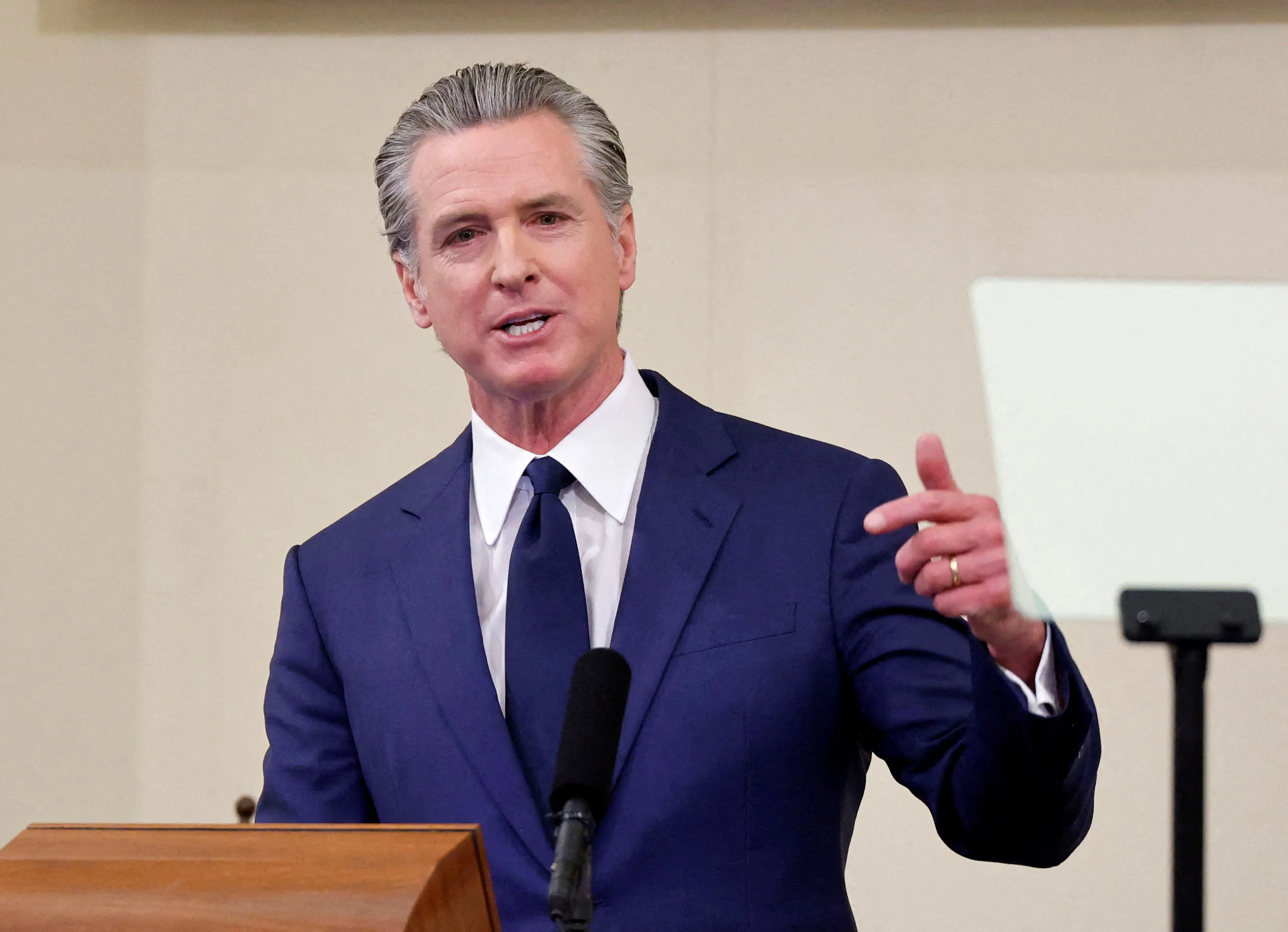
April 8, 2026
Daniel Cohen
Entertainment & Lifestyle
Faith is strengthened through consistent exposure to God’s Word, thoughtful study, and intentional choices about what shapes our thinking. For many believers, that process once revolved solely around weekly church attendance and personal Bible study. Today, however, digital media plays a significant role in how people learn, reflect, and grow.
That reality raises an important question: How does streaming faith-based content actually strengthen faith? When used intentionally, Christian streaming can become a meaningful support for spiritual growth, reinforcing biblical truth, encouraging perseverance, and helping believers stay anchored in Scripture throughout the week.
Faith Grows Through Consistency, Not Occasional Moments
Spiritual growth rarely happens through isolated experiences. It is shaped over time through repeated engagement with truth. Faith-based streaming helps support that consistency by making biblical teaching readily available.
Instead of relying only on a single sermon each week, believers can:
- Revisit messages that stood out
- Watch teaching throughout the week
- Listen to podcasts during everyday routines
- Explore Scripture-centered content at their own pace
This steady rhythm matters. When God’s Word becomes part of daily life—rather than something accessed only occasionally—faith deepens naturally.
Faith-Based Streaming Reinforces Biblical Perspective
The messages people consume daily shape how they interpret the world. News, entertainment, and social media often present values that conflict with Scripture. Faith-based streaming provides an alternative voice rooted in biblical truth rather than cultural pressure.
Christian platforms offer content that:
- Interprets current events through Scripture
- Encourages discernment rather than fear
- Affirms God’s sovereignty in uncertain times
- Helps believers think clearly about culture, identity, and purpose
Programs such as The Jack Hibbs Podcast, The Prophecy Pros, and worldview-focused documentaries on Real Life Network help viewers process complex issues without losing their biblical grounding.
Learning Deepens Confidence in What You Believe
Faith grows stronger when understanding grows deeper. Many believers struggle not because they lack sincerity, but because they feel unsure how to answer hard questions—whether their own or those raised by others.
Faith-based streaming addresses this need by offering apologetics and teaching that strengthen confidence in Scripture. On Real Life Network, programs like Cross-Examined with Frank Turek, The Creation Today Show, and In Depth Apologetics for Kids help viewers think clearly about faith, science, history, and truth.
When believers understand why they believe what they believe, their faith becomes steadier and more resilient.
Stories of Faith Encourage Perseverance
One of the most powerful ways faith is strengthened is through testimony. Seeing how God works in the lives of others encourages perseverance during personal trials.
Faith-based documentaries and testimonies remind viewers that:
- God works through ordinary people
- Faithfulness often involves hardship
- Redemption is possible even after deep struggle
- God’s purposes extend beyond present circumstances
Documentaries such as Louis Zamperini, Billy Graham: A Life Remembered, The Listening Road, and The Call provide real-life examples of faith lived out under pressure. These stories encourage viewers to remain faithful even when growth feels slow or unseen.
Faith Is Strengthened Through Shared Experience
Faith is not meant to grow in isolation. While streaming is often viewed as an individual activity, it can become a shared experience that strengthens relationships and spiritual growth.
Families might:
- Watch faith-based films together
- Discuss documentaries during dinner
- Let kids engage with Bible-based cartoons
- Talk about sermons throughout the week
Small groups often use streaming content as a discussion starter, breaking longer programs into manageable segments. When faith-based content leads to conversation, it moves from passive viewing to active discipleship.
Real Life Network’s wide range of kids’ programming, sermons, podcasts, and documentaries makes it easier for families and groups to engage together across age levels.
Faith-Based Streaming Reduces Spiritual Noise
Modern life is filled with competing voices. Many believers find that constant exposure to negative or distracting media weakens focus, peace, and clarity. Choosing faith-based streaming helps create a healthier media environment.
By intentionally replacing some entertainment with Christian content, viewers often experience:
- Greater peace of mind
- Reduced anxiety
- Renewed focus on Scripture
- Stronger spiritual discipline
This isn’t about withdrawing from the world, but about choosing what shapes the heart and mind most consistently.
Faith Is Strengthened When Truth Is Accessible
One reason streaming strengthens faith is accessibility. Sermons, teaching series, and devotionals are no longer tied to a specific place or time. This removes barriers that often interrupt spiritual growth.
Streaming allows believers to:
- Continue learning during travel
- Revisit teaching when questions arise
- Stay connected during difficult seasons
- Maintain spiritual habits during busy schedules
Platforms like Real Life Network make this access simple, offering biblically grounded content across devices so faith remains part of everyday life.
How Real Life Network Supports Spiritual Growth
Real Life Network exists to provide content that encourages believers and strengthens faith without unnecessary distractions. Its curated library includes:
- Sermons and teaching
- Apologetics and worldview programs
- Podcasts and short-form content
- Faith-based documentaries
- Kids’ programming that builds biblical foundations
RLN focuses on content designed to support growth, understanding, and encouragement.
Faith is strengthened when believers remain rooted in God’s Word, encouraged by truth, and supported by wise teaching. Faith-based streaming, when used thoughtfully, helps reinforce those foundations, making biblical content accessible, consistent, and relevant to everyday life.
It is not a replacement for Scripture, prayer, or community. But it is a valuable tool that helps faith grow steadily in a world full of competing voices.
Explore faith-strengthening content anytime on Real Life Network.
Related Articles
- Best Faith-Based Documentaries to Watch for Free by Real Life Network
- Where Can I Find Clean Cartoons for My Kids? by Real Life Network
- Disney+, Hulu, and Choosing a Better Streaming Option for Christian Families by Real Life Network
25 min
How Does Streaming Faith-Based Content Strengthen My Faith

April 6, 2026
Real Life Network
World News
In today’s online news cycle, where politics, Israel, and global conflict dominate headlines, biblical truth is being pushed aside for distraction and confusion. The Daniel Cohen Show on Real Life Network, viewers are finding clarity rooted in a biblical worldview, not media bias. While Iran launches missiles, Hamas spreads terror, and Christians are persecuted across the globe, Western culture is consumed with identity debates and moral confusion. This contrast reveals a deeper spiritual crisis that cannot be ignored.
This is not just about current events. This is about truth versus deception.
A World Distracted While Christians Are Under Attack
While much of the West debates pronouns and identity politics, real suffering is unfolding across the globe.
In Nigeria, Islamist terrorists continue to target Christian communities. On Palm Sunday, believers gathered to worship were met with violence. Armed attackers stormed villages, killing innocent people and destroying homes. This is not an isolated incident. It is part of a growing pattern.
Thousands of Christians have been killed in recent years. Entire communities have been displaced. Churches have been burned. Yet global outrage is almost nonexistent.
Why the silence? Because Christians do not fit the preferred victim narrative of the modern media.
When a culture refuses to acknowledge evil, it becomes complicit in its spread.
The same pattern is unfolding in Syria. Following political upheaval, radical groups have targeted Christian populations, driving them from their homes and erasing centuries of history. What was once a thriving Christian presence has been reduced to a fraction of its former size.
This is not random. This is ideological. If the Church does not speak, who will?
Stay informed with reporting grounded in truth by watching content on Real Life Network, where these stories are not ignored.
Israel, Iran, and the Battle Over Truth
At the same time, misinformation continues to spread about Israel.
When Iran launched ballistic missiles toward Jerusalem, fragments landed near holy sites, including the Church of the Holy Sepulcher. In response, Israeli authorities temporarily restricted access to protect worshipers of all faiths.
Yet the narrative quickly shifted.
Claims surfaced accusing Israel of targeting Christians. The reality was the opposite. Israel was protecting lives while under active threat. This is the pattern. Truth is replaced with narrative.
Israel is defending life while its enemies deliberately target civilians and sacred spaces.
Iran’s actions are not limited to military targets. They threaten Jews, Christians, and Muslims alike. The danger is real, especially in places like Jerusalem’s Old City, where narrow streets make emergency response nearly impossible.
Understanding this reality requires discernment.
Without it, people are easily misled by emotionally driven narratives that collapse under scrutiny.
For deeper, biblically grounded analysis of Israel and global conflict, continue watching on Real Life Network.
A Culture Losing Its Moral Compass
Beyond global conflict, there is a deeper issue unfolding within Western culture.
Moral clarity is being replaced with confusion.
A tragic example is the lack of attention given to violence that does not fit a political narrative. When a woman was murdered in Wisconsin for her political beliefs, the story received little national attention. The response would likely have been very different if the roles were reversed.
This selective outrage reveals a deeper problem. The media shapes perception, and when it chooses silence, truth is buried.
At the same time, political leaders increasingly use religious language for cultural and political gain. Scripture is quoted, but often detached from its true meaning. Faith becomes a tool rather than a foundation.
Discernment is essential. Faith without truth is empty, and truth without application is ignored.
A biblical worldview is not optional in times like these. It is essential for seeing clearly.
The Church must recognize what is happening. Silence is not neutrality. Silence is surrender.
In a world filled with noise, confusion, and competing narratives, the need for truth has never been greater. The persecution of Christians, the conflict in Israel, and the moral drift of Western culture all point to a deeper spiritual battle.
The question is not whether these things are happening. The question is whether we are willing to see them for what they are.
For more bold, biblically grounded content that speaks truth into today’s most pressing issues, visit Real Life Network.
Related Articles
25 min
Missiles, Martyrs, and Moral Confusion: A World Losing Clarity

April 1, 2026
Daniel Cohen
World News
In today’s world of online news, politics, and Christian streaming, the fight for biblical truth is more urgent than ever. From the Daniel Cohen Show on the Real Life Network, viewers are turning to bold, unfiltered reporting that cuts through media bias and exposes what’s really happening in Israel, Iran, and the West. From Hamas tactics to cultural deception and moral confusion, this conversation reveals how a dangerous ideology known as suicidal empathy is reshaping our world.
This is not just about headlines. This is about a civilization wrestling with truth itself.
The Rise of Suicidal Empathy in a Confused Culture
There is a growing belief in modern culture that compassion means affirming anything and everything, even when it leads to destruction. That helping someone means agreeing with their choices, regardless of the consequences. That resisting evil is somehow unloving.
That is not compassion. That is surrender. This is what can only be described as suicidal empathy.
In Iran, the regime has reportedly lowered its recruitment age to just twelve years old. Children are being armed and placed at checkpoints. Boys who should be playing sports are instead being trained for war. This is not strength. It is desperation.
At the same time, groups like Hamas and Hezbollah continue to operate from within civilian populations. They store weapons in schools and hospitals. They disguise operatives as journalists. They manipulate the optics, knowing the Western media will amplify their narrative.
The enemy hides behind innocence while exploiting the compassion of the West.
This distortion creates confusion. It paralyzes moral clarity. And it leaves many unable to distinguish between good and evil.
For those seeking clear, biblically grounded reporting, you can watch full episodes on the Real Life Network, where truth is not filtered through political agendas.
When Narratives Replace Reality
One of the most consistent themes today is that things are not what they appear to be.
A man presented as a journalist is revealed to be a terrorist operative. A school becomes a weapons depot. A protest described as grassroots turns out to be highly organized and well funded.
Even culturally, the same pattern exists.
A viral moment shows a beauty pageant contestant whose polished image falls apart when her veneers slip during a live broadcast. It is an uncomfortable scene, but it serves as a powerful picture of something deeper.
What looks convincing on the surface often collapses under the weight of reality. This is true of many modern narratives, especially those tied to politics and identity. They are emotionally compelling but historically and factually disconnected.
When examined through the lens of biblical truth and objective reality, they cannot stand.
When truth collides with reality, the manufactured narrative cannot stand.
This is why discernment matters. Without it, people are swept into movements and ideas that sound compassionate but are rooted in deception.
Stay anchored in truth by engaging content that prioritizes a biblical worldview on the Real Life Network.
A Culture That Offers Death Instead of Hope
Perhaps the most heartbreaking example of suicidal empathy comes from a tragic story in Spain.
A young woman, just 25 years old, endured severe trauma after being assaulted. In the aftermath, she suffered physically and emotionally, eventually becoming paralyzed after a failed suicide attempt. Instead of receiving sustained care, restoration, and hope, she was ultimately granted euthanasia. Her life ended not because hope was impossible, but because hope was never fully pursued.
This is the devastating outcome of a culture that prioritizes ending suffering over redeeming lives. It sends a message that some lives are no longer worth fighting for.
But the biblical worldview tells a different story. Every human being is created in the image of God. Every life has value. Suffering is real, but it is not the end. Redemption is possible, even in the darkest moments.
A life in pain is still a life with purpose, and redemption is always possible through Christ.
There are countless testimonies of people who stood at the edge of despair and found new life, new purpose, and lasting hope through Jesus Christ. That is the message the world desperately needs. Not surrender. Not silence. Not death. Hope.
In a time when truth is blurred and compassion is redefined, it is more important than ever to stand firm in a biblical worldview. The issues facing Israel, the rise of cultural confusion, and the spread of suicidal empathy all point to a deeper spiritual battle.
The question is not just what is happening in the world. The question is whether we are willing to see it clearly.
For more bold, biblically grounded content that speaks truth into today’s most pressing issues, visit the Real Life Network.
Related Articles
25 min
The Dangerous Lie of Suicidal Empathy: Israel, Iran, and a Culture Losing Truth
.webp)
March 30, 2026
Daniel Cohen
Entertainment & Lifestyle
Christian media is in the middle of a noticeable shift. For decades, faith-based television networks shaped how sermons, worship services, and Christian programming reached homes. Viewers tuned in at set times, flipped channels, and built routines around broadcast schedules. Today, however, many believers access sermons and Christian content on phones, tablets, and smart TVs on demand.
That change has prompted an important question: Will Christian streaming platforms eventually replace traditional Christian TV channels?
The short answer is no, not entirely. But the relationship between the two is changing in meaningful ways.
Why Christian Streaming Is Growing So Quickly
Christian streaming platforms have expanded rapidly for the same reasons secular streaming has grown: convenience, flexibility, and accessibility. Viewers no longer have to plan their day around a broadcast schedule. Instead, they can watch content when and where it fits their life.
Streaming platforms allow believers to:
- Watch sermons and teaching on demand
- Revisit messages throughout the week
- Choose content that fits their stage of life
- Stream across phones, tablets, and televisions
- Access a wide range of teaching styles and topics
For younger viewers and busy families, this flexibility is especially appealing. Many are accustomed to on-demand media and naturally expect the same from faith-based content.
What Traditional Christian TV Still Does Well
Despite the growth of streaming, traditional Christian television remains valuable. Broadcast TV offers a sense of structure and familiarity that many viewers still appreciate. For some households—particularly older viewers or those without reliable internet—television remains the most accessible option.
Christian TV channels continue to provide:
- Scheduled programming that builds routine
- A sense of shared viewing with a broader audience
- Familiar voices and trusted ministries
- Simplicity for viewers who prefer turn-on-and-watch access
In many homes, Christian television still plays a central role, especially during mornings, evenings, or specific teaching blocks.
Streaming Isn’t Replacing. It’s Expanding.
Rather than replacing Christian TV, streaming platforms are expanding how Christian content is delivered. Many ministries now use both broadcast and streaming to reach different audiences in different ways.
Streaming excels at depth and personalization. Viewers can select specific sermons, documentaries, kids’ programs, or apologetics resources rather than watching whatever happens to be on at the moment. This empowers believers to take a more active role in their spiritual growth.
Traditional TV, by contrast, excels at reach and simplicity. It brings content into homes without requiring app downloads, logins, or searching.
These strengths are complementary, not competitive.
How Viewing Habits Are Changing
One of the biggest shifts isn’t technological; it’s behavioral. Viewers are increasingly mixing platforms. A family might watch a Christian TV channel in the morning, stream a sermon later in the week, and let kids watch faith-based cartoons on a tablet in the evening.
This blended approach reflects how people already consume media in other areas of life. Music, news, and entertainment are no longer tied to a single format. Christian media is following the same pattern.
As a result, ministries that embrace both broadcast and streaming tend to reach the widest audience.
What Streaming Offers That TV Can’t
Streaming platforms bring several advantages that traditional TV struggles to match.
First, streaming allows for on-demand discipleship. Sermons, teaching series, and documentaries remain available long after they air. Viewers can pause, rewind, or revisit content as needed.
Second, streaming supports family-specific content. Parents can choose age-appropriate programming for children while adults explore teaching or apologetics resources. Everything lives in one place rather than scattered across schedules.
Third, streaming encourages discovery. Viewers often find new teachers, ministries, or topics they wouldn’t encounter on a single TV channel.
Platforms like Real Life Network are designed with this flexibility in mind, offering sermons, podcasts, documentaries, kids’ programming, and worldview content in a single, curated environment.
Why Christian TV Channels Are Adapting
Many traditional Christian networks recognize these changes and are adapting rather than resisting them. Some now offer:
- Companion streaming apps
- On-demand libraries
- Simulcasts of live programming
- Digital-only content
This evolution shows that the future isn’t an either-or decision. It’s a layered approach where broadcast and streaming work together.
The Role of Christian Streaming Platforms Like Real Life Network
Real Life Network represents how Christian streaming platforms complement traditional TV by filling gaps that broadcast schedules can’t. RLN offers:
- On-demand access to sermons and teaching
- Family-friendly kids’ programming
- Apologetics and worldview content
- Podcasts and short-form teaching
- Documentaries addressing faith, culture, and history
Rather than replacing Christian television, RLN provides an alternative entry point—especially for viewers who prefer digital access or want content tailored to their needs.
For churches and ministries, platforms like RLN also extend the lifespan of teaching. A sermon or documentary doesn’t disappear after airing; it remains available for ongoing use in homes, small groups, and personal study.
What the Future Likely Looks Like
The most likely future is coexistence, not replacement. Christian TV channels will continue serving audiences who value structure and familiarity. Streaming platforms will continue growing among viewers who want flexibility and depth.
Together, they create a broader ecosystem—one that reaches more people, in more ways, at more moments in life.
This diversity strengthens Christian media rather than weakening it. It allows the message of Scripture to reach people wherever they are, through whatever format they’re most comfortable using.
Christian streaming platforms are not replacing traditional Christian TV, but they are reshaping how faith-based content is accessed and experienced. As viewing habits evolve, both models play an important role in sharing biblical teaching, encouraging believers, and supporting families.
For viewers seeking on-demand access to sermons, documentaries, podcasts, and family-safe programming, Christian streaming platforms offer a valuable complement to traditional television.
Explore streaming-based Christian content anytime on Real Life Network.
Relates Articles
- Disney+, Hulu, and Choosing a Better Streaming Option for Christian Families by Real Life Network
- Can Christian Streaming Help With Family Discipleship? by Real Life Network
- Is There a Mobile App for Christian Streaming? by Real Life Network
25 min
Will Christian Streaming Platforms Replace Traditional Christian TV Channels?

March 27, 2026
Real Life Network
Faith & Culture
Introduced in September of 2025, the Chloe Cole Act, named for the young woman who bravely speaks out against “gender affirming care,” would prohibit health care providers, clinics, and hospitals from carrying out or facilitating “gender transition” procedures on minors, and allow those harmed to bring suit with an extended statute of limitations of 25 years beyond the minor’s 18th birthday.
This important bill needs to be passed and signed into law. I began raising awareness about protecting trans-identifying children in 2015 from medical experimentation, and I’m grateful that this bill has been proposed. Prohibiting these procedures is exactly what needs to be done.
Furthermore, by allowing patients to sue practitioners for damages up to 25 years later, this legislation will cause health care professionals to have “skin in the game” and decide whether carrying out or facilitating “gender transition” for minors is worth the risk to them personally and professionally.
Chloe Cole and I have a lot in common in advocating for the passage of this bill.
Sadly, both Chloe and I experienced distress as minors and were both diagnosed with gender dysphoria, given cross-sex hormones, and had healthy body parts surgically removed to our lasting regret. The gender therapists, clinics, and hospitals from which we sought care misled each of us into thinking gender therapies were the only answer to relieve our distress. Both of us have emphasized our early identity distress stemmed from deeper issues.
Chloe Cole started puberty blockers at age 13 and underwent a double mastectomy at 15 — only to return to identifying as the woman God designed her to be in her late teens. Chloe reported her childhood at times was challenging as the youngest of five children, and at an early age she exhibited signs of autism and ADHD but was not officially diagnosed until her late teens. She cites the onset of early puberty, social media influence, and mental health struggles for warping her thinking and making her vulnerable to medical intervention.
My struggle began early in childhood after being cross-dressed at the hands of my grandmother at the age of four and being sexually abused by a family member. As a teen, I secretly cross-dressed and identified as a female at age 13. I continued struggling with my identity, starting on female hormones at the age of 35 in 1976, and started feminizing surgeries on my body. At the age of 42, after only two visits, my gender therapist advised me that surgery would relieve my gender distress, so I underwent what was called “sex change surgery.” After eight years identifying as a woman, with the help of psychotherapy, I began the journey back to restoring my God-given male identity.
Both Chloe and I found that hormones and surgeries are not effective in resolving early childhood distress that underlies dysphoria.
Our common ground has us publicly stepping forward to tell our personal stories of having needlessly suffered the unimaginable and horrific consequences of using surgeries and hormones to alter perfectly healthy bodies into resembling the opposite sex, so-called “gender affirming care.” It’s not care at all, but medical malpractice, and the lawsuits are coming.
We speak out and advocate for laws to end the practice of transgender medical interventions, particularly for minors, because they inflict egregious harm and dehumanize a person’s ability to function as God designed. We testify in legislative hearings, along with so many other advocates for protecting children, and clarify that gender transition is often driven by social influence, trauma, and inadequate mental health care.
I started speaking out about protecting kids from hormones in 2009 on a Canadian television show called “16x9,” Canada’s version of “60 Minutes.” In the years since, I’ve written books and articles, participated with organizations, such as Alliance Defending Freedom and the Heritage Foundation, bringing doctors, parents, and regretters to the same table to shed light on the harms being perpetuated by practitioners of “gender medicine.” I started meeting with legislators on Capitol Hill in D.C. in 2019 with Tony Perkins of Family Research Council and traveling to individual states to testify to the harms and to advocate for laws to prohibit hormones and surgery for trans-identifying children.
Chloe Cole started testifying to legislators at the young age of 17 and has been an extremely effective voice for opening people’s eyes to the widespread harms.
Testimonies from Chloe, myself, and many others confirm that the harmful effects of hormones and surgical procedures for the treatment of gender dysphoria go far beyond the teen years; the harm to bodies, in fact, is often permanent.
Thank God for the many former trans-identifying people, parents, lawmakers, pastors, medical doctors, educators, athletes, podcasters, and others who have stood for years, and are standing now, for truth and against this evil deception.
You can too. Contact your members of Congress here. For more information on how the church can respond, see the FRC resource, “Embracing God’s Design.”
This article was originally written by Walt Heyer and published on The Washington Stand. You can also find more content like this on the Real Life Network.
25 min
2 ‘Gender Transition’ Regretters Find Common Ground in Protecting Kids

March 26, 2026
The Washington Stand