
Stream Real Life Network Now

WATCH NOW
Biblical Worldview

Faith & Culture
25 min
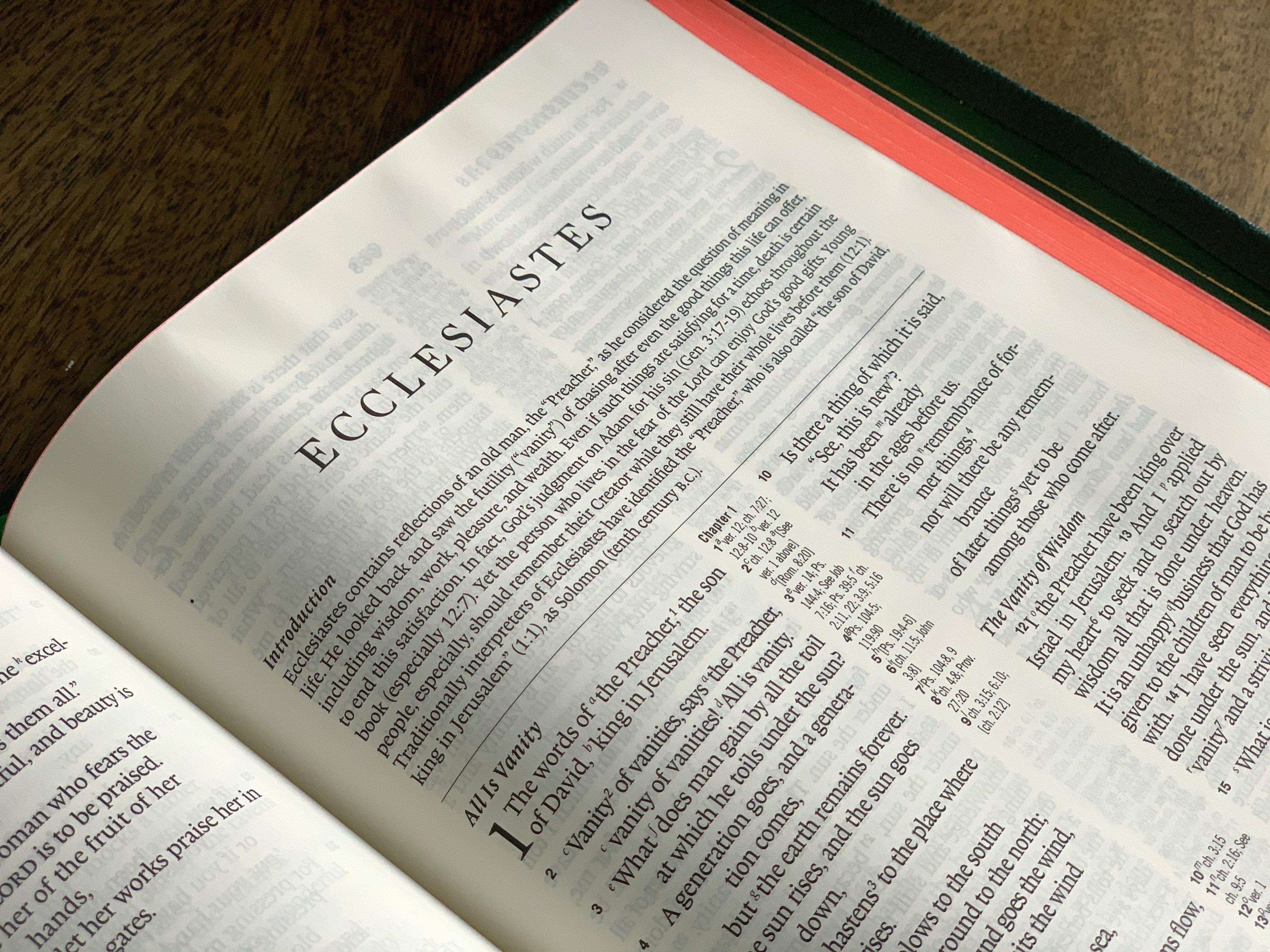
The Wisdom of Ecclesiastes for the Age of Superintelligence
As AI safety researchers warn about the risks of superintelligence, questions about the industry's priorities are growing. Discover why technological advancement must be guided by wisdom, and how Scripture calls Christians to trust God rather than fear the future.
The artificial intelligence community just waved goodbye to yet another top safety and regulation official — and he offers a unique angle in his warning to the world.
David Robinson had been leading safety reports for OpenAI, the maker of ChatGPT. Robinson resigned in the first week of October, stating that the industry’s approach to safety has been stemming from a broken culture. He penned the following words in a piece for The Atlantic, which contain more truth than perhaps he even knows: “The future depends on wisdom that Silicon Valley lacks.”
We’ll come back to that.
His departure comes on the heels of several other prominent AI safety researchers abandoning the industry. Their exits have paired with dreadful public warnings about the future of this technology, leaving the American people to grapple with the headlines and the unknown.
Take Jacob Coxon, for example. After leaving Claude developer Anthropic in September, he wrote on X that top tech labs are “gambling with our lives” by racing toward self-improving superintelligence. He went on to reveal that the people building AI “earnestly believe that it could kill us all by the end of the decade.”
Comforting.
For clarity, the industry term “superintelligence” refers to a hypothetical AI system that developers believe could surpass humans in overall knowledge and capability. This could happen through recursive self-improvement (RSI) in which AI models design and continually improve their own successors.
While the Trump administration has taken to using the term as a reference to AI more broadly, Coxon used it as the industry intends: the potential nightmare of AI evolving beyond our ability to contain.
Let’s go back to David Robinson for a second. Beyond diagnosing the issue of a “lack of wisdom,” he went on in his article to describe the kind of wisdom that is desperately needed — the kind that shows us “how to handle dangerous technology and, more fundamentally … what it means to care for people.”
This kind of wisdom has only one source.
Proverbs 4:7 states, “The beginning of wisdom is: Acquire wisdom; And with all your acquiring, acquire understanding.” The natural question is, how can true wisdom be acquired? Well, it is not gained by happenstance or by any means of passivity.
The word of God teaches that wisdom is found only, “if you look for it as for silver and search for it as for hidden treasure” (Proverbs 2:4).
That same proverb states that when wisdom enters the human heart, it bears fruits of knowledge, discretion, and understanding. Knowledge is pleasant, discretion brings protection, and understanding guards the one who finds it.
If those spearheading AI labs begin searching for wisdom with the same fervency as they do innovation, capital gain, and victory in the arms race, perhaps we might reap the benefits of honing a brilliant technology for human flourishing, rather than threatening it entirely.
In the absence of wisdom, we ought not to expect flourishing. Thus, the need for appropriate guardrails toward that end is becoming increasingly dire.
Whistleblowers coming forward to expose carelessness in the industry is a good thing. Speaking up when danger is on the horizon is profitable. What is not profitable, however, is responding in fear.
The wisest man in history, King Solomon, tells us, “There is nothing new under the sun” (Ecclesiastes 1:9).
The pride of man has reared its head through the latest technology and means of production before. As soon as human beings had the chance, they took brick and mortar and built the tower of Babel, aiming to reach as high as heaven to make a name for themselves — not for the God who gave them clay, water, and sun in the first place.
Today, we are seeing the latest expression of that sinful pride: men thinking they can hold infinite knowledge without it destroying them. Casting wisdom aside, they trust in their own minds and technical ability rather than in God.
In the Garden of Eden, Adam and Eve fell to the temptation of wanting to be all-knowing, like God. He judged that decision then, and He will not be mocked now (Galatians 6:7).
There is nothing more urgent for the unbeliever than to humble themselves, fall on their knees, and cry out to the Creator for salvation. There is, likewise, nothing more urgent for the believer than to refuse every temptation to fear in these times — to live the joyful, abundant life offered to them in Christ.
It is not a suggestion to be unafraid. It is a commandment given us by God, time and time again throughout the Scriptures.
Do not stifle your witness to the watching world.
The book of Ecclesiastes warns us that there are many dark days in this life under the sun, and that we will encounter circumstances which are difficult, perplexing, and often don’t make sense. Yet, there are a few things that author King Solomon found to be good: “Behold, what I have seen to be good and fitting is to eat and drink and find enjoyment in all the toil with which one toils under the sun the few days of his life that God has given him, for this is his lot” (Ecclesiastes 5:18).
New threats to our livelihood may come at alarming rates, but our responsibility as Christians remains the same: Do not dread the future or fear the potential of “superintelligence.” Rather, “fear God and keep his commandments, for this is the whole duty of man” (Ecclesiastes 12:13).
So, keep breaking bread with those you love. Keep enjoying the toil and the lot that God has given you with a grateful heart. Regardless of the news cycle, and whatever may come out of Washington and Silicon Valley — rejoice in what you have been given.
Our lives are but a vapor, a mist, Solomon says. The years go by quickly, and soon, we will return to dust.
That need not be depressing — in fact, let it be motivating as you live the most upright, joyous, and noble life possible along the way. Be encouraged, for we have all the instruction we need to please God in every circumstance, including the ones out of our control.
God says, “I am the Alpha and the Omega, the first and the last, the beginning and the end” in Revelation 22:13. If God is the Omega just as much as He is the Alpha, what is there to fear?
At the end of all things, just as much as at the beginning — He is there. And He rules and reigns at every point in between.
Human history was born from and ends in perfect wisdom, and God will tie the final bow on our story.
Not Sam Altman, or Dario and Daniela Amodei, or Donald Trump, or Xi Jinping — but Jesus Christ will do it, who is the same “yesterday, today, and forever” (Hebrews 13:8).
This article was written by Erica Mendel and originally published on The Washington Stand. For more content like this, visit Real Life Network.
.jpg)
Is It Time to Replace Noisy Entertainment with Faith-Based Family Media?
Is your family’s entertainment adding value or just noise? Discover how faith-based movies, documentaries, and programs can help Christian families make intentional media choices, encourage meaningful conversations, and create a more Christ-centered home.
Entertainment has never been more accessible. A television, phone, or tablet can provide an endless stream of movies, shows, short videos, news, games, and social media without ever reaching the bottom of the screen.
But having more to watch doesn’t necessarily mean families are better served by what they’re watching.
For many households, entertainment has become noisy in more ways than one. Programs compete for attention with faster pacing, stronger language, darker storylines, sexualized content, graphic imagery, and increasingly provocative themes. Algorithms encourage one more episode or video, while families can end an evening having consumed hours of media without feeling particularly rested, encouraged, or connected.
That raises a worthwhile question: Is it time to replace some of that noise with faith-based family media?
For Christian families, the answer may have less to do with watching less and more to do with choosing better.
What Does “Noisy Entertainment” Really Mean?
Noise isn’t necessarily about volume.
Media can be noisy when it constantly demands attention without giving anything meaningful in return. It can be entertainment built around shock, conflict, outrage, anxiety, or relentless stimulation. It can also be content filled with ideas and assumptions that compete with what parents are trying to teach their children.
Even material that isn’t overtly inappropriate can leave viewers feeling distracted or spiritually empty.
Philippians 4:8 gives Christians a useful standard for what deserves sustained attention, directing believers toward things that are true, noble, just, pure, lovely, and praiseworthy. That doesn’t mean every program needs to quote Scripture. But it does challenge families to think about what repeatedly occupies their minds.
Your Family’s Media Diet Matters
The phrase “media diet” is useful because entertainment has something in common with food: what is consumed occasionally matters less than what becomes normal.
One movie is unlikely to define a child’s worldview. Hundreds of hours of stories, characters, values, jokes, and messages over many years can have a much greater influence.
Children learn from stories. They notice which behaviors are rewarded, which relationships are celebrated, which beliefs are mocked, and what characters consider normal.
Adults aren’t immune either. Constant exposure to cynicism, fear, anger, or sexualized entertainment can gradually make those things feel ordinary.
Choosing faith-based media gives families an opportunity to put more spiritually nourishing material into that mix.
Replacing Is Often Easier Than Restricting
Parents can spend enormous energy saying no.
No, you can’t watch that show. No, that movie isn’t appropriate. No, we’re skipping this episode.
Boundaries are sometimes necessary, but they become much easier when there is also a good answer to, “What can we watch instead?” Faith-based streaming provides that replacement.
A family movie night could feature C.S. Lewis: The Most Reluctant Convert, opening conversations about doubt, reason, and conversion. A documentary such as The Listening Road can introduce thoughtful conversations about how people from different backgrounds think about faith. 7 Days in the Holy Land can help families visually connect places in Israel with biblical events.
The goal isn’t simply to remove entertainment. It is to replace some of it with stories and ideas worth carrying into the next day.
Faith-Based Media Can Start Conversations
One of the greatest advantages of watching Christian content together is what happens afterward. A program can naturally lead to questions that might otherwise feel forced:
- What would you have done?
- Why do you think that person responded that way?
- What does Scripture say about this?
- Do you agree with what was said?
Those conversations help turn viewing into family discipleship.
A documentary such as The Call, for example, can lead to discussion about the Great Commission and what evangelism looks like in ordinary Christian life. Way of the Master can prompt older children and adults to think about how they would talk about Jesus with someone who doesn’t share their beliefs.
The screen becomes the beginning of the conversation rather than the end of it.
Not Everything Has to Feel Like Bible Study
Replacing noisy entertainment with Christian media doesn’t mean turning every evening into a classroom. Families still need stories, laughter, discovery, music, and relaxation.
Faith-based media can include movies, animation, travel programs, interviews, biographies, documentaries, podcasts, and conversations. Some content teaches Scripture directly. Other programs simply tell compelling stories shaped by faith, courage, forgiveness, or hope.
That variety matters because healthy family media should still be enjoyable.
The distinction is that entertainment doesn’t need to undermine a family’s beliefs in order to hold its attention.
A Quieter Media Environment Can Help Families Slow Down
Another benefit of intentional viewing is simply reducing the constant demand for stimulation. Mainstream digital media often encourages viewers to keep going. Finish one episode and another begins automatically. Watch one short video and dozens more appear. Attention itself has become valuable currency.
Faith-based streaming can help families establish a different rhythm.
Choose one documentary. Watch a devotional together. Listen to a meaningful conversation. Then turn the television off and talk.
Programs such as Groundworks with Steve Wiggins are particularly suited to this approach because brief, Scripture-centered episodes can provide meaningful input without consuming an entire evening. Living Fearless with Andy and Hedieh can similarly encourage thoughtful conversation about faith and everyday challenges.
The objective isn’t to fill every available minute with Christian programming. It’s to make more intentional choices about which voices receive the family’s attention.
Parents Set the Tone
Children eventually make their own media choices. Before that happens, parents have an opportunity to model discernment. That includes more than policing what children watch. Kids also notice what their parents consume.
If adults spend hours immersed in angry commentary, dark entertainment, or endless scrolling while telling children to make healthier choices, the message can become confusing.
Christ-centered leadership in the home means asking the same questions of adult entertainment that parents ask about children’s programming.
- Is this helping or hurting?
- What is this normalizing?
- Is it worth the time being given to it?
- What could take its place?
Those questions can gradually reshape a family’s media habits without requiring an overnight purge of every mainstream platform.
Real Life Network Offers an Alternative
Real Life Network was created to provide a different kind of streaming environment.
Rather than placing biblical programming beside an enormous catalog of conflicting content, RLN carefully curates its library around Christian faith and biblical truth. Viewers can move between films, documentaries, podcasts, Bible teaching, cultural discussions, devotional programs, kids’ content, and live events without leaving that foundation.
That gives families something increasingly difficult to find in modern entertainment: a place where they can discover rather than constantly defend.
Parents still decide what fits the age and needs of their particular family. But the starting point is very different.
Replacing noisy entertainment doesn’t require rejecting technology, storytelling, or even every mainstream show. It means becoming more intentional about what receives a family’s limited time and attention.
Some entertainment merely fills a room. Better media can fill conversations, reinforce truth, encourage faith, and give families something meaningful to carry with them after the screen goes dark.
For Christian households, that makes faith-based family media more than an alternative. It can become one practical way to cultivate a home in which entertainment supports, rather than competes with, what matters most.
Explore biblically curated movies, documentaries, family programs, devotionals, and more anytime on Real Life Network.

World News
25 min
National Security, Israel, and the Questions Behind the 2026 Midterms
As the 2026 midterms approach, national security deserves attention alongside the economy. From Iran and Israel to domestic terrorism and rising antisemitism, congressional decisions carry consequences for American families, religious freedom, and public safety.
The economy matters. Groceries, gas prices, housing costs, and the pressure on American families deserve serious attention. But national security belongs in that conversation, too. The decisions made in Washington affect more than household budgets. They shape the country's ability to confront terrorism, protect religious communities, secure its borders, and respond to threats abroad.
Those connections deserve closer examination. Through The Daniel Cohen Show on Real Life Network, the intersection of faith, national security, Israel, and American politics remains central to understanding the headlines.
The approaching November 3 midterms raise questions that go well beyond which party controls Congress. Who sets national security priorities? How should America respond to Iran and its terrorist proxies? What responsibilities do elected officials have when antisemitism and political violence reach American communities?
National security is not an abstract debate reserved for Washington. Its consequences can reach neighborhoods, schools, houses of worship, and ordinary families.
Iran, Israel, and the Responsibility to Confront Terrorism
Iran remains central to the discussion about American national security and the Middle East. Its support for armed groups, including Hezbollah and Hamas, has made its regional influence a continuing concern for the United States and Israel.
Yet political disagreements over Iran and Israel often become tangled in arguments about military assistance, international law, and America's responsibilities overseas.
Michigan's Senate contest illustrates those competing priorities.
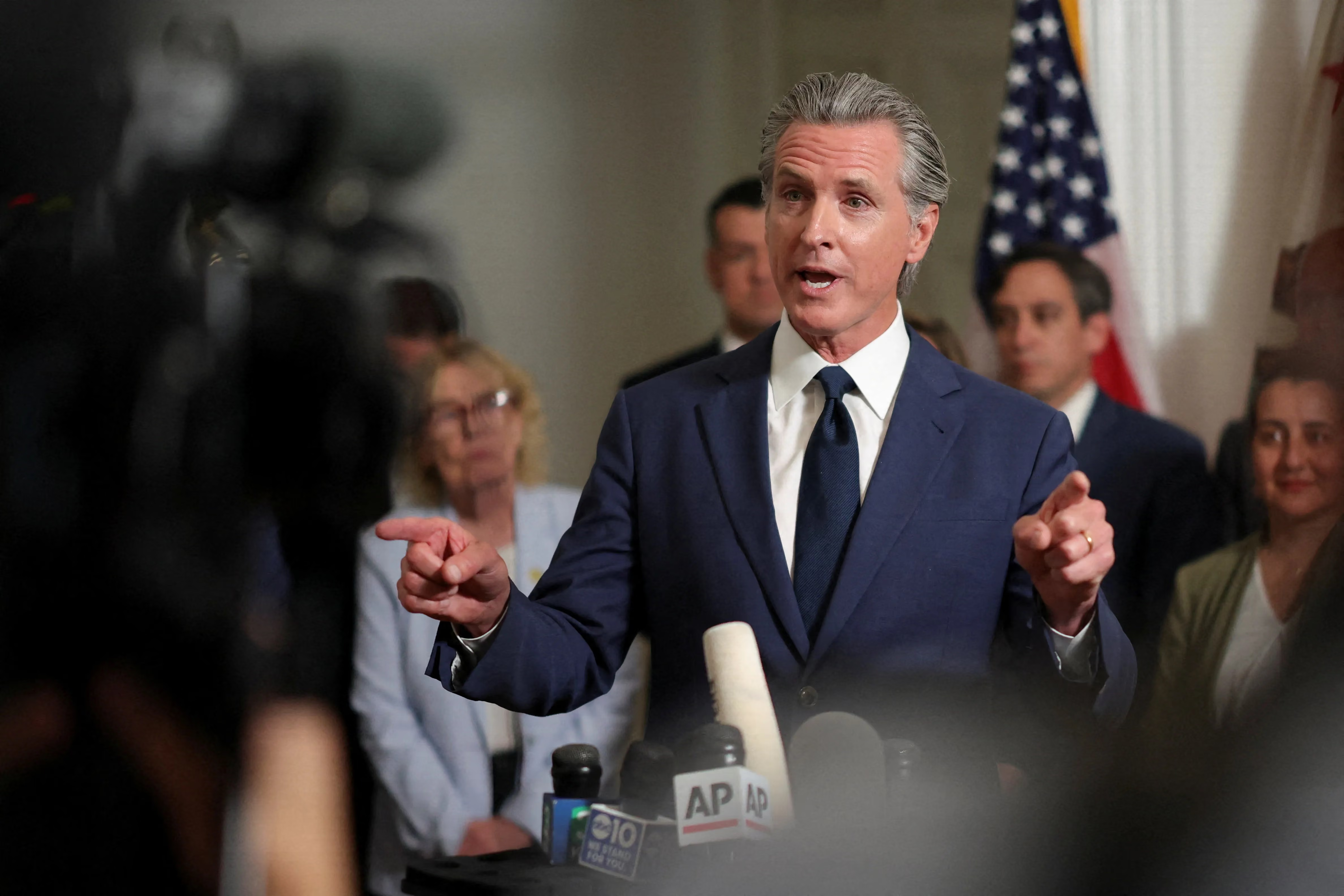
Abdul El-Sayed has argued against unconditional American military assistance to foreign governments, including Israel. In interviews, his position has emphasized applying international law consistently and restricting weapons transfers to governments accused of violating it.
That approach raises legitimate questions about American foreign policy. Military assistance is not an unlimited obligation, and elected officials have a responsibility to scrutinize how taxpayer money is spent.
But the discussion cannot stop there.
Israel faces rocket and missile threats from hostile armed groups and regional adversaries. Defensive systems such as Iron Dome exist to intercept incoming projectiles and protect civilian populations. Any proposal to restrict military assistance therefore deserves careful examination of its potential consequences for defensive capabilities as well as offensive operations.
There is also an important distinction between criticizing a government's military decisions and excusing terrorism directed against its citizens.
The March attack against Temple Israel in West Bloomfield, Michigan, brought that distinction much closer to home. A vehicle carrying incendiary materials was driven into a synagogue complex that also serves children and families. The incident prompted renewed concerns about antisemitic violence and the reach of conflicts originating thousands of miles away.
Political leaders can disagree about Israel's government, military operations, and American foreign assistance. Those disagreements do not diminish the obligation to condemn attacks against Jewish civilians and religious institutions.
No disagreement over foreign policy can justify threatening Jewish families or treating American religious communities as extensions of a foreign government.
The same principle must apply to every community. A synagogue, church, mosque, or school should never become a target because of anger over events elsewhere.
Why National Security Belongs in Congressional Debates
The connection between national security and congressional elections is more substantial than campaign rhetoric might suggest.
Congress controls federal appropriations, establishes statutory authorities, conducts oversight, and plays a central role in shaping the agencies responsible for national defense and domestic security. The Senate also exercises its constitutional responsibility to provide advice and consent on presidential nominations requiring confirmation.
Those responsibilities make congressional debates over homeland security, intelligence gathering, immigration enforcement, and counterterrorism consequential.
An alleged ISIS-inspired plot involving the Mall of America in Minnesota offers an example of the threats federal investigators seek to identify before violence occurs.
According to the account presented by federal authorities, an 18-year-old suspect had communicated about supporting ISIS and allegedly considered carrying out an attack in the United States after plans to travel overseas did not materialize. The allegations require the usual distinction between prosecutors' claims and facts established in court.
But the broader issue remains significant: preventing terrorism requires investigative resources, intelligence cooperation, appropriate legal authorities, and effective oversight.
Protecting the public also requires precision.
Terrorist organizations are responsible for their own violence. Their actions must not become an excuse to assign collective guilt to immigrants, Muslims, or particular ethnic communities. Effective counterterrorism depends upon identifying actual threats rather than confusing religious identity or national origin with criminal conduct.
That is why national security policy requires more than slogans about being tough or compassionate.
The public deserves to understand how candidates would approach terrorism investigations, border security, intelligence oversight, civil liberties, and the constitutional limits of government authority.
Those questions belong alongside debates about inflation, healthcare, education, and taxation.
Antisemitism, Political Rhetoric, and the Limits of Party Loyalty
Three years after the Hamas-led October 7 attack, the anniversary remains a painful occasion for Jewish communities around the world.
Approximately 1,200 people were killed in the attack, and 251 were taken hostage. The consequences have extended far beyond Israel, including heightened security concerns and incidents of antisemitism in the United States.
New York City's response to the anniversary illustrates how difficult the public conversation has become.
Mayor Zohran Mamdani's remarks acknowledging the suffering caused by October 7 while criticizing Israel's subsequent military actions became a point of contention among activists with sharply different expectations.
The controversy reflects a larger problem in contemporary politics: expressions of sympathy, criticism, and disagreement are increasingly measured against demands for complete ideological agreement.
Recognizing the suffering of Israeli victims does not require ignoring Palestinian civilian suffering. Likewise, expressing concern for Palestinians does not require minimizing the October 7 atrocities or excusing antisemitism.
Both truths can be maintained without contradiction.
Political movements become less capable of honest debate when every disagreement is treated as betrayal. Acknowledging suffering should not depend upon whether the victims belong to a preferred political or religious community.
For Christians, Scripture establishes a higher standard than political loyalty. Human beings bear God's image, and the obligation to speak truthfully does not disappear when truth becomes inconvenient to a favored party or cause.
Proverbs 18:17 reminds readers that the first account of a dispute may sound persuasive until it is examined. That principle applies to viral videos, campaign statements, accusations of extremism, and claims about political opponents.
Christian discernment requires consistency: condemn terrorism without qualification, reject antisemitism without hesitation, and examine political claims without surrendering judgment to party loyalty.
The approaching midterms will generate enormous attention around polling, turnout, and campaign strategies. Those subjects are part of the political process, but they should not obscure the governing responsibilities attached to the offices being contested.
A Senate vote can affect national security appointments. A congressional appropriation can determine resources available to federal agencies. Legislative oversight can expose failures or strengthen accountability.
Understanding those responsibilities provides a more useful framework than treating every political development as a contest between personalities.
The same seriousness belongs in discussions about Israel, Iran, and religious freedom. American foreign policy involves real tradeoffs, and domestic security decisions can affect both public safety and constitutional liberties.
No political party possesses a monopoly on wisdom, and no candidate should be exempt from difficult questions.
The standard should remain consistent: evidence before accusations, clarity before slogans, and responsibility before political convenience.
Follow the intersection of biblical truth, Israel, national security, and American current events through The Daniel Cohen Show, streaming free on Real Life Network

World News
25 min
New California Law Requires Churches to Implement Pro-LGBT ‘Anti-Hate Speech’ Training
California’s new workplace anti-hate speech training law is raising religious liberty concerns. Christian advocates warn that vague language could pressure churches and religious employers to provide training that conflicts with their biblical beliefs.
A newly enacted law in California that requires virtually all employers to give employees “anti-hate speech” training is raising red flags, as experts say that the mandate could force churches to provide training that conflicts with sincerely held biblical beliefs regarding sexuality, gender, and marriage.
Late last month, California Governor Gavin Newsom (D) signed into law AB 1803, a measure that requires all employers with five or more workers, including all churches and other nonprofit religious organizations, to provide employees with “anti-hate speech” instruction. But as observers like the California Family Council (CFC) are pointing out, the legislation does not define “hate speech,” instead handing the job to the state’s Civil Rights Department. The bill mandates that the training must confront workplace speech that “vilifies, humiliates, or incites hatred” against individuals based on what the state has already deemed a protected characteristic, which includes sex, gender identity, gender expression, and sexual orientation.
The CFC goes on to observe that the statute, which will go into effect on January 1, 2028, never mentions churches or religious nonprofits and their First Amendment rights to hold sincerely held religious beliefs about sexuality and gender. It also “fails to separate protected expression from unlawful conduct,” noting that the Supreme Court held in 2017 that “the First Amendment has no hate speech exception.”
Greg Burt, who serves as vice president of CFC, further pointed out the problems with AB 1803’s vague language regarding key terms that it says constitute “hate.”
“What does it mean to vilify? What speech actually humiliates?” he wondered during “Washington Watch with Tony Perkins” Tuesday. “[M]any times legislators consider many Christian beliefs when they’re expressed — especially regarding sexuality or gender — they accuse us of hating people. That’s [the] farthest thing from my mind. But we are simply advocating for our view that sex is determined by biology, and God created us both male and female. Well, to many people that is humiliating and that incites hatred. And so that’s the problem with this legislation.”
Burt went on to clarify that AB 1803 is being folded into a previously enacted statute that mandates sexual harassment training, which already specifies that using accurate biological pronouns constitutes “harassment.” “[Businesses are] already required to go through sexual harassment training, and we found out several years ago they redefined what sexual harassment means to include gender identity,” he explained. “… [The] California Civil Rights Department says misgendering is harassment, and so this training is on top of that already egregious training.”
As for how employers can fulfill the required training, Burt noted that hiring outside trainers is allowed, but the state-provided training that includes pro-LGBT messaging is free. “Right now, the state puts together a free curriculum — that’s how they do it with sexual harassment training, but you’re not required to use that training. You can come up with your own. But we don’t know exactly what ‘anti-hate’ is going to include, right? [Their] definition of speech that ‘humiliates’ — what does that mean? It really depends on the person who’s receiving the language.”
Burt further urged churches and other religious organizations in the Golden State to push back vigorously against the mandate. “What I think the state is doing is it’s trying to intimidate churches into following through with this,” he lamented. “They should not be receiving any kind of ideological training from the state on any moral issue. That’s why what churches need to be doing is asking for religious accommodations. The federal law and the state law already require businesses to accommodate people’s faith if they’re being required to do something that violates their faith. … [T]his is one of those points in history here in California where civil disobedience is going to be necessary.”
Burt concluded by emphasizing that state officials in California are counting on churches to kowtow to their demands instead of standing up for the constitutional freedoms, which has already proven to be a winning strategy.
“I’m sure they’re already thrilled that they get to retrain the entire population to believe what they believe regarding gender identity,” he reflected. “And so once we get accustomed to this and say, ‘Well, this is just what California requires, I guess we have to do it.’ No, you don’t. Folks, you’ve got to resist, and that includes individual employees. That’s what we are encouraging people to do. And we are having success. We have some attorneys we’re working with, and when people have been asking for religious accommodations, they have been accommodated.”
This article was written by Dan Hart and originally published on The Washington Stand. For more content like this, visit Real Life Network.

World News
25 min
Unhappiness and Isolation Are Rising among Young People, but Those Who Are Religious Are Thriving
As loneliness and unhappiness rise among young Americans, research links religious faith and marriage with greater happiness, stronger relationships, and better educational outcomes, while Christian leaders urge Gen Z to put biblical truth into practice.
Social science data continues to emerge showing that America’s young people are increasingly non-religious, isolated, and unhappy. But the data also shows that young people who are religious are thriving, with higher levels of happiness, more friends, are more likely to be married, and better educational outcomes than their non-religious peers.
Research released by the Institute for Family Studies (IFS) notes that since 2000, reports of unhappiness among young people aged 20 to 35 has more than doubled, surging from 11% to 23%. This has coincided with an era where young people are isolating at unprecedented levels as they immerse themselves in screens, pornography, social media, video games, and AI chatbots. “Socializing among young men and women is down more than 50%, from 12 hours to 5 hours per week,” IFS observes. Unsurprisingly, this has led to a precipitous decline in relationships and dating, with two thirds of young people not in serious relationships and teen dating down 50%.
As unhappiness and loneliness has risen among young people, so too has secularism. In March, Arizona Christian University’s Cultural Research Center reported that only 1% of Gen Z (ages 18 to 22) and 4% of adults in general has a biblical worldview (defined as “individuals whose beliefs and behaviors are consistently aligned with biblical principles”). The figure is down significantly since 1994, when 12% of adults reported a biblical worldview.
But married and religious young people seem to be largely escaping the unhappiness trap, with 50% saying they are “very happy” compared to just 16% of their secular, unmarried peers. As IFS points out, “faith and family remain two of the strongest bulwarks against loneliness and despair.”
For young men in particular, religion appears to be the hinge that catapults them into a future of contentment and success. Data shows that religious men are more likely to desire and attain marriage than those who are non-religious. They are also almost twice as likely to report feeling “very happy” and to say that life feels “purposeful/meaningful” than secular men. Religious men also report less mental health issues, anxiety, and depression. They also have bachelor’s degrees at far higher rates than non-religious men (46% vs. 16%) and report finishing trade school/apprenticeships at 29% (vs. 14% of secular men).
Where a happier minority of young people find meaning and purpose in religion, a far larger percentage appear to hold politics and government as their primary focal point, especially with the rising popularity of socialism.
“[M]y generation has grown up in a very hyper political age,” Counteract USA Founder and CEO Abigail DeJarnatt contended during “Washington Watch” Friday. “… [Many believe that] government can be the arbiter of morality. That’s what happens when Marxism infuses into our society. And that’s just what we’ve grown up with. So when you’re online and you’re on TikTok [watching] recipe videos, there’s also political ideologies that are being pushed on and talked about amongst Gen Z. So it’s not surprising at all that this is where we’re at, and I think we’ll just continue to see a lot more of it among young people.”
DeJarnatt further explained how her ministry is attempting to engage Gen Z with truth. “The primary thing that we’re focusing on with Gen Z Christians is teaching them a framework of biblical critical thinking,” she explained. “Because the reality is, a lot of Gen Z’s world is unfolding online. A lot of the conversations, online friendships, relationships. … What we’re trying to teach Gen Z to do is look at what they’re seeing online and ask, ‘Is it true? Is it not?’ … We’re trying to tell Gen Z [to] ask questions as fast as we’re scrolling online. Slow down. … And as Christians, we have to weigh that against the Bible itself.”
DeJarnatt went on to argue that a sense of self entitlement undergirded by Marxism has heavily influenced young people to abandon a solid biblical ethic. “[T]his Marxism that’s invaded our culture, just the hyper individualism in Gen Z,” she emphasized. “[Much of] Gen Z is [saying], ‘We aren’t happy with either political party.’ I think we have this idea that we can have it all. [It’s the] same framework of pick and choose our own ideology to the Bible. … [W]e think, ‘I like this, I don’t like this. I’m going to choose this. I’m not going to choose this.’”
DeJarnatt concluded by urging young believers to move beyond their comfort zones in order to spread the gospel to an isolated and unhappy wider culture.
“We see so many young Christians who are taught all these amazing things and their amazing churches that are Bible-based,” she noted. “They’re in Bible-based families that are going back to Scripture, but we need to teach Gen Z to take all the things that they know and actually apply them to the key conversations happening around us, having the conversations, just getting Gen Z to talk to each other … articulating those beliefs so that they actually become effective in wielding the sword of the spirit in the spiritual battle that’s raging all around us. They have the tools. They just need to know how to use them well.”
This article was written by Dan Hart and originally published on The Washington Stand. For more content like this, visit Real Life Network.

World News
25 min
Red States Combine Forces to Choke Off Abortion Pill Pipeline
A woman’s account of being forced to take abortion pills is fueling renewed scrutiny of mifepristone, mail-order prescribing, state abortion laws, and shield laws protecting providers who send the drug across state lines.
Like a lot of girls her age, Rosalie Markezich knew the standard talking point about mifepristone. Don’t worry, the online sites say. It’s just like taking a Tylenol. “Well, I’ve taken a lot of Tylenol in my lifetime,” she tells people now, and “it has never killed my child. It has never ruined my life, and it has never made me bleed for over a week.”
Unlike most moms, Rosalie never got the chance to hear that lie from her doctor, because she didn’t ask for a prescription in the first place. Her boyfriend ordered the pills in her name, and without any sort of ID or verification, the drugs magically showed up at her house. “I told him, ‘No thank you. I do not want you to do that, and I do not want them.’ Well, [he] found the website. He filled it out all with my personal information that I did not give him to use … [and] $150 later, he successfully ordered abortion pills through the mail from a [California] doctor named Remy Coeytaux, shipped directly to my doorstep.”
When he forced her to swallow them, her plan was to go inside and throw them up. But it was too late. “That night, I laid on a blood-soaked towel by myself, choking on my own breath. I remember my body rejecting it, rejecting its own breath — the one thing that it needs. I was praying to God, ‘Please take me too.’” Now, filled with grief and anger at how the government has robbed her of everything the Left insists this debate is about — choice, privacy, and safety — she’s fighting back.
“The FDA was wrong,” Rosalie said emotionally at the Pray Vote Stand Summit. “They allowed these drugs. They allowed them to go through the mail. They knew the warnings. They knew what could happen. And yet they are still sending them through the mail after seeing firsthand what it has done to women and children.”
We’re talking about a drug, Alabama Attorney General Steve Marshall (R) reiterated, “that is facilitating domestic abuse and even murder.” And yet, four years ago, he shook his head, pro-lifers were at this same event celebrating the overwhelming victory of Dobbs, a success story a half-century of prayers and activism in the making. “But I don’t think any of us that were on that stage left the stage believing that we would have more abortions today than we had at that time.” All because of mifepristone — and the presidents since 2022 who have turned a blind eye to the violent consequences.
“It’s why, frankly, [we] are still amazed at this administration — which talks about being the most pro-life administration — simply burying their head in the sand on what we know is going on around us.” With a single signature, President Trump could turn this whole situation around, Marshall insists. “The data is there. … They have the capacity to be able to do it. The question is whether or not they have the political will.” And so far, they have not.
Instead, they’ve created a black market for abortion drugs that not only puts women who voluntarily take the pill in life-threatening situations, but sets fire to every pro-life state law in America. Right now, it doesn’t matter whether you live in Louisiana or New York, abortionists are illegally flooding every zip code of the country with mifepristone — and getting away with it.
If the Trump administration had the nerve to enforce the federal laws already on the books, Rosalie would be the happy mom of a two-year-old right now. Under the Comstock Act, the Justice Department should be cracking down on anyone shipping abortion pills through the mail — let alone to pro-life states whose voters have already made their voices heard on the issue. But instead, for reasons no one who witnessed the first Trump term can understand, Republican attorneys general like Louisiana’s Liz Murrill (R) are having to fight their way to the Supreme Court just for the right to have their laws respected.
Murrill, who’s already battling the FDA over its ridiculously lax standards on the drug, is expanding the war to states that are knowingly protecting the criminals sending pills into pro-life states. Together with Marshall and Arkansas Attorney General Tim Griffin (R), the trio is suing New York, California, and Massachusetts to try to dismantle the “shield laws” in blue states that refuse to punish anyone mailing mifepristone.
“They shield the doctor, they shield the pharmacist, they shield anybody who is involved with what I call the pill pipeline, sending those pills into our state,” Murrill told Family Research Council President Tony Perkins on “This Week on Capitol Hill.” “And they are doing it for a political purpose. They are doing it because they disapprove of the laws that our state has passed. And so they want to flood our state with those pills illegally.”
To get away with it, the prescribers leave no trace on the bottles. “They sanitize it. And so, you will never you may never know who actually prescribed those pills. … [They’re] filling the prescription bottle and sending it into our state with no name on it, no pharmacy on it, no recipient name.”
Murrill explained that her team actually tested the current market, having agents order drugs online. Asked if there’s any kind of consultation with a medical person, she replied no. “There’s none. They’re not even verifying who’s even buying them. … They mail them to anybody who basically fills out a form on the internet. So it’s extraordinarily irresponsible.” Not to mention, she added, that “they are directly trying to nullify our laws.”
And regardless of whether the women are coerced or ordering these of their own will, the AG sadly acknowledged that the number of emergency room visits is skyrocketing — mainly because no one is adhering to the FDA’s 10-week limit for the drug. “Is any other drug treated like this?” Perkins wanted to know. “None,” Murrill replied. “None,” she repeated. “That’s why I say over and over again … this is not health care. There is nothing about this that is health care. I mean, there is no situation in the medical field where they would do this with drugs or patients.”
That’s why red-state AGs sued the FDA in the first place, because it’s so shocking and unconscionable that a pill sending 10% of women to the ER doesn’t even require a doctor’s visit or approval. “Those rules are not in place anymore. And so, you know, it really poses a significant risk to women all over the country.”
Imagine, she emphasized, if blue states “mailed us cocaine or they mailed us fentanyl.” There would be legal consequences. Or, Perkins suggested, “What if … Louisiana said, ‘You know, we’re not going to work with California and New York on anything related to the Second Amendment. I don’t care what your laws say. We’re not going to support you in that.’” It’s like saying, “I’m going to mail guns to anybody who wants them,” Murrill agreed. “… They have laws that restrict gun ownership and possession in ways that we don’t. … [What if] I decided to violate those laws? And they wouldn’t be able to enforce them if we had a shield law similar to that. But we haven’t done that.”
At the end of the day, this is not a minor issue, the FRC president argued. Not for the baby, not for the mother, not for the constitutional process, and certainly not for state sovereignty. “You know,” Marshall underscored, “we can solve [this] problem right now. We have the ability to do it with the administration that’s in place. And it’s why not only is our prayer so important, but also our ability to stand together is so critical. Because the reality is it’s not about Republican or Democrat. It’s about protecting women’s health and preserving life. That’s our issue. That’s important — and on it, we’re right.”
This article was written by Suzanne Bowdey and originally published on The Washington Stand. For more content like this visit Real Life Network.
Thank you! Your submission has been received!
Oops! Something went wrong while submitting the form.
World News
In a moment when global headlines are filled with confusion, misinformation, and fear, truth matters more than ever. The war between Israel, Iran, and the United States is not just another geopolitical conflict. It is a defining moment that touches biblical prophecy, national security, and the future of freedom. On the Real Life Network, The Daniel Cohen Show continues to cut through the noise, delivering Christian news rooted in biblical truth, a biblical worldview, and clear-eyed analysis of what is really happening in the Middle East and beyond.
Trump’s Ultimatum and the Reality of Power
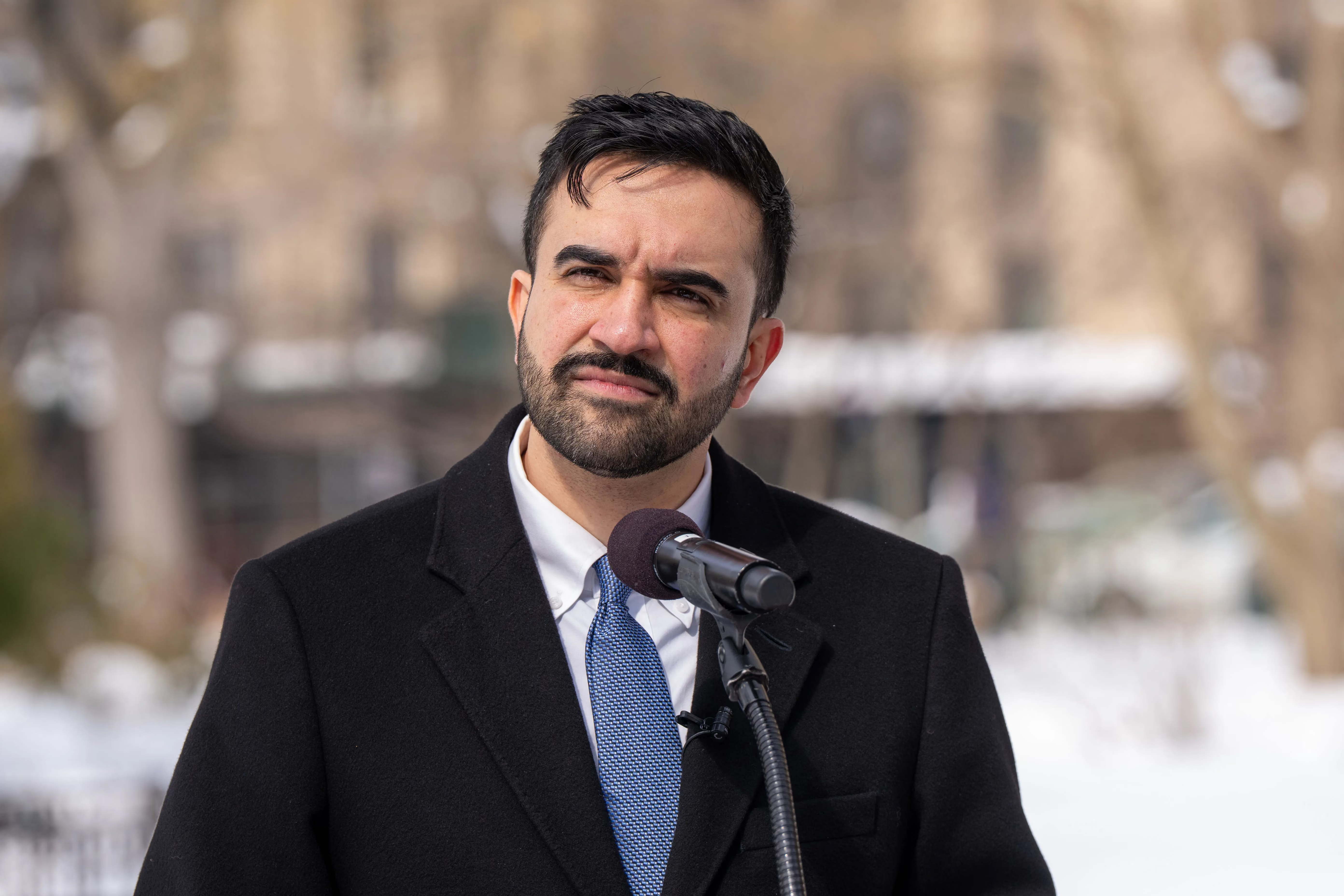
President Donald Trump did something few leaders in modern history have had the courage to do. He issued a direct ultimatum to Iran. Open the Strait of Hormuz or face devastating consequences.
This was not reckless. It was strategic.
The Strait of Hormuz is one of the most critical waterways in the world. Nearly a fifth of global oil passes through it. When Iran threatens to shut it down, they are not just targeting Israel or the United States. They are threatening the entire global economy.
Trump’s ultimatum was not about escalation. It was about deterrence.
Within hours, nations across the world responded. Allies stepped in. Pressure mounted. This is what happens when leadership is clear and strong.
The same voices that once supported sending pallets of cash to Iran are now criticizing decisive action. But history has already shown us what weakness produces. It fuels terror. It empowers regimes that openly call for destruction.
This is not narrative driven by fear, but truth grounded in reality and Scripture. And it is exactly the kind of clarity being delivered consistently on the Real Life Network, where viewers are equipped to understand today’s headlines through a biblical worldview.
Iran’s True Threat and the War on Civilians
Let’s be clear about what is happening on the ground.
Iran is not targeting military installations alone. Civilians are being hit. Families, children, entire neighborhoods.
Meanwhile, Israel is targeting military leaders, infrastructure, and strategic threats. The contrast could not be more obvious.
This is not a conflict between equals. It is a confrontation between a nation defending life and a regime that glorifies death.
Iran has also been lying about its capabilities. For years, leaders claimed their missile range was limited. That claim has now been exposed.
Their missiles can reach far beyond the Middle East. European capitals are within range. Even the United States is not outside that threat.
This is no longer a regional issue. It is global.
And yet, there are still voices in media and politics trying to minimize the danger, trying to convince Americans that this is not our fight.
That is not just naïve. It is dangerous.
The threat from Iran is not theoretical. It is expanding, intentional, and aimed at the West.
If you want reporting that actually connects these realities with biblical truth and global context, The Daniel Cohen Show on the Real Life Network continues to provide that depth without compromise.
Truth, Media Lies, and the Battle at Home
While missiles are flying overseas, another battle is taking place here at home.
Narratives.
Voices in media are attempting to draw moral equivalence between the United States and Iran. That claim collapses under even the slightest scrutiny of the facts.
Iran executes protesters. Silences dissent. Oppresses women. Eliminates freedom.
America, for all its flaws, remains a nation where truth can be spoken, debated, and defended.
Yet confusion persists because many voices have abandoned truth for ideology.
From government overreach to weaponized investigations, Americans are watching a system that increasingly targets opposition instead of protecting freedom.
But there is a deeper layer to all of this.
This is not just political. It is spiritual.
The Bible makes clear that there is a distinction between good and evil. Between truth and deception. Between light and darkness.
And in moments like this, those lines become impossible to ignore.
The greatest danger is not just what is happening overseas, but the confusion that keeps people from recognizing truth when they see it.
That is why platforms like the Real Life Network matter. They are not just reporting events. They are helping people see clearly, equipping believers with a biblical worldview in a time when clarity is desperately needed.
The Hope of the Gospel
In a world filled with conflict, fear, and uncertainty, there is one unshakable truth.
Jesus Christ is King.
Scripture reminds us that while nations rise and fall, God’s kingdom is eternal. Wars will come. Leaders will change. Threats will emerge. But Christ remains sovereign over all of it.
The gospel is not just a message for peaceful times. It is hope in the midst of chaos.
Jesus lived the perfect life we could not live, died the death we deserved, and rose again so that all who repent and believe in Him can have eternal life.
That is the ultimate victory. Not political. Not military. Eternal.
And it is available to all who turn to Him.
For more biblical insight, uncensored Christian news, and shows like The Daniel Cohen Show, visit the Real Life Network and stay grounded in truth.
Related Articles
25 min

March 23, 2026
Daniel Cohen
World News
In this analysis from the Daniel Cohen Show on the Real Life Network, we examine Gavin Newsom, California leadership, government fraud, taxpayer accountability, and what this means for the future of the United States. Through a biblical worldview and Christian news perspective, this report explores how policy, leadership, and truth intersect in a moment that demands clarity. As conversations grow about Newsom’s national ambitions, the question is simple. Does his record in California hold up under scrutiny?
If you are applying for the most powerful office in the world, your record matters. It is not enough to speak well or position yourself politically. The American people deserve to ask a basic question. How did you perform in your last role?
That is the question now facing Gavin Newsom.
While national attention is focused on global conflict and leadership decisions on the world stage, Newsom has continued to position himself as a national figure. But positioning is not performance. And performance is what voters ultimately evaluate.
What Investigations Are Revealing
In California, independent journalists have begun uncovering troubling patterns that raise serious concerns about oversight and accountability. These investigations involve taxpayer-funded programs that are meant to serve vulnerable populations, including child care services, hospice care, and housing initiatives.
One investigation revealed a state-funded child care facility listed as serving multiple children, yet no children were present. Records were incomplete. Oversight appeared minimal. Another inquiry into hospice services uncovered facilities tied to significant public funding, yet lacking clear evidence of operations consistent with their stated purpose.
These are not isolated anecdotes. They point to a broader pattern.
When oversight fails at multiple levels, the issue is no longer individual error. It becomes systemic.
Reports also highlight a concentration of hospice providers in certain regions, raising questions about how licensing and funding are distributed. In Los Angeles County alone, a significant percentage of the nation’s hospice providers are located within a single region, prompting scrutiny over whether regulatory systems are functioning effectively.
You can explore more investigative reporting and analysis like this on the Real Life Network.
Housing initiatives have also come under review. One high-profile example involves a publicly funded project intended to provide housing for a limited number of individuals, yet after years and significant financial investment, the project remains incomplete. The cost per unit has raised eyebrows among analysts and taxpayers alike.
These findings have led to a broader question. Where is the money going?
A System That Raises Bigger Questions
Critics argue that these issues reflect more than inefficiency. They suggest the possibility of structural problems within how programs are funded, managed, and evaluated.
When funds move through layers of contracts, administrative fees, and third-party organizations, transparency becomes more difficult. Accountability can become diluted. And the original purpose of the funding can be overshadowed by the complexity of the system itself.
A system that cannot clearly account for taxpayer dollars risks losing the trust of the people it is meant to serve.
This concern extends beyond financial management. It touches on governance itself. If oversight mechanisms are not functioning effectively, then reforms are not just necessary. They are urgent.
There have also been reports of irregularities related to ballot initiatives, including allegations of improper practices in gathering signatures. While investigations are ongoing, these reports contribute to a broader narrative of concern about accountability and integrity.
For continued coverage and updates, visit the Real Life Network.
At the same time, California has experienced population shifts, with many residents choosing to relocate to other states. Economic pressures, housing costs, and policy decisions all play a role in these trends. Whether these shifts are directly tied to governance decisions is a matter of ongoing debate, but they are part of the broader picture voters are evaluating.
Leadership, Accountability, and the National Stage
As discussions about future national leadership take shape, records like this come into sharper focus. Campaign messaging can shape perception, but governing records provide substance.
The question is not whether a candidate can communicate effectively. It is whether their leadership has produced measurable, positive outcomes for the people they serve.
Supporters of Newsom point to initiatives and policies they believe have moved California forward. Critics point to issues like those outlined here as evidence of deeper problems. Voters will ultimately weigh both.
Leadership is not defined by ambition. It is defined by results.
From a biblical worldview, accountability is not optional. Scripture consistently emphasizes stewardship, honesty, and responsibility. When entrusted with resources, leaders are called to manage them faithfully. That principle applies whether the context is personal, local, or national.
This moment invites reflection. Not just on one leader, but on the standards we apply to leadership as a whole.
Are we asking the right questions? Are we looking at outcomes as well as intentions? Are we willing to examine evidence carefully and thoughtfully?
Those questions matter.
Because leadership matters.
Because truth matters.
Because the decisions made today shape the future we all inherit.
For more insights, reporting, and biblical perspective on today’s biggest issues, visit the Real Life Network.
Related Articles
- America First: Defending America From Iran’s Threats, Open Borders, and Failed Blue-State Leadership by Daniel Cohen
- Iran’s New Supreme Leader and the High Stakes of a Changing Middle East by Daniel Cohen
- Sameera Munshi’s Resignation and the Real Religious Liberty Crisis in America by Daniel Cohen
25 min
Gavin Newsom’s Record Under Scrutiny as 2026 Ambitions Take Shape
March 19, 2026
Daniel Cohen
Faith & Culture
Let me begin by saying that marriage is noble, honorable, and beautiful. It is biblical. It is foundational to functioning societies. God created marriage and loves it. The very concept of marriage is reflective of His plan of redemption for us: Jesus, the bridegroom, coming for and uniting with His bride, the Church.
But the concept was never the point. That is, when we, the Church, prioritize marriage over complete love and obedience to God, we miss the point (Christ Himself) and accidentally create an idol.
In the young, Christian conservative movement right now, the popular mantra is, “Just get married!” And that’s great! If it is the Lord’s will for you to get married to a specific person He’s placed in your life, at a specific time. If building a family is how He’s calling you to build His Kingdom in this season, then yes! Get married. That’s beautiful.
The reality is that this rally cry, “Just get married!” often echoes through rooms full of young, Christian women who desperately want to get married. The message may be novel or challenging in secular spaces, but you don’t have to tell most Christian women twice–that’s all they want.
And that’s the problem.
I interact with many, many Christian women ages 18-35 (more or less) who want nothing more than to get married.
But I want them to want so much more than that: I want them to want to serve God, wholeheartedly, wherever He has them. Married or not married, I want them to be desperate to be at the feet of Jesus; not desperate for a husband.
If that seems simple, unfortunately, it’s not. All my life, I’ve been subliminally taught in Christian circles that the highest good I can achieve as a Christian woman is to be a wife and mother–again, both very beautiful, godly roles.
But when marriage became the chief aim of my life, I lost sight of Jesus.
I was so focused on marriage that I forgot to focus on my Savior in whatever He had for me–and my life might have looked very different if He hadn’t rescued me from my own desire that, when prioritized over Him, were beautiful dreams I had let become ugly idols.
As a 25-year-old who grew up in the church, my game plan from a very early age was to graduate high school, graduate college, get married to my high school sweetheart, have babies, get a dog, a house, and voilà! The American Dream. I would finally be fulfilled then, just like they said.
It was a good plan. But it wasn’t God’s plan for my life–not just like that, anyway.
At the end of 2020, God redirected the trajectory of my entire life, calling me into ministry at the intersection of faith, culture, and politics (what became my life’s work at Counteract USA), and subsequently called me to break up with my high school sweetheart of five and a half years–a nice, Christian guy.
It was unfathomable, and I didn’t want to do it. As a 20-year-old Christian woman I thought I was throwing everything away if I broke up with the guy I planned to marry. I was (and am) so young, but it really felt like the end of the world.
I made every excuse I could to God. I bargained. I pleaded. I wanted to be married. I knew God was calling me into this ministry of faith, culture, and politics, and I realized that my boyfriend wasn’t called into that same ministry… But I wanted both. To have my cake and eat it, too.
But I learned the hard way that when you’re called to Nineveh, you can only sail on ships to Tarsus for so long before things really get miserable and you have to abandon ship.
So I abandoned ship. I surrendered: I broke up with my boyfriend, switched my major, and entered into 2021 with a completely blank slate. I was in a “Here I am, Lord. Send me” season.
And it was in this season that God began to inaugurate me into my calling. When I surrendered (painfully, and through many, many tears) my relationship with my boyfriend to the Lord, my focus reoriented on Him, and I was able to discern that He was calling me to equip my generation of Christians to apply Biblical truth to cultural and political conversations.
Six months after my breakup, God gave me the vision for the ministry that has become my passion, and Counteract USA was born.
Nearly five years later, I have witnessed countless miracles, where God has emboldened a Gen Z Christian in their faith, called a believer to get involved in politics, or encouraged a young adult to share the gospel at their local coffee shop through this ministry. It’s humbling. I am in awe of the Holy Spirit’s work.
And I know I wouldn’t have the front row seat to this that I do today if I had “just” married my high school sweetheart.
I’m 25 now. And I hope to be married one day–but I want to marry someone I’m on-mission with, whether my mission continues to Counteract USA or my home becomes my mission field.
In my admittedly limited experience, the Lord has taught me that as much as I value the gift of marriage and family, I must be vigilant to ensure that I am rightly ordering my affections, seeking the will of God over even my most righteous desires.
Marriage is beautiful, but it isn’t everything.
I want to want Jesus over everything, and encourage others to do the same–because He is all in all. He is everything.
25 min
When the Desire for Marriage Becomes an Idol

March 17, 2026
Abigail DeJarnatt
World News
In the middle of a war that is reshaping the Middle East, exposing Iran’s terror network, and defending American lives, the left is still obsessing over the wrong things. Biblical truth, national security, Real Life Network, Christian news, Israel, Daniel Cohen, and the fight for a biblical worldview all converge in this moment. While the United States and Israel dismantle the Islamic Republic’s war machine, the media is counting ribeye steaks, Democrats are protecting broken voter rolls, and blue-state leaders keep driving businesses out the door. That is why shows like the Daniel Cohen Show on Real Life Network matter right now.
Iran’s Threat to America Is Real, and the Left Still Does Not Get It
Less than two weeks into the most consequential Middle East war in decades, the United States and Israel are hammering Iran’s terror infrastructure. The regime’s nuclear ambitions have been crippled, its command structure has been decimated, and its proxies are under pressure. President Trump made clear that Iranian operatives and sleeper threats are not theoretical. They are already a concern on American soil.
That matters because before the war ever began, the FBI had already issued alerts tied to Iranian plotting, including concerns about possible offshore drone attacks aimed at the West Coast. Let that sink in. This was never just Israel’s fight. This was never only about the Jewish state. Iran has spent nearly half a century calling America the Great Satan, funding terror, targeting American troops, and building networks designed to hit the West whenever the opportunity came.
Iran was not waiting to become America’s enemy. Iran has already been acting like America’s enemy for 47 years.
The left still refuses to reckon with what radical Islam means when it speaks plainly. There is an ideological patience at work. There is a long game. And too many in the West keep mistaking temporary restraint for peaceful coexistence. That is not wisdom. That is self-deception.
What we are seeing now is not paranoia. It is the cost of years of open-border foolishness, weak leadership, and an unwillingness to say that importing millions of unvetted people from hostile regions carries consequences. The Biden years were not compassionate. They were reckless. And the Trump administration is now left cleaning up the mess while trying to keep Americans safe.
You can follow more breaking analysis on Real Life Network, where this story is covered through a biblical worldview instead of the fog of legacy media spin.
While America Fights Real Enemies, the Media Counts Lobster Tails
Only the modern left could watch the United States and Israel dismantle one of the most dangerous regimes on earth and decide the real scandal is steak and seafood for American troops.
That tells you everything.
The same people who shrugged at waste, fraud, ideological programming, and military spending on woke nonsense suddenly found moral outrage because service members were fed well before deployment. This is not serious. It is not principled. It is performative. It is the kind of outrage that only exists when the goal is to weaken confidence in the military and undermine leaders the left hates.
A nation that cannot honor its warriors will not long remain strong enough to defend what it loves.
The Bible honors courage, sacrifice, and those who stand in the gap. David honored his mighty men. Scripture does not teach contempt for the warrior who protects the innocent. It teaches gratitude, honor, and remembrance.
Meanwhile, the same media ecosystem downplaying threats from Iran, border chaos, and radical ideology wants you upset about surf and turf. That is the distraction. They want your eyes off the real story. They want you emotionally manipulated by symbols while the substance rots underneath.
The real scandal is not feeding troops well. The real scandal is that too many in American media and politics still do not understand the stakes of this moment. Iran is not merely hostile to Israel. It is hostile to the United States, hostile to the West, hostile to freedom, and hostile to the very idea of a biblical moral order.
Election Integrity, Border Security, and Blue-State Collapse Are All Connected
If you want to understand the deeper sickness in American politics, look at how Democrats talk about borders and elections. They cannot clearly say illegal entry is wrong. They panic at the thought of ICE near polling places. They act as if asking for proof of citizenship to vote is somehow oppressive.
It is not oppressive. It is basic sanity.
The SAVE AMERICA Act is simple. If you want to vote in an American federal election, prove you are an American citizen. That should not be controversial. It is supported by overwhelming majorities, including many Democrats. Yet party leaders keep fighting it because they understand what weak voter safeguards make possible.
If only citizens should vote in American elections, then proof of citizenship is not radical. It is common sense.
The same pattern shows up in blue-state governance. California keeps bleeding businesses. Washington keeps pushing high-profile entrepreneurs out the door. Companies flee because overregulation, punishing taxes, and ideological governance make it harder to build, hire, and grow. The people who can leave, leave. The people who cannot are left paying the price.
That is the legacy of Gavin Newsom style leadership. That is what happens when fantasy politics collides with economic reality. It is not sustainable, and people are noticing.
And while all of that unfolds, major cities like New York are sending signals of weakness, confusion, and accommodation toward forces that do not love America. The result is cultural decay, public disorder, and a leadership class too compromised to call evil by its name.
This is why Christians cannot retreat. We do not have the luxury of sleepwalking through moments like this. We need clarity. We need courage. We need the Word of God shaping our instincts more than cable news ever could. The Lord is not confused. The truth is not confused. And believers should not be confused either.
The Daniel Cohen Show exists to connect the news to the good news, to call things what they are, and to remind you that history is not random. God is on His throne. Evil is real. Courage still matters. And truth still sets people free. For more biblical worldview coverage on Israel, America, culture, and the headlines that matter, visit Real Life Network.
Related Articles
25 min
America First: Defending America From Iran’s Threats, Open Borders, and Failed Blue-State Leadership
March 12, 2026
Daniel Cohen
World News
In a moment when biblical truth, Christian news, and the future of the next generation of believers are under intense pressure, a troubling revelation has emerged inside institutions that claim the name of Christ. The Daniel Cohen Show on the Real Life Network recently examined a shocking new report showing that 1 in 7 Christian colleges and universities in America now maintain ties to the abortion industry, including Planned Parenthood.
This is not simply a cultural debate. It is a theological crisis unfolding inside the very institutions that claim to train the next generation of Christian leaders. Schools that place “Christian” in their mission statements, charge families tens of thousands of dollars in tuition, and then quietly partner with organizations that profit from ending unborn life must answer a serious question. What exactly are they professing?
If a university claims Christ but partners with the abortion industry, something has gone terribly wrong.
The issue is not political. It is spiritual. And the stakes could not be higher for the church, the pro life movement, and the moral clarity of the next generation.
A Troubling Report on Christian Colleges
The findings come from the Demetree Institute for Pro Life Advancement, the research arm of Students for Life of America. During the 2024 and 2025 academic year, researchers investigated 725 Christian colleges and universities across the United States that claim historical Christian roots.
The results were alarming.
Researchers documented 114 schools with active connections to the abortion industry. These connections included promoting internships with abortion providers, listing Planned Parenthood as a health resource, hosting abortion related events, or using abortion industry materials in coursework.
In total, investigators recorded 533 infractions, the highest number since the study began four years ago. Even more striking is the timing. Since the Supreme Court overturned Roe v. Wade, one might expect Christian institutions to become more firmly pro life. Instead, the opposite has happened.
Abortion related activity inside these schools has increased nearly 20 percent since 2022 and almost 39 percent since last year alone. That trend reveals something deeper than policy drift. It reveals a cultural and spiritual strategy.
The abortion movement did not retreat after Roe fell. It turned its attention directly toward the church.
You can follow continued reporting on cultural and spiritual battles like this through the Daniel Cohen Show on the Real Life Network, where news is examined through a biblical worldview.
The Battle for the Theology of the Next Generation
Why would abortion activists focus on Christian universities?
Because shaping the beliefs of young Christians shapes the future of the church.
Scripture warns about this dynamic clearly. In Galatians 5:9, the apostle Paul writes, “A little leaven leavens the whole lump.” In other words, corruption rarely begins with open rebellion. It begins quietly.
One internship listing.
One “health resource” link.
One campus event.
Then the normalization begins. The abortion industry understands this strategy well. If a Christian student can be persuaded that abortion is merely healthcare, then the theological framework that once protected unborn life collapses. Over time those beliefs move beyond the classroom.
They move into pulpits.
They move into church leadership.
They move into families and future generations.
That is why the issue cannot be dismissed as a minor campus controversy.
This is not merely a policy disagreement. It is a theological war over the definition of human life.
Many young people now speak about abortion with the language they have been taught by institutions and media culture. When a medical student argues that abortion should remain available even late in pregnancy, the deeper problem is not simply ignorance. It is indoctrination. And the church must recognize the seriousness of that moment.
More cultural and worldview analysis addressing these issues can be found on the Real Life Network, where faith and current events intersect.
Hope, Accountability, and the Path Forward
The situation is serious, but it is not hopeless.
The same report that revealed troubling ties also documented encouraging victories. During the last academic year alone, 50 connections between Christian schools and Planned Parenthood were severed.
Those changes did not happen by accident.
They happened because students spoke up.
Parents asked questions.
Donors demanded accountability.
Several universities removed Planned Parenthood as a resource or internship opportunity after public pressure and advocacy. In addition, 66 schools received an A+ grade for actively supporting pregnancy resource centers and promoting pro life values on campus.
Those institutions demonstrate that Christian conviction can withstand cultural pressure when leaders remain committed to biblical truth.
Psalm 139 reminds believers of the foundation behind the pro life movement: “You knit me together in my mother’s womb.” That statement is not a poetic metaphor. It is a declaration about the Creator’s authority over human life. The church must remember that the battle for life is not merely fought in legislatures or courtrooms. It is fought in classrooms, churches, families, and hearts.
Parents should research the schools they support. Churches should ask questions about partnerships and internships. Christian donors should ensure their financial support strengthens institutions that remain faithful to their mission.
Most importantly, believers must pray with conviction and act with courage. The next generation of the church is not lost. But it will not be won by silence.
For continued reporting on faith, culture, Israel, and the defense of biblical truth, watch the Daniel Cohen Show on the Real Life Network, where the news is always connected to the greater story of the Gospel.
Related Articles
25 min
Christian Colleges and the Abortion Industry: A Crisis Inside the Church

March 11, 2026
Daniel Cohen
World News
The Church today faces a difficult but unavoidable question. What does faithfulness to Christ look like in a world where evil regimes threaten innocent lives, destabilize entire regions, and openly call for the destruction of nations? Christians rightly long for peace. Scripture commands us to pursue it. Yet the Bible never teaches that peace must come at the price of surrendering justice or abandoning the innocent to violence.
For more biblical worldview analysis on global events and Christian ethics, visit the Real Life Network, where faith and current events are examined through the lens of Scripture.
One of the most dangerous confusions in modern Christian thinking is the belief that love requires passivity in the face of evil. That is not the teaching of Scripture, and it is not the historic teaching of the Church. From the earliest centuries, Christian thinkers understood that while war is always tragic, there are circumstances in which the use of force becomes morally necessary to restrain grave injustice.
That moral framework is known as the Just War tradition.
The Biblical and Historical Foundations of the Just War Tradition
The early church father Augustine of Hippo wrestled deeply with this problem. Augustine understood the tension every believer feels when confronted with violence. Humanity was created in the image of God, yet Genesis tells us that almost immediately that image was marred by sin. The world we inhabit is morally fractured. Violence exists. Tyranny exists. Innocent people are threatened by those who wield power without restraint.
Augustine concluded that Christians cannot ignore that reality. Governments bear responsibility before God to restrain evil and protect their citizens. War must never be pursued for glory, revenge, or conquest, but in a fallen world the use of force may become a tragic necessity when justice and the protection of life demand it.
Several centuries later the theologian Thomas Aquinas organized Augustine’s thinking into three principles that still guide Christian moral reflection today. These principles, known as jus ad bellum, determine whether entering a war can be morally justified.
The first requirement is legitimate authority. War cannot be declared by mobs, militias, or ideological factions. The authority to use force belongs to lawful governments entrusted with protecting their people. Scripture reflects this clearly in Romans 13, where governing authorities are described as bearing the sword to restrain wrongdoing.
The second requirement is just cause. War must confront a serious injustice. Throughout Christian history, defending the innocent from aggression has been recognized as one of the clearest examples of just cause.
The third requirement is right intention. Even when authority and cause are present, the purpose of war must be morally ordered. War must never be motivated by hatred, revenge, or domination. The aim must always be the restoration of peace and the restraint of evil.
These principles form the moral guardrails that prevent warfare from descending into barbarism. They also give Christians a framework to evaluate real conflicts unfolding in our time.
Readers interested in more discussions on faith, ethics, and global affairs can explore articles and programming at the Real Life Network.
Applying Just War Principles to the Iranian Regime
When these principles are applied to the present confrontation with the Iranian regime, the moral picture becomes painfully clear.
For more than four decades, the rulers of Iran have openly positioned themselves as enemies of the United States and Israel while sponsoring terrorism across the globe. The regime’s very first major act after the 1979 revolution was the seizure of the American embassy in Tehran and the holding of American diplomats hostage for 444 days. That hostility never ended.
Iranian-backed terrorists carried out the 1983 bombing of the Marine barracks in Beirut that killed 241 American service members. Iranian networks have supported the Khobar Towers bombing in Saudi Arabia, attacks against U.S. forces in Iraq, and the arming of militias responsible for killing and maiming American soldiers. Across the Middle East, the regime has built a web of proxy organizations whose purpose is to destabilize governments and spread violence.
At the same time, the regime has brutalized its own population. Iranian citizens who have dared to protest for basic freedoms have faced mass arrests, torture, and execution. The same government that chants “Death to America” has also spilled the blood of its own people in the streets of Tehran and beyond.
Within the framework of Just War doctrine, these realities clearly establish the question of just cause. When a regime consistently sponsors terrorism, threatens the destruction of neighboring nations, and violently suppresses its own people, the responsibility of governments to confront that threat becomes unavoidable.
The criterion of legitimate authority is also present. In the United States, the authority to deploy military force operates within a constitutional framework involving both the president and Congress. The use of force against Iranian targets has been undertaken within that structure of lawful authority, reflecting the principle that war must never be waged outside accountable governance.
The third requirement, right intention, asks a critical moral question. Why is force being used? Is the purpose revenge or conquest, or is it the restraint of evil and the protection of innocent life?
The stated goals of U.S. policy have focused on dismantling Iran’s capacity to threaten the region through advanced weapons, limiting the reach of its missile and drone programs, and disrupting the proxy networks responsible for violence across the Middle East. These objectives align with the Just War principle that the aim of force must be the restoration of peace and security rather than domination.
Christian worldview commentary on these global issues can also be found through programming and articles available at the Real Life Network.
A Christian Moral Responsibility to Restrain Evil
Christian tradition also requires leaders to consider whether war is truly a last resort and whether the means used are proportionate to the threat. In the case of Iran, decades of sanctions, negotiations, diplomatic efforts, and international agreements were pursued in an attempt to curb the regime’s aggression. The tragic reality is that those efforts repeatedly failed to change the regime’s behavior.
Christians may still wrestle with the gravity of these decisions. That wrestling is healthy. War should never sit comfortably with the conscience of a believer. The shedding of human blood should always grieve us because every human life bears the image of God.
Yet Scripture also makes an important moral distinction. The commandment often translated “You shall not kill” is more accurately rendered “You shall not murder.” The Bible consistently distinguishes between the unjust taking of innocent life and the use of force to restrain violence.
Genesis 9:6 reminds us why human life is sacred: because humanity is made in the image of God. That same principle also explains why the shedding of innocent blood demands accountability. Allowing violence to continue unchecked is not mercy. It is abandonment.
This truth matters profoundly for the men and women who serve in uniform. In recent years scholars have increasingly recognized what is known as moral injury, the deep psychological trauma that occurs when soldiers believe their actions violate their moral convictions. Many Christian service members struggle with the belief that any form of lethal force is inherently sinful.
The Just War tradition exists in part to address that burden. It affirms that defending the innocent and restraining evil can, in certain circumstances, be not only morally permitted but morally required.
None of this erases the tragedy of war. War destroys lives and leaves scars across generations. The Christian response must always be sober, humble, and prayerful.
Yet there are moments in history when refusing to confront evil allows greater injustice to flourish. Peace that abandons the innocent is not true peace at all.
The Just War tradition reminds us that love itself sometimes requires courage. Protecting the vulnerable, restraining violent regimes, and defending those threatened by terror are not acts of hatred. They are acts of moral responsibility in a fallen world.
Christians should never glorify war. But neither should we shrink from the difficult responsibility of confronting injustice when the protection of human life demands it.
For more faith-based analysis on international events and the intersection of theology and public life, visit Real Life Network.
Related Articles
- Agape Love: Obedient, Courageous, Costly by Hedieh Mirahmadi Falco
- Why do Christian Kids Convert to Islam? by Hedieh Mirahmadi Falco
- The Collapse of an Illusion: Is the Islamist Narrative Losing Its Grip? by Hedieh Mirahmadi Falco
25 min
When Peace Requires Courage: The Christian Case for Just War in Iran

March 10, 2026
Hedieh Mirahmadi Falco
World News
If you follow Christian news with a biblical worldview, you already know this is not just another headline. This Real Life Network special report brings Daniel Cohen, Pastor Jack Hibbs, Pastor James Cadiz, and Kelly Wright into one conversation about Iran, Israel, and what is unfolding in the Middle East right now. These events are moving fast, and believers need clarity, not noise. Watch and share this conversation on the Real Life Network so others can track the news through Scripture and truth.
This panel did not gather to sensationalize. It gathered to connect dots. What’s happening is being framed in the media as impulsive, reckless, or “someone else’s war.” But from Jerusalem to Washington, D.C., the conversation kept returning to a single reality: history is being shaped in real time, and the spiritual stakes are not abstract.
Bold, on purpose, because you need to hear it clearly: This is a moment for Christians to think biblically, speak honestly, and refuse deception.
What the Panel Says the Media Misses About Iran’s Ideology
One of the strongest themes of the discussion was that you cannot understand Iran, or the wider region, using a purely political lens. The panel emphasized that the Iranian regime’s worldview is ideological and religious, and that it creates a kind of relentless momentum that makes Western assumptions about diplomacy feel naïve.
Pastor Jack Hibbs highlighted an element many Americans never hear explained: certain strands of Iranian leadership think in end times categories, aiming for chaos as a pathway to their version of prophetic fulfillment. That is why the panel repeatedly warned viewers not to project “normal” motives onto a regime that does not reason like secular Western democracies.
Pastor James Cadiz pressed into the spiritual and theological dimension as well, warning that deception is not a side issue in this conflict, but part of the operating system. The point was not to demonize ordinary people, but to expose how leadership ideology can form policy, propaganda, and recruitment over decades.
Kelly Wright added a policy-grounded perspective, stressing that the public narrative often erases the long timeline. The regime in Tehran, the panel argued, has been a destabilizing force for decades, using proxies, intimidation, and regional pressure to expand influence. The conversation also acknowledged that a large portion of the Iranian people do not share the regime’s appetite for oppression or war, and that many in the diaspora openly celebrate any credible sign that the regime’s grip is weakening.
If you have not watched Real Life Network’s ongoing coverage, you are missing context that the mainstream outlets frequently skip. You can start here and share it with someone who only hears the legacy media framing: Real Life Network.
Why This Is Not Just “Israel’s War” and Why It Matters to America
A repeated claim the panel addressed was the idea that Israel “dragged” America into action. The point made on the show was simple: that narrative requires viewers to believe that the U.S. acts with no agency and no national interest, which does not square with how policy decisions are actually made.
The discussion also emphasized that the Iranian regime’s actions have had consequences that extend beyond Israel, and that Americans should not pretend the threat is theoretical. The panel framed this as a moral issue, not just strategy. Protecting innocent life, restraining violent actors, and refusing appeasement were presented as responsibilities, not options.
Here is another sentence worth bolding because it captures the core argument: Weakness does not buy peace, it invites the next attack.
The conversation also challenged Christians who feel “conflicted” about the removal of violent leadership. The panel did not celebrate death for its own sake. It argued for moral clarity: believers can grieve the realities of war while also recognizing that restraining evil and protecting the vulnerable is not incompatible with biblical ethics.
That is why this special report matters. It is not propaganda. It is a call to stop being passive consumers of narratives written by people who do not share your values and do not want you thinking clearly. For more special reports like this, and the broader Real Life Network News coverage, bookmark and share the Real Life Network hub.
Watching Through Scripture, Not Through Fear
The panel landed the plane in a place many viewers needed. Yes, things are volatile. Yes, outcomes can change quickly. But Christians are not called to panic, and we are not called to ignorance either.
Kelly Wright pointed to Jesus’ warnings about deception, wars, and upheaval, not as permission to spiral, but as a framework to stay steady. Pastor James emphasized that pastors cannot afford silence in a moment like this, because people will be discipled by someone. If it is not the full counsel of God, it will be social media, headlines, and fear.
Pastor Jack’s closing was direct: the Bible is not surprised by any of this. Scripture calls believers to discernment, courage, and readiness. And the panel repeatedly returned to prayer, not as a cliché, but as a necessity, especially for those under threat, and for the underground church that has endured under oppression.
Final bold sentence, because it is the takeaway for the believer: Do not let the news disciple you more than the Word of God.
If you want sound reporting and commentary from a biblical worldview, with clear updates and special panels like this one, keep the Real Life Network app on your phone and send it to a friend today: Real Life Network.
Related Articles
- Why do Christian Kids Convert to Islam? by Hedieh Mirahmadi Falco
- The Collapse of an Illusion: Is the Islamist Narrative Losing Its Grip? by Hedieh Mirahmadi Falco
- Hands Off Iran? What 47 Years of “Restraint” Really Produced by Daniel Cohen
25 min
A Special Report on Iran, Israel, and the Middle East Moment We’re Living In

March 5, 2026
Daniel Cohen
Devotional
One of the greatest threats to the Church today is not persecution but a counterfeit definition of Biblical love.
Hebrews 11, the great hall of faith, does not read like a guide to safe, respectable Christianity. It reads like a battlefield record. Gideon, Barak, Samson, Jephthah, David, Samuel, the prophets. Some conquered kingdoms and shut the mouths of lions. Others were mocked, flogged, chained, imprisoned, stoned, sawn in two, and killed by the sword. They wandered destitute and mistreated. The world was not worthy of them. All were commended for their faith, yet none received the fullness of what was promised in this life.
That is where we must begin if we are going to talk about love.
Agape Love Is Covenant Loyalty That Endures
Agape love is not fragile. It is not polite Christianity designed to keep you comfortable and culturally acceptable. Agape is covenant loyalty to God that endures loss, criticism, and suffering. The saints in Hebrews 11 were not driven by emotion. They were not protecting their reputations. They obeyed because God was worthy of obedience. That is love directed toward Him.
Agape toward God means obedience even when obedience costs you. It may cost approval. It may cost career opportunities and friendships. It may cost influence. Hebrews 11 makes one thing unmistakably clear. Faithfulness does not guarantee earthly ease. It guarantees eternal commendation.
If we are serious about Living Fearless, we must recover this definition of love.
Learn more biblical worldview content on the Real Life Network.
Love That Transforms Does Not Partner With Darkness
The culture insists that love affirms but Scripture insists that love transforms. Romans 12 commands that love be sincere and that we hate what is evil and cling to what is good. That single verse shatters the modern counterfeit. Biblical love is not passive tolerance of moral decay. It actively resists what destroys souls. It clings to what honors God.
John 13 records Jesus commanding His disciples to love one another as He loved them. His love was not sentimental softness. His love washed feet and rebuked hypocrisy. His love confronted sin and bore a cross. He did not affirm darkness in order to appear compassionate. He entered darkness to redeem it.
Matthew 18 instructs believers to go to a brother who sins and point out the fault privately. The goal is restoration. If repentance does not come, witnesses are brought. If hardness continues, the matter goes to the church. Boundaries are drawn. That process is not cruelty. It is courage. It is love strong enough to risk discomfort for the sake of a soul.
First Corinthians 5 intensifies this truth. Paul commands the church to remove a man engaged in open sexual immorality so that his spirit may be saved. That is not vindictive exclusion but redemptive severity. Love sometimes removes protection in order to awaken repentance.
Ephesians 5 goes further. Believers are told to have nothing to do with the fruitless deeds of darkness but rather expose them. Silence in the face of corruption is not neutrality. It is participation. Agape love does not hide moral decay under the banner of kindness. It brings light because light heals.
Galatians 6 balances this boldness with humility. If someone is caught in sin, those who are spiritual should restore that person gently, watching themselves lest they also be tempted. Agape is not harsh aggression. It is strength under control. It is courage joined with compassion.
Watch and share more teaching that equips believers to stand in truth on the Real Life Network.
Living Fearless Means Paying the Biblical Price
Our generation desperately needs this clarity. Fear has pushed many Christians into two extremes. Some retreat into passive cowardice, avoiding hard conversations so they will not be labeled unloving. Others lash out with anger that lacks gentleness. Agape produces neither. It speaks truth without cruelty. It corrects without pride. It sets boundaries without hatred.
To live fearless is to anchor your love in obedience to God rather than approval from people. It means saying the unpopular thing because you love your neighbor too much to watch him drift toward destruction. It means confronting moral confusion in our schools, our churches, and our communities not out of superiority but out of conviction that truth sets people free.
Agape is not a feeling that drifts in and out with the cultural wind. It is obedience in motion. It wills the good of the other, even when the other misunderstands your motive. It acts for restoration, not applause. It endures rejection without surrendering conviction.
Hebrews 11 reminds us that the faithful often stand against the current of their age. They were not celebrated by their culture. They were commended by God. That is the reward that matters.
If we claim to love in the biblical sense, we must be prepared to pay the biblical price. Love will cost comfort. It will cost the illusion of universal approval. Yet it will produce something far greater than cultural acceptance. It will produce faithfulness.
Agape love will cost you. Living Fearless in Christ means you are willing to pay that cost.
Explore more faith building content anytime on the Real Life Network.
Related Articles
- Why do Christian Kids Convert to Islam? By Hedieh Mirahmadi Falco
- Iran at the Breaking Point: Power, Oil, Faith, and the Battle for What Comes Next by Hedieh Mirahmadi Falco
- Iran’s Revolt Against Religious Rule by Hedieh Mirahmadi Falco
25 min
Agape Love: Obedient, Courageous, Costly

February 24, 2026
Hedieh Mirahmadi Falco
Business & Finance
What is money, really? Is it just paper, digital numbers, or something far more meaningful with moral and biblical implications? Many of today’s economic challenges, inflation, debt, instability, and misplaced priorities, can be traced back to abandoning God’s principles for money. On Pirate Money Radio, we continually return to this truth. In this conversation, banking expert and biblical money educator Andy Keusel joins me to explore what Scripture, history, and common sense reveal about biblical money, and why it still matters today.
God’s Design for Money
From the opening chapters of Genesis, the Bible places special emphasis on gold, calling it “good.” Throughout Scripture, gold, silver, and copper are consistently used as money for trade, inheritance, worship, and commerce. These metals were not randomly chosen. They possess the qualities honest money requires: durability, scarcity, divisibility, recognizability, and intrinsic value.
Andy Keusel explains that these characteristics are not accidental. Across cultures and civilizations, not just Christian or Jewish, gold and silver have served as money for thousands of years. This universal acceptance points to intentional design. Scripture reinforces this by repeatedly associating precious metals with purity, permanence, and trustworthiness.
Honest Weights, Measures, and the Moral Problem of Inflation
The Bible is explicit in its condemnation of dishonest weights and measures. God calls them an abomination. While Scripture may not use the modern term “inflation,” the concept is clearly addressed. Inflation is the silent erosion of value, a form of theft that disproportionately harms workers, savers, widows, and the elderly.
By expanding the money supply without real backing, modern systems dilute purchasing power. Prices rise, savings lose value, and families are forced to work harder for less. Andy notes that this is not just an economic issue; it is a moral one. Scripture does not permit hidden theft, regardless of how sophisticated or normalized it becomes.
Biblical Money Vs Fiat Currency
Paper currency was never intended to be money itself. Historically, paper notes were receipts representing gold or silver held on deposit. Over time, those receipts were detached from the metal backing and declared “money” by government decree. This shift made unlimited expansion possible and opened the door to debt, manipulation, and deception.
As Andy explains, there is no such thing as “paper money” in biblical terms—only paper claims on real money. When that claim is no longer redeemable, the system rests entirely on belief rather than substance. Scripture repeatedly contrasts enduring value with temporary promises that fail under testing.
The Federal Reserve and Centralized Money Creation
One of the most misunderstood institutions in modern finance is the Federal Reserve. Despite its name, it is neither federal nor backed by actual reserves. Created in secrecy, it enables money creation out of nothing, a power Scripture attributes only to God.
Centralized money creation allows those closest to it to benefit first, while the rest of society absorbs the cost through inflation. Andy points out that secrecy itself should raise concern. Biblically, truth withstands light; deception depends on darkness.
Banking, Fractional Reserves, and Systemic Risk
Banking can serve legitimate purposes, safekeeping, payments, and lending. However, the modern system of fractional reserve banking allows institutions to lend far more money than they actually possess. Depositors believe their funds are available on demand, while banks simultaneously lend those funds long-term.
This system functions only as long as confidence remains. When trust collapses, so does the illusion of stability. The result is bank failures, government intervention, and inflationary bailouts that shift losses to the public.
Why Gold and Silver Endure
Gold and silver have preserved purchasing power for centuries. A similar amount of gold that once bought a quality suit, livestock, or land can still do so today. What has changed is not gold’s value, but the value of fiat currency.
Scripture’s frequent association of wealth, inheritance, and permanence with precious metals reflects this reality. Gold and silver endure testing, while paper promises fade. This distinction mirrors the biblical contrast between what lasts and what burns away.
Why This Matters for Christians
Biblical money is not about greed or fear, it is about obedience, stewardship, and truth. While Scripture warns against the love of money, it also calls believers to wisdom, honesty, and care for the vulnerable. Understanding God’s design for money helps Christians give generously, spend responsibly, and invest faithfully.
Andy Keusel emphasizes that education is the first step. When believers understand how money works, and how it can be corrupted, they are better equipped to align their financial decisions with biblical values.
Final Thoughts
If we want real economic stability, we must return to God’s standards. That begins with truth, education, and the courage to question systems built on deception. Biblical money is not outdated, it is timeless.
As believers, we are called to be faithful stewards in every area of life, including our finances. Returning to honest money is not just an economic solution, it is a spiritual one.
For more biblical content, sigh up for free at the Real Life Network.
Related Articles
- Good As Gold: Why Honest Money Matters by Kevin Freeman
- Pirate Money Radio: Biblical Economics with Bob McEwen by Kevin Freeman
- Economic Justice, Real Money, and America’s Future by Kevin Freeman
25 min
Biblical Money vs. Modern Currency: What the Bible Really Says
.webp)
February 20, 2026
Kevin Freeman
World News
If you want unfiltered Christian news and a biblical worldview on the stories the legacy press tiptoes around, watch The Daniel Cohen Show on the Real Life Network. Today we are talking about Minnesota, Somali immigration, taxpayer accountability, assimilation, and the fraud stories that have put a national spotlight on the largest Somali community in the United States.
This Is Not About Race. It Is About Accountability and Assimilation.
Let me be crystal clear up front. This is not an attack on people because of their skin color. Minneapolis and St. Paul are home to Somali Christians, Somali ex Muslims, and Somali families who love this country and work hard to build a future here. This is about something else: whether America is allowed to remain America.
Minnesota has been rocked by massive fraud cases, including the Feeding Our Future prosecution, which federal prosecutors describe as one of the largest pandemic era scams tied to meals programs, with dozens charged. That matters because when public trust collapses, everybody pays, especially working families who did not sign up to bankroll corruption.
And here is the key point: assimilation is not a dirty word. It is the American deal. You come here, you learn the language, you respect the law, you contribute, you build a life. You can keep your culture and traditions, but your allegiance is to the United States and to the rule of law.
A nation that refuses to enforce its laws will eventually be ruled by whoever is bold enough to break them.
Fraud, Radicalization Fears, and the Silence of Legacy Media
The mainstream media loves to talk about “misinformation,” but it goes quiet when stories get politically inconvenient. In Minnesota, the fraud headlines are real, the court filings are real, and the prosecutions are real.
Now, you have also heard claims floating around online that fraud money was funneled to al Shabaab. Here is what we can say responsibly: major outlets have reported that there is no proof the fraud proceeds were sent to terrorist groups like al Shabaab, even though that allegation is often repeated in commentary. So if we are going to be the adults in the room, we stick to what can be demonstrated, and we demand transparency, audits, convictions where warranted, and restitution.
At the same time, Minnesota is not just a local story anymore. Federal immigration enforcement actions have increasingly targeted multiple cities, and Minneapolis has been part of that broader push. It is not hard to see why. When oversight is weak, any community can become a magnet for exploitation by bad actors.
Compassion without accountability is not compassion, it is surrender.
The Biblical Worldview Response: Truth, Order, and Gospel Compassion
So what do we do with all of this as believers?
First, we tell the truth. The Bible does not bless dishonesty, and it does not bless leaders who reward lawlessness. You cannot build a stable community on intimidation, fraud, and political protection deals. That is not justice.
Second, we reject the false binary that says you either “open the gates” or you “hate people.” No. A country can enforce borders and still be generous. A state can prosecute fraud and still love its neighbors. A community can demand assimilation and still welcome those who want to become Americans.
Third, and do not miss this, we pray for the Somali community. Pray for the Somali mom trying to raise kids in safety. Pray for the Somali teen caught between worlds. Pray for Somali Muslims to meet Jesus and be saved. Pray for Somali Christians to stand strong. We do not fight flesh and blood, and we do not confuse an ideology with the image bearer standing in front of us.
America can enforce the law and extend mercy at the same time, because truth and compassion are not enemies.
The goal is not panic. The goal is clarity. We want free and fair systems, clean audits, honest governance, and a culture that does not apologize for expecting assimilation. And we want revival. Because politics cannot heal the human heart, but the gospel can.
For more Daniel Cohen Show commentary and Real Life Network reporting from a biblical worldview, watch and share on the Real Life Network.
Related Articles
25 min
Accountability, Assimilation, and A Response to Minnesota’s Somali Immigration Crisis

February 19, 2026
Daniel Cohen
Faith & Culture
As a formerly devout Muslim, I am often approached at church and online to help parents whose children have become Muslim or are contemplating conversion into Islam. It is so heartbreaking to hear the distress in a Mom’s voice whose daughter leaves Christianity so she can marry a Muslim boy. We pray that the Lord will return the prodigal to the fold, but that can be a long, hard road. Many are frantic for advice on what they can say to convince their child that Jesus is the only true way. Instead, we should ask ourselves how can we, the parents and elders in a church, prevent this from happening in the first place.
Why Some Young Christians Are Drawn Toward Islam
As of data collected in 2019, almost two-thirds of American young adults between the ages of 18–29 have withdrawn from church involvement after being active as a child or teen. Many of us have read studies about why this happens– issues like lack of relevance in everyday life, it doesn’t correspond to their worldly values, or church folks being too judgmental.
In addition to my anecdotal experience with many families, I learned a lot from this YouTube channel, where many Christian girls testified about why they turned to Islam. Though I have not done a scientific study on this trend, several patterns emerge from listening to their stories. These first-hand accounts give us insight into how we can nurture our children to hold on to their faith in Christ.
One of the most common reasons is unexplained Bible doctrine. Many of these girls are proselytized by young Muslim men who spend quality time educating the young ladies about the “authentic” nature of Islam. Simultaneously, the men instill doubt in the authenticity of the Bible, the seemingly “strange” notion of the Triune God, or Jesus being God incarnate. They say, “How can you believe the Bible is the word of God when there were so many inconsistencies, or why would God need to come in the form of a man to save humanity?”
Unfortunately, when young women present these questions to their parents or Bible teachers, they are often brushed aside and told, “we believe these things by faith.” It is a wholly inappropriate response to earnest questions about doctrine for which we have perfectly sound answers.
As the Bible commands us, “Always be ready to defend your confidence in God when anyone asks you to explain it. However, make your defense with gentleness and respect (1 Peter 3:15)."
The problem is that people either do not know how to respond or patronize the young as if they don’t deserve a response. Both positions will leave a person susceptible to false doctrine.
The second issue I heard many times when I was still a Muslim is that Christian kids leave the faith because of their parents' hypocrisy and/or immorality. Their parents' drunkenness, drug abuse, and severe behavioral problems made them assume the faith was ineffectual compared to the imposed discipline found in Islam. Once they see themselves also out of control from addiction or promiscuity, they do not believe Christianity offers a solution. In other words, they never personally witnessed the transformative power of a true believer who walks in holiness and obedience to the Lord Jesus Christ. This is a tragedy and consequence of many who turned the church into a social and cultural gathering rather than making disciples who model the character of Jesus.
Finally, and probably most significant, these young adults have no personal relationship with the Risen Savior. When you ask them why they no longer believe in Jesus, they answer with something about how they were ostracized in church or the Pastor insulted them. Almost all of them went to Sunday school, grew up in youth ministry, and had Christian parents. However, they have no indications that they received the indwelling of the Holy Spirit or can communicate with God in their prayer life. It reminds me of the parable of the Sower. The Word was choked out of their life before they could grow and mature.
The Role of Parents, Churches, and Personal Faith
Jesus promised all believers that our Heavenly Father would not allow any of his sons or daughters to be “snatched from His hand.” Therefore, what is our role in protecting the hearts and minds of our young people from falling into false religions? Step one, we must study enough to defend the Gospel against the most common “controversies.” Whether it's the authenticity of the Bible texts or prophecy that proves Jesus is the Messiah, we should not dismiss the curiosity of our young people who challenge us.
Second, we need to take a serious inventory of our behavior and habits to be sure we are modeling the righteousness we are called to by the Lord. Our children pay far more attention to our actions than our words. I started a conversation with a woman in the coffee shop last week who told me she refused to go to church because her parents dragged her there when they were drug addicts. I tried to talk with her about encountering Jesus, but she couldn’t get past the trauma of her upbringing.
We have a relatively short period of time with our kids before the world takes over and our influence wanes. Sending them off to youth ministry, which all these girls claimed to have done, is excellent, but more is needed. Ultimately, they must have a personal relationship with Jesus to have a faith that endures. My teenager is struggling with issues of faith, so I constantly remind her that the Holy Spirit dwells inside her and that she can communicate directly with God. I tell her faith doesn’t have to look like mine and that He wants to meet her where she is. If they pursue that personal encounter with God, He will fulfill His promises to them, and we have set them up for success. As He says in Scripture, “the Helper, the Holy Spirit whom the Father will send in My name, He will teach you all things, and remind you of all that I said to you (John 14:26)." Research data also supports this notion. In interviews with young adults who stayed faithful into adulthood, whom they call “resilient disciples,” nearly 90% profess a personal relationship with Jesus.
Preventing Drift and Welcoming Prodigals Home
Once a child does decide to convert, all hope is not lost. Life as an American convert to Islam is tough. If you listen to their testimonies, the girls talk of social alienation, loneliness, and failure to adapt. They no longer “fit” in any culture because Arab and South Asian Muslims do not readily accept converts into their family. If we remain open to loving them like Christ does and welcoming them home rather than ridiculing them, that familiarity and comfort could win them back. Engage in discussions about their new beliefs and see it as an opportunity to compare their new faith with the freedom in Christ. Fervent prayer, compassion, and kindness can go a long way. Leave the door wide open for them to enter back easily.
So whether it's “church hurt,” parents not “modeling Christ,” or some other justification in their own lives, these kids gravitate to Islam for structure and discipline. It may seem counterintuitive, but when they realize debauchery is miserable, they seek rules and boundaries. Yet, why do they have to look outside the church to find obedience? That’s not what scripture teaches us. Jesus said, “If you love me, follow my commands (John 14:15).” Let’s not distill being a Christian down to a set of rituals with no power to restore and transform. Otherwise, we will lose many more sons and daughters to false religions.
Related Articles
- Iran at the Breaking Point: Power, Oil, Faith, and the Battle for What Comes Next by Hedieh Mirahmadi Falco
- Iran’s Revolt Against Religious Rule by Hedieh Mirahmadi Falco
- Hedieh’s Story: Why She’s Here, Why She Speaks, Why It Matters by Hedieh Mirahmado Falco
25 min
Why do Christian Kids Convert to Islam?

February 19, 2026
Hedieh Mirahmadi Falco
Entertainment & Lifestyle
Scripture places the responsibility of spiritual formation squarely in the home, calling parents to teach God’s Word through everyday life, conversation, and example. Yet many families today feel stretched thin, balancing work, school, activities, and constant digital noise.
That reality has led many parents to ask a practical question: Can Christian streaming actually help with family discipleship? While streaming cannot replace personal relationships, Scripture reading, or prayer, it can serve as a meaningful support resource, especially when used intentionally.
When thoughtfully integrated, Christian streaming platforms can reinforce biblical teaching, spark spiritual conversations, and help families grow together in faith.
Family Discipleship Happens Best Through Shared Rhythms
Discipleship in the home rarely looks like a formal classroom. It happens through repetition, shared experiences, and conversations that unfold naturally. Meals, car rides, bedtime routines, and evenings together all become opportunities for spiritual formation.
Christian streaming fits into those rhythms by providing content families can engage with together. Watching a short teaching, a kids’ program, or a documentary often opens the door to questions that might not arise otherwise. Instead of replacing discipleship, streaming can prompt it.
How Christian Streaming Supports Family Discipleship
Christian streaming helps families disciple together in several important ways.
First, it provides shared reference points. When parents and children watch the same program, they have a common language for discussing faith. A Bible story, a sermon illustration, or a testimony can become the starting point for meaningful conversation.
Second, it reinforces biblical teaching across age groups. Parents may hear a sermon or podcast that strengthens their understanding, while children engage with animated Bible stories or faith-based cartoons. Though the content differs, the message remains consistent.
Third, it reduces friction around media choices. When families rely on faith-based platforms, parents don’t have to constantly filter or explain away content that conflicts with Scripture. That consistency helps create a home environment aligned with biblical values.
Examples of Discipleship-Friendly Content on Real Life Network
Real Life Network offers a variety of programming that families can use together or individually as part of their discipleship rhythm.
Kids’ Programming That Builds Foundations
Animated series such as Superbook, Ryan Defrates: Secret Agent, iBible, Star-Spangled Adventures, and The Pilgrim’s Progress (animated) help children learn biblical truths through engaging storytelling. These programs introduce Scripture, character, and faith in ways that are accessible and memorable for young viewers.
For parents, these shows provide natural opportunities to ask simple questions like, “What stood out to you?” or “What did this story teach us about God?”
Apologetics for Growing Minds
As children grow, their questions become more complex. RLN’s apologetics offerings help families address those questions with confidence. Programs like In Depth Apologetics for Kids, The Creation Today Show, and Cross-Examined with Frank Turek equip both parents and older kids to think clearly about faith, science, and worldview.
These resources are especially helpful for families navigating conversations around truth, culture, and belief in a thoughtful, age-appropriate way.
Sermons and Teaching for the Whole Family
Streaming sermons and teaching series allows parents to remain spiritually nourished while modeling the importance of biblical learning. Families may watch together or separately, then discuss key themes during the week.
On RLN, sermons and teaching content are easy to access and revisit, making it simple to connect Sunday teaching to everyday life.
Podcasts and Short-Form Teaching
Podcasts available on Real Life Network—such as The Jack Hibbs Podcast, Ignite with Barry Meguiar, ICR’s Creation Podcast, and others—fit naturally into family life. Parents might listen during a commute, then share insights at the dinner table. Older teens may listen independently and bring questions or reflections back to the family.
Streaming as a Conversation Starter, Not a Substitute
It’s important to keep expectations clear. Christian streaming is not meant to replace Scripture reading, prayer, church involvement, or personal discipleship. Its value lies in how it supports and reinforces those practices.
When families treat streaming as a tool rather than a solution, it becomes far more effective. A short episode followed by a conversation can have a greater impact than hours of passive viewing. The goal is engagement, not consumption.
Why Consistency Matters in Family Discipleship
Children learn most from what is modeled consistently. When families regularly choose faith-based content, they communicate that spiritual growth matters—not just on Sundays, but throughout the week.
Christian streaming helps maintain that consistency by making biblical content readily available. Instead of waiting for a scheduled program or special event, families can integrate discipleship into everyday moments.
How Real Life Network Supports Families
Real Life Network exists to serve families by providing content that is biblically grounded, accessible, and safe. Its wide range of programming allows parents to choose what best fits their family’s stage of life, from early childhood through adolescence and beyond.
By offering kids’ shows, apologetics resources, sermons, documentaries, and podcasts in one place, RLN helps families build a healthier media environment—one that supports spiritual growth rather than competing with it.
Christian streaming will never replace the role of parents, the church, or the work of the Holy Spirit in discipleship. But when used thoughtfully, it can become a valuable ally, supporting conversations, reinforcing biblical truth, and helping families grow together in faith.
For households seeking practical tools to support discipleship at home, faith-based streaming offers a meaningful place to start.
Explore family-friendly, discipleship-focused content anytime on Real Life Network.
Related Articles
- Are Christian Movies as Good as Hollywood Films? What You Should Know by Real Life Network
- Where Can I Find Clean Cartoons for My Kids? by Real Life Network
- Disney+, Hulu, and Choosing a Better Streaming Option for Christian Families by Real Life Network
25 min
Can Christian Streaming Help With Family Discipleship?
%20(1).jpeg)
February 18, 2026
Real Life Network
World News
If you want real-time Christian news and biblical worldview analysis on Israel, religious liberty, voter integrity, and the culture war, watch The Daniel Cohen Show on the Real Life Network. In a week where anti-Jewish hatred keeps rising, California keeps unraveling, and Washington cannot even agree that Americans should vote in American elections, we are watching a single theme play out across every headline: truth is either your currency, or you go bankrupt. Today’s story starts with the Religious Liberty Commission, where one person hijacked a hearing about antisemitism, and it ends with a reminder that clarity is not cruelty. It is love.
When Religious Liberty Gets Hijacked
President Trump’s Religious Liberty Commission gathered to address something deadly serious: the surge of antisemitism in America, especially on college campuses. The clips coming out of places like UCLA are a gut punch. Jewish students blocked from walking through spaces they pay tuition to access, told they cannot pass, pressured into silence by activists who treat intimidation like activism.
Into that moment walks Kerry Prejean Bowler wearing a pin that signals exactly where she wants to steer the conversation. Instead of helping expose antisemitism and protect religious freedom, she redirected the hearing into a personalized fight over Zionism, social media influencers, and her own political narrative. It was not brave. It was performative.
Texas Lieutenant Governor Dan Patrick, the chairman of the commission, later said what needed to be said. No one gets to hijack a hearing for personal or political gain. And he removed her. That is accountability, not censorship. Then Bowler responded with language that tells you everything. She framed the entire thing as bending the knee to Israel, as if anyone asked her to worship a nation. No one did. The commission was about protecting Americans, including Jewish Americans, from hatred that is metastasizing in public.
Here is what should sober every believer. When defending Jews from hatred gets reframed as a foreign loyalty test, something has gone spiritually sideways. When people shout “Christ is king” while using it as a club against Jews, that is not worship. That is manipulation wearing religious clothing.
The SAVE Act and Why Voter Integrity Is Not “Jim Crow”
Now let’s talk about what happened in Congress. Republicans narrowly passed the SAVE Act, a bill aimed at ensuring proof of citizenship for voter registration and requiring voter ID for federal elections. The vote was close, and the opposition was loud. Democrats moved as a block against it, and the talking points came out like clockwork: “show your papers,” “disenfranchisement,” “Jim Crow.”
Anna Paulina Luna answered the hypocrisy in one shot. During COVID, many of the same voices demanding no barriers to voting demanded papers for everyday life. Vaccine passports for restaurants, gyms, even work. No moral outrage then. But now, asking for proof of citizenship to vote in a federal election is suddenly framed as oppression.
Let’s be honest about what Jim Crow was. It was designed to stop Black Americans from voting. Literacy tests. Poll taxes. Grandfather clauses. That is not what voter ID is. Voter ID is a standard practice across much of the developed world, and polling repeatedly shows strong public support, including among minority voters. Scott Jennings made the point on live TV the way it should be made: if the claim is that voter ID hurts people, then show the harm. Do not just recite the script.
And if you are tempted to accept the “minorities cannot get ID” argument, understand what that implies. It is the soft bigotry of low expectations. It is condescending. It treats capable adults like children.
The real question now is the Senate. The bill will face holdouts and procedural games. But this is exactly why these debates need daylight. Force the argument into the open. Let the American people see who is fighting for basic election integrity and who is fighting against it.
Secure elections are not radical. They are the baseline of a functioning republic.
California, Canada, and the Cost of Calling Confusion “Compassion”
California’s slow collapse is not a punchline. It is policy, and people are paying for it. The state is staring at a massive deficit while politicians keep rewarding the very systems that are breaking communities. Businesses close. Jobs disappear. Wealth relocates. The working class cannot just pack up and leave when taxes rise and regulations choke the life out of a state, but billionaires and major employers can. That is not theory. That is what is happening.
Meanwhile, the state’s approach to addiction often looks like enabling dressed up as compassion. If the system’s best idea is to keep people trapped in a cycle of overdose and revival without a serious path to recovery, that is not mercy. It is mismanagement, and it is heartbreaking.
Then there is the Canadian tragedy. A school attack left multiple families devastated. The story is horrific, and the focus should remain on the victims, the warning signs, and preventing the next one. But the public response became surreal when authorities appeared more concerned with language protocols than moral clarity and compassion for those harmed. When institutions fear offending ideology more than they fear failing families, you are watching a culture lose its bearings.
And that is the connective tissue across the entire news cycle, whether it is a hijacked hearing, an election integrity fight, or a state in decline: when truth gets replaced by performance, the vulnerable always suffer.
When truth becomes optional, the powerful write the narrative and the innocent pay the price. The church cannot afford to outsource discernment to social media slogans or political tribes.
For more Daniel Cohen Show coverage grounded in biblical truth, religious liberty, Israel, and the issues reshaping America right now, watch and share on the Real Life Network.
Related Articles
- Christ Is King, Israel, and the Battle for Truth in a Divided Culture by Daniel Cohen
- The Disappearing Stock Market is Making the Wealth Gap Worse by Kevin Freeman
- In Spirit and Truth: How Christians Worship by Jack Hibbs
25 min
Kerry Prejean Bowler Ousted, the SAVE Act Battle, and Why Truth Still Matters
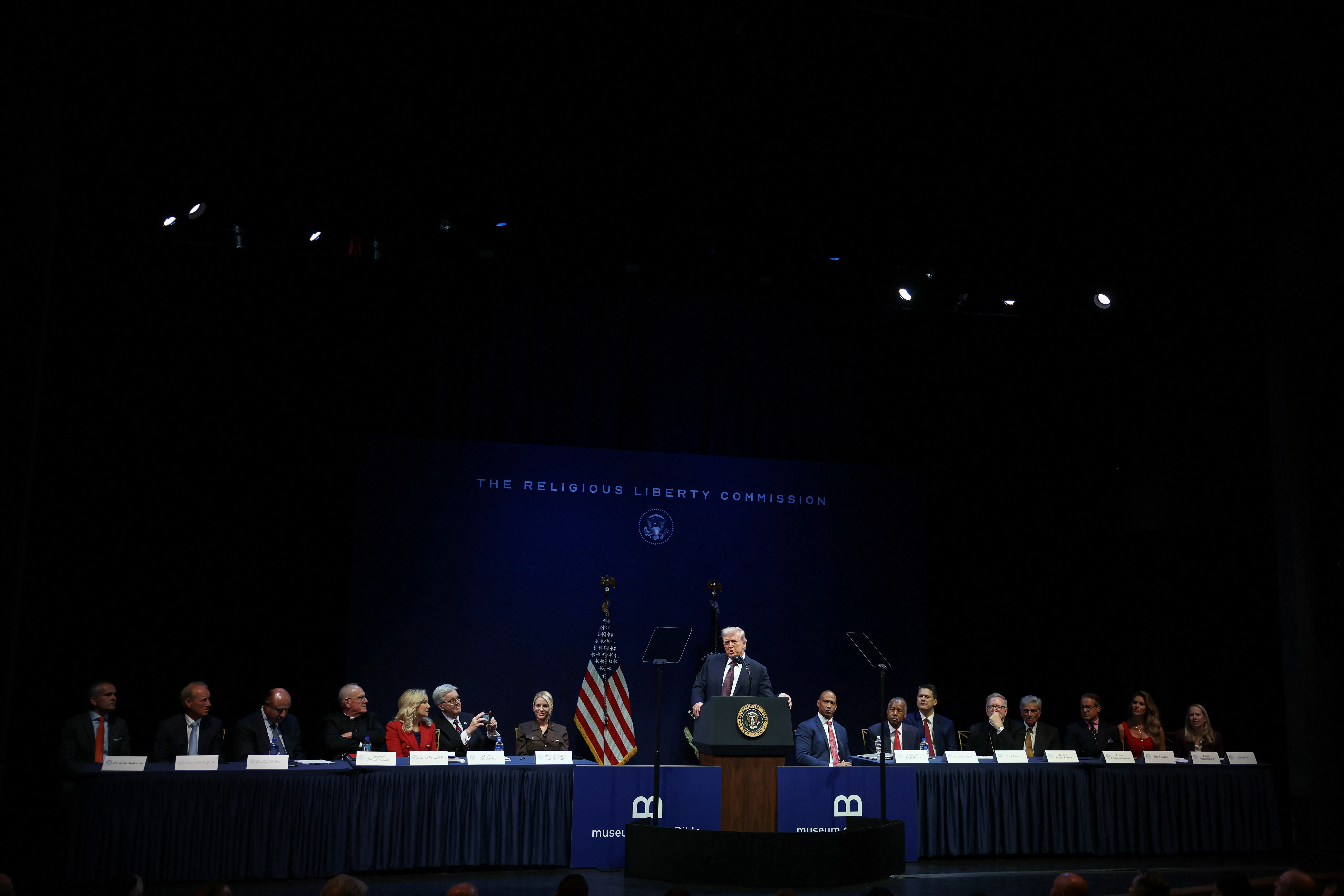
February 13, 2026
Daniel Cohen
Entertainment & Lifestyle
For decades, Christian movies occupied a narrow corner of the entertainment world. Many early productions were created with minimal budgets, small casts, and limited distribution. These projects were sincere and often carried strong messages, but they rarely matched the production value audiences had come to expect from mainstream Hollywood films.
Today, that landscape has changed dramatically. Christian films and faith-based television have experienced a notable rise in quality, cultural influence, and commercial success. What was once a niche category now includes cinematic releases that draw national attention, perform well at the box office, and earn respect from viewers.
Understanding how this shift occurred helps explain why more studios are investing in faith-driven content and why platforms like Real Life Network are committed to producing and curating media that is meaningful, excellent, and grounded in biblical truth.
A Brief Look at Early Christian Film
Early Christian movies were created primarily for church audiences or small evangelical circles. These films often had:
- Amateur or volunteer actors
- Limited budgets
- Simple scripts
- Minimal or no special effects
- Local or direct-to-DVD distribution
While these productions had heartfelt intentions, they rarely broke into mainstream entertainment. Many believers appreciated the message but still longed for films that combined strong storytelling with technical excellence.
The Turning Point: When Christian Films Stepped Into the Spotlight
About twenty years ago, a shift began. A handful of filmmakers and churches dared to dream bigger, believing that Christian stories deserved high-quality production and a national stage.
A few key titles helped change perceptions:
1. The Passion of the Christ (2004)
Though not produced by a traditional “Christian studio,” this film changed the conversation overnight. With a worldwide gross in the hundreds of millions of dollars, it showed that biblically rooted stories could draw enormous audiences and stir conversation far beyond church walls.
2. Sherwood Pictures and the Surprise of Small-Budget Success
Sherwood Baptist Church in Georgia helped launch a new era of grassroots Christian filmmaking:
- Facing the Giants (2006) was produced on a very small budget (around $100,000) and went on to earn over $10 million worldwide.
- Fireproof (2008) followed with a budget of about $500,000 and grossed more than $33 million.
- Courageous (2011) continued the trend, made for about $2 million and earning more than $35 million worldwide.
These films weren’t just “good for a church movie.” They demonstrated that faith-driven storytelling, even with modest budgets, could connect with audiences across the country.
3. War Room, I Can Only Imagine, and Beyond
The momentum didn’t stop:
- War Room (2015) was produced for about $3 million and went on to make around $74 million worldwide. It even reached the number-one spot at the North American box office during its second weekend in theaters.
- I Can Only Imagine (2018), based on the story behind the MercyMe song, was made for about $7 million and earned more than $85 million worldwide.
- Jesus Revolution (2023), telling the story of the Jesus Movement in Southern California, had a budget of about $15 million and went on to make more than $54 million worldwide.
These and other faith-based films showed that Christian stories could be both impactful and commercially successful, often delivering remarkable returns compared to their budgets.
Why Christian Films Are Improving
Several significant shifts explain why Christian movies now often come much closer to Hollywood’s production quality.
1. Higher Budgets and Better Technology
As studios and investors recognized real audience demand for faith-based content, more funding became available. At the same time, advances in digital filmmaking make high-quality cameras, editing tools, and visual effects more affordable. The result: better cinematography, sharper sound, and stronger overall polish.
2. Experienced Talent in Front of and Behind the Camera
Over time, more experienced actors, writers, directors, and crew members have chosen to work on faith-based projects. That professional expertise shows up in:
- Stronger scripts
- More nuanced performances
- Better pacing and editing
- More intentional visual storytelling
3. Audience Demand for Meaningful, Clean Content
Millions of viewers are weary of entertainment that feels dark, graphic, or hopeless. Parents and grandparents in particular are looking for movies that:
- Uphold family, forgiveness, and moral responsibility
- Avoid graphic violence and explicit content
- Offer genuine emotional and spiritual depth
Faith-based films consistently provide that kind of experience. This demand has encouraged more careful craftsmanship and opened doors for wider distribution.
4. Studio Support and Faith-Focused Divisions
Many major studios and distributors have taken notice of the consistent performance of faith-based films. Some have created dedicated divisions or partnerships focused on this space, giving Christian projects access to:
- Larger marketing campaigns
- Professional distribution networks
- Wider theatrical releases
Faith-driven entertainment is no longer an afterthought. It is now a recognized category with a strong and reliable audience.
Why Audiences Are Turning Toward Faith-Based Content
It isn’t only Christians who are watching. Many viewers who may not identify as religious still appreciate films that feel hopeful, honest, and emotionally grounded.
Faith-based films tend to provide:
- Clear moral stakes
- Stories of redemption and second chances
- Characters who grow and change for the better
- Endings that offer hope instead of cynicism
At a time when many mainstream stories lean into despair or shock value, that kind of storytelling is a welcome change.
How Christian Television and Streaming Have Grown
The growth isn’t limited to films. Faith-based television, documentaries, and streaming content have also expanded dramatically in both quality and reach. Today, Christian media offers:
- Thoughtful documentaries and docuseries
- Professional teaching and discipleship series
- Podcast networks featuring pastors, apologists, and Christian thinkers
- Children’s content with strong biblical themes
- Worldview and cultural-analysis programs that help believers think biblically about current events
Streaming has opened the door for this content to reach global audiences. Viewers who once had to wait for a DVD or special broadcast can now access high-quality faith-based programming at any time.
What Still Sets Faith-Based Films Apart
Even as Christian films have improved technically, they remain distinct in important ways. Faith-based productions typically offer:
- Purpose-driven storytelling anchored in biblical truth
- Themes centered on grace, forgiveness, and hope
- A commitment to avoid graphic or exploitative content
- A focus on the value of every person before God
This combination is increasingly rare in mainstream entertainment and is one reason faith-based content continues to find new fans.
Why Real Life Network Is Committed to Quality
Real Life Network exists to provide families and individuals with uplifting, biblically grounded, and thoughtfully produced content without the moral concerns often woven into mainstream entertainment.
RLN’s mission includes:
- Offering programming that aligns with a Christian worldview
- Avoiding graphic violence, explicit sexuality, and sensationalism
- Highlighting films, series, and conversations that encourage spiritual growth
- Giving families a trusted place to find both entertainment and discipleship content
As faith-based media continues to grow in excellence, RLN is committed to being part of that growth—curating and producing content that is both engaging and rooted in truth.
Christian filmmaking has come a long way. What began as a small, low-budget corner of the industry has grown into a respected and influential space. Many titles now approach or match Hollywood-level quality, proving that when Christian stories are told with skill and care, they resonate deeply with audiences.
For viewers who are looking for films and shows that speak to the heart without compromising their convictions, this is very good news.
Explore thoughtfully produced Christian films, teaching, and series anytime on Real Life Network.
25 min
Are Christian Movies as Good as Hollywood Films? What You Should Know

February 12, 2026
Real Life Network
World News
In the middle of a volatile news cycle, three words are being used like a match near gasoline: Christ is King. Biblical truth? Absolutely. Pure worship? Yes. But when that phrase gets weaponized to target Jews, to silence pro-Israel voices, or to baptize hatred, it stops being a confession and becomes a cudgel. Today we are talking about the Religious Liberty Commission clash over Israel and Gaza, the growing divide inside the church, and why this moment demands discernment. We will also examine the cultural shift that is cracking the NFL’s stranglehold and the political panic as ICE enforcement becomes the new target of outrage. Watch more on the Real Life Network.
Christ Is King, but Context Is Everything
Let me say it plainly. Christ is King. I believe it. I worship Him. I am a Jewish follower of Yeshua living in Israel, and I am not interested in performative slogans.
But context matters because history matters.
When someone uses “Christ is King” as a sneer at Jews, or as a signal to extremist movements, or as a way to shout down anyone who defends Israel, you are watching a sacred truth get twisted into a weapon. The same words can be worship, or they can be a dog whistle. If you do not understand that distinction, you are going to get played.
At the Religious Liberty Commission, we saw the fault line in real time. Seth Dillon challenged the growing influence of voices on the right who treat Israel as the villain and treat Jews as fair game. A fair question surfaced in the exchange: is saying “Christ is King” antisemitic? No. Not inherently. But the phrase has been co-opted by some to communicate something darker: put the Jews in their place, they are the other, they deserve what is coming.
And if you think I am being dramatic, look at the responses I have received. I have been told to “get out,” called a “Zionist” as if it were a slur, and mocked for being a Jewish follower of Jesus. That is not theology. That is hatred wearing a church costume.
You can criticize Israeli policy without hating Jews, but you cannot baptize hatred and call it Christian. When “Christ is King” is used to mock Jews, it is not evangelism, it is intimidation. If you claim to follow the Jewish Messiah while denigrating His people, something is spiritually broken.
Israel, Gaza, and the Line Between Criticism and Spiritual Hatred
Here is the line that needs to be drawn clearly. You can disagree with Netanyahu. You can debate foreign aid. You can question military strategy in Gaza. None of that automatically makes you antisemitic.
But when people label Israel demonic, spread conspiracies about Jews, or recycle modern blood libels, that is not policy critique. That is spiritual hatred. It is the same poison that has resurfaced in every generation, wearing a different disguise.
This is why the question raised at that hearing matters. “Are you willing to condemn what Israel has done in Gaza?” That framing assumes the verdict. It forces a loyalty oath to a narrative. The response from Shabbos Kestenbaum cut through it. He rejected the genocide label and pointed to the true genocidal intent revealed on October 7, when Hamas sought to murder as many Jews as possible, men, women, and children.
That does not erase tragedy. It does not deny suffering. It insists on moral clarity.
The church must be able to say, “We can debate policy,” while also saying, “We will not excuse terrorism, reward antisemitic narratives, or ignore what October 7 revealed about Hamas.” If believers cannot hold those truths together, the vacuum will be filled with propaganda.
Culture Is Shifting and the Border Fight Proves It
Now pivot with me, because something else is happening that goes beyond football. The NFL’s cultural dominance is cracking. Millions of Americans are tired of vulgarity and confusion being served as entertainment, and a competing halftime broadcast drew viewers away in significant numbers. That is not a minor blip. It is a sign.
We are also seeing a shift in the politics surrounding border enforcement. The same voices that once embraced masks now oppose them when federal immigration officers wear them, even though those masks protect agents and their families from harassment and targeting. A federal judge blocked California from enforcing a ban on ICE masks, pointing directly to constitutional violations. The attempt to spin that ruling does not change the reality.
Meanwhile, polling consistently shows that majorities of Americans support deporting those who are in the country illegally. That is not extremism. That is a public that is growing weary of disorder. Claims that ICE is “kidnapping citizens” collapse under basic scrutiny, yet they continue to circulate because misinformation works on those who do not have time to verify it.
Then there are the reports that should concern every American. Allegations that overseas individuals have exploited weaknesses in voter systems to register and vote. If verified, that is not just election fraud. It is a national security threat.
Across Israel debates, culture battles, and border policy fights, the common thread is clear: truth is either your currency, or you are bankrupt.
That is why this show exists. Not to chase outrage, but to speak clearly about what matters.
For more analysis on Israel, antisemitism, cultural shifts, and the battle for biblical truth, watch and share the Daniel Cohen Show on the Real Life Network.
Related Articles
25 min
Christ Is King, Israel, and the Battle for Truth in a Divided Culture
February 11, 2026
Daniel Cohen
World News
If you want biblical truth, Christian news, and a biblical worldview that stays grounded while the culture shouts, welcome. I’m Daniel Cohen, and this is the kind of story we unpack on the Daniel Cohen Show on the Real Life Network. Super Bowl Sunday was loud, emotional, and drenched in spectacle, but the greatest thing to come out of the day was not the game. It was a one-minute commercial that spoke gently to women who are scared, overwhelmed, and being told they have only two choices.
The One-Minute Super Bowl Ad That Spoke with Courage and Compassion
In the middle of America’s biggest TV event, an ad appeared that did something rare: it addressed the most vulnerable people in our culture without mocking them, shaming them, or shouting at them. It looked a pregnant woman in the eye, the woman who is thinking, I do not know if I can do this, and it offered a third option rooted in love, dignity, and hope.
Adoption is an option.
That message matters because abortion has been normalized and rebranded as “health care,” while the human reality gets buried under slogans. We live in a time when the voices and the anger are so loud that a gentle message can feel like a shock. But gentle is not weak. Gentle can be powerful. Gentle can be brave.
Giving your unborn child a chance at life is not a political statement, it is an act of courage.
Think about the reach for a moment. Over 120 million Americans watch the Super Bowl, and the global audience is even larger. A one-minute ad during that broadcast is not cheap. It is a major investment. And yet someone decided it was worth it to place a pro-life message right in the center of America’s most iconic weekend.
Here is the part that I do not want anyone to miss. There are families who have prayed for years to adopt. There are couples with resources, stability, and love who are waiting, hoping, and ready. Adoption is not a theoretical alternative. It is a real path that changes real lives.
Look at the people who were adopted and made a world-shaping impact: Steve Jobs, Faith Hill, Dave Thomas, President Gerald Ford, Babe Ruth. And if you want a biblical example, Moses. The point is not celebrity trivia. The point is this: history is full of people who lived because someone chose life.
And then there is a development that flew under the radar, but it matters. Planned Parenthood, the largest abortion provider in America, quietly dropped its lawsuit connected to Medicaid defunding of abortion. Other states are still fighting, but this was not nothing. It signals that the ground is shifting.
Not one taxpayer dollar should be forced into funding something millions of Americans find morally abhorrent.
If the left never stops pushing, then we cannot stop either. Keep praying. Keep speaking. Keep showing up. Keep voting. Keep fighting for the preborn, and keep offering compassion to mothers who feel trapped and alone.
Netanyahu in Washington: Do Not Repeat the Obama-Iran Mistake
Now pivot with me, because while America debates commercials, Israel is watching a ticking clock.
Prime Minister Netanyahu is heading to Washington, and the timing is urgent. This meeting was moved up for a reason. The United States is negotiating with Iran again, and Israel remembers exactly where this road leads when leaders chase a deal that looks “historic” on paper but fuels terror in reality.
We have seen this movie before. The Obama-era approach brought sanctions relief and economic breathing room, and Iran used the windfall to strengthen the terror network surrounding Israel: Hamas, Hezbollah, the Houthis, Palestinian Islamic Jihad, and more. The regime keeps spinning centrifuges, keeps building capabilities, keeps lying, and keeps funding the very forces that murder civilians and destabilize the region.
And let’s be clear: the Iranian regime is not the Iranian people. The people of Iran have been paying in blood for decades. They want freedom. They want an end to Islamic oppression. The regime responds with brutality, mass arrests, and killings. It is not just a geopolitical puzzle. It is a moral crisis.
So when negotiations happen, the question must be asked plainly: what are we negotiating, and with whom? Iran’s leaders insist their ballistic missile program is not negotiable. They continue testing missiles with ranges that threaten Israel, American bases, and beyond. Israel’s position is straightforward: zero enrichment. Not five percent. Not ten percent. Zero.
A “deal” that leaves the regime intact, empowered, and closer to nuclear capability is not diplomacy, it is delayed disaster.
That is why Netanyahu moved the meeting up. Israel is signaling that time is running out. Be praying for wisdom for leaders in Washington and Jerusalem. Be praying for courage to choose the hard right over the easy wrong.
Israel’s Olympic Perseverance vs. America’s Growing Grievance Culture
I want to end with a contrast that tells you a lot about where culture is headed.
Israel’s first Olympic bobsled team is one of the most inspiring stories you will hear. Bobsled is not exactly a national pastime in Israel. There is no big system, no deep pipeline, no glossy program. They built it. They qualified. They earned their way in.
And then they got robbed. Passports stolen. Equipment stolen. Thousands of dollars in gear gone while they were training. And what did they do? They kept going. That is the Israeli spirit: forward. Kadima.
Even more powerful, the team wore a Bible verse on their gear: Genesis 28:16, “Surely the Lord is in this place, and I did not know it.” It is a reminder that God’s presence is not limited to comfort. Sometimes it is revealed in hardship, perseverance, and faithfulness under pressure.
Now compare that to what we heard from some American athletes. Instead of simple gratitude to represent the United States, we heard public lament and distance, as if wearing the flag requires an apology. Look, no one is saying athletes cannot have opinions. But when you represent your nation on a global stage, there is a difference between thoughtful critique and performative grievance.
I am speaking to you from Israel. I see what it means to live in a region where enemies openly call for your destruction. America still has unparalleled freedom, opportunity, and rights compared to most of the world and most of human history. If you do not want to represent the United States, there is a simple solution: do not wear the uniform.
And yes, the culture war tries to manipulate people emotionally. We have seen activists use profanity to attack law enforcement. We have seen rhetoric that frames borders as hatred, even while elites live behind gates, walls, and private security. Do not be played. Enforcing the law is not inherently immoral. Secure borders are not inherently cruel. A nation has the right, and the duty, to uphold order.
We can have compassion without surrendering common sense. We can care about people without turning society into a moral hostage situation.
Thanks for reading. If you want more analysis through a biblical worldview, and you want it without the noise and without the spin, watch the Daniel Cohen Show on the Real Life Network.
Related Articles
- Evangelicals, Israel, and the SAVE Act: Why the Loud Fringe Cannot Lead by Daniel Cohen
- Never Again Means Now: Holocaust Remembrance Day, Iran’s Bloodshed, and the Fight for Truth by Daniel Cohen
- Quiet Courage in a Loud Culture: Hollywood Hypocrisy, Israel, and Standing for Biblical Truth by Daniel Cohen
25 min
The Super Bowl Ad America Needed, Netanyahu’s Iran Warning, and the Olympic Contrast We Cannot Ignore

February 10, 2026
Daniel Cohen
Entertainment & Lifestyle
In recent months, more parents have begun paying closer attention to changes within Disney’s streaming ecosystem. Articles discussing Disney’s deeper integration of Hulu into Disney+ have raised new questions for families who once viewed Disney+ as a largely predictable, family-oriented platform.
As the lines between Disney+, Hulu, and broader general-market entertainment continue to blur, many Christian parents are asking a thoughtful question: What streaming options best support the values we’re trying to cultivate at home?
What’s Happening With Disney+ and Hulu
Disney has been steadily moving toward a more unified streaming strategy. Hulu content is now increasingly visible within the Disney+ experience for bundled subscribers, and Disney has announced plans to fully integrate Hulu into Disney+ in the coming years.
This matters because Disney+ and Hulu were originally designed with different audiences in mind. Disney+ emphasized family entertainment, while Hulu built its library around general entertainment, including more mature programming.
Although Disney provides parental controls and profile settings, the broader concern for many parents is not simply access, but exposure. Thumbnails, recommendations, promotions, and search results all shape what children see first, even when restrictions are in place.
Why Christian Parents Are Reassessing Streaming Choices
Christian parenting isn’t driven by fear, but by responsibility. Scripture calls parents to be intentional about what shapes the hearts and minds of their children. Entertainment is not neutral; it forms habits, expectations, and values over time.
As content libraries expand and shift, many parents are realizing that managing restrictions across multiple platforms can become exhausting. Rather than constantly reacting, families often prefer to choose environments where the default content already aligns with their convictions.
This reassessment isn’t about rejecting culture altogether. It’s about recognizing that leadership in the home includes guiding media choices with wisdom and purpose.
Streaming as a Discipleship Decision
Every household disciples in some way—intentionally or unintentionally. Media consumption plays a role in that formation.
Christ-centered leadership in the home often includes:
- Choosing content that reinforces biblical truth
- Reducing exposure to themes that contradict Scripture
- Creating space for meaningful conversation
- Prioritizing content that points children toward the Gospel
When parents treat streaming decisions as part of discipleship, they move from constant policing to purposeful replacement, offering better options rather than simply saying no.
Why Real Life Network Is a Meaningful Alternative
For families looking beyond Disney+ and Hulu, Real Life Network offers a distinctly different approach. RLN is curated around biblical conviction, not mass-market appeal.
Rather than mixing family content with mature general entertainment, RLN provides a consistent environment built to support faith, learning, and discipleship.
Families will find:
- Kids’ programming rooted in Scripture, including Superbook, iBible, Ryan Defrates: Secret Agent, Star-Spangled Adventures, and more.
- Apologetics resources for growing minds, such as In Depth Apologetics for Kids, The Creation Today Show, and Cross-Examined with Frank Turek.
- Documentaries and teaching that encourage biblical thinking and cultural discernment, including titles like Truth Rising.
This kind of content doesn’t just avoid objectionable material; it actively promotes faith, truth, and hope.
Reducing Friction for Parents
One of the greatest benefits families mention when switching to a faith-based platform is simplicity. When the entire library is curated with Christian values in mind, parents spend less time filtering and more time engaging.
Instead of worrying about:
- Unexpected recommendations
- Shifting content standards
- Mature themes appearing alongside children’s titles
Parents can focus on conversations, shared viewing, and spiritual growth.
A Healthier Media Environment at Home
Choosing Real Life Network over general-market streaming isn’t about isolating children from the world. It’s about shaping the environment in which they grow.
A healthier media environment:
- Supports biblical teaching already happening at home and church
- Encourages curiosity rooted in truth
- Helps children develop discernment over time
- Reinforces Gospel-centered values through story and teaching
When children regularly engage content that aligns with faith, those messages quietly but powerfully shape their worldview.
Choosing With Intention
Disney+, Hulu, and other mainstream platforms will continue evolving. Parents can choose to adapt endlessly, or they can choose platforms designed from the start to support their values.
For families seeking an alternative that prioritizes faith, discipleship, and Christ-centered leadership in the home, Real Life Network offers a clear and trusted option.
As families navigate changing media landscapes, choosing content that promotes the Gospel and supports intentional parenting has never mattered more.
Explore Christ-centered, family-safe streaming anytime on Real Life Network.
Related Articles:
- Are Christian Streaming Platforms Available on Roku, Apple TV, and Fire TV? By Real Life Network
- Where Can I Find Clean Cartoons for My Kids? By Real Life Network
- Why Choose a Christian Streaming Platform Instead of Netflix? By Real Life Network
25 min
Disney+, Hulu, and Choosing a Better Streaming Option for Christian Families

February 9, 2026
Real Life Network
World News
If you’re looking for biblical truth, clear-eyed reporting, and a biblical worldview on Israel, election integrity, and the headlines shaping Christian news, you’re in the right place. I’m Daniel Cohen, and this is exactly why we built the Daniel Cohen Show on Real Life Network. You can watch and share our content anytime at Real Life Network. Today, I want to connect three stories that at first glance look unrelated, but together expose the same fault line: a loud fringe trying to rewrite what Christians believe, what citizens should expect, and what a nation is allowed to defend.
Evangelicals Must Be the Backbone of Support for Israel
I sat down with Ambassador Mike Huckabee, and I walked away encouraged. Not because he said something politically convenient, but because he spoke with the kind of moral clarity we need right now. He said it plainly: the fracture in parts of the evangelical world is small, but loud. That is exactly right. It is not the majority of Bible-believing Christians, but it is a microphone-heavy minority that is trying to intimidate everyone else into silence.
Here is the center of gravity for me. God does not break covenant. He does not evolve past His promises. Romans 11:29 says the gifts and calling of God are irrevocable. If you want to argue that God has discarded Israel, you are not just debating foreign policy. You are undermining the character of God. That is why Huckabee used the word heresy, and I agree with him.
If God can abandon His covenant promises to Israel, then no Christian has any basis for confidence in God’s promises to the Church.
Support for Israel is not about pretending Israel is perfect or that every leader, including Netanyahu, is above critique. It is about understanding the unique role of Israel in the story God is telling, and the reality that Israel is fighting enemies who also openly chant death to America. That is not an abstract slogan. It is a worldview.
And if you are a Christian wondering why this matters so much, let me say it clearly. Jesus is coming back, and He is coming back to Jerusalem. Standing with Israel is not trendy activism. It is alignment with God’s purposes and an act of spiritual sobriety.
The SAVE Act and the War on Common Sense Election Integrity
Now pivot with me, because the same loud fringe dynamic shows up in American politics. Democrats are declaring war on election integrity, and they are doing it with maximum propaganda.
We are told that voter ID is radical. We are told it is racist. We are told it is “Jim Crow 2.0.” Senator Chuck Schumer actually used that line about the SAVE Act, and it was a disgrace. The SAVE Act is about requiring proof of citizenship and secure identification to vote. That is not extreme. That is basic. You show ID to board a plane, to open a bank account, to pick up a prescription, to buy alcohol. But when it comes to selecting leaders who control the courts, the border, and the future of the country, suddenly asking for ID is called oppression.
Here is what exposes the lie. Polling over multiple years consistently shows strong majorities of Americans support voter ID, including a large number of Democrats. That is not my opinion. That is reality.
The SAVE Act is not voter suppression, it is voter protection, and the American people know the difference.
So why the hysteria? Because the left benefits from chaos and ambiguity. If you can smear common sense as moral evil, you can pressure decent people into backing away. That is the playbook. It is the same pressure tactic used on the church. Call you hateful. Call you racist. Call you extreme. Then demand your silence.
Christians should not fall for it. We can love the sojourner and still believe a nation has the right to enforce its laws. We can be compassionate and still insist on order. That is not a contradiction. It is maturity.
Propaganda, Double Standards, and Why People Are Done Being Played
We are living in an era where the propaganda is not subtle. It is blunt. Ambassador Huckabee made the point that the fringe is loud, and I am telling you the same thing is true in the media.
When Donald Trump throws a question back in a reporter’s face, the media calls it a crisis of democracy. When Don Lemon gets a sympathetic Hollywood-style platform after joining anti-ICE agitators who stormed a federally protected church space, the entertainment class and their media allies treat him like a misunderstood hero. It is two-tiered accountability.
And the deeper issue is this: the press wants the privileges of journalism without the responsibilities of journalism. If you are coordinating with activists, if you are shaping events instead of documenting them, you are no longer an observer. You are a participant.
A camera does not confer innocence, and “journalism” is not a license to trample someone else’s civil rights.
That is why trust is collapsing. People are tired of being told that what they saw with their own eyes did not happen, or that they must call it something else to protect the preferred narrative.
And while we are at it, let’s talk about the consequences of ideology without accountability. Look at California. Look at the wasted billions. Look at the projects that never deliver. Look at the taxes that keep rising. Look at leaders who congratulate themselves in front of props, while working families feel the squeeze every single month.
You cannot build a society on slogans. You cannot secure a nation with vibes. And you cannot protect a civilization if you are ashamed to defend borders, laws, and truth.
That is why I keep coming back to the same exhortation, whether I am talking about Israel, elections, or the dysfunction of one-party rule: wake up, stay grounded, and do not outsource your discernment to people who despise your values.
Thanks for reading, and if you want more unfiltered analysis through a biblical worldview, watch and share the Daniel Cohen Show on Real Life Network. Download the app and stream free.
More Articles
25 min
Evangelicals, Israel, and the SAVE Act: Why the Loud Fringe Cannot Lead
.webp)
February 6, 2026
Daniel Cohen
World News
If you want Christian news and a biblical worldview perspective that does not bend to elite culture, you can watch this and more on the Real Life Network. I am Daniel Cohen, and what I saw this week was a snapshot of where America is hurting, where the truth is breaking through, and where hope still shows up in surprising places.
Here is the difference between justice and propaganda: justice listens to victims, propaganda manufactures them.
A Detransition Verdict That Puts the Gender Industry on Notice
A jury in New York just sent a message that should make every parent sit up straight. Detransitioner Fox Varian, who underwent a double mastectomy at 16, won the first ever detransition jury verdict and was awarded $2 million in damages. That is not a headline the mainstream media wants to amplify, because it cracks the narrative they have protected for years.
This case was not a culture war meme. It was a family in crisis, a child struggling, and medical professionals who, according to the lawsuit, rushed past underlying issues like autism, ADHD, and anorexia, and pushed irreversible surgery. The mother testified she felt boxed in by the “transition or suicide” fear narrative. Parents hear that line and their stomach drops, because it is emotional blackmail dressed up as medical certainty.
Transition or suicide is not medicine, it is manipulation.
Let me say this plainly: there is no such thing as “gender affirming care” for minors when the “care” permanently alters a healthy body that is still developing. You do not get to call mutilation compassionate because you attach the word “affirming” to it. Real compassion tells the truth, slows down, treats the whole person, and refuses to sacrifice a child on the altar of ideology.
And the ripple effects are real. There are other detransitioner cases already active across the country. If courts and juries continue to recognize harm and liability, doctors and clinics may finally think twice before pushing irreversible interventions on vulnerable kids. That is not politics. That is accountability.
Grammy Activism, Open Border Lectures, and the People Left Paying the Bill
Then you have the Grammys, which gave us a picture perfect display of elite culture in America. Wealthy celebrities living behind gates with private security lecturing working families about immigration enforcement. They can wear pins and chant slogans because they do not live with the consequences of what they are advocating for.
Here is what I noticed most: selective compassion. There was plenty of performative outrage about ICE, and almost no interest in real victims who do not fit the approved script. Iran has seen brutal crackdowns, with reports of mass killings and a regime that thrives in darkness and information control. Where was the red carpet passion for the Iranian people risking everything for freedom? Where was the courage to stand against radical Islam’s violence when it cannot be blamed on the West?
That silence is the tell.
Meanwhile, policies closer to home are collapsing under their own contradictions. In California, leaders keep promising a safety net while taxpayers watch fraud, waste, and misaligned priorities pile up. You cannot convince working families that they must accept constant insecurity and chaos while the same system struggles to protect veterans on the streets or keep basic services functioning.
A nation that refuses to enforce its laws is not loving the stranger, it is abandoning its own people.
And this is where the hypocrisy becomes unbearable: we can recognize human dignity while also insisting on the rule of law. That is not cruelty. That is sanity. A country that will not draw lines will not remain a country for long. The elites can cosplay virtue at awards shows. The rest of America has to live in the real world.
From a Kibbutz to the NBA, and the Hope Hollywood Cannot Manufacture
Now let me pivot to something encouraging, because we need reminders that goodness still breaks through the noise. Israel just celebrated a historic first: an Israeli born player becoming an NBA All Star. From a kibbutz to basketball’s biggest stage, that is a story worth smiling about. It is also a reminder that Israel is not the caricature it is painted to be. It is a complex society filled with people, families, and stories that do not fit the slogans.
When I hear the lazy accusations and the constant demonization, I think of moments like this. Real life does not live on hashtags. Real life is a young man representing his heritage with pride, a nation celebrating an achievement, and a world watching something uplifting for a change.
And while Hollywood scripts its “meaning,” I keep coming back to a deeper truth: human beings are not props for anyone’s political theater. The detransitioner in court is not a tool for points. The immigrant family is not a pawn. The veteran sleeping outside is not an inconvenience. They are image bearers of God, and the moment we forget that, we start excusing anything.
That is why I will keep saying it: the biblical worldview is not just a set of talking points. It is the foundation for justice, compassion, and clarity. God does not make mistakes, and redemption is real, even when culture is confused.
If you want more Christian news and biblical worldview coverage like this, watch the Daniel Cohen Show on the Real Life Network and share the app with someone today.
Related Articles
25 min
The Verdict That Shook Gender Medicine, the Grammys’ Moral Theater, and Israel’s First NBA All Star

February 5, 2026
Daniel Cohen
Entertainment & Lifestyle
Streaming has quickly become the primary way many families watch their favorite shows, movies, sermons, and podcasts. As Christian platforms continue to grow, a common question emerges: Can I watch faith-based streaming on the devices I already own? The good news is that most Christian streaming services—Real Life Network included—are designed to work across a wide range of devices, making it simple to access biblical teaching and wholesome entertainment wherever you are.
Roku, Apple TV, and Fire TV Support
Most Christian streaming platforms now offer dedicated apps for the major streaming boxes and smart TV devices:
Roku
Roku is one of the most widely supported streaming systems among Christian platforms. Its channel store includes apps for Real Life Network, Pure Flix, RightNow Media, and several others. Installation is typically quick, and the interface is simple enough for everyone in the home to navigate.
Amazon Fire TV and Fire TV Stick
Fire TV devices also provide strong support for Christian streaming. Many platforms—including RLN—offer apps in Amazon’s app marketplace. These work across Fire TV boxes, sticks, and built-in Fire smart TVs, making it easy to stream sermons, documentaries, or family-friendly movies without switching devices.
Apple TV
Apple TV continues to expand its streaming catalog, and most Christian services offer Apple TV-compatible apps. The interface tends to be sleek and reliable, and families already invested in Apple products often find this the smoothest viewing experience.
Smart TVs and Built-In Systems
Many modern televisions come with built-in streaming capabilities. Samsung Smart Hub, LG webOS, Android TV, and Google TV platforms all provide app stores where Christian streaming apps are increasingly available.
Even if an app isn’t native yet, these TVs usually support casting from phones or tablets, giving families a workable alternative until a dedicated app is added.
Mobile Devices and Tablets
Nearly every Christian streaming platform includes apps for:
- iPhone
- iPad
- Android phones
- Android tablets
This makes it easy to watch content while traveling, during morning devotions, or while kids enjoy cartoons in the car. For families with younger viewers, tablets remain one of the simplest ways to offer safe, Bible-centered entertainment wherever the day takes them.
Web Browsers and Laptops
All major Christian streaming platforms offer full access via web browsers. This option works well for:
- Small-group gatherings
- Bible studies using a projector or TV
- College students watching on laptops
- Anyone who prefers a keyboard over a remote
As long as the device has a stable internet connection, browser streaming remains one of the most universal ways to access Christian content.
Do All Christian Streaming Platforms Support All Devices?
Device support varies, but here’s the general rule: If a platform is well-established and regularly updated, it likely supports Roku, Apple TV, Fire TV, mobile apps, and browser streaming.
Some widely used Christian platforms with broad device compatibility include:
- Real Life Network
- Pure Flix
- TBN+
- RightNow Media
- Answers.TV
These services understand that families rely on a wide range of devices, so they work to make the viewing experience as accessible as possible.
Where Real Life Network Fits In
Real Life Network is built for easy access on the devices families already use daily. Whether through a Roku box in the living room, a Fire TV Stick in the bedroom, an Apple TV in the den, or a tablet in the car, RLN offers a convenient way to stream teaching, documentaries, kids’ cartoons, podcasts, and more.
Its purpose is simple: make biblically grounded content available wherever families watch—and remove the obstacles that sometimes come with switching to a new streaming service.
Christian streaming platforms are more accessible than ever. With support across the major devices—Roku, Apple TV, Fire TV, smart TVs, phones, tablets, and browsers—families can enjoy faith-based content without changing their setup or learning new technology.
Explore Christian streaming on your favorite devices anytime through Real Life Network.
25 min
Are Christian Streaming Platforms Available on Roku, Apple TV, and Fire TV?
.webp)
February 4, 2026
Real Life Network
Business & Finance
America is standing at a financial crossroads. With nearly $38 trillion in national debt, endless money creation, and growing economic instability, the consequences are no longer theoretical, they’re personal. On Economic War Room with Kevin Freeman, I sat down with renowned economist Dr. Judy Shelton, author of Good as Gold, to confront the hard truths about our monetary system and explore real solutions rooted in history, faith, and free markets. This conversation goes beyond politics or theory. It’s about restoring honest money, protecting families, and advancing christian financial planning grounded in biblical principles.
Stream Economic War Room with Kevin Freeman on the Real Life Network.
The Debt Crisis No One Can Ignore
America’s debt isn’t slowing down, it’s accelerating. When I wrote Pirate Money just two years ago, we were near $32 trillion. Today, we’re approaching $38 trillion, and the Federal Reserve continues creating money with a keystroke.
Why This Matters to Everyday Americans
Inflation isn’t an accident. It’s the direct result of a system designed to finance government spending rather than productive work. As Dr. Shelton explained, money is supposed to be:
- A unit of account
- A means of exchange
- A store of value
When money fails at these three jobs, families lose purchasing power, savings are quietly confiscated, and long-term planning becomes impossible.
When Central Banking Replaces Honest Weights
Biblical Economics Meets Modern Reality
Dr. Shelton made a powerful point that resonates deeply with a biblical worldview:
“Honest weights and measures are biblical.”
Scripture warns against false balances, and yet modern monetary policy deliberately erodes the value of the dollar year after year. Even a so-called “modest” 2% inflation means a 20% loss of value in a decade. That’s not stability. That’s debasement. This is why christian financial planning must account for monetary integrity. You cannot steward resources faithfully when the measuring stick itself keeps changing.
The Federal Reserve and the Illusion of Control
Unlimited Money, Unlimited Consequences
Federal Reserve officials openly admit they can create unlimited money. As Dr. Shelton explained, this happens when the Fed buys Treasury debt and credits bank accounts instantly without any new production or value created. The result?
- More money chasing the same goods
- Higher prices
- A growing wealth gap
- Increased dependence on government
History shows where this leads, from Weimar Germany to Zimbabwe. Superpowers are not immune from collapse.
Gold, the Constitution, and Economic Freedom
Why Gold Still Matters
Gold isn’t nostalgia. It’s discipline. Dr. Shelton reminded us that the Founders embedded sound money into the Constitution for a reason. Article I treats money the same way it treats weights and measures, because both must be objective, stable, and trustworthy.
That’s why gold-backed systems:
- Limit government abuse
- Protect individual liberty
- Restore trust in money
Even former Fed Chairs like Alan Greenspan and Paul Volcker acknowledged gold’s role as an anchor against fiscal irresponsibility.
Treasury Trust Bonds: A Market-Based Solution
Funding Government Without Mandates
One of the most compelling ideas from Good as Gold is Treasury Trust Bonds, government bonds redeemable in either dollars or gold.
Why this matters:
- Investors choose sound money voluntarily
- Markets, not mandates, discipline government
- Confidence replaces coercion
This complements the state-level sound money movement we’ve advanced in Texas, Florida, Arkansas, and beyond, representing over $5 trillion in combined GDP.
Faith, Freedom, and the Path Forward
Economic Integrity Is a Moral Issue
Economic freedom isn’t just about prosperity, it’s about responsibility. When money is honest, people can plan, save, give, and build generationally. That’s why the mission of Economic War Room with Kevin Freeman is clear:
What the marketplace sees as business, our enemies see as a battlefield.
Sound money is not fringe. It’s foundational.
Stream Economic War Room with Kevin Freeman on the Real Life Network.
25 min
Good As Gold: Why Honest Money Matters

February 3, 2026
Kevin Freeman
World News
If you care about biblical truth, the rule of law, and what is happening to Western civilization, you need to understand something right now. We are watching a shift where propaganda is being dressed up as journalism, and activism is being marketed as “news.” That is why I keep telling you to get connected to the Real Life Network, because the legacy media is not going to tell you what is actually happening.
I am going to say it plainly. Holding a camera does not automatically make someone a journalist. And if you turn that camera off so you can coordinate with agitators while they plan something illegal, you are not covering a story. You are part of it.
A journalist reports the facts. A propagandist protects the narrative.
That distinction matters because we have reached the point where churches are being treated like fair game.
The Moment Journalism Crossed the Line
The Don Lemon situation is not just another headline. It is a case study in how far the media class has fallen. What shook me was not simply that a protest happened at a church in Minnesota. What shook me was the open admission that Lemon turned off his recording device while the group exchanged what they called “critical information” about their plans, and then turned it back on to broadcast the disruption.
That is not journalism. That is coordination.
And here is the part that should alarm every Christian, even if you do not agree with my politics. A church service is a protected space. People have a constitutional right to worship, gather, enter, and exit without being physically obstructed or intimidated.
If you want to protest, go protest. That is America. But when you physically block doors, interfere with worship, prevent congregants from leaving, and help plan it, you are no longer participating in speech. You are participating in a conspiracy.
Now, what makes this even more stunning is the law involved. The same federal law that Democrats used to prosecute pro life activists outside abortion clinics can also be applied when someone interferes with access to a house of worship. The point is simple. You do not get to trample someone else’s rights while claiming your own.
Freedom of the press does not include freedom to obstruct worship.
And I have to say this too. The same activists who would never attempt this at a mosque did it to a Christian church. That is not bravery. That is cowardice. That is religious persecution disguised as activism.
The Poison on the Right and the Rot on the Left
I also want to address something that is breaking my heart in real time. We are seeing antisemitism surge again, but now it is showing up in places people did not expect.
On the left, we have watched open hostility toward Israel become mainstream. On the right, we are now watching a certain “new right” flirt with the same hatred, just repackaged. It is anti Jewish poison disguised as “anti Zionism,” and it is spreading.
I have posted simple statements defending Israel’s right to exist, and I have seen the responses. I have read the comments. People who claim to be conservatives have said things that sound like the worst voices in history.
Let me be clear. You cannot claim to be Bible believing and align yourself with the enemies of Western civilization while you mock the Jewish people and dismiss the terror that has been unleashed since October 7.
And no, I am not saying Israel is perfect. I am not saying Netanyahu is perfect. I am saying something more basic than that. Israel is the only democracy in the Middle East, and the terror groups surrounding her are not just Israel’s enemies. They are America’s enemies too. When Israel fights Hamas, Hezbollah, the Houthis, and Iran’s terror network, they are fighting the same forces that chant death to America.
This is not complicated.
If you cannot condemn antisemitism when it is coming from your “side,” you are not defending truth. You are defending a tribe.
Children Used as Political Props
Then there is the issue that should anger every parent, regardless of party. Schools allowing children to participate in political protests during school hours is unacceptable.
I saw footage of young students being marched out with protest signs, encouraged by adults who should have been teaching math and reading, not training future activists. Some parents were furious, and they had every right to be.
Here is the question I keep coming back to. When I drop my kids off at school, I am entrusting them to the care and supervision of that institution. So why are children being allowed to walk out of class and into the street?
It is a safety issue. It is a moral issue. And it is a spiritual issue.
The left understands something very well. If you can capture the mind of a child, you can shape the future. That is why the battle over education is so fierce. And that is why parents cannot afford to be asleep at the wheel.
Proverbs 22:6 tells us to train up a child in the way he should go. That is not the state’s calling. That is ours.
California Fraud, Endless Taxes, and the Fight Over Election Integrity
I also cannot ignore what is happening in California, because it is home. I was born there. I care about what happens there. And the reports coming out about fraud should make every taxpayer’s stomach turn.
We are talking about patterns of questionable child care claims, massive improper payments, and scandal after scandal. At the same time, working families are being squeezed by taxes that never stop, and now there is even talk of a mileage tax on top of the already crushing cost of living.
And while all of that is happening, major retailers are closing stores in Democrat run cities because crime has made it unsafe and unprofitable to operate. That is not theory. That is reality.
Then we come to election integrity. The SAVE Act is being attacked as “voter suppression,” but what it actually requires is proof of citizenship. That is it. If you want to vote in American elections, prove you are an American. Every functional nation on earth understands that principle.
You need identification to board a plane. You need identification for countless normal parts of life. Yet when Americans ask for basic safeguards in voting, they are told they are hateful or racist. I am done with that manipulation.
This is a spiritual war, but it is also a truth war. Lies thrive where people stop asking questions.
I am asking you to do two things. First, pray, because prayer moves God’s heart. Pray for the Church to stand firm, pray for parents to wake up, and pray for leaders to have courage. Second, stay connected and help others get connected. You can watch and share everything on the Real Life Network.
Related Articles
- Iran’s Revolt Against Religious Rule by Hedieh Mirahmadi
- Ideology at War With the West: The Rising Alliance Behind Modern Terror by Hedieh Mirahmadi
- Trump Arrests Maduro and Venezuela Tastes Freedom Again by Daniel Cohen
25 min
When a Camera Becomes a Weapon: Don Lemon, Media Activism, and the War for Truth

February 2, 2026
Daniel Cohen
World News
Watch The Daniel Cohen Show on the Real Life Network for Christian news and biblical worldviews on the latest events around the globe. On January 27, International Holocaust Remembrance Day, we pause and ask the question the world never wants to answer: how did six million Jews get exterminated, and how do we stop it from happening again? If “never again” means anything, it means we do not look away when evil shows its face. It means we tell the truth, even when it is unpopular. It means we call darkness what it is.
Never Again Is Not a Slogan, It Is a Warning
Eighty-one years ago, Soviet troops liberated Auschwitz. They found survivors who were barely alive, walking skeletons of skin and bone. My grandmother Laura was one of them. She lived. Most did not. Only a tiny fraction walked out of that place.
I have seen the images you have seen: the piles of shoes, the abandoned luggage, the warehouses of hair. Six million Jews were systematically exterminated because they were Jewish. And every year, we say “never again,” as if repeating the words is enough to keep the world from repeating the sin.
But here is the uncomfortable truth. “Never again” is meaningless if we only say it when it is safe.
Look at Iran. I am not equating anything to the Holocaust. The Holocaust stands alone in its scope and horror. But if we are talking about mass slaughter, state violence, public executions, and a regime crushing dissent with bullets and terror, then yes, we are watching something horrifying unfold in real time. Reports from inside Iran suggest tens of thousands may have been killed for demanding freedom. The regime has cut the internet for weeks. Ask yourself why. If everything is “under control,” why hide the evidence?
And where are the loudest voices in the West? Where are the celebrity human rights crusaders? Where is the UN women’s office? Where is the legacy media urgency? If your compassion only activates when it can be used as a cudgel against Israel, then it is not compassion. It is propaganda.
When the world goes silent in the face of evil, evil learns it can keep going.
Iran’s Regime Targets the Body, and the World Pretends Not to See
Let me show you the kind of evil the Islamic Republic specializes in. There is footage and imagery coming out in small trickles, even with the internet severed. There are fathers holding sons whose eyes have been destroyed. Reports indicate security forces were told to aim at demonstrators’ eyes, to blind them and break the rebellion. Think about that. A regime so demonic it treats human sight like a target.
This is what radical Islamist tyranny does. It maims. It tortures. It destroys families. It crushes hope.
Now, add the regional reality. The U.S. has moved serious firepower into the Middle East. Israel is preparing for the possibility of retaliation. Iran vows that if the U.S. strikes, it will unleash its rage on the Jewish state. And of course it will, because the radical Islamist obsession is always the same: destroy Israel, murder Jews, erase the miracle of a nation God has preserved.
Meanwhile, October 7 ignited a wave of global antisemitism that is still spreading. In America, we now see protesters targeting Jews not only in politics, but in culture. People protested a Jerry Seinfeld comedy show in Chicago because he is Jewish and supports Israel’s right to defend itself after being attacked by genocidal terrorists. Read that again and tell me we are not sliding backward into medieval antisemitism.
And then came a moment that was both heartbreaking and deeply symbolic. The last Israeli hostage held in Gaza was finally recovered after 843 days. Not rescued alive. Recovered. Israel can finally say there are no longer hostages in Gaza, dead or alive. Comfort, yes, but bittersweet. Families have been shattered. A nation has carried grief like a weight on its chest.
Never again means we confront antisemitism, Islamism, and moral cowardice before they metastasize.
Minnesota’s Moral Confusion and the Call to Protect the Least of These
Now pivot to Minnesota, because if you want to understand the sickness of our moment, listen to leaders who casually weaponize Holocaust imagery for politics. Governor Tim Walz compared ICE enforcement to the story of Anne Frank. That is grotesque. Anne Frank was not “processed.” She was hunted and murdered for being Jewish. Illegal immigrants who commit crimes are not being hunted for extermination. They are being deported. Words matter. History matters.
And then we get a story so absurd it sounds like satire: a group calling itself a Democratic coalition of Satan worshippers recognized Walz at the state capitol. I cannot believe we are even saying this out loud in America. But it is a sign of the times. Confusion is everywhere, and spiritual darkness loves confusion.
The Bible is clear. We do not wrestle against flesh and blood, but against spiritual forces of darkness. This is spiritual warfare. That does not mean we become hysterical. It means we become discerning. It means we pray. It means we speak with biblical truth and refuse to let lies set the terms.
That is why I want to end with something constructive and urgent: the protection of children and the defense of the family.
I sat down with Katie Faust, the founder of Them Before Us, and she said something every church needs to hear. The culture keeps trying to redefine family around adult desire. Katie keeps bringing it back to the child. Children have rights. Children are not accessories. Children have a right to be known and loved by their mother and father when possible, and they should never be bought and sold.
She also confronted the growing industry of “big fertility,” IVF, commercial surrogacy, and donor conception, and the ways children can be commodified in the process. You do not have to agree with every policy detail to recognize the core moral question: are we centering the adult, or are we protecting the child?
The church must become a child-protecting, truth-telling force in a culture that treats kids like a product.
If you want the full interview, and more biblical worldview coverage that refuses to bow to the spirit of the age, watch The Daniel Cohen Show on the Real Life Network.
Related Articles
25 min
Never Again Means Now: Holocaust Remembrance Day, Iran’s Bloodshed, and the Fight for Truth
January 29, 2026
Daniel Cohen
Business & Finance
If the government can print money, why does it still need to borrow? That simple question recently exposed just how broken modern economic thinking has become, and why Americans urgently need biblical truth and common sense when it comes to money.
On this episode of Pirate Money Radio with Kevin Freeman, I’m joined by one of the clearest economic thinkers I know: former six-term Congressman Bob McEwen. Together, we unpack the difference between free markets and socialism, explain why inflation quietly steals from families, and show how Christian finances must be grounded in truth, standards, and personal responsibility.
Stream Pirate Money Radio on the Real Life Network.
The Problem with Modern Monetary Thinking
One of the most revealing moments in recent economic history came when a top government economist openly admitted confusion about how money works. If money can simply be created, why does debt even matter?
That question exposes the fatal flaw of modern monetary theory: it removes standards.
Bob McEwen explains economics the way farmers, small business owners, and families instinctively understand it, you must produce before you consume. Wealth is not printed. It is created through voluntary exchange, hard work, and service to others.
When the government abandons that principle, confusion replaces clarity—and inflation replaces prosperity.
Free Markets vs. Socialism: Two Very Different Outcomes
Bob McEwen breaks economics down to its simplest truth:
There are only two ways to get money from someone else.
Free Enterprise
- You offer something valuable
- The exchange is voluntary
- Both parties are better off
- Wealth is created
Socialism
- Money is taken through force or policy
- No value is created
- Incentives are destroyed
- Poverty follows
Socialists know how to redistribute wealth, but they don’t know how to create it. History proves this every time. From Detroit to Venezuela, the pattern never changes: the bigger the government, the fewer the choices, and the poorer the people.
Freedom and prosperity always travel together.
Why Printing Money Is a Form of Theft
Inflation doesn’t announce itself with a gun, but the result is the same.When government prints money without restraint, every dollar you hold buys less. That’s not theory. That’s math.
Bob explains money as a representation of past work, a claim on value you’ve already created. When that measuring stick is manipulated, savings are destroyed, wages fall behind, and families lose purchasing power.
That’s why civilizations have always relied on standards, especially gold, as an honest measure of value. Gold doesn’t change. Politicians do.
Truth, Standards, and Biblical Foundations
One of the most powerful moments in this conversation is when Bob connects economics directly to faith. Truth requires a standard. Without it, everything becomes opinion—and opinions don’t protect liberty. America’s founders understood this. They grounded law, money, and markets in biblical principles: individual responsibility, private property, honest weights and measures, and equality before God.
That’s why this conversation isn’t just about economics—it’s about spiritual foundations. When truth is removed, error flourishes. When standards disappear, corruption fills the void.
First, Second, and Third-Party Payers: Why Government Always Wastes Money
Bob McEwen delivers what may be the clearest explanation ever given on why government programs always cost more and deliver less.
First-Party Payer
- You pay
- You consume
- You care about price and quality
Second-Party Payer
- You control only one variable
- Inefficiency begins
Third-Party Payer
- You don’t pay
- You don’t consume
- You don’t care about price or quality
Every government program operates as a third-party payer system. That’s why waste is inevitable, and why bigger government always leads to bigger problems. As Abraham Lincoln warned, government should do only what individuals cannot do better themselves.
Christian Finances Require Biblical Principles
Christian finances must be rooted in stewardship, honesty, and truth, not political promises. Scripture teaches that money reflects character. Faithfulness with “unrighteous mammon” matters. When believers understand economics biblically, they’re equipped to give generously, invest wisely, and resist systems that quietly steal from future generations.
Sound money supports strong families, thriving communities, and enduring liberty.
Final Thoughts: Why Pirate Money Radio Matters
This episode of Pirate Money Radio with Kevin Freeman isn’t about politics—it’s about reality.
Bob McEwen reminds us that economic laws work the same way moral laws do. You can ignore them for a while, but eventually, the consequences arrive.
America’s future depends on whether we return to truth, standards, and biblical wisdom. That starts with understanding money, not as something government creates, but as something people earn.
25 min
Pirate Money Radio: Biblical Economics with Bob McEwen
%20(1).jpg)
January 27, 2026
Kevin Freeman