
Stream Real Life Network Now

Authors
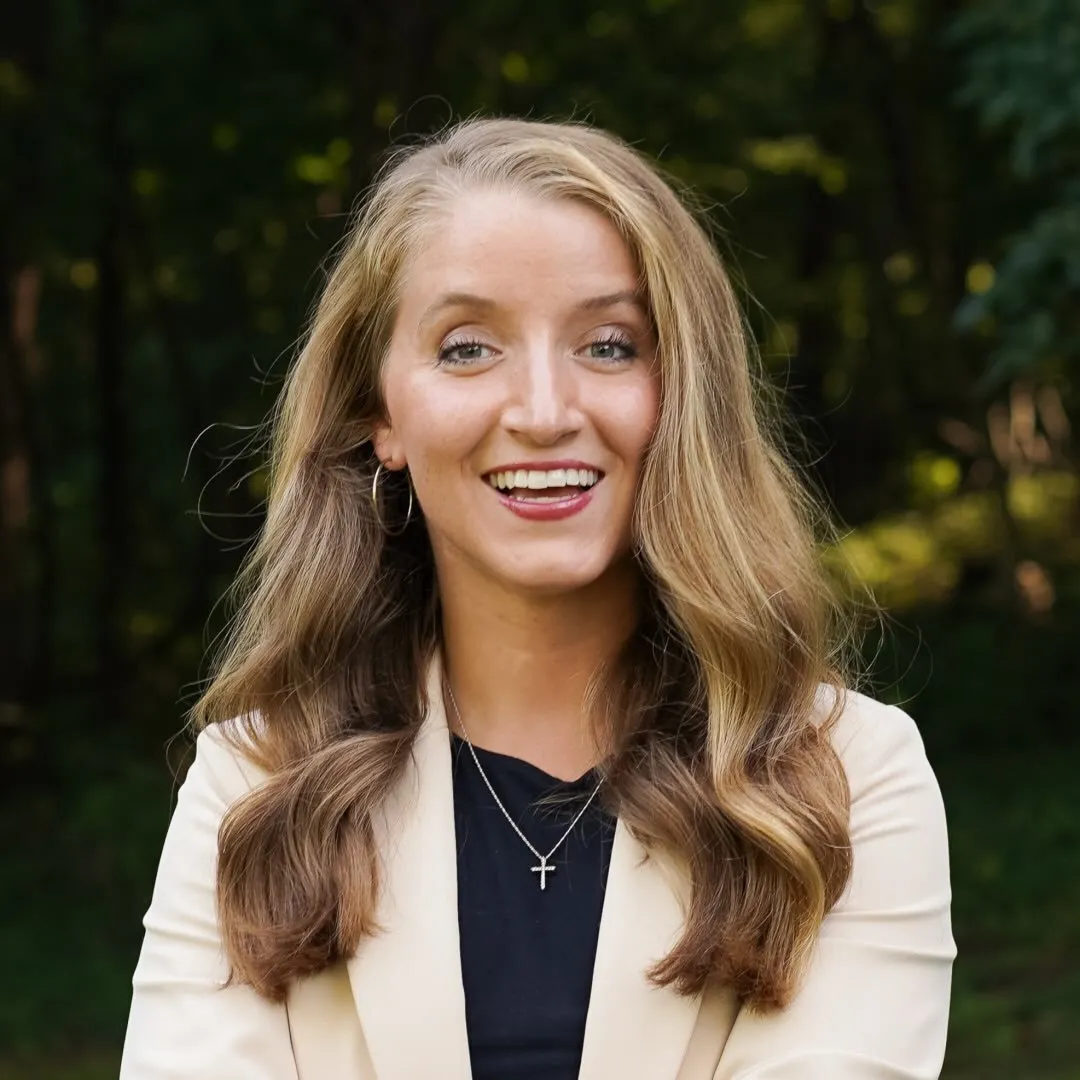
Abigail DeJarnatt
Abigail DeJarnatt, Founder & CEO of Counteract USA, equips Gen Z Christians with a biblical worldview for culture and politics. Host of the Counteract podcast, available on Real Life Network, she is a speaker and ministry leader urging young believers to stand on truth.
.png)
Daniel Cohen
Daniel Cohen hosts the "Daniel Cohen Show" exclusively on the Real Life Network. A Jewish follower of Jesus and three-time Emmy award-winning journalist, Cohen delivers the news from Israel, reporting on today's top headlines with a biblical worldview.
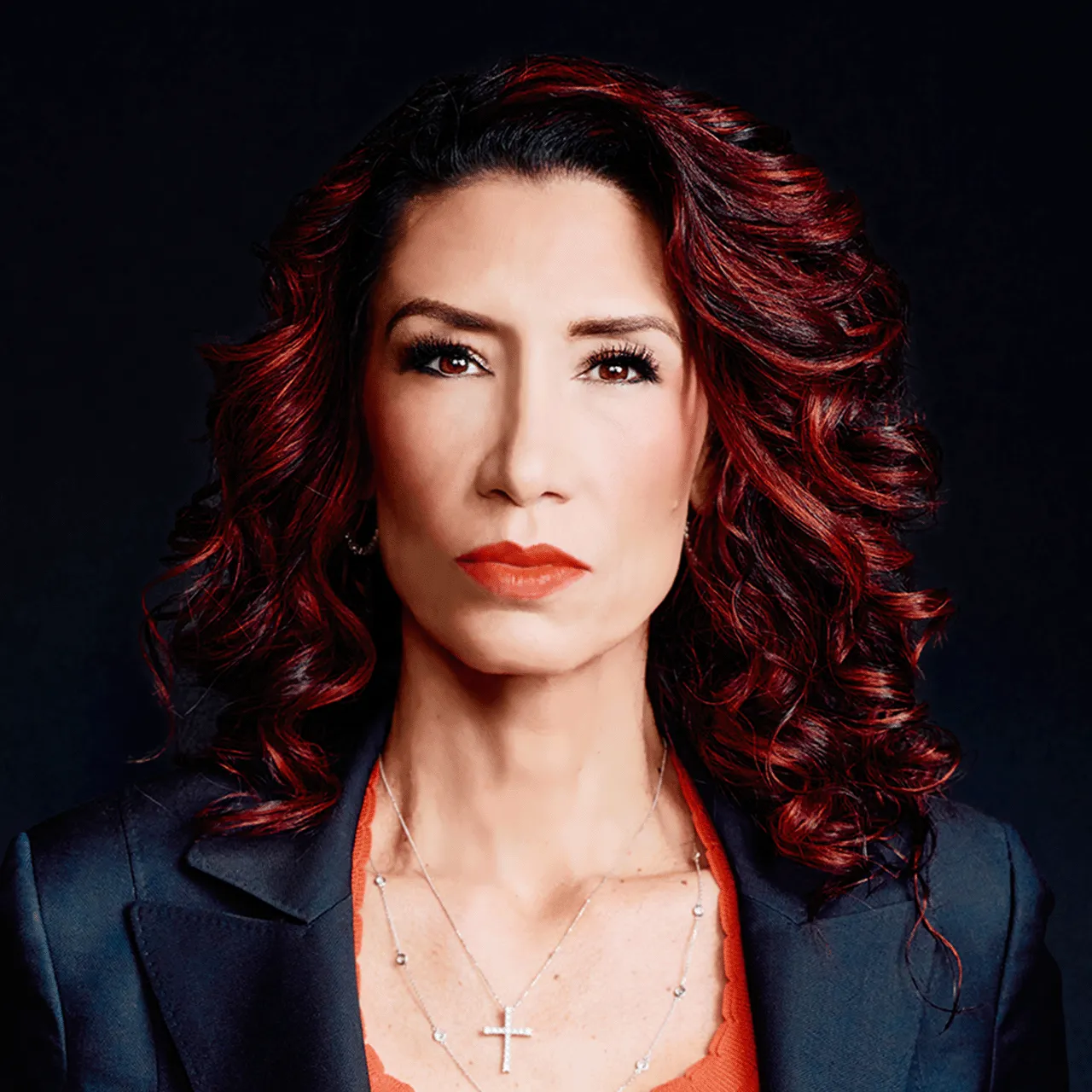
Hedieh Mirahmadi Falco
Hedieh Mirahmadi Falco is a former FBI senior advisor turned author and evangelist. A national security expert and contributor to The Christian Post and major news outlets, she now shares her powerful story of faith and redemption, on the Living Fearless Devotional podcast.

Jack Hibbs
Pastor Jack Hibbs is the founder of Real Life Network, senior pastor of Calvary Chapel Chino Hills, and a nationally syndicated radio and TV host. A bold Bible teacher, he equips believers to live out biblical truth with courage, clarity, and conviction.

Kevin Freeman
Kevin Freeman is a leading expert on economic warfare and financial terrorism. He hosts the TV program Economic War Room and Pirate Money Radio, translating national security and financial threats into clear insights for audiences nationwide.

Real Life Network
At Real Life Network, we help viewers grow in faith and build a biblical worldview. Founded by Pastor Jack Hibbs, we are a free Christian streaming service featuring uncensored news, trusted biblical teaching, and family programming.

Rose Unplugged
Rose brings 20 years of experience in radio and television. Host of Rose Unplugged on Real Life Network, she’s a frequent guest host for Hannity and other national voices. Featured on FOX News and CNN, she speaks nationwide on faith, liberty, and issues impacting women.

The Washington Stand
Washington Stand is the news and commentary platform of Family Research Council, led by President Tony Perkins. From a biblical worldview, it provides timely reporting and thoughtful analysis on faith, family, freedom, public policy, and the cultural issues shaping our nation.
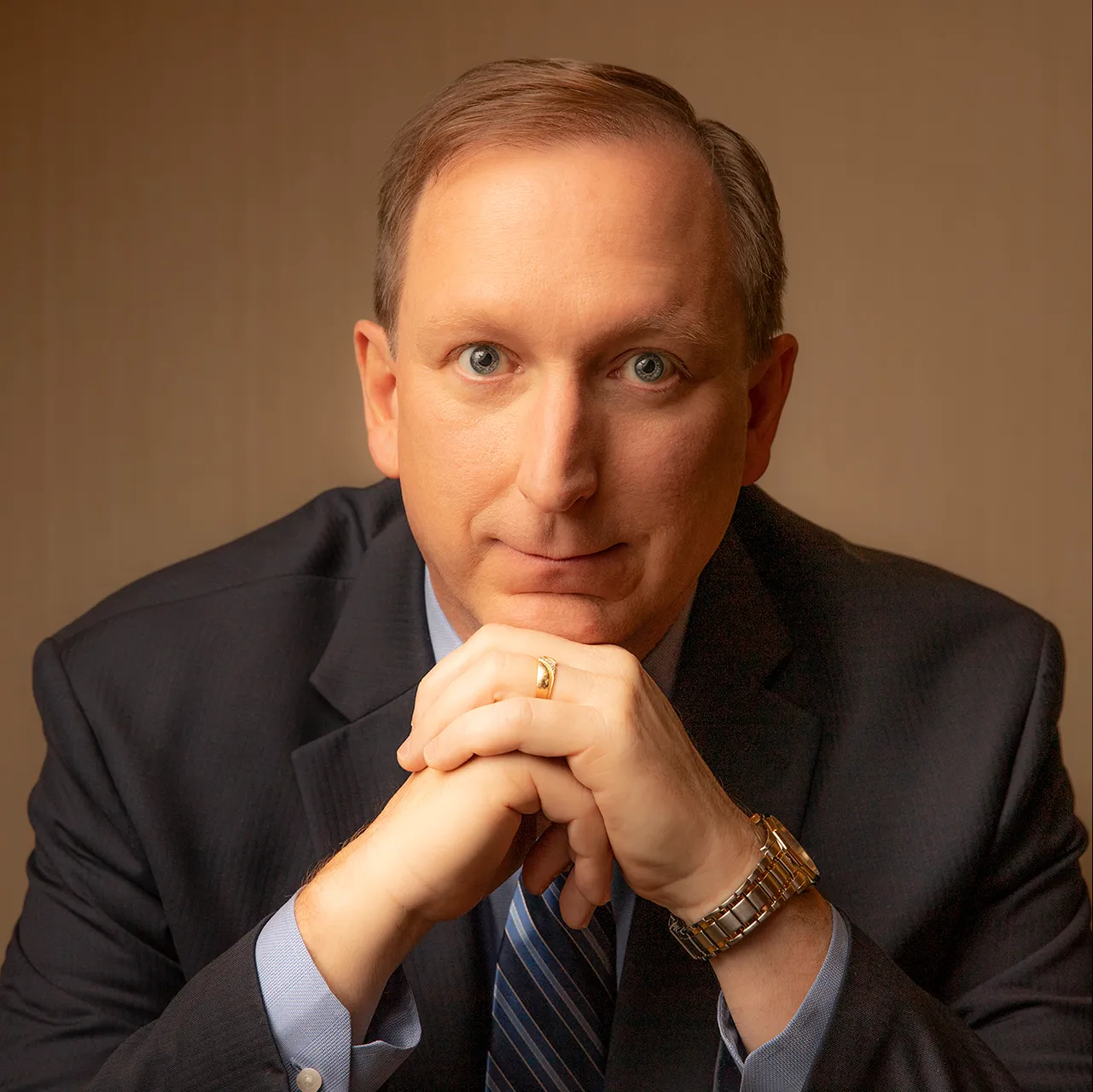
Todd Nettleton
Todd Nettleton has spent decades telling the stories of persecuted Christians around the world. As host of The Voice of the Martyrs Radio, he brings firsthand accounts of faith, courage, and God's faithfulness, inspiring believers to stand strong 7 pray for the persecuted Church.

Tony Perkins
Tony Perkins is president of the Family Research Council and host of Washington Watch. A leading voice on faith, family, and religious liberty, he provides policy insight and commentary on issues shaping America’s cultural and political landscape.
Fresh Releases
Media Starts to Doubt Dems’ Invincibility as November Creeps Closer
After months of flooding the zone with glum predictions for Republicans, there’s been a quiet but meaningful shift in major media headlines. Left-leaning outlets desperate to make the GOP’s demise a self-fulfilling prophecy seem to be subtly hedging their bets against another polling embarrassment. In the last handful of days, even the big dogs — The New York Times, Washington Post, and Newsweek — are conceding that maybe the election forecasts aren’t as lopsided as they’ve been leading voters to believe.
Suddenly, readers are clicking on stories that paint a very different picture of the apocalyptic landscape for Republicans they’d come to expect. Articles like “Democratic Optimism in Six Senate Races May Be a Mirage,” “3 Bright Spots for the G.O.P.,” and “How Much Can Republicans Outrun Trump’s Approval?” are popping up in the same pages that have urged Americans to don galoshes for the Blue Tsunami. And while there certainly are very troubling signs for Speaker Mike Johnson’s (R-La.) party, one lesson everyone should have learned by now is that polls are an incredibly flawed measure of public opinion.
In the modern age, Republicans have consistently outperformed the industry’s numbers in presidential and midterm elections. Pollsters have frantically tried to solve this puzzle, especially after a string of national humiliations. After a lot of head-scratching, two theories for this unpredictability revolve around the GOP. “First, Republicans are becoming more distrustful of institutions and society, and that may be extending to how they feel about pollsters. Second, suburban Republican college graduates are more likely to fear professional sanction for their views and are therefore self-censoring more, including in surveys,” FiveThirtyEight’s Emily Ekins suggests. Most experts estimate that conservatives underpoll somewhere between 3-5% — a massive swing for anyone trying to prophecy close races.
Over the last handful of days, the media seems to be making an intentional effort to temper their excitement, noting that as optimistic as Minority Leader Chuck Schumer (D-N.Y.) may be, “history offers a warning to Democrats, as polls in recent elections underestimated Republicans in key states. Control of the Senate could come down to just a handful of races where polls show razor-thin margins.” In places like Alaska, Iowa, Maine, Michigan, Ohio, and Texas, Newsweek warns, Democrats appear to have a polling edge. “But Republicans have outperformed polling averages in many of those same states over the past few elections. Polling errors are not necessarily repeated from cycle to cycle. But a similar pro-Republican polling error this cycle would not bode well for Democrats’ chances of flipping the Senate.”
Watch live coverage of election night on Real Life Network.
Frankly, it’s “impossible to know for sure” what the polling error could look like this year, Syracuse Political Science Professor Grant Davis Reeher acknowledged. “There are some pretty big known unknowns in this election, which could throw off polls,” he said. “A primary one is turnout. Polls must make educated guesses about who is most likely to vote. It’s a little trickier in midterms.”
National Review’s Jim Geraghty, who hasn’t exactly been a glass-is-half-full prognosticator, offered what he called “the cheeriest midterm take for Republicans you’re going to find,” urging readers to second-guess the excitement surrounding Democrats in cherry-red Kansas, South Carolina, South Dakota, Nebraska, and Florida. Despite the media’s insistence that GOP candidates are in trouble, the polling doesn’t necessarily bear that out. “There’s good reason to not believe the hype; we’ve seen this sort of narrative before.”
He ticks off the numbers for each key race, along with historical trends, dismantling the idea that conservatives are in trouble. “The lesson of this is not that all the polls are always wrong, or that every prediction of an upset Democratic win is always wrong,” Geraghty cautions. “But there’s an extremely familiar narrative of ‘this Democrat really has a shot in a deep red state!’ that rarely pans out; when it does, it’s usually because of a spectacularly flawed Republican candidate.” Americans should be wary of a blue wave, he writes, if only because “certain left-of-center media voices always tell them there will be a blue wave every November.”
An unlikely source echoes NR’s guardedness: The New York Times. Despite what pundits say, “there is also quite a bit of good news for Republicans,” Ruth Igielnik wrote late last month. For starters, “Republican Senate candidates are running ahead of the party. … Each of [them] is outrunning President Trump’s popularity in their states, sometimes by double digits. … And in each of the races, Republican candidates are winning some voters who otherwise say they want Democrats to control the Senate. Taken together, these are signs that in these competitive, Democratic-leaning states, Republicans have nominated strong candidates who appeal beyond their base.”
Then, of course, there’s the Left’s ugly infighting. “As Democrats are divided,” the Times points out, “Republicans are united. … We asked Democrats across the country if they felt the party was united or divided. About half said the party was united, and half said divided. Those numbers are nearly identical to a survey we ran in 2016. Republicans, on the other hand, are feeling very unified. In our most recent national survey, 70 percent of Republicans said they felt the party was united. That is a dramatic departure from 10 years ago. In 2016, more than 80 percent of Republicans said they thought the party was divided.”
Over at The Washington Post, Scott Clement reiterates that a “poll of two key House districts shows good signs for Democrats, but no tsunami.”
As for the bluster that even Hispanics are abandoning the GOP, Rasmussen Reports soundly beats back that narrative. In results released Monday, Hispanic voters favor Republicans by a 50 to 42% margin over Democrats. “The poll also indicates a tightening battle for control of Congress, as the Democrats’ lead over Republicans decreased for the second week in a row, according to the company. Overall, voters said if the election was held today 47 percent of likely voters would vote for the Democrat candidate, while 44 percent would vote for the Republican. Four percent of voters said another party’s candidate and just 4 percent were undecided.” In other words, Republicans have slashed the Democrats’ lead in half since just mid-September, “particularly with independent voters.”
But as encouraging as those signs are, leadership is clear-eyed about the hill they have to climb this November. “Now listen, this is going to be a very close election,” Speaker Johnson underscored Tuesday. His Senate counterpart, Majority Leader John Thune (R-S.D.), has been cautiously optimistic about his side of the Capitol. “I think we can keep the majority,” he told Politico this week. “I think all of these races are margin of error, at least the ones that we have to win. And historically, at least if you look at polls, we tend to outperform them.”
House Majority Leader Steve Scalise (R-La.) made that same point in a conversation with Family Research Council President Tony Perkins on “This Week on Capitol Hill.” When Cook Political Report, a widely respected organization, moved more seats to the toss-up or Democratic-leaning column, the House’s second-in-command wasn’t worried. In his mind, there’s more to the story. “You know, the polling really is interesting when you dig into it. You’re seeing an undersampling of Republicans, and we’re digging into some of these. Let’s be clear too. There are a lot of close races, not just Republican races.” He pointed to a few states like New Hampshire where GOP candidates are making a dent in Democratic areas too. “There [are] about 35 seats across the country that are truly swing districts,” Scalise observed. “Twenty of them are held by Republicans that are close right now, but 15 are held by Democrats that are also close, that we have a real chance to flip. And so, turnout is going to be a big factor. Who really does show up?”
The GOP has another secret weapon this election — in large part thanks to President Trump and Speaker Johnson — and that’s campaign cash. As Perkins highlighted, conservatives “have a strong edge on the fundraising to get their message through in these final days.” Scalise nodded. “We really do. You know, it’s rare that we outraise Democrats in a lot of these seats. We have now. And again, I think people are seeing what’s at stake, and they’re donating money.”
The media, he thinks, “[is] counting on Republicans, especially traditional conservative voters, to just stay home. And I don’t think that’s going to happen, because I think more and more people are seeing this sharp contrast [between the two parties].” With the rise of the Democratic Socialists, Scalise warns, “This isn’t like two candidates [who] are similar. This is common sense versus crazy. And some of these candidates … [don’t just want] to defund the police — they want to disarm the police. They actually advocate for taking guns away from police officers. You were a police officer. Could you imagine approaching a criminal who’s got a gun and saying, ‘Hey, let’s have a conversation and try to talk this out?’ He shoots you, and it’s over. This is insanity. And that’s beyond crazy. But if people stay home ... [these radicals win]. And that’s why people can’t stay home.”
At the end of the day, Scalise insisted, Democrats are trotting out polls “to make it look like they’re doing better than they are, because they want to depress conservative voters. Because if conservative voters stay home, guess what? Socialists will actually win. They can’t win if you show up and vote on November 3rd.”
That’s right, Perkins stressed. “The only poll that really counts is Election Day when people turn out and vote.”
Watch live coverage of election night on Real Life Network.
This article was written by Suzanne Bowdey and originally published on The Washington Stand. For more content like this, visit Real Life Network.
Three Years After October 7: How the Hamas Attack Changed Israel and the World
At a Glance
Three years after Hamas launched its October 7, 2023, attack on Israel, the consequences still reach far beyond that terrible morning. The attack rocked assumptions about Israeli security, began a prolonged hostage crisis, reshaped the Middle East, and contributed to a dramatic rise in antisemitism around the world.
- About 1,200 people were killed in the Hamas-led attack, and 251 were taken hostage.
- Civilians were murdered in their homes, communities, and at the Nova music festival.
- The final 20 Israeli hostages known to be alive were released in October 2025 as part of a ceasefire agreement.
- Antisemitism remains far above pre-October 7 levels in the United States and other parts of the world.
- For Christians, the anniversary is a time to remember the victims, reject antisemitism and terrorism, and pray for Israel and lasting peace.
At sunrise on October 7, 2023, Israel was a very different country from the one that would exist by nightfall. Hamas-led attackers breached the border from Gaza, striking Israeli communities, military positions, and the Nova music festival. Approximately 1,200 people were killed, most of them civilians, and 251 people were abducted into Gaza.
What happened during those hours was horrific, but the significance of October 7 cannot be measured only by what occurred that day. Three years later, its effects are still being felt across Israel, throughout the Middle East, on American campuses, and in Jewish communities around the world.
October 7 became a dividing line: before and after.
October 7 Rocked Israel’s Sense of Security
Israel has lived with terrorism and war throughout its modern history, but October 7 exposed vulnerabilities on a scale few Israelis had imagined possible. Communities near Gaza that had lived for years with rocket fire suddenly faced armed attackers inside their neighborhoods. Families hid in safe rooms while gunmen moved nearby, and in some communities, military help took hours to arrive.
The shock went far beyond the immediate loss of life. Israel has long faced the reality of terrorism and hostile forces seeking its destruction, but October 7 demonstrated the extraordinary lengths Hamas was willing to go to target Israeli civilians. The attack permanently changed the country’s understanding of the threats along its borders and intensified the determination to prevent anything like October 7 from happening again.
The Hostages Became a National Wound
Among the most enduring images after October 7 were the faces of the hostages. Posters appeared around the world. Families spoke publicly about loved ones ranging from children to elderly grandparents. Israelis gathered in what became known as Hostages Square in Tel Aviv, calling for their return.
The hostage crisis lasted two years. Some captives were released through agreements, others were rescued, and some died in captivity or were killed on October 7 and their bodies taken into Gaza. In October 2025, the remaining 20 Israeli hostages known to be alive were released as part of a ceasefire agreement.
Their return closed one chapter of October 7, but it did not erase what captivity had done to the hostages, their families, or Israeli society. The ordeal reinforced something terrorism is designed to accomplish: creating fear and trauma that continue long after an attack ends.
Remember the People, Not Just the Date
Three years later, October 7 risks becoming a shorthand phrase for a war, a political argument, or a date in a timeline. But before it became any of those things, it was a human tragedy.
The people murdered that day were parents, grandparents, children, soldiers, young adults, foreign workers, and visitors. Some were killed inside their homes. Others were attacked while trying to escape. At the Nova music festival, young people who had gathered for a night of music found themselves running for their lives.
Remembering October 7 means refusing to let those lives disappear inside statistics or political debate. It means remembering the families who still live with empty chairs, the survivors who carry lasting trauma, and the communities that were forever changed in a matter of hours.
Romans 12:15 tells believers to “weep with those who weep.” On this anniversary, remembrance is one way of doing exactly that.
The Attack Reshaped the Middle East
October 7 did not remain a conflict between Israel and Hamas. The war reverberated throughout the region, increasing tensions involving Hezbollah in Lebanon, Iran, the Houthis in Yemen, and other armed groups. Governments reconsidered security relationships, diplomatic efforts changed course, and long-standing regional conflicts became increasingly interconnected.
The war also brought terrible loss and destruction to Palestinian civilians in Gaza, a reality that can be acknowledged without minimizing what happened to Israelis on October 7 or excusing the actions of Hamas.
The October 2025 ceasefire stopped the largest phase of fighting between Israel and Hamas and brought the remaining living hostages home, but it did not resolve the deeper questions surrounding Gaza’s future, Israeli security, Hamas, or future peace. Three years after the attack, those questions remain unsettled.
Jewish Life Changed Far Beyond Israel
October 7 also changed life for Jewish communities thousands of miles from the Middle East. In the United States, antisemitic harassment, vandalism, threats, and violence rose sharply after the attack and the war that followed.
Jewish Americans who had nothing to do with the decisions of Israel’s government found themselves confronted over events thousands of miles away. Synagogues increased security. Jewish students faced hostility on campuses. Demonstrations sometimes crossed the line from political criticism into explicit anti-Jewish rhetoric or threats.
That distinction matters. In the years since October 7, critics of Israel’s conduct have argued that its military response was disproportionate or caused unacceptable harm to Palestinian civilians. Those policies and military decisions can be debated, and criticism of the Israeli government is not automatically antisemitic. But holding Jewish people collectively responsible for Israel’s response, repeating antisemitic conspiracies, threatening Jewish institutions, or excusing violence against Jews crosses a very different line.
October 7 exposed how quickly an ancient hatred can reappear.
Christians Should Remember, Reject Hatred, and Pray
For Christians, the anniversary of October 7 should be more than a marker on the calendar. It is an opportunity to remember those who were murdered, honor the survivors and families still carrying the weight of that day, and stand firmly against the terrorism and antisemitism that helped make such atrocities possible.
The anniversary also calls Christians to resist allowing political arguments to overshadow the human reality of what happened. Terrorism must be condemned for what it is, antisemitism must be rejected wherever it appears, and the suffering of those affected by October 7 should move believers toward compassion rather than political point-scoring.
The anniversary is also a time to pray. Psalm 122:6 says, “Pray for the peace of Jerusalem.” Pray for Israel, for those still living with trauma and loss, for Jewish communities facing antisemitism, for leaders making difficult decisions, and for a lasting peace that protects innocent life and restrains those who seek violence.
Remembering October 7 should move Christians toward truth, compassion, courage, and prayer.
Three Years Later, the Story Is Still Unfinished
October 7 is moving further into history, but its consequences are still unfolding. Israel continues to confront the threat of terrorism and the challenge of protecting its citizens in an increasingly volatile region. Families are still living with trauma and loss. Jewish communities around the world remain alert to antisemitism that intensified after the attack. And leaders throughout the Middle East continue to confront questions of terrorism, diplomacy, regional stability, and peace.
The attack also changed relationships and assumptions across the region in ways that are still developing. Questions surrounding Hamas, Gaza’s future, Iran and its proxies, Israel’s borders, and the possibility of lasting regional peace remain unresolved.
Three years later, October 7 remains a turning point whose consequences continue to shape Israel and the Middle East. Remembering what happened matters, but so does understanding how that day continues to influence what comes next.
Follow developments in Israel, the Middle East, and around the world through a biblical worldview on The Daniel Cohen Show and RLN News, streaming free on Real Life Network.
Red States Combine Forces to Choke Off Abortion Pill Pipeline
Like a lot of girls her age, Rosalie Markezich knew the standard talking point about mifepristone. Don’t worry, the online sites say. It’s just like taking a Tylenol. “Well, I’ve taken a lot of Tylenol in my lifetime,” she tells people now, and “it has never killed my child. It has never ruined my life, and it has never made me bleed for over a week.”
Unlike most moms, Rosalie never got the chance to hear that lie from her doctor, because she didn’t ask for a prescription in the first place. Her boyfriend ordered the pills in her name, and without any sort of ID or verification, the drugs magically showed up at her house. “I told him, ‘No thank you. I do not want you to do that, and I do not want them.’ Well, [he] found the website. He filled it out all with my personal information that I did not give him to use … [and] $150 later, he successfully ordered abortion pills through the mail from a [California] doctor named Remy Coeytaux, shipped directly to my doorstep.”
When he forced her to swallow them, her plan was to go inside and throw them up. But it was too late. “That night, I laid on a blood-soaked towel by myself, choking on my own breath. I remember my body rejecting it, rejecting its own breath — the one thing that it needs. I was praying to God, ‘Please take me too.’” Now, filled with grief and anger at how the government has robbed her of everything the Left insists this debate is about — choice, privacy, and safety — she’s fighting back.
“The FDA was wrong,” Rosalie said emotionally at the Pray Vote Stand Summit. “They allowed these drugs. They allowed them to go through the mail. They knew the warnings. They knew what could happen. And yet they are still sending them through the mail after seeing firsthand what it has done to women and children.”
We’re talking about a drug, Alabama Attorney General Steve Marshall (R) reiterated, “that is facilitating domestic abuse and even murder.” And yet, four years ago, he shook his head, pro-lifers were at this same event celebrating the overwhelming victory of Dobbs, a success story a half-century of prayers and activism in the making. “But I don’t think any of us that were on that stage left the stage believing that we would have more abortions today than we had at that time.” All because of mifepristone — and the presidents since 2022 who have turned a blind eye to the violent consequences.
“It’s why, frankly, [we] are still amazed at this administration — which talks about being the most pro-life administration — simply burying their head in the sand on what we know is going on around us.” With a single signature, President Trump could turn this whole situation around, Marshall insists. “The data is there. … They have the capacity to be able to do it. The question is whether or not they have the political will.” And so far, they have not.
Instead, they’ve created a black market for abortion drugs that not only puts women who voluntarily take the pill in life-threatening situations, but sets fire to every pro-life state law in America. Right now, it doesn’t matter whether you live in Louisiana or New York, abortionists are illegally flooding every zip code of the country with mifepristone — and getting away with it.
If the Trump administration had the nerve to enforce the federal laws already on the books, Rosalie would be the happy mom of a two-year-old right now. Under the Comstock Act, the Justice Department should be cracking down on anyone shipping abortion pills through the mail — let alone to pro-life states whose voters have already made their voices heard on the issue. But instead, for reasons no one who witnessed the first Trump term can understand, Republican attorneys general like Louisiana’s Liz Murrill (R) are having to fight their way to the Supreme Court just for the right to have their laws respected.
Murrill, who’s already battling the FDA over its ridiculously lax standards on the drug, is expanding the war to states that are knowingly protecting the criminals sending pills into pro-life states. Together with Marshall and Arkansas Attorney General Tim Griffin (R), the trio is suing New York, California, and Massachusetts to try to dismantle the “shield laws” in blue states that refuse to punish anyone mailing mifepristone.
“They shield the doctor, they shield the pharmacist, they shield anybody who is involved with what I call the pill pipeline, sending those pills into our state,” Murrill told Family Research Council President Tony Perkins on “This Week on Capitol Hill.” “And they are doing it for a political purpose. They are doing it because they disapprove of the laws that our state has passed. And so they want to flood our state with those pills illegally.”
To get away with it, the prescribers leave no trace on the bottles. “They sanitize it. And so, you will never you may never know who actually prescribed those pills. … [They’re] filling the prescription bottle and sending it into our state with no name on it, no pharmacy on it, no recipient name.”
Murrill explained that her team actually tested the current market, having agents order drugs online. Asked if there’s any kind of consultation with a medical person, she replied no. “There’s none. They’re not even verifying who’s even buying them. … They mail them to anybody who basically fills out a form on the internet. So it’s extraordinarily irresponsible.” Not to mention, she added, that “they are directly trying to nullify our laws.”
And regardless of whether the women are coerced or ordering these of their own will, the AG sadly acknowledged that the number of emergency room visits is skyrocketing — mainly because no one is adhering to the FDA’s 10-week limit for the drug. “Is any other drug treated like this?” Perkins wanted to know. “None,” Murrill replied. “None,” she repeated. “That’s why I say over and over again … this is not health care. There is nothing about this that is health care. I mean, there is no situation in the medical field where they would do this with drugs or patients.”
That’s why red-state AGs sued the FDA in the first place, because it’s so shocking and unconscionable that a pill sending 10% of women to the ER doesn’t even require a doctor’s visit or approval. “Those rules are not in place anymore. And so, you know, it really poses a significant risk to women all over the country.”
Imagine, she emphasized, if blue states “mailed us cocaine or they mailed us fentanyl.” There would be legal consequences. Or, Perkins suggested, “What if … Louisiana said, ‘You know, we’re not going to work with California and New York on anything related to the Second Amendment. I don’t care what your laws say. We’re not going to support you in that.’” It’s like saying, “I’m going to mail guns to anybody who wants them,” Murrill agreed. “… They have laws that restrict gun ownership and possession in ways that we don’t. … [What if] I decided to violate those laws? And they wouldn’t be able to enforce them if we had a shield law similar to that. But we haven’t done that.”
At the end of the day, this is not a minor issue, the FRC president argued. Not for the baby, not for the mother, not for the constitutional process, and certainly not for state sovereignty. “You know,” Marshall underscored, “we can solve [this] problem right now. We have the ability to do it with the administration that’s in place. And it’s why not only is our prayer so important, but also our ability to stand together is so critical. Because the reality is it’s not about Republican or Democrat. It’s about protecting women’s health and preserving life. That’s our issue. That’s important — and on it, we’re right.”
This article was written by Suzanne Bowdey and originally published on The Washington Stand. For more content like this visit Real Life Network.
Judge Throws Out Riley Gaines NCAA Lawsuit to Force Protection of Women’s Sports
A case centered on the Title IX rights of women to have male-free sports has been thrown out by a Biden-appointed judge, leaving Riley Gaines and the Independent Council on Women’s Sports (ICONS) determined to appeal.
Gaines and over a dozen female former college athletes filed the lawsuit funded and supported by ICONS in March 2024, claiming that the NCAA broke Title IX safeguards by allowing men to participate in women’s sports and infiltrate locker room spaces.
Gaines said in a statement on Tuesday, “This momentary setback will not deter me or other women athletes in the least. Rest assured, we will be appealing this decision. We are on the side of truth. I am confident Americans will rally to our side to fight the NCAA. Working together, we will defeat the NCAA’s continuing efforts to trample women’s rights in sports.”
U.S. District Judge Tiffany R. Johnson of the Northern District of Georgia on Monday dismissed the case, ruling that the NCAA does not have to abide by Title IX standards since it does not directly receive federal funding, which is a “prerequisite for liability under Title IX,” Fox News reported.
Johnson wrote, “Here, there is no evidence that the NCAA ever received, or could have received, federal funds. Thus, Plaintiffs’ Title IX claims cannot proceed.”
“Judge Johnson accepted the NCAA’s argument that the NCAA is not subject to Title IX and dismissed the case Gaines v. NCAA, brought by women college athletes seeking to hold the NCAA responsible for granting men access to women’s sports and private locker rooms,” ICONS said in a statement. “This decision removes all protections for women in NCAA collegiate competition across the country and underscores the vulnerability of women’s sports until court victories are secured.”
ICONS Co-Founder Kim Jones, a former NCAA All-American tennis player, insisted that Johnson was wrong in her ruling. “We believe the district judge erred and that the Court of Appeals will find that the NCAA, which is the controlling body of college sports for more than 1,100 member schools, almost all of which are federally funded, is subject to Title IX. We will not give up our fight for women and girls’ rights in sports.”
CEO and President of Concerned Women for America Penny Nance remarked that she is appalled by Johnson’s decision, and that it is “inexcusable for a judge to rule that the NCAA is above the law, and that a man’s identity takes priority over women’s rights.”
She continued, “This ruling effectively upholds the NCAA’s repulsive policy enabling sexual harassment and discrimination against female athletes. We are disgusted that the NCAA is lobbying for federal protections but refuses to protect female athletes. We will not back down from this fight in support of female athletes.”
The case comes at a time when far-left political candidates refuse to define what a woman is and affirm biological reality. A poll by Concerned Women for America found that “69% of Americans believe it is very or somewhat important in deciding who to vote for in this election that candidates oppose forcing female athletes to participate in sports and share locker rooms with biological boys/men identifying as girls/women.”
Nance continued, “Whether or not the NCAA takes federal funding, it directly benefits from the participation of its 1,100-plus member institutions, all of which are required to comply with Title IX. If the NCAA doesn’t comply with Title IX, no university should be allowed to be a member of the NCAA.”
“U.S. Senate passage of the Protect College Sports Act, along with this new ruling, exposes the glaring disconnect with federal civil rights law that Congress must address,” she added. “The NCAA continues to violate the rights of female athletes, but it should not be allowed to do so.”
The plaintiffs must file their notice of appeal in the next 30 days to the U.S. Court of Appeals for the 11th Circuit.
This article was written by Quinn Delamater and originally published on The Washington Stand. For more content like this, visit Real Life Network.