FROM THE DESK OF

The Washington Stand

Select Category
Sort By:
Thank you! Your submission has been received!
Oops! Something went wrong while submitting the form.
World News

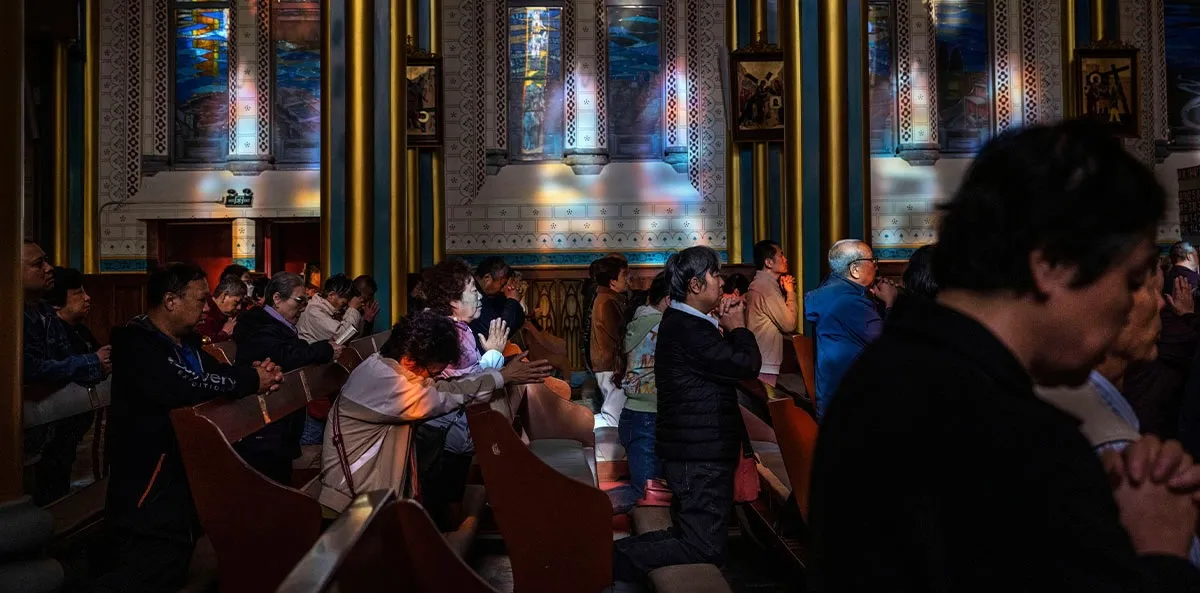
Only days after U.S. President Donald Trump left a Beijing summit with CCP Chairman Xi Jinping, where religious freedom and jailed religious leaders were discussed, authorities in eastern China demolished a prominent church, razing the building with large excavators last week. Yazhong Church (also referred to as Yayang Church), an unregistered Protestant church in Wenzhou, Zhejiang Province — a region known as “China’s Jerusalem” — has been under siege since late last year.

On December 14 and 15, local authorities arrested 103 church members in a pre-dawn raid and took control of the church building, as confirmed last week in new reporting by Le Monde. That same week, at a public event, an unidentified government official announced: “We will see this campaign through to the end.”

Five months later, on Sunday, May 17, heavy construction vehicles passed through tightly controlled security checkpoints set up by authorities, according to multiple sources confirmed by ChinaAid News. On May 18, crews began to demolish the multi-level structure from the top down. By 11 a.m. Beijing Time on Tuesday, May 19, the beautiful and ornate sanctuary had been reduced to rubble.

Concurrently with the demolition, authorities arrested four additional church members, one identified as You Ci’en, according to local sources, cited anonymously to protect their safety. They join 18 other members of Yazhong Church previously jailed by the Chinese Communist Party (CCP) authorities.

The families of all detained individuals reportedly received official warnings instructing them to remain silent, sources familiar with the situation stated to ChinaAid News. Authorities reportedly imposed strict information controls ahead of the demolition, measures that sources said appeared intended to limit public scrutiny.

Multiple confidential sources said the area surrounding the church had been placed under lockdown in recent weeks, while checkpoints and guard posts were established roughly one kilometer from the site to prevent unauthorized access. The church cross was also covered with black cloth prior to the demolition.

Wenzhou has been called “China’s Jerusalem” due to its large Christian population. The destruction of Yazhong Church escalates a broader suppression campaign in Taishun County, documented over months by ChinaAid News.

The campaign has included continuous surveillance, stringent information controls, and the closure of businesses linked to alleged church members.

“My brothers and sisters in the faith have stood strong for so long,” said Bob Fu, president of Texas-based nonprofit group ChinaAid and a senior fellow at Family Research Council. “More so than the loss of a church building, I lament how the CCP has cracked down on this area known for its faithful Christians and oppressed them more and more day by day.”

He added, “These recent actions show that the persecution of Christians by Chinese authorities has intensified, becoming more institutionalized and targeted.”

Church Resisted Order to Display Chinese flag

The conflict originated from the church’s resistance to what congregants perceived as increasingly aggressive methods of religious repression imposed by local Chinese Communist Party authorities.

Yazhong Church is affiliated with the “Local Church” movement (also known as the “Assembly” movement), a faith tradition that traces its origins to the early 21st-century Chinese preacher Watchman Nee and shares historical roots with the British Closed Brethren movement.

Due to its location in the remote mountainous region of southern Zhejiang, the church has maintained the independent traditions characteristic of Wenzhou’s local churches and has historically kept a distance from local government authorities.

According to congregants, tensions escalated significantly during the previous summer. The immediate catalyst was a government directive requiring the Chinese national flag to be displayed inside the sanctuary and a flagpole erected on church grounds, which believers regarded as an infringement on the sanctity of their faith.

Subsequently, in June 2025, government personnel entered the church property by force, demolished part of the outer wall, and installed the flagpole, prompting collective protests and sparking a standoff between the church and the authorities.

Analysts who closely monitor religious freedom in China note that Wenzhou has been among the most aggressive regions in implementing religious policies over the past decade. Only churches affiliated with the state-controlled Three-Self Patriotic Movement are officially sanctioned.

“Any Christian church unwilling to submit to state power — even this one, without any political involvement — the Chinese Communist Party feels it has to silence and even destroy,” said Fu.

Pre-Christmas ‘Inspection’ Led to Mass Church Detentions

Chinese authorities planned the operation against Yazhong Church several months in advance, as previously reported by ChinaAid News.

On December 14 and 15, 2025, Zhejiang authorities deployed large numbers of special police and riot-control officers to Yayang Town, conducting coordinated “inspection operations” at 12 local church gathering sites.

During the operation targeting Yazhong Church, more than 100 believers were dispersed and temporarily detained.

As the government’s campaign intensified, the scope of detentions broadened. To date, 22 believers, including church leaders Lin Enzhao and Lin Enci, have been subjected to long-term criminal detention, according to multiple sources.

Authorities charged them with the ambiguous offense of “picking quarrels and provoking trouble,” a broad public-order offense frequently used against activists and religious groups.

However, sources note that four church members were recently released on bail pending trial.

Last week, French media outlet Le Monde continued its reporting on believers in Yayang last week with a video detailing new developments following an extensive January investigation.

‘Our Prayers Are Not Reduced to Rubble’

Despite ongoing international scrutiny, local authorities’ demolition of Yazhong Church reflects continuing tensions between Beijing and independent Christian communities across China. Observers have compared the incident to the 2014 demolition of Sanjiang Church in Wenzhou, which drew international attention. In this recent case, sources said authorities imposed a near-total ‘information vacuum’ before demolition crews arrived.

Law enforcement personnel at the scene reportedly imposed strict monitoring of electronic devices. Individuals attempting to take photographs or record video with mobile phones were immediately intercepted, expelled, or detained, sources tell ChinaAid News.

Human rights advocacy groups state that the authorities’ severe restrictions on online discussion and information dissemination highlight the sensitivity of such actions.

One analyst, granted anonymity for his safety, asked: “If the demolition was entirely lawful and proper, why would authorities go to such extraordinary lengths to impose a total information blackout?”

As of publication, neither the Wenzhou municipal government nor the Taishun County Public Security Bureau had issued a statement.

Sources indicated that local police continue to conduct sporadic arrests and interrogations targeting believers involved in the incident or those attempting to speak publicly about it.

“Our sources confirm that this beautiful and sacred place of worship has been destroyed — but our prayers are not reduced to rubble,” insisted Fu. “May this loss wake up the global church to what’s happening in China, a great conflict between faithful believers and state power.

This article was originally written by Goa Zhensai and published on The Washington Stand. For more content like this, visit Real Life Network.

25 min
Faith & Culture

If the internet can be trusted, we spend one third of our life at the office.

That’s a lot of time.

Work is all around us. It’s unavoidable. For most people, work involves hanging out with coworkers, stressing over projects, and joining the rest of the commuters on the highway heading home. Jobs can feel mundane, boring, routine, unspiritual. But that couldn’t be farther from the truth. Your job is your ministry, whether it’s considered “spiritual” or not.

Every occupation has a chance to be more than clocking in and out every day. All good work, ecclesiastical or otherwise, is a launchpad for kingdom work. The danger happens when we believe “secular” work is less meaningful than “sacred” work (occupations deemed “religious,” such as biblical counselors, church leaders, ministry partners).

Just as it takes a calling to be a pastor or spiritual leader, it also takes a calling to be a technician or a car salesman or a high school teacher or a stay-at-home mom. Each person is equipped with unique talents to serve the body of Christ and minister to the world. To paraphrase the Apostle Paul, we can’t all be eyes or ears. Someone’s gotta be the toes. And the beauty is that we can only step forward when everyone is working at the thing they are best at. Just as it would be wrong to force an eye to carry the weight of the body, so it is also wrong to force toes to use glasses.

English writer Dorothy Sayers provocatively puts it this way: “Let the Church remember this: that every maker and worker is called to serve God in his profession or trade — not outside it. The Apostles complained rightly when they said it was not meet they should leave the word of God and serve tables; their vocation was to preach the word. But the person whose vocation it is to prepare the meals beautifully might with equal justice protest: It is not meet for us to leave the service of our tables to preach the word.”

The mistake of categorizing work into sacred and secular is that we steal dominion from God. In essence, we’re saying “religious” work glorifies the Lord more than “non-religious” jobs do not. But this isn’t the case. As Abraham Kuyper famously said, “There is not a square inch in the whole domain of our human existence over which Christ, who is Sovereign over all, does not cry, Mine!” God seeks glory from the most mundane of tasks: eating and drinking (1 Cor 10:31). The God who blesses the farmer (2 Cor 9:10), cares for the field laborer (Ruth 2:19), and provides for tentmakers (Acts 18:3) is intensely interested in all good occupations. God demands more than just religious jobs; to him, all worthy jobs belong to the realm of sacred.

At the end of the day, it’s not what the job is (assuming it’s a non-sinful occupation), but rather how the job’s done. In Jesus’s parable of the Talents, it wasn’t ultimately about the sum of money the three servants received. The point was how they did — or didn’t — steward that money in the ruler’s absence. Jesus delights in faithfulness to small things. Erik Cooper, who (among many roles) serves as an executive leader for a nonprofit real estate company, comments, “There was never intended to be a sacred-secular divide. Whether we’re putting our hands to closing loans, making films, or accounting, it all matters to God. It is all part of his forming, filling, and subduing. It can all be redeemed by the finished work of Jesus because it was always intended to be part of God’s work in the world.”

As stewards in God’s kingdom, our calling is to labor well. God’s dominion extends far beyond the walls of church buildings. He cares about how you cultivate that one-third of your life. No task is too small or insignificant to go unnoticed by the King. Jon Bloom, co-founder of Desiring God, sums it up nicely, “According to 1 Corinthians 7:17-24, your job (assuming it’s not inherently unethical or immoral) is a ministry assignment from God. It may not be your career assignment, but it’s today’s assignment. And God wants you to carry out that assignment with dependent faith, diligence, and excellence.”

This article was orginally written by Hannah Tu and published on The Washington Stand. For more content like this, visit Real Life Network.

25 min
Faith & Culture

Humans are lonelier than ever before. Even before the pandemic, almost five out of 10 U.S. adults reported experiences of loneliness. For young adults aged 15-24, time spent in-person with friends has fallen almost 70% from 2003 to 2020, from about two and half hours down to 40 minutes per day. The lack of meaningful interaction comes with a cost. Research finds that a lack of social connections can be as dangerous to our health as smoking 15 cigarettes a day. Humans were designed for community, not for isolation. But the solution is always trickier than it first appears.

In a culture that values independence and autonomy, making time for community seems tangential or even burdensome. For some, the mere thought of a social event depletes their personal energy battery. In a fallen world, relationships are complicated. People can be our best friends, and cruelest enemies. We get burned, withdraw, and then experience loneliness while making little effort to socialize.

Our society subtly reinforces the concept that reality is something to flee or escape; a bad dream to smother underneath a barrage of entertainment, information, or other forms of distraction. With the proliferation of smartphones, unplugging from the current situation and escaping into the digital sphere has never been so easy or so tempting. Additionally, many in-person connection points have now moved to screens. Online college options, virtual training, and remote jobs are increasingly prevalent. That’s not to say that online spaces are somehow bad or should be avoided; rather, with every advantage (think flexibility, cost, and time-savings), there is always a disadvantage (a sense of association without the anchor of relationships).

The issue is that we don’t reinvest the time and resources gained by the virtual world back into in-person relationships and interactions. The data provides the proof. In 2018, Pew Research Center found, “A majority of Americans (59%) say they feel some attachment to their local community, but only 16% say they feel very attached; 41% say they are not too or not at all attached to the community where they live. Adults in urban, suburban and rural areas report nearly identical levels of attachment to their local community.”

Our immediate community often lacks the tailoring, diversity, and ability to fast-forward that the digitalscape so frequently offers. Marketers call this phenomenon fragmentation: the splintering of groups defined by distinct preferences or requirements. When we get used to such customization to our preferences, we naturally grow more isolated from one another as we become increasingly defined by what sets us apart.

But there’s no easy fix. After all, relationships are the result of time, energy, effort, and being authentic about ourselves and with others (not to mention the emotional stakes that come with the drama and messiness of other sinners). But that’s the interesting thing. Redemptive history starts with two people in a garden and reaches its climax as a cultivated city: a sanctified arena when God’s creation and a multitude of people coexist in community. Human flourishing happens in fellowship, not in isolation. And more than ever, Christians need to lead by example.

Brian Brown understands this tension well. He’s the founder and executive director of The Anselm Society, a Colorado-based organization dedicated to a renaissance of the Christian imagination and recapturing the sense of shared community among kingdom-minded creatives. “We live in a culture that has made escapism into a virtue. We’re encouraged by a million cues to be anywhere but here, anyone but who God made us to be,” he remarked to The Washington Stand. “In the face of that, the person who chooses to show up has tremendous power — to see and be seen, to invite others in, to treat the local church and the dinner table as essentials rather than extras. But to do that, we have to dare to see ourselves as God sees us: as beloved bearers of His image.”

As images of God, we reflect him best in our collectiveness and diversity. It’s when the body of Christ comes together in fellowship that we get a more accurate glimpse at the vastness and depth of divine character (Ephesians 4:11-13; 15-16). Through the Messiah’s redemptive work, Christians have the opportunity, indeed the calling, to work towards restoration of the vision.

Despite the digital advances in communication and connection points, people are lonelier than ever before. It’s easy to run with the culture, burying ourselves in the endless mountain of “extra things,” perhaps even attempting to fill our own ache for meaningful connection. There is both pain and reward in pulling our heads out of the mountain and “showing up” in acts of simple relationship-building. “Showing up” doesn’t need to be elaborate, but it needs to be essential and intentional if we are serious about changing the tide of isolation.

In a hurting world, the simple act of being there for someone matters. If Christians are to be known by our love for one another (John 13:35; 2 Corinthians 13:11), we must be willing to demonstrate it.

This was orginally written by Hannah Tu and published on The Washington Stand. For more content like this, visit Real Life Network.

25 min
Faith & Culture

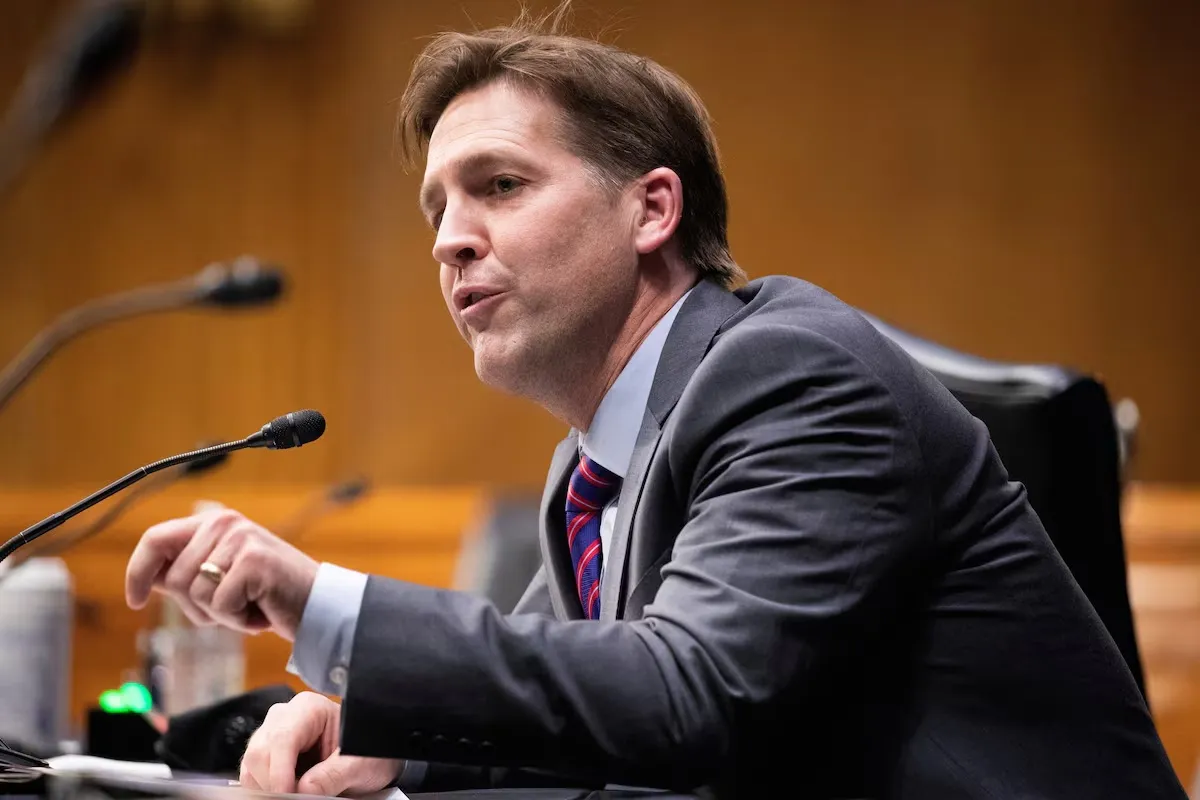
Fifty-four-year-old former Nebraska senator, husband, and father of three, Ben Sasse, was tragically diagnosed only six months ago with stage 4 pancreatic cancer and told he had three to four months to live. While the clinical trial that his doctors put him on has given him more time on earth than doctors predicted, the cancer has sadly continued to spread to his liver, lymph nodes, lung, and vascular system.

Each day that he lives is a miracle. Knowing this has caused Sasse to focus on what is truly important, and he has graciously shared his wisdom in several interviews recently. The following are five insights that we would all be wise to listen to and reflect upon.

1. Spend More Time with Family, Including Extended Family

In a recent extended interview on “60 Minutes,” Scott Pelley asked Sasse, “If you had another 30 years, what would your priority be?”

Sasse reflected, “I wish we’d had more babies. We have three great kids. I wish we had four or five. If I had 30 years left from now, I’d be working hard to take my zealous achiever daughters and try to figure out how you build something that’s a little bit like a family compound. How do you build something where you can have different generations come and go from it and have a thickness and a support system? How could you spend more time around your cousins or build the opportunity for your kids and your grandkids to spend more time around their cousins?”

He went on to share his regret of having a period where he spent too much time working and not enough time with his family: “I would travel a little bit less for work. … I spent way too many nights in hotel rooms. And I don’t know if my family even knows this, but I never really threw away any of my hotel keys. I’d come back from every trip, and I threw them in a box in a closet in my office, and there are thousands and thousands of hotel room keys, and sometimes I just look at it and feel a heaviness of regret. I would make better decisions about that.”

Later in the interview, Sasse expressed how tragic it is that people around the world have stopped having babies. He explained, “Having a baby is a bet on the future. And almost everywhere in the world — and the world is richer and richer and richer statistically than it’s ever been — people have decided, ‘Ah, actually babies are kind of an inconvenience.’ Babies have always been an inconvenience and the most glorious thing you can do to enrich your family and to make a bet on the future. … We’ve stopped making babies. We’ve decided that being distracted by a dopamine hit around a Candy Crush might be a good way to spend your time. Not if you’re fully human.”

2. Observe the Sabbath: Instead of Trying to Be Self-Sufficient, Rest in Almighty God

Similar to fellow Christian Charlie Kirk, Sasse sees the importance of following God’s Fourth Commandment to remember the Sabbath day and keep it holy. In an interview with Focus on the Family President Jim Daly, he shared:

“I have repented to my family. It started before this diagnosis, but we’ve talked about it a lot more intentionally since then. I have repented to my family about not having been a good leader about the Lord’s day. We never missed Sunday morning worship, but often by [2:00 or 3:00] in the afternoon, our hearts and affections and attentions were getting on to all the achievements we had to do, starting Monday morning and all the work we needed to do. And a lot of that work is important and meaningful, but man, the feast day of the soul is more important than I gave it attention to. And I now want my kids to view the glory of not needing to strive from Saturday night to Sunday night as an unbelievable blessing that we get to rest.

“Martin Luther’s great ‘A Mighty Fortress’ is based on Psalm 46, and if you read Psalm 46, there’s pretty obviously three movements. There’s you don’t have to fear anything. You’re going to be fine. God’s got this. And then this command: ‘Be still.’ It means stop trying to be self-sufficient. You get to be a child of the eternal king. And every Sunday, we can live that. I didn’t do that enough.”

Similarly, when Daly asked Sasse what advice he would give dads, he reiterated the importance of family worship time on the Sabbath:

“Let’s be humble with our kids and say … it’s glorious to get to reflect on the things of the Lord. What can we read together as a family this Sunday? How can we lock up our phones? How can we set aside time on the Lord’s Day to just linger and reflect back on the sermon, not have to get out of church the second it’s over, but go find the folks who are in need there or the visitors there. But I’d say two of the most practical operationalizable ones for us: we lock up our phones most of Sunday and we read aloud together a lot.”

3. Help Government Restrain Evil and Protect Freedoms

During CBS News’s “Things That Matter” townhall, a member of the audience asked Sasse how a Christian’s faith should impact his politics. He responded by emphasizing that Christians should seek to maintain order through government, not try to force religion on citizens. He explained:

“The secular sphere is still God’s space and God’s sphere, but it’s a question of whether or not explicit revealed theology is guiding our government. And I think that the purposes of government are to maintain order. It’s not to be theologically precise or accurate about what anybody should believe. The First Amendment is the most glorious inheritance anybody’s ever gotten in the history of government. Government is not the most important thing in the world, but it is glorious that our First Amendment has freedom of religion, speech, press, assembly, protest or redress of grievances. But that means that what I want government to do is create a space that is free from violence.

“So people can worship as they see fit, whether I agree with them or disagree with them. As a neighbor, I might want to wrestle with theology with somebody, but I don’t want to use the state to accomplish theological ends. I want to maintain order for a secular sphere that is free from violence.

“So I don’t subscribe to views of geopolitics as God is accomplishing a precise thing in those places. I think our servant leaders are responsible for using their time in office to try to minimize violence, maximize order [and] human liberty. In my view, the future of geopolitics 10 or 40 years from now is going to be more U.S.-led or more Chinese Communist Party-led, and I would rather have open navigation of the seaways, freedom of religion, human rights, commerce, trade, transparent contracts. And so, I would rather have there be more U.S.-led freedoms for the world — but not because the U.S. is an eternal entity. The U.S. is just the best experiment in government we’ve ever known. But governments are going to pass away ultimately. At the end of days, when we all wrestle through and with the questions around our own mortality, there will be no more tears, there will be no more cancer, there will also be no more government. Government is a tool. It’s a really important tool, but it’s a time-limited tool.”

In his interview with Daly, he explained, “Government is about restraining evil. It’s not about the glory of what happens at worship. It’s not about the warmth around your dinner table where you’re telling your kids how much you love them and asking them about their day. Government is just about a framework for ordered liberty. And so our passions [have to] hold moderately to certain institutions like government because they’re important, but they’re passing away.”

4. Community Is Essential: Escape Social Media Echo Chambers and Learn from Others

Sasse believes that how society handles the current communication revolution (especially social media and AI) is crucial, telling Daly, “I think a hundred years from now, if the Lord hasn’t returned yet, when we look back on this moment, we’re not going to talk very much about public policy. We’re going to talk about the fact that social media created a completely different kind of information ecosystem. And there [are] these grand temptations to steal our attention all the time. We know that only about 12% of Americans will read a book this year.”

Sasse told Pelley, “We’re living through a technological revolution which is creating an economic revolution. Let’s be clear, we’re the rich middle-class median. Americans are the richest people any time and place in all of human history. And yet, the economic revolutions that we’re living through are unsettling culture and place,” he pointed out. “And so people are incredibly rich at a material level statistically. And yet we’re pretty impoverished spiritually and communally in that we don’t have fit community. We don’t know our cousins. We don’t know the people who live two doors away from us. And we don’t feel like we’re in a common cause with people right now. And politics wants to trivialize that by screaming there’s some bad political actor somewhere. And if only that person were ripped out of the public square, politicians could fix all this. No, neighbors are going to have to fix this.”

He went on to say, “I do think social media is one of the fundamental problems that we’re dealing with right now. Right now, almost all politicians’ impulses and incentives … is to go narrow but deep and to do a lot of fan service. It doesn’t encourage a lot of self-scrutiny. It doesn’t encourage a lot of humility. It doesn’t encourage someone saying, ‘You know what, I used to believe this, but I listened to somebody else, and I realized I was wrong, and I’ve learned this new thing. There’s no audience for that. You want to just say more of, ‘We’re definitely right, and they’re definitely wrong.’ And that tribalism makes us pretty stupid.”

He continued, “One of the glorious things about the American experiment is believing in souls that can do deferred gratification. We can do deliberation that says, ‘Maybe I don’t have all the answers right now at my fingertips, and maybe the glories of a big and diverse creation is I can learn a lot from my neighbors.’”

5. Put Your Trust in Sovereign God, the Source of Peace

In the “60 Minutes” interview, Pelley observed, “You are completely devoted to your faith: what’s known as Reformed Christianity or Calvinism. And one of the tenets of that faith is that God ordains everything. And I wonder why you think God has put you to this test?”

Sasse answered, “Death is wicked. Death is evil. Death is not how it’s supposed to be. And me getting a cancer diagnosis again is pretty small on the grand scheme of things, but it’s a touch of grace because it forces me to tell the truth. And the lie I want to tell myself is that I’m the center of everything, and I’m going to be around forever, and I can work harder and store up enough that I can atone for my own brokenness. I can’t. And so, I hate cancer, but I’m also grateful for it. I tell a lot more truth to myself than I used to … when I thought I was super omnipotent and interesting.”

The most emotional and inspirational part of these interviews came at the end of this conversation. Everyone should listen and learn from this man of deep Christian faith.

Pelley, on the verge of tears, managed to say, “I make no comparison to what you’re going through, but there was a moment on 9/11 at the World Trade Center that I knew I was dead. And in that lightning flash of an instant, the only thing that crossed my mind was leaving my family behind. And I wonder how you reconcile that.”

Sasse responded, “Yeah … I’m incredibly blessed. My wife Melissa … we’ve been married 31 years. …We’re going to be apart for a time. But she’s tough and gritty and theologically rooted, and she’s going to be fine. My daughters are 24 and 22, and they’re extraordinary. I want to walk them down the aisle when they get married,” he paused, getting emotional. “That’s not likely to be. That’s not the math of my timecard. My son, we have a providential surprise. He’s a decade younger than big sisters. He’s … going to be fine, and he’ll have other wise men and women to put a hand on his shoulder. But I’m super bummed to not be there at 16 and 18 and 20 years old in his life. I want to give him more advice than he wants, and I want to put my arm on his shoulder, and I want his shoulders to get taller. But it’s not a surprise to God.”

Pelley noted, “And God, you believe, has a plan.”

Sasse, without hesitation, answered, “Absolutely. There are no maverick molecules in the universe.”

This article was written by Kathy Athearn and originally published at The Washington Stand. For more content like this, visit Real Life Network.
25 min
Faith & Culture

On April 26, I spoke at Hickory Hammock Baptist Church in Milton, Florida, about AI’s impact on children and families. After the service, parents and grandparents lingered with questions — not about geopolitics or corporate boardrooms, but about what was already happening inside their own households. They wanted practical steps to protect their children. Their concern is well-founded.

Picture the moment: a child sits at the kitchen table, struggling with homework. He doesn’t ask a parent — he opens an AI app and types the question. Within seconds, a clear, confident answer appears. No friction. No conversation. No one who loves him is involved at all. Across the room, his mother consults her own parenting app for guidance on how to handle his behavior. The moment looks utterly ordinary, and that is the problem.

The question those parents in Milton were asking is the right one: who is raising our children — the parent or the algorithm?

A Pew Research Center survey of 1,458 U.S. teenagers found that 64% now use AI chatbots — including 12% who have sought emotional support from these tools and more than half who turn to them regularly for schoolwork. A companion Pew report found that only 51% of parents believe their teenager uses AI regularly, while 30% have no idea. What parents don’t see, they cannot shape.

The Brookings Institution, drawing on input from more than 500 participants across 50 countries, concluded in January 2026 that the risks of AI in children’s education “overshadow its benefits” — because those risks strike directly at foundational development: attention, reasoning, social relationships, and independent judgment. Children often cannot recognize, question, or even see the technologies quietly shaping their earliest experiences. This is not simply a technology problem. It is an authority problem.

For generations, parents controlled which outside voices entered the home. A television could be turned off. A book could be closed. A teacher could be called. AI operates differently. It is embedded in the devices children already carry, available at any hour, and patient in ways no human being can sustain. It does not raise its voice or express disappointment. It does not ask what the child thinks before delivering an answer. Those qualities feel reassuring to a child — which is precisely what makes them quietly formative.

A RAND Corporation study found student use of AI for schoolwork jumped from 48 to 62% in just seven months during 2025, with 67% of students acknowledging the practice weakens their critical thinking. In one conversation I had recently, a college student told me she has watched her Christian peers consult AI the way they would a pastor. That is not a metaphor any parent or pastor should let pass without reflection.

There is a relational cost embedded in all of this that rarely gets named. Real formation — the kind that produces character, judgment, and wisdom — happens through friction. When a child shares a tough question with a parent, they gain more than any AI can offer: the parent’s wisdom, a strong relationship, and an appreciation for patience. AI systems are engineered to be responsive, affirming, and conflict-free — optimized for engagement, not formation. Engagement sustained over years becomes its own kind of formation, only one running in a vastly different direction.

Scripture understood this before algorithms existed. “Train up a child in the way he should go; even when he is old he will not depart from it” (Proverbs 22:6). That charge was given to parents — not to AI platforms. The Hebrew verb for “train” — chanak — carries the sense of dedication, of establishing a direction through habitual influence. Formation is cumulative. Every time a child turns to an algorithm instead of a parent — and every time a parent turns to AI for guidance on how to respond — that cumulative process is quietly redirected.

Artificial intelligence has no conscience. It is not accountable to God. It cannot love your child, discern his heart, or distinguish between what he wants to hear and what he needs to know. As I examine at length in “AI for Mankind’s Future,” unchecked reliance on algorithmic systems erodes the very human judgment those systems were meant to supplement. The voice is confident, the answer is instant, and children are not equipped to evaluate what they are being handed. “Trust in the Lord with all your heart, and do not lean on your own understanding” (Proverbs 3:5). A child trained by habit of leaning on an algorithm rather than a parent is being pointed in a fundamentally wrong direction — not by malice, but by the steady drift of convenience.

Parents who think they are managing this problem by monitoring screen time are already behind it. Treating AI like a hazard to be filtered addresses the symptom while missing the cause. A more effective response means being present in the conversation — asking the question before the AI app gets to it, discussing what the app provided, modeling the slower and more honest work of thinking through a problem. It means teaching children that truth is different from a confident answer delivered in two seconds by a machine. Moses understood the principle: “You shall teach them diligently to your children, and shall talk of them when you sit in your house, and when you walk by the way” (Deuteronomy 6:7). The home was always the first classroom. Parents have always been the first teachers. AI has not changed that assignment — it has only made it more urgent.

Pastors need to address this with the same directness they bring to any other threat to spiritual formation. AI is shaping how young people think, relate to authority, and understand where truth comes from — and that is not a secondary concern. Policymakers need to move beyond phone bans — a political band-aid on a deeper wound — and confront the design incentives that make these systems so compelling, because removing a phone from a classroom does not fix a platform engineered to capture students’ attention the moment school ends.

In “The New AI Cold War,” I argue that the future security of this nation depends as much on the character and discipline of its people as on its technology. That argument starts in the home. A generation shaped more by algorithms than by parents will not have the judgment, resilience, or relational depth to defend what they have inherited.

The AI is already in your home. It is neither neutral nor passive, and it is not going away. The parents who understand that clearly will still have a chance to answer the question those families in Milton were asking. The ones who are still waiting to take it seriously may find the answer has already been made for them.

This article was originally written by Robert Maginnis and published on The Washington Stand. For more content like this, visit Real Life Network.

25 min
load more

The Real Life Network is founded by Jack Hibbs, who also serves as the senior pastor of Calvary Chapel Chino Hills in Southern California and the voice of the Real Life television and radio broadcasts. Dedicated to proclaiming truth and standing boldly in opposition to false doctrines that distort the Word of God and the character of Christ, Jack’s voice challenges today’s generation to both understand and practice an authentic Christian worldview.