Faith & Culture

Faith & Culture

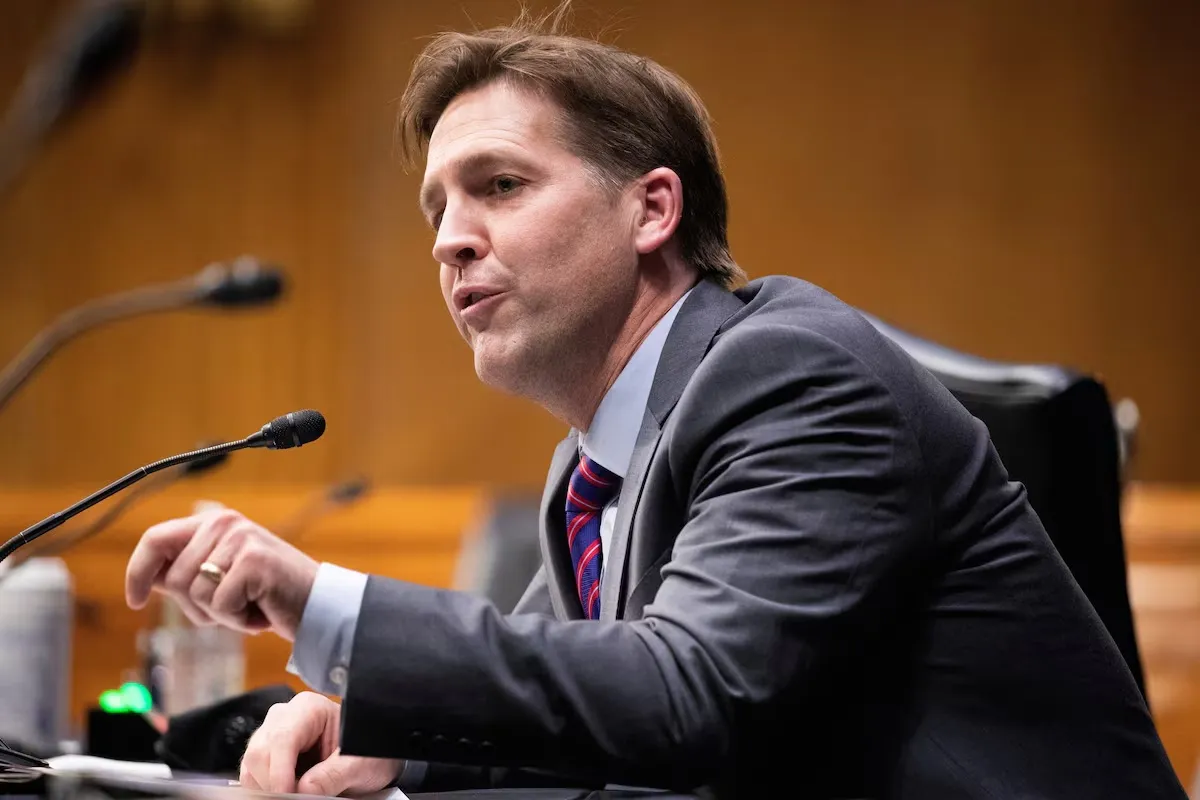
Fifty-four-year-old former Nebraska senator, husband, and father of three, Ben Sasse, was tragically diagnosed only six months ago with stage 4 pancreatic cancer and told he had three to four months to live. While the clinical trial that his doctors put him on has given him more time on earth than doctors predicted, the cancer has sadly continued to spread to his liver, lymph nodes, lung, and vascular system.

Each day that he lives is a miracle. Knowing this has caused Sasse to focus on what is truly important, and he has graciously shared his wisdom in several interviews recently. The following are five insights that we would all be wise to listen to and reflect upon.

1. Spend More Time with Family, Including Extended Family

In a recent extended interview on “60 Minutes,” Scott Pelley asked Sasse, “If you had another 30 years, what would your priority be?”

Sasse reflected, “I wish we’d had more babies. We have three great kids. I wish we had four or five. If I had 30 years left from now, I’d be working hard to take my zealous achiever daughters and try to figure out how you build something that’s a little bit like a family compound. How do you build something where you can have different generations come and go from it and have a thickness and a support system? How could you spend more time around your cousins or build the opportunity for your kids and your grandkids to spend more time around their cousins?”

He went on to share his regret of having a period where he spent too much time working and not enough time with his family: “I would travel a little bit less for work. … I spent way too many nights in hotel rooms. And I don’t know if my family even knows this, but I never really threw away any of my hotel keys. I’d come back from every trip, and I threw them in a box in a closet in my office, and there are thousands and thousands of hotel room keys, and sometimes I just look at it and feel a heaviness of regret. I would make better decisions about that.”

Later in the interview, Sasse expressed how tragic it is that people around the world have stopped having babies. He explained, “Having a baby is a bet on the future. And almost everywhere in the world — and the world is richer and richer and richer statistically than it’s ever been — people have decided, ‘Ah, actually babies are kind of an inconvenience.’ Babies have always been an inconvenience and the most glorious thing you can do to enrich your family and to make a bet on the future. … We’ve stopped making babies. We’ve decided that being distracted by a dopamine hit around a Candy Crush might be a good way to spend your time. Not if you’re fully human.”

2. Observe the Sabbath: Instead of Trying to Be Self-Sufficient, Rest in Almighty God

Similar to fellow Christian Charlie Kirk, Sasse sees the importance of following God’s Fourth Commandment to remember the Sabbath day and keep it holy. In an interview with Focus on the Family President Jim Daly, he shared:

“I have repented to my family. It started before this diagnosis, but we’ve talked about it a lot more intentionally since then. I have repented to my family about not having been a good leader about the Lord’s day. We never missed Sunday morning worship, but often by [2:00 or 3:00] in the afternoon, our hearts and affections and attentions were getting on to all the achievements we had to do, starting Monday morning and all the work we needed to do. And a lot of that work is important and meaningful, but man, the feast day of the soul is more important than I gave it attention to. And I now want my kids to view the glory of not needing to strive from Saturday night to Sunday night as an unbelievable blessing that we get to rest.

“Martin Luther’s great ‘A Mighty Fortress’ is based on Psalm 46, and if you read Psalm 46, there’s pretty obviously three movements. There’s you don’t have to fear anything. You’re going to be fine. God’s got this. And then this command: ‘Be still.’ It means stop trying to be self-sufficient. You get to be a child of the eternal king. And every Sunday, we can live that. I didn’t do that enough.”

Similarly, when Daly asked Sasse what advice he would give dads, he reiterated the importance of family worship time on the Sabbath:

“Let’s be humble with our kids and say … it’s glorious to get to reflect on the things of the Lord. What can we read together as a family this Sunday? How can we lock up our phones? How can we set aside time on the Lord’s Day to just linger and reflect back on the sermon, not have to get out of church the second it’s over, but go find the folks who are in need there or the visitors there. But I’d say two of the most practical operationalizable ones for us: we lock up our phones most of Sunday and we read aloud together a lot.”

3. Help Government Restrain Evil and Protect Freedoms

During CBS News’s “Things That Matter” townhall, a member of the audience asked Sasse how a Christian’s faith should impact his politics. He responded by emphasizing that Christians should seek to maintain order through government, not try to force religion on citizens. He explained:

“The secular sphere is still God’s space and God’s sphere, but it’s a question of whether or not explicit revealed theology is guiding our government. And I think that the purposes of government are to maintain order. It’s not to be theologically precise or accurate about what anybody should believe. The First Amendment is the most glorious inheritance anybody’s ever gotten in the history of government. Government is not the most important thing in the world, but it is glorious that our First Amendment has freedom of religion, speech, press, assembly, protest or redress of grievances. But that means that what I want government to do is create a space that is free from violence.

“So people can worship as they see fit, whether I agree with them or disagree with them. As a neighbor, I might want to wrestle with theology with somebody, but I don’t want to use the state to accomplish theological ends. I want to maintain order for a secular sphere that is free from violence.

“So I don’t subscribe to views of geopolitics as God is accomplishing a precise thing in those places. I think our servant leaders are responsible for using their time in office to try to minimize violence, maximize order [and] human liberty. In my view, the future of geopolitics 10 or 40 years from now is going to be more U.S.-led or more Chinese Communist Party-led, and I would rather have open navigation of the seaways, freedom of religion, human rights, commerce, trade, transparent contracts. And so, I would rather have there be more U.S.-led freedoms for the world — but not because the U.S. is an eternal entity. The U.S. is just the best experiment in government we’ve ever known. But governments are going to pass away ultimately. At the end of days, when we all wrestle through and with the questions around our own mortality, there will be no more tears, there will be no more cancer, there will also be no more government. Government is a tool. It’s a really important tool, but it’s a time-limited tool.”

In his interview with Daly, he explained, “Government is about restraining evil. It’s not about the glory of what happens at worship. It’s not about the warmth around your dinner table where you’re telling your kids how much you love them and asking them about their day. Government is just about a framework for ordered liberty. And so our passions [have to] hold moderately to certain institutions like government because they’re important, but they’re passing away.”

4. Community Is Essential: Escape Social Media Echo Chambers and Learn from Others

Sasse believes that how society handles the current communication revolution (especially social media and AI) is crucial, telling Daly, “I think a hundred years from now, if the Lord hasn’t returned yet, when we look back on this moment, we’re not going to talk very much about public policy. We’re going to talk about the fact that social media created a completely different kind of information ecosystem. And there [are] these grand temptations to steal our attention all the time. We know that only about 12% of Americans will read a book this year.”

Sasse told Pelley, “We’re living through a technological revolution which is creating an economic revolution. Let’s be clear, we’re the rich middle-class median. Americans are the richest people any time and place in all of human history. And yet, the economic revolutions that we’re living through are unsettling culture and place,” he pointed out. “And so people are incredibly rich at a material level statistically. And yet we’re pretty impoverished spiritually and communally in that we don’t have fit community. We don’t know our cousins. We don’t know the people who live two doors away from us. And we don’t feel like we’re in a common cause with people right now. And politics wants to trivialize that by screaming there’s some bad political actor somewhere. And if only that person were ripped out of the public square, politicians could fix all this. No, neighbors are going to have to fix this.”

He went on to say, “I do think social media is one of the fundamental problems that we’re dealing with right now. Right now, almost all politicians’ impulses and incentives … is to go narrow but deep and to do a lot of fan service. It doesn’t encourage a lot of self-scrutiny. It doesn’t encourage a lot of humility. It doesn’t encourage someone saying, ‘You know what, I used to believe this, but I listened to somebody else, and I realized I was wrong, and I’ve learned this new thing. There’s no audience for that. You want to just say more of, ‘We’re definitely right, and they’re definitely wrong.’ And that tribalism makes us pretty stupid.”

He continued, “One of the glorious things about the American experiment is believing in souls that can do deferred gratification. We can do deliberation that says, ‘Maybe I don’t have all the answers right now at my fingertips, and maybe the glories of a big and diverse creation is I can learn a lot from my neighbors.’”

5. Put Your Trust in Sovereign God, the Source of Peace

In the “60 Minutes” interview, Pelley observed, “You are completely devoted to your faith: what’s known as Reformed Christianity or Calvinism. And one of the tenets of that faith is that God ordains everything. And I wonder why you think God has put you to this test?”

Sasse answered, “Death is wicked. Death is evil. Death is not how it’s supposed to be. And me getting a cancer diagnosis again is pretty small on the grand scheme of things, but it’s a touch of grace because it forces me to tell the truth. And the lie I want to tell myself is that I’m the center of everything, and I’m going to be around forever, and I can work harder and store up enough that I can atone for my own brokenness. I can’t. And so, I hate cancer, but I’m also grateful for it. I tell a lot more truth to myself than I used to … when I thought I was super omnipotent and interesting.”

The most emotional and inspirational part of these interviews came at the end of this conversation. Everyone should listen and learn from this man of deep Christian faith.

Pelley, on the verge of tears, managed to say, “I make no comparison to what you’re going through, but there was a moment on 9/11 at the World Trade Center that I knew I was dead. And in that lightning flash of an instant, the only thing that crossed my mind was leaving my family behind. And I wonder how you reconcile that.”

Sasse responded, “Yeah … I’m incredibly blessed. My wife Melissa … we’ve been married 31 years. …We’re going to be apart for a time. But she’s tough and gritty and theologically rooted, and she’s going to be fine. My daughters are 24 and 22, and they’re extraordinary. I want to walk them down the aisle when they get married,” he paused, getting emotional. “That’s not likely to be. That’s not the math of my timecard. My son, we have a providential surprise. He’s a decade younger than big sisters. He’s … going to be fine, and he’ll have other wise men and women to put a hand on his shoulder. But I’m super bummed to not be there at 16 and 18 and 20 years old in his life. I want to give him more advice than he wants, and I want to put my arm on his shoulder, and I want his shoulders to get taller. But it’s not a surprise to God.”

Pelley noted, “And God, you believe, has a plan.”

Sasse, without hesitation, answered, “Absolutely. There are no maverick molecules in the universe.”

This article was written by Kathy Athearn and originally published at The Washington Stand. For more content like this, visit Real Life Network.

25 min

5 Insights from Ben Sasse as He Faces His Last Days on Earth

As former Senator Ben Sasse faces terminal cancer, his reflections on family, faith, work, technology, and the future offer a sobering perspective on what truly matters in life.

Faith & Culture

On January 20, 2026, historian Yuval Noah Harari stood before the World Economic Forum at Davos and issued a direct challenge to Christians worldwide. “If religion is built from words, then AI will take over religion,” he said, then named Christianity by name: “This is particularly true of religions based on books, like Islam, Christianity, or Judaism.” And he left this question in the air: “What happens to the religion of a book when the greatest expert on the holy book is an AI?”

The clip accumulated 1.2 million views within days. The room at Davos did not object.

A Documented Shift, not a Conspiracy

Harari’s 2026 remarks are the current edge of a worldview shift building for years — visible in the public statements of the most powerful technologists of our time, spanning five distinct domains of the human person.

It was Harari himself who told the same World Economic Forum in 2020 that we are “no longer mysterious souls — we are now hackable animals.” Six years later, he has moved from contesting human identity to contesting the authority of Scripture. The trajectory is not random.

OpenAI CEO Sam Altman wrote in 2017 that “the merge has already started” — that phones and algorithms already “control us” and “decide what we think.” By 2025, he had enlarged that frame: an essay titled “The Gentle Singularity” described AI as “building a brain for the world,” projected brain-computer interfaces, and suggested “some people will probably decide to ‘plug in.’” Venture capitalist Marc Andreessen has called AI development a “moral obligation” and envisions every person equipped with an AI “assistant, coach, mentor, tutor… therapist” — roles Scripture reserves for God, parents, pastors, and community.

Billionaire, AI investor, and co-founder of Palantir Technologies Peter Thiel has said, “I’ve always had this really strong sense that death was a terrible, terrible thing… I prefer to fight it,” investing millions to turn mortality into an engineering problem. Anthropic CEO Dario Amodei, writing in more restrained terms, envisions AI-enabled biology offering “control and freedom over our own biological processes” addressing conditions “we currently think of as immutable parts of the human condition” — potentially including a doubling of the human lifespan.

These statements come from different people with different assumptions. What they share is a common direction: the human being as improvable hardware, death as a bug to be patched, and — in Harari’s own words before world leaders — the Bible as a database awaiting a more capable administrator.

The Contest That Matters More than the One We’re Watching

In “The New AI Cold War,” I document how China, Russia, and Iran are weaponizing artificial intelligence to surveil populations and export digital tyranny worldwide. That geopolitical contest is real and urgent. But the deeper one is being fought inside Western civilization itself — on the terrain of human identity and, as Harari’s Davos appearance confirmed, on the terrain of Christian faith. The architects of AI understand this better than most Christians do.

What Scripture Actually Says

No technological development alters what Scripture says about human beings. “Then God said, ‘Let us make man in our image, after our likeness’” (Genesis 1:26). That declaration is the load-bearing wall of Christian anthropology — the reason human dignity is inherent and not a function of what AI can do with our genome or our sacred texts.

In “AI for Mankind’s Future,” I examine what it means to bear the imago Dei when machines imitate human intelligence. Harari’s question has a Christian answer no algorithm can produce: the Holy Spirit, not processing power, illuminates Scripture. The soul is real and not reducible to data. The body is not hardware — it will be raised imperishable. Death is an enemy, but the resurrection of Jesus Christ has already answered that claim. “Trust in the LORD with all your heart, and do not lean on your own understanding” (Proverbs 3:5) is not a devotional sentiment — it is the posture Scripture commands for this moment.

The Jurisdiction That Is Quietly Changing Hands

The most consequential shift in AI is not technological. It is jurisdictional. AI is migrating from tool to authority — not by coercion, but through the frictionless convenience of daily use. Algorithms already shape what millions of people read and believe, mediate education, and form moral character. Andreessen’s vision of AI as universal tutor, therapist, and life guide is not a distant scenario. It is the operational goal of every major platform already in your household.

When a digital system begins answering the questions of identity, purpose, and meaning that once belonged to God, to parents, and to community, it does not remain a tool. Romans 1:25 describes the exchange in which Paul warns against trading the truth of God for the created thing. Harari is more candid than most about where that exchange leads — and at Davos, he named your Bible specifically.

The Response Christians Cannot Afford to Delay

AI produces genuine benefits — in medicine, national security, and communication — and “AI for Mankind’s Future” acknowledges them. The argument here is against surrender: surrendering judgment to the algorithm, and the formation of the next generation to systems whose designers have already decided the human being is improvable hardware and the Bible is a word-processing problem.

Christians must engage AI with discernment — using the technology without adopting its embedded anthropology. That means defending what the technologists are actively contesting: that human dignity is a gift of the Creator, not a product of code, and that the authority of Scripture cannot be transferred to any machine. “There is a way that seems right to a man, but its end is the way to death” (Proverbs 14:12).

Harari posed the right question at Davos, and the answer has not changed since Moses received it at Mount Sinai. What remains is whether the church will say it loudly enough, and soon enough, for the world to hear.

This article was orginally published on The Washington Stand. For more content like this, visit Real Life Network.

25 min

The New Religion of AI: Who Gets to Define What It Means to Be Human?

AI is no longer just a tool. From Davos to Silicon Valley, leading voices are questioning Scripture, identity, and human purpose. This article examines the growing challenge to biblical truth and why discernment is critical for Christians right now.

Faith & Culture

As the United States approaches its 250th anniversary, I believe we are standing at a crossroads. Not just politically or economically, but spiritually. At a time when division dominates headlines and uncertainty shapes the national conversation, a movement called “America Reads the Bible” is offering a different path forward, one rooted not in policy, but in Scripture.

This initiative, centered on the public reading of God’s Word, is not just another event. It is a call to return to the foundation that has sustained nations and transformed lives for generations.

Watch this full episode on Pirate Money Radio, streaming now on the Real Life Network. 

A Lesson from Ancient Israel

When I look at the challenges facing America today, I’m reminded of the account of King Josiah in 2 Chronicles 34. For years, I misunderstood that story. Like many, I imagined a young boy stumbling upon Scripture by accident. But the truth is far more powerful.

Josiah was 26 years old when he made the deliberate decision to restore the temple. He didn’t begin with political reform, he began with the heart. He redirected resources, removed idols, and restored what had been neglected. Only then was the Book of the Law discovered and read publicly. That moment changed everything for the nation.

The order matters. When the people got their priorities right, especially regarding money and worship, the Word of God resurfaced, and transformation followed.

A Modern-Day Parallel

Today, I see a similar opportunity unfolding through “America Reads the Bible.” This unprecedented effort will bring together nearly 500 individuals from across the country to read the entire Bible aloud over the course of one week.

Leaders from government, media, ministry, and everyday life will participate, representing a broad cross-section of America. The readings will be livestreamed nationwide, allowing families, churches, and communities to join in real time. This is not about personalities or platforms. It is about the power of God’s Word being spoken, heard, and received.

Stream Pirate Money Radio on the Real Life Network.

More Than Revival—Aiming for Awakening

We often talk about revival in the church, and that is important. Revival is personal, it begins when individuals return to God with humility and repentance. But what America needs right now is more than revival. We need an awakening.

Awakening is what happens when personal transformation spills over into the culture. It is when faith moves beyond private belief and begins to shape communities, institutions, and ultimately, the nation itself. Throughout history, awakenings have followed the widespread proclamation of Scripture. When people hear the Word of God, something changes. Faith rises. Truth becomes clear. Lives begin to align with something greater than themselves.

This movement also highlights something I have emphasized for years: faith requires action. As believers, we are called not only to pray, but to engage, to be salt and light in every area of life. That includes how we steward our responsibilities as citizens.

Through efforts like Christians Engaged, we are encouraging people to take that responsibility seriously. It’s not about politics for its own sake. It’s about preserving the freedom to live out our faith and ensuring that truth continues to have a voice in the public square.

Too often, people of faith have stepped back, while others have stepped forward with competing worldviews. That imbalance has consequences.The timing of this initiative is not accidental. As we prepare to mark 250 years as a nation, we have an opportunity to reflect on who we are and where we are headed.

Our founders understood the importance of faith and moral responsibility. Even those who were not deeply religious recognized that liberty could not survive without virtue. “America Reads the Bible” is a reminder of that truth. It is a call to return—not to the past, but to the principles that made this nation strong in the first place.

An Invitation to Engage

This is not an event reserved for a select few. It is an open invitation. You can participate from your home, your church, or your workplace. You can listen, reflect, and allow the Word of God to speak into your life in a fresh way.

Because ultimately, national change begins with personal transformation. It begins when individuals choose to engage with truth and live it out daily. I believe we are witnessing the early stages of something significant. Whether it becomes a true national awakening will depend on how we respond.

The opportunity is in front of us. The question is whether we will take it. If history has shown us anything, it’s this: when a people return to God’s Word, everything changes.

Watch this full episode on Pirate Money Radio, streaming now on the Real Life Network.

Can’t make it to Washington, D.C.? You can still be part of “America Reads the Bible.” Join the nationwide livestream April 18–25 and experience the power of Scripture from wherever you are. Gather your family, church, or community and take part in this historic moment as God’s Word is read across the nation.

Related Articles

25 min

America Reads the Bible: Public Scripture Reading to Spark a National Awakening

Kevin Freeman explores how America Reads the Bible could spark a national awakening through public Scripture reading and Christian engagement.

Faith & Culture

On April 6, 1990, I wrote in my Bible the following words: “It’s nice to be back. I’ve been gone too long — only through the power and love of Jesus I have come back,” and I signed it “Walt,” a remarkable occurrence after falsely identifying as a woman for eight years.

My experience offers living proof of the power of the gospel to transform a life seemingly lost in an alternate “trans” identity, and the important role the church plays in restoration.

The Bible says the body is the dwelling place of the Holy Spirit. In 1 Corinthians 3:16, Paul writes: “Do you know that you are God’s temple and that God’s Spirit dwells in you?” The good news is that no matter what your past looks like, or what you may have done to your body, redemption awaits you in the arms of Jesus, and God’s Spirit who dwells in you will restore you.

When I was identifying as a “transgender woman,” I was mentally unstable and unable to comprehend the lifelong consequences of using cross-sex hormones and surgery to change my appearance to that of a woman. Even worse, I was drinking to excess. At my initial appointment with “gender” therapist, Dr. Paul Walker, I was intoxicated, yet he quickly diagnosed me with gender dysphoria, a diagnosis that never should have happened. Following his advice, I underwent gender surgery in 1983 at the age of 42 and began my pretense of presenting in life as a woman.

Sobriety, Church, and Prayer

I had been living what I see now was a life of sin but, to my amazement, my messy life was not too big for Jesus. Jesus did not turn His back on me.

Jesus preserved me through despair and attempted suicide, led me to a church and sobriety, and provided a home and a strong support team. The relationships with leaders at church cemented my foundation in Christ and, in time, gave me the courage to seek counseling to confront the childhood traumas that had caused me to seek an alternate identity.

The turning point occurred during a prayer with a counselor several years into my sobriety in a personal encounter with Jesus I will never forget. My lord and savior Jesus appeared to me, held me in His arms, and said, “You are now safe with me forever.” That day, I was born again in Christ and trusted He would put me on the path to full restoration as Walt. That’s when I wrote it in my Bible and signed “Walt.”

The Church’s Role

The church’s basic approach to reaching anyone, no matter what the issue, starts with welcoming love and standing for truth and is deeply rooted in compassion and concern for both the needs of the person and the congregation.

Reaching out to help an adult in your congregation who is presenting as the opposite gender requires building a relationship with that person. It may require a pastor or elder to have a one-on-one conversation first to determine if the individual is willing to receive spiritual guidance. You can learn a great deal in that conversation, and it will help in knowing if and how to provide support and boundaries.

In my case, my needs were great on many levels — financial, spiritual, emotional, legal, psychological — for an extended period. My pastor suggested I chronicle them in a regular note to the leadership so they could pray and provide. This “note” over time became a weekly prayer letter keeping the leadership in tune with my journey, at times celebrating the triumphs and at other times, carrying my burdens. The pastor gathered a strong support team of two or three mentors to encourage me with consistent Bible study and contact on the phone, over meals or coffee. These spiritually mature people were the very hands and feet of Jesus, showing me care and providing accountability.

In my life, the restoration process was messy for me and the church, and it can be messy for the church today. But, oh, it is so worth the effort to see God work. Redemption through Jesus has given me peace, healing, freedom, and victory. This year I celebrate 40 years of sobriety and 35 years in my right identity.

The Chloe Cole Act

You can see why I strongly oppose cross-sex hormones and surgery as “treatment” for identity distress. I came to Jesus and learned hormones and surgical procedures are not, and never have been, medically effective in changing a man into a woman or a woman into a man, a boy into a girl or a girl into a boy. Medical practitioners who promote this “treatment” are imposing great harm, especially on children, and lawmakers are stepping up.

The proposed Chloe Cole Act will prevent doctors and hospitals from introducing wrong-sex hormones into bloodstreams of children and removing healthy body parts in pursuit of a false identity.

The life-long harmful effects of hormone therapies and radical surgeries don’t stop at the age of 19; sadly, I can attest to that. Our lawmakers should start now to consider laws that will protect adults as well.

Resources for the Church

The church played an enormous role in my restoration even though resources about alternate identities were non-existent so many years ago. To support people in the congregation who are struggling with their biological sex, it’s important for the church, especially the leadership, to be equipped with accurate information.

To combat non-biblical misinformation and to teach Christians how to apply God’s word to helping trans-identifying people, Dr. Jennifer Bauwens and I applied our expertise and experiences in trauma and gender distress to write the book, “Embracing God’s Design.”

Written for the church, it presents an easy-to-read understanding of the topic from the Christian and psychological perspectives, reveals what drives adults or children to identify this way, chronicles the harms inflicted by “gender” clinics, and shares how Christians can minister to them and their families.

Redemption

I give all the glory to Jesus for my new redeemed life only through the power and love of Jesus.” I had no idea on that day of April 6, 1990, what redemption would look like, but 35 years later I do understand redemption is about the Lord fulfilling His promises. For believers, Christ’s redemptive work fulfills every divine promise made for our salvation and restoration. What is so beautiful is it’s yours for the asking.

So come to Jesus. Get your redemption started on Easter Sunday 2026.

For more information on how the church can respond, see the FRC resource, “Embracing God’s Design.”

You can support the Chloe Cole Act by contacting your members of Congress here.

This article was originally published on The Washington Stand. For more content like this, visit the Real Life Network.

Related Article

2 ‘Gender Transition’ Regretters Find Common Ground in Protecting Kids by Walt Heyer

25 min

Jesus Used the Church to Redeem My ‘Trans’ Life

A powerful testimony of how Jesus used the local church, God's Word, and discipleship to bring redemption, healing, and identity restoration to someone who once lived a transgender life.

Faith & Culture

Introduced in September of 2025, the Chloe Cole Act, named for the young woman who bravely speaks out against “gender affirming care,” would prohibit health care providers, clinics, and hospitals from carrying out or facilitating “gender transition” procedures on minors, and allow those harmed to bring suit with an extended statute of limitations of 25 years beyond the minor’s 18th birthday.

This important bill needs to be passed and signed into law. I began raising awareness about protecting trans-identifying children in 2015 from medical experimentation, and I’m grateful that this bill has been proposed. Prohibiting these procedures is exactly what needs to be done.

Furthermore, by allowing patients to sue practitioners for damages up to 25 years later, this legislation will cause health care professionals to have “skin in the game” and decide whether carrying out or facilitating “gender transition” for minors is worth the risk to them personally and professionally.

Chloe Cole and I have a lot in common in advocating for the passage of this bill.

Sadly, both Chloe and I experienced distress as minors and were both diagnosed with gender dysphoria, given cross-sex hormones, and had healthy body parts surgically removed to our lasting regret. The gender therapists, clinics, and hospitals from which we sought care misled each of us into thinking gender therapies were the only answer to relieve our distress. Both of us have emphasized our early identity distress stemmed from deeper issues.

Chloe Cole started puberty blockers at age 13 and underwent a double mastectomy at 15 — only to return to identifying as the woman God designed her to be in her late teens. Chloe reported her childhood at times was challenging as the youngest of five children, and at an early age she exhibited signs of autism and ADHD but was not officially diagnosed until her late teens. She cites the onset of early puberty, social media influence, and mental health struggles for warping her thinking and making her vulnerable to medical intervention.

My struggle began early in childhood after being cross-dressed at the hands of my grandmother at the age of four and being sexually abused by a family member. As a teen, I secretly cross-dressed and identified as a female at age 13. I continued struggling with my identity, starting on female hormones at the age of 35 in 1976, and started feminizing surgeries on my body. At the age of 42, after only two visits, my gender therapist advised me that surgery would relieve my gender distress, so I underwent what was called “sex change surgery.”  After eight years identifying as a woman, with the help of psychotherapy, I began the journey back to restoring my God-given male identity.

Both Chloe and I found that hormones and surgeries are not effective in resolving early childhood distress that underlies dysphoria.

Our common ground has us publicly stepping forward to tell our personal stories of having needlessly suffered the unimaginable and horrific consequences of using surgeries and hormones to alter perfectly healthy bodies into resembling the opposite sex, so-called “gender affirming care.” It’s not care at all, but medical malpractice, and the lawsuits are coming.

We speak out and advocate for laws to end the practice of transgender medical interventions, particularly for minors, because they inflict egregious harm and dehumanize a person’s ability to function as God designed. We testify in legislative hearings, along with so many other advocates for protecting children, and clarify that gender transition is often driven by social influence, trauma, and inadequate mental health care.

I started speaking out about protecting kids from hormones in 2009 on a Canadian television show called “16x9,” Canada’s version of “60 Minutes.” In the years since, I’ve written books and articles, participated with organizations, such as Alliance Defending Freedom and the Heritage Foundation, bringing doctors, parents, and regretters to the same table to shed light on the harms being perpetuated by practitioners of “gender medicine.” I started meeting with legislators on Capitol Hill in D.C. in 2019 with Tony Perkins of Family Research Council and traveling to individual states to testify to the harms and to advocate for laws to prohibit hormones and surgery for trans-identifying children.

Chloe Cole started testifying to legislators at the young age of 17 and has been an extremely effective voice for opening people’s eyes to the widespread harms.

Testimonies from Chloe, myself, and many others confirm that the harmful effects of hormones and surgical procedures for the treatment of gender dysphoria go far beyond the teen years; the harm to bodies, in fact, is often permanent.

Thank God for the many former trans-identifying people, parents, lawmakers, pastors, medical doctors, educators, athletes, podcasters, and others who have stood for years, and are standing now, for truth and against this evil deception.

You can too. Contact your members of Congress here. For more information on how the church can respond, see the FRC resource, “Embracing God’s Design.”

This article was originally published on The Washington Stand. You can also find more content like this on the Real Life Network.

25 min

2 ‘Gender Transition’ Regretters Find Common Ground in Protecting Kids

Two individuals who regret their gender transitions share their stories and find common ground in advocating for stronger protections for children, warning about the long-term consequences of medical interventions at a young age.

Faith & Culture

Let me begin by saying that marriage is noble, honorable, and beautiful. It is biblical. It is foundational to functioning societies. God created marriage and loves it. The very concept of marriage is reflective of His plan of redemption for us: Jesus, the bridegroom, coming for and uniting with His bride, the Church.

But the concept was never the point. That is, when we, the Church, prioritize marriage over complete love and obedience to God, we miss the point (Christ Himself) and accidentally create an idol.

In the young, Christian conservative movement right now, the popular mantra is, “Just get married!” And that’s great! If it is the Lord’s will for you to get married to a specific person He’s placed in your life, at a specific time. If building a family is how He’s calling you to build His Kingdom in this season, then yes! Get married. That’s beautiful.

The reality is that this rally cry, “Just get married!” often echoes through rooms full of young, Christian women who desperately want to get married. The message may be novel or challenging in secular spaces, but you don’t have to tell most Christian women twice–that’s all they want.

And that’s the problem. 

I interact with many, many Christian women ages 18-35 (more or less) who want nothing more than to get married. 

But I want them to want so much more than that: I want them to want to serve God, wholeheartedly, wherever He has them. Married or not married, I want them to be desperate to be at the feet of Jesus; not desperate for a husband.

If that seems simple, unfortunately, it’s not. All my life, I’ve been subliminally taught in Christian circles that the highest good I can achieve as a Christian woman is to be a wife and mother–again, both very beautiful, godly roles.

But when marriage became the chief aim of my life, I lost sight of Jesus.

I was so focused on marriage that I forgot to focus on my Savior in whatever He had for me–and my life might have looked very different if He hadn’t rescued me from my own desire that, when prioritized over Him, were beautiful dreams I had let become ugly idols.

As a 25-year-old who grew up in the church, my game plan from a very early age was to graduate high school, graduate college, get married to my high school sweetheart, have babies, get a dog, a house, and voilà! The American Dream. I would finally be fulfilled then, just like they said.

It was a good plan. But it wasn’t God’s plan for my life–not just like that, anyway.

At the end of 2020, God redirected the trajectory of my entire life, calling me into ministry at the intersection of faith, culture, and politics (what became my life’s work at Counteract USA), and subsequently called me to break up with my high school sweetheart of five and a half years–a nice, Christian guy.

It was unfathomable, and I didn’t want to do it. As a 20-year-old Christian woman I thought I was throwing everything away if I broke up with the guy I planned to marry. I was (and am) so young, but it really felt like the end of the world.

I made every excuse I could to God. I bargained. I pleaded. I wanted to be married. I knew God was calling me into this ministry of faith, culture, and politics, and I realized that my boyfriend wasn’t called into that same ministry… But I wanted both. To have my cake and eat it, too.

But I learned the hard way that when you’re called to Nineveh, you can only sail on ships to Tarsus for so long before things really get miserable and you have to abandon ship.

So I abandoned ship. I surrendered: I broke up with my boyfriend, switched my major, and entered into 2021 with a completely blank slate. I was in a “Here I am, Lord. Send me” season.

And it was in this season that God began to inaugurate me into my calling. When I surrendered (painfully, and through many, many tears) my relationship with my boyfriend to the Lord, my focus reoriented on Him, and I was able to discern that He was calling me to equip my generation of Christians to apply Biblical truth to cultural and political conversations.

Six months after my breakup, God gave me the vision for the ministry that has become my passion, and Counteract USA was born.

Nearly five years later, I have witnessed countless miracles, where God has emboldened a Gen Z Christian in their faith, called a believer to get involved in politics, or encouraged a young adult to share the gospel at their local coffee shop through this ministry. It’s humbling. I am in awe of the Holy Spirit’s work.

And I know I wouldn’t have the front row seat to this that I do today if I had “just” married my high school sweetheart.

I’m 25 now. And I hope to be married one day–but I want to marry someone I’m on-mission with, whether my mission continues to Counteract USA or my home becomes my mission field.

In my admittedly limited experience, the Lord has taught me that as much as I value the gift of marriage and family, I must be vigilant to ensure that I am rightly ordering my affections, seeking the will of God over even my most righteous desires.

Marriage is beautiful, but it isn’t everything. 

I want to want Jesus over everything, and encourage others to do the same–because He is all in all. He is everything.

25 min

When the Desire for Marriage Becomes an Idol

Abigail DeJarnatt, a 25-year-old single Christian woman who works closely with young women in ministry, reflects on how the desire for marriage—while good and biblical—can become disordered when it replaces wholehearted devotion to Christ.

Select Category
Sort By:
Thank you! Your submission has been received!
Oops! Something went wrong while submitting the form.
Faith & Culture

Fifty-four-year-old former Nebraska senator, husband, and father of three, Ben Sasse, was tragically diagnosed only six months ago with stage 4 pancreatic cancer and told he had three to four months to live. While the clinical trial that his doctors put him on has given him more time on earth than doctors predicted, the cancer has sadly continued to spread to his liver, lymph nodes, lung, and vascular system.

Each day that he lives is a miracle. Knowing this has caused Sasse to focus on what is truly important, and he has graciously shared his wisdom in several interviews recently. The following are five insights that we would all be wise to listen to and reflect upon.

1. Spend More Time with Family, Including Extended Family

In a recent extended interview on “60 Minutes,” Scott Pelley asked Sasse, “If you had another 30 years, what would your priority be?”

Sasse reflected, “I wish we’d had more babies. We have three great kids. I wish we had four or five. If I had 30 years left from now, I’d be working hard to take my zealous achiever daughters and try to figure out how you build something that’s a little bit like a family compound. How do you build something where you can have different generations come and go from it and have a thickness and a support system? How could you spend more time around your cousins or build the opportunity for your kids and your grandkids to spend more time around their cousins?”

He went on to share his regret of having a period where he spent too much time working and not enough time with his family: “I would travel a little bit less for work. … I spent way too many nights in hotel rooms. And I don’t know if my family even knows this, but I never really threw away any of my hotel keys. I’d come back from every trip, and I threw them in a box in a closet in my office, and there are thousands and thousands of hotel room keys, and sometimes I just look at it and feel a heaviness of regret. I would make better decisions about that.”

Later in the interview, Sasse expressed how tragic it is that people around the world have stopped having babies. He explained, “Having a baby is a bet on the future. And almost everywhere in the world — and the world is richer and richer and richer statistically than it’s ever been — people have decided, ‘Ah, actually babies are kind of an inconvenience.’ Babies have always been an inconvenience and the most glorious thing you can do to enrich your family and to make a bet on the future. … We’ve stopped making babies. We’ve decided that being distracted by a dopamine hit around a Candy Crush might be a good way to spend your time. Not if you’re fully human.”

2. Observe the Sabbath: Instead of Trying to Be Self-Sufficient, Rest in Almighty God

Similar to fellow Christian Charlie Kirk, Sasse sees the importance of following God’s Fourth Commandment to remember the Sabbath day and keep it holy. In an interview with Focus on the Family President Jim Daly, he shared:

“I have repented to my family. It started before this diagnosis, but we’ve talked about it a lot more intentionally since then. I have repented to my family about not having been a good leader about the Lord’s day. We never missed Sunday morning worship, but often by [2:00 or 3:00] in the afternoon, our hearts and affections and attentions were getting on to all the achievements we had to do, starting Monday morning and all the work we needed to do. And a lot of that work is important and meaningful, but man, the feast day of the soul is more important than I gave it attention to. And I now want my kids to view the glory of not needing to strive from Saturday night to Sunday night as an unbelievable blessing that we get to rest.

“Martin Luther’s great ‘A Mighty Fortress’ is based on Psalm 46, and if you read Psalm 46, there’s pretty obviously three movements. There’s you don’t have to fear anything. You’re going to be fine. God’s got this. And then this command: ‘Be still.’ It means stop trying to be self-sufficient. You get to be a child of the eternal king. And every Sunday, we can live that. I didn’t do that enough.”

Similarly, when Daly asked Sasse what advice he would give dads, he reiterated the importance of family worship time on the Sabbath:

“Let’s be humble with our kids and say … it’s glorious to get to reflect on the things of the Lord. What can we read together as a family this Sunday? How can we lock up our phones? How can we set aside time on the Lord’s Day to just linger and reflect back on the sermon, not have to get out of church the second it’s over, but go find the folks who are in need there or the visitors there. But I’d say two of the most practical operationalizable ones for us: we lock up our phones most of Sunday and we read aloud together a lot.”

3. Help Government Restrain Evil and Protect Freedoms

During CBS News’s “Things That Matter” townhall, a member of the audience asked Sasse how a Christian’s faith should impact his politics. He responded by emphasizing that Christians should seek to maintain order through government, not try to force religion on citizens. He explained:

“The secular sphere is still God’s space and God’s sphere, but it’s a question of whether or not explicit revealed theology is guiding our government. And I think that the purposes of government are to maintain order. It’s not to be theologically precise or accurate about what anybody should believe. The First Amendment is the most glorious inheritance anybody’s ever gotten in the history of government. Government is not the most important thing in the world, but it is glorious that our First Amendment has freedom of religion, speech, press, assembly, protest or redress of grievances. But that means that what I want government to do is create a space that is free from violence.

“So people can worship as they see fit, whether I agree with them or disagree with them. As a neighbor, I might want to wrestle with theology with somebody, but I don’t want to use the state to accomplish theological ends. I want to maintain order for a secular sphere that is free from violence.

“So I don’t subscribe to views of geopolitics as God is accomplishing a precise thing in those places. I think our servant leaders are responsible for using their time in office to try to minimize violence, maximize order [and] human liberty. In my view, the future of geopolitics 10 or 40 years from now is going to be more U.S.-led or more Chinese Communist Party-led, and I would rather have open navigation of the seaways, freedom of religion, human rights, commerce, trade, transparent contracts. And so, I would rather have there be more U.S.-led freedoms for the world — but not because the U.S. is an eternal entity. The U.S. is just the best experiment in government we’ve ever known. But governments are going to pass away ultimately. At the end of days, when we all wrestle through and with the questions around our own mortality, there will be no more tears, there will be no more cancer, there will also be no more government. Government is a tool. It’s a really important tool, but it’s a time-limited tool.”

In his interview with Daly, he explained, “Government is about restraining evil. It’s not about the glory of what happens at worship. It’s not about the warmth around your dinner table where you’re telling your kids how much you love them and asking them about their day. Government is just about a framework for ordered liberty. And so our passions [have to] hold moderately to certain institutions like government because they’re important, but they’re passing away.”

4. Community Is Essential: Escape Social Media Echo Chambers and Learn from Others

Sasse believes that how society handles the current communication revolution (especially social media and AI) is crucial, telling Daly, “I think a hundred years from now, if the Lord hasn’t returned yet, when we look back on this moment, we’re not going to talk very much about public policy. We’re going to talk about the fact that social media created a completely different kind of information ecosystem. And there [are] these grand temptations to steal our attention all the time. We know that only about 12% of Americans will read a book this year.”

Sasse told Pelley, “We’re living through a technological revolution which is creating an economic revolution. Let’s be clear, we’re the rich middle-class median. Americans are the richest people any time and place in all of human history. And yet, the economic revolutions that we’re living through are unsettling culture and place,” he pointed out. “And so people are incredibly rich at a material level statistically. And yet we’re pretty impoverished spiritually and communally in that we don’t have fit community. We don’t know our cousins. We don’t know the people who live two doors away from us. And we don’t feel like we’re in a common cause with people right now. And politics wants to trivialize that by screaming there’s some bad political actor somewhere. And if only that person were ripped out of the public square, politicians could fix all this. No, neighbors are going to have to fix this.”

He went on to say, “I do think social media is one of the fundamental problems that we’re dealing with right now. Right now, almost all politicians’ impulses and incentives … is to go narrow but deep and to do a lot of fan service. It doesn’t encourage a lot of self-scrutiny. It doesn’t encourage a lot of humility. It doesn’t encourage someone saying, ‘You know what, I used to believe this, but I listened to somebody else, and I realized I was wrong, and I’ve learned this new thing. There’s no audience for that. You want to just say more of, ‘We’re definitely right, and they’re definitely wrong.’ And that tribalism makes us pretty stupid.”

He continued, “One of the glorious things about the American experiment is believing in souls that can do deferred gratification. We can do deliberation that says, ‘Maybe I don’t have all the answers right now at my fingertips, and maybe the glories of a big and diverse creation is I can learn a lot from my neighbors.’”

5. Put Your Trust in Sovereign God, the Source of Peace

In the “60 Minutes” interview, Pelley observed, “You are completely devoted to your faith: what’s known as Reformed Christianity or Calvinism. And one of the tenets of that faith is that God ordains everything. And I wonder why you think God has put you to this test?”

Sasse answered, “Death is wicked. Death is evil. Death is not how it’s supposed to be. And me getting a cancer diagnosis again is pretty small on the grand scheme of things, but it’s a touch of grace because it forces me to tell the truth. And the lie I want to tell myself is that I’m the center of everything, and I’m going to be around forever, and I can work harder and store up enough that I can atone for my own brokenness. I can’t. And so, I hate cancer, but I’m also grateful for it. I tell a lot more truth to myself than I used to … when I thought I was super omnipotent and interesting.”

The most emotional and inspirational part of these interviews came at the end of this conversation. Everyone should listen and learn from this man of deep Christian faith.

Pelley, on the verge of tears, managed to say, “I make no comparison to what you’re going through, but there was a moment on 9/11 at the World Trade Center that I knew I was dead. And in that lightning flash of an instant, the only thing that crossed my mind was leaving my family behind. And I wonder how you reconcile that.”

Sasse responded, “Yeah … I’m incredibly blessed. My wife Melissa … we’ve been married 31 years. …We’re going to be apart for a time. But she’s tough and gritty and theologically rooted, and she’s going to be fine. My daughters are 24 and 22, and they’re extraordinary. I want to walk them down the aisle when they get married,” he paused, getting emotional. “That’s not likely to be. That’s not the math of my timecard. My son, we have a providential surprise. He’s a decade younger than big sisters. He’s … going to be fine, and he’ll have other wise men and women to put a hand on his shoulder. But I’m super bummed to not be there at 16 and 18 and 20 years old in his life. I want to give him more advice than he wants, and I want to put my arm on his shoulder, and I want his shoulders to get taller. But it’s not a surprise to God.”

Pelley noted, “And God, you believe, has a plan.”

Sasse, without hesitation, answered, “Absolutely. There are no maverick molecules in the universe.”

This article was written by Kathy Athearn and originally published at The Washington Stand. For more content like this, visit Real Life Network.

25 min

5 Insights from Ben Sasse as He Faces His Last Days on Earth

As former Senator Ben Sasse faces terminal cancer, his reflections on family, faith, work, technology, and the future offer a sobering perspective on what truly matters in life.

May 8, 2026
Faith & Culture

On April 26, I spoke at Hickory Hammock Baptist Church in Milton, Florida, about AI’s impact on children and families. After the service, parents and grandparents lingered with questions — not about geopolitics or corporate boardrooms, but about what was already happening inside their own households. They wanted practical steps to protect their children. Their concern is well-founded.

Picture the moment: a child sits at the kitchen table, struggling with homework. He doesn’t ask a parent — he opens an AI app and types the question. Within seconds, a clear, confident answer appears. No friction. No conversation. No one who loves him is involved at all. Across the room, his mother consults her own parenting app for guidance on how to handle his behavior. The moment looks utterly ordinary, and that is the problem.

The question those parents in Milton were asking is the right one: who is raising our children — the parent or the algorithm?

A Pew Research Center survey of 1,458 U.S. teenagers found that 64% now use AI chatbots — including 12% who have sought emotional support from these tools and more than half who turn to them regularly for schoolwork. A companion Pew report found that only 51% of parents believe their teenager uses AI regularly, while 30% have no idea. What parents don’t see, they cannot shape.

The Brookings Institution, drawing on input from more than 500 participants across 50 countries, concluded in January 2026 that the risks of AI in children’s education “overshadow its benefits” — because those risks strike directly at foundational development: attention, reasoning, social relationships, and independent judgment. Children often cannot recognize, question, or even see the technologies quietly shaping their earliest experiences. This is not simply a technology problem. It is an authority problem.

For generations, parents controlled which outside voices entered the home. A television could be turned off. A book could be closed. A teacher could be called. AI operates differently. It is embedded in the devices children already carry, available at any hour, and patient in ways no human being can sustain. It does not raise its voice or express disappointment. It does not ask what the child thinks before delivering an answer. Those qualities feel reassuring to a child — which is precisely what makes them quietly formative.

A RAND Corporation study found student use of AI for schoolwork jumped from 48 to 62% in just seven months during 2025, with 67% of students acknowledging the practice weakens their critical thinking. In one conversation I had recently, a college student told me she has watched her Christian peers consult AI the way they would a pastor. That is not a metaphor any parent or pastor should let pass without reflection.

There is a relational cost embedded in all of this that rarely gets named. Real formation — the kind that produces character, judgment, and wisdom — happens through friction. When a child shares a tough question with a parent, they gain more than any AI can offer: the parent’s wisdom, a strong relationship, and an appreciation for patience. AI systems are engineered to be responsive, affirming, and conflict-free — optimized for engagement, not formation. Engagement sustained over years becomes its own kind of formation, only one running in a vastly different direction.

Scripture understood this before algorithms existed. “Train up a child in the way he should go; even when he is old he will not depart from it” (Proverbs 22:6). That charge was given to parents — not to AI platforms. The Hebrew verb for “train” — chanak — carries the sense of dedication, of establishing a direction through habitual influence. Formation is cumulative. Every time a child turns to an algorithm instead of a parent — and every time a parent turns to AI for guidance on how to respond — that cumulative process is quietly redirected.

Artificial intelligence has no conscience. It is not accountable to God. It cannot love your child, discern his heart, or distinguish between what he wants to hear and what he needs to know. As I examine at length in “AI for Mankind’s Future,” unchecked reliance on algorithmic systems erodes the very human judgment those systems were meant to supplement. The voice is confident, the answer is instant, and children are not equipped to evaluate what they are being handed. “Trust in the Lord with all your heart, and do not lean on your own understanding” (Proverbs 3:5). A child trained by habit of leaning on an algorithm rather than a parent is being pointed in a fundamentally wrong direction — not by malice, but by the steady drift of convenience.

Parents who think they are managing this problem by monitoring screen time are already behind it. Treating AI like a hazard to be filtered addresses the symptom while missing the cause. A more effective response means being present in the conversation — asking the question before the AI app gets to it, discussing what the app provided, modeling the slower and more honest work of thinking through a problem. It means teaching children that truth is different from a confident answer delivered in two seconds by a machine. Moses understood the principle: “You shall teach them diligently to your children, and shall talk of them when you sit in your house, and when you walk by the way” (Deuteronomy 6:7). The home was always the first classroom. Parents have always been the first teachers. AI has not changed that assignment — it has only made it more urgent.

Pastors need to address this with the same directness they bring to any other threat to spiritual formation. AI is shaping how young people think, relate to authority, and understand where truth comes from — and that is not a secondary concern. Policymakers need to move beyond phone bans — a political band-aid on a deeper wound — and confront the design incentives that make these systems so compelling, because removing a phone from a classroom does not fix a platform engineered to capture students’ attention the moment school ends.

In “The New AI Cold War,” I argue that the future security of this nation depends as much on the character and discipline of its people as on its technology. That argument starts in the home. A generation shaped more by algorithms than by parents will not have the judgment, resilience, or relational depth to defend what they have inherited.

The AI is already in your home. It is neither neutral nor passive, and it is not going away. The parents who understand that clearly will still have a chance to answer the question those families in Milton were asking. The ones who are still waiting to take it seriously may find the answer has already been made for them.

This article was originally posted on The Washington Stand. For more content like this, visit Real Life Network.

25 min

Who Is Raising Your Children - the Parent, or the Algorithm?

AI is quietly reshaping how children learn, think, and seek guidance, raising urgent questions about parental authority, formation, and whether algorithms are replacing relationships in the home.

May 3, 2026
Faith & Culture

The new report released this week by the Department of Justice’s Task Force to Eradicate Anti-Christian Bias is a wake-up call.

The task force, led by Acting Attorney General Todd Blanche, has produced one of the most, if not the most, substantive works of this administration. The report, entitled “Eradicating Anti-Christian Bias within the Federal Government,” lays bare what is at the heart of the Left’s disdain for religious freedom: it is a clash of “worldviews” over abortion, gender ideology, and sexual orientation.

Before detailing abuses across the federal government, the 550+ page report lays the foundation for why the anti-Christian bias, pervasive in the Biden administration, is a threat to our nation.

Beginning with an extensive quote from the farewell address of America’s first president, George Washington, the report provides the historical context for why vibrant Christian faith should be embraced, not suppressed.

“Of all the dispositions and habits which lead to political prosperity, religion and morality are indispensable supports. In vain would that man claim the tribute of patriotism who should labor to subvert these great pillars of human happiness, these firmest props of the duties of men and citizens.” Washington went on to write, “let us with caution indulge the supposition that morality can be maintained without religion.”

If morality rests on transcendent truth, then to suppress the Christian faith, as the Biden administration did, is to weaken the moral foundation that sustains our political freedoms.

The report goes on to acknowledge that “The Nation’s origin and system of government bear the imprint of a Christian worldview and ethic, even as its laws strive to protect religious pluralism.”

Following the Left’s truncated view of religious freedom, the report highlights how the Biden administration “tolerated religious beliefs that were privately held but zealously pursued actions to limit Christians’ ability to live out their faith.” This is the essence of religious freedom: not merely belief, but the freedom to act on those biblical beliefs and convictions.

The report provides insight into how the Biden administration used government power against those who opposed its agenda — pressuring, penalizing, and, in some cases, prosecuting individuals unwilling to abandon their convictions, including the use of the Freedom of Access to Clinic Entrances Act, or the FACE Act, against pro-life advocates.

Aligned with organizations like the Southern Poverty Law Center and Planned Parenthood, this whole-of-government approach marginalized dissent and created a chilling effect for Christians in the public square.

What many suspected is now documented: an intentional effort to extend hostility toward Bible-believing Christians beyond the federal government by pressuring states and the private sector.

States were pressed into denying or revoking licenses for Christian foster care families and agencies. Educational institutions were forced into compliance with the administration’s view of human sexuality. At the same time, efforts targeted certain forms of Christian counseling, limiting the ability to help those struggling with gender dysphoria.

So what must be done with this report? The federal government is already using it to identify policies that must change. But the stakes are higher than policy alone.

Now is the time to establish safeguards at the federal, state, and local levels to prevent future administrations from hollowing out the First Amendment, and to preserve the truth that sustains both our freedom and our future. And it is also a time for boldness, boldness in proclaiming the gospel that transforms hearts and minds. Because that transformation does not remain private; it shapes how we live, how we act… and yes, how we vote.

This article was originally published on The Washington Stand. For more content like this, visit Real Life Network.

25 min

New Report Thaws the Chill of Bias against Christians

A new report highlights claims of anti-Christian bias in federal policy, raising questions about religious liberty, government overreach, and whether faith is being pushed out of public life in the United States.

May 2, 2026
Faith & Culture

On January 20, 2026, historian Yuval Noah Harari stood before the World Economic Forum at Davos and issued a direct challenge to Christians worldwide. “If religion is built from words, then AI will take over religion,” he said, then named Christianity by name: “This is particularly true of religions based on books, like Islam, Christianity, or Judaism.” And he left this question in the air: “What happens to the religion of a book when the greatest expert on the holy book is an AI?”

The clip accumulated 1.2 million views within days. The room at Davos did not object.

A Documented Shift, not a Conspiracy

Harari’s 2026 remarks are the current edge of a worldview shift building for years — visible in the public statements of the most powerful technologists of our time, spanning five distinct domains of the human person.

It was Harari himself who told the same World Economic Forum in 2020 that we are “no longer mysterious souls — we are now hackable animals.” Six years later, he has moved from contesting human identity to contesting the authority of Scripture. The trajectory is not random.

OpenAI CEO Sam Altman wrote in 2017 that “the merge has already started” — that phones and algorithms already “control us” and “decide what we think.” By 2025, he had enlarged that frame: an essay titled “The Gentle Singularity” described AI as “building a brain for the world,” projected brain-computer interfaces, and suggested “some people will probably decide to ‘plug in.’” Venture capitalist Marc Andreessen has called AI development a “moral obligation” and envisions every person equipped with an AI “assistant, coach, mentor, tutor… therapist” — roles Scripture reserves for God, parents, pastors, and community.

Billionaire, AI investor, and co-founder of Palantir Technologies Peter Thiel has said, “I’ve always had this really strong sense that death was a terrible, terrible thing… I prefer to fight it,” investing millions to turn mortality into an engineering problem. Anthropic CEO Dario Amodei, writing in more restrained terms, envisions AI-enabled biology offering “control and freedom over our own biological processes” addressing conditions “we currently think of as immutable parts of the human condition” — potentially including a doubling of the human lifespan.

These statements come from different people with different assumptions. What they share is a common direction: the human being as improvable hardware, death as a bug to be patched, and — in Harari’s own words before world leaders — the Bible as a database awaiting a more capable administrator.

The Contest That Matters More than the One We’re Watching

In “The New AI Cold War,” I document how China, Russia, and Iran are weaponizing artificial intelligence to surveil populations and export digital tyranny worldwide. That geopolitical contest is real and urgent. But the deeper one is being fought inside Western civilization itself — on the terrain of human identity and, as Harari’s Davos appearance confirmed, on the terrain of Christian faith. The architects of AI understand this better than most Christians do.

What Scripture Actually Says

No technological development alters what Scripture says about human beings. “Then God said, ‘Let us make man in our image, after our likeness’” (Genesis 1:26). That declaration is the load-bearing wall of Christian anthropology — the reason human dignity is inherent and not a function of what AI can do with our genome or our sacred texts.

In “AI for Mankind’s Future,” I examine what it means to bear the imago Dei when machines imitate human intelligence. Harari’s question has a Christian answer no algorithm can produce: the Holy Spirit, not processing power, illuminates Scripture. The soul is real and not reducible to data. The body is not hardware — it will be raised imperishable. Death is an enemy, but the resurrection of Jesus Christ has already answered that claim. “Trust in the LORD with all your heart, and do not lean on your own understanding” (Proverbs 3:5) is not a devotional sentiment — it is the posture Scripture commands for this moment.

The Jurisdiction That Is Quietly Changing Hands

The most consequential shift in AI is not technological. It is jurisdictional. AI is migrating from tool to authority — not by coercion, but through the frictionless convenience of daily use. Algorithms already shape what millions of people read and believe, mediate education, and form moral character. Andreessen’s vision of AI as universal tutor, therapist, and life guide is not a distant scenario. It is the operational goal of every major platform already in your household.

When a digital system begins answering the questions of identity, purpose, and meaning that once belonged to God, to parents, and to community, it does not remain a tool. Romans 1:25 describes the exchange in which Paul warns against trading the truth of God for the created thing. Harari is more candid than most about where that exchange leads — and at Davos, he named your Bible specifically.

The Response Christians Cannot Afford to Delay

AI produces genuine benefits — in medicine, national security, and communication — and “AI for Mankind’s Future” acknowledges them. The argument here is against surrender: surrendering judgment to the algorithm, and the formation of the next generation to systems whose designers have already decided the human being is improvable hardware and the Bible is a word-processing problem.

Christians must engage AI with discernment — using the technology without adopting its embedded anthropology. That means defending what the technologists are actively contesting: that human dignity is a gift of the Creator, not a product of code, and that the authority of Scripture cannot be transferred to any machine. “There is a way that seems right to a man, but its end is the way to death” (Proverbs 14:12).

Harari posed the right question at Davos, and the answer has not changed since Moses received it at Mount Sinai. What remains is whether the church will say it loudly enough, and soon enough, for the world to hear.

This article was orginally published on The Washington Stand. For more content like this, visit Real Life Network.

25 min

The New Religion of AI: Who Gets to Define What It Means to Be Human?

AI is no longer just a tool. From Davos to Silicon Valley, leading voices are questioning Scripture, identity, and human purpose. This article examines the growing challenge to biblical truth and why discernment is critical for Christians right now.

May 1, 2026
Faith & Culture

As the United States approaches its 250th anniversary, I believe we are standing at a crossroads. Not just politically or economically, but spiritually. At a time when division dominates headlines and uncertainty shapes the national conversation, a movement called “America Reads the Bible” is offering a different path forward, one rooted not in policy, but in Scripture.

This initiative, centered on the public reading of God’s Word, is not just another event. It is a call to return to the foundation that has sustained nations and transformed lives for generations.

Watch this full episode on Pirate Money Radio, streaming now on the Real Life Network. 

A Lesson from Ancient Israel

When I look at the challenges facing America today, I’m reminded of the account of King Josiah in 2 Chronicles 34. For years, I misunderstood that story. Like many, I imagined a young boy stumbling upon Scripture by accident. But the truth is far more powerful.

Josiah was 26 years old when he made the deliberate decision to restore the temple. He didn’t begin with political reform, he began with the heart. He redirected resources, removed idols, and restored what had been neglected. Only then was the Book of the Law discovered and read publicly. That moment changed everything for the nation.

The order matters. When the people got their priorities right, especially regarding money and worship, the Word of God resurfaced, and transformation followed.

A Modern-Day Parallel

Today, I see a similar opportunity unfolding through “America Reads the Bible.” This unprecedented effort will bring together nearly 500 individuals from across the country to read the entire Bible aloud over the course of one week.

Leaders from government, media, ministry, and everyday life will participate, representing a broad cross-section of America. The readings will be livestreamed nationwide, allowing families, churches, and communities to join in real time. This is not about personalities or platforms. It is about the power of God’s Word being spoken, heard, and received.

Stream Pirate Money Radio on the Real Life Network.

More Than Revival—Aiming for Awakening

We often talk about revival in the church, and that is important. Revival is personal, it begins when individuals return to God with humility and repentance. But what America needs right now is more than revival. We need an awakening.

Awakening is what happens when personal transformation spills over into the culture. It is when faith moves beyond private belief and begins to shape communities, institutions, and ultimately, the nation itself. Throughout history, awakenings have followed the widespread proclamation of Scripture. When people hear the Word of God, something changes. Faith rises. Truth becomes clear. Lives begin to align with something greater than themselves.

This movement also highlights something I have emphasized for years: faith requires action. As believers, we are called not only to pray, but to engage, to be salt and light in every area of life. That includes how we steward our responsibilities as citizens.

Through efforts like Christians Engaged, we are encouraging people to take that responsibility seriously. It’s not about politics for its own sake. It’s about preserving the freedom to live out our faith and ensuring that truth continues to have a voice in the public square.

Too often, people of faith have stepped back, while others have stepped forward with competing worldviews. That imbalance has consequences.The timing of this initiative is not accidental. As we prepare to mark 250 years as a nation, we have an opportunity to reflect on who we are and where we are headed.

Our founders understood the importance of faith and moral responsibility. Even those who were not deeply religious recognized that liberty could not survive without virtue. “America Reads the Bible” is a reminder of that truth. It is a call to return—not to the past, but to the principles that made this nation strong in the first place.

An Invitation to Engage

This is not an event reserved for a select few. It is an open invitation. You can participate from your home, your church, or your workplace. You can listen, reflect, and allow the Word of God to speak into your life in a fresh way.

Because ultimately, national change begins with personal transformation. It begins when individuals choose to engage with truth and live it out daily. I believe we are witnessing the early stages of something significant. Whether it becomes a true national awakening will depend on how we respond.

The opportunity is in front of us. The question is whether we will take it. If history has shown us anything, it’s this: when a people return to God’s Word, everything changes.

Watch this full episode on Pirate Money Radio, streaming now on the Real Life Network.

Can’t make it to Washington, D.C.? You can still be part of “America Reads the Bible.” Join the nationwide livestream April 18–25 and experience the power of Scripture from wherever you are. Gather your family, church, or community and take part in this historic moment as God’s Word is read across the nation.

Related Articles

25 min

America Reads the Bible: Public Scripture Reading to Spark a National Awakening

Kevin Freeman explores how America Reads the Bible could spark a national awakening through public Scripture reading and Christian engagement.

April 9, 2026
Faith & Culture

On April 6, 1990, I wrote in my Bible the following words: “It’s nice to be back. I’ve been gone too long — only through the power and love of Jesus I have come back,” and I signed it “Walt,” a remarkable occurrence after falsely identifying as a woman for eight years.

My experience offers living proof of the power of the gospel to transform a life seemingly lost in an alternate “trans” identity, and the important role the church plays in restoration.

The Bible says the body is the dwelling place of the Holy Spirit. In 1 Corinthians 3:16, Paul writes: “Do you know that you are God’s temple and that God’s Spirit dwells in you?” The good news is that no matter what your past looks like, or what you may have done to your body, redemption awaits you in the arms of Jesus, and God’s Spirit who dwells in you will restore you.

When I was identifying as a “transgender woman,” I was mentally unstable and unable to comprehend the lifelong consequences of using cross-sex hormones and surgery to change my appearance to that of a woman. Even worse, I was drinking to excess. At my initial appointment with “gender” therapist, Dr. Paul Walker, I was intoxicated, yet he quickly diagnosed me with gender dysphoria, a diagnosis that never should have happened. Following his advice, I underwent gender surgery in 1983 at the age of 42 and began my pretense of presenting in life as a woman.

Sobriety, Church, and Prayer

I had been living what I see now was a life of sin but, to my amazement, my messy life was not too big for Jesus. Jesus did not turn His back on me.

Jesus preserved me through despair and attempted suicide, led me to a church and sobriety, and provided a home and a strong support team. The relationships with leaders at church cemented my foundation in Christ and, in time, gave me the courage to seek counseling to confront the childhood traumas that had caused me to seek an alternate identity.

The turning point occurred during a prayer with a counselor several years into my sobriety in a personal encounter with Jesus I will never forget. My lord and savior Jesus appeared to me, held me in His arms, and said, “You are now safe with me forever.” That day, I was born again in Christ and trusted He would put me on the path to full restoration as Walt. That’s when I wrote it in my Bible and signed “Walt.”

The Church’s Role

The church’s basic approach to reaching anyone, no matter what the issue, starts with welcoming love and standing for truth and is deeply rooted in compassion and concern for both the needs of the person and the congregation.

Reaching out to help an adult in your congregation who is presenting as the opposite gender requires building a relationship with that person. It may require a pastor or elder to have a one-on-one conversation first to determine if the individual is willing to receive spiritual guidance. You can learn a great deal in that conversation, and it will help in knowing if and how to provide support and boundaries.

In my case, my needs were great on many levels — financial, spiritual, emotional, legal, psychological — for an extended period. My pastor suggested I chronicle them in a regular note to the leadership so they could pray and provide. This “note” over time became a weekly prayer letter keeping the leadership in tune with my journey, at times celebrating the triumphs and at other times, carrying my burdens. The pastor gathered a strong support team of two or three mentors to encourage me with consistent Bible study and contact on the phone, over meals or coffee. These spiritually mature people were the very hands and feet of Jesus, showing me care and providing accountability.

In my life, the restoration process was messy for me and the church, and it can be messy for the church today. But, oh, it is so worth the effort to see God work. Redemption through Jesus has given me peace, healing, freedom, and victory. This year I celebrate 40 years of sobriety and 35 years in my right identity.

The Chloe Cole Act

You can see why I strongly oppose cross-sex hormones and surgery as “treatment” for identity distress. I came to Jesus and learned hormones and surgical procedures are not, and never have been, medically effective in changing a man into a woman or a woman into a man, a boy into a girl or a girl into a boy. Medical practitioners who promote this “treatment” are imposing great harm, especially on children, and lawmakers are stepping up.

The proposed Chloe Cole Act will prevent doctors and hospitals from introducing wrong-sex hormones into bloodstreams of children and removing healthy body parts in pursuit of a false identity.

The life-long harmful effects of hormone therapies and radical surgeries don’t stop at the age of 19; sadly, I can attest to that. Our lawmakers should start now to consider laws that will protect adults as well.

Resources for the Church

The church played an enormous role in my restoration even though resources about alternate identities were non-existent so many years ago. To support people in the congregation who are struggling with their biological sex, it’s important for the church, especially the leadership, to be equipped with accurate information.

To combat non-biblical misinformation and to teach Christians how to apply God’s word to helping trans-identifying people, Dr. Jennifer Bauwens and I applied our expertise and experiences in trauma and gender distress to write the book, “Embracing God’s Design.”

Written for the church, it presents an easy-to-read understanding of the topic from the Christian and psychological perspectives, reveals what drives adults or children to identify this way, chronicles the harms inflicted by “gender” clinics, and shares how Christians can minister to them and their families.

Redemption

I give all the glory to Jesus for my new redeemed life only through the power and love of Jesus.” I had no idea on that day of April 6, 1990, what redemption would look like, but 35 years later I do understand redemption is about the Lord fulfilling His promises. For believers, Christ’s redemptive work fulfills every divine promise made for our salvation and restoration. What is so beautiful is it’s yours for the asking.

So come to Jesus. Get your redemption started on Easter Sunday 2026.

For more information on how the church can respond, see the FRC resource, “Embracing God’s Design.”

You can support the Chloe Cole Act by contacting your members of Congress here.

This article was originally published on The Washington Stand. For more content like this, visit the Real Life Network.

Related Article

2 ‘Gender Transition’ Regretters Find Common Ground in Protecting Kids by Walt Heyer

25 min

Jesus Used the Church to Redeem My ‘Trans’ Life

A powerful testimony of how Jesus used the local church, God's Word, and discipleship to bring redemption, healing, and identity restoration to someone who once lived a transgender life.

April 2, 2026
Faith & Culture

Introduced in September of 2025, the Chloe Cole Act, named for the young woman who bravely speaks out against “gender affirming care,” would prohibit health care providers, clinics, and hospitals from carrying out or facilitating “gender transition” procedures on minors, and allow those harmed to bring suit with an extended statute of limitations of 25 years beyond the minor’s 18th birthday.

This important bill needs to be passed and signed into law. I began raising awareness about protecting trans-identifying children in 2015 from medical experimentation, and I’m grateful that this bill has been proposed. Prohibiting these procedures is exactly what needs to be done.

Furthermore, by allowing patients to sue practitioners for damages up to 25 years later, this legislation will cause health care professionals to have “skin in the game” and decide whether carrying out or facilitating “gender transition” for minors is worth the risk to them personally and professionally.

Chloe Cole and I have a lot in common in advocating for the passage of this bill.

Sadly, both Chloe and I experienced distress as minors and were both diagnosed with gender dysphoria, given cross-sex hormones, and had healthy body parts surgically removed to our lasting regret. The gender therapists, clinics, and hospitals from which we sought care misled each of us into thinking gender therapies were the only answer to relieve our distress. Both of us have emphasized our early identity distress stemmed from deeper issues.

Chloe Cole started puberty blockers at age 13 and underwent a double mastectomy at 15 — only to return to identifying as the woman God designed her to be in her late teens. Chloe reported her childhood at times was challenging as the youngest of five children, and at an early age she exhibited signs of autism and ADHD but was not officially diagnosed until her late teens. She cites the onset of early puberty, social media influence, and mental health struggles for warping her thinking and making her vulnerable to medical intervention.

My struggle began early in childhood after being cross-dressed at the hands of my grandmother at the age of four and being sexually abused by a family member. As a teen, I secretly cross-dressed and identified as a female at age 13. I continued struggling with my identity, starting on female hormones at the age of 35 in 1976, and started feminizing surgeries on my body. At the age of 42, after only two visits, my gender therapist advised me that surgery would relieve my gender distress, so I underwent what was called “sex change surgery.”  After eight years identifying as a woman, with the help of psychotherapy, I began the journey back to restoring my God-given male identity.

Both Chloe and I found that hormones and surgeries are not effective in resolving early childhood distress that underlies dysphoria.

Our common ground has us publicly stepping forward to tell our personal stories of having needlessly suffered the unimaginable and horrific consequences of using surgeries and hormones to alter perfectly healthy bodies into resembling the opposite sex, so-called “gender affirming care.” It’s not care at all, but medical malpractice, and the lawsuits are coming.

We speak out and advocate for laws to end the practice of transgender medical interventions, particularly for minors, because they inflict egregious harm and dehumanize a person’s ability to function as God designed. We testify in legislative hearings, along with so many other advocates for protecting children, and clarify that gender transition is often driven by social influence, trauma, and inadequate mental health care.

I started speaking out about protecting kids from hormones in 2009 on a Canadian television show called “16x9,” Canada’s version of “60 Minutes.” In the years since, I’ve written books and articles, participated with organizations, such as Alliance Defending Freedom and the Heritage Foundation, bringing doctors, parents, and regretters to the same table to shed light on the harms being perpetuated by practitioners of “gender medicine.” I started meeting with legislators on Capitol Hill in D.C. in 2019 with Tony Perkins of Family Research Council and traveling to individual states to testify to the harms and to advocate for laws to prohibit hormones and surgery for trans-identifying children.

Chloe Cole started testifying to legislators at the young age of 17 and has been an extremely effective voice for opening people’s eyes to the widespread harms.

Testimonies from Chloe, myself, and many others confirm that the harmful effects of hormones and surgical procedures for the treatment of gender dysphoria go far beyond the teen years; the harm to bodies, in fact, is often permanent.

Thank God for the many former trans-identifying people, parents, lawmakers, pastors, medical doctors, educators, athletes, podcasters, and others who have stood for years, and are standing now, for truth and against this evil deception.

You can too. Contact your members of Congress here. For more information on how the church can respond, see the FRC resource, “Embracing God’s Design.”

This article was originally published on The Washington Stand. You can also find more content like this on the Real Life Network.

25 min

2 ‘Gender Transition’ Regretters Find Common Ground in Protecting Kids

Two individuals who regret their gender transitions share their stories and find common ground in advocating for stronger protections for children, warning about the long-term consequences of medical interventions at a young age.

March 26, 2026
Faith & Culture

Let me begin by saying that marriage is noble, honorable, and beautiful. It is biblical. It is foundational to functioning societies. God created marriage and loves it. The very concept of marriage is reflective of His plan of redemption for us: Jesus, the bridegroom, coming for and uniting with His bride, the Church.

But the concept was never the point. That is, when we, the Church, prioritize marriage over complete love and obedience to God, we miss the point (Christ Himself) and accidentally create an idol.

In the young, Christian conservative movement right now, the popular mantra is, “Just get married!” And that’s great! If it is the Lord’s will for you to get married to a specific person He’s placed in your life, at a specific time. If building a family is how He’s calling you to build His Kingdom in this season, then yes! Get married. That’s beautiful.

The reality is that this rally cry, “Just get married!” often echoes through rooms full of young, Christian women who desperately want to get married. The message may be novel or challenging in secular spaces, but you don’t have to tell most Christian women twice–that’s all they want.

And that’s the problem. 

I interact with many, many Christian women ages 18-35 (more or less) who want nothing more than to get married. 

But I want them to want so much more than that: I want them to want to serve God, wholeheartedly, wherever He has them. Married or not married, I want them to be desperate to be at the feet of Jesus; not desperate for a husband.

If that seems simple, unfortunately, it’s not. All my life, I’ve been subliminally taught in Christian circles that the highest good I can achieve as a Christian woman is to be a wife and mother–again, both very beautiful, godly roles.

But when marriage became the chief aim of my life, I lost sight of Jesus.

I was so focused on marriage that I forgot to focus on my Savior in whatever He had for me–and my life might have looked very different if He hadn’t rescued me from my own desire that, when prioritized over Him, were beautiful dreams I had let become ugly idols.

As a 25-year-old who grew up in the church, my game plan from a very early age was to graduate high school, graduate college, get married to my high school sweetheart, have babies, get a dog, a house, and voilà! The American Dream. I would finally be fulfilled then, just like they said.

It was a good plan. But it wasn’t God’s plan for my life–not just like that, anyway.

At the end of 2020, God redirected the trajectory of my entire life, calling me into ministry at the intersection of faith, culture, and politics (what became my life’s work at Counteract USA), and subsequently called me to break up with my high school sweetheart of five and a half years–a nice, Christian guy.

It was unfathomable, and I didn’t want to do it. As a 20-year-old Christian woman I thought I was throwing everything away if I broke up with the guy I planned to marry. I was (and am) so young, but it really felt like the end of the world.

I made every excuse I could to God. I bargained. I pleaded. I wanted to be married. I knew God was calling me into this ministry of faith, culture, and politics, and I realized that my boyfriend wasn’t called into that same ministry… But I wanted both. To have my cake and eat it, too.

But I learned the hard way that when you’re called to Nineveh, you can only sail on ships to Tarsus for so long before things really get miserable and you have to abandon ship.

So I abandoned ship. I surrendered: I broke up with my boyfriend, switched my major, and entered into 2021 with a completely blank slate. I was in a “Here I am, Lord. Send me” season.

And it was in this season that God began to inaugurate me into my calling. When I surrendered (painfully, and through many, many tears) my relationship with my boyfriend to the Lord, my focus reoriented on Him, and I was able to discern that He was calling me to equip my generation of Christians to apply Biblical truth to cultural and political conversations.

Six months after my breakup, God gave me the vision for the ministry that has become my passion, and Counteract USA was born.

Nearly five years later, I have witnessed countless miracles, where God has emboldened a Gen Z Christian in their faith, called a believer to get involved in politics, or encouraged a young adult to share the gospel at their local coffee shop through this ministry. It’s humbling. I am in awe of the Holy Spirit’s work.

And I know I wouldn’t have the front row seat to this that I do today if I had “just” married my high school sweetheart.

I’m 25 now. And I hope to be married one day–but I want to marry someone I’m on-mission with, whether my mission continues to Counteract USA or my home becomes my mission field.

In my admittedly limited experience, the Lord has taught me that as much as I value the gift of marriage and family, I must be vigilant to ensure that I am rightly ordering my affections, seeking the will of God over even my most righteous desires.

Marriage is beautiful, but it isn’t everything. 

I want to want Jesus over everything, and encourage others to do the same–because He is all in all. He is everything.

25 min

When the Desire for Marriage Becomes an Idol

Abigail DeJarnatt, a 25-year-old single Christian woman who works closely with young women in ministry, reflects on how the desire for marriage—while good and biblical—can become disordered when it replaces wholehearted devotion to Christ.

March 17, 2026
Faith & Culture

Living Fearless is a bold, faith-anchored show hosted by Hedieh Mirahmadi. Here, truth is spoken clearly, biblical values are upheld without apology, and the cultural and ideological threats facing our nation are confronted head-on. This is a place for clarity, courage, and conviction, where faith meets reality and fear has no authority.

25 min

Living Fearless with Hedieh

Living Fearless is a bold, faith-anchored show hosted by Hedieh Mirahmadi. Here, truth is spoken clearly, biblical values are upheld without apology, and the cultural and ideological threats facing our nation are confronted head-on.

March 9, 2026
Faith & Culture

As a formerly devout Muslim, I am often approached at church and online to help parents whose children have become Muslim or are contemplating conversion into Islam. It is so heartbreaking to hear the distress in a Mom’s voice whose daughter leaves Christianity so she can marry a Muslim boy. We pray that the Lord will return the prodigal to the fold, but that can be a long, hard road. Many are frantic for advice on what they can say to convince their child that Jesus is the only true way. Instead, we should ask ourselves how can we, the parents and elders in a church, prevent this from happening in the first place.

Why Some Young Christians Are Drawn Toward Islam

As of data collected in 2019, almost two-thirds of American young adults between the ages of 18–29 have withdrawn from church involvement after being active as a child or teen. Many of us have read studies about why this happens– issues like lack of relevance in everyday life, it doesn’t correspond to their worldly values, or church folks being too judgmental.

In addition to my anecdotal experience with many families, I learned a lot from this YouTube channel, where many Christian girls testified about why they turned to Islam. Though I have not done a scientific study on this trend, several patterns emerge from listening to their stories. These first-hand accounts give us insight into how we can nurture our children to hold on to their faith in Christ.

One of the most common reasons is unexplained Bible doctrine. Many of these girls are proselytized by young Muslim men who spend quality time educating the young ladies about the “authentic” nature of Islam. Simultaneously, the men instill doubt in the authenticity of the Bible, the seemingly “strange” notion of the Triune God, or Jesus being God incarnate. They say, “How can you believe the Bible is the word of God when there were so many inconsistencies, or why would God need to come in the form of a man to save humanity?”

Unfortunately, when young women present these questions to their parents or Bible teachers, they are often brushed aside and told, “we believe these things by faith.” It is a wholly inappropriate response to earnest questions about doctrine for which we have perfectly sound answers.

As the Bible commands us, “Always be ready to defend your confidence in God when anyone asks you to explain it. However, make your defense with gentleness and respect (1 Peter 3:15)."

The problem is that people either do not know how to respond or patronize the young as if they don’t deserve a response. Both positions will leave a person susceptible to false doctrine.

The second issue I heard many times when I was still a Muslim is that Christian kids leave the faith because of their parents' hypocrisy and/or immorality. Their parents' drunkenness, drug abuse, and severe behavioral problems made them assume the faith was ineffectual compared to the imposed discipline found in Islam. Once they see themselves also out of control from addiction or promiscuity, they do not believe Christianity offers a solution. In other words, they never personally witnessed the transformative power of a true believer who walks in holiness and obedience to the Lord Jesus Christ. This is a tragedy and consequence of many who turned the church into a social and cultural gathering rather than making disciples who model the character of Jesus.

Finally, and probably most significant, these young adults have no personal relationship with the Risen Savior. When you ask them why they no longer believe in Jesus, they answer with something about how they were ostracized in church or the Pastor insulted them. Almost all of them went to Sunday school, grew up in youth ministry, and had Christian parents. However, they have no indications that they received the indwelling of the Holy Spirit or can communicate with God in their prayer life. It reminds me of the parable of the Sower. The Word was choked out of their life before they could grow and mature.

The Role of Parents, Churches, and Personal Faith

Jesus promised all believers that our Heavenly Father would not allow any of his sons or daughters to be “snatched from His hand.” Therefore, what is our role in protecting the hearts and minds of our young people from falling into false religions? Step one, we must study enough to defend the Gospel against the most common “controversies.” Whether it's the authenticity of the Bible texts or prophecy that proves Jesus is the Messiah, we should not dismiss the curiosity of our young people who challenge us.

Second, we need to take a serious inventory of our behavior and habits to be sure we are modeling the righteousness we are called to by the Lord. Our children pay far more attention to our actions than our words. I started a conversation with a woman in the coffee shop last week who told me she refused to go to church because her parents dragged her there when they were drug addicts. I tried to talk with her about encountering Jesus, but she couldn’t get past the trauma of her upbringing.

We have a relatively short period of time with our kids before the world takes over and our influence wanes. Sending them off to youth ministry, which all these girls claimed to have done, is excellent, but more is needed. Ultimately, they must have a personal relationship with Jesus to have a faith that endures. My teenager is struggling with issues of faith, so I constantly remind her that the Holy Spirit dwells inside her and that she can communicate directly with God. I tell her faith doesn’t have to look like mine and that He wants to meet her where she is. If they pursue that personal encounter with God, He will fulfill His promises to them, and we have set them up for success. As He says in Scripture, “the Helper, the Holy Spirit whom the Father will send in My name, He will teach you all things, and remind you of all that I said to you (John 14:26)." Research data also supports this notion. In interviews with young adults who stayed faithful into adulthood, whom they call “resilient disciples,” nearly 90% profess a personal relationship with Jesus.

Preventing Drift and Welcoming Prodigals Home

Once a child does decide to convert, all hope is not lost. Life as an American convert to Islam is tough. If you listen to their testimonies, the girls talk of social alienation, loneliness, and failure to adapt. They no longer “fit” in any culture because Arab and South Asian Muslims do not readily accept converts into their family. If we remain open to loving them like Christ does and welcoming them home rather than ridiculing them, that familiarity and comfort could win them back. Engage in discussions about their new beliefs and see it as an opportunity to compare their new faith with the freedom in Christ. Fervent prayer, compassion, and kindness can go a long way. Leave the door wide open for them to enter back easily.

So whether it's “church hurt,” parents not “modeling Christ,” or some other justification in their own lives, these kids gravitate to Islam for structure and discipline. It may seem counterintuitive, but when they realize debauchery is miserable, they seek rules and boundaries. Yet, why do they have to look outside the church to find obedience? That’s not what scripture teaches us. Jesus said, “If you love me, follow my commands (John 14:15).”  Let’s not distill being a Christian down to a set of rituals with no power to restore and transform. Otherwise, we will lose many more sons and daughters to false religions.

Related Articles

25 min

Why do Christian Kids Convert to Islam?

A former Muslim shares why some young Christians drift toward Islam and how parents and churches can respond by teaching sound doctrine, modeling genuine faith, and helping young people build a personal relationship with Jesus that endures.

February 19, 2026
Faith & Culture

Jack Hibbs is dedicated to proclaiming truth. Standing boldly in opposition to false doctrines designed to distort the Word of God and the character of Christ. Jack’s voice challenges today’s generation.

25 min

Jack Hibbs Podcast

Jack Hibbs is dedicated to proclaiming truth. Standing boldly in opposition to false doctrines designed to distort the Word of God and the character of Christ. Jack’s voice challenges today’s generation.

January 12, 2026
Faith & Culture

Living Fearless exists to bring clarity where there is confusion and truth where there is silence. I’m Hedieh Mirahmadi, and through this podcast on the Real Life Network, I speak with conviction about the spiritual, cultural, and ideological threats facing our nation today. This is a place where biblical truth is not softened, where hard realities are confronted honestly, and where courage replaces fear in a world increasingly hostile to Judeo-Christian values. Watch now for free and get grounded in truth at RealLifeNetwork.com.

I have lived inside the very world I am warning you about. For more than twenty-five years, I worked on the front lines of America’s fight against Islamic extremism across more than thirty-five countries. I advised governments, built counter radicalization programs, and worked alongside federal agencies including Homeland Security, the Department of Justice, and the FBI. This was not academic work. It was lived experience.

I was raised in a politically conservative Iranian American home and spent much of my adult life as a devout Muslim involved in reformist movements. I believed spiritual reinterpretation could defeat jihadist ideology. That belief gave me access to networks few outsiders ever see, but it also revealed a hard truth. You cannot defeat a spiritual war with policy alone.

It was only when I surrendered my life to Jesus Christ that I fully understood the nature of the battle. Islamism is not merely a religion. It is a political ideology cloaked in spiritual language, driven by conquest, and empowered when the church remains silent. That realization is what brings me here, to this network, and to Living Fearless.

Islam & Christendom in Perpetual War: Phase One

To understand the present, we must confront the past honestly. Christendom once covered the Middle East, North Africa, Greece, Rome, Spain, and much of Europe. These lands were Christian centuries before Islam emerged in the seventh century. The early spread of Islam was not peaceful evangelism. It was military conquest.

After the death of Muhammad, Islamic armies expanded rapidly through force. Christian communities were displaced, churches destroyed, women assaulted, and believers forced to convert, pay heavy taxes, or die. By 732 A.D., Islamic forces had reached deep into Europe before being stopped at the Battle of Tours in France.

For centuries, Christians under Islamic rule faced systemic oppression. This reality led directly to the Crusades, which were not random acts of aggression, but a response to generations of invasion and persecution. While mistakes were made, the historical context matters. Phase One of Islamic conquest was military, territorial, and violent.

That phase ended with the collapse of the Ottoman Caliphate after World War I. But the ideology did not die. It adapted.

Cultural Jihad & Modern Islamist Strategy: Phase Two

When armies failed, the strategy changed. Islamists shifted from swords to systems. This is Phase Two: cultural and civilizational jihad.

The Muslim Brotherhood became the intellectual backbone of modern Islamism, openly describing their mission as a civilizational struggle. Their strategy, known as tamkeen, focuses on planting deep roots within a society through schools, charities, media, mosques, colleges, and eventually government.

I witnessed this firsthand across Europe, the Middle East, and the United States. Cultural jihad operates slowly and intentionally. It reshapes identity before laws ever change. Violence comes later. The mindset comes first.

This ideology spread globally through Saudi funded education, Islamist organizations, and alliances with groups like Hamas, al Qaeda, and political movements across continents. Eventually, it reached the West, embedding itself in universities, nonprofits, courts, and activist networks under the language of civil rights and social justice.

The Rise of Cultural Jihad in the United States

In America, Islamists learned to exploit our freedoms. They work within the system, using our laws, our compassion, and our fear of offending others. Mosques, prisons, charities, student groups, and interfaith initiatives became strategic entry points.

Prisons, in particular, became major recruitment hubs. Student organizations echoed Brotherhood talking points. Lawsuits and public pressure forced institutions to accommodate ideological demands. This was not accidental. It was planned.

Communities in states like Minnesota, Illinois, and Texas reveal the same pattern: trust building first, identity shaping second, political influence last. Cultural jihad does not begin in Congress. It begins quietly, at the community level.

The Islamist Conquest of the U.S. & the Red Green Alliance

Today, Islamism has merged with radical leftism in what is known as the Red Green Alliance. Their end goals differ, but they share one objective: dismantling Judeo-Christian values.

This alliance is visible on college campuses, in city councils, and in Congress. Islamist aligned politicians normalize anti-Israel rhetoric, excuse corruption, and frame America as inherently oppressive. Criticism is silenced by accusations of Islamophobia.

Religious liberty is weaponized. Political ideology is disguised as faith. And institutions partner with these groups without understanding the long-term consequences.

Separate Islam from Muslims: A Call to Clarity, Courage, and Compassion

I want to end where the Gospel always leads us: truth paired with love.

Muslims are not our enemy. They are our mission field. I know this because I was one of them. Islamism thrives on fear and silence. Jesus came to break both.

We must oppose political Islam with courage, while loving Muslims with compassion and clarity. Only the Gospel transforms hearts. Only Christ sets captives free.

This is Living Fearless. And this is why I speak.

Watch Living Fearless on the Real Life Network and share it with someone who needs clarity right now. Download the RLN app and start watching for free at RealLifeNetwork.com

For more articles like this click here

25 min

Hedieh’s Story: Why She’s Here, Why She Speaks, Why It Matters

A powerful first-person account from Hedieh Mirahmadi exposing the historical roots, modern strategies, and spiritual reality of Islamism, while calling Christians to respond with truth, courage, and compassion grounded in the Gospel.

January 8, 2026
Faith & Culture

A war is raging for the soul of America. The truth, God’s truth, is under assault from enemies in big media, big tech, and big government who hate the bedrock biblical principles of faith, family, and freedom America was founded upon. Daniel Cohen, a Jewish follower of Jesus and three-time Emmy award-winning journalist, delivers the news from Israel, where good and evil collide daily. Whether he's exposing government corruption, media lies, or cultural decay, Cohen provides the biblical foundation needed to understand and overcome the challenges facing believers today. This is more than analysis - it's a call to spiritual arms. The Daniel Cohen Show on the Real Life Network, connecting news to the good news.

25 min

The Daniel Cohen Show

Cohen provides the biblical foundation needed to understand and overcome the challenges facing believers today. This is more than analysis - it's a call to spiritual arms. The Daniel Cohen Show on the Real Life Network, connecting news to the good news.

January 5, 2026
Faith & Culture

A 5-Day Kickoff with Jack Hibbs, Pastor Jack encourages believers to live boldly for their faith as we see monumental events unfold like never before.

25 min

Watching Waiting 5-Day Series

A 5-Day Kickoff with Jack Hibbs, Pastor Jack encourages believers to live boldly for their faith as we see monumental events unfold like never before.

December 29, 2025
Faith & Culture

Laziness is one of the easiest sins to excuse and one of the most destructive to ignore. It rarely shows up in dramatic ways. It rarely announces itself. It grows quietly, subtly, and slowly, creeping into the corners of our spiritual lives until it becomes a real danger to our walk with God. The Bible speaks about laziness with alarming clarity, not because God desires to shame His children, but because He loves us too much to let us drift into spiritual apathy.

In this devotional message inspired by Pastor Jack Hibbs, we take a close look at what Scripture says about laziness, how it affects the Christian life, and why diligence matters so deeply for those who want to follow Jesus faithfully. Laziness is not merely a lack of activity. It is a spiritual condition that, if left unchecked, weakens your walk with God, dulls your discernment, and robs you of the purpose the Lord created you to fulfill.

Below are five essential truths every believer needs to understand about this subtle but serious danger.

The Difference Between Rest and Laziness

Our culture praises nonstop motion. Productivity is celebrated. Burnout is almost expected. Many people live with a calendar so full that they lose sight of why God created rest in the first place. The solution, however, is not to abandon the idea of rest, but to understand it biblically. Rest is God given. Laziness is man chosen.

From the very beginning, God wove rest into the fabric of creation. On the seventh day, He rested as an example to us, not because He needed recovery but because He established a rhythm. There is a holy difference between resting in God and resigning yourself to spiritual passivity.

Laziness, according to Scripture, is the refusal to engage in what God has called you to do. It is not fatigue but avoidance. It chooses comfort over calling and excuses over obedience. Proverbs 21:25 is blunt: “The desire of the lazy man kills him, for his hands refuse to labor.” God is not condemning the tired but convicting the unwilling. A lazy heart begins long before lazy habits form. It starts spiritually. A believer stops praying consistently. Stops opening the Word. Stops exercising spiritual discipline. At first, it seems harmless. But over time, what was once a small decision becomes a dangerous pattern. Laziness leads you to drift far from where God is calling you to stand. Spiritual laziness is not restful. It is corrosive. It weakens your hunger for truth and leaves your soul malnourished. God designed rest to restore your strength. Laziness drains it.

How Laziness Starves the Soul

Proverbs 19:15 says, “Laziness casts one into a deep sleep, and an idle person will suffer hunger.” This is not only hunger of the body. It is hunger of the spirit. A lazy Christian is a starving Christian, not because God withholds nourishment, but because that believer no longer comes to the table. Laziness does not always appear as lying still or doing nothing. Sometimes it looks like busyness with everything except the things of God. You can fill your schedule and still neglect your soul. You can be active and still spiritually asleep. The world celebrates activity, but God evaluates priority.

When spiritual laziness sets in, prayer becomes rare. Scripture becomes optional. Church becomes occasional. Fellowship becomes inconvenient. Service becomes burdensome. Slowly, the joy of the Lord is replaced with disinterest. The fire becomes a flicker. The hunger becomes a haze. This is why the Bible repeatedly warns us to stay awake. Laziness dulls your passion, clouds your vision, and steals the joy that comes from walking closely with the Spirit. It numbs your desire for holiness and blinds you to the opportunities God places in your path.

Some believers mistake this spiritual decline for burnout. But true rest revives your walk. Laziness weakens it. When you find yourself disconnected, disengaged, and spiritually drifting, it is not a sign to withdraw further. It is a sign to return to God with diligence and devotion.

Why Laziness Is a Spiritual Battle, Not Just a Habit

Laziness is not simply a lack of discipline. It is a spiritual condition that reflects what we value and who we serve. We often blame laziness on tiredness or a busy season. But Scripture identifies something deeper. Proverbs 13:4 says, “The soul of a lazy man desires, and has nothing, but the soul of the diligent shall be made rich.” Laziness wants results without responsibility. It wants the reward of spiritual growth without the cost of spiritual effort.

Satan loves spiritual laziness. He does not need to convince you to abandon God outright. He just needs to convince you to delay obedience. A delayed prayer can become a neglected prayer. A neglected prayer can become a forgotten walk. Laziness slowly erodes your convictions until your spiritual life becomes stagnant. And here is the surprising truth: some of the busiest people in the world are spiritually lazy. They fill their hours with noise but neglect the disciplines that matter most. They are busy with everything but the things God has assigned to them. This is spiritual laziness in disguise.

Satan does not always attack with temptation. Sometimes he attacks with distraction. If the enemy cannot make you sin, he will make you busy with the wrong things. It is still laziness if your life is full but your spirit is empty. It is still laziness if you avoid serving God by filling your life with everything else. God has created you to grow, serve, and run with purpose. Laziness fights all of that. The Holy Spirit says, “Get up. Walk with Me.” Laziness whispers, “Later.” Only one of those voices leads to life.

God Calls Every Believer to Diligence and Purpose

Scripture is crystal clear. God did not save you to sit still. He saved you for purpose. Ephesians 2:10 says that we were created in Christ Jesus for good works. These works are not burdens but blessings, assignments God prepared in advance for you to fulfill.

From creation, God established work as part of His design. Before sin entered the world, Adam was called to cultivate and steward the garden. Work is not a curse. It is a calling. Laziness rejects that calling by convincing you that someone else will do it or that it is not worth the effort. A lazy life bears no fruit. It produces no spiritual harvest. It settles for minimum obedience and maximum comfort.

God calls His people to diligence because diligence reflects devotion. Whether you are serving your family, working your job, investing in your marriage, or building your walk with God, diligence is worship. Colossians 3:23 says, “Whatever you do, do it heartily, as to the Lord and not to men.” Laziness says, “Give as little as possible.” Diligence says, “Give your best because the Lord is worthy.”

Real love creates action. If you love the Lord, you will show it. You will invest time, effort, and passion into the things that honor Him. First John 3:18 reminds us to love not just with words but with action and truth. Laziness resists the work of God. Love embraces it.

The Call to Rise Up and Run Your Race with Purpose

Hebrews 12:1 reminds us that we are in a race. There is no such thing as a faithful runner who refuses to move. You do not need to outrun others. You just need to obey Jesus and keep moving forward.

Laziness convinces you to quit before you start. It invites you to sit when God is calling you to stand. It tells you that obedience is optional and purpose can wait. But the Christian life is not passive. It is active, intentional, and Spirit empowered.

God has given you gifts to steward, people to love, truth to share, and works to accomplish for His glory. Laziness keeps you from all of it. Diligence empowers you to live out the purpose God has designed for your life. When you choose obedience over comfort, your faith grows. When you choose discipline over distraction, your spirit strengthens. When you choose purpose over passivity, you honor the God who saved you.

The world says freeze. The flesh says relax. The enemy says delay. But the Holy Spirit says move forward. Rise up. Run your race. Walk with God each day with intentionality, devotion, and diligence. You were not created to drift. You were created to follow Jesus with purpose.

Let’s Pray

Father, I confess the areas of my life where I have chosen comfort over obedience. Forgive me for the times I have neglected Your calling, ignored Your prompting, or allowed laziness to shape my choices. Strengthen me to seek You first. Give me diligence where I have been careless and purpose where I have been distracted. Help me to be faithful in Your Word, alert in prayer, and ready to serve You with my whole heart. Use me for Your glory. In Jesus’ name I pray. Amen.

25 min

The Subtle Danger of Laziness: A Call to Wake Up and Walk in Purpose

Pastor Jack Hibbs exposes the spiritual danger of laziness and calls believers to diligence, purpose, and biblical discipline through the power of the Holy Spirit.

December 23, 2025
Faith & Culture

Joy is one of the most misunderstood gifts in the Christian life. People chase it, lose it, fake it, and try to manufacture it, but real joy cannot be produced by human effort. Real joy never comes from circumstances or emotional highs. Real joy comes from Jesus Christ Himself. It is the supernatural overflow of a life anchored in the presence and promises of God.

In a world filled with anxiety, uncertainty, and constant pressure, God offers His people something radically different. He offers joy that does not break under the weight of trials. He offers joy that remains steady when life shakes everything else apart. He offers joy that is rooted not in what you have, but in who He is.

Philippians 4:4 says, “Rejoice in the Lord always. Again I will say, rejoice.” Those three words in the Lord change everything. Joy is not found in success or comfort. Joy is found in Christ alone. He is the source, the sustainer, and the strength behind every joyful believer. And if your joy is in Him, nothing in this world can steal it.

Below is a biblical roadmap to joy that lasts. It is simple, powerful, and deeply needed today.

Joy Begins With Receiving the Grace of God

Real joy does not begin with your circumstances. It begins with your Savior. It begins with knowing that God has poured out His grace on your life through Jesus Christ. Grace is not just what saves you. Grace is what sustains you, strengthens you, and secures you every single day.

Most people think joy comes from ease. The apostle Paul shows the opposite. When Paul wrote the book of Philippians, he was not vacationing on a beach. He was chained in a Roman prison. He had been beaten, betrayed, rejected, and lied about. Yet his letter explodes with joy. Why? Because joy does not come from where you are. Joy comes from whose you are. Grace reminds you that God is with you in every moment. Grace tells you that you are already loved, already accepted, and already held by the One who promises to never leave you. That is why Paul could rejoice in prison. He did not rejoice because life was smooth. He rejoiced because he belonged to Jesus.

Joy flows from this truth: You do not have to earn God’s love. You get to walk in the freedom of already being loved.

That truth is joy’s foundation. The more you understand grace, the deeper your joy becomes.

Joy Grows When We Choose Gratitude Over Grumbling

One of the most overlooked truths in Scripture is that joy and gratitude are inseparable. A thankful heart becomes a joyful heart. A complaining heart becomes an empty one. Paul understood this. In Philippians 1:3 he wrote, “I thank my God upon every remembrance of you.” Those were not words of politeness. They were words of overflowing gratitude.

Even in prison, Paul chose to give thanks. He thanked God for people. He thanked God for the church. He thanked God for the work He was doing. Gratitude was not an occasional feeling. It was a daily discipline that nourished his soul.

If you want more joy, start giving more thanks. Thank God for your salvation. Thank Him for your family. Thank Him for His mercy and patience. Thank Him for what He has brought you through. Thank Him for what He is teaching you today. Thank Him for the hard things that are shaping you into the image of Christ. Gratitude shifts your focus from what is wrong to what is true. And what is true is that God is faithful. He is with you. He is working. He is doing far more than you see. When you start noticing His goodness, joy begins to rise. Gratitude opens the door for joy to rush in.

The world trains people to complain. Scripture trains believers to give thanks. Complaining magnifies problems. Gratitude magnifies God. And the more you magnify God, the more joy you will experience.

Joy Endures When We Stand on Truth Instead of Circumstances

The world believes joy is fragile. Scripture teaches joy is resilient. Joy does not collapse because your circumstances collapse. Joy stands firm because it rests on the promises of God. That is why Paul could write in Philippians 1:6, “Being confident of this very thing, that He who has begun a good work in you will complete it.” Joy is built on confidence in God’s character. He started the work in you. He will finish the work in you. He will not abandon His children halfway through their story. He does not walk away when things get difficult. He does not check out when life gets messy. God is faithful. And joy grows wherever that truth is believed.

Second Timothy 1:7 reminds us, “God has not given us a spirit of fear, but of power and of love and of a sound mind.” Fear and joy cannot coexist. Fear drains your strength. Joy fuels it. Fear lies about your future. Joy stands on God’s promises. Fear makes you doubt God’s goodness. Joy reminds you that the Father who sent His Son for you will never fail you. The enemy wants to rob Christians of joy because joy is spiritual strength. When you walk in joy, you walk with a confidence that comes from heaven. You walk with clarity, courage, and conviction. You walk in the assurance that God is bigger than your problems, stronger than your enemies, and faithful in every season of your life.

Joy is not passive. Joy is a choice. It is a decision to look at your circumstances through the lens of Scripture instead of looking at Scripture through the lens of circumstances. Joy says, “My situation may change, but my Savior does not. My hope is anchored in Him.” That truth makes joy unshakeable.

Joy Flourishes in Community and Becomes a Witness to the World

Joy is not meant to be hidden. It is meant to be shared. Joy strengthens the church and becomes a powerful witness to the world. When Paul thought about the Philippian church, he wrote, “Always in every prayer of mine making request for you all with joy” (Philippians 1:4). The spiritual health of the church stirred joy in his heart. A healthy church creates joy in its people. When believers worship with sincerity, serve with humility, and love with generosity, joy becomes contagious. Joy energizes the body of Christ. Joy lifts the weary. Joy encourages the discouraged. Joy strengthens pastors, families, and entire congregations.

The world is watching the church. They are watching how we respond to trials. They are watching how we treat one another. They are watching whether our faith is real. A joyful believer stands out in a culture filled with fear and confusion. Joy is a testimony that Christ is alive in you. Joy says to the world, “My peace does not come from this world. My hope comes from God.”

People are desperate for joy because they are drowning in anxiety and emptiness. When they see genuine joy in your life, they will want to know where it comes from. Your joy becomes an invitation to share the gospel. You do not have to manufacture it. You just have to walk in the joy that Christ has already given you.

Joy Overflows When We Walk Closely With Jesus Every Day

At the end of the day, joy is not produced by trying harder. Joy is produced by drawing closer. Joy comes from abiding in Christ, listening to His voice, obeying His Word, and trusting His heart. The more you walk with Him, the more His joy becomes your strength. Joy is the mark of a believer who knows Jesus intimately. That is why Christians throughout history have been able to sing in prison, worship through grief, and stand strong in persecution. Their joy was not based on what was happening around them. It was based on who was living within them.

Jesus said in John 15:11, “These things I have spoken to you, that My joy may remain in you, and that your joy may be full.” His joy is not shallow. His joy is not temporary. His joy is not dependent on the stock market, the news cycle, or the approval of people. His joy remains. If you want lasting joy, draw near to Jesus. Read His Word daily. Seek Him in prayer. Ask Him to renew your mind. Confess sin quickly. Walk in obedience. Surround yourself with believers who build you up instead of pull you down. Lift your eyes above your circumstances and fix them on the Savior who loves you.

Joy is for every believer. Joy is for every season. Joy is for right now. And when your joy is rooted in Christ, it will overflow into every part of your life. It will fill your home, your relationships, your ministry, your workplace, and your conversations. Joy will become a lighthouse that points people to the hope of the gospel.

Let’s Pray

Lord, thank You for the joy that comes from knowing You. Teach me to find my joy in You and not in my circumstances. Help me to choose joy daily, to fight for it when it is hard, and to share it freely with others. Make me someone who rejoices always because You are always faithful. In Jesus’ name I pray. Amen.

25 min

How to Find Joy That Lasts: A Path to Strength, Peace, and Confidence in Christ

Pastor Jack Hibbs explains how to experience real joy that endures through trials by rooting your life in the presence, grace, and faithfulness of Jesus Christ.

December 22, 2025
Faith & Culture

Over 25 days of December, listeners will be introduced to the life-changing person of Jesus—the Christ of Christmas. During 25 evangelistic episodes, filled with Scripture, Dr. John Sorensen of Evangelism Explosion International will cover the genealogy of Christ, the characters of Christmas, the prophecies Jesus fulfilled, who Jesus is, and the Christmas story. In each episode, the Gospel will be shared and an invitation to hear more of the Gospel will be offered through the website, www.thebest.news—an online Gospel presentation. Let’s celebrate together the birth of our Savior, Jesus Christ the Lord, through sharing the salvation He offers to all who would believe.

25 min

The Christ of Christmas

Dr. John Sorensen of Evangelism Explosion International will cover the genealogy of Christ, the characters of Christmas, the prophecies Jesus fulfilled, who Jesus is, and the Christmas story.

December 15, 2025
Faith & Culture

An unexpected Walmart encounter sends the Wilds on a Christmas adventure in search of the legend of the Jolly Bay birds!

25 min

Jolly Bay Christmas

An unexpected Walmart encounter sends the Wilds on a Christmas adventure in search of the legend of the Jolly Bay birds!

December 8, 2025
Faith & Culture

The countdown to Christmas is here! Join RLN in celebrating this season with daily encouragement rooted in biblical truth for your whole family to enjoy. Explore our exclusive series, 25 Days of Christmas, as faith-filled pastors, authors, and leaders in Christian media share thoughtful messages to uplift, inspire, and prepare your heart to celebrate and worship Jesus—the reason for the season!

25 min

25 Days of Christmas

The countdown to Christmas is here! Join RLN in celebrating this season with daily encouragement rooted in biblical truth for your whole family to enjoy.

December 1, 2025
Faith & Culture

Spend Christmas with RLN! Watch seasonal specials with a Biblical worldview the whole family can enjoy. Discover sermons, inspiring shorts, and encouraging kids content all pointing to JESUS as the reason for the season.

25 min

Hope for the Holidays

Spend Christmas with RLN! Watch seasonal specials with a Biblical worldview the whole family can enjoy. Discover sermons, inspiring shorts, and encouraging kids content all pointing to JESUS as the reason for the season.

November 22, 2025