.jpg)
Real Life Network is a free, faith-based streaming platform offering biblically grounded teaching, documentaries, news, movies, and original programming. Sign up today.
A Regime Facing Rejection, Not Reform
Iran is entering a phase that its ruling clerics have long feared but refused to acknowledge. What began years ago as scattered unrest has now hardened into a sustained rejection of the Islamic Republic itself. Across multiple cities, protesters are no longer bargaining with power. They are repudiating it. The chants coming from the streets no longer ask for reform within the system. They call for the system’s removal.
According to reporting by Iranian dissident and analyst Anni Cyrus, one of the most alarming developments for the regime is the growing number of protesters openly calling for the return of Crown Prince Reza Shah Pahlavi. That demand is unprecedented in the context of Iran’s post-1979 political order. It signals not a longing for the past, but a rejection of clerical supremacy and the religious state that has dominated Iranian life for more than forty years. When crowds chant for a figure explicitly displaced by the Islamic Revolution, they are not negotiating terms. They are declaring the revolution itself a failure.
This shift matters because the Islamic Republic is not merely a government. It is an ideological system that fuses religious authority with political control and enforces obedience through fear. The regime’s legitimacy rests on the claim that it governs by divine mandate. Any public challenge to that claim, especially one voiced by large numbers of ordinary citizens, strikes at the heart of its authority. That is why the state’s response has been swift and violent.
Security forces have fired live ammunition into crowds. Arrests have escalated into the thousands. Executions have been carried out under vague criminal charges designed to disguise political repression as law enforcement. Internet blackouts and surveillance have intensified in an attempt to control the narrative and isolate protesters from one another. These measures reflect a regime that understands it is losing consent and is relying increasingly on brute force to maintain control.
Faith, Fear, and the Collapse of Legitimacy
Economic collapse has accelerated the unrest, but it did not create it. Inflation, unemployment, and shortages have devastated everyday life, yet these hardships are widely understood inside Iran as symptoms of a deeper problem. The ruling clerical class has enriched itself while ordinary Iranians struggle to survive. Corruption is systemic. Accountability is nonexistent. Faith has been weaponized to silence dissent rather than to serve the people.
Religious minorities, particularly Christians, have borne the cost of this system for decades. Iran remains one of the most hostile environments in the world for Christian converts. Leaving Islam is treated as a political offense. House churches are raided. Pastors are imprisoned. Evangelism is prosecuted as a threat to national security. These actions are not anomalies. They are the logical outcome of a state that cannot tolerate allegiance to any authority beyond its own religious framework.
Yet despite the repression, Christianity continues to grow underground in Iran. House churches persist. Converts continue to testify to encounters with Christ through Scripture, personal witness, and dreams. The expansion of the Christian faith under such conditions highlights the inherent weakness of coercive religious rule. When belief is enforced by law, it eventually collapses under its own contradictions. Faith that is freely chosen cannot be extinguished by prisons or executions.
Why Iran’s Uprising Matters to the World
Western policymakers have repeatedly misread this reality. For years, Iran has been treated as a conventional state actor capable of moderation through incentives and diplomacy. Nuclear agreements were framed as stabilizing tools. Sanctions relief was promoted as humanitarian. Dialogue was cast as the pathway to peace. These approaches failed because they misunderstood the ideological nature of the regime. The Islamic Republic is not oriented toward compromise. It is oriented toward survival through control.
The Iranian people appear to understand this more clearly than many Western institutions. Their chants are not aimed at foreign governments. They are aimed at the clerics who rule them. They are rejecting political Islam as a governing system, not merely objecting to economic conditions or foreign policy disputes. That distinction matters.
The contrast between Iran’s streets and Western discourse is stark. While Iranians risk their lives to escape Islamic rule, segments of Western culture continue to romanticize Islamist narratives under the banner of tolerance or social justice. While Iranian women defy compulsory veiling, Western institutions frame hijab enforcement as empowerment. While Iranian Christians worship in secret, Western churches often hesitate to speak clearly about the dangers of religious authoritarianism.
This moment demands honesty. The uprising in Iran is not simply another cycle of unrest. It is a reckoning with an ideology that promised justice and delivered repression. It is a warning about the consequences of merging religious absolutism with unchecked political power. It is also a reminder that truth, once awakened, is difficult to suppress.
Whether the current uprising succeeds or is violently crushed, the Islamic Republic has already lost something it may never recover. It has lost the belief of its people. Regimes can survive sanctions and protests. They rarely survive the collapse of legitimacy. Iran’s future remains uncertain, but one reality is now unmistakable. The era of unquestioned clerical rule is ending, and no amount of force can fully restore what has been broken.
For more by Hedieh Mirahmadi, watch Living Fearless on Real Life Network.
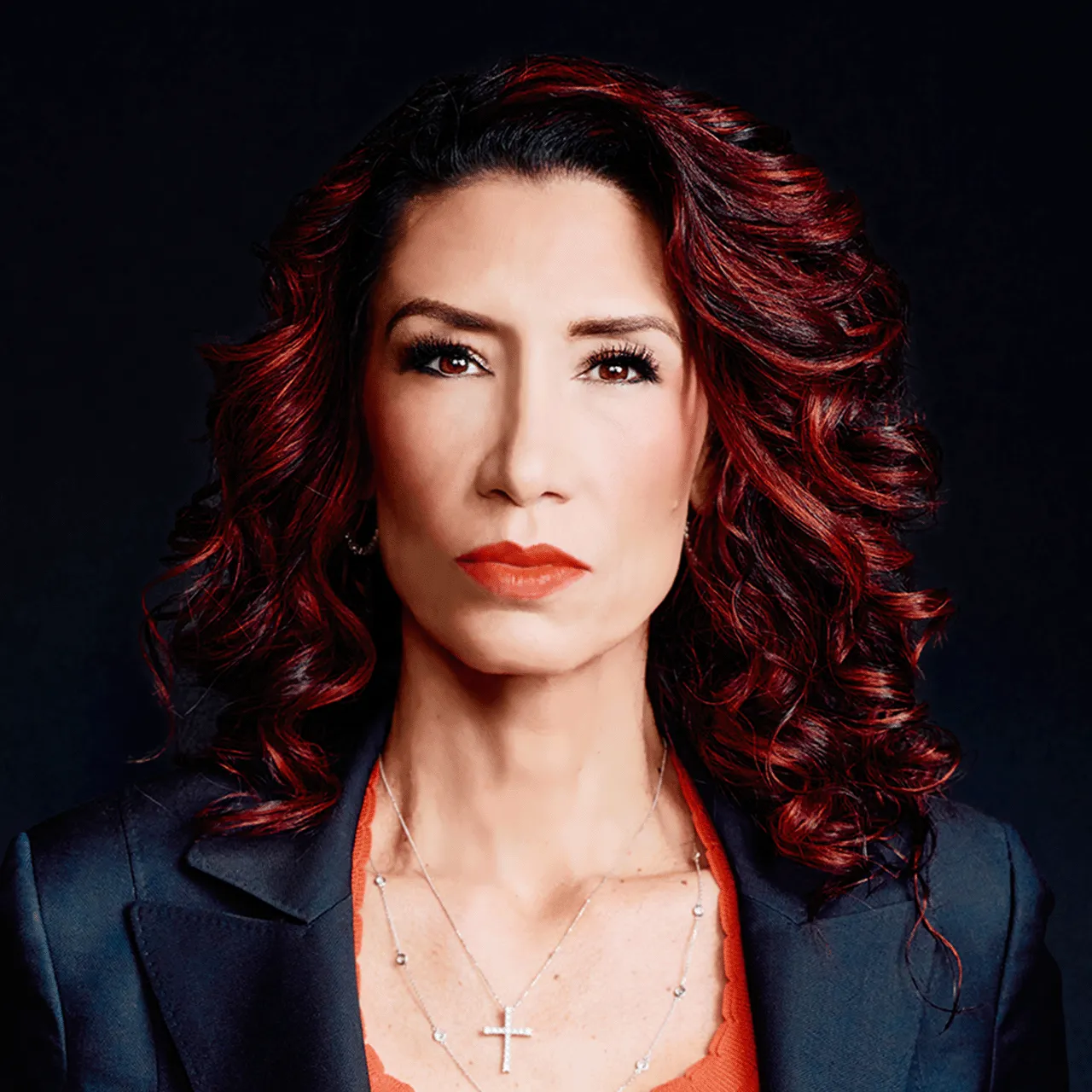
Hedieh Mirahmadi Falco is a former FBI senior advisor turned author and evangelist. A national security expert and contributor to The Christian Post and major news outlets, she now shares her powerful story of faith and redemption, on the Living Fearless Devotional podcast.