
Stream Real Life Network Now

WATCH NOW
Iran


World News
25 min
What Happens When a Nation Can No Longer Recognize Its Allies
As global tensions rise and political narratives reshape public debate, the greatest challenge may not be identifying our enemies but recognizing our allies. Discover why discernment remains essential for preserving truth, freedom, and biblical perspective.
When a nation loses the ability to distinguish between allies and adversaries, truth and propaganda, leadership and political theater, it becomes vulnerable long before the first battle is lost. The headlines may change, but the underlying challenge remains the same. As conflict intensifies in the Middle East, foreign governments expand their influence, and political narratives compete with objective reality, Americans are confronted with a pressing question: Can we still recognize the difference between those who defend freedom and those who seek to undermine it? These are not isolated controversies. They are warning signs that discernment has become one of the most important responsibilities of our time.
Read more biblical news and cultural analysis on Real Life Network or watch The Daniel Cohen Show.
The Cost of Misidentifying the Enemy
The week began with devastating news. Two American service members were killed after an Iranian ballistic missile strike on a U.S. base in Jordan. For months, much of the conflict with Iran had been measured in sanctions, diplomacy, intercepted missiles, and political negotiations. Suddenly, the cost was measured once again in American lives. That reality should cut through every political talking point. Iran remains the world's leading state sponsor of terrorism, and its hostility toward the United States has never been a secret.
Yet even as Iran demonstrated exactly who it is, much of the public debate shifted away from the regime responsible for the attack and toward Israel, America's closest ally in the Middle East. Vice President J.D. Vance argued that Israeli influence helped derail negotiations with Iran, suggesting that voices in Israel preferred continued military action over diplomacy. That framing misses the larger point. The agreement did not collapse because Israel objected to it. It collapsed because Iran has repeatedly demonstrated that it uses negotiations to buy time while continuing to pursue its long-term objectives.
This is where discernment becomes indispensable. A nation that cannot correctly identify its adversaries will inevitably begin questioning its allies instead. History is filled with civilizations that spent more energy arguing among themselves than confronting the threats gathering outside their borders. The danger is not merely military. It is intellectual and moral. When a society begins treating warnings as manipulation and allies as liabilities, it loses the clarity necessary to make wise decisions.
A nation becomes most vulnerable when it begins questioning its allies more than its enemies.
Israel's relationship with the United States has never been based on sentimentality. It rests on shared strategic interests, democratic values, intelligence cooperation, and a common recognition of the dangers posed by radical Islamic terrorism. Those realities should not disappear simply because political narratives become more convenient than geopolitical facts.
When Political Narratives Replace Clear Judgment
The same confusion appears in other arenas. While Israel is frequently portrayed as exercising outsized influence over American policy, Qatar has quietly invested hundreds of billions of dollars across American universities, think tanks, nonprofit organizations, and other institutions. At the same time, President Trump alleged that China obtained personal information connected to approximately 220 million American voter records while elements within the intelligence community minimized the scope of the breach. Whether discussing foreign influence, election security, or media coverage, one theme continues to emerge: narratives increasingly shape public perception more than facts themselves.
That concern extends beyond government agencies. Several major broadcast networks declined to air President Trump's address regarding China's alleged cyber activities, leaving many Americans to learn about the speech only through secondary reporting. Whatever one's opinion of the president, citizens should be wary whenever gatekeepers decide which information the public deserves to hear. Healthy democracies depend on informed voters, not curated narratives.
The same principle explains why Marco Rubio's public comments stood out during the episode. Whether addressing Hamas, Iran, or America's allies, Rubio demonstrated something increasingly uncommon in modern politics: clarity. He distinguished between aggressors and defenders without relying on carefully manufactured slogans or focus group-tested language. Leadership is not merely about speaking persuasively. It is about speaking truthfully, even when the truth is unpopular.
Truth becomes increasingly difficult to defend when political narratives matter more than objective reality.
That challenge extends well beyond foreign policy. Political performance often receives more attention than principled leadership. Sound bites replace substance. Viral moments overshadow careful reasoning. Public discourse becomes less concerned with what is true and more concerned with what is emotionally satisfying or politically advantageous. The result is a culture that gradually loses confidence in objective truth itself.
Watch the full discussion on The Daniel Cohen Show, and discover more faith-centered analysis and current events on Real Life Network.
Discernment Is a National Necessity
Throughout the episode, seemingly unrelated stories all pointed toward the same conclusion. Debates over military alliances, concerns about election security, media gatekeeping, congressional battles over aid to Israel, and even moments of political theater all revealed how easily discernment can be replaced by confusion. A society does not lose its way overnight. It drifts one compromised judgment at a time, until it becomes difficult to distinguish conviction from convenience or principle from performance.
That is why support for Israel ultimately represents something larger than a single foreign policy debate. Israel remains the Middle East's only stable democracy and America's most dependable strategic partner in one of the world's most volatile regions. More importantly, the Jewish people occupy a unique place within the biblical story of redemption. Scripture reminds us that God works through history with purpose, and His covenant faithfulness has never depended upon shifting political winds. The conversation surrounding Israel therefore becomes both geopolitical and spiritual. It forces us to ask whether we are evaluating events through the lens of temporary political narratives or enduring biblical truth.
The larger lesson applies far beyond one nation or one administration. Every generation must decide whether it will judge events according to facts or emotions, principles or personalities, truth or propaganda. Those choices shape the future of every free society.
Civilizations rarely collapse because they lack enemies. They decline when they can no longer recognize the difference between friends and foes.
That is why discernment remains one of the most important responsibilities of every citizen and every Christian. Headlines will continue to change. Political figures will come and go. But wisdom requires looking beneath the news cycle to identify the deeper forces shaping our culture. The future will belong not to those who shout the loudest, but to those who refuse to lose sight of the truth.
Watch the full discussion on The Daniel Cohen Show, and discover more faith-centered analysis and current events on Real Life Network.
World News
25 min
Tehran’s Anti-Trump Vendetta
Iran has repeatedly plotted to assassinate President Donald Trump, and U.S. officials say the threat remains active. This article examines the regime's longstanding hostility toward America, past assassination attempts, and why the danger has not diminished.
The U.S. government remains alert to Iranian threats against President Donald Trump, even here on U.S. soil, according to remarks by Mike Waltz, U.S. Ambassador to the United Nations and former National Security Advisor, on Sunday. The Islamist regime in Tehran has plotted to assassinate Trump on at least two prior occasions, both in peacetime and wartime, and recently redoubled its rhetoric vowing Trump’s death.
“I won’t get into specific intelligence, but this regime, going all the way up to the ayatollah, has plotted to kill President Trump for many years,” Waltz said Sunday on ABC’s “This Week.” “They have operatives here in the United States. Plots are ongoing. But our intelligence community, the FBI, our law enforcement entities are absolutely on top of it.”
The remarks followed reporting last week that Israeli officials had warned President Trump of a fresh Iranian plot against his life, although no official spokesperson confirmed this.
The report came as no surprise, given the Iranian regime’s open vendetta against Trump since his first term in office. Iran has vowed retaliation against Trump ever since he ordered the airstrike that killed IRGC general Qassem Soleimani in Iraq on January 3, 2020.
More recently, Iran’s Supreme Leader Mojtaba Khamenei has a more personal cause for revenge, after his father and predecessor, Ali Khamenei, died amid Operation Epic Fury. In only his second public statement, Khamenei the Younger vowed vengeance for “the blood of all those martyred … by bringing the criminal and dishonorable killers to justice. … These criminals — whose names are known from top to bottom — will take to their graves the unfulfilled wish of dying peacefully in their beds.”
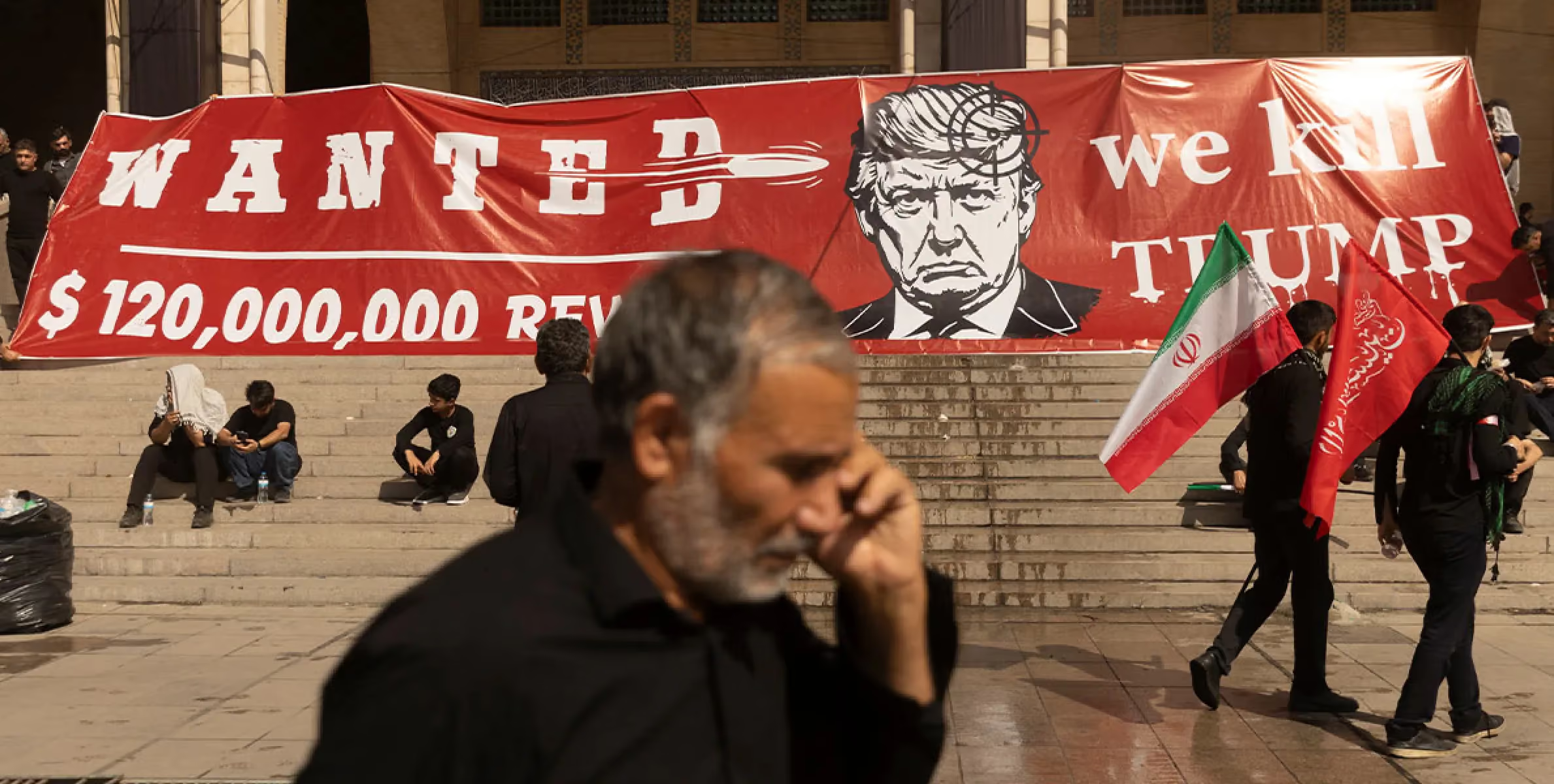
Attendees of Khamenei the Elder’s July 4 memorial ceremonies displayed a banner declaring, “We Will Kill Trump.”
Recent history has shown that Iranian attempts on Trump’s life are neither Israeli fiction, nor too low to stoop for a regime that has unwaveringly declared “Death to America” for the past 47 years.
On November 8, 2024, the Biden Justice Department (the same one that spent so many years persecuting Trump) announced an indictment against Farhad Shakeri, an Iranian national, for “a plot to murder a U.S. citizen of Iranian origin in New York,” as well as a plot to assassinate then-president-elect Donald Trump.
“According to statements made by Shakeri in recorded interviews with law enforcement agents, the IRGC has also tasked Shakeri with carrying out other assassinations against U.S. and Israeli citizens located in the United States,” the DOJ stated. “In particular, Shakeri has informed law enforcement that he was tasked on Oct. 7, 2024 with providing a plan to kill President-elect Donald J. Trump.” However, “Shakeri claimed he did not intend to propose a plan to kill Trump within the timeframe set by the IRGC.”
While the DOJ did arrest two co-conspirators, “Shakeri remains at large and is believed to reside in Iran,” the statement admitted. “Shakeri immigrated to the United States as a child and was deported in or about 2008 after serving 14 years in prison for a robbery conviction.” According to the DOJ, he “used a network of criminal associates he met in prison in the United States” to plan his attacks. However, due to his physical absence, the charges against Shakeri have never gone to trial.
On the other hand, the DOJ did obtain a conviction in the case of Asif Merchant. On March 6, 2026, the DOJ announced that a federal jury had convicted Merchant “of murder for hire and attempting to commit an act of terrorism transcending national boundaries.” The Pakistani national was a trained IRGC operative who tried to recruit hitmen “to steal documents, stage a protest, and arrange the murder of one of three specific U.S. government officials,” including President Trump. In June 2024 (still under the Biden administration), Merchant paid a $5,000 advance to men he believed to be hitmen, but who were in fact undercover federal law enforcement officers.
Thus, the DOJ has publicly revealed at least two Iranian plots from 2024 to assassinate Donald Trump. Other less mature plots may have been foiled before attaining the same level of threat, and some may remain undisclosed to protect intelligence assets. In any event, the same regime that sought revenge on Trump in 2024 has much more reason to seek revenge now — and fewer inhibitions against making the attempt.
President Trump responded stoically to the report, suggesting his prior awareness of the threat or at least an acceptance of the risks attending his high station. “They want to take out the U.S. leader — me,” he told reporters in Ankara, Turkey, before the U.S. Secret Service insisted that he fly home on his old Air Force One, not the jet gifted by Qatar. “I’m on every list. I saw this morning, I’m on every single one of their lists. And so far, I guess I’ve been a little bit lucky, but that maybe doesn’t last very long.”
Trump has even gone so far as to give instructions about how much firepower to unload on Iran in the event that one of their assassination plots succeeds.
“1000 Missiles are Locked and Loaded and aimed at the Islamic Republic of Iran, with thousands of more to immediately follow, should the Iranian Government act on its threat, pronounced in many corners of the Globe, to assassinate, or attempt to assassinate, the sitting President of the United States of America, in this case, ME!” Trump blasted out on Truth Social. “Orders have already been given, and the U.S. Military is ready, willing, and able, for a one year period of time, subject to extension, to completely decimate and destroy all areas of Iran — PRAISE BE TO ALLAH!”
This reveals once again the spirit of defiance in the face of mortal peril that Trump displayed when he lifted a fist after being grazed by a would-be assassin’s bullet at an outdoor rally in Butler, Pennsylvania.
The renewed effort by Iran to assassinate a sitting U.S. president — even during a ceasefire — provides Americans with a fresh reminder that the Islamist regime in Tehran remains a mortal enemy of the United States. Theirs is an ideological hatred that cannot be placated by gifts of cash or appeased by endless diplomacy, or even military surrender. They want to destroy the United States. Although they lack the firepower to do so openly, they do not and will not show any qualms about stooping to use an assassin’s bullet.
This article was originally written by Joshua Arnold and published on The Washington Stand. For more content like this, visit Real Life Network.
World News
25 min
Why Deterrence Still Matters in a Dangerous World
As tensions with Iran escalate and another ceasefire collapses, the debate over deterrence takes center stage. This article explores why lasting peace depends not only on diplomacy but also on the willingness to confront aggression with credible strength.
The Middle East has once again reminded the world that peace cannot be sustained by wishful thinking alone. Reports of an Iranian assassination plot targeting President Donald Trump, renewed attacks on American interests, and the collapse of yet another ceasefire all point to a difficult reality: some regimes are not looking for compromise. As discussed on The Daniel Cohen Show, history repeatedly demonstrates that lasting peace depends on credible deterrence, not empty promises. When evil believes there is no meaningful consequence for aggression, conflict becomes more likely, not less. Watch more biblical news and analysis anytime on Real Life Network.
Peace Depends on Credible Strength
The recent ceasefire involving Iran was described as an opportunity for diplomacy.
Instead, it quickly exposed the limits of negotiating with a regime that has spent decades chanting "Death to America" while funding terrorism across the Middle East.
Within days, Iranian-backed actions once again threatened regional stability. Commercial shipping faced attacks in the Strait of Hormuz, and American military assets responded. Reports also resurfaced that Israeli intelligence had shared information about a specific Iranian plot targeting President Trump.
Whether through direct military action or proxy groups, the message coming from Tehran has remained remarkably consistent for decades. That consistency matters.
Too often, Western observers assume every conflict can be resolved if both sides simply negotiate long enough. But negotiations only succeed when both parties recognize the cost of walking away.
Deterrence is not about seeking war. It is about convincing those who desire war that the price will be too high to pay.
That principle has shaped international security for generations.
It remains just as relevant today.
Appeasement Has Never Produced Lasting Peace
History offers repeated warnings about confusing restraint with weakness.
Authoritarian regimes frequently interpret hesitation as opportunity.
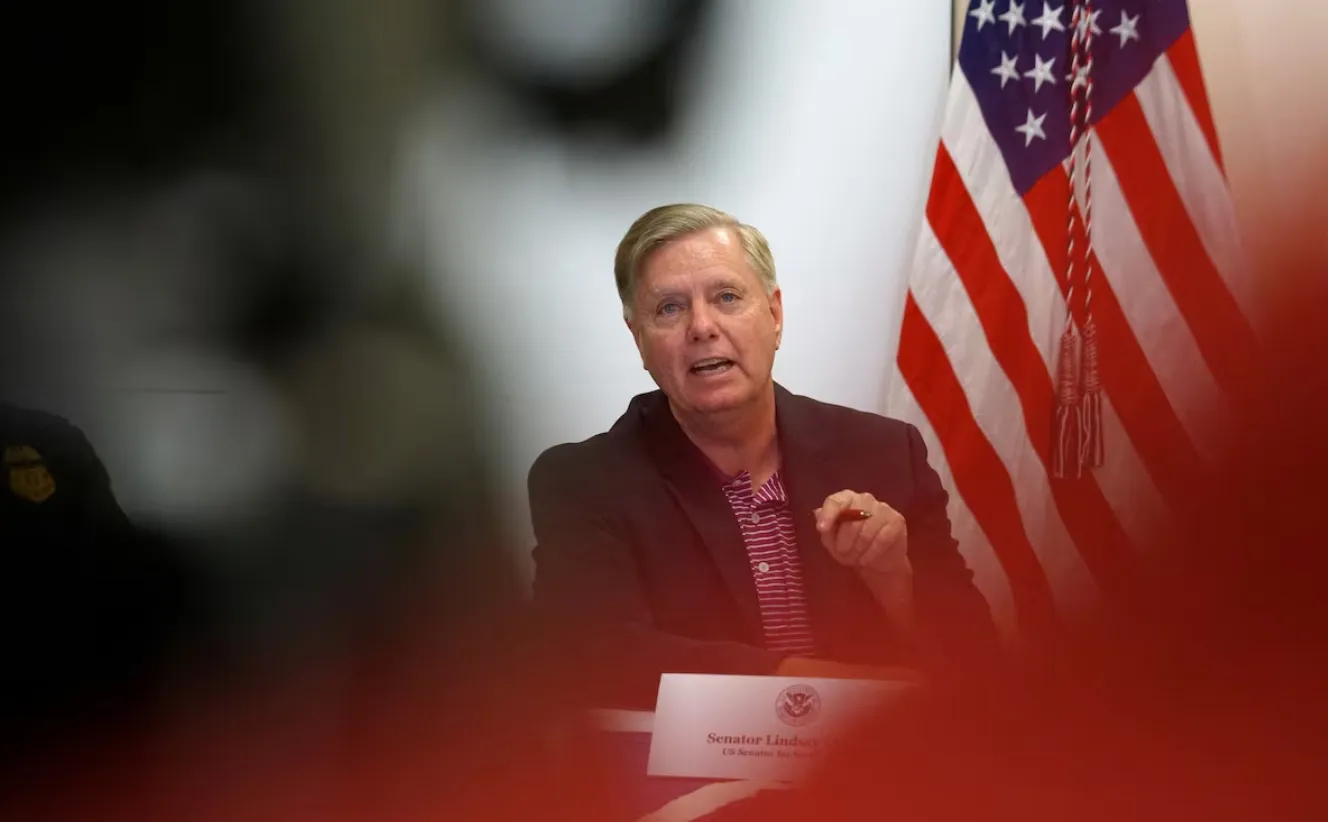
That reality helps explain why leaders such as the late Senator Lindsey Graham consistently argued that Iran's pursuit of nuclear weapons could never be treated as just another diplomatic disagreement. Whether people agreed with every position he took or not, Graham maintained a clear conviction that regimes built upon terrorism cannot simply be persuaded into abandoning their objectives.
His longstanding support for Israel reflected that same belief.
Israel understands a lesson its neighbors have been forced to learn repeatedly: deterrence works only when it is believable.
Military preparedness does not guarantee peace. Neither does diplomacy. But history suggests that peace becomes increasingly fragile when aggressors conclude there will be little consequence for escalating violence.
History repeatedly shows that peace is strongest when those pursuing violence believe they cannot succeed.
Readers looking for a more biblical perspective on today's headlines can find additional episodes on Real Life Network.
Biblical Wisdom Recognizes the Reality of Evil
Scripture consistently calls believers to pursue peace.
It also refuses to pretend evil does not exist.
The Bible never presents peace as the absence of discernment. Rather, wisdom requires recognizing the true nature of those who reject justice, celebrate violence, and refuse accountability.
That balance often gets lost in modern political conversations. Seeking peace is virtuous. Ignoring reality is not.
Christians should always pray for diplomacy, reconciliation, and the preservation of life. Yet praying for peace does not require abandoning wisdom about the intentions of those who openly threaten innocent people.
Throughout history, freedom has often depended on leaders willing to prepare for conflict precisely so conflict could be avoided. That remains true today.
Real peace is preserved not by pretending evil has disappeared, but by ensuring evil understands there are consequences for its actions.
The world will continue debating foreign policy, military strategy, and diplomacy.
Those debates matter. But beneath every policy discussion lies a timeless principle: peace is most secure when justice is defended with both wisdom and strength.
Watch the full discussion on The Daniel Cohen Show and explore more biblical news and cultural commentary on Real Life Network.
.webp)
World News
25 min
Trump's Iran Deal Faces Growing Scrutiny From Conservatives
President Trump's proposed agreement with Iran is drawing criticism from conservatives who argue the deal rewards Tehran, sidelines Israel, and risks repeating mistakes made in previous negotiations with the Islamic Republic.
Iran, Israel, President Trump, the Strait of Hormuz, sanctions relief, and Middle East peace have dominated headlines in recent weeks. But beneath the political talking points lies a growing debate among conservatives about whether the administration's proposed agreement with Iran represents a strategic victory or a costly concession. On Real Life Network and The Daniel Cohen Show, the conversation centers on a question many Americans are asking: why does an agreement designed to promote stability appear to provide significant benefits to Iran while offering few visible gains for the United States or Israel?
The controversy has become one of the most significant foreign policy discussions within the conservative movement, exposing divisions over diplomacy, deterrence, and America's relationship with Israel.
Why Critics Are Concerned About the Iran Agreement
The administration has described the memorandum of understanding with Iran as an opportunity to reduce tensions and avoid a broader regional conflict. Supporters argue that diplomacy remains preferable to military escalation and that economic engagement could encourage greater stability.
Critics see a very different picture.
According to details discussed throughout the episode, the agreement would reportedly ease economic pressure on Iran through sanctions relief, allow greater access to international markets, and potentially unlock significant financial resources. At the same time, opponents argue that the deal offers little more than assurances from a regime that has repeatedly violated international commitments and continued supporting proxy organizations throughout the Middle East.
The concern is not merely about economics. The concern is whether the agreement addresses the underlying threat posed by the Islamic Revolutionary Guard Corps and the broader ideology driving Iranian foreign policy.
For decades, Iran has funded groups such as Hezbollah, Hamas, and the Houthis while pursuing regional influence through military, political, and financial support. Critics argue that any agreement that strengthens Tehran financially without fundamentally changing its behavior risks recreating the same conditions that produced instability in the first place.
A diplomatic agreement is only as strong as the willingness of both sides to honor it.
Many conservatives who supported President Trump through multiple elections now find themselves questioning whether this approach aligns with the administration's previous commitment to maximum pressure and strong deterrence.
For additional analysis of international affairs and current events through a biblical worldview, viewers continue turning to Real Life Network and The Daniel Cohen Show.
Israel's Role in the Debate
One of the most controversial aspects of the proposed agreement is Israel's position in the process.
Israel remains America's closest ally in the Middle East and has long viewed Iran's nuclear ambitions and regional influence as direct threats to its security. Yet critics argue that Israel was largely sidelined during discussions surrounding the agreement despite being one of the nations most directly affected by its outcome.
This concern intensified after comments from Vice President J.D. Vance criticizing members of the Israeli government who publicly opposed the deal. Those remarks generated significant backlash among conservative voters who believe support for Israel should remain a foundational principle of American foreign policy.
The criticism is not necessarily rooted in partisan politics.
Rather, it reflects a broader belief that Israel faces unique security challenges that cannot be fully understood from Washington alone. Israeli citizens live under the constant threat of rocket attacks, terrorist activity, and regional instability. For many supporters of Israel, those realities make security concerns more than theoretical policy debates.
Many conservatives believe that strengthening Israel and strengthening American interests are complementary goals, not competing priorities.
The discussion has also highlighted broader questions about deterrence. Critics argue that adversaries are less likely to pursue aggression when they perceive strength and resolve. They worry that economic concessions offered before meaningful behavioral changes have occurred could send the opposite message.
These concerns help explain why the debate has become so emotional among voters who otherwise remain supportive of President Trump's broader agenda.
For more faith-based commentary on culture, politics, and world events, viewers can explore programming available through Real Life Network.
What Conservatives Want to See Next
Beyond the details of the agreement itself, many conservatives are focused on what comes next.
One issue receiving renewed attention involves American citizens currently detained in Iran. Critics have questioned why the release of detained Americans was not more prominently included in discussions surrounding sanctions relief and economic incentives.
Others point to Iran's continued support for regional proxy groups as evidence that fundamental problems remain unresolved. From their perspective, any lasting peace agreement must address not only nuclear concerns but also the broader network of organizations responsible for destabilizing the region.
The debate also reveals something larger about the modern conservative movement.
Many voters are demonstrating that their support for political leaders is not unconditional. They are willing to celebrate policies they believe work while voicing concerns when they believe mistakes are being made.
That distinction matters. Political loyalty and policy agreement are not the same thing.
Conservatives increasingly want results, accountability, and policies that reflect the principles they elected leaders to pursue.
Whether the agreement ultimately succeeds or fails remains to be seen. What is already clear is that many Americans remain deeply invested in the outcome. They understand that decisions made today could shape the future of the Middle East, America's global influence, and the security of one of its closest allies for years to come.
As the conversation continues, supporters and critics alike will be watching closely to see whether diplomacy produces meaningful change or simply delays difficult decisions.
For more news, cultural commentary, and biblical analysis, visit Real Life Network and watch The Daniel Cohen Show.
World News
25 min
From Iran to Britain: The Consequences of Looking Away
From Iran's nuclear ambitions to free speech in Britain and the influence of social media on children, this episode explores what happens when societies ignore warning signs and choose convenience over reality.
Iran, Israel, free speech, social media, parenting, political leadership, and cultural decline may seem like separate issues. In reality, they all point to the same question: what happens when leaders stop confronting problems honestly? Through the analysis featured on Real Life Network and The Daniel Cohen Show, recent headlines reveal a growing pattern of institutions avoiding difficult truths while expecting the public to accept the consequences.
Whether the issue is a proposed agreement with Iran, restrictions on speech in the United Kingdom, or the growing influence of social media on children, reality does not disappear simply because leaders choose not to address it.
The Iran Deal Nobody Has Seen
The latest agreement between the United States and Iran has generated headlines around the world. Supporters describe it as an opportunity for stability and peace. Critics see it differently.
The problem is simple. Nobody has actually seen the details.
Public officials are celebrating what has been described as a memorandum of understanding, yet many of the specifics remain unknown. That uncertainty has created significant concern, particularly in Israel, where citizens live with the direct consequences of Iranian aggression.
For many Israelis, the issue is not abstract. It is personal.
Iran continues to fund proxy organizations throughout the region, support terrorist groups, and pursue influence through organizations openly hostile to both Israel and the United States. Critics of the agreement argue that economic relief and diplomatic recognition may provide a struggling regime with new opportunities while leaving the underlying threat unchanged.
The concern is not whether diplomacy has value. Diplomacy can be useful.
The concern is whether diplomacy is being mistaken for resolution.
A temporary agreement cannot solve a long-term problem if the underlying threat remains intact.
Many observers point to previous agreements with Iran that promised restraint while allowing the regime to preserve its power and influence. That history explains why skepticism remains high among those who believe the Islamic Republic has consistently demonstrated its unwillingness to honor commitments.
For more analysis of international affairs, current events, and biblical worldview commentary, viewers continue turning to Real Life Network and The Daniel Cohen Show.
When Governments Decide What People Can Hear
The conversation about reality extends beyond foreign policy.
In the United Kingdom, government officials have proposed new restrictions on social media access for children under sixteen. Supporters argue these policies are necessary to protect young people from harmful content and excessive screen time.
Few parents would deny that social media presents challenges.
The deeper question is who gets to decide what information people can access.
Historically, governments have often attempted to regulate speech. What makes these developments different is that they increasingly involve regulating what citizens are allowed to hear, read, and consume.
That distinction matters.
Restricting speech controls expression. Restricting access to information shapes understanding itself.
Many observers have noted the inconsistency in modern Western governments. Authorities often appear reluctant to address serious social problems while simultaneously becoming more aggressive in regulating public discourse.
This concern is especially significant for Christians, who understand that truth flourishes through open examination rather than government management.
A society that limits access to ideas risks creating citizens who are easier to control but less capable of discernment.
The answer to harmful ideas has never been ignorance. It has always been wisdom.
For additional commentary on culture, politics, and faith, viewers can explore the growing library of content available through Real Life Network.
The Battle for the Next Generation
While politicians debate foreign policy and governments debate speech restrictions, another battle is unfolding much closer to home.
It is taking place in families.
One of the most revealing moments discussed in this episode involved children participating in political protests while repeating slogans and language they are far too young to understand. The incident served as a reminder that children often absorb the worldview of the adults shaping their environment.
Parents understand this instinctively.
Children learn what to value long before they understand why they value it.
This reality makes the conversation about social media even more important. Smartphones, social platforms, influencers, and digital communities increasingly compete with parents for a child's attention, loyalty, and identity.
The challenge is not merely technological.
It is spiritual and cultural.
Many young people now spend more time consuming content than building relationships, developing skills, or engaging with the real world around them. As screen time increases, meaningful human interaction often declines.
This trend carries long-term consequences.
Families cannot outsource discipleship to algorithms. Parents cannot delegate character formation to social media platforms.
The future of a culture is shaped by what it teaches its children to love, believe, and pursue.
That is why parenting matters. It is why education matters. It is why worldview matters.
The most important questions facing society are not ultimately political. They are questions about truth, responsibility, and whether the next generation will inherit the wisdom needed to preserve what previous generations built.
The issues discussed throughout this episode may appear disconnected at first glance. Iran, free speech, social media, parenting, and cultural change all seem to occupy different categories.
Yet they share a common thread.
Every one of them involves a choice between confronting reality and avoiding it.
History repeatedly shows that problems ignored today rarely become easier tomorrow.
For more news, biblical analysis, and cultural commentary, visit Real Life Network and watch The Daniel Cohen Show.
Related Articles
.webp)
World News
25 min
Iran, Artificial Intelligence, and the Cost of Ignoring Reality
From Iran's nuclear ambitions and artificial intelligence to immigration and economic success, this episode examines why truth, reality, and clear-eyed leadership matter more than political narratives.
Iran, Israel, artificial intelligence, immigration, capitalism, Elon Musk, and cultural change may seem like unrelated topics. Yet they share a common thread. Across politics, economics, technology, and foreign policy, many of today's biggest debates come down to one question: are leaders willing to confront reality, or are they trying to negotiate with it? Through the analysis featured on Real Life Network and The Daniel Cohen Show, recent headlines reveal the consequences of avoiding hard truths and the importance of recognizing reality before it becomes impossible to ignore.
Whether discussing Iran's nuclear ambitions, the rise of artificial intelligence, or the cultural challenges facing Western nations, reality has a way of asserting itself regardless of political preferences or public opinion.
Iran, Israel, and the Limits of Negotiation
Much of the current discussion surrounding the Middle East centers on negotiations between the United States, Israel, and Iran. While diplomatic agreements can serve important purposes, they cannot solve problems that remain fundamentally unchanged.
According to Daniel Cohen's analysis, the central issue is not oil prices, shipping routes, or even temporary ceasefires. The concern is the Iranian regime itself and the ideology that continues to drive its actions. For decades, Iran has funded proxy groups, supported terrorism, and pursued nuclear capabilities despite repeated international pressure.
The recent agreement being discussed would reportedly reopen economic pathways and provide relief to a regime that many observers believe was facing unprecedented weakness. Critics argue that such agreements risk giving Iran valuable time to regroup, rebuild, and continue pursuing its long-term objectives.
The concern extends beyond military capabilities.
The question is whether policymakers are addressing symptoms while leaving the underlying problem intact.
A deal may pause a conflict, but it cannot solve a problem that leaders refuse to define honestly.
Supporters of a tougher approach argue that lasting peace requires confronting the source of instability rather than repeatedly negotiating around it. They point to decades of failed agreements and broken promises as evidence that diplomacy alone cannot transform a regime that remains committed to revolutionary goals.
For more biblical analysis of world events, current affairs, and international developments, viewers continue turning to Real Life Network and The Daniel Cohen Show.
Artificial Intelligence Is Already Reshaping the Future
While headlines focus on international conflict, another transformation is unfolding at remarkable speed.
Artificial intelligence is no longer a future possibility. It is a present reality.
Students entering the workforce are increasingly aware that many traditional career paths may look dramatically different within a few years. Businesses are integrating AI into daily operations. Military organizations are incorporating AI into decision-making systems. Healthcare, education, finance, and manufacturing are all being reshaped by technologies that continue advancing at a rapid pace.
This creates both opportunity and uncertainty.
On one hand, artificial intelligence has the potential to solve problems, improve efficiency, and create entirely new industries. On the other hand, it raises serious questions about employment, ethics, human dignity, and the future of decision-making itself.
What makes this moment unique is that many people still underestimate how quickly these changes are occurring.
The conversation is no longer about whether AI will affect society. It already is.
Artificial intelligence is not a future issue. It is already reshaping how people learn, work, fight, and make decisions.
This reality creates an important challenge for Christians, educators, business leaders, and policymakers. Ignoring the technology will not stop its development. Embracing it without wisdom could create entirely new dangers.
The wiser path requires understanding the technology while remaining grounded in timeless principles that affirm human value, responsibility, and accountability.
For additional faith-based content exploring culture, technology, and current events, viewers can explore programming available through Real Life Network.
Wealth, Immigration, and the Importance of Cultural Confidence
The same tension between reality and ideology appears in debates surrounding wealth creation, immigration, and cultural identity.
The recent milestone of Elon Musk becoming the world's first trillionaire generated strong reactions across the political spectrum. Supporters celebrated innovation, entrepreneurship, and economic growth. Critics focused on wealth inequality and concerns about concentrated financial power.
Lost in much of the debate was an important reality: wealth creation and wealth redistribution are not the same thing.
SpaceX's success reportedly created thousands of new millionaires among employees, demonstrating how innovation can generate opportunities for workers throughout an organization.
The larger question is whether societies reward the creation of value or merely focus on redistributing what already exists.
At the same time, debates surrounding immigration and assimilation continue growing throughout the Western world. Communities in Europe and North America increasingly find themselves asking how immigration policies can balance compassion, opportunity, security, and cultural stability.
These discussions are often portrayed as conflicts between inclusion and exclusion. In reality, many citizens are asking a simpler question: can a society maintain its identity if newcomers are not encouraged to embrace its values, laws, and institutions?
Assimilation is not about ethnicity or race. It is about shared commitments.
Successful immigration has historically depended upon newcomers embracing the principles that allowed their new home to flourish in the first place.
Whether discussing economic systems, technological innovation, or immigration policy, the same lesson emerges repeatedly.
A society cannot preserve what it values if it refuses to acknowledge the realities shaping its future.
Reality does not disappear simply because it is politically inconvenient. Technology continues advancing. Ideologies continue spreading. Economic systems continue producing results. Cultural decisions continue shaping future generations.
The challenge facing leaders today is not merely identifying problems. It is having the courage to describe those problems honestly and address them before they become crises.
For more news, cultural commentary, and biblical analysis, visit Real Life Network and watch The Daniel Cohen Show.
Related Articles
Thank you! Your submission has been received!
Oops! Something went wrong while submitting the form.
World News
The approaching midterm elections are raising questions that go far beyond the economy. While inflation, healthcare, and the cost of living remain important, Americans are also confronting deeper disagreements about the value of human life, the meaning of justice, and the government's responsibility to protect its citizens.
These debates touch some of the most fundamental convictions in American public life. From the treatment of infants born alive after attempted abortions to the punishment of convicted terrorists and the growing threats posed by Iran, the questions are ultimately about what society considers worthy of protection.
For ongoing coverage of these issues through a biblical worldview, watch The Daniel Cohen Show on Real Life Network.
The Sanctity of Life and the Meaning of Justice
In 2023, Minnesota Governor Tim Walz signed legislation modifying the state's requirements concerning infants born alive following attempted abortions.
Previously, Minnesota law required medical personnel to take reasonable measures to preserve the life and health of an infant born alive. The revised language requires appropriate care for an infant born alive, without retaining the earlier explicit requirement to preserve life and health.
Supporters of the change argue that it allows physicians to provide appropriate medical care, including comfort care when an infant cannot survive. Critics contend that removing the explicit preservation requirement weakens protections for vulnerable newborns.
The distinction raises a profound moral question: What obligations does society have toward a child who has already been born?
For Christians, the answer begins with the biblical understanding of human dignity.
Genesis 2:7 describes God breathing life into Adam, who became a living being. Genesis 1:27 establishes that humanity is created in God's image. Human worth, therefore, is not determined by age, health, independence, or the ability to contribute to society.
The biblical case for protecting human life rests on the conviction that dignity is inherent, not something granted by government or earned through usefulness.
The same understanding of human dignity also informs difficult questions about criminal justice.
The case of Nidal Hasan, the former Army major convicted of murdering 13 people at Fort Hood in November 2009, illustrates the seriousness of those questions.
Hasan's attack wounded dozens of additional victims and devastated military families. His conviction and death sentence reflect the gravity of the crimes committed.
Debates over the death penalty, including the method of execution and whether executions should be publicly displayed, nevertheless reveal competing understandings of justice.
Some argue that the severity of certain crimes warrants the ultimate punishment. Others question whether particular execution methods or public spectacles are compatible with human dignity.
These disagreements deserve careful consideration without minimizing the suffering of victims.
Romans 13 describes civil authority as bearing responsibility for restraining wrongdoing. At the same time, Scripture consistently presents human life as possessing value before God.
Justice must therefore be more than an expression of anger. It must reflect moral seriousness, accountability, and appropriate respect for human dignity.
Political Accountability Requires More Than Religious Language
Religious identity has become an increasingly visible feature of American political campaigns.
Candidates regularly reference Scripture, Christian values, and personal faith while presenting their positions on abortion, immigration, healthcare, and social policy.
But claiming a religious identity does not automatically resolve questions about what a candidate believes or how those convictions influence public decisions.
Texas Senate candidate James Talarico has attracted attention for statements concerning the nature of God, abortion, and gender. His theological language and policy positions have generated disagreement among Christians over how biblical teaching should inform public life.
Those disagreements cannot be resolved simply by accepting or rejecting a candidate's religious label.
The relevant questions concern the substance of the claims themselves. What does Scripture teach? How is a particular passage being interpreted? Are the conclusions consistent with historic Christian doctrine?
Jesus warned in Matthew 7:15–20 about false prophets and emphasized the importance of recognizing people by their fruit.
That passage is not permission to speculate about someone's private spiritual condition. It does, however, establish the importance of examining teaching and conduct rather than relying entirely on outward appearances.
Christian discernment requires evaluating public statements and actions against Scripture, rather than treating religious language as sufficient evidence of biblical faithfulness.
Similar standards of accountability apply to questions of national security.
Michigan Senate candidate Abdul El-Sayed has faced scrutiny over his positions on Israel, Iran, immigration, and American foreign policy.
His statements about military assistance to Israel and the treatment of terrorist organizations have become subjects of political controversy. His critics argue that his responses have lacked necessary clarity, while his broader position emphasizes consistency in foreign policy and opposition to unconditional military support.
The appropriate standard is to examine his actual statements, policy proposals, and public record.
Questions about political associations or organizations connected to family members must also distinguish documented facts from allegations of personal wrongdoing.
That distinction matters because accountability depends upon evidence.
A political candidate can legitimately be challenged about immigration enforcement, campaign contributions, national security policy, or foreign alliances without relying on unsubstantiated accusations.
The same principle should apply regardless of political affiliation.
Iran, Terrorism, and the Responsibility to Protect Civilians
While domestic political debates dominate election coverage, threats from overseas continue to affect American security.
Iran's relationships with regional armed groups, including Hezbollah and the Houthis, remain significant concerns for the United States and its Middle Eastern partners.
The Houthis have demonstrated their ability to threaten commercial shipping and regional infrastructure through missile and drone attacks. Their activities raise questions about the security of international transportation routes and the potential consequences of escalating regional conflict.
An attack against civilian aviation infrastructure, regardless of the perpetrator, demonstrates why such threats demand serious attention.
Airports are not simply strategic facilities. They are gathering places for families, workers, travelers, and children whose safety depends upon effective security measures.
The same concerns apply to attempted attacks against commercial aircraft.
An alleged attempted hijacking involving a flight bound for Israel has renewed questions about airline security, radicalization, and the ability of investigators to recognize warning signs before violence occurs.
Claims about an attacker's motivations, foreign connections, or possible accomplices require confirmation through official investigations. But the underlying security concern is clear.
Protecting civilian transportation requires intelligence cooperation, thorough investigations, and appropriate safeguards against credible threats.
Confronting terrorism requires moral clarity about violence against civilians and factual precision about who is responsible for carrying it out.
That distinction is especially important when discussing Iran.
The Iranian government has supported organizations responsible for attacks against civilians and American interests. Its activities deserve scrutiny, particularly when regional conflicts threaten to draw the United States into additional military commitments.
Yet attributing every action of an Iranian-aligned group directly to Tehran requires evidence about the specific operation. Distinguishing support, influence, and operational control is essential to responsible analysis.
Foreign policy decisions also carry consequences for American families.
Military intervention, economic sanctions, intelligence operations, and defensive partnerships each involve risks and responsibilities. Congressional leaders help shape those decisions through legislation, appropriations, and oversight.
The approaching elections therefore involve more than competing campaign messages.
They concern the responsibilities entrusted to public officials and the standards by which their decisions should be evaluated.
For Christians, those standards begin with a consistent understanding of truth, justice, and human dignity. Protecting the innocent, holding wrongdoers accountable, and refusing to excuse violence should not depend upon political convenience.
The sanctity of life matters before birth, after birth, and throughout every stage of human existence. Justice matters for victims and defendants alike. National security matters because governments bear a responsibility to protect the people entrusted to their care.
Those principles deserve serious consideration regardless of which political party holds power.
Continue exploring the intersection of biblical truth, American politics, Israel, and national security through The Daniel Cohen Show, available free on Real Life Network.
25 min

October 13, 2026
Daniel Cohen
World News
Politics has always involved disagreement. A healthy country should be able to argue vigorously about taxes, foreign policy, abortion, immigration, health care, education, and the proper role of government without treating political opponents as enemies who deserve suffering or death.
That distinction matters because political rhetoric does not remain confined to television studios, campaign rallies, or social media.
A recent survey discussed on The Daniel Cohen Show asked Democratic respondents how they would react to a hypothetical headline announcing President Donald Trump had been assassinated at a rally. The transcript cites the results as evidence of a disturbing willingness among some Americans to respond positively to political violence.
A survey cannot establish that respondents would personally commit violence, and attitudes expressed in a poll should not be treated as evidence that an entire political party supports assassination. But even hypothetical approval of political murder should trouble Americans regardless of who the target is.
That principle has to work in every direction.
Political violence against Donald Trump is wrong. Violence against Democratic officials is wrong. Celebrating the murder of a conservative activist is wrong. Celebrating an attack on a progressive activist would be wrong.
A political culture becomes dangerous when disagreement is no longer enough and opponents have to be humiliated, harmed, or eliminated.
Political Violence Should Not Have a Party
The attempted assassination of Trump in Butler, Pennsylvania, demonstrated how quickly political hostility can become something much more serious. The transcript also points to the killing of Charlie Kirk and the continuing controversy surrounding responses to political violence.
The deeper question is what kind of culture develops when suffering itself becomes partisan.
The 2017 attack on Senator Rand Paul offers a smaller but revealing example. MSNBC anchor Kasie Hunt introduced coverage of Paul's injuries by calling the incident one of her “favorite stories,” before immediately clarifying her concern for the senator. Paul suffered six broken ribs in the attack. The comment generated criticism at the time, and Hunt apologized, saying she had chosen her words poorly.
That distinction matters. An irresponsible comment should not automatically be interpreted as proof that someone celebrates political violence. Corrections and apologies matter too.
But so does the underlying standard.
Nobody's broken ribs should become funny because of the letter beside his name. Nobody's assassination should become acceptable because of political hatred. And nobody's murder should become easier to dismiss because the victim belonged to the wrong ideological camp.
Christians should be particularly careful here. Human dignity does not disappear when someone votes differently.
The command to love one's enemies is most revealing when there actually are enemies to love.
Foreign Policy Exposes the Difference Between Slogans and Consequences
That same need for moral clarity appears in foreign policy.
At a University of Michigan event, Democratic Senate candidate Abdul El-Sayed was questioned by a student who described relatives suffering under Iran's government and asked about El-Sayed's previous comments concerning Iran and its leadership. El-Sayed responded that the United States should not pursue regime change and said he supports “freedom and democracy for the people of Iran,” while arguing that democratic change should come from Iranians themselves.
There is a legitimate policy debate underneath that exchange.
Opposing American-led regime change is not the same thing as supporting the Iranian government. American policymakers have debated intervention, sanctions, military force, diplomacy, and regime change for decades. But candidates asking voters for significant national authority should expect difficult questions about how their principles translate into policy when authoritarian governments repress their own citizens.
The same is true of Israel.
Missile defense can sound like an abstraction until a siren gives a family seconds to reach a shelter. Iron Dome is designed to intercept rockets and other airborne threats headed toward populated areas. Arguments over American support for the system therefore involve more than budget lines; they involve competing judgments about U.S. foreign policy, Israeli security, regional stability, and civilian protection.
Political language becomes much easier when the human consequences remain theoretical.
That reality became painfully tangible this week for Israeli Ambassador to the United States Yechiel Leiter. His son Neria, an IDF reservist, was seriously wounded in a car-ramming attack at a checkpoint in the West Bank. Another son, Moshe Yedidya Leiter, was killed in Gaza in November 2023.
Arguments over Israel, Iran, terrorism, and American foreign policy deserve serious debate. They also involve families for whom those debates are not academic.
Truth Still Matters When It Complicates the Argument
Political rhetoric becomes especially dangerous when facts are treated as raw material rather than constraints.
French President Emmanuel Macron provided a striking example at the United Nations this week when he said Hamas had “never operated” in the West Bank. A French official subsequently said Macron meant that Hamas had never governed the West Bank. Those are materially different claims. Hamas has operated in the West Bank even though it has not governed the territory.
Corrections matter because words matter, particularly when they come from heads of state discussing one of the world's most contentious conflicts.
The same principle applies closer to home.
CNN, MS NOW, and Politico recently sued the Trump administration after their reporters were barred from White House grounds. The administration defended the action by accusing the organizations of dishonest reporting; the outlets argued that exclusion based on their coverage violated constitutional protections. A federal judge has since temporarily ordered their access restored, finding that the outlets were likely to succeed on their claim that the credentials were revoked without constitutionally adequate due process.
That dispute raises legitimate questions about both government power and media responsibility. News organizations can and should be criticized when reporting is inaccurate. Government officials can and should face scrutiny when they use official authority against news organizations they dislike.
Neither principle requires abandoning the other.
Truth cannot become a partisan possession, defended when useful and discarded when inconvenient.
That standard also belongs inside the church.
The transcript raises theological questions about churches and political candidates who identify themselves as Christian while challenging historic Christian doctrines. Those disagreements should ultimately be evaluated by Scripture rather than by whether a candidate has the preferred political affiliation.
Christianity is not infinitely adjustable. The virgin birth, bodily resurrection, identity of Christ, authority of Scripture, sin, repentance, and salvation are not campaign language to be reshaped around contemporary politics.
At the same time, theological disagreement should be represented accurately. Criticism is strongest when it addresses what someone actually teaches rather than exaggerating the position for political effect.
That principle connects every issue here.
Political violence. Media coverage. Iran. Israel. Churches. Presidential power. International diplomacy.
Different subjects, same responsibility.
Tell the truth about opponents. Refuse to celebrate their suffering. Examine claims before repeating them. Apply standards consistently. Remember the human beings living with the consequences of political decisions.
For Christians, political engagement should never require surrendering those obligations. Scripture does not permit hatred simply because the stakes feel high. It does not permit dishonesty because the other side is dishonest. And it does not allow political allegiance to determine who deserves dignity.
Politics reveals plenty about candidates and parties.
How people speak about their opponents can reveal even more.
Real Life Network provides biblically grounded programming examining faith, culture, and current events. Watch The Daniel Cohen Show for more conversations about the stories shaping American and international life.
25 min
What Political Rhetoric Reveals About the People Who Use It
September 25, 2026
Daniel Cohen
World News
When a nation loses the ability to distinguish between allies and adversaries, truth and propaganda, leadership and political theater, it becomes vulnerable long before the first battle is lost. The headlines may change, but the underlying challenge remains the same. As conflict intensifies in the Middle East, foreign governments expand their influence, and political narratives compete with objective reality, Americans are confronted with a pressing question: Can we still recognize the difference between those who defend freedom and those who seek to undermine it? These are not isolated controversies. They are warning signs that discernment has become one of the most important responsibilities of our time.
Read more biblical news and cultural analysis on Real Life Network or watch The Daniel Cohen Show.
The Cost of Misidentifying the Enemy
The week began with devastating news. Two American service members were killed after an Iranian ballistic missile strike on a U.S. base in Jordan. For months, much of the conflict with Iran had been measured in sanctions, diplomacy, intercepted missiles, and political negotiations. Suddenly, the cost was measured once again in American lives. That reality should cut through every political talking point. Iran remains the world's leading state sponsor of terrorism, and its hostility toward the United States has never been a secret.
Yet even as Iran demonstrated exactly who it is, much of the public debate shifted away from the regime responsible for the attack and toward Israel, America's closest ally in the Middle East. Vice President J.D. Vance argued that Israeli influence helped derail negotiations with Iran, suggesting that voices in Israel preferred continued military action over diplomacy. That framing misses the larger point. The agreement did not collapse because Israel objected to it. It collapsed because Iran has repeatedly demonstrated that it uses negotiations to buy time while continuing to pursue its long-term objectives.
This is where discernment becomes indispensable. A nation that cannot correctly identify its adversaries will inevitably begin questioning its allies instead. History is filled with civilizations that spent more energy arguing among themselves than confronting the threats gathering outside their borders. The danger is not merely military. It is intellectual and moral. When a society begins treating warnings as manipulation and allies as liabilities, it loses the clarity necessary to make wise decisions.
A nation becomes most vulnerable when it begins questioning its allies more than its enemies.
Israel's relationship with the United States has never been based on sentimentality. It rests on shared strategic interests, democratic values, intelligence cooperation, and a common recognition of the dangers posed by radical Islamic terrorism. Those realities should not disappear simply because political narratives become more convenient than geopolitical facts.
When Political Narratives Replace Clear Judgment
The same confusion appears in other arenas. While Israel is frequently portrayed as exercising outsized influence over American policy, Qatar has quietly invested hundreds of billions of dollars across American universities, think tanks, nonprofit organizations, and other institutions. At the same time, President Trump alleged that China obtained personal information connected to approximately 220 million American voter records while elements within the intelligence community minimized the scope of the breach. Whether discussing foreign influence, election security, or media coverage, one theme continues to emerge: narratives increasingly shape public perception more than facts themselves.
That concern extends beyond government agencies. Several major broadcast networks declined to air President Trump's address regarding China's alleged cyber activities, leaving many Americans to learn about the speech only through secondary reporting. Whatever one's opinion of the president, citizens should be wary whenever gatekeepers decide which information the public deserves to hear. Healthy democracies depend on informed voters, not curated narratives.
The same principle explains why Marco Rubio's public comments stood out during the episode. Whether addressing Hamas, Iran, or America's allies, Rubio demonstrated something increasingly uncommon in modern politics: clarity. He distinguished between aggressors and defenders without relying on carefully manufactured slogans or focus group-tested language. Leadership is not merely about speaking persuasively. It is about speaking truthfully, even when the truth is unpopular.
Truth becomes increasingly difficult to defend when political narratives matter more than objective reality.
That challenge extends well beyond foreign policy. Political performance often receives more attention than principled leadership. Sound bites replace substance. Viral moments overshadow careful reasoning. Public discourse becomes less concerned with what is true and more concerned with what is emotionally satisfying or politically advantageous. The result is a culture that gradually loses confidence in objective truth itself.
Watch the full discussion on The Daniel Cohen Show, and discover more faith-centered analysis and current events on Real Life Network.
Discernment Is a National Necessity
Throughout the episode, seemingly unrelated stories all pointed toward the same conclusion. Debates over military alliances, concerns about election security, media gatekeeping, congressional battles over aid to Israel, and even moments of political theater all revealed how easily discernment can be replaced by confusion. A society does not lose its way overnight. It drifts one compromised judgment at a time, until it becomes difficult to distinguish conviction from convenience or principle from performance.
That is why support for Israel ultimately represents something larger than a single foreign policy debate. Israel remains the Middle East's only stable democracy and America's most dependable strategic partner in one of the world's most volatile regions. More importantly, the Jewish people occupy a unique place within the biblical story of redemption. Scripture reminds us that God works through history with purpose, and His covenant faithfulness has never depended upon shifting political winds. The conversation surrounding Israel therefore becomes both geopolitical and spiritual. It forces us to ask whether we are evaluating events through the lens of temporary political narratives or enduring biblical truth.
The larger lesson applies far beyond one nation or one administration. Every generation must decide whether it will judge events according to facts or emotions, principles or personalities, truth or propaganda. Those choices shape the future of every free society.
Civilizations rarely collapse because they lack enemies. They decline when they can no longer recognize the difference between friends and foes.
That is why discernment remains one of the most important responsibilities of every citizen and every Christian. Headlines will continue to change. Political figures will come and go. But wisdom requires looking beneath the news cycle to identify the deeper forces shaping our culture. The future will belong not to those who shout the loudest, but to those who refuse to lose sight of the truth.
Watch the full discussion on The Daniel Cohen Show, and discover more faith-centered analysis and current events on Real Life Network.
25 min
What Happens When a Nation Can No Longer Recognize Its Allies
July 20, 2026
Daniel Cohen
World News
The U.S. government remains alert to Iranian threats against President Donald Trump, even here on U.S. soil, according to remarks by Mike Waltz, U.S. Ambassador to the United Nations and former National Security Advisor, on Sunday. The Islamist regime in Tehran has plotted to assassinate Trump on at least two prior occasions, both in peacetime and wartime, and recently redoubled its rhetoric vowing Trump’s death.
“I won’t get into specific intelligence, but this regime, going all the way up to the ayatollah, has plotted to kill President Trump for many years,” Waltz said Sunday on ABC’s “This Week.” “They have operatives here in the United States. Plots are ongoing. But our intelligence community, the FBI, our law enforcement entities are absolutely on top of it.”
The remarks followed reporting last week that Israeli officials had warned President Trump of a fresh Iranian plot against his life, although no official spokesperson confirmed this.
The report came as no surprise, given the Iranian regime’s open vendetta against Trump since his first term in office. Iran has vowed retaliation against Trump ever since he ordered the airstrike that killed IRGC general Qassem Soleimani in Iraq on January 3, 2020.
More recently, Iran’s Supreme Leader Mojtaba Khamenei has a more personal cause for revenge, after his father and predecessor, Ali Khamenei, died amid Operation Epic Fury. In only his second public statement, Khamenei the Younger vowed vengeance for “the blood of all those martyred … by bringing the criminal and dishonorable killers to justice. … These criminals — whose names are known from top to bottom — will take to their graves the unfulfilled wish of dying peacefully in their beds.”
Attendees of Khamenei the Elder’s July 4 memorial ceremonies displayed a banner declaring, “We Will Kill Trump.”
Recent history has shown that Iranian attempts on Trump’s life are neither Israeli fiction, nor too low to stoop for a regime that has unwaveringly declared “Death to America” for the past 47 years.
On November 8, 2024, the Biden Justice Department (the same one that spent so many years persecuting Trump) announced an indictment against Farhad Shakeri, an Iranian national, for “a plot to murder a U.S. citizen of Iranian origin in New York,” as well as a plot to assassinate then-president-elect Donald Trump.
“According to statements made by Shakeri in recorded interviews with law enforcement agents, the IRGC has also tasked Shakeri with carrying out other assassinations against U.S. and Israeli citizens located in the United States,” the DOJ stated. “In particular, Shakeri has informed law enforcement that he was tasked on Oct. 7, 2024 with providing a plan to kill President-elect Donald J. Trump.” However, “Shakeri claimed he did not intend to propose a plan to kill Trump within the timeframe set by the IRGC.”
While the DOJ did arrest two co-conspirators, “Shakeri remains at large and is believed to reside in Iran,” the statement admitted. “Shakeri immigrated to the United States as a child and was deported in or about 2008 after serving 14 years in prison for a robbery conviction.” According to the DOJ, he “used a network of criminal associates he met in prison in the United States” to plan his attacks. However, due to his physical absence, the charges against Shakeri have never gone to trial.
On the other hand, the DOJ did obtain a conviction in the case of Asif Merchant. On March 6, 2026, the DOJ announced that a federal jury had convicted Merchant “of murder for hire and attempting to commit an act of terrorism transcending national boundaries.” The Pakistani national was a trained IRGC operative who tried to recruit hitmen “to steal documents, stage a protest, and arrange the murder of one of three specific U.S. government officials,” including President Trump. In June 2024 (still under the Biden administration), Merchant paid a $5,000 advance to men he believed to be hitmen, but who were in fact undercover federal law enforcement officers.
Thus, the DOJ has publicly revealed at least two Iranian plots from 2024 to assassinate Donald Trump. Other less mature plots may have been foiled before attaining the same level of threat, and some may remain undisclosed to protect intelligence assets. In any event, the same regime that sought revenge on Trump in 2024 has much more reason to seek revenge now — and fewer inhibitions against making the attempt.
President Trump responded stoically to the report, suggesting his prior awareness of the threat or at least an acceptance of the risks attending his high station. “They want to take out the U.S. leader — me,” he told reporters in Ankara, Turkey, before the U.S. Secret Service insisted that he fly home on his old Air Force One, not the jet gifted by Qatar. “I’m on every list. I saw this morning, I’m on every single one of their lists. And so far, I guess I’ve been a little bit lucky, but that maybe doesn’t last very long.”
Trump has even gone so far as to give instructions about how much firepower to unload on Iran in the event that one of their assassination plots succeeds.
“1000 Missiles are Locked and Loaded and aimed at the Islamic Republic of Iran, with thousands of more to immediately follow, should the Iranian Government act on its threat, pronounced in many corners of the Globe, to assassinate, or attempt to assassinate, the sitting President of the United States of America, in this case, ME!” Trump blasted out on Truth Social. “Orders have already been given, and the U.S. Military is ready, willing, and able, for a one year period of time, subject to extension, to completely decimate and destroy all areas of Iran — PRAISE BE TO ALLAH!”
This reveals once again the spirit of defiance in the face of mortal peril that Trump displayed when he lifted a fist after being grazed by a would-be assassin’s bullet at an outdoor rally in Butler, Pennsylvania.
The renewed effort by Iran to assassinate a sitting U.S. president — even during a ceasefire — provides Americans with a fresh reminder that the Islamist regime in Tehran remains a mortal enemy of the United States. Theirs is an ideological hatred that cannot be placated by gifts of cash or appeased by endless diplomacy, or even military surrender. They want to destroy the United States. Although they lack the firepower to do so openly, they do not and will not show any qualms about stooping to use an assassin’s bullet.
This article was originally written by Joshua Arnold and published on The Washington Stand. For more content like this, visit Real Life Network.
25 min
Tehran’s Anti-Trump Vendetta
July 14, 2026
The Washington Stand
World News
The Middle East has once again reminded the world that peace cannot be sustained by wishful thinking alone. Reports of an Iranian assassination plot targeting President Donald Trump, renewed attacks on American interests, and the collapse of yet another ceasefire all point to a difficult reality: some regimes are not looking for compromise. As discussed on The Daniel Cohen Show, history repeatedly demonstrates that lasting peace depends on credible deterrence, not empty promises. When evil believes there is no meaningful consequence for aggression, conflict becomes more likely, not less. Watch more biblical news and analysis anytime on Real Life Network.
Peace Depends on Credible Strength
The recent ceasefire involving Iran was described as an opportunity for diplomacy.
Instead, it quickly exposed the limits of negotiating with a regime that has spent decades chanting "Death to America" while funding terrorism across the Middle East.
Within days, Iranian-backed actions once again threatened regional stability. Commercial shipping faced attacks in the Strait of Hormuz, and American military assets responded. Reports also resurfaced that Israeli intelligence had shared information about a specific Iranian plot targeting President Trump.
Whether through direct military action or proxy groups, the message coming from Tehran has remained remarkably consistent for decades. That consistency matters.
Too often, Western observers assume every conflict can be resolved if both sides simply negotiate long enough. But negotiations only succeed when both parties recognize the cost of walking away.
Deterrence is not about seeking war. It is about convincing those who desire war that the price will be too high to pay.
That principle has shaped international security for generations.
It remains just as relevant today.
Appeasement Has Never Produced Lasting Peace
History offers repeated warnings about confusing restraint with weakness.
Authoritarian regimes frequently interpret hesitation as opportunity.
That reality helps explain why leaders such as the late Senator Lindsey Graham consistently argued that Iran's pursuit of nuclear weapons could never be treated as just another diplomatic disagreement. Whether people agreed with every position he took or not, Graham maintained a clear conviction that regimes built upon terrorism cannot simply be persuaded into abandoning their objectives.
His longstanding support for Israel reflected that same belief.
Israel understands a lesson its neighbors have been forced to learn repeatedly: deterrence works only when it is believable.
Military preparedness does not guarantee peace. Neither does diplomacy. But history suggests that peace becomes increasingly fragile when aggressors conclude there will be little consequence for escalating violence.
History repeatedly shows that peace is strongest when those pursuing violence believe they cannot succeed.
Readers looking for a more biblical perspective on today's headlines can find additional episodes on Real Life Network.
Biblical Wisdom Recognizes the Reality of Evil
Scripture consistently calls believers to pursue peace.
It also refuses to pretend evil does not exist.
The Bible never presents peace as the absence of discernment. Rather, wisdom requires recognizing the true nature of those who reject justice, celebrate violence, and refuse accountability.
That balance often gets lost in modern political conversations. Seeking peace is virtuous. Ignoring reality is not.
Christians should always pray for diplomacy, reconciliation, and the preservation of life. Yet praying for peace does not require abandoning wisdom about the intentions of those who openly threaten innocent people.
Throughout history, freedom has often depended on leaders willing to prepare for conflict precisely so conflict could be avoided. That remains true today.
Real peace is preserved not by pretending evil has disappeared, but by ensuring evil understands there are consequences for its actions.
The world will continue debating foreign policy, military strategy, and diplomacy.
Those debates matter. But beneath every policy discussion lies a timeless principle: peace is most secure when justice is defended with both wisdom and strength.
Watch the full discussion on The Daniel Cohen Show and explore more biblical news and cultural commentary on Real Life Network.
25 min
Why Deterrence Still Matters in a Dangerous World
July 13, 2026
Daniel Cohen
World News
Iran, Israel, President Trump, the Strait of Hormuz, sanctions relief, and Middle East peace have dominated headlines in recent weeks. But beneath the political talking points lies a growing debate among conservatives about whether the administration's proposed agreement with Iran represents a strategic victory or a costly concession. On Real Life Network and The Daniel Cohen Show, the conversation centers on a question many Americans are asking: why does an agreement designed to promote stability appear to provide significant benefits to Iran while offering few visible gains for the United States or Israel?
The controversy has become one of the most significant foreign policy discussions within the conservative movement, exposing divisions over diplomacy, deterrence, and America's relationship with Israel.
Why Critics Are Concerned About the Iran Agreement
The administration has described the memorandum of understanding with Iran as an opportunity to reduce tensions and avoid a broader regional conflict. Supporters argue that diplomacy remains preferable to military escalation and that economic engagement could encourage greater stability.
Critics see a very different picture.
According to details discussed throughout the episode, the agreement would reportedly ease economic pressure on Iran through sanctions relief, allow greater access to international markets, and potentially unlock significant financial resources. At the same time, opponents argue that the deal offers little more than assurances from a regime that has repeatedly violated international commitments and continued supporting proxy organizations throughout the Middle East.
The concern is not merely about economics. The concern is whether the agreement addresses the underlying threat posed by the Islamic Revolutionary Guard Corps and the broader ideology driving Iranian foreign policy.
For decades, Iran has funded groups such as Hezbollah, Hamas, and the Houthis while pursuing regional influence through military, political, and financial support. Critics argue that any agreement that strengthens Tehran financially without fundamentally changing its behavior risks recreating the same conditions that produced instability in the first place.
A diplomatic agreement is only as strong as the willingness of both sides to honor it.
Many conservatives who supported President Trump through multiple elections now find themselves questioning whether this approach aligns with the administration's previous commitment to maximum pressure and strong deterrence.
For additional analysis of international affairs and current events through a biblical worldview, viewers continue turning to Real Life Network and The Daniel Cohen Show.
Israel's Role in the Debate
One of the most controversial aspects of the proposed agreement is Israel's position in the process.
Israel remains America's closest ally in the Middle East and has long viewed Iran's nuclear ambitions and regional influence as direct threats to its security. Yet critics argue that Israel was largely sidelined during discussions surrounding the agreement despite being one of the nations most directly affected by its outcome.
This concern intensified after comments from Vice President J.D. Vance criticizing members of the Israeli government who publicly opposed the deal. Those remarks generated significant backlash among conservative voters who believe support for Israel should remain a foundational principle of American foreign policy.
The criticism is not necessarily rooted in partisan politics.
Rather, it reflects a broader belief that Israel faces unique security challenges that cannot be fully understood from Washington alone. Israeli citizens live under the constant threat of rocket attacks, terrorist activity, and regional instability. For many supporters of Israel, those realities make security concerns more than theoretical policy debates.
Many conservatives believe that strengthening Israel and strengthening American interests are complementary goals, not competing priorities.
The discussion has also highlighted broader questions about deterrence. Critics argue that adversaries are less likely to pursue aggression when they perceive strength and resolve. They worry that economic concessions offered before meaningful behavioral changes have occurred could send the opposite message.
These concerns help explain why the debate has become so emotional among voters who otherwise remain supportive of President Trump's broader agenda.
For more faith-based commentary on culture, politics, and world events, viewers can explore programming available through Real Life Network.
What Conservatives Want to See Next
Beyond the details of the agreement itself, many conservatives are focused on what comes next.
One issue receiving renewed attention involves American citizens currently detained in Iran. Critics have questioned why the release of detained Americans was not more prominently included in discussions surrounding sanctions relief and economic incentives.
Others point to Iran's continued support for regional proxy groups as evidence that fundamental problems remain unresolved. From their perspective, any lasting peace agreement must address not only nuclear concerns but also the broader network of organizations responsible for destabilizing the region.
The debate also reveals something larger about the modern conservative movement.
Many voters are demonstrating that their support for political leaders is not unconditional. They are willing to celebrate policies they believe work while voicing concerns when they believe mistakes are being made.
That distinction matters. Political loyalty and policy agreement are not the same thing.
Conservatives increasingly want results, accountability, and policies that reflect the principles they elected leaders to pursue.
Whether the agreement ultimately succeeds or fails remains to be seen. What is already clear is that many Americans remain deeply invested in the outcome. They understand that decisions made today could shape the future of the Middle East, America's global influence, and the security of one of its closest allies for years to come.
As the conversation continues, supporters and critics alike will be watching closely to see whether diplomacy produces meaningful change or simply delays difficult decisions.
For more news, cultural commentary, and biblical analysis, visit Real Life Network and watch The Daniel Cohen Show.
25 min
Trump's Iran Deal Faces Growing Scrutiny From Conservatives
June 23, 2026
Daniel Cohen
World News
Iran, Israel, free speech, social media, parenting, political leadership, and cultural decline may seem like separate issues. In reality, they all point to the same question: what happens when leaders stop confronting problems honestly? Through the analysis featured on Real Life Network and The Daniel Cohen Show, recent headlines reveal a growing pattern of institutions avoiding difficult truths while expecting the public to accept the consequences.
Whether the issue is a proposed agreement with Iran, restrictions on speech in the United Kingdom, or the growing influence of social media on children, reality does not disappear simply because leaders choose not to address it.
The Iran Deal Nobody Has Seen
The latest agreement between the United States and Iran has generated headlines around the world. Supporters describe it as an opportunity for stability and peace. Critics see it differently.
The problem is simple. Nobody has actually seen the details.
Public officials are celebrating what has been described as a memorandum of understanding, yet many of the specifics remain unknown. That uncertainty has created significant concern, particularly in Israel, where citizens live with the direct consequences of Iranian aggression.
For many Israelis, the issue is not abstract. It is personal.
Iran continues to fund proxy organizations throughout the region, support terrorist groups, and pursue influence through organizations openly hostile to both Israel and the United States. Critics of the agreement argue that economic relief and diplomatic recognition may provide a struggling regime with new opportunities while leaving the underlying threat unchanged.
The concern is not whether diplomacy has value. Diplomacy can be useful.
The concern is whether diplomacy is being mistaken for resolution.
A temporary agreement cannot solve a long-term problem if the underlying threat remains intact.
Many observers point to previous agreements with Iran that promised restraint while allowing the regime to preserve its power and influence. That history explains why skepticism remains high among those who believe the Islamic Republic has consistently demonstrated its unwillingness to honor commitments.
For more analysis of international affairs, current events, and biblical worldview commentary, viewers continue turning to Real Life Network and The Daniel Cohen Show.
When Governments Decide What People Can Hear
The conversation about reality extends beyond foreign policy.
In the United Kingdom, government officials have proposed new restrictions on social media access for children under sixteen. Supporters argue these policies are necessary to protect young people from harmful content and excessive screen time.
Few parents would deny that social media presents challenges.
The deeper question is who gets to decide what information people can access.
Historically, governments have often attempted to regulate speech. What makes these developments different is that they increasingly involve regulating what citizens are allowed to hear, read, and consume.
That distinction matters.
Restricting speech controls expression. Restricting access to information shapes understanding itself.
Many observers have noted the inconsistency in modern Western governments. Authorities often appear reluctant to address serious social problems while simultaneously becoming more aggressive in regulating public discourse.
This concern is especially significant for Christians, who understand that truth flourishes through open examination rather than government management.
A society that limits access to ideas risks creating citizens who are easier to control but less capable of discernment.
The answer to harmful ideas has never been ignorance. It has always been wisdom.
For additional commentary on culture, politics, and faith, viewers can explore the growing library of content available through Real Life Network.
The Battle for the Next Generation
While politicians debate foreign policy and governments debate speech restrictions, another battle is unfolding much closer to home.
It is taking place in families.
One of the most revealing moments discussed in this episode involved children participating in political protests while repeating slogans and language they are far too young to understand. The incident served as a reminder that children often absorb the worldview of the adults shaping their environment.
Parents understand this instinctively.
Children learn what to value long before they understand why they value it.
This reality makes the conversation about social media even more important. Smartphones, social platforms, influencers, and digital communities increasingly compete with parents for a child's attention, loyalty, and identity.
The challenge is not merely technological.
It is spiritual and cultural.
Many young people now spend more time consuming content than building relationships, developing skills, or engaging with the real world around them. As screen time increases, meaningful human interaction often declines.
This trend carries long-term consequences.
Families cannot outsource discipleship to algorithms. Parents cannot delegate character formation to social media platforms.
The future of a culture is shaped by what it teaches its children to love, believe, and pursue.
That is why parenting matters. It is why education matters. It is why worldview matters.
The most important questions facing society are not ultimately political. They are questions about truth, responsibility, and whether the next generation will inherit the wisdom needed to preserve what previous generations built.
The issues discussed throughout this episode may appear disconnected at first glance. Iran, free speech, social media, parenting, and cultural change all seem to occupy different categories.
Yet they share a common thread.
Every one of them involves a choice between confronting reality and avoiding it.
History repeatedly shows that problems ignored today rarely become easier tomorrow.
For more news, biblical analysis, and cultural commentary, visit Real Life Network and watch The Daniel Cohen Show.
Related Articles
25 min
From Iran to Britain: The Consequences of Looking Away
June 17, 2026
Daniel Cohen
World News
Iran, Israel, artificial intelligence, immigration, capitalism, Elon Musk, and cultural change may seem like unrelated topics. Yet they share a common thread. Across politics, economics, technology, and foreign policy, many of today's biggest debates come down to one question: are leaders willing to confront reality, or are they trying to negotiate with it? Through the analysis featured on Real Life Network and The Daniel Cohen Show, recent headlines reveal the consequences of avoiding hard truths and the importance of recognizing reality before it becomes impossible to ignore.
Whether discussing Iran's nuclear ambitions, the rise of artificial intelligence, or the cultural challenges facing Western nations, reality has a way of asserting itself regardless of political preferences or public opinion.
Iran, Israel, and the Limits of Negotiation
Much of the current discussion surrounding the Middle East centers on negotiations between the United States, Israel, and Iran. While diplomatic agreements can serve important purposes, they cannot solve problems that remain fundamentally unchanged.
According to Daniel Cohen's analysis, the central issue is not oil prices, shipping routes, or even temporary ceasefires. The concern is the Iranian regime itself and the ideology that continues to drive its actions. For decades, Iran has funded proxy groups, supported terrorism, and pursued nuclear capabilities despite repeated international pressure.
The recent agreement being discussed would reportedly reopen economic pathways and provide relief to a regime that many observers believe was facing unprecedented weakness. Critics argue that such agreements risk giving Iran valuable time to regroup, rebuild, and continue pursuing its long-term objectives.
The concern extends beyond military capabilities.
The question is whether policymakers are addressing symptoms while leaving the underlying problem intact.
A deal may pause a conflict, but it cannot solve a problem that leaders refuse to define honestly.
Supporters of a tougher approach argue that lasting peace requires confronting the source of instability rather than repeatedly negotiating around it. They point to decades of failed agreements and broken promises as evidence that diplomacy alone cannot transform a regime that remains committed to revolutionary goals.
For more biblical analysis of world events, current affairs, and international developments, viewers continue turning to Real Life Network and The Daniel Cohen Show.
Artificial Intelligence Is Already Reshaping the Future
While headlines focus on international conflict, another transformation is unfolding at remarkable speed.
Artificial intelligence is no longer a future possibility. It is a present reality.
Students entering the workforce are increasingly aware that many traditional career paths may look dramatically different within a few years. Businesses are integrating AI into daily operations. Military organizations are incorporating AI into decision-making systems. Healthcare, education, finance, and manufacturing are all being reshaped by technologies that continue advancing at a rapid pace.
This creates both opportunity and uncertainty.
On one hand, artificial intelligence has the potential to solve problems, improve efficiency, and create entirely new industries. On the other hand, it raises serious questions about employment, ethics, human dignity, and the future of decision-making itself.
What makes this moment unique is that many people still underestimate how quickly these changes are occurring.
The conversation is no longer about whether AI will affect society. It already is.
Artificial intelligence is not a future issue. It is already reshaping how people learn, work, fight, and make decisions.
This reality creates an important challenge for Christians, educators, business leaders, and policymakers. Ignoring the technology will not stop its development. Embracing it without wisdom could create entirely new dangers.
The wiser path requires understanding the technology while remaining grounded in timeless principles that affirm human value, responsibility, and accountability.
For additional faith-based content exploring culture, technology, and current events, viewers can explore programming available through Real Life Network.
Wealth, Immigration, and the Importance of Cultural Confidence
The same tension between reality and ideology appears in debates surrounding wealth creation, immigration, and cultural identity.
The recent milestone of Elon Musk becoming the world's first trillionaire generated strong reactions across the political spectrum. Supporters celebrated innovation, entrepreneurship, and economic growth. Critics focused on wealth inequality and concerns about concentrated financial power.
Lost in much of the debate was an important reality: wealth creation and wealth redistribution are not the same thing.
SpaceX's success reportedly created thousands of new millionaires among employees, demonstrating how innovation can generate opportunities for workers throughout an organization.
The larger question is whether societies reward the creation of value or merely focus on redistributing what already exists.
At the same time, debates surrounding immigration and assimilation continue growing throughout the Western world. Communities in Europe and North America increasingly find themselves asking how immigration policies can balance compassion, opportunity, security, and cultural stability.
These discussions are often portrayed as conflicts between inclusion and exclusion. In reality, many citizens are asking a simpler question: can a society maintain its identity if newcomers are not encouraged to embrace its values, laws, and institutions?
Assimilation is not about ethnicity or race. It is about shared commitments.
Successful immigration has historically depended upon newcomers embracing the principles that allowed their new home to flourish in the first place.
Whether discussing economic systems, technological innovation, or immigration policy, the same lesson emerges repeatedly.
A society cannot preserve what it values if it refuses to acknowledge the realities shaping its future.
Reality does not disappear simply because it is politically inconvenient. Technology continues advancing. Ideologies continue spreading. Economic systems continue producing results. Cultural decisions continue shaping future generations.
The challenge facing leaders today is not merely identifying problems. It is having the courage to describe those problems honestly and address them before they become crises.
For more news, cultural commentary, and biblical analysis, visit Real Life Network and watch The Daniel Cohen Show.
Related Articles
25 min
Iran, Artificial Intelligence, and the Cost of Ignoring Reality
June 15, 2026
Daniel Cohen
World News
In today’s online news, politics, and Christian streaming environment, debates surrounding Iran, Israel, election integrity, immigration, cultural identity, and political leadership continue shaping the future of the West. On Real Life Network and through The Daniel Cohen Show, viewers are engaging with analysis that moves beyond headlines and examines the deeper realities driving global events. From fragile negotiations with Iran and President Trump’s strategy surrounding the Abraham Accords to concerns over election integrity, Democrat political messaging, and cultural confusion spreading throughout the West, these stories reveal a world increasingly divided over truth, leadership, and national identity.
At the center of all of it is one critical question.
Can the West preserve its foundations while abandoning the values that built it?
Iran, the Abraham Accords, and the Strategy Behind Trump’s Negotiations
Negotiators continue discussing a possible agreement with Iran, but despite public statements suggesting progress, major divisions remain unresolved. Iran insists on preserving uranium enrichment rights, while the United States continues demanding full restrictions, verification, and accountability.
Daniel Cohen repeatedly emphasized a simple point throughout the discussion.
Words are not the same thing as concessions.
Iranian officials continue speaking in vague terms about future cooperation while refusing to commit to the very conditions required for a meaningful agreement. That distinction matters because the Islamic Republic has spent decades exploiting negotiations to buy time while advancing its long-term objectives.
A deal that delays accountability without eliminating the threat is not peace. It is postponement.
The issue becomes even more serious when considering Iran’s continued hostility toward both Israel and the United States. Iranian leaders still openly support terror proxies across the Middle East while threatening the Jewish state and destabilizing the region.
At the same time, President Trump introduced another major element into the negotiations by linking any future agreement to an expansion of the Abraham Accords. Reports indicate Trump wants additional Muslim-majority nations, including Saudi Arabia and Qatar, to normalize relations with Israel as part of a broader regional framework.
That strategy changes the conversation entirely.
The Abraham Accords are not simply symbolic diplomacy. They create economic, military, technological, and strategic partnerships that strengthen regional stability while isolating extremist regimes like Iran.
For more biblically grounded reporting on Israel, geopolitics, and current events, continue watching on Real Life Network and The Daniel Cohen Show.
Election Integrity, Midterms, and the Democrat Credibility Problem
While international negotiations dominate headlines, political battles inside the United States continue intensifying ahead of the next election cycle. Speaker Mike Johnson expressed confidence that Republicans can maintain congressional control by focusing on kitchen table issues like inflation, food prices, border security, and affordability.
Daniel Cohen argued that those concerns remain central because ordinary Americans care most about practical realities affecting daily life.
Gas prices matter.
Food prices matter.
Public safety matters.
Political messaging becomes meaningless when voters feel everyday life becoming more unstable and unaffordable.
That frustration also fuels growing calls for stronger election integrity laws. Cohen specifically highlighted Republican efforts surrounding the Save America Act, which focuses on voter ID requirements, proof of citizenship, and paper ballot protections.
For many conservatives, the issue is straightforward.
Secure elections build trust.
At the same time, Democrats continue facing serious internal credibility problems following Kamala Harris’s election defeat. A lengthy post-election Democrat “autopsy” report acknowledged major losses among working-class voters, men, Latino voters, and rural Americans. Yet critics argue the report largely ignored the policy failures that drove those losses in the first place.
The broader concern is not simply messaging.
It is trust.
Polling numbers continue showing historically low approval ratings for congressional Democrats, particularly among male voters. Many Americans increasingly view progressive cultural priorities as disconnected from the practical concerns facing working families.
That disconnect is becoming politically costly.
Stay connected to biblically grounded political analysis through Real Life Network and The Daniel Cohen Show.
Cultural Confusion, Western Identity, and the Importance of Conviction
Beyond politics, the episode also focused heavily on cultural identity and the growing confusion spreading throughout portions of the West. Daniel Cohen discussed controversies involving beauty pageants, Islamic symbolism, anti-Israel demonstrations, and education systems increasingly hostile toward Christianity and traditional Western values.
One particularly viral moment involved a young student in the United Kingdom refusing to participate in Islamic prayer during a school mosque visit.
Cohen praised the student’s conviction.
Conviction matters most when standing firm carries personal pressure or social consequences.
That moment resonated because many parents increasingly worry Western institutions are pressuring children to embrace ideological conformity while discouraging biblical conviction and national identity.
The broader concern is not about hatred toward Muslims or immigrants. Cohen repeatedly distinguished between respecting people and surrendering foundational values.
That distinction matters.
At the same time, anti-Israel demonstrations across cities like Montreal continue intensifying concerns about rising anti-Semitism throughout the West. Images of Jewish figures hanging in effigy during protests reflected how quickly political extremism can normalize hatred when moral boundaries collapse.
Daniel Cohen also criticized political figures like James Talarico for framing the American flag itself as “complicated.” Cohen argued the flag represents sacrifice, freedom, faith, family, and the principles that built the country.
For millions of Americans, those values are not outdated.
They are foundational.
The deeper issue is whether Western nations still possess the confidence to preserve the values and moral clarity that allowed them to flourish in the first place.
In a moment where geopolitical instability, election integrity, cultural confusion, and ideological division are all converging at once, discernment matters more than ever. These headlines are not disconnected stories. They reflect competing visions for the future of the West and fundamentally different understandings of truth, freedom, and leadership.
Understanding those differences requires more than political outrage or tribal loyalty.
It requires wisdom grounded in biblical truth.
For more biblically grounded reporting connecting current events to a biblical worldview, visit Real Life Network and watch The Daniel Cohen Show.
Related Articles
25 min
Iran, Election Integrity, and the Political Realignment Reshaping the West

May 27, 2026
Daniel Cohen
World News
In today’s online news, politics, and Christian streaming landscape, the connection between global conflict and cultural consequences is becoming increasingly clear. On Real Life Network, viewers are engaging with content that goes beyond headlines to examine Israel, Iran, and the ripple effects felt in the United States and Europe. From the Strait of Hormuz to border security, from global leadership decisions to local crime policies, the stories dominating the news are not isolated. They reveal a deeper pattern that demands discernment and a biblical worldview.
This is not just about events happening across the world. It is about understanding the direction those events are pointing.
Pressure Abroad and the Reality of Power
One of the most significant developments in recent weeks has been the economic pressure placed on Iran through the Strait of Hormuz. This critical waterway carries a large portion of the world’s oil supply, and any disruption has immediate global consequences.
The strategy is straightforward. Limit the regime’s access to revenue, and its ability to operate begins to weaken. Funding for military operations, regional proxies, and internal enforcement structures all depend on financial flow.
When financial resources are restricted, the ability to sustain power begins to collapse.
At the same time, the response from global leaders has been uneven. While some are taking decisive action, others appear to rely on passive strategies that do little to address the underlying issue. In some cases, proposed solutions focus more on reducing demand than confronting the threat itself.
This contrast highlights a broader challenge. Not all leadership approaches problems with the same level of urgency or clarity. Some act decisively, while others delay, deflect, or minimize.
For deeper, biblically grounded analysis of global conflict and Israel, continue watching on Real Life Network.
Security, Borders, and the Cost of Policy Decisions
While international events unfold, their impact is often felt at home. Policies that appear distant or abstract can have very real consequences in everyday life.
Questions surrounding border security and public safety continue to grow. Decisions that allow the release of individuals with criminal records raise serious concerns for communities across the country. These are not theoretical debates. They involve real people, real families, and real outcomes.
Policy decisions are not theoretical. They shape real outcomes in people’s lives.
At the same time, accountability remains a central issue. When systems fail, the question is not only what happened, but who is responsible and how those responsible will be held accountable. This includes examining judicial decisions, enforcement practices, and legislative priorities.
There is also a growing tension between transparency and control. When citizen journalists expose fraud or mismanagement, the response is not always reform. In some cases, the response is to limit exposure rather than address the problem itself.
Stay grounded in truth and clarity by engaging content that examines these issues through a biblical worldview on Real Life Network.
Truth, Leadership, and the Direction of Culture
Beyond policy and global conflict, there is a deeper issue shaping this moment. It is the way truth is handled by those in positions of influence.
When leaders speak on global issues, their words carry weight. This is especially true for those who hold both spiritual and political authority. Their decisions influence not only policy, but perception.
At the same time, responses to global events often reveal inconsistencies. Situations that demand clarity are sometimes met with ambiguity. Issues that require decisive action are met with hesitation or reframing.
Clarity matters most in moments when confusion is easiest.
This is where a biblical worldview becomes essential. It provides a consistent framework for evaluating both global events and cultural trends. It anchors understanding in something unchanging rather than something constantly shifting.
There are also moments that raise important questions about leadership itself. When spiritual leaders engage political issues, their words invite examination. When political leaders speak on moral issues, their convictions are revealed.
Discernment requires careful evaluation, not blind acceptance. It calls for truth, not reaction.
In a time when headlines often compete for attention without providing clarity, the need for discernment has never been greater. From global conflict involving Iran and Israel to the consequences of domestic policy decisions, each story contributes to a larger picture.
Understanding that picture requires more than information. It requires truth.
For more biblically grounded content that helps you see clearly in a complex world, visit Real Life Network.
The Hope of the Gospel
Amid global conflict, cultural confusion, and competing narratives, Scripture points to a deeper and more important reality. The greatest problem humanity faces is not political instability or international tension. It is sin.
Every person stands accountable before a holy God. No policy, leader, or system can resolve that reality. The Bible makes clear that all have sinned and fall short of the glory of God.
But the message of the gospel is not one of condemnation alone. It is a message of hope.
God, in His mercy, sent His Son, Jesus Christ, to live a perfect life, to die on the cross for sin, and to rise again. Through His death and resurrection, forgiveness is offered to all who repent and believe.
This is the foundation of true clarity.
It is not found in shifting narratives or human institutions. It is found in Christ alone.
In a world searching for direction, the gospel provides what nothing else can. Truth, redemption, and lasting hope.
Related Articles
25 min
Conflicting Signals Abroad and Consequences at Home
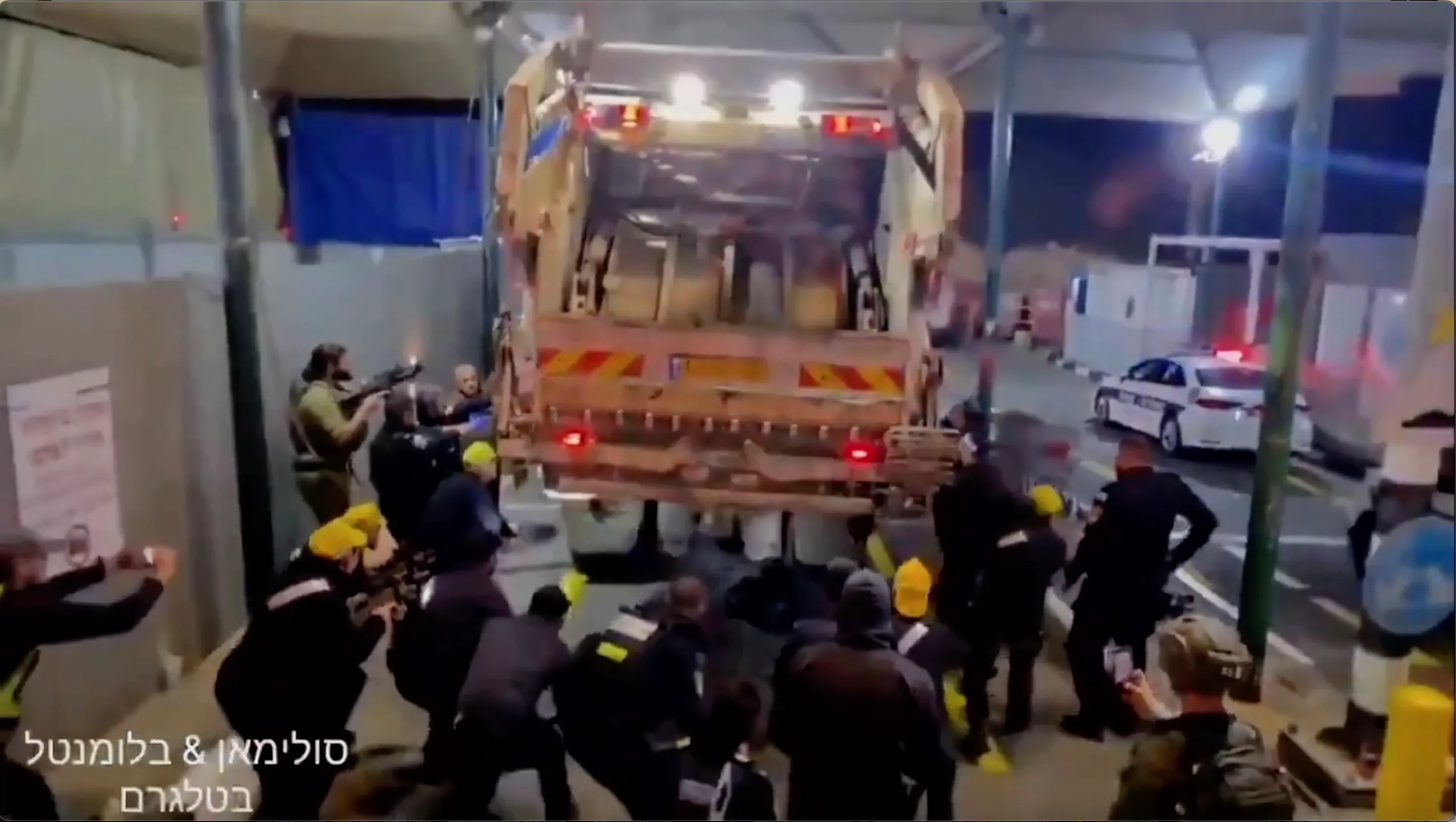
April 15, 2026
Daniel Cohen
World News
In today’s online news, politics, and Christian streaming landscape, the headlines surrounding Israel, Iran, and the United States are only telling part of the story. On Real Life Network, viewers are engaging with content that looks deeper, examining global conflict, cultural change, and spiritual truth through a biblical worldview. From failed negotiations with Iran to cultural shifts happening inside the United States, the contrast is becoming clearer. What appears to be disconnected headlines are actually part of a broader pattern that reveals both geopolitical tension and spiritual drift.
This is not just about current events. It is about understanding truth.
Negotiations Without Resolution
Recent high level talks between the United States and Iran have drawn significant attention. After hours of negotiation, no agreement was reached. This outcome raises an important question. What is actually being negotiated?
The expectations from the United States have remained consistent. Iran would need to halt nuclear enrichment, stop funding terror groups, and allow transparency regarding its nuclear capabilities. These are not new demands. They have been central to discussions for years.
Yet Iran’s response continues to resist those conditions.
When a nation refuses reasonable terms that protect global security, it reveals deeper intentions.
This is not simply a disagreement over policy. It is a reflection of fundamentally different goals. While one side seeks stability, the other continues to pursue leverage through uncertainty.
At the same time, global leaders and media outlets present varying interpretations of the same events. This creates confusion for those trying to understand what is truly happening.
For ongoing, biblically grounded analysis of global events and Israel, continue watching on Real Life Network.
Cultural Shifts and the Loss of Foundation
While international negotiations unfold, significant cultural changes are happening closer to home.
Moments that once would have been unthinkable are now becoming normalized. Public settings that were once grounded in shared values are increasingly reflecting a mixture of competing beliefs and ideologies.
This is not accidental. It reflects a shift away from foundational truths that once shaped society.
When a culture removes its foundation, it does not remain neutral. It moves in another direction.
This shift can be seen in education, public discourse, and even everyday consumer experiences. Practices and ideas that carry spiritual significance are often introduced without explanation, leaving many unaware of their deeper meaning.
At the same time, conversations about faith are often pushed to the margins. The result is a society that is increasingly disconnected from its spiritual roots.
Understanding this shift requires more than observation. It requires discernment grounded in Scripture.
Stay anchored in truth by engaging content that prioritizes a biblical worldview on Real Life Network.
A Call for Discernment and Faithfulness
In moments of uncertainty, the natural response is to look for clarity in outcomes. To determine who is right and who is wrong. To identify clear victories or defeats.
But not every moment offers immediate resolution. Scripture reminds believers that faith is not dependent on immediate understanding. It is rooted in trust.
Discernment begins when we stop reacting to headlines and start evaluating them through a biblical lens.
This applies to both global events and personal decisions.
The responsibility of believers is not to withdraw from the world, but to engage with it wisely. To understand what is happening and to respond with clarity, conviction, and faith. This includes being informed, asking questions, and remaining grounded in truth even when narratives shift.
It also includes recognizing moments of hope. Stories of transformation continue to emerge. Individuals searching for meaning are finding it in Christ. Lives marked by confusion are being restored through truth.
These moments remind us that even in a world filled with uncertainty, truth remains constant.
In a time when headlines are often driven by narrative rather than clarity, the need for discernment has never been greater. From negotiations with Iran to cultural changes within the United States, each story points to a deeper reality.
Truth matters. And the ability to recognize it is essential.
For more biblically grounded content that helps you see clearly in a confusing world, visit Real Life Network.
Related Articles
25 min
A Ceasefire Abroad and Cultural Shifts at Home: What the Headlines Are Missing

April 13, 2026
Daniel Cohen
World News
In today’s online news, politics, and Christian streaming landscape, the situation involving Israel, Iran, and the United States continues to raise urgent questions. On Real Life Network, viewers are seeing beyond media bias to understand what is really happening in the Middle East. A proposed ceasefire, conflicting narratives from Iran and the United States, and ongoing threats against Israel all point to a deeper need for discernment. From the Strait of Hormuz to missile attacks in the middle of the night, this moment is not as simple as victory or defeat. A biblical worldview is essential to make sense of it.
This is not just about geopolitics. This is about truth.
A Ceasefire with Competing Narratives
The first question many are asking is simple. What just happened?
A ceasefire was announced, but the details remain unclear. Statements from leadership in the United States and Iran appear to contradict one another. Each side is presenting a different version of reality.
Iran has framed the agreement as a victory. Meanwhile, American officials suggest that key demands were met, including pressure on nuclear development and regional aggression. Both cannot be fully accurate.
When two sides tell completely different stories about the same agreement, discernment becomes essential.
Adding to the confusion, actions on the ground do not reflect stability. Reports of continued missile activity, including cluster munitions targeting Israel, raise serious concerns about the reliability of any agreement.
The Strait of Hormuz remains a focal point, with implications for global trade and energy stability. Rather than a full resolution, what exists now appears to be a temporary pause.
For ongoing, biblically grounded analysis of global conflict and Israel, continue watching on Real Life Network.
The Reality Behind the Headlines
Beyond official statements, there are critical questions that remain unanswered.
One of the most significant involves Iran’s nuclear capabilities. Reports indicate that large quantities of enriched uranium are unaccounted for. This raises concerns about long term intentions and future escalation.
At the same time, internal instability within Iran suggests a weakening structure of leadership. Reports of leadership disruptions, uncertainty about authority, and conflicting messaging all point to a regime under pressure. Yet even in weakness, the threat remains.
A weakened threat is still a threat, especially when its intentions have been clearly stated.
Iranian officials have openly acknowledged ambitions related to nuclear weapons. This is not speculation. It is a matter of record.
Meanwhile, Israel continues to operate under real and immediate danger. Missile attacks, including those launched during supposed ceasefire periods, demonstrate the ongoing risk to civilian life.
This reality stands in contrast to narratives that attempt to minimize the threat or suggest that tensions have been resolved.
Stay grounded in truth by engaging content that prioritizes clarity over narrative on Real Life Network.
A Biblical Perspective on Waiting and Trust
In moments like this, uncertainty can be difficult.
There is a natural desire to identify clear outcomes. To determine who has won and who has lost. To find resolution in a situation that remains unresolved.
But Scripture offers a different perspective.
In 1 Samuel 24, David had the opportunity to take immediate action against King Saul. From a human perspective, it would have seemed justified. Yet David chose restraint.
Not because he lacked strength. Because he trusted God’s timing.
What looks like hesitation can sometimes be obedience to a timeline we do not yet understand.
This principle applies today. There are moments in history where events unfold in ways that are not immediately clear. Where outcomes are delayed and understanding comes later.
The call for believers is not to react impulsively, but to remain grounded in truth, prayer, and trust. The Bible reminds us in Psalm 27 to wait on the Lord with courage. Not passively, but with strength and confidence.
This does not mean ignoring reality. It means interpreting reality through the lens of Scripture.
In a world filled with competing narratives, the need for clarity has never been greater. The situation involving Israel, Iran, and global powers continues to evolve, and the full outcome remains uncertain. But one thing is certain. Truth does not change.
For more biblically grounded insight into global events, Israel, and the cultural moment we are living in, visit Real Life Network.
Related Articles
25 min
A Ceasefire, Conflicting Narratives, and an Uncertain Outcome
.webp)
April 10, 2026
Daniel Cohen
World News
In today’s online news, politics, and Christian streaming landscape, the battle between biblical truth and cultural pressure is intensifying. On Real Life Network, viewers are seeing what mainstream media often avoids, the spiritual reality behind global events involving Israel, Iran, and the growing hostility toward faith. From rising tensions with the Iranian regime to bold public declarations of faith by young athletes, this moment reveals a deeper divide between hardened hearts and hearts transformed by truth.
This is not just geopolitics. This is spiritual warfare.
Iran, Power, and the Danger of Hardened Hearts
As tensions rise between the United States, Israel, and Iran, the world is watching a moment that feels historic.
Deadlines, ultimatums, and military actions dominate the headlines. But beneath it all is something deeper. A spiritual principle that has played out across history. Hardened hearts.
Scripture tells the story of Pharaoh in the book of Exodus. A leader who saw warning after warning, yet refused to change. Each time, his heart grew harder. Until eventually, judgment followed. That same pattern is visible today.
Iran’s leadership has been given opportunity after opportunity. Negotiations, warnings, and consequences have all been laid out clearly. Yet the response has remained the same. Defiance.
When hearts harden against truth, consequences are no longer avoidable.
This is not about politics alone. It is about a refusal to turn from a path that leads to destruction.
At the same time, the alliance between Israel and the United States continues to demonstrate strength. Intelligence cooperation, rescue operations, and strategic alignment show a partnership that goes beyond convenience.
It reflects something deeper. A shared commitment to protecting life and confronting evil.
For more biblical analysis of global events and Israel, continue watching on Real Life Network.
Faith That Speaks vs Culture That Silences
While global conflict unfolds, another battle is taking place closer to home. A cultural battle over truth.
A professional athlete stood publicly for his faith, declaring biblical truth and refusing to compromise. The cost was immediate. His career took a hit.
But what followed was even more powerful. Instead of retreating, he stepped into the public square and proclaimed the gospel. This is the difference between a hardened heart and an open one. One resists truth. The other cannot contain it.
When faith is real, it does not stay silent even when it comes at a cost.
Young athletes across the country are beginning to do the same. They are recognizing that their platform is not their purpose. Their identity is not found in performance, success, or approval.
It is found in Christ. This stands in direct contrast to a culture that increasingly pressures believers to remain quiet. To keep faith private. To conform. But truth does not conform. It confronts.
If you want to stay anchored in a biblical worldview amid cultural pressure, explore more content on Real Life Network.
A Nation at a Crossroads of Truth and Deception
The divide we are witnessing is not limited to foreign policy or sports.
It extends into culture, media, and everyday life.
Stories that do not fit preferred narratives are often ignored. Policies that carry real consequences are downplayed. Meanwhile, values that conflict with Scripture are elevated and protected. This creates confusion. And confusion weakens discernment.
At the same time, believers are being called to engage, not retreat. Faith was never meant to remain hidden. It was meant to shape how we think, how we live, and how we respond to the world around us.
A biblical worldview is not optional in a confused culture. It is essential.
There is a growing urgency for clarity. For courage. For conviction. Because the direction of a culture is ultimately shaped by what it believes to be true.
In a world filled with competing voices, the contrast between hardened hearts and open hearts has never been clearer. From Iran’s defiance to Israel’s resilience, from cultural pressure to courageous faith, each story points to the same reality. Truth matters. And how we respond to it matters even more.
For more bold, biblically grounded content that cuts through media bias and helps you see clearly, visit Real Life Network.
Related Articles
25 min
Faith, Leadership, and the Question of the Heart in a Time of Global Tension
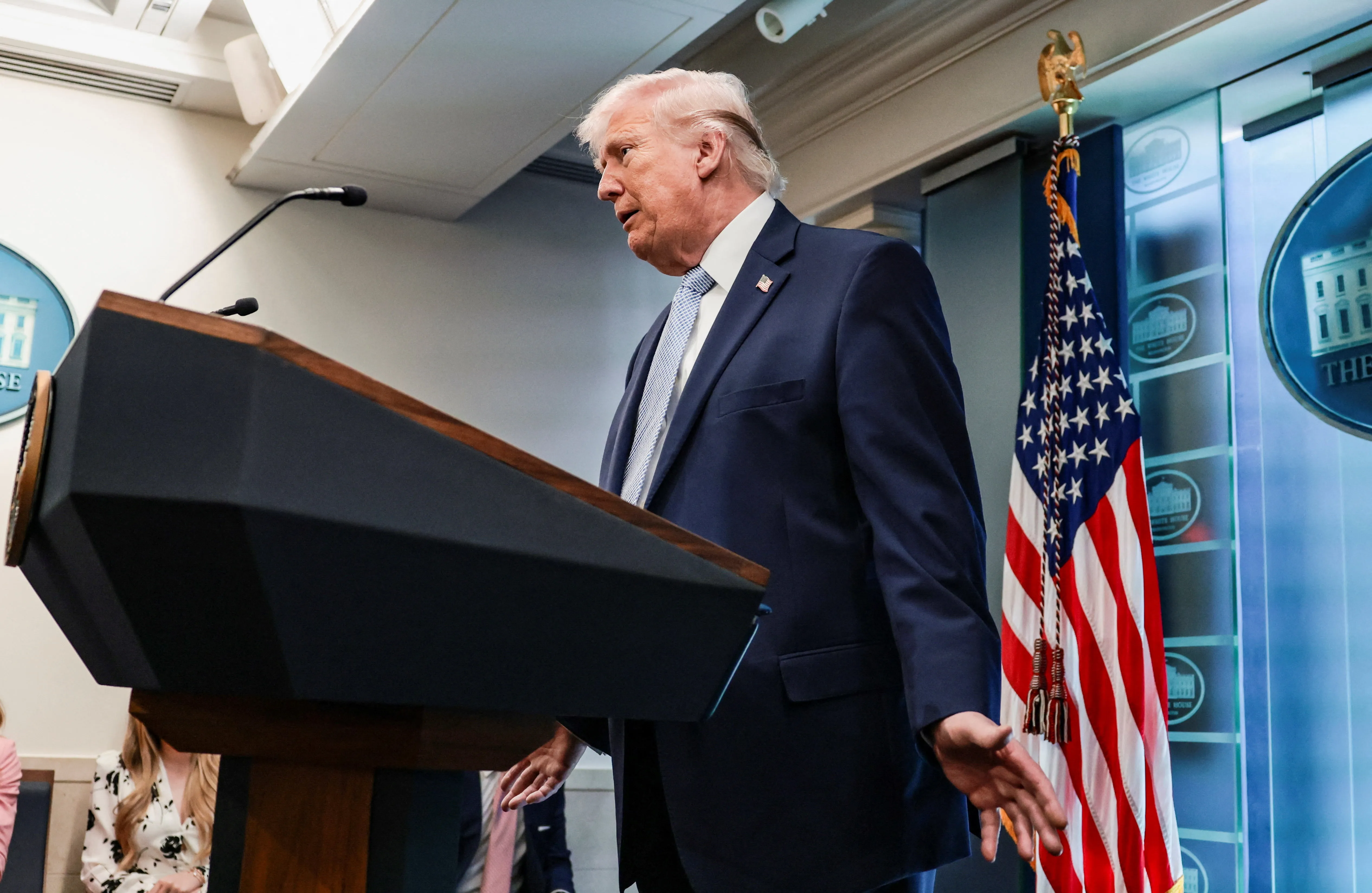
April 7, 2026
Daniel Cohen
World News
In today’s online news cycle, where politics, Israel, and global conflict dominate headlines, biblical truth is being pushed aside for distraction and confusion. The Daniel Cohen Show on Real Life Network, viewers are finding clarity rooted in a biblical worldview, not media bias. While Iran launches missiles, Hamas spreads terror, and Christians are persecuted across the globe, Western culture is consumed with identity debates and moral confusion. This contrast reveals a deeper spiritual crisis that cannot be ignored.
This is not just about current events. This is about truth versus deception.
A World Distracted While Christians Are Under Attack
While much of the West debates pronouns and identity politics, real suffering is unfolding across the globe.
In Nigeria, Islamist terrorists continue to target Christian communities. On Palm Sunday, believers gathered to worship were met with violence. Armed attackers stormed villages, killing innocent people and destroying homes. This is not an isolated incident. It is part of a growing pattern.
Thousands of Christians have been killed in recent years. Entire communities have been displaced. Churches have been burned. Yet global outrage is almost nonexistent.
Why the silence? Because Christians do not fit the preferred victim narrative of the modern media.
When a culture refuses to acknowledge evil, it becomes complicit in its spread.
The same pattern is unfolding in Syria. Following political upheaval, radical groups have targeted Christian populations, driving them from their homes and erasing centuries of history. What was once a thriving Christian presence has been reduced to a fraction of its former size.
This is not random. This is ideological. If the Church does not speak, who will?
Stay informed with reporting grounded in truth by watching content on Real Life Network, where these stories are not ignored.
Israel, Iran, and the Battle Over Truth
At the same time, misinformation continues to spread about Israel.
When Iran launched ballistic missiles toward Jerusalem, fragments landed near holy sites, including the Church of the Holy Sepulcher. In response, Israeli authorities temporarily restricted access to protect worshipers of all faiths.
Yet the narrative quickly shifted.
Claims surfaced accusing Israel of targeting Christians. The reality was the opposite. Israel was protecting lives while under active threat. This is the pattern. Truth is replaced with narrative.
Israel is defending life while its enemies deliberately target civilians and sacred spaces.
Iran’s actions are not limited to military targets. They threaten Jews, Christians, and Muslims alike. The danger is real, especially in places like Jerusalem’s Old City, where narrow streets make emergency response nearly impossible.
Understanding this reality requires discernment.
Without it, people are easily misled by emotionally driven narratives that collapse under scrutiny.
For deeper, biblically grounded analysis of Israel and global conflict, continue watching on Real Life Network.
A Culture Losing Its Moral Compass
Beyond global conflict, there is a deeper issue unfolding within Western culture.
Moral clarity is being replaced with confusion.
A tragic example is the lack of attention given to violence that does not fit a political narrative. When a woman was murdered in Wisconsin for her political beliefs, the story received little national attention. The response would likely have been very different if the roles were reversed.
This selective outrage reveals a deeper problem. The media shapes perception, and when it chooses silence, truth is buried.
At the same time, political leaders increasingly use religious language for cultural and political gain. Scripture is quoted, but often detached from its true meaning. Faith becomes a tool rather than a foundation.
Discernment is essential. Faith without truth is empty, and truth without application is ignored.
A biblical worldview is not optional in times like these. It is essential for seeing clearly.
The Church must recognize what is happening. Silence is not neutrality. Silence is surrender.
In a world filled with noise, confusion, and competing narratives, the need for truth has never been greater. The persecution of Christians, the conflict in Israel, and the moral drift of Western culture all point to a deeper spiritual battle.
The question is not whether these things are happening. The question is whether we are willing to see them for what they are.
For more bold, biblically grounded content that speaks truth into today’s most pressing issues, visit Real Life Network.
Related Articles
25 min
Missiles, Martyrs, and Moral Confusion: A World Losing Clarity
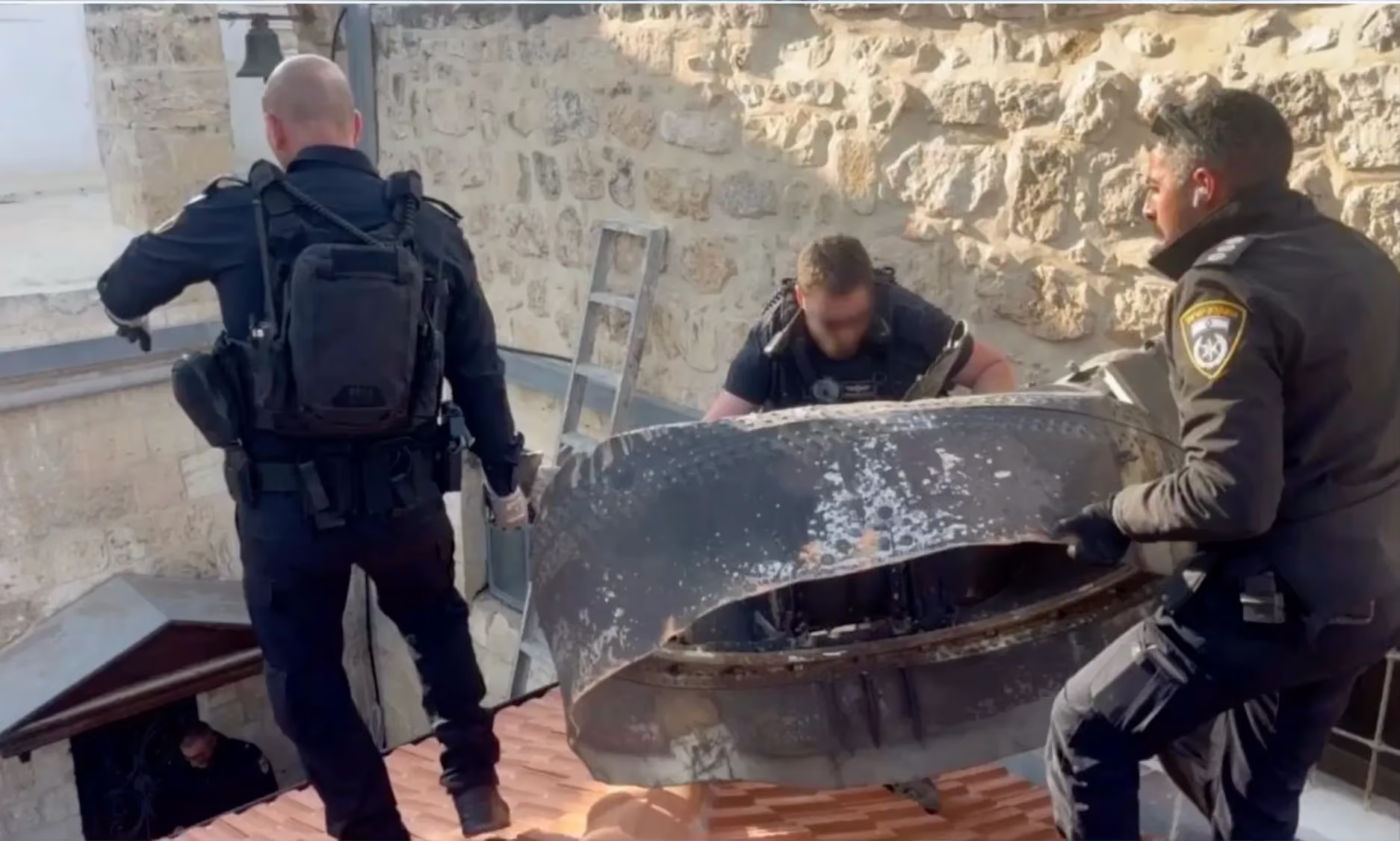
April 1, 2026
Daniel Cohen
World News
In today’s rapidly shifting global landscape, Israel, Iran, Russia, and the United States are at the center of a growing geopolitical storm. As discussed on The Daniel Cohen Show on Real Life Network, this moment is not just about politics. It is about biblical truth, spiritual warfare, and the future of nations. From advanced Israeli defense systems like Iron Beam to Iran’s alliance with Russia, the stakes are rising quickly. Watch more uncensored Christian news and analysis anytime at Real Life Network.
The question is no longer whether conflict is expanding. The question is who understands what is really happening and who is willing to speak the truth.
Israel Is Building While Its Enemies Align
While Iran continues to fund terror and destabilize the region, Israel is doing something very different. It is building.
Israel has begun deploying advanced laser defense technology known as Iron Beam, capable of intercepting incoming threats with precision and speed. At the same time, Israel is integrating airborne laser systems into its F-35 program. This is not theoretical. This is operational progress.
Israel is not just surviving. It is innovating and strengthening for the future.
This development reflects something deeper than military advancement. It reflects resilience rooted in biblical history. Scripture declares Israel as a light to the nations, and today we are watching that reality unfold in real time.
Meanwhile, Iran continues to fire missiles into civilian areas while spreading propaganda. Yet even in the midst of these attacks, Israel continues to defend its people and prepare for what comes next.
For more in-depth coverage of Israel, biblical prophecy, and global conflict, explore content on Real Life Network.
The Russia-Iran Alliance Is About Power and Profit
Evidence continues to mount that Russia is actively supporting Iran’s military operations. Intelligence sharing, drone tactics, and battlefield strategies are now being exchanged between the two nations.
This is not speculation. It is a coordinated effort.
Why would Russia align so closely with Iran?
The answer is simple. Oil and power.
Every time Iran escalates conflict and threatens key shipping routes like the Strait of Hormuz, oil prices rise. When oil prices rise, Russia profits. That revenue fuels its war efforts and strengthens its global position.
This is not just geopolitics. It is a calculated system where chaos creates profit.
Iran supplies drones and instability. Russia supplies intelligence and strategy. China watches and waits. Together, this axis challenges both Israel and the United States.
This alliance also exposes the consequences of past political decisions that empowered Iran financially and diplomatically. What we are seeing today did not happen overnight. It was built over time.
A Crisis of Clarity in American Leadership
One of the most revealing aspects of this moment is not just what enemies are doing, but how leaders respond.
When asked whether weakening Iran’s military infrastructure is a good thing, some leaders could not give a clear answer.
That hesitation speaks volumes.
If leaders cannot clearly identify evil, they cannot effectively confront it.
At the same time, voices within media and politics continue to distort reality, sometimes even suggesting that radical ideologies are simply responses to Western actions. That narrative ignores history, ignores facts, and ultimately confuses the truth.
There is also growing division on the political right. Some voices are drifting toward isolationism, confusing skepticism with denial. Others recognize that peace comes through strength, not retreat.
As Senator Ted Cruz emphasized, the possibility of major geopolitical shifts exists if hostile regimes are weakened.
The path forward requires clarity, courage, and a willingness to stand for truth even when it is unpopular.
The Battle Is Bigger Than Politics
Beyond military strategy and political debate, there is a deeper reality.
This is a battle of worldviews.
Radical ideologies that celebrate violence and destruction are not abstract ideas. They produce real consequences. From attacks on civilians to targeting first responders, the pattern is clear and consistent.
At the same time, Israel and its allies continue to demonstrate a different model. One that values life, innovation, and stability.
This contrast is not accidental. It reflects a deeper spiritual divide between light and darkness.
The Bible reminds us that truth will ultimately be revealed. What is hidden will be brought into the light. And in times like these, that truth becomes increasingly clear for those who are willing to see it.
Final Thoughts: Peace Through Strength
The current moment is a turning point.
Israel is advancing. Iran is aligning with powerful allies. Global tensions are rising. And leadership decisions will shape what comes next.
Peace does not come from ignoring threats. It comes from confronting them with strength and clarity.
For believers, this is also a reminder to stay grounded in a biblical worldview. To understand not only what is happening, but why it matters.
Stay informed with trusted Christian news, biblical analysis, and global updates by visiting Real Life Network.
Related Articles
25 min
Israel’s Laser Defense, Iran’s Axis, and the War Shaping the Future of the Middle East
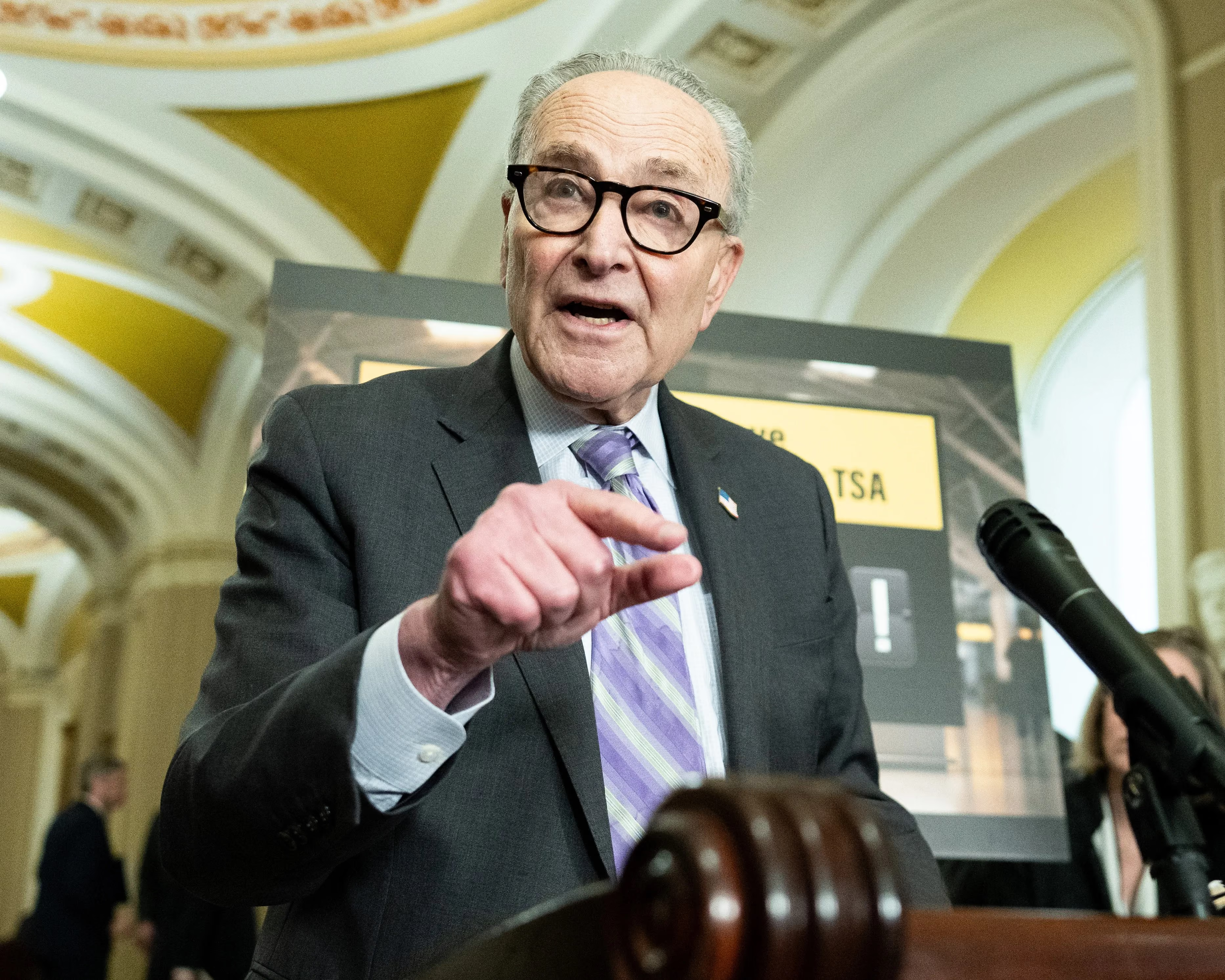
March 26, 2026
Daniel Cohen
World News
In a moment when global headlines are filled with confusion, misinformation, and fear, truth matters more than ever. The war between Israel, Iran, and the United States is not just another geopolitical conflict. It is a defining moment that touches biblical prophecy, national security, and the future of freedom. On the Real Life Network, The Daniel Cohen Show continues to cut through the noise, delivering Christian news rooted in biblical truth, a biblical worldview, and clear-eyed analysis of what is really happening in the Middle East and beyond.
Trump’s Ultimatum and the Reality of Power
President Donald Trump did something few leaders in modern history have had the courage to do. He issued a direct ultimatum to Iran. Open the Strait of Hormuz or face devastating consequences.
This was not reckless. It was strategic.
The Strait of Hormuz is one of the most critical waterways in the world. Nearly a fifth of global oil passes through it. When Iran threatens to shut it down, they are not just targeting Israel or the United States. They are threatening the entire global economy.
Trump’s ultimatum was not about escalation. It was about deterrence.
Within hours, nations across the world responded. Allies stepped in. Pressure mounted. This is what happens when leadership is clear and strong.
The same voices that once supported sending pallets of cash to Iran are now criticizing decisive action. But history has already shown us what weakness produces. It fuels terror. It empowers regimes that openly call for destruction.
This is not narrative driven by fear, but truth grounded in reality and Scripture. And it is exactly the kind of clarity being delivered consistently on the Real Life Network, where viewers are equipped to understand today’s headlines through a biblical worldview.
Iran’s True Threat and the War on Civilians
Let’s be clear about what is happening on the ground.
Iran is not targeting military installations alone. Civilians are being hit. Families, children, entire neighborhoods.
Meanwhile, Israel is targeting military leaders, infrastructure, and strategic threats. The contrast could not be more obvious.
This is not a conflict between equals. It is a confrontation between a nation defending life and a regime that glorifies death.
Iran has also been lying about its capabilities. For years, leaders claimed their missile range was limited. That claim has now been exposed.
Their missiles can reach far beyond the Middle East. European capitals are within range. Even the United States is not outside that threat.
This is no longer a regional issue. It is global.
And yet, there are still voices in media and politics trying to minimize the danger, trying to convince Americans that this is not our fight.
That is not just naïve. It is dangerous.
The threat from Iran is not theoretical. It is expanding, intentional, and aimed at the West.
If you want reporting that actually connects these realities with biblical truth and global context, The Daniel Cohen Show on the Real Life Network continues to provide that depth without compromise.
Truth, Media Lies, and the Battle at Home
While missiles are flying overseas, another battle is taking place here at home.
Narratives.
Voices in media are attempting to draw moral equivalence between the United States and Iran. That claim collapses under even the slightest scrutiny of the facts.
Iran executes protesters. Silences dissent. Oppresses women. Eliminates freedom.
America, for all its flaws, remains a nation where truth can be spoken, debated, and defended.
Yet confusion persists because many voices have abandoned truth for ideology.
From government overreach to weaponized investigations, Americans are watching a system that increasingly targets opposition instead of protecting freedom.
But there is a deeper layer to all of this.
This is not just political. It is spiritual.
The Bible makes clear that there is a distinction between good and evil. Between truth and deception. Between light and darkness.
And in moments like this, those lines become impossible to ignore.
The greatest danger is not just what is happening overseas, but the confusion that keeps people from recognizing truth when they see it.
That is why platforms like the Real Life Network matter. They are not just reporting events. They are helping people see clearly, equipping believers with a biblical worldview in a time when clarity is desperately needed.
The Hope of the Gospel
In a world filled with conflict, fear, and uncertainty, there is one unshakable truth.
Jesus Christ is King.
Scripture reminds us that while nations rise and fall, God’s kingdom is eternal. Wars will come. Leaders will change. Threats will emerge. But Christ remains sovereign over all of it.
The gospel is not just a message for peaceful times. It is hope in the midst of chaos.
Jesus lived the perfect life we could not live, died the death we deserved, and rose again so that all who repent and believe in Him can have eternal life.
That is the ultimate victory. Not political. Not military. Eternal.
And it is available to all who turn to Him.
For more biblical insight, uncensored Christian news, and shows like The Daniel Cohen Show, visit the Real Life Network and stay grounded in truth.
Related Articles
25 min
Trump’s Ultimatum, Iran’s Threat, and the Fight for Truth in a Time of War
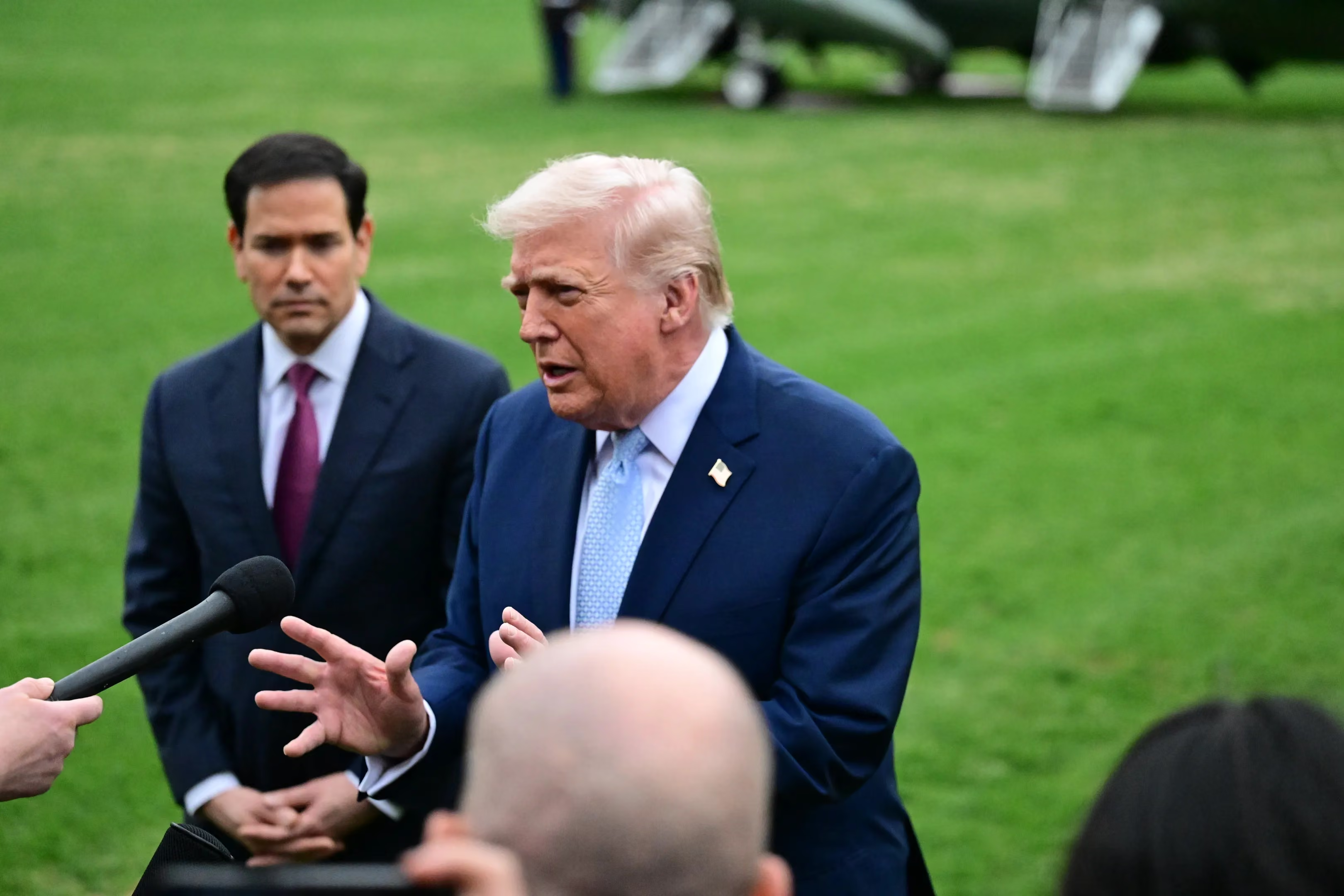
March 23, 2026
Daniel Cohen
World News
If you want clarity on the Israel Iran conflict, biblical truth, The Daniel Cohen Show, Real Life Network, and what is really happening in the Middle East, you need to look beyond the headlines. On the Real Life Network, we cut through media bias, expose false narratives, and bring you truth grounded in a biblical worldview. The question is not whether something is happening. The question is whether you are seeing it clearly.
The Reality: The Iranian Regime Is Weakening
Step back for a moment and look at the big picture.
The Iranian regime is not strong. It is not advancing. It is on the defensive. According to reports, leadership within Iran’s military structure is being eliminated so rapidly that the regime is now appointing multiple backups for key positions. That is not stability. That is survival mode.
This is what victory looks like.
When leadership is replaced faster than it can function, when command structures are scrambling to maintain continuity, and when fear begins to spread within the ranks, the reality becomes undeniable.
This is not a close fight. This is a decisive shift in power.
Even more revealing is the response from within Iran itself. Reports describe Iranian officials acknowledging that they are already defeated. When a system begins to admit collapse internally, the outcome is no longer theoretical.
At the same time, the United States and Israel continue to dismantle the infrastructure that has fueled global terrorism for decades. This includes networks tied to Hamas, Hezbollah, and other proxy groups supported by the Iranian regime.
You can follow continued updates and analysis on the Real Life Network.
The Narrative Battle: Truth Versus Media Spin
While events on the ground tell one story, the media often tells another.
There is a persistent narrative that the war is failing or losing momentum. Yet polling data shows overwhelming support among key voter groups for military action against Iran, with approval numbers approaching 90 percent in some segments.
That kind of support does not grow in failure. It grows when results are visible.
When results are clear, narratives begin to crumble.
This brings us to one of the most controversial developments: the resignation of Joe Kent.
Kent, a decorated veteran with significant service, stepped down and claimed that Iran did not pose an imminent threat. His statement has been widely circulated and amplified by groups that have historically opposed Israel.
But there is a problem.
Previous statements from Kent himself acknowledged repeated attacks on U.S. troops by Iranian proxies, numbering well over 100 incidents.
That is not speculation. That is documented reality.
So what changed?
This is where discernment becomes critical. A single statement, even from a credible individual, does not override a pattern of evidence. Intelligence, history, and ongoing attacks all point in one direction.
Iran has been engaged in hostile action against the United States and its allies for decades.
To deny that reality is to ignore the facts.
For more truth-driven reporting and biblical analysis, visit the Real Life Network.
The Deeper Issue: A Spiritual Battle
This conflict is not just political. It is not just military. It is spiritual.
From a biblical worldview, what we are witnessing aligns with a larger pattern. Nations rise and fall, but behind them are deeper forces shaping events.
Scripture reminds us that truth matters. Jesus said, “I am the way, the truth, and the life.” That means our loyalty must be to truth above all else.
And truth requires clarity.
The targeting of civilians, the use of indiscriminate weapons, and the spread of propaganda are not just strategic decisions. They reflect a worldview that opposes life, freedom, and truth itself.
Meanwhile, there is a growing silence from many institutions that claim to defend human rights. When outrage is selective, it ceases to be justice.
Selective outrage is not morality. It is deception.
This is why discernment is essential. Not every voice that claims authority speaks truth. Not every narrative reflects reality.
As believers, we are called to test what we hear, measure it against truth, and stand firm.
The stakes are high. This is about more than geopolitics. It is about understanding the times and responding with wisdom.
As this situation continues to unfold, one thing remains clear. Truth will prevail. What is hidden will be revealed.
For ongoing updates, biblical insight, and trusted analysis, stay connected with the Real Life Network.
Because in a world filled with noise, truth is not optional. It is essential.
Related Articles
25 min
War with Iran: What’s Really Happening Behind the Headlines
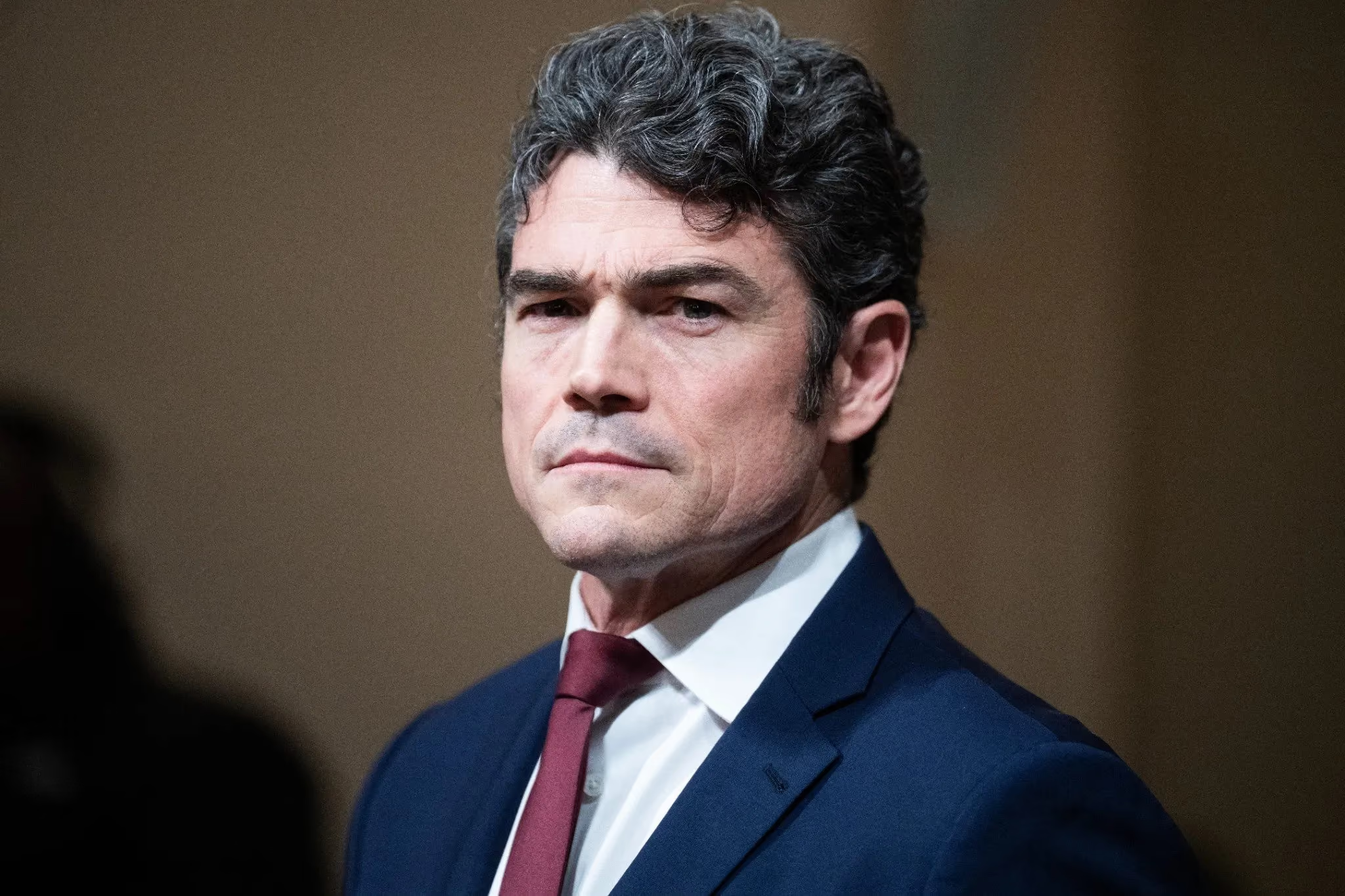
March 20, 2026
Daniel Cohen
Op-Ed
Sir Edmund Burke, in a speech to the Electors of Bristol in 1774, said: “Your representative owes you not his industry only, but his judgment; and he betrays, instead of serving you, if he sacrifices it to your opinion.”
That may not sit well in an age of polling and clamor for direct democracy, but the reality is this: the duty of statesmen is not to follow public opinion, but to lead it. In moments of crisis, leaders are not called to read the polls — they are called to rise above them.
And that is exactly what President Donald Trump has done to this point in the war with Iran. When asked about public polling — where most surveys show a majority opposing the war — Trump responded, “I don’t care about polling.”
That statement gained my immediate attention, because in almost every conversation or meeting I have had with the president, he often references the polls — favorable polls.
I note this not as criticism, but to commend the president for stepping into the role of a statesman who leads in the direction the nation needs to go, regardless of the political consequences.
The stock market — very familiar territory for the president — has gone a bit wobbly. Gas prices have risen quickly, though they remain below the peak Americans experienced in the summer of 2022, when the average gallon approached $5. Some congressional Republicans are also expressing concern about the possible impact on the midterm elections.
These are big issues — in the short term. That is why most administrations confronting the Iranian nuclear threat sought to contain it, if they could not avoid it altogether.
To use a familiar phrase from American politics over the last 60 or 70 years, they simply kicked the can down the road so the next administration — or the next generation — would deal with it.
Donald Trump concluded there was no road left.
Open sources suggest Iran possessed roughly 1,000 pounds of uranium enriched to 60% before the launch of Operation Epic Fury. Iran was racing to reach the 90% weapons-grade level — enough material for roughly 10 nuclear warheads. Enough to hold the world hostage, if not destroy large parts of it.
If there has been a justifiable war since World War II, this may be it. This is not defending oil-rich countries made wealthy by American dependence. This is confronting a direct threat to our security and to that of our natural ally, Israel.
When the leadership of a rogue regime repeatedly calls America the “Great Satan,” vows to destroy us, and sponsors repeated terrorist attacks against Americans — at what point should we believe them?
As president, Donald Trump had the constitutional authority to act. Based on the available facts, the war is justified, and the stated purpose is right: peace in the Middle East and justice for the Iranian people.
President Trump should be commended for taking the regime at its word and responding — not because it was politically popular, but because it was justified, militarily and morally.
And in doing so, he illustrated the very principle Burke described 250 years ago: a leader who governs not by the polls, but by judgment.
This article was originally published by The Washington Stand.
25 min
Leadership by Principle, Not Polling

March 16, 2026
Tony Perkins
World News
In this special report on the Real Life Network, the Daniel Cohen Show takes a serious look at the war with Iran, the future of Israel, the threat to America, and the longing of the Iranian people for freedom. This is Christian news through a biblical worldview, focused on Israel, Iran, the Middle East, biblical truth, and the spiritual battle shaping world events. Daniel Cohen assembled an expert panel including Emily Schrader, Mati Shoshani, and David Harris Jr. to answer the questions many Americans are asking right now. Is this war almost over? What does victory look like? Is America being dragged into this fight, or is America confronting an enemy that has threatened it for decades?
The conversation begins with a reality check. President Trump, Secretary Rubio, and Secretary Hegseth have all said the United States and Israel are making rapid progress against the Islamic Republic. The regime’s capabilities have been shattered. Iran’s naval strength has been devastated. Its military leadership has been decimated. Its air defenses have been crippled. And yet the key question remains. What does “over” even mean?
That is where this panel shines. Daniel Cohen refuses spin, circus, or shallow talking points. He pushes for clarity. Not just military clarity, but moral and biblical clarity. The result is a much needed conversation for believers trying to understand these events in real time. For more reporting like this from a biblical worldview, watch the Daniel Cohen Show on Real Life Network.
What Does Victory Over Iran Actually Look Like?
Mati Shoshani laid out three possible outcomes. The best case scenario is decisive regime change inside Iran, with the Ayatollah system removed and a new future emerging for the Iranian people. The second possibility is fragmentation, with multiple factions battling for control and leaving the country unstable for years. The third and worst case is a half-finished war, where the regime survives in some form, claims victory, and keeps enough of its long term capacity to threaten Israel and the West again.
That last outcome is what Israel and America cannot afford.
Emily Schrader stressed that this conflict is not simply about military strikes. It is also an information war. She argued that the Trump administration should have more aggressively made the case to the American people for why this war matters to them directly. Iran is not merely a regional problem. It has spent decades exporting terror, plotting against Americans, arming proxies, targeting troops, and building capabilities that threaten the United States itself.
Iran is not just Israel’s problem. It has been waging war on America for decades.
David Harris Jr. reinforced that point with a simple argument. The American people elected President Trump to lead, and leadership requires action when a threat is real. The idea that conservatives should automatically oppose every military action because of Iraq or Afghanistan is historically shallow and strategically reckless. A bad surgery in the past does not mean you ignore a tumor now.
This war, the panel argued, is not an endless foreign entanglement. It is a direct confrontation with the world’s leading state sponsor of terror. If Iran had been allowed to continue unchecked, the costs down the line would have been far worse.
You can find more faith based analysis of Israel, Iran, and world events on the Real Life Network.
Why This Is America’s Fight Too
One of the strongest themes of the discussion was that this is not Israel dragging America into war. President Trump himself has directly rejected that claim. According to the panel, the threat from Iran to the United States is longstanding, well documented, and deeply serious.
Emily Schrader pointed to the regime’s ideology, terror plots, assassination attempts, use of proxies, drone factories in the Western Hemisphere, cartel cooperation, and open commitment to America’s destruction. This is not abstract. It is strategic, active, and real.
Mati Shoshani added that deterrence is one of the biggest gains from this operation. The whole world is watching what America and Israel do right now. Russia is watching. China is watching. Taiwan is watching. Every terror proxy and every hostile regime is taking notes. A strong response here sends a message far beyond Tehran.
David Harris Jr. made the biblical case with unmistakable force. God’s covenant with Israel is everlasting. If God abandons His promises to Israel, then none of His promises can be trusted. That is why support for Israel is not merely political or strategic. It is rooted in Scripture.
If God’s promises to Israel can be broken, then none of God’s promises are secure.
That is one reason the anti-Israel arguments from parts of the right are so dangerous. They are not only politically wrong. They are often theologically wrong. Daniel Cohen and his guests made clear that Christians who care about biblical truth cannot ignore that.
The Iranian People Are Not the Enemy
Perhaps the most moving part of the panel was the repeated insistence that the Iranian people are not the enemy. The regime is the enemy. The Ayatollah system is the enemy. The people of Iran are captives under it.
Emily Schrader, who has more than 100,000 followers inside Iran, said the overwhelming response from Iranians has been gratitude, hope, and relief. They are not mourning the collapse of regime power. They are longing for freedom. They have spent years risking their lives in protest, facing beatings, torture, imprisonment, sexual violence, and death. And still they keep standing.
Mati Shoshani echoed that from the Israeli perspective. He said many Israelis understand this war as a fight not against the people of Iran, but for them. That is a profound moral distinction and one that matters deeply in a biblical worldview.
The panel also made clear that anti-Semitism is intensifying in America and around the world. Daniel Cohen pointed to the beating of Israeli Americans in California simply for speaking Hebrew. Emily Schrader explained that years of anti-Israel propaganda, foreign money, media corruption, and ideological confusion have created fertile ground for hatred. What began as anti-Zionist rhetoric has once again become open hostility toward Jews.
The Iranian people are not the enemy. The regime that has enslaved them is.
The final takeaway was powerful. This is not just another geopolitical event to watch from a distance. It is a moral moment. A biblical moment. A moment that reveals whether the church will speak clearly, whether America will stand firmly, and whether truth will be stronger than propaganda.
For continued coverage, biblical analysis, and special reports from Daniel Cohen and the Real Life Network team, visit Real Life Network.
Related Articles
25 min
Iran, Israel, and the Fight for Freedom: What Victory Really Looks Like
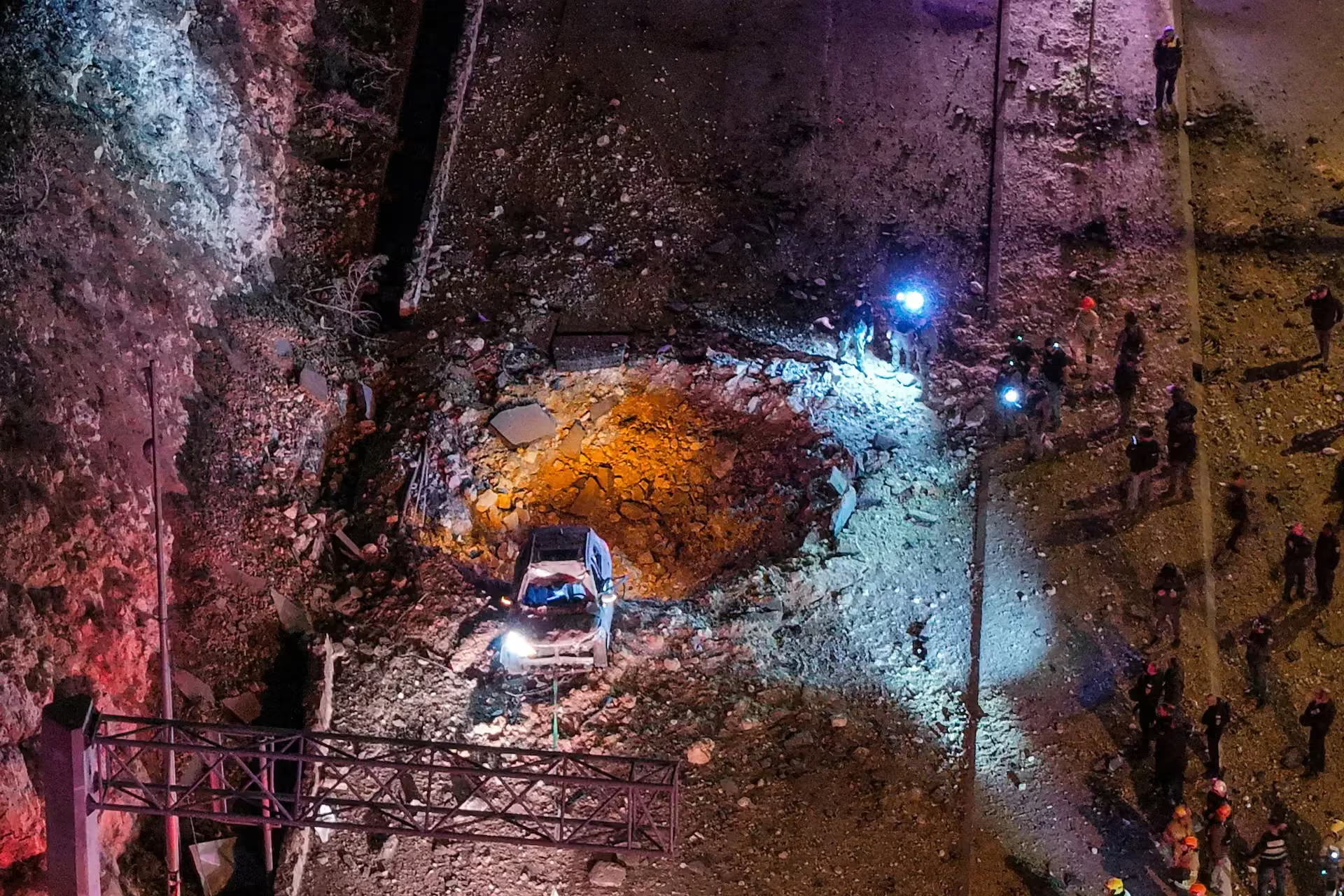
March 11, 2026
Daniel Cohen
World News
In the aftermath of major U.S. and Israeli strikes on Iran, the Middle East is entering a historic turning point. Iran has installed Mojtaba Khamenei, the son of the late Ayatollah Ali Khamenei, as the new supreme leader of the Islamic Republic. The development has drawn immediate attention from President Donald Trump, Israeli leaders, and analysts across the region. On the Daniel Cohen Show , we examine the deeper meaning behind this leadership change and what it reveals about the future of Iran, Israel, and the broader Middle East.
For ongoing analysis rooted in biblical truth, Christian news, and a biblical worldview, viewers can follow the coverage on the Real Life Network, where the Daniel Cohen Show continues to track these rapidly unfolding events.
The moment raises serious questions. The Islamic Revolution of 1979 was supposed to abolish hereditary rule in Iran. Yet now, nearly half a century later, the regime has effectively crowned the son of the previous supreme leader. Instead of ending dynastic power, the revolution has reproduced it.
The revolution that promised to destroy monarchy has now created a dynasty.
The Iranian regime calls itself a republic. But the elevation of Mojtaba Khamenei reveals a system that increasingly resembles the very form of rule it once condemned.
A Regime Built on Power, Not Representation
Mojtaba Khamenei is not a figure known for public leadership. Reports indicate he has never held elected office and has rarely spoken publicly. Yet within hours of his father’s death, Iran’s Assembly of Experts moved swiftly to elevate him to the highest authority in the Islamic Republic.
The speed of the decision raised eyebrows even among analysts who closely follow Iranian politics. A body that had not convened in decades suddenly acted with remarkable urgency during a time of regional conflict.
What makes the situation even more striking is the timing. The leadership transition took place while Israel and the United States were actively targeting elements of Iran’s military infrastructure. With pressure mounting on the regime, clerics quickly rallied around a familiar family name.
But beyond the political maneuvering lies a deeper reality that cannot be ignored. Many ordinary Iranians have been openly protesting their government for years.
Videos circulating online show citizens chanting against the regime from rooftops and balconies, often risking severe punishment.
The Iranian people understand something that much of the international media ignores. Their greatest enemy is not Israel or America. It is the regime ruling over them.
The courage required to protest in Iran cannot be overstated. There are no free speech protections. Dissidents face imprisonment, torture, and even execution. Yet the calls for change continue.
That persistence suggests something powerful. Beneath the regime’s iron grip lies a population increasingly desperate for freedom.
For deeper insight into the spiritual and political forces shaping the Middle East, viewers can explore additional reporting and programming on the Real Life Network.
The Hypocrisy at the Heart of Iran’s Leadership
One of the most revealing aspects of the new supreme leader’s story is not his theology or political ideology. It is his lifestyle.
Reports from European media indicate that Mojtaba Khamenei and members of the ruling elite have accumulated extraordinary wealth outside Iran. Luxury properties linked to the family in London are reportedly worth tens of millions of pounds.
This stands in stark contrast to the economic hardship faced by many Iranians. Inflation has ravaged the country. The national currency has collapsed in value. Millions struggle to afford basic necessities.
Meanwhile, members of the regime’s inner circle reportedly own luxury real estate abroad, including properties on some of London’s most exclusive streets.
The contrast is striking. While the regime portrays itself as the defender of Islamic purity and resistance against the West, its leadership often enjoys the benefits of Western prosperity.
This contradiction is not lost on the Iranian people. The system that claims to defend their dignity has instead enriched a small circle of elites while ordinary citizens endure economic crisis and political repression. This pattern is one reason protests continue to erupt across the country despite severe government crackdowns.
For many Iranians, the issue is no longer simply political. It is moral.
The Debate in America Over Israel and Iran
While the Iranian people confront the reality of life under a theocratic regime, another debate is unfolding in the United States.
Some commentators have begun questioning whether America should remain involved in confronting Iran’s military ambitions. Others argue that preventing a nuclear armed Iran is a matter of global security.
The stakes are enormous. Iran’s leadership has repeatedly called for the destruction of Israel. Its government has funded militant groups throughout the Middle East for decades.
If such a regime were to acquire nuclear weapons, the consequences could be catastrophic. This is why many leaders in Washington and Jerusalem see the current moment as decisive.
The question is not simply whether Iran will change leadership. It is whether the system itself will continue to threaten the stability of the region. Freedom has never come without cost. History reminds us of that truth repeatedly.
The price of confronting tyranny may be high, but the price of ignoring it is far higher.
For Christians observing these events, Scripture offers an important reminder. Nations rise and fall, but God remains sovereign over history.
Believers are called to pray for peace, pursue truth, and stand firmly for righteousness even in times of global uncertainty.
For continued coverage of Israel, the Middle East, and global events through a biblical worldview, visit the Real Life Network and follow the Daniel Cohen Show.
Related Articles
25 min
Iran’s New Supreme Leader and the High Stakes of a Changing Middle East
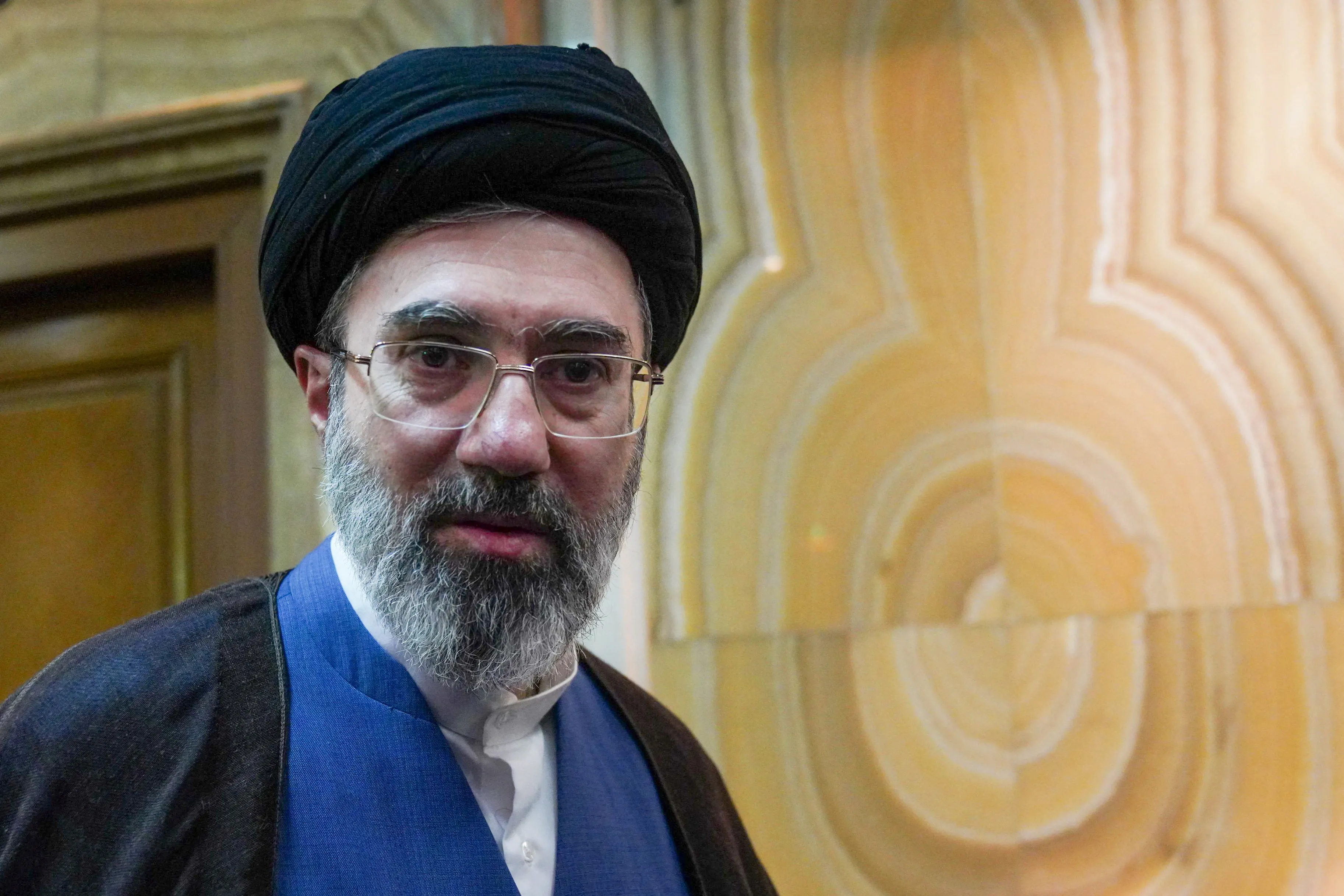
March 11, 2026
Daniel Cohen
World News
The Church today faces a difficult but unavoidable question. What does faithfulness to Christ look like in a world where evil regimes threaten innocent lives, destabilize entire regions, and openly call for the destruction of nations? Christians rightly long for peace. Scripture commands us to pursue it. Yet the Bible never teaches that peace must come at the price of surrendering justice or abandoning the innocent to violence.
For more biblical worldview analysis on global events and Christian ethics, visit the Real Life Network, where faith and current events are examined through the lens of Scripture.
One of the most dangerous confusions in modern Christian thinking is the belief that love requires passivity in the face of evil. That is not the teaching of Scripture, and it is not the historic teaching of the Church. From the earliest centuries, Christian thinkers understood that while war is always tragic, there are circumstances in which the use of force becomes morally necessary to restrain grave injustice.
That moral framework is known as the Just War tradition.
The Biblical and Historical Foundations of the Just War Tradition
The early church father Augustine of Hippo wrestled deeply with this problem. Augustine understood the tension every believer feels when confronted with violence. Humanity was created in the image of God, yet Genesis tells us that almost immediately that image was marred by sin. The world we inhabit is morally fractured. Violence exists. Tyranny exists. Innocent people are threatened by those who wield power without restraint.
Augustine concluded that Christians cannot ignore that reality. Governments bear responsibility before God to restrain evil and protect their citizens. War must never be pursued for glory, revenge, or conquest, but in a fallen world the use of force may become a tragic necessity when justice and the protection of life demand it.
Several centuries later the theologian Thomas Aquinas organized Augustine’s thinking into three principles that still guide Christian moral reflection today. These principles, known as jus ad bellum, determine whether entering a war can be morally justified.
The first requirement is legitimate authority. War cannot be declared by mobs, militias, or ideological factions. The authority to use force belongs to lawful governments entrusted with protecting their people. Scripture reflects this clearly in Romans 13, where governing authorities are described as bearing the sword to restrain wrongdoing.
The second requirement is just cause. War must confront a serious injustice. Throughout Christian history, defending the innocent from aggression has been recognized as one of the clearest examples of just cause.
The third requirement is right intention. Even when authority and cause are present, the purpose of war must be morally ordered. War must never be motivated by hatred, revenge, or domination. The aim must always be the restoration of peace and the restraint of evil.
These principles form the moral guardrails that prevent warfare from descending into barbarism. They also give Christians a framework to evaluate real conflicts unfolding in our time.
Readers interested in more discussions on faith, ethics, and global affairs can explore articles and programming at the Real Life Network.
Applying Just War Principles to the Iranian Regime
When these principles are applied to the present confrontation with the Iranian regime, the moral picture becomes painfully clear.
For more than four decades, the rulers of Iran have openly positioned themselves as enemies of the United States and Israel while sponsoring terrorism across the globe. The regime’s very first major act after the 1979 revolution was the seizure of the American embassy in Tehran and the holding of American diplomats hostage for 444 days. That hostility never ended.
Iranian-backed terrorists carried out the 1983 bombing of the Marine barracks in Beirut that killed 241 American service members. Iranian networks have supported the Khobar Towers bombing in Saudi Arabia, attacks against U.S. forces in Iraq, and the arming of militias responsible for killing and maiming American soldiers. Across the Middle East, the regime has built a web of proxy organizations whose purpose is to destabilize governments and spread violence.
At the same time, the regime has brutalized its own population. Iranian citizens who have dared to protest for basic freedoms have faced mass arrests, torture, and execution. The same government that chants “Death to America” has also spilled the blood of its own people in the streets of Tehran and beyond.
Within the framework of Just War doctrine, these realities clearly establish the question of just cause. When a regime consistently sponsors terrorism, threatens the destruction of neighboring nations, and violently suppresses its own people, the responsibility of governments to confront that threat becomes unavoidable.
The criterion of legitimate authority is also present. In the United States, the authority to deploy military force operates within a constitutional framework involving both the president and Congress. The use of force against Iranian targets has been undertaken within that structure of lawful authority, reflecting the principle that war must never be waged outside accountable governance.
The third requirement, right intention, asks a critical moral question. Why is force being used? Is the purpose revenge or conquest, or is it the restraint of evil and the protection of innocent life?
The stated goals of U.S. policy have focused on dismantling Iran’s capacity to threaten the region through advanced weapons, limiting the reach of its missile and drone programs, and disrupting the proxy networks responsible for violence across the Middle East. These objectives align with the Just War principle that the aim of force must be the restoration of peace and security rather than domination.
Christian worldview commentary on these global issues can also be found through programming and articles available at the Real Life Network.
A Christian Moral Responsibility to Restrain Evil
Christian tradition also requires leaders to consider whether war is truly a last resort and whether the means used are proportionate to the threat. In the case of Iran, decades of sanctions, negotiations, diplomatic efforts, and international agreements were pursued in an attempt to curb the regime’s aggression. The tragic reality is that those efforts repeatedly failed to change the regime’s behavior.
Christians may still wrestle with the gravity of these decisions. That wrestling is healthy. War should never sit comfortably with the conscience of a believer. The shedding of human blood should always grieve us because every human life bears the image of God.
Yet Scripture also makes an important moral distinction. The commandment often translated “You shall not kill” is more accurately rendered “You shall not murder.” The Bible consistently distinguishes between the unjust taking of innocent life and the use of force to restrain violence.
Genesis 9:6 reminds us why human life is sacred: because humanity is made in the image of God. That same principle also explains why the shedding of innocent blood demands accountability. Allowing violence to continue unchecked is not mercy. It is abandonment.
This truth matters profoundly for the men and women who serve in uniform. In recent years scholars have increasingly recognized what is known as moral injury, the deep psychological trauma that occurs when soldiers believe their actions violate their moral convictions. Many Christian service members struggle with the belief that any form of lethal force is inherently sinful.
The Just War tradition exists in part to address that burden. It affirms that defending the innocent and restraining evil can, in certain circumstances, be not only morally permitted but morally required.
None of this erases the tragedy of war. War destroys lives and leaves scars across generations. The Christian response must always be sober, humble, and prayerful.
Yet there are moments in history when refusing to confront evil allows greater injustice to flourish. Peace that abandons the innocent is not true peace at all.
The Just War tradition reminds us that love itself sometimes requires courage. Protecting the vulnerable, restraining violent regimes, and defending those threatened by terror are not acts of hatred. They are acts of moral responsibility in a fallen world.
Christians should never glorify war. But neither should we shrink from the difficult responsibility of confronting injustice when the protection of human life demands it.
For more faith-based analysis on international events and the intersection of theology and public life, visit Real Life Network.
Related Articles
- Agape Love: Obedient, Courageous, Costly by Hedieh Mirahmadi Falco
- Why do Christian Kids Convert to Islam? by Hedieh Mirahmadi Falco
- The Collapse of an Illusion: Is the Islamist Narrative Losing Its Grip? by Hedieh Mirahmadi Falco
25 min
When Peace Requires Courage: The Christian Case for Just War in Iran
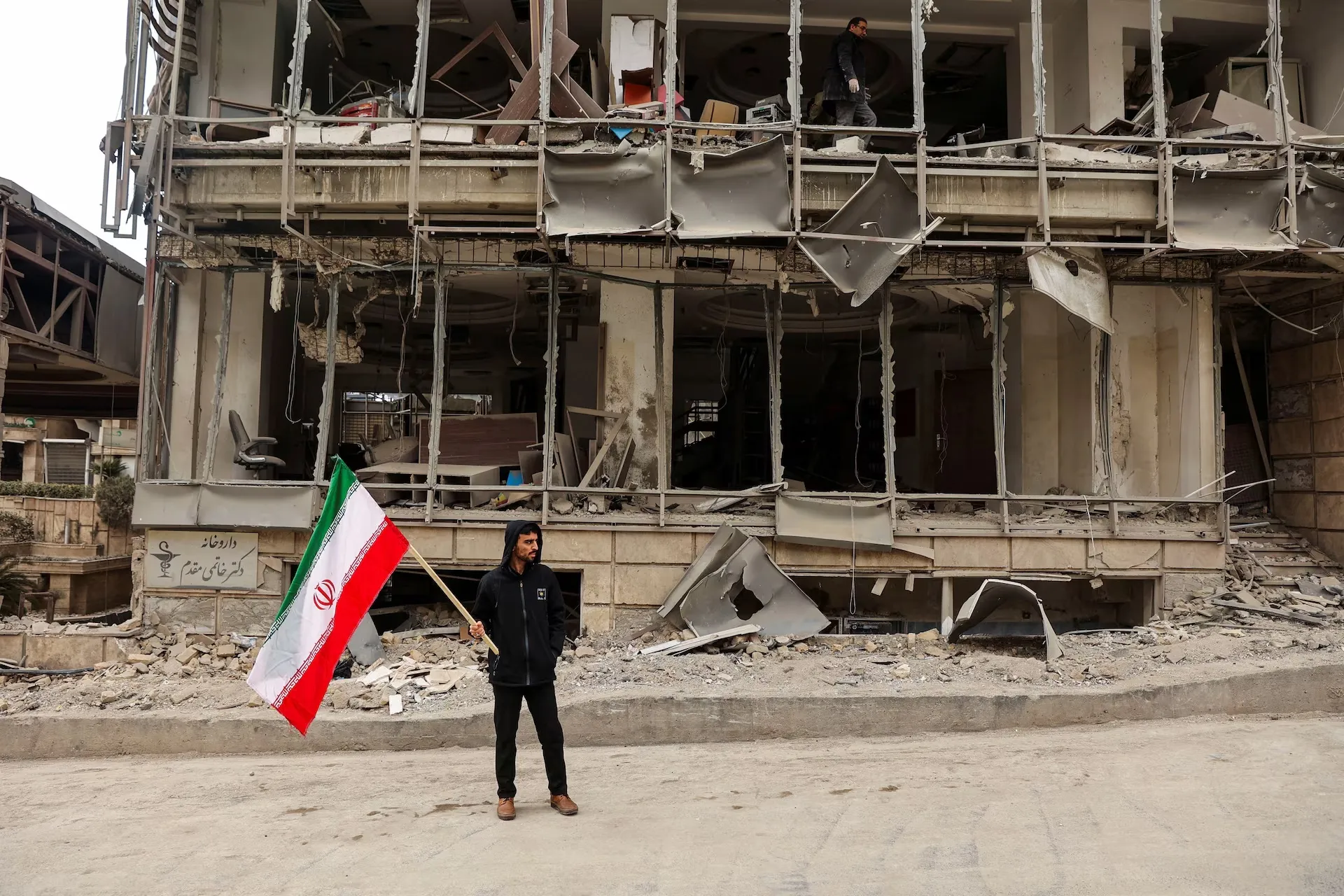
March 10, 2026
Hedieh Mirahmadi Falco
World News
In a moment when global headlines are dominated by Israel, Iran, President Trump, and the future of the Middle East, Christians must examine the news through a biblical worldview rooted in biblical truth. On the Daniel Cohen Show, we are tracking the rapidly unfolding events reshaping the region while exposing media deception and cultural confusion in the West. If you want coverage grounded in Christian news and biblical clarity, follow the ongoing reporting on the Real Life Network, where these critical conversations are taking place every week.
From the Middle East to America’s cultural debates, the stories dominating the headlines are not disconnected. They reveal a deeper struggle over truth, faith, and the future of the free world. Dominoes are falling rapidly across the geopolitical landscape, and the consequences are enormous.
At the center of the moment is the ongoing confrontation with the Iranian regime, a government responsible for decades of violence, terrorism, and instability across the region.
The war against the Islamic Republic is not merely about territory or politics. It is about confronting a regime that has targeted the West and Israel for nearly half a century.
Honoring the Fallen and Understanding the Stakes
Before discussing strategy or politics, we must pause to remember the human cost of war. Recently, six American service members were killed in an attack connected to the Iranian Revolutionary Guard Corps.
Their names deserve to be spoken with honor.
Sergeant First Class Nicola Moore.
Captain Cody Kirk.
Sergeant Declan Cody.
Chief Warrant Officer Robert Marzen.
Major Jeff O’Brien.
Sergeant First Class Noah Dickens.
These men were not symbols in a political debate. They were fathers, sons, and husbands who gave their lives while confronting a regime that has funded terrorism across the world since 1979.
The Bible reminds us in John 15:13 that there is no greater love than to lay down one’s life for another. Their sacrifice should never be reduced to a cynical talking point.
The regime responsible for attacks against American forces did not begin targeting the United States yesterday. The pattern stretches back decades.
From the Beirut barracks bombing in 1983 to roadside bombs in Iraq that tore through American vehicles, the Iranian regime has spent nearly half a century financing violence against the West.
That is why the claim that this conflict is simply “Israel’s war” ignores the historical record.
Iran’s regime has waged a long campaign against the United States, Israel, and the free world.
For deeper analysis of the conflict and how it connects to biblical prophecy and Christian worldview reporting, continue following updates through the Real Life Network.
The Collapse of Iran’s Terror Infrastructure
While political commentators argue about motives, the operational reality on the ground is clear. Israel’s military has been targeting critical infrastructure tied to the Iranian Revolutionary Guard Corps.
Fuel depots used to power proxy militias have been destroyed. Missile production facilities have been struck. Logistics networks moving weapons across the region are being dismantled.
These are not civilian targets. They are the supply lines that have fueled terror groups from Lebanon to Yemen. Facilities connected to ballistic missile production, explosive manufacturing, and advanced weapons systems have been hit in multiple locations across Iran.
In addition, infrastructure used by the Quds Force to transport weapons and funding to militant groups has been neutralized. The result is a significant weakening of the network that has enabled Iran to arm proxy organizations across the Middle East.
At the same time, Israel has also targeted command structures connected to Hezbollah in Lebanon. What once stood as Israel’s most feared adversary is now facing sustained pressure as supply chains and leadership structures are dismantled.
Israelis still respond to rocket sirens. Families still move quickly to bomb shelters when alarms sound. But the strategic landscape is changing. The days when Hezbollah and Iran could threaten Israel without consequence are coming to an end.
If you want to follow how these developments are unfolding with reporting grounded in biblical truth, you can continue watching analysis on the Real Life Network.
Media Deception and the Cultural Battle in the West
While the Middle East confronts military conflict, the West is facing a different kind of battle. It is a battle over truth.
Media narratives surrounding Israel often shift rapidly to assign blame before facts are confirmed. When allegations surfaced about a tragic strike on a school in Iran, many outlets rushed to accuse Israel and the United States.
Later reports indicated the explosion likely came from Iran’s own misfired weapons. This pattern has played out repeatedly. Terror groups launch attacks, misinformation spreads instantly, and corrections arrive quietly after the damage is done.
The deeper issue is not simply journalism errors. It reflects a broader cultural confusion about moral clarity.
At the same time, political debates in the United States increasingly reveal a troubling trend. Some public figures are attempting to reinterpret or distort biblical teachings to support ideological agendas. Claims that Scripture endorses abortion or that God exists beyond the categories of male and female represent dramatic departures from historic Christian doctrine.
When Scripture is misrepresented, believers have a responsibility to respond with clarity and conviction.
Twisting Scripture to justify modern ideology is not theology. It is deception.
The Bible is clear about human dignity, creation, and redemption. From Genesis to Revelation, the message of Scripture affirms that human beings are created in the image of God. Christians must not remain silent when that truth is distorted.
Courage, Clarity, and the Future
The world is entering a moment of enormous change. Authoritarian regimes are being challenged. Long standing alliances are being tested. Cultural conflicts in the West are intensifying.
At the same time, millions of people around the world are searching for answers that politics cannot provide. Ultimately, the deeper battle behind today’s headlines is spiritual.
The Bible reminds us that history moves toward a conclusion that God has already declared. Nations rise and fall, but the kingdom of God endures. For believers, that reality should produce both courage and humility. We pray for peace. We pray for justice. And we remain anchored in the truth of God’s Word.
For continued reporting on these issues and analysis rooted in a biblical worldview, stay connected with the Real Life Network and follow the Daniel Cohen Show.
Related Articles
- The Collapse of an Illusion: Is the Islamist Narrative Losing Its Grip? by Hedieh Mirahmadi Falco
- Hands Off Iran? What 47 Years of “Restraint” Really Produced by Daniel Cohen
- A Special Report on Iran, Israel, and the Middle East Moment We’re Living In by Daniel Cohen
25 min
Daniel Cohen: War with Iran, Media Deception, and the Battle for Biblical Truth
March 9, 2026
Daniel Cohen
World News
If you follow Christian news with a biblical worldview, you already know this is not just another headline. This Real Life Network special report brings Daniel Cohen, Pastor Jack Hibbs, Pastor James Cadiz, and Kelly Wright into one conversation about Iran, Israel, and what is unfolding in the Middle East right now. These events are moving fast, and believers need clarity, not noise. Watch and share this conversation on the Real Life Network so others can track the news through Scripture and truth.
This panel did not gather to sensationalize. It gathered to connect dots. What’s happening is being framed in the media as impulsive, reckless, or “someone else’s war.” But from Jerusalem to Washington, D.C., the conversation kept returning to a single reality: history is being shaped in real time, and the spiritual stakes are not abstract.
Bold, on purpose, because you need to hear it clearly: This is a moment for Christians to think biblically, speak honestly, and refuse deception.
What the Panel Says the Media Misses About Iran’s Ideology
One of the strongest themes of the discussion was that you cannot understand Iran, or the wider region, using a purely political lens. The panel emphasized that the Iranian regime’s worldview is ideological and religious, and that it creates a kind of relentless momentum that makes Western assumptions about diplomacy feel naïve.
Pastor Jack Hibbs highlighted an element many Americans never hear explained: certain strands of Iranian leadership think in end times categories, aiming for chaos as a pathway to their version of prophetic fulfillment. That is why the panel repeatedly warned viewers not to project “normal” motives onto a regime that does not reason like secular Western democracies.
Pastor James Cadiz pressed into the spiritual and theological dimension as well, warning that deception is not a side issue in this conflict, but part of the operating system. The point was not to demonize ordinary people, but to expose how leadership ideology can form policy, propaganda, and recruitment over decades.
Kelly Wright added a policy-grounded perspective, stressing that the public narrative often erases the long timeline. The regime in Tehran, the panel argued, has been a destabilizing force for decades, using proxies, intimidation, and regional pressure to expand influence. The conversation also acknowledged that a large portion of the Iranian people do not share the regime’s appetite for oppression or war, and that many in the diaspora openly celebrate any credible sign that the regime’s grip is weakening.
If you have not watched Real Life Network’s ongoing coverage, you are missing context that the mainstream outlets frequently skip. You can start here and share it with someone who only hears the legacy media framing: Real Life Network.
Why This Is Not Just “Israel’s War” and Why It Matters to America
A repeated claim the panel addressed was the idea that Israel “dragged” America into action. The point made on the show was simple: that narrative requires viewers to believe that the U.S. acts with no agency and no national interest, which does not square with how policy decisions are actually made.
The discussion also emphasized that the Iranian regime’s actions have had consequences that extend beyond Israel, and that Americans should not pretend the threat is theoretical. The panel framed this as a moral issue, not just strategy. Protecting innocent life, restraining violent actors, and refusing appeasement were presented as responsibilities, not options.
Here is another sentence worth bolding because it captures the core argument: Weakness does not buy peace, it invites the next attack.
The conversation also challenged Christians who feel “conflicted” about the removal of violent leadership. The panel did not celebrate death for its own sake. It argued for moral clarity: believers can grieve the realities of war while also recognizing that restraining evil and protecting the vulnerable is not incompatible with biblical ethics.
That is why this special report matters. It is not propaganda. It is a call to stop being passive consumers of narratives written by people who do not share your values and do not want you thinking clearly. For more special reports like this, and the broader Real Life Network News coverage, bookmark and share the Real Life Network hub.
Watching Through Scripture, Not Through Fear
The panel landed the plane in a place many viewers needed. Yes, things are volatile. Yes, outcomes can change quickly. But Christians are not called to panic, and we are not called to ignorance either.
Kelly Wright pointed to Jesus’ warnings about deception, wars, and upheaval, not as permission to spiral, but as a framework to stay steady. Pastor James emphasized that pastors cannot afford silence in a moment like this, because people will be discipled by someone. If it is not the full counsel of God, it will be social media, headlines, and fear.
Pastor Jack’s closing was direct: the Bible is not surprised by any of this. Scripture calls believers to discernment, courage, and readiness. And the panel repeatedly returned to prayer, not as a cliché, but as a necessity, especially for those under threat, and for the underground church that has endured under oppression.
Final bold sentence, because it is the takeaway for the believer: Do not let the news disciple you more than the Word of God.
If you want sound reporting and commentary from a biblical worldview, with clear updates and special panels like this one, keep the Real Life Network app on your phone and send it to a friend today: Real Life Network.
Related Articles
- Why do Christian Kids Convert to Islam? by Hedieh Mirahmadi Falco
- The Collapse of an Illusion: Is the Islamist Narrative Losing Its Grip? by Hedieh Mirahmadi Falco
- Hands Off Iran? What 47 Years of “Restraint” Really Produced by Daniel Cohen
25 min
A Special Report on Iran, Israel, and the Middle East Moment We’re Living In
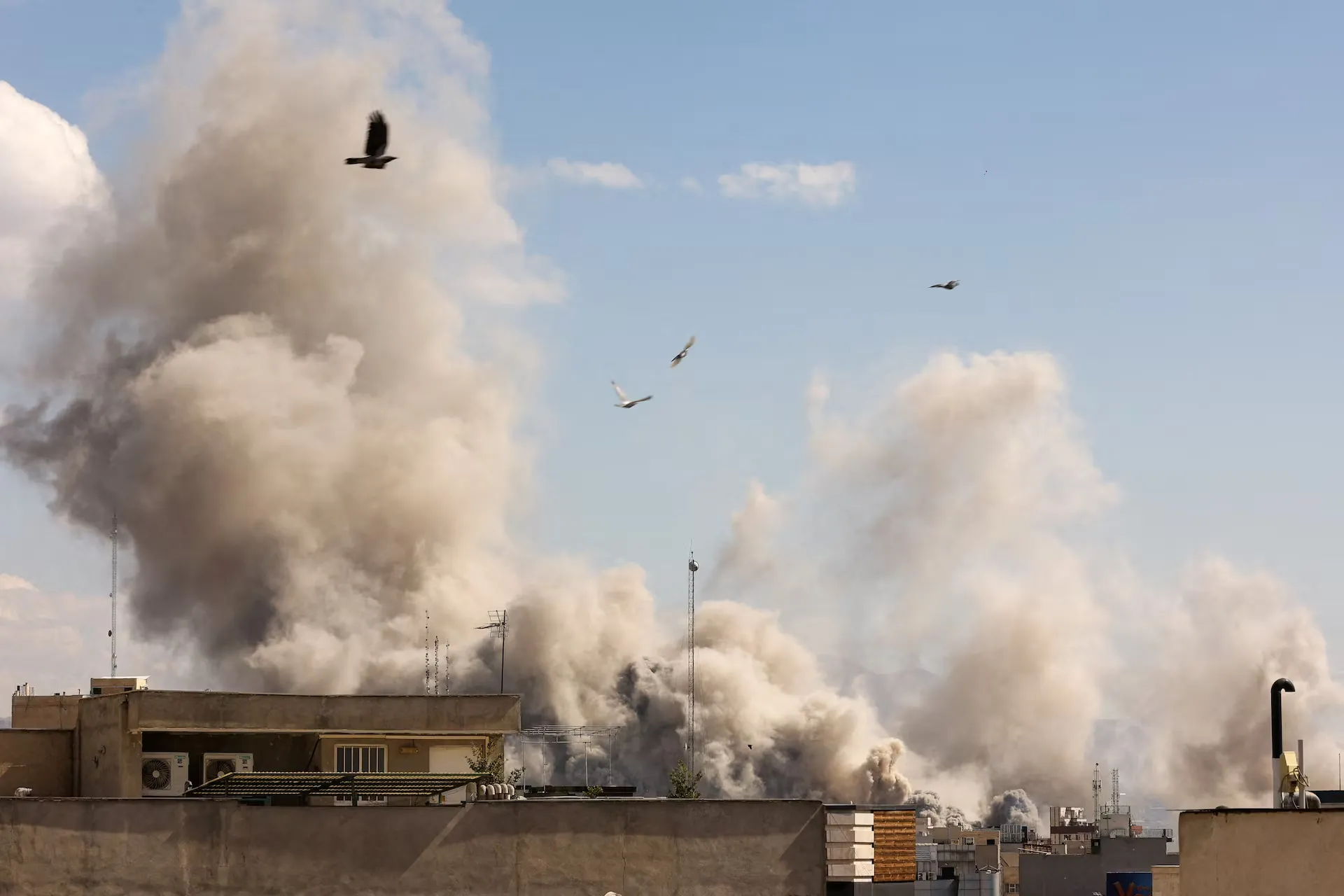
March 5, 2026
Daniel Cohen
World News
For decades, the Islamic Republic of Iran projected an image of theological inevitability. Its leaders did not speak merely as politicians. They spoke as custodians of sacred destiny. They governed not simply as rulers of a nation-state, but as guardians of an eschatological mission.
Now that image has been shattered.
The removal of Iran’s Supreme Leader marks more than a military turning point. It represents a psychological and ideological rupture inside the global Islamist project. For the first time in modern history, the flagship regime of political Shiite Islam has been struck at its highest level by external powers it long portrayed as spiritually illegitimate and historically doomed.
That matters.
Islamism is often misunderstood in Western discourse. Islamism is a political doctrine. It fuses state authority with religious mandate. It seeks to impose Islamic law through governance and, where necessary, confrontation. It operates with a long-term vision of civilizational transformation.
The Islamic Republic of Iran has been its most durable model.
For deeper analysis on faith, geopolitics, and global events, visit Real Life Network.
Understanding Islam and the Theological Foundations of Iran’s Regime
Since 1979, Tehran’s revolutionary framework has rested on Twelver Shiite theology. Central to that theology is Mahdism — the belief that the Twelfth Imam, Muhammad ibn Hasan al-Mahdi, entered occultation in the ninth century and will return at the end of history to establish global Islamic justice after a period of chaos and war.
This belief is not a marginal doctrine. It is embedded in the regime’s self-understanding.
Under the doctrine of Wilayat al-Faqih, clerical leadership governs as a steward during the Hidden Imam’s absence. Political authority is not merely constitutional. It is sacred trusteeship. Resistance against perceived enemies is not just policy. It is preparation for divine culmination.
In that narrative, America became the “Greater Satan.” Israel became the “Lesser Satan.” Confrontation was woven into theology. Global upheaval was not feared. It was anticipated.
The regime’s strategic behavior cannot be separated from this ideological infrastructure. Its missile development, its regional proxy networks, its rhetoric about Jerusalem — all have been framed within a worldview that sees history as moving toward a decisive Islamic vindication.
That is why this moment carries symbolic weight.
Islamism has long relied on the perception of historical momentum. The revolution succeeded. The regime endured sanctions. Proxy networks expanded influence across the Middle East. The narrative was one of resilience, inevitability, and divine favor.
When a system built on sacred certainty suffers visible vulnerability, the psychological effect can be profound.
Inside Iran, generations have lived under clerical rule that enforces religious conformity while restricting political dissent. Women have protested compulsory hijab. Young Iranians have challenged ideological control. Underground Christian communities have quietly grown despite persecution. A vibrant diaspora has spoken openly about freedom and reform.
The regime has survived these pressures through repression and narrative control.
But narratives weaken when inevitability is punctured.
For more Christian worldview analysis and commentary on global affairs, explore more content at Real Life Network.
Iran’s Ideological Vulnerability and the Cracks in Political Islam
This does not mean Islamism disappears tomorrow. Ideologies rarely collapse overnight. Power vacuums can create instability. Hardline factions may double down. Escalation is always possible.
Yet something fundamental has shifted.
For the first time, the regime that framed itself as divinely anchored has been forced into visible fragility. The myth of untouchability has dissolved. And when myth dissolves, imagination begins.
A Biblical Worldview Response to the Ideological Battle Over Freedom
From a Christian perspective, this is not a moment for triumphalism. It is a moment for discernment. Scripture repeatedly warns that systems built on pride and coercive control eventually fracture. Empires that merge divine justification with unchecked authority sow the seeds of their own instability.
The issue before us is not whether a single leader has fallen. The deeper issue is whether the ideological spell of inevitability surrounding political Islam is weakening.
History shows that ideas often fall before institutions do. Once people recognize that a system is neither eternal nor invincible, alternative futures become conceivable. Freedom becomes imaginable.
For decades, Western leaders treated Islamist ideology either as misunderstood or as unstoppable. That miscalculation allowed its influence to expand in diplomatic circles, academic institutions, and political discourse without adequate scrutiny. A visible setback forces reassessment.
The Iranian people deserve more than perpetual confrontation and theological authoritarianism. They deserve liberty of conscience, freedom of worship, and governance accountable to citizens rather than to eschatological expectation.
Christians should pray for stability, for protection of innocent lives, and for a genuine opening toward freedom. We oppose Islamism not because we oppose Muslims, but because we oppose any political system that suppresses dissent, restricts liberty, and denies the exclusivity of the gospel.
The global contest is not merely military. It is ideological. It is spiritual. It is about which vision of human flourishing will prevail — one rooted in coercive religious state power, or one grounded in liberty, dignity, and moral accountability.
The fall of a single figure does not settle that contest.
But it may mark the beginning of the end of an illusion.
And when illusions collapse, history can move in new directions.
For more reporting and biblical worldview analysis on global events, visit Real Life Network.
Related Articles
- Agape Love: Obedient, Courageous, Costly by Hedieh Mirahmadi Falco
- Why do Christian Kids Convert to Islam? By Hedieh Mirahmadi Falco
- Iran at the Breaking Point: Power, Oil, Faith, and the Battle for What Comes Next by Hedieh Mirahmadi Falco
25 min
The Collapse of an Illusion: Is the Islamist Narrative Losing Its Grip?
.webp)
March 3, 2026
Hedieh Mirahmadi Falco