- Maduro’s arrest ended a narco terrorism dictatorship without American casualties.
- Trump foreign policy stopped tyranny through strength instead of endless war.
- Venezuela’s freedom sends a warning to Iran and dictators worldwide.
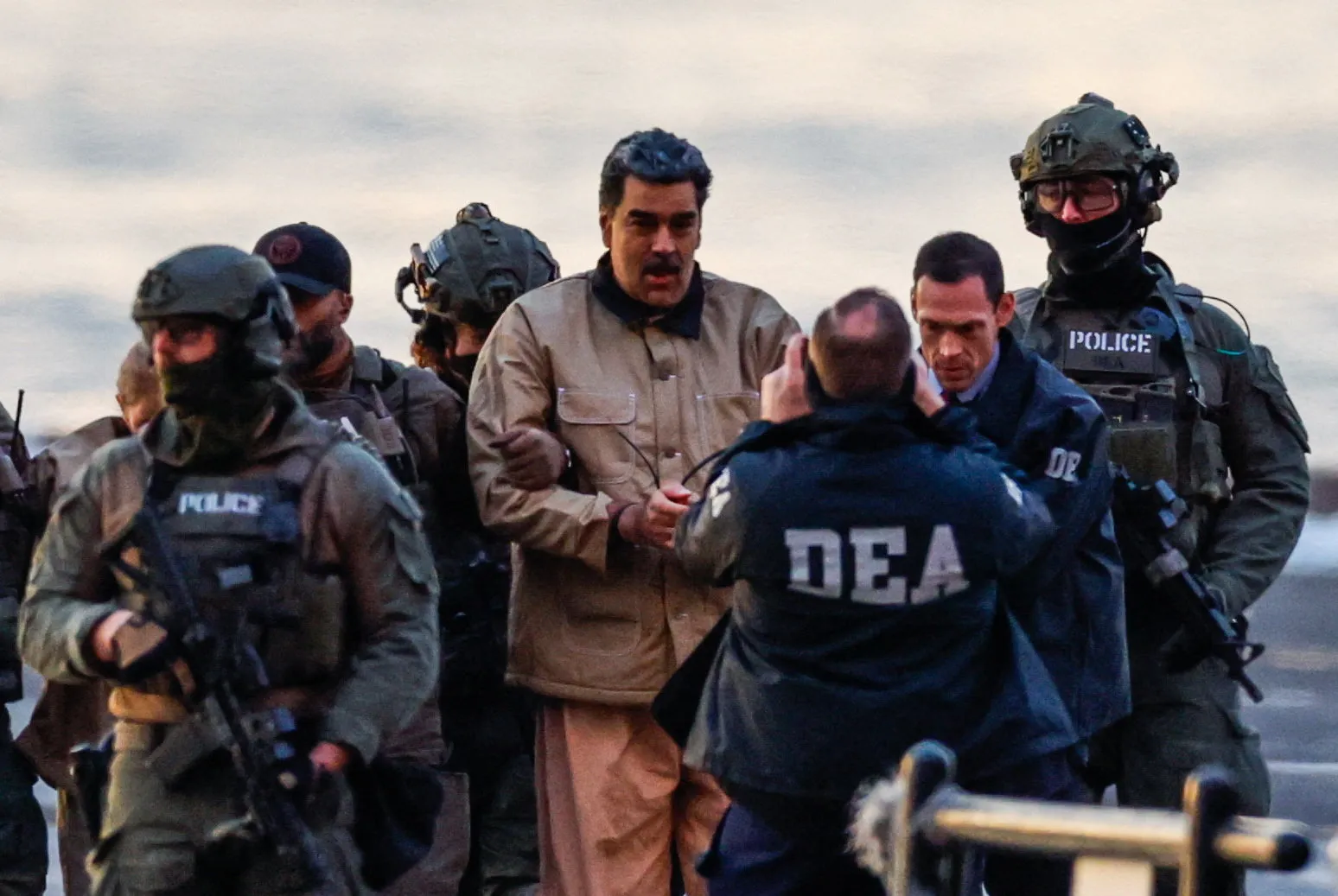
It is the first official show of 2026, and I can say this without hesitation. It is already a happy new year in Venezuela. In less than four hours, President Trump dismantled one of the most brutal communist dictatorships in the Western Hemisphere without a single American casualty. Nicholas Maduro, the narco terrorism strongman who poisoned the United States with fentanyl and enriched Iranian terror proxies, is no longer untouchable. He is sitting in an American prison cell.
While the American left mourns the fall of another socialist idol, the people of Venezuela are dancing in the streets. They are crying tears of joy. They are hugging strangers. They are tasting freedom for the first time in decades.
This is not just a headline. It is a historic turning point. And it exposes everything wrong with the last generation of weak foreign policy.
Maduro Arrested and a Dictatorship Collapses
Venezuela was once the wealthiest nation in South America. It was rich in oil, rich in resources, and rich in opportunity. Then socialism arrived, and it rotted the nation from the inside out.
Hugo Chavez promised justice, equality, and redistribution. What he delivered was Marxist communism. When Chavez died, Maduro doubled down. Political opponents were imprisoned. Dissidents disappeared. The military became an enforcement arm of tyranny.
The economy collapsed. Inflation exploded. Food vanished. Families scavenged for survival. Millions fled because staying meant death. Meanwhile, Maduro lived in luxury, enriching himself and his inner circle while an entire nation starved.
And this regime was not contained within Venezuela. It exported chaos. Drugs flowed north. Fentanyl killed tens of thousands of Americans every year. Terror money flowed east toward Iran and its proxies. Venezuela became a narco state aligned with America’s enemies.
This is why Maduro’s arrest matters. He was not a misunderstood leader. He was a criminal dictator who kidnapped an entire country and poisoned another.
America First Means Strength That Ends Tyranny
For decades, Americans were told that decisive action leads to endless war. That is a lie. Endless war comes from weakness, indecision, and appeasement.
President Trump proved that again. No occupation. No boots stuck on the ground for a generation. No flag draped coffins. Just overwhelming American capability applied with clarity and resolve.
Maduro was warned. Sanctions were imposed. Diplomatic isolation followed. He ignored every warning. And then the United States acted.
This is what smart foreign policy looks like. The United States is the world’s strongest superpower. When that power is used correctly, evil regimes collapse quickly.
America First does not mean America isolated. It means American strength used to advance freedom, protect lives, and stop threats before they metastasize. Ending narco terrorism abroad saves American lives at home.
That is the connection the media refuses to make.
A Global Signal to Iran and Every Dictator Watching
Do not miss what else happened when Maduro fell. The message went far beyond Venezuela. Iran heard it. China heard it. Russia heard it. Every dictator and every terror aligned regime heard it. When America draws real red lines, the world adjusts. And when tyrants fall, oppressed people take notice.
That is why this moment matters so deeply. Venezuelans are celebrating, but they are not alone. Iranians are watching. Women are defying compulsory hijab laws. Protesters are filling the streets. Courage spreads when fear is broken.
Freedom is contagious. So is hope. The left calls this reckless. They call it regime change. They pretend to care about human rights while defending systems that crush human dignity. That hypocrisy is now fully exposed.
You cannot claim to stand with women while defending regimes that torture them. You cannot claim to stand with the oppressed while mourning the fall of their oppressors. The people of Venezuela have spoken. They did not ask for socialism. They rejected it. They did not want sanctions relief. They wanted freedom. And now they have a future again. This moment is bigger than one country. It is about whether the world bends toward tyranny or toward liberty. It is about whether America leads or retreats.
Today, America led. God bless the people of Venezuela. God bless those who stood for freedom. And God bless the United States of America.
Watch the full episode of The Daniel Cohen Show on Real Life Network.
In the first days of 2026, the headlines are not whispering anymore. They are shouting. President Trump, Maduro, Venezuela, narco terrorism, the war on drugs, the U.S. military, Trump foreign policy, and the fight for freedom are all colliding in real time. And if you care about current events through a biblical worldview, you should be paying attention, because this is not just geopolitics. This is consequences. This is accountability. This is a warning to dictators, terrorists, and the political class that has protected them. I’m Daniel Cohen, and on RLN News and The Daniel Cohen Show on Real Life Network, we are watching a new pattern form: America’s enemies are learning that there is a price for harming the American people, and 2026 is looking like a year of reckoning.
For four years under Joe Biden and the Democrat machine, the world watched America project weakness. The southern border became a pipeline for fentanyl and cartel profit. Terror proxies took notes. Dictators grew bolder. And narco traffickers operated like they were untouchable. But then President Trump returned, and the message became unmistakable: there are consequences.
Maduro dared Trump. He mocked him. He acted like he was shielded by geography and protected by alliances with bad actors. Now, according to the script you just read, Maduro and his wife are in handcuffs, headed for the justice system, and the question is not only “how did this happen so fast,” but “who is next?”
Operation Absolute Resolve and the End of Impunity
Let’s back up and talk about why this moment matters. What the script describes is not a long, grinding war. It is not nation building. It is not an endless occupation. It is a swift strike built on a principle the political class forgot: when a regime becomes a hub for narco terrorism, weapons smuggling, and the poisoning of Americans through fentanyl, it becomes a direct threat.
In the story we are watching unfold, President Trump gives the green light to Operation Absolute Resolve, and within hours, Maduro is captured and brought to face justice. That speed is the point. It sends a message that is louder than any speech at the United Nations. Dictators who rely on delay, distance, and bureaucracy are suddenly forced to calculate risk again.
The Democrats and their media allies immediately reached for the same old talking points. They accused Trump of “gunboat diplomacy.” They claimed it was about oil. They tried to dress moral confusion in moral slogans. But here is what the script exposes: the same political movement that tolerated strongmen for decades suddenly finds its voice when someone finally removes one.
You remember the history. Hugo Chavez insulting an American president at the U.N. Democrats applauding. Obama shaking hands with Chavez. The left treating anti-American propaganda like sophistication. That is not compassion. That is ideological blindness.
And it is not just Venezuela. It is the entire Western Hemisphere. When adversaries like Iran, China, and Russia seek footholds in Latin America, they are not doing charity work. They are positioning. They are building leverage. They are looking for bases of operation. And the point Secretary Rubio makes in the script is clear: America does not “need” Venezuela’s oil, but America cannot allow hostile regimes to control strategic energy infrastructure in the Western Hemisphere and use it to fund terror networks and criminal pipelines.
That is not imperialism. That is sovereignty. That is security. That is protecting American families.
The Democrat Reaction and the Moral Slogan Trap
One of the most telling moments in the script is not a battlefield image. It is the reaction. The Democrat ecosystem instinctively picks the wrong side, again and again, because it is driven more by opposition to Trump than by a consistent moral framework.
They called Maduro illegitimate when it was convenient, then condemned consequences when they arrived. They speak of human rights while defending organizations and narratives that empower terrorists. They want you to believe that strong action is automatically corrupt, and that weakness is automatically virtuous. But victims of tyranny do not live by slogans. They live by reality.
That Venezuelan Jewish woman in the script nails it. Outsiders love to explain Venezuela to Venezuelans and Israel to Jews using phrases that sound morally correct while ignoring the lived experience of people under threat. That same pattern shows up everywhere right now. People who have never lived under socialism preach to those who escaped it. People who have never faced existential danger lecture Israelis about survival. People who have never buried family members from cartel violence minimize border chaos as politics.
The script makes another uncomfortable point: Democrats have trained America’s enemies to assume there will be no serious consequences. That assumption is now collapsing. When Trump says “watch it,” the world understands it is not theater.
That is why Colombia’s socialist leadership is nervous. That is why Cuba becomes part of the conversation. That is why dictators and narco traffickers are suddenly weighing escape plans instead of victory speeches.
This is what deterrence looks like when it is credible.
Iran, Israel, and the Reckoning Spreading Beyond Venezuela
The script pivots from Venezuela to Iran for a reason. These stories are connected. When a narco terrorist dictator falls quickly, it reshapes the psychological map for every regime that survives by fear. Iran is not just a distant foreign policy issue. Iran is a regime obsessed with destroying Israel and undermining America, while its own people suffer under economic collapse and brutal repression.
The details in the script are staggering. Currency collapse. Inflation. Food prices soaring. Protesters killed. Women punished for a strand of hair. And in the middle of that, the regime pours resources into terror and ideology instead of water, electricity, and dignity. That is what totalitarian systems do. They feed the machinery of control and starve the human beings trapped under it.
And when the script references biblical truth about Israel’s endurance, it is not an aside. It is worldview. The point is this: regimes can rage, but they cannot rewrite the covenant purposes of God. The Iranian regime can threaten. Proxies can posture. Campuses can chant. But truth does not bend to propaganda.
Which brings me to one of the most chilling parts of the script: American professors on Zoom calls encouraging revolutionary violence, praising Hamas talking points, and normalizing the ideology that led to October 7 atrocities. This is not “free speech as an abstract concept.” This is the shaping of young minds. This is radicalization packaged as education. And it explains why socialist and Islamist aligned narratives are gaining traction in places like New York City.
When you see leaders talk openly about property as a “collective good,” you are watching Marxism shed the mask. The abolition of private property is not a misunderstanding. It is the point. And when Americans vote for it, they discover too late that ideology always has consequences, just like dictators do.
The script ties it all together with a final development: even as Trump confronts threats abroad, the administration pressures institutions to stop irreversible medical interventions on minors. That is part of the same theme. Boundaries. Reality. Consequences. A refusal to pretend that lies are compassion.
And I’ll end where the script ends: Isaiah 54:17 reminds us that no weapon formed against you shall prosper. That promise is not political branding. It is spiritual assurance. America is not finished, and God is not done.
If you want news, culture, Israel coverage, and current events through biblical truth, watch The Daniel Cohen Show on Real Life Network. Download the free app and watch the full episode at reallifenetwork.com.
In the first days of 2026, the headlines are not whispering anymore. They are shouting. President Trump, Maduro, Venezuela, narco terrorism, the war on drugs, the U.S. military, Trump foreign policy, and the fight for freedom are all colliding in real time. And if you care about current events through a biblical worldview, you should be paying attention, because this is not just geopolitics. This is consequences. This is accountability. This is a warning to dictators, terrorists, and the political class that has protected them. I’m Daniel Cohen, and on RLN News and The Daniel Cohen Show on Real Life Network, we are watching a new pattern form: America’s enemies are learning that there is a price for harming the American people, and 2026 is looking like a year of reckoning.
For four years under Joe Biden and the Democrat machine, the world watched America project weakness. The southern border became a pipeline for fentanyl and cartel profit. Terror proxies took notes. Dictators grew bolder. And narco traffickers operated like they were untouchable. But then President Trump returned, and the message became unmistakable: there are consequences.
Maduro dared Trump. He mocked him. He acted like he was shielded by geography and protected by alliances with bad actors. Now, according to the script you just read, Maduro and his wife are in handcuffs, headed for the justice system, and the question is not only “how did this happen so fast,” but “who is next?”
Operation Absolute Resolve and the End of Impunity
Let’s back up and talk about why this moment matters. What the script describes is not a long, grinding war. It is not nation building. It is not an endless occupation. It is a swift strike built on a principle the political class forgot: when a regime becomes a hub for narco terrorism, weapons smuggling, and the poisoning of Americans through fentanyl, it becomes a direct threat.
In the story we are watching unfold, President Trump gives the green light to Operation Absolute Resolve, and within hours, Maduro is captured and brought to face justice. That speed is the point. It sends a message that is louder than any speech at the United Nations. Dictators who rely on delay, distance, and bureaucracy are suddenly forced to calculate risk again.
The Democrats and their media allies immediately reached for the same old talking points. They accused Trump of “gunboat diplomacy.” They claimed it was about oil. They tried to dress moral confusion in moral slogans. But here is what the script exposes: the same political movement that tolerated strongmen for decades suddenly finds its voice when someone finally removes one.
You remember the history. Hugo Chavez insulting an American president at the U.N. Democrats applauding. Obama shaking hands with Chavez. The left treating anti-American propaganda like sophistication. That is not compassion. That is ideological blindness.
And it is not just Venezuela. It is the entire Western Hemisphere. When adversaries like Iran, China, and Russia seek footholds in Latin America, they are not doing charity work. They are positioning. They are building leverage. They are looking for bases of operation. And the point Secretary Rubio makes in the script is clear: America does not “need” Venezuela’s oil, but America cannot allow hostile regimes to control strategic energy infrastructure in the Western Hemisphere and use it to fund terror networks and criminal pipelines.
That is not imperialism. That is sovereignty. That is security. That is protecting American families.
The Democrat Reaction and the Moral Slogan Trap
One of the most telling moments in the script is not a battlefield image. It is the reaction. The Democrat ecosystem instinctively picks the wrong side, again and again, because it is driven more by opposition to Trump than by a consistent moral framework.
They called Maduro illegitimate when it was convenient, then condemned consequences when they arrived. They speak of human rights while defending organizations and narratives that empower terrorists. They want you to believe that strong action is automatically corrupt, and that weakness is automatically virtuous. But victims of tyranny do not live by slogans. They live by reality.
That Venezuelan Jewish woman in the script nails it. Outsiders love to explain Venezuela to Venezuelans and Israel to Jews using phrases that sound morally correct while ignoring the lived experience of people under threat. That same pattern shows up everywhere right now. People who have never lived under socialism preach to those who escaped it. People who have never faced existential danger lecture Israelis about survival. People who have never buried family members from cartel violence minimize border chaos as politics.
The script makes another uncomfortable point: Democrats have trained America’s enemies to assume there will be no serious consequences. That assumption is now collapsing. When Trump says “watch it,” the world understands it is not theater.
That is why Colombia’s socialist leadership is nervous. That is why Cuba becomes part of the conversation. That is why dictators and narco traffickers are suddenly weighing escape plans instead of victory speeches.
This is what deterrence looks like when it is credible.
Iran, Israel, and the Reckoning Spreading Beyond Venezuela
The script pivots from Venezuela to Iran for a reason. These stories are connected. When a narco terrorist dictator falls quickly, it reshapes the psychological map for every regime that survives by fear. Iran is not just a distant foreign policy issue. Iran is a regime obsessed with destroying Israel and undermining America, while its own people suffer under economic collapse and brutal repression.
The details in the script are staggering. Currency collapse. Inflation. Food prices soaring. Protesters killed. Women punished for a strand of hair. And in the middle of that, the regime pours resources into terror and ideology instead of water, electricity, and dignity. That is what totalitarian systems do. They feed the machinery of control and starve the human beings trapped under it.
And when the script references biblical truth about Israel’s endurance, it is not an aside. It is worldview. The point is this: regimes can rage, but they cannot rewrite the covenant purposes of God. The Iranian regime can threaten. Proxies can posture. Campuses can chant. But truth does not bend to propaganda.
Which brings me to one of the most chilling parts of the script: American professors on Zoom calls encouraging revolutionary violence, praising Hamas talking points, and normalizing the ideology that led to October 7 atrocities. This is not “free speech as an abstract concept.” This is the shaping of young minds. This is radicalization packaged as education. And it explains why socialist and Islamist aligned narratives are gaining traction in places like New York City.
When you see leaders talk openly about property as a “collective good,” you are watching Marxism shed the mask. The abolition of private property is not a misunderstanding. It is the point. And when Americans vote for it, they discover too late that ideology always has consequences, just like dictators do.
The script ties it all together with a final development: even as Trump confronts threats abroad, the administration pressures institutions to stop irreversible medical interventions on minors. That is part of the same theme. Boundaries. Reality. Consequences. A refusal to pretend that lies are compassion.
And I’ll end where the script ends: Isaiah 54:17 reminds us that no weapon formed against you shall prosper. That promise is not political branding. It is spiritual assurance. America is not finished, and God is not done.
If you want news, culture, Israel coverage, and current events through biblical truth, watch The Daniel Cohen Show on Real Life Network. Download the free app and watch the full episode at reallifenetwork.com.
2026: The Year of Reckoning for Dictators, Narco Terror, and America’s Enemies
A Regime Facing Rejection, Not Reform
Iran is entering a phase that its ruling clerics have long feared but refused to acknowledge. What began years ago as scattered unrest has now hardened into a sustained rejection of the Islamic Republic itself. Across multiple cities, protesters are no longer bargaining with power. They are repudiating it. The chants coming from the streets no longer ask for reform within the system. They call for the system’s removal.
According to reporting by Iranian dissident and analyst Anni Cyrus, one of the most alarming developments for the regime is the growing number of protesters openly calling for the return of Crown Prince Reza Shah Pahlavi. That demand is unprecedented in the context of Iran’s post-1979 political order. It signals not a longing for the past, but a rejection of clerical supremacy and the religious state that has dominated Iranian life for more than forty years. When crowds chant for a figure explicitly displaced by the Islamic Revolution, they are not negotiating terms. They are declaring the revolution itself a failure.
This shift matters because the Islamic Republic is not merely a government. It is an ideological system that fuses religious authority with political control and enforces obedience through fear. The regime’s legitimacy rests on the claim that it governs by divine mandate. Any public challenge to that claim, especially one voiced by large numbers of ordinary citizens, strikes at the heart of its authority. That is why the state’s response has been swift and violent.
Security forces have fired live ammunition into crowds. Arrests have escalated into the thousands. Executions have been carried out under vague criminal charges designed to disguise political repression as law enforcement. Internet blackouts and surveillance have intensified in an attempt to control the narrative and isolate protesters from one another. These measures reflect a regime that understands it is losing consent and is relying increasingly on brute force to maintain control.
Faith, Fear, and the Collapse of Legitimacy
Economic collapse has accelerated the unrest, but it did not create it. Inflation, unemployment, and shortages have devastated everyday life, yet these hardships are widely understood inside Iran as symptoms of a deeper problem. The ruling clerical class has enriched itself while ordinary Iranians struggle to survive. Corruption is systemic. Accountability is nonexistent. Faith has been weaponized to silence dissent rather than to serve the people.
Religious minorities, particularly Christians, have borne the cost of this system for decades. Iran remains one of the most hostile environments in the world for Christian converts. Leaving Islam is treated as a political offense. House churches are raided. Pastors are imprisoned. Evangelism is prosecuted as a threat to national security. These actions are not anomalies. They are the logical outcome of a state that cannot tolerate allegiance to any authority beyond its own religious framework.
Yet despite the repression, Christianity continues to grow underground in Iran. House churches persist. Converts continue to testify to encounters with Christ through Scripture, personal witness, and dreams. The expansion of the Christian faith under such conditions highlights the inherent weakness of coercive religious rule. When belief is enforced by law, it eventually collapses under its own contradictions. Faith that is freely chosen cannot be extinguished by prisons or executions.
Why Iran’s Uprising Matters to the World
Western policymakers have repeatedly misread this reality. For years, Iran has been treated as a conventional state actor capable of moderation through incentives and diplomacy. Nuclear agreements were framed as stabilizing tools. Sanctions relief was promoted as humanitarian. Dialogue was cast as the pathway to peace. These approaches failed because they misunderstood the ideological nature of the regime. The Islamic Republic is not oriented toward compromise. It is oriented toward survival through control.
The Iranian people appear to understand this more clearly than many Western institutions. Their chants are not aimed at foreign governments. They are aimed at the clerics who rule them. They are rejecting political Islam as a governing system, not merely objecting to economic conditions or foreign policy disputes. That distinction matters.
The contrast between Iran’s streets and Western discourse is stark. While Iranians risk their lives to escape Islamic rule, segments of Western culture continue to romanticize Islamist narratives under the banner of tolerance or social justice. While Iranian women defy compulsory veiling, Western institutions frame hijab enforcement as empowerment. While Iranian Christians worship in secret, Western churches often hesitate to speak clearly about the dangers of religious authoritarianism.
This moment demands honesty. The uprising in Iran is not simply another cycle of unrest. It is a reckoning with an ideology that promised justice and delivered repression. It is a warning about the consequences of merging religious absolutism with unchecked political power. It is also a reminder that truth, once awakened, is difficult to suppress.
Whether the current uprising succeeds or is violently crushed, the Islamic Republic has already lost something it may never recover. It has lost the belief of its people. Regimes can survive sanctions and protests. They rarely survive the collapse of legitimacy. Iran’s future remains uncertain, but one reality is now unmistakable. The era of unquestioned clerical rule is ending, and no amount of force can fully restore what has been broken.
For more by Hedieh Mirahmadi, watch Living Fearless on Real Life Network.
A Regime Facing Rejection, Not Reform
Iran is entering a phase that its ruling clerics have long feared but refused to acknowledge. What began years ago as scattered unrest has now hardened into a sustained rejection of the Islamic Republic itself. Across multiple cities, protesters are no longer bargaining with power. They are repudiating it. The chants coming from the streets no longer ask for reform within the system. They call for the system’s removal.
According to reporting by Iranian dissident and analyst Anni Cyrus, one of the most alarming developments for the regime is the growing number of protesters openly calling for the return of Crown Prince Reza Shah Pahlavi. That demand is unprecedented in the context of Iran’s post-1979 political order. It signals not a longing for the past, but a rejection of clerical supremacy and the religious state that has dominated Iranian life for more than forty years. When crowds chant for a figure explicitly displaced by the Islamic Revolution, they are not negotiating terms. They are declaring the revolution itself a failure.
This shift matters because the Islamic Republic is not merely a government. It is an ideological system that fuses religious authority with political control and enforces obedience through fear. The regime’s legitimacy rests on the claim that it governs by divine mandate. Any public challenge to that claim, especially one voiced by large numbers of ordinary citizens, strikes at the heart of its authority. That is why the state’s response has been swift and violent.
Security forces have fired live ammunition into crowds. Arrests have escalated into the thousands. Executions have been carried out under vague criminal charges designed to disguise political repression as law enforcement. Internet blackouts and surveillance have intensified in an attempt to control the narrative and isolate protesters from one another. These measures reflect a regime that understands it is losing consent and is relying increasingly on brute force to maintain control.
Faith, Fear, and the Collapse of Legitimacy
Economic collapse has accelerated the unrest, but it did not create it. Inflation, unemployment, and shortages have devastated everyday life, yet these hardships are widely understood inside Iran as symptoms of a deeper problem. The ruling clerical class has enriched itself while ordinary Iranians struggle to survive. Corruption is systemic. Accountability is nonexistent. Faith has been weaponized to silence dissent rather than to serve the people.
Religious minorities, particularly Christians, have borne the cost of this system for decades. Iran remains one of the most hostile environments in the world for Christian converts. Leaving Islam is treated as a political offense. House churches are raided. Pastors are imprisoned. Evangelism is prosecuted as a threat to national security. These actions are not anomalies. They are the logical outcome of a state that cannot tolerate allegiance to any authority beyond its own religious framework.
Yet despite the repression, Christianity continues to grow underground in Iran. House churches persist. Converts continue to testify to encounters with Christ through Scripture, personal witness, and dreams. The expansion of the Christian faith under such conditions highlights the inherent weakness of coercive religious rule. When belief is enforced by law, it eventually collapses under its own contradictions. Faith that is freely chosen cannot be extinguished by prisons or executions.
Why Iran’s Uprising Matters to the World
Western policymakers have repeatedly misread this reality. For years, Iran has been treated as a conventional state actor capable of moderation through incentives and diplomacy. Nuclear agreements were framed as stabilizing tools. Sanctions relief was promoted as humanitarian. Dialogue was cast as the pathway to peace. These approaches failed because they misunderstood the ideological nature of the regime. The Islamic Republic is not oriented toward compromise. It is oriented toward survival through control.
The Iranian people appear to understand this more clearly than many Western institutions. Their chants are not aimed at foreign governments. They are aimed at the clerics who rule them. They are rejecting political Islam as a governing system, not merely objecting to economic conditions or foreign policy disputes. That distinction matters.
The contrast between Iran’s streets and Western discourse is stark. While Iranians risk their lives to escape Islamic rule, segments of Western culture continue to romanticize Islamist narratives under the banner of tolerance or social justice. While Iranian women defy compulsory veiling, Western institutions frame hijab enforcement as empowerment. While Iranian Christians worship in secret, Western churches often hesitate to speak clearly about the dangers of religious authoritarianism.
This moment demands honesty. The uprising in Iran is not simply another cycle of unrest. It is a reckoning with an ideology that promised justice and delivered repression. It is a warning about the consequences of merging religious absolutism with unchecked political power. It is also a reminder that truth, once awakened, is difficult to suppress.
Whether the current uprising succeeds or is violently crushed, the Islamic Republic has already lost something it may never recover. It has lost the belief of its people. Regimes can survive sanctions and protests. They rarely survive the collapse of legitimacy. Iran’s future remains uncertain, but one reality is now unmistakable. The era of unquestioned clerical rule is ending, and no amount of force can fully restore what has been broken.
For more by Hedieh Mirahmadi, watch Living Fearless on Real Life Network.
Iran’s Revolt Against Religious Rule
In the ancient world, long before social media or mass communication, the gospel went viral in a city that looks surprisingly familiar to us today. Corinth was powerful, wealthy, immoral, intellectually proud, and spiritually confused. It was also the place where God used persecution, politics, and even a pagan courtroom to accelerate the spread of Christianity.
Standing in Greece, near the ruins of ancient Corinth, you can feel the weight of history. This was not just another stop on the apostle Paul’s missionary journey. This was a turning point where the gospel moved from being hunted to being protected by law. And what the enemy intended for evil, God used for good.
Paul, Corinth, and an Unexpected Legal Victory
The apostle Paul arrived in Corinth preaching Christ crucified and risen. His message was simple and offensive to both religious leaders and Roman sensibilities. Jesus was not just a moral teacher. He was the resurrected Messiah, Lord of all.
The Jewish leaders in Corinth were furious. They dragged Paul before Gallio, the Roman proconsul, accusing him of persuading people to worship God contrary to Mosaic law. Their goal was clear. They wanted Rome to declare Christianity illegal.
Instead, Gallio dismissed the case outright.
Gallio ruled that this was an internal religious dispute, not a violation of Roman law. With that single decision, Christianity gained legal protection across the Roman Empire. For the first time, the gospel could spread without fear of official Roman persecution.
This moment changed everything. What looked like a threat became a catalyst. What was meant to silence the gospel gave it room to grow. The message of resurrection and hope exploded outward from Corinth into the known world.
Love, Resurrection, and the Power of the Gospel
Corinth was a city known for corruption, sexual immorality, and pagan worship. Yet it became home to one of the strongest early Christian communities. Why? Because the gospel does not thrive in perfect environments. It thrives in broken ones.
Paul later wrote to the Corinthian church words that are now among the most beloved in all of Scripture. Love is patient. Love is kind. Love does not envy. Love does not boast. This was not poetic theory. It was a radical call to live differently in a culture obsessed with power and pleasure.
The message that transformed Corinth was not moral reform alone. It was resurrection hope. Paul preached Christ crucified, buried, and risen. He reminded believers that death was defeated, sin was paid for, and eternal life was secure.
That same gospel still goes viral today.
Why Corinth Still Matters Today
Corinth matters because it proves something essential. The gospel does not need cultural approval to advance. It needs faithful witnesses. God can use hostile courts, skeptical leaders, and even political rulings to accomplish His purposes.
From Israel to Greece, from Jerusalem to Corinth, the resurrection message has always moved forward against the odds. And it still does.
We live in a time when truth is contested and faith is mocked. But history reminds us that the gospel has always flourished in moments like this. The same resurrection power that transformed Corinth is still at work today.
I am Daniel Cohen, and this is the kind of biblical worldview reporting we bring to you on Real Life Network and The Daniel Cohen Show.
For the full episode, go to RLN News.
In the ancient world, long before social media or mass communication, the gospel went viral in a city that looks surprisingly familiar to us today. Corinth was powerful, wealthy, immoral, intellectually proud, and spiritually confused. It was also the place where God used persecution, politics, and even a pagan courtroom to accelerate the spread of Christianity.
Standing in Greece, near the ruins of ancient Corinth, you can feel the weight of history. This was not just another stop on the apostle Paul’s missionary journey. This was a turning point where the gospel moved from being hunted to being protected by law. And what the enemy intended for evil, God used for good.
Paul, Corinth, and an Unexpected Legal Victory
The apostle Paul arrived in Corinth preaching Christ crucified and risen. His message was simple and offensive to both religious leaders and Roman sensibilities. Jesus was not just a moral teacher. He was the resurrected Messiah, Lord of all.
The Jewish leaders in Corinth were furious. They dragged Paul before Gallio, the Roman proconsul, accusing him of persuading people to worship God contrary to Mosaic law. Their goal was clear. They wanted Rome to declare Christianity illegal.
Instead, Gallio dismissed the case outright.
Gallio ruled that this was an internal religious dispute, not a violation of Roman law. With that single decision, Christianity gained legal protection across the Roman Empire. For the first time, the gospel could spread without fear of official Roman persecution.
This moment changed everything. What looked like a threat became a catalyst. What was meant to silence the gospel gave it room to grow. The message of resurrection and hope exploded outward from Corinth into the known world.
Love, Resurrection, and the Power of the Gospel
Corinth was a city known for corruption, sexual immorality, and pagan worship. Yet it became home to one of the strongest early Christian communities. Why? Because the gospel does not thrive in perfect environments. It thrives in broken ones.
Paul later wrote to the Corinthian church words that are now among the most beloved in all of Scripture. Love is patient. Love is kind. Love does not envy. Love does not boast. This was not poetic theory. It was a radical call to live differently in a culture obsessed with power and pleasure.
The message that transformed Corinth was not moral reform alone. It was resurrection hope. Paul preached Christ crucified, buried, and risen. He reminded believers that death was defeated, sin was paid for, and eternal life was secure.
That same gospel still goes viral today.
Why Corinth Still Matters Today
Corinth matters because it proves something essential. The gospel does not need cultural approval to advance. It needs faithful witnesses. God can use hostile courts, skeptical leaders, and even political rulings to accomplish His purposes.
From Israel to Greece, from Jerusalem to Corinth, the resurrection message has always moved forward against the odds. And it still does.
We live in a time when truth is contested and faith is mocked. But history reminds us that the gospel has always flourished in moments like this. The same resurrection power that transformed Corinth is still at work today.
I am Daniel Cohen, and this is the kind of biblical worldview reporting we bring to you on Real Life Network and The Daniel Cohen Show.
For the full episode, go to RLN News.
.png)

.jpg)