
Stream Real Life Network Now

WATCH NOW
Government

World News
25 min
The 2026 Midterms: What Early Voting, National Security, and Economic Concerns Reveal
As the 2026 midterms approach, shifting voting trends and debates over immigration, national security, energy costs, and religious liberty are shaping America's political future. Explore the issues voters should examine beyond the polls.
With Election Day approaching on November 3, Americans are facing decisions that extend far beyond which political party controls Congress. Immigration enforcement, national security, religious freedom, education, and the cost of living are all shaping the national conversation. Yet the growing focus on polling numbers and campaign predictions can distract from the policies that will ultimately affect American families.
Recent early-voting trends and voter-registration changes have raised questions about conventional expectations for the midterm elections. But political momentum is difficult to measure, and no polling advantage guarantees an election result.
The significance of the 2026 midterms lies not simply in which party gains seats, but in the policies that elected officials will have the authority to advance or challenge.
For continued coverage of the issues shaping America's future, watch The Daniel Cohen Show on Real Life Network.
Early Voting, Political Momentum, and the Limits of Polling
Political commentators frequently turn to historical patterns when predicting congressional elections. Traditionally, the president's party has faced challenges during midterm elections, often losing seats as voters express dissatisfaction with the administration.
But historical trends do not determine individual elections.
Early-voting activity in states such as Michigan, Nevada, Arizona, North Carolina, and Pennsylvania has become a focus of political analysis. Changes in registration figures, ballot returns, and participation across different counties may offer clues about voter engagement.
Michigan presents an especially interesting example because the state does not register voters by political party. Analysts therefore examine geographic voting patterns, previous election results, and other indicators to estimate which groups are participating.
Those estimates have limitations. A county's historical voting preferences do not establish how every resident voted, and a higher share of early ballots does not necessarily translate into additional votes for a particular candidate.
National polling presents similar challenges.
CNN political analyst Harry Enten has discussed historical instances in which congressional polling underestimated Republican support. Such patterns are worth examining, but they cannot establish that the same errors will occur in 2026.
Campaigns must also account for changes in voter behavior. Americans increasingly have different options for casting ballots, including early in-person voting and voting by mail, depending on their state.
A shift in when voters cast their ballots does not always mean a shift in whom they support.
Rather than treating every new poll or early-voting report as a prediction, voters should recognize the distinction between participation data and actual election results.
The more important question is what candidates intend to do if elected.
Immigration, Religious Liberty, and the Responsibility of Public Officials
Some of the most consequential debates in the 2026 elections concern the federal government's responsibility to enforce immigration laws, protect national security, and preserve constitutional freedoms.
Congress has substantial influence over immigration policy through legislation, federal appropriations, and oversight of executive agencies. Decisions about border security, deportation priorities, asylum procedures, and pathways to legal status can affect communities throughout the country.
Candidates offer different approaches to those responsibilities.
Some emphasize stronger enforcement and expanded removal of individuals who violate immigration laws. Others support broader legalization measures, changes to enforcement practices, or additional protections for undocumented immigrants.
These differences deserve careful examination because campaign slogans rarely explain how a proposal would operate in practice.
National security questions have also entered several prominent Senate campaigns.
In Michigan, the contest involving Republican Mike Rogers and Democrat Abdul El-Sayed has generated debate over foreign policy, Israel, terrorism, and the responsibilities of elected officials.
Questions concerning a candidate's statements, political associations, and policy positions are legitimate subjects of public scrutiny. However, allegations involving family members or past organizational relationships must be distinguished from evidence of personal wrongdoing.
That distinction is particularly important when discussions involve religion.
A candidate's Muslim or Christian identity does not establish that person's national security positions, political loyalties, or commitment to constitutional government. Those judgments require examination of actual statements, decisions, and evidence.
Political accountability depends on documented facts and consistent standards, not assumptions about someone's faith, family, or political affiliation.
Religious liberty and questions surrounding human identity are also shaping state and local races.
A high school cross-country controversy in Washington has renewed debate over transgender participation in girls' athletics. Supporters of sex-based athletic categories emphasize competitive fairness and opportunities for female athletes. Supporters of inclusive participation policies emphasize access and protection from discrimination.
The disagreement raises broader questions about school governance, parental involvement, student rights, and the authority of state athletic associations.
These decisions are often made outside Washington, reminding voters that local and state elections can be just as consequential as congressional contests.
For Christians, evaluating these issues requires more than adopting the language of a political party.
Scripture establishes principles of truthfulness, justice, respect for human dignity, and responsible stewardship. Applying those principles to public policy requires examining what a proposed law actually does and whom it affects.
Energy Costs, Government Spending, and Biblical Stewardship
For millions of Americans, political debates eventually return to the household budget.
Fuel prices, groceries, rent, utilities, and transportation expenses directly influence financial stability. These concerns are particularly significant for families living on fixed incomes and workers whose livelihoods depend on transportation.
California's fuel prices have become a recurring example in debates about energy policy.
State taxes, environmental regulations, refinery capacity, distribution requirements, and broader oil-market conditions all contribute to the prices consumers pay. Political leaders disagree about how much emphasis should be placed on domestic production, environmental protection, infrastructure, and tax relief.
Those competing approaches involve real tradeoffs.
Policies designed to reduce emissions or encourage alternative energy sources may impose costs on certain industries and consumers. Measures intended to expand conventional fuel production may raise different environmental and economic concerns.
The appropriate response is to evaluate the evidence behind each proposal rather than assume that a single political decision explains every change in fuel prices.
Energy policy also intersects with national security.
Reliable fuel supplies support commercial transportation, military readiness, agriculture, and emergency services. Disruptions to domestic refining or international energy markets can create consequences far beyond the gas pump.
Congress influences these questions through taxation, spending, regulation, and oversight. State governments also exercise significant authority, particularly over transportation, environmental standards, and energy infrastructure.
That makes understanding the responsibilities of each elected office essential.
Biblical stewardship offers a helpful framework for considering these decisions.
Deuteronomy 30:19 records Moses calling Israel to choose life and blessing. That passage addressed Israel's covenant responsibilities and should not be treated as a direct endorsement of a modern political party. Nevertheless, Scripture consistently teaches that choices have consequences and that people bear responsibility for how they exercise authority.
Public officials are entrusted with decisions that affect families, communities, and future generations. Voters likewise have an opportunity to examine those decisions carefully.
Responsible civic participation begins with understanding the issues, testing political claims against the evidence, and recognizing the long-term consequences of public policy.
The 2026 midterms will determine who holds important positions of authority in Congress and in state and local governments. Those officials will make decisions involving national security, immigration, energy, education, and public spending.
Polls will continue to change. Campaigns will continue making competing claims. But the responsibilities of citizenship remain.
Christians can approach those responsibilities with prayer, discernment, and a commitment to truth, recognizing that political allegiance must never replace biblical conviction.
Follow the issues shaping the 2026 midterm elections, including national security, public policy, and the intersection of faith and culture, through The Daniel Cohen Show, streaming free on Real Life Network.
Faith & Culture
25 min
What’s on Your Ballot? How to Research Your 2026 Local Elections
Your 2026 ballot includes more than the races making national headlines. Learn how to research candidates, understand local offices, evaluate ballot measures, and approach Election Day with greater knowledge and discernment.
National races dominate election coverage, but some of the decisions that affect your daily life may appear much farther down the ballot.
The 2026 midterm elections on November 3 will determine control of the U.S. House and affect the makeup of the Senate, but voters across the country will also encounter state legislative races, governors’ contests, county and city offices, judges, school boards, and ballot measures.
That is why researching the 2026 ballot should involve more than recognizing a few names from national television.
If you are beginning to ask, “What’s on my ballot in 2026?”, the next step is to understand the different kinds of races and measures you may encounter and know what questions to ask about each one.
Start With the Full Ballot, Not Just the Headline Races
Most voters hear far more about Congress than they do about county government, school boards, judges, or local ballot initiatives.
That imbalance can make the bottom half of a ballot feel unfamiliar.
Before Election Day, take time to review the ballot information published for your jurisdiction and identify every race and measure that will require a decision. Instead of trying to research everything at once, make a list and work through it category by category.
Depending on where you live, that list may include:
- U.S. House and Senate races
- Governor or other statewide offices
- State legislative races
- County and municipal offices
- Judges or judicial retention questions
- School board races
- State constitutional amendments
- Local tax, bond, or policy measures
Some may receive extensive news coverage. Others may receive almost none. Lack of national attention does not make a race unimportant.
Understand What Each Office Actually Does
Candidate research becomes much more useful when you understand the responsibilities of the position being sought.
A candidate for Congress will deal with very different questions from a city council member. A governor has different authority from a state legislator. School board members, county officials, judges, and local prosecutors each operate within their own responsibilities.
Before comparing candidates, ask:
What authority does this office actually have?
That simple question can cut through a surprising amount of campaign rhetoric.
Candidates sometimes make promises involving issues their office has little power to change. Understanding the role itself helps voters evaluate whether campaign claims are realistic and whether the issues being emphasized actually belong within that office’s responsibilities.
Research Candidates Beyond Their Campaign Ads
Campaign websites are useful because they tell you what candidates want voters to know about them. They should not be your only source, however.
Compare campaign statements with interviews, public records, reliable local reporting, debate appearances, previous votes when applicable, and other primary-source material.
Useful questions include:
- What issues does the candidate identify as priorities?
- What specific policies does the candidate support?
- Has the candidate previously held public office?
- If so, what does that record show?
- What experience does the candidate bring to the position?
- Does the candidate explain how proposed policies would work?
- Are major claims about an opponent supported by evidence?
Party affiliation can provide some information about a candidate’s general political alignment, whether Republican, Democrat, independent, or another affiliation. But it does not substitute for researching the individual candidate.
Two candidates from the same party can differ substantially on priorities, policies, governing style, or experience.
Pay Particular Attention to State and Local Races
Local elections often receive less attention than congressional races, even though state and local officials can make decisions that affect people directly.
State legislators may vote on taxes, education, criminal law, business regulation, healthcare policy, and state spending. Local officials can influence public safety, development, transportation, housing, budgets, and other community priorities.
School boards may make decisions involving curriculum, district policies, budgets, and administration.
That makes local elections in 2026 worth researching with the same seriousness as races that generate national headlines.
Local journalism can be particularly valuable here because local reporters often cover candidate forums, controversies, voting records, and community concerns that never reach national media.
Don’t Skip the Ballot Measures
Candidates are not the only part of the November 3 election.
Many voters will also be asked to decide ballot measures involving state or local law. These could include constitutional amendments, taxes, bonds, public spending, criminal justice questions, government structure, education, or other policy matters.
Ballot-measure campaigns often reduce complicated proposals to memorable slogans.
Go deeper.
Read the actual proposal or an official summary. Understand what changes if it passes and what remains in place if it does not. Look at arguments from both supporters and opponents, but also distinguish campaign claims from what the measure itself would legally do.
A useful research checklist is:
What does the measure change?
Who or what would be affected?
What would it cost?
How would it be implemented?
Am I willing to pay increased taxes for this measure?
What are supporters arguing?
What are opponents arguing?
Which claims can be independently verified?
The wording may take a little more time to understand, but that time can be well spent.
Separate News Reporting from Political Persuasion
By the final weeks of an election, voters can be surrounded by campaign ads, fundraising emails, social posts, endorsements, commentary, and viral videos.
Those sources may contain useful information, but they also have a purpose.
A campaign ad exists to persuade you. So does a political action committee advertisement. An endorsement tells you what another person or organization wants you to conclude.
That does not make those materials worthless. It simply means they should be recognized for what they are.
Whenever possible, compare persuasive claims against original documents, direct quotations, voting records, full interviews, official reports, and reporting from multiple sources.
Proverbs 18:17 says, “The first one to plead his cause seems right, until his neighbor comes and examines him” (NKJV). That principle is especially useful during an election season.
Ask How the Issues Affect Your Community
National political conversations can sometimes obscure what an election means closer to home.
A question about education, public safety, taxation, housing, religious liberty, healthcare, or economic policy may look different depending on the state, district, or community involved.
As you research state and local elections, ask how the major issues being discussed connect to the actual offices and measures on your ballot. Which decisions are made federally? Which belong to your state? Which are controlled locally?
Understanding that distinction makes political research more useful and helps prevent national rhetoric from overshadowing the decisions voters are actually being asked to consider.
Christians Can Approach Election Research with Discernment
For Christian voters, becoming informed is part of taking civic responsibility seriously.
That does not require assuming that every believer will make identical political choices. It does mean approaching candidates and policies thoughtfully rather than allowing a party label, celebrity endorsement, social media clip, or campaign advertisement to make the decision for you.
Research what candidates actually believe and have done. Examine policy proposals carefully. Consider how the issues intersect with biblical convictions about human dignity, justice, truth, freedom, family, stewardship, and care for others.
And recognize the difference between biblical principles and political messaging that simply borrows Christian terminology.
Discernment requires more than hearing what you already agree with.
Know Your Ballot Before November 3
The closer Election Day gets, the louder the political conversation will become.
Researching early gives you time to move at a different pace.
Start with the races and measures that will affect your own community. Understand what each office does. Compare candidates. Examine ballot measures. Check campaign claims against reliable information. Then continue following the larger national stories shaping the 2026 midterms.
Local knowledge and national awareness belong together.
Stay Informed with Real Life Network
Real Life Network will continue following the news, cultural conversations, and major issues shaping the 2026 elections as November 3 approaches.
Then on Election Night, America Speaks ’26: Election Night Live will bring viewers live results, updates, conversation, and biblical perspective on races and issues from across the country.
Stay informed locally and nationally. Sign up for America Speaks ’26 updates from Real Life Network as Election Day 2026 approaches.
World News
25 min
National Security, Israel, and the Questions Behind the 2026 Midterms
As the 2026 midterms approach, national security deserves attention alongside the economy. From Iran and Israel to domestic terrorism and rising antisemitism, congressional decisions carry consequences for American families, religious freedom, and public safety.
The economy matters. Groceries, gas prices, housing costs, and the pressure on American families deserve serious attention. But national security belongs in that conversation, too. The decisions made in Washington affect more than household budgets. They shape the country's ability to confront terrorism, protect religious communities, secure its borders, and respond to threats abroad.
Those connections deserve closer examination. Through The Daniel Cohen Show on Real Life Network, the intersection of faith, national security, Israel, and American politics remains central to understanding the headlines.
The approaching November 3 midterms raise questions that go well beyond which party controls Congress. Who sets national security priorities? How should America respond to Iran and its terrorist proxies? What responsibilities do elected officials have when antisemitism and political violence reach American communities?
National security is not an abstract debate reserved for Washington. Its consequences can reach neighborhoods, schools, houses of worship, and ordinary families.
Iran, Israel, and the Responsibility to Confront Terrorism
Iran remains central to the discussion about American national security and the Middle East. Its support for armed groups, including Hezbollah and Hamas, has made its regional influence a continuing concern for the United States and Israel.
Yet political disagreements over Iran and Israel often become tangled in arguments about military assistance, international law, and America's responsibilities overseas.
Michigan's Senate contest illustrates those competing priorities.
Abdul El-Sayed has argued against unconditional American military assistance to foreign governments, including Israel. In interviews, his position has emphasized applying international law consistently and restricting weapons transfers to governments accused of violating it.
That approach raises legitimate questions about American foreign policy. Military assistance is not an unlimited obligation, and elected officials have a responsibility to scrutinize how taxpayer money is spent.
But the discussion cannot stop there.
Israel faces rocket and missile threats from hostile armed groups and regional adversaries. Defensive systems such as Iron Dome exist to intercept incoming projectiles and protect civilian populations. Any proposal to restrict military assistance therefore deserves careful examination of its potential consequences for defensive capabilities as well as offensive operations.
There is also an important distinction between criticizing a government's military decisions and excusing terrorism directed against its citizens.
The March attack against Temple Israel in West Bloomfield, Michigan, brought that distinction much closer to home. A vehicle carrying incendiary materials was driven into a synagogue complex that also serves children and families. The incident prompted renewed concerns about antisemitic violence and the reach of conflicts originating thousands of miles away.
Political leaders can disagree about Israel's government, military operations, and American foreign assistance. Those disagreements do not diminish the obligation to condemn attacks against Jewish civilians and religious institutions.
No disagreement over foreign policy can justify threatening Jewish families or treating American religious communities as extensions of a foreign government.
The same principle must apply to every community. A synagogue, church, mosque, or school should never become a target because of anger over events elsewhere.
Why National Security Belongs in Congressional Debates
The connection between national security and congressional elections is more substantial than campaign rhetoric might suggest.
Congress controls federal appropriations, establishes statutory authorities, conducts oversight, and plays a central role in shaping the agencies responsible for national defense and domestic security. The Senate also exercises its constitutional responsibility to provide advice and consent on presidential nominations requiring confirmation.
Those responsibilities make congressional debates over homeland security, intelligence gathering, immigration enforcement, and counterterrorism consequential.
An alleged ISIS-inspired plot involving the Mall of America in Minnesota offers an example of the threats federal investigators seek to identify before violence occurs.
According to the account presented by federal authorities, an 18-year-old suspect had communicated about supporting ISIS and allegedly considered carrying out an attack in the United States after plans to travel overseas did not materialize. The allegations require the usual distinction between prosecutors' claims and facts established in court.
But the broader issue remains significant: preventing terrorism requires investigative resources, intelligence cooperation, appropriate legal authorities, and effective oversight.
Protecting the public also requires precision.
Terrorist organizations are responsible for their own violence. Their actions must not become an excuse to assign collective guilt to immigrants, Muslims, or particular ethnic communities. Effective counterterrorism depends upon identifying actual threats rather than confusing religious identity or national origin with criminal conduct.
That is why national security policy requires more than slogans about being tough or compassionate.
The public deserves to understand how candidates would approach terrorism investigations, border security, intelligence oversight, civil liberties, and the constitutional limits of government authority.
Those questions belong alongside debates about inflation, healthcare, education, and taxation.
Antisemitism, Political Rhetoric, and the Limits of Party Loyalty
Three years after the Hamas-led October 7 attack, the anniversary remains a painful occasion for Jewish communities around the world.
Approximately 1,200 people were killed in the attack, and 251 were taken hostage. The consequences have extended far beyond Israel, including heightened security concerns and incidents of antisemitism in the United States.
New York City's response to the anniversary illustrates how difficult the public conversation has become.
Mayor Zohran Mamdani's remarks acknowledging the suffering caused by October 7 while criticizing Israel's subsequent military actions became a point of contention among activists with sharply different expectations.
The controversy reflects a larger problem in contemporary politics: expressions of sympathy, criticism, and disagreement are increasingly measured against demands for complete ideological agreement.
Recognizing the suffering of Israeli victims does not require ignoring Palestinian civilian suffering. Likewise, expressing concern for Palestinians does not require minimizing the October 7 atrocities or excusing antisemitism.
Both truths can be maintained without contradiction.
Political movements become less capable of honest debate when every disagreement is treated as betrayal. Acknowledging suffering should not depend upon whether the victims belong to a preferred political or religious community.
For Christians, Scripture establishes a higher standard than political loyalty. Human beings bear God's image, and the obligation to speak truthfully does not disappear when truth becomes inconvenient to a favored party or cause.
Proverbs 18:17 reminds readers that the first account of a dispute may sound persuasive until it is examined. That principle applies to viral videos, campaign statements, accusations of extremism, and claims about political opponents.
Christian discernment requires consistency: condemn terrorism without qualification, reject antisemitism without hesitation, and examine political claims without surrendering judgment to party loyalty.
The approaching midterms will generate enormous attention around polling, turnout, and campaign strategies. Those subjects are part of the political process, but they should not obscure the governing responsibilities attached to the offices being contested.
A Senate vote can affect national security appointments. A congressional appropriation can determine resources available to federal agencies. Legislative oversight can expose failures or strengthen accountability.
Understanding those responsibilities provides a more useful framework than treating every political development as a contest between personalities.
The same seriousness belongs in discussions about Israel, Iran, and religious freedom. American foreign policy involves real tradeoffs, and domestic security decisions can affect both public safety and constitutional liberties.
No political party possesses a monopoly on wisdom, and no candidate should be exempt from difficult questions.
The standard should remain consistent: evidence before accusations, clarity before slogans, and responsibility before political convenience.
Follow the intersection of biblical truth, Israel, national security, and American current events through The Daniel Cohen Show, streaming free on Real Life Network
.jpg)
World News
25 min
Media Starts to Doubt Dems’ Invincibility as November Creeps Closer
As the 2026 midterms approach, shifting media coverage and conflicting polls are raising questions about election forecasts. Historical polling errors, voter turnout, and competitive congressional races highlight the uncertainty surrounding November 3.
After months of flooding the zone with glum predictions for Republicans, there’s been a quiet but meaningful shift in major media headlines. Left-leaning outlets desperate to make the GOP’s demise a self-fulfilling prophecy seem to be subtly hedging their bets against another polling embarrassment. In the last handful of days, even the big dogs — The New York Times, Washington Post, and Newsweek — are conceding that maybe the election forecasts aren’t as lopsided as they’ve been leading voters to believe.
Suddenly, readers are clicking on stories that paint a very different picture of the apocalyptic landscape for Republicans they’d come to expect. Articles like “Democratic Optimism in Six Senate Races May Be a Mirage,” “3 Bright Spots for the G.O.P.,” and “How Much Can Republicans Outrun Trump’s Approval?” are popping up in the same pages that have urged Americans to don galoshes for the Blue Tsunami. And while there certainly are very troubling signs for Speaker Mike Johnson’s (R-La.) party, one lesson everyone should have learned by now is that polls are an incredibly flawed measure of public opinion.
In the modern age, Republicans have consistently outperformed the industry’s numbers in presidential and midterm elections. Pollsters have frantically tried to solve this puzzle, especially after a string of national humiliations. After a lot of head-scratching, two theories for this unpredictability revolve around the GOP. “First, Republicans are becoming more distrustful of institutions and society, and that may be extending to how they feel about pollsters. Second, suburban Republican college graduates are more likely to fear professional sanction for their views and are therefore self-censoring more, including in surveys,” FiveThirtyEight’s Emily Ekins suggests. Most experts estimate that conservatives underpoll somewhere between 3-5% — a massive swing for anyone trying to prophecy close races.
Over the last handful of days, the media seems to be making an intentional effort to temper their excitement, noting that as optimistic as Minority Leader Chuck Schumer (D-N.Y.) may be, “history offers a warning to Democrats, as polls in recent elections underestimated Republicans in key states. Control of the Senate could come down to just a handful of races where polls show razor-thin margins.” In places like Alaska, Iowa, Maine, Michigan, Ohio, and Texas, Newsweek warns, Democrats appear to have a polling edge. “But Republicans have outperformed polling averages in many of those same states over the past few elections. Polling errors are not necessarily repeated from cycle to cycle. But a similar pro-Republican polling error this cycle would not bode well for Democrats’ chances of flipping the Senate.”
Watch live coverage of election night on Real Life Network.
Frankly, it’s “impossible to know for sure” what the polling error could look like this year, Syracuse Political Science Professor Grant Davis Reeher acknowledged. “There are some pretty big known unknowns in this election, which could throw off polls,” he said. “A primary one is turnout. Polls must make educated guesses about who is most likely to vote. It’s a little trickier in midterms.”
National Review’s Jim Geraghty, who hasn’t exactly been a glass-is-half-full prognosticator, offered what he called “the cheeriest midterm take for Republicans you’re going to find,” urging readers to second-guess the excitement surrounding Democrats in cherry-red Kansas, South Carolina, South Dakota, Nebraska, and Florida. Despite the media’s insistence that GOP candidates are in trouble, the polling doesn’t necessarily bear that out. “There’s good reason to not believe the hype; we’ve seen this sort of narrative before.”
He ticks off the numbers for each key race, along with historical trends, dismantling the idea that conservatives are in trouble. “The lesson of this is not that all the polls are always wrong, or that every prediction of an upset Democratic win is always wrong,” Geraghty cautions. “But there’s an extremely familiar narrative of ‘this Democrat really has a shot in a deep red state!’ that rarely pans out; when it does, it’s usually because of a spectacularly flawed Republican candidate.” Americans should be wary of a blue wave, he writes, if only because “certain left-of-center media voices always tell them there will be a blue wave every November.”
An unlikely source echoes NR’s guardedness: The New York Times. Despite what pundits say, “there is also quite a bit of good news for Republicans,” Ruth Igielnik wrote late last month. For starters, “Republican Senate candidates are running ahead of the party. … Each of [them] is outrunning President Trump’s popularity in their states, sometimes by double digits. … And in each of the races, Republican candidates are winning some voters who otherwise say they want Democrats to control the Senate. Taken together, these are signs that in these competitive, Democratic-leaning states, Republicans have nominated strong candidates who appeal beyond their base.”
Then, of course, there’s the Left’s ugly infighting. “As Democrats are divided,” the Times points out, “Republicans are united. … We asked Democrats across the country if they felt the party was united or divided. About half said the party was united, and half said divided. Those numbers are nearly identical to a survey we ran in 2016. Republicans, on the other hand, are feeling very unified. In our most recent national survey, 70 percent of Republicans said they felt the party was united. That is a dramatic departure from 10 years ago. In 2016, more than 80 percent of Republicans said they thought the party was divided.”
Over at The Washington Post, Scott Clement reiterates that a “poll of two key House districts shows good signs for Democrats, but no tsunami.”
As for the bluster that even Hispanics are abandoning the GOP, Rasmussen Reports soundly beats back that narrative. In results released Monday, Hispanic voters favor Republicans by a 50 to 42% margin over Democrats. “The poll also indicates a tightening battle for control of Congress, as the Democrats’ lead over Republicans decreased for the second week in a row, according to the company. Overall, voters said if the election was held today 47 percent of likely voters would vote for the Democrat candidate, while 44 percent would vote for the Republican. Four percent of voters said another party’s candidate and just 4 percent were undecided.” In other words, Republicans have slashed the Democrats’ lead in half since just mid-September, “particularly with independent voters.”
But as encouraging as those signs are, leadership is clear-eyed about the hill they have to climb this November. “Now listen, this is going to be a very close election,” Speaker Johnson underscored Tuesday. His Senate counterpart, Majority Leader John Thune (R-S.D.), has been cautiously optimistic about his side of the Capitol. “I think we can keep the majority,” he told Politico this week. “I think all of these races are margin of error, at least the ones that we have to win. And historically, at least if you look at polls, we tend to outperform them.”
House Majority Leader Steve Scalise (R-La.) made that same point in a conversation with Family Research Council President Tony Perkins on “This Week on Capitol Hill.” When Cook Political Report, a widely respected organization, moved more seats to the toss-up or Democratic-leaning column, the House’s second-in-command wasn’t worried. In his mind, there’s more to the story. “You know, the polling really is interesting when you dig into it. You’re seeing an undersampling of Republicans, and we’re digging into some of these. Let’s be clear too. There are a lot of close races, not just Republican races.” He pointed to a few states like New Hampshire where GOP candidates are making a dent in Democratic areas too. “There [are] about 35 seats across the country that are truly swing districts,” Scalise observed. “Twenty of them are held by Republicans that are close right now, but 15 are held by Democrats that are also close, that we have a real chance to flip. And so, turnout is going to be a big factor. Who really does show up?”
The GOP has another secret weapon this election — in large part thanks to President Trump and Speaker Johnson — and that’s campaign cash. As Perkins highlighted, conservatives “have a strong edge on the fundraising to get their message through in these final days.” Scalise nodded. “We really do. You know, it’s rare that we outraise Democrats in a lot of these seats. We have now. And again, I think people are seeing what’s at stake, and they’re donating money.”
The media, he thinks, “[is] counting on Republicans, especially traditional conservative voters, to just stay home. And I don’t think that’s going to happen, because I think more and more people are seeing this sharp contrast [between the two parties].” With the rise of the Democratic Socialists, Scalise warns, “This isn’t like two candidates [who] are similar. This is common sense versus crazy. And some of these candidates … [don’t just want] to defund the police — they want to disarm the police. They actually advocate for taking guns away from police officers. You were a police officer. Could you imagine approaching a criminal who’s got a gun and saying, ‘Hey, let’s have a conversation and try to talk this out?’ He shoots you, and it’s over. This is insanity. And that’s beyond crazy. But if people stay home ... [these radicals win]. And that’s why people can’t stay home.”
At the end of the day, Scalise insisted, Democrats are trotting out polls “to make it look like they’re doing better than they are, because they want to depress conservative voters. Because if conservative voters stay home, guess what? Socialists will actually win. They can’t win if you show up and vote on November 3rd.”
That’s right, Perkins stressed. “The only poll that really counts is Election Day when people turn out and vote.”
Watch live coverage of election night on Real Life Network.
This article was written by Suzanne Bowdey and originally published on The Washington Stand. For more content like this, visit Real Life Network.
World News
25 min
New California Law Requires Churches to Implement Pro-LGBT ‘Anti-Hate Speech’ Training
California’s new workplace anti-hate speech training law is raising religious liberty concerns. Christian advocates warn that vague language could pressure churches and religious employers to provide training that conflicts with their biblical beliefs.
A newly enacted law in California that requires virtually all employers to give employees “anti-hate speech” training is raising red flags, as experts say that the mandate could force churches to provide training that conflicts with sincerely held biblical beliefs regarding sexuality, gender, and marriage.
Late last month, California Governor Gavin Newsom (D) signed into law AB 1803, a measure that requires all employers with five or more workers, including all churches and other nonprofit religious organizations, to provide employees with “anti-hate speech” instruction. But as observers like the California Family Council (CFC) are pointing out, the legislation does not define “hate speech,” instead handing the job to the state’s Civil Rights Department. The bill mandates that the training must confront workplace speech that “vilifies, humiliates, or incites hatred” against individuals based on what the state has already deemed a protected characteristic, which includes sex, gender identity, gender expression, and sexual orientation.
The CFC goes on to observe that the statute, which will go into effect on January 1, 2028, never mentions churches or religious nonprofits and their First Amendment rights to hold sincerely held religious beliefs about sexuality and gender. It also “fails to separate protected expression from unlawful conduct,” noting that the Supreme Court held in 2017 that “the First Amendment has no hate speech exception.”
Greg Burt, who serves as vice president of CFC, further pointed out the problems with AB 1803’s vague language regarding key terms that it says constitute “hate.”
“What does it mean to vilify? What speech actually humiliates?” he wondered during “Washington Watch with Tony Perkins” Tuesday. “[M]any times legislators consider many Christian beliefs when they’re expressed — especially regarding sexuality or gender — they accuse us of hating people. That’s [the] farthest thing from my mind. But we are simply advocating for our view that sex is determined by biology, and God created us both male and female. Well, to many people that is humiliating and that incites hatred. And so that’s the problem with this legislation.”
Burt went on to clarify that AB 1803 is being folded into a previously enacted statute that mandates sexual harassment training, which already specifies that using accurate biological pronouns constitutes “harassment.” “[Businesses are] already required to go through sexual harassment training, and we found out several years ago they redefined what sexual harassment means to include gender identity,” he explained. “… [The] California Civil Rights Department says misgendering is harassment, and so this training is on top of that already egregious training.”
As for how employers can fulfill the required training, Burt noted that hiring outside trainers is allowed, but the state-provided training that includes pro-LGBT messaging is free. “Right now, the state puts together a free curriculum — that’s how they do it with sexual harassment training, but you’re not required to use that training. You can come up with your own. But we don’t know exactly what ‘anti-hate’ is going to include, right? [Their] definition of speech that ‘humiliates’ — what does that mean? It really depends on the person who’s receiving the language.”
Burt further urged churches and other religious organizations in the Golden State to push back vigorously against the mandate. “What I think the state is doing is it’s trying to intimidate churches into following through with this,” he lamented. “They should not be receiving any kind of ideological training from the state on any moral issue. That’s why what churches need to be doing is asking for religious accommodations. The federal law and the state law already require businesses to accommodate people’s faith if they’re being required to do something that violates their faith. … [T]his is one of those points in history here in California where civil disobedience is going to be necessary.”
Burt concluded by emphasizing that state officials in California are counting on churches to kowtow to their demands instead of standing up for the constitutional freedoms, which has already proven to be a winning strategy.
“I’m sure they’re already thrilled that they get to retrain the entire population to believe what they believe regarding gender identity,” he reflected. “And so once we get accustomed to this and say, ‘Well, this is just what California requires, I guess we have to do it.’ No, you don’t. Folks, you’ve got to resist, and that includes individual employees. That’s what we are encouraging people to do. And we are having success. We have some attorneys we’re working with, and when people have been asking for religious accommodations, they have been accommodated.”
This article was written by Dan Hart and originally published on The Washington Stand. For more content like this, visit Real Life Network.
.jpg)
World News
25 min
The FlyDubai Attack and the Warning Signs That Were Missed
An attempted attack aboard a FlyDubai flight exposed troubling security failures and overlooked warning signs, raising broader questions about radicalization, discernment, and the responsibility to recognize credible threats before they become crises.
Some disasters arrive without warning. Others are preceded by signs that, in hindsight, seem impossible to miss.
The attempted attack aboard a FlyDubai flight bound for Tel Aviv belongs in the second category. A co-pilot attacked the captain with a cockpit crash axe as the aircraft descended rapidly toward the region. The wounded captain managed to unlock the cockpit door, passengers and crew subdued the attacker, and off-duty pilots ultimately helped bring the aircraft safely to the ground.
It was an extraordinary rescue. It was also an extraordinary security failure.
The investigation has revealed concerns about the alleged attacker that existed before he entered that cockpit. Those revelations should prompt serious questions about aviation security, information sharing, radicalization, and what happens when institutions fail to act on warnings already in front of them. The transcript places that failure within a broader theme: the responsibility of a watchman is not merely to recognize danger after it arrives, but to pay attention while something can still be done.
For more biblical perspective on the news shaping Israel, America, and the world, Real Life Network brings together current events and the good news of the gospel.
A warning is only valuable when someone is willing to act on it.
The Warning Signs Before FlyDubai Flight 1073
The attack aboard FlyDubai Flight 1073 on September 30 immediately raised questions about how the alleged attacker was allowed into the cockpit.
Authorities identified the co-pilot as Hamam al-Hammami, an Omani national. According to reporting from the Wall Street Journal and Associated Press, Oman Air had previously removed him from flying duties because of concerns about extremist views. FlyDubai later hired him after conducting standard background checks, but apparently did not receive or uncover that history.
That was not the only breakdown.
Oman does not have diplomatic relations with Israel, and questions have emerged over how an Omani pilot was cleared to operate a Tel Aviv-bound flight. Israel has acknowledged gaps in its vetting procedures and is reviewing the screening of foreign flight crews. Investigators have also examined al-Hammami’s employment and educational history as authorities in several countries try to determine what was known about him before the attack.
The most remarkable part of the story is what happened after the attack began.
Captain Smit Machchhar described being struck repeatedly from behind. Despite severe injuries and impaired vision, he managed to reach and unlock the cockpit door. That action allowed others to intervene before the aircraft could be destroyed. Prime Minister Benjamin Netanyahu later praised Machchhar as a hero and invited him and Indian Prime Minister Narendra Modi to participate in Israel’s Independence Day celebrations.
The precise motive and whether anyone else assisted al-Hammami remain subjects of investigation. Early reporting indicates investigators have not established ties to a terrorist organization and are examining the possibility that he acted alone.
Those distinctions matter. Serious journalism cannot transform suspicion into fact simply because it makes a compelling story.
But uncertainty about every detail does not erase the security failures already apparent.
The lesson is not that every possible threat can be prevented. It is that institutions cannot afford to ignore credible warning signs and then act surprised when those warnings become a crisis.
Europe Was Warned About Radicalization
The concern extends beyond one airline.
In 2017, United Arab Emirates Foreign Minister Sheikh Abdullah bin Zayed delivered a warning to Western leaders about radicalization in Europe. Speaking in English, he predicted that Europe would eventually produce more extremists and terrorists because of indecision, political correctness, and a mistaken belief that Western governments understood extremism in the Middle East better than governments confronting it directly.
Nearly a decade later, the warning is worth revisiting, but it also requires an important distinction.
Islamist extremism cannot be treated as synonymous with Islam or with Muslims generally. Millions of Muslims reject terrorism and radical ideology. Governments have a responsibility to distinguish between peaceful religious practice and individuals or organizations advocating violence.
But refusing to make sweeping judgments does not require refusing to make judgments at all.
The challenge for free societies is to protect religious liberty while confronting genuine extremism. Those commitments are not contradictory. A government can defend the right of Muslims to worship peacefully while aggressively investigating terrorist networks. It can protect immigrants from unjust discrimination while enforcing immigration and criminal laws. It can welcome peaceful citizens while recognizing that ideological radicalization is real.
Pretending those distinctions cannot be made leaves societies vulnerable from both directions.
The FlyDubai investigation illustrates the stakes. An individual reportedly flagged for extremist views eventually obtained access to the controls of a commercial aircraft headed toward Israel. Whatever additional facts investigators uncover, that sequence deserves scrutiny.
It should also remind Christians that discernment is not fear.
Fear assumes the worst about everyone. Discernment examines evidence, distinguishes truth from speculation, and responds appropriately when genuine danger appears.
A Watchman Has to See Clearly
Ezekiel 33 gives the image of a watchman standing guard. When the watchman sees danger approaching, his responsibility is to sound the alarm.
That image is powerful precisely because the watchman must do two things correctly.
He must remain awake, and he must see clearly.
A watchman who sleeps through an approaching threat has failed. But so has a watchman who constantly sounds false alarms until nobody believes him anymore. Christian vigilance therefore requires both courage and truth.
That principle reaches beyond terrorism.
Researchers are currently conducting new tests on the Durupınar formation in eastern Turkey, a boat-shaped geological formation that some believe could contain remains associated with Noah’s Ark. Recent work has included ground-penetrating radar, soil sampling, digital modeling, and core drilling. Researchers involved with the project have reported subsurface anomalies, including linear and angular features.
The location is intriguing because it lies in the broader Mount Ararat region associated with the Genesis account. The formation’s dimensions and reported subsurface features have fueled decades of interest.
But the evidence has not established that the formation is Noah’s Ark.
The research team itself has acknowledged that radar anomalies do not prove an archaeological origin, and laboratory analysis of recent samples remains underway. Some researchers believe the formation is artificial; other geologists have long argued that it is natural. More testing is necessary.
Christians should be comfortable saying that.
Biblical faith does not depend upon exaggerating archaeological discoveries before the evidence arrives. If compelling evidence eventually emerges, examine it. If the formation turns out to be geological, Genesis does not suddenly disappear.
The Dead Sea Scrolls offer a helpful contrast. Their discovery provided actual ancient manuscripts that scholars could compare with later biblical texts. The Great Isaiah Scroll, dating roughly a millennium earlier than previously available complete Hebrew manuscripts of Isaiah, demonstrated remarkable continuity while also containing textual variants.
The Christian does not need sensationalism when truth is already compelling.
Biblical discernment means refusing to ignore evidence that is uncomfortable and refusing to exaggerate evidence that is convenient.
That may be one of the most important habits Christians can develop in an age of breaking news, viral videos, political advertising, polling, social media, and constant claims of unprecedented discoveries.
The FlyDubai attack deserves investigation without conspiracy theories. Radicalization deserves attention without treating an entire religion or population as guilty. Archaeological discoveries deserve excitement without announcing conclusions before the evidence supports them. Political claims deserve examination regardless of which party benefits from them.
The watchman does not determine what is true.
The watchman pays attention to what is actually there.
Captain Machchhar reportedly had only moments to act. Severely wounded, he reached the cockpit door and opened it, giving everyone else aboard the aircraft a chance to survive.
Most people will never encounter anything remotely comparable. But everyone faces smaller moments when recognizing reality matters: deciding what information to trust, what warnings deserve attention, what claims require more evidence, and what principles should remain firm when cultural pressure makes them inconvenient.
Stay informed with The Daniel Cohen Show on Real Life Network, where faith, current events, Israel, and the stories shaping the world come together.
Thank you! Your submission has been received!
Oops! Something went wrong while submitting the form.
World News
With Election Day approaching on November 3, Americans are facing decisions that extend far beyond which political party controls Congress. Immigration enforcement, national security, religious freedom, education, and the cost of living are all shaping the national conversation. Yet the growing focus on polling numbers and campaign predictions can distract from the policies that will ultimately affect American families.
Recent early-voting trends and voter-registration changes have raised questions about conventional expectations for the midterm elections. But political momentum is difficult to measure, and no polling advantage guarantees an election result.
The significance of the 2026 midterms lies not simply in which party gains seats, but in the policies that elected officials will have the authority to advance or challenge.
For continued coverage of the issues shaping America's future, watch The Daniel Cohen Show on Real Life Network.
Early Voting, Political Momentum, and the Limits of Polling
Political commentators frequently turn to historical patterns when predicting congressional elections. Traditionally, the president's party has faced challenges during midterm elections, often losing seats as voters express dissatisfaction with the administration.
But historical trends do not determine individual elections.
Early-voting activity in states such as Michigan, Nevada, Arizona, North Carolina, and Pennsylvania has become a focus of political analysis. Changes in registration figures, ballot returns, and participation across different counties may offer clues about voter engagement.
Michigan presents an especially interesting example because the state does not register voters by political party. Analysts therefore examine geographic voting patterns, previous election results, and other indicators to estimate which groups are participating.
Those estimates have limitations. A county's historical voting preferences do not establish how every resident voted, and a higher share of early ballots does not necessarily translate into additional votes for a particular candidate.
National polling presents similar challenges.
CNN political analyst Harry Enten has discussed historical instances in which congressional polling underestimated Republican support. Such patterns are worth examining, but they cannot establish that the same errors will occur in 2026.
Campaigns must also account for changes in voter behavior. Americans increasingly have different options for casting ballots, including early in-person voting and voting by mail, depending on their state.
A shift in when voters cast their ballots does not always mean a shift in whom they support.
Rather than treating every new poll or early-voting report as a prediction, voters should recognize the distinction between participation data and actual election results.
The more important question is what candidates intend to do if elected.
Immigration, Religious Liberty, and the Responsibility of Public Officials
Some of the most consequential debates in the 2026 elections concern the federal government's responsibility to enforce immigration laws, protect national security, and preserve constitutional freedoms.
Congress has substantial influence over immigration policy through legislation, federal appropriations, and oversight of executive agencies. Decisions about border security, deportation priorities, asylum procedures, and pathways to legal status can affect communities throughout the country.
Candidates offer different approaches to those responsibilities.
Some emphasize stronger enforcement and expanded removal of individuals who violate immigration laws. Others support broader legalization measures, changes to enforcement practices, or additional protections for undocumented immigrants.
These differences deserve careful examination because campaign slogans rarely explain how a proposal would operate in practice.
National security questions have also entered several prominent Senate campaigns.
In Michigan, the contest involving Republican Mike Rogers and Democrat Abdul El-Sayed has generated debate over foreign policy, Israel, terrorism, and the responsibilities of elected officials.
Questions concerning a candidate's statements, political associations, and policy positions are legitimate subjects of public scrutiny. However, allegations involving family members or past organizational relationships must be distinguished from evidence of personal wrongdoing.
That distinction is particularly important when discussions involve religion.
A candidate's Muslim or Christian identity does not establish that person's national security positions, political loyalties, or commitment to constitutional government. Those judgments require examination of actual statements, decisions, and evidence.
Political accountability depends on documented facts and consistent standards, not assumptions about someone's faith, family, or political affiliation.
Religious liberty and questions surrounding human identity are also shaping state and local races.
A high school cross-country controversy in Washington has renewed debate over transgender participation in girls' athletics. Supporters of sex-based athletic categories emphasize competitive fairness and opportunities for female athletes. Supporters of inclusive participation policies emphasize access and protection from discrimination.
The disagreement raises broader questions about school governance, parental involvement, student rights, and the authority of state athletic associations.
These decisions are often made outside Washington, reminding voters that local and state elections can be just as consequential as congressional contests.
For Christians, evaluating these issues requires more than adopting the language of a political party.
Scripture establishes principles of truthfulness, justice, respect for human dignity, and responsible stewardship. Applying those principles to public policy requires examining what a proposed law actually does and whom it affects.
Energy Costs, Government Spending, and Biblical Stewardship
For millions of Americans, political debates eventually return to the household budget.
Fuel prices, groceries, rent, utilities, and transportation expenses directly influence financial stability. These concerns are particularly significant for families living on fixed incomes and workers whose livelihoods depend on transportation.
California's fuel prices have become a recurring example in debates about energy policy.
State taxes, environmental regulations, refinery capacity, distribution requirements, and broader oil-market conditions all contribute to the prices consumers pay. Political leaders disagree about how much emphasis should be placed on domestic production, environmental protection, infrastructure, and tax relief.
Those competing approaches involve real tradeoffs.
Policies designed to reduce emissions or encourage alternative energy sources may impose costs on certain industries and consumers. Measures intended to expand conventional fuel production may raise different environmental and economic concerns.
The appropriate response is to evaluate the evidence behind each proposal rather than assume that a single political decision explains every change in fuel prices.
Energy policy also intersects with national security.
Reliable fuel supplies support commercial transportation, military readiness, agriculture, and emergency services. Disruptions to domestic refining or international energy markets can create consequences far beyond the gas pump.
Congress influences these questions through taxation, spending, regulation, and oversight. State governments also exercise significant authority, particularly over transportation, environmental standards, and energy infrastructure.
That makes understanding the responsibilities of each elected office essential.
Biblical stewardship offers a helpful framework for considering these decisions.
Deuteronomy 30:19 records Moses calling Israel to choose life and blessing. That passage addressed Israel's covenant responsibilities and should not be treated as a direct endorsement of a modern political party. Nevertheless, Scripture consistently teaches that choices have consequences and that people bear responsibility for how they exercise authority.
Public officials are entrusted with decisions that affect families, communities, and future generations. Voters likewise have an opportunity to examine those decisions carefully.
Responsible civic participation begins with understanding the issues, testing political claims against the evidence, and recognizing the long-term consequences of public policy.
The 2026 midterms will determine who holds important positions of authority in Congress and in state and local governments. Those officials will make decisions involving national security, immigration, energy, education, and public spending.
Polls will continue to change. Campaigns will continue making competing claims. But the responsibilities of citizenship remain.
Christians can approach those responsibilities with prayer, discernment, and a commitment to truth, recognizing that political allegiance must never replace biblical conviction.
Follow the issues shaping the 2026 midterm elections, including national security, public policy, and the intersection of faith and culture, through The Daniel Cohen Show, streaming free on Real Life Network.
25 min
October 16, 2026
Daniel Cohen
World News
News broke Tuesday that China’s communist regime is supplying critical parts for powerful precision-guided ballistic missiles to Houthi militants in Yemen amid the terrorist organization’s expanding attacks on Saudi Arabia and U.S. forces.
The Wall Street Journal reported that parts shipped in from China have allowed the terrorist group to build a version of the Kheibar Shekan Iranian precision-guided missile, which has a reported range of approximately 1,200 miles — allowing it to strike Israel and anywhere in Saudi Arabia. Noted for being highly mobile and relatively inexpensive at $1 million per unit (when compared to the cost of Patriot or THAAD missiles needed to neutralize it, which can range from $4 to $15 million per unit), the Kheibar Shekan is capable of evading air defenses and can deliver a bigger payload than cruise missiles and drones.
For its part, China claims that it is abiding by the U.N.’s ban on arms sales to the Houthis because the missile parts have civilian (or “dual-use”) purposes. But analysis of some of the parts shows they were “specifically designed for missile use.”
It’s not just ballistic missile parts that are being supplied by Beijing. Data gathered from U.N. reports and arms experts has revealed that “Chinese companies are now the biggest source of seized goods bound for the Houthis,” including drone parts. Since the October 7, 2023 Hamas attacks on Israel, the Houthis have launched hundreds of drone attacks targeting U.S. forces, Israel, commercial ships, and surrounding Middle East countries.
While previously relying on Tehran and the Lebanese terrorist group Hezbollah to provide them with weapons, the WSJ report notes that the Houthis have now become more autonomous, thanks in large part to Beijing’s parts pipeline as well as other factors. “They have developed domestic manufacturing capabilities with artificial intelligence for drone and missile softwares, diversified their supply chains, accumulated operational experience, and established relationships with regional smugglers and international procurement networks,” stated Mohammed al-Basha, the founder of a Washington-based risk-advisory firm.
After initially focusing on assaulting U.S. forces as well as commercial vessels in the Strait of Hormuz, the Houthis have now expanded their hostilities against neighboring countries, striking the headquarters of Saudi Arabia’s state-owned energy giant Saudi Aramco on Tuesday, just days after they attacked the country’s King Khalid International Airport, killing at least 13 people (including an American citizen) and wounding over 300.
The violence highlights the increasingly direct role that Xi Jinping’s regime is playing in the expanding Middle Eastern crisis. Last month, reports surfaced revealing that satellite imagery and intelligence provided by Chinese companies have allowed Tehran to carry out precision strikes on U.S. forces, which have led to the deaths of several American servicemembers.
Experts like Gordon Chang, an author and distinguished senior fellow at the Gatestone Institute, are not surprised by the reports of China’s clandestine weapons exports. “We have known for years that China was supplying weapons to Iran and its three main terrorist proxies — Hamas, Hezbollah, and the Houthis — so it should come as no surprise that China is supplying critical components for ballistic missiles to the Houthis,” he told The Washington Stand.
Chang further noted that “China has also been supplying, among other things, targeting data to Iran, which that regime has used to kill at least nine American service members in the Gulf, on March 1 and July 17.”
“What is surprising is that the Trump administration is not imposing costs on China for helping to kill Americans,” Chang emphasized. “We need to hold China accountable, but we also need to hold Washington accountable too. China will not stop until we impose costs. Washington has the power to impose those costs, and Americans will continue dying until we show Beijing that we are no longer going to tolerate the killing of Americans.”
This article was written by Dan Hart and originally published on The Washington Stand. For more content like this, visit Real Life Nework.
25 min
China Supplying Houthi Terrorists with Ballistic Missile Parts

October 15, 2026
The Washington Stand
Faith & Culture
This article is adapted from a recent episode of Rose Unplugged featuring former Congressman Louie Gohmert — a former judge who served 18 years on the House Judiciary Committee.
Every so often, it's worth pausing to step away from the noise and lean into what's real. Right now, that means taking a hard look at two things: judges who think they answer to no one, and a culture that wants to erase the heroes who don't fit the modern mold.
They look unrelated. They're not. They're the same problem wearing two different masks. One is a refusal of accountability. The other is a refusal of honesty.
What Scripture Expects of a Judge
Scripture doesn't leave the subject of judges to guesswork. In Exodus 18, when Moses is drowning in disputes, his father-in-law Jethro tells him to appoint leaders — “able men who fear God, men of truth, those who hate dishonest gain.”
Deuteronomy 16 goes further, instructing judges, “You shall not distort justice; you shall not be partial.” That's the standard. Fear God. Reject dishonest gain. No favoritism. No corruption.
Now hold that up against what's happening in our own courts today — judges with undisclosed conflicts of interest, judges reportedly using AI to manufacture case law that doesn't exist, judges quietly reprimanded behind closed doors for conduct that would getanyone else fired.
This isn't a partisan gripe. It's a bench that has drifted from “good behavior” into something Scripture would call exactly what it is — corrupt judgment.
A Fourth, Untouchable Branch
And this is not some abstract, inside-the-Beltway squabble. This is the unelected, unaccountable administrative state in black robes. We're talking about activist judges legislating from the bench, single district judges issuing nationwide injunctions to override the will of the American people and their duly elected president, and a judiciary that has quietly built itself into a fourth, untouchable branch of government.
That should alarm every single one of us, regardless of party, because a Republic where judges answer to nobody isn't a Republic anymore.
Here's what gets missed: accountability for judges isn't a modern political invention. It's baked into the oldest legal tradition we have. In 2 Chronicles 19, King Jehoshaphat appoints judges and warns them plainly, “Consider what you are doing, for you do not judge for man but for the Lord.”
A judge was never meant to be untouchable. A judge was meant to answer to a higher standard, precisely because of the power he holds over other people's lives, liberty, and property.
Isaiah 1 doesn't mince words either: “Learn to do good; seek justice.” Judgment is supposed to protect people, not shield the judge from consequence. When a judiciary polices itself for forty-plus years and the abuses keep piling up anyway, that bargain has failed.
Unchecked power, whether it's sitting on a bench or rewriting a history book, doesn't correct itself. That's not cynicism. That's what
Scripture has always told us about the human heart — and it's precisely why the Founders built in checks in the first place. They didn't build three co-equal branches so that one of them could operate with zero checks. And our faith doesn't teach us that any man — king, judge, or committee — gets a permanent pass from scrutiny.
Practicing Amnesia
And it's not just the courtroom. We're watching the same instinct — the refusal to be honest and the refusal to be accountable — show up in how the culture treats its own history. Britain is erasing Winston Churchill from its currency because a focus group calls him “divisive.”
This is the same woke revisionism we see here at home — knock down the statue, rename the school, cancel the man.
But there is exactly one perfect man who ever walked the earth, and none of us are Him. Scripture is remarkably unsentimental about its own heroes. It tells you David committed adultery and had a man killed to cover it up — and still calls him a man after God's own heart. It tells you Noah got drunk, Moses disobeyed God at the rock, and Peter denied Christ three times. The Bible doesn't airbrush its heroes. It shows the whole man, flaws and all, because the point was never that these men were flawless.
That's the opposite instinct of what we're watching happen with Churchill. Modern cancel culture wants a spotless résumé or it wants erasure. Scripture never asked us to pretend our heroes were flawless. It asks us to tell the truth about them — the good and the bad — and let the record stand.
A nation that can't hold “Churchill saved civilization” and “Churchill had serious flaws” in the same breath isn't practicing justice. It's practicing amnesia.
Two Sides of the Same Coin
So let's be honest about what's at stake here. This isn't about one bad ruling or one bad headline out of London. This is about whether we still believe in a Republic of laws, or whether we've quietly let ourselves drift into rule by unelected robes and unelected editors of history.
Judges answering to no one and a culture rewriting its own history are two sides of the same coin — a slow, quiet abandonment of truth and accountability. That should matter to every conservative, every Christian, every American who still believes truth is truth regardless of what a focus group or a black robe says about it.
If we let the judiciary and the culture police themselves without any accountability to God or to “We the People,” we will wake up one day and not recognize the country our Founders risked everything to build. As citizens, we don't get to sit this one out. This is one to lean into, not scroll past.
A Word of Thanks
I want to say this plainly: men like Louie Gohmert don't get nearly enough credit for the work they do long after the cameras and the Capitol Hill office are gone. Eighteen years on the House Judiciary Committee, a career on the bench himself, and he's still out there walking the halls of Congress, folder in hand, doing the unglamorous, unpaid, unnoticed work of trying to hold power accountable. That's not politics. That's public service in the truest sense of the word, and we don't say thank you for that kind of thing nearly often enough.
Whether it's a judge who thinks he answers to no one, or a culture that thinks history should answer to a marketing survey — the answer is the same. Truth, judged rightly, doesn't need to hide from scrutiny, and it doesn't need to erase the past to feel comfortable. It just needs someone willing to say it plainly.
So keep your faith steady, your focus clear, and keep moving forward — because you are here for such a time as this.
Watch or listen to the full conversation with former Congressman Louie Gohmert on Rose Unplugged: Rogue Judges, Erased History, SCOTUS Graded — Louie Gohmert Holds Nothing Back
25 min
An Abandonment of Truth and Accountability: Judges Above the Law, Erasing History, and What Scripture Says About Both

October 15, 2026
Rose Unplugged
Faith & Culture
Election Day 2026 is less than a month away, and the political conversation is intensifying.
Campaign ads are multiplying. Candidates are making their closing arguments. Social media is filling with clips, claims, endorsements, and reactions. But understanding the 2026 midterm elections requires looking beyond the daily campaign noise to the issues voters are actually being asked to consider.
Recent polling shows economic concerns, particularly affordability and the cost of living, remain especially prominent. But the November 3 election also comes amid ongoing debates about immigration, healthcare, public safety, education, abortion, foreign policy, government spending, artificial intelligence, and other questions that affect Americans differently depending on where they live.
The challenge is not simply identifying which issues are receiving attention. It is understanding how those issues connect to the candidates, offices, and measures on your own ballot.
Here are some of the major conversations to follow as Election Day 2026 approaches.
Stay informed as November 3 approaches. Sign up for America Speaks ’26 updates from Real Life Network and follow RLN for news and coverage leading into Election Day 2026.
The Economy and Cost of Living
For many Americans, the economy remains the most immediate political concern.
Housing costs, grocery prices, energy expenses, healthcare, interest rates, taxes, and job opportunities all affect household budgets. Recent national polling has found that economic issues are among the topics voters most want congressional candidates to address, with affordability receiving particular attention.
But “the economy” can mean many things during an election campaign.
One candidate may emphasize taxes. Another may focus on government spending, tariffs, housing, wages, energy policy, or regulation. State and local candidates may have authority over different economic questions than members of Congress.
As you hear competing claims, ask what specific policy is being proposed, which level of government controls it, what evidence supports the argument, and what tradeoffs may be involved.
Immigration and Border Policy
Immigration remains an important issue in the 2026 elections, even as voter attention has shifted toward affordability and other economic concerns.
The debate includes border security, deportation and enforcement policies, asylum, legal immigration, the workforce, federal-state responsibilities, and the treatment of people already living in the United States.
Republican and Democratic candidates often approach these questions differently, but positions can also vary considerably within the same party.
Instead of relying only on campaign language, look at what candidates specifically support. Are they addressing border enforcement, legal immigration, employment rules, asylum policy, or some combination? What authority would the office they are seeking actually have over those questions?
Broad slogans can conceal important policy differences.
Healthcare and the Cost of Care
Healthcare continues to be both a national and household issue.
Voters may hear debates involving insurance premiums, the Affordable Care Act, Medicare and Medicaid, prescription drugs, hospital costs, federal subsidies, and the role of government in healthcare.
Candidates may agree that medical care costs too much while offering very different explanations for why and very different proposals for addressing it.
Healthcare can also intersect with state elections because states make significant decisions involving Medicaid, insurance regulation, public health, and medical policy.
When evaluating campaign claims, look beyond promises to lower costs and ask how a proposed change would work, who would be affected, and how it would be funded.
Public Safety, Crime, and the Role of Government
Public safety is another issue that can look very different depending on the race.
Federal candidates may discuss immigration enforcement, gun laws, federal law enforcement, drug trafficking, or national crime policy. State and local candidates may focus on policing, prosecution, sentencing, homelessness, drug policy, or funding for first responders.
Those distinctions matter. A city council member, county prosecutor, governor, and U.S. senator do not have the same responsibilities. Before evaluating a candidate’s promises about crime or public safety, determine what the office can realistically influence.
Local crime statistics and policies may also provide a more useful picture of conditions in your community than national political rhetoric.
Education and Questions Facing Families
Education remains a significant issue in many state and local elections. Debates can involve academic standards, school funding, parental involvement, curriculum, school choice, teacher recruitment, student achievement, sports policies, religious expression, and the role of state and federal government in education.
For Christian families, these questions can carry particular significance because they touch on parental responsibility, religious liberty, the formation of children, and competing understandings of human identity.
But education policy is highly decentralized. A position debated nationally may actually be decided by a state legislature, governor, local school board, or district administrator. Before assuming a national talking point applies directly to your community, identify who makes the relevant decision.
Abortion and State Policy
Abortion remains a significant issue in American elections, particularly because much of the legal and policy debate now takes place at the state level.
Voters may encounter candidates with sharply different positions on abortion restrictions, exceptions, funding, access, parental involvement, and related healthcare questions. Some states may also have ballot measures addressing abortion policy directly.
For Christian voters, questions surrounding unborn life carry deep moral significance. Other voters approach the issue through different legal, medical, or individual-rights frameworks.
Research what candidates and ballot measures would actually change under existing law rather than relying solely on campaign descriptions from either side.
Foreign Policy and National Security
International events are also influencing the 2026 political conversation.
Wars and conflicts abroad, relations with China and other global powers, U.S. military involvement, defense spending, trade, alliances, Israel and the Middle East, and America’s role overseas are all subjects candidates may address.
Foreign policy can also connect directly to domestic concerns. International conflicts may affect energy prices, trade, government spending, military families, and the broader economy.
Members of Congress have meaningful responsibilities involving military authorization, funding, sanctions, and foreign policy oversight, while presidents retain substantial executive authority.
As candidates discuss international events, consider not only the desired outcome but also what powers the office actually possesses.
Technology, Artificial Intelligence, and Energy
Artificial intelligence has become a more visible political issue in 2026. Questions include job displacement, privacy, misinformation, data-center construction, energy consumption, regulation, national security, and America’s competitiveness in emerging technologies.
Some communities are encountering these debates locally as new data centers and infrastructure projects raise questions about electricity use, water, zoning, and development.
AI may not rank as highly as the economy or immigration for many voters, but it illustrates why election research should extend beyond the most familiar political topics. New technologies can quickly create policy questions at the federal, state, and local levels.
Go Beyond the Campaign Headline
The issues receiving the most attention nationally will not necessarily be the most important issues on every ballot.
A congressional candidate may be debating foreign policy while your state is considering a major tax measure. A governor’s race may center on education or housing. Your local races may involve public safety, development, school policy, or government spending.
That is why the most useful question as Election Day 2026 approaches is not simply, What issues are dominating the news?
Ask: What decisions will the people and measures on my ballot actually affect?
Then research accordingly.
Read candidates’ own positions, but compare them with voting records, public statements, primary documents, and reliable reporting. Look at arguments from more than one perspective. Distinguish facts from predictions and campaign claims from independent evidence.
For Christians, this is also an opportunity to consider public issues through a biblical worldview while recognizing that applying broad biblical principles to specific policy choices often requires careful thought.
Follow Election News with Real Life Network
The final weeks before November 3 will bring more campaign claims, breaking news, debates, and political commentary.
Real Life Network offers news and current-events programming designed to help viewers follow important developments through a biblical worldview, including RLN News, The Daniel Cohen Show, Rose Unplugged, Cure America, and other programs addressing faith, culture, and public life.
As Election Day approaches, RLN will also be preparing for America Speaks ’26: Election Night Live, bringing together live election results, updates, and conversation from races across the country.
The goal is not simply to follow who wins and loses. It is to understand the issues shaping those results and why they matter.
Stay informed as November 3 approaches. Sign up for America Speaks ’26 updates from Real Life Network and follow RLN for news and coverage leading into Election Day 2026.
25 min
Election Day 2026: Key Issues to Watch Before November 3

October 14, 2026
Real Life Network
World News
The approaching midterm elections are raising questions that go far beyond the economy. While inflation, healthcare, and the cost of living remain important, Americans are also confronting deeper disagreements about the value of human life, the meaning of justice, and the government's responsibility to protect its citizens.
These debates touch some of the most fundamental convictions in American public life. From the treatment of infants born alive after attempted abortions to the punishment of convicted terrorists and the growing threats posed by Iran, the questions are ultimately about what society considers worthy of protection.
For ongoing coverage of these issues through a biblical worldview, watch The Daniel Cohen Show on Real Life Network.
The Sanctity of Life and the Meaning of Justice
In 2023, Minnesota Governor Tim Walz signed legislation modifying the state's requirements concerning infants born alive following attempted abortions.
Previously, Minnesota law required medical personnel to take reasonable measures to preserve the life and health of an infant born alive. The revised language requires appropriate care for an infant born alive, without retaining the earlier explicit requirement to preserve life and health.
Supporters of the change argue that it allows physicians to provide appropriate medical care, including comfort care when an infant cannot survive. Critics contend that removing the explicit preservation requirement weakens protections for vulnerable newborns.
The distinction raises a profound moral question: What obligations does society have toward a child who has already been born?
For Christians, the answer begins with the biblical understanding of human dignity.
Genesis 2:7 describes God breathing life into Adam, who became a living being. Genesis 1:27 establishes that humanity is created in God's image. Human worth, therefore, is not determined by age, health, independence, or the ability to contribute to society.
The biblical case for protecting human life rests on the conviction that dignity is inherent, not something granted by government or earned through usefulness.
The same understanding of human dignity also informs difficult questions about criminal justice.
The case of Nidal Hasan, the former Army major convicted of murdering 13 people at Fort Hood in November 2009, illustrates the seriousness of those questions.
Hasan's attack wounded dozens of additional victims and devastated military families. His conviction and death sentence reflect the gravity of the crimes committed.
Debates over the death penalty, including the method of execution and whether executions should be publicly displayed, nevertheless reveal competing understandings of justice.
Some argue that the severity of certain crimes warrants the ultimate punishment. Others question whether particular execution methods or public spectacles are compatible with human dignity.
These disagreements deserve careful consideration without minimizing the suffering of victims.
Romans 13 describes civil authority as bearing responsibility for restraining wrongdoing. At the same time, Scripture consistently presents human life as possessing value before God.
Justice must therefore be more than an expression of anger. It must reflect moral seriousness, accountability, and appropriate respect for human dignity.
Political Accountability Requires More Than Religious Language
Religious identity has become an increasingly visible feature of American political campaigns.
Candidates regularly reference Scripture, Christian values, and personal faith while presenting their positions on abortion, immigration, healthcare, and social policy.
But claiming a religious identity does not automatically resolve questions about what a candidate believes or how those convictions influence public decisions.
Texas Senate candidate James Talarico has attracted attention for statements concerning the nature of God, abortion, and gender. His theological language and policy positions have generated disagreement among Christians over how biblical teaching should inform public life.
Those disagreements cannot be resolved simply by accepting or rejecting a candidate's religious label.
The relevant questions concern the substance of the claims themselves. What does Scripture teach? How is a particular passage being interpreted? Are the conclusions consistent with historic Christian doctrine?
Jesus warned in Matthew 7:15–20 about false prophets and emphasized the importance of recognizing people by their fruit.
That passage is not permission to speculate about someone's private spiritual condition. It does, however, establish the importance of examining teaching and conduct rather than relying entirely on outward appearances.
Christian discernment requires evaluating public statements and actions against Scripture, rather than treating religious language as sufficient evidence of biblical faithfulness.
Similar standards of accountability apply to questions of national security.
Michigan Senate candidate Abdul El-Sayed has faced scrutiny over his positions on Israel, Iran, immigration, and American foreign policy.
His statements about military assistance to Israel and the treatment of terrorist organizations have become subjects of political controversy. His critics argue that his responses have lacked necessary clarity, while his broader position emphasizes consistency in foreign policy and opposition to unconditional military support.
The appropriate standard is to examine his actual statements, policy proposals, and public record.
Questions about political associations or organizations connected to family members must also distinguish documented facts from allegations of personal wrongdoing.
That distinction matters because accountability depends upon evidence.
A political candidate can legitimately be challenged about immigration enforcement, campaign contributions, national security policy, or foreign alliances without relying on unsubstantiated accusations.
The same principle should apply regardless of political affiliation.
Iran, Terrorism, and the Responsibility to Protect Civilians
While domestic political debates dominate election coverage, threats from overseas continue to affect American security.
Iran's relationships with regional armed groups, including Hezbollah and the Houthis, remain significant concerns for the United States and its Middle Eastern partners.
The Houthis have demonstrated their ability to threaten commercial shipping and regional infrastructure through missile and drone attacks. Their activities raise questions about the security of international transportation routes and the potential consequences of escalating regional conflict.
An attack against civilian aviation infrastructure, regardless of the perpetrator, demonstrates why such threats demand serious attention.
Airports are not simply strategic facilities. They are gathering places for families, workers, travelers, and children whose safety depends upon effective security measures.
The same concerns apply to attempted attacks against commercial aircraft.
An alleged attempted hijacking involving a flight bound for Israel has renewed questions about airline security, radicalization, and the ability of investigators to recognize warning signs before violence occurs.
Claims about an attacker's motivations, foreign connections, or possible accomplices require confirmation through official investigations. But the underlying security concern is clear.
Protecting civilian transportation requires intelligence cooperation, thorough investigations, and appropriate safeguards against credible threats.
Confronting terrorism requires moral clarity about violence against civilians and factual precision about who is responsible for carrying it out.
That distinction is especially important when discussing Iran.
The Iranian government has supported organizations responsible for attacks against civilians and American interests. Its activities deserve scrutiny, particularly when regional conflicts threaten to draw the United States into additional military commitments.
Yet attributing every action of an Iranian-aligned group directly to Tehran requires evidence about the specific operation. Distinguishing support, influence, and operational control is essential to responsible analysis.
Foreign policy decisions also carry consequences for American families.
Military intervention, economic sanctions, intelligence operations, and defensive partnerships each involve risks and responsibilities. Congressional leaders help shape those decisions through legislation, appropriations, and oversight.
The approaching elections therefore involve more than competing campaign messages.
They concern the responsibilities entrusted to public officials and the standards by which their decisions should be evaluated.
For Christians, those standards begin with a consistent understanding of truth, justice, and human dignity. Protecting the innocent, holding wrongdoers accountable, and refusing to excuse violence should not depend upon political convenience.
The sanctity of life matters before birth, after birth, and throughout every stage of human existence. Justice matters for victims and defendants alike. National security matters because governments bear a responsibility to protect the people entrusted to their care.
Those principles deserve serious consideration regardless of which political party holds power.
Continue exploring the intersection of biblical truth, American politics, Israel, and national security through The Daniel Cohen Show, available free on Real Life Network.
25 min
What the Debates Over Life, Justice, and National Security Reveal About America

October 13, 2026
Daniel Cohen
World News
If voters are trying to imagine what the nation would look like under the socialist policies of a Democratic majority in Congress, look no farther than California.
Governor Gavin Newsom (D) and the Democratic supermajority in both chambers of the state legislature offer an extensive list of policies flowing from the same socialist and Marxist ideology being championed by the ascendant wing of the Democratic Party.
The latest example is AB 1803, signed by Governor Newsom last week. Authored by Assemblyman Josh Lowenthal (D), the law requires employers with five or more employees to add training on hate speech to the growing list of California’s harassment-training laws.
Lowenthal said, “California must make meaningful progress to train Californians on the danger of hate speech not only in the workplaces, but in society as a whole.”
The law describes speech covered by the training as speech that “vilifies, humiliates, or incites hatred” against people based on protected characteristics.
And what are those protected characteristics? They include religion, sex, gender, gender identity, gender expression, sexual orientation, and reproductive health decision-making — which includes abortion.
There are others, but those are enough to raise serious questions for Christians and religious organizations.
First, there is no clear legal definition of hate speech. Whatever the intent, the effect is to give the term enormous elasticity. Who decides when a deeply held religious conviction crosses the line from disagreement into “humiliation” or “vilification” and is then defined as hate speech?
Second, California law does not make sufficiently clear how this new mandate applies to churches and religious ministries. That ambiguity itself should concern anyone who values religious freedom, because the protected categories include subjects on which biblical Christianity makes unmistakable moral and theological claims.
Jesus said in Matthew 19 that the Creator “made them male and female,” and then described marriage in terms of a man and a woman. Does teaching those words humiliate someone who rejects the biblical understanding of sex and marriage?
What about Jesus’s words in John 14: “I am the way, the truth, and the life. No one comes to the Father except through Me”? Christianity is inherently exclusive in its truth claims. Could that someday be deemed vilifying toward another religion?
This is why California’s law should concern the church and everyone else, for that matter. When state officials declare the state needs to train society on what is appropriate speech, all of society is in trouble. Frankly, the state of California should not be instructing the church — the church should be instructing the government on what is right and wrong.
For Christians, this is an Acts 4 moment. When Peter and John were ordered not to speak or teach in Jesus’s name, they answered: “Whether it is right in the sight of God to listen to you more than to God, you judge.”
California is not merely a laboratory for the Left; it is a warning to the rest of America. The question for voters is whether California’s experiment stops at the state line, or comes to Washington. And the question for the church is even more fundamental: when government demands that we compromise biblical truth, will we have the courage of Peter and John to stand firm and speak it?
This article was originally published on The Washington Stand. For more content like this, visit Real Life Network.
25 min
When the State Tries to Train the Church
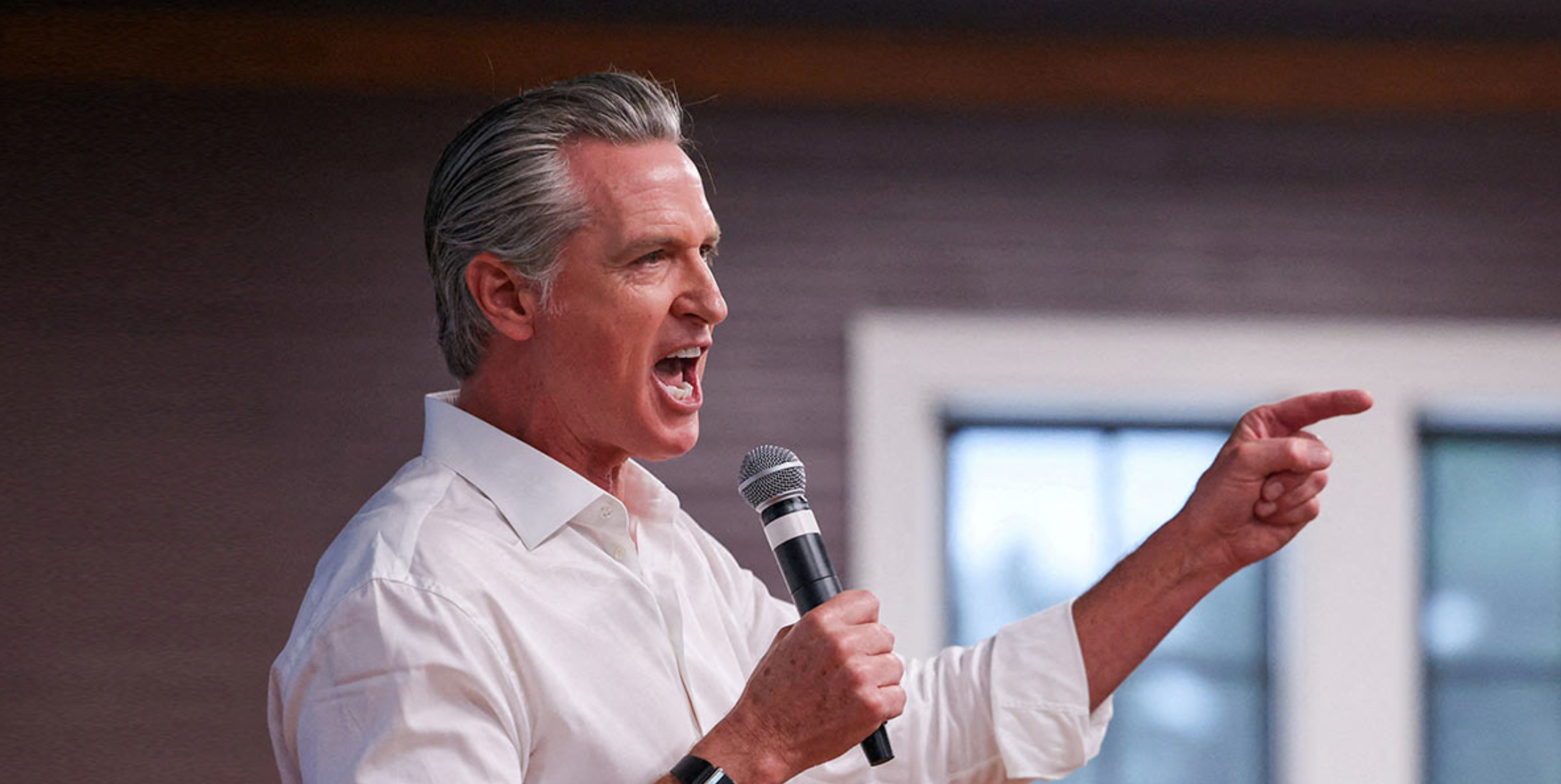
October 12, 2026
Tony Perkins
Faith & Culture
National races dominate election coverage, but some of the decisions that affect your daily life may appear much farther down the ballot.
The 2026 midterm elections on November 3 will determine control of the U.S. House and affect the makeup of the Senate, but voters across the country will also encounter state legislative races, governors’ contests, county and city offices, judges, school boards, and ballot measures.
That is why researching the 2026 ballot should involve more than recognizing a few names from national television.
If you are beginning to ask, “What’s on my ballot in 2026?”, the next step is to understand the different kinds of races and measures you may encounter and know what questions to ask about each one.
Start With the Full Ballot, Not Just the Headline Races
Most voters hear far more about Congress than they do about county government, school boards, judges, or local ballot initiatives.
That imbalance can make the bottom half of a ballot feel unfamiliar.
Before Election Day, take time to review the ballot information published for your jurisdiction and identify every race and measure that will require a decision. Instead of trying to research everything at once, make a list and work through it category by category.
Depending on where you live, that list may include:
- U.S. House and Senate races
- Governor or other statewide offices
- State legislative races
- County and municipal offices
- Judges or judicial retention questions
- School board races
- State constitutional amendments
- Local tax, bond, or policy measures
Some may receive extensive news coverage. Others may receive almost none. Lack of national attention does not make a race unimportant.
Understand What Each Office Actually Does
Candidate research becomes much more useful when you understand the responsibilities of the position being sought.
A candidate for Congress will deal with very different questions from a city council member. A governor has different authority from a state legislator. School board members, county officials, judges, and local prosecutors each operate within their own responsibilities.
Before comparing candidates, ask:
What authority does this office actually have?
That simple question can cut through a surprising amount of campaign rhetoric.
Candidates sometimes make promises involving issues their office has little power to change. Understanding the role itself helps voters evaluate whether campaign claims are realistic and whether the issues being emphasized actually belong within that office’s responsibilities.
Research Candidates Beyond Their Campaign Ads
Campaign websites are useful because they tell you what candidates want voters to know about them. They should not be your only source, however.
Compare campaign statements with interviews, public records, reliable local reporting, debate appearances, previous votes when applicable, and other primary-source material.
Useful questions include:
- What issues does the candidate identify as priorities?
- What specific policies does the candidate support?
- Has the candidate previously held public office?
- If so, what does that record show?
- What experience does the candidate bring to the position?
- Does the candidate explain how proposed policies would work?
- Are major claims about an opponent supported by evidence?
Party affiliation can provide some information about a candidate’s general political alignment, whether Republican, Democrat, independent, or another affiliation. But it does not substitute for researching the individual candidate.
Two candidates from the same party can differ substantially on priorities, policies, governing style, or experience.
Pay Particular Attention to State and Local Races
Local elections often receive less attention than congressional races, even though state and local officials can make decisions that affect people directly.
State legislators may vote on taxes, education, criminal law, business regulation, healthcare policy, and state spending. Local officials can influence public safety, development, transportation, housing, budgets, and other community priorities.
School boards may make decisions involving curriculum, district policies, budgets, and administration.
That makes local elections in 2026 worth researching with the same seriousness as races that generate national headlines.
Local journalism can be particularly valuable here because local reporters often cover candidate forums, controversies, voting records, and community concerns that never reach national media.
Don’t Skip the Ballot Measures
Candidates are not the only part of the November 3 election.
Many voters will also be asked to decide ballot measures involving state or local law. These could include constitutional amendments, taxes, bonds, public spending, criminal justice questions, government structure, education, or other policy matters.
Ballot-measure campaigns often reduce complicated proposals to memorable slogans.
Go deeper.
Read the actual proposal or an official summary. Understand what changes if it passes and what remains in place if it does not. Look at arguments from both supporters and opponents, but also distinguish campaign claims from what the measure itself would legally do.
A useful research checklist is:
What does the measure change?
Who or what would be affected?
What would it cost?
How would it be implemented?
Am I willing to pay increased taxes for this measure?
What are supporters arguing?
What are opponents arguing?
Which claims can be independently verified?
The wording may take a little more time to understand, but that time can be well spent.
Separate News Reporting from Political Persuasion
By the final weeks of an election, voters can be surrounded by campaign ads, fundraising emails, social posts, endorsements, commentary, and viral videos.
Those sources may contain useful information, but they also have a purpose.
A campaign ad exists to persuade you. So does a political action committee advertisement. An endorsement tells you what another person or organization wants you to conclude.
That does not make those materials worthless. It simply means they should be recognized for what they are.
Whenever possible, compare persuasive claims against original documents, direct quotations, voting records, full interviews, official reports, and reporting from multiple sources.
Proverbs 18:17 says, “The first one to plead his cause seems right, until his neighbor comes and examines him” (NKJV). That principle is especially useful during an election season.
Ask How the Issues Affect Your Community
National political conversations can sometimes obscure what an election means closer to home.
A question about education, public safety, taxation, housing, religious liberty, healthcare, or economic policy may look different depending on the state, district, or community involved.
As you research state and local elections, ask how the major issues being discussed connect to the actual offices and measures on your ballot. Which decisions are made federally? Which belong to your state? Which are controlled locally?
Understanding that distinction makes political research more useful and helps prevent national rhetoric from overshadowing the decisions voters are actually being asked to consider.
Christians Can Approach Election Research with Discernment
For Christian voters, becoming informed is part of taking civic responsibility seriously.
That does not require assuming that every believer will make identical political choices. It does mean approaching candidates and policies thoughtfully rather than allowing a party label, celebrity endorsement, social media clip, or campaign advertisement to make the decision for you.
Research what candidates actually believe and have done. Examine policy proposals carefully. Consider how the issues intersect with biblical convictions about human dignity, justice, truth, freedom, family, stewardship, and care for others.
And recognize the difference between biblical principles and political messaging that simply borrows Christian terminology.
Discernment requires more than hearing what you already agree with.
Know Your Ballot Before November 3
The closer Election Day gets, the louder the political conversation will become.
Researching early gives you time to move at a different pace.
Start with the races and measures that will affect your own community. Understand what each office does. Compare candidates. Examine ballot measures. Check campaign claims against reliable information. Then continue following the larger national stories shaping the 2026 midterms.
Local knowledge and national awareness belong together.
Stay Informed with Real Life Network
Real Life Network will continue following the news, cultural conversations, and major issues shaping the 2026 elections as November 3 approaches.
Then on Election Night, America Speaks ’26: Election Night Live will bring viewers live results, updates, conversation, and biblical perspective on races and issues from across the country.
Stay informed locally and nationally. Sign up for America Speaks ’26 updates from Real Life Network as Election Day 2026 approaches.
25 min
What’s on Your Ballot? How to Research Your 2026 Local Elections
October 9, 2026
Real Life Network
World News
The economy matters. Groceries, gas prices, housing costs, and the pressure on American families deserve serious attention. But national security belongs in that conversation, too. The decisions made in Washington affect more than household budgets. They shape the country's ability to confront terrorism, protect religious communities, secure its borders, and respond to threats abroad.
Those connections deserve closer examination. Through The Daniel Cohen Show on Real Life Network, the intersection of faith, national security, Israel, and American politics remains central to understanding the headlines.
The approaching November 3 midterms raise questions that go well beyond which party controls Congress. Who sets national security priorities? How should America respond to Iran and its terrorist proxies? What responsibilities do elected officials have when antisemitism and political violence reach American communities?
National security is not an abstract debate reserved for Washington. Its consequences can reach neighborhoods, schools, houses of worship, and ordinary families.
Iran, Israel, and the Responsibility to Confront Terrorism
Iran remains central to the discussion about American national security and the Middle East. Its support for armed groups, including Hezbollah and Hamas, has made its regional influence a continuing concern for the United States and Israel.
Yet political disagreements over Iran and Israel often become tangled in arguments about military assistance, international law, and America's responsibilities overseas.
Michigan's Senate contest illustrates those competing priorities.
Abdul El-Sayed has argued against unconditional American military assistance to foreign governments, including Israel. In interviews, his position has emphasized applying international law consistently and restricting weapons transfers to governments accused of violating it.
That approach raises legitimate questions about American foreign policy. Military assistance is not an unlimited obligation, and elected officials have a responsibility to scrutinize how taxpayer money is spent.
But the discussion cannot stop there.
Israel faces rocket and missile threats from hostile armed groups and regional adversaries. Defensive systems such as Iron Dome exist to intercept incoming projectiles and protect civilian populations. Any proposal to restrict military assistance therefore deserves careful examination of its potential consequences for defensive capabilities as well as offensive operations.
There is also an important distinction between criticizing a government's military decisions and excusing terrorism directed against its citizens.
The March attack against Temple Israel in West Bloomfield, Michigan, brought that distinction much closer to home. A vehicle carrying incendiary materials was driven into a synagogue complex that also serves children and families. The incident prompted renewed concerns about antisemitic violence and the reach of conflicts originating thousands of miles away.
Political leaders can disagree about Israel's government, military operations, and American foreign assistance. Those disagreements do not diminish the obligation to condemn attacks against Jewish civilians and religious institutions.
No disagreement over foreign policy can justify threatening Jewish families or treating American religious communities as extensions of a foreign government.
The same principle must apply to every community. A synagogue, church, mosque, or school should never become a target because of anger over events elsewhere.
Why National Security Belongs in Congressional Debates
The connection between national security and congressional elections is more substantial than campaign rhetoric might suggest.
Congress controls federal appropriations, establishes statutory authorities, conducts oversight, and plays a central role in shaping the agencies responsible for national defense and domestic security. The Senate also exercises its constitutional responsibility to provide advice and consent on presidential nominations requiring confirmation.
Those responsibilities make congressional debates over homeland security, intelligence gathering, immigration enforcement, and counterterrorism consequential.
An alleged ISIS-inspired plot involving the Mall of America in Minnesota offers an example of the threats federal investigators seek to identify before violence occurs.
According to the account presented by federal authorities, an 18-year-old suspect had communicated about supporting ISIS and allegedly considered carrying out an attack in the United States after plans to travel overseas did not materialize. The allegations require the usual distinction between prosecutors' claims and facts established in court.
But the broader issue remains significant: preventing terrorism requires investigative resources, intelligence cooperation, appropriate legal authorities, and effective oversight.
Protecting the public also requires precision.
Terrorist organizations are responsible for their own violence. Their actions must not become an excuse to assign collective guilt to immigrants, Muslims, or particular ethnic communities. Effective counterterrorism depends upon identifying actual threats rather than confusing religious identity or national origin with criminal conduct.
That is why national security policy requires more than slogans about being tough or compassionate.
The public deserves to understand how candidates would approach terrorism investigations, border security, intelligence oversight, civil liberties, and the constitutional limits of government authority.
Those questions belong alongside debates about inflation, healthcare, education, and taxation.
Antisemitism, Political Rhetoric, and the Limits of Party Loyalty
Three years after the Hamas-led October 7 attack, the anniversary remains a painful occasion for Jewish communities around the world.
Approximately 1,200 people were killed in the attack, and 251 were taken hostage. The consequences have extended far beyond Israel, including heightened security concerns and incidents of antisemitism in the United States.
New York City's response to the anniversary illustrates how difficult the public conversation has become.
Mayor Zohran Mamdani's remarks acknowledging the suffering caused by October 7 while criticizing Israel's subsequent military actions became a point of contention among activists with sharply different expectations.
The controversy reflects a larger problem in contemporary politics: expressions of sympathy, criticism, and disagreement are increasingly measured against demands for complete ideological agreement.
Recognizing the suffering of Israeli victims does not require ignoring Palestinian civilian suffering. Likewise, expressing concern for Palestinians does not require minimizing the October 7 atrocities or excusing antisemitism.
Both truths can be maintained without contradiction.
Political movements become less capable of honest debate when every disagreement is treated as betrayal. Acknowledging suffering should not depend upon whether the victims belong to a preferred political or religious community.
For Christians, Scripture establishes a higher standard than political loyalty. Human beings bear God's image, and the obligation to speak truthfully does not disappear when truth becomes inconvenient to a favored party or cause.
Proverbs 18:17 reminds readers that the first account of a dispute may sound persuasive until it is examined. That principle applies to viral videos, campaign statements, accusations of extremism, and claims about political opponents.
Christian discernment requires consistency: condemn terrorism without qualification, reject antisemitism without hesitation, and examine political claims without surrendering judgment to party loyalty.
The approaching midterms will generate enormous attention around polling, turnout, and campaign strategies. Those subjects are part of the political process, but they should not obscure the governing responsibilities attached to the offices being contested.
A Senate vote can affect national security appointments. A congressional appropriation can determine resources available to federal agencies. Legislative oversight can expose failures or strengthen accountability.
Understanding those responsibilities provides a more useful framework than treating every political development as a contest between personalities.
The same seriousness belongs in discussions about Israel, Iran, and religious freedom. American foreign policy involves real tradeoffs, and domestic security decisions can affect both public safety and constitutional liberties.
No political party possesses a monopoly on wisdom, and no candidate should be exempt from difficult questions.
The standard should remain consistent: evidence before accusations, clarity before slogans, and responsibility before political convenience.
Follow the intersection of biblical truth, Israel, national security, and American current events through The Daniel Cohen Show, streaming free on Real Life Network
25 min
National Security, Israel, and the Questions Behind the 2026 Midterms
October 9, 2026
Daniel Cohen
World News
After months of flooding the zone with glum predictions for Republicans, there’s been a quiet but meaningful shift in major media headlines. Left-leaning outlets desperate to make the GOP’s demise a self-fulfilling prophecy seem to be subtly hedging their bets against another polling embarrassment. In the last handful of days, even the big dogs — The New York Times, Washington Post, and Newsweek — are conceding that maybe the election forecasts aren’t as lopsided as they’ve been leading voters to believe.
Suddenly, readers are clicking on stories that paint a very different picture of the apocalyptic landscape for Republicans they’d come to expect. Articles like “Democratic Optimism in Six Senate Races May Be a Mirage,” “3 Bright Spots for the G.O.P.,” and “How Much Can Republicans Outrun Trump’s Approval?” are popping up in the same pages that have urged Americans to don galoshes for the Blue Tsunami. And while there certainly are very troubling signs for Speaker Mike Johnson’s (R-La.) party, one lesson everyone should have learned by now is that polls are an incredibly flawed measure of public opinion.
In the modern age, Republicans have consistently outperformed the industry’s numbers in presidential and midterm elections. Pollsters have frantically tried to solve this puzzle, especially after a string of national humiliations. After a lot of head-scratching, two theories for this unpredictability revolve around the GOP. “First, Republicans are becoming more distrustful of institutions and society, and that may be extending to how they feel about pollsters. Second, suburban Republican college graduates are more likely to fear professional sanction for their views and are therefore self-censoring more, including in surveys,” FiveThirtyEight’s Emily Ekins suggests. Most experts estimate that conservatives underpoll somewhere between 3-5% — a massive swing for anyone trying to prophecy close races.
Over the last handful of days, the media seems to be making an intentional effort to temper their excitement, noting that as optimistic as Minority Leader Chuck Schumer (D-N.Y.) may be, “history offers a warning to Democrats, as polls in recent elections underestimated Republicans in key states. Control of the Senate could come down to just a handful of races where polls show razor-thin margins.” In places like Alaska, Iowa, Maine, Michigan, Ohio, and Texas, Newsweek warns, Democrats appear to have a polling edge. “But Republicans have outperformed polling averages in many of those same states over the past few elections. Polling errors are not necessarily repeated from cycle to cycle. But a similar pro-Republican polling error this cycle would not bode well for Democrats’ chances of flipping the Senate.”
Watch live coverage of election night on Real Life Network.
Frankly, it’s “impossible to know for sure” what the polling error could look like this year, Syracuse Political Science Professor Grant Davis Reeher acknowledged. “There are some pretty big known unknowns in this election, which could throw off polls,” he said. “A primary one is turnout. Polls must make educated guesses about who is most likely to vote. It’s a little trickier in midterms.”
National Review’s Jim Geraghty, who hasn’t exactly been a glass-is-half-full prognosticator, offered what he called “the cheeriest midterm take for Republicans you’re going to find,” urging readers to second-guess the excitement surrounding Democrats in cherry-red Kansas, South Carolina, South Dakota, Nebraska, and Florida. Despite the media’s insistence that GOP candidates are in trouble, the polling doesn’t necessarily bear that out. “There’s good reason to not believe the hype; we’ve seen this sort of narrative before.”
He ticks off the numbers for each key race, along with historical trends, dismantling the idea that conservatives are in trouble. “The lesson of this is not that all the polls are always wrong, or that every prediction of an upset Democratic win is always wrong,” Geraghty cautions. “But there’s an extremely familiar narrative of ‘this Democrat really has a shot in a deep red state!’ that rarely pans out; when it does, it’s usually because of a spectacularly flawed Republican candidate.” Americans should be wary of a blue wave, he writes, if only because “certain left-of-center media voices always tell them there will be a blue wave every November.”
An unlikely source echoes NR’s guardedness: The New York Times. Despite what pundits say, “there is also quite a bit of good news for Republicans,” Ruth Igielnik wrote late last month. For starters, “Republican Senate candidates are running ahead of the party. … Each of [them] is outrunning President Trump’s popularity in their states, sometimes by double digits. … And in each of the races, Republican candidates are winning some voters who otherwise say they want Democrats to control the Senate. Taken together, these are signs that in these competitive, Democratic-leaning states, Republicans have nominated strong candidates who appeal beyond their base.”
Then, of course, there’s the Left’s ugly infighting. “As Democrats are divided,” the Times points out, “Republicans are united. … We asked Democrats across the country if they felt the party was united or divided. About half said the party was united, and half said divided. Those numbers are nearly identical to a survey we ran in 2016. Republicans, on the other hand, are feeling very unified. In our most recent national survey, 70 percent of Republicans said they felt the party was united. That is a dramatic departure from 10 years ago. In 2016, more than 80 percent of Republicans said they thought the party was divided.”
Over at The Washington Post, Scott Clement reiterates that a “poll of two key House districts shows good signs for Democrats, but no tsunami.”
As for the bluster that even Hispanics are abandoning the GOP, Rasmussen Reports soundly beats back that narrative. In results released Monday, Hispanic voters favor Republicans by a 50 to 42% margin over Democrats. “The poll also indicates a tightening battle for control of Congress, as the Democrats’ lead over Republicans decreased for the second week in a row, according to the company. Overall, voters said if the election was held today 47 percent of likely voters would vote for the Democrat candidate, while 44 percent would vote for the Republican. Four percent of voters said another party’s candidate and just 4 percent were undecided.” In other words, Republicans have slashed the Democrats’ lead in half since just mid-September, “particularly with independent voters.”
But as encouraging as those signs are, leadership is clear-eyed about the hill they have to climb this November. “Now listen, this is going to be a very close election,” Speaker Johnson underscored Tuesday. His Senate counterpart, Majority Leader John Thune (R-S.D.), has been cautiously optimistic about his side of the Capitol. “I think we can keep the majority,” he told Politico this week. “I think all of these races are margin of error, at least the ones that we have to win. And historically, at least if you look at polls, we tend to outperform them.”
House Majority Leader Steve Scalise (R-La.) made that same point in a conversation with Family Research Council President Tony Perkins on “This Week on Capitol Hill.” When Cook Political Report, a widely respected organization, moved more seats to the toss-up or Democratic-leaning column, the House’s second-in-command wasn’t worried. In his mind, there’s more to the story. “You know, the polling really is interesting when you dig into it. You’re seeing an undersampling of Republicans, and we’re digging into some of these. Let’s be clear too. There are a lot of close races, not just Republican races.” He pointed to a few states like New Hampshire where GOP candidates are making a dent in Democratic areas too. “There [are] about 35 seats across the country that are truly swing districts,” Scalise observed. “Twenty of them are held by Republicans that are close right now, but 15 are held by Democrats that are also close, that we have a real chance to flip. And so, turnout is going to be a big factor. Who really does show up?”
The GOP has another secret weapon this election — in large part thanks to President Trump and Speaker Johnson — and that’s campaign cash. As Perkins highlighted, conservatives “have a strong edge on the fundraising to get their message through in these final days.” Scalise nodded. “We really do. You know, it’s rare that we outraise Democrats in a lot of these seats. We have now. And again, I think people are seeing what’s at stake, and they’re donating money.”
The media, he thinks, “[is] counting on Republicans, especially traditional conservative voters, to just stay home. And I don’t think that’s going to happen, because I think more and more people are seeing this sharp contrast [between the two parties].” With the rise of the Democratic Socialists, Scalise warns, “This isn’t like two candidates [who] are similar. This is common sense versus crazy. And some of these candidates … [don’t just want] to defund the police — they want to disarm the police. They actually advocate for taking guns away from police officers. You were a police officer. Could you imagine approaching a criminal who’s got a gun and saying, ‘Hey, let’s have a conversation and try to talk this out?’ He shoots you, and it’s over. This is insanity. And that’s beyond crazy. But if people stay home ... [these radicals win]. And that’s why people can’t stay home.”
At the end of the day, Scalise insisted, Democrats are trotting out polls “to make it look like they’re doing better than they are, because they want to depress conservative voters. Because if conservative voters stay home, guess what? Socialists will actually win. They can’t win if you show up and vote on November 3rd.”
That’s right, Perkins stressed. “The only poll that really counts is Election Day when people turn out and vote.”
Watch live coverage of election night on Real Life Network.
This article was written by Suzanne Bowdey and originally published on The Washington Stand. For more content like this, visit Real Life Network.
25 min
Media Starts to Doubt Dems’ Invincibility as November Creeps Closer
October 8, 2026
The Washington Stand
World News
A newly enacted law in California that requires virtually all employers to give employees “anti-hate speech” training is raising red flags, as experts say that the mandate could force churches to provide training that conflicts with sincerely held biblical beliefs regarding sexuality, gender, and marriage.
Late last month, California Governor Gavin Newsom (D) signed into law AB 1803, a measure that requires all employers with five or more workers, including all churches and other nonprofit religious organizations, to provide employees with “anti-hate speech” instruction. But as observers like the California Family Council (CFC) are pointing out, the legislation does not define “hate speech,” instead handing the job to the state’s Civil Rights Department. The bill mandates that the training must confront workplace speech that “vilifies, humiliates, or incites hatred” against individuals based on what the state has already deemed a protected characteristic, which includes sex, gender identity, gender expression, and sexual orientation.
The CFC goes on to observe that the statute, which will go into effect on January 1, 2028, never mentions churches or religious nonprofits and their First Amendment rights to hold sincerely held religious beliefs about sexuality and gender. It also “fails to separate protected expression from unlawful conduct,” noting that the Supreme Court held in 2017 that “the First Amendment has no hate speech exception.”
Greg Burt, who serves as vice president of CFC, further pointed out the problems with AB 1803’s vague language regarding key terms that it says constitute “hate.”
“What does it mean to vilify? What speech actually humiliates?” he wondered during “Washington Watch with Tony Perkins” Tuesday. “[M]any times legislators consider many Christian beliefs when they’re expressed — especially regarding sexuality or gender — they accuse us of hating people. That’s [the] farthest thing from my mind. But we are simply advocating for our view that sex is determined by biology, and God created us both male and female. Well, to many people that is humiliating and that incites hatred. And so that’s the problem with this legislation.”
Burt went on to clarify that AB 1803 is being folded into a previously enacted statute that mandates sexual harassment training, which already specifies that using accurate biological pronouns constitutes “harassment.” “[Businesses are] already required to go through sexual harassment training, and we found out several years ago they redefined what sexual harassment means to include gender identity,” he explained. “… [The] California Civil Rights Department says misgendering is harassment, and so this training is on top of that already egregious training.”
As for how employers can fulfill the required training, Burt noted that hiring outside trainers is allowed, but the state-provided training that includes pro-LGBT messaging is free. “Right now, the state puts together a free curriculum — that’s how they do it with sexual harassment training, but you’re not required to use that training. You can come up with your own. But we don’t know exactly what ‘anti-hate’ is going to include, right? [Their] definition of speech that ‘humiliates’ — what does that mean? It really depends on the person who’s receiving the language.”
Burt further urged churches and other religious organizations in the Golden State to push back vigorously against the mandate. “What I think the state is doing is it’s trying to intimidate churches into following through with this,” he lamented. “They should not be receiving any kind of ideological training from the state on any moral issue. That’s why what churches need to be doing is asking for religious accommodations. The federal law and the state law already require businesses to accommodate people’s faith if they’re being required to do something that violates their faith. … [T]his is one of those points in history here in California where civil disobedience is going to be necessary.”
Burt concluded by emphasizing that state officials in California are counting on churches to kowtow to their demands instead of standing up for the constitutional freedoms, which has already proven to be a winning strategy.
“I’m sure they’re already thrilled that they get to retrain the entire population to believe what they believe regarding gender identity,” he reflected. “And so once we get accustomed to this and say, ‘Well, this is just what California requires, I guess we have to do it.’ No, you don’t. Folks, you’ve got to resist, and that includes individual employees. That’s what we are encouraging people to do. And we are having success. We have some attorneys we’re working with, and when people have been asking for religious accommodations, they have been accommodated.”
This article was written by Dan Hart and originally published on The Washington Stand. For more content like this, visit Real Life Network.
25 min
New California Law Requires Churches to Implement Pro-LGBT ‘Anti-Hate Speech’ Training
October 8, 2026
The Washington Stand
Faith & Culture
At a Glance
Three years after Hamas launched its October 7, 2023, attack on Israel, the consequences still reach far beyond that terrible morning. The attack rocked assumptions about Israeli security, began a prolonged hostage crisis, reshaped the Middle East, and contributed to a dramatic rise in antisemitism around the world.
- About 1,200 people were killed in the Hamas-led attack, and 251 were taken hostage.
- Civilians were murdered in their homes, communities, and at the Nova music festival.
- The final 20 Israeli hostages known to be alive were released in October 2025 as part of a ceasefire agreement.
- Antisemitism remains far above pre-October 7 levels in the United States and other parts of the world.
- For Christians, the anniversary is a time to remember the victims, reject antisemitism and terrorism, and pray for Israel and lasting peace.
At sunrise on October 7, 2023, Israel was a very different country from the one that would exist by nightfall. Hamas-led attackers breached the border from Gaza, striking Israeli communities, military positions, and the Nova music festival. Approximately 1,200 people were killed, most of them civilians, and 251 people were abducted into Gaza.
What happened during those hours was horrific, but the significance of October 7 cannot be measured only by what occurred that day. Three years later, its effects are still being felt across Israel, throughout the Middle East, on American campuses, and in Jewish communities around the world.
October 7 became a dividing line: before and after.
October 7 Rocked Israel’s Sense of Security
Israel has lived with terrorism and war throughout its modern history, but October 7 exposed vulnerabilities on a scale few Israelis had imagined possible. Communities near Gaza that had lived for years with rocket fire suddenly faced armed attackers inside their neighborhoods. Families hid in safe rooms while gunmen moved nearby, and in some communities, military help took hours to arrive.
The shock went far beyond the immediate loss of life. Israel has long faced the reality of terrorism and hostile forces seeking its destruction, but October 7 demonstrated the extraordinary lengths Hamas was willing to go to target Israeli civilians. The attack permanently changed the country’s understanding of the threats along its borders and intensified the determination to prevent anything like October 7 from happening again.
The Hostages Became a National Wound
Among the most enduring images after October 7 were the faces of the hostages. Posters appeared around the world. Families spoke publicly about loved ones ranging from children to elderly grandparents. Israelis gathered in what became known as Hostages Square in Tel Aviv, calling for their return.
The hostage crisis lasted two years. Some captives were released through agreements, others were rescued, and some died in captivity or were killed on October 7 and their bodies taken into Gaza. In October 2025, the remaining 20 Israeli hostages known to be alive were released as part of a ceasefire agreement.
Their return closed one chapter of October 7, but it did not erase what captivity had done to the hostages, their families, or Israeli society. The ordeal reinforced something terrorism is designed to accomplish: creating fear and trauma that continue long after an attack ends.
Remember the People, Not Just the Date
Three years later, October 7 risks becoming a shorthand phrase for a war, a political argument, or a date in a timeline. But before it became any of those things, it was a human tragedy.
The people murdered that day were parents, grandparents, children, soldiers, young adults, foreign workers, and visitors. Some were killed inside their homes. Others were attacked while trying to escape. At the Nova music festival, young people who had gathered for a night of music found themselves running for their lives.
Remembering October 7 means refusing to let those lives disappear inside statistics or political debate. It means remembering the families who still live with empty chairs, the survivors who carry lasting trauma, and the communities that were forever changed in a matter of hours.
Romans 12:15 tells believers to “weep with those who weep.” On this anniversary, remembrance is one way of doing exactly that.
The Attack Reshaped the Middle East
October 7 did not remain a conflict between Israel and Hamas. The war reverberated throughout the region, increasing tensions involving Hezbollah in Lebanon, Iran, the Houthis in Yemen, and other armed groups. Governments reconsidered security relationships, diplomatic efforts changed course, and long-standing regional conflicts became increasingly interconnected.
The war also brought terrible loss and destruction to Palestinian civilians in Gaza, a reality that can be acknowledged without minimizing what happened to Israelis on October 7 or excusing the actions of Hamas.
The October 2025 ceasefire stopped the largest phase of fighting between Israel and Hamas and brought the remaining living hostages home, but it did not resolve the deeper questions surrounding Gaza’s future, Israeli security, Hamas, or future peace. Three years after the attack, those questions remain unsettled.
Jewish Life Changed Far Beyond Israel
October 7 also changed life for Jewish communities thousands of miles from the Middle East. In the United States, antisemitic harassment, vandalism, threats, and violence rose sharply after the attack and the war that followed.
Jewish Americans who had nothing to do with the decisions of Israel’s government found themselves confronted over events thousands of miles away. Synagogues increased security. Jewish students faced hostility on campuses. Demonstrations sometimes crossed the line from political criticism into explicit anti-Jewish rhetoric or threats.
That distinction matters. In the years since October 7, critics of Israel’s conduct have argued that its military response was disproportionate or caused unacceptable harm to Palestinian civilians. Those policies and military decisions can be debated, and criticism of the Israeli government is not automatically antisemitic. But holding Jewish people collectively responsible for Israel’s response, repeating antisemitic conspiracies, threatening Jewish institutions, or excusing violence against Jews crosses a very different line.
October 7 exposed how quickly an ancient hatred can reappear.
Christians Should Remember, Reject Hatred, and Pray
For Christians, the anniversary of October 7 should be more than a marker on the calendar. It is an opportunity to remember those who were murdered, honor the survivors and families still carrying the weight of that day, and stand firmly against the terrorism and antisemitism that helped make such atrocities possible.
The anniversary also calls Christians to resist allowing political arguments to overshadow the human reality of what happened. Terrorism must be condemned for what it is, antisemitism must be rejected wherever it appears, and the suffering of those affected by October 7 should move believers toward compassion rather than political point-scoring.
The anniversary is also a time to pray. Psalm 122:6 says, “Pray for the peace of Jerusalem.” Pray for Israel, for those still living with trauma and loss, for Jewish communities facing antisemitism, for leaders making difficult decisions, and for a lasting peace that protects innocent life and restrains those who seek violence.
Remembering October 7 should move Christians toward truth, compassion, courage, and prayer.
Three Years Later, the Story Is Still Unfinished
October 7 is moving further into history, but its consequences are still unfolding. Israel continues to confront the threat of terrorism and the challenge of protecting its citizens in an increasingly volatile region. Families are still living with trauma and loss. Jewish communities around the world remain alert to antisemitism that intensified after the attack. And leaders throughout the Middle East continue to confront questions of terrorism, diplomacy, regional stability, and peace.
The attack also changed relationships and assumptions across the region in ways that are still developing. Questions surrounding Hamas, Gaza’s future, Iran and its proxies, Israel’s borders, and the possibility of lasting regional peace remain unresolved.
Three years later, October 7 remains a turning point whose consequences continue to shape Israel and the Middle East. Remembering what happened matters, but so does understanding how that day continues to influence what comes next.
Follow developments in Israel, the Middle East, and around the world through a biblical worldview on The Daniel Cohen Show and RLN News, streaming free on Real Life Network.
25 min
Three Years After October 7: How the Hamas Attack Changed Israel and the World

October 7, 2026
Real Life Network
World News
Some disasters arrive without warning. Others are preceded by signs that, in hindsight, seem impossible to miss.
The attempted attack aboard a FlyDubai flight bound for Tel Aviv belongs in the second category. A co-pilot attacked the captain with a cockpit crash axe as the aircraft descended rapidly toward the region. The wounded captain managed to unlock the cockpit door, passengers and crew subdued the attacker, and off-duty pilots ultimately helped bring the aircraft safely to the ground.
It was an extraordinary rescue. It was also an extraordinary security failure.
The investigation has revealed concerns about the alleged attacker that existed before he entered that cockpit. Those revelations should prompt serious questions about aviation security, information sharing, radicalization, and what happens when institutions fail to act on warnings already in front of them. The transcript places that failure within a broader theme: the responsibility of a watchman is not merely to recognize danger after it arrives, but to pay attention while something can still be done.
For more biblical perspective on the news shaping Israel, America, and the world, Real Life Network brings together current events and the good news of the gospel.
A warning is only valuable when someone is willing to act on it.
The Warning Signs Before FlyDubai Flight 1073
The attack aboard FlyDubai Flight 1073 on September 30 immediately raised questions about how the alleged attacker was allowed into the cockpit.
Authorities identified the co-pilot as Hamam al-Hammami, an Omani national. According to reporting from the Wall Street Journal and Associated Press, Oman Air had previously removed him from flying duties because of concerns about extremist views. FlyDubai later hired him after conducting standard background checks, but apparently did not receive or uncover that history.
That was not the only breakdown.
Oman does not have diplomatic relations with Israel, and questions have emerged over how an Omani pilot was cleared to operate a Tel Aviv-bound flight. Israel has acknowledged gaps in its vetting procedures and is reviewing the screening of foreign flight crews. Investigators have also examined al-Hammami’s employment and educational history as authorities in several countries try to determine what was known about him before the attack.
The most remarkable part of the story is what happened after the attack began.
Captain Smit Machchhar described being struck repeatedly from behind. Despite severe injuries and impaired vision, he managed to reach and unlock the cockpit door. That action allowed others to intervene before the aircraft could be destroyed. Prime Minister Benjamin Netanyahu later praised Machchhar as a hero and invited him and Indian Prime Minister Narendra Modi to participate in Israel’s Independence Day celebrations.
The precise motive and whether anyone else assisted al-Hammami remain subjects of investigation. Early reporting indicates investigators have not established ties to a terrorist organization and are examining the possibility that he acted alone.
Those distinctions matter. Serious journalism cannot transform suspicion into fact simply because it makes a compelling story.
But uncertainty about every detail does not erase the security failures already apparent.
The lesson is not that every possible threat can be prevented. It is that institutions cannot afford to ignore credible warning signs and then act surprised when those warnings become a crisis.
Europe Was Warned About Radicalization
The concern extends beyond one airline.
In 2017, United Arab Emirates Foreign Minister Sheikh Abdullah bin Zayed delivered a warning to Western leaders about radicalization in Europe. Speaking in English, he predicted that Europe would eventually produce more extremists and terrorists because of indecision, political correctness, and a mistaken belief that Western governments understood extremism in the Middle East better than governments confronting it directly.
Nearly a decade later, the warning is worth revisiting, but it also requires an important distinction.
Islamist extremism cannot be treated as synonymous with Islam or with Muslims generally. Millions of Muslims reject terrorism and radical ideology. Governments have a responsibility to distinguish between peaceful religious practice and individuals or organizations advocating violence.
But refusing to make sweeping judgments does not require refusing to make judgments at all.
The challenge for free societies is to protect religious liberty while confronting genuine extremism. Those commitments are not contradictory. A government can defend the right of Muslims to worship peacefully while aggressively investigating terrorist networks. It can protect immigrants from unjust discrimination while enforcing immigration and criminal laws. It can welcome peaceful citizens while recognizing that ideological radicalization is real.
Pretending those distinctions cannot be made leaves societies vulnerable from both directions.
The FlyDubai investigation illustrates the stakes. An individual reportedly flagged for extremist views eventually obtained access to the controls of a commercial aircraft headed toward Israel. Whatever additional facts investigators uncover, that sequence deserves scrutiny.
It should also remind Christians that discernment is not fear.
Fear assumes the worst about everyone. Discernment examines evidence, distinguishes truth from speculation, and responds appropriately when genuine danger appears.
A Watchman Has to See Clearly
Ezekiel 33 gives the image of a watchman standing guard. When the watchman sees danger approaching, his responsibility is to sound the alarm.
That image is powerful precisely because the watchman must do two things correctly.
He must remain awake, and he must see clearly.
A watchman who sleeps through an approaching threat has failed. But so has a watchman who constantly sounds false alarms until nobody believes him anymore. Christian vigilance therefore requires both courage and truth.
That principle reaches beyond terrorism.
Researchers are currently conducting new tests on the Durupınar formation in eastern Turkey, a boat-shaped geological formation that some believe could contain remains associated with Noah’s Ark. Recent work has included ground-penetrating radar, soil sampling, digital modeling, and core drilling. Researchers involved with the project have reported subsurface anomalies, including linear and angular features.
The location is intriguing because it lies in the broader Mount Ararat region associated with the Genesis account. The formation’s dimensions and reported subsurface features have fueled decades of interest.
But the evidence has not established that the formation is Noah’s Ark.
The research team itself has acknowledged that radar anomalies do not prove an archaeological origin, and laboratory analysis of recent samples remains underway. Some researchers believe the formation is artificial; other geologists have long argued that it is natural. More testing is necessary.
Christians should be comfortable saying that.
Biblical faith does not depend upon exaggerating archaeological discoveries before the evidence arrives. If compelling evidence eventually emerges, examine it. If the formation turns out to be geological, Genesis does not suddenly disappear.
The Dead Sea Scrolls offer a helpful contrast. Their discovery provided actual ancient manuscripts that scholars could compare with later biblical texts. The Great Isaiah Scroll, dating roughly a millennium earlier than previously available complete Hebrew manuscripts of Isaiah, demonstrated remarkable continuity while also containing textual variants.
The Christian does not need sensationalism when truth is already compelling.
Biblical discernment means refusing to ignore evidence that is uncomfortable and refusing to exaggerate evidence that is convenient.
That may be one of the most important habits Christians can develop in an age of breaking news, viral videos, political advertising, polling, social media, and constant claims of unprecedented discoveries.
The FlyDubai attack deserves investigation without conspiracy theories. Radicalization deserves attention without treating an entire religion or population as guilty. Archaeological discoveries deserve excitement without announcing conclusions before the evidence supports them. Political claims deserve examination regardless of which party benefits from them.
The watchman does not determine what is true.
The watchman pays attention to what is actually there.
Captain Machchhar reportedly had only moments to act. Severely wounded, he reached the cockpit door and opened it, giving everyone else aboard the aircraft a chance to survive.
Most people will never encounter anything remotely comparable. But everyone faces smaller moments when recognizing reality matters: deciding what information to trust, what warnings deserve attention, what claims require more evidence, and what principles should remain firm when cultural pressure makes them inconvenient.
Stay informed with The Daniel Cohen Show on Real Life Network, where faith, current events, Israel, and the stories shaping the world come together.
25 min
The FlyDubai Attack and the Warning Signs That Were Missed
October 5, 2026
Daniel Cohen
Faith & Culture
Election Day 2026 is approaching, and much of the attention will naturally fall on the biggest national races, political personalities, and questions about which party will control Congress. But your ballot will likely have much more on it than that.
The 2026 midterm elections on November 3 include races for the U.S. House and Senate alongside elections for governors, state legislators, local officials, judges, and ballot measures across the country. What appears on your ballot will depend on where you live, which is why preparing for Election Day should begin closer to home.
Rather than waiting until the final days of the campaign, now is the time to find out what you will actually be voting on, research the candidates and issues, and understand the decisions facing your community.
What Are the 2026 Midterm Elections?
Midterm elections take place halfway through a president’s four-year term. There is no presidential race on the ballot, but voters will decide who represents them in Congress and, in many states, choose governors, state lawmakers, and other officials.
Every seat in the U.S. House of Representatives is part of the 2026 election cycle, along with roughly one-third of the U.S. Senate. Many states are also holding gubernatorial and state legislative elections.
That means the November 3 election could affect decisions made at nearly every level of government, from Washington, D.C., to your state capitol, county, city, and school district.
National coverage can help explain the larger political picture, but it cannot tell you everything you need to know about your own ballot.
Start by Finding Out What’s on Your Ballot
Before researching who or what to support, begin with a simpler question:
What’s on my ballot in 2026?
A sample ballot can show you the races, candidates, and ballot measures that will appear when you vote. Depending on where you live, that could include:
- U.S. House and Senate races
- Governor and other statewide offices
- State legislature
- County and city offices
- Judges
- School board or other local offices
- State and local ballot measures
Some of these races may receive very little television or national news coverage even though the people elected will make decisions that directly affect your community.
Your state or local election office is a good starting place for identifying what will appear on your ballot. Once you know the races and measures involved, you can research them one by one rather than trying to absorb everything happening in the 2026 elections at once.
Don’t Stop With the Biggest Races
It is easy to know the names of candidates running for Congress or governor while knowing almost nothing about the other contests further down the ballot.
Yet state and local officials make decisions involving education, public safety, taxes, land use, transportation, budgets, business regulations, and many other issues that affect everyday life.
Ballot measures can matter just as much. Depending on your state or community, voters may be asked to decide questions involving taxes, bonds, constitutional amendments, criminal justice, education, election rules, or other public policies.
The wording can sometimes be complicated, so don’t wait until Election Day to read a measure for the first time.
Find out what is on the ballot, read the actual proposal, and look beyond campaign slogans from both supporters and opponents.
Research Candidates Beyond Party Labels
Political affiliation tells you something about a candidate, but it does not tell you everything.
Whether a candidate is Republican, Democrat, independent, or affiliated with another party, look at the person’s record and stated positions. Visit campaign websites, read interviews, examine public statements, and consider reliable reporting about previous votes or public service.
Questions worth researching include:
- What issues does the candidate emphasize?
- What policies has the candidate supported?
- What has the candidate done in previous public office?
- How does the candidate describe the responsibilities of the position?
- Do independent sources confirm the claims being made by the campaign or its opponents?
Campaign advertisements and social media posts are designed to persuade. Research should go further.
Proverbs 18:17 offers a useful principle: “The first one to plead his cause seems right, until his neighbor comes and examines him” (NKJV). Hearing a claim is only the beginning. Informed citizens take time to examine it.
Pay Attention to the Issues Behind the Campaigns
Candidates often dominate election coverage, but elections are also about policy.
As November 3 approaches, national conversations will continue around issues such as the economy, immigration, public safety, education, foreign policy, religious liberty, government spending, healthcare, energy, and other concerns. State and local races may bring additional issues to the forefront.
The most useful question is not simply, What is everyone talking about? Ask instead: How does this issue connect to the choices on my ballot?
A national debate may have very different implications in a congressional race, a governor’s race, a state legislative contest, or a local ballot measure.
Understanding that connection helps turn election news into useful information rather than another stream of political noise.
Christian Voters Should Be Informed Voters
For Christians, civic participation provides an opportunity to approach public questions thoughtfully and responsibly.
That does not mean every Christian will reach the same conclusion about every candidate or public policy. It does mean believers can take the responsibility seriously enough to learn what they are voting on, examine competing claims, and consider political questions in light of their biblical convictions.
Being informed also means resisting the temptation to let a viral clip, political personality, favorite commentator, or party label do all the thinking for you.
Ask questions. Check sources. Read more than headlines. Understand both the office and the candidate seeking it. And pray for wisdom.
National Headlines Are Only Part of the 2026 Election Story
Election Night will be filled with major congressional contests and closely watched races around the country. Those results matter. But so does the race that may never appear on national television.
The November 3 election is national, state, and local at the same time. Your ballot may include choices that affect who writes federal laws, who leads your state, who represents your community, and what policies take effect where you live.
Preparing now gives you time to understand those decisions before campaign advertising and breaking-news coverage reach their peak.
Find your sample ballot. Make a list of the races and measures you need to investigate. Research candidates from multiple reliable sources. Learn what the offices actually do. Then keep following the broader election picture as November approaches.
Follow the 2026 Elections with Real Life Network
As Election Day draws closer, Real Life Network will be following the issues, conversations, and races shaping the country.
Then on Tuesday, November 3, RLN will present America Speaks ’26: Election Night Live, with live election results, updates, commentary, and conversation. Coverage will follow major races both in California and across the country, with biblical perspective from Pastor Jack Hibbs, analysis from Daniel Cohen, and insight from other Real Life Network voices.
Election Night coverage begins at 8 PM ET / 5 PM PT and is free to watch with a Real Life Network account.
Stay informed as Election Day approaches. Sign up for America Speaks ’26 updates from Real Life Network and be ready to follow Election Night live on November 3.
25 min
2026 Midterm Elections: What You Need to Know Before November 3
October 5, 2026
Real Life Network
World News
Like a lot of girls her age, Rosalie Markezich knew the standard talking point about mifepristone. Don’t worry, the online sites say. It’s just like taking a Tylenol. “Well, I’ve taken a lot of Tylenol in my lifetime,” she tells people now, and “it has never killed my child. It has never ruined my life, and it has never made me bleed for over a week.”
Unlike most moms, Rosalie never got the chance to hear that lie from her doctor, because she didn’t ask for a prescription in the first place. Her boyfriend ordered the pills in her name, and without any sort of ID or verification, the drugs magically showed up at her house. “I told him, ‘No thank you. I do not want you to do that, and I do not want them.’ Well, [he] found the website. He filled it out all with my personal information that I did not give him to use … [and] $150 later, he successfully ordered abortion pills through the mail from a [California] doctor named Remy Coeytaux, shipped directly to my doorstep.”
When he forced her to swallow them, her plan was to go inside and throw them up. But it was too late. “That night, I laid on a blood-soaked towel by myself, choking on my own breath. I remember my body rejecting it, rejecting its own breath — the one thing that it needs. I was praying to God, ‘Please take me too.’” Now, filled with grief and anger at how the government has robbed her of everything the Left insists this debate is about — choice, privacy, and safety — she’s fighting back.
“The FDA was wrong,” Rosalie said emotionally at the Pray Vote Stand Summit. “They allowed these drugs. They allowed them to go through the mail. They knew the warnings. They knew what could happen. And yet they are still sending them through the mail after seeing firsthand what it has done to women and children.”
We’re talking about a drug, Alabama Attorney General Steve Marshall (R) reiterated, “that is facilitating domestic abuse and even murder.” And yet, four years ago, he shook his head, pro-lifers were at this same event celebrating the overwhelming victory of Dobbs, a success story a half-century of prayers and activism in the making. “But I don’t think any of us that were on that stage left the stage believing that we would have more abortions today than we had at that time.” All because of mifepristone — and the presidents since 2022 who have turned a blind eye to the violent consequences.
“It’s why, frankly, [we] are still amazed at this administration — which talks about being the most pro-life administration — simply burying their head in the sand on what we know is going on around us.” With a single signature, President Trump could turn this whole situation around, Marshall insists. “The data is there. … They have the capacity to be able to do it. The question is whether or not they have the political will.” And so far, they have not.
Instead, they’ve created a black market for abortion drugs that not only puts women who voluntarily take the pill in life-threatening situations, but sets fire to every pro-life state law in America. Right now, it doesn’t matter whether you live in Louisiana or New York, abortionists are illegally flooding every zip code of the country with mifepristone — and getting away with it.
If the Trump administration had the nerve to enforce the federal laws already on the books, Rosalie would be the happy mom of a two-year-old right now. Under the Comstock Act, the Justice Department should be cracking down on anyone shipping abortion pills through the mail — let alone to pro-life states whose voters have already made their voices heard on the issue. But instead, for reasons no one who witnessed the first Trump term can understand, Republican attorneys general like Louisiana’s Liz Murrill (R) are having to fight their way to the Supreme Court just for the right to have their laws respected.
Murrill, who’s already battling the FDA over its ridiculously lax standards on the drug, is expanding the war to states that are knowingly protecting the criminals sending pills into pro-life states. Together with Marshall and Arkansas Attorney General Tim Griffin (R), the trio is suing New York, California, and Massachusetts to try to dismantle the “shield laws” in blue states that refuse to punish anyone mailing mifepristone.
“They shield the doctor, they shield the pharmacist, they shield anybody who is involved with what I call the pill pipeline, sending those pills into our state,” Murrill told Family Research Council President Tony Perkins on “This Week on Capitol Hill.” “And they are doing it for a political purpose. They are doing it because they disapprove of the laws that our state has passed. And so they want to flood our state with those pills illegally.”
To get away with it, the prescribers leave no trace on the bottles. “They sanitize it. And so, you will never you may never know who actually prescribed those pills. … [They’re] filling the prescription bottle and sending it into our state with no name on it, no pharmacy on it, no recipient name.”
Murrill explained that her team actually tested the current market, having agents order drugs online. Asked if there’s any kind of consultation with a medical person, she replied no. “There’s none. They’re not even verifying who’s even buying them. … They mail them to anybody who basically fills out a form on the internet. So it’s extraordinarily irresponsible.” Not to mention, she added, that “they are directly trying to nullify our laws.”
And regardless of whether the women are coerced or ordering these of their own will, the AG sadly acknowledged that the number of emergency room visits is skyrocketing — mainly because no one is adhering to the FDA’s 10-week limit for the drug. “Is any other drug treated like this?” Perkins wanted to know. “None,” Murrill replied. “None,” she repeated. “That’s why I say over and over again … this is not health care. There is nothing about this that is health care. I mean, there is no situation in the medical field where they would do this with drugs or patients.”
That’s why red-state AGs sued the FDA in the first place, because it’s so shocking and unconscionable that a pill sending 10% of women to the ER doesn’t even require a doctor’s visit or approval. “Those rules are not in place anymore. And so, you know, it really poses a significant risk to women all over the country.”
Imagine, she emphasized, if blue states “mailed us cocaine or they mailed us fentanyl.” There would be legal consequences. Or, Perkins suggested, “What if … Louisiana said, ‘You know, we’re not going to work with California and New York on anything related to the Second Amendment. I don’t care what your laws say. We’re not going to support you in that.’” It’s like saying, “I’m going to mail guns to anybody who wants them,” Murrill agreed. “… They have laws that restrict gun ownership and possession in ways that we don’t. … [What if] I decided to violate those laws? And they wouldn’t be able to enforce them if we had a shield law similar to that. But we haven’t done that.”
At the end of the day, this is not a minor issue, the FRC president argued. Not for the baby, not for the mother, not for the constitutional process, and certainly not for state sovereignty. “You know,” Marshall underscored, “we can solve [this] problem right now. We have the ability to do it with the administration that’s in place. And it’s why not only is our prayer so important, but also our ability to stand together is so critical. Because the reality is it’s not about Republican or Democrat. It’s about protecting women’s health and preserving life. That’s our issue. That’s important — and on it, we’re right.”
This article was written by Suzanne Bowdey and originally published on The Washington Stand. For more content like this visit Real Life Network.
25 min
Red States Combine Forces to Choke Off Abortion Pill Pipeline

October 2, 2026
The Washington Stand
World News
A case centered on the Title IX rights of women to have male-free sports has been thrown out by a Biden-appointed judge, leaving Riley Gaines and the Independent Council on Women’s Sports (ICONS) determined to appeal.
Gaines and over a dozen female former college athletes filed the lawsuit funded and supported by ICONS in March 2024, claiming that the NCAA broke Title IX safeguards by allowing men to participate in women’s sports and infiltrate locker room spaces.
Gaines said in a statement on Tuesday, “This momentary setback will not deter me or other women athletes in the least. Rest assured, we will be appealing this decision. We are on the side of truth. I am confident Americans will rally to our side to fight the NCAA. Working together, we will defeat the NCAA’s continuing efforts to trample women’s rights in sports.”
U.S. District Judge Tiffany R. Johnson of the Northern District of Georgia on Monday dismissed the case, ruling that the NCAA does not have to abide by Title IX standards since it does not directly receive federal funding, which is a “prerequisite for liability under Title IX,” Fox News reported.
Johnson wrote, “Here, there is no evidence that the NCAA ever received, or could have received, federal funds. Thus, Plaintiffs’ Title IX claims cannot proceed.”
“Judge Johnson accepted the NCAA’s argument that the NCAA is not subject to Title IX and dismissed the case Gaines v. NCAA, brought by women college athletes seeking to hold the NCAA responsible for granting men access to women’s sports and private locker rooms,” ICONS said in a statement. “This decision removes all protections for women in NCAA collegiate competition across the country and underscores the vulnerability of women’s sports until court victories are secured.”
ICONS Co-Founder Kim Jones, a former NCAA All-American tennis player, insisted that Johnson was wrong in her ruling. “We believe the district judge erred and that the Court of Appeals will find that the NCAA, which is the controlling body of college sports for more than 1,100 member schools, almost all of which are federally funded, is subject to Title IX. We will not give up our fight for women and girls’ rights in sports.”
CEO and President of Concerned Women for America Penny Nance remarked that she is appalled by Johnson’s decision, and that it is “inexcusable for a judge to rule that the NCAA is above the law, and that a man’s identity takes priority over women’s rights.”
She continued, “This ruling effectively upholds the NCAA’s repulsive policy enabling sexual harassment and discrimination against female athletes. We are disgusted that the NCAA is lobbying for federal protections but refuses to protect female athletes. We will not back down from this fight in support of female athletes.”
The case comes at a time when far-left political candidates refuse to define what a woman is and affirm biological reality. A poll by Concerned Women for America found that “69% of Americans believe it is very or somewhat important in deciding who to vote for in this election that candidates oppose forcing female athletes to participate in sports and share locker rooms with biological boys/men identifying as girls/women.”
Nance continued, “Whether or not the NCAA takes federal funding, it directly benefits from the participation of its 1,100-plus member institutions, all of which are required to comply with Title IX. If the NCAA doesn’t comply with Title IX, no university should be allowed to be a member of the NCAA.”
“U.S. Senate passage of the Protect College Sports Act, along with this new ruling, exposes the glaring disconnect with federal civil rights law that Congress must address,” she added. “The NCAA continues to violate the rights of female athletes, but it should not be allowed to do so.”
The plaintiffs must file their notice of appeal in the next 30 days to the U.S. Court of Appeals for the 11th Circuit.
This article was written by Quinn Delamater and originally published on The Washington Stand. For more content like this, visit Real Life Network.
25 min
Judge Throws Out Riley Gaines NCAA Lawsuit to Force Protection of Women’s Sports
October 1, 2026
The Washington Stand
World News
The distance between an international crisis and an ordinary American family is often much shorter than it appears. A suspicious van outside a military installation in England, instability in the Middle East, arguments over immigration, or debates about assisted dying in Canada can seem like stories happening somewhere else. Eventually, however, questions about security, borders, human dignity, and government authority become local.
That is why Real Life Network brings together biblical truth, current events, and the larger forces shaping families and communities. The headlines may come from different countries, but the underlying questions frequently arrive at the same place: What is government responsible to protect, what happens when institutions lose the public’s trust, and what principles should guide Christians when political arguments become increasingly polarized?
The answers require something more substantial than party loyalty. They require discernment.
What happens across an ocean does not necessarily remain across an ocean when the issues involve national security, human dignity, and the responsibilities of government.
Security Requires Facts, Not Assumptions
The recent incident near RAF Fairford in England demonstrates why both vigilance and restraint matter.
Five British men in their 20s were arrested near the airbase after authorities received reports of suspicious vehicles. RAF Fairford is used by the U.S. Air Force and has played a role in American military operations involving Iran. Police initially arrested the men on suspicion of explosives offenses and later on suspicion of preparing a terrorist act.
The incident triggered a significant response. Homes were evacuated, military and forensic specialists examined the vehicles, and counterterrorism authorities began investigating whether the activity could have involved people acting on behalf of a foreign state. A local farmer helped raise the alarm after encountering masked men and suspicious vans near the base.
But subsequent facts complicate the initial picture. Police reported finding petrol but no improvised explosive devices. The five men were released on police bail under restrictions while the investigation continued. Authorities have not established Iranian involvement, and Iran has denied any connection.
That distinction matters.
It is reasonable to ask difficult questions about security surrounding a strategically important military installation. It is also important not to turn an ongoing investigation into a settled conclusion before investigators have established what happened.
This is where discernment becomes essential. National security demands vigilance, but vigilance is not the same thing as speculation.
The same principle should govern debates over immigration and border security. Nations have legitimate responsibilities to control their borders, enforce their laws, determine who enters, and protect their citizens. At the same time, economic claims about immigration, crime, employment, healthcare, or government spending deserve to be evaluated on evidence rather than assumed because they fit a political narrative.
Strong borders and strong institutions depend on the same thing: rules that are clearly defined, consistently enforced, and grounded in facts.
Foreign Policy Eventually Becomes Personal
The connection becomes even clearer when Iran enters the discussion.
For Americans, Iran can become an abstract foreign-policy subject involving nuclear enrichment, sanctions, missiles, military operations, and diplomatic negotiations. For Israelis and others living within range of Iranian weapons or Iranian-backed forces, those questions are much more immediate.
That difference in perspective matters.
The Iranian government has supported armed groups throughout the Middle East, while its nuclear and missile programs have remained central issues in American and Israeli security policy. The debate is not merely about whether Iran presents a threat. The harder policy question is how governments should respond to that threat while weighing diplomacy, deterrence, military action, escalation, and the human consequences of each.
The RAF Fairford investigation demonstrates how quickly those concerns can extend beyond the Middle East. Investigators are examining several possible explanations for what occurred near the base, including potential foreign-state involvement, though none has been established.
Political leaders naturally disagree about how aggressively governments should respond to such threats. Those disagreements should be debated seriously rather than reduced to accusations that one side is courageous and the other cowardly.
Christians have an additional responsibility. Scripture does not provide a modern foreign-policy platform, but it does establish principles that matter: government bears responsibility for restraining evil, human life possesses inherent dignity, truth matters, justice matters, and political power is never ultimate.
That framework leaves room for legitimate disagreement over policy while refusing to treat security as irrelevant.
It also challenges the assumption that international affairs have nothing to do with ordinary families. Decisions made in Washington, London, Jerusalem, or Tehran can eventually affect military families, energy prices, national security, immigration policy, and the stability inherited by the next generation.
What Does a Society Believe a Life Is Worth?
Few issues reveal a culture's assumptions about human dignity more clearly than assisted dying.
Canada reported 16,499 medically assisted deaths in 2024, representing about 5.1 percent of all deaths in the country. Health Canada also reported 22,535 requests for medical assistance in dying that year, including requests that ultimately did not result in MAID.
Those numbers deserve more than a passing reaction.
Supporters of Canada's MAID system generally emphasize individual autonomy and relief from intolerable suffering under legally defined eligibility requirements. Critics have raised different concerns, including how assisted dying affects people experiencing disability, serious illness, inadequate care, isolation, or economic vulnerability.
Christians enter that discussion with a fundamentally different starting point about human worth.
Human dignity does not rise and fall with independence, productivity, physical ability, economic cost, or the amount of medical care someone requires. The person in a wheelchair is no less an image-bearer than the marathon runner. The elderly patient requiring extensive care possesses no less dignity than the healthy 30-year-old.
A society reveals something about its understanding of human worth by how it treats people when they become dependent on everyone else.
That does not make end-of-life decisions simple. Christians can acknowledge the difference between intentionally causing death and declining extraordinary or excessively burdensome treatment when death is already approaching. Compassion for suffering is essential.
But compassion cannot be separated from the conviction that suffering people remain people of immeasurable worth.
That is why the Canadian debate deserves attention outside Canada. Questions surrounding healthcare systems, government authority, disability, suffering, and assisted death ultimately concern what kind of moral framework a society brings to its weakest moments.
The same is true of national security and immigration. These subjects look unrelated until the underlying question emerges: What responsibilities does government have toward the people entrusted to its care?
Governments cannot eliminate every threat, prevent every tragedy, or solve every human problem. Neither should Christians expect politics to accomplish what only Christ can accomplish.
But government still matters. Borders matter. Security matters. Religious liberty matters. Human dignity matters. And truth matters enough that facts should never be stretched merely because doing so strengthens the preferred political argument.
Ezekiel describes the watchman who sees danger approaching and sounds the warning. The principle is not an invitation to panic. A faithful watchman must actually see what is coming. He cannot invent the sword on the horizon.
Christian engagement therefore requires both courage and discernment: paying attention to danger without exaggerating it, evaluating government without worshiping it, protecting human life without reducing people to political arguments, and refusing to allow partisan loyalty to determine what counts as true.
The world may feel increasingly complicated. The Christian standard does not have to be.
Stay informed about the stories shaping faith, culture, national security, and the world through The Daniel Cohen Show on Real Life Network.
25 min
Terror Threats, Iran, and Assisted Dying: What Government Is Responsible to Protect
.jpg)
September 30, 2026
Daniel Cohen
World News
Something is happening among younger Americans. Spiritual questions have not disappeared. If anything, a generation often described as secular appears increasingly interested in religion, spirituality, meaning, and transcendence. That hunger deserves attention because hunger alone does not determine what eventually satisfies it.
That is one reason conversations about faith, culture, religious liberty, Israel, and the institutions shaping the next generation matter. Real Life Network exists to bring a biblical perspective into precisely those conversations.
The central question is not whether young people will believe in something. Human beings inevitably build their lives around some understanding of truth, identity, morality, and purpose. The more important question is what will shape those beliefs.
Joshua put the choice plainly before Israel: “Choose for yourselves today whom you will serve.” There was no illusion of neutrality. Something would occupy the center.
A spiritually hungry generation will be formed by something. The question is what reaches it first.
Religious Freedom Has to Mean Religious Freedom
That question becomes especially important when families, schools, churches, and courts disagree about religious formation.
A recent Maine custody dispute illustrates how complicated those conflicts can become. The Maine Supreme Judicial Court upheld an order giving a father final decision-making authority concerning his daughter’s involvement with a particular Calvary Chapel congregation. The mother argued that the restriction violated her constitutional religious rights.
The details matter. The court rejected the characterization that it had determined Christianity itself was psychologically harmful. Instead, it said the lower court’s concerns involved messages the child received about her father and the effects of the parental conflict. That distinction deserves to be represented accurately even as the case raises significant questions about parental rights, religious upbringing, and how courts should navigate disputes involving faith.
Similar questions emerge in public schools.
Liberty High School in Frisco, Texas, recently faced scrutiny after a Muslim student organization reportedly described a school space as intended for Muslim prayer and said “only Muslims” would be allowed. Frisco ISD responded that the space is actually a “quiet room,” is not designated as belonging exclusively to one religion, and can be used for purposes other than prayer. District policy allows students of any faith to request reasonable opportunities for voluntary prayer.
That is the standard worth defending: equal religious liberty.
Christian students should be free to read Scripture, gather voluntarily, pray, and express their faith under the same rules that protect Muslim, Jewish, or other religious students. Religious liberty becomes unstable when society begins treating freedom of religion as something that must be protected for certain beliefs but restrained for others.
The answer to religious pluralism is not less religious freedom. It is the consistent application of religious freedom.
That principle matters because schools and courts do more than settle isolated disputes. They help establish the boundaries within which families and young people understand faith in public life.
Culture Is Competing for the Next Generation
The competition for belief extends well beyond churches and schools.
Entertainment, political movements, universities, influencers, social media personalities, and celebrities all participate in forming cultural assumptions. The influence can be especially powerful when it arrives as entertainment rather than instruction.
Consider the controversy surrounding actor Adam Brody. Brody, who stars as a rabbi in Nobody Wants This, recently told GQ that he considers Israel’s conduct in Gaza a “genocide” and expressed support for a free Palestine. GQ
That is Brody’s political position, and the characterization of Israel's conduct as genocide remains fiercely disputed. But the larger cultural question extends beyond one actor or one television program: what happens when entertainment, identity, politics, and moral formation become intertwined?
Audiences should be capable of encountering political opinions without automatically adopting them. The same standard applies across ideological lines. Celebrity does not establish truth. Popularity does not establish truth. A viral video does not establish truth.
Neither does political influence.
Rep. Ro Khanna recently called for Israel to release Marwan Barghouti, describing him as a potentially unifying Palestinian leader who could contribute to a peaceful Palestinian state. Barghouti, a prominent Fatah figure, is serving multiple life sentences after an Israeli court convicted him on five counts of murder connected to attacks during the Second Intifada. Barghouti rejected the court’s jurisdiction and denied the charges.
That creates a serious policy and moral debate. Supporters of Barghouti’s release view him as a potential political alternative in Palestinian leadership. Critics point to the murder convictions and argue that presenting his release as a path toward peace minimizes the victims and the violence for which he was convicted.
Those facts should not disappear behind political slogans.
The same principle applies to Israel and Gaza more broadly. October 7, Palestinian civilian suffering, Hamas’s actions, Israel’s military response, and the future of Palestinians and Israelis deserve serious examination rather than arguments inherited from celebrities, influencers, political parties, or social-media feeds.
Discernment begins when the source of an idea matters less than whether the idea is actually true.
Everyone Is Being Formed by Something
That brings the discussion back to spiritual hunger.
A generation searching for meaning is not necessarily a generation returning to biblical Christianity. Interest in spirituality can lead toward Christianity, but it can also lead toward astrology, manifestation, political ideology, personalized spirituality, or countless other belief systems. The transcript’s central argument is precisely that distinction: spiritual appetite and Christian revival are not automatically the same thing. Pasted text
Christians should therefore resist two temptations.
The first is panic. Cultural change does not mean God has lost control.
The second is passivity. Confidence in God’s sovereignty has never meant indifference toward the formation of children, families, churches, or communities.
Parents are forming children. Teachers are forming students. Churches are forming congregations. Algorithms are forming users. Entertainment is forming audiences. Political movements are forming supporters. The question is not whether formation is happening. It is whether people recognize it.
Joshua’s challenge remains remarkably relevant: choose whom you will serve.
That choice reaches far beyond elections or partisan politics. It reaches into what is watched, what is believed, what is taught to children, what voices receive trust, what definitions of good and evil are accepted, and ultimately where authority is located.
A hungry generation is already at the table.
What matters now is what it is being fed.
Find more biblical perspective on faith, culture, Israel, and the stories shaping the next generation on The Daniel Cohen Show, streaming free on Real Life Network.
25 min
A Hungry Generation Is Looking for Something to Believe
September 29, 2026
Daniel Cohen
Faith & Culture
Adapted from a recent Rose Unplugged podcast conversation with Marc Morano of Climate Depot. Watch the full episode: Here
We are watching something shift that many people were told would never shift. For years, the message was simple, absolute, and repeated everywhere: the science is settled, the timeline is urgent, and the consequences are existential.
Climate change was not presented as one issue among many. It was presented as the issue. The defining crisis of our time. And for a long stretch, questioning that framing was treated not as disagreement, but as denial.
But now, something is happening that is difficult to ignore.
The Quieting
Major political outlets are describing what they call “climate hushing”. It’s a noticeable quieting from Democrats and environmental groups at the very moment we were told urgency should be at its peak. Media voices and political strategists are openly admitting that climate messaging is no longer resonating with voters the way it once did.
And a very uncomfortable conversation is emerging inside mainstream reporting: that some of the most extreme climate scenarios that shaped headlines, policy, and public fear were never truly forecasts at all, but worst-case modeling that was often presented without that distinction being made clear to the public.
Now those same scenarios are being reconsidered. Recalibrated. In some cases, quietly set aside.
Meanwhile, at the Kitchen Table
At the same time, there is another layer to this story that can’t be ignored. Because while elites debate messaging strategies, ordinary families are dealing with something far more immediate. They are dealing with rising costs, energy insecurity, and food prices, and with the reality that policies sold as “saving the planet” often land first and hardest on working people.
And somewhere in the middle of all of that, I think a lot of people are just trying to live their lives and make sense of it all. Some climate activists say we’re destroying the planet if we eat meat. Vox, for example, has warned that beef is among the worst foods we consume when it comes to global warming. My only request is this: just do not take my steak away from me while you’re all figuring it out. I. Mean. It.
There’s something very human about that reaction. People can debate models and projections all day long, but at the end of the day, we’re still sitting down at a dinner table trying to live our lives without being told that everything we do is somehow destructive.
That disconnect, between elite narrative and lived experience, is now shaping the political response we’re seeing.
A Generation Raised on Collapse
And there’s something even deeper happening underneath all of this. We now have an entire generation that grew up hearing one dominant message: that the world is nearing the edge, that time is running out, and that catastrophic collapse is not just possible but likely, unless radical transformation happens immediately.
Many young people didn’t just hear that message. They internalized it. It shaped anxiety. It shaped worldview. And in some cases, it shaped despair.
Now, slowly, some are beginning to ask a question that’s not political at all, but deeply personal: What if what I was told was only part of the story?
Proverbs 14:15 says, “The naive believes everything, but the sensible man considers his steps.”
That verse feels more relevant in a moment like this than it has in a long time. Not as a political statement, but as a reminder that fear, especially sustained fear, has a way of shaping belief faster than discernment can catch up.
A Pattern Emerges
Viewed individually, these developments might seem like political adjustments or media recalibrations. But when you step back and place them side by side, a pattern begins to emerge.
Political leaders are pulling back from climate messaging. Media outlets are acknowledging that voters are not responding the way they once expected. The most extreme climate scenarios that shaped years of public discourse are being revised.
Some of the world’s largest economies are resisting sweeping energy transitions. And even long-standing institutions are adjusting scope, timelines, and assumptions that once appeared fixed.
None of this is happening in isolation. It is happening all at once. And what it points to is something deeper than policy disagreement. It points to a growing gap between institutional certainty and public trust.
Stewardship Was Never the Issue
Now, to be clear: stewardship of the environment is not the issue. Wisdom in caring for creation is not the issue.
The issue has always been how that stewardship is defined, and how it is communicated to the people asked to live under it. Because when fear becomes the primary engine of persuasion, something else begins to erode alongside it, and that is trust. And trust, once fractured, is not easily restored.
As parts of the narrative so many young people were raised on are being revised, softened, or walked back, a difficult question emerges: how does a generation recalibrate when the story they were told about the world begins to change?
Not with anger. Not with cynicism. But with discernment.
A World Not Out of Control
Isaiah 40:22 reminds us, “It is He who sits above the circle of the earth.”
In other words, the world has never been out of control, even when our human interpretation of it has been incomplete.
So maybe what we are witnessing right now isn’t just a political shift or a media correction. Maybe it is a moment of reassessment: of how we weigh models versus reality, urgency versus accuracy, and narrative versus truth.
Because the question underneath all of this is not simply about climate policy. It is about trust. Trust in institutions. Trust in messaging. And ultimately, trust in how we understand the world we are being told to fear, and the world we truly live in.
If there is a path forward, it won’t come from fear alone. It will come from clarity. From honesty. And from the willingness to separate what we were told from what is true.
Keep your faith steady, your focus clear, and keep moving forward, because you are here for such a time as this.
Sign up today for more content from Real Life Network.
25 min
When the Climate Narrative Shifts: Fear, Trust, and a Generation Trying to Make Sense of it All

September 28, 2026
Rose Unplugged
World News
Politics has always involved disagreement. A healthy country should be able to argue vigorously about taxes, foreign policy, abortion, immigration, health care, education, and the proper role of government without treating political opponents as enemies who deserve suffering or death.
That distinction matters because political rhetoric does not remain confined to television studios, campaign rallies, or social media.
A recent survey discussed on The Daniel Cohen Show asked Democratic respondents how they would react to a hypothetical headline announcing President Donald Trump had been assassinated at a rally. The transcript cites the results as evidence of a disturbing willingness among some Americans to respond positively to political violence.
A survey cannot establish that respondents would personally commit violence, and attitudes expressed in a poll should not be treated as evidence that an entire political party supports assassination. But even hypothetical approval of political murder should trouble Americans regardless of who the target is.
That principle has to work in every direction.
Political violence against Donald Trump is wrong. Violence against Democratic officials is wrong. Celebrating the murder of a conservative activist is wrong. Celebrating an attack on a progressive activist would be wrong.
A political culture becomes dangerous when disagreement is no longer enough and opponents have to be humiliated, harmed, or eliminated.
Political Violence Should Not Have a Party
The attempted assassination of Trump in Butler, Pennsylvania, demonstrated how quickly political hostility can become something much more serious. The transcript also points to the killing of Charlie Kirk and the continuing controversy surrounding responses to political violence.
The deeper question is what kind of culture develops when suffering itself becomes partisan.
The 2017 attack on Senator Rand Paul offers a smaller but revealing example. MSNBC anchor Kasie Hunt introduced coverage of Paul's injuries by calling the incident one of her “favorite stories,” before immediately clarifying her concern for the senator. Paul suffered six broken ribs in the attack. The comment generated criticism at the time, and Hunt apologized, saying she had chosen her words poorly.
That distinction matters. An irresponsible comment should not automatically be interpreted as proof that someone celebrates political violence. Corrections and apologies matter too.
But so does the underlying standard.
Nobody's broken ribs should become funny because of the letter beside his name. Nobody's assassination should become acceptable because of political hatred. And nobody's murder should become easier to dismiss because the victim belonged to the wrong ideological camp.
Christians should be particularly careful here. Human dignity does not disappear when someone votes differently.
The command to love one's enemies is most revealing when there actually are enemies to love.
Foreign Policy Exposes the Difference Between Slogans and Consequences
That same need for moral clarity appears in foreign policy.
At a University of Michigan event, Democratic Senate candidate Abdul El-Sayed was questioned by a student who described relatives suffering under Iran's government and asked about El-Sayed's previous comments concerning Iran and its leadership. El-Sayed responded that the United States should not pursue regime change and said he supports “freedom and democracy for the people of Iran,” while arguing that democratic change should come from Iranians themselves.
There is a legitimate policy debate underneath that exchange.
Opposing American-led regime change is not the same thing as supporting the Iranian government. American policymakers have debated intervention, sanctions, military force, diplomacy, and regime change for decades. But candidates asking voters for significant national authority should expect difficult questions about how their principles translate into policy when authoritarian governments repress their own citizens.
The same is true of Israel.
Missile defense can sound like an abstraction until a siren gives a family seconds to reach a shelter. Iron Dome is designed to intercept rockets and other airborne threats headed toward populated areas. Arguments over American support for the system therefore involve more than budget lines; they involve competing judgments about U.S. foreign policy, Israeli security, regional stability, and civilian protection.
Political language becomes much easier when the human consequences remain theoretical.
That reality became painfully tangible this week for Israeli Ambassador to the United States Yechiel Leiter. His son Neria, an IDF reservist, was seriously wounded in a car-ramming attack at a checkpoint in the West Bank. Another son, Moshe Yedidya Leiter, was killed in Gaza in November 2023.
Arguments over Israel, Iran, terrorism, and American foreign policy deserve serious debate. They also involve families for whom those debates are not academic.
Truth Still Matters When It Complicates the Argument
Political rhetoric becomes especially dangerous when facts are treated as raw material rather than constraints.
French President Emmanuel Macron provided a striking example at the United Nations this week when he said Hamas had “never operated” in the West Bank. A French official subsequently said Macron meant that Hamas had never governed the West Bank. Those are materially different claims. Hamas has operated in the West Bank even though it has not governed the territory.
Corrections matter because words matter, particularly when they come from heads of state discussing one of the world's most contentious conflicts.
The same principle applies closer to home.
CNN, MS NOW, and Politico recently sued the Trump administration after their reporters were barred from White House grounds. The administration defended the action by accusing the organizations of dishonest reporting; the outlets argued that exclusion based on their coverage violated constitutional protections. A federal judge has since temporarily ordered their access restored, finding that the outlets were likely to succeed on their claim that the credentials were revoked without constitutionally adequate due process.
That dispute raises legitimate questions about both government power and media responsibility. News organizations can and should be criticized when reporting is inaccurate. Government officials can and should face scrutiny when they use official authority against news organizations they dislike.
Neither principle requires abandoning the other.
Truth cannot become a partisan possession, defended when useful and discarded when inconvenient.
That standard also belongs inside the church.
The transcript raises theological questions about churches and political candidates who identify themselves as Christian while challenging historic Christian doctrines. Those disagreements should ultimately be evaluated by Scripture rather than by whether a candidate has the preferred political affiliation.
Christianity is not infinitely adjustable. The virgin birth, bodily resurrection, identity of Christ, authority of Scripture, sin, repentance, and salvation are not campaign language to be reshaped around contemporary politics.
At the same time, theological disagreement should be represented accurately. Criticism is strongest when it addresses what someone actually teaches rather than exaggerating the position for political effect.
That principle connects every issue here.
Political violence. Media coverage. Iran. Israel. Churches. Presidential power. International diplomacy.
Different subjects, same responsibility.
Tell the truth about opponents. Refuse to celebrate their suffering. Examine claims before repeating them. Apply standards consistently. Remember the human beings living with the consequences of political decisions.
For Christians, political engagement should never require surrendering those obligations. Scripture does not permit hatred simply because the stakes feel high. It does not permit dishonesty because the other side is dishonest. And it does not allow political allegiance to determine who deserves dignity.
Politics reveals plenty about candidates and parties.
How people speak about their opponents can reveal even more.
Real Life Network provides biblically grounded programming examining faith, culture, and current events. Watch The Daniel Cohen Show for more conversations about the stories shaping American and international life.
25 min
What Political Rhetoric Reveals About the People Who Use It
September 25, 2026
Daniel Cohen
World News
New research has revealed the stunning extent to which transgender-identifying males have taken over women’s sporting events, finding that almost 2,300 first-place medals have been taken by males. Women’s sports advocates say that federal legislation must be passed to once again restore a fair playing field for women and girls nationwide.
On Tuesday, Concerned Women for America’s Legislative Action Committee (CWALAC) released research showing trans-identifying biological men who have been allowed to compete in female sporting events have taken 2,293 first-place medals from women and girls in the U.S. This has translated to women in professional sports losing $501,498 in prize money. The research further found that in Democrat-run states like California, over 611 women and girls have lost out on finishing first in sporting events due to males taking the top spot. All told, biological males have competed in over 14,300 amateur and professional female sporting events.
The staggering numbers come at a time when significant strides have been made at the state and federal level to protect the integrity of women’s sports. Over the past six years, 27 states have passed legislation protecting female sporting events from biological males — legislation that was upheld as constitutional in June by the U.S. Supreme Court. In addition, President Trump issued an executive order in February 2025 defining Title IX based on biological sex and threatening to pull federal funding from schools that allowed males to compete in female events and gain access to female locker rooms and bathrooms.
Several international sports bodies have also issued rules protecting women’s sporting events over the past two years, including the International Olympic Committee, the International Cycling Union, World Aquatics, World Athletics (which governs track and field events), World Boxing Organization, Union Cycliste Internationale, World Rugby, and others.
However, American sports juggernauts like the National Collegiate Athletic Association (NCAA) still have not put in place adequate measures to keep males out of women’s events, allowing an unknown number of biological males to compete in female categories — most infamously swimmer Lia Thomas, who took first place in the women’s 2022 Division I 500-yard freestyle event. As detailed by sports attorney William Bock during a Senate Judiciary Committee hearing on Wednesday, despite claiming to have amended its rules in February 2025 following President Trump’s executive order, “Current NCAA rules are not based on biology, do not use sex verification testing, and do not hold NCAA member institutions accountable for protecting women against male competitors.”
Bock further noted that despite the International Olympic Committee’s (IOC) newly established rules intended to keep women’s events only for women, the U.S. Olympic and Paralympic Committee’s (USOPC) rules to follow the IOC guidelines do “not include prescriptive terms, timelines for compliance, or sanctions for non-compliance” for U.S. national governing bodies (NGBs). This has led to NGBs including USA Biathlon, USA Cycling, USA Gymnastics, USA Racquetball, US Rowing, USA Rugby, USA Swimming, the U.S. Tennis Association, USA Triathlon, and USA Volleyball to enact “new but insufficient policies, containing loopholes that may allow men to compete in women’s sports.”
Experts say that despite the gains that have been made to protect women’s sports in the last two years, millions of female athletes, in particular girls at the middle and high school levels, are still being subjected to males being allowed to compete in their sporting events. Advocates say this not only compromises their physical safety, but also their human dignity.
“It is shockingly unfair for biological women to have to compete against trans-identifying men,” Penny Nance, president and CEO of Concerned Women for America LAC, stated following the release of her organization’s research. “… Biological men have distinct advantages over biological women. This reality not only puts women in harm’s way, but it eliminates opportunities for biological women to earn a living and win competitions.”
Nance further urged Congress to enact legislation protecting women’s and girls’ sports. “Congress should pass the Protection of Women and Girls in Sports Act of 2025 (H.R.28/S.9) to prohibit federally funded school athletic programs from allowing males to compete in women’s and girls’ sports; the Protection of Women in Olympic and Amateur Sports Act (H.R.1028/S. 405) to clarify that sports National Governing Bodies must designate women’s sports for women only under their Congressional authorization; and The Title IX Clarification Act (H.R. 8781/S.5179) to clarify that, for purposes of Title IX’s prohibition on discrimination in federally funded education programs and activities, the term ‘sex’ refers solely to an individual’s biological status as male or female.”
“How many more women and girls will be subjected to an uneven playing field?” Nance added. “It’s time to put an end to this inherent unfairness and protect women’s sports.”
This article was written by Dan Hart and originally published on The Washington Stand. For more content like this, visit Real Life Network.
25 min
2,293 Female Athletes Have Lost First-Place Medals to Biological Males, Research Shows

September 24, 2026
The Washington Stand
World News
More than 50,000 Americans from across the country signed a new “Declaration for Life” within hours of its public release that calls on them and their fellow citizens “to stand for life” and for Congress “to ban the chemical abortion drug mifepristone,” Senator Josh Hawley (R-Mo.) told reporters during an impromptu news conference in a Senate office building Wednesday.
“We think this declaration, written by pastors, is calling on spiritual leaders and everyday Christians across America to stand for life and to confront the scourge of chemical abortion. It is so critical on this the 250th anniversary of America,” Hawley said, referring to the four-page declaration he and a committee of pastors and other spiritual leaders from multiple denominations drafted.
The Declaration for Life was officially unveiled Wednesday during the first annual Missouri Prayer Breakfast hosted by the Show-Me State’s senior senator. The document is being circulated nationwide by multiple pro-life groups, including Family Research Council, and millions of Americans are expected to sign the document in the coming days.
“The Declaration of Independence gives us three examples of ‘inalienable rights:’ life, liberty, and the pursuit of happiness. Life is the first of those rights because it is the condition of the others. It is thus the most foundational of rights,” the document proclaims at its outset.
“We believe we have an obligation as Christians and spiritual leaders to remind our countrymen of what Scripture and conscience together proclaim: That every human being from the moment of our knitting together in our mothers’ wombs, was fearfully and wonderfully made. The divine image each human being bears was not earned. It cannot be forfeited. And it is the first duty of the Church to defend human dignity where it is denied,” the document states.
The declaration continues, noting that “what is at stake on this anniversary is nothing less than the conviction on which every flourishing society finally rests: That each and every member of the human family, as a creature fashioned in the image of the divine Creator and Ruler, is the bearer of profound dignity. Where that conviction is honored, civilizations flourish. Where it is forgotten, cultures decline and fall.”
The declaration explains that while in the four years since the Supreme Court’s Dobbs decision “returned the abortion question from courts to legislatures,” that decision “did not end abortion in America. Far from it. More abortions are performed in this country today than when [Roe v. Wade] was still the law of the land — over one million abortions in 2025 alone.”
Three-fourths of those abortions are carried out using the chemical drug mifepristone, and, the declaration points out, “thanks to recent changes in government regulations, mifepristone can now be mailed into every state and city in America, regardless of local rules. The abortion drug is nearly always fatal to the unborn child and frequently injurious to the mother. Recent studies indicate the drug puts more than one in 10 women who take it at risk of serious, life-threatening complications, including hemorrhaging, infections and sepsis.”
Hawley told reporters he believes “the time has come to ban mifepristone abortions, and I want to emphasize this is something only Congress can do. … Only Congress can act to take mifepristone off of the Food and Drug Administration’s [approved drug] schedule, only Congress can say it will not be available for abortions. That’s something that Congress should do. Congress should stop passing the buck to other people. Congress should stand up and act.”
As long as Congress fails to act, Hawley emphasized, state actions such as those in Louisiana, Missouri, and others that have banned chemical abortions carried out by medical professionals in those jurisdictions will continue to be rendered meaningless so long as the drug can be mailed across state lines and administered in private by the mother with a cup of water.
Hawley added that “when it comes to elected officials in Congress, there hasn’t been much of anything [done] to protect the innocent unborn, and I think we’ve got to change that. One of the things we want to do with this Declaration for Life is call on candidates for public office in both parties to sign this declaration, to say ‘We support it, we support protecting human life.’”
Earlier this year, Hawley introduced S. 4066, the Safeguarding Women from Chemical Abortion Act that would outlaw chemical abortions. On the House side of the Capitol, the same legislation was introduced as H.R. 7902 by Rep. Diana Harshbarger (R-Tenn.). The Senate bill has seven co-sponsors, all Republicans, while the House bill has 11 co-sponsors, also all GOPers. Neither proposal has been advanced to committee hearings, as Republican leaders focus on other issues.
Another major obstacle for such reforms includes the lack of action from President Donald Trump, whose administration approved in October 2025 a second generic version of mifepristone for abortion use and has delayed a promised FDA study of the drug.
In addition, as Family Research Council President Tony Perkins told reporters during the Hawley news conference, the Republican Party at its 2024 convention abandoned its long-standing defense of the right to life, and its congressional leadership has since failed to act vigorously on the issue.
“Unfortunately, the Republican Party has lost its voice on the right to life issue, and in that vacuum, there are leaders who are stepping forward like Senator Hawley calling upon the church, communities, and the country to step up on behalf of the unborn,” Perkins said.
“We have made great progress,” FRC’s president continued, “but there has been a tremendous setback, and we’ve reached a point where I think we have to call upon the faith community, Christian pastors, to step into this vacuum and speak unequivocally about the sanctity of human life and hold elected officials accountable to the standard. This declaration is a starting point for establishing a standard for what we should be aspiring to as a nation.”
When asked by The Washington Stand if he would initiate legislative action in response to a Government Accounting Office (GAO) study released earlier this week that found thousands of abortions are being paid for annually with federal tax dollars through the Obamacare health insurance program, Hawley replied, “100 percent, and the other thing that is happening is that Planned Parenthood is getting funded right now. The ban on Planned Parenthood funding has expired, [and] it’s being funded with taxpayer dollars.”
The Hyde Amendment — named after former Rep. Henry Hyde (R-Ill.) who authored the measure — was approved by a Democrat-controlled Congress and signed into law by Democratic President Jimmy Carter in 1977. That law bars the use of federal tax dollars to pay for abortions except in a tiny class of exceptions.
This article was written by Mark Tapscott and originally published on The Washington Stand. For more content like this, visit Real Life Network.
25 min
Right to Life Is ‘Most Foundational of all Rights,’ New ‘Declaration For Life’ Proclaims
.jpg)
September 23, 2026
The Washington Stand
Faith & Culture
News can be useful. It helps us understand what is happening in our communities, our country, and around the world. It can alert us to events that deserve prayer, action, generosity, or thoughtful attention.
But news can also consume attention surprisingly quickly.
Breaking alerts lead to updates. Updates lead to commentary. Commentary leads to another video, article, or social media post. Before long, a few minutes of staying informed can become hours of absorbing conflict, outrage, fear, and speculation.
Christians don’t need to withdraw from what is happening in the world. But neither should the news determine the condition of our hearts.
Here are seven practical ways believers can remain informed without allowing the news cycle to become spiritually overwhelming.
1. Start with Scripture Before Starting with Headlines
One of the simplest ways to keep news in perspective is to decide which voice gets your attention first.
Opening a news app before getting out of bed can immediately fill your mind with elections, wars, economic concerns, crime, cultural conflict, and international crises. Scripture begins somewhere very different: with God, His character, His promises, and His purposes.
Psalm 119:105 says, “Your word is a lamp to my feet and a light to my path.”
Starting with God’s Word doesn’t make difficult events disappear. It helps place them within a larger biblical framework.
Before asking, What happened overnight? it can be helpful to remember what has not changed. God is still sovereign. His Word is still true. The Gospel is still good news. Christ is still building His Church.
Headlines change by the hour. Those truths do not.
2. Know the Difference Between Being Informed and Being Consumed
There is no biblical command requiring Christians to know every development immediately. Yet modern media can create a sense that we must continually monitor events or risk falling behind.
That urgency deserves examination.
Being informed means understanding significant events well enough to think, pray, and respond wisely. Being consumed means repeatedly checking for updates even when little has changed and continuing long after the information is useful.
One helpful question is: Am I learning something I need to know, or am I simply feeding my anxiety?
Setting specific times for checking news can help establish boundaries. So can turning off unnecessary alerts or stepping away when a developing story has become repetitive.
You can care deeply about the world without following every headline in real time.
3. Test What You Hear Instead of Reacting Immediately
Fast-moving news rewards quick reactions. Christian discernment often requires something slower. Proverbs 18:17 says, “The first one to plead his cause seems right, until his neighbor comes and examines him.”
That principle is especially useful in an age of social media clips, partial quotations, dramatic headlines, and rapidly developing stories.
Before sharing or reacting, ask:
- Is the information confirmed?
- Am I hearing the full context?
- Is this reporting, commentary, or speculation?
- Does another trustworthy source corroborate the claim?
Christians should have a particular concern for truth. Passing along something inaccurate simply because it supports our assumptions does not honor that responsibility.
Sometimes wisdom means waiting.
4. Evaluate the World Through Scripture, Not a Political Tribe
Politics matters because government, law, freedom, justice, family, human dignity, and public policy affect real people. But Christianity cannot be reduced to a political party or ideology.
Believers should evaluate political and cultural questions through Scripture rather than modifying Scripture to fit a preferred political position.
That means Christians may sometimes agree strongly with a political leader, movement, or commentator and at other times need to challenge what that same person says or does.
Biblical conviction should remain the standard.
Programs that approach culture from an explicitly Christian worldview can be useful here. Cure America with Star Parker, The Daniel Cohen Show, Rose Unplugged, Small Talk Big Issues, and The City of God are among the programs available through Real Life Network that engage cultural and public issues from faith-informed perspectives.
The objective isn’t to replace independent thinking. It is to consider events alongside voices that recognize biblical truth as relevant to public life.
5. Let the News Become a Prompt for Prayer
News can easily produce frustration. It can also become a prayer list.
- A report about war can remind us to pray for civilians, soldiers, government leaders, missionaries, and churches in affected regions.
- A story about persecution can lead us to pray for believers who face consequences for their faith.
- A report involving children, schools, marriage, or culture can prompt prayer for parents, teachers, churches, and the next generation.
First Timothy 2:1–2 instructs believers to offer prayers and intercessions “for kings and all who are in authority.” That command gives Christians something constructive to do with difficult information.
Instead of merely asking, Can you believe this? we can also ask, How should I pray about this?
6. Make Room for Good News Too
News naturally emphasizes problems. That is partly because crises, disagreements, disasters, and unexpected developments are newsworthy. But consuming an uninterrupted stream of what is going wrong can distort our perception of what God is doing.
Churches are serving communities. Missionaries are sharing the Gospel. People are coming to Christ. Christians are caring for the poor, helping disaster victims, defending the vulnerable, strengthening families, and serving in places most viewers will never see on the evening news.
Programs such as On the Ground with Samaritan’s Purse can provide glimpses of Christians responding to suffering with practical help. Fred Jordan Missions TV highlights faith expressed through compassion and community involvement. Evangelism Explosion International focuses on equipping believers to share Christ with others.
These stories don’t erase bad news.
They remind us that bad news isn’t the whole story.
7. Remember Which Kingdom Comes First
Perhaps the most important way to remain grounded is to remember where Christian hope ultimately rests.
Governments change. Political movements rise and fall. Economies strengthen and weaken. International alliances shift. Cultural attitudes change.
Jesus Christ does not.
Philippians 3:20 reminds believers, “For our citizenship is in heaven, from which we also eagerly wait for the Savior, the Lord Jesus Christ.” That doesn’t make Christians indifferent to earthly events. In fact, biblical faith should encourage believers to care about their neighbors, communities, country, and world.
But it prevents temporary events from carrying eternal weight.
Christians can vote, serve, advocate, give, pray, speak truth, and remain engaged while remembering that no election, institution, economic system, or human leader can carry the hope that belongs to Christ alone.
Stay Informed Without Losing Your Peace
There is nothing wrong with wanting to understand what is happening in the world.
The challenge is keeping the news in its proper place.
Read Scripture before allowing headlines to establish the tone of your day. Set reasonable limits. Check facts carefully. Evaluate cultural and political questions through a biblical worldview. Pray about what you learn. Look for evidence of God’s work as well as evidence of human brokenness.
Above all, remember that Christians already know the most important news.
Jesus Christ has come. He died for sinners. He rose again. He offers forgiveness and eternal life to those who trust in Him, and He will return.
No breaking-news alert can change that.
Real Life Network offers RLN News along with programs such as The Daniel Cohen Show, Cure America, Rose Unplugged, The City of God, Small Talk Big Issues, and other biblically informed programming to help Christians consider current events without separating the headlines from their faith.
Explore Christian news, cultural commentary, Bible teaching, and more for free on Real Life Network.
25 min
7 Essential Ways to Stay Grounded as a Christian in a 24/7 News Cycle

September 22, 2026
Real Life Network
World News
“The Declaration of Independence gives us three examples of ‘unalienable’ rights: life, liberty, and the pursuit of happiness. Life is the first of those rights because it is the condition of the others. It is thus the most foundational of all rights.”
Those words come from the opening paragraph of a “Declaration for Life: A Statement from Christian Leaders,” spearheaded by Missouri Senator Josh Hawley (R). I joined Senator Hawley in releasing the declaration this week after a prayer breakfast with Missouri pastors who traveled to Washington for the occasion.
The biblically and historically guided statement lays out the reason for the declaration: “The divine image each human being bears was not earned. It cannot be forfeited. And it is the first duty of the Church to defend human dignity where it is denied.”
The Declaration says life is foundational because of both America’s founding principles and the biblical doctrine of the image of God. But what makes this declaration timely is that it does not stop with the prose of biblical purpose; it moves to practical application with what has happened since the overturning of Roe v. Wade.
Roe v. Wade did not end abortion in America. “Far from it. More abortions are performed in this country today than when Roe was still the law of the land.” The reason? Federal policy governing the abortion drugs, like mifepristone, that now accounts for over two-thirds of the abortions in the United States. The FDA dropped the in-person dispensing requirement for mifepristone, and the DOJ refuses to enforce federal law that prohibits abortion materials being sent through the mail. The result? Mailboxes in America have been turned into potential abortion facilities.
From the abortion industry’s own estimates, annual abortions have gone from about 930,000 prior to the overturn of Roe to over 1.1 million — an over 20% increase. That comes despite the efforts of many states to protect the unborn.
There are Republican members of Congress and state leaders who continue to champion the unborn, but the Republican Party has gone all but silent on the issue of life. The strong pro-life language that was a part of the GOP platform for decades was removed, and little is said about abortion.
Political parties may change their platforms. Politicians may change their priorities. But the responsibility of the church does not change.
Proverbs 31:8-9 says, “Open your mouth for the speechless, in the cause of all who are appointed to die. Open your mouth, judge righteously, and plead the cause of the poor and needy.”
In the context of that passage, it is a call to the king, the civil leader. But in America, ours is a government of the people, by the people, and for the people. We cannot simply outsource the responsibility for justice to those we elect.
We are called to defend the defenseless and speak for those whose voices have been silenced. Justice must have an advocate.
And that begins with life. Because the Declaration for Life gets this fundamental truth exactly right: life is the condition of every other right. If we will not defend the right that makes every other right possible, we weaken the foundation of justice itself.
To sign the declaration, text “declaration” to 67742.
This article was originally published on The Washington Stand. For more content like this, visit Real Life Network.
25 min
A Declaration for the Defenseless

September 22, 2026
Tony Perkins
World News
A nation cannot function without trust.
Citizens have to trust that leaders are thinking beyond the next news cycle. Governments have to anticipate threats before those threats become emergencies. Journalists have to report facts accurately enough that the public can distinguish information from advocacy. And when institutions make mistakes, accountability matters.
That standard becomes especially important when the stakes involve national security.
The United States, Denmark, and Greenland have reached a new Arctic security agreement intended to strengthen Greenland's defenses and restrict adversarial powers from establishing military bases or making sensitive strategic investments on the island. President Donald Trump has described the arrangement as giving the United States permanent security rights there, although Denmark and Greenland have emphasized that Greenland remains under its existing sovereignty and the precise terms are still emerging.
Months ago, much of the public conversation surrounding Greenland sounded almost absurd. Late-night comedy made Trump's interest in the island a punchline, while critics questioned why the United States should care so much about a vast Arctic territory.
Now the strategic argument is much harder to dismiss.
Greenland sits in an increasingly important Arctic region where Russia and China have strategic interests. The new arrangement reportedly expands America's ability to operate militarily there while preventing non-NATO countries from establishing sensitive footholds.
The lesson is larger than Greenland.
Prudence sometimes means preparing for a danger before everyone else agrees that the danger is real.
Proverbs 22:3 says, “A prudent man foresees evil and hides himself, but the simple pass on and are punished.”
That principle does not require accepting every government claim or supporting every proposed national-security measure. It requires taking threats seriously enough to examine them before a crisis removes the luxury of preparation.
September 11 remains the clearest American example of what happens when seemingly distant threats become immediate realities. Nearly 3,000 people were killed that morning. The lesson should not be that every warning proves correct. It should be that responsible leadership has to consider possibilities the public would rather never imagine.
A Free Press Still Has to Be a Trustworthy Press
The question of institutional trust becomes more complicated when applied to the media.
The Trump administration recently barred CNN, MS NOW, and Politico journalists from White House grounds and confiscated their credentials. Trump accused the organizations of publishing “fake news.” The three outlets have now sued the administration, arguing that their exclusion violates the First Amendment and that access was revoked in retaliation for unfavorable coverage.
Those facts create two questions that should not be collapsed into one.
The first is whether news organizations deserve criticism when their reporting is inaccurate, incomplete, or driven by political assumptions. Of course they do. Journalism possesses enormous power to shape what millions of Americans believe happened. Errors should be corrected, important context should not be deliberately omitted, and political figures should face comparable scrutiny regardless of party.
The second question is whether a president can revoke journalists' White House access because the administration believes their reporting is dishonest or unfair. That is now a constitutional dispute before the courts. The affected organizations argue that government cannot condition press access on favorable coverage, while the administration defends its ability to determine who receives access to White House facilities.
Both questions matter.
Freedom of the press and accountability for the press are not competing principles. A free press should be vigorously protected precisely because its responsibility to tell the truth is so consequential.
That responsibility includes resisting selective standards.
Donald Trump's 2017 comments following the Charlottesville violence remain a useful example of how context can become part of a political dispute. Trump did say there were “very fine people on both sides” while discussing people involved in the controversy surrounding Confederate monuments. In the same remarks, he explicitly said he was not referring to neo-Nazis and white nationalists and said they should be “condemned totally.”
That fuller context does not resolve every legitimate criticism of Trump's response to Charlottesville. Critics have argued that his broader remarks still minimized the nature of the Unite the Right rally and created an inappropriate equivalence. But accurately evaluating the controversy requires presenting what was actually said rather than removing inconvenient portions of the statement.
The same standard should apply to every president.
Journalists should scrutinize Republican administrations. They should scrutinize Democratic administrations. They should investigate political claims rather than protect preferred narratives. And audiences should be willing to correct themselves when evidence contradicts what they wanted to believe.
Trust disappears when people conclude that facts are being filtered according to who benefits from them.
When the Victim Disappears From the Story
That problem extends beyond Washington.
Media framing determines more than how people understand politicians. It can determine whose suffering remains at the center of a tragedy.
The transcript points to the killing of 23-year-old Ukrainian refugee Iryna Zarutska on Charlotte's light rail and subsequent coverage involving the accused killer's family. The broader concern is worth considering carefully: compassion for mental illness should never require forgetting the victim of a violent crime.
Mental illness is real. Families trying to help severely mentally ill relatives can endure extraordinary hardship. Criminal courts also have established procedures for determining whether mental illness affects legal responsibility.
But compassion and accountability are not mutually exclusive.
A victim has a name. A family has suffered a loss. A community has been wounded. Those facts should not disappear simply because another part of the story raises difficult questions about mental health, criminal justice, or failures in the systems surrounding an accused offender.
A compassionate society should be capable of caring about mental illness without allowing the person who suffered the violence to vanish from the story.
That principle reaches well beyond crime reporting.
Every institution tells stories. Governments tell citizens which dangers deserve attention. Political parties tell voters which problems matter. Media organizations decide which facts lead a broadcast and which appear near the bottom of an article.
Christians should therefore develop habits that go deeper than simply choosing which institution to trust.
Ask what happened. Examine the complete statement rather than the viral clip. Distinguish established facts from allegations. Look for missing context. Pay attention to the people most directly affected. Apply the same standard when the facts help a preferred political side and when they hurt it.
Most importantly, remember that truth does not become more or less true depending on who benefits from it.
National security requires foresight. Journalism requires accuracy. Justice requires accountability. Compassion requires remembering the human beings affected by our political and cultural arguments.
None of those responsibilities belongs exclusively to the left or the right.
A biblical worldview should make truth more important than either.
That is why Real Life Network and The Daniel Cohen Show continue examining the stories shaping American life through questions of truth, faith, culture, and responsibility.
25 min
Trump’s Greenland Deal, the White House Press Ban, and a Question of Accountability
September 21, 2026
Daniel Cohen