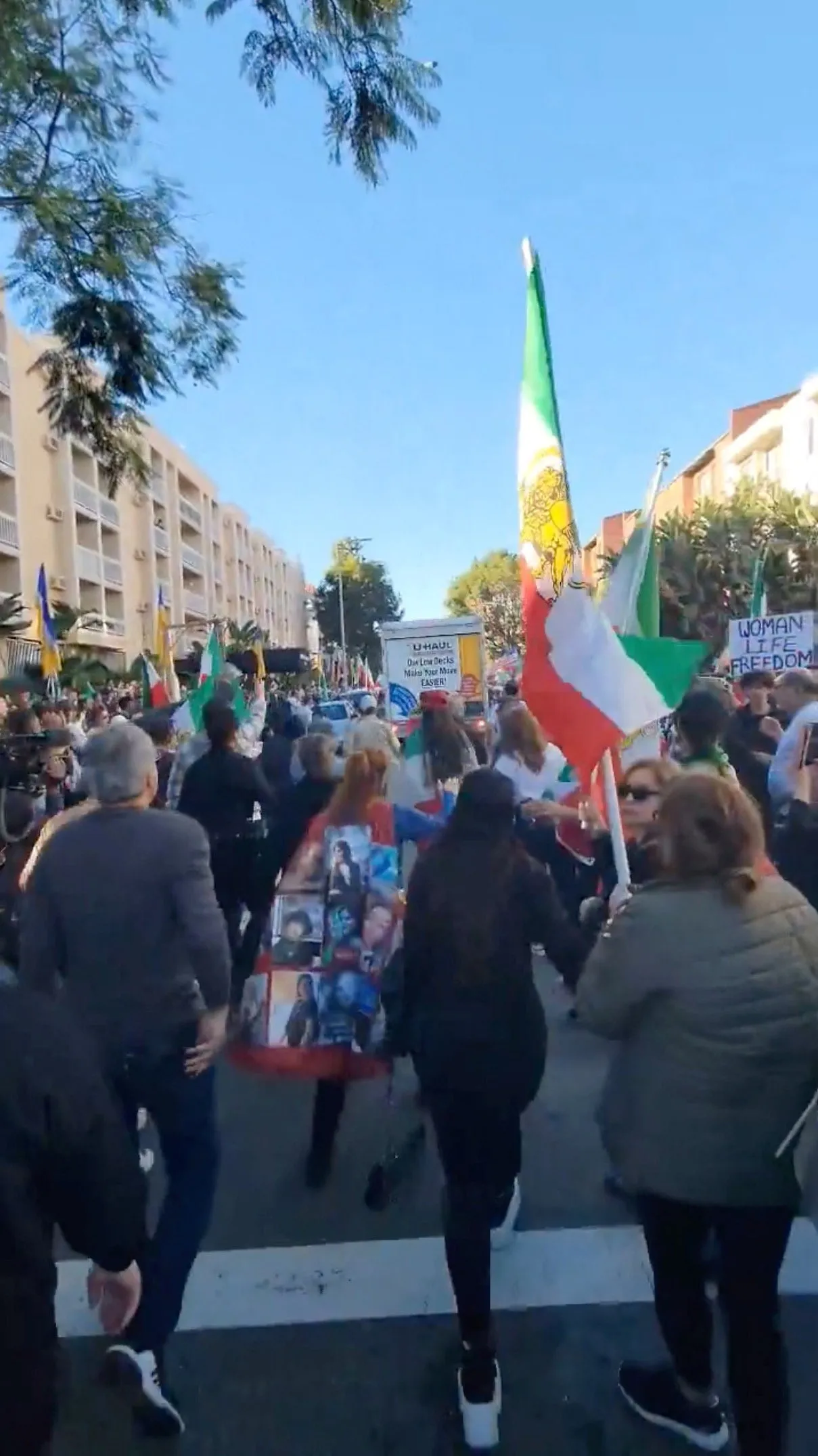
- Chaos in Los Angeles shows how Middle East conflict is spilling onto American streets, raising the stakes for public order and safety.
- New York’s “community patrol” headlines echo European intimidation tactics and raise concerns about parallel enforcement cultures.
- The demonization of ICE fuels political vigilantism, while MediaBias distorts facts and rewards outrage.
- Iran’s uprising is framed as a historic turning point with major implications for Israel, Hamas, and regional stability after October 7th.
Real Life Network is a free, faith-based streaming platform offering biblically grounded teaching, documentaries, news, movies, and original programming. Sign up today.
In a world drowning in confusion, Christians need biblical truth more than ever. The Daniel Cohen Show on Real Life Network connects the breaking headlines to the deeper reality: a spiritual battle over truth, law, and the future of the West. From chaos in Los Angeles after a U-Haul attack to reports of Sharia style patrol behavior in Europe now echoed in New York, to rising hostility toward ICE, the pattern is clear. If the church loses biblical worldview clarity, the culture will gladly disciple the next generation with propaganda.
Chaos in Los Angeles and the New Normal of Imported Conflict
A U-Haul rams into a pro Iran freedom demonstration in Westwood, leaving one person injured and setting off a wave of anger, confusion, and street level retaliation. Daniel Cohen’s point is not that every protest becomes violence. His point is that American streets are increasingly becoming the stage where foreign conflicts play out locally.
What used to feel “far away” is no longer distant when factions bring their grievances into U.S. neighborhoods, when social media accelerates rage, and when institutions refuse to name ideologies honestly. In Cohen’s framing, these are not random sparks. They are warning signals.
American cities are already strained by polarization, distrust in legacy institutions, and leaders who often reward the loudest activists. When you add global ideological conflict into that mix, the result is volatility. The Westwood incident is a picture of how quickly a crowd can become a mob, and how quickly a single driver can turn a public gathering into a near tragedy.
Cohen also warns that the public is often fed a curated narrative instead of full context. That is why Christian news grounded in Scripture matters. A biblical worldview does not deny compassion, but it refuses manipulation. It insists on truth, accountability, and moral clarity.
“Community Patrols” and the Slow Drift Toward Parallel Enforcement
The script turns from Los Angeles to New York City, where a Muslim “community patrol” presence is described as operating in a style that resembles law enforcement branding. Supporters say it is a response to bias incidents. Critics argue it looks like a parallel security culture, and they point to Europe as the preview.
The European examples Cohen highlights are not abstract. Reports have captured patrol members confronting residents for drinking, declaring certain areas “Muslim,” and harassing people over sexuality and women’s clothing. That is not neighborly concern. That is social coercion. And the danger of coercion is that it spreads by normalization.
Cohen’s argument is that this does not begin with tanks or armies. It begins with guilt, pressure, and political appeasement. Leaders present it as tolerance. Institutions frame it as inclusion. But the practical effect can be the creation of new boundaries, new rules, and new “protected” enforcers operating in the public square.
In this context, Cohen links the issue to the broader Red Green Alliance, where radical left politics and Islamist movements can cooperate for influence. They may disagree on many doctrines, but they can align against Judeo Christian values, moral order, and the legitimacy of Israel. The outcome is a culture where truth is treated as hate, and coercion is treated as compassion.
This is also why the question of Israel matters here. Israel is not a side issue in Scripture or in geopolitics. It sits at the crossroads of Biblical Prophecy, regional security, and the post October 7th reality where Hamas continues to threaten civilians and exploit global confusion.
Political Vigilantism, MediaBias, and Iran’s Sliding Door Moment
Cohen returns to what he calls an “epidemic of political vigilantism,” especially as rhetoric escalates against ICE. When activists are told for years that law enforcement is “Nazi,” “Gestapo,” or “secret police,” it should not surprise anyone when someone decides that confrontation is heroic.
In the script, the call for violence is explicit. It is celebrated as maturity. It is framed as necessity. But that is exactly how societies decay: when the moral boundary against violence is erased, and when law is replaced by emotion and mob power.
Cohen’s critique of Media Bias is simple: the narrative matters more than the facts. A tragic death is instantly weaponized. Responsibility is blurred. Moral agency disappears. Meanwhile, in Iran, something historic is unfolding and much of the same media class treats it as background noise.
Cohen argues that Iran’s uprising is a sliding door moment. If the regime falls, the ripple effects could be massive across the Middle East. Iran’s terror funding networks weaken. Hamas and Hezbollah lose support. The “ring of fire” around Israel is disrupted. The moment also exposes the selective outrage of activists who scream constantly at Israel while remaining quiet when the Islamic Republic brutalizes its own people.
This is not just politics. It is Spiritual Warfare, and the cost of deception is always paid in blood.
The Hope of the Gospel
The world offers two false shelters: denial that evil exists, or rage that tries to defeat evil with evil. The Gospel offers something better. God is not confused, not absent, and not intimidated by the chaos of nations. He created humanity, judges with perfect justice, and commands all people everywhere to repent.
Jesus Christ, the crucified and risen Lord, entered a violent world and did not answer darkness with darkness. He conquered sin and death through the cross, and He offers forgiveness to rebels who deserve judgment. The same grace that saves also transforms, teaching believers to love what God loves, hate what God hates, and speak truth with courage and compassion.
If you feel overwhelmed by chaos in Los Angeles, fear in New York, or bloodshed in Iran, do not cling to propaganda or despair. Cling to Christ. He is the only King who cannot be voted out, overthrown, or silenced.
As for me and my house, we will serve the Lord.
Discover more Christian news and biblical worldview analysis on the Daniel Cohen Show, streaming on Real Life Network.
Related Articles:
.png)
Daniel Cohen hosts the "Daniel Cohen Show" exclusively on the Real Life Network. A Jewish follower of Jesus and three-time Emmy award-winning journalist, Cohen delivers the news from Israel, reporting on today's top headlines with a biblical worldview.