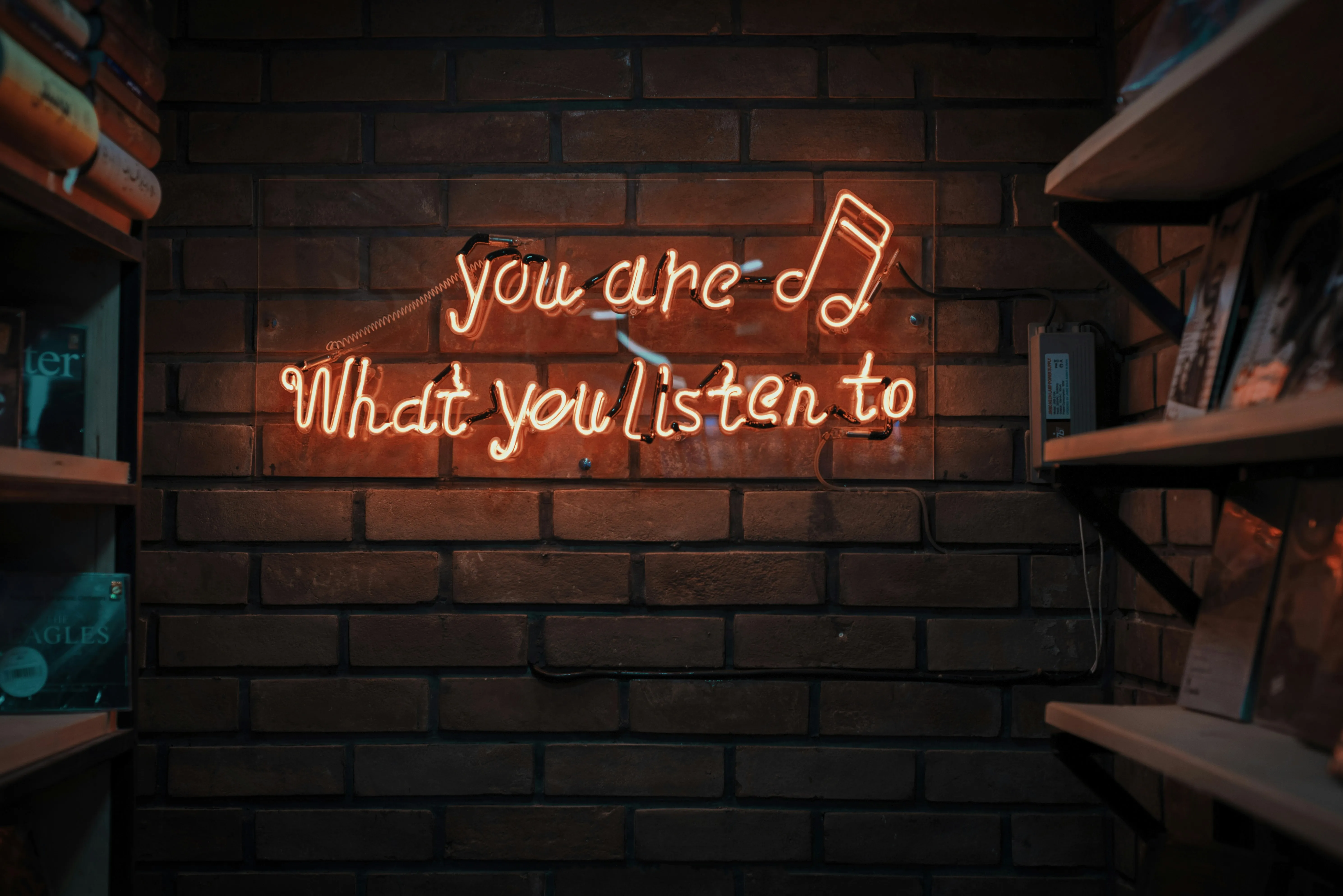
- Features seven standout Christian podcasts spanning evangelism, prophecy, creation, devotionals, testimony-driven ministry, cultural commentary, and Bible teaching.
- Emphasizes podcasts as an accessible way to stay anchored in biblical truth during everyday routines like commuting, walking, or cooking.
- Positions Real Life Network as a curated library where programs align with Scripture, removing the need to sift through questionable content.
- Encourages readers to build a healthier “media rhythm” by streaming these shows free on Real Life Network.
Podcasts have become one of the most accessible ways to learn, grow, and stay connected to biblical truth in a busy world. Whether you listen during your commute, on a walk, or while making dinner, the right Christian podcast can offer encouragement and steady your heart in a way few other media can.
As podcasts continue to multiply, listeners want to know which ones remain faithful to Scripture, bring clarity to cultural questions, and offer guidance that is truly helpful for families and new believers. Real Life Network offers a collection of well-produced, biblically centered podcasts that stand out in those areas.
Below are seven top shows—some well-known, others delightfully unexpected—that you can stream for free and incorporate easily into your weekly rhythm.
1. Ignite with Barry Meguiar
Barry Meguiar’s Ignite podcast is full of practical encouragement for believers who want to share their faith confidently. His warm, conversational style helps listeners overcome fear and see evangelism as a natural, joy-filled part of everyday life. Whether he’s sharing stories, offering tips, or speaking from decades of personal ministry experience, Barry equips Christians to live boldly and joyfully for Christ.
Available free on Real Life Network.
2. The Prophecy Pros Podcast
Hosted by Jeff Kinley and Todd Hampson, The Prophecy Pros Podcast offers clear, accessible discussions about biblical prophecy and the future events described in Scripture. Rather than leaning into speculation, the hosts bring biblical grounding, perspective, and steady teaching to topics that often create confusion. The show appeals to listeners who want to understand global events in light of God’s Word.
Episodes stream free on Real Life Network.
3. ICR’s Creation Podcast
The Institute for Creation Research offers a thoughtful podcast exploring the relationship between Scripture and science. Topics range from biology and geology to apologetics, worldviews, and the authority of the Bible. This podcast is particularly helpful for teens, students, educators, and anyone who wants to explore scientific questions with confidence.
Available on Real Life Network.
4. Steve Wiggins: Groundworks Ministries Devotional Podcast
Pastor Steve Wiggins brings Scripture alive through short, insightful daily devotionals. Each episode takes a few minutes to unpack a passage from God’s Word, offering practical application and spiritual encouragement. The brevity of the episodes makes them easy to incorporate into morning routines, school carpools, or lunchtime breaks.
Episodes stream free on Real Life Network.
5. Victor Marx Podcast
Victor Marx brings a unique voice to Christian podcasting through testimonies, interviews, and discussions shaped by global ministry work and real-world challenges. Many episodes feature guests who have endured hardship or trauma, offering listeners powerful stories of perseverance. The show is particularly meaningful for men’s groups, parents, and believers navigating difficult seasons.
Available on Real Life Network.
6. The Jack Hibbs Podcast
Pastor Jack Hibbs’ podcast offers teaching, conversations, and worldview-driven episodes that help believers understand Scripture and apply it to today’s culture. While his sermons are widely known, the podcast format allows for a more conversational approach, often addressing contemporary issues, theological questions, and practical aspects of Christian living.
Streaming free on Real Life Network.
7. Rose Unplugged
Rose Unplugged brings thoughtful, faith-informed commentary on culture, current events, and Christian living. Rose’s interviews and insights appeal to listeners who want substance, depth, and a grounded perspective on the issues shaping today’s world. Her style is warm, clear, and engaging, making the show a strong choice for believers who prefer conversation-driven podcasts with a biblical lens.
Why Christian Podcasts Matter Today
In a cultural landscape full of noise, Christian podcasts provide a steady stream of truth and encouragement. They help believers stay rooted in Scripture, understand the times, and grow in faith no matter how busy life becomes. Whether listeners want deep teaching, worldview discussions, practical discipleship, or quick daily encouragement, Christian podcasts offer something meaningful for everyone.
Why Real Life Network Is an Ideal Place to Stream These Shows
Real Life Network offers a curated environment where every program aligns with biblical truth. Listeners don’t have to sort through questionable recommendations or sift through a sea of content that does not reflect their values. Instead, RLN provides a trusted library of podcasts and talk-style programs that strengthen the heart and mind.
With teaching, interviews, devotionals, and cultural commentary—all free and accessible—RLN gives believers a reliable place to build a healthier media rhythm.
Christian podcasts have become one of the great spiritual tools of our time. For all of us who are learning, growing, teaching, and simply trying to stay anchored in truth, these shows offer substance and encouragement that travel with you wherever you go.
Discover these podcasts and more anytime on Real Life Network.

In a world drowning in confusion, Christians need biblical truth more than ever. The Daniel Cohen Show on Real Life Network connects the breaking headlines to the deeper reality: a spiritual battle over truth, law, and the future of the West. From chaos in Los Angeles after a U-Haul attack to reports of Sharia style patrol behavior in Europe now echoed in New York, to rising hostility toward ICE, the pattern is clear. If the church loses biblical worldview clarity, the culture will gladly disciple the next generation with propaganda.
Chaos in Los Angeles and the New Normal of Imported Conflict
A U-Haul rams into a pro Iran freedom demonstration in Westwood, leaving one person injured and setting off a wave of anger, confusion, and street level retaliation. Daniel Cohen’s point is not that every protest becomes violence. His point is that American streets are increasingly becoming the stage where foreign conflicts play out locally.
What used to feel “far away” is no longer distant when factions bring their grievances into U.S. neighborhoods, when social media accelerates rage, and when institutions refuse to name ideologies honestly. In Cohen’s framing, these are not random sparks. They are warning signals.
American cities are already strained by polarization, distrust in legacy institutions, and leaders who often reward the loudest activists. When you add global ideological conflict into that mix, the result is volatility. The Westwood incident is a picture of how quickly a crowd can become a mob, and how quickly a single driver can turn a public gathering into a near tragedy.
Cohen also warns that the public is often fed a curated narrative instead of full context. That is why Christian news grounded in Scripture matters. A biblical worldview does not deny compassion, but it refuses manipulation. It insists on truth, accountability, and moral clarity.
“Community Patrols” and the Slow Drift Toward Parallel Enforcement
The script turns from Los Angeles to New York City, where a Muslim “community patrol” presence is described as operating in a style that resembles law enforcement branding. Supporters say it is a response to bias incidents. Critics argue it looks like a parallel security culture, and they point to Europe as the preview.
The European examples Cohen highlights are not abstract. Reports have captured patrol members confronting residents for drinking, declaring certain areas “Muslim,” and harassing people over sexuality and women’s clothing. That is not neighborly concern. That is social coercion. And the danger of coercion is that it spreads by normalization.
Cohen’s argument is that this does not begin with tanks or armies. It begins with guilt, pressure, and political appeasement. Leaders present it as tolerance. Institutions frame it as inclusion. But the practical effect can be the creation of new boundaries, new rules, and new “protected” enforcers operating in the public square.
In this context, Cohen links the issue to the broader Red Green Alliance, where radical left politics and Islamist movements can cooperate for influence. They may disagree on many doctrines, but they can align against Judeo Christian values, moral order, and the legitimacy of Israel. The outcome is a culture where truth is treated as hate, and coercion is treated as compassion.
This is also why the question of Israel matters here. Israel is not a side issue in Scripture or in geopolitics. It sits at the crossroads of Biblical Prophecy, regional security, and the post October 7th reality where Hamas continues to threaten civilians and exploit global confusion.
Political Vigilantism, MediaBias, and Iran’s Sliding Door Moment
Cohen returns to what he calls an “epidemic of political vigilantism,” especially as rhetoric escalates against ICE. When activists are told for years that law enforcement is “Nazi,” “Gestapo,” or “secret police,” it should not surprise anyone when someone decides that confrontation is heroic.
In the script, the call for violence is explicit. It is celebrated as maturity. It is framed as necessity. But that is exactly how societies decay: when the moral boundary against violence is erased, and when law is replaced by emotion and mob power.
Cohen’s critique of Media Bias is simple: the narrative matters more than the facts. A tragic death is instantly weaponized. Responsibility is blurred. Moral agency disappears. Meanwhile, in Iran, something historic is unfolding and much of the same media class treats it as background noise.
Cohen argues that Iran’s uprising is a sliding door moment. If the regime falls, the ripple effects could be massive across the Middle East. Iran’s terror funding networks weaken. Hamas and Hezbollah lose support. The “ring of fire” around Israel is disrupted. The moment also exposes the selective outrage of activists who scream constantly at Israel while remaining quiet when the Islamic Republic brutalizes its own people.
This is not just politics. It is Spiritual Warfare, and the cost of deception is always paid in blood.
The Hope of the Gospel
The world offers two false shelters: denial that evil exists, or rage that tries to defeat evil with evil. The Gospel offers something better. God is not confused, not absent, and not intimidated by the chaos of nations. He created humanity, judges with perfect justice, and commands all people everywhere to repent.
Jesus Christ, the crucified and risen Lord, entered a violent world and did not answer darkness with darkness. He conquered sin and death through the cross, and He offers forgiveness to rebels who deserve judgment. The same grace that saves also transforms, teaching believers to love what God loves, hate what God hates, and speak truth with courage and compassion.
If you feel overwhelmed by chaos in Los Angeles, fear in New York, or bloodshed in Iran, do not cling to propaganda or despair. Cling to Christ. He is the only King who cannot be voted out, overthrown, or silenced.
As for me and my house, we will serve the Lord.
Discover more Christian news and biblical worldview analysis on the Daniel Cohen Show, streaming on Real Life Network.
Related Articles:
In a world drowning in confusion, Christians need biblical truth more than ever. The Daniel Cohen Show on Real Life Network connects the breaking headlines to the deeper reality: a spiritual battle over truth, law, and the future of the West. From chaos in Los Angeles after a U-Haul attack to reports of Sharia style patrol behavior in Europe now echoed in New York, to rising hostility toward ICE, the pattern is clear. If the church loses biblical worldview clarity, the culture will gladly disciple the next generation with propaganda.
Chaos in Los Angeles and the New Normal of Imported Conflict
A U-Haul rams into a pro Iran freedom demonstration in Westwood, leaving one person injured and setting off a wave of anger, confusion, and street level retaliation. Daniel Cohen’s point is not that every protest becomes violence. His point is that American streets are increasingly becoming the stage where foreign conflicts play out locally.
What used to feel “far away” is no longer distant when factions bring their grievances into U.S. neighborhoods, when social media accelerates rage, and when institutions refuse to name ideologies honestly. In Cohen’s framing, these are not random sparks. They are warning signals.
American cities are already strained by polarization, distrust in legacy institutions, and leaders who often reward the loudest activists. When you add global ideological conflict into that mix, the result is volatility. The Westwood incident is a picture of how quickly a crowd can become a mob, and how quickly a single driver can turn a public gathering into a near tragedy.
Cohen also warns that the public is often fed a curated narrative instead of full context. That is why Christian news grounded in Scripture matters. A biblical worldview does not deny compassion, but it refuses manipulation. It insists on truth, accountability, and moral clarity.
“Community Patrols” and the Slow Drift Toward Parallel Enforcement
The script turns from Los Angeles to New York City, where a Muslim “community patrol” presence is described as operating in a style that resembles law enforcement branding. Supporters say it is a response to bias incidents. Critics argue it looks like a parallel security culture, and they point to Europe as the preview.
The European examples Cohen highlights are not abstract. Reports have captured patrol members confronting residents for drinking, declaring certain areas “Muslim,” and harassing people over sexuality and women’s clothing. That is not neighborly concern. That is social coercion. And the danger of coercion is that it spreads by normalization.
Cohen’s argument is that this does not begin with tanks or armies. It begins with guilt, pressure, and political appeasement. Leaders present it as tolerance. Institutions frame it as inclusion. But the practical effect can be the creation of new boundaries, new rules, and new “protected” enforcers operating in the public square.
In this context, Cohen links the issue to the broader Red Green Alliance, where radical left politics and Islamist movements can cooperate for influence. They may disagree on many doctrines, but they can align against Judeo Christian values, moral order, and the legitimacy of Israel. The outcome is a culture where truth is treated as hate, and coercion is treated as compassion.
This is also why the question of Israel matters here. Israel is not a side issue in Scripture or in geopolitics. It sits at the crossroads of Biblical Prophecy, regional security, and the post October 7th reality where Hamas continues to threaten civilians and exploit global confusion.
Political Vigilantism, MediaBias, and Iran’s Sliding Door Moment
Cohen returns to what he calls an “epidemic of political vigilantism,” especially as rhetoric escalates against ICE. When activists are told for years that law enforcement is “Nazi,” “Gestapo,” or “secret police,” it should not surprise anyone when someone decides that confrontation is heroic.
In the script, the call for violence is explicit. It is celebrated as maturity. It is framed as necessity. But that is exactly how societies decay: when the moral boundary against violence is erased, and when law is replaced by emotion and mob power.
Cohen’s critique of Media Bias is simple: the narrative matters more than the facts. A tragic death is instantly weaponized. Responsibility is blurred. Moral agency disappears. Meanwhile, in Iran, something historic is unfolding and much of the same media class treats it as background noise.
Cohen argues that Iran’s uprising is a sliding door moment. If the regime falls, the ripple effects could be massive across the Middle East. Iran’s terror funding networks weaken. Hamas and Hezbollah lose support. The “ring of fire” around Israel is disrupted. The moment also exposes the selective outrage of activists who scream constantly at Israel while remaining quiet when the Islamic Republic brutalizes its own people.
This is not just politics. It is Spiritual Warfare, and the cost of deception is always paid in blood.
The Hope of the Gospel
The world offers two false shelters: denial that evil exists, or rage that tries to defeat evil with evil. The Gospel offers something better. God is not confused, not absent, and not intimidated by the chaos of nations. He created humanity, judges with perfect justice, and commands all people everywhere to repent.
Jesus Christ, the crucified and risen Lord, entered a violent world and did not answer darkness with darkness. He conquered sin and death through the cross, and He offers forgiveness to rebels who deserve judgment. The same grace that saves also transforms, teaching believers to love what God loves, hate what God hates, and speak truth with courage and compassion.
If you feel overwhelmed by chaos in Los Angeles, fear in New York, or bloodshed in Iran, do not cling to propaganda or despair. Cling to Christ. He is the only King who cannot be voted out, overthrown, or silenced.
As for me and my house, we will serve the Lord.
Discover more Christian news and biblical worldview analysis on the Daniel Cohen Show, streaming on Real Life Network.
Related Articles:
Chaos in Los Angeles, Sharia Patrol Anxiety, and Iran’s Uprising: The Spiritual Warfare Behind It All
The United Arab Emirates, a Muslim-majority nation, just drew a shocking line: the UAE is restricting Emirati students from enrolling in UK universities because British campuses have become hotbeds for radical Islam and anti-West extremism. If that sounds familiar, it should. UK universities and American universities have become ideological factories where pro-Hamas rhetoric spreads, Israel is demonized, and truth gets buried under activism. Meanwhile, Iran protests are erupting against the Islamic Republic, and legacy media barely whispers. I’m Daniel Cohen with Christian news from a biblical worldview. Watch now for free on the Real Life Network at RealLifeNetwork.com.
UAE Draws a Line as UK Universities Radicalize Students
Let’s start with the headline that should stop every parent and policymaker in their tracks. The UAE, a country that knows exactly what Islamist extremism looks like up close, is warning its own young people: do not go to British universities because the environment is radicalizing and anti-West. Think about that. A Muslim-majority nation is signaling that the UK has lost control of its own institutions.
And this is not just a “UK problem.” The same pipeline has been forming for years in the United States. Universities, aided by sympathetic media and activist networks, have normalized slogans, excuses, and narratives that sanitize extremists while vilifying anyone who pushes back. The result is predictable: soft language for radicalism, harsh language for law enforcement, and constant moral confusion.
Here is what the UAE decision exposes. Even leaders in the Muslim world can recognize that radical Islam is not merely a private faith issue. It is a political movement that uses institutions as battlegrounds. When governments finally admit that campuses are becoming recruitment and propaganda spaces, that is a flashing red warning sign to the rest of us.
Iran Is Erupting While the West Looks Away
Now, pivot to the story the corporate press treats like background noise: Iran is on fire. The people are risking their lives to throw off the yoke of the Ayatollah, the IRGC, and decades of religious tyranny. This is not theoretical. This is blood in the streets, internet shutdowns, families grieving, and a nation crying out for freedom.
So why is the coverage so thin?
Because the modern activist class does not actually prioritize human rights consistently. If they did, the brutality of Tehran would dominate the news cycle. If they did, celebrities, influencers, and the same voices screaming about “justice” would be naming the Iranian regime for what it is: a violent theocracy that crushes dissent, oppresses women, and funds terror across the region.
Instead, too many of these voices are fixated on attacking Israel and Zionism. That is not an accident. It is ideological alignment. The Iranian regime’s obsession has always been the destruction of Israel and hostility toward America. And when Western activists echo that obsession, they go quiet when Iranians rise up against it. Silence becomes a form of complicity.
From a biblical worldview, this is spiritual blindness in real time. Scripture warns that people can be deceived into calling evil good and good evil. And that is exactly what we are watching when the world shrugs at Iranian suffering but rages endlessly at Israel’s existence.
America’s Campus Crisis and Why It Matters for Your Family
Now bring it home. The UAE is making a protective move about UK universities, but Americans should be asking a harder question: who is protecting our kids from the same ideological machine here?
Across the U.S., campuses have become training grounds for a mix of far-left activism and Islamist sympathy. Students are taught to view America as inherently oppressive, Israel as uniquely evil, and violence as “resistance,” depending on who commits it. That framework does not produce thoughtful citizens. It produces radicals with credentials.
And when the public sees federal officers attacked, when lawful enforcement is treated like tyranny, when words like “secret police” get thrown around casually, it creates a permission structure for chaos. People start believing rules do not apply to them. They start believing intimidation is activism. They start believing the state is illegitimate unless it agrees with their ideology.
You do not have to agree with every policy choice to see the danger of a society that cannot tell the difference between law and lawlessness. A civilization collapses when truth becomes optional.
So here is the challenge. If the UAE can recognize that universities can become incubators for radicalization, Americans can too. Parents, pastors, and leaders need courage to speak clearly, protect their communities, and refuse to be manipulated by propaganda disguised as compassion.
The bigger story is not just geopolitics, it is worldview. When elites can excuse extremism, ignore persecuted people, and call propaganda “education,” you are watching a culture lose its moral center. But we are not without hope. God is not confused, not surprised, and not absent.
If you want Christian news that connects the headlines to biblical truth without the spin, watch The Daniel Cohen Show on the Real Life Network. Tell your family and friends, download the app, and watch now for free at RealLifeNetwork.com.
Related articles:
- Iran’s Revolt Against Religious Rule by Hedieh Mirahmadi
- Ideology at War With the West: The Rising Alliance Behind Modern Terror by Hedieh Mirahmadi
- Trump Arrests Maduro and Venezuela Tastes Freedom Again by Daniel Cohen
The United Arab Emirates, a Muslim-majority nation, just drew a shocking line: the UAE is restricting Emirati students from enrolling in UK universities because British campuses have become hotbeds for radical Islam and anti-West extremism. If that sounds familiar, it should. UK universities and American universities have become ideological factories where pro-Hamas rhetoric spreads, Israel is demonized, and truth gets buried under activism. Meanwhile, Iran protests are erupting against the Islamic Republic, and legacy media barely whispers. I’m Daniel Cohen with Christian news from a biblical worldview. Watch now for free on the Real Life Network at RealLifeNetwork.com.
UAE Draws a Line as UK Universities Radicalize Students
Let’s start with the headline that should stop every parent and policymaker in their tracks. The UAE, a country that knows exactly what Islamist extremism looks like up close, is warning its own young people: do not go to British universities because the environment is radicalizing and anti-West. Think about that. A Muslim-majority nation is signaling that the UK has lost control of its own institutions.
And this is not just a “UK problem.” The same pipeline has been forming for years in the United States. Universities, aided by sympathetic media and activist networks, have normalized slogans, excuses, and narratives that sanitize extremists while vilifying anyone who pushes back. The result is predictable: soft language for radicalism, harsh language for law enforcement, and constant moral confusion.
Here is what the UAE decision exposes. Even leaders in the Muslim world can recognize that radical Islam is not merely a private faith issue. It is a political movement that uses institutions as battlegrounds. When governments finally admit that campuses are becoming recruitment and propaganda spaces, that is a flashing red warning sign to the rest of us.
Iran Is Erupting While the West Looks Away
Now, pivot to the story the corporate press treats like background noise: Iran is on fire. The people are risking their lives to throw off the yoke of the Ayatollah, the IRGC, and decades of religious tyranny. This is not theoretical. This is blood in the streets, internet shutdowns, families grieving, and a nation crying out for freedom.
So why is the coverage so thin?
Because the modern activist class does not actually prioritize human rights consistently. If they did, the brutality of Tehran would dominate the news cycle. If they did, celebrities, influencers, and the same voices screaming about “justice” would be naming the Iranian regime for what it is: a violent theocracy that crushes dissent, oppresses women, and funds terror across the region.
Instead, too many of these voices are fixated on attacking Israel and Zionism. That is not an accident. It is ideological alignment. The Iranian regime’s obsession has always been the destruction of Israel and hostility toward America. And when Western activists echo that obsession, they go quiet when Iranians rise up against it. Silence becomes a form of complicity.
From a biblical worldview, this is spiritual blindness in real time. Scripture warns that people can be deceived into calling evil good and good evil. And that is exactly what we are watching when the world shrugs at Iranian suffering but rages endlessly at Israel’s existence.
America’s Campus Crisis and Why It Matters for Your Family
Now bring it home. The UAE is making a protective move about UK universities, but Americans should be asking a harder question: who is protecting our kids from the same ideological machine here?
Across the U.S., campuses have become training grounds for a mix of far-left activism and Islamist sympathy. Students are taught to view America as inherently oppressive, Israel as uniquely evil, and violence as “resistance,” depending on who commits it. That framework does not produce thoughtful citizens. It produces radicals with credentials.
And when the public sees federal officers attacked, when lawful enforcement is treated like tyranny, when words like “secret police” get thrown around casually, it creates a permission structure for chaos. People start believing rules do not apply to them. They start believing intimidation is activism. They start believing the state is illegitimate unless it agrees with their ideology.
You do not have to agree with every policy choice to see the danger of a society that cannot tell the difference between law and lawlessness. A civilization collapses when truth becomes optional.
So here is the challenge. If the UAE can recognize that universities can become incubators for radicalization, Americans can too. Parents, pastors, and leaders need courage to speak clearly, protect their communities, and refuse to be manipulated by propaganda disguised as compassion.
The bigger story is not just geopolitics, it is worldview. When elites can excuse extremism, ignore persecuted people, and call propaganda “education,” you are watching a culture lose its moral center. But we are not without hope. God is not confused, not surprised, and not absent.
If you want Christian news that connects the headlines to biblical truth without the spin, watch The Daniel Cohen Show on the Real Life Network. Tell your family and friends, download the app, and watch now for free at RealLifeNetwork.com.
Related articles:
- Iran’s Revolt Against Religious Rule by Hedieh Mirahmadi
- Ideology at War With the West: The Rising Alliance Behind Modern Terror by Hedieh Mirahmadi
- Trump Arrests Maduro and Venezuela Tastes Freedom Again by Daniel Cohen
UAE Bars UK Campuses Over Radical Islam as Iran’s Uprising Spreads
Living Fearless exists to bring clarity where there is confusion and truth where there is silence. I’m Hedieh Mirahmadi, and through this podcast on the Real Life Network, I speak with conviction about the spiritual, cultural, and ideological threats facing our nation today. This is a place where biblical truth is not softened, where hard realities are confronted honestly, and where courage replaces fear in a world increasingly hostile to Judeo-Christian values. Watch now for free and get grounded in truth at RealLifeNetwork.com.
I have lived inside the very world I am warning you about. For more than twenty-five years, I worked on the front lines of America’s fight against Islamic extremism across more than thirty-five countries. I advised governments, built counter radicalization programs, and worked alongside federal agencies including Homeland Security, the Department of Justice, and the FBI. This was not academic work. It was lived experience.
I was raised in a politically conservative Iranian American home and spent much of my adult life as a devout Muslim involved in reformist movements. I believed spiritual reinterpretation could defeat jihadist ideology. That belief gave me access to networks few outsiders ever see, but it also revealed a hard truth. You cannot defeat a spiritual war with policy alone.
It was only when I surrendered my life to Jesus Christ that I fully understood the nature of the battle. Islamism is not merely a religion. It is a political ideology cloaked in spiritual language, driven by conquest, and empowered when the church remains silent. That realization is what brings me here, to this network, and to Living Fearless.
Islam & Christendom in Perpetual War: Phase One
To understand the present, we must confront the past honestly. Christendom once covered the Middle East, North Africa, Greece, Rome, Spain, and much of Europe. These lands were Christian centuries before Islam emerged in the seventh century. The early spread of Islam was not peaceful evangelism. It was military conquest.
After the death of Muhammad, Islamic armies expanded rapidly through force. Christian communities were displaced, churches destroyed, women assaulted, and believers forced to convert, pay heavy taxes, or die. By 732 A.D., Islamic forces had reached deep into Europe before being stopped at the Battle of Tours in France.
For centuries, Christians under Islamic rule faced systemic oppression. This reality led directly to the Crusades, which were not random acts of aggression, but a response to generations of invasion and persecution. While mistakes were made, the historical context matters. Phase One of Islamic conquest was military, territorial, and violent.
That phase ended with the collapse of the Ottoman Caliphate after World War I. But the ideology did not die. It adapted.
Cultural Jihad & Modern Islamist Strategy: Phase Two
When armies failed, the strategy changed. Islamists shifted from swords to systems. This is Phase Two: cultural and civilizational jihad.
The Muslim Brotherhood became the intellectual backbone of modern Islamism, openly describing their mission as a civilizational struggle. Their strategy, known as tamkeen, focuses on planting deep roots within a society through schools, charities, media, mosques, colleges, and eventually government.
I witnessed this firsthand across Europe, the Middle East, and the United States. Cultural jihad operates slowly and intentionally. It reshapes identity before laws ever change. Violence comes later. The mindset comes first.
This ideology spread globally through Saudi funded education, Islamist organizations, and alliances with groups like Hamas, al Qaeda, and political movements across continents. Eventually, it reached the West, embedding itself in universities, nonprofits, courts, and activist networks under the language of civil rights and social justice.
The Rise of Cultural Jihad in the United States
In America, Islamists learned to exploit our freedoms. They work within the system, using our laws, our compassion, and our fear of offending others. Mosques, prisons, charities, student groups, and interfaith initiatives became strategic entry points.
Prisons, in particular, became major recruitment hubs. Student organizations echoed Brotherhood talking points. Lawsuits and public pressure forced institutions to accommodate ideological demands. This was not accidental. It was planned.
Communities in states like Minnesota, Illinois, and Texas reveal the same pattern: trust building first, identity shaping second, political influence last. Cultural jihad does not begin in Congress. It begins quietly, at the community level.
The Islamist Conquest of the U.S. & the Red Green Alliance
Today, Islamism has merged with radical leftism in what is known as the Red Green Alliance. Their end goals differ, but they share one objective: dismantling Judeo-Christian values.
This alliance is visible on college campuses, in city councils, and in Congress. Islamist aligned politicians normalize anti-Israel rhetoric, excuse corruption, and frame America as inherently oppressive. Criticism is silenced by accusations of Islamophobia.
Religious liberty is weaponized. Political ideology is disguised as faith. And institutions partner with these groups without understanding the long-term consequences.
Separate Islam from Muslims: A Call to Clarity, Courage, and Compassion
I want to end where the Gospel always leads us: truth paired with love.
Muslims are not our enemy. They are our mission field. I know this because I was one of them. Islamism thrives on fear and silence. Jesus came to break both.
We must oppose political Islam with courage, while loving Muslims with compassion and clarity. Only the Gospel transforms hearts. Only Christ sets captives free.
This is Living Fearless. And this is why I speak.
Watch Living Fearless on the Real Life Network and share it with someone who needs clarity right now. Download the RLN app and start watching for free at RealLifeNetwork.com.
For more articles like this click here.
Living Fearless exists to bring clarity where there is confusion and truth where there is silence. I’m Hedieh Mirahmadi, and through this podcast on the Real Life Network, I speak with conviction about the spiritual, cultural, and ideological threats facing our nation today. This is a place where biblical truth is not softened, where hard realities are confronted honestly, and where courage replaces fear in a world increasingly hostile to Judeo-Christian values. Watch now for free and get grounded in truth at RealLifeNetwork.com.
I have lived inside the very world I am warning you about. For more than twenty-five years, I worked on the front lines of America’s fight against Islamic extremism across more than thirty-five countries. I advised governments, built counter radicalization programs, and worked alongside federal agencies including Homeland Security, the Department of Justice, and the FBI. This was not academic work. It was lived experience.
I was raised in a politically conservative Iranian American home and spent much of my adult life as a devout Muslim involved in reformist movements. I believed spiritual reinterpretation could defeat jihadist ideology. That belief gave me access to networks few outsiders ever see, but it also revealed a hard truth. You cannot defeat a spiritual war with policy alone.
It was only when I surrendered my life to Jesus Christ that I fully understood the nature of the battle. Islamism is not merely a religion. It is a political ideology cloaked in spiritual language, driven by conquest, and empowered when the church remains silent. That realization is what brings me here, to this network, and to Living Fearless.
Islam & Christendom in Perpetual War: Phase One
To understand the present, we must confront the past honestly. Christendom once covered the Middle East, North Africa, Greece, Rome, Spain, and much of Europe. These lands were Christian centuries before Islam emerged in the seventh century. The early spread of Islam was not peaceful evangelism. It was military conquest.
After the death of Muhammad, Islamic armies expanded rapidly through force. Christian communities were displaced, churches destroyed, women assaulted, and believers forced to convert, pay heavy taxes, or die. By 732 A.D., Islamic forces had reached deep into Europe before being stopped at the Battle of Tours in France.
For centuries, Christians under Islamic rule faced systemic oppression. This reality led directly to the Crusades, which were not random acts of aggression, but a response to generations of invasion and persecution. While mistakes were made, the historical context matters. Phase One of Islamic conquest was military, territorial, and violent.
That phase ended with the collapse of the Ottoman Caliphate after World War I. But the ideology did not die. It adapted.
Cultural Jihad & Modern Islamist Strategy: Phase Two
When armies failed, the strategy changed. Islamists shifted from swords to systems. This is Phase Two: cultural and civilizational jihad.
The Muslim Brotherhood became the intellectual backbone of modern Islamism, openly describing their mission as a civilizational struggle. Their strategy, known as tamkeen, focuses on planting deep roots within a society through schools, charities, media, mosques, colleges, and eventually government.
I witnessed this firsthand across Europe, the Middle East, and the United States. Cultural jihad operates slowly and intentionally. It reshapes identity before laws ever change. Violence comes later. The mindset comes first.
This ideology spread globally through Saudi funded education, Islamist organizations, and alliances with groups like Hamas, al Qaeda, and political movements across continents. Eventually, it reached the West, embedding itself in universities, nonprofits, courts, and activist networks under the language of civil rights and social justice.
The Rise of Cultural Jihad in the United States
In America, Islamists learned to exploit our freedoms. They work within the system, using our laws, our compassion, and our fear of offending others. Mosques, prisons, charities, student groups, and interfaith initiatives became strategic entry points.
Prisons, in particular, became major recruitment hubs. Student organizations echoed Brotherhood talking points. Lawsuits and public pressure forced institutions to accommodate ideological demands. This was not accidental. It was planned.
Communities in states like Minnesota, Illinois, and Texas reveal the same pattern: trust building first, identity shaping second, political influence last. Cultural jihad does not begin in Congress. It begins quietly, at the community level.
The Islamist Conquest of the U.S. & the Red Green Alliance
Today, Islamism has merged with radical leftism in what is known as the Red Green Alliance. Their end goals differ, but they share one objective: dismantling Judeo-Christian values.
This alliance is visible on college campuses, in city councils, and in Congress. Islamist aligned politicians normalize anti-Israel rhetoric, excuse corruption, and frame America as inherently oppressive. Criticism is silenced by accusations of Islamophobia.
Religious liberty is weaponized. Political ideology is disguised as faith. And institutions partner with these groups without understanding the long-term consequences.
Separate Islam from Muslims: A Call to Clarity, Courage, and Compassion
I want to end where the Gospel always leads us: truth paired with love.
Muslims are not our enemy. They are our mission field. I know this because I was one of them. Islamism thrives on fear and silence. Jesus came to break both.
We must oppose political Islam with courage, while loving Muslims with compassion and clarity. Only the Gospel transforms hearts. Only Christ sets captives free.
This is Living Fearless. And this is why I speak.
Watch Living Fearless on the Real Life Network and share it with someone who needs clarity right now. Download the RLN app and start watching for free at RealLifeNetwork.com.
For more articles like this click here.