Stream Real Life Network Now

Arrow
FROM THE DESK OF

Hedieh Mirahmadi Falco

Select Category
Sort By:
Thank you! Your submission has been received!
Oops! Something went wrong while submitting the form.
World News

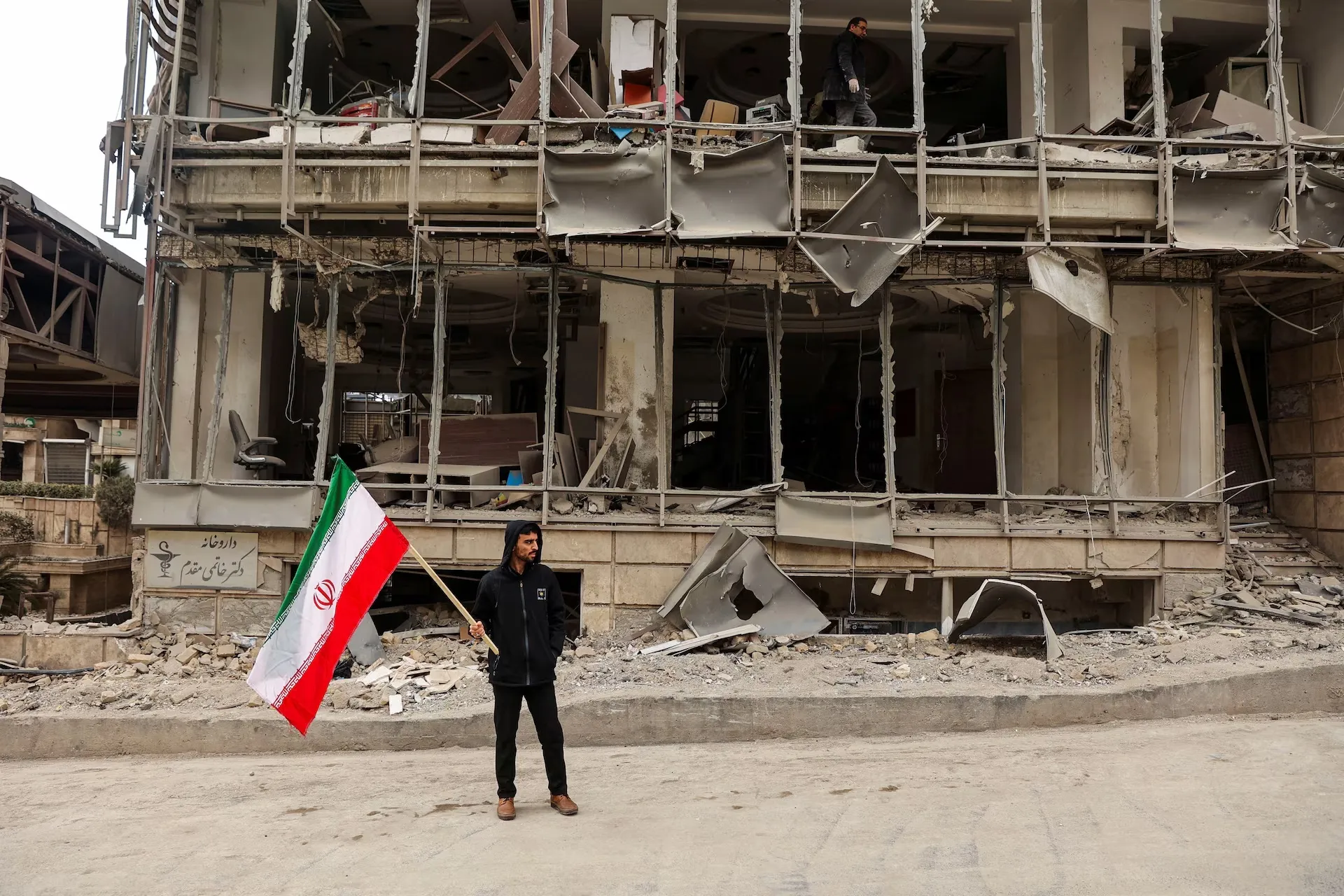
The Church today faces a difficult but unavoidable question. What does faithfulness to Christ look like in a world where evil regimes threaten innocent lives, destabilize entire regions, and openly call for the destruction of nations? Christians rightly long for peace. Scripture commands us to pursue it. Yet the Bible never teaches that peace must come at the price of surrendering justice or abandoning the innocent to violence.

For more biblical worldview analysis on global events and Christian ethics, visit the Real Life Network, where faith and current events are examined through the lens of Scripture.

One of the most dangerous confusions in modern Christian thinking is the belief that love requires passivity in the face of evil. That is not the teaching of Scripture, and it is not the historic teaching of the Church. From the earliest centuries, Christian thinkers understood that while war is always tragic, there are circumstances in which the use of force becomes morally necessary to restrain grave injustice.

That moral framework is known as the Just War tradition.

The Biblical and Historical Foundations of the Just War Tradition

The early church father Augustine of Hippo wrestled deeply with this problem. Augustine understood the tension every believer feels when confronted with violence. Humanity was created in the image of God, yet Genesis tells us that almost immediately that image was marred by sin. The world we inhabit is morally fractured. Violence exists. Tyranny exists. Innocent people are threatened by those who wield power without restraint.

Augustine concluded that Christians cannot ignore that reality. Governments bear responsibility before God to restrain evil and protect their citizens. War must never be pursued for glory, revenge, or conquest, but in a fallen world the use of force may become a tragic necessity when justice and the protection of life demand it.

Several centuries later the theologian Thomas Aquinas organized Augustine’s thinking into three principles that still guide Christian moral reflection today. These principles, known as jus ad bellum, determine whether entering a war can be morally justified.

The first requirement is legitimate authority. War cannot be declared by mobs, militias, or ideological factions. The authority to use force belongs to lawful governments entrusted with protecting their people. Scripture reflects this clearly in Romans 13, where governing authorities are described as bearing the sword to restrain wrongdoing.

The second requirement is just cause. War must confront a serious injustice. Throughout Christian history, defending the innocent from aggression has been recognized as one of the clearest examples of just cause.

The third requirement is right intention. Even when authority and cause are present, the purpose of war must be morally ordered. War must never be motivated by hatred, revenge, or domination. The aim must always be the restoration of peace and the restraint of evil.

These principles form the moral guardrails that prevent warfare from descending into barbarism. They also give Christians a framework to evaluate real conflicts unfolding in our time.

Readers interested in more discussions on faith, ethics, and global affairs can explore articles and programming at the Real Life Network.

Applying Just War Principles to the Iranian Regime

When these principles are applied to the present confrontation with the Iranian regime, the moral picture becomes painfully clear.

For more than four decades, the rulers of Iran have openly positioned themselves as enemies of the United States and Israel while sponsoring terrorism across the globe. The regime’s very first major act after the 1979 revolution was the seizure of the American embassy in Tehran and the holding of American diplomats hostage for 444 days. That hostility never ended.

Iranian-backed terrorists carried out the 1983 bombing of the Marine barracks in Beirut that killed 241 American service members. Iranian networks have supported the Khobar Towers bombing in Saudi Arabia, attacks against U.S. forces in Iraq, and the arming of militias responsible for killing and maiming American soldiers. Across the Middle East, the regime has built a web of proxy organizations whose purpose is to destabilize governments and spread violence.

At the same time, the regime has brutalized its own population. Iranian citizens who have dared to protest for basic freedoms have faced mass arrests, torture, and execution. The same government that chants “Death to America” has also spilled the blood of its own people in the streets of Tehran and beyond.

Within the framework of Just War doctrine, these realities clearly establish the question of just cause. When a regime consistently sponsors terrorism, threatens the destruction of neighboring nations, and violently suppresses its own people, the responsibility of governments to confront that threat becomes unavoidable.

The criterion of legitimate authority is also present. In the United States, the authority to deploy military force operates within a constitutional framework involving both the president and Congress. The use of force against Iranian targets has been undertaken within that structure of lawful authority, reflecting the principle that war must never be waged outside accountable governance.

The third requirement, right intention, asks a critical moral question. Why is force being used? Is the purpose revenge or conquest, or is it the restraint of evil and the protection of innocent life?

The stated goals of U.S. policy have focused on dismantling Iran’s capacity to threaten the region through advanced weapons, limiting the reach of its missile and drone programs, and disrupting the proxy networks responsible for violence across the Middle East. These objectives align with the Just War principle that the aim of force must be the restoration of peace and security rather than domination.

Christian worldview commentary on these global issues can also be found through programming and articles available at the Real Life Network.

A Christian Moral Responsibility to Restrain Evil

Christian tradition also requires leaders to consider whether war is truly a last resort and whether the means used are proportionate to the threat. In the case of Iran, decades of sanctions, negotiations, diplomatic efforts, and international agreements were pursued in an attempt to curb the regime’s aggression. The tragic reality is that those efforts repeatedly failed to change the regime’s behavior.

Christians may still wrestle with the gravity of these decisions. That wrestling is healthy. War should never sit comfortably with the conscience of a believer. The shedding of human blood should always grieve us because every human life bears the image of God.

Yet Scripture also makes an important moral distinction. The commandment often translated “You shall not kill” is more accurately rendered “You shall not murder.” The Bible consistently distinguishes between the unjust taking of innocent life and the use of force to restrain violence.

Genesis 9:6 reminds us why human life is sacred: because humanity is made in the image of God. That same principle also explains why the shedding of innocent blood demands accountability. Allowing violence to continue unchecked is not mercy. It is abandonment.

This truth matters profoundly for the men and women who serve in uniform. In recent years scholars have increasingly recognized what is known as moral injury, the deep psychological trauma that occurs when soldiers believe their actions violate their moral convictions. Many Christian service members struggle with the belief that any form of lethal force is inherently sinful.

The Just War tradition exists in part to address that burden. It affirms that defending the innocent and restraining evil can, in certain circumstances, be not only morally permitted but morally required.

None of this erases the tragedy of war. War destroys lives and leaves scars across generations. The Christian response must always be sober, humble, and prayerful.

Yet there are moments in history when refusing to confront evil allows greater injustice to flourish. Peace that abandons the innocent is not true peace at all.

The Just War tradition reminds us that love itself sometimes requires courage. Protecting the vulnerable, restraining violent regimes, and defending those threatened by terror are not acts of hatred. They are acts of moral responsibility in a fallen world.

Christians should never glorify war. But neither should we shrink from the difficult responsibility of confronting injustice when the protection of human life demands it.

For more faith-based analysis on international events and the intersection of theology and public life, visit Real Life Network.

Related Articles

25 min
World News

For decades, the Islamic Republic of Iran projected an image of theological inevitability. Its leaders did not speak merely as politicians. They spoke as custodians of sacred destiny. They governed not simply as rulers of a nation-state, but as guardians of an eschatological mission.

Now that image has been shattered.

The removal of Iran’s Supreme Leader marks more than a military turning point. It represents a psychological and ideological rupture inside the global Islamist project. For the first time in modern history, the flagship regime of political Shiite Islam has been struck at its highest level by external powers it long portrayed as spiritually illegitimate and historically doomed.

That matters.

Islamism is often misunderstood in Western discourse. Islamism is a political doctrine. It fuses state authority with religious mandate. It seeks to impose Islamic law through governance and, where necessary, confrontation. It operates with a long-term vision of civilizational transformation.

The Islamic Republic of Iran has been its most durable model.

For deeper analysis on faith, geopolitics, and global events, visit Real Life Network.

Understanding Islam and the Theological Foundations of Iran’s Regime

Since 1979, Tehran’s revolutionary framework has rested on Twelver Shiite theology. Central to that theology is Mahdism — the belief that the Twelfth Imam, Muhammad ibn Hasan al-Mahdi, entered occultation in the ninth century and will return at the end of history to establish global Islamic justice after a period of chaos and war.

This belief is not a marginal doctrine. It is embedded in the regime’s self-understanding.

Under the doctrine of Wilayat al-Faqih, clerical leadership governs as a steward during the Hidden Imam’s absence. Political authority is not merely constitutional. It is sacred trusteeship. Resistance against perceived enemies is not just policy. It is preparation for divine culmination.

In that narrative, America became the “Greater Satan.” Israel became the “Lesser Satan.” Confrontation was woven into theology. Global upheaval was not feared. It was anticipated.

The regime’s strategic behavior cannot be separated from this ideological infrastructure. Its missile development, its regional proxy networks, its rhetoric about Jerusalem — all have been framed within a worldview that sees history as moving toward a decisive Islamic vindication.

That is why this moment carries symbolic weight.

Islamism has long relied on the perception of historical momentum. The revolution succeeded. The regime endured sanctions. Proxy networks expanded influence across the Middle East. The narrative was one of resilience, inevitability, and divine favor.

When a system built on sacred certainty suffers visible vulnerability, the psychological effect can be profound.

Inside Iran, generations have lived under clerical rule that enforces religious conformity while restricting political dissent. Women have protested compulsory hijab. Young Iranians have challenged ideological control. Underground Christian communities have quietly grown despite persecution. A vibrant diaspora has spoken openly about freedom and reform.

The regime has survived these pressures through repression and narrative control.

But narratives weaken when inevitability is punctured.

For more Christian worldview analysis and commentary on global affairs, explore more content at Real Life Network.

Iran’s Ideological Vulnerability and the Cracks in Political Islam

This does not mean Islamism disappears tomorrow. Ideologies rarely collapse overnight. Power vacuums can create instability. Hardline factions may double down. Escalation is always possible.

Yet something fundamental has shifted.

For the first time, the regime that framed itself as divinely anchored has been forced into visible fragility. The myth of untouchability has dissolved. And when myth dissolves, imagination begins.

A Biblical Worldview Response to the Ideological Battle Over Freedom

From a Christian perspective, this is not a moment for triumphalism. It is a moment for discernment. Scripture repeatedly warns that systems built on pride and coercive control eventually fracture. Empires that merge divine justification with unchecked authority sow the seeds of their own instability.

The issue before us is not whether a single leader has fallen. The deeper issue is whether the ideological spell of inevitability surrounding political Islam is weakening.

History shows that ideas often fall before institutions do. Once people recognize that a system is neither eternal nor invincible, alternative futures become conceivable. Freedom becomes imaginable.

For decades, Western leaders treated Islamist ideology either as misunderstood or as unstoppable. That miscalculation allowed its influence to expand in diplomatic circles, academic institutions, and political discourse without adequate scrutiny. A visible setback forces reassessment.

The Iranian people deserve more than perpetual confrontation and theological authoritarianism. They deserve liberty of conscience, freedom of worship, and governance accountable to citizens rather than to eschatological expectation.

Christians should pray for stability, for protection of innocent lives, and for a genuine opening toward freedom. We oppose Islamism not because we oppose Muslims, but because we oppose any political system that suppresses dissent, restricts liberty, and denies the exclusivity of the gospel.

The global contest is not merely military. It is ideological. It is spiritual. It is about which vision of human flourishing will prevail — one rooted in coercive religious state power, or one grounded in liberty, dignity, and moral accountability.

The fall of a single figure does not settle that contest.

But it may mark the beginning of the end of an illusion.

And when illusions collapse, history can move in new directions.

For more reporting and biblical worldview analysis on global events, visit Real Life Network.

Related Articles

25 min
Devotional

One of the greatest threats to the Church today is not persecution but a counterfeit definition of Biblical love.

Hebrews 11, the great hall of faith, does not read like a guide to safe, respectable Christianity. It reads like a battlefield record. Gideon, Barak, Samson, Jephthah, David, Samuel, the prophets. Some conquered kingdoms and shut the mouths of lions. Others were mocked, flogged, chained, imprisoned, stoned, sawn in two, and killed by the sword. They wandered destitute and mistreated. The world was not worthy of them. All were commended for their faith, yet none received the fullness of what was promised in this life.

That is where we must begin if we are going to talk about love.

Agape Love Is Covenant Loyalty That Endures

Agape love is not fragile. It is not polite Christianity designed to keep you comfortable and culturally acceptable. Agape is covenant loyalty to God that endures loss, criticism, and suffering. The saints in Hebrews 11 were not driven by emotion. They were not protecting their reputations. They obeyed because God was worthy of obedience. That is love directed toward Him.

Agape toward God means obedience even when obedience costs you. It may cost approval. It may cost career opportunities and friendships. It may cost influence. Hebrews 11 makes one thing unmistakably clear. Faithfulness does not guarantee earthly ease. It guarantees eternal commendation.

If we are serious about Living Fearless, we must recover this definition of love.

Learn more biblical worldview content on the Real Life Network.

Love That Transforms Does Not Partner With Darkness

The culture insists that love affirms but Scripture insists that love transforms. Romans 12 commands that love be sincere and that we hate what is evil and cling to what is good. That single verse shatters the modern counterfeit. Biblical love is not passive tolerance of moral decay. It actively resists what destroys souls. It clings to what honors God.

John 13 records Jesus commanding His disciples to love one another as He loved them. His love was not sentimental softness. His love washed feet and rebuked hypocrisy. His love confronted sin and bore a cross. He did not affirm darkness in order to appear compassionate. He entered darkness to redeem it.

Matthew 18 instructs believers to go to a brother who sins and point out the fault privately. The goal is restoration. If repentance does not come, witnesses are brought. If hardness continues, the matter goes to the church. Boundaries are drawn. That process is not cruelty. It is courage. It is love strong enough to risk discomfort for the sake of a soul.

First Corinthians 5 intensifies this truth. Paul commands the church to remove a man engaged in open sexual immorality so that his spirit may be saved. That is not vindictive exclusion but redemptive severity. Love sometimes removes protection in order to awaken repentance.

Ephesians 5 goes further. Believers are told to have nothing to do with the fruitless deeds of darkness but rather expose them. Silence in the face of corruption is not neutrality. It is participation. Agape love does not hide moral decay under the banner of kindness. It brings light because light heals.

Galatians 6 balances this boldness with humility. If someone is caught in sin, those who are spiritual should restore that person gently, watching themselves lest they also be tempted. Agape is not harsh aggression. It is strength under control. It is courage joined with compassion.

Watch and share more teaching that equips believers to stand in truth on the Real Life Network.

Living Fearless Means Paying the Biblical Price

Our generation desperately needs this clarity. Fear has pushed many Christians into two extremes. Some retreat into passive cowardice, avoiding hard conversations so they will not be labeled unloving. Others lash out with anger that lacks gentleness. Agape produces neither. It speaks truth without cruelty. It corrects without pride. It sets boundaries without hatred.

To live fearless is to anchor your love in obedience to God rather than approval from people. It means saying the unpopular thing because you love your neighbor too much to watch him drift toward destruction. It means confronting moral confusion in our schools, our churches, and our communities not out of superiority but out of conviction that truth sets people free.

Agape is not a feeling that drifts in and out with the cultural wind. It is obedience in motion. It wills the good of the other, even when the other misunderstands your motive. It acts for restoration, not applause. It endures rejection without surrendering conviction.

Hebrews 11 reminds us that the faithful often stand against the current of their age. They were not celebrated by their culture. They were commended by God. That is the reward that matters.

If we claim to love in the biblical sense, we must be prepared to pay the biblical price. Love will cost comfort. It will cost the illusion of universal approval. Yet it will produce something far greater than cultural acceptance. It will produce faithfulness.

Agape love will cost you. Living Fearless in Christ means you are willing to pay that cost.

Explore more faith building content anytime on the Real Life Network.

Related Articles

25 min
Faith & Culture

As a formerly devout Muslim, I am often approached at church and online to help parents whose children have become Muslim or are contemplating conversion into Islam. It is so heartbreaking to hear the distress in a Mom’s voice whose daughter leaves Christianity so she can marry a Muslim boy. We pray that the Lord will return the prodigal to the fold, but that can be a long, hard road. Many are frantic for advice on what they can say to convince their child that Jesus is the only true way. Instead, we should ask ourselves how can we, the parents and elders in a church, prevent this from happening in the first place.

Why Some Young Christians Are Drawn Toward Islam

As of data collected in 2019, almost two-thirds of American young adults between the ages of 18–29 have withdrawn from church involvement after being active as a child or teen. Many of us have read studies about why this happens– issues like lack of relevance in everyday life, it doesn’t correspond to their worldly values, or church folks being too judgmental.

In addition to my anecdotal experience with many families, I learned a lot from this YouTube channel, where many Christian girls testified about why they turned to Islam. Though I have not done a scientific study on this trend, several patterns emerge from listening to their stories. These first-hand accounts give us insight into how we can nurture our children to hold on to their faith in Christ.

One of the most common reasons is unexplained Bible doctrine. Many of these girls are proselytized by young Muslim men who spend quality time educating the young ladies about the “authentic” nature of Islam. Simultaneously, the men instill doubt in the authenticity of the Bible, the seemingly “strange” notion of the Triune God, or Jesus being God incarnate. They say, “How can you believe the Bible is the word of God when there were so many inconsistencies, or why would God need to come in the form of a man to save humanity?”

Unfortunately, when young women present these questions to their parents or Bible teachers, they are often brushed aside and told, “we believe these things by faith.” It is a wholly inappropriate response to earnest questions about doctrine for which we have perfectly sound answers.

As the Bible commands us, “Always be ready to defend your confidence in God when anyone asks you to explain it. However, make your defense with gentleness and respect (1 Peter 3:15)."

The problem is that people either do not know how to respond or patronize the young as if they don’t deserve a response. Both positions will leave a person susceptible to false doctrine.

The second issue I heard many times when I was still a Muslim is that Christian kids leave the faith because of their parents' hypocrisy and/or immorality. Their parents' drunkenness, drug abuse, and severe behavioral problems made them assume the faith was ineffectual compared to the imposed discipline found in Islam. Once they see themselves also out of control from addiction or promiscuity, they do not believe Christianity offers a solution. In other words, they never personally witnessed the transformative power of a true believer who walks in holiness and obedience to the Lord Jesus Christ. This is a tragedy and consequence of many who turned the church into a social and cultural gathering rather than making disciples who model the character of Jesus.

Finally, and probably most significant, these young adults have no personal relationship with the Risen Savior. When you ask them why they no longer believe in Jesus, they answer with something about how they were ostracized in church or the Pastor insulted them. Almost all of them went to Sunday school, grew up in youth ministry, and had Christian parents. However, they have no indications that they received the indwelling of the Holy Spirit or can communicate with God in their prayer life. It reminds me of the parable of the Sower. The Word was choked out of their life before they could grow and mature.

The Role of Parents, Churches, and Personal Faith

Jesus promised all believers that our Heavenly Father would not allow any of his sons or daughters to be “snatched from His hand.” Therefore, what is our role in protecting the hearts and minds of our young people from falling into false religions? Step one, we must study enough to defend the Gospel against the most common “controversies.” Whether it's the authenticity of the Bible texts or prophecy that proves Jesus is the Messiah, we should not dismiss the curiosity of our young people who challenge us.

Second, we need to take a serious inventory of our behavior and habits to be sure we are modeling the righteousness we are called to by the Lord. Our children pay far more attention to our actions than our words. I started a conversation with a woman in the coffee shop last week who told me she refused to go to church because her parents dragged her there when they were drug addicts. I tried to talk with her about encountering Jesus, but she couldn’t get past the trauma of her upbringing.

We have a relatively short period of time with our kids before the world takes over and our influence wanes. Sending them off to youth ministry, which all these girls claimed to have done, is excellent, but more is needed. Ultimately, they must have a personal relationship with Jesus to have a faith that endures. My teenager is struggling with issues of faith, so I constantly remind her that the Holy Spirit dwells inside her and that she can communicate directly with God. I tell her faith doesn’t have to look like mine and that He wants to meet her where she is. If they pursue that personal encounter with God, He will fulfill His promises to them, and we have set them up for success. As He says in Scripture, “the Helper, the Holy Spirit whom the Father will send in My name, He will teach you all things, and remind you of all that I said to you (John 14:26)." Research data also supports this notion. In interviews with young adults who stayed faithful into adulthood, whom they call “resilient disciples,” nearly 90% profess a personal relationship with Jesus.

Preventing Drift and Welcoming Prodigals Home

Once a child does decide to convert, all hope is not lost. Life as an American convert to Islam is tough. If you listen to their testimonies, the girls talk of social alienation, loneliness, and failure to adapt. They no longer “fit” in any culture because Arab and South Asian Muslims do not readily accept converts into their family. If we remain open to loving them like Christ does and welcoming them home rather than ridiculing them, that familiarity and comfort could win them back. Engage in discussions about their new beliefs and see it as an opportunity to compare their new faith with the freedom in Christ. Fervent prayer, compassion, and kindness can go a long way. Leave the door wide open for them to enter back easily.

So whether it's “church hurt,” parents not “modeling Christ,” or some other justification in their own lives, these kids gravitate to Islam for structure and discipline. It may seem counterintuitive, but when they realize debauchery is miserable, they seek rules and boundaries. Yet, why do they have to look outside the church to find obedience? That’s not what scripture teaches us. Jesus said, “If you love me, follow my commands (John 14:15).”  Let’s not distill being a Christian down to a set of rituals with no power to restore and transform. Otherwise, we will lose many more sons and daughters to false religions.

Related Articles

25 min
World News

Iran is not simply teetering on the edge of unrest. It is standing at a historic rupture, one that carries consequences far beyond its borders. What unfolds next will reshape energy markets, redraw regional alliances, challenge Islamist power structures, and test the moral clarity of the West and the Church alike. This is not a local uprising. It is a global fault line.

At the heart of the question is whether the Islamic Republic can survive sustained internal collapse or whether it will be decisively dismantled through airstrikes, internal fracture, or a combination of both. A full destruction of the regime would send shockwaves across the Middle East, not least because Iran sits at the center of proxy warfare, nuclear brinkmanship, and global oil supply chains. Any destabilization of Tehran reverberates through Hezbollah in Lebanon, militias in Iraq and Syria, the Houthis in Yemen, and even energy prices felt by American families at the pump.

President Donald Trump has made clear in past conflicts that American involvement is rarely altruistic. His approach to Venezuela demonstrated that regime pressure often comes with long-term U.S. interests attached, particularly oil. Trump has openly said the United States would be involved there “for years” and Iran would be no different. Even if Washington were to assist in facilitating the return of Crown Prince Reza Pahlavi, it would come at a price. Power vacuums invite factions, and Iran has no shortage of them.

Inside the country, the chants are unmistakable. “Javeed Shah--Long live the King” has echoed through protests, signaling an overwhelming popular rejection of Islamic rule. Yet outside Iran, the opposition landscape is far messier. Competing factions backed by powerful Western and regional forces are positioning themselves for influence. Chief among them is the Mujahideen-e-Khalq, or MEK, whose very name means “those who fight jihad for truth.” Despite the branding, the reality is darker.

The MEK is a Marxist-Islamist cult that demands absolute obedience, suppresses dissent, and operates with rigid ideological control. It does not resonate with a generation of Iranians who are risking their lives for personal freedom, not ideological replacement. Yet the MEK has found defenders in surprising places within Western political circles, including figures such as Rudy Guiliani, John Bolton and Mike Pence. Their support reflects a dangerous misunderstanding of the Iranian people’s aspirations and a willingness to empower another authoritarian movement under the guise of opposition.

Power, Oil, and Global Consequences

The stakes extend well beyond Iran’s borders. A destabilized or liberated Iran would dramatically affect global energy markets, potentially lowering oil prices and weakening petro-authoritarian regimes. It would alter nuclear negotiations overnight. It would challenge the balance of power across the Middle East, especially among Islamist governments that have been propped up by Western policy for decades, including Saudi Arabia, Qatar, Turkey, and now post-war Syria and Iraq. Many within the U.S. State Department fear “regional imbalance” if Iran falls. What they truly fear is something unprecedented: the defeat of Islamic rule by its own
people.

Regional leaders from Riyadh to Ankara do not want a free Iran. Saudi Arabia and Qatar worry about oil price shocks and the ideological implications of a successful anti-Islamist revolution. Turkish President Erdogan fears the precedent it would set for political Islam across the region. Trump will hear these concerns loudly. At the same time, he faces pressure from isolationist elements within his own base who reject any form of nation-building or prolonged U.S. involvement abroad.

Officially, the administration maintains that diplomacy comes first. White House press secretary Karoline Leavitt has stated that while negotiations are preferred, nothing is off the table. Trump has already imposed a sweeping 25 percent tariff on any entity doing business with Iran, signaling that economic warfare is very much underway.

Israel’s position adds another layer of complexity. A free Iran would almost certainly align against Islamist terror networks and in favor of Israel’s security. That shift would have profound implications for the Abraham Accords, Palestinian statehood debates, and regional peace negotiations. The very existence of a non-Islamist Iran would upend decades of anti-Israel strategy rooted in Tehran.

Yet military intervention is not the only tool available, and it is striking how many non-military options remain underutilized. The United States possesses some of the most advanced cyber capabilities in the world. Iranian internet infrastructure, traffic systems, and regime-controlled media could be disrupted at scale. The temporary shutdown of Iran’s national television network showed what is possible. More could be done.

The Islamic Revolutionary Guard Corps, designated as a Foreign Terrorist Organization, continues to operate with alarming freedom through front companies, shipping firms, construction conglomerates, charities, banks, and energy intermediaries. Assets are hidden through relatives. Money is laundered through third countries. Operatives travel under diplomatic cover. Sanctions are riddled with carve-outs and selectively enforced by Western governments terrified of escalation.

Cutting off the IRGC would require real resolve: aggressive enforcement of material support laws, freezing assets held by proxies and family members, blocking insurance and port access, grounding aviation services tied to IRGC networks, and ending humanitarian or commercial channels the Guard secretly controls. Elevating authentic opposition voices, smuggling communication tools and supplies into Iran, and conducting psychological operations that sow doubt within regime ranks are all viable strategies that fall short of open war.

The urgency of this moment is underscored by recent developments. The U.S. has ordered evacuations of American citizens. France has withdrawn diplomats. Intelligence reports suggest regime elites are already moving money and preparing exit strategies. The cracks are real.

Faith, the Church, and What Comes Next

For the Church, this moment carries profound spiritual weight. Iran is a theocracy that criminalizes Christianity. Converts are branded traitors. Pastors are imprisoned. Evangelism is treated as a national security threat. Yet despite relentless persecution, Christianity is growing through underground churches, exposing the moral and spiritual bankruptcy of political Islam.

While Iranians risk everything to escape Islamic rule, too many Western churches remain silent, confused, or morally neutral. Scripture does not permit such detachment. Isaiah commands, “Learn to do right; seek justice. Defend the oppressed.” Hebrews reminds us that what can be shaken will be shaken, so that what cannot be shaken may remain.

Living fearless does not mean predicting outcomes or endorsing geopolitical schemes. It means refusing to avert our eyes, refusing to distort the truth, and refusing to let fear dictate our witness. Millions of Iranian Christians are praying for freedom. The question is whether the global Church will have the courage to stand with them when history is being written in real time.

For biblical insight, cultural analysis, and fearless reporting on moments shaping our world, stay connected with the Real Life Network. Visit RealLifeNetwork.com to watch, listen, and stand for truth where faith and current events collide.

25 min
Faith & Culture

Living Fearless exists to bring clarity where there is confusion and truth where there is silence. I’m Hedieh Mirahmadi, and through this podcast on the Real Life Network, I speak with conviction about the spiritual, cultural, and ideological threats facing our nation today. This is a place where biblical truth is not softened, where hard realities are confronted honestly, and where courage replaces fear in a world increasingly hostile to Judeo-Christian values. Watch now for free and get grounded in truth at RealLifeNetwork.com.

I have lived inside the very world I am warning you about. For more than twenty-five years, I worked on the front lines of America’s fight against Islamic extremism across more than thirty-five countries. I advised governments, built counter radicalization programs, and worked alongside federal agencies including Homeland Security, the Department of Justice, and the FBI. This was not academic work. It was lived experience.

I was raised in a politically conservative Iranian American home and spent much of my adult life as a devout Muslim involved in reformist movements. I believed spiritual reinterpretation could defeat jihadist ideology. That belief gave me access to networks few outsiders ever see, but it also revealed a hard truth. You cannot defeat a spiritual war with policy alone.

It was only when I surrendered my life to Jesus Christ that I fully understood the nature of the battle. Islamism is not merely a religion. It is a political ideology cloaked in spiritual language, driven by conquest, and empowered when the church remains silent. That realization is what brings me here, to this network, and to Living Fearless.

Islam & Christendom in Perpetual War: Phase One

To understand the present, we must confront the past honestly. Christendom once covered the Middle East, North Africa, Greece, Rome, Spain, and much of Europe. These lands were Christian centuries before Islam emerged in the seventh century. The early spread of Islam was not peaceful evangelism. It was military conquest.

After the death of Muhammad, Islamic armies expanded rapidly through force. Christian communities were displaced, churches destroyed, women assaulted, and believers forced to convert, pay heavy taxes, or die. By 732 A.D., Islamic forces had reached deep into Europe before being stopped at the Battle of Tours in France.

For centuries, Christians under Islamic rule faced systemic oppression. This reality led directly to the Crusades, which were not random acts of aggression, but a response to generations of invasion and persecution. While mistakes were made, the historical context matters. Phase One of Islamic conquest was military, territorial, and violent.

That phase ended with the collapse of the Ottoman Caliphate after World War I. But the ideology did not die. It adapted.

Cultural Jihad & Modern Islamist Strategy: Phase Two

When armies failed, the strategy changed. Islamists shifted from swords to systems. This is Phase Two: cultural and civilizational jihad.

The Muslim Brotherhood became the intellectual backbone of modern Islamism, openly describing their mission as a civilizational struggle. Their strategy, known as tamkeen, focuses on planting deep roots within a society through schools, charities, media, mosques, colleges, and eventually government.

I witnessed this firsthand across Europe, the Middle East, and the United States. Cultural jihad operates slowly and intentionally. It reshapes identity before laws ever change. Violence comes later. The mindset comes first.

This ideology spread globally through Saudi funded education, Islamist organizations, and alliances with groups like Hamas, al Qaeda, and political movements across continents. Eventually, it reached the West, embedding itself in universities, nonprofits, courts, and activist networks under the language of civil rights and social justice.

The Rise of Cultural Jihad in the United States

In America, Islamists learned to exploit our freedoms. They work within the system, using our laws, our compassion, and our fear of offending others. Mosques, prisons, charities, student groups, and interfaith initiatives became strategic entry points.

Prisons, in particular, became major recruitment hubs. Student organizations echoed Brotherhood talking points. Lawsuits and public pressure forced institutions to accommodate ideological demands. This was not accidental. It was planned.

Communities in states like Minnesota, Illinois, and Texas reveal the same pattern: trust building first, identity shaping second, political influence last. Cultural jihad does not begin in Congress. It begins quietly, at the community level.

The Islamist Conquest of the U.S. & the Red Green Alliance

Today, Islamism has merged with radical leftism in what is known as the Red Green Alliance. Their end goals differ, but they share one objective: dismantling Judeo-Christian values.

This alliance is visible on college campuses, in city councils, and in Congress. Islamist aligned politicians normalize anti-Israel rhetoric, excuse corruption, and frame America as inherently oppressive. Criticism is silenced by accusations of Islamophobia.

Religious liberty is weaponized. Political ideology is disguised as faith. And institutions partner with these groups without understanding the long-term consequences.

Separate Islam from Muslims: A Call to Clarity, Courage, and Compassion

I want to end where the Gospel always leads us: truth paired with love.

Muslims are not our enemy. They are our mission field. I know this because I was one of them. Islamism thrives on fear and silence. Jesus came to break both.

We must oppose political Islam with courage, while loving Muslims with compassion and clarity. Only the Gospel transforms hearts. Only Christ sets captives free.

This is Living Fearless. And this is why I speak.

Watch Living Fearless on the Real Life Network and share it with someone who needs clarity right now. Download the RLN app and start watching for free at RealLifeNetwork.com

For more articles like this click here

25 min
World News

A Regime Facing Rejection, Not Reform

Iran is entering a phase that its ruling clerics have long feared but refused to acknowledge. What began years ago as scattered unrest has now hardened into a sustained rejection of the Islamic Republic itself. Across multiple cities, protesters are no longer bargaining with power. They are repudiating it. The chants coming from the streets no longer ask for reform within the system. They call for the system’s removal.

According to reporting by Iranian dissident and analyst Anni Cyrus, one of the most alarming developments for the regime is the growing number of protesters openly calling for the return of Crown Prince Reza Shah Pahlavi. That demand is unprecedented in the context of Iran’s post-1979 political order. It signals not a longing for the past, but a rejection of clerical supremacy and the religious state that has dominated Iranian life for more than forty years. When crowds chant for a figure explicitly displaced by the Islamic Revolution, they are not negotiating terms. They are declaring the revolution itself a failure.

This shift matters because the Islamic Republic is not merely a government. It is an ideological system that fuses religious authority with political control and enforces obedience through fear. The regime’s legitimacy rests on the claim that it governs by divine mandate. Any public challenge to that claim, especially one voiced by large numbers of ordinary citizens, strikes at the heart of its authority. That is why the state’s response has been swift and violent.

Security forces have fired live ammunition into crowds. Arrests have escalated into the thousands. Executions have been carried out under vague criminal charges designed to disguise political repression as law enforcement. Internet blackouts and surveillance have intensified in an attempt to control the narrative and isolate protesters from one another. These measures reflect a regime that understands it is losing consent and is relying increasingly on brute force to maintain control.

Faith, Fear, and the Collapse of Legitimacy

Economic collapse has accelerated the unrest, but it did not create it. Inflation, unemployment, and shortages have devastated everyday life, yet these hardships are widely understood inside Iran as symptoms of a deeper problem. The ruling clerical class has enriched itself while ordinary Iranians struggle to survive. Corruption is systemic. Accountability is nonexistent. Faith has been weaponized to silence dissent rather than to serve the people.

Religious minorities, particularly Christians, have borne the cost of this system for decades. Iran remains one of the most hostile environments in the world for Christian converts. Leaving Islam is treated as a political offense. House churches are raided. Pastors are imprisoned. Evangelism is prosecuted as a threat to national security. These actions are not anomalies. They are the logical outcome of a state that cannot tolerate allegiance to any authority beyond its own religious framework.

Yet despite the repression, Christianity continues to grow underground in Iran. House churches persist. Converts continue to testify to encounters with Christ through Scripture, personal witness, and dreams. The expansion of the Christian faith under such conditions highlights the inherent weakness of coercive religious rule. When belief is enforced by law, it eventually collapses under its own contradictions. Faith that is freely chosen cannot be extinguished by prisons or executions.

Why Iran’s Uprising Matters to the World

Western policymakers have repeatedly misread this reality. For years, Iran has been treated as a conventional state actor capable of moderation through incentives and diplomacy. Nuclear agreements were framed as stabilizing tools. Sanctions relief was promoted as humanitarian. Dialogue was cast as the pathway to peace. These approaches failed because they misunderstood the ideological nature of the regime. The Islamic Republic is not oriented toward compromise. It is oriented toward survival through control.

The Iranian people appear to understand this more clearly than many Western institutions. Their chants are not aimed at foreign governments. They are aimed at the clerics who rule them. They are rejecting political Islam as a governing system, not merely objecting to economic conditions or foreign policy disputes. That distinction matters.

The contrast between Iran’s streets and Western discourse is stark. While Iranians risk their lives to escape Islamic rule, segments of Western culture continue to romanticize Islamist narratives under the banner of tolerance or social justice. While Iranian women defy compulsory veiling, Western institutions frame hijab enforcement as empowerment. While Iranian Christians worship in secret, Western churches often hesitate to speak clearly about the dangers of religious authoritarianism.

This moment demands honesty. The uprising in Iran is not simply another cycle of unrest. It is a reckoning with an ideology that promised justice and delivered repression. It is a warning about the consequences of merging religious absolutism with unchecked political power. It is also a reminder that truth, once awakened, is difficult to suppress.

Whether the current uprising succeeds or is violently crushed, the Islamic Republic has already lost something it may never recover. It has lost the belief of its people. Regimes can survive sanctions and protests. They rarely survive the collapse of legitimacy. Iran’s future remains uncertain, but one reality is now unmistakable. The era of unquestioned clerical rule is ending, and no amount of force can fully restore what has been broken.

For more by Hedieh Mirahmadi, watch Living Fearless on Real Life Network.

25 min
World News

The violence we are witnessing across Western societies is no longer sporadic, accidental, or disconnected. It is ideological. Recent terror attacks and plots, spanning from Australia to Washington, D.C., from elite university campuses to major American cities, reveal a convergence of forces that are openly hostile to the moral framework that once anchored the West. The common thread is not nationality or circumstance, but a growing alliance between Islamist extremism and radical leftist movements, both committed to eroding Judeo-Christian civilization.

In Australia, the brutal attack on a Jewish gathering was a stark reminder that jihadist ideology does not recognize borders. Jewish families celebrating their faith were deliberately targeted, not because of geopolitical grievances, but because Islamist doctrine has long identified Jews as enemies to be eliminated. This was not random violence, nor was it a reaction to local conditions. It was the export of global jihad into a Western democracy that has repeatedly chosen denial over confrontation when it comes to Islamist ideology.

The same denial is evident in how Americans process violence at home. The shooting at Brown University has been framed primarily as another tragic campus incident, with authorities quick to assure the public that motive remains unclear. That may be procedurally accurate, but culturally evasive. American universities have become breeding grounds for ideological radicalization, where hostility toward faith, nationhood, and Western identity is normalized. Students are immersed in narratives that portray America as irredeemably evil, Christianity as oppressive, and violence as morally justified when cloaked in the language of resistance. When such ideas saturate the intellectual environment, violence should not surprise us.

The Convergence of Extremes and the Strategy of Chaos

The targeted attack on National Guard members in Washington, D.C. strips away any remaining illusion that this is merely a domestic social crisis. This was a calculated assault on representatives of the American state, carried out by someone shaped by radical Islamist beliefs. The symbolism is unmistakable. This was an attack on authority, order, and the legitimacy of the nation itself. It exposes the cost of importing unresolved ideological conflicts without demanding allegiance to American values or confronting radicalization within immigrant communities.

Perhaps the most revealing case is the terror plot disrupted in Los Angeles. Members of the Turtle Island Liberation Front were arrested while allegedly preparing coordinated bombings against civilian and law-enforcement targets. Their rhetoric blended revolutionary language, anti-colonial ideology, and militant pro-Palestinian messaging. This was not incoherent rage. It was a carefully assembled ideological framework that mirrors what we increasingly see on college campuses, in activist networks, and online spaces that glorify violence while condemning Western society as inherently illegitimate.

Federal analysts have begun describing this phenomenon as Nihilistic Violent Extremism, yet public discussion often strips the term of its most dangerous component. NVE is not limited to anarchists or radical leftists acting alone. It reflects a growing convergence between far-left revolutionary movements and jihadist ideology. While their ultimate visions differ, their immediate objectives align. Both seek to destabilize Western societies. Both reject Judeo-Christian moral authority. Both view chaos as a catalyst for transformation. Violence becomes not a tragedy, but a strategy.

This convergence explains why radical leftist groups increasingly excuse or rationalize Islamist violence, branding it resistance rather than terror. It also explains why jihadist movements find fertile ground within Western activist spaces that already despise national borders, religious tradition, and moral absolutes. Islamists bring ideological discipline and long-term ambition. Anarchists bring disruption, infrastructure sabotage, and a willingness to tear down institutions. Together, they form a volatile alliance capable of real harm.

The Los Angeles plot illustrates this dynamic with chilling clarity. The group’s members echoed Islamist talking points, adopted global revolutionary narratives, and aligned themselves with causes long exploited by jihadist movements to gain Western sympathy. This was not accidental overlap. It was ideological convergence. These movements may wear different masks, but they march toward the same goal: the dismantling of Western civilization’s moral and civic foundations.

A Spiritual Crisis That Demands Moral Clarity

What connects these acts of violence is not race, geography, or economic grievance. It is ideology. Each incident reflects a rejection of ordered liberty and an assault on the sanctity of life. Each is fueled by narratives that cast Judeo-Christian values as obstacles to liberation rather than the source of human dignity. Each thrives in a culture that refuses to define evil clearly and fears moral judgment more than moral collapse.

The refusal to confront Islamism honestly has accelerated this crisis. Political leaders, cultural institutions, and even some religious communities have chosen appeasement over truth. Radical leftist violence is excused so long as it adopts the language of justice. Islamist ideology is shielded behind claims of religious sensitivity. Meanwhile, ordinary citizens are told these threats are exaggerated, unrelated, or misunderstood.

History offers a sobering lesson. Civilizations rarely fall from external invasion alone. They unravel when moral clarity is abandoned and truth is replaced by grievance. When faith is displaced by ideology, violence follows. The recent wave of terror is not an anomaly. It is the predictable outcome of cultural and spiritual erosion.

This moment calls for discernment, not despair. The challenge before us is not merely political or security-based. It is spiritual. We are witnessing a revolt against the moral order that sustains freedom, justice, and peace. Countering it requires more than law enforcement or intelligence operations. It requires courage to name threats clearly, leadership willing to defend foundational values, and a renewed commitment to truth.

America’s strength has never rested solely on military power or economic dominance. It has rested on a moral framework rooted in Judeo-Christian principles. When those principles are undermined, the nation becomes vulnerable not only to enemies abroad, but to decay within.

The violence we are seeing is a warning. Whether we heed it will shape not only our national security, but our moral future. As Scripture reminds us, the struggle before us is not merely against flesh and blood, but against forces that seek to corrupt, divide, and destroy from the shadows. Recognizing that truth is the first step toward resisting it.

For more faith-filled content, watch Living Fearless Devotional on Real Life Network.

25 min
load more

Want to see more from

Hedieh Mirahmadi Falco

?

Watch the newest episodes now, exclusively on Real Life Network!
About
Hedieh Mirahmadi Falco

Hedieh Mirahmadi Falco is a former FBI senior advisor turned author and evangelist. A national security expert and  contributor to The Christian Post and major news outlets, she now shares her powerful story of faith and redemption, on the Living Fearless Devotional podcast.