What To Expect
- The SPLC has played a major role in shaping how extremism is defined in American culture and institutions.
- Critics argue its classifications have blurred lines between mainstream groups and actual threats.
- A federal indictment raises serious allegations about financial practices and involvement with extremist networks.
- The broader issue centers on accountability, transparency, and whether powerful institutions are held to equal standards.
Real Life Network is a free, faith-based streaming platform offering biblically grounded teaching, documentaries, news, movies, and original programming. Sign up today.
For years, one organization has quietly shaped how Americans are told to think about extremism.
The Southern Poverty Law Center has not just observed the national conversation. It has influenced it. Its reports are cited by the media, relied upon by institutions, and used to define who is considered dangerous, who is considered legitimate, and who is pushed outside the boundaries of acceptable public discourse.
That level of influence carries consequences.
It also raises a fundamental question. Who is holding the gatekeeper accountable?
Because the story surrounding the SPLC is no longer just about the groups it labels. It is about the credibility of the institution doing the labeling.
Over the years, concerns have steadily grown. Critics have pointed to the organization’s “hate map,” arguing that it does more than identify threats. It collapses categories, placing mainstream Christian and conservative organizations alongside violent extremists. That kind of classification is not neutral. It shapes perception. It influences behavior. And in some cases, it has contributed to real-world danger.
One of the clearest examples came in 2012, when a gunman targeted the Family Research Council after using the SPLC’s map to identify his target. He later admitted his intent was mass violence. The attack was stopped, but the implications were unmistakable. When an organization labels broadly, the consequences do not remain theoretical.
At the same time, the SPLC has faced its own internal crises. Leadership shakeups, allegations of misconduct, and the firing of founder Morris Dees exposed cracks in the image of moral authority the organization had carefully built. When an institution presents itself as a watchdog, its own conduct becomes part of the story.
I have personally examined this pattern before. In my book, Living Fearless in Christ, I documented how even federal agencies have, at times, leaned on SPLC reporting to inform investigations, including inquiries into so-called “radical” Catholics. That should concern every American. When one private organization’s classifications begin influencing government action, the stakes move from cultural to constitutional.
For more biblically grounded content that helps you navigate today’s headlines with clarity, visit Real Life Network and watch Living Fearless.
Allegations, Indictments, and Expanding Concerns
Now, that story has taken a far more serious turn.
According to a federal indictment posted by the Department of Justice, the SPLC is accused of engaging in deceptive financial practices and misrepresenting how donor funds were used. The indictment alleges that money raised under the premise of combating extremism was, in part, directed toward individuals connected to extremist groups themselves.
Even more striking are the claims regarding embedded “field sources.” The indictment alleges that individuals operating within extremist networks were actively participating in those environments while under SPLC supervision. In some cases, those same individuals were allegedly contributing to the very activity the organization publicly condemned.
The document goes further, stating that one such source was present in online leadership discussions tied to the planning of the 2017 Unite the Right rally in Charlottesville, even assisting with coordination efforts for attendees .
If these allegations are accurate, the implications are profound.
Because Charlottesville was not just another event. It became a defining moment in modern American political life. The violence and the tragic loss of life rightly drew condemnation. No moral society excuses that. No Christian justifies hatred.
But what followed was something broader. Charlottesville became a symbol. It was used to define entire movements, to blur distinctions, and to cast suspicion far beyond those directly responsible. Millions of Americans found themselves associated with something they had no part in.
That narrative shaped public opinion. It influenced institutions. It affected reputations.
And now, there are serious allegations suggesting that the forces behind that moment may not have been as straightforward as the public was led to believe.
Truth, Accountability, and the Standard That Remains
If individuals connected to extremist groups were being engaged, influenced, or even indirectly supported in ways that were not disclosed, while their actions were used to construct a national narrative, then the issue is no longer just bias. It is whether perception itself was being shaped in ways the public did not understand.
That is a serious charge. And it demands serious scrutiny.
This does not excuse wrongdoing by those who committed acts of violence. Accountability remains where it belongs. But justice also demands that the full truth be known. It demands that narratives be accurate, not constructed. It demands that influence be transparent, not concealed.
Scripture speaks directly to this kind of moment. We are warned against false witness. We are warned against dishonest scales. We are warned that those who judge will themselves be judged by the same measure. These are not abstract ideals. They are standards.
The SPLC has built its influence by defining others. It has drawn lines, labeled groups, and shaped how Americans understand extremism. That authority carries weight. It carries consequences. And it carries responsibility.
If the allegations now before the public raise credible concerns about whether that responsibility has been upheld, they cannot be ignored.
Because this is not just about one organization.
It is about whether power can operate without scrutiny. It is about whether narratives can be shaped without accountability. It is about whether institutions that claim to stand for justice are willing to be measured by the same standard they impose on everyone else.
Truth is not a partisan tool. It is a standard. And a standard applied only to others is not justice. It is control.
The Southern Poverty Law Center has spent years defining who should be questioned.
Now it must answer a far more serious question.
What happens when the institution that judges everyone else is finally judged itself?
For more biblically grounded content that helps you navigate today’s headlines with clarity, visit Real Life Network and watch Living Fearless.
Related Articles
- When Peace Requires Courage: The Christian Case for Just War in Iran by Hedieh Mirahmadi Falco
- Agape Love: Obedient, Courageous, Costly by Hedieh Mirahmadi Falco
- Why do Christian Kids Convert to Islam? by Hedieh Mirahmadi Falco
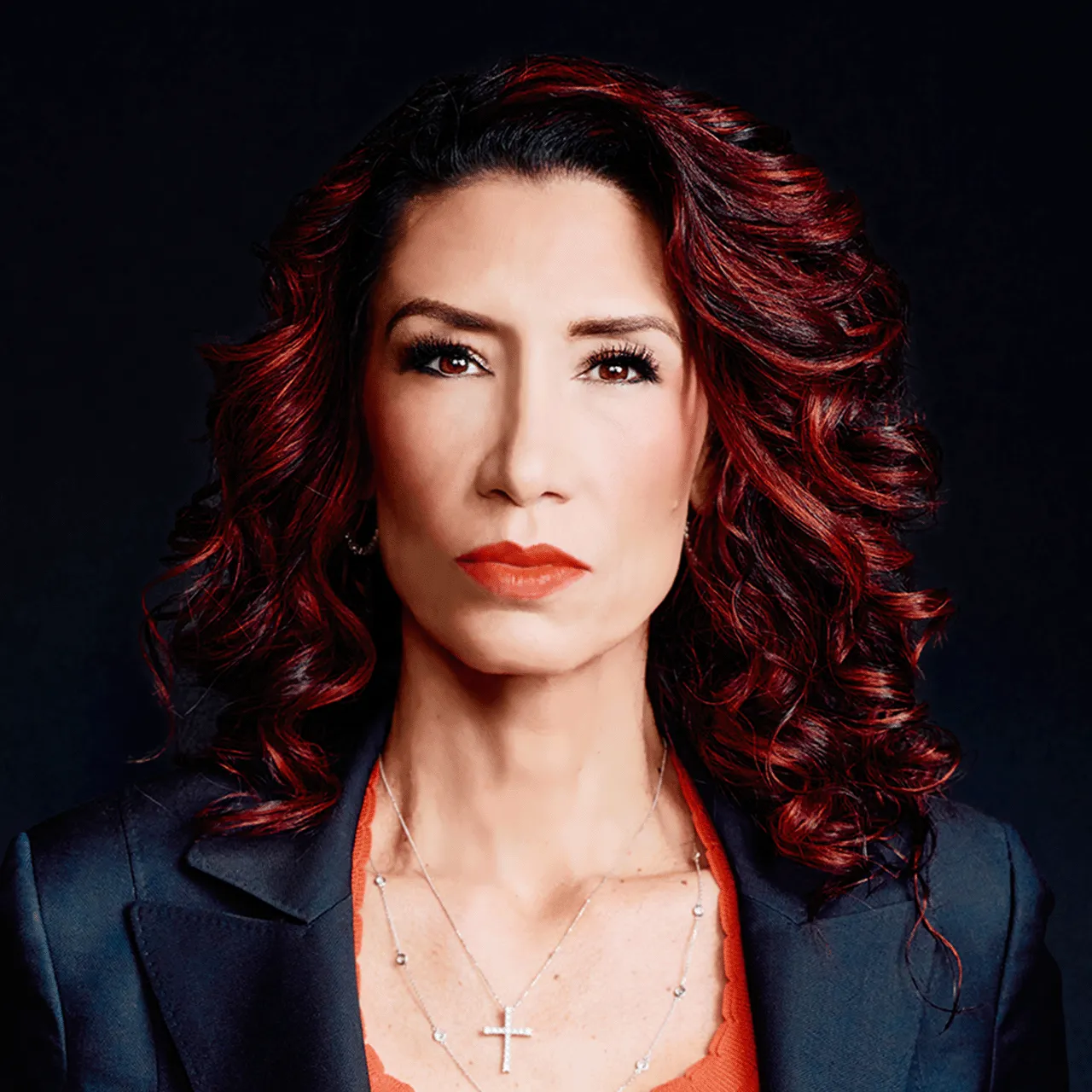
Hedieh Mirahmadi Falco is a former FBI senior advisor turned author and evangelist. A national security expert and contributor to The Christian Post and major news outlets, she now shares her powerful story of faith and redemption, on the Living Fearless Devotional podcast.