
Stream Real Life Network Now

WATCH NOW
Finance

.jpg)
Business & Finance
25 min
400 Episodes of Economic War Room: The Fight for America’s Economic Future
Celebrate Economic War Room’s 400th episode as Kevin Freeman reflects on two decades exposing economic warfare, from Pentagon research and Moscow warnings to transactional gold, sound money, and state legal tender efforts shaping America’s future.
As America celebrates its 250th year, we’re celebrating a milestone of our own at Economic War Room: our 400th episode. It’s an opportunity to look back at where we started, the warnings we’ve sounded, the people who have joined us along the way and, most importantly, why this mission matters now more than ever.
For nearly two decades, I’ve studied how America’s adversaries use economics as a weapon. Long before Economic War Room reached television screens, I traveled to Moscow with my partner Russell Lake and saw firsthand how foreign powers were thinking strategically about America’s economic vulnerabilities.
That experience helped put me on a path that eventually led to research for the Pentagon and years of studying economic warfare. Since then, the threats have evolved. But the central lesson hasn’t changed.
What we see as a marketplace, our enemies view as a battle space.
Watch this full episode on Economic War Room, streaming now on the Real Life Network.
The Economic War Didn’t Start Yesterday
For 400 episodes, Economic War Room has examined threats that were often ignored or dismissed until they became impossible to overlook.
We’ve investigated whether Communist China is waging economic warfare against the United States. We’ve examined America’s dependence on China for medicines and other critical supply chains. We’ve warned about the movement toward a cashless society and explored the risks posed by global financial and political agendas.
We’ve also looked to history for answers. Ronald Reagan understood the enormous power of economic warfare. His administration used economic strategy as part of the broader effort that helped defeat Soviet communism and win the Cold War.
That history matters today because communism and authoritarianism didn’t disappear with the Berlin Wall. They changed. The weapons changed. And the battlefield changed.
Today, a nation can attack another country without firing a shot. It can target supply chains, currencies, markets, intellectual property, technology and investment capital.
That’s why Americans must understand economic warfare before they can hope to defend themselves against it.
From Diagnosing the Problem to Building Solutions
From the beginning, my goal has never been simply to identify threats.
Anyone can tell you the sky is falling. The harder, and more important, job is finding solutions.One example is our work on transactional gold and silver.
For years, we’ve studied how precious metals can function not simply as investments, but as transactional money. The idea is rooted in a much larger question: How do Americans maintain economic freedom and financial resilience when confidence in traditional monetary systems is being challenged? That work has moved beyond theory.
States across the country have considered or enacted measures involving gold and silver as legal tender, and I’ve had the opportunity to participate in research and policy efforts examining how precious metals can fit into modern financial systems.
It’s one example of what Economic War Room is designed to do: identify a strategic vulnerability and then work toward a practical solution. But transactional gold is only part of the story.
Over 400 episodes, we’ve explored American energy independence, critical supply chains, national debt, free markets, investment strategy, Communist China, globalism and the preservation of economic liberty. All of those issues eventually come back to one principle: stewardship.
America’s Economic Future Depends on What We Sow Today
One of the most meaningful symbols here at Liberty Hawk Ranch is the sower. Most people know the old saying: Give a man a fish and you feed him for a day. Teach him to fish and you feed him for a lifetime.
We take that idea one step further. Teach a man to sow seeds and reap harvests. That is economics.
Every generation decides what kind of seeds it will plant. Good economic policy can encourage private ownership, entrepreneurship, investment, responsibility and abundance. Bad economic policy can encourage dependency, debt and stagnation. The question facing America as we celebrate 250 years is straightforward:
What are we sowing today, and what will our children reap tomorrow? Our nation is younger than we sometimes realize. Two hundred and fifty years may sound like a long time, but in generational terms, it isn’t.
The responsibility for preserving what previous generations built now belongs to us.Economic freedom is not something we inherit permanently. It has to be understood, protected and passed on.
Reagan Understood the Power of Economic Freedom
Walking through the Economic War Room set for our 400th episode brought back memories of some remarkable people who have influenced this mission.
Watch this full episode on Economic War Room, streaming now on the Real Life Network.
One of the most important for me was President Ronald Reagan. Years ago, through the Adam Smith Foundation, I had the privilege of presenting Reagan with an Adam Smith Award and an original edition of The Wealth of Nations. I still treasure the photograph and autograph from that meeting.
Reagan understood something America desperately needs to remember today: economic strength is national strength. Free enterprise isn't merely a mechanism for producing wealth. It disperses power. It gives ordinary people the ability to build businesses, own property, invest, innovate and shape their own futures.
That is precisely why authoritarian systems seek economic control. And it is why defending free markets remains inseparable from defending liberty itself.
Behind 400 Episodes Is a Foundation of Faith
There is another part of the Economic War Room story that cannot be separated from the mission. Prayer.
Liberty Hawk Ranch has been dedicated to God from the beginning, and one of its most meaningful places is our prayer garden and cross.
That cross represents something bigger than a television program, an economic strategy or a political movement. It reminds us that human wisdom has limits.
America’s Founders understood that. During the Constitutional Convention of 1787, as delegates struggled with deep disagreements over the nation's future, Benjamin Franklin famously urged them to turn to prayer. Franklin reminded his fellow delegates that during the struggle with Great Britain, they had prayed for divine protection—and he believed those prayers had been answered.
He then asked a question worth asking again today: Had they forgotten that powerful friend?
America was divided then. It faced foreign threats then. Its leaders disagreed bitterly then. And yet they understood that preserving a nation required something beyond political strategy.
400 Episodes Later, the Mission Is Just Beginning
That lesson is just as relevant today. America faces Communist China, global instability, massive economic challenges and deep internal division. We can—and should—develop sound policies. We should strengthen American industry, protect our financial system, defend free markets and understand how our adversaries are using economics against us.
But strategy alone is not enough. We need stewardship. We need courage. And we need prayer. Four hundred episodes have given us an opportunity to study the battlefield, warn Americans about emerging threats and develop practical solutions. But this milestone isn't an ending.
As America prepares to celebrate 250 years, it should remind us how much has been entrusted to our generation—and how much is at stake if we fail to preserve it. The question now is what we do with that responsibility. What seeds will we sow? What kind of country will our children and grandchildren inherit? And will we remember, as Franklin reminded the Founders, that we cannot build this nation by human wisdom alone?
That is the challenge ahead. And after 400 episodes, Economic War Room remains committed to meeting it.
Watch this full episode on Economic War Room, streaming now on the Real Life Network.
World News
25 min
The SPLC & Charlottesville: The Story We Were Never Told
Questions surrounding the Southern Poverty Law Center are shifting from who it labels to how it operates. This article examines growing concerns about influence, accountability, and whether institutions are being held to the same standard they apply to others.
For years, one organization has quietly shaped how Americans are told to think about extremism.
The Southern Poverty Law Center has not just observed the national conversation. It has influenced it. Its reports are cited by the media, relied upon by institutions, and used to define who is considered dangerous, who is considered legitimate, and who is pushed outside the boundaries of acceptable public discourse.
That level of influence carries consequences.
It also raises a fundamental question. Who is holding the gatekeeper accountable?
Because the story surrounding the SPLC is no longer just about the groups it labels. It is about the credibility of the institution doing the labeling.
Over the years, concerns have steadily grown. Critics have pointed to the organization’s “hate map,” arguing that it does more than identify threats. It collapses categories, placing mainstream Christian and conservative organizations alongside violent extremists. That kind of classification is not neutral. It shapes perception. It influences behavior. And in some cases, it has contributed to real-world danger.
One of the clearest examples came in 2012, when a gunman targeted the Family Research Council after using the SPLC’s map to identify his target. He later admitted his intent was mass violence. The attack was stopped, but the implications were unmistakable. When an organization labels broadly, the consequences do not remain theoretical.
At the same time, the SPLC has faced its own internal crises. Leadership shakeups, allegations of misconduct, and the firing of founder Morris Dees exposed cracks in the image of moral authority the organization had carefully built. When an institution presents itself as a watchdog, its own conduct becomes part of the story.
I have personally examined this pattern before. In my book, Living Fearless in Christ, I documented how even federal agencies have, at times, leaned on SPLC reporting to inform investigations, including inquiries into so-called “radical” Catholics. That should concern every American. When one private organization’s classifications begin influencing government action, the stakes move from cultural to constitutional.
For more biblically grounded content that helps you navigate today’s headlines with clarity, visit Real Life Network and watch Living Fearless.
Allegations, Indictments, and Expanding Concerns
Now, that story has taken a far more serious turn.
According to a federal indictment posted by the Department of Justice, the SPLC is accused of engaging in deceptive financial practices and misrepresenting how donor funds were used. The indictment alleges that money raised under the premise of combating extremism was, in part, directed toward individuals connected to extremist groups themselves.
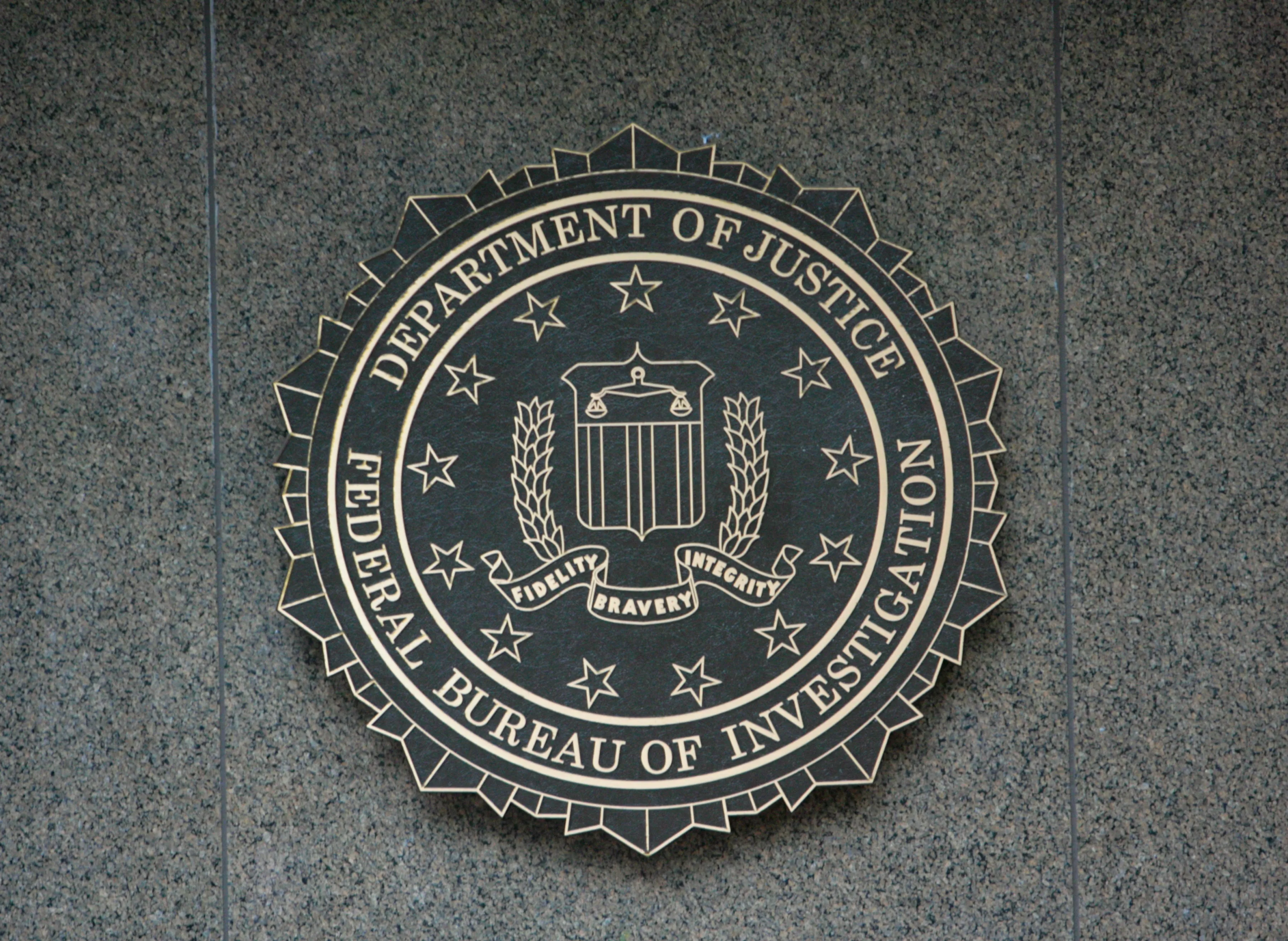
Even more striking are the claims regarding embedded “field sources.” The indictment alleges that individuals operating within extremist networks were actively participating in those environments while under SPLC supervision. In some cases, those same individuals were allegedly contributing to the very activity the organization publicly condemned.
The document goes further, stating that one such source was present in online leadership discussions tied to the planning of the 2017 Unite the Right rally in Charlottesville, even assisting with coordination efforts for attendees .
If these allegations are accurate, the implications are profound.
Because Charlottesville was not just another event. It became a defining moment in modern American political life. The violence and the tragic loss of life rightly drew condemnation. No moral society excuses that. No Christian justifies hatred.
But what followed was something broader. Charlottesville became a symbol. It was used to define entire movements, to blur distinctions, and to cast suspicion far beyond those directly responsible. Millions of Americans found themselves associated with something they had no part in.
That narrative shaped public opinion. It influenced institutions. It affected reputations.
And now, there are serious allegations suggesting that the forces behind that moment may not have been as straightforward as the public was led to believe.
Truth, Accountability, and the Standard That Remains
If individuals connected to extremist groups were being engaged, influenced, or even indirectly supported in ways that were not disclosed, while their actions were used to construct a national narrative, then the issue is no longer just bias. It is whether perception itself was being shaped in ways the public did not understand.
That is a serious charge. And it demands serious scrutiny.
This does not excuse wrongdoing by those who committed acts of violence. Accountability remains where it belongs. But justice also demands that the full truth be known. It demands that narratives be accurate, not constructed. It demands that influence be transparent, not concealed.
Scripture speaks directly to this kind of moment. We are warned against false witness. We are warned against dishonest scales. We are warned that those who judge will themselves be judged by the same measure. These are not abstract ideals. They are standards.
The SPLC has built its influence by defining others. It has drawn lines, labeled groups, and shaped how Americans understand extremism. That authority carries weight. It carries consequences. And it carries responsibility.
If the allegations now before the public raise credible concerns about whether that responsibility has been upheld, they cannot be ignored.
Because this is not just about one organization.
It is about whether power can operate without scrutiny. It is about whether narratives can be shaped without accountability. It is about whether institutions that claim to stand for justice are willing to be measured by the same standard they impose on everyone else.
Truth is not a partisan tool. It is a standard. And a standard applied only to others is not justice. It is control.
The Southern Poverty Law Center has spent years defining who should be questioned.
Now it must answer a far more serious question.
What happens when the institution that judges everyone else is finally judged itself?
For more biblically grounded content that helps you navigate today’s headlines with clarity, visit Real Life Network and watch Living Fearless.
Related Articles
- When Peace Requires Courage: The Christian Case for Just War in Iran by Hedieh Mirahmadi Falco
- Agape Love: Obedient, Courageous, Costly by Hedieh Mirahmadi Falco
- Why do Christian Kids Convert to Islam? by Hedieh Mirahmadi Falco
Thank you! Your submission has been received!
Oops! Something went wrong while submitting the form.
Business & Finance
America is under full-scale economic assault. For years, I’ve reported on the intersection of national security and capital markets. After nearly 400 episodes of Economic War Room, the evidence and patterns have become overwhelmingly clear: foreign adversaries increasingly view trade, energy, currency, technology and financial markets as weapons.
What we see as a marketplace, our enemies view as a battle space.
China is perhaps the clearest example. The Chinese Communist Party openly embraces the concept of “unrestricted warfare,” and economics represents one of the most effective fronts in that struggle. China dominates much of the global supply chain for rare earth minerals and critical materials, the same resources required for everything from smartphones and electric vehicles to advanced American defense systems.
That dependence gives Beijing tremendous leverage. But critical minerals are only one part of the story. Currency manipulation, subsidized exports, cyberattacks and intellectual property theft have all created vulnerabilities for the United States. American factories have closed, communities have been hollowed out and critical supply chains have moved overseas.
This isn’t simply about competition between two large economies. It’s a national security issue.
Watch this full episode on Economic War Room, streaming now on the Real Life Network.
America Is Also Weakening Itself From Within
The economic threats facing America aren’t all coming from Beijing or other foreign capitals. Some are self-inflicted.
The United States now carries an enormous national debt, creating long-term risks for the dollar, interest rates, future taxpayers and national security. At the same time, corporate policies built around ESG and DEI have too often shifted attention away from profitability, merit, innovation and long-term shareholder value.
Then there is the prospect of a programmable central bank digital currency. If implemented without the proper protections, a CBDC could potentially give government authorities unprecedented ability to monitor transactions, restrict spending or freeze accounts.
Put these threats together and the consequences are no longer abstract. They can affect your retirement account, your savings, your paycheck and your ability to provide for your family.
President Trump can do his part in Washington, but he cannot do your part for you. That responsibility belongs to each of us.
Americans Can Fight Back With Their Own Money
The good news is that ordinary Americans are not helpless.
At Economic War Room, we’ve spent years developing strategies designed to help Americans recognize economic warfare and build greater resilience against it. Through the NSIC Institute, we’ve also worked to educate financial advisors about the intersection of national security and investing. One principle sits at the center of that work: weaponize your money for liberty, security and your values.
That starts with defense. Traditional stocks-and-bonds diversification may not be enough in an environment defined by inflation, geopolitical instability, massive government debt and fragile global supply chains. Americans should understand what they own, where their vulnerabilities are and whether they have sufficient exposure to tangible assets they actually control.
That is one reason I have repeatedly discussed transactional gold and silver. Precious metals have functioned as stores of value for thousands of years and can provide another layer of financial independence when paper currencies and financial markets come under pressure.
But defense is only half the battle. Americans can also think carefully about where their investment dollars are going. Domestic energy production, critical minerals, reshoring, advanced manufacturing and defense technology can all play a role in rebuilding American economic strength. Rather than unknowingly sending investment capital toward adversaries, Americans can consider supporting companies and industries that strengthen our independence and national security.
I call it voting with your dollars on steroids. That doesn’t mean blindly buying a stock because it carries an American flag. And it isn’t individualized investment advice. Every investor should consider his or her own circumstances and consult a qualified financial professional.
It does mean recognizing that capital has consequences.
Financial Resilience Starts at Home
There are also simpler steps Americans can take.High-interest consumer and credit card debt can become crushing when rates rise or an economic shock hits. Building emergency reserves, reducing unnecessary debt and considering assets that can provide resilience during turbulent periods can all strengthen a household’s financial position.
But the goal should extend beyond surviving the next downturn. We should be thinking generationally. America’s free-market system has given ordinary citizens an extraordinary opportunity to participate in economic growth, build businesses, invest and create wealth. We should teach those principles to our children and grandchildren rather than allowing future generations to become increasingly dependent on government.
Economic freedom and political freedom are connected. That means Americans must also remain civically engaged—voting, contacting elected representatives and supporting policies that promote fiscal responsibility, sound money, American energy, lower taxes and free enterprise.
America May Be Facing Its Own Dunkirk Moment
As I consider the challenges ahead, I keep returning to one of the most remarkable episodes of World War II. In May 1940, nearly 400,000 British and Allied troops were trapped near Dunkirk as Nazi forces swept through France. Britain faced catastrophe.
Then ordinary citizens answered the call. Fishing boats, pleasure yachts, ferries, tugboats and virtually anything else that could float crossed the English Channel to help evacuate the stranded troops. In the end, more than 338,000 men were rescued.
Those vessels became known as the “little ships of Dunkirk.” The evacuation did not end the war. Churchill himself reminded Britain that wars are not won by evacuations. The Battle of Britain was still ahead, America had not yet entered the conflict and years of fighting remained.
But Dunkirk demonstrated what can happen when ordinary people refuse to surrender. There was also another element that should not be forgotten. King George VI called Britain to a National Day of Prayer on May 26, 1940. Churches filled as the British people prayed for deliverance. The events that followed became remembered by many as the “miracle of Dunkirk.”
I believe there is a lesson there for America today. We are facing our own economic Dunkirk moment. The threats to American prosperity, freedom and security are formidable. Government and large institutions have a role to play, but they cannot do everything.
That’s where the little ships come in. You are the little ships.
Every time you examine your investments, reduce high-interest debt, strengthen your family’s finances, support American energy and manufacturing, build generational wealth, vote for free-market policies or speak up for sound money, you are answering the call. No single American can win an economic war. Millions of informed Americans acting together can change its course.
Prayer first. Then get to work. Then give thanks. Freedom is fragile. It has to be protected and passed to future generations. And right now, our children and grandchildren are depending on us to do exactly that. It’s time to get in the fight.
Watch this full episode on Economic War Room, streaming now on the Real Life Network.
25 min
.jpg)
September 17, 2026
Kevin Freeman
Business & Finance
As America celebrates its 250th year, we’re celebrating a milestone of our own at Economic War Room: our 400th episode. It’s an opportunity to look back at where we started, the warnings we’ve sounded, the people who have joined us along the way and, most importantly, why this mission matters now more than ever.
For nearly two decades, I’ve studied how America’s adversaries use economics as a weapon. Long before Economic War Room reached television screens, I traveled to Moscow with my partner Russell Lake and saw firsthand how foreign powers were thinking strategically about America’s economic vulnerabilities.
That experience helped put me on a path that eventually led to research for the Pentagon and years of studying economic warfare. Since then, the threats have evolved. But the central lesson hasn’t changed.
What we see as a marketplace, our enemies view as a battle space.
Watch this full episode on Economic War Room, streaming now on the Real Life Network.
The Economic War Didn’t Start Yesterday
For 400 episodes, Economic War Room has examined threats that were often ignored or dismissed until they became impossible to overlook.
We’ve investigated whether Communist China is waging economic warfare against the United States. We’ve examined America’s dependence on China for medicines and other critical supply chains. We’ve warned about the movement toward a cashless society and explored the risks posed by global financial and political agendas.
We’ve also looked to history for answers. Ronald Reagan understood the enormous power of economic warfare. His administration used economic strategy as part of the broader effort that helped defeat Soviet communism and win the Cold War.
That history matters today because communism and authoritarianism didn’t disappear with the Berlin Wall. They changed. The weapons changed. And the battlefield changed.
Today, a nation can attack another country without firing a shot. It can target supply chains, currencies, markets, intellectual property, technology and investment capital.
That’s why Americans must understand economic warfare before they can hope to defend themselves against it.
From Diagnosing the Problem to Building Solutions
From the beginning, my goal has never been simply to identify threats.
Anyone can tell you the sky is falling. The harder, and more important, job is finding solutions.One example is our work on transactional gold and silver.
For years, we’ve studied how precious metals can function not simply as investments, but as transactional money. The idea is rooted in a much larger question: How do Americans maintain economic freedom and financial resilience when confidence in traditional monetary systems is being challenged? That work has moved beyond theory.
States across the country have considered or enacted measures involving gold and silver as legal tender, and I’ve had the opportunity to participate in research and policy efforts examining how precious metals can fit into modern financial systems.
It’s one example of what Economic War Room is designed to do: identify a strategic vulnerability and then work toward a practical solution. But transactional gold is only part of the story.
Over 400 episodes, we’ve explored American energy independence, critical supply chains, national debt, free markets, investment strategy, Communist China, globalism and the preservation of economic liberty. All of those issues eventually come back to one principle: stewardship.
America’s Economic Future Depends on What We Sow Today
One of the most meaningful symbols here at Liberty Hawk Ranch is the sower. Most people know the old saying: Give a man a fish and you feed him for a day. Teach him to fish and you feed him for a lifetime.
We take that idea one step further. Teach a man to sow seeds and reap harvests. That is economics.
Every generation decides what kind of seeds it will plant. Good economic policy can encourage private ownership, entrepreneurship, investment, responsibility and abundance. Bad economic policy can encourage dependency, debt and stagnation. The question facing America as we celebrate 250 years is straightforward:
What are we sowing today, and what will our children reap tomorrow? Our nation is younger than we sometimes realize. Two hundred and fifty years may sound like a long time, but in generational terms, it isn’t.
The responsibility for preserving what previous generations built now belongs to us.Economic freedom is not something we inherit permanently. It has to be understood, protected and passed on.
Reagan Understood the Power of Economic Freedom
Walking through the Economic War Room set for our 400th episode brought back memories of some remarkable people who have influenced this mission.
Watch this full episode on Economic War Room, streaming now on the Real Life Network.
One of the most important for me was President Ronald Reagan. Years ago, through the Adam Smith Foundation, I had the privilege of presenting Reagan with an Adam Smith Award and an original edition of The Wealth of Nations. I still treasure the photograph and autograph from that meeting.
Reagan understood something America desperately needs to remember today: economic strength is national strength. Free enterprise isn't merely a mechanism for producing wealth. It disperses power. It gives ordinary people the ability to build businesses, own property, invest, innovate and shape their own futures.
That is precisely why authoritarian systems seek economic control. And it is why defending free markets remains inseparable from defending liberty itself.
Behind 400 Episodes Is a Foundation of Faith
There is another part of the Economic War Room story that cannot be separated from the mission. Prayer.
Liberty Hawk Ranch has been dedicated to God from the beginning, and one of its most meaningful places is our prayer garden and cross.
That cross represents something bigger than a television program, an economic strategy or a political movement. It reminds us that human wisdom has limits.
America’s Founders understood that. During the Constitutional Convention of 1787, as delegates struggled with deep disagreements over the nation's future, Benjamin Franklin famously urged them to turn to prayer. Franklin reminded his fellow delegates that during the struggle with Great Britain, they had prayed for divine protection—and he believed those prayers had been answered.
He then asked a question worth asking again today: Had they forgotten that powerful friend?
America was divided then. It faced foreign threats then. Its leaders disagreed bitterly then. And yet they understood that preserving a nation required something beyond political strategy.
400 Episodes Later, the Mission Is Just Beginning
That lesson is just as relevant today. America faces Communist China, global instability, massive economic challenges and deep internal division. We can—and should—develop sound policies. We should strengthen American industry, protect our financial system, defend free markets and understand how our adversaries are using economics against us.
But strategy alone is not enough. We need stewardship. We need courage. And we need prayer. Four hundred episodes have given us an opportunity to study the battlefield, warn Americans about emerging threats and develop practical solutions. But this milestone isn't an ending.
As America prepares to celebrate 250 years, it should remind us how much has been entrusted to our generation—and how much is at stake if we fail to preserve it. The question now is what we do with that responsibility. What seeds will we sow? What kind of country will our children and grandchildren inherit? And will we remember, as Franklin reminded the Founders, that we cannot build this nation by human wisdom alone?
That is the challenge ahead. And after 400 episodes, Economic War Room remains committed to meeting it.
Watch this full episode on Economic War Room, streaming now on the Real Life Network.
25 min
400 Episodes of Economic War Room: The Fight for America’s Economic Future
July 1, 2026
Kevin Freeman
World News
For years, one organization has quietly shaped how Americans are told to think about extremism.
The Southern Poverty Law Center has not just observed the national conversation. It has influenced it. Its reports are cited by the media, relied upon by institutions, and used to define who is considered dangerous, who is considered legitimate, and who is pushed outside the boundaries of acceptable public discourse.
That level of influence carries consequences.
It also raises a fundamental question. Who is holding the gatekeeper accountable?
Because the story surrounding the SPLC is no longer just about the groups it labels. It is about the credibility of the institution doing the labeling.
Over the years, concerns have steadily grown. Critics have pointed to the organization’s “hate map,” arguing that it does more than identify threats. It collapses categories, placing mainstream Christian and conservative organizations alongside violent extremists. That kind of classification is not neutral. It shapes perception. It influences behavior. And in some cases, it has contributed to real-world danger.
One of the clearest examples came in 2012, when a gunman targeted the Family Research Council after using the SPLC’s map to identify his target. He later admitted his intent was mass violence. The attack was stopped, but the implications were unmistakable. When an organization labels broadly, the consequences do not remain theoretical.
At the same time, the SPLC has faced its own internal crises. Leadership shakeups, allegations of misconduct, and the firing of founder Morris Dees exposed cracks in the image of moral authority the organization had carefully built. When an institution presents itself as a watchdog, its own conduct becomes part of the story.
I have personally examined this pattern before. In my book, Living Fearless in Christ, I documented how even federal agencies have, at times, leaned on SPLC reporting to inform investigations, including inquiries into so-called “radical” Catholics. That should concern every American. When one private organization’s classifications begin influencing government action, the stakes move from cultural to constitutional.
For more biblically grounded content that helps you navigate today’s headlines with clarity, visit Real Life Network and watch Living Fearless.
Allegations, Indictments, and Expanding Concerns
Now, that story has taken a far more serious turn.
According to a federal indictment posted by the Department of Justice, the SPLC is accused of engaging in deceptive financial practices and misrepresenting how donor funds were used. The indictment alleges that money raised under the premise of combating extremism was, in part, directed toward individuals connected to extremist groups themselves.
Even more striking are the claims regarding embedded “field sources.” The indictment alleges that individuals operating within extremist networks were actively participating in those environments while under SPLC supervision. In some cases, those same individuals were allegedly contributing to the very activity the organization publicly condemned.
The document goes further, stating that one such source was present in online leadership discussions tied to the planning of the 2017 Unite the Right rally in Charlottesville, even assisting with coordination efforts for attendees .
If these allegations are accurate, the implications are profound.
Because Charlottesville was not just another event. It became a defining moment in modern American political life. The violence and the tragic loss of life rightly drew condemnation. No moral society excuses that. No Christian justifies hatred.
But what followed was something broader. Charlottesville became a symbol. It was used to define entire movements, to blur distinctions, and to cast suspicion far beyond those directly responsible. Millions of Americans found themselves associated with something they had no part in.
That narrative shaped public opinion. It influenced institutions. It affected reputations.
And now, there are serious allegations suggesting that the forces behind that moment may not have been as straightforward as the public was led to believe.
Truth, Accountability, and the Standard That Remains
If individuals connected to extremist groups were being engaged, influenced, or even indirectly supported in ways that were not disclosed, while their actions were used to construct a national narrative, then the issue is no longer just bias. It is whether perception itself was being shaped in ways the public did not understand.
That is a serious charge. And it demands serious scrutiny.
This does not excuse wrongdoing by those who committed acts of violence. Accountability remains where it belongs. But justice also demands that the full truth be known. It demands that narratives be accurate, not constructed. It demands that influence be transparent, not concealed.
Scripture speaks directly to this kind of moment. We are warned against false witness. We are warned against dishonest scales. We are warned that those who judge will themselves be judged by the same measure. These are not abstract ideals. They are standards.
The SPLC has built its influence by defining others. It has drawn lines, labeled groups, and shaped how Americans understand extremism. That authority carries weight. It carries consequences. And it carries responsibility.
If the allegations now before the public raise credible concerns about whether that responsibility has been upheld, they cannot be ignored.
Because this is not just about one organization.
It is about whether power can operate without scrutiny. It is about whether narratives can be shaped without accountability. It is about whether institutions that claim to stand for justice are willing to be measured by the same standard they impose on everyone else.
Truth is not a partisan tool. It is a standard. And a standard applied only to others is not justice. It is control.
The Southern Poverty Law Center has spent years defining who should be questioned.
Now it must answer a far more serious question.
What happens when the institution that judges everyone else is finally judged itself?
For more biblically grounded content that helps you navigate today’s headlines with clarity, visit Real Life Network and watch Living Fearless.
Related Articles
- When Peace Requires Courage: The Christian Case for Just War in Iran by Hedieh Mirahmadi Falco
- Agape Love: Obedient, Courageous, Costly by Hedieh Mirahmadi Falco
- Why do Christian Kids Convert to Islam? by Hedieh Mirahmadi Falco
25 min
The SPLC & Charlottesville: The Story We Were Never Told
April 27, 2026
Hedieh Mirahmadi Falco