Ukraine’s Fight and America’s Freedom
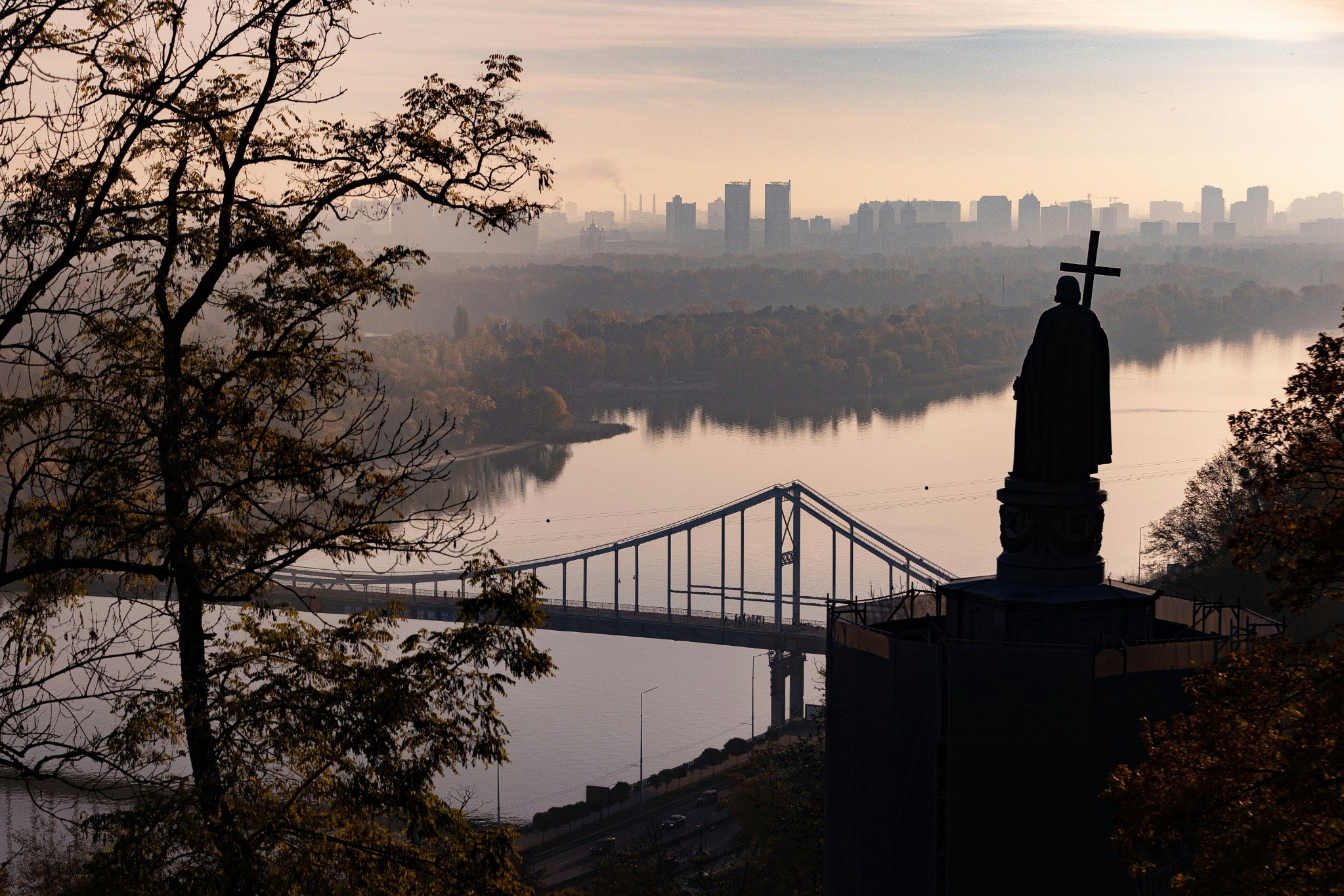
Ukraine’s war with Russia is about more than territory. Religious freedom, national identity, and the future of Ukrainian families are at stake as Russia seeks to reshape life in occupied territories.
Should Ukraine’s ongoing battle against Russian aggression concern Americans?
Russian tanks, missiles, and drones have destroyed homes and schools and killed more than 16,800 civilians. But they are only the visible weapons of war. Behind them is something less visible but no less consequential: Putin’s Russian Imperialism 2.0, an ideology that seeks not merely to conquer Ukrainian territory, but to erase Ukrainian identity, sovereignty, and culture. This is not just a threat to Ukraine; it is a threat to Europe and, left unchecked, to freedom everywhere.
Putin’s Russian Imperialism 2.0 borrows heavily from Soviet authoritarianism, with one important exception: the Russian Orthodox Church, which the communists persecuted, has now become an instrument of the Russian state.
Soviet communism tried to replace Christianity with the state. Putinism enlists a form of Christianity in service to the state.
In occupied Ukraine, independent religious expression is suppressed, churches closed, and religious leaders imprisoned, exiled, or worse, while the Moscow-aligned Russian Orthodox Church is privileged. Evangelical and Catholic churches have been closed, with some sanctuaries turned into operational centers for the occupiers.
During my visit to Ukraine, Denys Uliutin, Minister of Social Policy, Family and Unity, briefed me on Russia’s systematic attacks on Ukraine’s religious heritage, damaging or destroying hundreds of religious structures, a pattern documented by the U.S. Commission on International Religious Freedom. Ukrainian officials have also documented 67 religious leaders and clergy killed or who died as a result of torture in occupied territories.
But there is more to Putinism than crushing religious institutions and leaders who refuse to surrender their kingdom authority to an earthly tyrant. If attacking churches is an assault on Ukraine’s spiritual identity, Russifying its children is an assault on its future.
In occupied territories, children are subjected to Russian curriculum, forced use of the Russian language, citizenship requirements, and expressions of allegiance to Russia.
Even more disturbing, thousands of Ukrainian children have been deported or forcibly transferred, with more than 8,400 relocated to at least 57 facilities, where many have undergone Russian re-education. Some have been placed for adoption or fostering in Russia, an effort to sever their Ukrainian identity.
Russian Imperialism 2.0 is as deadly and dangerous as its communist precursor when it comes to the Christian faith and family, two institutions vital for freedom.
Why should we care here in the West, where Putin is unlikely to militarily attack America?
As Christians, we should care when our brothers and sisters in Christ are targeted and tortured, because the kingdom of God knows no borders.
As Americans, history instructs us that evil never stands still. The question is not whether Russian tanks will reach America, but whether America is safer in a world where military aggression, religious repression, and forced assimilation are allowed to succeed.
What should we do?
We should pray because Christians are suffering. We should materially support Ukraine because aggression must not be rewarded. And we must understand that what Ukraine is defending is bigger than territory.
Ukraine is fighting for its territory, but also for the right of a people to remain a people, to worship God freely, raise their children in their own faith and culture, and govern themselves.
Those are freedoms Americans should recognize as worth defending.
This article was originally published on The Washington Stand.
Ukraine’s war with Russia is about more than territory. Religious freedom, national identity, and the future of Ukrainian families are at stake as Russia seeks to reshape life in occupied territories.
.jpg)
On Sunday, August 23, Family Research Council President Tony Perkins delivered remarks at the Ukraine National Prayer Breakfast in Kyiv, with Ukrainian President Volodymyr Zelensky, members of the Ukrainian Parliament, and other dignitaries in attendance.
Mr. President, distinguished members of the Ukrainian government and Parliament, leaders of the church, honored guests, ladies and gentlemen:
It is a profound honor to be with you here in Kyiv at this consequential moment in the life of your nation. Thank you for the privilege of joining you for the Ukraine National Prayer Breakfast.
I come as a friend of Ukraine, grateful for the opportunity to stand with you in prayer, but most importantly to share with you from the word of God.
Alexander Solzhenitsyn wrote in “The Gulag Archipelago”:
“The line separating good and evil passes not through states, nor between classes, nor between political parties either — but right through every human heart.”
The Apostle Paul describes the deeper conflict this way in his letter to the Ephesians:
“For we do not wrestle against flesh and blood, but against principalities, against powers, against the rulers of the darkness of this age, against spiritual hosts of wickedness in the heavenly places.” (Ephesians 6:12)
There is a war for Ukraine’s territory, but the battlefield we see reflects a greater battle being waged in the heavenlies — a battle for the soul of Ukraine and the hearts of its people.
In the late 1980s and early 1990s, I worked with the U.S. Department of State managing one of its Anti-Terrorism Assistance Program sites. Shortly after the fall of the Berlin Wall in 1989, we began training police officers and other security officials in the United States from former Eastern Bloc countries.
I would personally acquire Bibles and place them in their dorm rooms before their arrival.
With one Polish class, the demand for Bibles was so great at the time that I was unable to get the Bibles before the officers arrived. They finally came in the night before the class was scheduled to leave.
My office was on the ground floor of the dormitory, so I sent word to their interpreter and escort that I had Bibles in Polish in my office if they would like one.
Within 10 minutes, the entire class was crowded into my office — some in their underwear, having jumped out of bed.
With tears in their eyes, some told me they had never owned a Bible. One asked for another for his elderly mother. One asked me to sign his Bible.
I told him, “I didn’t write it, so I better not sign it.”
I have never witnessed such a genuine hunger for the word of God.
Thirty-five years ago, Ukraine declared its independence, which was overwhelmingly affirmed by the Ukrainian people in December of that year.
That historic political awakening was preceded three years earlier by a remarkable spiritual opening as Christians marked the 1,000th anniversary of the Christianization of Kyivan Rus under Volodymyr the Great in 988.
While there were certainly political advantages for him to embrace Christianity, the ancient chronicles present a striking before-and-after portrait of Volodymyr. The ruler once associated with pagan worship, violence, and numerous wives and concubines became a ruler who destroyed idols, built churches, promoted Christian instruction, cared for the poor, and sought to govern according to his newfound Christian faith.
According to the earliest Christian accounts, the Christianization of Volodymyr changed the Grand Prince personally, and it changed the policies and direction of his realm.
A spiritually renewed heart lays the foundation for a reformation of our ways.
Genuine spiritual renewal should produce reform.
But reform apart from spiritual renewal cannot be sustained.
Jesus illustrated this principle with a sobering warning in Matthew 12:
“When an unclean spirit goes out of a man, he goes through dry places, seeking rest, and finds none. Then he says, ‘I will return to my house from which I came.’ And when he comes, he finds [it] empty, swept, and put in order. Then he goes and takes with him seven other spirits more wicked than himself, and they enter and dwell there; and the last [state] of that man is worse than the first. So shall it also be with this wicked generation.”
The warning? Jesus was speaking to those of His day who had experienced a measure of reform through John the Baptist’s ministry yet rejected the One to whom John pointed, Christ Himself. The warning, which extends beyond that generation, is that freedom from the bondage of evil cannot be sustained by merely removing what is evil; the life that has been emptied must come under the transforming rule and presence of God.
Thirty-five years ago, Ukraine swept away atheistic communism, but what has taken its place?
Could the battle for Ukraine’s territory also be part of a larger spiritual battle, an effort to return this nation to the bondage from which it was delivered?
In the 1950s, as America moved deeper into the Cold War with the Soviet Union, the Rev. George M. Docherty, pastor of the New York Avenue Presbyterian Church in Washington, D.C., delivered a sermon on February 7, 1954, on the American Pledge of Allegiance and what it did not include. With President Dwight Eisenhower sitting on the front pew, the reverend declared, “Apart from the mention of the little phrase ‘the United States of America,’ it could be the pledge of any republic. I could hear little Muscovites repeat a similar pledge to their hammer-and-sickle-flag in Moscow. Russia is also a republic that claims to have overthrown the tyranny of kingship. Russia also claims to be indivisible.”
Three days later, a bill was introduced in Congress to add the words “under God” to our pledge of Allegiance.
And on Flag Day, June 14, 1954, Eisenhower signed the bill into law, saying, “From this day forward, millions of school children will daily proclaim the dedication of our nation and our people to the Almighty.”
Two years later, Congress made “In God We Trust” our national motto.
America’s leaders at that moment understood that the contrast with atheistic communism could not merely be political. Enduring freedom required a transcendent foundation, a recognition that the nation and its liberties ultimately stood under the authority of God.
Notice that Jesus begins by describing a man, a man delivered from the oppression of evil, but He ends by applying the warning to an entire generation: “So shall it also be with this wicked generation.” A generation that rejects the truth.
The warning is clear: it is not enough to drive evil out. The house cannot remain empty.
Ukraine has a remarkable Christian heritage. The flame of faith was kept burning through decades of persecution by courageous Christian men and women.
Here in Kyiv, one family embodied that courage.
Pastor Petro Vins was repeatedly arrested for preaching the gospel under Stalin. His family was told that he died in a labor camp. Decades later, they learned that he had actually been executed by the Soviet state.
His son, Georgi Veens, became a Baptist pastor here in Kyiv. When Soviet authorities sought to control the church, Georgi refused to surrender its spiritual independence.
Georgi was arrested and sent to Soviet labor camps — not once, but twice — for his religious activities. While imprisoned, Soviet authorities even refused to allow him to possess a Bible.
Think about that. A government so afraid of this Book that it would not allow a prisoner to possess one.
Years later, I watched men emerging from behind the Iron Curtain run from their beds for the opportunity to own one of these life-changing books.
And then there was Georgi’s mother, Lydia. She organized and led other relatives of imprisoned Christians, documenting the persecution and getting their stories beyond the Iron Curtain. She too was imprisoned for her faithfulness.
One family. Three lives. The same choice: Christ over communism.
And they were not alone. There were hundreds more who chose Christ and the way of the cross and courage over communism and compromise.
But now it is this generation’s turn.
Having said no to communism — will you say yes to Christ?
Now is the moment for Ukraine to fan that flame of faith in Jesus Christ — not just with political reforms, but with spiritual renewal and a declaration of dependence upon Almighty God.
Will the independence declared 35 years ago be sustained by a spiritually renewed nation that declares its dependence upon God?
Not merely in words, but, as with Grand Prince Volodymyr in 988, in deeds.
Not in proclamation alone, but in practice.
Solzhenitsyn was right: the line between good and evil runs through every human heart. And ultimately, that is where the battle for the soul of Ukraine will be decided — one heart at a time, as men and women surrender their lives to Jesus Christ.
What does it mean to surrender your life to Jesus Christ?
“But what does it say? ‘The word is near you, in your mouth and in your heart’ (that is, the word of faith which we preach): that if you confess with your mouth the Lord Jesus and believe in your heart that God has raised Him from the dead, you will be saved. For with the heart one believes unto righteousness, and with the mouth confession is made unto salvation. For the Scripture says, ‘Whoever believes on Him will not be put to shame.’” (Romans 10:8-11)
Believe in your heart and confess with your mouth.
This article was originally published on The Washington Stand.
Speaking at Ukraine’s National Prayer Breakfast, Tony Perkins calls for more than political freedom, urging Ukraine to embrace spiritual renewal, remember its Christian heritage, and ground its future in dependence upon God.

EROver the last 50 years, trust in the federal government has declined dramatically. About 77% of Americans once said they trusted the government. Today, that number has fallen to roughly 18%.
Events this week on Capitol Hill provided fresh examples of why trust in the federal government has eroded.
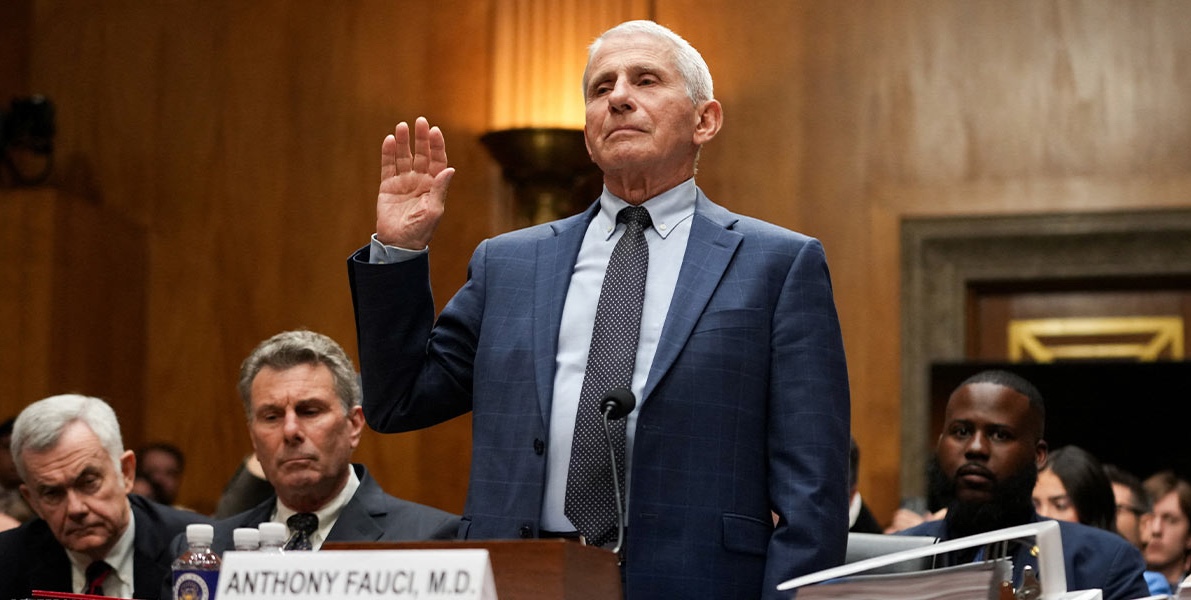
In the Senate Homeland Security Committee, the alleged architect of America’s draconian COVID-19 policies, Anthony Fauci, invoked his Fifth Amendment right against self-incrimination more than 100 times. He refused to answer questions about the origins of the pandemic, efforts to suppress those who pointed to the Wuhan Institute of Virology as the likely source of the virus, funding for gain-of-function research, and COVID policies that closed businesses, schools, and churches while mandating vaccines. Fauci invoked the Fifth even though former President Joe Biden granted him a preemptive pardon, a fact that raises questions of its own.
On the House side, even though members were out of session, the Ethics Committee was busy reviewing allegations involving members ranging from inappropriate conduct with female staffers and domestic abuse to illegal drug use and campaign finance violations. One member even abandoned his reelection campaign as he faces a rare bipartisan censure vote. Since 1789, only 28 members of the House have been censured.
But the erosion of trust is not confined to Washington. Government is only one of many institutions that Americans increasingly doubt. The media and Big Business are swimming at the bottom of public confidence after tying themselves to DEI initiatives and radical transgender ideology. While not as low, trust in religious institutions has also declined by nearly half.
The problem extends beyond institutions. Social trust, our willingness to trust one another, which is essential for a healthy and cohesive society, has also steadily declined. Scholars do not point to a single cause. In his book “Coming Apart,” Charles Murray identifies several contributing factors, including declining church participation, fewer civic organizations, less neighborhood involvement, reduced volunteerism, and the collapse of marriage and stable families. Those trends help explain what has happened, but they also point to a deeper question: what has changed in the human heart?
Perhaps we’ve become less trusting, and less trustworthy, not merely because our institutions have failed us, but because our trust itself has become misplaced.
The psalmist wrote in Psalm 118: “It is better to trust in the LORD than to put confidence in man. It is better to trust in the LORD than to put confidence in princes.”
When we expect government, leaders, institutions, or even ourselves to provide the security, hope, and certainty that only God can give, disappointment is inevitable. Misplaced trust eventually produces broken trust. Laws can restrain evil, but only transformed hearts produce trustworthy people.
Some of you may remember the old Texaco slogan: “You can trust your car to the man who wears the star.”
Here’s something worth thinking about. Our ability to be trusted, and to trust others, comes from trusting the One who made the stars.
Perhaps America’s greatest need today isn’t simply more trustworthy leaders. It is a people who once again place their trust in the One who is always trustworthy. When we trust God first, we become the kind of people others can trust as well.
This article was orignally published on The Washington Stand. For more content like this, visit Real Life Network.
As trust in government, media, businesses, and even one another continues to decline, this article examines the deeper problem of misplaced trust and why rebuilding a trustworthy society begins by placing our confidence in God.

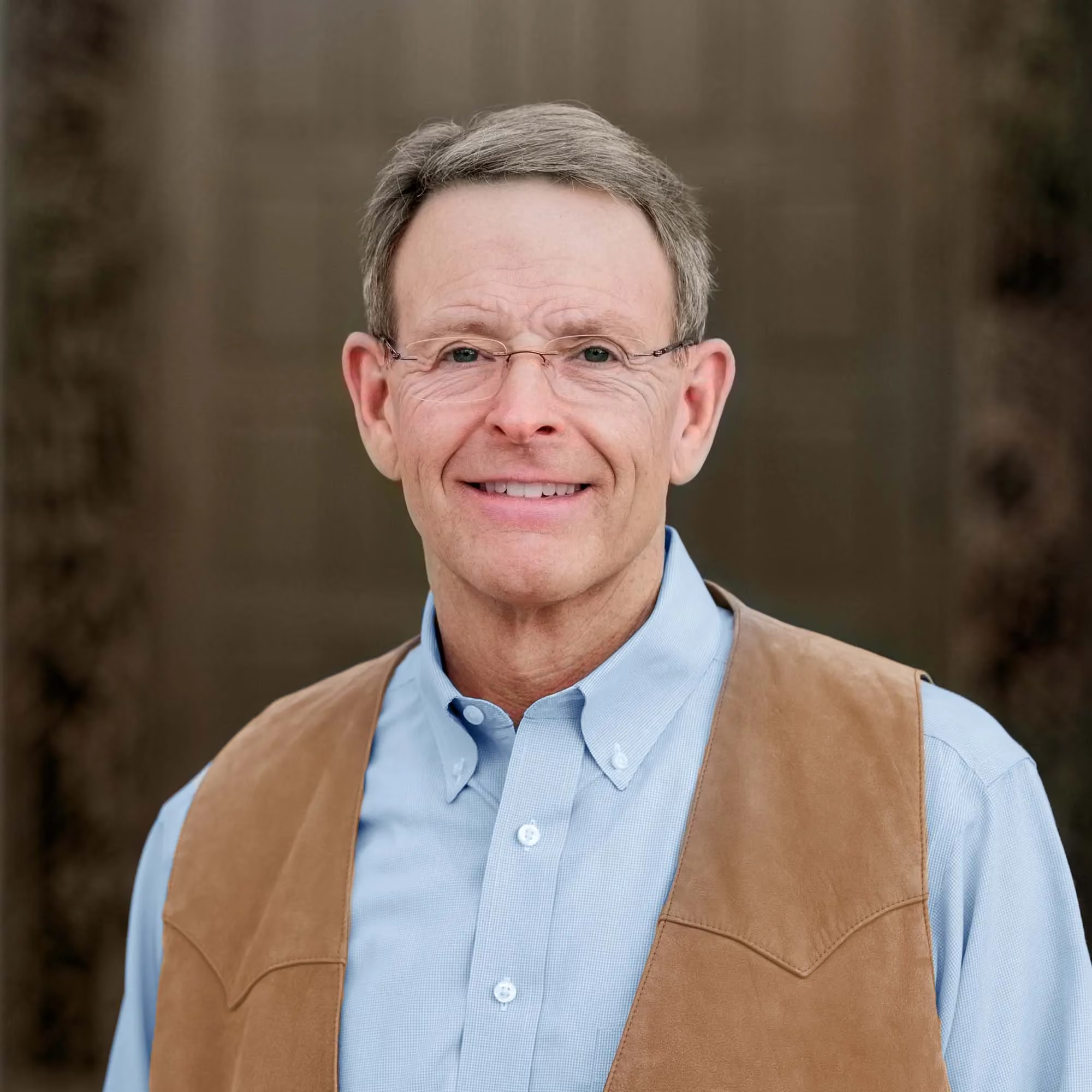
Speaking to the rise of socialist candidates within the Democratic Party, House Speaker Mike Johnson (R-La.) warned that “the barbarians are inside the gate.” He went on to explain, “We are fighting right now in Congress over whether we’re going to maintain our status as a constitutional republic... or go down this dark road of death to communism.”
The Speaker isn’t crying wolf; the threat is real. But the battle to preserve the Republic will not ultimately be won in Congress. There will be legislative fights. There will be elections where your vote could determine the balance of power and whether socialist policies further undermine our freedoms. But if the barbarians are already inside the gate, we need to ask: How did they get in? And how do we get them out?
Congress reflects culture more than it creates it. Laws can restrain evil, but they cannot create virtue. A constitutional republic depends on citizens with the moral character to govern themselves and families that instill virtue in the next generation. Culture is ultimately shaped by what people believe about God, truth, and morality. When those foundations erode, political institutions follow.
To understand how this ideological and spiritual challenge gained traction in America, we have to look beyond politics to the forces that shape a nation’s character.
In his 1983 book “The Gravedigger File,” author and social critic Os Guinness warned that secularization was hollowing out the institution that had long guided Western civilization: the church. As biblical faith weakened, society’s moral foundations weakened, creating a vacuum secular ideologies would inevitably fill.
A little more than a decade later, Judge Robert Bork approached the same crisis from a different direction. In “Slouching Toward Gomorrah,” he argued that America’s moral and cultural foundations were being eroded by radical individualism and radical egalitarianism, weakening the institutions upon which constitutional government depends. Nominated to the Supreme Court by Ronald Reagan in 1987, Bork was rejected because of his originalist view of the Constitution. Though writing as a constitutional scholar rather than a theologian, he arrived at a remarkably similar conclusion.
After coming to Washington, I hoped to meet Robert Bork. I invited him to lunch, and he graciously accepted. During our conversation, I asked for his prognosis of America’s future.
He replied, “The culture is too far gone for the country to turn around.”
For a moment, I thought there was no hope.
Then he added, “There is one thing that could save the country, a genuine renewal of religion in America. But unfortunately, the church has been, and continues to be, in decline.”
So how did the barbarians get inside the gate? Through the church’s loss of its preserving influence as the salt of the earth. And how do we secure the gate once again?
Jesus said, “You are the salt of the earth.” Salt preserves what would otherwise decay. History has confirmed what Christ taught. The decisive battle for America’s future will not ultimately be won in Congress, but in the church as it once again shapes the nation’s moral character. Change the nation’s character, and its politics will follow.
“In God We Trust” cannot remain merely a motto etched in stone. It must once again become the conviction written upon our hearts and reflected in how we live.
This article was originally published on The Washington Stand. For more content like this, visit Real Life Network.
House Speaker Mike Johnson warns that socialism is gaining ground in America, but the deeper battle is not political. Discover why the church, not Congress, holds the key to restoring the nation's moral foundation and preserving the constitutional republic.

Pride Month 2026 began with some bracing news for the LGBTQIA+ movement. According to Gallup’s latest annual survey, public support for same-sex marriage, the morality of homosexual conduct, and transgenderism has declined significantly.
Support for same-sex marriage has fallen six percentage points from its high point in 2022 and 2023. The percentage of Americans who believe same-sex sexual behavior is morally acceptable has dropped to 62%, its lowest level since 2016, the year after the Supreme Court’s decision in Obergefell v. Hodges forced states to recognize same-sex marriages. The most dramatic shift, however, has come on transgenderism. The percentage of Americans who view attempting to change one’s sex as morally acceptable has declined eight percentage points since 2021 and now stands at just 38%.
Why is this happening? After all, major social changes have historically become more accepted over time, not less. Americans are increasingly reconsidering what they were told because they have now lived with the results. The experiment is no longer theoretical. It has become personal.
Take interracial marriage. In 1965, 48% of Americans favored state laws banning interracial marriage. Two years later, the Supreme Court unanimously ruled in Loving v. Virginia that such laws were unconstitutional because they amounted to “invidious racial discrimination.” While controversial in its day, that decision did not redefine the God-given meaning of marriage. Rather, it affirmed the complementarian nature of marriage. As Americans witnessed the results, public acceptance steadily grew. Today, according to Gallup, support for interracial marriage has reached a record high of 94%.
Clearly, that is not what has happened with same-sex marriage and the broader sexual ideology promoted during Pride Month.
Those of us who fought to preserve the natural and biblical understanding of marriage were often dismissed when we warned that redefining marriage would have consequences reaching far beyond marriage licenses. I remember having a discussion over lunch with the staff of a CNN primetime program, when one of the producers, who was in a same-sex relationship, asked me, “How does my relationship affect your marriage?”
“It doesn’t affect my marriage,” I replied. “But it will affect our culture. It will affect what my children are taught in school. It will normalize something that God’s word teaches is contrary to His design.”
That was always the point. The debate was never about its impact on my marriage. It was about the impact it would have in our schools, our laws, our institutions, and ultimately in the lives of the next generation.
Time could have proved those concerns unfounded. The promise of “marriage equality” was that it was simply about allowing committed same-sex couples to formalize their relationships. Americans were assured that nothing else would change.
But that is not what happened.
More than a decade after the Supreme Court’s 5-4 decision in Obergefell, Americans are no longer evaluating promises, they are evaluating results. They are changing their minds not because someone crafted a better political argument, but because they have witnessed consequences many were assured would never come.
They have seen:
Perhaps nowhere have those consequences become more visible than in the rise of transgender ideology.
The “T” in the LGBTQ acronym has been used to justify policies that would have been unimaginable just a decade ago. Young children are told they can decide whether they are boys or girls because sex is merely “assigned at birth.” Teenagers are given puberty blockers that interrupt normal development. Radical surgeries with lifelong consequences are carried out on minors and young adults. Schools across the country facilitate gender transitions while keeping parents in the dark.
These are not isolated incidents. Americans have also watched biological males enter girls’ locker rooms, compete in girls’ sports, and gain access to spaces long reserved for women. Millions of Americans are now connecting the dots. They are seeing the fruit of abandoning God’s design for marriage, family, and the two sexes. Once marriage is detached from the complementary union of man and woman, it becomes increasingly difficult to explain why mothers and fathers matter, why men and women are different, or why children have a right to both.
As we mark the 11th anniversary of Obergefell, Americans are no longer arguing over predictions; they are judging outcomes. They have watched the promises of marriage redefinition play out in their schools, businesses, athletic competitions, churches, and families.
Increasingly, the American people are rendering their own verdict. The great experiment of redefining marriage and reinventing the family has produced its results. Americans are no longer judging promises — they are judging outcomes. The debate over the Sexual Revolution is no longer about its promises. It is about its consequences.
This article was originally published on The Washington Stand. For more content like this, visit Real Life Network.
New Gallup polling shows declining public support for same-sex marriage and transgender ideology. As Americans evaluate more than a decade after Obergefell, many are reconsidering the cultural effects of the Sexual Revolution and its long-term consequences.
.jpeg)
The new report released this week by the Department of Justice’s Task Force to Eradicate Anti-Christian Bias is a wake-up call.
The task force, led by Acting Attorney General Todd Blanche, has produced one of the most, if not the most, substantive works of this administration. The report, entitled “Eradicating Anti-Christian Bias within the Federal Government,” lays bare what is at the heart of the Left’s disdain for religious freedom: it is a clash of “worldviews” over abortion, gender ideology, and sexual orientation.
Before detailing abuses across the federal government, the 550+ page report lays the foundation for why the anti-Christian bias, pervasive in the Biden administration, is a threat to our nation.
Beginning with an extensive quote from the farewell address of America’s first president, George Washington, the report provides the historical context for why vibrant Christian faith should be embraced, not suppressed.
“Of all the dispositions and habits which lead to political prosperity, religion and morality are indispensable supports. In vain would that man claim the tribute of patriotism who should labor to subvert these great pillars of human happiness, these firmest props of the duties of men and citizens.” Washington went on to write, “let us with caution indulge the supposition that morality can be maintained without religion.”
If morality rests on transcendent truth, then to suppress the Christian faith, as the Biden administration did, is to weaken the moral foundation that sustains our political freedoms.
The report goes on to acknowledge that “The Nation’s origin and system of government bear the imprint of a Christian worldview and ethic, even as its laws strive to protect religious pluralism.”
Following the Left’s truncated view of religious freedom, the report highlights how the Biden administration “tolerated religious beliefs that were privately held but zealously pursued actions to limit Christians’ ability to live out their faith.” This is the essence of religious freedom: not merely belief, but the freedom to act on those biblical beliefs and convictions.
The report provides insight into how the Biden administration used government power against those who opposed its agenda — pressuring, penalizing, and, in some cases, prosecuting individuals unwilling to abandon their convictions, including the use of the Freedom of Access to Clinic Entrances Act, or the FACE Act, against pro-life advocates.
Aligned with organizations like the Southern Poverty Law Center and Planned Parenthood, this whole-of-government approach marginalized dissent and created a chilling effect for Christians in the public square.
What many suspected is now documented: an intentional effort to extend hostility toward Bible-believing Christians beyond the federal government by pressuring states and the private sector.
States were pressed into denying or revoking licenses for Christian foster care families and agencies. Educational institutions were forced into compliance with the administration’s view of human sexuality. At the same time, efforts targeted certain forms of Christian counseling, limiting the ability to help those struggling with gender dysphoria.
So what must be done with this report? The federal government is already using it to identify policies that must change. But the stakes are higher than policy alone.
Now is the time to establish safeguards at the federal, state, and local levels to prevent future administrations from hollowing out the First Amendment, and to preserve the truth that sustains both our freedom and our future. And it is also a time for boldness, boldness in proclaiming the gospel that transforms hearts and minds. Because that transformation does not remain private; it shapes how we live, how we act… and yes, how we vote.
This article was originally published on The Washington Stand. For more content like this, visit Real Life Network.

A new report highlights claims of anti-Christian bias in federal policy, raising questions about religious liberty, government overreach, and whether faith is being pushed out of public life in the United States.

Sir Edmund Burke, in a speech to the Electors of Bristol in 1774, said: “Your representative owes you not his industry only, but his judgment; and he betrays, instead of serving you, if he sacrifices it to your opinion.”
That may not sit well in an age of polling and clamor for direct democracy, but the reality is this: the duty of statesmen is not to follow public opinion, but to lead it. In moments of crisis, leaders are not called to read the polls — they are called to rise above them.
And that is exactly what President Donald Trump has done to this point in the war with Iran. When asked about public polling — where most surveys show a majority opposing the war — Trump responded, “I don’t care about polling.”
That statement gained my immediate attention, because in almost every conversation or meeting I have had with the president, he often references the polls — favorable polls.
I note this not as criticism, but to commend the president for stepping into the role of a statesman who leads in the direction the nation needs to go, regardless of the political consequences.
The stock market — very familiar territory for the president — has gone a bit wobbly. Gas prices have risen quickly, though they remain below the peak Americans experienced in the summer of 2022, when the average gallon approached $5. Some congressional Republicans are also expressing concern about the possible impact on the midterm elections.
These are big issues — in the short term. That is why most administrations confronting the Iranian nuclear threat sought to contain it, if they could not avoid it altogether.
To use a familiar phrase from American politics over the last 60 or 70 years, they simply kicked the can down the road so the next administration — or the next generation — would deal with it.
Donald Trump concluded there was no road left.
Open sources suggest Iran possessed roughly 1,000 pounds of uranium enriched to 60% before the launch of Operation Epic Fury. Iran was racing to reach the 90% weapons-grade level — enough material for roughly 10 nuclear warheads. Enough to hold the world hostage, if not destroy large parts of it.
If there has been a justifiable war since World War II, this may be it. This is not defending oil-rich countries made wealthy by American dependence. This is confronting a direct threat to our security and to that of our natural ally, Israel.
When the leadership of a rogue regime repeatedly calls America the “Great Satan,” vows to destroy us, and sponsors repeated terrorist attacks against Americans — at what point should we believe them?
As president, Donald Trump had the constitutional authority to act. Based on the available facts, the war is justified, and the stated purpose is right: peace in the Middle East and justice for the Iranian people.
President Trump should be commended for taking the regime at its word and responding — not because it was politically popular, but because it was justified, militarily and morally.
And in doing so, he illustrated the very principle Burke described 250 years ago: a leader who governs not by the polls, but by judgment.
This article was originally published by The Washington Stand.
Drawing on Edmund Burke’s warning about leadership and public opinion, Tony Perkins argues that true statesmanship requires judgment over polling, praising President Donald Trump for confronting Iran’s nuclear threat despite political risks and short-term opposition.

Tony Perkins is president of the Family Research Council and host of Washington Watch. A leading voice on faith, family, and religious liberty, he provides policy insight and commentary on issues shaping America’s cultural and political landscape.