This article is drawn from my current episode of Rose Unplugged, airing now on the Real Life Network, where I had the extraordinary privilege of sitting down with two American heroes who know firsthand what it means to have freedom taken away.
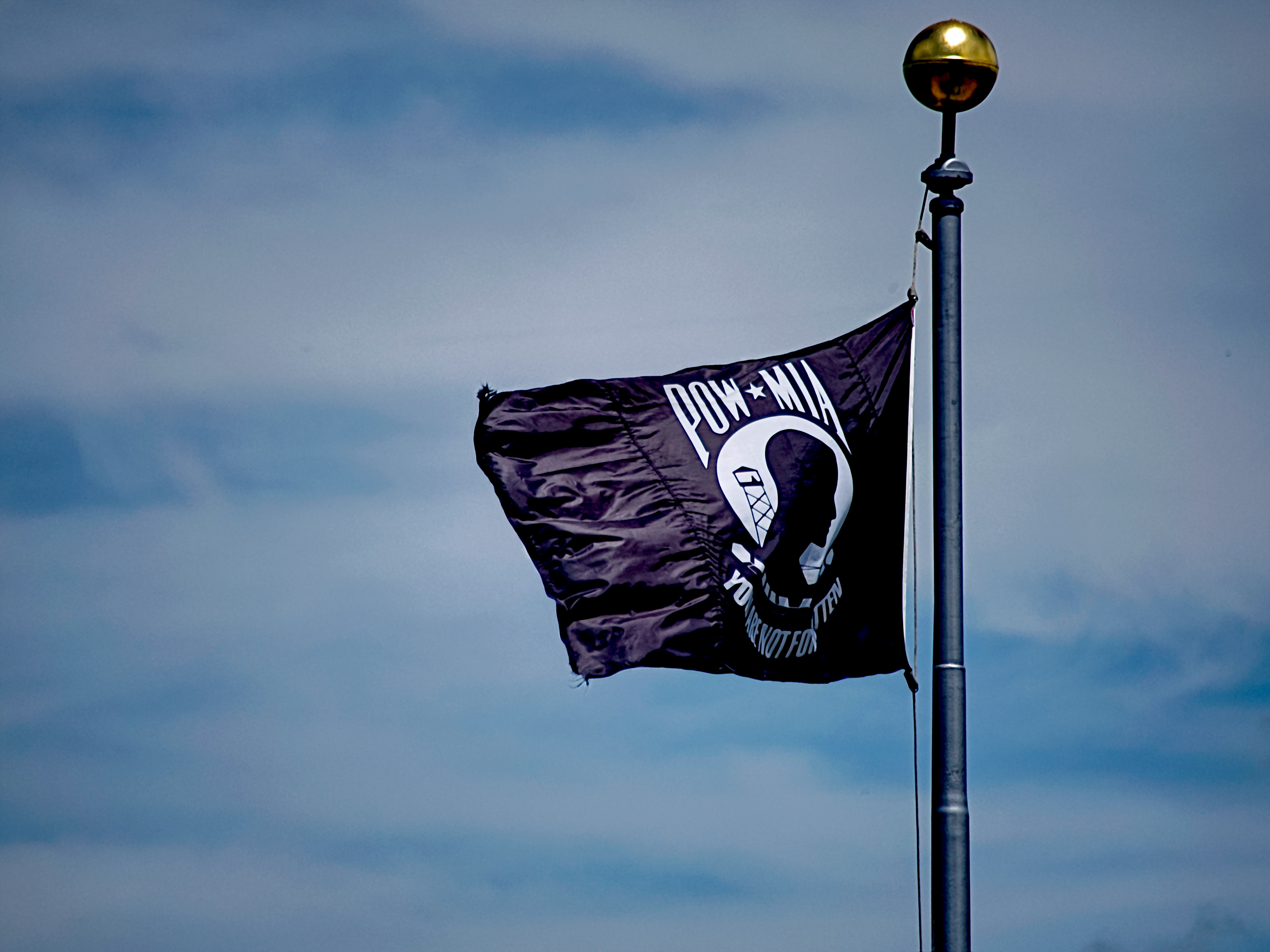
As we observe National POW/MIA Recognition Day, I wanted to bring part of their story beyond the television screen, because their experience is not simply a chapter in American history. It is a reminder of what freedom costs, what courage looks like under unimaginable pressure, and what faith can sustain when almost everything else has been stripped away.
We talk a lot about freedom. We debate it, defend it and sometimes argue over what it means, but if we are honest, most of us rarely stop to think about what freedom actually costs. That is why National POW/MIA Recognition Day matters. It asks us to pause and remember the Americans who were captured, those who never came home, and the families who waited, prayed and carried the uncertainty with them.
Because every once in a while, we have the opportunity to hear from someone who knows exactly what it means when freedom is taken away—not for a day or a year, but for the better part of a decade.
I recently had that opportunity with Rear Admiral Robert Shumaker and Commander Everett Alvarez Jr., two Navy aviators who were shot down over North Vietnam and who together spent over sixteen years as prisoners of war. They were beaten, isolated, interrogated and separated from their families. They were told, again and again, that their country had forgotten them, yet they never allowed their captors to take the most important things from them: their identity, their faith, their loyalty to one another, their honor, and ultimately their love of country.
Commander Everett Alvarez was the first American aviator shot down and captured in North Vietnam. On August 5, 1964, while flying an A-4 Skyhawk from the USS Constellation, his aircraft was hit. He ejected over the water and was captured, with no roadmap and no one who could tell him what the coming years would look like because no American aviator had yet lived through what he was about to experience.
Then, months later, on February 11, 1965, Rear Admiral Robert Shumaker was shot down while flying an F-8 Crusader from the USS Coral Sea. He was forced to eject at extremely low altitude, suffering a broken back in the process, and was eventually captured.
What happened next is almost impossible for those of us living in freedom to comprehend: years of isolation, interrogation, brutal punishment and uncertainty about whether they would ever see their families or their country again. Yet something remarkable happened inside those prison walls. When everything external was stripped away, these men discovered that there were still things their captors could not control, and one of those things was the human mind.
Admiral Shumaker has described designing an entire house in his mind during his years in isolation, brick by brick and room by room. Years later, after returning home, he actually built that house. His captors could control his cell, his movements and his physical circumstances, but they could not enter his mind and take away his ability to create.
Then there was the tap code, perhaps one of the most remarkable examples of human ingenuity and determination to come out of those prison walls. Speaking to another prisoner was forbidden and could bring severe punishment, so Shumaker and Air Force Captain “Smitty” Harris developed a five-by-five grid of the alphabet that allowed prisoners to communicate by tapping letters through the concrete walls. One tap, another tap, another message—a language created in captivity that became a lifeline for men who desperately needed to know they were not alone.
Eventually, their captors discovered the code, and Shumaker and other senior officers were placed in solitary confinement for roughly three years because they were suspected of being leaders of the communication network. But isolating them did not destroy the brotherhood. If anything, their experience demonstrated how powerful that bond had become. Men who had never necessarily known one another before the war were willing to endure punishment rather than betray each other, and they found ways to encourage one another, communicate, pray and remain human in a place designed to strip them of their humanity.
And that brings me to faith, because Scripture is filled with people who discovered that God's presence does not always mean the absence of suffering.
Think about Joseph. His brothers betrayed him, sold him into slavery, and eventually he ended up in an Egyptian prison for something he did not do. Yet Scripture tells us that the Lord was with Joseph even there. Joseph did not know how his story would end, but God did. Years later, Joseph could look back at the people who had intended to harm him and say, “You intended to harm me, but God intended it for good.”
Or think about Shadrach, Meshach and Abednego. They refused to bow to the king's idol and were thrown into the fiery furnace, but God did not keep them from entering the fire; He was with them in it. That distinction matters because sometimes deliverance is not an escape from the trial. Sometimes deliverance is discovering that you are not alone in it.
David understood that when he wrote, “Even though I walk through the valley of the shadow of death, I will fear no evil, for you are with me.” The promise was not that the valley would disappear. The promise was about who would walk through it with him.
That is what I hear in the stories of these POWs—not despair, but resilience; not surrender, but resistance; and not the absence of suffering, but faith under pressure. Their circumstances forced them back onto something deeper than comfort or convenience, onto the courage, discipline, faith and determination God had placed within them.
And perhaps most remarkably, these men came home.
In January 1973, word began reaching the prisoners that a peace agreement had been signed and that they would finally be going home. Admiral Shumaker was released on February 12, 1973—eight years and one day after he had been shot down. Commander Alvarez came home the same day after 3,113 days in captivity, more than eight and a half years.
But coming home was not simply the end of their story. They had families to reconnect with, lives to rebuild and years to make up for, yet when you listen to these men, what you do not hear is a desire to define themselves by what was done to them. Instead, you hear men who came home with their faith intact, their honor intact and their love of country stronger than ever.
That is a tested love—not a naïve love, but the kind of love that comes from discovering exactly what something costs and being willing to pay the price anyway.
We throw the word hero around a lot these days, and I don't throw it around lightly. But Admiral Shumaker and Commander Alvarez earned it in a place most of us cannot imagine: one tap on a concrete wall, one whispered prayer and one refusal to give their captors what they wanted, repeated day after day and year after year until, finally, they came home.
And Hebrews gives the rest of us a charge that is particularly appropriate today: “Continue to remember those in prison as if you were together with them in prison, and those who are mistreated as if you yourselves were suffering.”
Remember them—not just on National POW/MIA Recognition Day, but every time you exercise a freedom that they were denied. Remember the families who waited, the years they lost, the men who were captured and the men who never came home. And remember that freedom is not free simply because it is familiar to us.
For many Americans today, freedom is so ordinary that we barely notice it. We wake up, speak our minds, worship, travel, raise our families and go about our lives. We can disagree with our government and with one another, and we can live our faith openly. We can gather with our families without wondering whether someone is coming to take us away. That is an extraordinary gift, and perhaps one of the greatest dangers is that we become so accustomed to it that we forget its cost.
As America celebrates its 250th anniversary, that is something this generation needs to understand. Freedom is not merely an idea; freedom has a price. Some have paid that price with their lives, others with years, some with wounds that could be seen and others with wounds no one could see. Some endured captivity but refused to allow captivity to define them.
Admiral Shumaker and Commander Alvarez remind us what that looks like. They were stripped of almost everything, but they would not surrender everything. They held onto one another, their faith, their identity and their honor, and then they came home.
So today, on National POW/MIA Recognition Day, let's remember the prisoners who endured captivity, the missing whose families still carry the questions and the sacrifices of those who served. Let us also remember what these two men demonstrated so powerfully: you can take a man's freedom without taking his courage; you can take away his comfort without taking away his faith; you can isolate him without making him alone; and you can imprison his body without imprisoning his spirit.
The freedom we enjoy today was not handed to us without a cost. Men like Robert Shumaker and Everett Alvarez paid part of that cost for the rest of us. The least we can do is remember—and perhaps even more importantly, the least we can do is live like we understand what they paid for.
Freedom is a gift, but it is also a responsibility, and it is something worth protecting. As Christians, we understand that God is sovereign even in the darkest circumstances, but we also understand that courage is not passive. We are called to stand firm, to remember those who suffer, to honor those who serve and to be faithful with whatever freedom and responsibility God has entrusted to us.
So on this National POW/MIA Recognition Day, may we never become so comfortable with freedom that we forget its cost, and may we never become so accustomed to our blessings that we forget the men and women who sacrificed so that we could enjoy them.
God bless these men. God bless every American POW and MIA. God bless their families. And God bless the United States of America.
For more content like this, watch Rose Unplugged on Real Life Network.






.jpg)