What To Expect
- Climate messaging appears to be shifting as political groups reconsider how they communicate the issue.
- Families experience climate and energy policies through practical concerns such as food, energy, and household costs.
- Years of catastrophic messaging may have shaped how younger generations understand the future and experience climate anxiety.
- Christians can affirm responsible stewardship of creation while approaching institutional claims, changing models, and fear-driven messaging with discernment.
Real Life Network is a free, faith-based streaming platform offering biblically grounded teaching, documentaries, news, movies, and original programming. Sign up today.
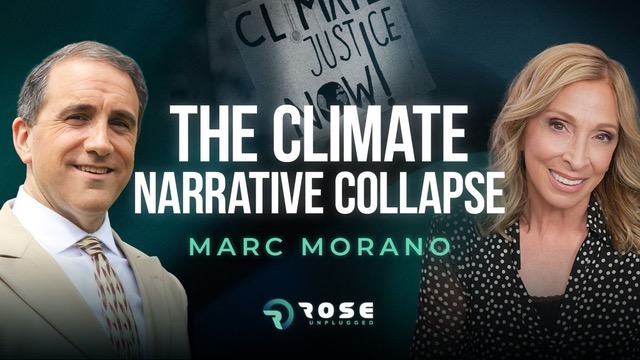
Adapted from a recent Rose Unplugged podcast conversation with Marc Morano of Climate Depot. Watch the full episode: Here
We are watching something shift that many people were told would never shift. For years, the message was simple, absolute, and repeated everywhere: the science is settled, the timeline is urgent, and the consequences are existential.
Climate change was not presented as one issue among many. It was presented as the issue. The defining crisis of our time. And for a long stretch, questioning that framing was treated not as disagreement, but as denial.
But now, something is happening that is difficult to ignore.
The Quieting
Major political outlets are describing what they call “climate hushing”. It’s a noticeable quieting from Democrats and environmental groups at the very moment we were told urgency should be at its peak. Media voices and political strategists are openly admitting that climate messaging is no longer resonating with voters the way it once did.
And a very uncomfortable conversation is emerging inside mainstream reporting: that some of the most extreme climate scenarios that shaped headlines, policy, and public fear were never truly forecasts at all, but worst-case modeling that was often presented without that distinction being made clear to the public.
Now those same scenarios are being reconsidered. Recalibrated. In some cases, quietly set aside.
Meanwhile, at the Kitchen Table
At the same time, there is another layer to this story that can’t be ignored. Because while elites debate messaging strategies, ordinary families are dealing with something far more immediate. They are dealing with rising costs, energy insecurity, and food prices, and with the reality that policies sold as “saving the planet” often land first and hardest on working people.
And somewhere in the middle of all of that, I think a lot of people are just trying to live their lives and make sense of it all. Some climate activists say we’re destroying the planet if we eat meat. Vox, for example, has warned that beef is among the worst foods we consume when it comes to global warming. My only request is this: just do not take my steak away from me while you’re all figuring it out. I. Mean. It.
There’s something very human about that reaction. People can debate models and projections all day long, but at the end of the day, we’re still sitting down at a dinner table trying to live our lives without being told that everything we do is somehow destructive.
That disconnect, between elite narrative and lived experience, is now shaping the political response we’re seeing.
A Generation Raised on Collapse
And there’s something even deeper happening underneath all of this. We now have an entire generation that grew up hearing one dominant message: that the world is nearing the edge, that time is running out, and that catastrophic collapse is not just possible but likely, unless radical transformation happens immediately.
Many young people didn’t just hear that message. They internalized it. It shaped anxiety. It shaped worldview. And in some cases, it shaped despair.
Now, slowly, some are beginning to ask a question that’s not political at all, but deeply personal: What if what I was told was only part of the story?
Proverbs 14:15 says, “The naive believes everything, but the sensible man considers his steps.”
That verse feels more relevant in a moment like this than it has in a long time. Not as a political statement, but as a reminder that fear, especially sustained fear, has a way of shaping belief faster than discernment can catch up.
A Pattern Emerges
Viewed individually, these developments might seem like political adjustments or media recalibrations. But when you step back and place them side by side, a pattern begins to emerge.
Political leaders are pulling back from climate messaging. Media outlets are acknowledging that voters are not responding the way they once expected. The most extreme climate scenarios that shaped years of public discourse are being revised.
Some of the world’s largest economies are resisting sweeping energy transitions. And even long-standing institutions are adjusting scope, timelines, and assumptions that once appeared fixed.
None of this is happening in isolation. It is happening all at once. And what it points to is something deeper than policy disagreement. It points to a growing gap between institutional certainty and public trust.
Stewardship Was Never the Issue
Now, to be clear: stewardship of the environment is not the issue. Wisdom in caring for creation is not the issue.
The issue has always been how that stewardship is defined, and how it is communicated to the people asked to live under it. Because when fear becomes the primary engine of persuasion, something else begins to erode alongside it, and that is trust. And trust, once fractured, is not easily restored.
As parts of the narrative so many young people were raised on are being revised, softened, or walked back, a difficult question emerges: how does a generation recalibrate when the story they were told about the world begins to change?
Not with anger. Not with cynicism. But with discernment.
A World Not Out of Control
Isaiah 40:22 reminds us, “It is He who sits above the circle of the earth.”
In other words, the world has never been out of control, even when our human interpretation of it has been incomplete.
So maybe what we are witnessing right now isn’t just a political shift or a media correction. Maybe it is a moment of reassessment: of how we weigh models versus reality, urgency versus accuracy, and narrative versus truth.
Because the question underneath all of this is not simply about climate policy. It is about trust. Trust in institutions. Trust in messaging. And ultimately, trust in how we understand the world we are being told to fear, and the world we truly live in.
If there is a path forward, it won’t come from fear alone. It will come from clarity. From honesty. And from the willingness to separate what we were told from what is true.
Keep your faith steady, your focus clear, and keep moving forward, because you are here for such a time as this.
Sign up today for more content from Real Life Network.
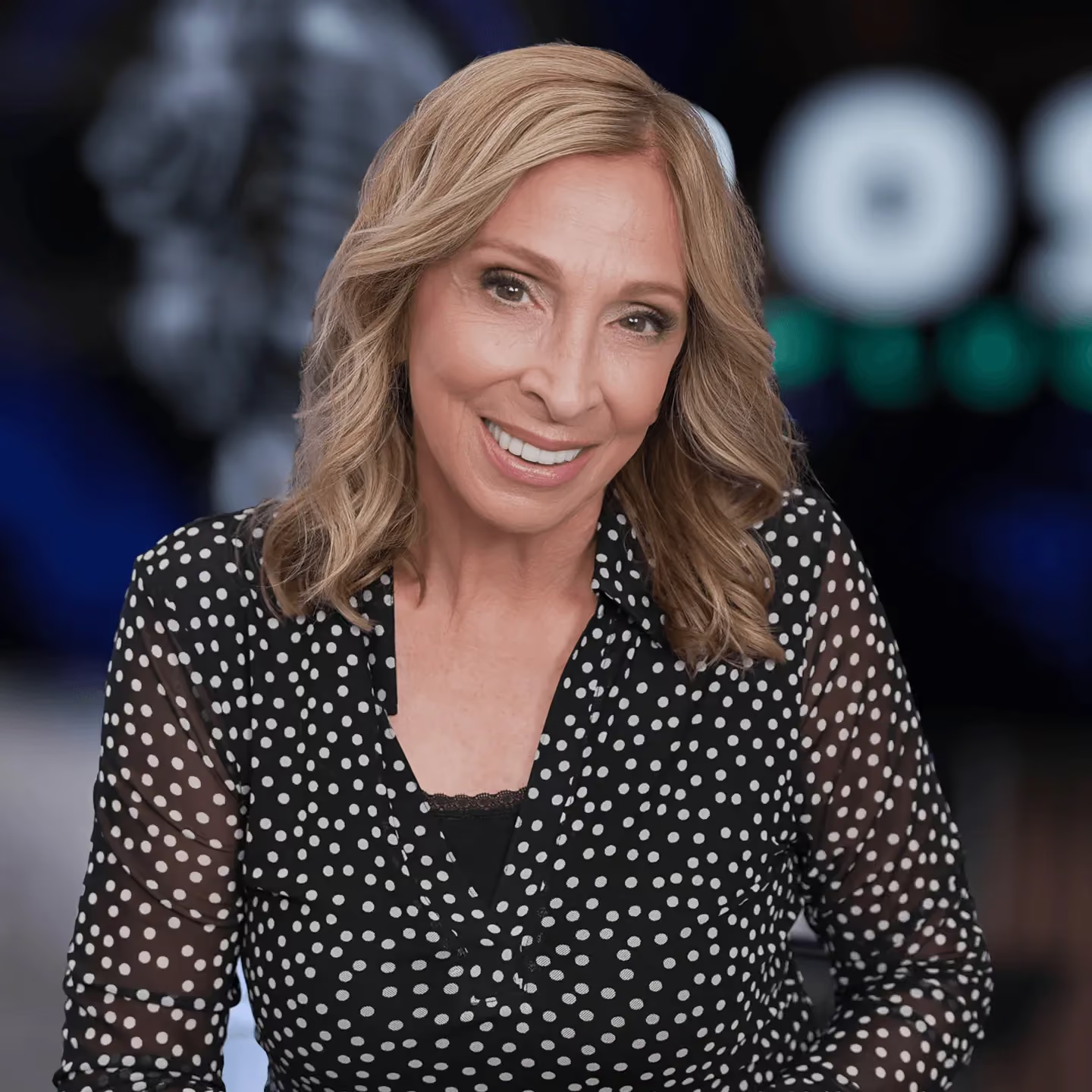
Rose brings 20 years of experience in radio and television. Host of Rose Unplugged on Real Life Network, she’s a frequent guest host for Hannity and other national voices. Featured on FOX News and CNN, she speaks nationwide on faith, liberty, and issues impacting women.