The Latest
- Christians must know Scripture well enough to test what pastors, politicians, and commentators claim about the Bible.
- When churches compromise biblical authority, other political and cultural worldviews are ready to fill the resulting vacuum.
- Biblical discernment requires separating allegations from established facts while evaluating every worldview against Scripture.
- Political movements and cultural trends will change, but Christians are called to remain grounded in the unchanging truth of God's Word.
Real Life Network is a free, faith-based streaming platform offering biblically grounded teaching, documentaries, news, movies, and original programming. Sign up today.
America's political battles are increasingly inseparable from deeper questions about truth, Scripture, and the role of the Church. From pastors entering political races to the growing influence of democratic socialism and debates over Israel, religious liberty, and cultural values, Christians cannot afford to outsource discernment. Real Life Network exists to help believers examine today's headlines through a biblical worldview, and The Daniel Cohen Show continues that mission by connecting the news to the good news of the gospel. The challenge for Christians is straightforward: know what the Bible says, test what is being taught, and refuse to compromise simply because biblical truth has become politically inconvenient.
When Scripture Becomes Negotiable
One of the most consequential developments in American Christianity is not happening in Washington. It is happening behind pulpits.
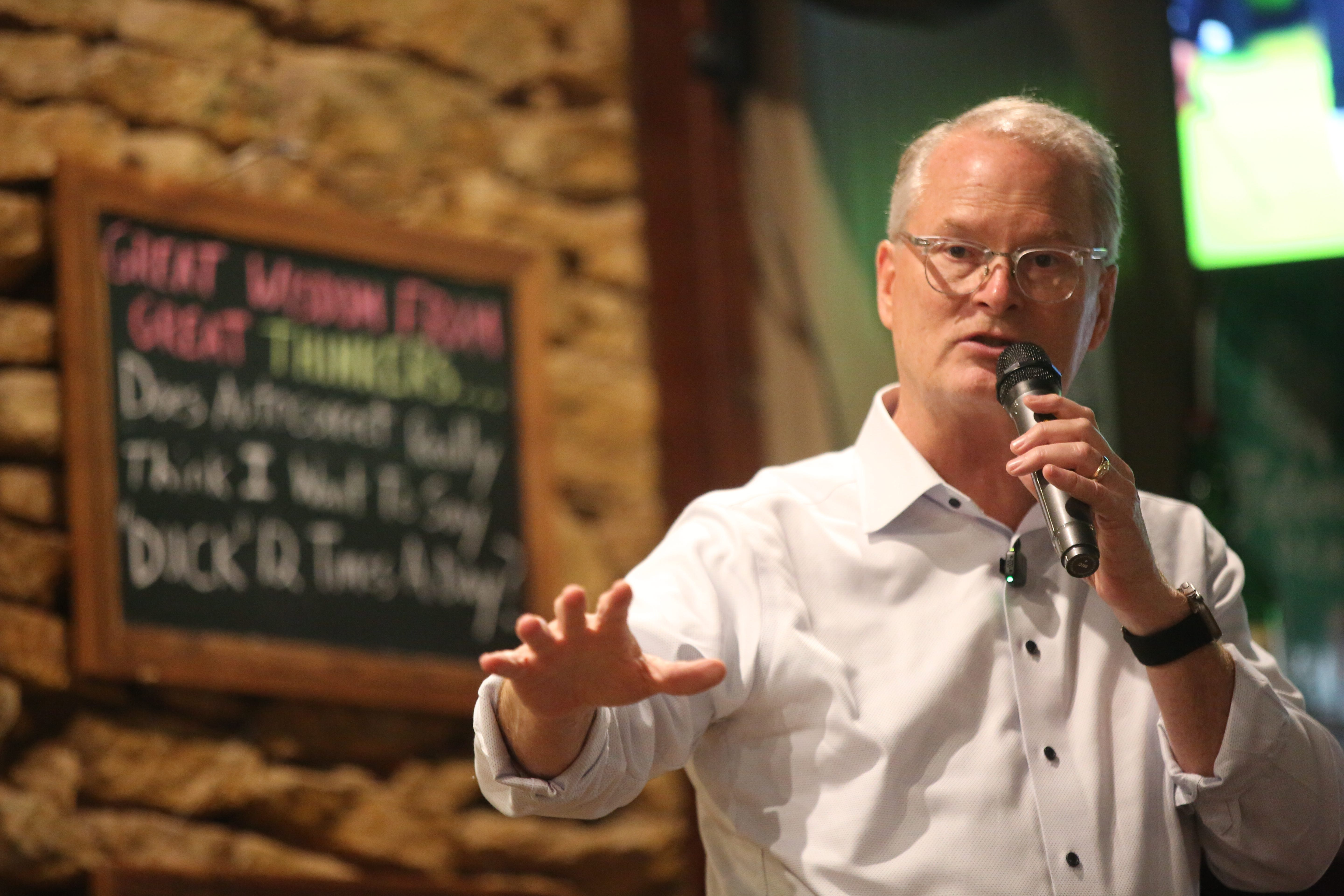
Adam Hamilton, senior pastor of Church of the Resurrection in Kansas, became a central focus of the discussion after advancing through a Democratic U.S. Senate primary. But the larger concern raised was not simply that a pastor entered politics. It was the way Scripture itself is handled.
The discussion highlighted a sermon in which Hamilton argued that the Bible contains errors, using the accounts surrounding Jesus' ascension as an example. The claim centered on Matthew and Luke supposedly placing the ascension in different locations.
There is an important problem with that example: Matthew does not record the ascension.
Matthew 28 describes Jesus meeting His disciples in Galilee and delivering the Great Commission. Luke 24 and Acts 1 describe the ascension near Jerusalem. Matthew's account ending in Galilee does not require the ascension to have occurred there.
That distinction matters far beyond one passage.
When Christians stop treating Scripture as the authority by which every other claim is measured, biblical conviction quickly becomes whatever the culture will tolerate.
This is why believers have a responsibility to know Scripture themselves. A title, a large congregation, or decades of ministry cannot replace careful biblical study. Acts 17 praises the Bereans for examining the Scriptures to determine whether what they were being taught was true. That responsibility remains.
Fact-check the preacher. Fact-check the politician. Fact-check the commentator. The standard is not personality, popularity, or political affiliation. It is truth.
The same principle applies when pastors address controversial moral and political questions. Christians should expect biblical teachers to begin with Scripture, even when Scripture's conclusions collide with the priorities of a political party.
The Church loses something essential when it merely repeats what the surrounding culture already believes. Younger generations searching for answers do not need Christianity stripped of its authority and distinctiveness. They need the truth.
The Church Cannot Surrender the Cultural Ground
The growing influence of democratic socialism provided another major theme. Political candidates and activists associated with the movement are gaining influence in races across the country, raising questions about the direction of the Democratic Party and the ideas attracting younger Americans.
But blaming politicians alone misses something deeper.
Political movements often grow because they offer people a comprehensive explanation of what is wrong with the world and what should be done about it. Socialism promises answers about inequality, wealth, justice, government, and human flourishing. Christianity speaks to those questions too, but from an entirely different foundation.
If churches become hesitant to teach what Scripture says about human nature, justice, government, family, work, wealth, life, and morality, other ideologies will gladly fill the vacuum.
A weakened Church does not create a neutral culture. It creates empty space for another worldview to occupy.
That should concern Christians regardless of party affiliation.
The answer is not turning Sunday worship into a campaign rally. The Church's mission is greater than winning elections. But neither should pastors pretend that biblical truth has nothing to say about public life simply because those conclusions might be labeled "political."
When politics enters questions of life, sexuality, family, religious liberty, justice, and the nature of human beings, Christians cannot abandon biblical convictions at the church door.
Pastor Jack Hibbs emphasized this concern in discussing the growing appeal of socialist and communist ideas. His warning centered on the gradual nature of ideological change. Nations rarely abandon foundational principles all at once. Cultural transformation happens over time as one generation's convictions become another generation's questions and eventually another generation's rejected traditions.
Christians therefore need more than political awareness. They need biblical literacy.
Discernment in an Age of Political Confusion
The need for discernment extends beyond American elections.
Questions surrounding Israel, Hamas, the Muslim Brotherhood, international diplomacy, and the future of Gaza continue to generate intense disagreement. The discussion examined congressional testimony concerning alleged connections among political and activist organizations, while also raising concerns about proposals for an international security presence in Gaza.
Those are precisely the kinds of complicated stories where Christians should resist reacting to a headline alone.
Not every allegation is established simply because someone says it in a congressional hearing. Not every political narrative is trustworthy because it comes from a preferred party. And not every person associated with a controversial organization necessarily shares every belief attributed to that organization.
Discernment demands more work than that.
Christians should examine evidence, distinguish allegations from established facts, understand competing arguments, and compare the moral assumptions beneath them with Scripture.
The same principle applies to America's cultural debates, including the continuing controversy surrounding biological sex and women's sports. The discussion pointed to new eligibility standards in women's athletics as evidence that institutions are still wrestling with questions that ultimately involve biological reality, fairness, and the meaning of male and female.
These controversies may look disconnected. A pastor's view of biblical authority, a Senate campaign, socialism, Israel, and women's sports seem like entirely different stories.
But underneath them is the same question: Who or what gets to define reality?
For the Christian, that answer cannot change with an election, cultural movement, or opinion poll.
Scripture warns believers to test what they hear. It calls Christians to discernment, courage, and faithfulness. That means refusing to blindly follow a political party, pastor, media personality, or cultural movement. Every claim must ultimately be measured against truth.
America does not simply need Christians who vote. It needs Christians who know what they believe and why they believe it.
The cultural pressures will change. Candidates will come and go. Political movements will rise and fall. God's Word remains.
That is why biblical literacy matters so much in this moment. Christians who know Scripture are better equipped to recognize error, evaluate political promises, engage difficult cultural questions, and remain faithful when biblical convictions become unpopular.
At Real Life Network, that biblical worldview remains central to conversations about faith, politics, and culture. Watch The Daniel Cohen Show for more conversations connecting the headlines shaping America and the world with the unchanging truth of God's Word.
.png)
Daniel Cohen hosts the "Daniel Cohen Show" exclusively on the Real Life Network. A Jewish follower of Jesus and three-time Emmy award-winning journalist, Cohen delivers the news from Israel, reporting on today's top headlines with a biblical worldview.
.jpg)