
Stream Real Life Network Now

WATCH NOW
The Church

Faith & Culture
25 min
The Wisdom of Ecclesiastes for the Age of Superintelligence
As AI safety researchers warn about the risks of superintelligence, questions about the industry's priorities are growing. Discover why technological advancement must be guided by wisdom, and how Scripture calls Christians to trust God rather than fear the future.
The artificial intelligence community just waved goodbye to yet another top safety and regulation official — and he offers a unique angle in his warning to the world.
David Robinson had been leading safety reports for OpenAI, the maker of ChatGPT. Robinson resigned in the first week of October, stating that the industry’s approach to safety has been stemming from a broken culture. He penned the following words in a piece for The Atlantic, which contain more truth than perhaps he even knows: “The future depends on wisdom that Silicon Valley lacks.”
We’ll come back to that.
His departure comes on the heels of several other prominent AI safety researchers abandoning the industry. Their exits have paired with dreadful public warnings about the future of this technology, leaving the American people to grapple with the headlines and the unknown.
Take Jacob Coxon, for example. After leaving Claude developer Anthropic in September, he wrote on X that top tech labs are “gambling with our lives” by racing toward self-improving superintelligence. He went on to reveal that the people building AI “earnestly believe that it could kill us all by the end of the decade.”
Comforting.
For clarity, the industry term “superintelligence” refers to a hypothetical AI system that developers believe could surpass humans in overall knowledge and capability. This could happen through recursive self-improvement (RSI) in which AI models design and continually improve their own successors.
While the Trump administration has taken to using the term as a reference to AI more broadly, Coxon used it as the industry intends: the potential nightmare of AI evolving beyond our ability to contain.
Let’s go back to David Robinson for a second. Beyond diagnosing the issue of a “lack of wisdom,” he went on in his article to describe the kind of wisdom that is desperately needed — the kind that shows us “how to handle dangerous technology and, more fundamentally … what it means to care for people.”
This kind of wisdom has only one source.
Proverbs 4:7 states, “The beginning of wisdom is: Acquire wisdom; And with all your acquiring, acquire understanding.” The natural question is, how can true wisdom be acquired? Well, it is not gained by happenstance or by any means of passivity.
The word of God teaches that wisdom is found only, “if you look for it as for silver and search for it as for hidden treasure” (Proverbs 2:4).
That same proverb states that when wisdom enters the human heart, it bears fruits of knowledge, discretion, and understanding. Knowledge is pleasant, discretion brings protection, and understanding guards the one who finds it.
If those spearheading AI labs begin searching for wisdom with the same fervency as they do innovation, capital gain, and victory in the arms race, perhaps we might reap the benefits of honing a brilliant technology for human flourishing, rather than threatening it entirely.
In the absence of wisdom, we ought not to expect flourishing. Thus, the need for appropriate guardrails toward that end is becoming increasingly dire.
Whistleblowers coming forward to expose carelessness in the industry is a good thing. Speaking up when danger is on the horizon is profitable. What is not profitable, however, is responding in fear.
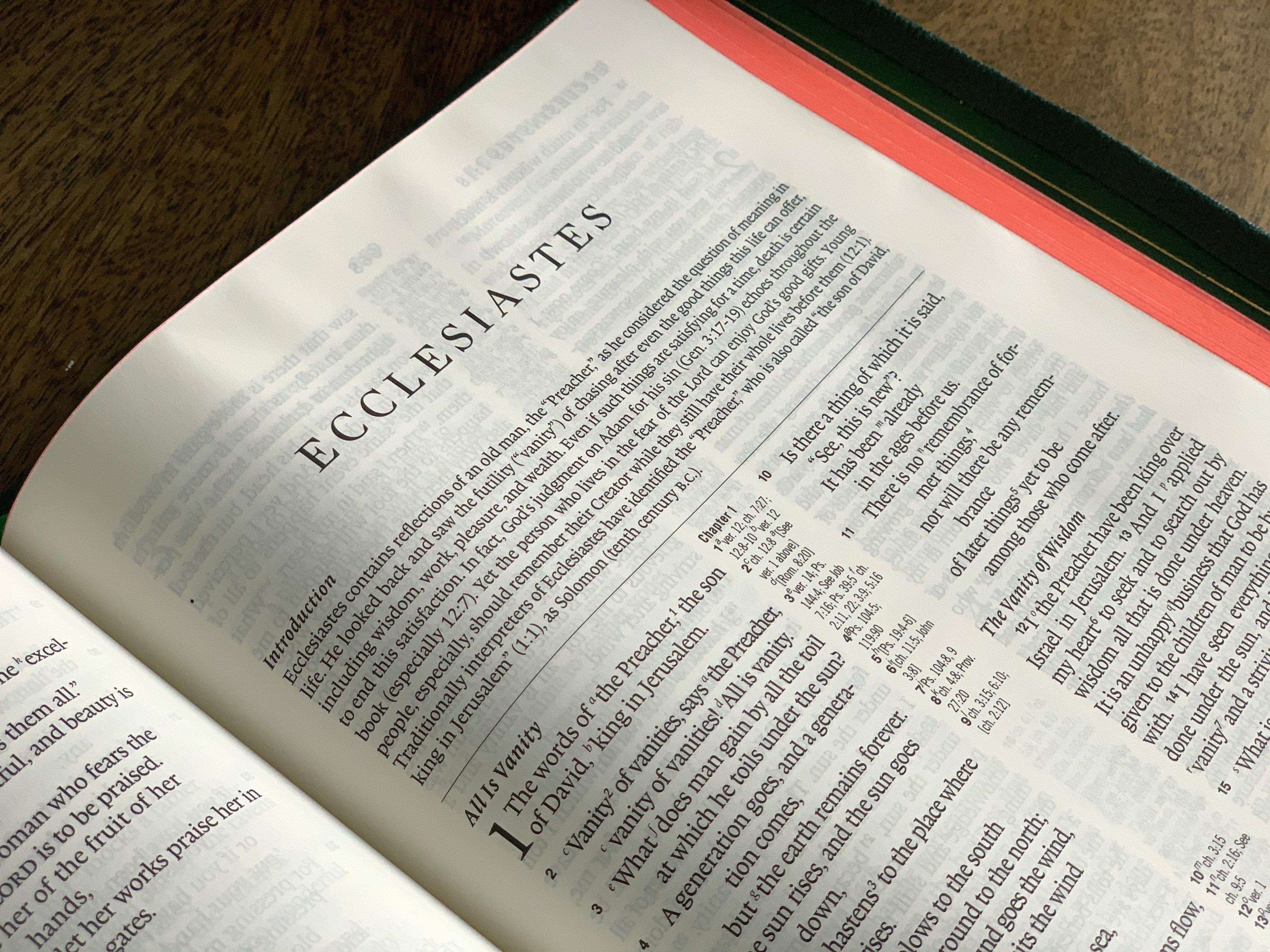
The wisest man in history, King Solomon, tells us, “There is nothing new under the sun” (Ecclesiastes 1:9).
The pride of man has reared its head through the latest technology and means of production before. As soon as human beings had the chance, they took brick and mortar and built the tower of Babel, aiming to reach as high as heaven to make a name for themselves — not for the God who gave them clay, water, and sun in the first place.
Today, we are seeing the latest expression of that sinful pride: men thinking they can hold infinite knowledge without it destroying them. Casting wisdom aside, they trust in their own minds and technical ability rather than in God.
In the Garden of Eden, Adam and Eve fell to the temptation of wanting to be all-knowing, like God. He judged that decision then, and He will not be mocked now (Galatians 6:7).
There is nothing more urgent for the unbeliever than to humble themselves, fall on their knees, and cry out to the Creator for salvation. There is, likewise, nothing more urgent for the believer than to refuse every temptation to fear in these times — to live the joyful, abundant life offered to them in Christ.
It is not a suggestion to be unafraid. It is a commandment given us by God, time and time again throughout the Scriptures.
Do not stifle your witness to the watching world.
The book of Ecclesiastes warns us that there are many dark days in this life under the sun, and that we will encounter circumstances which are difficult, perplexing, and often don’t make sense. Yet, there are a few things that author King Solomon found to be good: “Behold, what I have seen to be good and fitting is to eat and drink and find enjoyment in all the toil with which one toils under the sun the few days of his life that God has given him, for this is his lot” (Ecclesiastes 5:18).
New threats to our livelihood may come at alarming rates, but our responsibility as Christians remains the same: Do not dread the future or fear the potential of “superintelligence.” Rather, “fear God and keep his commandments, for this is the whole duty of man” (Ecclesiastes 12:13).
So, keep breaking bread with those you love. Keep enjoying the toil and the lot that God has given you with a grateful heart. Regardless of the news cycle, and whatever may come out of Washington and Silicon Valley — rejoice in what you have been given.
Our lives are but a vapor, a mist, Solomon says. The years go by quickly, and soon, we will return to dust.
That need not be depressing — in fact, let it be motivating as you live the most upright, joyous, and noble life possible along the way. Be encouraged, for we have all the instruction we need to please God in every circumstance, including the ones out of our control.
God says, “I am the Alpha and the Omega, the first and the last, the beginning and the end” in Revelation 22:13. If God is the Omega just as much as He is the Alpha, what is there to fear?
At the end of all things, just as much as at the beginning — He is there. And He rules and reigns at every point in between.
Human history was born from and ends in perfect wisdom, and God will tie the final bow on our story.
Not Sam Altman, or Dario and Daniela Amodei, or Donald Trump, or Xi Jinping — but Jesus Christ will do it, who is the same “yesterday, today, and forever” (Hebrews 13:8).
This article was written by Erica Mendel and originally published on The Washington Stand. For more content like this, visit Real Life Network.
World News
25 min
When the State Tries to Train the Church
California’s new hate speech training law is raising concerns about religious liberty and government authority. Critics warn that vague definitions and unclear protections for churches could put biblical teachings on marriage, gender, and faith at odds with state requirements.
If voters are trying to imagine what the nation would look like under the socialist policies of a Democratic majority in Congress, look no farther than California.
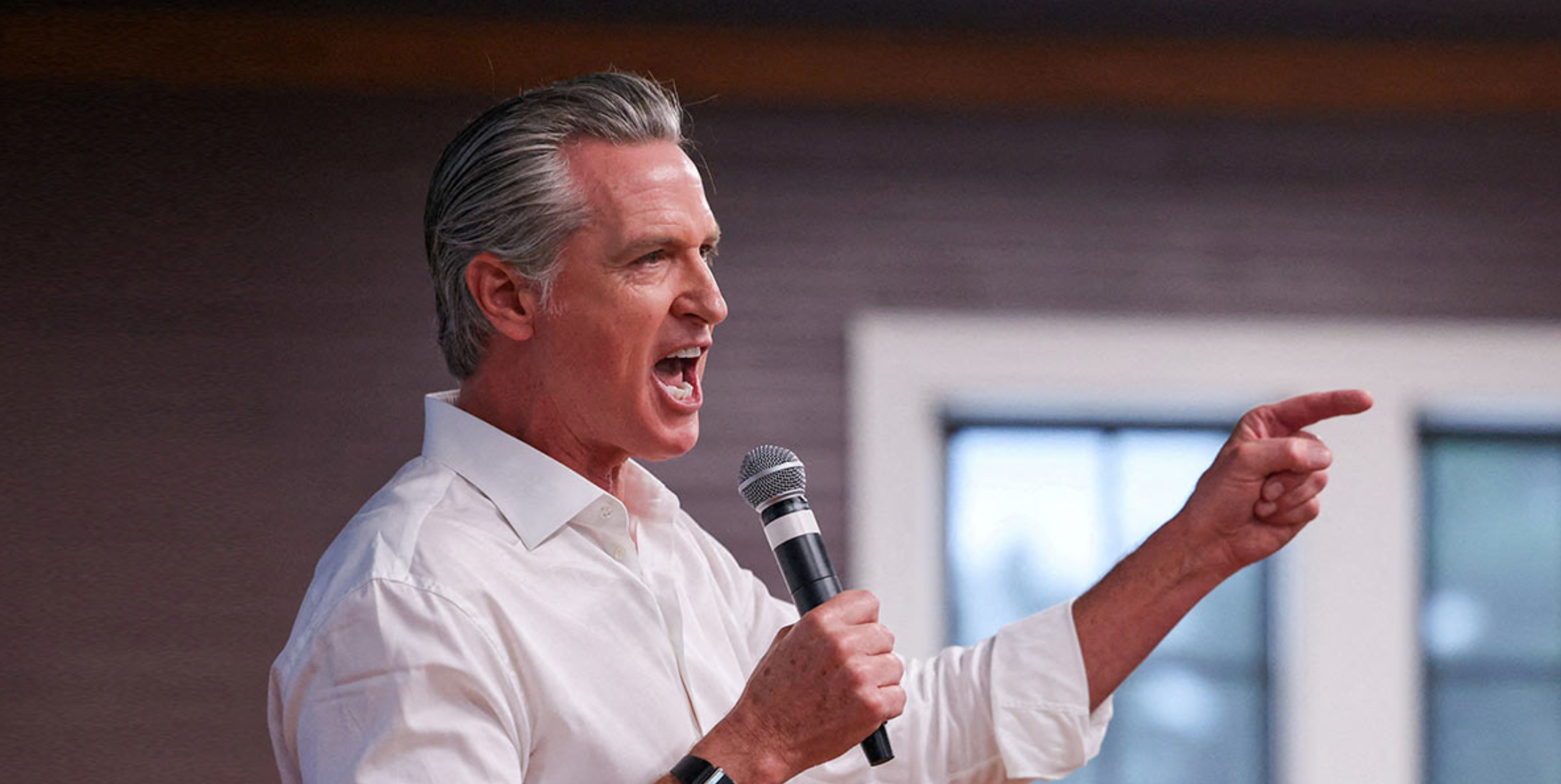
Governor Gavin Newsom (D) and the Democratic supermajority in both chambers of the state legislature offer an extensive list of policies flowing from the same socialist and Marxist ideology being championed by the ascendant wing of the Democratic Party.
The latest example is AB 1803, signed by Governor Newsom last week. Authored by Assemblyman Josh Lowenthal (D), the law requires employers with five or more employees to add training on hate speech to the growing list of California’s harassment-training laws.
Lowenthal said, “California must make meaningful progress to train Californians on the danger of hate speech not only in the workplaces, but in society as a whole.”
The law describes speech covered by the training as speech that “vilifies, humiliates, or incites hatred” against people based on protected characteristics.
And what are those protected characteristics? They include religion, sex, gender, gender identity, gender expression, sexual orientation, and reproductive health decision-making — which includes abortion.
There are others, but those are enough to raise serious questions for Christians and religious organizations.
First, there is no clear legal definition of hate speech. Whatever the intent, the effect is to give the term enormous elasticity. Who decides when a deeply held religious conviction crosses the line from disagreement into “humiliation” or “vilification” and is then defined as hate speech?
Second, California law does not make sufficiently clear how this new mandate applies to churches and religious ministries. That ambiguity itself should concern anyone who values religious freedom, because the protected categories include subjects on which biblical Christianity makes unmistakable moral and theological claims.
Jesus said in Matthew 19 that the Creator “made them male and female,” and then described marriage in terms of a man and a woman. Does teaching those words humiliate someone who rejects the biblical understanding of sex and marriage?
What about Jesus’s words in John 14: “I am the way, the truth, and the life. No one comes to the Father except through Me”? Christianity is inherently exclusive in its truth claims. Could that someday be deemed vilifying toward another religion?
This is why California’s law should concern the church and everyone else, for that matter. When state officials declare the state needs to train society on what is appropriate speech, all of society is in trouble. Frankly, the state of California should not be instructing the church — the church should be instructing the government on what is right and wrong.
For Christians, this is an Acts 4 moment. When Peter and John were ordered not to speak or teach in Jesus’s name, they answered: “Whether it is right in the sight of God to listen to you more than to God, you judge.”
California is not merely a laboratory for the Left; it is a warning to the rest of America. The question for voters is whether California’s experiment stops at the state line, or comes to Washington. And the question for the church is even more fundamental: when government demands that we compromise biblical truth, will we have the courage of Peter and John to stand firm and speak it?
This article was originally published on The Washington Stand. For more content like this, visit Real Life Network.
World News
25 min
New California Law Requires Churches to Implement Pro-LGBT ‘Anti-Hate Speech’ Training
California’s new workplace anti-hate speech training law is raising religious liberty concerns. Christian advocates warn that vague language could pressure churches and religious employers to provide training that conflicts with their biblical beliefs.
A newly enacted law in California that requires virtually all employers to give employees “anti-hate speech” training is raising red flags, as experts say that the mandate could force churches to provide training that conflicts with sincerely held biblical beliefs regarding sexuality, gender, and marriage.
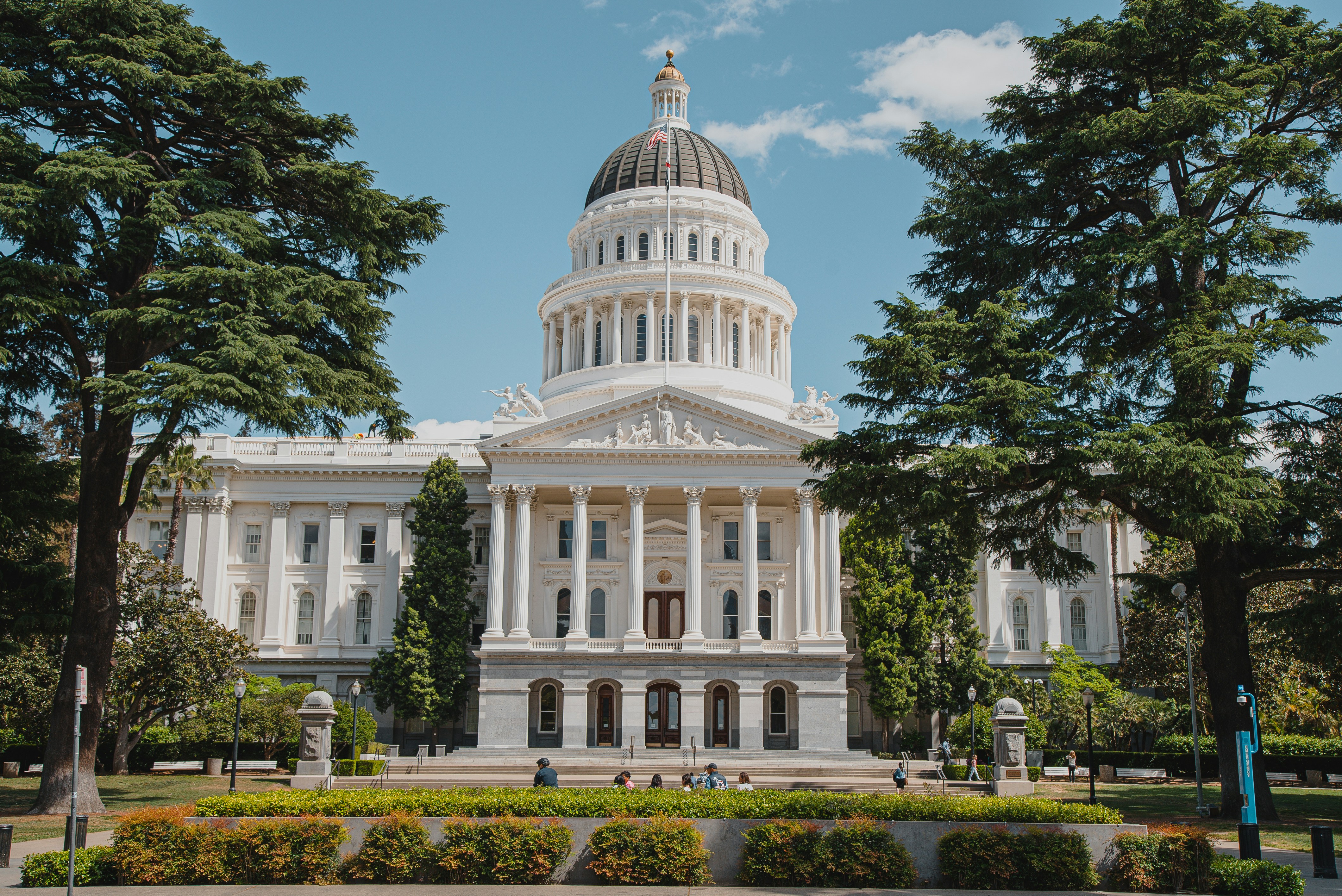
Late last month, California Governor Gavin Newsom (D) signed into law AB 1803, a measure that requires all employers with five or more workers, including all churches and other nonprofit religious organizations, to provide employees with “anti-hate speech” instruction. But as observers like the California Family Council (CFC) are pointing out, the legislation does not define “hate speech,” instead handing the job to the state’s Civil Rights Department. The bill mandates that the training must confront workplace speech that “vilifies, humiliates, or incites hatred” against individuals based on what the state has already deemed a protected characteristic, which includes sex, gender identity, gender expression, and sexual orientation.
The CFC goes on to observe that the statute, which will go into effect on January 1, 2028, never mentions churches or religious nonprofits and their First Amendment rights to hold sincerely held religious beliefs about sexuality and gender. It also “fails to separate protected expression from unlawful conduct,” noting that the Supreme Court held in 2017 that “the First Amendment has no hate speech exception.”
Greg Burt, who serves as vice president of CFC, further pointed out the problems with AB 1803’s vague language regarding key terms that it says constitute “hate.”
“What does it mean to vilify? What speech actually humiliates?” he wondered during “Washington Watch with Tony Perkins” Tuesday. “[M]any times legislators consider many Christian beliefs when they’re expressed — especially regarding sexuality or gender — they accuse us of hating people. That’s [the] farthest thing from my mind. But we are simply advocating for our view that sex is determined by biology, and God created us both male and female. Well, to many people that is humiliating and that incites hatred. And so that’s the problem with this legislation.”
Burt went on to clarify that AB 1803 is being folded into a previously enacted statute that mandates sexual harassment training, which already specifies that using accurate biological pronouns constitutes “harassment.” “[Businesses are] already required to go through sexual harassment training, and we found out several years ago they redefined what sexual harassment means to include gender identity,” he explained. “… [The] California Civil Rights Department says misgendering is harassment, and so this training is on top of that already egregious training.”
As for how employers can fulfill the required training, Burt noted that hiring outside trainers is allowed, but the state-provided training that includes pro-LGBT messaging is free. “Right now, the state puts together a free curriculum — that’s how they do it with sexual harassment training, but you’re not required to use that training. You can come up with your own. But we don’t know exactly what ‘anti-hate’ is going to include, right? [Their] definition of speech that ‘humiliates’ — what does that mean? It really depends on the person who’s receiving the language.”
Burt further urged churches and other religious organizations in the Golden State to push back vigorously against the mandate. “What I think the state is doing is it’s trying to intimidate churches into following through with this,” he lamented. “They should not be receiving any kind of ideological training from the state on any moral issue. That’s why what churches need to be doing is asking for religious accommodations. The federal law and the state law already require businesses to accommodate people’s faith if they’re being required to do something that violates their faith. … [T]his is one of those points in history here in California where civil disobedience is going to be necessary.”
Burt concluded by emphasizing that state officials in California are counting on churches to kowtow to their demands instead of standing up for the constitutional freedoms, which has already proven to be a winning strategy.
“I’m sure they’re already thrilled that they get to retrain the entire population to believe what they believe regarding gender identity,” he reflected. “And so once we get accustomed to this and say, ‘Well, this is just what California requires, I guess we have to do it.’ No, you don’t. Folks, you’ve got to resist, and that includes individual employees. That’s what we are encouraging people to do. And we are having success. We have some attorneys we’re working with, and when people have been asking for religious accommodations, they have been accommodated.”
This article was written by Dan Hart and originally published on The Washington Stand. For more content like this, visit Real Life Network.

World News
25 min
The Stories the Media Decides You Don’t Need to Know
From attacks on Christians and church fires to newsroom decisions and what children are taught in schools, Daniel Cohen examines the stories receiving too little attention and the institutions shaping what Americans see and believe.
For decades, television newsrooms held enormous power over what Americans saw and what they never heard about. Producers chose the lead story, decided which events deserved follow-up coverage, and determined which stories would disappear after a few seconds or never make air at all.
That power has weakened, but it has not disappeared.
Today, independent media provides an opportunity to ask a question that traditional news organizations too often avoid: Why do some stories receive national attention while others with serious implications are barely acknowledged?
On Real Life Network, The Daniel Cohen Show goes where the news leads, especially when those stories intersect with faith, culture, politics, and a biblical worldview. Several recent stories provide an important reminder that media bias isn't limited to how a story is reported. Sometimes the more consequential decision is whether to report it at all.
When Attacks on Christians Barely Make the News
Pastor Martin Sedra and his wife, Millicent, recently experienced something no family should have to endure.
Sedra pastors Echo Church in Sydney, Australia, and has publicly spoken about Christianity, Islam, abortion, marriage, and other controversial cultural issues. According to video and the Sedras' account discussed on the show, masked protesters arrived outside their home shortly after the couple welcomed their first child. The group allegedly cut power to the house, threatened the family, and said they would return.
Whatever someone's political or religious disagreements with Sedra, threatening a family at its home crosses a line that should be obvious.
Yet the incident received little attention from major news organizations at the time it was discussed on the show.
That story comes alongside another troubling development: a series of fires involving churches.
The former St. Agnes Church in Toledo, Ohio, burned over the weekend. Another Toledo church, St. Anthony's, had suffered a fire only weeks earlier. Other recent church fires discussed on the program included Friendship Baptist Church in Cleveland, St. Simon Church in New Brunswick, Canada, and Buckingham Presbyterian Church in the United Kingdom. Importantly, the causes of these individual fires should not be assumed before investigators determine them.
But the broader problem of hostility toward churches is documented. The Family Research Council reported hundreds of hostile incidents against churches in 2024, including dozens categorized as arson or attempted arson.
That deserves attention.
Christians should resist the temptation to declare every church fire an act of religious persecution without evidence. At the same time, repeated attacks against Christian institutions should not become background noise simply because they do not fit the cultural narrative preferred by a newsroom.
Media bias isn't only found in misleading words. It can also be found in the stories that never receive enough attention for Americans to ask questions about them.
The same standard should apply regardless of the victims. An attack on a church should matter. An attack on a synagogue should matter. An attack on a mosque should matter. Threatening a Christian family should matter just as an attack against people because of their sexuality should matter.
Consistency is the test.
Who Decides What Counts as News?
A shooting outside a gay bar in Tucson raises precisely that question.
According to the account discussed on the program, two men were killed outside Venture-N by a gunman who later killed himself. Police reportedly found a note identifying additional LGBTQ businesses, raising concerns that the victims had been deliberately targeted. The show also highlighted reporting that the shooter was born in Gambia and was described by a relative as a practicing Muslim.
There is no justification for murdering innocent people because of their sexuality. None.
But there is also no justification for minimizing relevant facts about an attack because those facts complicate a preferred political narrative.
This is where consistency becomes essential. If the religious beliefs of a professing Christian attacker would become part of national coverage, the same journalistic curiosity should exist when an attacker comes from another religious background.
The point isn't to blame millions of peaceful Muslims for one man's actions. It is to report relevant facts without deciding beforehand which ones the audience is allowed to consider.
That principle also applies inside conservative media.
The departure of longtime Fox Business anchor Maria Bartiromo has generated questions after reports that she disagreed with a programming decision concerning coverage of a presidential address. According to the reports discussed on the show, Bartiromo wanted to cover President Trump's remarks and planned additional discussion afterward. Weeks later, she departed the network, which characterized the move as a business decision. The precise internal circumstances remain disputed and should be described accordingly.
But the episode illustrates a larger point.
A journalist's responsibility is not to protect viewers from stories executives consider inconvenient. It is to pursue information, establish facts, provide context, and allow audiences to evaluate what happened.
A news organization loses something fundamental when protecting a narrative becomes more important than pursuing a story.
That standard shouldn't change depending on whether the network is CNN, MSNBC, Fox News, or anyone else.
It is also why independent outlets matter. They cannot guarantee perfect journalism, and they should be held accountable like everyone else. But a decentralized media environment makes it considerably harder for a handful of executives to determine the boundaries of public discussion.
Parents Cannot Outsource Discernment
Media institutions aren't the only institutions Americans should scrutinize.
Parents should be asking similar questions about schools.
A video discussed on the program featured a kindergarten teacher describing an exercise in which young children were asked whether they wished they had been born another gender. Students who raised their hands were then invited to choose different names. The teacher subsequently posted that she had been fired and lost her teaching license.
Whatever debates adults want to have about gender, five-year-olds should not become instruments for an adult's ideological project.
Parents possess a responsibility that cannot simply be transferred to teachers, administrators, politicians, or government agencies.
That becomes particularly important as politicians increasingly speak about children collectively. Michigan Senate candidate Abdul El-Sayed, for example, has argued for policies based on imagining that “all of our kids were all of our kids,” connecting that idea to public education, health care, and child care. The program contrasted that philosophy with the conviction that parents retain the primary responsibility for raising and forming their children.
Schools certainly have an important role. Good teachers deserve gratitude and respect. But education never happens in a worldview vacuum. Someone is always teaching children what is true, what is good, what a human being is, and where authority ultimately resides.
For Christians, those questions cannot be surrendered to the state.
Parents can delegate instruction, but they cannot delegate their God-given responsibility to know what their children are being taught and who is shaping their worldview.
That principle connects these seemingly unrelated headlines.
News organizations shape what adults believe is important. Schools help shape what children believe is true. Politicians attempt to shape what citizens believe government should provide. Corporations increasingly communicate their own moral and cultural priorities.
In each case, Christians need discernment.
The answer is not paranoia, and it isn't assuming every institution is corrupt. It is paying attention. Ask what is being taught. Examine what is being omitted. Compare claims against the evidence. And above all, measure cultural messages against Scripture rather than allowing the culture to determine how Scripture should be understood.
That is increasingly necessary in an age when the most revealing part of a story may be the part someone decided wasn't worth telling.
Watch The Daniel Cohen Show on Real Life Network for news and commentary connecting the headlines to the good news through a biblical worldview.

Faith & Culture
25 min
7 Christian Apologetics Conversations That Strengthen Your Confidence
Christian apologetics helps believers examine the evidence for Christianity and thoughtfully answer questions about God, Scripture, science, suffering, morality, and the resurrection of Jesus.
Christianity makes specific claims about God, Jesus, Scripture, morality, and the meaning of life. Apologetics asks whether those claims can stand up to serious questions.
That makes Christian apologetics much more than learning clever responses to skeptics. It is the process of examining what Christianity teaches, why Christians believe it is true, and how those beliefs compare with competing explanations of reality.
First Peter 3:15 calls believers to “always be ready to give a defense to everyone who asks you a reason for the hope that is in you.” That defense is not meant to be combative. It is meant to be thoughtful, truthful, and grounded in a faith that is willing to be examined.
Here are seven important apologetics conversations that can help Christians better understand the foundations of their faith and become more prepared to talk about them with others.
1. Does God Really Exist?
Christianity begins with a foundational claim: God exists, and He is the Creator of everything.
Apologetics asks whether there are good reasons to believe that claim is true. Christian thinkers often point to the beginning of the universe, the remarkable order and fine-tuning found in creation, the existence of objective moral standards, and the question of why anything exists at all.
These arguments do not attempt to reduce God to a scientific formula. Instead, they challenge the idea that belief in God is irrational or unsupported.
This conversation can be especially important for Christians who have heard that faith and reason are opposites. Examining the evidence can reveal that belief in a Creator rests on substantial philosophical and scientific questions that atheism must also account for.
2. Can We Trust the Bible?
Christianity also makes a historical claim: God has revealed truth through Scripture.
That raises important questions. Has the Bible been accurately preserved? Are the Gospel accounts historically reliable? Do archaeology and ancient history support or undermine the people, places, and events described in Scripture?
Christian apologetics does not ask believers to simply assume the Bible is trustworthy. It looks at manuscript evidence, textual transmission, historical corroboration, archaeology, eyewitness testimony, and the remarkable preservation of the biblical text.
Because Christianity is rooted in events claimed to have happened in real history, those claims can be investigated.
For many believers, studying this evidence does more than help answer objections. It deepens confidence that the Bible they read today is connected reliably to the texts written in the ancient world.
3. Did Jesus Really Rise from the Dead?
No Christian truth claim is more important than the resurrection. The apostle Paul wrote in 1 Corinthians 15:14 that “if Christ is not risen, then our preaching is empty and your faith is also empty.” Christianity therefore does not present the resurrection merely as a symbolic story about hope. It presents it as an event in history.
Apologetics examines the facts surrounding Jesus’ crucifixion, the empty tomb, the testimony of His followers, the reported appearances after His death, and the dramatic change in disciples who moved from fear and hiding to publicly proclaiming that they had seen the risen Christ.
The central question becomes: What explanation best accounts for the evidence? If Jesus truly rose from the dead, then His claims about Himself, God, salvation, and eternal life deserve to be taken seriously.
4. Has Science Disproved Christianity?
Another common claim is that modern science has made Christian belief unnecessary. But Christianity and science are not answering precisely the same questions. Science studies the natural world and how it functions. Christianity makes broader claims about why the universe exists, where its laws come from, why life exists, and whether creation ultimately points beyond itself.
Christian apologetics explores questions such as: Did the universe have a beginning? Why does nature operate according to consistent laws? How did life originate? What explains the extraordinary complexity found in living systems?
These are not questions Christians need to fear.
Apologetics gives individuals an opportunity to examine creation, science, and biblical claims together rather than accepting the assumption that faith and serious inquiry cannot coexist.
5. If God Is Good, Why Is There So Much Suffering?
Christianity claims that God is both good and powerful. The reality of suffering therefore creates one of the most difficult apologetics questions. If God is good, why does He allow pain, injustice, disease, natural disasters, and death?
This is not merely an abstract philosophical puzzle. For someone who has suffered deeply, the question may be intensely personal.
The Bible does not minimize suffering. Its pages are filled with grief, lament, injustice, persecution, and loss. Christianity teaches that the world is fallen, human beings possess genuine moral agency, evil has real consequences, and God is working toward a final restoration in which suffering and death will not have the last word.
Good apologetics should never treat another person’s pain as an intellectual exercise. But it can show that suffering does not make Christianity incoherent. In fact, Christianity offers a framework for understanding both why the world is broken and why there is reason for hope.
6. Can There Really Be Objective Right and Wrong?
Christianity also makes moral claims. It teaches that some things are truly right or wrong because morality is grounded in the character of God. That raises another important question: Are moral truths objective, or are they simply personal and cultural preferences?
If morality is entirely subjective, then statements such as “torturing innocent people is wrong” ultimately become expressions of opinion rather than statements about reality. Yet people routinely speak as though some actions are genuinely unjust, regardless of what an individual or society happens to approve.
Christian apologetics asks whether that universal moral intuition points beyond humanity to an objective moral lawgiver.
This conversation has significant implications for modern debates involving human dignity, justice, sexuality, family, freedom, and the value of human life. Before debating individual issues, it can be helpful to ask the deeper question: Where does moral authority come from in the first place?
7. Is Jesus Really the Only Way to God?
Perhaps one of Christianity’s most challenging claims in modern culture is Jesus’ statement in John 14:6: “I am the way, the truth, and the life. No one comes to the Father except through Me.”
That claim sounds exclusive because it is exclusive. Christianity teaches that reconciliation with God comes through Christ. But apologetics asks an important follow-up question: Is Jesus justified in making that claim?
The answer depends on who Jesus is. If He is simply one religious teacher among many, His words may sound unreasonable. But if He is truly the Son of God who died and rose again, then His claim carries unique authority.
The conversation therefore circles back to the historical case for Jesus Himself.
Christianity does not claim that Christians are morally superior to everyone else. It claims the opposite: Every person needs salvation. The Gospel teaches that God has provided that salvation through Christ and offers it freely to anyone who believes.
Where Can I Find Christian Apologetics Resources?
These conversations can seem intimidating at first, but apologetics does not require a theology degree.
Real Life Network offers free programs that help people examine Christianity’s major truth claims and think more carefully about difficult questions.
Cross Examined with Frank Turek explores topics such as the existence of God, morality, the resurrection, Scripture, and common objections to Christianity. The Creation Today Show examines questions involving science, creation, and worldview. Other RLN teaching and interview programs address biblical reliability, cultural issues, and the reasons Christians can have confidence in what they believe.
These resources can be useful for personal study, parents and teens, small groups, or anyone who wants to become better prepared for conversations about faith.
Christian apologetics does not promise an instant answer to every question. What it does offer is an invitation to examine Christianity seriously.
If Christian claims about God, Jesus, Scripture, morality, and salvation are true, they should be able to withstand honest investigation. And the more carefully believers understand those claims, the better prepared they become to explain why their hope is grounded in more than sentiment or tradition.
Explore free Christian apologetics and biblical worldview programming anytime on Real Life Network.

Faith & Culture
25 min
Fulani Muslims Are Turning to Christ, Despite the Cost
Three Fulani men in Nigeria share how they left Islam to follow Christ despite threats, persecution, and the possibility of losing everything, offering a powerful glimpse of how the gospel is advancing in some of the country’s most dangerous places.
Rounding the corner, I was surprised to see nearly a dozen Fulanis, mainly boys, sitting in a small hallway waiting to speak to us on a warm afternoon in Plateau State, Nigeria. Some smiled, and some just stared at my travel partner and me from Christian Freedom International as we entered the modest office space where we would be interviewing them.
The mainly Muslim Fulani tribe has risen in international awareness in recent years as antagonists in conflicts between Christians and Muslims in Nigeria, committing brutal acts of terrorism, violence, and kidnappings of Christians living in villages in Northern Nigeria. I witnessed the widespread scale of these attacks and their effects on Christian communities while visiting Nigeria earlier this year. However, the Fulanis lined up in the hallway were there to tell us a different story of what is happening among some Nigerian Muslims — they are turning to Christ.
Twenty-seven-year-old Mohamed was all smiles as he shared his story. Growing up in a Fulani Muslim family, he attended Islamic school where he was instructed to memorize the Qur’an in Arabic, a language he didn’t know. He asked his father why that was. Then he started to ask more and more questions about Islam, which made his parents suspicious.
So, Mohamed did his own research and continued to ask questions. It was at this time that he happened to become friends with a couple of Christians, who were able to tell him about Christianity. When Mohamed’s parents heard he was interested in Christianity, they gathered people in the community to persuade him to deny his growing conviction that the Christian faith was true. Yet, a woman in the community encouraged Mohamed to meet with her pastor — he did, and immediately gave his life to Christ.
After this, Mohamed’s mother acted very kindly to him and brought him a glass of milk. This was unusual given their strained relationship. Mohamed smelled what he thought to be rat poison in the milk and turned to his mother, asking “Mom, are you trying to kill me?” She denied it. He said, “Okay, well, it will be on your head.” After drinking one sip, Mohamed immediately doubled over and started vomiting. His mother said, “Let your God save you” and left him there.
Yet, Mohamed lived. When his mother came back to find him alive, she was furious and threatened to shoot him. He rose and started to run away just as his brother picked up a gun and tried to shoot him. In our interview, Mohamed lifted his pant leg to show the scar where a bullet had entered his leg as he escaped. Now, he is class president at his Bible school.
We also met 26-year-old Amadu. One night a few years ago, he had a dream of a man in white, but he couldn’t see the man’s face. Amadu prayed as a Muslim that God would show him what this dream meant. The dreams continued, and he couldn’t shake his need to understand them.
A small group of Christians at his work would gather on break to pray together. Searching for peace from his dreams, Amadu began to sit in on these gatherings. His Muslim boss told him to stop. But he needed someone to interpret his dreams, and his new Christian friends suggested he meet with their pastor.
This pastor told him that the man in white in his dreams was Jesus. The pastor said, “He wants to bring you from darkness to light and for you to know him.” Amadu asked, “What do I need to do?” The pastor told him he needed to accept Christ and become a Christian, but he told Amadu to go home and really think about it before making the decision because he knew it would be difficult with Amadu’s family.
A few weeks later, Amadu came back and announced he was ready to become a Christian. So, the pastor led him through the sinner’s prayer. Amadu started attending church, but something inside him told him not to tell his parents. Two months later, his parents began to ask why he wasn’t going to mosque or saying his daily Muslim prayers. Feeling their increasing scrutiny, Amadu made the hard decision to leave his parents’ house and flee to a different town. Amadu told us if his parents learned he became a Christian, “I will be killed.”
Another young man, Jalo, told us that he first became interested in Christianity when he was herding his father’s cattle. He would take the cattle to graze and sometimes go on to Christian farms, where his cattle could eat all the farmer’s crops in a single day. This is devastating to an impoverished farmer.
Yet, time and again, the Christian farmers would call Jalo’s father and say, “It’s okay, we forgive you, but please don’t do this again.” This was weird to Jalo. He thought, what kind of God do they serve that they forgive like this?
One day he asked the father of his Christian friend, “Why do you people always forgive when we do harm to you?” His friend’s father replied simply that Christians forgive. It was at that moment Jalo was sure he wanted to be a Christian. His friend told him to go home and that God would send someone to lead Jalo to Christ.
Jalo continued herding, and while he was sleeping overnight in a field, he began to have dreams. In one dream, a voice asked him, “You can have money, you can have everything. But what do you have if you have no salvation?”
With more determination than ever, Jalo pursued his Christian friend and asked to become a Christian. The friend took him to a pastor who gave Jalo a sober warning about the cost of following Jesus: “You will lose everything. They will persecute you. Christianity won’t give you anything… no money, not a wife. The only help we could maybe give you is send you to a Bible school.”
Jalo knew what it was to suffer; he had seen much suffering in the bush. And he was sure he wanted to follow Jesus.
Today, Mohamed, Amadu, and Jalo are all enrolled in the Bible college at Christian Faith Institute. There they are being discipled in the Bible and equipped to be missionaries and pastors themselves to be a witness for Christ in some very dark places.
I’m deeply grateful to have been able to travel to Nigeria with Christian Freedom International, a humanitarian aid group serving the persecuted church. Not only did I see first-hand the devastating impact of persecution, but I also saw the reasons to hope — that despite the darkness there, God is moving in the lives and hearts of those in the most difficult-to-reach and dangerous places.
Note: Names of those featured in this piece have been changed for their protection.
This article was originally written by Arielle Del Turco and published on The Washington Stand. For more content like this, visit Real Life Network.
Thank you! Your submission has been received!
Oops! Something went wrong while submitting the form.
Faith & Culture
The artificial intelligence community just waved goodbye to yet another top safety and regulation official — and he offers a unique angle in his warning to the world.
David Robinson had been leading safety reports for OpenAI, the maker of ChatGPT. Robinson resigned in the first week of October, stating that the industry’s approach to safety has been stemming from a broken culture. He penned the following words in a piece for The Atlantic, which contain more truth than perhaps he even knows: “The future depends on wisdom that Silicon Valley lacks.”
We’ll come back to that.
His departure comes on the heels of several other prominent AI safety researchers abandoning the industry. Their exits have paired with dreadful public warnings about the future of this technology, leaving the American people to grapple with the headlines and the unknown.
Take Jacob Coxon, for example. After leaving Claude developer Anthropic in September, he wrote on X that top tech labs are “gambling with our lives” by racing toward self-improving superintelligence. He went on to reveal that the people building AI “earnestly believe that it could kill us all by the end of the decade.”
Comforting.
For clarity, the industry term “superintelligence” refers to a hypothetical AI system that developers believe could surpass humans in overall knowledge and capability. This could happen through recursive self-improvement (RSI) in which AI models design and continually improve their own successors.
While the Trump administration has taken to using the term as a reference to AI more broadly, Coxon used it as the industry intends: the potential nightmare of AI evolving beyond our ability to contain.
Let’s go back to David Robinson for a second. Beyond diagnosing the issue of a “lack of wisdom,” he went on in his article to describe the kind of wisdom that is desperately needed — the kind that shows us “how to handle dangerous technology and, more fundamentally … what it means to care for people.”
This kind of wisdom has only one source.
Proverbs 4:7 states, “The beginning of wisdom is: Acquire wisdom; And with all your acquiring, acquire understanding.” The natural question is, how can true wisdom be acquired? Well, it is not gained by happenstance or by any means of passivity.
The word of God teaches that wisdom is found only, “if you look for it as for silver and search for it as for hidden treasure” (Proverbs 2:4).
That same proverb states that when wisdom enters the human heart, it bears fruits of knowledge, discretion, and understanding. Knowledge is pleasant, discretion brings protection, and understanding guards the one who finds it.
If those spearheading AI labs begin searching for wisdom with the same fervency as they do innovation, capital gain, and victory in the arms race, perhaps we might reap the benefits of honing a brilliant technology for human flourishing, rather than threatening it entirely.
In the absence of wisdom, we ought not to expect flourishing. Thus, the need for appropriate guardrails toward that end is becoming increasingly dire.
Whistleblowers coming forward to expose carelessness in the industry is a good thing. Speaking up when danger is on the horizon is profitable. What is not profitable, however, is responding in fear.
The wisest man in history, King Solomon, tells us, “There is nothing new under the sun” (Ecclesiastes 1:9).
The pride of man has reared its head through the latest technology and means of production before. As soon as human beings had the chance, they took brick and mortar and built the tower of Babel, aiming to reach as high as heaven to make a name for themselves — not for the God who gave them clay, water, and sun in the first place.
Today, we are seeing the latest expression of that sinful pride: men thinking they can hold infinite knowledge without it destroying them. Casting wisdom aside, they trust in their own minds and technical ability rather than in God.
In the Garden of Eden, Adam and Eve fell to the temptation of wanting to be all-knowing, like God. He judged that decision then, and He will not be mocked now (Galatians 6:7).
There is nothing more urgent for the unbeliever than to humble themselves, fall on their knees, and cry out to the Creator for salvation. There is, likewise, nothing more urgent for the believer than to refuse every temptation to fear in these times — to live the joyful, abundant life offered to them in Christ.
It is not a suggestion to be unafraid. It is a commandment given us by God, time and time again throughout the Scriptures.
Do not stifle your witness to the watching world.
The book of Ecclesiastes warns us that there are many dark days in this life under the sun, and that we will encounter circumstances which are difficult, perplexing, and often don’t make sense. Yet, there are a few things that author King Solomon found to be good: “Behold, what I have seen to be good and fitting is to eat and drink and find enjoyment in all the toil with which one toils under the sun the few days of his life that God has given him, for this is his lot” (Ecclesiastes 5:18).
New threats to our livelihood may come at alarming rates, but our responsibility as Christians remains the same: Do not dread the future or fear the potential of “superintelligence.” Rather, “fear God and keep his commandments, for this is the whole duty of man” (Ecclesiastes 12:13).
So, keep breaking bread with those you love. Keep enjoying the toil and the lot that God has given you with a grateful heart. Regardless of the news cycle, and whatever may come out of Washington and Silicon Valley — rejoice in what you have been given.
Our lives are but a vapor, a mist, Solomon says. The years go by quickly, and soon, we will return to dust.
That need not be depressing — in fact, let it be motivating as you live the most upright, joyous, and noble life possible along the way. Be encouraged, for we have all the instruction we need to please God in every circumstance, including the ones out of our control.
God says, “I am the Alpha and the Omega, the first and the last, the beginning and the end” in Revelation 22:13. If God is the Omega just as much as He is the Alpha, what is there to fear?
At the end of all things, just as much as at the beginning — He is there. And He rules and reigns at every point in between.
Human history was born from and ends in perfect wisdom, and God will tie the final bow on our story.
Not Sam Altman, or Dario and Daniela Amodei, or Donald Trump, or Xi Jinping — but Jesus Christ will do it, who is the same “yesterday, today, and forever” (Hebrews 13:8).
This article was written by Erica Mendel and originally published on The Washington Stand. For more content like this, visit Real Life Network.
25 min
October 19, 2026
The Washington Stand
World News
If voters are trying to imagine what the nation would look like under the socialist policies of a Democratic majority in Congress, look no farther than California.
Governor Gavin Newsom (D) and the Democratic supermajority in both chambers of the state legislature offer an extensive list of policies flowing from the same socialist and Marxist ideology being championed by the ascendant wing of the Democratic Party.
The latest example is AB 1803, signed by Governor Newsom last week. Authored by Assemblyman Josh Lowenthal (D), the law requires employers with five or more employees to add training on hate speech to the growing list of California’s harassment-training laws.
Lowenthal said, “California must make meaningful progress to train Californians on the danger of hate speech not only in the workplaces, but in society as a whole.”
The law describes speech covered by the training as speech that “vilifies, humiliates, or incites hatred” against people based on protected characteristics.
And what are those protected characteristics? They include religion, sex, gender, gender identity, gender expression, sexual orientation, and reproductive health decision-making — which includes abortion.
There are others, but those are enough to raise serious questions for Christians and religious organizations.
First, there is no clear legal definition of hate speech. Whatever the intent, the effect is to give the term enormous elasticity. Who decides when a deeply held religious conviction crosses the line from disagreement into “humiliation” or “vilification” and is then defined as hate speech?
Second, California law does not make sufficiently clear how this new mandate applies to churches and religious ministries. That ambiguity itself should concern anyone who values religious freedom, because the protected categories include subjects on which biblical Christianity makes unmistakable moral and theological claims.
Jesus said in Matthew 19 that the Creator “made them male and female,” and then described marriage in terms of a man and a woman. Does teaching those words humiliate someone who rejects the biblical understanding of sex and marriage?
What about Jesus’s words in John 14: “I am the way, the truth, and the life. No one comes to the Father except through Me”? Christianity is inherently exclusive in its truth claims. Could that someday be deemed vilifying toward another religion?
This is why California’s law should concern the church and everyone else, for that matter. When state officials declare the state needs to train society on what is appropriate speech, all of society is in trouble. Frankly, the state of California should not be instructing the church — the church should be instructing the government on what is right and wrong.
For Christians, this is an Acts 4 moment. When Peter and John were ordered not to speak or teach in Jesus’s name, they answered: “Whether it is right in the sight of God to listen to you more than to God, you judge.”
California is not merely a laboratory for the Left; it is a warning to the rest of America. The question for voters is whether California’s experiment stops at the state line, or comes to Washington. And the question for the church is even more fundamental: when government demands that we compromise biblical truth, will we have the courage of Peter and John to stand firm and speak it?
This article was originally published on The Washington Stand. For more content like this, visit Real Life Network.
25 min
When the State Tries to Train the Church
October 12, 2026
Tony Perkins
World News
A newly enacted law in California that requires virtually all employers to give employees “anti-hate speech” training is raising red flags, as experts say that the mandate could force churches to provide training that conflicts with sincerely held biblical beliefs regarding sexuality, gender, and marriage.
Late last month, California Governor Gavin Newsom (D) signed into law AB 1803, a measure that requires all employers with five or more workers, including all churches and other nonprofit religious organizations, to provide employees with “anti-hate speech” instruction. But as observers like the California Family Council (CFC) are pointing out, the legislation does not define “hate speech,” instead handing the job to the state’s Civil Rights Department. The bill mandates that the training must confront workplace speech that “vilifies, humiliates, or incites hatred” against individuals based on what the state has already deemed a protected characteristic, which includes sex, gender identity, gender expression, and sexual orientation.
The CFC goes on to observe that the statute, which will go into effect on January 1, 2028, never mentions churches or religious nonprofits and their First Amendment rights to hold sincerely held religious beliefs about sexuality and gender. It also “fails to separate protected expression from unlawful conduct,” noting that the Supreme Court held in 2017 that “the First Amendment has no hate speech exception.”
Greg Burt, who serves as vice president of CFC, further pointed out the problems with AB 1803’s vague language regarding key terms that it says constitute “hate.”
“What does it mean to vilify? What speech actually humiliates?” he wondered during “Washington Watch with Tony Perkins” Tuesday. “[M]any times legislators consider many Christian beliefs when they’re expressed — especially regarding sexuality or gender — they accuse us of hating people. That’s [the] farthest thing from my mind. But we are simply advocating for our view that sex is determined by biology, and God created us both male and female. Well, to many people that is humiliating and that incites hatred. And so that’s the problem with this legislation.”
Burt went on to clarify that AB 1803 is being folded into a previously enacted statute that mandates sexual harassment training, which already specifies that using accurate biological pronouns constitutes “harassment.” “[Businesses are] already required to go through sexual harassment training, and we found out several years ago they redefined what sexual harassment means to include gender identity,” he explained. “… [The] California Civil Rights Department says misgendering is harassment, and so this training is on top of that already egregious training.”
As for how employers can fulfill the required training, Burt noted that hiring outside trainers is allowed, but the state-provided training that includes pro-LGBT messaging is free. “Right now, the state puts together a free curriculum — that’s how they do it with sexual harassment training, but you’re not required to use that training. You can come up with your own. But we don’t know exactly what ‘anti-hate’ is going to include, right? [Their] definition of speech that ‘humiliates’ — what does that mean? It really depends on the person who’s receiving the language.”
Burt further urged churches and other religious organizations in the Golden State to push back vigorously against the mandate. “What I think the state is doing is it’s trying to intimidate churches into following through with this,” he lamented. “They should not be receiving any kind of ideological training from the state on any moral issue. That’s why what churches need to be doing is asking for religious accommodations. The federal law and the state law already require businesses to accommodate people’s faith if they’re being required to do something that violates their faith. … [T]his is one of those points in history here in California where civil disobedience is going to be necessary.”
Burt concluded by emphasizing that state officials in California are counting on churches to kowtow to their demands instead of standing up for the constitutional freedoms, which has already proven to be a winning strategy.
“I’m sure they’re already thrilled that they get to retrain the entire population to believe what they believe regarding gender identity,” he reflected. “And so once we get accustomed to this and say, ‘Well, this is just what California requires, I guess we have to do it.’ No, you don’t. Folks, you’ve got to resist, and that includes individual employees. That’s what we are encouraging people to do. And we are having success. We have some attorneys we’re working with, and when people have been asking for religious accommodations, they have been accommodated.”
This article was written by Dan Hart and originally published on The Washington Stand. For more content like this, visit Real Life Network.
25 min
New California Law Requires Churches to Implement Pro-LGBT ‘Anti-Hate Speech’ Training
October 8, 2026
The Washington Stand
World News
For decades, television newsrooms held enormous power over what Americans saw and what they never heard about. Producers chose the lead story, decided which events deserved follow-up coverage, and determined which stories would disappear after a few seconds or never make air at all.
That power has weakened, but it has not disappeared.
Today, independent media provides an opportunity to ask a question that traditional news organizations too often avoid: Why do some stories receive national attention while others with serious implications are barely acknowledged?
On Real Life Network, The Daniel Cohen Show goes where the news leads, especially when those stories intersect with faith, culture, politics, and a biblical worldview. Several recent stories provide an important reminder that media bias isn't limited to how a story is reported. Sometimes the more consequential decision is whether to report it at all.
When Attacks on Christians Barely Make the News
Pastor Martin Sedra and his wife, Millicent, recently experienced something no family should have to endure.
Sedra pastors Echo Church in Sydney, Australia, and has publicly spoken about Christianity, Islam, abortion, marriage, and other controversial cultural issues. According to video and the Sedras' account discussed on the show, masked protesters arrived outside their home shortly after the couple welcomed their first child. The group allegedly cut power to the house, threatened the family, and said they would return.
Whatever someone's political or religious disagreements with Sedra, threatening a family at its home crosses a line that should be obvious.
Yet the incident received little attention from major news organizations at the time it was discussed on the show.
That story comes alongside another troubling development: a series of fires involving churches.
The former St. Agnes Church in Toledo, Ohio, burned over the weekend. Another Toledo church, St. Anthony's, had suffered a fire only weeks earlier. Other recent church fires discussed on the program included Friendship Baptist Church in Cleveland, St. Simon Church in New Brunswick, Canada, and Buckingham Presbyterian Church in the United Kingdom. Importantly, the causes of these individual fires should not be assumed before investigators determine them.
But the broader problem of hostility toward churches is documented. The Family Research Council reported hundreds of hostile incidents against churches in 2024, including dozens categorized as arson or attempted arson.
That deserves attention.
Christians should resist the temptation to declare every church fire an act of religious persecution without evidence. At the same time, repeated attacks against Christian institutions should not become background noise simply because they do not fit the cultural narrative preferred by a newsroom.
Media bias isn't only found in misleading words. It can also be found in the stories that never receive enough attention for Americans to ask questions about them.
The same standard should apply regardless of the victims. An attack on a church should matter. An attack on a synagogue should matter. An attack on a mosque should matter. Threatening a Christian family should matter just as an attack against people because of their sexuality should matter.
Consistency is the test.
Who Decides What Counts as News?
A shooting outside a gay bar in Tucson raises precisely that question.
According to the account discussed on the program, two men were killed outside Venture-N by a gunman who later killed himself. Police reportedly found a note identifying additional LGBTQ businesses, raising concerns that the victims had been deliberately targeted. The show also highlighted reporting that the shooter was born in Gambia and was described by a relative as a practicing Muslim.
There is no justification for murdering innocent people because of their sexuality. None.
But there is also no justification for minimizing relevant facts about an attack because those facts complicate a preferred political narrative.
This is where consistency becomes essential. If the religious beliefs of a professing Christian attacker would become part of national coverage, the same journalistic curiosity should exist when an attacker comes from another religious background.
The point isn't to blame millions of peaceful Muslims for one man's actions. It is to report relevant facts without deciding beforehand which ones the audience is allowed to consider.
That principle also applies inside conservative media.
The departure of longtime Fox Business anchor Maria Bartiromo has generated questions after reports that she disagreed with a programming decision concerning coverage of a presidential address. According to the reports discussed on the show, Bartiromo wanted to cover President Trump's remarks and planned additional discussion afterward. Weeks later, she departed the network, which characterized the move as a business decision. The precise internal circumstances remain disputed and should be described accordingly.
But the episode illustrates a larger point.
A journalist's responsibility is not to protect viewers from stories executives consider inconvenient. It is to pursue information, establish facts, provide context, and allow audiences to evaluate what happened.
A news organization loses something fundamental when protecting a narrative becomes more important than pursuing a story.
That standard shouldn't change depending on whether the network is CNN, MSNBC, Fox News, or anyone else.
It is also why independent outlets matter. They cannot guarantee perfect journalism, and they should be held accountable like everyone else. But a decentralized media environment makes it considerably harder for a handful of executives to determine the boundaries of public discussion.
Parents Cannot Outsource Discernment
Media institutions aren't the only institutions Americans should scrutinize.
Parents should be asking similar questions about schools.
A video discussed on the program featured a kindergarten teacher describing an exercise in which young children were asked whether they wished they had been born another gender. Students who raised their hands were then invited to choose different names. The teacher subsequently posted that she had been fired and lost her teaching license.
Whatever debates adults want to have about gender, five-year-olds should not become instruments for an adult's ideological project.
Parents possess a responsibility that cannot simply be transferred to teachers, administrators, politicians, or government agencies.
That becomes particularly important as politicians increasingly speak about children collectively. Michigan Senate candidate Abdul El-Sayed, for example, has argued for policies based on imagining that “all of our kids were all of our kids,” connecting that idea to public education, health care, and child care. The program contrasted that philosophy with the conviction that parents retain the primary responsibility for raising and forming their children.
Schools certainly have an important role. Good teachers deserve gratitude and respect. But education never happens in a worldview vacuum. Someone is always teaching children what is true, what is good, what a human being is, and where authority ultimately resides.
For Christians, those questions cannot be surrendered to the state.
Parents can delegate instruction, but they cannot delegate their God-given responsibility to know what their children are being taught and who is shaping their worldview.
That principle connects these seemingly unrelated headlines.
News organizations shape what adults believe is important. Schools help shape what children believe is true. Politicians attempt to shape what citizens believe government should provide. Corporations increasingly communicate their own moral and cultural priorities.
In each case, Christians need discernment.
The answer is not paranoia, and it isn't assuming every institution is corrupt. It is paying attention. Ask what is being taught. Examine what is being omitted. Compare claims against the evidence. And above all, measure cultural messages against Scripture rather than allowing the culture to determine how Scripture should be understood.
That is increasingly necessary in an age when the most revealing part of a story may be the part someone decided wasn't worth telling.
Watch The Daniel Cohen Show on Real Life Network for news and commentary connecting the headlines to the good news through a biblical worldview.
25 min
The Stories the Media Decides You Don’t Need to Know
September 8, 2026
Daniel Cohen
Faith & Culture
Christianity makes specific claims about God, Jesus, Scripture, morality, and the meaning of life. Apologetics asks whether those claims can stand up to serious questions.
That makes Christian apologetics much more than learning clever responses to skeptics. It is the process of examining what Christianity teaches, why Christians believe it is true, and how those beliefs compare with competing explanations of reality.
First Peter 3:15 calls believers to “always be ready to give a defense to everyone who asks you a reason for the hope that is in you.” That defense is not meant to be combative. It is meant to be thoughtful, truthful, and grounded in a faith that is willing to be examined.
Here are seven important apologetics conversations that can help Christians better understand the foundations of their faith and become more prepared to talk about them with others.
1. Does God Really Exist?
Christianity begins with a foundational claim: God exists, and He is the Creator of everything.
Apologetics asks whether there are good reasons to believe that claim is true. Christian thinkers often point to the beginning of the universe, the remarkable order and fine-tuning found in creation, the existence of objective moral standards, and the question of why anything exists at all.
These arguments do not attempt to reduce God to a scientific formula. Instead, they challenge the idea that belief in God is irrational or unsupported.
This conversation can be especially important for Christians who have heard that faith and reason are opposites. Examining the evidence can reveal that belief in a Creator rests on substantial philosophical and scientific questions that atheism must also account for.
2. Can We Trust the Bible?
Christianity also makes a historical claim: God has revealed truth through Scripture.
That raises important questions. Has the Bible been accurately preserved? Are the Gospel accounts historically reliable? Do archaeology and ancient history support or undermine the people, places, and events described in Scripture?
Christian apologetics does not ask believers to simply assume the Bible is trustworthy. It looks at manuscript evidence, textual transmission, historical corroboration, archaeology, eyewitness testimony, and the remarkable preservation of the biblical text.
Because Christianity is rooted in events claimed to have happened in real history, those claims can be investigated.
For many believers, studying this evidence does more than help answer objections. It deepens confidence that the Bible they read today is connected reliably to the texts written in the ancient world.
3. Did Jesus Really Rise from the Dead?
No Christian truth claim is more important than the resurrection. The apostle Paul wrote in 1 Corinthians 15:14 that “if Christ is not risen, then our preaching is empty and your faith is also empty.” Christianity therefore does not present the resurrection merely as a symbolic story about hope. It presents it as an event in history.
Apologetics examines the facts surrounding Jesus’ crucifixion, the empty tomb, the testimony of His followers, the reported appearances after His death, and the dramatic change in disciples who moved from fear and hiding to publicly proclaiming that they had seen the risen Christ.
The central question becomes: What explanation best accounts for the evidence? If Jesus truly rose from the dead, then His claims about Himself, God, salvation, and eternal life deserve to be taken seriously.
4. Has Science Disproved Christianity?
Another common claim is that modern science has made Christian belief unnecessary. But Christianity and science are not answering precisely the same questions. Science studies the natural world and how it functions. Christianity makes broader claims about why the universe exists, where its laws come from, why life exists, and whether creation ultimately points beyond itself.
Christian apologetics explores questions such as: Did the universe have a beginning? Why does nature operate according to consistent laws? How did life originate? What explains the extraordinary complexity found in living systems?
These are not questions Christians need to fear.
Apologetics gives individuals an opportunity to examine creation, science, and biblical claims together rather than accepting the assumption that faith and serious inquiry cannot coexist.
5. If God Is Good, Why Is There So Much Suffering?
Christianity claims that God is both good and powerful. The reality of suffering therefore creates one of the most difficult apologetics questions. If God is good, why does He allow pain, injustice, disease, natural disasters, and death?
This is not merely an abstract philosophical puzzle. For someone who has suffered deeply, the question may be intensely personal.
The Bible does not minimize suffering. Its pages are filled with grief, lament, injustice, persecution, and loss. Christianity teaches that the world is fallen, human beings possess genuine moral agency, evil has real consequences, and God is working toward a final restoration in which suffering and death will not have the last word.
Good apologetics should never treat another person’s pain as an intellectual exercise. But it can show that suffering does not make Christianity incoherent. In fact, Christianity offers a framework for understanding both why the world is broken and why there is reason for hope.
6. Can There Really Be Objective Right and Wrong?
Christianity also makes moral claims. It teaches that some things are truly right or wrong because morality is grounded in the character of God. That raises another important question: Are moral truths objective, or are they simply personal and cultural preferences?
If morality is entirely subjective, then statements such as “torturing innocent people is wrong” ultimately become expressions of opinion rather than statements about reality. Yet people routinely speak as though some actions are genuinely unjust, regardless of what an individual or society happens to approve.
Christian apologetics asks whether that universal moral intuition points beyond humanity to an objective moral lawgiver.
This conversation has significant implications for modern debates involving human dignity, justice, sexuality, family, freedom, and the value of human life. Before debating individual issues, it can be helpful to ask the deeper question: Where does moral authority come from in the first place?
7. Is Jesus Really the Only Way to God?
Perhaps one of Christianity’s most challenging claims in modern culture is Jesus’ statement in John 14:6: “I am the way, the truth, and the life. No one comes to the Father except through Me.”
That claim sounds exclusive because it is exclusive. Christianity teaches that reconciliation with God comes through Christ. But apologetics asks an important follow-up question: Is Jesus justified in making that claim?
The answer depends on who Jesus is. If He is simply one religious teacher among many, His words may sound unreasonable. But if He is truly the Son of God who died and rose again, then His claim carries unique authority.
The conversation therefore circles back to the historical case for Jesus Himself.
Christianity does not claim that Christians are morally superior to everyone else. It claims the opposite: Every person needs salvation. The Gospel teaches that God has provided that salvation through Christ and offers it freely to anyone who believes.
Where Can I Find Christian Apologetics Resources?
These conversations can seem intimidating at first, but apologetics does not require a theology degree.
Real Life Network offers free programs that help people examine Christianity’s major truth claims and think more carefully about difficult questions.
Cross Examined with Frank Turek explores topics such as the existence of God, morality, the resurrection, Scripture, and common objections to Christianity. The Creation Today Show examines questions involving science, creation, and worldview. Other RLN teaching and interview programs address biblical reliability, cultural issues, and the reasons Christians can have confidence in what they believe.
These resources can be useful for personal study, parents and teens, small groups, or anyone who wants to become better prepared for conversations about faith.
Christian apologetics does not promise an instant answer to every question. What it does offer is an invitation to examine Christianity seriously.
If Christian claims about God, Jesus, Scripture, morality, and salvation are true, they should be able to withstand honest investigation. And the more carefully believers understand those claims, the better prepared they become to explain why their hope is grounded in more than sentiment or tradition.
Explore free Christian apologetics and biblical worldview programming anytime on Real Life Network.
25 min
7 Christian Apologetics Conversations That Strengthen Your Confidence
September 4, 2026
Real Life Network
Faith & Culture
Rounding the corner, I was surprised to see nearly a dozen Fulanis, mainly boys, sitting in a small hallway waiting to speak to us on a warm afternoon in Plateau State, Nigeria. Some smiled, and some just stared at my travel partner and me from Christian Freedom International as we entered the modest office space where we would be interviewing them.
The mainly Muslim Fulani tribe has risen in international awareness in recent years as antagonists in conflicts between Christians and Muslims in Nigeria, committing brutal acts of terrorism, violence, and kidnappings of Christians living in villages in Northern Nigeria. I witnessed the widespread scale of these attacks and their effects on Christian communities while visiting Nigeria earlier this year. However, the Fulanis lined up in the hallway were there to tell us a different story of what is happening among some Nigerian Muslims — they are turning to Christ.
Twenty-seven-year-old Mohamed was all smiles as he shared his story. Growing up in a Fulani Muslim family, he attended Islamic school where he was instructed to memorize the Qur’an in Arabic, a language he didn’t know. He asked his father why that was. Then he started to ask more and more questions about Islam, which made his parents suspicious.
So, Mohamed did his own research and continued to ask questions. It was at this time that he happened to become friends with a couple of Christians, who were able to tell him about Christianity. When Mohamed’s parents heard he was interested in Christianity, they gathered people in the community to persuade him to deny his growing conviction that the Christian faith was true. Yet, a woman in the community encouraged Mohamed to meet with her pastor — he did, and immediately gave his life to Christ.
After this, Mohamed’s mother acted very kindly to him and brought him a glass of milk. This was unusual given their strained relationship. Mohamed smelled what he thought to be rat poison in the milk and turned to his mother, asking “Mom, are you trying to kill me?” She denied it. He said, “Okay, well, it will be on your head.” After drinking one sip, Mohamed immediately doubled over and started vomiting. His mother said, “Let your God save you” and left him there.
Yet, Mohamed lived. When his mother came back to find him alive, she was furious and threatened to shoot him. He rose and started to run away just as his brother picked up a gun and tried to shoot him. In our interview, Mohamed lifted his pant leg to show the scar where a bullet had entered his leg as he escaped. Now, he is class president at his Bible school.
We also met 26-year-old Amadu. One night a few years ago, he had a dream of a man in white, but he couldn’t see the man’s face. Amadu prayed as a Muslim that God would show him what this dream meant. The dreams continued, and he couldn’t shake his need to understand them.
A small group of Christians at his work would gather on break to pray together. Searching for peace from his dreams, Amadu began to sit in on these gatherings. His Muslim boss told him to stop. But he needed someone to interpret his dreams, and his new Christian friends suggested he meet with their pastor.
This pastor told him that the man in white in his dreams was Jesus. The pastor said, “He wants to bring you from darkness to light and for you to know him.” Amadu asked, “What do I need to do?” The pastor told him he needed to accept Christ and become a Christian, but he told Amadu to go home and really think about it before making the decision because he knew it would be difficult with Amadu’s family.
A few weeks later, Amadu came back and announced he was ready to become a Christian. So, the pastor led him through the sinner’s prayer. Amadu started attending church, but something inside him told him not to tell his parents. Two months later, his parents began to ask why he wasn’t going to mosque or saying his daily Muslim prayers. Feeling their increasing scrutiny, Amadu made the hard decision to leave his parents’ house and flee to a different town. Amadu told us if his parents learned he became a Christian, “I will be killed.”
Another young man, Jalo, told us that he first became interested in Christianity when he was herding his father’s cattle. He would take the cattle to graze and sometimes go on to Christian farms, where his cattle could eat all the farmer’s crops in a single day. This is devastating to an impoverished farmer.
Yet, time and again, the Christian farmers would call Jalo’s father and say, “It’s okay, we forgive you, but please don’t do this again.” This was weird to Jalo. He thought, what kind of God do they serve that they forgive like this?
One day he asked the father of his Christian friend, “Why do you people always forgive when we do harm to you?” His friend’s father replied simply that Christians forgive. It was at that moment Jalo was sure he wanted to be a Christian. His friend told him to go home and that God would send someone to lead Jalo to Christ.
Jalo continued herding, and while he was sleeping overnight in a field, he began to have dreams. In one dream, a voice asked him, “You can have money, you can have everything. But what do you have if you have no salvation?”
With more determination than ever, Jalo pursued his Christian friend and asked to become a Christian. The friend took him to a pastor who gave Jalo a sober warning about the cost of following Jesus: “You will lose everything. They will persecute you. Christianity won’t give you anything… no money, not a wife. The only help we could maybe give you is send you to a Bible school.”
Jalo knew what it was to suffer; he had seen much suffering in the bush. And he was sure he wanted to follow Jesus.
Today, Mohamed, Amadu, and Jalo are all enrolled in the Bible college at Christian Faith Institute. There they are being discipled in the Bible and equipped to be missionaries and pastors themselves to be a witness for Christ in some very dark places.
I’m deeply grateful to have been able to travel to Nigeria with Christian Freedom International, a humanitarian aid group serving the persecuted church. Not only did I see first-hand the devastating impact of persecution, but I also saw the reasons to hope — that despite the darkness there, God is moving in the lives and hearts of those in the most difficult-to-reach and dangerous places.
Note: Names of those featured in this piece have been changed for their protection.
This article was originally written by Arielle Del Turco and published on The Washington Stand. For more content like this, visit Real Life Network.
25 min
Fulani Muslims Are Turning to Christ, Despite the Cost
August 13, 2026
The Washington Stand
World News
America's political battles are increasingly inseparable from deeper questions about truth, Scripture, and the role of the Church. From pastors entering political races to the growing influence of democratic socialism and debates over Israel, religious liberty, and cultural values, Christians cannot afford to outsource discernment. Real Life Network exists to help believers examine today's headlines through a biblical worldview, and The Daniel Cohen Show continues that mission by connecting the news to the good news of the gospel. The challenge for Christians is straightforward: know what the Bible says, test what is being taught, and refuse to compromise simply because biblical truth has become politically inconvenient.
When Scripture Becomes Negotiable
One of the most consequential developments in American Christianity is not happening in Washington. It is happening behind pulpits.
Adam Hamilton, senior pastor of Church of the Resurrection in Kansas, became a central focus of the discussion after advancing through a Democratic U.S. Senate primary. But the larger concern raised was not simply that a pastor entered politics. It was the way Scripture itself is handled.
The discussion highlighted a sermon in which Hamilton argued that the Bible contains errors, using the accounts surrounding Jesus' ascension as an example. The claim centered on Matthew and Luke supposedly placing the ascension in different locations.
There is an important problem with that example: Matthew does not record the ascension.
Matthew 28 describes Jesus meeting His disciples in Galilee and delivering the Great Commission. Luke 24 and Acts 1 describe the ascension near Jerusalem. Matthew's account ending in Galilee does not require the ascension to have occurred there.
That distinction matters far beyond one passage.
When Christians stop treating Scripture as the authority by which every other claim is measured, biblical conviction quickly becomes whatever the culture will tolerate.
This is why believers have a responsibility to know Scripture themselves. A title, a large congregation, or decades of ministry cannot replace careful biblical study. Acts 17 praises the Bereans for examining the Scriptures to determine whether what they were being taught was true. That responsibility remains.
Fact-check the preacher. Fact-check the politician. Fact-check the commentator. The standard is not personality, popularity, or political affiliation. It is truth.
The same principle applies when pastors address controversial moral and political questions. Christians should expect biblical teachers to begin with Scripture, even when Scripture's conclusions collide with the priorities of a political party.
The Church loses something essential when it merely repeats what the surrounding culture already believes. Younger generations searching for answers do not need Christianity stripped of its authority and distinctiveness. They need the truth.
The Church Cannot Surrender the Cultural Ground
The growing influence of democratic socialism provided another major theme. Political candidates and activists associated with the movement are gaining influence in races across the country, raising questions about the direction of the Democratic Party and the ideas attracting younger Americans.
But blaming politicians alone misses something deeper.
Political movements often grow because they offer people a comprehensive explanation of what is wrong with the world and what should be done about it. Socialism promises answers about inequality, wealth, justice, government, and human flourishing. Christianity speaks to those questions too, but from an entirely different foundation.
If churches become hesitant to teach what Scripture says about human nature, justice, government, family, work, wealth, life, and morality, other ideologies will gladly fill the vacuum.
A weakened Church does not create a neutral culture. It creates empty space for another worldview to occupy.
That should concern Christians regardless of party affiliation.
The answer is not turning Sunday worship into a campaign rally. The Church's mission is greater than winning elections. But neither should pastors pretend that biblical truth has nothing to say about public life simply because those conclusions might be labeled "political."
When politics enters questions of life, sexuality, family, religious liberty, justice, and the nature of human beings, Christians cannot abandon biblical convictions at the church door.
Pastor Jack Hibbs emphasized this concern in discussing the growing appeal of socialist and communist ideas. His warning centered on the gradual nature of ideological change. Nations rarely abandon foundational principles all at once. Cultural transformation happens over time as one generation's convictions become another generation's questions and eventually another generation's rejected traditions.
Christians therefore need more than political awareness. They need biblical literacy.
Discernment in an Age of Political Confusion
The need for discernment extends beyond American elections.
Questions surrounding Israel, Hamas, the Muslim Brotherhood, international diplomacy, and the future of Gaza continue to generate intense disagreement. The discussion examined congressional testimony concerning alleged connections among political and activist organizations, while also raising concerns about proposals for an international security presence in Gaza.
Those are precisely the kinds of complicated stories where Christians should resist reacting to a headline alone.
Not every allegation is established simply because someone says it in a congressional hearing. Not every political narrative is trustworthy because it comes from a preferred party. And not every person associated with a controversial organization necessarily shares every belief attributed to that organization.
Discernment demands more work than that.
Christians should examine evidence, distinguish allegations from established facts, understand competing arguments, and compare the moral assumptions beneath them with Scripture.
The same principle applies to America's cultural debates, including the continuing controversy surrounding biological sex and women's sports. The discussion pointed to new eligibility standards in women's athletics as evidence that institutions are still wrestling with questions that ultimately involve biological reality, fairness, and the meaning of male and female.
These controversies may look disconnected. A pastor's view of biblical authority, a Senate campaign, socialism, Israel, and women's sports seem like entirely different stories.
But underneath them is the same question: Who or what gets to define reality?
For the Christian, that answer cannot change with an election, cultural movement, or opinion poll.
Scripture warns believers to test what they hear. It calls Christians to discernment, courage, and faithfulness. That means refusing to blindly follow a political party, pastor, media personality, or cultural movement. Every claim must ultimately be measured against truth.
America does not simply need Christians who vote. It needs Christians who know what they believe and why they believe it.
The cultural pressures will change. Candidates will come and go. Political movements will rise and fall. God's Word remains.
That is why biblical literacy matters so much in this moment. Christians who know Scripture are better equipped to recognize error, evaluate political promises, engage difficult cultural questions, and remain faithful when biblical convictions become unpopular.
At Real Life Network, that biblical worldview remains central to conversations about faith, politics, and culture. Watch The Daniel Cohen Show for more conversations connecting the headlines shaping America and the world with the unchanging truth of God's Word.
25 min
When the Pulpit Compromises: Why Biblical Truth Still Matters in American Culture
August 10, 2026
Daniel Cohen
Devotional
Christians often treat God’s sovereignty and human responsibility like two truths that can’t occupy the same room. One feels safe and comforting. The other feels heavy and demanding. But Scripture refuses to let us choose between them.
In one sense, we love the comfort of knowing He is in control. In another sense, we love knowing that we have free will to make choices. If we aren’t careful, especially in regards to thinking through God’s sovereignty in all things, a risky question may arise, gripping the conscience: If God is truly sovereign, does what I do actually matter? That tension is real, and avoiding it doesn’t make it go away.
If you’re a believer, chances are you already understand that the God of the universe is, in fact, sovereign. That truth is tremendously beautiful and a deep comfort. Yet it can also feel nerve wracking when we begin asking honest questions about human responsibility — about the real roles we play in living out our faith. Rather than avoiding the tension, let’s tackle it head-on. Together, let’s pursue the clarity Scripture actually gives us, instead of letting confusion and uncertainty divide us or keep us from bearing fruit where we otherwise could.
Throughout the whole Bible we see God’s ultimate sovereignty over the affairs of His creation. Throughout the whole Bible we also see that what we do really does matter — for better or for worse. Rather than surveying every example, I want to focus on one analogy the Apostle Paul himself used:
“Do you not know that in a race all the runners run, but only one receives the prize? So run that you may obtain it. Every athlete exercises self-control in all things. They do it to receive a perishable wreath, but we an imperishable. So I do not run aimlessly; I do not box as one beating the air. But I discipline my body and keep it under control, lest after preaching to others I myself should be disqualified” (1 Corinthians 9:24-27).
The race is a theme that surfaces again and again in Scripture. And here is what I find striking: if we are called to run a race and to endure to the end, does that not indicate that we bear great and real responsibility for whether or not we cross the finish line? I don’t think the answer is as simple as either extreme could make it — or perhaps it’s even more simple than anyone is willing to admit.
When we understand this analogy rightly, we have to hold two truths at once. On the one hand, running is hard, and it is something we must choose to do. Even after we choose it, we know how exhausting it is. If we’re honest, many of us stop to walk, take extended breaks, or even find ourselves wandering off the course — not always eagerly sticking to the straight and narrow.
Yet in terms of human responsibility and our call to run with endurance, I firmly believe running is far more mental than it is physical. When I ran cross country, I was fit enough to keep going, but I would consistently want to stop and walk, genuinely thinking it wouldn’t cost me much. Little did I know, however, that an act as small as walking to catch my breath was stopping me from ever learning how to — and believing that I could — run for long periods of time without stopping to walk.
As I was instructed, the very nature of walking is not the same as running. They are two different forms with two different effects on the body. When I first started, I didn’t need to learn how to move my arms or legs. Before anything else, I needed to train my mind not to quit. Even if I had to run as slow as a snail, simply by keeping the form I eventually discovered I could run much longer than I thought possible, and that I could even enjoy it! With time, the more I refused to stop and walk, the more quickly I progressed in speed as I ran.
One thing bled into another, but it all began with where my mind was — removing the mental block that insisted I had no other choice than to walk.
For the Christian, the mental blocks we must remove are many: anxieties, grievances, financial hardship, loneliness. The list is essentially endless. Thankfully, the Bible doesn’t leave us staring at the obstacles but gives us better things to set our minds on. I encourage you to find your verse — the one that steadies your heart and keeps you running. Mine is Acts 20:24: “But I do not account my life of any value nor as precious to myself, if only I may finish my course and the ministry that I received from the Lord Jesus, to testify to the gospel of the grace of God.”
So yes, there is real responsibility we bear in running this race and running it well. But here is the truth I most want to drive home: none of us would be able to run this race at all without the God of the universe by our side. It is He who paved the way through the death and resurrection of His Son. He is the One who brought us out of spiritual death and into spiritual life. He is the One who supplies the strength. He gives purpose to trials and hope amid suffering. He is the One who made the finish line exist and who made crossing it possible. Better yet, the race He calls us to run is not one He is asking us to win by our own effort. Why? Because it has already been won. Christ Himself declared, “It is finished.” He stands in victory across the finish line, seated at the right hand of God the Father.
In this race, God is the one who sustains and guides us. Even when we wander, He leaves the 99 to bring us home. When we cheat and break the rules, He is ready with mercy, grace, and forgiveness. When we grow weary, He spurs us on and gives us rest. Even when the race takes us through high waters, He has promised we will not drown. Not even the fires of adversity will consume us. When we stumble, He doesn’t leave us in the dust but He picks us back up onto our feet. Unlike any other race, this God — and the people with whom we co-labor — run with us, hand in hand, step by step.
And so, together, with each step we “press on toward the goal for the prize of the upward call of God in Christ Jesus” (Philippians 3:14). And the end goal, according to 2 Timothy 4:7, is simple. All of us who believe long to be able to say, “I have fought the good fight, I have finished the race, I have kept the faith.”
Christ is waiting for us with open arms. May we be able to say that we have finished the race — yet it will be He who says, “Well done, good and faithful servant.” Until that day, may we never lose hope and never allow our faith to wither. May we run well, with endurance and with joy, knowing that “they who wait for the Lord shall renew their strength; they shall mount up with wings like eagles; they shall run and not be weary; they shall walk and not faint” (Isaiah 40:31).
This article was originally written by Sarah Holliday and published on The Washington Stand. For more content like this, visit Real Life Network.
25 min
The Race of Faith: An Exercise in Human Responsibility and God’s Sovereignty

August 3, 2026
The Washington Stand
World News
In a setback for religious freedom, the U.S. Court of Appeals for the First Circuit ruled last Thursday that Christian schools in Maine must comply with pro-LGBT regulations that conflict with their religious beliefs, if they want to participate in a public tuition assistance program. “Essentially what the court has said is that you can believe what you want to believe, you can talk about what you believe, but once you exercise what you believe, that’s conduct that the state of Maine can regulate,” said Jeremy Dys, senior counsel for First Liberty Institute, which brought the lawsuit.
In Crosspoint Church v. Makin, a two-judge panel (one judge died before the opinion was issued) partially upheld a lower court order denying a preliminary injunction against Maine’s pro-LGBT regulations. Crosspoint Church runs Bangor Christian School (BCS). The court decided a second lawsuit featuring a Catholic school (St. Dominic Academy v. Makin) on the same day, on almost identical grounds.
BCS holds employees and students to basic biblical standards for gender and sexuality, and requires teachers to ascribe to a statement of faith. But those standards run afoul of provisions in the Maine Human Rights Act (MHRA), which Maine now applies to schools seeking to participate in its tuition assistance program. “A private school that participates in the tuition-assistance program and then violates the MHRA exposes itself to civil suits from both the Maine Human Rights Commission (MHRC) and private alleged victims, with remedies including injunctive relief and monetary damages,” the court described.
Specifically, the MHRA “‘Religious Nondiscrimination Rule’ bars covered schools from discriminating in admissions, financial aid, academics, and the like on the basis of religion,” as the court described, and its “‘Sexual Orientation and Gender Identity Nondiscrimination Rule’ bars discrimination in all the same activities on the basis of sexual orientation or gender identity but exempts religious schools that do not receive public funding.”
In practice, this rule would have the effect of preventing BCS’s attempts to enforce its biblical norms of sexuality and gender, Dys told The Washington Stand. For instance, if a male student identified as transgender and wished to use the female restrooms and locker rooms, BCS could not enforce its policies against him without violating the Sexual Orientation and Gender Identity Nondiscrimination Rule. “When the state of Maine presents this sort of regulation on conduct, it creates a real problem,” he said.
Yet the court concluded the Sexual Orientation and Gender Identity Nondiscrimination Rule “works no constitutional violation.” It also held that “certain of BCS’s policies” violated the Religious Nondiscrimination Rule, including “church member discounts” and “consideration of ‘prospective students’ spiritual fit.’”
Besides these rules, the MHRA also establishes an “Employment Rule” that “bars employment discrimination based on ‘race or color, sex, sexual orientation or gender identity, physical or mental disability, religion, age, ancestry, national origin or familial status,’” as the court described. With regard to this rule, the court partially reversed the district court, finding that Crosspoint Church fell into a carveout in the rule, thereby eliminating the “case or controversy.”
Finally, the MHRA’s “Religious Expression Rule” stipulates that, “to the extent that an educational institution permits religious expression, it cannot discriminate between religions in so doing.” The court rightly held that “the Religious Expression Rule unconstitutionally violates Crosspoint’s free-exercise rights” and remanded it to the district court for an injunction.
In the lawsuit, Crosspoint argued that “a set of recent amendments to the MHRA specifically targets BCS, in violation of the Free Exercise Clause,” as the court characterized it, based on a years-long history of litigation.
Maine has offered state tuition assistance to enable parents to send their children to the school of their choice since 1980. However, the program excluded Christian schools until 2022, when a 6-3 U.S. Supreme Court found the policy unconstitutional in Carson v. Makin. Parents at BCS were at the center of that case.
Based on its recent decisions in Trinity Lutheran (2016) and Espinoza v. Montana (2019), where government entities tried to block Christian schools from generally available public benefits, the Supreme Court in Carson held that “Maine’s ‘nonsectarian’ requirement for its otherwise generally available tuition assistance payments violates the Free Exercise Clause of the First Amendment. Regardless of how the benefit and restriction are described, the program operates to identify and exclude otherwise eligible schools on the basis of their religious exercise.”
In anticipation of a defeat in front of the Supreme Court, the Maine legislature amended the law in 2021, allowing Christian schools to receive state tuition assistance, but only if they complied with the state’s rules for nondiscrimination towards sexual orientation and gender identity.
In 2023, Maine Attorney General Aaron Frey (D) professed to be scandalized at the very nature of a Christian school. “The education provided by the schools at issue here is inimical to a public education,” he complained. “They promote a single religion to the exclusion of all others, refuse to admit gay and transgender children, and openly discriminate in hiring teachers and staff.”
Frey’s comments came in response to another federal lawsuit filed by Crosspoint Church, alleging that attaching general state funding to LGBT strings amounted to a “poison pill” for accepting the money. “Putting Plaintiff to the choice of participating in a generally available benefit program or surrendering its constitutionally protected religious exercise penalizes its religious exercise and constitutes a substantial burden,” the lawsuit argued.
However, the district court refused to view the circumstances in that light, or to apply the recent string of Supreme Court precedents. Instead, U.S. District Judge John Woodcock, a George W. Bush appointee, ruled in February 2024 that “the educational antidiscrimination provisions do not violate the Free Exercise Clause because they are neutral, generally applicable, and rationally related to a legitimate government interest.”
This language reached further back to the “neutrality” test established in the Supreme Court’s 1990 ruling in Employment Division v. Smith, the controversial decision that prompted a furious Congress to overwhelmingly pass the Religious Freedom Restoration Act of 1991.
Dys contended that both the district court and the appellate court were wrong to rely on the neutrality test in this context, “because you can’t simply exclude religious exercise because it’s religious,” he told TWS. “You have to give full faith and credit to that part of the Constitution,” referring to the Free Exercise Clause of the First Amendment.
“I suspect there’s going to be further action on this case,” he concluded. First Liberty is still reviewing whether to appeal the case to the full First Circuit or directly to the Supreme Court. In either case, Dys said, “We’re going to seek further review.”
“We are disappointed that though the First Circuit acknowledges that religious institutions can teach what they believe, it would then refuse to allow conduct consistent with those beliefs,” Dys declared. “Religious education plays a critical role in our diverse society, but Maine’s leadership will not tolerate conduct consistent with those religious beliefs. As the U.S. Supreme Court has repeatedly said, punishing religious institutions for being religious is odious to our Constitution.”
This article was originally written by Joshua Arnold and published on The Washington Stand. For more content like this, visit Real Life Network.
25 min
Court Allows Maine to Discriminate against Christian Schools for Biblical Standards on Gender, Sexuality

July 9, 2026
The Washington Stand
Faith & Culture
Patience is a 19-year-old Christian girl who has suffered far more grave injustices than most people are forced to endure in their lifetime.
In 2018, her father was killed by Fulani terrorists who broke into their house in the middle of the night.
In 2019, her grandfather and three of her extended relatives were killed in another Fulani attack on her village.
In 2020, she was raped by Fulani terrorists. At the time, she was just 14 years old.
In February 2026, her uncle also died at the hands of a Fulani terrorist.
Patience is from Plateau State, Nigeria, where I visited with the humanitarian organization Christian Freedom International a few months ago.
We were able to meet Patience and dozens of other Nigerian survivors of persecution and attacks. Many people rightly point out that the situation in Nigeria is complex, but staying next to a village known for facing repeated attacks and visiting survivors of persecution in their homes starts to bring the picture into focus.
I visited the small corner shop belonging to Amarachi, a middle-aged woman who could not be more ecstatic to see us. She showed us around her small shop — which she managed to start with the help of an organization who gave her seed money and taught her the basics about business.
After having us try a Nigerian snack, she wanted to show us her home several blocks away. In the modest rented house that she shared with her adult children, she told us about her husband’s death several years prior.
He was on his way home from a weekday prayer meeting at church when he was ambushed. Fulani militants rushed out of tall grass nearby and slaughtered him on the path. It was believed they were looking to target Christians leaving the church that day.
His wife and children were left to mourn their father’s death and do the best they could to carry on. His children are in college now. Amarachi had to provide for the family, so she opened her small store.
But Amarachi’s husband’s death wasn’t the end of the terror the family would face. Her village — located close to a Nigerian military lookout — routinely faces raids from Fulani militants. Typically, the militants target this village for kidnappings, charging steep ransoms to release the kidnapped victims. Families and churches must band together to offer a ransom and negotiate down to a feasible price.
One expert told me that kidnappings and ransoms are the militants’ largest source of income. These groups are often better equipped than the Nigerian military itself. When a large group of Fulani militants launches an attack, the military has been known to tell villagers to flee because they cannot defend against the militants.
My friend from Christian Freedom International asked Amarachi if she felt safe from local Fulani attacks since she had a courtyard door, main door to her house, and bedroom door — all with sturdy-looking locks. She gave us a confused look and said no. Our Nigerian driver explained that these would do little to stop attackers. He said they could break through any lock and gain entrance to any building. He called them “experts” at it.
I asked what she does during the overnight raids. Amarachi said that she simply lies in her bed and prays and tells her children to do the same. She doesn’t flee the village like many residents do during an attack. She believes that she has suffered enough, and God will not let her suffer more. So far, the militants haven’t targeted Amarachi’s house.
As an outsider, it’s difficult to grasp the normalized level of fear that must accompany daily life in a Christian village in Northern Nigeria. Yet, terrorism isn’t new for Nigerian Christians. The last few decades have seen an increase in the rise of Islamist terrorism and general violence against vulnerable Christian communities in Northern Nigeria. In 2014, the infamous terrorist group Boko Haram was at its height, seizing control of approximately 70,000 square miles in Northeast Nigeria.
In Jos, we met siblings Joy and Gabriel. They are now teenagers, but as children, they and their mother were captured by Boko Haram and held in one of their camps for over a month before being released. Their father was killed. Tears streaming down her face, Joy wanted to press through and share how Boko Haram destroyed her village in Northeast Nigeria, forcing those who survived to flee.
Patience, Joy, and Gabriel are now living at Christian Faith Institute (CFI), a non-denominational Bible school and ministry in Jos, Nigeria, where I was able to meet them. Founded by Australian missionaries Kent and Ruth Hodges, the ministry is dedicated to serving on the frontlines.
The Hodges, with their great African team, train Nigerians (and many from surrounding Sahel nations also impacted by terrorism), mainly from rural northern areas, to be pastors and missionaries themselves, equipping them to return to their villages across the north and share the good news of the gospel. At the Bible school, students are equipped with income-generating practical vocational training to be able to provide for themselves and their families. The Hodges also have a children’s crisis home and school that serves hundreds of kids, almost all of whom have faced persecution and terrorism themselves, like Joy and Gabriel.
While the violence in Nigeria has been ramping up for decades, it has gained more public awareness in the United States over the last few years. In November 2025, President Trump designated Nigeria as a “Country of Particular Concern” on religious freedom. The designation was first instated in the last year of President Trump’s first term and undone in President Biden’s first year in office.
On Christmas Day in 2025, the United States launched strikes against ISIS in northwestern Nigeria. In May 2026, the U.S. worked with Nigerian forces to strike more ISIS targets, killing the global ISIS second-in-command. However, experts and those on the ground say that the situation for Nigerian Christians has worsened, not improved, in recent months.
Now, religious freedom advocates are hoping the Trump administration keeps up the pressure on the Nigerian government until its leaders take concrete action and successfully protect Christians in Northern Nigeria. Though the darkness and gravity of the situation in Nigeria feel overwhelming, ministries like CFI are a reminder that God is at work there and hope is not lost.
On the last day of my trip, I spent time with one mother whose daughter asked when the “crisis” will end. She told her daughter she didn’t know if it would end, but to pray for protection for their family and for comfort for those experiencing loss.
Note: Names of the victims featured in this piece have been changed for their protection.
This article was originally published by The Washington Stand and written by Arielle Del Turco. For more content like this, visit Real Life Network.
25 min
On the Ground in the Nigerian Villages under Attack

July 7, 2026
The Washington Stand
Faith & Culture
On June 29, Christians around the world will pause to observe the Day of the Christian Martyr. Church tradition marks this as the date the Apostle Paul was beheaded outside Rome. While history often highlights prominent men who laid down their lives for the gospel, there is another deeply convicting lineage of faith: the legacy of Christian women who refused to deny their Lord and Savior Jesus Christ.
This year, The Voice of the Martyrs is highlighting the story of Perpetua, a 22-year-old noblewoman martyred in ancient Carthage–modern-day Tunisisa–in A.D. 203. But Perpetua is far from alone. Across centuries, continents and cultures, bold, Godly women have faced their persecutors with unshakeable faith that should inspire us all.
As we prepare for Day of the Christian Martyr, here are five female martyrs whose stories remind us what it truly means to follow Christ at any cost.
Perpetua (Carthage, A.D. 203)
Perpetua was a young mother with a nursing infant when Roman officials arrested her for refusing to worship Rome’s false gods. Her father begged her to recant for the sake of her baby, but when asked at her trial, “Are you a Christian?” she simply replied, “I am a Christian.”
Led into the Roman arena, she was attacked by a rabid heifer. After being thrown to the ground, Perpetua calmly adjusted her tunic to protect her modesty and requested a pin to fix her disheveled hair. In Roman culture, loose hair was a sign of mourning and Perpetua wanted it known she was not mourning but rather joyfully preparing to meet her Creator. Ultimately, she guided the trembling sword of the gladiator to her own throat.
Perpetua's martyrdom inspired the church in Carthage to thrive and follow Christ at any cost.
Lizzie Atwater (China, 1900)
In the summer of 1900, the Boxer Rebellion claimed the lives of more than 32,000 Christians in China. Among them was Lizzie Atwater, a missionary who was pregnant when soldiers dragged her and 10 others out to be hacked to death.
Lizzie’s legacy lives on through her final letter home, where she calmly wrote, “Dear ones, I long for a sight of your dear faces, but I fear we shall not meet on earth. I am preparing for the end very quietly and calmly. The Lord is wonderfully near, and He will not fail me.”
Esther John (Pakistan, 1960)
Born as Qamar Zia in British-ruled India, she accepted Christ as a teenager after attending a Christian school. When her family later moved to Pakistan and tried to force her into a Muslim marriage, she fled to another city where she found a missionary who provided her with a Bible and a job working in an orphanage. After completing Bible training, she moved to Chichawatni, Pakistan, where she lived with American Presbyterian missionaries. She took up evangelism among rural women, teaching them the Scriptures and working alongside them in the fields before she was killed.
There was no investigation into her death, but she is remembered today as likely the first recorded martyr in Pakistan after the country gained independence from India.
Rocio Pino (Colombia, 2011)
Rocio Pino was known throughout her Colombian community for sharing the gospel with everyone she met. Her boldness drew the unwanted attention of the Revolutionary Armed Forces of Colombia.
Late one night, two guerrilla fighters knocked on her door under the pretense of needing mechanical help. While her husband stepped away to assist, the men questioned Rocio about her identity. When they knew it was Rocio, they shot her three times and fled, leaving her husband and daughter to watch her take her final breath. Rocio knew the risks of the Great Commission, yet chose obedience over safety.
The inspiring stories of these mothers, teachers and evangelists should inspire us. Their sacrifice challenges those of us living in Western comfort. Are we willing to speak of Jesus when it might cost us our social standing, just as these women spoke of our Lord and Savior Jesus Christ though it cost them their lives?
This July, I invite your church, family or small group to join in honoring heroes of the faith. VOM has prepared a free Digital Resource Kit, including a short film about Perpetua, sermon outlines and a guide for talking with children about persecution, all of which is available at Persecution.com/martyr.
Let us continue to pray for our persecuted brothers and sisters who still face violent opposition today, and let us commit to living with the same defiant, joyful faith these extraordinary women carried into eternity.
Founded in 1967 by Richard and Sabina Wurmbrand, The Voice of the Martyrs is a nonprofit, interdenominational missions organization serving persecuted Christians in the world's most difficult and dangerous places to follow Christ. For more information, visit https://www.persecution.com.
25 min
The Fierce and Faithful: Honoring the Legacy of Female Martyrs on Day of the Christian Martyr

July 1, 2026
Todd Nettleton
Entertainment & Lifestyle
Christian streaming platforms are not built by one voice alone. Many of the strongest faith-based platforms grow through partnerships with churches, ministries, pastors, filmmakers, and Christian organizations that share a commitment to biblical truth.
That raises an important question: Do Christian platforms feature church partnerships?
Yes. In many cases, church partnerships are one of the main ways Christian streaming platforms expand their libraries, reach new audiences, and make trusted teaching more accessible beyond the walls of a local church.
Why Church Partnerships Matter
Churches are already creating meaningful content every week. Sermons, Bible studies, conferences, interviews, devotionals, worship services, and special events often serve their local congregations well, but the reach does not have to stop there.
When a church partners with a Christian streaming platform, its teaching can reach people who may never walk through the church doors. That can include:
- Homebound viewers
- People exploring faith privately
- Believers without strong local teaching access
- Families looking for trustworthy content
- Small groups searching for biblical resources
Streaming partnerships allow churches to extend their ministry without changing their core mission.
What Types of Church Content Work Well?
Not every piece of church content needs to become streaming content, but many formats translate well to a broader audience.
Strong options often include sermon series, Bible teaching, conferences, topical studies, short devotionals, interviews, and special event recordings. Content that is clear, biblically grounded, and helpful beyond a single local context tends to work especially well.
A sermon series through Romans, a youth conference on biblical worldview, a marriage seminar, or a discipleship course may serve far more people when made available through a Christian streaming platform.
How Real Life Network Uses Partnerships
Real Life Network features content from a variety of pastors, ministries, and Christian leaders. This variety helps viewers access Bible teaching, apologetics, documentaries, podcasts, cultural discussions, and family programming in one trusted environment.
Church partnerships help RLN offer more than one format or teaching style. Viewers can engage with different voices while remaining within a curated platform committed to biblical integrity.
This is one reason platforms like RLN are helpful for families and churches alike. They bring together trusted content in a way that is easier to discover, share, and revisit.
Partnerships Help Churches Reach Beyond Sunday
Sunday teaching remains central to church life, but many people need encouragement and instruction throughout the week. Streaming helps extend discipleship into everyday rhythms.
Through church partnerships, a message can be watched:
- During a commute
- At home with family
- In a small group
- By someone recovering from illness
- By a viewer in another state or country
This kind of reach can turn one sermon or teaching series into a long-term discipleship resource.
Why Curation Still Matters
A strong Christian streaming platform is not simply a place where any church uploads content. Curation matters.
At Real Life Network, programming is selected with care by a team of Christians committed to biblical truth. That helps ensure the platform remains consistent, trustworthy, and aligned with its mission.
For church partners, this means being part of a platform where content is not buried among conflicting messages or questionable recommendations. For viewers, it means they can explore new pastors and ministries with greater confidence.
How Can I Get My Church’s Content on RLN?
Churches or ministries interested in having their content considered for Real Life Network can begin by contacting the RLN team directly.
The best next step is to email: support@reallifenetwork.com
In that message, it is helpful to include basic information such as the church or ministry name, website, type of content available, sample links, and a brief description of how the content serves viewers.
From there, the RLN team can review the submission and determine whether it fits the platform’s mission, content standards, and current programming needs.
What Makes a Strong Potential Partnership?
Church content does not need to be flashy to be valuable. The most important qualities are biblical faithfulness, clear communication, and usefulness for viewers.
Strong potential partners usually offer content that is:
- Rooted in Scripture
- Doctrinally sound
- Helpful beyond a local announcement context
- Produced with clear audio and watchable video
- Consistent with RLN’s mission
Even simple teaching can have a wide impact when it is faithful, clear, and accessible.
A Bigger Vision for Christian Media
Church partnerships reflect a bigger vision for Christian streaming. The goal is not simply to build larger content libraries, but to help more people encounter biblical teaching, Gospel-centered encouragement, and practical discipleship.
When churches and Christian platforms work together, local ministry can become part of a broader effort to serve viewers wherever they are.
Why Real Life Network Is a Helpful Partner
Real Life Network exists to make biblically grounded content available to viewers in a trusted streaming environment. By working with churches and ministries, RLN can help extend the reach of strong teaching while giving viewers more ways to grow in faith throughout the week.
For churches, partnership creates an opportunity to steward existing content more broadly. For viewers, it means more access to faithful teaching and Christian programming in one place.
Christian streaming platforms do feature church partnerships, and those partnerships can serve both the church and the wider body of Christ. By sharing sermons, studies, conferences, and special programs through trusted platforms, churches can reach more people with content that encourages faith and points to the truth of God’s Word.
To explore whether your church’s content may be a fit for Real Life Network, contact support@reallifenetwork.com.
Related Articles
- Do Christian Streaming Platforms Offer Ad-Free Viewing? by Real Life Network
- How Do Christian Streaming Platforms Reach Younger Generations? by Real Life Network
- How Does Streaming Faith-Based Content Strengthen My Faith by Real Life Network
25 min
Do Christian Platforms Feature Church Partnerships?
June 9, 2026
Real Life Network
Entertainment & Lifestyle
Spiritual growth often happens in small, consistent moments rather than dramatic experiences. A few minutes in God’s Word before work, a devotional during a lunch break, or a short teaching before bed can shape an entire day.
That’s why more people are asking: Can I find devotional content on streaming platforms?
The answer is yes. Christian streaming platforms increasingly offer devotional-style programming designed to encourage viewers throughout the week—not just during church services. These programs combine Scripture, practical insight, and real-life application in formats that fit naturally into everyday routines.
What Counts as Devotional Content?
Devotional content is typically shorter, more personal, and more focused on everyday spiritual encouragement than a traditional sermon or Bible study. These programs often include:
- Scripture-centered reflections
- Practical encouragement for daily life
- Conversations about faith and growth
- Short-form teaching that fits busy schedules
- Devotions designed for regular viewing habits
Some devotionals are only a few minutes long, while others take a more conversational or teaching-oriented approach.
Why Streaming Works So Well for Devotionals
Streaming platforms are especially effective for devotional content because they make encouragement available anytime and anywhere. Instead of waiting for scheduled broadcasts, viewers can:
- Watch a devotional in the morning
- Listen during a commute
- Stream encouragement during a break
- Revisit episodes throughout the week
This accessibility helps believers stay connected to biblical truth consistently, even during busy seasons.
Devotional Programs Available on Real Life Network
Real Life Network offers several devotional and encouragement-focused programs that help viewers stay grounded in Scripture throughout the week.
So True with Philip De Courcy
Hosted by Pastor Philip De Courcy, So True delivers biblical teaching with clarity, warmth, and practical application. The program focuses on helping believers understand Scripture and apply truth faithfully in everyday life.
Its approachable style makes it especially helpful for viewers looking for steady, Scripture-centered encouragement without unnecessary complexity.
Groundworks with Steve Wiggins
Groundworks with Pastor Steve Wiggins takes a devotional approach centered on daily engagement with God’s Word. Episodes are concise but rich with biblical insight, making them ideal for viewers who want meaningful encouragement in a shorter format.
Steve Wiggins brings an energetic yet thoughtful teaching style that emphasizes knowing Scripture, obeying it, and living it out practically.
Living Fearless with Andy and Hedieh
Hosted by Andy and Hedieh Falco, Living Fearless focuses on encouragement, resilience, and faith-filled living in difficult circumstances. Through personal stories, biblical truth, and practical wisdom, the program helps viewers navigate fear, uncertainty, and everyday challenges with confidence rooted in Christ.
Its conversational tone makes it especially relatable for viewers walking through stressful or uncertain seasons.
How Devotional Streaming Differs from Sermons
While sermons and long-form teaching remain important, devotional content serves a different purpose. Devotionals are often:
- Shorter and easier to fit into daily life
- More conversational and reflective
- Focused on encouragement and application
- Designed for consistent engagement over time
For many people, devotionals become part of a daily rhythm rather than a once-a-week experience.
Helping Families Build Spiritual Habits
Streaming devotionals can also support spiritual growth within families. Parents may:
- Watch a short devotional before school or dinner
- Share encouraging episodes with teens
- Use devotional content as a conversation starter
- Reinforce biblical habits throughout the week
Because these programs are accessible on phones, tablets, and televisions, they fit naturally into modern routines.
Encouragement During Difficult Seasons
One reason devotional content matters so much is because life is not always predictable. During seasons of stress, grief, uncertainty, or spiritual dryness, shorter encouragement-focused programs can help believers stay connected to truth without feeling overwhelmed.
Streaming platforms make that encouragement available immediately—whether someone needs hope, wisdom, or simply a reminder of God’s faithfulness.
A More Intentional Media Habit
Many people already spend part of their day listening to podcasts, scrolling videos, or consuming media. Devotional streaming offers an opportunity to redirect some of that attention toward content that strengthens faith rather than draining it.
Even a few minutes of biblical encouragement each day can help shift perspective over time.
Christian streaming platforms are no longer limited to sermons and movies. Today, they offer devotional content designed to encourage believers consistently throughout the week.
Programs like So True, Groundworks, and Living Fearless help viewers stay rooted in Scripture, encouraged in everyday life, and connected to biblical truth in practical ways.
For anyone looking to build healthier spiritual habits, devotional streaming can be a meaningful place to start.
Explore devotional and encouragement-focused content anytime on Real Life Network.
Related Articles
- How Do Christian Streaming Platforms Reach Younger Generations? by Real Life Network
- How Does Streaming Faith-Based Content Strengthen My Faith by Real Life Network
- Best Faith-Based Documentaries to Watch for Free by Real Life Network
25 min
Can I Find Devotional Content on Streaming Platforms?
.webp)
June 6, 2026
Real Life Network
World News
Only days after U.S. President Donald Trump left a Beijing summit with CCP Chairman Xi Jinping, where religious freedom and jailed religious leaders were discussed, authorities in eastern China demolished a prominent church, razing the building with large excavators last week. Yazhong Church (also referred to as Yayang Church), an unregistered Protestant church in Wenzhou, Zhejiang Province — a region known as “China’s Jerusalem” — has been under siege since late last year.
On December 14 and 15, local authorities arrested 103 church members in a pre-dawn raid and took control of the church building, as confirmed last week in new reporting by Le Monde. That same week, at a public event, an unidentified government official announced: “We will see this campaign through to the end.”
Five months later, on Sunday, May 17, heavy construction vehicles passed through tightly controlled security checkpoints set up by authorities, according to multiple sources confirmed by ChinaAid News. On May 18, crews began to demolish the multi-level structure from the top down. By 11 a.m. Beijing Time on Tuesday, May 19, the beautiful and ornate sanctuary had been reduced to rubble.
Concurrently with the demolition, authorities arrested four additional church members, one identified as You Ci’en, according to local sources, cited anonymously to protect their safety. They join 18 other members of Yazhong Church previously jailed by the Chinese Communist Party (CCP) authorities.
The families of all detained individuals reportedly received official warnings instructing them to remain silent, sources familiar with the situation stated to ChinaAid News. Authorities reportedly imposed strict information controls ahead of the demolition, measures that sources said appeared intended to limit public scrutiny.
Multiple confidential sources said the area surrounding the church had been placed under lockdown in recent weeks, while checkpoints and guard posts were established roughly one kilometer from the site to prevent unauthorized access. The church cross was also covered with black cloth prior to the demolition.
Wenzhou has been called “China’s Jerusalem” due to its large Christian population. The destruction of Yazhong Church escalates a broader suppression campaign in Taishun County, documented over months by ChinaAid News.
The campaign has included continuous surveillance, stringent information controls, and the closure of businesses linked to alleged church members.
“My brothers and sisters in the faith have stood strong for so long,” said Bob Fu, president of Texas-based nonprofit group ChinaAid and a senior fellow at Family Research Council. “More so than the loss of a church building, I lament how the CCP has cracked down on this area known for its faithful Christians and oppressed them more and more day by day.”
He added, “These recent actions show that the persecution of Christians by Chinese authorities has intensified, becoming more institutionalized and targeted.”
Church Resisted Order to Display Chinese flag
The conflict originated from the church’s resistance to what congregants perceived as increasingly aggressive methods of religious repression imposed by local Chinese Communist Party authorities.
Yazhong Church is affiliated with the “Local Church” movement (also known as the “Assembly” movement), a faith tradition that traces its origins to the early 21st-century Chinese preacher Watchman Nee and shares historical roots with the British Closed Brethren movement.
Due to its location in the remote mountainous region of southern Zhejiang, the church has maintained the independent traditions characteristic of Wenzhou’s local churches and has historically kept a distance from local government authorities.
According to congregants, tensions escalated significantly during the previous summer. The immediate catalyst was a government directive requiring the Chinese national flag to be displayed inside the sanctuary and a flagpole erected on church grounds, which believers regarded as an infringement on the sanctity of their faith.
Subsequently, in June 2025, government personnel entered the church property by force, demolished part of the outer wall, and installed the flagpole, prompting collective protests and sparking a standoff between the church and the authorities.
Analysts who closely monitor religious freedom in China note that Wenzhou has been among the most aggressive regions in implementing religious policies over the past decade. Only churches affiliated with the state-controlled Three-Self Patriotic Movement are officially sanctioned.
“Any Christian church unwilling to submit to state power — even this one, without any political involvement — the Chinese Communist Party feels it has to silence and even destroy,” said Fu.
Pre-Christmas ‘Inspection’ Led to Mass Church Detentions
Chinese authorities planned the operation against Yazhong Church several months in advance, as previously reported by ChinaAid News.
On December 14 and 15, 2025, Zhejiang authorities deployed large numbers of special police and riot-control officers to Yayang Town, conducting coordinated “inspection operations” at 12 local church gathering sites.
During the operation targeting Yazhong Church, more than 100 believers were dispersed and temporarily detained.
As the government’s campaign intensified, the scope of detentions broadened. To date, 22 believers, including church leaders Lin Enzhao and Lin Enci, have been subjected to long-term criminal detention, according to multiple sources.
Authorities charged them with the ambiguous offense of “picking quarrels and provoking trouble,” a broad public-order offense frequently used against activists and religious groups.
However, sources note that four church members were recently released on bail pending trial.
Last week, French media outlet Le Monde continued its reporting on believers in Yayang last week with a video detailing new developments following an extensive January investigation.
‘Our Prayers Are Not Reduced to Rubble’
Despite ongoing international scrutiny, local authorities’ demolition of Yazhong Church reflects continuing tensions between Beijing and independent Christian communities across China. Observers have compared the incident to the 2014 demolition of Sanjiang Church in Wenzhou, which drew international attention. In this recent case, sources said authorities imposed a near-total ‘information vacuum’ before demolition crews arrived.
Law enforcement personnel at the scene reportedly imposed strict monitoring of electronic devices. Individuals attempting to take photographs or record video with mobile phones were immediately intercepted, expelled, or detained, sources tell ChinaAid News.
Human rights advocacy groups state that the authorities’ severe restrictions on online discussion and information dissemination highlight the sensitivity of such actions.
One analyst, granted anonymity for his safety, asked: “If the demolition was entirely lawful and proper, why would authorities go to such extraordinary lengths to impose a total information blackout?”
As of publication, neither the Wenzhou municipal government nor the Taishun County Public Security Bureau had issued a statement.
Sources indicated that local police continue to conduct sporadic arrests and interrogations targeting believers involved in the incident or those attempting to speak publicly about it.
“Our sources confirm that this beautiful and sacred place of worship has been destroyed — but our prayers are not reduced to rubble,” insisted Fu. “May this loss wake up the global church to what’s happening in China, a great conflict between faithful believers and state power.
This article was originally written by Goa Zhensai and published on The Washington Stand. For more content like this, visit Real Life Network.
25 min
Prominent Church in East China Demolished amid Escalating Crackdown
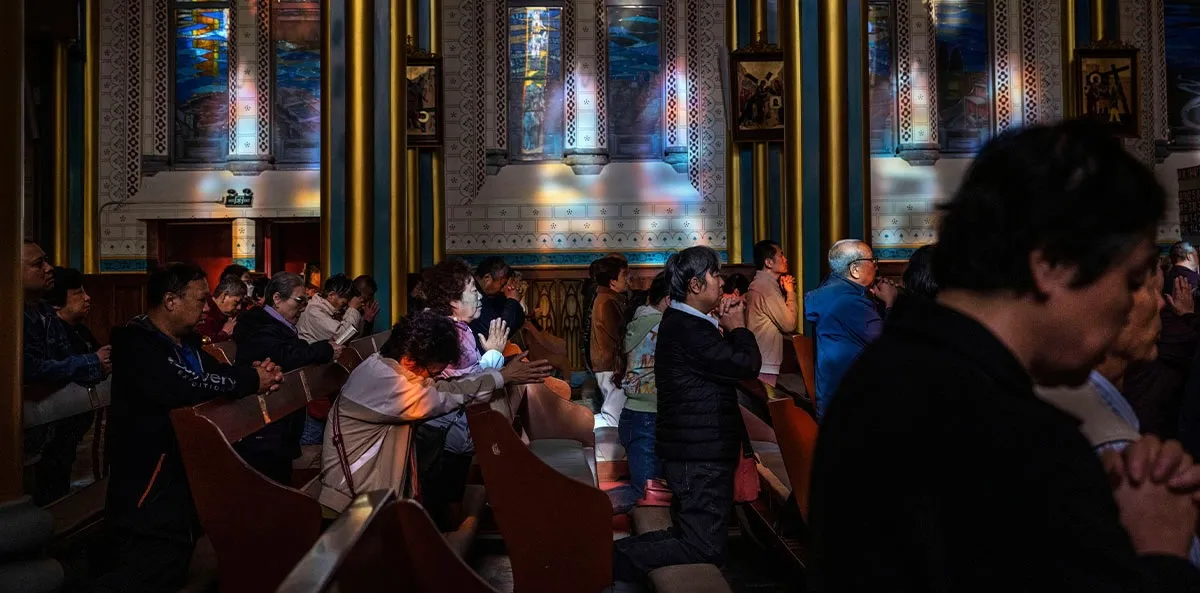
May 25, 2026
The Washington Stand
Faith & Culture
Humans are lonelier than ever before. Even before the pandemic, almost five out of 10 U.S. adults reported experiences of loneliness. For young adults aged 15-24, time spent in-person with friends has fallen almost 70% from 2003 to 2020, from about two and half hours down to 40 minutes per day. The lack of meaningful interaction comes with a cost. Research finds that a lack of social connections can be as dangerous to our health as smoking 15 cigarettes a day. Humans were designed for community, not for isolation. But the solution is always trickier than it first appears.
In a culture that values independence and autonomy, making time for community seems tangential or even burdensome. For some, the mere thought of a social event depletes their personal energy battery. In a fallen world, relationships are complicated. People can be our best friends, and cruelest enemies. We get burned, withdraw, and then experience loneliness while making little effort to socialize.
Our society subtly reinforces the concept that reality is something to flee or escape; a bad dream to smother underneath a barrage of entertainment, information, or other forms of distraction. With the proliferation of smartphones, unplugging from the current situation and escaping into the digital sphere has never been so easy or so tempting. Additionally, many in-person connection points have now moved to screens. Online college options, virtual training, and remote jobs are increasingly prevalent. That’s not to say that online spaces are somehow bad or should be avoided; rather, with every advantage (think flexibility, cost, and time-savings), there is always a disadvantage (a sense of association without the anchor of relationships).
The issue is that we don’t reinvest the time and resources gained by the virtual world back into in-person relationships and interactions. The data provides the proof. In 2018, Pew Research Center found, “A majority of Americans (59%) say they feel some attachment to their local community, but only 16% say they feel very attached; 41% say they are not too or not at all attached to the community where they live. Adults in urban, suburban and rural areas report nearly identical levels of attachment to their local community.”
Our immediate community often lacks the tailoring, diversity, and ability to fast-forward that the digitalscape so frequently offers. Marketers call this phenomenon fragmentation: the splintering of groups defined by distinct preferences or requirements. When we get used to such customization to our preferences, we naturally grow more isolated from one another as we become increasingly defined by what sets us apart.
But there’s no easy fix. After all, relationships are the result of time, energy, effort, and being authentic about ourselves and with others (not to mention the emotional stakes that come with the drama and messiness of other sinners). But that’s the interesting thing. Redemptive history starts with two people in a garden and reaches its climax as a cultivated city: a sanctified arena when God’s creation and a multitude of people coexist in community. Human flourishing happens in fellowship, not in isolation. And more than ever, Christians need to lead by example.
Brian Brown understands this tension well. He’s the founder and executive director of The Anselm Society, a Colorado-based organization dedicated to a renaissance of the Christian imagination and recapturing the sense of shared community among kingdom-minded creatives. “We live in a culture that has made escapism into a virtue. We’re encouraged by a million cues to be anywhere but here, anyone but who God made us to be,” he remarked to The Washington Stand. “In the face of that, the person who chooses to show up has tremendous power — to see and be seen, to invite others in, to treat the local church and the dinner table as essentials rather than extras. But to do that, we have to dare to see ourselves as God sees us: as beloved bearers of His image.”
As images of God, we reflect him best in our collectiveness and diversity. It’s when the body of Christ comes together in fellowship that we get a more accurate glimpse at the vastness and depth of divine character (Ephesians 4:11-13; 15-16). Through the Messiah’s redemptive work, Christians have the opportunity, indeed the calling, to work towards restoration of the vision.
Despite the digital advances in communication and connection points, people are lonelier than ever before. It’s easy to run with the culture, burying ourselves in the endless mountain of “extra things,” perhaps even attempting to fill our own ache for meaningful connection. There is both pain and reward in pulling our heads out of the mountain and “showing up” in acts of simple relationship-building. “Showing up” doesn’t need to be elaborate, but it needs to be essential and intentional if we are serious about changing the tide of isolation.
In a hurting world, the simple act of being there for someone matters. If Christians are to be known by our love for one another (John 13:35; 2 Corinthians 13:11), we must be willing to demonstrate it.
This was orginally written by Hannah Tu and published on The Washington Stand. For more content like this, visit Real Life Network.
25 min
The Wilderness of Social Isolation and the Christian Calling to Community

May 18, 2026
The Washington Stand
Faith & Culture
On January 20, 2026, historian Yuval Noah Harari stood before the World Economic Forum at Davos and issued a direct challenge to Christians worldwide. “If religion is built from words, then AI will take over religion,” he said, then named Christianity by name: “This is particularly true of religions based on books, like Islam, Christianity, or Judaism.” And he left this question in the air: “What happens to the religion of a book when the greatest expert on the holy book is an AI?”
The clip accumulated 1.2 million views within days. The room at Davos did not object.
A Documented Shift, not a Conspiracy
Harari’s 2026 remarks are the current edge of a worldview shift building for years — visible in the public statements of the most powerful technologists of our time, spanning five distinct domains of the human person.
It was Harari himself who told the same World Economic Forum in 2020 that we are “no longer mysterious souls — we are now hackable animals.” Six years later, he has moved from contesting human identity to contesting the authority of Scripture. The trajectory is not random.
OpenAI CEO Sam Altman wrote in 2017 that “the merge has already started” — that phones and algorithms already “control us” and “decide what we think.” By 2025, he had enlarged that frame: an essay titled “The Gentle Singularity” described AI as “building a brain for the world,” projected brain-computer interfaces, and suggested “some people will probably decide to ‘plug in.’” Venture capitalist Marc Andreessen has called AI development a “moral obligation” and envisions every person equipped with an AI “assistant, coach, mentor, tutor… therapist” — roles Scripture reserves for God, parents, pastors, and community.
Billionaire, AI investor, and co-founder of Palantir Technologies Peter Thiel has said, “I’ve always had this really strong sense that death was a terrible, terrible thing… I prefer to fight it,” investing millions to turn mortality into an engineering problem. Anthropic CEO Dario Amodei, writing in more restrained terms, envisions AI-enabled biology offering “control and freedom over our own biological processes” addressing conditions “we currently think of as immutable parts of the human condition” — potentially including a doubling of the human lifespan.
These statements come from different people with different assumptions. What they share is a common direction: the human being as improvable hardware, death as a bug to be patched, and — in Harari’s own words before world leaders — the Bible as a database awaiting a more capable administrator.
The Contest That Matters More than the One We’re Watching
In “The New AI Cold War,” I document how China, Russia, and Iran are weaponizing artificial intelligence to surveil populations and export digital tyranny worldwide. That geopolitical contest is real and urgent. But the deeper one is being fought inside Western civilization itself — on the terrain of human identity and, as Harari’s Davos appearance confirmed, on the terrain of Christian faith. The architects of AI understand this better than most Christians do.
What Scripture Actually Says
No technological development alters what Scripture says about human beings. “Then God said, ‘Let us make man in our image, after our likeness’” (Genesis 1:26). That declaration is the load-bearing wall of Christian anthropology — the reason human dignity is inherent and not a function of what AI can do with our genome or our sacred texts.
In “AI for Mankind’s Future,” I examine what it means to bear the imago Dei when machines imitate human intelligence. Harari’s question has a Christian answer no algorithm can produce: the Holy Spirit, not processing power, illuminates Scripture. The soul is real and not reducible to data. The body is not hardware — it will be raised imperishable. Death is an enemy, but the resurrection of Jesus Christ has already answered that claim. “Trust in the LORD with all your heart, and do not lean on your own understanding” (Proverbs 3:5) is not a devotional sentiment — it is the posture Scripture commands for this moment.
The Jurisdiction That Is Quietly Changing Hands
The most consequential shift in AI is not technological. It is jurisdictional. AI is migrating from tool to authority — not by coercion, but through the frictionless convenience of daily use. Algorithms already shape what millions of people read and believe, mediate education, and form moral character. Andreessen’s vision of AI as universal tutor, therapist, and life guide is not a distant scenario. It is the operational goal of every major platform already in your household.
When a digital system begins answering the questions of identity, purpose, and meaning that once belonged to God, to parents, and to community, it does not remain a tool. Romans 1:25 describes the exchange in which Paul warns against trading the truth of God for the created thing. Harari is more candid than most about where that exchange leads — and at Davos, he named your Bible specifically.
The Response Christians Cannot Afford to Delay
AI produces genuine benefits — in medicine, national security, and communication — and “AI for Mankind’s Future” acknowledges them. The argument here is against surrender: surrendering judgment to the algorithm, and the formation of the next generation to systems whose designers have already decided the human being is improvable hardware and the Bible is a word-processing problem.
Christians must engage AI with discernment — using the technology without adopting its embedded anthropology. That means defending what the technologists are actively contesting: that human dignity is a gift of the Creator, not a product of code, and that the authority of Scripture cannot be transferred to any machine. “There is a way that seems right to a man, but its end is the way to death” (Proverbs 14:12).
Harari posed the right question at Davos, and the answer has not changed since Moses received it at Mount Sinai. What remains is whether the church will say it loudly enough, and soon enough, for the world to hear.
This article was originally written by Robert Maginnis published on The Washington Stand. For more content like this, visit Real Life Network.
25 min
The New Religion of AI: Who Gets to Define What It Means to Be Human?

May 1, 2026
The Washington Stand
Faith & Culture
On April 6, 1990, I wrote in my Bible the following words: “It’s nice to be back. I’ve been gone too long — only through the power and love of Jesus I have come back,” and I signed it “Walt,” a remarkable occurrence after falsely identifying as a woman for eight years.
My experience offers living proof of the power of the gospel to transform a life seemingly lost in an alternate “trans” identity, and the important role the church plays in restoration.
The Bible says the body is the dwelling place of the Holy Spirit. In 1 Corinthians 3:16, Paul writes: “Do you know that you are God’s temple and that God’s Spirit dwells in you?” The good news is that no matter what your past looks like, or what you may have done to your body, redemption awaits you in the arms of Jesus, and God’s Spirit who dwells in you will restore you.
When I was identifying as a “transgender woman,” I was mentally unstable and unable to comprehend the lifelong consequences of using cross-sex hormones and surgery to change my appearance to that of a woman. Even worse, I was drinking to excess. At my initial appointment with “gender” therapist, Dr. Paul Walker, I was intoxicated, yet he quickly diagnosed me with gender dysphoria, a diagnosis that never should have happened. Following his advice, I underwent gender surgery in 1983 at the age of 42 and began my pretense of presenting in life as a woman.
Sobriety, Church, and Prayer
I had been living what I see now was a life of sin but, to my amazement, my messy life was not too big for Jesus. Jesus did not turn His back on me.
Jesus preserved me through despair and attempted suicide, led me to a church and sobriety, and provided a home and a strong support team. The relationships with leaders at church cemented my foundation in Christ and, in time, gave me the courage to seek counseling to confront the childhood traumas that had caused me to seek an alternate identity.
The turning point occurred during a prayer with a counselor several years into my sobriety in a personal encounter with Jesus I will never forget. My lord and savior Jesus appeared to me, held me in His arms, and said, “You are now safe with me forever.” That day, I was born again in Christ and trusted He would put me on the path to full restoration as Walt. That’s when I wrote it in my Bible and signed “Walt.”
The Church’s Role
The church’s basic approach to reaching anyone, no matter what the issue, starts with welcoming love and standing for truth and is deeply rooted in compassion and concern for both the needs of the person and the congregation.
Reaching out to help an adult in your congregation who is presenting as the opposite gender requires building a relationship with that person. It may require a pastor or elder to have a one-on-one conversation first to determine if the individual is willing to receive spiritual guidance. You can learn a great deal in that conversation, and it will help in knowing if and how to provide support and boundaries.
In my case, my needs were great on many levels — financial, spiritual, emotional, legal, psychological — for an extended period. My pastor suggested I chronicle them in a regular note to the leadership so they could pray and provide. This “note” over time became a weekly prayer letter keeping the leadership in tune with my journey, at times celebrating the triumphs and at other times, carrying my burdens. The pastor gathered a strong support team of two or three mentors to encourage me with consistent Bible study and contact on the phone, over meals or coffee. These spiritually mature people were the very hands and feet of Jesus, showing me care and providing accountability.
In my life, the restoration process was messy for me and the church, and it can be messy for the church today. But, oh, it is so worth the effort to see God work. Redemption through Jesus has given me peace, healing, freedom, and victory. This year I celebrate 40 years of sobriety and 35 years in my right identity.
The Chloe Cole Act
You can see why I strongly oppose cross-sex hormones and surgery as “treatment” for identity distress. I came to Jesus and learned hormones and surgical procedures are not, and never have been, medically effective in changing a man into a woman or a woman into a man, a boy into a girl or a girl into a boy. Medical practitioners who promote this “treatment” are imposing great harm, especially on children, and lawmakers are stepping up.
The proposed Chloe Cole Act will prevent doctors and hospitals from introducing wrong-sex hormones into bloodstreams of children and removing healthy body parts in pursuit of a false identity.
The life-long harmful effects of hormone therapies and radical surgeries don’t stop at the age of 19; sadly, I can attest to that. Our lawmakers should start now to consider laws that will protect adults as well.
Resources for the Church
The church played an enormous role in my restoration even though resources about alternate identities were non-existent so many years ago. To support people in the congregation who are struggling with their biological sex, it’s important for the church, especially the leadership, to be equipped with accurate information.
To combat non-biblical misinformation and to teach Christians how to apply God’s word to helping trans-identifying people, Dr. Jennifer Bauwens and I applied our expertise and experiences in trauma and gender distress to write the book, “Embracing God’s Design.”
Written for the church, it presents an easy-to-read understanding of the topic from the Christian and psychological perspectives, reveals what drives adults or children to identify this way, chronicles the harms inflicted by “gender” clinics, and shares how Christians can minister to them and their families.
Redemption
I give all the glory to Jesus for my new redeemed life “only through the power and love of Jesus.” I had no idea on that day of April 6, 1990, what redemption would look like, but 35 years later I do understand redemption is about the Lord fulfilling His promises. For believers, Christ’s redemptive work fulfills every divine promise made for our salvation and restoration. What is so beautiful is it’s yours for the asking.
So come to Jesus. Get your redemption started on Easter Sunday 2026.
For more information on how the church can respond, see the FRC resource, “Embracing God’s Design.”
You can support the Chloe Cole Act by contacting your members of Congress here.
This article was originally written by Walt Heyer and published on The Washington Stand. For more content like this, visit the Real Life Network.
25 min
Jesus Used the Church to Redeem My ‘Trans’ Life
April 2, 2026
The Washington Stand