The Latest
- President Trump's comments about heaven and forgiveness highlight the biblical importance of repentance, humility, and extending grace even to political opponents.
- Growing disagreements over Israel, Iran, and immigration reveal divisions within the conservative movement and raise questions about the relationship between political leadership and biblical convictions.
- Charlie Kirk's assassination and the public response to his death underscore the dangers of political hostility and the importance of rejecting violence while defending free speech.
- Christians are called to engage responsibly in politics without placing their ultimate hope in political leaders, remembering that salvation comes through Jesus Christ and God's sovereignty remains unchanged.
Real Life Network is a free, faith-based streaming platform offering biblically grounded teaching, documentaries, news, movies, and original programming. Sign up today.
What happens when a person gains everything the world has to offer but remains unprepared to face eternity?
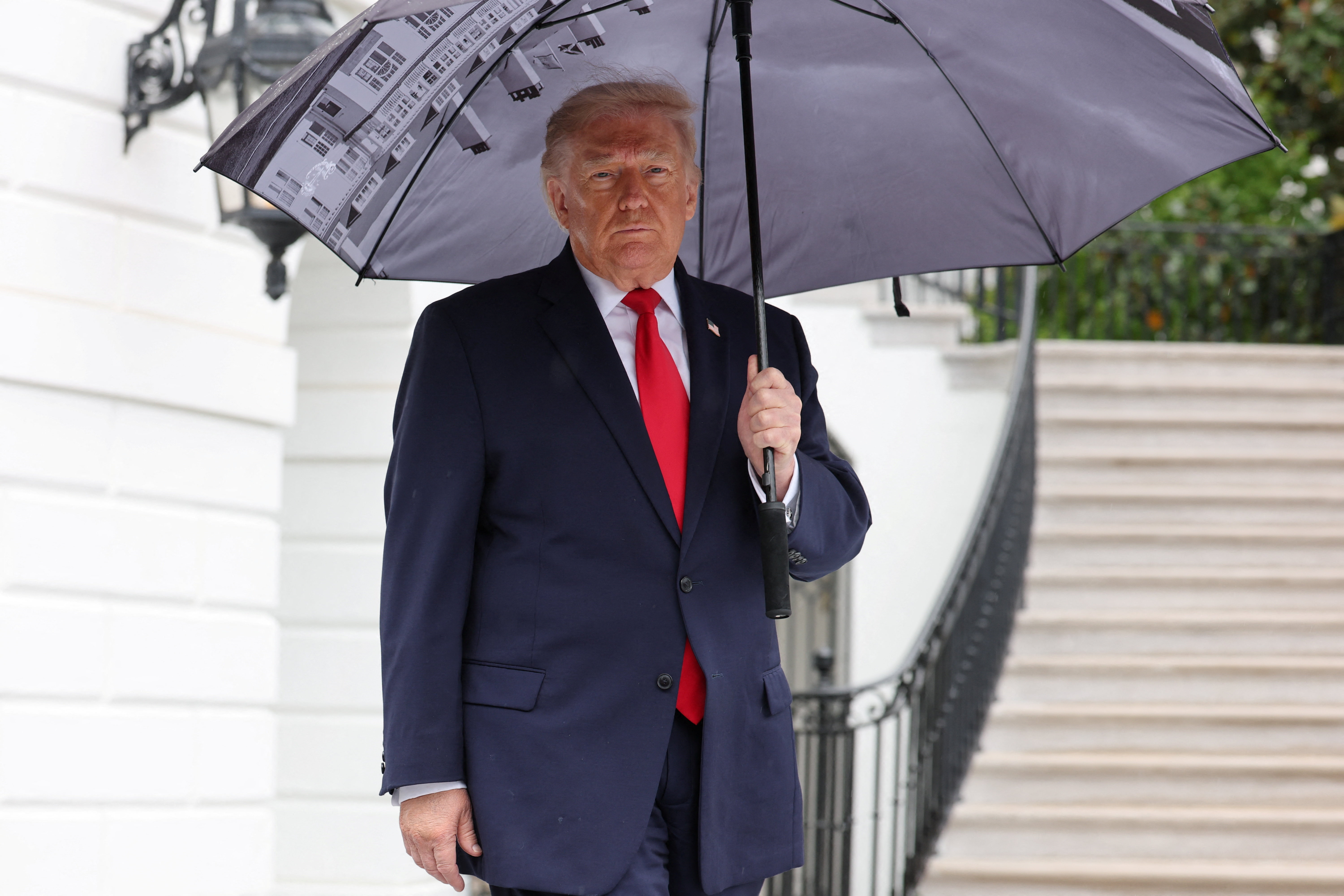
It is a question that transcends politics, wealth, influence, and public reputation. Yet it became the center of an important conversation when President Donald Trump was asked about death, heaven, and forgiveness during a recent 60 Minutes interview.
The president's answers revealed something worth examining, not simply about Donald Trump, but about the human heart.
The discussion also comes at a difficult moment for American politics. Republicans are confronting electoral losses, disagreements over Israel and Iran are dividing conservatives, and the assassination of Charlie Kirk continues to expose troubling attitudes toward political violence.
But beneath these headlines lies a more consequential question.
Political success cannot save the soul, and no amount of earthly influence can replace the transforming grace of Jesus Christ.
That truth applies to presidents and ordinary citizens alike.
Donald Trump, Forgiveness, and the Condition of the Heart
During his interview, Trump was asked what he believed would happen to him after death.
Having survived an assassination attempt in Butler, Pennsylvania, the president has experienced a reminder of life's fragility that few people encounter so directly.
When asked whether he expected to go to heaven, Trump expressed hope that he would, explaining that he considered himself religious.
The conversation then turned to forgiveness.
Interviewer Ross Douthat referenced the memorial service for Charlie Kirk, where Kirk's widow, Erika, publicly forgave the man accused of murdering her husband.
At that same memorial, Trump acknowledged that he did not share Kirk's approach toward political opponents.
When Douthat asked whether the president could forgive figures such as James Comey and Nancy Pelosi, Trump indicated that he could not honestly promise to do so.
The answer was striking.
Trump has experienced extraordinary political opposition, legal battles, and threats against his life. His frustration with political adversaries is understandable, even when his responses deserve examination.
Christians can recognize those circumstances without excusing bitterness.
Jesus' teaching in Matthew 6:14–15 makes forgiveness an essential part of the Christian life. Believers who have received God's mercy are called to extend forgiveness to others.
That does not mean wrongdoing should go unpunished. Forgiveness does not eliminate accountability, excuse criminal behavior, or require abandoning justice.
It means refusing to allow hatred to govern the heart.
Erika Kirk's response to her husband's murder provides a powerful example.
Faced with unimaginable grief, she publicly expressed forgiveness grounded in her Christian faith.
Her words did not minimize the seriousness of the crime. Instead, they demonstrated that the Gospel offers a response to suffering that goes beyond retaliation.
The contrast raises a question for every Christian, regardless of political affiliation.
Is it possible to defend the right policies while harboring the wrong attitudes?
Absolutely.
A person can hold strong convictions about immigration, religious liberty, national security, or Israel while struggling with pride, resentment, and unforgiveness.
The same is true of political opponents.
No party possesses a monopoly on virtue, and no political leader is exempt from the moral demands of Scripture.
Christians are called to evaluate leaders through biblical truth without confusing political loyalty with spiritual faithfulness.
The warning is especially important when discussing someone as influential as Donald Trump.
His accomplishments and political positions can be assessed on their merits. His statements can be praised or challenged. But his eternal standing before God cannot be determined by political achievements, and no observer can claim complete knowledge of his heart.
That judgment belongs to God.
The responsibility of believers is to speak truth with humility, pray for leaders, and remember that everyone stands in need of divine grace.
Israel, Immigration, and the Divisions Within Conservatism
The president's interview also exposed growing tensions over America's relationship with Israel.
Trump suggested that Israel and other American partners should reimburse the United States for costs associated with the conflict involving Iran.
He also claimed that Israel would not exist without his leadership.
Those statements raise questions about the relationship between American foreign policy and biblical convictions.
Trump's administration has taken significant steps in support of Israel, including recognizing Jerusalem as its capital and overseeing the Abraham Accords.
Those accomplishments deserve recognition.
Yet American assistance and Israel's biblical significance are not identical matters.
Scripture presents God's covenant with Abraham and his descendants as something established long before the existence of the United States.
Genesis 12:3 and Numbers 24:9 have traditionally informed Christian discussions about blessing Israel, while Jeremiah 31 emphasizes God's enduring covenantal faithfulness.
Christians differ over how those passages apply to the modern State of Israel and contemporary foreign policy. Those interpretive questions deserve thoughtful consideration.
Nevertheless, a biblical perspective should encourage humility about the limits of political power.
No president can claim ultimate credit for God's purposes in history.
American leaders must make difficult decisions about military spending, alliances, and national interests. Those decisions can be debated without reducing an entire relationship to financial transactions.
The disagreements surrounding Israel and Iran have also intensified divisions within the Republican Party.
Representative Thomas Massie's opposition to aspects of the administration's foreign policy, including his effort to impeach Defense Secretary Pete Hegseth, illustrates the growing conflict among conservatives over military involvement overseas.
Some Republicans believe a more restrained foreign policy is necessary to protect American interests and avoid prolonged conflicts.
Others argue that maintaining a strong partnership with Israel is essential to regional security and America's broader strategic responsibilities.
These competing positions cannot be resolved through personal attacks alone.
They require serious consideration of military objectives, costs, constitutional authority, and the consequences of American action or inaction.
Immigration has produced similar disagreements.
During the 60 Minutes interview, Trump acknowledged the possibility that his administration's deportation policies had been too harsh.
At approximately the same time, the administration announced that Stephen Miller would replace Susie Wiles as White House chief of staff.
The combination raised questions about whether immigration enforcement would become more restrained or more aggressive.
For many conservative voters, border security remains a central political concern.
Yet the biblical responsibility to love one's neighbor and treat strangers with dignity must also inform Christian discussions of immigration.
A nation can maintain lawful borders while recognizing the humanity of immigrants and the importance of fair treatment.
Those principles need not be mutually exclusive.
The larger concern is whether political disagreements are producing thoughtful debate or simply deepening resentment.
Conservatives who share many foundational beliefs increasingly disagree about Israel, military intervention, immigration, and the direction of the Republican Party.
Those divisions may have significant electoral consequences.
But they also offer an opportunity for Christians to demonstrate something different from the hostility that dominates so much of public discourse.
Conviction and humility can coexist.
Disagreement does not require hatred.
And faithfulness to Scripture must remain more important than loyalty to a political movement.
Charlie Kirk, Political Violence, and the Hope of the Gospel
The assassination of Charlie Kirk remains a painful reminder of what can happen when political hostility becomes something more dangerous.
Kirk was known for engaging students on college campuses, often inviting those who disagreed with him to ask questions and challenge his positions.
His approach reflected a belief that political and cultural disagreements should be addressed through conversation rather than intimidation or violence.
Following his death, comedian Dave Chappelle reportedly made remarks during a performance that Cohen criticized as insensitive toward Kirk's murder.
The controversy raised a broader question about the boundaries of comedy and the moral responsibilities of public figures.
Free speech protects the right to express unpopular, offensive, or provocative opinions.
But possessing the right to say something does not make every statement wise, compassionate, or morally defensible.
Political violence should never become a source of celebration.
The principle must apply consistently.
A person does not become less deserving of compassion because of political affiliation, religious belief, or public controversy.
Kirk's family deserves the same dignity and sympathy that should be extended to every family devastated by violence.
That standard should also shape Christian conversations about conflict overseas, including the suffering of Israeli and Palestinian civilians.
Every human life bears inherent dignity.
And no political disagreement justifies celebrating another person's death.
Erika Kirk's public response offered an alternative to the bitterness surrounding so much of the conversation.
She chose to speak about forgiveness while grieving the loss of her husband.
That decision points toward a truth that reaches beyond the immediate tragedy.
The Gospel does not promise that Christians will avoid suffering, injustice, or persecution.
It promises something greater: reconciliation with God through Jesus Christ and the possibility of a transformed heart.
This is why the question of eternity matters more than any election.
Mark 8:36 asks what a person gains by possessing the whole world while forfeiting the soul.
Wealth cannot answer that question.
Neither can fame, political influence, military strength, or electoral success.
The Christian message is that salvation is not earned through accomplishments or moral superiority. It is received by God's grace through faith in Jesus Christ.
Ephesians 2:8–9 teaches that salvation is God's gift, not the result of human works.
That message should produce gratitude and humility rather than self-righteousness.
It should also change how Christians approach public life.
Believers have responsibilities as citizens. They should study the issues, participate thoughtfully in elections, pray for elected officials, and seek the good of their communities.
But political engagement must never replace the Church's central mission.
The Great Commission calls Christians to make disciples, proclaim the Gospel, and teach obedience to Christ.
That calling remains unchanged regardless of which party controls Congress or occupies the White House.
The greatest need in American politics is not simply better leadership or stronger policies, but hearts transformed by the grace and truth of Jesus Christ.
The same grace that makes forgiveness possible is available to presidents, entertainers, political activists, and ordinary families.
No one is beyond the need for repentance.
And no one is beyond the reach of God's mercy.
The future of American politics may remain uncertain, but the promises of Scripture do not change with election results.
God remains sovereign.
Christ remains the only Savior.
And the Church remains called to speak truth, extend grace, and point people toward the hope of eternal life.
The question is not merely what kind of country will be left to the next generation.
It is whether the people living in it are prepared for eternity.
Watch The Daniel Cohen Show on Real Life Network for news, cultural analysis, and conversations connecting current events to the hope of the Gospel.

Daniel Cohen hosts the "Daniel Cohen Show" exclusively on the Real Life Network. A Jewish follower of Jesus and three-time Emmy award-winning journalist, Cohen delivers the news from Israel, reporting on today's top headlines with a biblical worldview.