
Stream Real Life Network Now

WATCH NOW
International News


Faith & Culture
25 min
When the Climate Narrative Shifts: Fear, Trust, and a Generation Trying to Make Sense of it All
Climate messaging is changing as political leaders, media outlets, and institutions reconsider past assumptions. The shift raises deeper questions about fear, public trust, discernment, and how Christians should think about environmental stewardship.
Adapted from a recent Rose Unplugged podcast conversation with Marc Morano of Climate Depot. Watch the full episode: Here
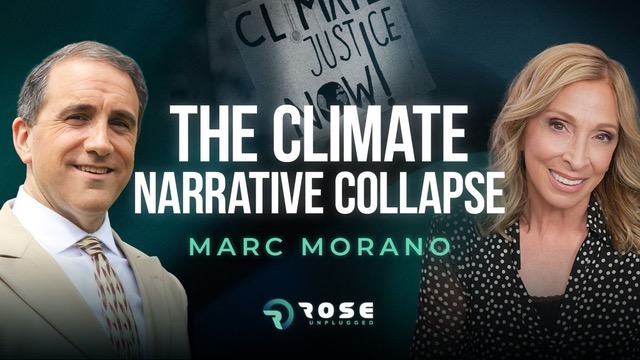
We are watching something shift that many people were told would never shift. For years, the message was simple, absolute, and repeated everywhere: the science is settled, the timeline is urgent, and the consequences are existential.
Climate change was not presented as one issue among many. It was presented as the issue. The defining crisis of our time. And for a long stretch, questioning that framing was treated not as disagreement, but as denial.
But now, something is happening that is difficult to ignore.
The Quieting
Major political outlets are describing what they call “climate hushing”. It’s a noticeable quieting from Democrats and environmental groups at the very moment we were told urgency should be at its peak. Media voices and political strategists are openly admitting that climate messaging is no longer resonating with voters the way it once did.
And a very uncomfortable conversation is emerging inside mainstream reporting: that some of the most extreme climate scenarios that shaped headlines, policy, and public fear were never truly forecasts at all, but worst-case modeling that was often presented without that distinction being made clear to the public.
Now those same scenarios are being reconsidered. Recalibrated. In some cases, quietly set aside.
Meanwhile, at the Kitchen Table
At the same time, there is another layer to this story that can’t be ignored. Because while elites debate messaging strategies, ordinary families are dealing with something far more immediate. They are dealing with rising costs, energy insecurity, and food prices, and with the reality that policies sold as “saving the planet” often land first and hardest on working people.
And somewhere in the middle of all of that, I think a lot of people are just trying to live their lives and make sense of it all. Some climate activists say we’re destroying the planet if we eat meat. Vox, for example, has warned that beef is among the worst foods we consume when it comes to global warming. My only request is this: just do not take my steak away from me while you’re all figuring it out. I. Mean. It.
There’s something very human about that reaction. People can debate models and projections all day long, but at the end of the day, we’re still sitting down at a dinner table trying to live our lives without being told that everything we do is somehow destructive.
That disconnect, between elite narrative and lived experience, is now shaping the political response we’re seeing.
A Generation Raised on Collapse
And there’s something even deeper happening underneath all of this. We now have an entire generation that grew up hearing one dominant message: that the world is nearing the edge, that time is running out, and that catastrophic collapse is not just possible but likely, unless radical transformation happens immediately.
Many young people didn’t just hear that message. They internalized it. It shaped anxiety. It shaped worldview. And in some cases, it shaped despair.
Now, slowly, some are beginning to ask a question that’s not political at all, but deeply personal: What if what I was told was only part of the story?
Proverbs 14:15 says, “The naive believes everything, but the sensible man considers his steps.”
That verse feels more relevant in a moment like this than it has in a long time. Not as a political statement, but as a reminder that fear, especially sustained fear, has a way of shaping belief faster than discernment can catch up.
A Pattern Emerges
Viewed individually, these developments might seem like political adjustments or media recalibrations. But when you step back and place them side by side, a pattern begins to emerge.
Political leaders are pulling back from climate messaging. Media outlets are acknowledging that voters are not responding the way they once expected. The most extreme climate scenarios that shaped years of public discourse are being revised.
Some of the world’s largest economies are resisting sweeping energy transitions. And even long-standing institutions are adjusting scope, timelines, and assumptions that once appeared fixed.
None of this is happening in isolation. It is happening all at once. And what it points to is something deeper than policy disagreement. It points to a growing gap between institutional certainty and public trust.
Stewardship Was Never the Issue
Now, to be clear: stewardship of the environment is not the issue. Wisdom in caring for creation is not the issue.
The issue has always been how that stewardship is defined, and how it is communicated to the people asked to live under it. Because when fear becomes the primary engine of persuasion, something else begins to erode alongside it, and that is trust. And trust, once fractured, is not easily restored.
As parts of the narrative so many young people were raised on are being revised, softened, or walked back, a difficult question emerges: how does a generation recalibrate when the story they were told about the world begins to change?
Not with anger. Not with cynicism. But with discernment.
A World Not Out of Control
Isaiah 40:22 reminds us, “It is He who sits above the circle of the earth.”
In other words, the world has never been out of control, even when our human interpretation of it has been incomplete.
So maybe what we are witnessing right now isn’t just a political shift or a media correction. Maybe it is a moment of reassessment: of how we weigh models versus reality, urgency versus accuracy, and narrative versus truth.
Because the question underneath all of this is not simply about climate policy. It is about trust. Trust in institutions. Trust in messaging. And ultimately, trust in how we understand the world we are being told to fear, and the world we truly live in.
If there is a path forward, it won’t come from fear alone. It will come from clarity. From honesty. And from the willingness to separate what we were told from what is true.
Keep your faith steady, your focus clear, and keep moving forward, because you are here for such a time as this.
Sign up today for more content from Real Life Network.
World News
25 min
What Political Rhetoric Reveals About the People Who Use It
From political violence and media accountability to Iran, Israel, and disputes over Christian teaching, the stories dominating public life raise a common question: Can Americans disagree without abandoning truth, consistency, and human dignity?
Politics has always involved disagreement. A healthy country should be able to argue vigorously about taxes, foreign policy, abortion, immigration, health care, education, and the proper role of government without treating political opponents as enemies who deserve suffering or death.
That distinction matters because political rhetoric does not remain confined to television studios, campaign rallies, or social media.
A recent survey discussed on The Daniel Cohen Show asked Democratic respondents how they would react to a hypothetical headline announcing President Donald Trump had been assassinated at a rally. The transcript cites the results as evidence of a disturbing willingness among some Americans to respond positively to political violence.
A survey cannot establish that respondents would personally commit violence, and attitudes expressed in a poll should not be treated as evidence that an entire political party supports assassination. But even hypothetical approval of political murder should trouble Americans regardless of who the target is.
That principle has to work in every direction.
Political violence against Donald Trump is wrong. Violence against Democratic officials is wrong. Celebrating the murder of a conservative activist is wrong. Celebrating an attack on a progressive activist would be wrong.
A political culture becomes dangerous when disagreement is no longer enough and opponents have to be humiliated, harmed, or eliminated.
Political Violence Should Not Have a Party
The attempted assassination of Trump in Butler, Pennsylvania, demonstrated how quickly political hostility can become something much more serious. The transcript also points to the killing of Charlie Kirk and the continuing controversy surrounding responses to political violence.
The deeper question is what kind of culture develops when suffering itself becomes partisan.
The 2017 attack on Senator Rand Paul offers a smaller but revealing example. MSNBC anchor Kasie Hunt introduced coverage of Paul's injuries by calling the incident one of her “favorite stories,” before immediately clarifying her concern for the senator. Paul suffered six broken ribs in the attack. The comment generated criticism at the time, and Hunt apologized, saying she had chosen her words poorly.
That distinction matters. An irresponsible comment should not automatically be interpreted as proof that someone celebrates political violence. Corrections and apologies matter too.
But so does the underlying standard.
Nobody's broken ribs should become funny because of the letter beside his name. Nobody's assassination should become acceptable because of political hatred. And nobody's murder should become easier to dismiss because the victim belonged to the wrong ideological camp.
Christians should be particularly careful here. Human dignity does not disappear when someone votes differently.
The command to love one's enemies is most revealing when there actually are enemies to love.
Foreign Policy Exposes the Difference Between Slogans and Consequences
That same need for moral clarity appears in foreign policy.
At a University of Michigan event, Democratic Senate candidate Abdul El-Sayed was questioned by a student who described relatives suffering under Iran's government and asked about El-Sayed's previous comments concerning Iran and its leadership. El-Sayed responded that the United States should not pursue regime change and said he supports “freedom and democracy for the people of Iran,” while arguing that democratic change should come from Iranians themselves.
There is a legitimate policy debate underneath that exchange.
Opposing American-led regime change is not the same thing as supporting the Iranian government. American policymakers have debated intervention, sanctions, military force, diplomacy, and regime change for decades. But candidates asking voters for significant national authority should expect difficult questions about how their principles translate into policy when authoritarian governments repress their own citizens.
The same is true of Israel.
Missile defense can sound like an abstraction until a siren gives a family seconds to reach a shelter. Iron Dome is designed to intercept rockets and other airborne threats headed toward populated areas. Arguments over American support for the system therefore involve more than budget lines; they involve competing judgments about U.S. foreign policy, Israeli security, regional stability, and civilian protection.
Political language becomes much easier when the human consequences remain theoretical.
That reality became painfully tangible this week for Israeli Ambassador to the United States Yechiel Leiter. His son Neria, an IDF reservist, was seriously wounded in a car-ramming attack at a checkpoint in the West Bank. Another son, Moshe Yedidya Leiter, was killed in Gaza in November 2023.
Arguments over Israel, Iran, terrorism, and American foreign policy deserve serious debate. They also involve families for whom those debates are not academic.
Truth Still Matters When It Complicates the Argument
Political rhetoric becomes especially dangerous when facts are treated as raw material rather than constraints.
French President Emmanuel Macron provided a striking example at the United Nations this week when he said Hamas had “never operated” in the West Bank. A French official subsequently said Macron meant that Hamas had never governed the West Bank. Those are materially different claims. Hamas has operated in the West Bank even though it has not governed the territory.
Corrections matter because words matter, particularly when they come from heads of state discussing one of the world's most contentious conflicts.
The same principle applies closer to home.
CNN, MS NOW, and Politico recently sued the Trump administration after their reporters were barred from White House grounds. The administration defended the action by accusing the organizations of dishonest reporting; the outlets argued that exclusion based on their coverage violated constitutional protections. A federal judge has since temporarily ordered their access restored, finding that the outlets were likely to succeed on their claim that the credentials were revoked without constitutionally adequate due process.
That dispute raises legitimate questions about both government power and media responsibility. News organizations can and should be criticized when reporting is inaccurate. Government officials can and should face scrutiny when they use official authority against news organizations they dislike.
Neither principle requires abandoning the other.
Truth cannot become a partisan possession, defended when useful and discarded when inconvenient.
That standard also belongs inside the church.
The transcript raises theological questions about churches and political candidates who identify themselves as Christian while challenging historic Christian doctrines. Those disagreements should ultimately be evaluated by Scripture rather than by whether a candidate has the preferred political affiliation.
Christianity is not infinitely adjustable. The virgin birth, bodily resurrection, identity of Christ, authority of Scripture, sin, repentance, and salvation are not campaign language to be reshaped around contemporary politics.
At the same time, theological disagreement should be represented accurately. Criticism is strongest when it addresses what someone actually teaches rather than exaggerating the position for political effect.
That principle connects every issue here.
Political violence. Media coverage. Iran. Israel. Churches. Presidential power. International diplomacy.
Different subjects, same responsibility.
Tell the truth about opponents. Refuse to celebrate their suffering. Examine claims before repeating them. Apply standards consistently. Remember the human beings living with the consequences of political decisions.
For Christians, political engagement should never require surrendering those obligations. Scripture does not permit hatred simply because the stakes feel high. It does not permit dishonesty because the other side is dishonest. And it does not allow political allegiance to determine who deserves dignity.
Politics reveals plenty about candidates and parties.
How people speak about their opponents can reveal even more.
Real Life Network provides biblically grounded programming examining faith, culture, and current events. Watch The Daniel Cohen Show for more conversations about the stories shaping American and international life.
World News
25 min
Trump’s Greenland Deal, the White House Press Ban, and a Question of Accountability
Trump’s Greenland security agreement and the White House’s clash with major news outlets raise broader questions about national security, media credibility, accountability, and the responsibility to tell the full story.
A nation cannot function without trust.
Citizens have to trust that leaders are thinking beyond the next news cycle. Governments have to anticipate threats before those threats become emergencies. Journalists have to report facts accurately enough that the public can distinguish information from advocacy. And when institutions make mistakes, accountability matters.
That standard becomes especially important when the stakes involve national security.
The United States, Denmark, and Greenland have reached a new Arctic security agreement intended to strengthen Greenland's defenses and restrict adversarial powers from establishing military bases or making sensitive strategic investments on the island. President Donald Trump has described the arrangement as giving the United States permanent security rights there, although Denmark and Greenland have emphasized that Greenland remains under its existing sovereignty and the precise terms are still emerging.
Months ago, much of the public conversation surrounding Greenland sounded almost absurd. Late-night comedy made Trump's interest in the island a punchline, while critics questioned why the United States should care so much about a vast Arctic territory.
Now the strategic argument is much harder to dismiss.
Greenland sits in an increasingly important Arctic region where Russia and China have strategic interests. The new arrangement reportedly expands America's ability to operate militarily there while preventing non-NATO countries from establishing sensitive footholds.
The lesson is larger than Greenland.
Prudence sometimes means preparing for a danger before everyone else agrees that the danger is real.
Proverbs 22:3 says, “A prudent man foresees evil and hides himself, but the simple pass on and are punished.”
That principle does not require accepting every government claim or supporting every proposed national-security measure. It requires taking threats seriously enough to examine them before a crisis removes the luxury of preparation.
September 11 remains the clearest American example of what happens when seemingly distant threats become immediate realities. Nearly 3,000 people were killed that morning. The lesson should not be that every warning proves correct. It should be that responsible leadership has to consider possibilities the public would rather never imagine.
A Free Press Still Has to Be a Trustworthy Press
The question of institutional trust becomes more complicated when applied to the media.
The Trump administration recently barred CNN, MS NOW, and Politico journalists from White House grounds and confiscated their credentials. Trump accused the organizations of publishing “fake news.” The three outlets have now sued the administration, arguing that their exclusion violates the First Amendment and that access was revoked in retaliation for unfavorable coverage.
Those facts create two questions that should not be collapsed into one.
The first is whether news organizations deserve criticism when their reporting is inaccurate, incomplete, or driven by political assumptions. Of course they do. Journalism possesses enormous power to shape what millions of Americans believe happened. Errors should be corrected, important context should not be deliberately omitted, and political figures should face comparable scrutiny regardless of party.
The second question is whether a president can revoke journalists' White House access because the administration believes their reporting is dishonest or unfair. That is now a constitutional dispute before the courts. The affected organizations argue that government cannot condition press access on favorable coverage, while the administration defends its ability to determine who receives access to White House facilities.
Both questions matter.
Freedom of the press and accountability for the press are not competing principles. A free press should be vigorously protected precisely because its responsibility to tell the truth is so consequential.
That responsibility includes resisting selective standards.
Donald Trump's 2017 comments following the Charlottesville violence remain a useful example of how context can become part of a political dispute. Trump did say there were “very fine people on both sides” while discussing people involved in the controversy surrounding Confederate monuments. In the same remarks, he explicitly said he was not referring to neo-Nazis and white nationalists and said they should be “condemned totally.”
That fuller context does not resolve every legitimate criticism of Trump's response to Charlottesville. Critics have argued that his broader remarks still minimized the nature of the Unite the Right rally and created an inappropriate equivalence. But accurately evaluating the controversy requires presenting what was actually said rather than removing inconvenient portions of the statement.
The same standard should apply to every president.
Journalists should scrutinize Republican administrations. They should scrutinize Democratic administrations. They should investigate political claims rather than protect preferred narratives. And audiences should be willing to correct themselves when evidence contradicts what they wanted to believe.
Trust disappears when people conclude that facts are being filtered according to who benefits from them.
When the Victim Disappears From the Story
That problem extends beyond Washington.
Media framing determines more than how people understand politicians. It can determine whose suffering remains at the center of a tragedy.
The transcript points to the killing of 23-year-old Ukrainian refugee Iryna Zarutska on Charlotte's light rail and subsequent coverage involving the accused killer's family. The broader concern is worth considering carefully: compassion for mental illness should never require forgetting the victim of a violent crime.
Mental illness is real. Families trying to help severely mentally ill relatives can endure extraordinary hardship. Criminal courts also have established procedures for determining whether mental illness affects legal responsibility.
But compassion and accountability are not mutually exclusive.
A victim has a name. A family has suffered a loss. A community has been wounded. Those facts should not disappear simply because another part of the story raises difficult questions about mental health, criminal justice, or failures in the systems surrounding an accused offender.
A compassionate society should be capable of caring about mental illness without allowing the person who suffered the violence to vanish from the story.
That principle reaches well beyond crime reporting.
Every institution tells stories. Governments tell citizens which dangers deserve attention. Political parties tell voters which problems matter. Media organizations decide which facts lead a broadcast and which appear near the bottom of an article.
Christians should therefore develop habits that go deeper than simply choosing which institution to trust.
Ask what happened. Examine the complete statement rather than the viral clip. Distinguish established facts from allegations. Look for missing context. Pay attention to the people most directly affected. Apply the same standard when the facts help a preferred political side and when they hurt it.
Most importantly, remember that truth does not become more or less true depending on who benefits from it.
National security requires foresight. Journalism requires accuracy. Justice requires accountability. Compassion requires remembering the human beings affected by our political and cultural arguments.
None of those responsibilities belongs exclusively to the left or the right.
A biblical worldview should make truth more important than either.
That is why Real Life Network and The Daniel Cohen Show continue examining the stories shaping American life through questions of truth, faith, culture, and responsibility.
World News
25 min
Hyde Amendment Approaches 50th Anniversary Having Saved almost 3 Million Babies
As the Hyde Amendment approaches its 50th anniversary, lawmakers and pro-life advocates are reflecting on its history, its impact on federal abortion funding, and the continuing debate over abortion policy in America.
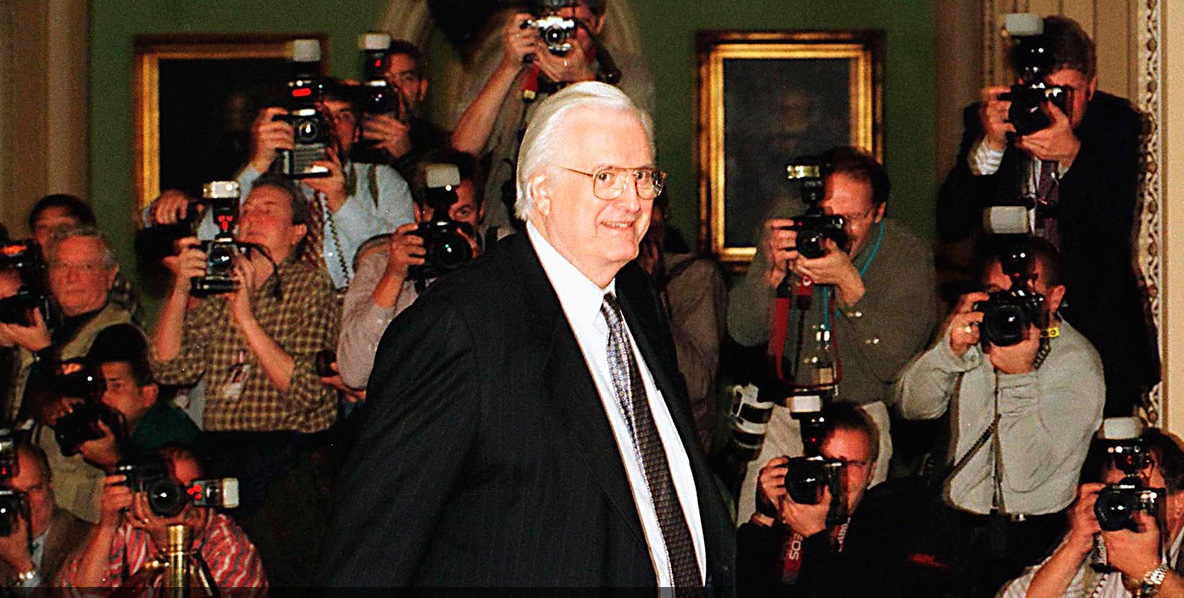
“An innocent, defenseless human life, in a caring and humane society, deserves better than to be flushed down a toilet or burned in an incinerator.” Such are the words of Henry Hyde, the former U.S. congressman from Illinois who tirelessly championed life and introduced the Hyde Amendment in 1976. Almost 50 years later, the legislative rider faces the opportunity to be renewed again.
For a half-century, the Hyde Amendment has stopped taxpayer dollars from funding abortion.
On Wednesday evening, Rep. Chris Smith (R-N.J.), co-chair of the Congressional Pro-Life Caucus, hosted a Special Order on the House floor to acknowledge the upcoming 50th anniversary of the Hyde Amendment on September 30. “The promise of America is that life is not just for the privileged, the planned, or the perfect,” Smith said, quoting Hyde. “This may sound odd, even ironic; you are here in the flush of victory. And yet it is precisely now that I ask you to contemplate the possibility of defeat, perhaps even the necessity of defeat. If you don’t know the principle or the policy for which you are willing to lose your office, then you are going to do damage here.”
Quena González, senior director of Government Affairs at Family Research Council, explained to The Washington Stand that Smith and Hyde have a history. “Representative Chris Smith served with Representative Henry Hyde for 26 years; he’s been a tireless defender of the unborn in Congress for 45 years and comes as close as anyone to carrying Hyde’s inimitable mantle.”
After the Roe v. Wade decision in 1973, the U.S. government paid for an estimated 300,000 abortions each year via Medicaid. According to the Charlotte Lozier Institute, since the Hyde Amendment’s first enactment in 1976, approximately 2.7 million lives have been saved.
During Wednesday’s event, Rep. Chip Roy (R-Texas) asserted that society has a duty to protect the unborn. “Life matters. Who are we as a people if we cannot stand up in defense of the most innocent form of life there is — a child in the womb of its mother? That should be our calling. And we should be able to unite as human beings in defense of the defenseless.”
Legislative Assistant for FRC’s Government Affairs Chantel Hoyt praised what House members shared during the Special Order. “I appreciated seeing Representative Chip Roy connect this important anniversary to the toll that chemical abortion is taking,” she told TWS. “It’s encouraging to see members like Representative Chris Smith carrying on Henry Hyde’s legacy and seeking to not only retain but build on the protections of the Hyde Amendment.”
Rep. Tracey Mann (R-Kan.) observed during the House event that he believes that abortion is not consistent with the Constitution. “Hyde should not be viewed as the finish line for the pro-life movement. It’s the floor. It’s a bare minimum compromise,” he shared. “America is founded on the self-evident truth that every person is created equal and endowed with our creator with an inherent right to life. That right is the foundation of every other right that we enjoy. As a father, I believe that every child is fearfully and wonderfully made by God. Every life has value, every child has purpose, and no child is a mistake.”
The Special Order and Hyde Amendment anniversary come at a time when chemical abortion has become a hot button issue on Capitol Hill. Pro-life politicians, lobbyists, and organizations continue to work tirelessly to ban the abortion drug mifepristone. “It’s always great to see members of Congress speak on the floor in defense of life, but especially now as we are urging the Trump administration to take action on chemical abortion to protect mothers and their babies,” Hoyt concluded.
This article was originally written by Quinn Delamater and published on The Washington Stand. For more content like this, visit Real Life Network.
World News
25 min
When Nothing Is Sacred, Everything Becomes Political
From the solemnity of September 11 to the use of Scripture in politics, America faces a deeper question about what it still considers sacred. Christians are called to respond with compassion, biblical discernment, and the courage to stand for truth.
There are moments that should transcend politics.
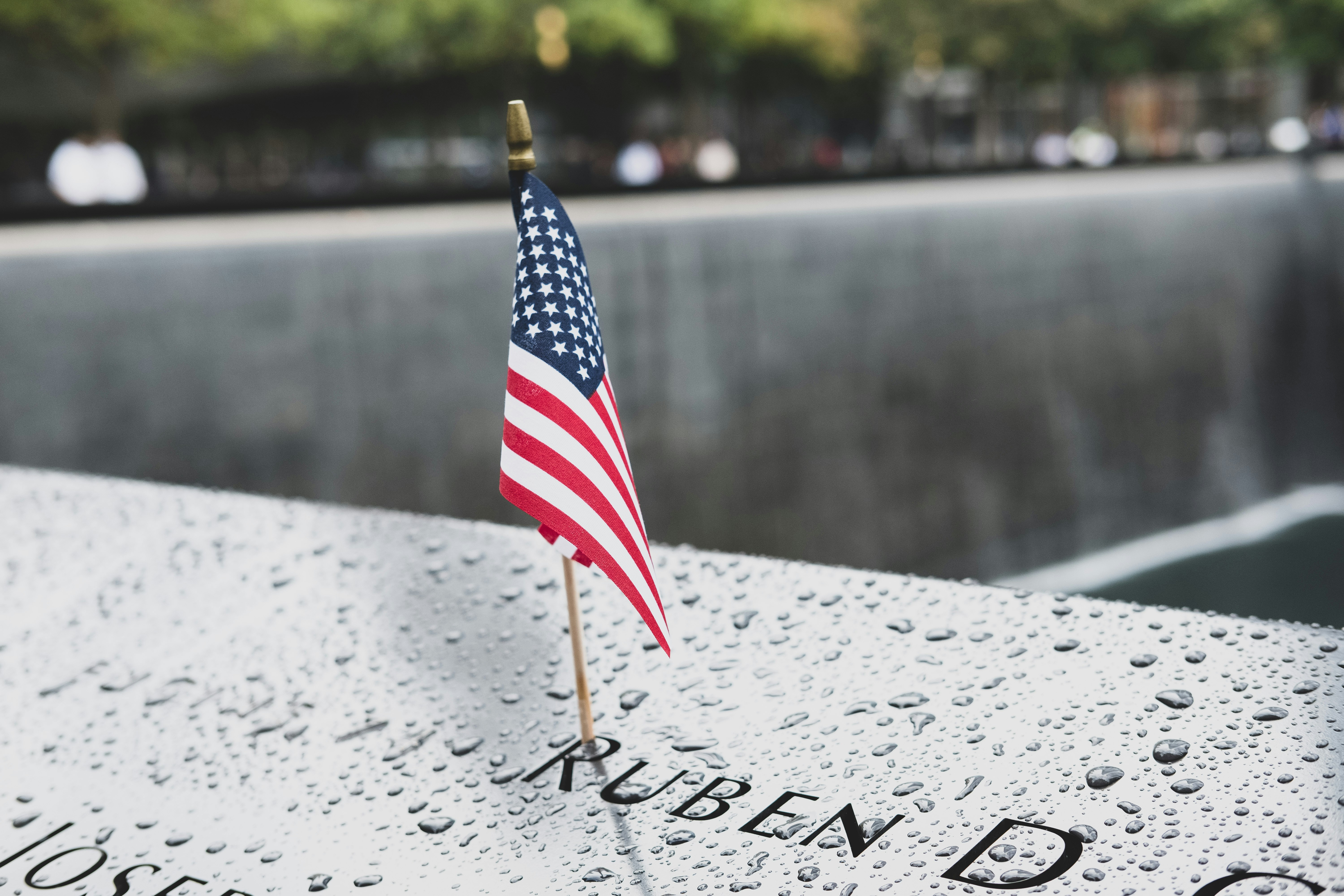
A memorial honoring nearly 3,000 Americans murdered on September 11 should be one of them. It should be a place for grief, remembrance, gratitude, and reverence. Families who have carried that loss for 25 years deserve something increasingly rare in American public life: a moment in which their pain is not reduced to another political opportunity.
That is why images of Alexandria Ocasio-Cortez and New York City Mayor Zohran Mamdani smiling and laughing together during the 25th anniversary commemoration drew criticism. A photograph cannot reveal the context of every conversation or establish what prompted a smile. But juxtaposed with grieving families at Ground Zero, the moment raised a larger question worth asking: Does American culture still recognize that some things should be treated as sacred?
These are exactly the kinds of cultural questions worth examining on Real Life Network and The Daniel Cohen Show, where the headlines are considered alongside the biblical truths that should shape how Christians understand them.
Leadership Requires More Than the Right Policies
Public leadership is not merely about legislation, budgets, speeches, or elections. Leadership also requires understanding the human consequences behind public events.
That principle extends far beyond a single 9/11 ceremony.
When thirteen American service members were killed during the 2021 withdrawal from Afghanistan, controversy followed images of President Joe Biden appearing to check his watch during the dignified transfer ceremony at Dover Air Force Base. Biden later disputed some characterizations of the moment, but Gold Star families publicly described feeling disrespected.
Politics can make people remarkably selective about empathy. When someone on the other side suffers, compassion becomes conditional. When an uncomfortable tragedy threatens a preferred narrative, attention shifts somewhere else.
Christians cannot adopt that standard.
Human dignity does not change according to political usefulness. A child killed in an act of violence matters. A soldier returned home in a flag-draped casket matters. A family still grieving someone murdered on September 11 matters. An immigrant victim matters. An American citizen victim matters. Political affiliation does not determine the value of a human life.
A healthy society should be capable of looking at suffering and seeing a human being before seeing a political opportunity.
Jesus warned that a time would come when “the love of many will grow cold” (Matthew 24:12). That description should make Christians examine more than the behavior of politicians. It should make believers examine their own hearts.
Have politics made compassion selective? Has outrage become entertainment? Have human tragedies become useful primarily when they help defeat the other side?
If so, something far more important than an election is being lost.
Biblical Language Cannot Become Political Branding
The same problem appears when Christianity itself becomes a political instrument.
Texas politician James Talarico has increasingly incorporated Christian language into his political message. In one recent appearance, he invoked Matthew 25 while arguing that Jesus would condemn senators over food assistance, Medicaid, and deportations.
Christians should welcome politicians talking seriously about Scripture. But biblical vocabulary does not automatically make an argument biblical.
Matthew 25 unquestionably demonstrates Christ's concern for the vulnerable. Christians should care about hungry people, strangers, the sick, prisoners, and those suffering around them. But translating those commands directly into support for a particular government program requires an additional political argument. Christians can share the same biblical concern while disagreeing about which policies best address it.
The same principle applies to immigration.
Scripture repeatedly commands God's people to care for foreigners and strangers. Scripture also recognizes nations, governing authorities, boundaries, and civil order. Romans 13 gives government genuine authority, while Acts 17:26 speaks of God determining nations and their dwelling places.
Neither side gets to erase the passages that complicate its politics.
Scripture should judge political convictions. Political convictions should never be allowed to rewrite Scripture.
That requires biblical literacy.
A politician who can quote a verse fluently may still misuse it. A conservative can misuse Scripture just as easily as a progressive. Christians who know only fragments of the Bible become vulnerable to anyone capable of wrapping a political agenda in Christian vocabulary.
Read the Word. Know the context. Test the argument.
Courage Means Refusing to Follow the Crowd
There is another quality disappearing from American life: the courage to stand alone.
The Lindsay Clancy case offers a difficult example. Clancy admitted killing her three young children but mounted an insanity defense. Her 2026 trial ended in a mistrial after eleven jurors favored acquittal and one juror held out.
According to another juror who later discussed the deliberations publicly, the lone holdout was a Black man.
Whatever conclusions people reach about the complicated legal questions surrounding mental illness and criminal responsibility, there is something worth recognizing in anyone willing to maintain a sincerely held conviction while an entire room pressures him to surrender it.
Standing with the crowd is easy. Standing alone costs something.
That lesson reaches far beyond a courtroom.
Christians will increasingly encounter moments when biblical convictions are unpopular, unfashionable, or professionally inconvenient. There will be pressure to remain silent because speaking could cost friendships, opportunities, influence, or reputation.
Conviction means deciding beforehand that truth matters more.
That does not grant permission to be reckless or cruel. Courage without humility quickly becomes arrogance. But humility without courage can become cowardice disguised as kindness.
Christian conviction requires both: the humility to recognize when we are wrong and the courage to stand when God's truth is clear.
America does not merely need better political messaging. It needs adults capable of recognizing sacred things, leaders who understand the human cost of their decisions, Christians who know Scripture well enough to recognize when it is being manipulated, and ordinary people willing to stand for truth when standing becomes uncomfortable.
Politics will continue changing. Candidates will come and go. Headlines that seem enormous today will eventually disappear.
The deeper question is what kind of people Americans are becoming in the process.
When nothing is sacred, everything becomes political. Christians should resist that transformation by recovering reverence, compassion, biblical discernment, and courage.
Continue examining the cultural and political stories shaping America through a biblical worldview on The Daniel Cohen Show, streaming free on Real Life Network.

World News
25 min
September 11, Twenty-Five Years Later: What Does It Mean to Never Forget?
Twenty-five years after September 11, a new generation is inheriting the story of 9/11. Remembering means honoring the victims and heroes while also preserving the truth about who attacked America, what motivated them, and why those lessons still matter.
Twenty-five years after September 11, 2001, two words remain inseparable from that day: Never forget. As a new generation inherits the story of 9/11, Real Life Network and The Daniel Cohen Show are committed to examining the history, ideas, and cultural questions that Americans cannot afford to forget.
But remembering September 11 requires more than remembering its pain.
An entire generation of Americans has now grown up without any personal memory of the attacks. Roughly 100 million Americans have been born since 9/11. They did not watch the second plane strike the South Tower. They did not see smoke pouring across Manhattan or experience the uncertainty that gripped the country. For them, September 11 is history.
That raises an increasingly important question: What exactly are Americans promising never to forget?
Remembering the Victims Means Remembering the Truth
Calling September 11 a tragedy is true, but incomplete.
September 11 was an intentional terrorist attack carried out by 19 al-Qaeda hijackers. Osama bin Laden and al-Qaeda were not secretive about their worldview, grievances, or objectives. Their own statements repeatedly framed their conflict with America in explicitly religious as well as political terms.
America must be capable of acknowledging that history.
That does not mean treating every Muslim as a terrorist or holding peaceful Muslim neighbors responsible for crimes they did not commit. Americans should defend religious liberty, reject harassment, and protect the freedom of peaceful people to worship according to their beliefs.
But religious liberty cannot require historical amnesia.
There is a profound difference between refusing to hate Muslims and refusing to acknowledge Islamist extremism. America must be capable of doing the first without falling into the second.
For too long, political leaders, academics, and media figures have sometimes preferred vague descriptions of terrorism because specificity can be uncomfortable. Yet future generations cannot understand September 11 if the ideology of its perpetrators is removed from the history they inherit.
“Never forget” cannot mean remembering only the victims while becoming increasingly reluctant to explain why they became victims.
The Next Generation Will Remember What We Teach
This matters because the people who remember September 11 firsthand will not always be here to tell the story.
Already, debates over the meaning of 9/11 reveal dramatically different interpretations of what happened. Some emphasize American foreign policy, imperialism, economics, or Western actions as the primary explanation for terrorism. Others have gone considerably further, portraying America itself as deserving the violence directed against it.
Those ideas should not be allowed to replace historical clarity.
The terrorists who attacked America were responsible for their actions. The men aboard those airplanes chose innocent civilians as their targets. No disagreement with American foreign policy makes hijacking commercial airplanes and deliberately murdering civilians morally defensible.
The responsibility to preserve that truth belongs especially to parents.
Children should know about the people who boarded airplanes expecting to arrive home later that day. They should hear about the firefighters carrying equipment up stairwells as thousands rushed downward. They should know about Flight 93 and the passengers who fought back. They should understand what happened at the Pentagon and what unfolded at Ground Zero.
And they should know who carried out the attacks and what motivated them.
If parents do not teach their children what happened on September 11, someone else will eventually tell them what September 11 is supposed to mean.
History never remains an empty space. When one explanation disappears, another takes its place.
That is why remembrance is about more than nostalgia. It is a responsibility to those who died and to those who were not yet born.
Remembering Without Living in Fear
There is another part of September 11 worth remembering: what America looked like afterward.
For a brief period, the country rediscovered a sense of national unity that now seems almost unimaginable. Political labels became less important. American flags appeared on homes and businesses. Tens of thousands stood together at Yankee Stadium and sang “God Bless the USA.” President George W. Bush stood among firefighters and rescue workers at Ground Zero and promised that America would respond.
That unity did not last.
But the courage behind it should not disappear.
Charlie Kirk understood the importance of courage in the public square. He repeatedly warned younger Americans about ideological movements he believed threatened faith, family, and the American way of life. His words were often pointed because he believed dangerous ideas had to be identified rather than accommodated. His Christian convictions also became increasingly central to the way he understood the cultural battles around him.
That willingness to speak should challenge Christians today.
Courage does not require hatred. Conviction does not require cruelty. Christians can identify dangerous ideologies while remembering that human beings are not the ultimate enemy. Scripture reminds believers that the struggle is ultimately “not against flesh and blood,” but against spiritual forces of evil (Ephesians 6:12).
Christian courage tells the truth about evil without allowing hatred of people to take root in the heart.
Twenty-five years after September 11, America does not need to live in the fear of that morning. Neither should it erase the lessons purchased at such an enormous cost.
Remember the victims. Remember their families. Remember the first responders. Remember the passengers who fought back. Remember the courage that emerged from the rubble. Remember the enemy that attacked America and the ideology that animated its extremists.
Then make sure the children who were not there understand why it matters.
One day, September 11 will exist entirely outside living memory. When that day arrives, never forget will mean only as much as the truth one generation was willing to pass to the next. Continue examining the stories shaping America through a biblical worldview on The Daniel Cohen Show, streaming free on Real Life Network.
Thank you! Your submission has been received!
Oops! Something went wrong while submitting the form.
World News
As war erupts between Israel and Iran, believers around the world are searching for clarity through a biblical worldview. We are tracking the unfolding conflict with sober analysis rooted in biblical truth, Christian news reporting, and careful attention to what is actually happening on the ground in Israel. You can follow ongoing coverage and updates on the Real Life Network, where we are bringing together trusted voices to help Christians understand the significance of this moment.
When the first reports began coming in just after 11 p.m. Pacific time, the scale of the situation was immediately clear. What began as coordinated military strikes between Israel and the United States quickly developed into the opening hours of a conflict that could reshape the Middle East.
Here in Israel, sirens have been sounding repeatedly. Rockets have been launched toward central Israel, and civilians have been moving in and out of bomb shelters as defensive systems intercept incoming threats.
But despite the gravity of the situation, something remarkable stands out. Israelis are not panicking. Life continues with a steady resolve. Families move quickly when sirens sound. Soldiers stand ready. The country is accustomed to facing danger with clarity and courage.
What we are witnessing is not simply another geopolitical conflict. It is a moment where history, security, and biblical prophecy are intersecting before our eyes.
Inside Israel as the War Begins
Reporting from the Tel Aviv region, the atmosphere throughout Israel has been tense but disciplined. Sirens have sounded throughout the day, sending civilians into bomb shelters multiple times as defensive systems respond to incoming rockets.
The military operation itself was significant. Hundreds of aircraft were involved in what Israeli officials described as the largest coordinated strike in the nation’s history. High value targets connected to Iran’s military leadership and nuclear infrastructure were reportedly hit in the opening phase.
Israel’s layered defense system has been active throughout the conflict. Long range interceptors engage ballistic missiles high above the atmosphere. Other systems neutralize rockets before they reach population centers.
The United States has also deployed additional defensive systems throughout the region. American Patriot and THAAD interceptors have been helping neutralize missiles before they even reach Israeli airspace.
This level of cooperation highlights something that often gets overlooked in media coverage.
The alliance between Israel and the United States is not simply political. It is strategic, historic, and deeply connected to shared values.
For those watching events unfold from the United States or around the world, it is important to stay informed through trusted sources. You can continue following verified updates and biblical analysis through the Real Life Network, where our team is monitoring developments in real time.
The Iranian People and the Underground Church
One of the most misunderstood aspects of this conflict is the relationship between the Iranian people and their government.
Many Americans assume that Iran’s citizens stand behind their leadership. In reality, the situation is very different.
The Iranian regime has extremely low approval ratings inside the country. Many Iranians have spent decades living under a system that suppresses freedom, limits expression, and imposes harsh ideological control.
That is why videos circulating online have shown scenes that may surprise Western audiences. In some areas, Iranian citizens are celebrating the possibility that the regime’s grip on power could weaken.
It is also important to remember something rarely discussed in mainstream media.
There is a growing underground church in Iran. Thousands of believers follow Jesus quietly, often at great personal risk. These Christians have been praying for their nation for years.
For them, the events unfolding today are not merely political developments. They represent a possible opening for greater freedom and spiritual renewal.
The people of Iran are not the enemy. The conflict is with a regime that has built its power through terror, repression, and hostility toward Israel and the West.
As believers watch these developments, prayer remains essential. Scripture instructs us in Psalm 122:6 to pray for the peace of Jerusalem. That command has never been more relevant.
A Spiritual Battle Behind the Headlines
While most of the world analyzes this conflict through geopolitical lenses, Christians recognize that there is also a spiritual dimension.
The leadership in Iran often frames global events through its own religious ideology and long term eschatological worldview. That means many decisions are shaped not only by strategy, but also by deeply held theological beliefs about conflict and destiny.
For Christians, this reminds us that the Bible repeatedly speaks about nations rising and falling throughout history.
Scripture also reminds us that God remains sovereign over the affairs of nations.
Israel’s return as a nation in 1948 was itself an event many scholars had long associated with biblical prophecy. Today, decades later, Israel remains at the center of global attention.
This does not mean we rush to sensational conclusions or speculative predictions. Responsible Christian analysis requires caution and humility.
But it does mean we should watch carefully.
Events in the Middle East remind believers that God’s Word is not merely ancient history. It continues to speak into the present moment.
As the conflict develops, many questions remain. How will regional powers respond? What role will Russia and China play? Could the conflict expand into a wider regional war?
These are serious questions that deserve thoughtful examination.
You can continue following in-depth coverage, biblical analysis, and updates from trusted voices through the Real Life Network, where we will continue reporting on these events as they unfold.
The Call for Prayer and Perspective
In moments like this, fear and speculation spread quickly. Social media is filled with rumors, incomplete reports, and emotional reactions.
But believers are called to respond differently. We respond with prayer. We respond with wisdom. And we respond with confidence that God is not surprised by the events unfolding in the world today.
Christians should be praying for the safety of civilians in Israel. We should also be praying for the people of Iran, many of whom long for freedom and peace.
Most importantly, we remember that our ultimate hope does not rest in governments or military power. Our hope rests in Christ.
For continuing coverage, biblical insight, and trusted reporting from voices like the Daniel Cohen Show, stay connected with the Real Life Network and share the app with friends who want to understand world events through a biblical worldview.
Related Articles
25 min
March 3, 2026
Daniel Cohen
World News
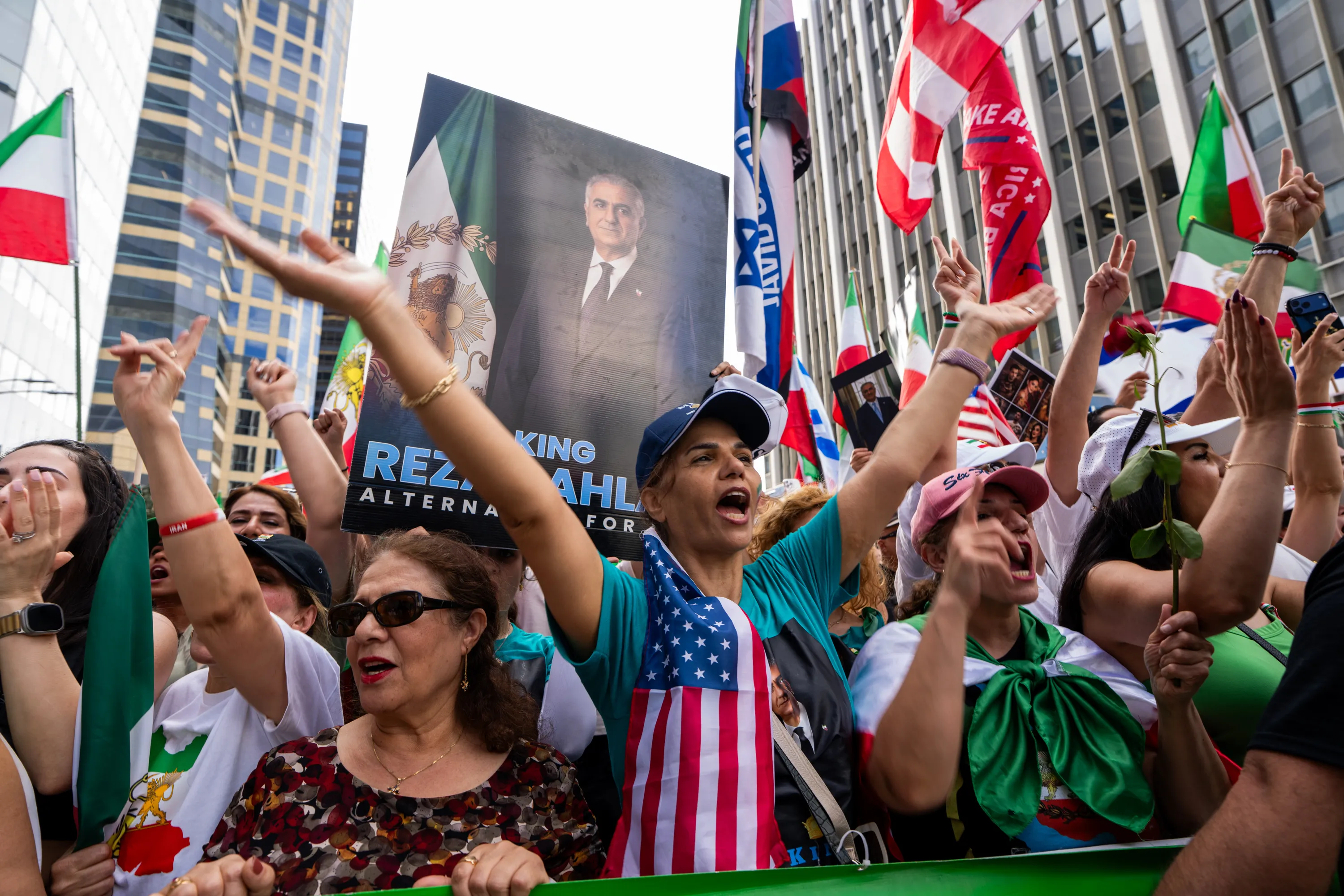
If you have been watching the “Hands Off Iran” protests after the massive U.S. Israeli strikes, you have heard the claim: this is about peace, this is about opposing an unjust war, this is about protecting innocent people. I want to engage that argument seriously, not mock it. Because what matters is what “hands off” has actually produced for 47 years. Watch the full breakdown on the Real Life Network.
The slogans sound compassionate, but compassion has to be tethered to reality. “Hands off Iran” did not protect the Iranian people. It protected the regime that brutalized them. It did not prevent war. It financed and prolonged proxy war, terror, and a nuclear sprint while ordinary Iranians paid the price.
The “hands off” crowd thinks they are protesting war, but what they are really shielding is tyranny.
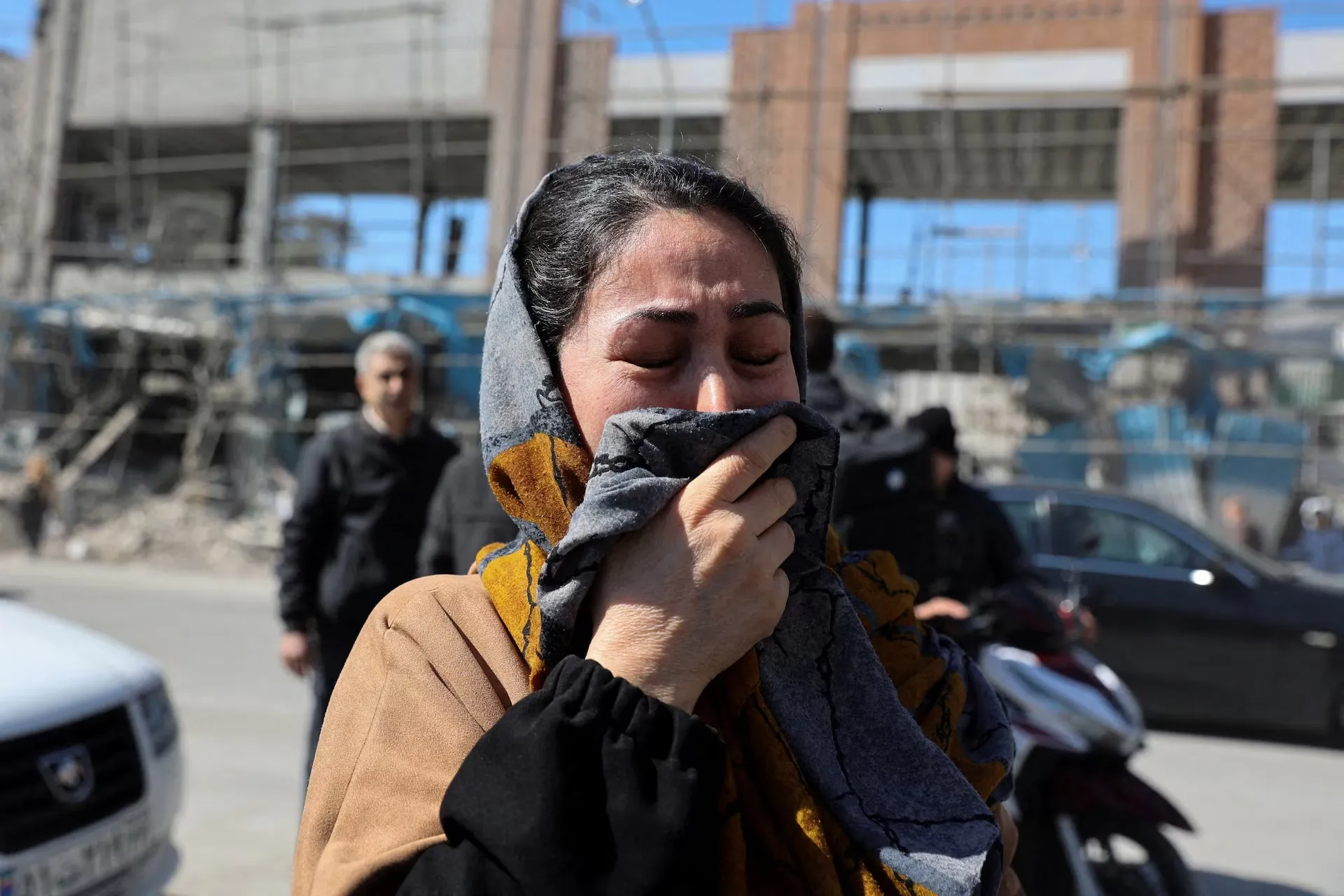
What do you think “restraint” looked like on the ground? It looked like dissidents murdered in the streets. It looked like women punished for defying the regime. It looked like a diaspora that escaped, then watched their homeland held hostage by a radical theocracy. And it looked like Iranians, after decades of fear, celebrating the first real crack in the regime’s armor.
That is the lie I want to expose: the lie that doing nothing is morally neutral.
Here is the second lie: “This is Israel’s fight, not America’s.” No. For decades, Iran has attacked Israel and also killed Americans as a strategic policy. Not accidentally. Not as collateral damage. Deliberately. Think about the pattern: bombings, proxies, drones, kidnappings, and October 7’s ripple effects. The Islamic Republic has never been just Israel’s problem. It has been America’s problem, too. And America finally showed up to the fight. For more analysis from Israel, keep up with coverage on the Real Life Network.
Iran has never been only Israel’s problem, and pretending otherwise has cost American lives.
Why Trump Did This And Why “Israel Dragged Us” Makes No Sense
The “Israel dragged America into it” narrative requires you to believe something that just does not fit reality. You have to believe Donald Trump, the man who ran against endless foreign wars, was manipulated into launching the most consequential operation of his presidency.
That is not Trump. It has never been Trump.
Trump’s record has been consistent for years. He targeted the IRGC’s Qassem Soleimani in 2020 because it was in America’s interest. He walked away from the JCPOA in 2018 against the advice of the foreign policy establishment because it was bad for America. He has always had a particular kind of courage: the willingness to say the uncomfortable thing that the entire room has decided you are not allowed to say.
That matters, because “hands off” did not produce peace. It produced an ecosystem of terror: Hezbollah, Hamas, the Houthis, militias, and a regime that learned it could walk away from talks without consequences. When you teach a regime that there is no price for aggression, you do not get moderation. You get escalation.
Here is the hard truth. Diplomacy was tried. Negotiations happened. Iran walked away, again. For 47 years, walking away was a winning move because it did not cost them anything. That is why this moment is so significant. Consequences finally arrived.
Justice is not “unprovoked war” when it stops a regime that has been exporting terror for decades.
And I will end where we began: the protest crowd says “hands off” because they think they are for peace. But peace is not the absence of action. Peace is the defeat of the engine that keeps manufacturing conflict.
Watch and share today’s show on the Real Life Network. And if you have friends repeating the slogans, do not hate them. Engage them. Ask them what “hands off” bought us. Ask them who benefited. Because the Iranian people did not.
For more frontline coverage and a biblical worldview as history unfolds, visit the Real Life Network.
Related Articles
- Why do Christian Kids Convert to Islam? by Hedieh Mirahmadi Falco
- The Collapse of an Illusion: Is the Islamist Narrative Losing Its Grip? by Hedieh Mirahmadi Falco
- A New Middle East After Iran’s Collapse by Daniel Cohen
25 min
Hands Off Iran? What 47 Years of “Restraint” Really Produced
March 3, 2026
Daniel Cohen
World News
If you watch The Daniel Cohen Show for a biblical worldview on Israel, Iran, and the Middle East, you already know this was not “just another headline.” This is one of those rare moments where history moves fast, and the world wakes up to what the Iranian regime really was: the engine behind decades of terror. In the span of hours, a joint U.S. Israel operation reportedly decapitated Iran’s top leadership and struck core military targets, and the region is now recalculating in real time. Watch and share the full coverage on the Real Life Network.
This is what it looks like when evil loses its grip and fear begins to break.
What Just Happened, And Why It Matters
Multiple reports describe coordinated U.S. and Israeli strikes against Iran’s leadership, missile infrastructure, and key military sites on February 28, 2026, in an operation the Pentagon labeled “Operation Epic Fury,” while Israeli officials used their own operational language.
Now listen, the legacy media will argue about phrasing, tone, and optics because they always do. But here is the plain truth: Iran was not a “normal country with disagreements.” Iran under the Islamic Republic was the number one state sponsor of terror in the region, funding and directing proxy warfare through Hamas, Hezbollah, and the Houthis, while crushing its own people.
When the regime’s upper tier is removed, it creates an opening, not a guaranteed victory, but an opening. And that is why you saw something the world almost never sees: people inside and outside Iran celebrating the possibility of freedom, even as regime loyalists reportedly tried to reassert control through intimidation and violence.
If you want the cleanest way to understand this moment, its moral clarity. The Iranian people are not your enemy. The regime was. That distinction matters.
The Third Player: Saudi Arabia, The Gulf, And A Regional Realignment
Here’s what the media often misses because they don’t understand the Middle East, or they don’t want to. The hatred between Iran and the Sunni Arab Gulf states was never “just about Israel.” It’s theological, strategic, and historical. Tehran’s imperial ambitions threatened Riyadh, Bahrain, the UAE, Kuwait, and beyond.
That’s why this moment has the potential to do what decades of “process” could not: unify a broader regional front against the Iranian terror machine and its proxies. That does not mean every government will say everything out loud, because politics in the region is about survival. But it does mean the strategic reality is shifting, and fast.
And here is where Americans need to wake up. Strength is not “escalation” when it prevents larger wars. Deterrence is mercy. Weakness invites aggression. That’s not ideology, that’s history.
For ongoing updates, clips, and full episodes, get the free app and watch on the Real Life Network.
A Biblical Worldview For What Comes Next
The job is not finished just because the head was struck. Proxy networks do not disappear overnight. Intelligence services do not dissolve because a headline changes. And inside Iran, the regime’s loyal enforcement arms may lash out harder precisely because they know their time is short.
But hear me clearly: Christians do not watch this like spectators. We watch with discernment, prayer, and a commitment to truth. Scripture is not naive about evil. It also is not naive about accountability.
Proverbs says there is rejoicing when righteousness rises, and Scripture also warns us that evil does not simply repent because it is embarrassing. That means two things can be true at once: you can be grateful for justice, and you can be sober about the instability that follows a regime’s collapse.
The Iranian people deserve freedom, and the Middle East deserves a future without a terror regime holding the region hostage.
If you missed the show coverage and want the full breakdown from Israel as events unfold, watch now on the Real Life Network. And if you are already watching, share it, because the truth needs distribution.
Related Articles
- Shaping the Next Generation: Examining Education, Ideology, and the Future of Palestinian Youth by Daniel Cohen
- The Super Bowl Ad America Needed, Netanyahu’s Iran Warning, and the Olympic Contrast We Cannot Ignore by Daniel Cohen
- Accountability, Assimilation, and A Response to Minnesota’s Somali Immigration Crisis by Daniel Cohen
25 min
A New Middle East After Iran’s Collapse

March 2, 2026
Daniel Cohen
World News
Real Life Network is where we do Christian news and biblical worldview analysis without pretending that evil is “complicated.” Today on the Daniel Cohen Show, we are exposing one of the most dangerous engines of the Israel Hamas conflict: the indoctrination of children. From UNRWA-linked classrooms to Palestinian Authority textbooks and Hamas media, kids are taught that killing Jews is virtue and dying in jihad is glory. This is not “culture.” This is not “politics.” This is spiritual and moral corruption aimed at the next generation, and it has consequences for Israel, for the West, and for America.
What Palestinian Children Are Being Taught and Who Funds It
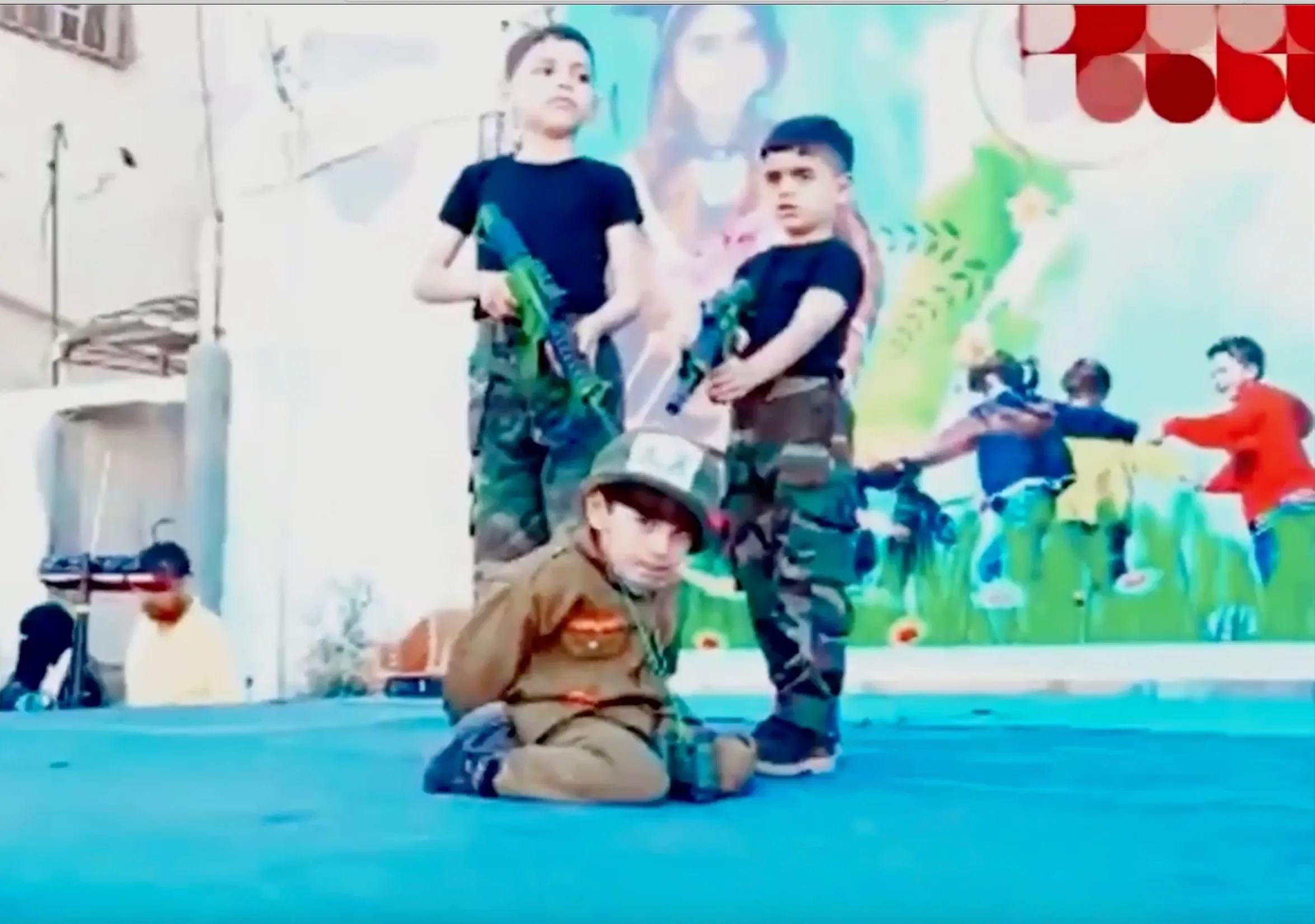
Show me what a society teaches its children, and I will show you its future. We opened with a kindergarten ceremony in the Palestinian territories where five-year-olds dressed like junior terrorists staged a mock execution of a Jew, while parents cheered and teachers applauded. That is not “performance art.” That is training.
And it is not isolated. This ideology is baked into the curriculum. In some materials documented by researchers who analyze textbooks and school programming, anti-Jewish messaging appears across subjects. Science lessons turn into propaganda. History lessons erase Jewish identity. Even math problems can treat “martyrs” like a scoreboard, conditioning children to see death as achievement.
When a child is trained to hate, the problem is not the child. The problem is the adults and the system that formed them.
Here is the part that should sober Americans. International aid pipelines exist, and UN-branded institutions have operated in these areas for decades. If you are a taxpayer, you have every right to ask what is being funded, what is being tolerated, and why the loudest activists in the West never seem to demand accountability from the systems that radicalize children.
This is also where Christians need discernment. Compassion is not denial. Compassion is telling the truth about what harms children, even when the truth is unpopular. If you want peace, you do not start by teaching preschoolers that Jews are the enemy. You start by teaching children to build, to learn, to honor life, and to pursue truth.
You can watch more Israel coverage and worldview analysis on the Real Life Network and share it with someone who still thinks this is just a “border dispute.”
Indoctrination Produces Violence and It Does Not Stay Overseas
What does this kind of education produce? It produces a society where martyrdom is celebrated, where terrorism is normalized, and where the human heart is trained to dehumanize. The clearest evidence is not theoretical. We saw October 7. We saw the celebration of violence. We saw the fruit.
One story shared in the broader public conversation captures the moral clarity: a woman who received medical care from Israelis, was educated, and still chose to target the very hospital that treated her. When asked about it later, she described the attempted mass murder as “almost tasting paradise” and said she would do it again. That is not a political grievance. That is a worldview.
You cannot build peace on a curriculum that teaches children to glorify murder.
Now bring that home to the West. Indoctrination does not remain “over there” when communities and ideological networks exist “over here.” In the United States and Europe, we have seen hatred laundered through polite language: “justice,” “liberation,” “decolonization,” “globalize the intifada.” Many of the loudest voices chanting these phrases cannot even define what they are chanting. But the ideology behind it is not confused. It knows exactly what it wants.
And it targets young people. It targets campuses. It targets social media feeds. It targets school environments where administrators are terrified of being called names, so they surrender the moral ground without a fight. When you normalize Islamist symbolism as “educational” and you excuse calls for violence as “context,” you are not being tolerant. You are being naive.
Let me say this carefully and clearly. Not every Muslim believes this. Not every Arab family teaches this. There are courageous reformers and courageous dissidents. There are Arabs who reject jihadist ideology. There are Muslims who have paid dearly for opposing extremists. Christians should pray for them, support reformers, and refuse the lazy lie that the only options are “hate” or “silence.”
But we also cannot ignore what is openly preached, openly printed, and openly performed for children in certain environments. If a Christian school staged a mock execution of Muslims, it would be shut down immediately. If a synagogue taught kids to chant about killing Christians, it would make national headlines for months. The standard cannot be selective.
For more on how ideology spreads through media and institutions, bookmark the Real Life Network and send it to someone who needs categories for this moment.
What Must Change for Peace, Reform, and Protection
So what do we do?
First, tell the truth. Stop calling indoctrination “education.” Stop calling a death cult “resistance.” Stop treating antisemitism as “complex.” Evil hides behind confusion, and the job of believers is to bring light.
Second, demand curriculum reform. If “denazification” was necessary after World War II because a society was trained to hate Jews, then de-radicalization is necessary anywhere children are trained to hate Jews today. That means auditing textbooks, removing martyrdom propaganda, rejecting dehumanization, and replacing it with real education that honors life and tells the truth about history.
Third, stop outsourcing moral accountability to institutions that refuse to clean house. If an organization operates schools and cannot guarantee that children are not being taught to hate and kill, it has forfeited trust. Oversight is not oppression. Oversight is responsibility.
Fourth, protect kids in the West. Public schools should never become staging grounds for ideological grooming. Parents have a right to know what is happening in classrooms, what programs are being invited onto campus, and what messages are being normalized. Freedom does not include the freedom to groom children into hatred.
Fifth, pray for transformation. Yes, pray for Israel’s security and for justice. Pray for Jewish students facing hatred. Pray for leaders to have courage. But also pray for Arab and Muslim children caught in this machinery. They did not write the textbooks. They did not build the system. Many of them are victims of adults who stole their innocence.
The only future worth building is one where children are taught to value life, not to worship death.
Proverbs tells us to train up a child in the way he should go. That is a warning and a promise. If you train a child to hate, hatred grows. If you train a child to tell the truth and honor God, truth grows. That is why this fight is not only geopolitical. It is spiritual.
If you want more Daniel Cohen Show analysis on Israel, antisemitism, culture, and the next generation, watch and share on the Real Life Network.
Related Articles
- The Super Bowl Ad America Needed, Netanyahu’s Iran Warning, and the Olympic Contrast We Cannot Ignore by Daniel Cohen
- Accountability, Assimilation, and A Response to Minnesota’s Somali Immigration Crisis by Daniel Cohen
- Kerry Prejean Bowler Ousted, the SAVE Act Battle, and Why Truth Still Matters by Daniel Cohen
25 min
Shaping the Next Generation: Examining Education, Ideology, and the Future of Palestinian Youth
February 20, 2026
Daniel Cohen
World News
If you want Christian news and a biblical worldview perspective that does not bend to elite culture, you can watch this and more on the Real Life Network. I am Daniel Cohen, and what I saw this week was a snapshot of where America is hurting, where the truth is breaking through, and where hope still shows up in surprising places.
Here is the difference between justice and propaganda: justice listens to victims, propaganda manufactures them.
A Detransition Verdict That Puts the Gender Industry on Notice
A jury in New York just sent a message that should make every parent sit up straight. Detransitioner Fox Varian, who underwent a double mastectomy at 16, won the first ever detransition jury verdict and was awarded $2 million in damages. That is not a headline the mainstream media wants to amplify, because it cracks the narrative they have protected for years.
This case was not a culture war meme. It was a family in crisis, a child struggling, and medical professionals who, according to the lawsuit, rushed past underlying issues like autism, ADHD, and anorexia, and pushed irreversible surgery. The mother testified she felt boxed in by the “transition or suicide” fear narrative. Parents hear that line and their stomach drops, because it is emotional blackmail dressed up as medical certainty.
Transition or suicide is not medicine, it is manipulation.
Let me say this plainly: there is no such thing as “gender affirming care” for minors when the “care” permanently alters a healthy body that is still developing. You do not get to call mutilation compassionate because you attach the word “affirming” to it. Real compassion tells the truth, slows down, treats the whole person, and refuses to sacrifice a child on the altar of ideology.
And the ripple effects are real. There are other detransitioner cases already active across the country. If courts and juries continue to recognize harm and liability, doctors and clinics may finally think twice before pushing irreversible interventions on vulnerable kids. That is not politics. That is accountability.
Grammy Activism, Open Border Lectures, and the People Left Paying the Bill
Then you have the Grammys, which gave us a picture perfect display of elite culture in America. Wealthy celebrities living behind gates with private security lecturing working families about immigration enforcement. They can wear pins and chant slogans because they do not live with the consequences of what they are advocating for.
Here is what I noticed most: selective compassion. There was plenty of performative outrage about ICE, and almost no interest in real victims who do not fit the approved script. Iran has seen brutal crackdowns, with reports of mass killings and a regime that thrives in darkness and information control. Where was the red carpet passion for the Iranian people risking everything for freedom? Where was the courage to stand against radical Islam’s violence when it cannot be blamed on the West?
That silence is the tell.
Meanwhile, policies closer to home are collapsing under their own contradictions. In California, leaders keep promising a safety net while taxpayers watch fraud, waste, and misaligned priorities pile up. You cannot convince working families that they must accept constant insecurity and chaos while the same system struggles to protect veterans on the streets or keep basic services functioning.
A nation that refuses to enforce its laws is not loving the stranger, it is abandoning its own people.
And this is where the hypocrisy becomes unbearable: we can recognize human dignity while also insisting on the rule of law. That is not cruelty. That is sanity. A country that will not draw lines will not remain a country for long. The elites can cosplay virtue at awards shows. The rest of America has to live in the real world.
From a Kibbutz to the NBA, and the Hope Hollywood Cannot Manufacture
Now let me pivot to something encouraging, because we need reminders that goodness still breaks through the noise. Israel just celebrated a historic first: an Israeli born player becoming an NBA All Star. From a kibbutz to basketball’s biggest stage, that is a story worth smiling about. It is also a reminder that Israel is not the caricature it is painted to be. It is a complex society filled with people, families, and stories that do not fit the slogans.
When I hear the lazy accusations and the constant demonization, I think of moments like this. Real life does not live on hashtags. Real life is a young man representing his heritage with pride, a nation celebrating an achievement, and a world watching something uplifting for a change.
And while Hollywood scripts its “meaning,” I keep coming back to a deeper truth: human beings are not props for anyone’s political theater. The detransitioner in court is not a tool for points. The immigrant family is not a pawn. The veteran sleeping outside is not an inconvenience. They are image bearers of God, and the moment we forget that, we start excusing anything.
That is why I will keep saying it: the biblical worldview is not just a set of talking points. It is the foundation for justice, compassion, and clarity. God does not make mistakes, and redemption is real, even when culture is confused.
If you want more Christian news and biblical worldview coverage like this, watch the Daniel Cohen Show on the Real Life Network and share the app with someone today.
Related Articles
25 min
The Verdict That Shook Gender Medicine, the Grammys’ Moral Theater, and Israel’s First NBA All Star
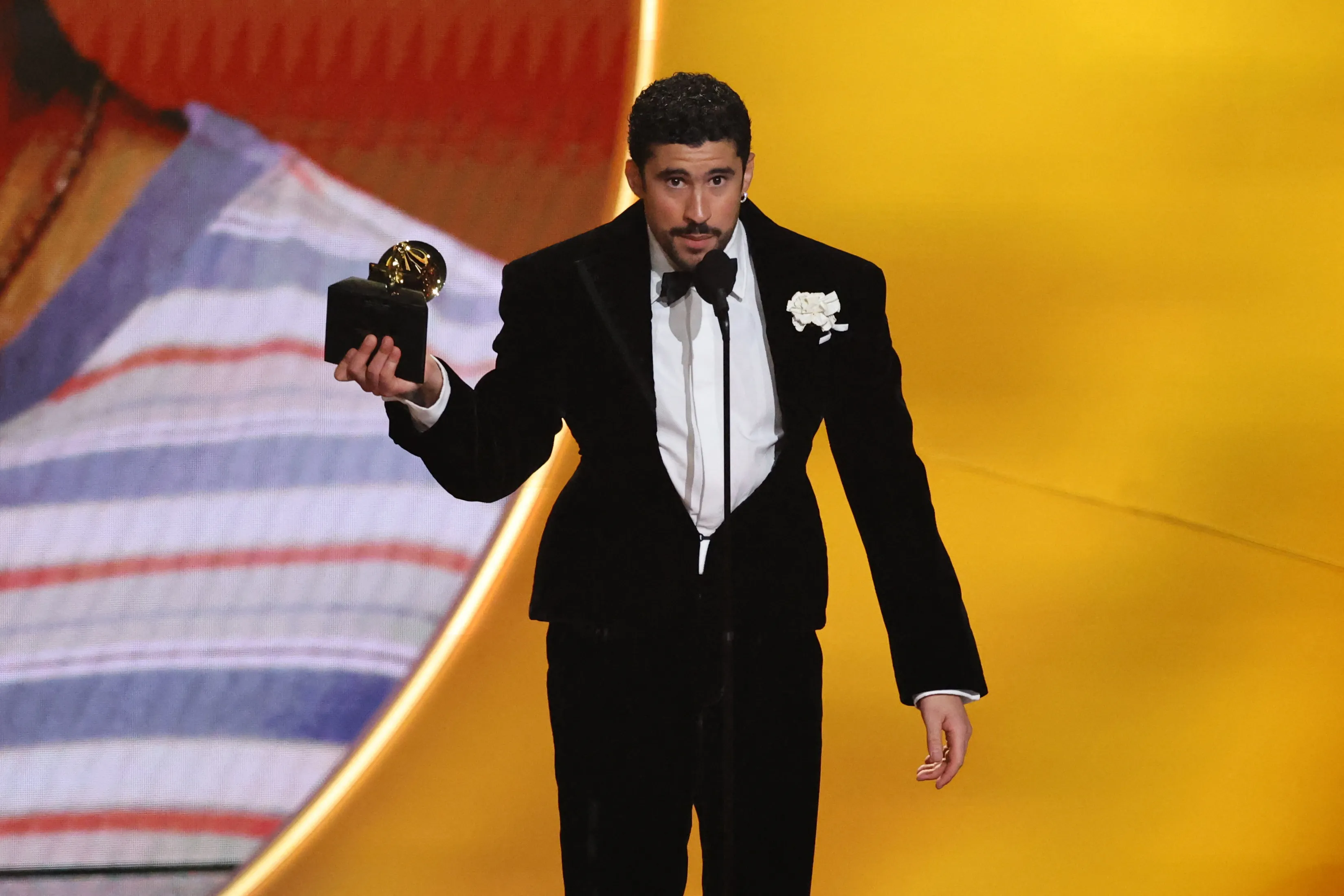
February 5, 2026
Daniel Cohen
World News
If you want Christian news, biblical truth, and a biblical worldview without apology, watch the Daniel Cohen Show on the Real Life Network. The UK is becoming a case study in what happens when a nation loses its spiritual backbone, its birth rates collapse, and leaders keep importing a population that does not share the country’s values. This is not abstract. It is measurable, visible, and accelerating.
The UK’s Demographic Collapse Is Real, and It Changes Everything
Let me start with the numbers, because feelings do not matter as much as facts. The total fertility rate in the UK hit a record low in 2024, around 1.41 children per woman. You need roughly 2.1 just to maintain a stable population without mass immigration. That gap is a demographic free fall. And it is not only England. Italy, Germany, Spain, the broader continent, it is a civilizational decline playing out in real time.
Then you add another layer. The 2021 census showed Christians in England and Wales declining sharply, while the “no religion” category surged. Meanwhile, the Muslim population has grown significantly in the last decade, and Muslim families on average have higher birth rates. That matters, because population change is not linear. It compounds.
When a nation stops replacing itself, someone else will replace it.
And let us be honest about something that polite society refuses to say out loud. Demographic change does not require a majority to reshape a country. It only requires concentrated communities, organized voting blocs, and leaders willing to trade identity for power. City by city, council by council, neighborhood by neighborhood, the transformation becomes permanent.
This is why you are seeing Britain water down its public Christian identity while making room for public Islamic identity. They will tell you it is “inclusion.” No, it is surrender dressed up as virtue.
The Double Standard Is the Story, and It Is Getting Darker
The UK was the land of the King James Bible, of C.S. Lewis, of missionary sending churches that helped shape the modern West. Now you have Christmas markets rebranded as “winter markets,” vendors told not to say Christmas, and public celebration toned down because the government cannot guarantee security. That is not inclusivity. That is fear.
At the same time, Ramadan celebrations and Islamic symbolism are publicly elevated, promoted, and normalized. And if you say, Daniel, you are picking on Muslims, slow down. I am describing what the UK has already become. A country can choose multiculturalism, but if it loses the confidence to defend its own culture, it is not multiculturalism. It is replacement through intimidation and demographic momentum.
Look at the stories coming out of the UK about policing speech. People questioned for posts. People arrested over comments. Police and even mental health professionals showing up at someone’s door because they expressed concern. Street preachers confronted and arrested, while other groups operate with security, intimidation, and protection.
A nation that criminalizes Christian speech while excusing Islamist intimidation is a nation in spiritual free fall.
And then there is the part the establishment tried to bury for years: grooming gangs. Documented cases of large scale abuse, and a public conversation that was muted because leaders were terrified of being called racist. Protecting children became less important than protecting careers. That is moral rot.
This Is a Warning to America, and Christians Cannot Stay Passive
Here is why I keep asking the “rescue” question. If a country becomes unsafe for Jews, it does not stop with Jews. If a country becomes unsafe for Christians to openly practice and speak, it does not stop with words. And if a government keeps importing a population that does not assimilate and then punishes native citizens for noticing, you are watching a nation unravel.
We are already seeing the same patterns in the United States. Pockets of Islamist influence. The red green alliance where radicals on the left and Islamists share the same political incentives. And a culture that calls any pushback “hate” while it quietly enforces a double standard.
This is not about hating people. This is about loving truth and protecting your children’s future. It is about refusing to be bullied into silence. It is about Christians acting like Christians, not spectators. Run for a school board. Show up at city council. Vote. Organize. Mentor. Build churches that are not ashamed of the gospel.
Because the takeover is not always tanks. Sometimes it is ballots, benefits, intimidation, and a population that has been trained to be afraid to speak.
And if you want a clear lens on what’s happening and how it connects to biblical truth, watch the Daniel Cohen Show on the Real Life Network. Share it with your family, send it to your church group, and get the app, because this is the kind of moment where staying quiet is not neutrality. It is surrender.
Related Articles:
25 min
UK Under Siege: Birth Rates Crashing, Christmas Canceled, and Christians Silenced
.webp)
January 23, 2026
Daniel Cohen
World News
Iran is not simply teetering on the edge of unrest. It is standing at a historic rupture, one that carries consequences far beyond its borders. What unfolds next will reshape energy markets, redraw regional alliances, challenge Islamist power structures, and test the moral clarity of the West and the Church alike. This is not a local uprising. It is a global fault line.
At the heart of the question is whether the Islamic Republic can survive sustained internal collapse or whether it will be decisively dismantled through airstrikes, internal fracture, or a combination of both. A full destruction of the regime would send shockwaves across the Middle East, not least because Iran sits at the center of proxy warfare, nuclear brinkmanship, and global oil supply chains. Any destabilization of Tehran reverberates through Hezbollah in Lebanon, militias in Iraq and Syria, the Houthis in Yemen, and even energy prices felt by American families at the pump.
President Donald Trump has made clear in past conflicts that American involvement is rarely altruistic. His approach to Venezuela demonstrated that regime pressure often comes with long-term U.S. interests attached, particularly oil. Trump has openly said the United States would be involved there “for years” and Iran would be no different. Even if Washington were to assist in facilitating the return of Crown Prince Reza Pahlavi, it would come at a price. Power vacuums invite factions, and Iran has no shortage of them.
Inside the country, the chants are unmistakable. “Javeed Shah--Long live the King” has echoed through protests, signaling an overwhelming popular rejection of Islamic rule. Yet outside Iran, the opposition landscape is far messier. Competing factions backed by powerful Western and regional forces are positioning themselves for influence. Chief among them is the Mujahideen-e-Khalq, or MEK, whose very name means “those who fight jihad for truth.” Despite the branding, the reality is darker.
The MEK is a Marxist-Islamist cult that demands absolute obedience, suppresses dissent, and operates with rigid ideological control. It does not resonate with a generation of Iranians who are risking their lives for personal freedom, not ideological replacement. Yet the MEK has found defenders in surprising places within Western political circles, including figures such as Rudy Guiliani, John Bolton and Mike Pence. Their support reflects a dangerous misunderstanding of the Iranian people’s aspirations and a willingness to empower another authoritarian movement under the guise of opposition.
Power, Oil, and Global Consequences
The stakes extend well beyond Iran’s borders. A destabilized or liberated Iran would dramatically affect global energy markets, potentially lowering oil prices and weakening petro-authoritarian regimes. It would alter nuclear negotiations overnight. It would challenge the balance of power across the Middle East, especially among Islamist governments that have been propped up by Western policy for decades, including Saudi Arabia, Qatar, Turkey, and now post-war Syria and Iraq. Many within the U.S. State Department fear “regional imbalance” if Iran falls. What they truly fear is something unprecedented: the defeat of Islamic rule by its own
people.
Regional leaders from Riyadh to Ankara do not want a free Iran. Saudi Arabia and Qatar worry about oil price shocks and the ideological implications of a successful anti-Islamist revolution. Turkish President Erdogan fears the precedent it would set for political Islam across the region. Trump will hear these concerns loudly. At the same time, he faces pressure from isolationist elements within his own base who reject any form of nation-building or prolonged U.S. involvement abroad.
Officially, the administration maintains that diplomacy comes first. White House press secretary Karoline Leavitt has stated that while negotiations are preferred, nothing is off the table. Trump has already imposed a sweeping 25 percent tariff on any entity doing business with Iran, signaling that economic warfare is very much underway.
Israel’s position adds another layer of complexity. A free Iran would almost certainly align against Islamist terror networks and in favor of Israel’s security. That shift would have profound implications for the Abraham Accords, Palestinian statehood debates, and regional peace negotiations. The very existence of a non-Islamist Iran would upend decades of anti-Israel strategy rooted in Tehran.
Yet military intervention is not the only tool available, and it is striking how many non-military options remain underutilized. The United States possesses some of the most advanced cyber capabilities in the world. Iranian internet infrastructure, traffic systems, and regime-controlled media could be disrupted at scale. The temporary shutdown of Iran’s national television network showed what is possible. More could be done.
The Islamic Revolutionary Guard Corps, designated as a Foreign Terrorist Organization, continues to operate with alarming freedom through front companies, shipping firms, construction conglomerates, charities, banks, and energy intermediaries. Assets are hidden through relatives. Money is laundered through third countries. Operatives travel under diplomatic cover. Sanctions are riddled with carve-outs and selectively enforced by Western governments terrified of escalation.
Cutting off the IRGC would require real resolve: aggressive enforcement of material support laws, freezing assets held by proxies and family members, blocking insurance and port access, grounding aviation services tied to IRGC networks, and ending humanitarian or commercial channels the Guard secretly controls. Elevating authentic opposition voices, smuggling communication tools and supplies into Iran, and conducting psychological operations that sow doubt within regime ranks are all viable strategies that fall short of open war.
The urgency of this moment is underscored by recent developments. The U.S. has ordered evacuations of American citizens. France has withdrawn diplomats. Intelligence reports suggest regime elites are already moving money and preparing exit strategies. The cracks are real.
Faith, the Church, and What Comes Next
For the Church, this moment carries profound spiritual weight. Iran is a theocracy that criminalizes Christianity. Converts are branded traitors. Pastors are imprisoned. Evangelism is treated as a national security threat. Yet despite relentless persecution, Christianity is growing through underground churches, exposing the moral and spiritual bankruptcy of political Islam.
While Iranians risk everything to escape Islamic rule, too many Western churches remain silent, confused, or morally neutral. Scripture does not permit such detachment. Isaiah commands, “Learn to do right; seek justice. Defend the oppressed.” Hebrews reminds us that what can be shaken will be shaken, so that what cannot be shaken may remain.
Living fearless does not mean predicting outcomes or endorsing geopolitical schemes. It means refusing to avert our eyes, refusing to distort the truth, and refusing to let fear dictate our witness. Millions of Iranian Christians are praying for freedom. The question is whether the global Church will have the courage to stand with them when history is being written in real time.
For biblical insight, cultural analysis, and fearless reporting on moments shaping our world, stay connected with the Real Life Network. Visit RealLifeNetwork.com to watch, listen, and stand for truth where faith and current events collide.
25 min
Iran at the Breaking Point: Power, Oil, Faith, and the Battle for What Comes Next
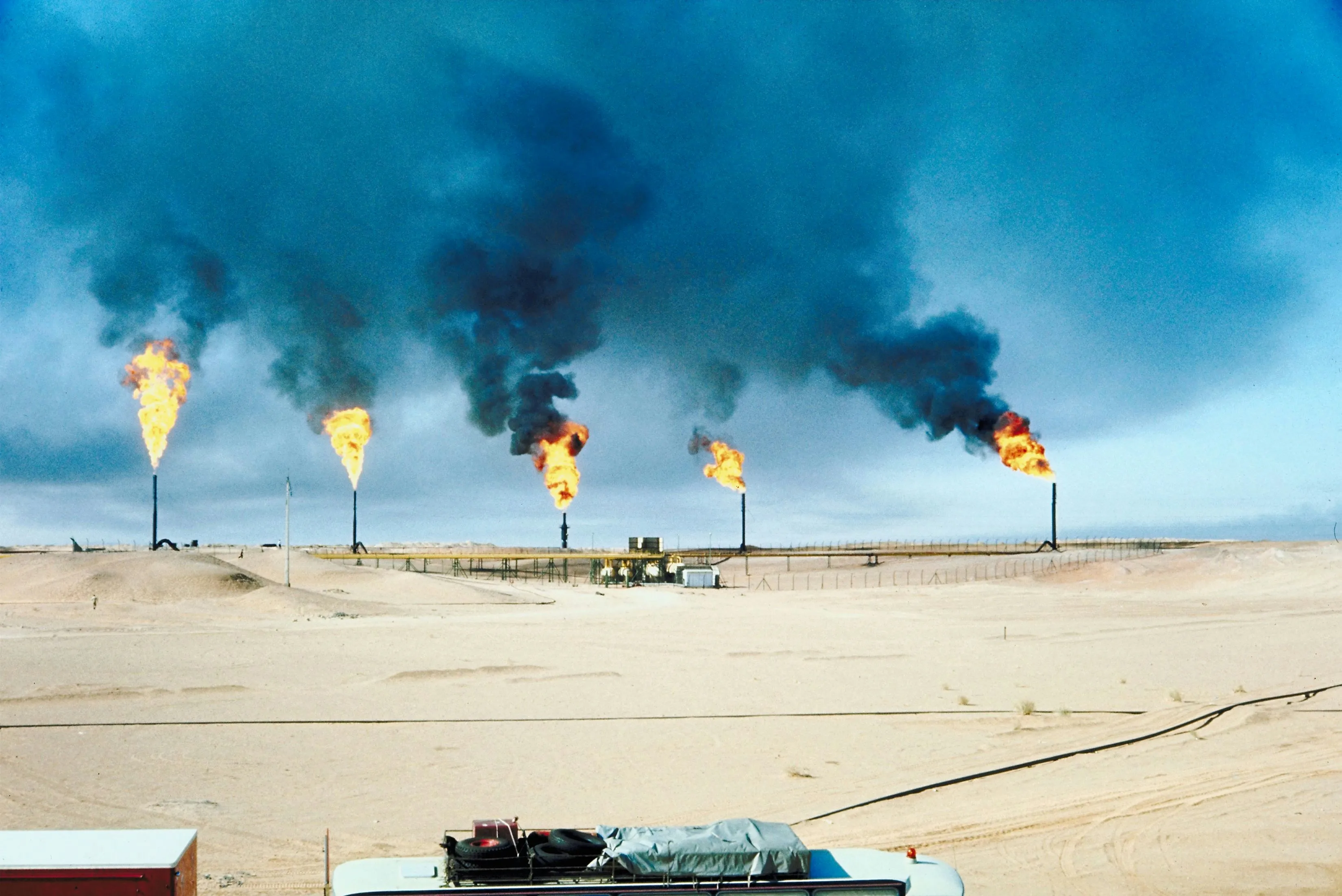
January 22, 2026
Hedieh Mirahmadi Falco
World News
It is the first official show of 2026, and I can say this without hesitation. It is already a happy new year in Venezuela. In less than four hours, President Trump dismantled one of the most brutal communist dictatorships in the Western Hemisphere without a single American casualty. Nicholas Maduro, the narco terrorism strongman who poisoned the United States with fentanyl and enriched Iranian terror proxies, is no longer untouchable. He is sitting in an American prison cell.
While the American left mourns the fall of another socialist idol, the people of Venezuela are dancing in the streets. They are crying tears of joy. They are hugging strangers. They are tasting freedom for the first time in decades.
This is not just a headline. It is a historic turning point. And it exposes everything wrong with the last generation of weak foreign policy.
Maduro Arrested and a Dictatorship Collapses
Venezuela was once the wealthiest nation in South America. It was rich in oil, rich in resources, and rich in opportunity. Then socialism arrived, and it rotted the nation from the inside out.
Hugo Chavez promised justice, equality, and redistribution. What he delivered was Marxist communism. When Chavez died, Maduro doubled down. Political opponents were imprisoned. Dissidents disappeared. The military became an enforcement arm of tyranny.
The economy collapsed. Inflation exploded. Food vanished. Families scavenged for survival. Millions fled because staying meant death. Meanwhile, Maduro lived in luxury, enriching himself and his inner circle while an entire nation starved.
And this regime was not contained within Venezuela. It exported chaos. Drugs flowed north. Fentanyl killed tens of thousands of Americans every year. Terror money flowed east toward Iran and its proxies. Venezuela became a narco state aligned with America’s enemies.
This is why Maduro’s arrest matters. He was not a misunderstood leader. He was a criminal dictator who kidnapped an entire country and poisoned another.
America First Means Strength That Ends Tyranny
For decades, Americans were told that decisive action leads to endless war. That is a lie. Endless war comes from weakness, indecision, and appeasement.
President Trump proved that again. No occupation. No boots stuck on the ground for a generation. No flag draped coffins. Just overwhelming American capability applied with clarity and resolve.
Maduro was warned. Sanctions were imposed. Diplomatic isolation followed. He ignored every warning. And then the United States acted.
This is what smart foreign policy looks like. The United States is the world’s strongest superpower. When that power is used correctly, evil regimes collapse quickly.
America First does not mean America isolated. It means American strength used to advance freedom, protect lives, and stop threats before they metastasize. Ending narco terrorism abroad saves American lives at home.
That is the connection the media refuses to make.
A Global Signal to Iran and Every Dictator Watching
Do not miss what else happened when Maduro fell. The message went far beyond Venezuela. Iran heard it. China heard it. Russia heard it. Every dictator and every terror aligned regime heard it. When America draws real red lines, the world adjusts. And when tyrants fall, oppressed people take notice.
That is why this moment matters so deeply. Venezuelans are celebrating, but they are not alone. Iranians are watching. Women are defying compulsory hijab laws. Protesters are filling the streets. Courage spreads when fear is broken.
Freedom is contagious. So is hope. The left calls this reckless. They call it regime change. They pretend to care about human rights while defending systems that crush human dignity. That hypocrisy is now fully exposed.
You cannot claim to stand with women while defending regimes that torture them. You cannot claim to stand with the oppressed while mourning the fall of their oppressors. The people of Venezuela have spoken. They did not ask for socialism. They rejected it. They did not want sanctions relief. They wanted freedom. And now they have a future again. This moment is bigger than one country. It is about whether the world bends toward tyranny or toward liberty. It is about whether America leads or retreats.
Today, America led. God bless the people of Venezuela. God bless those who stood for freedom. And God bless the United States of America.
Watch the full episode of The Daniel Cohen Show on Real Life Network.
25 min
Trump Arrests Maduro and Venezuela Tastes Freedom Again
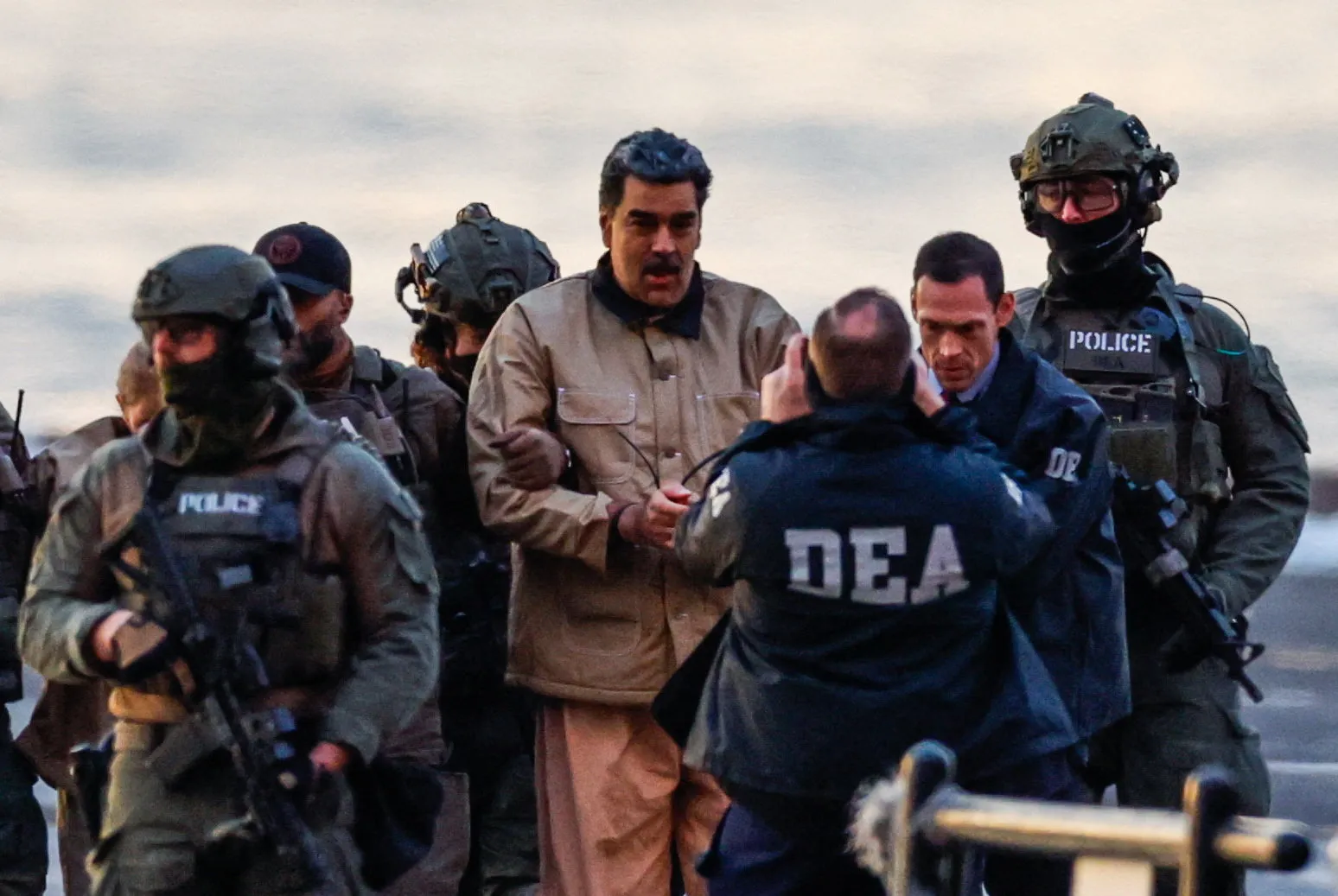
January 5, 2026
Daniel Cohen
World News
A Regime Facing Rejection, Not Reform
Iran is entering a phase that its ruling clerics have long feared but refused to acknowledge. What began years ago as scattered unrest has now hardened into a sustained rejection of the Islamic Republic itself. Across multiple cities, protesters are no longer bargaining with power. They are repudiating it. The chants coming from the streets no longer ask for reform within the system. They call for the system’s removal.
According to reporting by Iranian dissident and analyst Anni Cyrus, one of the most alarming developments for the regime is the growing number of protesters openly calling for the return of Crown Prince Reza Shah Pahlavi. That demand is unprecedented in the context of Iran’s post-1979 political order. It signals not a longing for the past, but a rejection of clerical supremacy and the religious state that has dominated Iranian life for more than forty years. When crowds chant for a figure explicitly displaced by the Islamic Revolution, they are not negotiating terms. They are declaring the revolution itself a failure.
This shift matters because the Islamic Republic is not merely a government. It is an ideological system that fuses religious authority with political control and enforces obedience through fear. The regime’s legitimacy rests on the claim that it governs by divine mandate. Any public challenge to that claim, especially one voiced by large numbers of ordinary citizens, strikes at the heart of its authority. That is why the state’s response has been swift and violent.
Security forces have fired live ammunition into crowds. Arrests have escalated into the thousands. Executions have been carried out under vague criminal charges designed to disguise political repression as law enforcement. Internet blackouts and surveillance have intensified in an attempt to control the narrative and isolate protesters from one another. These measures reflect a regime that understands it is losing consent and is relying increasingly on brute force to maintain control.
Faith, Fear, and the Collapse of Legitimacy
Economic collapse has accelerated the unrest, but it did not create it. Inflation, unemployment, and shortages have devastated everyday life, yet these hardships are widely understood inside Iran as symptoms of a deeper problem. The ruling clerical class has enriched itself while ordinary Iranians struggle to survive. Corruption is systemic. Accountability is nonexistent. Faith has been weaponized to silence dissent rather than to serve the people.
Religious minorities, particularly Christians, have borne the cost of this system for decades. Iran remains one of the most hostile environments in the world for Christian converts. Leaving Islam is treated as a political offense. House churches are raided. Pastors are imprisoned. Evangelism is prosecuted as a threat to national security. These actions are not anomalies. They are the logical outcome of a state that cannot tolerate allegiance to any authority beyond its own religious framework.
Yet despite the repression, Christianity continues to grow underground in Iran. House churches persist. Converts continue to testify to encounters with Christ through Scripture, personal witness, and dreams. The expansion of the Christian faith under such conditions highlights the inherent weakness of coercive religious rule. When belief is enforced by law, it eventually collapses under its own contradictions. Faith that is freely chosen cannot be extinguished by prisons or executions.
Why Iran’s Uprising Matters to the World
Western policymakers have repeatedly misread this reality. For years, Iran has been treated as a conventional state actor capable of moderation through incentives and diplomacy. Nuclear agreements were framed as stabilizing tools. Sanctions relief was promoted as humanitarian. Dialogue was cast as the pathway to peace. These approaches failed because they misunderstood the ideological nature of the regime. The Islamic Republic is not oriented toward compromise. It is oriented toward survival through control.
The Iranian people appear to understand this more clearly than many Western institutions. Their chants are not aimed at foreign governments. They are aimed at the clerics who rule them. They are rejecting political Islam as a governing system, not merely objecting to economic conditions or foreign policy disputes. That distinction matters.
The contrast between Iran’s streets and Western discourse is stark. While Iranians risk their lives to escape Islamic rule, segments of Western culture continue to romanticize Islamist narratives under the banner of tolerance or social justice. While Iranian women defy compulsory veiling, Western institutions frame hijab enforcement as empowerment. While Iranian Christians worship in secret, Western churches often hesitate to speak clearly about the dangers of religious authoritarianism.
This moment demands honesty. The uprising in Iran is not simply another cycle of unrest. It is a reckoning with an ideology that promised justice and delivered repression. It is a warning about the consequences of merging religious absolutism with unchecked political power. It is also a reminder that truth, once awakened, is difficult to suppress.
Whether the current uprising succeeds or is violently crushed, the Islamic Republic has already lost something it may never recover. It has lost the belief of its people. Regimes can survive sanctions and protests. They rarely survive the collapse of legitimacy. Iran’s future remains uncertain, but one reality is now unmistakable. The era of unquestioned clerical rule is ending, and no amount of force can fully restore what has been broken.
For more by Hedieh Mirahmadi, watch Living Fearless on Real Life Network.
25 min
Iran’s Revolt Against Religious Rule
.jpg)
January 5, 2026
Hedieh Mirahmadi Falco
World News
In the ancient world, long before social media or mass communication, the gospel went viral in a city that looks surprisingly familiar to us today. Corinth was powerful, wealthy, immoral, intellectually proud, and spiritually confused. It was also the place where God used persecution, politics, and even a pagan courtroom to accelerate the spread of Christianity.
Standing in Greece, near the ruins of ancient Corinth, you can feel the weight of history. This was not just another stop on the apostle Paul’s missionary journey. This was a turning point where the gospel moved from being hunted to being protected by law. And what the enemy intended for evil, God used for good.
Paul, Corinth, and an Unexpected Legal Victory
The apostle Paul arrived in Corinth preaching Christ crucified and risen. His message was simple and offensive to both religious leaders and Roman sensibilities. Jesus was not just a moral teacher. He was the resurrected Messiah, Lord of all.
The Jewish leaders in Corinth were furious. They dragged Paul before Gallio, the Roman proconsul, accusing him of persuading people to worship God contrary to Mosaic law. Their goal was clear. They wanted Rome to declare Christianity illegal.
Instead, Gallio dismissed the case outright.
Gallio ruled that this was an internal religious dispute, not a violation of Roman law. With that single decision, Christianity gained legal protection across the Roman Empire. For the first time, the gospel could spread without fear of official Roman persecution.
This moment changed everything. What looked like a threat became a catalyst. What was meant to silence the gospel gave it room to grow. The message of resurrection and hope exploded outward from Corinth into the known world.
Love, Resurrection, and the Power of the Gospel
Corinth was a city known for corruption, sexual immorality, and pagan worship. Yet it became home to one of the strongest early Christian communities. Why? Because the gospel does not thrive in perfect environments. It thrives in broken ones.
Paul later wrote to the Corinthian church words that are now among the most beloved in all of Scripture. Love is patient. Love is kind. Love does not envy. Love does not boast. This was not poetic theory. It was a radical call to live differently in a culture obsessed with power and pleasure.
The message that transformed Corinth was not moral reform alone. It was resurrection hope. Paul preached Christ crucified, buried, and risen. He reminded believers that death was defeated, sin was paid for, and eternal life was secure.
That same gospel still goes viral today.
Why Corinth Still Matters Today
Corinth matters because it proves something essential. The gospel does not need cultural approval to advance. It needs faithful witnesses. God can use hostile courts, skeptical leaders, and even political rulings to accomplish His purposes.
From Israel to Greece, from Jerusalem to Corinth, the resurrection message has always moved forward against the odds. And it still does.
We live in a time when truth is contested and faith is mocked. But history reminds us that the gospel has always flourished in moments like this. The same resurrection power that transformed Corinth is still at work today.
I am Daniel Cohen, and this is the kind of biblical worldview reporting we bring to you on Real Life Network and The Daniel Cohen Show.
For the full episode, go to RLN News.
25 min
Where the Gospel Went Viral: Corinth, Courage, and the Resurrection Hope
December 31, 2025
Daniel Cohen
World News
The violence we are witnessing across Western societies is no longer sporadic, accidental, or disconnected. It is ideological. Recent terror attacks and plots, spanning from Australia to Washington, D.C., from elite university campuses to major American cities, reveal a convergence of forces that are openly hostile to the moral framework that once anchored the West. The common thread is not nationality or circumstance, but a growing alliance between Islamist extremism and radical leftist movements, both committed to eroding Judeo-Christian civilization.
In Australia, the brutal attack on a Jewish gathering was a stark reminder that jihadist ideology does not recognize borders. Jewish families celebrating their faith were deliberately targeted, not because of geopolitical grievances, but because Islamist doctrine has long identified Jews as enemies to be eliminated. This was not random violence, nor was it a reaction to local conditions. It was the export of global jihad into a Western democracy that has repeatedly chosen denial over confrontation when it comes to Islamist ideology.
The same denial is evident in how Americans process violence at home. The shooting at Brown University has been framed primarily as another tragic campus incident, with authorities quick to assure the public that motive remains unclear. That may be procedurally accurate, but culturally evasive. American universities have become breeding grounds for ideological radicalization, where hostility toward faith, nationhood, and Western identity is normalized. Students are immersed in narratives that portray America as irredeemably evil, Christianity as oppressive, and violence as morally justified when cloaked in the language of resistance. When such ideas saturate the intellectual environment, violence should not surprise us.
The Convergence of Extremes and the Strategy of Chaos
The targeted attack on National Guard members in Washington, D.C. strips away any remaining illusion that this is merely a domestic social crisis. This was a calculated assault on representatives of the American state, carried out by someone shaped by radical Islamist beliefs. The symbolism is unmistakable. This was an attack on authority, order, and the legitimacy of the nation itself. It exposes the cost of importing unresolved ideological conflicts without demanding allegiance to American values or confronting radicalization within immigrant communities.
Perhaps the most revealing case is the terror plot disrupted in Los Angeles. Members of the Turtle Island Liberation Front were arrested while allegedly preparing coordinated bombings against civilian and law-enforcement targets. Their rhetoric blended revolutionary language, anti-colonial ideology, and militant pro-Palestinian messaging. This was not incoherent rage. It was a carefully assembled ideological framework that mirrors what we increasingly see on college campuses, in activist networks, and online spaces that glorify violence while condemning Western society as inherently illegitimate.
Federal analysts have begun describing this phenomenon as Nihilistic Violent Extremism, yet public discussion often strips the term of its most dangerous component. NVE is not limited to anarchists or radical leftists acting alone. It reflects a growing convergence between far-left revolutionary movements and jihadist ideology. While their ultimate visions differ, their immediate objectives align. Both seek to destabilize Western societies. Both reject Judeo-Christian moral authority. Both view chaos as a catalyst for transformation. Violence becomes not a tragedy, but a strategy.
This convergence explains why radical leftist groups increasingly excuse or rationalize Islamist violence, branding it resistance rather than terror. It also explains why jihadist movements find fertile ground within Western activist spaces that already despise national borders, religious tradition, and moral absolutes. Islamists bring ideological discipline and long-term ambition. Anarchists bring disruption, infrastructure sabotage, and a willingness to tear down institutions. Together, they form a volatile alliance capable of real harm.
The Los Angeles plot illustrates this dynamic with chilling clarity. The group’s members echoed Islamist talking points, adopted global revolutionary narratives, and aligned themselves with causes long exploited by jihadist movements to gain Western sympathy. This was not accidental overlap. It was ideological convergence. These movements may wear different masks, but they march toward the same goal: the dismantling of Western civilization’s moral and civic foundations.
A Spiritual Crisis That Demands Moral Clarity
What connects these acts of violence is not race, geography, or economic grievance. It is ideology. Each incident reflects a rejection of ordered liberty and an assault on the sanctity of life. Each is fueled by narratives that cast Judeo-Christian values as obstacles to liberation rather than the source of human dignity. Each thrives in a culture that refuses to define evil clearly and fears moral judgment more than moral collapse.
The refusal to confront Islamism honestly has accelerated this crisis. Political leaders, cultural institutions, and even some religious communities have chosen appeasement over truth. Radical leftist violence is excused so long as it adopts the language of justice. Islamist ideology is shielded behind claims of religious sensitivity. Meanwhile, ordinary citizens are told these threats are exaggerated, unrelated, or misunderstood.
History offers a sobering lesson. Civilizations rarely fall from external invasion alone. They unravel when moral clarity is abandoned and truth is replaced by grievance. When faith is displaced by ideology, violence follows. The recent wave of terror is not an anomaly. It is the predictable outcome of cultural and spiritual erosion.
This moment calls for discernment, not despair. The challenge before us is not merely political or security-based. It is spiritual. We are witnessing a revolt against the moral order that sustains freedom, justice, and peace. Countering it requires more than law enforcement or intelligence operations. It requires courage to name threats clearly, leadership willing to defend foundational values, and a renewed commitment to truth.
America’s strength has never rested solely on military power or economic dominance. It has rested on a moral framework rooted in Judeo-Christian principles. When those principles are undermined, the nation becomes vulnerable not only to enemies abroad, but to decay within.
The violence we are seeing is a warning. Whether we heed it will shape not only our national security, but our moral future. As Scripture reminds us, the struggle before us is not merely against flesh and blood, but against forces that seek to corrupt, divide, and destroy from the shadows. Recognizing that truth is the first step toward resisting it.
For more faith-filled content, watch Living Fearless Devotional on Real Life Network.
25 min
Ideology at War With the West: The Rising Alliance Behind Modern Terror

December 19, 2025
Hedieh Mirahmadi Falco
World News
In a time when spiritual confusion is rising and truth is often diluted for comfort, moments of clarity matter more than ever. On a recent episode of Daniel Cohen Show on the Real Life Network, Daniel Cohen sat down for a powerful and deeply personal conversation with Jeff Morgan, an Israeli-based Jewish believer and evangelist whose life story testifies to the transforming power of the gospel.
Jeff Morgan’s journey is not one of cultural Christianity or inherited faith. It is a testimony forged through decades of depression, spiritual torment, and searching that ultimately led him to the truth of Yeshua as the Jewish Messiah. His story is a reminder that the gospel is not merely theological. It is personal, redemptive, and alive.
A Search for Identity That Led to Darkness
Jeff grew up in a secular Jewish home in the United States. Like many who feel unseen or unaccepted, he pursued validation through physical discipline, bodybuilding, and later New Age spirituality. What began as a desire for peace and self improvement slowly descended into despair. By his own admission, Jeff lived for years under what he believed was his own troubled spirit. In reality, it was something far darker.
Depression, self harm, and suicidal thoughts marked his adult life. He tried meditation, spiritual teachers, and self help systems, all promising enlightenment but delivering deeper emptiness. By his mid forties, Jeff had reached a breaking point. Financial strain, fear, and emotional exhaustion collided with the realization that nothing he pursued had brought lasting peace.
This moment of collapse became the doorway to transformation.
Encountering Jesus Through the Hebrew Scriptures
What makes Jeff’s testimony uniquely powerful is not just that he came to faith in Jesus, but how. He did not encounter Yeshua through Western religious tradition. He encountered Him through the Hebrew Bible.
As Jeff and his family began attending church, he struggled deeply with what he heard. Passages involving Moses and Elijah alongside Jesus confused him. Yet one moment changed everything. During a teaching on the transfiguration, Jeff understood that Moses represented the Law, Elijah represented the Prophets, and Jesus stood as the fulfillment of both. When the voice from heaven declared, “This is My beloved Son. Listen to Him,” Jeff knew the search was over.
That realization dismantled decades of spiritual deception. Jeff describes a sudden and total transformation. His desire for sin vanished. His idols were destroyed. His appetite for Scripture exploded. What he once believed was his own troubled spirit was revealed to be spiritual bondage, broken by the authority of Christ.
Ministry in Israel Requires Courage and Clarity
Jeff eventually returned to Israel with his family and joined Jews for Jesus before launching what would become his widely viewed street evangelism ministry. Through simple conversations and direct engagement with Jewish Israelis, Jeff asks a powerful question. Why do passages like Isaiah 53 sound like Jesus if they are found in the Tanakh?
Again and again, Orthodox Jews and secular Israelis alike assume these verses come from the New Testament. When they learn the truth, that these prophecies predate Christianity by centuries, they are forced to wrestle honestly with Scripture.
This work is not safe or socially accepted. Jeff has been spit on, threatened, and harassed. Evangelism in Israel is not a casual endeavor. It requires discernment, humility, and courage. Jeff’s approach is not confrontational. It is rooted in listening, asking questions, and allowing Scripture to speak for itself.
Highway 53 and the Call to Speak Up
Jeff’s newest initiative, Highway 53, is born from Isaiah’s prophetic vision. A highway in the wilderness. A way of holiness. A suffering servant who bears the sins of many. The name reflects both the mission and the message.
Highway 53 exists to encourage more Jewish believers to speak openly about their faith in Yeshua. Jeff believes the remnant spoken of in Scripture is growing, and that Jewish believers have a unique role to play in proclaiming the Messiah from Jerusalem to the ends of the earth.
This movement is not about abandoning Jewish identity. As Jeff makes clear, once Jewish always Jewish. Faith in Jesus does not erase heritage. It fulfills it.
The Gospel Is for the Jew First and Also for the Gentile
One of the most powerful moments in the conversation is Jeff’s reminder that the New Testament is deeply Jewish. Jesus is Jewish. The apostles were Jewish. The gospel story is the continuation of God’s covenant, not a replacement of it.
Jeff challenges believers to approach Jewish evangelism with love, patience, and understanding. Not with arguments or slogans, but with questions, Scripture, and genuine relationship. Truth does not need force. It needs faithfulness.
His story stands as living proof that no one is too broken, too deceived, or too far gone to be reached by God. What began as torment ended in truth. What was once despair became purpose.
To watch this full conversation and more bold, gospel centered content from a biblical worldview, visit Daniel Cohen on Real Life Network.
25 min
From Torment to Truth: A Jewish Evangelist’s Journey to Yeshua in the Land of Israel
December 19, 2025
Daniel Cohen
World News
The world is still shaking. A Hanukkah celebration meant to honor light, faith, and survival turned into a scene of terror when Jews gathered in Australia were brutally attacked. Fifteen people ranging from children to the elderly were murdered. Families were shattered. A rabbi who served his community for nearly two decades was killed. And yet, once again, the media hesitated to say what this was.
On The Daniel Cohen Show, Daniel Cohen refuses to play along with the silence. He names what others avoid and connects the dots the mainstream press refuses to draw.
Hanukkah Targeted by Terror
The attack at Bondi Beach was not random violence. It was deliberate. It was timed for the first night of Hanukkah. It targeted Jews gathered openly and peacefully. The attackers were a father and son who believed terror was a family mission. Survivors described lying on the ground for nearly twenty minutes as gunfire continued without resistance.
This was not a crime of opportunity. It was ideological. It was anti Semitic terrorism, and even the Australian prime minister acknowledged it as such. But acknowledgment without action only emboldens the next attack.
Hanukkah commemorates a refusal to surrender. The Maccabees stood against an empire that sought to erase Jewish faith, Jewish law, and Jewish identity. That same spirit was on display in Jerusalem as Jews danced and celebrated even after hearing of the massacre. Light does not retreat when darkness strikes. It shines brighter.
The Media Silence and the Permission Structure
Daniel Cohen warns that terror does not happen in a vacuum. It grows where excuses are made and where truth is avoided. In recent years, Western leaders including those in Australia, Canada, and the United Kingdom have moved toward recognizing a Palestinian state in response to pressure following October 7. Cohen argues that rewarding Hamas with legitimacy sends a dangerous message.
When leaders offer moral equivalence or political concessions after terror, radicals interpret it as permission. Massive pro Gaza demonstrations filled Sydney streets months before the attack. Chants escalated. Rhetoric hardened. And eventually, violence followed.
The media response followed a familiar pattern. Words like lone actor, deranged individual, and isolated incident replaced honest reporting. When eyewitnesses reported attackers shouting Islamic slogans, those details were minimized or ignored. Calling attention to ideology was labeled hateful. Silence became policy.
A Pattern Across Continents
The Bondi Beach massacre was not an isolated event. Within days, Americans were killed in Syria by an ISIS sympathizer embedded in local security forces. A Jewish student was murdered at Brown University after witnesses reported religious slogans before gunfire. Jewish homes in California were shot at while Hanukkah decorations were visible.
These events share a common target and a common ideological thread. Jews. Americans. Students. Faith. And yet policymakers and media institutions insist on treating each attack as unrelated.
Daniel Cohen challenges viewers to ask why eighty five percent of the world’s refugees, many from Muslim majority regions, are not being resettled in neighboring Muslim nations. Instead, they move to Western countries where leaders hesitate to enforce assimilation, law, or cultural boundaries. Cowardice is disguised as compassion.
Islamism and the West’s Crisis of Courage
Cohen does not argue against Muslims as people. He argues against an ideology that openly rejects freedom of speech, freedom of religion, and separation of mosque and state. Islamic scholars have said plainly that jihad and Sharia are not fringe beliefs. They are foundational.
Even leaders from the Middle East have warned the West. Years ago, a senior UAE official cautioned that political correctness and ignorance would invite terror into Europe and beyond. That warning has proven accurate.
The problem, Cohen says, is not just immigration or security. It is spiritual. America has grown soft. Churches have diluted truth. Many have replaced repentance with affirmation. Jesus never affirmed sin. He forgave sinners and called them to change.
Grace is not permission to remain in darkness. It is power to leave it.
Be Encouraged
Despite the violence and moral confusion, Daniel Cohen ends with hope. Hanukkah itself is a story of hope. One small jar of oil. One day of light. Eight days of miracle. A people who refused to bow.
Two centuries later, Jesus opened the door for Gentiles to worship the God of Abraham, Isaac, and Jacob. Jews and Christians are spiritually connected. When one is attacked, both are called to stand.
Scripture commands believers to mourn with those who mourn and pray even for enemies. That is what sets the people of God apart. Truth spoken in love. Courage without hatred. Light that cannot be extinguished.
The menorah still burns. Faith still stands. God is still on the throne.
Watch the full episode of The Daniel Cohen Show on Real Life Network.
25 min
The Light Still Burns: Hanukkah, Terror, and the War the Media Refuses to Name
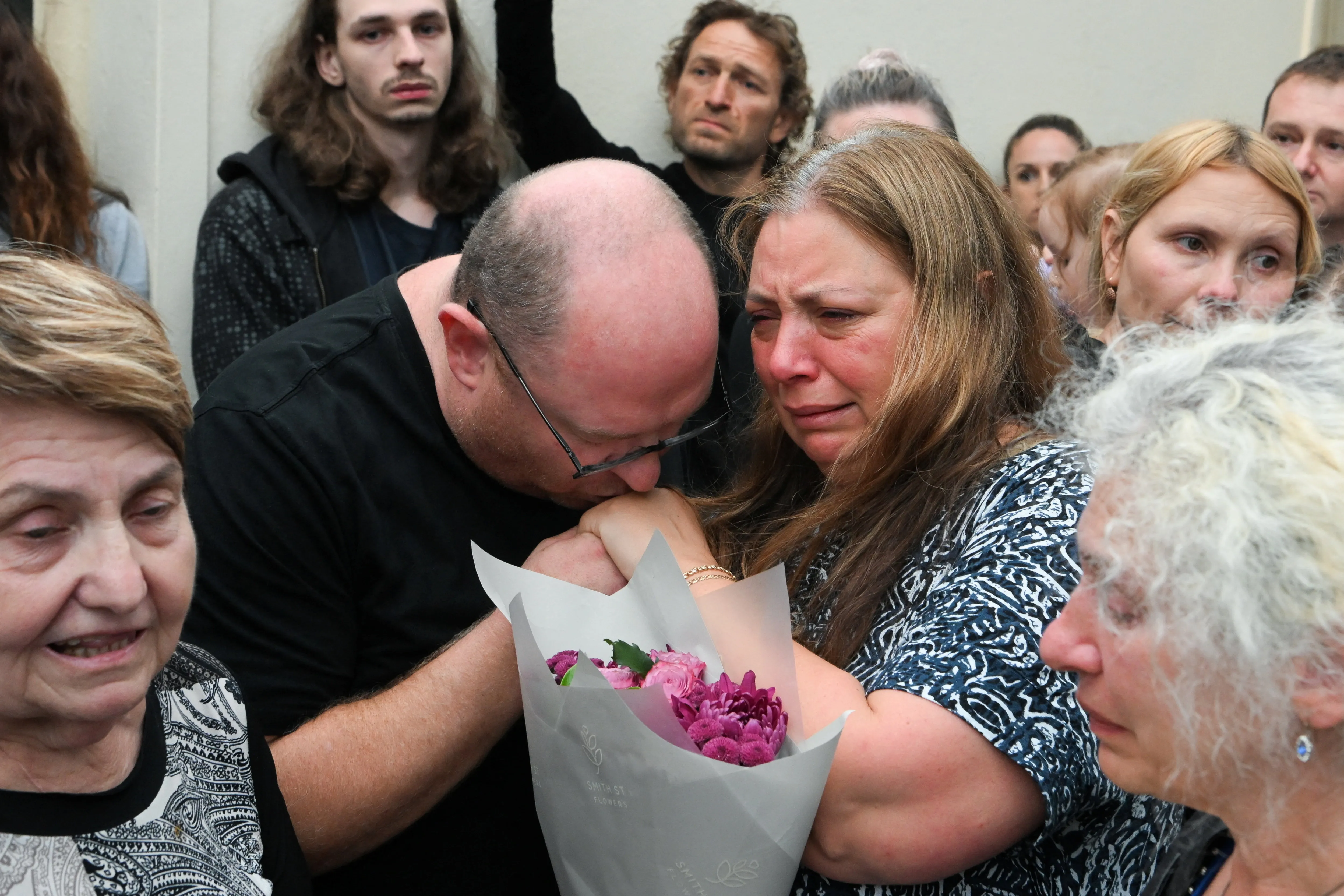
December 17, 2025
Daniel Cohen
World News
The world watched another red line disappear as Jews gathered peacefully for Hanukkah were slaughtered at Bondi Beach in Sydney, Australia. Families came to light candles, celebrate faith, and remember resilience. Instead, they were met with shotgun fire. This was not random violence. It was targeted terror. And it exposed a truth the West has spent years refusing to face.
On The Daniel Cohen Show on Real Life Network, Daniel Cohen connects the dots between the Bondi Beach massacre, rising antisemitism, radical Islam, and the moral collapse of Western civilization. When leaders choose cowardice over clarity, the cost is measured in blood.
Hanukkah in Australia Ends in Terror at Bondi Beach
Hanukkah is a celebration of light overcoming darkness. That is precisely why it was targeted. Roughly two thousand Jews gathered at Bondi Beach for a Chabad organized candle lighting. Children were present. Families stood shoulder to shoulder. Within moments, gunmen opened fire from an elevated position, unleashing dozens of rounds into the crowd.
This was not an accident. It was an act of terror rooted in hatred of Jews and hatred of the West. One of the attackers was identified as a Pakistani Muslim radicalized by the same ideology that has fueled attacks from Israel to Europe. Australia has seen a fivefold increase in antisemitic incidents since October 7, and this massacre did not come out of nowhere.
Synagogues have been firebombed. Rabbis have been threatened. Jewish communities have been told to hide while authorities urge restraint. This is not tolerance. This is surrender masquerading as virtue.
Pray for Australia. Pray for the families who lost loved ones. Pray for the Jewish community mourning during what should have been a season of joy.
Radical Islam and the Failure of Western Leadership
From Sydney to Paris to Berlin, the pattern is unmistakable. Radical Islam advances while Western governments retreat. France cancels public celebrations because it cannot guarantee safety. Christmas markets require concrete barriers and armed guards. Churches are vandalized while hate speech against Jews is tolerated in the name of multiculturalism.
Daniel Cohen warns that this ideology does not stop with Jews. It always moves from the Saturday people to the Sunday people. Judaism first. Christianity next. Anyone who believes they are immune because they do not attend church is mistaken. Western values themselves are the target.
The same cowardice is visible in global politics. Australia recognizes a Palestinian state while failing to protect its Jewish citizens. Canada moves to criminalize biblical speech while ignoring open support for Hamas and Hezbollah in the streets. This is not neutrality. It is moral inversion.
Truth matters. When governments refuse to name evil, they enable it.
From Syria to America, Strength Still Speaks
The same episode addressed the murder of two Iowa National Guard soldiers and an American civilian interpreter by an ISIS gunman in Syria. President Trump responded with clarity and resolve. He spoke the language ISIS understands. Strength. Consequence. Power.
In the Middle East, weakness invites violence. Cohen explains that leadership requires asking not only the cost of action, but the cost of inaction. America’s presence abroad matters, especially when adversaries like Iran, Hamas, and ISIS seek to fill any vacuum.
Meanwhile, hypocrisy at home continues to rot public trust. Black Lives Matter leaders accused of stealing millions. Alexandria Ocasio Cortez preaching against oligarchy while spending tens of thousands in campaign funds on luxury hotels, catering, and private suites. Socialism for the people, luxury for the elites.
This double standard fuels anger, division, and disillusionment. But it does not erase truth.
The answer is not silence. The answer is courage. Scripture teaches that standing idly by while evil advances makes us complicit. Western civilization was built on biblical truth, moral clarity, and the willingness to defend what is good.
Pray for Australia. Pray for Israel. Pray for courage in the West. And do not look away.
Watch and Share:
The Daniel Cohen Show, streaming on Real Life Network.
25 min
Bondi Beach Massacre Exposes the Cost of Cowardice in the West

December 15, 2025
Daniel Cohen
World News
On The Daniel Cohen Show from Real Life Network (RLN), Daniel opens with what feels like a spiritual diagnosis of the times. While President Trump and Prime Minister Netanyahu build a coalition of nations — Qatar, Turkey, Saudi Arabia, Egypt, and Jordan — to pressure Hamas into releasing hostages and accepting peace, the world’s stage erupts in hypocrisy. From the media’s silence on Hamas atrocities to Hollywood’s applause for moral confusion, Daniel reminds us that behind every headline lies a deeper war, not of politics but of principalities. This is spiritual warfare disguised as diplomacy, celebrity activism, and cultural rebellion. Israel faces rockets; America faces lies. Yet both must decide whom they will serve. As Daniel puts it: “You can’t fight for freedom while cashing checks from those who crush it.”
The Illusion of Freedom
When Dave Chappelle claims he can “speak more freely” in Saudi Arabia than in America, Daniel doesn’t respond with outrage, he responds with truth. Saudi Arabia, he reminds us, is a land where women only recently gained the right to drive, where slavery still exists, and where public beheadings remain legal. Yet Chappelle calls that freedom.
Bill Maher, not known for defending Christianity, exposes Chappelle’s blindness: “If you believe that, do a bit on Mohammed.” Daniel uses the moment not to mock but to mourn. America has traded gratitude for grievance. Chappelle, a millionaire made rich by free speech and free markets, now mocks both. Worse, he turns “I stand with Israel” into a coded insult, a signal that he’s been “compromised.”
Freedom without truth is a costume. And much of entertainment is playing dress-up with sin, hiding moral bankruptcy behind applause. The Bible says, “No one can serve two masters” (Matthew 6:24). In Daniel’s words: “Dave Chappelle has chosen his master, and it’s not truth.”
The Sanctity of Life
From celebrity compromise, Daniel turns to a victory that actually matters: the closing of America’s largest abortion clinic, a 78,000-square-foot facility in Houston that performed over 10,000 abortions a year. “It was a monument to death,” he says, “and now it’s gone.”
Since 1973, over 63 million unborn children have been killed in the United States. Daniel doesn’t soften the language: “Abortion isn’t healthcare. It’s child sacrifice on the altar of convenience.” But in the same breath, he gives thanks because prayer, persistence, and policy have pushed back the darkness.
“Before I formed you in the womb, I knew you,” God said through Jeremiah. That promise isn’t abstract, it’s personal. Daniel celebrates that promise while exposing the callousness of Planned Parenthood executives caught on tape bartering over baby organs. This is what happens when a culture forgets that life is sacred. Yet where sin increases, grace abounds. The tide is turning, and God is not finished.
Women’s Sports, Children’s Minds, and America’s Soul
Daniel shifts from Houston to headlines shaping family life. The biological male once called Leah Thomas has been permanently banned from women’s competition, a small win for sanity. Daniel applauds women like Riley Gaines, who refused to be silenced. Her courage cost her comfort but preserved truth for the next generation.
Then Daniel turns his eye to the battlefield of the imagination: children’s entertainment. Shows like CoComelon now normalize gender confusion, training toddlers to accept lies before they can spell truth. “This is not innocence, it’s indoctrination,” Daniel warns. Yet the antidote isn’t outrage; it’s discipleship. Christian parents must teach, model, and defend biblical worldview at home, where the next great awakening must begin.
From Gaza to the Gospel: Real Peace Through Christ Alone
Back on the global stage, Daniel examines Trump’s 20-point peace deal with Netanyahu, a plan offering ceasefire, hostage release, and humanitarian aid. But the deeper question remains: What good is peace on paper if hearts remain at war with God?
Hamas delays, deflects, and deceives because rebellion runs deeper than politics. Sin operates the same way, pretending to negotiate, refusing to surrender. Daniel notes that even within Gaza, local families are rising against Hamas tyranny, longing for peace their rulers reject. It’s a mirror of the human heart, trapped, deceived, and desperate for freedom.
The real hope, Daniel insists, is not in presidents or policies, but in a person: Jesus Christ, the Prince of Peace.
The Hope of the Gospel
There is one Creator who made all people in His image and calls every nation to walk in truth. Humanity, from Gaza to Los Angeles, has rebelled against that truth and fallen under sin’s curse. Yet God, rich in mercy, sent His Son, Jesus Christ, fully God and fully man, to live the life we could not live, die the death we deserved, and rise from the grave, conquering sin and death forever.
Whoever repents and believes in Christ alone is forgiven, reconciled to God, and given new life. That’s not religion, it’s redemption. And that’s the only peace plan that works. “For He Himself is our peace.” (Ephesians 2:14)
25 min
A Confused World: From Israel to Hollywood and the War for the Unborn
November 5, 2025
Daniel Cohen