Real Life Network is a free, faith-based streaming platform offering biblically grounded teaching, documentaries, news, movies, and original programming. Sign up today.
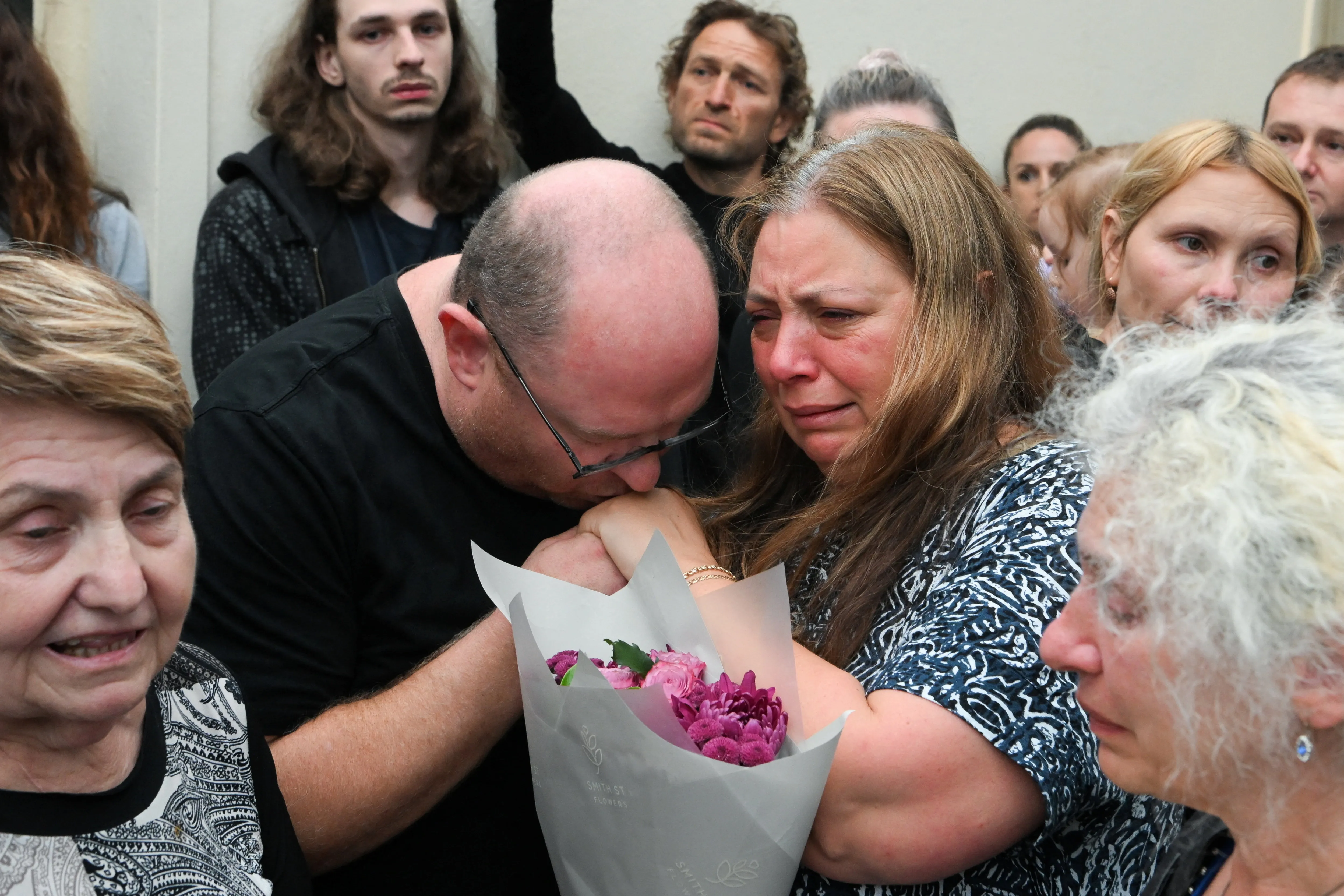
The world is still shaking. A Hanukkah celebration meant to honor light, faith, and survival turned into a scene of terror when Jews gathered in Australia were brutally attacked. Fifteen people ranging from children to the elderly were murdered. Families were shattered. A rabbi who served his community for nearly two decades was killed. And yet, once again, the media hesitated to say what this was.
On The Daniel Cohen Show, Daniel Cohen refuses to play along with the silence. He names what others avoid and connects the dots the mainstream press refuses to draw.
Hanukkah Targeted by Terror
The attack at Bondi Beach was not random violence. It was deliberate. It was timed for the first night of Hanukkah. It targeted Jews gathered openly and peacefully. The attackers were a father and son who believed terror was a family mission. Survivors described lying on the ground for nearly twenty minutes as gunfire continued without resistance.
This was not a crime of opportunity. It was ideological. It was anti Semitic terrorism, and even the Australian prime minister acknowledged it as such. But acknowledgment without action only emboldens the next attack.
Hanukkah commemorates a refusal to surrender. The Maccabees stood against an empire that sought to erase Jewish faith, Jewish law, and Jewish identity. That same spirit was on display in Jerusalem as Jews danced and celebrated even after hearing of the massacre. Light does not retreat when darkness strikes. It shines brighter.
The Media Silence and the Permission Structure
Daniel Cohen warns that terror does not happen in a vacuum. It grows where excuses are made and where truth is avoided. In recent years, Western leaders including those in Australia, Canada, and the United Kingdom have moved toward recognizing a Palestinian state in response to pressure following October 7. Cohen argues that rewarding Hamas with legitimacy sends a dangerous message.
When leaders offer moral equivalence or political concessions after terror, radicals interpret it as permission. Massive pro Gaza demonstrations filled Sydney streets months before the attack. Chants escalated. Rhetoric hardened. And eventually, violence followed.
The media response followed a familiar pattern. Words like lone actor, deranged individual, and isolated incident replaced honest reporting. When eyewitnesses reported attackers shouting Islamic slogans, those details were minimized or ignored. Calling attention to ideology was labeled hateful. Silence became policy.
A Pattern Across Continents
The Bondi Beach massacre was not an isolated event. Within days, Americans were killed in Syria by an ISIS sympathizer embedded in local security forces. A Jewish student was murdered at Brown University after witnesses reported religious slogans before gunfire. Jewish homes in California were shot at while Hanukkah decorations were visible.
These events share a common target and a common ideological thread. Jews. Americans. Students. Faith. And yet policymakers and media institutions insist on treating each attack as unrelated.
Daniel Cohen challenges viewers to ask why eighty five percent of the world’s refugees, many from Muslim majority regions, are not being resettled in neighboring Muslim nations. Instead, they move to Western countries where leaders hesitate to enforce assimilation, law, or cultural boundaries. Cowardice is disguised as compassion.
Islamism and the West’s Crisis of Courage
Cohen does not argue against Muslims as people. He argues against an ideology that openly rejects freedom of speech, freedom of religion, and separation of mosque and state. Islamic scholars have said plainly that jihad and Sharia are not fringe beliefs. They are foundational.
Even leaders from the Middle East have warned the West. Years ago, a senior UAE official cautioned that political correctness and ignorance would invite terror into Europe and beyond. That warning has proven accurate.
The problem, Cohen says, is not just immigration or security. It is spiritual. America has grown soft. Churches have diluted truth. Many have replaced repentance with affirmation. Jesus never affirmed sin. He forgave sinners and called them to change.
Grace is not permission to remain in darkness. It is power to leave it.
Be Encouraged
Despite the violence and moral confusion, Daniel Cohen ends with hope. Hanukkah itself is a story of hope. One small jar of oil. One day of light. Eight days of miracle. A people who refused to bow.
Two centuries later, Jesus opened the door for Gentiles to worship the God of Abraham, Isaac, and Jacob. Jews and Christians are spiritually connected. When one is attacked, both are called to stand.
Scripture commands believers to mourn with those who mourn and pray even for enemies. That is what sets the people of God apart. Truth spoken in love. Courage without hatred. Light that cannot be extinguished.
The menorah still burns. Faith still stands. God is still on the throne.
Watch the full episode of The Daniel Cohen Show on Real Life Network.
.png)
Daniel Cohen hosts the "Daniel Cohen Show" exclusively on the Real Life Network. A Jewish follower of Jesus and three-time Emmy award-winning journalist, Cohen delivers the news from Israel, reporting on today's top headlines with a biblical worldview.