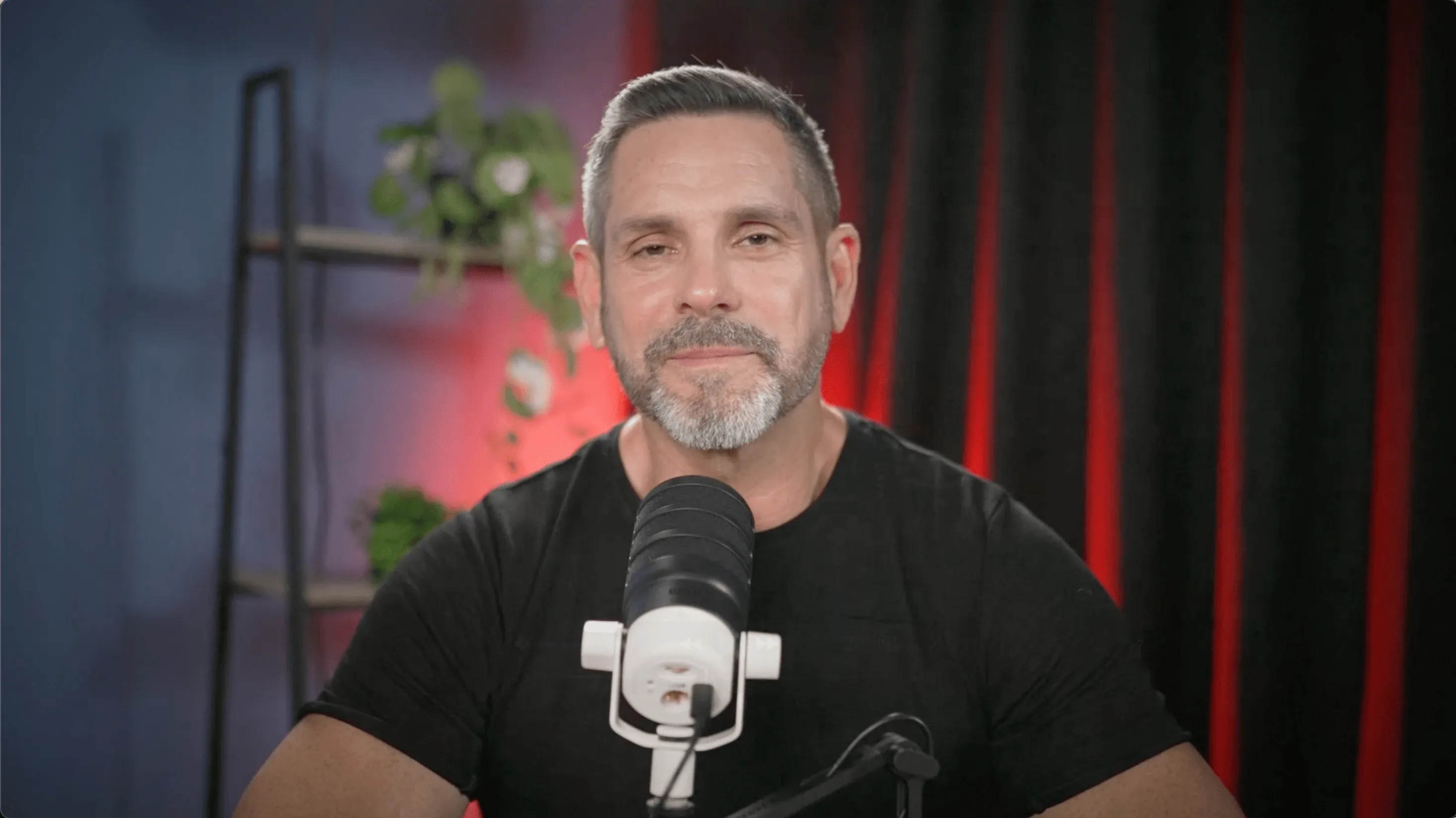
In a time when spiritual confusion is rising and truth is often diluted for comfort, moments of clarity matter more than ever. On a recent episode of Daniel Cohen Show on the Real Life Network, Daniel Cohen sat down for a powerful and deeply personal conversation with Jeff Morgan, an Israeli-based Jewish believer and evangelist whose life story testifies to the transforming power of the gospel.
Jeff Morgan’s journey is not one of cultural Christianity or inherited faith. It is a testimony forged through decades of depression, spiritual torment, and searching that ultimately led him to the truth of Yeshua as the Jewish Messiah. His story is a reminder that the gospel is not merely theological. It is personal, redemptive, and alive.
A Search for Identity That Led to Darkness
Jeff grew up in a secular Jewish home in the United States. Like many who feel unseen or unaccepted, he pursued validation through physical discipline, bodybuilding, and later New Age spirituality. What began as a desire for peace and self improvement slowly descended into despair. By his own admission, Jeff lived for years under what he believed was his own troubled spirit. In reality, it was something far darker.
Depression, self harm, and suicidal thoughts marked his adult life. He tried meditation, spiritual teachers, and self help systems, all promising enlightenment but delivering deeper emptiness. By his mid forties, Jeff had reached a breaking point. Financial strain, fear, and emotional exhaustion collided with the realization that nothing he pursued had brought lasting peace.
This moment of collapse became the doorway to transformation.
Encountering Jesus Through the Hebrew Scriptures
What makes Jeff’s testimony uniquely powerful is not just that he came to faith in Jesus, but how. He did not encounter Yeshua through Western religious tradition. He encountered Him through the Hebrew Bible.
As Jeff and his family began attending church, he struggled deeply with what he heard. Passages involving Moses and Elijah alongside Jesus confused him. Yet one moment changed everything. During a teaching on the transfiguration, Jeff understood that Moses represented the Law, Elijah represented the Prophets, and Jesus stood as the fulfillment of both. When the voice from heaven declared, “This is My beloved Son. Listen to Him,” Jeff knew the search was over.
That realization dismantled decades of spiritual deception. Jeff describes a sudden and total transformation. His desire for sin vanished. His idols were destroyed. His appetite for Scripture exploded. What he once believed was his own troubled spirit was revealed to be spiritual bondage, broken by the authority of Christ.
Ministry in Israel Requires Courage and Clarity
Jeff eventually returned to Israel with his family and joined Jews for Jesus before launching what would become his widely viewed street evangelism ministry. Through simple conversations and direct engagement with Jewish Israelis, Jeff asks a powerful question. Why do passages like Isaiah 53 sound like Jesus if they are found in the Tanakh?
Again and again, Orthodox Jews and secular Israelis alike assume these verses come from the New Testament. When they learn the truth, that these prophecies predate Christianity by centuries, they are forced to wrestle honestly with Scripture.
This work is not safe or socially accepted. Jeff has been spit on, threatened, and harassed. Evangelism in Israel is not a casual endeavor. It requires discernment, humility, and courage. Jeff’s approach is not confrontational. It is rooted in listening, asking questions, and allowing Scripture to speak for itself.
Highway 53 and the Call to Speak Up
Jeff’s newest initiative, Highway 53, is born from Isaiah’s prophetic vision. A highway in the wilderness. A way of holiness. A suffering servant who bears the sins of many. The name reflects both the mission and the message.
Highway 53 exists to encourage more Jewish believers to speak openly about their faith in Yeshua. Jeff believes the remnant spoken of in Scripture is growing, and that Jewish believers have a unique role to play in proclaiming the Messiah from Jerusalem to the ends of the earth.
This movement is not about abandoning Jewish identity. As Jeff makes clear, once Jewish always Jewish. Faith in Jesus does not erase heritage. It fulfills it.
The Gospel Is for the Jew First and Also for the Gentile
One of the most powerful moments in the conversation is Jeff’s reminder that the New Testament is deeply Jewish. Jesus is Jewish. The apostles were Jewish. The gospel story is the continuation of God’s covenant, not a replacement of it.
Jeff challenges believers to approach Jewish evangelism with love, patience, and understanding. Not with arguments or slogans, but with questions, Scripture, and genuine relationship. Truth does not need force. It needs faithfulness.
His story stands as living proof that no one is too broken, too deceived, or too far gone to be reached by God. What began as torment ended in truth. What was once despair became purpose.
To watch this full conversation and more bold, gospel centered content from a biblical worldview, visit Daniel Cohen on Real Life Network.
Merry Christmas from Real Life Network. As millions celebrate the birth of Jesus Christ around the world, Real Life Network continues to offer believers a place to grow in faith through biblical worldview content that lifts the heart and centers the soul on the hope of the gospel. The 25 Days of Christmas series on RLN brings sermons, devotionals, worship, and family programs that point clearly to Jesus as the reason for the season. In a world filled with distractions and noise, RLN provides a Christ centered refuge where families can celebrate the message that changed history.
Christmas is a reminder that God stepped into human flesh to save sinners and bring peace to a weary world. That message shapes everything Real Life Network creates. As you gather with family, unwrap gifts, or sit quietly before the tree, RLN invites you to pause and reflect on the miracle of the incarnation and the joy of knowing Christ. The 25 Days of Christmas series was designed to help viewers prepare their hearts with Scripture, worship, and teaching that leads them back to the manger and forward to the hope of the cross and resurrection.
One of the highlights of this year’s collection is a special two day devotional with Daniel and Paige Cohen on December 23 and 24. Filmed on location in Israel, these reflections bring viewers to the very land where Jesus was born. The Cohens share biblical insights, historical background, and heartfelt encouragement while standing in the places where the story of redemption entered human history. Their teaching helps viewers see Christmas not as a distant event but as a real moment in a real place that testifies to the faithfulness of God. These episodes are rich, thoughtful, and perfect for families wanting to deepen their understanding of the Christmas story.
The entire 25 Days of Christmas series brings together trusted voices and pastors who walk viewers through the meaning of Advent, the hope of prophecy, the peace offered through Christ, and the beauty of the gospel. You will find Christmas sermons, worship programs, family specials, music, and short devotionals that fit every moment of your December celebration. Whether you are looking for a quiet moment of reflection or biblically grounded teaching, RLN provides a wide range of content that honors Jesus and strengthens your faith.
Real Life Network continues to be a safe and uplifting place for the whole family. As a privately run Christian streaming platform, RLN is free to proclaim the gospel clearly and offer uncensored biblical worldview programming without pressure from Big Tech or Big Government. Every show, sermon, and series is carefully curated to encourage your walk with Christ and provide content you can trust.
This Christmas, let your home be filled with the peace and presence of Jesus. Stream the 25 Days of Christmas on Real Life Network, enjoy the special devotionals from Israel, and allow your heart to rest in the Savior who came to rescue and redeem.
From everyone at Real Life Network, Merry Christmas, and may your hope remain anchored in Christ today and always.
Merry Christmas from Real Life Network. As millions celebrate the birth of Jesus Christ around the world, Real Life Network continues to offer believers a place to grow in faith through biblical worldview content that lifts the heart and centers the soul on the hope of the gospel. The 25 Days of Christmas series on RLN brings sermons, devotionals, worship, and family programs that point clearly to Jesus as the reason for the season. In a world filled with distractions and noise, RLN provides a Christ centered refuge where families can celebrate the message that changed history.
Christmas is a reminder that God stepped into human flesh to save sinners and bring peace to a weary world. That message shapes everything Real Life Network creates. As you gather with family, unwrap gifts, or sit quietly before the tree, RLN invites you to pause and reflect on the miracle of the incarnation and the joy of knowing Christ. The 25 Days of Christmas series was designed to help viewers prepare their hearts with Scripture, worship, and teaching that leads them back to the manger and forward to the hope of the cross and resurrection.
One of the highlights of this year’s collection is a special two day devotional with Daniel and Paige Cohen on December 23 and 24. Filmed on location in Israel, these reflections bring viewers to the very land where Jesus was born. The Cohens share biblical insights, historical background, and heartfelt encouragement while standing in the places where the story of redemption entered human history. Their teaching helps viewers see Christmas not as a distant event but as a real moment in a real place that testifies to the faithfulness of God. These episodes are rich, thoughtful, and perfect for families wanting to deepen their understanding of the Christmas story.
The entire 25 Days of Christmas series brings together trusted voices and pastors who walk viewers through the meaning of Advent, the hope of prophecy, the peace offered through Christ, and the beauty of the gospel. You will find Christmas sermons, worship programs, family specials, music, and short devotionals that fit every moment of your December celebration. Whether you are looking for a quiet moment of reflection or biblically grounded teaching, RLN provides a wide range of content that honors Jesus and strengthens your faith.
Real Life Network continues to be a safe and uplifting place for the whole family. As a privately run Christian streaming platform, RLN is free to proclaim the gospel clearly and offer uncensored biblical worldview programming without pressure from Big Tech or Big Government. Every show, sermon, and series is carefully curated to encourage your walk with Christ and provide content you can trust.
This Christmas, let your home be filled with the peace and presence of Jesus. Stream the 25 Days of Christmas on Real Life Network, enjoy the special devotionals from Israel, and allow your heart to rest in the Savior who came to rescue and redeem.
From everyone at Real Life Network, Merry Christmas, and may your hope remain anchored in Christ today and always.
Merry Christmas from Real Life Network: Celebrate the Joy of Jesus This Season
The world did not simply “change” in 2025. It accelerated. Nations shifted, narratives collapsed, and the spiritual temperature rose. From the first major political reset in Washington to the front lines of the Middle East conflict, the year carried a message many tried to ignore: truth matters, and leadership matters.
On the Daniel Cohen Show year in review, Daniel walks viewers through the defining moments of 2025, month by month. The stories include global conflict, media bias, moral confusion, and flashes of courage that reminded millions what Western civilization is built on: ordered liberty, Judeo Christian conviction, and the unshakable hope of the gospel.
This is not just a political recap. It is a snapshot of spiritual warfare in real time, with Israel, America, and the wider West facing the same fundamental question: will we stand for biblical truth, or will we surrender to deception.
January 2025: Trump Returns and the Reset Begins
The year opened with a dramatic shift as a new leader returned to the White House on January 20, 2025. Daniel frames it as the moment “truth and common sense came roaring back,” with immediate reversals of policies tied to climate agreements, DEI mandates, and what he describes as the “transgender madness” that had reshaped military culture.
It was also a month defined by clarity. “Peace through strength” became the theme as Trump issued blunt warnings to Iran and projected deterrence that many believed had vanished in recent years. Daniel connects these developments directly to Israel news and the Middle East conflict, pointing to how quickly adversaries adjust when America either projects strength or broadcasts hesitation.
January also carried sobering reminders at home. A devastating Southern California wildfire burned tens of thousands of acres, and Daniel highlights leadership failures, infrastructure strain, and the frustration of citizens watching officials offer excuses instead of accountability. In this telling, 2025 was already revealing a deeper divide between slogans and reality.
Spring 2025: Media Bias, Moral Collapse, and the Cost of Denial
As winter turned to spring, Daniel turns the lens toward the institutions shaping the national mind: the legacy press, cultural gatekeepers, and political elites. He highlights how media bias can blur moral lines, especially when it comes to Israel, Hamas, and the stories that dominate Christian news coverage.
In March, Daniel points to examples of mainstream outlets framing conflict in ways that minimize Hamas violence while applying scrutiny and blame to Israel. In his view, the issue is not merely bad reporting. It is a worldview problem. When a culture rejects biblical truth, it loses the ability to name evil clearly.
Then comes April, a month Daniel frames as symbolic. Holy Week, Passover, and Easter arrived, yet national leadership publicly elevated identity politics on Christianity’s most sacred day. For many believers, it underscored how rapidly Western civilization can drift when religious freedom is treated as optional and biblical worldview convictions are mocked.
Summer 2025: Israel’s 12 Day War With Iran and the Meaning of Strength
If the first half of 2025 felt turbulent, June became seismic. Daniel recounts the 12 day war with Iran as a turning point in the Middle East conflict. Israel launched strikes against Iran’s nuclear infrastructure, targeting facilities and leaders tied to the program. Iran responded with hundreds of ballistic missiles and waves of drones, pushing Israel’s defensive systems into constant motion.
Daniel describes the daily reality of Israelis moving between normal life and bomb shelters, with warning sirens, interceptors, and explosions that made the conflict intensely personal. He emphasizes what many in Israel already understand: survival in the region often depends on decisive action, not wishful thinking.
The climax came when the United States struck fortified nuclear sites that Israel could not reach alone. Daniel presents this as a defining picture of alliance and leadership: America backing Israel, not pressuring restraint at the moment restraint becomes deadly.
Whether one agrees with every political conclusion or not, the show’s point is clear: ideology has consequences. Deterrence is real. And when leaders refuse to confront threats, innocent people pay the price.
Fall 2025: Charlie Kirk’s Assassination
Then came September 10, 2025, a date Daniel treats as one of the darkest and most catalytic moments of the year: the assassination of Charlie Kirk. Daniel recounts the shock, the grief for a young father, and the ugliness of public celebration from corners of the culture that claimed moral superiority.
But the story did not end with tragedy. Daniel highlights what followed: a wave of public resolve, increased hunger for biblical truth, and what he describes as a “biblical movement” reflected in exploding Bible sales and renewed boldness across campuses and communities. Erica Kirk’s statement became a rallying cry: the mission did not die with Charlie. It multiplied.
In October, national recognition and public remembrance reframed the loss into a call to courage. Daniel’s message is not triumphalism. It is an admonition. Christians do not celebrate death. They mourn with those who mourn. Yet they also refuse to let fear silence truth.
Christmas 2025: The Hope That Outlasts Every Headline
By the end of the year, Daniel returns to the only anchor that does not shift with elections, wars, or media cycles: Jesus Christ. Christmas is not about the noise, the shopping, or the spectacle. It is about the Jewish Messiah entering the world to save it.
Daniel ties the entire year to a simple conclusion: the struggle is not merely political. It is spiritual. The answer is not despair. It is discernment, courage, and the gospel. In a world where tomorrow is promised to no one, the call is urgent and compassionate: come to the truth, receive grace, and walk with your Creator.
Watch the full Daniel Cohen Show on Real Life Network
The world did not simply “change” in 2025. It accelerated. Nations shifted, narratives collapsed, and the spiritual temperature rose. From the first major political reset in Washington to the front lines of the Middle East conflict, the year carried a message many tried to ignore: truth matters, and leadership matters.
On the Daniel Cohen Show year in review, Daniel walks viewers through the defining moments of 2025, month by month. The stories include global conflict, media bias, moral confusion, and flashes of courage that reminded millions what Western civilization is built on: ordered liberty, Judeo Christian conviction, and the unshakable hope of the gospel.
This is not just a political recap. It is a snapshot of spiritual warfare in real time, with Israel, America, and the wider West facing the same fundamental question: will we stand for biblical truth, or will we surrender to deception.
January 2025: Trump Returns and the Reset Begins
The year opened with a dramatic shift as a new leader returned to the White House on January 20, 2025. Daniel frames it as the moment “truth and common sense came roaring back,” with immediate reversals of policies tied to climate agreements, DEI mandates, and what he describes as the “transgender madness” that had reshaped military culture.
It was also a month defined by clarity. “Peace through strength” became the theme as Trump issued blunt warnings to Iran and projected deterrence that many believed had vanished in recent years. Daniel connects these developments directly to Israel news and the Middle East conflict, pointing to how quickly adversaries adjust when America either projects strength or broadcasts hesitation.
January also carried sobering reminders at home. A devastating Southern California wildfire burned tens of thousands of acres, and Daniel highlights leadership failures, infrastructure strain, and the frustration of citizens watching officials offer excuses instead of accountability. In this telling, 2025 was already revealing a deeper divide between slogans and reality.
Spring 2025: Media Bias, Moral Collapse, and the Cost of Denial
As winter turned to spring, Daniel turns the lens toward the institutions shaping the national mind: the legacy press, cultural gatekeepers, and political elites. He highlights how media bias can blur moral lines, especially when it comes to Israel, Hamas, and the stories that dominate Christian news coverage.
In March, Daniel points to examples of mainstream outlets framing conflict in ways that minimize Hamas violence while applying scrutiny and blame to Israel. In his view, the issue is not merely bad reporting. It is a worldview problem. When a culture rejects biblical truth, it loses the ability to name evil clearly.
Then comes April, a month Daniel frames as symbolic. Holy Week, Passover, and Easter arrived, yet national leadership publicly elevated identity politics on Christianity’s most sacred day. For many believers, it underscored how rapidly Western civilization can drift when religious freedom is treated as optional and biblical worldview convictions are mocked.
Summer 2025: Israel’s 12 Day War With Iran and the Meaning of Strength
If the first half of 2025 felt turbulent, June became seismic. Daniel recounts the 12 day war with Iran as a turning point in the Middle East conflict. Israel launched strikes against Iran’s nuclear infrastructure, targeting facilities and leaders tied to the program. Iran responded with hundreds of ballistic missiles and waves of drones, pushing Israel’s defensive systems into constant motion.
Daniel describes the daily reality of Israelis moving between normal life and bomb shelters, with warning sirens, interceptors, and explosions that made the conflict intensely personal. He emphasizes what many in Israel already understand: survival in the region often depends on decisive action, not wishful thinking.
The climax came when the United States struck fortified nuclear sites that Israel could not reach alone. Daniel presents this as a defining picture of alliance and leadership: America backing Israel, not pressuring restraint at the moment restraint becomes deadly.
Whether one agrees with every political conclusion or not, the show’s point is clear: ideology has consequences. Deterrence is real. And when leaders refuse to confront threats, innocent people pay the price.
Fall 2025: Charlie Kirk’s Assassination
Then came September 10, 2025, a date Daniel treats as one of the darkest and most catalytic moments of the year: the assassination of Charlie Kirk. Daniel recounts the shock, the grief for a young father, and the ugliness of public celebration from corners of the culture that claimed moral superiority.
But the story did not end with tragedy. Daniel highlights what followed: a wave of public resolve, increased hunger for biblical truth, and what he describes as a “biblical movement” reflected in exploding Bible sales and renewed boldness across campuses and communities. Erica Kirk’s statement became a rallying cry: the mission did not die with Charlie. It multiplied.
In October, national recognition and public remembrance reframed the loss into a call to courage. Daniel’s message is not triumphalism. It is an admonition. Christians do not celebrate death. They mourn with those who mourn. Yet they also refuse to let fear silence truth.
Christmas 2025: The Hope That Outlasts Every Headline
By the end of the year, Daniel returns to the only anchor that does not shift with elections, wars, or media cycles: Jesus Christ. Christmas is not about the noise, the shopping, or the spectacle. It is about the Jewish Messiah entering the world to save it.
Daniel ties the entire year to a simple conclusion: the struggle is not merely political. It is spiritual. The answer is not despair. It is discernment, courage, and the gospel. In a world where tomorrow is promised to no one, the call is urgent and compassionate: come to the truth, receive grace, and walk with your Creator.
Watch the full Daniel Cohen Show on Real Life Network
2025 Year in Review: Trump, Israel, Iran, and the Turning Point That Sparked a Movement
The violence we are witnessing across Western societies is no longer sporadic, accidental, or disconnected. It is ideological. Recent terror attacks and plots, spanning from Australia to Washington, D.C., from elite university campuses to major American cities, reveal a convergence of forces that are openly hostile to the moral framework that once anchored the West. The common thread is not nationality or circumstance, but a growing alliance between Islamist extremism and radical leftist movements, both committed to eroding Judeo-Christian civilization.
In Australia, the brutal attack on a Jewish gathering was a stark reminder that jihadist ideology does not recognize borders. Jewish families celebrating their faith were deliberately targeted, not because of geopolitical grievances, but because Islamist doctrine has long identified Jews as enemies to be eliminated. This was not random violence, nor was it a reaction to local conditions. It was the export of global jihad into a Western democracy that has repeatedly chosen denial over confrontation when it comes to Islamist ideology.
The same denial is evident in how Americans process violence at home. The shooting at Brown University has been framed primarily as another tragic campus incident, with authorities quick to assure the public that motive remains unclear. That may be procedurally accurate, but culturally evasive. American universities have become breeding grounds for ideological radicalization, where hostility toward faith, nationhood, and Western identity is normalized. Students are immersed in narratives that portray America as irredeemably evil, Christianity as oppressive, and violence as morally justified when cloaked in the language of resistance. When such ideas saturate the intellectual environment, violence should not surprise us.
The Convergence of Extremes and the Strategy of Chaos
The targeted attack on National Guard members in Washington, D.C. strips away any remaining illusion that this is merely a domestic social crisis. This was a calculated assault on representatives of the American state, carried out by someone shaped by radical Islamist beliefs. The symbolism is unmistakable. This was an attack on authority, order, and the legitimacy of the nation itself. It exposes the cost of importing unresolved ideological conflicts without demanding allegiance to American values or confronting radicalization within immigrant communities.
Perhaps the most revealing case is the terror plot disrupted in Los Angeles. Members of the Turtle Island Liberation Front were arrested while allegedly preparing coordinated bombings against civilian and law-enforcement targets. Their rhetoric blended revolutionary language, anti-colonial ideology, and militant pro-Palestinian messaging. This was not incoherent rage. It was a carefully assembled ideological framework that mirrors what we increasingly see on college campuses, in activist networks, and online spaces that glorify violence while condemning Western society as inherently illegitimate.
Federal analysts have begun describing this phenomenon as Nihilistic Violent Extremism, yet public discussion often strips the term of its most dangerous component. NVE is not limited to anarchists or radical leftists acting alone. It reflects a growing convergence between far-left revolutionary movements and jihadist ideology. While their ultimate visions differ, their immediate objectives align. Both seek to destabilize Western societies. Both reject Judeo-Christian moral authority. Both view chaos as a catalyst for transformation. Violence becomes not a tragedy, but a strategy.
This convergence explains why radical leftist groups increasingly excuse or rationalize Islamist violence, branding it resistance rather than terror. It also explains why jihadist movements find fertile ground within Western activist spaces that already despise national borders, religious tradition, and moral absolutes. Islamists bring ideological discipline and long-term ambition. Anarchists bring disruption, infrastructure sabotage, and a willingness to tear down institutions. Together, they form a volatile alliance capable of real harm.
The Los Angeles plot illustrates this dynamic with chilling clarity. The group’s members echoed Islamist talking points, adopted global revolutionary narratives, and aligned themselves with causes long exploited by jihadist movements to gain Western sympathy. This was not accidental overlap. It was ideological convergence. These movements may wear different masks, but they march toward the same goal: the dismantling of Western civilization’s moral and civic foundations.
A Spiritual Crisis That Demands Moral Clarity
What connects these acts of violence is not race, geography, or economic grievance. It is ideology. Each incident reflects a rejection of ordered liberty and an assault on the sanctity of life. Each is fueled by narratives that cast Judeo-Christian values as obstacles to liberation rather than the source of human dignity. Each thrives in a culture that refuses to define evil clearly and fears moral judgment more than moral collapse.
The refusal to confront Islamism honestly has accelerated this crisis. Political leaders, cultural institutions, and even some religious communities have chosen appeasement over truth. Radical leftist violence is excused so long as it adopts the language of justice. Islamist ideology is shielded behind claims of religious sensitivity. Meanwhile, ordinary citizens are told these threats are exaggerated, unrelated, or misunderstood.
History offers a sobering lesson. Civilizations rarely fall from external invasion alone. They unravel when moral clarity is abandoned and truth is replaced by grievance. When faith is displaced by ideology, violence follows. The recent wave of terror is not an anomaly. It is the predictable outcome of cultural and spiritual erosion.
This moment calls for discernment, not despair. The challenge before us is not merely political or security-based. It is spiritual. We are witnessing a revolt against the moral order that sustains freedom, justice, and peace. Countering it requires more than law enforcement or intelligence operations. It requires courage to name threats clearly, leadership willing to defend foundational values, and a renewed commitment to truth.
America’s strength has never rested solely on military power or economic dominance. It has rested on a moral framework rooted in Judeo-Christian principles. When those principles are undermined, the nation becomes vulnerable not only to enemies abroad, but to decay within.
The violence we are seeing is a warning. Whether we heed it will shape not only our national security, but our moral future. As Scripture reminds us, the struggle before us is not merely against flesh and blood, but against forces that seek to corrupt, divide, and destroy from the shadows. Recognizing that truth is the first step toward resisting it.
For more faith-filled content, watch Living Fearless Devotional on Real Life Network.
The violence we are witnessing across Western societies is no longer sporadic, accidental, or disconnected. It is ideological. Recent terror attacks and plots, spanning from Australia to Washington, D.C., from elite university campuses to major American cities, reveal a convergence of forces that are openly hostile to the moral framework that once anchored the West. The common thread is not nationality or circumstance, but a growing alliance between Islamist extremism and radical leftist movements, both committed to eroding Judeo-Christian civilization.
In Australia, the brutal attack on a Jewish gathering was a stark reminder that jihadist ideology does not recognize borders. Jewish families celebrating their faith were deliberately targeted, not because of geopolitical grievances, but because Islamist doctrine has long identified Jews as enemies to be eliminated. This was not random violence, nor was it a reaction to local conditions. It was the export of global jihad into a Western democracy that has repeatedly chosen denial over confrontation when it comes to Islamist ideology.
The same denial is evident in how Americans process violence at home. The shooting at Brown University has been framed primarily as another tragic campus incident, with authorities quick to assure the public that motive remains unclear. That may be procedurally accurate, but culturally evasive. American universities have become breeding grounds for ideological radicalization, where hostility toward faith, nationhood, and Western identity is normalized. Students are immersed in narratives that portray America as irredeemably evil, Christianity as oppressive, and violence as morally justified when cloaked in the language of resistance. When such ideas saturate the intellectual environment, violence should not surprise us.
The Convergence of Extremes and the Strategy of Chaos
The targeted attack on National Guard members in Washington, D.C. strips away any remaining illusion that this is merely a domestic social crisis. This was a calculated assault on representatives of the American state, carried out by someone shaped by radical Islamist beliefs. The symbolism is unmistakable. This was an attack on authority, order, and the legitimacy of the nation itself. It exposes the cost of importing unresolved ideological conflicts without demanding allegiance to American values or confronting radicalization within immigrant communities.
Perhaps the most revealing case is the terror plot disrupted in Los Angeles. Members of the Turtle Island Liberation Front were arrested while allegedly preparing coordinated bombings against civilian and law-enforcement targets. Their rhetoric blended revolutionary language, anti-colonial ideology, and militant pro-Palestinian messaging. This was not incoherent rage. It was a carefully assembled ideological framework that mirrors what we increasingly see on college campuses, in activist networks, and online spaces that glorify violence while condemning Western society as inherently illegitimate.
Federal analysts have begun describing this phenomenon as Nihilistic Violent Extremism, yet public discussion often strips the term of its most dangerous component. NVE is not limited to anarchists or radical leftists acting alone. It reflects a growing convergence between far-left revolutionary movements and jihadist ideology. While their ultimate visions differ, their immediate objectives align. Both seek to destabilize Western societies. Both reject Judeo-Christian moral authority. Both view chaos as a catalyst for transformation. Violence becomes not a tragedy, but a strategy.
This convergence explains why radical leftist groups increasingly excuse or rationalize Islamist violence, branding it resistance rather than terror. It also explains why jihadist movements find fertile ground within Western activist spaces that already despise national borders, religious tradition, and moral absolutes. Islamists bring ideological discipline and long-term ambition. Anarchists bring disruption, infrastructure sabotage, and a willingness to tear down institutions. Together, they form a volatile alliance capable of real harm.
The Los Angeles plot illustrates this dynamic with chilling clarity. The group’s members echoed Islamist talking points, adopted global revolutionary narratives, and aligned themselves with causes long exploited by jihadist movements to gain Western sympathy. This was not accidental overlap. It was ideological convergence. These movements may wear different masks, but they march toward the same goal: the dismantling of Western civilization’s moral and civic foundations.
A Spiritual Crisis That Demands Moral Clarity
What connects these acts of violence is not race, geography, or economic grievance. It is ideology. Each incident reflects a rejection of ordered liberty and an assault on the sanctity of life. Each is fueled by narratives that cast Judeo-Christian values as obstacles to liberation rather than the source of human dignity. Each thrives in a culture that refuses to define evil clearly and fears moral judgment more than moral collapse.
The refusal to confront Islamism honestly has accelerated this crisis. Political leaders, cultural institutions, and even some religious communities have chosen appeasement over truth. Radical leftist violence is excused so long as it adopts the language of justice. Islamist ideology is shielded behind claims of religious sensitivity. Meanwhile, ordinary citizens are told these threats are exaggerated, unrelated, or misunderstood.
History offers a sobering lesson. Civilizations rarely fall from external invasion alone. They unravel when moral clarity is abandoned and truth is replaced by grievance. When faith is displaced by ideology, violence follows. The recent wave of terror is not an anomaly. It is the predictable outcome of cultural and spiritual erosion.
This moment calls for discernment, not despair. The challenge before us is not merely political or security-based. It is spiritual. We are witnessing a revolt against the moral order that sustains freedom, justice, and peace. Countering it requires more than law enforcement or intelligence operations. It requires courage to name threats clearly, leadership willing to defend foundational values, and a renewed commitment to truth.
America’s strength has never rested solely on military power or economic dominance. It has rested on a moral framework rooted in Judeo-Christian principles. When those principles are undermined, the nation becomes vulnerable not only to enemies abroad, but to decay within.
The violence we are seeing is a warning. Whether we heed it will shape not only our national security, but our moral future. As Scripture reminds us, the struggle before us is not merely against flesh and blood, but against forces that seek to corrupt, divide, and destroy from the shadows. Recognizing that truth is the first step toward resisting it.
For more faith-filled content, watch Living Fearless Devotional on Real Life Network.