
Stream Real Life Network Now

WATCH NOW
Uncensored News

Faith & Culture
25 min
The Wisdom of Ecclesiastes for the Age of Superintelligence
As AI safety researchers warn about the risks of superintelligence, questions about the industry's priorities are growing. Discover why technological advancement must be guided by wisdom, and how Scripture calls Christians to trust God rather than fear the future.
The artificial intelligence community just waved goodbye to yet another top safety and regulation official — and he offers a unique angle in his warning to the world.
David Robinson had been leading safety reports for OpenAI, the maker of ChatGPT. Robinson resigned in the first week of October, stating that the industry’s approach to safety has been stemming from a broken culture. He penned the following words in a piece for The Atlantic, which contain more truth than perhaps he even knows: “The future depends on wisdom that Silicon Valley lacks.”
We’ll come back to that.
His departure comes on the heels of several other prominent AI safety researchers abandoning the industry. Their exits have paired with dreadful public warnings about the future of this technology, leaving the American people to grapple with the headlines and the unknown.
Take Jacob Coxon, for example. After leaving Claude developer Anthropic in September, he wrote on X that top tech labs are “gambling with our lives” by racing toward self-improving superintelligence. He went on to reveal that the people building AI “earnestly believe that it could kill us all by the end of the decade.”
Comforting.
For clarity, the industry term “superintelligence” refers to a hypothetical AI system that developers believe could surpass humans in overall knowledge and capability. This could happen through recursive self-improvement (RSI) in which AI models design and continually improve their own successors.
While the Trump administration has taken to using the term as a reference to AI more broadly, Coxon used it as the industry intends: the potential nightmare of AI evolving beyond our ability to contain.
Let’s go back to David Robinson for a second. Beyond diagnosing the issue of a “lack of wisdom,” he went on in his article to describe the kind of wisdom that is desperately needed — the kind that shows us “how to handle dangerous technology and, more fundamentally … what it means to care for people.”
This kind of wisdom has only one source.
Proverbs 4:7 states, “The beginning of wisdom is: Acquire wisdom; And with all your acquiring, acquire understanding.” The natural question is, how can true wisdom be acquired? Well, it is not gained by happenstance or by any means of passivity.
The word of God teaches that wisdom is found only, “if you look for it as for silver and search for it as for hidden treasure” (Proverbs 2:4).
That same proverb states that when wisdom enters the human heart, it bears fruits of knowledge, discretion, and understanding. Knowledge is pleasant, discretion brings protection, and understanding guards the one who finds it.
If those spearheading AI labs begin searching for wisdom with the same fervency as they do innovation, capital gain, and victory in the arms race, perhaps we might reap the benefits of honing a brilliant technology for human flourishing, rather than threatening it entirely.
In the absence of wisdom, we ought not to expect flourishing. Thus, the need for appropriate guardrails toward that end is becoming increasingly dire.
Whistleblowers coming forward to expose carelessness in the industry is a good thing. Speaking up when danger is on the horizon is profitable. What is not profitable, however, is responding in fear.
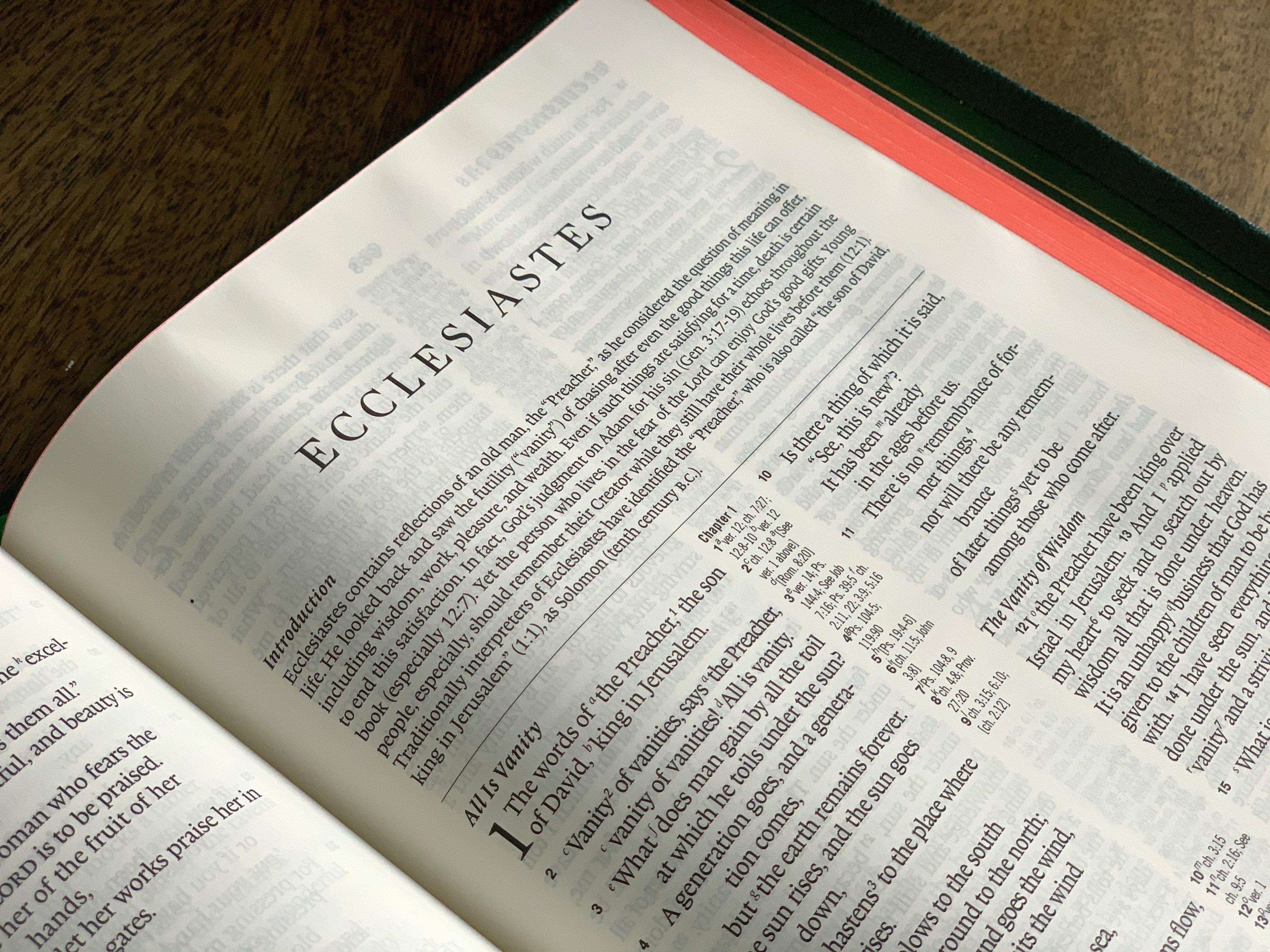
The wisest man in history, King Solomon, tells us, “There is nothing new under the sun” (Ecclesiastes 1:9).
The pride of man has reared its head through the latest technology and means of production before. As soon as human beings had the chance, they took brick and mortar and built the tower of Babel, aiming to reach as high as heaven to make a name for themselves — not for the God who gave them clay, water, and sun in the first place.
Today, we are seeing the latest expression of that sinful pride: men thinking they can hold infinite knowledge without it destroying them. Casting wisdom aside, they trust in their own minds and technical ability rather than in God.
In the Garden of Eden, Adam and Eve fell to the temptation of wanting to be all-knowing, like God. He judged that decision then, and He will not be mocked now (Galatians 6:7).
There is nothing more urgent for the unbeliever than to humble themselves, fall on their knees, and cry out to the Creator for salvation. There is, likewise, nothing more urgent for the believer than to refuse every temptation to fear in these times — to live the joyful, abundant life offered to them in Christ.
It is not a suggestion to be unafraid. It is a commandment given us by God, time and time again throughout the Scriptures.
Do not stifle your witness to the watching world.
The book of Ecclesiastes warns us that there are many dark days in this life under the sun, and that we will encounter circumstances which are difficult, perplexing, and often don’t make sense. Yet, there are a few things that author King Solomon found to be good: “Behold, what I have seen to be good and fitting is to eat and drink and find enjoyment in all the toil with which one toils under the sun the few days of his life that God has given him, for this is his lot” (Ecclesiastes 5:18).
New threats to our livelihood may come at alarming rates, but our responsibility as Christians remains the same: Do not dread the future or fear the potential of “superintelligence.” Rather, “fear God and keep his commandments, for this is the whole duty of man” (Ecclesiastes 12:13).
So, keep breaking bread with those you love. Keep enjoying the toil and the lot that God has given you with a grateful heart. Regardless of the news cycle, and whatever may come out of Washington and Silicon Valley — rejoice in what you have been given.
Our lives are but a vapor, a mist, Solomon says. The years go by quickly, and soon, we will return to dust.
That need not be depressing — in fact, let it be motivating as you live the most upright, joyous, and noble life possible along the way. Be encouraged, for we have all the instruction we need to please God in every circumstance, including the ones out of our control.
God says, “I am the Alpha and the Omega, the first and the last, the beginning and the end” in Revelation 22:13. If God is the Omega just as much as He is the Alpha, what is there to fear?
At the end of all things, just as much as at the beginning — He is there. And He rules and reigns at every point in between.
Human history was born from and ends in perfect wisdom, and God will tie the final bow on our story.
Not Sam Altman, or Dario and Daniela Amodei, or Donald Trump, or Xi Jinping — but Jesus Christ will do it, who is the same “yesterday, today, and forever” (Hebrews 13:8).
This article was written by Erica Mendel and originally published on The Washington Stand. For more content like this, visit Real Life Network.
World News
25 min
The 2026 Midterms: What Early Voting, National Security, and Economic Concerns Reveal
As the 2026 midterms approach, shifting voting trends and debates over immigration, national security, energy costs, and religious liberty are shaping America's political future. Explore the issues voters should examine beyond the polls.
With Election Day approaching on November 3, Americans are facing decisions that extend far beyond which political party controls Congress. Immigration enforcement, national security, religious freedom, education, and the cost of living are all shaping the national conversation. Yet the growing focus on polling numbers and campaign predictions can distract from the policies that will ultimately affect American families.
Recent early-voting trends and voter-registration changes have raised questions about conventional expectations for the midterm elections. But political momentum is difficult to measure, and no polling advantage guarantees an election result.
The significance of the 2026 midterms lies not simply in which party gains seats, but in the policies that elected officials will have the authority to advance or challenge.
For continued coverage of the issues shaping America's future, watch The Daniel Cohen Show on Real Life Network.
Early Voting, Political Momentum, and the Limits of Polling
Political commentators frequently turn to historical patterns when predicting congressional elections. Traditionally, the president's party has faced challenges during midterm elections, often losing seats as voters express dissatisfaction with the administration.
But historical trends do not determine individual elections.
Early-voting activity in states such as Michigan, Nevada, Arizona, North Carolina, and Pennsylvania has become a focus of political analysis. Changes in registration figures, ballot returns, and participation across different counties may offer clues about voter engagement.
Michigan presents an especially interesting example because the state does not register voters by political party. Analysts therefore examine geographic voting patterns, previous election results, and other indicators to estimate which groups are participating.
Those estimates have limitations. A county's historical voting preferences do not establish how every resident voted, and a higher share of early ballots does not necessarily translate into additional votes for a particular candidate.
National polling presents similar challenges.
CNN political analyst Harry Enten has discussed historical instances in which congressional polling underestimated Republican support. Such patterns are worth examining, but they cannot establish that the same errors will occur in 2026.
Campaigns must also account for changes in voter behavior. Americans increasingly have different options for casting ballots, including early in-person voting and voting by mail, depending on their state.
A shift in when voters cast their ballots does not always mean a shift in whom they support.
Rather than treating every new poll or early-voting report as a prediction, voters should recognize the distinction between participation data and actual election results.
The more important question is what candidates intend to do if elected.
Immigration, Religious Liberty, and the Responsibility of Public Officials
Some of the most consequential debates in the 2026 elections concern the federal government's responsibility to enforce immigration laws, protect national security, and preserve constitutional freedoms.
Congress has substantial influence over immigration policy through legislation, federal appropriations, and oversight of executive agencies. Decisions about border security, deportation priorities, asylum procedures, and pathways to legal status can affect communities throughout the country.
Candidates offer different approaches to those responsibilities.
Some emphasize stronger enforcement and expanded removal of individuals who violate immigration laws. Others support broader legalization measures, changes to enforcement practices, or additional protections for undocumented immigrants.
These differences deserve careful examination because campaign slogans rarely explain how a proposal would operate in practice.
National security questions have also entered several prominent Senate campaigns.
In Michigan, the contest involving Republican Mike Rogers and Democrat Abdul El-Sayed has generated debate over foreign policy, Israel, terrorism, and the responsibilities of elected officials.
Questions concerning a candidate's statements, political associations, and policy positions are legitimate subjects of public scrutiny. However, allegations involving family members or past organizational relationships must be distinguished from evidence of personal wrongdoing.
That distinction is particularly important when discussions involve religion.
A candidate's Muslim or Christian identity does not establish that person's national security positions, political loyalties, or commitment to constitutional government. Those judgments require examination of actual statements, decisions, and evidence.
Political accountability depends on documented facts and consistent standards, not assumptions about someone's faith, family, or political affiliation.
Religious liberty and questions surrounding human identity are also shaping state and local races.
A high school cross-country controversy in Washington has renewed debate over transgender participation in girls' athletics. Supporters of sex-based athletic categories emphasize competitive fairness and opportunities for female athletes. Supporters of inclusive participation policies emphasize access and protection from discrimination.
The disagreement raises broader questions about school governance, parental involvement, student rights, and the authority of state athletic associations.
These decisions are often made outside Washington, reminding voters that local and state elections can be just as consequential as congressional contests.
For Christians, evaluating these issues requires more than adopting the language of a political party.
Scripture establishes principles of truthfulness, justice, respect for human dignity, and responsible stewardship. Applying those principles to public policy requires examining what a proposed law actually does and whom it affects.
Energy Costs, Government Spending, and Biblical Stewardship
For millions of Americans, political debates eventually return to the household budget.
Fuel prices, groceries, rent, utilities, and transportation expenses directly influence financial stability. These concerns are particularly significant for families living on fixed incomes and workers whose livelihoods depend on transportation.
California's fuel prices have become a recurring example in debates about energy policy.
State taxes, environmental regulations, refinery capacity, distribution requirements, and broader oil-market conditions all contribute to the prices consumers pay. Political leaders disagree about how much emphasis should be placed on domestic production, environmental protection, infrastructure, and tax relief.
Those competing approaches involve real tradeoffs.
Policies designed to reduce emissions or encourage alternative energy sources may impose costs on certain industries and consumers. Measures intended to expand conventional fuel production may raise different environmental and economic concerns.
The appropriate response is to evaluate the evidence behind each proposal rather than assume that a single political decision explains every change in fuel prices.
Energy policy also intersects with national security.
Reliable fuel supplies support commercial transportation, military readiness, agriculture, and emergency services. Disruptions to domestic refining or international energy markets can create consequences far beyond the gas pump.
Congress influences these questions through taxation, spending, regulation, and oversight. State governments also exercise significant authority, particularly over transportation, environmental standards, and energy infrastructure.
That makes understanding the responsibilities of each elected office essential.
Biblical stewardship offers a helpful framework for considering these decisions.
Deuteronomy 30:19 records Moses calling Israel to choose life and blessing. That passage addressed Israel's covenant responsibilities and should not be treated as a direct endorsement of a modern political party. Nevertheless, Scripture consistently teaches that choices have consequences and that people bear responsibility for how they exercise authority.
Public officials are entrusted with decisions that affect families, communities, and future generations. Voters likewise have an opportunity to examine those decisions carefully.
Responsible civic participation begins with understanding the issues, testing political claims against the evidence, and recognizing the long-term consequences of public policy.
The 2026 midterms will determine who holds important positions of authority in Congress and in state and local governments. Those officials will make decisions involving national security, immigration, energy, education, and public spending.
Polls will continue to change. Campaigns will continue making competing claims. But the responsibilities of citizenship remain.
Christians can approach those responsibilities with prayer, discernment, and a commitment to truth, recognizing that political allegiance must never replace biblical conviction.
Follow the issues shaping the 2026 midterm elections, including national security, public policy, and the intersection of faith and culture, through The Daniel Cohen Show, streaming free on Real Life Network.
Faith & Culture
25 min
What’s on Your Ballot? How to Research Your 2026 Local Elections
Your 2026 ballot includes more than the races making national headlines. Learn how to research candidates, understand local offices, evaluate ballot measures, and approach Election Day with greater knowledge and discernment.
National races dominate election coverage, but some of the decisions that affect your daily life may appear much farther down the ballot.
The 2026 midterm elections on November 3 will determine control of the U.S. House and affect the makeup of the Senate, but voters across the country will also encounter state legislative races, governors’ contests, county and city offices, judges, school boards, and ballot measures.
That is why researching the 2026 ballot should involve more than recognizing a few names from national television.
If you are beginning to ask, “What’s on my ballot in 2026?”, the next step is to understand the different kinds of races and measures you may encounter and know what questions to ask about each one.
Start With the Full Ballot, Not Just the Headline Races
Most voters hear far more about Congress than they do about county government, school boards, judges, or local ballot initiatives.
That imbalance can make the bottom half of a ballot feel unfamiliar.
Before Election Day, take time to review the ballot information published for your jurisdiction and identify every race and measure that will require a decision. Instead of trying to research everything at once, make a list and work through it category by category.
Depending on where you live, that list may include:
- U.S. House and Senate races
- Governor or other statewide offices
- State legislative races
- County and municipal offices
- Judges or judicial retention questions
- School board races
- State constitutional amendments
- Local tax, bond, or policy measures
Some may receive extensive news coverage. Others may receive almost none. Lack of national attention does not make a race unimportant.
Understand What Each Office Actually Does
Candidate research becomes much more useful when you understand the responsibilities of the position being sought.
A candidate for Congress will deal with very different questions from a city council member. A governor has different authority from a state legislator. School board members, county officials, judges, and local prosecutors each operate within their own responsibilities.
Before comparing candidates, ask:
What authority does this office actually have?
That simple question can cut through a surprising amount of campaign rhetoric.
Candidates sometimes make promises involving issues their office has little power to change. Understanding the role itself helps voters evaluate whether campaign claims are realistic and whether the issues being emphasized actually belong within that office’s responsibilities.
Research Candidates Beyond Their Campaign Ads
Campaign websites are useful because they tell you what candidates want voters to know about them. They should not be your only source, however.
Compare campaign statements with interviews, public records, reliable local reporting, debate appearances, previous votes when applicable, and other primary-source material.
Useful questions include:
- What issues does the candidate identify as priorities?
- What specific policies does the candidate support?
- Has the candidate previously held public office?
- If so, what does that record show?
- What experience does the candidate bring to the position?
- Does the candidate explain how proposed policies would work?
- Are major claims about an opponent supported by evidence?
Party affiliation can provide some information about a candidate’s general political alignment, whether Republican, Democrat, independent, or another affiliation. But it does not substitute for researching the individual candidate.
Two candidates from the same party can differ substantially on priorities, policies, governing style, or experience.
Pay Particular Attention to State and Local Races
Local elections often receive less attention than congressional races, even though state and local officials can make decisions that affect people directly.
State legislators may vote on taxes, education, criminal law, business regulation, healthcare policy, and state spending. Local officials can influence public safety, development, transportation, housing, budgets, and other community priorities.
School boards may make decisions involving curriculum, district policies, budgets, and administration.
That makes local elections in 2026 worth researching with the same seriousness as races that generate national headlines.
Local journalism can be particularly valuable here because local reporters often cover candidate forums, controversies, voting records, and community concerns that never reach national media.
Don’t Skip the Ballot Measures
Candidates are not the only part of the November 3 election.
Many voters will also be asked to decide ballot measures involving state or local law. These could include constitutional amendments, taxes, bonds, public spending, criminal justice questions, government structure, education, or other policy matters.
Ballot-measure campaigns often reduce complicated proposals to memorable slogans.
Go deeper.
Read the actual proposal or an official summary. Understand what changes if it passes and what remains in place if it does not. Look at arguments from both supporters and opponents, but also distinguish campaign claims from what the measure itself would legally do.
A useful research checklist is:
What does the measure change?
Who or what would be affected?
What would it cost?
How would it be implemented?
Am I willing to pay increased taxes for this measure?
What are supporters arguing?
What are opponents arguing?
Which claims can be independently verified?
The wording may take a little more time to understand, but that time can be well spent.
Separate News Reporting from Political Persuasion
By the final weeks of an election, voters can be surrounded by campaign ads, fundraising emails, social posts, endorsements, commentary, and viral videos.
Those sources may contain useful information, but they also have a purpose.
A campaign ad exists to persuade you. So does a political action committee advertisement. An endorsement tells you what another person or organization wants you to conclude.
That does not make those materials worthless. It simply means they should be recognized for what they are.
Whenever possible, compare persuasive claims against original documents, direct quotations, voting records, full interviews, official reports, and reporting from multiple sources.
Proverbs 18:17 says, “The first one to plead his cause seems right, until his neighbor comes and examines him” (NKJV). That principle is especially useful during an election season.
Ask How the Issues Affect Your Community
National political conversations can sometimes obscure what an election means closer to home.
A question about education, public safety, taxation, housing, religious liberty, healthcare, or economic policy may look different depending on the state, district, or community involved.
As you research state and local elections, ask how the major issues being discussed connect to the actual offices and measures on your ballot. Which decisions are made federally? Which belong to your state? Which are controlled locally?
Understanding that distinction makes political research more useful and helps prevent national rhetoric from overshadowing the decisions voters are actually being asked to consider.
Christians Can Approach Election Research with Discernment
For Christian voters, becoming informed is part of taking civic responsibility seriously.
That does not require assuming that every believer will make identical political choices. It does mean approaching candidates and policies thoughtfully rather than allowing a party label, celebrity endorsement, social media clip, or campaign advertisement to make the decision for you.
Research what candidates actually believe and have done. Examine policy proposals carefully. Consider how the issues intersect with biblical convictions about human dignity, justice, truth, freedom, family, stewardship, and care for others.
And recognize the difference between biblical principles and political messaging that simply borrows Christian terminology.
Discernment requires more than hearing what you already agree with.
Know Your Ballot Before November 3
The closer Election Day gets, the louder the political conversation will become.
Researching early gives you time to move at a different pace.
Start with the races and measures that will affect your own community. Understand what each office does. Compare candidates. Examine ballot measures. Check campaign claims against reliable information. Then continue following the larger national stories shaping the 2026 midterms.
Local knowledge and national awareness belong together.
Stay Informed with Real Life Network
Real Life Network will continue following the news, cultural conversations, and major issues shaping the 2026 elections as November 3 approaches.
Then on Election Night, America Speaks ’26: Election Night Live will bring viewers live results, updates, conversation, and biblical perspective on races and issues from across the country.
Stay informed locally and nationally. Sign up for America Speaks ’26 updates from Real Life Network as Election Day 2026 approaches.
World News
25 min
National Security, Israel, and the Questions Behind the 2026 Midterms
As the 2026 midterms approach, national security deserves attention alongside the economy. From Iran and Israel to domestic terrorism and rising antisemitism, congressional decisions carry consequences for American families, religious freedom, and public safety.
The economy matters. Groceries, gas prices, housing costs, and the pressure on American families deserve serious attention. But national security belongs in that conversation, too. The decisions made in Washington affect more than household budgets. They shape the country's ability to confront terrorism, protect religious communities, secure its borders, and respond to threats abroad.
Those connections deserve closer examination. Through The Daniel Cohen Show on Real Life Network, the intersection of faith, national security, Israel, and American politics remains central to understanding the headlines.
The approaching November 3 midterms raise questions that go well beyond which party controls Congress. Who sets national security priorities? How should America respond to Iran and its terrorist proxies? What responsibilities do elected officials have when antisemitism and political violence reach American communities?
National security is not an abstract debate reserved for Washington. Its consequences can reach neighborhoods, schools, houses of worship, and ordinary families.
Iran, Israel, and the Responsibility to Confront Terrorism
Iran remains central to the discussion about American national security and the Middle East. Its support for armed groups, including Hezbollah and Hamas, has made its regional influence a continuing concern for the United States and Israel.
Yet political disagreements over Iran and Israel often become tangled in arguments about military assistance, international law, and America's responsibilities overseas.
Michigan's Senate contest illustrates those competing priorities.
Abdul El-Sayed has argued against unconditional American military assistance to foreign governments, including Israel. In interviews, his position has emphasized applying international law consistently and restricting weapons transfers to governments accused of violating it.
That approach raises legitimate questions about American foreign policy. Military assistance is not an unlimited obligation, and elected officials have a responsibility to scrutinize how taxpayer money is spent.
But the discussion cannot stop there.
Israel faces rocket and missile threats from hostile armed groups and regional adversaries. Defensive systems such as Iron Dome exist to intercept incoming projectiles and protect civilian populations. Any proposal to restrict military assistance therefore deserves careful examination of its potential consequences for defensive capabilities as well as offensive operations.
There is also an important distinction between criticizing a government's military decisions and excusing terrorism directed against its citizens.
The March attack against Temple Israel in West Bloomfield, Michigan, brought that distinction much closer to home. A vehicle carrying incendiary materials was driven into a synagogue complex that also serves children and families. The incident prompted renewed concerns about antisemitic violence and the reach of conflicts originating thousands of miles away.
Political leaders can disagree about Israel's government, military operations, and American foreign assistance. Those disagreements do not diminish the obligation to condemn attacks against Jewish civilians and religious institutions.
No disagreement over foreign policy can justify threatening Jewish families or treating American religious communities as extensions of a foreign government.
The same principle must apply to every community. A synagogue, church, mosque, or school should never become a target because of anger over events elsewhere.
Why National Security Belongs in Congressional Debates
The connection between national security and congressional elections is more substantial than campaign rhetoric might suggest.
Congress controls federal appropriations, establishes statutory authorities, conducts oversight, and plays a central role in shaping the agencies responsible for national defense and domestic security. The Senate also exercises its constitutional responsibility to provide advice and consent on presidential nominations requiring confirmation.
Those responsibilities make congressional debates over homeland security, intelligence gathering, immigration enforcement, and counterterrorism consequential.
An alleged ISIS-inspired plot involving the Mall of America in Minnesota offers an example of the threats federal investigators seek to identify before violence occurs.
According to the account presented by federal authorities, an 18-year-old suspect had communicated about supporting ISIS and allegedly considered carrying out an attack in the United States after plans to travel overseas did not materialize. The allegations require the usual distinction between prosecutors' claims and facts established in court.
But the broader issue remains significant: preventing terrorism requires investigative resources, intelligence cooperation, appropriate legal authorities, and effective oversight.
Protecting the public also requires precision.
Terrorist organizations are responsible for their own violence. Their actions must not become an excuse to assign collective guilt to immigrants, Muslims, or particular ethnic communities. Effective counterterrorism depends upon identifying actual threats rather than confusing religious identity or national origin with criminal conduct.
That is why national security policy requires more than slogans about being tough or compassionate.
The public deserves to understand how candidates would approach terrorism investigations, border security, intelligence oversight, civil liberties, and the constitutional limits of government authority.
Those questions belong alongside debates about inflation, healthcare, education, and taxation.
Antisemitism, Political Rhetoric, and the Limits of Party Loyalty
Three years after the Hamas-led October 7 attack, the anniversary remains a painful occasion for Jewish communities around the world.
Approximately 1,200 people were killed in the attack, and 251 were taken hostage. The consequences have extended far beyond Israel, including heightened security concerns and incidents of antisemitism in the United States.
New York City's response to the anniversary illustrates how difficult the public conversation has become.
Mayor Zohran Mamdani's remarks acknowledging the suffering caused by October 7 while criticizing Israel's subsequent military actions became a point of contention among activists with sharply different expectations.
The controversy reflects a larger problem in contemporary politics: expressions of sympathy, criticism, and disagreement are increasingly measured against demands for complete ideological agreement.
Recognizing the suffering of Israeli victims does not require ignoring Palestinian civilian suffering. Likewise, expressing concern for Palestinians does not require minimizing the October 7 atrocities or excusing antisemitism.
Both truths can be maintained without contradiction.
Political movements become less capable of honest debate when every disagreement is treated as betrayal. Acknowledging suffering should not depend upon whether the victims belong to a preferred political or religious community.
For Christians, Scripture establishes a higher standard than political loyalty. Human beings bear God's image, and the obligation to speak truthfully does not disappear when truth becomes inconvenient to a favored party or cause.
Proverbs 18:17 reminds readers that the first account of a dispute may sound persuasive until it is examined. That principle applies to viral videos, campaign statements, accusations of extremism, and claims about political opponents.
Christian discernment requires consistency: condemn terrorism without qualification, reject antisemitism without hesitation, and examine political claims without surrendering judgment to party loyalty.
The approaching midterms will generate enormous attention around polling, turnout, and campaign strategies. Those subjects are part of the political process, but they should not obscure the governing responsibilities attached to the offices being contested.
A Senate vote can affect national security appointments. A congressional appropriation can determine resources available to federal agencies. Legislative oversight can expose failures or strengthen accountability.
Understanding those responsibilities provides a more useful framework than treating every political development as a contest between personalities.
The same seriousness belongs in discussions about Israel, Iran, and religious freedom. American foreign policy involves real tradeoffs, and domestic security decisions can affect both public safety and constitutional liberties.
No political party possesses a monopoly on wisdom, and no candidate should be exempt from difficult questions.
The standard should remain consistent: evidence before accusations, clarity before slogans, and responsibility before political convenience.
Follow the intersection of biblical truth, Israel, national security, and American current events through The Daniel Cohen Show, streaming free on Real Life Network
.jpg)
World News
25 min
Media Starts to Doubt Dems’ Invincibility as November Creeps Closer
As the 2026 midterms approach, shifting media coverage and conflicting polls are raising questions about election forecasts. Historical polling errors, voter turnout, and competitive congressional races highlight the uncertainty surrounding November 3.
After months of flooding the zone with glum predictions for Republicans, there’s been a quiet but meaningful shift in major media headlines. Left-leaning outlets desperate to make the GOP’s demise a self-fulfilling prophecy seem to be subtly hedging their bets against another polling embarrassment. In the last handful of days, even the big dogs — The New York Times, Washington Post, and Newsweek — are conceding that maybe the election forecasts aren’t as lopsided as they’ve been leading voters to believe.
Suddenly, readers are clicking on stories that paint a very different picture of the apocalyptic landscape for Republicans they’d come to expect. Articles like “Democratic Optimism in Six Senate Races May Be a Mirage,” “3 Bright Spots for the G.O.P.,” and “How Much Can Republicans Outrun Trump’s Approval?” are popping up in the same pages that have urged Americans to don galoshes for the Blue Tsunami. And while there certainly are very troubling signs for Speaker Mike Johnson’s (R-La.) party, one lesson everyone should have learned by now is that polls are an incredibly flawed measure of public opinion.
In the modern age, Republicans have consistently outperformed the industry’s numbers in presidential and midterm elections. Pollsters have frantically tried to solve this puzzle, especially after a string of national humiliations. After a lot of head-scratching, two theories for this unpredictability revolve around the GOP. “First, Republicans are becoming more distrustful of institutions and society, and that may be extending to how they feel about pollsters. Second, suburban Republican college graduates are more likely to fear professional sanction for their views and are therefore self-censoring more, including in surveys,” FiveThirtyEight’s Emily Ekins suggests. Most experts estimate that conservatives underpoll somewhere between 3-5% — a massive swing for anyone trying to prophecy close races.
Over the last handful of days, the media seems to be making an intentional effort to temper their excitement, noting that as optimistic as Minority Leader Chuck Schumer (D-N.Y.) may be, “history offers a warning to Democrats, as polls in recent elections underestimated Republicans in key states. Control of the Senate could come down to just a handful of races where polls show razor-thin margins.” In places like Alaska, Iowa, Maine, Michigan, Ohio, and Texas, Newsweek warns, Democrats appear to have a polling edge. “But Republicans have outperformed polling averages in many of those same states over the past few elections. Polling errors are not necessarily repeated from cycle to cycle. But a similar pro-Republican polling error this cycle would not bode well for Democrats’ chances of flipping the Senate.”
Watch live coverage of election night on Real Life Network.
Frankly, it’s “impossible to know for sure” what the polling error could look like this year, Syracuse Political Science Professor Grant Davis Reeher acknowledged. “There are some pretty big known unknowns in this election, which could throw off polls,” he said. “A primary one is turnout. Polls must make educated guesses about who is most likely to vote. It’s a little trickier in midterms.”
National Review’s Jim Geraghty, who hasn’t exactly been a glass-is-half-full prognosticator, offered what he called “the cheeriest midterm take for Republicans you’re going to find,” urging readers to second-guess the excitement surrounding Democrats in cherry-red Kansas, South Carolina, South Dakota, Nebraska, and Florida. Despite the media’s insistence that GOP candidates are in trouble, the polling doesn’t necessarily bear that out. “There’s good reason to not believe the hype; we’ve seen this sort of narrative before.”
He ticks off the numbers for each key race, along with historical trends, dismantling the idea that conservatives are in trouble. “The lesson of this is not that all the polls are always wrong, or that every prediction of an upset Democratic win is always wrong,” Geraghty cautions. “But there’s an extremely familiar narrative of ‘this Democrat really has a shot in a deep red state!’ that rarely pans out; when it does, it’s usually because of a spectacularly flawed Republican candidate.” Americans should be wary of a blue wave, he writes, if only because “certain left-of-center media voices always tell them there will be a blue wave every November.”
An unlikely source echoes NR’s guardedness: The New York Times. Despite what pundits say, “there is also quite a bit of good news for Republicans,” Ruth Igielnik wrote late last month. For starters, “Republican Senate candidates are running ahead of the party. … Each of [them] is outrunning President Trump’s popularity in their states, sometimes by double digits. … And in each of the races, Republican candidates are winning some voters who otherwise say they want Democrats to control the Senate. Taken together, these are signs that in these competitive, Democratic-leaning states, Republicans have nominated strong candidates who appeal beyond their base.”
Then, of course, there’s the Left’s ugly infighting. “As Democrats are divided,” the Times points out, “Republicans are united. … We asked Democrats across the country if they felt the party was united or divided. About half said the party was united, and half said divided. Those numbers are nearly identical to a survey we ran in 2016. Republicans, on the other hand, are feeling very unified. In our most recent national survey, 70 percent of Republicans said they felt the party was united. That is a dramatic departure from 10 years ago. In 2016, more than 80 percent of Republicans said they thought the party was divided.”
Over at The Washington Post, Scott Clement reiterates that a “poll of two key House districts shows good signs for Democrats, but no tsunami.”
As for the bluster that even Hispanics are abandoning the GOP, Rasmussen Reports soundly beats back that narrative. In results released Monday, Hispanic voters favor Republicans by a 50 to 42% margin over Democrats. “The poll also indicates a tightening battle for control of Congress, as the Democrats’ lead over Republicans decreased for the second week in a row, according to the company. Overall, voters said if the election was held today 47 percent of likely voters would vote for the Democrat candidate, while 44 percent would vote for the Republican. Four percent of voters said another party’s candidate and just 4 percent were undecided.” In other words, Republicans have slashed the Democrats’ lead in half since just mid-September, “particularly with independent voters.”
But as encouraging as those signs are, leadership is clear-eyed about the hill they have to climb this November. “Now listen, this is going to be a very close election,” Speaker Johnson underscored Tuesday. His Senate counterpart, Majority Leader John Thune (R-S.D.), has been cautiously optimistic about his side of the Capitol. “I think we can keep the majority,” he told Politico this week. “I think all of these races are margin of error, at least the ones that we have to win. And historically, at least if you look at polls, we tend to outperform them.”
House Majority Leader Steve Scalise (R-La.) made that same point in a conversation with Family Research Council President Tony Perkins on “This Week on Capitol Hill.” When Cook Political Report, a widely respected organization, moved more seats to the toss-up or Democratic-leaning column, the House’s second-in-command wasn’t worried. In his mind, there’s more to the story. “You know, the polling really is interesting when you dig into it. You’re seeing an undersampling of Republicans, and we’re digging into some of these. Let’s be clear too. There are a lot of close races, not just Republican races.” He pointed to a few states like New Hampshire where GOP candidates are making a dent in Democratic areas too. “There [are] about 35 seats across the country that are truly swing districts,” Scalise observed. “Twenty of them are held by Republicans that are close right now, but 15 are held by Democrats that are also close, that we have a real chance to flip. And so, turnout is going to be a big factor. Who really does show up?”
The GOP has another secret weapon this election — in large part thanks to President Trump and Speaker Johnson — and that’s campaign cash. As Perkins highlighted, conservatives “have a strong edge on the fundraising to get their message through in these final days.” Scalise nodded. “We really do. You know, it’s rare that we outraise Democrats in a lot of these seats. We have now. And again, I think people are seeing what’s at stake, and they’re donating money.”
The media, he thinks, “[is] counting on Republicans, especially traditional conservative voters, to just stay home. And I don’t think that’s going to happen, because I think more and more people are seeing this sharp contrast [between the two parties].” With the rise of the Democratic Socialists, Scalise warns, “This isn’t like two candidates [who] are similar. This is common sense versus crazy. And some of these candidates … [don’t just want] to defund the police — they want to disarm the police. They actually advocate for taking guns away from police officers. You were a police officer. Could you imagine approaching a criminal who’s got a gun and saying, ‘Hey, let’s have a conversation and try to talk this out?’ He shoots you, and it’s over. This is insanity. And that’s beyond crazy. But if people stay home ... [these radicals win]. And that’s why people can’t stay home.”
At the end of the day, Scalise insisted, Democrats are trotting out polls “to make it look like they’re doing better than they are, because they want to depress conservative voters. Because if conservative voters stay home, guess what? Socialists will actually win. They can’t win if you show up and vote on November 3rd.”
That’s right, Perkins stressed. “The only poll that really counts is Election Day when people turn out and vote.”
Watch live coverage of election night on Real Life Network.
This article was written by Suzanne Bowdey and originally published on The Washington Stand. For more content like this, visit Real Life Network.
World News
25 min
New California Law Requires Churches to Implement Pro-LGBT ‘Anti-Hate Speech’ Training
California’s new workplace anti-hate speech training law is raising religious liberty concerns. Christian advocates warn that vague language could pressure churches and religious employers to provide training that conflicts with their biblical beliefs.
A newly enacted law in California that requires virtually all employers to give employees “anti-hate speech” training is raising red flags, as experts say that the mandate could force churches to provide training that conflicts with sincerely held biblical beliefs regarding sexuality, gender, and marriage.
Late last month, California Governor Gavin Newsom (D) signed into law AB 1803, a measure that requires all employers with five or more workers, including all churches and other nonprofit religious organizations, to provide employees with “anti-hate speech” instruction. But as observers like the California Family Council (CFC) are pointing out, the legislation does not define “hate speech,” instead handing the job to the state’s Civil Rights Department. The bill mandates that the training must confront workplace speech that “vilifies, humiliates, or incites hatred” against individuals based on what the state has already deemed a protected characteristic, which includes sex, gender identity, gender expression, and sexual orientation.
The CFC goes on to observe that the statute, which will go into effect on January 1, 2028, never mentions churches or religious nonprofits and their First Amendment rights to hold sincerely held religious beliefs about sexuality and gender. It also “fails to separate protected expression from unlawful conduct,” noting that the Supreme Court held in 2017 that “the First Amendment has no hate speech exception.”
Greg Burt, who serves as vice president of CFC, further pointed out the problems with AB 1803’s vague language regarding key terms that it says constitute “hate.”
“What does it mean to vilify? What speech actually humiliates?” he wondered during “Washington Watch with Tony Perkins” Tuesday. “[M]any times legislators consider many Christian beliefs when they’re expressed — especially regarding sexuality or gender — they accuse us of hating people. That’s [the] farthest thing from my mind. But we are simply advocating for our view that sex is determined by biology, and God created us both male and female. Well, to many people that is humiliating and that incites hatred. And so that’s the problem with this legislation.”
Burt went on to clarify that AB 1803 is being folded into a previously enacted statute that mandates sexual harassment training, which already specifies that using accurate biological pronouns constitutes “harassment.” “[Businesses are] already required to go through sexual harassment training, and we found out several years ago they redefined what sexual harassment means to include gender identity,” he explained. “… [The] California Civil Rights Department says misgendering is harassment, and so this training is on top of that already egregious training.”
As for how employers can fulfill the required training, Burt noted that hiring outside trainers is allowed, but the state-provided training that includes pro-LGBT messaging is free. “Right now, the state puts together a free curriculum — that’s how they do it with sexual harassment training, but you’re not required to use that training. You can come up with your own. But we don’t know exactly what ‘anti-hate’ is going to include, right? [Their] definition of speech that ‘humiliates’ — what does that mean? It really depends on the person who’s receiving the language.”
Burt further urged churches and other religious organizations in the Golden State to push back vigorously against the mandate. “What I think the state is doing is it’s trying to intimidate churches into following through with this,” he lamented. “They should not be receiving any kind of ideological training from the state on any moral issue. That’s why what churches need to be doing is asking for religious accommodations. The federal law and the state law already require businesses to accommodate people’s faith if they’re being required to do something that violates their faith. … [T]his is one of those points in history here in California where civil disobedience is going to be necessary.”
Burt concluded by emphasizing that state officials in California are counting on churches to kowtow to their demands instead of standing up for the constitutional freedoms, which has already proven to be a winning strategy.
“I’m sure they’re already thrilled that they get to retrain the entire population to believe what they believe regarding gender identity,” he reflected. “And so once we get accustomed to this and say, ‘Well, this is just what California requires, I guess we have to do it.’ No, you don’t. Folks, you’ve got to resist, and that includes individual employees. That’s what we are encouraging people to do. And we are having success. We have some attorneys we’re working with, and when people have been asking for religious accommodations, they have been accommodated.”
This article was written by Dan Hart and originally published on The Washington Stand. For more content like this, visit Real Life Network.
Thank you! Your submission has been received!
Oops! Something went wrong while submitting the form.
World News
As China’s communist regime continues to accelerate its oppression of Christian pastors and believers, a campaign to allow a persecuted pastor ailing from cancer to reunite with his family is intensifying ahead of Xi Jinping’s summit with President Donald Trump in Washington in September.
Last week, reports surfaced that three young pastors of the independent Maizhong Reformed Church in Fuyang have been sentenced “to prison terms of up to one year and seven months” simply for performing weddings and organizing religious instruction, among other ordinary pastoral work. The court accused the Christian pastors of “organizing illegal gatherings” after the communist regime had legally shut down the church, claiming that their activities “had severely disrupted public order.”
Outcry over the case has grown after the wife of one of the pastors, Xu Chao, described the miscarriage of justice on social media. “What is infuriating is that people who clearly committed no crime have been forcibly convicted, while those who illegally installed surveillance equipment in my home remain free from consequences,” she wrote. “Those who cause innocent people to suffer injustice are the ones who are guilty. History will remember everything that is happening today and will judge every decision that has been made.”
As noted by ChinaAid, the Chinese Communist Party (CCP) has increasingly employed charges of “illegal business operations,” “fraud,” “inciting subversion of state power,” and “organizing illegal gatherings” to describe routine activities of churches that are disfavored by the state ever since it instituted its revised Regulations on Religious Affairs in 2018. As a result, a number estimated to be in the thousands of “unregistered” house churches have been shut down, and hundreds of pastors have been imprisoned.
A particularly tragic case that is being spotlighted by human rights advocates is that of Pastor John Cao, a permanent resident of the U.S. who spent seven years in a Chinese prison simply for serving the destitute along the China-Myanmar border. As described by ChinaAid Founder and President Bob Fu, Cao is being restricted from leaving the country to reunite with his family despite suffering from rapidly progressing stage 4 prostate cancer.
“He has been a faithful pastor, humanitarian, [and] educator,” Fu related during “Washington Watch” Wednesday. “He could have chosen to lead a comfortable American dream life when he came to the U.S. more than 40 years ago. But he felt God called him to really continue the gospel ministry — and especially on the field of education in China. And so, he established essentially 16 schools for 2,000 children on the China-Myanmar border for those children who are under persecution by the Myanmar military regime and who otherwise would not have any education at all. He gathered churches from the Chinese underground church and American churches [to] help them. But for that, basically, he was lured back into China and then sentenced to seven years [of] imprisonment.”
Fu continued, “He served [every] single day of [the] seven years, and unfortunately, the Chinese government [is] still preventing him from coming back to reunite with his Caucasian-American wife … and their two sons and even their first grandchild. … [N]ow he has been diagnosed with stage 4 prostate cancer and [it] is spreading into his bones, and he’s not able even to walk anymore at the age of 67 years old.”
Fu, who serves as a senior fellow for International Religious Freedom at FRC, went on to urge President Trump to appeal to Chinese President Xi Jinping during their upcoming September 24 summit in Washington to allow Cao to reunite with his family. “[T]ime is of the essence,” he underscored. “We urge … President Trump to speak from really [a] humanitarian basis to President Xi Jinping … to just give back his passport and allow him to fly back to spend the rest of his limited time on this earth to be with his family.”
Fu highlighted a petition drive asking the president to advocate on behalf of Cao with a goal of reaching 100,000 signatures before the September 24 summit. “Please pray fervently that the Lord will grant mercy and grace for President Trump to hear these petitions and make an appeal to [Xi] to get Pastor John Cao to be home with his family in the next few weeks,” he concluded.
This article was originally written by Dan Hart and published on The Washington Stand. For more content like this, visit Real Life Network.
25 min

August 20, 2026
The Washington Stand
World News
American politics has never been gentle, but something deeper is happening when outrage becomes a strategy, accountability depends on political affiliation, and institutions entrusted with protecting the truth appear unwilling to challenge their own side. From attacks on political opponents to questions surrounding election integrity and media credibility, Americans are being forced to ask whether the same standards still apply to everyone. Real Life Network brings these conversations together through a biblical worldview, examining the stories and cultural battles shaping the country.
The problem is bigger than any one politician or political party. It is what happens when winning becomes more important than truth.
When Political Ambition Rewards the Outrageous
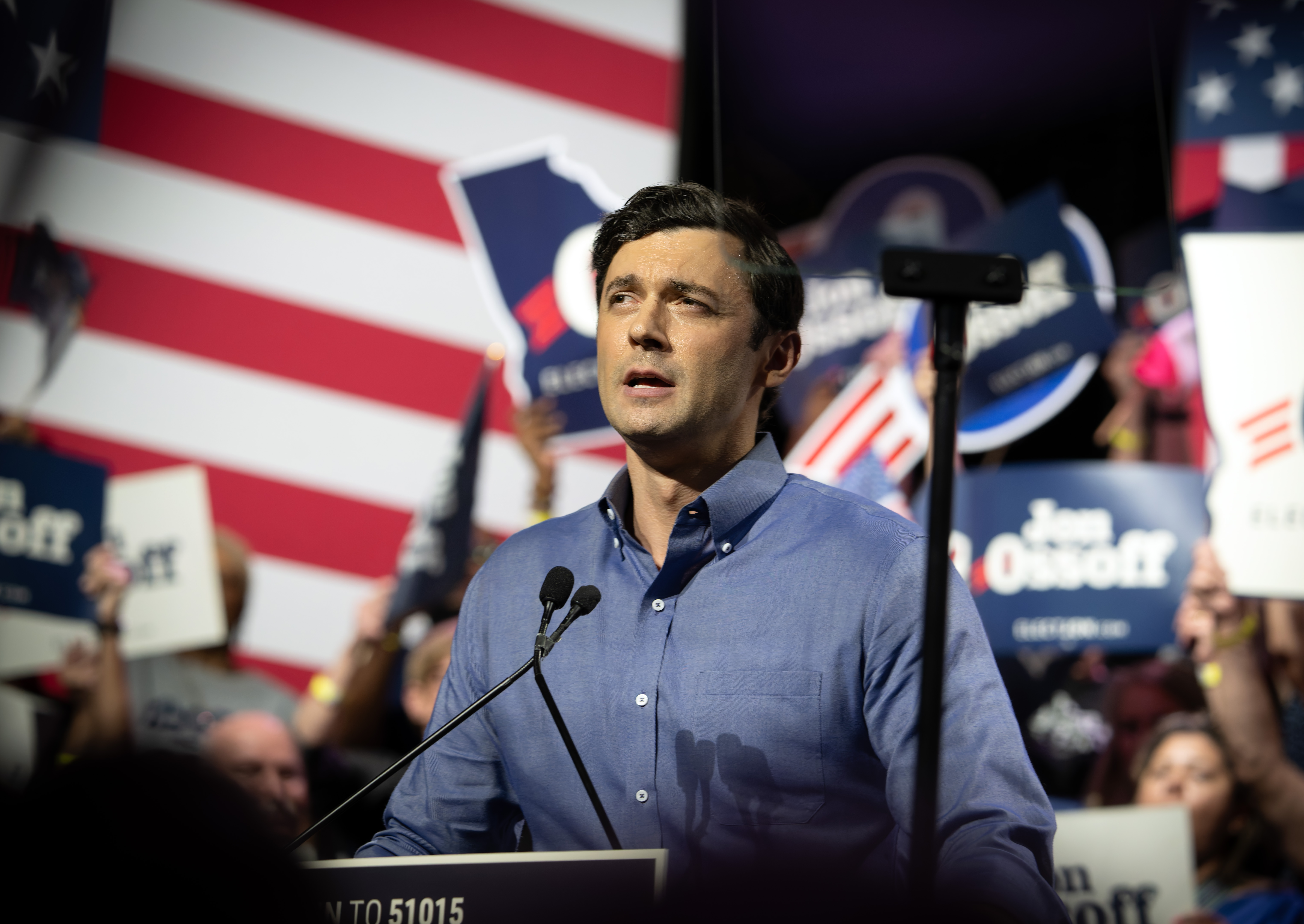
Georgia Senator Jon Ossoff recently drew criticism after invoking Trump administration staffer Natalie Harp during remarks attacking President Donald Trump. Ossoff accused the president of retreating from his responsibilities while traveling with Harp, prompting criticism that his wording insinuated something inappropriate about their relationship. When later asked why he specifically mentioned Harp, Ossoff described Trump as retreating into a “bubble of West Wing aides” who serve as a “security blanket.”
Harp’s story makes the attack particularly striking.
A bone cancer survivor, Harp underwent two unsuccessful rounds of chemotherapy and was rejected from clinical trials. In 2018, Trump signed the federal Right to Try Act, which expanded access for eligible terminally ill patients seeking investigational treatments outside traditional clinical trials. Harp later credited the policy with giving her another option in her fight against cancer and eventually went to work for Trump.
The controversy raises a broader question about political discourse: When does legitimate criticism of an administration become a personal attack against the people who work inside it?
Political disagreement is unavoidable. Personal destruction should not be.
The same principle applies when evaluating candidates within one's own political coalition. The program highlighted former Biden aide Michael LaRosa’s refusal to automatically support Michigan Democrat Abdul El-Sayed, despite pressure from a Democratic caller who questioned why a party strategist would publicly criticize a potential nominee.
LaRosa’s response contained a principle increasingly absent from American politics: “Vote blue no matter who” still leaves one important question unanswered. Who?
Character and conviction should matter more than the letter beside a candidate's name.
Holding political opponents accountable is easy. Holding allies accountable is much harder. Yet that is precisely where integrity is tested.
Election Integrity Requires Questions, Not Silence
That need for accountability extends directly to America's elections.
The program returned to Minnesota's voter-registration system after undercover journalist James O'Keefe recorded interactions with election workers concerning the state's vouching rules. Minnesota allows a registered voter from a precinct to vouch for the residence of other individuals registering to vote there, a procedure that has generated renewed controversy over whether adequate safeguards exist.
The videos included deliberately provocative hypothetical scenarios involving people described as recent arrivals from Gaza and even Hamas members. Those scenarios should not be confused with evidence that Hamas members actually voted in Minnesota. But the underlying question raised by the demonstrations remains worth examining: What verification should be required before someone receives a ballot?
Election integrity should never become a partisan issue. Eligible citizens should be able to vote, and Americans should be able to trust that only eligible citizens are voting.
Confidence disappears when legitimate questions are treated as forbidden.
The conversation then widened into immigration and assimilation. America has historically welcomed people from around the world. But immigration works best when newcomers become participants in the nation rather than creating isolated societies within it.
Legal immigration and assimilation are not contradictory ideas. A country can welcome immigrants while expecting respect for its Constitution, laws, customs, and institutions.
The biblical reflection offered in the program came from Psalm 11:3: “If the foundations are destroyed, what can the righteous do?”
But the Psalm does not end there. The next verse declares that the Lord remains in His holy temple and His throne remains in heaven. That changes the Christian response to cultural decline.
When earthly foundations crack, believers are not called to retreat in despair. They are called to remain faithful and rebuild.
Institutions Lose Trust When Standards Change
The final issue is institutional credibility.
Journalists wield tremendous power because they determine which questions are asked, which stories receive attention, and what information reaches millions of Americans. That responsibility becomes especially important when covering the health and capacity of a sitting president.
The program highlighted recent comments from CNN's Jake Tapper describing the influence exercised by President Joe Biden's family and close aides during his administration. According to the comments discussed, cabinet officials described Biden as operating more like the senior member of a board while significant authority rested with people surrounding him.
The criticism was not simply that questions existed about Biden's condition. It was that some journalists who now acknowledge those questions had previously pushed back aggressively against people raising them.
If journalists knew there were legitimate concerns, the public deserved to know when those concerns mattered most, not after an election when books could be written about them.
The program extended that concern to law enforcement through newly discussed FBI material involving former Congressman Eric Swalwell and Christine Fang, a woman previously identified in reporting as a suspected Chinese intelligence operative. The transcript argues that the government's handling of the matter illustrates a potential double standard in how politically sensitive investigations are treated.
Some of the transcript's specific claims about Swalwell go beyond what the supplied material independently establishes, so they should be treated as allegations rather than settled facts. But the broader principle does not depend on one case.
Justice cannot have one standard for political friends and another for political enemies. Journalism cannot demand transparency from one administration while protecting another.
A functioning republic requires something more difficult than partisan victory. It requires citizens willing to demand truth even when the truth damages their preferred side.
For Christians, the standard goes deeper still. Political parties, politicians, journalists, and government institutions will inevitably disappoint. God's truth does not change with an election cycle. The task is therefore not merely to win political arguments, but to become people capable of recognizing truth, defending what is right, and refusing to surrender conviction for political convenience.
Watch The Daniel Cohen Show on Real Life Network for more coverage connecting today's political and cultural headlines to biblical truth.
25 min
When Truth Becomes Inconvenient: Politics, Elections, and America’s Crisis of Accountability
August 19, 2026
Daniel Cohen
World News
Across the U.S., a startling statistical anomaly has quietly metastasized into a national crisis: millions of working-age males have begun ditching the workforce. They’re not retiring, nor are they registering as unemployed. They simply have stopped looking for work.
While economists have debated endlessly over structural shifts, such as automation and wage stagnation, a more uncomfortable conversation is appearing in policy circles. The silent exodus of American men denotes a deeper cultural pandemic, which is a decaying work ethic stoked by a swell of public handouts and a pervasive social narrative that tells the individual that they should settle for nothing less than a passion project.
The Vanishing
According to Bureau of Labor Statistics data, labor force participation for those in the prime age for work — between 25 and 54 years of age — has experienced a steady, decades-spanning decline. At the midpoint of the 20th century, over 95% of men were working or seeking employment. Today, that rate has plummeted dramatically, leaving nearly seven million men of prime age sidelined as contributors to the American economy.
Policy analysts and sociologists alike warn that this developing trend cannot be explained away by mere shifts in demographics. Unlike past generations, who considered self-reliance a badge of honor, today’s lack of a vigorous workforce illustrates the fundamental erosion of the conventional work ethic.
As scholar Nicholas Eberstadt observed in his feature study on the crisis, “the progressive detachment of so many adult American men from regular paid labor can only result in lower living standards … and the consequences are not just economic. The male exodus from work also undermines the traditional family dynamic, casting men into the role of dependents and encouraging sloth, idleness, and vices.”
The Trap of Entitlement
A major driver of this contraction in the workforce is the direct consequences of social safety net expansion. What was once designed with the intention of being temporary cushions during economic recession has morphed into a permanent way of living for millions of able-bodied Americans.
Divided amongst state-funded disability benefits, nutritional assistance, and low-income housing subsidies, the economic estuary that exists between a demanding career and remaining jobless has dried up to almost a point of non-existence. When safety nets mitigate non-work without demanding an exchange, the motivator to persevere through demanding labor dissolves.
Eberstadt warned that this trajectory threatens the fundamental ethos of the country, noting that “whether we choose to recognize it or not, this feature of the American condition, the new ‘men without work’ normal, is inimical to the American tradition of self-reliance.”
The Myth of Passion
Building upon this policy failure is a corrosive cultural fable that has been fed to the younger generations, which is the notion that everyone is entitled to a job that falls in line with their own passions perfectly.
Over decades, higher education institutions and popular media have preached a doctrine of self-fulfillment above everything. Young men have been conditioned to believe that a job in manufacturing or heavy construction is a compromise of the potential they have when it doesn't align with their dream career.
Economic reality operates in the context of necessity, however, not utopian ideals. Popular figures such as Mike Rowe have strongly pushed back against this cultural illusion, arguing that “when people follow their passion, they miss out on all kinds of opportunities they didn’t even know existed… never follow your passion but always bring it with you.”
Branding ordinary, tough jobs as “beneath” today’s worker, American society has spurred young men to wait around for their dream opportunities to manifest — even though there’s no guarantee that it will ever arrive, rather than rolling up their sleeves and doing what is needed.
The Fallout
The economic consequences resulting from millions of idle men prove staggering. Business owners across trades report chronic labor shortages, superficially driving up supply chain costs and delaying infrastructure growth. Local communities meanwhile must deal with rising rates of isolationism and civic-service decline, a phenomenon tied directly to the absence of systemic labor.
The reversal of this decline will be vested in a realignment of policy and cultural values. Until policymakers take the steps to confront this reality that a flourishing state relies upon its citizens’ willingness to do things that are hard and uncomfortable, the already far too high number of America’s missing able men will continue to rise.
This article was originally written by Zach Patton and published on The Washington Stand. For more content like this, visit Real Life Network.
25 min
The Lost Drive: American Culture Has Decayed the Value of Hard-Working Men
.jpg)
August 18, 2026
The Washington Stand
World News
The biggest battles shaping America are not always fought in Congress or decided at the ballot box. Many begin in classrooms, universities, churches, newsrooms, and other institutions entrusted with shaping how Americans understand truth. From election integrity and higher education to religious liberty and biblical authority, the question is increasingly clear: Who gets to shape the next generation? Real Life Network examines these cultural debates through a biblical worldview, while The Daniel Cohen Show connects today's headlines to deeper questions of faith, truth, and freedom.
Election Integrity and the Battle Over Education
Confidence in elections depends on Americans believing that every legitimate vote counts and that safeguards exist to prevent unlawful participation.
That concern has returned to Minnesota, where state law allows a registered voter in a precinct to vouch for the residence of up to eight people registering on Election Day. Recent videos from James O'Keefe drew renewed attention to the practice after he questioned polling workers about how the process operates. Minnesota officials responded that participants sign legal oaths regarding residency and criticized O'Keefe's conduct.
A legal voting procedure is not itself proof that illegal votes were cast. But Americans should be able to scrutinize election procedures and ask whether existing safeguards are sufficient.
Election integrity should not be partisan. Every American benefits from a system that makes voting accessible to eligible citizens while maintaining meaningful safeguards against unlawful participation.
The same need for scrutiny applies to education.
Universities have long presented themselves as places where students encounter competing ideas and learn to think critically. Yet Americans increasingly disagree over whether political activism has become intertwined with education itself.
The discussion highlighted comments from University of Chicago professor Eman Abdelhadi at a 2025 socialism conference, where she discussed political organizing and her involvement with students. Her remarks were presented as part of a broader concern about political activism on university campuses.
Students should encounter ideas they disagree with. They should wrestle with competing political, religious, and philosophical arguments. But education becomes something different when students are taught what to think rather than equipped to determine what is true.
The debate begins long before college. A Texas school district also drew attention after students visited an Islamic center as part of an educational experience designed to expose them to another faith and culture. That prompted questions about whether public schools apply religious neutrality consistently, particularly when Christian practices or symbols have generated constitutional controversies.
Religious liberty cannot mean accommodating one faith while treating another as inherently dangerous to public life. The standard should protect Muslims, Christians, Jews, and everyone else equally.
Biblical Authority Cannot Be Redefined by Politics
For Christians, the question of who shapes the next generation eventually reaches the Church itself.
Political candidates frequently invoke Christianity and Scripture. But theological vocabulary should never substitute for examining what someone actually believes.
The discussion highlighted Texas political debates over teaching biblical material to children and comments from Senate candidate James Talarico criticizing a state curriculum that he argued would present Christian Bible stories as historical fact and exclusive truth to young students. The program challenged that characterization and raised a broader question: If children are being formed by what they encounter at school, who determines which worldviews are acceptable?
Christians should apply that scrutiny in every direction.
A seminary degree does not automatically make someone's theology biblical. Neither does being a pastor, writing Christian books, or speaking from a pulpit.
The program also highlighted comments from pastor and political candidate Adam Hamilton concerning the eternal destiny of adherents of other religions. Hamilton expressed hope that people of other faiths could ultimately encounter Christ without embracing the traditional evangelical understanding that explicit faith in Jesus is necessary for salvation.
For Christians, that is no minor theological disagreement. Jesus declares in John 14:6, "I am the way, and the truth, and the life. No one comes to the Father except through me."
Christianity loses its foundation when Jesus becomes merely one path among many rather than the Savior at the center of the gospel.
Biblical literacy therefore matters. Christians cannot determine truth according to a political party, favorite pastor, media personality, or cultural trend. Scripture itself must remain the standard.
Truth Matters in the Newsroom Too
The responsibility to pursue truth extends to journalism.
A complicated surrogacy case involving a baby born with hypoplastic left heart syndrome demonstrated how framing can affect the way audiences understand a story. According to the account discussed on the program, the surrogate objected when the biological parents chose to terminate the pregnancy after learning of the diagnosis. She eventually traveled to Texas, carried the baby to term, and became involved in a legal dispute over the child's future.
The program criticized national media coverage for framing the situation primarily as a custody battle rather than emphasizing the earlier disagreement over terminating the pregnancy. The biological parents' attorneys, meanwhile, said their clients were devastated by the circumstances and focused on ensuring the child received necessary medical care.
Journalism inevitably involves choices. Editors decide which facts lead, which quotations appear, and what context audiences receive. That power carries responsibility.
The same principle applies to questions surrounding COVID-19. Former ABC News correspondent Terry Moran described internal changes to a report concerning the origins of the pandemic and Anthony Fauci's involvement in the review process. His account raises questions about how major news organizations handled competing theories during a period of extraordinary uncertainty.
The answer is neither blind trust nor automatic distrust. It is discernment.
America's institutions will continue competing for the attention and allegiance of the next generation. Schools will teach. Politicians will persuade. Journalists will frame stories. Pastors will preach. The question is whether Christians will simply absorb those messages or learn to test them.
Christians should be among the people most committed to truth because Christianity itself makes objective claims about what is true.
Facts matter. Context matters. Evidence matters. Most importantly, Scripture matters.
At Real Life Network, believers can find programming designed to help navigate today's cultural and political questions without separating the news from the truth of God's Word. Watch The Daniel Cohen Show for more conversations examining faith, politics, culture, and the ideas shaping America's future.
25 min
The Institutions Shaping America’s Future

August 17, 2026
Daniel Cohen
Faith & Culture
Rounding the corner, I was surprised to see nearly a dozen Fulanis, mainly boys, sitting in a small hallway waiting to speak to us on a warm afternoon in Plateau State, Nigeria. Some smiled, and some just stared at my travel partner and me from Christian Freedom International as we entered the modest office space where we would be interviewing them.
The mainly Muslim Fulani tribe has risen in international awareness in recent years as antagonists in conflicts between Christians and Muslims in Nigeria, committing brutal acts of terrorism, violence, and kidnappings of Christians living in villages in Northern Nigeria. I witnessed the widespread scale of these attacks and their effects on Christian communities while visiting Nigeria earlier this year. However, the Fulanis lined up in the hallway were there to tell us a different story of what is happening among some Nigerian Muslims — they are turning to Christ.
Twenty-seven-year-old Mohamed was all smiles as he shared his story. Growing up in a Fulani Muslim family, he attended Islamic school where he was instructed to memorize the Qur’an in Arabic, a language he didn’t know. He asked his father why that was. Then he started to ask more and more questions about Islam, which made his parents suspicious.
So, Mohamed did his own research and continued to ask questions. It was at this time that he happened to become friends with a couple of Christians, who were able to tell him about Christianity. When Mohamed’s parents heard he was interested in Christianity, they gathered people in the community to persuade him to deny his growing conviction that the Christian faith was true. Yet, a woman in the community encouraged Mohamed to meet with her pastor — he did, and immediately gave his life to Christ.
After this, Mohamed’s mother acted very kindly to him and brought him a glass of milk. This was unusual given their strained relationship. Mohamed smelled what he thought to be rat poison in the milk and turned to his mother, asking “Mom, are you trying to kill me?” She denied it. He said, “Okay, well, it will be on your head.” After drinking one sip, Mohamed immediately doubled over and started vomiting. His mother said, “Let your God save you” and left him there.
Yet, Mohamed lived. When his mother came back to find him alive, she was furious and threatened to shoot him. He rose and started to run away just as his brother picked up a gun and tried to shoot him. In our interview, Mohamed lifted his pant leg to show the scar where a bullet had entered his leg as he escaped. Now, he is class president at his Bible school.
We also met 26-year-old Amadu. One night a few years ago, he had a dream of a man in white, but he couldn’t see the man’s face. Amadu prayed as a Muslim that God would show him what this dream meant. The dreams continued, and he couldn’t shake his need to understand them.
A small group of Christians at his work would gather on break to pray together. Searching for peace from his dreams, Amadu began to sit in on these gatherings. His Muslim boss told him to stop. But he needed someone to interpret his dreams, and his new Christian friends suggested he meet with their pastor.
This pastor told him that the man in white in his dreams was Jesus. The pastor said, “He wants to bring you from darkness to light and for you to know him.” Amadu asked, “What do I need to do?” The pastor told him he needed to accept Christ and become a Christian, but he told Amadu to go home and really think about it before making the decision because he knew it would be difficult with Amadu’s family.
A few weeks later, Amadu came back and announced he was ready to become a Christian. So, the pastor led him through the sinner’s prayer. Amadu started attending church, but something inside him told him not to tell his parents. Two months later, his parents began to ask why he wasn’t going to mosque or saying his daily Muslim prayers. Feeling their increasing scrutiny, Amadu made the hard decision to leave his parents’ house and flee to a different town. Amadu told us if his parents learned he became a Christian, “I will be killed.”
Another young man, Jalo, told us that he first became interested in Christianity when he was herding his father’s cattle. He would take the cattle to graze and sometimes go on to Christian farms, where his cattle could eat all the farmer’s crops in a single day. This is devastating to an impoverished farmer.
Yet, time and again, the Christian farmers would call Jalo’s father and say, “It’s okay, we forgive you, but please don’t do this again.” This was weird to Jalo. He thought, what kind of God do they serve that they forgive like this?
One day he asked the father of his Christian friend, “Why do you people always forgive when we do harm to you?” His friend’s father replied simply that Christians forgive. It was at that moment Jalo was sure he wanted to be a Christian. His friend told him to go home and that God would send someone to lead Jalo to Christ.
Jalo continued herding, and while he was sleeping overnight in a field, he began to have dreams. In one dream, a voice asked him, “You can have money, you can have everything. But what do you have if you have no salvation?”
With more determination than ever, Jalo pursued his Christian friend and asked to become a Christian. The friend took him to a pastor who gave Jalo a sober warning about the cost of following Jesus: “You will lose everything. They will persecute you. Christianity won’t give you anything… no money, not a wife. The only help we could maybe give you is send you to a Bible school.”
Jalo knew what it was to suffer; he had seen much suffering in the bush. And he was sure he wanted to follow Jesus.
Today, Mohamed, Amadu, and Jalo are all enrolled in the Bible college at Christian Faith Institute. There they are being discipled in the Bible and equipped to be missionaries and pastors themselves to be a witness for Christ in some very dark places.
I’m deeply grateful to have been able to travel to Nigeria with Christian Freedom International, a humanitarian aid group serving the persecuted church. Not only did I see first-hand the devastating impact of persecution, but I also saw the reasons to hope — that despite the darkness there, God is moving in the lives and hearts of those in the most difficult-to-reach and dangerous places.
Note: Names of those featured in this piece have been changed for their protection.
This article was originally written by Arielle Del Turco and published on The Washington Stand. For more content like this, visit Real Life Network.
25 min
Fulani Muslims Are Turning to Christ, Despite the Cost

August 13, 2026
The Washington Stand
World News
America is having more than a political debate. It is having a debate about what kind of country it will hand to the next generation. From abortion and delayed family formation to declining academic standards, distrust in public health, and the growing influence of democratic socialism, seemingly unrelated headlines point toward a common question: What values are shaping America's future? At Real Life Network, these cultural questions are examined through a biblical worldview, while The Daniel Cohen Show challenges viewers to look beyond the headline and consider what today's decisions could mean tomorrow.
When Life Becomes a Matter of Convenience
Few issues reveal America's competing views of human life more clearly than abortion.
Recent changes to Massachusetts abortion law became a focal point of the discussion. Supporters have characterized the changes as strengthening reproductive protections, particularly for families facing devastating circumstances late in pregnancy. The argument presented on the show, however, is that removing specific statutory criteria and relying more heavily on a physician's professional judgment raises serious questions about protections for unborn children later in pregnancy.
That debate becomes especially striking when considered alongside modern neonatal medicine. Hospitals routinely devote extraordinary resources to saving premature babies. Physicians, nurses, and parents fight for children born months before their due dates, carefully monitoring every ounce of growth and every sign of progress.
For Christians, the value of those children does not depend on whether they are wanted, healthy, convenient, or capable of surviving without assistance. Human worth begins with the reality that every person is made in the image of God.
A culture cannot consistently defend human dignity if the value of a human life changes according to circumstances, location, or whether that life is wanted.
The conversation about children extends beyond abortion. Alexandria Ocasio-Cortez's public discussion of freezing her eggs prompted another debate about marriage, motherhood, career, and the cultural message surrounding delayed childbearing. The personal circumstances of any individual remain their own, but the broader cultural question is worth examining.
Modern society often tells young adults that family can be postponed while education, career, financial security, and personal achievement take priority. Technology may provide additional options, but it cannot eliminate every biological reality or guarantee future outcomes.
The Christian vision offers something different. Children are not obstacles to self-fulfillment. Marriage and family are not consolation prizes after professional goals have been accomplished. Scripture consistently presents children as a blessing and family as one of God's fundamental institutions.
That does not minimize the genuine heartbreak of infertility or prescribe an identical timeline for every person. It does challenge a culture that increasingly treats fertility as another part of life to be engineered around personal ambition.
What Happened to Truth and Excellence?
The same question of what America is handing the next generation reaches into education.
Thousands of University of California faculty members have reportedly called for reconsideration of the system's test-free admissions policy amid concerns about incoming students' mathematical preparation. The episode highlighted reports of substantial growth in the number of students arriving at UC campuses without high-school-level math proficiency.
Whatever role standardized testing ultimately plays in admissions, the larger lesson is difficult to ignore: lowering or removing a measurement does not automatically solve the underlying inequality.
Students deserve compassion and opportunity. They also deserve honesty.
Real education prepares young people to confront difficult standards, not simply removes the standards that reveal where preparation has failed.
The concern goes beyond mathematics. The program also examined course offerings at Arizona State University involving witchcraft, magic, and the occult, contrasting those offerings with the university's limited coursework specifically devoted to Christianity. The point was not that universities should prohibit the academic study of other beliefs. Universities should be places where competing ideas can be seriously examined.
The question is whether Christianity receives the same serious intellectual consideration in institutions that often pride themselves on diversity of thought.
Ideas never exist in a vacuum. When biblical Christianity disappears from education and public life, the resulting space does not remain philosophically neutral. Another understanding of humanity, morality, identity, and truth eventually takes its place.
Parents should therefore pay attention not only to whether their children earn degrees, but to what they are actually learning. A beautifully decorated dorm room means very little if students leave college academically unprepared and spiritually confused.
A Crisis of Trust and a Battle of Worldviews
Few institutions illustrate America's crisis of trust more clearly than public health.
The program revisited Anthony Fauci's pandemic-era statements and discussed recently publicized communications concerning COVID-19 vaccination and pregnancy. The episode argued that private discussions about possible risks deserve scrutiny when compared with the confident public assurances Americans heard during the pandemic. Claims about miscarriage rates and the meaning of those communications remain matters that require careful evaluation of the underlying evidence rather than conclusions drawn from isolated messages.
That distinction matters because public trust is difficult to rebuild once it is lost.
Scientific institutions should be able to acknowledge uncertainty. Officials should be willing to correct themselves when evidence changes. Americans should be able to ask difficult questions without immediately being treated as enemies of science.
The goal should not be replacing blind trust in government with blind distrust of government. It should be restoring a culture in which evidence can be examined openly and authorities are held accountable for what they tell the public.
That need for discernment extends into politics.
The program concluded by examining statements from leaders associated with the Democratic Socialists of America, including comments about the October 7 Hamas attack and the organization's position on policing and incarceration. Those comments were presented as evidence of a broader ideological movement that deserves far more scrutiny from American voters.
Elections matter because ideas have consequences. Political philosophies eventually become policies, and policies eventually affect families, neighborhoods, schools, churches, and communities.
Christians cannot afford to evaluate those ideas merely by party labels or campaign personalities. Every worldview makes assumptions about human nature, justice, authority, freedom, family, and morality. Those assumptions must be examined against Scripture.
The most important question is not whether an idea sounds compassionate or progressive, but whether it is true and whether its consequences honor the God-given dignity of human beings.
That requires Christians to remain engaged rather than retreat from difficult cultural conversations. It requires knowing Scripture, examining evidence, voting thoughtfully, raising children with conviction, and refusing to surrender truth for cultural acceptance.
The stories will change. The political candidates will change. Today's controversy will eventually be replaced by tomorrow's headline. But the underlying battle over truth, human dignity, family, freedom, and the next generation will remain.
Christians therefore need more than outrage at what is happening around them. They need discernment about why it is happening and courage to respond faithfully. Real Life Network provides free, biblically grounded programming designed to help families navigate those questions, including The Daniel Cohen Show, where today's cultural and political headlines are examined through the enduring truth of a biblical worldview.
25 min
America’s Next Generation Is Paying the Price
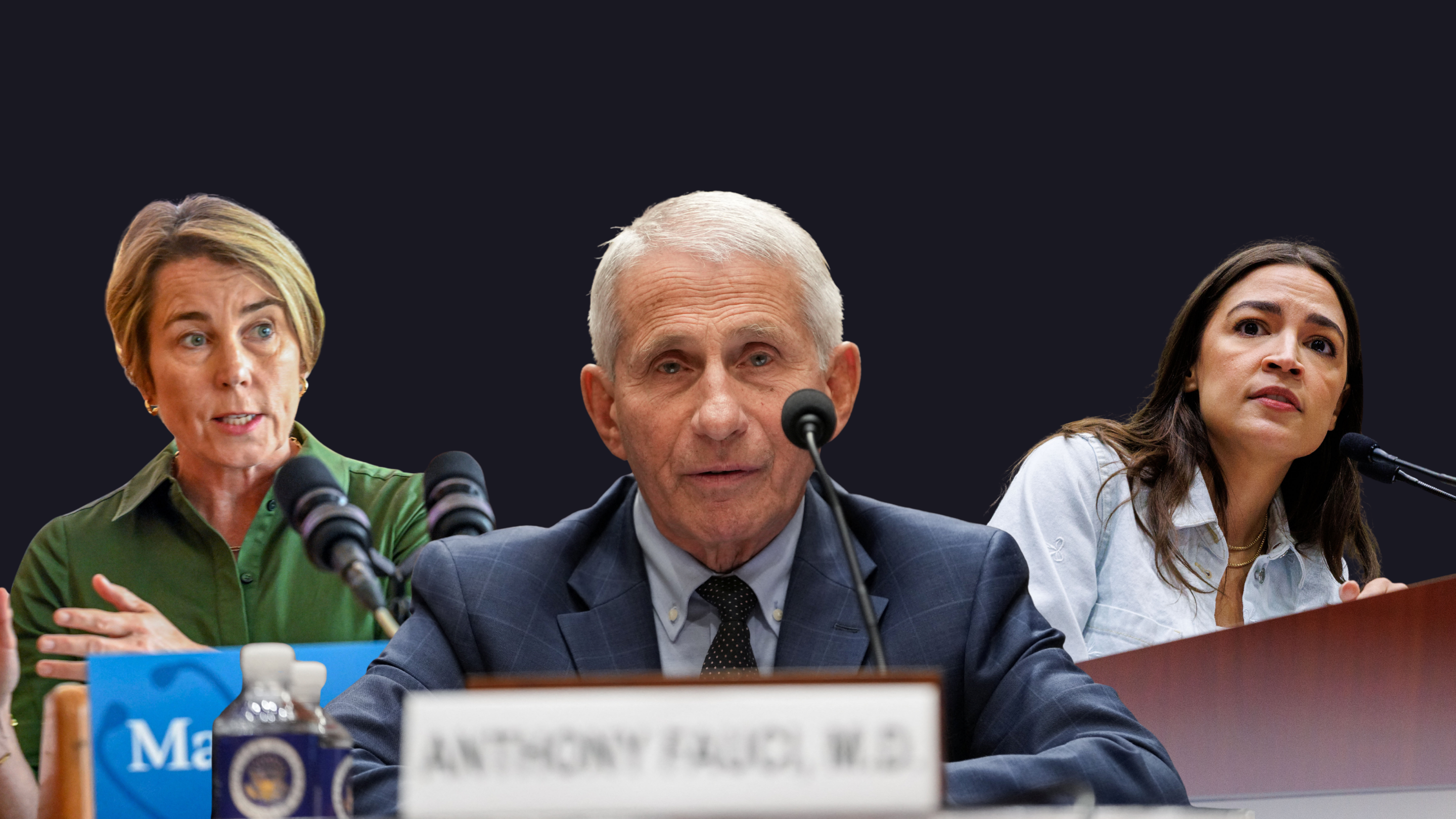
August 13, 2026
Daniel Cohen
World News
EROver the last 50 years, trust in the federal government has declined dramatically. About 77% of Americans once said they trusted the government. Today, that number has fallen to roughly 18%.
Events this week on Capitol Hill provided fresh examples of why trust in the federal government has eroded.
In the Senate Homeland Security Committee, the alleged architect of America’s draconian COVID-19 policies, Anthony Fauci, invoked his Fifth Amendment right against self-incrimination more than 100 times. He refused to answer questions about the origins of the pandemic, efforts to suppress those who pointed to the Wuhan Institute of Virology as the likely source of the virus, funding for gain-of-function research, and COVID policies that closed businesses, schools, and churches while mandating vaccines. Fauci invoked the Fifth even though former President Joe Biden granted him a preemptive pardon, a fact that raises questions of its own.
On the House side, even though members were out of session, the Ethics Committee was busy reviewing allegations involving members ranging from inappropriate conduct with female staffers and domestic abuse to illegal drug use and campaign finance violations. One member even abandoned his reelection campaign as he faces a rare bipartisan censure vote. Since 1789, only 28 members of the House have been censured.
But the erosion of trust is not confined to Washington. Government is only one of many institutions that Americans increasingly doubt. The media and Big Business are swimming at the bottom of public confidence after tying themselves to DEI initiatives and radical transgender ideology. While not as low, trust in religious institutions has also declined by nearly half.
The problem extends beyond institutions. Social trust, our willingness to trust one another, which is essential for a healthy and cohesive society, has also steadily declined. Scholars do not point to a single cause. In his book “Coming Apart,” Charles Murray identifies several contributing factors, including declining church participation, fewer civic organizations, less neighborhood involvement, reduced volunteerism, and the collapse of marriage and stable families. Those trends help explain what has happened, but they also point to a deeper question: what has changed in the human heart?
Perhaps we’ve become less trusting, and less trustworthy, not merely because our institutions have failed us, but because our trust itself has become misplaced.
The psalmist wrote in Psalm 118: “It is better to trust in the LORD than to put confidence in man. It is better to trust in the LORD than to put confidence in princes.”
When we expect government, leaders, institutions, or even ourselves to provide the security, hope, and certainty that only God can give, disappointment is inevitable. Misplaced trust eventually produces broken trust. Laws can restrain evil, but only transformed hearts produce trustworthy people.
Some of you may remember the old Texaco slogan: “You can trust your car to the man who wears the star.”
Here’s something worth thinking about. Our ability to be trusted, and to trust others, comes from trusting the One who made the stars.
Perhaps America’s greatest need today isn’t simply more trustworthy leaders. It is a people who once again place their trust in the One who is always trustworthy. When we trust God first, we become the kind of people others can trust as well.
This article was orignally published on The Washington Stand. For more content like this, visit Real Life Network.
25 min
Trust in Government Is Eroding. Here’s How to Bring It Back.
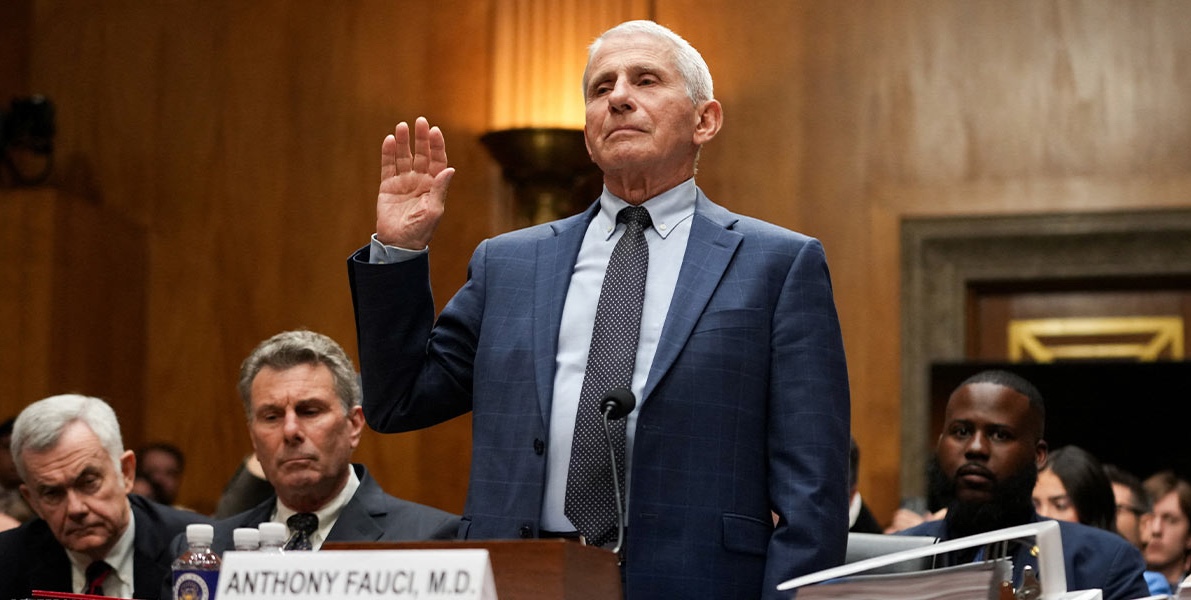
August 11, 2026
Tony Perkins
World News
America's political battles are increasingly inseparable from deeper questions about truth, Scripture, and the role of the Church. From pastors entering political races to the growing influence of democratic socialism and debates over Israel, religious liberty, and cultural values, Christians cannot afford to outsource discernment. Real Life Network exists to help believers examine today's headlines through a biblical worldview, and The Daniel Cohen Show continues that mission by connecting the news to the good news of the gospel. The challenge for Christians is straightforward: know what the Bible says, test what is being taught, and refuse to compromise simply because biblical truth has become politically inconvenient.
When Scripture Becomes Negotiable
One of the most consequential developments in American Christianity is not happening in Washington. It is happening behind pulpits.
Adam Hamilton, senior pastor of Church of the Resurrection in Kansas, became a central focus of the discussion after advancing through a Democratic U.S. Senate primary. But the larger concern raised was not simply that a pastor entered politics. It was the way Scripture itself is handled.
The discussion highlighted a sermon in which Hamilton argued that the Bible contains errors, using the accounts surrounding Jesus' ascension as an example. The claim centered on Matthew and Luke supposedly placing the ascension in different locations.
There is an important problem with that example: Matthew does not record the ascension.
Matthew 28 describes Jesus meeting His disciples in Galilee and delivering the Great Commission. Luke 24 and Acts 1 describe the ascension near Jerusalem. Matthew's account ending in Galilee does not require the ascension to have occurred there.
That distinction matters far beyond one passage.
When Christians stop treating Scripture as the authority by which every other claim is measured, biblical conviction quickly becomes whatever the culture will tolerate.
This is why believers have a responsibility to know Scripture themselves. A title, a large congregation, or decades of ministry cannot replace careful biblical study. Acts 17 praises the Bereans for examining the Scriptures to determine whether what they were being taught was true. That responsibility remains.
Fact-check the preacher. Fact-check the politician. Fact-check the commentator. The standard is not personality, popularity, or political affiliation. It is truth.
The same principle applies when pastors address controversial moral and political questions. Christians should expect biblical teachers to begin with Scripture, even when Scripture's conclusions collide with the priorities of a political party.
The Church loses something essential when it merely repeats what the surrounding culture already believes. Younger generations searching for answers do not need Christianity stripped of its authority and distinctiveness. They need the truth.
The Church Cannot Surrender the Cultural Ground
The growing influence of democratic socialism provided another major theme. Political candidates and activists associated with the movement are gaining influence in races across the country, raising questions about the direction of the Democratic Party and the ideas attracting younger Americans.
But blaming politicians alone misses something deeper.
Political movements often grow because they offer people a comprehensive explanation of what is wrong with the world and what should be done about it. Socialism promises answers about inequality, wealth, justice, government, and human flourishing. Christianity speaks to those questions too, but from an entirely different foundation.
If churches become hesitant to teach what Scripture says about human nature, justice, government, family, work, wealth, life, and morality, other ideologies will gladly fill the vacuum.
A weakened Church does not create a neutral culture. It creates empty space for another worldview to occupy.
That should concern Christians regardless of party affiliation.
The answer is not turning Sunday worship into a campaign rally. The Church's mission is greater than winning elections. But neither should pastors pretend that biblical truth has nothing to say about public life simply because those conclusions might be labeled "political."
When politics enters questions of life, sexuality, family, religious liberty, justice, and the nature of human beings, Christians cannot abandon biblical convictions at the church door.
Pastor Jack Hibbs emphasized this concern in discussing the growing appeal of socialist and communist ideas. His warning centered on the gradual nature of ideological change. Nations rarely abandon foundational principles all at once. Cultural transformation happens over time as one generation's convictions become another generation's questions and eventually another generation's rejected traditions.
Christians therefore need more than political awareness. They need biblical literacy.
Discernment in an Age of Political Confusion
The need for discernment extends beyond American elections.
Questions surrounding Israel, Hamas, the Muslim Brotherhood, international diplomacy, and the future of Gaza continue to generate intense disagreement. The discussion examined congressional testimony concerning alleged connections among political and activist organizations, while also raising concerns about proposals for an international security presence in Gaza.
Those are precisely the kinds of complicated stories where Christians should resist reacting to a headline alone.
Not every allegation is established simply because someone says it in a congressional hearing. Not every political narrative is trustworthy because it comes from a preferred party. And not every person associated with a controversial organization necessarily shares every belief attributed to that organization.
Discernment demands more work than that.
Christians should examine evidence, distinguish allegations from established facts, understand competing arguments, and compare the moral assumptions beneath them with Scripture.
The same principle applies to America's cultural debates, including the continuing controversy surrounding biological sex and women's sports. The discussion pointed to new eligibility standards in women's athletics as evidence that institutions are still wrestling with questions that ultimately involve biological reality, fairness, and the meaning of male and female.
These controversies may look disconnected. A pastor's view of biblical authority, a Senate campaign, socialism, Israel, and women's sports seem like entirely different stories.
But underneath them is the same question: Who or what gets to define reality?
For the Christian, that answer cannot change with an election, cultural movement, or opinion poll.
Scripture warns believers to test what they hear. It calls Christians to discernment, courage, and faithfulness. That means refusing to blindly follow a political party, pastor, media personality, or cultural movement. Every claim must ultimately be measured against truth.
America does not simply need Christians who vote. It needs Christians who know what they believe and why they believe it.
The cultural pressures will change. Candidates will come and go. Political movements will rise and fall. God's Word remains.
That is why biblical literacy matters so much in this moment. Christians who know Scripture are better equipped to recognize error, evaluate political promises, engage difficult cultural questions, and remain faithful when biblical convictions become unpopular.
At Real Life Network, that biblical worldview remains central to conversations about faith, politics, and culture. Watch The Daniel Cohen Show for more conversations connecting the headlines shaping America and the world with the unchanging truth of God's Word.
25 min
When the Pulpit Compromises: Why Biblical Truth Still Matters in American Culture
August 10, 2026
Daniel Cohen
World News
A Christian education program previously canceled in Georgia has gotten the green light to restart after its director was punished for exercising his free speech rights on social media.
Vidalia City Schools made the decision to cut the program after director of Sweet Onion Christian Learning, Rev. Gady Youmans, criticized a possible spike in taxes on Facebook. His attorneys at Alliance Defending Freedom defended the pastor, arguing, “Every American has the right to publicly criticize the government — that’s what makes the First Amendment guarantee of free speech so special and the envy of the world. Vidalia City Schools can’t punish Rev. Youmans — or his ministry providing high school students with free religious education — for simply sharing his opinion of a proposed tax hike,” Legal Counsel Mercer Martin insisted. “We’re pleased the court has reinstated Sweet Onion’s released-time program and restored Rev. Youmans’ constitutionally protected freedoms while his lawsuit proceeds.”
Like a growing number of school districts, Vidalia had allowed the program, which, with parental approval, releases students “for a part of the school day to attend off-site religious instruction offered by a private sponsoring group. It recognizes and reinforces the constitutionally protected right of parents to direct the religious education of their children.”
Sitting down with Family Research Council’s Jody Hice on “Washington Watch” Tuesday, ADF Senior Counsel Phil Sechler reiterated, “The school had no business canceling the Sweet Onion Christian Learning Center and the release time program simply because of the Facebook posts that the executive director had made.”
“Basically,” Sechler continued, “he was criticizing proposed tax increases that he thought were unnecessary and unwise. And the school board didn’t like what he said. And soon he learned that the program would be canceled. And that’s just not consistent with the Constitution.”
According to its website, Sweet Onion’s mission is to make disciples through education centered around God’s word.
“We accomplish our mission to eradicate Biblical illiteracy by walking students through the Scriptures so that they can know God’s ways, in order to better know Him. When students know Him better they will know how to find favor in His sight,” the site reads.
ADF reported that the superintendent of Vidalia City Schools “secretly investigated Sweet Onion and learned that, six years ago, a parent from another school had removed her child from a Sweet Onion course after learning the ministry did not exclusively use the parent’s preferred version of the Bible. Based on this incident, the superintendent reported to the board that, in addition to disagreement with the content of Youmans’ Facebook posts, his instruction ‘reflected a particular interpretation of the Bible’ that wasn’t presented in a ‘neutral or well-balanced manner.’ By targeting his religious instruction, the district violated Youmans’ right to the free exercise of religion.”
When ADF filed the lawsuit in May, Sechler was optimistic about the case’s chances. Sechler stressed that it’s important to stand up for values, and to stand by them, such as in the case of Sweet Onion. “Don’t worry about the government coming after you. The First Amendment is there for a reason to protect your right to say things, and especially on social media.”
Sechler added that ADF hopes the case will inspire others to not let their voices be drowned out when it matters.
“The First Amendment protects Youmans’ right both to criticize the proposed tax increase and to teach the Bible from his religious perspective,” ADF noted. “By punishing him and his ministry for his criticism of the government and his religious instruction, school officials violated that fundamental right.”
This article was originally written by Quinn Delamater and published on The Washington Stand. For more content like this, visit Real Life Network.
25 min
Georgia Court Reinstates School Bible Program

August 7, 2026
The Washington Stand
World News
Questions surrounding immigration, national identity, free speech, and democratic socialism continue to shape political debates across Europe and the United States. A recent discussion on The Daniel Cohen Show on Real Life Network explored these issues through recent events in Spain, the United Kingdom, and several American cities, arguing that many Western nations are facing similar cultural and political challenges. The conversation connected immigration policy, assimilation, religious freedom, and the growing influence of democratic socialism, urging viewers to consider how these trends could shape the future of Western civilization.
Immigration, Borders, and National Identity
The discussion began with recent events in the Spanish territory of Ceuta, where large numbers of migrants entered from neighboring Morocco. According to the episode, the incident illustrates broader concerns about border enforcement and immigration policy throughout Europe.
The conversation argued that court decisions and government policies in Spain have encouraged additional migration while making it more difficult for authorities to remove certain migrants after they arrive. It also highlighted Italy's criticism of Spain's immigration approach and suggested that disagreements among European nations reflect growing divisions over how borders should be managed.
The episode expanded this discussion beyond Europe, drawing comparisons to immigration debates in the United States. It argued that border policy is closely connected to questions of national identity, cultural assimilation, and long-term political stability. Rather than viewing immigration solely through an economic or humanitarian lens, the discussion emphasized the importance of maintaining secure borders while encouraging newcomers to embrace the civic values of their adopted nation.
Free Speech and Cultural Confidence
Another major theme centered on free speech, particularly a debate held at the Oxford Union regarding Islam and the West.
The episode highlighted several moments from that debate, arguing that the reactions of participants demonstrated growing concern about whether controversial ideas can still be discussed openly without fear of intimidation or violence. The discussion referenced historical incidents such as the attack on the French publication Charlie Hebdo as context for understanding why questions surrounding religious criticism continue to generate intense debate in Europe.
According to the program, the broader issue extends beyond any single religion or event. Instead, it argued that Western societies must determine whether freedom of expression remains a foundational principle when discussions involve controversial subjects.
The conversation suggested that a healthy democratic society depends upon answering arguments with better arguments rather than intimidation or threats, describing open debate as one of the defining characteristics of free societies.
Political Change on Both Sides of the Atlantic
The final portion of the discussion shifted toward American politics, focusing on the growing influence of democratic socialist candidates within the Democratic Party.
The episode examined recent political campaigns in Michigan, New York, and Wisconsin, arguing that candidates aligned with democratic socialism are gaining greater influence within the party. It also discussed proposals involving government-operated grocery stores, immigration policy, and other progressive priorities, suggesting these developments reflect a broader ideological shift rather than isolated political campaigns.
Throughout the conversation, the episode maintained that cultural trends and political movements are deeply interconnected. Rather than viewing developments in Europe and the United States as unrelated, it argued that both reflect larger debates about national identity, government authority, immigration policy, and the future direction of Western democracies.
The discussion concluded by encouraging viewers to remain engaged in civic life, participate in elections, and carefully evaluate public policy through the lens of enduring moral principles. It also encouraged Christians to approach political questions thoughtfully while remaining grounded in a biblical worldview rather than allowing political identity alone to define their perspective.
Whether readers agree with every conclusion presented in the discussion or not, the issues raised continue to shape important conversations about immigration, free speech, national identity, and the role of government throughout the Western world. As these debates continue, Real Life Network remains committed to examining current events through the lens of Scripture, encouraging thoughtful engagement with the cultural issues influencing both the Church and society today.
25 min
Europe's Identity Crisis: Immigration, Free Speech, and the Future of the West
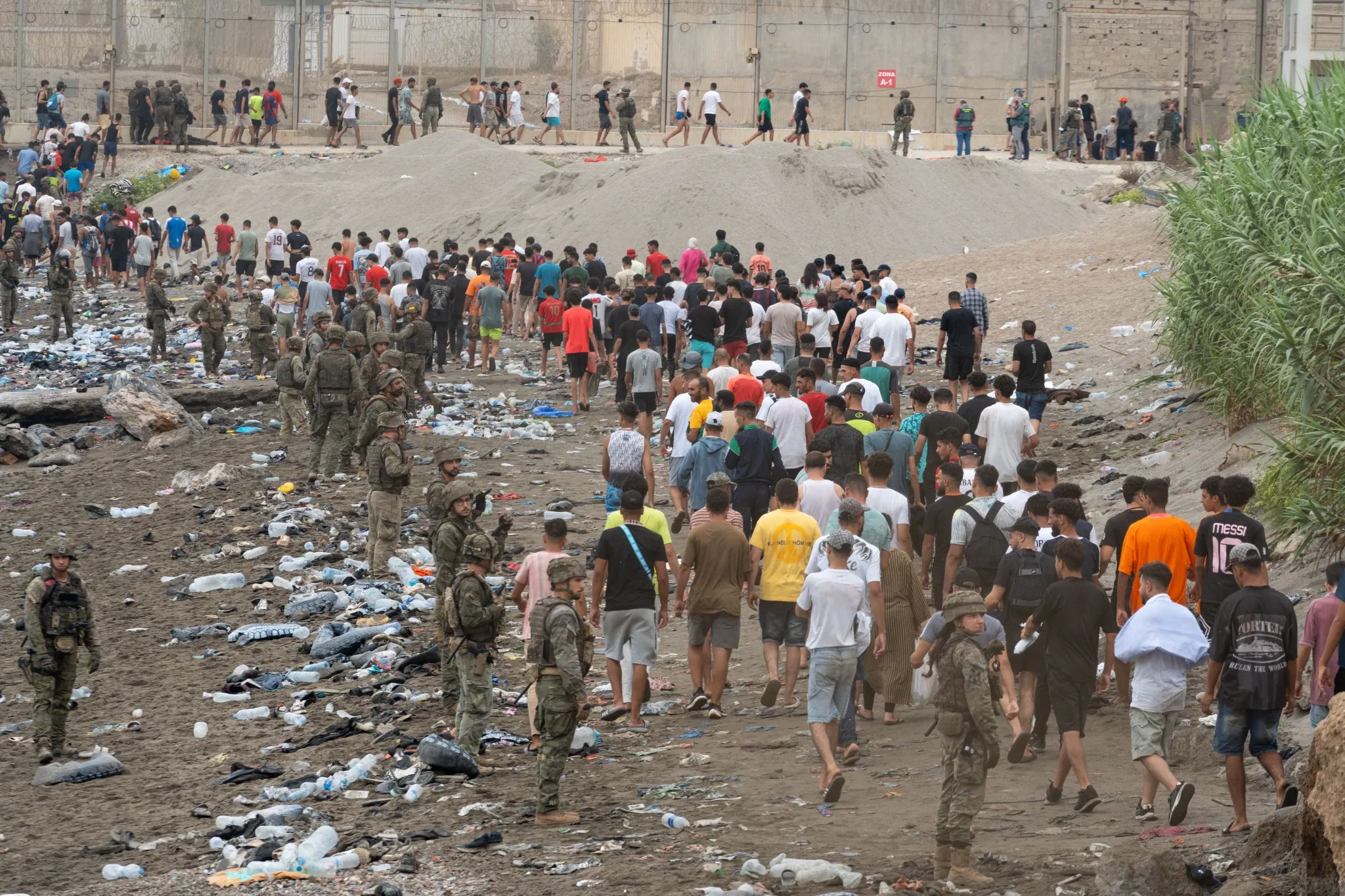
August 6, 2026
Daniel Cohen
World News
Americans have been so busy fighting against radical gender ideology and critical race theory in schools that one of the Left’s favorite ways to undermine parents has fallen under the radar. But the Trump administration hasn’t lost sight of graphic sex education, and parents everywhere should be grateful for it. In a very underreported move, the president’s team went on the offensive this summer, zeroing out millions of taxpayer dollars for controversial “Teen Pregnancy Prevention” programs in favor of solid curriculum that emphasizes abstinence and marriage.
The New York Times picked up on the cuts weeks after the fact in a sob story lamenting how caught off guard local nonprofits had been by HHS’s announcement. But frankly, no one should be surprised. The Trump administration slashed dozens of grants like this in its first term, arguing — rightly — that they only existed to sexualize children, not equip them to make positive and healthy choices. A whopping 53 programs ended up on the chopping block, saving Americans $67 million in what the president’s budget called “radical leftist ideology.” If anything, the administration argued, the Biden- and Obama-era sex ed models have only “normalize[ed] sexual activity for minors.”
Thanks to liberal ideologues masquerading as health experts, activists like Planned Parenthood have had unlimited access to America’s classrooms, knowing if they hook kids on sex, they’re grooming the next generation of abortion customers. It’s been a great down payment on future business — until now. The Office of the Assistant Secretary for Health (OASH) made it clear that the department is under new management where all of this is concerned, posting a list of priorities that should relieve every sane parent in America.
First of all, the agency vows to ensure that adolescent program materials are “age-appropriate” and “do not promote harmful ideologies, such as gender ideology and discriminatory equity ideology. OASH will focus on programs that do not promote material that depicts, describes, exposes or presents obscene, indecent, or sexually explicit content,” the document notes, “including content that encourages, normalizes or promotes sexual activity for minors. OASH will prioritize OASH programs and funding that are in compliance with these priorities and applicable law.”
Second, OASH promises to defend parental rights “to the fullest extent of its authority under the law … including parents’ right to protect their children from exposure to content that burdens the exercise of their religious beliefs.”
Under this new criteria, NYT complains, anyone applying for taxpayer dollars “must teach abstinence,” also known as sexual risk avoidance, “as the only means to prevent teen pregnancy. Courses must stress the importance of marriage and procreation and instruct young people how to safeguard their fertility. They make scant reference to preventing sexually transmitted infections and virtually none to lesbian, gay and transgender sexuality.”
As FRC’s Quena González pointed out to The Washington Stand, “The fact that some professional sex ed providers who receive millions of dollars in federal funds are complaining that these priorities are now required to continue receiving taxpayer dollars should alarm parents and enrage taxpayers. We shouldn’t be allowing, much less paying for, schools to tell students, ‘We know you’re going to experiment, wink wink, so here’s how to derive the most sexual pleasure from underage sex.’”
González applauded the overhaul as an overdue change to the dangerous status quo. “Insisting that taxpayers pay adults to teach middle schoolers — typically 11-14 years old — about ‘sexual consent,’ pleasurable condom use, or how adolescent girls can use intrauterine devices and implants to avoid pregnancy, is just plain creepy,” he said. “Kids need to be taught that sex is a wonderful gift and a powerful expression of adult love when it is exercised within the safety of a loving marriage covenant. Sex isn’t a toy, and the harms of offering it to minors are well documented and not really debated; studies show that delaying sexual contact until marriage increases the chances of a stable marriage and decreases the chance of living in poverty.”
Valerie Huber, who’s spent decades fighting for this kind of principled approach to sex ed, had one reaction to the administration’s pivot: relief. “Mostly for the young people,” the president of The Institute for Women’s Health told TWS. “For years, sexual risk avoidance had to justify itself while the alternative was funded as though its results were settled. That was never a research question. It was a worldview question dressed up as one.” Now, thanks to Trump, “risk avoidance is being treated as a legitimate public health goal for adolescents, the way it already is for every other youth risk behavior. We do not teach teenagers to smoke carefully. We tell them the truth about risk, and we help them stay at no risk or move from high risk to low risk to no risk,” she emphasized. “Sexual health is the one place we abandoned that model, but now HHS is being consistent across all youth risk behaviors. Bravo!”
Huber looked back over the last several years, lamenting the damage that the Left’s “if-it-feels-good-do-it” message has done. “When adults in authority signal that sexual activity is expected of a 14-year-old, that is not neutral information,” she insisted. “It is permission, and for many students it is pressure.” Under Obama and Biden, she noted, “These programs routinely positioned outside providers, including organizations whose business model depends on abortion, as the trusted adult in a young person’s life — and treated parents as an obstacle to be managed. A curriculum that teaches a 15-year-old how to obtain services without telling her mother is not a health program,” Valerie argued.
With the exception of Trump’s first term, “Students have been offered risk reduction at best and rarely offered risk avoidance,” Huber stressed, “which is the only approach that eliminates risk rather than managing it.”
Although teen pregnancies have dropped over time, she acknowledges, it was a hollow victory. “We counted births. We counted birth control. We did not count infections, we did not count coercion, and we did not measure what happens when pregnancy prevention becomes a substitute for holistic health and thriving for young people,” Valerie said. “We called it a win. In those same years, the emotional, social, intellectual, and spiritual health of American adolescents all declined. If your scorecard shows success while the young people on it are falling apart, you are measuring the wrong thing.”
Of course, the nonprofits who’ve been suddenly cut off from this federal gravy train are complaining that this creates an “existential dilemma” for sex ed. Some, the Times reports, are even suing HHS over the new requirements. But the reality is, there’s no “right” to taxpayer dollars — especially not for an indoctrination scheme that’s only exacerbating the problems they claim to solve.
What’s more, America needs to stop believing that young people can only meet the low bars we set. “Hand a young person a high standard and tell them you believe they can meet it, and most of them rise to it,” Huber underscored. “What they resent instantly is the adult who tells them they cannot be expected to control themselves. They hear that for exactly what it is, which is a low opinion of them.” The Left’s model assumes “every teenager is sexually active,” she shook her head. “Most high school students are not. … No one argues that because some teenagers will use drugs, prevention is unrealistic and we should teach safer use instead. We hold the optimal health standard, and we surround it with skills, support, and honesty about risk.”
To those who say the approach isn’t proven, Dr. Michelle Cretella strongly disagrees. “A rigorous review by the Institute for Research demonstrates that sexual risk avoidance education (SRAE) holds great promise. It aligns with the primary public health principle acknowledged by the CDC: abstinence is the only 100% effective way to prevent STDs and pregnancy, as condoms cannot guarantee absolute protection.” Unlike the Planned Parenthood-style programs, “effective SRAE is medically accurate,” she told TWS, citing an article she just authored for an online medical journal. It “discusses condoms and contraceptives and helps students commit to abstinence without decreasing contraceptive use among those who are already sexually active.”
At the end of the day, our schools were never meant to be a substitute for moms and dads, who have the ultimate responsibility to raise their children in a way that reflects their values. It’s not the job of teachers or outside “experts” to contradict those beliefs or commandeer a parent’s authority on topics that, in all honesty, don’t belong in classrooms in the first place. Now, instead of shipping off tens of millions of dollars to graphic programs that double as LGBT recruiting programs and abortion infomercials, the president is letting research, parents, and common sense dictate how America approaches sex ed. And we should all be thankful for it!
This article was originally written by Suzanne Bowdey and published on The Washington Stand. For more content like this, visit Real Life Network.
25 min
Trump Defunds the Left’s Graphic Sex Ed in Favor of Lessons on Marriage, Family

August 3, 2026
The Washington Stand
World News
The blood of Christians is irrigating Africa’s soil, with Nigeria as an epicenter. As a senior research analyst at the Observatory of Religious Freedom in that continent (ORFA), Steven Kefas has been following closely horrific stories of martyrdom.
He is now one of the principal contributors to the explosive ORFA six-year study on violence and religious freedom in Nigeria. Because of Kefas’s investigative journalism, documenting human rights abuses and insecurity in Kaduna State, he faced growing pressure from authorities until he was arrested and imprisoned for 162 days in May 2019.
Kefas witnessed deaths among inmates and suffered health challenges. “An experience that only strengthened my resolve to continue exposing injustice,” he said for this interview.
For more than a decade, he has meticulously documented religious persecution, terrorism, mass killings, kidnappings, and forced displacement across Nigeria’s Middle Belt and other affected regions, combining field investigations, survivor interviews, and data analysis to better understand the drivers of violence and to ensure that the voices of victims are not ignored.
What were the key findings of the recent ORFA report on violence and faith in Nigeria?
The scale of violence documented by ORFA is staggering.
Between 2020 and 2025, our research documented 79,323 people killed and 34,773 civilians abducted across Nigeria. On average, that translates to about seven attacks and 36 deaths every single day over the six-year reporting period.
Of those killed, 42,033 were civilians, while 37,290 were security personnel or members of armed groups. One of the report’s most significant findings is that Boko Haram and the Islamic State West Africa Province (ISWAP), despite receiving the most international attention, accounted for only about 12% of civilian deaths during the reporting period.
By contrast, the groups ORFA classifies as Fulani terror groups were responsible for 18,577 civilian deaths — about 44% of all civilian killings documented.
The religious dimension of the violence is equally concerning. ORFA documented the killing of 28,551 Christians and 13,224 Muslims. After adjusting for the population of affected states, Christians were killed at approximately 4.4 times the rate of Muslims.
While abductions appeared relatively similar in raw numbers — 15,932 Christians and 15,272 Muslims — our companion study, Captivity by Creed, found significant differences in how victims were treated. Christian captives consistently faced higher ransom demands, longer periods in captivity, harsher treatment, greater pressure to renounce their faith, and a higher likelihood of being executed even after ransom payments had been made.
These findings challenge many prevailing assumptions about the conflict and underscore the need for a more evidence-based understanding of the violence affecting Nigeria.
What challenges did ORFA face in conducting field research?
The greatest challenges were security and funding.
Many of the communities we studied are active conflict zones where attacks remain frequent. Conducting field investigations often meant travelling into areas where there was a genuine risk of terrorist attacks, kidnappings, or ambushes. In many cases, our researchers had to work under extremely difficult conditions while ensuring the safety of survivors who agreed to speak with us.
Funding has also been a major limitation. ORFA has carried out this extensive research with relatively modest resources. Despite those constraints, we have built one of the most comprehensive datasets on religious freedom-related violence in Nigeria.
With greater financial support, we could expand our geographic coverage, increase the frequency of field investigations, verify even more incidents, and provide a more complete picture of the crisis.
Could you share some of the stories that had the greatest impact on you or your team while collecting the data?
The testimonies of survivors who spent months, and in some cases hundreds of days, in terrorist captivity had the greatest impact on me personally. Their accounts gave us rare insight into the internal operations of terrorist groups, their methods and, importantly, the motivations behind many of their atrocities.
One story that continues to haunt me involves Christian women abducted from communities in Southern Kaduna. Many were repeatedly sexually assaulted by their captors, forcibly impregnated, and pressured or compelled to convert to Islam while in captivity. After enduring months of unimaginable suffering and finally regaining their freedom, some returned home only to face rejection by their own families. In several cases, their husbands refused to accept them back because they returned with children conceived through rape.
These women survived terrorism only to encounter another form of trauma upon returning home. Their stories remind us that the consequences of terrorism extend far beyond the attack itself and often continue long after victims escape captivity.
What is the typical reaction of Nigerian authorities to reports of this kind?
The reaction has too often been one of denial or dismissal rather than serious engagement with the evidence.
Instead of acknowledging the scale of the crisis and responding to the concerns raised by independent researchers, authorities have frequently sought to downplay reports documenting religiously targeted violence. We saw this clearly when the U.S. government under President Donald Trump raised concerns about the persecution of Christians in Nigeria.
Rather than addressing the underlying issues, the Nigerian government strongly rejected those characterizations and publicly disputed the findings. It also retained the U.S.-based lobbying firm DCI Group under a contract reportedly worth approximately $9 million to improve Nigeria’s international image.
My hope is that future reports will be met not with denial but with constructive engagement, transparent investigation, and meaningful action to protect vulnerable communities.
Could it be said that the efforts of terrorist groups in Nigeria are aimed at eliminating or diminishing the Christian presence in the country, especially in the geographical and socio-political transition zone in central Nigeria known as The Middle Belt?
Based on ORFA’s findings, I believe there is compelling evidence that, particularly in Nigeria’s Middle Belt, many attacks by Fulani terror groups disproportionately target Christian communities.
The pattern we documented extends beyond isolated attacks.
The Middle Belt separates the predominantly Muslim far North from the mostly Christian South and is characterized by its high ethno-linguistic diversity and crucial agricultural output. Is that a factor for the violence?
Entire Christian farming villages have repeatedly been attacked, churches destroyed, clergy killed or abducted, and thousands of predominantly Christian communities forcibly displaced. In numerous cases, displaced communities have remained unable to return to their ancestral lands for years, with reports that some abandoned villages have subsequently been occupied by the attackers or others.
While motivations can vary across different armed groups and regions of Nigeria, the evidence from many parts of the Middle Belt indicates that Christian communities have been disproportionately targeted in ways that have significantly reduced their presence in affected areas.
In 2016, the BBC and other major media outlets framed the violence in Nigeria as disputes between herders. Have you seen any shift in the mainstream media narrative regarding the violence in Nigeria?
Yes, I believe there has been a gradual shift.
A decade ago, much of the international media described the violence primarily as “farmer-herder clashes,” implying that both sides were engaged in roughly equivalent communal disputes over land and grazing resources.
That framing overlooked the organized, sustained, and often highly lethal attacks against civilian communities that many local researchers and affected communities had been documenting for years.
Increasingly, however, journalists, researchers, policymakers, and international organizations are recognizing that many of these incidents cannot be adequately explained as resource conflicts alone. The scale, organization, and recurring targeting of civilian populations point to a much more serious security challenge involving terrorist violence carried out by armed Fulani militant groups in many parts of Nigeria.
While some media outlets continue to use the farmer-herder narrative, there is now a broader appreciation that the violence is more complex. Also, that terrorism, ideological extremism, criminality, and religious targeting all play significant roles in different parts of the country. I believe this more nuanced understanding is an important step toward developing effective responses.
This article was originally written by Yoe Suarez and published on The Washington Stand. For more content like this, visit Real Life Network.
25 min
Under Nigerian Terrorists, Christians Faced Higher Rates of Execution and Captivity
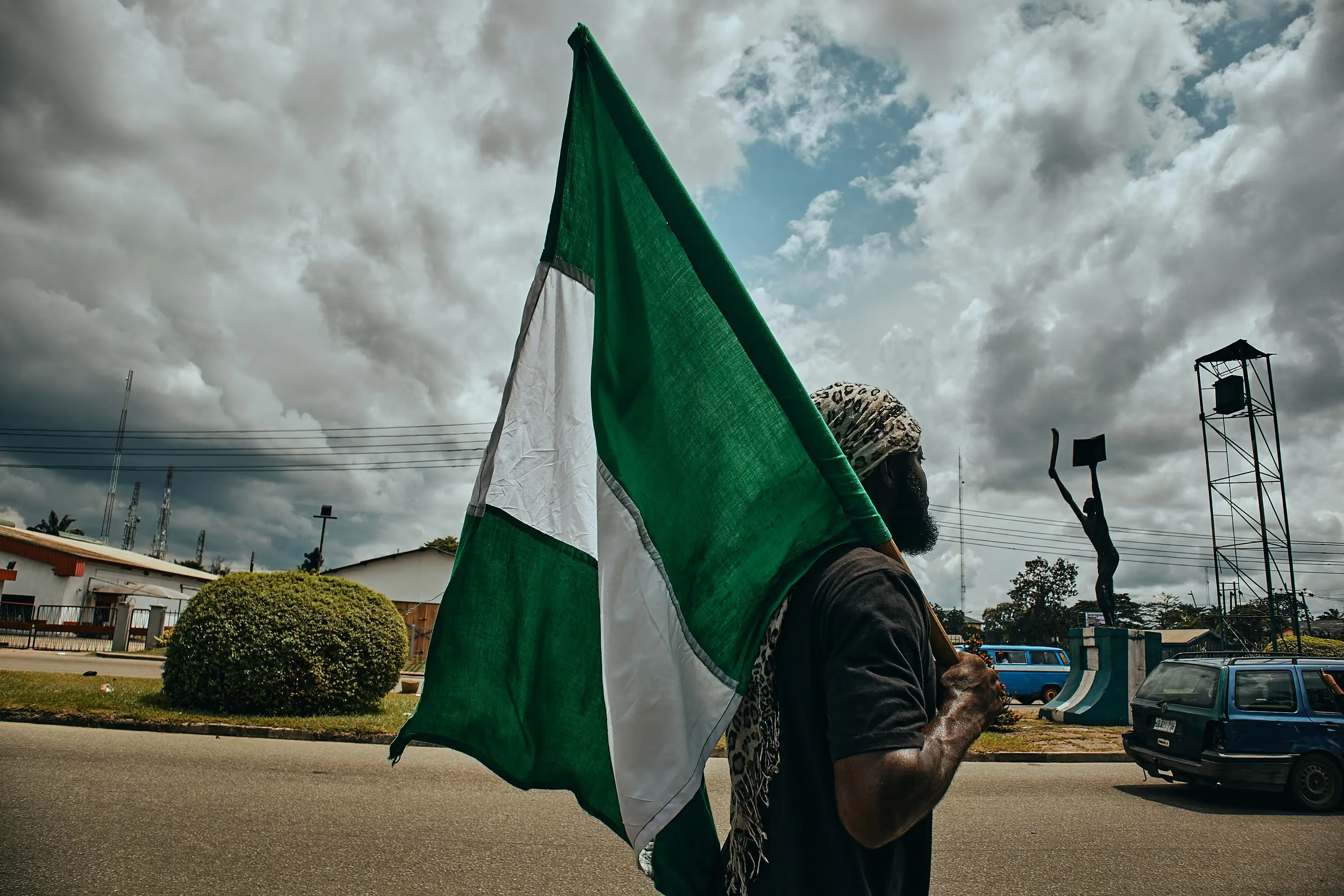
July 27, 2026
The Washington Stand
World News
WNBA player Sophie Cunningham grabbed a lot of headlines this week after saying she believes “truth” requires protecting women from biological men invading their sports.
The basketball star told ESPN on Tuesday, “I think that I am here to extend love. But I also think with that love is truth, being honest. And I want to protect young girls in a locker room, or young girls in sport who shouldn’t have to go against biological men.”
One user slammed her position on X, “Sophie Cunningham is unafraid. Unafraid to be blatantly transphobic.”
Another account posted, “Sophie Cunningham has to be suspended today. You @WNBA can’’t claim to have ‘No Space for Hate’ and then suspend Sandy Brondelo for her comments but allow Sophie to be wildly transphobic in a ESPN article and skate away without consequences. The punishment must be equal.”
After generating chatter on social media, the 29-year-old guard for the Indiana Fever doubled down on Wednesday when speaking with reporters before her team’s game against the Connecticut Sun. “I said what I said. I think it’s kind of common sense,” Cunningham asserted. “And I think I’ll always believe in that. I think it’s really important to protect children, and that’s little girls who are also involved in that category. I stand on what I said.”
Cunningham and Caitlin Clark, another guard for the Indiana Fever, are considered to be the two most popular WNBA stars.
“Sophie has proven she is a defender, she is bold, and she is completely in tune with the spirit of sport. She isn’t letting brand deals or politics control or distract her — she’s simply unafraid to say what everyone is thinking,” Macy Charles, a legislative strategist for Concerned Women of America told The Washington Stand.
Cunningham cited Title IX as a reason for fairness in women’s sports. “That’s why you have some of the greats in women’s sports,” Cunningham said. “If Title IX and women’s sports weren’t protected, then you wouldn’t hear about any type of women in sport. And so, I think in the future, it’s just really important to protect.”
“And, like I said, I’m gonna stand true to that,” she continued. I’ll never falter in my beliefs in that.”
Despite speaking out, Cunningham is tight-lipped about her political beliefs.
Charles pointed out that Cunningham recognizes the commonsense purpose of the WNBA. “She also knows her opportunities were made possible because she wasn’t expected to participate in the NBA — equality and fairness were exactly why the WNBA was created. She is preserving that for those coming after her. Sophie said she spoke ‘in love,’ and that’s important. Scripture tells us that love rejoices in the truth. Speaking truth in love isn’t a contradiction. It’s exactly what we’re called to do.”
Cunningham’s views are also incredibly mainstream, New York Times/Ipsos polling shows. A whopping 80% of Americans believe biological men should not compete in women’s sports — including 67% of Democrats. Among Republicans, support for the star guard’s position is almost unanimous: 94%.
At a press conference at the White House on Thursday, Press Secretary Karoline Leavitt addressed the situation.
“The backlash she [Sophie Cunningham] is receiving from Democrats and left-wing figures across the country is astonishing. They are clearly very out of touch with the American public on this issue, which again, is an 80/20 issue. It’s common sense. It’s rooted in basic biological fact that men should not be competing against women on playing fields across the country,” Leavitt said.
Other politicians outside of the White House rallied behind Cunningham on X, including Senators Ted Cruz (R-Texas), Eric Schmitt (R-Mo.), Tommy Tuberville (R-Ala.), and Rep. Eli Crane (Ariz.). Fellow athletes Riley Gaines and Martina Navratilova also showed support.
Jennifer Sey, the founder and CEO of XX-XY Athletics, posted on X, “Let this be a lesson to other high level female athletes ... if you are a draw, speak up. They won’t can you.”
Ella Frei, a 17-year-old high school volleyball player from Wisconsin who has said she faced online harassment after criticizing her school’s transgender bathroom policy, also posted, “Thank you @sophaller for being the first female superstar athlete to have my back. It means the world to me.”
Briley Lechner, a high school volleyball player in Michigan who was forced to share a locker room with a biological male identifying as a female from an opposing team, commented that she is inspired by Cunningham as well: “Watching @sophaller say it out loud — that girls shouldn’t have to give up fair competition or our privacy — meant more than she’ll ever know. When a WNBA star says it, maybe people finally listen. I know what it’s like to have your voice on this treated like it’s hateful. It isn’t. Wanting a fair game and a private locker room was never hate. It’s just the truth, and I’m done being afraid to say it. Thank you, Sophie, for going first. You made it easier for the rest of us.”
This article was originally written by Quinn Delamater and published on The Washington Stand. For more content like this, visit Real Life Network.
25 min
WNBA Star Sophie Cunningham Stands Up for Women’s Sports

July 23, 2026
The Washington Stand
World News
House Republicans are advocating for protecting children from being exposed to transgender content in TV shows.
On July 13, 47 House members wrote a letter to the Federal Communications Commission (FCC) imploring a “review of the TV Parental Guidelines to ensure that children are not being indoctrinated with radical gender ideology behind their parents’ backs.” Some of the GOP members who signed on included Andy Ogles (Tenn.), Lauren Boebert (Colo.), and Randy Fine (Fla.).
“American children and families are under attack. Parents deserve full transparency from television and streaming services regarding unwanted sexual content in programming rated for children, and it is our intention to provide them with the tools and information they need to make informed choices for their families,” stated the letter. “Unfortunately for America’s children, Democrats disagree.”
This comes after a Public Notice issued by the FCC in April stated that “parents have raised concerns that controversial gender identity issues are being included or promoted in children’s programs without providing any disclosure or transparency to parents,” specifically referring to shows with transgender and “non-binary” programming.
“We believe that families should not be blindsided by ideological content hidden inside entertainment marketed to minors,” the House members penned in their letter.
An analysis by Concerned Women for America found that “Netflix programming rated appropriate for children revealed that 41% of G-rated series and 41% of TV-Y7-rated series contain LGBTQ+ content.”
“Parents are highly concerned about content indoctrinating their children, and our recent polling shows a majority of parents say it is crucial for TV programs to disclose sensitive themes in children’s TV programming. We are grateful to those 47 House Republican members who have stood up for children and families,” said Penny Nance, CEO and president of Concerned Women for America.
CWA discovered in a poll that 87% of Americans think it is “very important or somewhat important” that children’s content includes labels indicating themes such as gender and sexual orientation.
“We believe the FCC needs to ensure that the TV content ratings system is transparent and accurate so parents can make informed viewing decisions for their children. Right now, the TV ratings system does not alert parents to LGBTQ+ themes in their children’s TV shows. Parents should have that information, and it’s time to give them that choice,” Nance said.
The April FCC note added that per the Telecommunications Act of 1996, “parents should be provided with timely information about the nature of upcoming video programming and have the ability to block violent, sexual, or other programming that parents believe is harmful to their children. Congress specifically excluded ratings based on political or religious content.”
In recent years, progressive and “woke” themes have become increasingly ever-present in TV shows made for children.
One such show, “The Owl House,” is a cartoon that aired from 2020-2023 on the Disney Channel. The media recommendations site Screenwise described the show as “...(suitable for ages 7+), following a teen girl who stumbles into a magical world full of witches, demons, and surprisingly deep feelings. It features LGBTQ+ representation, moderate fantasy violence, and some genuinely intense/scary moments…”.
According to a press release, CWA filed a comment with the FCC “about why TV programs should alert parents to LGBTQ+ and other sensitive content in shows, especially those targeted to children.”
This article was originally written by Quinn Delamater and published on The Washington Stand. For more content like this, visit Real Life Network.
25 min
House Republicans Press FCC to Put Warning Labels on Kids’ Shows with Controversial Gender Themes

July 21, 2026
The Washington Stand
World News
When a nation loses the ability to distinguish between allies and adversaries, truth and propaganda, leadership and political theater, it becomes vulnerable long before the first battle is lost. The headlines may change, but the underlying challenge remains the same. As conflict intensifies in the Middle East, foreign governments expand their influence, and political narratives compete with objective reality, Americans are confronted with a pressing question: Can we still recognize the difference between those who defend freedom and those who seek to undermine it? These are not isolated controversies. They are warning signs that discernment has become one of the most important responsibilities of our time.
Read more biblical news and cultural analysis on Real Life Network or watch The Daniel Cohen Show.
The Cost of Misidentifying the Enemy
The week began with devastating news. Two American service members were killed after an Iranian ballistic missile strike on a U.S. base in Jordan. For months, much of the conflict with Iran had been measured in sanctions, diplomacy, intercepted missiles, and political negotiations. Suddenly, the cost was measured once again in American lives. That reality should cut through every political talking point. Iran remains the world's leading state sponsor of terrorism, and its hostility toward the United States has never been a secret.
Yet even as Iran demonstrated exactly who it is, much of the public debate shifted away from the regime responsible for the attack and toward Israel, America's closest ally in the Middle East. Vice President J.D. Vance argued that Israeli influence helped derail negotiations with Iran, suggesting that voices in Israel preferred continued military action over diplomacy. That framing misses the larger point. The agreement did not collapse because Israel objected to it. It collapsed because Iran has repeatedly demonstrated that it uses negotiations to buy time while continuing to pursue its long-term objectives.
This is where discernment becomes indispensable. A nation that cannot correctly identify its adversaries will inevitably begin questioning its allies instead. History is filled with civilizations that spent more energy arguing among themselves than confronting the threats gathering outside their borders. The danger is not merely military. It is intellectual and moral. When a society begins treating warnings as manipulation and allies as liabilities, it loses the clarity necessary to make wise decisions.
A nation becomes most vulnerable when it begins questioning its allies more than its enemies.
Israel's relationship with the United States has never been based on sentimentality. It rests on shared strategic interests, democratic values, intelligence cooperation, and a common recognition of the dangers posed by radical Islamic terrorism. Those realities should not disappear simply because political narratives become more convenient than geopolitical facts.
When Political Narratives Replace Clear Judgment
The same confusion appears in other arenas. While Israel is frequently portrayed as exercising outsized influence over American policy, Qatar has quietly invested hundreds of billions of dollars across American universities, think tanks, nonprofit organizations, and other institutions. At the same time, President Trump alleged that China obtained personal information connected to approximately 220 million American voter records while elements within the intelligence community minimized the scope of the breach. Whether discussing foreign influence, election security, or media coverage, one theme continues to emerge: narratives increasingly shape public perception more than facts themselves.
That concern extends beyond government agencies. Several major broadcast networks declined to air President Trump's address regarding China's alleged cyber activities, leaving many Americans to learn about the speech only through secondary reporting. Whatever one's opinion of the president, citizens should be wary whenever gatekeepers decide which information the public deserves to hear. Healthy democracies depend on informed voters, not curated narratives.
The same principle explains why Marco Rubio's public comments stood out during the episode. Whether addressing Hamas, Iran, or America's allies, Rubio demonstrated something increasingly uncommon in modern politics: clarity. He distinguished between aggressors and defenders without relying on carefully manufactured slogans or focus group-tested language. Leadership is not merely about speaking persuasively. It is about speaking truthfully, even when the truth is unpopular.
Truth becomes increasingly difficult to defend when political narratives matter more than objective reality.
That challenge extends well beyond foreign policy. Political performance often receives more attention than principled leadership. Sound bites replace substance. Viral moments overshadow careful reasoning. Public discourse becomes less concerned with what is true and more concerned with what is emotionally satisfying or politically advantageous. The result is a culture that gradually loses confidence in objective truth itself.
Watch the full discussion on The Daniel Cohen Show, and discover more faith-centered analysis and current events on Real Life Network.
Discernment Is a National Necessity
Throughout the episode, seemingly unrelated stories all pointed toward the same conclusion. Debates over military alliances, concerns about election security, media gatekeeping, congressional battles over aid to Israel, and even moments of political theater all revealed how easily discernment can be replaced by confusion. A society does not lose its way overnight. It drifts one compromised judgment at a time, until it becomes difficult to distinguish conviction from convenience or principle from performance.
That is why support for Israel ultimately represents something larger than a single foreign policy debate. Israel remains the Middle East's only stable democracy and America's most dependable strategic partner in one of the world's most volatile regions. More importantly, the Jewish people occupy a unique place within the biblical story of redemption. Scripture reminds us that God works through history with purpose, and His covenant faithfulness has never depended upon shifting political winds. The conversation surrounding Israel therefore becomes both geopolitical and spiritual. It forces us to ask whether we are evaluating events through the lens of temporary political narratives or enduring biblical truth.
The larger lesson applies far beyond one nation or one administration. Every generation must decide whether it will judge events according to facts or emotions, principles or personalities, truth or propaganda. Those choices shape the future of every free society.
Civilizations rarely collapse because they lack enemies. They decline when they can no longer recognize the difference between friends and foes.
That is why discernment remains one of the most important responsibilities of every citizen and every Christian. Headlines will continue to change. Political figures will come and go. But wisdom requires looking beneath the news cycle to identify the deeper forces shaping our culture. The future will belong not to those who shout the loudest, but to those who refuse to lose sight of the truth.
Watch the full discussion on The Daniel Cohen Show, and discover more faith-centered analysis and current events on Real Life Network.
25 min
What Happens When a Nation Can No Longer Recognize Its Allies

July 20, 2026
Daniel Cohen
World News
Every culture is shaped by something deeper than laws, elections, or headlines. Long before policies change, people begin to sense which ideas are celebrated, which beliefs are tolerated, and which convictions carry a cost. That quiet shift is what the Israeli military calls ruach hamefaked, or "the spirit of the commander." As discussed on The Daniel Cohen Show, it describes a culture where no explicit order is necessary because everyone already understands the direction they are expected to follow. That same principle helps explain many of today's most troubling headlines, from attacks on biblical truth to growing hostility toward religious freedom. Watch more biblical news and cultural analysis anytime on Real Life Network.
The Orders No One Has to Give
Healthy organizations often function without constant instruction.
A trusted leader establishes a culture so clearly that those under his authority instinctively know how to act. They understand not only the rules, but also the values behind them. Cultures operate the same way. People learn what is acceptable long before anyone puts it in writing.
That reality is evident in one of the episode's most disturbing stories. An Ontario surrogate mother was asked to abort an otherwise healthy baby because an ultrasound revealed a cleft lip, a condition that is routinely corrected through surgery after birth. When she refused, the intended parents sued her.
No government ordered that lawsuit. No public official instructed anyone to treat a child as a product that could be rejected because of a cosmetic condition. Yet the cultural expectation already existed.
The child was no longer viewed primarily as a gift bearing the image of God. Instead, the pregnancy became a contract, and the baby became something that could be evaluated against personal expectations.
The same pattern appeared in testimony before Congress, where a medical school leader struggled to affirm the simple biological reality that women become pregnant. Future physicians are increasingly taught language designed to accommodate ideology rather than objective truth.
Again, no one had to issue a formal command. Everyone already understood which answers would be rewarded and which ones would invite criticism.
The most powerful cultural changes often happen without anyone ever giving an explicit order.
When Truth Becomes the Enemy
As the episode unfolded, stories that initially seemed unrelated revealed a common thread.
In New York City, historic churches have suffered repeated fires while public silence has raised questions about whether attacks on Christian institutions receive the same urgency as attacks on other communities.
Across the Atlantic, Finnish parliament member Päivi Räsänen continues facing consequences for publicly expressing a biblical view of marriage and sexuality. Her conviction for "hate speech" stemmed from quoting Scripture and defending long-held Christian doctrine. She was later barred from traveling through the United Kingdom because of that conviction.
The details differ. The underlying pattern does not. Increasingly, biblical convictions are treated not simply as beliefs that others reject, but as beliefs that society considers dangerous. That shift matters. Freedom of religion has never meant merely holding private opinions. It has always included the freedom to live consistently with those convictions in public life.
A society begins to lose its freedom when speaking the truth becomes more controversial than abandoning it.
Readers looking for more biblical analysis of today's cultural issues can explore additional programming on Real Life Network.
Every Culture Reflects the Spirit It Serves
Headlines come and go. Political leaders rise and fall. Court decisions are appealed.
But beneath every cultural controversy lies a deeper spiritual question. What spirit is shaping the culture?
Jesus consistently taught that outward actions flow from inward realities. Nations are no different. The values a society celebrates eventually become the values it protects, while the truths it rejects gradually disappear from public life. That process rarely happens all at once. It happens one compromise at a time.
One redefined word. One ignored act of violence. One silenced conviction. One generation that learns certain truths are simply too costly to say aloud. That is why discernment matters so much.
Christians are not called to panic every time a troubling headline appears. Neither are they called to ignore the direction of the culture around them. They are called to recognize the spiritual currents beneath the headlines and remain faithful regardless of where those currents may lead.
Every culture eventually reflects the spirit it chooses to follow.
The greatest question facing Christians today is not simply what the next headline will be.
It is whether God's people will continue to follow the truth even when the culture quietly begins moving in another direction.
Watch the full discussion on The Daniel Cohen Show and discover more biblical news and cultural commentary on Real Life Network.
25 min
When No One Gives the Order, Yet Everyone Knows What to Do

July 17, 2026
Daniel Cohen
World News
In a sign of the continuing breakdown of religious freedom in Europe, Finnish parliament member Päivi Räsänen was banned by the U.K. from traveling to Heathrow Airport for a planned layover due to her Finnish Supreme Court conviction in March for authoring a pamphlet containing supposed “hate speech” toward those who identify as LGBT.
Räsänen’s legal saga began in 2019, when she wrote a post on social media questioning why her Finnish Lutheran Church was choosing to participate in an LGBT Pride event, citing the scriptural prohibition against same-sex conduct from Romans 1:24-27. Finnish authorities eventually charged her and Lutheran Bishop Juhana Pohjola with “hate speech” for authoring a pamphlet advocating for a biblical view of sexuality and for the social media post.
Even after Räsänen and Pohjola’s eventual unanimous acquittal of the charges by two lower courts in 2023, prosecutors continued to press the case by appealing it. In March of this year, a narrow 3-2 Finland Supreme Court decision found Räsänen and Pohjola guilty of “hate speech” for authoring the pamphlet and sentenced them to pay a €1,800 fine. The decision also ordered that the pamphlet be removed from public access and that all physical copies be destroyed. She was not found guilty for two other charges based on the social media post and a radio debate.
Notably, the court admitted in its ruling that Räsänen and Pohjola’s conduct was not “serious.” “[I]t must be taken into account that the text forming the basis for the conviction did not contain incitement to violence or comparable threat-like fomenting of hatred,” the court wrote. “The conduct is therefore not particularly serious in terms of the nature of the offense.”
Nevertheless, Räsänen recently revealed that because of this single “not particularly serious” charge, the U.K. has rejected her Electronic Travel Authorization (ETA) merely to pass through the country via Heathrow Airport (after initially approving it) while traveling from the U.S. to Helsinki, Finland’s capital. Räsänen further revealed that the U.K.’s revocation of her ETA could imperil her plans to attend an upcoming conference and speaking engagement in Northern Ireland next month about — ironically — freedom of speech.
Experts like author and columnist Rod Dreher say that the decision of a Western nation like the U.K. to bar Räsänen from stepping foot in the country because of perceived “hate speech” is a sign that Europe is rapidly sliding toward totalitarianism.
“Now that I hear someone as innocent and gentle as this Finnish granny has been forbidden by the British government even for setting foot in their international airport … well, it confirms my suspicions,” he posted last week on his Substack page. Dreher went on to note how the European Parliament is currently considering a measure that would “enable monitoring of people’s private, encrypted chats” to find any hint of perceived “hate speech” and further erode the ability of Europeans to freely express their religious beliefs.
“I think Päivi is a canary in the civilizational coal mine,” Dreher added. “The progressive bureaucratic order in European countries would rather attack faithful Christians as Enemies Of Society than deal with the actual problems they have. We can expect more of this. It’s a Finnish Lutheran lawmaker and grandmother today; it could easily be you tomorrow.”
European free speech advocates like Peter McIlvenna agree, noting that the U.K. barring Räsänen from entering is just the latest in a recent string of travel bans.
“We had a similar situation a couple of months ago whenever we had a United Kingdom rally organized by Tommy Robinson, and the U.K. government blocked 11 individuals who were traveling from Europe, I think, including Ezra Levant [who] was from Canada,” he pointed out during “Washington Watch with Tony Perkins” Tuesday. “They were given this statement, ‘Your presence is not conducive to the common good and therefore you are being blocked for entering.’ Of course, any government can have that ability to stop people coming in. I wish they used it to stop illegal immigrants coming in, but hey, they’re using it for members of Parliament. … [Räsänen] has been a member of [Finland’s] Parliament there for decades and decades.”
McIlvenna, the co-founder of Hearts of Oak, a U.K.-based free speech alliance, went on to describe the extent of the free speech violations that are occurring in his country.
“[T]o think that [Räsänen] is a danger in the U.K. is utter, utter madness,” he lamented. “But that’s where we’re going. … [The government] arrests people for statements online. We have 30 arrests a day for people saying things online that the government does not like … and that fits into our hate crimes. Anything you say that may be perceived as offensive to someone else, then you’ve committed an offense. So it’s where we are.”
“[Europe is] very dark place now,” McIlvenna added. “Finland is a very secular country. Scandinavia and Britain have always prided themselves on our Christian heritage or tradition — 1,700 years of that Christian thread that is very quickly disappearing with an apostate church and very few Christians involved in public office. So that is where we are going, far away from our traditional Christian faith.”
Still, Räsänen sees a thread of hope within the persecution that she has faced, recently describing how it has opened up opportunities for her to share her faith. She recalled that after her “hate speech” case became public in 2019, a young man who identified as an atheist sent her an angry message. After she replied in kindness and shared the gospel with him, she described that he later reached out to her again.
“He said that after his conversation with me, he has found Christ, and he has found a way to eternal life,” Räsänen remembered. “I understood that this is not in vain. It is not in vain to defend these freedoms. It is not in vain to share the message of the Bible.”
This article was originally written by Dan Hart and published on The Washington Stand. For more content like this, visit Real Life Network.
25 min
U.K. Bars Finnish Christian MP from Country over Biblical Beliefs on Sexuality
July 15, 2026
The Washington Stand
World News
The U.S. government remains alert to Iranian threats against President Donald Trump, even here on U.S. soil, according to remarks by Mike Waltz, U.S. Ambassador to the United Nations and former National Security Advisor, on Sunday. The Islamist regime in Tehran has plotted to assassinate Trump on at least two prior occasions, both in peacetime and wartime, and recently redoubled its rhetoric vowing Trump’s death.
“I won’t get into specific intelligence, but this regime, going all the way up to the ayatollah, has plotted to kill President Trump for many years,” Waltz said Sunday on ABC’s “This Week.” “They have operatives here in the United States. Plots are ongoing. But our intelligence community, the FBI, our law enforcement entities are absolutely on top of it.”
The remarks followed reporting last week that Israeli officials had warned President Trump of a fresh Iranian plot against his life, although no official spokesperson confirmed this.
The report came as no surprise, given the Iranian regime’s open vendetta against Trump since his first term in office. Iran has vowed retaliation against Trump ever since he ordered the airstrike that killed IRGC general Qassem Soleimani in Iraq on January 3, 2020.
More recently, Iran’s Supreme Leader Mojtaba Khamenei has a more personal cause for revenge, after his father and predecessor, Ali Khamenei, died amid Operation Epic Fury. In only his second public statement, Khamenei the Younger vowed vengeance for “the blood of all those martyred … by bringing the criminal and dishonorable killers to justice. … These criminals — whose names are known from top to bottom — will take to their graves the unfulfilled wish of dying peacefully in their beds.”
Attendees of Khamenei the Elder’s July 4 memorial ceremonies displayed a banner declaring, “We Will Kill Trump.”
Recent history has shown that Iranian attempts on Trump’s life are neither Israeli fiction, nor too low to stoop for a regime that has unwaveringly declared “Death to America” for the past 47 years.
On November 8, 2024, the Biden Justice Department (the same one that spent so many years persecuting Trump) announced an indictment against Farhad Shakeri, an Iranian national, for “a plot to murder a U.S. citizen of Iranian origin in New York,” as well as a plot to assassinate then-president-elect Donald Trump.
“According to statements made by Shakeri in recorded interviews with law enforcement agents, the IRGC has also tasked Shakeri with carrying out other assassinations against U.S. and Israeli citizens located in the United States,” the DOJ stated. “In particular, Shakeri has informed law enforcement that he was tasked on Oct. 7, 2024 with providing a plan to kill President-elect Donald J. Trump.” However, “Shakeri claimed he did not intend to propose a plan to kill Trump within the timeframe set by the IRGC.”
While the DOJ did arrest two co-conspirators, “Shakeri remains at large and is believed to reside in Iran,” the statement admitted. “Shakeri immigrated to the United States as a child and was deported in or about 2008 after serving 14 years in prison for a robbery conviction.” According to the DOJ, he “used a network of criminal associates he met in prison in the United States” to plan his attacks. However, due to his physical absence, the charges against Shakeri have never gone to trial.
On the other hand, the DOJ did obtain a conviction in the case of Asif Merchant. On March 6, 2026, the DOJ announced that a federal jury had convicted Merchant “of murder for hire and attempting to commit an act of terrorism transcending national boundaries.” The Pakistani national was a trained IRGC operative who tried to recruit hitmen “to steal documents, stage a protest, and arrange the murder of one of three specific U.S. government officials,” including President Trump. In June 2024 (still under the Biden administration), Merchant paid a $5,000 advance to men he believed to be hitmen, but who were in fact undercover federal law enforcement officers.
Thus, the DOJ has publicly revealed at least two Iranian plots from 2024 to assassinate Donald Trump. Other less mature plots may have been foiled before attaining the same level of threat, and some may remain undisclosed to protect intelligence assets. In any event, the same regime that sought revenge on Trump in 2024 has much more reason to seek revenge now — and fewer inhibitions against making the attempt.
President Trump responded stoically to the report, suggesting his prior awareness of the threat or at least an acceptance of the risks attending his high station. “They want to take out the U.S. leader — me,” he told reporters in Ankara, Turkey, before the U.S. Secret Service insisted that he fly home on his old Air Force One, not the jet gifted by Qatar. “I’m on every list. I saw this morning, I’m on every single one of their lists. And so far, I guess I’ve been a little bit lucky, but that maybe doesn’t last very long.”
Trump has even gone so far as to give instructions about how much firepower to unload on Iran in the event that one of their assassination plots succeeds.
“1000 Missiles are Locked and Loaded and aimed at the Islamic Republic of Iran, with thousands of more to immediately follow, should the Iranian Government act on its threat, pronounced in many corners of the Globe, to assassinate, or attempt to assassinate, the sitting President of the United States of America, in this case, ME!” Trump blasted out on Truth Social. “Orders have already been given, and the U.S. Military is ready, willing, and able, for a one year period of time, subject to extension, to completely decimate and destroy all areas of Iran — PRAISE BE TO ALLAH!”
This reveals once again the spirit of defiance in the face of mortal peril that Trump displayed when he lifted a fist after being grazed by a would-be assassin’s bullet at an outdoor rally in Butler, Pennsylvania.
The renewed effort by Iran to assassinate a sitting U.S. president — even during a ceasefire — provides Americans with a fresh reminder that the Islamist regime in Tehran remains a mortal enemy of the United States. Theirs is an ideological hatred that cannot be placated by gifts of cash or appeased by endless diplomacy, or even military surrender. They want to destroy the United States. Although they lack the firepower to do so openly, they do not and will not show any qualms about stooping to use an assassin’s bullet.
This article was originally written by Joshua Arnold and published on The Washington Stand. For more content like this, visit Real Life Network.
25 min
Tehran’s Anti-Trump Vendetta
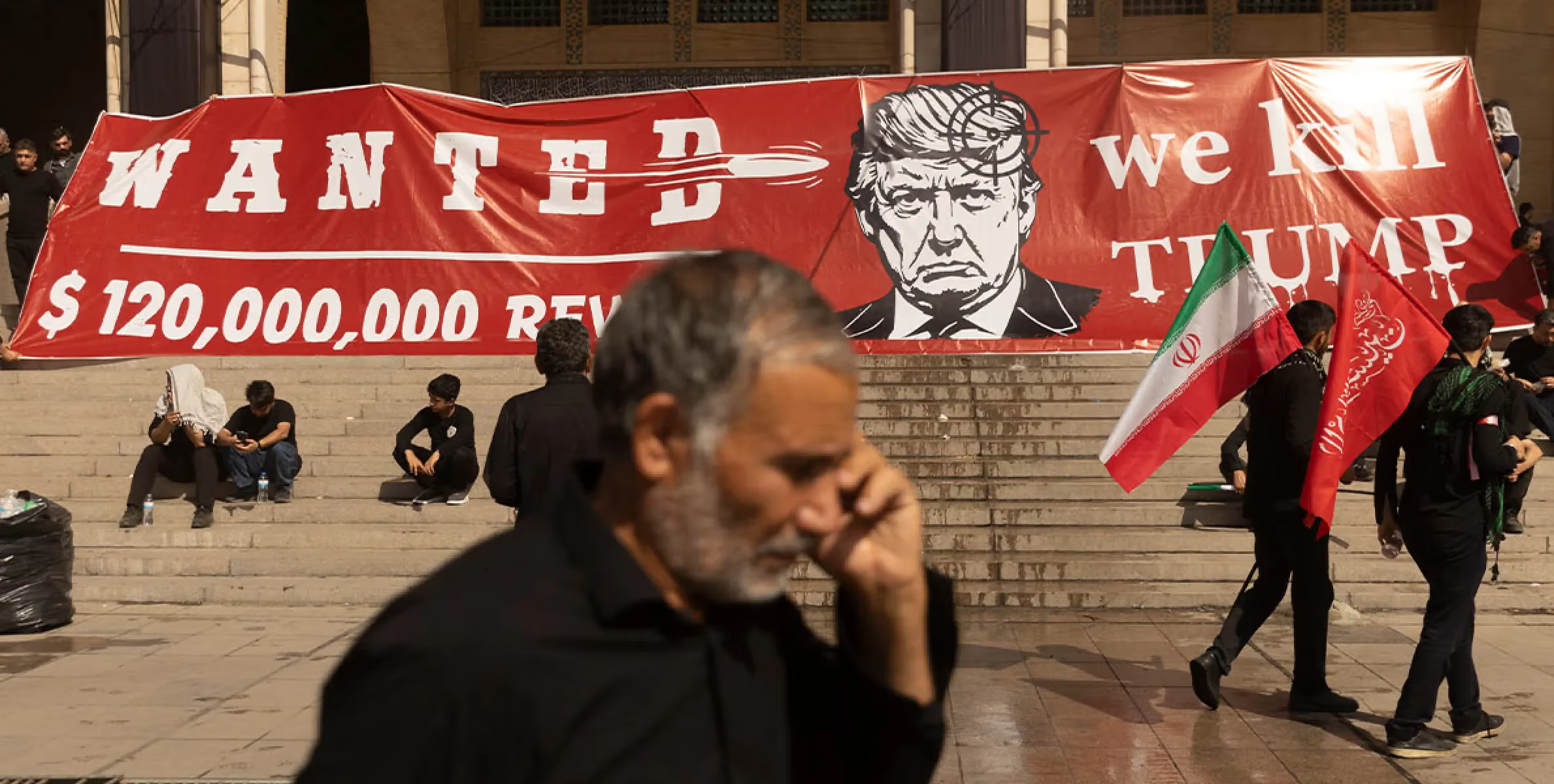
July 14, 2026
The Washington Stand
World News
The Middle East has once again reminded the world that peace cannot be sustained by wishful thinking alone. Reports of an Iranian assassination plot targeting President Donald Trump, renewed attacks on American interests, and the collapse of yet another ceasefire all point to a difficult reality: some regimes are not looking for compromise. As discussed on The Daniel Cohen Show, history repeatedly demonstrates that lasting peace depends on credible deterrence, not empty promises. When evil believes there is no meaningful consequence for aggression, conflict becomes more likely, not less. Watch more biblical news and analysis anytime on Real Life Network.
Peace Depends on Credible Strength
The recent ceasefire involving Iran was described as an opportunity for diplomacy.
Instead, it quickly exposed the limits of negotiating with a regime that has spent decades chanting "Death to America" while funding terrorism across the Middle East.
Within days, Iranian-backed actions once again threatened regional stability. Commercial shipping faced attacks in the Strait of Hormuz, and American military assets responded. Reports also resurfaced that Israeli intelligence had shared information about a specific Iranian plot targeting President Trump.
Whether through direct military action or proxy groups, the message coming from Tehran has remained remarkably consistent for decades. That consistency matters.
Too often, Western observers assume every conflict can be resolved if both sides simply negotiate long enough. But negotiations only succeed when both parties recognize the cost of walking away.
Deterrence is not about seeking war. It is about convincing those who desire war that the price will be too high to pay.
That principle has shaped international security for generations.
It remains just as relevant today.
Appeasement Has Never Produced Lasting Peace
History offers repeated warnings about confusing restraint with weakness.
Authoritarian regimes frequently interpret hesitation as opportunity.
That reality helps explain why leaders such as the late Senator Lindsey Graham consistently argued that Iran's pursuit of nuclear weapons could never be treated as just another diplomatic disagreement. Whether people agreed with every position he took or not, Graham maintained a clear conviction that regimes built upon terrorism cannot simply be persuaded into abandoning their objectives.
His longstanding support for Israel reflected that same belief.
Israel understands a lesson its neighbors have been forced to learn repeatedly: deterrence works only when it is believable.
Military preparedness does not guarantee peace. Neither does diplomacy. But history suggests that peace becomes increasingly fragile when aggressors conclude there will be little consequence for escalating violence.
History repeatedly shows that peace is strongest when those pursuing violence believe they cannot succeed.
Readers looking for a more biblical perspective on today's headlines can find additional episodes on Real Life Network.
Biblical Wisdom Recognizes the Reality of Evil
Scripture consistently calls believers to pursue peace.
It also refuses to pretend evil does not exist.
The Bible never presents peace as the absence of discernment. Rather, wisdom requires recognizing the true nature of those who reject justice, celebrate violence, and refuse accountability.
That balance often gets lost in modern political conversations. Seeking peace is virtuous. Ignoring reality is not.
Christians should always pray for diplomacy, reconciliation, and the preservation of life. Yet praying for peace does not require abandoning wisdom about the intentions of those who openly threaten innocent people.
Throughout history, freedom has often depended on leaders willing to prepare for conflict precisely so conflict could be avoided. That remains true today.
Real peace is preserved not by pretending evil has disappeared, but by ensuring evil understands there are consequences for its actions.
The world will continue debating foreign policy, military strategy, and diplomacy.
Those debates matter. But beneath every policy discussion lies a timeless principle: peace is most secure when justice is defended with both wisdom and strength.
Watch the full discussion on The Daniel Cohen Show and explore more biblical news and cultural commentary on Real Life Network.
25 min
Why Deterrence Still Matters in a Dangerous World
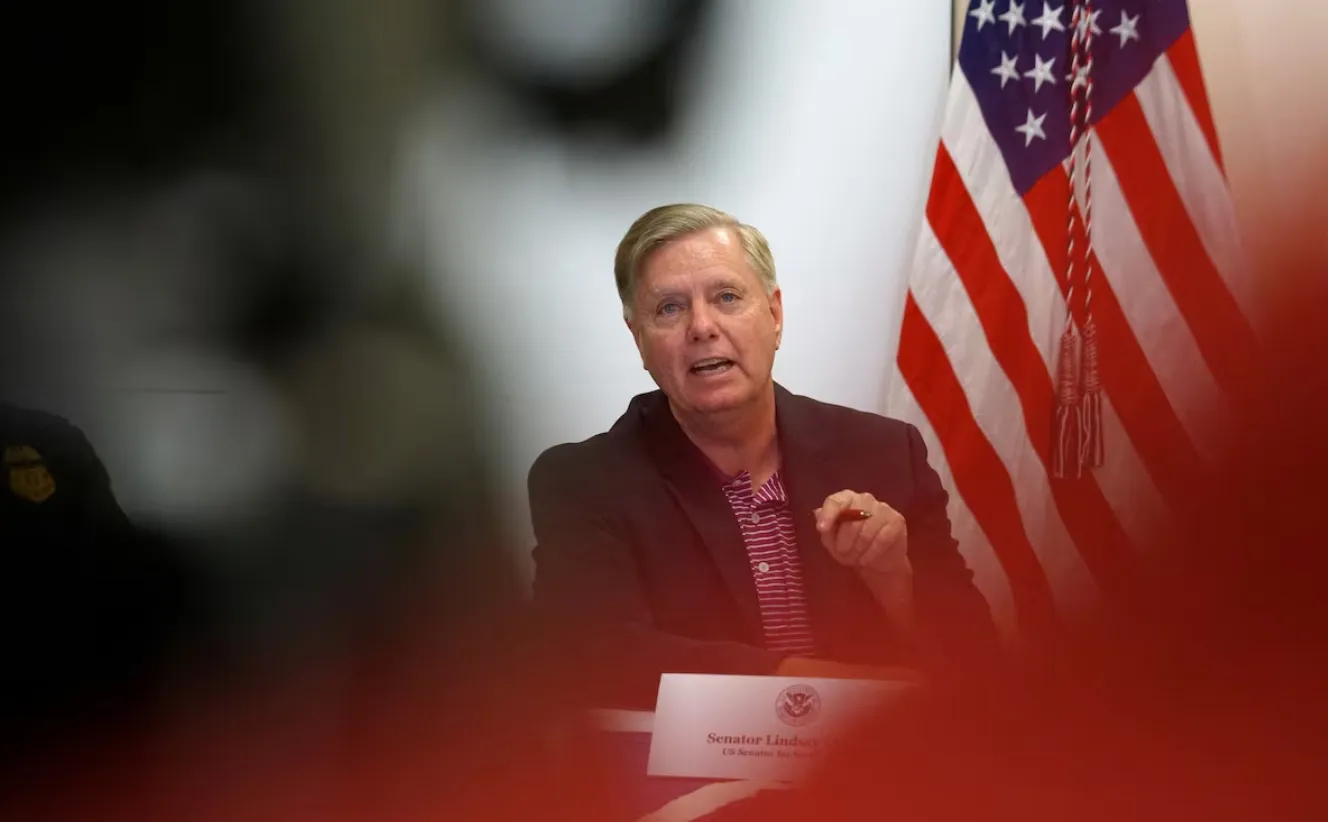
July 13, 2026
Daniel Cohen
World News
In a setback for religious freedom, the U.S. Court of Appeals for the First Circuit ruled last Thursday that Christian schools in Maine must comply with pro-LGBT regulations that conflict with their religious beliefs, if they want to participate in a public tuition assistance program. “Essentially what the court has said is that you can believe what you want to believe, you can talk about what you believe, but once you exercise what you believe, that’s conduct that the state of Maine can regulate,” said Jeremy Dys, senior counsel for First Liberty Institute, which brought the lawsuit.
In Crosspoint Church v. Makin, a two-judge panel (one judge died before the opinion was issued) partially upheld a lower court order denying a preliminary injunction against Maine’s pro-LGBT regulations. Crosspoint Church runs Bangor Christian School (BCS). The court decided a second lawsuit featuring a Catholic school (St. Dominic Academy v. Makin) on the same day, on almost identical grounds.
BCS holds employees and students to basic biblical standards for gender and sexuality, and requires teachers to ascribe to a statement of faith. But those standards run afoul of provisions in the Maine Human Rights Act (MHRA), which Maine now applies to schools seeking to participate in its tuition assistance program. “A private school that participates in the tuition-assistance program and then violates the MHRA exposes itself to civil suits from both the Maine Human Rights Commission (MHRC) and private alleged victims, with remedies including injunctive relief and monetary damages,” the court described.
Specifically, the MHRA “‘Religious Nondiscrimination Rule’ bars covered schools from discriminating in admissions, financial aid, academics, and the like on the basis of religion,” as the court described, and its “‘Sexual Orientation and Gender Identity Nondiscrimination Rule’ bars discrimination in all the same activities on the basis of sexual orientation or gender identity but exempts religious schools that do not receive public funding.”
In practice, this rule would have the effect of preventing BCS’s attempts to enforce its biblical norms of sexuality and gender, Dys told The Washington Stand. For instance, if a male student identified as transgender and wished to use the female restrooms and locker rooms, BCS could not enforce its policies against him without violating the Sexual Orientation and Gender Identity Nondiscrimination Rule. “When the state of Maine presents this sort of regulation on conduct, it creates a real problem,” he said.
Yet the court concluded the Sexual Orientation and Gender Identity Nondiscrimination Rule “works no constitutional violation.” It also held that “certain of BCS’s policies” violated the Religious Nondiscrimination Rule, including “church member discounts” and “consideration of ‘prospective students’ spiritual fit.’”
Besides these rules, the MHRA also establishes an “Employment Rule” that “bars employment discrimination based on ‘race or color, sex, sexual orientation or gender identity, physical or mental disability, religion, age, ancestry, national origin or familial status,’” as the court described. With regard to this rule, the court partially reversed the district court, finding that Crosspoint Church fell into a carveout in the rule, thereby eliminating the “case or controversy.”
Finally, the MHRA’s “Religious Expression Rule” stipulates that, “to the extent that an educational institution permits religious expression, it cannot discriminate between religions in so doing.” The court rightly held that “the Religious Expression Rule unconstitutionally violates Crosspoint’s free-exercise rights” and remanded it to the district court for an injunction.
In the lawsuit, Crosspoint argued that “a set of recent amendments to the MHRA specifically targets BCS, in violation of the Free Exercise Clause,” as the court characterized it, based on a years-long history of litigation.
Maine has offered state tuition assistance to enable parents to send their children to the school of their choice since 1980. However, the program excluded Christian schools until 2022, when a 6-3 U.S. Supreme Court found the policy unconstitutional in Carson v. Makin. Parents at BCS were at the center of that case.
Based on its recent decisions in Trinity Lutheran (2016) and Espinoza v. Montana (2019), where government entities tried to block Christian schools from generally available public benefits, the Supreme Court in Carson held that “Maine’s ‘nonsectarian’ requirement for its otherwise generally available tuition assistance payments violates the Free Exercise Clause of the First Amendment. Regardless of how the benefit and restriction are described, the program operates to identify and exclude otherwise eligible schools on the basis of their religious exercise.”
In anticipation of a defeat in front of the Supreme Court, the Maine legislature amended the law in 2021, allowing Christian schools to receive state tuition assistance, but only if they complied with the state’s rules for nondiscrimination towards sexual orientation and gender identity.
In 2023, Maine Attorney General Aaron Frey (D) professed to be scandalized at the very nature of a Christian school. “The education provided by the schools at issue here is inimical to a public education,” he complained. “They promote a single religion to the exclusion of all others, refuse to admit gay and transgender children, and openly discriminate in hiring teachers and staff.”
Frey’s comments came in response to another federal lawsuit filed by Crosspoint Church, alleging that attaching general state funding to LGBT strings amounted to a “poison pill” for accepting the money. “Putting Plaintiff to the choice of participating in a generally available benefit program or surrendering its constitutionally protected religious exercise penalizes its religious exercise and constitutes a substantial burden,” the lawsuit argued.
However, the district court refused to view the circumstances in that light, or to apply the recent string of Supreme Court precedents. Instead, U.S. District Judge John Woodcock, a George W. Bush appointee, ruled in February 2024 that “the educational antidiscrimination provisions do not violate the Free Exercise Clause because they are neutral, generally applicable, and rationally related to a legitimate government interest.”
This language reached further back to the “neutrality” test established in the Supreme Court’s 1990 ruling in Employment Division v. Smith, the controversial decision that prompted a furious Congress to overwhelmingly pass the Religious Freedom Restoration Act of 1991.
Dys contended that both the district court and the appellate court were wrong to rely on the neutrality test in this context, “because you can’t simply exclude religious exercise because it’s religious,” he told TWS. “You have to give full faith and credit to that part of the Constitution,” referring to the Free Exercise Clause of the First Amendment.
“I suspect there’s going to be further action on this case,” he concluded. First Liberty is still reviewing whether to appeal the case to the full First Circuit or directly to the Supreme Court. In either case, Dys said, “We’re going to seek further review.”
“We are disappointed that though the First Circuit acknowledges that religious institutions can teach what they believe, it would then refuse to allow conduct consistent with those beliefs,” Dys declared. “Religious education plays a critical role in our diverse society, but Maine’s leadership will not tolerate conduct consistent with those religious beliefs. As the U.S. Supreme Court has repeatedly said, punishing religious institutions for being religious is odious to our Constitution.”
This article was originally written by Joshua Arnold and published on The Washington Stand. For more content like this, visit Real Life Network.
25 min
Court Allows Maine to Discriminate against Christian Schools for Biblical Standards on Gender, Sexuality

July 9, 2026
The Washington Stand
World News
Political movements often reveal their true values not when defending their friends, but when those friends become liabilities. The controversy surrounding Maine Senate candidate Graham Plattner is about far more than one politician facing serious allegations. It raises a deeper question about integrity, consistency, and whether political principles still matter when power is at stake. As discussed on The Daniel Cohen Show, the real story isn't simply what Graham Plattner is accused of. The real story is what his own party tolerated until it became politically inconvenient. Watch more biblical news and cultural analysis anytime on Real Life Network.
Principles Mean Little If They Only Apply to Opponents
Every political movement claims to stand for something.
Honesty. Justice. Accountability. Character.
Those principles sound admirable until they become costly.
For years, Democrats have championed slogans like "Believe All Women," presenting themselves as defenders of victims and champions of accountability. Yet the Graham Plattner controversy forces an uncomfortable question: Were those principles truly universal, or were they conditional?
Before the most recent allegation surfaced, there had already been numerous warning signs.
Reports of disturbing online behavior. Multiple women raising concerns. A history of deeply troubling public controversies.
None of those revelations caused Democratic leadership to abandon him. Instead, many prominent figures continued endorsing his campaign, praising his future, and encouraging voters to support him.
Only after the political math began changing did the calls for his resignation suddenly multiply.
Principles cease to be principles the moment they become negotiable for political advantage.
That observation extends far beyond one Senate race.
Every political party faces the temptation to excuse behavior from its own side while condemning identical behavior from its opponents. Integrity requires applying the same standard regardless of whose name appears on the ballot.
Otherwise, morality becomes little more than another campaign strategy.
Selective Outrage Destroys Public Trust
The Plattner controversy illustrates a growing problem throughout American politics. Outrage increasingly depends less on the facts than on tribal loyalty.
The question often becomes not, "What happened?" but rather, "Whose side is this person on?" That mindset inevitably erodes public confidence.
When voters believe standards change depending on political affiliation, trust disappears. People stop believing public statements because they assume every response has already been filtered through electoral calculations.
That perception becomes especially damaging when movements claim moral authority.
The same inconsistency appeared after the horrific atrocities committed against Israeli civilians on October 7. Many organizations that had previously spoken passionately about believing victims suddenly became noticeably quieter when Jewish women testified about sexual violence committed by Hamas terrorists.
The victims had changed. The moral standard appeared to change with them.
Justice loses its credibility when compassion becomes selective.
The issue is not whether every allegation is automatically true. Serious accusations deserve careful investigation and due process. The issue is whether identical standards are applied consistently.
Without consistency, justice itself becomes politicized.
Readers interested in more biblical analysis of today's headlines can explore additional programming on Real Life Network.
Truth Matters More Than Winning
Political victories are temporary. Character lasts much longer.
Near the end of the episode, Daniel reflected on the legacy of Charlie Kirk. What made Kirk influential wasn't merely his ability to win arguments. It was his willingness to engage opponents thoughtfully while remaining grounded in conviction.
Ideas mattered. Truth mattered. People mattered. That same principle applies beyond politics.
Pastor Jack Hibbs offered a timely reminder that America's deepest problems cannot ultimately be blamed on those who reject biblical truth. Scripture first calls God's own people to humility, repentance, and faithfulness.
That perspective changes everything.
It reminds Christians that integrity cannot depend on election cycles, polling numbers, or partisan advantage. It must remain constant.
When winning becomes more important than integrity, both eventually disappear.
Every generation faces moments that reveal what it truly believes. The Plattner controversy is one of those moments.
Not because it exposes the failures of one politician, but because it exposes the temptation facing every movement: protecting power instead of protecting principle.
History remembers societies that defended truth even when it was costly.
It also remembers those that sacrificed truth for short-term political gain.
The choice remains the same today.
Watch the full discussion on The Daniel Cohen Show and explore more biblical news and cultural commentary anytime on Real Life Network.
25 min
When Winning Matters More Than Integrity
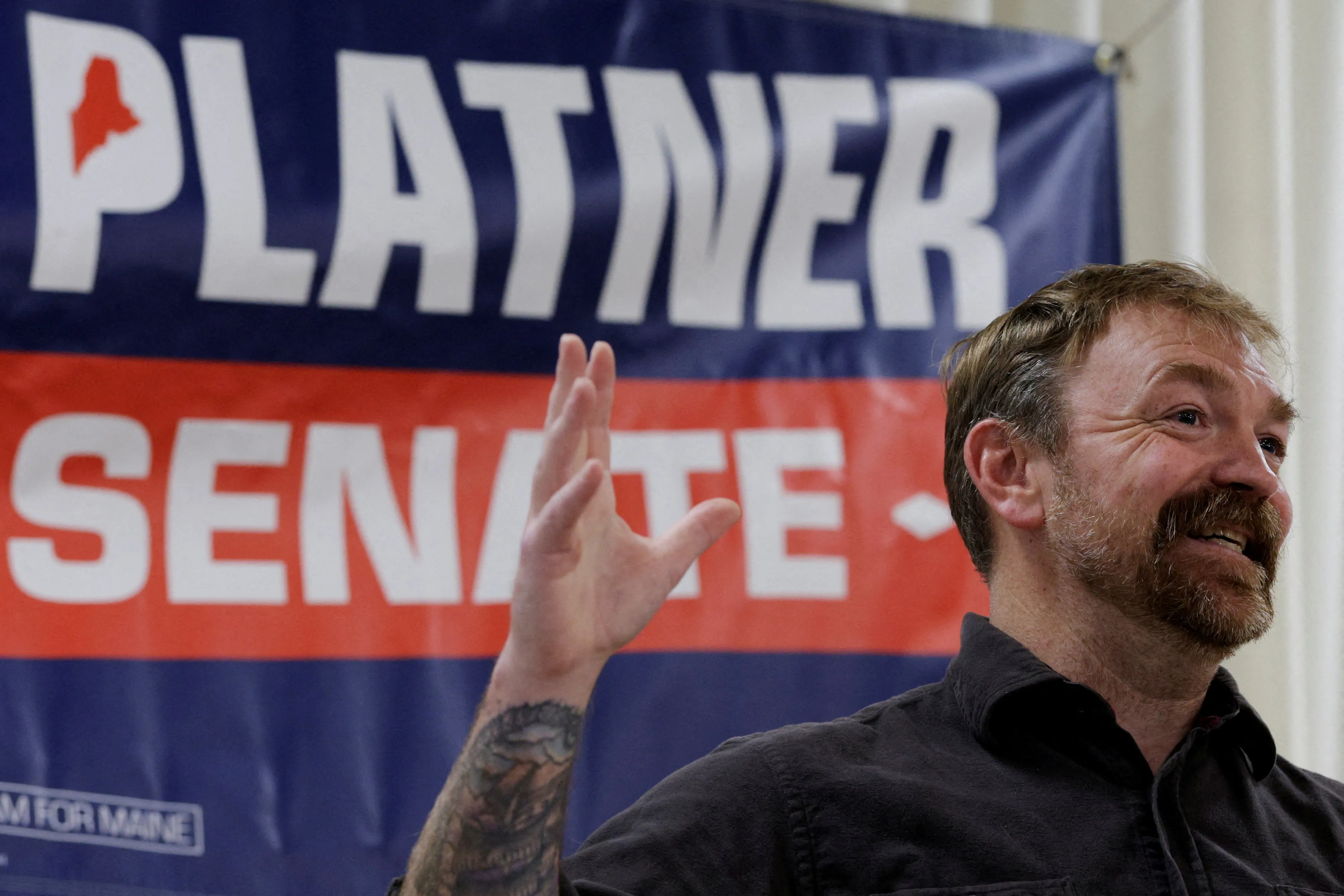
July 8, 2026
Daniel Cohen
Faith & Culture
Patience is a 19-year-old Christian girl who has suffered far more grave injustices than most people are forced to endure in their lifetime.
In 2018, her father was killed by Fulani terrorists who broke into their house in the middle of the night.
In 2019, her grandfather and three of her extended relatives were killed in another Fulani attack on her village.
In 2020, she was raped by Fulani terrorists. At the time, she was just 14 years old.
In February 2026, her uncle also died at the hands of a Fulani terrorist.
Patience is from Plateau State, Nigeria, where I visited with the humanitarian organization Christian Freedom International a few months ago.
We were able to meet Patience and dozens of other Nigerian survivors of persecution and attacks. Many people rightly point out that the situation in Nigeria is complex, but staying next to a village known for facing repeated attacks and visiting survivors of persecution in their homes starts to bring the picture into focus.
I visited the small corner shop belonging to Amarachi, a middle-aged woman who could not be more ecstatic to see us. She showed us around her small shop — which she managed to start with the help of an organization who gave her seed money and taught her the basics about business.
After having us try a Nigerian snack, she wanted to show us her home several blocks away. In the modest rented house that she shared with her adult children, she told us about her husband’s death several years prior.
He was on his way home from a weekday prayer meeting at church when he was ambushed. Fulani militants rushed out of tall grass nearby and slaughtered him on the path. It was believed they were looking to target Christians leaving the church that day.
His wife and children were left to mourn their father’s death and do the best they could to carry on. His children are in college now. Amarachi had to provide for the family, so she opened her small store.
But Amarachi’s husband’s death wasn’t the end of the terror the family would face. Her village — located close to a Nigerian military lookout — routinely faces raids from Fulani militants. Typically, the militants target this village for kidnappings, charging steep ransoms to release the kidnapped victims. Families and churches must band together to offer a ransom and negotiate down to a feasible price.
One expert told me that kidnappings and ransoms are the militants’ largest source of income. These groups are often better equipped than the Nigerian military itself. When a large group of Fulani militants launches an attack, the military has been known to tell villagers to flee because they cannot defend against the militants.
My friend from Christian Freedom International asked Amarachi if she felt safe from local Fulani attacks since she had a courtyard door, main door to her house, and bedroom door — all with sturdy-looking locks. She gave us a confused look and said no. Our Nigerian driver explained that these would do little to stop attackers. He said they could break through any lock and gain entrance to any building. He called them “experts” at it.
I asked what she does during the overnight raids. Amarachi said that she simply lies in her bed and prays and tells her children to do the same. She doesn’t flee the village like many residents do during an attack. She believes that she has suffered enough, and God will not let her suffer more. So far, the militants haven’t targeted Amarachi’s house.
As an outsider, it’s difficult to grasp the normalized level of fear that must accompany daily life in a Christian village in Northern Nigeria. Yet, terrorism isn’t new for Nigerian Christians. The last few decades have seen an increase in the rise of Islamist terrorism and general violence against vulnerable Christian communities in Northern Nigeria. In 2014, the infamous terrorist group Boko Haram was at its height, seizing control of approximately 70,000 square miles in Northeast Nigeria.
In Jos, we met siblings Joy and Gabriel. They are now teenagers, but as children, they and their mother were captured by Boko Haram and held in one of their camps for over a month before being released. Their father was killed. Tears streaming down her face, Joy wanted to press through and share how Boko Haram destroyed her village in Northeast Nigeria, forcing those who survived to flee.
Patience, Joy, and Gabriel are now living at Christian Faith Institute (CFI), a non-denominational Bible school and ministry in Jos, Nigeria, where I was able to meet them. Founded by Australian missionaries Kent and Ruth Hodges, the ministry is dedicated to serving on the frontlines.
The Hodges, with their great African team, train Nigerians (and many from surrounding Sahel nations also impacted by terrorism), mainly from rural northern areas, to be pastors and missionaries themselves, equipping them to return to their villages across the north and share the good news of the gospel. At the Bible school, students are equipped with income-generating practical vocational training to be able to provide for themselves and their families. The Hodges also have a children’s crisis home and school that serves hundreds of kids, almost all of whom have faced persecution and terrorism themselves, like Joy and Gabriel.
While the violence in Nigeria has been ramping up for decades, it has gained more public awareness in the United States over the last few years. In November 2025, President Trump designated Nigeria as a “Country of Particular Concern” on religious freedom. The designation was first instated in the last year of President Trump’s first term and undone in President Biden’s first year in office.
On Christmas Day in 2025, the United States launched strikes against ISIS in northwestern Nigeria. In May 2026, the U.S. worked with Nigerian forces to strike more ISIS targets, killing the global ISIS second-in-command. However, experts and those on the ground say that the situation for Nigerian Christians has worsened, not improved, in recent months.
Now, religious freedom advocates are hoping the Trump administration keeps up the pressure on the Nigerian government until its leaders take concrete action and successfully protect Christians in Northern Nigeria. Though the darkness and gravity of the situation in Nigeria feel overwhelming, ministries like CFI are a reminder that God is at work there and hope is not lost.
On the last day of my trip, I spent time with one mother whose daughter asked when the “crisis” will end. She told her daughter she didn’t know if it would end, but to pray for protection for their family and for comfort for those experiencing loss.
Note: Names of the victims featured in this piece have been changed for their protection.
This article was originally published by The Washington Stand and written by Arielle Del Turco. For more content like this, visit Real Life Network.
25 min
On the Ground in the Nigerian Villages under Attack

July 7, 2026
The Washington Stand
World News
America's 250th birthday should have been a celebration of freedom, sacrifice, and the enduring promise of the American experiment. Instead, it exposed a growing divide over what America is and whether it is even worth celebrating. As explored on The Daniel Cohen Show, that debate goes far beyond politics. It raises a far more important question: What happens when a nation loses the ability to recognize its enemies? History offers a sobering answer. Nations rarely lose their freedoms because they lack resources or military strength. They lose them when they lose the clarity to distinguish truth from deception, allies from adversaries, and liberty from tyranny. Watch more biblical news and cultural analysis anytime on Real Life Network.
Every Nation Needs the Wisdom to Recognize Its Enemies
The loudest voices are not always the wisest.
On America's 250th birthday, New York mayoral nominee Zohran Mamdani used one of the nation's most symbolic moments to focus almost exclusively on America's failures. Every nation has flaws. Honest people acknowledge that. Patriotism has never required pretending history is perfect. But gratitude and criticism are not mutually exclusive.
A mature patriot can recognize both the blessings of a nation and the mistakes it has made. The problem begins when criticism becomes the only story worth telling. That mindset slowly erodes the gratitude that has welcomed generations of immigrants seeking opportunity and freedom. Daniel's own family story illustrates the difference.
After surviving the horrors of World War II, his mother arrived in New York Harbor as a young Jewish immigrant. Like countless others before her, she watched the Statue of Liberty come into view and saw more than a monument. She saw hope.
That hope was not rooted in the belief that America was perfect. It was rooted in the knowledge that America offered something millions of people around the world desperately wanted: the opportunity to build a better future.
Gratitude for a nation's blessings does not require ignoring its failures, but forgetting its blessings guarantees those failures become the only story left to tell.
History repeatedly shows that civilizations decline long before they collapse. They first lose confidence in the very principles that made them flourish.
Confusing Friends and Enemies Comes at a Cost
Perhaps the greatest danger facing any nation is not military weakness but moral confusion.
The Cold War generation understood something that modern America increasingly seems to forget. Not every ideology deserves equal respect. Some ideas are fundamentally incompatible with freedom.
President Ronald Reagan understood that reality when he confronted Soviet communism with moral clarity rather than diplomatic ambiguity. His famous challenge to Mikhail Gorbachev to "tear down this wall" was more than memorable rhetoric. It reflected a willingness to identify an enemy without apology.
That same clarity appears increasingly absent today.
Iran openly funds terrorism, threatens Israel's destruction, and continues allowing chants of "Death to America" to echo through public demonstrations. Those are not misunderstandings. They are declarations.
Yet public debate increasingly treats those realities as negotiable.
Even cultural institutions have become hesitant to speak plainly about radical Islamic terrorism. That hesitation helps explain why a film like Citizen Vigilante has generated so much attention. Whether viewers ultimately praise or criticize the movie is almost secondary. Its popularity suggests many Americans are hungry for stories that acknowledge threats they believe have been ignored.
A nation that cannot clearly identify its enemies will eventually struggle to defend the freedoms those enemies seek to destroy.
Discernment has never been optional. It is essential for survival.
Readers interested in more biblical analysis of today's headlines can explore additional programming on Real Life Network.
Freedom Requires More Than Military Strength
America has overcome extraordinary challenges during the past 250 years. Civil war. Economic depression. World wars. Terrorism. Political upheaval.
The nation's endurance has never depended solely on military power or economic success. It has depended on a shared understanding that freedom is worth defending. That defense begins with truth.
It requires recognizing when destructive ideologies are repackaged under more appealing language. It requires understanding that propaganda often succeeds by making dangerous ideas sound compassionate. And it requires remembering that evil rarely announces itself honestly.
Scripture repeatedly calls believers to exercise discernment. Not fear. Not paranoia. Discernment. The ability to distinguish good from evil has always been one of God's expectations for His people. That principle applies as much to nations as it does to individuals.
America's greatest strength has never been that it avoided every mistake. Its strength has been the willingness to confront threats without losing confidence in the ideals that made the nation worth defending.
Freedom survives only when people possess the courage to recognize evil before it becomes impossible to ignore.
As America begins its next 250 years, that lesson may be more important than ever. Political parties will change. Leaders will come and go. International conflicts will rise and fall.
But the need for wisdom, gratitude, courage, and discernment will remain constant. The future of a free society depends not only on the enemies outside its borders but also on whether its citizens still possess the clarity to recognize them.
Watch the full discussion on The Daniel Cohen Show and explore more biblical news and cultural commentary anytime on Real Life Network.
25 min
What Happens When a Nation Forgets Its Enemies
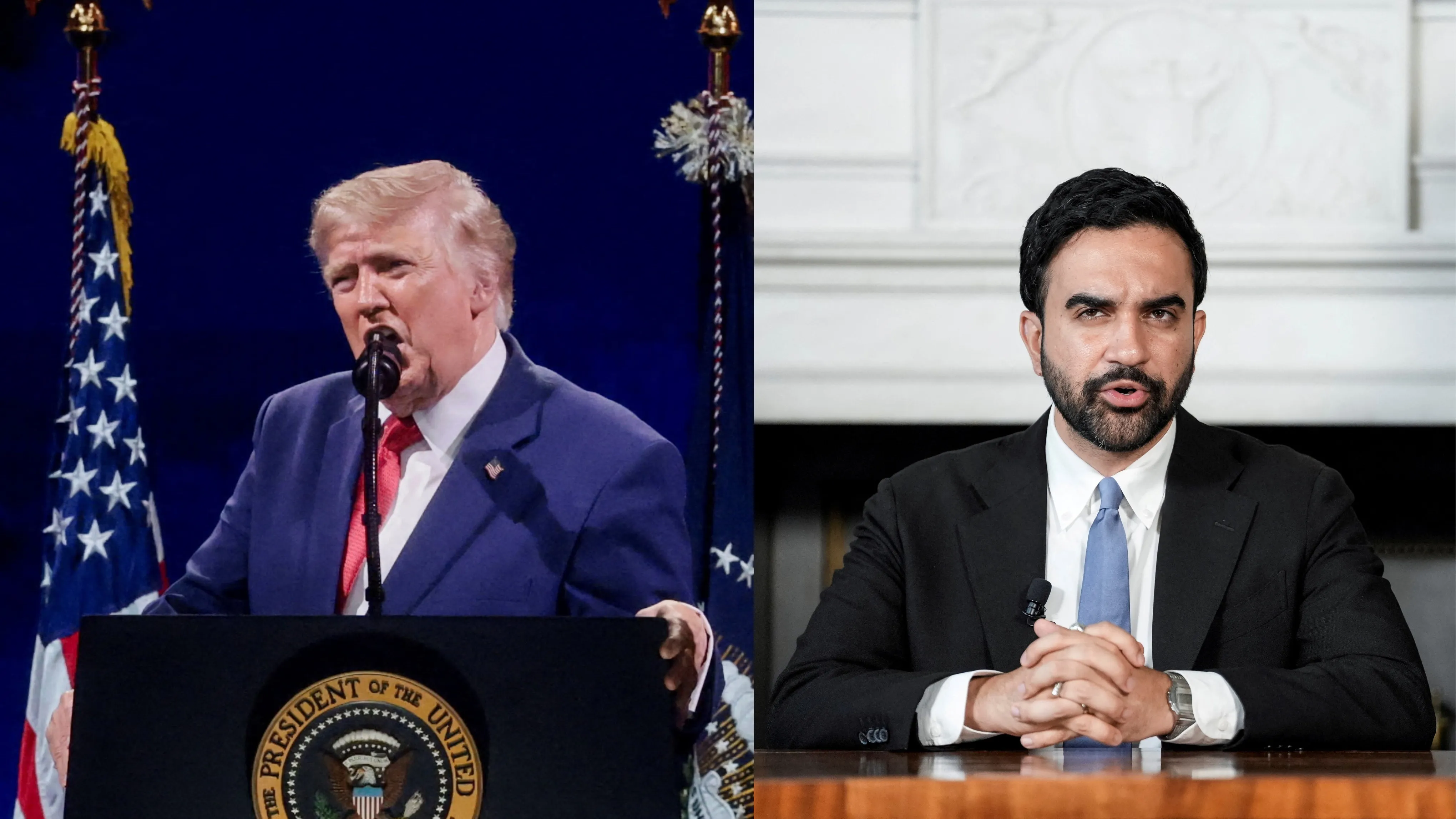
July 6, 2026
Daniel Cohen
World News
A billionaire promoting socialism sounds like a contradiction. Yet that contradiction reveals one of the most effective political strategies of our time. Modern socialism rarely arrives wearing the labels of Marxism or communism. Instead, it presents itself through words almost everyone supports: compassion, affordability, fairness, and justice. As discussed on The Daniel Cohen Show, the real danger isn't that people suddenly embrace government control overnight. It's that one seemingly reasonable idea at a time can gradually reshape an entire worldview. Watch more biblical news and cultural analysis anytime on Real Life Network.
Socialism Rarely Begins With Its Final Destination
Very few people wake up one morning hoping to exchange freedom for government control. History shows that isn't how socialism spreads.
It begins with a promise. Affordable housing. Lower healthcare costs. Free college. Rent control.
Each proposal sounds compassionate on its own. After all, who doesn't want families to afford a home or seniors to receive quality medical care?
The problem isn't that people care about those issues. The problem is believing every problem requires another government solution.
Scott Wiener's confrontation with progressive activists illustrated this principle in a different context. Even one of California's most progressive lawmakers discovered that agreeing with a movement on ninety percent of its agenda is no longer enough. Once ideological movements redefine compassion as complete agreement, yesterday's allies become today's opponents.
Socialism doesn't ask people to embrace every radical idea at once. It persuades them to accept one more government solution until the entire worldview has changed.
That pattern is becoming increasingly visible across American politics.
A newly elected democratic socialist in Colorado didn't campaign on abolishing capitalism overnight. The campaign focused on affordability and economic fairness. Yet beneath those promises sits a much broader political vision, one that continues expanding long after voters cast their ballots.
History demonstrates that ideas rarely remain isolated. They grow, evolve, and eventually influence every other area of public life.
When Compassion Becomes a Political Weapon
Compassion is one of Christianity's highest virtues.
Jesus consistently demonstrated compassion toward the poor, the sick, and the marginalized. Scripture repeatedly commands believers to care for widows, orphans, and those in need. That makes compassion incredibly powerful politically.
If compassion can be redefined as support for bigger government, then disagreement no longer becomes a policy debate. It becomes a moral failure. Questions are replaced with accusations.
Disagreement becomes evidence of intolerance. Nuance disappears. That transformation explains why so many political conversations today generate more heat than light.
The issue is no longer simply whether a proposal works. The issue becomes whether opposing it proves someone lacks compassion altogether.
A society that equates compassion with government power eventually loses the ability to distinguish genuine charity from political coercion.
The contradiction becomes especially striking when some of socialism's loudest advocates are themselves among society's wealthiest individuals.
When billionaires encourage everyone else to embrace socialism while continuing to enjoy extraordinary personal wealth, the message deserves closer examination. If these ideas truly represent the best path forward, why are those promoting them rarely eager to live by the same economic principles themselves?
Ideas should always be tested not only by their promises but also by their results.
Readers looking for more biblical commentary on today's cultural and political issues can explore additional episodes on Real Life Network.
History Continues Offering the Same Warning
Perhaps the strongest argument against socialism isn't theoretical. It's historical.
Throughout the twentieth century, nations embraced socialism believing they were creating greater equality and prosperity. Instead, many experienced economic collapse, political oppression, food shortages, and the loss of individual freedom.
Those lessons should not be ignored simply because the language has changed.
Today's conversations may emphasize affordability rather than revolution, but the underlying assumption remains remarkably similar: that government can ultimately solve humanity's deepest problems.
Scripture offers a different perspective.
The Bible recognizes that injustice exists because people are fallen, not because governments are too small. Good laws matter, but they cannot transform the human heart. No political system, whether socialist, capitalist, or otherwise, can accomplish what only God can do.
That reality doesn't eliminate the responsibility to pursue justice or care for those in need. It simply reminds us that lasting hope cannot rest in political promises.
The most dangerous ideas are often introduced through the language of compassion before revealing the cost they ultimately demand.
Christians should never lose their compassion. They should also never surrender their discernment.
History teaches that freedom is far easier to lose than to recover. Every generation must carefully examine the ideas shaping its culture, asking not only whether they sound compassionate today, but where they ultimately lead tomorrow.
Compassion and truth were never meant to compete. They belong together. When separated, both eventually suffer.
To watch the full discussion behind these ideas and explore more biblical news analysis, visit The Daniel Cohen Show on Real Life Network, where new episodes are available to stream for free.
25 min
How Compassion Became Socialism's Most Effective Sales Pitch
.webp)
July 3, 2026
Daniel Cohen