The Latest
- Discover why America's greatest challenge may not be external threats, but the growing inability to distinguish allies from enemies.
- Learn how Daniel Cohen connects America's 250th birthday, Zohran Mamdani's remarks, and the lessons of history into one compelling argument.
- Explore why ideologies like communism and radical Islam continue to pose a threat when societies lose the moral clarity to confront them.
- See how biblical discernment offers a timeless framework for protecting freedom in an increasingly confused culture.
Real Life Network is a free, faith-based streaming platform offering biblically grounded teaching, documentaries, news, movies, and original programming. Sign up today.
America's 250th birthday should have been a celebration of freedom, sacrifice, and the enduring promise of the American experiment. Instead, it exposed a growing divide over what America is and whether it is even worth celebrating. As explored on The Daniel Cohen Show, that debate goes far beyond politics. It raises a far more important question: What happens when a nation loses the ability to recognize its enemies? History offers a sobering answer. Nations rarely lose their freedoms because they lack resources or military strength. They lose them when they lose the clarity to distinguish truth from deception, allies from adversaries, and liberty from tyranny. Watch more biblical news and cultural analysis anytime on Real Life Network.
Every Nation Needs the Wisdom to Recognize Its Enemies
The loudest voices are not always the wisest.
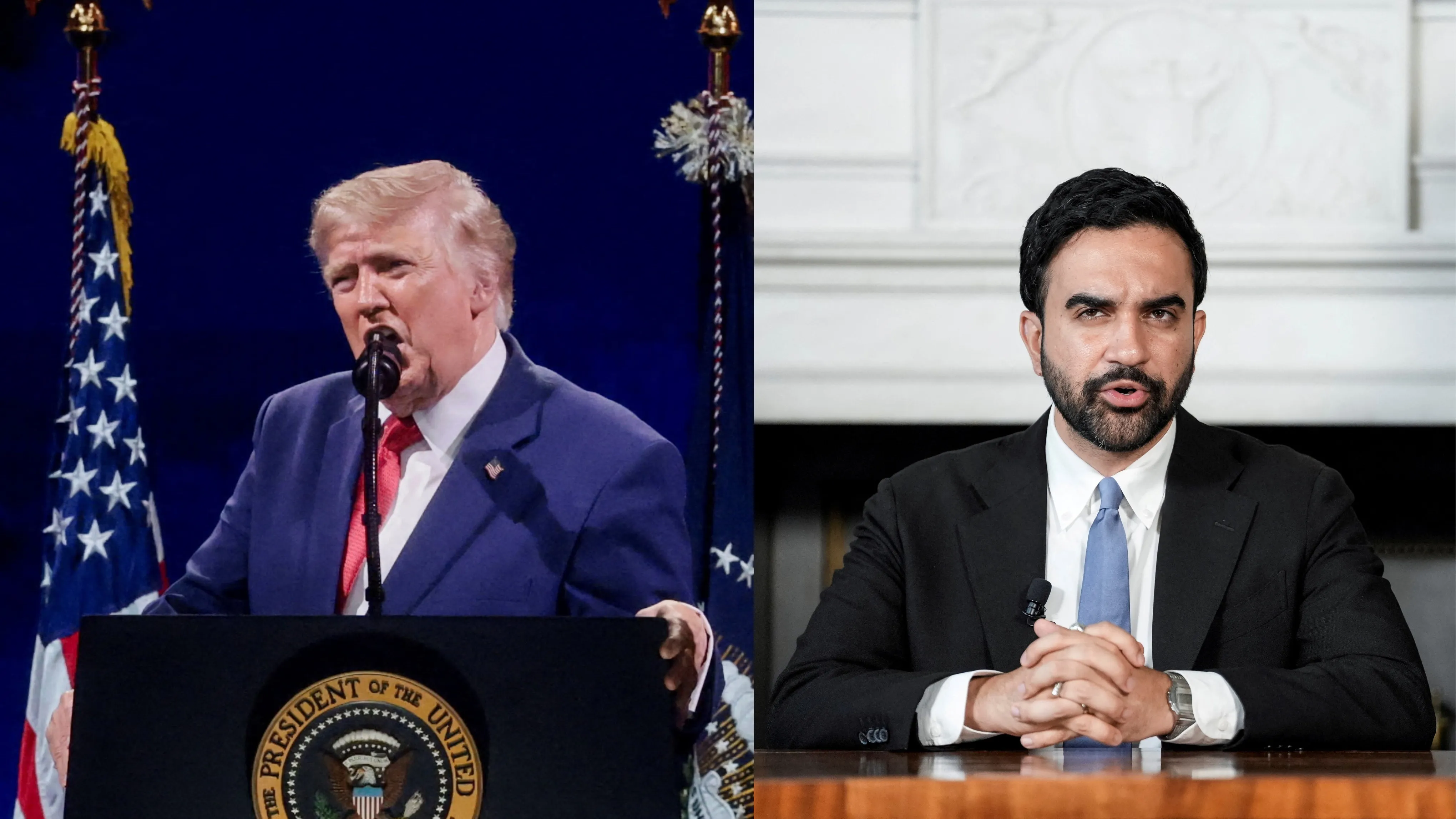
On America's 250th birthday, New York mayoral nominee Zohran Mamdani used one of the nation's most symbolic moments to focus almost exclusively on America's failures. Every nation has flaws. Honest people acknowledge that. Patriotism has never required pretending history is perfect. But gratitude and criticism are not mutually exclusive.
A mature patriot can recognize both the blessings of a nation and the mistakes it has made. The problem begins when criticism becomes the only story worth telling. That mindset slowly erodes the gratitude that has welcomed generations of immigrants seeking opportunity and freedom. Daniel's own family story illustrates the difference.
After surviving the horrors of World War II, his mother arrived in New York Harbor as a young Jewish immigrant. Like countless others before her, she watched the Statue of Liberty come into view and saw more than a monument. She saw hope.
That hope was not rooted in the belief that America was perfect. It was rooted in the knowledge that America offered something millions of people around the world desperately wanted: the opportunity to build a better future.
Gratitude for a nation's blessings does not require ignoring its failures, but forgetting its blessings guarantees those failures become the only story left to tell.
History repeatedly shows that civilizations decline long before they collapse. They first lose confidence in the very principles that made them flourish.
Confusing Friends and Enemies Comes at a Cost
Perhaps the greatest danger facing any nation is not military weakness but moral confusion.
The Cold War generation understood something that modern America increasingly seems to forget. Not every ideology deserves equal respect. Some ideas are fundamentally incompatible with freedom.
President Ronald Reagan understood that reality when he confronted Soviet communism with moral clarity rather than diplomatic ambiguity. His famous challenge to Mikhail Gorbachev to "tear down this wall" was more than memorable rhetoric. It reflected a willingness to identify an enemy without apology.
That same clarity appears increasingly absent today.
Iran openly funds terrorism, threatens Israel's destruction, and continues allowing chants of "Death to America" to echo through public demonstrations. Those are not misunderstandings. They are declarations.
Yet public debate increasingly treats those realities as negotiable.
Even cultural institutions have become hesitant to speak plainly about radical Islamic terrorism. That hesitation helps explain why a film like Citizen Vigilante has generated so much attention. Whether viewers ultimately praise or criticize the movie is almost secondary. Its popularity suggests many Americans are hungry for stories that acknowledge threats they believe have been ignored.
A nation that cannot clearly identify its enemies will eventually struggle to defend the freedoms those enemies seek to destroy.
Discernment has never been optional. It is essential for survival.
Readers interested in more biblical analysis of today's headlines can explore additional programming on Real Life Network.
Freedom Requires More Than Military Strength
America has overcome extraordinary challenges during the past 250 years. Civil war. Economic depression. World wars. Terrorism. Political upheaval.
The nation's endurance has never depended solely on military power or economic success. It has depended on a shared understanding that freedom is worth defending. That defense begins with truth.
It requires recognizing when destructive ideologies are repackaged under more appealing language. It requires understanding that propaganda often succeeds by making dangerous ideas sound compassionate. And it requires remembering that evil rarely announces itself honestly.
Scripture repeatedly calls believers to exercise discernment. Not fear. Not paranoia. Discernment. The ability to distinguish good from evil has always been one of God's expectations for His people. That principle applies as much to nations as it does to individuals.
America's greatest strength has never been that it avoided every mistake. Its strength has been the willingness to confront threats without losing confidence in the ideals that made the nation worth defending.
Freedom survives only when people possess the courage to recognize evil before it becomes impossible to ignore.
As America begins its next 250 years, that lesson may be more important than ever. Political parties will change. Leaders will come and go. International conflicts will rise and fall.
But the need for wisdom, gratitude, courage, and discernment will remain constant. The future of a free society depends not only on the enemies outside its borders but also on whether its citizens still possess the clarity to recognize them.
Watch the full discussion on The Daniel Cohen Show and explore more biblical news and cultural commentary anytime on Real Life Network.
.png)
Daniel Cohen hosts the "Daniel Cohen Show" exclusively on the Real Life Network. A Jewish follower of Jesus and three-time Emmy award-winning journalist, Cohen delivers the news from Israel, reporting on today's top headlines with a biblical worldview.