News

World News
25 min

The Reconquest of Yaguajay: A Christian’s Example for a Possible Cuba

Discover the story of Cuban pastor Carlos Sebastián Hernández Armas, who courageously led a Baptist congregation in reclaiming its church after decades of injustice. His story illustrates the power of faith, perseverance, and community in the face of religious oppression.

Pastor, professor, and historian Carlos Sebastián Hernández Armas had been summoned and threatened by the Castro regime’s political police — and, ultimately, placed on the blacklist of the “regulated” (regulados), those individuals whom the Cuban socialist regime forbids from leaving the country. But who was this smiling man — quick-spoken and possessed of vehement opinions — who provoked such fury within the regime?

To understand his story, one must look back to the 1980s, when the Western Baptist Convention of Cuba (ACBCOcc, by its Spanish acronym) experienced an internal schism. At that time, several pastors sympathetic to the regime — who, nonetheless, failed to gain significant support among the faithful — seized control of churches in various provinces and founded the Fraternity of Baptist Churches of Cuba (FIBAC).

Since the legal title to these properties belonged to the ACBCOcc, this action was unlawful. Nevertheless, the State provided de facto support to the usurpers, granting legal recognition to the new association.

One of the pastors who broke away was Lázaro Cuesta, from the church in Yaguajay. When the ACBCOcc removed him from his position, he refused to accept the decision. He changed the lock on the main door and took possession of the church. The authorities ignored calls to mediate, so several members of the Baptist congregation began holding worship services on the church steps as a form of protest. From inside, Cuesta would play the piano at a high volume to disrupt those gathered outside.

Discouraged after several peaceful protests, the members and leaders of the denomination eventually ceased their efforts to reclaim the property. Yet, they never lost hope of recovering their sanctuary. Pastor Mario Zarauza, from the Baptist church in Caibarién, took on pastoral care for the Yaguajay congregation; until 2002, he provided spiritual guidance to the believers, even though they no longer had a sanctuary.

Meanwhile, Cuesta — the man who had usurped the sanctuary — would often preach while wearing an olive-green military uniform during the “National Defense Days” mandated by the regime. A well-known anecdote among the locals recounts that, on one occasion, while he was speaking from the pulpit, a Soviet-made pistol fell from his belt. The loud clatter echoed throughout the space, leaving the congregation stunned and open-mouthed. After all, what ordinary citizen was permitted to carry a firearm in a country where such a right was prohibited?

Toward the end of the 1990s, Cuesta had verbally promised to hand over a plot of land adjacent to the church to state-run enterprises for construction purposes. Not only had he seized the property, but he was now threatening to carve it up. The believers were horrified.

In 2003, Hernández Armas was appointed pastor in Yaguajay by the ACBCOcc. The believers continued to gather in the homes of the faithful — steadfast, though scattered. The young leader was fully aware that the local congregation’s original sanctuary had been stolen, and he understood the Baptist community’s deep longing to reclaim it.

Cuesta passed away in 2005. In the months that followed, a new clergyman — aligned with the FIBAC — took his place, ensuring that the usurpation would continue for, who knows, how many more decades. Before that could happen, Hernández Armas took action. He entered the church and remained there, alongside several members of the congregation, to carry out an action aimed at reclaiming the property. Several Baptist women accompanied him and Pastor Zarauza throughout various stages of the process.

Their names also stand as a testament to heroism: Isabel Aguilar, Edelia Lorenzo, Daisy Muñoz, Edelma Crespo, María Luz Muñoz, Raquel Rodríguez, and the woman who, at that time, served as the lawyer for the ACBCOcc.

The event came to be known among the participants as “the 80 hours of Yaguajay,” in reference to the duration of the action. This act of reclamation drew the attention of the quiet town, whose inhabitants gathered in front of the church.

A leader of the local Masonic lodge arrived at the scene and, in a clear, powerful voice, expressed his support for the group that had reclaimed the sanctuary. He declared that, if there were a God in heaven, Cuesta and his cohorts would ultimately be forced to return the building to its rightful owners — the believers.

A witness — currently in exile and who has requested to remain anonymous — confirms certain details, such as the existence of a video of the takeover, and notes that, at no point, were the representatives of the FIBAC willing to relinquish the building.

The occupants requested the key from Cuesta’s widow, but she refused. Later, Cuesta’s daughter — sparking a confrontation — demanded, to no avail, that the believers vacate the premises. Estela de Naranjo, a leader within FIBAC, met with Hernández Armas and those occupying the site; she maintained an agitated tone and even showed disrespect toward some of the older women who were present. Francisco “Paco” Rodés — the top representative of FIBAC, who was accompanying her — barely intervened.

A few days later, the sanctuary was closed, under the pretext that it would be returned to its rightful owner. Ultimately, property rights — which had been a subject of dispute for 20 years — were recognized. For its part, the regime granted FIBAC the necessary permits to build a new sanctuary (something that had not been permitted for other denominations for years).

According to the account, the ACBCOcc provided funds to Cuesta’s widow to contribute to the construction. Until the new sanctuary was completed, she resided at her private home in Yaguajay.

For the prominent Cuban chronicler Eloy González, the episode was reminiscent of the actions of “squatters,” though in this instance, it served a restorative purpose — aimed at achieving true justice.

Regarding the construction work already underway on the land adjacent to the sanctuary, Hernández Armas took an equally bold step: he fenced off the entire property to prevent state-run enterprises from accessing the site. Tensions persisted for years afterward, but the land remained in the hands of the denomination.

Even today, the story of Hernández Armas can resonate with thousands of Cubans on the island: building community and leading with courage in pursuit of justice. The results — even under a totalitarian regime — can be remarkable.

This is especially relevant in 2026, a year in which the Trump administration has committed to supporting the aspirations for freedom held by decent, upright Cubans. Like Secretary of State Marco Rubio, I, too, believe that “this is the moment.”

This article was originally written by Yoe Suarez and published on The Washington Stand. For more content like this, visit Real Life Network.

Faith & Culture
25 min

Liberal Christianity Goes to Washington. But What Is It?

Explore the resurgence of liberal Christianity in American politics through James Talarico's religious rhetoric. Discover its theological origins, historical influence, and how its emphasis on social reform differs from traditional biblical Christianity.

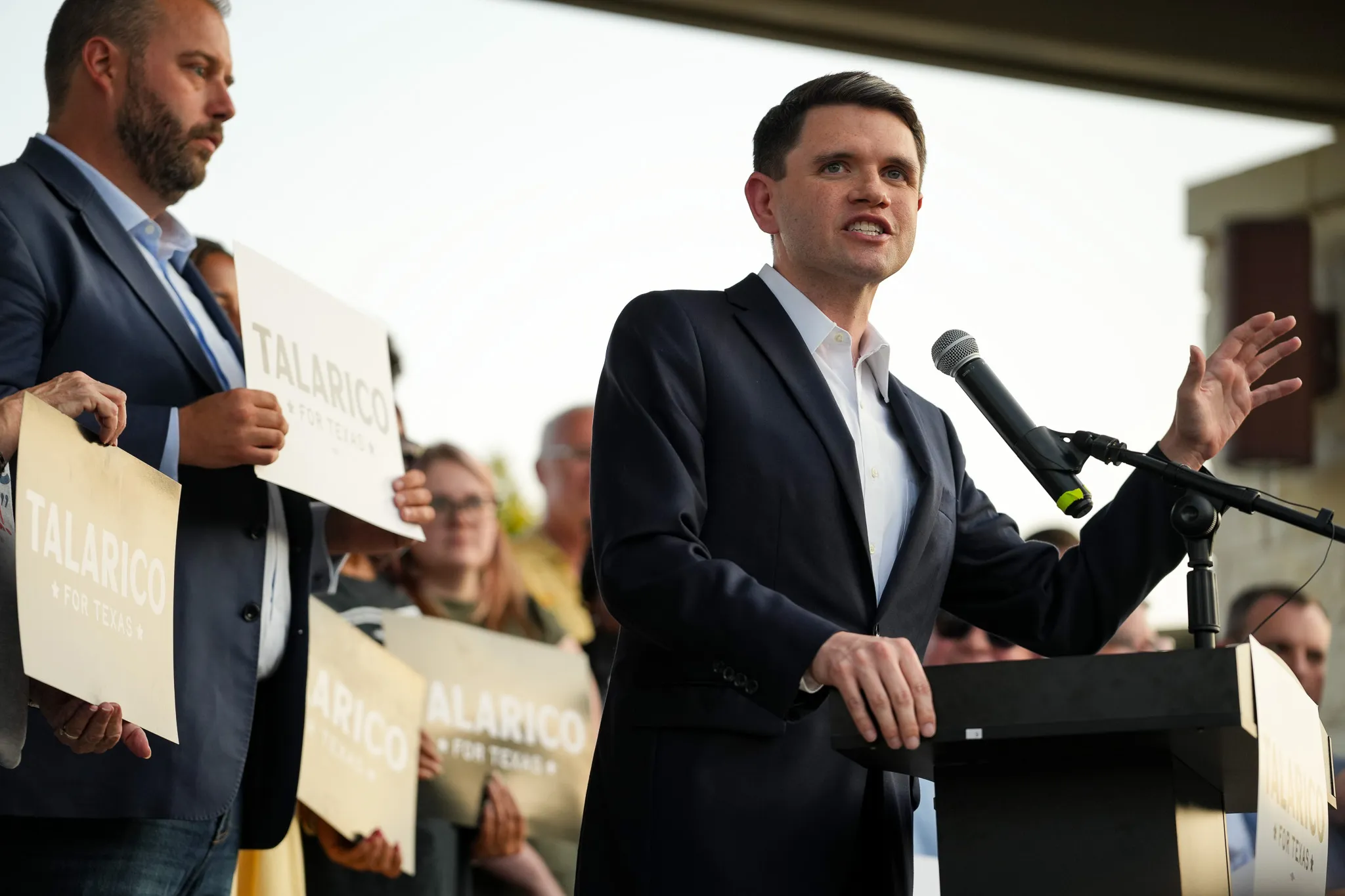
One theme among many in the 2026 midterm election was “the return of a religious left,” as progressive reporter Ezra Klein celebrated. Klein posted a clip from an interview he conducted with Senator-elect James Talarico (D-Texas), in which Talarico characteristically leaned into religious language. As Christopher Scalia noted wryly, “If, say, Ted Cruz made similar remarks, we’d be warned that he was taking a wrecking ball to the wall separating church and state.”

Talarico Interview

Talarico began by noting the obvious. “You read ‘Common Sense’ by Thomas Paine, you read Lincoln’s speeches, you listen to Fannie Lou Hamer, you read Dr. [Martin Luther] King, [Jr.] — they infused their politics with a moral foundation, oftentimes explicitly rooted in faith,” he stated. “What we’re suffering from now [is]: people start with their politics and then try to figure out the morality on top of that, when it should be reversed.”

Talarico added, “I really do feel like this is a way that I can love my neighbor at scale, through good public policy.” Christians across the political spectrum could affirm that statement; they only differ over what policies best love their neighbors.

But then Talarico went further. “If we can infuse our politics with more of this spirituality, we could treat politics like a sacrament,” he declared. “We could have an incarnational politics.”

Understandably, Klein interjected, “What does that mean?”

Before he could answer, Talarico had to set the boundaries for this “incarnational politics,” which prompted a less understandable interjection.

Talarico: “You don’t have to be a Christian. You don’t even have to be part of an organized religion. I do think that everyone is religious.”
Klein: “Ooh, that’s a bold claim. What do you mean by that?”
Talarico: “I think we all put our trust in something. … I choose to put my faith in love, which sometimes, the evidence suggests, is not going to work. Sometimes love is defeated. Sometimes love experiences setbacks. But the trust is that it will one day win. And that’s what my tradition is all about.”

Klein’s surprise showed his secular biases, and Talarico gave the straightforward explanation that everyone believes in something; humans are by nature religious creatures. Amid that conversational dynamic, Talarico defined his background: to participate in his “incarnational politics,” a person need not be a Christian, nor even a part of any organized religion; they simply must believe in love, as Talarico does. Here, “love” is given no further definition.

Finally, Talarico could define the substance of his “incarnational politics”: “If you do believe that each person is sacred, that each person is holy, that each person bears the divine image, that should fundamentally change how we engage in politics, how we treat our neighbors, and how we treat our enemies. To me, an incarnational politics would take seriously the idea that every person is … is God.”

That conclusion is startling — and more so given the preceding pause. Talarico’s words could be interpreted in a pantheistic sense, that everyone participates in an impersonal deistic force filling all things. But his words could also be a reference to the Parable of the Sheep and the Goats, a favorite among liberal Christians. Jesus welcomes the sheep into heaven, “For I was hungry and you gave me food, I was thirsty and you gave me drink, I was a stranger and you welcomed me, I was naked and you clothed me, I was sick and you visited me, I was in prison and you came to me. … as you did it to one of the least of these my brothers, you did it to me” (Matthew 25:35-36, 40).

Regardless, in the two-minute clip, Talarico displays some of the classic hallmarks of liberal Christian theology. He de-emphasizes the difference between Christianity and other religions. He speaks of God in vague terms that could either express Christian ideas or pantheistic ones. He articulates a creed that consists almost entirely of love. And he ties religious activity to political action.

What Is Liberal Christianity?

These claims are important enough to receive more explanation than a bare assertion, especially as many TWS readers are likely unfamiliar with liberal Christianity except at a distance.

Friedrich Schleiermacher

The movement began in 19th-century Germany, where an academic named Friedrich Schleiermacher (1768-1834) sought to rescue Christianity from the assaults of higher criticism by removing it from the skeptical scrutiny of higher critics. Unfortunately, what Schleiermacher rescued bore little relation to historical Christianity. Some might say he threw out the baby with the bathwater; more accurately, he scooped up a pail of filthy water and left the baby behind.

For Schleiermacher, Christianity — or indeed any religion — was neither truth nor ethics but merely feeling. “Religion … resigns, at once, all claims on anything that belongs either to science or morality. … Ideas and principles are all foreign to religion,” he maintained. “Piety cannot be an instinct craving for a mess of metaphysical and ethical crumbs” (“On Religion: Speeches to Its Cultured Despisers,” Speech 2).

Schleiermacher defined religion as “this sense for the infinite,” and he argued that “every original and new communication of the Universe to man is a revelation …. Every intuition and every original feeling proceeds from revelation.” This understanding of religion leans decidedly more towards pantheism than to the personal, knowable God of Scripture.

Schleiermacher’s understanding of religion even cuts off faith and doctrine. “So far is it [belief] from being the highest in religion, as is asserted, that it must be rejected by all who would force their way into the sanctuary of religion.”

What, then, is doctrine? “Christian doctrines are accounts of the Christian religious affections set forth in speech” (“The Christian Faith”). Again, he wrote, “The self-identical essence of piety is this: the consciousness of being absolutely dependent or, which is the same thing, of being in relation with God.” For Schleiermacher, religious doctrines are not truth claims about reality, but expressions of the theologian’s religious feelings — specifically his feelings of absolute dependence, although the object of this dependence is inherently unknowable.

To the reader who thinks this theology hails from the “Twilight Zone,” you are not alone. Schleiermacher redefined theology not as the study of God, but as the study of man’s opinions and feelings about God. Instead of refuting higher criticism’s rejection of scriptural authority and any supernatural intervention in history, Schleiermacher surrendered the entire field and attempted to salvage whatever mongrel religion remained.

Rudolf Bultmann

A later liberal theologian articulated the implications of this sea change. Rudolf Bultmann (1884-1976) set out on a quest to “demythologize” Christian doctrine. Like Schleiermacher, Bultmann understood his subject to cover human self-understanding, not objective truth. “The real point of myth is not to present an objective picture,” he said, but rather to present “how we human beings understand ourselves in our world” (“New Testament and Mythology”).

For liberal Christianity, “our world” became the focus instead of the world of the Scriptures. “To demythologize is to reject not Scripture or the Christian message as a whole, but the world-view of Scripture, which is the world-view of a past epoch,” Bultmann wrote. “Demythologizing takes the modern world-view as a criterion” (“Jesus Christ and Mythology”).

Liberal Christians tried to harmonize Christianity with cultural ideas. In practice, this meant that they took cultural ideas as their starting point and shed whatever elements of Christianity did not agree. The same process is evident in liberal denominations today, which have adopted the culture’s view of, for instance, sexuality and gender, to the rejection of a biblical worldview.

Adolf von Harnack

Yet liberal Christians could identify the cultural faults of other generations better than their own. Liberal church historian Adolf von Harnack (1851-1930) argued that, over centuries, standard church orthodoxy had imported ideas from Greek philosophy that distorted the gospel, and that liberal Christians were the ones reclaiming its primitive form.

“Christendom became more and more penetrated by the Greek and philosophical idea that true religion is first and foremost ‘doctrine,’” von Harnack taught. “There are only two possibilities here: either the Gospel is in all respects identical with its earliest form, in which case it came with its time and has departed with it; or else it contains something which, under differing historical forms, is of permanent validity. The latter is the true view” (“What is Christianity?”).

Notice again how von Harnack believed he was rescuing Christianity from historical irrelevance, while in fact he was the one who rejected the timeless message of the gospel as irrelevant. Roman Catholic theologian George Tyrrell, a contemporary of von Harnack, criticized him. “The Christ that Harnack sees, looking back through nineteen centuries of Catholic darkness, is only the reflection of a Liberal Protestant face, seen at the bottom of a deep well.”

So, what was the message of Christianity, according to 19th-century liberalism? Conservative opponent J. Gresham Machen (1881-1937) summed it up in two points: “the universal fatherhood of God and the universal brotherhood of man” (“Christianity and Liberalism”). Liberals thought of themselves as “kinder, gentler” Christianity. Their view of God as father of all neglected his holy wrath against sin. Their view of universal brotherhood stressed social acts of benevolence over individual acts of repentance.

Von Harnack distilled his understanding of Christianity in this way: “To our modern way of thinking and feeling, Christ’s message appears in the clearest and most direct light when grasped in connection with the idea of God the Father and the infinite value of the human soul.” The reader may hear an echo of this in Talarico’s assertion “that each person is sacred, that each person is holy, that each person bears the divine image.”

A Different Religion

Conservatives like Machen were appalled at this new doctrine, with Machen going so far as to argue that liberalism was an entirely different religion. “The two religions are different with regard to the presuppositions of the Christian message, the view of God and the view of man; and they are also different with regard to their estimate of the Book in which the message is contained. … They differ fundamentally with regard to the message itself.” Even regarding Jesus Christ, “liberalism regards Jesus as the fairest flower of humanity; Christianity regards Him as a supernatural Person. … The difference between those two views is the difference between two totally diverse religions.”

Christians ignore Machen’s warning at their peril. Whenever any person or group tries to bridge the divide and find unity between the two diametrically opposed systems, it is always biblical Christianity that is forced to compromise.

Later Developments in Liberal Christianity

It’s worth noting how liberal Christianity itself continued to change after the 19th century.

The de-emphasis on doctrine naturally oriented liberal Christianity toward social action. In 1917, American liberal Walter Rauschenbusch (1861-1918) called for a “social gospel” that “plainly concentrates religious interest on the great ethical problems of social life. … The non-ethical practices and beliefs in historical Christianity nearly all centre on the winning of heaven and immortality. On the other hand, the Kingdom of God can be established by nothing except righteous life and action” (“A Theology for the Social Gospel”).

This social gospel proclaimed a message of salvation not through individual repentance of sins but through collective undoing of social wrongs. “The individualistic gospel has taught us to see the sinfulness of every human heart and has inspired us with faith in the willingness and power of God to save every soul that comes to him,” wrote Rauschenbusch. “But it has not given us an adequate understanding of the sinfulness of the social order and its share in the sins of all individuals within it. It has not evoked faith in the will and power of God to redeem the permanent institutions of human society from their inherited guilt of oppression and extortion. … The social gospel seeks to bring men under repentance for their collective sins and to create a more sensitive and more modern conscience.”

It takes little imagination to see how such a theology would readily ally itself with Marxist critical theory and social activism.

Liberal Christianity’s cultural osmosis with an increasingly pluralistic society also enticed it to disavow the exclusivity of Christianity. In 1975, English liberal John Hick called for a “needed Copernican revolution in theology” that “involves an equally radical transformation in our conception of the universe of faiths and the place of our own religion within it.”

He endorsed “a shift from the dogma that Christianity is at the centre to the realization that it is God who is at the centre, and that all the religions of mankind, including our own, serve and revolve around him” (“God and the Universe of Faiths”). Hick’s views were shaped by his work among Muslim immigrants in Birmingham, England.

Both Hamilton and Talarico have publicly rejected the exclusivity of Christianity.

Historical Perspective

It’s worth noting the timeline of this liberal movement coming to America. As readers may have detected, the liberal scholars cited above all lived in Germany, a center of Enlightenment ideas and higher criticism in the 19th century. It took time for this new brand of Christianity to permeate throughout Europe and then across the Atlantic. Indeed, during much of Schleiermacher’s career, the United States was enjoying an unprecedented outpouring of the Holy Spirit in the Second Great Awakening.

Only towards the end of the 19th century did liberalism begin to gain ascendancy in American denominations. By the 1920s, Machen and other fundamentalists were forced out of Princeton Seminary and ultimately left the Presbyterian Church (PCUSA) to form the conservative Orthodox Presbyterian Church (OPC). The Progressive Era marked a turning point to the dominance of liberal Christianity in American public life.

Nevertheless, it would not do justice to history to mark the late 19th century as the beginning of liberal Christianity in America. By the early 1700s, Congregationalist churches in Boston had already drifted from orthodoxy over their discomfort at the wrath of God and rationalist denial of the Trinity. In response, orthodox Christians left Harvard to found Yale Seminary, where Jonathan Edwards was trained. Edwards strove against the Bostonian opponents of the First Great Awakening, and he died while helping to launch what would become Princeton Seminary because Yale had already become too liberal.

Boston Congregationalists eventually drifted into Universalism and Unitarianism — originally two distinct heresies whose remnants merged into one denomination in the 20th century. By then, the merger felt natural. Like the liberal Christianity imported from European universities, both groups derived their ideas by elevating the authority of human reason above that of Scripture. This simply meant they imported cultural ideas and looked more like the culture than the church.

Thus, liberal strands of Christianity were present in the United States even before independence, and they have exercised political influence throughout that period. (For example, former President John Adams wrote in 1816 that he had been a Unitarian “for more than Sixty Years” and expressed an attraction to universalist ideas.)

This historical perspective raises the question: if liberal Christianity has always been in Washington, then what is new about the candidates elected in 2026?

In an absolute sense, neither the religious nor political convictions of newly elected legislators like James Talarico or Adam Hamilton is entirely new. But the element gaining widespread attention is the fervor and force with which they marshal religious arguments from the Bible to support their policy prescriptions.

Liberal Christians used to make such arguments regularly. In a famous example from 1896, liberal Christian and repeat presidential nominee William Jennings Bryan excoriated the gold standard, “You shall not press down upon the brow of labor this crown of thorns. You shall not crucify mankind upon a cross of gold.”

But one feature of liberal Christianity is that it takes its cues from the culture. As American culture became more secular, and as Americans became more biblically illiterate, liberal appeals to Scripture waned. When evangelicals reengaged politically in the late 20th century, they had the Bible references all to themselves. Liberals are belatedly realizing the rhetorical power of Scripture and are choosing candidates who can use its idiom.

Theological Perspective

What is the theological significance of liberal Christianity? The answer to that question reveals a person’s priorities. A liberal Christian would answer, “It provides ready motivation for social change, which can save many people here and now from poverty, ignorance, violence, and war.” An orthodox Christian would answer, it retrains man’s gaze from his eternal state, obscuring the fact that he most needs salvation from the wrath of God for his sins. The ultimate conflict is over what it is from which man needs to be saved.

In 1937, H. Richard Niebuhr summarized the doctrine of liberal Christianity thus, “A God without wrath brought men without sin into a kingdom without judgment through the ministrations of a Christ without a cross.” In the first century, Paul warned the Galatian churches tempted to succumb to the Judaizers, “There are some who trouble you and want to distort the gospel of Christ. But even if we or an angel from heaven should preach to you a gospel contrary to the one we preached to you, let him be accursed” (Galatians 1:7-8).

There is only one Christian message that can bring real salvation. “The liberal Jesus, despite all the efforts of modern psychological reconstruction to galvanize Him into life, remains a manufactured figure of the stage,” wrote Machen. “The Jesus of the New Testament has at least one advantage over the Jesus of modern reconstruction — He is real. He is not a manufactured figure suitable as a point of support for ethical maxims, but a genuine Person whom a man can love. Men have loved Him through all the Christian centuries. And the strange thing is that, despite all the efforts to remove Him from the pages of history, there are those who love Him still.”

This article was written by Joshua Arnold and origianlly published on The Washington Stand. For more content like this, visit Real Life Network.

World News
25 min

House GOP, White House Continue to Press Nigerian Government to Address Christian Genocide

A year after Nigeria's designation as a Country of Particular Concern, deadly attacks against Christians continue. Discover what U.S. lawmakers and religious liberty advocates are saying about the crisis, government accountability, and the urgent need for prayer.

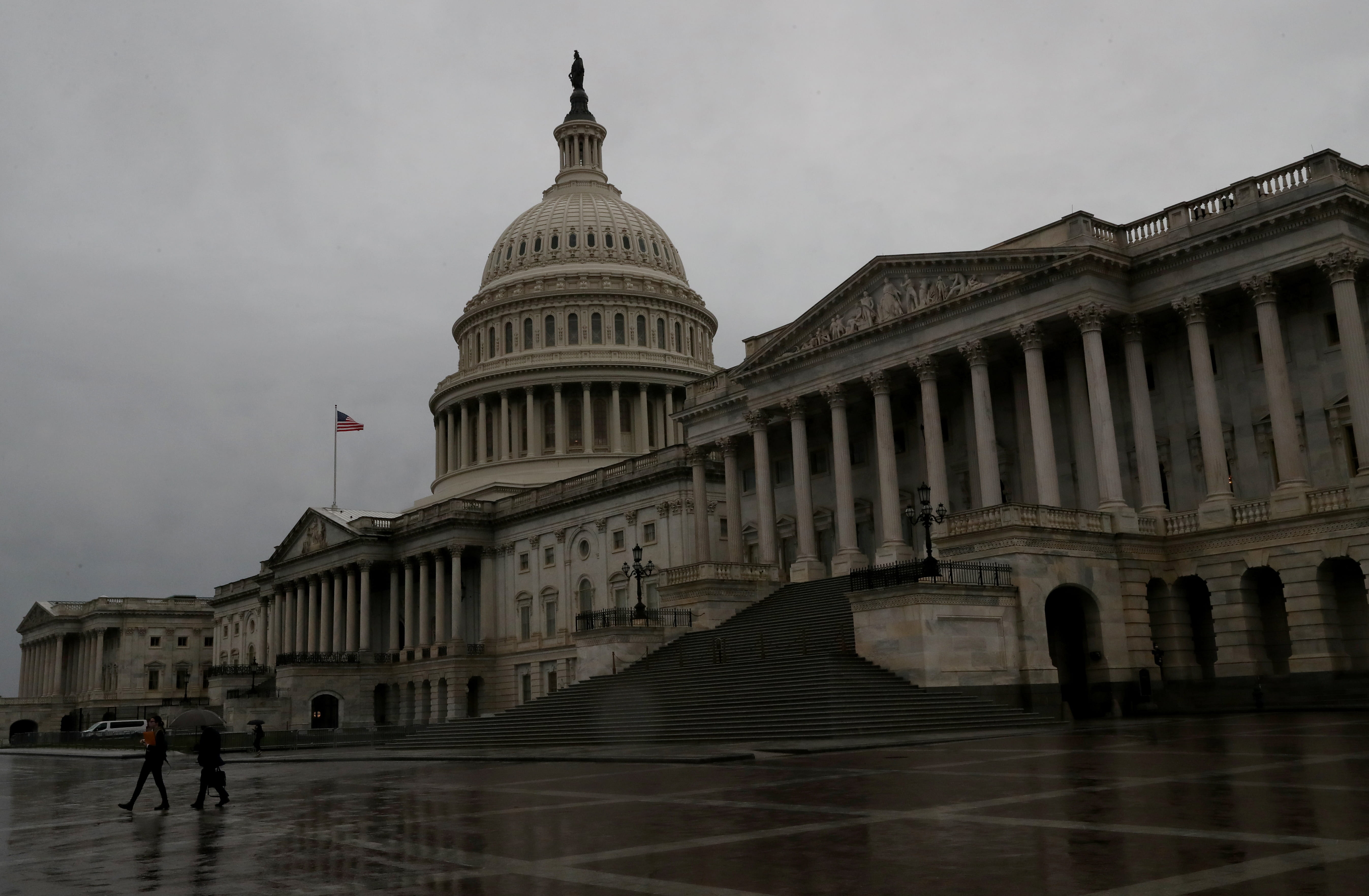
As terrorist violence in Nigeria continues to claim the lives of Christians and other religious practitioners at rates not seen anywhere else in the world, experts and lawmakers gathered for a hearing on Capitol Hill Thursday to assess if any progress has been made to address the crisis one year after the U.S. designated the West African nation as a Country of Particular Concern (CPC).

Last month, another devastating attack was carried out by rifle-wielding terrorists who massacred dozens of civilians, with at least 62 killed and another 52 wounded in Taraba state in the eastern part of the country. The atrocity is part of a disturbing pattern of attacks being committed almost exclusively by Islamist terrorists, including groups like Boko Haram, the Islamic State West Africa Province (ISWAP), and Fulani. According to Open Doors, of the 4,849 Christians killed for their faith worldwide last year, 72% (3,490) were murdered in Nigeria.

Overall, between 50 and 60,000 Christians have been killed in Nigeria by various terrorist groups since 2009, far and away the most killed in any one single country over that time span, with experts calling the situation a “genocide.” In addition, at least 19,800 churches have been attacked, with some estimates stating that over 18,000 churches and 2,000 Christian schools have been destroyed.

During Tuesday’s House Foreign Affairs Committee hearing that aimed to assess Nigeria’s efforts to address the violence since the Trump administration designated the country a CPC a year ago, Riley Barnes, assistant secretary of State for Democracy, Human Rights, and Labor, stated that Islamist attacks against Christians have largely continued unabated.

“The levels of violence and atrocities committed against Christians in Nigeria are appalling, particularly in the Middle Belt,” he explained. “Fulani ethnic militias commit violent attacks that directly target Christian populations. Nigerians I have spoken to on the ground have underscored the depth and breadth of suffering for many. Ample witness testimonies over even the past year have stated plainly that perpetrators use religious language during their attacks, specifically identified Christians for killing and abduction.”

Rep. Chris Smith (R-N.J.), who chaired the hearing, observed during Thursday’s “Washington Watch” that there has been some movement from the Nigerian government to address the ongoing crisis.

“[U]nfortunately, Christians are still being slaughtered, particularly in the Middle Belt, by the Fulani terrorists, the Boko Haram terrorists; more to the north [ISWAP is] continuing their killing spree,” he detailed. “But the government to some extent is trying to mitigate that carnage. But when it comes to Fulani, not nearly enough has been done. [The Trump] administration [is] doing a great job and really pressing the Nigerian government to use police, military assets, [and] intel [to] stop these terrorists from slaughtering Christians, from abducting individuals and then demanding ransom for which they use to buy more weapons and raping the women. It’s disgusting.”

Smith went on to highlight how the Nigerian government has for the most part denied that the targeted killings are even an issue. “On one trip in 2012, I met with a Catholic bishop in Jos, which is where Boko Haram was running rampant. I went to five of his fire-bombed churches, met with the survivors — wonderful, wonderful Christians who are suffering lost loved ones. [The] government said, ‘Oh, what? Nothing to see here.’ There’s a culture of denial that enables all of this. They pay lip service but don’t do enough. … Some Muslims get killed too, those who refuse to join in with the jihadist mindset. But Christians are singled out because [they consider them] infidels and don’t deserve to live, and they kill with impunity.”

Smith further noted that the approaches of previous administrations to appease and increase trade with governments that commit egregious human rights violations has not succeeded in stopping the violations. “[The Biden administration] took away CPC status for Nigeria, and under Obama, they wouldn’t even name countries [as CPCs],” he pointed out. “… And people just say, ‘Let’s trade more with this country or that more. Let’s trade with China.’ But [instead] let’s have human rights conditionally affixed to it to say, ‘Okay, we’ll trade if and only if you stop killing the Christians and persecuting believers the way you do.’”

Arielle Del Turco, who serves as director of the Center for Religious Liberty at Family Research Council, additionally asserted that the CPC designation of Nigeria put a spotlight on the issue that should help in the long run.

“[The CPC designation] doesn’t mean things change on the ground overnight, unfortunately,” she acknowledged during “Washington Watch” Thursday. “What it did do, though, is it directed a lot of attention from the State Department onto Nigeria, where it wasn’t really on their radar previously. It is now on the top of their radar. … This was an issue that the Biden administration routinely denied. They would explain it with climate change. They would explain it as a farmer-herder conflict. But the Trump administration knows that when we have militants riding on motorcycles, coming into villages with guns and weapons, slaughtering people, shouting ‘Allahu Akbar,’ that there is a religious element to this.”

Del Turco also emphasized that progress has been made since the CPC designation a year ago. “Now, one year later … at least Nigerian government officials will admit that, ‘Oh yeah, there might be a problem here.’ Now, to us, that might seem so small, but as someone that’s been tracking this issue for years, I think this is the first I’ve heard that Nigerian officials will admit that there’s any problem at all. So these small incremental changes hopefully will lead to something bigger along the way.”

Going forward, Del Turco underscored the responsibility that American Christians have to pray for their less privileged fellow Christians a world away. “I was very blessed to be able to go to Nigeria earlier this year with the group Christian Freedom International, and we were on the ground in some of the villages that do routinely face attacks from these Muslim Fulani militants. I remember one woman in particular we spoke to. … There was a Nigerian military base like a stone’s throw away, so close, but they wouldn’t or couldn’t stop these attacks. … [S]he would just be lying in her bed praying that the Lord would protect her and her two children. Her husband had already died 10 years before from a militant attack. So these people are just trying to lead normal lives. This woman in particular ran a little corner store selling snacks. … [T]his is the violence and brutality that is their normal life that they have to face every day. … These fellow believers in Christ really deserve our compassion. They deserve our prayers.”

‍

This article was written by Dan Hart and origianlly published on The Washington Stand. For more content like this, visit Real Life Network.

World News
25 min

Donald Trump, the Limits of Political Power, and the Demands of Faith

Donald Trump's remarks on forgiveness, Israel, and political power raise deeper questions about faith and leadership. Explore how Charlie Kirk's legacy, growing conservative divisions, and biblical teachings reveal the importance of humility, grace, and eternal hope.

What happens when a person gains everything the world has to offer but remains unprepared to face eternity?

It is a question that transcends politics, wealth, influence, and public reputation. Yet it became the center of an important conversation when President Donald Trump was asked about death, heaven, and forgiveness during a recent 60 Minutes interview.

The president's answers revealed something worth examining, not simply about Donald Trump, but about the human heart.

The discussion also comes at a difficult moment for American politics. Republicans are confronting electoral losses, disagreements over Israel and Iran are dividing conservatives, and the assassination of Charlie Kirk continues to expose troubling attitudes toward political violence.

But beneath these headlines lies a more consequential question.

Political success cannot save the soul, and no amount of earthly influence can replace the transforming grace of Jesus Christ.

That truth applies to presidents and ordinary citizens alike.

Donald Trump, Forgiveness, and the Condition of the Heart

During his interview, Trump was asked what he believed would happen to him after death.

Having survived an assassination attempt in Butler, Pennsylvania, the president has experienced a reminder of life's fragility that few people encounter so directly.

When asked whether he expected to go to heaven, Trump expressed hope that he would, explaining that he considered himself religious.

The conversation then turned to forgiveness.

Interviewer Ross Douthat referenced the memorial service for Charlie Kirk, where Kirk's widow, Erika, publicly forgave the man accused of murdering her husband.

At that same memorial, Trump acknowledged that he did not share Kirk's approach toward political opponents.

When Douthat asked whether the president could forgive figures such as James Comey and Nancy Pelosi, Trump indicated that he could not honestly promise to do so.

The answer was striking.

Trump has experienced extraordinary political opposition, legal battles, and threats against his life. His frustration with political adversaries is understandable, even when his responses deserve examination.

Christians can recognize those circumstances without excusing bitterness.

Jesus' teaching in Matthew 6:14–15 makes forgiveness an essential part of the Christian life. Believers who have received God's mercy are called to extend forgiveness to others.

That does not mean wrongdoing should go unpunished. Forgiveness does not eliminate accountability, excuse criminal behavior, or require abandoning justice.

It means refusing to allow hatred to govern the heart.

Erika Kirk's response to her husband's murder provides a powerful example.

Faced with unimaginable grief, she publicly expressed forgiveness grounded in her Christian faith.

Her words did not minimize the seriousness of the crime. Instead, they demonstrated that the Gospel offers a response to suffering that goes beyond retaliation.

The contrast raises a question for every Christian, regardless of political affiliation.

Is it possible to defend the right policies while harboring the wrong attitudes?

Absolutely.

A person can hold strong convictions about immigration, religious liberty, national security, or Israel while struggling with pride, resentment, and unforgiveness.

The same is true of political opponents.

No party possesses a monopoly on virtue, and no political leader is exempt from the moral demands of Scripture.

Christians are called to evaluate leaders through biblical truth without confusing political loyalty with spiritual faithfulness.

The warning is especially important when discussing someone as influential as Donald Trump.

His accomplishments and political positions can be assessed on their merits. His statements can be praised or challenged. But his eternal standing before God cannot be determined by political achievements, and no observer can claim complete knowledge of his heart.

That judgment belongs to God.

The responsibility of believers is to speak truth with humility, pray for leaders, and remember that everyone stands in need of divine grace.

Israel, Immigration, and the Divisions Within Conservatism

The president's interview also exposed growing tensions over America's relationship with Israel.

Trump suggested that Israel and other American partners should reimburse the United States for costs associated with the conflict involving Iran.

He also claimed that Israel would not exist without his leadership.

Those statements raise questions about the relationship between American foreign policy and biblical convictions.

Trump's administration has taken significant steps in support of Israel, including recognizing Jerusalem as its capital and overseeing the Abraham Accords.

Those accomplishments deserve recognition.

Yet American assistance and Israel's biblical significance are not identical matters.

Scripture presents God's covenant with Abraham and his descendants as something established long before the existence of the United States.

Genesis 12:3 and Numbers 24:9 have traditionally informed Christian discussions about blessing Israel, while Jeremiah 31 emphasizes God's enduring covenantal faithfulness.

Christians differ over how those passages apply to the modern State of Israel and contemporary foreign policy. Those interpretive questions deserve thoughtful consideration.

Nevertheless, a biblical perspective should encourage humility about the limits of political power.

No president can claim ultimate credit for God's purposes in history.

American leaders must make difficult decisions about military spending, alliances, and national interests. Those decisions can be debated without reducing an entire relationship to financial transactions.

The disagreements surrounding Israel and Iran have also intensified divisions within the Republican Party.

Representative Thomas Massie's opposition to aspects of the administration's foreign policy, including his effort to impeach Defense Secretary Pete Hegseth, illustrates the growing conflict among conservatives over military involvement overseas.

Some Republicans believe a more restrained foreign policy is necessary to protect American interests and avoid prolonged conflicts.

Others argue that maintaining a strong partnership with Israel is essential to regional security and America's broader strategic responsibilities.

These competing positions cannot be resolved through personal attacks alone.

They require serious consideration of military objectives, costs, constitutional authority, and the consequences of American action or inaction.

Immigration has produced similar disagreements.

During the 60 Minutes interview, Trump acknowledged the possibility that his administration's deportation policies had been too harsh.

At approximately the same time, the administration announced that Stephen Miller would replace Susie Wiles as White House chief of staff.

The combination raised questions about whether immigration enforcement would become more restrained or more aggressive.

For many conservative voters, border security remains a central political concern.

Yet the biblical responsibility to love one's neighbor and treat strangers with dignity must also inform Christian discussions of immigration.

A nation can maintain lawful borders while recognizing the humanity of immigrants and the importance of fair treatment.

Those principles need not be mutually exclusive.

The larger concern is whether political disagreements are producing thoughtful debate or simply deepening resentment.

Conservatives who share many foundational beliefs increasingly disagree about Israel, military intervention, immigration, and the direction of the Republican Party.

Those divisions may have significant electoral consequences.

But they also offer an opportunity for Christians to demonstrate something different from the hostility that dominates so much of public discourse.

Conviction and humility can coexist.

Disagreement does not require hatred.

And faithfulness to Scripture must remain more important than loyalty to a political movement.

Charlie Kirk, Political Violence, and the Hope of the Gospel

The assassination of Charlie Kirk remains a painful reminder of what can happen when political hostility becomes something more dangerous.

Kirk was known for engaging students on college campuses, often inviting those who disagreed with him to ask questions and challenge his positions.

His approach reflected a belief that political and cultural disagreements should be addressed through conversation rather than intimidation or violence.

Following his death, comedian Dave Chappelle reportedly made remarks during a performance that Cohen criticized as insensitive toward Kirk's murder.

The controversy raised a broader question about the boundaries of comedy and the moral responsibilities of public figures.

Free speech protects the right to express unpopular, offensive, or provocative opinions.

But possessing the right to say something does not make every statement wise, compassionate, or morally defensible.

Political violence should never become a source of celebration.

The principle must apply consistently.

A person does not become less deserving of compassion because of political affiliation, religious belief, or public controversy.

Kirk's family deserves the same dignity and sympathy that should be extended to every family devastated by violence.

That standard should also shape Christian conversations about conflict overseas, including the suffering of Israeli and Palestinian civilians.

Every human life bears inherent dignity.

And no political disagreement justifies celebrating another person's death.

Erika Kirk's public response offered an alternative to the bitterness surrounding so much of the conversation.

She chose to speak about forgiveness while grieving the loss of her husband.

That decision points toward a truth that reaches beyond the immediate tragedy.

The Gospel does not promise that Christians will avoid suffering, injustice, or persecution.

It promises something greater: reconciliation with God through Jesus Christ and the possibility of a transformed heart.

This is why the question of eternity matters more than any election.

Mark 8:36 asks what a person gains by possessing the whole world while forfeiting the soul.

Wealth cannot answer that question.

Neither can fame, political influence, military strength, or electoral success.

The Christian message is that salvation is not earned through accomplishments or moral superiority. It is received by God's grace through faith in Jesus Christ.

Ephesians 2:8–9 teaches that salvation is God's gift, not the result of human works.

That message should produce gratitude and humility rather than self-righteousness.

It should also change how Christians approach public life.

Believers have responsibilities as citizens. They should study the issues, participate thoughtfully in elections, pray for elected officials, and seek the good of their communities.

But political engagement must never replace the Church's central mission.

The Great Commission calls Christians to make disciples, proclaim the Gospel, and teach obedience to Christ.

That calling remains unchanged regardless of which party controls Congress or occupies the White House.

The greatest need in American politics is not simply better leadership or stronger policies, but hearts transformed by the grace and truth of Jesus Christ.

The same grace that makes forgiveness possible is available to presidents, entertainers, political activists, and ordinary families.

No one is beyond the need for repentance.

And no one is beyond the reach of God's mercy.

The future of American politics may remain uncertain, but the promises of Scripture do not change with election results.

God remains sovereign.

Christ remains the only Savior.

And the Church remains called to speak truth, extend grace, and point people toward the hope of eternal life.

The question is not merely what kind of country will be left to the next generation.

It is whether the people living in it are prepared for eternity.

Watch The Daniel Cohen Show on Real Life Network for news, cultural analysis, and conversations connecting current events to the hope of the Gospel.

World News
25 min

Voters Make Colorado the 28th State to Restrict Trans Surgeries for Minors

Colorado voters approved Proposition 135, restricting gender-transition surgeries for minors despite strong opposition and Democratic victories statewide. Explore what the results reveal about public opinion, medical concerns, and the ongoing debate over parental rights.

The nationwide campaign against transgender procedures on minors gained new momentum last week, despite the general triumph of pro-transgender politicians. In Colorado, voters approved a ballot measure (Proposition 135) prohibiting transgender surgeries on minors, acting to protect children when their politicians would not. Colorado thus became the 28th state to restrict transgender procedures on minors, and the first state to do so by ballot measure.

Proposition 135 would “prohibit surgeries on minors that alter their biological sex characteristics as a treatment in response to a minor’s perception of sex or gender” and “prohibit the use of state or federal funds or insurance coverage to pay for these surgeries.” The Colorado Department of Health Care Policy and Financing said the state’s Medicaid program spent $2.7 million on transgender procedures for minors between 2023 and 2025, although the lion’s share was likely for hormonal treatments, which the ballot measure did not address.

Notably, amid a general landslide in favor of Democrats, the proposition passed in Colorado by a margin of 51.9% to 48.1%, or just over 100,000 votes. The Associated Press called the race on Friday.

“Amidst Democrats’ decisive election victories last week, ballot measures reversing their gender-bending social agenda still won in deep-blue states,” noted Quena González, senior director of Government Affairs at Family Research Council. “In Colorado, where the Republican Party has been on the defense for over a decade, liberal voters provided the winning edge for a first-in-the-nation ballot measure protecting children from gender transition procedures.”

The voters’ verdict was thus a reality check on the extremism of the transgender agenda. Pro-transgender activists did not accept the result calmly. “It’s certainly painful to see the outcome and how close it was,” lamented Nadine Bridges, executive director of the LGBT advocacy group One Colorado. “I don’t imagine if people had the right information that they would have made this decision.”

Denial is the first stage of grief. In reality, opponents of Proposition 135 dropped $4,927,982 into defeating the measure, while a grassroots campaign known as Protect Kids Colorado mustered only $271,540 in its favor — a ratio of 18 to one. If the proposition’s opponents had any good arguments, they certainly had every opportunity to let voters know.

This fact suggests that even liberal voters in Colorado did hear the arguments against Proposition 135 — and voted for it anyways. “Ascendant elected Democrats and demoralized Republicans alike would do well to note that the issue of protecting children from gender ideology cuts directly across party lines,” González told The Washington Stand.

In fact, pro-transgender activists are the ones actually promoting false claims. Planned Parenthood Action alleged that “Proposition 135 would allow the government to interfere in personal medical decisions that should remain between families and their trusted providers. The measure creates barriers to care.” Likewise, GLAAD claimed that “Proposition 135 would prohibit health care professionals from practicing medically necessary health care for transgender youth that is supported by every major medical association.”

In reality, there is nothing “medically necessary” about amputating healthy breasts or genitalia. Such irreversible surgeries with long-term side effects are an extreme way to treat mental or emotional distress, and multiple evidence reviews commissioned by Western governments have not found the results satisfactory enough to justify rushing minors into such life-altering surgeries.

Nor is it true that transgender surgeries for minors are supported by “every major medical association.” In February, the American Society of Plastic Surgeons (ASPS) — the organization whose members would be responsible for conducting such surgeries — recommended “that surgeons delay gender-related breast/chest, genital, and facial surgery until a patient is at least 19 years old.” When pressed on their position, the American Medical Association reluctantly agreed that transgender surgeries “should be generally deferred to adulthood.”

Given these position statements, it is entirely inaccurate to characterize Proposition 135 as government interference “in personal medical decisions” when even medical organizations agree that transgender surgeries are inappropriate for minors.

Unfortunately, the transgender lobby holds more sway over Colorado officials than over Colorado voters, which means there is still a chance for the legislature to undo the protections voters implemented. Proposition 135 was a statutory measure, not a constitutional one. This meant that it only needed a simple majority to pass (a threshold it only narrowly cleared), but that the state legislature could amend or repeal it.

“We’re going to have to take a look at these anti-trans measures and what adjustments are necessary and appropriate,” Colorado Governor-elect Phil Weiser responded to the outcome. He added that it is “a natural and I believe appropriate role of the legislature” to consider adjustments to statutory ballot measures.

Meanwhile, however, the fact remains that Colorado voters did implement Proposition 135. And, as Republicans found out in the 2026 midterm, ignoring the voters can be a dangerous prospect.

For now, advocates of Proposition 135 are celebrating a successful effort to protect Colorado children, even against long political and fiscal odds. Protect Kids Colorado Co-Founder Erin Lee celebrated “the thousands of just everyday Coloradans who came together to make this happen.” And she warned legislators that any attempt to undo the measure, as well as a girls’ sports measure (Proposition 134) which also passed, would be “to their detriment.”

“The results of the 2026 election are an early indication that one of the most lasting effects of President Trump’s second term may very well end up being a 180-degree reversal in the cultural tide that until 2024 targeted children with lies and convinced families that ‘gender transition’ is the only answer,” González concluded. “Today, the transgender activists are in retreat as popular opinion turns decidedly against trans ideology.”

This article was written by Joshua Arnold and origianlly published on The Washington Stand. For more content like this, visit Real Life Network.

World News
25 min

The Lessons Republicans Overlooked in 2026

Republican losses in 2026 exposed weaknesses in voter outreach, messaging, and party unity. Explore how economic concerns, debates over Israel, and shifting voter priorities reveal a deeper challenge for Christians: spiritual complacency and the need for renewed faith.

The 2026 midterm elections left Republicans confronting a difficult reality. Democratic victories in states once considered reliably conservative raised serious questions about the future of the Republican Party, the influence of emerging political movements, and the direction of the country.

Was the election a rejection of President Donald Trump? Did the conflict with Iran and rising gasoline prices drive voters away? Or did Democrats simply run more effective campaigns?

Each explanation may contain part of the answer. But focusing exclusively on political strategy risks overlooking a deeper concern.

America's political divisions may be symptoms of a much larger spiritual problem, one that cannot be solved by winning another election.

The prophet Jeremiah confronted a similar failure of leadership when he warned against those who offered superficial reassurance while ignoring the deeper problems facing God's people.

Jeremiah 6:14 describes leaders who treated serious wounds as though they were minor, declaring peace when there was no peace.

The warning remains relevant. A nation cannot address its challenges honestly without first understanding what is wrong.

And for Christians, that examination must begin with more than the opposing political party. It must also include the spiritual condition of the Church.

Texas, Georgia, and Ohio Reveal a Changing Political Landscape

The Democratic victories in Texas, Georgia, and Ohio represented more than disappointing results for Republican candidates. They exposed assumptions about voter loyalty, political organization, and the effectiveness of conservative messaging.

In Texas, Democrat Gina Hinojosa defeated longtime Republican Governor Greg Abbott, while James Talarico won the state's closely watched Senate race against Ken Paxton.

Texas has served as a foundation of Republican presidential campaigns for decades. With its substantial electoral vote count, changes in the state's political direction could have lasting national consequences.

Georgia delivered another historic result with the election of Keisha Lance Bottoms as governor. In Ohio, Amy Acton defeated Republican Vivek Ramaswamy despite the state's strong support for Trump in the 2024 presidential election.

These outcomes invite an uncomfortable question: Had Republicans become too confident in states they assumed would remain safely conservative?

Campaign spending and national recognition cannot replace the importance of relationships with voters.

Democrats demonstrated the effectiveness of local organizing, volunteer networks, voter registration, and consistent engagement with communities.

The lesson extends beyond any particular election. Political movements must understand the people they hope to represent rather than assume those voters will remain loyal indefinitely.

Even prominent progressive politicians such as Alexandria Ocasio-Cortez have demonstrated an ability to communicate effectively with their supporters, build recognizable messages, and maintain engagement through social media.

Disagreeing with a political opponent's policies should not prevent an honest assessment of that opponent's organizational strengths.

The same principle applies to the concerns driving voters.

Affordability became a central theme of Democratic campaigns. Families facing higher grocery bills, gasoline prices, and housing costs wanted leaders who understood their daily struggles.

Economic statistics and policy achievements matter, but political leaders must also recognize how families experience the economy.

There are legitimate disagreements about which policies would best address these concerns. Energy production, government spending, healthcare, and taxation all deserve serious debate.

Yet one lesson from the election is difficult to ignore: voters want their concerns acknowledged and their circumstances understood.

For Republicans, rebuilding trust will require more than criticizing Democratic proposals. It will require clearly communicating how conservative policies would address the challenges facing American households.

Israel, Iran, and the Divisions Reshaping American Politics

The election also brought growing disagreements over America's relationship with Israel into sharper focus.

Within conservative media and Republican political circles, the conflict with Iran has intensified debates about military involvement, national security, and the responsibilities of the United States overseas.

Some commentators have questioned whether the costs of the conflict contributed to Republican losses. Others have expressed concern that opposition to military intervention could weaken America's longstanding partnership with Israel.

These disagreements reflect a broader debate about the meaning of an America First foreign policy.

Should the United States reduce its international commitments? How should American leaders balance domestic economic pressures with security threats overseas? What responsibilities does the country have toward allies facing military aggression?

These questions deserve careful consideration.

Israel remains an important American partner in intelligence sharing, defense technology, and regional security. Its relationship with the United States has historically received support from both major political parties, although disagreements over military assistance and the conduct of particular conflicts have grown.

Iran's government and its support for armed groups throughout the Middle East remain central concerns in discussions about regional security.

For Americans living thousands of miles from the conflict, these debates often focus on energy prices, military spending, and the possibility of prolonged involvement.

For families living in Israel, the consequences can be immediate.

Rocket warnings, bomb shelters, and the threat of attacks are realities that shape everyday life. Understanding those experiences provides important context for conversations about Israel's security.

At the same time, concern for Israeli civilians should not diminish concern for Palestinian civilians or others affected by conflict. Human suffering deserves compassion regardless of nationality or religious identity.

Christian engagement with these issues should be grounded in biblical conviction, careful attention to facts, and a commitment to human dignity.

The political debate has also brought renewed attention to Michigan Senator-elect Abdul El-Sayed, whose campaign emphasized economic concerns, healthcare, and changes to American foreign policy.

El-Sayed has criticized U.S. military assistance to Israel and argued for greater attention to Palestinian suffering. His positions have generated significant disagreement among Americans concerned about Israel's security and the future of American foreign policy.

Those disagreements should be evaluated through his stated policies and their potential consequences, rather than assumptions about his religious identity.

Religious freedom is a foundational American principle, and Christians can defend their convictions while respecting the rights of fellow citizens who worship differently.

Faithful engagement requires the courage to challenge ideas without abandoning the biblical responsibility to treat people with dignity.

The growing divisions within both political parties suggest that the coming years will involve difficult debates about national identity, foreign policy, economic priorities, and the principles that should guide American leadership.

But political debates alone cannot answer the deeper questions facing the country.

The Spiritual Diagnosis: A Church Called to Wake Up

Near the conclusion of the election analysis, a warning from actor Jim Caviezel brought the discussion back to the spiritual responsibilities of Christians.

Caviezel, known for portraying Jesus in The Passion of the Christ, challenged believers to consider whether the modern Church has become too comfortable, too hesitant, or too disconnected from the demands of the Gospel.

His comments echoed the warning to the church at Laodicea in Revelation 3.

In Revelation 3:15–16, Jesus rebukes a congregation for being spiritually lukewarm.

The passage is not primarily about political participation. It is about spiritual complacency, misplaced confidence, and the need for genuine repentance.

That distinction is important.

A church can become politically active without becoming spiritually healthy. It can speak loudly about cultural problems while neglecting prayer, discipleship, evangelism, and obedience to Scripture.

Likewise, political frustration can tempt Christians to view people who disagree with them as enemies rather than neighbors who need the same grace and truth found in Jesus Christ.

The deeper challenge is not simply whether Christians are sufficiently involved in elections.

It is whether the Church is faithfully fulfilling its biblical mission.

Are believers sharing the Gospel? Are families being strengthened through Scripture and prayer? Are churches teaching sound doctrine and equipping Christians to live faithfully in a changing culture?

Are Christians demonstrating the love, humility, integrity, and courage that should characterize followers of Jesus?

These questions deserve attention regardless of which political party holds power.

The Great Commission in Matthew 28:18–20 calls Christians to make disciples of all nations, baptizing them and teaching them to obey Christ's commands.

That mission does not depend on election results.

Neither does God's sovereignty.

Political setbacks can create uncertainty about the future, but they cannot surprise the Lord. Scripture repeatedly reminds believers that God remains sovereign over nations, rulers, and the course of history.

Daniel 2:21 declares that God changes times and seasons, removes kings, and raises up kings.

That truth should produce humility rather than political complacency.

Christians still have responsibilities as citizens. They should vote thoughtfully, evaluate policies carefully, serve their communities, and pray for those in authority.

But the Church must never confuse political victory with spiritual revival.

The answer to a spiritually lukewarm Church is not greater political outrage. It is renewed love for Christ, deeper faithfulness to Scripture, and a greater commitment to the Gospel.

That renewal begins in ordinary places.

It begins with parents teaching their children God's Word, believers praying for their neighbors, pastors faithfully preaching Scripture, and Christians demonstrating integrity in their workplaces and communities.

It also requires the humility to recognize that cultural and spiritual problems are not confined to one political party.

Every person needs the grace of God. Every community benefits from truth, compassion, and moral responsibility.

And every generation of Christians must decide whether it will faithfully carry forward the mission entrusted to the Church.

The 2026 midterms may be remembered for unexpected political victories, changing electoral coalitions, and the growing divisions within American politics.

But for believers, the most important question is not simply what went wrong on Election Day.

It is what must change in the hearts and lives of God's people.

America's political future remains uncertain. The outcome of the next election is unknown. The challenges facing families, communities, and the nation are real.

Yet none of those uncertainties diminish the authority of Jesus Christ.

There is still reason to pray, to serve, to speak truth graciously, and to remain engaged in the life of the nation.

The call is not to despair over political defeat or place ultimate confidence in the next candidate.

It is to return to the unchanging mission of the Church with renewed conviction and a heart shaped by the Gospel.

Watch The Daniel Cohen Show on Real Life Network for news, cultural analysis, and conversations about current events from a biblical worldview.

Select Category
Sort By:
Thank you! Your submission has been received!
Oops! Something went wrong while submitting the form.
World News
25 min

Pastor, professor, and historian Carlos Sebastián Hernández Armas had been summoned and threatened by the Castro regime’s political police — and, ultimately, placed on the blacklist of the “regulated” (regulados), those individuals whom the Cuban socialist regime forbids from leaving the country. But who was this smiling man — quick-spoken and possessed of vehement opinions — who provoked such fury within the regime?

To understand his story, one must look back to the 1980s, when the Western Baptist Convention of Cuba (ACBCOcc, by its Spanish acronym) experienced an internal schism. At that time, several pastors sympathetic to the regime — who, nonetheless, failed to gain significant support among the faithful — seized control of churches in various provinces and founded the Fraternity of Baptist Churches of Cuba (FIBAC).

Since the legal title to these properties belonged to the ACBCOcc, this action was unlawful. Nevertheless, the State provided de facto support to the usurpers, granting legal recognition to the new association.

One of the pastors who broke away was Lázaro Cuesta, from the church in Yaguajay. When the ACBCOcc removed him from his position, he refused to accept the decision. He changed the lock on the main door and took possession of the church. The authorities ignored calls to mediate, so several members of the Baptist congregation began holding worship services on the church steps as a form of protest. From inside, Cuesta would play the piano at a high volume to disrupt those gathered outside.

Discouraged after several peaceful protests, the members and leaders of the denomination eventually ceased their efforts to reclaim the property. Yet, they never lost hope of recovering their sanctuary. Pastor Mario Zarauza, from the Baptist church in Caibarién, took on pastoral care for the Yaguajay congregation; until 2002, he provided spiritual guidance to the believers, even though they no longer had a sanctuary.

Meanwhile, Cuesta — the man who had usurped the sanctuary — would often preach while wearing an olive-green military uniform during the “National Defense Days” mandated by the regime. A well-known anecdote among the locals recounts that, on one occasion, while he was speaking from the pulpit, a Soviet-made pistol fell from his belt. The loud clatter echoed throughout the space, leaving the congregation stunned and open-mouthed. After all, what ordinary citizen was permitted to carry a firearm in a country where such a right was prohibited?

Toward the end of the 1990s, Cuesta had verbally promised to hand over a plot of land adjacent to the church to state-run enterprises for construction purposes. Not only had he seized the property, but he was now threatening to carve it up. The believers were horrified.

In 2003, Hernández Armas was appointed pastor in Yaguajay by the ACBCOcc. The believers continued to gather in the homes of the faithful — steadfast, though scattered. The young leader was fully aware that the local congregation’s original sanctuary had been stolen, and he understood the Baptist community’s deep longing to reclaim it.

Cuesta passed away in 2005. In the months that followed, a new clergyman — aligned with the FIBAC — took his place, ensuring that the usurpation would continue for, who knows, how many more decades. Before that could happen, Hernández Armas took action. He entered the church and remained there, alongside several members of the congregation, to carry out an action aimed at reclaiming the property. Several Baptist women accompanied him and Pastor Zarauza throughout various stages of the process.

Their names also stand as a testament to heroism: Isabel Aguilar, Edelia Lorenzo, Daisy Muñoz, Edelma Crespo, María Luz Muñoz, Raquel Rodríguez, and the woman who, at that time, served as the lawyer for the ACBCOcc.

The event came to be known among the participants as “the 80 hours of Yaguajay,” in reference to the duration of the action. This act of reclamation drew the attention of the quiet town, whose inhabitants gathered in front of the church.

A leader of the local Masonic lodge arrived at the scene and, in a clear, powerful voice, expressed his support for the group that had reclaimed the sanctuary. He declared that, if there were a God in heaven, Cuesta and his cohorts would ultimately be forced to return the building to its rightful owners — the believers.

A witness — currently in exile and who has requested to remain anonymous — confirms certain details, such as the existence of a video of the takeover, and notes that, at no point, were the representatives of the FIBAC willing to relinquish the building.

The occupants requested the key from Cuesta’s widow, but she refused. Later, Cuesta’s daughter — sparking a confrontation — demanded, to no avail, that the believers vacate the premises. Estela de Naranjo, a leader within FIBAC, met with Hernández Armas and those occupying the site; she maintained an agitated tone and even showed disrespect toward some of the older women who were present. Francisco “Paco” Rodés — the top representative of FIBAC, who was accompanying her — barely intervened.

A few days later, the sanctuary was closed, under the pretext that it would be returned to its rightful owner. Ultimately, property rights — which had been a subject of dispute for 20 years — were recognized. For its part, the regime granted FIBAC the necessary permits to build a new sanctuary (something that had not been permitted for other denominations for years).

According to the account, the ACBCOcc provided funds to Cuesta’s widow to contribute to the construction. Until the new sanctuary was completed, she resided at her private home in Yaguajay.

For the prominent Cuban chronicler Eloy González, the episode was reminiscent of the actions of “squatters,” though in this instance, it served a restorative purpose — aimed at achieving true justice.

Regarding the construction work already underway on the land adjacent to the sanctuary, Hernández Armas took an equally bold step: he fenced off the entire property to prevent state-run enterprises from accessing the site. Tensions persisted for years afterward, but the land remained in the hands of the denomination.

Even today, the story of Hernández Armas can resonate with thousands of Cubans on the island: building community and leading with courage in pursuit of justice. The results — even under a totalitarian regime — can be remarkable.

This is especially relevant in 2026, a year in which the Trump administration has committed to supporting the aspirations for freedom held by decent, upright Cubans. Like Secretary of State Marco Rubio, I, too, believe that “this is the moment.”

This article was originally written by Yoe Suarez and published on The Washington Stand. For more content like this, visit Real Life Network.

The Reconquest of Yaguajay: A Christian’s Example for a Possible Cuba

Discover the story of Cuban pastor Carlos Sebastián Hernández Armas, who courageously led a Baptist congregation in reclaiming its church after decades of injustice. His story illustrates the power of faith, perseverance, and community in the face of religious oppression.

November 24, 2026
Faith & Culture
25 min

Let me begin with a disclaimer: this commentary is for a mature audience. Not because I intend to use four-letter words, but because I want to raise a possibility some will dismiss and others may find uncomfortable.

Capitol Hill was buzzing this week with hearings looking into a cascade of technological failures disrupting air travel, banking, major technology companies, and even National Security Agency communications.

Administration officials say there is no evidence these outages were coordinated cyberattacks. That is reassuring. But the disruptions exposed something worth considering: America may be a technological superpower, yet the systems supporting our everyday lives are more vulnerable than we like to believe.

And that raises another question: are we placing our confidence in things that cannot ultimately secure us?

In the Old Testament, God sometimes used famine, drought, military defeat, and other calamities to call His people back to Him, revealing the significance of those events through His prophets. In Amos 4, after describing a series of hardships, God repeatedly declares, “Yet you have not returned to Me.”

And technological disruptions were not the only events this past week that should cause us to reflect on the limits of human achievement.

On Veterans Day, November 11, the S.S. United States slipped beneath the waters of the Gulf of Mexico.

Launched in 1952, this nearly 4,000-foot ocean liner was an engineering marvel. Larger than the Titanic, it shattered the transatlantic speed record on its maiden voyage. It represented American innovation, ambition, and power. Sitting idle since 1969, it was sunk last week to become an artificial reef.

The vessel resisted its planned descent longer than expected. Coleen O’Malley, who oversaw the operation, observed, “She is an amazing lady who will not lay down without a fight,” adding, “much like the amazing nation she was named after.”

Two days later, on Friday the 13th, a tanker struck a docked riverboat in New Orleans. The vessel capsized in the Mississippi River, sending passengers and rescuers into the water. Remarkably, everyone survived. City officials called it a “miracle on the Mississippi.”

The riverboat’s name? American Heritage.

Coincidence? Possibly. But I would ask a different question: what if they are reminders of truths we have neglected?

National greatness is not self-sustaining. Technology cannot save the human soul. And a heritage, however remarkable, will not preserve itself.

Jesus spoke of a deadly tower collapse in Luke 13. He did not blame its victims. Instead, He challenged everyone listening to repent.

That was also the purpose of the warnings God delivered through the Old Testament prophets — not merely to explain calamity, but to awaken His people to their spiritual condition.

I cannot tell you whether these recent events are prophetic warnings. But I believe they should prompt us to ask some uncomfortable questions.

Have we placed our confidence in the wrong things? Have we forgotten the God who has blessed this nation?

Perhaps the most important question is not whether God is warning America, but whether we are willing to heed the warnings already given in His word.

It is time to consider our ways — and return to God.

This article was originally published on The Washington Stand. For more content like this, visit Real Life Network.

Confidence in an Uncertain Age

Could recent technological failures and symbolic events in American history serve as reminders of the limits of human achievement? Explore how Scripture calls Christians to examine their priorities, reconsider where they place their trust, and return to God.

November 23, 2026
Faith & Culture
25 min

A new data analysis has revealed that the mental health crisis that has enveloped young people in the U.S. over the last decade may be subsiding, with rates of sadness, suicidal thoughts, and suicide attempts all declining since 2021.

On Wednesday, the Institute for Family Studies (IFS) published an analysis of data conducted by Brookings Institution Nonresident Senior Fellow Jonathan Rothwell from the ongoing CDC Youth Behavioral Risk Survey (YRBS) of American high school students. Among the findings was a remarkable nine-point drop in students reporting feeling “so sad or hopeless for at least two consecutive weeks that they stopped doing their usual activities” over the four-year period from 2021 to 2025, falling from 42.3% to 33.3%.

Similarly, students who reported attempting suicide fell from 10.2% to 6.4%, and those who seriously considered suicide plunged from 22.2% to 14.5% over the same time period.

Researchers like Jean Twenge and Jonathan Haidt were among the first to highlight a startling rise in mental health problems that correlated with the widespread adoption of smartphones, beginning around 2010. As Haidt explained during a 2024 interview, when young people began transferring their social lives onto social media and video games, which drastically cut down on their in-person interactions, “that’s exactly when the epidemic of loneliness accelerated. Girls are suffering more depression and anxiety; boys are suffering more loneliness and friendlessness.”

As noted by Rothwell, CDC data reflects this trend, as the rate of reported sadness among high school students began a steady rise in 2010 (then at around 27%), climbing over 15 points over the next 11 years and peaking at 42.3% in 2021. Rates of suicide among the young (ages 15-19) also saw an alarming increase that began in 2007 (when it stood at 6.7 per 100,000) and peaked in 2017 at 11.8. But as Rothwell observes, the suicide rate has remained significantly elevated at 10.4 and has not fallen at the same rate that sadness has, with adolescent suicide remaining “twice as high” when compared to the 1960s.

Still, the considerable drop in sadness and suicidal ideation suggests that the mental health crisis among young people that reached record levels in the years leading up to the COVID pandemic and crested in 2021 seems to have waned. So what can account for the welcome drop in adolescent mental health issues?

Rothwell concedes that it is difficult to pinpoint the exact reasons behind the decline, but he highlights several data points that are noteworthy. “[T]he most fundamental source of youth mental health is the quality of the relationship between teens and their parents,” he emphasizes, noting that since the pandemic, there has been a slight increase in parents knowing “where their teens are going or what they are doing,” which “positively predicts mental health.”

Rothwell further details how more and more schools are instituting restrictions on smartphone use during school hours as a result of the heightened awareness of mental health issues, with some states enacting restrictions on school use of phones and social media. Other experts like Kathleen Ethier, a former director of the Division of Adolescent and School Health at the CDC, told The New York Times in September that these interventions, along with other efforts by schools to focus on mental health, seem to be having an effect on lessening problems.

Another important factor — which appears to be overlooked by legacy outlets — is the role that increased religiosity is playing, Rothwell argues. He highlights survey data showing that “religious children are more likely to report that their parents … require chores, set limits, [and] bestow encouragement” than non-religious parents. As major depression among young people has declined from 2021 to 2024, “religiosity — measured by importance of religion and attendance of worship services — increased over the same period.”

“My analysis of these data also show[s] that religious children are also less likely to be anxious, depressed, or suicidal, so the increase in religiosity could partly explain the recovery of mental health,” Rothwell added.

This article was written by Dan Hart and origianlly published on The Washington Stand. For more content like this, visit Real Life Network.

Young People Are Turning a Corner on Mental Health, Data Suggests

New CDC data suggests America's youth mental health crisis may be easing, with declines in sadness, suicidal thoughts, and suicide attempts. Explore how stronger parental relationships, smartphone restrictions, and increased religiosity may be contributing to the improvement.

November 20, 2026
World News
25 min

A series of disruptions affecting American businesses, financial institutions, and government systems has raised questions about the reliability of the nation's digital infrastructure. From banking services and technology companies to aviation systems and federal communications, recent outages have demonstrated how dependent modern society has become on interconnected technology.

Government officials have sought to reassure Americans that these incidents do not appear to be part of a coordinated cyberattack. Yet the disruptions have also revealed a broader challenge: restoring public confidence in institutions at a time when trust is already strained.

The distinction matters. Asking legitimate questions about national security does not require assuming that every unexplained event is evidence of a conspiracy.

A healthy society must be able to demand accountability without allowing uncertainty to become fear.

For Christians, this balance is especially important. Scripture calls believers to exercise discernment, act responsibly, and remember that their ultimate security rests in something more enduring than political institutions or technological systems

‍

When Infrastructure Failures Become a Question of Trust

Recent outages involving companies such as Apple and Charles Schwab, alongside disruptions affecting federal systems, have prompted questions about the resilience of America's technological infrastructure.

An interruption involving the Federal Aviation Administration reportedly resulted from maintenance work replacing older copper wiring with fiber-optic connections. According to the account presented by Transportation Secretary Sean Duffy, identifying the problem took approximately 45 minutes.

The incident illustrates a familiar problem in government technology: aging infrastructure can remain operational for decades while becoming increasingly difficult to maintain.

Other disruptions have raised similar concerns about outdated systems, maintenance procedures, and the growing complexity of digital networks.

Federal officials have maintained that the incidents do not appear to be connected.

Secretary of State Marco Rubio stated that available evidence indicated separate causes rather than a coordinated attack by a foreign adversary. Other administration officials similarly reported finding no indications of a broader cyber operation.

Those assessments deserve consideration.

At the same time, preliminary findings should not be mistaken for a complete explanation of every incident.

Senator Josh Hawley has called for additional briefings, arguing that Americans deserve clear information about what happened and whether vulnerabilities remain.

That is a reasonable expectation.

Public confidence grows when institutions provide evidence, acknowledge uncertainty, and explain what steps are being taken to prevent future disruptions.

It weakens when official statements appear more concerned with reassurance than transparency.

The issue extends beyond any single administration.

The COVID-19 pandemic intensified longstanding disagreements over government authority, scientific expertise, and the reliability of public information. Those divisions continue to shape how Americans interpret official statements, even on unrelated matters.

Rebuilding trust will require more than confident assurances. It will require consistent communication and demonstrable competence.

One concern raised in the discussion is the leadership of the Cybersecurity and Infrastructure Security Agency, which has reportedly operated for an extended period without a Senate-confirmed director.

Such vacancies raise legitimate questions about administrative priorities and the Senate's responsibility to fill important national security positions.

Government credibility depends not merely on what officials promise, but on whether institutions demonstrate the competence and transparency necessary to earn public confidence.

The practical response is neither complacency nor panic.

It is sustained attention to cybersecurity, infrastructure modernization, and responsible oversight.

‍

National Security and the Cost of Prolonged Uncertainty

The infrastructure debate also comes amid continuing tensions involving Iran and American military commitments in the Middle East.

President Donald Trump has warned that threats against the United States would carry serious consequences. His administration has emphasized the importance of preventing Iran from developing nuclear weapons and maintaining American military readiness.

The strategic questions surrounding Iran remain difficult.

Military action can deter aggression, but prolonged conflict also carries economic, diplomatic, and humanitarian costs.

Disruptions to maritime transportation through the Strait of Hormuz and nearby shipping routes illustrate how instability can affect international commerce.

Higher insurance premiums, increased transportation costs, and uncertainty about regional security can eventually influence prices paid by American consumers.

These consequences complicate the debate over military intervention.

Some policymakers argue that sustained pressure is necessary to prevent further aggression and protect American allies, including Israel.

Others question whether continued military operations can achieve clearly defined objectives without creating additional risks.

Both concerns warrant serious examination.

A responsible national security strategy must consider not only the ability to use military force, but also the objectives, limitations, and potential consequences of doing so.

The same principle applies to domestic cybersecurity.

The United States possesses considerable technological and military capabilities. Yet those resources cannot eliminate every vulnerability or guarantee protection from every threat.

Scripture offers a useful perspective on the limits of national power.

Psalm 20:7 contrasts reliance on military strength with trust in the Lord.

The passage does not suggest that nations should abandon their defenses or neglect practical responsibilities. Rather, it warns against treating earthly strength as the ultimate source of security.

Military readiness, effective government, and sound economic policy all matter.

But none can provide the lasting confidence that Christians find in God's sovereignty.

Second Timothy 1:7 similarly reminds believers that God has not given them a spirit of fear, but of power, love, and self-control.

That teaching encourages thoughtful action rather than passive indifference.

Christian confidence should produce clear judgment and responsible engagement, not indifference to genuine threats or surrender to speculation.

‍

Healthcare, Affordability, and the Meaning of Compassion

Questions about government competence also extend into the debate over healthcare.

Following the 2026 elections, renewed attention has turned toward proposals for a single-payer healthcare system, commonly described as Medicare for All.

Supporters argue that healthcare should be accessible regardless of income or employment status. They believe a publicly financed system could reduce administrative complexity and expand coverage.

Critics contend that such a transition could limit private insurance options, require substantial new taxation, and create difficulties involving medical access and provider reimbursement.

The financial implications are considerable.

During the discussion, Dr. Mehmet Oz cited an estimate of approximately $47 trillion over ten years for a proposed national healthcare program, warning that its financing could create significant challenges.

Such projections require careful examination. The overall cost of a single-payer system is not necessarily equivalent to its additional cost to society, since public spending would replace some existing private insurance expenditures.

Nevertheless, the questions surrounding taxation, provider participation, patient choice, and long-term sustainability deserve rigorous debate.

The American healthcare system already presents serious difficulties.

Insurance premiums, medical bills, prescription costs, and access to specialists place considerable pressure on families.

Acknowledging these problems does not require endorsing every proposed solution.

Likewise, questioning a government-run system does not mean opposing affordable healthcare.

The underlying moral concern is shared more widely than political arguments often suggest: people who are sick should be able to obtain necessary medical treatment.

The disagreement concerns how that responsibility can best be fulfilled.

For Christians, the discussion also raises a question about the relationship between government programs and personal compassion.

The parable of the Good Samaritan in Luke 10 provides a powerful example.

A traveler encounters a wounded stranger, tends to his injuries, brings him to safety, and personally assumes the cost of his care.

The Samaritan does not simply express sympathy. His compassion results in meaningful sacrifice.

That example does not, by itself, settle modern debates about healthcare financing or the appropriate role of government.

It does, however, establish an enduring principle: love for one's neighbor requires more than political declarations.

Christians are called to care for people in need through generosity, service, and practical assistance.

Government may have a legitimate role in addressing social problems, but no public program can substitute for the transforming work of the Gospel or eliminate the personal responsibility to love others.

The Christian understanding of compassion begins with the recognition that every person possesses dignity and deserves humane treatment.

It also recognizes that the deepest human need extends beyond material circumstances.

Healthcare policy can address physical suffering. Economic policy can alleviate hardship. National security policy can help protect communities.

None of these can accomplish what Scripture identifies as reconciliation with God through Jesus Christ.

That distinction should encourage Christians to participate seriously in public affairs while maintaining a clear understanding of the Church's mission.

America faces real challenges involving infrastructure, international security, and healthcare affordability. Those problems require competent leadership, careful analysis, and sustained civic engagement.

But they do not require a politics governed by fear.

The Christian response is to seek truth, exercise discernment, fulfill civic responsibilities, and demonstrate compassion toward neighbors.

Amid uncertainty, the responsibility remains the same: act wisely in the present while placing ultimate confidence in the God who remains sovereign over the future.

Watch The Daniel Cohen Show on Real Life Network for conversations connecting current events, biblical principles, and the hope of the Gospel.

A Week of Major Outages Raises Questions About Cybersecurity, Government Trust, and National Security

A wave of outages affecting major companies and federal systems raises questions about America's cybersecurity and infrastructure. Explore the challenges of government transparency, national security, and healthcare policy through a biblical perspective on trust and fear.

November 19, 2026
Faith & Culture
25 min

One theme among many in the 2026 midterm election was “the return of a religious left,” as progressive reporter Ezra Klein celebrated. Klein posted a clip from an interview he conducted with Senator-elect James Talarico (D-Texas), in which Talarico characteristically leaned into religious language. As Christopher Scalia noted wryly, “If, say, Ted Cruz made similar remarks, we’d be warned that he was taking a wrecking ball to the wall separating church and state.”

Talarico Interview

Talarico began by noting the obvious. “You read ‘Common Sense’ by Thomas Paine, you read Lincoln’s speeches, you listen to Fannie Lou Hamer, you read Dr. [Martin Luther] King, [Jr.] — they infused their politics with a moral foundation, oftentimes explicitly rooted in faith,” he stated. “What we’re suffering from now [is]: people start with their politics and then try to figure out the morality on top of that, when it should be reversed.”

Talarico added, “I really do feel like this is a way that I can love my neighbor at scale, through good public policy.” Christians across the political spectrum could affirm that statement; they only differ over what policies best love their neighbors.

But then Talarico went further. “If we can infuse our politics with more of this spirituality, we could treat politics like a sacrament,” he declared. “We could have an incarnational politics.”

Understandably, Klein interjected, “What does that mean?”

Before he could answer, Talarico had to set the boundaries for this “incarnational politics,” which prompted a less understandable interjection.

Talarico: “You don’t have to be a Christian. You don’t even have to be part of an organized religion. I do think that everyone is religious.”
Klein: “Ooh, that’s a bold claim. What do you mean by that?”
Talarico: “I think we all put our trust in something. … I choose to put my faith in love, which sometimes, the evidence suggests, is not going to work. Sometimes love is defeated. Sometimes love experiences setbacks. But the trust is that it will one day win. And that’s what my tradition is all about.”

Klein’s surprise showed his secular biases, and Talarico gave the straightforward explanation that everyone believes in something; humans are by nature religious creatures. Amid that conversational dynamic, Talarico defined his background: to participate in his “incarnational politics,” a person need not be a Christian, nor even a part of any organized religion; they simply must believe in love, as Talarico does. Here, “love” is given no further definition.

Finally, Talarico could define the substance of his “incarnational politics”: “If you do believe that each person is sacred, that each person is holy, that each person bears the divine image, that should fundamentally change how we engage in politics, how we treat our neighbors, and how we treat our enemies. To me, an incarnational politics would take seriously the idea that every person is … is God.”

That conclusion is startling — and more so given the preceding pause. Talarico’s words could be interpreted in a pantheistic sense, that everyone participates in an impersonal deistic force filling all things. But his words could also be a reference to the Parable of the Sheep and the Goats, a favorite among liberal Christians. Jesus welcomes the sheep into heaven, “For I was hungry and you gave me food, I was thirsty and you gave me drink, I was a stranger and you welcomed me, I was naked and you clothed me, I was sick and you visited me, I was in prison and you came to me. … as you did it to one of the least of these my brothers, you did it to me” (Matthew 25:35-36, 40).

Regardless, in the two-minute clip, Talarico displays some of the classic hallmarks of liberal Christian theology. He de-emphasizes the difference between Christianity and other religions. He speaks of God in vague terms that could either express Christian ideas or pantheistic ones. He articulates a creed that consists almost entirely of love. And he ties religious activity to political action.

What Is Liberal Christianity?

These claims are important enough to receive more explanation than a bare assertion, especially as many TWS readers are likely unfamiliar with liberal Christianity except at a distance.

Friedrich Schleiermacher

The movement began in 19th-century Germany, where an academic named Friedrich Schleiermacher (1768-1834) sought to rescue Christianity from the assaults of higher criticism by removing it from the skeptical scrutiny of higher critics. Unfortunately, what Schleiermacher rescued bore little relation to historical Christianity. Some might say he threw out the baby with the bathwater; more accurately, he scooped up a pail of filthy water and left the baby behind.

For Schleiermacher, Christianity — or indeed any religion — was neither truth nor ethics but merely feeling. “Religion … resigns, at once, all claims on anything that belongs either to science or morality. … Ideas and principles are all foreign to religion,” he maintained. “Piety cannot be an instinct craving for a mess of metaphysical and ethical crumbs” (“On Religion: Speeches to Its Cultured Despisers,” Speech 2).

Schleiermacher defined religion as “this sense for the infinite,” and he argued that “every original and new communication of the Universe to man is a revelation …. Every intuition and every original feeling proceeds from revelation.” This understanding of religion leans decidedly more towards pantheism than to the personal, knowable God of Scripture.

Schleiermacher’s understanding of religion even cuts off faith and doctrine. “So far is it [belief] from being the highest in religion, as is asserted, that it must be rejected by all who would force their way into the sanctuary of religion.”

What, then, is doctrine? “Christian doctrines are accounts of the Christian religious affections set forth in speech” (“The Christian Faith”). Again, he wrote, “The self-identical essence of piety is this: the consciousness of being absolutely dependent or, which is the same thing, of being in relation with God.” For Schleiermacher, religious doctrines are not truth claims about reality, but expressions of the theologian’s religious feelings — specifically his feelings of absolute dependence, although the object of this dependence is inherently unknowable.

To the reader who thinks this theology hails from the “Twilight Zone,” you are not alone. Schleiermacher redefined theology not as the study of God, but as the study of man’s opinions and feelings about God. Instead of refuting higher criticism’s rejection of scriptural authority and any supernatural intervention in history, Schleiermacher surrendered the entire field and attempted to salvage whatever mongrel religion remained.

Rudolf Bultmann

A later liberal theologian articulated the implications of this sea change. Rudolf Bultmann (1884-1976) set out on a quest to “demythologize” Christian doctrine. Like Schleiermacher, Bultmann understood his subject to cover human self-understanding, not objective truth. “The real point of myth is not to present an objective picture,” he said, but rather to present “how we human beings understand ourselves in our world” (“New Testament and Mythology”).

For liberal Christianity, “our world” became the focus instead of the world of the Scriptures. “To demythologize is to reject not Scripture or the Christian message as a whole, but the world-view of Scripture, which is the world-view of a past epoch,” Bultmann wrote. “Demythologizing takes the modern world-view as a criterion” (“Jesus Christ and Mythology”).

Liberal Christians tried to harmonize Christianity with cultural ideas. In practice, this meant that they took cultural ideas as their starting point and shed whatever elements of Christianity did not agree. The same process is evident in liberal denominations today, which have adopted the culture’s view of, for instance, sexuality and gender, to the rejection of a biblical worldview.

Adolf von Harnack

Yet liberal Christians could identify the cultural faults of other generations better than their own. Liberal church historian Adolf von Harnack (1851-1930) argued that, over centuries, standard church orthodoxy had imported ideas from Greek philosophy that distorted the gospel, and that liberal Christians were the ones reclaiming its primitive form.

“Christendom became more and more penetrated by the Greek and philosophical idea that true religion is first and foremost ‘doctrine,’” von Harnack taught. “There are only two possibilities here: either the Gospel is in all respects identical with its earliest form, in which case it came with its time and has departed with it; or else it contains something which, under differing historical forms, is of permanent validity. The latter is the true view” (“What is Christianity?”).

Notice again how von Harnack believed he was rescuing Christianity from historical irrelevance, while in fact he was the one who rejected the timeless message of the gospel as irrelevant. Roman Catholic theologian George Tyrrell, a contemporary of von Harnack, criticized him. “The Christ that Harnack sees, looking back through nineteen centuries of Catholic darkness, is only the reflection of a Liberal Protestant face, seen at the bottom of a deep well.”

So, what was the message of Christianity, according to 19th-century liberalism? Conservative opponent J. Gresham Machen (1881-1937) summed it up in two points: “the universal fatherhood of God and the universal brotherhood of man” (“Christianity and Liberalism”). Liberals thought of themselves as “kinder, gentler” Christianity. Their view of God as father of all neglected his holy wrath against sin. Their view of universal brotherhood stressed social acts of benevolence over individual acts of repentance.

Von Harnack distilled his understanding of Christianity in this way: “To our modern way of thinking and feeling, Christ’s message appears in the clearest and most direct light when grasped in connection with the idea of God the Father and the infinite value of the human soul.” The reader may hear an echo of this in Talarico’s assertion “that each person is sacred, that each person is holy, that each person bears the divine image.”

A Different Religion

Conservatives like Machen were appalled at this new doctrine, with Machen going so far as to argue that liberalism was an entirely different religion. “The two religions are different with regard to the presuppositions of the Christian message, the view of God and the view of man; and they are also different with regard to their estimate of the Book in which the message is contained. … They differ fundamentally with regard to the message itself.” Even regarding Jesus Christ, “liberalism regards Jesus as the fairest flower of humanity; Christianity regards Him as a supernatural Person. … The difference between those two views is the difference between two totally diverse religions.”

Christians ignore Machen’s warning at their peril. Whenever any person or group tries to bridge the divide and find unity between the two diametrically opposed systems, it is always biblical Christianity that is forced to compromise.

Later Developments in Liberal Christianity

It’s worth noting how liberal Christianity itself continued to change after the 19th century.

The de-emphasis on doctrine naturally oriented liberal Christianity toward social action. In 1917, American liberal Walter Rauschenbusch (1861-1918) called for a “social gospel” that “plainly concentrates religious interest on the great ethical problems of social life. … The non-ethical practices and beliefs in historical Christianity nearly all centre on the winning of heaven and immortality. On the other hand, the Kingdom of God can be established by nothing except righteous life and action” (“A Theology for the Social Gospel”).

This social gospel proclaimed a message of salvation not through individual repentance of sins but through collective undoing of social wrongs. “The individualistic gospel has taught us to see the sinfulness of every human heart and has inspired us with faith in the willingness and power of God to save every soul that comes to him,” wrote Rauschenbusch. “But it has not given us an adequate understanding of the sinfulness of the social order and its share in the sins of all individuals within it. It has not evoked faith in the will and power of God to redeem the permanent institutions of human society from their inherited guilt of oppression and extortion. … The social gospel seeks to bring men under repentance for their collective sins and to create a more sensitive and more modern conscience.”

It takes little imagination to see how such a theology would readily ally itself with Marxist critical theory and social activism.

Liberal Christianity’s cultural osmosis with an increasingly pluralistic society also enticed it to disavow the exclusivity of Christianity. In 1975, English liberal John Hick called for a “needed Copernican revolution in theology” that “involves an equally radical transformation in our conception of the universe of faiths and the place of our own religion within it.”

He endorsed “a shift from the dogma that Christianity is at the centre to the realization that it is God who is at the centre, and that all the religions of mankind, including our own, serve and revolve around him” (“God and the Universe of Faiths”). Hick’s views were shaped by his work among Muslim immigrants in Birmingham, England.

Both Hamilton and Talarico have publicly rejected the exclusivity of Christianity.

Historical Perspective

It’s worth noting the timeline of this liberal movement coming to America. As readers may have detected, the liberal scholars cited above all lived in Germany, a center of Enlightenment ideas and higher criticism in the 19th century. It took time for this new brand of Christianity to permeate throughout Europe and then across the Atlantic. Indeed, during much of Schleiermacher’s career, the United States was enjoying an unprecedented outpouring of the Holy Spirit in the Second Great Awakening.

Only towards the end of the 19th century did liberalism begin to gain ascendancy in American denominations. By the 1920s, Machen and other fundamentalists were forced out of Princeton Seminary and ultimately left the Presbyterian Church (PCUSA) to form the conservative Orthodox Presbyterian Church (OPC). The Progressive Era marked a turning point to the dominance of liberal Christianity in American public life.

Nevertheless, it would not do justice to history to mark the late 19th century as the beginning of liberal Christianity in America. By the early 1700s, Congregationalist churches in Boston had already drifted from orthodoxy over their discomfort at the wrath of God and rationalist denial of the Trinity. In response, orthodox Christians left Harvard to found Yale Seminary, where Jonathan Edwards was trained. Edwards strove against the Bostonian opponents of the First Great Awakening, and he died while helping to launch what would become Princeton Seminary because Yale had already become too liberal.

Boston Congregationalists eventually drifted into Universalism and Unitarianism — originally two distinct heresies whose remnants merged into one denomination in the 20th century. By then, the merger felt natural. Like the liberal Christianity imported from European universities, both groups derived their ideas by elevating the authority of human reason above that of Scripture. This simply meant they imported cultural ideas and looked more like the culture than the church.

Thus, liberal strands of Christianity were present in the United States even before independence, and they have exercised political influence throughout that period. (For example, former President John Adams wrote in 1816 that he had been a Unitarian “for more than Sixty Years” and expressed an attraction to universalist ideas.)

This historical perspective raises the question: if liberal Christianity has always been in Washington, then what is new about the candidates elected in 2026?

In an absolute sense, neither the religious nor political convictions of newly elected legislators like James Talarico or Adam Hamilton is entirely new. But the element gaining widespread attention is the fervor and force with which they marshal religious arguments from the Bible to support their policy prescriptions.

Liberal Christians used to make such arguments regularly. In a famous example from 1896, liberal Christian and repeat presidential nominee William Jennings Bryan excoriated the gold standard, “You shall not press down upon the brow of labor this crown of thorns. You shall not crucify mankind upon a cross of gold.”

But one feature of liberal Christianity is that it takes its cues from the culture. As American culture became more secular, and as Americans became more biblically illiterate, liberal appeals to Scripture waned. When evangelicals reengaged politically in the late 20th century, they had the Bible references all to themselves. Liberals are belatedly realizing the rhetorical power of Scripture and are choosing candidates who can use its idiom.

Theological Perspective

What is the theological significance of liberal Christianity? The answer to that question reveals a person’s priorities. A liberal Christian would answer, “It provides ready motivation for social change, which can save many people here and now from poverty, ignorance, violence, and war.” An orthodox Christian would answer, it retrains man’s gaze from his eternal state, obscuring the fact that he most needs salvation from the wrath of God for his sins. The ultimate conflict is over what it is from which man needs to be saved.

In 1937, H. Richard Niebuhr summarized the doctrine of liberal Christianity thus, “A God without wrath brought men without sin into a kingdom without judgment through the ministrations of a Christ without a cross.” In the first century, Paul warned the Galatian churches tempted to succumb to the Judaizers, “There are some who trouble you and want to distort the gospel of Christ. But even if we or an angel from heaven should preach to you a gospel contrary to the one we preached to you, let him be accursed” (Galatians 1:7-8).

There is only one Christian message that can bring real salvation. “The liberal Jesus, despite all the efforts of modern psychological reconstruction to galvanize Him into life, remains a manufactured figure of the stage,” wrote Machen. “The Jesus of the New Testament has at least one advantage over the Jesus of modern reconstruction — He is real. He is not a manufactured figure suitable as a point of support for ethical maxims, but a genuine Person whom a man can love. Men have loved Him through all the Christian centuries. And the strange thing is that, despite all the efforts to remove Him from the pages of history, there are those who love Him still.”

This article was written by Joshua Arnold and origianlly published on The Washington Stand. For more content like this, visit Real Life Network.

Liberal Christianity Goes to Washington. But What Is It?

Explore the resurgence of liberal Christianity in American politics through James Talarico's religious rhetoric. Discover its theological origins, historical influence, and how its emphasis on social reform differs from traditional biblical Christianity.

November 18, 2026
World News
25 min

As terrorist violence in Nigeria continues to claim the lives of Christians and other religious practitioners at rates not seen anywhere else in the world, experts and lawmakers gathered for a hearing on Capitol Hill Thursday to assess if any progress has been made to address the crisis one year after the U.S. designated the West African nation as a Country of Particular Concern (CPC).

Last month, another devastating attack was carried out by rifle-wielding terrorists who massacred dozens of civilians, with at least 62 killed and another 52 wounded in Taraba state in the eastern part of the country. The atrocity is part of a disturbing pattern of attacks being committed almost exclusively by Islamist terrorists, including groups like Boko Haram, the Islamic State West Africa Province (ISWAP), and Fulani. According to Open Doors, of the 4,849 Christians killed for their faith worldwide last year, 72% (3,490) were murdered in Nigeria.

Overall, between 50 and 60,000 Christians have been killed in Nigeria by various terrorist groups since 2009, far and away the most killed in any one single country over that time span, with experts calling the situation a “genocide.” In addition, at least 19,800 churches have been attacked, with some estimates stating that over 18,000 churches and 2,000 Christian schools have been destroyed.

During Tuesday’s House Foreign Affairs Committee hearing that aimed to assess Nigeria’s efforts to address the violence since the Trump administration designated the country a CPC a year ago, Riley Barnes, assistant secretary of State for Democracy, Human Rights, and Labor, stated that Islamist attacks against Christians have largely continued unabated.

“The levels of violence and atrocities committed against Christians in Nigeria are appalling, particularly in the Middle Belt,” he explained. “Fulani ethnic militias commit violent attacks that directly target Christian populations. Nigerians I have spoken to on the ground have underscored the depth and breadth of suffering for many. Ample witness testimonies over even the past year have stated plainly that perpetrators use religious language during their attacks, specifically identified Christians for killing and abduction.”

Rep. Chris Smith (R-N.J.), who chaired the hearing, observed during Thursday’s “Washington Watch” that there has been some movement from the Nigerian government to address the ongoing crisis.

“[U]nfortunately, Christians are still being slaughtered, particularly in the Middle Belt, by the Fulani terrorists, the Boko Haram terrorists; more to the north [ISWAP is] continuing their killing spree,” he detailed. “But the government to some extent is trying to mitigate that carnage. But when it comes to Fulani, not nearly enough has been done. [The Trump] administration [is] doing a great job and really pressing the Nigerian government to use police, military assets, [and] intel [to] stop these terrorists from slaughtering Christians, from abducting individuals and then demanding ransom for which they use to buy more weapons and raping the women. It’s disgusting.”

Smith went on to highlight how the Nigerian government has for the most part denied that the targeted killings are even an issue. “On one trip in 2012, I met with a Catholic bishop in Jos, which is where Boko Haram was running rampant. I went to five of his fire-bombed churches, met with the survivors — wonderful, wonderful Christians who are suffering lost loved ones. [The] government said, ‘Oh, what? Nothing to see here.’ There’s a culture of denial that enables all of this. They pay lip service but don’t do enough. … Some Muslims get killed too, those who refuse to join in with the jihadist mindset. But Christians are singled out because [they consider them] infidels and don’t deserve to live, and they kill with impunity.”

Smith further noted that the approaches of previous administrations to appease and increase trade with governments that commit egregious human rights violations has not succeeded in stopping the violations. “[The Biden administration] took away CPC status for Nigeria, and under Obama, they wouldn’t even name countries [as CPCs],” he pointed out. “… And people just say, ‘Let’s trade more with this country or that more. Let’s trade with China.’ But [instead] let’s have human rights conditionally affixed to it to say, ‘Okay, we’ll trade if and only if you stop killing the Christians and persecuting believers the way you do.’”

Arielle Del Turco, who serves as director of the Center for Religious Liberty at Family Research Council, additionally asserted that the CPC designation of Nigeria put a spotlight on the issue that should help in the long run.

“[The CPC designation] doesn’t mean things change on the ground overnight, unfortunately,” she acknowledged during “Washington Watch” Thursday. “What it did do, though, is it directed a lot of attention from the State Department onto Nigeria, where it wasn’t really on their radar previously. It is now on the top of their radar. … This was an issue that the Biden administration routinely denied. They would explain it with climate change. They would explain it as a farmer-herder conflict. But the Trump administration knows that when we have militants riding on motorcycles, coming into villages with guns and weapons, slaughtering people, shouting ‘Allahu Akbar,’ that there is a religious element to this.”

Del Turco also emphasized that progress has been made since the CPC designation a year ago. “Now, one year later … at least Nigerian government officials will admit that, ‘Oh yeah, there might be a problem here.’ Now, to us, that might seem so small, but as someone that’s been tracking this issue for years, I think this is the first I’ve heard that Nigerian officials will admit that there’s any problem at all. So these small incremental changes hopefully will lead to something bigger along the way.”

Going forward, Del Turco underscored the responsibility that American Christians have to pray for their less privileged fellow Christians a world away. “I was very blessed to be able to go to Nigeria earlier this year with the group Christian Freedom International, and we were on the ground in some of the villages that do routinely face attacks from these Muslim Fulani militants. I remember one woman in particular we spoke to. … There was a Nigerian military base like a stone’s throw away, so close, but they wouldn’t or couldn’t stop these attacks. … [S]he would just be lying in her bed praying that the Lord would protect her and her two children. Her husband had already died 10 years before from a militant attack. So these people are just trying to lead normal lives. This woman in particular ran a little corner store selling snacks. … [T]his is the violence and brutality that is their normal life that they have to face every day. … These fellow believers in Christ really deserve our compassion. They deserve our prayers.”

‍

This article was written by Dan Hart and origianlly published on The Washington Stand. For more content like this, visit Real Life Network.

House GOP, White House Continue to Press Nigerian Government to Address Christian Genocide

A year after Nigeria's designation as a Country of Particular Concern, deadly attacks against Christians continue. Discover what U.S. lawmakers and religious liberty advocates are saying about the crisis, government accountability, and the urgent need for prayer.

November 16, 2026
World News
25 min

What happens when a person gains everything the world has to offer but remains unprepared to face eternity?

It is a question that transcends politics, wealth, influence, and public reputation. Yet it became the center of an important conversation when President Donald Trump was asked about death, heaven, and forgiveness during a recent 60 Minutes interview.

The president's answers revealed something worth examining, not simply about Donald Trump, but about the human heart.

The discussion also comes at a difficult moment for American politics. Republicans are confronting electoral losses, disagreements over Israel and Iran are dividing conservatives, and the assassination of Charlie Kirk continues to expose troubling attitudes toward political violence.

But beneath these headlines lies a more consequential question.

Political success cannot save the soul, and no amount of earthly influence can replace the transforming grace of Jesus Christ.

That truth applies to presidents and ordinary citizens alike.

Donald Trump, Forgiveness, and the Condition of the Heart

During his interview, Trump was asked what he believed would happen to him after death.

Having survived an assassination attempt in Butler, Pennsylvania, the president has experienced a reminder of life's fragility that few people encounter so directly.

When asked whether he expected to go to heaven, Trump expressed hope that he would, explaining that he considered himself religious.

The conversation then turned to forgiveness.

Interviewer Ross Douthat referenced the memorial service for Charlie Kirk, where Kirk's widow, Erika, publicly forgave the man accused of murdering her husband.

At that same memorial, Trump acknowledged that he did not share Kirk's approach toward political opponents.

When Douthat asked whether the president could forgive figures such as James Comey and Nancy Pelosi, Trump indicated that he could not honestly promise to do so.

The answer was striking.

Trump has experienced extraordinary political opposition, legal battles, and threats against his life. His frustration with political adversaries is understandable, even when his responses deserve examination.

Christians can recognize those circumstances without excusing bitterness.

Jesus' teaching in Matthew 6:14–15 makes forgiveness an essential part of the Christian life. Believers who have received God's mercy are called to extend forgiveness to others.

That does not mean wrongdoing should go unpunished. Forgiveness does not eliminate accountability, excuse criminal behavior, or require abandoning justice.

It means refusing to allow hatred to govern the heart.

Erika Kirk's response to her husband's murder provides a powerful example.

Faced with unimaginable grief, she publicly expressed forgiveness grounded in her Christian faith.

Her words did not minimize the seriousness of the crime. Instead, they demonstrated that the Gospel offers a response to suffering that goes beyond retaliation.

The contrast raises a question for every Christian, regardless of political affiliation.

Is it possible to defend the right policies while harboring the wrong attitudes?

Absolutely.

A person can hold strong convictions about immigration, religious liberty, national security, or Israel while struggling with pride, resentment, and unforgiveness.

The same is true of political opponents.

No party possesses a monopoly on virtue, and no political leader is exempt from the moral demands of Scripture.

Christians are called to evaluate leaders through biblical truth without confusing political loyalty with spiritual faithfulness.

The warning is especially important when discussing someone as influential as Donald Trump.

His accomplishments and political positions can be assessed on their merits. His statements can be praised or challenged. But his eternal standing before God cannot be determined by political achievements, and no observer can claim complete knowledge of his heart.

That judgment belongs to God.

The responsibility of believers is to speak truth with humility, pray for leaders, and remember that everyone stands in need of divine grace.

Israel, Immigration, and the Divisions Within Conservatism

The president's interview also exposed growing tensions over America's relationship with Israel.

Trump suggested that Israel and other American partners should reimburse the United States for costs associated with the conflict involving Iran.

He also claimed that Israel would not exist without his leadership.

Those statements raise questions about the relationship between American foreign policy and biblical convictions.

Trump's administration has taken significant steps in support of Israel, including recognizing Jerusalem as its capital and overseeing the Abraham Accords.

Those accomplishments deserve recognition.

Yet American assistance and Israel's biblical significance are not identical matters.

Scripture presents God's covenant with Abraham and his descendants as something established long before the existence of the United States.

Genesis 12:3 and Numbers 24:9 have traditionally informed Christian discussions about blessing Israel, while Jeremiah 31 emphasizes God's enduring covenantal faithfulness.

Christians differ over how those passages apply to the modern State of Israel and contemporary foreign policy. Those interpretive questions deserve thoughtful consideration.

Nevertheless, a biblical perspective should encourage humility about the limits of political power.

No president can claim ultimate credit for God's purposes in history.

American leaders must make difficult decisions about military spending, alliances, and national interests. Those decisions can be debated without reducing an entire relationship to financial transactions.

The disagreements surrounding Israel and Iran have also intensified divisions within the Republican Party.

Representative Thomas Massie's opposition to aspects of the administration's foreign policy, including his effort to impeach Defense Secretary Pete Hegseth, illustrates the growing conflict among conservatives over military involvement overseas.

Some Republicans believe a more restrained foreign policy is necessary to protect American interests and avoid prolonged conflicts.

Others argue that maintaining a strong partnership with Israel is essential to regional security and America's broader strategic responsibilities.

These competing positions cannot be resolved through personal attacks alone.

They require serious consideration of military objectives, costs, constitutional authority, and the consequences of American action or inaction.

Immigration has produced similar disagreements.

During the 60 Minutes interview, Trump acknowledged the possibility that his administration's deportation policies had been too harsh.

At approximately the same time, the administration announced that Stephen Miller would replace Susie Wiles as White House chief of staff.

The combination raised questions about whether immigration enforcement would become more restrained or more aggressive.

For many conservative voters, border security remains a central political concern.

Yet the biblical responsibility to love one's neighbor and treat strangers with dignity must also inform Christian discussions of immigration.

A nation can maintain lawful borders while recognizing the humanity of immigrants and the importance of fair treatment.

Those principles need not be mutually exclusive.

The larger concern is whether political disagreements are producing thoughtful debate or simply deepening resentment.

Conservatives who share many foundational beliefs increasingly disagree about Israel, military intervention, immigration, and the direction of the Republican Party.

Those divisions may have significant electoral consequences.

But they also offer an opportunity for Christians to demonstrate something different from the hostility that dominates so much of public discourse.

Conviction and humility can coexist.

Disagreement does not require hatred.

And faithfulness to Scripture must remain more important than loyalty to a political movement.

Charlie Kirk, Political Violence, and the Hope of the Gospel

The assassination of Charlie Kirk remains a painful reminder of what can happen when political hostility becomes something more dangerous.

Kirk was known for engaging students on college campuses, often inviting those who disagreed with him to ask questions and challenge his positions.

His approach reflected a belief that political and cultural disagreements should be addressed through conversation rather than intimidation or violence.

Following his death, comedian Dave Chappelle reportedly made remarks during a performance that Cohen criticized as insensitive toward Kirk's murder.

The controversy raised a broader question about the boundaries of comedy and the moral responsibilities of public figures.

Free speech protects the right to express unpopular, offensive, or provocative opinions.

But possessing the right to say something does not make every statement wise, compassionate, or morally defensible.

Political violence should never become a source of celebration.

The principle must apply consistently.

A person does not become less deserving of compassion because of political affiliation, religious belief, or public controversy.

Kirk's family deserves the same dignity and sympathy that should be extended to every family devastated by violence.

That standard should also shape Christian conversations about conflict overseas, including the suffering of Israeli and Palestinian civilians.

Every human life bears inherent dignity.

And no political disagreement justifies celebrating another person's death.

Erika Kirk's public response offered an alternative to the bitterness surrounding so much of the conversation.

She chose to speak about forgiveness while grieving the loss of her husband.

That decision points toward a truth that reaches beyond the immediate tragedy.

The Gospel does not promise that Christians will avoid suffering, injustice, or persecution.

It promises something greater: reconciliation with God through Jesus Christ and the possibility of a transformed heart.

This is why the question of eternity matters more than any election.

Mark 8:36 asks what a person gains by possessing the whole world while forfeiting the soul.

Wealth cannot answer that question.

Neither can fame, political influence, military strength, or electoral success.

The Christian message is that salvation is not earned through accomplishments or moral superiority. It is received by God's grace through faith in Jesus Christ.

Ephesians 2:8–9 teaches that salvation is God's gift, not the result of human works.

That message should produce gratitude and humility rather than self-righteousness.

It should also change how Christians approach public life.

Believers have responsibilities as citizens. They should study the issues, participate thoughtfully in elections, pray for elected officials, and seek the good of their communities.

But political engagement must never replace the Church's central mission.

The Great Commission calls Christians to make disciples, proclaim the Gospel, and teach obedience to Christ.

That calling remains unchanged regardless of which party controls Congress or occupies the White House.

The greatest need in American politics is not simply better leadership or stronger policies, but hearts transformed by the grace and truth of Jesus Christ.

The same grace that makes forgiveness possible is available to presidents, entertainers, political activists, and ordinary families.

No one is beyond the need for repentance.

And no one is beyond the reach of God's mercy.

The future of American politics may remain uncertain, but the promises of Scripture do not change with election results.

God remains sovereign.

Christ remains the only Savior.

And the Church remains called to speak truth, extend grace, and point people toward the hope of eternal life.

The question is not merely what kind of country will be left to the next generation.

It is whether the people living in it are prepared for eternity.

Watch The Daniel Cohen Show on Real Life Network for news, cultural analysis, and conversations connecting current events to the hope of the Gospel.

Donald Trump, the Limits of Political Power, and the Demands of Faith

Donald Trump's remarks on forgiveness, Israel, and political power raise deeper questions about faith and leadership. Explore how Charlie Kirk's legacy, growing conservative divisions, and biblical teachings reveal the importance of humility, grace, and eternal hope.

November 13, 2026
World News
25 min

The nationwide campaign against transgender procedures on minors gained new momentum last week, despite the general triumph of pro-transgender politicians. In Colorado, voters approved a ballot measure (Proposition 135) prohibiting transgender surgeries on minors, acting to protect children when their politicians would not. Colorado thus became the 28th state to restrict transgender procedures on minors, and the first state to do so by ballot measure.

Proposition 135 would “prohibit surgeries on minors that alter their biological sex characteristics as a treatment in response to a minor’s perception of sex or gender” and “prohibit the use of state or federal funds or insurance coverage to pay for these surgeries.” The Colorado Department of Health Care Policy and Financing said the state’s Medicaid program spent $2.7 million on transgender procedures for minors between 2023 and 2025, although the lion’s share was likely for hormonal treatments, which the ballot measure did not address.

Notably, amid a general landslide in favor of Democrats, the proposition passed in Colorado by a margin of 51.9% to 48.1%, or just over 100,000 votes. The Associated Press called the race on Friday.

“Amidst Democrats’ decisive election victories last week, ballot measures reversing their gender-bending social agenda still won in deep-blue states,” noted Quena González, senior director of Government Affairs at Family Research Council. “In Colorado, where the Republican Party has been on the defense for over a decade, liberal voters provided the winning edge for a first-in-the-nation ballot measure protecting children from gender transition procedures.”

The voters’ verdict was thus a reality check on the extremism of the transgender agenda. Pro-transgender activists did not accept the result calmly. “It’s certainly painful to see the outcome and how close it was,” lamented Nadine Bridges, executive director of the LGBT advocacy group One Colorado. “I don’t imagine if people had the right information that they would have made this decision.”

Denial is the first stage of grief. In reality, opponents of Proposition 135 dropped $4,927,982 into defeating the measure, while a grassroots campaign known as Protect Kids Colorado mustered only $271,540 in its favor — a ratio of 18 to one. If the proposition’s opponents had any good arguments, they certainly had every opportunity to let voters know.

This fact suggests that even liberal voters in Colorado did hear the arguments against Proposition 135 — and voted for it anyways. “Ascendant elected Democrats and demoralized Republicans alike would do well to note that the issue of protecting children from gender ideology cuts directly across party lines,” González told The Washington Stand.

In fact, pro-transgender activists are the ones actually promoting false claims. Planned Parenthood Action alleged that “Proposition 135 would allow the government to interfere in personal medical decisions that should remain between families and their trusted providers. The measure creates barriers to care.” Likewise, GLAAD claimed that “Proposition 135 would prohibit health care professionals from practicing medically necessary health care for transgender youth that is supported by every major medical association.”

In reality, there is nothing “medically necessary” about amputating healthy breasts or genitalia. Such irreversible surgeries with long-term side effects are an extreme way to treat mental or emotional distress, and multiple evidence reviews commissioned by Western governments have not found the results satisfactory enough to justify rushing minors into such life-altering surgeries.

Nor is it true that transgender surgeries for minors are supported by “every major medical association.” In February, the American Society of Plastic Surgeons (ASPS) — the organization whose members would be responsible for conducting such surgeries — recommended “that surgeons delay gender-related breast/chest, genital, and facial surgery until a patient is at least 19 years old.” When pressed on their position, the American Medical Association reluctantly agreed that transgender surgeries “should be generally deferred to adulthood.”

Given these position statements, it is entirely inaccurate to characterize Proposition 135 as government interference “in personal medical decisions” when even medical organizations agree that transgender surgeries are inappropriate for minors.

Unfortunately, the transgender lobby holds more sway over Colorado officials than over Colorado voters, which means there is still a chance for the legislature to undo the protections voters implemented. Proposition 135 was a statutory measure, not a constitutional one. This meant that it only needed a simple majority to pass (a threshold it only narrowly cleared), but that the state legislature could amend or repeal it.

“We’re going to have to take a look at these anti-trans measures and what adjustments are necessary and appropriate,” Colorado Governor-elect Phil Weiser responded to the outcome. He added that it is “a natural and I believe appropriate role of the legislature” to consider adjustments to statutory ballot measures.

Meanwhile, however, the fact remains that Colorado voters did implement Proposition 135. And, as Republicans found out in the 2026 midterm, ignoring the voters can be a dangerous prospect.

For now, advocates of Proposition 135 are celebrating a successful effort to protect Colorado children, even against long political and fiscal odds. Protect Kids Colorado Co-Founder Erin Lee celebrated “the thousands of just everyday Coloradans who came together to make this happen.” And she warned legislators that any attempt to undo the measure, as well as a girls’ sports measure (Proposition 134) which also passed, would be “to their detriment.”

“The results of the 2026 election are an early indication that one of the most lasting effects of President Trump’s second term may very well end up being a 180-degree reversal in the cultural tide that until 2024 targeted children with lies and convinced families that ‘gender transition’ is the only answer,” González concluded. “Today, the transgender activists are in retreat as popular opinion turns decidedly against trans ideology.”

This article was written by Joshua Arnold and origianlly published on The Washington Stand. For more content like this, visit Real Life Network.

Voters Make Colorado the 28th State to Restrict Trans Surgeries for Minors

Colorado voters approved Proposition 135, restricting gender-transition surgeries for minors despite strong opposition and Democratic victories statewide. Explore what the results reveal about public opinion, medical concerns, and the ongoing debate over parental rights.

November 12, 2026
World News
25 min

The 2026 midterm elections left Republicans confronting a difficult reality. Democratic victories in states once considered reliably conservative raised serious questions about the future of the Republican Party, the influence of emerging political movements, and the direction of the country.

Was the election a rejection of President Donald Trump? Did the conflict with Iran and rising gasoline prices drive voters away? Or did Democrats simply run more effective campaigns?

Each explanation may contain part of the answer. But focusing exclusively on political strategy risks overlooking a deeper concern.

America's political divisions may be symptoms of a much larger spiritual problem, one that cannot be solved by winning another election.

The prophet Jeremiah confronted a similar failure of leadership when he warned against those who offered superficial reassurance while ignoring the deeper problems facing God's people.

Jeremiah 6:14 describes leaders who treated serious wounds as though they were minor, declaring peace when there was no peace.

The warning remains relevant. A nation cannot address its challenges honestly without first understanding what is wrong.

And for Christians, that examination must begin with more than the opposing political party. It must also include the spiritual condition of the Church.

Texas, Georgia, and Ohio Reveal a Changing Political Landscape

The Democratic victories in Texas, Georgia, and Ohio represented more than disappointing results for Republican candidates. They exposed assumptions about voter loyalty, political organization, and the effectiveness of conservative messaging.

In Texas, Democrat Gina Hinojosa defeated longtime Republican Governor Greg Abbott, while James Talarico won the state's closely watched Senate race against Ken Paxton.

Texas has served as a foundation of Republican presidential campaigns for decades. With its substantial electoral vote count, changes in the state's political direction could have lasting national consequences.

Georgia delivered another historic result with the election of Keisha Lance Bottoms as governor. In Ohio, Amy Acton defeated Republican Vivek Ramaswamy despite the state's strong support for Trump in the 2024 presidential election.

These outcomes invite an uncomfortable question: Had Republicans become too confident in states they assumed would remain safely conservative?

Campaign spending and national recognition cannot replace the importance of relationships with voters.

Democrats demonstrated the effectiveness of local organizing, volunteer networks, voter registration, and consistent engagement with communities.

The lesson extends beyond any particular election. Political movements must understand the people they hope to represent rather than assume those voters will remain loyal indefinitely.

Even prominent progressive politicians such as Alexandria Ocasio-Cortez have demonstrated an ability to communicate effectively with their supporters, build recognizable messages, and maintain engagement through social media.

Disagreeing with a political opponent's policies should not prevent an honest assessment of that opponent's organizational strengths.

The same principle applies to the concerns driving voters.

Affordability became a central theme of Democratic campaigns. Families facing higher grocery bills, gasoline prices, and housing costs wanted leaders who understood their daily struggles.

Economic statistics and policy achievements matter, but political leaders must also recognize how families experience the economy.

There are legitimate disagreements about which policies would best address these concerns. Energy production, government spending, healthcare, and taxation all deserve serious debate.

Yet one lesson from the election is difficult to ignore: voters want their concerns acknowledged and their circumstances understood.

For Republicans, rebuilding trust will require more than criticizing Democratic proposals. It will require clearly communicating how conservative policies would address the challenges facing American households.

Israel, Iran, and the Divisions Reshaping American Politics

The election also brought growing disagreements over America's relationship with Israel into sharper focus.

Within conservative media and Republican political circles, the conflict with Iran has intensified debates about military involvement, national security, and the responsibilities of the United States overseas.

Some commentators have questioned whether the costs of the conflict contributed to Republican losses. Others have expressed concern that opposition to military intervention could weaken America's longstanding partnership with Israel.

These disagreements reflect a broader debate about the meaning of an America First foreign policy.

Should the United States reduce its international commitments? How should American leaders balance domestic economic pressures with security threats overseas? What responsibilities does the country have toward allies facing military aggression?

These questions deserve careful consideration.

Israel remains an important American partner in intelligence sharing, defense technology, and regional security. Its relationship with the United States has historically received support from both major political parties, although disagreements over military assistance and the conduct of particular conflicts have grown.

Iran's government and its support for armed groups throughout the Middle East remain central concerns in discussions about regional security.

For Americans living thousands of miles from the conflict, these debates often focus on energy prices, military spending, and the possibility of prolonged involvement.

For families living in Israel, the consequences can be immediate.

Rocket warnings, bomb shelters, and the threat of attacks are realities that shape everyday life. Understanding those experiences provides important context for conversations about Israel's security.

At the same time, concern for Israeli civilians should not diminish concern for Palestinian civilians or others affected by conflict. Human suffering deserves compassion regardless of nationality or religious identity.

Christian engagement with these issues should be grounded in biblical conviction, careful attention to facts, and a commitment to human dignity.

The political debate has also brought renewed attention to Michigan Senator-elect Abdul El-Sayed, whose campaign emphasized economic concerns, healthcare, and changes to American foreign policy.

El-Sayed has criticized U.S. military assistance to Israel and argued for greater attention to Palestinian suffering. His positions have generated significant disagreement among Americans concerned about Israel's security and the future of American foreign policy.

Those disagreements should be evaluated through his stated policies and their potential consequences, rather than assumptions about his religious identity.

Religious freedom is a foundational American principle, and Christians can defend their convictions while respecting the rights of fellow citizens who worship differently.

Faithful engagement requires the courage to challenge ideas without abandoning the biblical responsibility to treat people with dignity.

The growing divisions within both political parties suggest that the coming years will involve difficult debates about national identity, foreign policy, economic priorities, and the principles that should guide American leadership.

But political debates alone cannot answer the deeper questions facing the country.

The Spiritual Diagnosis: A Church Called to Wake Up

Near the conclusion of the election analysis, a warning from actor Jim Caviezel brought the discussion back to the spiritual responsibilities of Christians.

Caviezel, known for portraying Jesus in The Passion of the Christ, challenged believers to consider whether the modern Church has become too comfortable, too hesitant, or too disconnected from the demands of the Gospel.

His comments echoed the warning to the church at Laodicea in Revelation 3.

In Revelation 3:15–16, Jesus rebukes a congregation for being spiritually lukewarm.

The passage is not primarily about political participation. It is about spiritual complacency, misplaced confidence, and the need for genuine repentance.

That distinction is important.

A church can become politically active without becoming spiritually healthy. It can speak loudly about cultural problems while neglecting prayer, discipleship, evangelism, and obedience to Scripture.

Likewise, political frustration can tempt Christians to view people who disagree with them as enemies rather than neighbors who need the same grace and truth found in Jesus Christ.

The deeper challenge is not simply whether Christians are sufficiently involved in elections.

It is whether the Church is faithfully fulfilling its biblical mission.

Are believers sharing the Gospel? Are families being strengthened through Scripture and prayer? Are churches teaching sound doctrine and equipping Christians to live faithfully in a changing culture?

Are Christians demonstrating the love, humility, integrity, and courage that should characterize followers of Jesus?

These questions deserve attention regardless of which political party holds power.

The Great Commission in Matthew 28:18–20 calls Christians to make disciples of all nations, baptizing them and teaching them to obey Christ's commands.

That mission does not depend on election results.

Neither does God's sovereignty.

Political setbacks can create uncertainty about the future, but they cannot surprise the Lord. Scripture repeatedly reminds believers that God remains sovereign over nations, rulers, and the course of history.

Daniel 2:21 declares that God changes times and seasons, removes kings, and raises up kings.

That truth should produce humility rather than political complacency.

Christians still have responsibilities as citizens. They should vote thoughtfully, evaluate policies carefully, serve their communities, and pray for those in authority.

But the Church must never confuse political victory with spiritual revival.

The answer to a spiritually lukewarm Church is not greater political outrage. It is renewed love for Christ, deeper faithfulness to Scripture, and a greater commitment to the Gospel.

That renewal begins in ordinary places.

It begins with parents teaching their children God's Word, believers praying for their neighbors, pastors faithfully preaching Scripture, and Christians demonstrating integrity in their workplaces and communities.

It also requires the humility to recognize that cultural and spiritual problems are not confined to one political party.

Every person needs the grace of God. Every community benefits from truth, compassion, and moral responsibility.

And every generation of Christians must decide whether it will faithfully carry forward the mission entrusted to the Church.

The 2026 midterms may be remembered for unexpected political victories, changing electoral coalitions, and the growing divisions within American politics.

But for believers, the most important question is not simply what went wrong on Election Day.

It is what must change in the hearts and lives of God's people.

America's political future remains uncertain. The outcome of the next election is unknown. The challenges facing families, communities, and the nation are real.

Yet none of those uncertainties diminish the authority of Jesus Christ.

There is still reason to pray, to serve, to speak truth graciously, and to remain engaged in the life of the nation.

The call is not to despair over political defeat or place ultimate confidence in the next candidate.

It is to return to the unchanging mission of the Church with renewed conviction and a heart shaped by the Gospel.

Watch The Daniel Cohen Show on Real Life Network for news, cultural analysis, and conversations about current events from a biblical worldview.

The Lessons Republicans Overlooked in 2026

Republican losses in 2026 exposed weaknesses in voter outreach, messaging, and party unity. Explore how economic concerns, debates over Israel, and shifting voter priorities reveal a deeper challenge for Christians: spiritual complacency and the need for renewed faith.

November 11, 2026
World News
25 min

Far-left activist groups like the Human Rights Campaign are already calling on Democrats to pass pro-transgender legislation like the Equality Act. But a closer look at the 2026 election results would caution the incoming congressional majorities against interpreting the election as a mandate to do so. Although American voters elected Democrats in overwhelming numbers, voters in Democrat-controlled states still voted against transgender extremism.

The facts of this issue dawn slowly, as the relevant states count ballots slowly. Still, at 9:14 p.m. on Wednesday, the Associated Press decided there was enough information, with 68% of votes counted, to declare that Washington voters had chosen to restrict participation in school sports by biological sex by approving Ballot Measure 638.

According to the official ballot title, “this measure would prohibit students it defines as ‘biologically male’ from competing in certain school athletic activities intended for female students only. It would require verification of biological sex by students’ healthcare providers.”

Washington voters were asked, “Should this measure be enacted into law?” Thus far, 1,252,863 voters (56.6%) have voted “yes,” while 961,810 voters (43.4%) have voted “no.” That’s a lead of 290,000 votes (or 13.2% of the total votes cast), with two-thirds of the ballots already counted.

The dominant popularity of Measure 638 is evident from the county breakdown. The “no” votes hold a majority in only three of Washington’s 39 counties, and even in those counties the margins are relatively close. In far-north Whatcom (home to Bellingham, Wash.), “no” votes lead 50.6% to 49.4%. In King County (Seattle), “no” votes lead 57.2% to 42.8%; this county’s large population is the only reason the contest even took this long to determine. And, in sparsely-populated Jefferson County, “no” votes lead 57.5% to 42.5%.

In the other 36 counties, a majority of Washington voters preferred to protect girls’ sports. That includes counties with other large cities, including Snohomish (Everett), Pierce (Tacoma), Thurston (Olympia), Clark (Vancouver), Benton (Richland), and Spokane (Spokane).

When the suburbs of Seattle and Portland are voting against a transgender policy item, Democratic politicians would be wise to pay attention.

The vote was not some conservative fluke, where Washingtonians zigged right while the country zagged left. The very same Washington voters rejected Measure 645, which would have repealed the state’s millionaire tax, by a margin of 57.9% to 42.1%. Washington voters remain their usual progressive selves, but allowing confused boys to compete in girls’ sports is one wilderness trail they refused to hike.

Meanwhile, Arizona voters approved Ballot Proposition 318, which protected both girls’ sports and girls’ locker rooms. According to its title, it “requires all schools and athletic associations to designate athletic teams as male, female, or coed based on the biological sex of the athletes as defined at birth; [and] prohibits these entities from authorizing use of private spaces not designated for a person’s sex.”

As of Thursday, Arizona voters favored the proposition 58.9% to 41.1%, with an estimated 86.4% of the vote recorded (enough to make the outcome mathematically certain). While Arizona is less solidly Democratic than Washington state, it has grown steadily bluer; the same preliminary election results show Democrats flipping both legislative chambers to give them a governing trifecta in January.

Once again, the widespread appeal of the proposition is apparent at the county level. In only one of Arizona’s 15 counties did “no” votes outnumber “yes” votes. In Cococino County (Flagstaff), 54.1% of voters voted “no,” compared to 45.9% of voters who voted “yes.” Even this result defied partisan odds, as 61% of the county usually votes for Democrats.

A third western state offered voters the chance to protect girls’ sports on the ballot, and there the outcome appears to be closer. In deep-blue Colorado, with 87% of the votes recorded as of Thursday, the outcome of two transgender-related ballot measures remain too close to call.

Colorado Proposition 134 would:

  • “require that all elementary through collegiate school-based athletic teams and sports be designated as male-only or female-only based on biological sex, unless the team or sport is designated as open to participation by individuals of any sex or gender;
  • “require schools and school districts to implement policies to ensure that students are assigned to gender-designated teams that align with their biological sex; and
  • “prohibit investigations of, or penalties for, a school that designates a team or sport as female-only.”

Current reporting shows 1,232,721 “yes” votes (52.7%) and 1,107,376 “no” votes (47.3%), for a lead of 5.4%.

Colorado Proposition 135 would:

  • “prohibit surgeries on minors that alter their biological sex characteristics as a treatment in response to a minor’s perception of sex or gender, with certain exceptions; and
  • “prohibit the use of state or federal funds or insurance coverage to pay for these surgeries.”

As of this writing, there are 1,224,683 “yes” votes (52.3%) and 1,118,057 “no” votes (47.7%), for a lead of 4.6%.

With an estimated 13% of the vote left to be counted, neither proposition is over the finish line yet. But they are certainly outperforming other propositions. On Colorado Amendment 81, which would require law enforcement agencies to coordinate with the Department of Homeland Security, “no” votes are leading 54.8% to 45.2%. This means that protecting girls’ sports and protecting children from irreversible, harmful surgeries is significantly more popular — even among Colorado’s progressive population — than enforcing federal immigration law.

It’s noteworthy that each of the transgender-related measures came in left-leaning states. This is because the legislatures in those states have refused to protect girls’ sports and gender-confused children on their own.

When more than half the state legislatures protected female athletes from male intrusion and children from gender transition surgeries, pro-transgender activists argued that these were irrelevant or niche issues, driven by “transphobic hate” and an activist class. In reality, these commonsense policies are popular even among voters in Democratic-leaning states. It is the transgender activists and the politicians they control who are truly out of touch.

Such results in ballot initiatives also invite another conclusion. Despite the Democrats’ historic victory in the 2026 midterm elections, the simultaneous success of girls’ sports initiatives in Democrat-controlled states suggests that voters did not choose them because they wanted to see radical pro-transgender policies implemented. If Democrats misinterpret their electoral victory as a signal to return to the radicalism of the Biden administration, they might provoke the type of voter anger that delivered victory to Republicans in 2024.

‍

This article was written by Joshua Arnold and origianlly published on The Washington Stand. For more content like this, visit Real Life Network.

Blue-State Voters Rejected Trans Extremism despite Democrats’ Gains

Despite major Democratic victories in the 2026 midterms, voters in Washington, Arizona, and Colorado supported measures restricting transgender participation in girls' sports. Discover what these results reveal about voter priorities and the future of transgender policies.

November 10, 2026
World News
25 min

The 2026 midterm elections delivered a sobering message. Democrats secured major victories, Republicans suffered significant setbacks, and the political landscape shifted in ways few anticipated. For many Americans, the results brought disappointment, frustration, and serious questions about the country's future.

But amid the uncertainty, Christians must remember a truth that no election can change: Our hope was never on a ballot.

Psalm 146:3 warns, “Do not put your trust in princes, in human beings who cannot save.” Political leaders come and go. Parties gain and lose power. Congressional majorities change. Yet the authority of Jesus Christ remains unchanged.

That truth does not diminish the importance of elections or the consequences of public policy. Christians should care deeply about the direction of their country, the protection of religious liberty, the well-being of their neighbors, and the future of their families.

But political disappointment must never become spiritual despair. The same God who governed history before Election Day remains sovereign today.

A Political Reckoning for Republicans

The election results revealed serious challenges for the Republican Party, particularly in states that have traditionally provided a foundation for conservative political victories.

In Texas, Democrat James Talarico defeated Republican Ken Paxton in a consequential Senate race. Democratic victories extended beyond the Senate contest, with Republicans also experiencing major setbacks in statewide races.

The results raised questions about whether Texas, long considered a Republican stronghold, could become increasingly competitive in future national elections.

Other states delivered difficult outcomes for Republicans as well. Democratic victories in Ohio, Kansas, Georgia, and Maine reflected a broader shift that cannot be dismissed as an ordinary midterm setback.

History offers some perspective. In 2010, Democrats lost 63 House seats and six Senate seats during Barack Obama's first midterm election. In 1994, Republicans gained 54 House seats and eight Senate seats under Bill Clinton.

Both presidents eventually recovered politically.

A difficult election does not necessarily determine the outcome of the next presidential race. Nevertheless, the results deserve serious reflection.

Americans are concerned about affordability, healthcare, energy prices, national security, and the financial pressures facing their families.

Political leaders may point to economic statistics, border security improvements, or other policy achievements. But when families continue struggling to afford groceries, gasoline, and everyday necessities, those concerns cannot simply be dismissed.

The political consequences of the conflict with Iran also deserve examination. Military decisions carry economic consequences, and higher energy prices affect nearly every aspect of American life.

Acknowledging these concerns does not require abandoning principles. It requires listening carefully to the people affected by public policy.

There were also examples of graciousness amid defeat.

Following the Texas Senate race, Ken Paxton congratulated James Talarico and pledged to pray for his success in serving Texas and the nation. In Ohio, Vivek Ramaswamy encouraged supporters to learn from setbacks and continue working toward a stronger country.

These responses demonstrate an important principle: Political defeat does not excuse bitterness, and disagreement does not remove the Christian responsibility to pray for those in authority.

The path forward requires more than identifying electoral mistakes. It requires humility, wisdom, and a renewed commitment to the principles that matter most.

Israel, Iran, and the Debate Over America's Future

One of the most consequential questions emerging from the election concerns America's relationship with Israel.

Within the Republican Party, disagreements over foreign policy, the conflict with Iran, and the future of American involvement overseas have become increasingly visible.

Vice President JD Vance has called for changes in America's approach to foreign policy, including its relationship with Israel. Those comments raise important questions about the direction of the Republican coalition and the priorities that may shape the 2028 presidential election.

The concerns driving these disagreements are understandable.

American families are tired of rising costs, prolonged conflicts, and uncertainty about the country's responsibilities overseas. Many want their leaders to focus more attention on the challenges affecting everyday life at home.

Those concerns deserve serious consideration.

Yet America's relationship with Israel involves more than the immediate political costs of a particular conflict.

Israel has long been an important American partner in intelligence, defense, technology, and regional security. Cooperation between the two countries carries significant implications for both nations.

For Christians who understand the biblical promises concerning Israel as continuing to carry significance today, the relationship also raises important theological questions.

Genesis 12:3 records God's promise to Abraham concerning those who bless him. Numbers 24:9 echoes the language of blessing and cursing in relation to Israel.

These passages have shaped the convictions of many Christians who believe that America's treatment of Israel should be approached with particular seriousness.

At the same time, biblical conviction should encourage thoughtful judgment rather than dismissing every legitimate question about foreign policy.

Supporting Israel does not require treating every decision by its government as beyond criticism. Nor does concern about American military involvement necessarily indicate hostility toward the Jewish people.

The challenge is to distinguish reasonable policy disagreements from genuine prejudice while considering the moral, strategic, and biblical dimensions of the relationship.

The threat posed by Iran's leadership and its regional activities also remains an important concern.

Iran's nuclear ambitions, its support for armed groups, and the security challenges facing Israel cannot be separated from the broader discussion about American foreign policy.

But difficult questions remain about military strategy, the costs of conflict, and how best to protect American interests while supporting important allies.

Those conversations will likely continue shaping both major political parties.

Political calculations may change from one election to the next, but Christians must evaluate the issues before them through enduring biblical principles rather than temporary partisan loyalties.

God's Sovereignty Is Greater Than Any Election

The most important lesson from the midterms is not found in the electoral map.

It is found in Scripture.

Psalm 20:7 declares, “Some trust in chariots and some in horses, but we trust in the name of the Lord our God.”

That distinction matters in moments of political uncertainty.

The strength of a nation is not measured solely by its economy, military capabilities, or political leadership. Proverbs 14:34 reminds believers that righteousness exalts a nation, while sin brings reproach.

America's challenges therefore cannot be solved through political strategy alone.

Better candidates, stronger campaigns, and more effective policies may produce meaningful improvements. But no political leader can transform the human heart or accomplish the mission entrusted to the Church.

Only Jesus Christ can save.

That truth should shape how Christians respond to both political victories and defeats.

When preferred candidates win, gratitude should be accompanied by humility. Political success is not evidence that every decision made by a party or leader is righteous.

When preferred candidates lose, disappointment should not become hopelessness. God's authority does not depend on congressional majorities or presidential elections.

The responsibility of Christians remains the same.

Continue sharing the Gospel. Make disciples. Strengthen families. Support faithful churches. Care for neighbors. Defend biblical truth. Pray for elected leaders, including those whose beliefs and policies differ from biblical convictions.

First Timothy 2:1–2 calls believers to pray for kings and all who are in authority. That command does not change when a different political party assumes power.

Pray for wisdom in government. Pray for justice and peace. Pray for leaders to recognize their responsibility before God. Pray that those who do not know Jesus Christ would come to saving faith.

And remember that political opponents are not beyond the reach of God's grace.

A nation cannot be renewed simply by winning an election. Lasting spiritual renewal begins with transformed hearts and lives shaped by the truth of God's Word.

That is why Christians must resist the temptation to measure the Church's success by the fortunes of a political party.

The Great Commission has not been suspended. The call to be salt and light has not been withdrawn. The responsibility to love God and neighbor remains.

The coming years may bring difficult political battles, disagreements over America's future, and further uncertainty about the direction of the country.

But uncertainty about politics does not require uncertainty about God.

Empires rise and fall. Political movements emerge and fade. Leaders who once appeared unstoppable eventually leave the stage of history.

Jesus Christ remains King.

There is no reason to abandon the work God has placed before His people. There is no reason to surrender joy to fear or allow disappointment to harden into bitterness.

Grief may be an understandable response to a difficult election. Despair need not be.

America's future remains worth caring about, its people remain worth serving, and its leaders remain worth praying for.

Most importantly, the hope of the Gospel remains as powerful today as it was before the first ballot was cast.

Remember who you are, whose you are, and who remains on the throne.

For more news, cultural analysis, and biblical perspective, watch The Daniel Cohen Show on Real Life Network.

After the Midterms: America's Political Future, Israel, and the Hope That Never Changes

Following the 2026 midterms, America faces political uncertainty and growing divisions over Israel and foreign policy. Discover why Christians can trust God's sovereignty, remain grounded in biblical truth, and find lasting hope beyond election results.

November 9, 2026
Faith & Culture
25 min

I think the most fitting response to this week’s election results is found in Jesus’s words in Matthew 28: “All authority has been given to Me in heaven and on earth. Go therefore and make disciples of all the nations, baptizing them in the name of the Father and of the Son and of the Holy Spirit, teaching them to observe all things that I have commanded you; and lo, I am with you always, even to the end of the age.”

What’s the connection to the election? First, let’s look at the election numbers.

In the 2018 midterms, white evangelicals made up 26% of the vote. On Tuesday, according to NBC, it was 17%. That’s a decline of nine percentage points.

I’m not a big fan of the elastic term “evangelical,” and tracking only white evangelicals leaves about 40% of my church out of the equation. White evangelicals are one slice of a racially diverse community of people who believe the Bible and allow it to inform their views on moral and spiritual issues that have been deemed political.

However, a decline in the share of voters could reflect lower turnout, a decline in the number of evangelicals relative to the population, or both. As for turnout, we won’t have a reliable number on what percentage of evangelicals actually voted. But some suggest it declined, and that’s a problem. When evangelicals sit out an election, they give up an opportunity to shape its outcome.

So how does all this connect to the words of Jesus?

First, Jesus tells us to make disciples. That should prompt us to ask how faithfully we’ve carried out the Great Commission. We need a renewed emphasis on sharing the good news of Jesus Christ, making disciples, and baptizing them. Start with someone you know. Share what Christ has done in your life and invite that person to read Scripture with you.

I’m sure some critics of the church would say, “Focus on evangelism and stay out of politics.” Well, consider the second part of what Jesus said, the Cultural Commission: “Teach them to observe all things that I have commanded you.” The truth of God and obedience to it is not just a private matter.

Followers of Jesus, equipped and encouraged by pastors, need to share their faith and live it out in a way that impacts the world around them, including government.

My response to the election? Go make disciples for Jesus and teach them to impact the country and the culture with biblical truth.

If you’re looking for a way to put that into practice in your community, visit frc.org/chapters to learn about our Pray Vote Stand chapters.

If you’re discouraged, remember how Jesus began and ended those words. He began by saying that all authority in heaven and on earth had been given to Him. And He ended with a promise for us as we go. “I am with you always, even to the end of the age.”

‍

This article was originally published on The Washington Stand. For more content like this, visit Real Life Network.

Post-Midterms, Our Long-Term Commission

Following the 2026 midterm elections, declining evangelical voter participation raises questions about the Church's influence on American culture. Discover why the Great Commission calls Christians to make disciples, share the Gospel, and engage society with biblical truth.

November 6, 2026
World News
25 min

The religious decline in America is over for now. After years of decreasing church attendance, a recent report shows steady turnout rates since 2020.

Thirty-four percent of adults in the U.S. said they attended religious services in person over the last month, according to a June 2026 Pew Research Center survey. Forty-five percent said they either attended religious services in person or watched them online or on TV during the last month. The data shows both statistics at their highest levels since 2020.

“The latest Pew Research Center findings are encouraging in so far as they suggest that the decades-long decline in religious identification and practice may be leveling off,” David Closson, director of the Center for Biblical Worldview at Family Research Council, told The Washington Stand.

“For years, Americans have been told that secularization is inevitable and the Christian influence in public life will continue to diminish. These findings complicate that narrative. However, we should still be careful not to confuse religious identification with genuine Christian discipleship. From a biblical perspective, the most important question is not simply how many Americans identify with a religion, but whether people are repenting of sin, trusting in Christ, and ordering their lives according to God’s word.”

The study also points to a resurgence of faith among young people. Pew reports that 41% of young adults between the ages of 18-22 say they go to services at a church, synagogue, mosque, or other house of worship at least once or twice a month. Data also shows reasonable levels of stability in the religiosity of the age group since 2014.

“The relatively high rates of religious attendance among the youngest adults are encouraging, even as the broader data reveals a more complicated picture. My hope is that we are witnessing the beginnings of a renewed openness to Christianity among Gen Z, which has grown up amid significant moral and cultural confusion,” Closson continued.

“But increased church attendance must be accompanied by sound biblical teaching and a willingness to embrace the authority of Scripture, especially when the Bible’s teachings conflict with prevailing cultural assumptions. A renewed commitment to biblical Christianity would have implications far beyond Sunday morning worship, including how Americans approach the moral questions confronting our nation.”

For the cohort of young adults born between 2000-2003, Pew reports a slightly higher religious attendance rate than in 2022. “The 2022 reading may reflect a pandemic-era low point in religious attendance among members of this group. All the other indicators show no notable change in either direction. Estimates vary from year to year, but the percentages of people who say they pray daily, that religion is very important to them and that they identify with a religion are all about the same today as in 2022,” the report explains.

Those born in the 1990s show similar statistics. People aged 27-36 are somewhat more likely to say religion is very important in their lives in 2026 than in 2020.

Closson underscored that these numbers don’t necessarily point toward growth or regression in faith, which should serve as a reminder to pastors who have accepted the role of shepherding God’s flock.

“Pastors and ministry leaders should be heartened that the decline of church attendance has evidently leveled off, but we cannot mistake a higher church attendance among young adults as an overall leveling off of the decline in church attendance as necessarily evidence that the church’s mission is being accomplished,” he shared. “Ultimately, fidelity to God’s word and theological conviction is what’s most important. Pastors should take renewed confidence in aspects of this report and recommit to ensuring that their teaching points people to God’s inerrant, infallible, and unchanging word.”

‍

This article was written by Quinn Delamater and origianlly published on The Washington Stand. For more content like this, visit Real Life Network.

Religious Decline Levels Off - What Does This Mean?

After decades of declining religious participation, a new Pew Research Center survey suggests church attendance in America is stabilizing. Discover what the findings reveal about Gen Z, renewed interest in faith, and why discipleship matters more than attendance numbers.

November 5, 2026
World News
25 min

Nearly 5,000 Christians were killed for their faith in 2025 — 72% of them in Nigeria. For decades, the African country has been marked by bloodshed, and its government is complicit.

Brad Brandon, founder and CEO of the relief-work nonprofit Across Nigeria, told The Washington Stand that the instability Nigeria experiences festers as a genocide is happening against its own people, and the Nigerian authorities turn a blind eye.

But when it comes to covering up the facts, the government moves efficiently and doesn’t spare any expense. Reports in early 2026, verified by the Justice Department’s records, showed the Nigerian government paid $9 million to the Washington D.C. public relations firm, the DCI Group. According to Brandon, the investment enabled lobbyists to persuade members of Congress not to shine a light on the Christian genocide happening overseas.

In addition to paid lobbyists, Brandon claims the Nigerian government pays off mainstream media outlets — both international and American — to give minimal to no coverage to the genocide Nigeria is enabling. The nonprofit leader continued that Across Nigeria is building a case to expose possible corruption.

“[It looks like] they’re funneling money to the subset groups that are attached to these media outlets, and so we’re trying to sift through which of these subset groups are attached to which legacy media outlets,” he said.

Brandon explained that the more Across Nigeria researched the Nigerian government’s investments, the more they found. “In 2024, there was $547 billion that was divested from Nigeria, so foreign investors took that money out of Nigeria because of the instability. So, the logical conclusion is that Nigeria is trying to whitewash. They’re trying to clean up their global image, whitewash this genocide, so that they can attract those foreign investors back into the country.”

While radical Islamic terrorist groups massacre believers, Nigerian officials are slow to act, said Brandon. He recalled a time when he and others from Across Nigeria visited a community of widows in Nigeria, before getting called away to aid an attacked neighboring community. Local security forces were immediately notified — but took almost three hours to arrive on the scene, despite being stationed 20 minutes away.

“When we got there, there were 10 that were massacred, and we ended up burying them in a mass grave,” Brandon shared. “There’s no reason that it should have taken them two to three hours. And then, shortly after that, the security forces left. And later that night, that same village was attacked again, and five people were killed.”

“That was an attack against Christians. …The instability caused by radical Islamic groups like ISWA [Islamic State West Africa] and Boko Haram has opened the door to lawlessness throughout northern Nigeria, which has given opportunity to banditry groups to feel like they can walk into a community, slaughter 60 people, kidnap people, steal whatever they need to steal, and walk away and get away with it. And they do every single day because there’s no security forces being brought in to stabilize the region.”

Brandon noted that while the Nigerian government denies the attacks target Christians, he is not convinced. “We see the amount of Christians who are being killed and how they’re inordinately being targeted,” he asserted. “I think there’s a case to be made that the Nigerian government is complicit in this. The Boko Haram and ISWA are very strong political, not only terrorist organizations, but political organizations. In northern Nigeria, most of the political power is held in the north, and the north is mostly Muslim. It’s about 90% Muslim in northern Nigeria.”

While Brandon says the Nigerian government likes to boast of its “inclusivity” where Christians and Muslims are concerned, the country’s constitution mentions of Islam and Sharia law more than 100 times but makes no mention of Christianity.

“So, it does favor Islam in a major way,” Brandon explained. “The attacks in the north have been allowed to go on, and the security forces and the Nigerian government have done nothing in 15 years to secure it.”

While lives are lost almost every day, Brandon is sure the hope of God’s Word can heal the Nigerian nation.

“We believe that the gospel is the solution to this problem,” Brandon declared. “Governments can help, organizations can help, but the ultimate solution is the gospel of Jesus Christ.”

‍

This article was written by Quinn Delamater and origianlly published on The Washington Stand. For more content like this, visit Real Life Network.

There’s a Christian Genocide Happening - and the Nigerian Government Doesn’t Want You to Know

Thousands of Christians are being killed in Nigeria as extremist violence continues. Across Nigeria founder Brad Brandon raises concerns about government inaction, alleged corruption, and efforts to conceal religious persecution while emphasizing the hope of the gospel.

November 2, 2026
Faith & Culture
25 min

A Pew Research Center survey released earlier this year found that 66% of Americans believe churches and other houses of worship should stay out of political matters rather than address day-to-day social and political questions. Does that mean a pastor should avoid any subject politicians happen to debate?

Consider abortion, marriage, human sexuality, immigration, and justice. These are not merely political issues that divide the parties. They are moral and spiritual issues which Scripture addresses. If pastors were to cut every biblical passage that becomes controversial in Washington, our Bibles would look like Swiss cheese.

Perhaps the deeper question is whether we understand how frequently God’s people were called to bring God’s truth to bear on matters of civil government.

In a 2019 Pew survey of biblical knowledge, 79% correctly identified Moses, 78% David, 69% Abraham, but only 28% Esther.

Pew didn’t ask what those four had in common. Besides being Hebrews, each had a consequential encounter with political power.

Moses stood before Pharaoh and demanded freedom for God’s people. David became Israel’s model king. Abraham dealt with kings and rulers. Esther risked her life by approaching the Persian king to save her people from destruction.

And the list hardly ends there.

Joseph rose to authority in Egypt. Nehemiah served a Persian king before becoming governor of Judah. Prophets such as Nathan, Elijah, and Jeremiah confronted rulers when their actions violated God’s commands.

Then there was Daniel.

Daniel served under pagan kings in Babylon and, later, under Persian rule. Yet his proximity to power never silenced his allegiance to God. When King Belshazzar offered him rewards, Daniel refused them and delivered a message the king did not want to hear: God had weighed his kingdom and found it wanting.

Daniel understood something the church must rediscover: God’s people cannot remain silent on matters God has clearly addressed simply because those matters have been declared political.

This pattern continues in the New Testament. John the Baptist confronted Herod over his marriage. Paul asserted his rights as a Roman citizen and testified before governors and a king. Their witness did not stop at the palace gates.

Certainly, ancient Israel and Rome were not modern America, and Scripture does not offer a party platform or a position on every legislative detail. But it does establish moral truths that apply to nations, to their rulers and citizens alike.

Jesus called His followers the salt of the earth and the light of the world. Neither image suggests withdrawal. Both describe engagement that makes a difference.

So the issue is not whether the church should become political. It is whether Christians will remain biblical when biblical truth has political consequences.

Our calling is neither to become the mouthpiece of a party nor to retreat into silence. It is to stand on God’s word, defend what is right, confront what is wrong, and speak with courage — even when the culture would rather we remain silent.

‍

This article was orginally published on The Washington Stand. For more content like this, visit Real Life Network.

For Christians, Biblical Truth Has Political Consequences

Should pastors stay silent on political issues? Scripture reveals how Moses, Esther, Daniel, and other biblical figures confronted political leaders with God's truth. Discover why Christians are called to speak boldly on moral issues without becoming partisan.

October 30, 2026
World News
25 min

With the November 3 elections approaching, debates over immigration enforcement, economic policy, religious convictions, and America's relationship with Israel are taking center stage in several high-profile races. In Texas and Michigan, Democratic Senate candidates James Talarico and Abdul El-Sayed have become focal points of these disagreements, offering competing visions of government that raise broader questions about the country's political direction.

On The Daniel Cohen Show, Cohen used an unusual approach to examine those questions. Drawing inspiration from the classic film It's a Wonderful Life, he imagined a future in November 2027 in which Democrats controlled Congress and pursued their policy priorities.

The imagined future was not a prediction or an account of actual events. It was a rhetorical device designed to explore the possible consequences of proposals already being debated.

At the center of the discussion was a question extending beyond individual candidates: How might today's political decisions reshape the institutions, freedoms, and international commitments Americans have long taken for granted?

James Talarico's Economic Proposals and the Debate Over Christian Faith

In Texas, Talarico has attracted attention for combining progressive economic proposals with religious language. His approach emphasizes economic opportunity, government accountability, and a political vision that he presents as compatible with his Christian convictions.

During remarks featured on Cohen's program, Talarico called for an economy that produces fewer trillionaires and more millionaires. He also expressed support for higher taxes on wealthy Americans and restrictions on their political influence.

Those positions reflect a longstanding disagreement over the relationship between government intervention and economic prosperity.

Supporters of progressive taxation argue that it can help finance public services and address economic inequality. Critics contend that increasing the tax burden on successful businesses and investors can discourage entrepreneurship, reduce private investment, and ultimately limit job creation.

Cohen emphasized the role of business owners in generating employment, arguing that successful entrepreneurs create opportunities extending far beyond their personal wealth.

The disagreement also extends to the judiciary.

Talarico has expressed support for Supreme Court reforms, including binding ethics requirements and term limits for justices. He has also indicated openness to discussing an expansion of the Court.

Such proposals have prompted a national debate about judicial independence. Advocates maintain that reforms could improve accountability and public confidence. Opponents warn that changing the Court's composition for political reasons could undermine its role as an independent branch of government.

But perhaps the most distinctive element of Talarico's public profile is his use of religious language.

In remarks discussed on the program, he described God as love and suggested that Jesus would express particular concern for transgender children experiencing bullying.

For Christians who hold traditional interpretations of Scripture, those statements raise theological questions about the nature of God, biblical authority, and the relationship between compassion and moral teaching.

Cohen challenged Talarico's interpretation, arguing that Christian teaching cannot be separated from Scripture's broader claims about creation, human identity, and morality.

The dispute illustrates a growing divide over who gets to define Christian values in American public life and how those values should inform public policy.

Abdul El-Sayed Faces Questions Over Immigration, Iran, and Health Care

Michigan's Senate race presents another set of policy disagreements.

Democratic candidate Abdul El-Sayed and Republican Mike Rogers have offered contrasting approaches to immigration enforcement, health care, and American foreign policy.

El-Sayed has criticized Immigration and Customs Enforcement, suggesting that the country could return to an immigration system resembling the former Immigration and Naturalization Service. He has also advocated clearer legal pathways for immigrants seeking to live and work in the United States.

Supporters of immigration reform argue that enforcement agencies need stronger oversight and that legal immigration channels should be more accessible. Critics worry that weakening federal enforcement could create additional challenges for border security and immigration law.

Cohen portrayed El-Sayed's proposals as part of a broader shift away from traditional immigration enforcement. His program also questioned whether the candidate had adequately addressed concerns about the Iranian regime.

One exchange featured an Iranian American Christian student whose family, according to his account, had suffered persecution under Iran's Islamic Revolutionary Guard Corps. The student asked El-Sayed to condemn the Iranian government and its treatment of protesters.

Rather than delivering the direct condemnation the student requested in the excerpt presented, El-Sayed responded by discussing America's role in international affairs.

Cohen argued that the response deserved greater scrutiny, particularly given the United States' ongoing security concerns involving Iran.

However, disagreements over foreign policy or the adequacy of a candidate's response do not, by themselves, establish sympathy for terrorism or ties to extremist organizations.

Health care is another major issue in the Michigan contest.

El-Sayed supports Medicare for All, a proposal intended to establish a comprehensive government-financed health insurance system. Supporters argue that universal coverage could reduce household medical expenses and simplify administration. Opponents question the cost, tax implications, and potential restrictions on private insurance.

Cohen focused particularly on whether voters were receiving a clear explanation of the financial trade-offs.

The distinction between lower personal medical bills and higher taxes is central to the debate. A government-financed system could change how Americans pay for health care without necessarily eliminating the underlying cost of providing it.

For voters evaluating competing proposals, understanding those trade-offs is essential.

Israel Becomes a Defining Issue in Democratic Politics

Beyond domestic policy, Cohen devoted substantial attention to the growing disagreements over Israel within American politics.

His program highlighted a Colorado congressional contest involving progressive candidate Melat Kiros, whose criticism of Israel's military operations and American financial support reflects a broader debate among Democrats.

Kiros described Israel's actions in Gaza as genocide and argued that American taxpayers should not finance the conflict.

The genocide allegation is highly contested, and determining whether military conduct meets the legal definition requires examination of evidence and the applicable international legal standards. Israel disputes the allegation and maintains that its military operations have been directed against Hamas following the October 7, 2023, attacks.

The disagreement extends beyond terminology.

Some progressive politicians have called for restrictions on American military assistance to Israel, arguing that U.S. support should be conditioned on humanitarian protections and compliance with international law.

Others maintain that continued military cooperation is essential to Israel's security, particularly amid threats from Iran and Iranian-backed armed groups.

Cohen approached the issue from a biblical perspective, emphasizing the importance of America's relationship with Israel and citing Genesis 12:3 and Numbers 24:9.

His argument reflected a conviction shared by many Christians that God's promises concerning Israel remain relevant and that the Jewish state's security deserves particular attention.

Not all Christians interpret those passages identically, and there is considerable disagreement over how biblical promises should inform contemporary foreign policy.

Nevertheless, the theological dimension remains significant in American political discussions, especially among evangelical Christians.

The debate over Israel now encompasses more than foreign aid, touching fundamental disagreements about national security, biblical interpretation, and America's responsibilities abroad.

Cohen concluded his imagined journey into 2027 by returning to the choices confronting voters today. His fictional scenarios included expanded government programs, changes to immigration enforcement, judicial restructuring, and reduced American support for Israel.

Those outcomes are not inevitable consequences of any election. They represent one commentator's concerns about the direction of competing policy agendas.

Still, the underlying questions are real. Americans must evaluate what candidates propose, what those proposals would cost, how they would affect constitutional institutions, and whether their foreign policy commitments align with the country's long-term interests.

For Christians, the discussion also invites reflection on the proper relationship between biblical conviction and civic responsibility. Political engagement requires more than reacting to campaign rhetoric. It calls for examining competing claims, understanding the consequences of legislation, and distinguishing theological principles from partisan assumptions.

As election day approaches, voters have an opportunity to consider those questions carefully rather than relying on slogans or imagined futures.

For more reporting and commentary examining politics, faith, and America's relationship with Israel, watch The Daniel Cohen Show on Real Life Network.

James Talarico, Abdul El-Sayed, and the Political Battles Over Immigration, Faith, and Israel

As the November elections approach, James Talarico and Abdul El-Sayed face scrutiny over their positions on immigration, socialism, Christian values, and Israel. Explore how these political debates could shape America's economy, religious freedom, and national security.

October 29, 2026
World News
25 min

A Virginia pastor is challenging the lawfulness of a proposed state constitutional amendment to codify same-sex marriage and spread gender ideology. The Founding Freedoms Law Center (FFLC) filed a lawsuit last week in Prince William County Circuit Court on behalf of Pastor Ben Purves of Occoquan Bible Church in Woodbridge, Va.

The Amendment 2 initiative on the ballot in the Cavalier State this November would “(i) remove the ban on same-sex marriage; (ii) affirm that two adults may marry regardless of sex, gender, or race; and (iii) require all legally valid marriages to be treated equally under the law” should the Supreme Court ever overturn Obergefell v. Hodges, according to the Virginia Department of Elections.

The amendment would repeal the provision of Article I, Section 15-A of the Virginia constitution defining marriage as a “union between one man and one woman,” and would instead say marriage is “one of the vital personal rights essential to the orderly pursuit of happiness,” explains the FFLC press release.

The legal group explained its reasoning for the lawsuit, stating, “This Complaint does not concern the wisdom or policy merits of the Proposed Amendment. It concerns whether the Proposed Amendment was brought forward to the November 2026 ballot through the process that the Constitution of Virginia requires. It was not. The Proposed Amendment reached the ballot through a process that departed from the mandatory requirements of Article XII, § 1 of the Constitution of Virginia through Virginia Code § 30-13.”

It continues, “Virginia Code § 30-13 requires the Clerk of the House of Delegates to have published and distributed copies of a proposed amendment to the clerks of Virginia’s circuit courts, and requires each circuit court clerk to post a copy ‘at the front door of the courthouse’ and make a second copy ‘available for public inspection,’ no later than three months before the intervening general election of members of the House of Delegates. These steps exist to inform the voters before the pivotal House of Delegates election. They were not performed before the November 4, 2025 general election by the Clerk of the House of Delegates or the Circuit Court Clerk or any other Virginia circuit court.”

The complaint asserts that even if the amendment is favored by most voters, it should be considered invalid.

Purves, the plaintiff on the Complaint, told The Washington Stand that it is the responsibility of a pastor to proclaim biblical truth when it comes to every issue, even the polarizing ones.

“It’s my hope that pastors will become more bold in proclaiming the gospel and the truth of God’s word, and not letting it be restricted to the church building or to church members’ homes. We really need to amplify truth in the public square, and if we do not, we will find it increasingly anti-Christian,” Purves asserted.

“Pastors — the shepherds — are called to care for their sheep,” he added. “That means giving their sheep the food of God’s word, and not just some of it, but all of it. And so, when churches are setting aside parts of Scripture and not teaching those parts, and not willing to proclaim those parts of Scripture to the world, they are failing in their duty as shepherds. And when pastors do not stand to protect their flock from wolves that will prey on their church and on the vulnerable in their community, they are failing in their pastoral duty.”

Over 400 pastors have signed a letter Purves helped orchestrate asking Virginians to vote no on Amendment 2, as well as an additional amendment to codify abortion in the Constitution of Virginia. The Pastors of Virginia group is also asking Virginia voters to participate in a day or prayer and fasting for the state on November 3.

“We call upon every voter to oppose these amendments to protect pre-born children, to defend the institution of marriage, and to stand against the destruction of transgender ideology. God created mankind as male and female as a part of God’s good and perfect creation (Gen 1:27). God creates life in the womb, and every child is a blessing (Ps 127, 139). God created the institution of marriage as a lifelong covenant between a man and a woman which is to be a portrait of Christ’s love for the church (Eph 5:32). Instead of defacing marriage, we must honor it (Heb 13:4),” the group stated.

Any pastor in the state who affirms the Apostles’ Creed, the Nicene Creed, and the Five Solas of the Protestant Reformation is eligible to sign the Open Letter from Virginia Pastors to the Commonwealth until voting closes after Election Day.

“To voters who are discouraged and maybe thinking of not voting — you should not lose heart,” Purves implored. “We’re called to be faithful, and we need to stand for truth, even when and if we are a minority. If we only stand for truth and we’re a majority, what does this say about us? So, it’s important for us to do the right thing and vote for the sake of truth.”

This article was written by Quinn Delamater and originally published on The Washington Stand. For more content like this, visit Real Life Network.

Virginia Pastor to Sue State over Amendment to Codify Same-Sex Marriage

A Virginia pastor is challenging a proposed constitutional amendment protecting same-sex marriage, alleging violations of state procedures. More than 400 pastors have joined efforts to defend biblical teachings on marriage, religious freedom, and the role of faith in public life.

October 28, 2026
World News
25 min

The riots that were supposedly about French school funding have fanned out across Europe, briefly even surrounding the Colosseum in Rome on Saturday. While more than 1,300 were arrested on Emmanuel Macron’s fiery streets, Greece, Albania, Italy, Belgium, and Spain are racing to contain their own pro-Palestine agitators, dispelling any doubts about the real roots of this unrest. “You might think that Saturday’s chaos was orchestrated by the same students who started the protests,” The Free Press’s Nora Bussigny warns. “But you would be wrong.”

While the frustration over the French education system is real enough, the storyline has been a convenient one for anti-republic factions to hijack, Bussigny insists. After spending more than a year undercover in the country’s anti-Israel movement, she knows the players well. “The convergence of radical leftists with political Islamists, brought together by their shared opposition to Western values and institutions — has become increasingly difficult to ignore, rearing its head from England to Germany to college campuses across the U.S. In other words, what we are seeing in France is only a symptom of a much larger problem.”

By Friday, the city of Paris was bracing for a second wave of terror that had looted and burned its way through iconic landmarks and beautiful old cobblestone streets. Troops stood guard under the Arc de Triomphe, while shops boarded their windows and doors. One local contractor told the AP that people were frantically reaching out for help in protecting their businesses. “I got the call last night,” he said, nodding at the optician’s office where he was working. “The owner seemed desperate. He said I was saving his life.”

Turns out, local merchants weren’t overreacting. On Saturday alone, the country responded to over 75 fires and at least two dozen store break-ins and robberies. David Bahnsen, founder and chief investment officer of The Bahnsen Group, believes that “behind the unrest is a much deeper economic problem.” He pointed to France’s catastrophic financial situation, noting that “government spending accounts for more than half of France’s economic output, while the country’s national debt is approaching 120% of their gross domestic product.” The irony, the economist told Family Research Council President Tony Perkins on “This Week on Capitol Hill,” is that despite shoveling billions of dollars into social programs, “many French citizens believe they’re getting less in return, and they don’t want government cuts.”

Unfortunately, that’s why socialist governments continue to be a failed experiment. They can’t afford what they promise to provide, and ultimately, the economy collapses under the weight of trying. France is an especially dramatic snapshot, Bahnsen notes, because the debts they’ve racked up can’t be paid, and the only solution — cutting back — is one the people won’t accept.

“That’s a huge problem. And that’s what most people focus on.” But it also crowds out the private sector and future growth, he notes. “Every dollar spent covering government programs is a dollar that can’t go into the productive side of the economy. France made a conscious decision to have a very large social safety net, very large social programs. … But the politicians were doing what the people asked for. [They] said, ‘Give us earlier retirement. Give us pensions you can’t afford.’ And then they complain that the chickens come home to roost.”

Now, outraged by inflation and the cost of living, the French resent the government they’ve chosen. And ironically, this is where the schools did not fail the country’s extreme elements. They may be short-staffed and underfunded, but they’ve still managed to turn out far-left ideologues with “an ultra-progressive ideology of extreme egalitarianism, anti-capitalism, and cultural hostility to France and its historical institutions and identity. That might almost be a blend of European socialism and American woke-ism,” NRO’s John Sullivan observes.

“There are no justifications for this upsurge of violent rebellion, of course — merely angry grievances by groups of discontented people, mainly young, many from immigrant backgrounds (even if born in France),” Sullivan notes, “all persuaded that they are either oppressed or uniquely sensitive to the plight of the oppressed.” Which, many argue, is how it was so easily commandeered by Gaza sympathizers and Muslim opportunists. “[T]he Palestinian banner has become the equivalent of the North Vietnamese flag in the 1970s,” Rich Lowry points out, “a symbol of resistance to the West, and in this case, fierce opposition to Zionism and so-called settler-colonialism.”

As angry as Macron was at President Trump’s suggestion that France’s open-borders policy was ruining the country, the American leader isn’t wrong. “I told Macron, when I first came in, I met him early. I said, ‘You are destroying France. You’re letting people come in that hate your country.’”

Vice President J.D. Vance agreed. “Western liberals imported the third world into France and other countries in the name of diversity and compassion. They ignored fundamental questions of assimilation and compatibility,” he posted on X. “They were told it would lead to this and they didn’t listen. I pray that France, a beautiful country of amazing people, will stop this madness before more of its landmarks burn. And I hope Americans are paying attention. This is the future congressional Democrats seek for your country.”

Some French leaders are brave enough to stand against the tide threatening to drag the nation under. Mayor of Nice Éric Ciotti was blunt in his assessment that “Islamo-leftism threatens the Republic. The massive presence of Palestinian flags and community slogans is a terrible reality in these demonstrations, just like the presence of movements close to the Muslim Brotherhood.”

While the rest of the West watches, Americans have plenty of cause for self-reflection. The warning signs are here, as DSA candidates and radical Muslims unite to battle for a foothold in U.S. politics. And while there are similarities between France and America, Bahnsen was careful not to compare the two countries. “I don’t want to diminish the risk going on. And I also don’t want to overstate it. … [But] as a national reality, America has a long way to go until we actually embrace the socialist impulse. And that’s a good thing.” He paused before adding, “But the problem is it moves marginally. It moves incrementally. And that’s what I think we have to resist.”

As troubling as the spiritual markers have been in the U.S., Europe is decades ahead of us in secularism, the economist stresses. “It’s a perfect inverse correlation there: decline of faith has coincided with an embrace of more state. The government [becomes] a sort of Messiah. And of course, we see it here in the States as well — not quite to the same degree, but Europe has proven to be a long-term test case of how a society that abandons Christian principles embraces more statist principles. … It’s not good.”

‍

This article was written by Suzanne Bowdey and originally published on The Washington Stand. For more content like this, visit Real Life Network.

Riots Blaze through Europe, a Fiery Warning to the Rest of the West

Violent protests spread from France across Europe, raising concerns about economic instability, radical political movements, immigration, and declining Christian influence. Explore what Europe's unrest could reveal about the future of Western nations.

October 27, 2026
World News
25 min

Former President Barack Obama is back on the campaign trail as Americans prepare to vote on November 3, bringing renewed attention to his administration's record on Iran, immigration enforcement, and national security. Meanwhile, political controversies involving Congresswoman Ilhan Omar and congressional candidate Brad Lander are fueling broader questions about government transparency, media accountability, and America's relationship with Israel.

With elections approaching in both the United States and Israel, the consequences of political leadership extend beyond domestic policy. Decisions made in Washington affect American families, international security, and the lives of people facing threats across the Middle East.

On The Daniel Cohen Show, available through Real Life Network, these developments raise a central question: Are political leaders and the media giving Americans the full picture, or are important facts being lost in partisan narratives?

Obama's Iran Deal Returns to the Spotlight

As Obama campaigns for Democratic candidates, his defense of the 2015 Iran nuclear agreement has reignited debate over one of his presidency's most consequential foreign policy decisions.

The agreement, formally known as the Joint Comprehensive Plan of Action (JCPOA), was designed to restrict Iran's nuclear activities in exchange for sanctions relief. Obama has defended the arrangement as an example of diplomacy preventing a nuclear-armed Iran without military intervention.

Critics, however, argue that the agreement failed to address the broader threat posed by the Iranian regime.

One enduring controversy involves a $1.7 billion settlement paid to Iran in 2016, including an initial $400 million payment delivered in foreign currency. The Obama administration described the settlement as the resolution of a longstanding dispute over military equipment purchased before Iran's 1979 revolution.

Critics questioned the timing of the payment, which coincided with the release of American detainees, and raised concerns that money reaching Tehran could strengthen a government accused of financing terrorist organizations.

The distinction matters. The settlement itself is documented, but claims that specific payments directly financed particular terrorist attacks require evidence beyond the fact that Iran received the funds.

Nevertheless, the underlying concern remains significant.

Iran has supported militant organizations throughout the Middle East, including Hezbollah and Hamas, while continuing to pose security challenges for Israel and American interests.

The nuclear agreement also contained provisions under which certain restrictions would expire over time, prompting critics to question whether it offered a lasting solution.

The debate over Iran is ultimately about whether diplomatic agreements can effectively restrain a hostile regime while protecting Israel and America's national security interests.

For Israelis who have experienced missile attacks and repeated security alerts, these questions are not theoretical.

They affect families who must prepare for emergencies, communities living under the threat of violence, and military personnel responsible for protecting civilians.

Obama's return to the political spotlight has also renewed scrutiny of other controversies from his presidency, including the administration's initial public explanations following the 2012 Benghazi attack and his promises about Americans retaining their health insurance plans under the Affordable Care Act.

These episodes remain subjects of political debate, but they also underscore a broader principle: Public officials should be evaluated according to their records, not merely their ability to deliver persuasive speeches.

Immigration Enforcement, Ilhan Omar, and Media Accountability

Immigration enforcement has emerged as another major dividing line between the parties.

The Trump administration has emphasized deportations and border security as central components of its national security strategy. Supporters argue that enforcing immigration law is necessary to protect American communities and maintain confidence in the country's legal system.

Critics have raised concerns about due process, family separation, and the treatment of immigrants during enforcement operations.

The political debate becomes more complicated when considering the record of previous administrations.

During Obama's presidency, Immigration and Customs Enforcement conducted removal operations involving individuals who had entered the country unlawfully. His administration faced criticism from immigrant advocacy organizations for the scale of deportations.

That history complicates claims that immigration enforcement itself is a uniquely recent development.

Policies, priorities, and enforcement methods can differ substantially between administrations, but the federal government's responsibility to administer immigration law has remained.

The discussion also extends to Minnesota Congresswoman Ilhan Omar, whose personal background and immigration history have been the subject of longstanding political allegations.

Recent claims discussed on the program concern her identity, family relationships, and purported federal investigative activity. Such allegations are serious, but the transcript does not independently establish their accuracy.

Claims involving searches, seized documents, or possible criminal violations require confirmation through reliable court records or official statements before being reported as fact.

Public officials should be accountable for their conduct, but allegations must be distinguished from proven wrongdoing.

The same standard applies to the media.

Journalists have a responsibility to investigate legitimate questions involving elected officials without assuming guilt or dismissing allegations solely because of political affiliation.

A trustworthy press should apply consistent standards of evidence and scrutiny, regardless of whether the subject is a Republican or a Democrat.

That principle extends beyond immigration.

Cohen also raised concerns about social media moderation after describing restrictions on his own accounts while reporting on Israel and Hezbollah.

The broader debate over online speech involves competing concerns about misinformation, platform policies, public safety, and freedom of expression.

Private platforms have their own moderation rules, while government restrictions on speech raise distinct constitutional questions.

For Americans, understanding those distinctions is essential to evaluating claims about censorship and protecting meaningful public debate.

Israel, Political Activism, and the Responsibility to Tell the Truth

The final major issue concerns Israel and the growing political tensions surrounding its military operations and security policies.

New York congressional candidate Brad Lander traveled to the West Bank, where he participated in an olive harvest and was detained by Israeli authorities.

Lander described the incident as an example of the restrictions faced by Palestinians and those supporting them.

Israeli officials, according to the program, offered a different explanation, saying the group entered a restricted security area without the necessary coordination.

These competing accounts illustrate how quickly events in Israel become part of American political campaigns.

For some activists, visits to the West Bank provide opportunities to draw attention to Palestinian experiences and Israeli policies. Critics question whether certain high-profile visits are designed primarily to generate political publicity.

Determining what happened requires examining the circumstances of the detention, the applicable restrictions, and the accounts of those involved.

But political disagreements over Israel should not overshadow the continuing threat of violence.

The program also addressed a shooting attack near Hebron and criticized news coverage that Cohen believed failed to adequately identify the perpetrators or recognize the Israeli soldiers affected.

Reporting on such incidents requires precision. The identities of victims, the circumstances of an attack, and the evidence identifying those responsible should be verified rather than assumed.

The larger concern is how media coverage can shape public understanding of a conflict in which the language used to describe violence often becomes controversial.

For families mourning loved ones, the consequences are immediate and personal.

Israel's soldiers and veterans also face lasting physical and psychological challenges, particularly after prolonged military operations.

Organizations such as Friends of the Israel Defense Forces provide support for soldiers, veterans, wounded personnel, and bereaved families, including assistance related to rehabilitation and mental health.

These needs highlight the human costs of conflict that can be overlooked when public attention centers entirely on political arguments.

For Christians, the debate over Israel also invites reflection on the responsibility to pursue truth and justice.

Proverbs 26:24-26 warns about deception concealed beneath persuasive words, reminding readers that outward appearances do not always reveal a person's true intentions.

The passage should not become a license to assume hidden motives without evidence. Instead, it encourages discernment and a serious commitment to honesty.

That commitment applies equally to politicians, journalists, activists, and voters.

Biblical discernment requires Christians to examine competing claims carefully, reject deception, and refuse to let political loyalty determine what they accept as true.

As Americans prepare for November 3, questions about Iran, immigration, free speech, and Israel remain central to the national conversation.

The challenge is not simply deciding which political leaders are most persuasive. It is determining which claims are supported by evidence, which policies deserve scrutiny, and which principles should guide decisions affecting the nation.

Christians have an opportunity to participate thoughtfully, pray for those in authority, and evaluate public affairs through the lens of Scripture without confusing partisan allegiance with biblical faithfulness.

For continuing coverage of national security, Israel, and the issues shaping America's future, watch The Daniel Cohen Show on Real Life Network.

Real Life Network will also present America Speaks '26: Election Night Live on Tuesday, November 3, beginning at 8 p.m. Eastern / 5 p.m. Pacific, featuring election results, guests, and analysis from across the United States and Israel.

Obama Returns to the Campaign Trail Amid Renewed Scrutiny of Iran, Immigration, and Israel

As Barack Obama returns to the campaign trail, questions surrounding his Iran nuclear deal, immigration enforcement, and Israel resurface. Explore the controversies, media accountability concerns, and national security issues shaping America's political debate.

October 26, 2026
World News
25 min

With the November 3 midterm elections approaching, Minnesota is drawing attention as a potentially consequential battleground in the fight for control of the United States Senate. Questions about government accountability, immigration, national security, and voter turnout are shaping the political debate as candidates make their final appeals.

Former Minnesota congresswoman Michele Bachmann believes the state could deliver one of the election's biggest surprises. During a conversation on The Daniel Cohen Show, available on Real Life Network, Bachmann discussed Minnesota's political future, the growing appeal of socialism, America's relationship with Israel, and the responsibility of Christians to participate in elections.

The conversation highlighted a broader question facing American voters: How should concerns about government leadership, national security, and biblical convictions influence civic engagement?

Minnesota's Senate Race and the Debate Over Government Accountability

Minnesota has traditionally favored Democrats in statewide elections, but Bachmann believes growing dissatisfaction with state leadership could create an opportunity for Republicans in 2026.

The Senate contest between Republican Michele Tafoya and Democrat Peggy Flanagan has become a focal point of that discussion.

Bachmann pointed to allegations of widespread fraud involving publicly funded programs in Minnesota as a major source of voter frustration. High-profile investigations have raised serious questions about financial oversight, the administration of public assistance programs, and whether government officials responded adequately to warning signs.

These investigations have also become politically contentious, with Republicans questioning Democratic leadership and Democrats defending their records while addressing failures in oversight.

The existence of fraud cases does not establish wrongdoing by an entire immigrant community or prove that particular candidates participated in criminal activity. Determining responsibility requires evidence, investigations, and appropriate legal proceedings.

Nevertheless, the political consequences of government oversight failures can extend well beyond the individuals directly involved.

Voters want to know whether public resources are being used responsibly, whether elected officials are accountable, and whether state agencies can identify misconduct before it becomes widespread.

Government accountability depends on protecting taxpayer resources, investigating wrongdoing fairly, and holding responsible individuals accountable regardless of political affiliation.

Bachmann also expressed concern about election administration and mail-in voting. Although she raised questions about the possibility of improper ballot handling, the interview did not provide evidence establishing that such misconduct would occur.

Election integrity is a legitimate public concern, but allegations of fraud should be supported by verifiable facts rather than speculation.

For Minnesota voters, the Senate election ultimately presents competing visions of government leadership, public spending, economic policy, and national priorities.

Bachmann believes turnout will be decisive.

Even a competitive race can produce an unexpected outcome when participation differs from polling expectations. But polling uncertainty alone cannot establish which candidate will win.

The same principle applies nationwide as Americans prepare to elect representatives who will shape federal policy over the next two years.

National Security, Israel, and the Future of American Leadership

Beyond Minnesota's political landscape, the discussion turned to national security and the United States' relationship with Israel.

From immigration enforcement to international terrorism, security concerns have become prominent issues in the closing weeks of the midterm campaign.

Bachmann criticized Representative Ilhan Omar and raised allegations concerning her family history and immigration background. These are serious accusations that require independent verification and should not be presented as established facts without substantiating evidence.

The discussion also addressed the broader question of how immigration policy intersects with national security.

Effective immigration enforcement requires appropriate screening, lawful procedures, and the ability to identify genuine security threats. At the same time, individual wrongdoing should not be attributed to entire national, ethnic, or religious communities.

The conversation then shifted to the Middle East, where Bachmann emphasized the importance of the relationship between President Donald Trump and Israeli Prime Minister Benjamin Netanyahu.

She described their political partnership as a significant opportunity to confront the Iranian regime and its support for militant organizations throughout the region.

Iran's relationship with groups such as Hezbollah and Hamas has long complicated regional security and contributed to tensions involving Israel and its neighbors.

For the United States, decisions concerning Iran involve military readiness, diplomatic strategy, economic sanctions, intelligence cooperation, and the protection of American allies.

But Bachmann sees the relationship between America and Israel as more than a matter of international politics.

She believes Scripture establishes an enduring covenant between God and the Jewish people, one that remains relevant to how Christians understand Israel today.

This conviction shaped the interview's discussion of replacement theology, the belief, in some theological formulations, that the church has superseded Israel in God's covenantal purposes.

Bachmann rejected that interpretation, arguing that God's promises to Israel have not been revoked.

She pointed to biblical passages concerning God's covenant with Abraham and the prophetic significance of Israel, including Joel 3.

Within the Christian church, interpretations of these passages differ. Some traditions emphasize a continuing national role for Israel in biblical prophecy, while others understand the covenant promises through their fulfillment in Jesus Christ and His church.

These differences have significant implications for Christian eschatology and the interpretation of biblical prophecy.

The question of Israel's future is not merely political for many Christians; it is closely connected to how they understand God's covenant promises and the fulfillment of Scripture.

At the same time, biblical convictions and contemporary foreign policy require careful consideration. Supporting Israel's security does not mean every action of its government is beyond scrutiny.

Christians can affirm the importance of Israel, oppose antisemitism, and seek the protection of innocent people while thoughtfully evaluating the decisions of political leaders.

Why Christian Voter Turnout Matters in the 2026 Midterms

The conversation concluded with an appeal for Christians to recognize the significance of their participation in American civic life.

Bachmann expressed concern that many believers have become disengaged from politics, even as debates over education, religious freedom, economic systems, and national identity continue to shape the country.

She specifically criticized the growing appeal of socialism among younger Americans, arguing that public education has contributed to changing attitudes toward free-market economics.

The relationship between education and political ideology is complex, however, and broad claims about what schools teach require supporting evidence.

Nevertheless, the growing debate over socialism reflects genuine disagreements about the role of government, economic opportunity, taxation, and individual responsibility.

These disagreements deserve careful examination rather than automatic dismissal.

For Christians, political engagement also raises questions about how biblical principles should inform decisions at the ballot box.

Bachmann argued that voting is an opportunity Americans should not take for granted. She encouraged churches to help believers recognize the importance of participating in elections and evaluating candidates according to their convictions.

Scripture provides principles that can inform those decisions.

Micah 6:8 emphasizes justice, mercy, and humility. Proverbs 12:22 underscores the importance of truthfulness. First Timothy 2:1-2 instructs believers to pray for those in authority.

These passages do not supply a party platform, but they establish moral responsibilities that extend beyond election season.

Christians should consider whether candidates demonstrate integrity, how proposed policies affect their neighbors, and whether political leaders exercise authority responsibly.

Biblical faithfulness in public life requires more than casting a ballot; it calls for truthfulness, discernment, prayer, and a commitment to justice.

That responsibility also includes recognizing that Christians may disagree about the best policies for achieving legitimate moral goals.

A shared commitment to protecting human life, supporting families, and promoting religious freedom does not necessarily produce identical conclusions about every candidate or legislative proposal.

Political participation should therefore be informed by conviction without allowing partisan identity to replace allegiance to Christ.

With Election Day approaching, voter turnout remains one of the most important factors in determining the makeup of Congress.

Minnesota's Senate contest may attract national attention, but the larger election will influence decisions affecting the economy, national security, foreign policy, and the direction of federal government.

For Christians, the challenge is to participate thoughtfully while remembering that political outcomes are not the ultimate measure of God's faithfulness.

Elections matter. Leadership matters. The responsibility to pursue truth, seek justice, and love one's neighbor remains unchanged regardless of which party controls Washington.

For more election coverage, discussions about Israel, and biblical perspectives on the issues shaping America's future, watch The Daniel Cohen Show on Real Life Network.

Michele Bachmann Warns of Minnesota Fraud, Rising Socialism, and the Stakes for Israel

Former Congresswoman Michele Bachmann discusses Minnesota's Senate race, government fraud scandals, the rise of socialism, and America's relationship with Israel. Discover why she believes Christian voter turnout could shape the nation's future.

October 23, 2026
World News
25 min

Over the last two decades, we’ve seen increasing rhetoric from the Left, media sources, and the up-and-coming generation claiming that Islam is a religion of peace. My challenge to that assumption is how and where do you find grounds to believe that Islam is a peaceful religion? Is it the history of the Ottoman conquest? The vicious attacks against Israel over the last 50 years? The 9/11 attacks?

When I look at all these examples, I see a religion that has paved the streets with blood, tears, sexual violence, and pain. I’ve heard too many stories that show the brutality of a religion that is being described as peaceful. Jesus said, “Blessed are the peacemakers for theirs is the kingdom of heaven” (Matthew 5:10). He told His disciples to go low and to be servant-hearted. Yes, He came with a sword in His mouth, and He flipped tables and offended the Pharisees. But everything He did, He did for the love of His people, to establish the Kingdom of God, to free the captive, and to fulfill Isaiah 61.

Islam, however, does not espouse this love of God, but rather a thirst for conquest. And the religion is spreading. The Pew Research Center states that Islam is the fastest-growing religion worldwide. This should cause great concern among Christians. This change is primarily because Christians are simply not getting married and having enough children to repopulate. But perhaps the biggest problem is that many Christians don’t understand why this is concerning.

Since its inception, Islam has not been as welcomed or embraced as it is now. Why should Islam’s quick ascent to popularity concern Christians? Islam’s tenets are in direct opposition to Christianity, and its eschatological doctrine (their beliefs on the end times) seeks the destruction of Israel and its people.

Islam prides itself on being a religion that provides you the biggest upgrade to heaven if you commit suicide and bring others with you, also known as mujahid. Granted, not all Muslims practice to this extent, but this is concerning at best and is in complete opposition to Christianity at worst. Were people killed during the Christian Crusades? Yes, but did Christians go around killing people hoping to gain a better afterlife with more virgins and more spoils of the flesh? Absolutely not.

A few passages in the Quran that demonstrate this lust for martyrdom are listed below:

  • “Indeed, Allah has purchased from the believers their lives and their properties [exchanging them] for that they will have Paradise. They fight in the cause of Allah, so they kill and are killed. [It is] a true promise [binding] upon Him in the Torah and the Gospel and the Qur’an...” (Surah Al-Tawbah 9:111).
  • “Allah guarantees that He will admit the person who goes out to fight in His cause (and nothing compels him to go out except jihad in His cause and belief in His words) into Paradise, or He will return him as a winner to his home with rewards or booty” (Tasfir 4:84-4:87).

Perhaps one of the biggest concerns Christians should have with Islam is its eschatological view on Israel and Jesus. First, Muslims don’t believe Jesus is the Son of God, or that He died on the cross. They say he will come back as Isa and descend to liberate the Islamic people from their oppression.[i] The Bible refutes that, warning against these false religions:

“Dear children, this is the last hour; and as you have heard that the antichrist is coming, even now many antichrists have come. This is how we know it is the last hour. ... Who is the liar? It is whoever denies that Jesus is the Christ. Such a person is the antichrist — denying the Father and the Son. No one who denies the Son has the Father; whoever acknowledges the Son has the Father also” (1 John 18-19, 22-23).

What this scripture tells us is that any religion that challenges the deity of Christ is of the anti-Christ spirit. This anti-Christ spirit continues to fill and deceive this generation. Wrapped up in this doctrine is also the belief that a false messiah will arise out of Israel while their messiah arrives. This false messiah will be the sign that they are to wipe out the entire Jewish population. Their literature states:

“Abu Hurairah (May Allah be pleased with him) said: The Messenger of Allah said, “The Last Hour will not come until the Muslims fight against the Jews, until a Jew will hide himself behind a stone or a tree, and the stone or the tree will say: ‘O Muslim, there is a Jew behind me. Come and kill him,’ but Al-Gharqad tree will not say so, for it is the tree of the Jews” Riyad as-Salihin 1820 (Book 18, Hadith 13).

Israel’s existence is preeminent in the Christian perspective of the end times and in Scripture. It’s not just a minor detail — it’s a necessary part of the fulfillment of thousands of years of prophecy. Our very own messiah arose out of Israel, so for Islamic literature to say that their anti-Christ will arise out of Israel is a direct contradiction of two very different religions. In fact, many pastors, writers, and scholars even argue that our anti-Christ is their messiah, and our messiah is their anti-Christ.

The great battle for earth started when Adam and Eve were in the garden, but it continues today and until Jesus returns. As we look at the cultural moment, we are in, we must pause and ask the Lord what His will would be for the church as we watch a false doctrine that seeks to destroy our homeland, our history, and our faith rise across the world. Islam is a religion that directly contradicts Christian values and seeks the destruction of Israel, a historically, politically, and spiritually vital nation. As Christians, we must take a stand, refusing to compromise or sit quietly while a religion that does not please the heart of God seeks to overrun our nation and the nations of the earth.

What can you do? First, educate yourself and share the gospel! Remember, they do not have a savior or helper to get them to the finish line. So, remind them that Jesus came to help and save them through His sacrifice! Second, go to your local city halls and meetings. Push back when legislation to build communities ruled by Sharia law is presented, as what recently occurred in Texas. Stand against the influence they have in our nation. This is a Western country — don’t be ashamed of that. Lastly, pray that the Holy Spirit would open their eyes to see the deception of Islam and that they would come to know the true Messiah.

“Therefore, do not grow weary in doing good, for in due season we will reap, if we do not give up” (Galatians 6:9).

‍

This article was written by Rebekah Harper and originally published on The Washington Stand. For more content like this, visit Real Life Network.

The Rise of Islam and the Challenge for Christians

As Islam grows worldwide, Christians face important questions about religious differences, biblical prophecy, and Israel's future. Explore the theological divide between Islam and Christianity and why believers are called to defend their faith and share the Gospel.

October 22, 2026
World News
25 min

A settlement has been reached in the fight for religious liberty in the case of LifeWise Academy against the Everett Public School District in Washington state. In December 2025, the Christian nonprofit that seeks to evangelize to public school students through a release time program sued the school district after it established various oppressive limitations to its venture.

The settlement will require the Board Everett Public Schools Board of Directors to undergo religious liberty training, make changes to the district’s policies governing religious activities, issue a public written apology for its actions visible for six months, and pay $275,000 in attorney’s fees, according to an October 13 press release by First Liberty Institute.

Holly Randall, counsel at First Liberty Institute, the firm that defended LifeWise, detailed the ministry’s road to justice during a Friday appearance on “Washington Watch.”

“[The LifeWise] program allows students to attend Bible education classes on a voluntary basis during school hours, provided that they take place off school property. So, it all happens sort of pursuant to a Supreme Court decision from 1952. This is long been the law,” Randall said. “The program at Everett was operating successfully, but then the school started implementing different burdensome restrictions and sort of obstacles to its operation. So, they implemented a permission slip process that was incredibly burdensome for parents.”

Randall shared that the district also prohibited LifeWise from participating in community affairs with other organizations.

“And it required students to pack up their Bible and other religious literature they were given at LifeWise in sealed packages to take back to school, and they were unable to access them during class even if it was an appropriate free reading time. So, they were just adding challenges to the program that we saw as sort of unconstitutional obstacles that the school district was putting in LifeWise’s way,” Randall elaborated.

She further explained that just because a student is on public school property doesn’t mean they don’t have the right to religious liberties. “You don’t shed your constitutional rights when you enter the schoolhouse gate. That’s another long settled Supreme Court law. … The school was restricting the exercise of students and parents’ constitutional rights to direct the religious upbringing of their children.”

In April 2026, a federal judge in Washington issued a preliminary injunction against Everett schools, a ruling that was good news for LifeWise. “So, that’s how we’ve arrived at where we’re at now, which is the district acknowledging it’s probably wise to settle this and eliminate some of those burdens that are happening to the LifeWise program,” Randall clarified.

Randall went on to recall one of the most remarkable aspects of the case was the Everett school board’s unfriendliness towards LifeWise. “The judge’s order on the preliminary injunction was that the statements board members were making while at board meetings were expressing hostility toward LifeWise. And then they were taking actions that reflected that hostility.”

“The apology that the school district is being required to make, [and] the attorneys’ fees they’re being required to pay are really a reflection that school board members can’t just say whatever they want from the dais, express that hostility, take hostile actions, and get away with it. So, we’re hoping that this sends a message to board members across the country that they need to be careful when they’re speaking about religious organizations and treat them equally, not with hostility.”

Randall concluded by observing that the students who participate in LifeWise are the true heroes of the story.

“The students that attend that program are really the brave ones in this situation,” asserted Randall. “They are the type of students we want to be able to bring more Bible education to and expand their access. … The impact of a student in elementary, middle, or high school, hearing the word of God can only lead to life change and good.”

‍

This article was written by Quinn Delamater and originally published on The Washington Stand. For more content like this, visit Real Life Network.

Lawsuit over School Policy to Hide Bibles Reaches Settlement in Battle for Religious Liberty

A Washington school district has agreed to a $275,000 settlement after restricting LifeWise Academy's voluntary Bible education program. The agreement marks a victory for religious liberty, parental rights, and students' freedom to practice their faith.

October 21, 2026
World News
25 min

Violent unrest in France, political divisions in Michigan, and deadly attacks against Christians in Nigeria are raising urgent questions about religious freedom, national security, and the responsibility of government to protect its citizens. Although these developments are unfolding in different parts of the world, they share a common concern: what happens when violence, extremism, and political instability threaten the institutions people depend on?

With the November 3 midterm elections approaching, Americans are also considering how immigration policy, public safety, religious liberty, and foreign affairs could shape the nation's future.

For Christians, these conversations involve more than political preferences. They raise questions about discernment, the protection of innocent life, and the responsibilities that accompany citizenship.

As these issues receive attention on The Daniel Cohen Show, available through Real Life Network, the biblical image of a watchman provides a framework for understanding the importance of recognizing danger and responding wisely.

France's Unrest and the Challenge of Protecting Religious Freedom

Recent reports and footage of unrest in France have brought renewed attention to the country's challenges involving public safety, immigration, social integration, and political extremism.

Images discussed during the unrest include damaged businesses, confrontations between demonstrators and police, and destruction of public property. Such scenes raise serious concerns about the government's ability to maintain order while protecting the rights of peaceful demonstrators and ordinary citizens.

France has experienced devastating Islamist terrorist attacks over the past decade.

In January 2015, gunmen attacked the offices of Charlie Hebdo, killing 12 people. Later that year, coordinated terrorist attacks in Paris, including the massacre at the Bataclan concert hall, killed 130 people.

In July 2016, a terrorist drove a truck into crowds celebrating Bastille Day in Nice, killing 86 people. That same month, two attackers murdered Catholic priest Jacques Hamel during a church service in Normandy.

The murder of schoolteacher Samuel Paty in 2020 further exposed the dangers posed by violent extremism and threats against freedom of expression.

These attacks remain significant reminders of the consequences of radicalization and failures to prevent terrorism.

However, understanding contemporary unrest requires distinguishing between peaceful political demonstrations, criminal violence, and ideologically motivated terrorism. The presence of religious or political symbols at a protest does not establish that every participant supports violence.

Protecting a nation's security requires confronting violent extremism without abandoning the religious freedoms and individual rights that make a free society worth defending.

For France, these questions are particularly important because its population includes people from many religious and cultural backgrounds. Government leaders face the difficult responsibility of maintaining public order while preserving freedom of conscience and equal protection under the law.

The biblical principle of responsible leadership offers an important perspective.

Romans 13 describes civil authority as bearing responsibility for restraining wrongdoing. Government is not simply an administrative institution. Its decisions have consequences for the safety and well-being of the people entrusted to its care.

The failures of political leaders deserve scrutiny, especially when innocent people suffer. Yet that scrutiny must remain grounded in truth rather than treating entire religious communities as responsible for the actions of extremists.

Michigan's Senate Race and the National Security Debate

Across the Atlantic, similar concerns about national security, political leadership, and public trust are influencing the 2026 midterm elections.

Michigan's Senate contest between Republican Mike Rogers and Democrat Abdul El-Sayed has become a focal point for debates involving foreign policy, Israel, healthcare, and the direction of the federal government.

Rogers, a former congressman and chairman of the House Intelligence Committee, has emphasized his national security experience. El-Sayed, a physician and former public health official, has focused heavily on affordability, healthcare, and economic concerns.

The candidates represent different approaches to the responsibilities of government.

Their disagreements have also prompted scrutiny of their political statements and positions concerning the Middle East.

Questions have been raised about past Muslim Brotherhood associations attributed to members of El-Sayed's family. Such claims warrant careful examination, but a relative's political history does not independently establish a candidate's personal beliefs, affiliations, or wrongdoing.

Voters should distinguish documented evidence from allegations and evaluate candidates according to their own records, statements, and proposed policies.

That standard applies equally to every candidate, regardless of political party or religious identity.

Meanwhile, some longtime Democratic voters have publicly expressed support for Rogers. Former Pontiac City Council member Melanie Rutherford has described reconsidering her traditional party allegiance after examining the candidates and their priorities.

Other Michigan Democrats have raised concerns about healthcare proposals, particularly the implications of a Medicare for All system for existing private insurance arrangements.

These disagreements illustrate how political coalitions can change when voters place greater emphasis on individual policies than longstanding party loyalties.

They also demonstrate why national security cannot be separated entirely from domestic policy. Senators influence defense spending, intelligence oversight, immigration legislation, and the nation's relationships with allies.

The debate over Israel remains especially consequential.

Former President Barack Obama's criticism of Israeli policy and Prime Minister Benjamin Netanyahu's defense of the Jewish people's historical connection to Israel reflect deeply contested questions about territory, national identity, security, and peace.

Jewish historical and religious ties to the land extend back thousands of years. At the same time, the Israeli-Palestinian conflict involves competing national claims and a history of displacement, warfare, and unsuccessful diplomatic efforts.

Responsible analysis should recognize that complexity while unequivocally condemning terrorism and attacks against civilians.

Voters should demand clarity from candidates on national security, religious freedom, and foreign policy while refusing to substitute accusations or political slogans for verifiable evidence.

Proverbs 18:17 reminds readers that the first account of a dispute may appear convincing until another examines it. That principle is particularly valuable during election season, when political advertisements and selective reporting can obscure important context.

Persecuted Christians and the Biblical Call to Remain Watchful

While Americans debate their political future, Christians in other parts of the world face threats far more immediate than an election result.

Nigeria continues to experience devastating violence involving armed militant groups, communal conflicts, and attacks against vulnerable villages.

Reports highlighted by International Christian Concern describe deadly attacks on Christian communities in Plateau State, including the killing of a pastor and numerous other residents.

The human cost extends beyond casualty figures.

Families lose loved ones, churches lose their leaders, and entire communities confront the possibility of further violence. Survivors may be forced to leave their homes, abandon farmland, or live with the uncertainty of future attacks.

Some attacks have been attributed to armed Fulani militants, while the wider violence in Nigeria involves overlapping religious, ethnic, criminal, and land-related tensions. Not all Fulani people are militants, and the circumstances of individual attacks require careful investigation.

Nevertheless, violence directed against Christians because of their faith demands international attention.

The suffering of these communities should challenge believers elsewhere to consider how they respond to persecution.

Ezekiel 33 describes the responsibility of a watchman who sees danger approaching and sounds a warning. The passage emphasizes the seriousness of recognizing a threat and responding before lives are lost.

That biblical image speaks to the importance of vigilance, but it also requires wisdom.

Christians must be careful not to confuse fear with discernment or assume that every political controversy represents the same kind of danger.

Scripture calls believers to exercise sound judgment, seek justice, defend the vulnerable, and speak truthfully.

The biblical command to love one's neighbor does not disappear when that neighbor belongs to a different religious or political community.

Nor does love require ignoring genuine threats.

Christian discernment means recognizing real danger, defending innocent people, and responding with courage rather than allowing fear or hostility to determine our actions.

For Americans, the approaching midterms provide an opportunity to consider these responsibilities within a constitutional system that allows citizens to participate in selecting their leaders.

Political engagement can be one expression of responsible citizenship, but it must never become the measure of someone's faithfulness to Christ.

No candidate or political party can provide ultimate security. Governments remain accountable for their actions, and Christians remain accountable to God for how they conduct themselves.

That responsibility includes prayer for persecuted believers, concern for victims of terrorism, thoughtful examination of political claims, and a commitment to religious liberty for all people.

France's struggles with public order, Michigan's debates over national security, and Nigeria's ongoing violence against Christian communities are different situations requiring different responses. Yet each illustrates why truth, responsible leadership, and the protection of human life matter.

The challenge is not merely to recognize warning signs. It is to respond with wisdom, justice, and faithfulness.

For more reporting and biblical perspectives on international developments, religious freedom, and the 2026 midterm elections, watch The Daniel Cohen Show on Real Life Network.

France's Unrest, Michigan's Senate Race, and the Warning Signs America Cannot Ignore

Violent unrest in France, a contentious Michigan Senate race, and attacks on Christians in Nigeria raise urgent questions about national security, religious freedom, and political leadership. Explore how biblical discernment guides Christians in responding to these challenges.

October 20, 2026
World News
25 min

With Election Day approaching on November 3, Americans are facing decisions that extend far beyond which political party controls Congress. Immigration enforcement, national security, religious freedom, education, and the cost of living are all shaping the national conversation. Yet the growing focus on polling numbers and campaign predictions can distract from the policies that will ultimately affect American families.

Recent early-voting trends and voter-registration changes have raised questions about conventional expectations for the midterm elections. But political momentum is difficult to measure, and no polling advantage guarantees an election result.

The significance of the 2026 midterms lies not simply in which party gains seats, but in the policies that elected officials will have the authority to advance or challenge.

For continued coverage of the issues shaping America's future, watch The Daniel Cohen Show on Real Life Network.

Early Voting, Political Momentum, and the Limits of Polling

Political commentators frequently turn to historical patterns when predicting congressional elections. Traditionally, the president's party has faced challenges during midterm elections, often losing seats as voters express dissatisfaction with the administration.

But historical trends do not determine individual elections.

Early-voting activity in states such as Michigan, Nevada, Arizona, North Carolina, and Pennsylvania has become a focus of political analysis. Changes in registration figures, ballot returns, and participation across different counties may offer clues about voter engagement.

Michigan presents an especially interesting example because the state does not register voters by political party. Analysts therefore examine geographic voting patterns, previous election results, and other indicators to estimate which groups are participating.

Those estimates have limitations. A county's historical voting preferences do not establish how every resident voted, and a higher share of early ballots does not necessarily translate into additional votes for a particular candidate.

National polling presents similar challenges.

CNN political analyst Harry Enten has discussed historical instances in which congressional polling underestimated Republican support. Such patterns are worth examining, but they cannot establish that the same errors will occur in 2026.

Campaigns must also account for changes in voter behavior. Americans increasingly have different options for casting ballots, including early in-person voting and voting by mail, depending on their state.

A shift in when voters cast their ballots does not always mean a shift in whom they support.

Rather than treating every new poll or early-voting report as a prediction, voters should recognize the distinction between participation data and actual election results.

The more important question is what candidates intend to do if elected.

Immigration, Religious Liberty, and the Responsibility of Public Officials

Some of the most consequential debates in the 2026 elections concern the federal government's responsibility to enforce immigration laws, protect national security, and preserve constitutional freedoms.

Congress has substantial influence over immigration policy through legislation, federal appropriations, and oversight of executive agencies. Decisions about border security, deportation priorities, asylum procedures, and pathways to legal status can affect communities throughout the country.

Candidates offer different approaches to those responsibilities.

Some emphasize stronger enforcement and expanded removal of individuals who violate immigration laws. Others support broader legalization measures, changes to enforcement practices, or additional protections for undocumented immigrants.

These differences deserve careful examination because campaign slogans rarely explain how a proposal would operate in practice.

National security questions have also entered several prominent Senate campaigns.

In Michigan, the contest involving Republican Mike Rogers and Democrat Abdul El-Sayed has generated debate over foreign policy, Israel, terrorism, and the responsibilities of elected officials.

Questions concerning a candidate's statements, political associations, and policy positions are legitimate subjects of public scrutiny. However, allegations involving family members or past organizational relationships must be distinguished from evidence of personal wrongdoing.

That distinction is particularly important when discussions involve religion.

A candidate's Muslim or Christian identity does not establish that person's national security positions, political loyalties, or commitment to constitutional government. Those judgments require examination of actual statements, decisions, and evidence.

Political accountability depends on documented facts and consistent standards, not assumptions about someone's faith, family, or political affiliation.

Religious liberty and questions surrounding human identity are also shaping state and local races.

A high school cross-country controversy in Washington has renewed debate over transgender participation in girls' athletics. Supporters of sex-based athletic categories emphasize competitive fairness and opportunities for female athletes. Supporters of inclusive participation policies emphasize access and protection from discrimination.

The disagreement raises broader questions about school governance, parental involvement, student rights, and the authority of state athletic associations.

These decisions are often made outside Washington, reminding voters that local and state elections can be just as consequential as congressional contests.

For Christians, evaluating these issues requires more than adopting the language of a political party.

Scripture establishes principles of truthfulness, justice, respect for human dignity, and responsible stewardship. Applying those principles to public policy requires examining what a proposed law actually does and whom it affects.

Energy Costs, Government Spending, and Biblical Stewardship

For millions of Americans, political debates eventually return to the household budget.

Fuel prices, groceries, rent, utilities, and transportation expenses directly influence financial stability. These concerns are particularly significant for families living on fixed incomes and workers whose livelihoods depend on transportation.

California's fuel prices have become a recurring example in debates about energy policy.

State taxes, environmental regulations, refinery capacity, distribution requirements, and broader oil-market conditions all contribute to the prices consumers pay. Political leaders disagree about how much emphasis should be placed on domestic production, environmental protection, infrastructure, and tax relief.

Those competing approaches involve real tradeoffs.

Policies designed to reduce emissions or encourage alternative energy sources may impose costs on certain industries and consumers. Measures intended to expand conventional fuel production may raise different environmental and economic concerns.

The appropriate response is to evaluate the evidence behind each proposal rather than assume that a single political decision explains every change in fuel prices.

Energy policy also intersects with national security.

Reliable fuel supplies support commercial transportation, military readiness, agriculture, and emergency services. Disruptions to domestic refining or international energy markets can create consequences far beyond the gas pump.

Congress influences these questions through taxation, spending, regulation, and oversight. State governments also exercise significant authority, particularly over transportation, environmental standards, and energy infrastructure.

That makes understanding the responsibilities of each elected office essential.

Biblical stewardship offers a helpful framework for considering these decisions.

Deuteronomy 30:19 records Moses calling Israel to choose life and blessing. That passage addressed Israel's covenant responsibilities and should not be treated as a direct endorsement of a modern political party. Nevertheless, Scripture consistently teaches that choices have consequences and that people bear responsibility for how they exercise authority.

Public officials are entrusted with decisions that affect families, communities, and future generations. Voters likewise have an opportunity to examine those decisions carefully.

Responsible civic participation begins with understanding the issues, testing political claims against the evidence, and recognizing the long-term consequences of public policy.

The 2026 midterms will determine who holds important positions of authority in Congress and in state and local governments. Those officials will make decisions involving national security, immigration, energy, education, and public spending.

Polls will continue to change. Campaigns will continue making competing claims. But the responsibilities of citizenship remain.

Christians can approach those responsibilities with prayer, discernment, and a commitment to truth, recognizing that political allegiance must never replace biblical conviction.

Follow the issues shaping the 2026 midterm elections, including national security, public policy, and the intersection of faith and culture, through The Daniel Cohen Show, streaming free on Real Life Network.

The 2026 Midterms: What Early Voting, National Security, and Economic Concerns Reveal

As the 2026 midterms approach, shifting voting trends and debates over immigration, national security, energy costs, and religious liberty are shaping America's political future. Explore the issues voters should examine beyond the polls.

October 16, 2026