News

World News
25 min

The Reconquest of Yaguajay: A Christian’s Example for a Possible Cuba

Discover the story of Cuban pastor Carlos Sebastián Hernández Armas, who courageously led a Baptist congregation in reclaiming its church after decades of injustice. His story illustrates the power of faith, perseverance, and community in the face of religious oppression.

Pastor, professor, and historian Carlos Sebastián Hernández Armas had been summoned and threatened by the Castro regime’s political police — and, ultimately, placed on the blacklist of the “regulated” (regulados), those individuals whom the Cuban socialist regime forbids from leaving the country. But who was this smiling man — quick-spoken and possessed of vehement opinions — who provoked such fury within the regime?

To understand his story, one must look back to the 1980s, when the Western Baptist Convention of Cuba (ACBCOcc, by its Spanish acronym) experienced an internal schism. At that time, several pastors sympathetic to the regime — who, nonetheless, failed to gain significant support among the faithful — seized control of churches in various provinces and founded the Fraternity of Baptist Churches of Cuba (FIBAC).

Since the legal title to these properties belonged to the ACBCOcc, this action was unlawful. Nevertheless, the State provided de facto support to the usurpers, granting legal recognition to the new association.

One of the pastors who broke away was Lázaro Cuesta, from the church in Yaguajay. When the ACBCOcc removed him from his position, he refused to accept the decision. He changed the lock on the main door and took possession of the church. The authorities ignored calls to mediate, so several members of the Baptist congregation began holding worship services on the church steps as a form of protest. From inside, Cuesta would play the piano at a high volume to disrupt those gathered outside.

Discouraged after several peaceful protests, the members and leaders of the denomination eventually ceased their efforts to reclaim the property. Yet, they never lost hope of recovering their sanctuary. Pastor Mario Zarauza, from the Baptist church in Caibarién, took on pastoral care for the Yaguajay congregation; until 2002, he provided spiritual guidance to the believers, even though they no longer had a sanctuary.

Meanwhile, Cuesta — the man who had usurped the sanctuary — would often preach while wearing an olive-green military uniform during the “National Defense Days” mandated by the regime. A well-known anecdote among the locals recounts that, on one occasion, while he was speaking from the pulpit, a Soviet-made pistol fell from his belt. The loud clatter echoed throughout the space, leaving the congregation stunned and open-mouthed. After all, what ordinary citizen was permitted to carry a firearm in a country where such a right was prohibited?

Toward the end of the 1990s, Cuesta had verbally promised to hand over a plot of land adjacent to the church to state-run enterprises for construction purposes. Not only had he seized the property, but he was now threatening to carve it up. The believers were horrified.

In 2003, Hernández Armas was appointed pastor in Yaguajay by the ACBCOcc. The believers continued to gather in the homes of the faithful — steadfast, though scattered. The young leader was fully aware that the local congregation’s original sanctuary had been stolen, and he understood the Baptist community’s deep longing to reclaim it.

Cuesta passed away in 2005. In the months that followed, a new clergyman — aligned with the FIBAC — took his place, ensuring that the usurpation would continue for, who knows, how many more decades. Before that could happen, Hernández Armas took action. He entered the church and remained there, alongside several members of the congregation, to carry out an action aimed at reclaiming the property. Several Baptist women accompanied him and Pastor Zarauza throughout various stages of the process.

Their names also stand as a testament to heroism: Isabel Aguilar, Edelia Lorenzo, Daisy Muñoz, Edelma Crespo, María Luz Muñoz, Raquel Rodríguez, and the woman who, at that time, served as the lawyer for the ACBCOcc.

The event came to be known among the participants as “the 80 hours of Yaguajay,” in reference to the duration of the action. This act of reclamation drew the attention of the quiet town, whose inhabitants gathered in front of the church.

A leader of the local Masonic lodge arrived at the scene and, in a clear, powerful voice, expressed his support for the group that had reclaimed the sanctuary. He declared that, if there were a God in heaven, Cuesta and his cohorts would ultimately be forced to return the building to its rightful owners — the believers.

A witness — currently in exile and who has requested to remain anonymous — confirms certain details, such as the existence of a video of the takeover, and notes that, at no point, were the representatives of the FIBAC willing to relinquish the building.

The occupants requested the key from Cuesta’s widow, but she refused. Later, Cuesta’s daughter — sparking a confrontation — demanded, to no avail, that the believers vacate the premises. Estela de Naranjo, a leader within FIBAC, met with Hernández Armas and those occupying the site; she maintained an agitated tone and even showed disrespect toward some of the older women who were present. Francisco “Paco” Rodés — the top representative of FIBAC, who was accompanying her — barely intervened.

A few days later, the sanctuary was closed, under the pretext that it would be returned to its rightful owner. Ultimately, property rights — which had been a subject of dispute for 20 years — were recognized. For its part, the regime granted FIBAC the necessary permits to build a new sanctuary (something that had not been permitted for other denominations for years).

According to the account, the ACBCOcc provided funds to Cuesta’s widow to contribute to the construction. Until the new sanctuary was completed, she resided at her private home in Yaguajay.

For the prominent Cuban chronicler Eloy González, the episode was reminiscent of the actions of “squatters,” though in this instance, it served a restorative purpose — aimed at achieving true justice.

Regarding the construction work already underway on the land adjacent to the sanctuary, Hernández Armas took an equally bold step: he fenced off the entire property to prevent state-run enterprises from accessing the site. Tensions persisted for years afterward, but the land remained in the hands of the denomination.

Even today, the story of Hernández Armas can resonate with thousands of Cubans on the island: building community and leading with courage in pursuit of justice. The results — even under a totalitarian regime — can be remarkable.

This is especially relevant in 2026, a year in which the Trump administration has committed to supporting the aspirations for freedom held by decent, upright Cubans. Like Secretary of State Marco Rubio, I, too, believe that “this is the moment.”

This article was originally written by Yoe Suarez and published on The Washington Stand. For more content like this, visit Real Life Network.

Faith & Culture
25 min

Liberal Christianity Goes to Washington. But What Is It?

Explore the resurgence of liberal Christianity in American politics through James Talarico's religious rhetoric. Discover its theological origins, historical influence, and how its emphasis on social reform differs from traditional biblical Christianity.

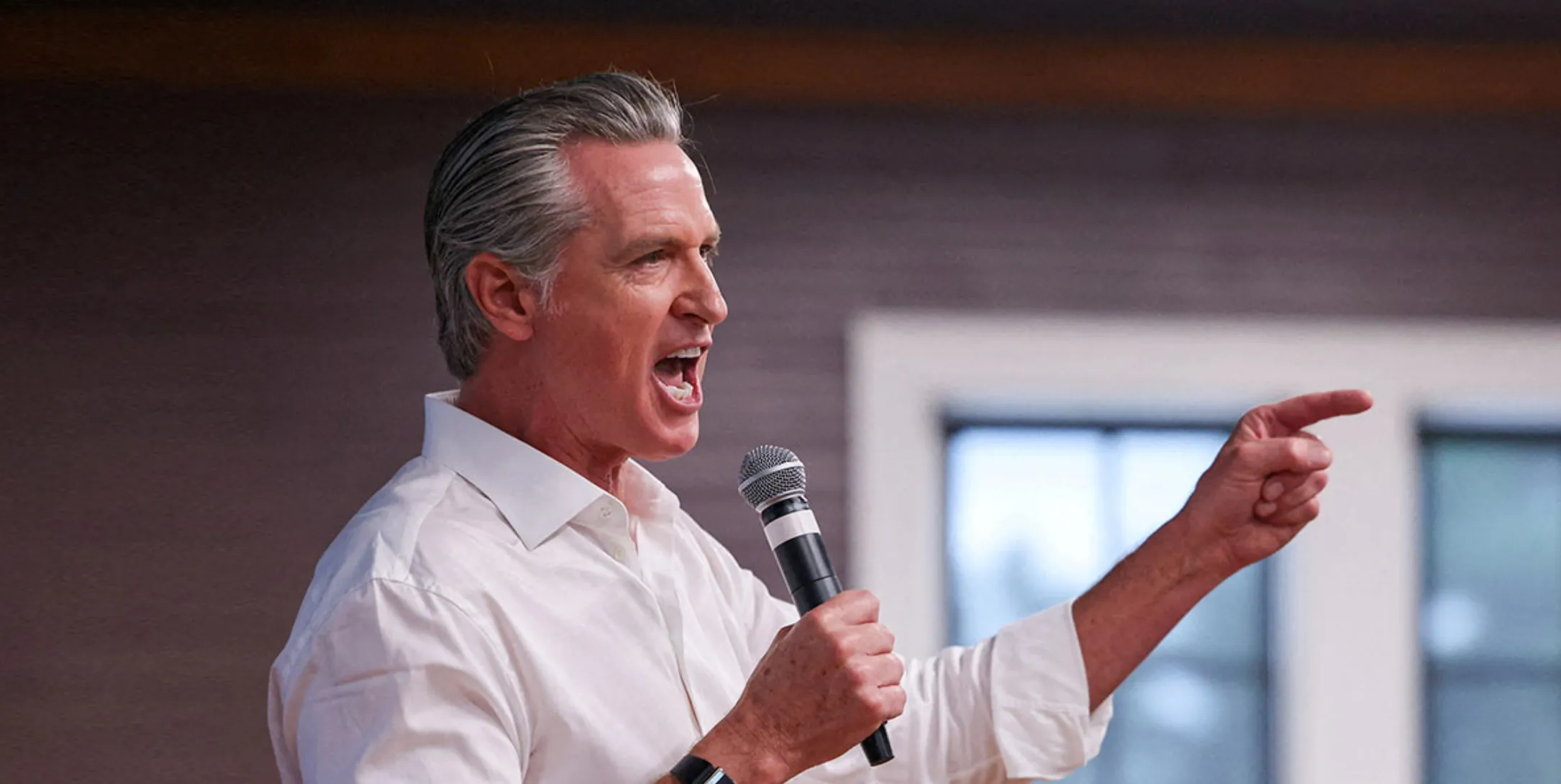
One theme among many in the 2026 midterm election was “the return of a religious left,” as progressive reporter Ezra Klein celebrated. Klein posted a clip from an interview he conducted with Senator-elect James Talarico (D-Texas), in which Talarico characteristically leaned into religious language. As Christopher Scalia noted wryly, “If, say, Ted Cruz made similar remarks, we’d be warned that he was taking a wrecking ball to the wall separating church and state.”

Talarico Interview

Talarico began by noting the obvious. “You read ‘Common Sense’ by Thomas Paine, you read Lincoln’s speeches, you listen to Fannie Lou Hamer, you read Dr. [Martin Luther] King, [Jr.] — they infused their politics with a moral foundation, oftentimes explicitly rooted in faith,” he stated. “What we’re suffering from now [is]: people start with their politics and then try to figure out the morality on top of that, when it should be reversed.”

Talarico added, “I really do feel like this is a way that I can love my neighbor at scale, through good public policy.” Christians across the political spectrum could affirm that statement; they only differ over what policies best love their neighbors.

But then Talarico went further. “If we can infuse our politics with more of this spirituality, we could treat politics like a sacrament,” he declared. “We could have an incarnational politics.”

Understandably, Klein interjected, “What does that mean?”

Before he could answer, Talarico had to set the boundaries for this “incarnational politics,” which prompted a less understandable interjection.

Talarico: “You don’t have to be a Christian. You don’t even have to be part of an organized religion. I do think that everyone is religious.”
Klein: “Ooh, that’s a bold claim. What do you mean by that?”
Talarico: “I think we all put our trust in something. … I choose to put my faith in love, which sometimes, the evidence suggests, is not going to work. Sometimes love is defeated. Sometimes love experiences setbacks. But the trust is that it will one day win. And that’s what my tradition is all about.”

Klein’s surprise showed his secular biases, and Talarico gave the straightforward explanation that everyone believes in something; humans are by nature religious creatures. Amid that conversational dynamic, Talarico defined his background: to participate in his “incarnational politics,” a person need not be a Christian, nor even a part of any organized religion; they simply must believe in love, as Talarico does. Here, “love” is given no further definition.

Finally, Talarico could define the substance of his “incarnational politics”: “If you do believe that each person is sacred, that each person is holy, that each person bears the divine image, that should fundamentally change how we engage in politics, how we treat our neighbors, and how we treat our enemies. To me, an incarnational politics would take seriously the idea that every person is … is God.”

That conclusion is startling — and more so given the preceding pause. Talarico’s words could be interpreted in a pantheistic sense, that everyone participates in an impersonal deistic force filling all things. But his words could also be a reference to the Parable of the Sheep and the Goats, a favorite among liberal Christians. Jesus welcomes the sheep into heaven, “For I was hungry and you gave me food, I was thirsty and you gave me drink, I was a stranger and you welcomed me, I was naked and you clothed me, I was sick and you visited me, I was in prison and you came to me. … as you did it to one of the least of these my brothers, you did it to me” (Matthew 25:35-36, 40).

Regardless, in the two-minute clip, Talarico displays some of the classic hallmarks of liberal Christian theology. He de-emphasizes the difference between Christianity and other religions. He speaks of God in vague terms that could either express Christian ideas or pantheistic ones. He articulates a creed that consists almost entirely of love. And he ties religious activity to political action.

What Is Liberal Christianity?

These claims are important enough to receive more explanation than a bare assertion, especially as many TWS readers are likely unfamiliar with liberal Christianity except at a distance.

Friedrich Schleiermacher

The movement began in 19th-century Germany, where an academic named Friedrich Schleiermacher (1768-1834) sought to rescue Christianity from the assaults of higher criticism by removing it from the skeptical scrutiny of higher critics. Unfortunately, what Schleiermacher rescued bore little relation to historical Christianity. Some might say he threw out the baby with the bathwater; more accurately, he scooped up a pail of filthy water and left the baby behind.

For Schleiermacher, Christianity — or indeed any religion — was neither truth nor ethics but merely feeling. “Religion … resigns, at once, all claims on anything that belongs either to science or morality. … Ideas and principles are all foreign to religion,” he maintained. “Piety cannot be an instinct craving for a mess of metaphysical and ethical crumbs” (“On Religion: Speeches to Its Cultured Despisers,” Speech 2).

Schleiermacher defined religion as “this sense for the infinite,” and he argued that “every original and new communication of the Universe to man is a revelation …. Every intuition and every original feeling proceeds from revelation.” This understanding of religion leans decidedly more towards pantheism than to the personal, knowable God of Scripture.

Schleiermacher’s understanding of religion even cuts off faith and doctrine. “So far is it [belief] from being the highest in religion, as is asserted, that it must be rejected by all who would force their way into the sanctuary of religion.”

What, then, is doctrine? “Christian doctrines are accounts of the Christian religious affections set forth in speech” (“The Christian Faith”). Again, he wrote, “The self-identical essence of piety is this: the consciousness of being absolutely dependent or, which is the same thing, of being in relation with God.” For Schleiermacher, religious doctrines are not truth claims about reality, but expressions of the theologian’s religious feelings — specifically his feelings of absolute dependence, although the object of this dependence is inherently unknowable.

To the reader who thinks this theology hails from the “Twilight Zone,” you are not alone. Schleiermacher redefined theology not as the study of God, but as the study of man’s opinions and feelings about God. Instead of refuting higher criticism’s rejection of scriptural authority and any supernatural intervention in history, Schleiermacher surrendered the entire field and attempted to salvage whatever mongrel religion remained.

Rudolf Bultmann

A later liberal theologian articulated the implications of this sea change. Rudolf Bultmann (1884-1976) set out on a quest to “demythologize” Christian doctrine. Like Schleiermacher, Bultmann understood his subject to cover human self-understanding, not objective truth. “The real point of myth is not to present an objective picture,” he said, but rather to present “how we human beings understand ourselves in our world” (“New Testament and Mythology”).

For liberal Christianity, “our world” became the focus instead of the world of the Scriptures. “To demythologize is to reject not Scripture or the Christian message as a whole, but the world-view of Scripture, which is the world-view of a past epoch,” Bultmann wrote. “Demythologizing takes the modern world-view as a criterion” (“Jesus Christ and Mythology”).

Liberal Christians tried to harmonize Christianity with cultural ideas. In practice, this meant that they took cultural ideas as their starting point and shed whatever elements of Christianity did not agree. The same process is evident in liberal denominations today, which have adopted the culture’s view of, for instance, sexuality and gender, to the rejection of a biblical worldview.

Adolf von Harnack

Yet liberal Christians could identify the cultural faults of other generations better than their own. Liberal church historian Adolf von Harnack (1851-1930) argued that, over centuries, standard church orthodoxy had imported ideas from Greek philosophy that distorted the gospel, and that liberal Christians were the ones reclaiming its primitive form.

“Christendom became more and more penetrated by the Greek and philosophical idea that true religion is first and foremost ‘doctrine,’” von Harnack taught. “There are only two possibilities here: either the Gospel is in all respects identical with its earliest form, in which case it came with its time and has departed with it; or else it contains something which, under differing historical forms, is of permanent validity. The latter is the true view” (“What is Christianity?”).

Notice again how von Harnack believed he was rescuing Christianity from historical irrelevance, while in fact he was the one who rejected the timeless message of the gospel as irrelevant. Roman Catholic theologian George Tyrrell, a contemporary of von Harnack, criticized him. “The Christ that Harnack sees, looking back through nineteen centuries of Catholic darkness, is only the reflection of a Liberal Protestant face, seen at the bottom of a deep well.”

So, what was the message of Christianity, according to 19th-century liberalism? Conservative opponent J. Gresham Machen (1881-1937) summed it up in two points: “the universal fatherhood of God and the universal brotherhood of man” (“Christianity and Liberalism”). Liberals thought of themselves as “kinder, gentler” Christianity. Their view of God as father of all neglected his holy wrath against sin. Their view of universal brotherhood stressed social acts of benevolence over individual acts of repentance.

Von Harnack distilled his understanding of Christianity in this way: “To our modern way of thinking and feeling, Christ’s message appears in the clearest and most direct light when grasped in connection with the idea of God the Father and the infinite value of the human soul.” The reader may hear an echo of this in Talarico’s assertion “that each person is sacred, that each person is holy, that each person bears the divine image.”

A Different Religion

Conservatives like Machen were appalled at this new doctrine, with Machen going so far as to argue that liberalism was an entirely different religion. “The two religions are different with regard to the presuppositions of the Christian message, the view of God and the view of man; and they are also different with regard to their estimate of the Book in which the message is contained. … They differ fundamentally with regard to the message itself.” Even regarding Jesus Christ, “liberalism regards Jesus as the fairest flower of humanity; Christianity regards Him as a supernatural Person. … The difference between those two views is the difference between two totally diverse religions.”

Christians ignore Machen’s warning at their peril. Whenever any person or group tries to bridge the divide and find unity between the two diametrically opposed systems, it is always biblical Christianity that is forced to compromise.

Later Developments in Liberal Christianity

It’s worth noting how liberal Christianity itself continued to change after the 19th century.

The de-emphasis on doctrine naturally oriented liberal Christianity toward social action. In 1917, American liberal Walter Rauschenbusch (1861-1918) called for a “social gospel” that “plainly concentrates religious interest on the great ethical problems of social life. … The non-ethical practices and beliefs in historical Christianity nearly all centre on the winning of heaven and immortality. On the other hand, the Kingdom of God can be established by nothing except righteous life and action” (“A Theology for the Social Gospel”).

This social gospel proclaimed a message of salvation not through individual repentance of sins but through collective undoing of social wrongs. “The individualistic gospel has taught us to see the sinfulness of every human heart and has inspired us with faith in the willingness and power of God to save every soul that comes to him,” wrote Rauschenbusch. “But it has not given us an adequate understanding of the sinfulness of the social order and its share in the sins of all individuals within it. It has not evoked faith in the will and power of God to redeem the permanent institutions of human society from their inherited guilt of oppression and extortion. … The social gospel seeks to bring men under repentance for their collective sins and to create a more sensitive and more modern conscience.”

It takes little imagination to see how such a theology would readily ally itself with Marxist critical theory and social activism.

Liberal Christianity’s cultural osmosis with an increasingly pluralistic society also enticed it to disavow the exclusivity of Christianity. In 1975, English liberal John Hick called for a “needed Copernican revolution in theology” that “involves an equally radical transformation in our conception of the universe of faiths and the place of our own religion within it.”

He endorsed “a shift from the dogma that Christianity is at the centre to the realization that it is God who is at the centre, and that all the religions of mankind, including our own, serve and revolve around him” (“God and the Universe of Faiths”). Hick’s views were shaped by his work among Muslim immigrants in Birmingham, England.

Both Hamilton and Talarico have publicly rejected the exclusivity of Christianity.

Historical Perspective

It’s worth noting the timeline of this liberal movement coming to America. As readers may have detected, the liberal scholars cited above all lived in Germany, a center of Enlightenment ideas and higher criticism in the 19th century. It took time for this new brand of Christianity to permeate throughout Europe and then across the Atlantic. Indeed, during much of Schleiermacher’s career, the United States was enjoying an unprecedented outpouring of the Holy Spirit in the Second Great Awakening.

Only towards the end of the 19th century did liberalism begin to gain ascendancy in American denominations. By the 1920s, Machen and other fundamentalists were forced out of Princeton Seminary and ultimately left the Presbyterian Church (PCUSA) to form the conservative Orthodox Presbyterian Church (OPC). The Progressive Era marked a turning point to the dominance of liberal Christianity in American public life.

Nevertheless, it would not do justice to history to mark the late 19th century as the beginning of liberal Christianity in America. By the early 1700s, Congregationalist churches in Boston had already drifted from orthodoxy over their discomfort at the wrath of God and rationalist denial of the Trinity. In response, orthodox Christians left Harvard to found Yale Seminary, where Jonathan Edwards was trained. Edwards strove against the Bostonian opponents of the First Great Awakening, and he died while helping to launch what would become Princeton Seminary because Yale had already become too liberal.

Boston Congregationalists eventually drifted into Universalism and Unitarianism — originally two distinct heresies whose remnants merged into one denomination in the 20th century. By then, the merger felt natural. Like the liberal Christianity imported from European universities, both groups derived their ideas by elevating the authority of human reason above that of Scripture. This simply meant they imported cultural ideas and looked more like the culture than the church.

Thus, liberal strands of Christianity were present in the United States even before independence, and they have exercised political influence throughout that period. (For example, former President John Adams wrote in 1816 that he had been a Unitarian “for more than Sixty Years” and expressed an attraction to universalist ideas.)

This historical perspective raises the question: if liberal Christianity has always been in Washington, then what is new about the candidates elected in 2026?

In an absolute sense, neither the religious nor political convictions of newly elected legislators like James Talarico or Adam Hamilton is entirely new. But the element gaining widespread attention is the fervor and force with which they marshal religious arguments from the Bible to support their policy prescriptions.

Liberal Christians used to make such arguments regularly. In a famous example from 1896, liberal Christian and repeat presidential nominee William Jennings Bryan excoriated the gold standard, “You shall not press down upon the brow of labor this crown of thorns. You shall not crucify mankind upon a cross of gold.”

But one feature of liberal Christianity is that it takes its cues from the culture. As American culture became more secular, and as Americans became more biblically illiterate, liberal appeals to Scripture waned. When evangelicals reengaged politically in the late 20th century, they had the Bible references all to themselves. Liberals are belatedly realizing the rhetorical power of Scripture and are choosing candidates who can use its idiom.

Theological Perspective

What is the theological significance of liberal Christianity? The answer to that question reveals a person’s priorities. A liberal Christian would answer, “It provides ready motivation for social change, which can save many people here and now from poverty, ignorance, violence, and war.” An orthodox Christian would answer, it retrains man’s gaze from his eternal state, obscuring the fact that he most needs salvation from the wrath of God for his sins. The ultimate conflict is over what it is from which man needs to be saved.

In 1937, H. Richard Niebuhr summarized the doctrine of liberal Christianity thus, “A God without wrath brought men without sin into a kingdom without judgment through the ministrations of a Christ without a cross.” In the first century, Paul warned the Galatian churches tempted to succumb to the Judaizers, “There are some who trouble you and want to distort the gospel of Christ. But even if we or an angel from heaven should preach to you a gospel contrary to the one we preached to you, let him be accursed” (Galatians 1:7-8).

There is only one Christian message that can bring real salvation. “The liberal Jesus, despite all the efforts of modern psychological reconstruction to galvanize Him into life, remains a manufactured figure of the stage,” wrote Machen. “The Jesus of the New Testament has at least one advantage over the Jesus of modern reconstruction — He is real. He is not a manufactured figure suitable as a point of support for ethical maxims, but a genuine Person whom a man can love. Men have loved Him through all the Christian centuries. And the strange thing is that, despite all the efforts to remove Him from the pages of history, there are those who love Him still.”

This article was written by Joshua Arnold and origianlly published on The Washington Stand. For more content like this, visit Real Life Network.

World News
25 min

House GOP, White House Continue to Press Nigerian Government to Address Christian Genocide

A year after Nigeria's designation as a Country of Particular Concern, deadly attacks against Christians continue. Discover what U.S. lawmakers and religious liberty advocates are saying about the crisis, government accountability, and the urgent need for prayer.

As terrorist violence in Nigeria continues to claim the lives of Christians and other religious practitioners at rates not seen anywhere else in the world, experts and lawmakers gathered for a hearing on Capitol Hill Thursday to assess if any progress has been made to address the crisis one year after the U.S. designated the West African nation as a Country of Particular Concern (CPC).

Last month, another devastating attack was carried out by rifle-wielding terrorists who massacred dozens of civilians, with at least 62 killed and another 52 wounded in Taraba state in the eastern part of the country. The atrocity is part of a disturbing pattern of attacks being committed almost exclusively by Islamist terrorists, including groups like Boko Haram, the Islamic State West Africa Province (ISWAP), and Fulani. According to Open Doors, of the 4,849 Christians killed for their faith worldwide last year, 72% (3,490) were murdered in Nigeria.

Overall, between 50 and 60,000 Christians have been killed in Nigeria by various terrorist groups since 2009, far and away the most killed in any one single country over that time span, with experts calling the situation a “genocide.” In addition, at least 19,800 churches have been attacked, with some estimates stating that over 18,000 churches and 2,000 Christian schools have been destroyed.

During Tuesday’s House Foreign Affairs Committee hearing that aimed to assess Nigeria’s efforts to address the violence since the Trump administration designated the country a CPC a year ago, Riley Barnes, assistant secretary of State for Democracy, Human Rights, and Labor, stated that Islamist attacks against Christians have largely continued unabated.

“The levels of violence and atrocities committed against Christians in Nigeria are appalling, particularly in the Middle Belt,” he explained. “Fulani ethnic militias commit violent attacks that directly target Christian populations. Nigerians I have spoken to on the ground have underscored the depth and breadth of suffering for many. Ample witness testimonies over even the past year have stated plainly that perpetrators use religious language during their attacks, specifically identified Christians for killing and abduction.”

Rep. Chris Smith (R-N.J.), who chaired the hearing, observed during Thursday’s “Washington Watch” that there has been some movement from the Nigerian government to address the ongoing crisis.

“[U]nfortunately, Christians are still being slaughtered, particularly in the Middle Belt, by the Fulani terrorists, the Boko Haram terrorists; more to the north [ISWAP is] continuing their killing spree,” he detailed. “But the government to some extent is trying to mitigate that carnage. But when it comes to Fulani, not nearly enough has been done. [The Trump] administration [is] doing a great job and really pressing the Nigerian government to use police, military assets, [and] intel [to] stop these terrorists from slaughtering Christians, from abducting individuals and then demanding ransom for which they use to buy more weapons and raping the women. It’s disgusting.”

Smith went on to highlight how the Nigerian government has for the most part denied that the targeted killings are even an issue. “On one trip in 2012, I met with a Catholic bishop in Jos, which is where Boko Haram was running rampant. I went to five of his fire-bombed churches, met with the survivors — wonderful, wonderful Christians who are suffering lost loved ones. [The] government said, ‘Oh, what? Nothing to see here.’ There’s a culture of denial that enables all of this. They pay lip service but don’t do enough. … Some Muslims get killed too, those who refuse to join in with the jihadist mindset. But Christians are singled out because [they consider them] infidels and don’t deserve to live, and they kill with impunity.”

Smith further noted that the approaches of previous administrations to appease and increase trade with governments that commit egregious human rights violations has not succeeded in stopping the violations. “[The Biden administration] took away CPC status for Nigeria, and under Obama, they wouldn’t even name countries [as CPCs],” he pointed out. “… And people just say, ‘Let’s trade more with this country or that more. Let’s trade with China.’ But [instead] let’s have human rights conditionally affixed to it to say, ‘Okay, we’ll trade if and only if you stop killing the Christians and persecuting believers the way you do.’”

Arielle Del Turco, who serves as director of the Center for Religious Liberty at Family Research Council, additionally asserted that the CPC designation of Nigeria put a spotlight on the issue that should help in the long run.

“[The CPC designation] doesn’t mean things change on the ground overnight, unfortunately,” she acknowledged during “Washington Watch” Thursday. “What it did do, though, is it directed a lot of attention from the State Department onto Nigeria, where it wasn’t really on their radar previously. It is now on the top of their radar. … This was an issue that the Biden administration routinely denied. They would explain it with climate change. They would explain it as a farmer-herder conflict. But the Trump administration knows that when we have militants riding on motorcycles, coming into villages with guns and weapons, slaughtering people, shouting ‘Allahu Akbar,’ that there is a religious element to this.”

Del Turco also emphasized that progress has been made since the CPC designation a year ago. “Now, one year later … at least Nigerian government officials will admit that, ‘Oh yeah, there might be a problem here.’ Now, to us, that might seem so small, but as someone that’s been tracking this issue for years, I think this is the first I’ve heard that Nigerian officials will admit that there’s any problem at all. So these small incremental changes hopefully will lead to something bigger along the way.”

Going forward, Del Turco underscored the responsibility that American Christians have to pray for their less privileged fellow Christians a world away. “I was very blessed to be able to go to Nigeria earlier this year with the group Christian Freedom International, and we were on the ground in some of the villages that do routinely face attacks from these Muslim Fulani militants. I remember one woman in particular we spoke to. … There was a Nigerian military base like a stone’s throw away, so close, but they wouldn’t or couldn’t stop these attacks. … [S]he would just be lying in her bed praying that the Lord would protect her and her two children. Her husband had already died 10 years before from a militant attack. So these people are just trying to lead normal lives. This woman in particular ran a little corner store selling snacks. … [T]his is the violence and brutality that is their normal life that they have to face every day. … These fellow believers in Christ really deserve our compassion. They deserve our prayers.”

‍

This article was written by Dan Hart and origianlly published on The Washington Stand. For more content like this, visit Real Life Network.

World News
25 min

Donald Trump, the Limits of Political Power, and the Demands of Faith

Donald Trump's remarks on forgiveness, Israel, and political power raise deeper questions about faith and leadership. Explore how Charlie Kirk's legacy, growing conservative divisions, and biblical teachings reveal the importance of humility, grace, and eternal hope.

What happens when a person gains everything the world has to offer but remains unprepared to face eternity?

It is a question that transcends politics, wealth, influence, and public reputation. Yet it became the center of an important conversation when President Donald Trump was asked about death, heaven, and forgiveness during a recent 60 Minutes interview.

The president's answers revealed something worth examining, not simply about Donald Trump, but about the human heart.

The discussion also comes at a difficult moment for American politics. Republicans are confronting electoral losses, disagreements over Israel and Iran are dividing conservatives, and the assassination of Charlie Kirk continues to expose troubling attitudes toward political violence.

But beneath these headlines lies a more consequential question.

Political success cannot save the soul, and no amount of earthly influence can replace the transforming grace of Jesus Christ.

That truth applies to presidents and ordinary citizens alike.

Donald Trump, Forgiveness, and the Condition of the Heart

During his interview, Trump was asked what he believed would happen to him after death.

Having survived an assassination attempt in Butler, Pennsylvania, the president has experienced a reminder of life's fragility that few people encounter so directly.

When asked whether he expected to go to heaven, Trump expressed hope that he would, explaining that he considered himself religious.

The conversation then turned to forgiveness.

Interviewer Ross Douthat referenced the memorial service for Charlie Kirk, where Kirk's widow, Erika, publicly forgave the man accused of murdering her husband.

At that same memorial, Trump acknowledged that he did not share Kirk's approach toward political opponents.

When Douthat asked whether the president could forgive figures such as James Comey and Nancy Pelosi, Trump indicated that he could not honestly promise to do so.

The answer was striking.

Trump has experienced extraordinary political opposition, legal battles, and threats against his life. His frustration with political adversaries is understandable, even when his responses deserve examination.

Christians can recognize those circumstances without excusing bitterness.

Jesus' teaching in Matthew 6:14–15 makes forgiveness an essential part of the Christian life. Believers who have received God's mercy are called to extend forgiveness to others.

That does not mean wrongdoing should go unpunished. Forgiveness does not eliminate accountability, excuse criminal behavior, or require abandoning justice.

It means refusing to allow hatred to govern the heart.

Erika Kirk's response to her husband's murder provides a powerful example.

Faced with unimaginable grief, she publicly expressed forgiveness grounded in her Christian faith.

Her words did not minimize the seriousness of the crime. Instead, they demonstrated that the Gospel offers a response to suffering that goes beyond retaliation.

The contrast raises a question for every Christian, regardless of political affiliation.

Is it possible to defend the right policies while harboring the wrong attitudes?

Absolutely.

A person can hold strong convictions about immigration, religious liberty, national security, or Israel while struggling with pride, resentment, and unforgiveness.

The same is true of political opponents.

No party possesses a monopoly on virtue, and no political leader is exempt from the moral demands of Scripture.

Christians are called to evaluate leaders through biblical truth without confusing political loyalty with spiritual faithfulness.

The warning is especially important when discussing someone as influential as Donald Trump.

His accomplishments and political positions can be assessed on their merits. His statements can be praised or challenged. But his eternal standing before God cannot be determined by political achievements, and no observer can claim complete knowledge of his heart.

That judgment belongs to God.

The responsibility of believers is to speak truth with humility, pray for leaders, and remember that everyone stands in need of divine grace.

Israel, Immigration, and the Divisions Within Conservatism

The president's interview also exposed growing tensions over America's relationship with Israel.

Trump suggested that Israel and other American partners should reimburse the United States for costs associated with the conflict involving Iran.

He also claimed that Israel would not exist without his leadership.

Those statements raise questions about the relationship between American foreign policy and biblical convictions.

Trump's administration has taken significant steps in support of Israel, including recognizing Jerusalem as its capital and overseeing the Abraham Accords.

Those accomplishments deserve recognition.

Yet American assistance and Israel's biblical significance are not identical matters.

Scripture presents God's covenant with Abraham and his descendants as something established long before the existence of the United States.

Genesis 12:3 and Numbers 24:9 have traditionally informed Christian discussions about blessing Israel, while Jeremiah 31 emphasizes God's enduring covenantal faithfulness.

Christians differ over how those passages apply to the modern State of Israel and contemporary foreign policy. Those interpretive questions deserve thoughtful consideration.

Nevertheless, a biblical perspective should encourage humility about the limits of political power.

No president can claim ultimate credit for God's purposes in history.

American leaders must make difficult decisions about military spending, alliances, and national interests. Those decisions can be debated without reducing an entire relationship to financial transactions.

The disagreements surrounding Israel and Iran have also intensified divisions within the Republican Party.

Representative Thomas Massie's opposition to aspects of the administration's foreign policy, including his effort to impeach Defense Secretary Pete Hegseth, illustrates the growing conflict among conservatives over military involvement overseas.

Some Republicans believe a more restrained foreign policy is necessary to protect American interests and avoid prolonged conflicts.

Others argue that maintaining a strong partnership with Israel is essential to regional security and America's broader strategic responsibilities.

These competing positions cannot be resolved through personal attacks alone.

They require serious consideration of military objectives, costs, constitutional authority, and the consequences of American action or inaction.

Immigration has produced similar disagreements.

During the 60 Minutes interview, Trump acknowledged the possibility that his administration's deportation policies had been too harsh.

At approximately the same time, the administration announced that Stephen Miller would replace Susie Wiles as White House chief of staff.

The combination raised questions about whether immigration enforcement would become more restrained or more aggressive.

For many conservative voters, border security remains a central political concern.

Yet the biblical responsibility to love one's neighbor and treat strangers with dignity must also inform Christian discussions of immigration.

A nation can maintain lawful borders while recognizing the humanity of immigrants and the importance of fair treatment.

Those principles need not be mutually exclusive.

The larger concern is whether political disagreements are producing thoughtful debate or simply deepening resentment.

Conservatives who share many foundational beliefs increasingly disagree about Israel, military intervention, immigration, and the direction of the Republican Party.

Those divisions may have significant electoral consequences.

But they also offer an opportunity for Christians to demonstrate something different from the hostility that dominates so much of public discourse.

Conviction and humility can coexist.

Disagreement does not require hatred.

And faithfulness to Scripture must remain more important than loyalty to a political movement.

Charlie Kirk, Political Violence, and the Hope of the Gospel

The assassination of Charlie Kirk remains a painful reminder of what can happen when political hostility becomes something more dangerous.

Kirk was known for engaging students on college campuses, often inviting those who disagreed with him to ask questions and challenge his positions.

His approach reflected a belief that political and cultural disagreements should be addressed through conversation rather than intimidation or violence.

Following his death, comedian Dave Chappelle reportedly made remarks during a performance that Cohen criticized as insensitive toward Kirk's murder.

The controversy raised a broader question about the boundaries of comedy and the moral responsibilities of public figures.

Free speech protects the right to express unpopular, offensive, or provocative opinions.

But possessing the right to say something does not make every statement wise, compassionate, or morally defensible.

Political violence should never become a source of celebration.

The principle must apply consistently.

A person does not become less deserving of compassion because of political affiliation, religious belief, or public controversy.

Kirk's family deserves the same dignity and sympathy that should be extended to every family devastated by violence.

That standard should also shape Christian conversations about conflict overseas, including the suffering of Israeli and Palestinian civilians.

Every human life bears inherent dignity.

And no political disagreement justifies celebrating another person's death.

Erika Kirk's public response offered an alternative to the bitterness surrounding so much of the conversation.

She chose to speak about forgiveness while grieving the loss of her husband.

That decision points toward a truth that reaches beyond the immediate tragedy.

The Gospel does not promise that Christians will avoid suffering, injustice, or persecution.

It promises something greater: reconciliation with God through Jesus Christ and the possibility of a transformed heart.

This is why the question of eternity matters more than any election.

Mark 8:36 asks what a person gains by possessing the whole world while forfeiting the soul.

Wealth cannot answer that question.

Neither can fame, political influence, military strength, or electoral success.

The Christian message is that salvation is not earned through accomplishments or moral superiority. It is received by God's grace through faith in Jesus Christ.

Ephesians 2:8–9 teaches that salvation is God's gift, not the result of human works.

That message should produce gratitude and humility rather than self-righteousness.

It should also change how Christians approach public life.

Believers have responsibilities as citizens. They should study the issues, participate thoughtfully in elections, pray for elected officials, and seek the good of their communities.

But political engagement must never replace the Church's central mission.

The Great Commission calls Christians to make disciples, proclaim the Gospel, and teach obedience to Christ.

That calling remains unchanged regardless of which party controls Congress or occupies the White House.

The greatest need in American politics is not simply better leadership or stronger policies, but hearts transformed by the grace and truth of Jesus Christ.

The same grace that makes forgiveness possible is available to presidents, entertainers, political activists, and ordinary families.

No one is beyond the need for repentance.

And no one is beyond the reach of God's mercy.

The future of American politics may remain uncertain, but the promises of Scripture do not change with election results.

God remains sovereign.

Christ remains the only Savior.

And the Church remains called to speak truth, extend grace, and point people toward the hope of eternal life.

The question is not merely what kind of country will be left to the next generation.

It is whether the people living in it are prepared for eternity.

Watch The Daniel Cohen Show on Real Life Network for news, cultural analysis, and conversations connecting current events to the hope of the Gospel.

World News
25 min

Voters Make Colorado the 28th State to Restrict Trans Surgeries for Minors

Colorado voters approved Proposition 135, restricting gender-transition surgeries for minors despite strong opposition and Democratic victories statewide. Explore what the results reveal about public opinion, medical concerns, and the ongoing debate over parental rights.

The nationwide campaign against transgender procedures on minors gained new momentum last week, despite the general triumph of pro-transgender politicians. In Colorado, voters approved a ballot measure (Proposition 135) prohibiting transgender surgeries on minors, acting to protect children when their politicians would not. Colorado thus became the 28th state to restrict transgender procedures on minors, and the first state to do so by ballot measure.

Proposition 135 would “prohibit surgeries on minors that alter their biological sex characteristics as a treatment in response to a minor’s perception of sex or gender” and “prohibit the use of state or federal funds or insurance coverage to pay for these surgeries.” The Colorado Department of Health Care Policy and Financing said the state’s Medicaid program spent $2.7 million on transgender procedures for minors between 2023 and 2025, although the lion’s share was likely for hormonal treatments, which the ballot measure did not address.

Notably, amid a general landslide in favor of Democrats, the proposition passed in Colorado by a margin of 51.9% to 48.1%, or just over 100,000 votes. The Associated Press called the race on Friday.

“Amidst Democrats’ decisive election victories last week, ballot measures reversing their gender-bending social agenda still won in deep-blue states,” noted Quena González, senior director of Government Affairs at Family Research Council. “In Colorado, where the Republican Party has been on the defense for over a decade, liberal voters provided the winning edge for a first-in-the-nation ballot measure protecting children from gender transition procedures.”

The voters’ verdict was thus a reality check on the extremism of the transgender agenda. Pro-transgender activists did not accept the result calmly. “It’s certainly painful to see the outcome and how close it was,” lamented Nadine Bridges, executive director of the LGBT advocacy group One Colorado. “I don’t imagine if people had the right information that they would have made this decision.”

Denial is the first stage of grief. In reality, opponents of Proposition 135 dropped $4,927,982 into defeating the measure, while a grassroots campaign known as Protect Kids Colorado mustered only $271,540 in its favor — a ratio of 18 to one. If the proposition’s opponents had any good arguments, they certainly had every opportunity to let voters know.

This fact suggests that even liberal voters in Colorado did hear the arguments against Proposition 135 — and voted for it anyways. “Ascendant elected Democrats and demoralized Republicans alike would do well to note that the issue of protecting children from gender ideology cuts directly across party lines,” González told The Washington Stand.

In fact, pro-transgender activists are the ones actually promoting false claims. Planned Parenthood Action alleged that “Proposition 135 would allow the government to interfere in personal medical decisions that should remain between families and their trusted providers. The measure creates barriers to care.” Likewise, GLAAD claimed that “Proposition 135 would prohibit health care professionals from practicing medically necessary health care for transgender youth that is supported by every major medical association.”

In reality, there is nothing “medically necessary” about amputating healthy breasts or genitalia. Such irreversible surgeries with long-term side effects are an extreme way to treat mental or emotional distress, and multiple evidence reviews commissioned by Western governments have not found the results satisfactory enough to justify rushing minors into such life-altering surgeries.

Nor is it true that transgender surgeries for minors are supported by “every major medical association.” In February, the American Society of Plastic Surgeons (ASPS) — the organization whose members would be responsible for conducting such surgeries — recommended “that surgeons delay gender-related breast/chest, genital, and facial surgery until a patient is at least 19 years old.” When pressed on their position, the American Medical Association reluctantly agreed that transgender surgeries “should be generally deferred to adulthood.”

Given these position statements, it is entirely inaccurate to characterize Proposition 135 as government interference “in personal medical decisions” when even medical organizations agree that transgender surgeries are inappropriate for minors.

Unfortunately, the transgender lobby holds more sway over Colorado officials than over Colorado voters, which means there is still a chance for the legislature to undo the protections voters implemented. Proposition 135 was a statutory measure, not a constitutional one. This meant that it only needed a simple majority to pass (a threshold it only narrowly cleared), but that the state legislature could amend or repeal it.

“We’re going to have to take a look at these anti-trans measures and what adjustments are necessary and appropriate,” Colorado Governor-elect Phil Weiser responded to the outcome. He added that it is “a natural and I believe appropriate role of the legislature” to consider adjustments to statutory ballot measures.

Meanwhile, however, the fact remains that Colorado voters did implement Proposition 135. And, as Republicans found out in the 2026 midterm, ignoring the voters can be a dangerous prospect.

For now, advocates of Proposition 135 are celebrating a successful effort to protect Colorado children, even against long political and fiscal odds. Protect Kids Colorado Co-Founder Erin Lee celebrated “the thousands of just everyday Coloradans who came together to make this happen.” And she warned legislators that any attempt to undo the measure, as well as a girls’ sports measure (Proposition 134) which also passed, would be “to their detriment.”

“The results of the 2026 election are an early indication that one of the most lasting effects of President Trump’s second term may very well end up being a 180-degree reversal in the cultural tide that until 2024 targeted children with lies and convinced families that ‘gender transition’ is the only answer,” González concluded. “Today, the transgender activists are in retreat as popular opinion turns decidedly against trans ideology.”

This article was written by Joshua Arnold and origianlly published on The Washington Stand. For more content like this, visit Real Life Network.

World News
25 min

The Lessons Republicans Overlooked in 2026

Republican losses in 2026 exposed weaknesses in voter outreach, messaging, and party unity. Explore how economic concerns, debates over Israel, and shifting voter priorities reveal a deeper challenge for Christians: spiritual complacency and the need for renewed faith.

The 2026 midterm elections left Republicans confronting a difficult reality. Democratic victories in states once considered reliably conservative raised serious questions about the future of the Republican Party, the influence of emerging political movements, and the direction of the country.

Was the election a rejection of President Donald Trump? Did the conflict with Iran and rising gasoline prices drive voters away? Or did Democrats simply run more effective campaigns?

Each explanation may contain part of the answer. But focusing exclusively on political strategy risks overlooking a deeper concern.

America's political divisions may be symptoms of a much larger spiritual problem, one that cannot be solved by winning another election.

The prophet Jeremiah confronted a similar failure of leadership when he warned against those who offered superficial reassurance while ignoring the deeper problems facing God's people.

Jeremiah 6:14 describes leaders who treated serious wounds as though they were minor, declaring peace when there was no peace.

The warning remains relevant. A nation cannot address its challenges honestly without first understanding what is wrong.

And for Christians, that examination must begin with more than the opposing political party. It must also include the spiritual condition of the Church.

Texas, Georgia, and Ohio Reveal a Changing Political Landscape

The Democratic victories in Texas, Georgia, and Ohio represented more than disappointing results for Republican candidates. They exposed assumptions about voter loyalty, political organization, and the effectiveness of conservative messaging.

In Texas, Democrat Gina Hinojosa defeated longtime Republican Governor Greg Abbott, while James Talarico won the state's closely watched Senate race against Ken Paxton.

Texas has served as a foundation of Republican presidential campaigns for decades. With its substantial electoral vote count, changes in the state's political direction could have lasting national consequences.

Georgia delivered another historic result with the election of Keisha Lance Bottoms as governor. In Ohio, Amy Acton defeated Republican Vivek Ramaswamy despite the state's strong support for Trump in the 2024 presidential election.

These outcomes invite an uncomfortable question: Had Republicans become too confident in states they assumed would remain safely conservative?

Campaign spending and national recognition cannot replace the importance of relationships with voters.

Democrats demonstrated the effectiveness of local organizing, volunteer networks, voter registration, and consistent engagement with communities.

The lesson extends beyond any particular election. Political movements must understand the people they hope to represent rather than assume those voters will remain loyal indefinitely.

Even prominent progressive politicians such as Alexandria Ocasio-Cortez have demonstrated an ability to communicate effectively with their supporters, build recognizable messages, and maintain engagement through social media.

Disagreeing with a political opponent's policies should not prevent an honest assessment of that opponent's organizational strengths.

The same principle applies to the concerns driving voters.

Affordability became a central theme of Democratic campaigns. Families facing higher grocery bills, gasoline prices, and housing costs wanted leaders who understood their daily struggles.

Economic statistics and policy achievements matter, but political leaders must also recognize how families experience the economy.

There are legitimate disagreements about which policies would best address these concerns. Energy production, government spending, healthcare, and taxation all deserve serious debate.

Yet one lesson from the election is difficult to ignore: voters want their concerns acknowledged and their circumstances understood.

For Republicans, rebuilding trust will require more than criticizing Democratic proposals. It will require clearly communicating how conservative policies would address the challenges facing American households.

Israel, Iran, and the Divisions Reshaping American Politics

The election also brought growing disagreements over America's relationship with Israel into sharper focus.

Within conservative media and Republican political circles, the conflict with Iran has intensified debates about military involvement, national security, and the responsibilities of the United States overseas.

Some commentators have questioned whether the costs of the conflict contributed to Republican losses. Others have expressed concern that opposition to military intervention could weaken America's longstanding partnership with Israel.

These disagreements reflect a broader debate about the meaning of an America First foreign policy.

Should the United States reduce its international commitments? How should American leaders balance domestic economic pressures with security threats overseas? What responsibilities does the country have toward allies facing military aggression?

These questions deserve careful consideration.

Israel remains an important American partner in intelligence sharing, defense technology, and regional security. Its relationship with the United States has historically received support from both major political parties, although disagreements over military assistance and the conduct of particular conflicts have grown.

Iran's government and its support for armed groups throughout the Middle East remain central concerns in discussions about regional security.

For Americans living thousands of miles from the conflict, these debates often focus on energy prices, military spending, and the possibility of prolonged involvement.

For families living in Israel, the consequences can be immediate.

Rocket warnings, bomb shelters, and the threat of attacks are realities that shape everyday life. Understanding those experiences provides important context for conversations about Israel's security.

At the same time, concern for Israeli civilians should not diminish concern for Palestinian civilians or others affected by conflict. Human suffering deserves compassion regardless of nationality or religious identity.

Christian engagement with these issues should be grounded in biblical conviction, careful attention to facts, and a commitment to human dignity.

The political debate has also brought renewed attention to Michigan Senator-elect Abdul El-Sayed, whose campaign emphasized economic concerns, healthcare, and changes to American foreign policy.

El-Sayed has criticized U.S. military assistance to Israel and argued for greater attention to Palestinian suffering. His positions have generated significant disagreement among Americans concerned about Israel's security and the future of American foreign policy.

Those disagreements should be evaluated through his stated policies and their potential consequences, rather than assumptions about his religious identity.

Religious freedom is a foundational American principle, and Christians can defend their convictions while respecting the rights of fellow citizens who worship differently.

Faithful engagement requires the courage to challenge ideas without abandoning the biblical responsibility to treat people with dignity.

The growing divisions within both political parties suggest that the coming years will involve difficult debates about national identity, foreign policy, economic priorities, and the principles that should guide American leadership.

But political debates alone cannot answer the deeper questions facing the country.

The Spiritual Diagnosis: A Church Called to Wake Up

Near the conclusion of the election analysis, a warning from actor Jim Caviezel brought the discussion back to the spiritual responsibilities of Christians.

Caviezel, known for portraying Jesus in The Passion of the Christ, challenged believers to consider whether the modern Church has become too comfortable, too hesitant, or too disconnected from the demands of the Gospel.

His comments echoed the warning to the church at Laodicea in Revelation 3.

In Revelation 3:15–16, Jesus rebukes a congregation for being spiritually lukewarm.

The passage is not primarily about political participation. It is about spiritual complacency, misplaced confidence, and the need for genuine repentance.

That distinction is important.

A church can become politically active without becoming spiritually healthy. It can speak loudly about cultural problems while neglecting prayer, discipleship, evangelism, and obedience to Scripture.

Likewise, political frustration can tempt Christians to view people who disagree with them as enemies rather than neighbors who need the same grace and truth found in Jesus Christ.

The deeper challenge is not simply whether Christians are sufficiently involved in elections.

It is whether the Church is faithfully fulfilling its biblical mission.

Are believers sharing the Gospel? Are families being strengthened through Scripture and prayer? Are churches teaching sound doctrine and equipping Christians to live faithfully in a changing culture?

Are Christians demonstrating the love, humility, integrity, and courage that should characterize followers of Jesus?

These questions deserve attention regardless of which political party holds power.

The Great Commission in Matthew 28:18–20 calls Christians to make disciples of all nations, baptizing them and teaching them to obey Christ's commands.

That mission does not depend on election results.

Neither does God's sovereignty.

Political setbacks can create uncertainty about the future, but they cannot surprise the Lord. Scripture repeatedly reminds believers that God remains sovereign over nations, rulers, and the course of history.

Daniel 2:21 declares that God changes times and seasons, removes kings, and raises up kings.

That truth should produce humility rather than political complacency.

Christians still have responsibilities as citizens. They should vote thoughtfully, evaluate policies carefully, serve their communities, and pray for those in authority.

But the Church must never confuse political victory with spiritual revival.

The answer to a spiritually lukewarm Church is not greater political outrage. It is renewed love for Christ, deeper faithfulness to Scripture, and a greater commitment to the Gospel.
That renewal begins in ordinary places.

It begins with parents teaching their children God's Word, believers praying for their neighbors, pastors faithfully preaching Scripture, and Christians demonstrating integrity in their workplaces and communities.

It also requires the humility to recognize that cultural and spiritual problems are not confined to one political party.

Every person needs the grace of God. Every community benefits from truth, compassion, and moral responsibility.

And every generation of Christians must decide whether it will faithfully carry forward the mission entrusted to the Church.

The 2026 midterms may be remembered for unexpected political victories, changing electoral coalitions, and the growing divisions within American politics.

But for believers, the most important question is not simply what went wrong on Election Day.

It is what must change in the hearts and lives of God's people.

America's political future remains uncertain. The outcome of the next election is unknown. The challenges facing families, communities, and the nation are real.

Yet none of those uncertainties diminish the authority of Jesus Christ.

There is still reason to pray, to serve, to speak truth graciously, and to remain engaged in the life of the nation.

The call is not to despair over political defeat or place ultimate confidence in the next candidate.

It is to return to the unchanging mission of the Church with renewed conviction and a heart shaped by the Gospel.

Watch The Daniel Cohen Show on Real Life Network for news, cultural analysis, and conversations about current events from a biblical worldview.

Select Category
Sort By:
Thank you! Your submission has been received!
Oops! Something went wrong while submitting the form.
World News
25 min

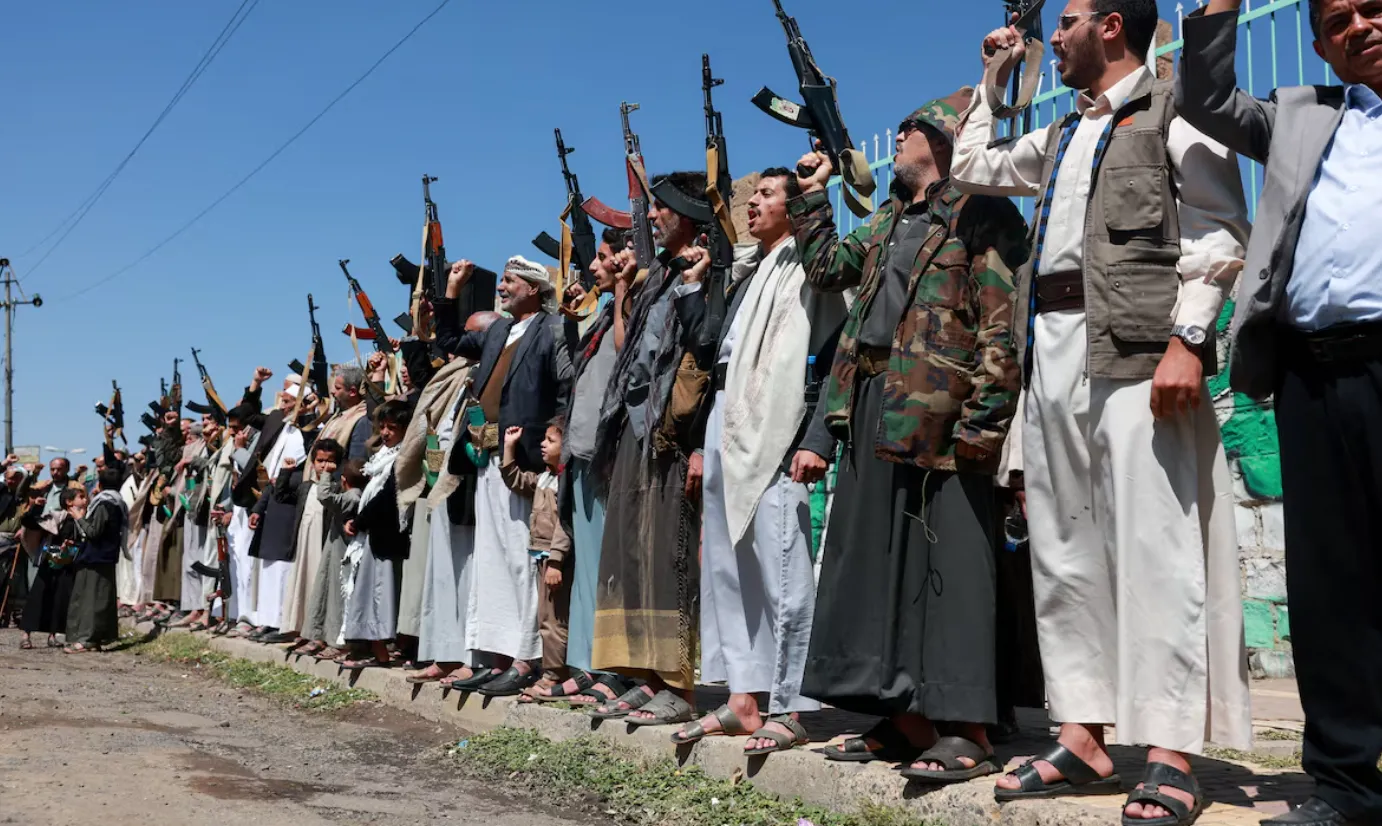
News broke Tuesday that China’s communist regime is supplying critical parts for powerful precision-guided ballistic missiles to Houthi militants in Yemen amid the terrorist organization’s expanding attacks on Saudi Arabia and U.S. forces.

The Wall Street Journal reported that parts shipped in from China have allowed the terrorist group to build a version of the Kheibar Shekan Iranian precision-guided missile, which has a reported range of approximately 1,200 miles — allowing it to strike Israel and anywhere in Saudi Arabia. Noted for being highly mobile and relatively inexpensive at $1 million per unit (when compared to the cost of Patriot or THAAD missiles needed to neutralize it, which can range from $4 to $15 million per unit), the Kheibar Shekan is capable of evading air defenses and can deliver a bigger payload than cruise missiles and drones.

For its part, China claims that it is abiding by the U.N.’s ban on arms sales to the Houthis because the missile parts have civilian (or “dual-use”) purposes. But analysis of some of the parts shows they were “specifically designed for missile use.”

It’s not just ballistic missile parts that are being supplied by Beijing. Data gathered from U.N. reports and arms experts has revealed that “Chinese companies are now the biggest source of seized goods bound for the Houthis,” including drone parts. Since the October 7, 2023 Hamas attacks on Israel, the Houthis have launched hundreds of drone attacks targeting U.S. forces, Israel, commercial ships, and surrounding Middle East countries.

While previously relying on Tehran and the Lebanese terrorist group Hezbollah to provide them with weapons, the WSJ report notes that the Houthis have now become more autonomous, thanks in large part to Beijing’s parts pipeline as well as other factors. “They have developed domestic manufacturing capabilities with artificial intelligence for drone and missile softwares, diversified their supply chains, accumulated operational experience, and established relationships with regional smugglers and international procurement networks,” stated Mohammed al-Basha, the founder of a Washington-based risk-advisory firm.

After initially focusing on assaulting U.S. forces as well as commercial vessels in the Strait of Hormuz, the Houthis have now expanded their hostilities against neighboring countries, striking the headquarters of Saudi Arabia’s state-owned energy giant Saudi Aramco on Tuesday, just days after they attacked the country’s King Khalid International Airport, killing at least 13 people (including an American citizen) and wounding over 300.

The violence highlights the increasingly direct role that Xi Jinping’s regime is playing in the expanding Middle Eastern crisis. Last month, reports surfaced revealing that satellite imagery and intelligence provided by Chinese companies have allowed Tehran to carry out precision strikes on U.S. forces, which have led to the deaths of several American servicemembers.

Experts like Gordon Chang, an author and distinguished senior fellow at the Gatestone Institute, are not surprised by the reports of China’s clandestine weapons exports. “We have known for years that China was supplying weapons to Iran and its three main terrorist proxies — Hamas, Hezbollah, and the Houthis — so it should come as no surprise that China is supplying critical components for ballistic missiles to the Houthis,” he told The Washington Stand.

Chang further noted that “China has also been supplying, among other things, targeting data to Iran, which that regime has used to kill at least nine American service members in the Gulf, on March 1 and July 17.”

“What is surprising is that the Trump administration is not imposing costs on China for helping to kill Americans,” Chang emphasized. “We need to hold China accountable, but we also need to hold Washington accountable too. China will not stop until we impose costs. Washington has the power to impose those costs, and Americans will continue dying until we show Beijing that we are no longer going to tolerate the killing of Americans.”

‍

This article was written by Dan Hart and originally published on The Washington Stand. For more content like this, visit Real Life Nework.

China Supplying Houthi Terrorists with Ballistic Missile Parts

Reports reveal that Chinese companies are supplying critical missile and drone components to Houthi militants, strengthening their ability to attack U.S. forces, Israel, and Saudi Arabia. The findings raise concerns about Beijing's role in escalating Middle Eastern conflicts.

October 15, 2026
World News
25 min

The approaching midterm elections are raising questions that go far beyond the economy. While inflation, healthcare, and the cost of living remain important, Americans are also confronting deeper disagreements about the value of human life, the meaning of justice, and the government's responsibility to protect its citizens.

These debates touch some of the most fundamental convictions in American public life. From the treatment of infants born alive after attempted abortions to the punishment of convicted terrorists and the growing threats posed by Iran, the questions are ultimately about what society considers worthy of protection.

For ongoing coverage of these issues through a biblical worldview, watch The Daniel Cohen Show on Real Life Network.

The Sanctity of Life and the Meaning of Justice

In 2023, Minnesota Governor Tim Walz signed legislation modifying the state's requirements concerning infants born alive following attempted abortions.

Previously, Minnesota law required medical personnel to take reasonable measures to preserve the life and health of an infant born alive. The revised language requires appropriate care for an infant born alive, without retaining the earlier explicit requirement to preserve life and health.

Supporters of the change argue that it allows physicians to provide appropriate medical care, including comfort care when an infant cannot survive. Critics contend that removing the explicit preservation requirement weakens protections for vulnerable newborns.

The distinction raises a profound moral question: What obligations does society have toward a child who has already been born?

For Christians, the answer begins with the biblical understanding of human dignity.

Genesis 2:7 describes God breathing life into Adam, who became a living being. Genesis 1:27 establishes that humanity is created in God's image. Human worth, therefore, is not determined by age, health, independence, or the ability to contribute to society.

The biblical case for protecting human life rests on the conviction that dignity is inherent, not something granted by government or earned through usefulness.

The same understanding of human dignity also informs difficult questions about criminal justice.

The case of Nidal Hasan, the former Army major convicted of murdering 13 people at Fort Hood in November 2009, illustrates the seriousness of those questions.

Hasan's attack wounded dozens of additional victims and devastated military families. His conviction and death sentence reflect the gravity of the crimes committed.

Debates over the death penalty, including the method of execution and whether executions should be publicly displayed, nevertheless reveal competing understandings of justice.

Some argue that the severity of certain crimes warrants the ultimate punishment. Others question whether particular execution methods or public spectacles are compatible with human dignity.

These disagreements deserve careful consideration without minimizing the suffering of victims.

Romans 13 describes civil authority as bearing responsibility for restraining wrongdoing. At the same time, Scripture consistently presents human life as possessing value before God.

Justice must therefore be more than an expression of anger. It must reflect moral seriousness, accountability, and appropriate respect for human dignity.

Political Accountability Requires More Than Religious Language

Religious identity has become an increasingly visible feature of American political campaigns.

Candidates regularly reference Scripture, Christian values, and personal faith while presenting their positions on abortion, immigration, healthcare, and social policy.

But claiming a religious identity does not automatically resolve questions about what a candidate believes or how those convictions influence public decisions.

Texas Senate candidate James Talarico has attracted attention for statements concerning the nature of God, abortion, and gender. His theological language and policy positions have generated disagreement among Christians over how biblical teaching should inform public life.

Those disagreements cannot be resolved simply by accepting or rejecting a candidate's religious label.

The relevant questions concern the substance of the claims themselves. What does Scripture teach? How is a particular passage being interpreted? Are the conclusions consistent with historic Christian doctrine?

Jesus warned in Matthew 7:15–20 about false prophets and emphasized the importance of recognizing people by their fruit.

That passage is not permission to speculate about someone's private spiritual condition. It does, however, establish the importance of examining teaching and conduct rather than relying entirely on outward appearances.

Christian discernment requires evaluating public statements and actions against Scripture, rather than treating religious language as sufficient evidence of biblical faithfulness.

Similar standards of accountability apply to questions of national security.

Michigan Senate candidate Abdul El-Sayed has faced scrutiny over his positions on Israel, Iran, immigration, and American foreign policy.

His statements about military assistance to Israel and the treatment of terrorist organizations have become subjects of political controversy. His critics argue that his responses have lacked necessary clarity, while his broader position emphasizes consistency in foreign policy and opposition to unconditional military support.

The appropriate standard is to examine his actual statements, policy proposals, and public record.

Questions about political associations or organizations connected to family members must also distinguish documented facts from allegations of personal wrongdoing.

That distinction matters because accountability depends upon evidence.

A political candidate can legitimately be challenged about immigration enforcement, campaign contributions, national security policy, or foreign alliances without relying on unsubstantiated accusations.

The same principle should apply regardless of political affiliation.

Iran, Terrorism, and the Responsibility to Protect Civilians

While domestic political debates dominate election coverage, threats from overseas continue to affect American security.

Iran's relationships with regional armed groups, including Hezbollah and the Houthis, remain significant concerns for the United States and its Middle Eastern partners.

The Houthis have demonstrated their ability to threaten commercial shipping and regional infrastructure through missile and drone attacks. Their activities raise questions about the security of international transportation routes and the potential consequences of escalating regional conflict.

An attack against civilian aviation infrastructure, regardless of the perpetrator, demonstrates why such threats demand serious attention.

Airports are not simply strategic facilities. They are gathering places for families, workers, travelers, and children whose safety depends upon effective security measures.

The same concerns apply to attempted attacks against commercial aircraft.

An alleged attempted hijacking involving a flight bound for Israel has renewed questions about airline security, radicalization, and the ability of investigators to recognize warning signs before violence occurs.

Claims about an attacker's motivations, foreign connections, or possible accomplices require confirmation through official investigations. But the underlying security concern is clear.

Protecting civilian transportation requires intelligence cooperation, thorough investigations, and appropriate safeguards against credible threats.

Confronting terrorism requires moral clarity about violence against civilians and factual precision about who is responsible for carrying it out.

That distinction is especially important when discussing Iran.

The Iranian government has supported organizations responsible for attacks against civilians and American interests. Its activities deserve scrutiny, particularly when regional conflicts threaten to draw the United States into additional military commitments.

Yet attributing every action of an Iranian-aligned group directly to Tehran requires evidence about the specific operation. Distinguishing support, influence, and operational control is essential to responsible analysis.

Foreign policy decisions also carry consequences for American families.

Military intervention, economic sanctions, intelligence operations, and defensive partnerships each involve risks and responsibilities. Congressional leaders help shape those decisions through legislation, appropriations, and oversight.

The approaching elections therefore involve more than competing campaign messages.

They concern the responsibilities entrusted to public officials and the standards by which their decisions should be evaluated.

For Christians, those standards begin with a consistent understanding of truth, justice, and human dignity. Protecting the innocent, holding wrongdoers accountable, and refusing to excuse violence should not depend upon political convenience.

The sanctity of life matters before birth, after birth, and throughout every stage of human existence. Justice matters for victims and defendants alike. National security matters because governments bear a responsibility to protect the people entrusted to their care.

Those principles deserve serious consideration regardless of which political party holds power.

‍

Continue exploring the intersection of biblical truth, American politics, Israel, and national security through The Daniel Cohen Show, available free on Real Life Network.

What the Debates Over Life, Justice, and National Security Reveal About America

From the sanctity of life and criminal justice to political accountability and threats from Iran, America faces critical moral and national security questions. Explore how biblical principles can guide discussions about human dignity, justice, and government responsibility.

October 13, 2026
World News
25 min

If voters are trying to imagine what the nation would look like under the socialist policies of a Democratic majority in Congress, look no farther than California.

Governor Gavin Newsom (D) and the Democratic supermajority in both chambers of the state legislature offer an extensive list of policies flowing from the same socialist and Marxist ideology being championed by the ascendant wing of the Democratic Party.

The latest example is AB 1803, signed by Governor Newsom last week. Authored by Assemblyman Josh Lowenthal (D), the law requires employers with five or more employees to add training on hate speech to the growing list of California’s harassment-training laws.

Lowenthal said, “California must make meaningful progress to train Californians on the danger of hate speech not only in the workplaces, but in society as a whole.”

The law describes speech covered by the training as speech that “vilifies, humiliates, or incites hatred” against people based on protected characteristics.

And what are those protected characteristics? They include religion, sex, gender, gender identity, gender expression, sexual orientation, and reproductive health decision-making — which includes abortion.

There are others, but those are enough to raise serious questions for Christians and religious organizations.

First, there is no clear legal definition of hate speech. Whatever the intent, the effect is to give the term enormous elasticity. Who decides when a deeply held religious conviction crosses the line from disagreement into “humiliation” or “vilification” and is then defined as hate speech?

Second, California law does not make sufficiently clear how this new mandate applies to churches and religious ministries. That ambiguity itself should concern anyone who values religious freedom, because the protected categories include subjects on which biblical Christianity makes unmistakable moral and theological claims.

Jesus said in Matthew 19 that the Creator “made them male and female,” and then described marriage in terms of a man and a woman. Does teaching those words humiliate someone who rejects the biblical understanding of sex and marriage?

What about Jesus’s words in John 14: “I am the way, the truth, and the life. No one comes to the Father except through Me”? Christianity is inherently exclusive in its truth claims. Could that someday be deemed vilifying toward another religion?

This is why California’s law should concern the church and everyone else, for that matter. When state officials declare the state needs to train society on what is appropriate speech, all of society is in trouble. Frankly, the state of California should not be instructing the church — the church should be instructing the government on what is right and wrong.

For Christians, this is an Acts 4 moment. When Peter and John were ordered not to speak or teach in Jesus’s name, they answered: “Whether it is right in the sight of God to listen to you more than to God, you judge.”

California is not merely a laboratory for the Left; it is a warning to the rest of America. The question for voters is whether California’s experiment stops at the state line, or comes to Washington. And the question for the church is even more fundamental: when government demands that we compromise biblical truth, will we have the courage of Peter and John to stand firm and speak it?

‍

This article was originally published on The Washington Stand. For more content like this, visit Real Life Network.

When the State Tries to Train the Church

California’s new hate speech training law is raising concerns about religious liberty and government authority. Critics warn that vague definitions and unclear protections for churches could put biblical teachings on marriage, gender, and faith at odds with state requirements.

October 12, 2026
World News
25 min

The economy matters. Groceries, gas prices, housing costs, and the pressure on American families deserve serious attention. But national security belongs in that conversation, too. The decisions made in Washington affect more than household budgets. They shape the country's ability to confront terrorism, protect religious communities, secure its borders, and respond to threats abroad.

Those connections deserve closer examination. Through The Daniel Cohen Show on Real Life Network, the intersection of faith, national security, Israel, and American politics remains central to understanding the headlines.

The approaching November 3 midterms raise questions that go well beyond which party controls Congress. Who sets national security priorities? How should America respond to Iran and its terrorist proxies? What responsibilities do elected officials have when antisemitism and political violence reach American communities?

National security is not an abstract debate reserved for Washington. Its consequences can reach neighborhoods, schools, houses of worship, and ordinary families.

Iran, Israel, and the Responsibility to Confront Terrorism

Iran remains central to the discussion about American national security and the Middle East. Its support for armed groups, including Hezbollah and Hamas, has made its regional influence a continuing concern for the United States and Israel.

Yet political disagreements over Iran and Israel often become tangled in arguments about military assistance, international law, and America's responsibilities overseas.

Michigan's Senate contest illustrates those competing priorities.

Abdul El-Sayed has argued against unconditional American military assistance to foreign governments, including Israel. In interviews, his position has emphasized applying international law consistently and restricting weapons transfers to governments accused of violating it.

That approach raises legitimate questions about American foreign policy. Military assistance is not an unlimited obligation, and elected officials have a responsibility to scrutinize how taxpayer money is spent.

But the discussion cannot stop there.

Israel faces rocket and missile threats from hostile armed groups and regional adversaries. Defensive systems such as Iron Dome exist to intercept incoming projectiles and protect civilian populations. Any proposal to restrict military assistance therefore deserves careful examination of its potential consequences for defensive capabilities as well as offensive operations.

There is also an important distinction between criticizing a government's military decisions and excusing terrorism directed against its citizens.

The March attack against Temple Israel in West Bloomfield, Michigan, brought that distinction much closer to home. A vehicle carrying incendiary materials was driven into a synagogue complex that also serves children and families. The incident prompted renewed concerns about antisemitic violence and the reach of conflicts originating thousands of miles away.

Political leaders can disagree about Israel's government, military operations, and American foreign assistance. Those disagreements do not diminish the obligation to condemn attacks against Jewish civilians and religious institutions.

No disagreement over foreign policy can justify threatening Jewish families or treating American religious communities as extensions of a foreign government.

The same principle must apply to every community. A synagogue, church, mosque, or school should never become a target because of anger over events elsewhere.

Why National Security Belongs in Congressional Debates

The connection between national security and congressional elections is more substantial than campaign rhetoric might suggest.

Congress controls federal appropriations, establishes statutory authorities, conducts oversight, and plays a central role in shaping the agencies responsible for national defense and domestic security. The Senate also exercises its constitutional responsibility to provide advice and consent on presidential nominations requiring confirmation.

Those responsibilities make congressional debates over homeland security, intelligence gathering, immigration enforcement, and counterterrorism consequential.

An alleged ISIS-inspired plot involving the Mall of America in Minnesota offers an example of the threats federal investigators seek to identify before violence occurs.

According to the account presented by federal authorities, an 18-year-old suspect had communicated about supporting ISIS and allegedly considered carrying out an attack in the United States after plans to travel overseas did not materialize. The allegations require the usual distinction between prosecutors' claims and facts established in court.

But the broader issue remains significant: preventing terrorism requires investigative resources, intelligence cooperation, appropriate legal authorities, and effective oversight.

Protecting the public also requires precision.

Terrorist organizations are responsible for their own violence. Their actions must not become an excuse to assign collective guilt to immigrants, Muslims, or particular ethnic communities. Effective counterterrorism depends upon identifying actual threats rather than confusing religious identity or national origin with criminal conduct.

That is why national security policy requires more than slogans about being tough or compassionate.

The public deserves to understand how candidates would approach terrorism investigations, border security, intelligence oversight, civil liberties, and the constitutional limits of government authority.

Those questions belong alongside debates about inflation, healthcare, education, and taxation.

Antisemitism, Political Rhetoric, and the Limits of Party Loyalty

Three years after the Hamas-led October 7 attack, the anniversary remains a painful occasion for Jewish communities around the world.

Approximately 1,200 people were killed in the attack, and 251 were taken hostage. The consequences have extended far beyond Israel, including heightened security concerns and incidents of antisemitism in the United States.

New York City's response to the anniversary illustrates how difficult the public conversation has become.

Mayor Zohran Mamdani's remarks acknowledging the suffering caused by October 7 while criticizing Israel's subsequent military actions became a point of contention among activists with sharply different expectations.

The controversy reflects a larger problem in contemporary politics: expressions of sympathy, criticism, and disagreement are increasingly measured against demands for complete ideological agreement.

Recognizing the suffering of Israeli victims does not require ignoring Palestinian civilian suffering. Likewise, expressing concern for Palestinians does not require minimizing the October 7 atrocities or excusing antisemitism.

Both truths can be maintained without contradiction.

Political movements become less capable of honest debate when every disagreement is treated as betrayal. Acknowledging suffering should not depend upon whether the victims belong to a preferred political or religious community.

For Christians, Scripture establishes a higher standard than political loyalty. Human beings bear God's image, and the obligation to speak truthfully does not disappear when truth becomes inconvenient to a favored party or cause.

Proverbs 18:17 reminds readers that the first account of a dispute may sound persuasive until it is examined. That principle applies to viral videos, campaign statements, accusations of extremism, and claims about political opponents.

Christian discernment requires consistency: condemn terrorism without qualification, reject antisemitism without hesitation, and examine political claims without surrendering judgment to party loyalty.

The approaching midterms will generate enormous attention around polling, turnout, and campaign strategies. Those subjects are part of the political process, but they should not obscure the governing responsibilities attached to the offices being contested.

A Senate vote can affect national security appointments. A congressional appropriation can determine resources available to federal agencies. Legislative oversight can expose failures or strengthen accountability.

Understanding those responsibilities provides a more useful framework than treating every political development as a contest between personalities.

The same seriousness belongs in discussions about Israel, Iran, and religious freedom. American foreign policy involves real tradeoffs, and domestic security decisions can affect both public safety and constitutional liberties.

No political party possesses a monopoly on wisdom, and no candidate should be exempt from difficult questions.

The standard should remain consistent: evidence before accusations, clarity before slogans, and responsibility before political convenience.

‍

Follow the intersection of biblical truth, Israel, national security, and American current events through The Daniel Cohen Show, streaming free on Real Life Network

National Security, Israel, and the Questions Behind the 2026 Midterms

As the 2026 midterms approach, national security deserves attention alongside the economy. From Iran and Israel to domestic terrorism and rising antisemitism, congressional decisions carry consequences for American families, religious freedom, and public safety.

October 9, 2026
World News
25 min

After months of flooding the zone with glum predictions for Republicans, there’s been a quiet but meaningful shift in major media headlines. Left-leaning outlets desperate to make the GOP’s demise a self-fulfilling prophecy seem to be subtly hedging their bets against another polling embarrassment. In the last handful of days, even the big dogs — The New York Times, Washington Post, and Newsweek — are conceding that maybe the election forecasts aren’t as lopsided as they’ve been leading voters to believe.

Suddenly, readers are clicking on stories that paint a very different picture of the apocalyptic landscape for Republicans they’d come to expect. Articles like “Democratic Optimism in Six Senate Races May Be a Mirage,” “3 Bright Spots for the G.O.P.,” and “How Much Can Republicans Outrun Trump’s Approval?” are popping up in the same pages that have urged Americans to don galoshes for the Blue Tsunami. And while there certainly are very troubling signs for Speaker Mike Johnson’s (R-La.) party, one lesson everyone should have learned by now is that polls are an incredibly flawed measure of public opinion.

In the modern age, Republicans have consistently outperformed the industry’s numbers in presidential and midterm elections. Pollsters have frantically tried to solve this puzzle, especially after a string of national humiliations. After a lot of head-scratching, two theories for this unpredictability revolve around the GOP. “First, Republicans are becoming more distrustful of institutions and society, and that may be extending to how they feel about pollsters. Second, suburban Republican college graduates are more likely to fear professional sanction for their views and are therefore self-censoring more, including in surveys,” FiveThirtyEight’s Emily Ekins suggests. Most experts estimate that conservatives underpoll somewhere between 3-5% — a massive swing for anyone trying to prophecy close races.

Over the last handful of days, the media seems to be making an intentional effort to temper their excitement, noting that as optimistic as Minority Leader Chuck Schumer (D-N.Y.) may be, “history offers a warning to Democrats, as polls in recent elections underestimated Republicans in key states. Control of the Senate could come down to just a handful of races where polls show razor-thin margins.” In places like Alaska, Iowa, Maine, Michigan, Ohio, and Texas, Newsweek warns, Democrats appear to have a polling edge. “But Republicans have outperformed polling averages in many of those same states over the past few elections. Polling errors are not necessarily repeated from cycle to cycle. But a similar pro-Republican polling error this cycle would not bode well for Democrats’ chances of flipping the Senate.”

Watch live coverage of election night on Real Life Network.

Frankly, it’s “impossible to know for sure” what the polling error could look like this year, Syracuse Political Science Professor Grant Davis Reeher acknowledged. “There are some pretty big known unknowns in this election, which could throw off polls,” he said. “A primary one is turnout. Polls must make educated guesses about who is most likely to vote. It’s a little trickier in midterms.”

National Review’s Jim Geraghty, who hasn’t exactly been a glass-is-half-full prognosticator, offered what he called “the cheeriest midterm take for Republicans you’re going to find,” urging readers to second-guess the excitement surrounding Democrats in cherry-red Kansas, South Carolina, South Dakota, Nebraska, and Florida. Despite the media’s insistence that GOP candidates are in trouble, the polling doesn’t necessarily bear that out. “There’s good reason to not believe the hype; we’ve seen this sort of narrative before.”

He ticks off the numbers for each key race, along with historical trends, dismantling the idea that conservatives are in trouble. “The lesson of this is not that all the polls are always wrong, or that every prediction of an upset Democratic win is always wrong,” Geraghty cautions. “But there’s an extremely familiar narrative of ‘this Democrat really has a shot in a deep red state!’ that rarely pans out; when it does, it’s usually because of a spectacularly flawed Republican candidate.” Americans should be wary of a blue wave, he writes, if only because “certain left-of-center media voices always tell them there will be a blue wave every November.”

An unlikely source echoes NR’s guardedness: The New York Times. Despite what pundits say, “there is also quite a bit of good news for Republicans,” Ruth Igielnik wrote late last month. For starters, “Republican Senate candidates are running ahead of the party. … Each of [them] is outrunning President Trump’s popularity in their states, sometimes by double digits. … And in each of the races, Republican candidates are winning some voters who otherwise say they want Democrats to control the Senate. Taken together, these are signs that in these competitive, Democratic-leaning states, Republicans have nominated strong candidates who appeal beyond their base.”

Then, of course, there’s the Left’s ugly infighting. “As Democrats are divided,” the Times points out, “Republicans are united. … We asked Democrats across the country if they felt the party was united or divided. About half said the party was united, and half said divided. Those numbers are nearly identical to a survey we ran in 2016. Republicans, on the other hand, are feeling very unified. In our most recent national survey, 70 percent of Republicans said they felt the party was united. That is a dramatic departure from 10 years ago. In 2016, more than 80 percent of Republicans said they thought the party was divided.”

Over at The Washington Post, Scott Clement reiterates that a “poll of two key House districts shows good signs for Democrats, but no tsunami.”

As for the bluster that even Hispanics are abandoning the GOP, Rasmussen Reports soundly beats back that narrative. In results released Monday, Hispanic voters favor Republicans by a 50 to 42% margin over Democrats. “The poll also indicates a tightening battle for control of Congress, as the Democrats’ lead over Republicans decreased for the second week in a row, according to the company. Overall, voters said if the election was held today 47 percent of likely voters would vote for the Democrat candidate, while 44 percent would vote for the Republican. Four percent of voters said another party’s candidate and just 4 percent were undecided.” In other words, Republicans have slashed the Democrats’ lead in half since just mid-September, “particularly with independent voters.”

But as encouraging as those signs are, leadership is clear-eyed about the hill they have to climb this November. “Now listen, this is going to be a very close election,” Speaker Johnson underscored Tuesday. His Senate counterpart, Majority Leader John Thune (R-S.D.), has been cautiously optimistic about his side of the Capitol. “I think we can keep the majority,” he told Politico this week. “I think all of these races are margin of error, at least the ones that we have to win. And historically, at least if you look at polls, we tend to outperform them.”

House Majority Leader Steve Scalise (R-La.) made that same point in a conversation with Family Research Council President Tony Perkins on “This Week on Capitol Hill.” When Cook Political Report, a widely respected organization, moved more seats to the toss-up or Democratic-leaning column, the House’s second-in-command wasn’t worried. In his mind, there’s more to the story. “You know, the polling really is interesting when you dig into it. You’re seeing an undersampling of Republicans, and we’re digging into some of these. Let’s be clear too. There are a lot of close races, not just Republican races.” He pointed to a few states like New Hampshire where GOP candidates are making a dent in Democratic areas too. “There [are] about 35 seats across the country that are truly swing districts,” Scalise observed. “Twenty of them are held by Republicans that are close right now, but 15 are held by Democrats that are also close, that we have a real chance to flip. And so, turnout is going to be a big factor. Who really does show up?”

The GOP has another secret weapon this election — in large part thanks to President Trump and Speaker Johnson — and that’s campaign cash. As Perkins highlighted, conservatives “have a strong edge on the fundraising to get their message through in these final days.” Scalise nodded. “We really do. You know, it’s rare that we outraise Democrats in a lot of these seats. We have now. And again, I think people are seeing what’s at stake, and they’re donating money.”

The media, he thinks, “[is] counting on Republicans, especially traditional conservative voters, to just stay home. And I don’t think that’s going to happen, because I think more and more people are seeing this sharp contrast [between the two parties].” With the rise of the Democratic Socialists, Scalise warns, “This isn’t like two candidates [who] are similar. This is common sense versus crazy. And some of these candidates … [don’t just want] to defund the police — they want to disarm the police. They actually advocate for taking guns away from police officers. You were a police officer. Could you imagine approaching a criminal who’s got a gun and saying, ‘Hey, let’s have a conversation and try to talk this out?’ He shoots you, and it’s over. This is insanity. And that’s beyond crazy. But if people stay home ... [these radicals win]. And that’s why people can’t stay home.”

At the end of the day, Scalise insisted, Democrats are trotting out polls “to make it look like they’re doing better than they are, because they want to depress conservative voters. Because if conservative voters stay home, guess what? Socialists will actually win. They can’t win if you show up and vote on November 3rd.”

That’s right, Perkins stressed. “The only poll that really counts is Election Day when people turn out and vote.”

‍

Watch live coverage of election night on Real Life Network.

‍

This article was written by Suzanne Bowdey and originally published on The Washington Stand. For more content like this, visit Real Life Network.

Media Starts to Doubt Dems’ Invincibility as November Creeps Closer

As the 2026 midterms approach, shifting media coverage and conflicting polls are raising questions about election forecasts. Historical polling errors, voter turnout, and competitive congressional races highlight the uncertainty surrounding November 3.

October 8, 2026
World News
25 min

A newly enacted law in California that requires virtually all employers to give employees “anti-hate speech” training is raising red flags, as experts say that the mandate could force churches to provide training that conflicts with sincerely held biblical beliefs regarding sexuality, gender, and marriage.

Late last month, California Governor Gavin Newsom (D) signed into law AB 1803, a measure that requires all employers with five or more workers, including all churches and other nonprofit religious organizations, to provide employees with “anti-hate speech” instruction. But as observers like the California Family Council (CFC) are pointing out, the legislation does not define “hate speech,” instead handing the job to the state’s Civil Rights Department. The bill mandates that the training must confront workplace speech that “vilifies, humiliates, or incites hatred” against individuals based on what the state has already deemed a protected characteristic, which includes sex, gender identity, gender expression, and sexual orientation.

The CFC goes on to observe that the statute, which will go into effect on January 1, 2028, never mentions churches or religious nonprofits and their First Amendment rights to hold sincerely held religious beliefs about sexuality and gender. It also “fails to separate protected expression from unlawful conduct,” noting that the Supreme Court held in 2017 that “the First Amendment has no hate speech exception.”

Greg Burt, who serves as vice president of CFC, further pointed out the problems with AB 1803’s vague language regarding key terms that it says constitute “hate.”

“What does it mean to vilify? What speech actually humiliates?” he wondered during “Washington Watch with Tony Perkins” Tuesday. “[M]any times legislators consider many Christian beliefs when they’re expressed — especially regarding sexuality or gender — they accuse us of hating people. That’s [the] farthest thing from my mind. But we are simply advocating for our view that sex is determined by biology, and God created us both male and female. Well, to many people that is humiliating and that incites hatred. And so that’s the problem with this legislation.”

Burt went on to clarify that AB 1803 is being folded into a previously enacted statute that mandates sexual harassment training, which already specifies that using accurate biological pronouns constitutes “harassment.” “[Businesses are] already required to go through sexual harassment training, and we found out several years ago they redefined what sexual harassment means to include gender identity,” he explained. “… [The] California Civil Rights Department says misgendering is harassment, and so this training is on top of that already egregious training.”

As for how employers can fulfill the required training, Burt noted that hiring outside trainers is allowed, but the state-provided training that includes pro-LGBT messaging is free. “Right now, the state puts together a free curriculum — that’s how they do it with sexual harassment training, but you’re not required to use that training. You can come up with your own. But we don’t know exactly what ‘anti-hate’ is going to include, right? [Their] definition of speech that ‘humiliates’ — what does that mean? It really depends on the person who’s receiving the language.”

Burt further urged churches and other religious organizations in the Golden State to push back vigorously against the mandate. “What I think the state is doing is it’s trying to intimidate churches into following through with this,” he lamented. “They should not be receiving any kind of ideological training from the state on any moral issue. That’s why what churches need to be doing is asking for religious accommodations. The federal law and the state law already require businesses to accommodate people’s faith if they’re being required to do something that violates their faith. … [T]his is one of those points in history here in California where civil disobedience is going to be necessary.”

Burt concluded by emphasizing that state officials in California are counting on churches to kowtow to their demands instead of standing up for the constitutional freedoms, which has already proven to be a winning strategy.

“I’m sure they’re already thrilled that they get to retrain the entire population to believe what they believe regarding gender identity,” he reflected. “And so once we get accustomed to this and say, ‘Well, this is just what California requires, I guess we have to do it.’ No, you don’t. Folks, you’ve got to resist, and that includes individual employees. That’s what we are encouraging people to do. And we are having success. We have some attorneys we’re working with, and when people have been asking for religious accommodations, they have been accommodated.”

‍

This article was written by Dan Hart and originally published on The Washington Stand. For more content like this, visit Real Life Network.

New California Law Requires Churches to Implement Pro-LGBT ‘Anti-Hate Speech’ Training

California’s new workplace anti-hate speech training law is raising religious liberty concerns. Christian advocates warn that vague language could pressure churches and religious employers to provide training that conflicts with their biblical beliefs.

October 8, 2026
World News
25 min

Social science data continues to emerge showing that America’s young people are increasingly non-religious, isolated, and unhappy. But the data also shows that young people who are religious are thriving, with higher levels of happiness, more friends, are more likely to be married, and better educational outcomes than their non-religious peers.

Research released by the Institute for Family Studies (IFS) notes that since 2000, reports of unhappiness among young people aged 20 to 35 has more than doubled, surging from 11% to 23%. This has coincided with an era where young people are isolating at unprecedented levels as they immerse themselves in screens, pornography, social media, video games, and AI chatbots. “Socializing among young men and women is down more than 50%, from 12 hours to 5 hours per week,” IFS observes. Unsurprisingly, this has led to a precipitous decline in relationships and dating, with two thirds of young people not in serious relationships and teen dating down 50%.

As unhappiness and loneliness has risen among young people, so too has secularism. In March, Arizona Christian University’s Cultural Research Center reported that only 1% of Gen Z (ages 18 to 22) and 4% of adults in general has a biblical worldview (defined as “individuals whose beliefs and behaviors are consistently aligned with biblical principles”). The figure is down significantly since 1994, when 12% of adults reported a biblical worldview.

But married and religious young people seem to be largely escaping the unhappiness trap, with 50% saying they are “very happy” compared to just 16% of their secular, unmarried peers. As IFS points out, “faith and family remain two of the strongest bulwarks against loneliness and despair.”

For young men in particular, religion appears to be the hinge that catapults them into a future of contentment and success. Data shows that religious men are more likely to desire and attain marriage than those who are non-religious. They are also almost twice as likely to report feeling “very happy” and to say that life feels “purposeful/meaningful” than secular men. Religious men also report less mental health issues, anxiety, and depression. They also have bachelor’s degrees at far higher rates than non-religious men (46% vs. 16%) and report finishing trade school/apprenticeships at 29% (vs. 14% of secular men).

Where a happier minority of young people find meaning and purpose in religion, a far larger percentage appear to hold politics and government as their primary focal point, especially with the rising popularity of socialism.

“[M]y generation has grown up in a very hyper political age,” Counteract USA Founder and CEO Abigail DeJarnatt contended during “Washington Watch” Friday. “… [Many believe that] government can be the arbiter of morality. That’s what happens when Marxism infuses into our society. And that’s just what we’ve grown up with. So when you’re online and you’re on TikTok [watching] recipe videos, there’s also political ideologies that are being pushed on and talked about amongst Gen Z. So it’s not surprising at all that this is where we’re at, and I think we’ll just continue to see a lot more of it among young people.”

DeJarnatt further explained how her ministry is attempting to engage Gen Z with truth. “The primary thing that we’re focusing on with Gen Z Christians is teaching them a framework of biblical critical thinking,” she explained. “Because the reality is, a lot of Gen Z’s world is unfolding online. A lot of the conversations, online friendships, relationships. … What we’re trying to teach Gen Z to do is look at what they’re seeing online and ask, ‘Is it true? Is it not?’ … We’re trying to tell Gen Z [to] ask questions as fast as we’re scrolling online. Slow down. … And as Christians, we have to weigh that against the Bible itself.”

DeJarnatt went on to argue that a sense of self entitlement undergirded by Marxism has heavily influenced young people to abandon a solid biblical ethic. “[T]his Marxism that’s invaded our culture, just the hyper individualism in Gen Z,” she emphasized. “[Much of] Gen Z is [saying], ‘We aren’t happy with either political party.’ I think we have this idea that we can have it all. [It’s the] same framework of pick and choose our own ideology to the Bible. … [W]e think, ‘I like this, I don’t like this. I’m going to choose this. I’m not going to choose this.’”

DeJarnatt concluded by urging young believers to move beyond their comfort zones in order to spread the gospel to an isolated and unhappy wider culture.

“We see so many young Christians who are taught all these amazing things and their amazing churches that are Bible-based,” she noted. “They’re in Bible-based families that are going back to Scripture, but we need to teach Gen Z to take all the things that they know and actually apply them to the key conversations happening around us, having the conversations, just getting Gen Z to talk to each other … articulating those beliefs so that they actually become effective in wielding the sword of the spirit in the spiritual battle that’s raging all around us. They have the tools. They just need to know how to use them well.”

‍

This article was written by Dan Hart and originally published on The Washington Stand. For more content like this, visit Real Life Network.

Unhappiness and Isolation Are Rising among Young People, but Those Who Are Religious Are Thriving

As loneliness and unhappiness rise among young Americans, research links religious faith and marriage with greater happiness, stronger relationships, and better educational outcomes, while Christian leaders urge Gen Z to put biblical truth into practice.

October 6, 2026
World News
25 min

Some disasters arrive without warning. Others are preceded by signs that, in hindsight, seem impossible to miss.

The attempted attack aboard a FlyDubai flight bound for Tel Aviv belongs in the second category. A co-pilot attacked the captain with a cockpit crash axe as the aircraft descended rapidly toward the region. The wounded captain managed to unlock the cockpit door, passengers and crew subdued the attacker, and off-duty pilots ultimately helped bring the aircraft safely to the ground.

It was an extraordinary rescue. It was also an extraordinary security failure.

The investigation has revealed concerns about the alleged attacker that existed before he entered that cockpit. Those revelations should prompt serious questions about aviation security, information sharing, radicalization, and what happens when institutions fail to act on warnings already in front of them. The transcript places that failure within a broader theme: the responsibility of a watchman is not merely to recognize danger after it arrives, but to pay attention while something can still be done.  

For more biblical perspective on the news shaping Israel, America, and the world, Real Life Network brings together current events and the good news of the gospel.

A warning is only valuable when someone is willing to act on it.

The Warning Signs Before FlyDubai Flight 1073

The attack aboard FlyDubai Flight 1073 on September 30 immediately raised questions about how the alleged attacker was allowed into the cockpit.

Authorities identified the co-pilot as Hamam al-Hammami, an Omani national. According to reporting from the Wall Street Journal and Associated Press, Oman Air had previously removed him from flying duties because of concerns about extremist views. FlyDubai later hired him after conducting standard background checks, but apparently did not receive or uncover that history.

That was not the only breakdown.

Oman does not have diplomatic relations with Israel, and questions have emerged over how an Omani pilot was cleared to operate a Tel Aviv-bound flight. Israel has acknowledged gaps in its vetting procedures and is reviewing the screening of foreign flight crews. Investigators have also examined al-Hammami’s employment and educational history as authorities in several countries try to determine what was known about him before the attack.

The most remarkable part of the story is what happened after the attack began.

Captain Smit Machchhar described being struck repeatedly from behind. Despite severe injuries and impaired vision, he managed to reach and unlock the cockpit door. That action allowed others to intervene before the aircraft could be destroyed. Prime Minister Benjamin Netanyahu later praised Machchhar as a hero and invited him and Indian Prime Minister Narendra Modi to participate in Israel’s Independence Day celebrations.

The precise motive and whether anyone else assisted al-Hammami remain subjects of investigation. Early reporting indicates investigators have not established ties to a terrorist organization and are examining the possibility that he acted alone.

Those distinctions matter. Serious journalism cannot transform suspicion into fact simply because it makes a compelling story.

But uncertainty about every detail does not erase the security failures already apparent.

The lesson is not that every possible threat can be prevented. It is that institutions cannot afford to ignore credible warning signs and then act surprised when those warnings become a crisis.

Europe Was Warned About Radicalization

The concern extends beyond one airline.

In 2017, United Arab Emirates Foreign Minister Sheikh Abdullah bin Zayed delivered a warning to Western leaders about radicalization in Europe. Speaking in English, he predicted that Europe would eventually produce more extremists and terrorists because of indecision, political correctness, and a mistaken belief that Western governments understood extremism in the Middle East better than governments confronting it directly.

Nearly a decade later, the warning is worth revisiting, but it also requires an important distinction.

Islamist extremism cannot be treated as synonymous with Islam or with Muslims generally. Millions of Muslims reject terrorism and radical ideology. Governments have a responsibility to distinguish between peaceful religious practice and individuals or organizations advocating violence.

But refusing to make sweeping judgments does not require refusing to make judgments at all.

The challenge for free societies is to protect religious liberty while confronting genuine extremism. Those commitments are not contradictory. A government can defend the right of Muslims to worship peacefully while aggressively investigating terrorist networks. It can protect immigrants from unjust discrimination while enforcing immigration and criminal laws. It can welcome peaceful citizens while recognizing that ideological radicalization is real.

Pretending those distinctions cannot be made leaves societies vulnerable from both directions.

The FlyDubai investigation illustrates the stakes. An individual reportedly flagged for extremist views eventually obtained access to the controls of a commercial aircraft headed toward Israel. Whatever additional facts investigators uncover, that sequence deserves scrutiny.

It should also remind Christians that discernment is not fear.

Fear assumes the worst about everyone. Discernment examines evidence, distinguishes truth from speculation, and responds appropriately when genuine danger appears.

A Watchman Has to See Clearly

Ezekiel 33 gives the image of a watchman standing guard. When the watchman sees danger approaching, his responsibility is to sound the alarm.

That image is powerful precisely because the watchman must do two things correctly.

He must remain awake, and he must see clearly.

A watchman who sleeps through an approaching threat has failed. But so has a watchman who constantly sounds false alarms until nobody believes him anymore. Christian vigilance therefore requires both courage and truth.

That principle reaches beyond terrorism.

Researchers are currently conducting new tests on the Durupınar formation in eastern Turkey, a boat-shaped geological formation that some believe could contain remains associated with Noah’s Ark. Recent work has included ground-penetrating radar, soil sampling, digital modeling, and core drilling. Researchers involved with the project have reported subsurface anomalies, including linear and angular features.

The location is intriguing because it lies in the broader Mount Ararat region associated with the Genesis account. The formation’s dimensions and reported subsurface features have fueled decades of interest.

But the evidence has not established that the formation is Noah’s Ark.

The research team itself has acknowledged that radar anomalies do not prove an archaeological origin, and laboratory analysis of recent samples remains underway. Some researchers believe the formation is artificial; other geologists have long argued that it is natural. More testing is necessary.

Christians should be comfortable saying that.

Biblical faith does not depend upon exaggerating archaeological discoveries before the evidence arrives. If compelling evidence eventually emerges, examine it. If the formation turns out to be geological, Genesis does not suddenly disappear.

The Dead Sea Scrolls offer a helpful contrast. Their discovery provided actual ancient manuscripts that scholars could compare with later biblical texts. The Great Isaiah Scroll, dating roughly a millennium earlier than previously available complete Hebrew manuscripts of Isaiah, demonstrated remarkable continuity while also containing textual variants.

The Christian does not need sensationalism when truth is already compelling.

Biblical discernment means refusing to ignore evidence that is uncomfortable and refusing to exaggerate evidence that is convenient.

That may be one of the most important habits Christians can develop in an age of breaking news, viral videos, political advertising, polling, social media, and constant claims of unprecedented discoveries.

The FlyDubai attack deserves investigation without conspiracy theories. Radicalization deserves attention without treating an entire religion or population as guilty. Archaeological discoveries deserve excitement without announcing conclusions before the evidence supports them. Political claims deserve examination regardless of which party benefits from them.

The watchman does not determine what is true.

The watchman pays attention to what is actually there.

Captain Machchhar reportedly had only moments to act. Severely wounded, he reached the cockpit door and opened it, giving everyone else aboard the aircraft a chance to survive.

Most people will never encounter anything remotely comparable. But everyone faces smaller moments when recognizing reality matters: deciding what information to trust, what warnings deserve attention, what claims require more evidence, and what principles should remain firm when cultural pressure makes them inconvenient.

‍

Stay informed with The Daniel Cohen Show on Real Life Network, where faith, current events, Israel, and the stories shaping the world come together.

The FlyDubai Attack and the Warning Signs That Were Missed

An attempted attack aboard a FlyDubai flight exposed troubling security failures and overlooked warning signs, raising broader questions about radicalization, discernment, and the responsibility to recognize credible threats before they become crises.

October 5, 2026
World News
25 min

Like a lot of girls her age, Rosalie Markezich knew the standard talking point about mifepristone. Don’t worry, the online sites say. It’s just like taking a Tylenol. “Well, I’ve taken a lot of Tylenol in my lifetime,” she tells people now, and “it has never killed my child. It has never ruined my life, and it has never made me bleed for over a week.”

Unlike most moms, Rosalie never got the chance to hear that lie from her doctor, because she didn’t ask for a prescription in the first place. Her boyfriend ordered the pills in her name, and without any sort of ID or verification, the drugs magically showed up at her house. “I told him, ‘No thank you. I do not want you to do that, and I do not want them.’ Well, [he] found the website. He filled it out all with my personal information that I did not give him to use … [and] $150 later, he successfully ordered abortion pills through the mail from a [California] doctor named Remy Coeytaux, shipped directly to my doorstep.”

When he forced her to swallow them, her plan was to go inside and throw them up. But it was too late. “That night, I laid on a blood-soaked towel by myself, choking on my own breath. I remember my body rejecting it, rejecting its own breath — the one thing that it needs. I was praying to God, ‘Please take me too.’” Now, filled with grief and anger at how the government has robbed her of everything the Left insists this debate is about — choice, privacy, and safety — she’s fighting back.

“The FDA was wrong,” Rosalie said emotionally at the Pray Vote Stand Summit. “They allowed these drugs. They allowed them to go through the mail. They knew the warnings. They knew what could happen. And yet they are still sending them through the mail after seeing firsthand what it has done to women and children.”

We’re talking about a drug, Alabama Attorney General Steve Marshall (R) reiterated, “that is facilitating domestic abuse and even murder.” And yet, four years ago, he shook his head, pro-lifers were at this same event celebrating the overwhelming victory of Dobbs, a success story a half-century of prayers and activism in the making. “But I don’t think any of us that were on that stage left the stage believing that we would have more abortions today than we had at that time.” All because of mifepristone — and the presidents since 2022 who have turned a blind eye to the violent consequences.

“It’s why, frankly, [we] are still amazed at this administration — which talks about being the most pro-life administration — simply burying their head in the sand on what we know is going on around us.” With a single signature, President Trump could turn this whole situation around, Marshall insists. “The data is there. … They have the capacity to be able to do it. The question is whether or not they have the political will.” And so far, they have not.

Instead, they’ve created a black market for abortion drugs that not only puts women who voluntarily take the pill in life-threatening situations, but sets fire to every pro-life state law in America. Right now, it doesn’t matter whether you live in Louisiana or New York, abortionists are illegally flooding every zip code of the country with mifepristone — and getting away with it.

If the Trump administration had the nerve to enforce the federal laws already on the books, Rosalie would be the happy mom of a two-year-old right now. Under the Comstock Act, the Justice Department should be cracking down on anyone shipping abortion pills through the mail — let alone to pro-life states whose voters have already made their voices heard on the issue. But instead, for reasons no one who witnessed the first Trump term can understand, Republican attorneys general like Louisiana’s Liz Murrill (R) are having to fight their way to the Supreme Court just for the right to have their laws respected.

Murrill, who’s already battling the FDA over its ridiculously lax standards on the drug, is expanding the war to states that are knowingly protecting the criminals sending pills into pro-life states. Together with Marshall and Arkansas Attorney General Tim Griffin (R), the trio is suing New York, California, and Massachusetts to try to dismantle the “shield laws” in blue states that refuse to punish anyone mailing mifepristone.

“They shield the doctor, they shield the pharmacist, they shield anybody who is involved with what I call the pill pipeline, sending those pills into our state,” Murrill told Family Research Council President Tony Perkins on “This Week on Capitol Hill.” “And they are doing it for a political purpose. They are doing it because they disapprove of the laws that our state has passed. And so they want to flood our state with those pills illegally.”

To get away with it, the prescribers leave no trace on the bottles. “They sanitize it. And so, you will never you may never know who actually prescribed those pills. … [They’re] filling the prescription bottle and sending it into our state with no name on it, no pharmacy on it, no recipient name.”

Murrill explained that her team actually tested the current market, having agents order drugs online. Asked if there’s any kind of consultation with a medical person, she replied no. “There’s none. They’re not even verifying who’s even buying them. … They mail them to anybody who basically fills out a form on the internet. So it’s extraordinarily irresponsible.” Not to mention, she added, that “they are directly trying to nullify our laws.”

And regardless of whether the women are coerced or ordering these of their own will, the AG sadly acknowledged that the number of emergency room visits is skyrocketing — mainly because no one is adhering to the FDA’s 10-week limit for the drug. “Is any other drug treated like this?” Perkins wanted to know. “None,” Murrill replied. “None,” she repeated. “That’s why I say over and over again … this is not health care. There is nothing about this that is health care. I mean, there is no situation in the medical field where they would do this with drugs or patients.”

That’s why red-state AGs sued the FDA in the first place, because it’s so shocking and unconscionable that a pill sending 10% of women to the ER doesn’t even require a doctor’s visit or approval. “Those rules are not in place anymore. And so, you know, it really poses a significant risk to women all over the country.”

Imagine, she emphasized, if blue states “mailed us cocaine or they mailed us fentanyl.” There would be legal consequences. Or, Perkins suggested, “What if … Louisiana said, ‘You know, we’re not going to work with California and New York on anything related to the Second Amendment. I don’t care what your laws say. We’re not going to support you in that.’” It’s like saying, “I’m going to mail guns to anybody who wants them,” Murrill agreed. “… They have laws that restrict gun ownership and possession in ways that we don’t. … [What if] I decided to violate those laws? And they wouldn’t be able to enforce them if we had a shield law similar to that. But we haven’t done that.”

At the end of the day, this is not a minor issue, the FRC president argued. Not for the baby, not for the mother, not for the constitutional process, and certainly not for state sovereignty. “You know,” Marshall underscored, “we can solve [this] problem right now. We have the ability to do it with the administration that’s in place. And it’s why not only is our prayer so important, but also our ability to stand together is so critical. Because the reality is it’s not about Republican or Democrat. It’s about protecting women’s health and preserving life. That’s our issue. That’s important — and on it, we’re right.”

‍

This article was written by Suzanne Bowdey and originally published on The Washington Stand. For more content like this visit Real Life Network.

Red States Combine Forces to Choke Off Abortion Pill Pipeline

A woman’s account of being forced to take abortion pills is fueling renewed scrutiny of mifepristone, mail-order prescribing, state abortion laws, and shield laws protecting providers who send the drug across state lines.

October 2, 2026
World News
25 min

A case centered on the Title IX rights of women to have male-free sports has been thrown out by a Biden-appointed judge, leaving Riley Gaines and the Independent Council on Women’s Sports (ICONS) determined to appeal.

Gaines and over a dozen female former college athletes filed the lawsuit funded and supported by ICONS in March 2024, claiming that the NCAA broke Title IX safeguards by allowing men to participate in women’s sports and infiltrate locker room spaces.

Gaines said in a statement on Tuesday, “This momentary setback will not deter me or other women athletes in the least. Rest assured, we will be appealing this decision. We are on the side of truth. I am confident Americans will rally to our side to fight the NCAA. Working together, we will defeat the NCAA’s continuing efforts to trample women’s rights in sports.”

U.S. District Judge Tiffany R. Johnson of the Northern District of Georgia on Monday dismissed the case, ruling that the NCAA does not have to abide by Title IX standards since it does not directly receive federal funding, which is a “prerequisite for liability under Title IX,” Fox News reported.

Johnson wrote, “Here, there is no evidence that the NCAA ever received, or could have received, federal funds. Thus, Plaintiffs’ Title IX claims cannot proceed.”

“Judge Johnson accepted the NCAA’s argument that the NCAA is not subject to Title IX and dismissed the case Gaines v. NCAA, brought by women college athletes seeking to hold the NCAA responsible for granting men access to women’s sports and private locker rooms,” ICONS said in a statement. “This decision removes all protections for women in NCAA collegiate competition across the country and underscores the vulnerability of women’s sports until court victories are secured.”

ICONS Co-Founder Kim Jones, a former NCAA All-American tennis player, insisted that Johnson was wrong in her ruling. “We believe the district judge erred and that the Court of Appeals will find that the NCAA, which is the controlling body of college sports for more than 1,100 member schools, almost all of which are federally funded, is subject to Title IX. We will not give up our fight for women and girls’ rights in sports.”

CEO and President of Concerned Women for America Penny Nance remarked that she is appalled by Johnson’s decision, and that it is “inexcusable for a judge to rule that the NCAA is above the law, and that a man’s identity takes priority over women’s rights.”

She continued, “This ruling effectively upholds the NCAA’s repulsive policy enabling sexual harassment and discrimination against female athletes. We are disgusted that the NCAA is lobbying for federal protections but refuses to protect female athletes. We will not back down from this fight in support of female athletes.”

The case comes at a time when far-left political candidates refuse to define what a woman is and affirm biological reality. A poll by Concerned Women for America found that “69% of Americans believe it is very or somewhat important in deciding who to vote for in this election that candidates oppose forcing female athletes to participate in sports and share locker rooms with biological boys/men identifying as girls/women.”

Nance continued, “Whether or not the NCAA takes federal funding, it directly benefits from the participation of its 1,100-plus member institutions, all of which are required to comply with Title IX. If the NCAA doesn’t comply with Title IX, no university should be allowed to be a member of the NCAA.”

“U.S. Senate passage of the Protect College Sports Act, along with this new ruling, exposes the glaring disconnect with federal civil rights law that Congress must address,” she added. “The NCAA continues to violate the rights of female athletes, but it should not be allowed to do so.”

The plaintiffs must file their notice of appeal in the next 30 days to the U.S. Court of Appeals for the 11th Circuit.

‍

This article was written by Quinn Delamater and originally published on The Washington Stand. For more content like this, visit Real Life Network.

Judge Throws Out Riley Gaines NCAA Lawsuit to Force Protection of Women’s Sports

A federal judge dismissed Riley Gaines and other female athletes’ Title IX lawsuit against the NCAA, ruling the organization is not subject to Title IX because it does not directly receive federal funding. The athletes plan to appeal.

October 1, 2026
World News
25 min

The distance between an international crisis and an ordinary American family is often much shorter than it appears. A suspicious van outside a military installation in England, instability in the Middle East, arguments over immigration, or debates about assisted dying in Canada can seem like stories happening somewhere else. Eventually, however, questions about security, borders, human dignity, and government authority become local.

That is why Real Life Network brings together biblical truth, current events, and the larger forces shaping families and communities. The headlines may come from different countries, but the underlying questions frequently arrive at the same place: What is government responsible to protect, what happens when institutions lose the public’s trust, and what principles should guide Christians when political arguments become increasingly polarized?

The answers require something more substantial than party loyalty. They require discernment.

What happens across an ocean does not necessarily remain across an ocean when the issues involve national security, human dignity, and the responsibilities of government.

Security Requires Facts, Not Assumptions

The recent incident near RAF Fairford in England demonstrates why both vigilance and restraint matter.

Five British men in their 20s were arrested near the airbase after authorities received reports of suspicious vehicles. RAF Fairford is used by the U.S. Air Force and has played a role in American military operations involving Iran. Police initially arrested the men on suspicion of explosives offenses and later on suspicion of preparing a terrorist act.

The incident triggered a significant response. Homes were evacuated, military and forensic specialists examined the vehicles, and counterterrorism authorities began investigating whether the activity could have involved people acting on behalf of a foreign state. A local farmer helped raise the alarm after encountering masked men and suspicious vans near the base.

But subsequent facts complicate the initial picture. Police reported finding petrol but no improvised explosive devices. The five men were released on police bail under restrictions while the investigation continued. Authorities have not established Iranian involvement, and Iran has denied any connection.

That distinction matters.

It is reasonable to ask difficult questions about security surrounding a strategically important military installation. It is also important not to turn an ongoing investigation into a settled conclusion before investigators have established what happened.

This is where discernment becomes essential. National security demands vigilance, but vigilance is not the same thing as speculation.

The same principle should govern debates over immigration and border security. Nations have legitimate responsibilities to control their borders, enforce their laws, determine who enters, and protect their citizens. At the same time, economic claims about immigration, crime, employment, healthcare, or government spending deserve to be evaluated on evidence rather than assumed because they fit a political narrative.

Strong borders and strong institutions depend on the same thing: rules that are clearly defined, consistently enforced, and grounded in facts.

Foreign Policy Eventually Becomes Personal

The connection becomes even clearer when Iran enters the discussion.

For Americans, Iran can become an abstract foreign-policy subject involving nuclear enrichment, sanctions, missiles, military operations, and diplomatic negotiations. For Israelis and others living within range of Iranian weapons or Iranian-backed forces, those questions are much more immediate.

That difference in perspective matters.

The Iranian government has supported armed groups throughout the Middle East, while its nuclear and missile programs have remained central issues in American and Israeli security policy. The debate is not merely about whether Iran presents a threat. The harder policy question is how governments should respond to that threat while weighing diplomacy, deterrence, military action, escalation, and the human consequences of each.

The RAF Fairford investigation demonstrates how quickly those concerns can extend beyond the Middle East. Investigators are examining several possible explanations for what occurred near the base, including potential foreign-state involvement, though none has been established.

Political leaders naturally disagree about how aggressively governments should respond to such threats. Those disagreements should be debated seriously rather than reduced to accusations that one side is courageous and the other cowardly.

Christians have an additional responsibility. Scripture does not provide a modern foreign-policy platform, but it does establish principles that matter: government bears responsibility for restraining evil, human life possesses inherent dignity, truth matters, justice matters, and political power is never ultimate.

That framework leaves room for legitimate disagreement over policy while refusing to treat security as irrelevant.

It also challenges the assumption that international affairs have nothing to do with ordinary families. Decisions made in Washington, London, Jerusalem, or Tehran can eventually affect military families, energy prices, national security, immigration policy, and the stability inherited by the next generation.

What Does a Society Believe a Life Is Worth?

Few issues reveal a culture's assumptions about human dignity more clearly than assisted dying.

Canada reported 16,499 medically assisted deaths in 2024, representing about 5.1 percent of all deaths in the country. Health Canada also reported 22,535 requests for medical assistance in dying that year, including requests that ultimately did not result in MAID.

Those numbers deserve more than a passing reaction.

Supporters of Canada's MAID system generally emphasize individual autonomy and relief from intolerable suffering under legally defined eligibility requirements. Critics have raised different concerns, including how assisted dying affects people experiencing disability, serious illness, inadequate care, isolation, or economic vulnerability.

Christians enter that discussion with a fundamentally different starting point about human worth.

Human dignity does not rise and fall with independence, productivity, physical ability, economic cost, or the amount of medical care someone requires. The person in a wheelchair is no less an image-bearer than the marathon runner. The elderly patient requiring extensive care possesses no less dignity than the healthy 30-year-old.

A society reveals something about its understanding of human worth by how it treats people when they become dependent on everyone else.

That does not make end-of-life decisions simple. Christians can acknowledge the difference between intentionally causing death and declining extraordinary or excessively burdensome treatment when death is already approaching. Compassion for suffering is essential.

But compassion cannot be separated from the conviction that suffering people remain people of immeasurable worth.

That is why the Canadian debate deserves attention outside Canada. Questions surrounding healthcare systems, government authority, disability, suffering, and assisted death ultimately concern what kind of moral framework a society brings to its weakest moments.

The same is true of national security and immigration. These subjects look unrelated until the underlying question emerges: What responsibilities does government have toward the people entrusted to its care?

Governments cannot eliminate every threat, prevent every tragedy, or solve every human problem. Neither should Christians expect politics to accomplish what only Christ can accomplish.

But government still matters. Borders matter. Security matters. Religious liberty matters. Human dignity matters. And truth matters enough that facts should never be stretched merely because doing so strengthens the preferred political argument.

Ezekiel describes the watchman who sees danger approaching and sounds the warning. The principle is not an invitation to panic. A faithful watchman must actually see what is coming. He cannot invent the sword on the horizon.

Christian engagement therefore requires both courage and discernment: paying attention to danger without exaggerating it, evaluating government without worshiping it, protecting human life without reducing people to political arguments, and refusing to allow partisan loyalty to determine what counts as true.

The world may feel increasingly complicated. The Christian standard does not have to be.

‍

Stay informed about the stories shaping faith, culture, national security, and the world through The Daniel Cohen Show on Real Life Network.

Terror Threats, Iran, and Assisted Dying: What Government Is Responsible to Protect

From a suspected terror plot near a British airbase to Iran and Canada’s assisted dying program, global events raise local questions about national security, government responsibility, human dignity, and the principles Christians bring to public life.

September 30, 2026
World News
25 min

Something is happening among younger Americans. Spiritual questions have not disappeared. If anything, a generation often described as secular appears increasingly interested in religion, spirituality, meaning, and transcendence. That hunger deserves attention because hunger alone does not determine what eventually satisfies it.

That is one reason conversations about faith, culture, religious liberty, Israel, and the institutions shaping the next generation matter. Real Life Network exists to bring a biblical perspective into precisely those conversations.

The central question is not whether young people will believe in something. Human beings inevitably build their lives around some understanding of truth, identity, morality, and purpose. The more important question is what will shape those beliefs.

Joshua put the choice plainly before Israel: “Choose for yourselves today whom you will serve.” There was no illusion of neutrality. Something would occupy the center.

A spiritually hungry generation will be formed by something. The question is what reaches it first.

Religious Freedom Has to Mean Religious Freedom

That question becomes especially important when families, schools, churches, and courts disagree about religious formation.

A recent Maine custody dispute illustrates how complicated those conflicts can become. The Maine Supreme Judicial Court upheld an order giving a father final decision-making authority concerning his daughter’s involvement with a particular Calvary Chapel congregation. The mother argued that the restriction violated her constitutional religious rights.

The details matter. The court rejected the characterization that it had determined Christianity itself was psychologically harmful. Instead, it said the lower court’s concerns involved messages the child received about her father and the effects of the parental conflict. That distinction deserves to be represented accurately even as the case raises significant questions about parental rights, religious upbringing, and how courts should navigate disputes involving faith.

Similar questions emerge in public schools.

Liberty High School in Frisco, Texas, recently faced scrutiny after a Muslim student organization reportedly described a school space as intended for Muslim prayer and said “only Muslims” would be allowed. Frisco ISD responded that the space is actually a “quiet room,” is not designated as belonging exclusively to one religion, and can be used for purposes other than prayer. District policy allows students of any faith to request reasonable opportunities for voluntary prayer.

That is the standard worth defending: equal religious liberty.

Christian students should be free to read Scripture, gather voluntarily, pray, and express their faith under the same rules that protect Muslim, Jewish, or other religious students. Religious liberty becomes unstable when society begins treating freedom of religion as something that must be protected for certain beliefs but restrained for others.

The answer to religious pluralism is not less religious freedom. It is the consistent application of religious freedom.

That principle matters because schools and courts do more than settle isolated disputes. They help establish the boundaries within which families and young people understand faith in public life.

Culture Is Competing for the Next Generation

The competition for belief extends well beyond churches and schools.

Entertainment, political movements, universities, influencers, social media personalities, and celebrities all participate in forming cultural assumptions. The influence can be especially powerful when it arrives as entertainment rather than instruction.

Consider the controversy surrounding actor Adam Brody. Brody, who stars as a rabbi in Nobody Wants This, recently told GQ that he considers Israel’s conduct in Gaza a “genocide” and expressed support for a free Palestine. GQ

That is Brody’s political position, and the characterization of Israel's conduct as genocide remains fiercely disputed. But the larger cultural question extends beyond one actor or one television program: what happens when entertainment, identity, politics, and moral formation become intertwined?

Audiences should be capable of encountering political opinions without automatically adopting them. The same standard applies across ideological lines. Celebrity does not establish truth. Popularity does not establish truth. A viral video does not establish truth.

Neither does political influence.

Rep. Ro Khanna recently called for Israel to release Marwan Barghouti, describing him as a potentially unifying Palestinian leader who could contribute to a peaceful Palestinian state. Barghouti, a prominent Fatah figure, is serving multiple life sentences after an Israeli court convicted him on five counts of murder connected to attacks during the Second Intifada. Barghouti rejected the court’s jurisdiction and denied the charges.

That creates a serious policy and moral debate. Supporters of Barghouti’s release view him as a potential political alternative in Palestinian leadership. Critics point to the murder convictions and argue that presenting his release as a path toward peace minimizes the victims and the violence for which he was convicted.

Those facts should not disappear behind political slogans.

The same principle applies to Israel and Gaza more broadly. October 7, Palestinian civilian suffering, Hamas’s actions, Israel’s military response, and the future of Palestinians and Israelis deserve serious examination rather than arguments inherited from celebrities, influencers, political parties, or social-media feeds.

Discernment begins when the source of an idea matters less than whether the idea is actually true.

Everyone Is Being Formed by Something

That brings the discussion back to spiritual hunger.

A generation searching for meaning is not necessarily a generation returning to biblical Christianity. Interest in spirituality can lead toward Christianity, but it can also lead toward astrology, manifestation, political ideology, personalized spirituality, or countless other belief systems. The transcript’s central argument is precisely that distinction: spiritual appetite and Christian revival are not automatically the same thing.    Pasted text

Christians should therefore resist two temptations.

The first is panic. Cultural change does not mean God has lost control.

The second is passivity. Confidence in God’s sovereignty has never meant indifference toward the formation of children, families, churches, or communities.

Parents are forming children. Teachers are forming students. Churches are forming congregations. Algorithms are forming users. Entertainment is forming audiences. Political movements are forming supporters. The question is not whether formation is happening. It is whether people recognize it.

Joshua’s challenge remains remarkably relevant: choose whom you will serve.

That choice reaches far beyond elections or partisan politics. It reaches into what is watched, what is believed, what is taught to children, what voices receive trust, what definitions of good and evil are accepted, and ultimately where authority is located.

A hungry generation is already at the table.

What matters now is what it is being fed.

‍

Find more biblical perspective on faith, culture, Israel, and the stories shaping the next generation on The Daniel Cohen Show, streaming free on Real Life Network.

A Hungry Generation Is Looking for Something to Believe

A spiritually hungry generation is searching for something to believe. From religious liberty and cultural influence to Israel and politics, the question is not whether young people will be formed, but what will shape their understanding of truth.

September 29, 2026
World News
25 min

Politics has always involved disagreement. A healthy country should be able to argue vigorously about taxes, foreign policy, abortion, immigration, health care, education, and the proper role of government without treating political opponents as enemies who deserve suffering or death.

That distinction matters because political rhetoric does not remain confined to television studios, campaign rallies, or social media.

A recent survey discussed on The Daniel Cohen Show asked Democratic respondents how they would react to a hypothetical headline announcing President Donald Trump had been assassinated at a rally. The transcript cites the results as evidence of a disturbing willingness among some Americans to respond positively to political violence.

A survey cannot establish that respondents would personally commit violence, and attitudes expressed in a poll should not be treated as evidence that an entire political party supports assassination. But even hypothetical approval of political murder should trouble Americans regardless of who the target is.

That principle has to work in every direction.

Political violence against Donald Trump is wrong. Violence against Democratic officials is wrong. Celebrating the murder of a conservative activist is wrong. Celebrating an attack on a progressive activist would be wrong.

A political culture becomes dangerous when disagreement is no longer enough and opponents have to be humiliated, harmed, or eliminated.

Political Violence Should Not Have a Party

The attempted assassination of Trump in Butler, Pennsylvania, demonstrated how quickly political hostility can become something much more serious. The transcript also points to the killing of Charlie Kirk and the continuing controversy surrounding responses to political violence.

The deeper question is what kind of culture develops when suffering itself becomes partisan.

The 2017 attack on Senator Rand Paul offers a smaller but revealing example. MSNBC anchor Kasie Hunt introduced coverage of Paul's injuries by calling the incident one of her “favorite stories,” before immediately clarifying her concern for the senator. Paul suffered six broken ribs in the attack. The comment generated criticism at the time, and Hunt apologized, saying she had chosen her words poorly.

That distinction matters. An irresponsible comment should not automatically be interpreted as proof that someone celebrates political violence. Corrections and apologies matter too.

But so does the underlying standard.

Nobody's broken ribs should become funny because of the letter beside his name. Nobody's assassination should become acceptable because of political hatred. And nobody's murder should become easier to dismiss because the victim belonged to the wrong ideological camp.

Christians should be particularly careful here. Human dignity does not disappear when someone votes differently.

The command to love one's enemies is most revealing when there actually are enemies to love.

Foreign Policy Exposes the Difference Between Slogans and Consequences

That same need for moral clarity appears in foreign policy.

At a University of Michigan event, Democratic Senate candidate Abdul El-Sayed was questioned by a student who described relatives suffering under Iran's government and asked about El-Sayed's previous comments concerning Iran and its leadership. El-Sayed responded that the United States should not pursue regime change and said he supports “freedom and democracy for the people of Iran,” while arguing that democratic change should come from Iranians themselves.

There is a legitimate policy debate underneath that exchange.

Opposing American-led regime change is not the same thing as supporting the Iranian government. American policymakers have debated intervention, sanctions, military force, diplomacy, and regime change for decades. But candidates asking voters for significant national authority should expect difficult questions about how their principles translate into policy when authoritarian governments repress their own citizens.

The same is true of Israel.

Missile defense can sound like an abstraction until a siren gives a family seconds to reach a shelter. Iron Dome is designed to intercept rockets and other airborne threats headed toward populated areas. Arguments over American support for the system therefore involve more than budget lines; they involve competing judgments about U.S. foreign policy, Israeli security, regional stability, and civilian protection.

Political language becomes much easier when the human consequences remain theoretical.

That reality became painfully tangible this week for Israeli Ambassador to the United States Yechiel Leiter. His son Neria, an IDF reservist, was seriously wounded in a car-ramming attack at a checkpoint in the West Bank. Another son, Moshe Yedidya Leiter, was killed in Gaza in November 2023.

Arguments over Israel, Iran, terrorism, and American foreign policy deserve serious debate. They also involve families for whom those debates are not academic.

Truth Still Matters When It Complicates the Argument

Political rhetoric becomes especially dangerous when facts are treated as raw material rather than constraints.

French President Emmanuel Macron provided a striking example at the United Nations this week when he said Hamas had “never operated” in the West Bank. A French official subsequently said Macron meant that Hamas had never governed the West Bank. Those are materially different claims. Hamas has operated in the West Bank even though it has not governed the territory.

Corrections matter because words matter, particularly when they come from heads of state discussing one of the world's most contentious conflicts.

The same principle applies closer to home.

CNN, MS NOW, and Politico recently sued the Trump administration after their reporters were barred from White House grounds. The administration defended the action by accusing the organizations of dishonest reporting; the outlets argued that exclusion based on their coverage violated constitutional protections. A federal judge has since temporarily ordered their access restored, finding that the outlets were likely to succeed on their claim that the credentials were revoked without constitutionally adequate due process.

That dispute raises legitimate questions about both government power and media responsibility. News organizations can and should be criticized when reporting is inaccurate. Government officials can and should face scrutiny when they use official authority against news organizations they dislike.

Neither principle requires abandoning the other.

Truth cannot become a partisan possession, defended when useful and discarded when inconvenient.

That standard also belongs inside the church.

The transcript raises theological questions about churches and political candidates who identify themselves as Christian while challenging historic Christian doctrines.  Those disagreements should ultimately be evaluated by Scripture rather than by whether a candidate has the preferred political affiliation.

Christianity is not infinitely adjustable. The virgin birth, bodily resurrection, identity of Christ, authority of Scripture, sin, repentance, and salvation are not campaign language to be reshaped around contemporary politics.

At the same time, theological disagreement should be represented accurately. Criticism is strongest when it addresses what someone actually teaches rather than exaggerating the position for political effect.

That principle connects every issue here.

Political violence. Media coverage. Iran. Israel. Churches. Presidential power. International diplomacy.

Different subjects, same responsibility.

Tell the truth about opponents. Refuse to celebrate their suffering. Examine claims before repeating them. Apply standards consistently. Remember the human beings living with the consequences of political decisions.

For Christians, political engagement should never require surrendering those obligations. Scripture does not permit hatred simply because the stakes feel high. It does not permit dishonesty because the other side is dishonest. And it does not allow political allegiance to determine who deserves dignity.

Politics reveals plenty about candidates and parties.

How people speak about their opponents can reveal even more.

‍

Real Life Network provides biblically grounded programming examining faith, culture, and current events. Watch The Daniel Cohen Show for more conversations about the stories shaping American and international life.

What Political Rhetoric Reveals About the People Who Use It

From political violence and media accountability to Iran, Israel, and disputes over Christian teaching, the stories dominating public life raise a common question: Can Americans disagree without abandoning truth, consistency, and human dignity?

September 25, 2026
World News
25 min

New research has revealed the stunning extent to which transgender-identifying males have taken over women’s sporting events, finding that almost 2,300 first-place medals have been taken by males. Women’s sports advocates say that federal legislation must be passed to once again restore a fair playing field for women and girls nationwide.

On Tuesday, Concerned Women for America’s Legislative Action Committee (CWALAC) released research showing trans-identifying biological men who have been allowed to compete in female sporting events have taken 2,293 first-place medals from women and girls in the U.S. This has translated to women in professional sports losing $501,498 in prize money. The research further found that in Democrat-run states like California, over 611 women and girls have lost out on finishing first in sporting events due to males taking the top spot. All told, biological males have competed in over 14,300 amateur and professional female sporting events.

The staggering numbers come at a time when significant strides have been made at the state and federal level to protect the integrity of women’s sports. Over the past six years, 27 states have passed legislation protecting female sporting events from biological males — legislation that was upheld as constitutional in June by the U.S. Supreme Court. In addition, President Trump issued an executive order in February 2025 defining Title IX based on biological sex and threatening to pull federal funding from schools that allowed males to compete in female events and gain access to female locker rooms and bathrooms.

Several international sports bodies have also issued rules protecting women’s sporting events over the past two years, including the International Olympic Committee, the International Cycling Union, World Aquatics, World Athletics (which governs track and field events), World Boxing Organization, Union Cycliste Internationale, World Rugby, and others.

However, American sports juggernauts like the National Collegiate Athletic Association (NCAA) still have not put in place adequate measures to keep males out of women’s events, allowing an unknown number of biological males to compete in female categories — most infamously swimmer Lia Thomas, who took first place in the women’s 2022 Division I 500-yard freestyle event. As detailed by sports attorney William Bock during a Senate Judiciary Committee hearing on Wednesday, despite claiming to have amended its rules in February 2025 following President Trump’s executive order, “Current NCAA rules are not based on biology, do not use sex verification testing, and do not hold NCAA member institutions accountable for protecting women against male competitors.”

Bock further noted that despite the International Olympic Committee’s (IOC) newly established rules intended to keep women’s events only for women, the U.S. Olympic and Paralympic Committee’s (USOPC) rules to follow the IOC guidelines do “not include prescriptive terms, timelines for compliance, or sanctions for non-compliance” for U.S. national governing bodies (NGBs). This has led to NGBs including USA Biathlon, USA Cycling, USA Gymnastics, USA Racquetball, US Rowing, USA Rugby, USA Swimming, the U.S. Tennis Association, USA Triathlon, and USA Volleyball to enact “new but insufficient policies, containing loopholes that may allow men to compete in women’s sports.”

Experts say that despite the gains that have been made to protect women’s sports in the last two years, millions of female athletes, in particular girls at the middle and high school levels, are still being subjected to males being allowed to compete in their sporting events. Advocates say this not only compromises their physical safety, but also their human dignity.

“It is shockingly unfair for biological women to have to compete against trans-identifying men,” Penny Nance, president and CEO of Concerned Women for America LAC, stated following the release of her organization’s research. “… Biological men have distinct advantages over biological women. This reality not only puts women in harm’s way, but it eliminates opportunities for biological women to earn a living and win competitions.”

Nance further urged Congress to enact legislation protecting women’s and girls’ sports. “Congress should pass the Protection of Women and Girls in Sports Act of 2025 (H.R.28/S.9) to prohibit federally funded school athletic programs from allowing males to compete in women’s and girls’ sports; the Protection of Women in Olympic and Amateur Sports Act (H.R.1028/S. 405) to clarify that sports National Governing Bodies must designate women’s sports for women only under their Congressional authorization; and The Title IX Clarification Act (H.R. 8781/S.5179) to clarify that, for purposes of Title IX’s prohibition on discrimination in federally funded education programs and activities, the term ‘sex’ refers solely to an individual’s biological status as male or female.”

“How many more women and girls will be subjected to an uneven playing field?” Nance added. “It’s time to put an end to this inherent unfairness and protect women’s sports.”

‍

This article was written by Dan Hart and originally published on The Washington Stand. For more content like this, visit Real Life Network.

2,293 Female Athletes Have Lost First-Place Medals to Biological Males, Research Shows

New research from Concerned Women for America reports that transgender-identifying athletes assigned male at birth have won more than 2,293 first-place finishes in U.S. women’s events, adding to the debate over eligibility rules and federal sports legislation.

September 24, 2026
World News
25 min

More than 50,000 Americans from across the country signed a new “Declaration for Life” within hours of its public release that calls on them and their fellow citizens “to stand for life” and for Congress “to ban the chemical abortion drug mifepristone,” Senator Josh Hawley (R-Mo.) told reporters during an impromptu news conference in a Senate office building Wednesday.

“We think this declaration, written by pastors, is calling on spiritual leaders and everyday Christians across America to stand for life and to confront the scourge of chemical abortion. It is so critical on this the 250th anniversary of America,” Hawley said, referring to the four-page declaration he and a committee of pastors and other spiritual leaders from multiple denominations drafted.

The Declaration for Life was officially unveiled Wednesday during the first annual Missouri Prayer Breakfast hosted by the Show-Me State’s senior senator. The document is being circulated nationwide by multiple pro-life groups, including Family Research Council, and millions of Americans are expected to sign the document in the coming days.

“The Declaration of Independence gives us three examples of ‘inalienable rights:’ life, liberty, and the pursuit of happiness. Life is the first of those rights because it is the condition of the others. It is thus the most foundational of rights,” the document proclaims at its outset.

“We believe we have an obligation as Christians and spiritual leaders to remind our countrymen of what Scripture and conscience together proclaim: That every human being from the moment of our knitting together in our mothers’ wombs, was fearfully and wonderfully made. The divine image each human being bears was not earned. It cannot be forfeited. And it is the first duty of the Church to defend human dignity where it is denied,” the document states.

The declaration continues, noting that “what is at stake on this anniversary is nothing less than the conviction on which every flourishing society finally rests: That each and every member of the human family, as a creature fashioned in the image of the divine Creator and Ruler, is the bearer of profound dignity. Where that conviction is honored, civilizations flourish. Where it is forgotten, cultures decline and fall.”

The declaration explains that while in the four years since the Supreme Court’s Dobbs decision “returned the abortion question from courts to legislatures,” that decision “did not end abortion in America. Far from it. More abortions are performed in this country today than when [Roe v. Wade] was still the law of the land — over one million abortions in 2025 alone.”

Three-fourths of those abortions are carried out using the chemical drug mifepristone, and, the declaration points out, “thanks to recent changes in government regulations, mifepristone can now be mailed into every state and city in America, regardless of local rules. The abortion drug is nearly always fatal to the unborn child and frequently injurious to the mother. Recent studies indicate the drug puts more than one in 10 women who take it at risk of serious, life-threatening complications, including hemorrhaging, infections and sepsis.”

Hawley told reporters he believes “the time has come to ban mifepristone abortions, and I want to emphasize this is something only Congress can do. … Only Congress can act to take mifepristone off of the Food and Drug Administration’s [approved drug] schedule, only Congress can say it will not be available for abortions. That’s something that Congress should do. Congress should stop passing the buck to other people. Congress should stand up and act.”

As long as Congress fails to act, Hawley emphasized, state actions such as those in Louisiana, Missouri, and others that have banned chemical abortions carried out by medical professionals in those jurisdictions will continue to be rendered meaningless so long as the drug can be mailed across state lines and administered in private by the mother with a cup of water.

Hawley added that “when it comes to elected officials in Congress, there hasn’t been much of anything [done] to protect the innocent unborn, and I think we’ve got to change that. One of the things we want to do with this Declaration for Life is call on candidates for public office in both parties to sign this declaration, to say ‘We support it, we support protecting human life.’”

Earlier this year, Hawley introduced S. 4066, the Safeguarding Women from Chemical Abortion Act that would outlaw chemical abortions. On the House side of the Capitol, the same legislation was introduced as H.R. 7902 by Rep. Diana Harshbarger (R-Tenn.). The Senate bill has seven co-sponsors, all Republicans, while the House bill has 11 co-sponsors, also all GOPers. Neither proposal has been advanced to committee hearings, as Republican leaders focus on other issues.

Another major obstacle for such reforms includes the lack of action from President Donald Trump, whose administration approved in October 2025 a second generic version of mifepristone for abortion use and has delayed a promised FDA study of the drug.

In addition, as Family Research Council President Tony Perkins told reporters during the Hawley news conference, the Republican Party at its 2024 convention abandoned its long-standing defense of the right to life, and its congressional leadership has since failed to act vigorously on the issue.

“Unfortunately, the Republican Party has lost its voice on the right to life issue, and in that vacuum, there are leaders who are stepping forward like Senator Hawley calling upon the church, communities, and the country to step up on behalf of the unborn,” Perkins said.

“We have made great progress,” FRC’s president continued, “but there has been a tremendous setback, and we’ve reached a point where I think we have to call upon the faith community, Christian pastors, to step into this vacuum and speak unequivocally about the sanctity of human life and hold elected officials accountable to the standard. This declaration is a starting point for establishing a standard for what we should be aspiring to as a nation.”

When asked by The Washington Stand if he would initiate legislative action in response to a Government Accounting Office (GAO) study released earlier this week that found thousands of abortions are being paid for annually with federal tax dollars through the Obamacare health insurance program, Hawley replied, “100 percent, and the other thing that is happening is that Planned Parenthood is getting funded right now. The ban on Planned Parenthood funding has expired, [and] it’s being funded with taxpayer dollars.”

The Hyde Amendment — named after former Rep. Henry Hyde (R-Ill.) who authored the measure — was approved by a Democrat-controlled Congress and signed into law by Democratic President Jimmy Carter in 1977. That law bars the use of federal tax dollars to pay for abortions except in a tiny class of exceptions.

‍

This article was written by Mark Tapscott and originally published on The Washington Stand. For more content like this, visit Real Life Network.

Right to Life Is ‘Most Foundational of all Rights,’ New ‘Declaration For Life’ Proclaims

Sen. Josh Hawley and Christian leaders are calling on Americans to sign a new Declaration for Life and urging Congress to ban mifepristone for abortion, placing chemical abortion at the center of a renewed national debate over abortion policy.

September 23, 2026
World News
25 min

“The Declaration of Independence gives us three examples of ‘unalienable’ rights: life, liberty, and the pursuit of happiness. Life is the first of those rights because it is the condition of the others. It is thus the most foundational of all rights.”

Those words come from the opening paragraph of a “Declaration for Life: A Statement from Christian Leaders,” spearheaded by Missouri Senator Josh Hawley (R). I joined Senator Hawley in releasing the declaration this week after a prayer breakfast with Missouri pastors who traveled to Washington for the occasion.

The biblically and historically guided statement lays out the reason for the declaration: “The divine image each human being bears was not earned. It cannot be forfeited. And it is the first duty of the Church to defend human dignity where it is denied.”

The Declaration says life is foundational because of both America’s founding principles and the biblical doctrine of the image of God. But what makes this declaration timely is that it does not stop with the prose of biblical purpose; it moves to practical application with what has happened since the overturning of Roe v. Wade.

Roe v. Wade did not end abortion in America. “Far from it. More abortions are performed in this country today than when Roe was still the law of the land.” The reason? Federal policy governing the abortion drugs, like mifepristone, that now accounts for over two-thirds of the abortions in the United States. The FDA dropped the in-person dispensing requirement for mifepristone, and the DOJ refuses to enforce federal law that prohibits abortion materials being sent through the mail. The result? Mailboxes in America have been turned into potential abortion facilities.

From the abortion industry’s own estimates, annual abortions have gone from about 930,000 prior to the overturn of Roe to over 1.1 million — an over 20% increase. That comes despite the efforts of many states to protect the unborn.

There are Republican members of Congress and state leaders who continue to champion the unborn, but the Republican Party has gone all but silent on the issue of life. The strong pro-life language that was a part of the GOP platform for decades was removed, and little is said about abortion.

Political parties may change their platforms. Politicians may change their priorities. But the responsibility of the church does not change.

Proverbs 31:8-9 says, “Open your mouth for the speechless, in the cause of all who are appointed to die. Open your mouth, judge righteously, and plead the cause of the poor and needy.”

In the context of that passage, it is a call to the king, the civil leader. But in America, ours is a government of the people, by the people, and for the people. We cannot simply outsource the responsibility for justice to those we elect.

We are called to defend the defenseless and speak for those whose voices have been silenced. Justice must have an advocate.

And that begins with life. Because the Declaration for Life gets this fundamental truth exactly right: life is the condition of every other right. If we will not defend the right that makes every other right possible, we weaken the foundation of justice itself.

To sign the declaration, text “declaration” to 67742.

‍

This article was originally published on The Washington Stand. For more content like this, visit Real Life Network.

A Declaration for the Defenseless

A new Declaration for Life led by Sen. Josh Hawley and Christian leaders argues that the right to life is foundational to every other right and calls the church to defend human dignity amid the rise of chemical abortion.

September 22, 2026
World News
25 min

A nation cannot function without trust.

Citizens have to trust that leaders are thinking beyond the next news cycle. Governments have to anticipate threats before those threats become emergencies. Journalists have to report facts accurately enough that the public can distinguish information from advocacy. And when institutions make mistakes, accountability matters.

That standard becomes especially important when the stakes involve national security.

The United States, Denmark, and Greenland have reached a new Arctic security agreement intended to strengthen Greenland's defenses and restrict adversarial powers from establishing military bases or making sensitive strategic investments on the island. President Donald Trump has described the arrangement as giving the United States permanent security rights there, although Denmark and Greenland have emphasized that Greenland remains under its existing sovereignty and the precise terms are still emerging.

Months ago, much of the public conversation surrounding Greenland sounded almost absurd. Late-night comedy made Trump's interest in the island a punchline, while critics questioned why the United States should care so much about a vast Arctic territory.

Now the strategic argument is much harder to dismiss.

Greenland sits in an increasingly important Arctic region where Russia and China have strategic interests. The new arrangement reportedly expands America's ability to operate militarily there while preventing non-NATO countries from establishing sensitive footholds.

The lesson is larger than Greenland.

Prudence sometimes means preparing for a danger before everyone else agrees that the danger is real.

Proverbs 22:3 says, “A prudent man foresees evil and hides himself, but the simple pass on and are punished.”

That principle does not require accepting every government claim or supporting every proposed national-security measure. It requires taking threats seriously enough to examine them before a crisis removes the luxury of preparation.

September 11 remains the clearest American example of what happens when seemingly distant threats become immediate realities. Nearly 3,000 people were killed that morning. The lesson should not be that every warning proves correct. It should be that responsible leadership has to consider possibilities the public would rather never imagine.

A Free Press Still Has to Be a Trustworthy Press

The question of institutional trust becomes more complicated when applied to the media.

The Trump administration recently barred CNN, MS NOW, and Politico journalists from White House grounds and confiscated their credentials. Trump accused the organizations of publishing “fake news.” The three outlets have now sued the administration, arguing that their exclusion violates the First Amendment and that access was revoked in retaliation for unfavorable coverage.

Those facts create two questions that should not be collapsed into one.

The first is whether news organizations deserve criticism when their reporting is inaccurate, incomplete, or driven by political assumptions. Of course they do. Journalism possesses enormous power to shape what millions of Americans believe happened. Errors should be corrected, important context should not be deliberately omitted, and political figures should face comparable scrutiny regardless of party.

The second question is whether a president can revoke journalists' White House access because the administration believes their reporting is dishonest or unfair. That is now a constitutional dispute before the courts. The affected organizations argue that government cannot condition press access on favorable coverage, while the administration defends its ability to determine who receives access to White House facilities.

Both questions matter.

Freedom of the press and accountability for the press are not competing principles. A free press should be vigorously protected precisely because its responsibility to tell the truth is so consequential.

That responsibility includes resisting selective standards.

Donald Trump's 2017 comments following the Charlottesville violence remain a useful example of how context can become part of a political dispute. Trump did say there were “very fine people on both sides” while discussing people involved in the controversy surrounding Confederate monuments. In the same remarks, he explicitly said he was not referring to neo-Nazis and white nationalists and said they should be “condemned totally.”

That fuller context does not resolve every legitimate criticism of Trump's response to Charlottesville. Critics have argued that his broader remarks still minimized the nature of the Unite the Right rally and created an inappropriate equivalence. But accurately evaluating the controversy requires presenting what was actually said rather than removing inconvenient portions of the statement.

The same standard should apply to every president.

Journalists should scrutinize Republican administrations. They should scrutinize Democratic administrations. They should investigate political claims rather than protect preferred narratives. And audiences should be willing to correct themselves when evidence contradicts what they wanted to believe.

Trust disappears when people conclude that facts are being filtered according to who benefits from them.

When the Victim Disappears From the Story

That problem extends beyond Washington.

Media framing determines more than how people understand politicians. It can determine whose suffering remains at the center of a tragedy.

The transcript points to the killing of 23-year-old Ukrainian refugee Iryna Zarutska on Charlotte's light rail and subsequent coverage involving the accused killer's family.  The broader concern is worth considering carefully: compassion for mental illness should never require forgetting the victim of a violent crime.

Mental illness is real. Families trying to help severely mentally ill relatives can endure extraordinary hardship. Criminal courts also have established procedures for determining whether mental illness affects legal responsibility.

But compassion and accountability are not mutually exclusive.

A victim has a name. A family has suffered a loss. A community has been wounded. Those facts should not disappear simply because another part of the story raises difficult questions about mental health, criminal justice, or failures in the systems surrounding an accused offender.

A compassionate society should be capable of caring about mental illness without allowing the person who suffered the violence to vanish from the story.

That principle reaches well beyond crime reporting.

Every institution tells stories. Governments tell citizens which dangers deserve attention. Political parties tell voters which problems matter. Media organizations decide which facts lead a broadcast and which appear near the bottom of an article.

Christians should therefore develop habits that go deeper than simply choosing which institution to trust.

Ask what happened. Examine the complete statement rather than the viral clip. Distinguish established facts from allegations. Look for missing context. Pay attention to the people most directly affected. Apply the same standard when the facts help a preferred political side and when they hurt it.

Most importantly, remember that truth does not become more or less true depending on who benefits from it.

National security requires foresight. Journalism requires accuracy. Justice requires accountability. Compassion requires remembering the human beings affected by our political and cultural arguments.

None of those responsibilities belongs exclusively to the left or the right.

A biblical worldview should make truth more important than either.

That is why Real Life Network and The Daniel Cohen Show continue examining the stories shaping American life through questions of truth, faith, culture, and responsibility.

Trump’s Greenland Deal, the White House Press Ban, and a Question of Accountability

Trump’s Greenland security agreement and the White House’s clash with major news outlets raise broader questions about national security, media credibility, accountability, and the responsibility to tell the full story.

September 21, 2026
World News
25 min

“An innocent, defenseless human life, in a caring and humane society, deserves better than to be flushed down a toilet or burned in an incinerator.” Such are the words of Henry Hyde, the former U.S. congressman from Illinois who tirelessly championed life and introduced the Hyde Amendment in 1976. Almost 50 years later, the legislative rider faces the opportunity to be renewed again.

For a half-century, the Hyde Amendment has stopped taxpayer dollars from funding abortion.

On Wednesday evening, Rep. Chris Smith (R-N.J.), co-chair of the Congressional Pro-Life Caucus, hosted a Special Order on the House floor to acknowledge the upcoming 50th anniversary of the Hyde Amendment on September 30. “The promise of America is that life is not just for the privileged, the planned, or the perfect,” Smith said, quoting Hyde. “This may sound odd, even ironic; you are here in the flush of victory. And yet it is precisely now that I ask you to contemplate the possibility of defeat, perhaps even the necessity of defeat. If you don’t know the principle or the policy for which you are willing to lose your office, then you are going to do damage here.”

Quena González, senior director of Government Affairs at Family Research Council, explained to The Washington Stand that Smith and Hyde have a history. “Representative Chris Smith served with Representative Henry Hyde for 26 years; he’s been a tireless defender of the unborn in Congress for 45 years and comes as close as anyone to carrying Hyde’s inimitable mantle.”

After the Roe v. Wade decision in 1973, the U.S. government paid for an estimated 300,000 abortions each year via Medicaid. According to the Charlotte Lozier Institute, since the Hyde Amendment’s first enactment in 1976, approximately 2.7 million lives have been saved.

During Wednesday’s event, Rep. Chip Roy (R-Texas) asserted that society has a duty to protect the unborn. “Life matters. Who are we as a people if we cannot stand up in defense of the most innocent form of life there is — a child in the womb of its mother? That should be our calling. And we should be able to unite as human beings in defense of the defenseless.”

Legislative Assistant for FRC’s Government Affairs Chantel Hoyt praised what House members shared during the Special Order. “I appreciated seeing Representative Chip Roy connect this important anniversary to the toll that chemical abortion is taking,” she told TWS. “It’s encouraging to see members like Representative Chris Smith carrying on Henry Hyde’s legacy and seeking to not only retain but build on the protections of the Hyde Amendment.”

Rep. Tracey Mann (R-Kan.) observed during the House event that he believes that abortion is not consistent with the Constitution. “Hyde should not be viewed as the finish line for the pro-life movement. It’s the floor. It’s a bare minimum compromise,” he shared. “America is founded on the self-evident truth that every person is created equal and endowed with our creator with an inherent right to life. That right is the foundation of every other right that we enjoy. As a father, I believe that every child is fearfully and wonderfully made by God. Every life has value, every child has purpose, and no child is a mistake.”

The Special Order and Hyde Amendment anniversary come at a time when chemical abortion has become a hot button issue on Capitol Hill. Pro-life politicians, lobbyists, and organizations continue to work tirelessly to ban the abortion drug mifepristone. “It’s always great to see members of Congress speak on the floor in defense of life, but especially now as we are urging the Trump administration to take action on chemical abortion to protect mothers and their babies,” Hoyt concluded.

This article was originally written by Quinn Delamater and published on The Washington Stand. For more content like this, visit Real Life Network.

Hyde Amendment Approaches 50th Anniversary Having Saved almost 3 Million Babies

As the Hyde Amendment approaches its 50th anniversary, lawmakers and pro-life advocates are reflecting on its history, its impact on federal abortion funding, and the continuing debate over abortion policy in America.

September 18, 2026
World News
25 min

A healthy society depends on institutions that understand both their responsibilities and their limits. Elections require rules voters can trust. Immigration requires laws that can be enforced while treating people with dignity. Schools and child-welfare agencies exercise enormous power, but parents retain profound responsibilities toward their children.

These debates may look unrelated. They are not.

Running through each is the same fundamental question: Who has authority, where does that authority come from, and what happens when institutions move beyond their proper boundaries?

For Christians, authority is neither meaningless nor absolute. Government has a legitimate role. Parents have a legitimate role. Laws matter. Compassion matters. And none of those principles should be rewritten simply because the political circumstances have changed.

That framework is increasingly important in an America where arguments over election administration, immigration, parental rights, and political power are testing public trust from several directions.

Trust Requires Rules That Apply Consistently

The Supreme Court recently blocked the Trump administration from implementing new Postal Service requirements for mail ballots before the 2026 midterms. The proposed system would have required states to provide lists of eligible voters and use USPS-approved, barcoded ballot envelopes. The Court divided 7-2, with Justices Clarence Thomas and Samuel Alito dissenting. Justice Brett Kavanaugh indicated there was a reasonable argument that the Postal Service possesses authority to impose some requirements, but concluded that changing procedures this close to voting risked significant disruption.

There are legitimate disagreements over the proposal. The administration presented additional verification as an election-integrity measure. Opponents argued that the Postal Service was assuming authority traditionally exercised by states and that last-minute changes could prevent legitimate ballots from being counted.

Those arguments deserve more than slogans.

Election integrity and voter access do not have to be enemies. Americans should be able to expect systems that verify lawful votes while also ensuring lawful voters can participate. Confidence deteriorates when either concern is dismissed simply because it is associated with the other political party.

Trust cannot survive indefinitely when rules are treated as essential under one set of political circumstances and disposable under another.

The same principle applies to immigration.

The Trump administration has expanded the federal government's consideration of public benefits when determining whether certain immigrants qualify for permanent residency. New York City Mayor Zohran Mamdani is leading a coalition of local governments challenging the new public-charge rule, while New York Attorney General Letitia James is leading a separate state lawsuit. The plaintiffs argue that the rule exceeds federal authority and could discourage immigrant families from using health care and nutrition programs for which they are legally eligible. The administration argues that the policy promotes self-sufficiency and reduces dependence on public assistance.

The legal dispute will work its way through the courts. The broader question is worth considering now: What obligations accompany legal immigration, and what obligations does a nation have toward those it admits?

Scripture commands God's people to treat the stranger with justice and compassion. It also recognizes governments, nations, boundaries, and civil authority. Biblical compassion cannot be reduced to a slogan for one immigration policy any more than biblical order can be used to excuse mistreatment of immigrants.

Hospitality and order are not inherently contradictory.

When Government Authority Enters the Home

Nowhere does the question of authority become more personal than when the government intervenes between parents and children.

Joseph and Arlene Kutzko, a Catholic couple in Massachusetts, are fighting a legal battle involving their teenage daughter, Sophie. The parents say Algonquin Regional High School supported their daughter's male gender identity without their knowledge and that their religious objections later became intertwined with a child-welfare dispute. Sophie was removed from their custody in 2024, and the parents say they have since been prevented from maintaining contact with her.

The case includes important details that should not be ignored. An allegation of physical abuse against the father was reportedly found unsupported, according to recent reporting and the family's legal advocates. The family is now seeking to prevent testosterone treatment while pursuing its custody claims; treatment has reportedly been paused while litigation continues.

The family's account has become part of a much larger national disagreement over parental rights, gender identity, medical treatment for minors, religious liberty, and the circumstances under which child-welfare authorities should intervene.

Those are serious questions precisely because the state sometimes must intervene. Children can genuinely suffer abuse and neglect, and government has a legitimate responsibility to protect them.

But that extraordinary power also requires extraordinary care.

Parents should not automatically lose their authority simply because their religious or moral convictions conflict with prevailing cultural beliefs. At the same time, disagreements over a child's care cannot by themselves establish every fact in a contested custody case.

The power to protect children must never quietly become the power to require ideological conformity from their parents.

For Christians, parenthood is not merely a legal status granted by government. Scripture repeatedly places responsibility for the instruction and formation of children upon families. Government can protect children from genuine harm, but it should approach replacing parental judgment as an exceptional intervention, not an ordinary solution to ideological disagreement.

That distinction matters far beyond Massachusetts.

Political Power Is Not the Highest Authority

The question of authority also appears inside political parties themselves.

The Democratic National Committee has officially changed its early presidential-primary calendar for 2028. South Carolina will vote first, followed by Nevada, New Hampshire, New Mexico, Michigan, and Virginia. The DNC says the calendar gives a more representative mix of voters an early role and better tests candidates across diverse constituencies and battleground states.

The change will inevitably affect campaign strategy. South Carolina's large Black Democratic electorate and Nevada and New Mexico's Latino populations will matter earlier than under the old Iowa-and-New Hampshire-centered system. But it is too early to know which prospective candidate, if any, will ultimately benefit most.

That uncertainty is important. Politics tempts people to treat every institutional decision as evidence of a predetermined outcome. Christians should resist that impulse just as strongly as they resist political naivete.

Political parties pursue power. Candidates pursue office. Governments exercise authority. Courts interpret law. None deserves the kind of unquestioning allegiance that belongs to God.

That should produce Christians who can think clearly rather than react predictably.

A Republican administration should not receive automatic approval merely because it invokes election integrity, immigration enforcement, or parental rights. A Democratic official should not receive automatic approval merely because a policy is presented in the language of compassion, democracy, or inclusion. Every claim still has to be examined.

Proverbs 14:34 provides a standard much older than any American political coalition: “Righteousness exalts a nation, but sin is a reproach to any people.”

That standard does not change with election results.

Christian political discernment begins when truth matters more than protecting a party, an institution, or a preferred political narrative.

Government matters. Elections matter. Borders matter. Parents matter. Protecting children matters. So do due process, compassion, religious liberty, and the rule of law.

The difficult work is refusing to sacrifice one principle whenever another becomes politically convenient.

That is why Christians need more than political instincts. They need a biblical framework capable of asking not merely, Which side is doing this? but Is this true? Is it just? Is authority being exercised within its proper limits? And does the standard remain the same when political power changes hands?

Those are the questions worth continuing to ask through Real Life Network and The Daniel Cohen Show, where the headlines are examined alongside the deeper questions of faith, culture, government, and truth.

Who Has the Authority? Government, Families, and the Institutions Americans Are Asked to Trust

Election security, immigration, parental rights, and political power raise a common question: Who has authority, and what happens when government institutions move beyond their proper boundaries?

September 17, 2026
World News
25 min

A Catholic couple in Massachusetts had their daughter taken away by the state under the guise of child abuse after refusing to affirm her so-called transgender identity. In 2024, the 15-year-old child was removed from the home of Joseph and Arlene Kutzko after they say she was secretly socially “transitioned” at Algonquin Regional High School. Now, they’re fighting to get her back before she is medically “transitioned” on high-dose testosterone.

“Here, a public school is ‘stuck on stupid’ by engaging in the willful and dehumanizing practice of destroying both family and child. This school should be closed permanently,” Walt Heyer, senior fellow at Family Research Council, told The Washington Stand. “The school abused the child emotionally and psychologically, causing lifelong damage. My life was destroyed by the trans insanity. Stop the madness.”

Fox News reported that a permanent restraining order was issued against the family, and the Department of Children and Families (DCF) cut off the Kutzkos’ contact with their daughter, Sophie, when they refused to refer to her by male pronouns. Fox also reported that the Kutzkos say DCF has “housed their daughter in a boys’ dormitory, stripped away her Catholic faith by denying her Sunday Mass, and put her on birth control and psychiatric drugs.”

“In Massachusetts today, a sizable portion of government and the population will call you a good mom if you violently strangle your own three kids to death but will take custody of your teenage daughter away from you if you don’t want her to be castrated & mutilated by the gender lobby. Let that sink in,” Daily Wire personality Isabel Brown posted on X Monday.

‍

The Kutzkos appeared on the Fox News “Lighthouse Faith” podcast hosted by Religion Correspondent Lauren Green to share about the dire situation over the weekend, alongside their attorney Vernadette Broyles. “The Northborough-Southborough public schools and their counseling practices exposed our daughter to teachings on LGBTQ [ideology] and topics that conflict with our Catholic beliefs about human dignity, creation as male and female in Catholic teaching,” Joseph Kutzko said.

He continued, “[O]ur daughter had been placed in counseling with sessions at Algonquin Regional High School [with] school counselor … Denise Brienze, without our knowledge or consent. [W]e were told she was simply staying after school for extra math help.”

The Kutzkos say that they have not been able to have contact with their daughter since January 2025. “I even begged them [to allow me] just to hug her or kiss her. They say they can’t. They will not allow it,” Arlene Kutzko explained.

Just months before Sophie was taken from them, she wrote her dad a heartfelt birthday card. In October of 2024, her words to her father said, “Without you, I would have nothing. So wholeheartedly, fully, sincerely. I love you with no end,” Joseph read during an appearance on “America’s Newsroom” with Bill Hemmer and Dana Perino.

The Kutzkos explained that Sophie grew up loving church. “She led the parish in rosary before mass, and she was so faithful — everybody in the church knew it — that she was given a special dispensation to be confirmed early. So, one year early, she was allowed to make her confirmation.”

But at age 15, Sophie started experiencing some inner turmoil. Next thing they knew, the Kutzkos were losing custody of their daughter. They had no idea what had been going on at the school.

“The most important thing is to bring her back to our family. But a shorter-term goal is to prevent them from giving her testosterone,” Joseph Kutzko reiterated. Boyer explained that under Massachusetts state law, DCF could administer the hormones to Sophie without her parents’ permission even though she is still a minor.

“We are actively fighting in court to keep them from really poisoning this young lady with testosterone that would have the capacity to cause her to become potentially infertile, would harm her cardiovascular system, and would have a number of irreversible effects and harms to her body,” Boyer lamented. She added that DCF is hoping to move forward with giving Sophie the testosterone.

Time may be running out, but the Kutzkos are actively working to bring their daughter home. “We love her. We love her. We miss her,” Joseph Kutzko wanted people to know.

This article was originally written by Quinn Delamater and published on The Washington Stand. For more content like this, visit Real Life Network.

Massachusetts Takes Daughter from Catholic Parents for Refusing to Affirm Trans Identity

A Massachusetts Catholic family is fighting to regain custody of their teenage daughter and prevent testosterone treatment, raising questions about parental rights, religious liberty, and the state’s authority over minors.

September 16, 2026
World News
25 min

There are moments that should transcend politics.

A memorial honoring nearly 3,000 Americans murdered on September 11 should be one of them. It should be a place for grief, remembrance, gratitude, and reverence. Families who have carried that loss for 25 years deserve something increasingly rare in American public life: a moment in which their pain is not reduced to another political opportunity.

That is why images of Alexandria Ocasio-Cortez and New York City Mayor Zohran Mamdani smiling and laughing together during the 25th anniversary commemoration drew criticism. A photograph cannot reveal the context of every conversation or establish what prompted a smile. But juxtaposed with grieving families at Ground Zero, the moment raised a larger question worth asking: Does American culture still recognize that some things should be treated as sacred?

These are exactly the kinds of cultural questions worth examining on Real Life Network and The Daniel Cohen Show, where the headlines are considered alongside the biblical truths that should shape how Christians understand them.

Leadership Requires More Than the Right Policies

Public leadership is not merely about legislation, budgets, speeches, or elections. Leadership also requires understanding the human consequences behind public events.

That principle extends far beyond a single 9/11 ceremony.

When thirteen American service members were killed during the 2021 withdrawal from Afghanistan, controversy followed images of President Joe Biden appearing to check his watch during the dignified transfer ceremony at Dover Air Force Base. Biden later disputed some characterizations of the moment, but Gold Star families publicly described feeling disrespected.

Politics can make people remarkably selective about empathy. When someone on the other side suffers, compassion becomes conditional. When an uncomfortable tragedy threatens a preferred narrative, attention shifts somewhere else.

Christians cannot adopt that standard.

Human dignity does not change according to political usefulness. A child killed in an act of violence matters. A soldier returned home in a flag-draped casket matters. A family still grieving someone murdered on September 11 matters. An immigrant victim matters. An American citizen victim matters. Political affiliation does not determine the value of a human life.

A healthy society should be capable of looking at suffering and seeing a human being before seeing a political opportunity.

Jesus warned that a time would come when “the love of many will grow cold” (Matthew 24:12). That description should make Christians examine more than the behavior of politicians. It should make believers examine their own hearts.

Have politics made compassion selective? Has outrage become entertainment? Have human tragedies become useful primarily when they help defeat the other side?

If so, something far more important than an election is being lost.

Biblical Language Cannot Become Political Branding

The same problem appears when Christianity itself becomes a political instrument.

Texas politician James Talarico has increasingly incorporated Christian language into his political message. In one recent appearance, he invoked Matthew 25 while arguing that Jesus would condemn senators over food assistance, Medicaid, and deportations.

Christians should welcome politicians talking seriously about Scripture. But biblical vocabulary does not automatically make an argument biblical.

Matthew 25 unquestionably demonstrates Christ's concern for the vulnerable. Christians should care about hungry people, strangers, the sick, prisoners, and those suffering around them. But translating those commands directly into support for a particular government program requires an additional political argument. Christians can share the same biblical concern while disagreeing about which policies best address it.

The same principle applies to immigration.

Scripture repeatedly commands God's people to care for foreigners and strangers. Scripture also recognizes nations, governing authorities, boundaries, and civil order. Romans 13 gives government genuine authority, while Acts 17:26 speaks of God determining nations and their dwelling places.

Neither side gets to erase the passages that complicate its politics.

Scripture should judge political convictions. Political convictions should never be allowed to rewrite Scripture.

That requires biblical literacy.

A politician who can quote a verse fluently may still misuse it. A conservative can misuse Scripture just as easily as a progressive. Christians who know only fragments of the Bible become vulnerable to anyone capable of wrapping a political agenda in Christian vocabulary.

Read the Word. Know the context. Test the argument.

Courage Means Refusing to Follow the Crowd

There is another quality disappearing from American life: the courage to stand alone.

The Lindsay Clancy case offers a difficult example. Clancy admitted killing her three young children but mounted an insanity defense. Her 2026 trial ended in a mistrial after eleven jurors favored acquittal and one juror held out.

According to another juror who later discussed the deliberations publicly, the lone holdout was a Black man.

Whatever conclusions people reach about the complicated legal questions surrounding mental illness and criminal responsibility, there is something worth recognizing in anyone willing to maintain a sincerely held conviction while an entire room pressures him to surrender it.

Standing with the crowd is easy. Standing alone costs something.

That lesson reaches far beyond a courtroom.

Christians will increasingly encounter moments when biblical convictions are unpopular, unfashionable, or professionally inconvenient. There will be pressure to remain silent because speaking could cost friendships, opportunities, influence, or reputation.

Conviction means deciding beforehand that truth matters more.

That does not grant permission to be reckless or cruel. Courage without humility quickly becomes arrogance. But humility without courage can become cowardice disguised as kindness.

Christian conviction requires both: the humility to recognize when we are wrong and the courage to stand when God's truth is clear.

America does not merely need better political messaging. It needs adults capable of recognizing sacred things, leaders who understand the human cost of their decisions, Christians who know Scripture well enough to recognize when it is being manipulated, and ordinary people willing to stand for truth when standing becomes uncomfortable.

Politics will continue changing. Candidates will come and go. Headlines that seem enormous today will eventually disappear.

The deeper question is what kind of people Americans are becoming in the process.

When nothing is sacred, everything becomes political. Christians should resist that transformation by recovering reverence, compassion, biblical discernment, and courage.

Continue examining the cultural and political stories shaping America through a biblical worldview on The Daniel Cohen Show, streaming free on Real Life Network.

When Nothing Is Sacred, Everything Becomes Political

From the solemnity of September 11 to the use of Scripture in politics, America faces a deeper question about what it still considers sacred. Christians are called to respond with compassion, biblical discernment, and the courage to stand for truth.

September 15, 2026
World News
25 min

Twenty-five years after September 11, 2001, two words remain inseparable from that day: Never forget. As a new generation inherits the story of 9/11, Real Life Network and The Daniel Cohen Show are committed to examining the history, ideas, and cultural questions that Americans cannot afford to forget.

But remembering September 11 requires more than remembering its pain.

An entire generation of Americans has now grown up without any personal memory of the attacks. Roughly 100 million Americans have been born since 9/11. They did not watch the second plane strike the South Tower. They did not see smoke pouring across Manhattan or experience the uncertainty that gripped the country. For them, September 11 is history.

That raises an increasingly important question: What exactly are Americans promising never to forget?

Remembering the Victims Means Remembering the Truth

Calling September 11 a tragedy is true, but incomplete.

September 11 was an intentional terrorist attack carried out by 19 al-Qaeda hijackers. Osama bin Laden and al-Qaeda were not secretive about their worldview, grievances, or objectives. Their own statements repeatedly framed their conflict with America in explicitly religious as well as political terms.

America must be capable of acknowledging that history.

That does not mean treating every Muslim as a terrorist or holding peaceful Muslim neighbors responsible for crimes they did not commit. Americans should defend religious liberty, reject harassment, and protect the freedom of peaceful people to worship according to their beliefs.

But religious liberty cannot require historical amnesia.

There is a profound difference between refusing to hate Muslims and refusing to acknowledge Islamist extremism. America must be capable of doing the first without falling into the second.

For too long, political leaders, academics, and media figures have sometimes preferred vague descriptions of terrorism because specificity can be uncomfortable. Yet future generations cannot understand September 11 if the ideology of its perpetrators is removed from the history they inherit.

“Never forget” cannot mean remembering only the victims while becoming increasingly reluctant to explain why they became victims.

The Next Generation Will Remember What We Teach

This matters because the people who remember September 11 firsthand will not always be here to tell the story.

Already, debates over the meaning of 9/11 reveal dramatically different interpretations of what happened. Some emphasize American foreign policy, imperialism, economics, or Western actions as the primary explanation for terrorism. Others have gone considerably further, portraying America itself as deserving the violence directed against it.

Those ideas should not be allowed to replace historical clarity.

The terrorists who attacked America were responsible for their actions. The men aboard those airplanes chose innocent civilians as their targets. No disagreement with American foreign policy makes hijacking commercial airplanes and deliberately murdering civilians morally defensible.

The responsibility to preserve that truth belongs especially to parents.

Children should know about the people who boarded airplanes expecting to arrive home later that day. They should hear about the firefighters carrying equipment up stairwells as thousands rushed downward. They should know about Flight 93 and the passengers who fought back. They should understand what happened at the Pentagon and what unfolded at Ground Zero.

And they should know who carried out the attacks and what motivated them.

If parents do not teach their children what happened on September 11, someone else will eventually tell them what September 11 is supposed to mean.

History never remains an empty space. When one explanation disappears, another takes its place.

That is why remembrance is about more than nostalgia. It is a responsibility to those who died and to those who were not yet born.

Remembering Without Living in Fear

There is another part of September 11 worth remembering: what America looked like afterward.

For a brief period, the country rediscovered a sense of national unity that now seems almost unimaginable. Political labels became less important. American flags appeared on homes and businesses. Tens of thousands stood together at Yankee Stadium and sang “God Bless the USA.” President George W. Bush stood among firefighters and rescue workers at Ground Zero and promised that America would respond.

That unity did not last.

But the courage behind it should not disappear.

Charlie Kirk understood the importance of courage in the public square. He repeatedly warned younger Americans about ideological movements he believed threatened faith, family, and the American way of life. His words were often pointed because he believed dangerous ideas had to be identified rather than accommodated. His Christian convictions also became increasingly central to the way he understood the cultural battles around him.

That willingness to speak should challenge Christians today.

Courage does not require hatred. Conviction does not require cruelty. Christians can identify dangerous ideologies while remembering that human beings are not the ultimate enemy. Scripture reminds believers that the struggle is ultimately “not against flesh and blood,” but against spiritual forces of evil (Ephesians 6:12).

Christian courage tells the truth about evil without allowing hatred of people to take root in the heart.

Twenty-five years after September 11, America does not need to live in the fear of that morning. Neither should it erase the lessons purchased at such an enormous cost.

Remember the victims. Remember their families. Remember the first responders. Remember the passengers who fought back. Remember the courage that emerged from the rubble. Remember the enemy that attacked America and the ideology that animated its extremists.

Then make sure the children who were not there understand why it matters.

One day, September 11 will exist entirely outside living memory. When that day arrives, never forget will mean only as much as the truth one generation was willing to pass to the next. Continue examining the stories shaping America through a biblical worldview on The Daniel Cohen Show, streaming free on Real Life Network.

September 11, Twenty-Five Years Later: What Does It Mean to Never Forget?

Twenty-five years after September 11, a new generation is inheriting the story of 9/11. Remembering means honoring the victims and heroes while also preserving the truth about who attacked America, what motivated them, and why those lessons still matter.

September 11, 2026
World News
25 min

One year after the death of Charlie Kirk, there is much worth remembering about a life that ended far too soon. He was known across the country as a conservative activist, speaker, and founder of Turning Point USA. But the convictions that increasingly defined his public life went deeper than politics. Kirk spoke openly about his faith in Jesus Christ, his love for his wife and children, and his belief that strong families were essential to the future of America.

When asked how he wanted to be remembered, Kirk pointed to courage and his Christian faith. Those who worked closely with him likewise described his relationship with Christ as the most important part of his life. He used an enormous platform not simply to discuss elections and public policy, but to encourage people to follow Jesus and take their faith seriously.

That priority deserves to be remembered.

Kirk also understood something increasingly countercultural: the future of a nation is inseparable from the health of its families.

He married Erika in 2021, and they had two children. Fatherhood became an important part of the message he shared with young Americans. He encouraged young adults to pursue marriage, welcome children, leave behind empty pursuits, and build something that could endure beyond themselves. His wife later recalled that marriage and family were among the greatest joys of his life.

That message mattered because Kirk spent much of his career speaking directly to young people. He founded Turning Point USA at only 18 and built an organization centered on engaging the next generation in the future of the country.

Yet preserving America was about more than winning elections. A country ultimately depends upon the character of its people, the strength of its homes, and the convictions parents pass to their children.

If we want to honor Kirk's life, admiration is not enough. We should imitate what was worthy of imitation.

Go to Real Life Network to watch great moments from the life of Charlie Kirk.

‍

‍

That means having the courage to profess Christ when doing so carries a cost. It means building strong marriages and treating parenthood as a calling rather than an inconvenience. It means investing in young people instead of surrendering the next generation to whatever ideas happen to dominate the culture. And it means being willing to enter conversations with people who disagree rather than retreating from difficult questions.

Kirk became famous in part because he was willing to walk onto college campuses, take questions, defend his convictions, and invite disagreement. His example should encourage Christians to develop convictions strong enough to withstand opposition without becoming afraid of the people on the other side.

Most importantly, his legacy should point beyond politics.

Political victories pass. Organizations change. Elections are won and lost. But faithfulness to Christ, love within the home, children raised with conviction, and lives invested in others carry significance far beyond an election cycle.

Charlie Kirk cared deeply about America's future. His life offered a reminder that the work of building that future begins with faithfulness to God, courage in the public square, and commitment to the family at home.

Go to Real Life Network to watch great moments from the life of Charlie Kirk.

Remembering Charlie Kirk: A Life of Faith, Family, and Courage

One year after Charlie Kirk’s death, his commitment to Christ, family, courage, and America offers a lasting challenge to live faithfully, strengthen our homes, invest in the next generation, and stand courageously for our convictions.

September 10, 2026
World News
25 min

The mayor of New York City’s presence will not be welcomed by all at the metropolis’s upcoming 9/11 memorial service. “I am not asking politely, I am demanding” New York City Councilmember Vickie Paladino (R) asserted from the steps of New York City Hall on Tuesday, “that he not show his face on that sacred ground.” The councilwoman, along with many others in the Big Apple, has made one thing clear: they do not want the mayor to be present at the event on Friday.

The ceremony to be held is the official 25th anniversary 9/11 commemoration at the World Trade Center Memorial Plaza and is a private event for families who lost loved ones on that day. On Tuesday, Forbes reported that a change.org petition created by relatives of 9/11 victims has received over 100,000 signatures to exclude Mamdani from the event.

This resistance is largely the result of Mamdani’s affiliation with Ramzi Kassem, who Mamdani appointed as the city’s chief legal counsel. In the past, Kassem represented a convicted al-Qaeda member whose brother-in-law was one of the 9/11 plane hijackers. The mayor drew criticism last Friday when video circulated of Mamdani signaling for the symbolic pen he had just used to authorize an executive order regarding 9/11 at city hall to be given to Kassem.

“That was a message to each and every one of us,” Paladino said about the pen, and she stood in the sea of those gathered at the city hall. “Cryptic as it is, but read through the lines. What’s going on here at City Hall and what we got representing us at City Hall, they do not belong on sacred ground. I could go through a list of people that he associates himself with and continues to associate himself with. We, the people, do not care for Zohran Mamdani.”

Robert Maginnis, retired U.S. Army lieutenant colonel and senior fellow for National Security at Family Research Council, told The Washington Stand that the country can never lose sight of the effects of the tragedy that took place 25 years ago.

“What should not be lost in the political controversy is the extraordinary emotional significance of September 11. The memorial ceremony belongs first and foremost to the nearly 3,000 people who were murdered, the families who still live with that loss, the first responders and service members whose lives were changed by what followed, and a nation that promised never to forget. Anyone who participates in that ceremony should do so with humility and with an appreciation for just how deeply those memories still run.”

Charles Wolf, a man who lost his wife in the North Tower attack, also announced at city hall that he did not want Mamdani to attend: “We don’t want a mayor who only wants to be there for the publicity. This mayor is not serving us. He’s serving himself,” he shared.

“We are asking, respectfully, that he not show up even though there is going to be other politicians there. These are the politicians that helped us, pushed beneficial laws through, and literally held our hand during that time. Mayor Mamdani has not shown any of that. None of it. He just wants to be there because he wants to be there.”

Rudy Guiliani, the former mayor of New York City during the attack on the World Trade Center, also spoke against Mamdani’s planned attendance at the event. “Frankly, whatever he’d like to say, he doesn’t agree that Sept. 11 was an Islamic terrorist attack on the United States of America,” Giuliani told Newsmax in an interview on Sunday. “Having lost friends there, and being very close to many of the families, it offends me that he’s coming.”

Maginnis said that his experiences in the post-9/11 world, including working at the Pentagon in the Department of the Army, have shaped his perception of the tragedy. “Those experiences have given me an enduring appreciation for what September 11 means to the families of the victims, to those who served in the years that followed, and to millions of Americans who remember the fear, anger, and grief of that day.”

“That is the context in which I view the controversy surrounding Mayor Zohran Mamdani and his chief counsel, Ramzi Kassem,” he added. “Kassem’s prior representation of a terrorism defendant has become a particular point of contention for some 9/11 families. At the same time, representing a criminal defendant should not, by itself, be equated with sharing that defendant’s beliefs or actions.”

This article was originally written by Quinn Delamater and published on The Washington Stand. For more content like this, visit Real Life Network.

New Yorkers Gather over 100,000 Signatures to Exclude Mamdani from 9/11 Ceremony

As New York marks the 25th anniversary of September 11, families of 9/11 victims and other critics are calling for Mayor Zohran Mamdani to stay away from the memorial, arguing that the day should remain centered on those who were lost and the families who still carry that grief.

September 9, 2026