.jpg)
The Latest
- The investigation near RAF Fairford shows why national security requires both vigilance and careful attention to established facts.
- Threats involving Iran demonstrate how foreign policy decisions can eventually affect families and communities far beyond the Middle East.
- Canada’s assisted dying system raises fundamental questions about suffering, disability, healthcare, and the inherent value of human life.
- Christians can approach government and public policy with discernment, defending security and human dignity without allowing partisan loyalty to determine what is true.
Real Life Network is a free, faith-based streaming platform offering biblically grounded teaching, documentaries, news, movies, and original programming. Sign up today.
The distance between an international crisis and an ordinary American family is often much shorter than it appears. A suspicious van outside a military installation in England, instability in the Middle East, arguments over immigration, or debates about assisted dying in Canada can seem like stories happening somewhere else. Eventually, however, questions about security, borders, human dignity, and government authority become local.
That is why Real Life Network brings together biblical truth, current events, and the larger forces shaping families and communities. The headlines may come from different countries, but the underlying questions frequently arrive at the same place: What is government responsible to protect, what happens when institutions lose the public’s trust, and what principles should guide Christians when political arguments become increasingly polarized?
The answers require something more substantial than party loyalty. They require discernment.
What happens across an ocean does not necessarily remain across an ocean when the issues involve national security, human dignity, and the responsibilities of government.
Security Requires Facts, Not Assumptions
The recent incident near RAF Fairford in England demonstrates why both vigilance and restraint matter.
Five British men in their 20s were arrested near the airbase after authorities received reports of suspicious vehicles. RAF Fairford is used by the U.S. Air Force and has played a role in American military operations involving Iran. Police initially arrested the men on suspicion of explosives offenses and later on suspicion of preparing a terrorist act.
The incident triggered a significant response. Homes were evacuated, military and forensic specialists examined the vehicles, and counterterrorism authorities began investigating whether the activity could have involved people acting on behalf of a foreign state. A local farmer helped raise the alarm after encountering masked men and suspicious vans near the base.
But subsequent facts complicate the initial picture. Police reported finding petrol but no improvised explosive devices. The five men were released on police bail under restrictions while the investigation continued. Authorities have not established Iranian involvement, and Iran has denied any connection.
That distinction matters.
It is reasonable to ask difficult questions about security surrounding a strategically important military installation. It is also important not to turn an ongoing investigation into a settled conclusion before investigators have established what happened.
This is where discernment becomes essential. National security demands vigilance, but vigilance is not the same thing as speculation.
The same principle should govern debates over immigration and border security. Nations have legitimate responsibilities to control their borders, enforce their laws, determine who enters, and protect their citizens. At the same time, economic claims about immigration, crime, employment, healthcare, or government spending deserve to be evaluated on evidence rather than assumed because they fit a political narrative.
Strong borders and strong institutions depend on the same thing: rules that are clearly defined, consistently enforced, and grounded in facts.
Foreign Policy Eventually Becomes Personal
The connection becomes even clearer when Iran enters the discussion.
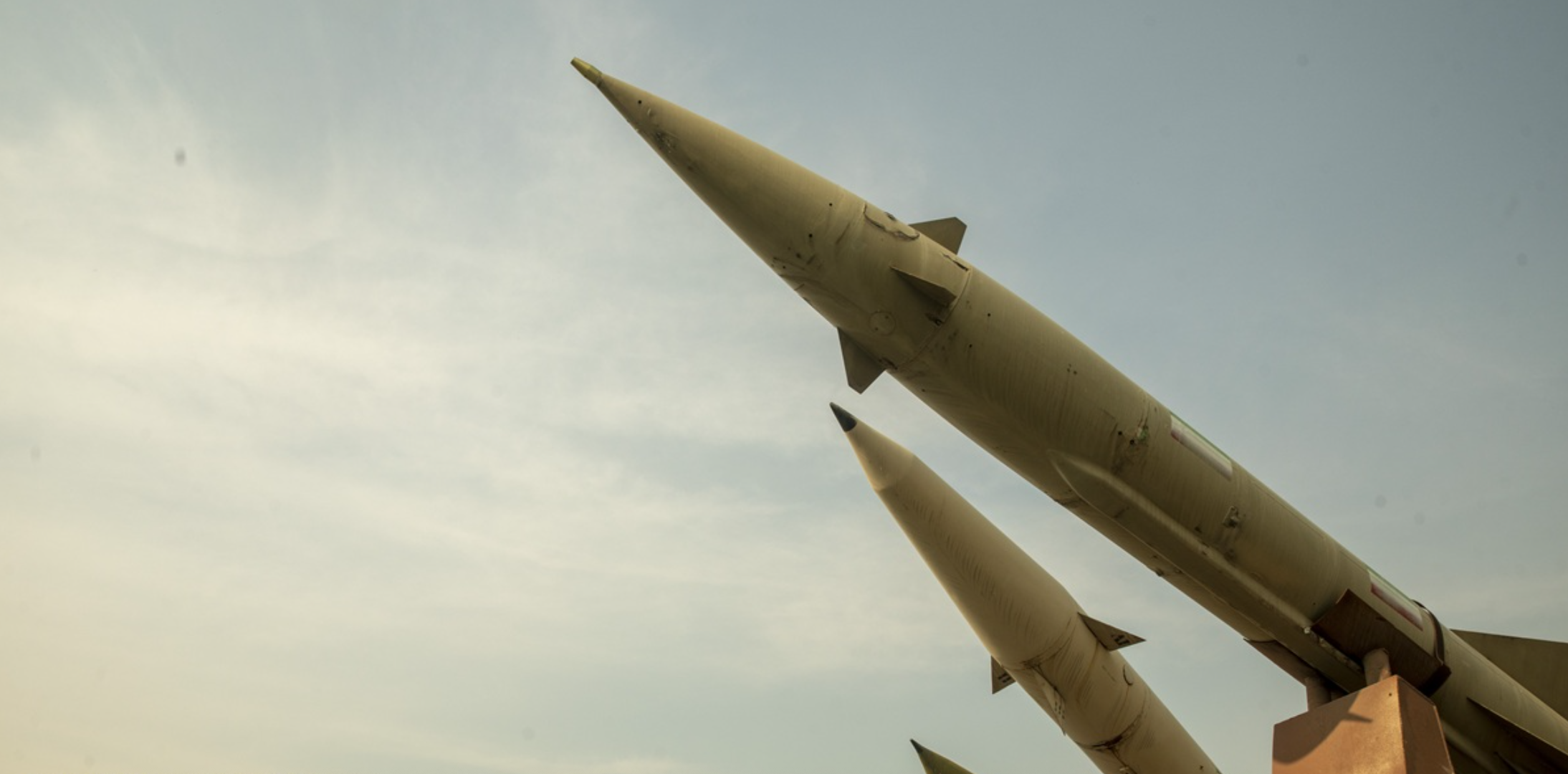
For Americans, Iran can become an abstract foreign-policy subject involving nuclear enrichment, sanctions, missiles, military operations, and diplomatic negotiations. For Israelis and others living within range of Iranian weapons or Iranian-backed forces, those questions are much more immediate.
That difference in perspective matters.
The Iranian government has supported armed groups throughout the Middle East, while its nuclear and missile programs have remained central issues in American and Israeli security policy. The debate is not merely about whether Iran presents a threat. The harder policy question is how governments should respond to that threat while weighing diplomacy, deterrence, military action, escalation, and the human consequences of each.
The RAF Fairford investigation demonstrates how quickly those concerns can extend beyond the Middle East. Investigators are examining several possible explanations for what occurred near the base, including potential foreign-state involvement, though none has been established.
Political leaders naturally disagree about how aggressively governments should respond to such threats. Those disagreements should be debated seriously rather than reduced to accusations that one side is courageous and the other cowardly.
Christians have an additional responsibility. Scripture does not provide a modern foreign-policy platform, but it does establish principles that matter: government bears responsibility for restraining evil, human life possesses inherent dignity, truth matters, justice matters, and political power is never ultimate.
That framework leaves room for legitimate disagreement over policy while refusing to treat security as irrelevant.
It also challenges the assumption that international affairs have nothing to do with ordinary families. Decisions made in Washington, London, Jerusalem, or Tehran can eventually affect military families, energy prices, national security, immigration policy, and the stability inherited by the next generation.
What Does a Society Believe a Life Is Worth?
Few issues reveal a culture's assumptions about human dignity more clearly than assisted dying.
Canada reported 16,499 medically assisted deaths in 2024, representing about 5.1 percent of all deaths in the country. Health Canada also reported 22,535 requests for medical assistance in dying that year, including requests that ultimately did not result in MAID.
Those numbers deserve more than a passing reaction.
Supporters of Canada's MAID system generally emphasize individual autonomy and relief from intolerable suffering under legally defined eligibility requirements. Critics have raised different concerns, including how assisted dying affects people experiencing disability, serious illness, inadequate care, isolation, or economic vulnerability.
Christians enter that discussion with a fundamentally different starting point about human worth.
Human dignity does not rise and fall with independence, productivity, physical ability, economic cost, or the amount of medical care someone requires. The person in a wheelchair is no less an image-bearer than the marathon runner. The elderly patient requiring extensive care possesses no less dignity than the healthy 30-year-old.
A society reveals something about its understanding of human worth by how it treats people when they become dependent on everyone else.
That does not make end-of-life decisions simple. Christians can acknowledge the difference between intentionally causing death and declining extraordinary or excessively burdensome treatment when death is already approaching. Compassion for suffering is essential.
But compassion cannot be separated from the conviction that suffering people remain people of immeasurable worth.
That is why the Canadian debate deserves attention outside Canada. Questions surrounding healthcare systems, government authority, disability, suffering, and assisted death ultimately concern what kind of moral framework a society brings to its weakest moments.
The same is true of national security and immigration. These subjects look unrelated until the underlying question emerges: What responsibilities does government have toward the people entrusted to its care?
Governments cannot eliminate every threat, prevent every tragedy, or solve every human problem. Neither should Christians expect politics to accomplish what only Christ can accomplish.
But government still matters. Borders matter. Security matters. Religious liberty matters. Human dignity matters. And truth matters enough that facts should never be stretched merely because doing so strengthens the preferred political argument.
Ezekiel describes the watchman who sees danger approaching and sounds the warning. The principle is not an invitation to panic. A faithful watchman must actually see what is coming. He cannot invent the sword on the horizon.
Christian engagement therefore requires both courage and discernment: paying attention to danger without exaggerating it, evaluating government without worshiping it, protecting human life without reducing people to political arguments, and refusing to allow partisan loyalty to determine what counts as true.
The world may feel increasingly complicated. The Christian standard does not have to be.
Stay informed about the stories shaping faith, culture, national security, and the world through The Daniel Cohen Show on Real Life Network.
.png)
Daniel Cohen hosts the "Daniel Cohen Show" exclusively on the Real Life Network. A Jewish follower of Jesus and three-time Emmy award-winning journalist, Cohen delivers the news from Israel, reporting on today's top headlines with a biblical worldview.