The Latest
- James Talarico's proposals for higher taxes, Supreme Court reform, and progressive policies spark debate over economic freedom, judicial independence, and biblical values.
- Abdul El-Sayed's positions on immigration enforcement, Medicare for All, and Iran raise questions about border security, health care costs, and foreign policy.
- Growing divisions over Israel within the Democratic Party highlight disagreements about American military assistance, national security, and the U.S.-Israel alliance.
- Daniel Cohen examines how competing political agendas could influence America's constitutional institutions, religious freedoms, and relationship with Israel.
Real Life Network is a free, faith-based streaming platform offering biblically grounded teaching, documentaries, news, movies, and original programming. Sign up today.
With the November 3 elections approaching, debates over immigration enforcement, economic policy, religious convictions, and America's relationship with Israel are taking center stage in several high-profile races. In Texas and Michigan, Democratic Senate candidates James Talarico and Abdul El-Sayed have become focal points of these disagreements, offering competing visions of government that raise broader questions about the country's political direction.
On The Daniel Cohen Show, Cohen used an unusual approach to examine those questions. Drawing inspiration from the classic film It's a Wonderful Life, he imagined a future in November 2027 in which Democrats controlled Congress and pursued their policy priorities.
The imagined future was not a prediction or an account of actual events. It was a rhetorical device designed to explore the possible consequences of proposals already being debated.
At the center of the discussion was a question extending beyond individual candidates: How might today's political decisions reshape the institutions, freedoms, and international commitments Americans have long taken for granted?
James Talarico's Economic Proposals and the Debate Over Christian Faith
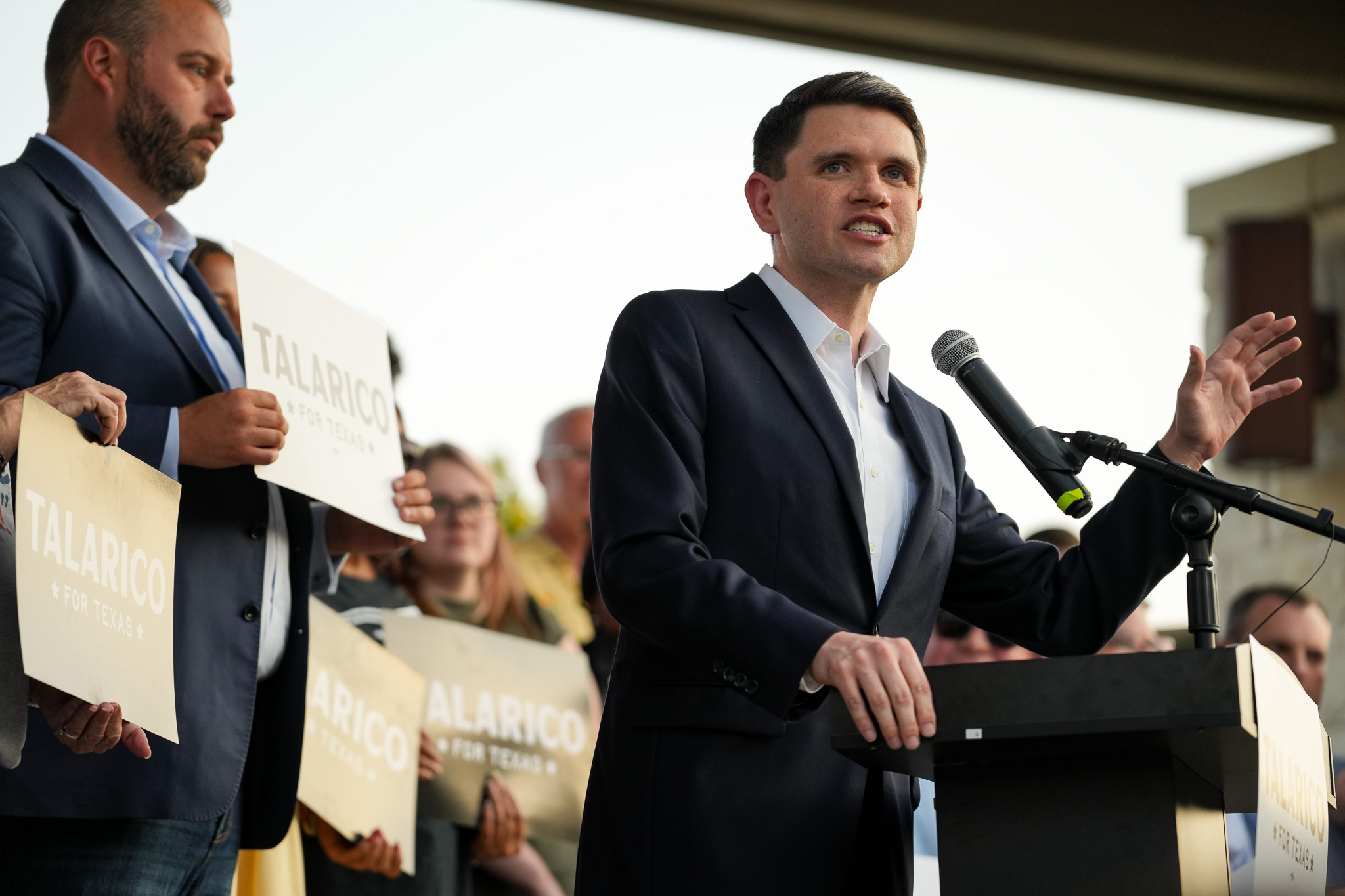
In Texas, Talarico has attracted attention for combining progressive economic proposals with religious language. His approach emphasizes economic opportunity, government accountability, and a political vision that he presents as compatible with his Christian convictions.
During remarks featured on Cohen's program, Talarico called for an economy that produces fewer trillionaires and more millionaires. He also expressed support for higher taxes on wealthy Americans and restrictions on their political influence.
Those positions reflect a longstanding disagreement over the relationship between government intervention and economic prosperity.
Supporters of progressive taxation argue that it can help finance public services and address economic inequality. Critics contend that increasing the tax burden on successful businesses and investors can discourage entrepreneurship, reduce private investment, and ultimately limit job creation.
Cohen emphasized the role of business owners in generating employment, arguing that successful entrepreneurs create opportunities extending far beyond their personal wealth.
The disagreement also extends to the judiciary.
Talarico has expressed support for Supreme Court reforms, including binding ethics requirements and term limits for justices. He has also indicated openness to discussing an expansion of the Court.
Such proposals have prompted a national debate about judicial independence. Advocates maintain that reforms could improve accountability and public confidence. Opponents warn that changing the Court's composition for political reasons could undermine its role as an independent branch of government.
But perhaps the most distinctive element of Talarico's public profile is his use of religious language.
In remarks discussed on the program, he described God as love and suggested that Jesus would express particular concern for transgender children experiencing bullying.
For Christians who hold traditional interpretations of Scripture, those statements raise theological questions about the nature of God, biblical authority, and the relationship between compassion and moral teaching.
Cohen challenged Talarico's interpretation, arguing that Christian teaching cannot be separated from Scripture's broader claims about creation, human identity, and morality.
The dispute illustrates a growing divide over who gets to define Christian values in American public life and how those values should inform public policy.
Abdul El-Sayed Faces Questions Over Immigration, Iran, and Health Care
Michigan's Senate race presents another set of policy disagreements.
Democratic candidate Abdul El-Sayed and Republican Mike Rogers have offered contrasting approaches to immigration enforcement, health care, and American foreign policy.
El-Sayed has criticized Immigration and Customs Enforcement, suggesting that the country could return to an immigration system resembling the former Immigration and Naturalization Service. He has also advocated clearer legal pathways for immigrants seeking to live and work in the United States.
Supporters of immigration reform argue that enforcement agencies need stronger oversight and that legal immigration channels should be more accessible. Critics worry that weakening federal enforcement could create additional challenges for border security and immigration law.
Cohen portrayed El-Sayed's proposals as part of a broader shift away from traditional immigration enforcement. His program also questioned whether the candidate had adequately addressed concerns about the Iranian regime.
One exchange featured an Iranian American Christian student whose family, according to his account, had suffered persecution under Iran's Islamic Revolutionary Guard Corps. The student asked El-Sayed to condemn the Iranian government and its treatment of protesters.
Rather than delivering the direct condemnation the student requested in the excerpt presented, El-Sayed responded by discussing America's role in international affairs.
Cohen argued that the response deserved greater scrutiny, particularly given the United States' ongoing security concerns involving Iran.
However, disagreements over foreign policy or the adequacy of a candidate's response do not, by themselves, establish sympathy for terrorism or ties to extremist organizations.
Health care is another major issue in the Michigan contest.
El-Sayed supports Medicare for All, a proposal intended to establish a comprehensive government-financed health insurance system. Supporters argue that universal coverage could reduce household medical expenses and simplify administration. Opponents question the cost, tax implications, and potential restrictions on private insurance.
Cohen focused particularly on whether voters were receiving a clear explanation of the financial trade-offs.
The distinction between lower personal medical bills and higher taxes is central to the debate. A government-financed system could change how Americans pay for health care without necessarily eliminating the underlying cost of providing it.
For voters evaluating competing proposals, understanding those trade-offs is essential.
Israel Becomes a Defining Issue in Democratic Politics
Beyond domestic policy, Cohen devoted substantial attention to the growing disagreements over Israel within American politics.
His program highlighted a Colorado congressional contest involving progressive candidate Melat Kiros, whose criticism of Israel's military operations and American financial support reflects a broader debate among Democrats.
Kiros described Israel's actions in Gaza as genocide and argued that American taxpayers should not finance the conflict.
The genocide allegation is highly contested, and determining whether military conduct meets the legal definition requires examination of evidence and the applicable international legal standards. Israel disputes the allegation and maintains that its military operations have been directed against Hamas following the October 7, 2023, attacks.
The disagreement extends beyond terminology.
Some progressive politicians have called for restrictions on American military assistance to Israel, arguing that U.S. support should be conditioned on humanitarian protections and compliance with international law.
Others maintain that continued military cooperation is essential to Israel's security, particularly amid threats from Iran and Iranian-backed armed groups.
Cohen approached the issue from a biblical perspective, emphasizing the importance of America's relationship with Israel and citing Genesis 12:3 and Numbers 24:9.
His argument reflected a conviction shared by many Christians that God's promises concerning Israel remain relevant and that the Jewish state's security deserves particular attention.
Not all Christians interpret those passages identically, and there is considerable disagreement over how biblical promises should inform contemporary foreign policy.
Nevertheless, the theological dimension remains significant in American political discussions, especially among evangelical Christians.
The debate over Israel now encompasses more than foreign aid, touching fundamental disagreements about national security, biblical interpretation, and America's responsibilities abroad.
Cohen concluded his imagined journey into 2027 by returning to the choices confronting voters today. His fictional scenarios included expanded government programs, changes to immigration enforcement, judicial restructuring, and reduced American support for Israel.
Those outcomes are not inevitable consequences of any election. They represent one commentator's concerns about the direction of competing policy agendas.
Still, the underlying questions are real. Americans must evaluate what candidates propose, what those proposals would cost, how they would affect constitutional institutions, and whether their foreign policy commitments align with the country's long-term interests.
For Christians, the discussion also invites reflection on the proper relationship between biblical conviction and civic responsibility. Political engagement requires more than reacting to campaign rhetoric. It calls for examining competing claims, understanding the consequences of legislation, and distinguishing theological principles from partisan assumptions.
As election day approaches, voters have an opportunity to consider those questions carefully rather than relying on slogans or imagined futures.
For more reporting and commentary examining politics, faith, and America's relationship with Israel, watch The Daniel Cohen Show on Real Life Network.

Daniel Cohen hosts the "Daniel Cohen Show" exclusively on the Real Life Network. A Jewish follower of Jesus and three-time Emmy award-winning journalist, Cohen delivers the news from Israel, reporting on today's top headlines with a biblical worldview.