
Stream Real Life Network Now

WATCH NOW
Economics


World News
25 min
The 2026 Midterms: What Early Voting, National Security, and Economic Concerns Reveal
As the 2026 midterms approach, shifting voting trends and debates over immigration, national security, energy costs, and religious liberty are shaping America's political future. Explore the issues voters should examine beyond the polls.
With Election Day approaching on November 3, Americans are facing decisions that extend far beyond which political party controls Congress. Immigration enforcement, national security, religious freedom, education, and the cost of living are all shaping the national conversation. Yet the growing focus on polling numbers and campaign predictions can distract from the policies that will ultimately affect American families.
Recent early-voting trends and voter-registration changes have raised questions about conventional expectations for the midterm elections. But political momentum is difficult to measure, and no polling advantage guarantees an election result.
The significance of the 2026 midterms lies not simply in which party gains seats, but in the policies that elected officials will have the authority to advance or challenge.
For continued coverage of the issues shaping America's future, watch The Daniel Cohen Show on Real Life Network.
Early Voting, Political Momentum, and the Limits of Polling
Political commentators frequently turn to historical patterns when predicting congressional elections. Traditionally, the president's party has faced challenges during midterm elections, often losing seats as voters express dissatisfaction with the administration.
But historical trends do not determine individual elections.
Early-voting activity in states such as Michigan, Nevada, Arizona, North Carolina, and Pennsylvania has become a focus of political analysis. Changes in registration figures, ballot returns, and participation across different counties may offer clues about voter engagement.
Michigan presents an especially interesting example because the state does not register voters by political party. Analysts therefore examine geographic voting patterns, previous election results, and other indicators to estimate which groups are participating.
Those estimates have limitations. A county's historical voting preferences do not establish how every resident voted, and a higher share of early ballots does not necessarily translate into additional votes for a particular candidate.
National polling presents similar challenges.
CNN political analyst Harry Enten has discussed historical instances in which congressional polling underestimated Republican support. Such patterns are worth examining, but they cannot establish that the same errors will occur in 2026.
Campaigns must also account for changes in voter behavior. Americans increasingly have different options for casting ballots, including early in-person voting and voting by mail, depending on their state.
A shift in when voters cast their ballots does not always mean a shift in whom they support.
Rather than treating every new poll or early-voting report as a prediction, voters should recognize the distinction between participation data and actual election results.
The more important question is what candidates intend to do if elected.
Immigration, Religious Liberty, and the Responsibility of Public Officials
Some of the most consequential debates in the 2026 elections concern the federal government's responsibility to enforce immigration laws, protect national security, and preserve constitutional freedoms.
Congress has substantial influence over immigration policy through legislation, federal appropriations, and oversight of executive agencies. Decisions about border security, deportation priorities, asylum procedures, and pathways to legal status can affect communities throughout the country.
Candidates offer different approaches to those responsibilities.
Some emphasize stronger enforcement and expanded removal of individuals who violate immigration laws. Others support broader legalization measures, changes to enforcement practices, or additional protections for undocumented immigrants.
These differences deserve careful examination because campaign slogans rarely explain how a proposal would operate in practice.
National security questions have also entered several prominent Senate campaigns.
In Michigan, the contest involving Republican Mike Rogers and Democrat Abdul El-Sayed has generated debate over foreign policy, Israel, terrorism, and the responsibilities of elected officials.
Questions concerning a candidate's statements, political associations, and policy positions are legitimate subjects of public scrutiny. However, allegations involving family members or past organizational relationships must be distinguished from evidence of personal wrongdoing.
That distinction is particularly important when discussions involve religion.
A candidate's Muslim or Christian identity does not establish that person's national security positions, political loyalties, or commitment to constitutional government. Those judgments require examination of actual statements, decisions, and evidence.
Political accountability depends on documented facts and consistent standards, not assumptions about someone's faith, family, or political affiliation.
Religious liberty and questions surrounding human identity are also shaping state and local races.
A high school cross-country controversy in Washington has renewed debate over transgender participation in girls' athletics. Supporters of sex-based athletic categories emphasize competitive fairness and opportunities for female athletes. Supporters of inclusive participation policies emphasize access and protection from discrimination.
The disagreement raises broader questions about school governance, parental involvement, student rights, and the authority of state athletic associations.
These decisions are often made outside Washington, reminding voters that local and state elections can be just as consequential as congressional contests.
For Christians, evaluating these issues requires more than adopting the language of a political party.
Scripture establishes principles of truthfulness, justice, respect for human dignity, and responsible stewardship. Applying those principles to public policy requires examining what a proposed law actually does and whom it affects.
Energy Costs, Government Spending, and Biblical Stewardship
For millions of Americans, political debates eventually return to the household budget.
Fuel prices, groceries, rent, utilities, and transportation expenses directly influence financial stability. These concerns are particularly significant for families living on fixed incomes and workers whose livelihoods depend on transportation.
California's fuel prices have become a recurring example in debates about energy policy.
State taxes, environmental regulations, refinery capacity, distribution requirements, and broader oil-market conditions all contribute to the prices consumers pay. Political leaders disagree about how much emphasis should be placed on domestic production, environmental protection, infrastructure, and tax relief.
Those competing approaches involve real tradeoffs.
Policies designed to reduce emissions or encourage alternative energy sources may impose costs on certain industries and consumers. Measures intended to expand conventional fuel production may raise different environmental and economic concerns.
The appropriate response is to evaluate the evidence behind each proposal rather than assume that a single political decision explains every change in fuel prices.
Energy policy also intersects with national security.
Reliable fuel supplies support commercial transportation, military readiness, agriculture, and emergency services. Disruptions to domestic refining or international energy markets can create consequences far beyond the gas pump.
Congress influences these questions through taxation, spending, regulation, and oversight. State governments also exercise significant authority, particularly over transportation, environmental standards, and energy infrastructure.
That makes understanding the responsibilities of each elected office essential.
Biblical stewardship offers a helpful framework for considering these decisions.
Deuteronomy 30:19 records Moses calling Israel to choose life and blessing. That passage addressed Israel's covenant responsibilities and should not be treated as a direct endorsement of a modern political party. Nevertheless, Scripture consistently teaches that choices have consequences and that people bear responsibility for how they exercise authority.
Public officials are entrusted with decisions that affect families, communities, and future generations. Voters likewise have an opportunity to examine those decisions carefully.
Responsible civic participation begins with understanding the issues, testing political claims against the evidence, and recognizing the long-term consequences of public policy.
The 2026 midterms will determine who holds important positions of authority in Congress and in state and local governments. Those officials will make decisions involving national security, immigration, energy, education, and public spending.
Polls will continue to change. Campaigns will continue making competing claims. But the responsibilities of citizenship remain.
Christians can approach those responsibilities with prayer, discernment, and a commitment to truth, recognizing that political allegiance must never replace biblical conviction.
Follow the issues shaping the 2026 midterm elections, including national security, public policy, and the intersection of faith and culture, through The Daniel Cohen Show, streaming free on Real Life Network.
.jpg)
World News
25 min
California’s Crisis Is Bigger Than Politics
From California’s political dysfunction to debates over assimilation and Hamas, this article examines what happens when ideology replaces accountability, reality, and common sense in American leadership and culture.
California was once synonymous with opportunity, innovation, natural beauty, and the promise of the American dream. Today, the Golden State is increasingly associated with unaffordable living, homelessness, crime, political dysfunction, and residents looking for somewhere else to build their future. The latest stories examined on Real Life Network point toward a larger question: What happens when bad policies become normal, accountability disappears, and citizens simply accept the decline?
California remains an economic powerhouse. Yet economic size alone cannot measure the health of a state. The more important measurement is whether families can afford to live there, businesses can thrive, children receive a quality education, elections inspire confidence, and government actually delivers the basic services taxpayers fund.
California does not have to settle for decline simply because decline has become familiar.
California Needs Accountability, Not Lower Expectations
The problems facing Los Angeles provide a revealing picture.
Los Angeles operates a public campaign-financing system that can provide matching funds for qualifying donations to participating candidates. The program is legal and longstanding, but its use in the current mayoral race raises a legitimate question about whether taxpayers should be required to subsidize political campaigns they may strongly oppose.
At the same time, Los Angeles continues struggling with homelessness and deteriorating public spaces. These problems are particularly difficult to ignore because California possesses extraordinary wealth and resources. A state with one of the largest economies in the world should be capable of delivering clean streets, functioning infrastructure, safe neighborhoods, and competent government.
Then there is the information citizens receive about the politicians seeking to lead them.
The episode highlighted a purported Los Angeles mayoral poll that claimed Karen Bass held a 12-point advantage. The organization behind the poll later said it had created the operation as a “social experiment” examining how polling information could spread through the political information ecosystem without independent verification.
That should concern everyone regardless of political affiliation.
Polling is powerful because it can influence fundraising, media narratives, voter enthusiasm, and perceptions about whether a candidate can actually win.
When political information is repeated before it is verified, reporting can stop measuring public opinion and begin shaping it.
Voters should therefore pay attention to methodology, sample size, likely voters versus registered voters, and the partisan composition of a poll rather than treating every new percentage as authoritative.
California’s future will ultimately be determined by voters who refuse to accept dysfunction as inevitable. The state’s problems were created through human decisions, which means different decisions can produce different results.
From California to Dearborn, Assimilation Still Matters
The question of leadership extends beyond California.
Florida offers an interesting contrast in election administration. The episode pointed to the speed with which Florida reported primary results compared with California, where counting can continue considerably longer. Different states have different election laws, ballot-processing procedures, and voting systems, so speed alone does not establish whether an election is secure. But Americans are justified in expecting election systems that are both accurate and efficient.
The broader political environment also shows continued tension between establishment Democrats and candidates aligned with democratic socialism. That movement matters because elections are ultimately contests over competing visions of government, economics, family, freedom, and the proper relationship between citizens and the state.
Those questions become even more consequential when immigration and assimilation enter the conversation.
Recent tensions in Dearborn, Michigan, were used in the episode to illustrate the difference between immigration and assimilation. America has always been a nation shaped by immigrants. But historically, immigration carried an expectation that newcomers would become part of the American project rather than construct isolated political and cultural societies within it.
That distinction matters.
A person does not need to abandon every cultural tradition, family custom, language, or heritage to become an American. But citizenship requires something deeper than geography. It requires a commitment to constitutional government, religious liberty, equal protection, freedom of speech, and peaceful coexistence with people who hold fundamentally different beliefs.
The episode pointed specifically to a confrontation involving Dearborn Mayor Abdullah Hammoud and a Christian resident who objected to a street designation honoring Arab-American News publisher Osama Siblani. Hammoud responded that the resident was not welcome in Dearborn and said he would hold a parade when the man left the city.
Whatever disagreements surround the underlying controversy, telling citizens they are unwelcome for expressing political or religious objections runs against the pluralism required by American civic life.
Immigration can strengthen America, but assimilation into America's constitutional principles remains essential to preserving the freedoms that attracted generations of immigrants in the first place.
The Same Mistake Is Being Made With Hamas
The conversation about shared values becomes even more serious in the Middle East.
The episode criticized the assumption that Hamas can eventually be persuaded to embrace the same understanding of peace held by Western negotiators. That criticism followed comments from Jared Kushner suggesting that Hamas would have an opportunity to demonstrate whether it was genuinely committed to peace by disarming.
The problem is that Hamas already demonstrated its intentions on October 7, 2023.
Any serious discussion about Gaza’s future has to begin with the reality of what happened that day and Hamas’s longstanding hostility toward Israel. Negotiation can be valuable, but diplomacy becomes dangerous when negotiators project their own assumptions onto adversaries who do not share them.
Peace requires more than signatures.
It requires parties willing to live peacefully.
The same principle applies whether considering local government, immigration, elections, or international diplomacy: policies cannot be evaluated merely according to what leaders hope will happen. They must be evaluated according to reality.
Scripture repeatedly calls believers to discernment. Jesus instructed His followers to be “wise as serpents and innocent as doves” (Matthew 10:16). Wisdom does not require cynicism, but neither does Christian compassion require naivety.
Christians should desire peace. Christians should welcome the stranger. Christians should pursue justice. Christians should treat political opponents as people made in the image of God.
But none of those convictions require pretending that evil does not exist or that every ideology shares the same understanding of freedom, truth, human dignity, or peace.
California’s struggles, America's debates over assimilation, and Israel’s confrontation with Hamas may appear disconnected. Yet each raises a similar question: Will reality determine our decisions, or will ideology prevent us from acknowledging what is directly in front of us?
The answer requires citizens willing to demand accountability, reject manipulated narratives, participate in elections, defend constitutional freedoms, and exercise biblical discernment.
Decline is not inevitable. But reversing it requires recognizing it first.
For more coverage connecting politics, Israel, culture, and faith through a biblical worldview, watch The Daniel Cohen Show on Real Life Network.
.jpg)
World News
25 min
The Lost Drive: American Culture Has Decayed the Value of Hard-Working Men
Millions of working-age American men have left the workforce entirely. This article examines how declining work ethic, dependence on government assistance, and the pursuit of the “perfect” career may be contributing to a growing cultural and economic crisis.
Across the U.S., a startling statistical anomaly has quietly metastasized into a national crisis: millions of working-age males have begun ditching the workforce. They’re not retiring, nor are they registering as unemployed. They simply have stopped looking for work.
While economists have debated endlessly over structural shifts, such as automation and wage stagnation, a more uncomfortable conversation is appearing in policy circles. The silent exodus of American men denotes a deeper cultural pandemic, which is a decaying work ethic stoked by a swell of public handouts and a pervasive social narrative that tells the individual that they should settle for nothing less than a passion project.
The Vanishing
According to Bureau of Labor Statistics data, labor force participation for those in the prime age for work — between 25 and 54 years of age — has experienced a steady, decades-spanning decline. At the midpoint of the 20th century, over 95% of men were working or seeking employment. Today, that rate has plummeted dramatically, leaving nearly seven million men of prime age sidelined as contributors to the American economy.
Policy analysts and sociologists alike warn that this developing trend cannot be explained away by mere shifts in demographics. Unlike past generations, who considered self-reliance a badge of honor, today’s lack of a vigorous workforce illustrates the fundamental erosion of the conventional work ethic.
As scholar Nicholas Eberstadt observed in his feature study on the crisis, “the progressive detachment of so many adult American men from regular paid labor can only result in lower living standards … and the consequences are not just economic. The male exodus from work also undermines the traditional family dynamic, casting men into the role of dependents and encouraging sloth, idleness, and vices.”
The Trap of Entitlement
A major driver of this contraction in the workforce is the direct consequences of social safety net expansion. What was once designed with the intention of being temporary cushions during economic recession has morphed into a permanent way of living for millions of able-bodied Americans.
Divided amongst state-funded disability benefits, nutritional assistance, and low-income housing subsidies, the economic estuary that exists between a demanding career and remaining jobless has dried up to almost a point of non-existence. When safety nets mitigate non-work without demanding an exchange, the motivator to persevere through demanding labor dissolves.
Eberstadt warned that this trajectory threatens the fundamental ethos of the country, noting that “whether we choose to recognize it or not, this feature of the American condition, the new ‘men without work’ normal, is inimical to the American tradition of self-reliance.”
The Myth of Passion
Building upon this policy failure is a corrosive cultural fable that has been fed to the younger generations, which is the notion that everyone is entitled to a job that falls in line with their own passions perfectly.
Over decades, higher education institutions and popular media have preached a doctrine of self-fulfillment above everything. Young men have been conditioned to believe that a job in manufacturing or heavy construction is a compromise of the potential they have when it doesn't align with their dream career.
Economic reality operates in the context of necessity, however, not utopian ideals. Popular figures such as Mike Rowe have strongly pushed back against this cultural illusion, arguing that “when people follow their passion, they miss out on all kinds of opportunities they didn’t even know existed… never follow your passion but always bring it with you.”
Branding ordinary, tough jobs as “beneath” today’s worker, American society has spurred young men to wait around for their dream opportunities to manifest — even though there’s no guarantee that it will ever arrive, rather than rolling up their sleeves and doing what is needed.
The Fallout
The economic consequences resulting from millions of idle men prove staggering. Business owners across trades report chronic labor shortages, superficially driving up supply chain costs and delaying infrastructure growth. Local communities meanwhile must deal with rising rates of isolationism and civic-service decline, a phenomenon tied directly to the absence of systemic labor.
The reversal of this decline will be vested in a realignment of policy and cultural values. Until policymakers take the steps to confront this reality that a flourishing state relies upon its citizens’ willingness to do things that are hard and uncomfortable, the already far too high number of America’s missing able men will continue to rise.
This article was originally written by Zach Patton and published on The Washington Stand. For more content like this, visit Real Life Network.
.jpg)
Business & Finance
25 min
400 Episodes of Economic War Room: The Fight for America’s Economic Future
Celebrate Economic War Room’s 400th episode as Kevin Freeman reflects on two decades exposing economic warfare, from Pentagon research and Moscow warnings to transactional gold, sound money, and state legal tender efforts shaping America’s future.
As America celebrates its 250th year, we’re celebrating a milestone of our own at Economic War Room: our 400th episode. It’s an opportunity to look back at where we started, the warnings we’ve sounded, the people who have joined us along the way and, most importantly, why this mission matters now more than ever.
For nearly two decades, I’ve studied how America’s adversaries use economics as a weapon. Long before Economic War Room reached television screens, I traveled to Moscow with my partner Russell Lake and saw firsthand how foreign powers were thinking strategically about America’s economic vulnerabilities.
That experience helped put me on a path that eventually led to research for the Pentagon and years of studying economic warfare. Since then, the threats have evolved. But the central lesson hasn’t changed.
What we see as a marketplace, our enemies view as a battle space.
Watch this full episode on Economic War Room, streaming now on the Real Life Network.
The Economic War Didn’t Start Yesterday
For 400 episodes, Economic War Room has examined threats that were often ignored or dismissed until they became impossible to overlook.
We’ve investigated whether Communist China is waging economic warfare against the United States. We’ve examined America’s dependence on China for medicines and other critical supply chains. We’ve warned about the movement toward a cashless society and explored the risks posed by global financial and political agendas.
We’ve also looked to history for answers. Ronald Reagan understood the enormous power of economic warfare. His administration used economic strategy as part of the broader effort that helped defeat Soviet communism and win the Cold War.
That history matters today because communism and authoritarianism didn’t disappear with the Berlin Wall. They changed. The weapons changed. And the battlefield changed.
Today, a nation can attack another country without firing a shot. It can target supply chains, currencies, markets, intellectual property, technology and investment capital.
That’s why Americans must understand economic warfare before they can hope to defend themselves against it.
From Diagnosing the Problem to Building Solutions
From the beginning, my goal has never been simply to identify threats.
Anyone can tell you the sky is falling. The harder, and more important, job is finding solutions.One example is our work on transactional gold and silver.
For years, we’ve studied how precious metals can function not simply as investments, but as transactional money. The idea is rooted in a much larger question: How do Americans maintain economic freedom and financial resilience when confidence in traditional monetary systems is being challenged? That work has moved beyond theory.
States across the country have considered or enacted measures involving gold and silver as legal tender, and I’ve had the opportunity to participate in research and policy efforts examining how precious metals can fit into modern financial systems.
It’s one example of what Economic War Room is designed to do: identify a strategic vulnerability and then work toward a practical solution. But transactional gold is only part of the story.
Over 400 episodes, we’ve explored American energy independence, critical supply chains, national debt, free markets, investment strategy, Communist China, globalism and the preservation of economic liberty. All of those issues eventually come back to one principle: stewardship.
America’s Economic Future Depends on What We Sow Today
One of the most meaningful symbols here at Liberty Hawk Ranch is the sower. Most people know the old saying: Give a man a fish and you feed him for a day. Teach him to fish and you feed him for a lifetime.
We take that idea one step further. Teach a man to sow seeds and reap harvests. That is economics.
Every generation decides what kind of seeds it will plant. Good economic policy can encourage private ownership, entrepreneurship, investment, responsibility and abundance. Bad economic policy can encourage dependency, debt and stagnation. The question facing America as we celebrate 250 years is straightforward:
What are we sowing today, and what will our children reap tomorrow? Our nation is younger than we sometimes realize. Two hundred and fifty years may sound like a long time, but in generational terms, it isn’t.
The responsibility for preserving what previous generations built now belongs to us.Economic freedom is not something we inherit permanently. It has to be understood, protected and passed on.
Reagan Understood the Power of Economic Freedom
Walking through the Economic War Room set for our 400th episode brought back memories of some remarkable people who have influenced this mission.
Watch this full episode on Economic War Room, streaming now on the Real Life Network.
One of the most important for me was President Ronald Reagan. Years ago, through the Adam Smith Foundation, I had the privilege of presenting Reagan with an Adam Smith Award and an original edition of The Wealth of Nations. I still treasure the photograph and autograph from that meeting.
Reagan understood something America desperately needs to remember today: economic strength is national strength. Free enterprise isn't merely a mechanism for producing wealth. It disperses power. It gives ordinary people the ability to build businesses, own property, invest, innovate and shape their own futures.
That is precisely why authoritarian systems seek economic control. And it is why defending free markets remains inseparable from defending liberty itself.
Behind 400 Episodes Is a Foundation of Faith
There is another part of the Economic War Room story that cannot be separated from the mission. Prayer.
Liberty Hawk Ranch has been dedicated to God from the beginning, and one of its most meaningful places is our prayer garden and cross.
That cross represents something bigger than a television program, an economic strategy or a political movement. It reminds us that human wisdom has limits.
America’s Founders understood that. During the Constitutional Convention of 1787, as delegates struggled with deep disagreements over the nation's future, Benjamin Franklin famously urged them to turn to prayer. Franklin reminded his fellow delegates that during the struggle with Great Britain, they had prayed for divine protection—and he believed those prayers had been answered.
He then asked a question worth asking again today: Had they forgotten that powerful friend?
America was divided then. It faced foreign threats then. Its leaders disagreed bitterly then. And yet they understood that preserving a nation required something beyond political strategy.
400 Episodes Later, the Mission Is Just Beginning
That lesson is just as relevant today. America faces Communist China, global instability, massive economic challenges and deep internal division. We can—and should—develop sound policies. We should strengthen American industry, protect our financial system, defend free markets and understand how our adversaries are using economics against us.
But strategy alone is not enough. We need stewardship. We need courage. And we need prayer. Four hundred episodes have given us an opportunity to study the battlefield, warn Americans about emerging threats and develop practical solutions. But this milestone isn't an ending.
As America prepares to celebrate 250 years, it should remind us how much has been entrusted to our generation—and how much is at stake if we fail to preserve it. The question now is what we do with that responsibility. What seeds will we sow? What kind of country will our children and grandchildren inherit? And will we remember, as Franklin reminded the Founders, that we cannot build this nation by human wisdom alone?
That is the challenge ahead. And after 400 episodes, Economic War Room remains committed to meeting it.
Watch this full episode on Economic War Room, streaming now on the Real Life Network.

Business & Finance
25 min
Equipping GenZ with Excellence
Kevin Freeman shares why Regent University is training the next generation of Christian leaders grounded in faith, freedom, and truth.
America does not just have an economic crisis. We have a leadership crisis, a truth crisis, and in many ways, a spiritual crisis. Too many universities have abandoned biblical principles, embraced ideological agendas, and left students burdened with debt while stripping away faith, purpose, and common sense.
That is why my wife, Marnie Freeman, and I were so encouraged during our recent conversation with Claire Foster from Regent University. At a time when many institutions are losing their footing, Regent is doing the opposite, training students to become bold Christian leaders grounded in biblical truth, economic understanding, and servant leadership.
Watch this full episode on Pirate Money Radio, streaming now on the Real Life Network.
Why Christian Education Matters More Than Ever
One of the greatest blessings Marnie and I experienced as parents was watching our children graduate college while keeping both their faith and their values intact. That is becoming increasingly rare in America today.
Too many parents sacrifice financially to send their children to universities that openly undermine biblical truth and traditional values. Some schools that once began with Christian foundations, institutions like Harvard University and Yale University, have drifted so far from their origins that they now often work against the very principles they were founded to uphold.
Regent University was founded in 1977 by Pat Robertson with a very different mission: combining rigorous academics with unwavering biblical truth. According to Dr. Foster, the university’s vision is to develop Christian leaders who can influence every sphere of society — government, business, law, media, education, and beyond. That mission matters now more than ever.
Regent University Is Growing While Other Schools Decline
One of the most remarkable things about Regent is that it is thriving while many universities across America are struggling. Dr. Foster shared that Regent was recently ranked the number one Christian college in America and the number two military-friendly school in the nation. The university has doubled its student body during a period when many colleges are shrinking.
Why? Because families are searching for something deeper than credentials. They want truth, purpose, excellence, and leadership grounded in biblical values.
Regent’s emphasis on excellence, innovation, and integrity stood out immediately when Marnie and I visited the campus in Virginia Beach. The atmosphere felt different. Students were engaged, joyful, intelligent, and deeply rooted in faith.
The campus itself is beautiful, but what impressed us most was the spiritual foundation underneath it all. During chapel services, classroom discussions, and conversations with faculty, it became clear that Regent is intentionally discipling students — not simply preparing them for careers, but preparing them for life.
Watch this full episode on Pirate Money Radio, streaming now on the Real Life Network.
Why Biblical Principles Apply to Economics and Government
At Pirate Money Radio, we often say that God’s principles apply to every area of life, including money, economics, and government. Regent understands that reality.
During our conversation, Dr. Foster spoke about the importance of training leaders who understand biblical stewardship, honest weights and measures, and economic freedom. Those concepts are not separate from faith — they are deeply connected to it.
The Bible speaks extensively about debt, stewardship, honesty, generosity, and justice. Proverbs teaches wisdom about managing resources. Scripture warns about dishonest scales and reckless borrowing. These principles matter because economies rise or fall based on truth.
That is why I was especially encouraged to see Regent expanding its focus on economic education through the Robertson School of Government under the leadership of Michele Bachmann.
Too often, schools of government teach political power without teaching economic truth. Students graduate understanding bureaucracy but not liberty. They learn theories disconnected from biblical wisdom and real-world consequences. That must change.
The Economic War Room at Regent University
One of the greatest honors of my life recently came when Regent University awarded me an honorary Doctor of Science degree during a special ceremony attended by leaders including Ben Carson and Michele Bachmann.
But even more meaningful was Regent’s announcement that it is launching a dedicated Economic War Room within the Robertson School of Government. The purpose of this initiative is to train future leaders who understand economic sovereignty, monetary policy, freedom, and biblical principles. Students will learn how economics impacts liberty, national security, and the future of civilization itself.
This is critically important because economics is often the hidden battlefield behind nearly every major political conflict. Nations are enslaved by debt. Families are crushed by inflation. Governments manipulate currencies and expand control through monetary systems. Yet very few universities teach students how these systems truly work from a biblical worldview.
That is exactly what Regent intends to do.
As Dr. Foster explained, the goal is not simply to preserve ideas from the past. It is to equip the next generation of Christian leaders to defend freedom and apply biblical truth in the real world.
Watch this full episode on Pirate Money Radio, streaming now on the Real Life Network.
America Needs a Great Awakening Again
During the conversation, I shared the story of Benjamin Franklin and the transformation that occurred during America’s founding era. Franklin originally believed human wisdom alone could build a successful society. But after hearing the preaching of George Whitefield during the Great Awakening, Franklin began recognizing the necessity of God’s guidance in government and public life.
That spiritual awakening shaped America’s founding principles in profound ways. Today, America desperately needs another awakening, not merely political reform, but moral and spiritual renewal grounded in biblical truth.
That is why institutions like Regent matter so much. They are preparing students not simply to succeed financially, but to become principled leaders who can strengthen families, communities, churches, businesses, and government.
The Next Generation Gives Me Hope
One of the most encouraging parts of our conversation was hearing Dr. Foster describe what she sees in today’s students.
Despite being raised in a digital culture filled with confusion and distraction, many young people are hungry for truth, meaning, and authenticity. They are searching for something deeper than social media, political activism, or empty ideology. At Regent, students are encountering biblical truth in a way that is transforming their lives.
That gives me hope. America’s future will not be restored through politics alone. It will be restored by raising up men and women who understand God’s truth, apply biblical wisdom, and courageously lead in every sphere of society. That is exactly what Regent University is doing.
Stream Pirate Money Radio on the Real Life Network.
Related Articles
- Biblical Worldview vs Modern Marxism by Kevin Freeman
- A Christian Understanding of Economics by Kevin Freeman
- Biblical Money vs. Modern Currency: What the Bible Really Says by Kevin Freeman

Business & Finance
25 min
A Christian Understanding of Economics
Kevin Freeman explains why free markets align with biblical principles while socialism destroys freedom, ownership, and prosperity.
America is standing at a crossroads. More politicians, influencers, and media voices are openly promoting socialism while attacking free markets, private property, and individual ownership. Some even attempt to wrap these ideas in Christian language. That should concern every believer and every American who values liberty.
On a recent episode of Pirate Money Radio, I sat down with my good friend and co-host Mike Carter to unpack the growing push toward socialism in America and explain why free markets are not only more effective economically, they are far more consistent with biblical principles.
The truth is simple: free markets create opportunity, preserve liberty, and encourage stewardship. Socialism concentrates power, destroys ownership, and eventually leads to control over every aspect of life.
Watch this full episode on Pirate Money Radio, streaming now on the Real Life Network.
Socialism Always Comes Down to Ownership
Most people misunderstand the debate between socialism and free markets. The issue is not whether societies use money, buildings, land, or resources. Every economic system uses capital. Even Karl Marx understood that.
The real question is this: Who owns it?
Under free markets, individuals can own property, businesses, savings, and the product of their labor. Under socialism and communism, ownership increasingly shifts toward the collective or the state. That sounds compassionate in theory, but history shows where it leads. When government controls property, government eventually controls people.
My friend Allen West once described socialism as “economic slavery,” and he was exactly right. If you no longer control the fruits of your labor, then your labor belongs to someone else. That is not freedom.
We have seen this story play out repeatedly throughout history. Venezuela was once one of the wealthiest nations in the world. Then socialism took over under Hugo Chávez and later Nicolás Maduro. Today the nation is economically devastated while political elites continue living comfortably.
Meanwhile, Poland embraced free-market reforms after escaping Soviet communism and experienced remarkable economic growth and stability. Free markets consistently create prosperity. Socialism consistently creates dependency and centralized power.
Watch this full episode on Pirate Money Radio, streaming now on the Real Life Network.
The Bible Supports Stewardship and Private Property
Some pastors and political activists now claim socialism is more biblical than free markets. That argument completely falls apart under Scripture. The Bible clearly affirms private property and stewardship responsibilities. The Ten Commandments include “Thou shalt not steal” and “Thou shalt not covet.” Those commands only make sense if people are allowed to own property in the first place.
Psalm 24 reminds us that God ultimately owns everything, but He entrusts stewardship responsibilities to individuals and families. That distinction matters. The Bible encourages generosity, compassion, and caring for the poor — but it consistently presents giving as voluntary, not coerced. Scripture says God loves a cheerful giver, not a forced one.
There is a massive difference between biblical generosity and government redistribution.
Even the Pilgrims learned this lesson the hard way. Early settlers attempted communal ownership systems after arriving in America, and the results were disastrous. Starvation, laziness, and economic collapse followed. Only after private property rights were established did the colony begin to prosper, eventually leading to the first Thanksgiving.
Human beings are designed to steward, build, create, and provide. Free markets allow people to do exactly that.
Watch this full episode on Pirate Money Radio, streaming now on the Real Life Network.
The Real Solution to the Wealth Gap
Now let me be clear: the wealth gap in America is real. Families are struggling with inflation, housing costs, and declining purchasing power. But socialism will not solve those problems. It will make them worse. The biblical answer starts with stewardship and personal generosity. Christians should absolutely care for the poor, help those in need, and build systems that create opportunity.
But the answer is not handing more power to government bureaucracies. The second solution is expanding economic freedom. Excessive regulations drive up the cost of housing, energy, food, and transportation. Free markets increase opportunity and reduce barriers for working families.
We are already seeing this happen in Argentina under Javier Milei, where free-market reforms are reversing years of economic decline and reducing poverty.
The third solution is honest money.Inflation quietly transfers wealth from working families to financial and political elites. That is why we continue advocating for “Pirate Money” solutions built around gold and silver-backed systems that preserve purchasing power over time.
When governments endlessly print money, ordinary people pay the price through rising costs and declining savings. Honest weights and measures matter because economic freedom depends on stable money.
Watch this full episode on Pirate Money Radio, streaming now on the Real Life Network.
America Must Choose Freedom Over Control
At the end of the day, this debate is bigger than economics. It is about freedom, stewardship, and the future of America itself.
Free markets are not perfect because people are imperfect. But free markets create choices, innovation, ownership, and opportunity. They allow families to build wealth, support ministries, help others, and pursue their God-given calling.
Socialism does the opposite. It centralizes authority, weakens personal responsibility, and ultimately replaces freedom with dependence. America now faces a decision between those two visions.
I believe the biblical path is clear.
Stream Pirate Money Radio on the Real Life Network.
Related Articles
- Biblical Worldview vs Modern Marxism by Kevin Freeman
- Homeschooling for Liberty and Future-Proof Education by Kevin Freeman
- Biblical Money vs. Modern Currency: What the Bible Really Says by Kevin Freeman
Thank you! Your submission has been received!
Oops! Something went wrong while submitting the form.
World News
With Election Day approaching on November 3, Americans are facing decisions that extend far beyond which political party controls Congress. Immigration enforcement, national security, religious freedom, education, and the cost of living are all shaping the national conversation. Yet the growing focus on polling numbers and campaign predictions can distract from the policies that will ultimately affect American families.
Recent early-voting trends and voter-registration changes have raised questions about conventional expectations for the midterm elections. But political momentum is difficult to measure, and no polling advantage guarantees an election result.
The significance of the 2026 midterms lies not simply in which party gains seats, but in the policies that elected officials will have the authority to advance or challenge.
For continued coverage of the issues shaping America's future, watch The Daniel Cohen Show on Real Life Network.
Early Voting, Political Momentum, and the Limits of Polling
Political commentators frequently turn to historical patterns when predicting congressional elections. Traditionally, the president's party has faced challenges during midterm elections, often losing seats as voters express dissatisfaction with the administration.
But historical trends do not determine individual elections.
Early-voting activity in states such as Michigan, Nevada, Arizona, North Carolina, and Pennsylvania has become a focus of political analysis. Changes in registration figures, ballot returns, and participation across different counties may offer clues about voter engagement.
Michigan presents an especially interesting example because the state does not register voters by political party. Analysts therefore examine geographic voting patterns, previous election results, and other indicators to estimate which groups are participating.
Those estimates have limitations. A county's historical voting preferences do not establish how every resident voted, and a higher share of early ballots does not necessarily translate into additional votes for a particular candidate.
National polling presents similar challenges.
CNN political analyst Harry Enten has discussed historical instances in which congressional polling underestimated Republican support. Such patterns are worth examining, but they cannot establish that the same errors will occur in 2026.
Campaigns must also account for changes in voter behavior. Americans increasingly have different options for casting ballots, including early in-person voting and voting by mail, depending on their state.
A shift in when voters cast their ballots does not always mean a shift in whom they support.
Rather than treating every new poll or early-voting report as a prediction, voters should recognize the distinction between participation data and actual election results.
The more important question is what candidates intend to do if elected.
Immigration, Religious Liberty, and the Responsibility of Public Officials
Some of the most consequential debates in the 2026 elections concern the federal government's responsibility to enforce immigration laws, protect national security, and preserve constitutional freedoms.
Congress has substantial influence over immigration policy through legislation, federal appropriations, and oversight of executive agencies. Decisions about border security, deportation priorities, asylum procedures, and pathways to legal status can affect communities throughout the country.
Candidates offer different approaches to those responsibilities.
Some emphasize stronger enforcement and expanded removal of individuals who violate immigration laws. Others support broader legalization measures, changes to enforcement practices, or additional protections for undocumented immigrants.
These differences deserve careful examination because campaign slogans rarely explain how a proposal would operate in practice.
National security questions have also entered several prominent Senate campaigns.
In Michigan, the contest involving Republican Mike Rogers and Democrat Abdul El-Sayed has generated debate over foreign policy, Israel, terrorism, and the responsibilities of elected officials.
Questions concerning a candidate's statements, political associations, and policy positions are legitimate subjects of public scrutiny. However, allegations involving family members or past organizational relationships must be distinguished from evidence of personal wrongdoing.
That distinction is particularly important when discussions involve religion.
A candidate's Muslim or Christian identity does not establish that person's national security positions, political loyalties, or commitment to constitutional government. Those judgments require examination of actual statements, decisions, and evidence.
Political accountability depends on documented facts and consistent standards, not assumptions about someone's faith, family, or political affiliation.
Religious liberty and questions surrounding human identity are also shaping state and local races.
A high school cross-country controversy in Washington has renewed debate over transgender participation in girls' athletics. Supporters of sex-based athletic categories emphasize competitive fairness and opportunities for female athletes. Supporters of inclusive participation policies emphasize access and protection from discrimination.
The disagreement raises broader questions about school governance, parental involvement, student rights, and the authority of state athletic associations.
These decisions are often made outside Washington, reminding voters that local and state elections can be just as consequential as congressional contests.
For Christians, evaluating these issues requires more than adopting the language of a political party.
Scripture establishes principles of truthfulness, justice, respect for human dignity, and responsible stewardship. Applying those principles to public policy requires examining what a proposed law actually does and whom it affects.
Energy Costs, Government Spending, and Biblical Stewardship
For millions of Americans, political debates eventually return to the household budget.
Fuel prices, groceries, rent, utilities, and transportation expenses directly influence financial stability. These concerns are particularly significant for families living on fixed incomes and workers whose livelihoods depend on transportation.
California's fuel prices have become a recurring example in debates about energy policy.
State taxes, environmental regulations, refinery capacity, distribution requirements, and broader oil-market conditions all contribute to the prices consumers pay. Political leaders disagree about how much emphasis should be placed on domestic production, environmental protection, infrastructure, and tax relief.
Those competing approaches involve real tradeoffs.
Policies designed to reduce emissions or encourage alternative energy sources may impose costs on certain industries and consumers. Measures intended to expand conventional fuel production may raise different environmental and economic concerns.
The appropriate response is to evaluate the evidence behind each proposal rather than assume that a single political decision explains every change in fuel prices.
Energy policy also intersects with national security.
Reliable fuel supplies support commercial transportation, military readiness, agriculture, and emergency services. Disruptions to domestic refining or international energy markets can create consequences far beyond the gas pump.
Congress influences these questions through taxation, spending, regulation, and oversight. State governments also exercise significant authority, particularly over transportation, environmental standards, and energy infrastructure.
That makes understanding the responsibilities of each elected office essential.
Biblical stewardship offers a helpful framework for considering these decisions.
Deuteronomy 30:19 records Moses calling Israel to choose life and blessing. That passage addressed Israel's covenant responsibilities and should not be treated as a direct endorsement of a modern political party. Nevertheless, Scripture consistently teaches that choices have consequences and that people bear responsibility for how they exercise authority.
Public officials are entrusted with decisions that affect families, communities, and future generations. Voters likewise have an opportunity to examine those decisions carefully.
Responsible civic participation begins with understanding the issues, testing political claims against the evidence, and recognizing the long-term consequences of public policy.
The 2026 midterms will determine who holds important positions of authority in Congress and in state and local governments. Those officials will make decisions involving national security, immigration, energy, education, and public spending.
Polls will continue to change. Campaigns will continue making competing claims. But the responsibilities of citizenship remain.
Christians can approach those responsibilities with prayer, discernment, and a commitment to truth, recognizing that political allegiance must never replace biblical conviction.
Follow the issues shaping the 2026 midterm elections, including national security, public policy, and the intersection of faith and culture, through The Daniel Cohen Show, streaming free on Real Life Network.
25 min
October 16, 2026
Daniel Cohen
World News
News broke Tuesday that China’s communist regime is supplying critical parts for powerful precision-guided ballistic missiles to Houthi militants in Yemen amid the terrorist organization’s expanding attacks on Saudi Arabia and U.S. forces.
The Wall Street Journal reported that parts shipped in from China have allowed the terrorist group to build a version of the Kheibar Shekan Iranian precision-guided missile, which has a reported range of approximately 1,200 miles — allowing it to strike Israel and anywhere in Saudi Arabia. Noted for being highly mobile and relatively inexpensive at $1 million per unit (when compared to the cost of Patriot or THAAD missiles needed to neutralize it, which can range from $4 to $15 million per unit), the Kheibar Shekan is capable of evading air defenses and can deliver a bigger payload than cruise missiles and drones.
For its part, China claims that it is abiding by the U.N.’s ban on arms sales to the Houthis because the missile parts have civilian (or “dual-use”) purposes. But analysis of some of the parts shows they were “specifically designed for missile use.”
It’s not just ballistic missile parts that are being supplied by Beijing. Data gathered from U.N. reports and arms experts has revealed that “Chinese companies are now the biggest source of seized goods bound for the Houthis,” including drone parts. Since the October 7, 2023 Hamas attacks on Israel, the Houthis have launched hundreds of drone attacks targeting U.S. forces, Israel, commercial ships, and surrounding Middle East countries.
While previously relying on Tehran and the Lebanese terrorist group Hezbollah to provide them with weapons, the WSJ report notes that the Houthis have now become more autonomous, thanks in large part to Beijing’s parts pipeline as well as other factors. “They have developed domestic manufacturing capabilities with artificial intelligence for drone and missile softwares, diversified their supply chains, accumulated operational experience, and established relationships with regional smugglers and international procurement networks,” stated Mohammed al-Basha, the founder of a Washington-based risk-advisory firm.
After initially focusing on assaulting U.S. forces as well as commercial vessels in the Strait of Hormuz, the Houthis have now expanded their hostilities against neighboring countries, striking the headquarters of Saudi Arabia’s state-owned energy giant Saudi Aramco on Tuesday, just days after they attacked the country’s King Khalid International Airport, killing at least 13 people (including an American citizen) and wounding over 300.
The violence highlights the increasingly direct role that Xi Jinping’s regime is playing in the expanding Middle Eastern crisis. Last month, reports surfaced revealing that satellite imagery and intelligence provided by Chinese companies have allowed Tehran to carry out precision strikes on U.S. forces, which have led to the deaths of several American servicemembers.
Experts like Gordon Chang, an author and distinguished senior fellow at the Gatestone Institute, are not surprised by the reports of China’s clandestine weapons exports. “We have known for years that China was supplying weapons to Iran and its three main terrorist proxies — Hamas, Hezbollah, and the Houthis — so it should come as no surprise that China is supplying critical components for ballistic missiles to the Houthis,” he told The Washington Stand.
Chang further noted that “China has also been supplying, among other things, targeting data to Iran, which that regime has used to kill at least nine American service members in the Gulf, on March 1 and July 17.”
“What is surprising is that the Trump administration is not imposing costs on China for helping to kill Americans,” Chang emphasized. “We need to hold China accountable, but we also need to hold Washington accountable too. China will not stop until we impose costs. Washington has the power to impose those costs, and Americans will continue dying until we show Beijing that we are no longer going to tolerate the killing of Americans.”
This article was written by Dan Hart and originally published on The Washington Stand. For more content like this, visit Real Life Nework.
25 min
China Supplying Houthi Terrorists with Ballistic Missile Parts

October 15, 2026
The Washington Stand
World News
The approaching midterm elections are raising questions that go far beyond the economy. While inflation, healthcare, and the cost of living remain important, Americans are also confronting deeper disagreements about the value of human life, the meaning of justice, and the government's responsibility to protect its citizens.
These debates touch some of the most fundamental convictions in American public life. From the treatment of infants born alive after attempted abortions to the punishment of convicted terrorists and the growing threats posed by Iran, the questions are ultimately about what society considers worthy of protection.
For ongoing coverage of these issues through a biblical worldview, watch The Daniel Cohen Show on Real Life Network.
The Sanctity of Life and the Meaning of Justice
In 2023, Minnesota Governor Tim Walz signed legislation modifying the state's requirements concerning infants born alive following attempted abortions.
Previously, Minnesota law required medical personnel to take reasonable measures to preserve the life and health of an infant born alive. The revised language requires appropriate care for an infant born alive, without retaining the earlier explicit requirement to preserve life and health.
Supporters of the change argue that it allows physicians to provide appropriate medical care, including comfort care when an infant cannot survive. Critics contend that removing the explicit preservation requirement weakens protections for vulnerable newborns.
The distinction raises a profound moral question: What obligations does society have toward a child who has already been born?
For Christians, the answer begins with the biblical understanding of human dignity.
Genesis 2:7 describes God breathing life into Adam, who became a living being. Genesis 1:27 establishes that humanity is created in God's image. Human worth, therefore, is not determined by age, health, independence, or the ability to contribute to society.
The biblical case for protecting human life rests on the conviction that dignity is inherent, not something granted by government or earned through usefulness.
The same understanding of human dignity also informs difficult questions about criminal justice.
The case of Nidal Hasan, the former Army major convicted of murdering 13 people at Fort Hood in November 2009, illustrates the seriousness of those questions.
Hasan's attack wounded dozens of additional victims and devastated military families. His conviction and death sentence reflect the gravity of the crimes committed.
Debates over the death penalty, including the method of execution and whether executions should be publicly displayed, nevertheless reveal competing understandings of justice.
Some argue that the severity of certain crimes warrants the ultimate punishment. Others question whether particular execution methods or public spectacles are compatible with human dignity.
These disagreements deserve careful consideration without minimizing the suffering of victims.
Romans 13 describes civil authority as bearing responsibility for restraining wrongdoing. At the same time, Scripture consistently presents human life as possessing value before God.
Justice must therefore be more than an expression of anger. It must reflect moral seriousness, accountability, and appropriate respect for human dignity.
Political Accountability Requires More Than Religious Language
Religious identity has become an increasingly visible feature of American political campaigns.
Candidates regularly reference Scripture, Christian values, and personal faith while presenting their positions on abortion, immigration, healthcare, and social policy.
But claiming a religious identity does not automatically resolve questions about what a candidate believes or how those convictions influence public decisions.
Texas Senate candidate James Talarico has attracted attention for statements concerning the nature of God, abortion, and gender. His theological language and policy positions have generated disagreement among Christians over how biblical teaching should inform public life.
Those disagreements cannot be resolved simply by accepting or rejecting a candidate's religious label.
The relevant questions concern the substance of the claims themselves. What does Scripture teach? How is a particular passage being interpreted? Are the conclusions consistent with historic Christian doctrine?
Jesus warned in Matthew 7:15–20 about false prophets and emphasized the importance of recognizing people by their fruit.
That passage is not permission to speculate about someone's private spiritual condition. It does, however, establish the importance of examining teaching and conduct rather than relying entirely on outward appearances.
Christian discernment requires evaluating public statements and actions against Scripture, rather than treating religious language as sufficient evidence of biblical faithfulness.
Similar standards of accountability apply to questions of national security.
Michigan Senate candidate Abdul El-Sayed has faced scrutiny over his positions on Israel, Iran, immigration, and American foreign policy.
His statements about military assistance to Israel and the treatment of terrorist organizations have become subjects of political controversy. His critics argue that his responses have lacked necessary clarity, while his broader position emphasizes consistency in foreign policy and opposition to unconditional military support.
The appropriate standard is to examine his actual statements, policy proposals, and public record.
Questions about political associations or organizations connected to family members must also distinguish documented facts from allegations of personal wrongdoing.
That distinction matters because accountability depends upon evidence.
A political candidate can legitimately be challenged about immigration enforcement, campaign contributions, national security policy, or foreign alliances without relying on unsubstantiated accusations.
The same principle should apply regardless of political affiliation.
Iran, Terrorism, and the Responsibility to Protect Civilians
While domestic political debates dominate election coverage, threats from overseas continue to affect American security.
Iran's relationships with regional armed groups, including Hezbollah and the Houthis, remain significant concerns for the United States and its Middle Eastern partners.
The Houthis have demonstrated their ability to threaten commercial shipping and regional infrastructure through missile and drone attacks. Their activities raise questions about the security of international transportation routes and the potential consequences of escalating regional conflict.
An attack against civilian aviation infrastructure, regardless of the perpetrator, demonstrates why such threats demand serious attention.
Airports are not simply strategic facilities. They are gathering places for families, workers, travelers, and children whose safety depends upon effective security measures.
The same concerns apply to attempted attacks against commercial aircraft.
An alleged attempted hijacking involving a flight bound for Israel has renewed questions about airline security, radicalization, and the ability of investigators to recognize warning signs before violence occurs.
Claims about an attacker's motivations, foreign connections, or possible accomplices require confirmation through official investigations. But the underlying security concern is clear.
Protecting civilian transportation requires intelligence cooperation, thorough investigations, and appropriate safeguards against credible threats.
Confronting terrorism requires moral clarity about violence against civilians and factual precision about who is responsible for carrying it out.
That distinction is especially important when discussing Iran.
The Iranian government has supported organizations responsible for attacks against civilians and American interests. Its activities deserve scrutiny, particularly when regional conflicts threaten to draw the United States into additional military commitments.
Yet attributing every action of an Iranian-aligned group directly to Tehran requires evidence about the specific operation. Distinguishing support, influence, and operational control is essential to responsible analysis.
Foreign policy decisions also carry consequences for American families.
Military intervention, economic sanctions, intelligence operations, and defensive partnerships each involve risks and responsibilities. Congressional leaders help shape those decisions through legislation, appropriations, and oversight.
The approaching elections therefore involve more than competing campaign messages.
They concern the responsibilities entrusted to public officials and the standards by which their decisions should be evaluated.
For Christians, those standards begin with a consistent understanding of truth, justice, and human dignity. Protecting the innocent, holding wrongdoers accountable, and refusing to excuse violence should not depend upon political convenience.
The sanctity of life matters before birth, after birth, and throughout every stage of human existence. Justice matters for victims and defendants alike. National security matters because governments bear a responsibility to protect the people entrusted to their care.
Those principles deserve serious consideration regardless of which political party holds power.
Continue exploring the intersection of biblical truth, American politics, Israel, and national security through The Daniel Cohen Show, available free on Real Life Network.
25 min
What the Debates Over Life, Justice, and National Security Reveal About America

October 13, 2026
Daniel Cohen
World News
Politics has always involved disagreement. A healthy country should be able to argue vigorously about taxes, foreign policy, abortion, immigration, health care, education, and the proper role of government without treating political opponents as enemies who deserve suffering or death.
That distinction matters because political rhetoric does not remain confined to television studios, campaign rallies, or social media.
A recent survey discussed on The Daniel Cohen Show asked Democratic respondents how they would react to a hypothetical headline announcing President Donald Trump had been assassinated at a rally. The transcript cites the results as evidence of a disturbing willingness among some Americans to respond positively to political violence.
A survey cannot establish that respondents would personally commit violence, and attitudes expressed in a poll should not be treated as evidence that an entire political party supports assassination. But even hypothetical approval of political murder should trouble Americans regardless of who the target is.
That principle has to work in every direction.
Political violence against Donald Trump is wrong. Violence against Democratic officials is wrong. Celebrating the murder of a conservative activist is wrong. Celebrating an attack on a progressive activist would be wrong.
A political culture becomes dangerous when disagreement is no longer enough and opponents have to be humiliated, harmed, or eliminated.
Political Violence Should Not Have a Party
The attempted assassination of Trump in Butler, Pennsylvania, demonstrated how quickly political hostility can become something much more serious. The transcript also points to the killing of Charlie Kirk and the continuing controversy surrounding responses to political violence.
The deeper question is what kind of culture develops when suffering itself becomes partisan.
The 2017 attack on Senator Rand Paul offers a smaller but revealing example. MSNBC anchor Kasie Hunt introduced coverage of Paul's injuries by calling the incident one of her “favorite stories,” before immediately clarifying her concern for the senator. Paul suffered six broken ribs in the attack. The comment generated criticism at the time, and Hunt apologized, saying she had chosen her words poorly.
That distinction matters. An irresponsible comment should not automatically be interpreted as proof that someone celebrates political violence. Corrections and apologies matter too.
But so does the underlying standard.
Nobody's broken ribs should become funny because of the letter beside his name. Nobody's assassination should become acceptable because of political hatred. And nobody's murder should become easier to dismiss because the victim belonged to the wrong ideological camp.
Christians should be particularly careful here. Human dignity does not disappear when someone votes differently.
The command to love one's enemies is most revealing when there actually are enemies to love.
Foreign Policy Exposes the Difference Between Slogans and Consequences
That same need for moral clarity appears in foreign policy.
At a University of Michigan event, Democratic Senate candidate Abdul El-Sayed was questioned by a student who described relatives suffering under Iran's government and asked about El-Sayed's previous comments concerning Iran and its leadership. El-Sayed responded that the United States should not pursue regime change and said he supports “freedom and democracy for the people of Iran,” while arguing that democratic change should come from Iranians themselves.
There is a legitimate policy debate underneath that exchange.
Opposing American-led regime change is not the same thing as supporting the Iranian government. American policymakers have debated intervention, sanctions, military force, diplomacy, and regime change for decades. But candidates asking voters for significant national authority should expect difficult questions about how their principles translate into policy when authoritarian governments repress their own citizens.
The same is true of Israel.
Missile defense can sound like an abstraction until a siren gives a family seconds to reach a shelter. Iron Dome is designed to intercept rockets and other airborne threats headed toward populated areas. Arguments over American support for the system therefore involve more than budget lines; they involve competing judgments about U.S. foreign policy, Israeli security, regional stability, and civilian protection.
Political language becomes much easier when the human consequences remain theoretical.
That reality became painfully tangible this week for Israeli Ambassador to the United States Yechiel Leiter. His son Neria, an IDF reservist, was seriously wounded in a car-ramming attack at a checkpoint in the West Bank. Another son, Moshe Yedidya Leiter, was killed in Gaza in November 2023.
Arguments over Israel, Iran, terrorism, and American foreign policy deserve serious debate. They also involve families for whom those debates are not academic.
Truth Still Matters When It Complicates the Argument
Political rhetoric becomes especially dangerous when facts are treated as raw material rather than constraints.
French President Emmanuel Macron provided a striking example at the United Nations this week when he said Hamas had “never operated” in the West Bank. A French official subsequently said Macron meant that Hamas had never governed the West Bank. Those are materially different claims. Hamas has operated in the West Bank even though it has not governed the territory.
Corrections matter because words matter, particularly when they come from heads of state discussing one of the world's most contentious conflicts.
The same principle applies closer to home.
CNN, MS NOW, and Politico recently sued the Trump administration after their reporters were barred from White House grounds. The administration defended the action by accusing the organizations of dishonest reporting; the outlets argued that exclusion based on their coverage violated constitutional protections. A federal judge has since temporarily ordered their access restored, finding that the outlets were likely to succeed on their claim that the credentials were revoked without constitutionally adequate due process.
That dispute raises legitimate questions about both government power and media responsibility. News organizations can and should be criticized when reporting is inaccurate. Government officials can and should face scrutiny when they use official authority against news organizations they dislike.
Neither principle requires abandoning the other.
Truth cannot become a partisan possession, defended when useful and discarded when inconvenient.
That standard also belongs inside the church.
The transcript raises theological questions about churches and political candidates who identify themselves as Christian while challenging historic Christian doctrines. Those disagreements should ultimately be evaluated by Scripture rather than by whether a candidate has the preferred political affiliation.
Christianity is not infinitely adjustable. The virgin birth, bodily resurrection, identity of Christ, authority of Scripture, sin, repentance, and salvation are not campaign language to be reshaped around contemporary politics.
At the same time, theological disagreement should be represented accurately. Criticism is strongest when it addresses what someone actually teaches rather than exaggerating the position for political effect.
That principle connects every issue here.
Political violence. Media coverage. Iran. Israel. Churches. Presidential power. International diplomacy.
Different subjects, same responsibility.
Tell the truth about opponents. Refuse to celebrate their suffering. Examine claims before repeating them. Apply standards consistently. Remember the human beings living with the consequences of political decisions.
For Christians, political engagement should never require surrendering those obligations. Scripture does not permit hatred simply because the stakes feel high. It does not permit dishonesty because the other side is dishonest. And it does not allow political allegiance to determine who deserves dignity.
Politics reveals plenty about candidates and parties.
How people speak about their opponents can reveal even more.
Real Life Network provides biblically grounded programming examining faith, culture, and current events. Watch The Daniel Cohen Show for more conversations about the stories shaping American and international life.
25 min
What Political Rhetoric Reveals About the People Who Use It
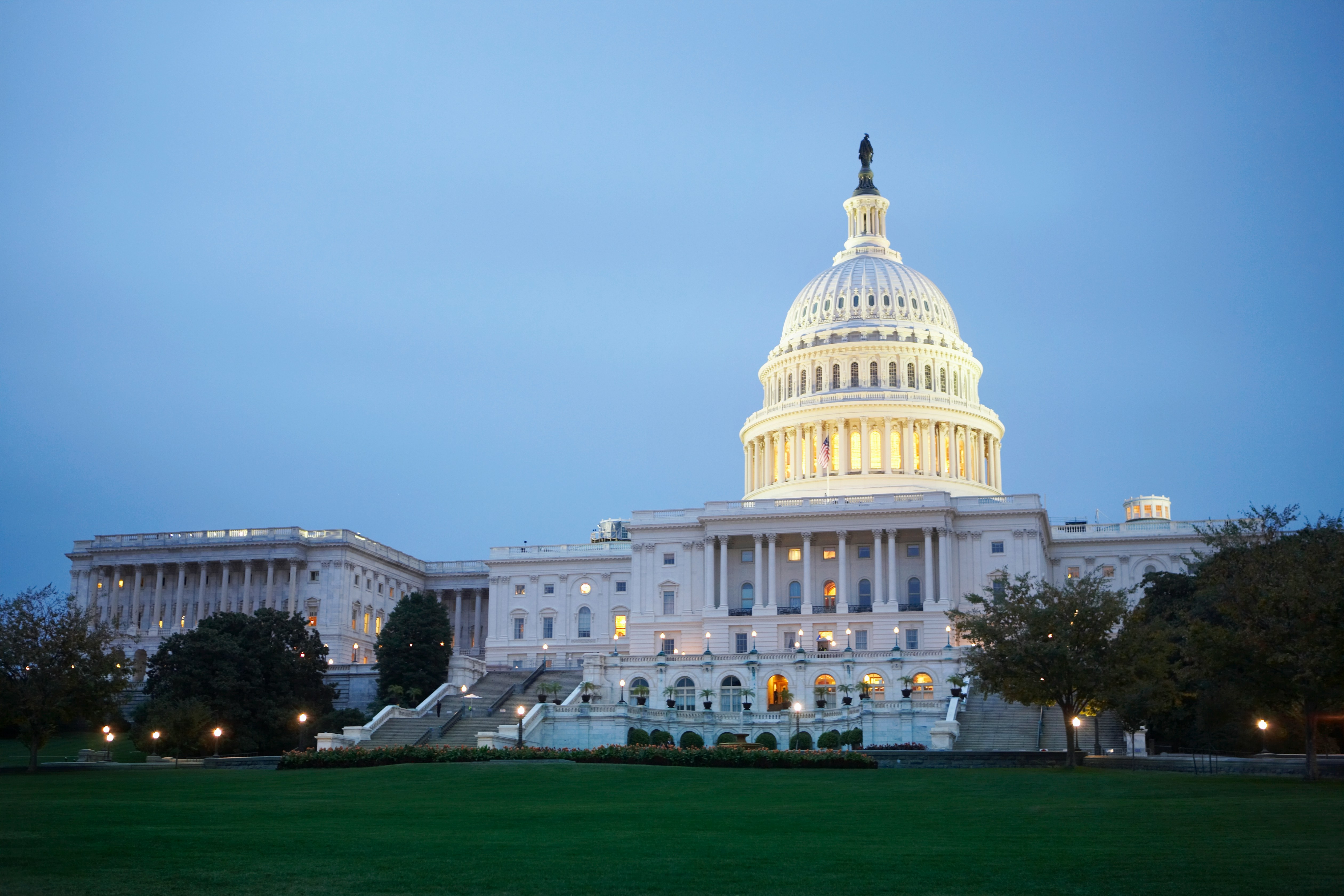
September 25, 2026
Daniel Cohen
Business & Finance
America is under full-scale economic assault. For years, I’ve reported on the intersection of national security and capital markets. After nearly 400 episodes of Economic War Room, the evidence and patterns have become overwhelmingly clear: foreign adversaries increasingly view trade, energy, currency, technology and financial markets as weapons.
What we see as a marketplace, our enemies view as a battle space.
China is perhaps the clearest example. The Chinese Communist Party openly embraces the concept of “unrestricted warfare,” and economics represents one of the most effective fronts in that struggle. China dominates much of the global supply chain for rare earth minerals and critical materials, the same resources required for everything from smartphones and electric vehicles to advanced American defense systems.
That dependence gives Beijing tremendous leverage. But critical minerals are only one part of the story. Currency manipulation, subsidized exports, cyberattacks and intellectual property theft have all created vulnerabilities for the United States. American factories have closed, communities have been hollowed out and critical supply chains have moved overseas.
This isn’t simply about competition between two large economies. It’s a national security issue.
Watch this full episode on Economic War Room, streaming now on the Real Life Network.
America Is Also Weakening Itself From Within
The economic threats facing America aren’t all coming from Beijing or other foreign capitals. Some are self-inflicted.
The United States now carries an enormous national debt, creating long-term risks for the dollar, interest rates, future taxpayers and national security. At the same time, corporate policies built around ESG and DEI have too often shifted attention away from profitability, merit, innovation and long-term shareholder value.
Then there is the prospect of a programmable central bank digital currency. If implemented without the proper protections, a CBDC could potentially give government authorities unprecedented ability to monitor transactions, restrict spending or freeze accounts.
Put these threats together and the consequences are no longer abstract. They can affect your retirement account, your savings, your paycheck and your ability to provide for your family.
President Trump can do his part in Washington, but he cannot do your part for you. That responsibility belongs to each of us.
Americans Can Fight Back With Their Own Money
The good news is that ordinary Americans are not helpless.
At Economic War Room, we’ve spent years developing strategies designed to help Americans recognize economic warfare and build greater resilience against it. Through the NSIC Institute, we’ve also worked to educate financial advisors about the intersection of national security and investing. One principle sits at the center of that work: weaponize your money for liberty, security and your values.
That starts with defense. Traditional stocks-and-bonds diversification may not be enough in an environment defined by inflation, geopolitical instability, massive government debt and fragile global supply chains. Americans should understand what they own, where their vulnerabilities are and whether they have sufficient exposure to tangible assets they actually control.
That is one reason I have repeatedly discussed transactional gold and silver. Precious metals have functioned as stores of value for thousands of years and can provide another layer of financial independence when paper currencies and financial markets come under pressure.
But defense is only half the battle. Americans can also think carefully about where their investment dollars are going. Domestic energy production, critical minerals, reshoring, advanced manufacturing and defense technology can all play a role in rebuilding American economic strength. Rather than unknowingly sending investment capital toward adversaries, Americans can consider supporting companies and industries that strengthen our independence and national security.
I call it voting with your dollars on steroids. That doesn’t mean blindly buying a stock because it carries an American flag. And it isn’t individualized investment advice. Every investor should consider his or her own circumstances and consult a qualified financial professional.
It does mean recognizing that capital has consequences.
Financial Resilience Starts at Home
There are also simpler steps Americans can take.High-interest consumer and credit card debt can become crushing when rates rise or an economic shock hits. Building emergency reserves, reducing unnecessary debt and considering assets that can provide resilience during turbulent periods can all strengthen a household’s financial position.
But the goal should extend beyond surviving the next downturn. We should be thinking generationally. America’s free-market system has given ordinary citizens an extraordinary opportunity to participate in economic growth, build businesses, invest and create wealth. We should teach those principles to our children and grandchildren rather than allowing future generations to become increasingly dependent on government.
Economic freedom and political freedom are connected. That means Americans must also remain civically engaged—voting, contacting elected representatives and supporting policies that promote fiscal responsibility, sound money, American energy, lower taxes and free enterprise.
America May Be Facing Its Own Dunkirk Moment
As I consider the challenges ahead, I keep returning to one of the most remarkable episodes of World War II. In May 1940, nearly 400,000 British and Allied troops were trapped near Dunkirk as Nazi forces swept through France. Britain faced catastrophe.
Then ordinary citizens answered the call. Fishing boats, pleasure yachts, ferries, tugboats and virtually anything else that could float crossed the English Channel to help evacuate the stranded troops. In the end, more than 338,000 men were rescued.
Those vessels became known as the “little ships of Dunkirk.” The evacuation did not end the war. Churchill himself reminded Britain that wars are not won by evacuations. The Battle of Britain was still ahead, America had not yet entered the conflict and years of fighting remained.
But Dunkirk demonstrated what can happen when ordinary people refuse to surrender. There was also another element that should not be forgotten. King George VI called Britain to a National Day of Prayer on May 26, 1940. Churches filled as the British people prayed for deliverance. The events that followed became remembered by many as the “miracle of Dunkirk.”
I believe there is a lesson there for America today. We are facing our own economic Dunkirk moment. The threats to American prosperity, freedom and security are formidable. Government and large institutions have a role to play, but they cannot do everything.
That’s where the little ships come in. You are the little ships.
Every time you examine your investments, reduce high-interest debt, strengthen your family’s finances, support American energy and manufacturing, build generational wealth, vote for free-market policies or speak up for sound money, you are answering the call. No single American can win an economic war. Millions of informed Americans acting together can change its course.
Prayer first. Then get to work. Then give thanks. Freedom is fragile. It has to be protected and passed to future generations. And right now, our children and grandchildren are depending on us to do exactly that. It’s time to get in the fight.
Watch this full episode on Economic War Room, streaming now on the Real Life Network.
25 min
America Is Under Economic Attack—and It’s Time to Fight Back
.jpg)
September 17, 2026
Kevin Freeman
World News
California was once synonymous with opportunity, innovation, natural beauty, and the promise of the American dream. Today, the Golden State is increasingly associated with unaffordable living, homelessness, crime, political dysfunction, and residents looking for somewhere else to build their future. The latest stories examined on Real Life Network point toward a larger question: What happens when bad policies become normal, accountability disappears, and citizens simply accept the decline?
California remains an economic powerhouse. Yet economic size alone cannot measure the health of a state. The more important measurement is whether families can afford to live there, businesses can thrive, children receive a quality education, elections inspire confidence, and government actually delivers the basic services taxpayers fund.
California does not have to settle for decline simply because decline has become familiar.
California Needs Accountability, Not Lower Expectations
The problems facing Los Angeles provide a revealing picture.
Los Angeles operates a public campaign-financing system that can provide matching funds for qualifying donations to participating candidates. The program is legal and longstanding, but its use in the current mayoral race raises a legitimate question about whether taxpayers should be required to subsidize political campaigns they may strongly oppose.
At the same time, Los Angeles continues struggling with homelessness and deteriorating public spaces. These problems are particularly difficult to ignore because California possesses extraordinary wealth and resources. A state with one of the largest economies in the world should be capable of delivering clean streets, functioning infrastructure, safe neighborhoods, and competent government.
Then there is the information citizens receive about the politicians seeking to lead them.
The episode highlighted a purported Los Angeles mayoral poll that claimed Karen Bass held a 12-point advantage. The organization behind the poll later said it had created the operation as a “social experiment” examining how polling information could spread through the political information ecosystem without independent verification.
That should concern everyone regardless of political affiliation.
Polling is powerful because it can influence fundraising, media narratives, voter enthusiasm, and perceptions about whether a candidate can actually win.
When political information is repeated before it is verified, reporting can stop measuring public opinion and begin shaping it.
Voters should therefore pay attention to methodology, sample size, likely voters versus registered voters, and the partisan composition of a poll rather than treating every new percentage as authoritative.
California’s future will ultimately be determined by voters who refuse to accept dysfunction as inevitable. The state’s problems were created through human decisions, which means different decisions can produce different results.
From California to Dearborn, Assimilation Still Matters
The question of leadership extends beyond California.
Florida offers an interesting contrast in election administration. The episode pointed to the speed with which Florida reported primary results compared with California, where counting can continue considerably longer. Different states have different election laws, ballot-processing procedures, and voting systems, so speed alone does not establish whether an election is secure. But Americans are justified in expecting election systems that are both accurate and efficient.
The broader political environment also shows continued tension between establishment Democrats and candidates aligned with democratic socialism. That movement matters because elections are ultimately contests over competing visions of government, economics, family, freedom, and the proper relationship between citizens and the state.
Those questions become even more consequential when immigration and assimilation enter the conversation.
Recent tensions in Dearborn, Michigan, were used in the episode to illustrate the difference between immigration and assimilation. America has always been a nation shaped by immigrants. But historically, immigration carried an expectation that newcomers would become part of the American project rather than construct isolated political and cultural societies within it.
That distinction matters.
A person does not need to abandon every cultural tradition, family custom, language, or heritage to become an American. But citizenship requires something deeper than geography. It requires a commitment to constitutional government, religious liberty, equal protection, freedom of speech, and peaceful coexistence with people who hold fundamentally different beliefs.
The episode pointed specifically to a confrontation involving Dearborn Mayor Abdullah Hammoud and a Christian resident who objected to a street designation honoring Arab-American News publisher Osama Siblani. Hammoud responded that the resident was not welcome in Dearborn and said he would hold a parade when the man left the city.
Whatever disagreements surround the underlying controversy, telling citizens they are unwelcome for expressing political or religious objections runs against the pluralism required by American civic life.
Immigration can strengthen America, but assimilation into America's constitutional principles remains essential to preserving the freedoms that attracted generations of immigrants in the first place.
The Same Mistake Is Being Made With Hamas
The conversation about shared values becomes even more serious in the Middle East.
The episode criticized the assumption that Hamas can eventually be persuaded to embrace the same understanding of peace held by Western negotiators. That criticism followed comments from Jared Kushner suggesting that Hamas would have an opportunity to demonstrate whether it was genuinely committed to peace by disarming.
The problem is that Hamas already demonstrated its intentions on October 7, 2023.
Any serious discussion about Gaza’s future has to begin with the reality of what happened that day and Hamas’s longstanding hostility toward Israel. Negotiation can be valuable, but diplomacy becomes dangerous when negotiators project their own assumptions onto adversaries who do not share them.
Peace requires more than signatures.
It requires parties willing to live peacefully.
The same principle applies whether considering local government, immigration, elections, or international diplomacy: policies cannot be evaluated merely according to what leaders hope will happen. They must be evaluated according to reality.
Scripture repeatedly calls believers to discernment. Jesus instructed His followers to be “wise as serpents and innocent as doves” (Matthew 10:16). Wisdom does not require cynicism, but neither does Christian compassion require naivety.
Christians should desire peace. Christians should welcome the stranger. Christians should pursue justice. Christians should treat political opponents as people made in the image of God.
But none of those convictions require pretending that evil does not exist or that every ideology shares the same understanding of freedom, truth, human dignity, or peace.
California’s struggles, America's debates over assimilation, and Israel’s confrontation with Hamas may appear disconnected. Yet each raises a similar question: Will reality determine our decisions, or will ideology prevent us from acknowledging what is directly in front of us?
The answer requires citizens willing to demand accountability, reject manipulated narratives, participate in elections, defend constitutional freedoms, and exercise biblical discernment.
Decline is not inevitable. But reversing it requires recognizing it first.
For more coverage connecting politics, Israel, culture, and faith through a biblical worldview, watch The Daniel Cohen Show on Real Life Network.
25 min
California’s Crisis Is Bigger Than Politics
August 24, 2026
Daniel Cohen
World News
Across the U.S., a startling statistical anomaly has quietly metastasized into a national crisis: millions of working-age males have begun ditching the workforce. They’re not retiring, nor are they registering as unemployed. They simply have stopped looking for work.
While economists have debated endlessly over structural shifts, such as automation and wage stagnation, a more uncomfortable conversation is appearing in policy circles. The silent exodus of American men denotes a deeper cultural pandemic, which is a decaying work ethic stoked by a swell of public handouts and a pervasive social narrative that tells the individual that they should settle for nothing less than a passion project.
The Vanishing
According to Bureau of Labor Statistics data, labor force participation for those in the prime age for work — between 25 and 54 years of age — has experienced a steady, decades-spanning decline. At the midpoint of the 20th century, over 95% of men were working or seeking employment. Today, that rate has plummeted dramatically, leaving nearly seven million men of prime age sidelined as contributors to the American economy.
Policy analysts and sociologists alike warn that this developing trend cannot be explained away by mere shifts in demographics. Unlike past generations, who considered self-reliance a badge of honor, today’s lack of a vigorous workforce illustrates the fundamental erosion of the conventional work ethic.
As scholar Nicholas Eberstadt observed in his feature study on the crisis, “the progressive detachment of so many adult American men from regular paid labor can only result in lower living standards … and the consequences are not just economic. The male exodus from work also undermines the traditional family dynamic, casting men into the role of dependents and encouraging sloth, idleness, and vices.”
The Trap of Entitlement
A major driver of this contraction in the workforce is the direct consequences of social safety net expansion. What was once designed with the intention of being temporary cushions during economic recession has morphed into a permanent way of living for millions of able-bodied Americans.
Divided amongst state-funded disability benefits, nutritional assistance, and low-income housing subsidies, the economic estuary that exists between a demanding career and remaining jobless has dried up to almost a point of non-existence. When safety nets mitigate non-work without demanding an exchange, the motivator to persevere through demanding labor dissolves.
Eberstadt warned that this trajectory threatens the fundamental ethos of the country, noting that “whether we choose to recognize it or not, this feature of the American condition, the new ‘men without work’ normal, is inimical to the American tradition of self-reliance.”
The Myth of Passion
Building upon this policy failure is a corrosive cultural fable that has been fed to the younger generations, which is the notion that everyone is entitled to a job that falls in line with their own passions perfectly.
Over decades, higher education institutions and popular media have preached a doctrine of self-fulfillment above everything. Young men have been conditioned to believe that a job in manufacturing or heavy construction is a compromise of the potential they have when it doesn't align with their dream career.
Economic reality operates in the context of necessity, however, not utopian ideals. Popular figures such as Mike Rowe have strongly pushed back against this cultural illusion, arguing that “when people follow their passion, they miss out on all kinds of opportunities they didn’t even know existed… never follow your passion but always bring it with you.”
Branding ordinary, tough jobs as “beneath” today’s worker, American society has spurred young men to wait around for their dream opportunities to manifest — even though there’s no guarantee that it will ever arrive, rather than rolling up their sleeves and doing what is needed.
The Fallout
The economic consequences resulting from millions of idle men prove staggering. Business owners across trades report chronic labor shortages, superficially driving up supply chain costs and delaying infrastructure growth. Local communities meanwhile must deal with rising rates of isolationism and civic-service decline, a phenomenon tied directly to the absence of systemic labor.
The reversal of this decline will be vested in a realignment of policy and cultural values. Until policymakers take the steps to confront this reality that a flourishing state relies upon its citizens’ willingness to do things that are hard and uncomfortable, the already far too high number of America’s missing able men will continue to rise.
This article was originally written by Zach Patton and published on The Washington Stand. For more content like this, visit Real Life Network.
25 min
The Lost Drive: American Culture Has Decayed the Value of Hard-Working Men
August 18, 2026
The Washington Stand
Business & Finance
As America celebrates its 250th year, we’re celebrating a milestone of our own at Economic War Room: our 400th episode. It’s an opportunity to look back at where we started, the warnings we’ve sounded, the people who have joined us along the way and, most importantly, why this mission matters now more than ever.
For nearly two decades, I’ve studied how America’s adversaries use economics as a weapon. Long before Economic War Room reached television screens, I traveled to Moscow with my partner Russell Lake and saw firsthand how foreign powers were thinking strategically about America’s economic vulnerabilities.
That experience helped put me on a path that eventually led to research for the Pentagon and years of studying economic warfare. Since then, the threats have evolved. But the central lesson hasn’t changed.
What we see as a marketplace, our enemies view as a battle space.
Watch this full episode on Economic War Room, streaming now on the Real Life Network.
The Economic War Didn’t Start Yesterday
For 400 episodes, Economic War Room has examined threats that were often ignored or dismissed until they became impossible to overlook.
We’ve investigated whether Communist China is waging economic warfare against the United States. We’ve examined America’s dependence on China for medicines and other critical supply chains. We’ve warned about the movement toward a cashless society and explored the risks posed by global financial and political agendas.
We’ve also looked to history for answers. Ronald Reagan understood the enormous power of economic warfare. His administration used economic strategy as part of the broader effort that helped defeat Soviet communism and win the Cold War.
That history matters today because communism and authoritarianism didn’t disappear with the Berlin Wall. They changed. The weapons changed. And the battlefield changed.
Today, a nation can attack another country without firing a shot. It can target supply chains, currencies, markets, intellectual property, technology and investment capital.
That’s why Americans must understand economic warfare before they can hope to defend themselves against it.
From Diagnosing the Problem to Building Solutions
From the beginning, my goal has never been simply to identify threats.
Anyone can tell you the sky is falling. The harder, and more important, job is finding solutions.One example is our work on transactional gold and silver.
For years, we’ve studied how precious metals can function not simply as investments, but as transactional money. The idea is rooted in a much larger question: How do Americans maintain economic freedom and financial resilience when confidence in traditional monetary systems is being challenged? That work has moved beyond theory.
States across the country have considered or enacted measures involving gold and silver as legal tender, and I’ve had the opportunity to participate in research and policy efforts examining how precious metals can fit into modern financial systems.
It’s one example of what Economic War Room is designed to do: identify a strategic vulnerability and then work toward a practical solution. But transactional gold is only part of the story.
Over 400 episodes, we’ve explored American energy independence, critical supply chains, national debt, free markets, investment strategy, Communist China, globalism and the preservation of economic liberty. All of those issues eventually come back to one principle: stewardship.
America’s Economic Future Depends on What We Sow Today
One of the most meaningful symbols here at Liberty Hawk Ranch is the sower. Most people know the old saying: Give a man a fish and you feed him for a day. Teach him to fish and you feed him for a lifetime.
We take that idea one step further. Teach a man to sow seeds and reap harvests. That is economics.
Every generation decides what kind of seeds it will plant. Good economic policy can encourage private ownership, entrepreneurship, investment, responsibility and abundance. Bad economic policy can encourage dependency, debt and stagnation. The question facing America as we celebrate 250 years is straightforward:
What are we sowing today, and what will our children reap tomorrow? Our nation is younger than we sometimes realize. Two hundred and fifty years may sound like a long time, but in generational terms, it isn’t.
The responsibility for preserving what previous generations built now belongs to us.Economic freedom is not something we inherit permanently. It has to be understood, protected and passed on.
Reagan Understood the Power of Economic Freedom
Walking through the Economic War Room set for our 400th episode brought back memories of some remarkable people who have influenced this mission.
Watch this full episode on Economic War Room, streaming now on the Real Life Network.
One of the most important for me was President Ronald Reagan. Years ago, through the Adam Smith Foundation, I had the privilege of presenting Reagan with an Adam Smith Award and an original edition of The Wealth of Nations. I still treasure the photograph and autograph from that meeting.
Reagan understood something America desperately needs to remember today: economic strength is national strength. Free enterprise isn't merely a mechanism for producing wealth. It disperses power. It gives ordinary people the ability to build businesses, own property, invest, innovate and shape their own futures.
That is precisely why authoritarian systems seek economic control. And it is why defending free markets remains inseparable from defending liberty itself.
Behind 400 Episodes Is a Foundation of Faith
There is another part of the Economic War Room story that cannot be separated from the mission. Prayer.
Liberty Hawk Ranch has been dedicated to God from the beginning, and one of its most meaningful places is our prayer garden and cross.
That cross represents something bigger than a television program, an economic strategy or a political movement. It reminds us that human wisdom has limits.
America’s Founders understood that. During the Constitutional Convention of 1787, as delegates struggled with deep disagreements over the nation's future, Benjamin Franklin famously urged them to turn to prayer. Franklin reminded his fellow delegates that during the struggle with Great Britain, they had prayed for divine protection—and he believed those prayers had been answered.
He then asked a question worth asking again today: Had they forgotten that powerful friend?
America was divided then. It faced foreign threats then. Its leaders disagreed bitterly then. And yet they understood that preserving a nation required something beyond political strategy.
400 Episodes Later, the Mission Is Just Beginning
That lesson is just as relevant today. America faces Communist China, global instability, massive economic challenges and deep internal division. We can—and should—develop sound policies. We should strengthen American industry, protect our financial system, defend free markets and understand how our adversaries are using economics against us.
But strategy alone is not enough. We need stewardship. We need courage. And we need prayer. Four hundred episodes have given us an opportunity to study the battlefield, warn Americans about emerging threats and develop practical solutions. But this milestone isn't an ending.
As America prepares to celebrate 250 years, it should remind us how much has been entrusted to our generation—and how much is at stake if we fail to preserve it. The question now is what we do with that responsibility. What seeds will we sow? What kind of country will our children and grandchildren inherit? And will we remember, as Franklin reminded the Founders, that we cannot build this nation by human wisdom alone?
That is the challenge ahead. And after 400 episodes, Economic War Room remains committed to meeting it.
Watch this full episode on Economic War Room, streaming now on the Real Life Network.
25 min
400 Episodes of Economic War Room: The Fight for America’s Economic Future
July 1, 2026
Kevin Freeman
Business & Finance
America does not just have an economic crisis. We have a leadership crisis, a truth crisis, and in many ways, a spiritual crisis. Too many universities have abandoned biblical principles, embraced ideological agendas, and left students burdened with debt while stripping away faith, purpose, and common sense.
That is why my wife, Marnie Freeman, and I were so encouraged during our recent conversation with Claire Foster from Regent University. At a time when many institutions are losing their footing, Regent is doing the opposite, training students to become bold Christian leaders grounded in biblical truth, economic understanding, and servant leadership.
Watch this full episode on Pirate Money Radio, streaming now on the Real Life Network.
Why Christian Education Matters More Than Ever
One of the greatest blessings Marnie and I experienced as parents was watching our children graduate college while keeping both their faith and their values intact. That is becoming increasingly rare in America today.
Too many parents sacrifice financially to send their children to universities that openly undermine biblical truth and traditional values. Some schools that once began with Christian foundations, institutions like Harvard University and Yale University, have drifted so far from their origins that they now often work against the very principles they were founded to uphold.
Regent University was founded in 1977 by Pat Robertson with a very different mission: combining rigorous academics with unwavering biblical truth. According to Dr. Foster, the university’s vision is to develop Christian leaders who can influence every sphere of society — government, business, law, media, education, and beyond. That mission matters now more than ever.
Regent University Is Growing While Other Schools Decline
One of the most remarkable things about Regent is that it is thriving while many universities across America are struggling. Dr. Foster shared that Regent was recently ranked the number one Christian college in America and the number two military-friendly school in the nation. The university has doubled its student body during a period when many colleges are shrinking.
Why? Because families are searching for something deeper than credentials. They want truth, purpose, excellence, and leadership grounded in biblical values.
Regent’s emphasis on excellence, innovation, and integrity stood out immediately when Marnie and I visited the campus in Virginia Beach. The atmosphere felt different. Students were engaged, joyful, intelligent, and deeply rooted in faith.
The campus itself is beautiful, but what impressed us most was the spiritual foundation underneath it all. During chapel services, classroom discussions, and conversations with faculty, it became clear that Regent is intentionally discipling students — not simply preparing them for careers, but preparing them for life.
Watch this full episode on Pirate Money Radio, streaming now on the Real Life Network.
Why Biblical Principles Apply to Economics and Government
At Pirate Money Radio, we often say that God’s principles apply to every area of life, including money, economics, and government. Regent understands that reality.
During our conversation, Dr. Foster spoke about the importance of training leaders who understand biblical stewardship, honest weights and measures, and economic freedom. Those concepts are not separate from faith — they are deeply connected to it.
The Bible speaks extensively about debt, stewardship, honesty, generosity, and justice. Proverbs teaches wisdom about managing resources. Scripture warns about dishonest scales and reckless borrowing. These principles matter because economies rise or fall based on truth.
That is why I was especially encouraged to see Regent expanding its focus on economic education through the Robertson School of Government under the leadership of Michele Bachmann.
Too often, schools of government teach political power without teaching economic truth. Students graduate understanding bureaucracy but not liberty. They learn theories disconnected from biblical wisdom and real-world consequences. That must change.
The Economic War Room at Regent University
One of the greatest honors of my life recently came when Regent University awarded me an honorary Doctor of Science degree during a special ceremony attended by leaders including Ben Carson and Michele Bachmann.
But even more meaningful was Regent’s announcement that it is launching a dedicated Economic War Room within the Robertson School of Government. The purpose of this initiative is to train future leaders who understand economic sovereignty, monetary policy, freedom, and biblical principles. Students will learn how economics impacts liberty, national security, and the future of civilization itself.
This is critically important because economics is often the hidden battlefield behind nearly every major political conflict. Nations are enslaved by debt. Families are crushed by inflation. Governments manipulate currencies and expand control through monetary systems. Yet very few universities teach students how these systems truly work from a biblical worldview.
That is exactly what Regent intends to do.
As Dr. Foster explained, the goal is not simply to preserve ideas from the past. It is to equip the next generation of Christian leaders to defend freedom and apply biblical truth in the real world.
Watch this full episode on Pirate Money Radio, streaming now on the Real Life Network.
America Needs a Great Awakening Again
During the conversation, I shared the story of Benjamin Franklin and the transformation that occurred during America’s founding era. Franklin originally believed human wisdom alone could build a successful society. But after hearing the preaching of George Whitefield during the Great Awakening, Franklin began recognizing the necessity of God’s guidance in government and public life.
That spiritual awakening shaped America’s founding principles in profound ways. Today, America desperately needs another awakening, not merely political reform, but moral and spiritual renewal grounded in biblical truth.
That is why institutions like Regent matter so much. They are preparing students not simply to succeed financially, but to become principled leaders who can strengthen families, communities, churches, businesses, and government.
The Next Generation Gives Me Hope
One of the most encouraging parts of our conversation was hearing Dr. Foster describe what she sees in today’s students.
Despite being raised in a digital culture filled with confusion and distraction, many young people are hungry for truth, meaning, and authenticity. They are searching for something deeper than social media, political activism, or empty ideology. At Regent, students are encountering biblical truth in a way that is transforming their lives.
That gives me hope. America’s future will not be restored through politics alone. It will be restored by raising up men and women who understand God’s truth, apply biblical wisdom, and courageously lead in every sphere of society. That is exactly what Regent University is doing.
Stream Pirate Money Radio on the Real Life Network.
Related Articles
- Biblical Worldview vs Modern Marxism by Kevin Freeman
- A Christian Understanding of Economics by Kevin Freeman
- Biblical Money vs. Modern Currency: What the Bible Really Says by Kevin Freeman
25 min
Equipping GenZ with Excellence
May 30, 2026
Kevin Freeman
Business & Finance
America is standing at a crossroads. More politicians, influencers, and media voices are openly promoting socialism while attacking free markets, private property, and individual ownership. Some even attempt to wrap these ideas in Christian language. That should concern every believer and every American who values liberty.
On a recent episode of Pirate Money Radio, I sat down with my good friend and co-host Mike Carter to unpack the growing push toward socialism in America and explain why free markets are not only more effective economically, they are far more consistent with biblical principles.
The truth is simple: free markets create opportunity, preserve liberty, and encourage stewardship. Socialism concentrates power, destroys ownership, and eventually leads to control over every aspect of life.
Watch this full episode on Pirate Money Radio, streaming now on the Real Life Network.
Socialism Always Comes Down to Ownership
Most people misunderstand the debate between socialism and free markets. The issue is not whether societies use money, buildings, land, or resources. Every economic system uses capital. Even Karl Marx understood that.
The real question is this: Who owns it?
Under free markets, individuals can own property, businesses, savings, and the product of their labor. Under socialism and communism, ownership increasingly shifts toward the collective or the state. That sounds compassionate in theory, but history shows where it leads. When government controls property, government eventually controls people.
My friend Allen West once described socialism as “economic slavery,” and he was exactly right. If you no longer control the fruits of your labor, then your labor belongs to someone else. That is not freedom.
We have seen this story play out repeatedly throughout history. Venezuela was once one of the wealthiest nations in the world. Then socialism took over under Hugo Chávez and later Nicolás Maduro. Today the nation is economically devastated while political elites continue living comfortably.
Meanwhile, Poland embraced free-market reforms after escaping Soviet communism and experienced remarkable economic growth and stability. Free markets consistently create prosperity. Socialism consistently creates dependency and centralized power.
Watch this full episode on Pirate Money Radio, streaming now on the Real Life Network.
The Bible Supports Stewardship and Private Property
Some pastors and political activists now claim socialism is more biblical than free markets. That argument completely falls apart under Scripture. The Bible clearly affirms private property and stewardship responsibilities. The Ten Commandments include “Thou shalt not steal” and “Thou shalt not covet.” Those commands only make sense if people are allowed to own property in the first place.
Psalm 24 reminds us that God ultimately owns everything, but He entrusts stewardship responsibilities to individuals and families. That distinction matters. The Bible encourages generosity, compassion, and caring for the poor — but it consistently presents giving as voluntary, not coerced. Scripture says God loves a cheerful giver, not a forced one.
There is a massive difference between biblical generosity and government redistribution.
Even the Pilgrims learned this lesson the hard way. Early settlers attempted communal ownership systems after arriving in America, and the results were disastrous. Starvation, laziness, and economic collapse followed. Only after private property rights were established did the colony begin to prosper, eventually leading to the first Thanksgiving.
Human beings are designed to steward, build, create, and provide. Free markets allow people to do exactly that.
Watch this full episode on Pirate Money Radio, streaming now on the Real Life Network.
The Real Solution to the Wealth Gap
Now let me be clear: the wealth gap in America is real. Families are struggling with inflation, housing costs, and declining purchasing power. But socialism will not solve those problems. It will make them worse. The biblical answer starts with stewardship and personal generosity. Christians should absolutely care for the poor, help those in need, and build systems that create opportunity.
But the answer is not handing more power to government bureaucracies. The second solution is expanding economic freedom. Excessive regulations drive up the cost of housing, energy, food, and transportation. Free markets increase opportunity and reduce barriers for working families.
We are already seeing this happen in Argentina under Javier Milei, where free-market reforms are reversing years of economic decline and reducing poverty.
The third solution is honest money.Inflation quietly transfers wealth from working families to financial and political elites. That is why we continue advocating for “Pirate Money” solutions built around gold and silver-backed systems that preserve purchasing power over time.
When governments endlessly print money, ordinary people pay the price through rising costs and declining savings. Honest weights and measures matter because economic freedom depends on stable money.
Watch this full episode on Pirate Money Radio, streaming now on the Real Life Network.
America Must Choose Freedom Over Control
At the end of the day, this debate is bigger than economics. It is about freedom, stewardship, and the future of America itself.
Free markets are not perfect because people are imperfect. But free markets create choices, innovation, ownership, and opportunity. They allow families to build wealth, support ministries, help others, and pursue their God-given calling.
Socialism does the opposite. It centralizes authority, weakens personal responsibility, and ultimately replaces freedom with dependence. America now faces a decision between those two visions.
I believe the biblical path is clear.
Stream Pirate Money Radio on the Real Life Network.
Related Articles
- Biblical Worldview vs Modern Marxism by Kevin Freeman
- Homeschooling for Liberty and Future-Proof Education by Kevin Freeman
- Biblical Money vs. Modern Currency: What the Bible Really Says by Kevin Freeman
25 min
A Christian Understanding of Economics
May 27, 2026
Kevin Freeman
Business & Finance
It feels like the world is coming apart at the seams. Between global instability, economic uncertainty, political division, and cultural confusion, many Americans are wondering whether the country is losing the values that once made it strong. On a recent episode of Pirate Money Radio, I sat down with Ryan Helfenbein of Liberty University to discuss the deeper issue driving much of today’s chaos: the steady erosion of a biblical worldview.
Too many people are focused solely on politics or economics without recognizing the spiritual battle underneath it all. If we are going to restore liberty, rebuild strong communities, and preserve the values that sustain freedom, we have to return to truth. That begins with understanding what a biblical worldview is and why it still matters.
Watch this full episode on Pirate Money Radio, streaming now on the Real Life Network.
America’s Crisis Is Ultimately Spiritual
During my conversation with Ryan, one thing became abundantly clear: America’s greatest crisis is not economic. It is not political. It is spiritual.
Ryan made an important distinction that I believe many Christians overlook today. It is not enough to simply claim a “Christian worldview.” Our worldview must actually be rooted in Scripture. Truth does not come from social trends, political parties, or personal feelings. Truth comes from God.
Once a society abandons objective truth, confusion follows. We are watching that happen in real time across nearly every major institution in America. Basic ideas about morality, family, identity, and even human nature itself are now treated as subjective and endlessly changeable.
Without a biblical foundation, societies eventually lose their ability to distinguish right from wrong. History repeatedly shows where that path leads.
The Lessons of History Still Matter
Ryan and I spent time discussing the contrast between the American Revolution and the French Revolution because the difference between those two movements still carries enormous significance today.
America’s founding was rooted in the belief that our rights come from God. The Declaration of Independence made a moral argument grounded in divine authority and individual liberty. The French Revolution, by contrast, rejected God-centered authority and elevated human power and secular ideology. That same divide is reappearing in modern culture.
Many of today’s political and cultural movements frame society entirely through struggles between oppressors and victims rather than through biblical truth and personal responsibility. These ideas are not new. Ryan pointed out that many of them trace back to Marxist frameworks that have simply been repackaged for a modern audience.
The result is a society increasingly detached from moral clarity.
The Cultural Revolution Happening in America
What concerns me most is that this battle is no longer simply political or economic. It is cultural.
Ryan described how many modern ideologies attempt to disconnect people from their roots — from faith, tradition, family, and history. Once people lose those anchors, they become easier to manipulate. We are seeing that unfold across the West today. Entire generations are growing up without a strong understanding of biblical truth or the principles that shaped Western civilization. Instead, they are being taught that truth is relative, identity is fluid, and history itself should be viewed primarily through grievance and division.
That kind of worldview creates instability because it removes the moral framework necessary for freedom to survive.
Why Biblical Values Create Strong Societies
One of the most overlooked realities in modern discussions is the connection between biblical values and societal flourishing.
I have spent years studying economics, financial systems, and geopolitical threats, and I can tell you this: strong economies do not survive without strong moral foundations.
A biblical worldview encourages responsibility, honesty, discipline, family stability, and respect for human dignity. Those principles create trust within a society, and trust is essential for both economic prosperity and individual liberty.
Even people who do not personally practice Christianity still benefit from living in a culture shaped by biblical values.
But when those values disappear, instability follows. Families weaken, institutions lose credibility, and social trust begins to collapse. What we are witnessing today is not random cultural drift. It is the natural result of abandoning foundational truths.
Watch this full episode on Pirate Money Radio, streaming now on the Real Life Network.
Immigration, Assimilation, and Shared Values
Ryan and I also discussed immigration, which has become one of the most emotionally charged issues in America.
America has always been a nation of immigrants, and throughout much of our history, newcomers largely assimilated into a shared framework of values rooted in Western and biblical traditions. That shared understanding helped preserve national unity.
Today, however, America is experiencing large-scale immigration at the same time that it is losing confidence in its own cultural identity. The issue is not ethnicity or nationality. It is whether a society can remain unified without shared values.
A free nation ultimately depends on a common understanding of liberty, responsibility, and moral truth. Without those things, division grows and social cohesion weakens.Ryan emphasized that Christians must approach these issues thoughtfully and biblically, balancing compassion with wisdom while recognizing that ideas and ideologies shape nations.
The Church Cannot Retreat From Culture
One of the strongest themes from our conversation was the role of the church during times of cultural decline.
Too many Christians today have adopted a mindset of retreat. Some believe the world is simply too far gone to engage anymore. Others are so focused on end-times speculation that they neglect their responsibility in the present. I believe that is a mistake.
Scripture calls believers to remain faithful, engaged, and active. Christians are supposed to build, disciple, lead, and stand for truth even in difficult times.Ryan said something during our interview that I believe the church desperately needs to hear: Christians need a theology of victory, not a theology of defeat.
That does not mean pretending evil does not exist. It means understanding that truth still matters, individual actions still matter, and faithfulness still matters. The future is shaped by people who are willing to act with courage and conviction.
Hope for America’s Future
Despite all the challenges we discussed, I remain hopeful. America is not beyond redemption. The church is not powerless. Truth has not changed simply because culture has shifted.
But restoring what has been lost will require courage. It will require Christians willing to speak clearly, lead faithfully, and engage boldly in every area of life — from business and education to media, politics, and the family. The path forward begins with rediscovering the biblical worldview that once shaped this nation and applying those principles consistently in everyday life.
That responsibility belongs to all of us. The challenges facing America today are deeper than politics or economics. They reflect a society that is increasingly disconnected from biblical truth.
My conversation with Ryan Helfenbein reinforced something I have believed for a long time: if America is going to remain free and stable, we cannot ignore the spiritual foundations that made liberty possible in the first place.
Truth matters. Faith matters. Culture matters. And the decisions we make now will shape the future for generations to come.
For more conversations on faith, culture, economics, and current events, listen to Pirate Money Radio with Kevin Freeman.
Related Articles
- Protests, Power, and the Long March Through Institutions by Kevin Freeman
- Homeschooling for Liberty and Future-Proof Education by Kevin Freeman
- Biblical Money vs. Modern Currency: What the Bible Really Says by Kevin Freeman
25 min
Biblical Worldview vs. Modern Marxism

May 14, 2026
Kevin Freeman
Business & Finance
The world can change faster than most people realize. History proves it. In 1977, Iran was considered a stable ally of the United States. Less than two years later, the Islamic Revolution transformed the nation into one of America’s most persistent adversaries. What was once an “island of stability” became a focal point of global conflict.
Today, the headlines suggest we may once again be standing at a pivotal moment, not just geopolitically, but economically. Because what’s happening overseas doesn’t stay overseas. It affects your wallet, your savings, and your financial future.
Watch this full episode on Pirate Money Radio, streaming now on the Real Life Network.
How Iran Reshaped the Global Economic Landscape
The Iranian Revolution didn’t just alter political alliances, it reshaped global markets. When the Ayatollah seized power, Iran transitioned from a pro-Western economic partner to a destabilizing force in the Middle East. The consequences have played out over decades, influencing energy markets, military conflicts, and international trade.
Today, Iran remains deeply connected to global economic tensions. Its actions in critical regions like the Strait of Hormuz continue to threaten oil supply chains, creating ripple effects that impact fuel prices and inflation worldwide. This is not abstract policy. It is a direct factor in what Americans pay at the pump and the grocery store.
Oil Prices, Inflation, and Economic Pressure
Whenever instability rises in the Middle East, oil markets react quickly. Even the threat of disruption can drive prices upward. Short-term spikes in oil prices often translate into broader inflationary pressure. Transportation costs increase. Manufacturing expenses rise. Consumers ultimately bear the burden.
Inflation, in many ways, acts like a hidden tax. It erodes purchasing power and places the greatest strain on working families trying to make ends meet. Yet history also shows that markets adjust. Supply chains adapt. Strategic reserves are deployed. While volatility creates short-term challenges, it can also lead to long-term corrections.
Understanding that balance is essential for wise financial decision-making.
What appears chaotic on the surface often has deeper strategic implications. Major geopolitical moves rarely exist in isolation. Actions involving Iran, energy markets, and global trade frequently intersect with broader economic competition, particularly involving nations like China and Russia.
From an economic standpoint, these dynamics influence currency strength, trade flows, and investment patterns. For example, shifts in oil availability can reshape global alliances and force major economies to adjust their strategies. This is where economic policy and national security converge. Decisions made on the world stage carry real consequences for everyday people, underscoring the importance of wisdom and long-term thinking.
Stream Pirate Money Radio on the Real Life Network.
Why Financial Stability Requires More Than Policy
While governments play a role in stabilizing markets, lasting financial security cannot depend solely on policy decisions. Economic systems are inherently vulnerable to disruption—whether through conflict, debt, or mismanagement. That reality highlights the need for individuals to take responsibility for their own financial future.
Preparation, discipline, and careful planning become essential in times like these. One of the most important lessons from economic volatility is the importance of sound money. Over time, the U.S. dollar has lost significant purchasing power. While it remains the world’s dominant currency, it is not immune to inflation or policy-driven devaluation.
That reality has led to renewed interest in alternatives such as gold and silver. In recent years, several states have taken steps to recognize precious metals as legal tender, opening the door for what is often called transactional gold. This allows individuals not only to hold gold, but to use it as a functional form of money.
It is not about abandoning the dollar. It is about creating stability and flexibility in an uncertain world.
The Future: Risk and Opportunity
Financial uncertainty often leads to reactive decisions. But reaction is not a strategy.
Periods of volatility call for a steady, disciplined approach to managing money. That includes thoughtful decisions about saving, spending, and investing, even when conditions feel unpredictable. It also means keeping a long-term perspective—recognizing that short-term disruptions are part of broader economic cycles.
Despite the challenges, there is reason for cautious optimism. Global markets are resilient. Innovation continues to drive productivity. And even in times of conflict, opportunities emerge for those who are prepared.
Energy markets may stabilize. Supply chains may improve. New technologies may reshape economic growth in ways we are only beginning to understand. At the same time, risks remain. Debt levels, geopolitical tensions, and currency volatility all require careful attention. Navigating this environment requires both awareness and action.
The situation in Iran is more than a geopolitical story. It is part of a larger narrative about how global events shape economic realities. For individuals and families, the takeaway is clear: financial stewardship matters more than ever.
In a world where markets can shift overnight, building a strong financial foundation, grounded in discipline, preparation, and wise decision-making, is essential for long-term stability.
Stream Pirate Money Radio on the Real Life Network.
Related Articles
- Protests, Power, and the Long March Through Institutions by Kevin Freeman
- Homeschooling for Liberty and Future-Proof Education by Kevin Freeman
- Economic Justice, Real Money, and America’s Future by Kevin Freeman
25 min
Iran’s Turn, and America’s Economic Strategy

April 28, 2026
Kevin Freeman
Business & Finance
Americans are thinking about money more than ever before, and for good reason. A recent study shows the average person spends hours each day worrying about finances, from rising costs to paying bills. That constant pressure reflects something deeper than economics. It reveals a system under strain, and a culture searching for answers.
But what if the answer isn’t just financial strategy? What if it’s spiritual? From my perspective, after more than four decades in the financial world, the real issue isn’t just money. It’s how we think about money. And that’s where Christian economics offers clarity in a time of confusion.
Watch this full episode on Pirate Money Radio, streaming now on the Real Life Network.
Why Money Dominates Our Thinking
Money has always been a central concern in human life, but today it feels overwhelming. Families are navigating inflation, debt, and uncertainty about the future. It’s no surprise that financial stress consumes so much mental energy. Yet Scripture makes something very clear: money itself is not the problem. The issue is the relationship we have with it.
Money is a tool, useful, necessary, and powerful. But when it becomes the focus of our trust, it leads to fear, anxiety, and poor decision-making. That’s why biblical teaching consistently redirects our attention away from money and back toward God. Christian economics starts with that foundation: money is a resource entrusted to us, not something to be worshiped.
A Simpler Biblical Framework for Money
There’s a timeless principle that captures the essence of biblical financial wisdom. It comes from the teachings of John Wesley, who summarized money management in three simple actions: earn, save, and give.
At first glance, it sounds almost too simple. But in practice, it reshapes everything. Earning reflects diligence and productivity. Saving reflects discipline and foresight. Giving reflects generosity and trust. Most people today focus heavily on earning and worrying. Far fewer think intentionally about giving. Yet Christian economics places generosity at the center of financial life, not the margins. That shift alone can transform how individuals and families approach money.
At the heart of Christian economics is the concept of stewardship. Everything we have ultimately belongs to God. That includes income, savings, investments, and opportunities. The question is not whether we own these things, but how we manage them.
This perspective changes how we approach financial decisions. It reframes spending, saving, and investing as acts of responsibility rather than personal entitlement. Even investing takes on new meaning. It’s no longer just about maximizing returns, it’s about aligning resources with values. That raises an important question: where is your money actually going?
What Is Biblically Responsible Investing?
In today’s financial markets, investors often unknowingly support companies and causes that conflict with their beliefs. That’s where biblically responsible investing comes into focus. This approach evaluates investments not only on financial performance, but also on alignment with biblical values. Ownership matters. When you invest in a company, you become a participant in its activities. That reality forces a deeper level of accountability.
Christian economics doesn’t reject investing. In fact, Scripture encourages wise investment and growth. But it challenges believers to invest in ways that reflect integrity and conviction. It’s not just about avoiding harm, it’s about actively supporting what is good. One of the most common concerns people have is whether it’s possible to invest responsibly without sacrificing returns. The answer is yes, but it requires intentionality.
Today, there are tools, research platforms, and financial resources designed to help individuals evaluate companies through both financial and ethical lenses. This includes analyzing business practices, partnerships, and broader influence. The goal is not perfection, but alignment.
Christian economics calls for wisdom in navigating a complex financial system, balancing practical knowledge with spiritual conviction.
Capitalism, Socialism, and the Future of Young Americans
A growing number of young Americans are questioning capitalism and showing interest in socialism. This shift reflects frustration with affordability, opportunity, and economic inequality. But there’s a deeper issue at play.
When people lose sight of purpose, productivity loses meaning. Systems that promise provision without responsibility often remove the very incentives that drive growth, creativity, and fulfillment.
From a Christian economics perspective, work is not a burden, it is part of God’s design. Productivity brings purpose. Contribution brings dignity. History has shown that systems detached from these principles struggle to sustain hope, let alone prosperity.
The challenge today is helping the next generation rediscover that connection between faith, work, and opportunity. While cultural and philosophical shifts are important, there is also a very real economic threat looming over the country: the national debt.
At current levels, debt and deficit spending pose long-term risks that cannot be ignored. If left unchecked, they could lead to inflation, currency instability, and a loss of economic leadership. This is where Christian economics intersects with policy. Sound money, disciplined spending, and accountability are not just political ideas, they are moral ones.
A system built on endless debt ultimately shifts burdens to future generations. Stewardship requires a different path.
Hope in Uncertain Economic Times
Despite the challenges, there is reason for optimism. Economic cycles shift. Policies change. Markets adjust. Even now, there are signs of price corrections in key sectors, offering some relief after years of rising costs.
More importantly, hope is not rooted in economic systems alone. Christian economics reminds us that while financial strategies matter, ultimate security does not come from markets, governments, or even gold. It comes from faith, discipline, and wise stewardship.
That doesn’t eliminate risk, but it provides a framework for navigating it. At the end of the day, every financial decision reflects a deeper belief system. How we earn, spend, save, and invest reveals what we value most.
Christian economics offers a path forward that integrates faith with financial reality. It doesn’t ignore the challenges of modern markets, it addresses them with timeless principles. In a world where money dominates attention and anxiety, that perspective is more relevant than ever.
The conversation around money is changing. Economic pressures are forcing people to ask harder questions about stability, purpose, and long-term security. Christian economics provides a framework that answers those questions with clarity. It calls for stewardship over consumption, purpose over fear, and alignment over compromise.
And in doing so, it offers something many Americans are searching for right now, not just financial strategy, but financial peace.
Stream Pirate Money Radio on the Real Life Network.
Related Articles
- Homeschooling for Liberty and Future-Proof Education by Kevin Freeman
- Pirate Money Radio: Biblical Economics with Bob McEwen by Kevin Freeman
- Economic Justice, Real Money, and America’s Future by Kevin Freeman
25 min
Faith, Finance, and Biblically Responsible Investing

April 17, 2026
Kevin Freeman
Business & Finance
For years, I’ve warned that our monetary system is fundamentally unstable. While the U.S. dollar continues to function as a unit of account and a means of exchange, it is increasingly failing as a reliable store of value. Americans feel that reality every day through inflation and the erosion of their purchasing power.
Now, a significant shift is underway. Across the United States, a growing number of states are advancing legislation to restore gold and silver as transactional money. This movement is not theoretical, it is actively unfolding, and it reflects a deeper return to sound money principles rooted in both the Constitution and what many would recognize as Christian economics.
At its core, Christian economics emphasizes stewardship, honest weights and measures, and systems that protect individuals from unjust debasement of value. In many ways, the transactional gold movement aligns directly with those principles.
Stream Economic War Room on the Real Life Network.
The Expansion of a State-Led Movement
Over the past year, momentum has accelerated in ways few anticipated. States including Texas, Florida, Arkansas, Louisiana, and Missouri have passed legislation recognizing gold and silver as legal tender. These actions are not symbolic gestures; they represent the groundwork for a parallel monetary system that operates alongside the dollar.
The combined economic influence of these states is substantial. If viewed collectively, they would represent one of the largest economic blocs in the world. At the same time, additional states such as Georgia, Tennessee, West Virginia, and Minnesota are exploring similar measures, signaling that this movement is rapidly expanding. What began as a niche policy discussion has now entered the mainstream of economic debate.
Reconsidering Gold’s Role in a Modern Economy
Gold has served as money for thousands of years, yet in modern times it has often been dismissed as outdated. That narrative is beginning to shift. Even global financial institutions and central banks have increased their reliance on gold as a reserve asset, acknowledging its enduring value.
The definition of money remains straightforward. It must function as a unit of account, a medium of exchange, and a store of value. While the dollar performs adequately in pricing and transactions, its long-term stability has weakened. Gold, by contrast, has historically preserved value across generations. This reality resonates strongly within the framework of Christian economics, which prioritizes stability, fairness, and the preservation of value over time. Inflation, in contrast, can be viewed as a hidden tax that disproportionately harms those with the least financial flexibility.
The current movement is not centered on encouraging individuals to hoard gold. Instead, it aims to restore gold’s practical use in everyday commerce. Advancements in technology have made it possible to own fractional amounts of gold and transfer value instantly. This means individuals can save in gold incrementally and, when needed, use it in transactions much like they would use a debit card today.
This blending of ancient monetary principles with modern financial infrastructure represents a significant innovation. It allows gold to function not just as a passive investment, but as active, usable money.
Stream Economic War Room on the Real Life Network.
Why Implementation Requires Structure
Although several states have passed enabling legislation, the transition to fully operational systems requires careful implementation. Establishing a transactional gold framework involves building infrastructure that ensures trust and reliability.
States must define standards for vaulting, verification, auditing, and insurance. These measures are often misunderstood as excessive oversight, but they are essential to creating a system where individuals and businesses can confidently accept gold in exchange for goods and services. In practice, these safeguards reflect the same principles found in Christian economics, ensuring honesty, transparency, and accountability in financial dealings.
Addressing Misconceptions and Industry Resistance
As with any disruptive innovation, resistance has emerged. Some critics have characterized these efforts as government overreach, suggesting that states are attempting to control the gold market. In reality, participation in transactional gold systems is entirely voluntary. Individuals retain ownership of their gold, and private companies are expected to compete in providing services such as payment processing and storage. The role of the state is limited to establishing standards that allow the market to function effectively.
At the same time, it is important to acknowledge that certain segments of the gold industry have expressed concern. Traditional business models often rely on high margins and long-term storage rather than active use. A system that enables consumers to spend gold introduces new dynamics, including increased transparency and competition.
From a broader perspective, however, expanding access and usability aligns with both free-market principles and the ethical considerations emphasized in Christian economics.
One of the most compelling drivers behind this movement is the need to protect against inflation. As the money supply expands, the value of each dollar declines, reducing the purchasing power of savings and wages. Transactional gold offers an alternative that is inherently resistant to such debasement. It allows individuals to store value in a form that cannot be created at will.
This concept closely mirrors the idea of stewardship found in Christian economics. Individuals are called to manage resources wisely, preserving value for the future rather than allowing it to be diminished through systemic instability. Importantly, modern systems make gold accessible to a much broader audience. Individuals no longer need to make large purchases to participate. Incremental savings in gold are now feasible, opening the door for wider adoption.
A Return to Constitutional Principles
The legal foundation for this movement is deeply rooted in American history. The Constitution explicitly recognizes gold and silver as money, granting states the authority to incorporate them into their financial systems. For decades, this provision has been largely overlooked. Today, states are revisiting it as they seek to provide alternatives to a purely fiat-based system.
This return to constitutional money is not merely a legal exercise. It reflects a broader desire to restore trust, discipline, and long-term stability to the financial system.
Looking Ahead
The transactional gold movement is still in its early stages, but its trajectory is clear. Implementation efforts are advancing, with some states moving more quickly than others to establish operational systems. As infrastructure develops and awareness grows, adoption is likely to increase. The combination of economic pressure, technological capability, and philosophical alignment with principles like Christian economics creates a powerful foundation for continued expansion.
What is taking place today is more than a policy trend. It is the beginning of a fundamental shift in how Americans think about money. Gold is re-emerging not simply as an investment, but as a viable medium of exchange grounded in stability and trust. This movement reflects a convergence of constitutional authority, free-market innovation, and the enduring principles of Christian economics.
In an era defined by uncertainty, that combination may prove to be exactly what many Americans have been seeking.
Stream Economic War Room on the Real Life Network.
Related Articles
- Homeschooling for Liberty and Future-Proof Education by Kevin Freeman
- Pirate Money Radio: Biblical Economics with Bob McEwen by Kevin Freeman
- Economic Justice, Real Money, and America’s Future by Kevin Freeman
25 min
Gold As Money: States Lead the Transactional Gold Revolution

April 16, 2026
Kevin Freeman
World News
In today’s online news, politics, and Christian streaming landscape, the connection between global conflict and cultural consequences is becoming increasingly clear. On Real Life Network, viewers are engaging with content that goes beyond headlines to examine Israel, Iran, and the ripple effects felt in the United States and Europe. From the Strait of Hormuz to border security, from global leadership decisions to local crime policies, the stories dominating the news are not isolated. They reveal a deeper pattern that demands discernment and a biblical worldview.
This is not just about events happening across the world. It is about understanding the direction those events are pointing.
Pressure Abroad and the Reality of Power
One of the most significant developments in recent weeks has been the economic pressure placed on Iran through the Strait of Hormuz. This critical waterway carries a large portion of the world’s oil supply, and any disruption has immediate global consequences.
The strategy is straightforward. Limit the regime’s access to revenue, and its ability to operate begins to weaken. Funding for military operations, regional proxies, and internal enforcement structures all depend on financial flow.
When financial resources are restricted, the ability to sustain power begins to collapse.
At the same time, the response from global leaders has been uneven. While some are taking decisive action, others appear to rely on passive strategies that do little to address the underlying issue. In some cases, proposed solutions focus more on reducing demand than confronting the threat itself.
This contrast highlights a broader challenge. Not all leadership approaches problems with the same level of urgency or clarity. Some act decisively, while others delay, deflect, or minimize.
For deeper, biblically grounded analysis of global conflict and Israel, continue watching on Real Life Network.
Security, Borders, and the Cost of Policy Decisions
While international events unfold, their impact is often felt at home. Policies that appear distant or abstract can have very real consequences in everyday life.
Questions surrounding border security and public safety continue to grow. Decisions that allow the release of individuals with criminal records raise serious concerns for communities across the country. These are not theoretical debates. They involve real people, real families, and real outcomes.
Policy decisions are not theoretical. They shape real outcomes in people’s lives.
At the same time, accountability remains a central issue. When systems fail, the question is not only what happened, but who is responsible and how those responsible will be held accountable. This includes examining judicial decisions, enforcement practices, and legislative priorities.
There is also a growing tension between transparency and control. When citizen journalists expose fraud or mismanagement, the response is not always reform. In some cases, the response is to limit exposure rather than address the problem itself.
Stay grounded in truth and clarity by engaging content that examines these issues through a biblical worldview on Real Life Network.
Truth, Leadership, and the Direction of Culture
Beyond policy and global conflict, there is a deeper issue shaping this moment. It is the way truth is handled by those in positions of influence.
When leaders speak on global issues, their words carry weight. This is especially true for those who hold both spiritual and political authority. Their decisions influence not only policy, but perception.
At the same time, responses to global events often reveal inconsistencies. Situations that demand clarity are sometimes met with ambiguity. Issues that require decisive action are met with hesitation or reframing.
Clarity matters most in moments when confusion is easiest.
This is where a biblical worldview becomes essential. It provides a consistent framework for evaluating both global events and cultural trends. It anchors understanding in something unchanging rather than something constantly shifting.
There are also moments that raise important questions about leadership itself. When spiritual leaders engage political issues, their words invite examination. When political leaders speak on moral issues, their convictions are revealed.
Discernment requires careful evaluation, not blind acceptance. It calls for truth, not reaction.
In a time when headlines often compete for attention without providing clarity, the need for discernment has never been greater. From global conflict involving Iran and Israel to the consequences of domestic policy decisions, each story contributes to a larger picture.
Understanding that picture requires more than information. It requires truth.
For more biblically grounded content that helps you see clearly in a complex world, visit Real Life Network.
The Hope of the Gospel
Amid global conflict, cultural confusion, and competing narratives, Scripture points to a deeper and more important reality. The greatest problem humanity faces is not political instability or international tension. It is sin.
Every person stands accountable before a holy God. No policy, leader, or system can resolve that reality. The Bible makes clear that all have sinned and fall short of the glory of God.
But the message of the gospel is not one of condemnation alone. It is a message of hope.
God, in His mercy, sent His Son, Jesus Christ, to live a perfect life, to die on the cross for sin, and to rise again. Through His death and resurrection, forgiveness is offered to all who repent and believe.
This is the foundation of true clarity.
It is not found in shifting narratives or human institutions. It is found in Christ alone.
In a world searching for direction, the gospel provides what nothing else can. Truth, redemption, and lasting hope.
Related Articles
25 min
Conflicting Signals Abroad and Consequences at Home

April 15, 2026
Daniel Cohen
Business & Finance
America was founded on a simple but revolutionary idea: our rights come from God, not government. That truth shaped our founding documents, our institutions, and our understanding of liberty for nearly 250 years. But today we are watching a growing movement challenge that foundation.
Recently, protests erupted across the country under the slogan “No Kings.” Demonstrators claimed they were standing against tyranny. But the irony is hard to miss. In a country where citizens freely protest their government, often in the harshest terms imaginable, the very existence of those protests proves something important: America does not have kings.
On Pirate Money Radio, I sat down with my good friends Rod Martin and Mike Carter to unpack what’s really happening beneath the surface of today’s cultural and political conflicts. When you look past the slogans and headlines, you begin to see a much deeper ideological struggle, one that involves culture, faith, and even the way our money works.
Stream Pirate Money Radio on the Real Life Network.
The Ideological Roots Behind Today’s Protests
Many Americans see events like the “No Kings” demonstrations and assume they’re spontaneous reactions to political developments. But the truth is that the ideas behind many modern protest movements have been building for decades. Rod Martin explained that the roots of today’s activism trace back to Karl Marx and the failure of his original revolutionary prediction.
Marx believed the industrialized world would erupt in class warfare between workers and the owners of capital. He expected revolutions in countries like the United States, Germany, and Britain. But that never happened. Instead, revolutions took place in places like Russia and China, countries that were far less industrialized.
Because Marx’s predictions failed, later intellectuals had to rethink their strategy.
From Marxism to Critical Theory
That rethink produced what we now call critical theory.
Rather than focusing only on economic class, critical theory reframed society as a struggle between various identity groups, oppressors and oppressed defined by race, gender, sexuality, and other categories. Over time this framework produced ideas Americans now hear about regularly:
- Critical Race Theory
- Intersectionality
- Gender theory
- Postcolonial theory
These frameworks encourage people to view themselves primarily through group identity rather than individual character. Rod pointed out that this approach also explains some of the strange coalitions we see today. For example, activists in the West sometimes rally behind movements or regimes that openly reject the very values those activists claim to support. The coalition isn’t built on shared principles, it’s built on a shared opposition to existing institutions.
The goal is to assemble a large alliance of grievance groups capable of reshaping political power.
The Real Question: Where Do Rights Come From?
Behind the slogans and protests lies a deeper question that has shaped Western civilization for centuries: where do our rights come from? America’s founders gave a clear answer in the Declaration of Independence. Our rights come from God.
That belief shaped the American Revolution and the constitutional system that followed. Government exists to protect rights that already belong to individuals. But the ideological framework behind critical theory assumes something very different. If rights come from the state, then the state can redefine them, expand them, or remove them. That’s a completely different vision of society.
You can see this clash of worldviews playing out in today’s cultural debates, from free speech battles on college campuses to conflicts over religious liberty and the role of government in everyday life.
Why History Is Being Rewritten
One of the most visible signs of this ideological struggle is the battle over history itself. In recent years we’ve seen statues torn down, historical figures reinterpreted, and America’s founding narrative repeatedly challenged.
These efforts are often framed as attempts to correct historical injustice. But they also serve another purpose: weakening the cultural foundations that support the American system of government. Radical revolutions throughout history have pursued something called “year zero”—a moment when the past is erased so a completely new society can be built.
When a culture forgets its history, it becomes much easier to reshape its future.
Despite the tension in our culture, I believe there are real reasons for hope. Across the country we are seeing signs of spiritual renewal. Bible sales are increasing. Young people are returning to church. Many members of Generation Z are searching for meaning in ways that surprise cultural commentators.
During our discussion I mentioned something Glenn Beck once explained to me. There’s a difference between revival and awakening. Revival changes individual hearts. Awakening changes entire societies.
America experienced such an awakening during the First Great Awakening in the 1700s. That spiritual movement reshaped the colonies and helped create the moral framework that made the American Revolution possible. When people rediscover the belief that their rights come from God, it transforms how they think about government, culture, and even economics.
Honest Money and the Moral Economy
That brings us to an issue most people wouldn’t immediately connect to these cultural debates: money. Scripture speaks clearly about honest weights and measures. Throughout history, societies have used gold and silver as money because they function as stable stores of value.
Modern fiat currency works very differently.
Because it is not tied to a physical standard like gold, governments can expand the money supply indefinitely. When that happens, inflation reduces the purchasing power of the currency already in circulation. Inflation might sound like an abstract economic concept, but its effects are very real. Prices rise. Savings lose value. Families struggle to keep up.
And the people hurt most are often those with the least ability to protect themselves financially.
Stream Pirate Money Radio on the Real Life Network.
Why Gold Is Returning in the Digital Age
The wealthy often have ways to hedge against inflation through investments. Working families rarely do. That’s one reason Mike Carter and I have spent years promoting what we call Pirate Money, restoring the ability for people to use gold as money again.
Thanks to modern financial technology, this idea is far more practical than it once was. Today, digital platforms allow individuals to hold physical gold in secure vaults while using debit cards or mobile apps to spend it.
When you make a purchase, a small amount of gold is sold in real time to cover the transaction.
This approach combines the stability of precious metals with the convenience of modern payments. States like Arkansas, Florida, and Texas have already taken steps to recognize gold as legal tender and support systems that allow citizens to use it. The goal isn’t to replace the dollar overnight. It’s simply to give Americans access to an honest store of value.
The Real Battle Behind the Headlines
At the end of the day, movements like the “No Kings” protests reveal something deeper than political disagreement. They reflect a fundamental battle over worldview.
If our rights come from God, government must remain limited. If our rights come from government, power will inevitably expand. The same principle applies to money. Honest systems protect the people who use them. Dishonest systems quietly transfer wealth and power to those who control the system.
America’s future will depend on which ideas ultimately prevail.
My prayer is that we will see not only revival in individual hearts, but a true awakening across our nation—one that restores faith, strengthens liberty, and renews the principles that made this country extraordinary in the first place.
Stream Pirate Money Radio on the Real Life Network.
Related Articles
- Homeschooling for Liberty and Future-Proof Education by Kevin Freeman
- Pirate Money Radio: Biblical Economics with Bob McEwen by Kevin Freeman
- Economic Justice, Real Money, and America’s Future by Kevin Freeman
25 min
Protests, Power, and the Long March Through Institutions

March 12, 2026
Kevin Freeman
Business & Finance
The next generation will determine the future of our nation. That’s always been true, but never before has a generation held this much power, influence, and technological capability. The real question isn’t what they’ll do with it, but who will shape their hearts, minds, and worldview.
For my wife Marnie and me, that question led us to seriously examine education, not just academically, but spiritually, culturally, and financially. Education is one of the largest investments a family makes, and as believers, we wanted that investment to reflect biblical stewardship and Christian budgeting principles, not just convenience.
Stream Pirate Money Radio on the Real Life Network.
Education Is About Worldview First
From the very beginning, Marnie was clear about her top priority: a Christian worldview.
Education is about training the heart. We wanted our daughters grounded in biblical so that when they encountered lies later in life, they could recognize them immediately.
Academics matter, but worldview matters more. Information without discernment is dangerous, and character without truth doesn’t hold. For us, faith, finances, and education were never separate conversations—they were all part of stewarding what God entrusted to us.
Why Public and Private School Didn’t Fit Our Family
Public school offers advantages, including cost and access to programs. There are good teachers and administrators who genuinely care about kids. But too often, parents lose influence once their children enter the system, especially in states where the government asserts authority over curriculum, values, and even parental rights.
Private schools can offer strong academics, but for many families the tuition creates long-term financial strain. From a Christian budgeting perspective, we had to ask hard questions: Was this the wisest use of resources? Would it limit our ability to give, save, or invest for the future?
Neither option fully aligned with what we felt God calling us to do.
Our Homeschooling Journey
We didn’t follow a single model. Over the years, we blended full-time homeschooling, hybrid “university model” programs, co-ops, and experiential learning.
Homeschooling gave us flexibility, not only in curriculum, but in budgeting. We could allocate resources intentionally, adjust year to year, and avoid locking ourselves into long-term financial commitments that didn’t fit our season of life.
Homeschooling allowed us to tailor education to the child—and steward our finances responsibly at the same time.
Academic Results, College Readiness, and Real-World Preparation
One of the biggest myths about homeschooling is that it limits academic success. Our experience proved the opposite.
Our daughters graduated with honors, Dean’s List, President’s List, magna cum laude, and entered college prepared to excel. Homeschooling also opened doors to dual credit and alternative pathways that saved both time and money, another important component of biblical financial stewardship.
Homeschooled students aren’t isolated. Our daughters were active in church, sports, co-ops, camps, and leadership programs. They learned to engage confidently with people of all ages, an essential life skill that extends well beyond academics. Strong families, strong faith, and wise stewardship go hand in hand.
Is Homeschooling Affordable?
Homeschooling isn’t free, but it is often far more affordable than private school. Curriculum, activities, and sports require planning, but homeschooling allows families to practice Christian budgeting with intention, aligning spending with values rather than pressure.
For us, homeschooling wasn’t just an educational choice, it was a stewardship decision with generational impact. Education is never neutral, and neither is money. Someone is shaping your child’s worldview, and something is shaping your financial priorities. Homeschooling allowed us to disciple our daughters, steward our resources wisely, and prepare them spiritually, academically, and practically for the real world.
If you’re seeking to preserve faith, family, freedom, and financial stewardship, homeschooling deserves serious prayerful consideration.
Stream Pirate Money Radio on the Real Life Network.
Related Articles
- Good As Gold: Why Honest Money Matters by Kevin Freeman
- Pirate Money Radio: Biblical Economics with Bob McEwen by Kevin Freeman
- Economic Justice, Real Money, and America’s Future by Kevin Freeman
25 min
Homeschooling for Liberty and Future-Proof Education

March 6, 2026
Kevin Freeman
Business & Finance
What is money, really? Is it just paper, digital numbers, or something far more meaningful with moral and biblical implications? Many of today’s economic challenges, inflation, debt, instability, and misplaced priorities, can be traced back to abandoning God’s principles for money. On Pirate Money Radio, we continually return to this truth. In this conversation, banking expert and biblical money educator Andy Keusel joins me to explore what Scripture, history, and common sense reveal about biblical money, and why it still matters today.
God’s Design for Money
From the opening chapters of Genesis, the Bible places special emphasis on gold, calling it “good.” Throughout Scripture, gold, silver, and copper are consistently used as money for trade, inheritance, worship, and commerce. These metals were not randomly chosen. They possess the qualities honest money requires: durability, scarcity, divisibility, recognizability, and intrinsic value.
Andy Keusel explains that these characteristics are not accidental. Across cultures and civilizations, not just Christian or Jewish, gold and silver have served as money for thousands of years. This universal acceptance points to intentional design. Scripture reinforces this by repeatedly associating precious metals with purity, permanence, and trustworthiness.
Honest Weights, Measures, and the Moral Problem of Inflation
The Bible is explicit in its condemnation of dishonest weights and measures. God calls them an abomination. While Scripture may not use the modern term “inflation,” the concept is clearly addressed. Inflation is the silent erosion of value, a form of theft that disproportionately harms workers, savers, widows, and the elderly.
By expanding the money supply without real backing, modern systems dilute purchasing power. Prices rise, savings lose value, and families are forced to work harder for less. Andy notes that this is not just an economic issue; it is a moral one. Scripture does not permit hidden theft, regardless of how sophisticated or normalized it becomes.
Biblical Money Vs Fiat Currency
Paper currency was never intended to be money itself. Historically, paper notes were receipts representing gold or silver held on deposit. Over time, those receipts were detached from the metal backing and declared “money” by government decree. This shift made unlimited expansion possible and opened the door to debt, manipulation, and deception.
As Andy explains, there is no such thing as “paper money” in biblical terms—only paper claims on real money. When that claim is no longer redeemable, the system rests entirely on belief rather than substance. Scripture repeatedly contrasts enduring value with temporary promises that fail under testing.
The Federal Reserve and Centralized Money Creation
One of the most misunderstood institutions in modern finance is the Federal Reserve. Despite its name, it is neither federal nor backed by actual reserves. Created in secrecy, it enables money creation out of nothing, a power Scripture attributes only to God.
Centralized money creation allows those closest to it to benefit first, while the rest of society absorbs the cost through inflation. Andy points out that secrecy itself should raise concern. Biblically, truth withstands light; deception depends on darkness.
Banking, Fractional Reserves, and Systemic Risk
Banking can serve legitimate purposes, safekeeping, payments, and lending. However, the modern system of fractional reserve banking allows institutions to lend far more money than they actually possess. Depositors believe their funds are available on demand, while banks simultaneously lend those funds long-term.
This system functions only as long as confidence remains. When trust collapses, so does the illusion of stability. The result is bank failures, government intervention, and inflationary bailouts that shift losses to the public.
Why Gold and Silver Endure
Gold and silver have preserved purchasing power for centuries. A similar amount of gold that once bought a quality suit, livestock, or land can still do so today. What has changed is not gold’s value, but the value of fiat currency.
Scripture’s frequent association of wealth, inheritance, and permanence with precious metals reflects this reality. Gold and silver endure testing, while paper promises fade. This distinction mirrors the biblical contrast between what lasts and what burns away.
Why This Matters for Christians
Biblical money is not about greed or fear, it is about obedience, stewardship, and truth. While Scripture warns against the love of money, it also calls believers to wisdom, honesty, and care for the vulnerable. Understanding God’s design for money helps Christians give generously, spend responsibly, and invest faithfully.
Andy Keusel emphasizes that education is the first step. When believers understand how money works, and how it can be corrupted, they are better equipped to align their financial decisions with biblical values.
Final Thoughts
If we want real economic stability, we must return to God’s standards. That begins with truth, education, and the courage to question systems built on deception. Biblical money is not outdated, it is timeless.
As believers, we are called to be faithful stewards in every area of life, including our finances. Returning to honest money is not just an economic solution, it is a spiritual one.
For more biblical content, sigh up for free at the Real Life Network.
Related Articles
- Good As Gold: Why Honest Money Matters by Kevin Freeman
- Pirate Money Radio: Biblical Economics with Bob McEwen by Kevin Freeman
- Economic Justice, Real Money, and America’s Future by Kevin Freeman
25 min
Biblical Money vs. Modern Currency: What the Bible Really Says
.webp)
February 20, 2026
Kevin Freeman
Business & Finance
For most of my career, I believed deeply in the American Dream, because I lived it. I entered the investment world during an era when innovation was exploding, entrepreneurship was celebrated, and ordinary Americans could invest early in great ideas. Today, that system is breaking down, and the consequences are far bigger than Wall Street. They are reshaping our culture, our politics, and our children’s future.
If we want real economic justice, we must confront an uncomfortable truth: the shrinking stock market is locking everyday Americans out of opportunity.
Stream Economic War Room with Kevin Freeman on the Real Life Network.
The Golden Era of Opportunity
When I graduated from college and entered investment management, there were over 6,000 publicly traded companies. The Dow hovered around 1,100. Entrepreneurs launched new ideas constantly, and everyday investors could participate in their success.
Innovation wasn’t restricted to elites. From early tech pioneers to small manufacturers, public markets allowed average Americans to build wealth simply by working hard and investing wisely. That system worked, and it fueled the greatest middle class expansion in history.
The Shocking Decline of Public Companies
Despite massive economic growth, the number of publicly traded companies has been cut in half over the past three decades. Our population has grown by 50%. GDP has increased eightfold. Yet investment opportunities have collapsed.
The iconic Wilshire 5000, once designed to track roughly 5,000 public companies, now includes closer to 3,400, and that number keeps shrinking. This is not a coincidence. It’s a warning sign.
Financialization and the Rise of Private Equity
Today, there are more ETFs and mutual funds than individual stocks. That means more money is being made from managing investments than from building companies.
At the same time, private equity has exploded. Companies stay private longer, funded by massive pools of capital available only to the ultra-wealthy. By the time a company goes public, much of the growth, and profit, has already been captured.
Uber is a prime example. Private investors made billions before the public ever had access. When everyday Americans finally invested, many suffered steep losses. This isn’t protecting the little guy. It’s excluding him.
Regulation: Well-Intended, Deeply Damaging
Since the 1980s, the regulatory burden of going public has skyrocketed. Laws like Sarbanes-Oxley and Dodd-Frank dramatically increased compliance costs, audits, disclosures, and legal exposure. In the 1980s, hundreds of companies went public each year. Today, fewer than 100 do.
On average, being a public company now costs over $1 million more per year than staying private, and for some firms, far more. Entrepreneurs respond rationally: they avoid public markets altogether. The result? Ordinary Americans are shut out of early-stage growth.
The Cantillon Effect and the Wealth Gap
When money is created, it doesn’t flow evenly through the economy. Those closest to the source, banks, financial institutions, and the wealthy, benefit first. Everyone else pays later through inflation.
Since leaving the gold standard in 1971, the dollar has lost roughly 90% of its purchasing power. Meanwhile, the wealthiest Americans have seen their assets rise alongside money creation. This is why young people feel the system is rigged. And when opportunity disappears, socialism starts to sound appealing.
Why Socialism Isn’t the Answer
Across history, from Lenin to Mao to Chavez, socialism has always ended the same way: less freedom, less wealth, and more misery.
What young Americans are reacting to isn’t capitalism, it’s crony capitalism. A system where only elites can win breeds resentment and despair. True free-market capitalism creates opportunity, innovation, and generosity. And we can restore it.
A Path Forward: Real Economic Justice
We need solutions that expand opportunity, not restrict it. That includes:
- Making it easier for companies to go public earlier
- Reducing excessive regulation while maintaining transparency
- Protecting intellectual property from foreign theft
- Giving Americans access to sound money that holds its value
Through initiatives like state-level gold and silver legal tender laws, we are already restoring financial freedom in multiple states. These reforms protect purchasing power and give families real choices.
Restoring the American Dream
Imagine a system where everyday Americans can invest early in the next great innovation. Where money holds its value. Where entrepreneurs thrive, and workers share in the upside. That’s not nostalgia. It’s achievable.
Economic justice doesn’t come from redistribution. It comes from opportunity, ownership, and freedom. America has done this before. And with the right reforms, we can do it again.
Kevin Freeman is host of Economic War Room and Pirate Money Radio. Stream Economic War Room with Kevin Freeman on the Real Life Network.
Related Articles
- Good As Gold: Why Honest Money Matters by Kevin Freeman
- Pirate Money Radio: Biblical Economics with Bob McEwen by Kevin Freeman
- Economic Justice, Real Money, and America’s Future by Kevin Freeman
25 min
The Disappearing Stock Market is Making the Wealth Gap Worse

February 9, 2026
Kevin Freeman
Business & Finance
America is standing at a financial crossroads. With nearly $38 trillion in national debt, endless money creation, and growing economic instability, the consequences are no longer theoretical, they’re personal. On Economic War Room with Kevin Freeman, I sat down with renowned economist Dr. Judy Shelton, author of Good as Gold, to confront the hard truths about our monetary system and explore real solutions rooted in history, faith, and free markets. This conversation goes beyond politics or theory. It’s about restoring honest money, protecting families, and advancing christian financial planning grounded in biblical principles.
Stream Economic War Room with Kevin Freeman on the Real Life Network.
The Debt Crisis No One Can Ignore
America’s debt isn’t slowing down, it’s accelerating. When I wrote Pirate Money just two years ago, we were near $32 trillion. Today, we’re approaching $38 trillion, and the Federal Reserve continues creating money with a keystroke.
Why This Matters to Everyday Americans
Inflation isn’t an accident. It’s the direct result of a system designed to finance government spending rather than productive work. As Dr. Shelton explained, money is supposed to be:
- A unit of account
- A means of exchange
- A store of value
When money fails at these three jobs, families lose purchasing power, savings are quietly confiscated, and long-term planning becomes impossible.
When Central Banking Replaces Honest Weights
Biblical Economics Meets Modern Reality
Dr. Shelton made a powerful point that resonates deeply with a biblical worldview:
“Honest weights and measures are biblical.”
Scripture warns against false balances, and yet modern monetary policy deliberately erodes the value of the dollar year after year. Even a so-called “modest” 2% inflation means a 20% loss of value in a decade. That’s not stability. That’s debasement. This is why christian financial planning must account for monetary integrity. You cannot steward resources faithfully when the measuring stick itself keeps changing.
The Federal Reserve and the Illusion of Control
Unlimited Money, Unlimited Consequences
Federal Reserve officials openly admit they can create unlimited money. As Dr. Shelton explained, this happens when the Fed buys Treasury debt and credits bank accounts instantly without any new production or value created. The result?
- More money chasing the same goods
- Higher prices
- A growing wealth gap
- Increased dependence on government
History shows where this leads, from Weimar Germany to Zimbabwe. Superpowers are not immune from collapse.
Gold, the Constitution, and Economic Freedom
Why Gold Still Matters
Gold isn’t nostalgia. It’s discipline. Dr. Shelton reminded us that the Founders embedded sound money into the Constitution for a reason. Article I treats money the same way it treats weights and measures, because both must be objective, stable, and trustworthy.
That’s why gold-backed systems:
- Limit government abuse
- Protect individual liberty
- Restore trust in money
Even former Fed Chairs like Alan Greenspan and Paul Volcker acknowledged gold’s role as an anchor against fiscal irresponsibility.
Treasury Trust Bonds: A Market-Based Solution
Funding Government Without Mandates
One of the most compelling ideas from Good as Gold is Treasury Trust Bonds, government bonds redeemable in either dollars or gold.
Why this matters:
- Investors choose sound money voluntarily
- Markets, not mandates, discipline government
- Confidence replaces coercion
This complements the state-level sound money movement we’ve advanced in Texas, Florida, Arkansas, and beyond, representing over $5 trillion in combined GDP.
Faith, Freedom, and the Path Forward
Economic Integrity Is a Moral Issue
Economic freedom isn’t just about prosperity, it’s about responsibility. When money is honest, people can plan, save, give, and build generationally. That’s why the mission of Economic War Room with Kevin Freeman is clear:
What the marketplace sees as business, our enemies see as a battlefield.
Sound money is not fringe. It’s foundational.
Stream Economic War Room with Kevin Freeman on the Real Life Network.
25 min
Good As Gold: Why Honest Money Matters

February 3, 2026
Kevin Freeman
Business & Finance
If the government can print money, why does it still need to borrow? That simple question recently exposed just how broken modern economic thinking has become, and why Americans urgently need biblical truth and common sense when it comes to money.
On this episode of Pirate Money Radio with Kevin Freeman, I’m joined by one of the clearest economic thinkers I know: former six-term Congressman Bob McEwen. Together, we unpack the difference between free markets and socialism, explain why inflation quietly steals from families, and show how Christian finances must be grounded in truth, standards, and personal responsibility.
Stream Pirate Money Radio on the Real Life Network.
The Problem with Modern Monetary Thinking
One of the most revealing moments in recent economic history came when a top government economist openly admitted confusion about how money works. If money can simply be created, why does debt even matter?
That question exposes the fatal flaw of modern monetary theory: it removes standards.
Bob McEwen explains economics the way farmers, small business owners, and families instinctively understand it, you must produce before you consume. Wealth is not printed. It is created through voluntary exchange, hard work, and service to others.
When the government abandons that principle, confusion replaces clarity—and inflation replaces prosperity.
Free Markets vs. Socialism: Two Very Different Outcomes
Bob McEwen breaks economics down to its simplest truth:
There are only two ways to get money from someone else.
Free Enterprise
- You offer something valuable
- The exchange is voluntary
- Both parties are better off
- Wealth is created
Socialism
- Money is taken through force or policy
- No value is created
- Incentives are destroyed
- Poverty follows
Socialists know how to redistribute wealth, but they don’t know how to create it. History proves this every time. From Detroit to Venezuela, the pattern never changes: the bigger the government, the fewer the choices, and the poorer the people.
Freedom and prosperity always travel together.
Why Printing Money Is a Form of Theft
Inflation doesn’t announce itself with a gun, but the result is the same.When government prints money without restraint, every dollar you hold buys less. That’s not theory. That’s math.
Bob explains money as a representation of past work, a claim on value you’ve already created. When that measuring stick is manipulated, savings are destroyed, wages fall behind, and families lose purchasing power.
That’s why civilizations have always relied on standards, especially gold, as an honest measure of value. Gold doesn’t change. Politicians do.
Truth, Standards, and Biblical Foundations
One of the most powerful moments in this conversation is when Bob connects economics directly to faith. Truth requires a standard. Without it, everything becomes opinion—and opinions don’t protect liberty. America’s founders understood this. They grounded law, money, and markets in biblical principles: individual responsibility, private property, honest weights and measures, and equality before God.
That’s why this conversation isn’t just about economics—it’s about spiritual foundations. When truth is removed, error flourishes. When standards disappear, corruption fills the void.
First, Second, and Third-Party Payers: Why Government Always Wastes Money
Bob McEwen delivers what may be the clearest explanation ever given on why government programs always cost more and deliver less.
First-Party Payer
- You pay
- You consume
- You care about price and quality
Second-Party Payer
- You control only one variable
- Inefficiency begins
Third-Party Payer
- You don’t pay
- You don’t consume
- You don’t care about price or quality
Every government program operates as a third-party payer system. That’s why waste is inevitable, and why bigger government always leads to bigger problems. As Abraham Lincoln warned, government should do only what individuals cannot do better themselves.
Christian Finances Require Biblical Principles
Christian finances must be rooted in stewardship, honesty, and truth, not political promises. Scripture teaches that money reflects character. Faithfulness with “unrighteous mammon” matters. When believers understand economics biblically, they’re equipped to give generously, invest wisely, and resist systems that quietly steal from future generations.
Sound money supports strong families, thriving communities, and enduring liberty.
Final Thoughts: Why Pirate Money Radio Matters
This episode of Pirate Money Radio with Kevin Freeman isn’t about politics—it’s about reality.
Bob McEwen reminds us that economic laws work the same way moral laws do. You can ignore them for a while, but eventually, the consequences arrive.
America’s future depends on whether we return to truth, standards, and biblical wisdom. That starts with understanding money, not as something government creates, but as something people earn.
25 min
Pirate Money Radio: Biblical Economics with Bob McEwen
%20(1).jpg)
January 27, 2026
Kevin Freeman
Business & Finance
Watch Pirate Money Radio and stay grounded in truth by streaming on Real Life Network.
If you talk to young Americans today, you hear a common refrain: “The American Dream feels out of reach.” Housing is unaffordable, debt is crushing, and many wonder if hard work will ever truly pay off. On Pirate Money Radio, we’ve been unpacking why that feeling exists—and more importantly, what can be done about it through biblical tithing, Christian budgeting, and principled Christian financial planning.
In a recent conversation, I was joined by my friend and colleague Mike Carter to connect the dots between real money, economic justice, faith, and the future of our nation. What we discussed isn’t theoretical. It’s already shaping elections, families, and the direction America will take in the coming decades.
The Growing Cry for Economic Justice and Christian Financial Planning
Economic justice is not a slogan invented by politicians—it’s a biblical principle rooted in Scripture, stewardship, biblical tithing, and sound Christian financial planning. Scripture speaks clearly about fair weights and measures, and history proves what happens when societies abandon them.
Today, many Americans—especially Gen Z—feel locked out:
- Student debt delays adulthood
- Housing prices push first-time buyers toward age 40
- Inflation erodes savings faster than people can earn
As Mike Carter put it, young people are working harder than ever, yet feel like they’re running on a treadmill that never moves forward. That frustration explains why socialist ideas suddenly sound appealing to voters who see no upward mobility.
The Turning Point: Leaving Sound Money Behind
One of the most important turning points in modern American history happened quietly in 1971, when the United States abandoned the gold standard. From that moment on, money became disconnected from anything tangible.
The results have been devastating:
- Exploding national debt
- Persistent inflation
- A widening wealth gap
When Congress can spend without restraint and the Federal Reserve can print at will, the system rewards those closest to the money spigot while punishing average families. This is known as the Cantillon Effect, and it explains why asset holders thrive while wages lag behind.
Mike emphasized that this isn’t just an economic issue—it’s a moral one. Unjust money produces unjust outcomes.
Gen Z, Socialism, and the Search for Hope
We’re seeing something unprecedented: young voters turning out in massive numbers for socialist candidates. Not because socialism works—but because they’re desperate for answers.
Mike and I discussed how policies like rent control and collectivism promise short-term relief but deliver long-term devastation. History—from Venezuela to North Korea—confirms this truth.
When people lose hope in building a future for themselves, they begin voting for government dependency instead of freedom. That’s not compassion—it’s a recipe for bondage.
Family, Faith, and Demographic Destiny
One of the most sobering consequences of economic injustice is its impact on family formation.
- Average age of first marriage is now nearing 30
- First-time homebuyers average around age 40
- Birth rates have fallen below replacement levels
Mike Carter brought a powerful perspective from his years in housing: when people can’t afford homes, they delay marriage. When marriage is delayed, children are delayed—or never born at all.
This isn’t just about economics. It’s about the survival of a culture.
As the late Charlie Kirk so boldly said: “People should get married young and have more kids than they can afford.” That statement cuts against conventional financial wisdom—but it reflects a deeper truth. Families are built on faith, not spreadsheets.
ARC: A Biblical Vision for Economic Justice
Out of these conversations emerged a practical framework we call ARC:
Affordability
Sound money and fair systems make life affordable again—housing, food, and family.
Reward
Free markets reward hard work, innovation, and responsibility—unlike socialism, which punishes effort.
Kindness
The church—not the government—was designed to lift people up through generosity, mentorship, and community.
Mike emphasized that ARC isn’t just a philosophy. It’s a call to action—especially for believers who want to help the next generation thrive.
Why Real Money Still Matters for Christian Budgeting
At Pirate Money Radio, we talk often about gold and silver as real money. Not as speculation—but as honest measures of value.
For families trying to practice Christian budgeting and long-term stewardship, money that holds its value is essential:
- Savings are protected
- Long-term planning becomes possible
- Families regain confidence in the future
Mike shared how more listeners are taking their first steps into gold and silver—not out of fear, but out of prudence.
Choosing Liberty Over Collectivism
History gives us a clear choice:
- Rugged individualism under God, which built America
- Or the false warmth of collectivism, which has failed everywhere it’s been tried
True economic justice doesn’t come from government control. It comes from faith, family, freedom, and honest money.
America still has time to choose wisely—but the window is closing.
Watch Pirate Money Radio and stay grounded in truth by streaming on Real Life Network.
25 min
Economic Justice, Real Money, and America’s Future

January 22, 2026
Kevin Freeman
Business & Finance
America is facing a crisis few are willing to confront honestly. It isn’t just political. It isn’t just cultural. It’s demographic—and it’s deeply economic. In this special Economic War Room series, we’ve been walking through what Scripture, history, and data all make clear: when families collapse, nations follow.
If you want to protect your family, preserve liberty, and practice biblical stewardship in uncertain times, this conversation matters. This is where Christian financial planning and Christian budgeting intersect with national survival.
Watch Economic War Room with Kevin Freeman and stay grounded in truth by streaming on Real Life Network.
The Four Horsemen and America’s Six Trials by Fire
The Bible tells us plainly that a house divided against itself cannot stand. America, like the “strong man” in Mark 3, has served as a protector of liberty worldwide. But today, coordinated forces are working to weaken, divide, and ultimately dismantle that strength.
In Economic War Room, I’ve used the imagery of the Four Horsemen to describe these threats:
- The Red Horse: Communism, led by the Chinese Communist Party
- The Green Horse: Sharia-based Islamist supremacy
- The Blue Horse: Globalist despotism under institutions like the UN and WEF
- The Yellow Horse: Cowardice, apathy, and greed within our own nation
These forces do not act alone. Together, they fuel six interconnected “trials by fire” that threaten America’s future.
Trial Five: Demographics Is Destiny
Demographics are not political opinions, they are mathematical realities. When a society’s birth rate falls below the replacement level of 2.1 children per woman, that society ages, weakens, and eventually declines. America is now at 1.6.
That means fewer workers, fewer families, fewer churches, and fewer citizens capable of sustaining freedom. Social programs strain, debt explodes, and the wealth gap widens even further. A dying population is easy prey for totalitarian control. This is why demographics matter so deeply to the Economic War Room.
Inflation: The Silent Enemy of Families
Why aren’t young Americans getting married and having children? The number one reason cited today is simple: they believe they can’t afford it. That belief didn’t arise by accident.
Since the U.S. abandoned the gold standard in 1971, the dollar has lost roughly 90% of its purchasing power. Inflation has forced dual-income households, delayed marriage, pushed homeownership out of reach, and made children feel like a financial liability instead of a blessing. Christian budgeting becomes nearly impossible when money itself is dishonest.
Marriage Delay and the Fertility Collapse
For generations, women married in their early twenties. Today, the average age is nearly 29, and rising. Fertility peaks earlier than most people realize, and delayed marriage inevitably means fewer children. This isn’t about blaming individuals. It’s about recognizing a system that punishes families while rewarding debt, speculation, and financialization.
When money is broken, families break.
The Spiritual Roots of the Crisis
This is not merely an economic problem—it’s a spiritual one. As biblical worldview declines, so does obedience to God’s first command to humanity: be fruitful and multiply. Divorce skyrocketed alongside inflation. Abortions rose as children became “too expensive.” Cultural confusion replaced clarity about marriage and family.
Jesus warned us in Luke 16:11 that if we are unfaithful with unrighteous mammon, we will not be trusted with true riches. We are living out that warning in real time.
Central Bank Digital Currency and Control
A shrinking population combined with massive debt invites tyranny.
Central Bank Digital Currency isn’t about convenience—it’s about control. Programmable money allows elites to preserve wealth while restricting the freedoms of everyone else. It is a predictable response to demographic decline and financial collapse.
This is why Christian financial planning must now include protecting purchasing power—not just chasing returns.
Real Solutions: Faith, Families, and Honest Money
The good news is this: demographic collapse is not inevitable.
Solutions exist:
- Restore affordability by protecting purchasing power
- Reward families, not penalize them
- Return to biblical principles in marriage, money, and stewardship
- Teach Christian budgeting that emphasizes saving, giving, and long-term thinking
Transactional gold and honest money systems—what I’ve written about as Pirate Money—can help restore economic justice for young families and give them hope again.
The Role of the Church
John Wesley’s timeless wisdom still applies:
- Earn all you can ethically
- Save and invest all you can wisely
- Give all you can generously
If churches embraced these principles, we could help the next generation marry earlier, build stability, and raise families with confidence instead of fear.
Awareness Is Preparation
Demographics may be destiny—but destiny can be changed. At the Economic War Room, we exist because our enemies see the marketplace as a battlefield. We must do the same—wisely, prayerfully, and courageously.
Watch Economic War Room with Kevin Freeman and stay grounded in truth by streaming on Real Life Network.
25 min
Demographics, Faith, and the Future of America
.webp)
January 16, 2026
Kevin Freeman
World News
Happy New Year, Lions Den. I’m Daniel Cohen, and this is the kind of story that forces us to do two things at once: tell the truth and connect the news to the Good News. Today we’re talking Somali fraud in Minnesota, organized welfare fraud, taxpayer dollars, blue-state corruption, Gavin Newsom, Tim Walz, Ilhan Omar, and Califraudia. We are also going to talk about why the legacy media keeps missing the real story, and why accountability matters if you love your family, your community, and your country. If you want biblical, unfiltered coverage of current events, watch now for free on Real Life Network at RealLifeNetwork.com.
The Minnesota Somali Fraud Scandal and the Democrats’ Accountability Problem
Let’s start in Minnesota, because the Somali fraud scandal there just got worse. We have heard about childless child care centers, fake services, and billions of dollars stolen through programs meant to help real families. And what is stunning to me is not only the alleged scale of the scheme, but the political reflex that follows: deny, deflect, and play the victim.
Tim Walz has tried to frame this as “criminals taking advantage of generosity,” and then he pivots to blaming “political actors.” No, Governor. The victims are the working families who needed those resources. The victims are taxpayers who did their part and got robbed. And if whistleblowers are right, this was not a small-time hustle. This was a system that stayed open long enough to get comfortable.
Here is what should make every American furious: when investigators and citizen journalists ask basic questions, they are smeared. If you raise concerns, you are called a racist, an Islamophobe, or a bigot. That tactic is not just dishonest. It is strategic. It buys time. It intimidates watchdogs. It keeps the money moving.
And yes, I’m going to say what legacy media will not say plainly: the Democrat Party cannot keep claiming it stands for “the oppressed” while protecting the machinery that oppresses ordinary citizens through corruption. You cannot preach compassion while enabling fraud that drains public programs meant for children.
Califraudia: Allegations of Education, EDD, and Homelessness Fraud in the Golden State
Now the spotlight shifts to California, and this is where the term Califraudia fits like a glove. Whistleblowers and investigators are pointing to alleged losses that are staggering, including claims tied to the education system: fake community college applications, ghost students collecting aid, and a broader “welfare industrial complex” that rewards volume over verification.
If the scale being discussed is even partly accurate, it is not mismanagement. It is system failure.
California already has a history that should have triggered sweeping reform years ago. Billions in homelessness spending with results that do not match the money. A high-speed rail project that eats cash and produces excuses. Unemployment systems that hemorrhaged fraud during COVID, including claims tied to clearly ineligible or even nonexistent recipients. And then there is the day-to-day nonsense that tells you the people running the state are not watching the store: unused devices still being billed, checks still being sent, layers of bureaucracy that nobody audits until the damage is done.
Here is the spiritual reality underneath all of it: when leaders fear man more than God, accountability collapses. When one party rules without consequence, oversight becomes optional. And when the press functions as a partner instead of a watchdog, citizens become the funding source for their own decline.
I love California. Real Life Network is based here. There are faithful believers here, hardworking families here, and people who still believe in God, family, and country. But that is exactly why Califraudia matters. It is not a “pile on.” It is a warning flare: if you normalize fraud, you will eventually normalize collapse.
Media Meltdowns, Public Broadcasting, and Why the Blue-State Model Keeps Breaking
Now connect the dots with me. We also saw the Corporation for Public Broadcasting moving toward dissolution after decades of taxpayer support. Regardless of how you feel about PBS or NPR, the lesson is simple: systems that rely on other people’s money eventually hit a wall. When the funding stream dries up, the weakness is exposed.
And that is the same model we are watching in blue-state governance: raise taxes, borrow more, expand programs, and then act shocked when fraud explodes inside them. The people pay, the insiders profit, and the media runs cover by changing the subject.
The Democrats’ candlelight theatrics over January 6 are part of the same strategy. When you cannot defend your governance, you perform moral superiority. When your credibility is collapsing, you light candles and hope voters forget the receipts.
But voters are not forgetting. People are leaving. And honestly, the most “scientific poll” is the moving truck. When families can no longer afford the cost of corruption, they vote with their feet.
Here is where I land today, Lions Den: fraud is not just a financial issue. It is a moral issue. It is theft. It is injustice. And it is the kind of injustice Scripture repeatedly condemns, because it punishes the poor and rewards the powerful.
So what do we do? We tell the truth. We demand accountability. We pray for repentance where there is corruption. We pray for courage where there is cowardice. And we stay anchored, because no political party is the Savior, but Jesus is Lord over every nation and every system.
If you want more coverage like this, with a biblical worldview and straight talk the legacy media will not give you, watch The Daniel Cohen Show and RLN News on the Real Life Network app. It is free, and it takes seconds to download at RealLifeNetwork.com.
For more articles like this click here.
25 min
Califraudia: Minnesota’s Somali Fraud Scandal Is Spilling Into California
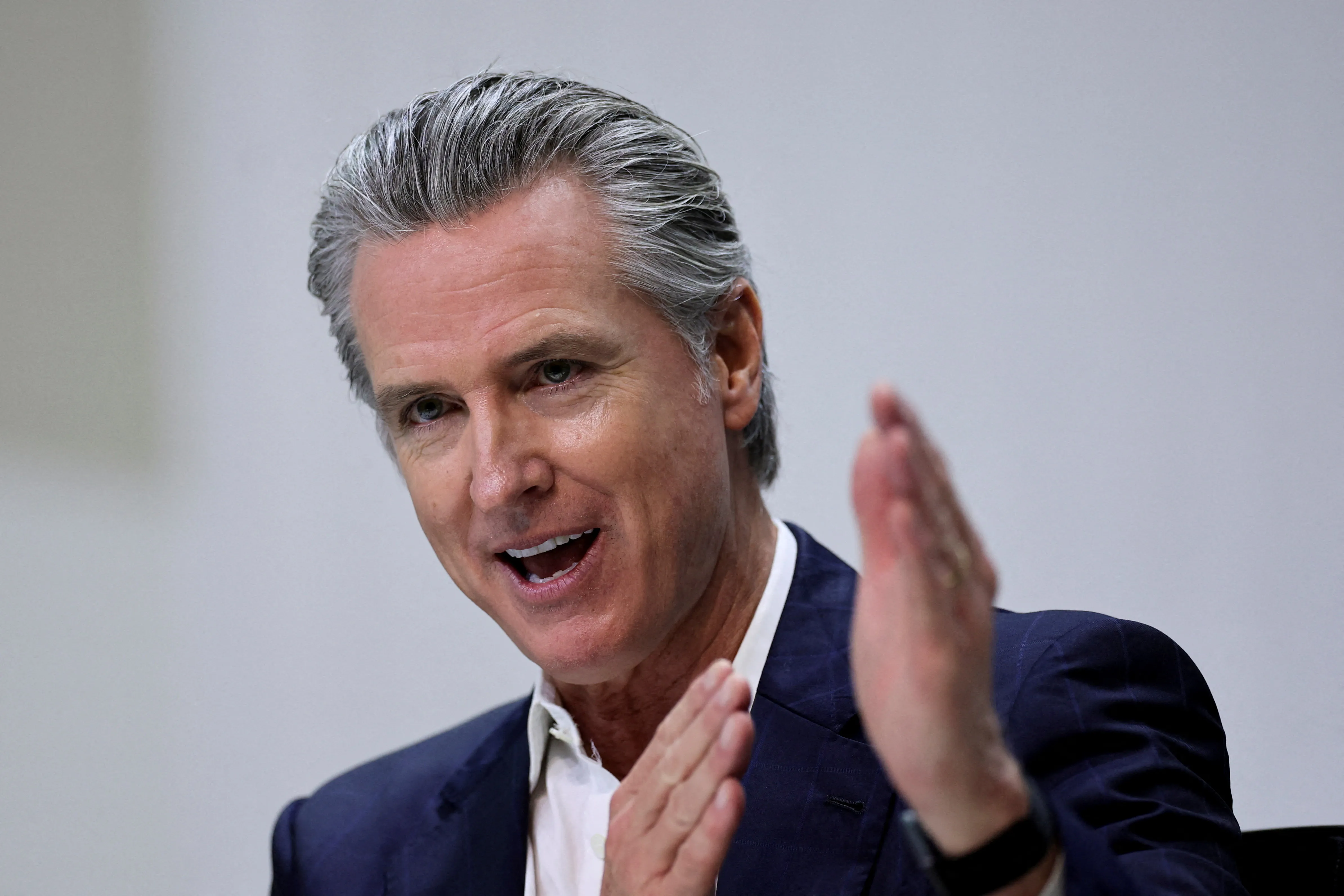
January 8, 2026
Daniel Cohen