The Latest
- Barack Obama's defense of the Iran nuclear agreement renews debate over diplomacy, sanctions relief, and the Iranian regime's support for terrorist organizations.
- Immigration enforcement and allegations involving Congresswoman Ilhan Omar raise questions about government transparency and consistent media scrutiny.
- Concerns about social media censorship and political reporting highlight ongoing debates over free speech and journalistic accountability.
- Brad Lander's controversial visit to Israel and violence near Hebron underscore tensions surrounding Israel's security and international political activism.
Real Life Network is a free, faith-based streaming platform offering biblically grounded teaching, documentaries, news, movies, and original programming. Sign up today.
Former President Barack Obama is back on the campaign trail as Americans prepare to vote on November 3, bringing renewed attention to his administration's record on Iran, immigration enforcement, and national security. Meanwhile, political controversies involving Congresswoman Ilhan Omar and congressional candidate Brad Lander are fueling broader questions about government transparency, media accountability, and America's relationship with Israel.
With elections approaching in both the United States and Israel, the consequences of political leadership extend beyond domestic policy. Decisions made in Washington affect American families, international security, and the lives of people facing threats across the Middle East.
On The Daniel Cohen Show, available through Real Life Network, these developments raise a central question: Are political leaders and the media giving Americans the full picture, or are important facts being lost in partisan narratives?
Obama's Iran Deal Returns to the Spotlight
As Obama campaigns for Democratic candidates, his defense of the 2015 Iran nuclear agreement has reignited debate over one of his presidency's most consequential foreign policy decisions.
The agreement, formally known as the Joint Comprehensive Plan of Action (JCPOA), was designed to restrict Iran's nuclear activities in exchange for sanctions relief. Obama has defended the arrangement as an example of diplomacy preventing a nuclear-armed Iran without military intervention.
Critics, however, argue that the agreement failed to address the broader threat posed by the Iranian regime.
One enduring controversy involves a $1.7 billion settlement paid to Iran in 2016, including an initial $400 million payment delivered in foreign currency. The Obama administration described the settlement as the resolution of a longstanding dispute over military equipment purchased before Iran's 1979 revolution.
Critics questioned the timing of the payment, which coincided with the release of American detainees, and raised concerns that money reaching Tehran could strengthen a government accused of financing terrorist organizations.
The distinction matters. The settlement itself is documented, but claims that specific payments directly financed particular terrorist attacks require evidence beyond the fact that Iran received the funds.
Nevertheless, the underlying concern remains significant.
Iran has supported militant organizations throughout the Middle East, including Hezbollah and Hamas, while continuing to pose security challenges for Israel and American interests.
The nuclear agreement also contained provisions under which certain restrictions would expire over time, prompting critics to question whether it offered a lasting solution.
The debate over Iran is ultimately about whether diplomatic agreements can effectively restrain a hostile regime while protecting Israel and America's national security interests.
For Israelis who have experienced missile attacks and repeated security alerts, these questions are not theoretical.
They affect families who must prepare for emergencies, communities living under the threat of violence, and military personnel responsible for protecting civilians.
Obama's return to the political spotlight has also renewed scrutiny of other controversies from his presidency, including the administration's initial public explanations following the 2012 Benghazi attack and his promises about Americans retaining their health insurance plans under the Affordable Care Act.
These episodes remain subjects of political debate, but they also underscore a broader principle: Public officials should be evaluated according to their records, not merely their ability to deliver persuasive speeches.
Immigration Enforcement, Ilhan Omar, and Media Accountability
Immigration enforcement has emerged as another major dividing line between the parties.
The Trump administration has emphasized deportations and border security as central components of its national security strategy. Supporters argue that enforcing immigration law is necessary to protect American communities and maintain confidence in the country's legal system.
Critics have raised concerns about due process, family separation, and the treatment of immigrants during enforcement operations.
The political debate becomes more complicated when considering the record of previous administrations.
During Obama's presidency, Immigration and Customs Enforcement conducted removal operations involving individuals who had entered the country unlawfully. His administration faced criticism from immigrant advocacy organizations for the scale of deportations.
That history complicates claims that immigration enforcement itself is a uniquely recent development.
Policies, priorities, and enforcement methods can differ substantially between administrations, but the federal government's responsibility to administer immigration law has remained.
The discussion also extends to Minnesota Congresswoman Ilhan Omar, whose personal background and immigration history have been the subject of longstanding political allegations.
Recent claims discussed on the program concern her identity, family relationships, and purported federal investigative activity. Such allegations are serious, but the transcript does not independently establish their accuracy.
Claims involving searches, seized documents, or possible criminal violations require confirmation through reliable court records or official statements before being reported as fact.
Public officials should be accountable for their conduct, but allegations must be distinguished from proven wrongdoing.
The same standard applies to the media.
Journalists have a responsibility to investigate legitimate questions involving elected officials without assuming guilt or dismissing allegations solely because of political affiliation.
A trustworthy press should apply consistent standards of evidence and scrutiny, regardless of whether the subject is a Republican or a Democrat.
That principle extends beyond immigration.
Cohen also raised concerns about social media moderation after describing restrictions on his own accounts while reporting on Israel and Hezbollah.
The broader debate over online speech involves competing concerns about misinformation, platform policies, public safety, and freedom of expression.
Private platforms have their own moderation rules, while government restrictions on speech raise distinct constitutional questions.
For Americans, understanding those distinctions is essential to evaluating claims about censorship and protecting meaningful public debate.
Israel, Political Activism, and the Responsibility to Tell the Truth
The final major issue concerns Israel and the growing political tensions surrounding its military operations and security policies.
New York congressional candidate Brad Lander traveled to the West Bank, where he participated in an olive harvest and was detained by Israeli authorities.
Lander described the incident as an example of the restrictions faced by Palestinians and those supporting them.
Israeli officials, according to the program, offered a different explanation, saying the group entered a restricted security area without the necessary coordination.
These competing accounts illustrate how quickly events in Israel become part of American political campaigns.
For some activists, visits to the West Bank provide opportunities to draw attention to Palestinian experiences and Israeli policies. Critics question whether certain high-profile visits are designed primarily to generate political publicity.
Determining what happened requires examining the circumstances of the detention, the applicable restrictions, and the accounts of those involved.
But political disagreements over Israel should not overshadow the continuing threat of violence.
The program also addressed a shooting attack near Hebron and criticized news coverage that Cohen believed failed to adequately identify the perpetrators or recognize the Israeli soldiers affected.
Reporting on such incidents requires precision. The identities of victims, the circumstances of an attack, and the evidence identifying those responsible should be verified rather than assumed.
The larger concern is how media coverage can shape public understanding of a conflict in which the language used to describe violence often becomes controversial.
For families mourning loved ones, the consequences are immediate and personal.
Israel's soldiers and veterans also face lasting physical and psychological challenges, particularly after prolonged military operations.
Organizations such as Friends of the Israel Defense Forces provide support for soldiers, veterans, wounded personnel, and bereaved families, including assistance related to rehabilitation and mental health.
These needs highlight the human costs of conflict that can be overlooked when public attention centers entirely on political arguments.
For Christians, the debate over Israel also invites reflection on the responsibility to pursue truth and justice.
Proverbs 26:24-26 warns about deception concealed beneath persuasive words, reminding readers that outward appearances do not always reveal a person's true intentions.
The passage should not become a license to assume hidden motives without evidence. Instead, it encourages discernment and a serious commitment to honesty.
That commitment applies equally to politicians, journalists, activists, and voters.
Biblical discernment requires Christians to examine competing claims carefully, reject deception, and refuse to let political loyalty determine what they accept as true.
As Americans prepare for November 3, questions about Iran, immigration, free speech, and Israel remain central to the national conversation.
The challenge is not simply deciding which political leaders are most persuasive. It is determining which claims are supported by evidence, which policies deserve scrutiny, and which principles should guide decisions affecting the nation.
Christians have an opportunity to participate thoughtfully, pray for those in authority, and evaluate public affairs through the lens of Scripture without confusing partisan allegiance with biblical faithfulness.
For continuing coverage of national security, Israel, and the issues shaping America's future, watch The Daniel Cohen Show on Real Life Network.
Real Life Network will also present America Speaks '26: Election Night Live on Tuesday, November 3, beginning at 8 p.m. Eastern / 5 p.m. Pacific, featuring election results, guests, and analysis from across the United States and Israel.
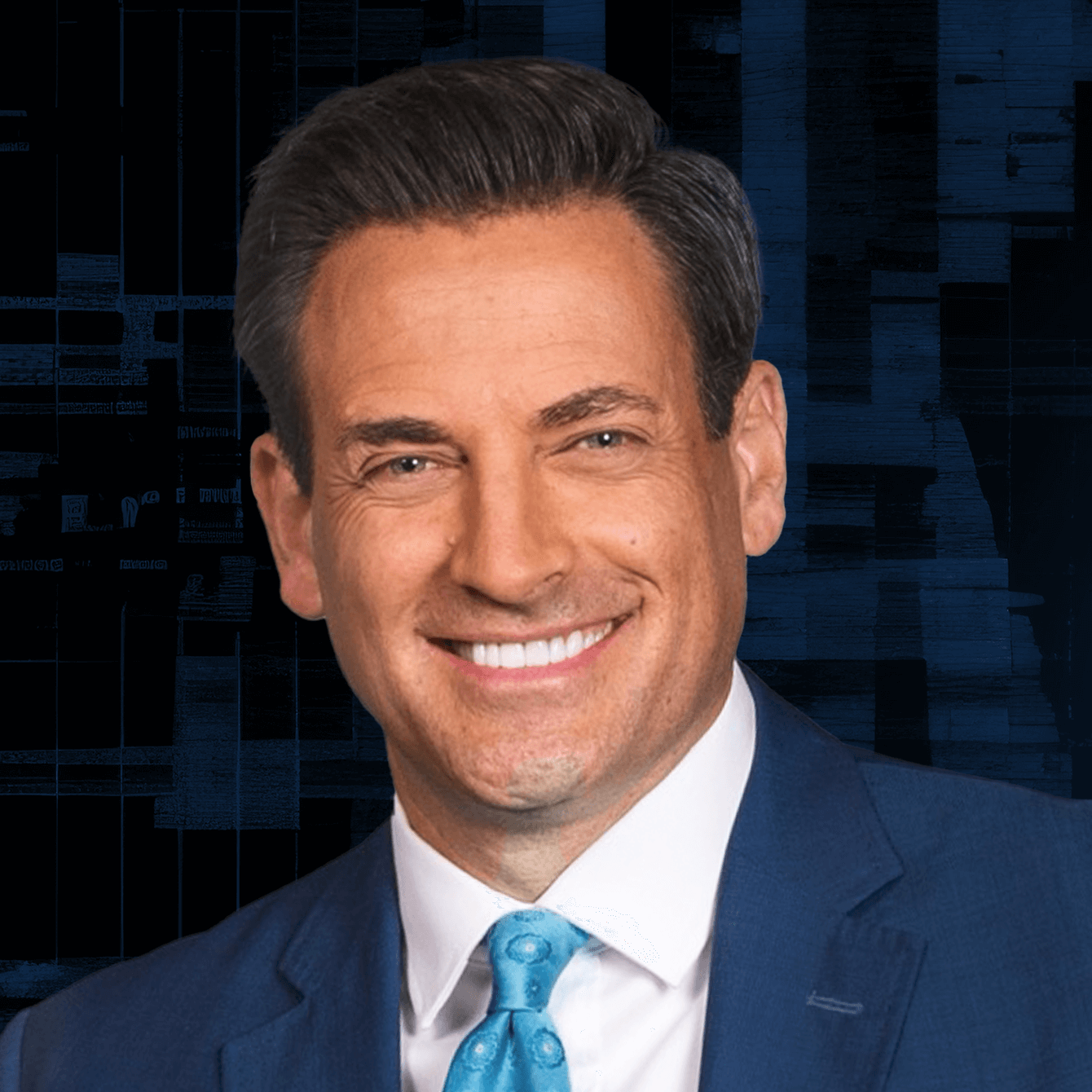
Daniel Cohen hosts the "Daniel Cohen Show" exclusively on the Real Life Network. A Jewish follower of Jesus and three-time Emmy award-winning journalist, Cohen delivers the news from Israel, reporting on today's top headlines with a biblical worldview.