News

World News
25 min

A Hungry Generation Is Looking for Something to Believe

A spiritually hungry generation is searching for something to believe. From religious liberty and cultural influence to Israel and politics, the question is not whether young people will be formed, but what will shape their understanding of truth.

Something is happening among younger Americans. Spiritual questions have not disappeared. If anything, a generation often described as secular appears increasingly interested in religion, spirituality, meaning, and transcendence. That hunger deserves attention because hunger alone does not determine what eventually satisfies it.

That is one reason conversations about faith, culture, religious liberty, Israel, and the institutions shaping the next generation matter. Real Life Network exists to bring a biblical perspective into precisely those conversations.

The central question is not whether young people will believe in something. Human beings inevitably build their lives around some understanding of truth, identity, morality, and purpose. The more important question is what will shape those beliefs.

Joshua put the choice plainly before Israel: “Choose for yourselves today whom you will serve.” There was no illusion of neutrality. Something would occupy the center.

A spiritually hungry generation will be formed by something. The question is what reaches it first.

Religious Freedom Has to Mean Religious Freedom

That question becomes especially important when families, schools, churches, and courts disagree about religious formation.

A recent Maine custody dispute illustrates how complicated those conflicts can become. The Maine Supreme Judicial Court upheld an order giving a father final decision-making authority concerning his daughter’s involvement with a particular Calvary Chapel congregation. The mother argued that the restriction violated her constitutional religious rights.

The details matter. The court rejected the characterization that it had determined Christianity itself was psychologically harmful. Instead, it said the lower court’s concerns involved messages the child received about her father and the effects of the parental conflict. That distinction deserves to be represented accurately even as the case raises significant questions about parental rights, religious upbringing, and how courts should navigate disputes involving faith.

Similar questions emerge in public schools.

Liberty High School in Frisco, Texas, recently faced scrutiny after a Muslim student organization reportedly described a school space as intended for Muslim prayer and said “only Muslims” would be allowed. Frisco ISD responded that the space is actually a “quiet room,” is not designated as belonging exclusively to one religion, and can be used for purposes other than prayer. District policy allows students of any faith to request reasonable opportunities for voluntary prayer.

That is the standard worth defending: equal religious liberty.

Christian students should be free to read Scripture, gather voluntarily, pray, and express their faith under the same rules that protect Muslim, Jewish, or other religious students. Religious liberty becomes unstable when society begins treating freedom of religion as something that must be protected for certain beliefs but restrained for others.

The answer to religious pluralism is not less religious freedom. It is the consistent application of religious freedom.

That principle matters because schools and courts do more than settle isolated disputes. They help establish the boundaries within which families and young people understand faith in public life.

Culture Is Competing for the Next Generation

The competition for belief extends well beyond churches and schools.

Entertainment, political movements, universities, influencers, social media personalities, and celebrities all participate in forming cultural assumptions. The influence can be especially powerful when it arrives as entertainment rather than instruction.

Consider the controversy surrounding actor Adam Brody. Brody, who stars as a rabbi in Nobody Wants This, recently told GQ that he considers Israel’s conduct in Gaza a “genocide” and expressed support for a free Palestine. GQ

That is Brody’s political position, and the characterization of Israel's conduct as genocide remains fiercely disputed. But the larger cultural question extends beyond one actor or one television program: what happens when entertainment, identity, politics, and moral formation become intertwined?

Audiences should be capable of encountering political opinions without automatically adopting them. The same standard applies across ideological lines. Celebrity does not establish truth. Popularity does not establish truth. A viral video does not establish truth.

Neither does political influence.

Rep. Ro Khanna recently called for Israel to release Marwan Barghouti, describing him as a potentially unifying Palestinian leader who could contribute to a peaceful Palestinian state. Barghouti, a prominent Fatah figure, is serving multiple life sentences after an Israeli court convicted him on five counts of murder connected to attacks during the Second Intifada. Barghouti rejected the court’s jurisdiction and denied the charges.

That creates a serious policy and moral debate. Supporters of Barghouti’s release view him as a potential political alternative in Palestinian leadership. Critics point to the murder convictions and argue that presenting his release as a path toward peace minimizes the victims and the violence for which he was convicted.

Those facts should not disappear behind political slogans.

The same principle applies to Israel and Gaza more broadly. October 7, Palestinian civilian suffering, Hamas’s actions, Israel’s military response, and the future of Palestinians and Israelis deserve serious examination rather than arguments inherited from celebrities, influencers, political parties, or social-media feeds.

Discernment begins when the source of an idea matters less than whether the idea is actually true.

Everyone Is Being Formed by Something

That brings the discussion back to spiritual hunger.

A generation searching for meaning is not necessarily a generation returning to biblical Christianity. Interest in spirituality can lead toward Christianity, but it can also lead toward astrology, manifestation, political ideology, personalized spirituality, or countless other belief systems. The transcript’s central argument is precisely that distinction: spiritual appetite and Christian revival are not automatically the same thing.    Pasted text

Christians should therefore resist two temptations.

The first is panic. Cultural change does not mean God has lost control.

The second is passivity. Confidence in God’s sovereignty has never meant indifference toward the formation of children, families, churches, or communities.

Parents are forming children. Teachers are forming students. Churches are forming congregations. Algorithms are forming users. Entertainment is forming audiences. Political movements are forming supporters. The question is not whether formation is happening. It is whether people recognize it.

Joshua’s challenge remains remarkably relevant: choose whom you will serve.

That choice reaches far beyond elections or partisan politics. It reaches into what is watched, what is believed, what is taught to children, what voices receive trust, what definitions of good and evil are accepted, and ultimately where authority is located.

A hungry generation is already at the table.

What matters now is what it is being fed.

‍

Find more biblical perspective on faith, culture, Israel, and the stories shaping the next generation on The Daniel Cohen Show, streaming free on Real Life Network.

World News
25 min

What Political Rhetoric Reveals About the People Who Use It

From political violence and media accountability to Iran, Israel, and disputes over Christian teaching, the stories dominating public life raise a common question: Can Americans disagree without abandoning truth, consistency, and human dignity?

Politics has always involved disagreement. A healthy country should be able to argue vigorously about taxes, foreign policy, abortion, immigration, health care, education, and the proper role of government without treating political opponents as enemies who deserve suffering or death.

That distinction matters because political rhetoric does not remain confined to television studios, campaign rallies, or social media.

A recent survey discussed on The Daniel Cohen Show asked Democratic respondents how they would react to a hypothetical headline announcing President Donald Trump had been assassinated at a rally. The transcript cites the results as evidence of a disturbing willingness among some Americans to respond positively to political violence.

A survey cannot establish that respondents would personally commit violence, and attitudes expressed in a poll should not be treated as evidence that an entire political party supports assassination. But even hypothetical approval of political murder should trouble Americans regardless of who the target is.

That principle has to work in every direction.

Political violence against Donald Trump is wrong. Violence against Democratic officials is wrong. Celebrating the murder of a conservative activist is wrong. Celebrating an attack on a progressive activist would be wrong.

A political culture becomes dangerous when disagreement is no longer enough and opponents have to be humiliated, harmed, or eliminated.

Political Violence Should Not Have a Party

The attempted assassination of Trump in Butler, Pennsylvania, demonstrated how quickly political hostility can become something much more serious. The transcript also points to the killing of Charlie Kirk and the continuing controversy surrounding responses to political violence.

The deeper question is what kind of culture develops when suffering itself becomes partisan.

The 2017 attack on Senator Rand Paul offers a smaller but revealing example. MSNBC anchor Kasie Hunt introduced coverage of Paul's injuries by calling the incident one of her “favorite stories,” before immediately clarifying her concern for the senator. Paul suffered six broken ribs in the attack. The comment generated criticism at the time, and Hunt apologized, saying she had chosen her words poorly.

That distinction matters. An irresponsible comment should not automatically be interpreted as proof that someone celebrates political violence. Corrections and apologies matter too.

But so does the underlying standard.

Nobody's broken ribs should become funny because of the letter beside his name. Nobody's assassination should become acceptable because of political hatred. And nobody's murder should become easier to dismiss because the victim belonged to the wrong ideological camp.

Christians should be particularly careful here. Human dignity does not disappear when someone votes differently.

The command to love one's enemies is most revealing when there actually are enemies to love.

Foreign Policy Exposes the Difference Between Slogans and Consequences

That same need for moral clarity appears in foreign policy.

At a University of Michigan event, Democratic Senate candidate Abdul El-Sayed was questioned by a student who described relatives suffering under Iran's government and asked about El-Sayed's previous comments concerning Iran and its leadership. El-Sayed responded that the United States should not pursue regime change and said he supports “freedom and democracy for the people of Iran,” while arguing that democratic change should come from Iranians themselves.

There is a legitimate policy debate underneath that exchange.

Opposing American-led regime change is not the same thing as supporting the Iranian government. American policymakers have debated intervention, sanctions, military force, diplomacy, and regime change for decades. But candidates asking voters for significant national authority should expect difficult questions about how their principles translate into policy when authoritarian governments repress their own citizens.

The same is true of Israel.

Missile defense can sound like an abstraction until a siren gives a family seconds to reach a shelter. Iron Dome is designed to intercept rockets and other airborne threats headed toward populated areas. Arguments over American support for the system therefore involve more than budget lines; they involve competing judgments about U.S. foreign policy, Israeli security, regional stability, and civilian protection.

Political language becomes much easier when the human consequences remain theoretical.

That reality became painfully tangible this week for Israeli Ambassador to the United States Yechiel Leiter. His son Neria, an IDF reservist, was seriously wounded in a car-ramming attack at a checkpoint in the West Bank. Another son, Moshe Yedidya Leiter, was killed in Gaza in November 2023.

Arguments over Israel, Iran, terrorism, and American foreign policy deserve serious debate. They also involve families for whom those debates are not academic.

Truth Still Matters When It Complicates the Argument

Political rhetoric becomes especially dangerous when facts are treated as raw material rather than constraints.

French President Emmanuel Macron provided a striking example at the United Nations this week when he said Hamas had “never operated” in the West Bank. A French official subsequently said Macron meant that Hamas had never governed the West Bank. Those are materially different claims. Hamas has operated in the West Bank even though it has not governed the territory.

Corrections matter because words matter, particularly when they come from heads of state discussing one of the world's most contentious conflicts.

The same principle applies closer to home.

CNN, MS NOW, and Politico recently sued the Trump administration after their reporters were barred from White House grounds. The administration defended the action by accusing the organizations of dishonest reporting; the outlets argued that exclusion based on their coverage violated constitutional protections. A federal judge has since temporarily ordered their access restored, finding that the outlets were likely to succeed on their claim that the credentials were revoked without constitutionally adequate due process.

That dispute raises legitimate questions about both government power and media responsibility. News organizations can and should be criticized when reporting is inaccurate. Government officials can and should face scrutiny when they use official authority against news organizations they dislike.

Neither principle requires abandoning the other.

Truth cannot become a partisan possession, defended when useful and discarded when inconvenient.

That standard also belongs inside the church.

The transcript raises theological questions about churches and political candidates who identify themselves as Christian while challenging historic Christian doctrines.  Those disagreements should ultimately be evaluated by Scripture rather than by whether a candidate has the preferred political affiliation.

Christianity is not infinitely adjustable. The virgin birth, bodily resurrection, identity of Christ, authority of Scripture, sin, repentance, and salvation are not campaign language to be reshaped around contemporary politics.

At the same time, theological disagreement should be represented accurately. Criticism is strongest when it addresses what someone actually teaches rather than exaggerating the position for political effect.

That principle connects every issue here.

Political violence. Media coverage. Iran. Israel. Churches. Presidential power. International diplomacy.

Different subjects, same responsibility.

Tell the truth about opponents. Refuse to celebrate their suffering. Examine claims before repeating them. Apply standards consistently. Remember the human beings living with the consequences of political decisions.

For Christians, political engagement should never require surrendering those obligations. Scripture does not permit hatred simply because the stakes feel high. It does not permit dishonesty because the other side is dishonest. And it does not allow political allegiance to determine who deserves dignity.

Politics reveals plenty about candidates and parties.

How people speak about their opponents can reveal even more.

‍

Real Life Network provides biblically grounded programming examining faith, culture, and current events. Watch The Daniel Cohen Show for more conversations about the stories shaping American and international life.

World News
25 min

Trump’s Greenland Deal, the White House Press Ban, and a Question of Accountability

Trump’s Greenland security agreement and the White House’s clash with major news outlets raise broader questions about national security, media credibility, accountability, and the responsibility to tell the full story.

A nation cannot function without trust.

Citizens have to trust that leaders are thinking beyond the next news cycle. Governments have to anticipate threats before those threats become emergencies. Journalists have to report facts accurately enough that the public can distinguish information from advocacy. And when institutions make mistakes, accountability matters.

That standard becomes especially important when the stakes involve national security.

The United States, Denmark, and Greenland have reached a new Arctic security agreement intended to strengthen Greenland's defenses and restrict adversarial powers from establishing military bases or making sensitive strategic investments on the island. President Donald Trump has described the arrangement as giving the United States permanent security rights there, although Denmark and Greenland have emphasized that Greenland remains under its existing sovereignty and the precise terms are still emerging.

Months ago, much of the public conversation surrounding Greenland sounded almost absurd. Late-night comedy made Trump's interest in the island a punchline, while critics questioned why the United States should care so much about a vast Arctic territory.

Now the strategic argument is much harder to dismiss.

Greenland sits in an increasingly important Arctic region where Russia and China have strategic interests. The new arrangement reportedly expands America's ability to operate militarily there while preventing non-NATO countries from establishing sensitive footholds.

The lesson is larger than Greenland.

Prudence sometimes means preparing for a danger before everyone else agrees that the danger is real.

Proverbs 22:3 says, “A prudent man foresees evil and hides himself, but the simple pass on and are punished.”

That principle does not require accepting every government claim or supporting every proposed national-security measure. It requires taking threats seriously enough to examine them before a crisis removes the luxury of preparation.

September 11 remains the clearest American example of what happens when seemingly distant threats become immediate realities. Nearly 3,000 people were killed that morning. The lesson should not be that every warning proves correct. It should be that responsible leadership has to consider possibilities the public would rather never imagine.

A Free Press Still Has to Be a Trustworthy Press

The question of institutional trust becomes more complicated when applied to the media.

The Trump administration recently barred CNN, MS NOW, and Politico journalists from White House grounds and confiscated their credentials. Trump accused the organizations of publishing “fake news.” The three outlets have now sued the administration, arguing that their exclusion violates the First Amendment and that access was revoked in retaliation for unfavorable coverage.

Those facts create two questions that should not be collapsed into one.

The first is whether news organizations deserve criticism when their reporting is inaccurate, incomplete, or driven by political assumptions. Of course they do. Journalism possesses enormous power to shape what millions of Americans believe happened. Errors should be corrected, important context should not be deliberately omitted, and political figures should face comparable scrutiny regardless of party.

The second question is whether a president can revoke journalists' White House access because the administration believes their reporting is dishonest or unfair. That is now a constitutional dispute before the courts. The affected organizations argue that government cannot condition press access on favorable coverage, while the administration defends its ability to determine who receives access to White House facilities.

Both questions matter.

Freedom of the press and accountability for the press are not competing principles. A free press should be vigorously protected precisely because its responsibility to tell the truth is so consequential.

That responsibility includes resisting selective standards.

Donald Trump's 2017 comments following the Charlottesville violence remain a useful example of how context can become part of a political dispute. Trump did say there were “very fine people on both sides” while discussing people involved in the controversy surrounding Confederate monuments. In the same remarks, he explicitly said he was not referring to neo-Nazis and white nationalists and said they should be “condemned totally.”

That fuller context does not resolve every legitimate criticism of Trump's response to Charlottesville. Critics have argued that his broader remarks still minimized the nature of the Unite the Right rally and created an inappropriate equivalence. But accurately evaluating the controversy requires presenting what was actually said rather than removing inconvenient portions of the statement.

The same standard should apply to every president.

Journalists should scrutinize Republican administrations. They should scrutinize Democratic administrations. They should investigate political claims rather than protect preferred narratives. And audiences should be willing to correct themselves when evidence contradicts what they wanted to believe.

Trust disappears when people conclude that facts are being filtered according to who benefits from them.

When the Victim Disappears From the Story

That problem extends beyond Washington.

Media framing determines more than how people understand politicians. It can determine whose suffering remains at the center of a tragedy.

The transcript points to the killing of 23-year-old Ukrainian refugee Iryna Zarutska on Charlotte's light rail and subsequent coverage involving the accused killer's family.  The broader concern is worth considering carefully: compassion for mental illness should never require forgetting the victim of a violent crime.

Mental illness is real. Families trying to help severely mentally ill relatives can endure extraordinary hardship. Criminal courts also have established procedures for determining whether mental illness affects legal responsibility.

But compassion and accountability are not mutually exclusive.

A victim has a name. A family has suffered a loss. A community has been wounded. Those facts should not disappear simply because another part of the story raises difficult questions about mental health, criminal justice, or failures in the systems surrounding an accused offender.

A compassionate society should be capable of caring about mental illness without allowing the person who suffered the violence to vanish from the story.

That principle reaches well beyond crime reporting.

Every institution tells stories. Governments tell citizens which dangers deserve attention. Political parties tell voters which problems matter. Media organizations decide which facts lead a broadcast and which appear near the bottom of an article.

Christians should therefore develop habits that go deeper than simply choosing which institution to trust.

Ask what happened. Examine the complete statement rather than the viral clip. Distinguish established facts from allegations. Look for missing context. Pay attention to the people most directly affected. Apply the same standard when the facts help a preferred political side and when they hurt it.

Most importantly, remember that truth does not become more or less true depending on who benefits from it.

National security requires foresight. Journalism requires accuracy. Justice requires accountability. Compassion requires remembering the human beings affected by our political and cultural arguments.

None of those responsibilities belongs exclusively to the left or the right.

A biblical worldview should make truth more important than either.

That is why Real Life Network and The Daniel Cohen Show continue examining the stories shaping American life through questions of truth, faith, culture, and responsibility.

World News
25 min

Hyde Amendment Approaches 50th Anniversary Having Saved almost 3 Million Babies

As the Hyde Amendment approaches its 50th anniversary, lawmakers and pro-life advocates are reflecting on its history, its impact on federal abortion funding, and the continuing debate over abortion policy in America.

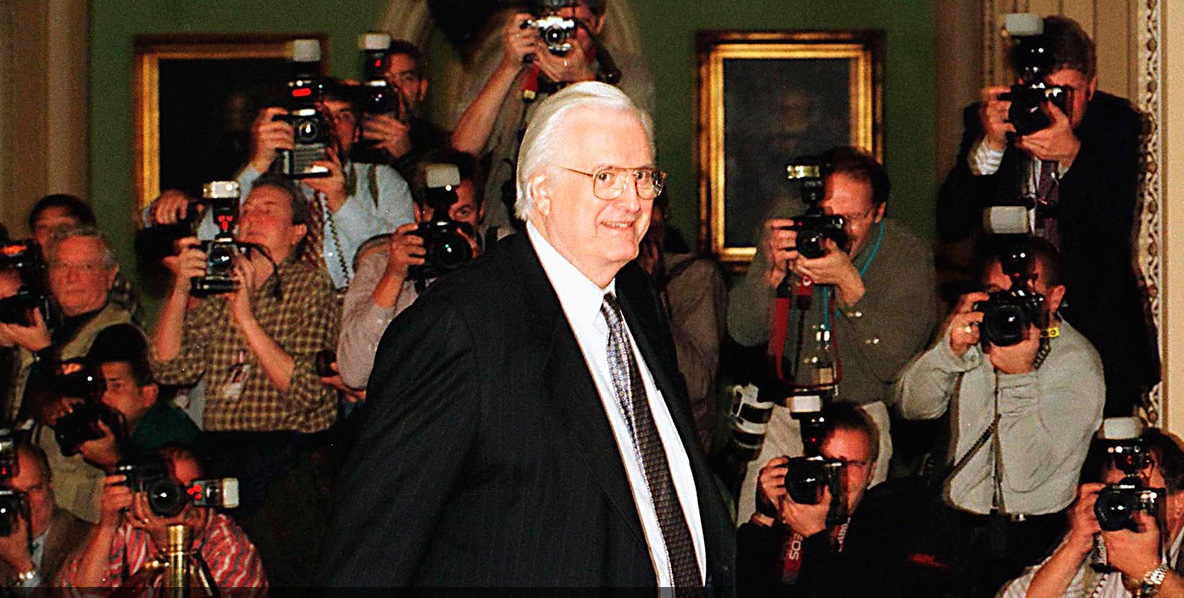
“An innocent, defenseless human life, in a caring and humane society, deserves better than to be flushed down a toilet or burned in an incinerator.” Such are the words of Henry Hyde, the former U.S. congressman from Illinois who tirelessly championed life and introduced the Hyde Amendment in 1976. Almost 50 years later, the legislative rider faces the opportunity to be renewed again.

For a half-century, the Hyde Amendment has stopped taxpayer dollars from funding abortion.

On Wednesday evening, Rep. Chris Smith (R-N.J.), co-chair of the Congressional Pro-Life Caucus, hosted a Special Order on the House floor to acknowledge the upcoming 50th anniversary of the Hyde Amendment on September 30. “The promise of America is that life is not just for the privileged, the planned, or the perfect,” Smith said, quoting Hyde. “This may sound odd, even ironic; you are here in the flush of victory. And yet it is precisely now that I ask you to contemplate the possibility of defeat, perhaps even the necessity of defeat. If you don’t know the principle or the policy for which you are willing to lose your office, then you are going to do damage here.”

Quena González, senior director of Government Affairs at Family Research Council, explained to The Washington Stand that Smith and Hyde have a history. “Representative Chris Smith served with Representative Henry Hyde for 26 years; he’s been a tireless defender of the unborn in Congress for 45 years and comes as close as anyone to carrying Hyde’s inimitable mantle.”

After the Roe v. Wade decision in 1973, the U.S. government paid for an estimated 300,000 abortions each year via Medicaid. According to the Charlotte Lozier Institute, since the Hyde Amendment’s first enactment in 1976, approximately 2.7 million lives have been saved.

During Wednesday’s event, Rep. Chip Roy (R-Texas) asserted that society has a duty to protect the unborn. “Life matters. Who are we as a people if we cannot stand up in defense of the most innocent form of life there is — a child in the womb of its mother? That should be our calling. And we should be able to unite as human beings in defense of the defenseless.”

Legislative Assistant for FRC’s Government Affairs Chantel Hoyt praised what House members shared during the Special Order. “I appreciated seeing Representative Chip Roy connect this important anniversary to the toll that chemical abortion is taking,” she told TWS. “It’s encouraging to see members like Representative Chris Smith carrying on Henry Hyde’s legacy and seeking to not only retain but build on the protections of the Hyde Amendment.”

Rep. Tracey Mann (R-Kan.) observed during the House event that he believes that abortion is not consistent with the Constitution. “Hyde should not be viewed as the finish line for the pro-life movement. It’s the floor. It’s a bare minimum compromise,” he shared. “America is founded on the self-evident truth that every person is created equal and endowed with our creator with an inherent right to life. That right is the foundation of every other right that we enjoy. As a father, I believe that every child is fearfully and wonderfully made by God. Every life has value, every child has purpose, and no child is a mistake.”

The Special Order and Hyde Amendment anniversary come at a time when chemical abortion has become a hot button issue on Capitol Hill. Pro-life politicians, lobbyists, and organizations continue to work tirelessly to ban the abortion drug mifepristone. “It’s always great to see members of Congress speak on the floor in defense of life, but especially now as we are urging the Trump administration to take action on chemical abortion to protect mothers and their babies,” Hoyt concluded.

This article was originally written by Quinn Delamater and published on The Washington Stand. For more content like this, visit Real Life Network.

World News
25 min

Who Has the Authority? Government, Families, and the Institutions Americans Are Asked to Trust

Election security, immigration, parental rights, and political power raise a common question: Who has authority, and what happens when government institutions move beyond their proper boundaries?

A healthy society depends on institutions that understand both their responsibilities and their limits. Elections require rules voters can trust. Immigration requires laws that can be enforced while treating people with dignity. Schools and child-welfare agencies exercise enormous power, but parents retain profound responsibilities toward their children.

These debates may look unrelated. They are not.

Running through each is the same fundamental question: Who has authority, where does that authority come from, and what happens when institutions move beyond their proper boundaries?

For Christians, authority is neither meaningless nor absolute. Government has a legitimate role. Parents have a legitimate role. Laws matter. Compassion matters. And none of those principles should be rewritten simply because the political circumstances have changed.

That framework is increasingly important in an America where arguments over election administration, immigration, parental rights, and political power are testing public trust from several directions.

Trust Requires Rules That Apply Consistently

The Supreme Court recently blocked the Trump administration from implementing new Postal Service requirements for mail ballots before the 2026 midterms. The proposed system would have required states to provide lists of eligible voters and use USPS-approved, barcoded ballot envelopes. The Court divided 7-2, with Justices Clarence Thomas and Samuel Alito dissenting. Justice Brett Kavanaugh indicated there was a reasonable argument that the Postal Service possesses authority to impose some requirements, but concluded that changing procedures this close to voting risked significant disruption.

There are legitimate disagreements over the proposal. The administration presented additional verification as an election-integrity measure. Opponents argued that the Postal Service was assuming authority traditionally exercised by states and that last-minute changes could prevent legitimate ballots from being counted.

Those arguments deserve more than slogans.

Election integrity and voter access do not have to be enemies. Americans should be able to expect systems that verify lawful votes while also ensuring lawful voters can participate. Confidence deteriorates when either concern is dismissed simply because it is associated with the other political party.

Trust cannot survive indefinitely when rules are treated as essential under one set of political circumstances and disposable under another.

The same principle applies to immigration.

The Trump administration has expanded the federal government's consideration of public benefits when determining whether certain immigrants qualify for permanent residency. New York City Mayor Zohran Mamdani is leading a coalition of local governments challenging the new public-charge rule, while New York Attorney General Letitia James is leading a separate state lawsuit. The plaintiffs argue that the rule exceeds federal authority and could discourage immigrant families from using health care and nutrition programs for which they are legally eligible. The administration argues that the policy promotes self-sufficiency and reduces dependence on public assistance.

The legal dispute will work its way through the courts. The broader question is worth considering now: What obligations accompany legal immigration, and what obligations does a nation have toward those it admits?

Scripture commands God's people to treat the stranger with justice and compassion. It also recognizes governments, nations, boundaries, and civil authority. Biblical compassion cannot be reduced to a slogan for one immigration policy any more than biblical order can be used to excuse mistreatment of immigrants.

Hospitality and order are not inherently contradictory.

When Government Authority Enters the Home

Nowhere does the question of authority become more personal than when the government intervenes between parents and children.

Joseph and Arlene Kutzko, a Catholic couple in Massachusetts, are fighting a legal battle involving their teenage daughter, Sophie. The parents say Algonquin Regional High School supported their daughter's male gender identity without their knowledge and that their religious objections later became intertwined with a child-welfare dispute. Sophie was removed from their custody in 2024, and the parents say they have since been prevented from maintaining contact with her.

The case includes important details that should not be ignored. An allegation of physical abuse against the father was reportedly found unsupported, according to recent reporting and the family's legal advocates. The family is now seeking to prevent testosterone treatment while pursuing its custody claims; treatment has reportedly been paused while litigation continues.

The family's account has become part of a much larger national disagreement over parental rights, gender identity, medical treatment for minors, religious liberty, and the circumstances under which child-welfare authorities should intervene.

Those are serious questions precisely because the state sometimes must intervene. Children can genuinely suffer abuse and neglect, and government has a legitimate responsibility to protect them.

But that extraordinary power also requires extraordinary care.

Parents should not automatically lose their authority simply because their religious or moral convictions conflict with prevailing cultural beliefs. At the same time, disagreements over a child's care cannot by themselves establish every fact in a contested custody case.

The power to protect children must never quietly become the power to require ideological conformity from their parents.

For Christians, parenthood is not merely a legal status granted by government. Scripture repeatedly places responsibility for the instruction and formation of children upon families. Government can protect children from genuine harm, but it should approach replacing parental judgment as an exceptional intervention, not an ordinary solution to ideological disagreement.

That distinction matters far beyond Massachusetts.

Political Power Is Not the Highest Authority

The question of authority also appears inside political parties themselves.

The Democratic National Committee has officially changed its early presidential-primary calendar for 2028. South Carolina will vote first, followed by Nevada, New Hampshire, New Mexico, Michigan, and Virginia. The DNC says the calendar gives a more representative mix of voters an early role and better tests candidates across diverse constituencies and battleground states.

The change will inevitably affect campaign strategy. South Carolina's large Black Democratic electorate and Nevada and New Mexico's Latino populations will matter earlier than under the old Iowa-and-New Hampshire-centered system. But it is too early to know which prospective candidate, if any, will ultimately benefit most.

That uncertainty is important. Politics tempts people to treat every institutional decision as evidence of a predetermined outcome. Christians should resist that impulse just as strongly as they resist political naivete.

Political parties pursue power. Candidates pursue office. Governments exercise authority. Courts interpret law. None deserves the kind of unquestioning allegiance that belongs to God.

That should produce Christians who can think clearly rather than react predictably.

A Republican administration should not receive automatic approval merely because it invokes election integrity, immigration enforcement, or parental rights. A Democratic official should not receive automatic approval merely because a policy is presented in the language of compassion, democracy, or inclusion. Every claim still has to be examined.

Proverbs 14:34 provides a standard much older than any American political coalition: “Righteousness exalts a nation, but sin is a reproach to any people.”

That standard does not change with election results.

Christian political discernment begins when truth matters more than protecting a party, an institution, or a preferred political narrative.

Government matters. Elections matter. Borders matter. Parents matter. Protecting children matters. So do due process, compassion, religious liberty, and the rule of law.

The difficult work is refusing to sacrifice one principle whenever another becomes politically convenient.

That is why Christians need more than political instincts. They need a biblical framework capable of asking not merely, Which side is doing this? but Is this true? Is it just? Is authority being exercised within its proper limits? And does the standard remain the same when political power changes hands?

Those are the questions worth continuing to ask through Real Life Network and The Daniel Cohen Show, where the headlines are examined alongside the deeper questions of faith, culture, government, and truth.

World News
25 min

When Nothing Is Sacred, Everything Becomes Political

From the solemnity of September 11 to the use of Scripture in politics, America faces a deeper question about what it still considers sacred. Christians are called to respond with compassion, biblical discernment, and the courage to stand for truth.

There are moments that should transcend politics.

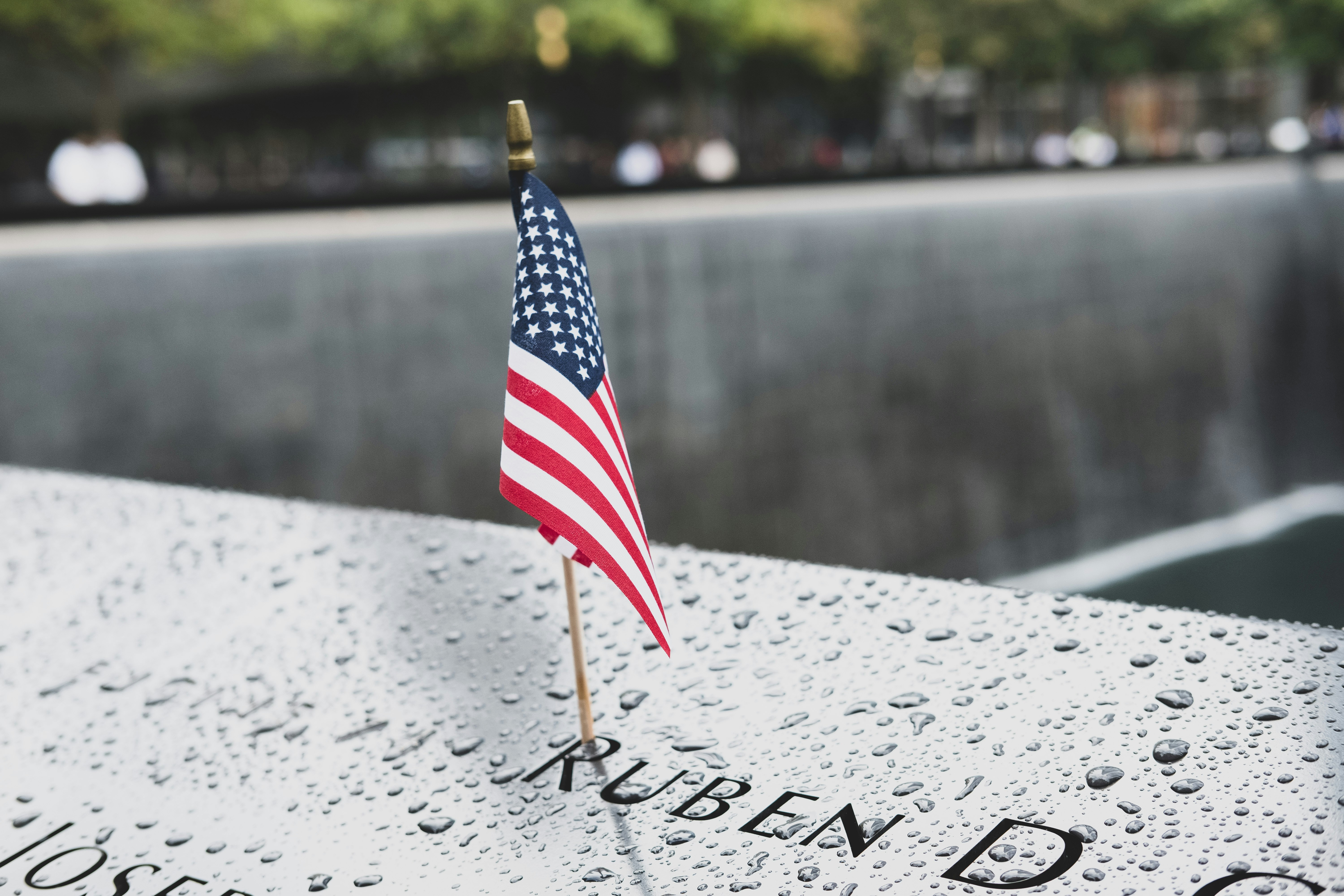
A memorial honoring nearly 3,000 Americans murdered on September 11 should be one of them. It should be a place for grief, remembrance, gratitude, and reverence. Families who have carried that loss for 25 years deserve something increasingly rare in American public life: a moment in which their pain is not reduced to another political opportunity.

That is why images of Alexandria Ocasio-Cortez and New York City Mayor Zohran Mamdani smiling and laughing together during the 25th anniversary commemoration drew criticism. A photograph cannot reveal the context of every conversation or establish what prompted a smile. But juxtaposed with grieving families at Ground Zero, the moment raised a larger question worth asking: Does American culture still recognize that some things should be treated as sacred?

These are exactly the kinds of cultural questions worth examining on Real Life Network and The Daniel Cohen Show, where the headlines are considered alongside the biblical truths that should shape how Christians understand them.

Leadership Requires More Than the Right Policies

Public leadership is not merely about legislation, budgets, speeches, or elections. Leadership also requires understanding the human consequences behind public events.

That principle extends far beyond a single 9/11 ceremony.

When thirteen American service members were killed during the 2021 withdrawal from Afghanistan, controversy followed images of President Joe Biden appearing to check his watch during the dignified transfer ceremony at Dover Air Force Base. Biden later disputed some characterizations of the moment, but Gold Star families publicly described feeling disrespected.

Politics can make people remarkably selective about empathy. When someone on the other side suffers, compassion becomes conditional. When an uncomfortable tragedy threatens a preferred narrative, attention shifts somewhere else.

Christians cannot adopt that standard.

Human dignity does not change according to political usefulness. A child killed in an act of violence matters. A soldier returned home in a flag-draped casket matters. A family still grieving someone murdered on September 11 matters. An immigrant victim matters. An American citizen victim matters. Political affiliation does not determine the value of a human life.

A healthy society should be capable of looking at suffering and seeing a human being before seeing a political opportunity.

Jesus warned that a time would come when “the love of many will grow cold” (Matthew 24:12). That description should make Christians examine more than the behavior of politicians. It should make believers examine their own hearts.

Have politics made compassion selective? Has outrage become entertainment? Have human tragedies become useful primarily when they help defeat the other side?

If so, something far more important than an election is being lost.

Biblical Language Cannot Become Political Branding

The same problem appears when Christianity itself becomes a political instrument.

Texas politician James Talarico has increasingly incorporated Christian language into his political message. In one recent appearance, he invoked Matthew 25 while arguing that Jesus would condemn senators over food assistance, Medicaid, and deportations.

Christians should welcome politicians talking seriously about Scripture. But biblical vocabulary does not automatically make an argument biblical.

Matthew 25 unquestionably demonstrates Christ's concern for the vulnerable. Christians should care about hungry people, strangers, the sick, prisoners, and those suffering around them. But translating those commands directly into support for a particular government program requires an additional political argument. Christians can share the same biblical concern while disagreeing about which policies best address it.

The same principle applies to immigration.

Scripture repeatedly commands God's people to care for foreigners and strangers. Scripture also recognizes nations, governing authorities, boundaries, and civil order. Romans 13 gives government genuine authority, while Acts 17:26 speaks of God determining nations and their dwelling places.

Neither side gets to erase the passages that complicate its politics.

Scripture should judge political convictions. Political convictions should never be allowed to rewrite Scripture.

That requires biblical literacy.

A politician who can quote a verse fluently may still misuse it. A conservative can misuse Scripture just as easily as a progressive. Christians who know only fragments of the Bible become vulnerable to anyone capable of wrapping a political agenda in Christian vocabulary.

Read the Word. Know the context. Test the argument.

Courage Means Refusing to Follow the Crowd

There is another quality disappearing from American life: the courage to stand alone.

The Lindsay Clancy case offers a difficult example. Clancy admitted killing her three young children but mounted an insanity defense. Her 2026 trial ended in a mistrial after eleven jurors favored acquittal and one juror held out.

According to another juror who later discussed the deliberations publicly, the lone holdout was a Black man.

Whatever conclusions people reach about the complicated legal questions surrounding mental illness and criminal responsibility, there is something worth recognizing in anyone willing to maintain a sincerely held conviction while an entire room pressures him to surrender it.

Standing with the crowd is easy. Standing alone costs something.

That lesson reaches far beyond a courtroom.

Christians will increasingly encounter moments when biblical convictions are unpopular, unfashionable, or professionally inconvenient. There will be pressure to remain silent because speaking could cost friendships, opportunities, influence, or reputation.

Conviction means deciding beforehand that truth matters more.

That does not grant permission to be reckless or cruel. Courage without humility quickly becomes arrogance. But humility without courage can become cowardice disguised as kindness.

Christian conviction requires both: the humility to recognize when we are wrong and the courage to stand when God's truth is clear.

America does not merely need better political messaging. It needs adults capable of recognizing sacred things, leaders who understand the human cost of their decisions, Christians who know Scripture well enough to recognize when it is being manipulated, and ordinary people willing to stand for truth when standing becomes uncomfortable.

Politics will continue changing. Candidates will come and go. Headlines that seem enormous today will eventually disappear.

The deeper question is what kind of people Americans are becoming in the process.

When nothing is sacred, everything becomes political. Christians should resist that transformation by recovering reverence, compassion, biblical discernment, and courage.

Continue examining the cultural and political stories shaping America through a biblical worldview on The Daniel Cohen Show, streaming free on Real Life Network.

Select Category
Sort By:
Thank you! Your submission has been received!
Oops! Something went wrong while submitting the form.
World News
25 min

In today’s online news, politics, and Christian streaming environment, questions of authority, accountability, and truth are converging in ways that are becoming harder to ignore. On Real Life Network and through The Daniel Cohen Show, viewers are engaging with analysis that connects biblical truth to the most pressing headlines. From the indictment of former FBI Director James Comey to broader questions about justice, leadership, and global instability, these stories are not isolated. They reveal a deeper pattern about how power is exercised and how truth is handled in the modern age.

This is not simply about one individual. It is about a system.

Accountability and the Question of Power

For years, Americans have heard a consistent message. No one is above the law. That principle is foundational to the nation’s identity. It reflects the belief that justice should be applied equally, regardless of position or influence.

Now, that principle is being tested.

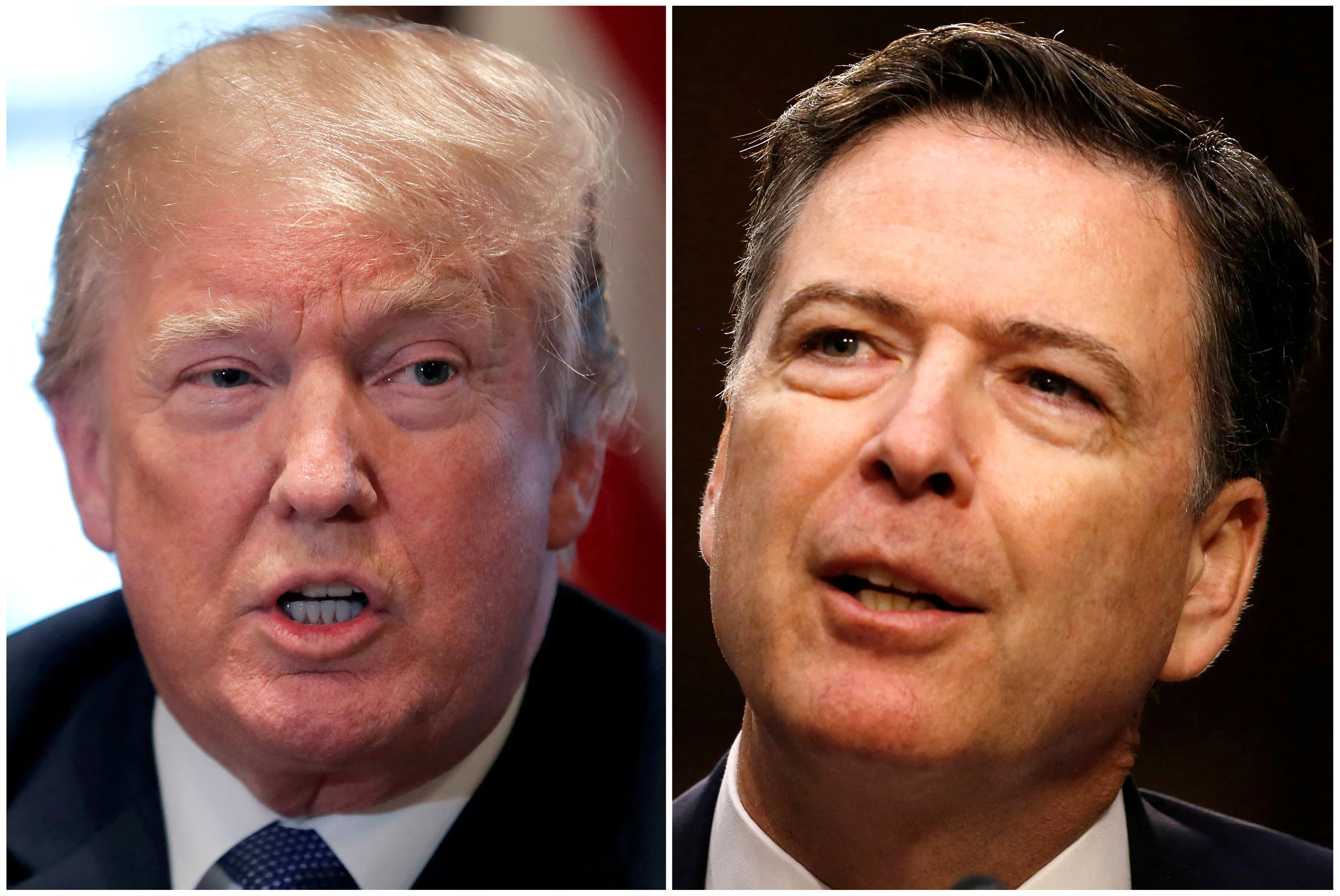
The indictment of former FBI Director James Comey represents a moment that goes beyond legal proceedings. It raises a larger question about whether accountability applies equally at every level of leadership. The charges stem from actions that are now being examined through the lens of federal law, with potential consequences that are significant.

At the same time, it is important to recognize the distinction between an indictment and a conviction. The legal process is designed to evaluate evidence and determine truth through due process.

Accountability is not declared in headlines. It is established through truth tested over time.

This moment reflects more than a legal case. It reflects a shift in how authority is being viewed. When institutions that once operated with little scrutiny begin to face examination, it signals a change in public expectation.

That expectation is rooted in fairness.

For deeper analysis grounded in truth and a biblical worldview, continue watching on Real Life Network and The Daniel Cohen Show.

Trust, Media, and the Shaping of Perception

Beyond the legal case, there is a broader issue that continues to surface. Trust in media and institutions has been declining for years. That decline is not based on a single event. It is the result of repeated moments where perception and reality appear misaligned.

When narratives are presented in ways that omit key details or emphasize selective information, the result is confusion. Over time, that confusion leads to skepticism.

When people begin to question whether they are being told the full truth, trust does not fade slowly. It breaks.

This breakdown in trust creates a fragmented information environment. Individuals turn to sources that reinforce their existing beliefs, rather than challenge them with balanced perspectives.

The consequences are significant.

A society without a shared understanding of truth struggles to engage in meaningful dialogue. Differences become amplified. Common ground becomes harder to find.

This is why clarity is essential.

It is not enough to simply consume information. It must be evaluated carefully, consistently, and through a framework that prioritizes truth over narrative.

Stay grounded in clear, biblically rooted analysis through Real Life Network and The Daniel Cohen Show.

Global Signals and Cultural Direction

While domestic issues dominate headlines, global developments continue to send important signals about the direction of the world. Decisions made on the international stage often reflect deeper priorities and values.

Recent developments involving global institutions and leadership choices highlight a growing tension between stated goals and actual outcomes. When organizations tasked with maintaining stability make decisions that appear contradictory, it raises questions about consistency and credibility.

When leadership decisions contradict stated values, confidence in those institutions begins to erode.

At the same time, economic pressures and policy decisions are affecting everyday life. Rising costs, shifting energy strategies, and regulatory environments are shaping how people live and work.

These realities are not disconnected.

They are part of a larger pattern that reflects how leadership choices impact both national and global outcomes. Understanding that pattern requires more than observation. It requires discernment.

A biblical worldview provides that discernment.

It emphasizes truth, accountability, and stewardship. These principles offer a consistent lens through which to evaluate both cultural and geopolitical developments.

In a moment where legal accountability, media trust, and global instability are intersecting, the need for clarity has never been greater. The stories shaping the world are complex, but the principles needed to understand them remain constant.

Truth matters.

And the ability to recognize it is essential.

For more biblically grounded content that helps you navigate today’s most important issues, visit Real Life Network and watch The Daniel Cohen Show.

The Hope of the Gospel

Amid shifting institutions, cultural uncertainty, and questions of justice, Scripture directs attention to a deeper truth. The greatest need is not simply better systems or more effective leadership. It is reconciliation with God.

The Bible teaches that all people have sinned and are separated from Him. This separation cannot be resolved through human effort or any institution. No system can restore what has been broken.

But God has provided a way.

Jesus Christ lived a perfect life, died on the cross for sin, and rose again. Through Him, forgiveness is offered to all who repent and believe. This is not earned. It is given by grace.

This truth transforms everything.

A changed heart leads to changed action. A renewed mind leads to a renewed perspective. The clarity that society seeks begins with truth found in Christ.

In a world searching for answers, the gospel provides what nothing else can. Truth that remains and hope that endures.

‍

Related Articles

Comey Indictment and the Crisis of Trust in Media, Government, and Global Leadership

The indictment of a former FBI director raises deeper questions about accountability, media trust, and global leadership. This article examines how these moments connect and why a biblical worldview is essential.

April 30, 2026
World News
25 min

In today’s online news, politics, and Christian streaming landscape, the connection between rhetoric, political violence, and cultural division is becoming impossible to ignore. On Real Life Network and through The Daniel Cohen Show, viewers are engaging with analysis that moves beyond headlines to examine truth, media influence, Israel, and the direction of the United States. From the attempted assassination at the White House Correspondents' Dinner to the broader pattern of language used by political leaders, media figures, and cultural influencers, these moments are not isolated. They reveal a deeper issue that demands discernment through a biblical worldview.

This is not simply about one incident. It is about the environment that surrounds it.

When Words Move Beyond Debate

The attempted assassination involving Cole Allen is not just a story about one individual. It is a moment that forces a larger question. How does language shape action?

Allen’s manifesto was not chaotic or incoherent. It was structured, deliberate, and clear in its intent. He used language that has been repeated across media platforms, political speeches, and public commentary for years. Terms such as criminal, traitor, and other accusations have become normalized in public discourse.

That normalization matters.

When language consistently frames a person as irredeemably dangerous, it can shape how others justify action.

This is not an argument about disagreement. Disagreement is part of a functioning society. The issue arises when disagreement turns into dehumanization. When opposition is no longer seen as wrong, but as evil beyond correction.

History shows where that path can lead.

At the same time, there has been a reluctance in some circles to acknowledge the connection between rhetoric and outcome. Even when a manifesto is made public and motives are stated clearly, the conversation often shifts away from accountability and toward deflection.

That disconnect only adds to the problem.

For more analysis grounded in truth and a biblical worldview, continue watching on Real Life Network and The Daniel Cohen Show.

Media Influence and the Question of Trust

The role of media in shaping public perception cannot be overstated. Trust is the foundation of any news organization. When that trust erodes, the consequences extend far beyond ratings or reputation.

Over time, many Americans have grown skeptical of legacy media. Statements that contradict observable facts, selective reporting, and visible bias have contributed to that decline in trust.

This is not a new concern.

Even within the industry, there have been acknowledgments that public confidence has diminished. When journalists themselves admit that trust has been lost, it confirms what many viewers already believe.

When truth becomes secondary to narrative, trust does not just weaken. It collapses.

This erosion of trust creates a vacuum. In that vacuum, people search for sources that align with their perspective, rather than sources that challenge them with truth.

The result is fragmentation.

Instead of a shared understanding of reality, there are competing versions of it. Each reinforced by the sources people choose to trust.

This is why clarity matters. Not just in what is reported, but in how it is reported.

Stay anchored in clear, biblically grounded analysis through Real Life Network and The Daniel Cohen Show.

Global Conflict and Cultural Confusion

While domestic tensions continue to rise, global events add another layer of urgency. The ongoing conflict involving Israel, Hamas, and Iran is not separate from the cultural moment in the United States. It reflects similar challenges related to truth, narrative, and moral clarity.

Israel continues to face real and immediate threats. Terror groups operate with stated intentions, and the consequences of those actions are felt by civilians on a daily basis.

At the same time, cultural responses to these events often reveal a lack of understanding. Protests, activism, and public statements frequently simplify complex realities or ignore key facts altogether.

When truth is ignored, even well-intentioned movements can end up supporting what they do not fully understand.

This is where discernment becomes essential.

A biblical worldview provides a framework for evaluating both domestic and global events. It emphasizes truth, accountability, and the value of human life. These principles do not change based on political alignment or cultural pressure.

They remain constant.

In a moment where confusion is widespread, that consistency is critical.

In a time when rhetoric is escalating, trust is declining, and global conflict is intensifying, the need for clarity has never been greater. These issues are not isolated. They are connected by a deeper question about truth and responsibility.

Understanding that connection requires more than information.

It requires discernment.

For more biblically grounded content that helps you navigate today’s most pressing issues, visit Real Life Network and watch The Daniel Cohen Show.

The Hope of the Gospel

Amid political division, cultural tension, and global uncertainty, Scripture directs attention to a deeper reality. The greatest problem humanity faces is not political disagreement or media bias. It is sin.

The Bible teaches that all people have sinned and are separated from God. This separation cannot be resolved through human effort or any system. No institution, leader, or ideology can restore what has been broken.

But God has provided a way.

Jesus Christ lived a perfect life, died on the cross for sin, and rose again. Through Him, forgiveness is offered to all who repent and believe. This is not earned. It is received by grace.

This is the foundation for true transformation.

Changed hearts lead to changed lives. Renewed minds lead to renewed direction. The clarity that society seeks begins with truth found in Christ.

In a world searching for answers, the gospel provides what nothing else can. Truth that does not change and hope that endures.

‍

Related Articles

Rhetoric, Responsibility, and the Cost of What Is Said

Rhetoric, media influence, and global conflict are shaping more than headlines. This article examines how language and truth are influencing today’s cultural and political direction.

April 28, 2026
World News
25 min

For years, one organization has quietly shaped how Americans are told to think about extremism.

The Southern Poverty Law Center has not just observed the national conversation. It has influenced it. Its reports are cited by the media, relied upon by institutions, and used to define who is considered dangerous, who is considered legitimate, and who is pushed outside the boundaries of acceptable public discourse.
That level of influence carries consequences.

‍
It also raises a fundamental question. Who is holding the gatekeeper accountable?

Because the story surrounding the SPLC is no longer just about the groups it labels. It is about the credibility of the institution doing the labeling.

Over the years, concerns have steadily grown. Critics have pointed to the organization’s “hate map,” arguing that it does more than identify threats. It collapses categories, placing mainstream Christian and conservative organizations alongside violent extremists. That kind of classification is not neutral. It shapes perception. It influences behavior. And in some cases, it has contributed to real-world danger.

One of the clearest examples came in 2012, when a gunman targeted the Family Research Council after using the SPLC’s map to identify his target. He later admitted his intent was mass violence. The attack was stopped, but the implications were unmistakable. When an organization labels broadly, the consequences do not remain theoretical.

At the same time, the SPLC has faced its own internal crises. Leadership shakeups, allegations of misconduct, and the firing of founder Morris Dees exposed cracks in the image of moral authority the organization had carefully built. When an institution presents itself as a watchdog, its own conduct becomes part of the story.

I have personally examined this pattern before. In my book, Living Fearless in Christ, I documented how even federal agencies have, at times, leaned on SPLC reporting to inform investigations, including inquiries into so-called “radical” Catholics. That should concern every American. When one private organization’s classifications begin influencing government action, the stakes move from cultural to constitutional.

For more biblically grounded content that helps you navigate today’s headlines with clarity, visit Real Life Network and watch Living Fearless.

Allegations, Indictments, and Expanding Concerns

Now, that story has taken a far more serious turn.

According to a federal indictment posted by the Department of Justice, the SPLC is accused of engaging in deceptive financial practices and misrepresenting how donor funds were used. The indictment alleges that money raised under the premise of combating extremism was, in part, directed toward individuals connected to extremist groups themselves.

Even more striking are the claims regarding embedded “field sources.” The indictment alleges that individuals operating within extremist networks were actively participating in those environments while under SPLC supervision. In some cases, those same individuals were allegedly contributing to the very activity the organization publicly condemned.

The document goes further, stating that one such source was present in online leadership discussions tied to the planning of the 2017 Unite the Right rally in Charlottesville, even assisting with coordination efforts for attendees .

If these allegations are accurate, the implications are profound.

Because Charlottesville was not just another event. It became a defining moment in modern American political life. The violence and the tragic loss of life rightly drew condemnation. No moral society excuses that. No Christian justifies hatred.

But what followed was something broader. Charlottesville became a symbol. It was used to define entire movements, to blur distinctions, and to cast suspicion far beyond those directly responsible. Millions of Americans found themselves associated with something they had no part in.

That narrative shaped public opinion. It influenced institutions. It affected reputations.

And now, there are serious allegations suggesting that the forces behind that moment may not have been as straightforward as the public was led to believe.

Truth, Accountability, and the Standard That Remains

If individuals connected to extremist groups were being engaged, influenced, or even indirectly supported in ways that were not disclosed, while their actions were used to construct a national narrative, then the issue is no longer just bias. It is whether perception itself was being shaped in ways the public did not understand.

That is a serious charge. And it demands serious scrutiny.

This does not excuse wrongdoing by those who committed acts of violence. Accountability remains where it belongs. But justice also demands that the full truth be known. It demands that narratives be accurate, not constructed. It demands that influence be transparent, not concealed.

Scripture speaks directly to this kind of moment. We are warned against false witness. We are warned against dishonest scales. We are warned that those who judge will themselves be judged by the same measure. These are not abstract ideals. They are standards.

The SPLC has built its influence by defining others. It has drawn lines, labeled groups, and shaped how Americans understand extremism. That authority carries weight. It carries consequences. And it carries responsibility.

If the allegations now before the public raise credible concerns about whether that responsibility has been upheld, they cannot be ignored.

Because this is not just about one organization.

It is about whether power can operate without scrutiny. It is about whether narratives can be shaped without accountability. It is about whether institutions that claim to stand for justice are willing to be measured by the same standard they impose on everyone else.

Truth is not a partisan tool. It is a standard. And a standard applied only to others is not justice. It is control.

The Southern Poverty Law Center has spent years defining who should be questioned.

Now it must answer a far more serious question.

What happens when the institution that judges everyone else is finally judged itself?

For more biblically grounded content that helps you navigate today’s headlines with clarity, visit Real Life Network and watch Living Fearless.

‍

Related Articles

The SPLC & Charlottesville: The Story We Were Never Told

Questions surrounding the Southern Poverty Law Center are shifting from who it labels to how it operates. This article examines growing concerns about influence, accountability, and whether institutions are being held to the same standard they apply to others.

April 27, 2026
World News
25 min

In today’s online news, politics, and Christian streaming world, the conversation surrounding political violence, Israel, and cultural division is reaching a breaking point. On Real Life Network and through The Daniel Cohen Show, viewers are engaging with reporting that cuts through media bias to examine what is actually happening. From the latest assassination attempt on President Donald Trump to the broader pattern of rhetoric, global tension involving Iran, and the cultural direction of the United States, these events are not isolated. They point to something deeper that requires a biblical worldview to understand clearly.

This is not just about one moment. It is about a pattern.

A Fourth Attempt and a Growing Pattern

For the fourth time in less than two years, an attempt has been made on the life of President Donald Trump. The latest incident unfolded at the White House Correspondents' Dinner, a setting that is typically associated with formality, media presence, and political theater.

Instead, it became a crime scene.

A 31-year-old man approached a security checkpoint armed with multiple weapons and opened fire. A Secret Service officer was wounded, though protected by his vest and now recovering. Within moments, the room shifted from routine to chaos, with agents securing the president and evacuating leadership.

What followed was striking.

President Trump remained composed, addressed the situation publicly, and continued forward without hesitation. His response reflected a level of calm that stood in contrast to the intensity of the moment.

When repeated attempts occur in a short period of time, it is no longer an isolated incident. It is a pattern that demands explanation.

This was not Butler, Pennsylvania alone. It was not Mar-a-Lago alone. It was not the golf course in Florida alone. It is now Washington, D.C.

The question is no longer whether something is happening. The question is why.

For deeper, biblically grounded insight into today’s headlines, continue watching on Real Life Network and The Daniel Cohen Show.

Rhetoric, Influence, and the Direction of Culture

To understand the present moment, it is necessary to examine the environment that surrounds it. Language shapes perception. Perception shapes action.

Over the past several years, political rhetoric has intensified. Public figures, media voices, and cultural influencers have used language that moves beyond disagreement and into moral condemnation. Opponents are not simply wrong. They are described as dangerous, illegitimate, or even existential threats.

That shift matters.

When political opponents are framed as existential threats, the line between disagreement and justification for action begins to erode.

This is not theoretical. History shows that when a society begins to view its opposition as beyond redemption, the potential for escalation increases.

At the same time, influential voices continue to amplify this framing. Statements that once would have been considered extreme are now normalized. The result is a cultural environment where anger is not just present. It is validated.

The impact of this environment cannot be separated from the events that follow.

Stay grounded in truth and discernment through content on Real Life Network and The Daniel Cohen Show.

Global Pressure and the Stakes Beyond America

While domestic tension continues to rise, global developments add another layer of complexity. The ongoing conflict involving Iran, Israel, and the United States is not disconnected from what is happening at home.

Iran remains the leading state sponsor of terrorism. Its influence extends through proxy groups such as Hezbollah, Hamas, and others operating throughout the Middle East. Negotiations continue, but the underlying objectives remain unchanged.

Iran seeks time.

Time to expand influence. Time to strengthen position. Time to outlast political cycles in the United States.

Global adversaries benefit when internal division weakens national resolve.

This is why the stakes extend beyond domestic politics. Leadership decisions, cultural stability, and national unity all play a role in how effectively threats are addressed.

At the same time, Israel continues to face the reality of those threats daily. For decades, it has navigated a region where hostility is not hypothetical. It is immediate.

Understanding these dynamics requires more than information. It requires discernment grounded in truth.

In a moment where repeated violence, escalating rhetoric, and global pressure are all converging, the need for clarity is clear. These events are not random. They reflect deeper issues that are shaping the direction of the country and the world.

Truth matters.

And the ability to recognize it matters even more.

For more biblically grounded content that helps you navigate today’s most pressing issues, visit Real Life Network and watch The Daniel Cohen Show.

The Hope of the Gospel

Amid political division, cultural tension, and global uncertainty, Scripture points to a deeper and more urgent truth. The greatest problem is not political instability or even violence. It is sin.

The Bible teaches that all people have sinned and are separated from God. This is a universal condition that no system, leader, or policy can resolve. Left unaddressed, it leads to brokenness both personally and collectively.

But God has provided a way.

Jesus Christ lived a perfect life, died on the cross for sin, and rose again. Through Him, forgiveness is offered to all who repent and believe. This is not earned through effort. It is received by grace.

This is the foundation for true change.

A changed heart leads to changed actions. A renewed mind leads to renewed direction. The transformation that society seeks begins at the individual level through Christ.

In a world searching for solutions, the gospel provides what nothing else can. Truth that does not change and hope that endures.

‍

Related Articles

A Nation Under Strain: Violence, Rhetoric, and the Search for Clarity

A fourth attempt, rising political rhetoric, and global tension raise serious questions about where the country is headed. This article connects the pattern and explains why discernment and a biblical worldview are essential.

April 26, 2026
World News
25 min

In today’s online news, politics, and Christian streaming landscape, the gap between political power and political action is becoming more visible. On Real Life Network and through The Daniel Cohen Show, viewers are engaging with content that connects biblical truth to the headlines shaping the United States and beyond. From election integrity debates to policy failures in California and the broader cultural moment, the stories dominating the news are not isolated. They point to deeper questions about leadership, truth, and responsibility that require discernment.

This is not simply about policy. It is about direction.

Power Without Action and the Cost of Delay

One of the most significant political stories right now is not about who holds power, but how that power is being used. The party that currently holds the House, the Senate, and the White House has the ability to act decisively, yet key legislation remains stalled.

The Save America Act is a clear example. The purpose of the bill is straightforward. It aims to ensure that only American citizens vote in federal elections by requiring proof of citizenship and identification. For most Americans, this is not controversial. Polling shows overwhelming support across political affiliations.

Yet the bill remains in limbo.

When a clear mandate is not acted upon, confidence in leadership begins to erode.

The explanation often comes down to procedure. Senate rules, vote thresholds, and the filibuster all play a role. These are real constraints, but they also raise a larger question. At what point does process become an excuse for inaction?

At the same time, opposition voices remain active and engaged. Even without formal power, they continue to shape the conversation and influence outcomes.

For deeper, biblically grounded analysis of leadership and cultural direction, continue watching on Real Life Network and The Daniel Cohen Show.

Strategy, Influence, and the Battle for Momentum

While legislative efforts stall, political strategy continues to move forward in other ways. Redistricting, messaging, and long term planning are shaping the future landscape of elections.

In states like Virginia, recent actions have significantly altered the balance of representation. These decisions are not temporary. They have lasting impact on how power is distributed and maintained.

Momentum is not built in a single moment. It is built through consistent, strategic action over time.

This is where urgency becomes critical. Political outcomes are not determined only on election day. They are shaped in the months and years leading up to it.

At the same time, public perception plays a key role. Voters are watching not just what leaders say, but what they do. When action does not match expectation, trust is affected.

The contrast between strategy and hesitation is becoming more apparent. Those who act with clarity and consistency often shape the outcome, even without holding formal authority.

Stay informed with clear, biblical analysis of political and cultural trends through Real Life Network and The Daniel Cohen Show.

Policy Outcomes and the Reality on the Ground

Beyond Washington, policy decisions are producing visible consequences in states like California. What happens at the policy level does not stay theoretical. It impacts real people in real ways.

Recent reports of large scale fraud within healthcare systems illustrate this clearly. Instances of fake operations and misuse of funds highlight deeper issues of oversight and accountability.

When systems lack accountability, the consequences are both financial and moral.

At the same time, economic policies continue to shape everyday life. High taxes, rising costs, and regulatory challenges are influencing where people live, work, and invest. The effects are measurable and ongoing.

These outcomes raise important questions about leadership and responsibility. They also highlight the importance of evaluating policy not just by intention, but by result.

A biblical worldview provides a framework for that evaluation. It emphasizes truth, accountability, and stewardship. These principles are essential when considering how resources are managed and how decisions affect others.

In a moment where political power, strategic action, and policy outcomes are all intersecting, the need for clarity is clear. The issues shaping the nation are complex, but the principles needed to understand them are not.

Truth matters.

And the ability to recognize it is essential.

For more biblically grounded content that helps you navigate today’s headlines with clarity, visit Real Life Network and watch The Daniel Cohen Show.

The Hope of the Gospel

Amid political debates and cultural shifts, Scripture points to a deeper and more lasting truth. The greatest need is not simply better leadership or improved policy. It is reconciliation with God.

The Bible teaches that all people have sinned and fall short of His standard. This separation cannot be resolved through human effort or systems. No law or institution can restore what has been broken.

But God has provided a way.

Jesus Christ lived a perfect life, died on the cross for sin, and rose again. Through Him, forgiveness is offered to all who repent and believe. This is not something that can be earned. It is a gift of grace.

This truth changes everything.

It provides not only clarity, but transformation. In a world searching for direction, the gospel offers what nothing else can. Unchanging truth and lasting hope.

Related Articles

Power, Policy, and the Direction of the Moment

Political power, stalled legislation, and real world policy outcomes are shaping more than headlines. This article examines how leadership, strategy, and accountability are influencing the direction of the country.

April 24, 2026
World News
25 min

In today’s online news, politics, and Christian streaming environment, the conversation around Israel, Iran, and U.S. leadership is changing in ways that cannot be ignored. On Real Life Network, viewers are engaging with analysis that cuts through media narratives to examine what is actually happening. From Senate votes impacting Israel’s defensive systems to cultural and policy decisions shaping life in California and beyond, the headlines point to something deeper. A biblical worldview is essential to understand the direction of both global conflict and domestic policy.

This is not simply a political moment. It is a test of moral clarity.

Changing Support for Israel and a Question of Clarity

For decades, support for Israel’s Iron Dome missile defense system was one of the few issues that crossed political lines. It was widely understood as a defensive necessity. Iron Dome exists for one purpose, to intercept rockets before they strike homes, schools, and hospitals.

That clarity is now being challenged.

Recent Senate votes attempted to block portions of funding tied to Israel’s defense capabilities. While those efforts ultimately failed, the number of lawmakers supporting the measure increased significantly. That shift matters.

A purely defensive system should not require political justification, yet that is exactly what is happening.

The arguments against funding are often framed in terms of budget priorities or broader critiques of military aid. On the surface, those arguments may appear reasonable. However, when examined closely, they fail to account for the reality on the ground.

Iron Dome does not escalate conflict. It does not target civilians. It exists to stop incoming threats. The moral distinction is clear.

At the same time, threats against Israel remain active. Hezbollah continues to operate along the northern border. Iran’s influence and missile capabilities continue to grow. The idea that Israel can simply absorb these threats without defensive support is not grounded in reality.

For deeper, biblically grounded insight into Israel and global conflict, continue watching on Real Life Network.

Seeing the Threat Up Close

Understanding Israel’s position requires more than headlines. It requires seeing the reality firsthand.

On the northern border, underground tunnel systems built by Hezbollah reveal the scale and sophistication of the threat. These tunnels are not improvised structures. They are engineered pathways with electricity, ventilation, and communication systems, designed to move weapons and personnel into Israeli territory.

This is not theoretical. It is operational.

When threats are hidden beneath the surface, ignoring them does not remove the danger.

Israel’s response to these tunnels is straightforward. They are either destroyed or filled with cement to prevent use. These actions are defensive in nature, aimed at preventing infiltration and protecting civilians.

Yet even these measures are criticized by some policymakers.

This raises a serious question. What is the alternative?

Allowing these systems to remain intact would create ongoing risk. Neutralizing them is not escalation. It is prevention.

The broader context includes multiple groups that have openly declared their intent to attack Israel. These are not isolated actors. They are part of a coordinated network supported by larger regional powers.

Discernment requires acknowledging this reality rather than minimizing it.

Stay anchored in truth by engaging content that prioritizes clarity over narrative on Real Life Network.

Policy at Home and the Consequences of Decisions

While global conflict captures attention, domestic policy decisions carry their own consequences.

In states like California, economic and regulatory choices are reshaping industries and communities. Proposals such as significant minimum wage increases are presented as solutions to economic challenges. However, the practical impact often tells a different story.

Businesses operate on basic principles. They must remain sustainable. When costs rise beyond what a business can support, adjustments are made. In many cases, that means reducing staff or increasing automation.

Economic policy does not operate in theory. It produces measurable outcomes in people’s lives.

Examples of automation replacing entry level jobs are becoming more common. What were once opportunities for early work experience are increasingly replaced by machines. This is not driven by a lack of compassion. It is driven by economic necessity.

At the same time, concerns about fraud and accountability continue to surface. Reports of significant financial mismanagement raise questions about oversight and responsibility. When investigations are blocked or delayed, public trust erodes.

Leadership decisions matter.

They shape economic conditions, public safety, and long term stability. When those decisions are not grounded in reality, the consequences are felt broadly.

In a time when both global conflict and domestic policy are shifting rapidly, the need for discernment is clear. Support for Israel is no longer a settled issue. Economic policy is reshaping opportunity. Leadership decisions are influencing both.

Understanding these developments requires more than information.

It requires truth.

For more biblically grounded content that helps you see clearly in a complex and changing world, visit Real Life Network.

The Hope of the Gospel

Amid political tension, global conflict, and cultural change, Scripture directs attention to a deeper reality. The greatest need is not political reform or international stability. It is reconciliation with God.

The Bible teaches that all people have sinned and stand separated from Him. This is a universal condition that no policy or system can resolve. Left to ourselves, there is no path back.

But God has provided one.

Jesus Christ, the Son of God, entered into history, lived a sinless life, and went to the cross to bear the penalty for sin. He died in the place of sinners and rose again, defeating death. Through Him, forgiveness is offered.

This is not earned. It is received.

Those who repent and place their faith in Christ are reconciled to God and given new life. This is the foundation of true hope, one that does not shift with circumstances or depend on human systems.

In a world searching for clarity, the gospel provides what nothing else can. Truth that is unchanging and hope that is lasting.

Related Articles

A Shift in Support for Israel and the Cost of Policy at Home

Support for Israel, rising global threats, and economic policy at home are shifting at the same time. This article connects the dots and explains why discernment and a biblical worldview are critical right now.

April 17, 2026
World News
25 min

In today’s online news, politics, and Christian streaming landscape, the connection between global conflict and cultural consequences is becoming increasingly clear. On Real Life Network, viewers are engaging with content that goes beyond headlines to examine Israel, Iran, and the ripple effects felt in the United States and Europe. From the Strait of Hormuz to border security, from global leadership decisions to local crime policies, the stories dominating the news are not isolated. They reveal a deeper pattern that demands discernment and a biblical worldview.

This is not just about events happening across the world. It is about understanding the direction those events are pointing.

Pressure Abroad and the Reality of Power

One of the most significant developments in recent weeks has been the economic pressure placed on Iran through the Strait of Hormuz. This critical waterway carries a large portion of the world’s oil supply, and any disruption has immediate global consequences.

The strategy is straightforward. Limit the regime’s access to revenue, and its ability to operate begins to weaken. Funding for military operations, regional proxies, and internal enforcement structures all depend on financial flow.

When financial resources are restricted, the ability to sustain power begins to collapse.

At the same time, the response from global leaders has been uneven. While some are taking decisive action, others appear to rely on passive strategies that do little to address the underlying issue. In some cases, proposed solutions focus more on reducing demand than confronting the threat itself.

This contrast highlights a broader challenge. Not all leadership approaches problems with the same level of urgency or clarity. Some act decisively, while others delay, deflect, or minimize.

For deeper, biblically grounded analysis of global conflict and Israel, continue watching on Real Life Network.

Security, Borders, and the Cost of Policy Decisions

While international events unfold, their impact is often felt at home. Policies that appear distant or abstract can have very real consequences in everyday life.

Questions surrounding border security and public safety continue to grow. Decisions that allow the release of individuals with criminal records raise serious concerns for communities across the country. These are not theoretical debates. They involve real people, real families, and real outcomes.

Policy decisions are not theoretical. They shape real outcomes in people’s lives.

At the same time, accountability remains a central issue. When systems fail, the question is not only what happened, but who is responsible and how those responsible will be held accountable. This includes examining judicial decisions, enforcement practices, and legislative priorities.

There is also a growing tension between transparency and control. When citizen journalists expose fraud or mismanagement, the response is not always reform. In some cases, the response is to limit exposure rather than address the problem itself.

Stay grounded in truth and clarity by engaging content that examines these issues through a biblical worldview on Real Life Network.

Truth, Leadership, and the Direction of Culture

Beyond policy and global conflict, there is a deeper issue shaping this moment. It is the way truth is handled by those in positions of influence.

When leaders speak on global issues, their words carry weight. This is especially true for those who hold both spiritual and political authority. Their decisions influence not only policy, but perception.

At the same time, responses to global events often reveal inconsistencies. Situations that demand clarity are sometimes met with ambiguity. Issues that require decisive action are met with hesitation or reframing.

Clarity matters most in moments when confusion is easiest.

This is where a biblical worldview becomes essential. It provides a consistent framework for evaluating both global events and cultural trends. It anchors understanding in something unchanging rather than something constantly shifting.

There are also moments that raise important questions about leadership itself. When spiritual leaders engage political issues, their words invite examination. When political leaders speak on moral issues, their convictions are revealed.

Discernment requires careful evaluation, not blind acceptance. It calls for truth, not reaction.

In a time when headlines often compete for attention without providing clarity, the need for discernment has never been greater. From global conflict involving Iran and Israel to the consequences of domestic policy decisions, each story contributes to a larger picture.

Understanding that picture requires more than information. It requires truth.

For more biblically grounded content that helps you see clearly in a complex world, visit Real Life Network.

The Hope of the Gospel

Amid global conflict, cultural confusion, and competing narratives, Scripture points to a deeper and more important reality. The greatest problem humanity faces is not political instability or international tension. It is sin.

Every person stands accountable before a holy God. No policy, leader, or system can resolve that reality. The Bible makes clear that all have sinned and fall short of the glory of God.

But the message of the gospel is not one of condemnation alone. It is a message of hope.

God, in His mercy, sent His Son, Jesus Christ, to live a perfect life, to die on the cross for sin, and to rise again. Through His death and resurrection, forgiveness is offered to all who repent and believe.

This is the foundation of true clarity.

It is not found in shifting narratives or human institutions. It is found in Christ alone.

In a world searching for direction, the gospel provides what nothing else can. Truth, redemption, and lasting hope.

‍

Related Articles

Conflicting Signals Abroad and Consequences at Home

Global conflict, border policy, and leadership decisions are shaping more than headlines. This article examines how these issues connect and why a biblical worldview is essential for understanding what is really happening.

April 15, 2026
World News
25 min

In today’s online news, politics, and Christian streaming landscape, the headlines surrounding Israel, Iran, and the United States are only telling part of the story. On Real Life Network, viewers are engaging with content that looks deeper, examining global conflict, cultural change, and spiritual truth through a biblical worldview. From failed negotiations with Iran to cultural shifts happening inside the United States, the contrast is becoming clearer. What appears to be disconnected headlines are actually part of a broader pattern that reveals both geopolitical tension and spiritual drift.

This is not just about current events. It is about understanding truth.

Negotiations Without Resolution

Recent high level talks between the United States and Iran have drawn significant attention. After hours of negotiation, no agreement was reached. This outcome raises an important question. What is actually being negotiated?

The expectations from the United States have remained consistent. Iran would need to halt nuclear enrichment, stop funding terror groups, and allow transparency regarding its nuclear capabilities. These are not new demands. They have been central to discussions for years.

Yet Iran’s response continues to resist those conditions.

When a nation refuses reasonable terms that protect global security, it reveals deeper intentions.

This is not simply a disagreement over policy. It is a reflection of fundamentally different goals. While one side seeks stability, the other continues to pursue leverage through uncertainty.

At the same time, global leaders and media outlets present varying interpretations of the same events. This creates confusion for those trying to understand what is truly happening.

For ongoing, biblically grounded analysis of global events and Israel, continue watching on Real Life Network.

Cultural Shifts and the Loss of Foundation

While international negotiations unfold, significant cultural changes are happening closer to home.

Moments that once would have been unthinkable are now becoming normalized. Public settings that were once grounded in shared values are increasingly reflecting a mixture of competing beliefs and ideologies.

This is not accidental. It reflects a shift away from foundational truths that once shaped society.

When a culture removes its foundation, it does not remain neutral. It moves in another direction.

This shift can be seen in education, public discourse, and even everyday consumer experiences. Practices and ideas that carry spiritual significance are often introduced without explanation, leaving many unaware of their deeper meaning.

At the same time, conversations about faith are often pushed to the margins. The result is a society that is increasingly disconnected from its spiritual roots.

Understanding this shift requires more than observation. It requires discernment grounded in Scripture.

Stay anchored in truth by engaging content that prioritizes a biblical worldview on Real Life Network.

A Call for Discernment and Faithfulness

In moments of uncertainty, the natural response is to look for clarity in outcomes. To determine who is right and who is wrong. To identify clear victories or defeats.

But not every moment offers immediate resolution. Scripture reminds believers that faith is not dependent on immediate understanding. It is rooted in trust.

Discernment begins when we stop reacting to headlines and start evaluating them through a biblical lens.

This applies to both global events and personal decisions.

The responsibility of believers is not to withdraw from the world, but to engage with it wisely. To understand what is happening and to respond with clarity, conviction, and faith. This includes being informed, asking questions, and remaining grounded in truth even when narratives shift.

It also includes recognizing moments of hope. Stories of transformation continue to emerge. Individuals searching for meaning are finding it in Christ. Lives marked by confusion are being restored through truth.

These moments remind us that even in a world filled with uncertainty, truth remains constant.

In a time when headlines are often driven by narrative rather than clarity, the need for discernment has never been greater. From negotiations with Iran to cultural changes within the United States, each story points to a deeper reality.

Truth matters. And the ability to recognize it is essential.

For more biblically grounded content that helps you see clearly in a confusing world, visit Real Life Network.

‍

Related Articles

A Ceasefire Abroad and Cultural Shifts at Home: What the Headlines Are Missing

A biblical worldview analysis of Iran negotiations, cultural shifts in America, and the importance of discernment in today’s headlines.

April 13, 2026
World News
25 min

In today’s online news, politics, and Christian streaming landscape, the situation involving Israel, Iran, and the United States continues to raise urgent questions. On Real Life Network, viewers are seeing beyond media bias to understand what is really happening in the Middle East. A proposed ceasefire, conflicting narratives from Iran and the United States, and ongoing threats against Israel all point to a deeper need for discernment. From the Strait of Hormuz to missile attacks in the middle of the night, this moment is not as simple as victory or defeat. A biblical worldview is essential to make sense of it.

This is not just about geopolitics. This is about truth.

A Ceasefire with Competing Narratives

The first question many are asking is simple. What just happened?

A ceasefire was announced, but the details remain unclear. Statements from leadership in the United States and Iran appear to contradict one another. Each side is presenting a different version of reality.

Iran has framed the agreement as a victory. Meanwhile, American officials suggest that key demands were met, including pressure on nuclear development and regional aggression. Both cannot be fully accurate.

When two sides tell completely different stories about the same agreement, discernment becomes essential.

Adding to the confusion, actions on the ground do not reflect stability. Reports of continued missile activity, including cluster munitions targeting Israel, raise serious concerns about the reliability of any agreement.

The Strait of Hormuz remains a focal point, with implications for global trade and energy stability. Rather than a full resolution, what exists now appears to be a temporary pause.

For ongoing, biblically grounded analysis of global conflict and Israel, continue watching on Real Life Network.

The Reality Behind the Headlines

Beyond official statements, there are critical questions that remain unanswered.

One of the most significant involves Iran’s nuclear capabilities. Reports indicate that large quantities of enriched uranium are unaccounted for. This raises concerns about long term intentions and future escalation.

At the same time, internal instability within Iran suggests a weakening structure of leadership. Reports of leadership disruptions, uncertainty about authority, and conflicting messaging all point to a regime under pressure. Yet even in weakness, the threat remains.

A weakened threat is still a threat, especially when its intentions have been clearly stated.

Iranian officials have openly acknowledged ambitions related to nuclear weapons. This is not speculation. It is a matter of record.

Meanwhile, Israel continues to operate under real and immediate danger. Missile attacks, including those launched during supposed ceasefire periods, demonstrate the ongoing risk to civilian life.

This reality stands in contrast to narratives that attempt to minimize the threat or suggest that tensions have been resolved.

Stay grounded in truth by engaging content that prioritizes clarity over narrative on Real Life Network.

A Biblical Perspective on Waiting and Trust

In moments like this, uncertainty can be difficult.

There is a natural desire to identify clear outcomes. To determine who has won and who has lost. To find resolution in a situation that remains unresolved.

But Scripture offers a different perspective.

In 1 Samuel 24, David had the opportunity to take immediate action against King Saul. From a human perspective, it would have seemed justified. Yet David chose restraint.

Not because he lacked strength. Because he trusted God’s timing.

What looks like hesitation can sometimes be obedience to a timeline we do not yet understand.

This principle applies today. There are moments in history where events unfold in ways that are not immediately clear. Where outcomes are delayed and understanding comes later.

The call for believers is not to react impulsively, but to remain grounded in truth, prayer, and trust. The Bible reminds us in Psalm 27 to wait on the Lord with courage. Not passively, but with strength and confidence.

This does not mean ignoring reality. It means interpreting reality through the lens of Scripture.

In a world filled with competing narratives, the need for clarity has never been greater. The situation involving Israel, Iran, and global powers continues to evolve, and the full outcome remains uncertain. But one thing is certain. Truth does not change.

For more biblically grounded insight into global events, Israel, and the cultural moment we are living in, visit Real Life Network.

‍

Related Articles

A Ceasefire, Conflicting Narratives, and an Uncertain Outcome

A clear, biblical worldview analysis of the Iran ceasefire, Israel, and global tension, revealing why discernment and truth matter in a confusing moment.

April 10, 2026
World News
25 min

In today’s online news, politics, and Christian streaming world, the tension between biblical truth and cultural narratives is becoming impossible to ignore. On Real Life Network, conversations are cutting through media bias to examine Israel, Iran, American leadership, and the deeper spiritual issues shaping our culture. From a Christian astronaut carrying Scripture into space to political leadership in California and global conflict in the Middle East, these stories reveal a contrast that defines our moment. A biblical worldview is not just helpful. It is necessary to understand what is really happening.

This is not just about events. This is about truth.

A Picture of Hope Above the Noise

At a time when headlines are filled with division, there are still moments that point to something greater.

Right now, American astronauts are circling the moon for the first time in over fifty years. Among them is Victor Glover, a Christian who brought a Bible and communion into space. As humanity reaches beyond Earth, the message of the gospel is going with it.

That matters.

It is a reminder that faith is not confined to a building or a moment. It reaches into every sphere of life, even into space.

The gospel is not limited by geography. It reaches wherever people go.

This moment stands in contrast to a growing narrative that seeks to diminish faith, dismiss truth, and redefine identity. While one vision of America reaches toward purpose and truth, another seems focused on confusion and reinvention.

This contrast is not accidental. It is foundational.

For more stories that highlight truth through a biblical lens, watch on Real Life Network.

Leadership, Accountability, and the Reality of Governance

While moments of hope exist, there are also serious questions about leadership and accountability.

In California, massive levels of fraud have been uncovered within the Medicaid system. Billions of dollars have been lost. Programs designed to help the vulnerable have instead been exploited.

At the same time, major infrastructure projects like the high speed rail system have failed to deliver on their promises. Costs have increased dramatically while progress has stalled.

These are not isolated issues. They reflect a broader pattern of governance that prioritizes messaging over results.

You cannot fix reality by managing perception.

Instead of addressing systemic problems, resources are often directed toward public relations efforts designed to reshape how people feel about the situation.

But reality cannot be hidden indefinitely. People see the cost of living rising. They see businesses leaving. They see policies that do not produce results.

And they are asking questions. This is where discernment becomes essential. Understanding how money is spent, how policies are implemented, and how narratives are shaped allows people to see clearly rather than react emotionally.

Continue engaging with truth-driven analysis on Real Life Network, where these issues are examined through a biblical worldview.

Truth, Identity, and the Direction of Culture

Beyond policy and politics, there is a deeper issue unfolding.

A battle over truth itself.

Cultural leaders increasingly promote the idea that identity is fluid and self-defined. That reality can be reshaped through language, education, and influence.

This is not just a philosophical shift. It is a foundational change in how people understand themselves and the world. From debates in sports to conversations about parenting and education, these ideas are being introduced at every level of society. At the same time, Scripture offers a clear and consistent message. God created humanity with purpose. Identity is not accidental. It is intentional.

When truth is replaced with ideology, confusion becomes the outcome.

This is why a biblical worldview matters so deeply. It provides clarity in a culture that is increasingly unclear.

It anchors identity in something unchanging rather than something constantly shifting. It offers truth in a world that often prioritizes feelings over reality. This is not about winning arguments. It is about understanding truth and living it out faithfully.

In a world filled with competing narratives, the need for clarity has never been greater. From global conflict involving Israel and Iran to cultural shifts within the United States, each story points to the same reality. Truth matters. And the ability to discern truth from deception is essential.

For more biblically grounded content that helps you see clearly in a confusing world, visit Real Life Network.

A Rocket Launch, a Fraud Scandal, and a Question of Direction

A biblical worldview analysis of faith, culture, Israel, and leadership, revealing the contrast between truth and deception in today’s world.

April 8, 2026
World News
25 min

In today’s online news, politics, and Christian streaming landscape, the battle between biblical truth and cultural pressure is intensifying. On Real Life Network, viewers are seeing what mainstream media often avoids, the spiritual reality behind global events involving Israel, Iran, and the growing hostility toward faith. From rising tensions with the Iranian regime to bold public declarations of faith by young athletes, this moment reveals a deeper divide between hardened hearts and hearts transformed by truth.

This is not just geopolitics. This is spiritual warfare.

Iran, Power, and the Danger of Hardened Hearts

As tensions rise between the United States, Israel, and Iran, the world is watching a moment that feels historic.

Deadlines, ultimatums, and military actions dominate the headlines. But beneath it all is something deeper. A spiritual principle that has played out across history. Hardened hearts.

Scripture tells the story of Pharaoh in the book of Exodus. A leader who saw warning after warning, yet refused to change. Each time, his heart grew harder. Until eventually, judgment followed. That same pattern is visible today.

Iran’s leadership has been given opportunity after opportunity. Negotiations, warnings, and consequences have all been laid out clearly. Yet the response has remained the same. Defiance.

When hearts harden against truth, consequences are no longer avoidable.

This is not about politics alone. It is about a refusal to turn from a path that leads to destruction.

At the same time, the alliance between Israel and the United States continues to demonstrate strength. Intelligence cooperation, rescue operations, and strategic alignment show a partnership that goes beyond convenience.

It reflects something deeper. A shared commitment to protecting life and confronting evil.

For more biblical analysis of global events and Israel, continue watching on Real Life Network.

Faith That Speaks vs Culture That Silences

While global conflict unfolds, another battle is taking place closer to home. A cultural battle over truth.

A professional athlete stood publicly for his faith, declaring biblical truth and refusing to compromise. The cost was immediate. His career took a hit.

But what followed was even more powerful. Instead of retreating, he stepped into the public square and proclaimed the gospel. This is the difference between a hardened heart and an open one. One resists truth. The other cannot contain it.

When faith is real, it does not stay silent even when it comes at a cost.

Young athletes across the country are beginning to do the same. They are recognizing that their platform is not their purpose. Their identity is not found in performance, success, or approval.

It is found in Christ. This stands in direct contrast to a culture that increasingly pressures believers to remain quiet. To keep faith private. To conform. But truth does not conform. It confronts.

If you want to stay anchored in a biblical worldview amid cultural pressure, explore more content on Real Life Network.

A Nation at a Crossroads of Truth and Deception

The divide we are witnessing is not limited to foreign policy or sports.

It extends into culture, media, and everyday life.

Stories that do not fit preferred narratives are often ignored. Policies that carry real consequences are downplayed. Meanwhile, values that conflict with Scripture are elevated and protected. This creates confusion. And confusion weakens discernment.

At the same time, believers are being called to engage, not retreat. Faith was never meant to remain hidden. It was meant to shape how we think, how we live, and how we respond to the world around us.

A biblical worldview is not optional in a confused culture. It is essential.

There is a growing urgency for clarity. For courage. For conviction. Because the direction of a culture is ultimately shaped by what it believes to be true.

In a world filled with competing voices, the contrast between hardened hearts and open hearts has never been clearer. From Iran’s defiance to Israel’s resilience, from cultural pressure to courageous faith, each story points to the same reality. Truth matters. And how we respond to it matters even more.

For more bold, biblically grounded content that cuts through media bias and helps you see clearly, visit Real Life Network.

Related Articles

Faith, Leadership, and the Question of the Heart in a Time of Global Tension

A powerful look at Iran, Israel, and cultural pressure through a biblical worldview, revealing the difference between hardened hearts and faith-filled courage.

April 7, 2026
World News
25 min

In today’s online news, politics, and Christian streaming landscape, the clash between biblical truth and cultural pressure is becoming impossible to ignore. On Real Life Network, conversations are exposing how institutions from sports leagues to global leaders are responding to faith, Israel, and morality. From the NBA controversy surrounding a player speaking biblical truth to Israel’s decisive action against terrorism, this moment reveals a deeper spiritual battle shaping our culture.

This is not just about sports or politics. This is about truth under pressure.

The NBA and the Cost of Biblical Conviction

The NBA just sent a clear message.

A young player spoke openly about his faith, affirmed biblical truth, and called sin what it is. The result was immediate. He lost his position.

This was not about performance. This was not about basketball. This was about belief.

The league celebrates Pride Month openly. It promotes certain values without hesitation. But when a player expresses a biblical worldview, suddenly it becomes unacceptable.

The issue is not tolerance. The issue is which beliefs are allowed and which are punished.

There are players across the league who hold similar convictions privately. The difference is that most do not say it publicly. Speaking truth now comes with a cost.

Meanwhile, figures within the league who push political narratives face no consequences. The standard is not consistency. The standard is alignment.

This is where we are as a culture. If your message matches the prevailing narrative, you are amplified. If your message reflects Scripture, you are silenced.

For more bold conversations on faith, culture, and truth, watch on Real Life Network.

Israel’s Response to Terror and the Reality of Evil

While cultural debates dominate headlines in the West, Israel is dealing with something far more serious.

Terrorism.

After decades of attacks targeting civilians, Israel has approved the death penalty for terrorists convicted of carrying out these acts. Predictably, critics immediately responded with accusations and outrage. But the reality is straightforward.

If someone commits acts of terror, there are consequences. This is not complicated. This is justice.

A nation defending its people is not oppression. It is responsibility.

For years, Israel has absorbed attacks on buses, in neighborhoods, and in public spaces. The decision to strengthen consequences is not driven by hatred. It is driven by survival.

At the same time, the response from the global media continues to distort reality. Terrorists are often portrayed as victims, while Israel is framed as the aggressor.

This reversal of truth is dangerous.

It blurs moral clarity and confuses those trying to understand what is actually happening. A biblical worldview recognizes the difference between justice and evil. It does not apologize for defending life.

Stay informed with biblically grounded analysis of Israel and global events on Real Life Network.

A Culture That Rewards Silence and Punishes Truth

Beyond sports and geopolitics, there is a broader issue unfolding.

Truth is no longer neutral. It is being filtered, reshaped, and in many cases, suppressed.

When biblical truth is labeled harmful and cultural narratives are treated as unquestionable, society begins to lose its foundation.

This is not limited to one institution. It spans media, politics, entertainment, and education.

At the same time, harmful policies and decisions often go unchallenged if they align with the right narrative. Stories that do not fit that narrative are minimized or ignored altogether.

This selective attention shapes perception. And perception shapes reality.

When truth is silenced, confusion fills the void.

The challenge for believers is clear. Faith cannot remain private in a world that is increasingly hostile to it. Silence is not a neutral position. It is a surrender of influence.

Speaking truth requires courage. It always has. But it is also necessary.

In a world where biblical truth is being tested, the response matters. Whether it is a player standing firm in his faith, a nation defending its people, or individuals choosing to speak clearly in a confused culture, each moment reveals where we stand.

The battle is not just cultural. It is spiritual. And the question is not whether pressure will come. The question is how we will respond when it does.

For more truth-driven, biblically grounded content that cuts through media bias and cultural confusion, visit Real Life Network.

‍

Related Articles

When Speaking the Bible Costs You: NBA Fallout, Israel, and Cultural Collapse

A bold look at the NBA controversy, Israel’s fight against terrorism, and the growing cultural pressure against biblical truth in today’s world.

April 3, 2026
World News
25 min

In today’s online news cycle, where politics, Israel, and global conflict dominate headlines, biblical truth is being pushed aside for distraction and confusion. The Daniel Cohen Show on Real Life Network, viewers are finding clarity rooted in a biblical worldview, not media bias. While Iran launches missiles, Hamas spreads terror, and Christians are persecuted across the globe, Western culture is consumed with identity debates and moral confusion. This contrast reveals a deeper spiritual crisis that cannot be ignored.

This is not just about current events. This is about truth versus deception.

A World Distracted While Christians Are Under Attack

While much of the West debates pronouns and identity politics, real suffering is unfolding across the globe.

In Nigeria, Islamist terrorists continue to target Christian communities. On Palm Sunday, believers gathered to worship were met with violence. Armed attackers stormed villages, killing innocent people and destroying homes. This is not an isolated incident. It is part of a growing pattern.

Thousands of Christians have been killed in recent years. Entire communities have been displaced. Churches have been burned. Yet global outrage is almost nonexistent.

Why the silence? Because Christians do not fit the preferred victim narrative of the modern media.

When a culture refuses to acknowledge evil, it becomes complicit in its spread.

The same pattern is unfolding in Syria. Following political upheaval, radical groups have targeted Christian populations, driving them from their homes and erasing centuries of history. What was once a thriving Christian presence has been reduced to a fraction of its former size.

This is not random. This is ideological. If the Church does not speak, who will?

Stay informed with reporting grounded in truth by watching content on Real Life Network, where these stories are not ignored.

Israel, Iran, and the Battle Over Truth

At the same time, misinformation continues to spread about Israel.

When Iran launched ballistic missiles toward Jerusalem, fragments landed near holy sites, including the Church of the Holy Sepulcher. In response, Israeli authorities temporarily restricted access to protect worshipers of all faiths.

Yet the narrative quickly shifted.

Claims surfaced accusing Israel of targeting Christians. The reality was the opposite. Israel was protecting lives while under active threat. This is the pattern. Truth is replaced with narrative.

Israel is defending life while its enemies deliberately target civilians and sacred spaces.

Iran’s actions are not limited to military targets. They threaten Jews, Christians, and Muslims alike. The danger is real, especially in places like Jerusalem’s Old City, where narrow streets make emergency response nearly impossible.

Understanding this reality requires discernment.

Without it, people are easily misled by emotionally driven narratives that collapse under scrutiny.

For deeper, biblically grounded analysis of Israel and global conflict, continue watching on Real Life Network.

A Culture Losing Its Moral Compass

Beyond global conflict, there is a deeper issue unfolding within Western culture.

Moral clarity is being replaced with confusion.

A tragic example is the lack of attention given to violence that does not fit a political narrative. When a woman was murdered in Wisconsin for her political beliefs, the story received little national attention. The response would likely have been very different if the roles were reversed.

This selective outrage reveals a deeper problem. The media shapes perception, and when it chooses silence, truth is buried.

At the same time, political leaders increasingly use religious language for cultural and political gain. Scripture is quoted, but often detached from its true meaning. Faith becomes a tool rather than a foundation.

Discernment is essential. Faith without truth is empty, and truth without application is ignored.

A biblical worldview is not optional in times like these. It is essential for seeing clearly.

The Church must recognize what is happening. Silence is not neutrality. Silence is surrender.

In a world filled with noise, confusion, and competing narratives, the need for truth has never been greater. The persecution of Christians, the conflict in Israel, and the moral drift of Western culture all point to a deeper spiritual battle.

The question is not whether these things are happening. The question is whether we are willing to see them for what they are.

For more bold, biblically grounded content that speaks truth into today’s most pressing issues, visit Real Life Network.

‍

Related Articles

Missiles, Martyrs, and Moral Confusion: A World Losing Clarity

A powerful look at Israel, Christian persecution, and cultural confusion through a biblical worldview. Discover how truth is being replaced by narrative and why it matters now more than ever.

April 1, 2026
World News
25 min

In today’s world of online news, politics, and Christian streaming, the fight for biblical truth is more urgent than ever. From the Daniel Cohen Show on the Real Life Network, viewers are turning to bold, unfiltered reporting that cuts through media bias and exposes what’s really happening in Israel, Iran, and the West. From Hamas tactics to cultural deception and moral confusion, this conversation reveals how a dangerous ideology known as suicidal empathy is reshaping our world.

This is not just about headlines. This is about a civilization wrestling with truth itself.

The Rise of Suicidal Empathy in a Confused Culture

There is a growing belief in modern culture that compassion means affirming anything and everything, even when it leads to destruction. That helping someone means agreeing with their choices, regardless of the consequences. That resisting evil is somehow unloving.

That is not compassion. That is surrender. This is what can only be described as suicidal empathy.

In Iran, the regime has reportedly lowered its recruitment age to just twelve years old. Children are being armed and placed at checkpoints. Boys who should be playing sports are instead being trained for war. This is not strength. It is desperation.

At the same time, groups like Hamas and Hezbollah continue to operate from within civilian populations. They store weapons in schools and hospitals. They disguise operatives as journalists. They manipulate the optics, knowing the Western media will amplify their narrative.

The enemy hides behind innocence while exploiting the compassion of the West.

This distortion creates confusion. It paralyzes moral clarity. And it leaves many unable to distinguish between good and evil.

For those seeking clear, biblically grounded reporting, you can watch full episodes on the Real Life Network, where truth is not filtered through political agendas.

When Narratives Replace Reality

One of the most consistent themes today is that things are not what they appear to be.

A man presented as a journalist is revealed to be a terrorist operative. A school becomes a weapons depot. A protest described as grassroots turns out to be highly organized and well funded.

Even culturally, the same pattern exists.

A viral moment shows a beauty pageant contestant whose polished image falls apart when her veneers slip during a live broadcast. It is an uncomfortable scene, but it serves as a powerful picture of something deeper.

What looks convincing on the surface often collapses under the weight of reality. This is true of many modern narratives, especially those tied to politics and identity. They are emotionally compelling but historically and factually disconnected.

When examined through the lens of biblical truth and objective reality, they cannot stand.

When truth collides with reality, the manufactured narrative cannot stand.

This is why discernment matters. Without it, people are swept into movements and ideas that sound compassionate but are rooted in deception.

Stay anchored in truth by engaging content that prioritizes a biblical worldview on the Real Life Network.

A Culture That Offers Death Instead of Hope

Perhaps the most heartbreaking example of suicidal empathy comes from a tragic story in Spain.

A young woman, just 25 years old, endured severe trauma after being assaulted. In the aftermath, she suffered physically and emotionally, eventually becoming paralyzed after a failed suicide attempt. Instead of receiving sustained care, restoration, and hope, she was ultimately granted euthanasia. Her life ended not because hope was impossible, but because hope was never fully pursued.

This is the devastating outcome of a culture that prioritizes ending suffering over redeeming lives. It sends a message that some lives are no longer worth fighting for.

But the biblical worldview tells a different story. Every human being is created in the image of God. Every life has value. Suffering is real, but it is not the end. Redemption is possible, even in the darkest moments.

A life in pain is still a life with purpose, and redemption is always possible through Christ.

There are countless testimonies of people who stood at the edge of despair and found new life, new purpose, and lasting hope through Jesus Christ. That is the message the world desperately needs. Not surrender. Not silence. Not death. Hope.

In a time when truth is blurred and compassion is redefined, it is more important than ever to stand firm in a biblical worldview. The issues facing Israel, the rise of cultural confusion, and the spread of suicidal empathy all point to a deeper spiritual battle.

The question is not just what is happening in the world. The question is whether we are willing to see it clearly.

For more bold, biblically grounded content that speaks truth into today’s most pressing issues, visit the Real Life Network.

‍

Related Articles

The Dangerous Lie of Suicidal Empathy: Israel, Iran, and a Culture Losing Truth

A bold look at suicidal empathy, Israel, and cultural decline through a biblical worldview. Discover how truth is being replaced by narrative and why it matters now more than ever.

March 30, 2026
World News
25 min

In today’s rapidly shifting global landscape, Israel, Iran, Russia, and the United States are at the center of a growing geopolitical storm. As discussed on The Daniel Cohen Show on Real Life Network, this moment is not just about politics. It is about biblical truth, spiritual warfare, and the future of nations. From advanced Israeli defense systems like Iron Beam to Iran’s alliance with Russia, the stakes are rising quickly. Watch more uncensored Christian news and analysis anytime at Real Life Network.

The question is no longer whether conflict is expanding. The question is who understands what is really happening and who is willing to speak the truth.

Israel Is Building While Its Enemies Align

While Iran continues to fund terror and destabilize the region, Israel is doing something very different. It is building.

Israel has begun deploying advanced laser defense technology known as Iron Beam, capable of intercepting incoming threats with precision and speed. At the same time, Israel is integrating airborne laser systems into its F-35 program. This is not theoretical. This is operational progress.

Israel is not just surviving. It is innovating and strengthening for the future.

This development reflects something deeper than military advancement. It reflects resilience rooted in biblical history. Scripture declares Israel as a light to the nations, and today we are watching that reality unfold in real time.

Meanwhile, Iran continues to fire missiles into civilian areas while spreading propaganda. Yet even in the midst of these attacks, Israel continues to defend its people and prepare for what comes next.

For more in-depth coverage of Israel, biblical prophecy, and global conflict, explore content on Real Life Network.

The Russia-Iran Alliance Is About Power and Profit

Evidence continues to mount that Russia is actively supporting Iran’s military operations. Intelligence sharing, drone tactics, and battlefield strategies are now being exchanged between the two nations.

This is not speculation. It is a coordinated effort.

Why would Russia align so closely with Iran?

The answer is simple. Oil and power.

Every time Iran escalates conflict and threatens key shipping routes like the Strait of Hormuz, oil prices rise. When oil prices rise, Russia profits. That revenue fuels its war efforts and strengthens its global position.

This is not just geopolitics. It is a calculated system where chaos creates profit.

Iran supplies drones and instability. Russia supplies intelligence and strategy. China watches and waits. Together, this axis challenges both Israel and the United States.

This alliance also exposes the consequences of past political decisions that empowered Iran financially and diplomatically. What we are seeing today did not happen overnight. It was built over time.

A Crisis of Clarity in American Leadership

One of the most revealing aspects of this moment is not just what enemies are doing, but how leaders respond.

When asked whether weakening Iran’s military infrastructure is a good thing, some leaders could not give a clear answer.

That hesitation speaks volumes.

If leaders cannot clearly identify evil, they cannot effectively confront it.

At the same time, voices within media and politics continue to distort reality, sometimes even suggesting that radical ideologies are simply responses to Western actions. That narrative ignores history, ignores facts, and ultimately confuses the truth.

There is also growing division on the political right. Some voices are drifting toward isolationism, confusing skepticism with denial. Others recognize that peace comes through strength, not retreat.

As Senator Ted Cruz emphasized, the possibility of major geopolitical shifts exists if hostile regimes are weakened.

The path forward requires clarity, courage, and a willingness to stand for truth even when it is unpopular.

The Battle Is Bigger Than Politics

Beyond military strategy and political debate, there is a deeper reality.

This is a battle of worldviews.

Radical ideologies that celebrate violence and destruction are not abstract ideas. They produce real consequences. From attacks on civilians to targeting first responders, the pattern is clear and consistent.

At the same time, Israel and its allies continue to demonstrate a different model. One that values life, innovation, and stability.

This contrast is not accidental. It reflects a deeper spiritual divide between light and darkness.

The Bible reminds us that truth will ultimately be revealed. What is hidden will be brought into the light. And in times like these, that truth becomes increasingly clear for those who are willing to see it.‍

Final Thoughts: Peace Through Strength

The current moment is a turning point.

Israel is advancing. Iran is aligning with powerful allies. Global tensions are rising. And leadership decisions will shape what comes next.

Peace does not come from ignoring threats. It comes from confronting them with strength and clarity.

For believers, this is also a reminder to stay grounded in a biblical worldview. To understand not only what is happening, but why it matters.

Stay informed with trusted Christian news, biblical analysis, and global updates by visiting Real Life Network.

‍

Related Articles

Israel’s Laser Defense, Iran’s Axis, and the War Shaping the Future of the Middle East

Israel’s cutting-edge defense technology, Iran’s growing alliance with Russia, and rising global tensions reveal a deeper battle shaping the Middle East and the future of biblical prophecy.

March 26, 2026
World News
25 min

In a moment when global headlines are filled with confusion, misinformation, and fear, truth matters more than ever. The war between Israel, Iran, and the United States is not just another geopolitical conflict. It is a defining moment that touches biblical prophecy, national security, and the future of freedom. On the Real Life Network, The Daniel Cohen Show continues to cut through the noise, delivering Christian news rooted in biblical truth, a biblical worldview, and clear-eyed analysis of what is really happening in the Middle East and beyond.

Trump’s Ultimatum and the Reality of Power

President Donald Trump did something few leaders in modern history have had the courage to do. He issued a direct ultimatum to Iran. Open the Strait of Hormuz or face devastating consequences.

This was not reckless. It was strategic.

The Strait of Hormuz is one of the most critical waterways in the world. Nearly a fifth of global oil passes through it. When Iran threatens to shut it down, they are not just targeting Israel or the United States. They are threatening the entire global economy.

Trump’s ultimatum was not about escalation. It was about deterrence.

Within hours, nations across the world responded. Allies stepped in. Pressure mounted. This is what happens when leadership is clear and strong.

The same voices that once supported sending pallets of cash to Iran are now criticizing decisive action. But history has already shown us what weakness produces. It fuels terror. It empowers regimes that openly call for destruction.

This is not narrative driven by fear, but truth grounded in reality and Scripture. And it is exactly the kind of clarity being delivered consistently on the Real Life Network, where viewers are equipped to understand today’s headlines through a biblical worldview.

Iran’s True Threat and the War on Civilians

Let’s be clear about what is happening on the ground.

Iran is not targeting military installations alone. Civilians are being hit. Families, children, entire neighborhoods.

Meanwhile, Israel is targeting military leaders, infrastructure, and strategic threats. The contrast could not be more obvious.

This is not a conflict between equals. It is a confrontation between a nation defending life and a regime that glorifies death.

Iran has also been lying about its capabilities. For years, leaders claimed their missile range was limited. That claim has now been exposed.

Their missiles can reach far beyond the Middle East. European capitals are within range. Even the United States is not outside that threat.

This is no longer a regional issue. It is global.

And yet, there are still voices in media and politics trying to minimize the danger, trying to convince Americans that this is not our fight.

That is not just naïve. It is dangerous.

The threat from Iran is not theoretical. It is expanding, intentional, and aimed at the West.

If you want reporting that actually connects these realities with biblical truth and global context, The Daniel Cohen Show on the Real Life Network continues to provide that depth without compromise.

Truth, Media Lies, and the Battle at Home

While missiles are flying overseas, another battle is taking place here at home.

Narratives.

Voices in media are attempting to draw moral equivalence between the United States and Iran. That claim collapses under even the slightest scrutiny of the facts.

Iran executes protesters. Silences dissent. Oppresses women. Eliminates freedom.

America, for all its flaws, remains a nation where truth can be spoken, debated, and defended.

Yet confusion persists because many voices have abandoned truth for ideology.

From government overreach to weaponized investigations, Americans are watching a system that increasingly targets opposition instead of protecting freedom.

But there is a deeper layer to all of this.

This is not just political. It is spiritual.

The Bible makes clear that there is a distinction between good and evil. Between truth and deception. Between light and darkness.

And in moments like this, those lines become impossible to ignore.

The greatest danger is not just what is happening overseas, but the confusion that keeps people from recognizing truth when they see it.

That is why platforms like the Real Life Network matter. They are not just reporting events. They are helping people see clearly, equipping believers with a biblical worldview in a time when clarity is desperately needed.

The Hope of the Gospel

In a world filled with conflict, fear, and uncertainty, there is one unshakable truth.

Jesus Christ is King.

Scripture reminds us that while nations rise and fall, God’s kingdom is eternal. Wars will come. Leaders will change. Threats will emerge. But Christ remains sovereign over all of it.

The gospel is not just a message for peaceful times. It is hope in the midst of chaos.

Jesus lived the perfect life we could not live, died the death we deserved, and rose again so that all who repent and believe in Him can have eternal life.

That is the ultimate victory. Not political. Not military. Eternal.

And it is available to all who turn to Him.

For more biblical insight, uncensored Christian news, and shows like The Daniel Cohen Show, visit the Real Life Network and stay grounded in truth.

‍

Related Articles

Trump’s Ultimatum, Iran’s Threat, and the Fight for Truth in a Time of War

A deep look at Trump’s ultimatum to Iran, the growing global threat, and the spiritual battle behind today’s headlines, through a biblical worldview and Christian news perspective.

March 23, 2026
World News
25 min

If you want clarity on the Israel Iran conflict, biblical truth, The Daniel Cohen Show, Real Life Network, and what is really happening in the Middle East, you need to look beyond the headlines. On the Real Life Network, we cut through media bias, expose false narratives, and bring you truth grounded in a biblical worldview. The question is not whether something is happening. The question is whether you are seeing it clearly.

The Reality: The Iranian Regime Is Weakening

Step back for a moment and look at the big picture.

The Iranian regime is not strong. It is not advancing. It is on the defensive. According to reports, leadership within Iran’s military structure is being eliminated so rapidly that the regime is now appointing multiple backups for key positions. That is not stability. That is survival mode.

This is what victory looks like.

When leadership is replaced faster than it can function, when command structures are scrambling to maintain continuity, and when fear begins to spread within the ranks, the reality becomes undeniable.

This is not a close fight. This is a decisive shift in power.

Even more revealing is the response from within Iran itself. Reports describe Iranian officials acknowledging that they are already defeated. When a system begins to admit collapse internally, the outcome is no longer theoretical.

At the same time, the United States and Israel continue to dismantle the infrastructure that has fueled global terrorism for decades. This includes networks tied to Hamas, Hezbollah, and other proxy groups supported by the Iranian regime.

You can follow continued updates and analysis on the Real Life Network.

The Narrative Battle: Truth Versus Media Spin

While events on the ground tell one story, the media often tells another.

There is a persistent narrative that the war is failing or losing momentum. Yet polling data shows overwhelming support among key voter groups for military action against Iran, with approval numbers approaching 90 percent in some segments.

That kind of support does not grow in failure. It grows when results are visible.

When results are clear, narratives begin to crumble.

This brings us to one of the most controversial developments: the resignation of Joe Kent.

Kent, a decorated veteran with significant service, stepped down and claimed that Iran did not pose an imminent threat. His statement has been widely circulated and amplified by groups that have historically opposed Israel.

But there is a problem.

Previous statements from Kent himself acknowledged repeated attacks on U.S. troops by Iranian proxies, numbering well over 100 incidents.

That is not speculation. That is documented reality.

So what changed?

This is where discernment becomes critical. A single statement, even from a credible individual, does not override a pattern of evidence. Intelligence, history, and ongoing attacks all point in one direction.

Iran has been engaged in hostile action against the United States and its allies for decades.

To deny that reality is to ignore the facts.

For more truth-driven reporting and biblical analysis, visit the Real Life Network.

The Deeper Issue: A Spiritual Battle

This conflict is not just political. It is not just military. It is spiritual.

From a biblical worldview, what we are witnessing aligns with a larger pattern. Nations rise and fall, but behind them are deeper forces shaping events.

Scripture reminds us that truth matters. Jesus said, “I am the way, the truth, and the life.” That means our loyalty must be to truth above all else.

And truth requires clarity.

The targeting of civilians, the use of indiscriminate weapons, and the spread of propaganda are not just strategic decisions. They reflect a worldview that opposes life, freedom, and truth itself.

Meanwhile, there is a growing silence from many institutions that claim to defend human rights. When outrage is selective, it ceases to be justice.

Selective outrage is not morality. It is deception.

This is why discernment is essential. Not every voice that claims authority speaks truth. Not every narrative reflects reality.

As believers, we are called to test what we hear, measure it against truth, and stand firm.

The stakes are high. This is about more than geopolitics. It is about understanding the times and responding with wisdom.

As this situation continues to unfold, one thing remains clear. Truth will prevail. What is hidden will be revealed.

For ongoing updates, biblical insight, and trusted analysis, stay connected with the Real Life Network.

Because in a world filled with noise, truth is not optional. It is essential.

‍

Related Articles

War with Iran: What’s Really Happening Behind the Headlines

A bold breakdown of the Israel Iran conflict, exposing media narratives, defending biblical truth, and revealing why this moment matters for America, Israel, and the future of the Middle East.

March 20, 2026
World News
25 min

In this analysis from the Daniel Cohen Show on the Real Life Network, we examine Gavin Newsom, California leadership, government fraud, taxpayer accountability, and what this means for the future of the United States. Through a biblical worldview and Christian news perspective, this report explores how policy, leadership, and truth intersect in a moment that demands clarity. As conversations grow about Newsom’s national ambitions, the question is simple. Does his record in California hold up under scrutiny?

If you are applying for the most powerful office in the world, your record matters. It is not enough to speak well or position yourself politically. The American people deserve to ask a basic question. How did you perform in your last role?

That is the question now facing Gavin Newsom.

While national attention is focused on global conflict and leadership decisions on the world stage, Newsom has continued to position himself as a national figure. But positioning is not performance. And performance is what voters ultimately evaluate.

What Investigations Are Revealing

In California, independent journalists have begun uncovering troubling patterns that raise serious concerns about oversight and accountability. These investigations involve taxpayer-funded programs that are meant to serve vulnerable populations, including child care services, hospice care, and housing initiatives.

One investigation revealed a state-funded child care facility listed as serving multiple children, yet no children were present. Records were incomplete. Oversight appeared minimal. Another inquiry into hospice services uncovered facilities tied to significant public funding, yet lacking clear evidence of operations consistent with their stated purpose.

These are not isolated anecdotes. They point to a broader pattern.

When oversight fails at multiple levels, the issue is no longer individual error. It becomes systemic.

Reports also highlight a concentration of hospice providers in certain regions, raising questions about how licensing and funding are distributed. In Los Angeles County alone, a significant percentage of the nation’s hospice providers are located within a single region, prompting scrutiny over whether regulatory systems are functioning effectively.

You can explore more investigative reporting and analysis like this on the Real Life Network.

Housing initiatives have also come under review. One high-profile example involves a publicly funded project intended to provide housing for a limited number of individuals, yet after years and significant financial investment, the project remains incomplete. The cost per unit has raised eyebrows among analysts and taxpayers alike.

These findings have led to a broader question. Where is the money going?

A System That Raises Bigger Questions

Critics argue that these issues reflect more than inefficiency. They suggest the possibility of structural problems within how programs are funded, managed, and evaluated.

When funds move through layers of contracts, administrative fees, and third-party organizations, transparency becomes more difficult. Accountability can become diluted. And the original purpose of the funding can be overshadowed by the complexity of the system itself.

A system that cannot clearly account for taxpayer dollars risks losing the trust of the people it is meant to serve.

This concern extends beyond financial management. It touches on governance itself. If oversight mechanisms are not functioning effectively, then reforms are not just necessary. They are urgent.

There have also been reports of irregularities related to ballot initiatives, including allegations of improper practices in gathering signatures. While investigations are ongoing, these reports contribute to a broader narrative of concern about accountability and integrity.

For continued coverage and updates, visit the Real Life Network.

At the same time, California has experienced population shifts, with many residents choosing to relocate to other states. Economic pressures, housing costs, and policy decisions all play a role in these trends. Whether these shifts are directly tied to governance decisions is a matter of ongoing debate, but they are part of the broader picture voters are evaluating.

Leadership, Accountability, and the National Stage

As discussions about future national leadership take shape, records like this come into sharper focus. Campaign messaging can shape perception, but governing records provide substance.

The question is not whether a candidate can communicate effectively. It is whether their leadership has produced measurable, positive outcomes for the people they serve.

Supporters of Newsom point to initiatives and policies they believe have moved California forward. Critics point to issues like those outlined here as evidence of deeper problems. Voters will ultimately weigh both.

Leadership is not defined by ambition. It is defined by results.

From a biblical worldview, accountability is not optional. Scripture consistently emphasizes stewardship, honesty, and responsibility. When entrusted with resources, leaders are called to manage them faithfully. That principle applies whether the context is personal, local, or national.

This moment invites reflection. Not just on one leader, but on the standards we apply to leadership as a whole.

Are we asking the right questions? Are we looking at outcomes as well as intentions? Are we willing to examine evidence carefully and thoughtfully?

Those questions matter.

Because leadership matters.

Because truth matters.

Because the decisions made today shape the future we all inherit.

For more insights, reporting, and biblical perspective on today’s biggest issues, visit the Real Life Network.

‍

Related Articles

‍

Gavin Newsom’s Record Under Scrutiny as 2026 Ambitions Take Shape

A deep dive into Gavin Newsom’s leadership record in California raises serious questions about fraud, accountability, and whether his governance model is ready for the national stage.

March 19, 2026
World News
25 min

In this special report on the Real Life Network, the Daniel Cohen Show examines Sameera Munshi, religious liberty, anti-Semitism, Israel, and the growing ideological conflict shaping America today. This is Christian news grounded in a biblical worldview, addressing Israel, anti-Semitism, religious freedom, and the rise of cultural and spiritual deception. What began as a resignation letter quickly becomes something much bigger. It becomes a window into how truth is being reframed in America and why that matters for every believer.

Have you ever heard the name Sameera Munshi? She recently resigned from President Trump’s Religious Liberty Commission. But she did not leave quietly. She left with a letter filled with claims that collapse the moment you compare them to what is actually happening in the United States right now.

Before diving into her letter, the context matters. The Religious Liberty Commission was established to protect religious freedom. Munshi was appointed as an adviser and even praised for speaking out against forcing radical gender ideology on children. But everything changed when the commission held a hearing on anti-Semitism.

That hearing was disrupted. It was not spontaneous. Evidence suggests it was coordinated. And when accountability followed, Munshi resigned in protest.

For more coverage like this from a biblical worldview, visit the Real Life Network.

A Letter That Ignores Reality

Munshi’s resignation letter begins by condemning what she calls an “illegal war” against Iran and frames Israel as a genocidal state. That framing is not just inaccurate. It reveals a deeper problem. It reflects a worldview that refuses to acknowledge the reality of terrorism, violence, and radical ideology.

In the days leading up to her resignation, multiple terror-related incidents unfolded in the United States. In Austin, a gunman opened fire while wearing clothing that reflected allegiance to Islamic ideology. In New York, individuals carried out an attack using explosive devices tied to ideological motivations. In Virginia, a former extremist sympathizer carried out a deadly classroom attack. In Michigan, a vehicle packed with explosives was driven into a synagogue filled with children.

Yet none of these events appear in her letter.

That is not an oversight. That is intentional.

When a worldview filters out reality, it is no longer about truth. It is about narrative.

Munshi claims that religious liberty is under threat in America, but the evidence points in a different direction. The data shows a surge in anti-Jewish hate crimes. Jewish Americans are increasingly afraid to express their identity in public. Synagogues are investing heavily in armed security. Families are making decisions about safety that were unthinkable just a few years ago.

This is not theoretical. This is happening now.

The Real Religious Liberty Crisis

Let’s be honest. The religious liberty crisis in America is not what Munshi describes. It is not centered on the suppression of pro-Palestinian views. It is centered on the rising hostility toward Jewish people.

According to recent data, a vast majority of Jewish Americans report feeling unsafe. Public expressions of Jewish identity are declining because of fear. Violent attacks have increased. And yet much of the public conversation refuses to acknowledge it.

A society that forces people to hide their identity is not protecting liberty. It is abandoning it.

This is where clarity is needed. Religious liberty does not mean freedom from consequences when behavior disrupts, deceives, or incites. It means the right to live out your faith without fear of violence or suppression.

What we are seeing instead is a reversal. The very group facing increased threats is often ignored, while those advancing distorted narratives claim victimhood.

And the consequences go beyond one commission or one resignation.

They point to a deeper ideological shift.

You can follow more in-depth reporting and analysis like this on the Real Life Network.

A Biblical Lens on a Cultural Crisis

This is not just political. It is spiritual.

Scripture makes clear that truth matters. That deception is real. That there will be moments when believers must choose clarity over comfort.

The connection between Jews and Christians is not incidental. It is foundational. The roots of the Christian faith are deeply tied to Israel. The covenant God made with Abraham remains central to understanding the story of redemption.

When hostility rises against the Jewish people, it should not be ignored. It should be understood within a broader biblical framework.

If believers lose the ability to discern truth from narrative, they lose their ability to stand firm.

History shows patterns of persecution that repeat. Regions once filled with thriving Christian communities have seen those communities disappear. The pressures may look different today, but the underlying dynamics are not new.

What is new is how quickly misinformation spreads and how easily it is accepted.

That is why voices that speak clearly matter.

That is why truth must be stated plainly.

And that is why moments like this cannot be ignored.

Standing Firm in Truth

The resignation of Sameera Munshi is not just a political moment. It is a cultural signal. It reveals how competing worldviews are shaping how people interpret reality.

One worldview acknowledges facts, even when they are uncomfortable. The other reshapes facts to fit a preferred narrative.

The difference matters.

Because truth matters.

Because people matter.

Because what we choose to ignore today will shape what we face tomorrow.

This is a moment that calls for discernment, courage, and conviction. Not outrage for its own sake, but clarity rooted in truth. Not fear, but faithfulness.

For continued coverage, biblical insight, and programs like the Daniel Cohen Show, visit the Real Life Network.

‍

Related Articles

Sameera Munshi’s Resignation and the Real Religious Liberty Crisis in America

A closer look at Sameera Munshi’s resignation reveals a deeper crisis in America as anti-Semitism rises, truth is distorted, and religious liberty is redefined in a way that ignores reality on the ground.

March 17, 2026
Op-Ed
25 min

Sir Edmund Burke, in a speech to the Electors of Bristol in 1774, said: “Your representative owes you not his industry only, but his judgment; and he betrays, instead of serving you, if he sacrifices it to your opinion.”

That may not sit well in an age of polling and clamor for direct democracy, but the reality is this: the duty of statesmen is not to follow public opinion, but to lead it. In moments of crisis, leaders are not called to read the polls — they are called to rise above them.

And that is exactly what President Donald Trump has done to this point in the war with Iran. When asked about public polling — where most surveys show a majority opposing the war — Trump responded, “I don’t care about polling.”

That statement gained my immediate attention, because in almost every conversation or meeting I have had with the president, he often references the polls — favorable polls.

I note this not as criticism, but to commend the president for stepping into the role of a statesman who leads in the direction the nation needs to go, regardless of the political consequences.

The stock market — very familiar territory for the president — has gone a bit wobbly. Gas prices have risen quickly, though they remain below the peak Americans experienced in the summer of 2022, when the average gallon approached $5. Some congressional Republicans are also expressing concern about the possible impact on the midterm elections.

These are big issues — in the short term. That is why most administrations confronting the Iranian nuclear threat sought to contain it, if they could not avoid it altogether.

To use a familiar phrase from American politics over the last 60 or 70 years, they simply kicked the can down the road so the next administration — or the next generation — would deal with it.

Donald Trump concluded there was no road left.

Open sources suggest Iran possessed roughly 1,000 pounds of uranium enriched to 60% before the launch of Operation Epic Fury. Iran was racing to reach the 90% weapons-grade level — enough material for roughly 10 nuclear warheads. Enough to hold the world hostage, if not destroy large parts of it.

If there has been a justifiable war since World War II, this may be it. This is not defending oil-rich countries made wealthy by American dependence. This is confronting a direct threat to our security and to that of our natural ally, Israel.

When the leadership of a rogue regime repeatedly calls America the “Great Satan,” vows to destroy us, and sponsors repeated terrorist attacks against Americans — at what point should we believe them?

As president, Donald Trump had the constitutional authority to act. Based on the available facts, the war is justified, and the stated purpose is right: peace in the Middle East and justice for the Iranian people.

President Trump should be commended for taking the regime at its word and responding — not because it was politically popular, but because it was justified, militarily and morally.

And in doing so, he illustrated the very principle Burke described 250 years ago: a leader who governs not by the polls, but by judgment.

This article was originally published by The Washington Stand.

Leadership by Principle, Not Polling

Drawing on Edmund Burke’s warning about leadership and public opinion, Tony Perkins argues that true statesmanship requires judgment over polling, praising President Donald Trump for confronting Iran’s nuclear threat despite political risks and short-term opposition.

March 16, 2026
World News
25 min

In the middle of a war that is reshaping the Middle East, exposing Iran’s terror network, and defending American lives, the left is still obsessing over the wrong things. Biblical truth, national security, Real Life Network, Christian news, Israel, Daniel Cohen, and the fight for a biblical worldview all converge in this moment. While the United States and Israel dismantle the Islamic Republic’s war machine, the media is counting ribeye steaks, Democrats are protecting broken voter rolls, and blue-state leaders keep driving businesses out the door. That is why shows like the Daniel Cohen Show on Real Life Network matter right now.

Iran’s Threat to America Is Real, and the Left Still Does Not Get It

Less than two weeks into the most consequential Middle East war in decades, the United States and Israel are hammering Iran’s terror infrastructure. The regime’s nuclear ambitions have been crippled, its command structure has been decimated, and its proxies are under pressure. President Trump made clear that Iranian operatives and sleeper threats are not theoretical. They are already a concern on American soil.

That matters because before the war ever began, the FBI had already issued alerts tied to Iranian plotting, including concerns about possible offshore drone attacks aimed at the West Coast. Let that sink in. This was never just Israel’s fight. This was never only about the Jewish state. Iran has spent nearly half a century calling America the Great Satan, funding terror, targeting American troops, and building networks designed to hit the West whenever the opportunity came.

Iran was not waiting to become America’s enemy. Iran has already been acting like America’s enemy for 47 years.

The left still refuses to reckon with what radical Islam means when it speaks plainly. There is an ideological patience at work. There is a long game. And too many in the West keep mistaking temporary restraint for peaceful coexistence. That is not wisdom. That is self-deception.

What we are seeing now is not paranoia. It is the cost of years of open-border foolishness, weak leadership, and an unwillingness to say that importing millions of unvetted people from hostile regions carries consequences. The Biden years were not compassionate. They were reckless. And the Trump administration is now left cleaning up the mess while trying to keep Americans safe.

You can follow more breaking analysis on Real Life Network, where this story is covered through a biblical worldview instead of the fog of legacy media spin.

While America Fights Real Enemies, the Media Counts Lobster Tails

Only the modern left could watch the United States and Israel dismantle one of the most dangerous regimes on earth and decide the real scandal is steak and seafood for American troops.

That tells you everything.

The same people who shrugged at waste, fraud, ideological programming, and military spending on woke nonsense suddenly found moral outrage because service members were fed well before deployment. This is not serious. It is not principled. It is performative. It is the kind of outrage that only exists when the goal is to weaken confidence in the military and undermine leaders the left hates.

A nation that cannot honor its warriors will not long remain strong enough to defend what it loves.

The Bible honors courage, sacrifice, and those who stand in the gap. David honored his mighty men. Scripture does not teach contempt for the warrior who protects the innocent. It teaches gratitude, honor, and remembrance.

Meanwhile, the same media ecosystem downplaying threats from Iran, border chaos, and radical ideology wants you upset about surf and turf. That is the distraction. They want your eyes off the real story. They want you emotionally manipulated by symbols while the substance rots underneath.

The real scandal is not feeding troops well. The real scandal is that too many in American media and politics still do not understand the stakes of this moment. Iran is not merely hostile to Israel. It is hostile to the United States, hostile to the West, hostile to freedom, and hostile to the very idea of a biblical moral order.

Election Integrity, Border Security, and Blue-State Collapse Are All Connected

If you want to understand the deeper sickness in American politics, look at how Democrats talk about borders and elections. They cannot clearly say illegal entry is wrong. They panic at the thought of ICE near polling places. They act as if asking for proof of citizenship to vote is somehow oppressive.

It is not oppressive. It is basic sanity.

The SAVE AMERICA Act is simple. If you want to vote in an American federal election, prove you are an American citizen. That should not be controversial. It is supported by overwhelming majorities, including many Democrats. Yet party leaders keep fighting it because they understand what weak voter safeguards make possible.

If only citizens should vote in American elections, then proof of citizenship is not radical. It is common sense.

The same pattern shows up in blue-state governance. California keeps bleeding businesses. Washington keeps pushing high-profile entrepreneurs out the door. Companies flee because overregulation, punishing taxes, and ideological governance make it harder to build, hire, and grow. The people who can leave, leave. The people who cannot are left paying the price.

That is the legacy of Gavin Newsom style leadership. That is what happens when fantasy politics collides with economic reality. It is not sustainable, and people are noticing.

And while all of that unfolds, major cities like New York are sending signals of weakness, confusion, and accommodation toward forces that do not love America. The result is cultural decay, public disorder, and a leadership class too compromised to call evil by its name.

This is why Christians cannot retreat. We do not have the luxury of sleepwalking through moments like this. We need clarity. We need courage. We need the Word of God shaping our instincts more than cable news ever could. The Lord is not confused. The truth is not confused. And believers should not be confused either.

The Daniel Cohen Show exists to connect the news to the good news, to call things what they are, and to remind you that history is not random. God is on His throne. Evil is real. Courage still matters. And truth still sets people free. For more biblical worldview coverage on Israel, America, culture, and the headlines that matter, visit Real Life Network.

‍

Related Articles

America First: Defending America From Iran’s Threats, Open Borders, and Failed Blue-State Leadership

As the United States and Israel dismantle Iran’s terror machine, the left fixates on steak dinners, weakens border security, and ignores the real threats inside America. Meanwhile, voter ID, election integrity, and blue-state collapse are exposing the cost of failed leadership.

March 12, 2026
Business & Finance
25 min

America was founded on a simple but revolutionary idea: our rights come from God, not government. That truth shaped our founding documents, our institutions, and our understanding of liberty for nearly 250 years. But today we are watching a growing movement challenge that foundation.

Recently, protests erupted across the country under the slogan “No Kings.” Demonstrators claimed they were standing against tyranny. But the irony is hard to miss. In a country where citizens freely protest their government, often in the harshest terms imaginable, the very existence of those protests proves something important: America does not have kings.

On Pirate Money Radio, I sat down with my good friends Rod Martin and Mike Carter to unpack what’s really happening beneath the surface of today’s cultural and political conflicts. When you look past the slogans and headlines, you begin to see a much deeper ideological struggle, one that involves culture, faith, and even the way our money works.

Stream Pirate Money Radio on the Real Life Network.

The Ideological Roots Behind Today’s Protests

Many Americans see events like the “No Kings” demonstrations and assume they’re spontaneous reactions to political developments. But the truth is that the ideas behind many modern protest movements have been building for decades. Rod Martin explained that the roots of today’s activism trace back to Karl Marx and the failure of his original revolutionary prediction.

Marx believed the industrialized world would erupt in class warfare between workers and the owners of capital. He expected revolutions in countries like the United States, Germany, and Britain. But that never happened. Instead, revolutions took place in places like Russia and China, countries that were far less industrialized.

Because Marx’s predictions failed, later intellectuals had to rethink their strategy.

From Marxism to Critical Theory

That rethink produced what we now call critical theory.

Rather than focusing only on economic class, critical theory reframed society as a struggle between various identity groups, oppressors and oppressed defined by race, gender, sexuality, and other categories. Over time this framework produced ideas Americans now hear about regularly:

  • Critical Race Theory
  • Intersectionality
  • Gender theory
  • Postcolonial theory

These frameworks encourage people to view themselves primarily through group identity rather than individual character. Rod pointed out that this approach also explains some of the strange coalitions we see today. For example, activists in the West sometimes rally behind movements or regimes that openly reject the very values those activists claim to support. The coalition isn’t built on shared principles, it’s built on a shared opposition to existing institutions.

The goal is to assemble a large alliance of grievance groups capable of reshaping political power.

The Real Question: Where Do Rights Come From?

Behind the slogans and protests lies a deeper question that has shaped Western civilization for centuries: where do our rights come from? America’s founders gave a clear answer in the Declaration of Independence. Our rights come from God.

That belief shaped the American Revolution and the constitutional system that followed. Government exists to protect rights that already belong to individuals. But the ideological framework behind critical theory assumes something very different. If rights come from the state, then the state can redefine them, expand them, or remove them. That’s a completely different vision of society.

You can see this clash of worldviews playing out in today’s cultural debates, from free speech battles on college campuses to conflicts over religious liberty and the role of government in everyday life.

Why History Is Being Rewritten

One of the most visible signs of this ideological struggle is the battle over history itself. In recent years we’ve seen statues torn down, historical figures reinterpreted, and America’s founding narrative repeatedly challenged.

These efforts are often framed as attempts to correct historical injustice. But they also serve another purpose: weakening the cultural foundations that support the American system of government. Radical revolutions throughout history have pursued something called “year zero”—a moment when the past is erased so a completely new society can be built.

When a culture forgets its history, it becomes much easier to reshape its future.

Despite the tension in our culture, I believe there are real reasons for hope. Across the country we are seeing signs of spiritual renewal. Bible sales are increasing. Young people are returning to church. Many members of Generation Z are searching for meaning in ways that surprise cultural commentators.

During our discussion I mentioned something Glenn Beck once explained to me. There’s a difference between revival and awakening. Revival changes individual hearts. Awakening changes entire societies.

America experienced such an awakening during the First Great Awakening in the 1700s. That spiritual movement reshaped the colonies and helped create the moral framework that made the American Revolution possible. When people rediscover the belief that their rights come from God, it transforms how they think about government, culture, and even economics.

Honest Money and the Moral Economy

That brings us to an issue most people wouldn’t immediately connect to these cultural debates: money. Scripture speaks clearly about honest weights and measures. Throughout history, societies have used gold and silver as money because they function as stable stores of value.

Modern fiat currency works very differently.

Because it is not tied to a physical standard like gold, governments can expand the money supply indefinitely. When that happens, inflation reduces the purchasing power of the currency already in circulation. Inflation might sound like an abstract economic concept, but its effects are very real. Prices rise. Savings lose value. Families struggle to keep up.

And the people hurt most are often those with the least ability to protect themselves financially.

Stream Pirate Money Radio on the Real Life Network.

Why Gold Is Returning in the Digital Age

The wealthy often have ways to hedge against inflation through investments. Working families rarely do. That’s one reason Mike Carter and I have spent years promoting what we call Pirate Money, restoring the ability for people to use gold as money again.

Thanks to modern financial technology, this idea is far more practical than it once was. Today, digital platforms allow individuals to hold physical gold in secure vaults while using debit cards or mobile apps to spend it.

When you make a purchase, a small amount of gold is sold in real time to cover the transaction.

This approach combines the stability of precious metals with the convenience of modern payments. States like Arkansas, Florida, and Texas have already taken steps to recognize gold as legal tender and support systems that allow citizens to use it. The goal isn’t to replace the dollar overnight. It’s simply to give Americans access to an honest store of value.

The Real Battle Behind the Headlines

At the end of the day, movements like the “No Kings” protests reveal something deeper than political disagreement. They reflect a fundamental battle over worldview.

If our rights come from God, government must remain limited. If our rights come from government, power will inevitably expand. The same principle applies to money. Honest systems protect the people who use them. Dishonest systems quietly transfer wealth and power to those who control the system.

America’s future will depend on which ideas ultimately prevail.

My prayer is that we will see not only revival in individual hearts, but a true awakening across our nation—one that restores faith, strengthens liberty, and renews the principles that made this country extraordinary in the first place.

Stream Pirate Money Radio on the Real Life Network.

Related Articles

Protests, Power, and the Long March Through Institutions

Kevin Freeman explains how movements like the “No Kings” protests reflect deeper ideological battles, and why honest money like gold protects liberty.

March 12, 2026
World News
25 min

In a moment when biblical truth, Christian news, and the future of the next generation of believers are under intense pressure, a troubling revelation has emerged inside institutions that claim the name of Christ. The Daniel Cohen Show on the Real Life Network recently examined a shocking new report showing that 1 in 7 Christian colleges and universities in America now maintain ties to the abortion industry, including Planned Parenthood.

This is not simply a cultural debate. It is a theological crisis unfolding inside the very institutions that claim to train the next generation of Christian leaders. Schools that place “Christian” in their mission statements, charge families tens of thousands of dollars in tuition, and then quietly partner with organizations that profit from ending unborn life must answer a serious question. What exactly are they professing?

If a university claims Christ but partners with the abortion industry, something has gone terribly wrong.

The issue is not political. It is spiritual. And the stakes could not be higher for the church, the pro life movement, and the moral clarity of the next generation.

A Troubling Report on Christian Colleges

The findings come from the Demetree Institute for Pro Life Advancement, the research arm of Students for Life of America. During the 2024 and 2025 academic year, researchers investigated 725 Christian colleges and universities across the United States that claim historical Christian roots.

The results were alarming.

Researchers documented 114 schools with active connections to the abortion industry. These connections included promoting internships with abortion providers, listing Planned Parenthood as a health resource, hosting abortion related events, or using abortion industry materials in coursework.

In total, investigators recorded 533 infractions, the highest number since the study began four years ago. Even more striking is the timing. Since the Supreme Court overturned Roe v. Wade, one might expect Christian institutions to become more firmly pro life. Instead, the opposite has happened.

Abortion related activity inside these schools has increased nearly 20 percent since 2022 and almost 39 percent since last year alone. That trend reveals something deeper than policy drift. It reveals a cultural and spiritual strategy.

The abortion movement did not retreat after Roe fell. It turned its attention directly toward the church.

You can follow continued reporting on cultural and spiritual battles like this through the Daniel Cohen Show on the Real Life Network, where news is examined through a biblical worldview.

The Battle for the Theology of the Next Generation

Why would abortion activists focus on Christian universities?

Because shaping the beliefs of young Christians shapes the future of the church.

Scripture warns about this dynamic clearly. In Galatians 5:9, the apostle Paul writes, “A little leaven leavens the whole lump.” In other words, corruption rarely begins with open rebellion. It begins quietly.

One internship listing.
One “health resource” link.
One campus event.

Then the normalization begins. The abortion industry understands this strategy well. If a Christian student can be persuaded that abortion is merely healthcare, then the theological framework that once protected unborn life collapses. Over time those beliefs move beyond the classroom.

They move into pulpits.
They move into church leadership.
They move into families and future generations.

That is why the issue cannot be dismissed as a minor campus controversy.

This is not merely a policy disagreement. It is a theological war over the definition of human life.

Many young people now speak about abortion with the language they have been taught by institutions and media culture. When a medical student argues that abortion should remain available even late in pregnancy, the deeper problem is not simply ignorance. It is indoctrination. And the church must recognize the seriousness of that moment.

More cultural and worldview analysis addressing these issues can be found on the Real Life Network, where faith and current events intersect.

Hope, Accountability, and the Path Forward

The situation is serious, but it is not hopeless.

The same report that revealed troubling ties also documented encouraging victories. During the last academic year alone, 50 connections between Christian schools and Planned Parenthood were severed.

Those changes did not happen by accident.

They happened because students spoke up.
Parents asked questions.
Donors demanded accountability.

Several universities removed Planned Parenthood as a resource or internship opportunity after public pressure and advocacy. In addition, 66 schools received an A+ grade for actively supporting pregnancy resource centers and promoting pro life values on campus.

Those institutions demonstrate that Christian conviction can withstand cultural pressure when leaders remain committed to biblical truth.

Psalm 139 reminds believers of the foundation behind the pro life movement: “You knit me together in my mother’s womb.” That statement is not a poetic metaphor. It is a declaration about the Creator’s authority over human life. The church must remember that the battle for life is not merely fought in legislatures or courtrooms. It is fought in classrooms, churches, families, and hearts.

Parents should research the schools they support. Churches should ask questions about partnerships and internships. Christian donors should ensure their financial support strengthens institutions that remain faithful to their mission.

Most importantly, believers must pray with conviction and act with courage. The next generation of the church is not lost. But it will not be won by silence.

For continued reporting on faith, culture, Israel, and the defense of biblical truth, watch the Daniel Cohen Show on the Real Life Network, where the news is always connected to the greater story of the Gospel.

Related Articles

Christian Colleges and the Abortion Industry: A Crisis Inside the Church

A new report reveals that 1 in 7 Christian colleges in America now have ties to Planned Parenthood or the abortion industry. Daniel Cohen examines the spiritual battle unfolding inside Christian higher education and why the church must confront it now.

March 11, 2026
World News
25 min

In this special report on the Real Life Network, the Daniel Cohen Show takes a serious look at the war with Iran, the future of Israel, the threat to America, and the longing of the Iranian people for freedom. This is Christian news through a biblical worldview, focused on Israel, Iran, the Middle East, biblical truth, and the spiritual battle shaping world events. Daniel Cohen assembled an expert panel including Emily Schrader, Mati Shoshani, and David Harris Jr. to answer the questions many Americans are asking right now. Is this war almost over? What does victory look like? Is America being dragged into this fight, or is America confronting an enemy that has threatened it for decades?

The conversation begins with a reality check. President Trump, Secretary Rubio, and Secretary Hegseth have all said the United States and Israel are making rapid progress against the Islamic Republic. The regime’s capabilities have been shattered. Iran’s naval strength has been devastated. Its military leadership has been decimated. Its air defenses have been crippled. And yet the key question remains. What does “over” even mean?

That is where this panel shines. Daniel Cohen refuses spin, circus, or shallow talking points. He pushes for clarity. Not just military clarity, but moral and biblical clarity. The result is a much needed conversation for believers trying to understand these events in real time. For more reporting like this from a biblical worldview, watch the Daniel Cohen Show on Real Life Network.

What Does Victory Over Iran Actually Look Like?

Mati Shoshani laid out three possible outcomes. The best case scenario is decisive regime change inside Iran, with the Ayatollah system removed and a new future emerging for the Iranian people. The second possibility is fragmentation, with multiple factions battling for control and leaving the country unstable for years. The third and worst case is a half-finished war, where the regime survives in some form, claims victory, and keeps enough of its long term capacity to threaten Israel and the West again.

That last outcome is what Israel and America cannot afford.

Emily Schrader stressed that this conflict is not simply about military strikes. It is also an information war. She argued that the Trump administration should have more aggressively made the case to the American people for why this war matters to them directly. Iran is not merely a regional problem. It has spent decades exporting terror, plotting against Americans, arming proxies, targeting troops, and building capabilities that threaten the United States itself.

Iran is not just Israel’s problem. It has been waging war on America for decades.

David Harris Jr. reinforced that point with a simple argument. The American people elected President Trump to lead, and leadership requires action when a threat is real. The idea that conservatives should automatically oppose every military action because of Iraq or Afghanistan is historically shallow and strategically reckless. A bad surgery in the past does not mean you ignore a tumor now.

This war, the panel argued, is not an endless foreign entanglement. It is a direct confrontation with the world’s leading state sponsor of terror. If Iran had been allowed to continue unchecked, the costs down the line would have been far worse.

You can find more faith based analysis of Israel, Iran, and world events on the Real Life Network.

Why This Is America’s Fight Too

One of the strongest themes of the discussion was that this is not Israel dragging America into war. President Trump himself has directly rejected that claim. According to the panel, the threat from Iran to the United States is longstanding, well documented, and deeply serious.

Emily Schrader pointed to the regime’s ideology, terror plots, assassination attempts, use of proxies, drone factories in the Western Hemisphere, cartel cooperation, and open commitment to America’s destruction. This is not abstract. It is strategic, active, and real.

Mati Shoshani added that deterrence is one of the biggest gains from this operation. The whole world is watching what America and Israel do right now. Russia is watching. China is watching. Taiwan is watching. Every terror proxy and every hostile regime is taking notes. A strong response here sends a message far beyond Tehran.

David Harris Jr. made the biblical case with unmistakable force. God’s covenant with Israel is everlasting. If God abandons His promises to Israel, then none of His promises can be trusted. That is why support for Israel is not merely political or strategic. It is rooted in Scripture.

If God’s promises to Israel can be broken, then none of God’s promises are secure.

That is one reason the anti-Israel arguments from parts of the right are so dangerous. They are not only politically wrong. They are often theologically wrong. Daniel Cohen and his guests made clear that Christians who care about biblical truth cannot ignore that.

The Iranian People Are Not the Enemy

Perhaps the most moving part of the panel was the repeated insistence that the Iranian people are not the enemy. The regime is the enemy. The Ayatollah system is the enemy. The people of Iran are captives under it.

Emily Schrader, who has more than 100,000 followers inside Iran, said the overwhelming response from Iranians has been gratitude, hope, and relief. They are not mourning the collapse of regime power. They are longing for freedom. They have spent years risking their lives in protest, facing beatings, torture, imprisonment, sexual violence, and death. And still they keep standing.

Mati Shoshani echoed that from the Israeli perspective. He said many Israelis understand this war as a fight not against the people of Iran, but for them. That is a profound moral distinction and one that matters deeply in a biblical worldview.

The panel also made clear that anti-Semitism is intensifying in America and around the world. Daniel Cohen pointed to the beating of Israeli Americans in California simply for speaking Hebrew. Emily Schrader explained that years of anti-Israel propaganda, foreign money, media corruption, and ideological confusion have created fertile ground for hatred. What began as anti-Zionist rhetoric has once again become open hostility toward Jews.

The Iranian people are not the enemy. The regime that has enslaved them is.

The final takeaway was powerful. This is not just another geopolitical event to watch from a distance. It is a moral moment. A biblical moment. A moment that reveals whether the church will speak clearly, whether America will stand firmly, and whether truth will be stronger than propaganda.

For continued coverage, biblical analysis, and special reports from Daniel Cohen and the Real Life Network team, visit Real Life Network.

‍

Related Articles

Iran, Israel, and the Fight for Freedom: What Victory Really Looks Like

In this special Daniel Cohen Show panel, Daniel Cohen, Emily Schrader, Mati Shoshani, and David Harris Jr. break down the Iran war, biblical truth, anti-Semitism, media deception, and why Israel and America are confronting evil together.

March 11, 2026