World News

World News

Something is happening among younger Americans. Spiritual questions have not disappeared. If anything, a generation often described as secular appears increasingly interested in religion, spirituality, meaning, and transcendence. That hunger deserves attention because hunger alone does not determine what eventually satisfies it.

That is one reason conversations about faith, culture, religious liberty, Israel, and the institutions shaping the next generation matter. Real Life Network exists to bring a biblical perspective into precisely those conversations.

The central question is not whether young people will believe in something. Human beings inevitably build their lives around some understanding of truth, identity, morality, and purpose. The more important question is what will shape those beliefs.

Joshua put the choice plainly before Israel: “Choose for yourselves today whom you will serve.” There was no illusion of neutrality. Something would occupy the center.

A spiritually hungry generation will be formed by something. The question is what reaches it first.

Religious Freedom Has to Mean Religious Freedom

That question becomes especially important when families, schools, churches, and courts disagree about religious formation.

A recent Maine custody dispute illustrates how complicated those conflicts can become. The Maine Supreme Judicial Court upheld an order giving a father final decision-making authority concerning his daughter’s involvement with a particular Calvary Chapel congregation. The mother argued that the restriction violated her constitutional religious rights.

The details matter. The court rejected the characterization that it had determined Christianity itself was psychologically harmful. Instead, it said the lower court’s concerns involved messages the child received about her father and the effects of the parental conflict. That distinction deserves to be represented accurately even as the case raises significant questions about parental rights, religious upbringing, and how courts should navigate disputes involving faith.

Similar questions emerge in public schools.

Liberty High School in Frisco, Texas, recently faced scrutiny after a Muslim student organization reportedly described a school space as intended for Muslim prayer and said “only Muslims” would be allowed. Frisco ISD responded that the space is actually a “quiet room,” is not designated as belonging exclusively to one religion, and can be used for purposes other than prayer. District policy allows students of any faith to request reasonable opportunities for voluntary prayer.

That is the standard worth defending: equal religious liberty.

Christian students should be free to read Scripture, gather voluntarily, pray, and express their faith under the same rules that protect Muslim, Jewish, or other religious students. Religious liberty becomes unstable when society begins treating freedom of religion as something that must be protected for certain beliefs but restrained for others.

The answer to religious pluralism is not less religious freedom. It is the consistent application of religious freedom.

That principle matters because schools and courts do more than settle isolated disputes. They help establish the boundaries within which families and young people understand faith in public life.

Culture Is Competing for the Next Generation

The competition for belief extends well beyond churches and schools.

Entertainment, political movements, universities, influencers, social media personalities, and celebrities all participate in forming cultural assumptions. The influence can be especially powerful when it arrives as entertainment rather than instruction.

Consider the controversy surrounding actor Adam Brody. Brody, who stars as a rabbi in Nobody Wants This, recently told GQ that he considers Israel’s conduct in Gaza a “genocide” and expressed support for a free Palestine. GQ

That is Brody’s political position, and the characterization of Israel's conduct as genocide remains fiercely disputed. But the larger cultural question extends beyond one actor or one television program: what happens when entertainment, identity, politics, and moral formation become intertwined?

Audiences should be capable of encountering political opinions without automatically adopting them. The same standard applies across ideological lines. Celebrity does not establish truth. Popularity does not establish truth. A viral video does not establish truth.

Neither does political influence.

Rep. Ro Khanna recently called for Israel to release Marwan Barghouti, describing him as a potentially unifying Palestinian leader who could contribute to a peaceful Palestinian state. Barghouti, a prominent Fatah figure, is serving multiple life sentences after an Israeli court convicted him on five counts of murder connected to attacks during the Second Intifada. Barghouti rejected the court’s jurisdiction and denied the charges.

That creates a serious policy and moral debate. Supporters of Barghouti’s release view him as a potential political alternative in Palestinian leadership. Critics point to the murder convictions and argue that presenting his release as a path toward peace minimizes the victims and the violence for which he was convicted.

Those facts should not disappear behind political slogans.

The same principle applies to Israel and Gaza more broadly. October 7, Palestinian civilian suffering, Hamas’s actions, Israel’s military response, and the future of Palestinians and Israelis deserve serious examination rather than arguments inherited from celebrities, influencers, political parties, or social-media feeds.

Discernment begins when the source of an idea matters less than whether the idea is actually true.

Everyone Is Being Formed by Something

That brings the discussion back to spiritual hunger.

A generation searching for meaning is not necessarily a generation returning to biblical Christianity. Interest in spirituality can lead toward Christianity, but it can also lead toward astrology, manifestation, political ideology, personalized spirituality, or countless other belief systems. The transcript’s central argument is precisely that distinction: spiritual appetite and Christian revival are not automatically the same thing.    Pasted text

Christians should therefore resist two temptations.

The first is panic. Cultural change does not mean God has lost control.

The second is passivity. Confidence in God’s sovereignty has never meant indifference toward the formation of children, families, churches, or communities.

Parents are forming children. Teachers are forming students. Churches are forming congregations. Algorithms are forming users. Entertainment is forming audiences. Political movements are forming supporters. The question is not whether formation is happening. It is whether people recognize it.

Joshua’s challenge remains remarkably relevant: choose whom you will serve.

That choice reaches far beyond elections or partisan politics. It reaches into what is watched, what is believed, what is taught to children, what voices receive trust, what definitions of good and evil are accepted, and ultimately where authority is located.

A hungry generation is already at the table.

What matters now is what it is being fed.

‍

Find more biblical perspective on faith, culture, Israel, and the stories shaping the next generation on The Daniel Cohen Show, streaming free on Real Life Network.

25 min

A Hungry Generation Is Looking for Something to Believe

A spiritually hungry generation is searching for something to believe. From religious liberty and cultural influence to Israel and politics, the question is not whether young people will be formed, but what will shape their understanding of truth.

World News

Politics has always involved disagreement. A healthy country should be able to argue vigorously about taxes, foreign policy, abortion, immigration, health care, education, and the proper role of government without treating political opponents as enemies who deserve suffering or death.

That distinction matters because political rhetoric does not remain confined to television studios, campaign rallies, or social media.

A recent survey discussed on The Daniel Cohen Show asked Democratic respondents how they would react to a hypothetical headline announcing President Donald Trump had been assassinated at a rally. The transcript cites the results as evidence of a disturbing willingness among some Americans to respond positively to political violence.

A survey cannot establish that respondents would personally commit violence, and attitudes expressed in a poll should not be treated as evidence that an entire political party supports assassination. But even hypothetical approval of political murder should trouble Americans regardless of who the target is.

That principle has to work in every direction.

Political violence against Donald Trump is wrong. Violence against Democratic officials is wrong. Celebrating the murder of a conservative activist is wrong. Celebrating an attack on a progressive activist would be wrong.

A political culture becomes dangerous when disagreement is no longer enough and opponents have to be humiliated, harmed, or eliminated.

Political Violence Should Not Have a Party

The attempted assassination of Trump in Butler, Pennsylvania, demonstrated how quickly political hostility can become something much more serious. The transcript also points to the killing of Charlie Kirk and the continuing controversy surrounding responses to political violence.

The deeper question is what kind of culture develops when suffering itself becomes partisan.

The 2017 attack on Senator Rand Paul offers a smaller but revealing example. MSNBC anchor Kasie Hunt introduced coverage of Paul's injuries by calling the incident one of her “favorite stories,” before immediately clarifying her concern for the senator. Paul suffered six broken ribs in the attack. The comment generated criticism at the time, and Hunt apologized, saying she had chosen her words poorly.

That distinction matters. An irresponsible comment should not automatically be interpreted as proof that someone celebrates political violence. Corrections and apologies matter too.

But so does the underlying standard.

Nobody's broken ribs should become funny because of the letter beside his name. Nobody's assassination should become acceptable because of political hatred. And nobody's murder should become easier to dismiss because the victim belonged to the wrong ideological camp.

Christians should be particularly careful here. Human dignity does not disappear when someone votes differently.

The command to love one's enemies is most revealing when there actually are enemies to love.

Foreign Policy Exposes the Difference Between Slogans and Consequences

That same need for moral clarity appears in foreign policy.

At a University of Michigan event, Democratic Senate candidate Abdul El-Sayed was questioned by a student who described relatives suffering under Iran's government and asked about El-Sayed's previous comments concerning Iran and its leadership. El-Sayed responded that the United States should not pursue regime change and said he supports “freedom and democracy for the people of Iran,” while arguing that democratic change should come from Iranians themselves.

There is a legitimate policy debate underneath that exchange.

Opposing American-led regime change is not the same thing as supporting the Iranian government. American policymakers have debated intervention, sanctions, military force, diplomacy, and regime change for decades. But candidates asking voters for significant national authority should expect difficult questions about how their principles translate into policy when authoritarian governments repress their own citizens.

The same is true of Israel.

Missile defense can sound like an abstraction until a siren gives a family seconds to reach a shelter. Iron Dome is designed to intercept rockets and other airborne threats headed toward populated areas. Arguments over American support for the system therefore involve more than budget lines; they involve competing judgments about U.S. foreign policy, Israeli security, regional stability, and civilian protection.

Political language becomes much easier when the human consequences remain theoretical.

That reality became painfully tangible this week for Israeli Ambassador to the United States Yechiel Leiter. His son Neria, an IDF reservist, was seriously wounded in a car-ramming attack at a checkpoint in the West Bank. Another son, Moshe Yedidya Leiter, was killed in Gaza in November 2023.

Arguments over Israel, Iran, terrorism, and American foreign policy deserve serious debate. They also involve families for whom those debates are not academic.

Truth Still Matters When It Complicates the Argument

Political rhetoric becomes especially dangerous when facts are treated as raw material rather than constraints.

French President Emmanuel Macron provided a striking example at the United Nations this week when he said Hamas had “never operated” in the West Bank. A French official subsequently said Macron meant that Hamas had never governed the West Bank. Those are materially different claims. Hamas has operated in the West Bank even though it has not governed the territory.

Corrections matter because words matter, particularly when they come from heads of state discussing one of the world's most contentious conflicts.

The same principle applies closer to home.

CNN, MS NOW, and Politico recently sued the Trump administration after their reporters were barred from White House grounds. The administration defended the action by accusing the organizations of dishonest reporting; the outlets argued that exclusion based on their coverage violated constitutional protections. A federal judge has since temporarily ordered their access restored, finding that the outlets were likely to succeed on their claim that the credentials were revoked without constitutionally adequate due process.

That dispute raises legitimate questions about both government power and media responsibility. News organizations can and should be criticized when reporting is inaccurate. Government officials can and should face scrutiny when they use official authority against news organizations they dislike.

Neither principle requires abandoning the other.

Truth cannot become a partisan possession, defended when useful and discarded when inconvenient.

That standard also belongs inside the church.

The transcript raises theological questions about churches and political candidates who identify themselves as Christian while challenging historic Christian doctrines.  Those disagreements should ultimately be evaluated by Scripture rather than by whether a candidate has the preferred political affiliation.

Christianity is not infinitely adjustable. The virgin birth, bodily resurrection, identity of Christ, authority of Scripture, sin, repentance, and salvation are not campaign language to be reshaped around contemporary politics.

At the same time, theological disagreement should be represented accurately. Criticism is strongest when it addresses what someone actually teaches rather than exaggerating the position for political effect.

That principle connects every issue here.

Political violence. Media coverage. Iran. Israel. Churches. Presidential power. International diplomacy.

Different subjects, same responsibility.

Tell the truth about opponents. Refuse to celebrate their suffering. Examine claims before repeating them. Apply standards consistently. Remember the human beings living with the consequences of political decisions.

For Christians, political engagement should never require surrendering those obligations. Scripture does not permit hatred simply because the stakes feel high. It does not permit dishonesty because the other side is dishonest. And it does not allow political allegiance to determine who deserves dignity.

Politics reveals plenty about candidates and parties.

How people speak about their opponents can reveal even more.

‍

Real Life Network provides biblically grounded programming examining faith, culture, and current events. Watch The Daniel Cohen Show for more conversations about the stories shaping American and international life.

25 min

What Political Rhetoric Reveals About the People Who Use It

From political violence and media accountability to Iran, Israel, and disputes over Christian teaching, the stories dominating public life raise a common question: Can Americans disagree without abandoning truth, consistency, and human dignity?

World News

A nation cannot function without trust.

Citizens have to trust that leaders are thinking beyond the next news cycle. Governments have to anticipate threats before those threats become emergencies. Journalists have to report facts accurately enough that the public can distinguish information from advocacy. And when institutions make mistakes, accountability matters.

That standard becomes especially important when the stakes involve national security.

The United States, Denmark, and Greenland have reached a new Arctic security agreement intended to strengthen Greenland's defenses and restrict adversarial powers from establishing military bases or making sensitive strategic investments on the island. President Donald Trump has described the arrangement as giving the United States permanent security rights there, although Denmark and Greenland have emphasized that Greenland remains under its existing sovereignty and the precise terms are still emerging.

Months ago, much of the public conversation surrounding Greenland sounded almost absurd. Late-night comedy made Trump's interest in the island a punchline, while critics questioned why the United States should care so much about a vast Arctic territory.

Now the strategic argument is much harder to dismiss.

Greenland sits in an increasingly important Arctic region where Russia and China have strategic interests. The new arrangement reportedly expands America's ability to operate militarily there while preventing non-NATO countries from establishing sensitive footholds.

The lesson is larger than Greenland.

Prudence sometimes means preparing for a danger before everyone else agrees that the danger is real.

Proverbs 22:3 says, “A prudent man foresees evil and hides himself, but the simple pass on and are punished.”

That principle does not require accepting every government claim or supporting every proposed national-security measure. It requires taking threats seriously enough to examine them before a crisis removes the luxury of preparation.

September 11 remains the clearest American example of what happens when seemingly distant threats become immediate realities. Nearly 3,000 people were killed that morning. The lesson should not be that every warning proves correct. It should be that responsible leadership has to consider possibilities the public would rather never imagine.

A Free Press Still Has to Be a Trustworthy Press

The question of institutional trust becomes more complicated when applied to the media.

The Trump administration recently barred CNN, MS NOW, and Politico journalists from White House grounds and confiscated their credentials. Trump accused the organizations of publishing “fake news.” The three outlets have now sued the administration, arguing that their exclusion violates the First Amendment and that access was revoked in retaliation for unfavorable coverage.

Those facts create two questions that should not be collapsed into one.

The first is whether news organizations deserve criticism when their reporting is inaccurate, incomplete, or driven by political assumptions. Of course they do. Journalism possesses enormous power to shape what millions of Americans believe happened. Errors should be corrected, important context should not be deliberately omitted, and political figures should face comparable scrutiny regardless of party.

The second question is whether a president can revoke journalists' White House access because the administration believes their reporting is dishonest or unfair. That is now a constitutional dispute before the courts. The affected organizations argue that government cannot condition press access on favorable coverage, while the administration defends its ability to determine who receives access to White House facilities.

Both questions matter.

Freedom of the press and accountability for the press are not competing principles. A free press should be vigorously protected precisely because its responsibility to tell the truth is so consequential.

That responsibility includes resisting selective standards.

Donald Trump's 2017 comments following the Charlottesville violence remain a useful example of how context can become part of a political dispute. Trump did say there were “very fine people on both sides” while discussing people involved in the controversy surrounding Confederate monuments. In the same remarks, he explicitly said he was not referring to neo-Nazis and white nationalists and said they should be “condemned totally.”

That fuller context does not resolve every legitimate criticism of Trump's response to Charlottesville. Critics have argued that his broader remarks still minimized the nature of the Unite the Right rally and created an inappropriate equivalence. But accurately evaluating the controversy requires presenting what was actually said rather than removing inconvenient portions of the statement.

The same standard should apply to every president.

Journalists should scrutinize Republican administrations. They should scrutinize Democratic administrations. They should investigate political claims rather than protect preferred narratives. And audiences should be willing to correct themselves when evidence contradicts what they wanted to believe.

Trust disappears when people conclude that facts are being filtered according to who benefits from them.

When the Victim Disappears From the Story

That problem extends beyond Washington.

Media framing determines more than how people understand politicians. It can determine whose suffering remains at the center of a tragedy.

The transcript points to the killing of 23-year-old Ukrainian refugee Iryna Zarutska on Charlotte's light rail and subsequent coverage involving the accused killer's family.  The broader concern is worth considering carefully: compassion for mental illness should never require forgetting the victim of a violent crime.

Mental illness is real. Families trying to help severely mentally ill relatives can endure extraordinary hardship. Criminal courts also have established procedures for determining whether mental illness affects legal responsibility.

But compassion and accountability are not mutually exclusive.

A victim has a name. A family has suffered a loss. A community has been wounded. Those facts should not disappear simply because another part of the story raises difficult questions about mental health, criminal justice, or failures in the systems surrounding an accused offender.

A compassionate society should be capable of caring about mental illness without allowing the person who suffered the violence to vanish from the story.

That principle reaches well beyond crime reporting.

Every institution tells stories. Governments tell citizens which dangers deserve attention. Political parties tell voters which problems matter. Media organizations decide which facts lead a broadcast and which appear near the bottom of an article.

Christians should therefore develop habits that go deeper than simply choosing which institution to trust.

Ask what happened. Examine the complete statement rather than the viral clip. Distinguish established facts from allegations. Look for missing context. Pay attention to the people most directly affected. Apply the same standard when the facts help a preferred political side and when they hurt it.

Most importantly, remember that truth does not become more or less true depending on who benefits from it.

National security requires foresight. Journalism requires accuracy. Justice requires accountability. Compassion requires remembering the human beings affected by our political and cultural arguments.

None of those responsibilities belongs exclusively to the left or the right.

A biblical worldview should make truth more important than either.

That is why Real Life Network and The Daniel Cohen Show continue examining the stories shaping American life through questions of truth, faith, culture, and responsibility.

25 min

Trump’s Greenland Deal, the White House Press Ban, and a Question of Accountability

Trump’s Greenland security agreement and the White House’s clash with major news outlets raise broader questions about national security, media credibility, accountability, and the responsibility to tell the full story.

World News

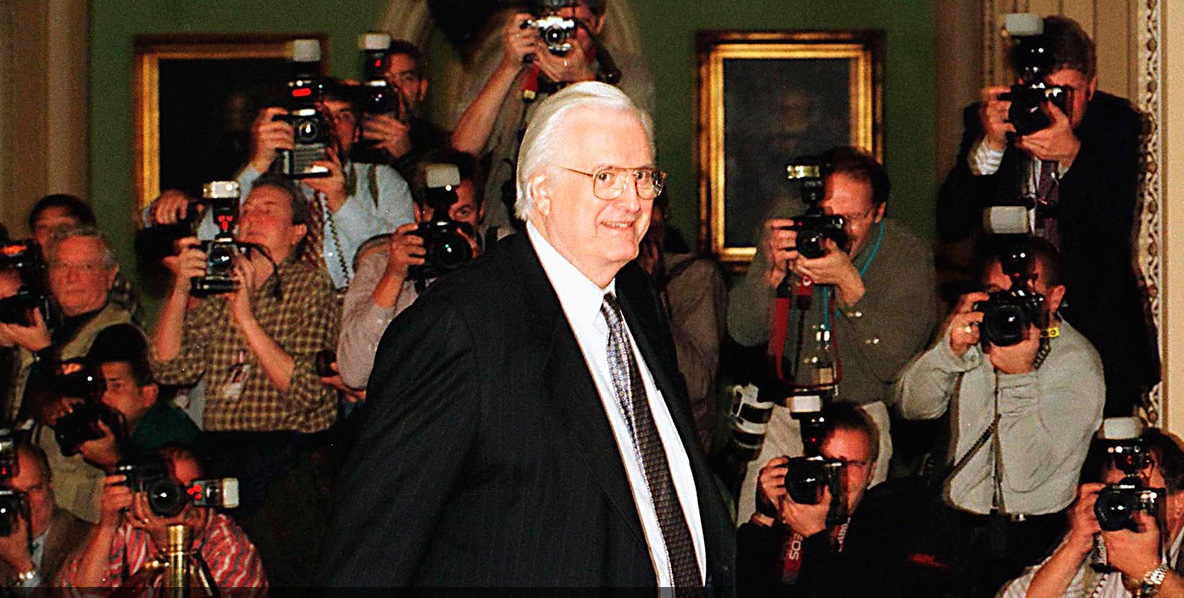
“An innocent, defenseless human life, in a caring and humane society, deserves better than to be flushed down a toilet or burned in an incinerator.” Such are the words of Henry Hyde, the former U.S. congressman from Illinois who tirelessly championed life and introduced the Hyde Amendment in 1976. Almost 50 years later, the legislative rider faces the opportunity to be renewed again.

For a half-century, the Hyde Amendment has stopped taxpayer dollars from funding abortion.

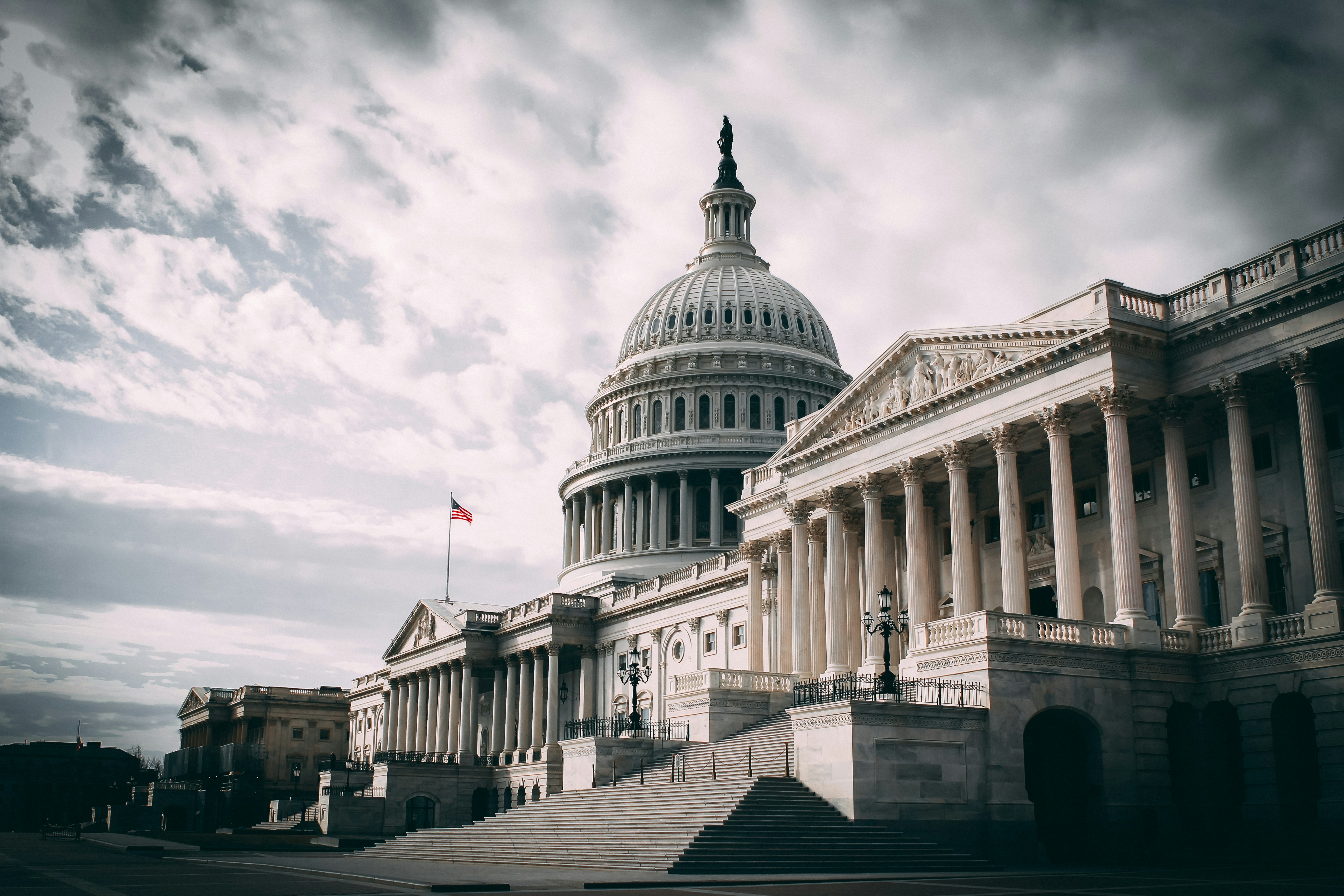
On Wednesday evening, Rep. Chris Smith (R-N.J.), co-chair of the Congressional Pro-Life Caucus, hosted a Special Order on the House floor to acknowledge the upcoming 50th anniversary of the Hyde Amendment on September 30. “The promise of America is that life is not just for the privileged, the planned, or the perfect,” Smith said, quoting Hyde. “This may sound odd, even ironic; you are here in the flush of victory. And yet it is precisely now that I ask you to contemplate the possibility of defeat, perhaps even the necessity of defeat. If you don’t know the principle or the policy for which you are willing to lose your office, then you are going to do damage here.”

Quena González, senior director of Government Affairs at Family Research Council, explained to The Washington Stand that Smith and Hyde have a history. “Representative Chris Smith served with Representative Henry Hyde for 26 years; he’s been a tireless defender of the unborn in Congress for 45 years and comes as close as anyone to carrying Hyde’s inimitable mantle.”

After the Roe v. Wade decision in 1973, the U.S. government paid for an estimated 300,000 abortions each year via Medicaid. According to the Charlotte Lozier Institute, since the Hyde Amendment’s first enactment in 1976, approximately 2.7 million lives have been saved.

During Wednesday’s event, Rep. Chip Roy (R-Texas) asserted that society has a duty to protect the unborn. “Life matters. Who are we as a people if we cannot stand up in defense of the most innocent form of life there is — a child in the womb of its mother? That should be our calling. And we should be able to unite as human beings in defense of the defenseless.”

Legislative Assistant for FRC’s Government Affairs Chantel Hoyt praised what House members shared during the Special Order. “I appreciated seeing Representative Chip Roy connect this important anniversary to the toll that chemical abortion is taking,” she told TWS. “It’s encouraging to see members like Representative Chris Smith carrying on Henry Hyde’s legacy and seeking to not only retain but build on the protections of the Hyde Amendment.”

Rep. Tracey Mann (R-Kan.) observed during the House event that he believes that abortion is not consistent with the Constitution. “Hyde should not be viewed as the finish line for the pro-life movement. It’s the floor. It’s a bare minimum compromise,” he shared. “America is founded on the self-evident truth that every person is created equal and endowed with our creator with an inherent right to life. That right is the foundation of every other right that we enjoy. As a father, I believe that every child is fearfully and wonderfully made by God. Every life has value, every child has purpose, and no child is a mistake.”

The Special Order and Hyde Amendment anniversary come at a time when chemical abortion has become a hot button issue on Capitol Hill. Pro-life politicians, lobbyists, and organizations continue to work tirelessly to ban the abortion drug mifepristone. “It’s always great to see members of Congress speak on the floor in defense of life, but especially now as we are urging the Trump administration to take action on chemical abortion to protect mothers and their babies,” Hoyt concluded.

This article was originally written by Quinn Delamater and published on The Washington Stand. For more content like this, visit Real Life Network.

25 min

Hyde Amendment Approaches 50th Anniversary Having Saved almost 3 Million Babies

As the Hyde Amendment approaches its 50th anniversary, lawmakers and pro-life advocates are reflecting on its history, its impact on federal abortion funding, and the continuing debate over abortion policy in America.

World News

A healthy society depends on institutions that understand both their responsibilities and their limits. Elections require rules voters can trust. Immigration requires laws that can be enforced while treating people with dignity. Schools and child-welfare agencies exercise enormous power, but parents retain profound responsibilities toward their children.

These debates may look unrelated. They are not.

Running through each is the same fundamental question: Who has authority, where does that authority come from, and what happens when institutions move beyond their proper boundaries?

For Christians, authority is neither meaningless nor absolute. Government has a legitimate role. Parents have a legitimate role. Laws matter. Compassion matters. And none of those principles should be rewritten simply because the political circumstances have changed.

That framework is increasingly important in an America where arguments over election administration, immigration, parental rights, and political power are testing public trust from several directions.

Trust Requires Rules That Apply Consistently

The Supreme Court recently blocked the Trump administration from implementing new Postal Service requirements for mail ballots before the 2026 midterms. The proposed system would have required states to provide lists of eligible voters and use USPS-approved, barcoded ballot envelopes. The Court divided 7-2, with Justices Clarence Thomas and Samuel Alito dissenting. Justice Brett Kavanaugh indicated there was a reasonable argument that the Postal Service possesses authority to impose some requirements, but concluded that changing procedures this close to voting risked significant disruption.

There are legitimate disagreements over the proposal. The administration presented additional verification as an election-integrity measure. Opponents argued that the Postal Service was assuming authority traditionally exercised by states and that last-minute changes could prevent legitimate ballots from being counted.

Those arguments deserve more than slogans.

Election integrity and voter access do not have to be enemies. Americans should be able to expect systems that verify lawful votes while also ensuring lawful voters can participate. Confidence deteriorates when either concern is dismissed simply because it is associated with the other political party.

Trust cannot survive indefinitely when rules are treated as essential under one set of political circumstances and disposable under another.

The same principle applies to immigration.

The Trump administration has expanded the federal government's consideration of public benefits when determining whether certain immigrants qualify for permanent residency. New York City Mayor Zohran Mamdani is leading a coalition of local governments challenging the new public-charge rule, while New York Attorney General Letitia James is leading a separate state lawsuit. The plaintiffs argue that the rule exceeds federal authority and could discourage immigrant families from using health care and nutrition programs for which they are legally eligible. The administration argues that the policy promotes self-sufficiency and reduces dependence on public assistance.

The legal dispute will work its way through the courts. The broader question is worth considering now: What obligations accompany legal immigration, and what obligations does a nation have toward those it admits?

Scripture commands God's people to treat the stranger with justice and compassion. It also recognizes governments, nations, boundaries, and civil authority. Biblical compassion cannot be reduced to a slogan for one immigration policy any more than biblical order can be used to excuse mistreatment of immigrants.

Hospitality and order are not inherently contradictory.

When Government Authority Enters the Home

Nowhere does the question of authority become more personal than when the government intervenes between parents and children.

Joseph and Arlene Kutzko, a Catholic couple in Massachusetts, are fighting a legal battle involving their teenage daughter, Sophie. The parents say Algonquin Regional High School supported their daughter's male gender identity without their knowledge and that their religious objections later became intertwined with a child-welfare dispute. Sophie was removed from their custody in 2024, and the parents say they have since been prevented from maintaining contact with her.

The case includes important details that should not be ignored. An allegation of physical abuse against the father was reportedly found unsupported, according to recent reporting and the family's legal advocates. The family is now seeking to prevent testosterone treatment while pursuing its custody claims; treatment has reportedly been paused while litigation continues.

The family's account has become part of a much larger national disagreement over parental rights, gender identity, medical treatment for minors, religious liberty, and the circumstances under which child-welfare authorities should intervene.

Those are serious questions precisely because the state sometimes must intervene. Children can genuinely suffer abuse and neglect, and government has a legitimate responsibility to protect them.

But that extraordinary power also requires extraordinary care.

Parents should not automatically lose their authority simply because their religious or moral convictions conflict with prevailing cultural beliefs. At the same time, disagreements over a child's care cannot by themselves establish every fact in a contested custody case.

The power to protect children must never quietly become the power to require ideological conformity from their parents.

For Christians, parenthood is not merely a legal status granted by government. Scripture repeatedly places responsibility for the instruction and formation of children upon families. Government can protect children from genuine harm, but it should approach replacing parental judgment as an exceptional intervention, not an ordinary solution to ideological disagreement.

That distinction matters far beyond Massachusetts.

Political Power Is Not the Highest Authority

The question of authority also appears inside political parties themselves.

The Democratic National Committee has officially changed its early presidential-primary calendar for 2028. South Carolina will vote first, followed by Nevada, New Hampshire, New Mexico, Michigan, and Virginia. The DNC says the calendar gives a more representative mix of voters an early role and better tests candidates across diverse constituencies and battleground states.

The change will inevitably affect campaign strategy. South Carolina's large Black Democratic electorate and Nevada and New Mexico's Latino populations will matter earlier than under the old Iowa-and-New Hampshire-centered system. But it is too early to know which prospective candidate, if any, will ultimately benefit most.

That uncertainty is important. Politics tempts people to treat every institutional decision as evidence of a predetermined outcome. Christians should resist that impulse just as strongly as they resist political naivete.

Political parties pursue power. Candidates pursue office. Governments exercise authority. Courts interpret law. None deserves the kind of unquestioning allegiance that belongs to God.

That should produce Christians who can think clearly rather than react predictably.

A Republican administration should not receive automatic approval merely because it invokes election integrity, immigration enforcement, or parental rights. A Democratic official should not receive automatic approval merely because a policy is presented in the language of compassion, democracy, or inclusion. Every claim still has to be examined.

Proverbs 14:34 provides a standard much older than any American political coalition: “Righteousness exalts a nation, but sin is a reproach to any people.”

That standard does not change with election results.

Christian political discernment begins when truth matters more than protecting a party, an institution, or a preferred political narrative.

Government matters. Elections matter. Borders matter. Parents matter. Protecting children matters. So do due process, compassion, religious liberty, and the rule of law.

The difficult work is refusing to sacrifice one principle whenever another becomes politically convenient.

That is why Christians need more than political instincts. They need a biblical framework capable of asking not merely, Which side is doing this? but Is this true? Is it just? Is authority being exercised within its proper limits? And does the standard remain the same when political power changes hands?

Those are the questions worth continuing to ask through Real Life Network and The Daniel Cohen Show, where the headlines are examined alongside the deeper questions of faith, culture, government, and truth.

25 min

Who Has the Authority? Government, Families, and the Institutions Americans Are Asked to Trust

Election security, immigration, parental rights, and political power raise a common question: Who has authority, and what happens when government institutions move beyond their proper boundaries?

World News

There are moments that should transcend politics.

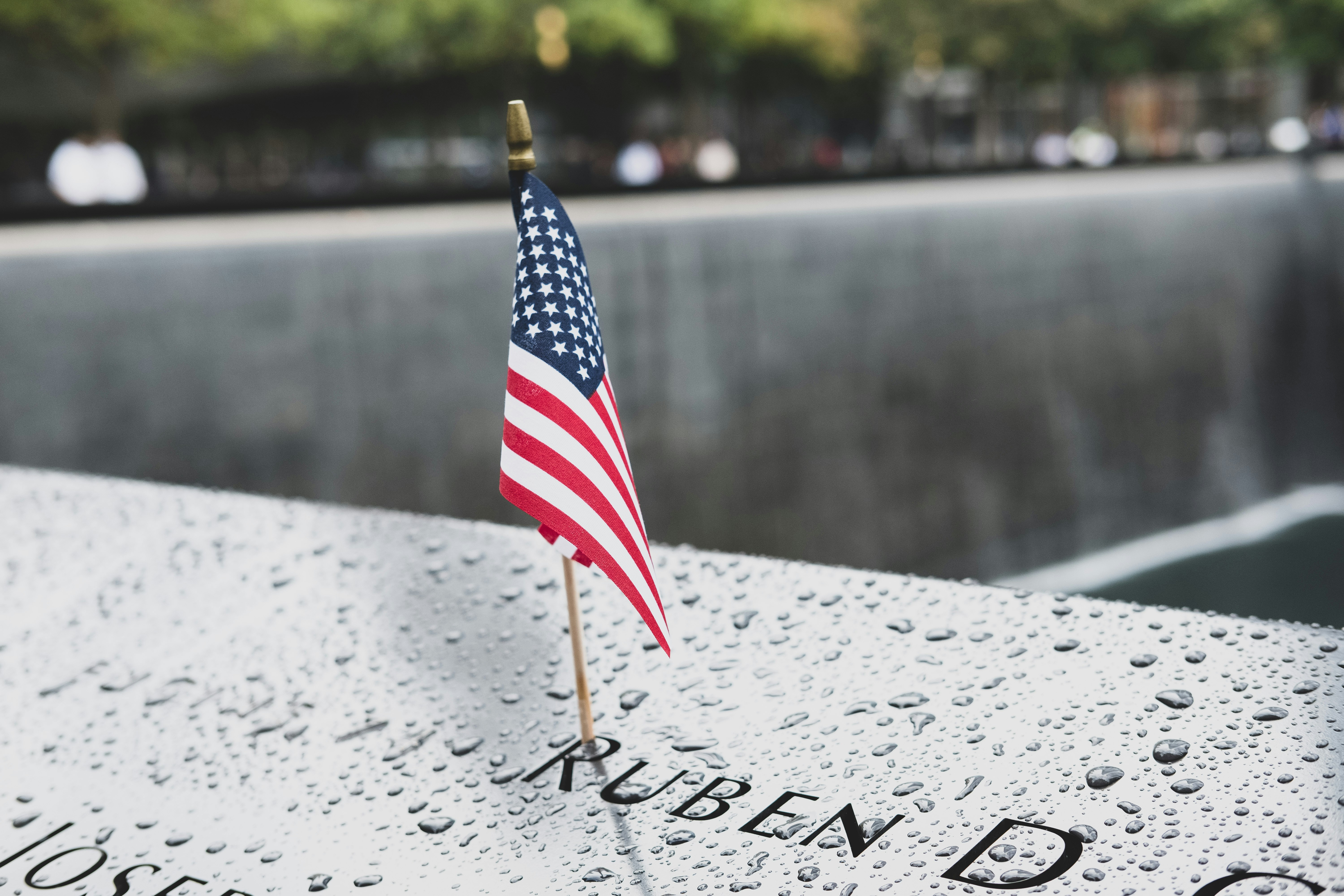
A memorial honoring nearly 3,000 Americans murdered on September 11 should be one of them. It should be a place for grief, remembrance, gratitude, and reverence. Families who have carried that loss for 25 years deserve something increasingly rare in American public life: a moment in which their pain is not reduced to another political opportunity.

That is why images of Alexandria Ocasio-Cortez and New York City Mayor Zohran Mamdani smiling and laughing together during the 25th anniversary commemoration drew criticism. A photograph cannot reveal the context of every conversation or establish what prompted a smile. But juxtaposed with grieving families at Ground Zero, the moment raised a larger question worth asking: Does American culture still recognize that some things should be treated as sacred?

These are exactly the kinds of cultural questions worth examining on Real Life Network and The Daniel Cohen Show, where the headlines are considered alongside the biblical truths that should shape how Christians understand them.

Leadership Requires More Than the Right Policies

Public leadership is not merely about legislation, budgets, speeches, or elections. Leadership also requires understanding the human consequences behind public events.

That principle extends far beyond a single 9/11 ceremony.

When thirteen American service members were killed during the 2021 withdrawal from Afghanistan, controversy followed images of President Joe Biden appearing to check his watch during the dignified transfer ceremony at Dover Air Force Base. Biden later disputed some characterizations of the moment, but Gold Star families publicly described feeling disrespected.

Politics can make people remarkably selective about empathy. When someone on the other side suffers, compassion becomes conditional. When an uncomfortable tragedy threatens a preferred narrative, attention shifts somewhere else.

Christians cannot adopt that standard.

Human dignity does not change according to political usefulness. A child killed in an act of violence matters. A soldier returned home in a flag-draped casket matters. A family still grieving someone murdered on September 11 matters. An immigrant victim matters. An American citizen victim matters. Political affiliation does not determine the value of a human life.

A healthy society should be capable of looking at suffering and seeing a human being before seeing a political opportunity.

Jesus warned that a time would come when “the love of many will grow cold” (Matthew 24:12). That description should make Christians examine more than the behavior of politicians. It should make believers examine their own hearts.

Have politics made compassion selective? Has outrage become entertainment? Have human tragedies become useful primarily when they help defeat the other side?

If so, something far more important than an election is being lost.

Biblical Language Cannot Become Political Branding

The same problem appears when Christianity itself becomes a political instrument.

Texas politician James Talarico has increasingly incorporated Christian language into his political message. In one recent appearance, he invoked Matthew 25 while arguing that Jesus would condemn senators over food assistance, Medicaid, and deportations.

Christians should welcome politicians talking seriously about Scripture. But biblical vocabulary does not automatically make an argument biblical.

Matthew 25 unquestionably demonstrates Christ's concern for the vulnerable. Christians should care about hungry people, strangers, the sick, prisoners, and those suffering around them. But translating those commands directly into support for a particular government program requires an additional political argument. Christians can share the same biblical concern while disagreeing about which policies best address it.

The same principle applies to immigration.

Scripture repeatedly commands God's people to care for foreigners and strangers. Scripture also recognizes nations, governing authorities, boundaries, and civil order. Romans 13 gives government genuine authority, while Acts 17:26 speaks of God determining nations and their dwelling places.

Neither side gets to erase the passages that complicate its politics.

Scripture should judge political convictions. Political convictions should never be allowed to rewrite Scripture.

That requires biblical literacy.

A politician who can quote a verse fluently may still misuse it. A conservative can misuse Scripture just as easily as a progressive. Christians who know only fragments of the Bible become vulnerable to anyone capable of wrapping a political agenda in Christian vocabulary.

Read the Word. Know the context. Test the argument.

Courage Means Refusing to Follow the Crowd

There is another quality disappearing from American life: the courage to stand alone.

The Lindsay Clancy case offers a difficult example. Clancy admitted killing her three young children but mounted an insanity defense. Her 2026 trial ended in a mistrial after eleven jurors favored acquittal and one juror held out.

According to another juror who later discussed the deliberations publicly, the lone holdout was a Black man.

Whatever conclusions people reach about the complicated legal questions surrounding mental illness and criminal responsibility, there is something worth recognizing in anyone willing to maintain a sincerely held conviction while an entire room pressures him to surrender it.

Standing with the crowd is easy. Standing alone costs something.

That lesson reaches far beyond a courtroom.

Christians will increasingly encounter moments when biblical convictions are unpopular, unfashionable, or professionally inconvenient. There will be pressure to remain silent because speaking could cost friendships, opportunities, influence, or reputation.

Conviction means deciding beforehand that truth matters more.

That does not grant permission to be reckless or cruel. Courage without humility quickly becomes arrogance. But humility without courage can become cowardice disguised as kindness.

Christian conviction requires both: the humility to recognize when we are wrong and the courage to stand when God's truth is clear.

America does not merely need better political messaging. It needs adults capable of recognizing sacred things, leaders who understand the human cost of their decisions, Christians who know Scripture well enough to recognize when it is being manipulated, and ordinary people willing to stand for truth when standing becomes uncomfortable.

Politics will continue changing. Candidates will come and go. Headlines that seem enormous today will eventually disappear.

The deeper question is what kind of people Americans are becoming in the process.

When nothing is sacred, everything becomes political. Christians should resist that transformation by recovering reverence, compassion, biblical discernment, and courage.

Continue examining the cultural and political stories shaping America through a biblical worldview on The Daniel Cohen Show, streaming free on Real Life Network.

25 min

When Nothing Is Sacred, Everything Becomes Political

From the solemnity of September 11 to the use of Scripture in politics, America faces a deeper question about what it still considers sacred. Christians are called to respond with compassion, biblical discernment, and the courage to stand for truth.

Select Category
Sort By:
Thank you! Your submission has been received!
Oops! Something went wrong while submitting the form.
World News

Pride Month 2026 began with some bracing news for the LGBTQIA+ movement. According to Gallup’s latest annual survey, public support for same-sex marriage, the morality of homosexual conduct, and transgenderism has declined significantly.

Support for same-sex marriage has fallen six percentage points from its high point in 2022 and 2023. The percentage of Americans who believe same-sex sexual behavior is morally acceptable has dropped to 62%, its lowest level since 2016, the year after the Supreme Court’s decision in Obergefell v. Hodges forced states to recognize same-sex marriages. The most dramatic shift, however, has come on transgenderism. The percentage of Americans who view attempting to change one’s sex as morally acceptable has declined eight percentage points since 2021 and now stands at just 38%.

Why is this happening? After all, major social changes have historically become more accepted over time, not less. Americans are increasingly reconsidering what they were told because they have now lived with the results. The experiment is no longer theoretical. It has become personal.

Take interracial marriage. In 1965, 48% of Americans favored state laws banning interracial marriage. Two years later, the Supreme Court unanimously ruled in Loving v. Virginia that such laws were unconstitutional because they amounted to “invidious racial discrimination.” While controversial in its day, that decision did not redefine the God-given meaning of marriage. Rather, it affirmed the complementarian nature of marriage. As Americans witnessed the results, public acceptance steadily grew. Today, according to Gallup, support for interracial marriage has reached a record high of 94%.

Clearly, that is not what has happened with same-sex marriage and the broader sexual ideology promoted during Pride Month.

Those of us who fought to preserve the natural and biblical understanding of marriage were often dismissed when we warned that redefining marriage would have consequences reaching far beyond marriage licenses. I remember having a discussion over lunch with the staff of a CNN primetime program, when one of the producers, who was in a same-sex relationship, asked me, “How does my relationship affect your marriage?”

“It doesn’t affect my marriage,” I replied. “But it will affect our culture. It will affect what my children are taught in school. It will normalize something that God’s word teaches is contrary to His design.”

That was always the point. The debate was never about its impact on my marriage. It was about the impact it would have in our schools, our laws, our institutions, and ultimately in the lives of the next generation.

Time could have proved those concerns unfounded. The promise of “marriage equality” was that it was simply about allowing committed same-sex couples to formalize their relationships. Americans were assured that nothing else would change.

But that is not what happened.

More than a decade after the Supreme Court’s 5-4 decision in Obergefell, Americans are no longer evaluating promises, they are evaluating results. They are changing their minds not because someone crafted a better political argument, but because they have witnessed consequences many were assured would never come.

They have seen:

  • Pride parades in major cities where public nudity and sexually explicit displays are celebrated in full view of families and children;
  • Major corporations, universities, and professional sports organizations pressuring employees and athletes to affirm an ever-expanding list of sexual identities;
  • Schools and entertainment normalizing gender ideology for children while Gallup reports that the percentage of Americans identifying as LGBTQ has more than doubled since 2012;
  • A growing commercial surrogacy industry that intentionally deprives children of either their mother, their father, or both;
  • Marriage continuing its long decline while birth rates fall to historic lows.

Perhaps nowhere have those consequences become more visible than in the rise of transgender ideology.

The “T” in the LGBTQ acronym has been used to justify policies that would have been unimaginable just a decade ago. Young children are told they can decide whether they are boys or girls because sex is merely “assigned at birth.” Teenagers are given puberty blockers that interrupt normal development. Radical surgeries with lifelong consequences are carried out on minors and young adults. Schools across the country facilitate gender transitions while keeping parents in the dark.

These are not isolated incidents. Americans have also watched biological males enter girls’ locker rooms, compete in girls’ sports, and gain access to spaces long reserved for women. Millions of Americans are now connecting the dots. They are seeing the fruit of abandoning God’s design for marriage, family, and the two sexes. Once marriage is detached from the complementary union of man and woman, it becomes increasingly difficult to explain why mothers and fathers matter, why men and women are different, or why children have a right to both.

As we mark the 11th anniversary of Obergefell, Americans are no longer arguing over predictions; they are judging outcomes. They have watched the promises of marriage redefinition play out in their schools, businesses, athletic competitions, churches, and families.

Increasingly, the American people are rendering their own verdict. The great experiment of redefining marriage and reinventing the family has produced its results. Americans are no longer judging promises — they are judging outcomes. The debate over the Sexual Revolution is no longer about its promises. It is about its consequences.

‍

This article was originally published on The Washington Stand. For more content like this, visit Real Life Network.

25 min

11 Years Later, the Receipts for Same-Sex Marriage Are In

New Gallup polling shows declining public support for same-sex marriage and transgender ideology. As Americans evaluate more than a decade after Obergefell, many are reconsidering the cultural effects of the Sexual Revolution and its long-term consequences.

June 25, 2026
World News

Tucker Carlson's announcement that he no longer identifies with the Republican Party generated headlines across conservative media. For some, it was a shocking development. For others, it felt like the formal conclusion of a process that had been unfolding for years. On Real Life Network and The Daniel Cohen Show, the discussion goes beyond party politics and asks a deeper question: Is this really about Tucker Carlson leaving the Republican Party, or does it reveal a growing divide within conservatism itself? The conversation touches on Israel, anti-Semitism, media influence, biblical truth, and the increasingly different visions competing for the future of the conservative movement.

Carlson's comments sparked immediate reactions because of his influence. For years, he has been one of the most recognizable voices in conservative media. Yet many conservatives now find themselves questioning whether his priorities still align with the values and principles that have traditionally defined the movement.

A Debate About More Than Party Politics

The biggest takeaway from Carlson's announcement is not simply that he is distancing himself from the Republican Party. Political affiliations change. Public figures evolve. Those developments are not unusual.

What makes this moment significant is the broader worldview conflict underneath it. Many conservative voters have noticed a pattern. Carlson has increasingly positioned himself in opposition to prominent defenders of Israel while giving sympathetic platforms to voices that criticize the Jewish state. Critics argue that these choices reveal deeper disagreements that extend far beyond political strategy. The concern is not merely about foreign policy.

It is about whether support for Israel remains a central feature of modern conservatism or whether a growing segment of the movement views Israel as a liability rather than an ally. For many Bible-believing conservatives, that distinction matters greatly. Support for Israel is not rooted solely in geopolitics. It is informed by history, shared values, democratic principles, and Scripture itself.

The most important question is not whether Tucker Carlson left the Republican Party, but whether he left the conservative movement long ago.

That question explains why Carlson's announcement has generated such strong reactions from people who once viewed him as a leading conservative voice.

For more biblical analysis of current events, cultural issues, and world affairs, viewers continue turning to Real Life Network.

Who Gets the Credit for Israel's Survival?

The conversation shifts from media personalities to another issue that Daniel Cohen believes deserves careful attention.

During recent remarks, President Trump suggested that without his actions, Israel might not exist today. While many supporters praised his administration's foreign policy accomplishments, Daniel argues that such statements cross an important line.

There is no question that President Trump made decisions that many supporters of Israel welcomed. The Abraham Accords, recognition of Jerusalem as Israel's capital, and military action against threats in the region all remain significant achievements.

Acknowledging those accomplishments is appropriate. Assigning ultimate credit for Israel's existence is another matter entirely. Throughout Scripture, God repeatedly promises to preserve Israel. From Exodus to Isaiah, from the Psalms to Zechariah, the biblical narrative consistently points to God's covenant faithfulness rather than human achievement.

Psalm 121 provides an important reminder, which describes God as the keeper of Israel. The Hebrew word used in the passage, shomer, refers to a watchman or guardian who remains vigilant and never abandons his post. That image carries profound significance for understanding Israel's survival throughout history.

Empires have risen and fallen. Kingdoms have disappeared. Entire civilizations have vanished from the pages of history. Israel remains.

Israel's existence is not sustained by politicians, military leaders, or world powers, but by the God who promised to preserve His people.

Gratitude for political leaders and military support is entirely appropriate. Worship and ultimate credit belong elsewhere.

For additional content exploring faith, culture, and biblical worldview issues, viewers can explore programming available through Real Life Network.

Anti-Semitism, Canada, and a Warning for the West

The episode's most sobering discussion centers on the tragic shooting in Montreal that left multiple people dead, including Rabbi Michael Moshe Mizrahi. While investigators continue examining the facts, the incident raised serious questions about anti-Semitism, political extremism, and public safety.

What makes the story particularly troubling is that it does not fit neatly into familiar media narratives.

The suspect reportedly left behind a lengthy manifesto promoting violent revolutionary ideas while expressing hostility toward Jews, capitalism, law enforcement, and broader Western institutions. The tragedy serves as a reminder that hatred can emerge from many ideological directions.

Anti-Semitism rarely exists in isolation. It often appears alongside broader efforts to undermine truth, distort history, and divide communities. When public figures normalize hostility toward Israel or consistently portray the Jewish state as uniquely responsible for global problems, those messages contribute to an environment where anti-Jewish sentiment becomes easier to justify.

That reality extends beyond any single country. Throughout history, societies that tolerated anti-Semitism eventually discovered that the problem never remained confined to one group.

When societies stop defending truth and begin excusing hatred, the consequences eventually reach ordinary people.

At the same time, increasing anti-Semitism in North America and Europe is contributing to renewed interest in aliyah, the return of Jewish people to Israel. Thousands of Jewish immigrants are expected to relocate to Israel in the coming years, reflecting a trend that many believers view through both historical and biblical lenses.

The stories discussed throughout this episode may seem unrelated at first. Tucker Carlson's political future, President Trump's comments, anti-Semitism in Canada, and Jewish immigration to Israel occupy very different headlines.

Yet they share a common thread. Each story ultimately raises questions about truth, loyalty, identity, and whether people are willing to view current events through a biblical lens rather than a purely political one.

For more news, cultural commentary, and biblical analysis, visit Real Life Network and watch The Daniel Cohen Show.

25 min

Tucker Carlson, Israel, and the Growing Divide Within Conservatism

Tucker Carlson's departure from the Republican Party sparked a broader conversation about Israel, conservatism, anti-Semitism, and the belief that political leaders deserve credit for what Scripture says belongs to God alone.

June 24, 2026
World News

Iran, Israel, President Trump, the Strait of Hormuz, sanctions relief, and Middle East peace have dominated headlines in recent weeks. But beneath the political talking points lies a growing debate among conservatives about whether the administration's proposed agreement with Iran represents a strategic victory or a costly concession. On Real Life Network and The Daniel Cohen Show, the conversation centers on a question many Americans are asking: why does an agreement designed to promote stability appear to provide significant benefits to Iran while offering few visible gains for the United States or Israel?

The controversy has become one of the most significant foreign policy discussions within the conservative movement, exposing divisions over diplomacy, deterrence, and America's relationship with Israel.

Why Critics Are Concerned About the Iran Agreement

The administration has described the memorandum of understanding with Iran as an opportunity to reduce tensions and avoid a broader regional conflict. Supporters argue that diplomacy remains preferable to military escalation and that economic engagement could encourage greater stability.

Critics see a very different picture.

According to details discussed throughout the episode, the agreement would reportedly ease economic pressure on Iran through sanctions relief, allow greater access to international markets, and potentially unlock significant financial resources. At the same time, opponents argue that the deal offers little more than assurances from a regime that has repeatedly violated international commitments and continued supporting proxy organizations throughout the Middle East.

The concern is not merely about economics. The concern is whether the agreement addresses the underlying threat posed by the Islamic Revolutionary Guard Corps and the broader ideology driving Iranian foreign policy.

For decades, Iran has funded groups such as Hezbollah, Hamas, and the Houthis while pursuing regional influence through military, political, and financial support. Critics argue that any agreement that strengthens Tehran financially without fundamentally changing its behavior risks recreating the same conditions that produced instability in the first place.

A diplomatic agreement is only as strong as the willingness of both sides to honor it.

Many conservatives who supported President Trump through multiple elections now find themselves questioning whether this approach aligns with the administration's previous commitment to maximum pressure and strong deterrence.

For additional analysis of international affairs and current events through a biblical worldview, viewers continue turning to Real Life Network and The Daniel Cohen Show.

Israel's Role in the Debate

One of the most controversial aspects of the proposed agreement is Israel's position in the process.

Israel remains America's closest ally in the Middle East and has long viewed Iran's nuclear ambitions and regional influence as direct threats to its security. Yet critics argue that Israel was largely sidelined during discussions surrounding the agreement despite being one of the nations most directly affected by its outcome.

This concern intensified after comments from Vice President J.D. Vance criticizing members of the Israeli government who publicly opposed the deal. Those remarks generated significant backlash among conservative voters who believe support for Israel should remain a foundational principle of American foreign policy.

The criticism is not necessarily rooted in partisan politics.

Rather, it reflects a broader belief that Israel faces unique security challenges that cannot be fully understood from Washington alone. Israeli citizens live under the constant threat of rocket attacks, terrorist activity, and regional instability. For many supporters of Israel, those realities make security concerns more than theoretical policy debates.

Many conservatives believe that strengthening Israel and strengthening American interests are complementary goals, not competing priorities.

The discussion has also highlighted broader questions about deterrence. Critics argue that adversaries are less likely to pursue aggression when they perceive strength and resolve. They worry that economic concessions offered before meaningful behavioral changes have occurred could send the opposite message.

These concerns help explain why the debate has become so emotional among voters who otherwise remain supportive of President Trump's broader agenda.

For more faith-based commentary on culture, politics, and world events, viewers can explore programming available through Real Life Network.

What Conservatives Want to See Next

Beyond the details of the agreement itself, many conservatives are focused on what comes next.

One issue receiving renewed attention involves American citizens currently detained in Iran. Critics have questioned why the release of detained Americans was not more prominently included in discussions surrounding sanctions relief and economic incentives.

Others point to Iran's continued support for regional proxy groups as evidence that fundamental problems remain unresolved. From their perspective, any lasting peace agreement must address not only nuclear concerns but also the broader network of organizations responsible for destabilizing the region.

The debate also reveals something larger about the modern conservative movement.

Many voters are demonstrating that their support for political leaders is not unconditional. They are willing to celebrate policies they believe work while voicing concerns when they believe mistakes are being made.

That distinction matters. Political loyalty and policy agreement are not the same thing.

Conservatives increasingly want results, accountability, and policies that reflect the principles they elected leaders to pursue.

Whether the agreement ultimately succeeds or fails remains to be seen. What is already clear is that many Americans remain deeply invested in the outcome. They understand that decisions made today could shape the future of the Middle East, America's global influence, and the security of one of its closest allies for years to come.

As the conversation continues, supporters and critics alike will be watching closely to see whether diplomacy produces meaningful change or simply delays difficult decisions.

For more news, cultural commentary, and biblical analysis, visit Real Life Network and watch The Daniel Cohen Show.

25 min

Trump's Iran Deal Faces Growing Scrutiny From Conservatives

President Trump's proposed agreement with Iran is drawing criticism from conservatives who argue the deal rewards Tehran, sidelines Israel, and risks repeating mistakes made in previous negotiations with the Islamic Republic.

June 23, 2026
World News

When ideologically opposed governments clash, those caught in the middle usually duck for cover like pedestrians in Godzilla’s shadow. Such instinctive acts of self-preservation can produce absurd situations, like the one Colorado Children’s Hospital found itself in on Monday. After the Colorado Supreme Court judicially compelled the hospital to resume providing gender transition hormones to minors, not one doctor in its gender center was willing to shoulder the risk, out of fear of federal consequences.

Through 2025, Colorado Children’s in Aurora was the state’s largest supplier of gender transition hormones to minors, subjecting 257 children to puberty blockers and 549 children to cross-sex hormones last year alone (though it reportedly never carried out transgender surgeries).

But that practice came to an abrupt halt on January 5, when the hospital announced it would no longer provide gender transition hormones to minors. Along with dozens of other hospitals, Colorado Children’s had received a federal subpoena for information on its provision of the drugs to minors, which it is trying to quash in court. The hospital was also concerned about losing access, even temporarily to federal Medicaid funding, which covers roughly half of the hospital’s patients.

But the Rivendell of Californian expats could not long endure any behavior — however rational its basis — that smelled like compliance with the Trump administration, which Colorado treats with all the hatred and disgust of elves for orcs. Left-wing activist groups brought a state lawsuit to force the hospital to reverse its suspension of services, arguing that a state anti-discrimination statute required it.

After losing in a district court, the activists won a favorable (5-2) ruling from the Colorado Supreme Court on May 18. “Any potential harm to the public’s interest in access to healthcare is speculative,” wrote Supreme Court Justice William Hood. In a dissent, Justice Brian Boatright countered that “CHC’s decision to terminate gender-affirming care for minors was plainly not ‘because of’ petitioners’ gender identity, sex or disability. It was a decision driven by the direct threat to the viability of the entire hospital.”

Nevertheless, the pro-transgender position prevailed by a sizable majority, holding that the hospital must provide gender transition hormones as a matter of law and returning the case to a lower court to deliver the final order. Denver District Judge Ericka Englert issued that order on Thursday.

The hospital initially asked the judge to require its opponents to post a $250,000 bond to cover the hospital’s financial risk but withdrew that request the next day. In the final analysis, Judge Englert set the bond at one dollar.

Thus, on Monday, Colorado Children’s announced that it had “reinstated medical gender-affirming care into our scope of services,” to comply with the Colorado courts. But the announcement contained one major twist: not one of the doctors who worked at Colorado Children’s TRUE Center for Gender Diversity was willing to prescribe puberty blockers or cross-sex hormones. Instead, each doctor “has independently decided they will not prescribe or renew gender-affirming medications for patients under age 18,” the hospital said.

How the hospital is complying with the court order without the cooperation of any of the doctors remains unexplained. Are the prescriptions being written by nurses or by doctors from other departments? Or is this the hospital’s way of saying, we wish to comply, but it is out of our hands?

The reason why the doctors could refuse to cooperate with the hospital is that “Children’s Colorado does not employ the medical providers at the TRUE Center or direct their independent clinical decisions,” the hospital explained. Instead, the doctors are all employed by the nearby University of Colorado Anschutz School of Medicine and retain control over their care and prescription decisions.

It turns out that the doctors had each individually reached the same rational conclusion the hospital had reached on January 5 — that the risk of consequences for carrying out gender transition procedures on minors had become greater than the benefit of providing them for an interim period.

“At this time, the medical providers at the TRUE Center have each determined that we will not be prescribing, refilling, or renewing gender-affirming prescriptions for patients under 18 years old,” the doctors said in a statement. “We were each individually forced to make a very difficult decision and none of us reach this decision lightly. Ultimately each of our decisions is driven by the serious risk of federal action that could result in the inability to continue serving and caring for any patients for years into the future.”

The risk of federal action to individual practitioners is not hypothetical. In May, the U.S. Department of Justice reached a settlement with Texas Children’s Hospital after which the hospital paid $10 million to cover fraudulent medical billing, agreed to open a detransitioner clinic, and permanently fired five doctors who had provided gender transition procedures to minors there. Weeks later, the DOJ reached another settlement with the Cleveland Clinic in Ohio that included “a decades-long commitment to not perform or offer sex-rejecting procedures.”

Unsurprisingly, these Colorado doctors had no wish to become the next whitecoats in the DOJ’s crosshairs.

Nor is it surprising that left-wing activists responded with outrage to the news. “Instead of complying with the court order, Children’s Hospital is now claiming that it is not responsible for whether its medical staff discriminates against children based on sex, gender identity, race, religion, or any other protected category,” complained Attorney Paula Greisen, who brought the lawsuit. “The hospital at first sacrificed the children and now they’re throwing the doctors under the bus, basically raising their hands in the air, saying we have no control over these doctors.”

The better question is, who is under which bus? With state penalties looming on one side and federal penalties on the other, the many hospitals and doctors who conducted gender transition procedures merely to make a quick buck are scrambling for the nearest exit.

This has been the hope of pro-children strategists for years. One goal behind state laws protecting minors from gender transition procedures was to increase the risk of liability. For many doctors, this is a far more effective method of deterrence than any amount of state prosecution. Thus, most state laws allowed for private civil suits over a long period of time. Already, this spring, a detransitioner won the first ever malpractice suit for $2 million, even under New York’s pro-transgender laws.

But state laws and individual lawsuits could only slow the runaway semi of transgender medicine one speed bump at a time. It took the might of the federal government — with its massive law enforcement apparatus and control of incentives through Medicaid — to finally pull out a titanium lasso strong enough to halt its momentum mid-career and begin to reel it backward.

It’s a rare day when such positive news washes down from the marijuana-scented slopes of the Rocky Mountains’ majesty. The bizarre situation demonstrates that, even in far-left jurisdictions, there are rational actors who will respond to incentives — if the government sets the incentives properly. It also demonstrates that the Colorado Supreme Court remains far out on the Left fringe, where it would force a hospital to shoulder massive liability against federal wrath in the misguided pursuit of non-discrimination.

‍

This article was originally written by Joshua Arnold and published on The Washington Stand. For more content like this, visit Real Life Network.

25 min

Colorado Doctors Individually Refuse to Practice at Trans Center over Fear of Personal Consequences

A Colorado court ordered Children's Hospital Colorado to resume providing gender transition hormones to minors, but every physician in its gender clinic declined to participate, citing concerns about potential federal investigations and legal consequences.

June 22, 2026
World News

The Federal Trade Commission (FTC) and attorneys general in four states filed a lawsuit Wednesday against the World Professional Association for Transgender Health (WPATH), accusing the group of misleading doctors, parents, and children to promote the lucrative business of administering transgender procedures to minors. In a 123-page complaint, the FTC lays out “ten specific unlawful misrepresentations or omissions” by WPATH and seeks “a permanent injunction to prevent future violations.”

“When an organization provides guidance designed to mislead families about the risks, benefits, or medical consensus behind a treatment, it undermines trust in those responsible for providing medical care,” declared FTC Commissioner Mark R. Meador. The FTC was joined in its lawsuit by attorneys general from Alaska, Iowa, Nebraska, and Texas.

The lawsuit is significant because it goes directly to the source of claims undergirding transgender medical practice. In countless other legal battles, pro-transgender activists have invariably cited WPATH as the foremost authority on transgender procedures for minors. Now, the FTC has challenged WPATH itself to prove that its claims, often cited as an expert authority, can hold up in a court of law.

The lawsuit challenged the accuracy of specific claims made by WPATH, as well as omissions in the most recent version of its so-called, unofficial “Standards of Care” (SOC-8):

“(1) WPATH misrepresents that pediatric medical transition is medically necessary to prevent suicide in children who express dissatisfaction with or report distress about their sex traits.

“(2) WPATH misrepresents that pediatric medical transition is effective at preventing suicide in children who express dissatisfaction with or report distress about their sex traits.

“(3) WPATH misrepresents that puberty blockers are fully reversible.

“(4) WPATH misrepresents that cross-sex hormones improve mental health.

“(5) WPATH misrepresents that performing breast amputations on children is safe, effective, and consistently results in better health and quality of life.

“(6) WPATH misrepresents SOC-8 to be the result of unbiased, evidence-based expert consensus.

“(7) WPATH misrepresents that pediatric medical transition is the “standard of care” for children who express dissatisfaction with or report distress about their sex traits.

“(8) WPATH fails in SOC-8 to adequately disclose certain side effects of puberty blockers including hot flashes, lethargy, and cognitive problems.

“(9) WPATH fails in SOC-8 to adequately disclose certain side effects of cross-sex hormones including mood disturbances, vocal pain, pelvic pain, pelvic floor dysfunction, clitoral discomfort, vaginal pain, persistent sexual dysfunction continuing after cessation of use, and erectile pain.

“(10) WPATH fails in SOC-8 to adequately disclose certain side effects of breast amputations including inability to breastfeed, nerve damage, and necrosis of the nipples.”

“WPATH made each of these ten misrepresentations or omissions expressly or by implication,” the complaint declared. “WPATH knew they were false or misleading, and WPATH further knew — and intended — that they would provide WPATH members and other providers of medical transition services with the means to mislead consumers.”

The FTC challenged WPATH’s SOC-8 in detail, alleging that its methodology “does not satisfy accepted medical standards of evidence” for at least four reasons. “WPATH selected authors who had conflicts of interest; WPATH ignored the consensus protocol that SOC-8 purports to follow; WPATH failed to adhere to proper protocols both in evaluating scientific and medical evidence and in making recommendations based on that evidence; and WPATH made material changes to its recommendations in response to external pressure rather than scientific evidence.”

Regarding conflicts of interest, the FTC argued that WPATH selected drafters for SOC-8 who had both “intellectual conflicts of interest” and “financial … conflicts of interest.” The intellectual conflicts of interest stemmed from the fact that its selection criteria required every team leader to be a “longstanding WPATH Full Member in good standing” and a “well recognized advocate for WPATH” — in other words, professionals “who already supported medical transition services.”

The financial conflicts of interest concerned the fact that many authors directly performed and thereby profited from the procedures under review, such as Dr. Marci Bowers. Bowers, the complaint stated, “made more than a million dollars in a single year from transition surgeries but declared it ‘absurd’ to disclose that conflict or attempt to account for it in SOC-8.”

Regarding external pressure, the FTC referenced “the removal of age minimums for pediatric medical transition drugs, surgeries, and services including cross-sex hormones, breast amputations, surgical penis removal, and facial surgery.” This removal came after the Biden administration Department of Health and Human Services asked in 2022 “if the specific ages can be taken out” to combat “the conservative anti trans agenda.” In addition, “According to a WPATH leader, the American Academy of Pediatrics threatened to ‘actively publicly oppose’ SOC-8 if WPATH did not remove the age minimums,” although without “any sound evidence-based argument(s) underpinning” the change it demanded.

“One WPATH committee member acknowledged that it was ‘the most strange experience’ to see WPATH eliminate minimum age recommendations at the ‘last minute’ after internal discussion made clear that ‘nobody [on the committee] wanted to [eliminate] them, and personally not agreeing with the change,’” the complaint stated.

Regarding consensus protocol, the FTC elaborated on the same issue, noting that WPATH failed to strictly follow its own selected “Delphi process” for achieving expert consensus. “At least one WPATH member could not ‘see how we can simply remove something that important from the document — without going through a Delphi — at this final stage of the game.’”

Regarding the quality of evidence, the FTC excoriated WPATH for “a deliberate decision to obfuscate the strength of the evidence supporting WPATH’s recommendations and allow WPATH to overstate the strength of its evidence.” WPATH claimed to use an evidence-rating system called “GRADE,” but it chose not to include the GRADE ratings to make the evidence look stronger than it really was. One draft leader, Dr. Eli Coleman, admitted in 2023, “[a]ll of us are painfully aware that there are many gaps in research to back up our recommendations.”

Yet the SOC-8 authors “knew ‘what we should end up with,’” the complaint alleged, because “SOC-8 authors had prejudged that SOC-8 would ultimately make strong recommendations in favor of pediatric medical transition regardless of whether the quality of the evidence supported such recommendations.” As one author, Dr. Amy Tishelman, said in February 2026, “The sun and the moon existed before we understood anything about why. Lots of things we observe in life, we know to be true, and we don’t understand them.”

The complaint goes on to argue that WPATH failed to “follow the science” in other important respects. For instance, “SOC-8’s authors commissioned systematic reviews of evidence regarding pediatric medical transition from Johns Hopkins University,” according to the complaint. However, “WPATH secured significant control over … they would ultimately be published.” When the reviews “found little to no evidence about children and adolescents,” “WPATH rejected multiple Johns Hopkins manuscripts, causing” the head of the research team “to express frustration that WPATH was ‘trying to restrict our ability to publish.’”

The incident echoes the 2024 controversy involving Dr. Johanna Olson-Kennedy, later head of USPATH (WPATH’s American outpost), who refused to publish the results of a taxpayer-funded study after they contradicted her belief in using puberty blockers for the purpose of gender transition. The complaint referenced another “notable evidentiary exclusion” involving Olson-Kennedy. Although a study she conducted “formed the evidence base of SOC-8,” SOC-8 “did not disclose” that two subjects of the study committed suicide during the observation period or “discuss … how they might undermine SOC-8’s conclusion that pediatric medical transition improved psychological well-being.”

Finally, the complaint alleges that WPATH’s guidelines discourage clinicians from exploring other “numerous potential root causes of a child’s distress about or discomfort with their sex traits,” such as sexual assault or other mental illnesses. Although it acknowledges that such intervening factors do exist, SOC-8 attacks them as “gatekeeping practices” that act as a “barrier to the provision of” transgender procedures.

“Even if WPATH legitimately encouraged clinicians to investigate whether medical transition treatment is appropriate for a given child, SOC-8 offers no genuine method for making such a determination,” the complaint continued. “Indeed, WPATH defines ‘gender incongruence’ as a subjective ‘experience’ that is ‘deeply felt’ by the child. It offers no objective diagnosis criteria for clinicians,” even though “SOC-8 purports to require rigorous diagnostic procedures.” So much for following the science.

These accusations raise an important question: what would motivate the physicians associated with WPATH to venture so far from established science. Beyond the obvious ideological reasons, the complaint focuses on another motive: profit.

“WPATH misrepresents scientific and medical consensus and makes false, deceptive, or unsubstantiated claims regarding pediatric medical transition and related services for a simple reason: WPATH’s members generate significant profit because of the organization’s representations and guidance,” it declared. “Two of the five current members of WPATH’s executive committee are surgeons who specialize in medical transition procedures, and a third member specializes in medical transition procedures for children.”

As a result of WPATH’s non-scientific, profit-motivated guidelines, the complaint continued, children and their families were misled and thereby harmed. “WPATH’s assertions that its recommendations represent evidence-based and “consensus-based expert opinion” give members and other clinicians the means to misrepresent to consumers that the SOC reflects expert scientific consensus,” it argued, “and to repeat the unsubstantiated statements therein when persuading parents and children.”

Whether they visit a family doctor with no specialized training, a gender transition specialist, or an activist center, “children and parents are unlikely to avoid being influenced by WPATH’s deceptive claims and omissions. Indeed, WPATH board member and former president Dr. Marci Bowers claims that ‘the vast majority of mental health providers in the country that [Dr. Bowers is] familiar with follow the WPATH standards of care.’”

“Clinicians begin selling parents and children on medical transition procedures once they arrive at a medical transition provider’s clinic,” the complaint explained. “Sometimes, clinicians make the sale by directly invoking WPATH’s name and providing parents with the SOC or other material containing WPATH’s deceptive claims. Other times, clinicians repeat WPATH’s deceptive claims without attribution. And even without telling parents, clinicians often rely on WPATH’s deceptive claims in making diagnoses and recommending treatment.”

The complaint included numerous examples of WPATH’s malign influence:

  • “For example, a pediatric endocrinologist in California told a pediatric patient's mother that he follows the recommendations of WPATH. When the patient’s mother asked for supporting studies and other evidence for medical transition, the doctor sent her a web link directly to WPATH’s SOC-7, which she then read.
  • “Boston Children’s Hospital Center for Gender Surgery cited ‘WPATH standards of care’ on its page advertising breast implants for children.
  • “One online medical transition clinic asserts that it follows SOC-8 and promises to provide monthly prescriptions for transition services without an in-person visit, covered by major US insurers. It asserts that ‘puberty blockers are fully reversible’ and that ‘children can begin their medical transition with puberty blockers.’
  • “Stanford Medicine’s Transgender Surgery team promises that it ‘follows the World Professional Association for Transgender Health (WPATH) guidelines to ensure patients are appropriate surgical candidates.’
  • “One 13-year-old girl visited a Dallas, Texas clinic with her parents. A psychologist who has presented at WPATH conferences told the girl’s parents that their daughter needed to undergo medical transition, including cross-sex hormones and breast amputation. When these parents expressed skepticism and asked how the psychologist ‘knew that medical transition would help’ their daughter’s distress, the psychologist ‘answered that WPATH recommended it.’
  • “One doctor at a large public university encouraged one 15-year-old patient to read the SOC. The girl, who was later prescribed testosterone and had her breasts amputated, believed based on her interaction with the doctor that WPATH was an official, authoritative medical organization.
  • “A nurse, who worked at Texas Children’s Hospital, recalls that a pediatric endocrinologist at that hospital recorded in patient charts that he ‘told parents he was following WPATH’s Standards of Care’ and ‘explained WPATH’s Standards of Care’ to parents. This doctor ‘frequently referenced WPATH’ when communicating with parents.”

“Clinicians emphasize the need for pediatric medical transition by stating or strongly implying that if parents do not consent to medical transition, their children will commit suicide. Some clinicians tell parents that if their children die, the parents will be to blame. Clinicians often ask parents if they would ‘rather have a dead son or a living daughter,’ or vice versa,” the complaint added. “Clinicians make these statements because WPATH represents that medical transition is ‘lifesaving’ and SOC-8 expressly represents that medical transition is ‘medically necessary’ and reduces suicidality, thereby providing clinicians with the rationale that they use to pressure parents into consenting.”

The complaint provided another half dozen examples of this practice.

“Collectively, WPATH’s deceptive statements and material omissions cause parents to worry that their children are in mortal peril and that the only effective solution is to consent to pediatric medical transition,” it stated. “In many cases, the pressure created by WPATH’s unlawful conduct — and the fear it creates — causes parents to purchase pediatric medical transition drugs, surgeries, or services.”

For years, WPATH was cited not only in doctor’s offices but also in state houses. As some 27 states moved to pass legislation protecting minors from the irreversible effects of gender transition procedures, pro-transgender activists always lined up to appeal to WPATH as experts, citing the “scientific consensus” that “gender-affirming care” was “medically necessary” and “life-saving.” But the evidence never lived up to the buzzwords, and now the FTC is taking WPATH to task.

“Children, but especially their parents, must have complete and truthful information when making decisions to purchase medical services. … The complaint filed today reflects that same long-standing mandate: when an entity makes a claim about a medical treatment, the claim must be truthful, evidence-based and not misleading,” declared FTC Chairman Andrew Ferguson. “WPATH … made false and unsubstantiated claims regarding the necessity, effectiveness and safety of puberty blockers, hormones and sex-change surgeries.”

‍This article was originally written by Joshua Arnold and published on The Washington Stand. For more content like this, visit Real Life Network.

25 min

FTC, States Sue WPATH for Misleading Claims on Transgender Procedures for Minors

A federal lawsuit against WPATH challenges the scientific basis of pediatric gender transition treatments, alleging misleading claims about puberty blockers, hormones, surgeries, and mental health outcomes.

June 19, 2026
World News

Iran, Israel, free speech, social media, parenting, political leadership, and cultural decline may seem like separate issues. In reality, they all point to the same question: what happens when leaders stop confronting problems honestly? Through the analysis featured on Real Life Network and The Daniel Cohen Show, recent headlines reveal a growing pattern of institutions avoiding difficult truths while expecting the public to accept the consequences.

Whether the issue is a proposed agreement with Iran, restrictions on speech in the United Kingdom, or the growing influence of social media on children, reality does not disappear simply because leaders choose not to address it.

The Iran Deal Nobody Has Seen

The latest agreement between the United States and Iran has generated headlines around the world. Supporters describe it as an opportunity for stability and peace. Critics see it differently.

The problem is simple. Nobody has actually seen the details.

Public officials are celebrating what has been described as a memorandum of understanding, yet many of the specifics remain unknown. That uncertainty has created significant concern, particularly in Israel, where citizens live with the direct consequences of Iranian aggression.

For many Israelis, the issue is not abstract. It is personal.

Iran continues to fund proxy organizations throughout the region, support terrorist groups, and pursue influence through organizations openly hostile to both Israel and the United States. Critics of the agreement argue that economic relief and diplomatic recognition may provide a struggling regime with new opportunities while leaving the underlying threat unchanged.

The concern is not whether diplomacy has value. Diplomacy can be useful.

The concern is whether diplomacy is being mistaken for resolution.

A temporary agreement cannot solve a long-term problem if the underlying threat remains intact.

Many observers point to previous agreements with Iran that promised restraint while allowing the regime to preserve its power and influence. That history explains why skepticism remains high among those who believe the Islamic Republic has consistently demonstrated its unwillingness to honor commitments.

For more analysis of international affairs, current events, and biblical worldview commentary, viewers continue turning to Real Life Network and The Daniel Cohen Show.

When Governments Decide What People Can Hear

The conversation about reality extends beyond foreign policy.

In the United Kingdom, government officials have proposed new restrictions on social media access for children under sixteen. Supporters argue these policies are necessary to protect young people from harmful content and excessive screen time.

Few parents would deny that social media presents challenges.

The deeper question is who gets to decide what information people can access.

Historically, governments have often attempted to regulate speech. What makes these developments different is that they increasingly involve regulating what citizens are allowed to hear, read, and consume.

That distinction matters.

Restricting speech controls expression. Restricting access to information shapes understanding itself.

Many observers have noted the inconsistency in modern Western governments. Authorities often appear reluctant to address serious social problems while simultaneously becoming more aggressive in regulating public discourse.

This concern is especially significant for Christians, who understand that truth flourishes through open examination rather than government management.

A society that limits access to ideas risks creating citizens who are easier to control but less capable of discernment.

The answer to harmful ideas has never been ignorance. It has always been wisdom.

For additional commentary on culture, politics, and faith, viewers can explore the growing library of content available through Real Life Network.

The Battle for the Next Generation

While politicians debate foreign policy and governments debate speech restrictions, another battle is unfolding much closer to home.

It is taking place in families.

One of the most revealing moments discussed in this episode involved children participating in political protests while repeating slogans and language they are far too young to understand. The incident served as a reminder that children often absorb the worldview of the adults shaping their environment.

Parents understand this instinctively.

Children learn what to value long before they understand why they value it.

This reality makes the conversation about social media even more important. Smartphones, social platforms, influencers, and digital communities increasingly compete with parents for a child's attention, loyalty, and identity.

The challenge is not merely technological.

It is spiritual and cultural.

Many young people now spend more time consuming content than building relationships, developing skills, or engaging with the real world around them. As screen time increases, meaningful human interaction often declines.

This trend carries long-term consequences.

Families cannot outsource discipleship to algorithms. Parents cannot delegate character formation to social media platforms.

The future of a culture is shaped by what it teaches its children to love, believe, and pursue.

That is why parenting matters. It is why education matters. It is why worldview matters.

The most important questions facing society are not ultimately political. They are questions about truth, responsibility, and whether the next generation will inherit the wisdom needed to preserve what previous generations built.

The issues discussed throughout this episode may appear disconnected at first glance. Iran, free speech, social media, parenting, and cultural change all seem to occupy different categories.

Yet they share a common thread.

Every one of them involves a choice between confronting reality and avoiding it.

History repeatedly shows that problems ignored today rarely become easier tomorrow.

For more news, biblical analysis, and cultural commentary, visit Real Life Network and watch The Daniel Cohen Show.

‍

Related Articles

25 min

From Iran to Britain: The Consequences of Looking Away

From Iran's nuclear ambitions to free speech in Britain and the influence of social media on children, this episode explores what happens when societies ignore warning signs and choose convenience over reality.

June 17, 2026
World News

Iran, Israel, artificial intelligence, immigration, capitalism, Elon Musk, and cultural change may seem like unrelated topics. Yet they share a common thread. Across politics, economics, technology, and foreign policy, many of today's biggest debates come down to one question: are leaders willing to confront reality, or are they trying to negotiate with it? Through the analysis featured on Real Life Network and The Daniel Cohen Show, recent headlines reveal the consequences of avoiding hard truths and the importance of recognizing reality before it becomes impossible to ignore.

Whether discussing Iran's nuclear ambitions, the rise of artificial intelligence, or the cultural challenges facing Western nations, reality has a way of asserting itself regardless of political preferences or public opinion.

Iran, Israel, and the Limits of Negotiation

Much of the current discussion surrounding the Middle East centers on negotiations between the United States, Israel, and Iran. While diplomatic agreements can serve important purposes, they cannot solve problems that remain fundamentally unchanged.

According to Daniel Cohen's analysis, the central issue is not oil prices, shipping routes, or even temporary ceasefires. The concern is the Iranian regime itself and the ideology that continues to drive its actions. For decades, Iran has funded proxy groups, supported terrorism, and pursued nuclear capabilities despite repeated international pressure.

The recent agreement being discussed would reportedly reopen economic pathways and provide relief to a regime that many observers believe was facing unprecedented weakness. Critics argue that such agreements risk giving Iran valuable time to regroup, rebuild, and continue pursuing its long-term objectives.

The concern extends beyond military capabilities.

The question is whether policymakers are addressing symptoms while leaving the underlying problem intact.

A deal may pause a conflict, but it cannot solve a problem that leaders refuse to define honestly.

Supporters of a tougher approach argue that lasting peace requires confronting the source of instability rather than repeatedly negotiating around it. They point to decades of failed agreements and broken promises as evidence that diplomacy alone cannot transform a regime that remains committed to revolutionary goals.

For more biblical analysis of world events, current affairs, and international developments, viewers continue turning to Real Life Network and The Daniel Cohen Show.

Artificial Intelligence Is Already Reshaping the Future

While headlines focus on international conflict, another transformation is unfolding at remarkable speed.

Artificial intelligence is no longer a future possibility. It is a present reality.

Students entering the workforce are increasingly aware that many traditional career paths may look dramatically different within a few years. Businesses are integrating AI into daily operations. Military organizations are incorporating AI into decision-making systems. Healthcare, education, finance, and manufacturing are all being reshaped by technologies that continue advancing at a rapid pace.

This creates both opportunity and uncertainty.

On one hand, artificial intelligence has the potential to solve problems, improve efficiency, and create entirely new industries. On the other hand, it raises serious questions about employment, ethics, human dignity, and the future of decision-making itself.

What makes this moment unique is that many people still underestimate how quickly these changes are occurring.

The conversation is no longer about whether AI will affect society. It already is.

Artificial intelligence is not a future issue. It is already reshaping how people learn, work, fight, and make decisions.

This reality creates an important challenge for Christians, educators, business leaders, and policymakers. Ignoring the technology will not stop its development. Embracing it without wisdom could create entirely new dangers.

The wiser path requires understanding the technology while remaining grounded in timeless principles that affirm human value, responsibility, and accountability.

For additional faith-based content exploring culture, technology, and current events, viewers can explore programming available through Real Life Network.

Wealth, Immigration, and the Importance of Cultural Confidence

The same tension between reality and ideology appears in debates surrounding wealth creation, immigration, and cultural identity.

The recent milestone of Elon Musk becoming the world's first trillionaire generated strong reactions across the political spectrum. Supporters celebrated innovation, entrepreneurship, and economic growth. Critics focused on wealth inequality and concerns about concentrated financial power.

Lost in much of the debate was an important reality: wealth creation and wealth redistribution are not the same thing.

SpaceX's success reportedly created thousands of new millionaires among employees, demonstrating how innovation can generate opportunities for workers throughout an organization.

The larger question is whether societies reward the creation of value or merely focus on redistributing what already exists.

At the same time, debates surrounding immigration and assimilation continue growing throughout the Western world. Communities in Europe and North America increasingly find themselves asking how immigration policies can balance compassion, opportunity, security, and cultural stability.

These discussions are often portrayed as conflicts between inclusion and exclusion. In reality, many citizens are asking a simpler question: can a society maintain its identity if newcomers are not encouraged to embrace its values, laws, and institutions?

Assimilation is not about ethnicity or race. It is about shared commitments.

Successful immigration has historically depended upon newcomers embracing the principles that allowed their new home to flourish in the first place.

Whether discussing economic systems, technological innovation, or immigration policy, the same lesson emerges repeatedly.

A society cannot preserve what it values if it refuses to acknowledge the realities shaping its future.

Reality does not disappear simply because it is politically inconvenient. Technology continues advancing. Ideologies continue spreading. Economic systems continue producing results. Cultural decisions continue shaping future generations.

The challenge facing leaders today is not merely identifying problems. It is having the courage to describe those problems honestly and address them before they become crises.

For more news, cultural commentary, and biblical analysis, visit Real Life Network and watch The Daniel Cohen Show.

‍

Related Articles

25 min

Iran, Artificial Intelligence, and the Cost of Ignoring Reality

From Iran's nuclear ambitions and artificial intelligence to immigration and economic success, this episode examines why truth, reality, and clear-eyed leadership matter more than political narratives.

June 15, 2026
World News

Immigration, assimilation, public safety, border policy, cultural identity, and political accountability remain some of the most debated issues in the Western world. Recent events in Belfast, Michigan, Texas, and Illinois have renewed questions about how societies integrate newcomers, preserve public safety, and maintain trust in institutions. Through the analysis featured on Real Life Network and The Daniel Cohen Show, these stories reveal a growing concern shared by many voters: what happens when leaders ignore warning signs and refuse to address difficult realities?

The discussion begins with a disturbing attack in Belfast, Northern Ireland. But the questions raised by that incident extend far beyond one city or one crime. They touch on immigration policy, cultural assimilation, public safety, political leadership, and the willingness of institutions to confront uncomfortable truths.

What the Belfast Attack Revealed

A violent knife attack in Belfast shocked viewers across Europe and beyond. The victim, a man with special needs, suffered life-altering injuries after being attacked in a public street. The brutality of the assault generated outrage and prompted renewed discussion about immigration, cultural integration, and public safety.

The incident quickly became larger than a single criminal act. Many observers viewed it as part of a broader pattern unfolding across parts of Europe, where immigration has increased rapidly while assimilation efforts have often lagged behind.

This distinction matters.

Immigration and assimilation are not the same thing. Immigration concerns who enters a country. Assimilation concerns whether newcomers embrace the civic values, laws, customs, and cultural expectations of the society they enter.

Supporters of stricter immigration policies argue that successful assimilation is essential for social stability. Critics warn against unfairly attributing the actions of individuals to entire communities. Yet even among those perspectives, one reality remains clear: public safety concerns cannot simply be dismissed as political talking points.

Immigration policy cannot be evaluated solely by the number of people entering a country. It must also consider whether newcomers are successfully integrating into the society they join.

The debate is not unique to Europe. Similar conversations are taking place throughout the United States as communities wrestle with questions surrounding border security, migration, crime, and cultural identity.

For more analysis of current events through a biblical worldview, many viewers continue turning to Real Life Network and The Daniel Cohen Show for news and commentary grounded in faith and cultural awareness.

Political Narratives and Public Trust

The conversation surrounding immigration often intersects with broader concerns about political accountability.

Michigan Senate candidate Abdul El-Sayed faced questions regarding thousands of deleted social media posts and previous policy positions. Critics argued that voters deserve transparency regarding a candidate's public record, particularly when seeking higher office.

The larger issue extends beyond one campaign.

Across the political landscape, Americans increasingly express frustration when politicians appear unwilling to answer straightforward questions directly. Whether the topic involves immigration, crime, policing, education, or foreign policy, voters often feel they receive carefully crafted talking points instead of clear answers.

Trust becomes difficult to maintain under those circumstances.

The same dynamic appears in discussions surrounding law enforcement. Many communities continue debating the proper role of police, public safety priorities, and criminal justice reform. While reasonable disagreements exist, public confidence depends on leaders being willing to acknowledge facts even when those facts are politically inconvenient.

Public trust erodes when leaders appear more interested in managing narratives than addressing reality.

This concern helps explain why alternative media platforms, independent journalism, and faith-based networks continue attracting larger audiences. Many viewers are searching for perspectives they believe are more willing to engage difficult subjects honestly.

For additional commentary on politics, culture, and faith, viewers can explore programming available through Real Life Network.

What Voters Are Saying About Leadership

Questions about leadership extend beyond immigration and public safety.

In Illinois, controversy erupted after the Chicago Bears advanced plans that could move the franchise to neighboring Indiana. While sports stories are often viewed as entertainment, the reaction revealed deeper frustrations among residents regarding taxes, governance, economic development, and political leadership.

For many citizens, the issue was symbolic.

The concern was not merely where a football team plays its games. It was whether state and local leaders had created an environment where businesses and institutions increasingly feel compelled to leave.

That frustration mirrors concerns appearing in cities and states across the country. Residents frequently cite affordability, taxation, crime, regulation, and quality of life when evaluating political leadership.

These concerns are not confined to one party or one region.

Voters consistently demonstrate a willingness to support leaders who address practical problems directly. They tend to lose confidence in leaders who appear disconnected from the challenges people face in everyday life.

When institutions stop listening to ordinary citizens, voters eventually look elsewhere for leadership.

The broader lesson extends beyond any individual headline.

Whether discussing immigration, public safety, elections, economic policy, or cultural change, people want leaders who acknowledge reality, communicate honestly, and apply standards consistently. Public trust depends on those qualities, and once lost, trust is difficult to regain.

For more news, cultural analysis, and biblical commentary, visit Real Life Network and watch The Daniel Cohen Show.

‍

Related Articles

25 min

The Belfast Attack, Immigration, and the Debate Over Assimilation

A brutal attack in Belfast reignited debate over immigration, assimilation, public safety, and cultural identity. This episode examines how events in Europe, American politics, and media narratives are shaping the conversation.

June 11, 2026
World News

Election integrity, voter ID laws, political accountability, parental rights, and cultural change remain at the center of national conversations. Across the country, Americans are increasingly asking whether institutions are applying standards consistently or simply changing the rules when convenient. Through the analysis featured on Real Life Network and The Daniel Cohen Show, recent headlines reveal a growing concern that trust is becoming harder to maintain when principles appear flexible and accountability seems selective.

From a closely watched Senate race in Maine to ballot-counting controversies in California and debates over family law in New York, the common thread is not politics alone. It is the question of whether institutions can function effectively when confidence in them continues to erode.

When Political Accountability Depends on Party Affiliation

The Democratic primary in Maine has become one of the most closely watched races in the country. Candidate Graham Plattner has faced a growing list of controversies involving past comments, personal conduct, and allegations that have generated national attention. Yet despite those concerns, many prominent Democrats have continued supporting his campaign.

For many voters, the issue extends beyond one candidate. Every election cycle brings flawed candidates and political controversies, but what captures public attention is how differently those controversies are often treated depending on who is involved.

The debate surrounding Plattner has reignited questions about consistency. If character matters, does it matter equally for everyone? If allegations deserve scrutiny, should that scrutiny apply regardless of party affiliation?

These questions resonate because many Americans remember previous national controversies where standards appeared far more rigid. The perception of unequal treatment continues feeding distrust toward political institutions, media organizations, and party leadership.

Public confidence suffers when accountability appears conditional rather than universal.

This challenge is not unique to Maine. Across the political landscape, voters increasingly express frustration with leaders who demand standards from opponents while excusing similar behavior from allies. Trust becomes difficult to sustain when principles seem negotiable.

For more analysis of politics, elections, and current events through a biblical worldview, viewers continue turning to Real Life Network and The Daniel Cohen Show.

Election Integrity and California's Ballot Debate

Questions about public trust extend well beyond candidate controversies.

California's recent elections once again sparked debate about ballot-counting procedures and election transparency. As ballots continued arriving and being counted days after Election Day, critics questioned why some states can deliver rapid results while others require extended counting periods.

Election officials point to state law, which permits ballots postmarked by Election Day to be counted after voting concludes. Supporters argue the process ensures every eligible vote is included. Critics counter that lengthy delays create uncertainty and fuel skepticism.

Regardless of political affiliation, confidence in elections depends upon public understanding. Citizens must believe not only that elections are secure, but that they are transparent enough to inspire trust.

This debate has intensified support for voter identification requirements and legislation such as the SAVE Act, which would require proof of citizenship in federal elections. Supporters argue these measures strengthen confidence in the electoral process. Opponents contend they create unnecessary barriers. The larger issue remains trust.

Election systems function best when voters have confidence that rules are clear, transparent, and consistently enforced.

As trust declines nationally, election procedures that once attracted little attention now receive intense scrutiny from voters across the political spectrum.

For additional commentary on election integrity, public policy, and current events, visit Real Life Network for more faith-based programming and analysis.

Redefining Language and Redefining Reality

Perhaps the most significant debate emerging from recent headlines involves language itself.

New York lawmakers recently advanced legislation that would replace traditional parental terms in portions of state law. Under the proposal, references to "mother" and "father" would be replaced with gender-neutral terminology intended to accommodate a broader range of family structures.

Supporters describe the changes as inclusive and modern. Critics view them differently. For many Americans, words such as mother and father represent more than legal categories. They reflect relationships, responsibilities, and realities that transcend politics.

This debate touches a much deeper cultural question. Can institutions redefine language without also affecting how people understand reality?

The concern extends beyond family law. Similar debates continue surrounding biological sex, gender identity, education, parental rights, and public policy. While political leaders often present these discussions as administrative updates or legal revisions, many citizens view them as attempts to redefine concepts that have long carried clear meaning.

Language matters because it shapes understanding. The words societies choose reveal what those societies value.

When institutions redefine foundational concepts, many people begin questioning whether anything remains fixed or permanent.

That concern helps explain why cultural debates often generate such passionate responses. The disagreement is rarely about vocabulary alone. It is about competing understandings of truth, identity, and reality itself.

As these debates continue, Americans increasingly find themselves asking whether institutions are preserving reality or revising it. The answer may determine how much trust remains in the years ahead.

For more biblically grounded analysis of politics, culture, and current events, visit Real Life Network and watch The Daniel Cohen Show.

‍

Related Articles

25 min

Why Election Integrity and Political Accountability Remain Key Issues for Voters

Election integrity, political accountability, parental rights, and cultural change continue fueling national debate as Americans question whether institutions are applying standards consistently and maintaining public trust.

June 8, 2026
World News

Media bias, election integrity, parental rights, transgender policies, anti-Israel activism, and political accountability continue shaping conversations across America. As trust in institutions declines, many voters are asking whether the standards applied to public figures, political movements, and cultural issues are being enforced consistently. Through the analysis featured on Real Life Network and The Daniel Cohen Show, these headlines reveal a deeper question facing the country: can institutions maintain public trust if they selectively apply truth, accountability, and moral standards?

From congressional races and media credibility to parental rights and public safety, recent events suggest many Americans believe the answer is increasingly no.

When Political Accountability Depends on Party Affiliation

The Maine Senate race has become one of the most revealing political stories of the election cycle. Democrat candidate Graham Plattner continues receiving support from influential party leaders despite controversies that would likely dominate national coverage under different circumstances. Questions surrounding personal conduct, judgment, and a controversial Nazi-associated death symbol tattoo have not prevented major endorsements from some of the most recognizable figures within the Democratic Party.

For many voters, the issue extends beyond one candidate.

The larger concern involves consistency.

Political leaders often claim character matters. Yet public reactions frequently appear to depend on who is involved rather than what occurred. When voters see standards applied unevenly, confidence in institutions begins to erode.

The same concerns surfaced in New Jersey's 12th Congressional District, where Adam Hamawi secured the Democratic nomination despite longstanding questions regarding his past defense of Omar Abdel Rahman, the "Blind Sheikh" convicted for his role in terrorism-related plots connected to the 1993 World Trade Center bombing. These facts were not hidden from voters. They were widely known before ballots were cast.

Public trust declines when principles become negotiable based on political convenience.

The challenge for both parties is simple. If standards matter, they must apply universally. If they only apply selectively, voters eventually notice.

For more analysis of politics, culture, and current events through a biblical lens, viewers continue turning to Real Life Network and The Daniel Cohen Show.

Gender Ideology, Parental Rights, and Protecting Children

Another major theme emerging from this week's news involves the growing tension between gender ideology and public policy.

A Virginia court case drew national attention after charges against a registered sex offender were dismissed following arguments related to transgender identity and access to women's facilities. While the legal details remain complicated, the broader concern raised by critics centers on whether public institutions are prioritizing ideological commitments over public safety and common sense protections.

Questions surrounding biological sex, privacy, parental rights, and public accommodations continue generating intense debate throughout the country.

For many Americans, these issues are not abstract policy discussions.

They affect schools, sports, locker rooms, medical decisions, and families.

The testimony of detransitioner Chloe Cole before Congress highlighted another aspect of this debate. After medically transitioning as a minor and later reversing course, Cole urged lawmakers to establish stronger protections for children facing gender dysphoria. Her testimony focused on parental involvement, informed consent, and long-term consequences associated with medical interventions performed on minors.

Children deserve protection from irreversible decisions they are often too young to fully understand.

The discussion surrounding parental rights continues gaining momentum because many families increasingly feel excluded from decisions involving their own children.

Regardless of political affiliation, these concerns deserve thoughtful consideration rather than dismissal.

For more faith-based analysis of cultural issues impacting families and communities, visit Real Life Network for additional programming and commentary.

Why Americans No Longer Trust Legacy Media

Trust in traditional media continues reaching historic lows.

One reason is the growing perception that many journalists have abandoned objectivity in favor of advocacy. The departure of longtime CBS journalist Scott Pelley reignited discussions about media credibility and the role journalists should play in shaping public opinion.

Critics argue that modern news organizations increasingly present political narratives rather than neutral reporting. Supporters contend that journalists have a responsibility to confront misinformation and defend democratic institutions.

The problem is that many Americans no longer believe the standards are being applied fairly.

Coverage often appears aggressive toward one political party and deferential toward another. Interviews, headlines, story selection, and framing all contribute to perceptions of bias.

When audiences sense that reporters have predetermined conclusions, trust inevitably suffers.

The media's most valuable asset is credibility, and credibility disappears when advocacy replaces journalism.

This challenge helps explain why alternative media platforms, podcasts, independent journalism, and digital networks continue expanding their audiences. Consumers increasingly seek information from sources they believe are transparent about their perspectives rather than pretending neutrality while advancing a particular agenda.

The broader lesson extends beyond journalism.

Every institution depends upon trust.

Whether discussing government, education, media, or public policy, confidence erodes when people believe standards are enforced selectively.

The Hope of the Gospel

Political institutions will disappoint. Media organizations will fail. Courts will make controversial decisions. Public leaders will fall short.

Yet the deepest problem facing humanity is not political or cultural.

It is spiritual.

Scripture teaches that all people have sinned and stand in need of reconciliation with God. No election, law, court ruling, or public policy can solve that problem. That is why Jesus Christ came into the world. He lived the perfect life sinners could never live, died on the cross for sinners, and rose again from the grave.

Through repentance and faith in Christ, forgiveness, reconciliation, and eternal life are available to all who believe.

That hope remains greater than any headline.

For more biblically grounded reporting and analysis, visit Real Life Network and watch The Daniel Cohen Show.

‍

Related Articles

25 min

Maine Senate Controversy, Media Credibility, Parental Rights, and Public Trust in America

From the Maine Senate race and media credibility to parental rights and transgender policies, recent headlines raise important questions about accountability, public trust, and whether institutions apply standards consistently.

June 5, 2026
World News

When Augustine of Hippo wrote “The City of God” in the early fifth century, Rome was collapsing around him. He lamented the horrors of war, yet he also recognized that governments bear responsibility for preserving order and restraining evil. Augustine argued that just wars arise because of the wrongdoing of aggressors and that political authorities sometimes have a duty to protect the innocent when peaceful remedies fail. From that hard recognition emerged the Christian just war tradition: not a license to fight, but a moral framework designed to make war harder, not easier, to justify. Sixteen centuries later, Pope Leo XIV has declared it obsolete.

In paragraph 192 of “Magnifica Humanitas,” his encyclical released May 25, Pope Leo writes that just war theory “which has all too often been used to justify any kind of war, is now outdated.” He argues that humanity now possesses “far more effective and capable tools for promoting human life and resolving conflicts, such as dialogue, diplomacy and forgiveness.” While he does acknowledge in a footnote that military force can be used for “legitimate defense,” his insistence on “updating” just war theory implies that every part of the theory is on the table for adjustment, which could lead to an entirely new theory.

Every Christian can honor that desire for peace. The encyclical’s conclusion on this point, however, rests on a misunderstanding of what the just war tradition teaches — and it arrives at exactly the wrong moment, when artificial intelligence is remaking warfare at a pace no diplomatic instrument can match.

What the Just War Tradition Was Actually Designed to Do

Just war doctrine was never a theological permission slip for ambitious princes. When Thomas Aquinas codified Augustine’s reasoning into formal criteria in the 13th century, every element was conceived as a restraint on power. Legitimate authority prevents private actors from waging war on personal grievance. Just cause limits conflict to resisting genuine aggression. Right intention rules out conquest and vengeance as acceptable aims. Last resort requires that statesmen genuinely pursue peaceful remedies before reaching for the sword. Proportionality forbids using more force than the threat demands. Discrimination protects civilians from deliberate targeting.

Each criterion was designed to make going to war morally harder, not easier. The doctrine has been abused across centuries — Leo is right about that — but the answer to the abuse of a sound principle is to apply it more rigorously, not to abandon it. We do not discard contract law because contracts are sometimes breached.

History vindicates the doctrine when leaders follow it. The Allied response to Nazi Germany met every just war criterion: aggression was undeniable, diplomacy had been exhausted at Munich, and military resistance became morally necessary to halt a catastrophic evil. The 1991 Gulf War coalition rested on the same grounds — an aggressor had violated international borders, peaceful remedies had been genuinely pursued, and coalition forces acted with proportionate force to restore the status quo. History’s condemnation falls not on Augustine’s framework but on those leaders who chose to ignore it.

The ongoing conflict with Iran offers a more searching test. The United States and Israel launched Operation Epic Fury on February 28, 2026, targeting Iran’s nuclear infrastructure and military leadership. Christians across denominations have invoked every just war criterion to evaluate those strikes — questioning whether last resort was truly satisfied when Omani mediators reported a diplomatic framework still within reach, whether a president acting without new congressional authorization met the standard of legitimate authority, and whether proportionality was observed given the civilian casualties that followed. Those are exactly the right questions to ask. That they are being asked — vigorously, publicly, across the church — proves the doctrine is functioning as Augustine intended: as a moral check on the temptation to use force. Remove the framework, and there is no vocabulary left with which to hold a government accountable. The answer to a contested war is not to abolish the criteria. It is to apply them with greater discipline.

The present makes the same case. Russian forces entered Ukraine in February 2022 and have continued to shell civilian infrastructure, occupy sovereign territory, and forcibly deport Ukrainian civilians. Ukrainian resistance satisfies the right Pope Leo himself acknowledges, self-defense “in the strictest sense.” The just war criteria are not making that resistance harder to justify — they are the only internationally legible moral framework by which Ukraine’s defense can be distinguished from Russia’s invasion, and on which the moral and material support sustaining Ukraine depends. The doctrine is not the obstacle to peace — the aggression is.

Where Leo Is Right — and Why It Points Back to the Tradition

Pope Leo is at his most persuasive when “Magnifica Humanitas” turns to autonomous weapons. He warns that any technology facilitating attacks “without seeing the face of human beings lowers the moral threshold of conflict,” and insists that decisions involving life and death “must not be entrusted to machines.” As a retired U.S. Army infantry officer who has written extensively on these questions in “The New AI Cold War,” I take that warning seriously.

The battlefield of the near future involves autonomous drone swarms, AI-assisted targeting, predictive intelligence networks, and cyber weapons operating at machine speed. The Department of War’s DoD Directive 3000.09, Autonomy in Weapon Systems, updated in January 2023, requires that commanders retain “appropriate levels of human judgment over the use of force” precisely because machines making lethal decisions without human oversight is a live danger, not a hypothetical one.

Seen clearly, every danger Leo identifies in AI-enabled warfare is an argument for applying just war doctrine more rigorously, not for retiring it. Artificial intelligence compresses decision cycles and lowers the threshold for initiating conflict — which is precisely why last resort becomes more indispensable, not less. Autonomous systems distribute and obscure accountability across command-and-control chains, which is why legitimate authority becomes a sharper requirement than ever. Machine-speed targeting raises the risk of uncontrolled escalation, demanding more careful attention to proportionality. Targeting algorithms that cannot reliably distinguish combatants from civilians make the principle of discrimination more urgent, not obsolete. Augustine’s framework has not been overtaken by technology. It has vindicated it.

Leo’s diagnosis of the AI age’s dangers is sound. Where the encyclical goes astray is in concluding that those dangers discredit the tradition rather than calling it back into force.

Scripture’s teaching in Genesis 1:27 that human beings bear the image of God is the theological foundation on which just war reasoning rests. A machine carries no such image and bears no moral guilt. When an autonomous system misidentifies a civilian target, no algorithm faces a court-martial, and no targeting model confronts its conscience before God. That is not an argument for abandoning moral frameworks around warfare — it is the most powerful argument available for insisting that human beings, commanded in Romans 13 to bear the sword as God’s servants for good, must never surrender that accountability to a machine. The theological case for just war has seldom been more urgent than it is right now.

The Problem Has Always Been Disobedience to the Doctrine

The pope’s proposed alternatives — dialogue, diplomacy, and forgiveness — are not actually alternatives to just war doctrine; they are already embedded within it as requirements. Last resort has always been one of the tradition’s core requirements. The framework demands that peaceful options be genuinely pursued before force is ever considered, and that war be undertaken to restore peace rather than achieving conquest. Far from competing with diplomacy, just war doctrine elevates it by making recourse to arms morally difficult to justify. What no doctrine can do is substitute for diplomacy once diplomacy has already failed — which is precisely the situation Augustine was addressing, and precisely the situation that confronts the world today.

Pope Leo XIV has done something important. By devoting a major teaching document to artificial intelligence and warfare, he has forced a global conversation that Christian statesmen, military planners, and pastors have largely avoided. His warning that decisions involving life and death must remain in human hands, not in algorithms, deserves to be taken seriously across every faith group. That much of the encyclical stands.

Where the document falls short is in urging the retirement of a moral framework rather than its more disciplined application. The future battlefield will be shaped by lethal drones, AI-assisted command systems, and autonomous platforms operating at speeds that compress human decision-making toward the vanishing point. The questions that will matter most in that environment are the same ones Augustine posed in the ruins of Rome — who authorized the use of force, were peaceful alternatives genuinely exhausted, were the innocent protected — and no algorithm will ever be equipped to answer them.

As I develop in “AI for Mankind’s Future,” the church’s task in the age of artificial intelligence is not to retire the frameworks that discipline warfare but to insist, with renewed urgency, that they govern it. The human being created in God’s image — not the machine built in a laboratory — must remain the moral center of every decision about lethal force.

This article was originally written by Robert Maginnis and published on The Washington Stand. For more content like this, visit Real Life Network.

25 min

Pope Leo Is Wrong about Just War - Especially in the Age of Artificial Intelligence

Pope Leo XIV’s call to reconsider just war theory has sparked debate among Christians. This article argues that the rise of AI-powered warfare and autonomous weapons makes the moral framework of just war more relevant and necessary than ever.

June 4, 2026
World News

Israel, Hezbollah, Pride Month, religious liberty, women's sports, and cultural identity continue dominating headlines across the United States and around the world. Through the analysis featured on Real Life Network and The Daniel Cohen Show, these stories are examined through a biblical worldview that seeks to understand not only what is happening, but why it matters. While these issues may appear unrelated at first glance, they reveal a common challenge facing both nations and individuals: the pressure to compromise truth for the sake of convenience, acceptance, or short-term peace.

Whether on the battlefield, in politics, or inside the church, the question remains the same. What happens when conviction gives way to compromise?

Israel's Security Cannot Depend on Empty Promises

Recent developments along Israel's northern border once again exposed the difficulty of making agreements with organizations that have repeatedly demonstrated hostility toward the Jewish state. Reports of ceasefire discussions involving Hezbollah and Lebanon were quickly overshadowed by renewed rocket and drone attacks into northern Israel.

For families living near the Lebanese border, these are not abstract geopolitical discussions. They are daily realities. Parents wake children in the middle of the night. Communities rush to bomb shelters. Soldiers continue serving in dangerous conditions while political leaders weigh competing pressures.

The challenge for Israel is unique.

Most nations can afford strategic mistakes. Israel often cannot.

The discussion surrounding negotiations with Iran raises similar concerns. For decades, Iranian leaders have used diplomacy, delay, and negotiations while continuing to support proxy groups throughout the region. The question is no longer whether Iran seeks regional influence. The question is whether Western leaders fully understand how long Iran is willing to wait to achieve its objectives.

Peace built on promises means little when one side continues preparing for conflict.

That reality explains why many Israelis remain skeptical whenever international pressure encourages concessions before long-term security concerns are addressed. History has taught painful lessons about trusting hostile actors who continue calling for Israel's destruction while negotiating publicly.

For more analysis of Israel, geopolitics, and current events through a biblical lens, viewers continue turning to Real Life Network and The Daniel Cohen Show.

When Institutions Stop Defending Truth

The pressure to compromise is not limited to foreign policy.

Across the Western world, institutions increasingly face demands to affirm ideas that directly conflict with biological reality, historic Christianity, and common sense. Pride Month once again highlighted these tensions as corporations, sports leagues, government officials, and even churches rushed to signal support for causes that many Christians believe contradict Scripture.

The issue is not whether churches should welcome people. They should. The gospel is for sinners. Churches should be filled with broken people seeking grace, forgiveness, healing, and transformation through Jesus Christ.

The problem emerges when welcoming people becomes indistinguishable from celebrating sin. A church exists to proclaim truth, not redefine it.

This concern became especially visible as some churches openly celebrated identities and lifestyles Scripture consistently identifies as sinful. In doing so, many critics argue these institutions have confused compassion with affirmation.

That distinction matters. A hospital welcomes sick people without celebrating disease. Likewise, churches should welcome everyone while remaining faithful to biblical truth.

The church serves people best when it refuses to compromise the truth that has the power to transform them.

This same tension extends beyond church walls. Professional sports leagues, entertainment companies, and major corporations increasingly adopt ideological positions that many Americans neither support nor recognize as representative of their values.

As cultural pressure grows, conviction becomes increasingly costly. That reality should not surprise believers. Scripture repeatedly warns that standing for truth often requires courage.

Fairness, Identity, and the Future of Cultural Leadership

Questions surrounding truth and reality have become especially visible in women's athletics.

The recent California state track championship reignited national debate after a biological male competing in the girls' division won multiple state titles. For many observers, the controversy was not complicated. It was a matter of fairness.

Young women trained, sacrificed, and competed only to find themselves competing against someone with significant biological advantages.

The response from state officials only intensified frustration. Rather than addressing the underlying issue, officials attempted to soften criticism through symbolic accommodations and shared podiums.

Yet symbols cannot resolve reality. Athletes understand competition. Parents understand competition. Most Americans understand competition. When fairness disappears, trust eventually follows.

A culture that refuses to acknowledge reality eventually loses the ability to pursue justice.

The broader challenge extends beyond sports. Questions surrounding identity, truth, biology, family, and morality increasingly shape political campaigns, educational institutions, and public life.

That is why states like Indiana and Tennessee have recently emphasized the importance of the nuclear family. These efforts reflect a growing recognition that healthy families remain foundational to healthy societies.

The cultural conversation is ultimately not about slogans or political branding. It is about whether truth remains objective or becomes subject to social pressure. The answer to that question will shape far more than public policy. It will shape the future.

The Hope of the Gospel

Political leaders will disappoint. Institutions will fail. Cultural movements will rise and fall.

Yet the deepest need of humanity remains unchanged.

Scripture teaches that all people have sinned and stand in need of reconciliation with God. No political movement, social cause, or cultural trend can solve that problem. That is why Jesus Christ came into the world. He lived the perfect life sinners could never live, died on the cross for sinners, and rose again from the grave.

Through repentance and faith in Christ, forgiveness, reconciliation, and eternal life are available to all who believe.

That hope remains greater than any headline.

For more biblically grounded reporting and analysis, visit Real Life Network and watch The Daniel Cohen Show.

‍

Related Articles

25 min

Israel, Pride Month, and the Cost of Compromising Truth

From Israel's conflict with Hezbollah to Pride Month, church compromise, and fairness in women's sports, recent headlines reveal growing debates about truth, conviction, and cultural pressure.

June 3, 2026
World News

Politics, culture, Israel, religious liberty, and the future of Western values continue to dominate headlines across the United States. Through the reporting and analysis featured on Real Life Network and The Daniel Cohen Show, these stories are viewed through a biblical worldview that seeks to understand not only what is happening, but why it matters. Recent developments in New York, Texas, California, and beyond reveal growing debates about leadership, identity, anti-Semitism, and the direction of American culture.

While the stories may seem unrelated at first glance, a common thread runs through many of them. Increasingly, voters are questioning whether political leaders truly represent the values they claim to defend.

Political Branding Meets Public Scrutiny

Political campaigns are built on image. Candidates work tirelessly to present themselves as authentic, relatable, and trustworthy. Yet in an era where information moves instantly, public figures face unprecedented scrutiny.

The controversy surrounding Maine Senate candidate Graham Plattner illustrates that reality. Questions surrounding past behavior, judgment, and personal conduct have become central to public discussions about his candidacy. While voters ultimately decide whether such issues matter, campaigns increasingly discover that personal credibility often becomes inseparable from political messaging.

The same dynamic is unfolding in Texas.

James Tallarico has received significant attention from Democrats searching for a statewide candidate capable of appealing to younger voters and progressive activists. Yet questions surrounding his positions on gender, abortion, faith, and cultural issues continue generating debate among Texans who view those issues as central rather than secondary.

Voters are increasingly evaluating candidates through the lens of worldview rather than party affiliation alone.

This shift helps explain why campaigns increasingly focus on cultural issues. For many Americans, questions surrounding family, faith, education, biological reality, and religious liberty feel far more immediate than traditional partisan talking points.

The result is a political environment where authenticity matters more than carefully crafted messaging.

For more analysis of politics, culture, and current events through a biblical lens, viewers continue turning to Real Life Network and The Daniel Cohen Show for thoughtful reporting grounded in truth.

New York's Direction Raises Larger Questions

Nowhere are these cultural tensions more visible than New York City.

The decision by Mayor Zohran Mamdani not to participate in the city's Israel Day Parade generated significant controversy. For decades, New York's leaders have recognized the city's historic connection to its Jewish community, which remains the largest Jewish population outside of Israel.

That history makes symbolic decisions matter.

Supporters argue Mamdani is simply remaining consistent with his views on Israel. Critics argue the decision reflects a broader hostility toward the Jewish state and raises concerns about the future relationship between city leadership and New York's Jewish community.

The discussion extends beyond one parade.

Recent years have witnessed a dramatic increase in anti-Semitic incidents across North America and Europe. University campuses, public demonstrations, and social media platforms have become battlegrounds where debates about Israel often spill over into hostility toward Jewish people themselves.

A society cannot tolerate hostility toward one group without eventually weakening its commitment to human dignity for all groups.

The challenge is compounded by the rise of ideological coalitions that often appear united politically despite holding fundamentally different worldviews.

This reality became increasingly visible through public appearances involving progressive politicians and activist groups whose beliefs diverge sharply on issues such as women's rights, religious liberty, sexual ethics, and freedom of expression.

Yet political alliances continue forming because shared political objectives often outweigh philosophical differences.

That trend deserves careful examination.

California, Culture, and the Future of Civic Leadership

While New York grapples with questions surrounding identity and representation, California finds itself confronting a different set of challenges.

Crime, homelessness, affordability, public safety, and government accountability remain dominant concerns throughout the state. Those frustrations have created opportunities for outsider candidates willing to challenge entrenched political systems.

The rise of Spencer Pratt's mayoral campaign in Los Angeles reflects this dynamic. What began as an unconventional candidacy has gained traction by focusing attention on issues many residents experience every day.

The campaign's appeal is not primarily ideological.

It is practical.

Voters increasingly want solutions to visible problems rather than explanations for why those problems continue to exist.

The same reality shapes the California governor's race. As Democrats continue searching for their preferred candidate, Republicans face pressure to consolidate support behind a candidate capable of advancing to the general election.

Political success ultimately depends upon whether leaders address the realities citizens encounter in everyday life.

This broader dissatisfaction extends beyond California. Across the country, Americans continue expressing concern about inflation, public safety, education, border security, and trust in institutions.

Those concerns explain why political outsiders continue finding support despite lacking traditional political credentials.

Citizens are searching for leaders who acknowledge reality rather than redefine it.

The Hope Beyond Politics

Politics matters because ideas matter. Elections have consequences. Leadership matters.

But politics cannot solve humanity's deepest problem.

Scripture teaches that every person stands in need of reconciliation with God. No government, political movement, or cultural trend can repair what sin has broken. That is why Jesus Christ came into the world. He lived the perfect life sinners could never live, died on the cross for sinners, and rose again from the grave.

Through repentance and faith in Christ, forgiveness and eternal life are available to all who believe.

That hope remains greater than any election, political movement, or cultural controversy.

For more biblically grounded reporting and analysis, visit Real Life Network and watch The Daniel Cohen Show.

‍

Related Articles

25 min

New York Politics, Anti-Israel Activism, and the Questions Many Leaders Avoid

From New York City politics and anti-Israel activism to major races in Texas and California, recent events reveal growing debates over leadership, identity, faith, and the future direction of American culture.

June 1, 2026
World News

Election integrity, border security, free speech, anti-Semitism, and cultural values continue to dominate the national conversation. As Americans prepare for another election cycle, the debate is no longer limited to taxes, spending, or partisan politics. Increasingly, voters are asking deeper questions about leadership, accountability, truth, and the future direction of the country. Through the analysis featured on Real Life Network and The Daniel Cohen Show, these issues are viewed through a biblical worldview that seeks to understand not only what is happening, but why it matters.

Recent developments in Texas, Canada, California, New York, and on college campuses across America reveal a common thread. Citizens are becoming increasingly skeptical of institutions they believe have grown disconnected from the people they are meant to serve.

The Republican Base Is Demanding More Than Party Loyalty

The Texas Senate primary delivered one of the most significant political results of the year. Attorney General Ken Paxton's overwhelming victory over longtime Senator John Cornyn sent a message that extended far beyond state lines.

This was not simply a contest between two Republicans.

It reflected a growing frustration among conservative voters who increasingly believe that party affiliation alone is no longer enough. Many voters are looking beyond voting records and campaign promises. They want leaders who actively pursue the issues they believe matter most.

The debate surrounding the SAVE America Act became one of the clearest examples. Requiring proof of citizenship in federal elections remains broadly popular among Republican voters and enjoys significant support among independents as well. For many Americans, election integrity is not a partisan issue. It is a confidence issue.

Trust in elections affects trust in government itself.

Voters are no longer rewarding politicians simply for holding conservative positions. They are rewarding politicians who are willing to advance those positions.

That sentiment extends beyond Texas. Across the country, establishment figures within both parties continue facing challenges from voters who feel ignored, dismissed, or taken for granted.

The message from Texas was straightforward. Political titles, seniority, and institutional influence matter less than they once did. Results matter more.

For more analysis of politics, culture, and current events through a biblical lens, viewers continue turning to Real Life Network and The Daniel Cohen Show for thoughtful commentary grounded in truth rather than political fashion.

Culture, Truth, and the Limits of Political Rebranding

The growing divide in American politics is increasingly cultural rather than economic.

Questions surrounding gender, abortion, national identity, religious liberty, and education have moved from the margins of public debate to the center. Voters are evaluating candidates not only by what policies they support but also by the worldview that shapes those policies.

This dynamic became especially visible in Texas, where discussions surrounding gender ideology, abortion, and faith played a prominent role in the campaign environment.

The challenge for many political candidates is that public statements, interviews, social media posts, and recorded comments now follow them indefinitely. In an age where every statement can be replayed instantly, attempts to reposition or redefine previous positions often face significant obstacles.

That reality is reshaping modern campaigns.

It is also reshaping public trust.

When leaders repeatedly ask voters to ignore what they have plainly said, credibility becomes difficult to maintain.

The same concerns are emerging beyond the United States.

In Canada, the detention of a conservative activist under mental health provisions raised serious questions about government authority, free speech, and the treatment of political dissent. Regardless of political affiliation, the principle remains important. Free societies require the freedom to express disagreement without fear of state punishment.

History provides countless examples of what happens when governments decide which viewpoints are acceptable and which are not.

For Christians, these developments highlight the importance of discernment. Political movements come and go, but truth remains unchanged. The ability to think critically, evaluate ideas carefully, and remain anchored in Scripture becomes increasingly important in times of cultural confusion.

Anti-Semitism, Free Expression, and the Future of the West

Another issue demanding attention is the resurgence of anti-Semitism throughout the Western world.

Events on university campuses, including incidents at UCLA and other major institutions, have exposed a troubling trend. Jewish students increasingly report harassment, intimidation, exclusion, and hostility simply because of their identity or support for Israel.

These developments should concern everyone.

Anti-Semitism has rarely remained isolated throughout history. It often serves as an early warning sign of broader cultural and moral decline.

The normalization of hostility toward any group creates conditions where intolerance can flourish more broadly. That reality makes moral clarity essential.

A society that becomes comfortable with hatred eventually discovers that hatred never stays confined to one target.

The discussion surrounding Israel also continues to reveal how historical understanding shapes present-day conversations. Many debates surrounding the Israeli-Palestinian conflict ignore decades of failed peace negotiations, rejected compromises, and competing visions for the future of the region.

Without historical context, public understanding becomes vulnerable to slogans, propaganda, and oversimplification.

The same principle applies domestically.

Whether discussing free speech, election integrity, anti-Semitism, or political accountability, healthy societies depend upon a commitment to truth. Facts matter. History matters. Ideas matter.

When those foundations erode, institutions become weaker, public trust declines, and social division deepens.

The future of America will not be determined solely by elections. It will also be shaped by whether citizens remain committed to truth, responsibility, and the values that sustain free societies.

The Hope of the Gospel

Political victories come and go. Governments rise and fall. Cultural movements gain influence and eventually fade.

Yet the deepest problem facing humanity cannot be solved through elections, legislation, or public policy.

Scripture teaches that every person stands in need of reconciliation with God. Sin separates humanity from its Creator, and no amount of political success can solve that problem. That is why Jesus Christ came into the world. He lived the perfect life sinners could never live, died on the cross as a substitute for sinners, and rose again from the grave.

Through repentance and faith in Christ, forgiveness, reconciliation, and eternal life are available to all who believe.

That hope remains far greater than any political moment.

For more biblically grounded reporting and analysis, visit Real Life Network and watch The Daniel Cohen Show.

‍

Related Articles

25 min

Texas Voters Draw a Line as the Republican Party Continues to Change

Ken Paxton's victory in Texas, rising concerns over election integrity, growing cultural division, and renewed anti-Semitism reveal deeper questions about truth, leadership, and the future of American society.

May 29, 2026
World News

In today’s online news, politics, and Christian streaming environment, debates surrounding Iran, Israel, election integrity, immigration, cultural identity, and political leadership continue shaping the future of the West. On Real Life Network and through The Daniel Cohen Show, viewers are engaging with analysis that moves beyond headlines and examines the deeper realities driving global events. From fragile negotiations with Iran and President Trump’s strategy surrounding the Abraham Accords to concerns over election integrity, Democrat political messaging, and cultural confusion spreading throughout the West, these stories reveal a world increasingly divided over truth, leadership, and national identity.

At the center of all of it is one critical question.

Can the West preserve its foundations while abandoning the values that built it?

Iran, the Abraham Accords, and the Strategy Behind Trump’s Negotiations

Negotiators continue discussing a possible agreement with Iran, but despite public statements suggesting progress, major divisions remain unresolved. Iran insists on preserving uranium enrichment rights, while the United States continues demanding full restrictions, verification, and accountability.

Daniel Cohen repeatedly emphasized a simple point throughout the discussion.

Words are not the same thing as concessions.

Iranian officials continue speaking in vague terms about future cooperation while refusing to commit to the very conditions required for a meaningful agreement. That distinction matters because the Islamic Republic has spent decades exploiting negotiations to buy time while advancing its long-term objectives.

A deal that delays accountability without eliminating the threat is not peace. It is postponement.

The issue becomes even more serious when considering Iran’s continued hostility toward both Israel and the United States. Iranian leaders still openly support terror proxies across the Middle East while threatening the Jewish state and destabilizing the region.

At the same time, President Trump introduced another major element into the negotiations by linking any future agreement to an expansion of the Abraham Accords. Reports indicate Trump wants additional Muslim-majority nations, including Saudi Arabia and Qatar, to normalize relations with Israel as part of a broader regional framework.

That strategy changes the conversation entirely.

The Abraham Accords are not simply symbolic diplomacy. They create economic, military, technological, and strategic partnerships that strengthen regional stability while isolating extremist regimes like Iran.

For more biblically grounded reporting on Israel, geopolitics, and current events, continue watching on Real Life Network and The Daniel Cohen Show.

Election Integrity, Midterms, and the Democrat Credibility Problem

While international negotiations dominate headlines, political battles inside the United States continue intensifying ahead of the next election cycle. Speaker Mike Johnson expressed confidence that Republicans can maintain congressional control by focusing on kitchen table issues like inflation, food prices, border security, and affordability.

Daniel Cohen argued that those concerns remain central because ordinary Americans care most about practical realities affecting daily life.

Gas prices matter.

Food prices matter.

Public safety matters.

Political messaging becomes meaningless when voters feel everyday life becoming more unstable and unaffordable.

That frustration also fuels growing calls for stronger election integrity laws. Cohen specifically highlighted Republican efforts surrounding the Save America Act, which focuses on voter ID requirements, proof of citizenship, and paper ballot protections.

For many conservatives, the issue is straightforward.

Secure elections build trust.

At the same time, Democrats continue facing serious internal credibility problems following Kamala Harris’s election defeat. A lengthy post-election Democrat “autopsy” report acknowledged major losses among working-class voters, men, Latino voters, and rural Americans. Yet critics argue the report largely ignored the policy failures that drove those losses in the first place.

The broader concern is not simply messaging.

It is trust.

Polling numbers continue showing historically low approval ratings for congressional Democrats, particularly among male voters. Many Americans increasingly view progressive cultural priorities as disconnected from the practical concerns facing working families.

That disconnect is becoming politically costly.

Stay connected to biblically grounded political analysis through Real Life Network and The Daniel Cohen Show.

Cultural Confusion, Western Identity, and the Importance of Conviction

Beyond politics, the episode also focused heavily on cultural identity and the growing confusion spreading throughout portions of the West. Daniel Cohen discussed controversies involving beauty pageants, Islamic symbolism, anti-Israel demonstrations, and education systems increasingly hostile toward Christianity and traditional Western values.

One particularly viral moment involved a young student in the United Kingdom refusing to participate in Islamic prayer during a school mosque visit.

Cohen praised the student’s conviction.

Conviction matters most when standing firm carries personal pressure or social consequences.

That moment resonated because many parents increasingly worry Western institutions are pressuring children to embrace ideological conformity while discouraging biblical conviction and national identity.

The broader concern is not about hatred toward Muslims or immigrants. Cohen repeatedly distinguished between respecting people and surrendering foundational values.

That distinction matters.

At the same time, anti-Israel demonstrations across cities like Montreal continue intensifying concerns about rising anti-Semitism throughout the West. Images of Jewish figures hanging in effigy during protests reflected how quickly political extremism can normalize hatred when moral boundaries collapse.

Daniel Cohen also criticized political figures like James Talarico for framing the American flag itself as “complicated.” Cohen argued the flag represents sacrifice, freedom, faith, family, and the principles that built the country.

For millions of Americans, those values are not outdated.

They are foundational.

The deeper issue is whether Western nations still possess the confidence to preserve the values and moral clarity that allowed them to flourish in the first place.

In a moment where geopolitical instability, election integrity, cultural confusion, and ideological division are all converging at once, discernment matters more than ever. These headlines are not disconnected stories. They reflect competing visions for the future of the West and fundamentally different understandings of truth, freedom, and leadership.

Understanding those differences requires more than political outrage or tribal loyalty.

It requires wisdom grounded in biblical truth.

For more biblically grounded reporting connecting current events to a biblical worldview, visit Real Life Network and watch The Daniel Cohen Show.

‍

Related Articles

25 min

Iran, Election Integrity, and the Political Realignment Reshaping the West

From Iran negotiations and the Abraham Accords to election integrity, anti-Israel protests, and growing cultural division, today’s headlines reveal a rapidly shifting political and spiritual landscape.

May 27, 2026
World News

Only days after U.S. President Donald Trump left a Beijing summit with CCP Chairman Xi Jinping, where religious freedom and jailed religious leaders were discussed, authorities in eastern China demolished a prominent church, razing the building with large excavators last week. Yazhong Church (also referred to as Yayang Church), an unregistered Protestant church in Wenzhou, Zhejiang Province — a region known as “China’s Jerusalem” — has been under siege since late last year.

On December 14 and 15, local authorities arrested 103 church members in a pre-dawn raid and took control of the church building, as confirmed last week in new reporting by Le Monde. That same week, at a public event, an unidentified government official announced: “We will see this campaign through to the end.”

Five months later, on Sunday, May 17, heavy construction vehicles passed through tightly controlled security checkpoints set up by authorities, according to multiple sources confirmed by ChinaAid News. On May 18, crews began to demolish the multi-level structure from the top down. By 11 a.m. Beijing Time on Tuesday, May 19, the beautiful and ornate sanctuary had been reduced to rubble.

Concurrently with the demolition, authorities arrested four additional church members, one identified as You Ci’en, according to local sources, cited anonymously to protect their safety. They join 18 other members of Yazhong Church previously jailed by the Chinese Communist Party (CCP) authorities.

The families of all detained individuals reportedly received official warnings instructing them to remain silent, sources familiar with the situation stated to ChinaAid News. Authorities reportedly imposed strict information controls ahead of the demolition, measures that sources said appeared intended to limit public scrutiny.

Multiple confidential sources said the area surrounding the church had been placed under lockdown in recent weeks, while checkpoints and guard posts were established roughly one kilometer from the site to prevent unauthorized access. The church cross was also covered with black cloth prior to the demolition.

Wenzhou has been called “China’s Jerusalem” due to its large Christian population. The destruction of Yazhong Church escalates a broader suppression campaign in Taishun County, documented over months by ChinaAid News.

The campaign has included continuous surveillance, stringent information controls, and the closure of businesses linked to alleged church members.

“My brothers and sisters in the faith have stood strong for so long,” said Bob Fu, president of Texas-based nonprofit group ChinaAid and a senior fellow at Family Research Council. “More so than the loss of a church building, I lament how the CCP has cracked down on this area known for its faithful Christians and oppressed them more and more day by day.”

He added, “These recent actions show that the persecution of Christians by Chinese authorities has intensified, becoming more institutionalized and targeted.”

Church Resisted Order to Display Chinese flag

The conflict originated from the church’s resistance to what congregants perceived as increasingly aggressive methods of religious repression imposed by local Chinese Communist Party authorities.

Yazhong Church is affiliated with the “Local Church” movement (also known as the “Assembly” movement), a faith tradition that traces its origins to the early 21st-century Chinese preacher Watchman Nee and shares historical roots with the British Closed Brethren movement.

Due to its location in the remote mountainous region of southern Zhejiang, the church has maintained the independent traditions characteristic of Wenzhou’s local churches and has historically kept a distance from local government authorities.

According to congregants, tensions escalated significantly during the previous summer. The immediate catalyst was a government directive requiring the Chinese national flag to be displayed inside the sanctuary and a flagpole erected on church grounds, which believers regarded as an infringement on the sanctity of their faith.

Subsequently, in June 2025, government personnel entered the church property by force, demolished part of the outer wall, and installed the flagpole, prompting collective protests and sparking a standoff between the church and the authorities.

Analysts who closely monitor religious freedom in China note that Wenzhou has been among the most aggressive regions in implementing religious policies over the past decade. Only churches affiliated with the state-controlled Three-Self Patriotic Movement are officially sanctioned.

“Any Christian church unwilling to submit to state power — even this one, without any political involvement — the Chinese Communist Party feels it has to silence and even destroy,” said Fu.

Pre-Christmas ‘Inspection’ Led to Mass Church Detentions

Chinese authorities planned the operation against Yazhong Church several months in advance, as previously reported by ChinaAid News.

On December 14 and 15, 2025, Zhejiang authorities deployed large numbers of special police and riot-control officers to Yayang Town, conducting coordinated “inspection operations” at 12 local church gathering sites.

During the operation targeting Yazhong Church, more than 100 believers were dispersed and temporarily detained.

As the government’s campaign intensified, the scope of detentions broadened. To date, 22 believers, including church leaders Lin Enzhao and Lin Enci, have been subjected to long-term criminal detention, according to multiple sources.

Authorities charged them with the ambiguous offense of “picking quarrels and provoking trouble,” a broad public-order offense frequently used against activists and religious groups.

However, sources note that four church members were recently released on bail pending trial.

Last week, French media outlet Le Monde continued its reporting on believers in Yayang last week with a video detailing new developments following an extensive January investigation.

‘Our Prayers Are Not Reduced to Rubble’

Despite ongoing international scrutiny, local authorities’ demolition of Yazhong Church reflects continuing tensions between Beijing and independent Christian communities across China. Observers have compared the incident to the 2014 demolition of Sanjiang Church in Wenzhou, which drew international attention. In this recent case, sources said authorities imposed a near-total ‘information vacuum’ before demolition crews arrived.

Law enforcement personnel at the scene reportedly imposed strict monitoring of electronic devices. Individuals attempting to take photographs or record video with mobile phones were immediately intercepted, expelled, or detained, sources tell ChinaAid News.

Human rights advocacy groups state that the authorities’ severe restrictions on online discussion and information dissemination highlight the sensitivity of such actions.

One analyst, granted anonymity for his safety, asked: “If the demolition was entirely lawful and proper, why would authorities go to such extraordinary lengths to impose a total information blackout?”

As of publication, neither the Wenzhou municipal government nor the Taishun County Public Security Bureau had issued a statement.

Sources indicated that local police continue to conduct sporadic arrests and interrogations targeting believers involved in the incident or those attempting to speak publicly about it.

“Our sources confirm that this beautiful and sacred place of worship has been destroyed — but our prayers are not reduced to rubble,” insisted Fu. “May this loss wake up the global church to what’s happening in China, a great conflict between faithful believers and state power.

This article was originally written by Goa Zhensai and published on The Washington Stand. For more content like this, visit Real Life Network.
25 min

Prominent Church in East China Demolished amid Escalating Crackdown

Chinese authorities demolished a prominent underground church in Wenzhou after months of arrests, surveillance, and intimidation, highlighting the intensifying crackdown on independent Christianity in China.

May 25, 2026
World News

In today’s online news, politics, and Christian streaming environment, the battles over socialism, political violence, radical ideology, Israel, faith, and cultural truth are becoming impossible to ignore. On Real Life Network and through The Daniel Cohen Show, viewers are engaging with conversations that connect headlines to a biblical worldview and examine the deeper spiritual forces shaping America and the West. From the tragic shooting at a San Diego mosque to the rise of socialist politics in New York City, from anti-Israel rhetoric and political extremism to surprising moments of bipartisan cooperation involving President Trump and Mark Cuban, these stories reveal a nation wrestling with truth, morality, and identity.

The divide is no longer just political.

It is spiritual, cultural, and deeply moral.

Violence, Radical Ideology, and the Moral Difference the West Must Preserve

The deadly shooting at the Islamic Center of San Diego shocked the nation and immediately reignited debates surrounding political violence, radicalization, and religious extremism. The attack left five people dead, including a security guard credited with preventing even greater loss of life.

Daniel Cohen made one point unmistakably clear.

Violence against innocent people is wrong. Full stop.

That principle matters because moral consistency matters. Conservatives grieve when synagogues are attacked. Christians grieve when churches are bombed. And believers should also grieve when innocent people at a mosque lose their lives.

A society that abandons moral consistency eventually loses its ability to distinguish justice from vengeance.

At the same time, the broader context surrounding radical Islam and anti-Israel extremism cannot be ignored. Cohen referenced the documented ties between individuals connected to the San Diego Islamic Center and two of the 9/11 hijackers, information contained within the official 9/11 Commission Report. He also addressed comments from Imam Taha Hassani following the October 7 Hamas massacre, in which he framed the attacks as justified “resistance.”

That distinction matters deeply.

Criticizing radical ideology is not the same as celebrating violence against innocent people. In fact, the refusal to target civilians is precisely what separates Western moral principles from terrorist ideology.

Israel’s actions following October 7 reflected that distinction as well. Cohen emphasized the extensive warnings issued by the IDF before strikes in Gaza, including text messages, phone calls, and leaflets urging civilians to evacuate targeted areas. No military conflict is without tragedy, but Israel’s efforts to minimize civilian casualties stand in stark contrast to Hamas tactics involving human shields and deliberate attacks against civilians.

For more biblically grounded reporting on Israel, politics, and culture, continue watching on Real Life Network and The Daniel Cohen Show.

Socialism, Dependency, and the Failure of Government Solutions

While San Diego processed tragedy, New York City found itself debating a very different issue. Democratic Socialist mayoral candidate Zoran Mamdani announced plans for additional city-owned grocery stores funded by tens of millions of taxpayer dollars.

The proposal was framed as compassion.

Critics viewed it as economic fantasy.

Daniel Cohen pointed to the collapse of similar city-funded grocery projects in Kansas City, where millions in taxpayer dollars produced empty shelves, mounting crime, financial failure, and eventual closure. The issue is not merely whether government should help struggling communities. It is whether government-run economic systems actually produce sustainable results.

History repeatedly answers that question.

Socialism promises equality and security, but it repeatedly produces dependency, inefficiency, and economic decline.

This concern extends beyond grocery stores. Cohen argued that younger generations increasingly embrace socialism because they have been taught to view capitalism primarily through its failures rather than through its historical success in lifting millions out of poverty.

At the same time, the rise of online political extremism surrounding the murder of UnitedHealthcare CEO Brian Thompson exposed another disturbing trend. Social media users openly celebrated the assassination, praised the accused shooter, and framed violence as justified resistance against wealth and capitalism.

That normalization of hatred reflects something deeper.

When political ideology replaces moral restraint, violence eventually becomes easier to justify.

The cultural consequences become visible quickly. Cities already struggling with crime, addiction, homelessness, and economic instability increasingly double down on policies critics argue helped create those conditions in the first place.

Stay connected to biblically grounded analysis through Real Life Network and The Daniel Cohen Show.

Truth, Cooperation, and the Spiritual Foundation America Cannot Lose

At the same time, the show also highlighted a rare moment of political cooperation. Billionaire entrepreneur Mark Cuban, a longtime Trump critic and supporter of Kamala Harris, appeared alongside President Trump to announce expanded access to lower-cost prescription drugs through Trump Rx and Cost Plus Drugs.

The moment mattered because it demonstrated something increasingly rare in modern politics.

Results over tribalism.

When truth and practical solutions matter more than political branding, people with very different views can still work together for the common good.

For millions of Americans struggling to afford medication, the issue is not ideological. It is deeply personal. Cohen referenced seniors forced to choose between paying for prescriptions or buying food, highlighting why reducing drug costs matters in practical human terms.

The conversation then widened into a broader cultural reflection.

Hollywood outsourcing jobs overseas, growing distrust in institutions, rising political tribalism, and cultural confusion all point back to a deeper spiritual problem. Daniel Cohen referenced comments from Jewish activist Josh Hammer, who argued that societies abandoning objective truth eventually descend into misery, despair, and destruction.

That concern connects directly to Scripture.

The Ten Commandments introduced objective moral boundaries into civilization itself. “Thou shalt not murder” is not a partisan slogan or political opinion. It is a moral command rooted in God’s authority.

Without those boundaries, truth becomes tribal.

And when truth becomes tribal, society eventually loses the ability to distinguish between reality and ideology.

That is why Cohen closed by emphasizing prayer, humility, repentance, and civic engagement. Christians are not called to surrender culture. They are called to engage it with truth, conviction, and moral clarity grounded in Scripture.

In a time where socialism, political violence, radical ideology, and cultural confusion continue colliding across America and the West, discernment matters more than ever. These stories are not disconnected headlines. They reveal a broader battle over morality, truth, and the future direction of society.

Understanding that battle requires more than outrage or political loyalty.

It requires wisdom grounded in biblical truth.

For more biblically grounded reporting connecting today’s headlines to the good news of the gospel, visit Real Life Network and watch The Daniel Cohen Show.

‍

Related Articles

25 min

The San Diego Shooting and New York’s Socialist Experiment

From radical ideology and political violence to socialism, prescription drug reform, and cultural decline, today’s headlines reveal a deeper struggle over truth, morality, and America’s future.

May 22, 2026
World News

In today’s online news, politics, and Christian streaming environment, the battles over election integrity, anti-Semitism, radical Islam, media manipulation, and the future of Western civilization are intensifying at an extraordinary pace. On Real Life Network and through The Daniel Cohen Show, viewers are engaging with analysis that cuts through political branding and legacy media narratives to examine what is actually happening beneath the surface. From Republican voters removing establishment politicians like Bill Cassidy to rising unrest in London, from anti-Semitic intimidation in New York City to Hamas propaganda campaigns shaping Western media coverage, these stories are not disconnected. They reveal a deeper struggle over truth, national identity, and the survival of the values that built the West.

The divide is no longer hidden.

It is unfolding in public for the entire world to see.

Election Integrity, Republican Revolt, and the End of the Rhino Era

The latest Republican primaries revealed something many establishment figures still refuse to acknowledge. Conservative voters are increasingly unwilling to tolerate politicians they believe abandoned the movement that elected them in the first place.

Louisiana Senator Bill Cassidy’s collapse in the Republican primary became one of the clearest examples yet. After voting with Democrats during President Trump’s second impeachment, Cassidy attempted to defend his decision as accountability and principle. Republican voters saw it differently.

They saw betrayal.

The result was historic. Cassidy not only lost support. He failed to even make the runoff election in his own state.

When political leaders repeatedly ignore the priorities of their own voters, those voters eventually remove them from power.

At the same time, Kentucky Congressman Thomas Massie now faces growing political backlash as conservatives accuse him of repeatedly obstructing key Republican priorities involving taxes, border security, Israel, and election integrity.

The frustration is broader than any single politician.

Many conservative voters increasingly believe portions of the Republican establishment have become more interested in media approval and institutional acceptance than actually advancing conservative policy goals. That frustration explains the growing support for legislation like the Save America Act, which would require proof of citizenship in federal elections.

For many voters, the issue is not controversial.

It is common sense.

The same frustration also explains why outsider voices and alternative media platforms continue gaining influence while trust in legacy institutions keeps collapsing.

For more biblically grounded reporting on politics, Israel, and culture, continue watching on Real Life Network and The Daniel Cohen Show.

Radical Islam, Anti-Semitism, and the Warnings Coming from Europe

At the same time, events unfolding in New York City and across the United Kingdom are raising major concerns about anti-Semitism, radical Islam, and the long-term consequences of failed immigration and assimilation policies.

One particularly disturbing example involved groups of Muslim men gathering directly outside an all-girls Jewish school in New York City during Friday prayers. The issue was not prayer itself. The issue was location and intent.

Why there?

Why directly outside a Jewish girls’ school?

For many Jewish families, the message felt unmistakable.

A society that refuses to confront intimidation eventually empowers the people carrying it out.

Meanwhile, similar tensions are rapidly escalating in London and other major European cities. Massive demonstrations across the UK protesting immigration policies, Islamist influence, and rising crime reflected a growing belief among ordinary citizens that political leaders no longer represent their interests.

These were not fringe activists.

They were working families, longtime residents, and ordinary citizens saying they no longer recognize their own country.

That concern intensified further as Islamist counter-protesters openly declared, “These streets are ours,” during demonstrations in London. Critics argue statements like that reveal a deeper ideological conflict unfolding across portions of Europe.

At the same time, British authorities continue aggressively policing speech involving Christianity, nationalism, and criticism of Islam while appearing far less aggressive toward radical Islamist activism itself.

That double standard has become impossible for many citizens to ignore.

Stay connected to biblically grounded analysis through Real Life Network and The Daniel Cohen Show.

Gaza Propaganda, Media Manipulation, and the Fight Over Truth

Beyond political unrest, the information war surrounding Israel and Gaza continues reshaping public perception across the West. Viral images, emotionally charged videos, and carefully crafted narratives now dominate social media platforms at extraordinary speed.

But increasingly, many of those images are being exposed as manipulated or staged.

One widely circulated photograph portraying a starving Palestinian child standing amid destruction was later revealed to involve carefully staged production techniques, including smoke effects, wind machines, and orchestrated camera positioning.

The image spread globally before questions were ever asked.

In the modern information war, emotional imagery often spreads faster than verified truth.

This pattern extends far beyond a single photograph.

Repeated examples of staged videos, recycled footage, choreographed hospital scenes, and manipulated casualty narratives have fueled growing skepticism toward media coverage surrounding Gaza. Critics argue many major outlets continue repeating Hamas-provided information with minimal scrutiny while applying intense skepticism toward Israel.

At the same time, Hamas continues openly indoctrinating children, rebuilding military infrastructure, and refusing meaningful demilitarization. Video footage showing children carrying rifles alongside terrorists only reinforced Israeli concerns that the conflict is far from over.

For Israel, this is not theoretical.

It is existential.

Meanwhile, the Justice Department’s decision to pursue the death penalty against Elias Rodriguez, the man accused of murdering Israeli embassy staffers Yaron Lischinsky and Sarah Milgrim in Washington, D.C., underscored the deadly consequences of radicalized anti-Semitism spreading across portions of the West.

Political violence fueled by ideological hatred is no longer happening only overseas.

It is happening here.

In a time when election integrity, anti-Semitism, media propaganda, and national identity are all colliding simultaneously, discernment matters more than ever. These debates are not isolated headlines. They reflect a broader struggle over truth, leadership, and the future direction of Western civilization.

Understanding that struggle requires more than outrage or political branding.

It requires wisdom grounded in truth.

For more biblically grounded reporting connecting current events to a biblical worldview, visit Real Life Network and watch The Daniel Cohen Show.

‍

Related Articles

25 min

Election Integrity, Radical Islam, and the Growing Revolt Against the Political Establishment

From Republican primary battles and election integrity to radical Islam, anti-Semitism, and Gaza propaganda, today’s headlines reveal a growing struggle over truth, identity, and the future of the West.

May 20, 2026
World News

In today’s online news, politics, and Christian streaming environment, debates surrounding socialism, border security, government power, Israel, and the future direction of America are becoming impossible to ignore. On Real Life Network and through The Daniel Cohen Show, viewers are engaging with analysis that cuts through political branding and media narratives to examine what competing visions for America would actually look like in practice. From Gavin Newsom’s California record to Alexandria Ocasio-Cortez’s growing influence inside the Democrat Party, from Kamala Harris’s role in the border crisis to concerns over socialism and American decline, these conversations are revealing a larger struggle over leadership, truth, and national identity.

The stakes are no longer theoretical.

The direction of the next decade is already being debated in real time.

The 2028 Democrat Field and the Politics of Managed Decline

The latest polling surrounding the Democrat presidential field for 2028 revealed a dramatic shift inside the party. Alexandria Ocasio-Cortez surged into first place among potential candidates, ahead of Pete Buttigieg, Gavin Newsom, and Kamala Harris.

That polling matters because it reflects where energy inside the Democrat Party is moving.

AOC represents a movement built around expansive government power, aggressive climate mandates, identity politics, open border policies, and socialist-style economic restructuring. At the same time, Gavin Newsom continues positioning himself as the polished face of progressive governance despite California’s mounting problems involving homelessness, crime, taxation, illegal immigration, and population loss.

The contrast between rhetoric and reality has become increasingly difficult to ignore.

Political branding can shape perception for a season, but reality eventually exposes whether policies are actually working.

California remains central to that debate.

Despite billions spent on homelessness initiatives, the crisis continues growing. Businesses and families continue leaving the state. Infrastructure failures, rising living costs, and public safety concerns continue fueling frustration among ordinary residents.

At the same time, Newsom’s critics increasingly point to what they describe as a pattern of symbolic politics replacing practical governance. Whether discussing lockdown hypocrisy during COVID, taxpayer-funded programs for prison inmates, or escalating state spending with little measurable improvement, opponents argue California reflects a model of governance many Americans do not want exported nationally.

For more biblically grounded reporting on politics, culture, and current events, continue watching on Real Life Network and The Daniel Cohen Show.

Socialism, Government Power, and the Appeal of Free Everything

Beyond personalities, the larger ideological battle inside the Democrat Party revolves around the role of government itself. Figures like AOC continue promoting Medicare for All, the Green New Deal, expanded welfare systems, student debt forgiveness, and sweeping economic redistribution policies.

The messaging is emotionally effective.

Promises of free healthcare, free education, free childcare, and government-provided security resonate strongly with younger voters struggling financially in an uncertain economy.

But critics argue those promises ignore economic reality.

The promise of socialism often sounds compassionate until someone asks who ultimately pays the cost.

This debate is not merely theoretical. Around the world, examples of socialist governance have repeatedly produced economic collapse, shortages, inflation, and growing government dependency. Venezuela remains one of the clearest modern examples.

At the same time, polling data showing rising support for democratic socialism among younger Americans has intensified concern among conservatives who believe many young voters are increasingly disconnected from the historical consequences of centralized government power.

The issue also intersects with broader cultural messaging.

Many progressive leaders increasingly frame success itself with suspicion, arguing wealth creation is inherently exploitative. Critics counter that entrepreneurship, innovation, and private industry are precisely what historically fueled American prosperity.

That contrast became especially visible in debates surrounding Elon Musk, Jeff Bezos, and private sector innovation versus government inefficiency. While companies like Tesla built massive global charging networks through private investment, federal programs backed by billions in taxpayer funding struggled to produce measurable results.

Stay connected to biblically grounded cultural analysis through Real Life Network and The Daniel Cohen Show.

Border Security, Israel, and the Future of American Leadership

At the same time, concerns surrounding border security and foreign policy continue shaping the broader political conversation. Kamala Harris’s role overseeing border policy during the Biden administration remains a central point of criticism among conservatives who point to millions of illegal crossings occurring during her tenure.

For many Americans, the issue extends beyond immigration itself.

It involves questions of sovereignty, law enforcement, economic pressure, and national identity.

When a nation loses control of its borders, it eventually struggles to maintain confidence in every other institution tied to national stability.

Those same concerns now intersect with growing anxiety surrounding America’s role on the world stage.

Daniel Cohen’s perspective from Israel adds another dimension to the discussion. Living in Israel during October 7 and the ongoing regional conflict with Iran, he repeatedly emphasized the importance of strong American leadership and unwavering support for Israel’s security.

That concern becomes especially significant given rising anti-Israel sentiment among portions of the progressive left. AOC and other Democrat Socialists of America members have openly pushed to reduce or eliminate support for Israel, including opposition to defensive systems like Iron Dome.

For Israelis living under constant missile threats, these are not abstract political debates.

They are life-and-death realities.

At the same time, broader geopolitical instability following the Afghanistan withdrawal, escalating Iranian aggression, and rising tensions involving China and Russia continue fueling concerns about American weakness abroad.

The question voters increasingly face is not simply which policies sound appealing.

It is which leadership vision appears capable of maintaining stability in an increasingly unstable world.

In a moment where socialism, border security, government power, and foreign policy are all converging in the national conversation, discernment matters more than ever. These debates are not isolated headlines. They reflect competing visions for America’s future and fundamentally different understandings of freedom, leadership, and responsibility.

Understanding those differences requires more than political slogans or emotional appeals.

It requires wisdom grounded in truth.

For more biblically grounded reporting connecting current events to a biblical worldview, visit Real Life Network and watch The Daniel Cohen Show.

Related Articles

25 min

2028 Democrats, Socialism, and the Growing Debate Over America’s Future

From AOC and Gavin Newsom to socialism, border security, and Israel, the 2028 Democrat field is shaping a larger debate over America’s future, leadership, and national identity.

May 19, 2026
World News

In today’s online news, Christian streaming, and political media environment, the battle over truth, Israel, anti-Semitism, and cultural identity is intensifying across the United States and the Middle East. On Real Life Network and through The Daniel Cohen Show, viewers are confronting stories the legacy media increasingly avoids. From the newly released October 7 atrocity report and rising anti-Semitic unrest in New York City to debates over election integrity, media bias, and cultural decline in California, these headlines reveal a broader struggle over truth, morality, and the future direction of the West.

The deeper issue is no longer simply political.

It is spiritual, cultural, and civilizational.

October 7, Hamas Atrocities, and the Media’s Silence

The release of the most comprehensive report yet detailing Hamas atrocities on October 7 exposed horrifying acts of brutality committed against Israeli civilians. The report included survivor testimonies, forensic evidence, photographs, video documentation, and firsthand accounts from emergency responders.

The details are difficult to process.

Yet many major media organizations largely ignored the findings altogether.

That silence has become part of the story itself.

When evil becomes politically inconvenient, many institutions would rather suppress the truth than confront it honestly.

For many Israelis, October 7 was not merely a terrorist attack. It was a national trauma that fundamentally reshaped how the country views security, survival, and the surrounding region.

The atrocities committed that day shattered any illusion that Hamas represents a conventional political movement. The attack targeted civilians, families, children, Holocaust survivors, and entire communities with extraordinary cruelty.

At the same time, anti-Israel activism across universities and social media continues framing Israel as the aggressor while minimizing or excusing the violence carried out by Hamas.

That contradiction has become increasingly difficult to ignore.

The same activists who often speak passionately about human rights, women’s rights, and justice have remained largely silent regarding documented atrocities committed against Israeli civilians.

For more biblically grounded reporting on Israel, culture, and current events, continue watching on Real Life Network and The Daniel Cohen Show.

Media Narratives, Anti-Semitism, and America’s Cultural Divide

At the same time, growing anti-Semitic demonstrations across American cities are revealing deeper cultural fractures within the United States. Violent clashes surrounding pro-Hamas demonstrations in New York City, including unrest near Orthodox Jewish neighborhoods, highlighted how rapidly tensions are escalating.

For many Jewish Americans, the fear feels increasingly personal.

A society that excuses hatred against Jews eventually normalizes hatred against everyone else who stands for biblical truth.

That concern extends beyond isolated protests.

The broader issue involves how media narratives shape public perception. Critics increasingly argue that major outlets selectively amplify stories that damage Israel while minimizing evidence that challenges anti-Israel activism.

The controversy surrounding major outlets publishing questionable claims against Israel while overlooking extensive evidence of Hamas brutality only intensified those concerns.

At the same time, social media platforms remain central battlegrounds in the fight over information, propaganda, and censorship. Elon Musk’s comments regarding online censorship and the ideological influence shaping major technology platforms reflect growing public distrust toward legacy media institutions.

Many Americans increasingly feel they are not simply receiving news coverage.

They are receiving narrative management.

That distrust continues fueling the rise of alternative media, independent journalism, and platforms willing to challenge institutional narratives surrounding Israel, faith, politics, and culture.

Stay connected to biblically grounded analysis through Real Life Network and The Daniel Cohen Show.

Political Accountability, Cultural Decline, and the Future of the West

Beyond the Middle East conflict, broader concerns surrounding political accountability, urban decline, and election integrity continue shaping American politics. Cities like Los Angeles, New York, and San Francisco increasingly symbolize larger debates surrounding crime, homelessness, government spending, and cultural priorities.

The contrast between red and blue states continues widening.

Major corporations like Goldman Sachs shifting major operations away from New York reflect growing concerns surrounding taxation, public safety, governance, and long-term economic stability.

At the same time, debates surrounding voter ID laws and election integrity remain deeply polarizing. Many Americans view requiring proof of citizenship to vote as common sense, while critics frame those efforts as restrictive or discriminatory.

The broader frustration centers on accountability.

Citizens lose confidence in institutions when leaders appear unwilling to defend borders, enforce laws, or apply standards consistently.

That same frustration also explains the growing appeal of outsider political figures and alternative media voices willing to confront issues many voters believe establishment leaders ignore.

Meanwhile, California continues serving as a warning sign for many conservatives concerned about unchecked progressive governance. Rising homelessness, drug addiction, infrastructure failures, and controversial spending priorities continue fueling dissatisfaction among residents and businesses alike.

The political divide is no longer theoretical.

It is increasingly visible in everyday life.

In a time when truth itself is constantly contested, discernment matters more than ever. The battles surrounding Israel, anti-Semitism, censorship, election integrity, and cultural identity are not disconnected headlines. They reflect a broader struggle over morality, leadership, and the future direction of Western civilization.

Understanding that struggle requires more than political loyalty or outrage.

It requires wisdom grounded in truth.

For more biblically grounded reporting connecting current events to a biblical worldview, visit Real Life Network and watch The Daniel Cohen Show.

Related Articles

25 min

October 7, Media Silence, and the Rising Tide of Anti-Semitism in America

From the October 7 atrocity report and rising anti-Semitism to media bias, election integrity, and America’s growing cultural divide, today’s headlines reveal a deeper battle over truth and moral clarity.

May 15, 2026
World News

In today’s online news, politics, and Christian streaming landscape, the battles over Western identity, immigration, Israel, political violence, and cultural truth are intensifying across both Europe and the United States. On Real Life Network and through The Daniel Cohen Show, viewers are engaging with reporting that examines the deeper forces reshaping the West. From Reform UK’s election victories to growing concerns surrounding Islamist political influence, from media coverage of Israel to debates surrounding socialism and law enforcement in Los Angeles, these stories reveal a broader struggle over leadership, national identity, and the future direction of Western civilization.

At the center of these debates is one unavoidable question.

Can nations preserve their identity while abandoning the values that built them?

Britain, Immigration, and the Fight Over National Identity

Recent election results in the United Kingdom revealed a major political shift. Reform UK gained more than 1,400 council seats across England while both Labour and Conservative leadership suffered major setbacks.

The results reflected far more than frustration over local governance.

For many voters, the election became a referendum on immigration, assimilation, crime, and cultural identity. Growing concerns surrounding Islamist political influence, demographic change, and public safety are increasingly shaping the national conversation across Europe.

The issue is no longer isolated to fringe political circles.

It has become mainstream.

When citizens begin feeling disconnected from the identity and values of their own nation, political upheaval becomes inevitable.

At the same time, critics argue Western governments have spent years suppressing legitimate debate surrounding immigration and assimilation by dismissing concerns as prejudice or extremism.

That tension is now reaching a breaking point.

Debates over grooming gangs, public safety, religious influence, and national identity are forcing leaders across Europe to confront questions many political institutions previously avoided altogether.

For more biblically grounded analysis of culture, politics, and global events, continue watching on Real Life Network and The Daniel Cohen Show.

Israel, Media Narratives, and the Battle for Public Opinion

At the same time, Israel remains at the center of a growing global information war. Prime Minister Benjamin Netanyahu’s recent interview defending Israel’s response to the October 7 Hamas massacre highlighted the widening gap between Israeli security concerns and Western media narratives.

Netanyahu rejected accusations that he has a “hunger for conflict,” arguing instead that Israel is responding to existential threats from Hamas and the broader Iranian regime.

That distinction matters.

Israel’s leaders view October 7 not as an isolated terrorist attack, but as part of a coordinated regional effort to weaken and ultimately destroy the Jewish state.

The debate extends beyond military operations.

It also involves public perception, social media influence, and the growing hostility toward Israel among younger Western audiences. Polling data now shows significant declines in American support for Israel, particularly among younger demographics heavily influenced by platforms like TikTok and social media activism.

This is why Netanyahu described public perception as another “front” in the war.

The conflict is being fought not only with weapons, but with narratives.

At the same time, Israeli leaders continue emphasizing the importance of reducing long-term financial dependence on the United States while maintaining strong strategic alliances. Netanyahu’s comments about eventually phasing out portions of U.S. financial support reflected a desire for Israel to maintain greater national independence moving forward.

Stay connected to biblically grounded reporting through Real Life Network and The Daniel Cohen Show.

Political Contrast, Public Safety, and the Future of the West

Across the United States, the same debates surrounding leadership, law enforcement, socialism, and public order continue intensifying. Cities like Los Angeles and New York increasingly reflect competing visions for the future of urban America.

That contrast is becoming difficult to ignore.

Spencer Pratt’s emerging mayoral campaign in Los Angeles has gained attention largely because it directly confronts issues many voters believe political leaders have ignored for years, including homelessness, crime, drug addiction, infrastructure failures, and bureaucratic corruption.

The message resonates because many Americans increasingly feel exhausted by political language disconnected from everyday reality.

Political messaging becomes powerful when it reflects the frustrations ordinary people are already living through every day.

At the same time, concerns surrounding media bias and political double standards continue fueling distrust in major institutions. Coverage surrounding attempted violence against President Trump and repeated efforts to minimize political extremism on the left have deepened concerns about unequal treatment across the political landscape.

Meanwhile, Republican leadership continues evolving heading into future election cycles. Figures like J.D. Vance, Marco Rubio, and Ron DeSantis are increasingly viewed as major voices shaping the future direction of conservative politics.

The broader divide remains clear.

One vision emphasizes national identity, law enforcement, border security, and traditional values. The other prioritizes progressive social policies, expanded government systems, and identity-based political movements.

That divide is now shaping elections, culture, education, and international policy simultaneously.

In a time when Western nations are wrestling with immigration, cultural identity, media narratives, and political trust, discernment has become essential. These debates are not disconnected headlines. They reflect a broader struggle over truth, leadership, and the future direction of the West.

Understanding that struggle requires more than political outrage or partisan loyalty.

It requires wisdom grounded in truth.

For more biblically grounded reporting connecting current events to a biblical worldview, visit Real Life Network and watch The Daniel Cohen Show.

‍

Related Articles

25 min

UK Elections, Israel, and the Growing Debate Over Western Identity

From UK elections and immigration debates to Israel, media narratives, and political unrest, today’s headlines reveal a growing struggle over Western identity, truth, and leadership.

May 13, 2026
World News

In today’s online news, politics, and Christian streaming landscape, the battle over immigration, political power, media narratives, and cultural identity is intensifying across America. On Real Life Network and through The Daniel Cohen Show, viewers are engaging with conversations that challenge mainstream narratives surrounding California politics, Islamism, election strategy, and the growing divide between red and blue states. From Tom Steyer’s rise in California politics to Ron DeSantis taking direct aim at groups linked to Islamist activism, these stories are exposing larger questions about leadership, national identity, and the direction of the country.

At the same time, voters are increasingly frustrated with policies that appear disconnected from everyday reality.

That frustration is reshaping politics in real time.

California Politics and the Expanding Progressive Coalition

California has long served as a testing ground for progressive politics, but recent developments reveal how dramatically the political landscape continues shifting. Billionaire activist Tom Steyer is once again emerging as a major Democrat figure, now backed by organizations like the Council on American Islamic Relations, better known as CAIR.

That endorsement matters.

CAIR has become one of the most influential Islamist lobbying organizations in the country, and its political partnerships increasingly intersect with progressive Democrat movements. The alliance reflects a broader political strategy that unites activists around shared opposition to conservative values, even when their underlying worldviews fundamentally conflict.

The contradictions are obvious.

Modern progressive movements often promote causes that directly conflict with traditional Islamic beliefs, yet political convenience has created a coalition that continues expanding in influence across major cities and universities.

Political alliances built on shared opposition rather than shared values eventually expose deeper contradictions beneath the surface.

At the same time, California’s leadership continues facing criticism over homelessness, crime, illegal immigration, taxation, and infrastructure failures. Many residents increasingly feel disconnected from political elites who appear insulated from the consequences of the policies they support.

This frustration explains why outsider candidates and independent media voices are gaining traction.

Voters are searching for authenticity and accountability in a political system that often feels manufactured and disconnected from reality.

For more biblically grounded analysis of politics, culture, and media narratives, continue watching on Real Life Network and The Daniel Cohen Show.

Florida, Islamism, and the Debate Over National Identity

While California continues moving further left, Florida Governor Ron DeSantis is taking a dramatically different approach. Recent legislation signed in Florida targets organizations connected to foreign extremist influence and expands the state’s authority to restrict terror-linked activity.

The legislation directly addresses concerns many conservatives believe national leaders have ignored for years.

DeSantis argues the issue is not simply immigration policy. It is about protecting the cultural and constitutional foundations of the country from ideological movements openly hostile to Western values.

That debate is becoming increasingly central in American politics.

When ideological movements openly declare their long-term goals, ignoring those statements does not make the threat disappear.

Critics accuse conservatives of fearmongering. Supporters argue they are responding to clear public statements and growing political influence networks operating across universities, nonprofits, and activist organizations.

The broader concern centers on assimilation versus transformation.

Historically, immigration into the United States operated within a framework where newcomers assimilated into American civic values. Today, many conservatives argue some activist movements are instead seeking to fundamentally reshape those values altogether.

This debate extends beyond Florida.

It now influences elections, education, immigration policy, and the broader cultural conversation surrounding identity and national cohesion.

Stay grounded in biblical truth and cultural clarity through Real Life Network and The Daniel Cohen Show.

Economic Reality, Socialist Promises, and the Politics of Contrast

At the same time, the growing popularity of democratic socialism continues reshaping political conversations, especially in places like New York and California. Politicians such as Alexandria Ocasio-Cortez and Zoran Mamdani increasingly frame wealth creation itself as morally suspect while promoting larger government systems and expanded state control.

Critics argue those ideas consistently collapse under economic reality.

Examples from New York City, California, and even socialist governments abroad continue fueling concerns about rising taxes, shrinking tax bases, growing deficits, and worsening public services.

The contrast is becoming difficult to ignore.

The promise of socialism often sounds compassionate in theory, but economic reality eventually exposes whether the system can actually sustain itself.

This political contrast also explains why states like Florida, Tennessee, and Texas continue gaining population while states like California and New York lose residents. Families and businesses increasingly vote with their feet.

The same contrast appears in cultural issues as well.

Debates surrounding gender ideology, biological reality, women’s sports, and family structure continue dividing the country. Conservative-led states are increasingly emphasizing the nuclear family, parental rights, and biological distinctions, while progressive governments continue expanding identity-based bureaucracies and social policies.

For many Americans, the issue is no longer abstract.

It is personal.

Parents, schools, sports competitions, churches, and local communities are all directly affected by the cultural direction these policies create.

In a political environment increasingly shaped by ideological extremes, media narratives, and cultural confusion, discernment matters more than ever. These debates are not isolated headlines. They reflect a deeper struggle over identity, truth, and the future direction of American society.

Understanding that struggle requires more than outrage or political tribalism.

It requires wisdom grounded in truth.

For more biblically grounded reporting connecting today’s headlines to a biblical worldview, visit Real Life Network and watch The Daniel Cohen Show.

‍

Related Articles

25 min

California Politics, Immigration, and the Growing Divide Over America’s Future

From California politics and immigration debates to socialism, Islamism, and cultural conflict, today’s headlines reveal a growing divide over America’s identity, values, and future direction.

May 11, 2026
World News

In today’s online news, politics, and Christian streaming environment, the battles over election integrity, political power, media narratives, and cultural direction are intensifying. On Real Life Network and through The Daniel Cohen Show, viewers are engaging with analysis that cuts through headlines to examine the deeper forces shaping America. From renewed concerns about DOJ weaponization and election security to the rise of outsider political figures like Spencer Pratt and ongoing controversies surrounding Ilhan Omar, these stories are not isolated. They reveal a growing divide over truth, accountability, and the future direction of the country.

This moment is not simply political. It is cultural and spiritual as well.

Election Integrity and the Return of Old Battles

One of the clearest themes emerging in this political cycle is the renewed concern over election integrity and the use of government power. Former Attorney General Eric Holder’s recent comments about ending the filibuster and expanding the Supreme Court reignited fears among conservatives who believe the Department of Justice was previously weaponized for political purposes.

For many Americans, these concerns are not theoretical.

The memory of Operation Fast and Furious, the Russia investigation, and multiple impeachment efforts against President Trump remain central to how millions of voters interpret today’s political climate. Whether discussing Dinesh D’Souza’s prosecution, investigations into Trump, or broader accusations of selective enforcement, many conservatives believe the justice system has operated unevenly for years.

When Americans lose confidence that justice is being applied equally, trust in institutions begins to collapse.

That concern is now intersecting with the debate over the Save America Act, legislation designed to require proof of citizenship in federal elections. Supporters argue it is a basic safeguard. Critics claim it is unnecessary.

At the same time, proposals allowing non-citizens to vote in local elections continue emerging in places like Los Angeles. These efforts are reshaping the conversation around citizenship, representation, and political power.

The issue is larger than one election.

It is about whether the public still believes the system itself is trustworthy.

For more biblically grounded analysis of politics, culture, and leadership, continue watching on Real Life Network and The Daniel Cohen Show.

California, Political Contrast, and the Spencer Pratt Effect

While Washington dominates national headlines, California has become a case study in political contrast. Rising crime, homelessness, devastating wildfires, and the ongoing exodus of residents and businesses have intensified frustration with Democrat leadership across the state.

That frustration is creating unexpected political opportunities.

Spencer Pratt’s mayoral campaign in Los Angeles has gained attention precisely because it focuses less on polished political language and more on contrast. His campaign messaging frames the race as a direct comparison between current Democrat leadership and an alternative direction for the city.

The strategy is resonating.

Voters rarely respond to polished slogans alone. They respond when leaders clearly define the consequences of failure and the possibility of change.

Pratt’s viral campaign ads highlighting the aftermath of the Palisades fires, empty reservoirs, homelessness, and public safety concerns tap into frustrations many Californians already feel. Whether or not he ultimately wins, the campaign reflects a broader shift in how outsider candidates are communicating politically.

At the same time, debates surrounding non-citizen voting continue fueling concerns about representation and electoral influence. Comments from California officials acknowledging the role of illegal immigration in sustaining population growth only deepen those concerns for many voters.

The underlying issue remains the same.

Trust.

When residents believe leaders are disconnected from the consequences of their own policies, political realignment becomes possible.

Stay grounded in clear, biblically rooted analysis through Real Life Network and The Daniel Cohen Show.

Trump, Political Momentum, and the Future of the GOP

Despite repeated claims from media outlets that the MAGA movement is fading, recent political data suggests otherwise. Trump-backed candidates continue winning key races, and polling indicates strong support across large segments of the Republican electorate.

The movement remains highly energized.

At the same time, internal battles within conservative media and the Republican Party continue shaping the broader conversation. Some voices argue the movement is fragmenting, while others believe it is evolving into a larger coalition that extends beyond traditional conservatism.

What remains undeniable is President Trump’s continued influence.

Political movements survive when they connect emotionally and culturally with ordinary people rather than operating only through polished institutions.

That connection helps explain why Trump remains deeply relatable to millions of Americans despite years of controversy and nonstop media opposition. Many supporters view him less as a traditional politician and more as a disruption to systems they believe have failed them.

The broader Republican strategy is also shifting. Redistricting battles, election law reforms, and cultural issues are increasingly viewed as central components of long-term political survival.

Meanwhile, controversies involving figures like Ilhan Omar continue fueling concerns about corruption, accountability, and immigration policy. Allegations surrounding federal fraud investigations and unanswered questions regarding public conduct reinforce broader frustrations about unequal standards in political life.

These developments are contributing to a political environment defined less by persuasion and more by contrast.

And that contrast is becoming sharper by the day.

In a time where election integrity, political trust, and cultural identity are all being debated simultaneously, the need for discernment has never been greater. These stories are not disconnected headlines. They are part of a larger struggle over truth, accountability, and the future direction of the nation.

Understanding that struggle requires more than political loyalty.

It requires wisdom grounded in truth.

For more biblically grounded content connecting the news to a biblical worldview, visit Real Life Network and watch The Daniel Cohen Show.

‍

Related Articles

25 min

Election Integrity, Political Power, and the Future of the Republican Movement

From election integrity and DOJ weaponization claims to California politics and Trump’s growing coalition, today’s headlines reveal a larger battle over trust, accountability, and America’s future

May 8, 2026
World News

In today’s online news, politics, and Christian streaming landscape, the connection between anti-Christian bias, political violence, Israel, and cultural truth is becoming increasingly clear. On Real Life Network and through The Daniel Cohen Show, viewers are engaging with reporting that cuts through media narratives to examine the deeper issues shaping America and the Middle East. From the Biden administration’s documented treatment of Christians to escalating political violence, from biblical ignorance surrounding Israel to the growing conflict with Iran, these stories are not isolated. They reveal a deeper spiritual and cultural battle that requires discernment grounded in a biblical worldview.

This is not simply about politics. It is about truth, power, and the direction of a civilization.

When Government Power Turns Against Faith

The recently released report from the Task Force to Eradicate Anti-Christian Bias paints a troubling picture. According to the findings, federal agencies across the Biden administration engaged in a pattern of hostility toward Christians and traditional religious beliefs. The report includes more than 1,000 footnotes, hundreds of pages of exhibits, and reviews spanning multiple federal agencies.

The allegations are serious.

Investigations into traditional Catholics, leaked communications from federal prosecutors mocking religious believers, and legal pressure placed on Christian institutions all point to something broader than isolated misconduct. They suggest a culture within parts of government that viewed biblical conviction not merely as disagreement, but as a threat.

When government power is used to punish conviction rather than protect liberty, the issue becomes far bigger than politics.

This concern becomes even more significant when combined with broader cultural messaging. The same political and entertainment figures who lecture Americans about morality and tolerance often openly ridicule biblical Christianity while promoting ideologies directly opposed to it.

That contrast matters.

A civilization that loses respect for faith does not become neutral. It increasingly becomes hostile toward those who continue to hold biblical convictions.

For more biblically grounded analysis of culture, politics, and Israel, continue watching on Real Life Network and The Daniel Cohen Show.

Israel, Biblical Truth, and the Rise of Confusion

At the same time, confusion surrounding Israel and the Bible continues to grow. Influencers and commentators with large audiences increasingly promote narratives that distort both history and Scripture.

One of the clearest examples is the repeated claim that “the Jews killed Jesus,” a statement that ignores the plain teaching of Scripture itself. Jesus said in John 10:18, “No one takes my life from me, but I lay it down of myself.” The crucifixion was not an accident of history. It was the fulfillment of God’s redemptive plan.

Biblical ignorance becomes dangerous when it is presented confidently to millions of people searching for truth.

This is why discernment matters.

There is also growing misinformation surrounding Israel itself. Claims that Israel is an apartheid state or that Jewish history in the land is fabricated collapse under both historical and archaeological scrutiny. Projects like the Temple Mount Sifting Project continue uncovering artifacts connected directly to ancient Judea and the biblical record.

The evidence is literally in the ground.

For believers, this matters because the Bible is not mythology detached from history. It is rooted in real places, real people, and real events. Archaeology consistently reinforces what Scripture has already declared.

Stay grounded in biblical truth and cultural clarity through Real Life Network and The Daniel Cohen Show.

Violence, Iran, and the Moral Clarity the Moment Requires

While cultural confusion deepens, political violence and global instability continue escalating. The attempted assassination plots against President Trump, the shootings involving Secret Service agents near the White House, and increasingly hostile rhetoric all point to a dangerous political climate.

The issue is not merely disagreement.

When public figures and media institutions repeatedly frame opponents as existential threats, the atmosphere changes. The line between rhetoric and justification begins to erode.

A culture that normalizes hatred should not be surprised when violence follows.

At the same time, the global stage remains volatile. Iran’s attacks in the Strait of Hormuz and the broader conflict involving Israel reveal the stakes of weakness versus strength in the Middle East. The region operates according to realities that many in the West fail to understand.

Power matters.

That is why efforts to contain Iran’s military capabilities and regional influence are viewed by many in Israel as essential to long-term peace and stability. The possibility of broader normalization between Saudi Arabia and Israel depends largely on neutralizing the destabilizing influence of the Iranian regime.

There is also a deeper moral battle taking place domestically, particularly surrounding abortion. Congressman Brandon Gill’s questioning of abortion advocates exposed the language war that has shaped public understanding for decades. Euphemisms obscure reality. Clinical truth exposes it.

A baby is not a slogan. A child in the womb is a human life made in the image of God.

In moments like these, moral clarity becomes essential.

In a time when faith is increasingly targeted, truth is distorted, and violence is escalating both politically and globally, discernment is no longer optional. These issues are connected by a deeper spiritual struggle over truth, morality, and authority.

Understanding that struggle requires more than headlines.

It requires a biblical worldview.

For more biblically grounded content that connects the news to the good news, visit Real Life Network and watch The Daniel Cohen Show.

Truth, Discernment, and the Direction of Culture

The deeper issue connecting these stories is not simply politics or media narratives. It is the growing battle over truth and moral clarity.

When governments target religious conviction, when violence becomes normalized, and when biblical truth is treated as outdated, the cultural foundation begins to shift. These moments are not isolated. They reflect a broader struggle over who shapes values, identity, and direction.

This is why discernment matters.

Christians are called to evaluate events through Scripture rather than through outrage, fear, or political tribalism. In a culture increasingly driven by confusion and reaction, remaining grounded in truth becomes essential.

Clarity matters. And truth does not change.

‍

Related Articles

25 min

Anti-Christian Bias, Israel, and the Escalation of Political Violence in America

From anti-Christian bias and political violence to Israel, Iran, and abortion, today’s headlines reveal a deeper battle over truth and morality. This article examines these issues through a biblical worldview.

May 6, 2026