The Latest
- The debate over Sharia law raises questions about religious legal systems, constitutional principles, and the direction of American politics.
- Antisemitism and political extremism demand consistent accountability, regardless of which political movement or party is responsible.
- Concerns about foreign influence should apply across the political spectrum, including America’s relationships with Qatar and Turkey.
- Dolly Parton’s relationships with Jewish leaders and her influence on children’s literacy reveal a lesser-known legacy of generosity and blessing.
Real Life Network is a free, faith-based streaming platform offering biblically grounded teaching, documentaries, news, movies, and original programming. Sign up today.
The biggest stories in the news often have another layer beneath the headlines. Political movements reveal the ideas shaping the country. Foreign relationships raise questions about influence and consistency. Cultural icons leave legacies that extend far beyond their fame.
On Real Life Network, The Daniel Cohen Show looks at those connections through a biblical worldview, bringing together the news, Israel, and Scripture. This week, those stories stretch from a growing debate over Sharia law and antisemitism to election integrity, foreign influence, and a remarkable connection between Dolly Parton and Jewish families around the world.
Sharia Law, Antisemitism, and the Direction of American Politics
President Donald Trump recently told Glenn Beck that he would prohibit Sharia law in the United States. The statement raises a larger question Americans need to consider: Can a religious legal system operate alongside the protections and principles of the United States Constitution?
Sharia and the American constitutional system contain fundamental differences regarding the relationship between religion and government, individual rights, and the source of law. Whatever policies ultimately emerge, America cannot maintain competing legal systems when their requirements conflict with constitutional protections.
The issue becomes even more important when considering the political movements gaining influence across the country.
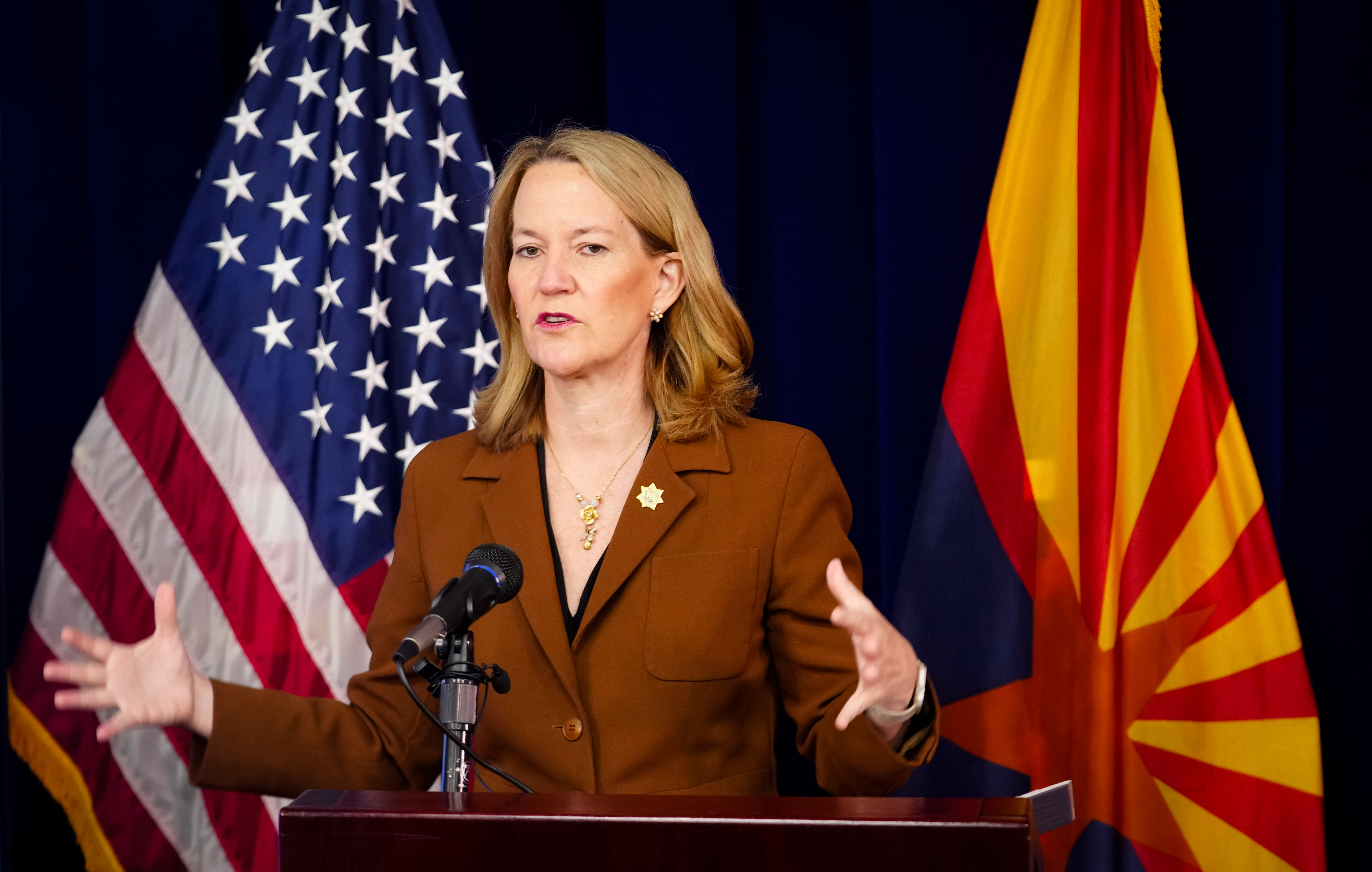
In Michigan, Democratic Senate candidate Abdul El-Sayed’s association with political commentator Hasan Piker has generated controversy. Piker has faced criticism for past comments about America, Israel, Hamas, and American Jews. Michigan Attorney General Dana Nessel, who is Jewish, has also publicly expressed concerns about the political environment within her own party. She has made clear that her Jewish identity comes before her political affiliation.
That is a principle worth remembering far beyond Michigan.
When allegiance to a political movement requires overlooking hatred, threats, or extremism, truth must take priority over party loyalty.
For Christians, antisemitism also carries biblical significance. Zechariah 2:8 describes Israel as the “apple of His eye,” pointing to God’s covenant relationship with the Jewish people. Christians should therefore be among the first to reject hatred directed toward Jews, regardless of whether it comes from the political left or right.
The same discernment is necessary when evaluating claims surrounding Israel and Gaza. Questions about UNRWA personnel, Hamas, humanitarian aid, and conditions inside Gaza demonstrate why accusations should be examined carefully rather than simply repeated. Facts matter. Context matters. And when accusations against Israel spread around the world, getting those facts right matters even more.
The Standard Has to Apply to Everyone
Consistency becomes much harder when scrutiny turns toward our own political side.
President Trump’s opposition to Sharia law deserves to be weighed alongside his administration’s relationships in the Muslim world, including Qatar and Turkey. The prospect of a Boeing 747 provided by Qatar, in particular, raises legitimate questions about appearances and foreign influence.
Qatar has maintained a complicated role in Middle Eastern affairs, including relationships with Hamas, while also serving as a major American security partner. Turkey presents its own challenges under President Recep Tayyip Erdoğan, whose relationship with Israel has become increasingly hostile.
Foreign policy inevitably requires dealing with governments that do not share American values. But Americans should still expect consistency from their leaders.
If foreign influence deserves scrutiny when it reaches the political left, it does not suddenly become harmless when it reaches the political right.
The same principle should apply to conservative media. Holding Democrats accountable while ignoring destructive rhetoric or questionable influences among conservatives does not demonstrate principle. It demonstrates partisanship.
Christians especially cannot allow political affiliation to determine when truth matters.
Election integrity provides another example. A recent Supreme Court decision allowed portions of Trump’s executive order concerning elections to move forward after determining that states challenging the order had sued prematurely. The dispute involves measures including ballot tracking and the creation of citizenship data that could be shared with states.
The Court did not settle every underlying legal question, meaning the dispute is far from finished. But the larger principle should not be controversial: eligible Americans should be able to vote, legitimate votes should be counted, and election systems should have safeguards capable of earning public confidence.
The Dolly Parton Story You Probably Haven’t Heard
Against those contentious political stories stands a very different kind of American story.
Dolly Parton’s legacy is usually told through the obvious accomplishments: more than 100 million records sold, iconic songs, movies, awards, Dollywood, and a career spanning generations.
But there is another part of that legacy.
In the 1970s, a Jewish man from Brooklyn named Sandy Gallin became Parton’s manager. Gallin helped guide her crossover from country music into mainstream entertainment, including encouraging her to record “Here You Come Again.” Their professional relationship eventually developed into a partnership lasting roughly 25 years.
Then came another connection.
Parton launched the Imagination Library in 1995 with a simple mission: put books into the hands of children. Jewish philanthropist Harold Grinspoon saw what Parton had created and was inspired to develop a similar program for Jewish families.
That idea became PJ Library, which today distributes books about Jewish life and tradition to families around the world.
A Christian woman from Tennessee wanted children to read. A Jewish philanthropist saw what she was doing and carried that idea into Jewish homes across the globe.
Genesis 12:3 records God’s promise to Abraham: “I will bless those who bless you.”
Parton possessed the fame and business success to build an enormous personal fortune. Yet some of the most meaningful parts of her legacy are not about what she accumulated. They are about what she gave away.
A meaningful legacy is measured less by what we accumulate than by what we give, whom we bless, and what remains after we are gone.
That lesson reaches beyond Dolly Parton.
Politics will change. Elections will come and go. Today’s most influential personalities will eventually disappear from the headlines. But character, courage, generosity, and faithfulness leave a different kind of legacy.
Christians should be willing to confront antisemitism wherever it appears, examine political leaders consistently, demand truth from the institutions around them, and refuse to let partisan loyalty replace biblical conviction.
And when God gives someone influence, resources, or opportunity, the question is not merely how much can be gained from it.
The better question is what can be given through it.
Watch The Daniel Cohen Show on Real Life Network for more news and commentary connecting the headlines to the good news through a biblical worldview.
.png)
Daniel Cohen hosts the "Daniel Cohen Show" exclusively on the Real Life Network. A Jewish follower of Jesus and three-time Emmy award-winning journalist, Cohen delivers the news from Israel, reporting on today's top headlines with a biblical worldview.
.jpg)