
Stream Real Life Network Now

WATCH NOW
International News


Faith & Culture
25 min
When the Climate Narrative Shifts: Fear, Trust, and a Generation Trying to Make Sense of it All
Climate messaging is changing as political leaders, media outlets, and institutions reconsider past assumptions. The shift raises deeper questions about fear, public trust, discernment, and how Christians should think about environmental stewardship.
Adapted from a recent Rose Unplugged podcast conversation with Marc Morano of Climate Depot. Watch the full episode: Here
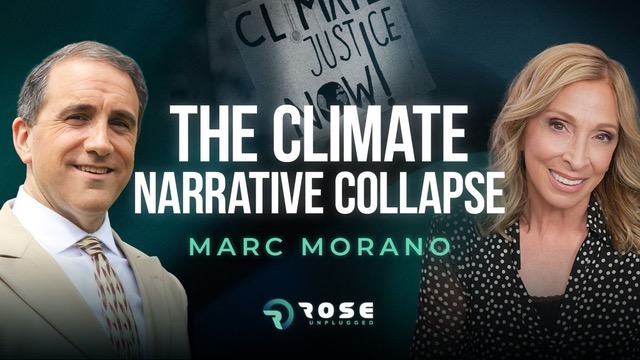
We are watching something shift that many people were told would never shift. For years, the message was simple, absolute, and repeated everywhere: the science is settled, the timeline is urgent, and the consequences are existential.
Climate change was not presented as one issue among many. It was presented as the issue. The defining crisis of our time. And for a long stretch, questioning that framing was treated not as disagreement, but as denial.
But now, something is happening that is difficult to ignore.
The Quieting
Major political outlets are describing what they call “climate hushing”. It’s a noticeable quieting from Democrats and environmental groups at the very moment we were told urgency should be at its peak. Media voices and political strategists are openly admitting that climate messaging is no longer resonating with voters the way it once did.
And a very uncomfortable conversation is emerging inside mainstream reporting: that some of the most extreme climate scenarios that shaped headlines, policy, and public fear were never truly forecasts at all, but worst-case modeling that was often presented without that distinction being made clear to the public.
Now those same scenarios are being reconsidered. Recalibrated. In some cases, quietly set aside.
Meanwhile, at the Kitchen Table
At the same time, there is another layer to this story that can’t be ignored. Because while elites debate messaging strategies, ordinary families are dealing with something far more immediate. They are dealing with rising costs, energy insecurity, and food prices, and with the reality that policies sold as “saving the planet” often land first and hardest on working people.
And somewhere in the middle of all of that, I think a lot of people are just trying to live their lives and make sense of it all. Some climate activists say we’re destroying the planet if we eat meat. Vox, for example, has warned that beef is among the worst foods we consume when it comes to global warming. My only request is this: just do not take my steak away from me while you’re all figuring it out. I. Mean. It.
There’s something very human about that reaction. People can debate models and projections all day long, but at the end of the day, we’re still sitting down at a dinner table trying to live our lives without being told that everything we do is somehow destructive.
That disconnect, between elite narrative and lived experience, is now shaping the political response we’re seeing.
A Generation Raised on Collapse
And there’s something even deeper happening underneath all of this. We now have an entire generation that grew up hearing one dominant message: that the world is nearing the edge, that time is running out, and that catastrophic collapse is not just possible but likely, unless radical transformation happens immediately.
Many young people didn’t just hear that message. They internalized it. It shaped anxiety. It shaped worldview. And in some cases, it shaped despair.
Now, slowly, some are beginning to ask a question that’s not political at all, but deeply personal: What if what I was told was only part of the story?
Proverbs 14:15 says, “The naive believes everything, but the sensible man considers his steps.”
That verse feels more relevant in a moment like this than it has in a long time. Not as a political statement, but as a reminder that fear, especially sustained fear, has a way of shaping belief faster than discernment can catch up.
A Pattern Emerges
Viewed individually, these developments might seem like political adjustments or media recalibrations. But when you step back and place them side by side, a pattern begins to emerge.
Political leaders are pulling back from climate messaging. Media outlets are acknowledging that voters are not responding the way they once expected. The most extreme climate scenarios that shaped years of public discourse are being revised.
Some of the world’s largest economies are resisting sweeping energy transitions. And even long-standing institutions are adjusting scope, timelines, and assumptions that once appeared fixed.
None of this is happening in isolation. It is happening all at once. And what it points to is something deeper than policy disagreement. It points to a growing gap between institutional certainty and public trust.
Stewardship Was Never the Issue
Now, to be clear: stewardship of the environment is not the issue. Wisdom in caring for creation is not the issue.
The issue has always been how that stewardship is defined, and how it is communicated to the people asked to live under it. Because when fear becomes the primary engine of persuasion, something else begins to erode alongside it, and that is trust. And trust, once fractured, is not easily restored.
As parts of the narrative so many young people were raised on are being revised, softened, or walked back, a difficult question emerges: how does a generation recalibrate when the story they were told about the world begins to change?
Not with anger. Not with cynicism. But with discernment.
A World Not Out of Control
Isaiah 40:22 reminds us, “It is He who sits above the circle of the earth.”
In other words, the world has never been out of control, even when our human interpretation of it has been incomplete.
So maybe what we are witnessing right now isn’t just a political shift or a media correction. Maybe it is a moment of reassessment: of how we weigh models versus reality, urgency versus accuracy, and narrative versus truth.
Because the question underneath all of this is not simply about climate policy. It is about trust. Trust in institutions. Trust in messaging. And ultimately, trust in how we understand the world we are being told to fear, and the world we truly live in.
If there is a path forward, it won’t come from fear alone. It will come from clarity. From honesty. And from the willingness to separate what we were told from what is true.
Keep your faith steady, your focus clear, and keep moving forward, because you are here for such a time as this.
Sign up today for more content from Real Life Network.
World News
25 min
What Political Rhetoric Reveals About the People Who Use It
From political violence and media accountability to Iran, Israel, and disputes over Christian teaching, the stories dominating public life raise a common question: Can Americans disagree without abandoning truth, consistency, and human dignity?
Politics has always involved disagreement. A healthy country should be able to argue vigorously about taxes, foreign policy, abortion, immigration, health care, education, and the proper role of government without treating political opponents as enemies who deserve suffering or death.
That distinction matters because political rhetoric does not remain confined to television studios, campaign rallies, or social media.
A recent survey discussed on The Daniel Cohen Show asked Democratic respondents how they would react to a hypothetical headline announcing President Donald Trump had been assassinated at a rally. The transcript cites the results as evidence of a disturbing willingness among some Americans to respond positively to political violence.
A survey cannot establish that respondents would personally commit violence, and attitudes expressed in a poll should not be treated as evidence that an entire political party supports assassination. But even hypothetical approval of political murder should trouble Americans regardless of who the target is.
That principle has to work in every direction.
Political violence against Donald Trump is wrong. Violence against Democratic officials is wrong. Celebrating the murder of a conservative activist is wrong. Celebrating an attack on a progressive activist would be wrong.
A political culture becomes dangerous when disagreement is no longer enough and opponents have to be humiliated, harmed, or eliminated.
Political Violence Should Not Have a Party
The attempted assassination of Trump in Butler, Pennsylvania, demonstrated how quickly political hostility can become something much more serious. The transcript also points to the killing of Charlie Kirk and the continuing controversy surrounding responses to political violence.
The deeper question is what kind of culture develops when suffering itself becomes partisan.
The 2017 attack on Senator Rand Paul offers a smaller but revealing example. MSNBC anchor Kasie Hunt introduced coverage of Paul's injuries by calling the incident one of her “favorite stories,” before immediately clarifying her concern for the senator. Paul suffered six broken ribs in the attack. The comment generated criticism at the time, and Hunt apologized, saying she had chosen her words poorly.
That distinction matters. An irresponsible comment should not automatically be interpreted as proof that someone celebrates political violence. Corrections and apologies matter too.
But so does the underlying standard.
Nobody's broken ribs should become funny because of the letter beside his name. Nobody's assassination should become acceptable because of political hatred. And nobody's murder should become easier to dismiss because the victim belonged to the wrong ideological camp.
Christians should be particularly careful here. Human dignity does not disappear when someone votes differently.
The command to love one's enemies is most revealing when there actually are enemies to love.
Foreign Policy Exposes the Difference Between Slogans and Consequences
That same need for moral clarity appears in foreign policy.
At a University of Michigan event, Democratic Senate candidate Abdul El-Sayed was questioned by a student who described relatives suffering under Iran's government and asked about El-Sayed's previous comments concerning Iran and its leadership. El-Sayed responded that the United States should not pursue regime change and said he supports “freedom and democracy for the people of Iran,” while arguing that democratic change should come from Iranians themselves.
There is a legitimate policy debate underneath that exchange.
Opposing American-led regime change is not the same thing as supporting the Iranian government. American policymakers have debated intervention, sanctions, military force, diplomacy, and regime change for decades. But candidates asking voters for significant national authority should expect difficult questions about how their principles translate into policy when authoritarian governments repress their own citizens.
The same is true of Israel.
Missile defense can sound like an abstraction until a siren gives a family seconds to reach a shelter. Iron Dome is designed to intercept rockets and other airborne threats headed toward populated areas. Arguments over American support for the system therefore involve more than budget lines; they involve competing judgments about U.S. foreign policy, Israeli security, regional stability, and civilian protection.
Political language becomes much easier when the human consequences remain theoretical.
That reality became painfully tangible this week for Israeli Ambassador to the United States Yechiel Leiter. His son Neria, an IDF reservist, was seriously wounded in a car-ramming attack at a checkpoint in the West Bank. Another son, Moshe Yedidya Leiter, was killed in Gaza in November 2023.
Arguments over Israel, Iran, terrorism, and American foreign policy deserve serious debate. They also involve families for whom those debates are not academic.
Truth Still Matters When It Complicates the Argument
Political rhetoric becomes especially dangerous when facts are treated as raw material rather than constraints.
French President Emmanuel Macron provided a striking example at the United Nations this week when he said Hamas had “never operated” in the West Bank. A French official subsequently said Macron meant that Hamas had never governed the West Bank. Those are materially different claims. Hamas has operated in the West Bank even though it has not governed the territory.
Corrections matter because words matter, particularly when they come from heads of state discussing one of the world's most contentious conflicts.
The same principle applies closer to home.
CNN, MS NOW, and Politico recently sued the Trump administration after their reporters were barred from White House grounds. The administration defended the action by accusing the organizations of dishonest reporting; the outlets argued that exclusion based on their coverage violated constitutional protections. A federal judge has since temporarily ordered their access restored, finding that the outlets were likely to succeed on their claim that the credentials were revoked without constitutionally adequate due process.
That dispute raises legitimate questions about both government power and media responsibility. News organizations can and should be criticized when reporting is inaccurate. Government officials can and should face scrutiny when they use official authority against news organizations they dislike.
Neither principle requires abandoning the other.
Truth cannot become a partisan possession, defended when useful and discarded when inconvenient.
That standard also belongs inside the church.
The transcript raises theological questions about churches and political candidates who identify themselves as Christian while challenging historic Christian doctrines. Those disagreements should ultimately be evaluated by Scripture rather than by whether a candidate has the preferred political affiliation.
Christianity is not infinitely adjustable. The virgin birth, bodily resurrection, identity of Christ, authority of Scripture, sin, repentance, and salvation are not campaign language to be reshaped around contemporary politics.
At the same time, theological disagreement should be represented accurately. Criticism is strongest when it addresses what someone actually teaches rather than exaggerating the position for political effect.
That principle connects every issue here.
Political violence. Media coverage. Iran. Israel. Churches. Presidential power. International diplomacy.
Different subjects, same responsibility.
Tell the truth about opponents. Refuse to celebrate their suffering. Examine claims before repeating them. Apply standards consistently. Remember the human beings living with the consequences of political decisions.
For Christians, political engagement should never require surrendering those obligations. Scripture does not permit hatred simply because the stakes feel high. It does not permit dishonesty because the other side is dishonest. And it does not allow political allegiance to determine who deserves dignity.
Politics reveals plenty about candidates and parties.
How people speak about their opponents can reveal even more.
Real Life Network provides biblically grounded programming examining faith, culture, and current events. Watch The Daniel Cohen Show for more conversations about the stories shaping American and international life.
World News
25 min
Trump’s Greenland Deal, the White House Press Ban, and a Question of Accountability
Trump’s Greenland security agreement and the White House’s clash with major news outlets raise broader questions about national security, media credibility, accountability, and the responsibility to tell the full story.
A nation cannot function without trust.
Citizens have to trust that leaders are thinking beyond the next news cycle. Governments have to anticipate threats before those threats become emergencies. Journalists have to report facts accurately enough that the public can distinguish information from advocacy. And when institutions make mistakes, accountability matters.
That standard becomes especially important when the stakes involve national security.
The United States, Denmark, and Greenland have reached a new Arctic security agreement intended to strengthen Greenland's defenses and restrict adversarial powers from establishing military bases or making sensitive strategic investments on the island. President Donald Trump has described the arrangement as giving the United States permanent security rights there, although Denmark and Greenland have emphasized that Greenland remains under its existing sovereignty and the precise terms are still emerging.
Months ago, much of the public conversation surrounding Greenland sounded almost absurd. Late-night comedy made Trump's interest in the island a punchline, while critics questioned why the United States should care so much about a vast Arctic territory.
Now the strategic argument is much harder to dismiss.
Greenland sits in an increasingly important Arctic region where Russia and China have strategic interests. The new arrangement reportedly expands America's ability to operate militarily there while preventing non-NATO countries from establishing sensitive footholds.
The lesson is larger than Greenland.
Prudence sometimes means preparing for a danger before everyone else agrees that the danger is real.
Proverbs 22:3 says, “A prudent man foresees evil and hides himself, but the simple pass on and are punished.”
That principle does not require accepting every government claim or supporting every proposed national-security measure. It requires taking threats seriously enough to examine them before a crisis removes the luxury of preparation.
September 11 remains the clearest American example of what happens when seemingly distant threats become immediate realities. Nearly 3,000 people were killed that morning. The lesson should not be that every warning proves correct. It should be that responsible leadership has to consider possibilities the public would rather never imagine.
A Free Press Still Has to Be a Trustworthy Press
The question of institutional trust becomes more complicated when applied to the media.
The Trump administration recently barred CNN, MS NOW, and Politico journalists from White House grounds and confiscated their credentials. Trump accused the organizations of publishing “fake news.” The three outlets have now sued the administration, arguing that their exclusion violates the First Amendment and that access was revoked in retaliation for unfavorable coverage.
Those facts create two questions that should not be collapsed into one.
The first is whether news organizations deserve criticism when their reporting is inaccurate, incomplete, or driven by political assumptions. Of course they do. Journalism possesses enormous power to shape what millions of Americans believe happened. Errors should be corrected, important context should not be deliberately omitted, and political figures should face comparable scrutiny regardless of party.
The second question is whether a president can revoke journalists' White House access because the administration believes their reporting is dishonest or unfair. That is now a constitutional dispute before the courts. The affected organizations argue that government cannot condition press access on favorable coverage, while the administration defends its ability to determine who receives access to White House facilities.
Both questions matter.
Freedom of the press and accountability for the press are not competing principles. A free press should be vigorously protected precisely because its responsibility to tell the truth is so consequential.
That responsibility includes resisting selective standards.
Donald Trump's 2017 comments following the Charlottesville violence remain a useful example of how context can become part of a political dispute. Trump did say there were “very fine people on both sides” while discussing people involved in the controversy surrounding Confederate monuments. In the same remarks, he explicitly said he was not referring to neo-Nazis and white nationalists and said they should be “condemned totally.”
That fuller context does not resolve every legitimate criticism of Trump's response to Charlottesville. Critics have argued that his broader remarks still minimized the nature of the Unite the Right rally and created an inappropriate equivalence. But accurately evaluating the controversy requires presenting what was actually said rather than removing inconvenient portions of the statement.
The same standard should apply to every president.
Journalists should scrutinize Republican administrations. They should scrutinize Democratic administrations. They should investigate political claims rather than protect preferred narratives. And audiences should be willing to correct themselves when evidence contradicts what they wanted to believe.
Trust disappears when people conclude that facts are being filtered according to who benefits from them.
When the Victim Disappears From the Story
That problem extends beyond Washington.
Media framing determines more than how people understand politicians. It can determine whose suffering remains at the center of a tragedy.
The transcript points to the killing of 23-year-old Ukrainian refugee Iryna Zarutska on Charlotte's light rail and subsequent coverage involving the accused killer's family. The broader concern is worth considering carefully: compassion for mental illness should never require forgetting the victim of a violent crime.
Mental illness is real. Families trying to help severely mentally ill relatives can endure extraordinary hardship. Criminal courts also have established procedures for determining whether mental illness affects legal responsibility.
But compassion and accountability are not mutually exclusive.
A victim has a name. A family has suffered a loss. A community has been wounded. Those facts should not disappear simply because another part of the story raises difficult questions about mental health, criminal justice, or failures in the systems surrounding an accused offender.
A compassionate society should be capable of caring about mental illness without allowing the person who suffered the violence to vanish from the story.
That principle reaches well beyond crime reporting.
Every institution tells stories. Governments tell citizens which dangers deserve attention. Political parties tell voters which problems matter. Media organizations decide which facts lead a broadcast and which appear near the bottom of an article.
Christians should therefore develop habits that go deeper than simply choosing which institution to trust.
Ask what happened. Examine the complete statement rather than the viral clip. Distinguish established facts from allegations. Look for missing context. Pay attention to the people most directly affected. Apply the same standard when the facts help a preferred political side and when they hurt it.
Most importantly, remember that truth does not become more or less true depending on who benefits from it.
National security requires foresight. Journalism requires accuracy. Justice requires accountability. Compassion requires remembering the human beings affected by our political and cultural arguments.
None of those responsibilities belongs exclusively to the left or the right.
A biblical worldview should make truth more important than either.
That is why Real Life Network and The Daniel Cohen Show continue examining the stories shaping American life through questions of truth, faith, culture, and responsibility.
World News
25 min
Hyde Amendment Approaches 50th Anniversary Having Saved almost 3 Million Babies
As the Hyde Amendment approaches its 50th anniversary, lawmakers and pro-life advocates are reflecting on its history, its impact on federal abortion funding, and the continuing debate over abortion policy in America.
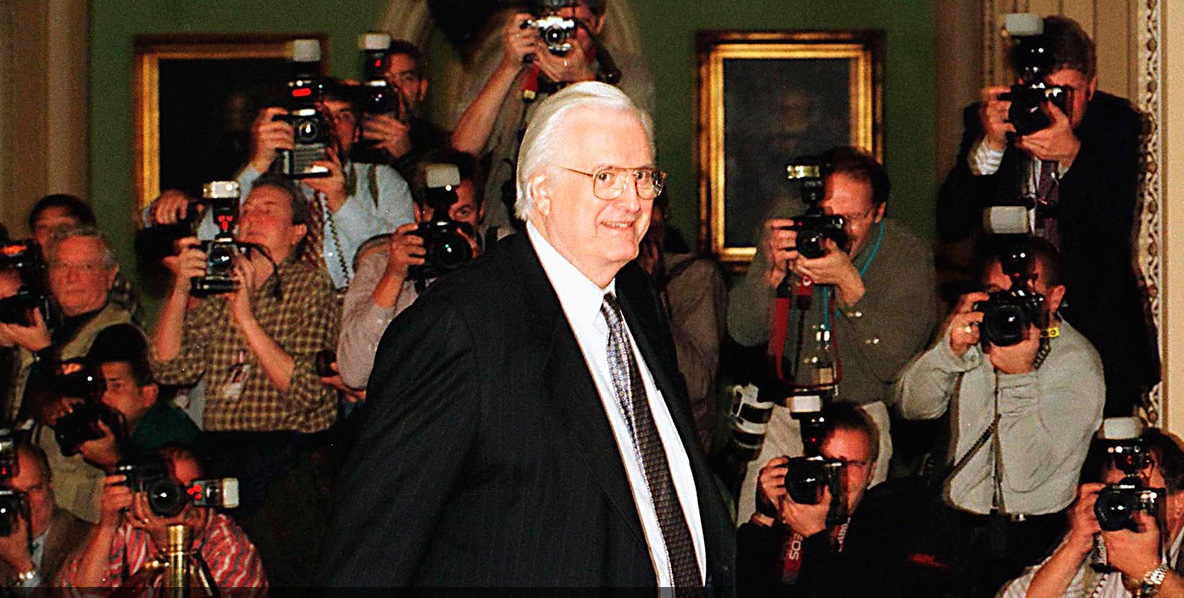
“An innocent, defenseless human life, in a caring and humane society, deserves better than to be flushed down a toilet or burned in an incinerator.” Such are the words of Henry Hyde, the former U.S. congressman from Illinois who tirelessly championed life and introduced the Hyde Amendment in 1976. Almost 50 years later, the legislative rider faces the opportunity to be renewed again.
For a half-century, the Hyde Amendment has stopped taxpayer dollars from funding abortion.
On Wednesday evening, Rep. Chris Smith (R-N.J.), co-chair of the Congressional Pro-Life Caucus, hosted a Special Order on the House floor to acknowledge the upcoming 50th anniversary of the Hyde Amendment on September 30. “The promise of America is that life is not just for the privileged, the planned, or the perfect,” Smith said, quoting Hyde. “This may sound odd, even ironic; you are here in the flush of victory. And yet it is precisely now that I ask you to contemplate the possibility of defeat, perhaps even the necessity of defeat. If you don’t know the principle or the policy for which you are willing to lose your office, then you are going to do damage here.”
Quena González, senior director of Government Affairs at Family Research Council, explained to The Washington Stand that Smith and Hyde have a history. “Representative Chris Smith served with Representative Henry Hyde for 26 years; he’s been a tireless defender of the unborn in Congress for 45 years and comes as close as anyone to carrying Hyde’s inimitable mantle.”
After the Roe v. Wade decision in 1973, the U.S. government paid for an estimated 300,000 abortions each year via Medicaid. According to the Charlotte Lozier Institute, since the Hyde Amendment’s first enactment in 1976, approximately 2.7 million lives have been saved.
During Wednesday’s event, Rep. Chip Roy (R-Texas) asserted that society has a duty to protect the unborn. “Life matters. Who are we as a people if we cannot stand up in defense of the most innocent form of life there is — a child in the womb of its mother? That should be our calling. And we should be able to unite as human beings in defense of the defenseless.”
Legislative Assistant for FRC’s Government Affairs Chantel Hoyt praised what House members shared during the Special Order. “I appreciated seeing Representative Chip Roy connect this important anniversary to the toll that chemical abortion is taking,” she told TWS. “It’s encouraging to see members like Representative Chris Smith carrying on Henry Hyde’s legacy and seeking to not only retain but build on the protections of the Hyde Amendment.”
Rep. Tracey Mann (R-Kan.) observed during the House event that he believes that abortion is not consistent with the Constitution. “Hyde should not be viewed as the finish line for the pro-life movement. It’s the floor. It’s a bare minimum compromise,” he shared. “America is founded on the self-evident truth that every person is created equal and endowed with our creator with an inherent right to life. That right is the foundation of every other right that we enjoy. As a father, I believe that every child is fearfully and wonderfully made by God. Every life has value, every child has purpose, and no child is a mistake.”
The Special Order and Hyde Amendment anniversary come at a time when chemical abortion has become a hot button issue on Capitol Hill. Pro-life politicians, lobbyists, and organizations continue to work tirelessly to ban the abortion drug mifepristone. “It’s always great to see members of Congress speak on the floor in defense of life, but especially now as we are urging the Trump administration to take action on chemical abortion to protect mothers and their babies,” Hoyt concluded.
This article was originally written by Quinn Delamater and published on The Washington Stand. For more content like this, visit Real Life Network.
World News
25 min
When Nothing Is Sacred, Everything Becomes Political
From the solemnity of September 11 to the use of Scripture in politics, America faces a deeper question about what it still considers sacred. Christians are called to respond with compassion, biblical discernment, and the courage to stand for truth.
There are moments that should transcend politics.
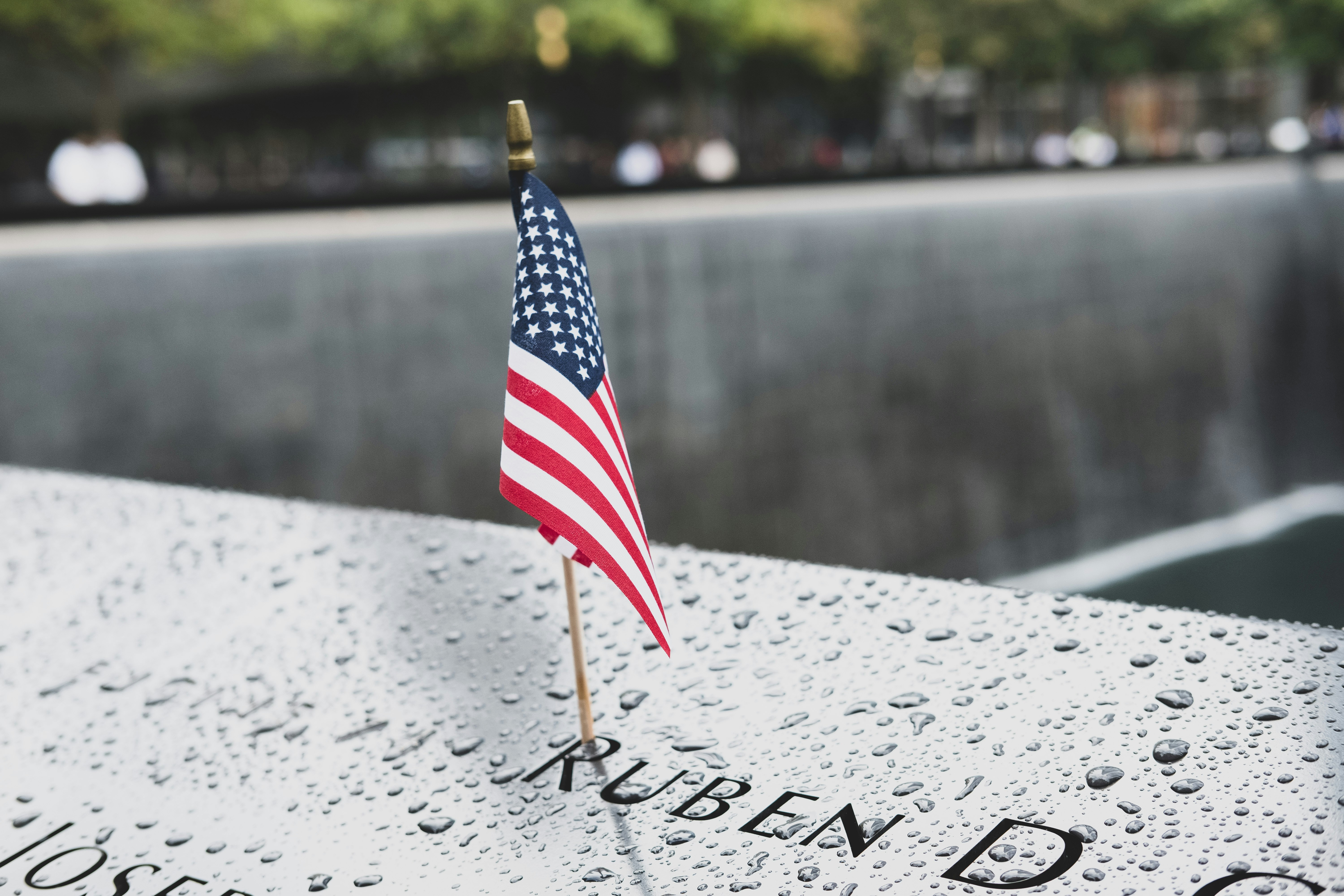
A memorial honoring nearly 3,000 Americans murdered on September 11 should be one of them. It should be a place for grief, remembrance, gratitude, and reverence. Families who have carried that loss for 25 years deserve something increasingly rare in American public life: a moment in which their pain is not reduced to another political opportunity.
That is why images of Alexandria Ocasio-Cortez and New York City Mayor Zohran Mamdani smiling and laughing together during the 25th anniversary commemoration drew criticism. A photograph cannot reveal the context of every conversation or establish what prompted a smile. But juxtaposed with grieving families at Ground Zero, the moment raised a larger question worth asking: Does American culture still recognize that some things should be treated as sacred?
These are exactly the kinds of cultural questions worth examining on Real Life Network and The Daniel Cohen Show, where the headlines are considered alongside the biblical truths that should shape how Christians understand them.
Leadership Requires More Than the Right Policies
Public leadership is not merely about legislation, budgets, speeches, or elections. Leadership also requires understanding the human consequences behind public events.
That principle extends far beyond a single 9/11 ceremony.
When thirteen American service members were killed during the 2021 withdrawal from Afghanistan, controversy followed images of President Joe Biden appearing to check his watch during the dignified transfer ceremony at Dover Air Force Base. Biden later disputed some characterizations of the moment, but Gold Star families publicly described feeling disrespected.
Politics can make people remarkably selective about empathy. When someone on the other side suffers, compassion becomes conditional. When an uncomfortable tragedy threatens a preferred narrative, attention shifts somewhere else.
Christians cannot adopt that standard.
Human dignity does not change according to political usefulness. A child killed in an act of violence matters. A soldier returned home in a flag-draped casket matters. A family still grieving someone murdered on September 11 matters. An immigrant victim matters. An American citizen victim matters. Political affiliation does not determine the value of a human life.
A healthy society should be capable of looking at suffering and seeing a human being before seeing a political opportunity.
Jesus warned that a time would come when “the love of many will grow cold” (Matthew 24:12). That description should make Christians examine more than the behavior of politicians. It should make believers examine their own hearts.
Have politics made compassion selective? Has outrage become entertainment? Have human tragedies become useful primarily when they help defeat the other side?
If so, something far more important than an election is being lost.
Biblical Language Cannot Become Political Branding
The same problem appears when Christianity itself becomes a political instrument.
Texas politician James Talarico has increasingly incorporated Christian language into his political message. In one recent appearance, he invoked Matthew 25 while arguing that Jesus would condemn senators over food assistance, Medicaid, and deportations.
Christians should welcome politicians talking seriously about Scripture. But biblical vocabulary does not automatically make an argument biblical.
Matthew 25 unquestionably demonstrates Christ's concern for the vulnerable. Christians should care about hungry people, strangers, the sick, prisoners, and those suffering around them. But translating those commands directly into support for a particular government program requires an additional political argument. Christians can share the same biblical concern while disagreeing about which policies best address it.
The same principle applies to immigration.
Scripture repeatedly commands God's people to care for foreigners and strangers. Scripture also recognizes nations, governing authorities, boundaries, and civil order. Romans 13 gives government genuine authority, while Acts 17:26 speaks of God determining nations and their dwelling places.
Neither side gets to erase the passages that complicate its politics.
Scripture should judge political convictions. Political convictions should never be allowed to rewrite Scripture.
That requires biblical literacy.
A politician who can quote a verse fluently may still misuse it. A conservative can misuse Scripture just as easily as a progressive. Christians who know only fragments of the Bible become vulnerable to anyone capable of wrapping a political agenda in Christian vocabulary.
Read the Word. Know the context. Test the argument.
Courage Means Refusing to Follow the Crowd
There is another quality disappearing from American life: the courage to stand alone.
The Lindsay Clancy case offers a difficult example. Clancy admitted killing her three young children but mounted an insanity defense. Her 2026 trial ended in a mistrial after eleven jurors favored acquittal and one juror held out.
According to another juror who later discussed the deliberations publicly, the lone holdout was a Black man.
Whatever conclusions people reach about the complicated legal questions surrounding mental illness and criminal responsibility, there is something worth recognizing in anyone willing to maintain a sincerely held conviction while an entire room pressures him to surrender it.
Standing with the crowd is easy. Standing alone costs something.
That lesson reaches far beyond a courtroom.
Christians will increasingly encounter moments when biblical convictions are unpopular, unfashionable, or professionally inconvenient. There will be pressure to remain silent because speaking could cost friendships, opportunities, influence, or reputation.
Conviction means deciding beforehand that truth matters more.
That does not grant permission to be reckless or cruel. Courage without humility quickly becomes arrogance. But humility without courage can become cowardice disguised as kindness.
Christian conviction requires both: the humility to recognize when we are wrong and the courage to stand when God's truth is clear.
America does not merely need better political messaging. It needs adults capable of recognizing sacred things, leaders who understand the human cost of their decisions, Christians who know Scripture well enough to recognize when it is being manipulated, and ordinary people willing to stand for truth when standing becomes uncomfortable.
Politics will continue changing. Candidates will come and go. Headlines that seem enormous today will eventually disappear.
The deeper question is what kind of people Americans are becoming in the process.
When nothing is sacred, everything becomes political. Christians should resist that transformation by recovering reverence, compassion, biblical discernment, and courage.
Continue examining the cultural and political stories shaping America through a biblical worldview on The Daniel Cohen Show, streaming free on Real Life Network.

World News
25 min
September 11, Twenty-Five Years Later: What Does It Mean to Never Forget?
Twenty-five years after September 11, a new generation is inheriting the story of 9/11. Remembering means honoring the victims and heroes while also preserving the truth about who attacked America, what motivated them, and why those lessons still matter.
Twenty-five years after September 11, 2001, two words remain inseparable from that day: Never forget. As a new generation inherits the story of 9/11, Real Life Network and The Daniel Cohen Show are committed to examining the history, ideas, and cultural questions that Americans cannot afford to forget.
But remembering September 11 requires more than remembering its pain.
An entire generation of Americans has now grown up without any personal memory of the attacks. Roughly 100 million Americans have been born since 9/11. They did not watch the second plane strike the South Tower. They did not see smoke pouring across Manhattan or experience the uncertainty that gripped the country. For them, September 11 is history.
That raises an increasingly important question: What exactly are Americans promising never to forget?
Remembering the Victims Means Remembering the Truth
Calling September 11 a tragedy is true, but incomplete.
September 11 was an intentional terrorist attack carried out by 19 al-Qaeda hijackers. Osama bin Laden and al-Qaeda were not secretive about their worldview, grievances, or objectives. Their own statements repeatedly framed their conflict with America in explicitly religious as well as political terms.
America must be capable of acknowledging that history.
That does not mean treating every Muslim as a terrorist or holding peaceful Muslim neighbors responsible for crimes they did not commit. Americans should defend religious liberty, reject harassment, and protect the freedom of peaceful people to worship according to their beliefs.
But religious liberty cannot require historical amnesia.
There is a profound difference between refusing to hate Muslims and refusing to acknowledge Islamist extremism. America must be capable of doing the first without falling into the second.
For too long, political leaders, academics, and media figures have sometimes preferred vague descriptions of terrorism because specificity can be uncomfortable. Yet future generations cannot understand September 11 if the ideology of its perpetrators is removed from the history they inherit.
“Never forget” cannot mean remembering only the victims while becoming increasingly reluctant to explain why they became victims.
The Next Generation Will Remember What We Teach
This matters because the people who remember September 11 firsthand will not always be here to tell the story.
Already, debates over the meaning of 9/11 reveal dramatically different interpretations of what happened. Some emphasize American foreign policy, imperialism, economics, or Western actions as the primary explanation for terrorism. Others have gone considerably further, portraying America itself as deserving the violence directed against it.
Those ideas should not be allowed to replace historical clarity.
The terrorists who attacked America were responsible for their actions. The men aboard those airplanes chose innocent civilians as their targets. No disagreement with American foreign policy makes hijacking commercial airplanes and deliberately murdering civilians morally defensible.
The responsibility to preserve that truth belongs especially to parents.
Children should know about the people who boarded airplanes expecting to arrive home later that day. They should hear about the firefighters carrying equipment up stairwells as thousands rushed downward. They should know about Flight 93 and the passengers who fought back. They should understand what happened at the Pentagon and what unfolded at Ground Zero.
And they should know who carried out the attacks and what motivated them.
If parents do not teach their children what happened on September 11, someone else will eventually tell them what September 11 is supposed to mean.
History never remains an empty space. When one explanation disappears, another takes its place.
That is why remembrance is about more than nostalgia. It is a responsibility to those who died and to those who were not yet born.
Remembering Without Living in Fear
There is another part of September 11 worth remembering: what America looked like afterward.
For a brief period, the country rediscovered a sense of national unity that now seems almost unimaginable. Political labels became less important. American flags appeared on homes and businesses. Tens of thousands stood together at Yankee Stadium and sang “God Bless the USA.” President George W. Bush stood among firefighters and rescue workers at Ground Zero and promised that America would respond.
That unity did not last.
But the courage behind it should not disappear.
Charlie Kirk understood the importance of courage in the public square. He repeatedly warned younger Americans about ideological movements he believed threatened faith, family, and the American way of life. His words were often pointed because he believed dangerous ideas had to be identified rather than accommodated. His Christian convictions also became increasingly central to the way he understood the cultural battles around him.
That willingness to speak should challenge Christians today.
Courage does not require hatred. Conviction does not require cruelty. Christians can identify dangerous ideologies while remembering that human beings are not the ultimate enemy. Scripture reminds believers that the struggle is ultimately “not against flesh and blood,” but against spiritual forces of evil (Ephesians 6:12).
Christian courage tells the truth about evil without allowing hatred of people to take root in the heart.
Twenty-five years after September 11, America does not need to live in the fear of that morning. Neither should it erase the lessons purchased at such an enormous cost.
Remember the victims. Remember their families. Remember the first responders. Remember the passengers who fought back. Remember the courage that emerged from the rubble. Remember the enemy that attacked America and the ideology that animated its extremists.
Then make sure the children who were not there understand why it matters.
One day, September 11 will exist entirely outside living memory. When that day arrives, never forget will mean only as much as the truth one generation was willing to pass to the next. Continue examining the stories shaping America through a biblical worldview on The Daniel Cohen Show, streaming free on Real Life Network.
Thank you! Your submission has been received!
Oops! Something went wrong while submitting the form.
Faith & Culture
Adapted from a recent Rose Unplugged podcast conversation with Marc Morano of Climate Depot. Watch the full episode: Here
We are watching something shift that many people were told would never shift. For years, the message was simple, absolute, and repeated everywhere: the science is settled, the timeline is urgent, and the consequences are existential.
Climate change was not presented as one issue among many. It was presented as the issue. The defining crisis of our time. And for a long stretch, questioning that framing was treated not as disagreement, but as denial.
But now, something is happening that is difficult to ignore.
The Quieting
Major political outlets are describing what they call “climate hushing”. It’s a noticeable quieting from Democrats and environmental groups at the very moment we were told urgency should be at its peak. Media voices and political strategists are openly admitting that climate messaging is no longer resonating with voters the way it once did.
And a very uncomfortable conversation is emerging inside mainstream reporting: that some of the most extreme climate scenarios that shaped headlines, policy, and public fear were never truly forecasts at all, but worst-case modeling that was often presented without that distinction being made clear to the public.
Now those same scenarios are being reconsidered. Recalibrated. In some cases, quietly set aside.
Meanwhile, at the Kitchen Table
At the same time, there is another layer to this story that can’t be ignored. Because while elites debate messaging strategies, ordinary families are dealing with something far more immediate. They are dealing with rising costs, energy insecurity, and food prices, and with the reality that policies sold as “saving the planet” often land first and hardest on working people.
And somewhere in the middle of all of that, I think a lot of people are just trying to live their lives and make sense of it all. Some climate activists say we’re destroying the planet if we eat meat. Vox, for example, has warned that beef is among the worst foods we consume when it comes to global warming. My only request is this: just do not take my steak away from me while you’re all figuring it out. I. Mean. It.
There’s something very human about that reaction. People can debate models and projections all day long, but at the end of the day, we’re still sitting down at a dinner table trying to live our lives without being told that everything we do is somehow destructive.
That disconnect, between elite narrative and lived experience, is now shaping the political response we’re seeing.
A Generation Raised on Collapse
And there’s something even deeper happening underneath all of this. We now have an entire generation that grew up hearing one dominant message: that the world is nearing the edge, that time is running out, and that catastrophic collapse is not just possible but likely, unless radical transformation happens immediately.
Many young people didn’t just hear that message. They internalized it. It shaped anxiety. It shaped worldview. And in some cases, it shaped despair.
Now, slowly, some are beginning to ask a question that’s not political at all, but deeply personal: What if what I was told was only part of the story?
Proverbs 14:15 says, “The naive believes everything, but the sensible man considers his steps.”
That verse feels more relevant in a moment like this than it has in a long time. Not as a political statement, but as a reminder that fear, especially sustained fear, has a way of shaping belief faster than discernment can catch up.
A Pattern Emerges
Viewed individually, these developments might seem like political adjustments or media recalibrations. But when you step back and place them side by side, a pattern begins to emerge.
Political leaders are pulling back from climate messaging. Media outlets are acknowledging that voters are not responding the way they once expected. The most extreme climate scenarios that shaped years of public discourse are being revised.
Some of the world’s largest economies are resisting sweeping energy transitions. And even long-standing institutions are adjusting scope, timelines, and assumptions that once appeared fixed.
None of this is happening in isolation. It is happening all at once. And what it points to is something deeper than policy disagreement. It points to a growing gap between institutional certainty and public trust.
Stewardship Was Never the Issue
Now, to be clear: stewardship of the environment is not the issue. Wisdom in caring for creation is not the issue.
The issue has always been how that stewardship is defined, and how it is communicated to the people asked to live under it. Because when fear becomes the primary engine of persuasion, something else begins to erode alongside it, and that is trust. And trust, once fractured, is not easily restored.
As parts of the narrative so many young people were raised on are being revised, softened, or walked back, a difficult question emerges: how does a generation recalibrate when the story they were told about the world begins to change?
Not with anger. Not with cynicism. But with discernment.
A World Not Out of Control
Isaiah 40:22 reminds us, “It is He who sits above the circle of the earth.”
In other words, the world has never been out of control, even when our human interpretation of it has been incomplete.
So maybe what we are witnessing right now isn’t just a political shift or a media correction. Maybe it is a moment of reassessment: of how we weigh models versus reality, urgency versus accuracy, and narrative versus truth.
Because the question underneath all of this is not simply about climate policy. It is about trust. Trust in institutions. Trust in messaging. And ultimately, trust in how we understand the world we are being told to fear, and the world we truly live in.
If there is a path forward, it won’t come from fear alone. It will come from clarity. From honesty. And from the willingness to separate what we were told from what is true.
Keep your faith steady, your focus clear, and keep moving forward, because you are here for such a time as this.
Sign up today for more content from Real Life Network.
25 min
September 28, 2026
Rose Unplugged
World News
Politics has always involved disagreement. A healthy country should be able to argue vigorously about taxes, foreign policy, abortion, immigration, health care, education, and the proper role of government without treating political opponents as enemies who deserve suffering or death.
That distinction matters because political rhetoric does not remain confined to television studios, campaign rallies, or social media.
A recent survey discussed on The Daniel Cohen Show asked Democratic respondents how they would react to a hypothetical headline announcing President Donald Trump had been assassinated at a rally. The transcript cites the results as evidence of a disturbing willingness among some Americans to respond positively to political violence.
A survey cannot establish that respondents would personally commit violence, and attitudes expressed in a poll should not be treated as evidence that an entire political party supports assassination. But even hypothetical approval of political murder should trouble Americans regardless of who the target is.
That principle has to work in every direction.
Political violence against Donald Trump is wrong. Violence against Democratic officials is wrong. Celebrating the murder of a conservative activist is wrong. Celebrating an attack on a progressive activist would be wrong.
A political culture becomes dangerous when disagreement is no longer enough and opponents have to be humiliated, harmed, or eliminated.
Political Violence Should Not Have a Party
The attempted assassination of Trump in Butler, Pennsylvania, demonstrated how quickly political hostility can become something much more serious. The transcript also points to the killing of Charlie Kirk and the continuing controversy surrounding responses to political violence.
The deeper question is what kind of culture develops when suffering itself becomes partisan.
The 2017 attack on Senator Rand Paul offers a smaller but revealing example. MSNBC anchor Kasie Hunt introduced coverage of Paul's injuries by calling the incident one of her “favorite stories,” before immediately clarifying her concern for the senator. Paul suffered six broken ribs in the attack. The comment generated criticism at the time, and Hunt apologized, saying she had chosen her words poorly.
That distinction matters. An irresponsible comment should not automatically be interpreted as proof that someone celebrates political violence. Corrections and apologies matter too.
But so does the underlying standard.
Nobody's broken ribs should become funny because of the letter beside his name. Nobody's assassination should become acceptable because of political hatred. And nobody's murder should become easier to dismiss because the victim belonged to the wrong ideological camp.
Christians should be particularly careful here. Human dignity does not disappear when someone votes differently.
The command to love one's enemies is most revealing when there actually are enemies to love.
Foreign Policy Exposes the Difference Between Slogans and Consequences
That same need for moral clarity appears in foreign policy.
At a University of Michigan event, Democratic Senate candidate Abdul El-Sayed was questioned by a student who described relatives suffering under Iran's government and asked about El-Sayed's previous comments concerning Iran and its leadership. El-Sayed responded that the United States should not pursue regime change and said he supports “freedom and democracy for the people of Iran,” while arguing that democratic change should come from Iranians themselves.
There is a legitimate policy debate underneath that exchange.
Opposing American-led regime change is not the same thing as supporting the Iranian government. American policymakers have debated intervention, sanctions, military force, diplomacy, and regime change for decades. But candidates asking voters for significant national authority should expect difficult questions about how their principles translate into policy when authoritarian governments repress their own citizens.
The same is true of Israel.
Missile defense can sound like an abstraction until a siren gives a family seconds to reach a shelter. Iron Dome is designed to intercept rockets and other airborne threats headed toward populated areas. Arguments over American support for the system therefore involve more than budget lines; they involve competing judgments about U.S. foreign policy, Israeli security, regional stability, and civilian protection.
Political language becomes much easier when the human consequences remain theoretical.
That reality became painfully tangible this week for Israeli Ambassador to the United States Yechiel Leiter. His son Neria, an IDF reservist, was seriously wounded in a car-ramming attack at a checkpoint in the West Bank. Another son, Moshe Yedidya Leiter, was killed in Gaza in November 2023.
Arguments over Israel, Iran, terrorism, and American foreign policy deserve serious debate. They also involve families for whom those debates are not academic.
Truth Still Matters When It Complicates the Argument
Political rhetoric becomes especially dangerous when facts are treated as raw material rather than constraints.
French President Emmanuel Macron provided a striking example at the United Nations this week when he said Hamas had “never operated” in the West Bank. A French official subsequently said Macron meant that Hamas had never governed the West Bank. Those are materially different claims. Hamas has operated in the West Bank even though it has not governed the territory.
Corrections matter because words matter, particularly when they come from heads of state discussing one of the world's most contentious conflicts.
The same principle applies closer to home.
CNN, MS NOW, and Politico recently sued the Trump administration after their reporters were barred from White House grounds. The administration defended the action by accusing the organizations of dishonest reporting; the outlets argued that exclusion based on their coverage violated constitutional protections. A federal judge has since temporarily ordered their access restored, finding that the outlets were likely to succeed on their claim that the credentials were revoked without constitutionally adequate due process.
That dispute raises legitimate questions about both government power and media responsibility. News organizations can and should be criticized when reporting is inaccurate. Government officials can and should face scrutiny when they use official authority against news organizations they dislike.
Neither principle requires abandoning the other.
Truth cannot become a partisan possession, defended when useful and discarded when inconvenient.
That standard also belongs inside the church.
The transcript raises theological questions about churches and political candidates who identify themselves as Christian while challenging historic Christian doctrines. Those disagreements should ultimately be evaluated by Scripture rather than by whether a candidate has the preferred political affiliation.
Christianity is not infinitely adjustable. The virgin birth, bodily resurrection, identity of Christ, authority of Scripture, sin, repentance, and salvation are not campaign language to be reshaped around contemporary politics.
At the same time, theological disagreement should be represented accurately. Criticism is strongest when it addresses what someone actually teaches rather than exaggerating the position for political effect.
That principle connects every issue here.
Political violence. Media coverage. Iran. Israel. Churches. Presidential power. International diplomacy.
Different subjects, same responsibility.
Tell the truth about opponents. Refuse to celebrate their suffering. Examine claims before repeating them. Apply standards consistently. Remember the human beings living with the consequences of political decisions.
For Christians, political engagement should never require surrendering those obligations. Scripture does not permit hatred simply because the stakes feel high. It does not permit dishonesty because the other side is dishonest. And it does not allow political allegiance to determine who deserves dignity.
Politics reveals plenty about candidates and parties.
How people speak about their opponents can reveal even more.
Real Life Network provides biblically grounded programming examining faith, culture, and current events. Watch The Daniel Cohen Show for more conversations about the stories shaping American and international life.
25 min
What Political Rhetoric Reveals About the People Who Use It
September 25, 2026
Daniel Cohen
Faith & Culture
News can be useful. It helps us understand what is happening in our communities, our country, and around the world. It can alert us to events that deserve prayer, action, generosity, or thoughtful attention.
But news can also consume attention surprisingly quickly.
Breaking alerts lead to updates. Updates lead to commentary. Commentary leads to another video, article, or social media post. Before long, a few minutes of staying informed can become hours of absorbing conflict, outrage, fear, and speculation.
Christians don’t need to withdraw from what is happening in the world. But neither should the news determine the condition of our hearts.
Here are seven practical ways believers can remain informed without allowing the news cycle to become spiritually overwhelming.
1. Start with Scripture Before Starting with Headlines
One of the simplest ways to keep news in perspective is to decide which voice gets your attention first.
Opening a news app before getting out of bed can immediately fill your mind with elections, wars, economic concerns, crime, cultural conflict, and international crises. Scripture begins somewhere very different: with God, His character, His promises, and His purposes.
Psalm 119:105 says, “Your word is a lamp to my feet and a light to my path.”
Starting with God’s Word doesn’t make difficult events disappear. It helps place them within a larger biblical framework.
Before asking, What happened overnight? it can be helpful to remember what has not changed. God is still sovereign. His Word is still true. The Gospel is still good news. Christ is still building His Church.
Headlines change by the hour. Those truths do not.
2. Know the Difference Between Being Informed and Being Consumed
There is no biblical command requiring Christians to know every development immediately. Yet modern media can create a sense that we must continually monitor events or risk falling behind.
That urgency deserves examination.
Being informed means understanding significant events well enough to think, pray, and respond wisely. Being consumed means repeatedly checking for updates even when little has changed and continuing long after the information is useful.
One helpful question is: Am I learning something I need to know, or am I simply feeding my anxiety?
Setting specific times for checking news can help establish boundaries. So can turning off unnecessary alerts or stepping away when a developing story has become repetitive.
You can care deeply about the world without following every headline in real time.
3. Test What You Hear Instead of Reacting Immediately
Fast-moving news rewards quick reactions. Christian discernment often requires something slower. Proverbs 18:17 says, “The first one to plead his cause seems right, until his neighbor comes and examines him.”
That principle is especially useful in an age of social media clips, partial quotations, dramatic headlines, and rapidly developing stories.
Before sharing or reacting, ask:
- Is the information confirmed?
- Am I hearing the full context?
- Is this reporting, commentary, or speculation?
- Does another trustworthy source corroborate the claim?
Christians should have a particular concern for truth. Passing along something inaccurate simply because it supports our assumptions does not honor that responsibility.
Sometimes wisdom means waiting.
4. Evaluate the World Through Scripture, Not a Political Tribe
Politics matters because government, law, freedom, justice, family, human dignity, and public policy affect real people. But Christianity cannot be reduced to a political party or ideology.
Believers should evaluate political and cultural questions through Scripture rather than modifying Scripture to fit a preferred political position.
That means Christians may sometimes agree strongly with a political leader, movement, or commentator and at other times need to challenge what that same person says or does.
Biblical conviction should remain the standard.
Programs that approach culture from an explicitly Christian worldview can be useful here. Cure America with Star Parker, The Daniel Cohen Show, Rose Unplugged, Small Talk Big Issues, and The City of God are among the programs available through Real Life Network that engage cultural and public issues from faith-informed perspectives.
The objective isn’t to replace independent thinking. It is to consider events alongside voices that recognize biblical truth as relevant to public life.
5. Let the News Become a Prompt for Prayer
News can easily produce frustration. It can also become a prayer list.
- A report about war can remind us to pray for civilians, soldiers, government leaders, missionaries, and churches in affected regions.
- A story about persecution can lead us to pray for believers who face consequences for their faith.
- A report involving children, schools, marriage, or culture can prompt prayer for parents, teachers, churches, and the next generation.
First Timothy 2:1–2 instructs believers to offer prayers and intercessions “for kings and all who are in authority.” That command gives Christians something constructive to do with difficult information.
Instead of merely asking, Can you believe this? we can also ask, How should I pray about this?
6. Make Room for Good News Too
News naturally emphasizes problems. That is partly because crises, disagreements, disasters, and unexpected developments are newsworthy. But consuming an uninterrupted stream of what is going wrong can distort our perception of what God is doing.
Churches are serving communities. Missionaries are sharing the Gospel. People are coming to Christ. Christians are caring for the poor, helping disaster victims, defending the vulnerable, strengthening families, and serving in places most viewers will never see on the evening news.
Programs such as On the Ground with Samaritan’s Purse can provide glimpses of Christians responding to suffering with practical help. Fred Jordan Missions TV highlights faith expressed through compassion and community involvement. Evangelism Explosion International focuses on equipping believers to share Christ with others.
These stories don’t erase bad news.
They remind us that bad news isn’t the whole story.
7. Remember Which Kingdom Comes First
Perhaps the most important way to remain grounded is to remember where Christian hope ultimately rests.
Governments change. Political movements rise and fall. Economies strengthen and weaken. International alliances shift. Cultural attitudes change.
Jesus Christ does not.
Philippians 3:20 reminds believers, “For our citizenship is in heaven, from which we also eagerly wait for the Savior, the Lord Jesus Christ.” That doesn’t make Christians indifferent to earthly events. In fact, biblical faith should encourage believers to care about their neighbors, communities, country, and world.
But it prevents temporary events from carrying eternal weight.
Christians can vote, serve, advocate, give, pray, speak truth, and remain engaged while remembering that no election, institution, economic system, or human leader can carry the hope that belongs to Christ alone.
Stay Informed Without Losing Your Peace
There is nothing wrong with wanting to understand what is happening in the world.
The challenge is keeping the news in its proper place.
Read Scripture before allowing headlines to establish the tone of your day. Set reasonable limits. Check facts carefully. Evaluate cultural and political questions through a biblical worldview. Pray about what you learn. Look for evidence of God’s work as well as evidence of human brokenness.
Above all, remember that Christians already know the most important news.
Jesus Christ has come. He died for sinners. He rose again. He offers forgiveness and eternal life to those who trust in Him, and He will return.
No breaking-news alert can change that.
Real Life Network offers RLN News along with programs such as The Daniel Cohen Show, Cure America, Rose Unplugged, The City of God, Small Talk Big Issues, and other biblically informed programming to help Christians consider current events without separating the headlines from their faith.
Explore Christian news, cultural commentary, Bible teaching, and more for free on Real Life Network.
25 min
7 Essential Ways to Stay Grounded as a Christian in a 24/7 News Cycle

September 22, 2026
Real Life Network
World News
A nation cannot function without trust.
Citizens have to trust that leaders are thinking beyond the next news cycle. Governments have to anticipate threats before those threats become emergencies. Journalists have to report facts accurately enough that the public can distinguish information from advocacy. And when institutions make mistakes, accountability matters.
That standard becomes especially important when the stakes involve national security.
The United States, Denmark, and Greenland have reached a new Arctic security agreement intended to strengthen Greenland's defenses and restrict adversarial powers from establishing military bases or making sensitive strategic investments on the island. President Donald Trump has described the arrangement as giving the United States permanent security rights there, although Denmark and Greenland have emphasized that Greenland remains under its existing sovereignty and the precise terms are still emerging.
Months ago, much of the public conversation surrounding Greenland sounded almost absurd. Late-night comedy made Trump's interest in the island a punchline, while critics questioned why the United States should care so much about a vast Arctic territory.
Now the strategic argument is much harder to dismiss.
Greenland sits in an increasingly important Arctic region where Russia and China have strategic interests. The new arrangement reportedly expands America's ability to operate militarily there while preventing non-NATO countries from establishing sensitive footholds.
The lesson is larger than Greenland.
Prudence sometimes means preparing for a danger before everyone else agrees that the danger is real.
Proverbs 22:3 says, “A prudent man foresees evil and hides himself, but the simple pass on and are punished.”
That principle does not require accepting every government claim or supporting every proposed national-security measure. It requires taking threats seriously enough to examine them before a crisis removes the luxury of preparation.
September 11 remains the clearest American example of what happens when seemingly distant threats become immediate realities. Nearly 3,000 people were killed that morning. The lesson should not be that every warning proves correct. It should be that responsible leadership has to consider possibilities the public would rather never imagine.
A Free Press Still Has to Be a Trustworthy Press
The question of institutional trust becomes more complicated when applied to the media.
The Trump administration recently barred CNN, MS NOW, and Politico journalists from White House grounds and confiscated their credentials. Trump accused the organizations of publishing “fake news.” The three outlets have now sued the administration, arguing that their exclusion violates the First Amendment and that access was revoked in retaliation for unfavorable coverage.
Those facts create two questions that should not be collapsed into one.
The first is whether news organizations deserve criticism when their reporting is inaccurate, incomplete, or driven by political assumptions. Of course they do. Journalism possesses enormous power to shape what millions of Americans believe happened. Errors should be corrected, important context should not be deliberately omitted, and political figures should face comparable scrutiny regardless of party.
The second question is whether a president can revoke journalists' White House access because the administration believes their reporting is dishonest or unfair. That is now a constitutional dispute before the courts. The affected organizations argue that government cannot condition press access on favorable coverage, while the administration defends its ability to determine who receives access to White House facilities.
Both questions matter.
Freedom of the press and accountability for the press are not competing principles. A free press should be vigorously protected precisely because its responsibility to tell the truth is so consequential.
That responsibility includes resisting selective standards.
Donald Trump's 2017 comments following the Charlottesville violence remain a useful example of how context can become part of a political dispute. Trump did say there were “very fine people on both sides” while discussing people involved in the controversy surrounding Confederate monuments. In the same remarks, he explicitly said he was not referring to neo-Nazis and white nationalists and said they should be “condemned totally.”
That fuller context does not resolve every legitimate criticism of Trump's response to Charlottesville. Critics have argued that his broader remarks still minimized the nature of the Unite the Right rally and created an inappropriate equivalence. But accurately evaluating the controversy requires presenting what was actually said rather than removing inconvenient portions of the statement.
The same standard should apply to every president.
Journalists should scrutinize Republican administrations. They should scrutinize Democratic administrations. They should investigate political claims rather than protect preferred narratives. And audiences should be willing to correct themselves when evidence contradicts what they wanted to believe.
Trust disappears when people conclude that facts are being filtered according to who benefits from them.
When the Victim Disappears From the Story
That problem extends beyond Washington.
Media framing determines more than how people understand politicians. It can determine whose suffering remains at the center of a tragedy.
The transcript points to the killing of 23-year-old Ukrainian refugee Iryna Zarutska on Charlotte's light rail and subsequent coverage involving the accused killer's family. The broader concern is worth considering carefully: compassion for mental illness should never require forgetting the victim of a violent crime.
Mental illness is real. Families trying to help severely mentally ill relatives can endure extraordinary hardship. Criminal courts also have established procedures for determining whether mental illness affects legal responsibility.
But compassion and accountability are not mutually exclusive.
A victim has a name. A family has suffered a loss. A community has been wounded. Those facts should not disappear simply because another part of the story raises difficult questions about mental health, criminal justice, or failures in the systems surrounding an accused offender.
A compassionate society should be capable of caring about mental illness without allowing the person who suffered the violence to vanish from the story.
That principle reaches well beyond crime reporting.
Every institution tells stories. Governments tell citizens which dangers deserve attention. Political parties tell voters which problems matter. Media organizations decide which facts lead a broadcast and which appear near the bottom of an article.
Christians should therefore develop habits that go deeper than simply choosing which institution to trust.
Ask what happened. Examine the complete statement rather than the viral clip. Distinguish established facts from allegations. Look for missing context. Pay attention to the people most directly affected. Apply the same standard when the facts help a preferred political side and when they hurt it.
Most importantly, remember that truth does not become more or less true depending on who benefits from it.
National security requires foresight. Journalism requires accuracy. Justice requires accountability. Compassion requires remembering the human beings affected by our political and cultural arguments.
None of those responsibilities belongs exclusively to the left or the right.
A biblical worldview should make truth more important than either.
That is why Real Life Network and The Daniel Cohen Show continue examining the stories shaping American life through questions of truth, faith, culture, and responsibility.
25 min
Trump’s Greenland Deal, the White House Press Ban, and a Question of Accountability
September 21, 2026
Daniel Cohen
World News
“An innocent, defenseless human life, in a caring and humane society, deserves better than to be flushed down a toilet or burned in an incinerator.” Such are the words of Henry Hyde, the former U.S. congressman from Illinois who tirelessly championed life and introduced the Hyde Amendment in 1976. Almost 50 years later, the legislative rider faces the opportunity to be renewed again.
For a half-century, the Hyde Amendment has stopped taxpayer dollars from funding abortion.
On Wednesday evening, Rep. Chris Smith (R-N.J.), co-chair of the Congressional Pro-Life Caucus, hosted a Special Order on the House floor to acknowledge the upcoming 50th anniversary of the Hyde Amendment on September 30. “The promise of America is that life is not just for the privileged, the planned, or the perfect,” Smith said, quoting Hyde. “This may sound odd, even ironic; you are here in the flush of victory. And yet it is precisely now that I ask you to contemplate the possibility of defeat, perhaps even the necessity of defeat. If you don’t know the principle or the policy for which you are willing to lose your office, then you are going to do damage here.”
Quena González, senior director of Government Affairs at Family Research Council, explained to The Washington Stand that Smith and Hyde have a history. “Representative Chris Smith served with Representative Henry Hyde for 26 years; he’s been a tireless defender of the unborn in Congress for 45 years and comes as close as anyone to carrying Hyde’s inimitable mantle.”
After the Roe v. Wade decision in 1973, the U.S. government paid for an estimated 300,000 abortions each year via Medicaid. According to the Charlotte Lozier Institute, since the Hyde Amendment’s first enactment in 1976, approximately 2.7 million lives have been saved.
During Wednesday’s event, Rep. Chip Roy (R-Texas) asserted that society has a duty to protect the unborn. “Life matters. Who are we as a people if we cannot stand up in defense of the most innocent form of life there is — a child in the womb of its mother? That should be our calling. And we should be able to unite as human beings in defense of the defenseless.”
Legislative Assistant for FRC’s Government Affairs Chantel Hoyt praised what House members shared during the Special Order. “I appreciated seeing Representative Chip Roy connect this important anniversary to the toll that chemical abortion is taking,” she told TWS. “It’s encouraging to see members like Representative Chris Smith carrying on Henry Hyde’s legacy and seeking to not only retain but build on the protections of the Hyde Amendment.”
Rep. Tracey Mann (R-Kan.) observed during the House event that he believes that abortion is not consistent with the Constitution. “Hyde should not be viewed as the finish line for the pro-life movement. It’s the floor. It’s a bare minimum compromise,” he shared. “America is founded on the self-evident truth that every person is created equal and endowed with our creator with an inherent right to life. That right is the foundation of every other right that we enjoy. As a father, I believe that every child is fearfully and wonderfully made by God. Every life has value, every child has purpose, and no child is a mistake.”
The Special Order and Hyde Amendment anniversary come at a time when chemical abortion has become a hot button issue on Capitol Hill. Pro-life politicians, lobbyists, and organizations continue to work tirelessly to ban the abortion drug mifepristone. “It’s always great to see members of Congress speak on the floor in defense of life, but especially now as we are urging the Trump administration to take action on chemical abortion to protect mothers and their babies,” Hoyt concluded.
This article was originally written by Quinn Delamater and published on The Washington Stand. For more content like this, visit Real Life Network.
25 min
Hyde Amendment Approaches 50th Anniversary Having Saved almost 3 Million Babies
September 18, 2026
The Washington Stand
World News
There are moments that should transcend politics.
A memorial honoring nearly 3,000 Americans murdered on September 11 should be one of them. It should be a place for grief, remembrance, gratitude, and reverence. Families who have carried that loss for 25 years deserve something increasingly rare in American public life: a moment in which their pain is not reduced to another political opportunity.
That is why images of Alexandria Ocasio-Cortez and New York City Mayor Zohran Mamdani smiling and laughing together during the 25th anniversary commemoration drew criticism. A photograph cannot reveal the context of every conversation or establish what prompted a smile. But juxtaposed with grieving families at Ground Zero, the moment raised a larger question worth asking: Does American culture still recognize that some things should be treated as sacred?
These are exactly the kinds of cultural questions worth examining on Real Life Network and The Daniel Cohen Show, where the headlines are considered alongside the biblical truths that should shape how Christians understand them.
Leadership Requires More Than the Right Policies
Public leadership is not merely about legislation, budgets, speeches, or elections. Leadership also requires understanding the human consequences behind public events.
That principle extends far beyond a single 9/11 ceremony.
When thirteen American service members were killed during the 2021 withdrawal from Afghanistan, controversy followed images of President Joe Biden appearing to check his watch during the dignified transfer ceremony at Dover Air Force Base. Biden later disputed some characterizations of the moment, but Gold Star families publicly described feeling disrespected.
Politics can make people remarkably selective about empathy. When someone on the other side suffers, compassion becomes conditional. When an uncomfortable tragedy threatens a preferred narrative, attention shifts somewhere else.
Christians cannot adopt that standard.
Human dignity does not change according to political usefulness. A child killed in an act of violence matters. A soldier returned home in a flag-draped casket matters. A family still grieving someone murdered on September 11 matters. An immigrant victim matters. An American citizen victim matters. Political affiliation does not determine the value of a human life.
A healthy society should be capable of looking at suffering and seeing a human being before seeing a political opportunity.
Jesus warned that a time would come when “the love of many will grow cold” (Matthew 24:12). That description should make Christians examine more than the behavior of politicians. It should make believers examine their own hearts.
Have politics made compassion selective? Has outrage become entertainment? Have human tragedies become useful primarily when they help defeat the other side?
If so, something far more important than an election is being lost.
Biblical Language Cannot Become Political Branding
The same problem appears when Christianity itself becomes a political instrument.
Texas politician James Talarico has increasingly incorporated Christian language into his political message. In one recent appearance, he invoked Matthew 25 while arguing that Jesus would condemn senators over food assistance, Medicaid, and deportations.
Christians should welcome politicians talking seriously about Scripture. But biblical vocabulary does not automatically make an argument biblical.
Matthew 25 unquestionably demonstrates Christ's concern for the vulnerable. Christians should care about hungry people, strangers, the sick, prisoners, and those suffering around them. But translating those commands directly into support for a particular government program requires an additional political argument. Christians can share the same biblical concern while disagreeing about which policies best address it.
The same principle applies to immigration.
Scripture repeatedly commands God's people to care for foreigners and strangers. Scripture also recognizes nations, governing authorities, boundaries, and civil order. Romans 13 gives government genuine authority, while Acts 17:26 speaks of God determining nations and their dwelling places.
Neither side gets to erase the passages that complicate its politics.
Scripture should judge political convictions. Political convictions should never be allowed to rewrite Scripture.
That requires biblical literacy.
A politician who can quote a verse fluently may still misuse it. A conservative can misuse Scripture just as easily as a progressive. Christians who know only fragments of the Bible become vulnerable to anyone capable of wrapping a political agenda in Christian vocabulary.
Read the Word. Know the context. Test the argument.
Courage Means Refusing to Follow the Crowd
There is another quality disappearing from American life: the courage to stand alone.
The Lindsay Clancy case offers a difficult example. Clancy admitted killing her three young children but mounted an insanity defense. Her 2026 trial ended in a mistrial after eleven jurors favored acquittal and one juror held out.
According to another juror who later discussed the deliberations publicly, the lone holdout was a Black man.
Whatever conclusions people reach about the complicated legal questions surrounding mental illness and criminal responsibility, there is something worth recognizing in anyone willing to maintain a sincerely held conviction while an entire room pressures him to surrender it.
Standing with the crowd is easy. Standing alone costs something.
That lesson reaches far beyond a courtroom.
Christians will increasingly encounter moments when biblical convictions are unpopular, unfashionable, or professionally inconvenient. There will be pressure to remain silent because speaking could cost friendships, opportunities, influence, or reputation.
Conviction means deciding beforehand that truth matters more.
That does not grant permission to be reckless or cruel. Courage without humility quickly becomes arrogance. But humility without courage can become cowardice disguised as kindness.
Christian conviction requires both: the humility to recognize when we are wrong and the courage to stand when God's truth is clear.
America does not merely need better political messaging. It needs adults capable of recognizing sacred things, leaders who understand the human cost of their decisions, Christians who know Scripture well enough to recognize when it is being manipulated, and ordinary people willing to stand for truth when standing becomes uncomfortable.
Politics will continue changing. Candidates will come and go. Headlines that seem enormous today will eventually disappear.
The deeper question is what kind of people Americans are becoming in the process.
When nothing is sacred, everything becomes political. Christians should resist that transformation by recovering reverence, compassion, biblical discernment, and courage.
Continue examining the cultural and political stories shaping America through a biblical worldview on The Daniel Cohen Show, streaming free on Real Life Network.
25 min
When Nothing Is Sacred, Everything Becomes Political
September 15, 2026
Daniel Cohen
World News
Twenty-five years after September 11, 2001, two words remain inseparable from that day: Never forget. As a new generation inherits the story of 9/11, Real Life Network and The Daniel Cohen Show are committed to examining the history, ideas, and cultural questions that Americans cannot afford to forget.
But remembering September 11 requires more than remembering its pain.
An entire generation of Americans has now grown up without any personal memory of the attacks. Roughly 100 million Americans have been born since 9/11. They did not watch the second plane strike the South Tower. They did not see smoke pouring across Manhattan or experience the uncertainty that gripped the country. For them, September 11 is history.
That raises an increasingly important question: What exactly are Americans promising never to forget?
Remembering the Victims Means Remembering the Truth
Calling September 11 a tragedy is true, but incomplete.
September 11 was an intentional terrorist attack carried out by 19 al-Qaeda hijackers. Osama bin Laden and al-Qaeda were not secretive about their worldview, grievances, or objectives. Their own statements repeatedly framed their conflict with America in explicitly religious as well as political terms.
America must be capable of acknowledging that history.
That does not mean treating every Muslim as a terrorist or holding peaceful Muslim neighbors responsible for crimes they did not commit. Americans should defend religious liberty, reject harassment, and protect the freedom of peaceful people to worship according to their beliefs.
But religious liberty cannot require historical amnesia.
There is a profound difference between refusing to hate Muslims and refusing to acknowledge Islamist extremism. America must be capable of doing the first without falling into the second.
For too long, political leaders, academics, and media figures have sometimes preferred vague descriptions of terrorism because specificity can be uncomfortable. Yet future generations cannot understand September 11 if the ideology of its perpetrators is removed from the history they inherit.
“Never forget” cannot mean remembering only the victims while becoming increasingly reluctant to explain why they became victims.
The Next Generation Will Remember What We Teach
This matters because the people who remember September 11 firsthand will not always be here to tell the story.
Already, debates over the meaning of 9/11 reveal dramatically different interpretations of what happened. Some emphasize American foreign policy, imperialism, economics, or Western actions as the primary explanation for terrorism. Others have gone considerably further, portraying America itself as deserving the violence directed against it.
Those ideas should not be allowed to replace historical clarity.
The terrorists who attacked America were responsible for their actions. The men aboard those airplanes chose innocent civilians as their targets. No disagreement with American foreign policy makes hijacking commercial airplanes and deliberately murdering civilians morally defensible.
The responsibility to preserve that truth belongs especially to parents.
Children should know about the people who boarded airplanes expecting to arrive home later that day. They should hear about the firefighters carrying equipment up stairwells as thousands rushed downward. They should know about Flight 93 and the passengers who fought back. They should understand what happened at the Pentagon and what unfolded at Ground Zero.
And they should know who carried out the attacks and what motivated them.
If parents do not teach their children what happened on September 11, someone else will eventually tell them what September 11 is supposed to mean.
History never remains an empty space. When one explanation disappears, another takes its place.
That is why remembrance is about more than nostalgia. It is a responsibility to those who died and to those who were not yet born.
Remembering Without Living in Fear
There is another part of September 11 worth remembering: what America looked like afterward.
For a brief period, the country rediscovered a sense of national unity that now seems almost unimaginable. Political labels became less important. American flags appeared on homes and businesses. Tens of thousands stood together at Yankee Stadium and sang “God Bless the USA.” President George W. Bush stood among firefighters and rescue workers at Ground Zero and promised that America would respond.
That unity did not last.
But the courage behind it should not disappear.
Charlie Kirk understood the importance of courage in the public square. He repeatedly warned younger Americans about ideological movements he believed threatened faith, family, and the American way of life. His words were often pointed because he believed dangerous ideas had to be identified rather than accommodated. His Christian convictions also became increasingly central to the way he understood the cultural battles around him.
That willingness to speak should challenge Christians today.
Courage does not require hatred. Conviction does not require cruelty. Christians can identify dangerous ideologies while remembering that human beings are not the ultimate enemy. Scripture reminds believers that the struggle is ultimately “not against flesh and blood,” but against spiritual forces of evil (Ephesians 6:12).
Christian courage tells the truth about evil without allowing hatred of people to take root in the heart.
Twenty-five years after September 11, America does not need to live in the fear of that morning. Neither should it erase the lessons purchased at such an enormous cost.
Remember the victims. Remember their families. Remember the first responders. Remember the passengers who fought back. Remember the courage that emerged from the rubble. Remember the enemy that attacked America and the ideology that animated its extremists.
Then make sure the children who were not there understand why it matters.
One day, September 11 will exist entirely outside living memory. When that day arrives, never forget will mean only as much as the truth one generation was willing to pass to the next. Continue examining the stories shaping America through a biblical worldview on The Daniel Cohen Show, streaming free on Real Life Network.
25 min
September 11, Twenty-Five Years Later: What Does It Mean to Never Forget?
September 11, 2026
Daniel Cohen
World News
One year after the death of Charlie Kirk, there is much worth remembering about a life that ended far too soon. He was known across the country as a conservative activist, speaker, and founder of Turning Point USA. But the convictions that increasingly defined his public life went deeper than politics. Kirk spoke openly about his faith in Jesus Christ, his love for his wife and children, and his belief that strong families were essential to the future of America.
When asked how he wanted to be remembered, Kirk pointed to courage and his Christian faith. Those who worked closely with him likewise described his relationship with Christ as the most important part of his life. He used an enormous platform not simply to discuss elections and public policy, but to encourage people to follow Jesus and take their faith seriously.
That priority deserves to be remembered.
Kirk also understood something increasingly countercultural: the future of a nation is inseparable from the health of its families.
He married Erika in 2021, and they had two children. Fatherhood became an important part of the message he shared with young Americans. He encouraged young adults to pursue marriage, welcome children, leave behind empty pursuits, and build something that could endure beyond themselves. His wife later recalled that marriage and family were among the greatest joys of his life.
That message mattered because Kirk spent much of his career speaking directly to young people. He founded Turning Point USA at only 18 and built an organization centered on engaging the next generation in the future of the country.
Yet preserving America was about more than winning elections. A country ultimately depends upon the character of its people, the strength of its homes, and the convictions parents pass to their children.
If we want to honor Kirk's life, admiration is not enough. We should imitate what was worthy of imitation.
Go to Real Life Network to watch great moments from the life of Charlie Kirk.
That means having the courage to profess Christ when doing so carries a cost. It means building strong marriages and treating parenthood as a calling rather than an inconvenience. It means investing in young people instead of surrendering the next generation to whatever ideas happen to dominate the culture. And it means being willing to enter conversations with people who disagree rather than retreating from difficult questions.
Kirk became famous in part because he was willing to walk onto college campuses, take questions, defend his convictions, and invite disagreement. His example should encourage Christians to develop convictions strong enough to withstand opposition without becoming afraid of the people on the other side.
Most importantly, his legacy should point beyond politics.
Political victories pass. Organizations change. Elections are won and lost. But faithfulness to Christ, love within the home, children raised with conviction, and lives invested in others carry significance far beyond an election cycle.
Charlie Kirk cared deeply about America's future. His life offered a reminder that the work of building that future begins with faithfulness to God, courage in the public square, and commitment to the family at home.
Go to Real Life Network to watch great moments from the life of Charlie Kirk.
25 min
Remembering Charlie Kirk: A Life of Faith, Family, and Courage
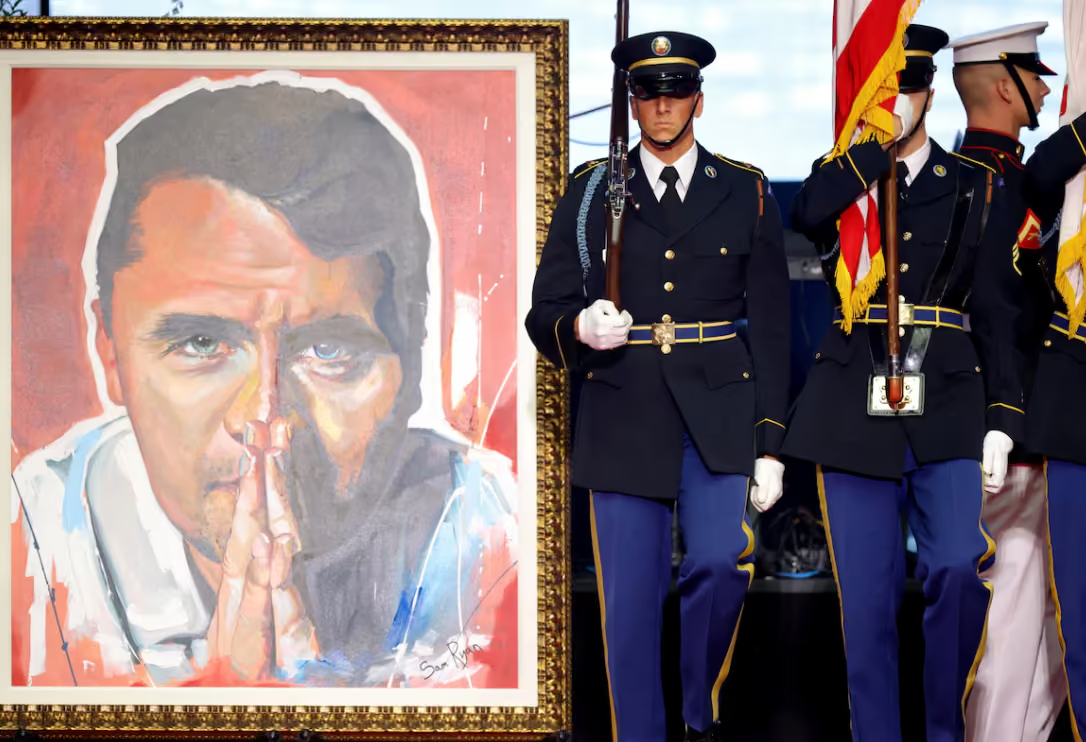
September 10, 2026
Real Life Network
World News
The mayor of New York City’s presence will not be welcomed by all at the metropolis’s upcoming 9/11 memorial service. “I am not asking politely, I am demanding” New York City Councilmember Vickie Paladino (R) asserted from the steps of New York City Hall on Tuesday, “that he not show his face on that sacred ground.” The councilwoman, along with many others in the Big Apple, has made one thing clear: they do not want the mayor to be present at the event on Friday.
The ceremony to be held is the official 25th anniversary 9/11 commemoration at the World Trade Center Memorial Plaza and is a private event for families who lost loved ones on that day. On Tuesday, Forbes reported that a change.org petition created by relatives of 9/11 victims has received over 100,000 signatures to exclude Mamdani from the event.
This resistance is largely the result of Mamdani’s affiliation with Ramzi Kassem, who Mamdani appointed as the city’s chief legal counsel. In the past, Kassem represented a convicted al-Qaeda member whose brother-in-law was one of the 9/11 plane hijackers. The mayor drew criticism last Friday when video circulated of Mamdani signaling for the symbolic pen he had just used to authorize an executive order regarding 9/11 at city hall to be given to Kassem.
“That was a message to each and every one of us,” Paladino said about the pen, and she stood in the sea of those gathered at the city hall. “Cryptic as it is, but read through the lines. What’s going on here at City Hall and what we got representing us at City Hall, they do not belong on sacred ground. I could go through a list of people that he associates himself with and continues to associate himself with. We, the people, do not care for Zohran Mamdani.”
Robert Maginnis, retired U.S. Army lieutenant colonel and senior fellow for National Security at Family Research Council, told The Washington Stand that the country can never lose sight of the effects of the tragedy that took place 25 years ago.
“What should not be lost in the political controversy is the extraordinary emotional significance of September 11. The memorial ceremony belongs first and foremost to the nearly 3,000 people who were murdered, the families who still live with that loss, the first responders and service members whose lives were changed by what followed, and a nation that promised never to forget. Anyone who participates in that ceremony should do so with humility and with an appreciation for just how deeply those memories still run.”
Charles Wolf, a man who lost his wife in the North Tower attack, also announced at city hall that he did not want Mamdani to attend: “We don’t want a mayor who only wants to be there for the publicity. This mayor is not serving us. He’s serving himself,” he shared.
“We are asking, respectfully, that he not show up even though there is going to be other politicians there. These are the politicians that helped us, pushed beneficial laws through, and literally held our hand during that time. Mayor Mamdani has not shown any of that. None of it. He just wants to be there because he wants to be there.”
Rudy Guiliani, the former mayor of New York City during the attack on the World Trade Center, also spoke against Mamdani’s planned attendance at the event. “Frankly, whatever he’d like to say, he doesn’t agree that Sept. 11 was an Islamic terrorist attack on the United States of America,” Giuliani told Newsmax in an interview on Sunday. “Having lost friends there, and being very close to many of the families, it offends me that he’s coming.”
Maginnis said that his experiences in the post-9/11 world, including working at the Pentagon in the Department of the Army, have shaped his perception of the tragedy. “Those experiences have given me an enduring appreciation for what September 11 means to the families of the victims, to those who served in the years that followed, and to millions of Americans who remember the fear, anger, and grief of that day.”
“That is the context in which I view the controversy surrounding Mayor Zohran Mamdani and his chief counsel, Ramzi Kassem,” he added. “Kassem’s prior representation of a terrorism defendant has become a particular point of contention for some 9/11 families. At the same time, representing a criminal defendant should not, by itself, be equated with sharing that defendant’s beliefs or actions.”
This article was originally written by Quinn Delamater and published on The Washington Stand. For more content like this, visit Real Life Network.
25 min
New Yorkers Gather over 100,000 Signatures to Exclude Mamdani from 9/11 Ceremony
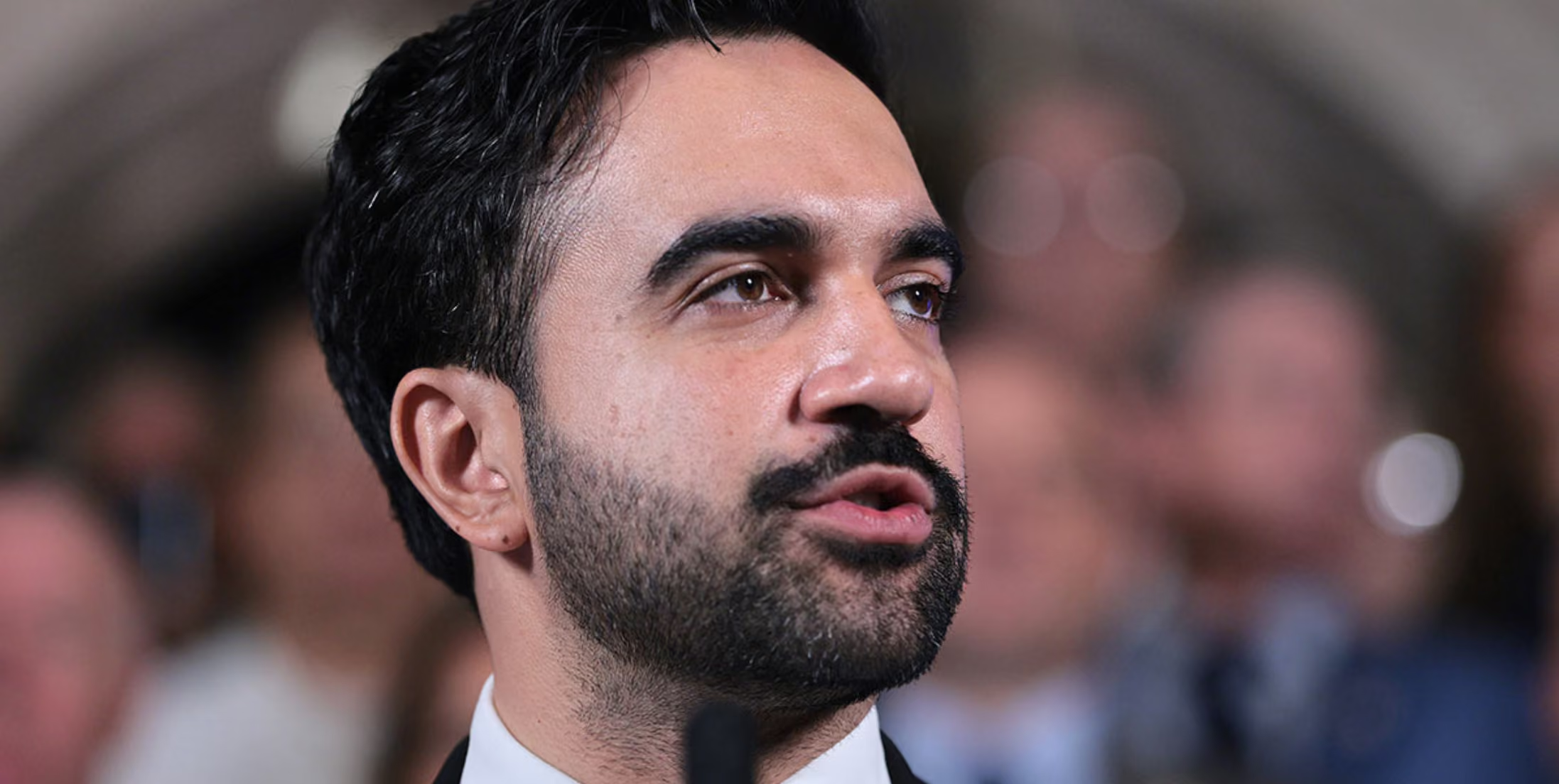
September 9, 2026
The Washington Stand
World News
Some of the most important cultural debates begin with words. Mercy. Compassion. Truth. Justice. These words carry moral weight, but their meaning can change dramatically depending on the worldview behind them.
On Real Life Network, The Daniel Cohen Show examines the stories shaping American culture through a biblical worldview. This week, those stories raise difficult questions about the value of human life, the meaning of mercy, American citizenship, the institutions shaping children, and the responsibility Christians have to speak when foundational truths are being challenged.
At the center of those questions is a basic conviction: truth does not become relative simply because the culture has found a new way to describe something.
The Difference Between Mercy and Moral Confusion
The Lindsay Clancy case has reopened a painful national conversation about motherhood, mental illness, personal responsibility, and the deaths of children. That conversation deserves seriousness, particularly when postpartum mental illness is involved. But compassion for mental suffering cannot require society to stop acknowledging the value of the lives that were lost.
The broader cultural response is also worth examining. Videos have circulated online showing mothers joking about or pretending to harm their children, while supporters of Clancy have gathered under the slogan “We are all Lindsay.” At the same time, other cases involving mothers accused of killing their children have drawn comparisons to Clancy's case.
There is an important distinction between understanding mental illness and treating violence against children casually. Christians should be capable of showing compassion toward someone experiencing profound psychological suffering while simultaneously insisting that children possess inherent value and deserve protection.
That same confusion over language appears in the abortion debate.
In a resurfaced interview, Anne Hathaway described abortion as potentially “another word for mercy.” The statement illustrates a much deeper disagreement over what mercy actually means.
Scripture gives the word a radically different foundation.
In Exodus 34:6, God reveals Himself to Moses as compassionate and gracious. The Hebrew language provides a striking connection between compassion and the womb: rachum, describing compassion or mercy, is related to rechem, the Hebrew word for womb. The imagery points toward deep, protective compassion.
That makes the modern use of “mercy” to describe abortion especially significant. The biblical picture of compassion directs attention toward protection and care for the vulnerable.
Mercy cannot simply mean removing the person whose existence creates difficulty. Biblical mercy moves toward the vulnerable with compassion and protection.
That principle reaches beyond abortion. A society's understanding of human dignity determines how it treats people when they are weakest, most dependent, or least convenient.
Citizenship, Children, and the Institutions Shaping America
Another debate centers on birthright citizenship and the growing industry commonly called birth tourism.
During a congressional hearing, Dr. Vladimir Lorentz, associated with a business called Have Baby in Miami, repeatedly invoked the Fifth Amendment when questioned about whether his business had helped foreign nationals travel to the United States to give birth. The hearing highlighted concerns about companies marketing American childbirth to international clients and the citizenship that comes with being born on U.S. soil.
Whatever one's preferred constitutional solution, the underlying question deserves attention: What does American citizenship mean?
Citizenship should be more than a commodity attached to the ability to purchase airfare, accommodations, and medical services. A country has a legitimate interest in protecting the meaning and integrity of citizenship while treating people with dignity.
But government policy isn't the only place where questions about American identity are emerging.
The Boy Scouts, now known as Scouting America, and the Girl Scouts have historically occupied a distinctive place in American childhood. Recent examples of Islamic religious programming within scouting organizations have generated controversy, including mosque-based Scout programs incorporating Islamic prayer and Quran instruction and Girl Scout opportunities connected with learning about Islam.
The issue raises a broader question for Christian parents: Who is shaping the institutions entrusted with children?
Parents cannot assume that an organization carries the same values it did a generation ago simply because the name or uniform looks familiar. Schools, youth organizations, entertainment companies, churches, and political movements all communicate a worldview.
Parents have a responsibility to know not only where their children are spending their time, but what those institutions are teaching them to believe about God, truth, identity, and morality.
That responsibility requires courage. Christians cannot complain that institutions have changed while remaining unwilling to participate, lead, ask questions, or speak when those institutions move away from their convictions.
Conviction Is More Than Political Branding
The same test applies to politicians who use Christian language.
Texas politician James Talarico has increasingly incorporated Christianity into his political identity while advancing theological interpretations on abortion, sexuality, and gender that deserve careful biblical examination. A candidate quoting Scripture or speaking in churches should not automatically earn Christian credibility.
The test is not whether someone can use Christian vocabulary.
The question is whether the theology being presented actually agrees with Scripture.
Christians should apply that standard regardless of party. Political affiliation cannot transform bad theology into sound theology, and a politician's claim to Christianity should never replace biblical discernment.
The approaching elections make that distinction increasingly important. Polling discussed on the show suggests Republicans may be in a stronger position among likely voters than conventional expectations for a midterm election might suggest. But polling does not eliminate the responsibility to participate.
Christians are commanded to pray for those in authority. In a representative government, citizens also have the opportunity to participate in choosing those leaders.
Neither panic nor complacency is useful.
Political engagement should flow from conviction, not replace it. The Christian's ultimate allegiance belongs to Christ, which should make biblical truth more important than any candidate or party.
That perspective matters beyond American politics.
Iran continues to face severe economic pressure, while uncertainty remains about the country's political future and the possibility of internal opposition to the Islamic Republic. Reliable information from inside Iran can be difficult to obtain, which makes restraint important. Christians can nevertheless pray for the Iranian people, for those seeking freedom, and for wisdom among the leaders making consequential decisions about the region.
Across all these stories, the underlying challenge is remarkably similar.
Will words retain their meaning?
Will mercy still mean protecting the vulnerable? Will citizenship represent something more than an economic transaction? Will Christian institutions remain recognizably Christian? Will professing believers allow Scripture to shape their politics rather than reshaping Scripture around their politics?
Those questions cannot be answered by slogans.
They require discernment, courage, and a willingness to accept truth even when truth makes people uncomfortable.
Watch The Daniel Cohen Show on Real Life Network for more news and commentary connecting the headlines to the good news through a biblical worldview.
25 min
What Are We Teaching America to Value?

September 7, 2026
Daniel Cohen
Entertainment & Lifestyle
When people discover a new streaming platform, one of the first questions they often ask is: Is there a free trial?
That makes sense. Most streaming services today require a monthly subscription, a limited trial period, or tiered upgrades before viewers can fully access content. But Real Life Network works differently.
The simple answer is this: RLN does not require a free trial because the entire platform is ALREADY FREE to watch.
There are no subscription tiers, hidden fees, or surprise upgrades needed to access the content.
Why Real Life Network Is Free
Real Life Network was created with a mission-first approach rather than a subscription-first model. The goal is to make biblical teaching, faith-based programming, documentaries, podcasts, and family-friendly content accessible to as many people as possible without financial barriers.
Instead of charging viewers, RLN is supported entirely through the generosity of donors who believe in the mission of Real Life with Jack Hibbs and the broader outreach of the network.
This allows viewers to:
- Stream content without monthly payments
- Explore the full platform freely
- Share programs with friends and family easily
- Access biblical teaching regardless of financial situation
For many families, this removes a major obstacle and makes faith-based streaming far more accessible.
No Subscription Required
Unlike many mainstream streaming platforms, RLN does not require:
- Paid memberships
- Credit card trials
- Premium unlocks
- Hidden add-ons
- Automatic billing after a trial period
Viewers can simply create an account and begin watching.
This straightforward approach reflects the network’s focus on ministry and outreach rather than maximizing subscriptions.
What You Can Watch on RLN
Even though RLN is free, the platform includes a wide variety of content across multiple categories. Viewers can explore:
- Bible teaching and sermons
- Podcasts and interviews
- Faith-based films and documentaries
- Apologetics and worldview programs
- Family and kids’ programming
- Cultural discussions and special events
Programs such as Real Life with Jack Hibbs, A Daily Walk, Bridge Bible Talk, Way of the Master, and documentaries like Before the Wrath and C.S. Lewis: The Most Reluctant Convert are all available without requiring a paid subscription.
Why This Matters for Families
Streaming costs can add up quickly. Many households already juggle multiple subscriptions across entertainment, music, and live TV platforms. By offering free access, RLN gives families a way to add faith-based content into their homes without increasing monthly expenses. It also makes it easier to:
- Introduce children to biblical programming
- Watch sermons and teaching regularly
- Share content with small groups or friends
- Explore faith-based media without commitment pressure
This accessibility is especially meaningful for viewers who are exploring Christian content for the first time.
A Different Kind of Streaming Model
Most modern streaming services are built around subscriptions because content licensing and original production are expensive. Christian streaming platforms often operate differently, especially those tied closely to ministry outreach.
RLN’s donor-supported model allows the platform to focus on:
- Expanding biblical content
- Supporting discipleship and evangelism
- Reaching viewers globally
- Providing family-safe programming without paywalls
Rather than asking viewers to “upgrade” for better access, the platform is designed to make truth available as broadly as possible.
What If You Want to Delete Your Account?
Another common concern with streaming services is cancellation. Many viewers are frustrated by complicated account systems or unclear billing structures. RLN keeps the process simple.
If a user decides they no longer want an account, they can:
- Go to their account settings
- Select delete account
- Confirm deletion
There are no cancellation fees, hidden commitments, or subscription complications because there is no paid membership attached to the account.
Why Donors Support Free Christian Streaming
The reason RLN can remain free is because many people believe biblical teaching and Christ-centered content should remain widely accessible. Supporters of Real Life with Jack Hibbs help fund:
- Ongoing platform development
- New programming and documentaries
- Streaming infrastructure
- Outreach and discipleship efforts
Their generosity allows viewers around the world to access content without worrying about cost barriers.
Real Life Network does not offer a free trial because it doesn’t need one. The platform is already free to access, with no subscriptions, hidden fees, or premium tiers required.
That approach reflects the heart behind the network: making biblically grounded content available to anyone seeking truth, encouragement, and faith-based programming.
Explore free Christian streaming anytime on Real Life Network.
25 min
Can I Try Real Life Network Before Subscribing?

September 3, 2026
Real Life Network
World News
Should Ukraine’s ongoing battle against Russian aggression concern Americans?
Russian tanks, missiles, and drones have destroyed homes and schools and killed more than 16,800 civilians. But they are only the visible weapons of war. Behind them is something less visible but no less consequential: Putin’s Russian Imperialism 2.0, an ideology that seeks not merely to conquer Ukrainian territory, but to erase Ukrainian identity, sovereignty, and culture. This is not just a threat to Ukraine; it is a threat to Europe and, left unchecked, to freedom everywhere.
Putin’s Russian Imperialism 2.0 borrows heavily from Soviet authoritarianism, with one important exception: the Russian Orthodox Church, which the communists persecuted, has now become an instrument of the Russian state.
Soviet communism tried to replace Christianity with the state. Putinism enlists a form of Christianity in service to the state.
In occupied Ukraine, independent religious expression is suppressed, churches closed, and religious leaders imprisoned, exiled, or worse, while the Moscow-aligned Russian Orthodox Church is privileged. Evangelical and Catholic churches have been closed, with some sanctuaries turned into operational centers for the occupiers.
During my visit to Ukraine, Denys Uliutin, Minister of Social Policy, Family and Unity, briefed me on Russia’s systematic attacks on Ukraine’s religious heritage, damaging or destroying hundreds of religious structures, a pattern documented by the U.S. Commission on International Religious Freedom. Ukrainian officials have also documented 67 religious leaders and clergy killed or who died as a result of torture in occupied territories.
But there is more to Putinism than crushing religious institutions and leaders who refuse to surrender their kingdom authority to an earthly tyrant. If attacking churches is an assault on Ukraine’s spiritual identity, Russifying its children is an assault on its future.
In occupied territories, children are subjected to Russian curriculum, forced use of the Russian language, citizenship requirements, and expressions of allegiance to Russia.
Even more disturbing, thousands of Ukrainian children have been deported or forcibly transferred, with more than 8,400 relocated to at least 57 facilities, where many have undergone Russian re-education. Some have been placed for adoption or fostering in Russia, an effort to sever their Ukrainian identity.
Russian Imperialism 2.0 is as deadly and dangerous as its communist precursor when it comes to the Christian faith and family, two institutions vital for freedom.
Why should we care here in the West, where Putin is unlikely to militarily attack America?
As Christians, we should care when our brothers and sisters in Christ are targeted and tortured, because the kingdom of God knows no borders.
As Americans, history instructs us that evil never stands still. The question is not whether Russian tanks will reach America, but whether America is safer in a world where military aggression, religious repression, and forced assimilation are allowed to succeed.
What should we do?
We should pray because Christians are suffering. We should materially support Ukraine because aggression must not be rewarded. And we must understand that what Ukraine is defending is bigger than territory.
Ukraine is fighting for its territory, but also for the right of a people to remain a people, to worship God freely, raise their children in their own faith and culture, and govern themselves.
Those are freedoms Americans should recognize as worth defending.
This article was originally published on The Washington Stand.
25 min
Ukraine’s Fight and America’s Freedom
.jpg)
September 3, 2026
Tony Perkins
World News
There are moments when a single story reveals something much larger about the direction of a culture. A news organization hesitates to call terrorism terrorism. A political candidate distances himself from the very people who helped build his campaign. Companies permit religious messages about almost anyone except Jesus. Churches burn while much of the media looks elsewhere.
On Real Life Network, The Daniel Cohen Show looks beyond individual headlines to the worldview underneath them. And increasingly, the same question keeps appearing: Who gets to define what can be said, what can be believed, and what can be acknowledged in public?
That question matters politically. It matters culturally. And for Christians, it matters spiritually.
When Terrorism Becomes Too Controversial to Name
The CBC recently found itself facing intense criticism over guidance telling journalists not to refer to the September 11 attacks as “terrorist attacks” except through attribution. After public backlash, the Canadian broadcaster reversed course.
Think about what that means.
Nearly 25 years after hijacked passenger planes were deliberately flown into the World Trade Center and the Pentagon, killing thousands, one of Canada's largest news organizations was uncomfortable simply calling the attack terrorism.
Words matter because words describe reality. When institutions become more concerned about whether accurate language might offend someone than whether that language is true, journalism stops informing people and begins managing what people are permitted to think.
That problem extends far beyond one Canadian newsroom.
New York City offers another glimpse of the cultural and political tensions developing across the country. The rise of Zohran Mamdani and the Democratic Socialists of America is not simply another election story. It represents a much larger ideological shift taking place within the Democratic Party.
The old political establishment increasingly appears unable to control the movement growing beneath it. Candidates and activists who once existed on the political margins are becoming power brokers.
The same tension is playing out in Michigan.
Abdul El-Sayed has campaigned alongside Hasan Piker, a controversial political streamer who has made inflammatory statements about America, Israel, and capitalism. Yet when questioned about that relationship, El-Sayed attempted to reduce Piker to merely a “social media person in California.” The problem is that Piker himself has publicly described campaigning and fundraising for El-Sayed.
The issue isn't simply association. It's accountability.
If political candidates believe the people surrounding them represent ideas worth defending, they should be willing to defend those relationships openly. If they don't, voters should ask why.
Which God Is Allowed in Public?
Politics is only one part of the story.
Recent examples involving the WNBA and Coca-Cola raise another question about Christianity's place in American culture.
Testing of the WNBA's custom jersey system reportedly found that phrases including “Jesus Christ” and “Jesus is God” were blocked while Islamic phrases were permitted. A similar controversy arose around Coca-Cola's personalization system, where attempts to enter “Jesus” were reportedly rejected while references to other religious figures or even Satan could be accepted.
The point isn't that Christians should demand corporations become Christian.
The issue is whether the rules are actually being applied equally.
If companies allow religious expression, Christianity should not uniquely become the expression that is unacceptable.
That question becomes even more important as children return to school and debates over sexuality and gender continue. In Massachusetts, Senator Ed Markey has promoted a federal “Transgender Bill of Rights,” while schools around the country continue wrestling with what children should be taught about sex, gender, and identity.
Christians cannot outsource these conversations to politicians, corporations, schools, or professional sports leagues.
Scripture gives Christians an identity that precedes politics. Human beings are created by God. Male and female are not arbitrary categories invented by society. And Jesus Christ is not simply one spiritual option among many.
The question isn't whether America will have a worldview in the public square. The question is which worldview will shape it.
That is why believers must pay attention even to cultural stories that initially appear trivial. A custom jersey. A personalized soda can. A school message. Individually, each can look insignificant. Together, they reveal the assumptions increasingly governing public life.
When Institutions Stop Serving the People They Were Meant to Serve
California provides another example.
After the devastating 2025 Southern California wildfires, Americans donated enormous sums believing their money would directly help families who had lost homes and communities. Yet questions have since emerged about where portions of wildfire relief money went and whether organizations unrelated to rebuilding received funding.
A House Judiciary Committee staff report cited on the show raised concerns about grants and assistance allegedly being directed toward organizations and causes with unclear connections to wildfire victims. Meanwhile, many families affected by the fires continue struggling to rebuild.
People gave because neighbors were hurting.
They deserve transparency about where that money went.
But perhaps one of the least discussed stories is what has been happening to churches.
A century-old former church building in Cleveland was recently destroyed in a fire investigators ruled arson. In Canada, another church burned, part of a broader pattern of churches being burned or vandalized in recent years.
Church buildings are not the church. Scripture is clear that God's people are the church.
But that doesn't make attacks on places of worship meaningless.
When churches are vandalized or burned, Christians should care. Authorities should investigate. Journalists should report it. And believers should refuse to accept the idea that hostility toward Christianity somehow becomes less significant because Christianity has historically been influential in the West.
Christians do not need cultural permission to proclaim Christ, but they do need the courage to recognize when the culture is becoming increasingly uncomfortable with His name.
That courage also requires discernment.
Not every controversy is persecution. Not every political disagreement is spiritual warfare. Not every person on the other side of an issue is an enemy.
But Christians should be able to recognize patterns without pretending they don't exist.
Truth still matters when a newsroom finds it uncomfortable. Political accountability still matters when the candidate belongs to the preferred party. Religious freedom still matters when the religion being expressed is Christianity. And people harmed by disasters still matter after the cameras leave.
The solution isn't panic. It is faithfulness.
Pay attention. Ask questions. Hold leaders accountable. Protect your children. Know Scripture. Participate in your community. Vote. And most importantly, refuse to surrender the truth simply because the culture has decided that truth is inconvenient.
Watch The Daniel Cohen Show on Real Life Network for more news and commentary connecting the headlines to the good news through a biblical worldview.
25 min
September 11, Twenty-Five Years Later
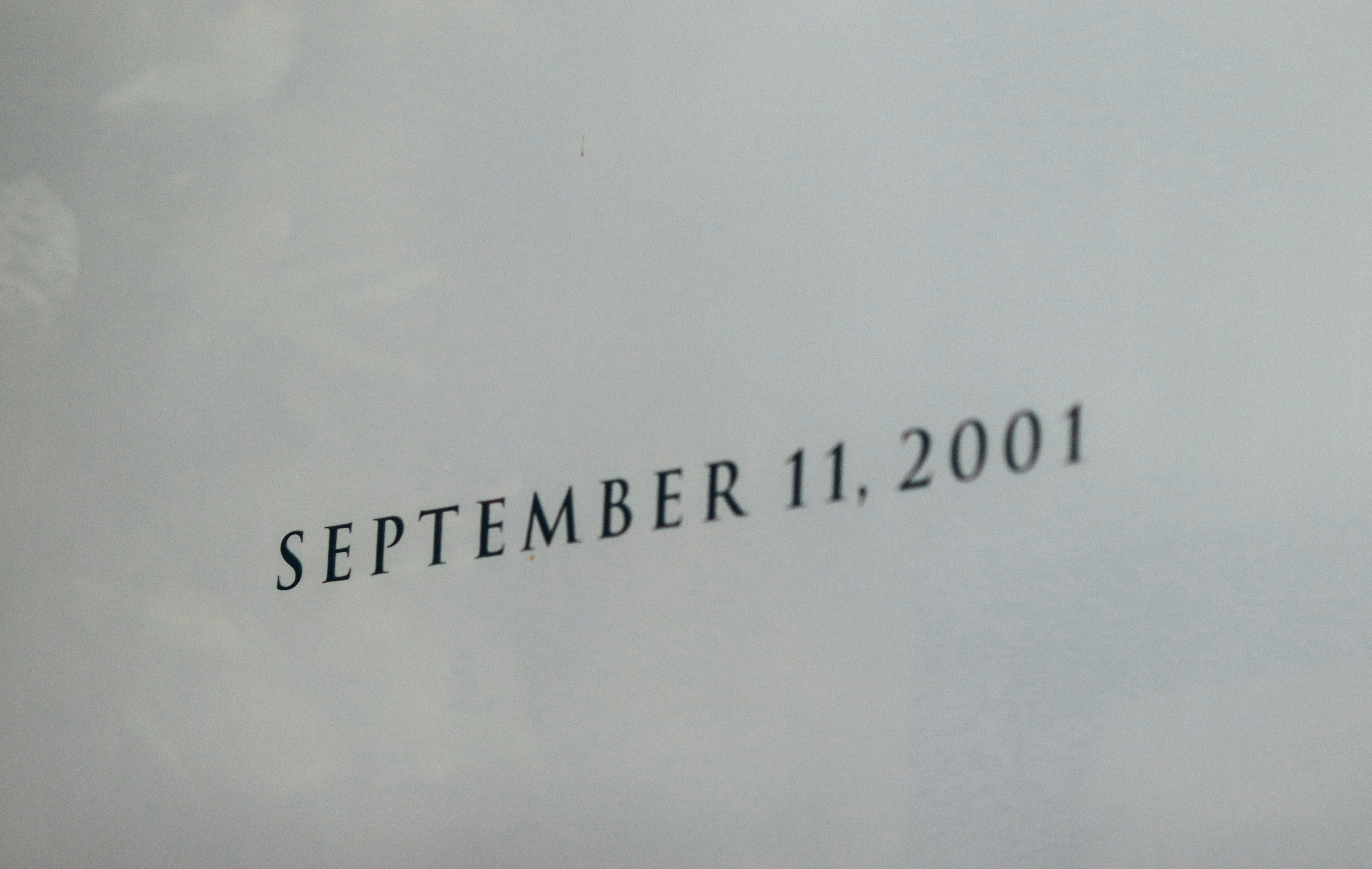
September 2, 2026
Daniel Cohen
World News
The relentless hold that online pornography has on American society is continuing unabated, with limited public effort to contain or reduce it. Surveys show that porn use is almost as widespread among practicing Christians as it is in the general public. Even as age verification laws have spread throughout the country, a lingering question remains: could an internet service provider (ISP) filtration model implemented in the U.K. help lower porn consumption in the U.S.?
With the universal adoption of internet-enabled phones has come the reality that smut is now consumed as easily and privately as viewing a text. AddictionHelp.com estimates that an astounding 95% of porn traffic is viewed on phones, with just 5% of traffic viewed on desktops. This may help explain why porn use is so rampant among younger generations of adults aged 18-35 in America, with a stunning 87% of men and 28% of women viewing it at least weekly. Porn is so omnipresent that the vast majority (70%) of males under 18 have viewed porn, along with 40% of minor females. Fully half of teens under 15 have also viewed online obscenity.
Perhaps most distressing for the church is that even the majority of practicing Christians are consuming porn. According to a 2024 report from Barna and Pure Desire, 54% of those who say “faith is important to them and have attended church in the last month” sometimes view porn, compared to 61% of all U.S. adults.
All of this consumption is taking place on human beings who are being sexually abused and coerced into being filmed. One study found that all porn subjects were coerced to participate in being filmed in some way, with 96% of them being victims of sexual abuse as children.
The effects of porn use on consumers are also contributing to a spiraling mental health crisis in the U.S. Research shows that habitual consumption causes increased anxiety and depression, emotional numbness and relationship strain, impaired focus and productivity, and increased isolation and loneliness, not to mention increased sexual dysfunction.
The immense damage that porn has inflicted on public health has led to a large swath of U.S. states enacting laws that require porn sites to verify the age of potential users before allowing them website access. Since 2023, 25 states have passed such laws. While human rights advocates have rightly celebrated these efforts at reducing minors’ consumption of porn, subsequent studies have found that the laws have done little to mitigate overall porn use. One study found that the laws’ effect induced a 10% reduction in time spent on porn sites, but “Many users appear to have circumvented restrictions with VPNs [virtual private networks] or shifted to noncompliant sites that did not verify age.”
Another way that countries like the U.K. are attempting to tackle the smut problem is by requiring ISPs to offer internet services that filter out porn sites. In 2011, the U.K. government announced an agreement with the country’s four largest ISPs in which their default internet service would be free of porn sites, requiring subscribers to “opt in” to an unfiltered service if they wanted access to smut. ISPs began implementing the policy in 2013. But subsequent reports revealed that the vast majority of British users opted out of the service, showing that the model has likely had a negligible effect on lessening porn consumption in the country.
Still, the model remains untried in the U.S., where many parents would likely choose to curtail porn at its source instead of having to navigate third-party filters to protect their children. However, experts like Benjamin Bull, who serves as general counsel for the National Center on Sexual Exploitation, say that the ISP filtration model may not stand up to legal scrutiny if it were enacted in the U.S.
“While we admire the U.K. model for blocking pornography unless users opt out, I fear the First Amendment to the United States Constitution would likely make such a law in this country be held unconstitutional,” he told The Washington Stand. “Although pornography found by a court to be legally ‘obscene’ has no constitutional protection, there is a presumption of constitutional protection until such a ruling occurs. Our Supreme Court would likely strike down the U.K. model as a ‘prior restraint’ on presumptively protected expression and therefore a violation of the First Amendment.”
Bull continued, “However, in the most recent term of our Supreme Court, the court upheld a Texas law that prohibits dissemination of pornography to minors unless the online platform first obtains confirmation that the recipient is 18 years of age or older. In other words, age verification is now a requirement for online dissemination of pornography in Texas and several other states that have adopted this law. The reason is that while pornography is presumptively protected for adults, it has little, if any, protection for minors. Because of a ‘compelling’ governmental interest in protecting children, the Supreme Court held that the burden of determining that the recipient is an adult prior to dissemination passes constitutional muster.”
“This is much weaker than the U.K. model, and our Supreme Court may not have reached this decision had the U.K. not been a leader in curtailing unlimited access to pornography, which social scientists have concluded has a corrosive and negative effect on society in so many ways,” he added.
This article was written by Dan Hart and originally published on The Washington Stand. For more content like this, visit Real Life Network.
25 min
Internet Service Providers in the U.K. Have a Porn Opt-Out Option. Why Doesn’t America?

September 1, 2026
The Washington Stand
World News
The biggest stories in the news often have another layer beneath the headlines. Political movements reveal the ideas shaping the country. Foreign relationships raise questions about influence and consistency. Cultural icons leave legacies that extend far beyond their fame.
On Real Life Network, The Daniel Cohen Show looks at those connections through a biblical worldview, bringing together the news, Israel, and Scripture. This week, those stories stretch from a growing debate over Sharia law and antisemitism to election integrity, foreign influence, and a remarkable connection between Dolly Parton and Jewish families around the world.
Sharia Law, Antisemitism, and the Direction of American Politics
President Donald Trump recently told Glenn Beck that he would prohibit Sharia law in the United States. The statement raises a larger question Americans need to consider: Can a religious legal system operate alongside the protections and principles of the United States Constitution?
Sharia and the American constitutional system contain fundamental differences regarding the relationship between religion and government, individual rights, and the source of law. Whatever policies ultimately emerge, America cannot maintain competing legal systems when their requirements conflict with constitutional protections.
The issue becomes even more important when considering the political movements gaining influence across the country.
In Michigan, Democratic Senate candidate Abdul El-Sayed’s association with political commentator Hasan Piker has generated controversy. Piker has faced criticism for past comments about America, Israel, Hamas, and American Jews. Michigan Attorney General Dana Nessel, who is Jewish, has also publicly expressed concerns about the political environment within her own party. She has made clear that her Jewish identity comes before her political affiliation.
That is a principle worth remembering far beyond Michigan.
When allegiance to a political movement requires overlooking hatred, threats, or extremism, truth must take priority over party loyalty.
For Christians, antisemitism also carries biblical significance. Zechariah 2:8 describes Israel as the “apple of His eye,” pointing to God’s covenant relationship with the Jewish people. Christians should therefore be among the first to reject hatred directed toward Jews, regardless of whether it comes from the political left or right.
The same discernment is necessary when evaluating claims surrounding Israel and Gaza. Questions about UNRWA personnel, Hamas, humanitarian aid, and conditions inside Gaza demonstrate why accusations should be examined carefully rather than simply repeated. Facts matter. Context matters. And when accusations against Israel spread around the world, getting those facts right matters even more.
The Standard Has to Apply to Everyone
Consistency becomes much harder when scrutiny turns toward our own political side.
President Trump’s opposition to Sharia law deserves to be weighed alongside his administration’s relationships in the Muslim world, including Qatar and Turkey. The prospect of a Boeing 747 provided by Qatar, in particular, raises legitimate questions about appearances and foreign influence.
Qatar has maintained a complicated role in Middle Eastern affairs, including relationships with Hamas, while also serving as a major American security partner. Turkey presents its own challenges under President Recep Tayyip Erdoğan, whose relationship with Israel has become increasingly hostile.
Foreign policy inevitably requires dealing with governments that do not share American values. But Americans should still expect consistency from their leaders.
If foreign influence deserves scrutiny when it reaches the political left, it does not suddenly become harmless when it reaches the political right.
The same principle should apply to conservative media. Holding Democrats accountable while ignoring destructive rhetoric or questionable influences among conservatives does not demonstrate principle. It demonstrates partisanship.
Christians especially cannot allow political affiliation to determine when truth matters.
Election integrity provides another example. A recent Supreme Court decision allowed portions of Trump’s executive order concerning elections to move forward after determining that states challenging the order had sued prematurely. The dispute involves measures including ballot tracking and the creation of citizenship data that could be shared with states.
The Court did not settle every underlying legal question, meaning the dispute is far from finished. But the larger principle should not be controversial: eligible Americans should be able to vote, legitimate votes should be counted, and election systems should have safeguards capable of earning public confidence.
The Dolly Parton Story You Probably Haven’t Heard
Against those contentious political stories stands a very different kind of American story.
Dolly Parton’s legacy is usually told through the obvious accomplishments: more than 100 million records sold, iconic songs, movies, awards, Dollywood, and a career spanning generations.
But there is another part of that legacy.
In the 1970s, a Jewish man from Brooklyn named Sandy Gallin became Parton’s manager. Gallin helped guide her crossover from country music into mainstream entertainment, including encouraging her to record “Here You Come Again.” Their professional relationship eventually developed into a partnership lasting roughly 25 years.
Then came another connection.
Parton launched the Imagination Library in 1995 with a simple mission: put books into the hands of children. Jewish philanthropist Harold Grinspoon saw what Parton had created and was inspired to develop a similar program for Jewish families.
That idea became PJ Library, which today distributes books about Jewish life and tradition to families around the world.
A Christian woman from Tennessee wanted children to read. A Jewish philanthropist saw what she was doing and carried that idea into Jewish homes across the globe.
Genesis 12:3 records God’s promise to Abraham: “I will bless those who bless you.”
Parton possessed the fame and business success to build an enormous personal fortune. Yet some of the most meaningful parts of her legacy are not about what she accumulated. They are about what she gave away.
A meaningful legacy is measured less by what we accumulate than by what we give, whom we bless, and what remains after we are gone.
That lesson reaches beyond Dolly Parton.
Politics will change. Elections will come and go. Today’s most influential personalities will eventually disappear from the headlines. But character, courage, generosity, and faithfulness leave a different kind of legacy.
Christians should be willing to confront antisemitism wherever it appears, examine political leaders consistently, demand truth from the institutions around them, and refuse to let partisan loyalty replace biblical conviction.
And when God gives someone influence, resources, or opportunity, the question is not merely how much can be gained from it.
The better question is what can be given through it.
Watch The Daniel Cohen Show on Real Life Network for more news and commentary connecting the headlines to the good news through a biblical worldview.
25 min
From Sharia Law to Dolly Parton: What the Headlines Are Missing
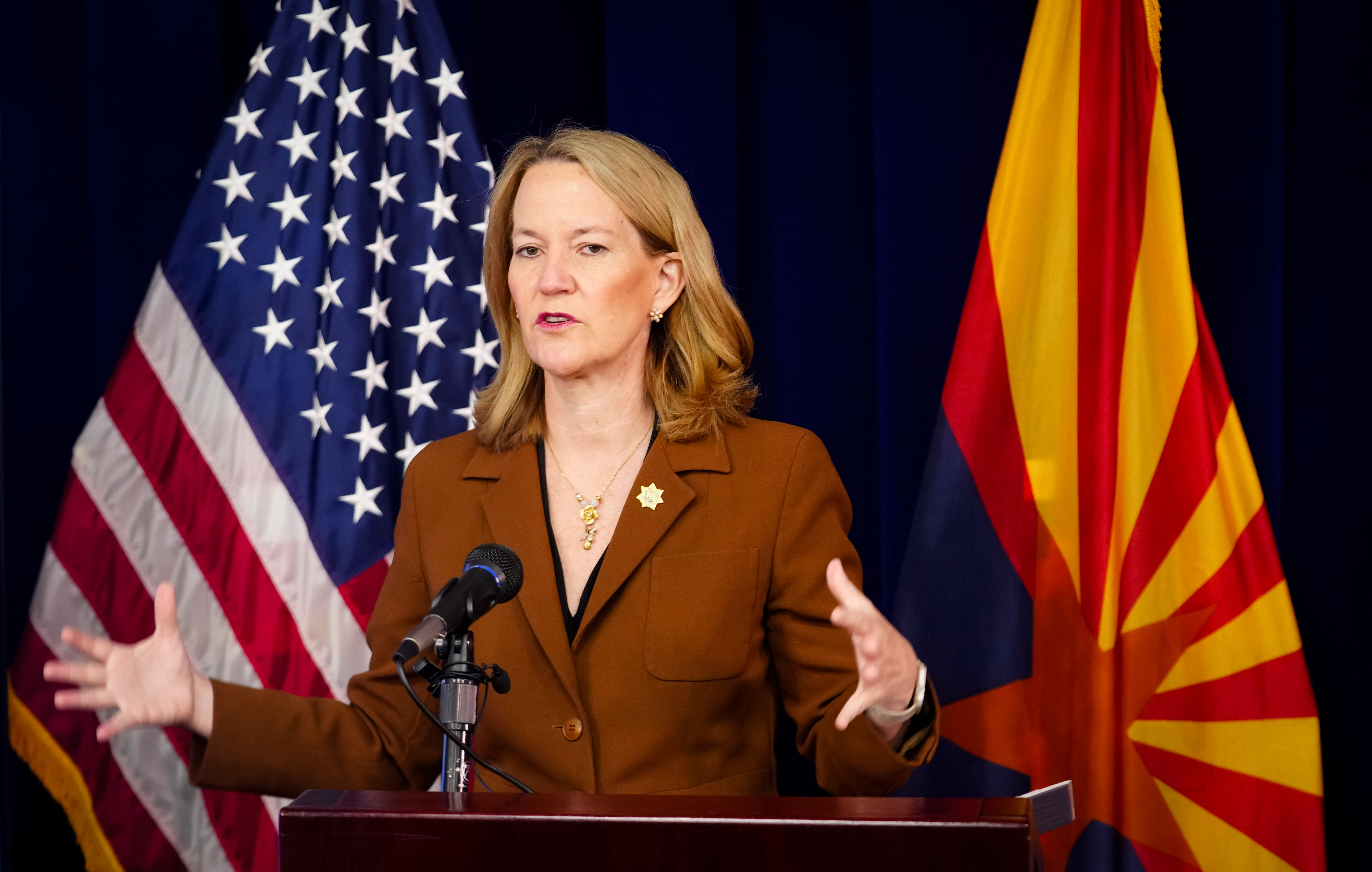
August 28, 2026
Daniel Cohen
World News
On Sunday, August 23, Family Research Council President Tony Perkins delivered remarks at the Ukraine National Prayer Breakfast in Kyiv, with Ukrainian President Volodymyr Zelensky, members of the Ukrainian Parliament, and other dignitaries in attendance.
Mr. President, distinguished members of the Ukrainian government and Parliament, leaders of the church, honored guests, ladies and gentlemen:
It is a profound honor to be with you here in Kyiv at this consequential moment in the life of your nation. Thank you for the privilege of joining you for the Ukraine National Prayer Breakfast.
I come as a friend of Ukraine, grateful for the opportunity to stand with you in prayer, but most importantly to share with you from the word of God.
Alexander Solzhenitsyn wrote in “The Gulag Archipelago”:
“The line separating good and evil passes not through states, nor between classes, nor between political parties either — but right through every human heart.”
The Apostle Paul describes the deeper conflict this way in his letter to the Ephesians:
“For we do not wrestle against flesh and blood, but against principalities, against powers, against the rulers of the darkness of this age, against spiritual hosts of wickedness in the heavenly places.” (Ephesians 6:12)
There is a war for Ukraine’s territory, but the battlefield we see reflects a greater battle being waged in the heavenlies — a battle for the soul of Ukraine and the hearts of its people.
In the late 1980s and early 1990s, I worked with the U.S. Department of State managing one of its Anti-Terrorism Assistance Program sites. Shortly after the fall of the Berlin Wall in 1989, we began training police officers and other security officials in the United States from former Eastern Bloc countries.
I would personally acquire Bibles and place them in their dorm rooms before their arrival.
With one Polish class, the demand for Bibles was so great at the time that I was unable to get the Bibles before the officers arrived. They finally came in the night before the class was scheduled to leave.
My office was on the ground floor of the dormitory, so I sent word to their interpreter and escort that I had Bibles in Polish in my office if they would like one.
Within 10 minutes, the entire class was crowded into my office — some in their underwear, having jumped out of bed.
With tears in their eyes, some told me they had never owned a Bible. One asked for another for his elderly mother. One asked me to sign his Bible.
I told him, “I didn’t write it, so I better not sign it.”
I have never witnessed such a genuine hunger for the word of God.
Thirty-five years ago, Ukraine declared its independence, which was overwhelmingly affirmed by the Ukrainian people in December of that year.
That historic political awakening was preceded three years earlier by a remarkable spiritual opening as Christians marked the 1,000th anniversary of the Christianization of Kyivan Rus under Volodymyr the Great in 988.
While there were certainly political advantages for him to embrace Christianity, the ancient chronicles present a striking before-and-after portrait of Volodymyr. The ruler once associated with pagan worship, violence, and numerous wives and concubines became a ruler who destroyed idols, built churches, promoted Christian instruction, cared for the poor, and sought to govern according to his newfound Christian faith.
According to the earliest Christian accounts, the Christianization of Volodymyr changed the Grand Prince personally, and it changed the policies and direction of his realm.
A spiritually renewed heart lays the foundation for a reformation of our ways.
Genuine spiritual renewal should produce reform.
But reform apart from spiritual renewal cannot be sustained.
Jesus illustrated this principle with a sobering warning in Matthew 12:
“When an unclean spirit goes out of a man, he goes through dry places, seeking rest, and finds none. Then he says, ‘I will return to my house from which I came.’ And when he comes, he finds [it] empty, swept, and put in order. Then he goes and takes with him seven other spirits more wicked than himself, and they enter and dwell there; and the last [state] of that man is worse than the first. So shall it also be with this wicked generation.”
The warning? Jesus was speaking to those of His day who had experienced a measure of reform through John the Baptist’s ministry yet rejected the One to whom John pointed, Christ Himself. The warning, which extends beyond that generation, is that freedom from the bondage of evil cannot be sustained by merely removing what is evil; the life that has been emptied must come under the transforming rule and presence of God.
Thirty-five years ago, Ukraine swept away atheistic communism, but what has taken its place?
Could the battle for Ukraine’s territory also be part of a larger spiritual battle, an effort to return this nation to the bondage from which it was delivered?
In the 1950s, as America moved deeper into the Cold War with the Soviet Union, the Rev. George M. Docherty, pastor of the New York Avenue Presbyterian Church in Washington, D.C., delivered a sermon on February 7, 1954, on the American Pledge of Allegiance and what it did not include. With President Dwight Eisenhower sitting on the front pew, the reverend declared, “Apart from the mention of the little phrase ‘the United States of America,’ it could be the pledge of any republic. I could hear little Muscovites repeat a similar pledge to their hammer-and-sickle-flag in Moscow. Russia is also a republic that claims to have overthrown the tyranny of kingship. Russia also claims to be indivisible.”
Three days later, a bill was introduced in Congress to add the words “under God” to our pledge of Allegiance.
And on Flag Day, June 14, 1954, Eisenhower signed the bill into law, saying, “From this day forward, millions of school children will daily proclaim the dedication of our nation and our people to the Almighty.”
Two years later, Congress made “In God We Trust” our national motto.
America’s leaders at that moment understood that the contrast with atheistic communism could not merely be political. Enduring freedom required a transcendent foundation, a recognition that the nation and its liberties ultimately stood under the authority of God.
Notice that Jesus begins by describing a man, a man delivered from the oppression of evil, but He ends by applying the warning to an entire generation: “So shall it also be with this wicked generation.” A generation that rejects the truth.
The warning is clear: it is not enough to drive evil out. The house cannot remain empty.
Ukraine has a remarkable Christian heritage. The flame of faith was kept burning through decades of persecution by courageous Christian men and women.
Here in Kyiv, one family embodied that courage.
Pastor Petro Vins was repeatedly arrested for preaching the gospel under Stalin. His family was told that he died in a labor camp. Decades later, they learned that he had actually been executed by the Soviet state.
His son, Georgi Veens, became a Baptist pastor here in Kyiv. When Soviet authorities sought to control the church, Georgi refused to surrender its spiritual independence.
Georgi was arrested and sent to Soviet labor camps — not once, but twice — for his religious activities. While imprisoned, Soviet authorities even refused to allow him to possess a Bible.
Think about that. A government so afraid of this Book that it would not allow a prisoner to possess one.
Years later, I watched men emerging from behind the Iron Curtain run from their beds for the opportunity to own one of these life-changing books.
And then there was Georgi’s mother, Lydia. She organized and led other relatives of imprisoned Christians, documenting the persecution and getting their stories beyond the Iron Curtain. She too was imprisoned for her faithfulness.
One family. Three lives. The same choice: Christ over communism.
And they were not alone. There were hundreds more who chose Christ and the way of the cross and courage over communism and compromise.
But now it is this generation’s turn.
Having said no to communism — will you say yes to Christ?
Now is the moment for Ukraine to fan that flame of faith in Jesus Christ — not just with political reforms, but with spiritual renewal and a declaration of dependence upon Almighty God.
Will the independence declared 35 years ago be sustained by a spiritually renewed nation that declares its dependence upon God?
Not merely in words, but, as with Grand Prince Volodymyr in 988, in deeds.
Not in proclamation alone, but in practice.
Solzhenitsyn was right: the line between good and evil runs through every human heart. And ultimately, that is where the battle for the soul of Ukraine will be decided — one heart at a time, as men and women surrender their lives to Jesus Christ.
What does it mean to surrender your life to Jesus Christ?
“But what does it say? ‘The word is near you, in your mouth and in your heart’ (that is, the word of faith which we preach): that if you confess with your mouth the Lord Jesus and believe in your heart that God has raised Him from the dead, you will be saved. For with the heart one believes unto righteousness, and with the mouth confession is made unto salvation. For the Scripture says, ‘Whoever believes on Him will not be put to shame.’” (Romans 10:8-11)
Believe in your heart and confess with your mouth.
This article was originally published on The Washington Stand.
25 min
‘Now Is the Moment for Ukraine to Fan the Flame of Faith’
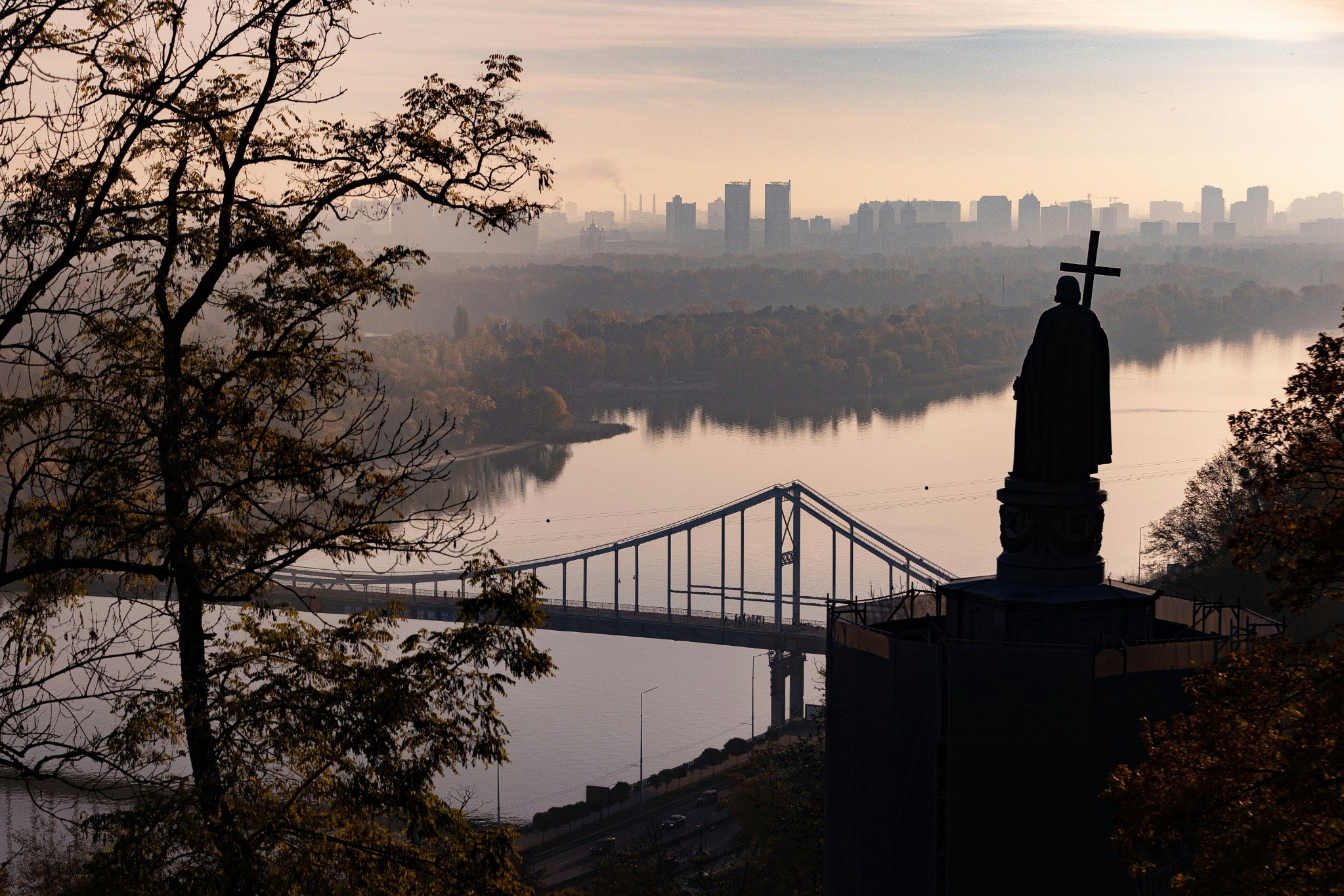
August 27, 2026
Tony Perkins
World News
America’s political and cultural divisions are increasingly about more than elections or disagreements over public policy. From the growth of democratic socialism and the normalization of political contempt to debates over children, religious influence, and the future of the Republican Party, the deeper conflict concerns the values that will shape the country. The latest stories examined on Real Life Network reveal a common thread: when biblical truth is removed from the center of a culture, something else inevitably takes its place.
That replacement does not necessarily happen overnight. It happens gradually as ideas once considered extreme become acceptable, institutions abandon their founding principles, and basic moral convictions become increasingly difficult to defend in public.
A culture that removes God does not remain morally neutral. Something will always fill the void.
Political Contempt and the Battle Over America’s Future
One example can be seen in the growing influence of the Democratic Socialists of America and political figures associated with the movement.
The episode highlighted Hasan Piker, the influential left-wing streamer who has generated controversy through inflammatory political commentary. Cohen argued that Piker represents something larger than one provocative media personality: a political movement becoming increasingly comfortable with rhetoric that would once have remained on the fringes.
That concern becomes especially serious when political disagreement turns into contempt for human life.
The episode pointed to a viral gathering where Piker and others were described as mocking the assassination of Charlie Kirk while also ridiculing Christians. For Cohen, the significance was not simply partisan. It represented a culture becoming comfortable turning the violent death of a political opponent into entertainment.
That raises a basic question that should transcend politics: When did murder become funny?
Political disagreements are unavoidable in a free country. Republicans and Democrats will disagree about taxes, abortion, immigration, foreign policy, education, and countless other issues. But constitutional government requires something more fundamental than agreement. It requires citizens who recognize the humanity of their opponents.
The episode also featured comments about the DSA’s relationship with the Democratic Party, including a clip in which New York Times reporter Jeremy Peters argued that democratic socialists represent a distinct political organization whose ambitions extend beyond simply joining the existing Democratic coalition.
Whether democratic socialist candidates ultimately reshape the Democratic Party will be decided by voters. But Americans should listen carefully when political movements explain their objectives rather than assuming radical rhetoric will inevitably moderate once candidates obtain power.
Political movements should be evaluated not merely by polished candidates or campaign slogans, but by the ideas they openly advocate.
The same scrutiny should apply to the Republican Party.
Looking toward 2028, the episode examined Vice President J.D. Vance’s growing political and fundraising network, including a Hamptons fundraiser hosted by investor Omid Malik. Cohen raised concerns about Malik’s investment in Tucker Carlson’s media company and questioned what Carlson’s influence and changing posture toward Israel could mean for the future direction of the conservative movement.
The larger principle applies equally to both parties: voters should examine candidates, donors, advisers, relationships, and ideas before handing anyone political power.
What Are Adults Teaching the Next Generation?
Some of the most disturbing cultural questions have nothing to do with political parties.
The episode discussed the ongoing criminal case involving Lindsay Clancy, the Massachusetts mother accused of killing her three young children in 2023. Her defense has argued that she suffered from severe postpartum psychosis, while prosecutors have maintained that the killings were deliberate.
Mental illness deserves serious attention and compassion. Determining Clancy’s criminal responsibility belongs to the judicial process.
But Cohen focused particularly on public demonstrations of support outside the courthouse, where supporters gathered as Clancy arrived for proceedings. He argued that compassion for someone suffering from severe mental illness should remain distinguishable from appearing to celebrate or minimize the deaths of three children.
Scripture describes children as a heritage from the Lord. That gives parents an extraordinary responsibility to protect, teach, and care for those entrusted to them.
That responsibility also extends to what children are taught.
The episode subsequently highlighted Florida politician Angie Nixon discussing a community bookstore and the services associated with it. Cohen objected particularly to the combination of material intended for young audiences, sexually explicit content, and access to services such as Plan B. His conclusion was straightforward: parents cannot outsource the responsibility of raising their children to schools, political activists, government institutions, or cultural organizations.
If parents surrender their responsibility to form their children, someone else will gladly assume it.
Children are constantly being discipled by something. Their understanding of morality, sexuality, identity, truth, and purpose will be influenced by the people and institutions surrounding them.
Christian parents therefore cannot merely react when objectionable ideas appear. They must actively teach what is true.
From Harvard to Jerusalem: What Fills the Void?
Few institutions illustrate America's religious transformation as dramatically as Harvard.
Founded in 1636, Harvard's early mission was closely connected to preparing educated clergy. Nearly four centuries later, its religious and cultural environment looks dramatically different. The episode used footage of a Harvard ceremony that included a Quran recitation as a picture of that transformation.
The issue is larger than a single ceremony.
Institutions rarely remain philosophically empty after abandoning the beliefs that created them. Something new fills the space. The same principle applies to universities, governments, families, churches, and individuals.
Yet the episode ended with a dramatically different picture of religious life.
At a gathering in Jerusalem, Arab Christian children and Jewish followers of Jesus worshiped alongside one another at Succat Hallel, or “Tabernacle of Praise.” Against the backdrop of war, ethnic tension, religious division, and political hostility, children from different backgrounds were united in worship of Jesus.
That image offers an important contrast to the division dominating so much of modern culture.
Politics cannot ultimately reconcile the human heart. Neither can ideology, education, wealth, activism, or government. Christianity makes a radically different claim: reconciliation begins with God and extends outward to others through Jesus Christ.
The world insists that some divisions are permanent. Scripture offers another answer.
The gospel does not require people to pretend meaningful differences do not exist. It does not erase truth for the sake of superficial unity. Instead, it offers reconciliation grounded in the One who transcends nationality, ethnicity, political affiliation, and social status.
America's cultural struggles are real. Political extremism should be taken seriously. Parents should guard their children. Institutions should be held accountable. Citizens should carefully examine those seeking power.
But Christians cannot stop at identifying everything that is wrong.
The answer to a culture that has lost its moral center is not simply winning another election. It is recovering the truth that gives morality its foundation in the first place.
That is why the image from Jerusalem matters. In a world increasingly defined by contempt and division, Arab and Jewish believers worshiping Jesus together demonstrate that reconciliation is still possible.
Explore more coverage connecting the news to the good news through The Daniel Cohen Show on Real Life Network.
25 min
What the Response to Charlie Kirk’s Death Reveals About America
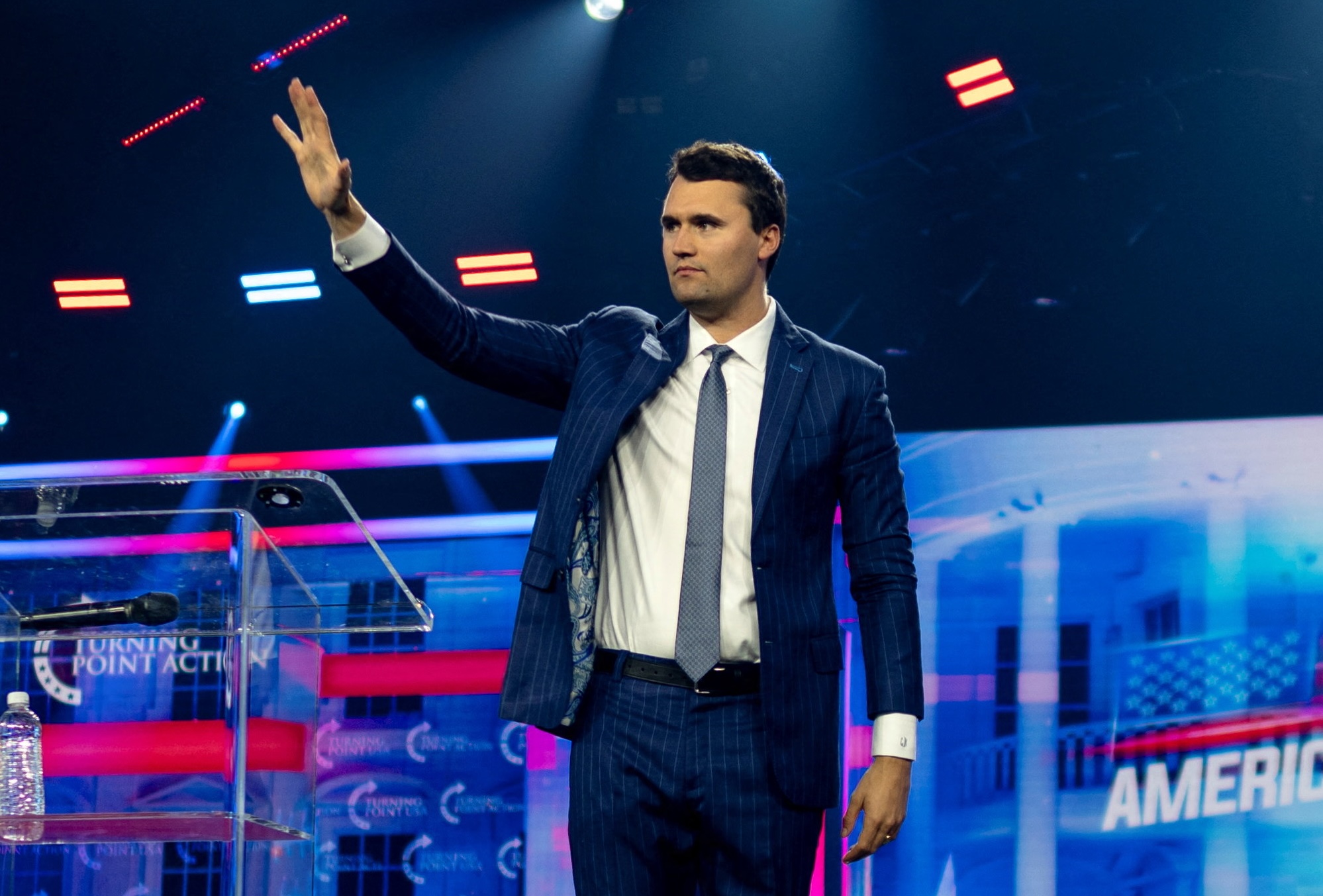
August 25, 2026
Daniel Cohen
World News
As China’s communist regime continues to accelerate its oppression of Christian pastors and believers, a campaign to allow a persecuted pastor ailing from cancer to reunite with his family is intensifying ahead of Xi Jinping’s summit with President Donald Trump in Washington in September.
Last week, reports surfaced that three young pastors of the independent Maizhong Reformed Church in Fuyang have been sentenced “to prison terms of up to one year and seven months” simply for performing weddings and organizing religious instruction, among other ordinary pastoral work. The court accused the Christian pastors of “organizing illegal gatherings” after the communist regime had legally shut down the church, claiming that their activities “had severely disrupted public order.”
Outcry over the case has grown after the wife of one of the pastors, Xu Chao, described the miscarriage of justice on social media. “What is infuriating is that people who clearly committed no crime have been forcibly convicted, while those who illegally installed surveillance equipment in my home remain free from consequences,” she wrote. “Those who cause innocent people to suffer injustice are the ones who are guilty. History will remember everything that is happening today and will judge every decision that has been made.”
As noted by ChinaAid, the Chinese Communist Party (CCP) has increasingly employed charges of “illegal business operations,” “fraud,” “inciting subversion of state power,” and “organizing illegal gatherings” to describe routine activities of churches that are disfavored by the state ever since it instituted its revised Regulations on Religious Affairs in 2018. As a result, a number estimated to be in the thousands of “unregistered” house churches have been shut down, and hundreds of pastors have been imprisoned.
A particularly tragic case that is being spotlighted by human rights advocates is that of Pastor John Cao, a permanent resident of the U.S. who spent seven years in a Chinese prison simply for serving the destitute along the China-Myanmar border. As described by ChinaAid Founder and President Bob Fu, Cao is being restricted from leaving the country to reunite with his family despite suffering from rapidly progressing stage 4 prostate cancer.
“He has been a faithful pastor, humanitarian, [and] educator,” Fu related during “Washington Watch” Wednesday. “He could have chosen to lead a comfortable American dream life when he came to the U.S. more than 40 years ago. But he felt God called him to really continue the gospel ministry — and especially on the field of education in China. And so, he established essentially 16 schools for 2,000 children on the China-Myanmar border for those children who are under persecution by the Myanmar military regime and who otherwise would not have any education at all. He gathered churches from the Chinese underground church and American churches [to] help them. But for that, basically, he was lured back into China and then sentenced to seven years [of] imprisonment.”
Fu continued, “He served [every] single day of [the] seven years, and unfortunately, the Chinese government [is] still preventing him from coming back to reunite with his Caucasian-American wife … and their two sons and even their first grandchild. … [N]ow he has been diagnosed with stage 4 prostate cancer and [it] is spreading into his bones, and he’s not able even to walk anymore at the age of 67 years old.”
Fu, who serves as a senior fellow for International Religious Freedom at FRC, went on to urge President Trump to appeal to Chinese President Xi Jinping during their upcoming September 24 summit in Washington to allow Cao to reunite with his family. “[T]ime is of the essence,” he underscored. “We urge … President Trump to speak from really [a] humanitarian basis to President Xi Jinping … to just give back his passport and allow him to fly back to spend the rest of his limited time on this earth to be with his family.”
Fu highlighted a petition drive asking the president to advocate on behalf of Cao with a goal of reaching 100,000 signatures before the September 24 summit. “Please pray fervently that the Lord will grant mercy and grace for President Trump to hear these petitions and make an appeal to [Xi] to get Pastor John Cao to be home with his family in the next few weeks,” he concluded.
This article was originally written by Dan Hart and published on The Washington Stand. For more content like this, visit Real Life Network.
25 min
Campaign to Reunite Dying Chinese Pastor with Family Grows amid Increasing Crackdown

August 20, 2026
The Washington Stand
Faith & Culture
Rounding the corner, I was surprised to see nearly a dozen Fulanis, mainly boys, sitting in a small hallway waiting to speak to us on a warm afternoon in Plateau State, Nigeria. Some smiled, and some just stared at my travel partner and me from Christian Freedom International as we entered the modest office space where we would be interviewing them.
The mainly Muslim Fulani tribe has risen in international awareness in recent years as antagonists in conflicts between Christians and Muslims in Nigeria, committing brutal acts of terrorism, violence, and kidnappings of Christians living in villages in Northern Nigeria. I witnessed the widespread scale of these attacks and their effects on Christian communities while visiting Nigeria earlier this year. However, the Fulanis lined up in the hallway were there to tell us a different story of what is happening among some Nigerian Muslims — they are turning to Christ.
Twenty-seven-year-old Mohamed was all smiles as he shared his story. Growing up in a Fulani Muslim family, he attended Islamic school where he was instructed to memorize the Qur’an in Arabic, a language he didn’t know. He asked his father why that was. Then he started to ask more and more questions about Islam, which made his parents suspicious.
So, Mohamed did his own research and continued to ask questions. It was at this time that he happened to become friends with a couple of Christians, who were able to tell him about Christianity. When Mohamed’s parents heard he was interested in Christianity, they gathered people in the community to persuade him to deny his growing conviction that the Christian faith was true. Yet, a woman in the community encouraged Mohamed to meet with her pastor — he did, and immediately gave his life to Christ.
After this, Mohamed’s mother acted very kindly to him and brought him a glass of milk. This was unusual given their strained relationship. Mohamed smelled what he thought to be rat poison in the milk and turned to his mother, asking “Mom, are you trying to kill me?” She denied it. He said, “Okay, well, it will be on your head.” After drinking one sip, Mohamed immediately doubled over and started vomiting. His mother said, “Let your God save you” and left him there.
Yet, Mohamed lived. When his mother came back to find him alive, she was furious and threatened to shoot him. He rose and started to run away just as his brother picked up a gun and tried to shoot him. In our interview, Mohamed lifted his pant leg to show the scar where a bullet had entered his leg as he escaped. Now, he is class president at his Bible school.
We also met 26-year-old Amadu. One night a few years ago, he had a dream of a man in white, but he couldn’t see the man’s face. Amadu prayed as a Muslim that God would show him what this dream meant. The dreams continued, and he couldn’t shake his need to understand them.
A small group of Christians at his work would gather on break to pray together. Searching for peace from his dreams, Amadu began to sit in on these gatherings. His Muslim boss told him to stop. But he needed someone to interpret his dreams, and his new Christian friends suggested he meet with their pastor.
This pastor told him that the man in white in his dreams was Jesus. The pastor said, “He wants to bring you from darkness to light and for you to know him.” Amadu asked, “What do I need to do?” The pastor told him he needed to accept Christ and become a Christian, but he told Amadu to go home and really think about it before making the decision because he knew it would be difficult with Amadu’s family.
A few weeks later, Amadu came back and announced he was ready to become a Christian. So, the pastor led him through the sinner’s prayer. Amadu started attending church, but something inside him told him not to tell his parents. Two months later, his parents began to ask why he wasn’t going to mosque or saying his daily Muslim prayers. Feeling their increasing scrutiny, Amadu made the hard decision to leave his parents’ house and flee to a different town. Amadu told us if his parents learned he became a Christian, “I will be killed.”
Another young man, Jalo, told us that he first became interested in Christianity when he was herding his father’s cattle. He would take the cattle to graze and sometimes go on to Christian farms, where his cattle could eat all the farmer’s crops in a single day. This is devastating to an impoverished farmer.
Yet, time and again, the Christian farmers would call Jalo’s father and say, “It’s okay, we forgive you, but please don’t do this again.” This was weird to Jalo. He thought, what kind of God do they serve that they forgive like this?
One day he asked the father of his Christian friend, “Why do you people always forgive when we do harm to you?” His friend’s father replied simply that Christians forgive. It was at that moment Jalo was sure he wanted to be a Christian. His friend told him to go home and that God would send someone to lead Jalo to Christ.
Jalo continued herding, and while he was sleeping overnight in a field, he began to have dreams. In one dream, a voice asked him, “You can have money, you can have everything. But what do you have if you have no salvation?”
With more determination than ever, Jalo pursued his Christian friend and asked to become a Christian. The friend took him to a pastor who gave Jalo a sober warning about the cost of following Jesus: “You will lose everything. They will persecute you. Christianity won’t give you anything… no money, not a wife. The only help we could maybe give you is send you to a Bible school.”
Jalo knew what it was to suffer; he had seen much suffering in the bush. And he was sure he wanted to follow Jesus.
Today, Mohamed, Amadu, and Jalo are all enrolled in the Bible college at Christian Faith Institute. There they are being discipled in the Bible and equipped to be missionaries and pastors themselves to be a witness for Christ in some very dark places.
I’m deeply grateful to have been able to travel to Nigeria with Christian Freedom International, a humanitarian aid group serving the persecuted church. Not only did I see first-hand the devastating impact of persecution, but I also saw the reasons to hope — that despite the darkness there, God is moving in the lives and hearts of those in the most difficult-to-reach and dangerous places.
Note: Names of those featured in this piece have been changed for their protection.
This article was originally written by Arielle Del Turco and published on The Washington Stand. For more content like this, visit Real Life Network.
25 min
Fulani Muslims Are Turning to Christ, Despite the Cost

August 13, 2026
The Washington Stand
World News
Questions surrounding immigration, national identity, free speech, and democratic socialism continue to shape political debates across Europe and the United States. A recent discussion on The Daniel Cohen Show on Real Life Network explored these issues through recent events in Spain, the United Kingdom, and several American cities, arguing that many Western nations are facing similar cultural and political challenges. The conversation connected immigration policy, assimilation, religious freedom, and the growing influence of democratic socialism, urging viewers to consider how these trends could shape the future of Western civilization.
Immigration, Borders, and National Identity
The discussion began with recent events in the Spanish territory of Ceuta, where large numbers of migrants entered from neighboring Morocco. According to the episode, the incident illustrates broader concerns about border enforcement and immigration policy throughout Europe.
The conversation argued that court decisions and government policies in Spain have encouraged additional migration while making it more difficult for authorities to remove certain migrants after they arrive. It also highlighted Italy's criticism of Spain's immigration approach and suggested that disagreements among European nations reflect growing divisions over how borders should be managed.
The episode expanded this discussion beyond Europe, drawing comparisons to immigration debates in the United States. It argued that border policy is closely connected to questions of national identity, cultural assimilation, and long-term political stability. Rather than viewing immigration solely through an economic or humanitarian lens, the discussion emphasized the importance of maintaining secure borders while encouraging newcomers to embrace the civic values of their adopted nation.
Free Speech and Cultural Confidence
Another major theme centered on free speech, particularly a debate held at the Oxford Union regarding Islam and the West.
The episode highlighted several moments from that debate, arguing that the reactions of participants demonstrated growing concern about whether controversial ideas can still be discussed openly without fear of intimidation or violence. The discussion referenced historical incidents such as the attack on the French publication Charlie Hebdo as context for understanding why questions surrounding religious criticism continue to generate intense debate in Europe.
According to the program, the broader issue extends beyond any single religion or event. Instead, it argued that Western societies must determine whether freedom of expression remains a foundational principle when discussions involve controversial subjects.
The conversation suggested that a healthy democratic society depends upon answering arguments with better arguments rather than intimidation or threats, describing open debate as one of the defining characteristics of free societies.
Political Change on Both Sides of the Atlantic
The final portion of the discussion shifted toward American politics, focusing on the growing influence of democratic socialist candidates within the Democratic Party.
The episode examined recent political campaigns in Michigan, New York, and Wisconsin, arguing that candidates aligned with democratic socialism are gaining greater influence within the party. It also discussed proposals involving government-operated grocery stores, immigration policy, and other progressive priorities, suggesting these developments reflect a broader ideological shift rather than isolated political campaigns.
Throughout the conversation, the episode maintained that cultural trends and political movements are deeply interconnected. Rather than viewing developments in Europe and the United States as unrelated, it argued that both reflect larger debates about national identity, government authority, immigration policy, and the future direction of Western democracies.
The discussion concluded by encouraging viewers to remain engaged in civic life, participate in elections, and carefully evaluate public policy through the lens of enduring moral principles. It also encouraged Christians to approach political questions thoughtfully while remaining grounded in a biblical worldview rather than allowing political identity alone to define their perspective.
Whether readers agree with every conclusion presented in the discussion or not, the issues raised continue to shape important conversations about immigration, free speech, national identity, and the role of government throughout the Western world. As these debates continue, Real Life Network remains committed to examining current events through the lens of Scripture, encouraging thoughtful engagement with the cultural issues influencing both the Church and society today.
25 min
Europe's Identity Crisis: Immigration, Free Speech, and the Future of the West
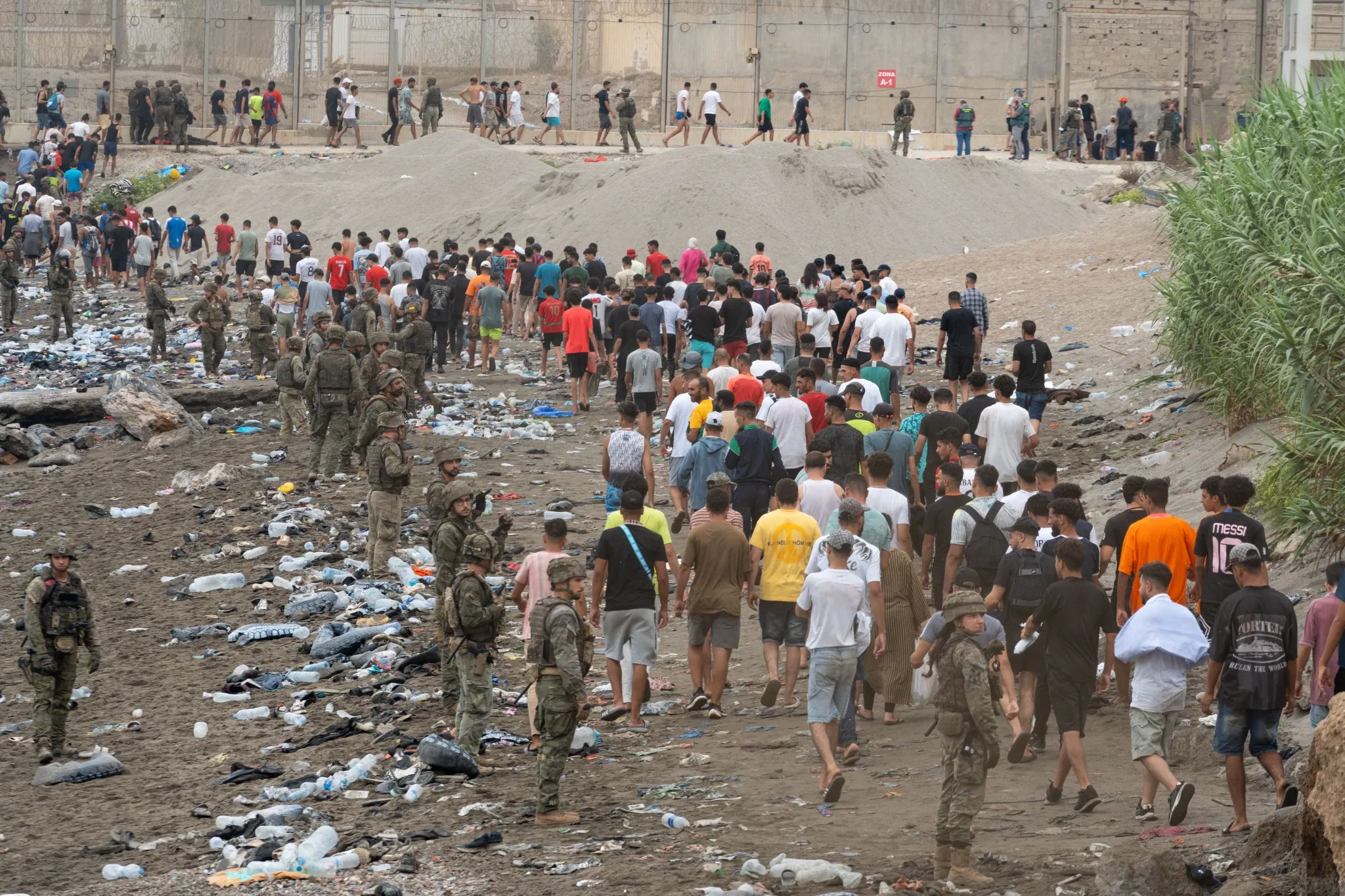
August 6, 2026
Daniel Cohen
World News
The blood of Christians is irrigating Africa’s soil, with Nigeria as an epicenter. As a senior research analyst at the Observatory of Religious Freedom in that continent (ORFA), Steven Kefas has been following closely horrific stories of martyrdom.
He is now one of the principal contributors to the explosive ORFA six-year study on violence and religious freedom in Nigeria. Because of Kefas’s investigative journalism, documenting human rights abuses and insecurity in Kaduna State, he faced growing pressure from authorities until he was arrested and imprisoned for 162 days in May 2019.
Kefas witnessed deaths among inmates and suffered health challenges. “An experience that only strengthened my resolve to continue exposing injustice,” he said for this interview.
For more than a decade, he has meticulously documented religious persecution, terrorism, mass killings, kidnappings, and forced displacement across Nigeria’s Middle Belt and other affected regions, combining field investigations, survivor interviews, and data analysis to better understand the drivers of violence and to ensure that the voices of victims are not ignored.
What were the key findings of the recent ORFA report on violence and faith in Nigeria?
The scale of violence documented by ORFA is staggering.
Between 2020 and 2025, our research documented 79,323 people killed and 34,773 civilians abducted across Nigeria. On average, that translates to about seven attacks and 36 deaths every single day over the six-year reporting period.
Of those killed, 42,033 were civilians, while 37,290 were security personnel or members of armed groups. One of the report’s most significant findings is that Boko Haram and the Islamic State West Africa Province (ISWAP), despite receiving the most international attention, accounted for only about 12% of civilian deaths during the reporting period.
By contrast, the groups ORFA classifies as Fulani terror groups were responsible for 18,577 civilian deaths — about 44% of all civilian killings documented.
The religious dimension of the violence is equally concerning. ORFA documented the killing of 28,551 Christians and 13,224 Muslims. After adjusting for the population of affected states, Christians were killed at approximately 4.4 times the rate of Muslims.
While abductions appeared relatively similar in raw numbers — 15,932 Christians and 15,272 Muslims — our companion study, Captivity by Creed, found significant differences in how victims were treated. Christian captives consistently faced higher ransom demands, longer periods in captivity, harsher treatment, greater pressure to renounce their faith, and a higher likelihood of being executed even after ransom payments had been made.
These findings challenge many prevailing assumptions about the conflict and underscore the need for a more evidence-based understanding of the violence affecting Nigeria.
What challenges did ORFA face in conducting field research?
The greatest challenges were security and funding.
Many of the communities we studied are active conflict zones where attacks remain frequent. Conducting field investigations often meant travelling into areas where there was a genuine risk of terrorist attacks, kidnappings, or ambushes. In many cases, our researchers had to work under extremely difficult conditions while ensuring the safety of survivors who agreed to speak with us.
Funding has also been a major limitation. ORFA has carried out this extensive research with relatively modest resources. Despite those constraints, we have built one of the most comprehensive datasets on religious freedom-related violence in Nigeria.
With greater financial support, we could expand our geographic coverage, increase the frequency of field investigations, verify even more incidents, and provide a more complete picture of the crisis.
Could you share some of the stories that had the greatest impact on you or your team while collecting the data?
The testimonies of survivors who spent months, and in some cases hundreds of days, in terrorist captivity had the greatest impact on me personally. Their accounts gave us rare insight into the internal operations of terrorist groups, their methods and, importantly, the motivations behind many of their atrocities.
One story that continues to haunt me involves Christian women abducted from communities in Southern Kaduna. Many were repeatedly sexually assaulted by their captors, forcibly impregnated, and pressured or compelled to convert to Islam while in captivity. After enduring months of unimaginable suffering and finally regaining their freedom, some returned home only to face rejection by their own families. In several cases, their husbands refused to accept them back because they returned with children conceived through rape.
These women survived terrorism only to encounter another form of trauma upon returning home. Their stories remind us that the consequences of terrorism extend far beyond the attack itself and often continue long after victims escape captivity.
What is the typical reaction of Nigerian authorities to reports of this kind?
The reaction has too often been one of denial or dismissal rather than serious engagement with the evidence.
Instead of acknowledging the scale of the crisis and responding to the concerns raised by independent researchers, authorities have frequently sought to downplay reports documenting religiously targeted violence. We saw this clearly when the U.S. government under President Donald Trump raised concerns about the persecution of Christians in Nigeria.
Rather than addressing the underlying issues, the Nigerian government strongly rejected those characterizations and publicly disputed the findings. It also retained the U.S.-based lobbying firm DCI Group under a contract reportedly worth approximately $9 million to improve Nigeria’s international image.
My hope is that future reports will be met not with denial but with constructive engagement, transparent investigation, and meaningful action to protect vulnerable communities.
Could it be said that the efforts of terrorist groups in Nigeria are aimed at eliminating or diminishing the Christian presence in the country, especially in the geographical and socio-political transition zone in central Nigeria known as The Middle Belt?
Based on ORFA’s findings, I believe there is compelling evidence that, particularly in Nigeria’s Middle Belt, many attacks by Fulani terror groups disproportionately target Christian communities.
The pattern we documented extends beyond isolated attacks.
The Middle Belt separates the predominantly Muslim far North from the mostly Christian South and is characterized by its high ethno-linguistic diversity and crucial agricultural output. Is that a factor for the violence?
Entire Christian farming villages have repeatedly been attacked, churches destroyed, clergy killed or abducted, and thousands of predominantly Christian communities forcibly displaced. In numerous cases, displaced communities have remained unable to return to their ancestral lands for years, with reports that some abandoned villages have subsequently been occupied by the attackers or others.
While motivations can vary across different armed groups and regions of Nigeria, the evidence from many parts of the Middle Belt indicates that Christian communities have been disproportionately targeted in ways that have significantly reduced their presence in affected areas.
In 2016, the BBC and other major media outlets framed the violence in Nigeria as disputes between herders. Have you seen any shift in the mainstream media narrative regarding the violence in Nigeria?
Yes, I believe there has been a gradual shift.
A decade ago, much of the international media described the violence primarily as “farmer-herder clashes,” implying that both sides were engaged in roughly equivalent communal disputes over land and grazing resources.
That framing overlooked the organized, sustained, and often highly lethal attacks against civilian communities that many local researchers and affected communities had been documenting for years.
Increasingly, however, journalists, researchers, policymakers, and international organizations are recognizing that many of these incidents cannot be adequately explained as resource conflicts alone. The scale, organization, and recurring targeting of civilian populations point to a much more serious security challenge involving terrorist violence carried out by armed Fulani militant groups in many parts of Nigeria.
While some media outlets continue to use the farmer-herder narrative, there is now a broader appreciation that the violence is more complex. Also, that terrorism, ideological extremism, criminality, and religious targeting all play significant roles in different parts of the country. I believe this more nuanced understanding is an important step toward developing effective responses.
This article was originally written by Yoe Suarez and published on The Washington Stand. For more content like this, visit Real Life Network.
25 min
Under Nigerian Terrorists, Christians Faced Higher Rates of Execution and Captivity
July 27, 2026
The Washington Stand
World News
When a nation loses the ability to distinguish between allies and adversaries, truth and propaganda, leadership and political theater, it becomes vulnerable long before the first battle is lost. The headlines may change, but the underlying challenge remains the same. As conflict intensifies in the Middle East, foreign governments expand their influence, and political narratives compete with objective reality, Americans are confronted with a pressing question: Can we still recognize the difference between those who defend freedom and those who seek to undermine it? These are not isolated controversies. They are warning signs that discernment has become one of the most important responsibilities of our time.
Read more biblical news and cultural analysis on Real Life Network or watch The Daniel Cohen Show.
The Cost of Misidentifying the Enemy
The week began with devastating news. Two American service members were killed after an Iranian ballistic missile strike on a U.S. base in Jordan. For months, much of the conflict with Iran had been measured in sanctions, diplomacy, intercepted missiles, and political negotiations. Suddenly, the cost was measured once again in American lives. That reality should cut through every political talking point. Iran remains the world's leading state sponsor of terrorism, and its hostility toward the United States has never been a secret.
Yet even as Iran demonstrated exactly who it is, much of the public debate shifted away from the regime responsible for the attack and toward Israel, America's closest ally in the Middle East. Vice President J.D. Vance argued that Israeli influence helped derail negotiations with Iran, suggesting that voices in Israel preferred continued military action over diplomacy. That framing misses the larger point. The agreement did not collapse because Israel objected to it. It collapsed because Iran has repeatedly demonstrated that it uses negotiations to buy time while continuing to pursue its long-term objectives.
This is where discernment becomes indispensable. A nation that cannot correctly identify its adversaries will inevitably begin questioning its allies instead. History is filled with civilizations that spent more energy arguing among themselves than confronting the threats gathering outside their borders. The danger is not merely military. It is intellectual and moral. When a society begins treating warnings as manipulation and allies as liabilities, it loses the clarity necessary to make wise decisions.
A nation becomes most vulnerable when it begins questioning its allies more than its enemies.
Israel's relationship with the United States has never been based on sentimentality. It rests on shared strategic interests, democratic values, intelligence cooperation, and a common recognition of the dangers posed by radical Islamic terrorism. Those realities should not disappear simply because political narratives become more convenient than geopolitical facts.
When Political Narratives Replace Clear Judgment
The same confusion appears in other arenas. While Israel is frequently portrayed as exercising outsized influence over American policy, Qatar has quietly invested hundreds of billions of dollars across American universities, think tanks, nonprofit organizations, and other institutions. At the same time, President Trump alleged that China obtained personal information connected to approximately 220 million American voter records while elements within the intelligence community minimized the scope of the breach. Whether discussing foreign influence, election security, or media coverage, one theme continues to emerge: narratives increasingly shape public perception more than facts themselves.
That concern extends beyond government agencies. Several major broadcast networks declined to air President Trump's address regarding China's alleged cyber activities, leaving many Americans to learn about the speech only through secondary reporting. Whatever one's opinion of the president, citizens should be wary whenever gatekeepers decide which information the public deserves to hear. Healthy democracies depend on informed voters, not curated narratives.
The same principle explains why Marco Rubio's public comments stood out during the episode. Whether addressing Hamas, Iran, or America's allies, Rubio demonstrated something increasingly uncommon in modern politics: clarity. He distinguished between aggressors and defenders without relying on carefully manufactured slogans or focus group-tested language. Leadership is not merely about speaking persuasively. It is about speaking truthfully, even when the truth is unpopular.
Truth becomes increasingly difficult to defend when political narratives matter more than objective reality.
That challenge extends well beyond foreign policy. Political performance often receives more attention than principled leadership. Sound bites replace substance. Viral moments overshadow careful reasoning. Public discourse becomes less concerned with what is true and more concerned with what is emotionally satisfying or politically advantageous. The result is a culture that gradually loses confidence in objective truth itself.
Watch the full discussion on The Daniel Cohen Show, and discover more faith-centered analysis and current events on Real Life Network.
Discernment Is a National Necessity
Throughout the episode, seemingly unrelated stories all pointed toward the same conclusion. Debates over military alliances, concerns about election security, media gatekeeping, congressional battles over aid to Israel, and even moments of political theater all revealed how easily discernment can be replaced by confusion. A society does not lose its way overnight. It drifts one compromised judgment at a time, until it becomes difficult to distinguish conviction from convenience or principle from performance.
That is why support for Israel ultimately represents something larger than a single foreign policy debate. Israel remains the Middle East's only stable democracy and America's most dependable strategic partner in one of the world's most volatile regions. More importantly, the Jewish people occupy a unique place within the biblical story of redemption. Scripture reminds us that God works through history with purpose, and His covenant faithfulness has never depended upon shifting political winds. The conversation surrounding Israel therefore becomes both geopolitical and spiritual. It forces us to ask whether we are evaluating events through the lens of temporary political narratives or enduring biblical truth.
The larger lesson applies far beyond one nation or one administration. Every generation must decide whether it will judge events according to facts or emotions, principles or personalities, truth or propaganda. Those choices shape the future of every free society.
Civilizations rarely collapse because they lack enemies. They decline when they can no longer recognize the difference between friends and foes.
That is why discernment remains one of the most important responsibilities of every citizen and every Christian. Headlines will continue to change. Political figures will come and go. But wisdom requires looking beneath the news cycle to identify the deeper forces shaping our culture. The future will belong not to those who shout the loudest, but to those who refuse to lose sight of the truth.
Watch the full discussion on The Daniel Cohen Show, and discover more faith-centered analysis and current events on Real Life Network.
25 min
What Happens When a Nation Can No Longer Recognize Its Allies

July 20, 2026
Daniel Cohen
World News
In a sign of the continuing breakdown of religious freedom in Europe, Finnish parliament member Päivi Räsänen was banned by the U.K. from traveling to Heathrow Airport for a planned layover due to her Finnish Supreme Court conviction in March for authoring a pamphlet containing supposed “hate speech” toward those who identify as LGBT.
Räsänen’s legal saga began in 2019, when she wrote a post on social media questioning why her Finnish Lutheran Church was choosing to participate in an LGBT Pride event, citing the scriptural prohibition against same-sex conduct from Romans 1:24-27. Finnish authorities eventually charged her and Lutheran Bishop Juhana Pohjola with “hate speech” for authoring a pamphlet advocating for a biblical view of sexuality and for the social media post.
Even after Räsänen and Pohjola’s eventual unanimous acquittal of the charges by two lower courts in 2023, prosecutors continued to press the case by appealing it. In March of this year, a narrow 3-2 Finland Supreme Court decision found Räsänen and Pohjola guilty of “hate speech” for authoring the pamphlet and sentenced them to pay a €1,800 fine. The decision also ordered that the pamphlet be removed from public access and that all physical copies be destroyed. She was not found guilty for two other charges based on the social media post and a radio debate.
Notably, the court admitted in its ruling that Räsänen and Pohjola’s conduct was not “serious.” “[I]t must be taken into account that the text forming the basis for the conviction did not contain incitement to violence or comparable threat-like fomenting of hatred,” the court wrote. “The conduct is therefore not particularly serious in terms of the nature of the offense.”
Nevertheless, Räsänen recently revealed that because of this single “not particularly serious” charge, the U.K. has rejected her Electronic Travel Authorization (ETA) merely to pass through the country via Heathrow Airport (after initially approving it) while traveling from the U.S. to Helsinki, Finland’s capital. Räsänen further revealed that the U.K.’s revocation of her ETA could imperil her plans to attend an upcoming conference and speaking engagement in Northern Ireland next month about — ironically — freedom of speech.
Experts like author and columnist Rod Dreher say that the decision of a Western nation like the U.K. to bar Räsänen from stepping foot in the country because of perceived “hate speech” is a sign that Europe is rapidly sliding toward totalitarianism.
“Now that I hear someone as innocent and gentle as this Finnish granny has been forbidden by the British government even for setting foot in their international airport … well, it confirms my suspicions,” he posted last week on his Substack page. Dreher went on to note how the European Parliament is currently considering a measure that would “enable monitoring of people’s private, encrypted chats” to find any hint of perceived “hate speech” and further erode the ability of Europeans to freely express their religious beliefs.
“I think Päivi is a canary in the civilizational coal mine,” Dreher added. “The progressive bureaucratic order in European countries would rather attack faithful Christians as Enemies Of Society than deal with the actual problems they have. We can expect more of this. It’s a Finnish Lutheran lawmaker and grandmother today; it could easily be you tomorrow.”
European free speech advocates like Peter McIlvenna agree, noting that the U.K. barring Räsänen from entering is just the latest in a recent string of travel bans.
“We had a similar situation a couple of months ago whenever we had a United Kingdom rally organized by Tommy Robinson, and the U.K. government blocked 11 individuals who were traveling from Europe, I think, including Ezra Levant [who] was from Canada,” he pointed out during “Washington Watch with Tony Perkins” Tuesday. “They were given this statement, ‘Your presence is not conducive to the common good and therefore you are being blocked for entering.’ Of course, any government can have that ability to stop people coming in. I wish they used it to stop illegal immigrants coming in, but hey, they’re using it for members of Parliament. … [Räsänen] has been a member of [Finland’s] Parliament there for decades and decades.”
McIlvenna, the co-founder of Hearts of Oak, a U.K.-based free speech alliance, went on to describe the extent of the free speech violations that are occurring in his country.
“[T]o think that [Räsänen] is a danger in the U.K. is utter, utter madness,” he lamented. “But that’s where we’re going. … [The government] arrests people for statements online. We have 30 arrests a day for people saying things online that the government does not like … and that fits into our hate crimes. Anything you say that may be perceived as offensive to someone else, then you’ve committed an offense. So it’s where we are.”
“[Europe is] very dark place now,” McIlvenna added. “Finland is a very secular country. Scandinavia and Britain have always prided themselves on our Christian heritage or tradition — 1,700 years of that Christian thread that is very quickly disappearing with an apostate church and very few Christians involved in public office. So that is where we are going, far away from our traditional Christian faith.”
Still, Räsänen sees a thread of hope within the persecution that she has faced, recently describing how it has opened up opportunities for her to share her faith. She recalled that after her “hate speech” case became public in 2019, a young man who identified as an atheist sent her an angry message. After she replied in kindness and shared the gospel with him, she described that he later reached out to her again.
“He said that after his conversation with me, he has found Christ, and he has found a way to eternal life,” Räsänen remembered. “I understood that this is not in vain. It is not in vain to defend these freedoms. It is not in vain to share the message of the Bible.”
This article was originally written by Dan Hart and published on The Washington Stand. For more content like this, visit Real Life Network.
25 min
U.K. Bars Finnish Christian MP from Country over Biblical Beliefs on Sexuality
July 15, 2026
The Washington Stand
World News
The U.S. government remains alert to Iranian threats against President Donald Trump, even here on U.S. soil, according to remarks by Mike Waltz, U.S. Ambassador to the United Nations and former National Security Advisor, on Sunday. The Islamist regime in Tehran has plotted to assassinate Trump on at least two prior occasions, both in peacetime and wartime, and recently redoubled its rhetoric vowing Trump’s death.
“I won’t get into specific intelligence, but this regime, going all the way up to the ayatollah, has plotted to kill President Trump for many years,” Waltz said Sunday on ABC’s “This Week.” “They have operatives here in the United States. Plots are ongoing. But our intelligence community, the FBI, our law enforcement entities are absolutely on top of it.”
The remarks followed reporting last week that Israeli officials had warned President Trump of a fresh Iranian plot against his life, although no official spokesperson confirmed this.
The report came as no surprise, given the Iranian regime’s open vendetta against Trump since his first term in office. Iran has vowed retaliation against Trump ever since he ordered the airstrike that killed IRGC general Qassem Soleimani in Iraq on January 3, 2020.
More recently, Iran’s Supreme Leader Mojtaba Khamenei has a more personal cause for revenge, after his father and predecessor, Ali Khamenei, died amid Operation Epic Fury. In only his second public statement, Khamenei the Younger vowed vengeance for “the blood of all those martyred … by bringing the criminal and dishonorable killers to justice. … These criminals — whose names are known from top to bottom — will take to their graves the unfulfilled wish of dying peacefully in their beds.”
Attendees of Khamenei the Elder’s July 4 memorial ceremonies displayed a banner declaring, “We Will Kill Trump.”
Recent history has shown that Iranian attempts on Trump’s life are neither Israeli fiction, nor too low to stoop for a regime that has unwaveringly declared “Death to America” for the past 47 years.
On November 8, 2024, the Biden Justice Department (the same one that spent so many years persecuting Trump) announced an indictment against Farhad Shakeri, an Iranian national, for “a plot to murder a U.S. citizen of Iranian origin in New York,” as well as a plot to assassinate then-president-elect Donald Trump.
“According to statements made by Shakeri in recorded interviews with law enforcement agents, the IRGC has also tasked Shakeri with carrying out other assassinations against U.S. and Israeli citizens located in the United States,” the DOJ stated. “In particular, Shakeri has informed law enforcement that he was tasked on Oct. 7, 2024 with providing a plan to kill President-elect Donald J. Trump.” However, “Shakeri claimed he did not intend to propose a plan to kill Trump within the timeframe set by the IRGC.”
While the DOJ did arrest two co-conspirators, “Shakeri remains at large and is believed to reside in Iran,” the statement admitted. “Shakeri immigrated to the United States as a child and was deported in or about 2008 after serving 14 years in prison for a robbery conviction.” According to the DOJ, he “used a network of criminal associates he met in prison in the United States” to plan his attacks. However, due to his physical absence, the charges against Shakeri have never gone to trial.
On the other hand, the DOJ did obtain a conviction in the case of Asif Merchant. On March 6, 2026, the DOJ announced that a federal jury had convicted Merchant “of murder for hire and attempting to commit an act of terrorism transcending national boundaries.” The Pakistani national was a trained IRGC operative who tried to recruit hitmen “to steal documents, stage a protest, and arrange the murder of one of three specific U.S. government officials,” including President Trump. In June 2024 (still under the Biden administration), Merchant paid a $5,000 advance to men he believed to be hitmen, but who were in fact undercover federal law enforcement officers.
Thus, the DOJ has publicly revealed at least two Iranian plots from 2024 to assassinate Donald Trump. Other less mature plots may have been foiled before attaining the same level of threat, and some may remain undisclosed to protect intelligence assets. In any event, the same regime that sought revenge on Trump in 2024 has much more reason to seek revenge now — and fewer inhibitions against making the attempt.
President Trump responded stoically to the report, suggesting his prior awareness of the threat or at least an acceptance of the risks attending his high station. “They want to take out the U.S. leader — me,” he told reporters in Ankara, Turkey, before the U.S. Secret Service insisted that he fly home on his old Air Force One, not the jet gifted by Qatar. “I’m on every list. I saw this morning, I’m on every single one of their lists. And so far, I guess I’ve been a little bit lucky, but that maybe doesn’t last very long.”
Trump has even gone so far as to give instructions about how much firepower to unload on Iran in the event that one of their assassination plots succeeds.
“1000 Missiles are Locked and Loaded and aimed at the Islamic Republic of Iran, with thousands of more to immediately follow, should the Iranian Government act on its threat, pronounced in many corners of the Globe, to assassinate, or attempt to assassinate, the sitting President of the United States of America, in this case, ME!” Trump blasted out on Truth Social. “Orders have already been given, and the U.S. Military is ready, willing, and able, for a one year period of time, subject to extension, to completely decimate and destroy all areas of Iran — PRAISE BE TO ALLAH!”
This reveals once again the spirit of defiance in the face of mortal peril that Trump displayed when he lifted a fist after being grazed by a would-be assassin’s bullet at an outdoor rally in Butler, Pennsylvania.
The renewed effort by Iran to assassinate a sitting U.S. president — even during a ceasefire — provides Americans with a fresh reminder that the Islamist regime in Tehran remains a mortal enemy of the United States. Theirs is an ideological hatred that cannot be placated by gifts of cash or appeased by endless diplomacy, or even military surrender. They want to destroy the United States. Although they lack the firepower to do so openly, they do not and will not show any qualms about stooping to use an assassin’s bullet.
This article was originally written by Joshua Arnold and published on The Washington Stand. For more content like this, visit Real Life Network.
25 min
Tehran’s Anti-Trump Vendetta
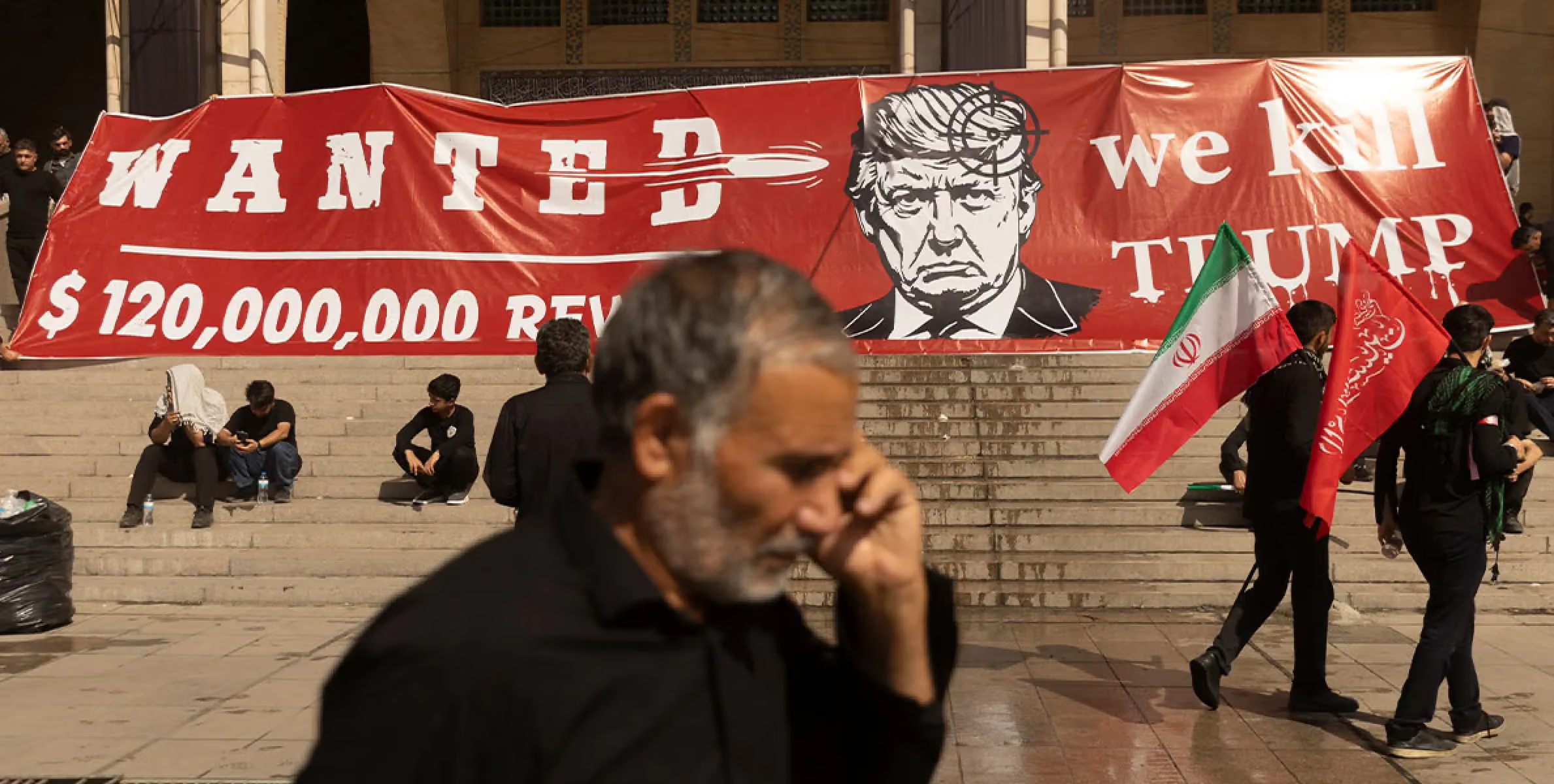
July 14, 2026
The Washington Stand