
Stream Real Life Network Now

WATCH NOW
Health


World News
25 min
What the Debates Over Life, Justice, and National Security Reveal About America
From the sanctity of life and criminal justice to political accountability and threats from Iran, America faces critical moral and national security questions. Explore how biblical principles can guide discussions about human dignity, justice, and government responsibility.
The approaching midterm elections are raising questions that go far beyond the economy. While inflation, healthcare, and the cost of living remain important, Americans are also confronting deeper disagreements about the value of human life, the meaning of justice, and the government's responsibility to protect its citizens.
These debates touch some of the most fundamental convictions in American public life. From the treatment of infants born alive after attempted abortions to the punishment of convicted terrorists and the growing threats posed by Iran, the questions are ultimately about what society considers worthy of protection.
For ongoing coverage of these issues through a biblical worldview, watch The Daniel Cohen Show on Real Life Network.
The Sanctity of Life and the Meaning of Justice
In 2023, Minnesota Governor Tim Walz signed legislation modifying the state's requirements concerning infants born alive following attempted abortions.
Previously, Minnesota law required medical personnel to take reasonable measures to preserve the life and health of an infant born alive. The revised language requires appropriate care for an infant born alive, without retaining the earlier explicit requirement to preserve life and health.
Supporters of the change argue that it allows physicians to provide appropriate medical care, including comfort care when an infant cannot survive. Critics contend that removing the explicit preservation requirement weakens protections for vulnerable newborns.
The distinction raises a profound moral question: What obligations does society have toward a child who has already been born?
For Christians, the answer begins with the biblical understanding of human dignity.
Genesis 2:7 describes God breathing life into Adam, who became a living being. Genesis 1:27 establishes that humanity is created in God's image. Human worth, therefore, is not determined by age, health, independence, or the ability to contribute to society.
The biblical case for protecting human life rests on the conviction that dignity is inherent, not something granted by government or earned through usefulness.
The same understanding of human dignity also informs difficult questions about criminal justice.
The case of Nidal Hasan, the former Army major convicted of murdering 13 people at Fort Hood in November 2009, illustrates the seriousness of those questions.
Hasan's attack wounded dozens of additional victims and devastated military families. His conviction and death sentence reflect the gravity of the crimes committed.
Debates over the death penalty, including the method of execution and whether executions should be publicly displayed, nevertheless reveal competing understandings of justice.
Some argue that the severity of certain crimes warrants the ultimate punishment. Others question whether particular execution methods or public spectacles are compatible with human dignity.
These disagreements deserve careful consideration without minimizing the suffering of victims.
Romans 13 describes civil authority as bearing responsibility for restraining wrongdoing. At the same time, Scripture consistently presents human life as possessing value before God.
Justice must therefore be more than an expression of anger. It must reflect moral seriousness, accountability, and appropriate respect for human dignity.
Political Accountability Requires More Than Religious Language
Religious identity has become an increasingly visible feature of American political campaigns.
Candidates regularly reference Scripture, Christian values, and personal faith while presenting their positions on abortion, immigration, healthcare, and social policy.
But claiming a religious identity does not automatically resolve questions about what a candidate believes or how those convictions influence public decisions.
Texas Senate candidate James Talarico has attracted attention for statements concerning the nature of God, abortion, and gender. His theological language and policy positions have generated disagreement among Christians over how biblical teaching should inform public life.
Those disagreements cannot be resolved simply by accepting or rejecting a candidate's religious label.
The relevant questions concern the substance of the claims themselves. What does Scripture teach? How is a particular passage being interpreted? Are the conclusions consistent with historic Christian doctrine?
Jesus warned in Matthew 7:15–20 about false prophets and emphasized the importance of recognizing people by their fruit.
That passage is not permission to speculate about someone's private spiritual condition. It does, however, establish the importance of examining teaching and conduct rather than relying entirely on outward appearances.
Christian discernment requires evaluating public statements and actions against Scripture, rather than treating religious language as sufficient evidence of biblical faithfulness.
Similar standards of accountability apply to questions of national security.
Michigan Senate candidate Abdul El-Sayed has faced scrutiny over his positions on Israel, Iran, immigration, and American foreign policy.
His statements about military assistance to Israel and the treatment of terrorist organizations have become subjects of political controversy. His critics argue that his responses have lacked necessary clarity, while his broader position emphasizes consistency in foreign policy and opposition to unconditional military support.
The appropriate standard is to examine his actual statements, policy proposals, and public record.
Questions about political associations or organizations connected to family members must also distinguish documented facts from allegations of personal wrongdoing.
That distinction matters because accountability depends upon evidence.
A political candidate can legitimately be challenged about immigration enforcement, campaign contributions, national security policy, or foreign alliances without relying on unsubstantiated accusations.
The same principle should apply regardless of political affiliation.
Iran, Terrorism, and the Responsibility to Protect Civilians
While domestic political debates dominate election coverage, threats from overseas continue to affect American security.
Iran's relationships with regional armed groups, including Hezbollah and the Houthis, remain significant concerns for the United States and its Middle Eastern partners.
The Houthis have demonstrated their ability to threaten commercial shipping and regional infrastructure through missile and drone attacks. Their activities raise questions about the security of international transportation routes and the potential consequences of escalating regional conflict.
An attack against civilian aviation infrastructure, regardless of the perpetrator, demonstrates why such threats demand serious attention.
Airports are not simply strategic facilities. They are gathering places for families, workers, travelers, and children whose safety depends upon effective security measures.
The same concerns apply to attempted attacks against commercial aircraft.
An alleged attempted hijacking involving a flight bound for Israel has renewed questions about airline security, radicalization, and the ability of investigators to recognize warning signs before violence occurs.
Claims about an attacker's motivations, foreign connections, or possible accomplices require confirmation through official investigations. But the underlying security concern is clear.
Protecting civilian transportation requires intelligence cooperation, thorough investigations, and appropriate safeguards against credible threats.
Confronting terrorism requires moral clarity about violence against civilians and factual precision about who is responsible for carrying it out.
That distinction is especially important when discussing Iran.
The Iranian government has supported organizations responsible for attacks against civilians and American interests. Its activities deserve scrutiny, particularly when regional conflicts threaten to draw the United States into additional military commitments.
Yet attributing every action of an Iranian-aligned group directly to Tehran requires evidence about the specific operation. Distinguishing support, influence, and operational control is essential to responsible analysis.
Foreign policy decisions also carry consequences for American families.
Military intervention, economic sanctions, intelligence operations, and defensive partnerships each involve risks and responsibilities. Congressional leaders help shape those decisions through legislation, appropriations, and oversight.
The approaching elections therefore involve more than competing campaign messages.
They concern the responsibilities entrusted to public officials and the standards by which their decisions should be evaluated.
For Christians, those standards begin with a consistent understanding of truth, justice, and human dignity. Protecting the innocent, holding wrongdoers accountable, and refusing to excuse violence should not depend upon political convenience.
The sanctity of life matters before birth, after birth, and throughout every stage of human existence. Justice matters for victims and defendants alike. National security matters because governments bear a responsibility to protect the people entrusted to their care.
Those principles deserve serious consideration regardless of which political party holds power.
Continue exploring the intersection of biblical truth, American politics, Israel, and national security through The Daniel Cohen Show, available free on Real Life Network.

World News
25 min
Unhappiness and Isolation Are Rising among Young People, but Those Who Are Religious Are Thriving
As loneliness and unhappiness rise among young Americans, research links religious faith and marriage with greater happiness, stronger relationships, and better educational outcomes, while Christian leaders urge Gen Z to put biblical truth into practice.
Social science data continues to emerge showing that America’s young people are increasingly non-religious, isolated, and unhappy. But the data also shows that young people who are religious are thriving, with higher levels of happiness, more friends, are more likely to be married, and better educational outcomes than their non-religious peers.
Research released by the Institute for Family Studies (IFS) notes that since 2000, reports of unhappiness among young people aged 20 to 35 has more than doubled, surging from 11% to 23%. This has coincided with an era where young people are isolating at unprecedented levels as they immerse themselves in screens, pornography, social media, video games, and AI chatbots. “Socializing among young men and women is down more than 50%, from 12 hours to 5 hours per week,” IFS observes. Unsurprisingly, this has led to a precipitous decline in relationships and dating, with two thirds of young people not in serious relationships and teen dating down 50%.
As unhappiness and loneliness has risen among young people, so too has secularism. In March, Arizona Christian University’s Cultural Research Center reported that only 1% of Gen Z (ages 18 to 22) and 4% of adults in general has a biblical worldview (defined as “individuals whose beliefs and behaviors are consistently aligned with biblical principles”). The figure is down significantly since 1994, when 12% of adults reported a biblical worldview.
But married and religious young people seem to be largely escaping the unhappiness trap, with 50% saying they are “very happy” compared to just 16% of their secular, unmarried peers. As IFS points out, “faith and family remain two of the strongest bulwarks against loneliness and despair.”
For young men in particular, religion appears to be the hinge that catapults them into a future of contentment and success. Data shows that religious men are more likely to desire and attain marriage than those who are non-religious. They are also almost twice as likely to report feeling “very happy” and to say that life feels “purposeful/meaningful” than secular men. Religious men also report less mental health issues, anxiety, and depression. They also have bachelor’s degrees at far higher rates than non-religious men (46% vs. 16%) and report finishing trade school/apprenticeships at 29% (vs. 14% of secular men).
Where a happier minority of young people find meaning and purpose in religion, a far larger percentage appear to hold politics and government as their primary focal point, especially with the rising popularity of socialism.
“[M]y generation has grown up in a very hyper political age,” Counteract USA Founder and CEO Abigail DeJarnatt contended during “Washington Watch” Friday. “… [Many believe that] government can be the arbiter of morality. That’s what happens when Marxism infuses into our society. And that’s just what we’ve grown up with. So when you’re online and you’re on TikTok [watching] recipe videos, there’s also political ideologies that are being pushed on and talked about amongst Gen Z. So it’s not surprising at all that this is where we’re at, and I think we’ll just continue to see a lot more of it among young people.”
DeJarnatt further explained how her ministry is attempting to engage Gen Z with truth. “The primary thing that we’re focusing on with Gen Z Christians is teaching them a framework of biblical critical thinking,” she explained. “Because the reality is, a lot of Gen Z’s world is unfolding online. A lot of the conversations, online friendships, relationships. … What we’re trying to teach Gen Z to do is look at what they’re seeing online and ask, ‘Is it true? Is it not?’ … We’re trying to tell Gen Z [to] ask questions as fast as we’re scrolling online. Slow down. … And as Christians, we have to weigh that against the Bible itself.”
DeJarnatt went on to argue that a sense of self entitlement undergirded by Marxism has heavily influenced young people to abandon a solid biblical ethic. “[T]his Marxism that’s invaded our culture, just the hyper individualism in Gen Z,” she emphasized. “[Much of] Gen Z is [saying], ‘We aren’t happy with either political party.’ I think we have this idea that we can have it all. [It’s the] same framework of pick and choose our own ideology to the Bible. … [W]e think, ‘I like this, I don’t like this. I’m going to choose this. I’m not going to choose this.’”
DeJarnatt concluded by urging young believers to move beyond their comfort zones in order to spread the gospel to an isolated and unhappy wider culture.
“We see so many young Christians who are taught all these amazing things and their amazing churches that are Bible-based,” she noted. “They’re in Bible-based families that are going back to Scripture, but we need to teach Gen Z to take all the things that they know and actually apply them to the key conversations happening around us, having the conversations, just getting Gen Z to talk to each other … articulating those beliefs so that they actually become effective in wielding the sword of the spirit in the spiritual battle that’s raging all around us. They have the tools. They just need to know how to use them well.”
This article was written by Dan Hart and originally published on The Washington Stand. For more content like this, visit Real Life Network.

World News
25 min
Red States Combine Forces to Choke Off Abortion Pill Pipeline
A woman’s account of being forced to take abortion pills is fueling renewed scrutiny of mifepristone, mail-order prescribing, state abortion laws, and shield laws protecting providers who send the drug across state lines.
Like a lot of girls her age, Rosalie Markezich knew the standard talking point about mifepristone. Don’t worry, the online sites say. It’s just like taking a Tylenol. “Well, I’ve taken a lot of Tylenol in my lifetime,” she tells people now, and “it has never killed my child. It has never ruined my life, and it has never made me bleed for over a week.”
Unlike most moms, Rosalie never got the chance to hear that lie from her doctor, because she didn’t ask for a prescription in the first place. Her boyfriend ordered the pills in her name, and without any sort of ID or verification, the drugs magically showed up at her house. “I told him, ‘No thank you. I do not want you to do that, and I do not want them.’ Well, [he] found the website. He filled it out all with my personal information that I did not give him to use … [and] $150 later, he successfully ordered abortion pills through the mail from a [California] doctor named Remy Coeytaux, shipped directly to my doorstep.”
When he forced her to swallow them, her plan was to go inside and throw them up. But it was too late. “That night, I laid on a blood-soaked towel by myself, choking on my own breath. I remember my body rejecting it, rejecting its own breath — the one thing that it needs. I was praying to God, ‘Please take me too.’” Now, filled with grief and anger at how the government has robbed her of everything the Left insists this debate is about — choice, privacy, and safety — she’s fighting back.
“The FDA was wrong,” Rosalie said emotionally at the Pray Vote Stand Summit. “They allowed these drugs. They allowed them to go through the mail. They knew the warnings. They knew what could happen. And yet they are still sending them through the mail after seeing firsthand what it has done to women and children.”
We’re talking about a drug, Alabama Attorney General Steve Marshall (R) reiterated, “that is facilitating domestic abuse and even murder.” And yet, four years ago, he shook his head, pro-lifers were at this same event celebrating the overwhelming victory of Dobbs, a success story a half-century of prayers and activism in the making. “But I don’t think any of us that were on that stage left the stage believing that we would have more abortions today than we had at that time.” All because of mifepristone — and the presidents since 2022 who have turned a blind eye to the violent consequences.
“It’s why, frankly, [we] are still amazed at this administration — which talks about being the most pro-life administration — simply burying their head in the sand on what we know is going on around us.” With a single signature, President Trump could turn this whole situation around, Marshall insists. “The data is there. … They have the capacity to be able to do it. The question is whether or not they have the political will.” And so far, they have not.
Instead, they’ve created a black market for abortion drugs that not only puts women who voluntarily take the pill in life-threatening situations, but sets fire to every pro-life state law in America. Right now, it doesn’t matter whether you live in Louisiana or New York, abortionists are illegally flooding every zip code of the country with mifepristone — and getting away with it.
If the Trump administration had the nerve to enforce the federal laws already on the books, Rosalie would be the happy mom of a two-year-old right now. Under the Comstock Act, the Justice Department should be cracking down on anyone shipping abortion pills through the mail — let alone to pro-life states whose voters have already made their voices heard on the issue. But instead, for reasons no one who witnessed the first Trump term can understand, Republican attorneys general like Louisiana’s Liz Murrill (R) are having to fight their way to the Supreme Court just for the right to have their laws respected.
Murrill, who’s already battling the FDA over its ridiculously lax standards on the drug, is expanding the war to states that are knowingly protecting the criminals sending pills into pro-life states. Together with Marshall and Arkansas Attorney General Tim Griffin (R), the trio is suing New York, California, and Massachusetts to try to dismantle the “shield laws” in blue states that refuse to punish anyone mailing mifepristone.
“They shield the doctor, they shield the pharmacist, they shield anybody who is involved with what I call the pill pipeline, sending those pills into our state,” Murrill told Family Research Council President Tony Perkins on “This Week on Capitol Hill.” “And they are doing it for a political purpose. They are doing it because they disapprove of the laws that our state has passed. And so they want to flood our state with those pills illegally.”
To get away with it, the prescribers leave no trace on the bottles. “They sanitize it. And so, you will never you may never know who actually prescribed those pills. … [They’re] filling the prescription bottle and sending it into our state with no name on it, no pharmacy on it, no recipient name.”
Murrill explained that her team actually tested the current market, having agents order drugs online. Asked if there’s any kind of consultation with a medical person, she replied no. “There’s none. They’re not even verifying who’s even buying them. … They mail them to anybody who basically fills out a form on the internet. So it’s extraordinarily irresponsible.” Not to mention, she added, that “they are directly trying to nullify our laws.”
And regardless of whether the women are coerced or ordering these of their own will, the AG sadly acknowledged that the number of emergency room visits is skyrocketing — mainly because no one is adhering to the FDA’s 10-week limit for the drug. “Is any other drug treated like this?” Perkins wanted to know. “None,” Murrill replied. “None,” she repeated. “That’s why I say over and over again … this is not health care. There is nothing about this that is health care. I mean, there is no situation in the medical field where they would do this with drugs or patients.”
That’s why red-state AGs sued the FDA in the first place, because it’s so shocking and unconscionable that a pill sending 10% of women to the ER doesn’t even require a doctor’s visit or approval. “Those rules are not in place anymore. And so, you know, it really poses a significant risk to women all over the country.”
Imagine, she emphasized, if blue states “mailed us cocaine or they mailed us fentanyl.” There would be legal consequences. Or, Perkins suggested, “What if … Louisiana said, ‘You know, we’re not going to work with California and New York on anything related to the Second Amendment. I don’t care what your laws say. We’re not going to support you in that.’” It’s like saying, “I’m going to mail guns to anybody who wants them,” Murrill agreed. “… They have laws that restrict gun ownership and possession in ways that we don’t. … [What if] I decided to violate those laws? And they wouldn’t be able to enforce them if we had a shield law similar to that. But we haven’t done that.”
At the end of the day, this is not a minor issue, the FRC president argued. Not for the baby, not for the mother, not for the constitutional process, and certainly not for state sovereignty. “You know,” Marshall underscored, “we can solve [this] problem right now. We have the ability to do it with the administration that’s in place. And it’s why not only is our prayer so important, but also our ability to stand together is so critical. Because the reality is it’s not about Republican or Democrat. It’s about protecting women’s health and preserving life. That’s our issue. That’s important — and on it, we’re right.”
This article was written by Suzanne Bowdey and originally published on The Washington Stand. For more content like this visit Real Life Network.

World News
25 min
Judge Throws Out Riley Gaines NCAA Lawsuit to Force Protection of Women’s Sports
A federal judge dismissed Riley Gaines and other female athletes’ Title IX lawsuit against the NCAA, ruling the organization is not subject to Title IX because it does not directly receive federal funding. The athletes plan to appeal.
A case centered on the Title IX rights of women to have male-free sports has been thrown out by a Biden-appointed judge, leaving Riley Gaines and the Independent Council on Women’s Sports (ICONS) determined to appeal.
Gaines and over a dozen female former college athletes filed the lawsuit funded and supported by ICONS in March 2024, claiming that the NCAA broke Title IX safeguards by allowing men to participate in women’s sports and infiltrate locker room spaces.
Gaines said in a statement on Tuesday, “This momentary setback will not deter me or other women athletes in the least. Rest assured, we will be appealing this decision. We are on the side of truth. I am confident Americans will rally to our side to fight the NCAA. Working together, we will defeat the NCAA’s continuing efforts to trample women’s rights in sports.”
U.S. District Judge Tiffany R. Johnson of the Northern District of Georgia on Monday dismissed the case, ruling that the NCAA does not have to abide by Title IX standards since it does not directly receive federal funding, which is a “prerequisite for liability under Title IX,” Fox News reported.
Johnson wrote, “Here, there is no evidence that the NCAA ever received, or could have received, federal funds. Thus, Plaintiffs’ Title IX claims cannot proceed.”
“Judge Johnson accepted the NCAA’s argument that the NCAA is not subject to Title IX and dismissed the case Gaines v. NCAA, brought by women college athletes seeking to hold the NCAA responsible for granting men access to women’s sports and private locker rooms,” ICONS said in a statement. “This decision removes all protections for women in NCAA collegiate competition across the country and underscores the vulnerability of women’s sports until court victories are secured.”
ICONS Co-Founder Kim Jones, a former NCAA All-American tennis player, insisted that Johnson was wrong in her ruling. “We believe the district judge erred and that the Court of Appeals will find that the NCAA, which is the controlling body of college sports for more than 1,100 member schools, almost all of which are federally funded, is subject to Title IX. We will not give up our fight for women and girls’ rights in sports.”
CEO and President of Concerned Women for America Penny Nance remarked that she is appalled by Johnson’s decision, and that it is “inexcusable for a judge to rule that the NCAA is above the law, and that a man’s identity takes priority over women’s rights.”
She continued, “This ruling effectively upholds the NCAA’s repulsive policy enabling sexual harassment and discrimination against female athletes. We are disgusted that the NCAA is lobbying for federal protections but refuses to protect female athletes. We will not back down from this fight in support of female athletes.”
The case comes at a time when far-left political candidates refuse to define what a woman is and affirm biological reality. A poll by Concerned Women for America found that “69% of Americans believe it is very or somewhat important in deciding who to vote for in this election that candidates oppose forcing female athletes to participate in sports and share locker rooms with biological boys/men identifying as girls/women.”
Nance continued, “Whether or not the NCAA takes federal funding, it directly benefits from the participation of its 1,100-plus member institutions, all of which are required to comply with Title IX. If the NCAA doesn’t comply with Title IX, no university should be allowed to be a member of the NCAA.”
“U.S. Senate passage of the Protect College Sports Act, along with this new ruling, exposes the glaring disconnect with federal civil rights law that Congress must address,” she added. “The NCAA continues to violate the rights of female athletes, but it should not be allowed to do so.”
The plaintiffs must file their notice of appeal in the next 30 days to the U.S. Court of Appeals for the 11th Circuit.
This article was written by Quinn Delamater and originally published on The Washington Stand. For more content like this, visit Real Life Network.
.jpg)
World News
25 min
Terror Threats, Iran, and Assisted Dying: What Government Is Responsible to Protect
From a suspected terror plot near a British airbase to Iran and Canada’s assisted dying program, global events raise local questions about national security, government responsibility, human dignity, and the principles Christians bring to public life.
The distance between an international crisis and an ordinary American family is often much shorter than it appears. A suspicious van outside a military installation in England, instability in the Middle East, arguments over immigration, or debates about assisted dying in Canada can seem like stories happening somewhere else. Eventually, however, questions about security, borders, human dignity, and government authority become local.
That is why Real Life Network brings together biblical truth, current events, and the larger forces shaping families and communities. The headlines may come from different countries, but the underlying questions frequently arrive at the same place: What is government responsible to protect, what happens when institutions lose the public’s trust, and what principles should guide Christians when political arguments become increasingly polarized?
The answers require something more substantial than party loyalty. They require discernment.
What happens across an ocean does not necessarily remain across an ocean when the issues involve national security, human dignity, and the responsibilities of government.
Security Requires Facts, Not Assumptions
The recent incident near RAF Fairford in England demonstrates why both vigilance and restraint matter.
Five British men in their 20s were arrested near the airbase after authorities received reports of suspicious vehicles. RAF Fairford is used by the U.S. Air Force and has played a role in American military operations involving Iran. Police initially arrested the men on suspicion of explosives offenses and later on suspicion of preparing a terrorist act.
The incident triggered a significant response. Homes were evacuated, military and forensic specialists examined the vehicles, and counterterrorism authorities began investigating whether the activity could have involved people acting on behalf of a foreign state. A local farmer helped raise the alarm after encountering masked men and suspicious vans near the base.
But subsequent facts complicate the initial picture. Police reported finding petrol but no improvised explosive devices. The five men were released on police bail under restrictions while the investigation continued. Authorities have not established Iranian involvement, and Iran has denied any connection.
That distinction matters.
It is reasonable to ask difficult questions about security surrounding a strategically important military installation. It is also important not to turn an ongoing investigation into a settled conclusion before investigators have established what happened.
This is where discernment becomes essential. National security demands vigilance, but vigilance is not the same thing as speculation.
The same principle should govern debates over immigration and border security. Nations have legitimate responsibilities to control their borders, enforce their laws, determine who enters, and protect their citizens. At the same time, economic claims about immigration, crime, employment, healthcare, or government spending deserve to be evaluated on evidence rather than assumed because they fit a political narrative.
Strong borders and strong institutions depend on the same thing: rules that are clearly defined, consistently enforced, and grounded in facts.
Foreign Policy Eventually Becomes Personal
The connection becomes even clearer when Iran enters the discussion.
For Americans, Iran can become an abstract foreign-policy subject involving nuclear enrichment, sanctions, missiles, military operations, and diplomatic negotiations. For Israelis and others living within range of Iranian weapons or Iranian-backed forces, those questions are much more immediate.
That difference in perspective matters.
The Iranian government has supported armed groups throughout the Middle East, while its nuclear and missile programs have remained central issues in American and Israeli security policy. The debate is not merely about whether Iran presents a threat. The harder policy question is how governments should respond to that threat while weighing diplomacy, deterrence, military action, escalation, and the human consequences of each.
The RAF Fairford investigation demonstrates how quickly those concerns can extend beyond the Middle East. Investigators are examining several possible explanations for what occurred near the base, including potential foreign-state involvement, though none has been established.
Political leaders naturally disagree about how aggressively governments should respond to such threats. Those disagreements should be debated seriously rather than reduced to accusations that one side is courageous and the other cowardly.
Christians have an additional responsibility. Scripture does not provide a modern foreign-policy platform, but it does establish principles that matter: government bears responsibility for restraining evil, human life possesses inherent dignity, truth matters, justice matters, and political power is never ultimate.
That framework leaves room for legitimate disagreement over policy while refusing to treat security as irrelevant.
It also challenges the assumption that international affairs have nothing to do with ordinary families. Decisions made in Washington, London, Jerusalem, or Tehran can eventually affect military families, energy prices, national security, immigration policy, and the stability inherited by the next generation.
What Does a Society Believe a Life Is Worth?
Few issues reveal a culture's assumptions about human dignity more clearly than assisted dying.
Canada reported 16,499 medically assisted deaths in 2024, representing about 5.1 percent of all deaths in the country. Health Canada also reported 22,535 requests for medical assistance in dying that year, including requests that ultimately did not result in MAID.
Those numbers deserve more than a passing reaction.
Supporters of Canada's MAID system generally emphasize individual autonomy and relief from intolerable suffering under legally defined eligibility requirements. Critics have raised different concerns, including how assisted dying affects people experiencing disability, serious illness, inadequate care, isolation, or economic vulnerability.
Christians enter that discussion with a fundamentally different starting point about human worth.
Human dignity does not rise and fall with independence, productivity, physical ability, economic cost, or the amount of medical care someone requires. The person in a wheelchair is no less an image-bearer than the marathon runner. The elderly patient requiring extensive care possesses no less dignity than the healthy 30-year-old.
A society reveals something about its understanding of human worth by how it treats people when they become dependent on everyone else.
That does not make end-of-life decisions simple. Christians can acknowledge the difference between intentionally causing death and declining extraordinary or excessively burdensome treatment when death is already approaching. Compassion for suffering is essential.
But compassion cannot be separated from the conviction that suffering people remain people of immeasurable worth.
That is why the Canadian debate deserves attention outside Canada. Questions surrounding healthcare systems, government authority, disability, suffering, and assisted death ultimately concern what kind of moral framework a society brings to its weakest moments.
The same is true of national security and immigration. These subjects look unrelated until the underlying question emerges: What responsibilities does government have toward the people entrusted to its care?
Governments cannot eliminate every threat, prevent every tragedy, or solve every human problem. Neither should Christians expect politics to accomplish what only Christ can accomplish.
But government still matters. Borders matter. Security matters. Religious liberty matters. Human dignity matters. And truth matters enough that facts should never be stretched merely because doing so strengthens the preferred political argument.
Ezekiel describes the watchman who sees danger approaching and sounds the warning. The principle is not an invitation to panic. A faithful watchman must actually see what is coming. He cannot invent the sword on the horizon.
Christian engagement therefore requires both courage and discernment: paying attention to danger without exaggerating it, evaluating government without worshiping it, protecting human life without reducing people to political arguments, and refusing to allow partisan loyalty to determine what counts as true.
The world may feel increasingly complicated. The Christian standard does not have to be.
Stay informed about the stories shaping faith, culture, national security, and the world through The Daniel Cohen Show on Real Life Network.

Faith & Culture
25 min
When the Climate Narrative Shifts: Fear, Trust, and a Generation Trying to Make Sense of it All
Climate messaging is changing as political leaders, media outlets, and institutions reconsider past assumptions. The shift raises deeper questions about fear, public trust, discernment, and how Christians should think about environmental stewardship.
Adapted from a recent Rose Unplugged podcast conversation with Marc Morano of Climate Depot. Watch the full episode: Here
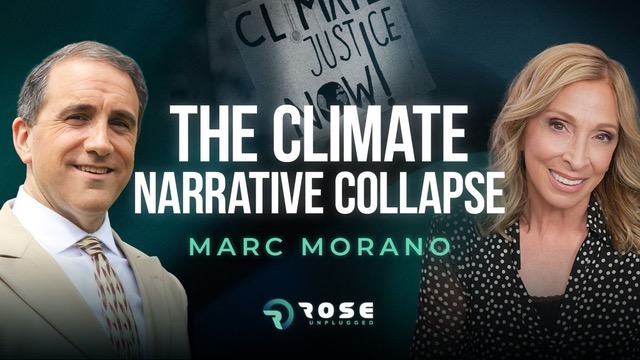
We are watching something shift that many people were told would never shift. For years, the message was simple, absolute, and repeated everywhere: the science is settled, the timeline is urgent, and the consequences are existential.
Climate change was not presented as one issue among many. It was presented as the issue. The defining crisis of our time. And for a long stretch, questioning that framing was treated not as disagreement, but as denial.
But now, something is happening that is difficult to ignore.
The Quieting
Major political outlets are describing what they call “climate hushing”. It’s a noticeable quieting from Democrats and environmental groups at the very moment we were told urgency should be at its peak. Media voices and political strategists are openly admitting that climate messaging is no longer resonating with voters the way it once did.
And a very uncomfortable conversation is emerging inside mainstream reporting: that some of the most extreme climate scenarios that shaped headlines, policy, and public fear were never truly forecasts at all, but worst-case modeling that was often presented without that distinction being made clear to the public.
Now those same scenarios are being reconsidered. Recalibrated. In some cases, quietly set aside.
Meanwhile, at the Kitchen Table
At the same time, there is another layer to this story that can’t be ignored. Because while elites debate messaging strategies, ordinary families are dealing with something far more immediate. They are dealing with rising costs, energy insecurity, and food prices, and with the reality that policies sold as “saving the planet” often land first and hardest on working people.
And somewhere in the middle of all of that, I think a lot of people are just trying to live their lives and make sense of it all. Some climate activists say we’re destroying the planet if we eat meat. Vox, for example, has warned that beef is among the worst foods we consume when it comes to global warming. My only request is this: just do not take my steak away from me while you’re all figuring it out. I. Mean. It.
There’s something very human about that reaction. People can debate models and projections all day long, but at the end of the day, we’re still sitting down at a dinner table trying to live our lives without being told that everything we do is somehow destructive.
That disconnect, between elite narrative and lived experience, is now shaping the political response we’re seeing.
A Generation Raised on Collapse
And there’s something even deeper happening underneath all of this. We now have an entire generation that grew up hearing one dominant message: that the world is nearing the edge, that time is running out, and that catastrophic collapse is not just possible but likely, unless radical transformation happens immediately.
Many young people didn’t just hear that message. They internalized it. It shaped anxiety. It shaped worldview. And in some cases, it shaped despair.
Now, slowly, some are beginning to ask a question that’s not political at all, but deeply personal: What if what I was told was only part of the story?
Proverbs 14:15 says, “The naive believes everything, but the sensible man considers his steps.”
That verse feels more relevant in a moment like this than it has in a long time. Not as a political statement, but as a reminder that fear, especially sustained fear, has a way of shaping belief faster than discernment can catch up.
A Pattern Emerges
Viewed individually, these developments might seem like political adjustments or media recalibrations. But when you step back and place them side by side, a pattern begins to emerge.
Political leaders are pulling back from climate messaging. Media outlets are acknowledging that voters are not responding the way they once expected. The most extreme climate scenarios that shaped years of public discourse are being revised.
Some of the world’s largest economies are resisting sweeping energy transitions. And even long-standing institutions are adjusting scope, timelines, and assumptions that once appeared fixed.
None of this is happening in isolation. It is happening all at once. And what it points to is something deeper than policy disagreement. It points to a growing gap between institutional certainty and public trust.
Stewardship Was Never the Issue
Now, to be clear: stewardship of the environment is not the issue. Wisdom in caring for creation is not the issue.
The issue has always been how that stewardship is defined, and how it is communicated to the people asked to live under it. Because when fear becomes the primary engine of persuasion, something else begins to erode alongside it, and that is trust. And trust, once fractured, is not easily restored.
As parts of the narrative so many young people were raised on are being revised, softened, or walked back, a difficult question emerges: how does a generation recalibrate when the story they were told about the world begins to change?
Not with anger. Not with cynicism. But with discernment.
A World Not Out of Control
Isaiah 40:22 reminds us, “It is He who sits above the circle of the earth.”
In other words, the world has never been out of control, even when our human interpretation of it has been incomplete.
So maybe what we are witnessing right now isn’t just a political shift or a media correction. Maybe it is a moment of reassessment: of how we weigh models versus reality, urgency versus accuracy, and narrative versus truth.
Because the question underneath all of this is not simply about climate policy. It is about trust. Trust in institutions. Trust in messaging. And ultimately, trust in how we understand the world we are being told to fear, and the world we truly live in.
If there is a path forward, it won’t come from fear alone. It will come from clarity. From honesty. And from the willingness to separate what we were told from what is true.
Keep your faith steady, your focus clear, and keep moving forward, because you are here for such a time as this.
Sign up today for more content from Real Life Network.
Thank you! Your submission has been received!
Oops! Something went wrong while submitting the form.
World News
The approaching midterm elections are raising questions that go far beyond the economy. While inflation, healthcare, and the cost of living remain important, Americans are also confronting deeper disagreements about the value of human life, the meaning of justice, and the government's responsibility to protect its citizens.
These debates touch some of the most fundamental convictions in American public life. From the treatment of infants born alive after attempted abortions to the punishment of convicted terrorists and the growing threats posed by Iran, the questions are ultimately about what society considers worthy of protection.
For ongoing coverage of these issues through a biblical worldview, watch The Daniel Cohen Show on Real Life Network.
The Sanctity of Life and the Meaning of Justice
In 2023, Minnesota Governor Tim Walz signed legislation modifying the state's requirements concerning infants born alive following attempted abortions.
Previously, Minnesota law required medical personnel to take reasonable measures to preserve the life and health of an infant born alive. The revised language requires appropriate care for an infant born alive, without retaining the earlier explicit requirement to preserve life and health.
Supporters of the change argue that it allows physicians to provide appropriate medical care, including comfort care when an infant cannot survive. Critics contend that removing the explicit preservation requirement weakens protections for vulnerable newborns.
The distinction raises a profound moral question: What obligations does society have toward a child who has already been born?
For Christians, the answer begins with the biblical understanding of human dignity.
Genesis 2:7 describes God breathing life into Adam, who became a living being. Genesis 1:27 establishes that humanity is created in God's image. Human worth, therefore, is not determined by age, health, independence, or the ability to contribute to society.
The biblical case for protecting human life rests on the conviction that dignity is inherent, not something granted by government or earned through usefulness.
The same understanding of human dignity also informs difficult questions about criminal justice.
The case of Nidal Hasan, the former Army major convicted of murdering 13 people at Fort Hood in November 2009, illustrates the seriousness of those questions.
Hasan's attack wounded dozens of additional victims and devastated military families. His conviction and death sentence reflect the gravity of the crimes committed.
Debates over the death penalty, including the method of execution and whether executions should be publicly displayed, nevertheless reveal competing understandings of justice.
Some argue that the severity of certain crimes warrants the ultimate punishment. Others question whether particular execution methods or public spectacles are compatible with human dignity.
These disagreements deserve careful consideration without minimizing the suffering of victims.
Romans 13 describes civil authority as bearing responsibility for restraining wrongdoing. At the same time, Scripture consistently presents human life as possessing value before God.
Justice must therefore be more than an expression of anger. It must reflect moral seriousness, accountability, and appropriate respect for human dignity.
Political Accountability Requires More Than Religious Language
Religious identity has become an increasingly visible feature of American political campaigns.
Candidates regularly reference Scripture, Christian values, and personal faith while presenting their positions on abortion, immigration, healthcare, and social policy.
But claiming a religious identity does not automatically resolve questions about what a candidate believes or how those convictions influence public decisions.
Texas Senate candidate James Talarico has attracted attention for statements concerning the nature of God, abortion, and gender. His theological language and policy positions have generated disagreement among Christians over how biblical teaching should inform public life.
Those disagreements cannot be resolved simply by accepting or rejecting a candidate's religious label.
The relevant questions concern the substance of the claims themselves. What does Scripture teach? How is a particular passage being interpreted? Are the conclusions consistent with historic Christian doctrine?
Jesus warned in Matthew 7:15–20 about false prophets and emphasized the importance of recognizing people by their fruit.
That passage is not permission to speculate about someone's private spiritual condition. It does, however, establish the importance of examining teaching and conduct rather than relying entirely on outward appearances.
Christian discernment requires evaluating public statements and actions against Scripture, rather than treating religious language as sufficient evidence of biblical faithfulness.
Similar standards of accountability apply to questions of national security.
Michigan Senate candidate Abdul El-Sayed has faced scrutiny over his positions on Israel, Iran, immigration, and American foreign policy.
His statements about military assistance to Israel and the treatment of terrorist organizations have become subjects of political controversy. His critics argue that his responses have lacked necessary clarity, while his broader position emphasizes consistency in foreign policy and opposition to unconditional military support.
The appropriate standard is to examine his actual statements, policy proposals, and public record.
Questions about political associations or organizations connected to family members must also distinguish documented facts from allegations of personal wrongdoing.
That distinction matters because accountability depends upon evidence.
A political candidate can legitimately be challenged about immigration enforcement, campaign contributions, national security policy, or foreign alliances without relying on unsubstantiated accusations.
The same principle should apply regardless of political affiliation.
Iran, Terrorism, and the Responsibility to Protect Civilians
While domestic political debates dominate election coverage, threats from overseas continue to affect American security.
Iran's relationships with regional armed groups, including Hezbollah and the Houthis, remain significant concerns for the United States and its Middle Eastern partners.
The Houthis have demonstrated their ability to threaten commercial shipping and regional infrastructure through missile and drone attacks. Their activities raise questions about the security of international transportation routes and the potential consequences of escalating regional conflict.
An attack against civilian aviation infrastructure, regardless of the perpetrator, demonstrates why such threats demand serious attention.
Airports are not simply strategic facilities. They are gathering places for families, workers, travelers, and children whose safety depends upon effective security measures.
The same concerns apply to attempted attacks against commercial aircraft.
An alleged attempted hijacking involving a flight bound for Israel has renewed questions about airline security, radicalization, and the ability of investigators to recognize warning signs before violence occurs.
Claims about an attacker's motivations, foreign connections, or possible accomplices require confirmation through official investigations. But the underlying security concern is clear.
Protecting civilian transportation requires intelligence cooperation, thorough investigations, and appropriate safeguards against credible threats.
Confronting terrorism requires moral clarity about violence against civilians and factual precision about who is responsible for carrying it out.
That distinction is especially important when discussing Iran.
The Iranian government has supported organizations responsible for attacks against civilians and American interests. Its activities deserve scrutiny, particularly when regional conflicts threaten to draw the United States into additional military commitments.
Yet attributing every action of an Iranian-aligned group directly to Tehran requires evidence about the specific operation. Distinguishing support, influence, and operational control is essential to responsible analysis.
Foreign policy decisions also carry consequences for American families.
Military intervention, economic sanctions, intelligence operations, and defensive partnerships each involve risks and responsibilities. Congressional leaders help shape those decisions through legislation, appropriations, and oversight.
The approaching elections therefore involve more than competing campaign messages.
They concern the responsibilities entrusted to public officials and the standards by which their decisions should be evaluated.
For Christians, those standards begin with a consistent understanding of truth, justice, and human dignity. Protecting the innocent, holding wrongdoers accountable, and refusing to excuse violence should not depend upon political convenience.
The sanctity of life matters before birth, after birth, and throughout every stage of human existence. Justice matters for victims and defendants alike. National security matters because governments bear a responsibility to protect the people entrusted to their care.
Those principles deserve serious consideration regardless of which political party holds power.
Continue exploring the intersection of biblical truth, American politics, Israel, and national security through The Daniel Cohen Show, available free on Real Life Network.
25 min
October 13, 2026
Daniel Cohen
World News
Social science data continues to emerge showing that America’s young people are increasingly non-religious, isolated, and unhappy. But the data also shows that young people who are religious are thriving, with higher levels of happiness, more friends, are more likely to be married, and better educational outcomes than their non-religious peers.
Research released by the Institute for Family Studies (IFS) notes that since 2000, reports of unhappiness among young people aged 20 to 35 has more than doubled, surging from 11% to 23%. This has coincided with an era where young people are isolating at unprecedented levels as they immerse themselves in screens, pornography, social media, video games, and AI chatbots. “Socializing among young men and women is down more than 50%, from 12 hours to 5 hours per week,” IFS observes. Unsurprisingly, this has led to a precipitous decline in relationships and dating, with two thirds of young people not in serious relationships and teen dating down 50%.
As unhappiness and loneliness has risen among young people, so too has secularism. In March, Arizona Christian University’s Cultural Research Center reported that only 1% of Gen Z (ages 18 to 22) and 4% of adults in general has a biblical worldview (defined as “individuals whose beliefs and behaviors are consistently aligned with biblical principles”). The figure is down significantly since 1994, when 12% of adults reported a biblical worldview.
But married and religious young people seem to be largely escaping the unhappiness trap, with 50% saying they are “very happy” compared to just 16% of their secular, unmarried peers. As IFS points out, “faith and family remain two of the strongest bulwarks against loneliness and despair.”
For young men in particular, religion appears to be the hinge that catapults them into a future of contentment and success. Data shows that religious men are more likely to desire and attain marriage than those who are non-religious. They are also almost twice as likely to report feeling “very happy” and to say that life feels “purposeful/meaningful” than secular men. Religious men also report less mental health issues, anxiety, and depression. They also have bachelor’s degrees at far higher rates than non-religious men (46% vs. 16%) and report finishing trade school/apprenticeships at 29% (vs. 14% of secular men).
Where a happier minority of young people find meaning and purpose in religion, a far larger percentage appear to hold politics and government as their primary focal point, especially with the rising popularity of socialism.
“[M]y generation has grown up in a very hyper political age,” Counteract USA Founder and CEO Abigail DeJarnatt contended during “Washington Watch” Friday. “… [Many believe that] government can be the arbiter of morality. That’s what happens when Marxism infuses into our society. And that’s just what we’ve grown up with. So when you’re online and you’re on TikTok [watching] recipe videos, there’s also political ideologies that are being pushed on and talked about amongst Gen Z. So it’s not surprising at all that this is where we’re at, and I think we’ll just continue to see a lot more of it among young people.”
DeJarnatt further explained how her ministry is attempting to engage Gen Z with truth. “The primary thing that we’re focusing on with Gen Z Christians is teaching them a framework of biblical critical thinking,” she explained. “Because the reality is, a lot of Gen Z’s world is unfolding online. A lot of the conversations, online friendships, relationships. … What we’re trying to teach Gen Z to do is look at what they’re seeing online and ask, ‘Is it true? Is it not?’ … We’re trying to tell Gen Z [to] ask questions as fast as we’re scrolling online. Slow down. … And as Christians, we have to weigh that against the Bible itself.”
DeJarnatt went on to argue that a sense of self entitlement undergirded by Marxism has heavily influenced young people to abandon a solid biblical ethic. “[T]his Marxism that’s invaded our culture, just the hyper individualism in Gen Z,” she emphasized. “[Much of] Gen Z is [saying], ‘We aren’t happy with either political party.’ I think we have this idea that we can have it all. [It’s the] same framework of pick and choose our own ideology to the Bible. … [W]e think, ‘I like this, I don’t like this. I’m going to choose this. I’m not going to choose this.’”
DeJarnatt concluded by urging young believers to move beyond their comfort zones in order to spread the gospel to an isolated and unhappy wider culture.
“We see so many young Christians who are taught all these amazing things and their amazing churches that are Bible-based,” she noted. “They’re in Bible-based families that are going back to Scripture, but we need to teach Gen Z to take all the things that they know and actually apply them to the key conversations happening around us, having the conversations, just getting Gen Z to talk to each other … articulating those beliefs so that they actually become effective in wielding the sword of the spirit in the spiritual battle that’s raging all around us. They have the tools. They just need to know how to use them well.”
This article was written by Dan Hart and originally published on The Washington Stand. For more content like this, visit Real Life Network.
25 min
Unhappiness and Isolation Are Rising among Young People, but Those Who Are Religious Are Thriving
October 6, 2026
The Washington Stand
World News
Like a lot of girls her age, Rosalie Markezich knew the standard talking point about mifepristone. Don’t worry, the online sites say. It’s just like taking a Tylenol. “Well, I’ve taken a lot of Tylenol in my lifetime,” she tells people now, and “it has never killed my child. It has never ruined my life, and it has never made me bleed for over a week.”
Unlike most moms, Rosalie never got the chance to hear that lie from her doctor, because she didn’t ask for a prescription in the first place. Her boyfriend ordered the pills in her name, and without any sort of ID or verification, the drugs magically showed up at her house. “I told him, ‘No thank you. I do not want you to do that, and I do not want them.’ Well, [he] found the website. He filled it out all with my personal information that I did not give him to use … [and] $150 later, he successfully ordered abortion pills through the mail from a [California] doctor named Remy Coeytaux, shipped directly to my doorstep.”
When he forced her to swallow them, her plan was to go inside and throw them up. But it was too late. “That night, I laid on a blood-soaked towel by myself, choking on my own breath. I remember my body rejecting it, rejecting its own breath — the one thing that it needs. I was praying to God, ‘Please take me too.’” Now, filled with grief and anger at how the government has robbed her of everything the Left insists this debate is about — choice, privacy, and safety — she’s fighting back.
“The FDA was wrong,” Rosalie said emotionally at the Pray Vote Stand Summit. “They allowed these drugs. They allowed them to go through the mail. They knew the warnings. They knew what could happen. And yet they are still sending them through the mail after seeing firsthand what it has done to women and children.”
We’re talking about a drug, Alabama Attorney General Steve Marshall (R) reiterated, “that is facilitating domestic abuse and even murder.” And yet, four years ago, he shook his head, pro-lifers were at this same event celebrating the overwhelming victory of Dobbs, a success story a half-century of prayers and activism in the making. “But I don’t think any of us that were on that stage left the stage believing that we would have more abortions today than we had at that time.” All because of mifepristone — and the presidents since 2022 who have turned a blind eye to the violent consequences.
“It’s why, frankly, [we] are still amazed at this administration — which talks about being the most pro-life administration — simply burying their head in the sand on what we know is going on around us.” With a single signature, President Trump could turn this whole situation around, Marshall insists. “The data is there. … They have the capacity to be able to do it. The question is whether or not they have the political will.” And so far, they have not.
Instead, they’ve created a black market for abortion drugs that not only puts women who voluntarily take the pill in life-threatening situations, but sets fire to every pro-life state law in America. Right now, it doesn’t matter whether you live in Louisiana or New York, abortionists are illegally flooding every zip code of the country with mifepristone — and getting away with it.
If the Trump administration had the nerve to enforce the federal laws already on the books, Rosalie would be the happy mom of a two-year-old right now. Under the Comstock Act, the Justice Department should be cracking down on anyone shipping abortion pills through the mail — let alone to pro-life states whose voters have already made their voices heard on the issue. But instead, for reasons no one who witnessed the first Trump term can understand, Republican attorneys general like Louisiana’s Liz Murrill (R) are having to fight their way to the Supreme Court just for the right to have their laws respected.
Murrill, who’s already battling the FDA over its ridiculously lax standards on the drug, is expanding the war to states that are knowingly protecting the criminals sending pills into pro-life states. Together with Marshall and Arkansas Attorney General Tim Griffin (R), the trio is suing New York, California, and Massachusetts to try to dismantle the “shield laws” in blue states that refuse to punish anyone mailing mifepristone.
“They shield the doctor, they shield the pharmacist, they shield anybody who is involved with what I call the pill pipeline, sending those pills into our state,” Murrill told Family Research Council President Tony Perkins on “This Week on Capitol Hill.” “And they are doing it for a political purpose. They are doing it because they disapprove of the laws that our state has passed. And so they want to flood our state with those pills illegally.”
To get away with it, the prescribers leave no trace on the bottles. “They sanitize it. And so, you will never you may never know who actually prescribed those pills. … [They’re] filling the prescription bottle and sending it into our state with no name on it, no pharmacy on it, no recipient name.”
Murrill explained that her team actually tested the current market, having agents order drugs online. Asked if there’s any kind of consultation with a medical person, she replied no. “There’s none. They’re not even verifying who’s even buying them. … They mail them to anybody who basically fills out a form on the internet. So it’s extraordinarily irresponsible.” Not to mention, she added, that “they are directly trying to nullify our laws.”
And regardless of whether the women are coerced or ordering these of their own will, the AG sadly acknowledged that the number of emergency room visits is skyrocketing — mainly because no one is adhering to the FDA’s 10-week limit for the drug. “Is any other drug treated like this?” Perkins wanted to know. “None,” Murrill replied. “None,” she repeated. “That’s why I say over and over again … this is not health care. There is nothing about this that is health care. I mean, there is no situation in the medical field where they would do this with drugs or patients.”
That’s why red-state AGs sued the FDA in the first place, because it’s so shocking and unconscionable that a pill sending 10% of women to the ER doesn’t even require a doctor’s visit or approval. “Those rules are not in place anymore. And so, you know, it really poses a significant risk to women all over the country.”
Imagine, she emphasized, if blue states “mailed us cocaine or they mailed us fentanyl.” There would be legal consequences. Or, Perkins suggested, “What if … Louisiana said, ‘You know, we’re not going to work with California and New York on anything related to the Second Amendment. I don’t care what your laws say. We’re not going to support you in that.’” It’s like saying, “I’m going to mail guns to anybody who wants them,” Murrill agreed. “… They have laws that restrict gun ownership and possession in ways that we don’t. … [What if] I decided to violate those laws? And they wouldn’t be able to enforce them if we had a shield law similar to that. But we haven’t done that.”
At the end of the day, this is not a minor issue, the FRC president argued. Not for the baby, not for the mother, not for the constitutional process, and certainly not for state sovereignty. “You know,” Marshall underscored, “we can solve [this] problem right now. We have the ability to do it with the administration that’s in place. And it’s why not only is our prayer so important, but also our ability to stand together is so critical. Because the reality is it’s not about Republican or Democrat. It’s about protecting women’s health and preserving life. That’s our issue. That’s important — and on it, we’re right.”
This article was written by Suzanne Bowdey and originally published on The Washington Stand. For more content like this visit Real Life Network.
25 min
Red States Combine Forces to Choke Off Abortion Pill Pipeline
October 2, 2026
The Washington Stand
World News
A case centered on the Title IX rights of women to have male-free sports has been thrown out by a Biden-appointed judge, leaving Riley Gaines and the Independent Council on Women’s Sports (ICONS) determined to appeal.
Gaines and over a dozen female former college athletes filed the lawsuit funded and supported by ICONS in March 2024, claiming that the NCAA broke Title IX safeguards by allowing men to participate in women’s sports and infiltrate locker room spaces.
Gaines said in a statement on Tuesday, “This momentary setback will not deter me or other women athletes in the least. Rest assured, we will be appealing this decision. We are on the side of truth. I am confident Americans will rally to our side to fight the NCAA. Working together, we will defeat the NCAA’s continuing efforts to trample women’s rights in sports.”
U.S. District Judge Tiffany R. Johnson of the Northern District of Georgia on Monday dismissed the case, ruling that the NCAA does not have to abide by Title IX standards since it does not directly receive federal funding, which is a “prerequisite for liability under Title IX,” Fox News reported.
Johnson wrote, “Here, there is no evidence that the NCAA ever received, or could have received, federal funds. Thus, Plaintiffs’ Title IX claims cannot proceed.”
“Judge Johnson accepted the NCAA’s argument that the NCAA is not subject to Title IX and dismissed the case Gaines v. NCAA, brought by women college athletes seeking to hold the NCAA responsible for granting men access to women’s sports and private locker rooms,” ICONS said in a statement. “This decision removes all protections for women in NCAA collegiate competition across the country and underscores the vulnerability of women’s sports until court victories are secured.”
ICONS Co-Founder Kim Jones, a former NCAA All-American tennis player, insisted that Johnson was wrong in her ruling. “We believe the district judge erred and that the Court of Appeals will find that the NCAA, which is the controlling body of college sports for more than 1,100 member schools, almost all of which are federally funded, is subject to Title IX. We will not give up our fight for women and girls’ rights in sports.”
CEO and President of Concerned Women for America Penny Nance remarked that she is appalled by Johnson’s decision, and that it is “inexcusable for a judge to rule that the NCAA is above the law, and that a man’s identity takes priority over women’s rights.”
She continued, “This ruling effectively upholds the NCAA’s repulsive policy enabling sexual harassment and discrimination against female athletes. We are disgusted that the NCAA is lobbying for federal protections but refuses to protect female athletes. We will not back down from this fight in support of female athletes.”
The case comes at a time when far-left political candidates refuse to define what a woman is and affirm biological reality. A poll by Concerned Women for America found that “69% of Americans believe it is very or somewhat important in deciding who to vote for in this election that candidates oppose forcing female athletes to participate in sports and share locker rooms with biological boys/men identifying as girls/women.”
Nance continued, “Whether or not the NCAA takes federal funding, it directly benefits from the participation of its 1,100-plus member institutions, all of which are required to comply with Title IX. If the NCAA doesn’t comply with Title IX, no university should be allowed to be a member of the NCAA.”
“U.S. Senate passage of the Protect College Sports Act, along with this new ruling, exposes the glaring disconnect with federal civil rights law that Congress must address,” she added. “The NCAA continues to violate the rights of female athletes, but it should not be allowed to do so.”
The plaintiffs must file their notice of appeal in the next 30 days to the U.S. Court of Appeals for the 11th Circuit.
This article was written by Quinn Delamater and originally published on The Washington Stand. For more content like this, visit Real Life Network.
25 min
Judge Throws Out Riley Gaines NCAA Lawsuit to Force Protection of Women’s Sports
October 1, 2026
The Washington Stand
World News
The distance between an international crisis and an ordinary American family is often much shorter than it appears. A suspicious van outside a military installation in England, instability in the Middle East, arguments over immigration, or debates about assisted dying in Canada can seem like stories happening somewhere else. Eventually, however, questions about security, borders, human dignity, and government authority become local.
That is why Real Life Network brings together biblical truth, current events, and the larger forces shaping families and communities. The headlines may come from different countries, but the underlying questions frequently arrive at the same place: What is government responsible to protect, what happens when institutions lose the public’s trust, and what principles should guide Christians when political arguments become increasingly polarized?
The answers require something more substantial than party loyalty. They require discernment.
What happens across an ocean does not necessarily remain across an ocean when the issues involve national security, human dignity, and the responsibilities of government.
Security Requires Facts, Not Assumptions
The recent incident near RAF Fairford in England demonstrates why both vigilance and restraint matter.
Five British men in their 20s were arrested near the airbase after authorities received reports of suspicious vehicles. RAF Fairford is used by the U.S. Air Force and has played a role in American military operations involving Iran. Police initially arrested the men on suspicion of explosives offenses and later on suspicion of preparing a terrorist act.
The incident triggered a significant response. Homes were evacuated, military and forensic specialists examined the vehicles, and counterterrorism authorities began investigating whether the activity could have involved people acting on behalf of a foreign state. A local farmer helped raise the alarm after encountering masked men and suspicious vans near the base.
But subsequent facts complicate the initial picture. Police reported finding petrol but no improvised explosive devices. The five men were released on police bail under restrictions while the investigation continued. Authorities have not established Iranian involvement, and Iran has denied any connection.
That distinction matters.
It is reasonable to ask difficult questions about security surrounding a strategically important military installation. It is also important not to turn an ongoing investigation into a settled conclusion before investigators have established what happened.
This is where discernment becomes essential. National security demands vigilance, but vigilance is not the same thing as speculation.
The same principle should govern debates over immigration and border security. Nations have legitimate responsibilities to control their borders, enforce their laws, determine who enters, and protect their citizens. At the same time, economic claims about immigration, crime, employment, healthcare, or government spending deserve to be evaluated on evidence rather than assumed because they fit a political narrative.
Strong borders and strong institutions depend on the same thing: rules that are clearly defined, consistently enforced, and grounded in facts.
Foreign Policy Eventually Becomes Personal
The connection becomes even clearer when Iran enters the discussion.
For Americans, Iran can become an abstract foreign-policy subject involving nuclear enrichment, sanctions, missiles, military operations, and diplomatic negotiations. For Israelis and others living within range of Iranian weapons or Iranian-backed forces, those questions are much more immediate.
That difference in perspective matters.
The Iranian government has supported armed groups throughout the Middle East, while its nuclear and missile programs have remained central issues in American and Israeli security policy. The debate is not merely about whether Iran presents a threat. The harder policy question is how governments should respond to that threat while weighing diplomacy, deterrence, military action, escalation, and the human consequences of each.
The RAF Fairford investigation demonstrates how quickly those concerns can extend beyond the Middle East. Investigators are examining several possible explanations for what occurred near the base, including potential foreign-state involvement, though none has been established.
Political leaders naturally disagree about how aggressively governments should respond to such threats. Those disagreements should be debated seriously rather than reduced to accusations that one side is courageous and the other cowardly.
Christians have an additional responsibility. Scripture does not provide a modern foreign-policy platform, but it does establish principles that matter: government bears responsibility for restraining evil, human life possesses inherent dignity, truth matters, justice matters, and political power is never ultimate.
That framework leaves room for legitimate disagreement over policy while refusing to treat security as irrelevant.
It also challenges the assumption that international affairs have nothing to do with ordinary families. Decisions made in Washington, London, Jerusalem, or Tehran can eventually affect military families, energy prices, national security, immigration policy, and the stability inherited by the next generation.
What Does a Society Believe a Life Is Worth?
Few issues reveal a culture's assumptions about human dignity more clearly than assisted dying.
Canada reported 16,499 medically assisted deaths in 2024, representing about 5.1 percent of all deaths in the country. Health Canada also reported 22,535 requests for medical assistance in dying that year, including requests that ultimately did not result in MAID.
Those numbers deserve more than a passing reaction.
Supporters of Canada's MAID system generally emphasize individual autonomy and relief from intolerable suffering under legally defined eligibility requirements. Critics have raised different concerns, including how assisted dying affects people experiencing disability, serious illness, inadequate care, isolation, or economic vulnerability.
Christians enter that discussion with a fundamentally different starting point about human worth.
Human dignity does not rise and fall with independence, productivity, physical ability, economic cost, or the amount of medical care someone requires. The person in a wheelchair is no less an image-bearer than the marathon runner. The elderly patient requiring extensive care possesses no less dignity than the healthy 30-year-old.
A society reveals something about its understanding of human worth by how it treats people when they become dependent on everyone else.
That does not make end-of-life decisions simple. Christians can acknowledge the difference between intentionally causing death and declining extraordinary or excessively burdensome treatment when death is already approaching. Compassion for suffering is essential.
But compassion cannot be separated from the conviction that suffering people remain people of immeasurable worth.
That is why the Canadian debate deserves attention outside Canada. Questions surrounding healthcare systems, government authority, disability, suffering, and assisted death ultimately concern what kind of moral framework a society brings to its weakest moments.
The same is true of national security and immigration. These subjects look unrelated until the underlying question emerges: What responsibilities does government have toward the people entrusted to its care?
Governments cannot eliminate every threat, prevent every tragedy, or solve every human problem. Neither should Christians expect politics to accomplish what only Christ can accomplish.
But government still matters. Borders matter. Security matters. Religious liberty matters. Human dignity matters. And truth matters enough that facts should never be stretched merely because doing so strengthens the preferred political argument.
Ezekiel describes the watchman who sees danger approaching and sounds the warning. The principle is not an invitation to panic. A faithful watchman must actually see what is coming. He cannot invent the sword on the horizon.
Christian engagement therefore requires both courage and discernment: paying attention to danger without exaggerating it, evaluating government without worshiping it, protecting human life without reducing people to political arguments, and refusing to allow partisan loyalty to determine what counts as true.
The world may feel increasingly complicated. The Christian standard does not have to be.
Stay informed about the stories shaping faith, culture, national security, and the world through The Daniel Cohen Show on Real Life Network.
25 min
Terror Threats, Iran, and Assisted Dying: What Government Is Responsible to Protect
September 30, 2026
Daniel Cohen
Faith & Culture
Adapted from a recent Rose Unplugged podcast conversation with Marc Morano of Climate Depot. Watch the full episode: Here
We are watching something shift that many people were told would never shift. For years, the message was simple, absolute, and repeated everywhere: the science is settled, the timeline is urgent, and the consequences are existential.
Climate change was not presented as one issue among many. It was presented as the issue. The defining crisis of our time. And for a long stretch, questioning that framing was treated not as disagreement, but as denial.
But now, something is happening that is difficult to ignore.
The Quieting
Major political outlets are describing what they call “climate hushing”. It’s a noticeable quieting from Democrats and environmental groups at the very moment we were told urgency should be at its peak. Media voices and political strategists are openly admitting that climate messaging is no longer resonating with voters the way it once did.
And a very uncomfortable conversation is emerging inside mainstream reporting: that some of the most extreme climate scenarios that shaped headlines, policy, and public fear were never truly forecasts at all, but worst-case modeling that was often presented without that distinction being made clear to the public.
Now those same scenarios are being reconsidered. Recalibrated. In some cases, quietly set aside.
Meanwhile, at the Kitchen Table
At the same time, there is another layer to this story that can’t be ignored. Because while elites debate messaging strategies, ordinary families are dealing with something far more immediate. They are dealing with rising costs, energy insecurity, and food prices, and with the reality that policies sold as “saving the planet” often land first and hardest on working people.
And somewhere in the middle of all of that, I think a lot of people are just trying to live their lives and make sense of it all. Some climate activists say we’re destroying the planet if we eat meat. Vox, for example, has warned that beef is among the worst foods we consume when it comes to global warming. My only request is this: just do not take my steak away from me while you’re all figuring it out. I. Mean. It.
There’s something very human about that reaction. People can debate models and projections all day long, but at the end of the day, we’re still sitting down at a dinner table trying to live our lives without being told that everything we do is somehow destructive.
That disconnect, between elite narrative and lived experience, is now shaping the political response we’re seeing.
A Generation Raised on Collapse
And there’s something even deeper happening underneath all of this. We now have an entire generation that grew up hearing one dominant message: that the world is nearing the edge, that time is running out, and that catastrophic collapse is not just possible but likely, unless radical transformation happens immediately.
Many young people didn’t just hear that message. They internalized it. It shaped anxiety. It shaped worldview. And in some cases, it shaped despair.
Now, slowly, some are beginning to ask a question that’s not political at all, but deeply personal: What if what I was told was only part of the story?
Proverbs 14:15 says, “The naive believes everything, but the sensible man considers his steps.”
That verse feels more relevant in a moment like this than it has in a long time. Not as a political statement, but as a reminder that fear, especially sustained fear, has a way of shaping belief faster than discernment can catch up.
A Pattern Emerges
Viewed individually, these developments might seem like political adjustments or media recalibrations. But when you step back and place them side by side, a pattern begins to emerge.
Political leaders are pulling back from climate messaging. Media outlets are acknowledging that voters are not responding the way they once expected. The most extreme climate scenarios that shaped years of public discourse are being revised.
Some of the world’s largest economies are resisting sweeping energy transitions. And even long-standing institutions are adjusting scope, timelines, and assumptions that once appeared fixed.
None of this is happening in isolation. It is happening all at once. And what it points to is something deeper than policy disagreement. It points to a growing gap between institutional certainty and public trust.
Stewardship Was Never the Issue
Now, to be clear: stewardship of the environment is not the issue. Wisdom in caring for creation is not the issue.
The issue has always been how that stewardship is defined, and how it is communicated to the people asked to live under it. Because when fear becomes the primary engine of persuasion, something else begins to erode alongside it, and that is trust. And trust, once fractured, is not easily restored.
As parts of the narrative so many young people were raised on are being revised, softened, or walked back, a difficult question emerges: how does a generation recalibrate when the story they were told about the world begins to change?
Not with anger. Not with cynicism. But with discernment.
A World Not Out of Control
Isaiah 40:22 reminds us, “It is He who sits above the circle of the earth.”
In other words, the world has never been out of control, even when our human interpretation of it has been incomplete.
So maybe what we are witnessing right now isn’t just a political shift or a media correction. Maybe it is a moment of reassessment: of how we weigh models versus reality, urgency versus accuracy, and narrative versus truth.
Because the question underneath all of this is not simply about climate policy. It is about trust. Trust in institutions. Trust in messaging. And ultimately, trust in how we understand the world we are being told to fear, and the world we truly live in.
If there is a path forward, it won’t come from fear alone. It will come from clarity. From honesty. And from the willingness to separate what we were told from what is true.
Keep your faith steady, your focus clear, and keep moving forward, because you are here for such a time as this.
Sign up today for more content from Real Life Network.
25 min
When the Climate Narrative Shifts: Fear, Trust, and a Generation Trying to Make Sense of it All
September 28, 2026
Rose Unplugged
World News
New research has revealed the stunning extent to which transgender-identifying males have taken over women’s sporting events, finding that almost 2,300 first-place medals have been taken by males. Women’s sports advocates say that federal legislation must be passed to once again restore a fair playing field for women and girls nationwide.
On Tuesday, Concerned Women for America’s Legislative Action Committee (CWALAC) released research showing trans-identifying biological men who have been allowed to compete in female sporting events have taken 2,293 first-place medals from women and girls in the U.S. This has translated to women in professional sports losing $501,498 in prize money. The research further found that in Democrat-run states like California, over 611 women and girls have lost out on finishing first in sporting events due to males taking the top spot. All told, biological males have competed in over 14,300 amateur and professional female sporting events.
The staggering numbers come at a time when significant strides have been made at the state and federal level to protect the integrity of women’s sports. Over the past six years, 27 states have passed legislation protecting female sporting events from biological males — legislation that was upheld as constitutional in June by the U.S. Supreme Court. In addition, President Trump issued an executive order in February 2025 defining Title IX based on biological sex and threatening to pull federal funding from schools that allowed males to compete in female events and gain access to female locker rooms and bathrooms.
Several international sports bodies have also issued rules protecting women’s sporting events over the past two years, including the International Olympic Committee, the International Cycling Union, World Aquatics, World Athletics (which governs track and field events), World Boxing Organization, Union Cycliste Internationale, World Rugby, and others.
However, American sports juggernauts like the National Collegiate Athletic Association (NCAA) still have not put in place adequate measures to keep males out of women’s events, allowing an unknown number of biological males to compete in female categories — most infamously swimmer Lia Thomas, who took first place in the women’s 2022 Division I 500-yard freestyle event. As detailed by sports attorney William Bock during a Senate Judiciary Committee hearing on Wednesday, despite claiming to have amended its rules in February 2025 following President Trump’s executive order, “Current NCAA rules are not based on biology, do not use sex verification testing, and do not hold NCAA member institutions accountable for protecting women against male competitors.”
Bock further noted that despite the International Olympic Committee’s (IOC) newly established rules intended to keep women’s events only for women, the U.S. Olympic and Paralympic Committee’s (USOPC) rules to follow the IOC guidelines do “not include prescriptive terms, timelines for compliance, or sanctions for non-compliance” for U.S. national governing bodies (NGBs). This has led to NGBs including USA Biathlon, USA Cycling, USA Gymnastics, USA Racquetball, US Rowing, USA Rugby, USA Swimming, the U.S. Tennis Association, USA Triathlon, and USA Volleyball to enact “new but insufficient policies, containing loopholes that may allow men to compete in women’s sports.”
Experts say that despite the gains that have been made to protect women’s sports in the last two years, millions of female athletes, in particular girls at the middle and high school levels, are still being subjected to males being allowed to compete in their sporting events. Advocates say this not only compromises their physical safety, but also their human dignity.
“It is shockingly unfair for biological women to have to compete against trans-identifying men,” Penny Nance, president and CEO of Concerned Women for America LAC, stated following the release of her organization’s research. “… Biological men have distinct advantages over biological women. This reality not only puts women in harm’s way, but it eliminates opportunities for biological women to earn a living and win competitions.”
Nance further urged Congress to enact legislation protecting women’s and girls’ sports. “Congress should pass the Protection of Women and Girls in Sports Act of 2025 (H.R.28/S.9) to prohibit federally funded school athletic programs from allowing males to compete in women’s and girls’ sports; the Protection of Women in Olympic and Amateur Sports Act (H.R.1028/S. 405) to clarify that sports National Governing Bodies must designate women’s sports for women only under their Congressional authorization; and The Title IX Clarification Act (H.R. 8781/S.5179) to clarify that, for purposes of Title IX’s prohibition on discrimination in federally funded education programs and activities, the term ‘sex’ refers solely to an individual’s biological status as male or female.”
“How many more women and girls will be subjected to an uneven playing field?” Nance added. “It’s time to put an end to this inherent unfairness and protect women’s sports.”
This article was written by Dan Hart and originally published on The Washington Stand. For more content like this, visit Real Life Network.
25 min
2,293 Female Athletes Have Lost First-Place Medals to Biological Males, Research Shows

September 24, 2026
The Washington Stand
World News
More than 50,000 Americans from across the country signed a new “Declaration for Life” within hours of its public release that calls on them and their fellow citizens “to stand for life” and for Congress “to ban the chemical abortion drug mifepristone,” Senator Josh Hawley (R-Mo.) told reporters during an impromptu news conference in a Senate office building Wednesday.
“We think this declaration, written by pastors, is calling on spiritual leaders and everyday Christians across America to stand for life and to confront the scourge of chemical abortion. It is so critical on this the 250th anniversary of America,” Hawley said, referring to the four-page declaration he and a committee of pastors and other spiritual leaders from multiple denominations drafted.
The Declaration for Life was officially unveiled Wednesday during the first annual Missouri Prayer Breakfast hosted by the Show-Me State’s senior senator. The document is being circulated nationwide by multiple pro-life groups, including Family Research Council, and millions of Americans are expected to sign the document in the coming days.
“The Declaration of Independence gives us three examples of ‘inalienable rights:’ life, liberty, and the pursuit of happiness. Life is the first of those rights because it is the condition of the others. It is thus the most foundational of rights,” the document proclaims at its outset.
“We believe we have an obligation as Christians and spiritual leaders to remind our countrymen of what Scripture and conscience together proclaim: That every human being from the moment of our knitting together in our mothers’ wombs, was fearfully and wonderfully made. The divine image each human being bears was not earned. It cannot be forfeited. And it is the first duty of the Church to defend human dignity where it is denied,” the document states.
The declaration continues, noting that “what is at stake on this anniversary is nothing less than the conviction on which every flourishing society finally rests: That each and every member of the human family, as a creature fashioned in the image of the divine Creator and Ruler, is the bearer of profound dignity. Where that conviction is honored, civilizations flourish. Where it is forgotten, cultures decline and fall.”
The declaration explains that while in the four years since the Supreme Court’s Dobbs decision “returned the abortion question from courts to legislatures,” that decision “did not end abortion in America. Far from it. More abortions are performed in this country today than when [Roe v. Wade] was still the law of the land — over one million abortions in 2025 alone.”
Three-fourths of those abortions are carried out using the chemical drug mifepristone, and, the declaration points out, “thanks to recent changes in government regulations, mifepristone can now be mailed into every state and city in America, regardless of local rules. The abortion drug is nearly always fatal to the unborn child and frequently injurious to the mother. Recent studies indicate the drug puts more than one in 10 women who take it at risk of serious, life-threatening complications, including hemorrhaging, infections and sepsis.”
Hawley told reporters he believes “the time has come to ban mifepristone abortions, and I want to emphasize this is something only Congress can do. … Only Congress can act to take mifepristone off of the Food and Drug Administration’s [approved drug] schedule, only Congress can say it will not be available for abortions. That’s something that Congress should do. Congress should stop passing the buck to other people. Congress should stand up and act.”
As long as Congress fails to act, Hawley emphasized, state actions such as those in Louisiana, Missouri, and others that have banned chemical abortions carried out by medical professionals in those jurisdictions will continue to be rendered meaningless so long as the drug can be mailed across state lines and administered in private by the mother with a cup of water.
Hawley added that “when it comes to elected officials in Congress, there hasn’t been much of anything [done] to protect the innocent unborn, and I think we’ve got to change that. One of the things we want to do with this Declaration for Life is call on candidates for public office in both parties to sign this declaration, to say ‘We support it, we support protecting human life.’”
Earlier this year, Hawley introduced S. 4066, the Safeguarding Women from Chemical Abortion Act that would outlaw chemical abortions. On the House side of the Capitol, the same legislation was introduced as H.R. 7902 by Rep. Diana Harshbarger (R-Tenn.). The Senate bill has seven co-sponsors, all Republicans, while the House bill has 11 co-sponsors, also all GOPers. Neither proposal has been advanced to committee hearings, as Republican leaders focus on other issues.
Another major obstacle for such reforms includes the lack of action from President Donald Trump, whose administration approved in October 2025 a second generic version of mifepristone for abortion use and has delayed a promised FDA study of the drug.
In addition, as Family Research Council President Tony Perkins told reporters during the Hawley news conference, the Republican Party at its 2024 convention abandoned its long-standing defense of the right to life, and its congressional leadership has since failed to act vigorously on the issue.
“Unfortunately, the Republican Party has lost its voice on the right to life issue, and in that vacuum, there are leaders who are stepping forward like Senator Hawley calling upon the church, communities, and the country to step up on behalf of the unborn,” Perkins said.
“We have made great progress,” FRC’s president continued, “but there has been a tremendous setback, and we’ve reached a point where I think we have to call upon the faith community, Christian pastors, to step into this vacuum and speak unequivocally about the sanctity of human life and hold elected officials accountable to the standard. This declaration is a starting point for establishing a standard for what we should be aspiring to as a nation.”
When asked by The Washington Stand if he would initiate legislative action in response to a Government Accounting Office (GAO) study released earlier this week that found thousands of abortions are being paid for annually with federal tax dollars through the Obamacare health insurance program, Hawley replied, “100 percent, and the other thing that is happening is that Planned Parenthood is getting funded right now. The ban on Planned Parenthood funding has expired, [and] it’s being funded with taxpayer dollars.”
The Hyde Amendment — named after former Rep. Henry Hyde (R-Ill.) who authored the measure — was approved by a Democrat-controlled Congress and signed into law by Democratic President Jimmy Carter in 1977. That law bars the use of federal tax dollars to pay for abortions except in a tiny class of exceptions.
This article was written by Mark Tapscott and originally published on The Washington Stand. For more content like this, visit Real Life Network.
25 min
Right to Life Is ‘Most Foundational of all Rights,’ New ‘Declaration For Life’ Proclaims
.jpg)
September 23, 2026
The Washington Stand
Faith & Culture
News can be useful. It helps us understand what is happening in our communities, our country, and around the world. It can alert us to events that deserve prayer, action, generosity, or thoughtful attention.
But news can also consume attention surprisingly quickly.
Breaking alerts lead to updates. Updates lead to commentary. Commentary leads to another video, article, or social media post. Before long, a few minutes of staying informed can become hours of absorbing conflict, outrage, fear, and speculation.
Christians don’t need to withdraw from what is happening in the world. But neither should the news determine the condition of our hearts.
Here are seven practical ways believers can remain informed without allowing the news cycle to become spiritually overwhelming.
1. Start with Scripture Before Starting with Headlines
One of the simplest ways to keep news in perspective is to decide which voice gets your attention first.
Opening a news app before getting out of bed can immediately fill your mind with elections, wars, economic concerns, crime, cultural conflict, and international crises. Scripture begins somewhere very different: with God, His character, His promises, and His purposes.
Psalm 119:105 says, “Your word is a lamp to my feet and a light to my path.”
Starting with God’s Word doesn’t make difficult events disappear. It helps place them within a larger biblical framework.
Before asking, What happened overnight? it can be helpful to remember what has not changed. God is still sovereign. His Word is still true. The Gospel is still good news. Christ is still building His Church.
Headlines change by the hour. Those truths do not.
2. Know the Difference Between Being Informed and Being Consumed
There is no biblical command requiring Christians to know every development immediately. Yet modern media can create a sense that we must continually monitor events or risk falling behind.
That urgency deserves examination.
Being informed means understanding significant events well enough to think, pray, and respond wisely. Being consumed means repeatedly checking for updates even when little has changed and continuing long after the information is useful.
One helpful question is: Am I learning something I need to know, or am I simply feeding my anxiety?
Setting specific times for checking news can help establish boundaries. So can turning off unnecessary alerts or stepping away when a developing story has become repetitive.
You can care deeply about the world without following every headline in real time.
3. Test What You Hear Instead of Reacting Immediately
Fast-moving news rewards quick reactions. Christian discernment often requires something slower. Proverbs 18:17 says, “The first one to plead his cause seems right, until his neighbor comes and examines him.”
That principle is especially useful in an age of social media clips, partial quotations, dramatic headlines, and rapidly developing stories.
Before sharing or reacting, ask:
- Is the information confirmed?
- Am I hearing the full context?
- Is this reporting, commentary, or speculation?
- Does another trustworthy source corroborate the claim?
Christians should have a particular concern for truth. Passing along something inaccurate simply because it supports our assumptions does not honor that responsibility.
Sometimes wisdom means waiting.
4. Evaluate the World Through Scripture, Not a Political Tribe
Politics matters because government, law, freedom, justice, family, human dignity, and public policy affect real people. But Christianity cannot be reduced to a political party or ideology.
Believers should evaluate political and cultural questions through Scripture rather than modifying Scripture to fit a preferred political position.
That means Christians may sometimes agree strongly with a political leader, movement, or commentator and at other times need to challenge what that same person says or does.
Biblical conviction should remain the standard.
Programs that approach culture from an explicitly Christian worldview can be useful here. Cure America with Star Parker, The Daniel Cohen Show, Rose Unplugged, Small Talk Big Issues, and The City of God are among the programs available through Real Life Network that engage cultural and public issues from faith-informed perspectives.
The objective isn’t to replace independent thinking. It is to consider events alongside voices that recognize biblical truth as relevant to public life.
5. Let the News Become a Prompt for Prayer
News can easily produce frustration. It can also become a prayer list.
- A report about war can remind us to pray for civilians, soldiers, government leaders, missionaries, and churches in affected regions.
- A story about persecution can lead us to pray for believers who face consequences for their faith.
- A report involving children, schools, marriage, or culture can prompt prayer for parents, teachers, churches, and the next generation.
First Timothy 2:1–2 instructs believers to offer prayers and intercessions “for kings and all who are in authority.” That command gives Christians something constructive to do with difficult information.
Instead of merely asking, Can you believe this? we can also ask, How should I pray about this?
6. Make Room for Good News Too
News naturally emphasizes problems. That is partly because crises, disagreements, disasters, and unexpected developments are newsworthy. But consuming an uninterrupted stream of what is going wrong can distort our perception of what God is doing.
Churches are serving communities. Missionaries are sharing the Gospel. People are coming to Christ. Christians are caring for the poor, helping disaster victims, defending the vulnerable, strengthening families, and serving in places most viewers will never see on the evening news.
Programs such as On the Ground with Samaritan’s Purse can provide glimpses of Christians responding to suffering with practical help. Fred Jordan Missions TV highlights faith expressed through compassion and community involvement. Evangelism Explosion International focuses on equipping believers to share Christ with others.
These stories don’t erase bad news.
They remind us that bad news isn’t the whole story.
7. Remember Which Kingdom Comes First
Perhaps the most important way to remain grounded is to remember where Christian hope ultimately rests.
Governments change. Political movements rise and fall. Economies strengthen and weaken. International alliances shift. Cultural attitudes change.
Jesus Christ does not.
Philippians 3:20 reminds believers, “For our citizenship is in heaven, from which we also eagerly wait for the Savior, the Lord Jesus Christ.” That doesn’t make Christians indifferent to earthly events. In fact, biblical faith should encourage believers to care about their neighbors, communities, country, and world.
But it prevents temporary events from carrying eternal weight.
Christians can vote, serve, advocate, give, pray, speak truth, and remain engaged while remembering that no election, institution, economic system, or human leader can carry the hope that belongs to Christ alone.
Stay Informed Without Losing Your Peace
There is nothing wrong with wanting to understand what is happening in the world.
The challenge is keeping the news in its proper place.
Read Scripture before allowing headlines to establish the tone of your day. Set reasonable limits. Check facts carefully. Evaluate cultural and political questions through a biblical worldview. Pray about what you learn. Look for evidence of God’s work as well as evidence of human brokenness.
Above all, remember that Christians already know the most important news.
Jesus Christ has come. He died for sinners. He rose again. He offers forgiveness and eternal life to those who trust in Him, and He will return.
No breaking-news alert can change that.
Real Life Network offers RLN News along with programs such as The Daniel Cohen Show, Cure America, Rose Unplugged, The City of God, Small Talk Big Issues, and other biblically informed programming to help Christians consider current events without separating the headlines from their faith.
Explore Christian news, cultural commentary, Bible teaching, and more for free on Real Life Network.
25 min
7 Essential Ways to Stay Grounded as a Christian in a 24/7 News Cycle

September 22, 2026
Real Life Network
World News
“The Declaration of Independence gives us three examples of ‘unalienable’ rights: life, liberty, and the pursuit of happiness. Life is the first of those rights because it is the condition of the others. It is thus the most foundational of all rights.”
Those words come from the opening paragraph of a “Declaration for Life: A Statement from Christian Leaders,” spearheaded by Missouri Senator Josh Hawley (R). I joined Senator Hawley in releasing the declaration this week after a prayer breakfast with Missouri pastors who traveled to Washington for the occasion.
The biblically and historically guided statement lays out the reason for the declaration: “The divine image each human being bears was not earned. It cannot be forfeited. And it is the first duty of the Church to defend human dignity where it is denied.”
The Declaration says life is foundational because of both America’s founding principles and the biblical doctrine of the image of God. But what makes this declaration timely is that it does not stop with the prose of biblical purpose; it moves to practical application with what has happened since the overturning of Roe v. Wade.
Roe v. Wade did not end abortion in America. “Far from it. More abortions are performed in this country today than when Roe was still the law of the land.” The reason? Federal policy governing the abortion drugs, like mifepristone, that now accounts for over two-thirds of the abortions in the United States. The FDA dropped the in-person dispensing requirement for mifepristone, and the DOJ refuses to enforce federal law that prohibits abortion materials being sent through the mail. The result? Mailboxes in America have been turned into potential abortion facilities.
From the abortion industry’s own estimates, annual abortions have gone from about 930,000 prior to the overturn of Roe to over 1.1 million — an over 20% increase. That comes despite the efforts of many states to protect the unborn.
There are Republican members of Congress and state leaders who continue to champion the unborn, but the Republican Party has gone all but silent on the issue of life. The strong pro-life language that was a part of the GOP platform for decades was removed, and little is said about abortion.
Political parties may change their platforms. Politicians may change their priorities. But the responsibility of the church does not change.
Proverbs 31:8-9 says, “Open your mouth for the speechless, in the cause of all who are appointed to die. Open your mouth, judge righteously, and plead the cause of the poor and needy.”
In the context of that passage, it is a call to the king, the civil leader. But in America, ours is a government of the people, by the people, and for the people. We cannot simply outsource the responsibility for justice to those we elect.
We are called to defend the defenseless and speak for those whose voices have been silenced. Justice must have an advocate.
And that begins with life. Because the Declaration for Life gets this fundamental truth exactly right: life is the condition of every other right. If we will not defend the right that makes every other right possible, we weaken the foundation of justice itself.
To sign the declaration, text “declaration” to 67742.
This article was originally published on The Washington Stand. For more content like this, visit Real Life Network.
25 min
A Declaration for the Defenseless

September 22, 2026
Tony Perkins
World News
“An innocent, defenseless human life, in a caring and humane society, deserves better than to be flushed down a toilet or burned in an incinerator.” Such are the words of Henry Hyde, the former U.S. congressman from Illinois who tirelessly championed life and introduced the Hyde Amendment in 1976. Almost 50 years later, the legislative rider faces the opportunity to be renewed again.
For a half-century, the Hyde Amendment has stopped taxpayer dollars from funding abortion.
On Wednesday evening, Rep. Chris Smith (R-N.J.), co-chair of the Congressional Pro-Life Caucus, hosted a Special Order on the House floor to acknowledge the upcoming 50th anniversary of the Hyde Amendment on September 30. “The promise of America is that life is not just for the privileged, the planned, or the perfect,” Smith said, quoting Hyde. “This may sound odd, even ironic; you are here in the flush of victory. And yet it is precisely now that I ask you to contemplate the possibility of defeat, perhaps even the necessity of defeat. If you don’t know the principle or the policy for which you are willing to lose your office, then you are going to do damage here.”
Quena González, senior director of Government Affairs at Family Research Council, explained to The Washington Stand that Smith and Hyde have a history. “Representative Chris Smith served with Representative Henry Hyde for 26 years; he’s been a tireless defender of the unborn in Congress for 45 years and comes as close as anyone to carrying Hyde’s inimitable mantle.”
After the Roe v. Wade decision in 1973, the U.S. government paid for an estimated 300,000 abortions each year via Medicaid. According to the Charlotte Lozier Institute, since the Hyde Amendment’s first enactment in 1976, approximately 2.7 million lives have been saved.
During Wednesday’s event, Rep. Chip Roy (R-Texas) asserted that society has a duty to protect the unborn. “Life matters. Who are we as a people if we cannot stand up in defense of the most innocent form of life there is — a child in the womb of its mother? That should be our calling. And we should be able to unite as human beings in defense of the defenseless.”
Legislative Assistant for FRC’s Government Affairs Chantel Hoyt praised what House members shared during the Special Order. “I appreciated seeing Representative Chip Roy connect this important anniversary to the toll that chemical abortion is taking,” she told TWS. “It’s encouraging to see members like Representative Chris Smith carrying on Henry Hyde’s legacy and seeking to not only retain but build on the protections of the Hyde Amendment.”
Rep. Tracey Mann (R-Kan.) observed during the House event that he believes that abortion is not consistent with the Constitution. “Hyde should not be viewed as the finish line for the pro-life movement. It’s the floor. It’s a bare minimum compromise,” he shared. “America is founded on the self-evident truth that every person is created equal and endowed with our creator with an inherent right to life. That right is the foundation of every other right that we enjoy. As a father, I believe that every child is fearfully and wonderfully made by God. Every life has value, every child has purpose, and no child is a mistake.”
The Special Order and Hyde Amendment anniversary come at a time when chemical abortion has become a hot button issue on Capitol Hill. Pro-life politicians, lobbyists, and organizations continue to work tirelessly to ban the abortion drug mifepristone. “It’s always great to see members of Congress speak on the floor in defense of life, but especially now as we are urging the Trump administration to take action on chemical abortion to protect mothers and their babies,” Hoyt concluded.
This article was originally written by Quinn Delamater and published on The Washington Stand. For more content like this, visit Real Life Network.
25 min
Hyde Amendment Approaches 50th Anniversary Having Saved almost 3 Million Babies
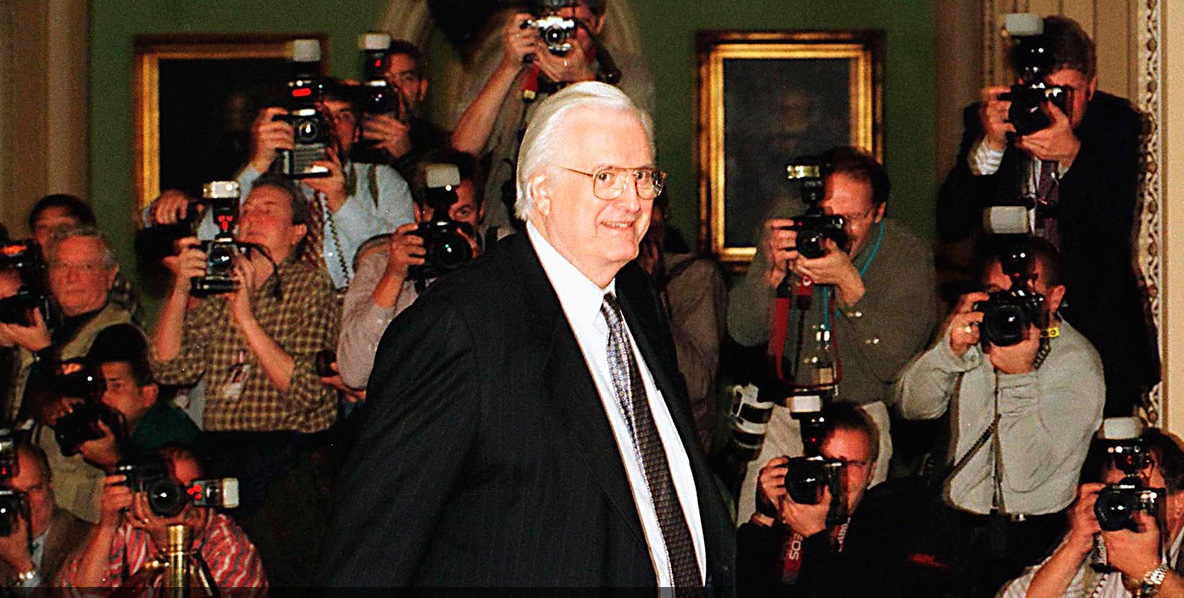
September 18, 2026
The Washington Stand
World News
A Catholic couple in Massachusetts had their daughter taken away by the state under the guise of child abuse after refusing to affirm her so-called transgender identity. In 2024, the 15-year-old child was removed from the home of Joseph and Arlene Kutzko after they say she was secretly socially “transitioned” at Algonquin Regional High School. Now, they’re fighting to get her back before she is medically “transitioned” on high-dose testosterone.
“Here, a public school is ‘stuck on stupid’ by engaging in the willful and dehumanizing practice of destroying both family and child. This school should be closed permanently,” Walt Heyer, senior fellow at Family Research Council, told The Washington Stand. “The school abused the child emotionally and psychologically, causing lifelong damage. My life was destroyed by the trans insanity. Stop the madness.”
Fox News reported that a permanent restraining order was issued against the family, and the Department of Children and Families (DCF) cut off the Kutzkos’ contact with their daughter, Sophie, when they refused to refer to her by male pronouns. Fox also reported that the Kutzkos say DCF has “housed their daughter in a boys’ dormitory, stripped away her Catholic faith by denying her Sunday Mass, and put her on birth control and psychiatric drugs.”
“In Massachusetts today, a sizable portion of government and the population will call you a good mom if you violently strangle your own three kids to death but will take custody of your teenage daughter away from you if you don’t want her to be castrated & mutilated by the gender lobby. Let that sink in,” Daily Wire personality Isabel Brown posted on X Monday.
The Kutzkos appeared on the Fox News “Lighthouse Faith” podcast hosted by Religion Correspondent Lauren Green to share about the dire situation over the weekend, alongside their attorney Vernadette Broyles. “The Northborough-Southborough public schools and their counseling practices exposed our daughter to teachings on LGBTQ [ideology] and topics that conflict with our Catholic beliefs about human dignity, creation as male and female in Catholic teaching,” Joseph Kutzko said.
He continued, “[O]ur daughter had been placed in counseling with sessions at Algonquin Regional High School [with] school counselor … Denise Brienze, without our knowledge or consent. [W]e were told she was simply staying after school for extra math help.”
The Kutzkos say that they have not been able to have contact with their daughter since January 2025. “I even begged them [to allow me] just to hug her or kiss her. They say they can’t. They will not allow it,” Arlene Kutzko explained.
Just months before Sophie was taken from them, she wrote her dad a heartfelt birthday card. In October of 2024, her words to her father said, “Without you, I would have nothing. So wholeheartedly, fully, sincerely. I love you with no end,” Joseph read during an appearance on “America’s Newsroom” with Bill Hemmer and Dana Perino.
The Kutzkos explained that Sophie grew up loving church. “She led the parish in rosary before mass, and she was so faithful — everybody in the church knew it — that she was given a special dispensation to be confirmed early. So, one year early, she was allowed to make her confirmation.”
But at age 15, Sophie started experiencing some inner turmoil. Next thing they knew, the Kutzkos were losing custody of their daughter. They had no idea what had been going on at the school.
“The most important thing is to bring her back to our family. But a shorter-term goal is to prevent them from giving her testosterone,” Joseph Kutzko reiterated. Boyer explained that under Massachusetts state law, DCF could administer the hormones to Sophie without her parents’ permission even though she is still a minor.
“We are actively fighting in court to keep them from really poisoning this young lady with testosterone that would have the capacity to cause her to become potentially infertile, would harm her cardiovascular system, and would have a number of irreversible effects and harms to her body,” Boyer lamented. She added that DCF is hoping to move forward with giving Sophie the testosterone.
Time may be running out, but the Kutzkos are actively working to bring their daughter home. “We love her. We love her. We miss her,” Joseph Kutzko wanted people to know.
This article was originally written by Quinn Delamater and published on The Washington Stand. For more content like this, visit Real Life Network.
25 min
Massachusetts Takes Daughter from Catholic Parents for Refusing to Affirm Trans Identity

September 16, 2026
The Washington Stand
Entertainment & Lifestyle
Screens are part of modern family life. Children use them for school, entertainment, communication, creativity, and even Bible study. The question for Christian parents is no longer simply whether children should have screen time.
A more important question is: What is that screen time forming in them?
Every day, children are absorbing stories about what matters, what makes someone valuable, what relationships should look like, how problems should be solved, and what is ultimately worth pursuing. Some of those messages are obvious. Others are woven so naturally into entertainment that children may absorb them without recognizing them as messages at all.
For Christian parents, managing screen time therefore involves more than counting minutes. It means considering how media fits into the much larger work of spiritual formation.
Children Are Always Being Formed
Soul formation doesn’t happen only during family devotions or Sunday school.
Children are constantly developing beliefs, habits, desires, and assumptions about life. Parents, teachers, friends, churches, books, music, social media, and entertainment all contribute to that process.
Jesus said, “For where your treasure is, there your heart will be also” (Matthew 6:21 NKJV). What consistently receives a person’s attention often begins to shape that person’s affections.
That makes attention an important part of parenting.
If a child spends a few minutes reading Scripture but several hours each day immersed in entertainment, games, videos, and social media, parents should at least consider which voices are receiving the greatest opportunity to influence that child.
Screen Time Is About More Than Minutes
Much of the conversation surrounding children and technology focuses on quantity: How many hours are too many?
That can certainly be useful. Families need boundaries, and unlimited access to screens can crowd out sleep, physical activity, responsibilities, relationships, church participation, and time outside.
But two children can spend the same amount of time watching screens and have very different experiences.
An hour spent watching random short-form videos isn’t the same as an hour spent watching a meaningful story with the family. A Bible program isn’t equivalent to a violent video game. A documentary that leads to an hour-long family conversation isn’t necessarily comparable to mindless scrolling.
Christian parents can therefore ask two questions:
How much is my child watching?
And just as importantly:
What is my child watching?
Entertainment Teaches Even When It Isn’t Trying To
Stories carry values.
They teach viewers which characters should be admired and which should be ridiculed. They show what produces happiness, what makes someone successful, what families look like, how authority should be treated, and how people respond when something goes wrong.
Sometimes those values align with Scripture. Sometimes they don’t.
That doesn’t mean Christians can only watch explicitly Christian programs. It does mean parents should recognize that entertainment is rarely worldview-neutral.
An animated show can communicate ideas about identity. A sitcom can normalize particular attitudes toward marriage or parents. A superhero movie can raise questions about justice, sacrifice, and power. Even comedy reveals something about what a culture considers worthy of celebration or ridicule.
Helping children identify those messages is an important part of discipleship.
Christian Media Can Reinforce What Parents Are Teaching
One way parents can become more intentional about screen time is by adding content that supports the beliefs and values being taught at home.
For younger children, Superbook brings biblical stories to life through animation, while iBible presents the biblical narrative in an accessible visual format. In Depth Apologetics for Kids can help children begin thinking about why Christians believe what they believe.
Older children and teens may benefit from programs that tackle larger worldview questions. The Creation Today Show explores creation, science, and apologetics, while LifeWise Academy content can encourage conversations about Bible education and living out Christian faith in the broader culture.
Sometimes even very short content can be useful. Genesis Science Minute with David Rives delivers a creation and science insight in just 60 seconds, giving parents an easy way to introduce a topic that can continue around the dinner table or in the car.
The point isn’t to replace every form of entertainment with a sermon. It’s to make sure some of the voices entering the home are intentionally reinforcing biblical truth.
Watching Together Changes the Experience
One of the simplest ways parents can make screen time more formative is to participate.
Watching together gives parents opportunities to notice what their children are seeing and ask questions afterward.
- Why did that character make that decision?
- Was it right?
- What could the person have done differently?
- Does that idea agree with Scripture?
- What would following Jesus look like in that situation?
These conversations do something parental controls cannot. They teach children discernment.
Eventually, parents won’t choose every movie, video, or social media post their children encounter. Children need more than a list of prohibited titles. They need the ability to recognize truth and error for themselves.
Shared viewing provides a low-pressure place to practice.
Don’t Let Screens Crowd Out the Things That Form Faith
Even excellent Christian media has limits.
Watching a Bible program isn’t the same as reading Scripture. Streaming a church service isn’t the same as belonging to a local church. Listening to Christian conversations isn’t a substitute for talking with parents, mentors, pastors, and other believers.
Christian media should support those relationships and practices, not replace them.
Children need time to pray. They need unhurried conversations with parents. They need friendships. They need church. They need service, play, reading, outdoor activity, boredom, imagination, and face-to-face interaction.
Sometimes the most spiritually healthy decision regarding a screen is simply to turn it off.
Parents’ Screen Habits Matter Too
Children notice what adults do.
A parent can establish strict limits for children while spending every spare moment checking a phone. That contradiction can communicate more than the rule itself.
Parents can model healthier habits by putting devices away during meals, choosing programming intentionally, avoiding endless scrolling, talking about why certain shows are or aren’t appropriate, and occasionally choosing something the whole family can watch together.
It also helps children understand that media discernment isn’t punishment.
It’s something Christians practice because what occupies the heart and mind matters.
Choose Media That Serves Your Family
The goal of Christian parenting isn’t to create children who have never encountered a questionable idea. Eventually, they will.
The deeper goal is to raise young people who know Scripture, love Christ, recognize truth, understand the beliefs shaping the culture around them, and have learned how to make wise choices.
Media can either make that job harder or help support it.
Real Life Network gives Christian families another option by offering free, biblically curated programming across children’s shows, Bible teaching, apologetics, documentaries, family content, and more.
Parents still have the responsibility to decide what fits their children and their household. But instead of spending every evening filtering an enormous mainstream library, they can begin with content created or selected to support a biblical worldview.
Screen time is ultimately only one part of childhood. Yet because screens occupy so much attention in modern life, they deserve thoughtful consideration.
The question isn’t simply, How long have they been watching?
For Christian parents, an even better question may be: Who are they becoming while they watch?
Explore free Christian kids’ programs, family shows, Bible teaching, apologetics, and more on Real Life Network.
25 min
Screen Time Versus Soul Formation: What Parents Need to Know
.jpg)
September 14, 2026
Real Life Network
World News
The relentless hold that online pornography has on American society is continuing unabated, with limited public effort to contain or reduce it. Surveys show that porn use is almost as widespread among practicing Christians as it is in the general public. Even as age verification laws have spread throughout the country, a lingering question remains: could an internet service provider (ISP) filtration model implemented in the U.K. help lower porn consumption in the U.S.?
With the universal adoption of internet-enabled phones has come the reality that smut is now consumed as easily and privately as viewing a text. AddictionHelp.com estimates that an astounding 95% of porn traffic is viewed on phones, with just 5% of traffic viewed on desktops. This may help explain why porn use is so rampant among younger generations of adults aged 18-35 in America, with a stunning 87% of men and 28% of women viewing it at least weekly. Porn is so omnipresent that the vast majority (70%) of males under 18 have viewed porn, along with 40% of minor females. Fully half of teens under 15 have also viewed online obscenity.
Perhaps most distressing for the church is that even the majority of practicing Christians are consuming porn. According to a 2024 report from Barna and Pure Desire, 54% of those who say “faith is important to them and have attended church in the last month” sometimes view porn, compared to 61% of all U.S. adults.
All of this consumption is taking place on human beings who are being sexually abused and coerced into being filmed. One study found that all porn subjects were coerced to participate in being filmed in some way, with 96% of them being victims of sexual abuse as children.
The effects of porn use on consumers are also contributing to a spiraling mental health crisis in the U.S. Research shows that habitual consumption causes increased anxiety and depression, emotional numbness and relationship strain, impaired focus and productivity, and increased isolation and loneliness, not to mention increased sexual dysfunction.
The immense damage that porn has inflicted on public health has led to a large swath of U.S. states enacting laws that require porn sites to verify the age of potential users before allowing them website access. Since 2023, 25 states have passed such laws. While human rights advocates have rightly celebrated these efforts at reducing minors’ consumption of porn, subsequent studies have found that the laws have done little to mitigate overall porn use. One study found that the laws’ effect induced a 10% reduction in time spent on porn sites, but “Many users appear to have circumvented restrictions with VPNs [virtual private networks] or shifted to noncompliant sites that did not verify age.”
Another way that countries like the U.K. are attempting to tackle the smut problem is by requiring ISPs to offer internet services that filter out porn sites. In 2011, the U.K. government announced an agreement with the country’s four largest ISPs in which their default internet service would be free of porn sites, requiring subscribers to “opt in” to an unfiltered service if they wanted access to smut. ISPs began implementing the policy in 2013. But subsequent reports revealed that the vast majority of British users opted out of the service, showing that the model has likely had a negligible effect on lessening porn consumption in the country.
Still, the model remains untried in the U.S., where many parents would likely choose to curtail porn at its source instead of having to navigate third-party filters to protect their children. However, experts like Benjamin Bull, who serves as general counsel for the National Center on Sexual Exploitation, say that the ISP filtration model may not stand up to legal scrutiny if it were enacted in the U.S.
“While we admire the U.K. model for blocking pornography unless users opt out, I fear the First Amendment to the United States Constitution would likely make such a law in this country be held unconstitutional,” he told The Washington Stand. “Although pornography found by a court to be legally ‘obscene’ has no constitutional protection, there is a presumption of constitutional protection until such a ruling occurs. Our Supreme Court would likely strike down the U.K. model as a ‘prior restraint’ on presumptively protected expression and therefore a violation of the First Amendment.”
Bull continued, “However, in the most recent term of our Supreme Court, the court upheld a Texas law that prohibits dissemination of pornography to minors unless the online platform first obtains confirmation that the recipient is 18 years of age or older. In other words, age verification is now a requirement for online dissemination of pornography in Texas and several other states that have adopted this law. The reason is that while pornography is presumptively protected for adults, it has little, if any, protection for minors. Because of a ‘compelling’ governmental interest in protecting children, the Supreme Court held that the burden of determining that the recipient is an adult prior to dissemination passes constitutional muster.”
“This is much weaker than the U.K. model, and our Supreme Court may not have reached this decision had the U.K. not been a leader in curtailing unlimited access to pornography, which social scientists have concluded has a corrosive and negative effect on society in so many ways,” he added.
This article was written by Dan Hart and originally published on The Washington Stand. For more content like this, visit Real Life Network.
25 min
Internet Service Providers in the U.K. Have a Porn Opt-Out Option. Why Doesn’t America?

September 1, 2026
The Washington Stand
World News
America is having more than a political debate. It is having a debate about what kind of country it will hand to the next generation. From abortion and delayed family formation to declining academic standards, distrust in public health, and the growing influence of democratic socialism, seemingly unrelated headlines point toward a common question: What values are shaping America's future? At Real Life Network, these cultural questions are examined through a biblical worldview, while The Daniel Cohen Show challenges viewers to look beyond the headline and consider what today's decisions could mean tomorrow.
When Life Becomes a Matter of Convenience
Few issues reveal America's competing views of human life more clearly than abortion.
Recent changes to Massachusetts abortion law became a focal point of the discussion. Supporters have characterized the changes as strengthening reproductive protections, particularly for families facing devastating circumstances late in pregnancy. The argument presented on the show, however, is that removing specific statutory criteria and relying more heavily on a physician's professional judgment raises serious questions about protections for unborn children later in pregnancy.
That debate becomes especially striking when considered alongside modern neonatal medicine. Hospitals routinely devote extraordinary resources to saving premature babies. Physicians, nurses, and parents fight for children born months before their due dates, carefully monitoring every ounce of growth and every sign of progress.
For Christians, the value of those children does not depend on whether they are wanted, healthy, convenient, or capable of surviving without assistance. Human worth begins with the reality that every person is made in the image of God.
A culture cannot consistently defend human dignity if the value of a human life changes according to circumstances, location, or whether that life is wanted.
The conversation about children extends beyond abortion. Alexandria Ocasio-Cortez's public discussion of freezing her eggs prompted another debate about marriage, motherhood, career, and the cultural message surrounding delayed childbearing. The personal circumstances of any individual remain their own, but the broader cultural question is worth examining.
Modern society often tells young adults that family can be postponed while education, career, financial security, and personal achievement take priority. Technology may provide additional options, but it cannot eliminate every biological reality or guarantee future outcomes.
The Christian vision offers something different. Children are not obstacles to self-fulfillment. Marriage and family are not consolation prizes after professional goals have been accomplished. Scripture consistently presents children as a blessing and family as one of God's fundamental institutions.
That does not minimize the genuine heartbreak of infertility or prescribe an identical timeline for every person. It does challenge a culture that increasingly treats fertility as another part of life to be engineered around personal ambition.
What Happened to Truth and Excellence?
The same question of what America is handing the next generation reaches into education.
Thousands of University of California faculty members have reportedly called for reconsideration of the system's test-free admissions policy amid concerns about incoming students' mathematical preparation. The episode highlighted reports of substantial growth in the number of students arriving at UC campuses without high-school-level math proficiency.
Whatever role standardized testing ultimately plays in admissions, the larger lesson is difficult to ignore: lowering or removing a measurement does not automatically solve the underlying inequality.
Students deserve compassion and opportunity. They also deserve honesty.
Real education prepares young people to confront difficult standards, not simply removes the standards that reveal where preparation has failed.
The concern goes beyond mathematics. The program also examined course offerings at Arizona State University involving witchcraft, magic, and the occult, contrasting those offerings with the university's limited coursework specifically devoted to Christianity. The point was not that universities should prohibit the academic study of other beliefs. Universities should be places where competing ideas can be seriously examined.
The question is whether Christianity receives the same serious intellectual consideration in institutions that often pride themselves on diversity of thought.
Ideas never exist in a vacuum. When biblical Christianity disappears from education and public life, the resulting space does not remain philosophically neutral. Another understanding of humanity, morality, identity, and truth eventually takes its place.
Parents should therefore pay attention not only to whether their children earn degrees, but to what they are actually learning. A beautifully decorated dorm room means very little if students leave college academically unprepared and spiritually confused.
A Crisis of Trust and a Battle of Worldviews
Few institutions illustrate America's crisis of trust more clearly than public health.
The program revisited Anthony Fauci's pandemic-era statements and discussed recently publicized communications concerning COVID-19 vaccination and pregnancy. The episode argued that private discussions about possible risks deserve scrutiny when compared with the confident public assurances Americans heard during the pandemic. Claims about miscarriage rates and the meaning of those communications remain matters that require careful evaluation of the underlying evidence rather than conclusions drawn from isolated messages.
That distinction matters because public trust is difficult to rebuild once it is lost.
Scientific institutions should be able to acknowledge uncertainty. Officials should be willing to correct themselves when evidence changes. Americans should be able to ask difficult questions without immediately being treated as enemies of science.
The goal should not be replacing blind trust in government with blind distrust of government. It should be restoring a culture in which evidence can be examined openly and authorities are held accountable for what they tell the public.
That need for discernment extends into politics.
The program concluded by examining statements from leaders associated with the Democratic Socialists of America, including comments about the October 7 Hamas attack and the organization's position on policing and incarceration. Those comments were presented as evidence of a broader ideological movement that deserves far more scrutiny from American voters.
Elections matter because ideas have consequences. Political philosophies eventually become policies, and policies eventually affect families, neighborhoods, schools, churches, and communities.
Christians cannot afford to evaluate those ideas merely by party labels or campaign personalities. Every worldview makes assumptions about human nature, justice, authority, freedom, family, and morality. Those assumptions must be examined against Scripture.
The most important question is not whether an idea sounds compassionate or progressive, but whether it is true and whether its consequences honor the God-given dignity of human beings.
That requires Christians to remain engaged rather than retreat from difficult cultural conversations. It requires knowing Scripture, examining evidence, voting thoughtfully, raising children with conviction, and refusing to surrender truth for cultural acceptance.
The stories will change. The political candidates will change. Today's controversy will eventually be replaced by tomorrow's headline. But the underlying battle over truth, human dignity, family, freedom, and the next generation will remain.
Christians therefore need more than outrage at what is happening around them. They need discernment about why it is happening and courage to respond faithfully. Real Life Network provides free, biblically grounded programming designed to help families navigate those questions, including The Daniel Cohen Show, where today's cultural and political headlines are examined through the enduring truth of a biblical worldview.
25 min
America’s Next Generation Is Paying the Price
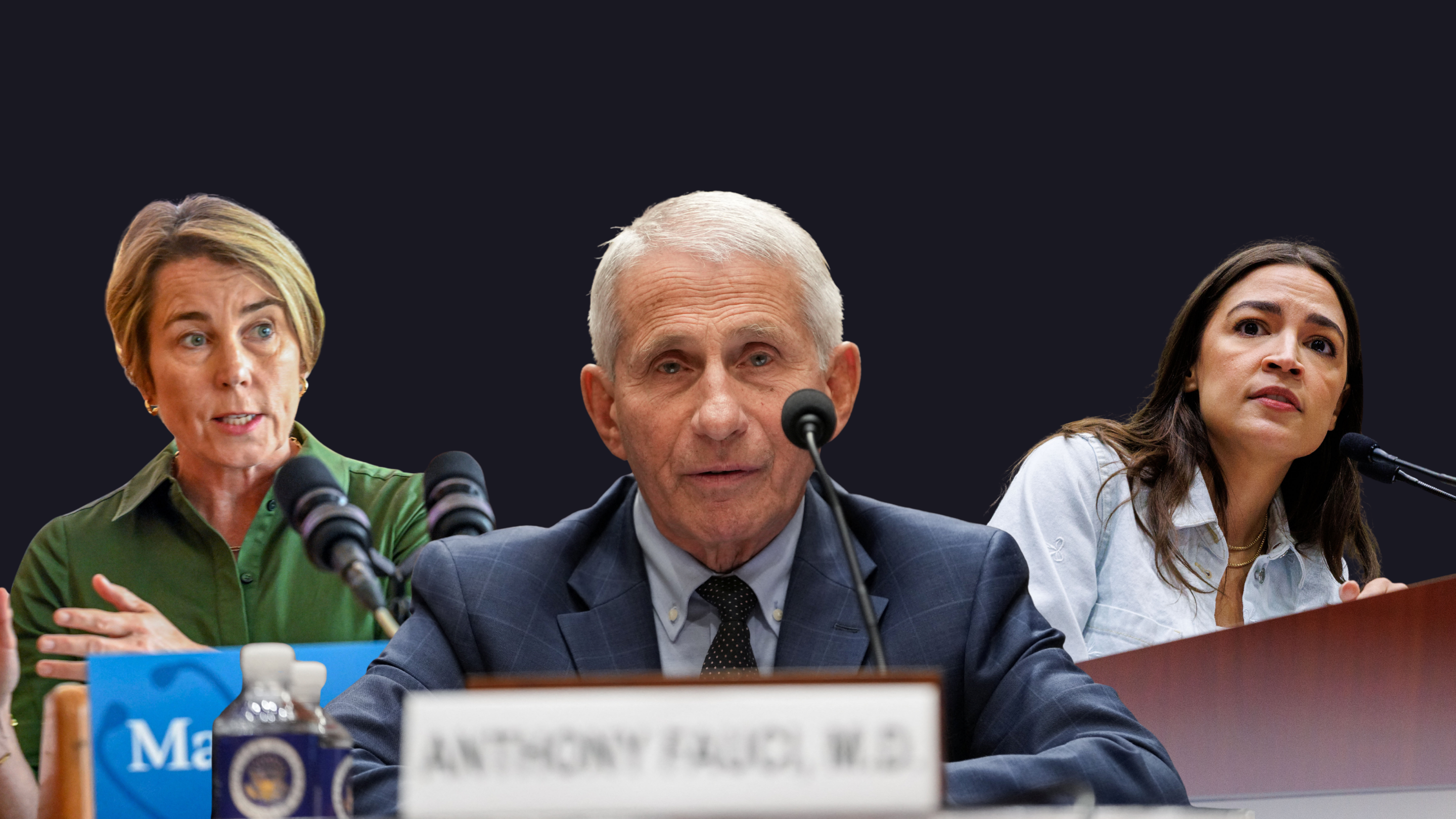
August 13, 2026
Daniel Cohen
World News
Americans have been so busy fighting against radical gender ideology and critical race theory in schools that one of the Left’s favorite ways to undermine parents has fallen under the radar. But the Trump administration hasn’t lost sight of graphic sex education, and parents everywhere should be grateful for it. In a very underreported move, the president’s team went on the offensive this summer, zeroing out millions of taxpayer dollars for controversial “Teen Pregnancy Prevention” programs in favor of solid curriculum that emphasizes abstinence and marriage.
The New York Times picked up on the cuts weeks after the fact in a sob story lamenting how caught off guard local nonprofits had been by HHS’s announcement. But frankly, no one should be surprised. The Trump administration slashed dozens of grants like this in its first term, arguing — rightly — that they only existed to sexualize children, not equip them to make positive and healthy choices. A whopping 53 programs ended up on the chopping block, saving Americans $67 million in what the president’s budget called “radical leftist ideology.” If anything, the administration argued, the Biden- and Obama-era sex ed models have only “normalize[ed] sexual activity for minors.”
Thanks to liberal ideologues masquerading as health experts, activists like Planned Parenthood have had unlimited access to America’s classrooms, knowing if they hook kids on sex, they’re grooming the next generation of abortion customers. It’s been a great down payment on future business — until now. The Office of the Assistant Secretary for Health (OASH) made it clear that the department is under new management where all of this is concerned, posting a list of priorities that should relieve every sane parent in America.
First of all, the agency vows to ensure that adolescent program materials are “age-appropriate” and “do not promote harmful ideologies, such as gender ideology and discriminatory equity ideology. OASH will focus on programs that do not promote material that depicts, describes, exposes or presents obscene, indecent, or sexually explicit content,” the document notes, “including content that encourages, normalizes or promotes sexual activity for minors. OASH will prioritize OASH programs and funding that are in compliance with these priorities and applicable law.”
Second, OASH promises to defend parental rights “to the fullest extent of its authority under the law … including parents’ right to protect their children from exposure to content that burdens the exercise of their religious beliefs.”
Under this new criteria, NYT complains, anyone applying for taxpayer dollars “must teach abstinence,” also known as sexual risk avoidance, “as the only means to prevent teen pregnancy. Courses must stress the importance of marriage and procreation and instruct young people how to safeguard their fertility. They make scant reference to preventing sexually transmitted infections and virtually none to lesbian, gay and transgender sexuality.”
As FRC’s Quena González pointed out to The Washington Stand, “The fact that some professional sex ed providers who receive millions of dollars in federal funds are complaining that these priorities are now required to continue receiving taxpayer dollars should alarm parents and enrage taxpayers. We shouldn’t be allowing, much less paying for, schools to tell students, ‘We know you’re going to experiment, wink wink, so here’s how to derive the most sexual pleasure from underage sex.’”
González applauded the overhaul as an overdue change to the dangerous status quo. “Insisting that taxpayers pay adults to teach middle schoolers — typically 11-14 years old — about ‘sexual consent,’ pleasurable condom use, or how adolescent girls can use intrauterine devices and implants to avoid pregnancy, is just plain creepy,” he said. “Kids need to be taught that sex is a wonderful gift and a powerful expression of adult love when it is exercised within the safety of a loving marriage covenant. Sex isn’t a toy, and the harms of offering it to minors are well documented and not really debated; studies show that delaying sexual contact until marriage increases the chances of a stable marriage and decreases the chance of living in poverty.”
Valerie Huber, who’s spent decades fighting for this kind of principled approach to sex ed, had one reaction to the administration’s pivot: relief. “Mostly for the young people,” the president of The Institute for Women’s Health told TWS. “For years, sexual risk avoidance had to justify itself while the alternative was funded as though its results were settled. That was never a research question. It was a worldview question dressed up as one.” Now, thanks to Trump, “risk avoidance is being treated as a legitimate public health goal for adolescents, the way it already is for every other youth risk behavior. We do not teach teenagers to smoke carefully. We tell them the truth about risk, and we help them stay at no risk or move from high risk to low risk to no risk,” she emphasized. “Sexual health is the one place we abandoned that model, but now HHS is being consistent across all youth risk behaviors. Bravo!”
Huber looked back over the last several years, lamenting the damage that the Left’s “if-it-feels-good-do-it” message has done. “When adults in authority signal that sexual activity is expected of a 14-year-old, that is not neutral information,” she insisted. “It is permission, and for many students it is pressure.” Under Obama and Biden, she noted, “These programs routinely positioned outside providers, including organizations whose business model depends on abortion, as the trusted adult in a young person’s life — and treated parents as an obstacle to be managed. A curriculum that teaches a 15-year-old how to obtain services without telling her mother is not a health program,” Valerie argued.
With the exception of Trump’s first term, “Students have been offered risk reduction at best and rarely offered risk avoidance,” Huber stressed, “which is the only approach that eliminates risk rather than managing it.”
Although teen pregnancies have dropped over time, she acknowledges, it was a hollow victory. “We counted births. We counted birth control. We did not count infections, we did not count coercion, and we did not measure what happens when pregnancy prevention becomes a substitute for holistic health and thriving for young people,” Valerie said. “We called it a win. In those same years, the emotional, social, intellectual, and spiritual health of American adolescents all declined. If your scorecard shows success while the young people on it are falling apart, you are measuring the wrong thing.”
Of course, the nonprofits who’ve been suddenly cut off from this federal gravy train are complaining that this creates an “existential dilemma” for sex ed. Some, the Times reports, are even suing HHS over the new requirements. But the reality is, there’s no “right” to taxpayer dollars — especially not for an indoctrination scheme that’s only exacerbating the problems they claim to solve.
What’s more, America needs to stop believing that young people can only meet the low bars we set. “Hand a young person a high standard and tell them you believe they can meet it, and most of them rise to it,” Huber underscored. “What they resent instantly is the adult who tells them they cannot be expected to control themselves. They hear that for exactly what it is, which is a low opinion of them.” The Left’s model assumes “every teenager is sexually active,” she shook her head. “Most high school students are not. … No one argues that because some teenagers will use drugs, prevention is unrealistic and we should teach safer use instead. We hold the optimal health standard, and we surround it with skills, support, and honesty about risk.”
To those who say the approach isn’t proven, Dr. Michelle Cretella strongly disagrees. “A rigorous review by the Institute for Research demonstrates that sexual risk avoidance education (SRAE) holds great promise. It aligns with the primary public health principle acknowledged by the CDC: abstinence is the only 100% effective way to prevent STDs and pregnancy, as condoms cannot guarantee absolute protection.” Unlike the Planned Parenthood-style programs, “effective SRAE is medically accurate,” she told TWS, citing an article she just authored for an online medical journal. It “discusses condoms and contraceptives and helps students commit to abstinence without decreasing contraceptive use among those who are already sexually active.”
At the end of the day, our schools were never meant to be a substitute for moms and dads, who have the ultimate responsibility to raise their children in a way that reflects their values. It’s not the job of teachers or outside “experts” to contradict those beliefs or commandeer a parent’s authority on topics that, in all honesty, don’t belong in classrooms in the first place. Now, instead of shipping off tens of millions of dollars to graphic programs that double as LGBT recruiting programs and abortion infomercials, the president is letting research, parents, and common sense dictate how America approaches sex ed. And we should all be thankful for it!
This article was originally written by Suzanne Bowdey and published on The Washington Stand. For more content like this, visit Real Life Network.
25 min
Trump Defunds the Left’s Graphic Sex Ed in Favor of Lessons on Marriage, Family

August 3, 2026
The Washington Stand
World News
Pride Month 2026 began with some bracing news for the LGBTQIA+ movement. According to Gallup’s latest annual survey, public support for same-sex marriage, the morality of homosexual conduct, and transgenderism has declined significantly.
Support for same-sex marriage has fallen six percentage points from its high point in 2022 and 2023. The percentage of Americans who believe same-sex sexual behavior is morally acceptable has dropped to 62%, its lowest level since 2016, the year after the Supreme Court’s decision in Obergefell v. Hodges forced states to recognize same-sex marriages. The most dramatic shift, however, has come on transgenderism. The percentage of Americans who view attempting to change one’s sex as morally acceptable has declined eight percentage points since 2021 and now stands at just 38%.
Why is this happening? After all, major social changes have historically become more accepted over time, not less. Americans are increasingly reconsidering what they were told because they have now lived with the results. The experiment is no longer theoretical. It has become personal.
Take interracial marriage. In 1965, 48% of Americans favored state laws banning interracial marriage. Two years later, the Supreme Court unanimously ruled in Loving v. Virginia that such laws were unconstitutional because they amounted to “invidious racial discrimination.” While controversial in its day, that decision did not redefine the God-given meaning of marriage. Rather, it affirmed the complementarian nature of marriage. As Americans witnessed the results, public acceptance steadily grew. Today, according to Gallup, support for interracial marriage has reached a record high of 94%.
Clearly, that is not what has happened with same-sex marriage and the broader sexual ideology promoted during Pride Month.
Those of us who fought to preserve the natural and biblical understanding of marriage were often dismissed when we warned that redefining marriage would have consequences reaching far beyond marriage licenses. I remember having a discussion over lunch with the staff of a CNN primetime program, when one of the producers, who was in a same-sex relationship, asked me, “How does my relationship affect your marriage?”
“It doesn’t affect my marriage,” I replied. “But it will affect our culture. It will affect what my children are taught in school. It will normalize something that God’s word teaches is contrary to His design.”
That was always the point. The debate was never about its impact on my marriage. It was about the impact it would have in our schools, our laws, our institutions, and ultimately in the lives of the next generation.
Time could have proved those concerns unfounded. The promise of “marriage equality” was that it was simply about allowing committed same-sex couples to formalize their relationships. Americans were assured that nothing else would change.
But that is not what happened.
More than a decade after the Supreme Court’s 5-4 decision in Obergefell, Americans are no longer evaluating promises, they are evaluating results. They are changing their minds not because someone crafted a better political argument, but because they have witnessed consequences many were assured would never come.
They have seen:
- Pride parades in major cities where public nudity and sexually explicit displays are celebrated in full view of families and children;
- Major corporations, universities, and professional sports organizations pressuring employees and athletes to affirm an ever-expanding list of sexual identities;
- Schools and entertainment normalizing gender ideology for children while Gallup reports that the percentage of Americans identifying as LGBTQ has more than doubled since 2012;
- A growing commercial surrogacy industry that intentionally deprives children of either their mother, their father, or both;
- Marriage continuing its long decline while birth rates fall to historic lows.
Perhaps nowhere have those consequences become more visible than in the rise of transgender ideology.
The “T” in the LGBTQ acronym has been used to justify policies that would have been unimaginable just a decade ago. Young children are told they can decide whether they are boys or girls because sex is merely “assigned at birth.” Teenagers are given puberty blockers that interrupt normal development. Radical surgeries with lifelong consequences are carried out on minors and young adults. Schools across the country facilitate gender transitions while keeping parents in the dark.
These are not isolated incidents. Americans have also watched biological males enter girls’ locker rooms, compete in girls’ sports, and gain access to spaces long reserved for women. Millions of Americans are now connecting the dots. They are seeing the fruit of abandoning God’s design for marriage, family, and the two sexes. Once marriage is detached from the complementary union of man and woman, it becomes increasingly difficult to explain why mothers and fathers matter, why men and women are different, or why children have a right to both.
As we mark the 11th anniversary of Obergefell, Americans are no longer arguing over predictions; they are judging outcomes. They have watched the promises of marriage redefinition play out in their schools, businesses, athletic competitions, churches, and families.
Increasingly, the American people are rendering their own verdict. The great experiment of redefining marriage and reinventing the family has produced its results. Americans are no longer judging promises — they are judging outcomes. The debate over the Sexual Revolution is no longer about its promises. It is about its consequences.
This article was originally published on The Washington Stand. For more content like this, visit Real Life Network.
25 min
11 Years Later, the Receipts for Same-Sex Marriage Are In
.jpeg)
June 25, 2026
Tony Perkins
World News
When ideologically opposed governments clash, those caught in the middle usually duck for cover like pedestrians in Godzilla’s shadow. Such instinctive acts of self-preservation can produce absurd situations, like the one Colorado Children’s Hospital found itself in on Monday. After the Colorado Supreme Court judicially compelled the hospital to resume providing gender transition hormones to minors, not one doctor in its gender center was willing to shoulder the risk, out of fear of federal consequences.
Through 2025, Colorado Children’s in Aurora was the state’s largest supplier of gender transition hormones to minors, subjecting 257 children to puberty blockers and 549 children to cross-sex hormones last year alone (though it reportedly never carried out transgender surgeries).
But that practice came to an abrupt halt on January 5, when the hospital announced it would no longer provide gender transition hormones to minors. Along with dozens of other hospitals, Colorado Children’s had received a federal subpoena for information on its provision of the drugs to minors, which it is trying to quash in court. The hospital was also concerned about losing access, even temporarily to federal Medicaid funding, which covers roughly half of the hospital’s patients.
But the Rivendell of Californian expats could not long endure any behavior — however rational its basis — that smelled like compliance with the Trump administration, which Colorado treats with all the hatred and disgust of elves for orcs. Left-wing activist groups brought a state lawsuit to force the hospital to reverse its suspension of services, arguing that a state anti-discrimination statute required it.
After losing in a district court, the activists won a favorable (5-2) ruling from the Colorado Supreme Court on May 18. “Any potential harm to the public’s interest in access to healthcare is speculative,” wrote Supreme Court Justice William Hood. In a dissent, Justice Brian Boatright countered that “CHC’s decision to terminate gender-affirming care for minors was plainly not ‘because of’ petitioners’ gender identity, sex or disability. It was a decision driven by the direct threat to the viability of the entire hospital.”
Nevertheless, the pro-transgender position prevailed by a sizable majority, holding that the hospital must provide gender transition hormones as a matter of law and returning the case to a lower court to deliver the final order. Denver District Judge Ericka Englert issued that order on Thursday.
The hospital initially asked the judge to require its opponents to post a $250,000 bond to cover the hospital’s financial risk but withdrew that request the next day. In the final analysis, Judge Englert set the bond at one dollar.
Thus, on Monday, Colorado Children’s announced that it had “reinstated medical gender-affirming care into our scope of services,” to comply with the Colorado courts. But the announcement contained one major twist: not one of the doctors who worked at Colorado Children’s TRUE Center for Gender Diversity was willing to prescribe puberty blockers or cross-sex hormones. Instead, each doctor “has independently decided they will not prescribe or renew gender-affirming medications for patients under age 18,” the hospital said.
How the hospital is complying with the court order without the cooperation of any of the doctors remains unexplained. Are the prescriptions being written by nurses or by doctors from other departments? Or is this the hospital’s way of saying, we wish to comply, but it is out of our hands?
The reason why the doctors could refuse to cooperate with the hospital is that “Children’s Colorado does not employ the medical providers at the TRUE Center or direct their independent clinical decisions,” the hospital explained. Instead, the doctors are all employed by the nearby University of Colorado Anschutz School of Medicine and retain control over their care and prescription decisions.
It turns out that the doctors had each individually reached the same rational conclusion the hospital had reached on January 5 — that the risk of consequences for carrying out gender transition procedures on minors had become greater than the benefit of providing them for an interim period.
“At this time, the medical providers at the TRUE Center have each determined that we will not be prescribing, refilling, or renewing gender-affirming prescriptions for patients under 18 years old,” the doctors said in a statement. “We were each individually forced to make a very difficult decision and none of us reach this decision lightly. Ultimately each of our decisions is driven by the serious risk of federal action that could result in the inability to continue serving and caring for any patients for years into the future.”
The risk of federal action to individual practitioners is not hypothetical. In May, the U.S. Department of Justice reached a settlement with Texas Children’s Hospital after which the hospital paid $10 million to cover fraudulent medical billing, agreed to open a detransitioner clinic, and permanently fired five doctors who had provided gender transition procedures to minors there. Weeks later, the DOJ reached another settlement with the Cleveland Clinic in Ohio that included “a decades-long commitment to not perform or offer sex-rejecting procedures.”
Unsurprisingly, these Colorado doctors had no wish to become the next whitecoats in the DOJ’s crosshairs.
Nor is it surprising that left-wing activists responded with outrage to the news. “Instead of complying with the court order, Children’s Hospital is now claiming that it is not responsible for whether its medical staff discriminates against children based on sex, gender identity, race, religion, or any other protected category,” complained Attorney Paula Greisen, who brought the lawsuit. “The hospital at first sacrificed the children and now they’re throwing the doctors under the bus, basically raising their hands in the air, saying we have no control over these doctors.”
The better question is, who is under which bus? With state penalties looming on one side and federal penalties on the other, the many hospitals and doctors who conducted gender transition procedures merely to make a quick buck are scrambling for the nearest exit.
This has been the hope of pro-children strategists for years. One goal behind state laws protecting minors from gender transition procedures was to increase the risk of liability. For many doctors, this is a far more effective method of deterrence than any amount of state prosecution. Thus, most state laws allowed for private civil suits over a long period of time. Already, this spring, a detransitioner won the first ever malpractice suit for $2 million, even under New York’s pro-transgender laws.
But state laws and individual lawsuits could only slow the runaway semi of transgender medicine one speed bump at a time. It took the might of the federal government — with its massive law enforcement apparatus and control of incentives through Medicaid — to finally pull out a titanium lasso strong enough to halt its momentum mid-career and begin to reel it backward.
It’s a rare day when such positive news washes down from the marijuana-scented slopes of the Rocky Mountains’ majesty. The bizarre situation demonstrates that, even in far-left jurisdictions, there are rational actors who will respond to incentives — if the government sets the incentives properly. It also demonstrates that the Colorado Supreme Court remains far out on the Left fringe, where it would force a hospital to shoulder massive liability against federal wrath in the misguided pursuit of non-discrimination.
This article was originally written by Joshua Arnold and published on The Washington Stand. For more content like this, visit Real Life Network.
25 min
Colorado Doctors Individually Refuse to Practice at Trans Center over Fear of Personal Consequences
.webp)
June 22, 2026
The Washington Stand
World News
The Federal Trade Commission (FTC) and attorneys general in four states filed a lawsuit Wednesday against the World Professional Association for Transgender Health (WPATH), accusing the group of misleading doctors, parents, and children to promote the lucrative business of administering transgender procedures to minors. In a 123-page complaint, the FTC lays out “ten specific unlawful misrepresentations or omissions” by WPATH and seeks “a permanent injunction to prevent future violations.”
“When an organization provides guidance designed to mislead families about the risks, benefits, or medical consensus behind a treatment, it undermines trust in those responsible for providing medical care,” declared FTC Commissioner Mark R. Meador. The FTC was joined in its lawsuit by attorneys general from Alaska, Iowa, Nebraska, and Texas.
The lawsuit is significant because it goes directly to the source of claims undergirding transgender medical practice. In countless other legal battles, pro-transgender activists have invariably cited WPATH as the foremost authority on transgender procedures for minors. Now, the FTC has challenged WPATH itself to prove that its claims, often cited as an expert authority, can hold up in a court of law.
The lawsuit challenged the accuracy of specific claims made by WPATH, as well as omissions in the most recent version of its so-called, unofficial “Standards of Care” (SOC-8):
“(1) WPATH misrepresents that pediatric medical transition is medically necessary to prevent suicide in children who express dissatisfaction with or report distress about their sex traits.
“(2) WPATH misrepresents that pediatric medical transition is effective at preventing suicide in children who express dissatisfaction with or report distress about their sex traits.
“(3) WPATH misrepresents that puberty blockers are fully reversible.
“(4) WPATH misrepresents that cross-sex hormones improve mental health.
“(5) WPATH misrepresents that performing breast amputations on children is safe, effective, and consistently results in better health and quality of life.
“(6) WPATH misrepresents SOC-8 to be the result of unbiased, evidence-based expert consensus.
“(7) WPATH misrepresents that pediatric medical transition is the “standard of care” for children who express dissatisfaction with or report distress about their sex traits.
“(8) WPATH fails in SOC-8 to adequately disclose certain side effects of puberty blockers including hot flashes, lethargy, and cognitive problems.
“(9) WPATH fails in SOC-8 to adequately disclose certain side effects of cross-sex hormones including mood disturbances, vocal pain, pelvic pain, pelvic floor dysfunction, clitoral discomfort, vaginal pain, persistent sexual dysfunction continuing after cessation of use, and erectile pain.
“(10) WPATH fails in SOC-8 to adequately disclose certain side effects of breast amputations including inability to breastfeed, nerve damage, and necrosis of the nipples.”
“WPATH made each of these ten misrepresentations or omissions expressly or by implication,” the complaint declared. “WPATH knew they were false or misleading, and WPATH further knew — and intended — that they would provide WPATH members and other providers of medical transition services with the means to mislead consumers.”
The FTC challenged WPATH’s SOC-8 in detail, alleging that its methodology “does not satisfy accepted medical standards of evidence” for at least four reasons. “WPATH selected authors who had conflicts of interest; WPATH ignored the consensus protocol that SOC-8 purports to follow; WPATH failed to adhere to proper protocols both in evaluating scientific and medical evidence and in making recommendations based on that evidence; and WPATH made material changes to its recommendations in response to external pressure rather than scientific evidence.”
Regarding conflicts of interest, the FTC argued that WPATH selected drafters for SOC-8 who had both “intellectual conflicts of interest” and “financial … conflicts of interest.” The intellectual conflicts of interest stemmed from the fact that its selection criteria required every team leader to be a “longstanding WPATH Full Member in good standing” and a “well recognized advocate for WPATH” — in other words, professionals “who already supported medical transition services.”
The financial conflicts of interest concerned the fact that many authors directly performed and thereby profited from the procedures under review, such as Dr. Marci Bowers. Bowers, the complaint stated, “made more than a million dollars in a single year from transition surgeries but declared it ‘absurd’ to disclose that conflict or attempt to account for it in SOC-8.”
Regarding external pressure, the FTC referenced “the removal of age minimums for pediatric medical transition drugs, surgeries, and services including cross-sex hormones, breast amputations, surgical penis removal, and facial surgery.” This removal came after the Biden administration Department of Health and Human Services asked in 2022 “if the specific ages can be taken out” to combat “the conservative anti trans agenda.” In addition, “According to a WPATH leader, the American Academy of Pediatrics threatened to ‘actively publicly oppose’ SOC-8 if WPATH did not remove the age minimums,” although without “any sound evidence-based argument(s) underpinning” the change it demanded.
“One WPATH committee member acknowledged that it was ‘the most strange experience’ to see WPATH eliminate minimum age recommendations at the ‘last minute’ after internal discussion made clear that ‘nobody [on the committee] wanted to [eliminate] them, and personally not agreeing with the change,’” the complaint stated.
Regarding consensus protocol, the FTC elaborated on the same issue, noting that WPATH failed to strictly follow its own selected “Delphi process” for achieving expert consensus. “At least one WPATH member could not ‘see how we can simply remove something that important from the document — without going through a Delphi — at this final stage of the game.’”
Regarding the quality of evidence, the FTC excoriated WPATH for “a deliberate decision to obfuscate the strength of the evidence supporting WPATH’s recommendations and allow WPATH to overstate the strength of its evidence.” WPATH claimed to use an evidence-rating system called “GRADE,” but it chose not to include the GRADE ratings to make the evidence look stronger than it really was. One draft leader, Dr. Eli Coleman, admitted in 2023, “[a]ll of us are painfully aware that there are many gaps in research to back up our recommendations.”
Yet the SOC-8 authors “knew ‘what we should end up with,’” the complaint alleged, because “SOC-8 authors had prejudged that SOC-8 would ultimately make strong recommendations in favor of pediatric medical transition regardless of whether the quality of the evidence supported such recommendations.” As one author, Dr. Amy Tishelman, said in February 2026, “The sun and the moon existed before we understood anything about why. Lots of things we observe in life, we know to be true, and we don’t understand them.”
The complaint goes on to argue that WPATH failed to “follow the science” in other important respects. For instance, “SOC-8’s authors commissioned systematic reviews of evidence regarding pediatric medical transition from Johns Hopkins University,” according to the complaint. However, “WPATH secured significant control over … they would ultimately be published.” When the reviews “found little to no evidence about children and adolescents,” “WPATH rejected multiple Johns Hopkins manuscripts, causing” the head of the research team “to express frustration that WPATH was ‘trying to restrict our ability to publish.’”
The incident echoes the 2024 controversy involving Dr. Johanna Olson-Kennedy, later head of USPATH (WPATH’s American outpost), who refused to publish the results of a taxpayer-funded study after they contradicted her belief in using puberty blockers for the purpose of gender transition. The complaint referenced another “notable evidentiary exclusion” involving Olson-Kennedy. Although a study she conducted “formed the evidence base of SOC-8,” SOC-8 “did not disclose” that two subjects of the study committed suicide during the observation period or “discuss … how they might undermine SOC-8’s conclusion that pediatric medical transition improved psychological well-being.”
Finally, the complaint alleges that WPATH’s guidelines discourage clinicians from exploring other “numerous potential root causes of a child’s distress about or discomfort with their sex traits,” such as sexual assault or other mental illnesses. Although it acknowledges that such intervening factors do exist, SOC-8 attacks them as “gatekeeping practices” that act as a “barrier to the provision of” transgender procedures.
“Even if WPATH legitimately encouraged clinicians to investigate whether medical transition treatment is appropriate for a given child, SOC-8 offers no genuine method for making such a determination,” the complaint continued. “Indeed, WPATH defines ‘gender incongruence’ as a subjective ‘experience’ that is ‘deeply felt’ by the child. It offers no objective diagnosis criteria for clinicians,” even though “SOC-8 purports to require rigorous diagnostic procedures.” So much for following the science.
These accusations raise an important question: what would motivate the physicians associated with WPATH to venture so far from established science. Beyond the obvious ideological reasons, the complaint focuses on another motive: profit.
“WPATH misrepresents scientific and medical consensus and makes false, deceptive, or unsubstantiated claims regarding pediatric medical transition and related services for a simple reason: WPATH’s members generate significant profit because of the organization’s representations and guidance,” it declared. “Two of the five current members of WPATH’s executive committee are surgeons who specialize in medical transition procedures, and a third member specializes in medical transition procedures for children.”
As a result of WPATH’s non-scientific, profit-motivated guidelines, the complaint continued, children and their families were misled and thereby harmed. “WPATH’s assertions that its recommendations represent evidence-based and “consensus-based expert opinion” give members and other clinicians the means to misrepresent to consumers that the SOC reflects expert scientific consensus,” it argued, “and to repeat the unsubstantiated statements therein when persuading parents and children.”
Whether they visit a family doctor with no specialized training, a gender transition specialist, or an activist center, “children and parents are unlikely to avoid being influenced by WPATH’s deceptive claims and omissions. Indeed, WPATH board member and former president Dr. Marci Bowers claims that ‘the vast majority of mental health providers in the country that [Dr. Bowers is] familiar with follow the WPATH standards of care.’”
“Clinicians begin selling parents and children on medical transition procedures once they arrive at a medical transition provider’s clinic,” the complaint explained. “Sometimes, clinicians make the sale by directly invoking WPATH’s name and providing parents with the SOC or other material containing WPATH’s deceptive claims. Other times, clinicians repeat WPATH’s deceptive claims without attribution. And even without telling parents, clinicians often rely on WPATH’s deceptive claims in making diagnoses and recommending treatment.”
The complaint included numerous examples of WPATH’s malign influence:
- “For example, a pediatric endocrinologist in California told a pediatric patient's mother that he follows the recommendations of WPATH. When the patient’s mother asked for supporting studies and other evidence for medical transition, the doctor sent her a web link directly to WPATH’s SOC-7, which she then read.
- “Boston Children’s Hospital Center for Gender Surgery cited ‘WPATH standards of care’ on its page advertising breast implants for children.
- “One online medical transition clinic asserts that it follows SOC-8 and promises to provide monthly prescriptions for transition services without an in-person visit, covered by major US insurers. It asserts that ‘puberty blockers are fully reversible’ and that ‘children can begin their medical transition with puberty blockers.’
- “Stanford Medicine’s Transgender Surgery team promises that it ‘follows the World Professional Association for Transgender Health (WPATH) guidelines to ensure patients are appropriate surgical candidates.’
- “One 13-year-old girl visited a Dallas, Texas clinic with her parents. A psychologist who has presented at WPATH conferences told the girl’s parents that their daughter needed to undergo medical transition, including cross-sex hormones and breast amputation. When these parents expressed skepticism and asked how the psychologist ‘knew that medical transition would help’ their daughter’s distress, the psychologist ‘answered that WPATH recommended it.’
- “One doctor at a large public university encouraged one 15-year-old patient to read the SOC. The girl, who was later prescribed testosterone and had her breasts amputated, believed based on her interaction with the doctor that WPATH was an official, authoritative medical organization.
- “A nurse, who worked at Texas Children’s Hospital, recalls that a pediatric endocrinologist at that hospital recorded in patient charts that he ‘told parents he was following WPATH’s Standards of Care’ and ‘explained WPATH’s Standards of Care’ to parents. This doctor ‘frequently referenced WPATH’ when communicating with parents.”
“Clinicians emphasize the need for pediatric medical transition by stating or strongly implying that if parents do not consent to medical transition, their children will commit suicide. Some clinicians tell parents that if their children die, the parents will be to blame. Clinicians often ask parents if they would ‘rather have a dead son or a living daughter,’ or vice versa,” the complaint added. “Clinicians make these statements because WPATH represents that medical transition is ‘lifesaving’ and SOC-8 expressly represents that medical transition is ‘medically necessary’ and reduces suicidality, thereby providing clinicians with the rationale that they use to pressure parents into consenting.”
The complaint provided another half dozen examples of this practice.
“Collectively, WPATH’s deceptive statements and material omissions cause parents to worry that their children are in mortal peril and that the only effective solution is to consent to pediatric medical transition,” it stated. “In many cases, the pressure created by WPATH’s unlawful conduct — and the fear it creates — causes parents to purchase pediatric medical transition drugs, surgeries, or services.”
For years, WPATH was cited not only in doctor’s offices but also in state houses. As some 27 states moved to pass legislation protecting minors from the irreversible effects of gender transition procedures, pro-transgender activists always lined up to appeal to WPATH as experts, citing the “scientific consensus” that “gender-affirming care” was “medically necessary” and “life-saving.” But the evidence never lived up to the buzzwords, and now the FTC is taking WPATH to task.
“Children, but especially their parents, must have complete and truthful information when making decisions to purchase medical services. … The complaint filed today reflects that same long-standing mandate: when an entity makes a claim about a medical treatment, the claim must be truthful, evidence-based and not misleading,” declared FTC Chairman Andrew Ferguson. “WPATH … made false and unsubstantiated claims regarding the necessity, effectiveness and safety of puberty blockers, hormones and sex-change surgeries.”
This article was originally written by Joshua Arnold and published on The Washington Stand. For more content like this, visit Real Life Network.
25 min
FTC, States Sue WPATH for Misleading Claims on Transgender Procedures for Minors

June 19, 2026
The Washington Stand
Business & Finance
America does not just have an economic crisis. We have a leadership crisis, a truth crisis, and in many ways, a spiritual crisis. Too many universities have abandoned biblical principles, embraced ideological agendas, and left students burdened with debt while stripping away faith, purpose, and common sense.
That is why my wife, Marnie Freeman, and I were so encouraged during our recent conversation with Claire Foster from Regent University. At a time when many institutions are losing their footing, Regent is doing the opposite, training students to become bold Christian leaders grounded in biblical truth, economic understanding, and servant leadership.
Watch this full episode on Pirate Money Radio, streaming now on the Real Life Network.
Why Christian Education Matters More Than Ever
One of the greatest blessings Marnie and I experienced as parents was watching our children graduate college while keeping both their faith and their values intact. That is becoming increasingly rare in America today.
Too many parents sacrifice financially to send their children to universities that openly undermine biblical truth and traditional values. Some schools that once began with Christian foundations, institutions like Harvard University and Yale University, have drifted so far from their origins that they now often work against the very principles they were founded to uphold.
Regent University was founded in 1977 by Pat Robertson with a very different mission: combining rigorous academics with unwavering biblical truth. According to Dr. Foster, the university’s vision is to develop Christian leaders who can influence every sphere of society — government, business, law, media, education, and beyond. That mission matters now more than ever.
Regent University Is Growing While Other Schools Decline
One of the most remarkable things about Regent is that it is thriving while many universities across America are struggling. Dr. Foster shared that Regent was recently ranked the number one Christian college in America and the number two military-friendly school in the nation. The university has doubled its student body during a period when many colleges are shrinking.
Why? Because families are searching for something deeper than credentials. They want truth, purpose, excellence, and leadership grounded in biblical values.
Regent’s emphasis on excellence, innovation, and integrity stood out immediately when Marnie and I visited the campus in Virginia Beach. The atmosphere felt different. Students were engaged, joyful, intelligent, and deeply rooted in faith.
The campus itself is beautiful, but what impressed us most was the spiritual foundation underneath it all. During chapel services, classroom discussions, and conversations with faculty, it became clear that Regent is intentionally discipling students — not simply preparing them for careers, but preparing them for life.
Watch this full episode on Pirate Money Radio, streaming now on the Real Life Network.
Why Biblical Principles Apply to Economics and Government
At Pirate Money Radio, we often say that God’s principles apply to every area of life, including money, economics, and government. Regent understands that reality.
During our conversation, Dr. Foster spoke about the importance of training leaders who understand biblical stewardship, honest weights and measures, and economic freedom. Those concepts are not separate from faith — they are deeply connected to it.
The Bible speaks extensively about debt, stewardship, honesty, generosity, and justice. Proverbs teaches wisdom about managing resources. Scripture warns about dishonest scales and reckless borrowing. These principles matter because economies rise or fall based on truth.
That is why I was especially encouraged to see Regent expanding its focus on economic education through the Robertson School of Government under the leadership of Michele Bachmann.
Too often, schools of government teach political power without teaching economic truth. Students graduate understanding bureaucracy but not liberty. They learn theories disconnected from biblical wisdom and real-world consequences. That must change.
The Economic War Room at Regent University
One of the greatest honors of my life recently came when Regent University awarded me an honorary Doctor of Science degree during a special ceremony attended by leaders including Ben Carson and Michele Bachmann.
But even more meaningful was Regent’s announcement that it is launching a dedicated Economic War Room within the Robertson School of Government. The purpose of this initiative is to train future leaders who understand economic sovereignty, monetary policy, freedom, and biblical principles. Students will learn how economics impacts liberty, national security, and the future of civilization itself.
This is critically important because economics is often the hidden battlefield behind nearly every major political conflict. Nations are enslaved by debt. Families are crushed by inflation. Governments manipulate currencies and expand control through monetary systems. Yet very few universities teach students how these systems truly work from a biblical worldview.
That is exactly what Regent intends to do.
As Dr. Foster explained, the goal is not simply to preserve ideas from the past. It is to equip the next generation of Christian leaders to defend freedom and apply biblical truth in the real world.
Watch this full episode on Pirate Money Radio, streaming now on the Real Life Network.
America Needs a Great Awakening Again
During the conversation, I shared the story of Benjamin Franklin and the transformation that occurred during America’s founding era. Franklin originally believed human wisdom alone could build a successful society. But after hearing the preaching of George Whitefield during the Great Awakening, Franklin began recognizing the necessity of God’s guidance in government and public life.
That spiritual awakening shaped America’s founding principles in profound ways. Today, America desperately needs another awakening, not merely political reform, but moral and spiritual renewal grounded in biblical truth.
That is why institutions like Regent matter so much. They are preparing students not simply to succeed financially, but to become principled leaders who can strengthen families, communities, churches, businesses, and government.
The Next Generation Gives Me Hope
One of the most encouraging parts of our conversation was hearing Dr. Foster describe what she sees in today’s students.
Despite being raised in a digital culture filled with confusion and distraction, many young people are hungry for truth, meaning, and authenticity. They are searching for something deeper than social media, political activism, or empty ideology. At Regent, students are encountering biblical truth in a way that is transforming their lives.
That gives me hope. America’s future will not be restored through politics alone. It will be restored by raising up men and women who understand God’s truth, apply biblical wisdom, and courageously lead in every sphere of society. That is exactly what Regent University is doing.
Stream Pirate Money Radio on the Real Life Network.
Related Articles
- Biblical Worldview vs Modern Marxism by Kevin Freeman
- A Christian Understanding of Economics by Kevin Freeman
- Biblical Money vs. Modern Currency: What the Bible Really Says by Kevin Freeman
25 min
Equipping GenZ with Excellence

May 30, 2026
Kevin Freeman
World News
In today’s online news, politics, and Christian streaming environment, the battles over socialism, political violence, radical ideology, Israel, faith, and cultural truth are becoming impossible to ignore. On Real Life Network and through The Daniel Cohen Show, viewers are engaging with conversations that connect headlines to a biblical worldview and examine the deeper spiritual forces shaping America and the West. From the tragic shooting at a San Diego mosque to the rise of socialist politics in New York City, from anti-Israel rhetoric and political extremism to surprising moments of bipartisan cooperation involving President Trump and Mark Cuban, these stories reveal a nation wrestling with truth, morality, and identity.
The divide is no longer just political.
It is spiritual, cultural, and deeply moral.
Violence, Radical Ideology, and the Moral Difference the West Must Preserve
The deadly shooting at the Islamic Center of San Diego shocked the nation and immediately reignited debates surrounding political violence, radicalization, and religious extremism. The attack left five people dead, including a security guard credited with preventing even greater loss of life.
Daniel Cohen made one point unmistakably clear.
Violence against innocent people is wrong. Full stop.
That principle matters because moral consistency matters. Conservatives grieve when synagogues are attacked. Christians grieve when churches are bombed. And believers should also grieve when innocent people at a mosque lose their lives.
A society that abandons moral consistency eventually loses its ability to distinguish justice from vengeance.
At the same time, the broader context surrounding radical Islam and anti-Israel extremism cannot be ignored. Cohen referenced the documented ties between individuals connected to the San Diego Islamic Center and two of the 9/11 hijackers, information contained within the official 9/11 Commission Report. He also addressed comments from Imam Taha Hassani following the October 7 Hamas massacre, in which he framed the attacks as justified “resistance.”
That distinction matters deeply.
Criticizing radical ideology is not the same as celebrating violence against innocent people. In fact, the refusal to target civilians is precisely what separates Western moral principles from terrorist ideology.
Israel’s actions following October 7 reflected that distinction as well. Cohen emphasized the extensive warnings issued by the IDF before strikes in Gaza, including text messages, phone calls, and leaflets urging civilians to evacuate targeted areas. No military conflict is without tragedy, but Israel’s efforts to minimize civilian casualties stand in stark contrast to Hamas tactics involving human shields and deliberate attacks against civilians.
For more biblically grounded reporting on Israel, politics, and culture, continue watching on Real Life Network and The Daniel Cohen Show.
Socialism, Dependency, and the Failure of Government Solutions
While San Diego processed tragedy, New York City found itself debating a very different issue. Democratic Socialist mayoral candidate Zoran Mamdani announced plans for additional city-owned grocery stores funded by tens of millions of taxpayer dollars.
The proposal was framed as compassion.
Critics viewed it as economic fantasy.
Daniel Cohen pointed to the collapse of similar city-funded grocery projects in Kansas City, where millions in taxpayer dollars produced empty shelves, mounting crime, financial failure, and eventual closure. The issue is not merely whether government should help struggling communities. It is whether government-run economic systems actually produce sustainable results.
History repeatedly answers that question.
Socialism promises equality and security, but it repeatedly produces dependency, inefficiency, and economic decline.
This concern extends beyond grocery stores. Cohen argued that younger generations increasingly embrace socialism because they have been taught to view capitalism primarily through its failures rather than through its historical success in lifting millions out of poverty.
At the same time, the rise of online political extremism surrounding the murder of UnitedHealthcare CEO Brian Thompson exposed another disturbing trend. Social media users openly celebrated the assassination, praised the accused shooter, and framed violence as justified resistance against wealth and capitalism.
That normalization of hatred reflects something deeper.
When political ideology replaces moral restraint, violence eventually becomes easier to justify.
The cultural consequences become visible quickly. Cities already struggling with crime, addiction, homelessness, and economic instability increasingly double down on policies critics argue helped create those conditions in the first place.
Stay connected to biblically grounded analysis through Real Life Network and The Daniel Cohen Show.
Truth, Cooperation, and the Spiritual Foundation America Cannot Lose
At the same time, the show also highlighted a rare moment of political cooperation. Billionaire entrepreneur Mark Cuban, a longtime Trump critic and supporter of Kamala Harris, appeared alongside President Trump to announce expanded access to lower-cost prescription drugs through Trump Rx and Cost Plus Drugs.
The moment mattered because it demonstrated something increasingly rare in modern politics.
Results over tribalism.
When truth and practical solutions matter more than political branding, people with very different views can still work together for the common good.
For millions of Americans struggling to afford medication, the issue is not ideological. It is deeply personal. Cohen referenced seniors forced to choose between paying for prescriptions or buying food, highlighting why reducing drug costs matters in practical human terms.
The conversation then widened into a broader cultural reflection.
Hollywood outsourcing jobs overseas, growing distrust in institutions, rising political tribalism, and cultural confusion all point back to a deeper spiritual problem. Daniel Cohen referenced comments from Jewish activist Josh Hammer, who argued that societies abandoning objective truth eventually descend into misery, despair, and destruction.
That concern connects directly to Scripture.
The Ten Commandments introduced objective moral boundaries into civilization itself. “Thou shalt not murder” is not a partisan slogan or political opinion. It is a moral command rooted in God’s authority.
Without those boundaries, truth becomes tribal.
And when truth becomes tribal, society eventually loses the ability to distinguish between reality and ideology.
That is why Cohen closed by emphasizing prayer, humility, repentance, and civic engagement. Christians are not called to surrender culture. They are called to engage it with truth, conviction, and moral clarity grounded in Scripture.
In a time where socialism, political violence, radical ideology, and cultural confusion continue colliding across America and the West, discernment matters more than ever. These stories are not disconnected headlines. They reveal a broader battle over morality, truth, and the future direction of society.
Understanding that battle requires more than outrage or political loyalty.
It requires wisdom grounded in biblical truth.
For more biblically grounded reporting connecting today’s headlines to the good news of the gospel, visit Real Life Network and watch The Daniel Cohen Show.
Related Articles
25 min
The San Diego Shooting and New York’s Socialist Experiment
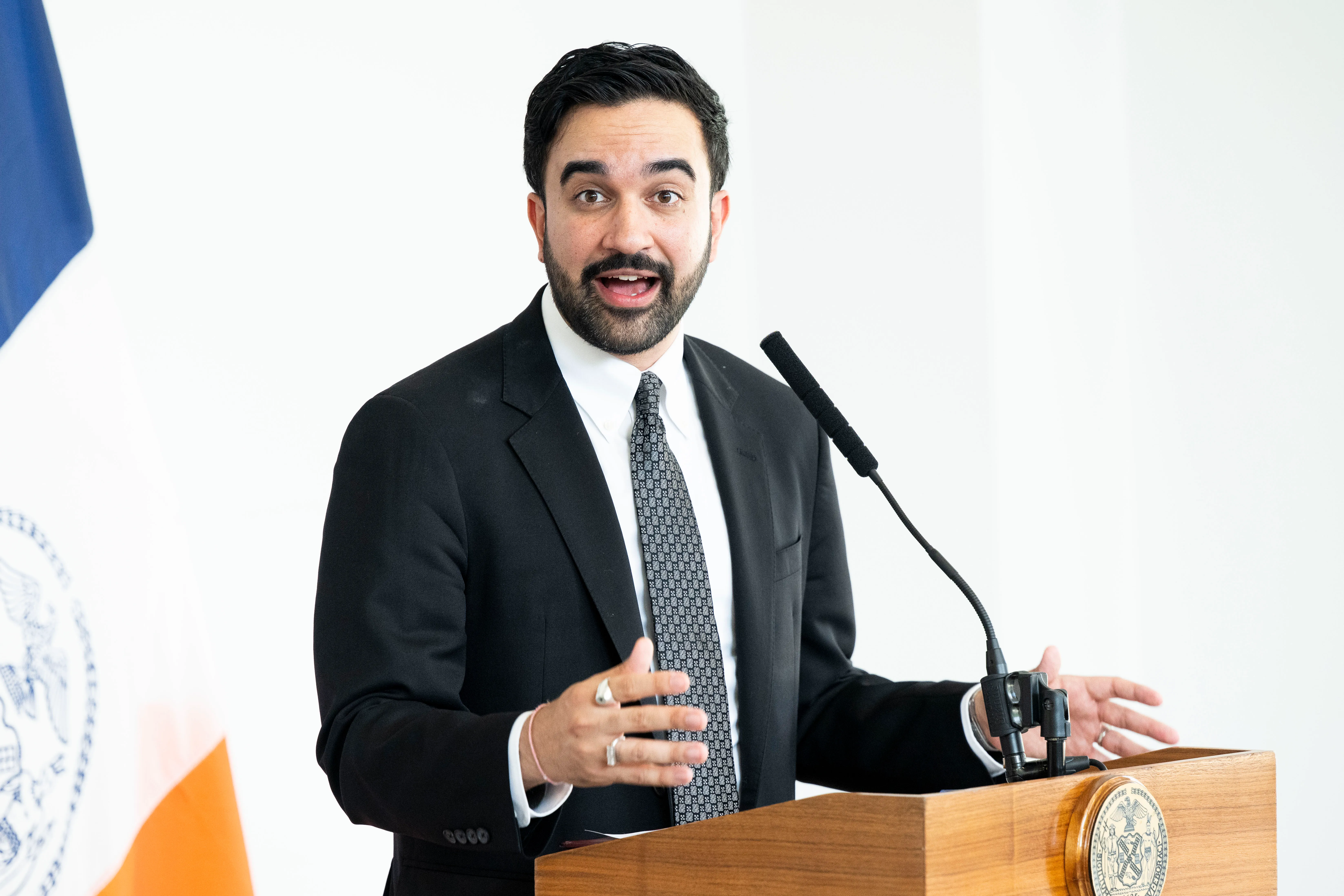
May 22, 2026
Daniel Cohen
Faith & Culture
Humans are lonelier than ever before. Even before the pandemic, almost five out of 10 U.S. adults reported experiences of loneliness. For young adults aged 15-24, time spent in-person with friends has fallen almost 70% from 2003 to 2020, from about two and half hours down to 40 minutes per day. The lack of meaningful interaction comes with a cost. Research finds that a lack of social connections can be as dangerous to our health as smoking 15 cigarettes a day. Humans were designed for community, not for isolation. But the solution is always trickier than it first appears.
In a culture that values independence and autonomy, making time for community seems tangential or even burdensome. For some, the mere thought of a social event depletes their personal energy battery. In a fallen world, relationships are complicated. People can be our best friends, and cruelest enemies. We get burned, withdraw, and then experience loneliness while making little effort to socialize.
Our society subtly reinforces the concept that reality is something to flee or escape; a bad dream to smother underneath a barrage of entertainment, information, or other forms of distraction. With the proliferation of smartphones, unplugging from the current situation and escaping into the digital sphere has never been so easy or so tempting. Additionally, many in-person connection points have now moved to screens. Online college options, virtual training, and remote jobs are increasingly prevalent. That’s not to say that online spaces are somehow bad or should be avoided; rather, with every advantage (think flexibility, cost, and time-savings), there is always a disadvantage (a sense of association without the anchor of relationships).
The issue is that we don’t reinvest the time and resources gained by the virtual world back into in-person relationships and interactions. The data provides the proof. In 2018, Pew Research Center found, “A majority of Americans (59%) say they feel some attachment to their local community, but only 16% say they feel very attached; 41% say they are not too or not at all attached to the community where they live. Adults in urban, suburban and rural areas report nearly identical levels of attachment to their local community.”
Our immediate community often lacks the tailoring, diversity, and ability to fast-forward that the digitalscape so frequently offers. Marketers call this phenomenon fragmentation: the splintering of groups defined by distinct preferences or requirements. When we get used to such customization to our preferences, we naturally grow more isolated from one another as we become increasingly defined by what sets us apart.
But there’s no easy fix. After all, relationships are the result of time, energy, effort, and being authentic about ourselves and with others (not to mention the emotional stakes that come with the drama and messiness of other sinners). But that’s the interesting thing. Redemptive history starts with two people in a garden and reaches its climax as a cultivated city: a sanctified arena when God’s creation and a multitude of people coexist in community. Human flourishing happens in fellowship, not in isolation. And more than ever, Christians need to lead by example.
Brian Brown understands this tension well. He’s the founder and executive director of The Anselm Society, a Colorado-based organization dedicated to a renaissance of the Christian imagination and recapturing the sense of shared community among kingdom-minded creatives. “We live in a culture that has made escapism into a virtue. We’re encouraged by a million cues to be anywhere but here, anyone but who God made us to be,” he remarked to The Washington Stand. “In the face of that, the person who chooses to show up has tremendous power — to see and be seen, to invite others in, to treat the local church and the dinner table as essentials rather than extras. But to do that, we have to dare to see ourselves as God sees us: as beloved bearers of His image.”
As images of God, we reflect him best in our collectiveness and diversity. It’s when the body of Christ comes together in fellowship that we get a more accurate glimpse at the vastness and depth of divine character (Ephesians 4:11-13; 15-16). Through the Messiah’s redemptive work, Christians have the opportunity, indeed the calling, to work towards restoration of the vision.
Despite the digital advances in communication and connection points, people are lonelier than ever before. It’s easy to run with the culture, burying ourselves in the endless mountain of “extra things,” perhaps even attempting to fill our own ache for meaningful connection. There is both pain and reward in pulling our heads out of the mountain and “showing up” in acts of simple relationship-building. “Showing up” doesn’t need to be elaborate, but it needs to be essential and intentional if we are serious about changing the tide of isolation.
In a hurting world, the simple act of being there for someone matters. If Christians are to be known by our love for one another (John 13:35; 2 Corinthians 13:11), we must be willing to demonstrate it.
This was orginally written by Hannah Tu and published on The Washington Stand. For more content like this, visit Real Life Network.
25 min
The Wilderness of Social Isolation and the Christian Calling to Community

May 18, 2026
The Washington Stand
Faith & Culture
On April 6, 1990, I wrote in my Bible the following words: “It’s nice to be back. I’ve been gone too long — only through the power and love of Jesus I have come back,” and I signed it “Walt,” a remarkable occurrence after falsely identifying as a woman for eight years.
My experience offers living proof of the power of the gospel to transform a life seemingly lost in an alternate “trans” identity, and the important role the church plays in restoration.
The Bible says the body is the dwelling place of the Holy Spirit. In 1 Corinthians 3:16, Paul writes: “Do you know that you are God’s temple and that God’s Spirit dwells in you?” The good news is that no matter what your past looks like, or what you may have done to your body, redemption awaits you in the arms of Jesus, and God’s Spirit who dwells in you will restore you.
When I was identifying as a “transgender woman,” I was mentally unstable and unable to comprehend the lifelong consequences of using cross-sex hormones and surgery to change my appearance to that of a woman. Even worse, I was drinking to excess. At my initial appointment with “gender” therapist, Dr. Paul Walker, I was intoxicated, yet he quickly diagnosed me with gender dysphoria, a diagnosis that never should have happened. Following his advice, I underwent gender surgery in 1983 at the age of 42 and began my pretense of presenting in life as a woman.
Sobriety, Church, and Prayer
I had been living what I see now was a life of sin but, to my amazement, my messy life was not too big for Jesus. Jesus did not turn His back on me.
Jesus preserved me through despair and attempted suicide, led me to a church and sobriety, and provided a home and a strong support team. The relationships with leaders at church cemented my foundation in Christ and, in time, gave me the courage to seek counseling to confront the childhood traumas that had caused me to seek an alternate identity.
The turning point occurred during a prayer with a counselor several years into my sobriety in a personal encounter with Jesus I will never forget. My lord and savior Jesus appeared to me, held me in His arms, and said, “You are now safe with me forever.” That day, I was born again in Christ and trusted He would put me on the path to full restoration as Walt. That’s when I wrote it in my Bible and signed “Walt.”
The Church’s Role
The church’s basic approach to reaching anyone, no matter what the issue, starts with welcoming love and standing for truth and is deeply rooted in compassion and concern for both the needs of the person and the congregation.
Reaching out to help an adult in your congregation who is presenting as the opposite gender requires building a relationship with that person. It may require a pastor or elder to have a one-on-one conversation first to determine if the individual is willing to receive spiritual guidance. You can learn a great deal in that conversation, and it will help in knowing if and how to provide support and boundaries.
In my case, my needs were great on many levels — financial, spiritual, emotional, legal, psychological — for an extended period. My pastor suggested I chronicle them in a regular note to the leadership so they could pray and provide. This “note” over time became a weekly prayer letter keeping the leadership in tune with my journey, at times celebrating the triumphs and at other times, carrying my burdens. The pastor gathered a strong support team of two or three mentors to encourage me with consistent Bible study and contact on the phone, over meals or coffee. These spiritually mature people were the very hands and feet of Jesus, showing me care and providing accountability.
In my life, the restoration process was messy for me and the church, and it can be messy for the church today. But, oh, it is so worth the effort to see God work. Redemption through Jesus has given me peace, healing, freedom, and victory. This year I celebrate 40 years of sobriety and 35 years in my right identity.
The Chloe Cole Act
You can see why I strongly oppose cross-sex hormones and surgery as “treatment” for identity distress. I came to Jesus and learned hormones and surgical procedures are not, and never have been, medically effective in changing a man into a woman or a woman into a man, a boy into a girl or a girl into a boy. Medical practitioners who promote this “treatment” are imposing great harm, especially on children, and lawmakers are stepping up.
The proposed Chloe Cole Act will prevent doctors and hospitals from introducing wrong-sex hormones into bloodstreams of children and removing healthy body parts in pursuit of a false identity.
The life-long harmful effects of hormone therapies and radical surgeries don’t stop at the age of 19; sadly, I can attest to that. Our lawmakers should start now to consider laws that will protect adults as well.
Resources for the Church
The church played an enormous role in my restoration even though resources about alternate identities were non-existent so many years ago. To support people in the congregation who are struggling with their biological sex, it’s important for the church, especially the leadership, to be equipped with accurate information.
To combat non-biblical misinformation and to teach Christians how to apply God’s word to helping trans-identifying people, Dr. Jennifer Bauwens and I applied our expertise and experiences in trauma and gender distress to write the book, “Embracing God’s Design.”
Written for the church, it presents an easy-to-read understanding of the topic from the Christian and psychological perspectives, reveals what drives adults or children to identify this way, chronicles the harms inflicted by “gender” clinics, and shares how Christians can minister to them and their families.
Redemption
I give all the glory to Jesus for my new redeemed life “only through the power and love of Jesus.” I had no idea on that day of April 6, 1990, what redemption would look like, but 35 years later I do understand redemption is about the Lord fulfilling His promises. For believers, Christ’s redemptive work fulfills every divine promise made for our salvation and restoration. What is so beautiful is it’s yours for the asking.
So come to Jesus. Get your redemption started on Easter Sunday 2026.
For more information on how the church can respond, see the FRC resource, “Embracing God’s Design.”
You can support the Chloe Cole Act by contacting your members of Congress here.
This article was originally written by Walt Heyer and published on The Washington Stand. For more content like this, visit the Real Life Network.
25 min
Jesus Used the Church to Redeem My ‘Trans’ Life

April 2, 2026
The Washington Stand
Faith & Culture
Introduced in September of 2025, the Chloe Cole Act, named for the young woman who bravely speaks out against “gender affirming care,” would prohibit health care providers, clinics, and hospitals from carrying out or facilitating “gender transition” procedures on minors, and allow those harmed to bring suit with an extended statute of limitations of 25 years beyond the minor’s 18th birthday.
This important bill needs to be passed and signed into law. I began raising awareness about protecting trans-identifying children in 2015 from medical experimentation, and I’m grateful that this bill has been proposed. Prohibiting these procedures is exactly what needs to be done.
Furthermore, by allowing patients to sue practitioners for damages up to 25 years later, this legislation will cause health care professionals to have “skin in the game” and decide whether carrying out or facilitating “gender transition” for minors is worth the risk to them personally and professionally.
Chloe Cole and I have a lot in common in advocating for the passage of this bill.
Sadly, both Chloe and I experienced distress as minors and were both diagnosed with gender dysphoria, given cross-sex hormones, and had healthy body parts surgically removed to our lasting regret. The gender therapists, clinics, and hospitals from which we sought care misled each of us into thinking gender therapies were the only answer to relieve our distress. Both of us have emphasized our early identity distress stemmed from deeper issues.
Chloe Cole started puberty blockers at age 13 and underwent a double mastectomy at 15 — only to return to identifying as the woman God designed her to be in her late teens. Chloe reported her childhood at times was challenging as the youngest of five children, and at an early age she exhibited signs of autism and ADHD but was not officially diagnosed until her late teens. She cites the onset of early puberty, social media influence, and mental health struggles for warping her thinking and making her vulnerable to medical intervention.
My struggle began early in childhood after being cross-dressed at the hands of my grandmother at the age of four and being sexually abused by a family member. As a teen, I secretly cross-dressed and identified as a female at age 13. I continued struggling with my identity, starting on female hormones at the age of 35 in 1976, and started feminizing surgeries on my body. At the age of 42, after only two visits, my gender therapist advised me that surgery would relieve my gender distress, so I underwent what was called “sex change surgery.” After eight years identifying as a woman, with the help of psychotherapy, I began the journey back to restoring my God-given male identity.
Both Chloe and I found that hormones and surgeries are not effective in resolving early childhood distress that underlies dysphoria.
Our common ground has us publicly stepping forward to tell our personal stories of having needlessly suffered the unimaginable and horrific consequences of using surgeries and hormones to alter perfectly healthy bodies into resembling the opposite sex, so-called “gender affirming care.” It’s not care at all, but medical malpractice, and the lawsuits are coming.
We speak out and advocate for laws to end the practice of transgender medical interventions, particularly for minors, because they inflict egregious harm and dehumanize a person’s ability to function as God designed. We testify in legislative hearings, along with so many other advocates for protecting children, and clarify that gender transition is often driven by social influence, trauma, and inadequate mental health care.
I started speaking out about protecting kids from hormones in 2009 on a Canadian television show called “16x9,” Canada’s version of “60 Minutes.” In the years since, I’ve written books and articles, participated with organizations, such as Alliance Defending Freedom and the Heritage Foundation, bringing doctors, parents, and regretters to the same table to shed light on the harms being perpetuated by practitioners of “gender medicine.” I started meeting with legislators on Capitol Hill in D.C. in 2019 with Tony Perkins of Family Research Council and traveling to individual states to testify to the harms and to advocate for laws to prohibit hormones and surgery for trans-identifying children.
Chloe Cole started testifying to legislators at the young age of 17 and has been an extremely effective voice for opening people’s eyes to the widespread harms.
Testimonies from Chloe, myself, and many others confirm that the harmful effects of hormones and surgical procedures for the treatment of gender dysphoria go far beyond the teen years; the harm to bodies, in fact, is often permanent.
Thank God for the many former trans-identifying people, parents, lawmakers, pastors, medical doctors, educators, athletes, podcasters, and others who have stood for years, and are standing now, for truth and against this evil deception.
You can too. Contact your members of Congress here. For more information on how the church can respond, see the FRC resource, “Embracing God’s Design.”
This article was originally written by Walt Heyer and published on The Washington Stand. You can also find more content like this on the Real Life Network.
25 min
2 ‘Gender Transition’ Regretters Find Common Ground in Protecting Kids

March 26, 2026
The Washington Stand