
Stream Real Life Network Now

WATCH NOW
Health


World News
25 min
What the Debates Over Life, Justice, and National Security Reveal About America
From the sanctity of life and criminal justice to political accountability and threats from Iran, America faces critical moral and national security questions. Explore how biblical principles can guide discussions about human dignity, justice, and government responsibility.
The approaching midterm elections are raising questions that go far beyond the economy. While inflation, healthcare, and the cost of living remain important, Americans are also confronting deeper disagreements about the value of human life, the meaning of justice, and the government's responsibility to protect its citizens.
These debates touch some of the most fundamental convictions in American public life. From the treatment of infants born alive after attempted abortions to the punishment of convicted terrorists and the growing threats posed by Iran, the questions are ultimately about what society considers worthy of protection.
For ongoing coverage of these issues through a biblical worldview, watch The Daniel Cohen Show on Real Life Network.
The Sanctity of Life and the Meaning of Justice
In 2023, Minnesota Governor Tim Walz signed legislation modifying the state's requirements concerning infants born alive following attempted abortions.
Previously, Minnesota law required medical personnel to take reasonable measures to preserve the life and health of an infant born alive. The revised language requires appropriate care for an infant born alive, without retaining the earlier explicit requirement to preserve life and health.
Supporters of the change argue that it allows physicians to provide appropriate medical care, including comfort care when an infant cannot survive. Critics contend that removing the explicit preservation requirement weakens protections for vulnerable newborns.
The distinction raises a profound moral question: What obligations does society have toward a child who has already been born?
For Christians, the answer begins with the biblical understanding of human dignity.
Genesis 2:7 describes God breathing life into Adam, who became a living being. Genesis 1:27 establishes that humanity is created in God's image. Human worth, therefore, is not determined by age, health, independence, or the ability to contribute to society.
The biblical case for protecting human life rests on the conviction that dignity is inherent, not something granted by government or earned through usefulness.
The same understanding of human dignity also informs difficult questions about criminal justice.
The case of Nidal Hasan, the former Army major convicted of murdering 13 people at Fort Hood in November 2009, illustrates the seriousness of those questions.
Hasan's attack wounded dozens of additional victims and devastated military families. His conviction and death sentence reflect the gravity of the crimes committed.
Debates over the death penalty, including the method of execution and whether executions should be publicly displayed, nevertheless reveal competing understandings of justice.
Some argue that the severity of certain crimes warrants the ultimate punishment. Others question whether particular execution methods or public spectacles are compatible with human dignity.
These disagreements deserve careful consideration without minimizing the suffering of victims.
Romans 13 describes civil authority as bearing responsibility for restraining wrongdoing. At the same time, Scripture consistently presents human life as possessing value before God.
Justice must therefore be more than an expression of anger. It must reflect moral seriousness, accountability, and appropriate respect for human dignity.
Political Accountability Requires More Than Religious Language
Religious identity has become an increasingly visible feature of American political campaigns.
Candidates regularly reference Scripture, Christian values, and personal faith while presenting their positions on abortion, immigration, healthcare, and social policy.
But claiming a religious identity does not automatically resolve questions about what a candidate believes or how those convictions influence public decisions.
Texas Senate candidate James Talarico has attracted attention for statements concerning the nature of God, abortion, and gender. His theological language and policy positions have generated disagreement among Christians over how biblical teaching should inform public life.
Those disagreements cannot be resolved simply by accepting or rejecting a candidate's religious label.
The relevant questions concern the substance of the claims themselves. What does Scripture teach? How is a particular passage being interpreted? Are the conclusions consistent with historic Christian doctrine?
Jesus warned in Matthew 7:15–20 about false prophets and emphasized the importance of recognizing people by their fruit.
That passage is not permission to speculate about someone's private spiritual condition. It does, however, establish the importance of examining teaching and conduct rather than relying entirely on outward appearances.
Christian discernment requires evaluating public statements and actions against Scripture, rather than treating religious language as sufficient evidence of biblical faithfulness.
Similar standards of accountability apply to questions of national security.
Michigan Senate candidate Abdul El-Sayed has faced scrutiny over his positions on Israel, Iran, immigration, and American foreign policy.
His statements about military assistance to Israel and the treatment of terrorist organizations have become subjects of political controversy. His critics argue that his responses have lacked necessary clarity, while his broader position emphasizes consistency in foreign policy and opposition to unconditional military support.
The appropriate standard is to examine his actual statements, policy proposals, and public record.
Questions about political associations or organizations connected to family members must also distinguish documented facts from allegations of personal wrongdoing.
That distinction matters because accountability depends upon evidence.
A political candidate can legitimately be challenged about immigration enforcement, campaign contributions, national security policy, or foreign alliances without relying on unsubstantiated accusations.
The same principle should apply regardless of political affiliation.
Iran, Terrorism, and the Responsibility to Protect Civilians
While domestic political debates dominate election coverage, threats from overseas continue to affect American security.
Iran's relationships with regional armed groups, including Hezbollah and the Houthis, remain significant concerns for the United States and its Middle Eastern partners.
The Houthis have demonstrated their ability to threaten commercial shipping and regional infrastructure through missile and drone attacks. Their activities raise questions about the security of international transportation routes and the potential consequences of escalating regional conflict.
An attack against civilian aviation infrastructure, regardless of the perpetrator, demonstrates why such threats demand serious attention.
Airports are not simply strategic facilities. They are gathering places for families, workers, travelers, and children whose safety depends upon effective security measures.
The same concerns apply to attempted attacks against commercial aircraft.
An alleged attempted hijacking involving a flight bound for Israel has renewed questions about airline security, radicalization, and the ability of investigators to recognize warning signs before violence occurs.
Claims about an attacker's motivations, foreign connections, or possible accomplices require confirmation through official investigations. But the underlying security concern is clear.
Protecting civilian transportation requires intelligence cooperation, thorough investigations, and appropriate safeguards against credible threats.
Confronting terrorism requires moral clarity about violence against civilians and factual precision about who is responsible for carrying it out.
That distinction is especially important when discussing Iran.
The Iranian government has supported organizations responsible for attacks against civilians and American interests. Its activities deserve scrutiny, particularly when regional conflicts threaten to draw the United States into additional military commitments.
Yet attributing every action of an Iranian-aligned group directly to Tehran requires evidence about the specific operation. Distinguishing support, influence, and operational control is essential to responsible analysis.
Foreign policy decisions also carry consequences for American families.
Military intervention, economic sanctions, intelligence operations, and defensive partnerships each involve risks and responsibilities. Congressional leaders help shape those decisions through legislation, appropriations, and oversight.
The approaching elections therefore involve more than competing campaign messages.
They concern the responsibilities entrusted to public officials and the standards by which their decisions should be evaluated.
For Christians, those standards begin with a consistent understanding of truth, justice, and human dignity. Protecting the innocent, holding wrongdoers accountable, and refusing to excuse violence should not depend upon political convenience.
The sanctity of life matters before birth, after birth, and throughout every stage of human existence. Justice matters for victims and defendants alike. National security matters because governments bear a responsibility to protect the people entrusted to their care.
Those principles deserve serious consideration regardless of which political party holds power.
Continue exploring the intersection of biblical truth, American politics, Israel, and national security through The Daniel Cohen Show, available free on Real Life Network.
World News
25 min
Unhappiness and Isolation Are Rising among Young People, but Those Who Are Religious Are Thriving
As loneliness and unhappiness rise among young Americans, research links religious faith and marriage with greater happiness, stronger relationships, and better educational outcomes, while Christian leaders urge Gen Z to put biblical truth into practice.
Social science data continues to emerge showing that America’s young people are increasingly non-religious, isolated, and unhappy. But the data also shows that young people who are religious are thriving, with higher levels of happiness, more friends, are more likely to be married, and better educational outcomes than their non-religious peers.
Research released by the Institute for Family Studies (IFS) notes that since 2000, reports of unhappiness among young people aged 20 to 35 has more than doubled, surging from 11% to 23%. This has coincided with an era where young people are isolating at unprecedented levels as they immerse themselves in screens, pornography, social media, video games, and AI chatbots. “Socializing among young men and women is down more than 50%, from 12 hours to 5 hours per week,” IFS observes. Unsurprisingly, this has led to a precipitous decline in relationships and dating, with two thirds of young people not in serious relationships and teen dating down 50%.
As unhappiness and loneliness has risen among young people, so too has secularism. In March, Arizona Christian University’s Cultural Research Center reported that only 1% of Gen Z (ages 18 to 22) and 4% of adults in general has a biblical worldview (defined as “individuals whose beliefs and behaviors are consistently aligned with biblical principles”). The figure is down significantly since 1994, when 12% of adults reported a biblical worldview.
But married and religious young people seem to be largely escaping the unhappiness trap, with 50% saying they are “very happy” compared to just 16% of their secular, unmarried peers. As IFS points out, “faith and family remain two of the strongest bulwarks against loneliness and despair.”
For young men in particular, religion appears to be the hinge that catapults them into a future of contentment and success. Data shows that religious men are more likely to desire and attain marriage than those who are non-religious. They are also almost twice as likely to report feeling “very happy” and to say that life feels “purposeful/meaningful” than secular men. Religious men also report less mental health issues, anxiety, and depression. They also have bachelor’s degrees at far higher rates than non-religious men (46% vs. 16%) and report finishing trade school/apprenticeships at 29% (vs. 14% of secular men).
Where a happier minority of young people find meaning and purpose in religion, a far larger percentage appear to hold politics and government as their primary focal point, especially with the rising popularity of socialism.
“[M]y generation has grown up in a very hyper political age,” Counteract USA Founder and CEO Abigail DeJarnatt contended during “Washington Watch” Friday. “… [Many believe that] government can be the arbiter of morality. That’s what happens when Marxism infuses into our society. And that’s just what we’ve grown up with. So when you’re online and you’re on TikTok [watching] recipe videos, there’s also political ideologies that are being pushed on and talked about amongst Gen Z. So it’s not surprising at all that this is where we’re at, and I think we’ll just continue to see a lot more of it among young people.”
DeJarnatt further explained how her ministry is attempting to engage Gen Z with truth. “The primary thing that we’re focusing on with Gen Z Christians is teaching them a framework of biblical critical thinking,” she explained. “Because the reality is, a lot of Gen Z’s world is unfolding online. A lot of the conversations, online friendships, relationships. … What we’re trying to teach Gen Z to do is look at what they’re seeing online and ask, ‘Is it true? Is it not?’ … We’re trying to tell Gen Z [to] ask questions as fast as we’re scrolling online. Slow down. … And as Christians, we have to weigh that against the Bible itself.”
DeJarnatt went on to argue that a sense of self entitlement undergirded by Marxism has heavily influenced young people to abandon a solid biblical ethic. “[T]his Marxism that’s invaded our culture, just the hyper individualism in Gen Z,” she emphasized. “[Much of] Gen Z is [saying], ‘We aren’t happy with either political party.’ I think we have this idea that we can have it all. [It’s the] same framework of pick and choose our own ideology to the Bible. … [W]e think, ‘I like this, I don’t like this. I’m going to choose this. I’m not going to choose this.’”
DeJarnatt concluded by urging young believers to move beyond their comfort zones in order to spread the gospel to an isolated and unhappy wider culture.
“We see so many young Christians who are taught all these amazing things and their amazing churches that are Bible-based,” she noted. “They’re in Bible-based families that are going back to Scripture, but we need to teach Gen Z to take all the things that they know and actually apply them to the key conversations happening around us, having the conversations, just getting Gen Z to talk to each other … articulating those beliefs so that they actually become effective in wielding the sword of the spirit in the spiritual battle that’s raging all around us. They have the tools. They just need to know how to use them well.”
This article was written by Dan Hart and originally published on The Washington Stand. For more content like this, visit Real Life Network.

World News
25 min
Red States Combine Forces to Choke Off Abortion Pill Pipeline
A woman’s account of being forced to take abortion pills is fueling renewed scrutiny of mifepristone, mail-order prescribing, state abortion laws, and shield laws protecting providers who send the drug across state lines.
Like a lot of girls her age, Rosalie Markezich knew the standard talking point about mifepristone. Don’t worry, the online sites say. It’s just like taking a Tylenol. “Well, I’ve taken a lot of Tylenol in my lifetime,” she tells people now, and “it has never killed my child. It has never ruined my life, and it has never made me bleed for over a week.”
Unlike most moms, Rosalie never got the chance to hear that lie from her doctor, because she didn’t ask for a prescription in the first place. Her boyfriend ordered the pills in her name, and without any sort of ID or verification, the drugs magically showed up at her house. “I told him, ‘No thank you. I do not want you to do that, and I do not want them.’ Well, [he] found the website. He filled it out all with my personal information that I did not give him to use … [and] $150 later, he successfully ordered abortion pills through the mail from a [California] doctor named Remy Coeytaux, shipped directly to my doorstep.”
When he forced her to swallow them, her plan was to go inside and throw them up. But it was too late. “That night, I laid on a blood-soaked towel by myself, choking on my own breath. I remember my body rejecting it, rejecting its own breath — the one thing that it needs. I was praying to God, ‘Please take me too.’” Now, filled with grief and anger at how the government has robbed her of everything the Left insists this debate is about — choice, privacy, and safety — she’s fighting back.
“The FDA was wrong,” Rosalie said emotionally at the Pray Vote Stand Summit. “They allowed these drugs. They allowed them to go through the mail. They knew the warnings. They knew what could happen. And yet they are still sending them through the mail after seeing firsthand what it has done to women and children.”
We’re talking about a drug, Alabama Attorney General Steve Marshall (R) reiterated, “that is facilitating domestic abuse and even murder.” And yet, four years ago, he shook his head, pro-lifers were at this same event celebrating the overwhelming victory of Dobbs, a success story a half-century of prayers and activism in the making. “But I don’t think any of us that were on that stage left the stage believing that we would have more abortions today than we had at that time.” All because of mifepristone — and the presidents since 2022 who have turned a blind eye to the violent consequences.
“It’s why, frankly, [we] are still amazed at this administration — which talks about being the most pro-life administration — simply burying their head in the sand on what we know is going on around us.” With a single signature, President Trump could turn this whole situation around, Marshall insists. “The data is there. … They have the capacity to be able to do it. The question is whether or not they have the political will.” And so far, they have not.
Instead, they’ve created a black market for abortion drugs that not only puts women who voluntarily take the pill in life-threatening situations, but sets fire to every pro-life state law in America. Right now, it doesn’t matter whether you live in Louisiana or New York, abortionists are illegally flooding every zip code of the country with mifepristone — and getting away with it.
If the Trump administration had the nerve to enforce the federal laws already on the books, Rosalie would be the happy mom of a two-year-old right now. Under the Comstock Act, the Justice Department should be cracking down on anyone shipping abortion pills through the mail — let alone to pro-life states whose voters have already made their voices heard on the issue. But instead, for reasons no one who witnessed the first Trump term can understand, Republican attorneys general like Louisiana’s Liz Murrill (R) are having to fight their way to the Supreme Court just for the right to have their laws respected.
Murrill, who’s already battling the FDA over its ridiculously lax standards on the drug, is expanding the war to states that are knowingly protecting the criminals sending pills into pro-life states. Together with Marshall and Arkansas Attorney General Tim Griffin (R), the trio is suing New York, California, and Massachusetts to try to dismantle the “shield laws” in blue states that refuse to punish anyone mailing mifepristone.
“They shield the doctor, they shield the pharmacist, they shield anybody who is involved with what I call the pill pipeline, sending those pills into our state,” Murrill told Family Research Council President Tony Perkins on “This Week on Capitol Hill.” “And they are doing it for a political purpose. They are doing it because they disapprove of the laws that our state has passed. And so they want to flood our state with those pills illegally.”
To get away with it, the prescribers leave no trace on the bottles. “They sanitize it. And so, you will never you may never know who actually prescribed those pills. … [They’re] filling the prescription bottle and sending it into our state with no name on it, no pharmacy on it, no recipient name.”
Murrill explained that her team actually tested the current market, having agents order drugs online. Asked if there’s any kind of consultation with a medical person, she replied no. “There’s none. They’re not even verifying who’s even buying them. … They mail them to anybody who basically fills out a form on the internet. So it’s extraordinarily irresponsible.” Not to mention, she added, that “they are directly trying to nullify our laws.”
And regardless of whether the women are coerced or ordering these of their own will, the AG sadly acknowledged that the number of emergency room visits is skyrocketing — mainly because no one is adhering to the FDA’s 10-week limit for the drug. “Is any other drug treated like this?” Perkins wanted to know. “None,” Murrill replied. “None,” she repeated. “That’s why I say over and over again … this is not health care. There is nothing about this that is health care. I mean, there is no situation in the medical field where they would do this with drugs or patients.”
That’s why red-state AGs sued the FDA in the first place, because it’s so shocking and unconscionable that a pill sending 10% of women to the ER doesn’t even require a doctor’s visit or approval. “Those rules are not in place anymore. And so, you know, it really poses a significant risk to women all over the country.”
Imagine, she emphasized, if blue states “mailed us cocaine or they mailed us fentanyl.” There would be legal consequences. Or, Perkins suggested, “What if … Louisiana said, ‘You know, we’re not going to work with California and New York on anything related to the Second Amendment. I don’t care what your laws say. We’re not going to support you in that.’” It’s like saying, “I’m going to mail guns to anybody who wants them,” Murrill agreed. “… They have laws that restrict gun ownership and possession in ways that we don’t. … [What if] I decided to violate those laws? And they wouldn’t be able to enforce them if we had a shield law similar to that. But we haven’t done that.”
At the end of the day, this is not a minor issue, the FRC president argued. Not for the baby, not for the mother, not for the constitutional process, and certainly not for state sovereignty. “You know,” Marshall underscored, “we can solve [this] problem right now. We have the ability to do it with the administration that’s in place. And it’s why not only is our prayer so important, but also our ability to stand together is so critical. Because the reality is it’s not about Republican or Democrat. It’s about protecting women’s health and preserving life. That’s our issue. That’s important — and on it, we’re right.”
This article was written by Suzanne Bowdey and originally published on The Washington Stand. For more content like this visit Real Life Network.

World News
25 min
Judge Throws Out Riley Gaines NCAA Lawsuit to Force Protection of Women’s Sports
A federal judge dismissed Riley Gaines and other female athletes’ Title IX lawsuit against the NCAA, ruling the organization is not subject to Title IX because it does not directly receive federal funding. The athletes plan to appeal.
A case centered on the Title IX rights of women to have male-free sports has been thrown out by a Biden-appointed judge, leaving Riley Gaines and the Independent Council on Women’s Sports (ICONS) determined to appeal.
Gaines and over a dozen female former college athletes filed the lawsuit funded and supported by ICONS in March 2024, claiming that the NCAA broke Title IX safeguards by allowing men to participate in women’s sports and infiltrate locker room spaces.
Gaines said in a statement on Tuesday, “This momentary setback will not deter me or other women athletes in the least. Rest assured, we will be appealing this decision. We are on the side of truth. I am confident Americans will rally to our side to fight the NCAA. Working together, we will defeat the NCAA’s continuing efforts to trample women’s rights in sports.”
U.S. District Judge Tiffany R. Johnson of the Northern District of Georgia on Monday dismissed the case, ruling that the NCAA does not have to abide by Title IX standards since it does not directly receive federal funding, which is a “prerequisite for liability under Title IX,” Fox News reported.
Johnson wrote, “Here, there is no evidence that the NCAA ever received, or could have received, federal funds. Thus, Plaintiffs’ Title IX claims cannot proceed.”
“Judge Johnson accepted the NCAA’s argument that the NCAA is not subject to Title IX and dismissed the case Gaines v. NCAA, brought by women college athletes seeking to hold the NCAA responsible for granting men access to women’s sports and private locker rooms,” ICONS said in a statement. “This decision removes all protections for women in NCAA collegiate competition across the country and underscores the vulnerability of women’s sports until court victories are secured.”
ICONS Co-Founder Kim Jones, a former NCAA All-American tennis player, insisted that Johnson was wrong in her ruling. “We believe the district judge erred and that the Court of Appeals will find that the NCAA, which is the controlling body of college sports for more than 1,100 member schools, almost all of which are federally funded, is subject to Title IX. We will not give up our fight for women and girls’ rights in sports.”
CEO and President of Concerned Women for America Penny Nance remarked that she is appalled by Johnson’s decision, and that it is “inexcusable for a judge to rule that the NCAA is above the law, and that a man’s identity takes priority over women’s rights.”
She continued, “This ruling effectively upholds the NCAA’s repulsive policy enabling sexual harassment and discrimination against female athletes. We are disgusted that the NCAA is lobbying for federal protections but refuses to protect female athletes. We will not back down from this fight in support of female athletes.”
The case comes at a time when far-left political candidates refuse to define what a woman is and affirm biological reality. A poll by Concerned Women for America found that “69% of Americans believe it is very or somewhat important in deciding who to vote for in this election that candidates oppose forcing female athletes to participate in sports and share locker rooms with biological boys/men identifying as girls/women.”
Nance continued, “Whether or not the NCAA takes federal funding, it directly benefits from the participation of its 1,100-plus member institutions, all of which are required to comply with Title IX. If the NCAA doesn’t comply with Title IX, no university should be allowed to be a member of the NCAA.”
“U.S. Senate passage of the Protect College Sports Act, along with this new ruling, exposes the glaring disconnect with federal civil rights law that Congress must address,” she added. “The NCAA continues to violate the rights of female athletes, but it should not be allowed to do so.”
The plaintiffs must file their notice of appeal in the next 30 days to the U.S. Court of Appeals for the 11th Circuit.
This article was written by Quinn Delamater and originally published on The Washington Stand. For more content like this, visit Real Life Network.
.jpg)
World News
25 min
Terror Threats, Iran, and Assisted Dying: What Government Is Responsible to Protect
From a suspected terror plot near a British airbase to Iran and Canada’s assisted dying program, global events raise local questions about national security, government responsibility, human dignity, and the principles Christians bring to public life.
The distance between an international crisis and an ordinary American family is often much shorter than it appears. A suspicious van outside a military installation in England, instability in the Middle East, arguments over immigration, or debates about assisted dying in Canada can seem like stories happening somewhere else. Eventually, however, questions about security, borders, human dignity, and government authority become local.
That is why Real Life Network brings together biblical truth, current events, and the larger forces shaping families and communities. The headlines may come from different countries, but the underlying questions frequently arrive at the same place: What is government responsible to protect, what happens when institutions lose the public’s trust, and what principles should guide Christians when political arguments become increasingly polarized?
The answers require something more substantial than party loyalty. They require discernment.
What happens across an ocean does not necessarily remain across an ocean when the issues involve national security, human dignity, and the responsibilities of government.
Security Requires Facts, Not Assumptions
The recent incident near RAF Fairford in England demonstrates why both vigilance and restraint matter.
Five British men in their 20s were arrested near the airbase after authorities received reports of suspicious vehicles. RAF Fairford is used by the U.S. Air Force and has played a role in American military operations involving Iran. Police initially arrested the men on suspicion of explosives offenses and later on suspicion of preparing a terrorist act.
The incident triggered a significant response. Homes were evacuated, military and forensic specialists examined the vehicles, and counterterrorism authorities began investigating whether the activity could have involved people acting on behalf of a foreign state. A local farmer helped raise the alarm after encountering masked men and suspicious vans near the base.
But subsequent facts complicate the initial picture. Police reported finding petrol but no improvised explosive devices. The five men were released on police bail under restrictions while the investigation continued. Authorities have not established Iranian involvement, and Iran has denied any connection.
That distinction matters.
It is reasonable to ask difficult questions about security surrounding a strategically important military installation. It is also important not to turn an ongoing investigation into a settled conclusion before investigators have established what happened.
This is where discernment becomes essential. National security demands vigilance, but vigilance is not the same thing as speculation.
The same principle should govern debates over immigration and border security. Nations have legitimate responsibilities to control their borders, enforce their laws, determine who enters, and protect their citizens. At the same time, economic claims about immigration, crime, employment, healthcare, or government spending deserve to be evaluated on evidence rather than assumed because they fit a political narrative.
Strong borders and strong institutions depend on the same thing: rules that are clearly defined, consistently enforced, and grounded in facts.
Foreign Policy Eventually Becomes Personal
The connection becomes even clearer when Iran enters the discussion.
For Americans, Iran can become an abstract foreign-policy subject involving nuclear enrichment, sanctions, missiles, military operations, and diplomatic negotiations. For Israelis and others living within range of Iranian weapons or Iranian-backed forces, those questions are much more immediate.
That difference in perspective matters.
The Iranian government has supported armed groups throughout the Middle East, while its nuclear and missile programs have remained central issues in American and Israeli security policy. The debate is not merely about whether Iran presents a threat. The harder policy question is how governments should respond to that threat while weighing diplomacy, deterrence, military action, escalation, and the human consequences of each.
The RAF Fairford investigation demonstrates how quickly those concerns can extend beyond the Middle East. Investigators are examining several possible explanations for what occurred near the base, including potential foreign-state involvement, though none has been established.
Political leaders naturally disagree about how aggressively governments should respond to such threats. Those disagreements should be debated seriously rather than reduced to accusations that one side is courageous and the other cowardly.
Christians have an additional responsibility. Scripture does not provide a modern foreign-policy platform, but it does establish principles that matter: government bears responsibility for restraining evil, human life possesses inherent dignity, truth matters, justice matters, and political power is never ultimate.
That framework leaves room for legitimate disagreement over policy while refusing to treat security as irrelevant.
It also challenges the assumption that international affairs have nothing to do with ordinary families. Decisions made in Washington, London, Jerusalem, or Tehran can eventually affect military families, energy prices, national security, immigration policy, and the stability inherited by the next generation.
What Does a Society Believe a Life Is Worth?
Few issues reveal a culture's assumptions about human dignity more clearly than assisted dying.
Canada reported 16,499 medically assisted deaths in 2024, representing about 5.1 percent of all deaths in the country. Health Canada also reported 22,535 requests for medical assistance in dying that year, including requests that ultimately did not result in MAID.
Those numbers deserve more than a passing reaction.
Supporters of Canada's MAID system generally emphasize individual autonomy and relief from intolerable suffering under legally defined eligibility requirements. Critics have raised different concerns, including how assisted dying affects people experiencing disability, serious illness, inadequate care, isolation, or economic vulnerability.
Christians enter that discussion with a fundamentally different starting point about human worth.
Human dignity does not rise and fall with independence, productivity, physical ability, economic cost, or the amount of medical care someone requires. The person in a wheelchair is no less an image-bearer than the marathon runner. The elderly patient requiring extensive care possesses no less dignity than the healthy 30-year-old.
A society reveals something about its understanding of human worth by how it treats people when they become dependent on everyone else.
That does not make end-of-life decisions simple. Christians can acknowledge the difference between intentionally causing death and declining extraordinary or excessively burdensome treatment when death is already approaching. Compassion for suffering is essential.
But compassion cannot be separated from the conviction that suffering people remain people of immeasurable worth.
That is why the Canadian debate deserves attention outside Canada. Questions surrounding healthcare systems, government authority, disability, suffering, and assisted death ultimately concern what kind of moral framework a society brings to its weakest moments.
The same is true of national security and immigration. These subjects look unrelated until the underlying question emerges: What responsibilities does government have toward the people entrusted to its care?
Governments cannot eliminate every threat, prevent every tragedy, or solve every human problem. Neither should Christians expect politics to accomplish what only Christ can accomplish.
But government still matters. Borders matter. Security matters. Religious liberty matters. Human dignity matters. And truth matters enough that facts should never be stretched merely because doing so strengthens the preferred political argument.
Ezekiel describes the watchman who sees danger approaching and sounds the warning. The principle is not an invitation to panic. A faithful watchman must actually see what is coming. He cannot invent the sword on the horizon.
Christian engagement therefore requires both courage and discernment: paying attention to danger without exaggerating it, evaluating government without worshiping it, protecting human life without reducing people to political arguments, and refusing to allow partisan loyalty to determine what counts as true.
The world may feel increasingly complicated. The Christian standard does not have to be.
Stay informed about the stories shaping faith, culture, national security, and the world through The Daniel Cohen Show on Real Life Network.

Faith & Culture
25 min
When the Climate Narrative Shifts: Fear, Trust, and a Generation Trying to Make Sense of it All
Climate messaging is changing as political leaders, media outlets, and institutions reconsider past assumptions. The shift raises deeper questions about fear, public trust, discernment, and how Christians should think about environmental stewardship.
Adapted from a recent Rose Unplugged podcast conversation with Marc Morano of Climate Depot. Watch the full episode: Here
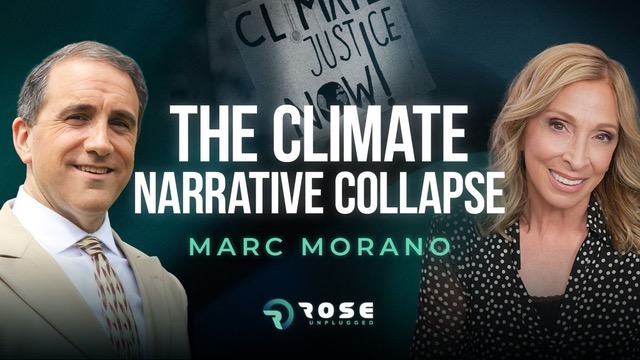
We are watching something shift that many people were told would never shift. For years, the message was simple, absolute, and repeated everywhere: the science is settled, the timeline is urgent, and the consequences are existential.
Climate change was not presented as one issue among many. It was presented as the issue. The defining crisis of our time. And for a long stretch, questioning that framing was treated not as disagreement, but as denial.
But now, something is happening that is difficult to ignore.
The Quieting
Major political outlets are describing what they call “climate hushing”. It’s a noticeable quieting from Democrats and environmental groups at the very moment we were told urgency should be at its peak. Media voices and political strategists are openly admitting that climate messaging is no longer resonating with voters the way it once did.
And a very uncomfortable conversation is emerging inside mainstream reporting: that some of the most extreme climate scenarios that shaped headlines, policy, and public fear were never truly forecasts at all, but worst-case modeling that was often presented without that distinction being made clear to the public.
Now those same scenarios are being reconsidered. Recalibrated. In some cases, quietly set aside.
Meanwhile, at the Kitchen Table
At the same time, there is another layer to this story that can’t be ignored. Because while elites debate messaging strategies, ordinary families are dealing with something far more immediate. They are dealing with rising costs, energy insecurity, and food prices, and with the reality that policies sold as “saving the planet” often land first and hardest on working people.
And somewhere in the middle of all of that, I think a lot of people are just trying to live their lives and make sense of it all. Some climate activists say we’re destroying the planet if we eat meat. Vox, for example, has warned that beef is among the worst foods we consume when it comes to global warming. My only request is this: just do not take my steak away from me while you’re all figuring it out. I. Mean. It.
There’s something very human about that reaction. People can debate models and projections all day long, but at the end of the day, we’re still sitting down at a dinner table trying to live our lives without being told that everything we do is somehow destructive.
That disconnect, between elite narrative and lived experience, is now shaping the political response we’re seeing.
A Generation Raised on Collapse
And there’s something even deeper happening underneath all of this. We now have an entire generation that grew up hearing one dominant message: that the world is nearing the edge, that time is running out, and that catastrophic collapse is not just possible but likely, unless radical transformation happens immediately.
Many young people didn’t just hear that message. They internalized it. It shaped anxiety. It shaped worldview. And in some cases, it shaped despair.
Now, slowly, some are beginning to ask a question that’s not political at all, but deeply personal: What if what I was told was only part of the story?
Proverbs 14:15 says, “The naive believes everything, but the sensible man considers his steps.”
That verse feels more relevant in a moment like this than it has in a long time. Not as a political statement, but as a reminder that fear, especially sustained fear, has a way of shaping belief faster than discernment can catch up.
A Pattern Emerges
Viewed individually, these developments might seem like political adjustments or media recalibrations. But when you step back and place them side by side, a pattern begins to emerge.
Political leaders are pulling back from climate messaging. Media outlets are acknowledging that voters are not responding the way they once expected. The most extreme climate scenarios that shaped years of public discourse are being revised.
Some of the world’s largest economies are resisting sweeping energy transitions. And even long-standing institutions are adjusting scope, timelines, and assumptions that once appeared fixed.
None of this is happening in isolation. It is happening all at once. And what it points to is something deeper than policy disagreement. It points to a growing gap between institutional certainty and public trust.
Stewardship Was Never the Issue
Now, to be clear: stewardship of the environment is not the issue. Wisdom in caring for creation is not the issue.
The issue has always been how that stewardship is defined, and how it is communicated to the people asked to live under it. Because when fear becomes the primary engine of persuasion, something else begins to erode alongside it, and that is trust. And trust, once fractured, is not easily restored.
As parts of the narrative so many young people were raised on are being revised, softened, or walked back, a difficult question emerges: how does a generation recalibrate when the story they were told about the world begins to change?
Not with anger. Not with cynicism. But with discernment.
A World Not Out of Control
Isaiah 40:22 reminds us, “It is He who sits above the circle of the earth.”
In other words, the world has never been out of control, even when our human interpretation of it has been incomplete.
So maybe what we are witnessing right now isn’t just a political shift or a media correction. Maybe it is a moment of reassessment: of how we weigh models versus reality, urgency versus accuracy, and narrative versus truth.
Because the question underneath all of this is not simply about climate policy. It is about trust. Trust in institutions. Trust in messaging. And ultimately, trust in how we understand the world we are being told to fear, and the world we truly live in.
If there is a path forward, it won’t come from fear alone. It will come from clarity. From honesty. And from the willingness to separate what we were told from what is true.
Keep your faith steady, your focus clear, and keep moving forward, because you are here for such a time as this.
Sign up today for more content from Real Life Network.
Thank you! Your submission has been received!
Oops! Something went wrong while submitting the form.
Entertainment & Lifestyle
In the early days of online entertainment, Netflix was nearly synonymous with streaming. It offered convenience, an enormous catalog, and a constant flow of new shows and movies. But as viewing habits have evolved, so has the conversation around what families are consuming. Parents and Christian households are increasingly evaluating the moral, spiritual, and emotional impact of what enters the home through television screens and mobile devices.
Many have begun asking a new kind of question: Is there a better option? And more specifically, Why choose a Christian streaming platform instead of Netflix?
Christian streaming is no longer a niche corner of the digital world. It has become a robust alternative for individuals and families who want content that aligns with their faith, strengthens their worldview, and offers a trusted environment without constant vigilance over content filters or parental controls. Understanding the differences between mainstream platforms and Christian services helps clarify why this shift is happening.
1. The Content Priorities Are Entirely Different
Mainstream platforms like Netflix are designed to appeal to the broadest possible audience. That means content often includes dark or cynical themes, rising levels of violence, sexualized material, inappropriate language, and spiritual ideas presented without biblical grounding.
Even shows marketed as family-friendly can introduce content parents would prefer to avoid. In contrast, Christian streaming platforms curate material through a completely different lens. A faith-based platform prioritizes:
- Biblical worldview
- Clean and uplifting entertainment
- Programs designed to encourage spiritual growth
- Storytelling that reinforces hope, redemption, and truth
The entire library is built around a core mission rather than mass appeal. Viewers do not have to wonder what might appear in the next scene or whether a show will undermine the values they work hard to instill in their families.
2. Christian Platforms Remove the Need for Constant Content Policing
Parents know the feeling: sitting with a remote in hand, ready to mute, skip, or stop a show before it exposes their children to something inappropriate. Streaming should reduce stress, not increase it. Choosing a Christian platform means:
- No surprise graphic scenes
- No suggestive themes buried in teen or children’s shows
- No spiritual confusion wrapped in entertainment
- No need to pre-screen every episode
The platform itself acts as the filter, giving families a break from guarding every moment of viewing.
Real Life Network, for example, offers a library intentionally free of disturbing or explicit content, allowing parents to relax and trust the environment their family is watching in.
3. Christian Streaming Prioritizes Spiritual Growth, Not Entertainment Volume
Netflix excels at volume, offering thousands of titles in dozens of genres. But quantity doesn’t always equal meaning. Much of the content is designed to entertain without offering any deeper value. For viewers who want their media habits to reinforce biblical thinking, that wide-open environment can feel spiritually thin. Christian streaming platforms intentionally offer:
- Teaching series
- Documentaries grounded in Scripture
- Programs that help believers understand culture through a biblical lens
- Wholesome feature films
- Children’s shows that point toward faith rather than away from it
- Podcasts and conversations that sharpen understanding
More than entertainment, this content reinforces discipleship, encouragement, worldview formation, and spiritual nourishment.
Real Life Network places this purpose at the center of everything it provides, ensuring that viewers receive not only enjoyment but also edification.
4. Christian Streaming Helps Protect the Hearts and Minds of Young Viewers
Children today face more exposure to complex ideas than any previous generation. Streaming platforms often introduce mature topics earlier than parents anticipate, and even “clean” entertainment can include messages that contradict biblical teaching.
A Christian streaming platform creates a reliable environment for young people by offering:
- Safe, meaningful alternatives to mainstream shows
- Content that reinforces positive choices and character
- Stories that emphasize courage, kindness, faith, and integrity
- A worldview that prepares them to navigate culture thoughtfully
Instead of absorbing constant messages rooted in secular assumptions, children and teens can engage with stories shaped by truth and purpose.
5. Netflix and other major platforms often promote content that conflicts with a Christian worldview
Mainstream platforms prioritize cultural relevance and trending topics, which means their content often reflects values at odds with biblical teaching. This includes how relationships, spirituality, identity, morality, and purpose are portrayed.
While there may be neutral or even uplifting shows on Netflix, the surrounding environment often requires viewers to sift through a great deal of material that works against Christian convictions.
In contrast, Christian streaming platforms intentionally reinforce biblical truth, hope rather than despair, virtue rather than sensationalism, and discernment rather than cultural confusion.
The guiding question for content creation and curation is not “What will attract the largest audience?” but “What will strengthen and encourage people?”
6. Faith-Based Platforms Offer Content You Cannot Find Anywhere Else
Christian streaming platforms are not simply offering sanitized versions of secular shows. They provide content built from the ground up for Christian audiences. This includes:
- Historical documentaries
- Worldview and apologetics programs
- Bible teaching and discipleship series
- Faith-based movies unavailable on mainstream platforms
- Testimonies and stories of transformation
- Prophecy conferences
- Sermons from respected pastors
- Children’s programming that teaches Scripture
Real Life Network, for example, features exclusive content created with believers in mind—programming that Netflix simply does not offer because it is not part of its mission or business model.
7. Christian Streaming Helps Build a Healthier Media Diet
Media shapes the way people think, feel, and interpret the world. Over time, even passive exposure to dark or unsettling entertainment can affect a person’s outlook, peace of mind, and sense of hope.
Choosing a Christian platform doesn’t mean avoiding culture; it means balancing it with content that strengthens the soul. Faith-based streaming encourages peace, encouragement, engagement with Scripture, thoughtfulness about cultural issues, and conversations grounded in truth.
Families often find that replacing even a portion of their mainstream viewing with faith-driven content produces noticeable benefits in their home environment.
Streaming has become one of the most influential forces in shaping worldview, imagination, and daily thought patterns. Choosing a Christian platform instead of—or in addition to—Netflix is ultimately about choosing an environment that aligns with what matters most.
For families wanting entertainment that brings peace instead of concern, conviction instead of confusion, and hope instead of heaviness, faith-based streaming offers a refreshing and necessary alternative.
Explore biblically grounded films, teachings, and family-safe programming anytime on Real Life Network.
25 min

January 7, 2026
Real Life Network
Devotional
We live in a world drowning in information yet starving for truth. There has never been a generation with more access to data, opinions, facts, voices, teachers, influencers, and experts. People scroll for hours, read constantly, binge videos, chase insights, and collect information by the truckload. Yet despite all this knowledge, our culture is more confused, more deceived, and more spiritually blind than ever before.
Why? Because there is a difference between knowing things and knowing truth. There is a difference between education and revelation. There is a difference between filling your mind and transforming your heart. Biblical knowledge is not about storing information. It is about knowing God, obeying His Word, and living a life shaped by His truth.
Proverbs 1:7 says, “The fear of the Lord is the beginning of knowledge.” That means true knowledge does not start with you. It starts with God. It starts with recognizing who He is, who you are, and how desperately you need Him. The fear of the Lord is not dread or terror. It is reverence. It is awe. It is humility. It is surrender. And without it, everything else you know is meaningless.
This world applauds intelligence but ignores wisdom. It celebrates experts but rejects truth. It elevates knowledge but despises the God who created it. And because of that, people are lost. They are intelligent but empty. Educated but wandering. Informed but spiritually blind. The knowledge that matters most is the knowledge that draws you closer to God, strengthens your walk with Christ, and protects you from deception. That is the message of Scripture. That is the heartbeat of discipleship. And that is what this devotional will walk you through.
Below are five key truths that show what real, godly knowledge looks like and how it transforms the life of a believer.
True Knowledge Begins With the Fear of the Lord
The Bible is clear that knowledge has a foundation, and that foundation is not human achievement. The foundation of knowledge is the fear of the Lord. Without reverence for God, there is no true wisdom. Without humility before God, there is no real understanding. Without surrender, learning becomes nothing more than self-promotion.
The world defines knowledge as accumulation. God defines knowledge as application. The world says that the more you know, the smarter you are. God says that the more you know Him, the wiser you become. Knowledge that does not begin with God feeds pride. Knowledge that begins with God produces holiness.
Proverbs 1:7 warns us that fools despise wisdom and instruction. A fool is not someone who lacks intelligence. A fool is someone who refuses to acknowledge God. A fool is someone who thinks he can interpret life apart from the Creator of life. A fool is someone who believes his opinions are more trustworthy than God’s Word.When you fear the Lord, you realize that everything you need to know flows from Him. You begin to see the world through His truth instead of through culture. You begin to evaluate everything by His standard instead of by society’s shifting values. You begin to understand that wisdom is not about being right. It is about being righteous.
True knowledge begins with this confession: Lord, You are God and I am not. Teach me Your ways. Show me Your truth. Lead me in Your wisdom.
That posture is where learning begins. That posture opens your heart to the voice of the Holy Spirit. That posture leads you into a life shaped by truth instead of trends. And that posture turns knowledge into transformation.
Godly Knowledge Grows When You Surrender to the Holy Spirit
Many people assume that growing in knowledge is merely an academic exercise. But spiritual knowledge is not learned the same way earthly information is learned. You do not need a degree to grow in godly knowledge. You need the Holy Spirit. The Bible says that the Spirit is our Teacher. He reveals the deep things of God. He brings understanding. He illuminates Scripture. He convicts, guides, directs, and speaks to our hearts. Isaiah 11:2 prophesied that the Messiah would be anointed with the Spirit of knowledge, and that same Spirit now dwells inside every believer.
That means real learning begins with surrender. It begins with humility. It begins with dependence. Before you open the Bible, you pray. Before you study, you ask God to teach you. Before you learn, you yield your heart. Knowledge without surrender produces pride. Knowledge with surrender produces wisdom.
Hosea 4:6 contains one of the most sobering warnings in Scripture. It says, “My people are destroyed for lack of knowledge.” God was not talking to unbelievers. He was talking to His own people. They were destroyed not because the enemy was strong, but because they were spiritually ignorant. They did not know God’s Word. They did not understand His truth. They were vulnerable because they were biblically shallow.
The same danger exists today. The less you know God’s truth, the more easily you will be deceived. The less you know God’s Word, the more confused you will become. The more time you spend listening to culture instead of Scripture, the more your thinking will drift away from God. But when you walk in daily surrender to the Spirit, knowledge becomes a weapon. It becomes a shield against deception. It becomes clarity in a world of confusion. It becomes a light in a dark age. And it becomes strength for your walk with Christ.
Knowledge Becomes Wisdom Only When You Obey What God Reveals
Biblical knowledge always has a purpose, and that purpose is obedience. The goal of learning is living. The goal of truth is transformation. God teaches us so that He can lead us. He reveals truth so we can walk in it. Knowledge without obedience becomes pride. Obedience turns knowledge into wisdom.
James 1:22 warns us not to be hearers of the Word only. When we hear but do not obey, we deceive ourselves. We begin to think that learning alone is spiritual growth. But God says learning is only the first step. Obedience is the evidence.
You can memorize verses, study theology, read commentaries, and listen to sermons, but if those truths do not create repentance, obedience, conviction, and spiritual growth, they become useless. If your knowledge does not make you more like Jesus, then it is not godly knowledge. It is religious noise. Biblical knowledge always leads toward holiness. It always moves you away from sin. It always opens your eyes to deception. It always shapes your character. It always guards your heart. And it always strengthens your walk.
The Pharisees had knowledge. They lacked obedience. They could quote Scripture but did not know the God who wrote it. They could teach the Word but could not live the Word. That is the danger of knowledge without application. Spiritual growth is not about knowing more. It is about obeying what you already know. When you open the Bible, do not ask, “What information can I learn today?” Ask, “What transformation does God want to bring into my life today?”
That is how knowledge becomes wisdom. That is how truth becomes freedom. That is how learning becomes faith. And that is how your life begins to shine with the power of Christ.
True Knowledge Protects You From Deception and Anchors Your Life in Truth
We are living in a time of spiritual confusion. Lies are being packaged as truth. Sin is being marketed as progress. Deception is dressed in tolerance. Entire denominations are abandoning biblical truth. People are applauding what God condemns and condemning what God approves.
This is exactly why God calls His people to grow in knowledge. The more you know Scripture, the more clearly you will see the world. The more you know God’s truth, the less vulnerable you become to deception. The more you study the Word, the easier it becomes to discern good from evil.
Colossians 2:8 warns believers not to be taken captive by philosophy and empty deceit. There are many voices in this world, and not all of them are speaking truth. There are false teachers, counterfeit gospels, corrupted ideologies, and spiritual distractions everywhere. That is why you must be discerning. That is why you must guard your heart and mind. The Bereans in Acts 17:11 give us the perfect example. They listened with an open heart but tested everything against Scripture. They did not accept teaching blindly. They searched the Scriptures daily to confirm the truth. They were hungry to learn, but they were anchored in the Word.
That is what godly knowledge produces. It builds a wall of protection around your mind. It embeds truth into your thinking. It helps you spot deception before it takes root. It equips you to stand firm when culture demands compromise. And it gives you the clarity to navigate a world that is becoming more confused every day. Knowledge protects you. Truth stabilizes you. Scripture grounds you. And when you commit to growing in biblical knowledge, you become unshakable in a world that is shaking.
The Goal of Knowledge Is Not Information. The Goal Is Knowing God.
At the end of the day, the purpose of knowledge is not to make you smarter. The purpose of knowledge is to make you closer to Christ. You were not saved so you could collect information. You were saved so you could know God. Everything you learn should lead you deeper into worship, obedience, and relationship with Him.
Second Peter 3:18 tells us to grow in the grace and knowledge of our Lord and Savior Jesus Christ. That is not a suggestion. It is a command. Spiritual growth is not automatic. It requires discipline. It requires time in the Word. It requires prayer. It requires humility. It requires a heart that says, “Lord, teach me. Change me. Shape me.” The more you know God, the more you will trust Him. The more you understand His promises, the more you will rely on them. The more you study His character, the more you will worship Him. And the more you walk with Him, the more your life will overflow with His truth.
Knowledge is not the goal. Knowing God is the goal. And when your pursuit of knowledge becomes a pursuit of Christ Himself, everything in your life changes.
Your decisions change.
Your relationships change.
Your priorities change.
Your desires change.
Your worldview changes.
Your character changes.
The more you know Him, the more you love Him. And the more you love Him, the more your life becomes a reflection of His truth.
Let’s Pray
Father, thank You for the gift of truth. I want to grow in knowledge, not just so I can know more, but so I can walk closer with You. Teach me by Your Spirit. Fill my heart and mind with wisdom from above. Keep me from pride and help me apply what You show me. Let everything I learn draw me into deeper worship and greater obedience. In Jesus’ name I pray. Amen.
For more content to grow your faith, visit Real Life Network.
25 min
The Knowledge That Matters Most: How Godly Wisdom Transforms Your Life

December 30, 2025
Jack Hibbs