
Stream Real Life Network Now

WATCH NOW
Biblical Truth


World News
25 min
Who Has the Authority? Government, Families, and the Institutions Americans Are Asked to Trust
Election security, immigration, parental rights, and political power raise a common question: Who has authority, and what happens when government institutions move beyond their proper boundaries?
A healthy society depends on institutions that understand both their responsibilities and their limits. Elections require rules voters can trust. Immigration requires laws that can be enforced while treating people with dignity. Schools and child-welfare agencies exercise enormous power, but parents retain profound responsibilities toward their children.
These debates may look unrelated. They are not.
Running through each is the same fundamental question: Who has authority, where does that authority come from, and what happens when institutions move beyond their proper boundaries?
For Christians, authority is neither meaningless nor absolute. Government has a legitimate role. Parents have a legitimate role. Laws matter. Compassion matters. And none of those principles should be rewritten simply because the political circumstances have changed.
That framework is increasingly important in an America where arguments over election administration, immigration, parental rights, and political power are testing public trust from several directions.
Trust Requires Rules That Apply Consistently
The Supreme Court recently blocked the Trump administration from implementing new Postal Service requirements for mail ballots before the 2026 midterms. The proposed system would have required states to provide lists of eligible voters and use USPS-approved, barcoded ballot envelopes. The Court divided 7-2, with Justices Clarence Thomas and Samuel Alito dissenting. Justice Brett Kavanaugh indicated there was a reasonable argument that the Postal Service possesses authority to impose some requirements, but concluded that changing procedures this close to voting risked significant disruption.
There are legitimate disagreements over the proposal. The administration presented additional verification as an election-integrity measure. Opponents argued that the Postal Service was assuming authority traditionally exercised by states and that last-minute changes could prevent legitimate ballots from being counted.
Those arguments deserve more than slogans.
Election integrity and voter access do not have to be enemies. Americans should be able to expect systems that verify lawful votes while also ensuring lawful voters can participate. Confidence deteriorates when either concern is dismissed simply because it is associated with the other political party.
Trust cannot survive indefinitely when rules are treated as essential under one set of political circumstances and disposable under another.
The same principle applies to immigration.
The Trump administration has expanded the federal government's consideration of public benefits when determining whether certain immigrants qualify for permanent residency. New York City Mayor Zohran Mamdani is leading a coalition of local governments challenging the new public-charge rule, while New York Attorney General Letitia James is leading a separate state lawsuit. The plaintiffs argue that the rule exceeds federal authority and could discourage immigrant families from using health care and nutrition programs for which they are legally eligible. The administration argues that the policy promotes self-sufficiency and reduces dependence on public assistance.
The legal dispute will work its way through the courts. The broader question is worth considering now: What obligations accompany legal immigration, and what obligations does a nation have toward those it admits?
Scripture commands God's people to treat the stranger with justice and compassion. It also recognizes governments, nations, boundaries, and civil authority. Biblical compassion cannot be reduced to a slogan for one immigration policy any more than biblical order can be used to excuse mistreatment of immigrants.
Hospitality and order are not inherently contradictory.
When Government Authority Enters the Home
Nowhere does the question of authority become more personal than when the government intervenes between parents and children.
Joseph and Arlene Kutzko, a Catholic couple in Massachusetts, are fighting a legal battle involving their teenage daughter, Sophie. The parents say Algonquin Regional High School supported their daughter's male gender identity without their knowledge and that their religious objections later became intertwined with a child-welfare dispute. Sophie was removed from their custody in 2024, and the parents say they have since been prevented from maintaining contact with her.
The case includes important details that should not be ignored. An allegation of physical abuse against the father was reportedly found unsupported, according to recent reporting and the family's legal advocates. The family is now seeking to prevent testosterone treatment while pursuing its custody claims; treatment has reportedly been paused while litigation continues.
The family's account has become part of a much larger national disagreement over parental rights, gender identity, medical treatment for minors, religious liberty, and the circumstances under which child-welfare authorities should intervene.
Those are serious questions precisely because the state sometimes must intervene. Children can genuinely suffer abuse and neglect, and government has a legitimate responsibility to protect them.
But that extraordinary power also requires extraordinary care.
Parents should not automatically lose their authority simply because their religious or moral convictions conflict with prevailing cultural beliefs. At the same time, disagreements over a child's care cannot by themselves establish every fact in a contested custody case.
The power to protect children must never quietly become the power to require ideological conformity from their parents.
For Christians, parenthood is not merely a legal status granted by government. Scripture repeatedly places responsibility for the instruction and formation of children upon families. Government can protect children from genuine harm, but it should approach replacing parental judgment as an exceptional intervention, not an ordinary solution to ideological disagreement.
That distinction matters far beyond Massachusetts.
Political Power Is Not the Highest Authority
The question of authority also appears inside political parties themselves.
The Democratic National Committee has officially changed its early presidential-primary calendar for 2028. South Carolina will vote first, followed by Nevada, New Hampshire, New Mexico, Michigan, and Virginia. The DNC says the calendar gives a more representative mix of voters an early role and better tests candidates across diverse constituencies and battleground states.
The change will inevitably affect campaign strategy. South Carolina's large Black Democratic electorate and Nevada and New Mexico's Latino populations will matter earlier than under the old Iowa-and-New Hampshire-centered system. But it is too early to know which prospective candidate, if any, will ultimately benefit most.
That uncertainty is important. Politics tempts people to treat every institutional decision as evidence of a predetermined outcome. Christians should resist that impulse just as strongly as they resist political naivete.
Political parties pursue power. Candidates pursue office. Governments exercise authority. Courts interpret law. None deserves the kind of unquestioning allegiance that belongs to God.
That should produce Christians who can think clearly rather than react predictably.
A Republican administration should not receive automatic approval merely because it invokes election integrity, immigration enforcement, or parental rights. A Democratic official should not receive automatic approval merely because a policy is presented in the language of compassion, democracy, or inclusion. Every claim still has to be examined.
Proverbs 14:34 provides a standard much older than any American political coalition: “Righteousness exalts a nation, but sin is a reproach to any people.”
That standard does not change with election results.
Christian political discernment begins when truth matters more than protecting a party, an institution, or a preferred political narrative.
Government matters. Elections matter. Borders matter. Parents matter. Protecting children matters. So do due process, compassion, religious liberty, and the rule of law.
The difficult work is refusing to sacrifice one principle whenever another becomes politically convenient.
That is why Christians need more than political instincts. They need a biblical framework capable of asking not merely, Which side is doing this? but Is this true? Is it just? Is authority being exercised within its proper limits? And does the standard remain the same when political power changes hands?
Those are the questions worth continuing to ask through Real Life Network and The Daniel Cohen Show, where the headlines are examined alongside the deeper questions of faith, culture, government, and truth.

7 Family Media Questions Every Christian Parent Should Ask
What children watch can shape what they admire, accept as normal, and learn to value. These seven questions can help Christian parents evaluate entertainment thoughtfully and teach their children lifelong biblical discernment.
Choosing what your family watches used to be relatively simple. Today, children can encounter movies, shows, videos, games, social media, podcasts, and other digital content across multiple devices throughout the day.
That makes media decisions about more than whether a particular movie contains bad language or an inappropriate scene. Stories communicate ideas. Characters model attitudes. Entertainment can reinforce beliefs about relationships, identity, success, morality, authority, and what makes life meaningful.
Christian parents don’t need to approach every screen with suspicion. But thoughtful questions can help families move beyond simply asking, “Is this allowed?” toward developing genuine biblical discernment.
Here are seven questions worth asking.
1. What Is This Teaching My Child to Admire?
Every story has heroes. Sometimes they’re obvious. Other times the audience is simply encouraged to sympathize with certain characters, choices, or lifestyles.
Ask what qualities the program presents as admirable. Is courage celebrated? Loyalty? Honesty? Sacrifice? Compassion? Or does the story consistently reward selfishness, dishonesty, disrespect, cruelty, or behavior that conflicts with what your family is teaching?
This doesn’t mean every protagonist must behave perfectly. Some of the best stories involve flawed people learning from mistakes.
The more important question is whether the story ultimately recognizes the difference between wisdom and foolishness, good and evil, truth and deception.
2. What Does This Program Treat as Normal?
Media doesn’t always persuade through direct arguments. Often, it influences simply by repetition.
When children repeatedly see particular attitudes, relationships, behaviors, or beliefs presented as normal, those ideas can gradually begin to feel ordinary. That is why parents should pay attention not only to dramatic objectionable moments but also to the assumptions underneath a story.
What does the program communicate about marriage? Parents? Faith? Sexuality? Authority? Success? Human worth?
Children may not consciously identify those ideas, but that doesn’t mean they aren’t noticing them.
Parents can help by occasionally asking, “What do you think that show is saying about this?” That simple question teaches children to watch actively rather than absorb everything passively.
3. Is This Appropriate for My Particular Child?
An age rating can be helpful, but parents know their children better than a rating system does.
Two children of the same age may react very differently to the same movie. One might handle a tense historical story well, while another has nightmares after mild suspense. One teenager may be ready to engage thoughtfully with difficult cultural questions while another isn’t.
Christian parenting requires more than finding the boundary of what is technically permitted.
Romans 14:19 encourages believers to “pursue the things which make for peace and the things by which one may edify another.”
A useful question, then, is not only, Can my child watch this? but Will this be beneficial for my child right now?
4. How Does My Child Feel After Watching It?
Sometimes the effect of media becomes clearer after the screen turns off. Does a child seem encouraged, curious, imaginative, or eager to talk? Or irritable, anxious, fearful, disrespectful, restless, or obsessed with watching more?
One viewing won’t necessarily reveal a pattern. But repeated reactions can tell parents something important.
The same is true for adults. Some entertainment leaves viewers refreshed. Other content leaves them angry, agitated, discouraged, or mentally exhausted.
Philippians 4:8 directs believers toward what is true, noble, just, pure, lovely, commendable, virtuous, and praiseworthy. That provides a useful biblical framework for considering not just what enters the mind, but what it produces there.
5. Is Screen Time Crowding Out Something Better?
A perfectly acceptable program can still become a problem if it consumes too much time.
The issue may not be what a child is watching. It may be what he or she is no longer doing. Is screen time replacing sleep? Outdoor play? Reading? Family conversation? Church involvement? Homework? Prayer and Scripture? Time with friends?
Sometimes the wisest media decision is not finding a better show but leaving the television off.
Healthy media habits recognize entertainment as one part of life rather than the center of it.
6. Can This Become a Conversation Instead of Just Consumption?
Parents don’t have to eliminate every story containing an idea they disagree with. Sometimes those moments provide valuable opportunities to teach.
Watching together allows parents to ask questions.
- Why do you think that character made that choice?
- Was it wise?
- What consequences followed?
- What does the Bible teach about that issue?
- How would following Jesus change the way someone responds?
Those conversations help children build discernment that will eventually matter far more than parental controls.
Christian media can provide especially natural opportunities for these discussions. A program such as LifeWise Academy can lead into conversations about bringing biblical truth into everyday life. Genesis Science Minute can introduce questions about creation and science in just 60 seconds. The Pilgrim’s Progress can start conversations about temptation, perseverance, and following Christ.
The goal isn’t to interrogate children after every episode. It’s to make talking about ideas a normal part of family life.
7. Does Our Entertainment Support the Kind of Home We’re Trying to Build?
This may be the most important question of all.
Parents spend years teaching children what is true, who they are, what relationships should look like, why Scripture matters, and what it means to follow Christ.
It makes sense to ask whether the family’s entertainment choices generally support those priorities or continually work against them. That doesn’t require every show to be overtly Christian. But intentionally including faith-based programming can help create a healthier balance.
Younger children might enjoy biblical programming such as Superbook, iBible, or Learn, Grow and Go! Older children and teens can explore apologetics through In Depth Apologetics for Kids or creation-focused content. Families can also choose movies, documentaries, Bible teaching, and programs built around Christian service, history, and worldview.
Real Life Network provides these kinds of options in one biblically curated streaming environment, giving parents a place to begin without having to sort through an enormous mainstream catalog first.
Teach Discernment, Not Just Rules
Parents cannot screen every piece of media their children will encounter forever.
Eventually, children become teenagers. Teenagers become adults. They choose their own movies, follow their own accounts, download their own apps, and decide which voices deserve their attention.
That’s why the long-term goal is bigger than creating a list of approved and prohibited programs. It is helping children learn to ask good questions themselves.
- What is this teaching me?
- Does it agree with what I know to be true?
- How is it affecting my thoughts and attitudes?
- Is this worth my time?
- Would I make this same choice if Jesus were sitting beside me?
Those questions turn media discernment from a parental restriction into a lifelong Christian practice.
The goal isn’t a home without screens. It’s a home where screens know their place, parents remain engaged, and entertainment doesn’t get the final word on what children learn to value.
Explore free, biblically curated kids’ shows, family programs, movies, Bible teaching, and more on Real Life Network.

World News
25 min
When Nothing Is Sacred, Everything Becomes Political
From the solemnity of September 11 to the use of Scripture in politics, America faces a deeper question about what it still considers sacred. Christians are called to respond with compassion, biblical discernment, and the courage to stand for truth.
There are moments that should transcend politics.
A memorial honoring nearly 3,000 Americans murdered on September 11 should be one of them. It should be a place for grief, remembrance, gratitude, and reverence. Families who have carried that loss for 25 years deserve something increasingly rare in American public life: a moment in which their pain is not reduced to another political opportunity.
That is why images of Alexandria Ocasio-Cortez and New York City Mayor Zohran Mamdani smiling and laughing together during the 25th anniversary commemoration drew criticism. A photograph cannot reveal the context of every conversation or establish what prompted a smile. But juxtaposed with grieving families at Ground Zero, the moment raised a larger question worth asking: Does American culture still recognize that some things should be treated as sacred?
These are exactly the kinds of cultural questions worth examining on Real Life Network and The Daniel Cohen Show, where the headlines are considered alongside the biblical truths that should shape how Christians understand them.
Leadership Requires More Than the Right Policies
Public leadership is not merely about legislation, budgets, speeches, or elections. Leadership also requires understanding the human consequences behind public events.
That principle extends far beyond a single 9/11 ceremony.
When thirteen American service members were killed during the 2021 withdrawal from Afghanistan, controversy followed images of President Joe Biden appearing to check his watch during the dignified transfer ceremony at Dover Air Force Base. Biden later disputed some characterizations of the moment, but Gold Star families publicly described feeling disrespected.
Politics can make people remarkably selective about empathy. When someone on the other side suffers, compassion becomes conditional. When an uncomfortable tragedy threatens a preferred narrative, attention shifts somewhere else.
Christians cannot adopt that standard.
Human dignity does not change according to political usefulness. A child killed in an act of violence matters. A soldier returned home in a flag-draped casket matters. A family still grieving someone murdered on September 11 matters. An immigrant victim matters. An American citizen victim matters. Political affiliation does not determine the value of a human life.
A healthy society should be capable of looking at suffering and seeing a human being before seeing a political opportunity.
Jesus warned that a time would come when “the love of many will grow cold” (Matthew 24:12). That description should make Christians examine more than the behavior of politicians. It should make believers examine their own hearts.
Have politics made compassion selective? Has outrage become entertainment? Have human tragedies become useful primarily when they help defeat the other side?
If so, something far more important than an election is being lost.
Biblical Language Cannot Become Political Branding
The same problem appears when Christianity itself becomes a political instrument.
Texas politician James Talarico has increasingly incorporated Christian language into his political message. In one recent appearance, he invoked Matthew 25 while arguing that Jesus would condemn senators over food assistance, Medicaid, and deportations.
Christians should welcome politicians talking seriously about Scripture. But biblical vocabulary does not automatically make an argument biblical.
Matthew 25 unquestionably demonstrates Christ's concern for the vulnerable. Christians should care about hungry people, strangers, the sick, prisoners, and those suffering around them. But translating those commands directly into support for a particular government program requires an additional political argument. Christians can share the same biblical concern while disagreeing about which policies best address it.
The same principle applies to immigration.
Scripture repeatedly commands God's people to care for foreigners and strangers. Scripture also recognizes nations, governing authorities, boundaries, and civil order. Romans 13 gives government genuine authority, while Acts 17:26 speaks of God determining nations and their dwelling places.
Neither side gets to erase the passages that complicate its politics.
Scripture should judge political convictions. Political convictions should never be allowed to rewrite Scripture.
That requires biblical literacy.
A politician who can quote a verse fluently may still misuse it. A conservative can misuse Scripture just as easily as a progressive. Christians who know only fragments of the Bible become vulnerable to anyone capable of wrapping a political agenda in Christian vocabulary.
Read the Word. Know the context. Test the argument.
Courage Means Refusing to Follow the Crowd
There is another quality disappearing from American life: the courage to stand alone.
The Lindsay Clancy case offers a difficult example. Clancy admitted killing her three young children but mounted an insanity defense. Her 2026 trial ended in a mistrial after eleven jurors favored acquittal and one juror held out.
According to another juror who later discussed the deliberations publicly, the lone holdout was a Black man.
Whatever conclusions people reach about the complicated legal questions surrounding mental illness and criminal responsibility, there is something worth recognizing in anyone willing to maintain a sincerely held conviction while an entire room pressures him to surrender it.
Standing with the crowd is easy. Standing alone costs something.
That lesson reaches far beyond a courtroom.
Christians will increasingly encounter moments when biblical convictions are unpopular, unfashionable, or professionally inconvenient. There will be pressure to remain silent because speaking could cost friendships, opportunities, influence, or reputation.
Conviction means deciding beforehand that truth matters more.
That does not grant permission to be reckless or cruel. Courage without humility quickly becomes arrogance. But humility without courage can become cowardice disguised as kindness.
Christian conviction requires both: the humility to recognize when we are wrong and the courage to stand when God's truth is clear.
America does not merely need better political messaging. It needs adults capable of recognizing sacred things, leaders who understand the human cost of their decisions, Christians who know Scripture well enough to recognize when it is being manipulated, and ordinary people willing to stand for truth when standing becomes uncomfortable.
Politics will continue changing. Candidates will come and go. Headlines that seem enormous today will eventually disappear.
The deeper question is what kind of people Americans are becoming in the process.
When nothing is sacred, everything becomes political. Christians should resist that transformation by recovering reverence, compassion, biblical discernment, and courage.
Continue examining the cultural and political stories shaping America through a biblical worldview on The Daniel Cohen Show, streaming free on Real Life Network.

World News
25 min
Remembering Charlie Kirk: A Life of Faith, Family, and Courage
One year after Charlie Kirk’s death, his commitment to Christ, family, courage, and America offers a lasting challenge to live faithfully, strengthen our homes, invest in the next generation, and stand courageously for our convictions.
One year after the death of Charlie Kirk, there is much worth remembering about a life that ended far too soon. He was known across the country as a conservative activist, speaker, and founder of Turning Point USA. But the convictions that increasingly defined his public life went deeper than politics. Kirk spoke openly about his faith in Jesus Christ, his love for his wife and children, and his belief that strong families were essential to the future of America.
When asked how he wanted to be remembered, Kirk pointed to courage and his Christian faith. Those who worked closely with him likewise described his relationship with Christ as the most important part of his life. He used an enormous platform not simply to discuss elections and public policy, but to encourage people to follow Jesus and take their faith seriously.
That priority deserves to be remembered.
Kirk also understood something increasingly countercultural: the future of a nation is inseparable from the health of its families.
He married Erika in 2021, and they had two children. Fatherhood became an important part of the message he shared with young Americans. He encouraged young adults to pursue marriage, welcome children, leave behind empty pursuits, and build something that could endure beyond themselves. His wife later recalled that marriage and family were among the greatest joys of his life.
That message mattered because Kirk spent much of his career speaking directly to young people. He founded Turning Point USA at only 18 and built an organization centered on engaging the next generation in the future of the country.
Yet preserving America was about more than winning elections. A country ultimately depends upon the character of its people, the strength of its homes, and the convictions parents pass to their children.
If we want to honor Kirk's life, admiration is not enough. We should imitate what was worthy of imitation.
Go to Real Life Network to watch great moments from the life of Charlie Kirk.
That means having the courage to profess Christ when doing so carries a cost. It means building strong marriages and treating parenthood as a calling rather than an inconvenience. It means investing in young people instead of surrendering the next generation to whatever ideas happen to dominate the culture. And it means being willing to enter conversations with people who disagree rather than retreating from difficult questions.
Kirk became famous in part because he was willing to walk onto college campuses, take questions, defend his convictions, and invite disagreement. His example should encourage Christians to develop convictions strong enough to withstand opposition without becoming afraid of the people on the other side.
Most importantly, his legacy should point beyond politics.
Political victories pass. Organizations change. Elections are won and lost. But faithfulness to Christ, love within the home, children raised with conviction, and lives invested in others carry significance far beyond an election cycle.
Charlie Kirk cared deeply about America's future. His life offered a reminder that the work of building that future begins with faithfulness to God, courage in the public square, and commitment to the family at home.
Go to Real Life Network to watch great moments from the life of Charlie Kirk.

World News
25 min
The Stories the Media Decides You Don’t Need to Know
From attacks on Christians and church fires to newsroom decisions and what children are taught in schools, Daniel Cohen examines the stories receiving too little attention and the institutions shaping what Americans see and believe.
For decades, television newsrooms held enormous power over what Americans saw and what they never heard about. Producers chose the lead story, decided which events deserved follow-up coverage, and determined which stories would disappear after a few seconds or never make air at all.
That power has weakened, but it has not disappeared.
Today, independent media provides an opportunity to ask a question that traditional news organizations too often avoid: Why do some stories receive national attention while others with serious implications are barely acknowledged?
On Real Life Network, The Daniel Cohen Show goes where the news leads, especially when those stories intersect with faith, culture, politics, and a biblical worldview. Several recent stories provide an important reminder that media bias isn't limited to how a story is reported. Sometimes the more consequential decision is whether to report it at all.
When Attacks on Christians Barely Make the News
Pastor Martin Sedra and his wife, Millicent, recently experienced something no family should have to endure.
Sedra pastors Echo Church in Sydney, Australia, and has publicly spoken about Christianity, Islam, abortion, marriage, and other controversial cultural issues. According to video and the Sedras' account discussed on the show, masked protesters arrived outside their home shortly after the couple welcomed their first child. The group allegedly cut power to the house, threatened the family, and said they would return.
Whatever someone's political or religious disagreements with Sedra, threatening a family at its home crosses a line that should be obvious.
Yet the incident received little attention from major news organizations at the time it was discussed on the show.
That story comes alongside another troubling development: a series of fires involving churches.
The former St. Agnes Church in Toledo, Ohio, burned over the weekend. Another Toledo church, St. Anthony's, had suffered a fire only weeks earlier. Other recent church fires discussed on the program included Friendship Baptist Church in Cleveland, St. Simon Church in New Brunswick, Canada, and Buckingham Presbyterian Church in the United Kingdom. Importantly, the causes of these individual fires should not be assumed before investigators determine them.
But the broader problem of hostility toward churches is documented. The Family Research Council reported hundreds of hostile incidents against churches in 2024, including dozens categorized as arson or attempted arson.
That deserves attention.
Christians should resist the temptation to declare every church fire an act of religious persecution without evidence. At the same time, repeated attacks against Christian institutions should not become background noise simply because they do not fit the cultural narrative preferred by a newsroom.
Media bias isn't only found in misleading words. It can also be found in the stories that never receive enough attention for Americans to ask questions about them.
The same standard should apply regardless of the victims. An attack on a church should matter. An attack on a synagogue should matter. An attack on a mosque should matter. Threatening a Christian family should matter just as an attack against people because of their sexuality should matter.
Consistency is the test.
Who Decides What Counts as News?
A shooting outside a gay bar in Tucson raises precisely that question.
According to the account discussed on the program, two men were killed outside Venture-N by a gunman who later killed himself. Police reportedly found a note identifying additional LGBTQ businesses, raising concerns that the victims had been deliberately targeted. The show also highlighted reporting that the shooter was born in Gambia and was described by a relative as a practicing Muslim.
There is no justification for murdering innocent people because of their sexuality. None.
But there is also no justification for minimizing relevant facts about an attack because those facts complicate a preferred political narrative.
This is where consistency becomes essential. If the religious beliefs of a professing Christian attacker would become part of national coverage, the same journalistic curiosity should exist when an attacker comes from another religious background.
The point isn't to blame millions of peaceful Muslims for one man's actions. It is to report relevant facts without deciding beforehand which ones the audience is allowed to consider.
That principle also applies inside conservative media.
The departure of longtime Fox Business anchor Maria Bartiromo has generated questions after reports that she disagreed with a programming decision concerning coverage of a presidential address. According to the reports discussed on the show, Bartiromo wanted to cover President Trump's remarks and planned additional discussion afterward. Weeks later, she departed the network, which characterized the move as a business decision. The precise internal circumstances remain disputed and should be described accordingly.
But the episode illustrates a larger point.
A journalist's responsibility is not to protect viewers from stories executives consider inconvenient. It is to pursue information, establish facts, provide context, and allow audiences to evaluate what happened.
A news organization loses something fundamental when protecting a narrative becomes more important than pursuing a story.
That standard shouldn't change depending on whether the network is CNN, MSNBC, Fox News, or anyone else.
It is also why independent outlets matter. They cannot guarantee perfect journalism, and they should be held accountable like everyone else. But a decentralized media environment makes it considerably harder for a handful of executives to determine the boundaries of public discussion.
Parents Cannot Outsource Discernment
Media institutions aren't the only institutions Americans should scrutinize.
Parents should be asking similar questions about schools.
A video discussed on the program featured a kindergarten teacher describing an exercise in which young children were asked whether they wished they had been born another gender. Students who raised their hands were then invited to choose different names. The teacher subsequently posted that she had been fired and lost her teaching license.
Whatever debates adults want to have about gender, five-year-olds should not become instruments for an adult's ideological project.
Parents possess a responsibility that cannot simply be transferred to teachers, administrators, politicians, or government agencies.
That becomes particularly important as politicians increasingly speak about children collectively. Michigan Senate candidate Abdul El-Sayed, for example, has argued for policies based on imagining that “all of our kids were all of our kids,” connecting that idea to public education, health care, and child care. The program contrasted that philosophy with the conviction that parents retain the primary responsibility for raising and forming their children.
Schools certainly have an important role. Good teachers deserve gratitude and respect. But education never happens in a worldview vacuum. Someone is always teaching children what is true, what is good, what a human being is, and where authority ultimately resides.
For Christians, those questions cannot be surrendered to the state.
Parents can delegate instruction, but they cannot delegate their God-given responsibility to know what their children are being taught and who is shaping their worldview.
That principle connects these seemingly unrelated headlines.
News organizations shape what adults believe is important. Schools help shape what children believe is true. Politicians attempt to shape what citizens believe government should provide. Corporations increasingly communicate their own moral and cultural priorities.
In each case, Christians need discernment.
The answer is not paranoia, and it isn't assuming every institution is corrupt. It is paying attention. Ask what is being taught. Examine what is being omitted. Compare claims against the evidence. And above all, measure cultural messages against Scripture rather than allowing the culture to determine how Scripture should be understood.
That is increasingly necessary in an age when the most revealing part of a story may be the part someone decided wasn't worth telling.
Watch The Daniel Cohen Show on Real Life Network for news and commentary connecting the headlines to the good news through a biblical worldview.

Devotional
25 min
Created to Work, but Working under the Curse
Work is one of God’s good gifts, yet the Fall has made it difficult, frustrating, and fleeting. Scripture explains both our desire to find meaning in work and our longing for the lasting rest found in Christ.
One morning, I was riding my bicycle along Washington, D.C.’s Anacostia River when an egret glided over the trail. The pure-white wading birds have always fascinated me with their elegant stillness and regal grace. They look even more impressive on the rare occasions when they spread their wings and take flight, making them look even larger. Yet this impromptu bird-watching experience came to an abrupt and discordant end. The moment before the egret swooped into the brush and out of sight, he made like a bomber and dropped a load of ordnance worthy of an animal twice his size.
A graceful bird, caught in its least graceful position.
The minor incident nearly passed out of my mind until I realized that this un-constipated egret provided an apt example for man’s complex condition. From beginning to end, mankind’s creation is the gift of God. We are created in God’s image and likeness, given dominion over every living thing, and blessed with the good command to fill the earth with God’s image-bearers through procreation (Genesis 1:26-28). Yet our first parents squandered these divine blessings through disobedience and rebellion, for which they were cast out of God’s presence (Genesis 3:22-23) and condemned to die (Genesis 2:17).
Man is a graceful bird, caught in his least graceful position.
Christianity’s nuanced view of human nature becomes incomprehensible without the first three chapters of Genesis. This is why so many human philosophies veer into error on either one side or the other. Most human philosophies boil down to the opinion that man is basically good, or that he is basically bad. Only the Bible (and those influenced by the Bible) can explain how man is created good, but corrupted.
Mankind’s complex condition affects every aspect of our lives, even the way we work. Before anything had tarnished God’s “very good” creation (Genesis 1:31), we read that “The Lord God took the man and put him in the garden of Eden to work it and keep it” (Genesis 2:15). Work is not a consequence of the fall, but a basic function of man, which God created for good. Adam’s task was merely to imitate God’s own example in creative effort (Genesis 2:9), and it carries religious undertones, as the same verbs are used to describe service at the tabernacle in Numbers 3.
However, mankind’s work did not escape the Fall unscathed. Not only was Adam cast out of the lush garden into uncultivated land, but God also declared, “cursed is the ground because of you; in pain you shall eat of it all the days of your life; thorns and thistles it shall bring forth for you; and you shall eat the plants of the field. By the sweat of your face you shall eat bread, till you return to the ground, for out of it you were taken; for you are dust, and to dust you shall return” (Genesis 3:17-19).
The ground was Adam’s domain of work. By extension, this curse extends to all arenas of work. All work is toilsome, demanding, and sometimes fleeting, as the whole creation is “subjected to futility” (Romans 8:20).
Man is a graceful bird, caught in his least graceful position.
Again, the Bible’s complex theology of work has better power to explain the different attitudes people have towards their work than the fractured, individualistic worldviews dominant in America today. Some people love their jobs, while some people hate them. Why? Can individualism or critical theory offer a satisfying answer to this question? (Critical theory would blame group oppression, but that is not satisfying.)
The Bible has an answer. Some people love their jobs because work is a gift from God — a good gift that God created as part of his blessing on mankind. Even in a fallen world, the wise preacher concludes, “There is nothing better for a person than that he should eat and drink and find enjoyment in his toil. This also, I saw, is from the hand of God” (Ecclesiastes 2:24, see also Ecclesiastes 5:18-19 and 9:9). Yet some people also hate their jobs because work is cursed after the Fall.
Man is a graceful bird, but he is still caught in his least graceful position.
The very unseemliness of the aforementioned egret’s evacuation is what makes it an appropriate metaphor for fallen man under sin. “We have all become like one who is unclean,” Isaiah confesses, “and all our righteous deeds are like a polluted garment” (Isaiah 64:6). We need one who can wash our filth away, to achieve for us what we could never achieve by our own works.
Even though work is good, it is not ultimate. The Lord God engaged in his creative work for six days, “and he rested on the seventh day from all his work that he had done” (Genesis 2:2). Just as man was made to imitate God’s work, so man was also supposed to imitate God’s rest (Exodus 20:8-11). But, under the curse of sin, that rest became fleeting and far off.
From the earliest generations, Adam’s descendants sought one who would restore them to God’s rest. Thus, Noah’s father Lamech said in hope, “Out of the ground that the Lord has cursed, this one shall bring us relief from our work and from the painful toil of our hands” (Genesis 5:29). Yet Noah did not bring an end to toil, hard labor, or the futility of human industry. Nor did Moses, Joshua, David, or any human leader called by God throughout history. All were sinners, after all.
Yet painful toil under the curse is not man’s final condition, for “there remains a Sabbath rest for the people of God” (Hebrews 4:9). Those who are forgiven of their sins by the blood of Christ receive true grace. They are not only restored to right fellowship with God, but they also receive eternal life and enter into God’s rest.
For now, we recognize that all honest work is good. “In all toil there is profit, but mere talk tends only to poverty” (Proverbs 14:23). “Let the thief no longer steal, but rather let him labor, doing honest work with his own hands, so that he may have something to share with anyone in need” (Ephesians 4:28). “It is the hard-working farmer who ought to have the first share of the crops” (2 Timothy 2:6). But work is not ultimate, and one day our painful toil will come to an end.
Man is a graceful bird, and one day his graceless condition will be remedied in full. One day, those who are in Christ will enter into the glory and rest of their Redeemer.
This article was originally written by Joshua Arnold and published on The Washington Stand. For more content like this, visit Real Life Network.
Thank you! Your submission has been received!
Oops! Something went wrong while submitting the form.
Faith & Culture
This piece grew out of a recent episode of Rose Unplugged, where I sat down with decluttering expert Joshua Becker to talk about the surprising overlap between our need for control and the clutter we hold onto. Here's some of what I shared with viewers that day.
This is about relinquishing control to God — and about organizing and uncluttering our homes, our lives, and our faith. It's a subject I explored recently.
Let's start with control:
Last year someone very close to me experienced serious complications after surgery. What should have been a recovery turned into a two-month hospital stay, and ultimately, his passing.
I was carrying the deep sadness of watching someone I loved slowly fade away. There's no way to prepare yourself for that — for sitting next to a hospital bed, hoping for improvement while quietly realizing the outcome may already have been decided.
And naturally, during seasons like that, lessons surface. Growth happens — even when we resist it. Because if I'm being honest with myself — and it took me some time to get there — I realized this wasn't just about grief. It was about control.
As my friend was dying, I was forced to come face-to-face with something I've struggled with my entire life: and that is-- I can't control everything.
But I am a fixer. That's what they called me at home for years. You've got a problem? I can fix it. And most of the time — I did. I was good at it. Not only did I believe I could fix things — my family and friends believed it too.
If friends or family found themselves tangled in circumstances they couldn't sort through — I was there. Not just with a solution, but with a really good solution. I took pride in that.
I think when someone grows up surrounded by a lot of chaos — a lot of distressing moments — that child learns early how to create order wherever they can. As they are growing into an adult that person will find ways to create their own order. Or essentially, control situations because growing up they felt things were so very out of control.
That was me.
But the problem with being a fixer is that it doesn't always leave room for God to do what only He can do.
During my friend's time in the hospital, I learned — painfully — that there were things I simply couldn’t do. I didn't understand what was happening to his body. I couldn't make it better. I couldn't fix it. I had to let go. And I had to let God finish a work He had already begun.
Not everything is up to me. Not everything can be fixed by me. And learning that — really learning it — changed me. And once that truth settled in, I began to look honestly at my own life — and I realized just how many ways I exerted control.
Now understand, my control came from a desire to help. But underneath that help was often an inner turmoil — a constant hum of responsibility. Constantly asking myself, how do I make this better? What else can I do? What am I missing?
But even in the midst of turmoil, God calls us to rest in Him.
There were many times I did. But if I'm honest, there were just as many times I did not. Or I would give a situation to Him — only to take it back. We do that, don't we? Hand it over in prayer, then quietly reclaim it the moment things don't move fast enough or look the way we want them to.
When you really think about it, it's arrogant. How in the world do we convince ourselves that we can control outcomes? Especially as Christians. We should know better.
Proverbs 19:21 reminds us, "Many are the plans in a person's heart, but it is the Lord's purpose that prevails."
And here's the part that stopped me cold: God was calling His child — my friend — home. To eternal life with Him. And if I'm being completely honest, I was almost working against that. Think about it. I felt like I needed to be part of the process that saved his earthly body, and yet all the while God was preparing to receive it.
When you sit with that for a moment — you realize that's awfully presumptuous.
During that time of awakening, I was reminded of something Oswald Chambers wrote in “My Utmost for His Highest”. In a July devotion, he talks about what he calls "calculating without God." He references Psalm 37:5: "Commit thy way unto the Lord; trust also in Him; and He shall bring it to pass."
Chambers wrote, "Don't calculate without God. God seems to have a delightful way of upsetting the things we have calculated on without taking Him into account… Haul yourself up a hundred and one times a day in order to keep your heart from being troubled, until you get into the habit of putting God first and calculating with Him in view."
That hit me. I decided I needed to stop managing God and start truly trusting Him. Trusting Him entirely. And I couldn’t do that with conditions and backup plans. But with open hands. And an open heart. And that surrender, real surrender, was the hardest lesson of all.
It was a lesson that carried me through the rest of 2025. And it's one I hope to continue deepening as I move forward.
I spent years believing peace came from holding everything together – from tightening my grip. But I've learned that peace isn't found in managing more – It's found in letting go, making room for God and trusting Him with the outcome.
And all of that was on my mind when I interviewed Joshua Becker about a few of his books; “Becoming Minimalist”, “Uncluttered Faith”, and “Clutter Free with Kids”.
Long before "minimalism" became a trend, Christian leaders were preaching the power of decluttering our lives. John Wesley, the founder of Methodism, emphasized extreme simplicity and faithful stewardship. In his sermon “The Use of Money”, he urged believers to "gain all you can, save all you can, and give all you can," warning that accumulating luxuries was a burden that "chokes" the spiritual life.
Wesley himself lived with very few possessions; he considered it a crucial part of living a holy life and therefore freeing his heart for God's work and for helping others.
And here is a story that really struck home for me about Wesley:
Wesley had just finished hanging and admiring some artwork he had purchased for his room when one of the chambermaids came to his door. It was a very cold winter day, and he noticed that she had only a thin linen gown to wear for protection against that cold.
He immediately reached into his pocket to give her some money for a coat and realized he had very little left after his purchases. It struck him then that the Lord was not pleased with how he had spent his money. He asked himself: "Will Thy Master say, 'Well done, good and faithful steward?' Thou has adorned thy walls with the money that might have screened this poor creature from the cold! O justice! O mercy! Are not these pictures the blood of this poor maid?"
I can’t stop thinking about that. When we engage in excess, there is little left for those in need.
And that raises an uncomfortable but necessary question: are we conducting our lives, our choices, and our spending, in a way that reflects stewardship, or self-indulgence?
This isn't about luxury for luxury's sake. It's about whether our appetites have quietly replaced our accountability. Because every dollar, every resource, every moment we consume beyond what we need is something that can no longer be offered to someone else.
In a culture that celebrates more, faster, bigger; restraint has become radical. But restraint is also where compassion lives. And maybe the measure of a life well lived isn't what we accumulate, but being mindful of making room to give.
I shared initially in that program with Joshua Becker about control and then segued into reducing clutter which, when accumulated, is really a type of control.
And here's the thing — we don't usually call it control. We call it being responsible. Prepared. On top of things. But let's be honest, sometimes it's not organization we're after but reassurance.
Most of us aren't trying to control life because we're bossy or rigid. We're doing it because life feels loud and unpredictable. And when the world feels uncertain, control feels comforting. That's where clutter sneaks in. Because clutter isn't always about having too much stuff. Sometimes it's about holding onto options, just in case. Just so we don't feel caught off guard.
So, we keep the extra bins and the backup supplies. The things we might need someday. Even when what we're really doing is trying to manage our anxiety with labels and shelves.
I do want to point out that order is not the enemy. God is a God of order. But order without trust can leave us exhausted. Because while control promises peace… it never actually delivers it.
Scripture reminds us that peace doesn't come from managing every outcome. Jesus told us not to worry about tomorrow, not because tomorrow doesn't matter, but because we aren't meant to carry it.
Sometimes the most freeing thing we can do isn't organize more, it's loosening our hold. And maybe the goal isn't a perfectly controlled life, but one where we trust God enough to release what we don't need to carry. One where we make space — not just in our homes, but in our hearts.
For more content like this, visit Real Life Network.
25 min

July 27, 2026
Rose Unplugged
World News
WNBA player Sophie Cunningham grabbed a lot of headlines this week after saying she believes “truth” requires protecting women from biological men invading their sports.
The basketball star told ESPN on Tuesday, “I think that I am here to extend love. But I also think with that love is truth, being honest. And I want to protect young girls in a locker room, or young girls in sport who shouldn’t have to go against biological men.”
One user slammed her position on X, “Sophie Cunningham is unafraid. Unafraid to be blatantly transphobic.”
Another account posted, “Sophie Cunningham has to be suspended today. You @WNBA can’’t claim to have ‘No Space for Hate’ and then suspend Sandy Brondelo for her comments but allow Sophie to be wildly transphobic in a ESPN article and skate away without consequences. The punishment must be equal.”
After generating chatter on social media, the 29-year-old guard for the Indiana Fever doubled down on Wednesday when speaking with reporters before her team’s game against the Connecticut Sun. “I said what I said. I think it’s kind of common sense,” Cunningham asserted. “And I think I’ll always believe in that. I think it’s really important to protect children, and that’s little girls who are also involved in that category. I stand on what I said.”
Cunningham and Caitlin Clark, another guard for the Indiana Fever, are considered to be the two most popular WNBA stars.
“Sophie has proven she is a defender, she is bold, and she is completely in tune with the spirit of sport. She isn’t letting brand deals or politics control or distract her — she’s simply unafraid to say what everyone is thinking,” Macy Charles, a legislative strategist for Concerned Women of America told The Washington Stand.
Cunningham cited Title IX as a reason for fairness in women’s sports. “That’s why you have some of the greats in women’s sports,” Cunningham said. “If Title IX and women’s sports weren’t protected, then you wouldn’t hear about any type of women in sport. And so, I think in the future, it’s just really important to protect.”
“And, like I said, I’m gonna stand true to that,” she continued. I’ll never falter in my beliefs in that.”
Despite speaking out, Cunningham is tight-lipped about her political beliefs.
Charles pointed out that Cunningham recognizes the commonsense purpose of the WNBA. “She also knows her opportunities were made possible because she wasn’t expected to participate in the NBA — equality and fairness were exactly why the WNBA was created. She is preserving that for those coming after her. Sophie said she spoke ‘in love,’ and that’s important. Scripture tells us that love rejoices in the truth. Speaking truth in love isn’t a contradiction. It’s exactly what we’re called to do.”
Cunningham’s views are also incredibly mainstream, New York Times/Ipsos polling shows. A whopping 80% of Americans believe biological men should not compete in women’s sports — including 67% of Democrats. Among Republicans, support for the star guard’s position is almost unanimous: 94%.
At a press conference at the White House on Thursday, Press Secretary Karoline Leavitt addressed the situation.
“The backlash she [Sophie Cunningham] is receiving from Democrats and left-wing figures across the country is astonishing. They are clearly very out of touch with the American public on this issue, which again, is an 80/20 issue. It’s common sense. It’s rooted in basic biological fact that men should not be competing against women on playing fields across the country,” Leavitt said.
Other politicians outside of the White House rallied behind Cunningham on X, including Senators Ted Cruz (R-Texas), Eric Schmitt (R-Mo.), Tommy Tuberville (R-Ala.), and Rep. Eli Crane (Ariz.). Fellow athletes Riley Gaines and Martina Navratilova also showed support.
Jennifer Sey, the founder and CEO of XX-XY Athletics, posted on X, “Let this be a lesson to other high level female athletes ... if you are a draw, speak up. They won’t can you.”
Ella Frei, a 17-year-old high school volleyball player from Wisconsin who has said she faced online harassment after criticizing her school’s transgender bathroom policy, also posted, “Thank you @sophaller for being the first female superstar athlete to have my back. It means the world to me.”
Briley Lechner, a high school volleyball player in Michigan who was forced to share a locker room with a biological male identifying as a female from an opposing team, commented that she is inspired by Cunningham as well: “Watching @sophaller say it out loud — that girls shouldn’t have to give up fair competition or our privacy — meant more than she’ll ever know. When a WNBA star says it, maybe people finally listen. I know what it’s like to have your voice on this treated like it’s hateful. It isn’t. Wanting a fair game and a private locker room was never hate. It’s just the truth, and I’m done being afraid to say it. Thank you, Sophie, for going first. You made it easier for the rest of us.”
This article was originally written by Quinn Delamater and published on The Washington Stand. For more content like this, visit Real Life Network.
25 min
WNBA Star Sophie Cunningham Stands Up for Women’s Sports

July 23, 2026
The Washington Stand
World News
Every culture is shaped by something deeper than laws, elections, or headlines. Long before policies change, people begin to sense which ideas are celebrated, which beliefs are tolerated, and which convictions carry a cost. That quiet shift is what the Israeli military calls ruach hamefaked, or "the spirit of the commander." As discussed on The Daniel Cohen Show, it describes a culture where no explicit order is necessary because everyone already understands the direction they are expected to follow. That same principle helps explain many of today's most troubling headlines, from attacks on biblical truth to growing hostility toward religious freedom. Watch more biblical news and cultural analysis anytime on Real Life Network.
The Orders No One Has to Give
Healthy organizations often function without constant instruction.
A trusted leader establishes a culture so clearly that those under his authority instinctively know how to act. They understand not only the rules, but also the values behind them. Cultures operate the same way. People learn what is acceptable long before anyone puts it in writing.
That reality is evident in one of the episode's most disturbing stories. An Ontario surrogate mother was asked to abort an otherwise healthy baby because an ultrasound revealed a cleft lip, a condition that is routinely corrected through surgery after birth. When she refused, the intended parents sued her.
No government ordered that lawsuit. No public official instructed anyone to treat a child as a product that could be rejected because of a cosmetic condition. Yet the cultural expectation already existed.
The child was no longer viewed primarily as a gift bearing the image of God. Instead, the pregnancy became a contract, and the baby became something that could be evaluated against personal expectations.
The same pattern appeared in testimony before Congress, where a medical school leader struggled to affirm the simple biological reality that women become pregnant. Future physicians are increasingly taught language designed to accommodate ideology rather than objective truth.
Again, no one had to issue a formal command. Everyone already understood which answers would be rewarded and which ones would invite criticism.
The most powerful cultural changes often happen without anyone ever giving an explicit order.
When Truth Becomes the Enemy
As the episode unfolded, stories that initially seemed unrelated revealed a common thread.
In New York City, historic churches have suffered repeated fires while public silence has raised questions about whether attacks on Christian institutions receive the same urgency as attacks on other communities.
Across the Atlantic, Finnish parliament member Päivi Räsänen continues facing consequences for publicly expressing a biblical view of marriage and sexuality. Her conviction for "hate speech" stemmed from quoting Scripture and defending long-held Christian doctrine. She was later barred from traveling through the United Kingdom because of that conviction.
The details differ. The underlying pattern does not. Increasingly, biblical convictions are treated not simply as beliefs that others reject, but as beliefs that society considers dangerous. That shift matters. Freedom of religion has never meant merely holding private opinions. It has always included the freedom to live consistently with those convictions in public life.
A society begins to lose its freedom when speaking the truth becomes more controversial than abandoning it.
Readers looking for more biblical analysis of today's cultural issues can explore additional programming on Real Life Network.
Every Culture Reflects the Spirit It Serves
Headlines come and go. Political leaders rise and fall. Court decisions are appealed.
But beneath every cultural controversy lies a deeper spiritual question. What spirit is shaping the culture?
Jesus consistently taught that outward actions flow from inward realities. Nations are no different. The values a society celebrates eventually become the values it protects, while the truths it rejects gradually disappear from public life. That process rarely happens all at once. It happens one compromise at a time.
One redefined word. One ignored act of violence. One silenced conviction. One generation that learns certain truths are simply too costly to say aloud. That is why discernment matters so much.
Christians are not called to panic every time a troubling headline appears. Neither are they called to ignore the direction of the culture around them. They are called to recognize the spiritual currents beneath the headlines and remain faithful regardless of where those currents may lead.
Every culture eventually reflects the spirit it chooses to follow.
The greatest question facing Christians today is not simply what the next headline will be.
It is whether God's people will continue to follow the truth even when the culture quietly begins moving in another direction.
Watch the full discussion on The Daniel Cohen Show and discover more biblical news and cultural commentary on Real Life Network.
25 min
When No One Gives the Order, Yet Everyone Knows What to Do

July 17, 2026
Daniel Cohen
Faith & Culture
Optimism is insufficient to hold you up against the harsh reality of telling your daughters you won’t be alive long enough to walk them down the aisle or letting your parents know they’ll have to bury their son, Ben Sasse shared in The Wall Street Journal late last year.
Sasse is a 44-year-old former senator from Nebraska who was diagnosed with metastasized, stage 4 pancreatic cancer in December 2025 and given mere months to live. He is also a husband and father of three children.
“I already had a death sentence before last week too — we all do,” Sasse said. “As a Christian, the weeks running up to Christmas are a time to orient our hearts toward the hope of what’s to come,” he continued. “Death and dying aren’t the same — the process of dying is still something to be lived.”
Sasse’s response to his diagnosis created shockwaves. While optimism is insufficient for Sasse, there’s one thing that isn’t: the hope, security, and comfort found in Jesus Christ.
“We [Christians] hope in a real Deliverer — a rescuing God, born at a real time, in a real place,” he wrote.
For the believer, Sasse’s response is not confusing — it makes sense. A Christian’s inheritance is the perfect peace of Christ.
“Peace I leave with you; my peace I give to you. Not as the world gives do I give to you. Let not your hearts be troubled, neither let them be afraid,” Jesus reassures us in John 14:27.
“The way in which the former senator and his family are clinging to Christ in the midst of profound suffering is a vivid reminder for so many of us that a Christian’s hope is not rooted ultimately in favorable circumstances, but really in the character of God and the resurrection of Jesus Christ,” David Closson, the director of the Center for Biblical Worldview at Family Research Council, told The Washington Stand.
In a recent survey, the American Bible Society asked respondents if they turn to the Bible when they encounter difficulties in life or if they blame God for their troubles and reject any religious expression.
The organization found an increase in Bible reading, which directly results in an increase in hope for those who have put their trust in the Lord.
“From a biblical perspective, this makes sense. Scripture never promises that Christians will be spared suffering. In John 16:33 Jesus tells his followers that in this world you will have tribulation,” Closson said. “But Scripture consistently teaches that suffering has a way of stripping away false securities, and reminding us of our dependence on God, and then we could also say trials often expose the inadequacy of the other things we are tempted to trust in, such as our health, careers, finances, relationships, or sense of control.”
The report shows that those who experience difficult life circumstances and trauma are even more likely to read the Bible and rely on their faith for peace and healing than those who haven’t dealt with hardships.
Steadfast faith does not deny the reality of pain, Closson said. “It rather demonstrates that suffering does not have the final word.”
Bible reading was recorded to be 48% for those who faced a life-threatening illness or injury, like Sasse, compared to 37% for those who have not.
The report also found that 38% of those dealing with a life-threatening illness or injury said that their faith was “a great source of comfort to them” as they navigated “life issues,” compared to 31% of those not experiencing a tragedy.
“The mind regulates more effectively when attention is gently anchored to something safe, meaningful and true,” Joanna Hargreaves, a Christian psychotherapist, posted. “Regular Biblical Meditation soothes your amygdala. The amygdala is your brain’s alarm system triggering fear, stress, and anger.”
It is the natural tendency of the heart of the believer to turn to God in the midst of trials and tribulations. It is a mark of spiritual health to lean on the promises of eternity found in God’s word rather than looking to the world for comfort during times of impossible pain.
Closson also observed that unique opportunities for gospel ministry are presented when people are confronted with their own mortality. “As believers, we should be prepared to meet those moments with compassion and care and share the hope that’s ultimately found in the gospel,” he argued. “This report confirms something that Christians have believed for centuries, which is that while God does not waste suffering, he often does use it to draw people closer to himself.”
Because of sin, we live in a world where dads lose their lives to cancer too early, where divorce is common, and confusion about gender and sexuality runs rampant.
But God.
“The testimony of many believers is the suffering that has become the very context in which the promises of God become most precious. Bible passages that maybe seemed abstract in times of ease suddenly become more personal when read from a hospital room or while caring for a sick loved one,” Closson mused.
Take heart, for I have overcome the world, Jesus tells his followers. He calls us not to be discouraged. Sasse is a living example of what it means to embrace this. Amid the trial, he understands what we could all benefit from as a reminder: though we live in a fleeting world, there is an unfailing hope.
This article was originally written by Quinn Delamater and published on The Washington Stand. For more content like this, visit Real Life Network.
25 min
A Fleeting World, an Unfailing Hope
.avif)
July 17, 2026
The Washington Stand
World News
In a sign of the continuing breakdown of religious freedom in Europe, Finnish parliament member Päivi Räsänen was banned by the U.K. from traveling to Heathrow Airport for a planned layover due to her Finnish Supreme Court conviction in March for authoring a pamphlet containing supposed “hate speech” toward those who identify as LGBT.
Räsänen’s legal saga began in 2019, when she wrote a post on social media questioning why her Finnish Lutheran Church was choosing to participate in an LGBT Pride event, citing the scriptural prohibition against same-sex conduct from Romans 1:24-27. Finnish authorities eventually charged her and Lutheran Bishop Juhana Pohjola with “hate speech” for authoring a pamphlet advocating for a biblical view of sexuality and for the social media post.
Even after Räsänen and Pohjola’s eventual unanimous acquittal of the charges by two lower courts in 2023, prosecutors continued to press the case by appealing it. In March of this year, a narrow 3-2 Finland Supreme Court decision found Räsänen and Pohjola guilty of “hate speech” for authoring the pamphlet and sentenced them to pay a €1,800 fine. The decision also ordered that the pamphlet be removed from public access and that all physical copies be destroyed. She was not found guilty for two other charges based on the social media post and a radio debate.
Notably, the court admitted in its ruling that Räsänen and Pohjola’s conduct was not “serious.” “[I]t must be taken into account that the text forming the basis for the conviction did not contain incitement to violence or comparable threat-like fomenting of hatred,” the court wrote. “The conduct is therefore not particularly serious in terms of the nature of the offense.”
Nevertheless, Räsänen recently revealed that because of this single “not particularly serious” charge, the U.K. has rejected her Electronic Travel Authorization (ETA) merely to pass through the country via Heathrow Airport (after initially approving it) while traveling from the U.S. to Helsinki, Finland’s capital. Räsänen further revealed that the U.K.’s revocation of her ETA could imperil her plans to attend an upcoming conference and speaking engagement in Northern Ireland next month about — ironically — freedom of speech.
Experts like author and columnist Rod Dreher say that the decision of a Western nation like the U.K. to bar Räsänen from stepping foot in the country because of perceived “hate speech” is a sign that Europe is rapidly sliding toward totalitarianism.
“Now that I hear someone as innocent and gentle as this Finnish granny has been forbidden by the British government even for setting foot in their international airport … well, it confirms my suspicions,” he posted last week on his Substack page. Dreher went on to note how the European Parliament is currently considering a measure that would “enable monitoring of people’s private, encrypted chats” to find any hint of perceived “hate speech” and further erode the ability of Europeans to freely express their religious beliefs.
“I think Päivi is a canary in the civilizational coal mine,” Dreher added. “The progressive bureaucratic order in European countries would rather attack faithful Christians as Enemies Of Society than deal with the actual problems they have. We can expect more of this. It’s a Finnish Lutheran lawmaker and grandmother today; it could easily be you tomorrow.”
European free speech advocates like Peter McIlvenna agree, noting that the U.K. barring Räsänen from entering is just the latest in a recent string of travel bans.
“We had a similar situation a couple of months ago whenever we had a United Kingdom rally organized by Tommy Robinson, and the U.K. government blocked 11 individuals who were traveling from Europe, I think, including Ezra Levant [who] was from Canada,” he pointed out during “Washington Watch with Tony Perkins” Tuesday. “They were given this statement, ‘Your presence is not conducive to the common good and therefore you are being blocked for entering.’ Of course, any government can have that ability to stop people coming in. I wish they used it to stop illegal immigrants coming in, but hey, they’re using it for members of Parliament. … [Räsänen] has been a member of [Finland’s] Parliament there for decades and decades.”
McIlvenna, the co-founder of Hearts of Oak, a U.K.-based free speech alliance, went on to describe the extent of the free speech violations that are occurring in his country.
“[T]o think that [Räsänen] is a danger in the U.K. is utter, utter madness,” he lamented. “But that’s where we’re going. … [The government] arrests people for statements online. We have 30 arrests a day for people saying things online that the government does not like … and that fits into our hate crimes. Anything you say that may be perceived as offensive to someone else, then you’ve committed an offense. So it’s where we are.”
“[Europe is] very dark place now,” McIlvenna added. “Finland is a very secular country. Scandinavia and Britain have always prided themselves on our Christian heritage or tradition — 1,700 years of that Christian thread that is very quickly disappearing with an apostate church and very few Christians involved in public office. So that is where we are going, far away from our traditional Christian faith.”
Still, Räsänen sees a thread of hope within the persecution that she has faced, recently describing how it has opened up opportunities for her to share her faith. She recalled that after her “hate speech” case became public in 2019, a young man who identified as an atheist sent her an angry message. After she replied in kindness and shared the gospel with him, she described that he later reached out to her again.
“He said that after his conversation with me, he has found Christ, and he has found a way to eternal life,” Räsänen remembered. “I understood that this is not in vain. It is not in vain to defend these freedoms. It is not in vain to share the message of the Bible.”
This article was originally written by Dan Hart and published on The Washington Stand. For more content like this, visit Real Life Network.
25 min
U.K. Bars Finnish Christian MP from Country over Biblical Beliefs on Sexuality

July 15, 2026
The Washington Stand
World News
In a setback for religious freedom, the U.S. Court of Appeals for the First Circuit ruled last Thursday that Christian schools in Maine must comply with pro-LGBT regulations that conflict with their religious beliefs, if they want to participate in a public tuition assistance program. “Essentially what the court has said is that you can believe what you want to believe, you can talk about what you believe, but once you exercise what you believe, that’s conduct that the state of Maine can regulate,” said Jeremy Dys, senior counsel for First Liberty Institute, which brought the lawsuit.
In Crosspoint Church v. Makin, a two-judge panel (one judge died before the opinion was issued) partially upheld a lower court order denying a preliminary injunction against Maine’s pro-LGBT regulations. Crosspoint Church runs Bangor Christian School (BCS). The court decided a second lawsuit featuring a Catholic school (St. Dominic Academy v. Makin) on the same day, on almost identical grounds.
BCS holds employees and students to basic biblical standards for gender and sexuality, and requires teachers to ascribe to a statement of faith. But those standards run afoul of provisions in the Maine Human Rights Act (MHRA), which Maine now applies to schools seeking to participate in its tuition assistance program. “A private school that participates in the tuition-assistance program and then violates the MHRA exposes itself to civil suits from both the Maine Human Rights Commission (MHRC) and private alleged victims, with remedies including injunctive relief and monetary damages,” the court described.
Specifically, the MHRA “‘Religious Nondiscrimination Rule’ bars covered schools from discriminating in admissions, financial aid, academics, and the like on the basis of religion,” as the court described, and its “‘Sexual Orientation and Gender Identity Nondiscrimination Rule’ bars discrimination in all the same activities on the basis of sexual orientation or gender identity but exempts religious schools that do not receive public funding.”
In practice, this rule would have the effect of preventing BCS’s attempts to enforce its biblical norms of sexuality and gender, Dys told The Washington Stand. For instance, if a male student identified as transgender and wished to use the female restrooms and locker rooms, BCS could not enforce its policies against him without violating the Sexual Orientation and Gender Identity Nondiscrimination Rule. “When the state of Maine presents this sort of regulation on conduct, it creates a real problem,” he said.
Yet the court concluded the Sexual Orientation and Gender Identity Nondiscrimination Rule “works no constitutional violation.” It also held that “certain of BCS’s policies” violated the Religious Nondiscrimination Rule, including “church member discounts” and “consideration of ‘prospective students’ spiritual fit.’”
Besides these rules, the MHRA also establishes an “Employment Rule” that “bars employment discrimination based on ‘race or color, sex, sexual orientation or gender identity, physical or mental disability, religion, age, ancestry, national origin or familial status,’” as the court described. With regard to this rule, the court partially reversed the district court, finding that Crosspoint Church fell into a carveout in the rule, thereby eliminating the “case or controversy.”
Finally, the MHRA’s “Religious Expression Rule” stipulates that, “to the extent that an educational institution permits religious expression, it cannot discriminate between religions in so doing.” The court rightly held that “the Religious Expression Rule unconstitutionally violates Crosspoint’s free-exercise rights” and remanded it to the district court for an injunction.
In the lawsuit, Crosspoint argued that “a set of recent amendments to the MHRA specifically targets BCS, in violation of the Free Exercise Clause,” as the court characterized it, based on a years-long history of litigation.
Maine has offered state tuition assistance to enable parents to send their children to the school of their choice since 1980. However, the program excluded Christian schools until 2022, when a 6-3 U.S. Supreme Court found the policy unconstitutional in Carson v. Makin. Parents at BCS were at the center of that case.
Based on its recent decisions in Trinity Lutheran (2016) and Espinoza v. Montana (2019), where government entities tried to block Christian schools from generally available public benefits, the Supreme Court in Carson held that “Maine’s ‘nonsectarian’ requirement for its otherwise generally available tuition assistance payments violates the Free Exercise Clause of the First Amendment. Regardless of how the benefit and restriction are described, the program operates to identify and exclude otherwise eligible schools on the basis of their religious exercise.”
In anticipation of a defeat in front of the Supreme Court, the Maine legislature amended the law in 2021, allowing Christian schools to receive state tuition assistance, but only if they complied with the state’s rules for nondiscrimination towards sexual orientation and gender identity.
In 2023, Maine Attorney General Aaron Frey (D) professed to be scandalized at the very nature of a Christian school. “The education provided by the schools at issue here is inimical to a public education,” he complained. “They promote a single religion to the exclusion of all others, refuse to admit gay and transgender children, and openly discriminate in hiring teachers and staff.”
Frey’s comments came in response to another federal lawsuit filed by Crosspoint Church, alleging that attaching general state funding to LGBT strings amounted to a “poison pill” for accepting the money. “Putting Plaintiff to the choice of participating in a generally available benefit program or surrendering its constitutionally protected religious exercise penalizes its religious exercise and constitutes a substantial burden,” the lawsuit argued.
However, the district court refused to view the circumstances in that light, or to apply the recent string of Supreme Court precedents. Instead, U.S. District Judge John Woodcock, a George W. Bush appointee, ruled in February 2024 that “the educational antidiscrimination provisions do not violate the Free Exercise Clause because they are neutral, generally applicable, and rationally related to a legitimate government interest.”
This language reached further back to the “neutrality” test established in the Supreme Court’s 1990 ruling in Employment Division v. Smith, the controversial decision that prompted a furious Congress to overwhelmingly pass the Religious Freedom Restoration Act of 1991.
Dys contended that both the district court and the appellate court were wrong to rely on the neutrality test in this context, “because you can’t simply exclude religious exercise because it’s religious,” he told TWS. “You have to give full faith and credit to that part of the Constitution,” referring to the Free Exercise Clause of the First Amendment.
“I suspect there’s going to be further action on this case,” he concluded. First Liberty is still reviewing whether to appeal the case to the full First Circuit or directly to the Supreme Court. In either case, Dys said, “We’re going to seek further review.”
“We are disappointed that though the First Circuit acknowledges that religious institutions can teach what they believe, it would then refuse to allow conduct consistent with those beliefs,” Dys declared. “Religious education plays a critical role in our diverse society, but Maine’s leadership will not tolerate conduct consistent with those religious beliefs. As the U.S. Supreme Court has repeatedly said, punishing religious institutions for being religious is odious to our Constitution.”
This article was originally written by Joshua Arnold and published on The Washington Stand. For more content like this, visit Real Life Network.
25 min
Court Allows Maine to Discriminate against Christian Schools for Biblical Standards on Gender, Sexuality

July 9, 2026
The Washington Stand
Faith & Culture
On June 29, Christians around the world will pause to observe the Day of the Christian Martyr. Church tradition marks this as the date the Apostle Paul was beheaded outside Rome. While history often highlights prominent men who laid down their lives for the gospel, there is another deeply convicting lineage of faith: the legacy of Christian women who refused to deny their Lord and Savior Jesus Christ.
This year, The Voice of the Martyrs is highlighting the story of Perpetua, a 22-year-old noblewoman martyred in ancient Carthage–modern-day Tunisisa–in A.D. 203. But Perpetua is far from alone. Across centuries, continents and cultures, bold, Godly women have faced their persecutors with unshakeable faith that should inspire us all.
As we prepare for Day of the Christian Martyr, here are five female martyrs whose stories remind us what it truly means to follow Christ at any cost.
Perpetua (Carthage, A.D. 203)
Perpetua was a young mother with a nursing infant when Roman officials arrested her for refusing to worship Rome’s false gods. Her father begged her to recant for the sake of her baby, but when asked at her trial, “Are you a Christian?” she simply replied, “I am a Christian.”
Led into the Roman arena, she was attacked by a rabid heifer. After being thrown to the ground, Perpetua calmly adjusted her tunic to protect her modesty and requested a pin to fix her disheveled hair. In Roman culture, loose hair was a sign of mourning and Perpetua wanted it known she was not mourning but rather joyfully preparing to meet her Creator. Ultimately, she guided the trembling sword of the gladiator to her own throat.
Perpetua's martyrdom inspired the church in Carthage to thrive and follow Christ at any cost.
Lizzie Atwater (China, 1900)
In the summer of 1900, the Boxer Rebellion claimed the lives of more than 32,000 Christians in China. Among them was Lizzie Atwater, a missionary who was pregnant when soldiers dragged her and 10 others out to be hacked to death.
Lizzie’s legacy lives on through her final letter home, where she calmly wrote, “Dear ones, I long for a sight of your dear faces, but I fear we shall not meet on earth. I am preparing for the end very quietly and calmly. The Lord is wonderfully near, and He will not fail me.”
Esther John (Pakistan, 1960)
Born as Qamar Zia in British-ruled India, she accepted Christ as a teenager after attending a Christian school. When her family later moved to Pakistan and tried to force her into a Muslim marriage, she fled to another city where she found a missionary who provided her with a Bible and a job working in an orphanage. After completing Bible training, she moved to Chichawatni, Pakistan, where she lived with American Presbyterian missionaries. She took up evangelism among rural women, teaching them the Scriptures and working alongside them in the fields before she was killed.
There was no investigation into her death, but she is remembered today as likely the first recorded martyr in Pakistan after the country gained independence from India.
Rocio Pino (Colombia, 2011)
Rocio Pino was known throughout her Colombian community for sharing the gospel with everyone she met. Her boldness drew the unwanted attention of the Revolutionary Armed Forces of Colombia.
Late one night, two guerrilla fighters knocked on her door under the pretense of needing mechanical help. While her husband stepped away to assist, the men questioned Rocio about her identity. When they knew it was Rocio, they shot her three times and fled, leaving her husband and daughter to watch her take her final breath. Rocio knew the risks of the Great Commission, yet chose obedience over safety.
The inspiring stories of these mothers, teachers and evangelists should inspire us. Their sacrifice challenges those of us living in Western comfort. Are we willing to speak of Jesus when it might cost us our social standing, just as these women spoke of our Lord and Savior Jesus Christ though it cost them their lives?
This July, I invite your church, family or small group to join in honoring heroes of the faith. VOM has prepared a free Digital Resource Kit, including a short film about Perpetua, sermon outlines and a guide for talking with children about persecution, all of which is available at Persecution.com/martyr.
Let us continue to pray for our persecuted brothers and sisters who still face violent opposition today, and let us commit to living with the same defiant, joyful faith these extraordinary women carried into eternity.
Founded in 1967 by Richard and Sabina Wurmbrand, The Voice of the Martyrs is a nonprofit, interdenominational missions organization serving persecuted Christians in the world's most difficult and dangerous places to follow Christ. For more information, visit https://www.persecution.com.
25 min
The Fierce and Faithful: Honoring the Legacy of Female Martyrs on Day of the Christian Martyr

July 1, 2026
Todd Nettleton
Entertainment & Lifestyle
In a world where streaming content is available everywhere and at all times, many parents are asking an important question: Does what my family watches really matter that much?
The answer is yes.
Entertainment is often treated as harmless background noise, but media has a powerful influence on how people think, what they value, and what they eventually normalize. Over time, repeated messages shape perspectives about truth, morality, relationships, identity, and even God.
That’s why guarding what enters the home is not about fear or legalism. It’s about wisdom, discernment, and intentional leadership.
What We Watch Shapes How We Think
Scripture repeatedly emphasizes the importance of the mind and heart. What people consistently consume influences what they dwell on, believe, and eventually act upon.
Media works slowly and subtly. A single movie or show may not dramatically change someone overnight, but repeated exposure over time can shape attitudes and assumptions in powerful ways.
That’s especially true for children and teenagers, whose beliefs and worldviews are still developing. Families today are constantly exposed to messages about:
- Truth and morality
- Relationships and sexuality
- Identity and self-worth
- Violence and conflict
- Authority and family structure
The question is not whether media influences people. The real question is which messages are shaping the home most consistently.
Guarding Is Different from Isolating
Guarding what a family watches does not mean avoiding the world entirely. Christians are called to live wisely within culture, not retreat completely from it.
But there is a difference between understanding culture and allowing culture to disciple the home unchecked. Guarding media choices means:
- Being intentional instead of passive
- Evaluating content carefully
- Choosing what reinforces biblical truth
- Recognizing when entertainment conflicts with family values
This kind of discernment helps parents lead proactively rather than constantly reacting afterward.
Children Often Absorb More Than Parents Realize
One reason media discernment matters is because children and teens often absorb themes long before they fully understand them.
Even subtle storytelling patterns can shape expectations about:
- Marriage and relationships
- Respect for parents
- Right and wrong
- Spiritual truth
- Identity and purpose
What is repeatedly presented as normal eventually begins to feel normal.
That’s why many parents are becoming more intentional about creating a healthier media environment at home.
A Healthier Media Environment Creates Better Conversations
Guarding what a family watches is not just about saying “no” to harmful content. It’s also about creating space for better conversations and healthier habits.
Faith-based content often gives families opportunities to discuss:
- Biblical truth
- Character and integrity
- Courage and perseverance
- Faith in difficult situations
- Questions about culture and worldview
Programs like Groundworks with Steve Wiggins, Bridge Bible Talk, and family-friendly content on Real Life Network can help spark meaningful conversations rather than simply filling time.
Media Habits Affect the Tone of the Home
What a family watches consistently influences the emotional and spiritual atmosphere of the home.
Some content leaves viewers:
- Anxious
- Cynical
- Desensitized
- Spiritually distracted
Other content encourages:
- Peace
- Wisdom
- Hope
- Reflection
- Spiritual growth
Over time, these choices contribute to the overall tone and priorities of family life.
Christian Streaming Provides a Different Environment
One reason many families are exploring Christian streaming platforms is because they want a more trustworthy starting point.
Instead of constantly filtering through:
- Graphic violence
- Sexualized content
- Crude humor
- Conflicting worldviews
Christian platforms provide content intentionally selected to align with biblical values.
At Real Life Network, programming is carefully curated by a team of believers committed to biblical integrity. Shows and films are selected not only for quality, but for alignment with Scripture and their overall spiritual impact.
That intentional curation helps families watch with greater confidence and less constant concern.
Parents Still Play the Most Important Role
No platform replaces parental involvement. Even the best content works most effectively when parents stay engaged.
Simple practices can make a major difference:
- Watching together when possible
- Discussing themes afterward
- Asking thoughtful questions
- Teaching children how to discern wisely
The goal is not merely controlling media, but helping children learn how to evaluate it biblically for themselves.
Why Intentional Viewing Matters More Than Ever
Modern media is no longer limited to occasional television programs. Content now follows families everywhere through:
- Phones
- Tablets
- Streaming devices
- Social media
- Short-form video platforms
Because access is constant, intentionality matters more than ever before.
Families who guard what they watch are not trying to avoid reality. They are recognizing that spiritual formation happens gradually through everyday habits—including entertainment choices.
Guarding what your family watches is ultimately about stewardship. It is recognizing that what enters the home influences hearts, minds, conversations, and spiritual growth over time.
Christian families cannot control every message in the culture, but they can choose what kind of environment they cultivate within their homes.
By choosing content intentionally and prioritizing biblical truth, families create more opportunities for faith, wisdom, and healthy discipleship to grow.
Explore biblically grounded, family-friendly content anytime on Real Life Network.
25 min
Why Is It Important to Guard What My Family Watches?

June 29, 2026
Real Life Network
Entertainment & Lifestyle
Christian streaming platforms have grown rapidly in recent years, offering everything from sermons and documentaries to kids’ programming, podcasts, and feature films. As more families and viewers explore these platforms, many naturally wonder: Who actually creates all this Christian content?
The answer is broader than many people realize.
Christian streaming content is created by a wide range of pastors, ministries, filmmakers, musicians, educators, evangelists, production companies, and Christian organizations—all working toward a common goal: communicating biblical truth through modern media.
Pastors and Bible Teachers
One of the largest categories of Christian streaming content comes from pastors and Bible teachers. Many churches and ministries now produce teaching programs specifically designed for television, streaming apps, podcasts, and digital platforms.
These programs often include:
- Verse-by-verse Bible teaching
- Sermon series
- Devotional content
- Question-and-answer discussions
- Cultural and worldview conversations
On Real Life Network, viewers can find teaching from pastors and ministry leaders through programs such as:
These kinds of programs help extend biblical teaching far beyond the walls of a local church.
Christian Filmmakers and Production Studios
Christian streaming also includes professionally produced films, documentaries, and series created by filmmakers who want to tell stories through a biblical lens.
In the past, faith-based filmmaking was often viewed as lower-budget or limited in scope. That has changed dramatically. Today, many Christian filmmakers use high-level production, cinematography, writing, and storytelling techniques comparable to mainstream entertainment.
These creators produce:
- Historical dramas
- Documentaries
- Animated films
- Family movies
- Apologetics and worldview projects
Films like Before the Wrath, C.S. Lewis: The Most Reluctant Convert, and The Pilgrim’s Progress reflect the growing quality and variety of modern Christian media.
Ministries Focused on Evangelism and Discipleship
Many Christian organizations create streaming content specifically for outreach and spiritual growth. Evangelistic ministries often produce:
- Gospel-centered documentaries
- Testimony-based programs
- Evangelism training
- Humanitarian and missions stories
For example, programs connected to ministries like Way of the Master or the Samaritan’s Purse Podcast are designed not only to inform viewers, but to encourage active faith and Gospel outreach.
This kind of content helps viewers see Christianity lived out practically rather than only discussed theoretically.
Apologists and Christian Thinkers
Another major category of Christian streaming content comes from apologists, scholars, and Christian communicators who help believers think carefully about faith and culture. These creators often address:
- Questions about science and faith
- Evidence for Christianity
- Biblical worldview
- Moral and cultural issues
- Common objections to Scripture
Programs such as Cross Examined with Frank Turek, I Don’t Have Enough Faith to Be an Atheist, and The Creation Today Show are examples of content created specifically to strengthen understanding and encourage discernment.
Christian Creators for Children and Families
Christian streaming platforms also rely heavily on creators who specialize in children’s content. These teams include:
- Writers and animators
- Voice actors
- Educators
- Bible consultants
- Family-focused production studios
Their goal is not simply to entertain children, but to help communicate biblical truth in age-appropriate ways.
Shows like Superbook, Ryan Defrates: Secret Agent, and iBible reflect how Christian creators are using storytelling and animation to reach younger audiences more effectively than ever before.
Why Curation Matters
While many individuals and organizations create Christian content, not everything labeled “Christian” automatically aligns with biblical truth. That’s why trusted streaming platforms play an important role in curating what they include.
At Real Life Network, programming is carefully reviewed and selected by a team of believers committed to biblical integrity. The platform does not simply upload any faith-adjacent content available online. Programs are chosen intentionally based on:
- Alignment with Scripture
- Doctrinal consistency
- Spiritual value
- Family suitability
This helps create a viewing environment families can trust.
A Collaborative Effort Across the Christian Community
One of the unique aspects of Christian streaming is how collaborative it often is. Churches, ministries, filmmakers, teachers, musicians, and creators frequently work together to produce content that no single organization could create alone.
That collaboration allows Christian platforms to offer:
- A wide variety of teaching styles
- Multiple forms of storytelling
- Diverse voices within biblical orthodoxy
- Content for different ages and stages of life
As the industry grows, that cooperation continues expanding the reach and quality of faith-based media.
Why Christian Streaming Continues Growing
The growth of Christian streaming reflects a larger shift in how people access media and discipleship. Viewers increasingly want content that:
- Aligns with their values
- Encourages faith rather than undermining it
- Helps families engage intentionally
- Addresses real-life questions biblically
Christian creators are responding to that need by producing more thoughtful, accessible, and professionally crafted content than ever before.
Christian streaming content is created by a wide range of pastors, filmmakers, ministries, educators, and Christian communicators—all working to share truth through modern media.
From sermons and apologetics to documentaries and family programming, these creators help make biblical content accessible to viewers around the world.
And through careful curation, platforms like Real Life Network help ensure that the content families encounter remains grounded in Scripture and centered on Christ.
Explore biblically curated Christian content anytime on Real Life Network.
Related Articles
- Do Christian Platforms Feature Church Partnerships? by Real Life Network
- Do Christian Streaming Platforms Offer Ad-Free Viewing? by Real Life Network
- How Do Christian Streaming Platforms Reach Younger Generations? by Real Life Network
25 min
Who Creates Christian Streaming Content?
.webp)
June 19, 2026
Real Life Network
Entertainment & Lifestyle
For many people, YouTube has become the default place to watch videos online. Sermons, podcasts, music, documentaries, and short clips are all just a search away. That convenience has led many believers to ask an important question: How does Christian streaming compare to YouTube content?
Both offer access to faith-based material, but the experience is very different. Christian streaming platforms are designed around a specific mission and environment, while YouTube functions as a massive open platform built for every type of content imaginable.
Understanding the difference can help viewers and families decide which environment best supports their goals, values, and spiritual growth.
YouTube Offers Variety. Christian Streaming Offers Focus.
One of YouTube’s greatest strengths is its enormous variety. Almost anyone can upload content, which means viewers can find sermons, worship music, apologetics, podcasts, and Bible studies from thousands of creators.
But that openness also creates challenges. On YouTube:
- Content quality varies widely
- Recommendations can shift quickly away from faith-based material
- Ads and autoplay often interrupt viewing
- The surrounding environment may include content that conflicts with biblical values
Christian streaming platforms take a different approach. Instead of trying to offer everything to everyone, they curate content around a clear biblical foundation. That focus creates a more consistent viewing experience.
A More Curated Environment for Families
One of the biggest differences between YouTube and Christian streaming platforms is the environment surrounding the content itself. Parents using YouTube often find themselves monitoring:
- Suggested videos
- Advertisements
- Comment sections
- Autoplay recommendations
- Unrelated or inappropriate thumbnails
Even when watching a helpful sermon or kids’ video, the next recommendation may lead somewhere entirely different.
Christian streaming platforms are built differently. Their libraries are intentionally curated, which helps reduce the constant need for filtering and supervision.
For families, this creates a safer and more predictable environment.
Christian Streaming Prioritizes Discipleship
YouTube is designed primarily for engagement and watch time. Its algorithms are built to keep viewers clicking and consuming more content.
Christian streaming platforms are generally designed with a different goal: discipleship. That means the emphasis is often on:
- Biblical teaching
- Spiritual growth
- Encouragement and wisdom
- Family discipleship
- Meaningful conversations rather than endless scrolling
Platforms like Real Life Network bring together sermons, documentaries, apologetics programs, podcasts, and family-friendly content in one place, creating an experience centered on faith rather than algorithms.
Less Noise, More Intentionality
One challenge many viewers experience on YouTube is distraction. A person may begin watching a sermon and quickly end up pulled into unrelated content, debates, entertainment clips, or trending topics.
Christian streaming platforms reduce that noise by keeping the focus narrow and intentional. Instead of endless content loops, viewers are more likely to encounter:
- Related biblical teaching
- Faith-based documentaries
- Worship content
- Christian worldview discussions
- Family-safe programming
This consistency helps viewers stay focused on why they came in the first place.
Quality and Production Continue to Improve
There was a time when many people assumed Christian streaming content would feel lower-budget or outdated compared to mainstream platforms or top YouTube creators. That gap has narrowed significantly. Today, Christian streaming platforms often feature:
- Professionally produced documentaries
- High-quality teaching series
- Studio-level interviews and podcasts
- Well-produced family programming
On RLN, viewers can explore content ranging from films like Before the Wrath and C.S. Lewis: The Most Reluctant Convert to discussion-driven programs such as Bridge Bible Talk and teaching from ministries like A Daily Walk.
The result is a viewing experience that feels polished while still remaining grounded in biblical purpose.
YouTube Still Has Value
This doesn’t mean YouTube is inherently negative. Many ministries use YouTube effectively to share sermons, clips, and outreach content with wide audiences. For people exploring faith, YouTube can even become a first point of contact.
But there is a difference between using YouTube occasionally and building a long-term media environment around it. Christian streaming platforms provide a more stable and intentional space for ongoing spiritual growth.
Choosing the Right Tool for the Right Purpose
For many believers, the choice isn’t necessarily either-or. Some use YouTube for quick clips or live events while relying on Christian streaming platforms for more consistent teaching and family viewing.
The key question is: What kind of environment do you want shaping your attention most consistently?
That question matters because media habits influence thought patterns, conversations, and spiritual focus over time.
How Real Life Network Fits into the Picture
Real Life Network was created to provide a focused, biblically grounded alternative to the constant noise of mainstream digital media. Rather than competing for attention through trends or controversy, RLN prioritizes content that strengthens faith and encourages discernment.
By bringing together teaching, apologetics, documentaries, podcasts, and family programming in one curated environment, RLN helps viewers engage Christian content without navigating the distractions commonly associated with open platforms.
YouTube offers convenience and variety, but Christian streaming platforms offer something different: consistency, focus, and intentionality.
For individuals and families looking to build healthier media habits and stay grounded in biblical truth, faith-based streaming provides a more curated and discipleship-oriented experience.
Explore focused, faith-based streaming anytime on Real Life Network.
Related Articles
- Do Christian Streaming Platforms Offer Ad-Free Viewing? by Real Life Network
- How Do Christian Streaming Platforms Reach Younger Generations? by Real Life Network
- How Does Streaming Faith-Based Content Strengthen My Faith by Real Life Network
25 min
How Does Christian Streaming Compare to YouTube Content?
.webp)
June 8, 2026
Real Life Network
Entertainment & Lifestyle
Spiritual growth often happens in small, consistent moments rather than dramatic experiences. A few minutes in God’s Word before work, a devotional during a lunch break, or a short teaching before bed can shape an entire day.
That’s why more people are asking: Can I find devotional content on streaming platforms?
The answer is yes. Christian streaming platforms increasingly offer devotional-style programming designed to encourage viewers throughout the week—not just during church services. These programs combine Scripture, practical insight, and real-life application in formats that fit naturally into everyday routines.
What Counts as Devotional Content?
Devotional content is typically shorter, more personal, and more focused on everyday spiritual encouragement than a traditional sermon or Bible study. These programs often include:
- Scripture-centered reflections
- Practical encouragement for daily life
- Conversations about faith and growth
- Short-form teaching that fits busy schedules
- Devotions designed for regular viewing habits
Some devotionals are only a few minutes long, while others take a more conversational or teaching-oriented approach.
Why Streaming Works So Well for Devotionals
Streaming platforms are especially effective for devotional content because they make encouragement available anytime and anywhere. Instead of waiting for scheduled broadcasts, viewers can:
- Watch a devotional in the morning
- Listen during a commute
- Stream encouragement during a break
- Revisit episodes throughout the week
This accessibility helps believers stay connected to biblical truth consistently, even during busy seasons.
Devotional Programs Available on Real Life Network
Real Life Network offers several devotional and encouragement-focused programs that help viewers stay grounded in Scripture throughout the week.
So True with Philip De Courcy
Hosted by Pastor Philip De Courcy, So True delivers biblical teaching with clarity, warmth, and practical application. The program focuses on helping believers understand Scripture and apply truth faithfully in everyday life.
Its approachable style makes it especially helpful for viewers looking for steady, Scripture-centered encouragement without unnecessary complexity.
Groundworks with Steve Wiggins
Groundworks with Pastor Steve Wiggins takes a devotional approach centered on daily engagement with God’s Word. Episodes are concise but rich with biblical insight, making them ideal for viewers who want meaningful encouragement in a shorter format.
Steve Wiggins brings an energetic yet thoughtful teaching style that emphasizes knowing Scripture, obeying it, and living it out practically.
Living Fearless with Andy and Hedieh
Hosted by Andy and Hedieh Falco, Living Fearless focuses on encouragement, resilience, and faith-filled living in difficult circumstances. Through personal stories, biblical truth, and practical wisdom, the program helps viewers navigate fear, uncertainty, and everyday challenges with confidence rooted in Christ.
Its conversational tone makes it especially relatable for viewers walking through stressful or uncertain seasons.
How Devotional Streaming Differs from Sermons
While sermons and long-form teaching remain important, devotional content serves a different purpose. Devotionals are often:
- Shorter and easier to fit into daily life
- More conversational and reflective
- Focused on encouragement and application
- Designed for consistent engagement over time
For many people, devotionals become part of a daily rhythm rather than a once-a-week experience.
Helping Families Build Spiritual Habits
Streaming devotionals can also support spiritual growth within families. Parents may:
- Watch a short devotional before school or dinner
- Share encouraging episodes with teens
- Use devotional content as a conversation starter
- Reinforce biblical habits throughout the week
Because these programs are accessible on phones, tablets, and televisions, they fit naturally into modern routines.
Encouragement During Difficult Seasons
One reason devotional content matters so much is because life is not always predictable. During seasons of stress, grief, uncertainty, or spiritual dryness, shorter encouragement-focused programs can help believers stay connected to truth without feeling overwhelmed.
Streaming platforms make that encouragement available immediately—whether someone needs hope, wisdom, or simply a reminder of God’s faithfulness.
A More Intentional Media Habit
Many people already spend part of their day listening to podcasts, scrolling videos, or consuming media. Devotional streaming offers an opportunity to redirect some of that attention toward content that strengthens faith rather than draining it.
Even a few minutes of biblical encouragement each day can help shift perspective over time.
Christian streaming platforms are no longer limited to sermons and movies. Today, they offer devotional content designed to encourage believers consistently throughout the week.
Programs like So True, Groundworks, and Living Fearless help viewers stay rooted in Scripture, encouraged in everyday life, and connected to biblical truth in practical ways.
For anyone looking to build healthier spiritual habits, devotional streaming can be a meaningful place to start.
Explore devotional and encouragement-focused content anytime on Real Life Network.
Related Articles
- How Do Christian Streaming Platforms Reach Younger Generations? by Real Life Network
- How Does Streaming Faith-Based Content Strengthen My Faith by Real Life Network
- Best Faith-Based Documentaries to Watch for Free by Real Life Network
25 min
Can I Find Devotional Content on Streaming Platforms?
.webp)
June 6, 2026
Real Life Network
World News
When Augustine of Hippo wrote “The City of God” in the early fifth century, Rome was collapsing around him. He lamented the horrors of war, yet he also recognized that governments bear responsibility for preserving order and restraining evil. Augustine argued that just wars arise because of the wrongdoing of aggressors and that political authorities sometimes have a duty to protect the innocent when peaceful remedies fail. From that hard recognition emerged the Christian just war tradition: not a license to fight, but a moral framework designed to make war harder, not easier, to justify. Sixteen centuries later, Pope Leo XIV has declared it obsolete.
In paragraph 192 of “Magnifica Humanitas,” his encyclical released May 25, Pope Leo writes that just war theory “which has all too often been used to justify any kind of war, is now outdated.” He argues that humanity now possesses “far more effective and capable tools for promoting human life and resolving conflicts, such as dialogue, diplomacy and forgiveness.” While he does acknowledge in a footnote that military force can be used for “legitimate defense,” his insistence on “updating” just war theory implies that every part of the theory is on the table for adjustment, which could lead to an entirely new theory.
Every Christian can honor that desire for peace. The encyclical’s conclusion on this point, however, rests on a misunderstanding of what the just war tradition teaches — and it arrives at exactly the wrong moment, when artificial intelligence is remaking warfare at a pace no diplomatic instrument can match.
What the Just War Tradition Was Actually Designed to Do
Just war doctrine was never a theological permission slip for ambitious princes. When Thomas Aquinas codified Augustine’s reasoning into formal criteria in the 13th century, every element was conceived as a restraint on power. Legitimate authority prevents private actors from waging war on personal grievance. Just cause limits conflict to resisting genuine aggression. Right intention rules out conquest and vengeance as acceptable aims. Last resort requires that statesmen genuinely pursue peaceful remedies before reaching for the sword. Proportionality forbids using more force than the threat demands. Discrimination protects civilians from deliberate targeting.
Each criterion was designed to make going to war morally harder, not easier. The doctrine has been abused across centuries — Leo is right about that — but the answer to the abuse of a sound principle is to apply it more rigorously, not to abandon it. We do not discard contract law because contracts are sometimes breached.
History vindicates the doctrine when leaders follow it. The Allied response to Nazi Germany met every just war criterion: aggression was undeniable, diplomacy had been exhausted at Munich, and military resistance became morally necessary to halt a catastrophic evil. The 1991 Gulf War coalition rested on the same grounds — an aggressor had violated international borders, peaceful remedies had been genuinely pursued, and coalition forces acted with proportionate force to restore the status quo. History’s condemnation falls not on Augustine’s framework but on those leaders who chose to ignore it.
The ongoing conflict with Iran offers a more searching test. The United States and Israel launched Operation Epic Fury on February 28, 2026, targeting Iran’s nuclear infrastructure and military leadership. Christians across denominations have invoked every just war criterion to evaluate those strikes — questioning whether last resort was truly satisfied when Omani mediators reported a diplomatic framework still within reach, whether a president acting without new congressional authorization met the standard of legitimate authority, and whether proportionality was observed given the civilian casualties that followed. Those are exactly the right questions to ask. That they are being asked — vigorously, publicly, across the church — proves the doctrine is functioning as Augustine intended: as a moral check on the temptation to use force. Remove the framework, and there is no vocabulary left with which to hold a government accountable. The answer to a contested war is not to abolish the criteria. It is to apply them with greater discipline.
The present makes the same case. Russian forces entered Ukraine in February 2022 and have continued to shell civilian infrastructure, occupy sovereign territory, and forcibly deport Ukrainian civilians. Ukrainian resistance satisfies the right Pope Leo himself acknowledges, self-defense “in the strictest sense.” The just war criteria are not making that resistance harder to justify — they are the only internationally legible moral framework by which Ukraine’s defense can be distinguished from Russia’s invasion, and on which the moral and material support sustaining Ukraine depends. The doctrine is not the obstacle to peace — the aggression is.
Where Leo Is Right — and Why It Points Back to the Tradition
Pope Leo is at his most persuasive when “Magnifica Humanitas” turns to autonomous weapons. He warns that any technology facilitating attacks “without seeing the face of human beings lowers the moral threshold of conflict,” and insists that decisions involving life and death “must not be entrusted to machines.” As a retired U.S. Army infantry officer who has written extensively on these questions in “The New AI Cold War,” I take that warning seriously.
The battlefield of the near future involves autonomous drone swarms, AI-assisted targeting, predictive intelligence networks, and cyber weapons operating at machine speed. The Department of War’s DoD Directive 3000.09, Autonomy in Weapon Systems, updated in January 2023, requires that commanders retain “appropriate levels of human judgment over the use of force” precisely because machines making lethal decisions without human oversight is a live danger, not a hypothetical one.
Seen clearly, every danger Leo identifies in AI-enabled warfare is an argument for applying just war doctrine more rigorously, not for retiring it. Artificial intelligence compresses decision cycles and lowers the threshold for initiating conflict — which is precisely why last resort becomes more indispensable, not less. Autonomous systems distribute and obscure accountability across command-and-control chains, which is why legitimate authority becomes a sharper requirement than ever. Machine-speed targeting raises the risk of uncontrolled escalation, demanding more careful attention to proportionality. Targeting algorithms that cannot reliably distinguish combatants from civilians make the principle of discrimination more urgent, not obsolete. Augustine’s framework has not been overtaken by technology. It has vindicated it.
Leo’s diagnosis of the AI age’s dangers is sound. Where the encyclical goes astray is in concluding that those dangers discredit the tradition rather than calling it back into force.
Scripture’s teaching in Genesis 1:27 that human beings bear the image of God is the theological foundation on which just war reasoning rests. A machine carries no such image and bears no moral guilt. When an autonomous system misidentifies a civilian target, no algorithm faces a court-martial, and no targeting model confronts its conscience before God. That is not an argument for abandoning moral frameworks around warfare — it is the most powerful argument available for insisting that human beings, commanded in Romans 13 to bear the sword as God’s servants for good, must never surrender that accountability to a machine. The theological case for just war has seldom been more urgent than it is right now.
The Problem Has Always Been Disobedience to the Doctrine
The pope’s proposed alternatives — dialogue, diplomacy, and forgiveness — are not actually alternatives to just war doctrine; they are already embedded within it as requirements. Last resort has always been one of the tradition’s core requirements. The framework demands that peaceful options be genuinely pursued before force is ever considered, and that war be undertaken to restore peace rather than achieving conquest. Far from competing with diplomacy, just war doctrine elevates it by making recourse to arms morally difficult to justify. What no doctrine can do is substitute for diplomacy once diplomacy has already failed — which is precisely the situation Augustine was addressing, and precisely the situation that confronts the world today.
Pope Leo XIV has done something important. By devoting a major teaching document to artificial intelligence and warfare, he has forced a global conversation that Christian statesmen, military planners, and pastors have largely avoided. His warning that decisions involving life and death must remain in human hands, not in algorithms, deserves to be taken seriously across every faith group. That much of the encyclical stands.
Where the document falls short is in urging the retirement of a moral framework rather than its more disciplined application. The future battlefield will be shaped by lethal drones, AI-assisted command systems, and autonomous platforms operating at speeds that compress human decision-making toward the vanishing point. The questions that will matter most in that environment are the same ones Augustine posed in the ruins of Rome — who authorized the use of force, were peaceful alternatives genuinely exhausted, were the innocent protected — and no algorithm will ever be equipped to answer them.
As I develop in “AI for Mankind’s Future,” the church’s task in the age of artificial intelligence is not to retire the frameworks that discipline warfare but to insist, with renewed urgency, that they govern it. The human being created in God’s image — not the machine built in a laboratory — must remain the moral center of every decision about lethal force.
This article was originally written by Robert Maginnis and published on The Washington Stand. For more content like this, visit Real Life Network.
25 min
Pope Leo Is Wrong about Just War - Especially in the Age of Artificial Intelligence
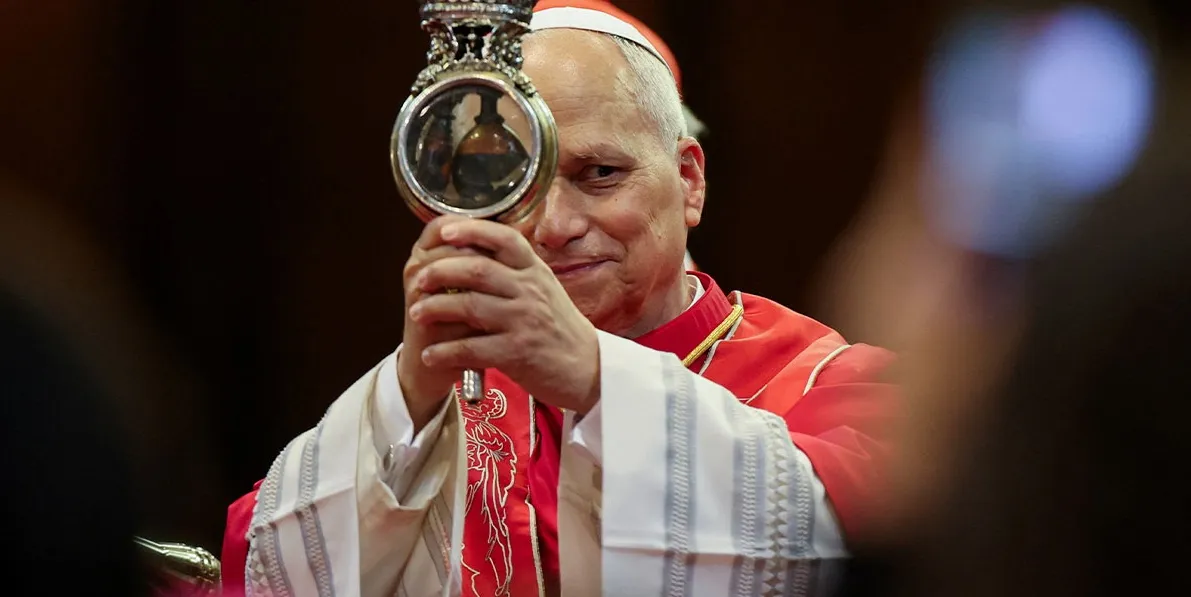
June 4, 2026
The Washington Stand
Entertainment & Lifestyle
Live streaming has become a major feature of modern media. From concerts and sporting events to interviews and breaking news, mainstream platforms have shown how powerful real-time viewing can be. That naturally leads many viewers to ask: Do Christian streaming platforms offer live events as well?
The answer is yes—though the purpose and approach often look different. Christian streaming platforms increasingly provide live access to sermons, conferences, special events, and timely discussions, giving believers opportunities to engage in real time rather than only on demand.
How Live Events Fit into Christian Streaming
Live events have long been part of church life. Worship services, evangelistic outreaches, conferences, and special gatherings have always carried a sense of immediacy and shared experience. Streaming technology simply extends that experience beyond physical walls.
Christian streaming platforms use live events to:
- Broadcast sermons and worship services
- Stream conferences and special teaching events
- Share timely conversations around cultural or global issues
- Connect viewers across locations at the same moment
While mainstream platforms often emphasize entertainment, Christian platforms focus on participation, learning, and spiritual encouragement.
What Kinds of Live Events Are Typically Offered
Christian streaming platforms tend to prioritize events that serve the Church and individual believers rather than one-time spectacles. These often include live broadcasts of:
- Weekend worship services
- Special sermon series launches
- Bible conferences and prophecy events
- Youth gatherings and leadership summits
- Live interviews or panel discussions
Some events are scheduled far in advance, while others respond to current events and pastoral needs. In both cases, the goal is to provide timely, relevant teaching rooted in Scripture.
How Live Christian Events Compare to Mainstream Streaming
The experience of watching a live event on a Christian platform is similar in function but different in focus. Like mainstream services, Christian platforms offer real-time access, interactive elements, and multi-device viewing. However, the emphasis is not on ratings or spectacle. Instead, live Christian streaming prioritizes:
- Biblical teaching over entertainment value
- Shared spiritual focus rather than viral moments
- Community engagement rather than passive viewing
- Encouragement and clarity rather than reaction
Many viewers find that this slower, more thoughtful approach helps them engage more deeply.
Why Live Events Matter for Faith
There is something uniquely impactful about knowing others are watching and learning at the same time. Live events help foster a sense of connection, even across distance.
For believers who:
- Cannot attend church in person
- Live far from strong teaching churches
- Want to participate in conferences they could never travel to
- Are seeking timely guidance during uncertain moments
Live streaming becomes a meaningful bridge rather than a replacement.
How Real Life Network Uses Live Events
Real Life Network regularly streams live events, sermons, and special programming to make biblical teaching accessible beyond physical locations. These live broadcasts often include:
- Church services
- Teaching events
- Conferences and special series
- Timely conversations addressing cultural or global developments
After the live broadcast ends, many of these events remain available on demand, allowing viewers to revisit teaching or catch up later. This combination of live access and ongoing availability gives viewers flexibility without losing the immediacy of the moment.
Live Events and the Church Connection
Christian streaming platforms are careful to emphasize that live-streamed events are not meant to replace involvement in a local church. Instead, they serve as an extension of teaching and encouragement.
Many churches use live streaming to:
- Reach homebound members
- Stay connected during travel or illness
- Share special events with a broader audience
- Invite people to explore faith in a lower-pressure setting
When paired with local fellowship and accountability, live streaming becomes a helpful support rather than a substitute.
Technology Has Lowered Barriers
One reason live Christian events are becoming more common is simple accessibility. Improvements in streaming technology mean that high-quality live broadcasts are now possible without massive production budgets. This has allowed:
- Smaller churches to reach wider audiences
- Conferences to stream globally
- Teaching to cross borders and time zones
Christian streaming platforms help centralize these efforts, making live events easier to find and watch.
What Viewers Should Expect Going Forward
As viewing habits continue to evolve, live Christian streaming is likely to grow—not by copying mainstream entertainment models, but by meeting spiritual needs more effectively. Viewers can expect:
- More live teaching opportunities
- Greater access to conferences and events
- Increased flexibility across devices
- A blend of live and on-demand content
This hybrid model reflects how people already engage with media today.
Christian streaming platforms do offer live events—and those events play an important role in teaching, encouragement, and connection. While the focus differs from mainstream platforms, the impact can be just as meaningful.
For believers seeking timely biblical teaching and shared spiritual experiences, live Christian streaming offers a valuable and growing resource.
Explore live and on-demand faith-based events anytime on Real Life Network.
Related Articles
- How Do Christian Streaming Platforms Reach Younger Generations? by Real Life Network
- How Does Streaming Faith-Based Content Strengthen My Faith by Real Life Network
- Best Faith-Based Documentaries to Watch for Free by Real Life Network
25 min
Do Christian Streaming Platforms Offer Live Events Like Mainstream Platforms?
June 2, 2026
Real Life Network
Business & Finance
America does not just have an economic crisis. We have a leadership crisis, a truth crisis, and in many ways, a spiritual crisis. Too many universities have abandoned biblical principles, embraced ideological agendas, and left students burdened with debt while stripping away faith, purpose, and common sense.
That is why my wife, Marnie Freeman, and I were so encouraged during our recent conversation with Claire Foster from Regent University. At a time when many institutions are losing their footing, Regent is doing the opposite, training students to become bold Christian leaders grounded in biblical truth, economic understanding, and servant leadership.
Watch this full episode on Pirate Money Radio, streaming now on the Real Life Network.
Why Christian Education Matters More Than Ever
One of the greatest blessings Marnie and I experienced as parents was watching our children graduate college while keeping both their faith and their values intact. That is becoming increasingly rare in America today.
Too many parents sacrifice financially to send their children to universities that openly undermine biblical truth and traditional values. Some schools that once began with Christian foundations, institutions like Harvard University and Yale University, have drifted so far from their origins that they now often work against the very principles they were founded to uphold.
Regent University was founded in 1977 by Pat Robertson with a very different mission: combining rigorous academics with unwavering biblical truth. According to Dr. Foster, the university’s vision is to develop Christian leaders who can influence every sphere of society — government, business, law, media, education, and beyond. That mission matters now more than ever.
Regent University Is Growing While Other Schools Decline
One of the most remarkable things about Regent is that it is thriving while many universities across America are struggling. Dr. Foster shared that Regent was recently ranked the number one Christian college in America and the number two military-friendly school in the nation. The university has doubled its student body during a period when many colleges are shrinking.
Why? Because families are searching for something deeper than credentials. They want truth, purpose, excellence, and leadership grounded in biblical values.
Regent’s emphasis on excellence, innovation, and integrity stood out immediately when Marnie and I visited the campus in Virginia Beach. The atmosphere felt different. Students were engaged, joyful, intelligent, and deeply rooted in faith.
The campus itself is beautiful, but what impressed us most was the spiritual foundation underneath it all. During chapel services, classroom discussions, and conversations with faculty, it became clear that Regent is intentionally discipling students — not simply preparing them for careers, but preparing them for life.
Watch this full episode on Pirate Money Radio, streaming now on the Real Life Network.
Why Biblical Principles Apply to Economics and Government
At Pirate Money Radio, we often say that God’s principles apply to every area of life, including money, economics, and government. Regent understands that reality.
During our conversation, Dr. Foster spoke about the importance of training leaders who understand biblical stewardship, honest weights and measures, and economic freedom. Those concepts are not separate from faith — they are deeply connected to it.
The Bible speaks extensively about debt, stewardship, honesty, generosity, and justice. Proverbs teaches wisdom about managing resources. Scripture warns about dishonest scales and reckless borrowing. These principles matter because economies rise or fall based on truth.
That is why I was especially encouraged to see Regent expanding its focus on economic education through the Robertson School of Government under the leadership of Michele Bachmann.
Too often, schools of government teach political power without teaching economic truth. Students graduate understanding bureaucracy but not liberty. They learn theories disconnected from biblical wisdom and real-world consequences. That must change.
The Economic War Room at Regent University
One of the greatest honors of my life recently came when Regent University awarded me an honorary Doctor of Science degree during a special ceremony attended by leaders including Ben Carson and Michele Bachmann.
But even more meaningful was Regent’s announcement that it is launching a dedicated Economic War Room within the Robertson School of Government. The purpose of this initiative is to train future leaders who understand economic sovereignty, monetary policy, freedom, and biblical principles. Students will learn how economics impacts liberty, national security, and the future of civilization itself.
This is critically important because economics is often the hidden battlefield behind nearly every major political conflict. Nations are enslaved by debt. Families are crushed by inflation. Governments manipulate currencies and expand control through monetary systems. Yet very few universities teach students how these systems truly work from a biblical worldview.
That is exactly what Regent intends to do.
As Dr. Foster explained, the goal is not simply to preserve ideas from the past. It is to equip the next generation of Christian leaders to defend freedom and apply biblical truth in the real world.
Watch this full episode on Pirate Money Radio, streaming now on the Real Life Network.
America Needs a Great Awakening Again
During the conversation, I shared the story of Benjamin Franklin and the transformation that occurred during America’s founding era. Franklin originally believed human wisdom alone could build a successful society. But after hearing the preaching of George Whitefield during the Great Awakening, Franklin began recognizing the necessity of God’s guidance in government and public life.
That spiritual awakening shaped America’s founding principles in profound ways. Today, America desperately needs another awakening, not merely political reform, but moral and spiritual renewal grounded in biblical truth.
That is why institutions like Regent matter so much. They are preparing students not simply to succeed financially, but to become principled leaders who can strengthen families, communities, churches, businesses, and government.
The Next Generation Gives Me Hope
One of the most encouraging parts of our conversation was hearing Dr. Foster describe what she sees in today’s students.
Despite being raised in a digital culture filled with confusion and distraction, many young people are hungry for truth, meaning, and authenticity. They are searching for something deeper than social media, political activism, or empty ideology. At Regent, students are encountering biblical truth in a way that is transforming their lives.
That gives me hope. America’s future will not be restored through politics alone. It will be restored by raising up men and women who understand God’s truth, apply biblical wisdom, and courageously lead in every sphere of society. That is exactly what Regent University is doing.
Stream Pirate Money Radio on the Real Life Network.
Related Articles
- Biblical Worldview vs Modern Marxism by Kevin Freeman
- A Christian Understanding of Economics by Kevin Freeman
- Biblical Money vs. Modern Currency: What the Bible Really Says by Kevin Freeman
25 min
Equipping GenZ with Excellence

May 30, 2026
Kevin Freeman
World News
Only days after U.S. President Donald Trump left a Beijing summit with CCP Chairman Xi Jinping, where religious freedom and jailed religious leaders were discussed, authorities in eastern China demolished a prominent church, razing the building with large excavators last week. Yazhong Church (also referred to as Yayang Church), an unregistered Protestant church in Wenzhou, Zhejiang Province — a region known as “China’s Jerusalem” — has been under siege since late last year.
On December 14 and 15, local authorities arrested 103 church members in a pre-dawn raid and took control of the church building, as confirmed last week in new reporting by Le Monde. That same week, at a public event, an unidentified government official announced: “We will see this campaign through to the end.”
Five months later, on Sunday, May 17, heavy construction vehicles passed through tightly controlled security checkpoints set up by authorities, according to multiple sources confirmed by ChinaAid News. On May 18, crews began to demolish the multi-level structure from the top down. By 11 a.m. Beijing Time on Tuesday, May 19, the beautiful and ornate sanctuary had been reduced to rubble.
Concurrently with the demolition, authorities arrested four additional church members, one identified as You Ci’en, according to local sources, cited anonymously to protect their safety. They join 18 other members of Yazhong Church previously jailed by the Chinese Communist Party (CCP) authorities.
The families of all detained individuals reportedly received official warnings instructing them to remain silent, sources familiar with the situation stated to ChinaAid News. Authorities reportedly imposed strict information controls ahead of the demolition, measures that sources said appeared intended to limit public scrutiny.
Multiple confidential sources said the area surrounding the church had been placed under lockdown in recent weeks, while checkpoints and guard posts were established roughly one kilometer from the site to prevent unauthorized access. The church cross was also covered with black cloth prior to the demolition.
Wenzhou has been called “China’s Jerusalem” due to its large Christian population. The destruction of Yazhong Church escalates a broader suppression campaign in Taishun County, documented over months by ChinaAid News.
The campaign has included continuous surveillance, stringent information controls, and the closure of businesses linked to alleged church members.
“My brothers and sisters in the faith have stood strong for so long,” said Bob Fu, president of Texas-based nonprofit group ChinaAid and a senior fellow at Family Research Council. “More so than the loss of a church building, I lament how the CCP has cracked down on this area known for its faithful Christians and oppressed them more and more day by day.”
He added, “These recent actions show that the persecution of Christians by Chinese authorities has intensified, becoming more institutionalized and targeted.”
Church Resisted Order to Display Chinese flag
The conflict originated from the church’s resistance to what congregants perceived as increasingly aggressive methods of religious repression imposed by local Chinese Communist Party authorities.
Yazhong Church is affiliated with the “Local Church” movement (also known as the “Assembly” movement), a faith tradition that traces its origins to the early 21st-century Chinese preacher Watchman Nee and shares historical roots with the British Closed Brethren movement.
Due to its location in the remote mountainous region of southern Zhejiang, the church has maintained the independent traditions characteristic of Wenzhou’s local churches and has historically kept a distance from local government authorities.
According to congregants, tensions escalated significantly during the previous summer. The immediate catalyst was a government directive requiring the Chinese national flag to be displayed inside the sanctuary and a flagpole erected on church grounds, which believers regarded as an infringement on the sanctity of their faith.
Subsequently, in June 2025, government personnel entered the church property by force, demolished part of the outer wall, and installed the flagpole, prompting collective protests and sparking a standoff between the church and the authorities.
Analysts who closely monitor religious freedom in China note that Wenzhou has been among the most aggressive regions in implementing religious policies over the past decade. Only churches affiliated with the state-controlled Three-Self Patriotic Movement are officially sanctioned.
“Any Christian church unwilling to submit to state power — even this one, without any political involvement — the Chinese Communist Party feels it has to silence and even destroy,” said Fu.
Pre-Christmas ‘Inspection’ Led to Mass Church Detentions
Chinese authorities planned the operation against Yazhong Church several months in advance, as previously reported by ChinaAid News.
On December 14 and 15, 2025, Zhejiang authorities deployed large numbers of special police and riot-control officers to Yayang Town, conducting coordinated “inspection operations” at 12 local church gathering sites.
During the operation targeting Yazhong Church, more than 100 believers were dispersed and temporarily detained.
As the government’s campaign intensified, the scope of detentions broadened. To date, 22 believers, including church leaders Lin Enzhao and Lin Enci, have been subjected to long-term criminal detention, according to multiple sources.
Authorities charged them with the ambiguous offense of “picking quarrels and provoking trouble,” a broad public-order offense frequently used against activists and religious groups.
However, sources note that four church members were recently released on bail pending trial.
Last week, French media outlet Le Monde continued its reporting on believers in Yayang last week with a video detailing new developments following an extensive January investigation.
‘Our Prayers Are Not Reduced to Rubble’
Despite ongoing international scrutiny, local authorities’ demolition of Yazhong Church reflects continuing tensions between Beijing and independent Christian communities across China. Observers have compared the incident to the 2014 demolition of Sanjiang Church in Wenzhou, which drew international attention. In this recent case, sources said authorities imposed a near-total ‘information vacuum’ before demolition crews arrived.
Law enforcement personnel at the scene reportedly imposed strict monitoring of electronic devices. Individuals attempting to take photographs or record video with mobile phones were immediately intercepted, expelled, or detained, sources tell ChinaAid News.
Human rights advocacy groups state that the authorities’ severe restrictions on online discussion and information dissemination highlight the sensitivity of such actions.
One analyst, granted anonymity for his safety, asked: “If the demolition was entirely lawful and proper, why would authorities go to such extraordinary lengths to impose a total information blackout?”
As of publication, neither the Wenzhou municipal government nor the Taishun County Public Security Bureau had issued a statement.
Sources indicated that local police continue to conduct sporadic arrests and interrogations targeting believers involved in the incident or those attempting to speak publicly about it.
“Our sources confirm that this beautiful and sacred place of worship has been destroyed — but our prayers are not reduced to rubble,” insisted Fu. “May this loss wake up the global church to what’s happening in China, a great conflict between faithful believers and state power.
This article was originally written by Goa Zhensai and published on The Washington Stand. For more content like this, visit Real Life Network.
25 min
Prominent Church in East China Demolished amid Escalating Crackdown
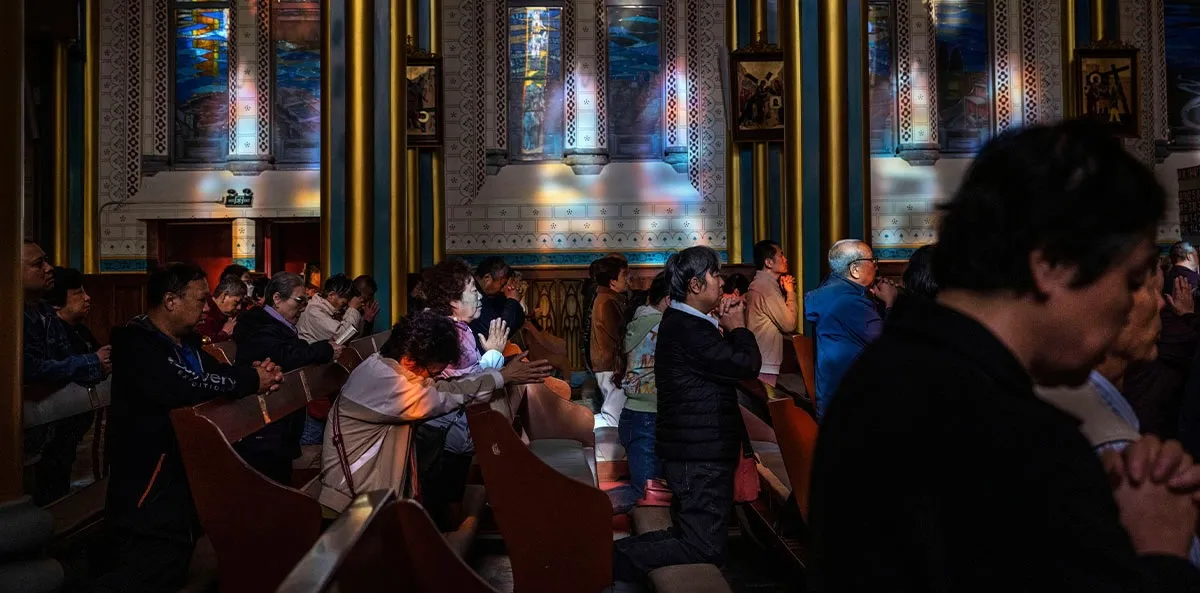
May 25, 2026
The Washington Stand
Faith & Culture
Humans are lonelier than ever before. Even before the pandemic, almost five out of 10 U.S. adults reported experiences of loneliness. For young adults aged 15-24, time spent in-person with friends has fallen almost 70% from 2003 to 2020, from about two and half hours down to 40 minutes per day. The lack of meaningful interaction comes with a cost. Research finds that a lack of social connections can be as dangerous to our health as smoking 15 cigarettes a day. Humans were designed for community, not for isolation. But the solution is always trickier than it first appears.
In a culture that values independence and autonomy, making time for community seems tangential or even burdensome. For some, the mere thought of a social event depletes their personal energy battery. In a fallen world, relationships are complicated. People can be our best friends, and cruelest enemies. We get burned, withdraw, and then experience loneliness while making little effort to socialize.
Our society subtly reinforces the concept that reality is something to flee or escape; a bad dream to smother underneath a barrage of entertainment, information, or other forms of distraction. With the proliferation of smartphones, unplugging from the current situation and escaping into the digital sphere has never been so easy or so tempting. Additionally, many in-person connection points have now moved to screens. Online college options, virtual training, and remote jobs are increasingly prevalent. That’s not to say that online spaces are somehow bad or should be avoided; rather, with every advantage (think flexibility, cost, and time-savings), there is always a disadvantage (a sense of association without the anchor of relationships).
The issue is that we don’t reinvest the time and resources gained by the virtual world back into in-person relationships and interactions. The data provides the proof. In 2018, Pew Research Center found, “A majority of Americans (59%) say they feel some attachment to their local community, but only 16% say they feel very attached; 41% say they are not too or not at all attached to the community where they live. Adults in urban, suburban and rural areas report nearly identical levels of attachment to their local community.”
Our immediate community often lacks the tailoring, diversity, and ability to fast-forward that the digitalscape so frequently offers. Marketers call this phenomenon fragmentation: the splintering of groups defined by distinct preferences or requirements. When we get used to such customization to our preferences, we naturally grow more isolated from one another as we become increasingly defined by what sets us apart.
But there’s no easy fix. After all, relationships are the result of time, energy, effort, and being authentic about ourselves and with others (not to mention the emotional stakes that come with the drama and messiness of other sinners). But that’s the interesting thing. Redemptive history starts with two people in a garden and reaches its climax as a cultivated city: a sanctified arena when God’s creation and a multitude of people coexist in community. Human flourishing happens in fellowship, not in isolation. And more than ever, Christians need to lead by example.
Brian Brown understands this tension well. He’s the founder and executive director of The Anselm Society, a Colorado-based organization dedicated to a renaissance of the Christian imagination and recapturing the sense of shared community among kingdom-minded creatives. “We live in a culture that has made escapism into a virtue. We’re encouraged by a million cues to be anywhere but here, anyone but who God made us to be,” he remarked to The Washington Stand. “In the face of that, the person who chooses to show up has tremendous power — to see and be seen, to invite others in, to treat the local church and the dinner table as essentials rather than extras. But to do that, we have to dare to see ourselves as God sees us: as beloved bearers of His image.”
As images of God, we reflect him best in our collectiveness and diversity. It’s when the body of Christ comes together in fellowship that we get a more accurate glimpse at the vastness and depth of divine character (Ephesians 4:11-13; 15-16). Through the Messiah’s redemptive work, Christians have the opportunity, indeed the calling, to work towards restoration of the vision.
Despite the digital advances in communication and connection points, people are lonelier than ever before. It’s easy to run with the culture, burying ourselves in the endless mountain of “extra things,” perhaps even attempting to fill our own ache for meaningful connection. There is both pain and reward in pulling our heads out of the mountain and “showing up” in acts of simple relationship-building. “Showing up” doesn’t need to be elaborate, but it needs to be essential and intentional if we are serious about changing the tide of isolation.
In a hurting world, the simple act of being there for someone matters. If Christians are to be known by our love for one another (John 13:35; 2 Corinthians 13:11), we must be willing to demonstrate it.
This was orginally written by Hannah Tu and published on The Washington Stand. For more content like this, visit Real Life Network.
25 min
The Wilderness of Social Isolation and the Christian Calling to Community

May 18, 2026
The Washington Stand
Faith & Culture
Fifty-four-year-old former Nebraska senator, husband, and father of three, Ben Sasse, was tragically diagnosed only six months ago with stage 4 pancreatic cancer and told he had three to four months to live. While the clinical trial that his doctors put him on has given him more time on earth than doctors predicted, the cancer has sadly continued to spread to his liver, lymph nodes, lung, and vascular system.
Each day that he lives is a miracle. Knowing this has caused Sasse to focus on what is truly important, and he has graciously shared his wisdom in several interviews recently. The following are five insights that we would all be wise to listen to and reflect upon.
1. Spend More Time with Family, Including Extended Family
In a recent extended interview on “60 Minutes,” Scott Pelley asked Sasse, “If you had another 30 years, what would your priority be?”
Sasse reflected, “I wish we’d had more babies. We have three great kids. I wish we had four or five. If I had 30 years left from now, I’d be working hard to take my zealous achiever daughters and try to figure out how you build something that’s a little bit like a family compound. How do you build something where you can have different generations come and go from it and have a thickness and a support system? How could you spend more time around your cousins or build the opportunity for your kids and your grandkids to spend more time around their cousins?”
He went on to share his regret of having a period where he spent too much time working and not enough time with his family: “I would travel a little bit less for work. … I spent way too many nights in hotel rooms. And I don’t know if my family even knows this, but I never really threw away any of my hotel keys. I’d come back from every trip, and I threw them in a box in a closet in my office, and there are thousands and thousands of hotel room keys, and sometimes I just look at it and feel a heaviness of regret. I would make better decisions about that.”
Later in the interview, Sasse expressed how tragic it is that people around the world have stopped having babies. He explained, “Having a baby is a bet on the future. And almost everywhere in the world — and the world is richer and richer and richer statistically than it’s ever been — people have decided, ‘Ah, actually babies are kind of an inconvenience.’ Babies have always been an inconvenience and the most glorious thing you can do to enrich your family and to make a bet on the future. … We’ve stopped making babies. We’ve decided that being distracted by a dopamine hit around a Candy Crush might be a good way to spend your time. Not if you’re fully human.”
2. Observe the Sabbath: Instead of Trying to Be Self-Sufficient, Rest in Almighty God
Similar to fellow Christian Charlie Kirk, Sasse sees the importance of following God’s Fourth Commandment to remember the Sabbath day and keep it holy. In an interview with Focus on the Family President Jim Daly, he shared:
“I have repented to my family. It started before this diagnosis, but we’ve talked about it a lot more intentionally since then. I have repented to my family about not having been a good leader about the Lord’s day. We never missed Sunday morning worship, but often by [2:00 or 3:00] in the afternoon, our hearts and affections and attentions were getting on to all the achievements we had to do, starting Monday morning and all the work we needed to do. And a lot of that work is important and meaningful, but man, the feast day of the soul is more important than I gave it attention to. And I now want my kids to view the glory of not needing to strive from Saturday night to Sunday night as an unbelievable blessing that we get to rest.
“Martin Luther’s great ‘A Mighty Fortress’ is based on Psalm 46, and if you read Psalm 46, there’s pretty obviously three movements. There’s you don’t have to fear anything. You’re going to be fine. God’s got this. And then this command: ‘Be still.’ It means stop trying to be self-sufficient. You get to be a child of the eternal king. And every Sunday, we can live that. I didn’t do that enough.”
Similarly, when Daly asked Sasse what advice he would give dads, he reiterated the importance of family worship time on the Sabbath:
“Let’s be humble with our kids and say … it’s glorious to get to reflect on the things of the Lord. What can we read together as a family this Sunday? How can we lock up our phones? How can we set aside time on the Lord’s Day to just linger and reflect back on the sermon, not have to get out of church the second it’s over, but go find the folks who are in need there or the visitors there. But I’d say two of the most practical operationalizable ones for us: we lock up our phones most of Sunday and we read aloud together a lot.”
3. Help Government Restrain Evil and Protect Freedoms
During CBS News’s “Things That Matter” townhall, a member of the audience asked Sasse how a Christian’s faith should impact his politics. He responded by emphasizing that Christians should seek to maintain order through government, not try to force religion on citizens. He explained:
“The secular sphere is still God’s space and God’s sphere, but it’s a question of whether or not explicit revealed theology is guiding our government. And I think that the purposes of government are to maintain order. It’s not to be theologically precise or accurate about what anybody should believe. The First Amendment is the most glorious inheritance anybody’s ever gotten in the history of government. Government is not the most important thing in the world, but it is glorious that our First Amendment has freedom of religion, speech, press, assembly, protest or redress of grievances. But that means that what I want government to do is create a space that is free from violence.
“So people can worship as they see fit, whether I agree with them or disagree with them. As a neighbor, I might want to wrestle with theology with somebody, but I don’t want to use the state to accomplish theological ends. I want to maintain order for a secular sphere that is free from violence.
“So I don’t subscribe to views of geopolitics as God is accomplishing a precise thing in those places. I think our servant leaders are responsible for using their time in office to try to minimize violence, maximize order [and] human liberty. In my view, the future of geopolitics 10 or 40 years from now is going to be more U.S.-led or more Chinese Communist Party-led, and I would rather have open navigation of the seaways, freedom of religion, human rights, commerce, trade, transparent contracts. And so, I would rather have there be more U.S.-led freedoms for the world — but not because the U.S. is an eternal entity. The U.S. is just the best experiment in government we’ve ever known. But governments are going to pass away ultimately. At the end of days, when we all wrestle through and with the questions around our own mortality, there will be no more tears, there will be no more cancer, there will also be no more government. Government is a tool. It’s a really important tool, but it’s a time-limited tool.”
In his interview with Daly, he explained, “Government is about restraining evil. It’s not about the glory of what happens at worship. It’s not about the warmth around your dinner table where you’re telling your kids how much you love them and asking them about their day. Government is just about a framework for ordered liberty. And so our passions [have to] hold moderately to certain institutions like government because they’re important, but they’re passing away.”
4. Community Is Essential: Escape Social Media Echo Chambers and Learn from Others
Sasse believes that how society handles the current communication revolution (especially social media and AI) is crucial, telling Daly, “I think a hundred years from now, if the Lord hasn’t returned yet, when we look back on this moment, we’re not going to talk very much about public policy. We’re going to talk about the fact that social media created a completely different kind of information ecosystem. And there [are] these grand temptations to steal our attention all the time. We know that only about 12% of Americans will read a book this year.”
Sasse told Pelley, “We’re living through a technological revolution which is creating an economic revolution. Let’s be clear, we’re the rich middle-class median. Americans are the richest people any time and place in all of human history. And yet, the economic revolutions that we’re living through are unsettling culture and place,” he pointed out. “And so people are incredibly rich at a material level statistically. And yet we’re pretty impoverished spiritually and communally in that we don’t have fit community. We don’t know our cousins. We don’t know the people who live two doors away from us. And we don’t feel like we’re in a common cause with people right now. And politics wants to trivialize that by screaming there’s some bad political actor somewhere. And if only that person were ripped out of the public square, politicians could fix all this. No, neighbors are going to have to fix this.”
He went on to say, “I do think social media is one of the fundamental problems that we’re dealing with right now. Right now, almost all politicians’ impulses and incentives … is to go narrow but deep and to do a lot of fan service. It doesn’t encourage a lot of self-scrutiny. It doesn’t encourage a lot of humility. It doesn’t encourage someone saying, ‘You know what, I used to believe this, but I listened to somebody else, and I realized I was wrong, and I’ve learned this new thing. There’s no audience for that. You want to just say more of, ‘We’re definitely right, and they’re definitely wrong.’ And that tribalism makes us pretty stupid.”
He continued, “One of the glorious things about the American experiment is believing in souls that can do deferred gratification. We can do deliberation that says, ‘Maybe I don’t have all the answers right now at my fingertips, and maybe the glories of a big and diverse creation is I can learn a lot from my neighbors.’”
5. Put Your Trust in Sovereign God, the Source of Peace
In the “60 Minutes” interview, Pelley observed, “You are completely devoted to your faith: what’s known as Reformed Christianity or Calvinism. And one of the tenets of that faith is that God ordains everything. And I wonder why you think God has put you to this test?”
Sasse answered, “Death is wicked. Death is evil. Death is not how it’s supposed to be. And me getting a cancer diagnosis again is pretty small on the grand scheme of things, but it’s a touch of grace because it forces me to tell the truth. And the lie I want to tell myself is that I’m the center of everything, and I’m going to be around forever, and I can work harder and store up enough that I can atone for my own brokenness. I can’t. And so, I hate cancer, but I’m also grateful for it. I tell a lot more truth to myself than I used to … when I thought I was super omnipotent and interesting.”
The most emotional and inspirational part of these interviews came at the end of this conversation. Everyone should listen and learn from this man of deep Christian faith.
Pelley, on the verge of tears, managed to say, “I make no comparison to what you’re going through, but there was a moment on 9/11 at the World Trade Center that I knew I was dead. And in that lightning flash of an instant, the only thing that crossed my mind was leaving my family behind. And I wonder how you reconcile that.”
Sasse responded, “Yeah … I’m incredibly blessed. My wife Melissa … we’ve been married 31 years. …We’re going to be apart for a time. But she’s tough and gritty and theologically rooted, and she’s going to be fine. My daughters are 24 and 22, and they’re extraordinary. I want to walk them down the aisle when they get married,” he paused, getting emotional. “That’s not likely to be. That’s not the math of my timecard. My son, we have a providential surprise. He’s a decade younger than big sisters. He’s … going to be fine, and he’ll have other wise men and women to put a hand on his shoulder. But I’m super bummed to not be there at 16 and 18 and 20 years old in his life. I want to give him more advice than he wants, and I want to put my arm on his shoulder, and I want his shoulders to get taller. But it’s not a surprise to God.”
Pelley noted, “And God, you believe, has a plan.”
Sasse, without hesitation, answered, “Absolutely. There are no maverick molecules in the universe.”
This article was written by Kathy Athearn and originally published at The Washington Stand. For more content like this, visit Real Life Network.
25 min
5 Insights from Ben Sasse as He Faces His Last Days on Earth
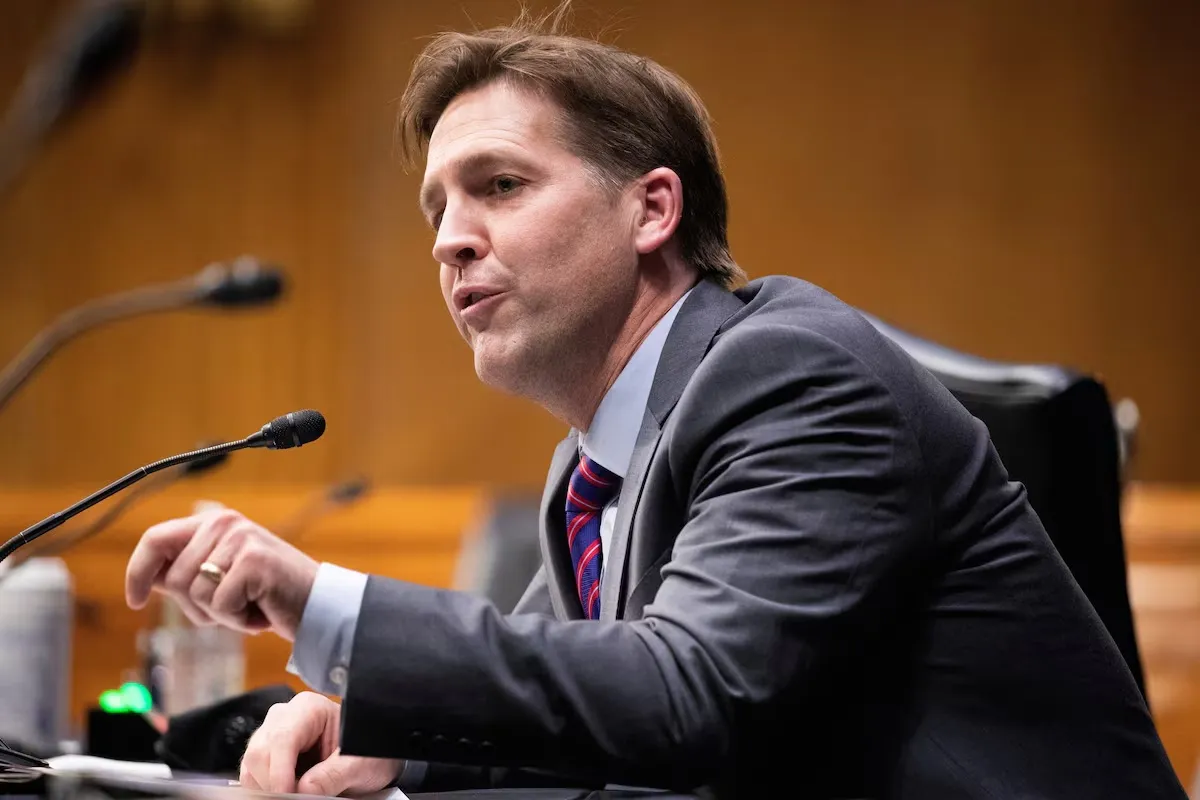
May 8, 2026
The Washington Stand
Faith & Culture
On April 26, I spoke at Hickory Hammock Baptist Church in Milton, Florida, about AI’s impact on children and families. After the service, parents and grandparents lingered with questions — not about geopolitics or corporate boardrooms, but about what was already happening inside their own households. They wanted practical steps to protect their children. Their concern is well-founded.
Picture the moment: a child sits at the kitchen table, struggling with homework. He doesn’t ask a parent — he opens an AI app and types the question. Within seconds, a clear, confident answer appears. No friction. No conversation. No one who loves him is involved at all. Across the room, his mother consults her own parenting app for guidance on how to handle his behavior. The moment looks utterly ordinary, and that is the problem.
The question those parents in Milton were asking is the right one: who is raising our children — the parent or the algorithm?
A Pew Research Center survey of 1,458 U.S. teenagers found that 64% now use AI chatbots — including 12% who have sought emotional support from these tools and more than half who turn to them regularly for schoolwork. A companion Pew report found that only 51% of parents believe their teenager uses AI regularly, while 30% have no idea. What parents don’t see, they cannot shape.
The Brookings Institution, drawing on input from more than 500 participants across 50 countries, concluded in January 2026 that the risks of AI in children’s education “overshadow its benefits” — because those risks strike directly at foundational development: attention, reasoning, social relationships, and independent judgment. Children often cannot recognize, question, or even see the technologies quietly shaping their earliest experiences. This is not simply a technology problem. It is an authority problem.
For generations, parents controlled which outside voices entered the home. A television could be turned off. A book could be closed. A teacher could be called. AI operates differently. It is embedded in the devices children already carry, available at any hour, and patient in ways no human being can sustain. It does not raise its voice or express disappointment. It does not ask what the child thinks before delivering an answer. Those qualities feel reassuring to a child — which is precisely what makes them quietly formative.
A RAND Corporation study found student use of AI for schoolwork jumped from 48 to 62% in just seven months during 2025, with 67% of students acknowledging the practice weakens their critical thinking. In one conversation I had recently, a college student told me she has watched her Christian peers consult AI the way they would a pastor. That is not a metaphor any parent or pastor should let pass without reflection.
There is a relational cost embedded in all of this that rarely gets named. Real formation — the kind that produces character, judgment, and wisdom — happens through friction. When a child shares a tough question with a parent, they gain more than any AI can offer: the parent’s wisdom, a strong relationship, and an appreciation for patience. AI systems are engineered to be responsive, affirming, and conflict-free — optimized for engagement, not formation. Engagement sustained over years becomes its own kind of formation, only one running in a vastly different direction.
Scripture understood this before algorithms existed. “Train up a child in the way he should go; even when he is old he will not depart from it” (Proverbs 22:6). That charge was given to parents — not to AI platforms. The Hebrew verb for “train” — chanak — carries the sense of dedication, of establishing a direction through habitual influence. Formation is cumulative. Every time a child turns to an algorithm instead of a parent — and every time a parent turns to AI for guidance on how to respond — that cumulative process is quietly redirected.
Artificial intelligence has no conscience. It is not accountable to God. It cannot love your child, discern his heart, or distinguish between what he wants to hear and what he needs to know. As I examine at length in “AI for Mankind’s Future,” unchecked reliance on algorithmic systems erodes the very human judgment those systems were meant to supplement. The voice is confident, the answer is instant, and children are not equipped to evaluate what they are being handed. “Trust in the Lord with all your heart, and do not lean on your own understanding” (Proverbs 3:5). A child trained by habit of leaning on an algorithm rather than a parent is being pointed in a fundamentally wrong direction — not by malice, but by the steady drift of convenience.
Parents who think they are managing this problem by monitoring screen time are already behind it. Treating AI like a hazard to be filtered addresses the symptom while missing the cause. A more effective response means being present in the conversation — asking the question before the AI app gets to it, discussing what the app provided, modeling the slower and more honest work of thinking through a problem. It means teaching children that truth is different from a confident answer delivered in two seconds by a machine. Moses understood the principle: “You shall teach them diligently to your children, and shall talk of them when you sit in your house, and when you walk by the way” (Deuteronomy 6:7). The home was always the first classroom. Parents have always been the first teachers. AI has not changed that assignment — it has only made it more urgent.
Pastors need to address this with the same directness they bring to any other threat to spiritual formation. AI is shaping how young people think, relate to authority, and understand where truth comes from — and that is not a secondary concern. Policymakers need to move beyond phone bans — a political band-aid on a deeper wound — and confront the design incentives that make these systems so compelling, because removing a phone from a classroom does not fix a platform engineered to capture students’ attention the moment school ends.
In “The New AI Cold War,” I argue that the future security of this nation depends as much on the character and discipline of its people as on its technology. That argument starts in the home. A generation shaped more by algorithms than by parents will not have the judgment, resilience, or relational depth to defend what they have inherited.
The AI is already in your home. It is neither neutral nor passive, and it is not going away. The parents who understand that clearly will still have a chance to answer the question those families in Milton were asking. The ones who are still waiting to take it seriously may find the answer has already been made for them.
This article was originally written by Robert Maginnis and published on The Washington Stand. For more content like this, visit Real Life Network.
25 min
Who Is Raising Your Children - the Parent, or the Algorithm?

May 3, 2026
The Washington Stand
Faith & Culture
On January 20, 2026, historian Yuval Noah Harari stood before the World Economic Forum at Davos and issued a direct challenge to Christians worldwide. “If religion is built from words, then AI will take over religion,” he said, then named Christianity by name: “This is particularly true of religions based on books, like Islam, Christianity, or Judaism.” And he left this question in the air: “What happens to the religion of a book when the greatest expert on the holy book is an AI?”
The clip accumulated 1.2 million views within days. The room at Davos did not object.
A Documented Shift, not a Conspiracy
Harari’s 2026 remarks are the current edge of a worldview shift building for years — visible in the public statements of the most powerful technologists of our time, spanning five distinct domains of the human person.
It was Harari himself who told the same World Economic Forum in 2020 that we are “no longer mysterious souls — we are now hackable animals.” Six years later, he has moved from contesting human identity to contesting the authority of Scripture. The trajectory is not random.
OpenAI CEO Sam Altman wrote in 2017 that “the merge has already started” — that phones and algorithms already “control us” and “decide what we think.” By 2025, he had enlarged that frame: an essay titled “The Gentle Singularity” described AI as “building a brain for the world,” projected brain-computer interfaces, and suggested “some people will probably decide to ‘plug in.’” Venture capitalist Marc Andreessen has called AI development a “moral obligation” and envisions every person equipped with an AI “assistant, coach, mentor, tutor… therapist” — roles Scripture reserves for God, parents, pastors, and community.
Billionaire, AI investor, and co-founder of Palantir Technologies Peter Thiel has said, “I’ve always had this really strong sense that death was a terrible, terrible thing… I prefer to fight it,” investing millions to turn mortality into an engineering problem. Anthropic CEO Dario Amodei, writing in more restrained terms, envisions AI-enabled biology offering “control and freedom over our own biological processes” addressing conditions “we currently think of as immutable parts of the human condition” — potentially including a doubling of the human lifespan.
These statements come from different people with different assumptions. What they share is a common direction: the human being as improvable hardware, death as a bug to be patched, and — in Harari’s own words before world leaders — the Bible as a database awaiting a more capable administrator.
The Contest That Matters More than the One We’re Watching
In “The New AI Cold War,” I document how China, Russia, and Iran are weaponizing artificial intelligence to surveil populations and export digital tyranny worldwide. That geopolitical contest is real and urgent. But the deeper one is being fought inside Western civilization itself — on the terrain of human identity and, as Harari’s Davos appearance confirmed, on the terrain of Christian faith. The architects of AI understand this better than most Christians do.
What Scripture Actually Says
No technological development alters what Scripture says about human beings. “Then God said, ‘Let us make man in our image, after our likeness’” (Genesis 1:26). That declaration is the load-bearing wall of Christian anthropology — the reason human dignity is inherent and not a function of what AI can do with our genome or our sacred texts.
In “AI for Mankind’s Future,” I examine what it means to bear the imago Dei when machines imitate human intelligence. Harari’s question has a Christian answer no algorithm can produce: the Holy Spirit, not processing power, illuminates Scripture. The soul is real and not reducible to data. The body is not hardware — it will be raised imperishable. Death is an enemy, but the resurrection of Jesus Christ has already answered that claim. “Trust in the LORD with all your heart, and do not lean on your own understanding” (Proverbs 3:5) is not a devotional sentiment — it is the posture Scripture commands for this moment.
The Jurisdiction That Is Quietly Changing Hands
The most consequential shift in AI is not technological. It is jurisdictional. AI is migrating from tool to authority — not by coercion, but through the frictionless convenience of daily use. Algorithms already shape what millions of people read and believe, mediate education, and form moral character. Andreessen’s vision of AI as universal tutor, therapist, and life guide is not a distant scenario. It is the operational goal of every major platform already in your household.
When a digital system begins answering the questions of identity, purpose, and meaning that once belonged to God, to parents, and to community, it does not remain a tool. Romans 1:25 describes the exchange in which Paul warns against trading the truth of God for the created thing. Harari is more candid than most about where that exchange leads — and at Davos, he named your Bible specifically.
The Response Christians Cannot Afford to Delay
AI produces genuine benefits — in medicine, national security, and communication — and “AI for Mankind’s Future” acknowledges them. The argument here is against surrender: surrendering judgment to the algorithm, and the formation of the next generation to systems whose designers have already decided the human being is improvable hardware and the Bible is a word-processing problem.
Christians must engage AI with discernment — using the technology without adopting its embedded anthropology. That means defending what the technologists are actively contesting: that human dignity is a gift of the Creator, not a product of code, and that the authority of Scripture cannot be transferred to any machine. “There is a way that seems right to a man, but its end is the way to death” (Proverbs 14:12).
Harari posed the right question at Davos, and the answer has not changed since Moses received it at Mount Sinai. What remains is whether the church will say it loudly enough, and soon enough, for the world to hear.
This article was originally written by Robert Maginnis published on The Washington Stand. For more content like this, visit Real Life Network.
25 min
The New Religion of AI: Who Gets to Define What It Means to Be Human?

May 1, 2026
The Washington Stand
Entertainment & Lifestyle
Faith is strengthened through consistent exposure to God’s Word, thoughtful study, and intentional choices about what shapes our thinking. For many believers, that process once revolved solely around weekly church attendance and personal Bible study. Today, however, digital media plays a significant role in how people learn, reflect, and grow.
That reality raises an important question: How does streaming faith-based content actually strengthen faith? When used intentionally, Christian streaming can become a meaningful support for spiritual growth, reinforcing biblical truth, encouraging perseverance, and helping believers stay anchored in Scripture throughout the week.
Faith Grows Through Consistency, Not Occasional Moments
Spiritual growth rarely happens through isolated experiences. It is shaped over time through repeated engagement with truth. Faith-based streaming helps support that consistency by making biblical teaching readily available.
Instead of relying only on a single sermon each week, believers can:
- Revisit messages that stood out
- Watch teaching throughout the week
- Listen to podcasts during everyday routines
- Explore Scripture-centered content at their own pace
This steady rhythm matters. When God’s Word becomes part of daily life—rather than something accessed only occasionally—faith deepens naturally.
Faith-Based Streaming Reinforces Biblical Perspective
The messages people consume daily shape how they interpret the world. News, entertainment, and social media often present values that conflict with Scripture. Faith-based streaming provides an alternative voice rooted in biblical truth rather than cultural pressure.
Christian platforms offer content that:
- Interprets current events through Scripture
- Encourages discernment rather than fear
- Affirms God’s sovereignty in uncertain times
- Helps believers think clearly about culture, identity, and purpose
Programs such as The Jack Hibbs Podcast, The Prophecy Pros, and worldview-focused documentaries on Real Life Network help viewers process complex issues without losing their biblical grounding.
Learning Deepens Confidence in What You Believe
Faith grows stronger when understanding grows deeper. Many believers struggle not because they lack sincerity, but because they feel unsure how to answer hard questions—whether their own or those raised by others.
Faith-based streaming addresses this need by offering apologetics and teaching that strengthen confidence in Scripture. On Real Life Network, programs like Cross-Examined with Frank Turek, The Creation Today Show, and In Depth Apologetics for Kids help viewers think clearly about faith, science, history, and truth.
When believers understand why they believe what they believe, their faith becomes steadier and more resilient.
Stories of Faith Encourage Perseverance
One of the most powerful ways faith is strengthened is through testimony. Seeing how God works in the lives of others encourages perseverance during personal trials.
Faith-based documentaries and testimonies remind viewers that:
- God works through ordinary people
- Faithfulness often involves hardship
- Redemption is possible even after deep struggle
- God’s purposes extend beyond present circumstances
Documentaries such as Louis Zamperini, Billy Graham: A Life Remembered, The Listening Road, and The Call provide real-life examples of faith lived out under pressure. These stories encourage viewers to remain faithful even when growth feels slow or unseen.
Faith Is Strengthened Through Shared Experience
Faith is not meant to grow in isolation. While streaming is often viewed as an individual activity, it can become a shared experience that strengthens relationships and spiritual growth.
Families might:
- Watch faith-based films together
- Discuss documentaries during dinner
- Let kids engage with Bible-based cartoons
- Talk about sermons throughout the week
Small groups often use streaming content as a discussion starter, breaking longer programs into manageable segments. When faith-based content leads to conversation, it moves from passive viewing to active discipleship.
Real Life Network’s wide range of kids’ programming, sermons, podcasts, and documentaries makes it easier for families and groups to engage together across age levels.
Faith-Based Streaming Reduces Spiritual Noise
Modern life is filled with competing voices. Many believers find that constant exposure to negative or distracting media weakens focus, peace, and clarity. Choosing faith-based streaming helps create a healthier media environment.
By intentionally replacing some entertainment with Christian content, viewers often experience:
- Greater peace of mind
- Reduced anxiety
- Renewed focus on Scripture
- Stronger spiritual discipline
This isn’t about withdrawing from the world, but about choosing what shapes the heart and mind most consistently.
Faith Is Strengthened When Truth Is Accessible
One reason streaming strengthens faith is accessibility. Sermons, teaching series, and devotionals are no longer tied to a specific place or time. This removes barriers that often interrupt spiritual growth.
Streaming allows believers to:
- Continue learning during travel
- Revisit teaching when questions arise
- Stay connected during difficult seasons
- Maintain spiritual habits during busy schedules
Platforms like Real Life Network make this access simple, offering biblically grounded content across devices so faith remains part of everyday life.
How Real Life Network Supports Spiritual Growth
Real Life Network exists to provide content that encourages believers and strengthens faith without unnecessary distractions. Its curated library includes:
- Sermons and teaching
- Apologetics and worldview programs
- Podcasts and short-form content
- Faith-based documentaries
- Kids’ programming that builds biblical foundations
RLN focuses on content designed to support growth, understanding, and encouragement.
Faith is strengthened when believers remain rooted in God’s Word, encouraged by truth, and supported by wise teaching. Faith-based streaming, when used thoughtfully, helps reinforce those foundations, making biblical content accessible, consistent, and relevant to everyday life.
It is not a replacement for Scripture, prayer, or community. But it is a valuable tool that helps faith grow steadily in a world full of competing voices.
Explore faith-strengthening content anytime on Real Life Network.
Related Articles
- Best Faith-Based Documentaries to Watch for Free by Real Life Network
- Where Can I Find Clean Cartoons for My Kids? by Real Life Network
- Disney+, Hulu, and Choosing a Better Streaming Option for Christian Families by Real Life Network
25 min
How Does Streaming Faith-Based Content Strengthen My Faith

April 6, 2026
Real Life Network
Faith & Culture
On April 6, 1990, I wrote in my Bible the following words: “It’s nice to be back. I’ve been gone too long — only through the power and love of Jesus I have come back,” and I signed it “Walt,” a remarkable occurrence after falsely identifying as a woman for eight years.
My experience offers living proof of the power of the gospel to transform a life seemingly lost in an alternate “trans” identity, and the important role the church plays in restoration.
The Bible says the body is the dwelling place of the Holy Spirit. In 1 Corinthians 3:16, Paul writes: “Do you know that you are God’s temple and that God’s Spirit dwells in you?” The good news is that no matter what your past looks like, or what you may have done to your body, redemption awaits you in the arms of Jesus, and God’s Spirit who dwells in you will restore you.
When I was identifying as a “transgender woman,” I was mentally unstable and unable to comprehend the lifelong consequences of using cross-sex hormones and surgery to change my appearance to that of a woman. Even worse, I was drinking to excess. At my initial appointment with “gender” therapist, Dr. Paul Walker, I was intoxicated, yet he quickly diagnosed me with gender dysphoria, a diagnosis that never should have happened. Following his advice, I underwent gender surgery in 1983 at the age of 42 and began my pretense of presenting in life as a woman.
Sobriety, Church, and Prayer
I had been living what I see now was a life of sin but, to my amazement, my messy life was not too big for Jesus. Jesus did not turn His back on me.
Jesus preserved me through despair and attempted suicide, led me to a church and sobriety, and provided a home and a strong support team. The relationships with leaders at church cemented my foundation in Christ and, in time, gave me the courage to seek counseling to confront the childhood traumas that had caused me to seek an alternate identity.
The turning point occurred during a prayer with a counselor several years into my sobriety in a personal encounter with Jesus I will never forget. My lord and savior Jesus appeared to me, held me in His arms, and said, “You are now safe with me forever.” That day, I was born again in Christ and trusted He would put me on the path to full restoration as Walt. That’s when I wrote it in my Bible and signed “Walt.”
The Church’s Role
The church’s basic approach to reaching anyone, no matter what the issue, starts with welcoming love and standing for truth and is deeply rooted in compassion and concern for both the needs of the person and the congregation.
Reaching out to help an adult in your congregation who is presenting as the opposite gender requires building a relationship with that person. It may require a pastor or elder to have a one-on-one conversation first to determine if the individual is willing to receive spiritual guidance. You can learn a great deal in that conversation, and it will help in knowing if and how to provide support and boundaries.
In my case, my needs were great on many levels — financial, spiritual, emotional, legal, psychological — for an extended period. My pastor suggested I chronicle them in a regular note to the leadership so they could pray and provide. This “note” over time became a weekly prayer letter keeping the leadership in tune with my journey, at times celebrating the triumphs and at other times, carrying my burdens. The pastor gathered a strong support team of two or three mentors to encourage me with consistent Bible study and contact on the phone, over meals or coffee. These spiritually mature people were the very hands and feet of Jesus, showing me care and providing accountability.
In my life, the restoration process was messy for me and the church, and it can be messy for the church today. But, oh, it is so worth the effort to see God work. Redemption through Jesus has given me peace, healing, freedom, and victory. This year I celebrate 40 years of sobriety and 35 years in my right identity.
The Chloe Cole Act
You can see why I strongly oppose cross-sex hormones and surgery as “treatment” for identity distress. I came to Jesus and learned hormones and surgical procedures are not, and never have been, medically effective in changing a man into a woman or a woman into a man, a boy into a girl or a girl into a boy. Medical practitioners who promote this “treatment” are imposing great harm, especially on children, and lawmakers are stepping up.
The proposed Chloe Cole Act will prevent doctors and hospitals from introducing wrong-sex hormones into bloodstreams of children and removing healthy body parts in pursuit of a false identity.
The life-long harmful effects of hormone therapies and radical surgeries don’t stop at the age of 19; sadly, I can attest to that. Our lawmakers should start now to consider laws that will protect adults as well.
Resources for the Church
The church played an enormous role in my restoration even though resources about alternate identities were non-existent so many years ago. To support people in the congregation who are struggling with their biological sex, it’s important for the church, especially the leadership, to be equipped with accurate information.
To combat non-biblical misinformation and to teach Christians how to apply God’s word to helping trans-identifying people, Dr. Jennifer Bauwens and I applied our expertise and experiences in trauma and gender distress to write the book, “Embracing God’s Design.”
Written for the church, it presents an easy-to-read understanding of the topic from the Christian and psychological perspectives, reveals what drives adults or children to identify this way, chronicles the harms inflicted by “gender” clinics, and shares how Christians can minister to them and their families.
Redemption
I give all the glory to Jesus for my new redeemed life “only through the power and love of Jesus.” I had no idea on that day of April 6, 1990, what redemption would look like, but 35 years later I do understand redemption is about the Lord fulfilling His promises. For believers, Christ’s redemptive work fulfills every divine promise made for our salvation and restoration. What is so beautiful is it’s yours for the asking.
So come to Jesus. Get your redemption started on Easter Sunday 2026.
For more information on how the church can respond, see the FRC resource, “Embracing God’s Design.”
You can support the Chloe Cole Act by contacting your members of Congress here.
This article was originally written by Walt Heyer and published on The Washington Stand. For more content like this, visit the Real Life Network.
25 min
Jesus Used the Church to Redeem My ‘Trans’ Life
April 2, 2026
The Washington Stand
World News
In today’s world of online news, politics, and Christian streaming, the fight for biblical truth is more urgent than ever. From the Daniel Cohen Show on the Real Life Network, viewers are turning to bold, unfiltered reporting that cuts through media bias and exposes what’s really happening in Israel, Iran, and the West. From Hamas tactics to cultural deception and moral confusion, this conversation reveals how a dangerous ideology known as suicidal empathy is reshaping our world.
This is not just about headlines. This is about a civilization wrestling with truth itself.
The Rise of Suicidal Empathy in a Confused Culture
There is a growing belief in modern culture that compassion means affirming anything and everything, even when it leads to destruction. That helping someone means agreeing with their choices, regardless of the consequences. That resisting evil is somehow unloving.
That is not compassion. That is surrender. This is what can only be described as suicidal empathy.
In Iran, the regime has reportedly lowered its recruitment age to just twelve years old. Children are being armed and placed at checkpoints. Boys who should be playing sports are instead being trained for war. This is not strength. It is desperation.
At the same time, groups like Hamas and Hezbollah continue to operate from within civilian populations. They store weapons in schools and hospitals. They disguise operatives as journalists. They manipulate the optics, knowing the Western media will amplify their narrative.
The enemy hides behind innocence while exploiting the compassion of the West.
This distortion creates confusion. It paralyzes moral clarity. And it leaves many unable to distinguish between good and evil.
For those seeking clear, biblically grounded reporting, you can watch full episodes on the Real Life Network, where truth is not filtered through political agendas.
When Narratives Replace Reality
One of the most consistent themes today is that things are not what they appear to be.
A man presented as a journalist is revealed to be a terrorist operative. A school becomes a weapons depot. A protest described as grassroots turns out to be highly organized and well funded.
Even culturally, the same pattern exists.
A viral moment shows a beauty pageant contestant whose polished image falls apart when her veneers slip during a live broadcast. It is an uncomfortable scene, but it serves as a powerful picture of something deeper.
What looks convincing on the surface often collapses under the weight of reality. This is true of many modern narratives, especially those tied to politics and identity. They are emotionally compelling but historically and factually disconnected.
When examined through the lens of biblical truth and objective reality, they cannot stand.
When truth collides with reality, the manufactured narrative cannot stand.
This is why discernment matters. Without it, people are swept into movements and ideas that sound compassionate but are rooted in deception.
Stay anchored in truth by engaging content that prioritizes a biblical worldview on the Real Life Network.
A Culture That Offers Death Instead of Hope
Perhaps the most heartbreaking example of suicidal empathy comes from a tragic story in Spain.
A young woman, just 25 years old, endured severe trauma after being assaulted. In the aftermath, she suffered physically and emotionally, eventually becoming paralyzed after a failed suicide attempt. Instead of receiving sustained care, restoration, and hope, she was ultimately granted euthanasia. Her life ended not because hope was impossible, but because hope was never fully pursued.
This is the devastating outcome of a culture that prioritizes ending suffering over redeeming lives. It sends a message that some lives are no longer worth fighting for.
But the biblical worldview tells a different story. Every human being is created in the image of God. Every life has value. Suffering is real, but it is not the end. Redemption is possible, even in the darkest moments.
A life in pain is still a life with purpose, and redemption is always possible through Christ.
There are countless testimonies of people who stood at the edge of despair and found new life, new purpose, and lasting hope through Jesus Christ. That is the message the world desperately needs. Not surrender. Not silence. Not death. Hope.
In a time when truth is blurred and compassion is redefined, it is more important than ever to stand firm in a biblical worldview. The issues facing Israel, the rise of cultural confusion, and the spread of suicidal empathy all point to a deeper spiritual battle.
The question is not just what is happening in the world. The question is whether we are willing to see it clearly.
For more bold, biblically grounded content that speaks truth into today’s most pressing issues, visit the Real Life Network.
Related Articles
25 min
The Dangerous Lie of Suicidal Empathy: Israel, Iran, and a Culture Losing Truth
.webp)
March 30, 2026
Daniel Cohen
World News
If you want clarity on the Israel Iran conflict, biblical truth, The Daniel Cohen Show, Real Life Network, and what is really happening in the Middle East, you need to look beyond the headlines. On the Real Life Network, we cut through media bias, expose false narratives, and bring you truth grounded in a biblical worldview. The question is not whether something is happening. The question is whether you are seeing it clearly.
The Reality: The Iranian Regime Is Weakening
Step back for a moment and look at the big picture.
The Iranian regime is not strong. It is not advancing. It is on the defensive. According to reports, leadership within Iran’s military structure is being eliminated so rapidly that the regime is now appointing multiple backups for key positions. That is not stability. That is survival mode.
This is what victory looks like.
When leadership is replaced faster than it can function, when command structures are scrambling to maintain continuity, and when fear begins to spread within the ranks, the reality becomes undeniable.
This is not a close fight. This is a decisive shift in power.
Even more revealing is the response from within Iran itself. Reports describe Iranian officials acknowledging that they are already defeated. When a system begins to admit collapse internally, the outcome is no longer theoretical.
At the same time, the United States and Israel continue to dismantle the infrastructure that has fueled global terrorism for decades. This includes networks tied to Hamas, Hezbollah, and other proxy groups supported by the Iranian regime.
You can follow continued updates and analysis on the Real Life Network.
The Narrative Battle: Truth Versus Media Spin
While events on the ground tell one story, the media often tells another.
There is a persistent narrative that the war is failing or losing momentum. Yet polling data shows overwhelming support among key voter groups for military action against Iran, with approval numbers approaching 90 percent in some segments.
That kind of support does not grow in failure. It grows when results are visible.
When results are clear, narratives begin to crumble.
This brings us to one of the most controversial developments: the resignation of Joe Kent.
Kent, a decorated veteran with significant service, stepped down and claimed that Iran did not pose an imminent threat. His statement has been widely circulated and amplified by groups that have historically opposed Israel.
But there is a problem.
Previous statements from Kent himself acknowledged repeated attacks on U.S. troops by Iranian proxies, numbering well over 100 incidents.
That is not speculation. That is documented reality.
So what changed?
This is where discernment becomes critical. A single statement, even from a credible individual, does not override a pattern of evidence. Intelligence, history, and ongoing attacks all point in one direction.
Iran has been engaged in hostile action against the United States and its allies for decades.
To deny that reality is to ignore the facts.
For more truth-driven reporting and biblical analysis, visit the Real Life Network.
The Deeper Issue: A Spiritual Battle
This conflict is not just political. It is not just military. It is spiritual.
From a biblical worldview, what we are witnessing aligns with a larger pattern. Nations rise and fall, but behind them are deeper forces shaping events.
Scripture reminds us that truth matters. Jesus said, “I am the way, the truth, and the life.” That means our loyalty must be to truth above all else.
And truth requires clarity.
The targeting of civilians, the use of indiscriminate weapons, and the spread of propaganda are not just strategic decisions. They reflect a worldview that opposes life, freedom, and truth itself.
Meanwhile, there is a growing silence from many institutions that claim to defend human rights. When outrage is selective, it ceases to be justice.
Selective outrage is not morality. It is deception.
This is why discernment is essential. Not every voice that claims authority speaks truth. Not every narrative reflects reality.
As believers, we are called to test what we hear, measure it against truth, and stand firm.
The stakes are high. This is about more than geopolitics. It is about understanding the times and responding with wisdom.
As this situation continues to unfold, one thing remains clear. Truth will prevail. What is hidden will be revealed.
For ongoing updates, biblical insight, and trusted analysis, stay connected with the Real Life Network.
Because in a world filled with noise, truth is not optional. It is essential.
Related Articles
25 min
War with Iran: What’s Really Happening Behind the Headlines
March 20, 2026
Daniel Cohen
Business & Finance
America was founded on a simple but revolutionary idea: our rights come from God, not government. That truth shaped our founding documents, our institutions, and our understanding of liberty for nearly 250 years. But today we are watching a growing movement challenge that foundation.
Recently, protests erupted across the country under the slogan “No Kings.” Demonstrators claimed they were standing against tyranny. But the irony is hard to miss. In a country where citizens freely protest their government, often in the harshest terms imaginable, the very existence of those protests proves something important: America does not have kings.
On Pirate Money Radio, I sat down with my good friends Rod Martin and Mike Carter to unpack what’s really happening beneath the surface of today’s cultural and political conflicts. When you look past the slogans and headlines, you begin to see a much deeper ideological struggle, one that involves culture, faith, and even the way our money works.
Stream Pirate Money Radio on the Real Life Network.
The Ideological Roots Behind Today’s Protests
Many Americans see events like the “No Kings” demonstrations and assume they’re spontaneous reactions to political developments. But the truth is that the ideas behind many modern protest movements have been building for decades. Rod Martin explained that the roots of today’s activism trace back to Karl Marx and the failure of his original revolutionary prediction.
Marx believed the industrialized world would erupt in class warfare between workers and the owners of capital. He expected revolutions in countries like the United States, Germany, and Britain. But that never happened. Instead, revolutions took place in places like Russia and China, countries that were far less industrialized.
Because Marx’s predictions failed, later intellectuals had to rethink their strategy.
From Marxism to Critical Theory
That rethink produced what we now call critical theory.
Rather than focusing only on economic class, critical theory reframed society as a struggle between various identity groups, oppressors and oppressed defined by race, gender, sexuality, and other categories. Over time this framework produced ideas Americans now hear about regularly:
- Critical Race Theory
- Intersectionality
- Gender theory
- Postcolonial theory
These frameworks encourage people to view themselves primarily through group identity rather than individual character. Rod pointed out that this approach also explains some of the strange coalitions we see today. For example, activists in the West sometimes rally behind movements or regimes that openly reject the very values those activists claim to support. The coalition isn’t built on shared principles, it’s built on a shared opposition to existing institutions.
The goal is to assemble a large alliance of grievance groups capable of reshaping political power.
The Real Question: Where Do Rights Come From?
Behind the slogans and protests lies a deeper question that has shaped Western civilization for centuries: where do our rights come from? America’s founders gave a clear answer in the Declaration of Independence. Our rights come from God.
That belief shaped the American Revolution and the constitutional system that followed. Government exists to protect rights that already belong to individuals. But the ideological framework behind critical theory assumes something very different. If rights come from the state, then the state can redefine them, expand them, or remove them. That’s a completely different vision of society.
You can see this clash of worldviews playing out in today’s cultural debates, from free speech battles on college campuses to conflicts over religious liberty and the role of government in everyday life.
Why History Is Being Rewritten
One of the most visible signs of this ideological struggle is the battle over history itself. In recent years we’ve seen statues torn down, historical figures reinterpreted, and America’s founding narrative repeatedly challenged.
These efforts are often framed as attempts to correct historical injustice. But they also serve another purpose: weakening the cultural foundations that support the American system of government. Radical revolutions throughout history have pursued something called “year zero”—a moment when the past is erased so a completely new society can be built.
When a culture forgets its history, it becomes much easier to reshape its future.
Despite the tension in our culture, I believe there are real reasons for hope. Across the country we are seeing signs of spiritual renewal. Bible sales are increasing. Young people are returning to church. Many members of Generation Z are searching for meaning in ways that surprise cultural commentators.
During our discussion I mentioned something Glenn Beck once explained to me. There’s a difference between revival and awakening. Revival changes individual hearts. Awakening changes entire societies.
America experienced such an awakening during the First Great Awakening in the 1700s. That spiritual movement reshaped the colonies and helped create the moral framework that made the American Revolution possible. When people rediscover the belief that their rights come from God, it transforms how they think about government, culture, and even economics.
Honest Money and the Moral Economy
That brings us to an issue most people wouldn’t immediately connect to these cultural debates: money. Scripture speaks clearly about honest weights and measures. Throughout history, societies have used gold and silver as money because they function as stable stores of value.
Modern fiat currency works very differently.
Because it is not tied to a physical standard like gold, governments can expand the money supply indefinitely. When that happens, inflation reduces the purchasing power of the currency already in circulation. Inflation might sound like an abstract economic concept, but its effects are very real. Prices rise. Savings lose value. Families struggle to keep up.
And the people hurt most are often those with the least ability to protect themselves financially.
Stream Pirate Money Radio on the Real Life Network.
Why Gold Is Returning in the Digital Age
The wealthy often have ways to hedge against inflation through investments. Working families rarely do. That’s one reason Mike Carter and I have spent years promoting what we call Pirate Money, restoring the ability for people to use gold as money again.
Thanks to modern financial technology, this idea is far more practical than it once was. Today, digital platforms allow individuals to hold physical gold in secure vaults while using debit cards or mobile apps to spend it.
When you make a purchase, a small amount of gold is sold in real time to cover the transaction.
This approach combines the stability of precious metals with the convenience of modern payments. States like Arkansas, Florida, and Texas have already taken steps to recognize gold as legal tender and support systems that allow citizens to use it. The goal isn’t to replace the dollar overnight. It’s simply to give Americans access to an honest store of value.
The Real Battle Behind the Headlines
At the end of the day, movements like the “No Kings” protests reveal something deeper than political disagreement. They reflect a fundamental battle over worldview.
If our rights come from God, government must remain limited. If our rights come from government, power will inevitably expand. The same principle applies to money. Honest systems protect the people who use them. Dishonest systems quietly transfer wealth and power to those who control the system.
America’s future will depend on which ideas ultimately prevail.
My prayer is that we will see not only revival in individual hearts, but a true awakening across our nation—one that restores faith, strengthens liberty, and renews the principles that made this country extraordinary in the first place.
Stream Pirate Money Radio on the Real Life Network.
Related Articles
- Homeschooling for Liberty and Future-Proof Education by Kevin Freeman
- Pirate Money Radio: Biblical Economics with Bob McEwen by Kevin Freeman
- Economic Justice, Real Money, and America’s Future by Kevin Freeman
25 min
Protests, Power, and the Long March Through Institutions

March 12, 2026
Kevin Freeman