
Stream Real Life Network Now

WATCH NOW
Biblical Truth

World News
25 min
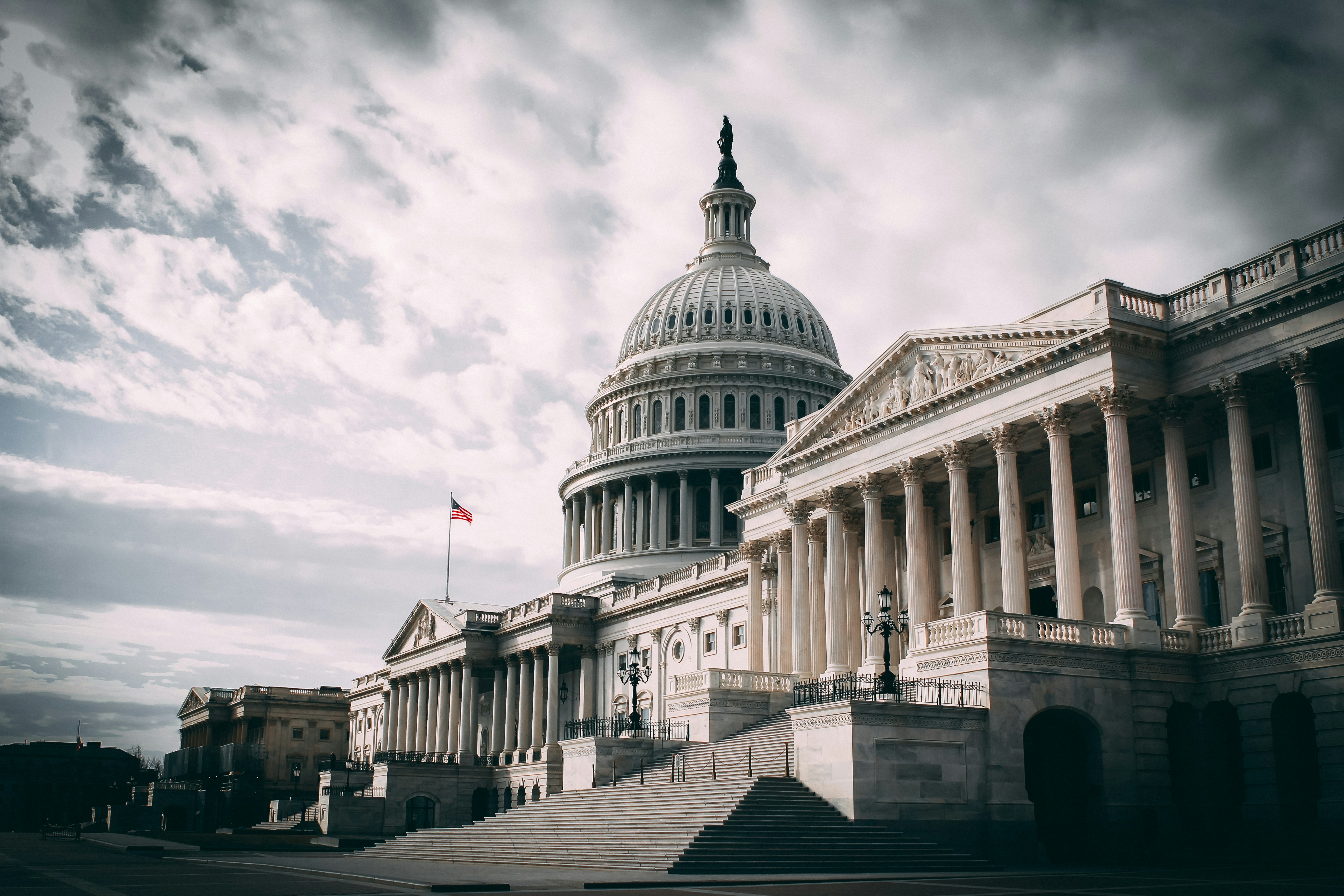
Who Has the Authority? Government, Families, and the Institutions Americans Are Asked to Trust
Election security, immigration, parental rights, and political power raise a common question: Who has authority, and what happens when government institutions move beyond their proper boundaries?
A healthy society depends on institutions that understand both their responsibilities and their limits. Elections require rules voters can trust. Immigration requires laws that can be enforced while treating people with dignity. Schools and child-welfare agencies exercise enormous power, but parents retain profound responsibilities toward their children.
These debates may look unrelated. They are not.
Running through each is the same fundamental question: Who has authority, where does that authority come from, and what happens when institutions move beyond their proper boundaries?
For Christians, authority is neither meaningless nor absolute. Government has a legitimate role. Parents have a legitimate role. Laws matter. Compassion matters. And none of those principles should be rewritten simply because the political circumstances have changed.
That framework is increasingly important in an America where arguments over election administration, immigration, parental rights, and political power are testing public trust from several directions.
Trust Requires Rules That Apply Consistently
The Supreme Court recently blocked the Trump administration from implementing new Postal Service requirements for mail ballots before the 2026 midterms. The proposed system would have required states to provide lists of eligible voters and use USPS-approved, barcoded ballot envelopes. The Court divided 7-2, with Justices Clarence Thomas and Samuel Alito dissenting. Justice Brett Kavanaugh indicated there was a reasonable argument that the Postal Service possesses authority to impose some requirements, but concluded that changing procedures this close to voting risked significant disruption.
There are legitimate disagreements over the proposal. The administration presented additional verification as an election-integrity measure. Opponents argued that the Postal Service was assuming authority traditionally exercised by states and that last-minute changes could prevent legitimate ballots from being counted.
Those arguments deserve more than slogans.
Election integrity and voter access do not have to be enemies. Americans should be able to expect systems that verify lawful votes while also ensuring lawful voters can participate. Confidence deteriorates when either concern is dismissed simply because it is associated with the other political party.
Trust cannot survive indefinitely when rules are treated as essential under one set of political circumstances and disposable under another.
The same principle applies to immigration.
The Trump administration has expanded the federal government's consideration of public benefits when determining whether certain immigrants qualify for permanent residency. New York City Mayor Zohran Mamdani is leading a coalition of local governments challenging the new public-charge rule, while New York Attorney General Letitia James is leading a separate state lawsuit. The plaintiffs argue that the rule exceeds federal authority and could discourage immigrant families from using health care and nutrition programs for which they are legally eligible. The administration argues that the policy promotes self-sufficiency and reduces dependence on public assistance.
The legal dispute will work its way through the courts. The broader question is worth considering now: What obligations accompany legal immigration, and what obligations does a nation have toward those it admits?
Scripture commands God's people to treat the stranger with justice and compassion. It also recognizes governments, nations, boundaries, and civil authority. Biblical compassion cannot be reduced to a slogan for one immigration policy any more than biblical order can be used to excuse mistreatment of immigrants.
Hospitality and order are not inherently contradictory.
When Government Authority Enters the Home
Nowhere does the question of authority become more personal than when the government intervenes between parents and children.
Joseph and Arlene Kutzko, a Catholic couple in Massachusetts, are fighting a legal battle involving their teenage daughter, Sophie. The parents say Algonquin Regional High School supported their daughter's male gender identity without their knowledge and that their religious objections later became intertwined with a child-welfare dispute. Sophie was removed from their custody in 2024, and the parents say they have since been prevented from maintaining contact with her.
The case includes important details that should not be ignored. An allegation of physical abuse against the father was reportedly found unsupported, according to recent reporting and the family's legal advocates. The family is now seeking to prevent testosterone treatment while pursuing its custody claims; treatment has reportedly been paused while litigation continues.
The family's account has become part of a much larger national disagreement over parental rights, gender identity, medical treatment for minors, religious liberty, and the circumstances under which child-welfare authorities should intervene.
Those are serious questions precisely because the state sometimes must intervene. Children can genuinely suffer abuse and neglect, and government has a legitimate responsibility to protect them.
But that extraordinary power also requires extraordinary care.
Parents should not automatically lose their authority simply because their religious or moral convictions conflict with prevailing cultural beliefs. At the same time, disagreements over a child's care cannot by themselves establish every fact in a contested custody case.
The power to protect children must never quietly become the power to require ideological conformity from their parents.
For Christians, parenthood is not merely a legal status granted by government. Scripture repeatedly places responsibility for the instruction and formation of children upon families. Government can protect children from genuine harm, but it should approach replacing parental judgment as an exceptional intervention, not an ordinary solution to ideological disagreement.
That distinction matters far beyond Massachusetts.
Political Power Is Not the Highest Authority
The question of authority also appears inside political parties themselves.
The Democratic National Committee has officially changed its early presidential-primary calendar for 2028. South Carolina will vote first, followed by Nevada, New Hampshire, New Mexico, Michigan, and Virginia. The DNC says the calendar gives a more representative mix of voters an early role and better tests candidates across diverse constituencies and battleground states.
The change will inevitably affect campaign strategy. South Carolina's large Black Democratic electorate and Nevada and New Mexico's Latino populations will matter earlier than under the old Iowa-and-New Hampshire-centered system. But it is too early to know which prospective candidate, if any, will ultimately benefit most.
That uncertainty is important. Politics tempts people to treat every institutional decision as evidence of a predetermined outcome. Christians should resist that impulse just as strongly as they resist political naivete.
Political parties pursue power. Candidates pursue office. Governments exercise authority. Courts interpret law. None deserves the kind of unquestioning allegiance that belongs to God.
That should produce Christians who can think clearly rather than react predictably.
A Republican administration should not receive automatic approval merely because it invokes election integrity, immigration enforcement, or parental rights. A Democratic official should not receive automatic approval merely because a policy is presented in the language of compassion, democracy, or inclusion. Every claim still has to be examined.
Proverbs 14:34 provides a standard much older than any American political coalition: “Righteousness exalts a nation, but sin is a reproach to any people.”
That standard does not change with election results.
Christian political discernment begins when truth matters more than protecting a party, an institution, or a preferred political narrative.
Government matters. Elections matter. Borders matter. Parents matter. Protecting children matters. So do due process, compassion, religious liberty, and the rule of law.
The difficult work is refusing to sacrifice one principle whenever another becomes politically convenient.
That is why Christians need more than political instincts. They need a biblical framework capable of asking not merely, Which side is doing this? but Is this true? Is it just? Is authority being exercised within its proper limits? And does the standard remain the same when political power changes hands?
Those are the questions worth continuing to ask through Real Life Network and The Daniel Cohen Show, where the headlines are examined alongside the deeper questions of faith, culture, government, and truth.

7 Family Media Questions Every Christian Parent Should Ask
What children watch can shape what they admire, accept as normal, and learn to value. These seven questions can help Christian parents evaluate entertainment thoughtfully and teach their children lifelong biblical discernment.
Choosing what your family watches used to be relatively simple. Today, children can encounter movies, shows, videos, games, social media, podcasts, and other digital content across multiple devices throughout the day.
That makes media decisions about more than whether a particular movie contains bad language or an inappropriate scene. Stories communicate ideas. Characters model attitudes. Entertainment can reinforce beliefs about relationships, identity, success, morality, authority, and what makes life meaningful.
Christian parents don’t need to approach every screen with suspicion. But thoughtful questions can help families move beyond simply asking, “Is this allowed?” toward developing genuine biblical discernment.
Here are seven questions worth asking.
1. What Is This Teaching My Child to Admire?
Every story has heroes. Sometimes they’re obvious. Other times the audience is simply encouraged to sympathize with certain characters, choices, or lifestyles.
Ask what qualities the program presents as admirable. Is courage celebrated? Loyalty? Honesty? Sacrifice? Compassion? Or does the story consistently reward selfishness, dishonesty, disrespect, cruelty, or behavior that conflicts with what your family is teaching?
This doesn’t mean every protagonist must behave perfectly. Some of the best stories involve flawed people learning from mistakes.
The more important question is whether the story ultimately recognizes the difference between wisdom and foolishness, good and evil, truth and deception.
2. What Does This Program Treat as Normal?
Media doesn’t always persuade through direct arguments. Often, it influences simply by repetition.
When children repeatedly see particular attitudes, relationships, behaviors, or beliefs presented as normal, those ideas can gradually begin to feel ordinary. That is why parents should pay attention not only to dramatic objectionable moments but also to the assumptions underneath a story.
What does the program communicate about marriage? Parents? Faith? Sexuality? Authority? Success? Human worth?
Children may not consciously identify those ideas, but that doesn’t mean they aren’t noticing them.
Parents can help by occasionally asking, “What do you think that show is saying about this?” That simple question teaches children to watch actively rather than absorb everything passively.
3. Is This Appropriate for My Particular Child?
An age rating can be helpful, but parents know their children better than a rating system does.
Two children of the same age may react very differently to the same movie. One might handle a tense historical story well, while another has nightmares after mild suspense. One teenager may be ready to engage thoughtfully with difficult cultural questions while another isn’t.
Christian parenting requires more than finding the boundary of what is technically permitted.
Romans 14:19 encourages believers to “pursue the things which make for peace and the things by which one may edify another.”
A useful question, then, is not only, Can my child watch this? but Will this be beneficial for my child right now?
4. How Does My Child Feel After Watching It?
Sometimes the effect of media becomes clearer after the screen turns off. Does a child seem encouraged, curious, imaginative, or eager to talk? Or irritable, anxious, fearful, disrespectful, restless, or obsessed with watching more?
One viewing won’t necessarily reveal a pattern. But repeated reactions can tell parents something important.
The same is true for adults. Some entertainment leaves viewers refreshed. Other content leaves them angry, agitated, discouraged, or mentally exhausted.
Philippians 4:8 directs believers toward what is true, noble, just, pure, lovely, commendable, virtuous, and praiseworthy. That provides a useful biblical framework for considering not just what enters the mind, but what it produces there.
5. Is Screen Time Crowding Out Something Better?
A perfectly acceptable program can still become a problem if it consumes too much time.
The issue may not be what a child is watching. It may be what he or she is no longer doing. Is screen time replacing sleep? Outdoor play? Reading? Family conversation? Church involvement? Homework? Prayer and Scripture? Time with friends?
Sometimes the wisest media decision is not finding a better show but leaving the television off.
Healthy media habits recognize entertainment as one part of life rather than the center of it.
6. Can This Become a Conversation Instead of Just Consumption?
Parents don’t have to eliminate every story containing an idea they disagree with. Sometimes those moments provide valuable opportunities to teach.
Watching together allows parents to ask questions.
- Why do you think that character made that choice?
- Was it wise?
- What consequences followed?
- What does the Bible teach about that issue?
- How would following Jesus change the way someone responds?
Those conversations help children build discernment that will eventually matter far more than parental controls.
Christian media can provide especially natural opportunities for these discussions. A program such as LifeWise Academy can lead into conversations about bringing biblical truth into everyday life. Genesis Science Minute can introduce questions about creation and science in just 60 seconds. The Pilgrim’s Progress can start conversations about temptation, perseverance, and following Christ.
The goal isn’t to interrogate children after every episode. It’s to make talking about ideas a normal part of family life.
7. Does Our Entertainment Support the Kind of Home We’re Trying to Build?
This may be the most important question of all.
Parents spend years teaching children what is true, who they are, what relationships should look like, why Scripture matters, and what it means to follow Christ.
It makes sense to ask whether the family’s entertainment choices generally support those priorities or continually work against them. That doesn’t require every show to be overtly Christian. But intentionally including faith-based programming can help create a healthier balance.
Younger children might enjoy biblical programming such as Superbook, iBible, or Learn, Grow and Go! Older children and teens can explore apologetics through In Depth Apologetics for Kids or creation-focused content. Families can also choose movies, documentaries, Bible teaching, and programs built around Christian service, history, and worldview.
Real Life Network provides these kinds of options in one biblically curated streaming environment, giving parents a place to begin without having to sort through an enormous mainstream catalog first.
Teach Discernment, Not Just Rules
Parents cannot screen every piece of media their children will encounter forever.
Eventually, children become teenagers. Teenagers become adults. They choose their own movies, follow their own accounts, download their own apps, and decide which voices deserve their attention.
That’s why the long-term goal is bigger than creating a list of approved and prohibited programs. It is helping children learn to ask good questions themselves.
- What is this teaching me?
- Does it agree with what I know to be true?
- How is it affecting my thoughts and attitudes?
- Is this worth my time?
- Would I make this same choice if Jesus were sitting beside me?
Those questions turn media discernment from a parental restriction into a lifelong Christian practice.
The goal isn’t a home without screens. It’s a home where screens know their place, parents remain engaged, and entertainment doesn’t get the final word on what children learn to value.
Explore free, biblically curated kids’ shows, family programs, movies, Bible teaching, and more on Real Life Network.
World News
25 min
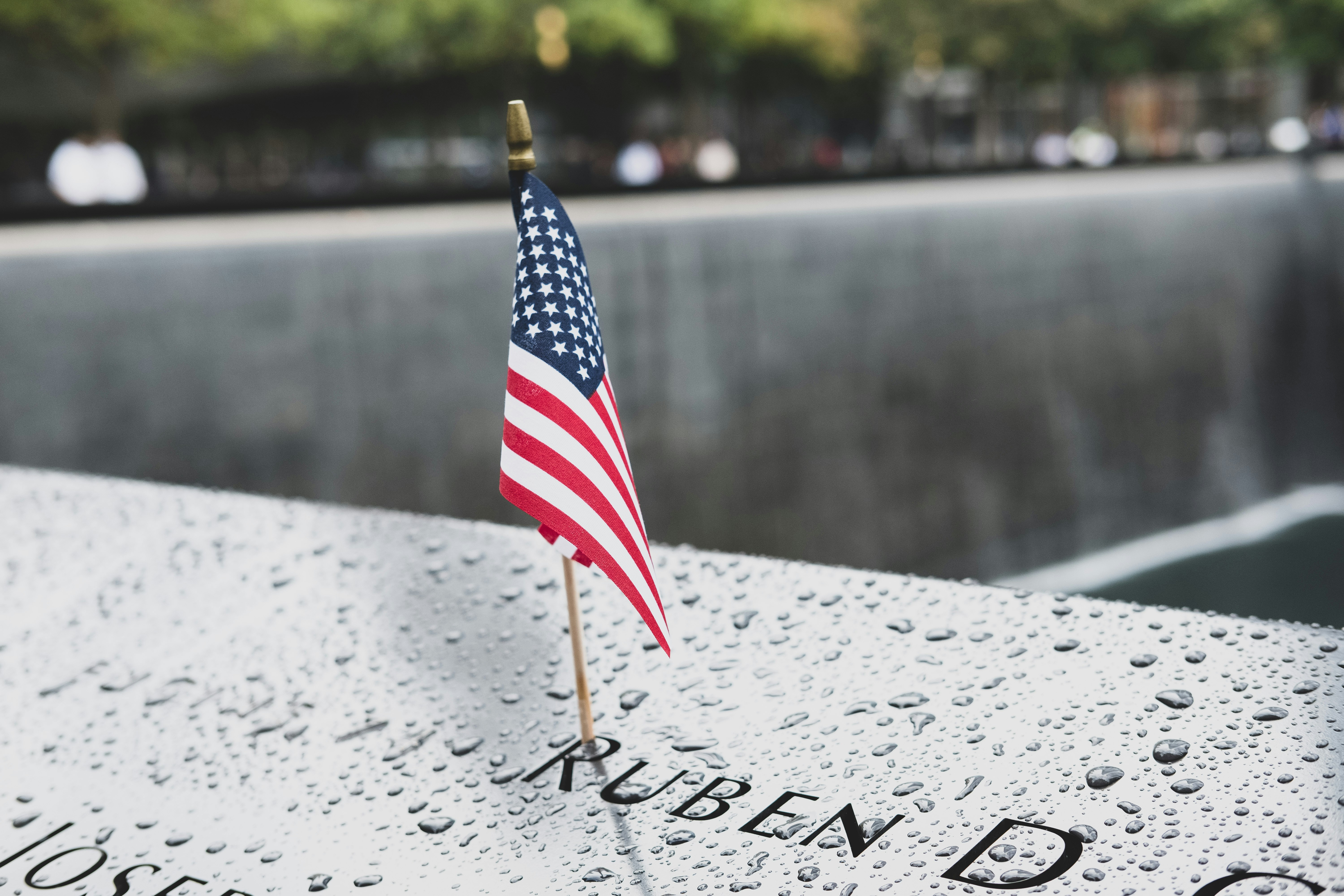
When Nothing Is Sacred, Everything Becomes Political
From the solemnity of September 11 to the use of Scripture in politics, America faces a deeper question about what it still considers sacred. Christians are called to respond with compassion, biblical discernment, and the courage to stand for truth.
There are moments that should transcend politics.
A memorial honoring nearly 3,000 Americans murdered on September 11 should be one of them. It should be a place for grief, remembrance, gratitude, and reverence. Families who have carried that loss for 25 years deserve something increasingly rare in American public life: a moment in which their pain is not reduced to another political opportunity.
That is why images of Alexandria Ocasio-Cortez and New York City Mayor Zohran Mamdani smiling and laughing together during the 25th anniversary commemoration drew criticism. A photograph cannot reveal the context of every conversation or establish what prompted a smile. But juxtaposed with grieving families at Ground Zero, the moment raised a larger question worth asking: Does American culture still recognize that some things should be treated as sacred?
These are exactly the kinds of cultural questions worth examining on Real Life Network and The Daniel Cohen Show, where the headlines are considered alongside the biblical truths that should shape how Christians understand them.
Leadership Requires More Than the Right Policies
Public leadership is not merely about legislation, budgets, speeches, or elections. Leadership also requires understanding the human consequences behind public events.
That principle extends far beyond a single 9/11 ceremony.
When thirteen American service members were killed during the 2021 withdrawal from Afghanistan, controversy followed images of President Joe Biden appearing to check his watch during the dignified transfer ceremony at Dover Air Force Base. Biden later disputed some characterizations of the moment, but Gold Star families publicly described feeling disrespected.
Politics can make people remarkably selective about empathy. When someone on the other side suffers, compassion becomes conditional. When an uncomfortable tragedy threatens a preferred narrative, attention shifts somewhere else.
Christians cannot adopt that standard.
Human dignity does not change according to political usefulness. A child killed in an act of violence matters. A soldier returned home in a flag-draped casket matters. A family still grieving someone murdered on September 11 matters. An immigrant victim matters. An American citizen victim matters. Political affiliation does not determine the value of a human life.
A healthy society should be capable of looking at suffering and seeing a human being before seeing a political opportunity.
Jesus warned that a time would come when “the love of many will grow cold” (Matthew 24:12). That description should make Christians examine more than the behavior of politicians. It should make believers examine their own hearts.
Have politics made compassion selective? Has outrage become entertainment? Have human tragedies become useful primarily when they help defeat the other side?
If so, something far more important than an election is being lost.
Biblical Language Cannot Become Political Branding
The same problem appears when Christianity itself becomes a political instrument.
Texas politician James Talarico has increasingly incorporated Christian language into his political message. In one recent appearance, he invoked Matthew 25 while arguing that Jesus would condemn senators over food assistance, Medicaid, and deportations.
Christians should welcome politicians talking seriously about Scripture. But biblical vocabulary does not automatically make an argument biblical.
Matthew 25 unquestionably demonstrates Christ's concern for the vulnerable. Christians should care about hungry people, strangers, the sick, prisoners, and those suffering around them. But translating those commands directly into support for a particular government program requires an additional political argument. Christians can share the same biblical concern while disagreeing about which policies best address it.
The same principle applies to immigration.
Scripture repeatedly commands God's people to care for foreigners and strangers. Scripture also recognizes nations, governing authorities, boundaries, and civil order. Romans 13 gives government genuine authority, while Acts 17:26 speaks of God determining nations and their dwelling places.
Neither side gets to erase the passages that complicate its politics.
Scripture should judge political convictions. Political convictions should never be allowed to rewrite Scripture.
That requires biblical literacy.
A politician who can quote a verse fluently may still misuse it. A conservative can misuse Scripture just as easily as a progressive. Christians who know only fragments of the Bible become vulnerable to anyone capable of wrapping a political agenda in Christian vocabulary.
Read the Word. Know the context. Test the argument.
Courage Means Refusing to Follow the Crowd
There is another quality disappearing from American life: the courage to stand alone.
The Lindsay Clancy case offers a difficult example. Clancy admitted killing her three young children but mounted an insanity defense. Her 2026 trial ended in a mistrial after eleven jurors favored acquittal and one juror held out.
According to another juror who later discussed the deliberations publicly, the lone holdout was a Black man.
Whatever conclusions people reach about the complicated legal questions surrounding mental illness and criminal responsibility, there is something worth recognizing in anyone willing to maintain a sincerely held conviction while an entire room pressures him to surrender it.
Standing with the crowd is easy. Standing alone costs something.
That lesson reaches far beyond a courtroom.
Christians will increasingly encounter moments when biblical convictions are unpopular, unfashionable, or professionally inconvenient. There will be pressure to remain silent because speaking could cost friendships, opportunities, influence, or reputation.
Conviction means deciding beforehand that truth matters more.
That does not grant permission to be reckless or cruel. Courage without humility quickly becomes arrogance. But humility without courage can become cowardice disguised as kindness.
Christian conviction requires both: the humility to recognize when we are wrong and the courage to stand when God's truth is clear.
America does not merely need better political messaging. It needs adults capable of recognizing sacred things, leaders who understand the human cost of their decisions, Christians who know Scripture well enough to recognize when it is being manipulated, and ordinary people willing to stand for truth when standing becomes uncomfortable.
Politics will continue changing. Candidates will come and go. Headlines that seem enormous today will eventually disappear.
The deeper question is what kind of people Americans are becoming in the process.
When nothing is sacred, everything becomes political. Christians should resist that transformation by recovering reverence, compassion, biblical discernment, and courage.
Continue examining the cultural and political stories shaping America through a biblical worldview on The Daniel Cohen Show, streaming free on Real Life Network.
World News
25 min
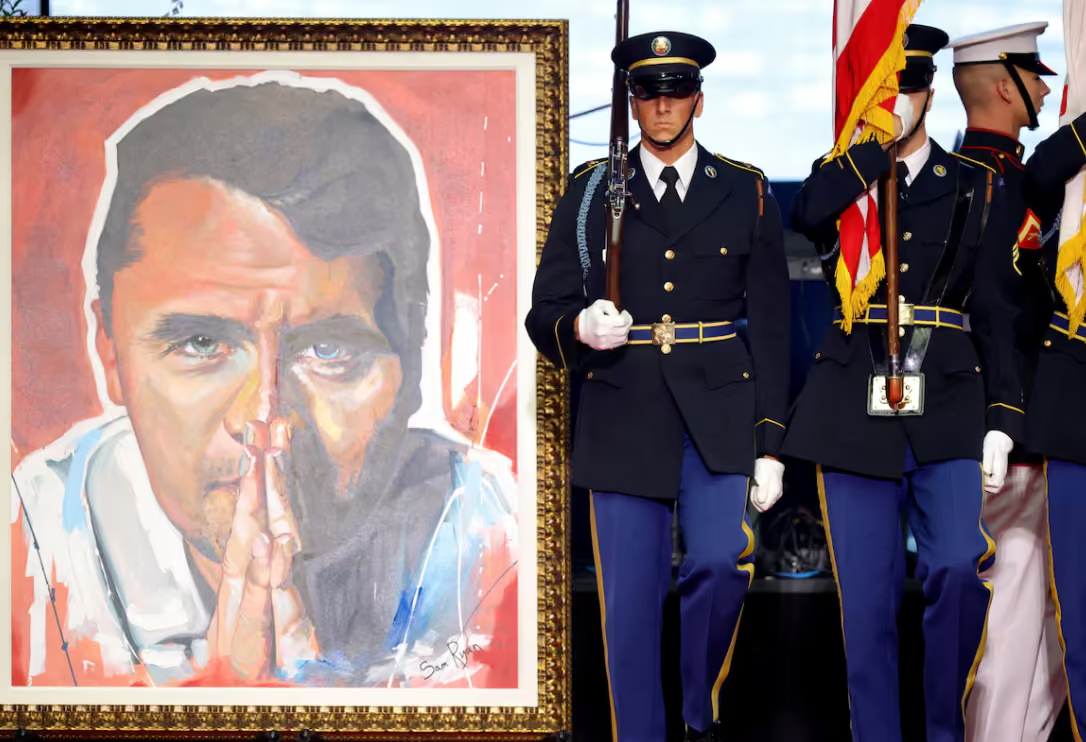
Remembering Charlie Kirk: A Life of Faith, Family, and Courage
One year after Charlie Kirk’s death, his commitment to Christ, family, courage, and America offers a lasting challenge to live faithfully, strengthen our homes, invest in the next generation, and stand courageously for our convictions.
One year after the death of Charlie Kirk, there is much worth remembering about a life that ended far too soon. He was known across the country as a conservative activist, speaker, and founder of Turning Point USA. But the convictions that increasingly defined his public life went deeper than politics. Kirk spoke openly about his faith in Jesus Christ, his love for his wife and children, and his belief that strong families were essential to the future of America.
When asked how he wanted to be remembered, Kirk pointed to courage and his Christian faith. Those who worked closely with him likewise described his relationship with Christ as the most important part of his life. He used an enormous platform not simply to discuss elections and public policy, but to encourage people to follow Jesus and take their faith seriously.
That priority deserves to be remembered.
Kirk also understood something increasingly countercultural: the future of a nation is inseparable from the health of its families.
He married Erika in 2021, and they had two children. Fatherhood became an important part of the message he shared with young Americans. He encouraged young adults to pursue marriage, welcome children, leave behind empty pursuits, and build something that could endure beyond themselves. His wife later recalled that marriage and family were among the greatest joys of his life.
That message mattered because Kirk spent much of his career speaking directly to young people. He founded Turning Point USA at only 18 and built an organization centered on engaging the next generation in the future of the country.
Yet preserving America was about more than winning elections. A country ultimately depends upon the character of its people, the strength of its homes, and the convictions parents pass to their children.
If we want to honor Kirk's life, admiration is not enough. We should imitate what was worthy of imitation.
Go to Real Life Network to watch great moments from the life of Charlie Kirk.
That means having the courage to profess Christ when doing so carries a cost. It means building strong marriages and treating parenthood as a calling rather than an inconvenience. It means investing in young people instead of surrendering the next generation to whatever ideas happen to dominate the culture. And it means being willing to enter conversations with people who disagree rather than retreating from difficult questions.
Kirk became famous in part because he was willing to walk onto college campuses, take questions, defend his convictions, and invite disagreement. His example should encourage Christians to develop convictions strong enough to withstand opposition without becoming afraid of the people on the other side.
Most importantly, his legacy should point beyond politics.
Political victories pass. Organizations change. Elections are won and lost. But faithfulness to Christ, love within the home, children raised with conviction, and lives invested in others carry significance far beyond an election cycle.
Charlie Kirk cared deeply about America's future. His life offered a reminder that the work of building that future begins with faithfulness to God, courage in the public square, and commitment to the family at home.
Go to Real Life Network to watch great moments from the life of Charlie Kirk.

World News
25 min
The Stories the Media Decides You Don’t Need to Know
From attacks on Christians and church fires to newsroom decisions and what children are taught in schools, Daniel Cohen examines the stories receiving too little attention and the institutions shaping what Americans see and believe.
For decades, television newsrooms held enormous power over what Americans saw and what they never heard about. Producers chose the lead story, decided which events deserved follow-up coverage, and determined which stories would disappear after a few seconds or never make air at all.
That power has weakened, but it has not disappeared.
Today, independent media provides an opportunity to ask a question that traditional news organizations too often avoid: Why do some stories receive national attention while others with serious implications are barely acknowledged?
On Real Life Network, The Daniel Cohen Show goes where the news leads, especially when those stories intersect with faith, culture, politics, and a biblical worldview. Several recent stories provide an important reminder that media bias isn't limited to how a story is reported. Sometimes the more consequential decision is whether to report it at all.
When Attacks on Christians Barely Make the News
Pastor Martin Sedra and his wife, Millicent, recently experienced something no family should have to endure.
Sedra pastors Echo Church in Sydney, Australia, and has publicly spoken about Christianity, Islam, abortion, marriage, and other controversial cultural issues. According to video and the Sedras' account discussed on the show, masked protesters arrived outside their home shortly after the couple welcomed their first child. The group allegedly cut power to the house, threatened the family, and said they would return.
Whatever someone's political or religious disagreements with Sedra, threatening a family at its home crosses a line that should be obvious.
Yet the incident received little attention from major news organizations at the time it was discussed on the show.
That story comes alongside another troubling development: a series of fires involving churches.
The former St. Agnes Church in Toledo, Ohio, burned over the weekend. Another Toledo church, St. Anthony's, had suffered a fire only weeks earlier. Other recent church fires discussed on the program included Friendship Baptist Church in Cleveland, St. Simon Church in New Brunswick, Canada, and Buckingham Presbyterian Church in the United Kingdom. Importantly, the causes of these individual fires should not be assumed before investigators determine them.
But the broader problem of hostility toward churches is documented. The Family Research Council reported hundreds of hostile incidents against churches in 2024, including dozens categorized as arson or attempted arson.
That deserves attention.
Christians should resist the temptation to declare every church fire an act of religious persecution without evidence. At the same time, repeated attacks against Christian institutions should not become background noise simply because they do not fit the cultural narrative preferred by a newsroom.
Media bias isn't only found in misleading words. It can also be found in the stories that never receive enough attention for Americans to ask questions about them.
The same standard should apply regardless of the victims. An attack on a church should matter. An attack on a synagogue should matter. An attack on a mosque should matter. Threatening a Christian family should matter just as an attack against people because of their sexuality should matter.
Consistency is the test.
Who Decides What Counts as News?
A shooting outside a gay bar in Tucson raises precisely that question.
According to the account discussed on the program, two men were killed outside Venture-N by a gunman who later killed himself. Police reportedly found a note identifying additional LGBTQ businesses, raising concerns that the victims had been deliberately targeted. The show also highlighted reporting that the shooter was born in Gambia and was described by a relative as a practicing Muslim.
There is no justification for murdering innocent people because of their sexuality. None.
But there is also no justification for minimizing relevant facts about an attack because those facts complicate a preferred political narrative.
This is where consistency becomes essential. If the religious beliefs of a professing Christian attacker would become part of national coverage, the same journalistic curiosity should exist when an attacker comes from another religious background.
The point isn't to blame millions of peaceful Muslims for one man's actions. It is to report relevant facts without deciding beforehand which ones the audience is allowed to consider.
That principle also applies inside conservative media.
The departure of longtime Fox Business anchor Maria Bartiromo has generated questions after reports that she disagreed with a programming decision concerning coverage of a presidential address. According to the reports discussed on the show, Bartiromo wanted to cover President Trump's remarks and planned additional discussion afterward. Weeks later, she departed the network, which characterized the move as a business decision. The precise internal circumstances remain disputed and should be described accordingly.
But the episode illustrates a larger point.
A journalist's responsibility is not to protect viewers from stories executives consider inconvenient. It is to pursue information, establish facts, provide context, and allow audiences to evaluate what happened.
A news organization loses something fundamental when protecting a narrative becomes more important than pursuing a story.
That standard shouldn't change depending on whether the network is CNN, MSNBC, Fox News, or anyone else.
It is also why independent outlets matter. They cannot guarantee perfect journalism, and they should be held accountable like everyone else. But a decentralized media environment makes it considerably harder for a handful of executives to determine the boundaries of public discussion.
Parents Cannot Outsource Discernment
Media institutions aren't the only institutions Americans should scrutinize.
Parents should be asking similar questions about schools.
A video discussed on the program featured a kindergarten teacher describing an exercise in which young children were asked whether they wished they had been born another gender. Students who raised their hands were then invited to choose different names. The teacher subsequently posted that she had been fired and lost her teaching license.
Whatever debates adults want to have about gender, five-year-olds should not become instruments for an adult's ideological project.
Parents possess a responsibility that cannot simply be transferred to teachers, administrators, politicians, or government agencies.
That becomes particularly important as politicians increasingly speak about children collectively. Michigan Senate candidate Abdul El-Sayed, for example, has argued for policies based on imagining that “all of our kids were all of our kids,” connecting that idea to public education, health care, and child care. The program contrasted that philosophy with the conviction that parents retain the primary responsibility for raising and forming their children.
Schools certainly have an important role. Good teachers deserve gratitude and respect. But education never happens in a worldview vacuum. Someone is always teaching children what is true, what is good, what a human being is, and where authority ultimately resides.
For Christians, those questions cannot be surrendered to the state.
Parents can delegate instruction, but they cannot delegate their God-given responsibility to know what their children are being taught and who is shaping their worldview.
That principle connects these seemingly unrelated headlines.
News organizations shape what adults believe is important. Schools help shape what children believe is true. Politicians attempt to shape what citizens believe government should provide. Corporations increasingly communicate their own moral and cultural priorities.
In each case, Christians need discernment.
The answer is not paranoia, and it isn't assuming every institution is corrupt. It is paying attention. Ask what is being taught. Examine what is being omitted. Compare claims against the evidence. And above all, measure cultural messages against Scripture rather than allowing the culture to determine how Scripture should be understood.
That is increasingly necessary in an age when the most revealing part of a story may be the part someone decided wasn't worth telling.
Watch The Daniel Cohen Show on Real Life Network for news and commentary connecting the headlines to the good news through a biblical worldview.

Devotional
25 min
Created to Work, but Working under the Curse
Work is one of God’s good gifts, yet the Fall has made it difficult, frustrating, and fleeting. Scripture explains both our desire to find meaning in work and our longing for the lasting rest found in Christ.
One morning, I was riding my bicycle along Washington, D.C.’s Anacostia River when an egret glided over the trail. The pure-white wading birds have always fascinated me with their elegant stillness and regal grace. They look even more impressive on the rare occasions when they spread their wings and take flight, making them look even larger. Yet this impromptu bird-watching experience came to an abrupt and discordant end. The moment before the egret swooped into the brush and out of sight, he made like a bomber and dropped a load of ordnance worthy of an animal twice his size.
A graceful bird, caught in its least graceful position.
The minor incident nearly passed out of my mind until I realized that this un-constipated egret provided an apt example for man’s complex condition. From beginning to end, mankind’s creation is the gift of God. We are created in God’s image and likeness, given dominion over every living thing, and blessed with the good command to fill the earth with God’s image-bearers through procreation (Genesis 1:26-28). Yet our first parents squandered these divine blessings through disobedience and rebellion, for which they were cast out of God’s presence (Genesis 3:22-23) and condemned to die (Genesis 2:17).
Man is a graceful bird, caught in his least graceful position.
Christianity’s nuanced view of human nature becomes incomprehensible without the first three chapters of Genesis. This is why so many human philosophies veer into error on either one side or the other. Most human philosophies boil down to the opinion that man is basically good, or that he is basically bad. Only the Bible (and those influenced by the Bible) can explain how man is created good, but corrupted.
Mankind’s complex condition affects every aspect of our lives, even the way we work. Before anything had tarnished God’s “very good” creation (Genesis 1:31), we read that “The Lord God took the man and put him in the garden of Eden to work it and keep it” (Genesis 2:15). Work is not a consequence of the fall, but a basic function of man, which God created for good. Adam’s task was merely to imitate God’s own example in creative effort (Genesis 2:9), and it carries religious undertones, as the same verbs are used to describe service at the tabernacle in Numbers 3.
However, mankind’s work did not escape the Fall unscathed. Not only was Adam cast out of the lush garden into uncultivated land, but God also declared, “cursed is the ground because of you; in pain you shall eat of it all the days of your life; thorns and thistles it shall bring forth for you; and you shall eat the plants of the field. By the sweat of your face you shall eat bread, till you return to the ground, for out of it you were taken; for you are dust, and to dust you shall return” (Genesis 3:17-19).
The ground was Adam’s domain of work. By extension, this curse extends to all arenas of work. All work is toilsome, demanding, and sometimes fleeting, as the whole creation is “subjected to futility” (Romans 8:20).
Man is a graceful bird, caught in his least graceful position.
Again, the Bible’s complex theology of work has better power to explain the different attitudes people have towards their work than the fractured, individualistic worldviews dominant in America today. Some people love their jobs, while some people hate them. Why? Can individualism or critical theory offer a satisfying answer to this question? (Critical theory would blame group oppression, but that is not satisfying.)
The Bible has an answer. Some people love their jobs because work is a gift from God — a good gift that God created as part of his blessing on mankind. Even in a fallen world, the wise preacher concludes, “There is nothing better for a person than that he should eat and drink and find enjoyment in his toil. This also, I saw, is from the hand of God” (Ecclesiastes 2:24, see also Ecclesiastes 5:18-19 and 9:9). Yet some people also hate their jobs because work is cursed after the Fall.
Man is a graceful bird, but he is still caught in his least graceful position.
The very unseemliness of the aforementioned egret’s evacuation is what makes it an appropriate metaphor for fallen man under sin. “We have all become like one who is unclean,” Isaiah confesses, “and all our righteous deeds are like a polluted garment” (Isaiah 64:6). We need one who can wash our filth away, to achieve for us what we could never achieve by our own works.
Even though work is good, it is not ultimate. The Lord God engaged in his creative work for six days, “and he rested on the seventh day from all his work that he had done” (Genesis 2:2). Just as man was made to imitate God’s work, so man was also supposed to imitate God’s rest (Exodus 20:8-11). But, under the curse of sin, that rest became fleeting and far off.
From the earliest generations, Adam’s descendants sought one who would restore them to God’s rest. Thus, Noah’s father Lamech said in hope, “Out of the ground that the Lord has cursed, this one shall bring us relief from our work and from the painful toil of our hands” (Genesis 5:29). Yet Noah did not bring an end to toil, hard labor, or the futility of human industry. Nor did Moses, Joshua, David, or any human leader called by God throughout history. All were sinners, after all.
Yet painful toil under the curse is not man’s final condition, for “there remains a Sabbath rest for the people of God” (Hebrews 4:9). Those who are forgiven of their sins by the blood of Christ receive true grace. They are not only restored to right fellowship with God, but they also receive eternal life and enter into God’s rest.
For now, we recognize that all honest work is good. “In all toil there is profit, but mere talk tends only to poverty” (Proverbs 14:23). “Let the thief no longer steal, but rather let him labor, doing honest work with his own hands, so that he may have something to share with anyone in need” (Ephesians 4:28). “It is the hard-working farmer who ought to have the first share of the crops” (2 Timothy 2:6). But work is not ultimate, and one day our painful toil will come to an end.
Man is a graceful bird, and one day his graceless condition will be remedied in full. One day, those who are in Christ will enter into the glory and rest of their Redeemer.
This article was originally written by Joshua Arnold and published on The Washington Stand. For more content like this, visit Real Life Network.
Thank you! Your submission has been received!
Oops! Something went wrong while submitting the form.
World News
In a moment when biblical truth, Christian news, and the future of the next generation of believers are under intense pressure, a troubling revelation has emerged inside institutions that claim the name of Christ. The Daniel Cohen Show on the Real Life Network recently examined a shocking new report showing that 1 in 7 Christian colleges and universities in America now maintain ties to the abortion industry, including Planned Parenthood.
This is not simply a cultural debate. It is a theological crisis unfolding inside the very institutions that claim to train the next generation of Christian leaders. Schools that place “Christian” in their mission statements, charge families tens of thousands of dollars in tuition, and then quietly partner with organizations that profit from ending unborn life must answer a serious question. What exactly are they professing?
If a university claims Christ but partners with the abortion industry, something has gone terribly wrong.
The issue is not political. It is spiritual. And the stakes could not be higher for the church, the pro life movement, and the moral clarity of the next generation.
A Troubling Report on Christian Colleges
The findings come from the Demetree Institute for Pro Life Advancement, the research arm of Students for Life of America. During the 2024 and 2025 academic year, researchers investigated 725 Christian colleges and universities across the United States that claim historical Christian roots.
The results were alarming.
Researchers documented 114 schools with active connections to the abortion industry. These connections included promoting internships with abortion providers, listing Planned Parenthood as a health resource, hosting abortion related events, or using abortion industry materials in coursework.
In total, investigators recorded 533 infractions, the highest number since the study began four years ago. Even more striking is the timing. Since the Supreme Court overturned Roe v. Wade, one might expect Christian institutions to become more firmly pro life. Instead, the opposite has happened.
Abortion related activity inside these schools has increased nearly 20 percent since 2022 and almost 39 percent since last year alone. That trend reveals something deeper than policy drift. It reveals a cultural and spiritual strategy.
The abortion movement did not retreat after Roe fell. It turned its attention directly toward the church.
You can follow continued reporting on cultural and spiritual battles like this through the Daniel Cohen Show on the Real Life Network, where news is examined through a biblical worldview.
The Battle for the Theology of the Next Generation
Why would abortion activists focus on Christian universities?
Because shaping the beliefs of young Christians shapes the future of the church.
Scripture warns about this dynamic clearly. In Galatians 5:9, the apostle Paul writes, “A little leaven leavens the whole lump.” In other words, corruption rarely begins with open rebellion. It begins quietly.
One internship listing.
One “health resource” link.
One campus event.
Then the normalization begins. The abortion industry understands this strategy well. If a Christian student can be persuaded that abortion is merely healthcare, then the theological framework that once protected unborn life collapses. Over time those beliefs move beyond the classroom.
They move into pulpits.
They move into church leadership.
They move into families and future generations.
That is why the issue cannot be dismissed as a minor campus controversy.
This is not merely a policy disagreement. It is a theological war over the definition of human life.
Many young people now speak about abortion with the language they have been taught by institutions and media culture. When a medical student argues that abortion should remain available even late in pregnancy, the deeper problem is not simply ignorance. It is indoctrination. And the church must recognize the seriousness of that moment.
More cultural and worldview analysis addressing these issues can be found on the Real Life Network, where faith and current events intersect.
Hope, Accountability, and the Path Forward
The situation is serious, but it is not hopeless.
The same report that revealed troubling ties also documented encouraging victories. During the last academic year alone, 50 connections between Christian schools and Planned Parenthood were severed.
Those changes did not happen by accident.
They happened because students spoke up.
Parents asked questions.
Donors demanded accountability.
Several universities removed Planned Parenthood as a resource or internship opportunity after public pressure and advocacy. In addition, 66 schools received an A+ grade for actively supporting pregnancy resource centers and promoting pro life values on campus.
Those institutions demonstrate that Christian conviction can withstand cultural pressure when leaders remain committed to biblical truth.
Psalm 139 reminds believers of the foundation behind the pro life movement: “You knit me together in my mother’s womb.” That statement is not a poetic metaphor. It is a declaration about the Creator’s authority over human life. The church must remember that the battle for life is not merely fought in legislatures or courtrooms. It is fought in classrooms, churches, families, and hearts.
Parents should research the schools they support. Churches should ask questions about partnerships and internships. Christian donors should ensure their financial support strengthens institutions that remain faithful to their mission.
Most importantly, believers must pray with conviction and act with courage. The next generation of the church is not lost. But it will not be won by silence.
For continued reporting on faith, culture, Israel, and the defense of biblical truth, watch the Daniel Cohen Show on the Real Life Network, where the news is always connected to the greater story of the Gospel.
Related Articles
25 min

March 11, 2026
Daniel Cohen
Entertainment & Lifestyle
When someone hears “Christian documentary,” they may picture a narrow niche or a low-budget production. In reality, faith-based documentaries span a wide range of topics and styles: Bible history, creation and science, cultural commentary, evangelism, testimony, missions, and biographies of notable Christian leaders.
They also meet different needs. Some help answer hard questions. Some provide historical context for Scripture. Some explore the spiritual challenges of the modern world. Others put a human face on suffering, perseverance, and redemption.
Below are several faith-based documentaries available on Real Life Network (RLN), along with a few ways to choose the right one for your family, your small group, or your own viewing. If you are searching for free Christian documentaries, this list is a strong place to start.
What makes a documentary “faith-based”?
A faith-based documentary is usually marked by at least one of these qualities:
- A biblical worldview that shapes the interpretation of history, culture, or current events
- A gospel-centered aim, either explicitly or through testimony and themes
- A discipleship purpose, meant to build conviction and strengthen faith
- A focus on Christian people or movements, often through biography or church history
Not every film will fit every viewer. Some are best for adults. Some are ideal for families. Some work best as a multi-week small group series, especially when the documentary is divided into sessions or naturally breaks into chapters.
Bible and Holy Land documentaries
7 Days in the Holy Land
This short documentary-style devotional tour follows Franklin Graham and his daughter Cissie through key locations in Israel, connecting places with biblical stories. It’s filmed on location and designed to help Scripture feel more tangible.
Great for: families, new believers, small groups wanting a lighter week
Try this discussion prompt: What Bible story felt “more real” after seeing the location?
The Eye of the Storm
Jerusalem is often portrayed solely as a place of conflict, but The Eye of the Storm invites viewers to see a fuller picture. Hosted by Isabel Brown, this documentary introduces audiences to the people of Jerusalem—men and women from diverse backgrounds who have learned to live with resilience, cooperation, and hope amid a complex history.
By looking beyond headlines, the film offers a thoughtful perspective on why Jerusalem remains central not only to global conversation, but to biblical history and faith.
Great for: adults, students, worldview discussions, and Holy Land interest groups
Try this discussion prompt: How does understanding the people behind the headlines reshape the way we think about Jerusalem’s role in history and faith?
Creation and science documentaries
Is Genesis History?
This film presents a young-earth creation perspective and features interviews with a number of creationist speakers while arguing that Genesis describes real history. It has drawn criticism for presenting views that conflict with mainstream scientific consensus, so it’s great material for thoughtful discussion.
Great for: apologetics-minded viewers, older teens with guidance, small groups that enjoy discussion
Try this discussion prompt: What claims were most convincing, and what questions still remain?
Scarred Earth (The Grand Canyon)
This documentary examines the Grand Canyon and argues that the evidence aligns with a global Flood framework. It is structured in two halves, with the second portion moving into a direct gospel presentation.
Great for: viewers interested in creation topics, groups wanting both science discussion and evangelistic emphasis
Try this discussion prompt: How should Christians think about creation discussions without turning them into personal attacks?
Culture, worldview, and current-moment documentaries
Truth Rising
Truth Rising frames the present era as a pivotal cultural moment, using interviews and stories to examine faith, identity, morality, and the consequences of abandoning Scripture as a foundation.
A helpful companion is Truth Rising: The Study, which the official site (TruthRising.com) presents as a free small-group resource built around key themes (such as hope, truth, identity, and calling). If a group wants structure, this provides it.
Great for: small groups, parents of teens, worldview-focused discussions
Try this discussion prompt: What pressures shape the way truth is defined in everyday life?
The Great Global Reset
The Great Global Reset examines global economic and political shifts through a biblical and historical lens, drawing attention to conversations taking place among world leaders and institutions such as the World Economic Forum.
Produced in partnership with Turning Point USA and hosted by Jack Posobiec, the documentary invites viewers to think critically about power, policy, and the future of society while encouraging discernment rooted in Scripture.
Great for: adults, groups that can discuss carefully and charitably
Try this discussion prompt: What does Scripture call believers to do when they feel anxious about world events?
The Call
The Call is a compelling documentary from Evangelism Explosion that explores what happens when the Great Commission becomes more than a program—it becomes the culture of the church. Rather than focusing on new strategies or methods, the film calls believers back to the heart of Jesus’ original mission.
Featuring Calvary Chapel Chino Hills, The Call highlights how everyday faithfulness and obedience can spark genuine spiritual renewal, reminding viewers that revival often begins quietly, one life at a time.
Great for: churches, leadership teams, small groups, and anyone passionate about evangelism
Try this discussion prompt: How does treating the Great Commission as an identity—not an activity—change the way we live out our faith?
Biography and Christian history documentaries
Billy Graham: A Life Remembered
This documentary traces Billy Graham’s life and ministry, from his early years to global influence. It is produced by the Billy Graham Evangelistic Association and has a 28-minute runtime.
Great for: all ages, church history nights, family viewing
Try this discussion prompt: What made Billy Graham’s message resonate across generations?
Louis Zamperini: Captured by Grace
Produced by the Billy Graham Evangelistic Association, this documentary focuses especially on Zamperini’s life after WWII, including trauma, alcoholism, and the turning point connected to Billy Graham’s 1949 Los Angeles Crusade.
Great for: adults and older teens, testimony-focused nights
Try this discussion prompt: What does forgiveness look like when the wound is deep?
Billy Sunday
A documentary produced by the Christian History Institute presents the life of Billy Sunday, the former baseball player who became a major American evangelist in the early 20th century.
Great for: history lovers, leadership discussions, groups studying revival movements
Try this discussion prompt: What strengths and weaknesses often show up in celebrity-style ministry?
Personal story and “on the road” documentaries
The Listening Road
This docuseries follows Pastor Neil Tomba’s 33-day, 3,000-mile bicycle trip across the U.S., built around conversations with people from many backgrounds about faith and the questions of life. It’s an eight-part series.
Great for: groups that want bite-sized episodes, outreach-minded viewers
Try this discussion prompt: What question do you wish Christians asked non-believers more often?
How to turn a documentary into a family night or small group series
A documentary becomes far more useful when it leads to conversation. Two easy approaches:
Option 1: One-night watch party
- Watch together
- Pause once or twice for quick reactions
- End with 10 minutes of discussion and prayer
Option 2: Multi-week series
Choose a longer film or a docuseries and break it into 20–30 minute segments. Each week, cover:
- One key idea
- One Scripture connection
- One application step
A simple guiding verse for discussion nights is 1 Peter 3:15, which calls believers to be ready to give an answer with a right posture.
Faith-based documentaries can do more than fill time. They can help families choose better media, help groups talk about hard issues without panic, and help believers anchor their thinking in Scripture.
Explore documentary titles on Real Life Network and build a watchlist for your next family night or small group series.
Related Articles
- Where Can I Find Clean Cartoons for My Kids? by Real Life Network
- Disney+, Hulu, and Choosing a Better Streaming Option for Christian Families by Real Life Network
- Is There a Mobile App for Christian Streaming? by Real Life Network
25 min
Best Faith-Based Documentaries to Watch for Free

March 9, 2026
Real Life Network
Devotional
“Then you shall answer them that the waters of the Jordan were cut off before the ark of the covenant of the Lord; when it crossed over the Jordan, the waters of the Jordan were cut off. And these stones shall be for a memorial to the children of Israel forever.” Joshua 4:7
There is something within the human spirit that draws us to link our lives now to memories past—significant places and events that were altogether life-changing. We see this in makeshift memorials along the roadside and statues in the park, each in its own way, evidence of something profound. Perhaps there is a degree or a photograph on your office wall, and you see locked within its frame a testament to the sacrifice, effort, and discipline you once invested.
You may be able to return to a specific spot and share the joy of an unexpected beginning with others. My family got a taste of that years ago. We were standing on the sand in Newport Beach, CA, right where Orange Street and the beach volleyball nets intersect. I gathered the grandkids together and marked the spot, telling them, “Little did I know that right here, during a break in a game, I would meet your grandma, Mimi.” It was a precious moment.
Milestones and memorials provoke a retelling of a story to each generation. Is that not true of our Christian experience as well? Where were you first introduced to Christ? When did He become your Savior? Are there scriptures that fundamentally altered your thinking? Has He led you through manifold trials? Mark each spot in your memory. Commemorate them as a testament to God’s greatness and power.
God tells us to remember for a reason. Like Joshua, we need stones of remembrance so that, in retelling our stories to our children and children’s children, God might be glorified.
For more content from Jack Hibbs, visit Real Life Network.
25 min
Milestones and Memorials

February 21, 2026
Jack Hibbs
Devotional
“But the hour is coming, and now is, when the true worshipers will worship the Father in spirit and truth; for the Father is seeking such to worship Him. God is Spirit, and those who worship Him must worship in spirit and truth.” - John 4:23-24
The place where we worship, be it the privacy of our home, a hiking trail, or a crowded church service, matters little to God. He can never be limited to one place or confined to a building. What does matter is how we worship.
God desires to meet us in the very depths of our innermost being. He is not interested in the externals of singing and raised hands, nor is He concerned with how well we can harmonize. Our worship services may sound beautiful, but if we focus on the external while leaving the internal untouched, God is not pleased.
The prophet Isaiah said, “…these people draw near with their mouths and honor Me with their lips but have removed their hearts far from Me” (Isaiah 29:13). Whenever we draw near to worship, yet fail to acknowledge the scope and reality of our sinfulness, the magnitude of God’s holiness is veiled, and our worship is diminished.
True worship requires honesty regarding our spiritual condition—one that aligns with biblical truth—or else it becomes lackluster and, eventually, meaningless. However, when we allow the Spirit of truth to use the Word of truth to influence our worship, a rich communion takes place.
Today, the Lord is seeking worship that encompasses an internal bending of the knee and rending of the heart, and shows itself not only in song, but also in fervent prayer, supplication, and thanksgiving. That is the spiritual worship in which God delights, and in which we glorify Him.
For more content to enrich your walk with Christ, sign up at the Real Life Network.
Related Articles
25 min
In Spirit and Truth: How Christians Worship

February 14, 2026
Jack Hibbs