.jpg)
What To Expect
- Economic War Room has reached its 400th episode, marking years of examining economic warfare and threats to America’s economic security.
- Economic warfare has been a long-term concern, with Kevin tracing his work back nearly two decades to experiences in Moscow and subsequent Pentagon research.
- The mission has evolved from identifying threats to pursuing solutions, including efforts surrounding transactional gold and silver and economic resilience.
- Economic freedom requires stewardship, with Kevin arguing that today’s financial and policy choices will determine what future generations inherit.
- Faith and prayer remain central to the Economic War Room mission, drawing on Benjamin Franklin’s appeal for prayer during the Constitutional Convention as a lesson for a divided America today.
Real Life Network is a free, faith-based streaming platform offering biblically grounded teaching, documentaries, news, movies, and original programming. Sign up today.
As America celebrates its 250th year, we’re celebrating a milestone of our own at Economic War Room: our 400th episode. It’s an opportunity to look back at where we started, the warnings we’ve sounded, the people who have joined us along the way and, most importantly, why this mission matters now more than ever.
For nearly two decades, I’ve studied how America’s adversaries use economics as a weapon. Long before Economic War Room reached television screens, I traveled to Moscow with my partner Russell Lake and saw firsthand how foreign powers were thinking strategically about America’s economic vulnerabilities.
That experience helped put me on a path that eventually led to research for the Pentagon and years of studying economic warfare. Since then, the threats have evolved. But the central lesson hasn’t changed.
What we see as a marketplace, our enemies view as a battle space.
Watch this full episode on Economic War Room, streaming now on the Real Life Network.
The Economic War Didn’t Start Yesterday
For 400 episodes, Economic War Room has examined threats that were often ignored or dismissed until they became impossible to overlook.
We’ve investigated whether Communist China is waging economic warfare against the United States. We’ve examined America’s dependence on China for medicines and other critical supply chains. We’ve warned about the movement toward a cashless society and explored the risks posed by global financial and political agendas.
We’ve also looked to history for answers. Ronald Reagan understood the enormous power of economic warfare. His administration used economic strategy as part of the broader effort that helped defeat Soviet communism and win the Cold War.
That history matters today because communism and authoritarianism didn’t disappear with the Berlin Wall. They changed. The weapons changed. And the battlefield changed.
Today, a nation can attack another country without firing a shot. It can target supply chains, currencies, markets, intellectual property, technology and investment capital.
That’s why Americans must understand economic warfare before they can hope to defend themselves against it.
From Diagnosing the Problem to Building Solutions
From the beginning, my goal has never been simply to identify threats.
Anyone can tell you the sky is falling. The harder, and more important, job is finding solutions.One example is our work on transactional gold and silver.
For years, we’ve studied how precious metals can function not simply as investments, but as transactional money. The idea is rooted in a much larger question: How do Americans maintain economic freedom and financial resilience when confidence in traditional monetary systems is being challenged? That work has moved beyond theory.
States across the country have considered or enacted measures involving gold and silver as legal tender, and I’ve had the opportunity to participate in research and policy efforts examining how precious metals can fit into modern financial systems.
It’s one example of what Economic War Room is designed to do: identify a strategic vulnerability and then work toward a practical solution. But transactional gold is only part of the story.
Over 400 episodes, we’ve explored American energy independence, critical supply chains, national debt, free markets, investment strategy, Communist China, globalism and the preservation of economic liberty. All of those issues eventually come back to one principle: stewardship.
America’s Economic Future Depends on What We Sow Today
One of the most meaningful symbols here at Liberty Hawk Ranch is the sower. Most people know the old saying: Give a man a fish and you feed him for a day. Teach him to fish and you feed him for a lifetime.
We take that idea one step further. Teach a man to sow seeds and reap harvests. That is economics.
Every generation decides what kind of seeds it will plant. Good economic policy can encourage private ownership, entrepreneurship, investment, responsibility and abundance. Bad economic policy can encourage dependency, debt and stagnation. The question facing America as we celebrate 250 years is straightforward:
What are we sowing today, and what will our children reap tomorrow? Our nation is younger than we sometimes realize. Two hundred and fifty years may sound like a long time, but in generational terms, it isn’t.
The responsibility for preserving what previous generations built now belongs to us.Economic freedom is not something we inherit permanently. It has to be understood, protected and passed on.
Reagan Understood the Power of Economic Freedom
Walking through the Economic War Room set for our 400th episode brought back memories of some remarkable people who have influenced this mission.
Watch this full episode on Economic War Room, streaming now on the Real Life Network.
One of the most important for me was President Ronald Reagan. Years ago, through the Adam Smith Foundation, I had the privilege of presenting Reagan with an Adam Smith Award and an original edition of The Wealth of Nations. I still treasure the photograph and autograph from that meeting.
Reagan understood something America desperately needs to remember today: economic strength is national strength. Free enterprise isn't merely a mechanism for producing wealth. It disperses power. It gives ordinary people the ability to build businesses, own property, invest, innovate and shape their own futures.
That is precisely why authoritarian systems seek economic control. And it is why defending free markets remains inseparable from defending liberty itself.
Behind 400 Episodes Is a Foundation of Faith
There is another part of the Economic War Room story that cannot be separated from the mission. Prayer.
Liberty Hawk Ranch has been dedicated to God from the beginning, and one of its most meaningful places is our prayer garden and cross.
That cross represents something bigger than a television program, an economic strategy or a political movement. It reminds us that human wisdom has limits.
America’s Founders understood that. During the Constitutional Convention of 1787, as delegates struggled with deep disagreements over the nation's future, Benjamin Franklin famously urged them to turn to prayer. Franklin reminded his fellow delegates that during the struggle with Great Britain, they had prayed for divine protection—and he believed those prayers had been answered.
He then asked a question worth asking again today: Had they forgotten that powerful friend?
America was divided then. It faced foreign threats then. Its leaders disagreed bitterly then. And yet they understood that preserving a nation required something beyond political strategy.
400 Episodes Later, the Mission Is Just Beginning
That lesson is just as relevant today. America faces Communist China, global instability, massive economic challenges and deep internal division. We can—and should—develop sound policies. We should strengthen American industry, protect our financial system, defend free markets and understand how our adversaries are using economics against us.
But strategy alone is not enough. We need stewardship. We need courage. And we need prayer. Four hundred episodes have given us an opportunity to study the battlefield, warn Americans about emerging threats and develop practical solutions. But this milestone isn't an ending.
As America prepares to celebrate 250 years, it should remind us how much has been entrusted to our generation—and how much is at stake if we fail to preserve it. The question now is what we do with that responsibility. What seeds will we sow? What kind of country will our children and grandchildren inherit? And will we remember, as Franklin reminded the Founders, that we cannot build this nation by human wisdom alone?
That is the challenge ahead. And after 400 episodes, Economic War Room remains committed to meeting it.
Watch this full episode on Economic War Room, streaming now on the Real Life Network.
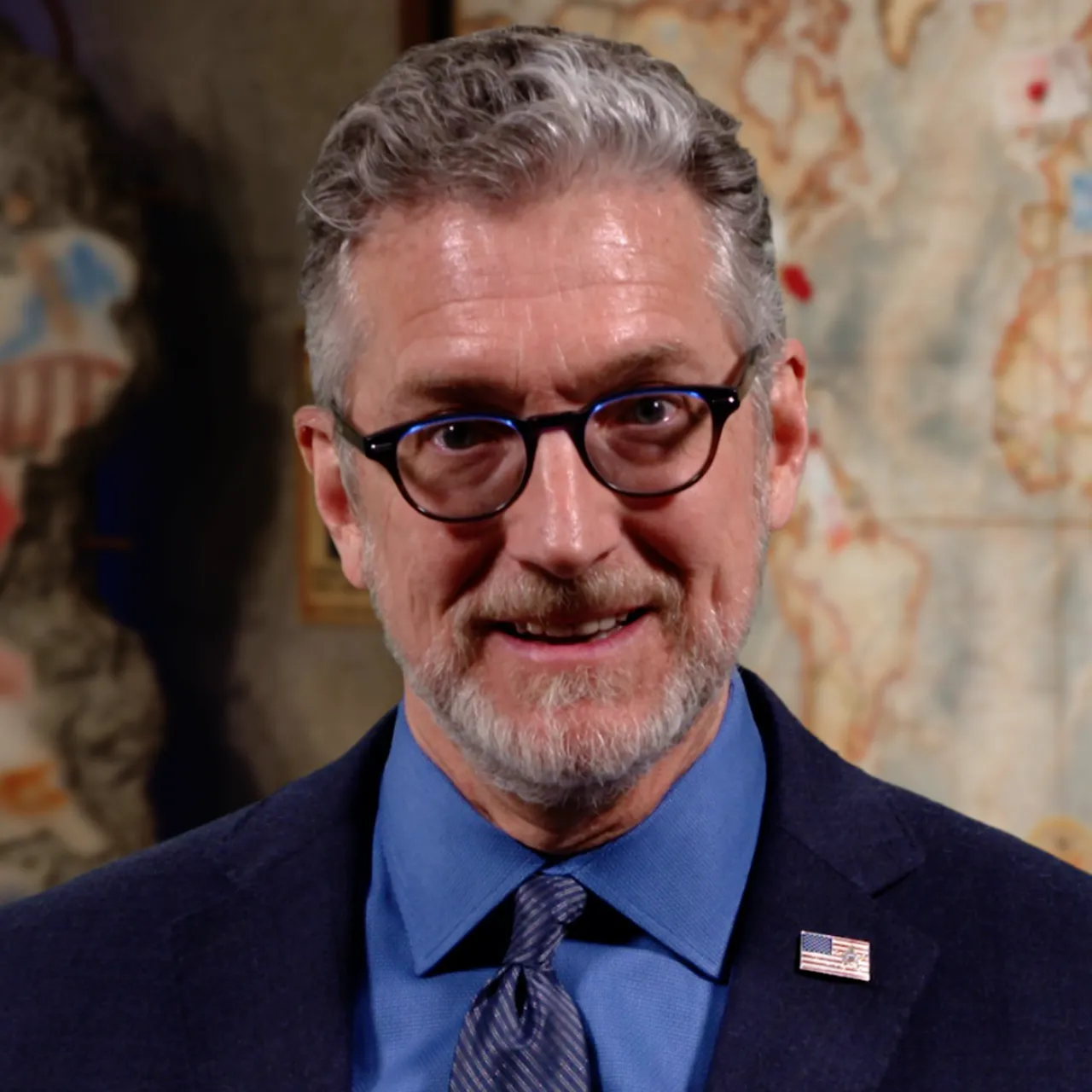
Kevin Freeman is a leading expert on economic warfare and financial terrorism. He hosts the TV program Economic War Room and Pirate Money Radio, translating national security and financial threats into clear insights for audiences nationwide.
.jpg)