
Stream Real Life Network Now

WATCH NOW
Economics

World News
25 min
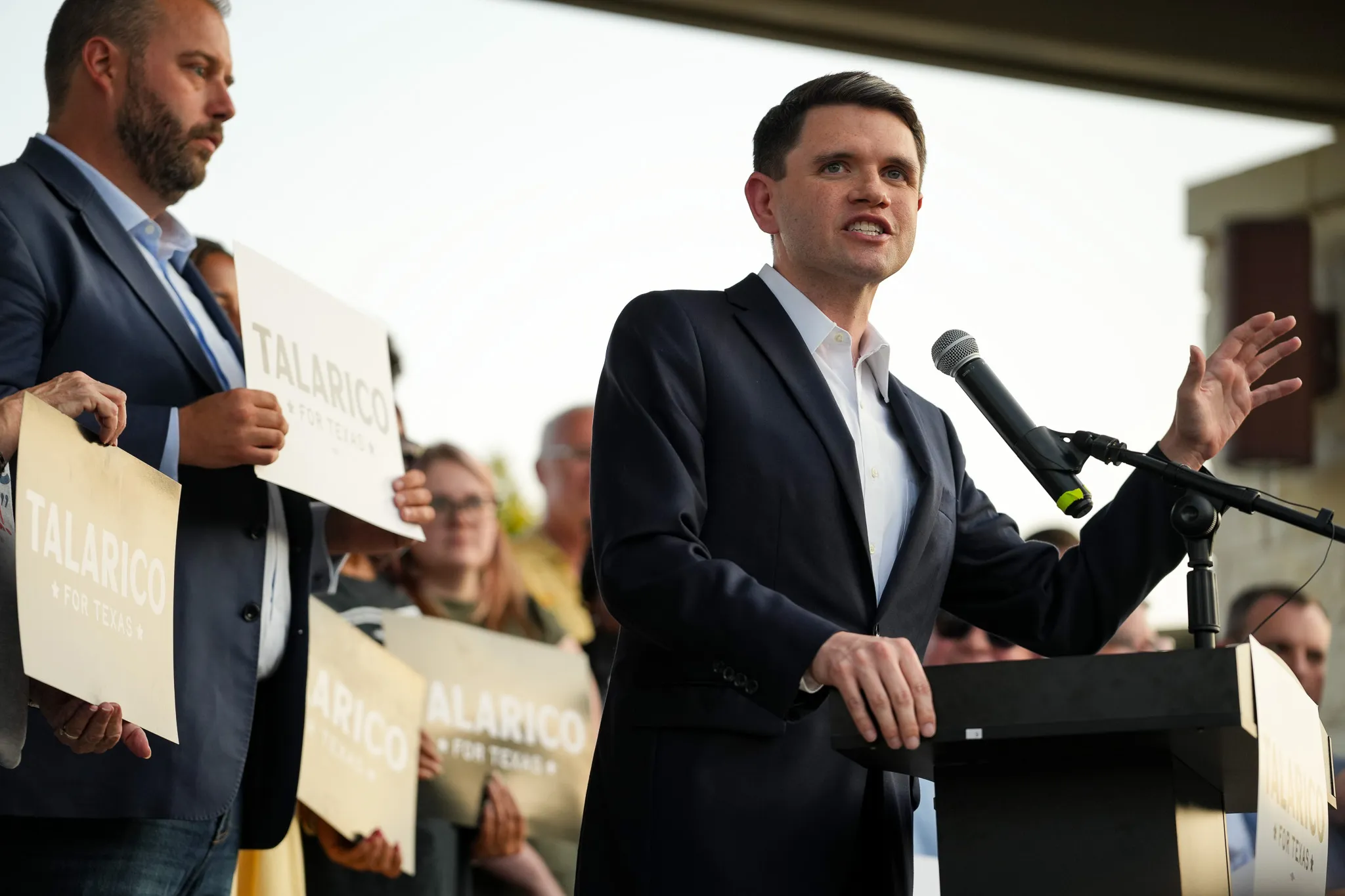
James Talarico, Abdul El-Sayed, and the Political Battles Over Immigration, Faith, and Israel
As the November elections approach, James Talarico and Abdul El-Sayed face scrutiny over their positions on immigration, socialism, Christian values, and Israel. Explore how these political debates could shape America's economy, religious freedom, and national security.
With the November 3 elections approaching, debates over immigration enforcement, economic policy, religious convictions, and America's relationship with Israel are taking center stage in several high-profile races. In Texas and Michigan, Democratic Senate candidates James Talarico and Abdul El-Sayed have become focal points of these disagreements, offering competing visions of government that raise broader questions about the country's political direction.
On The Daniel Cohen Show, Cohen used an unusual approach to examine those questions. Drawing inspiration from the classic film It's a Wonderful Life, he imagined a future in November 2027 in which Democrats controlled Congress and pursued their policy priorities.
The imagined future was not a prediction or an account of actual events. It was a rhetorical device designed to explore the possible consequences of proposals already being debated.
At the center of the discussion was a question extending beyond individual candidates: How might today's political decisions reshape the institutions, freedoms, and international commitments Americans have long taken for granted?
James Talarico's Economic Proposals and the Debate Over Christian Faith
In Texas, Talarico has attracted attention for combining progressive economic proposals with religious language. His approach emphasizes economic opportunity, government accountability, and a political vision that he presents as compatible with his Christian convictions.
During remarks featured on Cohen's program, Talarico called for an economy that produces fewer trillionaires and more millionaires. He also expressed support for higher taxes on wealthy Americans and restrictions on their political influence.
Those positions reflect a longstanding disagreement over the relationship between government intervention and economic prosperity.
Supporters of progressive taxation argue that it can help finance public services and address economic inequality. Critics contend that increasing the tax burden on successful businesses and investors can discourage entrepreneurship, reduce private investment, and ultimately limit job creation.
Cohen emphasized the role of business owners in generating employment, arguing that successful entrepreneurs create opportunities extending far beyond their personal wealth.
The disagreement also extends to the judiciary.
Talarico has expressed support for Supreme Court reforms, including binding ethics requirements and term limits for justices. He has also indicated openness to discussing an expansion of the Court.
Such proposals have prompted a national debate about judicial independence. Advocates maintain that reforms could improve accountability and public confidence. Opponents warn that changing the Court's composition for political reasons could undermine its role as an independent branch of government.
But perhaps the most distinctive element of Talarico's public profile is his use of religious language.
In remarks discussed on the program, he described God as love and suggested that Jesus would express particular concern for transgender children experiencing bullying.
For Christians who hold traditional interpretations of Scripture, those statements raise theological questions about the nature of God, biblical authority, and the relationship between compassion and moral teaching.
Cohen challenged Talarico's interpretation, arguing that Christian teaching cannot be separated from Scripture's broader claims about creation, human identity, and morality.
The dispute illustrates a growing divide over who gets to define Christian values in American public life and how those values should inform public policy.
Abdul El-Sayed Faces Questions Over Immigration, Iran, and Health Care
Michigan's Senate race presents another set of policy disagreements.
Democratic candidate Abdul El-Sayed and Republican Mike Rogers have offered contrasting approaches to immigration enforcement, health care, and American foreign policy.
El-Sayed has criticized Immigration and Customs Enforcement, suggesting that the country could return to an immigration system resembling the former Immigration and Naturalization Service. He has also advocated clearer legal pathways for immigrants seeking to live and work in the United States.
Supporters of immigration reform argue that enforcement agencies need stronger oversight and that legal immigration channels should be more accessible. Critics worry that weakening federal enforcement could create additional challenges for border security and immigration law.
Cohen portrayed El-Sayed's proposals as part of a broader shift away from traditional immigration enforcement. His program also questioned whether the candidate had adequately addressed concerns about the Iranian regime.
One exchange featured an Iranian American Christian student whose family, according to his account, had suffered persecution under Iran's Islamic Revolutionary Guard Corps. The student asked El-Sayed to condemn the Iranian government and its treatment of protesters.
Rather than delivering the direct condemnation the student requested in the excerpt presented, El-Sayed responded by discussing America's role in international affairs.
Cohen argued that the response deserved greater scrutiny, particularly given the United States' ongoing security concerns involving Iran.
However, disagreements over foreign policy or the adequacy of a candidate's response do not, by themselves, establish sympathy for terrorism or ties to extremist organizations.
Health care is another major issue in the Michigan contest.
El-Sayed supports Medicare for All, a proposal intended to establish a comprehensive government-financed health insurance system. Supporters argue that universal coverage could reduce household medical expenses and simplify administration. Opponents question the cost, tax implications, and potential restrictions on private insurance.
Cohen focused particularly on whether voters were receiving a clear explanation of the financial trade-offs.
The distinction between lower personal medical bills and higher taxes is central to the debate. A government-financed system could change how Americans pay for health care without necessarily eliminating the underlying cost of providing it.
For voters evaluating competing proposals, understanding those trade-offs is essential.
Israel Becomes a Defining Issue in Democratic Politics
Beyond domestic policy, Cohen devoted substantial attention to the growing disagreements over Israel within American politics.
His program highlighted a Colorado congressional contest involving progressive candidate Melat Kiros, whose criticism of Israel's military operations and American financial support reflects a broader debate among Democrats.
Kiros described Israel's actions in Gaza as genocide and argued that American taxpayers should not finance the conflict.
The genocide allegation is highly contested, and determining whether military conduct meets the legal definition requires examination of evidence and the applicable international legal standards. Israel disputes the allegation and maintains that its military operations have been directed against Hamas following the October 7, 2023, attacks.
The disagreement extends beyond terminology.
Some progressive politicians have called for restrictions on American military assistance to Israel, arguing that U.S. support should be conditioned on humanitarian protections and compliance with international law.
Others maintain that continued military cooperation is essential to Israel's security, particularly amid threats from Iran and Iranian-backed armed groups.
Cohen approached the issue from a biblical perspective, emphasizing the importance of America's relationship with Israel and citing Genesis 12:3 and Numbers 24:9.
His argument reflected a conviction shared by many Christians that God's promises concerning Israel remain relevant and that the Jewish state's security deserves particular attention.
Not all Christians interpret those passages identically, and there is considerable disagreement over how biblical promises should inform contemporary foreign policy.
Nevertheless, the theological dimension remains significant in American political discussions, especially among evangelical Christians.
The debate over Israel now encompasses more than foreign aid, touching fundamental disagreements about national security, biblical interpretation, and America's responsibilities abroad.
Cohen concluded his imagined journey into 2027 by returning to the choices confronting voters today. His fictional scenarios included expanded government programs, changes to immigration enforcement, judicial restructuring, and reduced American support for Israel.
Those outcomes are not inevitable consequences of any election. They represent one commentator's concerns about the direction of competing policy agendas.
Still, the underlying questions are real. Americans must evaluate what candidates propose, what those proposals would cost, how they would affect constitutional institutions, and whether their foreign policy commitments align with the country's long-term interests.
For Christians, the discussion also invites reflection on the proper relationship between biblical conviction and civic responsibility. Political engagement requires more than reacting to campaign rhetoric. It calls for examining competing claims, understanding the consequences of legislation, and distinguishing theological principles from partisan assumptions.
As election day approaches, voters have an opportunity to consider those questions carefully rather than relying on slogans or imagined futures.
For more reporting and commentary examining politics, faith, and America's relationship with Israel, watch The Daniel Cohen Show on Real Life Network.
World News
25 min
Riots Blaze through Europe, a Fiery Warning to the Rest of the West
Violent protests spread from France across Europe, raising concerns about economic instability, radical political movements, immigration, and declining Christian influence. Explore what Europe's unrest could reveal about the future of Western nations.
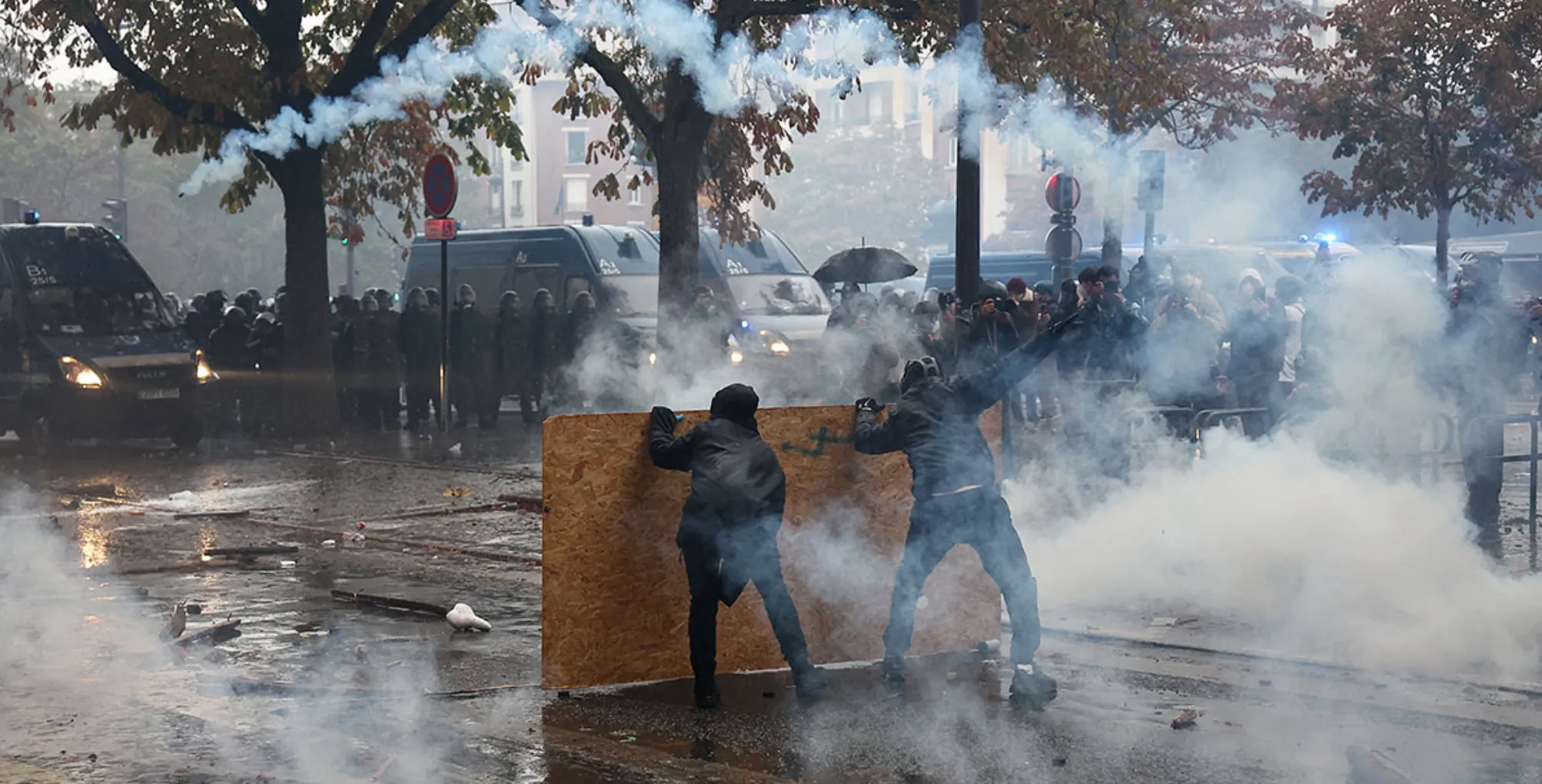
The riots that were supposedly about French school funding have fanned out across Europe, briefly even surrounding the Colosseum in Rome on Saturday. While more than 1,300 were arrested on Emmanuel Macron’s fiery streets, Greece, Albania, Italy, Belgium, and Spain are racing to contain their own pro-Palestine agitators, dispelling any doubts about the real roots of this unrest. “You might think that Saturday’s chaos was orchestrated by the same students who started the protests,” The Free Press’s Nora Bussigny warns. “But you would be wrong.”
While the frustration over the French education system is real enough, the storyline has been a convenient one for anti-republic factions to hijack, Bussigny insists. After spending more than a year undercover in the country’s anti-Israel movement, she knows the players well. “The convergence of radical leftists with political Islamists, brought together by their shared opposition to Western values and institutions — has become increasingly difficult to ignore, rearing its head from England to Germany to college campuses across the U.S. In other words, what we are seeing in France is only a symptom of a much larger problem.”
By Friday, the city of Paris was bracing for a second wave of terror that had looted and burned its way through iconic landmarks and beautiful old cobblestone streets. Troops stood guard under the Arc de Triomphe, while shops boarded their windows and doors. One local contractor told the AP that people were frantically reaching out for help in protecting their businesses. “I got the call last night,” he said, nodding at the optician’s office where he was working. “The owner seemed desperate. He said I was saving his life.”
Turns out, local merchants weren’t overreacting. On Saturday alone, the country responded to over 75 fires and at least two dozen store break-ins and robberies. David Bahnsen, founder and chief investment officer of The Bahnsen Group, believes that “behind the unrest is a much deeper economic problem.” He pointed to France’s catastrophic financial situation, noting that “government spending accounts for more than half of France’s economic output, while the country’s national debt is approaching 120% of their gross domestic product.” The irony, the economist told Family Research Council President Tony Perkins on “This Week on Capitol Hill,” is that despite shoveling billions of dollars into social programs, “many French citizens believe they’re getting less in return, and they don’t want government cuts.”
Unfortunately, that’s why socialist governments continue to be a failed experiment. They can’t afford what they promise to provide, and ultimately, the economy collapses under the weight of trying. France is an especially dramatic snapshot, Bahnsen notes, because the debts they’ve racked up can’t be paid, and the only solution — cutting back — is one the people won’t accept.
“That’s a huge problem. And that’s what most people focus on.” But it also crowds out the private sector and future growth, he notes. “Every dollar spent covering government programs is a dollar that can’t go into the productive side of the economy. France made a conscious decision to have a very large social safety net, very large social programs. … But the politicians were doing what the people asked for. [They] said, ‘Give us earlier retirement. Give us pensions you can’t afford.’ And then they complain that the chickens come home to roost.”
Now, outraged by inflation and the cost of living, the French resent the government they’ve chosen. And ironically, this is where the schools did not fail the country’s extreme elements. They may be short-staffed and underfunded, but they’ve still managed to turn out far-left ideologues with “an ultra-progressive ideology of extreme egalitarianism, anti-capitalism, and cultural hostility to France and its historical institutions and identity. That might almost be a blend of European socialism and American woke-ism,” NRO’s John Sullivan observes.
“There are no justifications for this upsurge of violent rebellion, of course — merely angry grievances by groups of discontented people, mainly young, many from immigrant backgrounds (even if born in France),” Sullivan notes, “all persuaded that they are either oppressed or uniquely sensitive to the plight of the oppressed.” Which, many argue, is how it was so easily commandeered by Gaza sympathizers and Muslim opportunists. “[T]he Palestinian banner has become the equivalent of the North Vietnamese flag in the 1970s,” Rich Lowry points out, “a symbol of resistance to the West, and in this case, fierce opposition to Zionism and so-called settler-colonialism.”
As angry as Macron was at President Trump’s suggestion that France’s open-borders policy was ruining the country, the American leader isn’t wrong. “I told Macron, when I first came in, I met him early. I said, ‘You are destroying France. You’re letting people come in that hate your country.’”
Vice President J.D. Vance agreed. “Western liberals imported the third world into France and other countries in the name of diversity and compassion. They ignored fundamental questions of assimilation and compatibility,” he posted on X. “They were told it would lead to this and they didn’t listen. I pray that France, a beautiful country of amazing people, will stop this madness before more of its landmarks burn. And I hope Americans are paying attention. This is the future congressional Democrats seek for your country.”
Some French leaders are brave enough to stand against the tide threatening to drag the nation under. Mayor of Nice Éric Ciotti was blunt in his assessment that “Islamo-leftism threatens the Republic. The massive presence of Palestinian flags and community slogans is a terrible reality in these demonstrations, just like the presence of movements close to the Muslim Brotherhood.”
While the rest of the West watches, Americans have plenty of cause for self-reflection. The warning signs are here, as DSA candidates and radical Muslims unite to battle for a foothold in U.S. politics. And while there are similarities between France and America, Bahnsen was careful not to compare the two countries. “I don’t want to diminish the risk going on. And I also don’t want to overstate it. … [But] as a national reality, America has a long way to go until we actually embrace the socialist impulse. And that’s a good thing.” He paused before adding, “But the problem is it moves marginally. It moves incrementally. And that’s what I think we have to resist.”
As troubling as the spiritual markers have been in the U.S., Europe is decades ahead of us in secularism, the economist stresses. “It’s a perfect inverse correlation there: decline of faith has coincided with an embrace of more state. The government [becomes] a sort of Messiah. And of course, we see it here in the States as well — not quite to the same degree, but Europe has proven to be a long-term test case of how a society that abandons Christian principles embraces more statist principles. … It’s not good.”
This article was written by Suzanne Bowdey and originally published on The Washington Stand. For more content like this, visit Real Life Network.
Faith & Culture
25 min
Poison at the Gates: The Drug War Still Crossing Our Border
America’s drug crisis threatens families and communities. Discover why parents, churches, and communities must respond with awareness, honest conversations, prayer, and hope.
Adapted from my conversation on Rose Unplugged with Derek Maltz, former Acting Administrator of the U.S. Drug Enforcement Administration. Watch the full episode here: Is China Waging Chemical Warfare on America?
There is something coming for your family. Whether you live in a city or a suburb. Whether your kids are in middle school or college. Whether you think this is someone else's problem — or you've already lived it.
It is the drug crisis pouring across our border. Not one drug. Not one cartel. Not one route. A flood. And it is changing — and ending — American lives every single day.
Not a Single-Drug Crisis
I want to be clear about something from the start, because the news often focuses on one drug at a time, and that gives us a false sense of the scale of what we're facing.
Yes — fentanyl is the headline. And it should be. It’s the deadliest drug ever to hit this country. It’s synthetic, lab-made, and lethal at just two milligrams — the weight of a few grains of salt.
It's driving the majority of overdose deaths in America. At the peak of this crisis, we were losing more than 70,000 people a year to fentanyl alone. That’s nearly 200 lives every single day.
But fentanyl isn’t coming alone. Methamphetamine, cartel-produced, and ultra-potent, is flooding communities from coast to coast. It's not the meth of 20 years ago. It's cheaper, stronger, and more widely available than ever.
Cocaine trafficking remains massive and increasingly, it's being laced with fentanyl without the user's knowledge.
And now there are emerging threats most Americans have never even heard of: xylazine, a veterinary tranquilizer mixed with fentanyl that Narcan can't fully reverse, and nitazenes, a synthetic opioids so powerful they make fentanyl look mild by comparison.
This is not a single-drug crisis. This is a chemical assault on the American people. And it is being orchestrated deliberately by foreign adversaries and transnational criminal networks that don't care how many of us they kill.
Even with a decline of nearly 24% in overdose deaths — and yes, we should acknowledge that progress — we are still talking about roughly 87,000 overdose deaths in a single year. That’s not a statistic. That’s a national emergency.
Drug overdoses remain one of the leading causes of death for American adults. And for every death, there are dozens more lives derailed; families broken, futures stolen, and communities hollowed out.
Follow the Supply Chain
So where is all of this coming from? Because this is where truth gets complicated and where the political noise gets loudest.
Here is what the evidence shows: The precursor chemicals, the building blocks, are largely manufactured in China. They are shipped to Mexican drug cartels. The cartels synthesize, press, and package the drugs. And then they move them north into the United States.
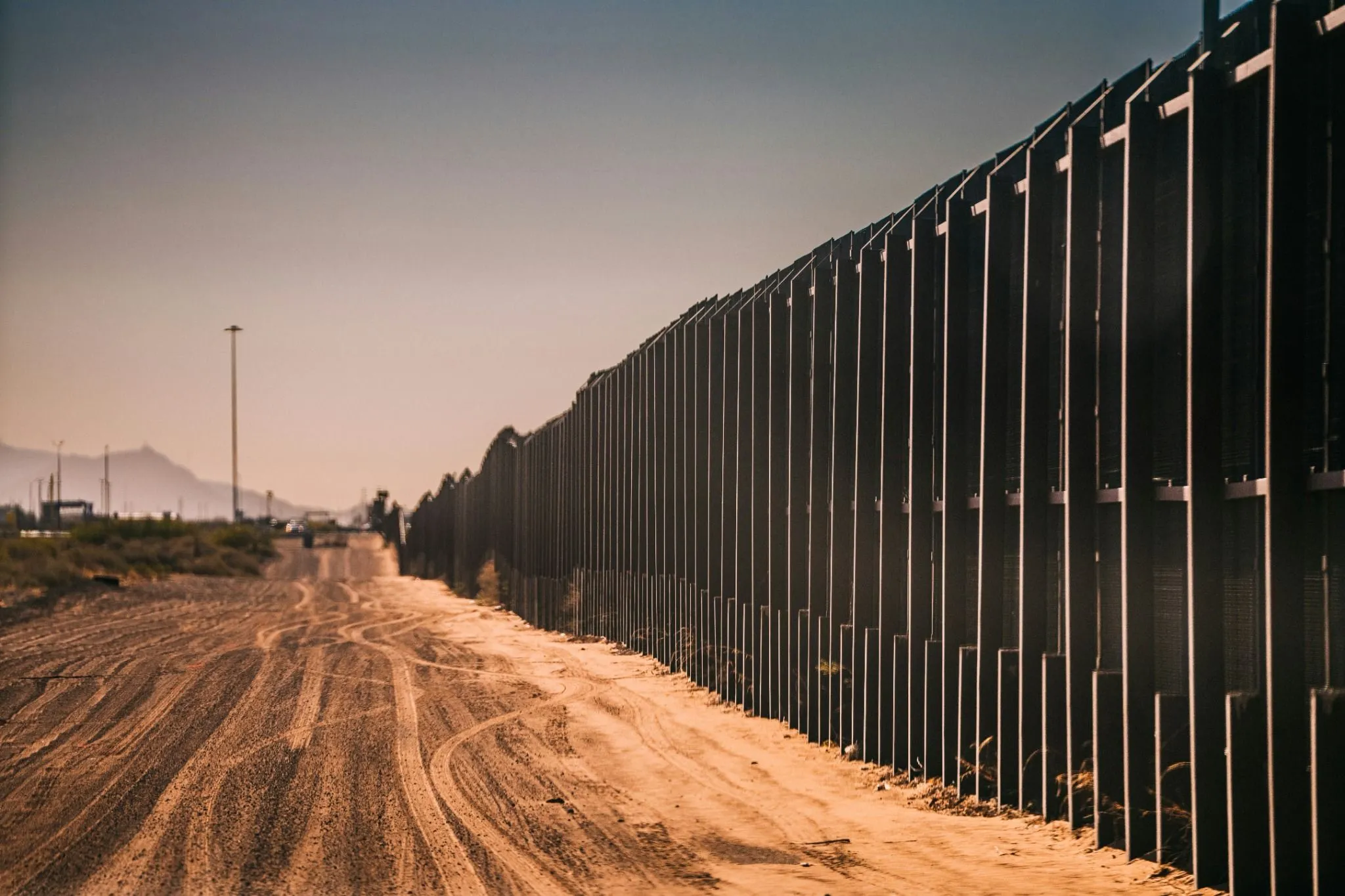
Now, here is the part that gets lost: the vast majority of these drugs are not being carried across open desert by migrants on foot. They are being driven through legal ports of entry. In passenger vehicles, commercial trucks, and in cargo shipments often by U.S. citizens.
U.S. Customs and Border Protection seized over 19,000 pounds of fentanyl in 2024 alone. And fentanyl now makes up nearly 90% of all opioid seizures at the border.
Which means this is not just a border wall conversation. It is a technology conversation. An intelligence conversation. A cartel conversation. And a China conversation — because none of this happens without China supplying the chemicals.
A Counterfeit Answer
This is not just about policy. When a nation loses its sense of purpose, when truth becomes relative, and when emptiness fills the space where meaning used to live, people look for escape.
And what is crossing our border right now is not just a drug. It is a counterfeit answer to a real spiritual hunger. One that ends in destruction.
We need stronger enforcement. Absolutely. We need to go after the cartels and hold China accountable. Without question. But we also need something no government can legislate. We need restored families. Engaged parents. Communities that are awake. And young people who know their worth — not from culture, but from their Creator.
This Is a Spiritual Battle
Fentanyl, Methamphetamine, Cocaine, Xylazine, Cartels, all weapons of destruction. But the scale of this, the sophistication of the networks, the multiple poisons being unleashed on our families — all of it confirms something I believe with everything in me.
This is not just a policy fight. This isn't just a border fight. This is a spiritual battle. And we need to start treating it that way.
In 1 Peter 5:8 we are told:
Be of sober spirit, be on the alert. Your adversary, the devil, prowls around like a roaring lion, seeking someone to devour. (1 Peter 5:8, NASB)
Think about that word — devour. Not inconvenience. Not discourage. Devour.
And “be of sober spirit” — not just physically, but clear-minded, alert, and aware. Because the danger isn't always obvious. It doesn't announce itself.
It comes as a pill that looks like medicine. As meth that looks manageable. As cocaine that looks like recreation. As something a friend hands you and says — it's fine.
But Scripture also tells us in John 10:10:
The thief comes only to steal and kill and destroy. (John 10:10, NASB)
Steal innocence, and kill potential. Our families or being destroyed. And if we are honest, with every drug coming across that border, that is exactly what we are watching play out.
Ephesians 6:12 tells us:
For our struggle is not against flesh and blood, but against the rulers, against the powers, against the world forces of this darkness, against the spiritual forces of wickedness in the heavenly places. (Ephesians 6:12, NASB)
Which means this: if we only fight this battle at the surface level and if we only debate policy and argue about which party deserves the credit or the blame, we will always be reacting. And reacting is not the same as overcoming.
Yes, we need stronger enforcement across every drug, every route, every cartel. Yes, we need to hold China accountable for the chemical warfare they are enabling. Yes, we need the technology and the intelligence to stay ahead of networks that never sleep.
But we also need something that no legislation can provide. We need discernment. We need truth spoken in our homes, in our churches, and our schools. We need families and communities that are not just alarmed but awake. We need to fight a spiritual battle on our knees. Collectively.
To the Young People
I want to speak directly to young people for a moment. I don't care what it was called. I don't care how it was offered or who gave it to you. What's being disguised as relief, escape, or just a good time has a body count.
And I want you to know — really know — that your life has value. Not because of what the culture tells you. Not because of what shows up on your screen. But because you were created on purpose, for a purpose.
And there is nothing, no substance, no moment, no amount of pressure from anyone worth trading that for.
To Every Parent
To every parent reading this: the time to lean in is now. Not when you find something. Not when the call comes. Now.
Talk to your kids about all of it — not just fentanyl. Talk about the counterfeit pills made to look like medicine. The meth that doesn't look like meth anymore. The pill some other kid promises will help them get through an exam. The powder hidden in something they never even knew to question.
Not out of fear, but out of love. Because silence is not protection anymore. Awareness is.
Darkness Does Not Win
Romans 12:21 tells us:
Do not be overcome by evil but overcome evil with good. (Romans 12:21, NASB)
That’s not wishful thinking. That is not passive. That is a call to action.
Darkness may be real. The threat may be sophisticated. The enemy may be relentless. But darkness does not win.
Not when truth is spoken. Not when families are engaged. Not when communities stand up and say — not here. Not our children. Not on our watch.
So yes, this is about drugs, fentanyl, meth, and the poisons being trafficked across our border. It’s also about cartels and chemicals and a fight that is far from over.
For More Information check out my guest’s website; Lost Voices of Fentanyl https://lvof.org
World News
25 min
Obama Returns to the Campaign Trail Amid Renewed Scrutiny of Iran, Immigration, and Israel
As Barack Obama returns to the campaign trail, questions surrounding his Iran nuclear deal, immigration enforcement, and Israel resurface. Explore the controversies, media accountability concerns, and national security issues shaping America's political debate.
Former President Barack Obama is back on the campaign trail as Americans prepare to vote on November 3, bringing renewed attention to his administration's record on Iran, immigration enforcement, and national security. Meanwhile, political controversies involving Congresswoman Ilhan Omar and congressional candidate Brad Lander are fueling broader questions about government transparency, media accountability, and America's relationship with Israel.
With elections approaching in both the United States and Israel, the consequences of political leadership extend beyond domestic policy. Decisions made in Washington affect American families, international security, and the lives of people facing threats across the Middle East.
On The Daniel Cohen Show, available through Real Life Network, these developments raise a central question: Are political leaders and the media giving Americans the full picture, or are important facts being lost in partisan narratives?
Obama's Iran Deal Returns to the Spotlight
As Obama campaigns for Democratic candidates, his defense of the 2015 Iran nuclear agreement has reignited debate over one of his presidency's most consequential foreign policy decisions.
The agreement, formally known as the Joint Comprehensive Plan of Action (JCPOA), was designed to restrict Iran's nuclear activities in exchange for sanctions relief. Obama has defended the arrangement as an example of diplomacy preventing a nuclear-armed Iran without military intervention.
Critics, however, argue that the agreement failed to address the broader threat posed by the Iranian regime.
One enduring controversy involves a $1.7 billion settlement paid to Iran in 2016, including an initial $400 million payment delivered in foreign currency. The Obama administration described the settlement as the resolution of a longstanding dispute over military equipment purchased before Iran's 1979 revolution.
Critics questioned the timing of the payment, which coincided with the release of American detainees, and raised concerns that money reaching Tehran could strengthen a government accused of financing terrorist organizations.
The distinction matters. The settlement itself is documented, but claims that specific payments directly financed particular terrorist attacks require evidence beyond the fact that Iran received the funds.
Nevertheless, the underlying concern remains significant.
Iran has supported militant organizations throughout the Middle East, including Hezbollah and Hamas, while continuing to pose security challenges for Israel and American interests.
The nuclear agreement also contained provisions under which certain restrictions would expire over time, prompting critics to question whether it offered a lasting solution.
The debate over Iran is ultimately about whether diplomatic agreements can effectively restrain a hostile regime while protecting Israel and America's national security interests.
For Israelis who have experienced missile attacks and repeated security alerts, these questions are not theoretical.
They affect families who must prepare for emergencies, communities living under the threat of violence, and military personnel responsible for protecting civilians.
Obama's return to the political spotlight has also renewed scrutiny of other controversies from his presidency, including the administration's initial public explanations following the 2012 Benghazi attack and his promises about Americans retaining their health insurance plans under the Affordable Care Act.
These episodes remain subjects of political debate, but they also underscore a broader principle: Public officials should be evaluated according to their records, not merely their ability to deliver persuasive speeches.
Immigration Enforcement, Ilhan Omar, and Media Accountability
Immigration enforcement has emerged as another major dividing line between the parties.
The Trump administration has emphasized deportations and border security as central components of its national security strategy. Supporters argue that enforcing immigration law is necessary to protect American communities and maintain confidence in the country's legal system.
Critics have raised concerns about due process, family separation, and the treatment of immigrants during enforcement operations.
The political debate becomes more complicated when considering the record of previous administrations.
During Obama's presidency, Immigration and Customs Enforcement conducted removal operations involving individuals who had entered the country unlawfully. His administration faced criticism from immigrant advocacy organizations for the scale of deportations.
That history complicates claims that immigration enforcement itself is a uniquely recent development.
Policies, priorities, and enforcement methods can differ substantially between administrations, but the federal government's responsibility to administer immigration law has remained.
The discussion also extends to Minnesota Congresswoman Ilhan Omar, whose personal background and immigration history have been the subject of longstanding political allegations.
Recent claims discussed on the program concern her identity, family relationships, and purported federal investigative activity. Such allegations are serious, but the transcript does not independently establish their accuracy.
Claims involving searches, seized documents, or possible criminal violations require confirmation through reliable court records or official statements before being reported as fact.
Public officials should be accountable for their conduct, but allegations must be distinguished from proven wrongdoing.
The same standard applies to the media.
Journalists have a responsibility to investigate legitimate questions involving elected officials without assuming guilt or dismissing allegations solely because of political affiliation.
A trustworthy press should apply consistent standards of evidence and scrutiny, regardless of whether the subject is a Republican or a Democrat.
That principle extends beyond immigration.
Cohen also raised concerns about social media moderation after describing restrictions on his own accounts while reporting on Israel and Hezbollah.
The broader debate over online speech involves competing concerns about misinformation, platform policies, public safety, and freedom of expression.
Private platforms have their own moderation rules, while government restrictions on speech raise distinct constitutional questions.
For Americans, understanding those distinctions is essential to evaluating claims about censorship and protecting meaningful public debate.
Israel, Political Activism, and the Responsibility to Tell the Truth
The final major issue concerns Israel and the growing political tensions surrounding its military operations and security policies.
New York congressional candidate Brad Lander traveled to the West Bank, where he participated in an olive harvest and was detained by Israeli authorities.
Lander described the incident as an example of the restrictions faced by Palestinians and those supporting them.
Israeli officials, according to the program, offered a different explanation, saying the group entered a restricted security area without the necessary coordination.
These competing accounts illustrate how quickly events in Israel become part of American political campaigns.
For some activists, visits to the West Bank provide opportunities to draw attention to Palestinian experiences and Israeli policies. Critics question whether certain high-profile visits are designed primarily to generate political publicity.
Determining what happened requires examining the circumstances of the detention, the applicable restrictions, and the accounts of those involved.
But political disagreements over Israel should not overshadow the continuing threat of violence.
The program also addressed a shooting attack near Hebron and criticized news coverage that Cohen believed failed to adequately identify the perpetrators or recognize the Israeli soldiers affected.
Reporting on such incidents requires precision. The identities of victims, the circumstances of an attack, and the evidence identifying those responsible should be verified rather than assumed.
The larger concern is how media coverage can shape public understanding of a conflict in which the language used to describe violence often becomes controversial.
For families mourning loved ones, the consequences are immediate and personal.
Israel's soldiers and veterans also face lasting physical and psychological challenges, particularly after prolonged military operations.
Organizations such as Friends of the Israel Defense Forces provide support for soldiers, veterans, wounded personnel, and bereaved families, including assistance related to rehabilitation and mental health.
These needs highlight the human costs of conflict that can be overlooked when public attention centers entirely on political arguments.
For Christians, the debate over Israel also invites reflection on the responsibility to pursue truth and justice.
Proverbs 26:24-26 warns about deception concealed beneath persuasive words, reminding readers that outward appearances do not always reveal a person's true intentions.
The passage should not become a license to assume hidden motives without evidence. Instead, it encourages discernment and a serious commitment to honesty.
That commitment applies equally to politicians, journalists, activists, and voters.
Biblical discernment requires Christians to examine competing claims carefully, reject deception, and refuse to let political loyalty determine what they accept as true.
As Americans prepare for November 3, questions about Iran, immigration, free speech, and Israel remain central to the national conversation.
The challenge is not simply deciding which political leaders are most persuasive. It is determining which claims are supported by evidence, which policies deserve scrutiny, and which principles should guide decisions affecting the nation.
Christians have an opportunity to participate thoughtfully, pray for those in authority, and evaluate public affairs through the lens of Scripture without confusing partisan allegiance with biblical faithfulness.
For continuing coverage of national security, Israel, and the issues shaping America's future, watch The Daniel Cohen Show on Real Life Network.
Real Life Network will also present America Speaks '26: Election Night Live on Tuesday, November 3, beginning at 8 p.m. Eastern / 5 p.m. Pacific, featuring election results, guests, and analysis from across the United States and Israel.
World News
25 min
The 2026 Midterms: What Early Voting, National Security, and Economic Concerns Reveal
As the 2026 midterms approach, shifting voting trends and debates over immigration, national security, energy costs, and religious liberty are shaping America's political future. Explore the issues voters should examine beyond the polls.
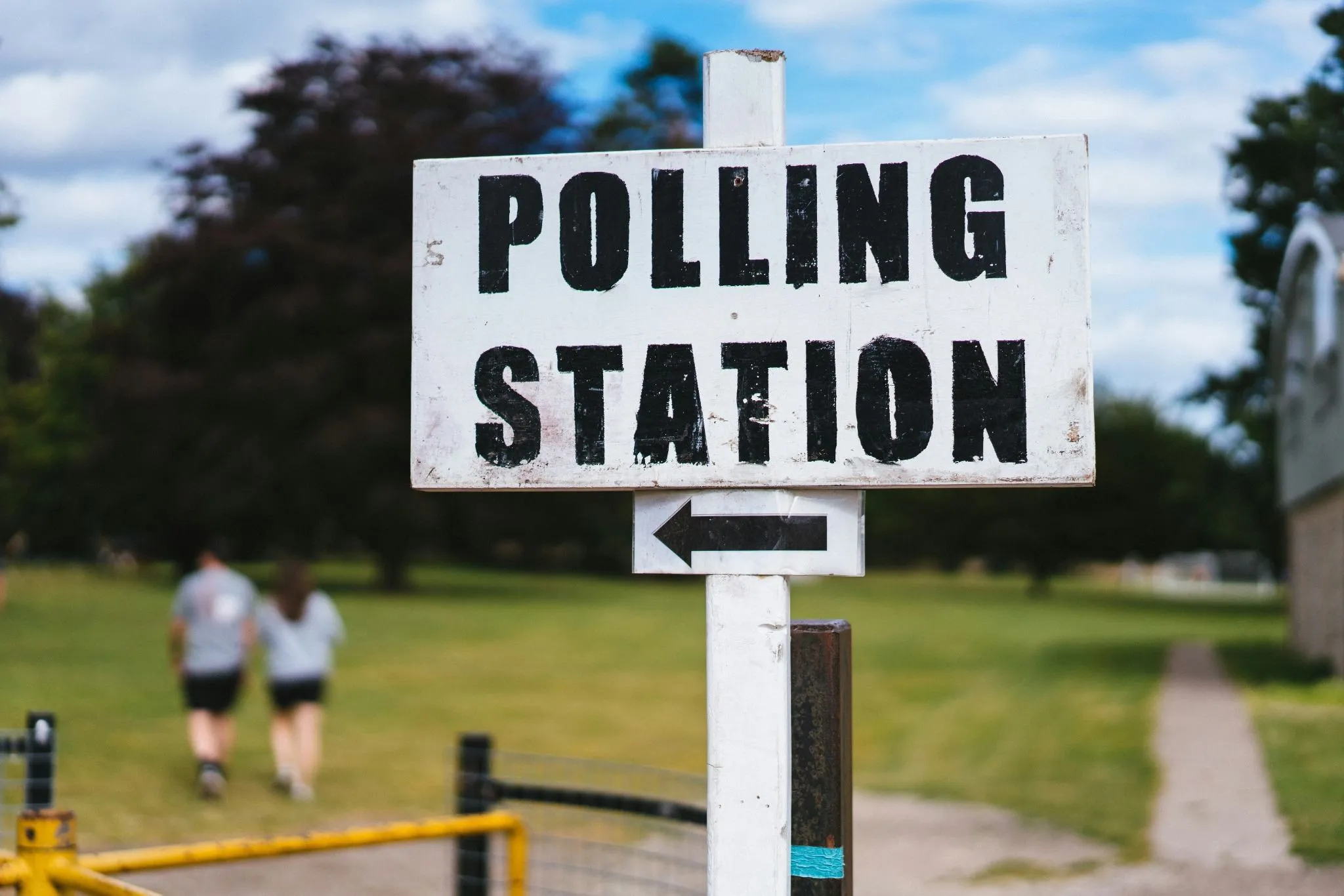
With Election Day approaching on November 3, Americans are facing decisions that extend far beyond which political party controls Congress. Immigration enforcement, national security, religious freedom, education, and the cost of living are all shaping the national conversation. Yet the growing focus on polling numbers and campaign predictions can distract from the policies that will ultimately affect American families.
Recent early-voting trends and voter-registration changes have raised questions about conventional expectations for the midterm elections. But political momentum is difficult to measure, and no polling advantage guarantees an election result.
The significance of the 2026 midterms lies not simply in which party gains seats, but in the policies that elected officials will have the authority to advance or challenge.
For continued coverage of the issues shaping America's future, watch The Daniel Cohen Show on Real Life Network.
Early Voting, Political Momentum, and the Limits of Polling
Political commentators frequently turn to historical patterns when predicting congressional elections. Traditionally, the president's party has faced challenges during midterm elections, often losing seats as voters express dissatisfaction with the administration.
But historical trends do not determine individual elections.
Early-voting activity in states such as Michigan, Nevada, Arizona, North Carolina, and Pennsylvania has become a focus of political analysis. Changes in registration figures, ballot returns, and participation across different counties may offer clues about voter engagement.
Michigan presents an especially interesting example because the state does not register voters by political party. Analysts therefore examine geographic voting patterns, previous election results, and other indicators to estimate which groups are participating.
Those estimates have limitations. A county's historical voting preferences do not establish how every resident voted, and a higher share of early ballots does not necessarily translate into additional votes for a particular candidate.
National polling presents similar challenges.
CNN political analyst Harry Enten has discussed historical instances in which congressional polling underestimated Republican support. Such patterns are worth examining, but they cannot establish that the same errors will occur in 2026.
Campaigns must also account for changes in voter behavior. Americans increasingly have different options for casting ballots, including early in-person voting and voting by mail, depending on their state.
A shift in when voters cast their ballots does not always mean a shift in whom they support.
Rather than treating every new poll or early-voting report as a prediction, voters should recognize the distinction between participation data and actual election results.
The more important question is what candidates intend to do if elected.
Immigration, Religious Liberty, and the Responsibility of Public Officials
Some of the most consequential debates in the 2026 elections concern the federal government's responsibility to enforce immigration laws, protect national security, and preserve constitutional freedoms.
Congress has substantial influence over immigration policy through legislation, federal appropriations, and oversight of executive agencies. Decisions about border security, deportation priorities, asylum procedures, and pathways to legal status can affect communities throughout the country.
Candidates offer different approaches to those responsibilities.
Some emphasize stronger enforcement and expanded removal of individuals who violate immigration laws. Others support broader legalization measures, changes to enforcement practices, or additional protections for undocumented immigrants.
These differences deserve careful examination because campaign slogans rarely explain how a proposal would operate in practice.
National security questions have also entered several prominent Senate campaigns.
In Michigan, the contest involving Republican Mike Rogers and Democrat Abdul El-Sayed has generated debate over foreign policy, Israel, terrorism, and the responsibilities of elected officials.
Questions concerning a candidate's statements, political associations, and policy positions are legitimate subjects of public scrutiny. However, allegations involving family members or past organizational relationships must be distinguished from evidence of personal wrongdoing.
That distinction is particularly important when discussions involve religion.
A candidate's Muslim or Christian identity does not establish that person's national security positions, political loyalties, or commitment to constitutional government. Those judgments require examination of actual statements, decisions, and evidence.
Political accountability depends on documented facts and consistent standards, not assumptions about someone's faith, family, or political affiliation.
Religious liberty and questions surrounding human identity are also shaping state and local races.
A high school cross-country controversy in Washington has renewed debate over transgender participation in girls' athletics. Supporters of sex-based athletic categories emphasize competitive fairness and opportunities for female athletes. Supporters of inclusive participation policies emphasize access and protection from discrimination.
The disagreement raises broader questions about school governance, parental involvement, student rights, and the authority of state athletic associations.
These decisions are often made outside Washington, reminding voters that local and state elections can be just as consequential as congressional contests.
For Christians, evaluating these issues requires more than adopting the language of a political party.
Scripture establishes principles of truthfulness, justice, respect for human dignity, and responsible stewardship. Applying those principles to public policy requires examining what a proposed law actually does and whom it affects.
Energy Costs, Government Spending, and Biblical Stewardship
For millions of Americans, political debates eventually return to the household budget.
Fuel prices, groceries, rent, utilities, and transportation expenses directly influence financial stability. These concerns are particularly significant for families living on fixed incomes and workers whose livelihoods depend on transportation.
California's fuel prices have become a recurring example in debates about energy policy.
State taxes, environmental regulations, refinery capacity, distribution requirements, and broader oil-market conditions all contribute to the prices consumers pay. Political leaders disagree about how much emphasis should be placed on domestic production, environmental protection, infrastructure, and tax relief.
Those competing approaches involve real tradeoffs.
Policies designed to reduce emissions or encourage alternative energy sources may impose costs on certain industries and consumers. Measures intended to expand conventional fuel production may raise different environmental and economic concerns.
The appropriate response is to evaluate the evidence behind each proposal rather than assume that a single political decision explains every change in fuel prices.
Energy policy also intersects with national security.
Reliable fuel supplies support commercial transportation, military readiness, agriculture, and emergency services. Disruptions to domestic refining or international energy markets can create consequences far beyond the gas pump.
Congress influences these questions through taxation, spending, regulation, and oversight. State governments also exercise significant authority, particularly over transportation, environmental standards, and energy infrastructure.
That makes understanding the responsibilities of each elected office essential.
Biblical stewardship offers a helpful framework for considering these decisions.
Deuteronomy 30:19 records Moses calling Israel to choose life and blessing. That passage addressed Israel's covenant responsibilities and should not be treated as a direct endorsement of a modern political party. Nevertheless, Scripture consistently teaches that choices have consequences and that people bear responsibility for how they exercise authority.
Public officials are entrusted with decisions that affect families, communities, and future generations. Voters likewise have an opportunity to examine those decisions carefully.
Responsible civic participation begins with understanding the issues, testing political claims against the evidence, and recognizing the long-term consequences of public policy.
The 2026 midterms will determine who holds important positions of authority in Congress and in state and local governments. Those officials will make decisions involving national security, immigration, energy, education, and public spending.
Polls will continue to change. Campaigns will continue making competing claims. But the responsibilities of citizenship remain.
Christians can approach those responsibilities with prayer, discernment, and a commitment to truth, recognizing that political allegiance must never replace biblical conviction.
Follow the issues shaping the 2026 midterm elections, including national security, public policy, and the intersection of faith and culture, through The Daniel Cohen Show, streaming free on Real Life Network.

World News
25 min
China Supplying Houthi Terrorists with Ballistic Missile Parts
Reports reveal that Chinese companies are supplying critical missile and drone components to Houthi militants, strengthening their ability to attack U.S. forces, Israel, and Saudi Arabia. The findings raise concerns about Beijing's role in escalating Middle Eastern conflicts.
News broke Tuesday that China’s communist regime is supplying critical parts for powerful precision-guided ballistic missiles to Houthi militants in Yemen amid the terrorist organization’s expanding attacks on Saudi Arabia and U.S. forces.
The Wall Street Journal reported that parts shipped in from China have allowed the terrorist group to build a version of the Kheibar Shekan Iranian precision-guided missile, which has a reported range of approximately 1,200 miles — allowing it to strike Israel and anywhere in Saudi Arabia. Noted for being highly mobile and relatively inexpensive at $1 million per unit (when compared to the cost of Patriot or THAAD missiles needed to neutralize it, which can range from $4 to $15 million per unit), the Kheibar Shekan is capable of evading air defenses and can deliver a bigger payload than cruise missiles and drones.
For its part, China claims that it is abiding by the U.N.’s ban on arms sales to the Houthis because the missile parts have civilian (or “dual-use”) purposes. But analysis of some of the parts shows they were “specifically designed for missile use.”
It’s not just ballistic missile parts that are being supplied by Beijing. Data gathered from U.N. reports and arms experts has revealed that “Chinese companies are now the biggest source of seized goods bound for the Houthis,” including drone parts. Since the October 7, 2023 Hamas attacks on Israel, the Houthis have launched hundreds of drone attacks targeting U.S. forces, Israel, commercial ships, and surrounding Middle East countries.
While previously relying on Tehran and the Lebanese terrorist group Hezbollah to provide them with weapons, the WSJ report notes that the Houthis have now become more autonomous, thanks in large part to Beijing’s parts pipeline as well as other factors. “They have developed domestic manufacturing capabilities with artificial intelligence for drone and missile softwares, diversified their supply chains, accumulated operational experience, and established relationships with regional smugglers and international procurement networks,” stated Mohammed al-Basha, the founder of a Washington-based risk-advisory firm.
After initially focusing on assaulting U.S. forces as well as commercial vessels in the Strait of Hormuz, the Houthis have now expanded their hostilities against neighboring countries, striking the headquarters of Saudi Arabia’s state-owned energy giant Saudi Aramco on Tuesday, just days after they attacked the country’s King Khalid International Airport, killing at least 13 people (including an American citizen) and wounding over 300.
The violence highlights the increasingly direct role that Xi Jinping’s regime is playing in the expanding Middle Eastern crisis. Last month, reports surfaced revealing that satellite imagery and intelligence provided by Chinese companies have allowed Tehran to carry out precision strikes on U.S. forces, which have led to the deaths of several American servicemembers.
Experts like Gordon Chang, an author and distinguished senior fellow at the Gatestone Institute, are not surprised by the reports of China’s clandestine weapons exports. “We have known for years that China was supplying weapons to Iran and its three main terrorist proxies — Hamas, Hezbollah, and the Houthis — so it should come as no surprise that China is supplying critical components for ballistic missiles to the Houthis,” he told The Washington Stand.
Chang further noted that “China has also been supplying, among other things, targeting data to Iran, which that regime has used to kill at least nine American service members in the Gulf, on March 1 and July 17.”
“What is surprising is that the Trump administration is not imposing costs on China for helping to kill Americans,” Chang emphasized. “We need to hold China accountable, but we also need to hold Washington accountable too. China will not stop until we impose costs. Washington has the power to impose those costs, and Americans will continue dying until we show Beijing that we are no longer going to tolerate the killing of Americans.”
This article was written by Dan Hart and originally published on The Washington Stand. For more content like this, visit Real Life Nework.
Thank you! Your submission has been received!
Oops! Something went wrong while submitting the form.
Business & Finance
If the government can print money, why does it still need to borrow? That simple question recently exposed just how broken modern economic thinking has become, and why Americans urgently need biblical truth and common sense when it comes to money.
On this episode of Pirate Money Radio with Kevin Freeman, I’m joined by one of the clearest economic thinkers I know: former six-term Congressman Bob McEwen. Together, we unpack the difference between free markets and socialism, explain why inflation quietly steals from families, and show how Christian finances must be grounded in truth, standards, and personal responsibility.
Stream Pirate Money Radio on the Real Life Network.
The Problem with Modern Monetary Thinking
One of the most revealing moments in recent economic history came when a top government economist openly admitted confusion about how money works. If money can simply be created, why does debt even matter?
That question exposes the fatal flaw of modern monetary theory: it removes standards.
Bob McEwen explains economics the way farmers, small business owners, and families instinctively understand it, you must produce before you consume. Wealth is not printed. It is created through voluntary exchange, hard work, and service to others.
When the government abandons that principle, confusion replaces clarity—and inflation replaces prosperity.
Free Markets vs. Socialism: Two Very Different Outcomes
Bob McEwen breaks economics down to its simplest truth:
There are only two ways to get money from someone else.
Free Enterprise
- You offer something valuable
- The exchange is voluntary
- Both parties are better off
- Wealth is created
Socialism
- Money is taken through force or policy
- No value is created
- Incentives are destroyed
- Poverty follows
Socialists know how to redistribute wealth, but they don’t know how to create it. History proves this every time. From Detroit to Venezuela, the pattern never changes: the bigger the government, the fewer the choices, and the poorer the people.
Freedom and prosperity always travel together.
Why Printing Money Is a Form of Theft
Inflation doesn’t announce itself with a gun, but the result is the same.When government prints money without restraint, every dollar you hold buys less. That’s not theory. That’s math.
Bob explains money as a representation of past work, a claim on value you’ve already created. When that measuring stick is manipulated, savings are destroyed, wages fall behind, and families lose purchasing power.
That’s why civilizations have always relied on standards, especially gold, as an honest measure of value. Gold doesn’t change. Politicians do.
Truth, Standards, and Biblical Foundations
One of the most powerful moments in this conversation is when Bob connects economics directly to faith. Truth requires a standard. Without it, everything becomes opinion—and opinions don’t protect liberty. America’s founders understood this. They grounded law, money, and markets in biblical principles: individual responsibility, private property, honest weights and measures, and equality before God.
That’s why this conversation isn’t just about economics—it’s about spiritual foundations. When truth is removed, error flourishes. When standards disappear, corruption fills the void.
First, Second, and Third-Party Payers: Why Government Always Wastes Money
Bob McEwen delivers what may be the clearest explanation ever given on why government programs always cost more and deliver less.
First-Party Payer
- You pay
- You consume
- You care about price and quality
Second-Party Payer
- You control only one variable
- Inefficiency begins
Third-Party Payer
- You don’t pay
- You don’t consume
- You don’t care about price or quality
Every government program operates as a third-party payer system. That’s why waste is inevitable, and why bigger government always leads to bigger problems. As Abraham Lincoln warned, government should do only what individuals cannot do better themselves.
Christian Finances Require Biblical Principles
Christian finances must be rooted in stewardship, honesty, and truth, not political promises. Scripture teaches that money reflects character. Faithfulness with “unrighteous mammon” matters. When believers understand economics biblically, they’re equipped to give generously, invest wisely, and resist systems that quietly steal from future generations.
Sound money supports strong families, thriving communities, and enduring liberty.
Final Thoughts: Why Pirate Money Radio Matters
This episode of Pirate Money Radio with Kevin Freeman isn’t about politics—it’s about reality.
Bob McEwen reminds us that economic laws work the same way moral laws do. You can ignore them for a while, but eventually, the consequences arrive.
America’s future depends on whether we return to truth, standards, and biblical wisdom. That starts with understanding money, not as something government creates, but as something people earn.
25 min

January 27, 2026
Kevin Freeman
Business & Finance
Watch Pirate Money Radio and stay grounded in truth by streaming on Real Life Network.
If you talk to young Americans today, you hear a common refrain: “The American Dream feels out of reach.” Housing is unaffordable, debt is crushing, and many wonder if hard work will ever truly pay off. On Pirate Money Radio, we’ve been unpacking why that feeling exists—and more importantly, what can be done about it through biblical tithing, Christian budgeting, and principled Christian financial planning.
In a recent conversation, I was joined by my friend and colleague Mike Carter to connect the dots between real money, economic justice, faith, and the future of our nation. What we discussed isn’t theoretical. It’s already shaping elections, families, and the direction America will take in the coming decades.
The Growing Cry for Economic Justice and Christian Financial Planning
Economic justice is not a slogan invented by politicians—it’s a biblical principle rooted in Scripture, stewardship, biblical tithing, and sound Christian financial planning. Scripture speaks clearly about fair weights and measures, and history proves what happens when societies abandon them.
Today, many Americans—especially Gen Z—feel locked out:
- Student debt delays adulthood
- Housing prices push first-time buyers toward age 40
- Inflation erodes savings faster than people can earn
As Mike Carter put it, young people are working harder than ever, yet feel like they’re running on a treadmill that never moves forward. That frustration explains why socialist ideas suddenly sound appealing to voters who see no upward mobility.
The Turning Point: Leaving Sound Money Behind
One of the most important turning points in modern American history happened quietly in 1971, when the United States abandoned the gold standard. From that moment on, money became disconnected from anything tangible.
The results have been devastating:
- Exploding national debt
- Persistent inflation
- A widening wealth gap
When Congress can spend without restraint and the Federal Reserve can print at will, the system rewards those closest to the money spigot while punishing average families. This is known as the Cantillon Effect, and it explains why asset holders thrive while wages lag behind.
Mike emphasized that this isn’t just an economic issue—it’s a moral one. Unjust money produces unjust outcomes.
Gen Z, Socialism, and the Search for Hope
We’re seeing something unprecedented: young voters turning out in massive numbers for socialist candidates. Not because socialism works—but because they’re desperate for answers.
Mike and I discussed how policies like rent control and collectivism promise short-term relief but deliver long-term devastation. History—from Venezuela to North Korea—confirms this truth.
When people lose hope in building a future for themselves, they begin voting for government dependency instead of freedom. That’s not compassion—it’s a recipe for bondage.
Family, Faith, and Demographic Destiny
One of the most sobering consequences of economic injustice is its impact on family formation.
- Average age of first marriage is now nearing 30
- First-time homebuyers average around age 40
- Birth rates have fallen below replacement levels
Mike Carter brought a powerful perspective from his years in housing: when people can’t afford homes, they delay marriage. When marriage is delayed, children are delayed—or never born at all.
This isn’t just about economics. It’s about the survival of a culture.
As the late Charlie Kirk so boldly said: “People should get married young and have more kids than they can afford.” That statement cuts against conventional financial wisdom—but it reflects a deeper truth. Families are built on faith, not spreadsheets.
ARC: A Biblical Vision for Economic Justice
Out of these conversations emerged a practical framework we call ARC:
Affordability
Sound money and fair systems make life affordable again—housing, food, and family.
Reward
Free markets reward hard work, innovation, and responsibility—unlike socialism, which punishes effort.
Kindness
The church—not the government—was designed to lift people up through generosity, mentorship, and community.
Mike emphasized that ARC isn’t just a philosophy. It’s a call to action—especially for believers who want to help the next generation thrive.
Why Real Money Still Matters for Christian Budgeting
At Pirate Money Radio, we talk often about gold and silver as real money. Not as speculation—but as honest measures of value.
For families trying to practice Christian budgeting and long-term stewardship, money that holds its value is essential:
- Savings are protected
- Long-term planning becomes possible
- Families regain confidence in the future
Mike shared how more listeners are taking their first steps into gold and silver—not out of fear, but out of prudence.
Choosing Liberty Over Collectivism
History gives us a clear choice:
- Rugged individualism under God, which built America
- Or the false warmth of collectivism, which has failed everywhere it’s been tried
True economic justice doesn’t come from government control. It comes from faith, family, freedom, and honest money.
America still has time to choose wisely—but the window is closing.
Watch Pirate Money Radio and stay grounded in truth by streaming on Real Life Network.
25 min
Economic Justice, Real Money, and America’s Future

January 22, 2026
Kevin Freeman
Business & Finance
America is facing a crisis few are willing to confront honestly. It isn’t just political. It isn’t just cultural. It’s demographic—and it’s deeply economic. In this special Economic War Room series, we’ve been walking through what Scripture, history, and data all make clear: when families collapse, nations follow.
If you want to protect your family, preserve liberty, and practice biblical stewardship in uncertain times, this conversation matters. This is where Christian financial planning and Christian budgeting intersect with national survival.
Watch Economic War Room with Kevin Freeman and stay grounded in truth by streaming on Real Life Network.
The Four Horsemen and America’s Six Trials by Fire
The Bible tells us plainly that a house divided against itself cannot stand. America, like the “strong man” in Mark 3, has served as a protector of liberty worldwide. But today, coordinated forces are working to weaken, divide, and ultimately dismantle that strength.
In Economic War Room, I’ve used the imagery of the Four Horsemen to describe these threats:
- The Red Horse: Communism, led by the Chinese Communist Party
- The Green Horse: Sharia-based Islamist supremacy
- The Blue Horse: Globalist despotism under institutions like the UN and WEF
- The Yellow Horse: Cowardice, apathy, and greed within our own nation
These forces do not act alone. Together, they fuel six interconnected “trials by fire” that threaten America’s future.
Trial Five: Demographics Is Destiny
Demographics are not political opinions, they are mathematical realities. When a society’s birth rate falls below the replacement level of 2.1 children per woman, that society ages, weakens, and eventually declines. America is now at 1.6.
That means fewer workers, fewer families, fewer churches, and fewer citizens capable of sustaining freedom. Social programs strain, debt explodes, and the wealth gap widens even further. A dying population is easy prey for totalitarian control. This is why demographics matter so deeply to the Economic War Room.
Inflation: The Silent Enemy of Families
Why aren’t young Americans getting married and having children? The number one reason cited today is simple: they believe they can’t afford it. That belief didn’t arise by accident.
Since the U.S. abandoned the gold standard in 1971, the dollar has lost roughly 90% of its purchasing power. Inflation has forced dual-income households, delayed marriage, pushed homeownership out of reach, and made children feel like a financial liability instead of a blessing. Christian budgeting becomes nearly impossible when money itself is dishonest.
Marriage Delay and the Fertility Collapse
For generations, women married in their early twenties. Today, the average age is nearly 29, and rising. Fertility peaks earlier than most people realize, and delayed marriage inevitably means fewer children. This isn’t about blaming individuals. It’s about recognizing a system that punishes families while rewarding debt, speculation, and financialization.
When money is broken, families break.
The Spiritual Roots of the Crisis
This is not merely an economic problem—it’s a spiritual one. As biblical worldview declines, so does obedience to God’s first command to humanity: be fruitful and multiply. Divorce skyrocketed alongside inflation. Abortions rose as children became “too expensive.” Cultural confusion replaced clarity about marriage and family.
Jesus warned us in Luke 16:11 that if we are unfaithful with unrighteous mammon, we will not be trusted with true riches. We are living out that warning in real time.
Central Bank Digital Currency and Control
A shrinking population combined with massive debt invites tyranny.
Central Bank Digital Currency isn’t about convenience—it’s about control. Programmable money allows elites to preserve wealth while restricting the freedoms of everyone else. It is a predictable response to demographic decline and financial collapse.
This is why Christian financial planning must now include protecting purchasing power—not just chasing returns.
Real Solutions: Faith, Families, and Honest Money
The good news is this: demographic collapse is not inevitable.
Solutions exist:
- Restore affordability by protecting purchasing power
- Reward families, not penalize them
- Return to biblical principles in marriage, money, and stewardship
- Teach Christian budgeting that emphasizes saving, giving, and long-term thinking
Transactional gold and honest money systems—what I’ve written about as Pirate Money—can help restore economic justice for young families and give them hope again.
The Role of the Church
John Wesley’s timeless wisdom still applies:
- Earn all you can ethically
- Save and invest all you can wisely
- Give all you can generously
If churches embraced these principles, we could help the next generation marry earlier, build stability, and raise families with confidence instead of fear.
Awareness Is Preparation
Demographics may be destiny—but destiny can be changed. At the Economic War Room, we exist because our enemies see the marketplace as a battlefield. We must do the same—wisely, prayerfully, and courageously.
Watch Economic War Room with Kevin Freeman and stay grounded in truth by streaming on Real Life Network.
25 min
Demographics, Faith, and the Future of America

January 16, 2026
Kevin Freeman
World News
Happy New Year, Lions Den. I’m Daniel Cohen, and this is the kind of story that forces us to do two things at once: tell the truth and connect the news to the Good News. Today we’re talking Somali fraud in Minnesota, organized welfare fraud, taxpayer dollars, blue-state corruption, Gavin Newsom, Tim Walz, Ilhan Omar, and Califraudia. We are also going to talk about why the legacy media keeps missing the real story, and why accountability matters if you love your family, your community, and your country. If you want biblical, unfiltered coverage of current events, watch now for free on Real Life Network at RealLifeNetwork.com.
The Minnesota Somali Fraud Scandal and the Democrats’ Accountability Problem
Let’s start in Minnesota, because the Somali fraud scandal there just got worse. We have heard about childless child care centers, fake services, and billions of dollars stolen through programs meant to help real families. And what is stunning to me is not only the alleged scale of the scheme, but the political reflex that follows: deny, deflect, and play the victim.
Tim Walz has tried to frame this as “criminals taking advantage of generosity,” and then he pivots to blaming “political actors.” No, Governor. The victims are the working families who needed those resources. The victims are taxpayers who did their part and got robbed. And if whistleblowers are right, this was not a small-time hustle. This was a system that stayed open long enough to get comfortable.
Here is what should make every American furious: when investigators and citizen journalists ask basic questions, they are smeared. If you raise concerns, you are called a racist, an Islamophobe, or a bigot. That tactic is not just dishonest. It is strategic. It buys time. It intimidates watchdogs. It keeps the money moving.
And yes, I’m going to say what legacy media will not say plainly: the Democrat Party cannot keep claiming it stands for “the oppressed” while protecting the machinery that oppresses ordinary citizens through corruption. You cannot preach compassion while enabling fraud that drains public programs meant for children.
Califraudia: Allegations of Education, EDD, and Homelessness Fraud in the Golden State
Now the spotlight shifts to California, and this is where the term Califraudia fits like a glove. Whistleblowers and investigators are pointing to alleged losses that are staggering, including claims tied to the education system: fake community college applications, ghost students collecting aid, and a broader “welfare industrial complex” that rewards volume over verification.
If the scale being discussed is even partly accurate, it is not mismanagement. It is system failure.
California already has a history that should have triggered sweeping reform years ago. Billions in homelessness spending with results that do not match the money. A high-speed rail project that eats cash and produces excuses. Unemployment systems that hemorrhaged fraud during COVID, including claims tied to clearly ineligible or even nonexistent recipients. And then there is the day-to-day nonsense that tells you the people running the state are not watching the store: unused devices still being billed, checks still being sent, layers of bureaucracy that nobody audits until the damage is done.
Here is the spiritual reality underneath all of it: when leaders fear man more than God, accountability collapses. When one party rules without consequence, oversight becomes optional. And when the press functions as a partner instead of a watchdog, citizens become the funding source for their own decline.
I love California. Real Life Network is based here. There are faithful believers here, hardworking families here, and people who still believe in God, family, and country. But that is exactly why Califraudia matters. It is not a “pile on.” It is a warning flare: if you normalize fraud, you will eventually normalize collapse.
Media Meltdowns, Public Broadcasting, and Why the Blue-State Model Keeps Breaking
Now connect the dots with me. We also saw the Corporation for Public Broadcasting moving toward dissolution after decades of taxpayer support. Regardless of how you feel about PBS or NPR, the lesson is simple: systems that rely on other people’s money eventually hit a wall. When the funding stream dries up, the weakness is exposed.
And that is the same model we are watching in blue-state governance: raise taxes, borrow more, expand programs, and then act shocked when fraud explodes inside them. The people pay, the insiders profit, and the media runs cover by changing the subject.
The Democrats’ candlelight theatrics over January 6 are part of the same strategy. When you cannot defend your governance, you perform moral superiority. When your credibility is collapsing, you light candles and hope voters forget the receipts.
But voters are not forgetting. People are leaving. And honestly, the most “scientific poll” is the moving truck. When families can no longer afford the cost of corruption, they vote with their feet.
Here is where I land today, Lions Den: fraud is not just a financial issue. It is a moral issue. It is theft. It is injustice. And it is the kind of injustice Scripture repeatedly condemns, because it punishes the poor and rewards the powerful.
So what do we do? We tell the truth. We demand accountability. We pray for repentance where there is corruption. We pray for courage where there is cowardice. And we stay anchored, because no political party is the Savior, but Jesus is Lord over every nation and every system.
If you want more coverage like this, with a biblical worldview and straight talk the legacy media will not give you, watch The Daniel Cohen Show and RLN News on the Real Life Network app. It is free, and it takes seconds to download at RealLifeNetwork.com.
For more articles like this click here.
25 min
Califraudia: Minnesota’s Somali Fraud Scandal Is Spilling Into California
January 8, 2026
Daniel Cohen