
What To Expect
- Transactional gold is gaining legal traction across multiple U.S. states
- Gold fulfills all three roles of money, unlike the dollar long-term
- New systems will allow Americans to save and spend gold easily
- The movement provides a powerful hedge against inflation
Real Life Network is a free, faith-based streaming platform offering biblically grounded teaching, documentaries, news, movies, and original programming. Sign up today.
For years, I’ve warned that our monetary system is fundamentally unstable. While the U.S. dollar continues to function as a unit of account and a means of exchange, it is increasingly failing as a reliable store of value. Americans feel that reality every day through inflation and the erosion of their purchasing power.
Now, a significant shift is underway. Across the United States, a growing number of states are advancing legislation to restore gold and silver as transactional money. This movement is not theoretical, it is actively unfolding, and it reflects a deeper return to sound money principles rooted in both the Constitution and what many would recognize as Christian economics.
At its core, Christian economics emphasizes stewardship, honest weights and measures, and systems that protect individuals from unjust debasement of value. In many ways, the transactional gold movement aligns directly with those principles.
Stream Economic War Room on the Real Life Network.
The Expansion of a State-Led Movement
Over the past year, momentum has accelerated in ways few anticipated. States including Texas, Florida, Arkansas, Louisiana, and Missouri have passed legislation recognizing gold and silver as legal tender. These actions are not symbolic gestures; they represent the groundwork for a parallel monetary system that operates alongside the dollar.
The combined economic influence of these states is substantial. If viewed collectively, they would represent one of the largest economic blocs in the world. At the same time, additional states such as Georgia, Tennessee, West Virginia, and Minnesota are exploring similar measures, signaling that this movement is rapidly expanding. What began as a niche policy discussion has now entered the mainstream of economic debate.
Reconsidering Gold’s Role in a Modern Economy
Gold has served as money for thousands of years, yet in modern times it has often been dismissed as outdated. That narrative is beginning to shift. Even global financial institutions and central banks have increased their reliance on gold as a reserve asset, acknowledging its enduring value.
The definition of money remains straightforward. It must function as a unit of account, a medium of exchange, and a store of value. While the dollar performs adequately in pricing and transactions, its long-term stability has weakened. Gold, by contrast, has historically preserved value across generations. This reality resonates strongly within the framework of Christian economics, which prioritizes stability, fairness, and the preservation of value over time. Inflation, in contrast, can be viewed as a hidden tax that disproportionately harms those with the least financial flexibility.
The current movement is not centered on encouraging individuals to hoard gold. Instead, it aims to restore gold’s practical use in everyday commerce. Advancements in technology have made it possible to own fractional amounts of gold and transfer value instantly. This means individuals can save in gold incrementally and, when needed, use it in transactions much like they would use a debit card today.
This blending of ancient monetary principles with modern financial infrastructure represents a significant innovation. It allows gold to function not just as a passive investment, but as active, usable money.
Stream Economic War Room on the Real Life Network.
Why Implementation Requires Structure
Although several states have passed enabling legislation, the transition to fully operational systems requires careful implementation. Establishing a transactional gold framework involves building infrastructure that ensures trust and reliability.
States must define standards for vaulting, verification, auditing, and insurance. These measures are often misunderstood as excessive oversight, but they are essential to creating a system where individuals and businesses can confidently accept gold in exchange for goods and services. In practice, these safeguards reflect the same principles found in Christian economics, ensuring honesty, transparency, and accountability in financial dealings.
Addressing Misconceptions and Industry Resistance
As with any disruptive innovation, resistance has emerged. Some critics have characterized these efforts as government overreach, suggesting that states are attempting to control the gold market. In reality, participation in transactional gold systems is entirely voluntary. Individuals retain ownership of their gold, and private companies are expected to compete in providing services such as payment processing and storage. The role of the state is limited to establishing standards that allow the market to function effectively.
At the same time, it is important to acknowledge that certain segments of the gold industry have expressed concern. Traditional business models often rely on high margins and long-term storage rather than active use. A system that enables consumers to spend gold introduces new dynamics, including increased transparency and competition.
From a broader perspective, however, expanding access and usability aligns with both free-market principles and the ethical considerations emphasized in Christian economics.
One of the most compelling drivers behind this movement is the need to protect against inflation. As the money supply expands, the value of each dollar declines, reducing the purchasing power of savings and wages. Transactional gold offers an alternative that is inherently resistant to such debasement. It allows individuals to store value in a form that cannot be created at will.
This concept closely mirrors the idea of stewardship found in Christian economics. Individuals are called to manage resources wisely, preserving value for the future rather than allowing it to be diminished through systemic instability. Importantly, modern systems make gold accessible to a much broader audience. Individuals no longer need to make large purchases to participate. Incremental savings in gold are now feasible, opening the door for wider adoption.
A Return to Constitutional Principles
The legal foundation for this movement is deeply rooted in American history. The Constitution explicitly recognizes gold and silver as money, granting states the authority to incorporate them into their financial systems. For decades, this provision has been largely overlooked. Today, states are revisiting it as they seek to provide alternatives to a purely fiat-based system.
This return to constitutional money is not merely a legal exercise. It reflects a broader desire to restore trust, discipline, and long-term stability to the financial system.
Looking Ahead
The transactional gold movement is still in its early stages, but its trajectory is clear. Implementation efforts are advancing, with some states moving more quickly than others to establish operational systems. As infrastructure develops and awareness grows, adoption is likely to increase. The combination of economic pressure, technological capability, and philosophical alignment with principles like Christian economics creates a powerful foundation for continued expansion.
What is taking place today is more than a policy trend. It is the beginning of a fundamental shift in how Americans think about money. Gold is re-emerging not simply as an investment, but as a viable medium of exchange grounded in stability and trust. This movement reflects a convergence of constitutional authority, free-market innovation, and the enduring principles of Christian economics.
In an era defined by uncertainty, that combination may prove to be exactly what many Americans have been seeking.
Stream Economic War Room on the Real Life Network.
Related Articles
- Homeschooling for Liberty and Future-Proof Education by Kevin Freeman
- Pirate Money Radio: Biblical Economics with Bob McEwen by Kevin Freeman
- Economic Justice, Real Money, and America’s Future by Kevin Freeman
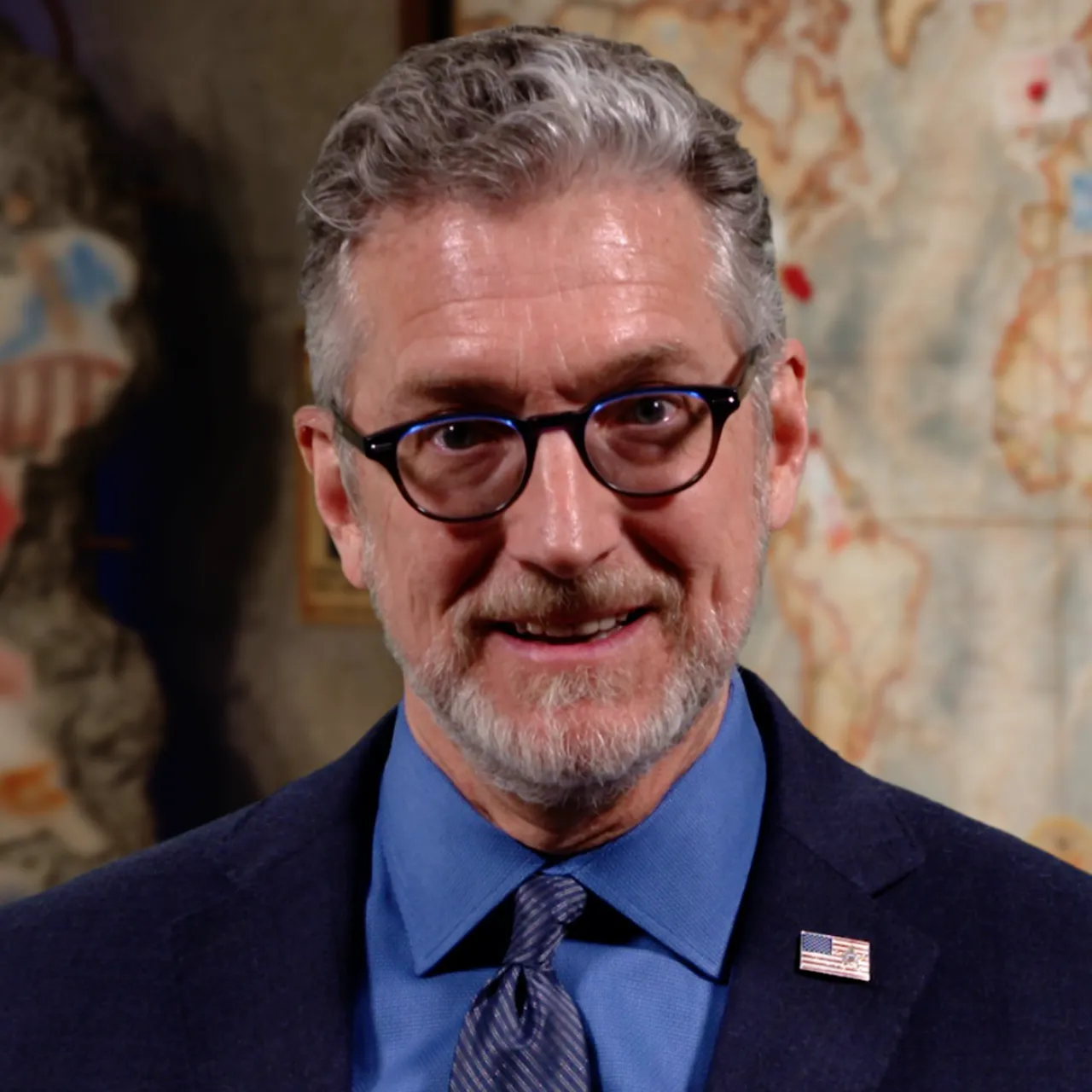
Kevin Freeman is a leading expert on economic warfare and financial terrorism. He hosts the TV program Economic War Room and Pirate Money Radio, translating national security and financial threats into clear insights for audiences nationwide.
.jpg)
.jpg)