
Stream Real Life Network Now

WATCH NOW
Politics

World News
25 min
What Political Rhetoric Reveals About the People Who Use It
From political violence and media accountability to Iran, Israel, and disputes over Christian teaching, the stories dominating public life raise a common question: Can Americans disagree without abandoning truth, consistency, and human dignity?
Politics has always involved disagreement. A healthy country should be able to argue vigorously about taxes, foreign policy, abortion, immigration, health care, education, and the proper role of government without treating political opponents as enemies who deserve suffering or death.
That distinction matters because political rhetoric does not remain confined to television studios, campaign rallies, or social media.
A recent survey discussed on The Daniel Cohen Show asked Democratic respondents how they would react to a hypothetical headline announcing President Donald Trump had been assassinated at a rally. The transcript cites the results as evidence of a disturbing willingness among some Americans to respond positively to political violence.
A survey cannot establish that respondents would personally commit violence, and attitudes expressed in a poll should not be treated as evidence that an entire political party supports assassination. But even hypothetical approval of political murder should trouble Americans regardless of who the target is.
That principle has to work in every direction.
Political violence against Donald Trump is wrong. Violence against Democratic officials is wrong. Celebrating the murder of a conservative activist is wrong. Celebrating an attack on a progressive activist would be wrong.
A political culture becomes dangerous when disagreement is no longer enough and opponents have to be humiliated, harmed, or eliminated.
Political Violence Should Not Have a Party
The attempted assassination of Trump in Butler, Pennsylvania, demonstrated how quickly political hostility can become something much more serious. The transcript also points to the killing of Charlie Kirk and the continuing controversy surrounding responses to political violence.
The deeper question is what kind of culture develops when suffering itself becomes partisan.
The 2017 attack on Senator Rand Paul offers a smaller but revealing example. MSNBC anchor Kasie Hunt introduced coverage of Paul's injuries by calling the incident one of her “favorite stories,” before immediately clarifying her concern for the senator. Paul suffered six broken ribs in the attack. The comment generated criticism at the time, and Hunt apologized, saying she had chosen her words poorly.
That distinction matters. An irresponsible comment should not automatically be interpreted as proof that someone celebrates political violence. Corrections and apologies matter too.
But so does the underlying standard.
Nobody's broken ribs should become funny because of the letter beside his name. Nobody's assassination should become acceptable because of political hatred. And nobody's murder should become easier to dismiss because the victim belonged to the wrong ideological camp.
Christians should be particularly careful here. Human dignity does not disappear when someone votes differently.
The command to love one's enemies is most revealing when there actually are enemies to love.
Foreign Policy Exposes the Difference Between Slogans and Consequences
That same need for moral clarity appears in foreign policy.
At a University of Michigan event, Democratic Senate candidate Abdul El-Sayed was questioned by a student who described relatives suffering under Iran's government and asked about El-Sayed's previous comments concerning Iran and its leadership. El-Sayed responded that the United States should not pursue regime change and said he supports “freedom and democracy for the people of Iran,” while arguing that democratic change should come from Iranians themselves.
There is a legitimate policy debate underneath that exchange.
Opposing American-led regime change is not the same thing as supporting the Iranian government. American policymakers have debated intervention, sanctions, military force, diplomacy, and regime change for decades. But candidates asking voters for significant national authority should expect difficult questions about how their principles translate into policy when authoritarian governments repress their own citizens.
The same is true of Israel.
Missile defense can sound like an abstraction until a siren gives a family seconds to reach a shelter. Iron Dome is designed to intercept rockets and other airborne threats headed toward populated areas. Arguments over American support for the system therefore involve more than budget lines; they involve competing judgments about U.S. foreign policy, Israeli security, regional stability, and civilian protection.
Political language becomes much easier when the human consequences remain theoretical.
That reality became painfully tangible this week for Israeli Ambassador to the United States Yechiel Leiter. His son Neria, an IDF reservist, was seriously wounded in a car-ramming attack at a checkpoint in the West Bank. Another son, Moshe Yedidya Leiter, was killed in Gaza in November 2023.
Arguments over Israel, Iran, terrorism, and American foreign policy deserve serious debate. They also involve families for whom those debates are not academic.
Truth Still Matters When It Complicates the Argument
Political rhetoric becomes especially dangerous when facts are treated as raw material rather than constraints.
French President Emmanuel Macron provided a striking example at the United Nations this week when he said Hamas had “never operated” in the West Bank. A French official subsequently said Macron meant that Hamas had never governed the West Bank. Those are materially different claims. Hamas has operated in the West Bank even though it has not governed the territory.
Corrections matter because words matter, particularly when they come from heads of state discussing one of the world's most contentious conflicts.
The same principle applies closer to home.
CNN, MS NOW, and Politico recently sued the Trump administration after their reporters were barred from White House grounds. The administration defended the action by accusing the organizations of dishonest reporting; the outlets argued that exclusion based on their coverage violated constitutional protections. A federal judge has since temporarily ordered their access restored, finding that the outlets were likely to succeed on their claim that the credentials were revoked without constitutionally adequate due process.
That dispute raises legitimate questions about both government power and media responsibility. News organizations can and should be criticized when reporting is inaccurate. Government officials can and should face scrutiny when they use official authority against news organizations they dislike.
Neither principle requires abandoning the other.
Truth cannot become a partisan possession, defended when useful and discarded when inconvenient.
That standard also belongs inside the church.
The transcript raises theological questions about churches and political candidates who identify themselves as Christian while challenging historic Christian doctrines. Those disagreements should ultimately be evaluated by Scripture rather than by whether a candidate has the preferred political affiliation.
Christianity is not infinitely adjustable. The virgin birth, bodily resurrection, identity of Christ, authority of Scripture, sin, repentance, and salvation are not campaign language to be reshaped around contemporary politics.
At the same time, theological disagreement should be represented accurately. Criticism is strongest when it addresses what someone actually teaches rather than exaggerating the position for political effect.
That principle connects every issue here.
Political violence. Media coverage. Iran. Israel. Churches. Presidential power. International diplomacy.
Different subjects, same responsibility.
Tell the truth about opponents. Refuse to celebrate their suffering. Examine claims before repeating them. Apply standards consistently. Remember the human beings living with the consequences of political decisions.
For Christians, political engagement should never require surrendering those obligations. Scripture does not permit hatred simply because the stakes feel high. It does not permit dishonesty because the other side is dishonest. And it does not allow political allegiance to determine who deserves dignity.
Politics reveals plenty about candidates and parties.
How people speak about their opponents can reveal even more.
Real Life Network provides biblically grounded programming examining faith, culture, and current events. Watch The Daniel Cohen Show for more conversations about the stories shaping American and international life.
World News
25 min
Trump’s Greenland Deal, the White House Press Ban, and a Question of Accountability
Trump’s Greenland security agreement and the White House’s clash with major news outlets raise broader questions about national security, media credibility, accountability, and the responsibility to tell the full story.
A nation cannot function without trust.
Citizens have to trust that leaders are thinking beyond the next news cycle. Governments have to anticipate threats before those threats become emergencies. Journalists have to report facts accurately enough that the public can distinguish information from advocacy. And when institutions make mistakes, accountability matters.
That standard becomes especially important when the stakes involve national security.
The United States, Denmark, and Greenland have reached a new Arctic security agreement intended to strengthen Greenland's defenses and restrict adversarial powers from establishing military bases or making sensitive strategic investments on the island. President Donald Trump has described the arrangement as giving the United States permanent security rights there, although Denmark and Greenland have emphasized that Greenland remains under its existing sovereignty and the precise terms are still emerging.
Months ago, much of the public conversation surrounding Greenland sounded almost absurd. Late-night comedy made Trump's interest in the island a punchline, while critics questioned why the United States should care so much about a vast Arctic territory.
Now the strategic argument is much harder to dismiss.
Greenland sits in an increasingly important Arctic region where Russia and China have strategic interests. The new arrangement reportedly expands America's ability to operate militarily there while preventing non-NATO countries from establishing sensitive footholds.
The lesson is larger than Greenland.
Prudence sometimes means preparing for a danger before everyone else agrees that the danger is real.
Proverbs 22:3 says, “A prudent man foresees evil and hides himself, but the simple pass on and are punished.”
That principle does not require accepting every government claim or supporting every proposed national-security measure. It requires taking threats seriously enough to examine them before a crisis removes the luxury of preparation.
September 11 remains the clearest American example of what happens when seemingly distant threats become immediate realities. Nearly 3,000 people were killed that morning. The lesson should not be that every warning proves correct. It should be that responsible leadership has to consider possibilities the public would rather never imagine.
A Free Press Still Has to Be a Trustworthy Press
The question of institutional trust becomes more complicated when applied to the media.
The Trump administration recently barred CNN, MS NOW, and Politico journalists from White House grounds and confiscated their credentials. Trump accused the organizations of publishing “fake news.” The three outlets have now sued the administration, arguing that their exclusion violates the First Amendment and that access was revoked in retaliation for unfavorable coverage.
Those facts create two questions that should not be collapsed into one.
The first is whether news organizations deserve criticism when their reporting is inaccurate, incomplete, or driven by political assumptions. Of course they do. Journalism possesses enormous power to shape what millions of Americans believe happened. Errors should be corrected, important context should not be deliberately omitted, and political figures should face comparable scrutiny regardless of party.
The second question is whether a president can revoke journalists' White House access because the administration believes their reporting is dishonest or unfair. That is now a constitutional dispute before the courts. The affected organizations argue that government cannot condition press access on favorable coverage, while the administration defends its ability to determine who receives access to White House facilities.
Both questions matter.
Freedom of the press and accountability for the press are not competing principles. A free press should be vigorously protected precisely because its responsibility to tell the truth is so consequential.
That responsibility includes resisting selective standards.
Donald Trump's 2017 comments following the Charlottesville violence remain a useful example of how context can become part of a political dispute. Trump did say there were “very fine people on both sides” while discussing people involved in the controversy surrounding Confederate monuments. In the same remarks, he explicitly said he was not referring to neo-Nazis and white nationalists and said they should be “condemned totally.”
That fuller context does not resolve every legitimate criticism of Trump's response to Charlottesville. Critics have argued that his broader remarks still minimized the nature of the Unite the Right rally and created an inappropriate equivalence. But accurately evaluating the controversy requires presenting what was actually said rather than removing inconvenient portions of the statement.
The same standard should apply to every president.
Journalists should scrutinize Republican administrations. They should scrutinize Democratic administrations. They should investigate political claims rather than protect preferred narratives. And audiences should be willing to correct themselves when evidence contradicts what they wanted to believe.
Trust disappears when people conclude that facts are being filtered according to who benefits from them.
When the Victim Disappears From the Story
That problem extends beyond Washington.
Media framing determines more than how people understand politicians. It can determine whose suffering remains at the center of a tragedy.
The transcript points to the killing of 23-year-old Ukrainian refugee Iryna Zarutska on Charlotte's light rail and subsequent coverage involving the accused killer's family. The broader concern is worth considering carefully: compassion for mental illness should never require forgetting the victim of a violent crime.
Mental illness is real. Families trying to help severely mentally ill relatives can endure extraordinary hardship. Criminal courts also have established procedures for determining whether mental illness affects legal responsibility.
But compassion and accountability are not mutually exclusive.
A victim has a name. A family has suffered a loss. A community has been wounded. Those facts should not disappear simply because another part of the story raises difficult questions about mental health, criminal justice, or failures in the systems surrounding an accused offender.
A compassionate society should be capable of caring about mental illness without allowing the person who suffered the violence to vanish from the story.
That principle reaches well beyond crime reporting.
Every institution tells stories. Governments tell citizens which dangers deserve attention. Political parties tell voters which problems matter. Media organizations decide which facts lead a broadcast and which appear near the bottom of an article.
Christians should therefore develop habits that go deeper than simply choosing which institution to trust.
Ask what happened. Examine the complete statement rather than the viral clip. Distinguish established facts from allegations. Look for missing context. Pay attention to the people most directly affected. Apply the same standard when the facts help a preferred political side and when they hurt it.
Most importantly, remember that truth does not become more or less true depending on who benefits from it.
National security requires foresight. Journalism requires accuracy. Justice requires accountability. Compassion requires remembering the human beings affected by our political and cultural arguments.
None of those responsibilities belongs exclusively to the left or the right.
A biblical worldview should make truth more important than either.
That is why Real Life Network and The Daniel Cohen Show continue examining the stories shaping American life through questions of truth, faith, culture, and responsibility.
World News
25 min
Hyde Amendment Approaches 50th Anniversary Having Saved almost 3 Million Babies
As the Hyde Amendment approaches its 50th anniversary, lawmakers and pro-life advocates are reflecting on its history, its impact on federal abortion funding, and the continuing debate over abortion policy in America.
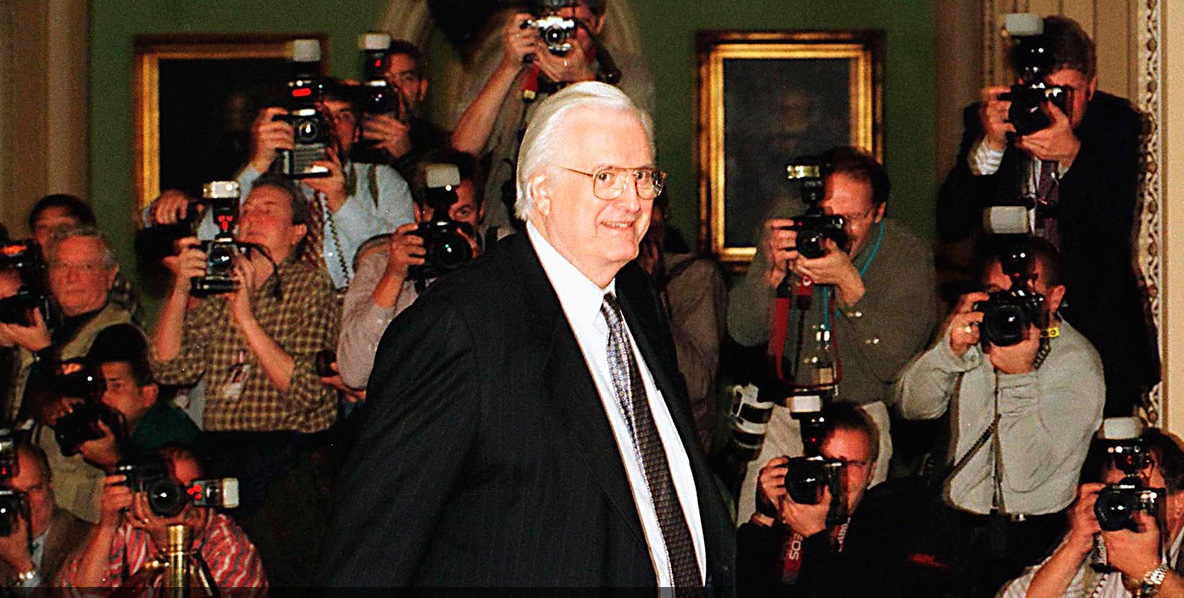
“An innocent, defenseless human life, in a caring and humane society, deserves better than to be flushed down a toilet or burned in an incinerator.” Such are the words of Henry Hyde, the former U.S. congressman from Illinois who tirelessly championed life and introduced the Hyde Amendment in 1976. Almost 50 years later, the legislative rider faces the opportunity to be renewed again.
For a half-century, the Hyde Amendment has stopped taxpayer dollars from funding abortion.
On Wednesday evening, Rep. Chris Smith (R-N.J.), co-chair of the Congressional Pro-Life Caucus, hosted a Special Order on the House floor to acknowledge the upcoming 50th anniversary of the Hyde Amendment on September 30. “The promise of America is that life is not just for the privileged, the planned, or the perfect,” Smith said, quoting Hyde. “This may sound odd, even ironic; you are here in the flush of victory. And yet it is precisely now that I ask you to contemplate the possibility of defeat, perhaps even the necessity of defeat. If you don’t know the principle or the policy for which you are willing to lose your office, then you are going to do damage here.”
Quena González, senior director of Government Affairs at Family Research Council, explained to The Washington Stand that Smith and Hyde have a history. “Representative Chris Smith served with Representative Henry Hyde for 26 years; he’s been a tireless defender of the unborn in Congress for 45 years and comes as close as anyone to carrying Hyde’s inimitable mantle.”
After the Roe v. Wade decision in 1973, the U.S. government paid for an estimated 300,000 abortions each year via Medicaid. According to the Charlotte Lozier Institute, since the Hyde Amendment’s first enactment in 1976, approximately 2.7 million lives have been saved.
During Wednesday’s event, Rep. Chip Roy (R-Texas) asserted that society has a duty to protect the unborn. “Life matters. Who are we as a people if we cannot stand up in defense of the most innocent form of life there is — a child in the womb of its mother? That should be our calling. And we should be able to unite as human beings in defense of the defenseless.”
Legislative Assistant for FRC’s Government Affairs Chantel Hoyt praised what House members shared during the Special Order. “I appreciated seeing Representative Chip Roy connect this important anniversary to the toll that chemical abortion is taking,” she told TWS. “It’s encouraging to see members like Representative Chris Smith carrying on Henry Hyde’s legacy and seeking to not only retain but build on the protections of the Hyde Amendment.”
Rep. Tracey Mann (R-Kan.) observed during the House event that he believes that abortion is not consistent with the Constitution. “Hyde should not be viewed as the finish line for the pro-life movement. It’s the floor. It’s a bare minimum compromise,” he shared. “America is founded on the self-evident truth that every person is created equal and endowed with our creator with an inherent right to life. That right is the foundation of every other right that we enjoy. As a father, I believe that every child is fearfully and wonderfully made by God. Every life has value, every child has purpose, and no child is a mistake.”
The Special Order and Hyde Amendment anniversary come at a time when chemical abortion has become a hot button issue on Capitol Hill. Pro-life politicians, lobbyists, and organizations continue to work tirelessly to ban the abortion drug mifepristone. “It’s always great to see members of Congress speak on the floor in defense of life, but especially now as we are urging the Trump administration to take action on chemical abortion to protect mothers and their babies,” Hoyt concluded.
This article was originally written by Quinn Delamater and published on The Washington Stand. For more content like this, visit Real Life Network.
World News
25 min
Who Has the Authority? Government, Families, and the Institutions Americans Are Asked to Trust
Election security, immigration, parental rights, and political power raise a common question: Who has authority, and what happens when government institutions move beyond their proper boundaries?
A healthy society depends on institutions that understand both their responsibilities and their limits. Elections require rules voters can trust. Immigration requires laws that can be enforced while treating people with dignity. Schools and child-welfare agencies exercise enormous power, but parents retain profound responsibilities toward their children.
These debates may look unrelated. They are not.
Running through each is the same fundamental question: Who has authority, where does that authority come from, and what happens when institutions move beyond their proper boundaries?
For Christians, authority is neither meaningless nor absolute. Government has a legitimate role. Parents have a legitimate role. Laws matter. Compassion matters. And none of those principles should be rewritten simply because the political circumstances have changed.
That framework is increasingly important in an America where arguments over election administration, immigration, parental rights, and political power are testing public trust from several directions.
Trust Requires Rules That Apply Consistently
The Supreme Court recently blocked the Trump administration from implementing new Postal Service requirements for mail ballots before the 2026 midterms. The proposed system would have required states to provide lists of eligible voters and use USPS-approved, barcoded ballot envelopes. The Court divided 7-2, with Justices Clarence Thomas and Samuel Alito dissenting. Justice Brett Kavanaugh indicated there was a reasonable argument that the Postal Service possesses authority to impose some requirements, but concluded that changing procedures this close to voting risked significant disruption.
There are legitimate disagreements over the proposal. The administration presented additional verification as an election-integrity measure. Opponents argued that the Postal Service was assuming authority traditionally exercised by states and that last-minute changes could prevent legitimate ballots from being counted.
Those arguments deserve more than slogans.
Election integrity and voter access do not have to be enemies. Americans should be able to expect systems that verify lawful votes while also ensuring lawful voters can participate. Confidence deteriorates when either concern is dismissed simply because it is associated with the other political party.
Trust cannot survive indefinitely when rules are treated as essential under one set of political circumstances and disposable under another.
The same principle applies to immigration.
The Trump administration has expanded the federal government's consideration of public benefits when determining whether certain immigrants qualify for permanent residency. New York City Mayor Zohran Mamdani is leading a coalition of local governments challenging the new public-charge rule, while New York Attorney General Letitia James is leading a separate state lawsuit. The plaintiffs argue that the rule exceeds federal authority and could discourage immigrant families from using health care and nutrition programs for which they are legally eligible. The administration argues that the policy promotes self-sufficiency and reduces dependence on public assistance.
The legal dispute will work its way through the courts. The broader question is worth considering now: What obligations accompany legal immigration, and what obligations does a nation have toward those it admits?
Scripture commands God's people to treat the stranger with justice and compassion. It also recognizes governments, nations, boundaries, and civil authority. Biblical compassion cannot be reduced to a slogan for one immigration policy any more than biblical order can be used to excuse mistreatment of immigrants.
Hospitality and order are not inherently contradictory.
When Government Authority Enters the Home
Nowhere does the question of authority become more personal than when the government intervenes between parents and children.
Joseph and Arlene Kutzko, a Catholic couple in Massachusetts, are fighting a legal battle involving their teenage daughter, Sophie. The parents say Algonquin Regional High School supported their daughter's male gender identity without their knowledge and that their religious objections later became intertwined with a child-welfare dispute. Sophie was removed from their custody in 2024, and the parents say they have since been prevented from maintaining contact with her.
The case includes important details that should not be ignored. An allegation of physical abuse against the father was reportedly found unsupported, according to recent reporting and the family's legal advocates. The family is now seeking to prevent testosterone treatment while pursuing its custody claims; treatment has reportedly been paused while litigation continues.
The family's account has become part of a much larger national disagreement over parental rights, gender identity, medical treatment for minors, religious liberty, and the circumstances under which child-welfare authorities should intervene.
Those are serious questions precisely because the state sometimes must intervene. Children can genuinely suffer abuse and neglect, and government has a legitimate responsibility to protect them.
But that extraordinary power also requires extraordinary care.
Parents should not automatically lose their authority simply because their religious or moral convictions conflict with prevailing cultural beliefs. At the same time, disagreements over a child's care cannot by themselves establish every fact in a contested custody case.
The power to protect children must never quietly become the power to require ideological conformity from their parents.
For Christians, parenthood is not merely a legal status granted by government. Scripture repeatedly places responsibility for the instruction and formation of children upon families. Government can protect children from genuine harm, but it should approach replacing parental judgment as an exceptional intervention, not an ordinary solution to ideological disagreement.
That distinction matters far beyond Massachusetts.
Political Power Is Not the Highest Authority
The question of authority also appears inside political parties themselves.
The Democratic National Committee has officially changed its early presidential-primary calendar for 2028. South Carolina will vote first, followed by Nevada, New Hampshire, New Mexico, Michigan, and Virginia. The DNC says the calendar gives a more representative mix of voters an early role and better tests candidates across diverse constituencies and battleground states.
The change will inevitably affect campaign strategy. South Carolina's large Black Democratic electorate and Nevada and New Mexico's Latino populations will matter earlier than under the old Iowa-and-New Hampshire-centered system. But it is too early to know which prospective candidate, if any, will ultimately benefit most.
That uncertainty is important. Politics tempts people to treat every institutional decision as evidence of a predetermined outcome. Christians should resist that impulse just as strongly as they resist political naivete.
Political parties pursue power. Candidates pursue office. Governments exercise authority. Courts interpret law. None deserves the kind of unquestioning allegiance that belongs to God.
That should produce Christians who can think clearly rather than react predictably.
A Republican administration should not receive automatic approval merely because it invokes election integrity, immigration enforcement, or parental rights. A Democratic official should not receive automatic approval merely because a policy is presented in the language of compassion, democracy, or inclusion. Every claim still has to be examined.
Proverbs 14:34 provides a standard much older than any American political coalition: “Righteousness exalts a nation, but sin is a reproach to any people.”
That standard does not change with election results.
Christian political discernment begins when truth matters more than protecting a party, an institution, or a preferred political narrative.
Government matters. Elections matter. Borders matter. Parents matter. Protecting children matters. So do due process, compassion, religious liberty, and the rule of law.
The difficult work is refusing to sacrifice one principle whenever another becomes politically convenient.
That is why Christians need more than political instincts. They need a biblical framework capable of asking not merely, Which side is doing this? but Is this true? Is it just? Is authority being exercised within its proper limits? And does the standard remain the same when political power changes hands?
Those are the questions worth continuing to ask through Real Life Network and The Daniel Cohen Show, where the headlines are examined alongside the deeper questions of faith, culture, government, and truth.
World News
25 min
When Nothing Is Sacred, Everything Becomes Political
From the solemnity of September 11 to the use of Scripture in politics, America faces a deeper question about what it still considers sacred. Christians are called to respond with compassion, biblical discernment, and the courage to stand for truth.
There are moments that should transcend politics.
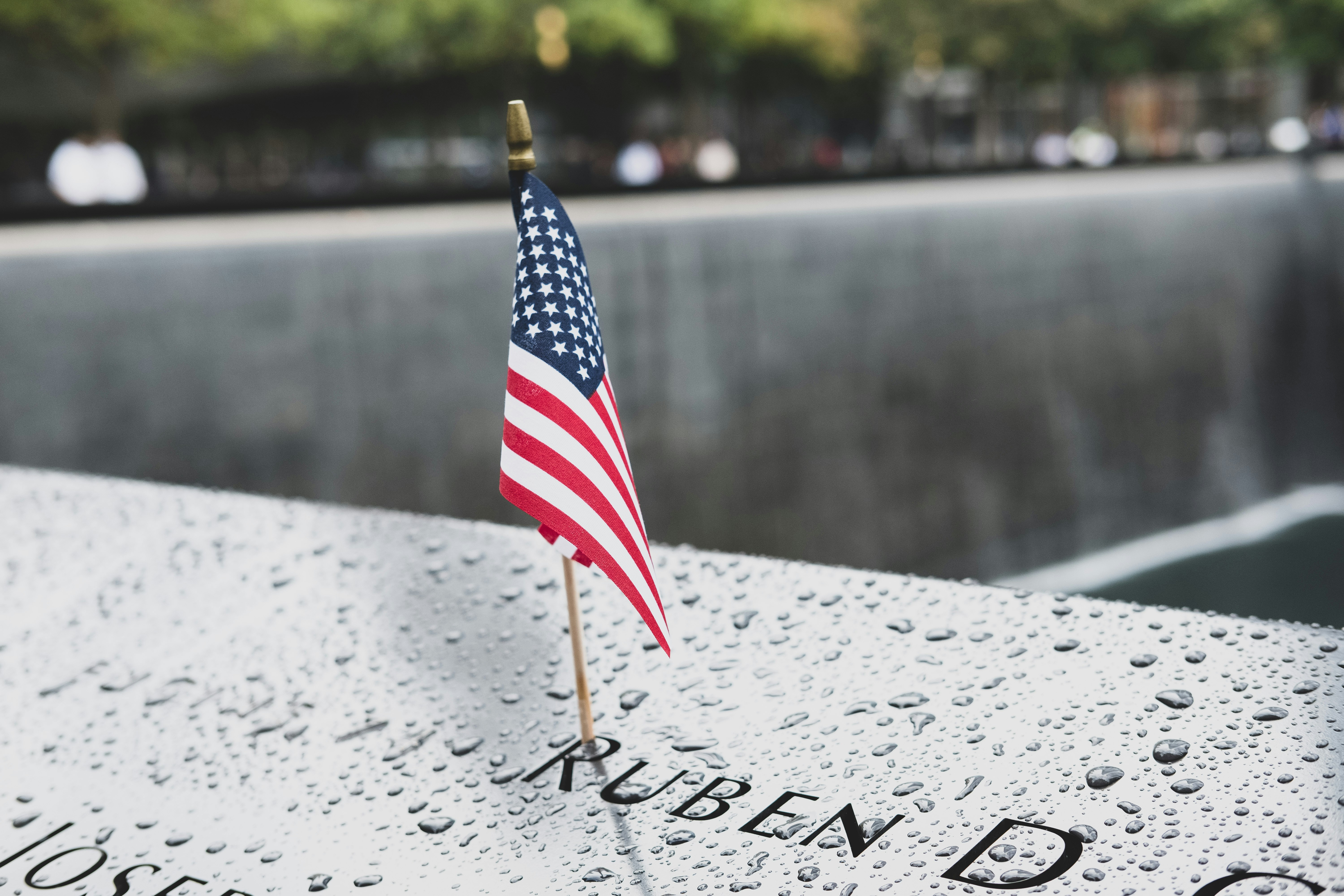
A memorial honoring nearly 3,000 Americans murdered on September 11 should be one of them. It should be a place for grief, remembrance, gratitude, and reverence. Families who have carried that loss for 25 years deserve something increasingly rare in American public life: a moment in which their pain is not reduced to another political opportunity.
That is why images of Alexandria Ocasio-Cortez and New York City Mayor Zohran Mamdani smiling and laughing together during the 25th anniversary commemoration drew criticism. A photograph cannot reveal the context of every conversation or establish what prompted a smile. But juxtaposed with grieving families at Ground Zero, the moment raised a larger question worth asking: Does American culture still recognize that some things should be treated as sacred?
These are exactly the kinds of cultural questions worth examining on Real Life Network and The Daniel Cohen Show, where the headlines are considered alongside the biblical truths that should shape how Christians understand them.
Leadership Requires More Than the Right Policies
Public leadership is not merely about legislation, budgets, speeches, or elections. Leadership also requires understanding the human consequences behind public events.
That principle extends far beyond a single 9/11 ceremony.
When thirteen American service members were killed during the 2021 withdrawal from Afghanistan, controversy followed images of President Joe Biden appearing to check his watch during the dignified transfer ceremony at Dover Air Force Base. Biden later disputed some characterizations of the moment, but Gold Star families publicly described feeling disrespected.
Politics can make people remarkably selective about empathy. When someone on the other side suffers, compassion becomes conditional. When an uncomfortable tragedy threatens a preferred narrative, attention shifts somewhere else.
Christians cannot adopt that standard.
Human dignity does not change according to political usefulness. A child killed in an act of violence matters. A soldier returned home in a flag-draped casket matters. A family still grieving someone murdered on September 11 matters. An immigrant victim matters. An American citizen victim matters. Political affiliation does not determine the value of a human life.
A healthy society should be capable of looking at suffering and seeing a human being before seeing a political opportunity.
Jesus warned that a time would come when “the love of many will grow cold” (Matthew 24:12). That description should make Christians examine more than the behavior of politicians. It should make believers examine their own hearts.
Have politics made compassion selective? Has outrage become entertainment? Have human tragedies become useful primarily when they help defeat the other side?
If so, something far more important than an election is being lost.
Biblical Language Cannot Become Political Branding
The same problem appears when Christianity itself becomes a political instrument.
Texas politician James Talarico has increasingly incorporated Christian language into his political message. In one recent appearance, he invoked Matthew 25 while arguing that Jesus would condemn senators over food assistance, Medicaid, and deportations.
Christians should welcome politicians talking seriously about Scripture. But biblical vocabulary does not automatically make an argument biblical.
Matthew 25 unquestionably demonstrates Christ's concern for the vulnerable. Christians should care about hungry people, strangers, the sick, prisoners, and those suffering around them. But translating those commands directly into support for a particular government program requires an additional political argument. Christians can share the same biblical concern while disagreeing about which policies best address it.
The same principle applies to immigration.
Scripture repeatedly commands God's people to care for foreigners and strangers. Scripture also recognizes nations, governing authorities, boundaries, and civil order. Romans 13 gives government genuine authority, while Acts 17:26 speaks of God determining nations and their dwelling places.
Neither side gets to erase the passages that complicate its politics.
Scripture should judge political convictions. Political convictions should never be allowed to rewrite Scripture.
That requires biblical literacy.
A politician who can quote a verse fluently may still misuse it. A conservative can misuse Scripture just as easily as a progressive. Christians who know only fragments of the Bible become vulnerable to anyone capable of wrapping a political agenda in Christian vocabulary.
Read the Word. Know the context. Test the argument.
Courage Means Refusing to Follow the Crowd
There is another quality disappearing from American life: the courage to stand alone.
The Lindsay Clancy case offers a difficult example. Clancy admitted killing her three young children but mounted an insanity defense. Her 2026 trial ended in a mistrial after eleven jurors favored acquittal and one juror held out.
According to another juror who later discussed the deliberations publicly, the lone holdout was a Black man.
Whatever conclusions people reach about the complicated legal questions surrounding mental illness and criminal responsibility, there is something worth recognizing in anyone willing to maintain a sincerely held conviction while an entire room pressures him to surrender it.
Standing with the crowd is easy. Standing alone costs something.
That lesson reaches far beyond a courtroom.
Christians will increasingly encounter moments when biblical convictions are unpopular, unfashionable, or professionally inconvenient. There will be pressure to remain silent because speaking could cost friendships, opportunities, influence, or reputation.
Conviction means deciding beforehand that truth matters more.
That does not grant permission to be reckless or cruel. Courage without humility quickly becomes arrogance. But humility without courage can become cowardice disguised as kindness.
Christian conviction requires both: the humility to recognize when we are wrong and the courage to stand when God's truth is clear.
America does not merely need better political messaging. It needs adults capable of recognizing sacred things, leaders who understand the human cost of their decisions, Christians who know Scripture well enough to recognize when it is being manipulated, and ordinary people willing to stand for truth when standing becomes uncomfortable.
Politics will continue changing. Candidates will come and go. Headlines that seem enormous today will eventually disappear.
The deeper question is what kind of people Americans are becoming in the process.
When nothing is sacred, everything becomes political. Christians should resist that transformation by recovering reverence, compassion, biblical discernment, and courage.
Continue examining the cultural and political stories shaping America through a biblical worldview on The Daniel Cohen Show, streaming free on Real Life Network.

World News
25 min
September 11, Twenty-Five Years Later: What Does It Mean to Never Forget?
Twenty-five years after September 11, a new generation is inheriting the story of 9/11. Remembering means honoring the victims and heroes while also preserving the truth about who attacked America, what motivated them, and why those lessons still matter.
Twenty-five years after September 11, 2001, two words remain inseparable from that day: Never forget. As a new generation inherits the story of 9/11, Real Life Network and The Daniel Cohen Show are committed to examining the history, ideas, and cultural questions that Americans cannot afford to forget.
But remembering September 11 requires more than remembering its pain.
An entire generation of Americans has now grown up without any personal memory of the attacks. Roughly 100 million Americans have been born since 9/11. They did not watch the second plane strike the South Tower. They did not see smoke pouring across Manhattan or experience the uncertainty that gripped the country. For them, September 11 is history.
That raises an increasingly important question: What exactly are Americans promising never to forget?
Remembering the Victims Means Remembering the Truth
Calling September 11 a tragedy is true, but incomplete.
September 11 was an intentional terrorist attack carried out by 19 al-Qaeda hijackers. Osama bin Laden and al-Qaeda were not secretive about their worldview, grievances, or objectives. Their own statements repeatedly framed their conflict with America in explicitly religious as well as political terms.
America must be capable of acknowledging that history.
That does not mean treating every Muslim as a terrorist or holding peaceful Muslim neighbors responsible for crimes they did not commit. Americans should defend religious liberty, reject harassment, and protect the freedom of peaceful people to worship according to their beliefs.
But religious liberty cannot require historical amnesia.
There is a profound difference between refusing to hate Muslims and refusing to acknowledge Islamist extremism. America must be capable of doing the first without falling into the second.
For too long, political leaders, academics, and media figures have sometimes preferred vague descriptions of terrorism because specificity can be uncomfortable. Yet future generations cannot understand September 11 if the ideology of its perpetrators is removed from the history they inherit.
“Never forget” cannot mean remembering only the victims while becoming increasingly reluctant to explain why they became victims.
The Next Generation Will Remember What We Teach
This matters because the people who remember September 11 firsthand will not always be here to tell the story.
Already, debates over the meaning of 9/11 reveal dramatically different interpretations of what happened. Some emphasize American foreign policy, imperialism, economics, or Western actions as the primary explanation for terrorism. Others have gone considerably further, portraying America itself as deserving the violence directed against it.
Those ideas should not be allowed to replace historical clarity.
The terrorists who attacked America were responsible for their actions. The men aboard those airplanes chose innocent civilians as their targets. No disagreement with American foreign policy makes hijacking commercial airplanes and deliberately murdering civilians morally defensible.
The responsibility to preserve that truth belongs especially to parents.
Children should know about the people who boarded airplanes expecting to arrive home later that day. They should hear about the firefighters carrying equipment up stairwells as thousands rushed downward. They should know about Flight 93 and the passengers who fought back. They should understand what happened at the Pentagon and what unfolded at Ground Zero.
And they should know who carried out the attacks and what motivated them.
If parents do not teach their children what happened on September 11, someone else will eventually tell them what September 11 is supposed to mean.
History never remains an empty space. When one explanation disappears, another takes its place.
That is why remembrance is about more than nostalgia. It is a responsibility to those who died and to those who were not yet born.
Remembering Without Living in Fear
There is another part of September 11 worth remembering: what America looked like afterward.
For a brief period, the country rediscovered a sense of national unity that now seems almost unimaginable. Political labels became less important. American flags appeared on homes and businesses. Tens of thousands stood together at Yankee Stadium and sang “God Bless the USA.” President George W. Bush stood among firefighters and rescue workers at Ground Zero and promised that America would respond.
That unity did not last.
But the courage behind it should not disappear.
Charlie Kirk understood the importance of courage in the public square. He repeatedly warned younger Americans about ideological movements he believed threatened faith, family, and the American way of life. His words were often pointed because he believed dangerous ideas had to be identified rather than accommodated. His Christian convictions also became increasingly central to the way he understood the cultural battles around him.
That willingness to speak should challenge Christians today.
Courage does not require hatred. Conviction does not require cruelty. Christians can identify dangerous ideologies while remembering that human beings are not the ultimate enemy. Scripture reminds believers that the struggle is ultimately “not against flesh and blood,” but against spiritual forces of evil (Ephesians 6:12).
Christian courage tells the truth about evil without allowing hatred of people to take root in the heart.
Twenty-five years after September 11, America does not need to live in the fear of that morning. Neither should it erase the lessons purchased at such an enormous cost.
Remember the victims. Remember their families. Remember the first responders. Remember the passengers who fought back. Remember the courage that emerged from the rubble. Remember the enemy that attacked America and the ideology that animated its extremists.
Then make sure the children who were not there understand why it matters.
One day, September 11 will exist entirely outside living memory. When that day arrives, never forget will mean only as much as the truth one generation was willing to pass to the next. Continue examining the stories shaping America through a biblical worldview on The Daniel Cohen Show, streaming free on Real Life Network.
Thank you! Your submission has been received!
Oops! Something went wrong while submitting the form.
World News
EROver the last 50 years, trust in the federal government has declined dramatically. About 77% of Americans once said they trusted the government. Today, that number has fallen to roughly 18%.
Events this week on Capitol Hill provided fresh examples of why trust in the federal government has eroded.
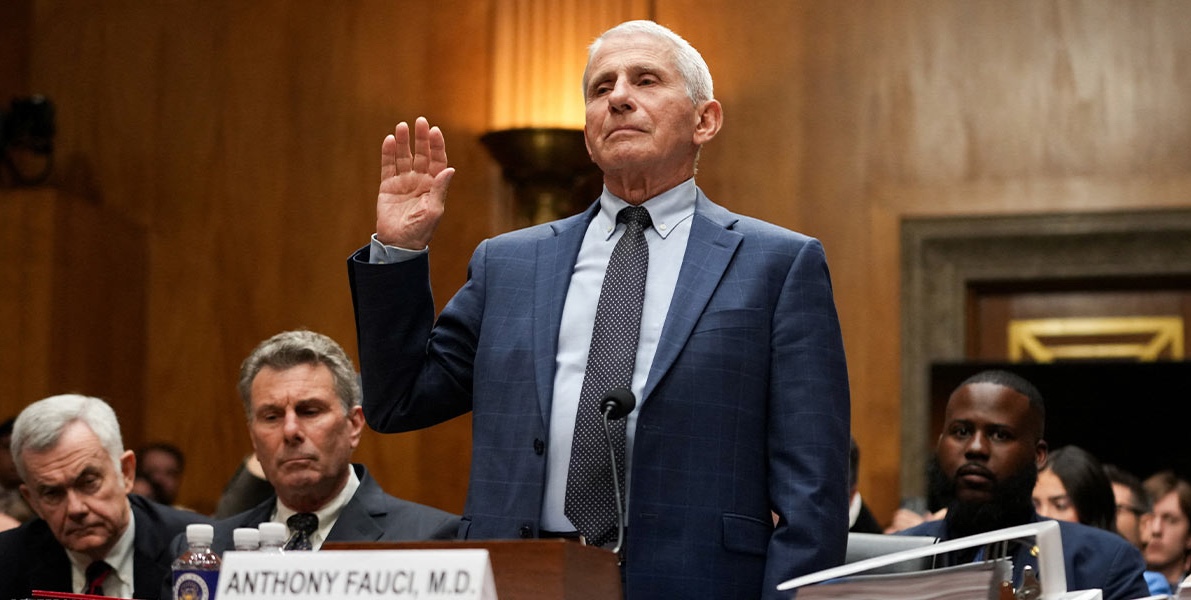
In the Senate Homeland Security Committee, the alleged architect of America’s draconian COVID-19 policies, Anthony Fauci, invoked his Fifth Amendment right against self-incrimination more than 100 times. He refused to answer questions about the origins of the pandemic, efforts to suppress those who pointed to the Wuhan Institute of Virology as the likely source of the virus, funding for gain-of-function research, and COVID policies that closed businesses, schools, and churches while mandating vaccines. Fauci invoked the Fifth even though former President Joe Biden granted him a preemptive pardon, a fact that raises questions of its own.
On the House side, even though members were out of session, the Ethics Committee was busy reviewing allegations involving members ranging from inappropriate conduct with female staffers and domestic abuse to illegal drug use and campaign finance violations. One member even abandoned his reelection campaign as he faces a rare bipartisan censure vote. Since 1789, only 28 members of the House have been censured.
But the erosion of trust is not confined to Washington. Government is only one of many institutions that Americans increasingly doubt. The media and Big Business are swimming at the bottom of public confidence after tying themselves to DEI initiatives and radical transgender ideology. While not as low, trust in religious institutions has also declined by nearly half.
The problem extends beyond institutions. Social trust, our willingness to trust one another, which is essential for a healthy and cohesive society, has also steadily declined. Scholars do not point to a single cause. In his book “Coming Apart,” Charles Murray identifies several contributing factors, including declining church participation, fewer civic organizations, less neighborhood involvement, reduced volunteerism, and the collapse of marriage and stable families. Those trends help explain what has happened, but they also point to a deeper question: what has changed in the human heart?
Perhaps we’ve become less trusting, and less trustworthy, not merely because our institutions have failed us, but because our trust itself has become misplaced.
The psalmist wrote in Psalm 118: “It is better to trust in the LORD than to put confidence in man. It is better to trust in the LORD than to put confidence in princes.”
When we expect government, leaders, institutions, or even ourselves to provide the security, hope, and certainty that only God can give, disappointment is inevitable. Misplaced trust eventually produces broken trust. Laws can restrain evil, but only transformed hearts produce trustworthy people.
Some of you may remember the old Texaco slogan: “You can trust your car to the man who wears the star.”
Here’s something worth thinking about. Our ability to be trusted, and to trust others, comes from trusting the One who made the stars.
Perhaps America’s greatest need today isn’t simply more trustworthy leaders. It is a people who once again place their trust in the One who is always trustworthy. When we trust God first, we become the kind of people others can trust as well.
This article was orignally published on The Washington Stand. For more content like this, visit Real Life Network.
25 min
August 11, 2026
Tony Perkins
World News
In a setback for religious freedom, the U.S. Court of Appeals for the First Circuit ruled last Thursday that Christian schools in Maine must comply with pro-LGBT regulations that conflict with their religious beliefs, if they want to participate in a public tuition assistance program. “Essentially what the court has said is that you can believe what you want to believe, you can talk about what you believe, but once you exercise what you believe, that’s conduct that the state of Maine can regulate,” said Jeremy Dys, senior counsel for First Liberty Institute, which brought the lawsuit.
In Crosspoint Church v. Makin, a two-judge panel (one judge died before the opinion was issued) partially upheld a lower court order denying a preliminary injunction against Maine’s pro-LGBT regulations. Crosspoint Church runs Bangor Christian School (BCS). The court decided a second lawsuit featuring a Catholic school (St. Dominic Academy v. Makin) on the same day, on almost identical grounds.
BCS holds employees and students to basic biblical standards for gender and sexuality, and requires teachers to ascribe to a statement of faith. But those standards run afoul of provisions in the Maine Human Rights Act (MHRA), which Maine now applies to schools seeking to participate in its tuition assistance program. “A private school that participates in the tuition-assistance program and then violates the MHRA exposes itself to civil suits from both the Maine Human Rights Commission (MHRC) and private alleged victims, with remedies including injunctive relief and monetary damages,” the court described.
Specifically, the MHRA “‘Religious Nondiscrimination Rule’ bars covered schools from discriminating in admissions, financial aid, academics, and the like on the basis of religion,” as the court described, and its “‘Sexual Orientation and Gender Identity Nondiscrimination Rule’ bars discrimination in all the same activities on the basis of sexual orientation or gender identity but exempts religious schools that do not receive public funding.”
In practice, this rule would have the effect of preventing BCS’s attempts to enforce its biblical norms of sexuality and gender, Dys told The Washington Stand. For instance, if a male student identified as transgender and wished to use the female restrooms and locker rooms, BCS could not enforce its policies against him without violating the Sexual Orientation and Gender Identity Nondiscrimination Rule. “When the state of Maine presents this sort of regulation on conduct, it creates a real problem,” he said.
Yet the court concluded the Sexual Orientation and Gender Identity Nondiscrimination Rule “works no constitutional violation.” It also held that “certain of BCS’s policies” violated the Religious Nondiscrimination Rule, including “church member discounts” and “consideration of ‘prospective students’ spiritual fit.’”
Besides these rules, the MHRA also establishes an “Employment Rule” that “bars employment discrimination based on ‘race or color, sex, sexual orientation or gender identity, physical or mental disability, religion, age, ancestry, national origin or familial status,’” as the court described. With regard to this rule, the court partially reversed the district court, finding that Crosspoint Church fell into a carveout in the rule, thereby eliminating the “case or controversy.”
Finally, the MHRA’s “Religious Expression Rule” stipulates that, “to the extent that an educational institution permits religious expression, it cannot discriminate between religions in so doing.” The court rightly held that “the Religious Expression Rule unconstitutionally violates Crosspoint’s free-exercise rights” and remanded it to the district court for an injunction.
In the lawsuit, Crosspoint argued that “a set of recent amendments to the MHRA specifically targets BCS, in violation of the Free Exercise Clause,” as the court characterized it, based on a years-long history of litigation.
Maine has offered state tuition assistance to enable parents to send their children to the school of their choice since 1980. However, the program excluded Christian schools until 2022, when a 6-3 U.S. Supreme Court found the policy unconstitutional in Carson v. Makin. Parents at BCS were at the center of that case.
Based on its recent decisions in Trinity Lutheran (2016) and Espinoza v. Montana (2019), where government entities tried to block Christian schools from generally available public benefits, the Supreme Court in Carson held that “Maine’s ‘nonsectarian’ requirement for its otherwise generally available tuition assistance payments violates the Free Exercise Clause of the First Amendment. Regardless of how the benefit and restriction are described, the program operates to identify and exclude otherwise eligible schools on the basis of their religious exercise.”
In anticipation of a defeat in front of the Supreme Court, the Maine legislature amended the law in 2021, allowing Christian schools to receive state tuition assistance, but only if they complied with the state’s rules for nondiscrimination towards sexual orientation and gender identity.
In 2023, Maine Attorney General Aaron Frey (D) professed to be scandalized at the very nature of a Christian school. “The education provided by the schools at issue here is inimical to a public education,” he complained. “They promote a single religion to the exclusion of all others, refuse to admit gay and transgender children, and openly discriminate in hiring teachers and staff.”
Frey’s comments came in response to another federal lawsuit filed by Crosspoint Church, alleging that attaching general state funding to LGBT strings amounted to a “poison pill” for accepting the money. “Putting Plaintiff to the choice of participating in a generally available benefit program or surrendering its constitutionally protected religious exercise penalizes its religious exercise and constitutes a substantial burden,” the lawsuit argued.
However, the district court refused to view the circumstances in that light, or to apply the recent string of Supreme Court precedents. Instead, U.S. District Judge John Woodcock, a George W. Bush appointee, ruled in February 2024 that “the educational antidiscrimination provisions do not violate the Free Exercise Clause because they are neutral, generally applicable, and rationally related to a legitimate government interest.”
This language reached further back to the “neutrality” test established in the Supreme Court’s 1990 ruling in Employment Division v. Smith, the controversial decision that prompted a furious Congress to overwhelmingly pass the Religious Freedom Restoration Act of 1991.
Dys contended that both the district court and the appellate court were wrong to rely on the neutrality test in this context, “because you can’t simply exclude religious exercise because it’s religious,” he told TWS. “You have to give full faith and credit to that part of the Constitution,” referring to the Free Exercise Clause of the First Amendment.
“I suspect there’s going to be further action on this case,” he concluded. First Liberty is still reviewing whether to appeal the case to the full First Circuit or directly to the Supreme Court. In either case, Dys said, “We’re going to seek further review.”
“We are disappointed that though the First Circuit acknowledges that religious institutions can teach what they believe, it would then refuse to allow conduct consistent with those beliefs,” Dys declared. “Religious education plays a critical role in our diverse society, but Maine’s leadership will not tolerate conduct consistent with those religious beliefs. As the U.S. Supreme Court has repeatedly said, punishing religious institutions for being religious is odious to our Constitution.”
This article was originally written by Joshua Arnold and published on The Washington Stand. For more content like this, visit Real Life Network.
25 min
Court Allows Maine to Discriminate against Christian Schools for Biblical Standards on Gender, Sexuality

July 9, 2026
The Washington Stand
World News
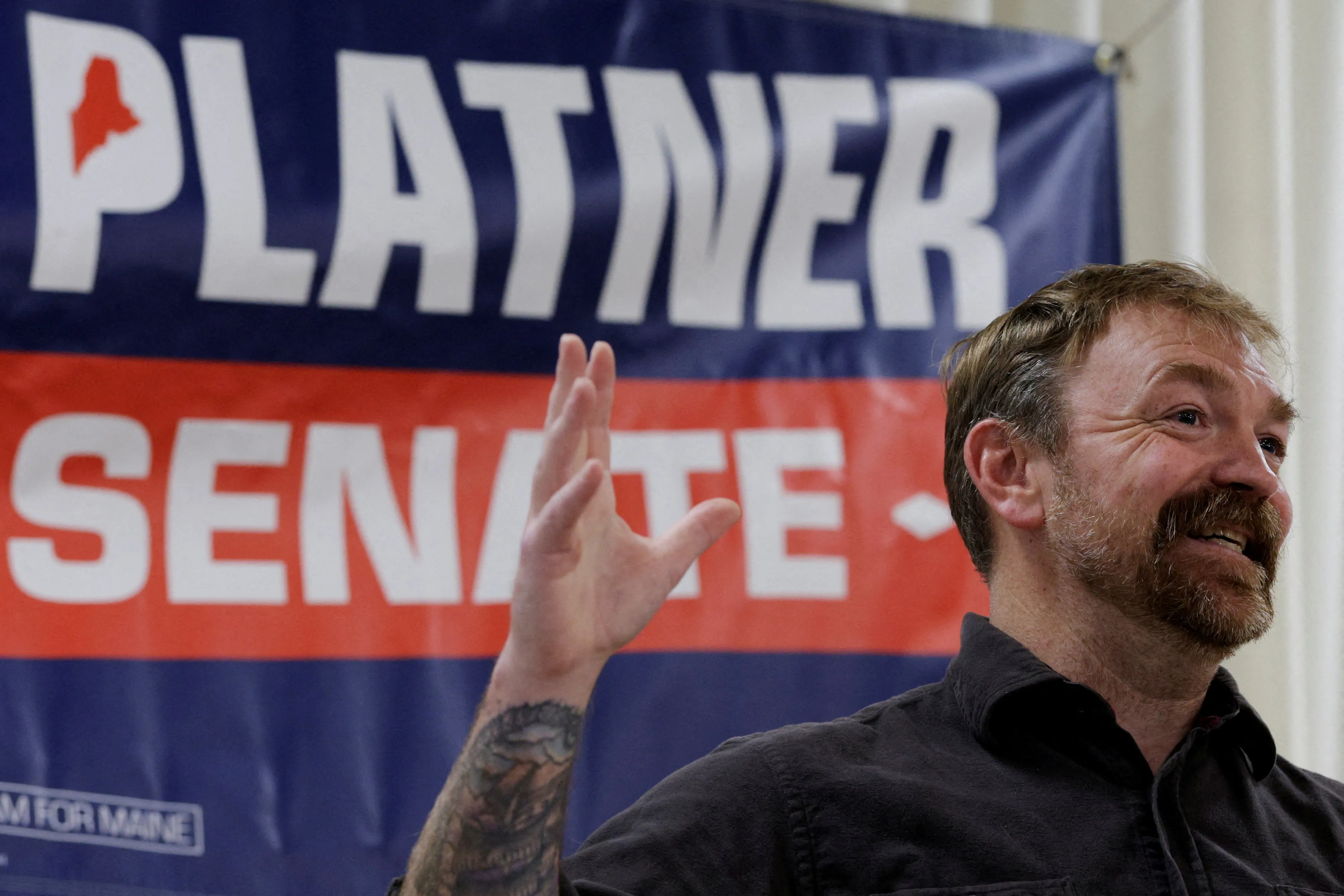
Political movements often reveal their true values not when defending their friends, but when those friends become liabilities. The controversy surrounding Maine Senate candidate Graham Plattner is about far more than one politician facing serious allegations. It raises a deeper question about integrity, consistency, and whether political principles still matter when power is at stake. As discussed on The Daniel Cohen Show, the real story isn't simply what Graham Plattner is accused of. The real story is what his own party tolerated until it became politically inconvenient. Watch more biblical news and cultural analysis anytime on Real Life Network.
Principles Mean Little If They Only Apply to Opponents
Every political movement claims to stand for something.
Honesty. Justice. Accountability. Character.
Those principles sound admirable until they become costly.
For years, Democrats have championed slogans like "Believe All Women," presenting themselves as defenders of victims and champions of accountability. Yet the Graham Plattner controversy forces an uncomfortable question: Were those principles truly universal, or were they conditional?
Before the most recent allegation surfaced, there had already been numerous warning signs.
Reports of disturbing online behavior. Multiple women raising concerns. A history of deeply troubling public controversies.
None of those revelations caused Democratic leadership to abandon him. Instead, many prominent figures continued endorsing his campaign, praising his future, and encouraging voters to support him.
Only after the political math began changing did the calls for his resignation suddenly multiply.
Principles cease to be principles the moment they become negotiable for political advantage.
That observation extends far beyond one Senate race.
Every political party faces the temptation to excuse behavior from its own side while condemning identical behavior from its opponents. Integrity requires applying the same standard regardless of whose name appears on the ballot.
Otherwise, morality becomes little more than another campaign strategy.
Selective Outrage Destroys Public Trust
The Plattner controversy illustrates a growing problem throughout American politics. Outrage increasingly depends less on the facts than on tribal loyalty.
The question often becomes not, "What happened?" but rather, "Whose side is this person on?" That mindset inevitably erodes public confidence.
When voters believe standards change depending on political affiliation, trust disappears. People stop believing public statements because they assume every response has already been filtered through electoral calculations.
That perception becomes especially damaging when movements claim moral authority.
The same inconsistency appeared after the horrific atrocities committed against Israeli civilians on October 7. Many organizations that had previously spoken passionately about believing victims suddenly became noticeably quieter when Jewish women testified about sexual violence committed by Hamas terrorists.
The victims had changed. The moral standard appeared to change with them.
Justice loses its credibility when compassion becomes selective.
The issue is not whether every allegation is automatically true. Serious accusations deserve careful investigation and due process. The issue is whether identical standards are applied consistently.
Without consistency, justice itself becomes politicized.
Readers interested in more biblical analysis of today's headlines can explore additional programming on Real Life Network.
Truth Matters More Than Winning
Political victories are temporary. Character lasts much longer.
Near the end of the episode, Daniel reflected on the legacy of Charlie Kirk. What made Kirk influential wasn't merely his ability to win arguments. It was his willingness to engage opponents thoughtfully while remaining grounded in conviction.
Ideas mattered. Truth mattered. People mattered. That same principle applies beyond politics.
Pastor Jack Hibbs offered a timely reminder that America's deepest problems cannot ultimately be blamed on those who reject biblical truth. Scripture first calls God's own people to humility, repentance, and faithfulness.
That perspective changes everything.
It reminds Christians that integrity cannot depend on election cycles, polling numbers, or partisan advantage. It must remain constant.
When winning becomes more important than integrity, both eventually disappear.
Every generation faces moments that reveal what it truly believes. The Plattner controversy is one of those moments.
Not because it exposes the failures of one politician, but because it exposes the temptation facing every movement: protecting power instead of protecting principle.
History remembers societies that defended truth even when it was costly.
It also remembers those that sacrificed truth for short-term political gain.
The choice remains the same today.
Watch the full discussion on The Daniel Cohen Show and explore more biblical news and cultural commentary anytime on Real Life Network.
25 min
When Winning Matters More Than Integrity
July 8, 2026
Daniel Cohen