
Stream Real Life Network Now

WATCH NOW
Israel

World News
25 min
National Security, Israel, and the Questions Behind the 2026 Midterms
As the 2026 midterms approach, national security deserves attention alongside the economy. From Iran and Israel to domestic terrorism and rising antisemitism, congressional decisions carry consequences for American families, religious freedom, and public safety.
The economy matters. Groceries, gas prices, housing costs, and the pressure on American families deserve serious attention. But national security belongs in that conversation, too. The decisions made in Washington affect more than household budgets. They shape the country's ability to confront terrorism, protect religious communities, secure its borders, and respond to threats abroad.
Those connections deserve closer examination. Through The Daniel Cohen Show on Real Life Network, the intersection of faith, national security, Israel, and American politics remains central to understanding the headlines.
The approaching November 3 midterms raise questions that go well beyond which party controls Congress. Who sets national security priorities? How should America respond to Iran and its terrorist proxies? What responsibilities do elected officials have when antisemitism and political violence reach American communities?
National security is not an abstract debate reserved for Washington. Its consequences can reach neighborhoods, schools, houses of worship, and ordinary families.
Iran, Israel, and the Responsibility to Confront Terrorism
Iran remains central to the discussion about American national security and the Middle East. Its support for armed groups, including Hezbollah and Hamas, has made its regional influence a continuing concern for the United States and Israel.
Yet political disagreements over Iran and Israel often become tangled in arguments about military assistance, international law, and America's responsibilities overseas.
Michigan's Senate contest illustrates those competing priorities.
Abdul El-Sayed has argued against unconditional American military assistance to foreign governments, including Israel. In interviews, his position has emphasized applying international law consistently and restricting weapons transfers to governments accused of violating it.
That approach raises legitimate questions about American foreign policy. Military assistance is not an unlimited obligation, and elected officials have a responsibility to scrutinize how taxpayer money is spent.
But the discussion cannot stop there.
Israel faces rocket and missile threats from hostile armed groups and regional adversaries. Defensive systems such as Iron Dome exist to intercept incoming projectiles and protect civilian populations. Any proposal to restrict military assistance therefore deserves careful examination of its potential consequences for defensive capabilities as well as offensive operations.
There is also an important distinction between criticizing a government's military decisions and excusing terrorism directed against its citizens.
The March attack against Temple Israel in West Bloomfield, Michigan, brought that distinction much closer to home. A vehicle carrying incendiary materials was driven into a synagogue complex that also serves children and families. The incident prompted renewed concerns about antisemitic violence and the reach of conflicts originating thousands of miles away.
Political leaders can disagree about Israel's government, military operations, and American foreign assistance. Those disagreements do not diminish the obligation to condemn attacks against Jewish civilians and religious institutions.
No disagreement over foreign policy can justify threatening Jewish families or treating American religious communities as extensions of a foreign government.
The same principle must apply to every community. A synagogue, church, mosque, or school should never become a target because of anger over events elsewhere.
Why National Security Belongs in Congressional Debates
The connection between national security and congressional elections is more substantial than campaign rhetoric might suggest.
Congress controls federal appropriations, establishes statutory authorities, conducts oversight, and plays a central role in shaping the agencies responsible for national defense and domestic security. The Senate also exercises its constitutional responsibility to provide advice and consent on presidential nominations requiring confirmation.
Those responsibilities make congressional debates over homeland security, intelligence gathering, immigration enforcement, and counterterrorism consequential.
An alleged ISIS-inspired plot involving the Mall of America in Minnesota offers an example of the threats federal investigators seek to identify before violence occurs.
According to the account presented by federal authorities, an 18-year-old suspect had communicated about supporting ISIS and allegedly considered carrying out an attack in the United States after plans to travel overseas did not materialize. The allegations require the usual distinction between prosecutors' claims and facts established in court.
But the broader issue remains significant: preventing terrorism requires investigative resources, intelligence cooperation, appropriate legal authorities, and effective oversight.
Protecting the public also requires precision.
Terrorist organizations are responsible for their own violence. Their actions must not become an excuse to assign collective guilt to immigrants, Muslims, or particular ethnic communities. Effective counterterrorism depends upon identifying actual threats rather than confusing religious identity or national origin with criminal conduct.
That is why national security policy requires more than slogans about being tough or compassionate.
The public deserves to understand how candidates would approach terrorism investigations, border security, intelligence oversight, civil liberties, and the constitutional limits of government authority.
Those questions belong alongside debates about inflation, healthcare, education, and taxation.
Antisemitism, Political Rhetoric, and the Limits of Party Loyalty
Three years after the Hamas-led October 7 attack, the anniversary remains a painful occasion for Jewish communities around the world.
Approximately 1,200 people were killed in the attack, and 251 were taken hostage. The consequences have extended far beyond Israel, including heightened security concerns and incidents of antisemitism in the United States.
New York City's response to the anniversary illustrates how difficult the public conversation has become.
Mayor Zohran Mamdani's remarks acknowledging the suffering caused by October 7 while criticizing Israel's subsequent military actions became a point of contention among activists with sharply different expectations.
The controversy reflects a larger problem in contemporary politics: expressions of sympathy, criticism, and disagreement are increasingly measured against demands for complete ideological agreement.
Recognizing the suffering of Israeli victims does not require ignoring Palestinian civilian suffering. Likewise, expressing concern for Palestinians does not require minimizing the October 7 atrocities or excusing antisemitism.
Both truths can be maintained without contradiction.
Political movements become less capable of honest debate when every disagreement is treated as betrayal. Acknowledging suffering should not depend upon whether the victims belong to a preferred political or religious community.
For Christians, Scripture establishes a higher standard than political loyalty. Human beings bear God's image, and the obligation to speak truthfully does not disappear when truth becomes inconvenient to a favored party or cause.
Proverbs 18:17 reminds readers that the first account of a dispute may sound persuasive until it is examined. That principle applies to viral videos, campaign statements, accusations of extremism, and claims about political opponents.
Christian discernment requires consistency: condemn terrorism without qualification, reject antisemitism without hesitation, and examine political claims without surrendering judgment to party loyalty.
The approaching midterms will generate enormous attention around polling, turnout, and campaign strategies. Those subjects are part of the political process, but they should not obscure the governing responsibilities attached to the offices being contested.
A Senate vote can affect national security appointments. A congressional appropriation can determine resources available to federal agencies. Legislative oversight can expose failures or strengthen accountability.
Understanding those responsibilities provides a more useful framework than treating every political development as a contest between personalities.
The same seriousness belongs in discussions about Israel, Iran, and religious freedom. American foreign policy involves real tradeoffs, and domestic security decisions can affect both public safety and constitutional liberties.
No political party possesses a monopoly on wisdom, and no candidate should be exempt from difficult questions.
The standard should remain consistent: evidence before accusations, clarity before slogans, and responsibility before political convenience.
Follow the intersection of biblical truth, Israel, national security, and American current events through The Daniel Cohen Show, streaming free on Real Life Network

World News
25 min
What Happens When a Nation Can No Longer Recognize Its Allies
As global tensions rise and political narratives reshape public debate, the greatest challenge may not be identifying our enemies but recognizing our allies. Discover why discernment remains essential for preserving truth, freedom, and biblical perspective.
When a nation loses the ability to distinguish between allies and adversaries, truth and propaganda, leadership and political theater, it becomes vulnerable long before the first battle is lost. The headlines may change, but the underlying challenge remains the same. As conflict intensifies in the Middle East, foreign governments expand their influence, and political narratives compete with objective reality, Americans are confronted with a pressing question: Can we still recognize the difference between those who defend freedom and those who seek to undermine it? These are not isolated controversies. They are warning signs that discernment has become one of the most important responsibilities of our time.
Read more biblical news and cultural analysis on Real Life Network or watch The Daniel Cohen Show.
The Cost of Misidentifying the Enemy
The week began with devastating news. Two American service members were killed after an Iranian ballistic missile strike on a U.S. base in Jordan. For months, much of the conflict with Iran had been measured in sanctions, diplomacy, intercepted missiles, and political negotiations. Suddenly, the cost was measured once again in American lives. That reality should cut through every political talking point. Iran remains the world's leading state sponsor of terrorism, and its hostility toward the United States has never been a secret.
Yet even as Iran demonstrated exactly who it is, much of the public debate shifted away from the regime responsible for the attack and toward Israel, America's closest ally in the Middle East. Vice President J.D. Vance argued that Israeli influence helped derail negotiations with Iran, suggesting that voices in Israel preferred continued military action over diplomacy. That framing misses the larger point. The agreement did not collapse because Israel objected to it. It collapsed because Iran has repeatedly demonstrated that it uses negotiations to buy time while continuing to pursue its long-term objectives.
This is where discernment becomes indispensable. A nation that cannot correctly identify its adversaries will inevitably begin questioning its allies instead. History is filled with civilizations that spent more energy arguing among themselves than confronting the threats gathering outside their borders. The danger is not merely military. It is intellectual and moral. When a society begins treating warnings as manipulation and allies as liabilities, it loses the clarity necessary to make wise decisions.
A nation becomes most vulnerable when it begins questioning its allies more than its enemies.
Israel's relationship with the United States has never been based on sentimentality. It rests on shared strategic interests, democratic values, intelligence cooperation, and a common recognition of the dangers posed by radical Islamic terrorism. Those realities should not disappear simply because political narratives become more convenient than geopolitical facts.
When Political Narratives Replace Clear Judgment
The same confusion appears in other arenas. While Israel is frequently portrayed as exercising outsized influence over American policy, Qatar has quietly invested hundreds of billions of dollars across American universities, think tanks, nonprofit organizations, and other institutions. At the same time, President Trump alleged that China obtained personal information connected to approximately 220 million American voter records while elements within the intelligence community minimized the scope of the breach. Whether discussing foreign influence, election security, or media coverage, one theme continues to emerge: narratives increasingly shape public perception more than facts themselves.
That concern extends beyond government agencies. Several major broadcast networks declined to air President Trump's address regarding China's alleged cyber activities, leaving many Americans to learn about the speech only through secondary reporting. Whatever one's opinion of the president, citizens should be wary whenever gatekeepers decide which information the public deserves to hear. Healthy democracies depend on informed voters, not curated narratives.
The same principle explains why Marco Rubio's public comments stood out during the episode. Whether addressing Hamas, Iran, or America's allies, Rubio demonstrated something increasingly uncommon in modern politics: clarity. He distinguished between aggressors and defenders without relying on carefully manufactured slogans or focus group-tested language. Leadership is not merely about speaking persuasively. It is about speaking truthfully, even when the truth is unpopular.
Truth becomes increasingly difficult to defend when political narratives matter more than objective reality.
That challenge extends well beyond foreign policy. Political performance often receives more attention than principled leadership. Sound bites replace substance. Viral moments overshadow careful reasoning. Public discourse becomes less concerned with what is true and more concerned with what is emotionally satisfying or politically advantageous. The result is a culture that gradually loses confidence in objective truth itself.
Watch the full discussion on The Daniel Cohen Show, and discover more faith-centered analysis and current events on Real Life Network.
Discernment Is a National Necessity
Throughout the episode, seemingly unrelated stories all pointed toward the same conclusion. Debates over military alliances, concerns about election security, media gatekeeping, congressional battles over aid to Israel, and even moments of political theater all revealed how easily discernment can be replaced by confusion. A society does not lose its way overnight. It drifts one compromised judgment at a time, until it becomes difficult to distinguish conviction from convenience or principle from performance.
That is why support for Israel ultimately represents something larger than a single foreign policy debate. Israel remains the Middle East's only stable democracy and America's most dependable strategic partner in one of the world's most volatile regions. More importantly, the Jewish people occupy a unique place within the biblical story of redemption. Scripture reminds us that God works through history with purpose, and His covenant faithfulness has never depended upon shifting political winds. The conversation surrounding Israel therefore becomes both geopolitical and spiritual. It forces us to ask whether we are evaluating events through the lens of temporary political narratives or enduring biblical truth.
The larger lesson applies far beyond one nation or one administration. Every generation must decide whether it will judge events according to facts or emotions, principles or personalities, truth or propaganda. Those choices shape the future of every free society.
Civilizations rarely collapse because they lack enemies. They decline when they can no longer recognize the difference between friends and foes.
That is why discernment remains one of the most important responsibilities of every citizen and every Christian. Headlines will continue to change. Political figures will come and go. But wisdom requires looking beneath the news cycle to identify the deeper forces shaping our culture. The future will belong not to those who shout the loudest, but to those who refuse to lose sight of the truth.
Watch the full discussion on The Daniel Cohen Show, and discover more faith-centered analysis and current events on Real Life Network.
.webp)
World News
25 min
Why Israel Has Become the Left's New Political Litmus Test
Israel has become more than a foreign policy issue. It has emerged as one of the clearest dividing lines within progressive politics, exposing growing fractures inside the Democratic Party and raising important questions about the movement's future.
For decades, support for Israel crossed political lines in America. Democrats and Republicans often debated Israeli policy while agreeing on one fundamental truth: Israel had the right to exist and defend itself. That consensus is rapidly disappearing. As explored on The Daniel Cohen Show, Israel has become one of the clearest dividing lines within progressive politics, exposing growing fractures inside the Democratic Party and raising important questions about where the movement is headed. Watch more biblical news and analysis anytime for free on Real Life Network.
Israel Has Become a Test of Political Loyalty
Political parties naturally evolve over time, but healthy coalitions leave room for disagreement. Today's progressive movement appears to be moving in a different direction. Increasingly, Israel has become more than a foreign policy issue. It has become a political litmus test.
Support for Israel's right to exist is no longer enough for many activists. Even criticism of Israel's government often fails to satisfy the movement's most vocal voices. Instead, public officials are increasingly expected to embrace increasingly radical positions or risk becoming the next target.
Scott Wiener illustrates that reality.
For years, Wiener has been one of California's most recognizable progressive lawmakers. He has championed many of the causes embraced by the political left. Yet despite publicly criticizing Israel's actions in Gaza, Wiener recently found himself confronted and driven away from a Pride event by activists who viewed him as insufficiently aligned with their movement.
That confrontation wasn't simply about Scott Wiener.
When a political movement begins turning on longtime allies, it often reveals that ideological purity has become more important than coalition building.
The same pattern is beginning to emerge across the country. Longtime progressive lawmakers who once represented the movement's leading edge are discovering that yesterday's credentials no longer guarantee today's acceptance.
The Democratic Party Is Facing a Growing Internal Divide
The shift extends far beyond one California lawmaker.
Colorado Representative Diana DeGette has spent decades representing one of the safest Democratic districts in America. Her record places her firmly on the political left, yet even she now faces criticism from activists because she has continued supporting Israel's defensive Iron Dome system and refused to abandon Israel entirely.
Meanwhile, candidates identifying as democratic socialists continue challenging establishment Democrats from within their own party.
The result is an increasingly uncomfortable reality for Democratic leadership.
The loudest voices inside the movement are no longer simply debating taxes, immigration, or health care. Israel has become one of the defining issues separating traditional Democrats from a growing socialist wing that openly acknowledges its dissatisfaction with the party itself.
That transformation deserves careful attention.
Political disagreement is healthy. Demanding absolute agreement on every issue is something entirely different. When movements lose the ability to tolerate internal disagreement, they inevitably begin consuming themselves.
The battle over Israel increasingly reflects a deeper struggle over the future identity of the Democratic Party itself.
This is why stories like Scott Wiener's receive so much attention. They reveal broader political trends that extend well beyond one protest or one election.
Readers interested in more commentary examining today's headlines through a biblical worldview can find additional episodes on Real Life Network.
Zechariah's Prophecy Still Speaks Today
Long before today's political debates, the prophet Zechariah described Jerusalem as a burdensome stone for the nations.
The imagery remains striking.
Throughout history, Jerusalem has repeatedly become the focal point of international conflict, political controversy, and religious tension. Thousands of years after Zechariah recorded those words, the city continues occupying a unique place unlike any other on earth.
Current events only reinforce that reality.
Across college campuses, political rallies, and legislative debates, Israel increasingly occupies the center of ideological conflict. Alliances that appear contradictory on nearly every other issue suddenly unite around opposition to the Jewish state.
That contradiction raises difficult questions.
How do movements that champion LGBTQ rights find themselves standing alongside organizations whose governing ideologies reject those same values? How do politicians who claim to oppose hatred remain silent when antisemitism increasingly appears within their own political coalition?
These questions deserve honest discussion rather than easy slogans.
Jerusalem remains one of the world's most contested cities because the spiritual significance of Israel has never disappeared from history.
Whether examining politics, international affairs, or biblical prophecy, Israel continues shaping conversations far beyond the Middle East.
The headlines may change from week to week, but the underlying issues remain remarkably consistent. Israel continues serving as both a geopolitical flashpoint and a spiritual reminder that biblical history continues intersecting with current events.
To watch the complete discussion and explore more biblical news analysis, visit The Daniel Cohen Show on Real Life Network, where every episode is available to stream for free.
.webp)
World News
25 min
Tucker Carlson, Israel, and the Growing Divide Within Conservatism
Tucker Carlson's departure from the Republican Party sparked a broader conversation about Israel, conservatism, anti-Semitism, and the belief that political leaders deserve credit for what Scripture says belongs to God alone.
Tucker Carlson's announcement that he no longer identifies with the Republican Party generated headlines across conservative media. For some, it was a shocking development. For others, it felt like the formal conclusion of a process that had been unfolding for years. On Real Life Network and The Daniel Cohen Show, the discussion goes beyond party politics and asks a deeper question: Is this really about Tucker Carlson leaving the Republican Party, or does it reveal a growing divide within conservatism itself? The conversation touches on Israel, anti-Semitism, media influence, biblical truth, and the increasingly different visions competing for the future of the conservative movement.
Carlson's comments sparked immediate reactions because of his influence. For years, he has been one of the most recognizable voices in conservative media. Yet many conservatives now find themselves questioning whether his priorities still align with the values and principles that have traditionally defined the movement.
A Debate About More Than Party Politics
The biggest takeaway from Carlson's announcement is not simply that he is distancing himself from the Republican Party. Political affiliations change. Public figures evolve. Those developments are not unusual.
What makes this moment significant is the broader worldview conflict underneath it. Many conservative voters have noticed a pattern. Carlson has increasingly positioned himself in opposition to prominent defenders of Israel while giving sympathetic platforms to voices that criticize the Jewish state. Critics argue that these choices reveal deeper disagreements that extend far beyond political strategy. The concern is not merely about foreign policy.
It is about whether support for Israel remains a central feature of modern conservatism or whether a growing segment of the movement views Israel as a liability rather than an ally. For many Bible-believing conservatives, that distinction matters greatly. Support for Israel is not rooted solely in geopolitics. It is informed by history, shared values, democratic principles, and Scripture itself.
The most important question is not whether Tucker Carlson left the Republican Party, but whether he left the conservative movement long ago.
That question explains why Carlson's announcement has generated such strong reactions from people who once viewed him as a leading conservative voice.
For more biblical analysis of current events, cultural issues, and world affairs, viewers continue turning to Real Life Network.
Who Gets the Credit for Israel's Survival?
The conversation shifts from media personalities to another issue that Daniel Cohen believes deserves careful attention.
During recent remarks, President Trump suggested that without his actions, Israel might not exist today. While many supporters praised his administration's foreign policy accomplishments, Daniel argues that such statements cross an important line.
There is no question that President Trump made decisions that many supporters of Israel welcomed. The Abraham Accords, recognition of Jerusalem as Israel's capital, and military action against threats in the region all remain significant achievements.
Acknowledging those accomplishments is appropriate. Assigning ultimate credit for Israel's existence is another matter entirely. Throughout Scripture, God repeatedly promises to preserve Israel. From Exodus to Isaiah, from the Psalms to Zechariah, the biblical narrative consistently points to God's covenant faithfulness rather than human achievement.
Psalm 121 provides an important reminder, which describes God as the keeper of Israel. The Hebrew word used in the passage, shomer, refers to a watchman or guardian who remains vigilant and never abandons his post. That image carries profound significance for understanding Israel's survival throughout history.
Empires have risen and fallen. Kingdoms have disappeared. Entire civilizations have vanished from the pages of history. Israel remains.
Israel's existence is not sustained by politicians, military leaders, or world powers, but by the God who promised to preserve His people.
Gratitude for political leaders and military support is entirely appropriate. Worship and ultimate credit belong elsewhere.
For additional content exploring faith, culture, and biblical worldview issues, viewers can explore programming available through Real Life Network.
Anti-Semitism, Canada, and a Warning for the West
The episode's most sobering discussion centers on the tragic shooting in Montreal that left multiple people dead, including Rabbi Michael Moshe Mizrahi. While investigators continue examining the facts, the incident raised serious questions about anti-Semitism, political extremism, and public safety.
What makes the story particularly troubling is that it does not fit neatly into familiar media narratives.
The suspect reportedly left behind a lengthy manifesto promoting violent revolutionary ideas while expressing hostility toward Jews, capitalism, law enforcement, and broader Western institutions. The tragedy serves as a reminder that hatred can emerge from many ideological directions.
Anti-Semitism rarely exists in isolation. It often appears alongside broader efforts to undermine truth, distort history, and divide communities. When public figures normalize hostility toward Israel or consistently portray the Jewish state as uniquely responsible for global problems, those messages contribute to an environment where anti-Jewish sentiment becomes easier to justify.
That reality extends beyond any single country. Throughout history, societies that tolerated anti-Semitism eventually discovered that the problem never remained confined to one group.
When societies stop defending truth and begin excusing hatred, the consequences eventually reach ordinary people.
At the same time, increasing anti-Semitism in North America and Europe is contributing to renewed interest in aliyah, the return of Jewish people to Israel. Thousands of Jewish immigrants are expected to relocate to Israel in the coming years, reflecting a trend that many believers view through both historical and biblical lenses.
The stories discussed throughout this episode may seem unrelated at first. Tucker Carlson's political future, President Trump's comments, anti-Semitism in Canada, and Jewish immigration to Israel occupy very different headlines.
Yet they share a common thread. Each story ultimately raises questions about truth, loyalty, identity, and whether people are willing to view current events through a biblical lens rather than a purely political one.
For more news, cultural commentary, and biblical analysis, visit Real Life Network and watch The Daniel Cohen Show.
.webp)
World News
25 min
Trump's Iran Deal Faces Growing Scrutiny From Conservatives
President Trump's proposed agreement with Iran is drawing criticism from conservatives who argue the deal rewards Tehran, sidelines Israel, and risks repeating mistakes made in previous negotiations with the Islamic Republic.
Iran, Israel, President Trump, the Strait of Hormuz, sanctions relief, and Middle East peace have dominated headlines in recent weeks. But beneath the political talking points lies a growing debate among conservatives about whether the administration's proposed agreement with Iran represents a strategic victory or a costly concession. On Real Life Network and The Daniel Cohen Show, the conversation centers on a question many Americans are asking: why does an agreement designed to promote stability appear to provide significant benefits to Iran while offering few visible gains for the United States or Israel?
The controversy has become one of the most significant foreign policy discussions within the conservative movement, exposing divisions over diplomacy, deterrence, and America's relationship with Israel.
Why Critics Are Concerned About the Iran Agreement
The administration has described the memorandum of understanding with Iran as an opportunity to reduce tensions and avoid a broader regional conflict. Supporters argue that diplomacy remains preferable to military escalation and that economic engagement could encourage greater stability.
Critics see a very different picture.
According to details discussed throughout the episode, the agreement would reportedly ease economic pressure on Iran through sanctions relief, allow greater access to international markets, and potentially unlock significant financial resources. At the same time, opponents argue that the deal offers little more than assurances from a regime that has repeatedly violated international commitments and continued supporting proxy organizations throughout the Middle East.
The concern is not merely about economics. The concern is whether the agreement addresses the underlying threat posed by the Islamic Revolutionary Guard Corps and the broader ideology driving Iranian foreign policy.
For decades, Iran has funded groups such as Hezbollah, Hamas, and the Houthis while pursuing regional influence through military, political, and financial support. Critics argue that any agreement that strengthens Tehran financially without fundamentally changing its behavior risks recreating the same conditions that produced instability in the first place.
A diplomatic agreement is only as strong as the willingness of both sides to honor it.
Many conservatives who supported President Trump through multiple elections now find themselves questioning whether this approach aligns with the administration's previous commitment to maximum pressure and strong deterrence.
For additional analysis of international affairs and current events through a biblical worldview, viewers continue turning to Real Life Network and The Daniel Cohen Show.
Israel's Role in the Debate
One of the most controversial aspects of the proposed agreement is Israel's position in the process.
Israel remains America's closest ally in the Middle East and has long viewed Iran's nuclear ambitions and regional influence as direct threats to its security. Yet critics argue that Israel was largely sidelined during discussions surrounding the agreement despite being one of the nations most directly affected by its outcome.
This concern intensified after comments from Vice President J.D. Vance criticizing members of the Israeli government who publicly opposed the deal. Those remarks generated significant backlash among conservative voters who believe support for Israel should remain a foundational principle of American foreign policy.
The criticism is not necessarily rooted in partisan politics.
Rather, it reflects a broader belief that Israel faces unique security challenges that cannot be fully understood from Washington alone. Israeli citizens live under the constant threat of rocket attacks, terrorist activity, and regional instability. For many supporters of Israel, those realities make security concerns more than theoretical policy debates.
Many conservatives believe that strengthening Israel and strengthening American interests are complementary goals, not competing priorities.
The discussion has also highlighted broader questions about deterrence. Critics argue that adversaries are less likely to pursue aggression when they perceive strength and resolve. They worry that economic concessions offered before meaningful behavioral changes have occurred could send the opposite message.
These concerns help explain why the debate has become so emotional among voters who otherwise remain supportive of President Trump's broader agenda.
For more faith-based commentary on culture, politics, and world events, viewers can explore programming available through Real Life Network.
What Conservatives Want to See Next
Beyond the details of the agreement itself, many conservatives are focused on what comes next.
One issue receiving renewed attention involves American citizens currently detained in Iran. Critics have questioned why the release of detained Americans was not more prominently included in discussions surrounding sanctions relief and economic incentives.
Others point to Iran's continued support for regional proxy groups as evidence that fundamental problems remain unresolved. From their perspective, any lasting peace agreement must address not only nuclear concerns but also the broader network of organizations responsible for destabilizing the region.
The debate also reveals something larger about the modern conservative movement.
Many voters are demonstrating that their support for political leaders is not unconditional. They are willing to celebrate policies they believe work while voicing concerns when they believe mistakes are being made.
That distinction matters. Political loyalty and policy agreement are not the same thing.
Conservatives increasingly want results, accountability, and policies that reflect the principles they elected leaders to pursue.
Whether the agreement ultimately succeeds or fails remains to be seen. What is already clear is that many Americans remain deeply invested in the outcome. They understand that decisions made today could shape the future of the Middle East, America's global influence, and the security of one of its closest allies for years to come.
As the conversation continues, supporters and critics alike will be watching closely to see whether diplomacy produces meaningful change or simply delays difficult decisions.
For more news, cultural commentary, and biblical analysis, visit Real Life Network and watch The Daniel Cohen Show.
.webp)
World News
25 min
Israel, Pride Month, and the Cost of Compromising Truth
From Israel's conflict with Hezbollah to Pride Month, church compromise, and fairness in women's sports, recent headlines reveal growing debates about truth, conviction, and cultural pressure.
Israel, Hezbollah, Pride Month, religious liberty, women's sports, and cultural identity continue dominating headlines across the United States and around the world. Through the analysis featured on Real Life Network and The Daniel Cohen Show, these stories are examined through a biblical worldview that seeks to understand not only what is happening, but why it matters. While these issues may appear unrelated at first glance, they reveal a common challenge facing both nations and individuals: the pressure to compromise truth for the sake of convenience, acceptance, or short-term peace.
Whether on the battlefield, in politics, or inside the church, the question remains the same. What happens when conviction gives way to compromise?
Israel's Security Cannot Depend on Empty Promises
Recent developments along Israel's northern border once again exposed the difficulty of making agreements with organizations that have repeatedly demonstrated hostility toward the Jewish state. Reports of ceasefire discussions involving Hezbollah and Lebanon were quickly overshadowed by renewed rocket and drone attacks into northern Israel.
For families living near the Lebanese border, these are not abstract geopolitical discussions. They are daily realities. Parents wake children in the middle of the night. Communities rush to bomb shelters. Soldiers continue serving in dangerous conditions while political leaders weigh competing pressures.
The challenge for Israel is unique.
Most nations can afford strategic mistakes. Israel often cannot.
The discussion surrounding negotiations with Iran raises similar concerns. For decades, Iranian leaders have used diplomacy, delay, and negotiations while continuing to support proxy groups throughout the region. The question is no longer whether Iran seeks regional influence. The question is whether Western leaders fully understand how long Iran is willing to wait to achieve its objectives.
Peace built on promises means little when one side continues preparing for conflict.
That reality explains why many Israelis remain skeptical whenever international pressure encourages concessions before long-term security concerns are addressed. History has taught painful lessons about trusting hostile actors who continue calling for Israel's destruction while negotiating publicly.
For more analysis of Israel, geopolitics, and current events through a biblical lens, viewers continue turning to Real Life Network and The Daniel Cohen Show.
When Institutions Stop Defending Truth
The pressure to compromise is not limited to foreign policy.
Across the Western world, institutions increasingly face demands to affirm ideas that directly conflict with biological reality, historic Christianity, and common sense. Pride Month once again highlighted these tensions as corporations, sports leagues, government officials, and even churches rushed to signal support for causes that many Christians believe contradict Scripture.
The issue is not whether churches should welcome people. They should. The gospel is for sinners. Churches should be filled with broken people seeking grace, forgiveness, healing, and transformation through Jesus Christ.
The problem emerges when welcoming people becomes indistinguishable from celebrating sin. A church exists to proclaim truth, not redefine it.
This concern became especially visible as some churches openly celebrated identities and lifestyles Scripture consistently identifies as sinful. In doing so, many critics argue these institutions have confused compassion with affirmation.
That distinction matters. A hospital welcomes sick people without celebrating disease. Likewise, churches should welcome everyone while remaining faithful to biblical truth.
The church serves people best when it refuses to compromise the truth that has the power to transform them.
This same tension extends beyond church walls. Professional sports leagues, entertainment companies, and major corporations increasingly adopt ideological positions that many Americans neither support nor recognize as representative of their values.
As cultural pressure grows, conviction becomes increasingly costly. That reality should not surprise believers. Scripture repeatedly warns that standing for truth often requires courage.
Fairness, Identity, and the Future of Cultural Leadership
Questions surrounding truth and reality have become especially visible in women's athletics.
The recent California state track championship reignited national debate after a biological male competing in the girls' division won multiple state titles. For many observers, the controversy was not complicated. It was a matter of fairness.
Young women trained, sacrificed, and competed only to find themselves competing against someone with significant biological advantages.
The response from state officials only intensified frustration. Rather than addressing the underlying issue, officials attempted to soften criticism through symbolic accommodations and shared podiums.
Yet symbols cannot resolve reality. Athletes understand competition. Parents understand competition. Most Americans understand competition. When fairness disappears, trust eventually follows.
A culture that refuses to acknowledge reality eventually loses the ability to pursue justice.
The broader challenge extends beyond sports. Questions surrounding identity, truth, biology, family, and morality increasingly shape political campaigns, educational institutions, and public life.
That is why states like Indiana and Tennessee have recently emphasized the importance of the nuclear family. These efforts reflect a growing recognition that healthy families remain foundational to healthy societies.
The cultural conversation is ultimately not about slogans or political branding. It is about whether truth remains objective or becomes subject to social pressure. The answer to that question will shape far more than public policy. It will shape the future.
The Hope of the Gospel
Political leaders will disappoint. Institutions will fail. Cultural movements will rise and fall.
Yet the deepest need of humanity remains unchanged.
Scripture teaches that all people have sinned and stand in need of reconciliation with God. No political movement, social cause, or cultural trend can solve that problem. That is why Jesus Christ came into the world. He lived the perfect life sinners could never live, died on the cross for sinners, and rose again from the grave.
Through repentance and faith in Christ, forgiveness, reconciliation, and eternal life are available to all who believe.
That hope remains greater than any headline.
For more biblically grounded reporting and analysis, visit Real Life Network and watch The Daniel Cohen Show.
Related Articles
Thank you! Your submission has been received!
Oops! Something went wrong while submitting the form.
World News
There is something quietly powerful about a person who simply shows up. No speeches. No screaming. Just the steady confidence of standing on principle. On the Daniel Cohen Show for Real Life Network (RLN News), I want to name what so many Americans can feel right now: our culture is loud, confused, and unstable, and the need for biblical truth, moral clarity, and a Christian worldview has never been more urgent.
Hollywood and the legacy media love to lecture the rest of us about morality, but this week exposed the hypocrisy. We watched celebrities elevate a political narrative around Renee Good while ignoring the deeper issues of law, order, and truth. At the same time, actress Sydney Sweeney did something refreshingly human that cut through the noise. She stood for a photo with former Israeli hostages Noah Argomani and Avianatan Orr, survivors of Hamas captivity. In an entertainment industry that punishes anyone who steps out of step with the herd, she did not flinch. Quiet courage still matters, especially when it costs you something.
Protect Women’s Sports and Tell the Truth
We also have a major case at the United States Supreme Court that could decide whether men will continue competing against women in women’s sports. The arguments we are hearing from the left are built on confusion, and sometimes outright denial of reality. The lead attorney could not even define what a woman is. Justice Alito asked a basic question. The answer came back as word salad and evasions.
Title IX was passed to protect women and ensure equal opportunity, privacy, and safety. It was not designed to accommodate an ideology that pretends biology is optional. We have seen female athletes lose scholarships, lose records, and take physical punishment they should never have to endure. This is not compassion. It is exploitation. Riley Gaines nailed it when she said that if leaders cannot state a simple truth about male and female, then they lose credibility on everything else.
And Christians, this is another reminder of why voting matters. Supreme Court seats shape the law for generations. Policy follows downstream from worldview, and worldview follows downstream from truth.
Iran’s Uprising and the Red Green Alliance
While Americans are being distracted and manipulated, Iran is burning, literally and figuratively. The death toll is unclear because the regime has cut the internet and buried the truth along with the bodies. There are reports of mass graves, families not receiving the remains of loved ones, and protesters being executed publicly. We are watching an Islamic dictatorship respond the only way it knows how: with terror.
Here is what I know. It is worse than the world is being told. It is worse than many want to admit. And the people of Iran cannot do this alone.
This also connects to what Charlie Kirk has described as the Red Green Alliance, the coalition between radical leftism and radical Islam. We have seen this pattern before. In Iran in 1979, leftists welcomed Islamists into the revolution, thinking they could build something free together. Then the Islamists took power and crushed everyone who would not submit. That is how it ends every time. Tyranny wins and freedom dies.
If you are wondering why this matters in America, look at what is happening in Minnesota, including Somali fraud scandals, the obstruction of ICE operations, and elected officials calling law enforcement “terror.” Look at the ideological protection being offered to movements that do not share Judeo-Christian values at all. If we lose the ability to name truth, we will lose the ability to defend anything good.
As the noise grows louder and the truth becomes harder to find, believers need a place they can trust. Real Life Network exists to cut through propaganda, speak with biblical clarity, and equip Christians to stand firm in an increasingly hostile culture.
Watch The Daniel Cohen Show and hundreds of other faith grounded programs anytime on Real Life Network. Stream biblical worldview news, bold teaching, and cultural commentary all in one place, free and without compromise.
Download the Real Life Network app or visit RealLifeNetwork.com and make truth part of your daily rhythm.
Related Articles:
- Elon Musk, Hollywood, and the War on Truth by Daniel Cohen
- Hedieh’s Story: Why She’s Here, Why She Speak, Why it Matters by Hedieh Mirahmadi
- 7 of Today’s Best Christian Podcasts (and Where to Stream Them Free) by Real Life Network
25 min
January 16, 2026
Daniel Cohen
World News
The United Arab Emirates, a Muslim-majority nation, just drew a shocking line: the UAE is restricting Emirati students from enrolling in UK universities because British campuses have become hotbeds for radical Islam and anti-West extremism. If that sounds familiar, it should. UK universities and American universities have become ideological factories where pro-Hamas rhetoric spreads, Israel is demonized, and truth gets buried under activism. Meanwhile, Iran protests are erupting against the Islamic Republic, and legacy media barely whispers. I’m Daniel Cohen with Christian news from a biblical worldview. Watch now for free on the Real Life Network at RealLifeNetwork.com.
UAE Draws a Line as UK Universities Radicalize Students
Let’s start with the headline that should stop every parent and policymaker in their tracks. The UAE, a country that knows exactly what Islamist extremism looks like up close, is warning its own young people: do not go to British universities because the environment is radicalizing and anti-West. Think about that. A Muslim-majority nation is signaling that the UK has lost control of its own institutions.
And this is not just a “UK problem.” The same pipeline has been forming for years in the United States. Universities, aided by sympathetic media and activist networks, have normalized slogans, excuses, and narratives that sanitize extremists while vilifying anyone who pushes back. The result is predictable: soft language for radicalism, harsh language for law enforcement, and constant moral confusion.
Here is what the UAE decision exposes. Even leaders in the Muslim world can recognize that radical Islam is not merely a private faith issue. It is a political movement that uses institutions as battlegrounds. When governments finally admit that campuses are becoming recruitment and propaganda spaces, that is a flashing red warning sign to the rest of us.
Iran Is Erupting While the West Looks Away
Now, pivot to the story the corporate press treats like background noise: Iran is on fire. The people are risking their lives to throw off the yoke of the Ayatollah, the IRGC, and decades of religious tyranny. This is not theoretical. This is blood in the streets, internet shutdowns, families grieving, and a nation crying out for freedom.
So why is the coverage so thin?
Because the modern activist class does not actually prioritize human rights consistently. If they did, the brutality of Tehran would dominate the news cycle. If they did, celebrities, influencers, and the same voices screaming about “justice” would be naming the Iranian regime for what it is: a violent theocracy that crushes dissent, oppresses women, and funds terror across the region.
Instead, too many of these voices are fixated on attacking Israel and Zionism. That is not an accident. It is ideological alignment. The Iranian regime’s obsession has always been the destruction of Israel and hostility toward America. And when Western activists echo that obsession, they go quiet when Iranians rise up against it. Silence becomes a form of complicity.
From a biblical worldview, this is spiritual blindness in real time. Scripture warns that people can be deceived into calling evil good and good evil. And that is exactly what we are watching when the world shrugs at Iranian suffering but rages endlessly at Israel’s existence.
America’s Campus Crisis and Why It Matters for Your Family
Now bring it home. The UAE is making a protective move about UK universities, but Americans should be asking a harder question: who is protecting our kids from the same ideological machine here?
Across the U.S., campuses have become training grounds for a mix of far-left activism and Islamist sympathy. Students are taught to view America as inherently oppressive, Israel as uniquely evil, and violence as “resistance,” depending on who commits it. That framework does not produce thoughtful citizens. It produces radicals with credentials.
And when the public sees federal officers attacked, when lawful enforcement is treated like tyranny, when words like “secret police” get thrown around casually, it creates a permission structure for chaos. People start believing rules do not apply to them. They start believing intimidation is activism. They start believing the state is illegitimate unless it agrees with their ideology.
You do not have to agree with every policy choice to see the danger of a society that cannot tell the difference between law and lawlessness. A civilization collapses when truth becomes optional.
So here is the challenge. If the UAE can recognize that universities can become incubators for radicalization, Americans can too. Parents, pastors, and leaders need courage to speak clearly, protect their communities, and refuse to be manipulated by propaganda disguised as compassion.
The bigger story is not just geopolitics, it is worldview. When elites can excuse extremism, ignore persecuted people, and call propaganda “education,” you are watching a culture lose its moral center. But we are not without hope. God is not confused, not surprised, and not absent.
If you want Christian news that connects the headlines to biblical truth without the spin, watch The Daniel Cohen Show on the Real Life Network. Tell your family and friends, download the app, and watch now for free at RealLifeNetwork.com.
Related articles:
- Iran’s Revolt Against Religious Rule by Hedieh Mirahmadi
- Ideology at War With the West: The Rising Alliance Behind Modern Terror by Hedieh Mirahmadi
- Trump Arrests Maduro and Venezuela Tastes Freedom Again by Daniel Cohen
25 min
UAE Bars UK Campuses Over Radical Islam as Iran’s Uprising Spreads
January 12, 2026
Daniel Cohen
World News
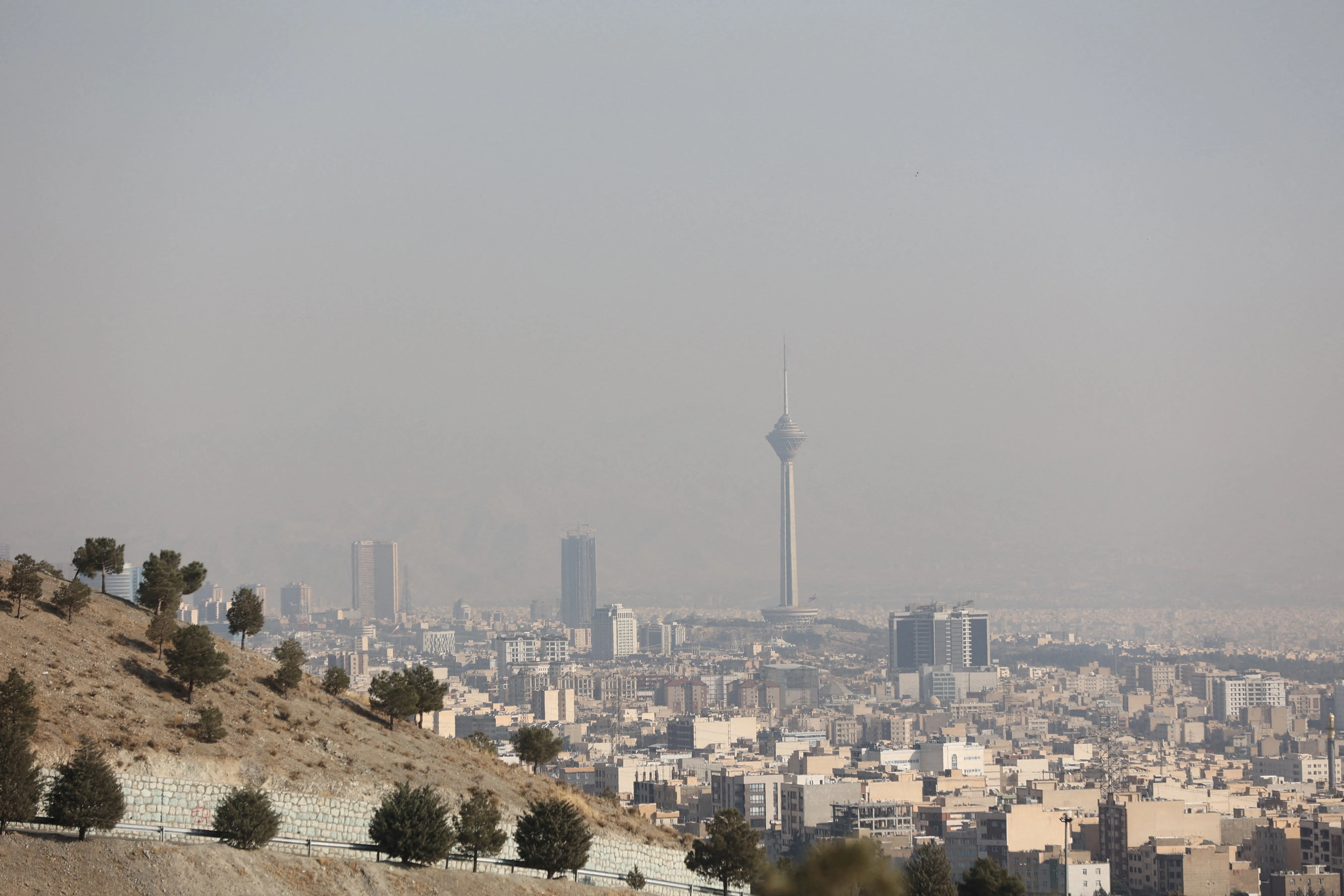
I am often asked why Israel, a tiny strip of land about the size of New Jersey, dominates global headlines, ignites outrage, and fuels endless conflict. Standing here in Jerusalem, the answer becomes clear. This city is not just geography. It is theology. It is the place where the Messiah, His land, and His people are bound together by an unbreakable covenant that the enemy of God desperately wants to sever.
Jerusalem is not controversial because of politics. It is contested because of prophecy.
The Covenant the World Cannot Break
Israel’s enemies refuse to accept one foundational truth. God tied the Messiah, the Jewish people, and the land together forever. Scripture makes this unmistakably clear. God calls Israel the apple of His eye. When the nations rage against Israel, they are not merely opposing a country. They are provoking God Himself.
The Bible does not teach replacement. God has not abandoned Israel. He has not revoked His covenant. Romans tells us plainly that all Israel will be saved. Zechariah tells us the Lord will dwell in Jerusalem again. And when Yeshua returns, He is not coming back to Rome, London, or New York. He is coming back to the Mount of Olives.
That is why this land matters. If Israel could be erased, where would the Messiah return? The answer terrifies the enemies of God because it exposes the impossibility of their goal. God laughs at the nations because what He established cannot be undone.
Why the Enemy Is Obsessed With Israel
This is why Iran, Hamas, Hezbollah, and their allies fixate on Israel. This is why the United Nations obsessively condemns it. This is why history keeps repeating itself with different names and different regimes but the same hatred.
Pharaoh tried to destroy the Jewish people. Haman tried. Hitler tried. Hamas tried. Iran is trying now. Yet Israel remains. Four thousand years later, the Jewish people are still here. The land still exists. Jerusalem still stands.
That is the proof. The gates of hell have not prevailed, and they never will.
The conflict over Israel is not about borders or politics. It is about the Messiah. It is about God keeping His word. And it is about a spiritual battle that has been raging since the beginning of time.
I am Daniel Cohen for the Real Life Network. If this message matters to you, share it and watch the full episode of The Daniel Cohen Show.
25 min
Why Jerusalem Is the Most Contested Place on Earth
December 28, 2025
Daniel Cohen
World News
The world is still shaking. A Hanukkah celebration meant to honor light, faith, and survival turned into a scene of terror when Jews gathered in Australia were brutally attacked. Fifteen people ranging from children to the elderly were murdered. Families were shattered. A rabbi who served his community for nearly two decades was killed. And yet, once again, the media hesitated to say what this was.
On The Daniel Cohen Show, Daniel Cohen refuses to play along with the silence. He names what others avoid and connects the dots the mainstream press refuses to draw.
Hanukkah Targeted by Terror
The attack at Bondi Beach was not random violence. It was deliberate. It was timed for the first night of Hanukkah. It targeted Jews gathered openly and peacefully. The attackers were a father and son who believed terror was a family mission. Survivors described lying on the ground for nearly twenty minutes as gunfire continued without resistance.
This was not a crime of opportunity. It was ideological. It was anti Semitic terrorism, and even the Australian prime minister acknowledged it as such. But acknowledgment without action only emboldens the next attack.
Hanukkah commemorates a refusal to surrender. The Maccabees stood against an empire that sought to erase Jewish faith, Jewish law, and Jewish identity. That same spirit was on display in Jerusalem as Jews danced and celebrated even after hearing of the massacre. Light does not retreat when darkness strikes. It shines brighter.
The Media Silence and the Permission Structure
Daniel Cohen warns that terror does not happen in a vacuum. It grows where excuses are made and where truth is avoided. In recent years, Western leaders including those in Australia, Canada, and the United Kingdom have moved toward recognizing a Palestinian state in response to pressure following October 7. Cohen argues that rewarding Hamas with legitimacy sends a dangerous message.
When leaders offer moral equivalence or political concessions after terror, radicals interpret it as permission. Massive pro Gaza demonstrations filled Sydney streets months before the attack. Chants escalated. Rhetoric hardened. And eventually, violence followed.
The media response followed a familiar pattern. Words like lone actor, deranged individual, and isolated incident replaced honest reporting. When eyewitnesses reported attackers shouting Islamic slogans, those details were minimized or ignored. Calling attention to ideology was labeled hateful. Silence became policy.
A Pattern Across Continents
The Bondi Beach massacre was not an isolated event. Within days, Americans were killed in Syria by an ISIS sympathizer embedded in local security forces. A Jewish student was murdered at Brown University after witnesses reported religious slogans before gunfire. Jewish homes in California were shot at while Hanukkah decorations were visible.
These events share a common target and a common ideological thread. Jews. Americans. Students. Faith. And yet policymakers and media institutions insist on treating each attack as unrelated.
Daniel Cohen challenges viewers to ask why eighty five percent of the world’s refugees, many from Muslim majority regions, are not being resettled in neighboring Muslim nations. Instead, they move to Western countries where leaders hesitate to enforce assimilation, law, or cultural boundaries. Cowardice is disguised as compassion.
Islamism and the West’s Crisis of Courage
Cohen does not argue against Muslims as people. He argues against an ideology that openly rejects freedom of speech, freedom of religion, and separation of mosque and state. Islamic scholars have said plainly that jihad and Sharia are not fringe beliefs. They are foundational.
Even leaders from the Middle East have warned the West. Years ago, a senior UAE official cautioned that political correctness and ignorance would invite terror into Europe and beyond. That warning has proven accurate.
The problem, Cohen says, is not just immigration or security. It is spiritual. America has grown soft. Churches have diluted truth. Many have replaced repentance with affirmation. Jesus never affirmed sin. He forgave sinners and called them to change.
Grace is not permission to remain in darkness. It is power to leave it.
Be Encouraged
Despite the violence and moral confusion, Daniel Cohen ends with hope. Hanukkah itself is a story of hope. One small jar of oil. One day of light. Eight days of miracle. A people who refused to bow.
Two centuries later, Jesus opened the door for Gentiles to worship the God of Abraham, Isaac, and Jacob. Jews and Christians are spiritually connected. When one is attacked, both are called to stand.
Scripture commands believers to mourn with those who mourn and pray even for enemies. That is what sets the people of God apart. Truth spoken in love. Courage without hatred. Light that cannot be extinguished.
The menorah still burns. Faith still stands. God is still on the throne.
Watch the full episode of The Daniel Cohen Show on Real Life Network.
25 min
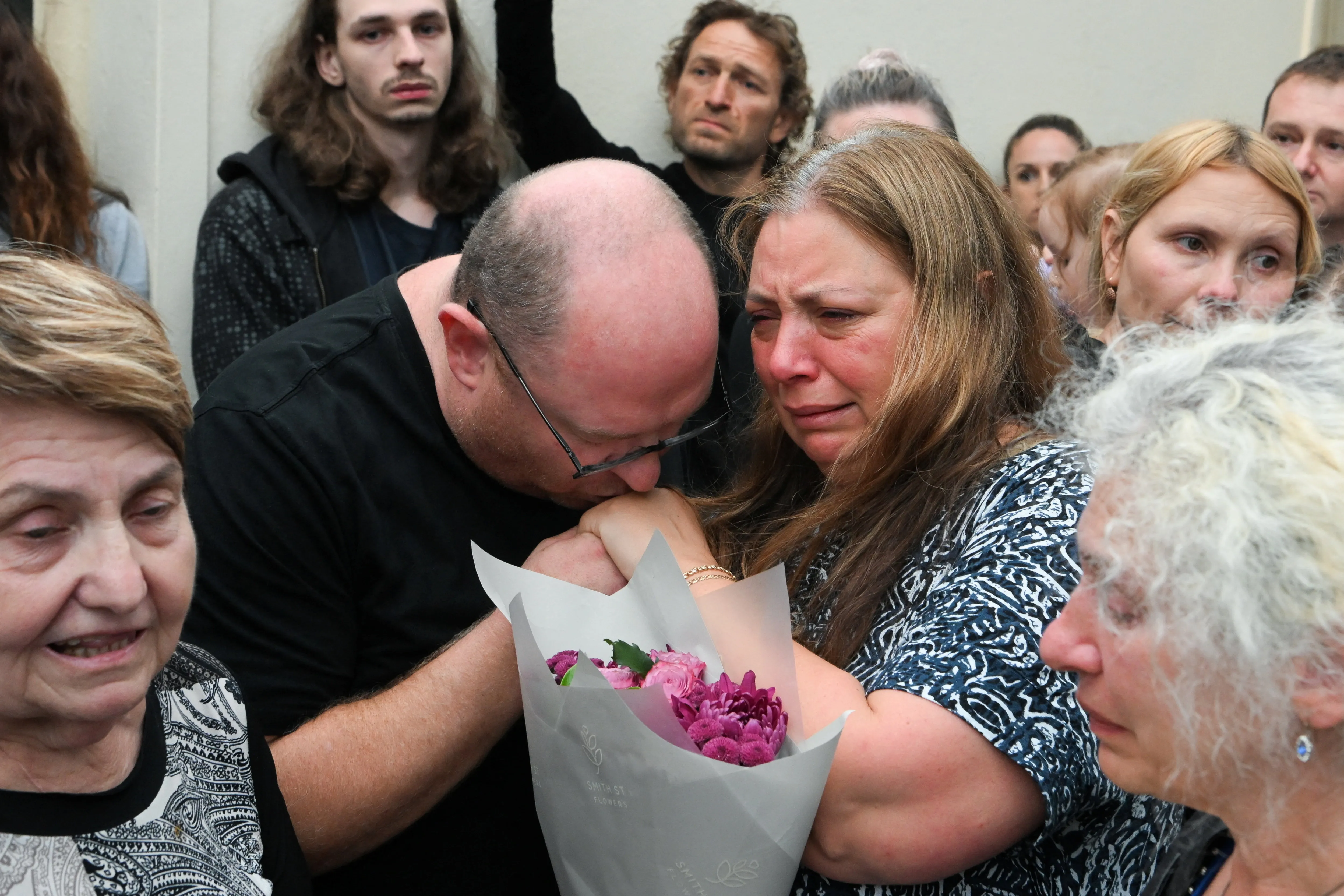
The Light Still Burns: Hanukkah, Terror, and the War the Media Refuses to Name
December 17, 2025
Daniel Cohen
World News
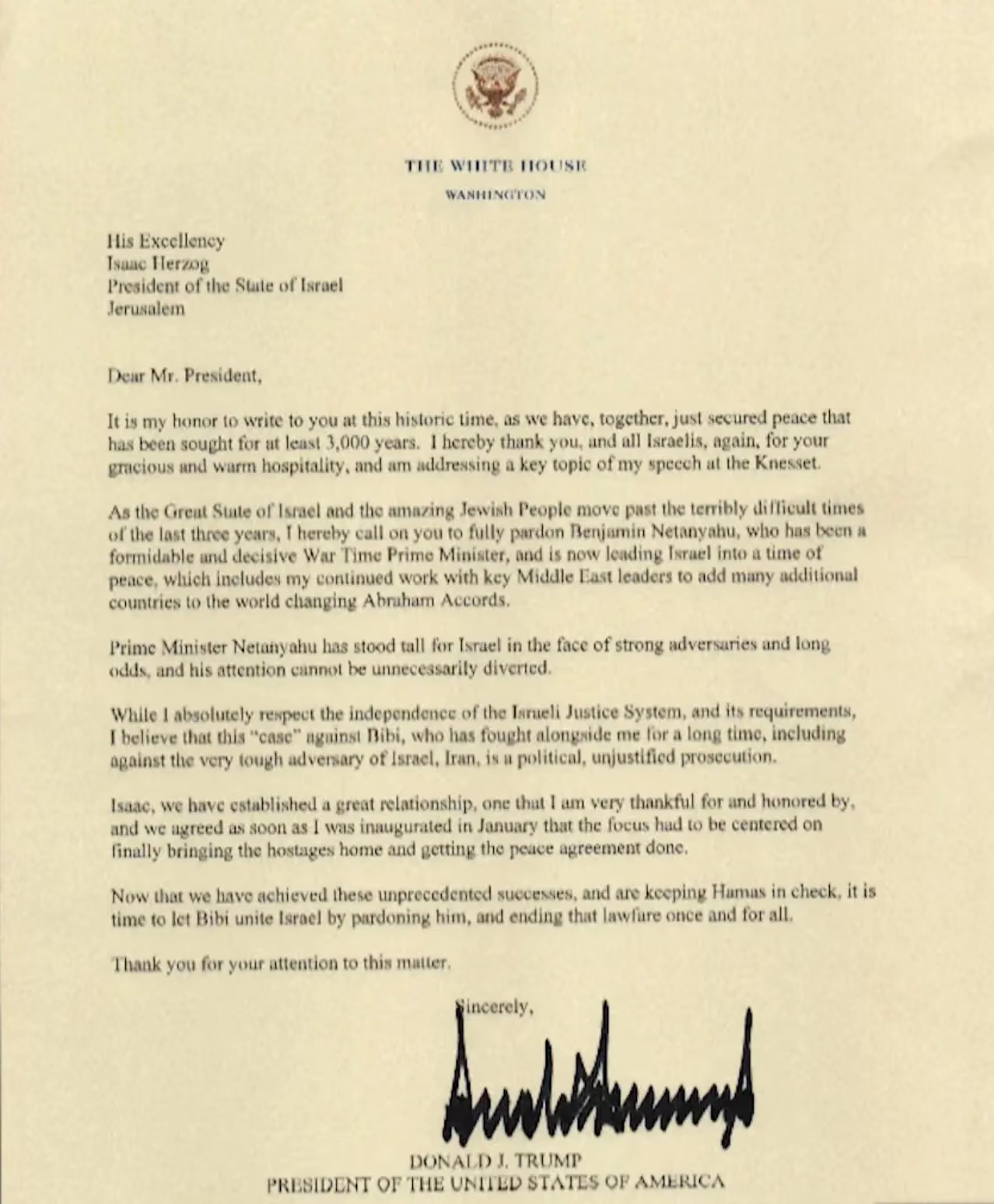
The headlines say politics. The stakes are spiritual. On The Daniel Cohen Show from Real Life Network, Daniel unpacks President Trump’s latest move in the Middle East and why it matters for Israel, America, and anyone who cares about biblical truth. After brokering a Gaza ceasefire, Trump is pressing for unity inside Israel. His letter to President Isaac Herzog urges a full pardon of Prime Minister Benjamin Netanyahu so Israel can face its enemies with one voice. The left calls it interference. Conservatives see a leader who knows lawfare when he sees it. Cohen asks the question beneath the noise. If Israel is fighting a seven front war for survival, should its prime minister be dragged into court over cigars and champagne from a decade ago while rockets fly and hostages wait?
Why Trump’s Letter Matters Right Now
Trump told the Knesset in October that a pardon would let Netanyahu unite Israel. The reaction inside the chamber was loud and clear. Many lawmakers stood and applauded. In his letter, Trump affirms the independence of Israel’s courts while calling the Netanyahu cases political and unjustified. Cohen notes the obvious parallel. The same strategy used against Trump is now being used against Netanyahu. Tie up your opponent in endless cases. Drain time, money, and focus. Win in court what you cannot win at the ballot box.
Israel’s president can grant pardons, but only after a request. Netanyahu has not asked because he has not been convicted. Cohen’s point is not legal procedure. It is clarity. Israel faces Hamas in Gaza, Hezbollah in the north, and Iran in the shadows. Leadership focus is not a luxury. It is survival. When Trump says let Bibi unite Israel, he is speaking to national security, not convenience.
Cohen widens the lens. The same confusion eroding American life is showing up in policy, media, and even bathrooms and classrooms. When safety and modesty are sacrificed to ideology, families pay the price. Cohen highlights a viral confrontation in a bookstore restroom where a mother calmly but firmly defends girls’ privacy. He reminds viewers that compassion without truth leaves children unprotected. Genesis 1:27 is not hateful. It is reality. Male and female is both biblical and biological.
He points to churches and Christian institutions that bless what Scripture calls sin or silence students who speak for life and truth. Unconditional love is not unconditional affirmation. Ephesians 4:15 commands believers to speak the truth in love. When institutions trade doctrine for applause, they do not love people. They leave them lost.
Data, Noise, and What People Are Really Choosing
Cohen pushes back on the claim that Americans are racing toward socialism. Voters are responding to secure borders, sane economics, and the protection of children. They are rejecting chaos, not embracing it. Even high profile Democrats admit that the most poisonous rhetoric is coming from the far left. Support for Israel is increasingly incompatible with their party line. That shift matters because it reveals an old truth. When you abandon objective morality, you are left with power plays and slogans.
Back in Jerusalem, the Knesset advanced a bill for the death penalty for terrorists who murder Israelis. Cohen interviews leaders who argue that a dead terrorist does not return to the cycle of bloodshed. He traces the policy debate to a painful fact. Prisoner exchanges have returned killers to the battlefield. Genesis 9:6 grounds justice in the image of God. Capital punishment is not vengeance. It is a sober defense of innocent life. Israel is signaling that it will no longer reward terror with leverage.
Media Panic, Climate Fear, and the Cost of Alarmism
Cohen calls out a carousel of shifting narratives. Global warming, then climate change, then warnings of a new ice age. He does not mock stewardship. Christians should care for creation. He rejects fear as a political tool that grows government while ignoring real threats like child medicalization, border chaos, and the rise of radical ideologies. God sustains the earth. Wisdom governs our choices. Panic does not.
Politics can restrain evil for a time. Only the cross can change a heart. The deeper crisis beneath Israel’s battles and America’s culture war is spiritual rebellion against God. Jesus Christ lived the perfect life we could not live. He died for our sins and rose again so that anyone who repents and believes in Him is forgiven and made new. Real peace does not begin in a court or a coalition. It begins at Calvary. When leaders pursue justice and nations defend the innocent, they echo the moral order that God created. When hearts are made new, enemies become neighbors and temporary ceasefires make room for eternal hope.
If you are weary of spin and hungry for clarity, watch The Daniel Cohen Show on Real Life Network. Get bold, biblical truth about Israel, America, and the world through a Christian worldview that refuses to flinch.
25 min
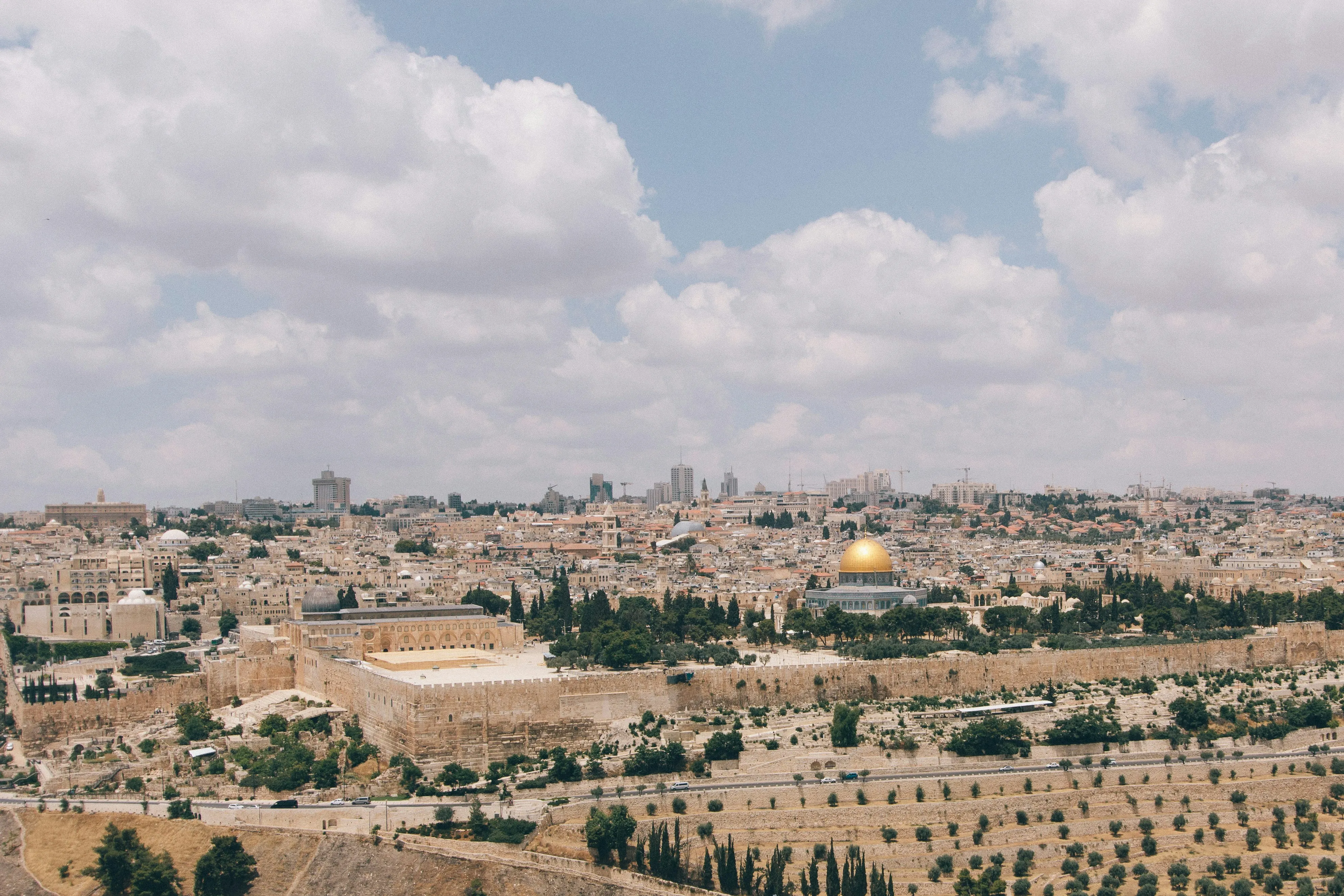
Trump, Netanyahu, and the Fight for Real Peace
November 14, 2025
Daniel Cohen
World News
In an age when truth bends to politics and headlines echo propaganda, Daniel Cohen stands apart. On The Daniel Cohen Show from Real Life Network, Cohen refuses to separate faith and politics, insisting that every crisis in Israel, Europe, or America reveals a deeper spiritual battle. His latest message, now streaming on RLN’s Christian streaming service, exposes how the war in Israel, the collapse of moral courage in the West, and the revival of the Church all connect to the same conflict between light and darkness.
The War in Israel and the Western Desire for Chaos
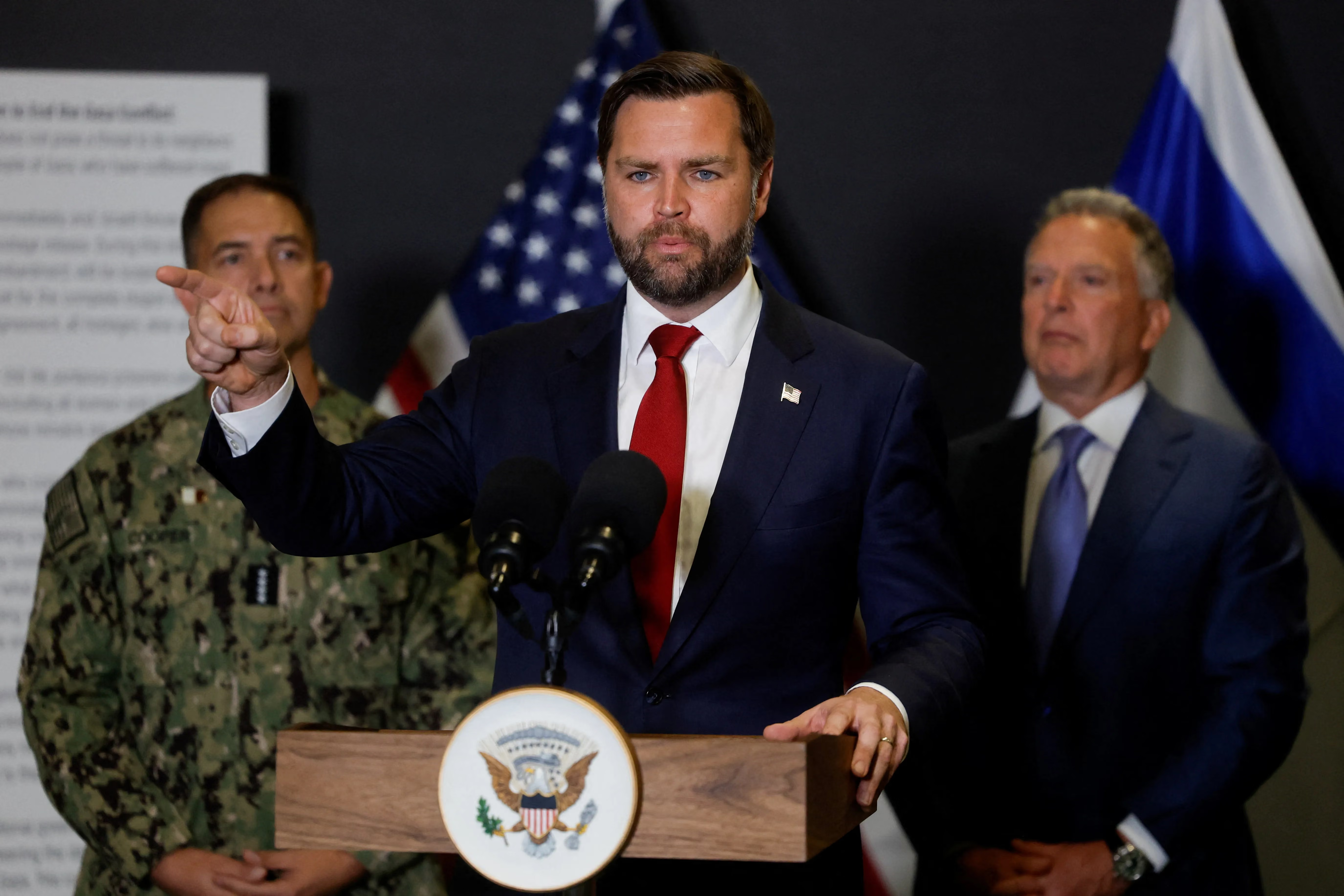
Daniel Cohen begins by explaining the Israel conflict as more than a military standoff. He calls it a mirror reflecting the moral decay of the West. When Vice President J D Vance stood in southern Israel and said that Western media seems to root for failure, Cohen agreed. He notes how every violent flareup is treated as proof that peace is impossible, as if journalists secretly prefer unrest to resolution.
Cohen points to something bigger happening beneath the surface. The ceasefire in Gaza, fragile as it is, represents the groundwork for an Abraham Accords 2.0 that could unite Israel with more Arab nations. Iran and Hamas tried to stop that process on October 7, but their terror only exposed their weakness. Across the Middle East, Arab leaders are tired of Iran’s chaos and looking toward stability with Israel instead.
For Cohen, this is where Christianity and politics intersect. He says the way nations treat Israel reveals their spiritual health. The promises God made to Abraham still stand, and rejecting those promises has consequences. Cohen praises leaders such as Netanyahu and pastors like Jack Hibbs, who refuse to apologize for supporting Israel’s right to exist. He reminds viewers that what happens in the Middle East is not random history. It is evidence that biblical prophecy is unfolding in real time.
From London to New York: The Cost of Moral Surrender
Cohen turns his attention to Europe, describing how cities once known for courage are now paralyzed by fear. London, Amsterdam, and Paris have become stages for mobs shouting antisemitic slogans while police stand by and do nothing. He calls it moral cowardice disguised as tolerance. The refusal to confront evil has created societies where Jewish citizens must hide behind fences and guards just to worship in peace.
Then Cohen looks at New York City, where radical candidate Zoran Mamdani publicly promises to remake the state “in the image of our people.” For Cohen, those words are not progress but warning. He explains that when politics becomes tribal, truth disappears. Polls show foreign born voters supporting Mamdani while native born New Yorkers divide among failed alternatives. It is a symptom, Cohen says, of immigration without assimilation and education without truth. When a nation forgets who it is, power replaces principle.
Cohen warns that America is on the same path as Europe. The slow surrender to radical ideologies, the moral confusion in the name of tolerance, and the silence of churches all point to a deeper loss of conviction. Without biblical truth, the West cannot survive. The problem is not diversity, he says, but the rejection of God’s design for justice and order.
The Church’s Moment to Rise
Even in the darkness, Cohen sees signs of hope. The Church is stirring. Turning Point USA Faith has doubled its network of partner churches, now more than eight thousand strong, reaching hundreds of thousands of believers ready to stand for truth. Cohen calls this growth part of Charlie Kirk’s legacy. Kirk preached repentance, holiness, and sacrifice in a culture that craves comfort. He reminded believers that a faith that costs nothing is worth nothing.
Cohen speaks with apologist Dr Frank Turek, who challenges Christians to prepare for cultural battle long before they step onto a college campus. Turek’s Cross Examined ministry teaches believers how to defend their faith with logic, evidence, and love. Both men agree that silence is no longer an option. Fear has no place in the life of a believer. God commands courage, not comfort.
Cohen ends with a reminder that history belongs to God. Governments rise and fall. Online news, news streaming, and live news will change by the hour, but the Gospel does not. The greatest battle is not in Gaza or New York but in the human heart. Christ alone can bring peace. He lived a perfect life, died for sinners, and rose again to offer forgiveness and eternal life.
When viewed through that lens, the war in Israel, the political turmoil in America, and the collapse of Europe are not separate stories but one message. They remind us that truth matters and eternity is near.
If you are tired of news channels that distort facts and weary of news sources that censor faith, The Daniel Cohen Show is the alternative. Stream uncensored news, Christian worldview news, and faith based news through Real Life Network, a leading Christian streaming service and one of the most trusted streaming platforms for video streaming services and Christian TV shows. Here you can watch live TV, follow news live, and explore new channels filled with biblical truth, Christianity and politics, and stories that strengthen faith instead of undermining it.
Visit RealLifeNetwork.com to discover why believers around the world are turning to RLN as their home for online news, news streaming, and uncensored news that honors God. Watch The Daniel Cohen Show today and see world events through the clarity of Scripture.
25 min
From Gaza to New York: Daniel Cohen Reveals What the Media Won’t Show You
October 23, 2025
Daniel Cohen
World News
The United States is not just divided; it is unraveling. On The Daniel Cohen Show from Real Life Network (RLN), Daniel Cohen looks past the noise of politics and online news to uncover the spiritual crisis shaking the nation. Through RLN’s Christian streaming service, Cohen calls believers to see the connection between America’s moral collapse, political corruption, and the war in Israel. What he reveals is not just another opinion. It is the biblical truth behind the headlines, a truth that secular media refuses to confront.
The Illusion of Progress and the Reality of Decay
“What happens when a nation built on the Word of God decides it no longer needs God?” Cohen asks. The answer, he says, is playing out in real time. Political leaders lie with ease. Schools teach children to reject their own identity. Entertainment celebrates sin and mocks faith. Meanwhile, much of the Church stays silent.
Cohen draws parallels between America’s spiritual decay and Israel’s physical battle for survival. While Israel fights against Hamas and its allies, America is fighting to remember who it is. The Israel conflict, he argues, mirrors our own cultural and moral confusion. A society that rejects God does not become free. It becomes enslaved to its idols: power, pleasure, and politics.
He calls this the new religion of the West. The enemies of truth are no longer at the gate. They are in our homes, on our screens, and in our pulpits. This is the normalization of evil, a culture where morality is measured not by Scripture but by emotion.
Media Deception, Political Idolatry, and the Church’s Silence
Cohen exposes how modern politics has become America’s new idol. Both the left and the right now treat their political leaders as saviors and their parties as messiahs. Instead of turning to Scripture, people turn to news streaming platforms and social media feeds designed to fuel fear and division.
He warns that too many Christian leaders have traded truth for comfort. “The Gospel doesn’t fit neatly into party platforms,” he says. “It confronts both sides.” The left preaches progress without God, and the right preaches patriotism without repentance. Both are hollow without Christ.
Cohen ties this to global trends, corruption in Washington, persecution of Christians overseas, and the manipulation of truth in online news. When a nation removes God from its institutions, justice disappears, wisdom dies, and lies become law.
The only cure, he insists, is revival, not political revival but spiritual awakening. America does not need new politicians; it needs new hearts.
A Call to Courage and the Hope of the Gospel
As the episode closes, Cohen offers both warning and hope. History proves that no nation survives once it abandons truth. Babylon, Rome, and every empire that rejected God collapsed from within. America is not immune.
But there is hope, real hope found in the Gospel of Jesus Christ. Cohen reminds his audience that salvation does not come from Washington, Hollywood, or any political system. It comes from the cross. Christ alone can heal what politics has broken.
He calls believers to pray for Israel, for America, and for persecuted Christians worldwide. Revival will not begin in newsrooms or statehouses but in hearts surrendered to truth. “The world is on fire,” Cohen says, “but the Gospel is still the water.”
The Hope of the Gospel
Every story of corruption, conflict, or cultural chaos points to humanity’s deeper problem, sin. We have rebelled against a holy God, exchanging His truth for lies. Yet God, rich in mercy, sent His Son, Jesus Christ, to live without sin, die in our place, and rise again so that all who repent and believe may have eternal life.
That is the real headline behind every broadcast: nations fall, but Christ reigns. Governments fail, but grace endures. America’s only hope is not in saving a nation but in saving souls.
25 min
The Lies Are Crumbling: Daniel Cohen Exposes America’s War Against Truth
October 23, 2025
Daniel Cohen