
Stream Real Life Network Now

WATCH NOW
Government

World News
25 min
The 2026 Midterms: What Early Voting, National Security, and Economic Concerns Reveal
As the 2026 midterms approach, shifting voting trends and debates over immigration, national security, energy costs, and religious liberty are shaping America's political future. Explore the issues voters should examine beyond the polls.
With Election Day approaching on November 3, Americans are facing decisions that extend far beyond which political party controls Congress. Immigration enforcement, national security, religious freedom, education, and the cost of living are all shaping the national conversation. Yet the growing focus on polling numbers and campaign predictions can distract from the policies that will ultimately affect American families.
Recent early-voting trends and voter-registration changes have raised questions about conventional expectations for the midterm elections. But political momentum is difficult to measure, and no polling advantage guarantees an election result.
The significance of the 2026 midterms lies not simply in which party gains seats, but in the policies that elected officials will have the authority to advance or challenge.
For continued coverage of the issues shaping America's future, watch The Daniel Cohen Show on Real Life Network.
Early Voting, Political Momentum, and the Limits of Polling
Political commentators frequently turn to historical patterns when predicting congressional elections. Traditionally, the president's party has faced challenges during midterm elections, often losing seats as voters express dissatisfaction with the administration.
But historical trends do not determine individual elections.
Early-voting activity in states such as Michigan, Nevada, Arizona, North Carolina, and Pennsylvania has become a focus of political analysis. Changes in registration figures, ballot returns, and participation across different counties may offer clues about voter engagement.
Michigan presents an especially interesting example because the state does not register voters by political party. Analysts therefore examine geographic voting patterns, previous election results, and other indicators to estimate which groups are participating.
Those estimates have limitations. A county's historical voting preferences do not establish how every resident voted, and a higher share of early ballots does not necessarily translate into additional votes for a particular candidate.
National polling presents similar challenges.
CNN political analyst Harry Enten has discussed historical instances in which congressional polling underestimated Republican support. Such patterns are worth examining, but they cannot establish that the same errors will occur in 2026.
Campaigns must also account for changes in voter behavior. Americans increasingly have different options for casting ballots, including early in-person voting and voting by mail, depending on their state.
A shift in when voters cast their ballots does not always mean a shift in whom they support.
Rather than treating every new poll or early-voting report as a prediction, voters should recognize the distinction between participation data and actual election results.
The more important question is what candidates intend to do if elected.
Immigration, Religious Liberty, and the Responsibility of Public Officials
Some of the most consequential debates in the 2026 elections concern the federal government's responsibility to enforce immigration laws, protect national security, and preserve constitutional freedoms.
Congress has substantial influence over immigration policy through legislation, federal appropriations, and oversight of executive agencies. Decisions about border security, deportation priorities, asylum procedures, and pathways to legal status can affect communities throughout the country.
Candidates offer different approaches to those responsibilities.
Some emphasize stronger enforcement and expanded removal of individuals who violate immigration laws. Others support broader legalization measures, changes to enforcement practices, or additional protections for undocumented immigrants.
These differences deserve careful examination because campaign slogans rarely explain how a proposal would operate in practice.
National security questions have also entered several prominent Senate campaigns.
In Michigan, the contest involving Republican Mike Rogers and Democrat Abdul El-Sayed has generated debate over foreign policy, Israel, terrorism, and the responsibilities of elected officials.
Questions concerning a candidate's statements, political associations, and policy positions are legitimate subjects of public scrutiny. However, allegations involving family members or past organizational relationships must be distinguished from evidence of personal wrongdoing.
That distinction is particularly important when discussions involve religion.
A candidate's Muslim or Christian identity does not establish that person's national security positions, political loyalties, or commitment to constitutional government. Those judgments require examination of actual statements, decisions, and evidence.
Political accountability depends on documented facts and consistent standards, not assumptions about someone's faith, family, or political affiliation.
Religious liberty and questions surrounding human identity are also shaping state and local races.
A high school cross-country controversy in Washington has renewed debate over transgender participation in girls' athletics. Supporters of sex-based athletic categories emphasize competitive fairness and opportunities for female athletes. Supporters of inclusive participation policies emphasize access and protection from discrimination.
The disagreement raises broader questions about school governance, parental involvement, student rights, and the authority of state athletic associations.
These decisions are often made outside Washington, reminding voters that local and state elections can be just as consequential as congressional contests.
For Christians, evaluating these issues requires more than adopting the language of a political party.
Scripture establishes principles of truthfulness, justice, respect for human dignity, and responsible stewardship. Applying those principles to public policy requires examining what a proposed law actually does and whom it affects.
Energy Costs, Government Spending, and Biblical Stewardship
For millions of Americans, political debates eventually return to the household budget.
Fuel prices, groceries, rent, utilities, and transportation expenses directly influence financial stability. These concerns are particularly significant for families living on fixed incomes and workers whose livelihoods depend on transportation.
California's fuel prices have become a recurring example in debates about energy policy.
State taxes, environmental regulations, refinery capacity, distribution requirements, and broader oil-market conditions all contribute to the prices consumers pay. Political leaders disagree about how much emphasis should be placed on domestic production, environmental protection, infrastructure, and tax relief.
Those competing approaches involve real tradeoffs.
Policies designed to reduce emissions or encourage alternative energy sources may impose costs on certain industries and consumers. Measures intended to expand conventional fuel production may raise different environmental and economic concerns.
The appropriate response is to evaluate the evidence behind each proposal rather than assume that a single political decision explains every change in fuel prices.
Energy policy also intersects with national security.
Reliable fuel supplies support commercial transportation, military readiness, agriculture, and emergency services. Disruptions to domestic refining or international energy markets can create consequences far beyond the gas pump.
Congress influences these questions through taxation, spending, regulation, and oversight. State governments also exercise significant authority, particularly over transportation, environmental standards, and energy infrastructure.
That makes understanding the responsibilities of each elected office essential.
Biblical stewardship offers a helpful framework for considering these decisions.
Deuteronomy 30:19 records Moses calling Israel to choose life and blessing. That passage addressed Israel's covenant responsibilities and should not be treated as a direct endorsement of a modern political party. Nevertheless, Scripture consistently teaches that choices have consequences and that people bear responsibility for how they exercise authority.
Public officials are entrusted with decisions that affect families, communities, and future generations. Voters likewise have an opportunity to examine those decisions carefully.
Responsible civic participation begins with understanding the issues, testing political claims against the evidence, and recognizing the long-term consequences of public policy.
The 2026 midterms will determine who holds important positions of authority in Congress and in state and local governments. Those officials will make decisions involving national security, immigration, energy, education, and public spending.
Polls will continue to change. Campaigns will continue making competing claims. But the responsibilities of citizenship remain.
Christians can approach those responsibilities with prayer, discernment, and a commitment to truth, recognizing that political allegiance must never replace biblical conviction.
Follow the issues shaping the 2026 midterm elections, including national security, public policy, and the intersection of faith and culture, through The Daniel Cohen Show, streaming free on Real Life Network.
Faith & Culture
25 min
What’s on Your Ballot? How to Research Your 2026 Local Elections
Your 2026 ballot includes more than the races making national headlines. Learn how to research candidates, understand local offices, evaluate ballot measures, and approach Election Day with greater knowledge and discernment.
National races dominate election coverage, but some of the decisions that affect your daily life may appear much farther down the ballot.
The 2026 midterm elections on November 3 will determine control of the U.S. House and affect the makeup of the Senate, but voters across the country will also encounter state legislative races, governors’ contests, county and city offices, judges, school boards, and ballot measures.
That is why researching the 2026 ballot should involve more than recognizing a few names from national television.
If you are beginning to ask, “What’s on my ballot in 2026?”, the next step is to understand the different kinds of races and measures you may encounter and know what questions to ask about each one.
Start With the Full Ballot, Not Just the Headline Races
Most voters hear far more about Congress than they do about county government, school boards, judges, or local ballot initiatives.
That imbalance can make the bottom half of a ballot feel unfamiliar.
Before Election Day, take time to review the ballot information published for your jurisdiction and identify every race and measure that will require a decision. Instead of trying to research everything at once, make a list and work through it category by category.
Depending on where you live, that list may include:
- U.S. House and Senate races
- Governor or other statewide offices
- State legislative races
- County and municipal offices
- Judges or judicial retention questions
- School board races
- State constitutional amendments
- Local tax, bond, or policy measures
Some may receive extensive news coverage. Others may receive almost none. Lack of national attention does not make a race unimportant.
Understand What Each Office Actually Does
Candidate research becomes much more useful when you understand the responsibilities of the position being sought.
A candidate for Congress will deal with very different questions from a city council member. A governor has different authority from a state legislator. School board members, county officials, judges, and local prosecutors each operate within their own responsibilities.
Before comparing candidates, ask:
What authority does this office actually have?
That simple question can cut through a surprising amount of campaign rhetoric.
Candidates sometimes make promises involving issues their office has little power to change. Understanding the role itself helps voters evaluate whether campaign claims are realistic and whether the issues being emphasized actually belong within that office’s responsibilities.
Research Candidates Beyond Their Campaign Ads
Campaign websites are useful because they tell you what candidates want voters to know about them. They should not be your only source, however.
Compare campaign statements with interviews, public records, reliable local reporting, debate appearances, previous votes when applicable, and other primary-source material.
Useful questions include:
- What issues does the candidate identify as priorities?
- What specific policies does the candidate support?
- Has the candidate previously held public office?
- If so, what does that record show?
- What experience does the candidate bring to the position?
- Does the candidate explain how proposed policies would work?
- Are major claims about an opponent supported by evidence?
Party affiliation can provide some information about a candidate’s general political alignment, whether Republican, Democrat, independent, or another affiliation. But it does not substitute for researching the individual candidate.
Two candidates from the same party can differ substantially on priorities, policies, governing style, or experience.
Pay Particular Attention to State and Local Races
Local elections often receive less attention than congressional races, even though state and local officials can make decisions that affect people directly.
State legislators may vote on taxes, education, criminal law, business regulation, healthcare policy, and state spending. Local officials can influence public safety, development, transportation, housing, budgets, and other community priorities.
School boards may make decisions involving curriculum, district policies, budgets, and administration.
That makes local elections in 2026 worth researching with the same seriousness as races that generate national headlines.
Local journalism can be particularly valuable here because local reporters often cover candidate forums, controversies, voting records, and community concerns that never reach national media.
Don’t Skip the Ballot Measures
Candidates are not the only part of the November 3 election.
Many voters will also be asked to decide ballot measures involving state or local law. These could include constitutional amendments, taxes, bonds, public spending, criminal justice questions, government structure, education, or other policy matters.
Ballot-measure campaigns often reduce complicated proposals to memorable slogans.
Go deeper.
Read the actual proposal or an official summary. Understand what changes if it passes and what remains in place if it does not. Look at arguments from both supporters and opponents, but also distinguish campaign claims from what the measure itself would legally do.
A useful research checklist is:
What does the measure change?
Who or what would be affected?
What would it cost?
How would it be implemented?
Am I willing to pay increased taxes for this measure?
What are supporters arguing?
What are opponents arguing?
Which claims can be independently verified?
The wording may take a little more time to understand, but that time can be well spent.
Separate News Reporting from Political Persuasion
By the final weeks of an election, voters can be surrounded by campaign ads, fundraising emails, social posts, endorsements, commentary, and viral videos.
Those sources may contain useful information, but they also have a purpose.
A campaign ad exists to persuade you. So does a political action committee advertisement. An endorsement tells you what another person or organization wants you to conclude.
That does not make those materials worthless. It simply means they should be recognized for what they are.
Whenever possible, compare persuasive claims against original documents, direct quotations, voting records, full interviews, official reports, and reporting from multiple sources.
Proverbs 18:17 says, “The first one to plead his cause seems right, until his neighbor comes and examines him” (NKJV). That principle is especially useful during an election season.
Ask How the Issues Affect Your Community
National political conversations can sometimes obscure what an election means closer to home.
A question about education, public safety, taxation, housing, religious liberty, healthcare, or economic policy may look different depending on the state, district, or community involved.
As you research state and local elections, ask how the major issues being discussed connect to the actual offices and measures on your ballot. Which decisions are made federally? Which belong to your state? Which are controlled locally?
Understanding that distinction makes political research more useful and helps prevent national rhetoric from overshadowing the decisions voters are actually being asked to consider.
Christians Can Approach Election Research with Discernment
For Christian voters, becoming informed is part of taking civic responsibility seriously.
That does not require assuming that every believer will make identical political choices. It does mean approaching candidates and policies thoughtfully rather than allowing a party label, celebrity endorsement, social media clip, or campaign advertisement to make the decision for you.
Research what candidates actually believe and have done. Examine policy proposals carefully. Consider how the issues intersect with biblical convictions about human dignity, justice, truth, freedom, family, stewardship, and care for others.
And recognize the difference between biblical principles and political messaging that simply borrows Christian terminology.
Discernment requires more than hearing what you already agree with.
Know Your Ballot Before November 3
The closer Election Day gets, the louder the political conversation will become.
Researching early gives you time to move at a different pace.
Start with the races and measures that will affect your own community. Understand what each office does. Compare candidates. Examine ballot measures. Check campaign claims against reliable information. Then continue following the larger national stories shaping the 2026 midterms.
Local knowledge and national awareness belong together.
Stay Informed with Real Life Network
Real Life Network will continue following the news, cultural conversations, and major issues shaping the 2026 elections as November 3 approaches.
Then on Election Night, America Speaks ’26: Election Night Live will bring viewers live results, updates, conversation, and biblical perspective on races and issues from across the country.
Stay informed locally and nationally. Sign up for America Speaks ’26 updates from Real Life Network as Election Day 2026 approaches.
World News
25 min
National Security, Israel, and the Questions Behind the 2026 Midterms
As the 2026 midterms approach, national security deserves attention alongside the economy. From Iran and Israel to domestic terrorism and rising antisemitism, congressional decisions carry consequences for American families, religious freedom, and public safety.
The economy matters. Groceries, gas prices, housing costs, and the pressure on American families deserve serious attention. But national security belongs in that conversation, too. The decisions made in Washington affect more than household budgets. They shape the country's ability to confront terrorism, protect religious communities, secure its borders, and respond to threats abroad.
Those connections deserve closer examination. Through The Daniel Cohen Show on Real Life Network, the intersection of faith, national security, Israel, and American politics remains central to understanding the headlines.
The approaching November 3 midterms raise questions that go well beyond which party controls Congress. Who sets national security priorities? How should America respond to Iran and its terrorist proxies? What responsibilities do elected officials have when antisemitism and political violence reach American communities?
National security is not an abstract debate reserved for Washington. Its consequences can reach neighborhoods, schools, houses of worship, and ordinary families.
Iran, Israel, and the Responsibility to Confront Terrorism
Iran remains central to the discussion about American national security and the Middle East. Its support for armed groups, including Hezbollah and Hamas, has made its regional influence a continuing concern for the United States and Israel.
Yet political disagreements over Iran and Israel often become tangled in arguments about military assistance, international law, and America's responsibilities overseas.
Michigan's Senate contest illustrates those competing priorities.
Abdul El-Sayed has argued against unconditional American military assistance to foreign governments, including Israel. In interviews, his position has emphasized applying international law consistently and restricting weapons transfers to governments accused of violating it.
That approach raises legitimate questions about American foreign policy. Military assistance is not an unlimited obligation, and elected officials have a responsibility to scrutinize how taxpayer money is spent.
But the discussion cannot stop there.
Israel faces rocket and missile threats from hostile armed groups and regional adversaries. Defensive systems such as Iron Dome exist to intercept incoming projectiles and protect civilian populations. Any proposal to restrict military assistance therefore deserves careful examination of its potential consequences for defensive capabilities as well as offensive operations.
There is also an important distinction between criticizing a government's military decisions and excusing terrorism directed against its citizens.
The March attack against Temple Israel in West Bloomfield, Michigan, brought that distinction much closer to home. A vehicle carrying incendiary materials was driven into a synagogue complex that also serves children and families. The incident prompted renewed concerns about antisemitic violence and the reach of conflicts originating thousands of miles away.
Political leaders can disagree about Israel's government, military operations, and American foreign assistance. Those disagreements do not diminish the obligation to condemn attacks against Jewish civilians and religious institutions.
No disagreement over foreign policy can justify threatening Jewish families or treating American religious communities as extensions of a foreign government.
The same principle must apply to every community. A synagogue, church, mosque, or school should never become a target because of anger over events elsewhere.
Why National Security Belongs in Congressional Debates
The connection between national security and congressional elections is more substantial than campaign rhetoric might suggest.
Congress controls federal appropriations, establishes statutory authorities, conducts oversight, and plays a central role in shaping the agencies responsible for national defense and domestic security. The Senate also exercises its constitutional responsibility to provide advice and consent on presidential nominations requiring confirmation.
Those responsibilities make congressional debates over homeland security, intelligence gathering, immigration enforcement, and counterterrorism consequential.
An alleged ISIS-inspired plot involving the Mall of America in Minnesota offers an example of the threats federal investigators seek to identify before violence occurs.
According to the account presented by federal authorities, an 18-year-old suspect had communicated about supporting ISIS and allegedly considered carrying out an attack in the United States after plans to travel overseas did not materialize. The allegations require the usual distinction between prosecutors' claims and facts established in court.
But the broader issue remains significant: preventing terrorism requires investigative resources, intelligence cooperation, appropriate legal authorities, and effective oversight.
Protecting the public also requires precision.
Terrorist organizations are responsible for their own violence. Their actions must not become an excuse to assign collective guilt to immigrants, Muslims, or particular ethnic communities. Effective counterterrorism depends upon identifying actual threats rather than confusing religious identity or national origin with criminal conduct.
That is why national security policy requires more than slogans about being tough or compassionate.
The public deserves to understand how candidates would approach terrorism investigations, border security, intelligence oversight, civil liberties, and the constitutional limits of government authority.
Those questions belong alongside debates about inflation, healthcare, education, and taxation.
Antisemitism, Political Rhetoric, and the Limits of Party Loyalty
Three years after the Hamas-led October 7 attack, the anniversary remains a painful occasion for Jewish communities around the world.
Approximately 1,200 people were killed in the attack, and 251 were taken hostage. The consequences have extended far beyond Israel, including heightened security concerns and incidents of antisemitism in the United States.
New York City's response to the anniversary illustrates how difficult the public conversation has become.
Mayor Zohran Mamdani's remarks acknowledging the suffering caused by October 7 while criticizing Israel's subsequent military actions became a point of contention among activists with sharply different expectations.
The controversy reflects a larger problem in contemporary politics: expressions of sympathy, criticism, and disagreement are increasingly measured against demands for complete ideological agreement.
Recognizing the suffering of Israeli victims does not require ignoring Palestinian civilian suffering. Likewise, expressing concern for Palestinians does not require minimizing the October 7 atrocities or excusing antisemitism.
Both truths can be maintained without contradiction.
Political movements become less capable of honest debate when every disagreement is treated as betrayal. Acknowledging suffering should not depend upon whether the victims belong to a preferred political or religious community.
For Christians, Scripture establishes a higher standard than political loyalty. Human beings bear God's image, and the obligation to speak truthfully does not disappear when truth becomes inconvenient to a favored party or cause.
Proverbs 18:17 reminds readers that the first account of a dispute may sound persuasive until it is examined. That principle applies to viral videos, campaign statements, accusations of extremism, and claims about political opponents.
Christian discernment requires consistency: condemn terrorism without qualification, reject antisemitism without hesitation, and examine political claims without surrendering judgment to party loyalty.
The approaching midterms will generate enormous attention around polling, turnout, and campaign strategies. Those subjects are part of the political process, but they should not obscure the governing responsibilities attached to the offices being contested.
A Senate vote can affect national security appointments. A congressional appropriation can determine resources available to federal agencies. Legislative oversight can expose failures or strengthen accountability.
Understanding those responsibilities provides a more useful framework than treating every political development as a contest between personalities.
The same seriousness belongs in discussions about Israel, Iran, and religious freedom. American foreign policy involves real tradeoffs, and domestic security decisions can affect both public safety and constitutional liberties.
No political party possesses a monopoly on wisdom, and no candidate should be exempt from difficult questions.
The standard should remain consistent: evidence before accusations, clarity before slogans, and responsibility before political convenience.
Follow the intersection of biblical truth, Israel, national security, and American current events through The Daniel Cohen Show, streaming free on Real Life Network
.jpg)
World News
25 min
Media Starts to Doubt Dems’ Invincibility as November Creeps Closer
As the 2026 midterms approach, shifting media coverage and conflicting polls are raising questions about election forecasts. Historical polling errors, voter turnout, and competitive congressional races highlight the uncertainty surrounding November 3.
After months of flooding the zone with glum predictions for Republicans, there’s been a quiet but meaningful shift in major media headlines. Left-leaning outlets desperate to make the GOP’s demise a self-fulfilling prophecy seem to be subtly hedging their bets against another polling embarrassment. In the last handful of days, even the big dogs — The New York Times, Washington Post, and Newsweek — are conceding that maybe the election forecasts aren’t as lopsided as they’ve been leading voters to believe.
Suddenly, readers are clicking on stories that paint a very different picture of the apocalyptic landscape for Republicans they’d come to expect. Articles like “Democratic Optimism in Six Senate Races May Be a Mirage,” “3 Bright Spots for the G.O.P.,” and “How Much Can Republicans Outrun Trump’s Approval?” are popping up in the same pages that have urged Americans to don galoshes for the Blue Tsunami. And while there certainly are very troubling signs for Speaker Mike Johnson’s (R-La.) party, one lesson everyone should have learned by now is that polls are an incredibly flawed measure of public opinion.
In the modern age, Republicans have consistently outperformed the industry’s numbers in presidential and midterm elections. Pollsters have frantically tried to solve this puzzle, especially after a string of national humiliations. After a lot of head-scratching, two theories for this unpredictability revolve around the GOP. “First, Republicans are becoming more distrustful of institutions and society, and that may be extending to how they feel about pollsters. Second, suburban Republican college graduates are more likely to fear professional sanction for their views and are therefore self-censoring more, including in surveys,” FiveThirtyEight’s Emily Ekins suggests. Most experts estimate that conservatives underpoll somewhere between 3-5% — a massive swing for anyone trying to prophecy close races.
Over the last handful of days, the media seems to be making an intentional effort to temper their excitement, noting that as optimistic as Minority Leader Chuck Schumer (D-N.Y.) may be, “history offers a warning to Democrats, as polls in recent elections underestimated Republicans in key states. Control of the Senate could come down to just a handful of races where polls show razor-thin margins.” In places like Alaska, Iowa, Maine, Michigan, Ohio, and Texas, Newsweek warns, Democrats appear to have a polling edge. “But Republicans have outperformed polling averages in many of those same states over the past few elections. Polling errors are not necessarily repeated from cycle to cycle. But a similar pro-Republican polling error this cycle would not bode well for Democrats’ chances of flipping the Senate.”
Watch live coverage of election night on Real Life Network.
Frankly, it’s “impossible to know for sure” what the polling error could look like this year, Syracuse Political Science Professor Grant Davis Reeher acknowledged. “There are some pretty big known unknowns in this election, which could throw off polls,” he said. “A primary one is turnout. Polls must make educated guesses about who is most likely to vote. It’s a little trickier in midterms.”
National Review’s Jim Geraghty, who hasn’t exactly been a glass-is-half-full prognosticator, offered what he called “the cheeriest midterm take for Republicans you’re going to find,” urging readers to second-guess the excitement surrounding Democrats in cherry-red Kansas, South Carolina, South Dakota, Nebraska, and Florida. Despite the media’s insistence that GOP candidates are in trouble, the polling doesn’t necessarily bear that out. “There’s good reason to not believe the hype; we’ve seen this sort of narrative before.”
He ticks off the numbers for each key race, along with historical trends, dismantling the idea that conservatives are in trouble. “The lesson of this is not that all the polls are always wrong, or that every prediction of an upset Democratic win is always wrong,” Geraghty cautions. “But there’s an extremely familiar narrative of ‘this Democrat really has a shot in a deep red state!’ that rarely pans out; when it does, it’s usually because of a spectacularly flawed Republican candidate.” Americans should be wary of a blue wave, he writes, if only because “certain left-of-center media voices always tell them there will be a blue wave every November.”
An unlikely source echoes NR’s guardedness: The New York Times. Despite what pundits say, “there is also quite a bit of good news for Republicans,” Ruth Igielnik wrote late last month. For starters, “Republican Senate candidates are running ahead of the party. … Each of [them] is outrunning President Trump’s popularity in their states, sometimes by double digits. … And in each of the races, Republican candidates are winning some voters who otherwise say they want Democrats to control the Senate. Taken together, these are signs that in these competitive, Democratic-leaning states, Republicans have nominated strong candidates who appeal beyond their base.”
Then, of course, there’s the Left’s ugly infighting. “As Democrats are divided,” the Times points out, “Republicans are united. … We asked Democrats across the country if they felt the party was united or divided. About half said the party was united, and half said divided. Those numbers are nearly identical to a survey we ran in 2016. Republicans, on the other hand, are feeling very unified. In our most recent national survey, 70 percent of Republicans said they felt the party was united. That is a dramatic departure from 10 years ago. In 2016, more than 80 percent of Republicans said they thought the party was divided.”
Over at The Washington Post, Scott Clement reiterates that a “poll of two key House districts shows good signs for Democrats, but no tsunami.”
As for the bluster that even Hispanics are abandoning the GOP, Rasmussen Reports soundly beats back that narrative. In results released Monday, Hispanic voters favor Republicans by a 50 to 42% margin over Democrats. “The poll also indicates a tightening battle for control of Congress, as the Democrats’ lead over Republicans decreased for the second week in a row, according to the company. Overall, voters said if the election was held today 47 percent of likely voters would vote for the Democrat candidate, while 44 percent would vote for the Republican. Four percent of voters said another party’s candidate and just 4 percent were undecided.” In other words, Republicans have slashed the Democrats’ lead in half since just mid-September, “particularly with independent voters.”
But as encouraging as those signs are, leadership is clear-eyed about the hill they have to climb this November. “Now listen, this is going to be a very close election,” Speaker Johnson underscored Tuesday. His Senate counterpart, Majority Leader John Thune (R-S.D.), has been cautiously optimistic about his side of the Capitol. “I think we can keep the majority,” he told Politico this week. “I think all of these races are margin of error, at least the ones that we have to win. And historically, at least if you look at polls, we tend to outperform them.”
House Majority Leader Steve Scalise (R-La.) made that same point in a conversation with Family Research Council President Tony Perkins on “This Week on Capitol Hill.” When Cook Political Report, a widely respected organization, moved more seats to the toss-up or Democratic-leaning column, the House’s second-in-command wasn’t worried. In his mind, there’s more to the story. “You know, the polling really is interesting when you dig into it. You’re seeing an undersampling of Republicans, and we’re digging into some of these. Let’s be clear too. There are a lot of close races, not just Republican races.” He pointed to a few states like New Hampshire where GOP candidates are making a dent in Democratic areas too. “There [are] about 35 seats across the country that are truly swing districts,” Scalise observed. “Twenty of them are held by Republicans that are close right now, but 15 are held by Democrats that are also close, that we have a real chance to flip. And so, turnout is going to be a big factor. Who really does show up?”
The GOP has another secret weapon this election — in large part thanks to President Trump and Speaker Johnson — and that’s campaign cash. As Perkins highlighted, conservatives “have a strong edge on the fundraising to get their message through in these final days.” Scalise nodded. “We really do. You know, it’s rare that we outraise Democrats in a lot of these seats. We have now. And again, I think people are seeing what’s at stake, and they’re donating money.”
The media, he thinks, “[is] counting on Republicans, especially traditional conservative voters, to just stay home. And I don’t think that’s going to happen, because I think more and more people are seeing this sharp contrast [between the two parties].” With the rise of the Democratic Socialists, Scalise warns, “This isn’t like two candidates [who] are similar. This is common sense versus crazy. And some of these candidates … [don’t just want] to defund the police — they want to disarm the police. They actually advocate for taking guns away from police officers. You were a police officer. Could you imagine approaching a criminal who’s got a gun and saying, ‘Hey, let’s have a conversation and try to talk this out?’ He shoots you, and it’s over. This is insanity. And that’s beyond crazy. But if people stay home ... [these radicals win]. And that’s why people can’t stay home.”
At the end of the day, Scalise insisted, Democrats are trotting out polls “to make it look like they’re doing better than they are, because they want to depress conservative voters. Because if conservative voters stay home, guess what? Socialists will actually win. They can’t win if you show up and vote on November 3rd.”
That’s right, Perkins stressed. “The only poll that really counts is Election Day when people turn out and vote.”
Watch live coverage of election night on Real Life Network.
This article was written by Suzanne Bowdey and originally published on The Washington Stand. For more content like this, visit Real Life Network.
World News
25 min
New California Law Requires Churches to Implement Pro-LGBT ‘Anti-Hate Speech’ Training
California’s new workplace anti-hate speech training law is raising religious liberty concerns. Christian advocates warn that vague language could pressure churches and religious employers to provide training that conflicts with their biblical beliefs.
A newly enacted law in California that requires virtually all employers to give employees “anti-hate speech” training is raising red flags, as experts say that the mandate could force churches to provide training that conflicts with sincerely held biblical beliefs regarding sexuality, gender, and marriage.
Late last month, California Governor Gavin Newsom (D) signed into law AB 1803, a measure that requires all employers with five or more workers, including all churches and other nonprofit religious organizations, to provide employees with “anti-hate speech” instruction. But as observers like the California Family Council (CFC) are pointing out, the legislation does not define “hate speech,” instead handing the job to the state’s Civil Rights Department. The bill mandates that the training must confront workplace speech that “vilifies, humiliates, or incites hatred” against individuals based on what the state has already deemed a protected characteristic, which includes sex, gender identity, gender expression, and sexual orientation.
The CFC goes on to observe that the statute, which will go into effect on January 1, 2028, never mentions churches or religious nonprofits and their First Amendment rights to hold sincerely held religious beliefs about sexuality and gender. It also “fails to separate protected expression from unlawful conduct,” noting that the Supreme Court held in 2017 that “the First Amendment has no hate speech exception.”
Greg Burt, who serves as vice president of CFC, further pointed out the problems with AB 1803’s vague language regarding key terms that it says constitute “hate.”
“What does it mean to vilify? What speech actually humiliates?” he wondered during “Washington Watch with Tony Perkins” Tuesday. “[M]any times legislators consider many Christian beliefs when they’re expressed — especially regarding sexuality or gender — they accuse us of hating people. That’s [the] farthest thing from my mind. But we are simply advocating for our view that sex is determined by biology, and God created us both male and female. Well, to many people that is humiliating and that incites hatred. And so that’s the problem with this legislation.”
Burt went on to clarify that AB 1803 is being folded into a previously enacted statute that mandates sexual harassment training, which already specifies that using accurate biological pronouns constitutes “harassment.” “[Businesses are] already required to go through sexual harassment training, and we found out several years ago they redefined what sexual harassment means to include gender identity,” he explained. “… [The] California Civil Rights Department says misgendering is harassment, and so this training is on top of that already egregious training.”
As for how employers can fulfill the required training, Burt noted that hiring outside trainers is allowed, but the state-provided training that includes pro-LGBT messaging is free. “Right now, the state puts together a free curriculum — that’s how they do it with sexual harassment training, but you’re not required to use that training. You can come up with your own. But we don’t know exactly what ‘anti-hate’ is going to include, right? [Their] definition of speech that ‘humiliates’ — what does that mean? It really depends on the person who’s receiving the language.”
Burt further urged churches and other religious organizations in the Golden State to push back vigorously against the mandate. “What I think the state is doing is it’s trying to intimidate churches into following through with this,” he lamented. “They should not be receiving any kind of ideological training from the state on any moral issue. That’s why what churches need to be doing is asking for religious accommodations. The federal law and the state law already require businesses to accommodate people’s faith if they’re being required to do something that violates their faith. … [T]his is one of those points in history here in California where civil disobedience is going to be necessary.”
Burt concluded by emphasizing that state officials in California are counting on churches to kowtow to their demands instead of standing up for the constitutional freedoms, which has already proven to be a winning strategy.
“I’m sure they’re already thrilled that they get to retrain the entire population to believe what they believe regarding gender identity,” he reflected. “And so once we get accustomed to this and say, ‘Well, this is just what California requires, I guess we have to do it.’ No, you don’t. Folks, you’ve got to resist, and that includes individual employees. That’s what we are encouraging people to do. And we are having success. We have some attorneys we’re working with, and when people have been asking for religious accommodations, they have been accommodated.”
This article was written by Dan Hart and originally published on The Washington Stand. For more content like this, visit Real Life Network.
.jpg)
World News
25 min
The FlyDubai Attack and the Warning Signs That Were Missed
An attempted attack aboard a FlyDubai flight exposed troubling security failures and overlooked warning signs, raising broader questions about radicalization, discernment, and the responsibility to recognize credible threats before they become crises.
Some disasters arrive without warning. Others are preceded by signs that, in hindsight, seem impossible to miss.
The attempted attack aboard a FlyDubai flight bound for Tel Aviv belongs in the second category. A co-pilot attacked the captain with a cockpit crash axe as the aircraft descended rapidly toward the region. The wounded captain managed to unlock the cockpit door, passengers and crew subdued the attacker, and off-duty pilots ultimately helped bring the aircraft safely to the ground.
It was an extraordinary rescue. It was also an extraordinary security failure.
The investigation has revealed concerns about the alleged attacker that existed before he entered that cockpit. Those revelations should prompt serious questions about aviation security, information sharing, radicalization, and what happens when institutions fail to act on warnings already in front of them. The transcript places that failure within a broader theme: the responsibility of a watchman is not merely to recognize danger after it arrives, but to pay attention while something can still be done.
For more biblical perspective on the news shaping Israel, America, and the world, Real Life Network brings together current events and the good news of the gospel.
A warning is only valuable when someone is willing to act on it.
The Warning Signs Before FlyDubai Flight 1073
The attack aboard FlyDubai Flight 1073 on September 30 immediately raised questions about how the alleged attacker was allowed into the cockpit.
Authorities identified the co-pilot as Hamam al-Hammami, an Omani national. According to reporting from the Wall Street Journal and Associated Press, Oman Air had previously removed him from flying duties because of concerns about extremist views. FlyDubai later hired him after conducting standard background checks, but apparently did not receive or uncover that history.
That was not the only breakdown.
Oman does not have diplomatic relations with Israel, and questions have emerged over how an Omani pilot was cleared to operate a Tel Aviv-bound flight. Israel has acknowledged gaps in its vetting procedures and is reviewing the screening of foreign flight crews. Investigators have also examined al-Hammami’s employment and educational history as authorities in several countries try to determine what was known about him before the attack.
The most remarkable part of the story is what happened after the attack began.
Captain Smit Machchhar described being struck repeatedly from behind. Despite severe injuries and impaired vision, he managed to reach and unlock the cockpit door. That action allowed others to intervene before the aircraft could be destroyed. Prime Minister Benjamin Netanyahu later praised Machchhar as a hero and invited him and Indian Prime Minister Narendra Modi to participate in Israel’s Independence Day celebrations.
The precise motive and whether anyone else assisted al-Hammami remain subjects of investigation. Early reporting indicates investigators have not established ties to a terrorist organization and are examining the possibility that he acted alone.
Those distinctions matter. Serious journalism cannot transform suspicion into fact simply because it makes a compelling story.
But uncertainty about every detail does not erase the security failures already apparent.
The lesson is not that every possible threat can be prevented. It is that institutions cannot afford to ignore credible warning signs and then act surprised when those warnings become a crisis.
Europe Was Warned About Radicalization
The concern extends beyond one airline.
In 2017, United Arab Emirates Foreign Minister Sheikh Abdullah bin Zayed delivered a warning to Western leaders about radicalization in Europe. Speaking in English, he predicted that Europe would eventually produce more extremists and terrorists because of indecision, political correctness, and a mistaken belief that Western governments understood extremism in the Middle East better than governments confronting it directly.
Nearly a decade later, the warning is worth revisiting, but it also requires an important distinction.
Islamist extremism cannot be treated as synonymous with Islam or with Muslims generally. Millions of Muslims reject terrorism and radical ideology. Governments have a responsibility to distinguish between peaceful religious practice and individuals or organizations advocating violence.
But refusing to make sweeping judgments does not require refusing to make judgments at all.
The challenge for free societies is to protect religious liberty while confronting genuine extremism. Those commitments are not contradictory. A government can defend the right of Muslims to worship peacefully while aggressively investigating terrorist networks. It can protect immigrants from unjust discrimination while enforcing immigration and criminal laws. It can welcome peaceful citizens while recognizing that ideological radicalization is real.
Pretending those distinctions cannot be made leaves societies vulnerable from both directions.
The FlyDubai investigation illustrates the stakes. An individual reportedly flagged for extremist views eventually obtained access to the controls of a commercial aircraft headed toward Israel. Whatever additional facts investigators uncover, that sequence deserves scrutiny.
It should also remind Christians that discernment is not fear.
Fear assumes the worst about everyone. Discernment examines evidence, distinguishes truth from speculation, and responds appropriately when genuine danger appears.
A Watchman Has to See Clearly
Ezekiel 33 gives the image of a watchman standing guard. When the watchman sees danger approaching, his responsibility is to sound the alarm.
That image is powerful precisely because the watchman must do two things correctly.
He must remain awake, and he must see clearly.
A watchman who sleeps through an approaching threat has failed. But so has a watchman who constantly sounds false alarms until nobody believes him anymore. Christian vigilance therefore requires both courage and truth.
That principle reaches beyond terrorism.
Researchers are currently conducting new tests on the Durupınar formation in eastern Turkey, a boat-shaped geological formation that some believe could contain remains associated with Noah’s Ark. Recent work has included ground-penetrating radar, soil sampling, digital modeling, and core drilling. Researchers involved with the project have reported subsurface anomalies, including linear and angular features.
The location is intriguing because it lies in the broader Mount Ararat region associated with the Genesis account. The formation’s dimensions and reported subsurface features have fueled decades of interest.
But the evidence has not established that the formation is Noah’s Ark.
The research team itself has acknowledged that radar anomalies do not prove an archaeological origin, and laboratory analysis of recent samples remains underway. Some researchers believe the formation is artificial; other geologists have long argued that it is natural. More testing is necessary.
Christians should be comfortable saying that.
Biblical faith does not depend upon exaggerating archaeological discoveries before the evidence arrives. If compelling evidence eventually emerges, examine it. If the formation turns out to be geological, Genesis does not suddenly disappear.
The Dead Sea Scrolls offer a helpful contrast. Their discovery provided actual ancient manuscripts that scholars could compare with later biblical texts. The Great Isaiah Scroll, dating roughly a millennium earlier than previously available complete Hebrew manuscripts of Isaiah, demonstrated remarkable continuity while also containing textual variants.
The Christian does not need sensationalism when truth is already compelling.
Biblical discernment means refusing to ignore evidence that is uncomfortable and refusing to exaggerate evidence that is convenient.
That may be one of the most important habits Christians can develop in an age of breaking news, viral videos, political advertising, polling, social media, and constant claims of unprecedented discoveries.
The FlyDubai attack deserves investigation without conspiracy theories. Radicalization deserves attention without treating an entire religion or population as guilty. Archaeological discoveries deserve excitement without announcing conclusions before the evidence supports them. Political claims deserve examination regardless of which party benefits from them.
The watchman does not determine what is true.
The watchman pays attention to what is actually there.
Captain Machchhar reportedly had only moments to act. Severely wounded, he reached the cockpit door and opened it, giving everyone else aboard the aircraft a chance to survive.
Most people will never encounter anything remotely comparable. But everyone faces smaller moments when recognizing reality matters: deciding what information to trust, what warnings deserve attention, what claims require more evidence, and what principles should remain firm when cultural pressure makes them inconvenient.
Stay informed with The Daniel Cohen Show on Real Life Network, where faith, current events, Israel, and the stories shaping the world come together.
Thank you! Your submission has been received!
Oops! Something went wrong while submitting the form.
World News
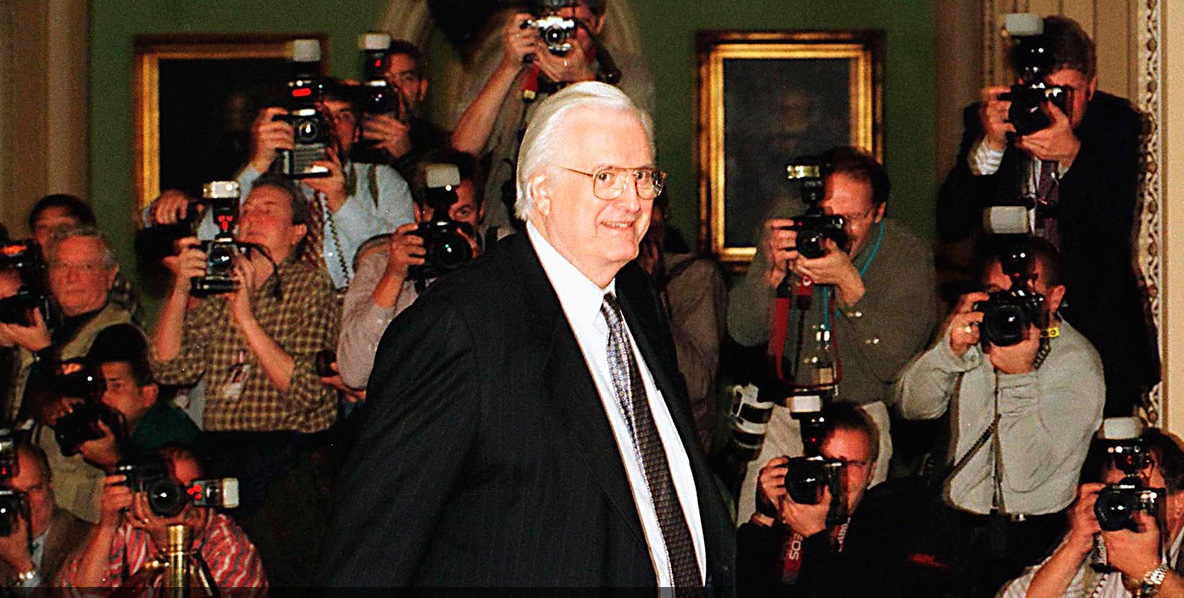
“An innocent, defenseless human life, in a caring and humane society, deserves better than to be flushed down a toilet or burned in an incinerator.” Such are the words of Henry Hyde, the former U.S. congressman from Illinois who tirelessly championed life and introduced the Hyde Amendment in 1976. Almost 50 years later, the legislative rider faces the opportunity to be renewed again.
For a half-century, the Hyde Amendment has stopped taxpayer dollars from funding abortion.
On Wednesday evening, Rep. Chris Smith (R-N.J.), co-chair of the Congressional Pro-Life Caucus, hosted a Special Order on the House floor to acknowledge the upcoming 50th anniversary of the Hyde Amendment on September 30. “The promise of America is that life is not just for the privileged, the planned, or the perfect,” Smith said, quoting Hyde. “This may sound odd, even ironic; you are here in the flush of victory. And yet it is precisely now that I ask you to contemplate the possibility of defeat, perhaps even the necessity of defeat. If you don’t know the principle or the policy for which you are willing to lose your office, then you are going to do damage here.”
Quena González, senior director of Government Affairs at Family Research Council, explained to The Washington Stand that Smith and Hyde have a history. “Representative Chris Smith served with Representative Henry Hyde for 26 years; he’s been a tireless defender of the unborn in Congress for 45 years and comes as close as anyone to carrying Hyde’s inimitable mantle.”
After the Roe v. Wade decision in 1973, the U.S. government paid for an estimated 300,000 abortions each year via Medicaid. According to the Charlotte Lozier Institute, since the Hyde Amendment’s first enactment in 1976, approximately 2.7 million lives have been saved.
During Wednesday’s event, Rep. Chip Roy (R-Texas) asserted that society has a duty to protect the unborn. “Life matters. Who are we as a people if we cannot stand up in defense of the most innocent form of life there is — a child in the womb of its mother? That should be our calling. And we should be able to unite as human beings in defense of the defenseless.”
Legislative Assistant for FRC’s Government Affairs Chantel Hoyt praised what House members shared during the Special Order. “I appreciated seeing Representative Chip Roy connect this important anniversary to the toll that chemical abortion is taking,” she told TWS. “It’s encouraging to see members like Representative Chris Smith carrying on Henry Hyde’s legacy and seeking to not only retain but build on the protections of the Hyde Amendment.”
Rep. Tracey Mann (R-Kan.) observed during the House event that he believes that abortion is not consistent with the Constitution. “Hyde should not be viewed as the finish line for the pro-life movement. It’s the floor. It’s a bare minimum compromise,” he shared. “America is founded on the self-evident truth that every person is created equal and endowed with our creator with an inherent right to life. That right is the foundation of every other right that we enjoy. As a father, I believe that every child is fearfully and wonderfully made by God. Every life has value, every child has purpose, and no child is a mistake.”
The Special Order and Hyde Amendment anniversary come at a time when chemical abortion has become a hot button issue on Capitol Hill. Pro-life politicians, lobbyists, and organizations continue to work tirelessly to ban the abortion drug mifepristone. “It’s always great to see members of Congress speak on the floor in defense of life, but especially now as we are urging the Trump administration to take action on chemical abortion to protect mothers and their babies,” Hoyt concluded.
This article was originally written by Quinn Delamater and published on The Washington Stand. For more content like this, visit Real Life Network.
25 min
September 18, 2026
The Washington Stand
Faith & Culture
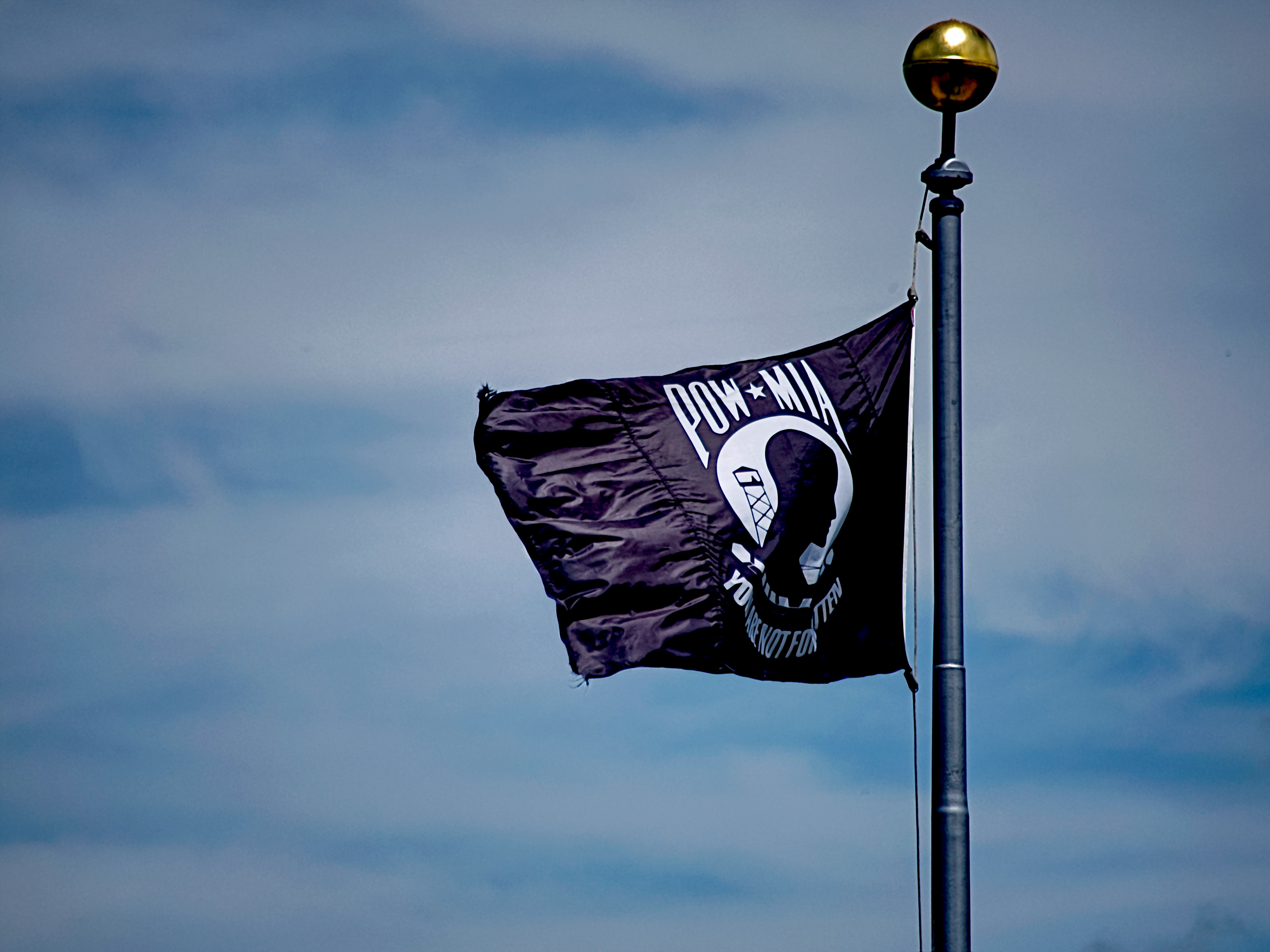
This article is drawn from my current episode of Rose Unplugged, airing now on the Real Life Network, where I had the extraordinary privilege of sitting down with two American heroes who know firsthand what it means to have freedom taken away.
As we observe National POW/MIA Recognition Day, I wanted to bring part of their story beyond the television screen, because their experience is not simply a chapter in American history. It is a reminder of what freedom costs, what courage looks like under unimaginable pressure, and what faith can sustain when almost everything else has been stripped away.
We talk a lot about freedom. We debate it, defend it and sometimes argue over what it means, but if we are honest, most of us rarely stop to think about what freedom actually costs. That is why National POW/MIA Recognition Day matters. It asks us to pause and remember the Americans who were captured, those who never came home, and the families who waited, prayed and carried the uncertainty with them.
Because every once in a while, we have the opportunity to hear from someone who knows exactly what it means when freedom is taken away—not for a day or a year, but for the better part of a decade.
I recently had that opportunity with Rear Admiral Robert Shumaker and Commander Everett Alvarez Jr., two Navy aviators who were shot down over North Vietnam and who together spent over sixteen years as prisoners of war. They were beaten, isolated, interrogated and separated from their families. They were told, again and again, that their country had forgotten them, yet they never allowed their captors to take the most important things from them: their identity, their faith, their loyalty to one another, their honor, and ultimately their love of country.
Commander Everett Alvarez was the first American aviator shot down and captured in North Vietnam. On August 5, 1964, while flying an A-4 Skyhawk from the USS Constellation, his aircraft was hit. He ejected over the water and was captured, with no roadmap and no one who could tell him what the coming years would look like because no American aviator had yet lived through what he was about to experience.
Then, months later, on February 11, 1965, Rear Admiral Robert Shumaker was shot down while flying an F-8 Crusader from the USS Coral Sea. He was forced to eject at extremely low altitude, suffering a broken back in the process, and was eventually captured.
What happened next is almost impossible for those of us living in freedom to comprehend: years of isolation, interrogation, brutal punishment and uncertainty about whether they would ever see their families or their country again. Yet something remarkable happened inside those prison walls. When everything external was stripped away, these men discovered that there were still things their captors could not control, and one of those things was the human mind.
Admiral Shumaker has described designing an entire house in his mind during his years in isolation, brick by brick and room by room. Years later, after returning home, he actually built that house. His captors could control his cell, his movements and his physical circumstances, but they could not enter his mind and take away his ability to create.
Then there was the tap code, perhaps one of the most remarkable examples of human ingenuity and determination to come out of those prison walls. Speaking to another prisoner was forbidden and could bring severe punishment, so Shumaker and Air Force Captain “Smitty” Harris developed a five-by-five grid of the alphabet that allowed prisoners to communicate by tapping letters through the concrete walls. One tap, another tap, another message—a language created in captivity that became a lifeline for men who desperately needed to know they were not alone.
Eventually, their captors discovered the code, and Shumaker and other senior officers were placed in solitary confinement for roughly three years because they were suspected of being leaders of the communication network. But isolating them did not destroy the brotherhood. If anything, their experience demonstrated how powerful that bond had become. Men who had never necessarily known one another before the war were willing to endure punishment rather than betray each other, and they found ways to encourage one another, communicate, pray and remain human in a place designed to strip them of their humanity.
And that brings me to faith, because Scripture is filled with people who discovered that God's presence does not always mean the absence of suffering.
Think about Joseph. His brothers betrayed him, sold him into slavery, and eventually he ended up in an Egyptian prison for something he did not do. Yet Scripture tells us that the Lord was with Joseph even there. Joseph did not know how his story would end, but God did. Years later, Joseph could look back at the people who had intended to harm him and say, “You intended to harm me, but God intended it for good.”
Or think about Shadrach, Meshach and Abednego. They refused to bow to the king's idol and were thrown into the fiery furnace, but God did not keep them from entering the fire; He was with them in it. That distinction matters because sometimes deliverance is not an escape from the trial. Sometimes deliverance is discovering that you are not alone in it.
David understood that when he wrote, “Even though I walk through the valley of the shadow of death, I will fear no evil, for you are with me.” The promise was not that the valley would disappear. The promise was about who would walk through it with him.
That is what I hear in the stories of these POWs—not despair, but resilience; not surrender, but resistance; and not the absence of suffering, but faith under pressure. Their circumstances forced them back onto something deeper than comfort or convenience, onto the courage, discipline, faith and determination God had placed within them.
And perhaps most remarkably, these men came home.
In January 1973, word began reaching the prisoners that a peace agreement had been signed and that they would finally be going home. Admiral Shumaker was released on February 12, 1973—eight years and one day after he had been shot down. Commander Alvarez came home the same day after 3,113 days in captivity, more than eight and a half years.
But coming home was not simply the end of their story. They had families to reconnect with, lives to rebuild and years to make up for, yet when you listen to these men, what you do not hear is a desire to define themselves by what was done to them. Instead, you hear men who came home with their faith intact, their honor intact and their love of country stronger than ever.
That is a tested love—not a naïve love, but the kind of love that comes from discovering exactly what something costs and being willing to pay the price anyway.
We throw the word hero around a lot these days, and I don't throw it around lightly. But Admiral Shumaker and Commander Alvarez earned it in a place most of us cannot imagine: one tap on a concrete wall, one whispered prayer and one refusal to give their captors what they wanted, repeated day after day and year after year until, finally, they came home.
And Hebrews gives the rest of us a charge that is particularly appropriate today: “Continue to remember those in prison as if you were together with them in prison, and those who are mistreated as if you yourselves were suffering.”
Remember them—not just on National POW/MIA Recognition Day, but every time you exercise a freedom that they were denied. Remember the families who waited, the years they lost, the men who were captured and the men who never came home. And remember that freedom is not free simply because it is familiar to us.
For many Americans today, freedom is so ordinary that we barely notice it. We wake up, speak our minds, worship, travel, raise our families and go about our lives. We can disagree with our government and with one another, and we can live our faith openly. We can gather with our families without wondering whether someone is coming to take us away. That is an extraordinary gift, and perhaps one of the greatest dangers is that we become so accustomed to it that we forget its cost.
As America celebrates its 250th anniversary, that is something this generation needs to understand. Freedom is not merely an idea; freedom has a price. Some have paid that price with their lives, others with years, some with wounds that could be seen and others with wounds no one could see. Some endured captivity but refused to allow captivity to define them.
Admiral Shumaker and Commander Alvarez remind us what that looks like. They were stripped of almost everything, but they would not surrender everything. They held onto one another, their faith, their identity and their honor, and then they came home.
So today, on National POW/MIA Recognition Day, let's remember the prisoners who endured captivity, the missing whose families still carry the questions and the sacrifices of those who served. Let us also remember what these two men demonstrated so powerfully: you can take a man's freedom without taking his courage; you can take away his comfort without taking away his faith; you can isolate him without making him alone; and you can imprison his body without imprisoning his spirit.
The freedom we enjoy today was not handed to us without a cost. Men like Robert Shumaker and Everett Alvarez paid part of that cost for the rest of us. The least we can do is remember—and perhaps even more importantly, the least we can do is live like we understand what they paid for.
Freedom is a gift, but it is also a responsibility, and it is something worth protecting. As Christians, we understand that God is sovereign even in the darkest circumstances, but we also understand that courage is not passive. We are called to stand firm, to remember those who suffer, to honor those who serve and to be faithful with whatever freedom and responsibility God has entrusted to us.
So on this National POW/MIA Recognition Day, may we never become so comfortable with freedom that we forget its cost, and may we never become so accustomed to our blessings that we forget the men and women who sacrificed so that we could enjoy them.
God bless these men. God bless every American POW and MIA. God bless their families. And God bless the United States of America.
For more content like this, watch Rose Unplugged on Real Life Network.
25 min
The Cost of Freedom: Remembering Our POWs on National POW/MIA Recognition Day
September 18, 2026
Rose Unplugged
World News
A healthy society depends on institutions that understand both their responsibilities and their limits. Elections require rules voters can trust. Immigration requires laws that can be enforced while treating people with dignity. Schools and child-welfare agencies exercise enormous power, but parents retain profound responsibilities toward their children.
These debates may look unrelated. They are not.
Running through each is the same fundamental question: Who has authority, where does that authority come from, and what happens when institutions move beyond their proper boundaries?
For Christians, authority is neither meaningless nor absolute. Government has a legitimate role. Parents have a legitimate role. Laws matter. Compassion matters. And none of those principles should be rewritten simply because the political circumstances have changed.
That framework is increasingly important in an America where arguments over election administration, immigration, parental rights, and political power are testing public trust from several directions.
Trust Requires Rules That Apply Consistently
The Supreme Court recently blocked the Trump administration from implementing new Postal Service requirements for mail ballots before the 2026 midterms. The proposed system would have required states to provide lists of eligible voters and use USPS-approved, barcoded ballot envelopes. The Court divided 7-2, with Justices Clarence Thomas and Samuel Alito dissenting. Justice Brett Kavanaugh indicated there was a reasonable argument that the Postal Service possesses authority to impose some requirements, but concluded that changing procedures this close to voting risked significant disruption.
There are legitimate disagreements over the proposal. The administration presented additional verification as an election-integrity measure. Opponents argued that the Postal Service was assuming authority traditionally exercised by states and that last-minute changes could prevent legitimate ballots from being counted.
Those arguments deserve more than slogans.
Election integrity and voter access do not have to be enemies. Americans should be able to expect systems that verify lawful votes while also ensuring lawful voters can participate. Confidence deteriorates when either concern is dismissed simply because it is associated with the other political party.
Trust cannot survive indefinitely when rules are treated as essential under one set of political circumstances and disposable under another.
The same principle applies to immigration.
The Trump administration has expanded the federal government's consideration of public benefits when determining whether certain immigrants qualify for permanent residency. New York City Mayor Zohran Mamdani is leading a coalition of local governments challenging the new public-charge rule, while New York Attorney General Letitia James is leading a separate state lawsuit. The plaintiffs argue that the rule exceeds federal authority and could discourage immigrant families from using health care and nutrition programs for which they are legally eligible. The administration argues that the policy promotes self-sufficiency and reduces dependence on public assistance.
The legal dispute will work its way through the courts. The broader question is worth considering now: What obligations accompany legal immigration, and what obligations does a nation have toward those it admits?
Scripture commands God's people to treat the stranger with justice and compassion. It also recognizes governments, nations, boundaries, and civil authority. Biblical compassion cannot be reduced to a slogan for one immigration policy any more than biblical order can be used to excuse mistreatment of immigrants.
Hospitality and order are not inherently contradictory.
When Government Authority Enters the Home
Nowhere does the question of authority become more personal than when the government intervenes between parents and children.
Joseph and Arlene Kutzko, a Catholic couple in Massachusetts, are fighting a legal battle involving their teenage daughter, Sophie. The parents say Algonquin Regional High School supported their daughter's male gender identity without their knowledge and that their religious objections later became intertwined with a child-welfare dispute. Sophie was removed from their custody in 2024, and the parents say they have since been prevented from maintaining contact with her.
The case includes important details that should not be ignored. An allegation of physical abuse against the father was reportedly found unsupported, according to recent reporting and the family's legal advocates. The family is now seeking to prevent testosterone treatment while pursuing its custody claims; treatment has reportedly been paused while litigation continues.
The family's account has become part of a much larger national disagreement over parental rights, gender identity, medical treatment for minors, religious liberty, and the circumstances under which child-welfare authorities should intervene.
Those are serious questions precisely because the state sometimes must intervene. Children can genuinely suffer abuse and neglect, and government has a legitimate responsibility to protect them.
But that extraordinary power also requires extraordinary care.
Parents should not automatically lose their authority simply because their religious or moral convictions conflict with prevailing cultural beliefs. At the same time, disagreements over a child's care cannot by themselves establish every fact in a contested custody case.
The power to protect children must never quietly become the power to require ideological conformity from their parents.
For Christians, parenthood is not merely a legal status granted by government. Scripture repeatedly places responsibility for the instruction and formation of children upon families. Government can protect children from genuine harm, but it should approach replacing parental judgment as an exceptional intervention, not an ordinary solution to ideological disagreement.
That distinction matters far beyond Massachusetts.
Political Power Is Not the Highest Authority
The question of authority also appears inside political parties themselves.
The Democratic National Committee has officially changed its early presidential-primary calendar for 2028. South Carolina will vote first, followed by Nevada, New Hampshire, New Mexico, Michigan, and Virginia. The DNC says the calendar gives a more representative mix of voters an early role and better tests candidates across diverse constituencies and battleground states.
The change will inevitably affect campaign strategy. South Carolina's large Black Democratic electorate and Nevada and New Mexico's Latino populations will matter earlier than under the old Iowa-and-New Hampshire-centered system. But it is too early to know which prospective candidate, if any, will ultimately benefit most.
That uncertainty is important. Politics tempts people to treat every institutional decision as evidence of a predetermined outcome. Christians should resist that impulse just as strongly as they resist political naivete.
Political parties pursue power. Candidates pursue office. Governments exercise authority. Courts interpret law. None deserves the kind of unquestioning allegiance that belongs to God.
That should produce Christians who can think clearly rather than react predictably.
A Republican administration should not receive automatic approval merely because it invokes election integrity, immigration enforcement, or parental rights. A Democratic official should not receive automatic approval merely because a policy is presented in the language of compassion, democracy, or inclusion. Every claim still has to be examined.
Proverbs 14:34 provides a standard much older than any American political coalition: “Righteousness exalts a nation, but sin is a reproach to any people.”
That standard does not change with election results.
Christian political discernment begins when truth matters more than protecting a party, an institution, or a preferred political narrative.
Government matters. Elections matter. Borders matter. Parents matter. Protecting children matters. So do due process, compassion, religious liberty, and the rule of law.
The difficult work is refusing to sacrifice one principle whenever another becomes politically convenient.
That is why Christians need more than political instincts. They need a biblical framework capable of asking not merely, Which side is doing this? but Is this true? Is it just? Is authority being exercised within its proper limits? And does the standard remain the same when political power changes hands?
Those are the questions worth continuing to ask through Real Life Network and The Daniel Cohen Show, where the headlines are examined alongside the deeper questions of faith, culture, government, and truth.
25 min
Who Has the Authority? Government, Families, and the Institutions Americans Are Asked to Trust
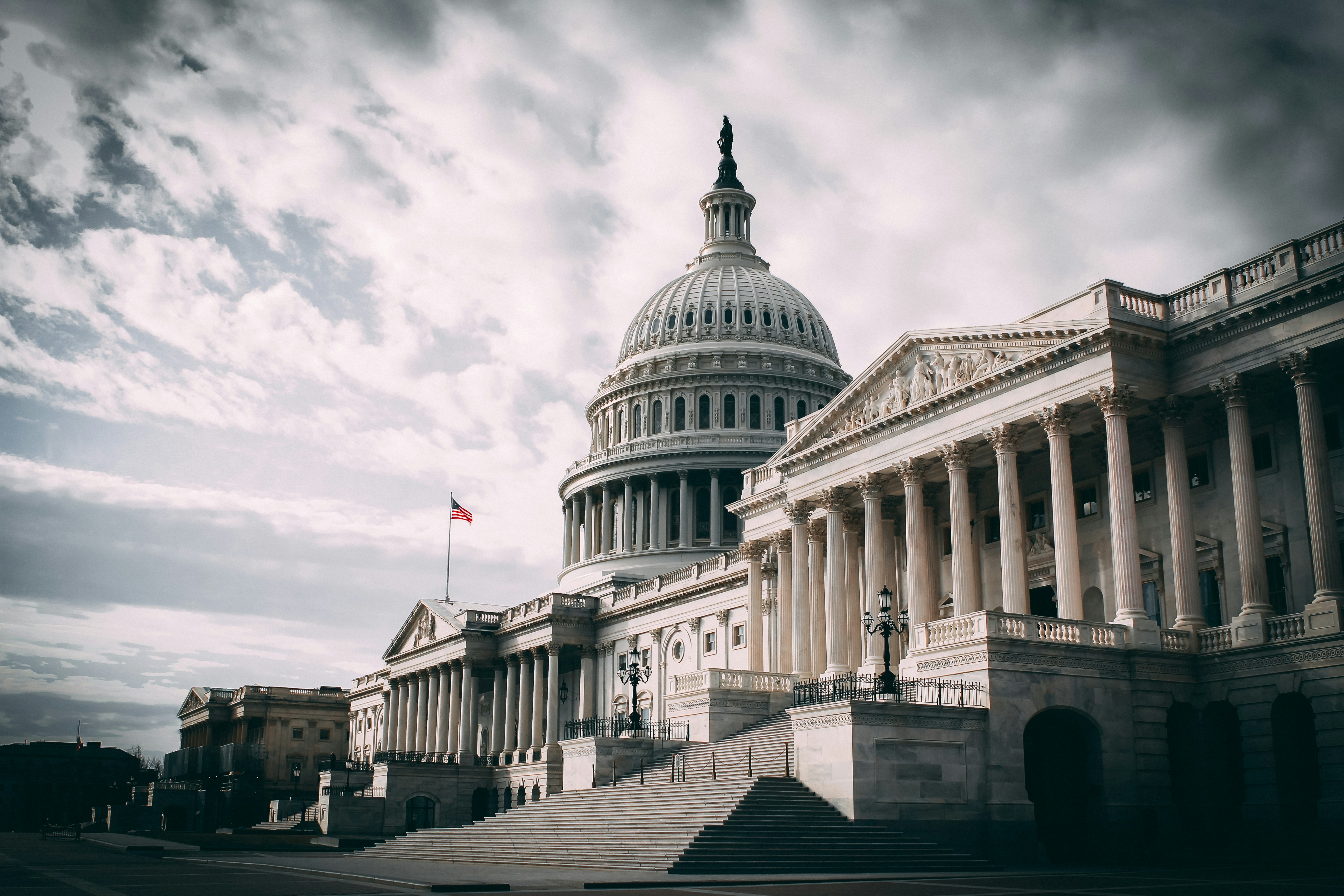
September 17, 2026
Daniel Cohen
Business & Finance
America is under full-scale economic assault. For years, I’ve reported on the intersection of national security and capital markets. After nearly 400 episodes of Economic War Room, the evidence and patterns have become overwhelmingly clear: foreign adversaries increasingly view trade, energy, currency, technology and financial markets as weapons.
What we see as a marketplace, our enemies view as a battle space.
China is perhaps the clearest example. The Chinese Communist Party openly embraces the concept of “unrestricted warfare,” and economics represents one of the most effective fronts in that struggle. China dominates much of the global supply chain for rare earth minerals and critical materials, the same resources required for everything from smartphones and electric vehicles to advanced American defense systems.
That dependence gives Beijing tremendous leverage. But critical minerals are only one part of the story. Currency manipulation, subsidized exports, cyberattacks and intellectual property theft have all created vulnerabilities for the United States. American factories have closed, communities have been hollowed out and critical supply chains have moved overseas.
This isn’t simply about competition between two large economies. It’s a national security issue.
Watch this full episode on Economic War Room, streaming now on the Real Life Network.
America Is Also Weakening Itself From Within
The economic threats facing America aren’t all coming from Beijing or other foreign capitals. Some are self-inflicted.
The United States now carries an enormous national debt, creating long-term risks for the dollar, interest rates, future taxpayers and national security. At the same time, corporate policies built around ESG and DEI have too often shifted attention away from profitability, merit, innovation and long-term shareholder value.
Then there is the prospect of a programmable central bank digital currency. If implemented without the proper protections, a CBDC could potentially give government authorities unprecedented ability to monitor transactions, restrict spending or freeze accounts.
Put these threats together and the consequences are no longer abstract. They can affect your retirement account, your savings, your paycheck and your ability to provide for your family.
President Trump can do his part in Washington, but he cannot do your part for you. That responsibility belongs to each of us.
Americans Can Fight Back With Their Own Money
The good news is that ordinary Americans are not helpless.
At Economic War Room, we’ve spent years developing strategies designed to help Americans recognize economic warfare and build greater resilience against it. Through the NSIC Institute, we’ve also worked to educate financial advisors about the intersection of national security and investing. One principle sits at the center of that work: weaponize your money for liberty, security and your values.
That starts with defense. Traditional stocks-and-bonds diversification may not be enough in an environment defined by inflation, geopolitical instability, massive government debt and fragile global supply chains. Americans should understand what they own, where their vulnerabilities are and whether they have sufficient exposure to tangible assets they actually control.
That is one reason I have repeatedly discussed transactional gold and silver. Precious metals have functioned as stores of value for thousands of years and can provide another layer of financial independence when paper currencies and financial markets come under pressure.
But defense is only half the battle. Americans can also think carefully about where their investment dollars are going. Domestic energy production, critical minerals, reshoring, advanced manufacturing and defense technology can all play a role in rebuilding American economic strength. Rather than unknowingly sending investment capital toward adversaries, Americans can consider supporting companies and industries that strengthen our independence and national security.
I call it voting with your dollars on steroids. That doesn’t mean blindly buying a stock because it carries an American flag. And it isn’t individualized investment advice. Every investor should consider his or her own circumstances and consult a qualified financial professional.
It does mean recognizing that capital has consequences.
Financial Resilience Starts at Home
There are also simpler steps Americans can take.High-interest consumer and credit card debt can become crushing when rates rise or an economic shock hits. Building emergency reserves, reducing unnecessary debt and considering assets that can provide resilience during turbulent periods can all strengthen a household’s financial position.
But the goal should extend beyond surviving the next downturn. We should be thinking generationally. America’s free-market system has given ordinary citizens an extraordinary opportunity to participate in economic growth, build businesses, invest and create wealth. We should teach those principles to our children and grandchildren rather than allowing future generations to become increasingly dependent on government.
Economic freedom and political freedom are connected. That means Americans must also remain civically engaged—voting, contacting elected representatives and supporting policies that promote fiscal responsibility, sound money, American energy, lower taxes and free enterprise.
America May Be Facing Its Own Dunkirk Moment
As I consider the challenges ahead, I keep returning to one of the most remarkable episodes of World War II. In May 1940, nearly 400,000 British and Allied troops were trapped near Dunkirk as Nazi forces swept through France. Britain faced catastrophe.
Then ordinary citizens answered the call. Fishing boats, pleasure yachts, ferries, tugboats and virtually anything else that could float crossed the English Channel to help evacuate the stranded troops. In the end, more than 338,000 men were rescued.
Those vessels became known as the “little ships of Dunkirk.” The evacuation did not end the war. Churchill himself reminded Britain that wars are not won by evacuations. The Battle of Britain was still ahead, America had not yet entered the conflict and years of fighting remained.
But Dunkirk demonstrated what can happen when ordinary people refuse to surrender. There was also another element that should not be forgotten. King George VI called Britain to a National Day of Prayer on May 26, 1940. Churches filled as the British people prayed for deliverance. The events that followed became remembered by many as the “miracle of Dunkirk.”
I believe there is a lesson there for America today. We are facing our own economic Dunkirk moment. The threats to American prosperity, freedom and security are formidable. Government and large institutions have a role to play, but they cannot do everything.
That’s where the little ships come in. You are the little ships.
Every time you examine your investments, reduce high-interest debt, strengthen your family’s finances, support American energy and manufacturing, build generational wealth, vote for free-market policies or speak up for sound money, you are answering the call. No single American can win an economic war. Millions of informed Americans acting together can change its course.
Prayer first. Then get to work. Then give thanks. Freedom is fragile. It has to be protected and passed to future generations. And right now, our children and grandchildren are depending on us to do exactly that. It’s time to get in the fight.
Watch this full episode on Economic War Room, streaming now on the Real Life Network.
25 min
America Is Under Economic Attack—and It’s Time to Fight Back
.jpg)
September 17, 2026
Kevin Freeman
World News
A Catholic couple in Massachusetts had their daughter taken away by the state under the guise of child abuse after refusing to affirm her so-called transgender identity. In 2024, the 15-year-old child was removed from the home of Joseph and Arlene Kutzko after they say she was secretly socially “transitioned” at Algonquin Regional High School. Now, they’re fighting to get her back before she is medically “transitioned” on high-dose testosterone.
“Here, a public school is ‘stuck on stupid’ by engaging in the willful and dehumanizing practice of destroying both family and child. This school should be closed permanently,” Walt Heyer, senior fellow at Family Research Council, told The Washington Stand. “The school abused the child emotionally and psychologically, causing lifelong damage. My life was destroyed by the trans insanity. Stop the madness.”
Fox News reported that a permanent restraining order was issued against the family, and the Department of Children and Families (DCF) cut off the Kutzkos’ contact with their daughter, Sophie, when they refused to refer to her by male pronouns. Fox also reported that the Kutzkos say DCF has “housed their daughter in a boys’ dormitory, stripped away her Catholic faith by denying her Sunday Mass, and put her on birth control and psychiatric drugs.”
“In Massachusetts today, a sizable portion of government and the population will call you a good mom if you violently strangle your own three kids to death but will take custody of your teenage daughter away from you if you don’t want her to be castrated & mutilated by the gender lobby. Let that sink in,” Daily Wire personality Isabel Brown posted on X Monday.
The Kutzkos appeared on the Fox News “Lighthouse Faith” podcast hosted by Religion Correspondent Lauren Green to share about the dire situation over the weekend, alongside their attorney Vernadette Broyles. “The Northborough-Southborough public schools and their counseling practices exposed our daughter to teachings on LGBTQ [ideology] and topics that conflict with our Catholic beliefs about human dignity, creation as male and female in Catholic teaching,” Joseph Kutzko said.
He continued, “[O]ur daughter had been placed in counseling with sessions at Algonquin Regional High School [with] school counselor … Denise Brienze, without our knowledge or consent. [W]e were told she was simply staying after school for extra math help.”
The Kutzkos say that they have not been able to have contact with their daughter since January 2025. “I even begged them [to allow me] just to hug her or kiss her. They say they can’t. They will not allow it,” Arlene Kutzko explained.
Just months before Sophie was taken from them, she wrote her dad a heartfelt birthday card. In October of 2024, her words to her father said, “Without you, I would have nothing. So wholeheartedly, fully, sincerely. I love you with no end,” Joseph read during an appearance on “America’s Newsroom” with Bill Hemmer and Dana Perino.
The Kutzkos explained that Sophie grew up loving church. “She led the parish in rosary before mass, and she was so faithful — everybody in the church knew it — that she was given a special dispensation to be confirmed early. So, one year early, she was allowed to make her confirmation.”
But at age 15, Sophie started experiencing some inner turmoil. Next thing they knew, the Kutzkos were losing custody of their daughter. They had no idea what had been going on at the school.
“The most important thing is to bring her back to our family. But a shorter-term goal is to prevent them from giving her testosterone,” Joseph Kutzko reiterated. Boyer explained that under Massachusetts state law, DCF could administer the hormones to Sophie without her parents’ permission even though she is still a minor.
“We are actively fighting in court to keep them from really poisoning this young lady with testosterone that would have the capacity to cause her to become potentially infertile, would harm her cardiovascular system, and would have a number of irreversible effects and harms to her body,” Boyer lamented. She added that DCF is hoping to move forward with giving Sophie the testosterone.
Time may be running out, but the Kutzkos are actively working to bring their daughter home. “We love her. We love her. We miss her,” Joseph Kutzko wanted people to know.
This article was originally written by Quinn Delamater and published on The Washington Stand. For more content like this, visit Real Life Network.
25 min
Massachusetts Takes Daughter from Catholic Parents for Refusing to Affirm Trans Identity

September 16, 2026
The Washington Stand
World News
There are moments that should transcend politics.
A memorial honoring nearly 3,000 Americans murdered on September 11 should be one of them. It should be a place for grief, remembrance, gratitude, and reverence. Families who have carried that loss for 25 years deserve something increasingly rare in American public life: a moment in which their pain is not reduced to another political opportunity.
That is why images of Alexandria Ocasio-Cortez and New York City Mayor Zohran Mamdani smiling and laughing together during the 25th anniversary commemoration drew criticism. A photograph cannot reveal the context of every conversation or establish what prompted a smile. But juxtaposed with grieving families at Ground Zero, the moment raised a larger question worth asking: Does American culture still recognize that some things should be treated as sacred?
These are exactly the kinds of cultural questions worth examining on Real Life Network and The Daniel Cohen Show, where the headlines are considered alongside the biblical truths that should shape how Christians understand them.
Leadership Requires More Than the Right Policies
Public leadership is not merely about legislation, budgets, speeches, or elections. Leadership also requires understanding the human consequences behind public events.
That principle extends far beyond a single 9/11 ceremony.
When thirteen American service members were killed during the 2021 withdrawal from Afghanistan, controversy followed images of President Joe Biden appearing to check his watch during the dignified transfer ceremony at Dover Air Force Base. Biden later disputed some characterizations of the moment, but Gold Star families publicly described feeling disrespected.
Politics can make people remarkably selective about empathy. When someone on the other side suffers, compassion becomes conditional. When an uncomfortable tragedy threatens a preferred narrative, attention shifts somewhere else.
Christians cannot adopt that standard.
Human dignity does not change according to political usefulness. A child killed in an act of violence matters. A soldier returned home in a flag-draped casket matters. A family still grieving someone murdered on September 11 matters. An immigrant victim matters. An American citizen victim matters. Political affiliation does not determine the value of a human life.
A healthy society should be capable of looking at suffering and seeing a human being before seeing a political opportunity.
Jesus warned that a time would come when “the love of many will grow cold” (Matthew 24:12). That description should make Christians examine more than the behavior of politicians. It should make believers examine their own hearts.
Have politics made compassion selective? Has outrage become entertainment? Have human tragedies become useful primarily when they help defeat the other side?
If so, something far more important than an election is being lost.
Biblical Language Cannot Become Political Branding
The same problem appears when Christianity itself becomes a political instrument.
Texas politician James Talarico has increasingly incorporated Christian language into his political message. In one recent appearance, he invoked Matthew 25 while arguing that Jesus would condemn senators over food assistance, Medicaid, and deportations.
Christians should welcome politicians talking seriously about Scripture. But biblical vocabulary does not automatically make an argument biblical.
Matthew 25 unquestionably demonstrates Christ's concern for the vulnerable. Christians should care about hungry people, strangers, the sick, prisoners, and those suffering around them. But translating those commands directly into support for a particular government program requires an additional political argument. Christians can share the same biblical concern while disagreeing about which policies best address it.
The same principle applies to immigration.
Scripture repeatedly commands God's people to care for foreigners and strangers. Scripture also recognizes nations, governing authorities, boundaries, and civil order. Romans 13 gives government genuine authority, while Acts 17:26 speaks of God determining nations and their dwelling places.
Neither side gets to erase the passages that complicate its politics.
Scripture should judge political convictions. Political convictions should never be allowed to rewrite Scripture.
That requires biblical literacy.
A politician who can quote a verse fluently may still misuse it. A conservative can misuse Scripture just as easily as a progressive. Christians who know only fragments of the Bible become vulnerable to anyone capable of wrapping a political agenda in Christian vocabulary.
Read the Word. Know the context. Test the argument.
Courage Means Refusing to Follow the Crowd
There is another quality disappearing from American life: the courage to stand alone.
The Lindsay Clancy case offers a difficult example. Clancy admitted killing her three young children but mounted an insanity defense. Her 2026 trial ended in a mistrial after eleven jurors favored acquittal and one juror held out.
According to another juror who later discussed the deliberations publicly, the lone holdout was a Black man.
Whatever conclusions people reach about the complicated legal questions surrounding mental illness and criminal responsibility, there is something worth recognizing in anyone willing to maintain a sincerely held conviction while an entire room pressures him to surrender it.
Standing with the crowd is easy. Standing alone costs something.
That lesson reaches far beyond a courtroom.
Christians will increasingly encounter moments when biblical convictions are unpopular, unfashionable, or professionally inconvenient. There will be pressure to remain silent because speaking could cost friendships, opportunities, influence, or reputation.
Conviction means deciding beforehand that truth matters more.
That does not grant permission to be reckless or cruel. Courage without humility quickly becomes arrogance. But humility without courage can become cowardice disguised as kindness.
Christian conviction requires both: the humility to recognize when we are wrong and the courage to stand when God's truth is clear.
America does not merely need better political messaging. It needs adults capable of recognizing sacred things, leaders who understand the human cost of their decisions, Christians who know Scripture well enough to recognize when it is being manipulated, and ordinary people willing to stand for truth when standing becomes uncomfortable.
Politics will continue changing. Candidates will come and go. Headlines that seem enormous today will eventually disappear.
The deeper question is what kind of people Americans are becoming in the process.
When nothing is sacred, everything becomes political. Christians should resist that transformation by recovering reverence, compassion, biblical discernment, and courage.
Continue examining the cultural and political stories shaping America through a biblical worldview on The Daniel Cohen Show, streaming free on Real Life Network.
25 min
When Nothing Is Sacred, Everything Becomes Political
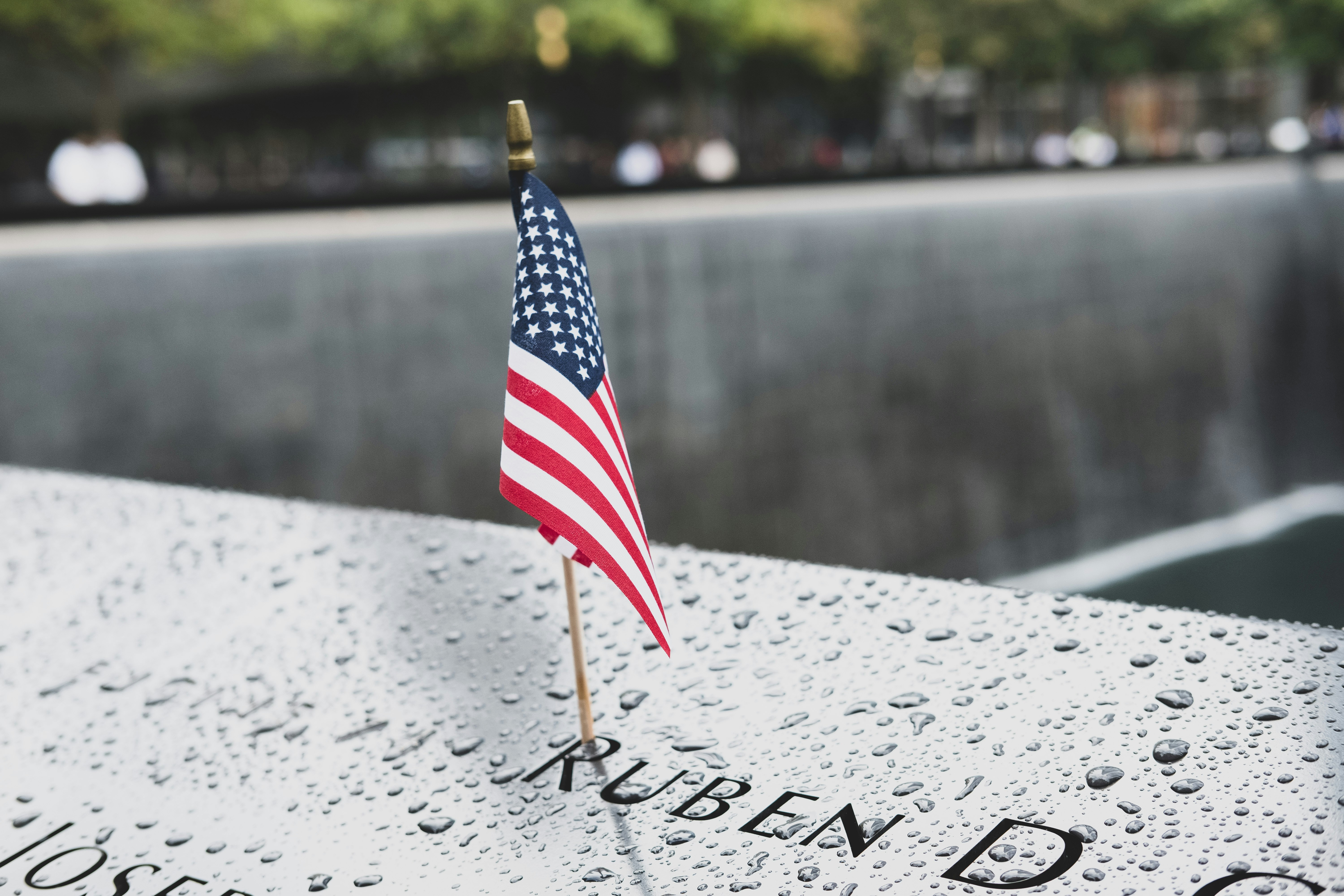
September 15, 2026
Daniel Cohen
World News
Twenty-five years after September 11, 2001, two words remain inseparable from that day: Never forget. As a new generation inherits the story of 9/11, Real Life Network and The Daniel Cohen Show are committed to examining the history, ideas, and cultural questions that Americans cannot afford to forget.
But remembering September 11 requires more than remembering its pain.
An entire generation of Americans has now grown up without any personal memory of the attacks. Roughly 100 million Americans have been born since 9/11. They did not watch the second plane strike the South Tower. They did not see smoke pouring across Manhattan or experience the uncertainty that gripped the country. For them, September 11 is history.
That raises an increasingly important question: What exactly are Americans promising never to forget?
Remembering the Victims Means Remembering the Truth
Calling September 11 a tragedy is true, but incomplete.
September 11 was an intentional terrorist attack carried out by 19 al-Qaeda hijackers. Osama bin Laden and al-Qaeda were not secretive about their worldview, grievances, or objectives. Their own statements repeatedly framed their conflict with America in explicitly religious as well as political terms.
America must be capable of acknowledging that history.
That does not mean treating every Muslim as a terrorist or holding peaceful Muslim neighbors responsible for crimes they did not commit. Americans should defend religious liberty, reject harassment, and protect the freedom of peaceful people to worship according to their beliefs.
But religious liberty cannot require historical amnesia.
There is a profound difference between refusing to hate Muslims and refusing to acknowledge Islamist extremism. America must be capable of doing the first without falling into the second.
For too long, political leaders, academics, and media figures have sometimes preferred vague descriptions of terrorism because specificity can be uncomfortable. Yet future generations cannot understand September 11 if the ideology of its perpetrators is removed from the history they inherit.
“Never forget” cannot mean remembering only the victims while becoming increasingly reluctant to explain why they became victims.
The Next Generation Will Remember What We Teach
This matters because the people who remember September 11 firsthand will not always be here to tell the story.
Already, debates over the meaning of 9/11 reveal dramatically different interpretations of what happened. Some emphasize American foreign policy, imperialism, economics, or Western actions as the primary explanation for terrorism. Others have gone considerably further, portraying America itself as deserving the violence directed against it.
Those ideas should not be allowed to replace historical clarity.
The terrorists who attacked America were responsible for their actions. The men aboard those airplanes chose innocent civilians as their targets. No disagreement with American foreign policy makes hijacking commercial airplanes and deliberately murdering civilians morally defensible.
The responsibility to preserve that truth belongs especially to parents.
Children should know about the people who boarded airplanes expecting to arrive home later that day. They should hear about the firefighters carrying equipment up stairwells as thousands rushed downward. They should know about Flight 93 and the passengers who fought back. They should understand what happened at the Pentagon and what unfolded at Ground Zero.
And they should know who carried out the attacks and what motivated them.
If parents do not teach their children what happened on September 11, someone else will eventually tell them what September 11 is supposed to mean.
History never remains an empty space. When one explanation disappears, another takes its place.
That is why remembrance is about more than nostalgia. It is a responsibility to those who died and to those who were not yet born.
Remembering Without Living in Fear
There is another part of September 11 worth remembering: what America looked like afterward.
For a brief period, the country rediscovered a sense of national unity that now seems almost unimaginable. Political labels became less important. American flags appeared on homes and businesses. Tens of thousands stood together at Yankee Stadium and sang “God Bless the USA.” President George W. Bush stood among firefighters and rescue workers at Ground Zero and promised that America would respond.
That unity did not last.
But the courage behind it should not disappear.
Charlie Kirk understood the importance of courage in the public square. He repeatedly warned younger Americans about ideological movements he believed threatened faith, family, and the American way of life. His words were often pointed because he believed dangerous ideas had to be identified rather than accommodated. His Christian convictions also became increasingly central to the way he understood the cultural battles around him.
That willingness to speak should challenge Christians today.
Courage does not require hatred. Conviction does not require cruelty. Christians can identify dangerous ideologies while remembering that human beings are not the ultimate enemy. Scripture reminds believers that the struggle is ultimately “not against flesh and blood,” but against spiritual forces of evil (Ephesians 6:12).
Christian courage tells the truth about evil without allowing hatred of people to take root in the heart.
Twenty-five years after September 11, America does not need to live in the fear of that morning. Neither should it erase the lessons purchased at such an enormous cost.
Remember the victims. Remember their families. Remember the first responders. Remember the passengers who fought back. Remember the courage that emerged from the rubble. Remember the enemy that attacked America and the ideology that animated its extremists.
Then make sure the children who were not there understand why it matters.
One day, September 11 will exist entirely outside living memory. When that day arrives, never forget will mean only as much as the truth one generation was willing to pass to the next. Continue examining the stories shaping America through a biblical worldview on The Daniel Cohen Show, streaming free on Real Life Network.
25 min
September 11, Twenty-Five Years Later: What Does It Mean to Never Forget?

September 11, 2026
Daniel Cohen
World News
The mayor of New York City’s presence will not be welcomed by all at the metropolis’s upcoming 9/11 memorial service. “I am not asking politely, I am demanding” New York City Councilmember Vickie Paladino (R) asserted from the steps of New York City Hall on Tuesday, “that he not show his face on that sacred ground.” The councilwoman, along with many others in the Big Apple, has made one thing clear: they do not want the mayor to be present at the event on Friday.
The ceremony to be held is the official 25th anniversary 9/11 commemoration at the World Trade Center Memorial Plaza and is a private event for families who lost loved ones on that day. On Tuesday, Forbes reported that a change.org petition created by relatives of 9/11 victims has received over 100,000 signatures to exclude Mamdani from the event.
This resistance is largely the result of Mamdani’s affiliation with Ramzi Kassem, who Mamdani appointed as the city’s chief legal counsel. In the past, Kassem represented a convicted al-Qaeda member whose brother-in-law was one of the 9/11 plane hijackers. The mayor drew criticism last Friday when video circulated of Mamdani signaling for the symbolic pen he had just used to authorize an executive order regarding 9/11 at city hall to be given to Kassem.
“That was a message to each and every one of us,” Paladino said about the pen, and she stood in the sea of those gathered at the city hall. “Cryptic as it is, but read through the lines. What’s going on here at City Hall and what we got representing us at City Hall, they do not belong on sacred ground. I could go through a list of people that he associates himself with and continues to associate himself with. We, the people, do not care for Zohran Mamdani.”
Robert Maginnis, retired U.S. Army lieutenant colonel and senior fellow for National Security at Family Research Council, told The Washington Stand that the country can never lose sight of the effects of the tragedy that took place 25 years ago.
“What should not be lost in the political controversy is the extraordinary emotional significance of September 11. The memorial ceremony belongs first and foremost to the nearly 3,000 people who were murdered, the families who still live with that loss, the first responders and service members whose lives were changed by what followed, and a nation that promised never to forget. Anyone who participates in that ceremony should do so with humility and with an appreciation for just how deeply those memories still run.”
Charles Wolf, a man who lost his wife in the North Tower attack, also announced at city hall that he did not want Mamdani to attend: “We don’t want a mayor who only wants to be there for the publicity. This mayor is not serving us. He’s serving himself,” he shared.
“We are asking, respectfully, that he not show up even though there is going to be other politicians there. These are the politicians that helped us, pushed beneficial laws through, and literally held our hand during that time. Mayor Mamdani has not shown any of that. None of it. He just wants to be there because he wants to be there.”
Rudy Guiliani, the former mayor of New York City during the attack on the World Trade Center, also spoke against Mamdani’s planned attendance at the event. “Frankly, whatever he’d like to say, he doesn’t agree that Sept. 11 was an Islamic terrorist attack on the United States of America,” Giuliani told Newsmax in an interview on Sunday. “Having lost friends there, and being very close to many of the families, it offends me that he’s coming.”
Maginnis said that his experiences in the post-9/11 world, including working at the Pentagon in the Department of the Army, have shaped his perception of the tragedy. “Those experiences have given me an enduring appreciation for what September 11 means to the families of the victims, to those who served in the years that followed, and to millions of Americans who remember the fear, anger, and grief of that day.”
“That is the context in which I view the controversy surrounding Mayor Zohran Mamdani and his chief counsel, Ramzi Kassem,” he added. “Kassem’s prior representation of a terrorism defendant has become a particular point of contention for some 9/11 families. At the same time, representing a criminal defendant should not, by itself, be equated with sharing that defendant’s beliefs or actions.”
This article was originally written by Quinn Delamater and published on The Washington Stand. For more content like this, visit Real Life Network.
25 min
New Yorkers Gather over 100,000 Signatures to Exclude Mamdani from 9/11 Ceremony
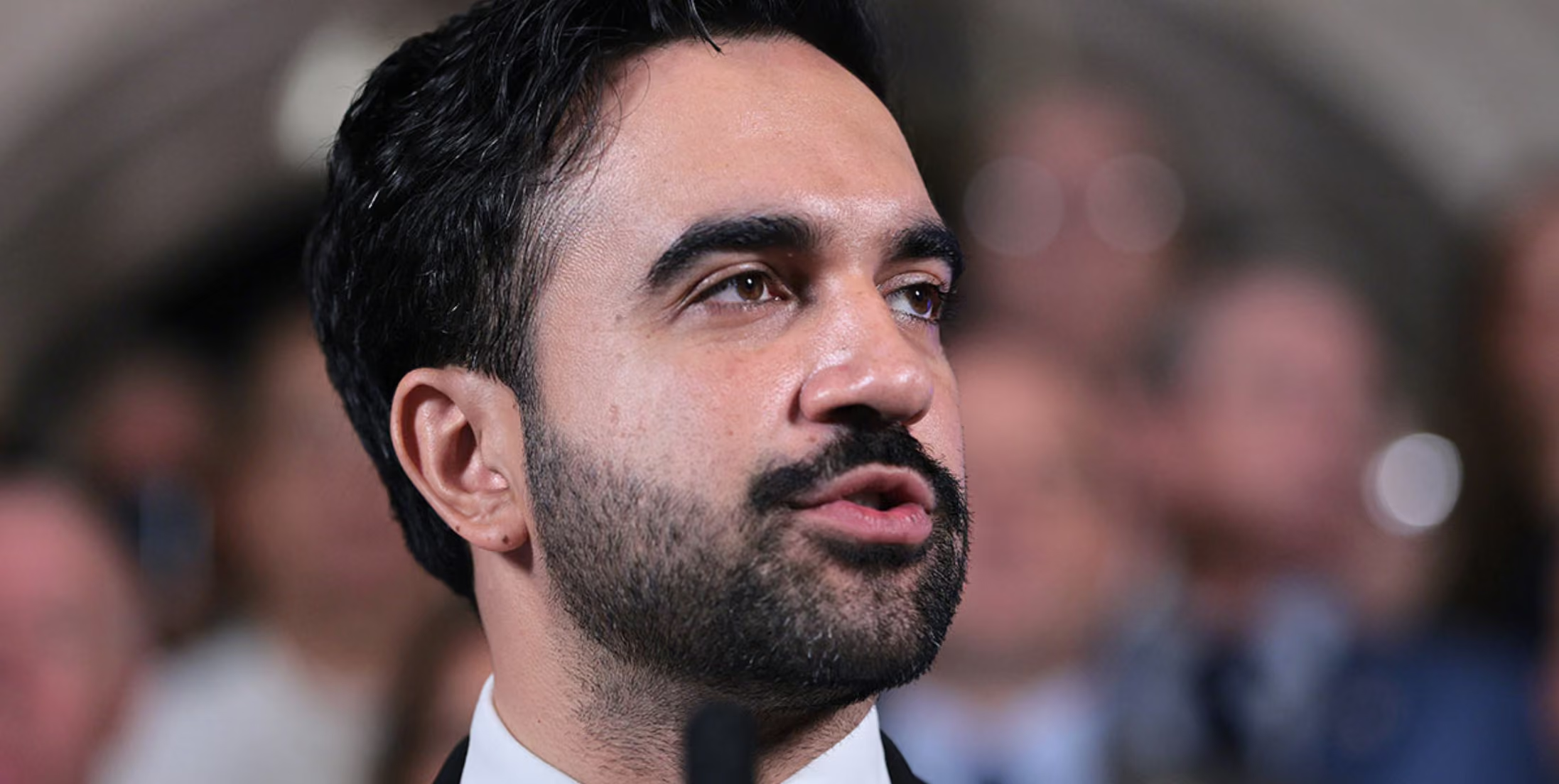
September 9, 2026
The Washington Stand
World News
For decades, television newsrooms held enormous power over what Americans saw and what they never heard about. Producers chose the lead story, decided which events deserved follow-up coverage, and determined which stories would disappear after a few seconds or never make air at all.
That power has weakened, but it has not disappeared.
Today, independent media provides an opportunity to ask a question that traditional news organizations too often avoid: Why do some stories receive national attention while others with serious implications are barely acknowledged?
On Real Life Network, The Daniel Cohen Show goes where the news leads, especially when those stories intersect with faith, culture, politics, and a biblical worldview. Several recent stories provide an important reminder that media bias isn't limited to how a story is reported. Sometimes the more consequential decision is whether to report it at all.
When Attacks on Christians Barely Make the News
Pastor Martin Sedra and his wife, Millicent, recently experienced something no family should have to endure.
Sedra pastors Echo Church in Sydney, Australia, and has publicly spoken about Christianity, Islam, abortion, marriage, and other controversial cultural issues. According to video and the Sedras' account discussed on the show, masked protesters arrived outside their home shortly after the couple welcomed their first child. The group allegedly cut power to the house, threatened the family, and said they would return.
Whatever someone's political or religious disagreements with Sedra, threatening a family at its home crosses a line that should be obvious.
Yet the incident received little attention from major news organizations at the time it was discussed on the show.
That story comes alongside another troubling development: a series of fires involving churches.
The former St. Agnes Church in Toledo, Ohio, burned over the weekend. Another Toledo church, St. Anthony's, had suffered a fire only weeks earlier. Other recent church fires discussed on the program included Friendship Baptist Church in Cleveland, St. Simon Church in New Brunswick, Canada, and Buckingham Presbyterian Church in the United Kingdom. Importantly, the causes of these individual fires should not be assumed before investigators determine them.
But the broader problem of hostility toward churches is documented. The Family Research Council reported hundreds of hostile incidents against churches in 2024, including dozens categorized as arson or attempted arson.
That deserves attention.
Christians should resist the temptation to declare every church fire an act of religious persecution without evidence. At the same time, repeated attacks against Christian institutions should not become background noise simply because they do not fit the cultural narrative preferred by a newsroom.
Media bias isn't only found in misleading words. It can also be found in the stories that never receive enough attention for Americans to ask questions about them.
The same standard should apply regardless of the victims. An attack on a church should matter. An attack on a synagogue should matter. An attack on a mosque should matter. Threatening a Christian family should matter just as an attack against people because of their sexuality should matter.
Consistency is the test.
Who Decides What Counts as News?
A shooting outside a gay bar in Tucson raises precisely that question.
According to the account discussed on the program, two men were killed outside Venture-N by a gunman who later killed himself. Police reportedly found a note identifying additional LGBTQ businesses, raising concerns that the victims had been deliberately targeted. The show also highlighted reporting that the shooter was born in Gambia and was described by a relative as a practicing Muslim.
There is no justification for murdering innocent people because of their sexuality. None.
But there is also no justification for minimizing relevant facts about an attack because those facts complicate a preferred political narrative.
This is where consistency becomes essential. If the religious beliefs of a professing Christian attacker would become part of national coverage, the same journalistic curiosity should exist when an attacker comes from another religious background.
The point isn't to blame millions of peaceful Muslims for one man's actions. It is to report relevant facts without deciding beforehand which ones the audience is allowed to consider.
That principle also applies inside conservative media.
The departure of longtime Fox Business anchor Maria Bartiromo has generated questions after reports that she disagreed with a programming decision concerning coverage of a presidential address. According to the reports discussed on the show, Bartiromo wanted to cover President Trump's remarks and planned additional discussion afterward. Weeks later, she departed the network, which characterized the move as a business decision. The precise internal circumstances remain disputed and should be described accordingly.
But the episode illustrates a larger point.
A journalist's responsibility is not to protect viewers from stories executives consider inconvenient. It is to pursue information, establish facts, provide context, and allow audiences to evaluate what happened.
A news organization loses something fundamental when protecting a narrative becomes more important than pursuing a story.
That standard shouldn't change depending on whether the network is CNN, MSNBC, Fox News, or anyone else.
It is also why independent outlets matter. They cannot guarantee perfect journalism, and they should be held accountable like everyone else. But a decentralized media environment makes it considerably harder for a handful of executives to determine the boundaries of public discussion.
Parents Cannot Outsource Discernment
Media institutions aren't the only institutions Americans should scrutinize.
Parents should be asking similar questions about schools.
A video discussed on the program featured a kindergarten teacher describing an exercise in which young children were asked whether they wished they had been born another gender. Students who raised their hands were then invited to choose different names. The teacher subsequently posted that she had been fired and lost her teaching license.
Whatever debates adults want to have about gender, five-year-olds should not become instruments for an adult's ideological project.
Parents possess a responsibility that cannot simply be transferred to teachers, administrators, politicians, or government agencies.
That becomes particularly important as politicians increasingly speak about children collectively. Michigan Senate candidate Abdul El-Sayed, for example, has argued for policies based on imagining that “all of our kids were all of our kids,” connecting that idea to public education, health care, and child care. The program contrasted that philosophy with the conviction that parents retain the primary responsibility for raising and forming their children.
Schools certainly have an important role. Good teachers deserve gratitude and respect. But education never happens in a worldview vacuum. Someone is always teaching children what is true, what is good, what a human being is, and where authority ultimately resides.
For Christians, those questions cannot be surrendered to the state.
Parents can delegate instruction, but they cannot delegate their God-given responsibility to know what their children are being taught and who is shaping their worldview.
That principle connects these seemingly unrelated headlines.
News organizations shape what adults believe is important. Schools help shape what children believe is true. Politicians attempt to shape what citizens believe government should provide. Corporations increasingly communicate their own moral and cultural priorities.
In each case, Christians need discernment.
The answer is not paranoia, and it isn't assuming every institution is corrupt. It is paying attention. Ask what is being taught. Examine what is being omitted. Compare claims against the evidence. And above all, measure cultural messages against Scripture rather than allowing the culture to determine how Scripture should be understood.
That is increasingly necessary in an age when the most revealing part of a story may be the part someone decided wasn't worth telling.
Watch The Daniel Cohen Show on Real Life Network for news and commentary connecting the headlines to the good news through a biblical worldview.
25 min
The Stories the Media Decides You Don’t Need to Know

September 8, 2026
Daniel Cohen
World News
Some of the most important cultural debates begin with words. Mercy. Compassion. Truth. Justice. These words carry moral weight, but their meaning can change dramatically depending on the worldview behind them.
On Real Life Network, The Daniel Cohen Show examines the stories shaping American culture through a biblical worldview. This week, those stories raise difficult questions about the value of human life, the meaning of mercy, American citizenship, the institutions shaping children, and the responsibility Christians have to speak when foundational truths are being challenged.
At the center of those questions is a basic conviction: truth does not become relative simply because the culture has found a new way to describe something.
The Difference Between Mercy and Moral Confusion
The Lindsay Clancy case has reopened a painful national conversation about motherhood, mental illness, personal responsibility, and the deaths of children. That conversation deserves seriousness, particularly when postpartum mental illness is involved. But compassion for mental suffering cannot require society to stop acknowledging the value of the lives that were lost.
The broader cultural response is also worth examining. Videos have circulated online showing mothers joking about or pretending to harm their children, while supporters of Clancy have gathered under the slogan “We are all Lindsay.” At the same time, other cases involving mothers accused of killing their children have drawn comparisons to Clancy's case.
There is an important distinction between understanding mental illness and treating violence against children casually. Christians should be capable of showing compassion toward someone experiencing profound psychological suffering while simultaneously insisting that children possess inherent value and deserve protection.
That same confusion over language appears in the abortion debate.
In a resurfaced interview, Anne Hathaway described abortion as potentially “another word for mercy.” The statement illustrates a much deeper disagreement over what mercy actually means.
Scripture gives the word a radically different foundation.
In Exodus 34:6, God reveals Himself to Moses as compassionate and gracious. The Hebrew language provides a striking connection between compassion and the womb: rachum, describing compassion or mercy, is related to rechem, the Hebrew word for womb. The imagery points toward deep, protective compassion.
That makes the modern use of “mercy” to describe abortion especially significant. The biblical picture of compassion directs attention toward protection and care for the vulnerable.
Mercy cannot simply mean removing the person whose existence creates difficulty. Biblical mercy moves toward the vulnerable with compassion and protection.
That principle reaches beyond abortion. A society's understanding of human dignity determines how it treats people when they are weakest, most dependent, or least convenient.
Citizenship, Children, and the Institutions Shaping America
Another debate centers on birthright citizenship and the growing industry commonly called birth tourism.
During a congressional hearing, Dr. Vladimir Lorentz, associated with a business called Have Baby in Miami, repeatedly invoked the Fifth Amendment when questioned about whether his business had helped foreign nationals travel to the United States to give birth. The hearing highlighted concerns about companies marketing American childbirth to international clients and the citizenship that comes with being born on U.S. soil.
Whatever one's preferred constitutional solution, the underlying question deserves attention: What does American citizenship mean?
Citizenship should be more than a commodity attached to the ability to purchase airfare, accommodations, and medical services. A country has a legitimate interest in protecting the meaning and integrity of citizenship while treating people with dignity.
But government policy isn't the only place where questions about American identity are emerging.
The Boy Scouts, now known as Scouting America, and the Girl Scouts have historically occupied a distinctive place in American childhood. Recent examples of Islamic religious programming within scouting organizations have generated controversy, including mosque-based Scout programs incorporating Islamic prayer and Quran instruction and Girl Scout opportunities connected with learning about Islam.
The issue raises a broader question for Christian parents: Who is shaping the institutions entrusted with children?
Parents cannot assume that an organization carries the same values it did a generation ago simply because the name or uniform looks familiar. Schools, youth organizations, entertainment companies, churches, and political movements all communicate a worldview.
Parents have a responsibility to know not only where their children are spending their time, but what those institutions are teaching them to believe about God, truth, identity, and morality.
That responsibility requires courage. Christians cannot complain that institutions have changed while remaining unwilling to participate, lead, ask questions, or speak when those institutions move away from their convictions.
Conviction Is More Than Political Branding
The same test applies to politicians who use Christian language.
Texas politician James Talarico has increasingly incorporated Christianity into his political identity while advancing theological interpretations on abortion, sexuality, and gender that deserve careful biblical examination. A candidate quoting Scripture or speaking in churches should not automatically earn Christian credibility.
The test is not whether someone can use Christian vocabulary.
The question is whether the theology being presented actually agrees with Scripture.
Christians should apply that standard regardless of party. Political affiliation cannot transform bad theology into sound theology, and a politician's claim to Christianity should never replace biblical discernment.
The approaching elections make that distinction increasingly important. Polling discussed on the show suggests Republicans may be in a stronger position among likely voters than conventional expectations for a midterm election might suggest. But polling does not eliminate the responsibility to participate.
Christians are commanded to pray for those in authority. In a representative government, citizens also have the opportunity to participate in choosing those leaders.
Neither panic nor complacency is useful.
Political engagement should flow from conviction, not replace it. The Christian's ultimate allegiance belongs to Christ, which should make biblical truth more important than any candidate or party.
That perspective matters beyond American politics.
Iran continues to face severe economic pressure, while uncertainty remains about the country's political future and the possibility of internal opposition to the Islamic Republic. Reliable information from inside Iran can be difficult to obtain, which makes restraint important. Christians can nevertheless pray for the Iranian people, for those seeking freedom, and for wisdom among the leaders making consequential decisions about the region.
Across all these stories, the underlying challenge is remarkably similar.
Will words retain their meaning?
Will mercy still mean protecting the vulnerable? Will citizenship represent something more than an economic transaction? Will Christian institutions remain recognizably Christian? Will professing believers allow Scripture to shape their politics rather than reshaping Scripture around their politics?
Those questions cannot be answered by slogans.
They require discernment, courage, and a willingness to accept truth even when truth makes people uncomfortable.
Watch The Daniel Cohen Show on Real Life Network for more news and commentary connecting the headlines to the good news through a biblical worldview.
25 min
What Are We Teaching America to Value?

September 7, 2026
Daniel Cohen
World News
Should Ukraine’s ongoing battle against Russian aggression concern Americans?
Russian tanks, missiles, and drones have destroyed homes and schools and killed more than 16,800 civilians. But they are only the visible weapons of war. Behind them is something less visible but no less consequential: Putin’s Russian Imperialism 2.0, an ideology that seeks not merely to conquer Ukrainian territory, but to erase Ukrainian identity, sovereignty, and culture. This is not just a threat to Ukraine; it is a threat to Europe and, left unchecked, to freedom everywhere.
Putin’s Russian Imperialism 2.0 borrows heavily from Soviet authoritarianism, with one important exception: the Russian Orthodox Church, which the communists persecuted, has now become an instrument of the Russian state.
Soviet communism tried to replace Christianity with the state. Putinism enlists a form of Christianity in service to the state.
In occupied Ukraine, independent religious expression is suppressed, churches closed, and religious leaders imprisoned, exiled, or worse, while the Moscow-aligned Russian Orthodox Church is privileged. Evangelical and Catholic churches have been closed, with some sanctuaries turned into operational centers for the occupiers.
During my visit to Ukraine, Denys Uliutin, Minister of Social Policy, Family and Unity, briefed me on Russia’s systematic attacks on Ukraine’s religious heritage, damaging or destroying hundreds of religious structures, a pattern documented by the U.S. Commission on International Religious Freedom. Ukrainian officials have also documented 67 religious leaders and clergy killed or who died as a result of torture in occupied territories.
But there is more to Putinism than crushing religious institutions and leaders who refuse to surrender their kingdom authority to an earthly tyrant. If attacking churches is an assault on Ukraine’s spiritual identity, Russifying its children is an assault on its future.
In occupied territories, children are subjected to Russian curriculum, forced use of the Russian language, citizenship requirements, and expressions of allegiance to Russia.
Even more disturbing, thousands of Ukrainian children have been deported or forcibly transferred, with more than 8,400 relocated to at least 57 facilities, where many have undergone Russian re-education. Some have been placed for adoption or fostering in Russia, an effort to sever their Ukrainian identity.
Russian Imperialism 2.0 is as deadly and dangerous as its communist precursor when it comes to the Christian faith and family, two institutions vital for freedom.
Why should we care here in the West, where Putin is unlikely to militarily attack America?
As Christians, we should care when our brothers and sisters in Christ are targeted and tortured, because the kingdom of God knows no borders.
As Americans, history instructs us that evil never stands still. The question is not whether Russian tanks will reach America, but whether America is safer in a world where military aggression, religious repression, and forced assimilation are allowed to succeed.
What should we do?
We should pray because Christians are suffering. We should materially support Ukraine because aggression must not be rewarded. And we must understand that what Ukraine is defending is bigger than territory.
Ukraine is fighting for its territory, but also for the right of a people to remain a people, to worship God freely, raise their children in their own faith and culture, and govern themselves.
Those are freedoms Americans should recognize as worth defending.
This article was originally published on The Washington Stand.
25 min
Ukraine’s Fight and America’s Freedom
.jpg)
September 3, 2026
Tony Perkins
World News
There are moments when a single story reveals something much larger about the direction of a culture. A news organization hesitates to call terrorism terrorism. A political candidate distances himself from the very people who helped build his campaign. Companies permit religious messages about almost anyone except Jesus. Churches burn while much of the media looks elsewhere.
On Real Life Network, The Daniel Cohen Show looks beyond individual headlines to the worldview underneath them. And increasingly, the same question keeps appearing: Who gets to define what can be said, what can be believed, and what can be acknowledged in public?
That question matters politically. It matters culturally. And for Christians, it matters spiritually.
When Terrorism Becomes Too Controversial to Name
The CBC recently found itself facing intense criticism over guidance telling journalists not to refer to the September 11 attacks as “terrorist attacks” except through attribution. After public backlash, the Canadian broadcaster reversed course.
Think about what that means.
Nearly 25 years after hijacked passenger planes were deliberately flown into the World Trade Center and the Pentagon, killing thousands, one of Canada's largest news organizations was uncomfortable simply calling the attack terrorism.
Words matter because words describe reality. When institutions become more concerned about whether accurate language might offend someone than whether that language is true, journalism stops informing people and begins managing what people are permitted to think.
That problem extends far beyond one Canadian newsroom.
New York City offers another glimpse of the cultural and political tensions developing across the country. The rise of Zohran Mamdani and the Democratic Socialists of America is not simply another election story. It represents a much larger ideological shift taking place within the Democratic Party.
The old political establishment increasingly appears unable to control the movement growing beneath it. Candidates and activists who once existed on the political margins are becoming power brokers.
The same tension is playing out in Michigan.
Abdul El-Sayed has campaigned alongside Hasan Piker, a controversial political streamer who has made inflammatory statements about America, Israel, and capitalism. Yet when questioned about that relationship, El-Sayed attempted to reduce Piker to merely a “social media person in California.” The problem is that Piker himself has publicly described campaigning and fundraising for El-Sayed.
The issue isn't simply association. It's accountability.
If political candidates believe the people surrounding them represent ideas worth defending, they should be willing to defend those relationships openly. If they don't, voters should ask why.
Which God Is Allowed in Public?
Politics is only one part of the story.
Recent examples involving the WNBA and Coca-Cola raise another question about Christianity's place in American culture.
Testing of the WNBA's custom jersey system reportedly found that phrases including “Jesus Christ” and “Jesus is God” were blocked while Islamic phrases were permitted. A similar controversy arose around Coca-Cola's personalization system, where attempts to enter “Jesus” were reportedly rejected while references to other religious figures or even Satan could be accepted.
The point isn't that Christians should demand corporations become Christian.
The issue is whether the rules are actually being applied equally.
If companies allow religious expression, Christianity should not uniquely become the expression that is unacceptable.
That question becomes even more important as children return to school and debates over sexuality and gender continue. In Massachusetts, Senator Ed Markey has promoted a federal “Transgender Bill of Rights,” while schools around the country continue wrestling with what children should be taught about sex, gender, and identity.
Christians cannot outsource these conversations to politicians, corporations, schools, or professional sports leagues.
Scripture gives Christians an identity that precedes politics. Human beings are created by God. Male and female are not arbitrary categories invented by society. And Jesus Christ is not simply one spiritual option among many.
The question isn't whether America will have a worldview in the public square. The question is which worldview will shape it.
That is why believers must pay attention even to cultural stories that initially appear trivial. A custom jersey. A personalized soda can. A school message. Individually, each can look insignificant. Together, they reveal the assumptions increasingly governing public life.
When Institutions Stop Serving the People They Were Meant to Serve
California provides another example.
After the devastating 2025 Southern California wildfires, Americans donated enormous sums believing their money would directly help families who had lost homes and communities. Yet questions have since emerged about where portions of wildfire relief money went and whether organizations unrelated to rebuilding received funding.
A House Judiciary Committee staff report cited on the show raised concerns about grants and assistance allegedly being directed toward organizations and causes with unclear connections to wildfire victims. Meanwhile, many families affected by the fires continue struggling to rebuild.
People gave because neighbors were hurting.
They deserve transparency about where that money went.
But perhaps one of the least discussed stories is what has been happening to churches.
A century-old former church building in Cleveland was recently destroyed in a fire investigators ruled arson. In Canada, another church burned, part of a broader pattern of churches being burned or vandalized in recent years.
Church buildings are not the church. Scripture is clear that God's people are the church.
But that doesn't make attacks on places of worship meaningless.
When churches are vandalized or burned, Christians should care. Authorities should investigate. Journalists should report it. And believers should refuse to accept the idea that hostility toward Christianity somehow becomes less significant because Christianity has historically been influential in the West.
Christians do not need cultural permission to proclaim Christ, but they do need the courage to recognize when the culture is becoming increasingly uncomfortable with His name.
That courage also requires discernment.
Not every controversy is persecution. Not every political disagreement is spiritual warfare. Not every person on the other side of an issue is an enemy.
But Christians should be able to recognize patterns without pretending they don't exist.
Truth still matters when a newsroom finds it uncomfortable. Political accountability still matters when the candidate belongs to the preferred party. Religious freedom still matters when the religion being expressed is Christianity. And people harmed by disasters still matter after the cameras leave.
The solution isn't panic. It is faithfulness.
Pay attention. Ask questions. Hold leaders accountable. Protect your children. Know Scripture. Participate in your community. Vote. And most importantly, refuse to surrender the truth simply because the culture has decided that truth is inconvenient.
Watch The Daniel Cohen Show on Real Life Network for more news and commentary connecting the headlines to the good news through a biblical worldview.
25 min
September 11, Twenty-Five Years Later

September 2, 2026
Daniel Cohen
World News
The relentless hold that online pornography has on American society is continuing unabated, with limited public effort to contain or reduce it. Surveys show that porn use is almost as widespread among practicing Christians as it is in the general public. Even as age verification laws have spread throughout the country, a lingering question remains: could an internet service provider (ISP) filtration model implemented in the U.K. help lower porn consumption in the U.S.?
With the universal adoption of internet-enabled phones has come the reality that smut is now consumed as easily and privately as viewing a text. AddictionHelp.com estimates that an astounding 95% of porn traffic is viewed on phones, with just 5% of traffic viewed on desktops. This may help explain why porn use is so rampant among younger generations of adults aged 18-35 in America, with a stunning 87% of men and 28% of women viewing it at least weekly. Porn is so omnipresent that the vast majority (70%) of males under 18 have viewed porn, along with 40% of minor females. Fully half of teens under 15 have also viewed online obscenity.
Perhaps most distressing for the church is that even the majority of practicing Christians are consuming porn. According to a 2024 report from Barna and Pure Desire, 54% of those who say “faith is important to them and have attended church in the last month” sometimes view porn, compared to 61% of all U.S. adults.
All of this consumption is taking place on human beings who are being sexually abused and coerced into being filmed. One study found that all porn subjects were coerced to participate in being filmed in some way, with 96% of them being victims of sexual abuse as children.
The effects of porn use on consumers are also contributing to a spiraling mental health crisis in the U.S. Research shows that habitual consumption causes increased anxiety and depression, emotional numbness and relationship strain, impaired focus and productivity, and increased isolation and loneliness, not to mention increased sexual dysfunction.
The immense damage that porn has inflicted on public health has led to a large swath of U.S. states enacting laws that require porn sites to verify the age of potential users before allowing them website access. Since 2023, 25 states have passed such laws. While human rights advocates have rightly celebrated these efforts at reducing minors’ consumption of porn, subsequent studies have found that the laws have done little to mitigate overall porn use. One study found that the laws’ effect induced a 10% reduction in time spent on porn sites, but “Many users appear to have circumvented restrictions with VPNs [virtual private networks] or shifted to noncompliant sites that did not verify age.”
Another way that countries like the U.K. are attempting to tackle the smut problem is by requiring ISPs to offer internet services that filter out porn sites. In 2011, the U.K. government announced an agreement with the country’s four largest ISPs in which their default internet service would be free of porn sites, requiring subscribers to “opt in” to an unfiltered service if they wanted access to smut. ISPs began implementing the policy in 2013. But subsequent reports revealed that the vast majority of British users opted out of the service, showing that the model has likely had a negligible effect on lessening porn consumption in the country.
Still, the model remains untried in the U.S., where many parents would likely choose to curtail porn at its source instead of having to navigate third-party filters to protect their children. However, experts like Benjamin Bull, who serves as general counsel for the National Center on Sexual Exploitation, say that the ISP filtration model may not stand up to legal scrutiny if it were enacted in the U.S.
“While we admire the U.K. model for blocking pornography unless users opt out, I fear the First Amendment to the United States Constitution would likely make such a law in this country be held unconstitutional,” he told The Washington Stand. “Although pornography found by a court to be legally ‘obscene’ has no constitutional protection, there is a presumption of constitutional protection until such a ruling occurs. Our Supreme Court would likely strike down the U.K. model as a ‘prior restraint’ on presumptively protected expression and therefore a violation of the First Amendment.”
Bull continued, “However, in the most recent term of our Supreme Court, the court upheld a Texas law that prohibits dissemination of pornography to minors unless the online platform first obtains confirmation that the recipient is 18 years of age or older. In other words, age verification is now a requirement for online dissemination of pornography in Texas and several other states that have adopted this law. The reason is that while pornography is presumptively protected for adults, it has little, if any, protection for minors. Because of a ‘compelling’ governmental interest in protecting children, the Supreme Court held that the burden of determining that the recipient is an adult prior to dissemination passes constitutional muster.”
“This is much weaker than the U.K. model, and our Supreme Court may not have reached this decision had the U.K. not been a leader in curtailing unlimited access to pornography, which social scientists have concluded has a corrosive and negative effect on society in so many ways,” he added.
This article was written by Dan Hart and originally published on The Washington Stand. For more content like this, visit Real Life Network.
25 min
Internet Service Providers in the U.K. Have a Porn Opt-Out Option. Why Doesn’t America?

September 1, 2026
The Washington Stand
Faith & Culture
Throughout history, people have looked to their leaders for strength, wisdom, and direction. But here's a question worth asking: who do our leaders look to?
Our Founders understood something that seems almost forgotten today. They believed rights came from God, not government. That's why the Declaration of Independence speaks of our Creator. The idea was simple but profound: if our rights come from God, then government cannot legitimately take them away.
For most of American history, if your job title was President of the United States, then securing the free exercise of religion wasn't a side issue — it was part of the job description.
From the very beginning, George Washington understood that. Washington spoke of Divine Providence and believed the success of the nation depended on something higher than human ambition. In 1790, he assured a Hebrew congregation in Newport that the government "gives bigotry no sanction" and "persecution no assistance." He set a tone that religious liberty would not belong to one group but would be protected for all.
John Adams carried that same conviction forward. He warned that nothing was more dangerous than the government meddling with religion. For Adams, liberty and morality were inseparable, and freedom without virtue could not survive.
Thomas Jefferson, who was often misunderstood, insisted that rights come from our Creator, not government. And when he spoke of a "wall of separation between church and state," he was arguing for protection of faith from government interference — not the removal of faith from public life.
James Madison, the Father of the Constitution, went even deeper. He believed conscience itself could not be governed — that no authority on earth had the right to control what a person believes before God.
So, when we talk about religious liberty in America, we're not talking about a modern idea or a political talking point. We're talking about something woven into the foundation of this country. And that thread continues through American history.
Abraham Lincoln, in the midst of national crisis, turned repeatedly to prayer and spoke openly of God's sovereignty over the nation. His Second Inaugural Address reads less like a political speech and more like a sermon on accountability before God.
Even later presidents carried this understanding forward. Benjamin Harrison, a devout Presbyterian elder, lived his faith openly and led prayer meetings long before and during his time in leadership. His convictions were part of how he governed and how he lived.
William McKinley, a lifelong Methodist who once considered entering the ministry, leaned heavily on his faith during moments of national decision, including times of war and uncertainty. He understood leadership as stewardship under God.
And Ronald Reagan, in the modern era, put it plainly when he said, "Freedom prospers when religion is vibrant, and the rule of law under God is acknowledged." He believed, simply, that without God, democracy cannot endure.
Now, none of these men were perfect. That's not the point. The point is that across centuries, from Washington to Reagan, there has been a consistent recognition: leadership is strongest when it is humbled by something greater than itself.
One worldview says authority begins and ends with man. The other says authority ultimately comes from God. And that difference shapes everything — from how a nation defines freedom, to how it protects conscience, to how it understands human dignity.
That's why the conversation about faith in the public square still matters today. Not because government should replace the church, but because leaders, like the rest of us, are shaped by what they believe about truth, authority, and God. It isn't really about politics. It's about whether faith still has a place in the public square. It's about whether moral truth exists beyond political power. And it's about whether leaders should seek wisdom from sources greater than themselves.
A Pastor Who Stood at the Crossroads of Faith and Power
There is one man who quietly stood at the intersection of faith and power for more than half a century. Not a president. Not a politician. But a pastor. And that was Billy Graham.
Graham once said that whether the story of Christ is told in a huge stadium, across the desk of a powerful leader, or shared with a golfing companion, it satisfies a common hunger. He understood something most people in power eventually discover -- fame, authority, and success don't silence spiritual need. They reveal it.
Over the course of American history, that truth played out in remarkable ways. Every U.S. president from Harry Truman to Barack Obama met with Billy Graham while he was alive. Republican or Democrat, conservative or liberal, when presidents faced crisis, war, scandal, or personal decisions, many of them asked for one thing: prayer and counsel.
It began simply with Harry Truman. In 1950, a congressman called Billy Graham and asked if he'd like to meet the president. Without any briefing on protocol, he agreed and went in with three colleagues to speak with President Truman, who told Graham that he lived by the Sermon on the Mount. Before he left, the two prayed together. Years later, Truman warmly received Graham at his home in Independence, Missouri.
Dwight Eisenhower invited Graham's counsel during moments of military and national tension, once calling him "an ambassador of heaven." Graham later said Eisenhower was the first president who really asked his counsel in depth, when he was sending troops into Little Rock. Just before Eisenhower died, Graham was invited to see him at Walter Reed Hospital. After talking again about assurance of salvation, the two men prayed.
John F. Kennedy spent time with him just before taking office, reflecting on the moral condition of the nation.
And Lyndon Johnson — perhaps one of the presidents closest to him — invited Billy Graham into the White House repeatedly. Graham later recalled that whenever he said, "Let's have a prayer," Johnson would kneel beside him.
Richard Nixon and Billy Graham had known each other since 1950, and over the years they developed a real personal friendship. While Nixon was often seen as private and complicated in public life, Graham experienced something different behind the scenes — he found him warmer and more compassionate than the public image suggested.
Nixon was also shaped by his Quaker background, and in private moments he would often ask Graham to pray with him and read Scripture when they met. But during the final year of his presidency, as Watergate intensified, those meetings stopped. It was later reported that Nixon didn't want Graham drawn into the scandal, or "tarred with Watergate."
Gerald Ford defended their friendship publicly, saying Graham's visits were "get-togethers of old friends" with no political agenda. Jimmy Carter called his reputation "above reproach."
Ronald Reagan credited Billy Graham with deepening his own prayer life, especially after the assassination attempt in 1981, when Graham immediately came to pray with the Reagan family. Reagan said it was through Billy Graham that he found himself praying even more than daily, and that in the position he held, his prayers increasingly were for the wisdom to make decisions that would serve God and be pleasing to Him.
George H.W. Bush said no one could be president without understanding prayer, and credited Graham with helping him understand that truth. Bill Clinton remembered hearing him preach as a boy in Arkansas and later described his ministry as always completely private, always completely genuine. George W. Bush said a private conversation with Billy Graham in Maine planted the spiritual seed that led to his own faith renewal. Barack Obama visited him in North Carolina and prayed with him privately. And even Donald Trump met him during a celebration honoring his ministry legacy.
Different eras. Different politics. Different personalities. But a consistent pattern: when the most powerful leaders in the world needed grounding, many of them turned to a pastor.
Billy Graham never accepted political appointments, even when presidents like Johnson and Nixon offered them. He refused every time — because he understood his role was not to govern, but to point people back to God. And maybe that's why presidents trusted him. He wasn't there to manage policy. He was there to remind them of something higher than policy. Something higher than power. Something higher than themselves.
In a culture where leadership is often measured by influence, Billy Graham quietly reminded us that true leadership is measured by humility. And that raises a question worth sitting with: if some of the most powerful men in the world needed spiritual counsel, what does that say about the rest of us?
Because whether you're in the Oval Office or living an ordinary life, the truth remains the same. We all need wisdom beyond ourselves. We all need grounding beyond politics. And ultimately, we all need a foundation that doesn't shift with the times.
That preserves the author's wording from the uploaded article exactly while adding links only to direct quotations for which the supplied sources provide support.
25 min
Leadership Under a Higher Authority
.jpg)
August 31, 2026
Rose Unplugged
World News
The biggest stories in the news often have another layer beneath the headlines. Political movements reveal the ideas shaping the country. Foreign relationships raise questions about influence and consistency. Cultural icons leave legacies that extend far beyond their fame.
On Real Life Network, The Daniel Cohen Show looks at those connections through a biblical worldview, bringing together the news, Israel, and Scripture. This week, those stories stretch from a growing debate over Sharia law and antisemitism to election integrity, foreign influence, and a remarkable connection between Dolly Parton and Jewish families around the world.
Sharia Law, Antisemitism, and the Direction of American Politics
President Donald Trump recently told Glenn Beck that he would prohibit Sharia law in the United States. The statement raises a larger question Americans need to consider: Can a religious legal system operate alongside the protections and principles of the United States Constitution?
Sharia and the American constitutional system contain fundamental differences regarding the relationship between religion and government, individual rights, and the source of law. Whatever policies ultimately emerge, America cannot maintain competing legal systems when their requirements conflict with constitutional protections.
The issue becomes even more important when considering the political movements gaining influence across the country.
In Michigan, Democratic Senate candidate Abdul El-Sayed’s association with political commentator Hasan Piker has generated controversy. Piker has faced criticism for past comments about America, Israel, Hamas, and American Jews. Michigan Attorney General Dana Nessel, who is Jewish, has also publicly expressed concerns about the political environment within her own party. She has made clear that her Jewish identity comes before her political affiliation.
That is a principle worth remembering far beyond Michigan.
When allegiance to a political movement requires overlooking hatred, threats, or extremism, truth must take priority over party loyalty.
For Christians, antisemitism also carries biblical significance. Zechariah 2:8 describes Israel as the “apple of His eye,” pointing to God’s covenant relationship with the Jewish people. Christians should therefore be among the first to reject hatred directed toward Jews, regardless of whether it comes from the political left or right.
The same discernment is necessary when evaluating claims surrounding Israel and Gaza. Questions about UNRWA personnel, Hamas, humanitarian aid, and conditions inside Gaza demonstrate why accusations should be examined carefully rather than simply repeated. Facts matter. Context matters. And when accusations against Israel spread around the world, getting those facts right matters even more.
The Standard Has to Apply to Everyone
Consistency becomes much harder when scrutiny turns toward our own political side.
President Trump’s opposition to Sharia law deserves to be weighed alongside his administration’s relationships in the Muslim world, including Qatar and Turkey. The prospect of a Boeing 747 provided by Qatar, in particular, raises legitimate questions about appearances and foreign influence.
Qatar has maintained a complicated role in Middle Eastern affairs, including relationships with Hamas, while also serving as a major American security partner. Turkey presents its own challenges under President Recep Tayyip Erdoğan, whose relationship with Israel has become increasingly hostile.
Foreign policy inevitably requires dealing with governments that do not share American values. But Americans should still expect consistency from their leaders.
If foreign influence deserves scrutiny when it reaches the political left, it does not suddenly become harmless when it reaches the political right.
The same principle should apply to conservative media. Holding Democrats accountable while ignoring destructive rhetoric or questionable influences among conservatives does not demonstrate principle. It demonstrates partisanship.
Christians especially cannot allow political affiliation to determine when truth matters.
Election integrity provides another example. A recent Supreme Court decision allowed portions of Trump’s executive order concerning elections to move forward after determining that states challenging the order had sued prematurely. The dispute involves measures including ballot tracking and the creation of citizenship data that could be shared with states.
The Court did not settle every underlying legal question, meaning the dispute is far from finished. But the larger principle should not be controversial: eligible Americans should be able to vote, legitimate votes should be counted, and election systems should have safeguards capable of earning public confidence.
The Dolly Parton Story You Probably Haven’t Heard
Against those contentious political stories stands a very different kind of American story.
Dolly Parton’s legacy is usually told through the obvious accomplishments: more than 100 million records sold, iconic songs, movies, awards, Dollywood, and a career spanning generations.
But there is another part of that legacy.
In the 1970s, a Jewish man from Brooklyn named Sandy Gallin became Parton’s manager. Gallin helped guide her crossover from country music into mainstream entertainment, including encouraging her to record “Here You Come Again.” Their professional relationship eventually developed into a partnership lasting roughly 25 years.
Then came another connection.
Parton launched the Imagination Library in 1995 with a simple mission: put books into the hands of children. Jewish philanthropist Harold Grinspoon saw what Parton had created and was inspired to develop a similar program for Jewish families.
That idea became PJ Library, which today distributes books about Jewish life and tradition to families around the world.
A Christian woman from Tennessee wanted children to read. A Jewish philanthropist saw what she was doing and carried that idea into Jewish homes across the globe.
Genesis 12:3 records God’s promise to Abraham: “I will bless those who bless you.”
Parton possessed the fame and business success to build an enormous personal fortune. Yet some of the most meaningful parts of her legacy are not about what she accumulated. They are about what she gave away.
A meaningful legacy is measured less by what we accumulate than by what we give, whom we bless, and what remains after we are gone.
That lesson reaches beyond Dolly Parton.
Politics will change. Elections will come and go. Today’s most influential personalities will eventually disappear from the headlines. But character, courage, generosity, and faithfulness leave a different kind of legacy.
Christians should be willing to confront antisemitism wherever it appears, examine political leaders consistently, demand truth from the institutions around them, and refuse to let partisan loyalty replace biblical conviction.
And when God gives someone influence, resources, or opportunity, the question is not merely how much can be gained from it.
The better question is what can be given through it.
Watch The Daniel Cohen Show on Real Life Network for more news and commentary connecting the headlines to the good news through a biblical worldview.
25 min
From Sharia Law to Dolly Parton: What the Headlines Are Missing
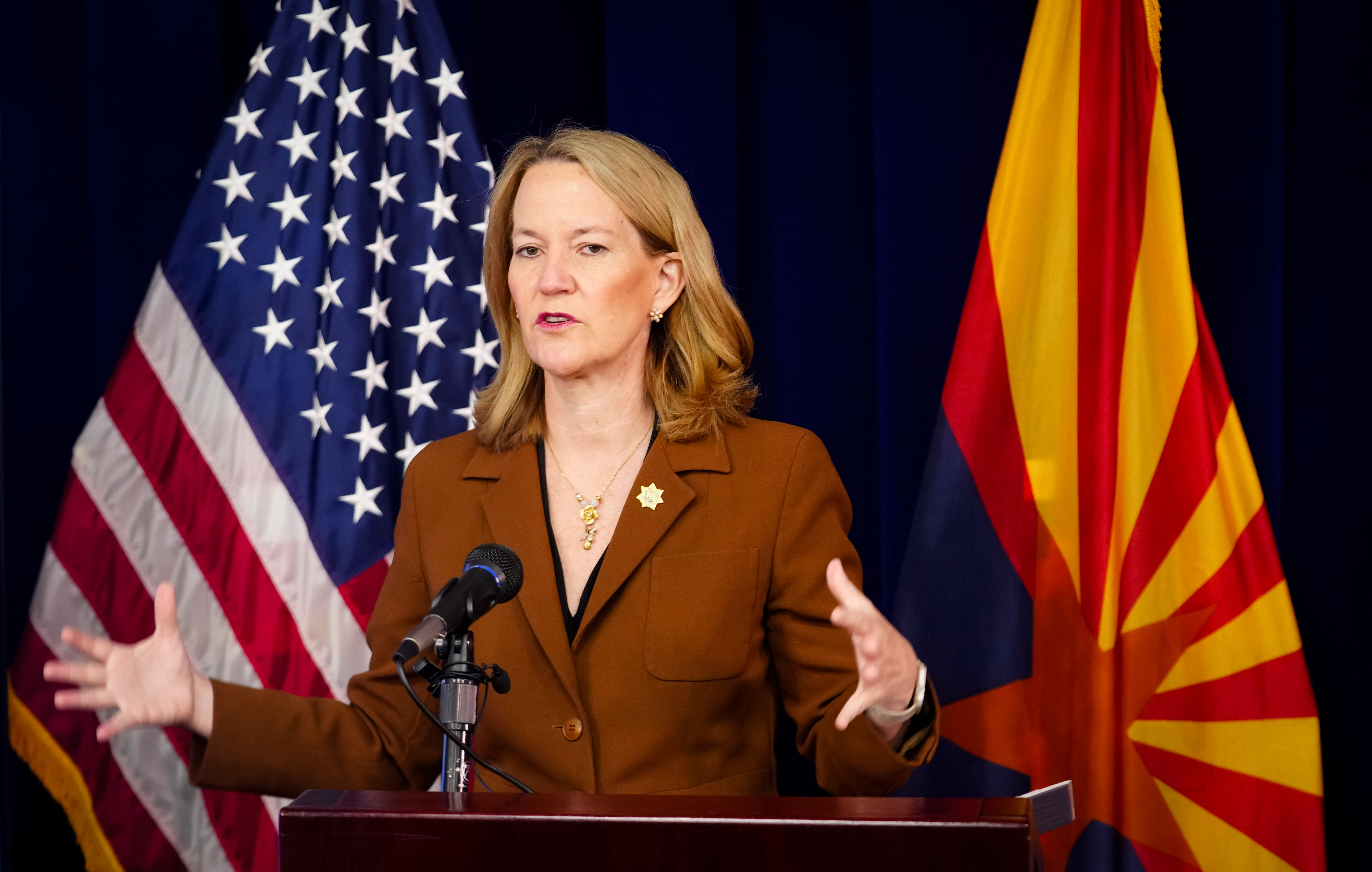
August 28, 2026
Daniel Cohen
World News
On Sunday, August 23, Family Research Council President Tony Perkins delivered remarks at the Ukraine National Prayer Breakfast in Kyiv, with Ukrainian President Volodymyr Zelensky, members of the Ukrainian Parliament, and other dignitaries in attendance.
Mr. President, distinguished members of the Ukrainian government and Parliament, leaders of the church, honored guests, ladies and gentlemen:
It is a profound honor to be with you here in Kyiv at this consequential moment in the life of your nation. Thank you for the privilege of joining you for the Ukraine National Prayer Breakfast.
I come as a friend of Ukraine, grateful for the opportunity to stand with you in prayer, but most importantly to share with you from the word of God.
Alexander Solzhenitsyn wrote in “The Gulag Archipelago”:
“The line separating good and evil passes not through states, nor between classes, nor between political parties either — but right through every human heart.”
The Apostle Paul describes the deeper conflict this way in his letter to the Ephesians:
“For we do not wrestle against flesh and blood, but against principalities, against powers, against the rulers of the darkness of this age, against spiritual hosts of wickedness in the heavenly places.” (Ephesians 6:12)
There is a war for Ukraine’s territory, but the battlefield we see reflects a greater battle being waged in the heavenlies — a battle for the soul of Ukraine and the hearts of its people.
In the late 1980s and early 1990s, I worked with the U.S. Department of State managing one of its Anti-Terrorism Assistance Program sites. Shortly after the fall of the Berlin Wall in 1989, we began training police officers and other security officials in the United States from former Eastern Bloc countries.
I would personally acquire Bibles and place them in their dorm rooms before their arrival.
With one Polish class, the demand for Bibles was so great at the time that I was unable to get the Bibles before the officers arrived. They finally came in the night before the class was scheduled to leave.
My office was on the ground floor of the dormitory, so I sent word to their interpreter and escort that I had Bibles in Polish in my office if they would like one.
Within 10 minutes, the entire class was crowded into my office — some in their underwear, having jumped out of bed.
With tears in their eyes, some told me they had never owned a Bible. One asked for another for his elderly mother. One asked me to sign his Bible.
I told him, “I didn’t write it, so I better not sign it.”
I have never witnessed such a genuine hunger for the word of God.
Thirty-five years ago, Ukraine declared its independence, which was overwhelmingly affirmed by the Ukrainian people in December of that year.
That historic political awakening was preceded three years earlier by a remarkable spiritual opening as Christians marked the 1,000th anniversary of the Christianization of Kyivan Rus under Volodymyr the Great in 988.
While there were certainly political advantages for him to embrace Christianity, the ancient chronicles present a striking before-and-after portrait of Volodymyr. The ruler once associated with pagan worship, violence, and numerous wives and concubines became a ruler who destroyed idols, built churches, promoted Christian instruction, cared for the poor, and sought to govern according to his newfound Christian faith.
According to the earliest Christian accounts, the Christianization of Volodymyr changed the Grand Prince personally, and it changed the policies and direction of his realm.
A spiritually renewed heart lays the foundation for a reformation of our ways.
Genuine spiritual renewal should produce reform.
But reform apart from spiritual renewal cannot be sustained.
Jesus illustrated this principle with a sobering warning in Matthew 12:
“When an unclean spirit goes out of a man, he goes through dry places, seeking rest, and finds none. Then he says, ‘I will return to my house from which I came.’ And when he comes, he finds [it] empty, swept, and put in order. Then he goes and takes with him seven other spirits more wicked than himself, and they enter and dwell there; and the last [state] of that man is worse than the first. So shall it also be with this wicked generation.”
The warning? Jesus was speaking to those of His day who had experienced a measure of reform through John the Baptist’s ministry yet rejected the One to whom John pointed, Christ Himself. The warning, which extends beyond that generation, is that freedom from the bondage of evil cannot be sustained by merely removing what is evil; the life that has been emptied must come under the transforming rule and presence of God.
Thirty-five years ago, Ukraine swept away atheistic communism, but what has taken its place?
Could the battle for Ukraine’s territory also be part of a larger spiritual battle, an effort to return this nation to the bondage from which it was delivered?
In the 1950s, as America moved deeper into the Cold War with the Soviet Union, the Rev. George M. Docherty, pastor of the New York Avenue Presbyterian Church in Washington, D.C., delivered a sermon on February 7, 1954, on the American Pledge of Allegiance and what it did not include. With President Dwight Eisenhower sitting on the front pew, the reverend declared, “Apart from the mention of the little phrase ‘the United States of America,’ it could be the pledge of any republic. I could hear little Muscovites repeat a similar pledge to their hammer-and-sickle-flag in Moscow. Russia is also a republic that claims to have overthrown the tyranny of kingship. Russia also claims to be indivisible.”
Three days later, a bill was introduced in Congress to add the words “under God” to our pledge of Allegiance.
And on Flag Day, June 14, 1954, Eisenhower signed the bill into law, saying, “From this day forward, millions of school children will daily proclaim the dedication of our nation and our people to the Almighty.”
Two years later, Congress made “In God We Trust” our national motto.
America’s leaders at that moment understood that the contrast with atheistic communism could not merely be political. Enduring freedom required a transcendent foundation, a recognition that the nation and its liberties ultimately stood under the authority of God.
Notice that Jesus begins by describing a man, a man delivered from the oppression of evil, but He ends by applying the warning to an entire generation: “So shall it also be with this wicked generation.” A generation that rejects the truth.
The warning is clear: it is not enough to drive evil out. The house cannot remain empty.
Ukraine has a remarkable Christian heritage. The flame of faith was kept burning through decades of persecution by courageous Christian men and women.
Here in Kyiv, one family embodied that courage.
Pastor Petro Vins was repeatedly arrested for preaching the gospel under Stalin. His family was told that he died in a labor camp. Decades later, they learned that he had actually been executed by the Soviet state.
His son, Georgi Veens, became a Baptist pastor here in Kyiv. When Soviet authorities sought to control the church, Georgi refused to surrender its spiritual independence.
Georgi was arrested and sent to Soviet labor camps — not once, but twice — for his religious activities. While imprisoned, Soviet authorities even refused to allow him to possess a Bible.
Think about that. A government so afraid of this Book that it would not allow a prisoner to possess one.
Years later, I watched men emerging from behind the Iron Curtain run from their beds for the opportunity to own one of these life-changing books.
And then there was Georgi’s mother, Lydia. She organized and led other relatives of imprisoned Christians, documenting the persecution and getting their stories beyond the Iron Curtain. She too was imprisoned for her faithfulness.
One family. Three lives. The same choice: Christ over communism.
And they were not alone. There were hundreds more who chose Christ and the way of the cross and courage over communism and compromise.
But now it is this generation’s turn.
Having said no to communism — will you say yes to Christ?
Now is the moment for Ukraine to fan that flame of faith in Jesus Christ — not just with political reforms, but with spiritual renewal and a declaration of dependence upon Almighty God.
Will the independence declared 35 years ago be sustained by a spiritually renewed nation that declares its dependence upon God?
Not merely in words, but, as with Grand Prince Volodymyr in 988, in deeds.
Not in proclamation alone, but in practice.
Solzhenitsyn was right: the line between good and evil runs through every human heart. And ultimately, that is where the battle for the soul of Ukraine will be decided — one heart at a time, as men and women surrender their lives to Jesus Christ.
What does it mean to surrender your life to Jesus Christ?
“But what does it say? ‘The word is near you, in your mouth and in your heart’ (that is, the word of faith which we preach): that if you confess with your mouth the Lord Jesus and believe in your heart that God has raised Him from the dead, you will be saved. For with the heart one believes unto righteousness, and with the mouth confession is made unto salvation. For the Scripture says, ‘Whoever believes on Him will not be put to shame.’” (Romans 10:8-11)
Believe in your heart and confess with your mouth.
This article was originally published on The Washington Stand.
25 min
‘Now Is the Moment for Ukraine to Fan the Flame of Faith’

August 27, 2026
Tony Perkins
World News
America’s political and cultural divisions are increasingly about more than elections or disagreements over public policy. From the growth of democratic socialism and the normalization of political contempt to debates over children, religious influence, and the future of the Republican Party, the deeper conflict concerns the values that will shape the country. The latest stories examined on Real Life Network reveal a common thread: when biblical truth is removed from the center of a culture, something else inevitably takes its place.
That replacement does not necessarily happen overnight. It happens gradually as ideas once considered extreme become acceptable, institutions abandon their founding principles, and basic moral convictions become increasingly difficult to defend in public.
A culture that removes God does not remain morally neutral. Something will always fill the void.
Political Contempt and the Battle Over America’s Future
One example can be seen in the growing influence of the Democratic Socialists of America and political figures associated with the movement.
The episode highlighted Hasan Piker, the influential left-wing streamer who has generated controversy through inflammatory political commentary. Cohen argued that Piker represents something larger than one provocative media personality: a political movement becoming increasingly comfortable with rhetoric that would once have remained on the fringes.
That concern becomes especially serious when political disagreement turns into contempt for human life.
The episode pointed to a viral gathering where Piker and others were described as mocking the assassination of Charlie Kirk while also ridiculing Christians. For Cohen, the significance was not simply partisan. It represented a culture becoming comfortable turning the violent death of a political opponent into entertainment.
That raises a basic question that should transcend politics: When did murder become funny?
Political disagreements are unavoidable in a free country. Republicans and Democrats will disagree about taxes, abortion, immigration, foreign policy, education, and countless other issues. But constitutional government requires something more fundamental than agreement. It requires citizens who recognize the humanity of their opponents.
The episode also featured comments about the DSA’s relationship with the Democratic Party, including a clip in which New York Times reporter Jeremy Peters argued that democratic socialists represent a distinct political organization whose ambitions extend beyond simply joining the existing Democratic coalition.
Whether democratic socialist candidates ultimately reshape the Democratic Party will be decided by voters. But Americans should listen carefully when political movements explain their objectives rather than assuming radical rhetoric will inevitably moderate once candidates obtain power.
Political movements should be evaluated not merely by polished candidates or campaign slogans, but by the ideas they openly advocate.
The same scrutiny should apply to the Republican Party.
Looking toward 2028, the episode examined Vice President J.D. Vance’s growing political and fundraising network, including a Hamptons fundraiser hosted by investor Omid Malik. Cohen raised concerns about Malik’s investment in Tucker Carlson’s media company and questioned what Carlson’s influence and changing posture toward Israel could mean for the future direction of the conservative movement.
The larger principle applies equally to both parties: voters should examine candidates, donors, advisers, relationships, and ideas before handing anyone political power.
What Are Adults Teaching the Next Generation?
Some of the most disturbing cultural questions have nothing to do with political parties.
The episode discussed the ongoing criminal case involving Lindsay Clancy, the Massachusetts mother accused of killing her three young children in 2023. Her defense has argued that she suffered from severe postpartum psychosis, while prosecutors have maintained that the killings were deliberate.
Mental illness deserves serious attention and compassion. Determining Clancy’s criminal responsibility belongs to the judicial process.
But Cohen focused particularly on public demonstrations of support outside the courthouse, where supporters gathered as Clancy arrived for proceedings. He argued that compassion for someone suffering from severe mental illness should remain distinguishable from appearing to celebrate or minimize the deaths of three children.
Scripture describes children as a heritage from the Lord. That gives parents an extraordinary responsibility to protect, teach, and care for those entrusted to them.
That responsibility also extends to what children are taught.
The episode subsequently highlighted Florida politician Angie Nixon discussing a community bookstore and the services associated with it. Cohen objected particularly to the combination of material intended for young audiences, sexually explicit content, and access to services such as Plan B. His conclusion was straightforward: parents cannot outsource the responsibility of raising their children to schools, political activists, government institutions, or cultural organizations.
If parents surrender their responsibility to form their children, someone else will gladly assume it.
Children are constantly being discipled by something. Their understanding of morality, sexuality, identity, truth, and purpose will be influenced by the people and institutions surrounding them.
Christian parents therefore cannot merely react when objectionable ideas appear. They must actively teach what is true.
From Harvard to Jerusalem: What Fills the Void?
Few institutions illustrate America's religious transformation as dramatically as Harvard.
Founded in 1636, Harvard's early mission was closely connected to preparing educated clergy. Nearly four centuries later, its religious and cultural environment looks dramatically different. The episode used footage of a Harvard ceremony that included a Quran recitation as a picture of that transformation.
The issue is larger than a single ceremony.
Institutions rarely remain philosophically empty after abandoning the beliefs that created them. Something new fills the space. The same principle applies to universities, governments, families, churches, and individuals.
Yet the episode ended with a dramatically different picture of religious life.
At a gathering in Jerusalem, Arab Christian children and Jewish followers of Jesus worshiped alongside one another at Succat Hallel, or “Tabernacle of Praise.” Against the backdrop of war, ethnic tension, religious division, and political hostility, children from different backgrounds were united in worship of Jesus.
That image offers an important contrast to the division dominating so much of modern culture.
Politics cannot ultimately reconcile the human heart. Neither can ideology, education, wealth, activism, or government. Christianity makes a radically different claim: reconciliation begins with God and extends outward to others through Jesus Christ.
The world insists that some divisions are permanent. Scripture offers another answer.
The gospel does not require people to pretend meaningful differences do not exist. It does not erase truth for the sake of superficial unity. Instead, it offers reconciliation grounded in the One who transcends nationality, ethnicity, political affiliation, and social status.
America's cultural struggles are real. Political extremism should be taken seriously. Parents should guard their children. Institutions should be held accountable. Citizens should carefully examine those seeking power.
But Christians cannot stop at identifying everything that is wrong.
The answer to a culture that has lost its moral center is not simply winning another election. It is recovering the truth that gives morality its foundation in the first place.
That is why the image from Jerusalem matters. In a world increasingly defined by contempt and division, Arab and Jewish believers worshiping Jesus together demonstrate that reconciliation is still possible.
Explore more coverage connecting the news to the good news through The Daniel Cohen Show on Real Life Network.
25 min
What the Response to Charlie Kirk’s Death Reveals About America
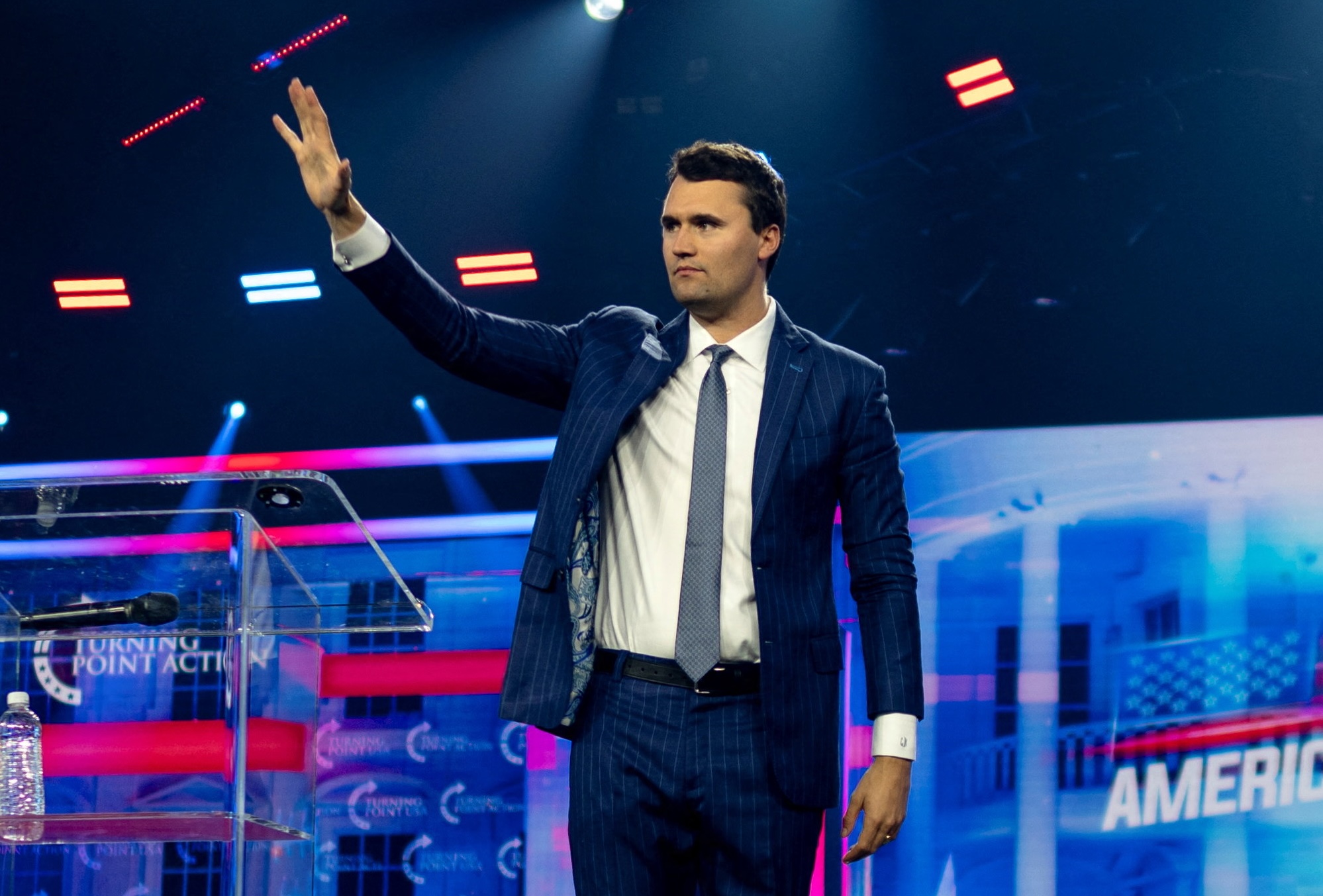
August 25, 2026
Daniel Cohen
World News
California was once synonymous with opportunity, innovation, natural beauty, and the promise of the American dream. Today, the Golden State is increasingly associated with unaffordable living, homelessness, crime, political dysfunction, and residents looking for somewhere else to build their future. The latest stories examined on Real Life Network point toward a larger question: What happens when bad policies become normal, accountability disappears, and citizens simply accept the decline?
California remains an economic powerhouse. Yet economic size alone cannot measure the health of a state. The more important measurement is whether families can afford to live there, businesses can thrive, children receive a quality education, elections inspire confidence, and government actually delivers the basic services taxpayers fund.
California does not have to settle for decline simply because decline has become familiar.
California Needs Accountability, Not Lower Expectations
The problems facing Los Angeles provide a revealing picture.
Los Angeles operates a public campaign-financing system that can provide matching funds for qualifying donations to participating candidates. The program is legal and longstanding, but its use in the current mayoral race raises a legitimate question about whether taxpayers should be required to subsidize political campaigns they may strongly oppose.
At the same time, Los Angeles continues struggling with homelessness and deteriorating public spaces. These problems are particularly difficult to ignore because California possesses extraordinary wealth and resources. A state with one of the largest economies in the world should be capable of delivering clean streets, functioning infrastructure, safe neighborhoods, and competent government.
Then there is the information citizens receive about the politicians seeking to lead them.
The episode highlighted a purported Los Angeles mayoral poll that claimed Karen Bass held a 12-point advantage. The organization behind the poll later said it had created the operation as a “social experiment” examining how polling information could spread through the political information ecosystem without independent verification.
That should concern everyone regardless of political affiliation.
Polling is powerful because it can influence fundraising, media narratives, voter enthusiasm, and perceptions about whether a candidate can actually win.
When political information is repeated before it is verified, reporting can stop measuring public opinion and begin shaping it.
Voters should therefore pay attention to methodology, sample size, likely voters versus registered voters, and the partisan composition of a poll rather than treating every new percentage as authoritative.
California’s future will ultimately be determined by voters who refuse to accept dysfunction as inevitable. The state’s problems were created through human decisions, which means different decisions can produce different results.
From California to Dearborn, Assimilation Still Matters
The question of leadership extends beyond California.
Florida offers an interesting contrast in election administration. The episode pointed to the speed with which Florida reported primary results compared with California, where counting can continue considerably longer. Different states have different election laws, ballot-processing procedures, and voting systems, so speed alone does not establish whether an election is secure. But Americans are justified in expecting election systems that are both accurate and efficient.
The broader political environment also shows continued tension between establishment Democrats and candidates aligned with democratic socialism. That movement matters because elections are ultimately contests over competing visions of government, economics, family, freedom, and the proper relationship between citizens and the state.
Those questions become even more consequential when immigration and assimilation enter the conversation.
Recent tensions in Dearborn, Michigan, were used in the episode to illustrate the difference between immigration and assimilation. America has always been a nation shaped by immigrants. But historically, immigration carried an expectation that newcomers would become part of the American project rather than construct isolated political and cultural societies within it.
That distinction matters.
A person does not need to abandon every cultural tradition, family custom, language, or heritage to become an American. But citizenship requires something deeper than geography. It requires a commitment to constitutional government, religious liberty, equal protection, freedom of speech, and peaceful coexistence with people who hold fundamentally different beliefs.
The episode pointed specifically to a confrontation involving Dearborn Mayor Abdullah Hammoud and a Christian resident who objected to a street designation honoring Arab-American News publisher Osama Siblani. Hammoud responded that the resident was not welcome in Dearborn and said he would hold a parade when the man left the city.
Whatever disagreements surround the underlying controversy, telling citizens they are unwelcome for expressing political or religious objections runs against the pluralism required by American civic life.
Immigration can strengthen America, but assimilation into America's constitutional principles remains essential to preserving the freedoms that attracted generations of immigrants in the first place.
The Same Mistake Is Being Made With Hamas
The conversation about shared values becomes even more serious in the Middle East.
The episode criticized the assumption that Hamas can eventually be persuaded to embrace the same understanding of peace held by Western negotiators. That criticism followed comments from Jared Kushner suggesting that Hamas would have an opportunity to demonstrate whether it was genuinely committed to peace by disarming.
The problem is that Hamas already demonstrated its intentions on October 7, 2023.
Any serious discussion about Gaza’s future has to begin with the reality of what happened that day and Hamas’s longstanding hostility toward Israel. Negotiation can be valuable, but diplomacy becomes dangerous when negotiators project their own assumptions onto adversaries who do not share them.
Peace requires more than signatures.
It requires parties willing to live peacefully.
The same principle applies whether considering local government, immigration, elections, or international diplomacy: policies cannot be evaluated merely according to what leaders hope will happen. They must be evaluated according to reality.
Scripture repeatedly calls believers to discernment. Jesus instructed His followers to be “wise as serpents and innocent as doves” (Matthew 10:16). Wisdom does not require cynicism, but neither does Christian compassion require naivety.
Christians should desire peace. Christians should welcome the stranger. Christians should pursue justice. Christians should treat political opponents as people made in the image of God.
But none of those convictions require pretending that evil does not exist or that every ideology shares the same understanding of freedom, truth, human dignity, or peace.
California’s struggles, America's debates over assimilation, and Israel’s confrontation with Hamas may appear disconnected. Yet each raises a similar question: Will reality determine our decisions, or will ideology prevent us from acknowledging what is directly in front of us?
The answer requires citizens willing to demand accountability, reject manipulated narratives, participate in elections, defend constitutional freedoms, and exercise biblical discernment.
Decline is not inevitable. But reversing it requires recognizing it first.
For more coverage connecting politics, Israel, culture, and faith through a biblical worldview, watch The Daniel Cohen Show on Real Life Network.
25 min
California’s Crisis Is Bigger Than Politics
.jpg)
August 24, 2026
Daniel Cohen
World News
As China’s communist regime continues to accelerate its oppression of Christian pastors and believers, a campaign to allow a persecuted pastor ailing from cancer to reunite with his family is intensifying ahead of Xi Jinping’s summit with President Donald Trump in Washington in September.
Last week, reports surfaced that three young pastors of the independent Maizhong Reformed Church in Fuyang have been sentenced “to prison terms of up to one year and seven months” simply for performing weddings and organizing religious instruction, among other ordinary pastoral work. The court accused the Christian pastors of “organizing illegal gatherings” after the communist regime had legally shut down the church, claiming that their activities “had severely disrupted public order.”
Outcry over the case has grown after the wife of one of the pastors, Xu Chao, described the miscarriage of justice on social media. “What is infuriating is that people who clearly committed no crime have been forcibly convicted, while those who illegally installed surveillance equipment in my home remain free from consequences,” she wrote. “Those who cause innocent people to suffer injustice are the ones who are guilty. History will remember everything that is happening today and will judge every decision that has been made.”
As noted by ChinaAid, the Chinese Communist Party (CCP) has increasingly employed charges of “illegal business operations,” “fraud,” “inciting subversion of state power,” and “organizing illegal gatherings” to describe routine activities of churches that are disfavored by the state ever since it instituted its revised Regulations on Religious Affairs in 2018. As a result, a number estimated to be in the thousands of “unregistered” house churches have been shut down, and hundreds of pastors have been imprisoned.
A particularly tragic case that is being spotlighted by human rights advocates is that of Pastor John Cao, a permanent resident of the U.S. who spent seven years in a Chinese prison simply for serving the destitute along the China-Myanmar border. As described by ChinaAid Founder and President Bob Fu, Cao is being restricted from leaving the country to reunite with his family despite suffering from rapidly progressing stage 4 prostate cancer.
“He has been a faithful pastor, humanitarian, [and] educator,” Fu related during “Washington Watch” Wednesday. “He could have chosen to lead a comfortable American dream life when he came to the U.S. more than 40 years ago. But he felt God called him to really continue the gospel ministry — and especially on the field of education in China. And so, he established essentially 16 schools for 2,000 children on the China-Myanmar border for those children who are under persecution by the Myanmar military regime and who otherwise would not have any education at all. He gathered churches from the Chinese underground church and American churches [to] help them. But for that, basically, he was lured back into China and then sentenced to seven years [of] imprisonment.”
Fu continued, “He served [every] single day of [the] seven years, and unfortunately, the Chinese government [is] still preventing him from coming back to reunite with his Caucasian-American wife … and their two sons and even their first grandchild. … [N]ow he has been diagnosed with stage 4 prostate cancer and [it] is spreading into his bones, and he’s not able even to walk anymore at the age of 67 years old.”
Fu, who serves as a senior fellow for International Religious Freedom at FRC, went on to urge President Trump to appeal to Chinese President Xi Jinping during their upcoming September 24 summit in Washington to allow Cao to reunite with his family. “[T]ime is of the essence,” he underscored. “We urge … President Trump to speak from really [a] humanitarian basis to President Xi Jinping … to just give back his passport and allow him to fly back to spend the rest of his limited time on this earth to be with his family.”
Fu highlighted a petition drive asking the president to advocate on behalf of Cao with a goal of reaching 100,000 signatures before the September 24 summit. “Please pray fervently that the Lord will grant mercy and grace for President Trump to hear these petitions and make an appeal to [Xi] to get Pastor John Cao to be home with his family in the next few weeks,” he concluded.
This article was originally written by Dan Hart and published on The Washington Stand. For more content like this, visit Real Life Network.
25 min
Campaign to Reunite Dying Chinese Pastor with Family Grows amid Increasing Crackdown

August 20, 2026
The Washington Stand
World News
Across the U.S., a startling statistical anomaly has quietly metastasized into a national crisis: millions of working-age males have begun ditching the workforce. They’re not retiring, nor are they registering as unemployed. They simply have stopped looking for work.
While economists have debated endlessly over structural shifts, such as automation and wage stagnation, a more uncomfortable conversation is appearing in policy circles. The silent exodus of American men denotes a deeper cultural pandemic, which is a decaying work ethic stoked by a swell of public handouts and a pervasive social narrative that tells the individual that they should settle for nothing less than a passion project.
The Vanishing
According to Bureau of Labor Statistics data, labor force participation for those in the prime age for work — between 25 and 54 years of age — has experienced a steady, decades-spanning decline. At the midpoint of the 20th century, over 95% of men were working or seeking employment. Today, that rate has plummeted dramatically, leaving nearly seven million men of prime age sidelined as contributors to the American economy.
Policy analysts and sociologists alike warn that this developing trend cannot be explained away by mere shifts in demographics. Unlike past generations, who considered self-reliance a badge of honor, today’s lack of a vigorous workforce illustrates the fundamental erosion of the conventional work ethic.
As scholar Nicholas Eberstadt observed in his feature study on the crisis, “the progressive detachment of so many adult American men from regular paid labor can only result in lower living standards … and the consequences are not just economic. The male exodus from work also undermines the traditional family dynamic, casting men into the role of dependents and encouraging sloth, idleness, and vices.”
The Trap of Entitlement
A major driver of this contraction in the workforce is the direct consequences of social safety net expansion. What was once designed with the intention of being temporary cushions during economic recession has morphed into a permanent way of living for millions of able-bodied Americans.
Divided amongst state-funded disability benefits, nutritional assistance, and low-income housing subsidies, the economic estuary that exists between a demanding career and remaining jobless has dried up to almost a point of non-existence. When safety nets mitigate non-work without demanding an exchange, the motivator to persevere through demanding labor dissolves.
Eberstadt warned that this trajectory threatens the fundamental ethos of the country, noting that “whether we choose to recognize it or not, this feature of the American condition, the new ‘men without work’ normal, is inimical to the American tradition of self-reliance.”
The Myth of Passion
Building upon this policy failure is a corrosive cultural fable that has been fed to the younger generations, which is the notion that everyone is entitled to a job that falls in line with their own passions perfectly.
Over decades, higher education institutions and popular media have preached a doctrine of self-fulfillment above everything. Young men have been conditioned to believe that a job in manufacturing or heavy construction is a compromise of the potential they have when it doesn't align with their dream career.
Economic reality operates in the context of necessity, however, not utopian ideals. Popular figures such as Mike Rowe have strongly pushed back against this cultural illusion, arguing that “when people follow their passion, they miss out on all kinds of opportunities they didn’t even know existed… never follow your passion but always bring it with you.”
Branding ordinary, tough jobs as “beneath” today’s worker, American society has spurred young men to wait around for their dream opportunities to manifest — even though there’s no guarantee that it will ever arrive, rather than rolling up their sleeves and doing what is needed.
The Fallout
The economic consequences resulting from millions of idle men prove staggering. Business owners across trades report chronic labor shortages, superficially driving up supply chain costs and delaying infrastructure growth. Local communities meanwhile must deal with rising rates of isolationism and civic-service decline, a phenomenon tied directly to the absence of systemic labor.
The reversal of this decline will be vested in a realignment of policy and cultural values. Until policymakers take the steps to confront this reality that a flourishing state relies upon its citizens’ willingness to do things that are hard and uncomfortable, the already far too high number of America’s missing able men will continue to rise.
This article was originally written by Zach Patton and published on The Washington Stand. For more content like this, visit Real Life Network.
25 min
The Lost Drive: American Culture Has Decayed the Value of Hard-Working Men
.jpg)
August 18, 2026
The Washington Stand
World News
The biggest battles shaping America are not always fought in Congress or decided at the ballot box. Many begin in classrooms, universities, churches, newsrooms, and other institutions entrusted with shaping how Americans understand truth. From election integrity and higher education to religious liberty and biblical authority, the question is increasingly clear: Who gets to shape the next generation? Real Life Network examines these cultural debates through a biblical worldview, while The Daniel Cohen Show connects today's headlines to deeper questions of faith, truth, and freedom.
Election Integrity and the Battle Over Education
Confidence in elections depends on Americans believing that every legitimate vote counts and that safeguards exist to prevent unlawful participation.
That concern has returned to Minnesota, where state law allows a registered voter in a precinct to vouch for the residence of up to eight people registering on Election Day. Recent videos from James O'Keefe drew renewed attention to the practice after he questioned polling workers about how the process operates. Minnesota officials responded that participants sign legal oaths regarding residency and criticized O'Keefe's conduct.
A legal voting procedure is not itself proof that illegal votes were cast. But Americans should be able to scrutinize election procedures and ask whether existing safeguards are sufficient.
Election integrity should not be partisan. Every American benefits from a system that makes voting accessible to eligible citizens while maintaining meaningful safeguards against unlawful participation.
The same need for scrutiny applies to education.
Universities have long presented themselves as places where students encounter competing ideas and learn to think critically. Yet Americans increasingly disagree over whether political activism has become intertwined with education itself.
The discussion highlighted comments from University of Chicago professor Eman Abdelhadi at a 2025 socialism conference, where she discussed political organizing and her involvement with students. Her remarks were presented as part of a broader concern about political activism on university campuses.
Students should encounter ideas they disagree with. They should wrestle with competing political, religious, and philosophical arguments. But education becomes something different when students are taught what to think rather than equipped to determine what is true.
The debate begins long before college. A Texas school district also drew attention after students visited an Islamic center as part of an educational experience designed to expose them to another faith and culture. That prompted questions about whether public schools apply religious neutrality consistently, particularly when Christian practices or symbols have generated constitutional controversies.
Religious liberty cannot mean accommodating one faith while treating another as inherently dangerous to public life. The standard should protect Muslims, Christians, Jews, and everyone else equally.
Biblical Authority Cannot Be Redefined by Politics
For Christians, the question of who shapes the next generation eventually reaches the Church itself.
Political candidates frequently invoke Christianity and Scripture. But theological vocabulary should never substitute for examining what someone actually believes.
The discussion highlighted Texas political debates over teaching biblical material to children and comments from Senate candidate James Talarico criticizing a state curriculum that he argued would present Christian Bible stories as historical fact and exclusive truth to young students. The program challenged that characterization and raised a broader question: If children are being formed by what they encounter at school, who determines which worldviews are acceptable?
Christians should apply that scrutiny in every direction.
A seminary degree does not automatically make someone's theology biblical. Neither does being a pastor, writing Christian books, or speaking from a pulpit.
The program also highlighted comments from pastor and political candidate Adam Hamilton concerning the eternal destiny of adherents of other religions. Hamilton expressed hope that people of other faiths could ultimately encounter Christ without embracing the traditional evangelical understanding that explicit faith in Jesus is necessary for salvation.
For Christians, that is no minor theological disagreement. Jesus declares in John 14:6, "I am the way, and the truth, and the life. No one comes to the Father except through me."
Christianity loses its foundation when Jesus becomes merely one path among many rather than the Savior at the center of the gospel.
Biblical literacy therefore matters. Christians cannot determine truth according to a political party, favorite pastor, media personality, or cultural trend. Scripture itself must remain the standard.
Truth Matters in the Newsroom Too
The responsibility to pursue truth extends to journalism.
A complicated surrogacy case involving a baby born with hypoplastic left heart syndrome demonstrated how framing can affect the way audiences understand a story. According to the account discussed on the program, the surrogate objected when the biological parents chose to terminate the pregnancy after learning of the diagnosis. She eventually traveled to Texas, carried the baby to term, and became involved in a legal dispute over the child's future.
The program criticized national media coverage for framing the situation primarily as a custody battle rather than emphasizing the earlier disagreement over terminating the pregnancy. The biological parents' attorneys, meanwhile, said their clients were devastated by the circumstances and focused on ensuring the child received necessary medical care.
Journalism inevitably involves choices. Editors decide which facts lead, which quotations appear, and what context audiences receive. That power carries responsibility.
The same principle applies to questions surrounding COVID-19. Former ABC News correspondent Terry Moran described internal changes to a report concerning the origins of the pandemic and Anthony Fauci's involvement in the review process. His account raises questions about how major news organizations handled competing theories during a period of extraordinary uncertainty.
The answer is neither blind trust nor automatic distrust. It is discernment.
America's institutions will continue competing for the attention and allegiance of the next generation. Schools will teach. Politicians will persuade. Journalists will frame stories. Pastors will preach. The question is whether Christians will simply absorb those messages or learn to test them.
Christians should be among the people most committed to truth because Christianity itself makes objective claims about what is true.
Facts matter. Context matters. Evidence matters. Most importantly, Scripture matters.
At Real Life Network, believers can find programming designed to help navigate today's cultural and political questions without separating the news from the truth of God's Word. Watch The Daniel Cohen Show for more conversations examining faith, politics, culture, and the ideas shaping America's future.
25 min
The Institutions Shaping America’s Future

August 17, 2026
Daniel Cohen
World News
America is having more than a political debate. It is having a debate about what kind of country it will hand to the next generation. From abortion and delayed family formation to declining academic standards, distrust in public health, and the growing influence of democratic socialism, seemingly unrelated headlines point toward a common question: What values are shaping America's future? At Real Life Network, these cultural questions are examined through a biblical worldview, while The Daniel Cohen Show challenges viewers to look beyond the headline and consider what today's decisions could mean tomorrow.
When Life Becomes a Matter of Convenience
Few issues reveal America's competing views of human life more clearly than abortion.
Recent changes to Massachusetts abortion law became a focal point of the discussion. Supporters have characterized the changes as strengthening reproductive protections, particularly for families facing devastating circumstances late in pregnancy. The argument presented on the show, however, is that removing specific statutory criteria and relying more heavily on a physician's professional judgment raises serious questions about protections for unborn children later in pregnancy.
That debate becomes especially striking when considered alongside modern neonatal medicine. Hospitals routinely devote extraordinary resources to saving premature babies. Physicians, nurses, and parents fight for children born months before their due dates, carefully monitoring every ounce of growth and every sign of progress.
For Christians, the value of those children does not depend on whether they are wanted, healthy, convenient, or capable of surviving without assistance. Human worth begins with the reality that every person is made in the image of God.
A culture cannot consistently defend human dignity if the value of a human life changes according to circumstances, location, or whether that life is wanted.
The conversation about children extends beyond abortion. Alexandria Ocasio-Cortez's public discussion of freezing her eggs prompted another debate about marriage, motherhood, career, and the cultural message surrounding delayed childbearing. The personal circumstances of any individual remain their own, but the broader cultural question is worth examining.
Modern society often tells young adults that family can be postponed while education, career, financial security, and personal achievement take priority. Technology may provide additional options, but it cannot eliminate every biological reality or guarantee future outcomes.
The Christian vision offers something different. Children are not obstacles to self-fulfillment. Marriage and family are not consolation prizes after professional goals have been accomplished. Scripture consistently presents children as a blessing and family as one of God's fundamental institutions.
That does not minimize the genuine heartbreak of infertility or prescribe an identical timeline for every person. It does challenge a culture that increasingly treats fertility as another part of life to be engineered around personal ambition.
What Happened to Truth and Excellence?
The same question of what America is handing the next generation reaches into education.
Thousands of University of California faculty members have reportedly called for reconsideration of the system's test-free admissions policy amid concerns about incoming students' mathematical preparation. The episode highlighted reports of substantial growth in the number of students arriving at UC campuses without high-school-level math proficiency.
Whatever role standardized testing ultimately plays in admissions, the larger lesson is difficult to ignore: lowering or removing a measurement does not automatically solve the underlying inequality.
Students deserve compassion and opportunity. They also deserve honesty.
Real education prepares young people to confront difficult standards, not simply removes the standards that reveal where preparation has failed.
The concern goes beyond mathematics. The program also examined course offerings at Arizona State University involving witchcraft, magic, and the occult, contrasting those offerings with the university's limited coursework specifically devoted to Christianity. The point was not that universities should prohibit the academic study of other beliefs. Universities should be places where competing ideas can be seriously examined.
The question is whether Christianity receives the same serious intellectual consideration in institutions that often pride themselves on diversity of thought.
Ideas never exist in a vacuum. When biblical Christianity disappears from education and public life, the resulting space does not remain philosophically neutral. Another understanding of humanity, morality, identity, and truth eventually takes its place.
Parents should therefore pay attention not only to whether their children earn degrees, but to what they are actually learning. A beautifully decorated dorm room means very little if students leave college academically unprepared and spiritually confused.
A Crisis of Trust and a Battle of Worldviews
Few institutions illustrate America's crisis of trust more clearly than public health.
The program revisited Anthony Fauci's pandemic-era statements and discussed recently publicized communications concerning COVID-19 vaccination and pregnancy. The episode argued that private discussions about possible risks deserve scrutiny when compared with the confident public assurances Americans heard during the pandemic. Claims about miscarriage rates and the meaning of those communications remain matters that require careful evaluation of the underlying evidence rather than conclusions drawn from isolated messages.
That distinction matters because public trust is difficult to rebuild once it is lost.
Scientific institutions should be able to acknowledge uncertainty. Officials should be willing to correct themselves when evidence changes. Americans should be able to ask difficult questions without immediately being treated as enemies of science.
The goal should not be replacing blind trust in government with blind distrust of government. It should be restoring a culture in which evidence can be examined openly and authorities are held accountable for what they tell the public.
That need for discernment extends into politics.
The program concluded by examining statements from leaders associated with the Democratic Socialists of America, including comments about the October 7 Hamas attack and the organization's position on policing and incarceration. Those comments were presented as evidence of a broader ideological movement that deserves far more scrutiny from American voters.
Elections matter because ideas have consequences. Political philosophies eventually become policies, and policies eventually affect families, neighborhoods, schools, churches, and communities.
Christians cannot afford to evaluate those ideas merely by party labels or campaign personalities. Every worldview makes assumptions about human nature, justice, authority, freedom, family, and morality. Those assumptions must be examined against Scripture.
The most important question is not whether an idea sounds compassionate or progressive, but whether it is true and whether its consequences honor the God-given dignity of human beings.
That requires Christians to remain engaged rather than retreat from difficult cultural conversations. It requires knowing Scripture, examining evidence, voting thoughtfully, raising children with conviction, and refusing to surrender truth for cultural acceptance.
The stories will change. The political candidates will change. Today's controversy will eventually be replaced by tomorrow's headline. But the underlying battle over truth, human dignity, family, freedom, and the next generation will remain.
Christians therefore need more than outrage at what is happening around them. They need discernment about why it is happening and courage to respond faithfully. Real Life Network provides free, biblically grounded programming designed to help families navigate those questions, including The Daniel Cohen Show, where today's cultural and political headlines are examined through the enduring truth of a biblical worldview.
25 min
America’s Next Generation Is Paying the Price
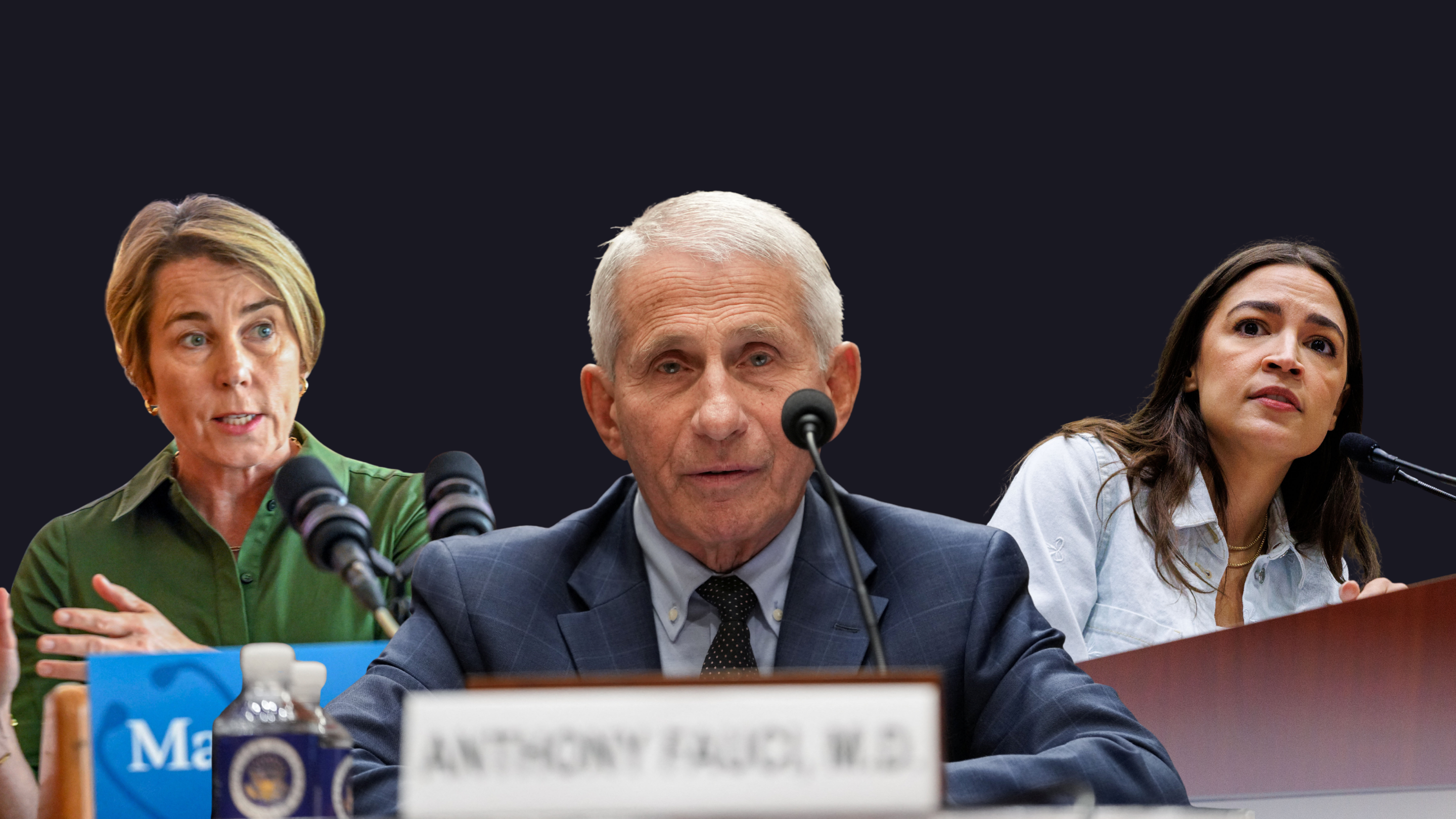
August 13, 2026
Daniel Cohen
World News
EROver the last 50 years, trust in the federal government has declined dramatically. About 77% of Americans once said they trusted the government. Today, that number has fallen to roughly 18%.
Events this week on Capitol Hill provided fresh examples of why trust in the federal government has eroded.
In the Senate Homeland Security Committee, the alleged architect of America’s draconian COVID-19 policies, Anthony Fauci, invoked his Fifth Amendment right against self-incrimination more than 100 times. He refused to answer questions about the origins of the pandemic, efforts to suppress those who pointed to the Wuhan Institute of Virology as the likely source of the virus, funding for gain-of-function research, and COVID policies that closed businesses, schools, and churches while mandating vaccines. Fauci invoked the Fifth even though former President Joe Biden granted him a preemptive pardon, a fact that raises questions of its own.
On the House side, even though members were out of session, the Ethics Committee was busy reviewing allegations involving members ranging from inappropriate conduct with female staffers and domestic abuse to illegal drug use and campaign finance violations. One member even abandoned his reelection campaign as he faces a rare bipartisan censure vote. Since 1789, only 28 members of the House have been censured.
But the erosion of trust is not confined to Washington. Government is only one of many institutions that Americans increasingly doubt. The media and Big Business are swimming at the bottom of public confidence after tying themselves to DEI initiatives and radical transgender ideology. While not as low, trust in religious institutions has also declined by nearly half.
The problem extends beyond institutions. Social trust, our willingness to trust one another, which is essential for a healthy and cohesive society, has also steadily declined. Scholars do not point to a single cause. In his book “Coming Apart,” Charles Murray identifies several contributing factors, including declining church participation, fewer civic organizations, less neighborhood involvement, reduced volunteerism, and the collapse of marriage and stable families. Those trends help explain what has happened, but they also point to a deeper question: what has changed in the human heart?
Perhaps we’ve become less trusting, and less trustworthy, not merely because our institutions have failed us, but because our trust itself has become misplaced.
The psalmist wrote in Psalm 118: “It is better to trust in the LORD than to put confidence in man. It is better to trust in the LORD than to put confidence in princes.”
When we expect government, leaders, institutions, or even ourselves to provide the security, hope, and certainty that only God can give, disappointment is inevitable. Misplaced trust eventually produces broken trust. Laws can restrain evil, but only transformed hearts produce trustworthy people.
Some of you may remember the old Texaco slogan: “You can trust your car to the man who wears the star.”
Here’s something worth thinking about. Our ability to be trusted, and to trust others, comes from trusting the One who made the stars.
Perhaps America’s greatest need today isn’t simply more trustworthy leaders. It is a people who once again place their trust in the One who is always trustworthy. When we trust God first, we become the kind of people others can trust as well.
This article was orignally published on The Washington Stand. For more content like this, visit Real Life Network.
25 min
Trust in Government Is Eroding. Here’s How to Bring It Back.
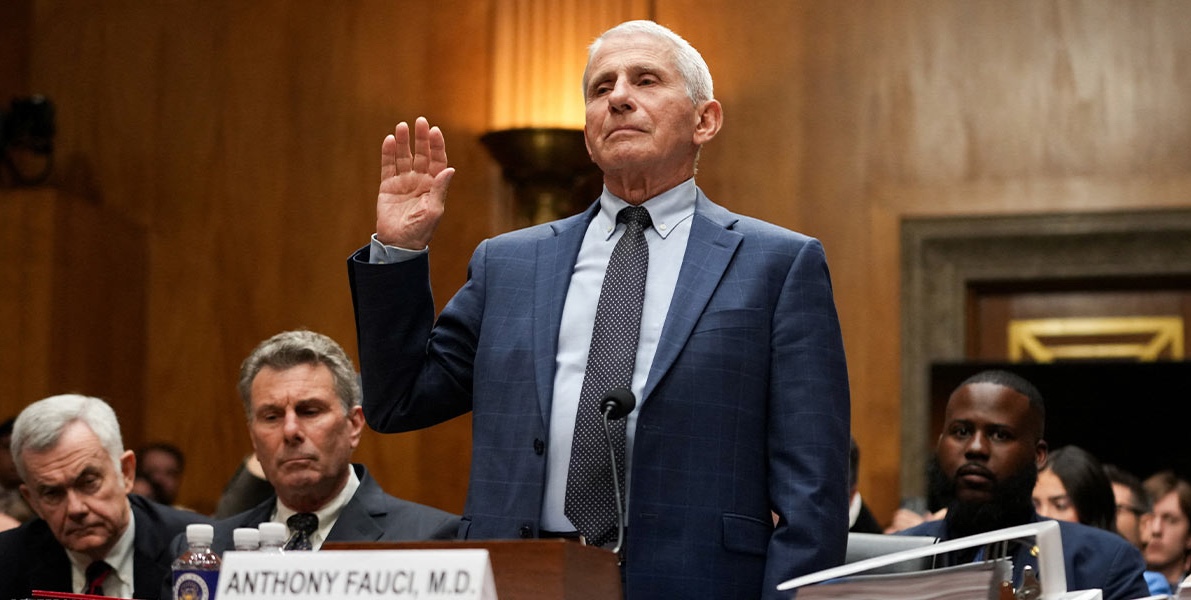
August 11, 2026
Tony Perkins
World News
A Christian education program previously canceled in Georgia has gotten the green light to restart after its director was punished for exercising his free speech rights on social media.
Vidalia City Schools made the decision to cut the program after director of Sweet Onion Christian Learning, Rev. Gady Youmans, criticized a possible spike in taxes on Facebook. His attorneys at Alliance Defending Freedom defended the pastor, arguing, “Every American has the right to publicly criticize the government — that’s what makes the First Amendment guarantee of free speech so special and the envy of the world. Vidalia City Schools can’t punish Rev. Youmans — or his ministry providing high school students with free religious education — for simply sharing his opinion of a proposed tax hike,” Legal Counsel Mercer Martin insisted. “We’re pleased the court has reinstated Sweet Onion’s released-time program and restored Rev. Youmans’ constitutionally protected freedoms while his lawsuit proceeds.”
Like a growing number of school districts, Vidalia had allowed the program, which, with parental approval, releases students “for a part of the school day to attend off-site religious instruction offered by a private sponsoring group. It recognizes and reinforces the constitutionally protected right of parents to direct the religious education of their children.”
Sitting down with Family Research Council’s Jody Hice on “Washington Watch” Tuesday, ADF Senior Counsel Phil Sechler reiterated, “The school had no business canceling the Sweet Onion Christian Learning Center and the release time program simply because of the Facebook posts that the executive director had made.”
“Basically,” Sechler continued, “he was criticizing proposed tax increases that he thought were unnecessary and unwise. And the school board didn’t like what he said. And soon he learned that the program would be canceled. And that’s just not consistent with the Constitution.”
According to its website, Sweet Onion’s mission is to make disciples through education centered around God’s word.
“We accomplish our mission to eradicate Biblical illiteracy by walking students through the Scriptures so that they can know God’s ways, in order to better know Him. When students know Him better they will know how to find favor in His sight,” the site reads.
ADF reported that the superintendent of Vidalia City Schools “secretly investigated Sweet Onion and learned that, six years ago, a parent from another school had removed her child from a Sweet Onion course after learning the ministry did not exclusively use the parent’s preferred version of the Bible. Based on this incident, the superintendent reported to the board that, in addition to disagreement with the content of Youmans’ Facebook posts, his instruction ‘reflected a particular interpretation of the Bible’ that wasn’t presented in a ‘neutral or well-balanced manner.’ By targeting his religious instruction, the district violated Youmans’ right to the free exercise of religion.”
When ADF filed the lawsuit in May, Sechler was optimistic about the case’s chances. Sechler stressed that it’s important to stand up for values, and to stand by them, such as in the case of Sweet Onion. “Don’t worry about the government coming after you. The First Amendment is there for a reason to protect your right to say things, and especially on social media.”
Sechler added that ADF hopes the case will inspire others to not let their voices be drowned out when it matters.
“The First Amendment protects Youmans’ right both to criticize the proposed tax increase and to teach the Bible from his religious perspective,” ADF noted. “By punishing him and his ministry for his criticism of the government and his religious instruction, school officials violated that fundamental right.”
This article was originally written by Quinn Delamater and published on The Washington Stand. For more content like this, visit Real Life Network.
25 min
Georgia Court Reinstates School Bible Program

August 7, 2026
The Washington Stand