
Stream Real Life Network Now

WATCH NOW
Devotional

.jpg)
Is It Time to Replace Noisy Entertainment with Faith-Based Family Media?
Is your family’s entertainment adding value or just noise? Discover how faith-based movies, documentaries, and programs can help Christian families make intentional media choices, encourage meaningful conversations, and create a more Christ-centered home.
Entertainment has never been more accessible. A television, phone, or tablet can provide an endless stream of movies, shows, short videos, news, games, and social media without ever reaching the bottom of the screen.
But having more to watch doesn’t necessarily mean families are better served by what they’re watching.
For many households, entertainment has become noisy in more ways than one. Programs compete for attention with faster pacing, stronger language, darker storylines, sexualized content, graphic imagery, and increasingly provocative themes. Algorithms encourage one more episode or video, while families can end an evening having consumed hours of media without feeling particularly rested, encouraged, or connected.
That raises a worthwhile question: Is it time to replace some of that noise with faith-based family media?
For Christian families, the answer may have less to do with watching less and more to do with choosing better.
What Does “Noisy Entertainment” Really Mean?
Noise isn’t necessarily about volume.
Media can be noisy when it constantly demands attention without giving anything meaningful in return. It can be entertainment built around shock, conflict, outrage, anxiety, or relentless stimulation. It can also be content filled with ideas and assumptions that compete with what parents are trying to teach their children.
Even material that isn’t overtly inappropriate can leave viewers feeling distracted or spiritually empty.
Philippians 4:8 gives Christians a useful standard for what deserves sustained attention, directing believers toward things that are true, noble, just, pure, lovely, and praiseworthy. That doesn’t mean every program needs to quote Scripture. But it does challenge families to think about what repeatedly occupies their minds.
Your Family’s Media Diet Matters
The phrase “media diet” is useful because entertainment has something in common with food: what is consumed occasionally matters less than what becomes normal.
One movie is unlikely to define a child’s worldview. Hundreds of hours of stories, characters, values, jokes, and messages over many years can have a much greater influence.
Children learn from stories. They notice which behaviors are rewarded, which relationships are celebrated, which beliefs are mocked, and what characters consider normal.
Adults aren’t immune either. Constant exposure to cynicism, fear, anger, or sexualized entertainment can gradually make those things feel ordinary.
Choosing faith-based media gives families an opportunity to put more spiritually nourishing material into that mix.
Replacing Is Often Easier Than Restricting
Parents can spend enormous energy saying no.
No, you can’t watch that show. No, that movie isn’t appropriate. No, we’re skipping this episode.
Boundaries are sometimes necessary, but they become much easier when there is also a good answer to, “What can we watch instead?” Faith-based streaming provides that replacement.
A family movie night could feature C.S. Lewis: The Most Reluctant Convert, opening conversations about doubt, reason, and conversion. A documentary such as The Listening Road can introduce thoughtful conversations about how people from different backgrounds think about faith. 7 Days in the Holy Land can help families visually connect places in Israel with biblical events.
The goal isn’t simply to remove entertainment. It is to replace some of it with stories and ideas worth carrying into the next day.
Faith-Based Media Can Start Conversations
One of the greatest advantages of watching Christian content together is what happens afterward. A program can naturally lead to questions that might otherwise feel forced:
- What would you have done?
- Why do you think that person responded that way?
- What does Scripture say about this?
- Do you agree with what was said?
Those conversations help turn viewing into family discipleship.
A documentary such as The Call, for example, can lead to discussion about the Great Commission and what evangelism looks like in ordinary Christian life. Way of the Master can prompt older children and adults to think about how they would talk about Jesus with someone who doesn’t share their beliefs.
The screen becomes the beginning of the conversation rather than the end of it.
Not Everything Has to Feel Like Bible Study
Replacing noisy entertainment with Christian media doesn’t mean turning every evening into a classroom. Families still need stories, laughter, discovery, music, and relaxation.
Faith-based media can include movies, animation, travel programs, interviews, biographies, documentaries, podcasts, and conversations. Some content teaches Scripture directly. Other programs simply tell compelling stories shaped by faith, courage, forgiveness, or hope.
That variety matters because healthy family media should still be enjoyable.
The distinction is that entertainment doesn’t need to undermine a family’s beliefs in order to hold its attention.
A Quieter Media Environment Can Help Families Slow Down
Another benefit of intentional viewing is simply reducing the constant demand for stimulation. Mainstream digital media often encourages viewers to keep going. Finish one episode and another begins automatically. Watch one short video and dozens more appear. Attention itself has become valuable currency.
Faith-based streaming can help families establish a different rhythm.
Choose one documentary. Watch a devotional together. Listen to a meaningful conversation. Then turn the television off and talk.
Programs such as Groundworks with Steve Wiggins are particularly suited to this approach because brief, Scripture-centered episodes can provide meaningful input without consuming an entire evening. Living Fearless with Andy and Hedieh can similarly encourage thoughtful conversation about faith and everyday challenges.
The objective isn’t to fill every available minute with Christian programming. It’s to make more intentional choices about which voices receive the family’s attention.
Parents Set the Tone
Children eventually make their own media choices. Before that happens, parents have an opportunity to model discernment. That includes more than policing what children watch. Kids also notice what their parents consume.
If adults spend hours immersed in angry commentary, dark entertainment, or endless scrolling while telling children to make healthier choices, the message can become confusing.
Christ-centered leadership in the home means asking the same questions of adult entertainment that parents ask about children’s programming.
- Is this helping or hurting?
- What is this normalizing?
- Is it worth the time being given to it?
- What could take its place?
Those questions can gradually reshape a family’s media habits without requiring an overnight purge of every mainstream platform.
Real Life Network Offers an Alternative
Real Life Network was created to provide a different kind of streaming environment.
Rather than placing biblical programming beside an enormous catalog of conflicting content, RLN carefully curates its library around Christian faith and biblical truth. Viewers can move between films, documentaries, podcasts, Bible teaching, cultural discussions, devotional programs, kids’ content, and live events without leaving that foundation.
That gives families something increasingly difficult to find in modern entertainment: a place where they can discover rather than constantly defend.
Parents still decide what fits the age and needs of their particular family. But the starting point is very different.
Replacing noisy entertainment doesn’t require rejecting technology, storytelling, or even every mainstream show. It means becoming more intentional about what receives a family’s limited time and attention.
Some entertainment merely fills a room. Better media can fill conversations, reinforce truth, encourage faith, and give families something meaningful to carry with them after the screen goes dark.
For Christian households, that makes faith-based family media more than an alternative. It can become one practical way to cultivate a home in which entertainment supports, rather than competes with, what matters most.
Explore biblically curated movies, documentaries, family programs, devotionals, and more anytime on Real Life Network.

Devotional
25 min
Created to Work, but Working under the Curse
Work is one of God’s good gifts, yet the Fall has made it difficult, frustrating, and fleeting. Scripture explains both our desire to find meaning in work and our longing for the lasting rest found in Christ.
One morning, I was riding my bicycle along Washington, D.C.’s Anacostia River when an egret glided over the trail. The pure-white wading birds have always fascinated me with their elegant stillness and regal grace. They look even more impressive on the rare occasions when they spread their wings and take flight, making them look even larger. Yet this impromptu bird-watching experience came to an abrupt and discordant end. The moment before the egret swooped into the brush and out of sight, he made like a bomber and dropped a load of ordnance worthy of an animal twice his size.
A graceful bird, caught in its least graceful position.
The minor incident nearly passed out of my mind until I realized that this un-constipated egret provided an apt example for man’s complex condition. From beginning to end, mankind’s creation is the gift of God. We are created in God’s image and likeness, given dominion over every living thing, and blessed with the good command to fill the earth with God’s image-bearers through procreation (Genesis 1:26-28). Yet our first parents squandered these divine blessings through disobedience and rebellion, for which they were cast out of God’s presence (Genesis 3:22-23) and condemned to die (Genesis 2:17).
Man is a graceful bird, caught in his least graceful position.
Christianity’s nuanced view of human nature becomes incomprehensible without the first three chapters of Genesis. This is why so many human philosophies veer into error on either one side or the other. Most human philosophies boil down to the opinion that man is basically good, or that he is basically bad. Only the Bible (and those influenced by the Bible) can explain how man is created good, but corrupted.
Mankind’s complex condition affects every aspect of our lives, even the way we work. Before anything had tarnished God’s “very good” creation (Genesis 1:31), we read that “The Lord God took the man and put him in the garden of Eden to work it and keep it” (Genesis 2:15). Work is not a consequence of the fall, but a basic function of man, which God created for good. Adam’s task was merely to imitate God’s own example in creative effort (Genesis 2:9), and it carries religious undertones, as the same verbs are used to describe service at the tabernacle in Numbers 3.
However, mankind’s work did not escape the Fall unscathed. Not only was Adam cast out of the lush garden into uncultivated land, but God also declared, “cursed is the ground because of you; in pain you shall eat of it all the days of your life; thorns and thistles it shall bring forth for you; and you shall eat the plants of the field. By the sweat of your face you shall eat bread, till you return to the ground, for out of it you were taken; for you are dust, and to dust you shall return” (Genesis 3:17-19).
The ground was Adam’s domain of work. By extension, this curse extends to all arenas of work. All work is toilsome, demanding, and sometimes fleeting, as the whole creation is “subjected to futility” (Romans 8:20).
Man is a graceful bird, caught in his least graceful position.
Again, the Bible’s complex theology of work has better power to explain the different attitudes people have towards their work than the fractured, individualistic worldviews dominant in America today. Some people love their jobs, while some people hate them. Why? Can individualism or critical theory offer a satisfying answer to this question? (Critical theory would blame group oppression, but that is not satisfying.)
The Bible has an answer. Some people love their jobs because work is a gift from God — a good gift that God created as part of his blessing on mankind. Even in a fallen world, the wise preacher concludes, “There is nothing better for a person than that he should eat and drink and find enjoyment in his toil. This also, I saw, is from the hand of God” (Ecclesiastes 2:24, see also Ecclesiastes 5:18-19 and 9:9). Yet some people also hate their jobs because work is cursed after the Fall.
Man is a graceful bird, but he is still caught in his least graceful position.
The very unseemliness of the aforementioned egret’s evacuation is what makes it an appropriate metaphor for fallen man under sin. “We have all become like one who is unclean,” Isaiah confesses, “and all our righteous deeds are like a polluted garment” (Isaiah 64:6). We need one who can wash our filth away, to achieve for us what we could never achieve by our own works.
Even though work is good, it is not ultimate. The Lord God engaged in his creative work for six days, “and he rested on the seventh day from all his work that he had done” (Genesis 2:2). Just as man was made to imitate God’s work, so man was also supposed to imitate God’s rest (Exodus 20:8-11). But, under the curse of sin, that rest became fleeting and far off.
From the earliest generations, Adam’s descendants sought one who would restore them to God’s rest. Thus, Noah’s father Lamech said in hope, “Out of the ground that the Lord has cursed, this one shall bring us relief from our work and from the painful toil of our hands” (Genesis 5:29). Yet Noah did not bring an end to toil, hard labor, or the futility of human industry. Nor did Moses, Joshua, David, or any human leader called by God throughout history. All were sinners, after all.
Yet painful toil under the curse is not man’s final condition, for “there remains a Sabbath rest for the people of God” (Hebrews 4:9). Those who are forgiven of their sins by the blood of Christ receive true grace. They are not only restored to right fellowship with God, but they also receive eternal life and enter into God’s rest.
For now, we recognize that all honest work is good. “In all toil there is profit, but mere talk tends only to poverty” (Proverbs 14:23). “Let the thief no longer steal, but rather let him labor, doing honest work with his own hands, so that he may have something to share with anyone in need” (Ephesians 4:28). “It is the hard-working farmer who ought to have the first share of the crops” (2 Timothy 2:6). But work is not ultimate, and one day our painful toil will come to an end.
Man is a graceful bird, and one day his graceless condition will be remedied in full. One day, those who are in Christ will enter into the glory and rest of their Redeemer.
This article was originally written by Joshua Arnold and published on The Washington Stand. For more content like this, visit Real Life Network.

Faith & Culture
25 min
The Faces We Can See
Abortion survivors put a face to the debate over life in the womb, reminding Christians that every human life is created by God with inherent value, dignity, and purpose.
In August 2026, Massachusetts Governor Maura Healey signed the Prioritizing Patient Access to Care Act, removing the state's remaining gestational limits on abortion and giving health care providers broader discretion to perform the procedure later in pregnancy without legal consequence. The room applauded. Hard
to believe, I know. Massachusetts now stands alongside nine other states and the District of Columbia in permitting abortion up to the moment of birth.
Healey framed the law as protection for families facing devastating medical news late in pregnancy, and as a shield against a more restrictive national climate. But protection is not the word for it. What this law actually does is strip away the last legal limit on when a child's life can be ended — clearing the way for abortion up to the very moment of birth. Pro-life advocates have rightly called this what it is: the United States is now one of only a handful of countries on earth with no gestational limit on abortion whatsoever, and laws like this one expose late-term children, who can feel pain, who can survive outside the womb, to the most violent procedures medicine performs.
An entire room stood and applauded that.
There's something our culture rarely talks about, something this signing makes impossible to ignore: the faces we can see. The lives that are here.
I'm talking about the people who survived abortion attempts.
For decades, abortion in America has largely been discussed through politics, court decisions, and ideology. But behind all of that — there are human beings. And some of those human beings survived.
They are alive today. They have names, stories, families, and voices. You can look into their eyes and hear them tell you what happened. And that changes the conversation. Because suddenly abortion isn’t theoretical or abstract. It’s personal.
There are documented cases of babies surviving abortion procedures in the United States. Survivor organizations have worked to bring visibility to those stories. Survivors have spoken publicly about living with physical injuries, emotional trauma, and the lifelong reality of knowing someone once tried to end their life before they were even born.
One of the most well-known survivors is Melissa Ohden, who survived a saline infusion abortion and has spent years speaking publicly about her experience and advocating for the born alive.
And even actor Sylvester Stallone spoke recently about being told by his mother that an attempted abortion failed before he was born. He has stated that his mother told him, "The only reason you're here is because the hanger didn't work.
Think about that for a moment. These are not "hypotheticals." These are people. People who laugh. Who love. Who contribute to the world. People made in the image of God.
And Scripture could not be clearer about the value of life.
Psalm 139 says: "For you created my inmost being; you knit me together in mymother's womb."
And Jeremiah 1:5 says: "Before I formed you in the womb I knew you."
That means human worth is not determined by circumstance. Not by convenience. And not by whether a life was planned, expected, or even wanted by others.
Value comes from God. Because God is the author of life.
And when we hear the stories of abortion survivors, we are forced to confront a reality our culture often tries to avoid: What happens when the child survives? What happens when the life everyone was told would never matter... is standing right in front of us? With a face, a voice, and a testimony?
And maybe that is why these stories are so powerful. Because they remind us that every life carries purpose. Every life — not some, not only the easy or convenient lives. Every life.
Now I also know this conversation touches a deep pain for many people. There are women — and men — who carry grief, regret, and wounds connected to abortion. And the Christian message is not that forgiveness is impossible. It’s the opposite. There is grace through Christ. There is healing through God. And there is most assuredly
redemption at the cross.
But truth still matters. And the truth is that these survivors exist. They are living proof that what is in the womb is not potential life. It is life.
Make Your Life Count
There are moments when we are reminded just how fragile life really is. Hearing the voices of people who survived abortion attempts, looking into the faces of people who were never expected to live — it changes something. It forces us to remember that every single life carries value.
Not because society assigns it value, or because government recognizes it. And not because culture approves of it. But because God created it.
Every life.
And maybe that's the deeper message in all of this. Not just that life should be protected — although it absolutely should. But that life should mean something. That our lives should count for something greater than ourselves.
Ephesians 2:10 tells us: "For we are His workmanship, created in Christ Jesus for good works, which God prepared beforehand, that we should walk in them."
Think about that. Prepared beforehand. That means your life is not random. It is not accidental. And it is never without purpose. Not the child in the womb, the struggling mother, or the survivor whose story seemed impossible. Not you.
We are told that we were created for good works — that we have nothing to do with — God already prepared those good works for us before we were even born. All we need do is to walk in them.
God wastes nothing.
And the truth is, none of us knows how long we've been given here. But we do get to decide what we do with the time we have.
Will we use our lives to protect what is vulnerable? To stand for truth when it's unpopular? To bring light into places that have grown dark? Will we make our lives count and walk in good works?
Because one day, titles won't matter. Politics won't matter. Fame won't matter. What will matter is whether we lived with courage, loved well, stood firmly in truth, and whether we pointed people toward God.
That is a life that counts.
And maybe the people who survived what should have taken their lives understand that better than most. Because when someone survives what should have taken their life, they tend to understand something very deeply: life is a gift. A sacred gift. And gifts from God are never meant to be wasted.
So wherever you are today — whatever your story may be — remember this: you were created on purpose. By God. For a purpose. Because of that we should commit to live courageously, stand faithfully, and love boldly. And dedicated in love to the One who created you to make your life count.
This subject was explored in depth on an episode of Rose Unplugged on Real Life Network; “Choice is a Person”.
.jpg)
6 Reasons Christian Families Are Switching Away From Popular Mainstream Platforms
Christian families are rethinking their streaming habits as they seek content they can trust. Faith-based platforms offer a way to spend less time filtering and more time enjoying programming that supports biblical values and meaningful family conversations.
Streaming was supposed to make entertainment easier. Instead, many Christian families now find themselves spending more time filtering, previewing, skipping, and explaining what appears on their screens.
Popular mainstream platforms still offer plenty of enjoyable programming, but the overall viewing environment has changed. Libraries are larger, mature content is easier to encounter, and shows often reflect values that do not align with a biblical worldview.
As a result, some Christian families are reconsidering where they spend their viewing time and turning toward faith-based streaming platforms instead.
The shift is not simply about avoiding bad content. For many families, it is about choosing something better.
1. Parents Are Tired of Constantly Filtering Content
One of the biggest frustrations with mainstream streaming is the amount of supervision it can require.
Parents may need to research a movie before watching it, check content ratings, monitor recommendations, or keep the remote nearby in case something unexpected appears. Even children’s profiles and parental controls cannot always eliminate questionable themes, previews, or suggestions.
Christian streaming platforms reduce much of that friction by curating the library before content reaches the viewer.
At Real Life Network, programs are intentionally selected by a team of Christians committed to biblical truth. Content is evaluated not simply for whether it is technically “clean,” but for whether its overall message aligns with Scripture.
For parents, that means less time policing and more confidence in what the family chooses to watch.
2. Families Want Content That Does More Than Avoid Objectionable Material
There is an important difference between content that is merely harmless and content that is genuinely helpful.
A movie can contain no profanity or explicit sexuality and still offer very little that strengthens faith, character, or family life. Many Christian families are beginning to ask a different question:
Instead of simply avoiding what is harmful, what if the family watched more content that actively reinforces what matters?
Faith-based streaming gives families access to Bible teaching, Christian documentaries, testimonies, apologetics, devotionals, and programs built around truth, courage, forgiveness, evangelism, and spiritual growth.
That turns screen time into an opportunity rather than simply a neutral activity.
3. Parents Are Becoming More Concerned About Worldview
Every story says something about what is true, valuable, admirable, or worth pursuing.
Sometimes those messages are obvious. Often they are subtle.
A show may communicate assumptions about relationships, human identity, authority, morality, success, or the purpose of life without ever stating them directly. When those assumptions appear repeatedly, they can gradually influence how viewers understand the world.
Christian parents increasingly recognize that media is one of the many forces shaping their children’s worldview.
Faith-based platforms offer a more consistent foundation. Whether viewers are watching a documentary, listening to a podcast, or enjoying a family program, the content is selected with biblical truth in mind.
That consistency can help reinforce what children are already learning through Scripture, church, and discipleship at home.
4. Families Want More Shared Viewing
Mainstream streaming can easily separate a household into individual screens. One child watches one series, another watches something completely different, and parents have their own shows.
Christian streaming can create more opportunities to watch together.
A documentary can lead to a conversation about faith. A Bible program can prompt questions from children. A testimony can introduce discussions about courage, suffering, or God’s faithfulness.
Real Life Network includes programming across a wide range of interests and ages, from films and documentaries to Bible teaching, cultural discussions, podcasts, and family content. Programs such as The Listening Road, The Call, and So True with Philip De Courcy give families different ways to engage with faith-centered stories and teaching without relying on the same type of programming every night.
The value is not simply what happens on the screen. It is what can happen after the screen goes dark.
5. Families Want Their Media Habits to Support Discipleship
Most Christian parents would never expect television to disciple their children. But media inevitably participates in formation.
What a family repeatedly watches affects conversations, attitudes, interests, and expectations.
That is why some households are intentionally redirecting a portion of their entertainment time toward content that supports spiritual growth.
A Christian streaming platform can make it easier to build small discipleship rhythms into ordinary life. A short devotional can become part of breakfast. A podcast can play during a road trip. A documentary can become the focus of a family evening. A teaching program can help an older teen wrestle with a difficult biblical question.
Streaming does not replace prayer, Scripture, church, or parental leadership. But it can either compete with those things or help reinforce them. Families increasingly want the latter.
6. They Want a Streaming Environment They Can Trust
Perhaps the biggest difference is not one individual program. It is the environment surrounding it.
On a mainstream platform, family-friendly programming sits alongside mature entertainment, conflicting worldviews, and content designed for entirely different audiences. Algorithms, thumbnails, and recommendations can move viewers quickly from one category to another.
A Christian platform begins with a different assumption: The entire environment should serve the viewer well.
Real Life Network is built around that idea. Its library is curated for biblical integrity, and programs that stray from that standard are not included simply because most of their content is good.
That creates something increasingly valuable in modern media: trust.
Parents still have an important role in deciding what is appropriate for each child and age level, but they are starting from a much stronger foundation.
Choosing Better Rather Than Simply Watching Less
Leaving or reducing time on mainstream platforms does not necessarily mean rejecting every secular movie or television show. Christian families will make different decisions about what they watch.
The larger shift is toward intentionality.
Instead of allowing algorithms to determine what fills the home, families can decide what deserves their attention. Instead of constantly asking, “Is this okay to watch?” they can also ask, “Is there something better we could be watching?”
That is where Christian streaming offers a compelling alternative.
Families can enjoy entertainment while also discovering content that encourages faith, strengthens biblical understanding, and creates opportunities for meaningful conversation.
For Christian households trying to lead their homes with greater purpose, changing streaming habits can be a small decision with a lasting influence.
Explore biblically curated movies, programs, documentaries, and teaching anytime on Real Life Network.
Faith & Culture
25 min
What Jochebed Knew
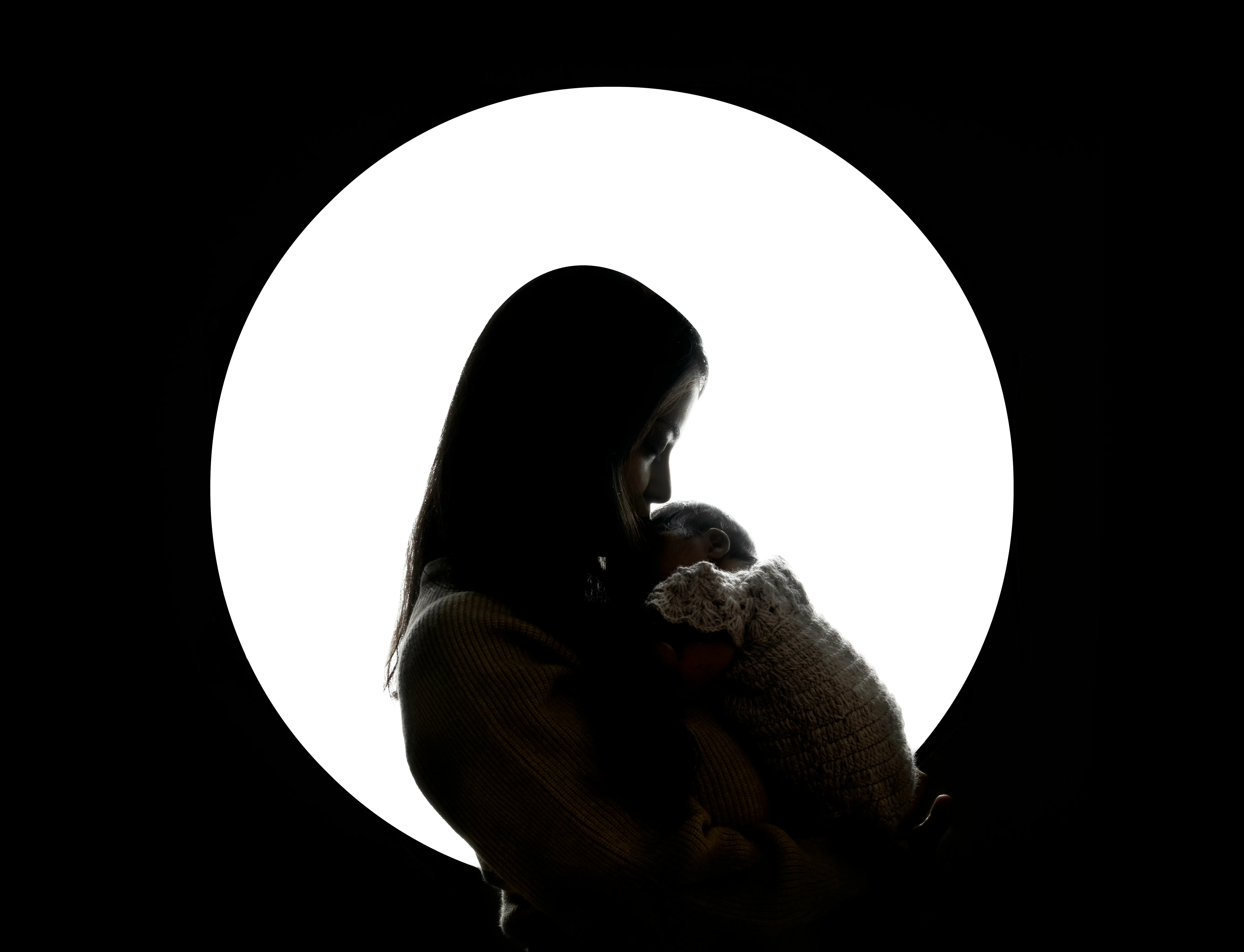
Motherhood often means holding tightly while learning to let go. Through personal memories and the biblical account of Jochebed, this reflection explores what it means to trust God with our children and believe He loves them even more than we do.
These reflections first aired as part of an episode of Rose Unplugged on Real Life Network.
I've been doing a lot of thinking lately about how my life and responsibilities have changed. In a good way. A very good way. Maybe it's because I'm a grandmother now. Watching my son and daughter-in- law with their toddler has a way of pulling me backward and forward at the same time. It's made me think about my early days as a mom and the joys and challenges that came with that responsibility. And let's be honest, parenting really is the best job in the world… but it is also a very intense job.
And I've been thinking about the difference — the very real difference — between moms and dads. In fact, this is exactly what they're meant to do — be different. When a man lays his head down on the pillow at night, he's out. Just like that. He sleeps, he gets up, and he goes back out the next day to care for his family in his own steady way.
But when women lay their heads down at night? Our minds are still running. It takes us a while to fall asleep. Because every single day, as a mom, you are carrying around more information than anybody else on the planet. You know exactly where your child is. You know his schedule by heart. You know he has study hall sixth period. You know what he's going to have for lunch — not just today, but tomorrow. You know the school lunch menu better than the cafeteria does.
Moms know how to handle doctor's appointments. We know how to get them seen when they're sick. We know what soothes our children, what worries them, and what they're not saying out loud. Why? Because we're moms. And that's the job. But I also know the men in our audience — they are there, engaged. They work hard. That's why families work best when both roles are honored.When strong families are built intentionally.
And thinking about that strong family unit brought back a memory for me. Years ago, when my son was about five, I wrote a letter to my dad. I don't remember every word, but I remember the heart behind it. Even then, I understood that while Mom was holding the details of our days together, Dad was the foundation.
I remember going fishing with him. I don't remember if we caught a single fish — but I remember the ham and capicola sandwich, and the cold can of Coke we packed for lunch. I remember how excited I was to just have that time alone with him. I remember the sacrifices. I remember the day he had to sell the car he loved when the steel mills began shutting down in Pittsburgh. He owned a design business that had worked with many of them, and when that industry faltered, so did his livelihood.
After he sold the car, I can still see him counting the cash out on the table. I think he sensed how badly we felt watching him give up something he really enjoyed. So, he suddenly tossed the money into the air, just to make us laugh. I was sad for him — but relieved when he did that. He did what he had to do for us. And because he was a resilient man, he redirected, rebuilt, and his business thrived until the day he retired.
Aristotle explained: “A multitude of great events if they turn out well will make life happier … while if they turn out ill, they crush and maim happiness … Yet even in these — nobility shines through, when a man bears with resignation many great misfortunes, not through insensibility to pain but through nobility and greatness of soul.”
I remember hard moments, too. Sitting in the front seat as he drove me to the hospital after I fell down a hill. I was crying, asking if I was going to die. Yeah — I was always dramatic. Dad answered with such calm assurance — even though I could see the worry in his eyes. And that's the thing about fatherhood. So much of its impact is quiet. You don't always see it in the moment — you feel it later, when you realize how much of what steadied you was simply someone showing up day after day.
And there's another memory that shaped me just as deeply. I remember sitting at my mother's bedside as she was dying from non-Hodgkin's lymphoma. I was the oldest of four — all of us rather young; heck, she was young. Only 48 years old. I told her I was so sorry for all the trouble I caused her as a teenager — and let me tell you, I caused plenty. I was rebellious, strong- headed, and well — a bit wild.
Do you know what she said to me? She said, “Do you think I don't know how teenagers are?” That moment was grace. It was forgiveness without a lecture. It was a salve to my spirit. And what's remarkable is that years later, as I was parenting a teenager myself, I heard her words again — steadying me, softening me, reminding me what love looks like in hard seasons. Because parenting is a long game. I remember when my own five-year-old once said, “I don't like you, Mom,” after I had to discipline him. It hurt. But then I thought about my parents. And I realized something — children don't always understand love in the moment. But they remember it over time.
I remember far more now than I did then. And I honestly believe I wouldn't have the joy, the home, the fulfillment I have today without my parents — and without God's faithfulness woven through it all. That's what I want to dig into here — the mother's heart, the father's role, and the strength of the family unit. There is a poem written by Maureen Hawkins called The Miracle of Life, and there's a line I read while I was pregnant that has never left me: “Before you were conceived, I wanted you. Before you were born, I loved you. Before you were here an hour, I would die for you. This is the miracle of life.”
It truly is the miracle of life — a truth every mother recognizes, deep in her bones, long before she ever has the words for it. While preparing for my show on parenting, I was reminded of Jochebed — Moses' mother. She's mentioned only briefly in Scripture, yet her obedience and courage changed history. Her love didn't just save a child — it contributed to leading a nation out of slavery.
There was a new king of Egypt who didn't have the relationship with Joseph that the previous king had. As a result, over time the Israelites were no longer favored guests in their land. The Pharaoh began to imagine them as the enemy, and as a people to be feared should they rise or join forces against Egypt. Out of fear and growing hatred of the Israelites, Pharaoh first enslaves them then commands the death of male children. Exodus 1:15-21 reads: “The king of Egypt said to the Hebrew midwives, whose names were Shiphrah and Puah, ‘When you are helping the Hebrew women during childbirth on the delivery stool, if you see that the baby is a boy, kill him; but if it is a girl, let her live.’”
The midwives couldn't bring themselves to obey Pharaoh's command. When they were questioned, they answered with remarkable courage and wisdom. They said in their defense that the Hebrew women gave birth so quickly the babies were already born before the midwives arrived. I love that. Very clever. You must admire their boldness — their cleverness, their reverence for life, and their fear of God. And Scripture tells us that God honored their faithfulness by blessing them with families of their own.
During the time that Jochebed gave birth to her son Moses, Pharaoh ordered all Hebrew boys thrown into the Nile. So, she hid her baby for three months. When she could no longer keep him safe, she did the unthinkable — she placed him in a waterproof basket and set him among the reeds. Can you imagine the heaviness of her heart? Keeping him meant certain danger. Letting him go meant uncertainty. But one choice offered a chance at life. That's what mothers do — risk everything for their children.
God honored that trust. Moses was discovered by Pharaoh's daughter, and through Jochebed's daughter Miriam's quick thinking, Jochebed was chosen to nurse her own son — was even paid to do so. God allowed Moses to be loved by both his biological mother and his adoptive mother. What compassion. What grace. Especially towards Jochebed.
Moses is remembered for leading a nation out of bondage. But behind that story is a mother who trusted God with what she loved most. Jochebed's story is really a story of surrender. Of trusting God to take an impossible situation and turn it into something miraculous. I remember the day Iplaced my fears for my son into God's hands.
I had given my son my very best. I raised him up in the way he should go, I loved him, sacrificed for him. But there comes a moment when we must do what Jochebed did. We must entrust our children to the One who loves them even more than we do. I remember telling God: I love my son so much — but however much I love him I realize that my love cannot possibly compare to the love that you have for him.
Setting our children free to be what God intended them to be is, at some point in their lives, the right thing to do — the only thing to do. Setting our children free to become who God created them to be isn’t easy — but it is right. And like Jochebed, that act of trust becomes part of our own story too.
I began with a quote about a mother's love. But it also echoes the heart of God toward each of us: “Before I formed you in the womb, I knew you; before you were born, I set you apart.”
Women — we must trust our child's life to the One who gives life. And that same God still holds our children — and us — in His hands.
For more content like this, visit Real Life Network.

Devotional
25 min
The Race of Faith: An Exercise in Human Responsibility and God’s Sovereignty
How do God's sovereignty and human responsibility work together? This article explores the Christian life as a race, showing how believers are called to run with endurance while relying completely on God's sustaining grace.
Christians often treat God’s sovereignty and human responsibility like two truths that can’t occupy the same room. One feels safe and comforting. The other feels heavy and demanding. But Scripture refuses to let us choose between them.
In one sense, we love the comfort of knowing He is in control. In another sense, we love knowing that we have free will to make choices. If we aren’t careful, especially in regards to thinking through God’s sovereignty in all things, a risky question may arise, gripping the conscience: If God is truly sovereign, does what I do actually matter? That tension is real, and avoiding it doesn’t make it go away.
If you’re a believer, chances are you already understand that the God of the universe is, in fact, sovereign. That truth is tremendously beautiful and a deep comfort. Yet it can also feel nerve wracking when we begin asking honest questions about human responsibility — about the real roles we play in living out our faith. Rather than avoiding the tension, let’s tackle it head-on. Together, let’s pursue the clarity Scripture actually gives us, instead of letting confusion and uncertainty divide us or keep us from bearing fruit where we otherwise could.
Throughout the whole Bible we see God’s ultimate sovereignty over the affairs of His creation. Throughout the whole Bible we also see that what we do really does matter — for better or for worse. Rather than surveying every example, I want to focus on one analogy the Apostle Paul himself used:
“Do you not know that in a race all the runners run, but only one receives the prize? So run that you may obtain it. Every athlete exercises self-control in all things. They do it to receive a perishable wreath, but we an imperishable. So I do not run aimlessly; I do not box as one beating the air. But I discipline my body and keep it under control, lest after preaching to others I myself should be disqualified” (1 Corinthians 9:24-27).
The race is a theme that surfaces again and again in Scripture. And here is what I find striking: if we are called to run a race and to endure to the end, does that not indicate that we bear great and real responsibility for whether or not we cross the finish line? I don’t think the answer is as simple as either extreme could make it — or perhaps it’s even more simple than anyone is willing to admit.
When we understand this analogy rightly, we have to hold two truths at once. On the one hand, running is hard, and it is something we must choose to do. Even after we choose it, we know how exhausting it is. If we’re honest, many of us stop to walk, take extended breaks, or even find ourselves wandering off the course — not always eagerly sticking to the straight and narrow.
Yet in terms of human responsibility and our call to run with endurance, I firmly believe running is far more mental than it is physical. When I ran cross country, I was fit enough to keep going, but I would consistently want to stop and walk, genuinely thinking it wouldn’t cost me much. Little did I know, however, that an act as small as walking to catch my breath was stopping me from ever learning how to — and believing that I could — run for long periods of time without stopping to walk.
As I was instructed, the very nature of walking is not the same as running. They are two different forms with two different effects on the body. When I first started, I didn’t need to learn how to move my arms or legs. Before anything else, I needed to train my mind not to quit. Even if I had to run as slow as a snail, simply by keeping the form I eventually discovered I could run much longer than I thought possible, and that I could even enjoy it! With time, the more I refused to stop and walk, the more quickly I progressed in speed as I ran.
One thing bled into another, but it all began with where my mind was — removing the mental block that insisted I had no other choice than to walk.
For the Christian, the mental blocks we must remove are many: anxieties, grievances, financial hardship, loneliness. The list is essentially endless. Thankfully, the Bible doesn’t leave us staring at the obstacles but gives us better things to set our minds on. I encourage you to find your verse — the one that steadies your heart and keeps you running. Mine is Acts 20:24: “But I do not account my life of any value nor as precious to myself, if only I may finish my course and the ministry that I received from the Lord Jesus, to testify to the gospel of the grace of God.”
So yes, there is real responsibility we bear in running this race and running it well. But here is the truth I most want to drive home: none of us would be able to run this race at all without the God of the universe by our side. It is He who paved the way through the death and resurrection of His Son. He is the One who brought us out of spiritual death and into spiritual life. He is the One who supplies the strength. He gives purpose to trials and hope amid suffering. He is the One who made the finish line exist and who made crossing it possible. Better yet, the race He calls us to run is not one He is asking us to win by our own effort. Why? Because it has already been won. Christ Himself declared, “It is finished.” He stands in victory across the finish line, seated at the right hand of God the Father.
In this race, God is the one who sustains and guides us. Even when we wander, He leaves the 99 to bring us home. When we cheat and break the rules, He is ready with mercy, grace, and forgiveness. When we grow weary, He spurs us on and gives us rest. Even when the race takes us through high waters, He has promised we will not drown. Not even the fires of adversity will consume us. When we stumble, He doesn’t leave us in the dust but He picks us back up onto our feet. Unlike any other race, this God — and the people with whom we co-labor — run with us, hand in hand, step by step.
And so, together, with each step we “press on toward the goal for the prize of the upward call of God in Christ Jesus” (Philippians 3:14). And the end goal, according to 2 Timothy 4:7, is simple. All of us who believe long to be able to say, “I have fought the good fight, I have finished the race, I have kept the faith.”
Christ is waiting for us with open arms. May we be able to say that we have finished the race — yet it will be He who says, “Well done, good and faithful servant.” Until that day, may we never lose hope and never allow our faith to wither. May we run well, with endurance and with joy, knowing that “they who wait for the Lord shall renew their strength; they shall mount up with wings like eagles; they shall run and not be weary; they shall walk and not faint” (Isaiah 40:31).
This article was originally written by Sarah Holliday and published on The Washington Stand. For more content like this, visit Real Life Network.
Thank you! Your submission has been received!
Oops! Something went wrong while submitting the form.
Devotional
In a culture filled with appearances and performance driven faith, Scripture reminds us that God is not impressed by what looks polished on the outside. True Christianity is revealed under examination. In this devotional, Pastor Jack Hibbs calls believers to sincere faith that can withstand the heat of God’s refining light.
A Faith That Can Be Examined
We are all at our best when we’re in the company of other Christians. But it’s who we are at home that defines the person we truly are. The question is, are you and I sincere?
Our English word “sincere” is a translation of the Greek word eilikrinēs, which means pure, unsullied, without wax, and able to bear full examination in the sun. That type of examination was essential because it wasn’t uncommon for first-century craftsmen to use wax as putty to hide cracks in their slightly damaged pottery.
When the Heat Reveals the Truth
Say you were a worshipper of the goddess Diana, and you purchased an idol to take to her temple. But as you held the statue in the warm sun, her arm fell off. What happened? When the heat was turned up, your idol was revealed for what it was—with wax and insincere. Likewise, when God turns up the heat in our lives through fiery trials, His purpose is to expose falsehood within us. We may deceive others, and even ourselves, but we cannot hide the truth from God. Our relationship with Him must be sincere. We cannot “putty” ourselves up and put on a show of Christianity. We must, as Paul prayed, “approve the things that are excellent.”
It’s time to get real—time to allow the full splendor of the light of God’s Word to examine us. That we might have a single eye to the very best things with a pure and sincere heart until the day of Christ.
Watch and Grow on Real Life Network
For more from Pastor Jack Hibbs and trusted biblical teaching that strengthens your faith, watch on Real Life Network. Stream free, faith filled content anytime at RealLifeNetwork.com or download the Real Life Network app today.
25 min

December 15, 2025
Jack Hibbs
Entertainment & Lifestyle
The Christmas season is here, and Real Life Network is once again offering believers a place to slow down, breathe, and rediscover the heart of Christmas. In a world filled with noisy online news, politics, and constant cultural pressure, RLN remains a trusted Christian streaming service that points viewers to truth, hope, and a biblical worldview. Hope for the Holidays, now streaming for free, is a Christ centered collection of sermons, music, and family programs created to lift your spirit and encourage your walk with Jesus.
In the busyness of December, it is easy to lose sight of the peace that Christ came to bring. Hope for the Holidays invites you to step away from the hustle and spend time reflecting on what really matters. Every message and every musical moment is designed to shine a light on the miracle of Jesus and remind families everywhere that Christmas is not about stress or schedules. It is about the Savior who came to redeem the world.
The series features biblical Christmas messages from trusted voices who teach the Word with clarity and conviction. These sermons point viewers back to the foundations of faith and remind us why the birth of Christ changed everything. Whether you are watching alone, with your family, or with your church group, these teachings help anchor your heart in the truth of Scripture during a season that often becomes overrun with distraction.
One of the standout pieces of Hope for the Holidays is Christmas Classics by the Fire, a peaceful Yule Log experience featuring music from David Jeremiah. With soft Christmas melodies and warm, comforting visuals, it creates the perfect atmosphere for prayer, devotion, or simply slowing down with loved ones. It is a refreshing alternative to the typical noise that fills the season and a reminder that worship can be simple and beautiful.
Families will also find seasonal shorts and kids programs that bring encouragement to all ages. These episodes help children understand the meaning of Christmas, celebrate the story of Christ’s birth, and grow in their understanding of God’s love. For parents searching for safe content in a world of confusing messages, RLN continues to provide wholesome, biblically faithful programming that strengthens the home and supports Christian values.
The heart behind Hope for the Holidays is simple. RLN wants to help believers experience joy, truth, and the presence of Jesus during one of the most meaningful times of the year. It is joyful, peaceful, centered on Christ, and all available in one place.
You can also explore more Christmas content on Real Life Network, including the popular 25 Days of Christmas series with Pastor Jack Hibbs, Daniel and Paige Cohen, and other RLN voices who bring biblical insight into today’s world.
As you enjoy the season, help spread the word about Real Life Network. Share this free, biblical worldview platform with friends, family, and your church community. At a time when so much of the media landscape is filled with confusion and uncensored news that pulls hearts away from truth, RLN exists to point people back to Jesus.
Watch Hope for the Holidays today at RealLifeNetwork.com and let your heart be filled with the joy and hope of Christ this Christmas.
25 min
Hope for the Holidays: A Christ Centered Christmas Experience on Real Life Network
December 11, 2025
Real Life Network
Devotional
Discouragement shows up quietly, often unexpectedly. It arrives after exhausting seasons, spiritual battles, unanswered prayers, or setbacks we never saw coming. Scripture shows us that even the strongest men and women of God faced discouragement. Elijah reached a point so low he asked the Lord to take his life. Jeremiah wrestled with loneliness and rejection. Paul confessed that he despaired even of life. David poured out some of the rawest words ever recorded in Scripture as he cried, “Why are you cast down, O my soul?”
Discouragement does not mean you have failed God. It means you are human. The real danger is not feeling discouraged. The danger is letting discouragement have the final word. God never rebukes His children for feeling overwhelmed. Instead, He meets us right in the middle of it and restores our strength.
This long-form devotional, inspired by Pastor Jack Hibbs’ teaching, will help you understand discouragement not as a sign of spiritual defeat, but as an invitation to anchor your heart in the promises of God and walk forward in faith.
Discouragement Comes for Every Believer, but God Meets Us in It
Some believers feel ashamed when discouragement hits. They assume that if they were stronger, they would not feel this way. But Scripture tells a different story. Elijah had just witnessed one of the greatest miracles in Israel’s history when discouragement swept in like a storm. His boldness suddenly collapsed into exhaustion, and he fled to the wilderness.
Jeremiah experienced deep pain because he was ridiculed and rejected for speaking God’s truth. Paul endured spiritual battles so intense that he admitted he despaired even of life. David, a man after God’s own heart, confronted discouragement repeatedly and spoke to his own soul, urging it to hope in God.
These examples show us that discouragement is not a spiritual flaw. It is a human reality. Even the most faithful servants of God can become weary under pressure, confused about God’s timing, or drained from long seasons of spiritual warfare.
But here is the good news. God does not scold you for feeling discouraged. He does not tell you to hide it or pretend everything is fine. Instead, He invites you to bring it to Him. Discouragement becomes dangerous only when it drives you away from God instead of toward Him.
God meets you in your discouragement. He speaks in the quiet moments when your strength is gone. He restores you with truth. He reminds you that He has not changed, even when your emotions have.
When you feel discouraged, the most spiritual thing you can do is be honest with God. Lay your burdens at His feet. Let Him restore what weariness has taken. You do not overcome discouragement through denial. You overcome discouragement through surrender.
The Enemy Uses Discouragement to Distract, Divide, and Weaken Your Faith
Discouragement is not neutral. It is one of the enemy’s most reliable weapons because it attacks your clarity, confidence, and courage all at once. When discouragement settles in, you begin to doubt what you know is true. Your prayers lose their boldness. Your perspective narrows. Instead of standing firm, you begin to shrink back.
Satan loves discouragement because it makes strong believers feel defeated and confident believers feel uncertain. If the enemy can discourage you, he does not have to defeat you. Discouragement will drain you until you stop pursuing God’s calling.
Discouragement often whispers lies such as:
“You are alone.”
“God has forgotten you.”
“Your prayers are not working.”
“Your obedience does not matter.”
“Nothing is changing.”
“Your best days are behind you.”
None of these statements come from God. They come from a real enemy who wants to pull you out of the battle and into isolation.
Discouragement also erodes your spiritual defenses. It shifts your focus to your emotions rather than God’s truth. But discouragement is not a lack of faith. It is a lack of perspective. When you stop seeing God clearly, discouragement fills the emptiness.
This is why the enemy amplifies discouragement the moment you obey the Lord. Many believers assume that obedience should make life easier, but the reality is the opposite. Some of your deepest discouragements will come right after you take a step of faith. The enemy presses harder because you are moving in the right direction.
Do not let discouragement convince you that you are going the wrong way. It may be the strongest confirmation that you are exactly where God wants you.
God’s Truth Must Speak Louder Than Your Feelings and Your Fears
Discouragement is loud. It echoes in your mind. It exaggerates your failures. It highlights your fears. It predicts outcomes that have not happened. It overwhelms your thoughts until you begin believing things that are not true.
This is why you must allow God’s Word to speak louder than your emotions.
When David was discouraged, he did not wait for his emotions to change. He spoke to his own soul. He declared the truth of Scripture. He reminded himself that God was still on the throne, still faithful, still good.
Sometimes the truth you need most is not new. It is simply forgotten. Discouragement causes spiritual amnesia. You forget who God is, what He has done, and what He has promised. That is why the most powerful thing you can do in moments of discouragement is to open Scripture and speak the promises of God aloud.
Psalm 18:2 says, “The Lord is my rock and my fortress and my deliverer.”
Psalm 34:17 says, “The righteous cry out, and the Lord hears.”
Isaiah 40:29 says, “He gives power to the weak, and to those who have no might He increases strength.”
Philippians 1:6 declares that God finishes what He starts.
Your emotions may tell you that everything is collapsing. But God’s Word tells you that He holds everything together.
Faith does not come from positive thinking. Faith comes by hearing the Word of God. When discouragement rises, open your Bible. Read it out loud. Let the truth of Scripture correct the lies that discouragement whispers.
God Is Working Even When You Cannot Hear Him or See Anything Changing
One of the most difficult forms of discouragement comes when God feels silent. You pray but hear nothing. You obey but see no results. You wait but nothing seems to move. In those moments, discouragement grows quickly because silence feels like abandonment.
But silence is not absence. God often does His greatest work behind the scenes where you cannot see it yet.
Joseph spent years in prison, forgotten by people but never forgotten by God. Job sat in silence for long stretches while heaven battled on his behalf. Jesus intentionally waited four days before going to Lazarus’ tomb, not because He did not care, but because He had a greater plan unfolding.
When you cannot see what God is doing, you can trust that He is still doing something. Silence is not the end of your story. God is not finished writing His plans for you. Philippians 1:6 declares that the One who began a good work in you will complete it. Not might. Will.
Your discouragement may tell you that nothing is happening, but heaven is rarely as still as it seems. God moves quietly before He moves publicly. He prepares the breakthrough long before you see the outcome. Your job is not to understand the timing. Your job is to trust the One who holds every moment in His hands.
Discouragement grows when you measure God’s faithfulness by your timeline. But hope grows when you measure your timeline by God’s faithfulness.
You Can Rise Again Because Your Strength Comes From the Lord
Discouragement convinces you to stop, quit, or withdraw. It pushes you toward making decisions you will regret later. That is why Scripture consistently warns believers not to move or react when discouragement is speaking. Decisions made in discouragement are almost always the wrong decisions.
Elijah wanted to quit. Jonah wanted to run. Peter wanted to return to fishing. None of those decisions were Spirit led. They were emotional reactions to discouragement.
God does not ask you to understand everything. He simply asks you to stay close to Him. When you wait on the Lord, He renews your strength. When you lean into Him, He restores your confidence. When you surrender your discouragement, He lifts the burden that was never meant to be carried alone.
David found strength not in his circumstances, but in the Lord his God. Paul pressed on because the Spirit strengthened him. Joshua overcame fear because God promised to be with him. The same God who strengthened them strengthens you.
Discouragement cannot defeat a surrendered heart. You do not have to be strong enough on your own. You simply need to surrender to the strength of the Lord. When your heart is surrendered, discouragement loses its power. It may slow you, but it cannot stop you.
Keep your eyes on the finish line. God sees the entire race. He sees every valley and every mountain, every tear and every prayer. He promises that your labor is never wasted and your faithfulness is never forgotten. Discouragement wants you to stop, but God calls you to endure.
You were never meant to fight alone. God is near to the brokenhearted. He saves those who are crushed in spirit. He places you in a family of believers so you do not have to carry burdens by yourself. Discouragement isolates, but God unites. Reach out. Ask for prayer. Share your struggles. Let others remind you of truth when you cannot see it clearly.
God will bring you through this season. He will strengthen you again. He will restore your joy. And He will prove faithful in every detail of your life.
Let’s Pray
Father, You see the weight on my heart today. You know the fears, the frustrations, and the moments when I feel like giving up. Remind me that I am not alone. Teach me to trust Your timing and Your promises. Strengthen me where I am weak. Restore my hope. Help me keep my eyes on Jesus, the One who began this work in me and who will carry it to completion. In Jesus’ name I pray. Amen.
25 min
When Discouragement Hits: How to Anchor Your Heart in the Promises of God

December 9, 2025
Jack Hibbs
Devotional
Heaven’s influence on our lives is never greater than when our sights are fixed upon it. The man or woman whose eyes are turned upward will be marked by a life lived differently. We know this because of the accounts of those who determined to fix their gaze far above the earth. Moses is a perfect example.
In Pharaoh’s house, Moses had every benefit laid at his feet. Yet, he was not captivated by the security of the Egyptian court because “he was looking ahead to his reward” (Hebrews 11:26). For Moses, looking upward equated to living beyond the fleeting rewards of playing it safe, resulting in the deliverance of millions of his people from bondage.
Missionary to China, Hudson Taylor was another who lived with heaven in constant view. In writing about winning souls to Christ, Taylor said, “China is not to be won for Christ by quiet, ease-loving men and women.” Through his courageous, some might say outrageous, trust in God, he inspired thousands to forsake the comforts of the West to bring the gospel to China's vast, unknown interior.
The Magi of the Christmas account trained their eye on the heavenly star so they might find the Christ Child and worship Him. Christian, what are your sights set on? What is the driving force in your worship of your King? I pray that you turn your eyes upward to that which will one day be yours—heaven.
25 min
Eyes Fixed on Heaven: Living with an Eternal Focus

December 8, 2025
Jack Hibbs
Devotional
The Christmas season is here, and Real Life Network is inviting believers everywhere to slow down, refocus, and return their attention to the miracle of Jesus. As the world grows louder with online news, politics, and endless cultural noise, RLN offers something different. Through our Christian streaming service, we are releasing 25 Days of Christmas, a daily journey filled with Scripture based encouragement, Christ centered reflections, and uplifting content for the whole family. If you are looking for conservative news, biblical worldview teaching, and clean, faith filled programming during the holidays, RLN is the place to be.
Each day leading up to Christmas, viewers can experience a new message designed to prepare the heart, strengthen the mind, and stir worship. Pastor Jack Hibbs opens the series with a timely reminder that Christmas is more than tradition. It is the celebration of God stepping into human history. In a culture that often replaces truth with distraction, this season calls us back to the foundation of our faith, the birth of Jesus Christ.
A special highlight of the series comes from Daniel and Paige Cohen, reporting from Israel. Their Christmas reflections offer a meaningful perspective on the land where the story of redemption began. As global tension and uncertainty continue to shape the headlines, their messages are a reminder that the hope of the Gospel remains unshaken. The places we read about in Scripture are real, the promises of God are real, and the Messiah who came is still the Savior who reigns.
Every day through Christmas, RLN will release fresh content that helps families stay grounded in biblical truth. Whether you are looking for devotionals, heartfelt conversations, holiday teachings, or encouraging perspectives on faith and culture, there is something here to build your spirit. Christmas is not only a day on the calendar. It is a season worth celebrating with intention.
Families can also explore RLN’s Christmas Channel, featuring programs such as Hope for the Holidays, 25 Days of Christmas, and The Christ of Christmas. These series point viewers away from the pressure and commercialism of the world and toward the peace that comes from Christ alone.
One of the greatest joys of Real Life Network is offering content that is truly safe for the whole family. Parents no longer need to filter through questionable shows or wonder what messages their children are being taught. RLN provides clean, uplifting, biblically faithful programs that help strengthen homes and cultivate a Christian worldview.
This Christmas, we invite you to return your focus to the Savior, to rediscover the miracle of His birth, and to celebrate His unchanging love. Whether you watch Pastor Jack Hibbs, join Daniel and Paige Cohen in Israel, or enjoy the many holiday programs available, RLN is here to walk with you through this season of hope.
Start watching 25 Days of Christmas today at RealLifeNetwork.com and experience a Christmas focused on the One who came to save.
25 min
Celebrate 25 Days of Christmas on Real Life Network

December 5, 2025
Real Life Network
Devotional
Walking faithfully with God is not complicated, but it is costly. It is simple, but not easy. Faithfulness is not built in the spotlight. It is formed when the room is quiet, when the phone is off, when no one is applauding, and when there is no reward except the pleasure of God Himself. That is the kind of faith that pleases the Lord. That is the faith Scripture celebrates. And it is the kind of faith every believer is called to live out in this hour.
We live in a world that rewards image instead of integrity, noise instead of truth, feelings instead of faith. Yet God has never changed His standard. He is still looking for men and women who will walk with Him in the unseen places. He is still looking for faithfulness.
Below are five pillars of biblical faithfulness that every Christian can build their life upon. They are not complicated. They are not glamorous. But they are powerful, and they are the very things God notices and rewards.
Faithfulness Begins With Trusting Who God Is
Real biblical faith starts with one simple but life changing truth. God is who He says He is. Hebrews 11:6 declares that without faith it is impossible to please Him. Scripture does not say it is difficult. It says it is impossible. The person who comes to God must believe two things. First, that God exists. And second, that He rewards those who diligently seek Him.
Those two beliefs shape every moment of our walk with God. Faith says He is here even when He feels silent. Faith says He sees me even when no one else does. Faith says He is faithful even when I do not understand what He is doing. Faith is never blind. Faith sees more clearly than sight does.
Many Christians struggle with faithfulness because they have never settled in their hearts who God is. He is not a distant deity. He is not an idea. He is not a theory. He is the faithful Creator who cannot lie. Faithfulness grows when our confidence in His character grows. Noah endured mockery because he trusted God. Abraham left everything familiar because he trusted God. Moses confronted Pharaoh because he trusted God. Every example in Hebrews 11 begins with the same root. God spoke, and they believed Him.
Faithfulness today still begins with believing God. Not believing our emotions. Not believing culture. Not believing the headlines. Believing God. He has not failed you. He has not forgotten you. He has not changed His mind about you. Faithfulness is choosing to trust Him again today. This kind of trust is not emotional hype. It is not a moment of inspiration. It is daily obedience. It is saying, “Lord, I believe You. Even when I am tired. Even when I am discouraged. Even when I am walking by faith and not by sight.” That is the soil where faithfulness begins.
Faithfulness Grows Through a Spirit Filled Life
Faithfulness is not natural. It is supernatural. Galatians 5:22 tells us plainly that faithfulness is fruit. You cannot manufacture it. You cannot fake it. You cannot force it. Fruit grows when the branch abides in the vine. It grows when the believer stays filled with the Spirit. The flesh will never choose faithfulness. The flesh looks for the easy way out. The flesh looks for shortcuts. The flesh wants applause. That is why many people start strong but quit early. Faithfulness is not born from the flesh. It is born from walking with the Spirit.
A Spirit filled believer will be faithful even when he is weary. A Spirit filled believer will forgive when the world says to walk away. A Spirit filled believer will open the Bible even when everything inside him wants to scroll past another hour on a screen. A Spirit filled believer will pray even when the prayer feels weak.
If you feel inconsistent in your walk with God, the solution is not to try harder. The solution is to surrender deeper. Ask the Lord to fill you again. Ask Him to soften your heart. Ask Him to strengthen your obedience. God never commands something He will not empower. If He calls us to be faithful, He will give us the strength to walk it out. Enoch walked with God in a culture that despised righteousness. Yet Scripture says he pleased God. How? He walked with Him. That is the secret. Daily communion. Daily surrender. Daily dependence. Faithfulness is not a sudden burst of passion. It is a steady, Spirit empowered life.
When the Holy Spirit fills a believer, faithfulness becomes possible. It becomes natural. It becomes joyful. And it becomes evidence that we truly belong to Him.
Faithfulness Worships God With a Whole Heart
Worship is not a song. It is a surrender. It is Abel bringing the best of what he had, not because it was convenient but because it was costly. Hebrews 11:4 reminds us that Abel’s offering was excellent because his heart was excellent. Cain gave God something. Abel gave God himself.
Faithfulness in worship means we give God more than words. We give Him our priorities. We give Him our time. We give Him our affections. We give Him our obedience. It is possible to sing loud in church and still hold back our heart from God. He sees the difference. Cain brought an offering. Abel brought faith. Cain gave out of ease. Abel gave out of dependence. Cain offered something that did not cost him much. Abel offered something that showed trust. Faithful worship is always costly. It costs convenience. It costs selfishness. It costs pride. It costs comfort. But it pleases God.
You cannot be faithful to the Lord and casual about worship. Faithfulness bows before God when the world stands proud. Faithfulness kneels in surrender when culture says to resist truth. Faithfulness says, “Lord, You have my whole life. Not just the parts that look impressive. Not just the parts that are comfortable. All of it.”
In a world that worships self, true worship stands out. When you lift your hands, heaven sees. When you give sacrificially, heaven sees. When you choose purity, heaven sees. When you serve quietly without recognition, heaven sees. God is not looking at the size of the offering. He is looking at the size of the surrender. Worship that costs nothing means nothing. But worship that costs something means everything to God. That is faithfulness.
Faithfulness Stands Firm in a Culture of Fear and Compromise
We are living in a time when fear is marketed like a product. The world is loud, chaotic, unstable, and always shouting. Fear paralyzes people. Fear silences truth. Fear makes believers forget who God is. But Scripture declares that God has not given us a spirit of fear. He has given us power, love, and a sound mind. Faithfulness and fear cannot coexist. One will drive out the other. When fear runs your decisions, faithfulness fades. When God’s truth fills your heart, fear loses its grip.
Noah obeyed God while an entire generation laughed at him. He kept building. He kept trusting. He kept moving forward even when people thought he was delusional. That is what faithfulness looks like in a culture hostile to truth. It is standing firm on God’s Word even when the world mocks it.
Faithfulness today means holding fast to Scripture when culture says it is outdated. It means believing God’s design when the world tells you to follow your truth. It means standing for righteousness when compromise is easier. It means refusing to water down the gospel to make it more palatable. The world rewards compromise. God rewards conviction. Culture celebrates convenience. God celebrates obedience. Faithfulness is choosing the narrow road over the popular one. It is choosing truth over comfort. It is choosing Christ over the approval of man.
You may lose friends. You may lose opportunities. You may face ridicule. But you will gain something far greater. You will gain the peace of walking in the will of God. You will gain the joy of a clean conscience. You will gain the strength that comes from knowing you stood firm when many gave up. Do not fear the cost of faithfulness. Fear the cost of compromise. The temporary applause of men is nothing compared to the eternal approval of God.
Faithfulness Endures With Eternity in View
Hebrews 6:10 gives a promise every believer should memorize. God is not unjust to forget your work and labor of love which you have shown toward His name. Nothing done in faithfulness is wasted. Nothing.
You may feel unseen. God sees you. You may feel overlooked. God remembers you. You may feel like your prayers, your service, your obedience, your faithfulness, and your sacrifices have produced little fruit. God says otherwise. He keeps perfect record. And He rewards those who remain steady.
Faithfulness is not loud. It is lasting. It is showing up when you feel tired. It is reading the Word when you feel distracted. It is praying when your emotions say to quit. It is loving people who are hard to love. It is raising your children in truth when culture pulls at them daily. It is honoring your marriage vows when the world normalizes quitting. It is choosing purity when temptation rises. It is staying the course when everyone else wanders.
Faithfulness is not about perfection. It is about direction. The question is not whether you stumble. The question is whether you get back up. The question is whether you choose obedience again tomorrow. The question is whether you set your eyes on eternity instead of the distractions of the world. One day you will stand before the Lord. Not before social media. Not before culture. Not before the critics. Before the Lord. And what you did in faithfulness will matter forever. Jesus did not say, “Well done, successful servant.” He said, “Well done, good and faithful servant.”
Your faithfulness today is shaping your eternity. Keep sowing. Keep trusting. Keep obeying. Your reward is coming.
Encourage Others
If this encouraged you, share it with someone who needs strength for the journey. And for more teaching that stands firmly on biblical truth, be sure to watch Pastor Jack Hibbs on the Real Life Network. Thousands of hours of discipleship content, films, sermons, and programs are available for free at RealLifeNetwork.com.
Let your faithfulness shine where no one sees. God sees. And He is pleased.
25 min
Faithfulness: Walking With God When No One Is Watching

December 2, 2025
Jack Hibbs