
Stream Real Life Network Now

WATCH NOW
Christianity & Politics

World News
25 min
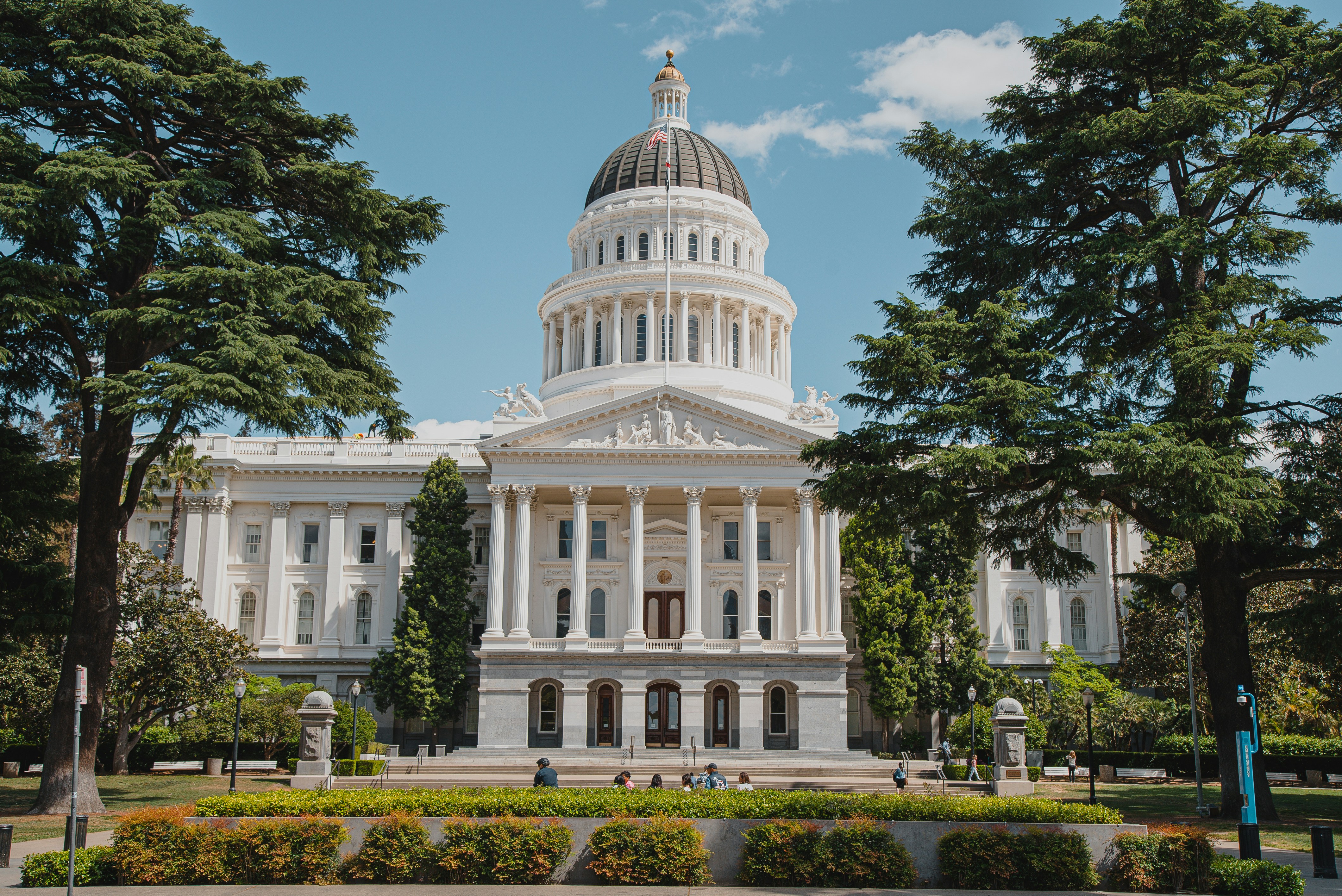
New California Law Requires Churches to Implement Pro-LGBT ‘Anti-Hate Speech’ Training
California’s new workplace anti-hate speech training law is raising religious liberty concerns. Christian advocates warn that vague language could pressure churches and religious employers to provide training that conflicts with their biblical beliefs.
A newly enacted law in California that requires virtually all employers to give employees “anti-hate speech” training is raising red flags, as experts say that the mandate could force churches to provide training that conflicts with sincerely held biblical beliefs regarding sexuality, gender, and marriage.
Late last month, California Governor Gavin Newsom (D) signed into law AB 1803, a measure that requires all employers with five or more workers, including all churches and other nonprofit religious organizations, to provide employees with “anti-hate speech” instruction. But as observers like the California Family Council (CFC) are pointing out, the legislation does not define “hate speech,” instead handing the job to the state’s Civil Rights Department. The bill mandates that the training must confront workplace speech that “vilifies, humiliates, or incites hatred” against individuals based on what the state has already deemed a protected characteristic, which includes sex, gender identity, gender expression, and sexual orientation.
The CFC goes on to observe that the statute, which will go into effect on January 1, 2028, never mentions churches or religious nonprofits and their First Amendment rights to hold sincerely held religious beliefs about sexuality and gender. It also “fails to separate protected expression from unlawful conduct,” noting that the Supreme Court held in 2017 that “the First Amendment has no hate speech exception.”
Greg Burt, who serves as vice president of CFC, further pointed out the problems with AB 1803’s vague language regarding key terms that it says constitute “hate.”
“What does it mean to vilify? What speech actually humiliates?” he wondered during “Washington Watch with Tony Perkins” Tuesday. “[M]any times legislators consider many Christian beliefs when they’re expressed — especially regarding sexuality or gender — they accuse us of hating people. That’s [the] farthest thing from my mind. But we are simply advocating for our view that sex is determined by biology, and God created us both male and female. Well, to many people that is humiliating and that incites hatred. And so that’s the problem with this legislation.”
Burt went on to clarify that AB 1803 is being folded into a previously enacted statute that mandates sexual harassment training, which already specifies that using accurate biological pronouns constitutes “harassment.” “[Businesses are] already required to go through sexual harassment training, and we found out several years ago they redefined what sexual harassment means to include gender identity,” he explained. “… [The] California Civil Rights Department says misgendering is harassment, and so this training is on top of that already egregious training.”
As for how employers can fulfill the required training, Burt noted that hiring outside trainers is allowed, but the state-provided training that includes pro-LGBT messaging is free. “Right now, the state puts together a free curriculum — that’s how they do it with sexual harassment training, but you’re not required to use that training. You can come up with your own. But we don’t know exactly what ‘anti-hate’ is going to include, right? [Their] definition of speech that ‘humiliates’ — what does that mean? It really depends on the person who’s receiving the language.”
Burt further urged churches and other religious organizations in the Golden State to push back vigorously against the mandate. “What I think the state is doing is it’s trying to intimidate churches into following through with this,” he lamented. “They should not be receiving any kind of ideological training from the state on any moral issue. That’s why what churches need to be doing is asking for religious accommodations. The federal law and the state law already require businesses to accommodate people’s faith if they’re being required to do something that violates their faith. … [T]his is one of those points in history here in California where civil disobedience is going to be necessary.”
Burt concluded by emphasizing that state officials in California are counting on churches to kowtow to their demands instead of standing up for the constitutional freedoms, which has already proven to be a winning strategy.
“I’m sure they’re already thrilled that they get to retrain the entire population to believe what they believe regarding gender identity,” he reflected. “And so once we get accustomed to this and say, ‘Well, this is just what California requires, I guess we have to do it.’ No, you don’t. Folks, you’ve got to resist, and that includes individual employees. That’s what we are encouraging people to do. And we are having success. We have some attorneys we’re working with, and when people have been asking for religious accommodations, they have been accommodated.”
This article was written by Dan Hart and originally published on The Washington Stand. For more content like this, visit Real Life Network.

World News
25 min
Red States Combine Forces to Choke Off Abortion Pill Pipeline
A woman’s account of being forced to take abortion pills is fueling renewed scrutiny of mifepristone, mail-order prescribing, state abortion laws, and shield laws protecting providers who send the drug across state lines.
Like a lot of girls her age, Rosalie Markezich knew the standard talking point about mifepristone. Don’t worry, the online sites say. It’s just like taking a Tylenol. “Well, I’ve taken a lot of Tylenol in my lifetime,” she tells people now, and “it has never killed my child. It has never ruined my life, and it has never made me bleed for over a week.”
Unlike most moms, Rosalie never got the chance to hear that lie from her doctor, because she didn’t ask for a prescription in the first place. Her boyfriend ordered the pills in her name, and without any sort of ID or verification, the drugs magically showed up at her house. “I told him, ‘No thank you. I do not want you to do that, and I do not want them.’ Well, [he] found the website. He filled it out all with my personal information that I did not give him to use … [and] $150 later, he successfully ordered abortion pills through the mail from a [California] doctor named Remy Coeytaux, shipped directly to my doorstep.”
When he forced her to swallow them, her plan was to go inside and throw them up. But it was too late. “That night, I laid on a blood-soaked towel by myself, choking on my own breath. I remember my body rejecting it, rejecting its own breath — the one thing that it needs. I was praying to God, ‘Please take me too.’” Now, filled with grief and anger at how the government has robbed her of everything the Left insists this debate is about — choice, privacy, and safety — she’s fighting back.
“The FDA was wrong,” Rosalie said emotionally at the Pray Vote Stand Summit. “They allowed these drugs. They allowed them to go through the mail. They knew the warnings. They knew what could happen. And yet they are still sending them through the mail after seeing firsthand what it has done to women and children.”
We’re talking about a drug, Alabama Attorney General Steve Marshall (R) reiterated, “that is facilitating domestic abuse and even murder.” And yet, four years ago, he shook his head, pro-lifers were at this same event celebrating the overwhelming victory of Dobbs, a success story a half-century of prayers and activism in the making. “But I don’t think any of us that were on that stage left the stage believing that we would have more abortions today than we had at that time.” All because of mifepristone — and the presidents since 2022 who have turned a blind eye to the violent consequences.
“It’s why, frankly, [we] are still amazed at this administration — which talks about being the most pro-life administration — simply burying their head in the sand on what we know is going on around us.” With a single signature, President Trump could turn this whole situation around, Marshall insists. “The data is there. … They have the capacity to be able to do it. The question is whether or not they have the political will.” And so far, they have not.
Instead, they’ve created a black market for abortion drugs that not only puts women who voluntarily take the pill in life-threatening situations, but sets fire to every pro-life state law in America. Right now, it doesn’t matter whether you live in Louisiana or New York, abortionists are illegally flooding every zip code of the country with mifepristone — and getting away with it.
If the Trump administration had the nerve to enforce the federal laws already on the books, Rosalie would be the happy mom of a two-year-old right now. Under the Comstock Act, the Justice Department should be cracking down on anyone shipping abortion pills through the mail — let alone to pro-life states whose voters have already made their voices heard on the issue. But instead, for reasons no one who witnessed the first Trump term can understand, Republican attorneys general like Louisiana’s Liz Murrill (R) are having to fight their way to the Supreme Court just for the right to have their laws respected.
Murrill, who’s already battling the FDA over its ridiculously lax standards on the drug, is expanding the war to states that are knowingly protecting the criminals sending pills into pro-life states. Together with Marshall and Arkansas Attorney General Tim Griffin (R), the trio is suing New York, California, and Massachusetts to try to dismantle the “shield laws” in blue states that refuse to punish anyone mailing mifepristone.
“They shield the doctor, they shield the pharmacist, they shield anybody who is involved with what I call the pill pipeline, sending those pills into our state,” Murrill told Family Research Council President Tony Perkins on “This Week on Capitol Hill.” “And they are doing it for a political purpose. They are doing it because they disapprove of the laws that our state has passed. And so they want to flood our state with those pills illegally.”
To get away with it, the prescribers leave no trace on the bottles. “They sanitize it. And so, you will never you may never know who actually prescribed those pills. … [They’re] filling the prescription bottle and sending it into our state with no name on it, no pharmacy on it, no recipient name.”
Murrill explained that her team actually tested the current market, having agents order drugs online. Asked if there’s any kind of consultation with a medical person, she replied no. “There’s none. They’re not even verifying who’s even buying them. … They mail them to anybody who basically fills out a form on the internet. So it’s extraordinarily irresponsible.” Not to mention, she added, that “they are directly trying to nullify our laws.”
And regardless of whether the women are coerced or ordering these of their own will, the AG sadly acknowledged that the number of emergency room visits is skyrocketing — mainly because no one is adhering to the FDA’s 10-week limit for the drug. “Is any other drug treated like this?” Perkins wanted to know. “None,” Murrill replied. “None,” she repeated. “That’s why I say over and over again … this is not health care. There is nothing about this that is health care. I mean, there is no situation in the medical field where they would do this with drugs or patients.”
That’s why red-state AGs sued the FDA in the first place, because it’s so shocking and unconscionable that a pill sending 10% of women to the ER doesn’t even require a doctor’s visit or approval. “Those rules are not in place anymore. And so, you know, it really poses a significant risk to women all over the country.”
Imagine, she emphasized, if blue states “mailed us cocaine or they mailed us fentanyl.” There would be legal consequences. Or, Perkins suggested, “What if … Louisiana said, ‘You know, we’re not going to work with California and New York on anything related to the Second Amendment. I don’t care what your laws say. We’re not going to support you in that.’” It’s like saying, “I’m going to mail guns to anybody who wants them,” Murrill agreed. “… They have laws that restrict gun ownership and possession in ways that we don’t. … [What if] I decided to violate those laws? And they wouldn’t be able to enforce them if we had a shield law similar to that. But we haven’t done that.”
At the end of the day, this is not a minor issue, the FRC president argued. Not for the baby, not for the mother, not for the constitutional process, and certainly not for state sovereignty. “You know,” Marshall underscored, “we can solve [this] problem right now. We have the ability to do it with the administration that’s in place. And it’s why not only is our prayer so important, but also our ability to stand together is so critical. Because the reality is it’s not about Republican or Democrat. It’s about protecting women’s health and preserving life. That’s our issue. That’s important — and on it, we’re right.”
This article was written by Suzanne Bowdey and originally published on The Washington Stand. For more content like this visit Real Life Network.
World News
25 min
A Hungry Generation Is Looking for Something to Believe
A spiritually hungry generation is searching for something to believe. From religious liberty and cultural influence to Israel and politics, the question is not whether young people will be formed, but what will shape their understanding of truth.
Something is happening among younger Americans. Spiritual questions have not disappeared. If anything, a generation often described as secular appears increasingly interested in religion, spirituality, meaning, and transcendence. That hunger deserves attention because hunger alone does not determine what eventually satisfies it.
That is one reason conversations about faith, culture, religious liberty, Israel, and the institutions shaping the next generation matter. Real Life Network exists to bring a biblical perspective into precisely those conversations.
The central question is not whether young people will believe in something. Human beings inevitably build their lives around some understanding of truth, identity, morality, and purpose. The more important question is what will shape those beliefs.
Joshua put the choice plainly before Israel: “Choose for yourselves today whom you will serve.” There was no illusion of neutrality. Something would occupy the center.
A spiritually hungry generation will be formed by something. The question is what reaches it first.
Religious Freedom Has to Mean Religious Freedom
That question becomes especially important when families, schools, churches, and courts disagree about religious formation.
A recent Maine custody dispute illustrates how complicated those conflicts can become. The Maine Supreme Judicial Court upheld an order giving a father final decision-making authority concerning his daughter’s involvement with a particular Calvary Chapel congregation. The mother argued that the restriction violated her constitutional religious rights.
The details matter. The court rejected the characterization that it had determined Christianity itself was psychologically harmful. Instead, it said the lower court’s concerns involved messages the child received about her father and the effects of the parental conflict. That distinction deserves to be represented accurately even as the case raises significant questions about parental rights, religious upbringing, and how courts should navigate disputes involving faith.
Similar questions emerge in public schools.
Liberty High School in Frisco, Texas, recently faced scrutiny after a Muslim student organization reportedly described a school space as intended for Muslim prayer and said “only Muslims” would be allowed. Frisco ISD responded that the space is actually a “quiet room,” is not designated as belonging exclusively to one religion, and can be used for purposes other than prayer. District policy allows students of any faith to request reasonable opportunities for voluntary prayer.
That is the standard worth defending: equal religious liberty.
Christian students should be free to read Scripture, gather voluntarily, pray, and express their faith under the same rules that protect Muslim, Jewish, or other religious students. Religious liberty becomes unstable when society begins treating freedom of religion as something that must be protected for certain beliefs but restrained for others.
The answer to religious pluralism is not less religious freedom. It is the consistent application of religious freedom.
That principle matters because schools and courts do more than settle isolated disputes. They help establish the boundaries within which families and young people understand faith in public life.
Culture Is Competing for the Next Generation
The competition for belief extends well beyond churches and schools.
Entertainment, political movements, universities, influencers, social media personalities, and celebrities all participate in forming cultural assumptions. The influence can be especially powerful when it arrives as entertainment rather than instruction.
Consider the controversy surrounding actor Adam Brody. Brody, who stars as a rabbi in Nobody Wants This, recently told GQ that he considers Israel’s conduct in Gaza a “genocide” and expressed support for a free Palestine. GQ
That is Brody’s political position, and the characterization of Israel's conduct as genocide remains fiercely disputed. But the larger cultural question extends beyond one actor or one television program: what happens when entertainment, identity, politics, and moral formation become intertwined?
Audiences should be capable of encountering political opinions without automatically adopting them. The same standard applies across ideological lines. Celebrity does not establish truth. Popularity does not establish truth. A viral video does not establish truth.
Neither does political influence.
Rep. Ro Khanna recently called for Israel to release Marwan Barghouti, describing him as a potentially unifying Palestinian leader who could contribute to a peaceful Palestinian state. Barghouti, a prominent Fatah figure, is serving multiple life sentences after an Israeli court convicted him on five counts of murder connected to attacks during the Second Intifada. Barghouti rejected the court’s jurisdiction and denied the charges.
That creates a serious policy and moral debate. Supporters of Barghouti’s release view him as a potential political alternative in Palestinian leadership. Critics point to the murder convictions and argue that presenting his release as a path toward peace minimizes the victims and the violence for which he was convicted.
Those facts should not disappear behind political slogans.
The same principle applies to Israel and Gaza more broadly. October 7, Palestinian civilian suffering, Hamas’s actions, Israel’s military response, and the future of Palestinians and Israelis deserve serious examination rather than arguments inherited from celebrities, influencers, political parties, or social-media feeds.
Discernment begins when the source of an idea matters less than whether the idea is actually true.
Everyone Is Being Formed by Something
That brings the discussion back to spiritual hunger.
A generation searching for meaning is not necessarily a generation returning to biblical Christianity. Interest in spirituality can lead toward Christianity, but it can also lead toward astrology, manifestation, political ideology, personalized spirituality, or countless other belief systems. The transcript’s central argument is precisely that distinction: spiritual appetite and Christian revival are not automatically the same thing. Pasted text
Christians should therefore resist two temptations.
The first is panic. Cultural change does not mean God has lost control.
The second is passivity. Confidence in God’s sovereignty has never meant indifference toward the formation of children, families, churches, or communities.
Parents are forming children. Teachers are forming students. Churches are forming congregations. Algorithms are forming users. Entertainment is forming audiences. Political movements are forming supporters. The question is not whether formation is happening. It is whether people recognize it.
Joshua’s challenge remains remarkably relevant: choose whom you will serve.
That choice reaches far beyond elections or partisan politics. It reaches into what is watched, what is believed, what is taught to children, what voices receive trust, what definitions of good and evil are accepted, and ultimately where authority is located.
A hungry generation is already at the table.
What matters now is what it is being fed.
Find more biblical perspective on faith, culture, Israel, and the stories shaping the next generation on The Daniel Cohen Show, streaming free on Real Life Network.
.jpg)
World News
25 min
Right to Life Is ‘Most Foundational of all Rights,’ New ‘Declaration For Life’ Proclaims
Sen. Josh Hawley and Christian leaders are calling on Americans to sign a new Declaration for Life and urging Congress to ban mifepristone for abortion, placing chemical abortion at the center of a renewed national debate over abortion policy.
More than 50,000 Americans from across the country signed a new “Declaration for Life” within hours of its public release that calls on them and their fellow citizens “to stand for life” and for Congress “to ban the chemical abortion drug mifepristone,” Senator Josh Hawley (R-Mo.) told reporters during an impromptu news conference in a Senate office building Wednesday.
“We think this declaration, written by pastors, is calling on spiritual leaders and everyday Christians across America to stand for life and to confront the scourge of chemical abortion. It is so critical on this the 250th anniversary of America,” Hawley said, referring to the four-page declaration he and a committee of pastors and other spiritual leaders from multiple denominations drafted.
The Declaration for Life was officially unveiled Wednesday during the first annual Missouri Prayer Breakfast hosted by the Show-Me State’s senior senator. The document is being circulated nationwide by multiple pro-life groups, including Family Research Council, and millions of Americans are expected to sign the document in the coming days.
“The Declaration of Independence gives us three examples of ‘inalienable rights:’ life, liberty, and the pursuit of happiness. Life is the first of those rights because it is the condition of the others. It is thus the most foundational of rights,” the document proclaims at its outset.
“We believe we have an obligation as Christians and spiritual leaders to remind our countrymen of what Scripture and conscience together proclaim: That every human being from the moment of our knitting together in our mothers’ wombs, was fearfully and wonderfully made. The divine image each human being bears was not earned. It cannot be forfeited. And it is the first duty of the Church to defend human dignity where it is denied,” the document states.
The declaration continues, noting that “what is at stake on this anniversary is nothing less than the conviction on which every flourishing society finally rests: That each and every member of the human family, as a creature fashioned in the image of the divine Creator and Ruler, is the bearer of profound dignity. Where that conviction is honored, civilizations flourish. Where it is forgotten, cultures decline and fall.”
The declaration explains that while in the four years since the Supreme Court’s Dobbs decision “returned the abortion question from courts to legislatures,” that decision “did not end abortion in America. Far from it. More abortions are performed in this country today than when [Roe v. Wade] was still the law of the land — over one million abortions in 2025 alone.”
Three-fourths of those abortions are carried out using the chemical drug mifepristone, and, the declaration points out, “thanks to recent changes in government regulations, mifepristone can now be mailed into every state and city in America, regardless of local rules. The abortion drug is nearly always fatal to the unborn child and frequently injurious to the mother. Recent studies indicate the drug puts more than one in 10 women who take it at risk of serious, life-threatening complications, including hemorrhaging, infections and sepsis.”
Hawley told reporters he believes “the time has come to ban mifepristone abortions, and I want to emphasize this is something only Congress can do. … Only Congress can act to take mifepristone off of the Food and Drug Administration’s [approved drug] schedule, only Congress can say it will not be available for abortions. That’s something that Congress should do. Congress should stop passing the buck to other people. Congress should stand up and act.”
As long as Congress fails to act, Hawley emphasized, state actions such as those in Louisiana, Missouri, and others that have banned chemical abortions carried out by medical professionals in those jurisdictions will continue to be rendered meaningless so long as the drug can be mailed across state lines and administered in private by the mother with a cup of water.
Hawley added that “when it comes to elected officials in Congress, there hasn’t been much of anything [done] to protect the innocent unborn, and I think we’ve got to change that. One of the things we want to do with this Declaration for Life is call on candidates for public office in both parties to sign this declaration, to say ‘We support it, we support protecting human life.’”
Earlier this year, Hawley introduced S. 4066, the Safeguarding Women from Chemical Abortion Act that would outlaw chemical abortions. On the House side of the Capitol, the same legislation was introduced as H.R. 7902 by Rep. Diana Harshbarger (R-Tenn.). The Senate bill has seven co-sponsors, all Republicans, while the House bill has 11 co-sponsors, also all GOPers. Neither proposal has been advanced to committee hearings, as Republican leaders focus on other issues.
Another major obstacle for such reforms includes the lack of action from President Donald Trump, whose administration approved in October 2025 a second generic version of mifepristone for abortion use and has delayed a promised FDA study of the drug.
In addition, as Family Research Council President Tony Perkins told reporters during the Hawley news conference, the Republican Party at its 2024 convention abandoned its long-standing defense of the right to life, and its congressional leadership has since failed to act vigorously on the issue.
“Unfortunately, the Republican Party has lost its voice on the right to life issue, and in that vacuum, there are leaders who are stepping forward like Senator Hawley calling upon the church, communities, and the country to step up on behalf of the unborn,” Perkins said.
“We have made great progress,” FRC’s president continued, “but there has been a tremendous setback, and we’ve reached a point where I think we have to call upon the faith community, Christian pastors, to step into this vacuum and speak unequivocally about the sanctity of human life and hold elected officials accountable to the standard. This declaration is a starting point for establishing a standard for what we should be aspiring to as a nation.”
When asked by The Washington Stand if he would initiate legislative action in response to a Government Accounting Office (GAO) study released earlier this week that found thousands of abortions are being paid for annually with federal tax dollars through the Obamacare health insurance program, Hawley replied, “100 percent, and the other thing that is happening is that Planned Parenthood is getting funded right now. The ban on Planned Parenthood funding has expired, [and] it’s being funded with taxpayer dollars.”
The Hyde Amendment — named after former Rep. Henry Hyde (R-Ill.) who authored the measure — was approved by a Democrat-controlled Congress and signed into law by Democratic President Jimmy Carter in 1977. That law bars the use of federal tax dollars to pay for abortions except in a tiny class of exceptions.
This article was written by Mark Tapscott and originally published on The Washington Stand. For more content like this, visit Real Life Network.
Faith & Culture
25 min
7 Essential Ways to Stay Grounded as a Christian in a 24/7 News Cycle
The news can inform Christians without consuming them. These seven practical habits can help believers follow current events with biblical discernment, healthy boundaries, prayer, and confidence in the unchanging hope of Christ.
News can be useful. It helps us understand what is happening in our communities, our country, and around the world. It can alert us to events that deserve prayer, action, generosity, or thoughtful attention.
But news can also consume attention surprisingly quickly.
Breaking alerts lead to updates. Updates lead to commentary. Commentary leads to another video, article, or social media post. Before long, a few minutes of staying informed can become hours of absorbing conflict, outrage, fear, and speculation.
Christians don’t need to withdraw from what is happening in the world. But neither should the news determine the condition of our hearts.
Here are seven practical ways believers can remain informed without allowing the news cycle to become spiritually overwhelming.
1. Start with Scripture Before Starting with Headlines
One of the simplest ways to keep news in perspective is to decide which voice gets your attention first.
Opening a news app before getting out of bed can immediately fill your mind with elections, wars, economic concerns, crime, cultural conflict, and international crises. Scripture begins somewhere very different: with God, His character, His promises, and His purposes.
Psalm 119:105 says, “Your word is a lamp to my feet and a light to my path.”
Starting with God’s Word doesn’t make difficult events disappear. It helps place them within a larger biblical framework.
Before asking, What happened overnight? it can be helpful to remember what has not changed. God is still sovereign. His Word is still true. The Gospel is still good news. Christ is still building His Church.
Headlines change by the hour. Those truths do not.
2. Know the Difference Between Being Informed and Being Consumed
There is no biblical command requiring Christians to know every development immediately. Yet modern media can create a sense that we must continually monitor events or risk falling behind.
That urgency deserves examination.
Being informed means understanding significant events well enough to think, pray, and respond wisely. Being consumed means repeatedly checking for updates even when little has changed and continuing long after the information is useful.
One helpful question is: Am I learning something I need to know, or am I simply feeding my anxiety?
Setting specific times for checking news can help establish boundaries. So can turning off unnecessary alerts or stepping away when a developing story has become repetitive.
You can care deeply about the world without following every headline in real time.
3. Test What You Hear Instead of Reacting Immediately
Fast-moving news rewards quick reactions. Christian discernment often requires something slower. Proverbs 18:17 says, “The first one to plead his cause seems right, until his neighbor comes and examines him.”
That principle is especially useful in an age of social media clips, partial quotations, dramatic headlines, and rapidly developing stories.
Before sharing or reacting, ask:
- Is the information confirmed?
- Am I hearing the full context?
- Is this reporting, commentary, or speculation?
- Does another trustworthy source corroborate the claim?
Christians should have a particular concern for truth. Passing along something inaccurate simply because it supports our assumptions does not honor that responsibility.
Sometimes wisdom means waiting.
4. Evaluate the World Through Scripture, Not a Political Tribe
Politics matters because government, law, freedom, justice, family, human dignity, and public policy affect real people. But Christianity cannot be reduced to a political party or ideology.
Believers should evaluate political and cultural questions through Scripture rather than modifying Scripture to fit a preferred political position.
That means Christians may sometimes agree strongly with a political leader, movement, or commentator and at other times need to challenge what that same person says or does.
Biblical conviction should remain the standard.
Programs that approach culture from an explicitly Christian worldview can be useful here. Cure America with Star Parker, The Daniel Cohen Show, Rose Unplugged, Small Talk Big Issues, and The City of God are among the programs available through Real Life Network that engage cultural and public issues from faith-informed perspectives.
The objective isn’t to replace independent thinking. It is to consider events alongside voices that recognize biblical truth as relevant to public life.
5. Let the News Become a Prompt for Prayer
News can easily produce frustration. It can also become a prayer list.
- A report about war can remind us to pray for civilians, soldiers, government leaders, missionaries, and churches in affected regions.
- A story about persecution can lead us to pray for believers who face consequences for their faith.
- A report involving children, schools, marriage, or culture can prompt prayer for parents, teachers, churches, and the next generation.
First Timothy 2:1–2 instructs believers to offer prayers and intercessions “for kings and all who are in authority.” That command gives Christians something constructive to do with difficult information.
Instead of merely asking, Can you believe this? we can also ask, How should I pray about this?
6. Make Room for Good News Too
News naturally emphasizes problems. That is partly because crises, disagreements, disasters, and unexpected developments are newsworthy. But consuming an uninterrupted stream of what is going wrong can distort our perception of what God is doing.
Churches are serving communities. Missionaries are sharing the Gospel. People are coming to Christ. Christians are caring for the poor, helping disaster victims, defending the vulnerable, strengthening families, and serving in places most viewers will never see on the evening news.
Programs such as On the Ground with Samaritan’s Purse can provide glimpses of Christians responding to suffering with practical help. Fred Jordan Missions TV highlights faith expressed through compassion and community involvement. Evangelism Explosion International focuses on equipping believers to share Christ with others.
These stories don’t erase bad news.
They remind us that bad news isn’t the whole story.
7. Remember Which Kingdom Comes First
Perhaps the most important way to remain grounded is to remember where Christian hope ultimately rests.
Governments change. Political movements rise and fall. Economies strengthen and weaken. International alliances shift. Cultural attitudes change.
Jesus Christ does not.
Philippians 3:20 reminds believers, “For our citizenship is in heaven, from which we also eagerly wait for the Savior, the Lord Jesus Christ.” That doesn’t make Christians indifferent to earthly events. In fact, biblical faith should encourage believers to care about their neighbors, communities, country, and world.
But it prevents temporary events from carrying eternal weight.
Christians can vote, serve, advocate, give, pray, speak truth, and remain engaged while remembering that no election, institution, economic system, or human leader can carry the hope that belongs to Christ alone.
Stay Informed Without Losing Your Peace
There is nothing wrong with wanting to understand what is happening in the world.
The challenge is keeping the news in its proper place.
Read Scripture before allowing headlines to establish the tone of your day. Set reasonable limits. Check facts carefully. Evaluate cultural and political questions through a biblical worldview. Pray about what you learn. Look for evidence of God’s work as well as evidence of human brokenness.
Above all, remember that Christians already know the most important news.
Jesus Christ has come. He died for sinners. He rose again. He offers forgiveness and eternal life to those who trust in Him, and He will return.
No breaking-news alert can change that.
Real Life Network offers RLN News along with programs such as The Daniel Cohen Show, Cure America, Rose Unplugged, The City of God, Small Talk Big Issues, and other biblically informed programming to help Christians consider current events without separating the headlines from their faith.
Explore Christian news, cultural commentary, Bible teaching, and more for free on Real Life Network.
World News
25 min
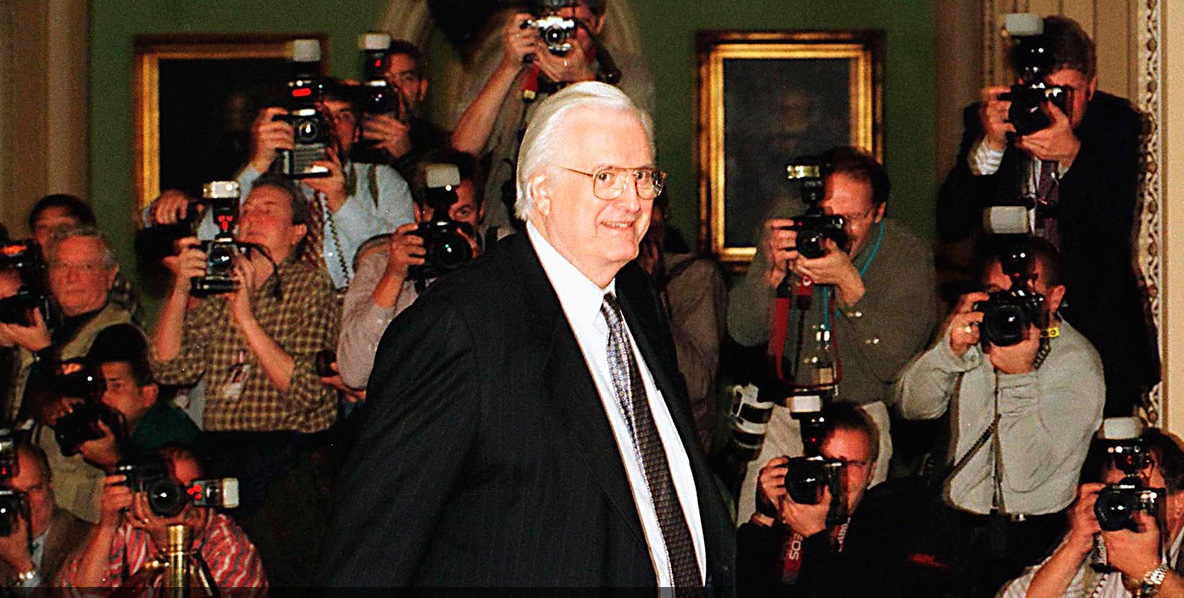
Hyde Amendment Approaches 50th Anniversary Having Saved almost 3 Million Babies
As the Hyde Amendment approaches its 50th anniversary, lawmakers and pro-life advocates are reflecting on its history, its impact on federal abortion funding, and the continuing debate over abortion policy in America.
“An innocent, defenseless human life, in a caring and humane society, deserves better than to be flushed down a toilet or burned in an incinerator.” Such are the words of Henry Hyde, the former U.S. congressman from Illinois who tirelessly championed life and introduced the Hyde Amendment in 1976. Almost 50 years later, the legislative rider faces the opportunity to be renewed again.
For a half-century, the Hyde Amendment has stopped taxpayer dollars from funding abortion.
On Wednesday evening, Rep. Chris Smith (R-N.J.), co-chair of the Congressional Pro-Life Caucus, hosted a Special Order on the House floor to acknowledge the upcoming 50th anniversary of the Hyde Amendment on September 30. “The promise of America is that life is not just for the privileged, the planned, or the perfect,” Smith said, quoting Hyde. “This may sound odd, even ironic; you are here in the flush of victory. And yet it is precisely now that I ask you to contemplate the possibility of defeat, perhaps even the necessity of defeat. If you don’t know the principle or the policy for which you are willing to lose your office, then you are going to do damage here.”
Quena González, senior director of Government Affairs at Family Research Council, explained to The Washington Stand that Smith and Hyde have a history. “Representative Chris Smith served with Representative Henry Hyde for 26 years; he’s been a tireless defender of the unborn in Congress for 45 years and comes as close as anyone to carrying Hyde’s inimitable mantle.”
After the Roe v. Wade decision in 1973, the U.S. government paid for an estimated 300,000 abortions each year via Medicaid. According to the Charlotte Lozier Institute, since the Hyde Amendment’s first enactment in 1976, approximately 2.7 million lives have been saved.
During Wednesday’s event, Rep. Chip Roy (R-Texas) asserted that society has a duty to protect the unborn. “Life matters. Who are we as a people if we cannot stand up in defense of the most innocent form of life there is — a child in the womb of its mother? That should be our calling. And we should be able to unite as human beings in defense of the defenseless.”
Legislative Assistant for FRC’s Government Affairs Chantel Hoyt praised what House members shared during the Special Order. “I appreciated seeing Representative Chip Roy connect this important anniversary to the toll that chemical abortion is taking,” she told TWS. “It’s encouraging to see members like Representative Chris Smith carrying on Henry Hyde’s legacy and seeking to not only retain but build on the protections of the Hyde Amendment.”
Rep. Tracey Mann (R-Kan.) observed during the House event that he believes that abortion is not consistent with the Constitution. “Hyde should not be viewed as the finish line for the pro-life movement. It’s the floor. It’s a bare minimum compromise,” he shared. “America is founded on the self-evident truth that every person is created equal and endowed with our creator with an inherent right to life. That right is the foundation of every other right that we enjoy. As a father, I believe that every child is fearfully and wonderfully made by God. Every life has value, every child has purpose, and no child is a mistake.”
The Special Order and Hyde Amendment anniversary come at a time when chemical abortion has become a hot button issue on Capitol Hill. Pro-life politicians, lobbyists, and organizations continue to work tirelessly to ban the abortion drug mifepristone. “It’s always great to see members of Congress speak on the floor in defense of life, but especially now as we are urging the Trump administration to take action on chemical abortion to protect mothers and their babies,” Hoyt concluded.
This article was originally written by Quinn Delamater and published on The Washington Stand. For more content like this, visit Real Life Network.
Thank you! Your submission has been received!
Oops! Something went wrong while submitting the form.
World News
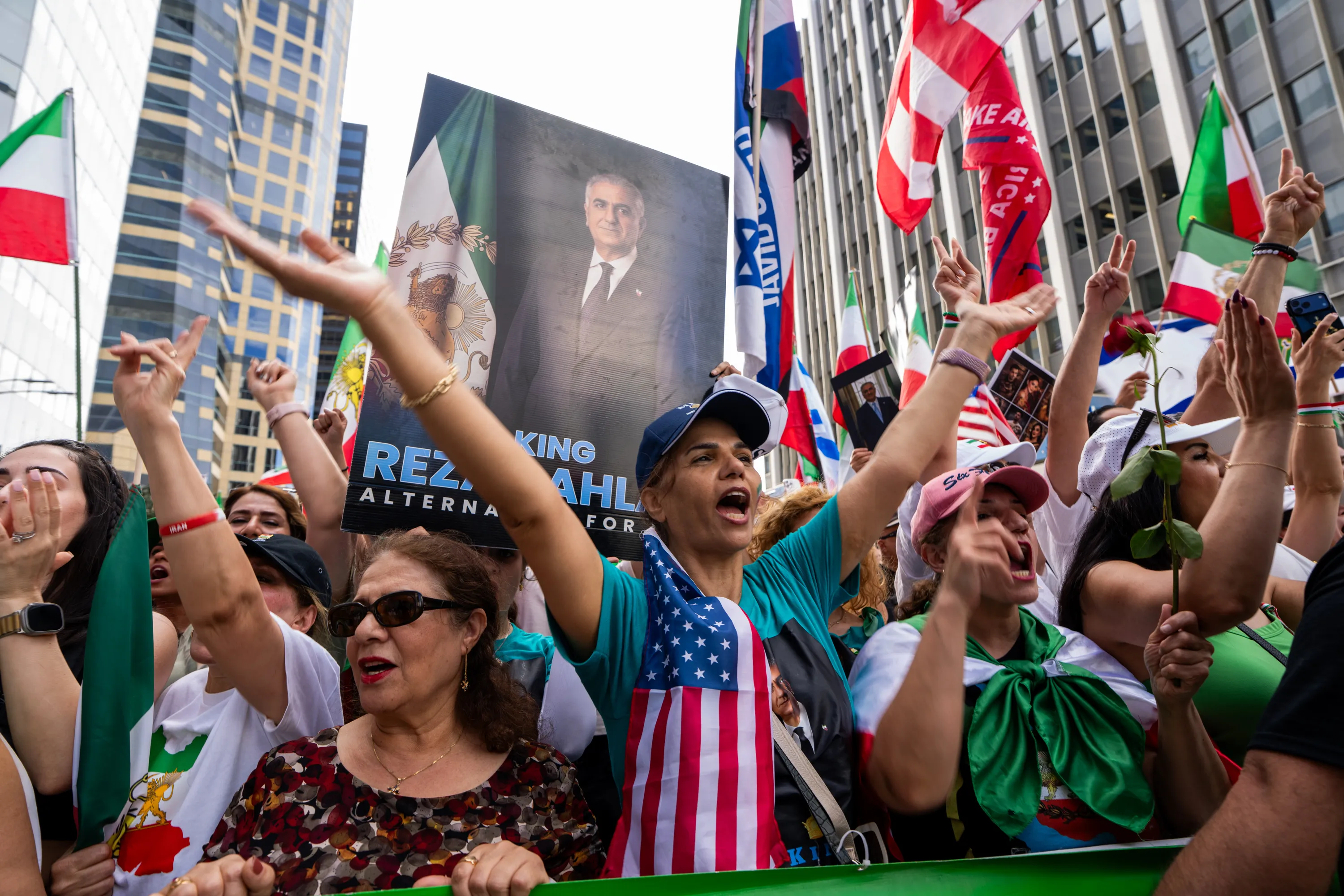
If you have been watching the “Hands Off Iran” protests after the massive U.S. Israeli strikes, you have heard the claim: this is about peace, this is about opposing an unjust war, this is about protecting innocent people. I want to engage that argument seriously, not mock it. Because what matters is what “hands off” has actually produced for 47 years. Watch the full breakdown on the Real Life Network.
The slogans sound compassionate, but compassion has to be tethered to reality. “Hands off Iran” did not protect the Iranian people. It protected the regime that brutalized them. It did not prevent war. It financed and prolonged proxy war, terror, and a nuclear sprint while ordinary Iranians paid the price.
The “hands off” crowd thinks they are protesting war, but what they are really shielding is tyranny.
What do you think “restraint” looked like on the ground? It looked like dissidents murdered in the streets. It looked like women punished for defying the regime. It looked like a diaspora that escaped, then watched their homeland held hostage by a radical theocracy. And it looked like Iranians, after decades of fear, celebrating the first real crack in the regime’s armor.
That is the lie I want to expose: the lie that doing nothing is morally neutral.
Here is the second lie: “This is Israel’s fight, not America’s.” No. For decades, Iran has attacked Israel and also killed Americans as a strategic policy. Not accidentally. Not as collateral damage. Deliberately. Think about the pattern: bombings, proxies, drones, kidnappings, and October 7’s ripple effects. The Islamic Republic has never been just Israel’s problem. It has been America’s problem, too. And America finally showed up to the fight. For more analysis from Israel, keep up with coverage on the Real Life Network.
Iran has never been only Israel’s problem, and pretending otherwise has cost American lives.
Why Trump Did This And Why “Israel Dragged Us” Makes No Sense
The “Israel dragged America into it” narrative requires you to believe something that just does not fit reality. You have to believe Donald Trump, the man who ran against endless foreign wars, was manipulated into launching the most consequential operation of his presidency.
That is not Trump. It has never been Trump.
Trump’s record has been consistent for years. He targeted the IRGC’s Qassem Soleimani in 2020 because it was in America’s interest. He walked away from the JCPOA in 2018 against the advice of the foreign policy establishment because it was bad for America. He has always had a particular kind of courage: the willingness to say the uncomfortable thing that the entire room has decided you are not allowed to say.
That matters, because “hands off” did not produce peace. It produced an ecosystem of terror: Hezbollah, Hamas, the Houthis, militias, and a regime that learned it could walk away from talks without consequences. When you teach a regime that there is no price for aggression, you do not get moderation. You get escalation.
Here is the hard truth. Diplomacy was tried. Negotiations happened. Iran walked away, again. For 47 years, walking away was a winning move because it did not cost them anything. That is why this moment is so significant. Consequences finally arrived.
Justice is not “unprovoked war” when it stops a regime that has been exporting terror for decades.
And I will end where we began: the protest crowd says “hands off” because they think they are for peace. But peace is not the absence of action. Peace is the defeat of the engine that keeps manufacturing conflict.
Watch and share today’s show on the Real Life Network. And if you have friends repeating the slogans, do not hate them. Engage them. Ask them what “hands off” bought us. Ask them who benefited. Because the Iranian people did not.
For more frontline coverage and a biblical worldview as history unfolds, visit the Real Life Network.
Related Articles
- Why do Christian Kids Convert to Islam? by Hedieh Mirahmadi Falco
- The Collapse of an Illusion: Is the Islamist Narrative Losing Its Grip? by Hedieh Mirahmadi Falco
- A New Middle East After Iran’s Collapse by Daniel Cohen
25 min
March 3, 2026
Daniel Cohen
World News
If you watch The Daniel Cohen Show for a biblical worldview on Israel, Iran, and the Middle East, you already know this was not “just another headline.” This is one of those rare moments where history moves fast, and the world wakes up to what the Iranian regime really was: the engine behind decades of terror. In the span of hours, a joint U.S. Israel operation reportedly decapitated Iran’s top leadership and struck core military targets, and the region is now recalculating in real time. Watch and share the full coverage on the Real Life Network.
This is what it looks like when evil loses its grip and fear begins to break.
What Just Happened, And Why It Matters
Multiple reports describe coordinated U.S. and Israeli strikes against Iran’s leadership, missile infrastructure, and key military sites on February 28, 2026, in an operation the Pentagon labeled “Operation Epic Fury,” while Israeli officials used their own operational language.
Now listen, the legacy media will argue about phrasing, tone, and optics because they always do. But here is the plain truth: Iran was not a “normal country with disagreements.” Iran under the Islamic Republic was the number one state sponsor of terror in the region, funding and directing proxy warfare through Hamas, Hezbollah, and the Houthis, while crushing its own people.
When the regime’s upper tier is removed, it creates an opening, not a guaranteed victory, but an opening. And that is why you saw something the world almost never sees: people inside and outside Iran celebrating the possibility of freedom, even as regime loyalists reportedly tried to reassert control through intimidation and violence.
If you want the cleanest way to understand this moment, its moral clarity. The Iranian people are not your enemy. The regime was. That distinction matters.
The Third Player: Saudi Arabia, The Gulf, And A Regional Realignment
Here’s what the media often misses because they don’t understand the Middle East, or they don’t want to. The hatred between Iran and the Sunni Arab Gulf states was never “just about Israel.” It’s theological, strategic, and historical. Tehran’s imperial ambitions threatened Riyadh, Bahrain, the UAE, Kuwait, and beyond.
That’s why this moment has the potential to do what decades of “process” could not: unify a broader regional front against the Iranian terror machine and its proxies. That does not mean every government will say everything out loud, because politics in the region is about survival. But it does mean the strategic reality is shifting, and fast.
And here is where Americans need to wake up. Strength is not “escalation” when it prevents larger wars. Deterrence is mercy. Weakness invites aggression. That’s not ideology, that’s history.
For ongoing updates, clips, and full episodes, get the free app and watch on the Real Life Network.
A Biblical Worldview For What Comes Next
The job is not finished just because the head was struck. Proxy networks do not disappear overnight. Intelligence services do not dissolve because a headline changes. And inside Iran, the regime’s loyal enforcement arms may lash out harder precisely because they know their time is short.
But hear me clearly: Christians do not watch this like spectators. We watch with discernment, prayer, and a commitment to truth. Scripture is not naive about evil. It also is not naive about accountability.
Proverbs says there is rejoicing when righteousness rises, and Scripture also warns us that evil does not simply repent because it is embarrassing. That means two things can be true at once: you can be grateful for justice, and you can be sober about the instability that follows a regime’s collapse.
The Iranian people deserve freedom, and the Middle East deserves a future without a terror regime holding the region hostage.
If you missed the show coverage and want the full breakdown from Israel as events unfold, watch now on the Real Life Network. And if you are already watching, share it, because the truth needs distribution.
Related Articles
- Shaping the Next Generation: Examining Education, Ideology, and the Future of Palestinian Youth by Daniel Cohen
- The Super Bowl Ad America Needed, Netanyahu’s Iran Warning, and the Olympic Contrast We Cannot Ignore by Daniel Cohen
- Accountability, Assimilation, and A Response to Minnesota’s Somali Immigration Crisis by Daniel Cohen
25 min
A New Middle East After Iran’s Collapse

March 2, 2026
Daniel Cohen
World News
Real Life Network is where we do Christian news and biblical worldview analysis without pretending that evil is “complicated.” Today on the Daniel Cohen Show, we are exposing one of the most dangerous engines of the Israel Hamas conflict: the indoctrination of children. From UNRWA-linked classrooms to Palestinian Authority textbooks and Hamas media, kids are taught that killing Jews is virtue and dying in jihad is glory. This is not “culture.” This is not “politics.” This is spiritual and moral corruption aimed at the next generation, and it has consequences for Israel, for the West, and for America.
What Palestinian Children Are Being Taught and Who Funds It
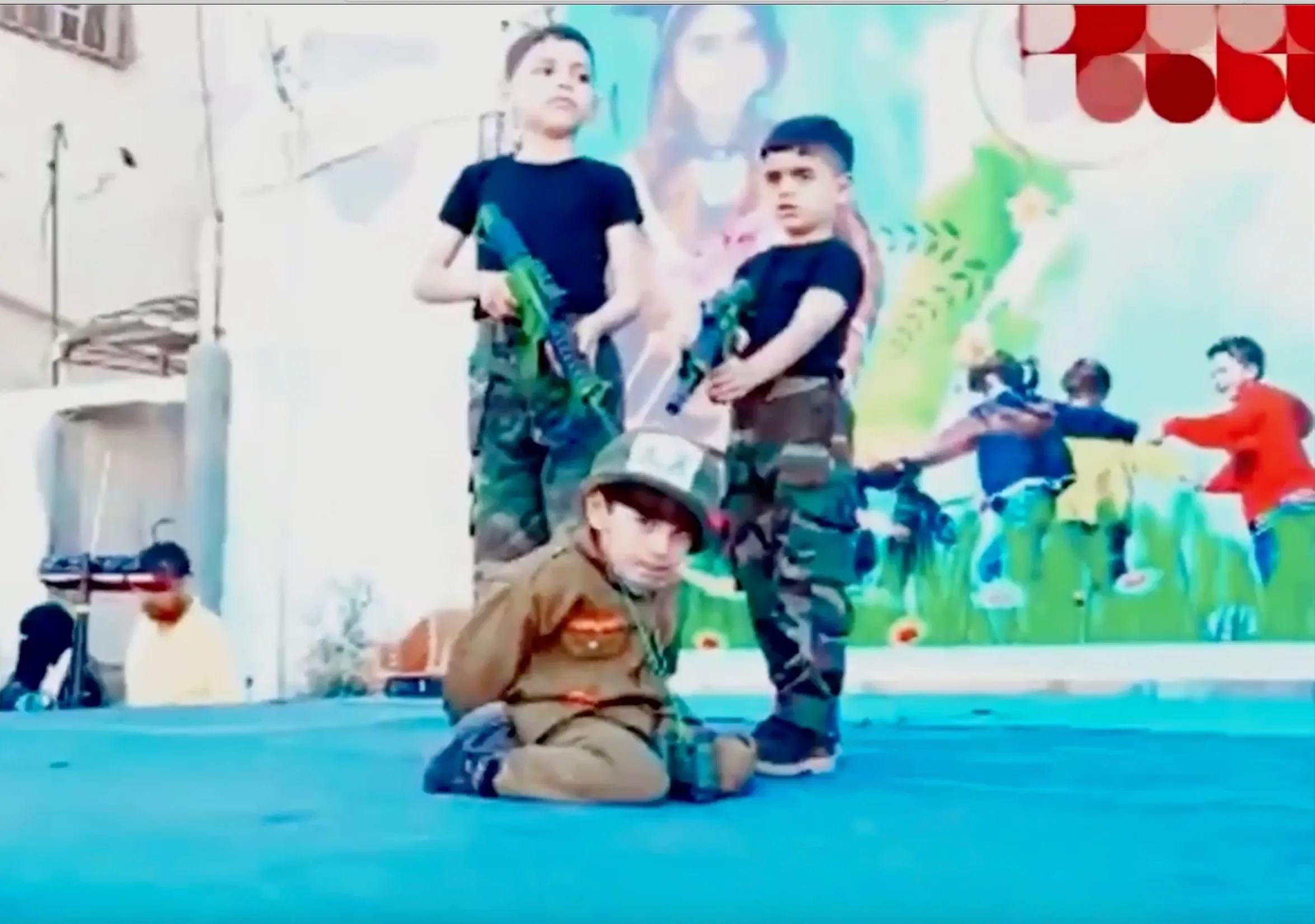
Show me what a society teaches its children, and I will show you its future. We opened with a kindergarten ceremony in the Palestinian territories where five-year-olds dressed like junior terrorists staged a mock execution of a Jew, while parents cheered and teachers applauded. That is not “performance art.” That is training.
And it is not isolated. This ideology is baked into the curriculum. In some materials documented by researchers who analyze textbooks and school programming, anti-Jewish messaging appears across subjects. Science lessons turn into propaganda. History lessons erase Jewish identity. Even math problems can treat “martyrs” like a scoreboard, conditioning children to see death as achievement.
When a child is trained to hate, the problem is not the child. The problem is the adults and the system that formed them.
Here is the part that should sober Americans. International aid pipelines exist, and UN-branded institutions have operated in these areas for decades. If you are a taxpayer, you have every right to ask what is being funded, what is being tolerated, and why the loudest activists in the West never seem to demand accountability from the systems that radicalize children.
This is also where Christians need discernment. Compassion is not denial. Compassion is telling the truth about what harms children, even when the truth is unpopular. If you want peace, you do not start by teaching preschoolers that Jews are the enemy. You start by teaching children to build, to learn, to honor life, and to pursue truth.
You can watch more Israel coverage and worldview analysis on the Real Life Network and share it with someone who still thinks this is just a “border dispute.”
Indoctrination Produces Violence and It Does Not Stay Overseas
What does this kind of education produce? It produces a society where martyrdom is celebrated, where terrorism is normalized, and where the human heart is trained to dehumanize. The clearest evidence is not theoretical. We saw October 7. We saw the celebration of violence. We saw the fruit.
One story shared in the broader public conversation captures the moral clarity: a woman who received medical care from Israelis, was educated, and still chose to target the very hospital that treated her. When asked about it later, she described the attempted mass murder as “almost tasting paradise” and said she would do it again. That is not a political grievance. That is a worldview.
You cannot build peace on a curriculum that teaches children to glorify murder.
Now bring that home to the West. Indoctrination does not remain “over there” when communities and ideological networks exist “over here.” In the United States and Europe, we have seen hatred laundered through polite language: “justice,” “liberation,” “decolonization,” “globalize the intifada.” Many of the loudest voices chanting these phrases cannot even define what they are chanting. But the ideology behind it is not confused. It knows exactly what it wants.
And it targets young people. It targets campuses. It targets social media feeds. It targets school environments where administrators are terrified of being called names, so they surrender the moral ground without a fight. When you normalize Islamist symbolism as “educational” and you excuse calls for violence as “context,” you are not being tolerant. You are being naive.
Let me say this carefully and clearly. Not every Muslim believes this. Not every Arab family teaches this. There are courageous reformers and courageous dissidents. There are Arabs who reject jihadist ideology. There are Muslims who have paid dearly for opposing extremists. Christians should pray for them, support reformers, and refuse the lazy lie that the only options are “hate” or “silence.”
But we also cannot ignore what is openly preached, openly printed, and openly performed for children in certain environments. If a Christian school staged a mock execution of Muslims, it would be shut down immediately. If a synagogue taught kids to chant about killing Christians, it would make national headlines for months. The standard cannot be selective.
For more on how ideology spreads through media and institutions, bookmark the Real Life Network and send it to someone who needs categories for this moment.
What Must Change for Peace, Reform, and Protection
So what do we do?
First, tell the truth. Stop calling indoctrination “education.” Stop calling a death cult “resistance.” Stop treating antisemitism as “complex.” Evil hides behind confusion, and the job of believers is to bring light.
Second, demand curriculum reform. If “denazification” was necessary after World War II because a society was trained to hate Jews, then de-radicalization is necessary anywhere children are trained to hate Jews today. That means auditing textbooks, removing martyrdom propaganda, rejecting dehumanization, and replacing it with real education that honors life and tells the truth about history.
Third, stop outsourcing moral accountability to institutions that refuse to clean house. If an organization operates schools and cannot guarantee that children are not being taught to hate and kill, it has forfeited trust. Oversight is not oppression. Oversight is responsibility.
Fourth, protect kids in the West. Public schools should never become staging grounds for ideological grooming. Parents have a right to know what is happening in classrooms, what programs are being invited onto campus, and what messages are being normalized. Freedom does not include the freedom to groom children into hatred.
Fifth, pray for transformation. Yes, pray for Israel’s security and for justice. Pray for Jewish students facing hatred. Pray for leaders to have courage. But also pray for Arab and Muslim children caught in this machinery. They did not write the textbooks. They did not build the system. Many of them are victims of adults who stole their innocence.
The only future worth building is one where children are taught to value life, not to worship death.
Proverbs tells us to train up a child in the way he should go. That is a warning and a promise. If you train a child to hate, hatred grows. If you train a child to tell the truth and honor God, truth grows. That is why this fight is not only geopolitical. It is spiritual.
If you want more Daniel Cohen Show analysis on Israel, antisemitism, culture, and the next generation, watch and share on the Real Life Network.
Related Articles
- The Super Bowl Ad America Needed, Netanyahu’s Iran Warning, and the Olympic Contrast We Cannot Ignore by Daniel Cohen
- Accountability, Assimilation, and A Response to Minnesota’s Somali Immigration Crisis by Daniel Cohen
- Kerry Prejean Bowler Ousted, the SAVE Act Battle, and Why Truth Still Matters by Daniel Cohen
25 min
Shaping the Next Generation: Examining Education, Ideology, and the Future of Palestinian Youth
February 20, 2026
Daniel Cohen
World News
If you want unfiltered Christian news and a biblical worldview on the stories the legacy press tiptoes around, watch The Daniel Cohen Show on the Real Life Network. Today we are talking about Minnesota, Somali immigration, taxpayer accountability, assimilation, and the fraud stories that have put a national spotlight on the largest Somali community in the United States.
This Is Not About Race. It Is About Accountability and Assimilation.
Let me be crystal clear up front. This is not an attack on people because of their skin color. Minneapolis and St. Paul are home to Somali Christians, Somali ex Muslims, and Somali families who love this country and work hard to build a future here. This is about something else: whether America is allowed to remain America.
Minnesota has been rocked by massive fraud cases, including the Feeding Our Future prosecution, which federal prosecutors describe as one of the largest pandemic era scams tied to meals programs, with dozens charged. That matters because when public trust collapses, everybody pays, especially working families who did not sign up to bankroll corruption.
And here is the key point: assimilation is not a dirty word. It is the American deal. You come here, you learn the language, you respect the law, you contribute, you build a life. You can keep your culture and traditions, but your allegiance is to the United States and to the rule of law.
A nation that refuses to enforce its laws will eventually be ruled by whoever is bold enough to break them.
Fraud, Radicalization Fears, and the Silence of Legacy Media
The mainstream media loves to talk about “misinformation,” but it goes quiet when stories get politically inconvenient. In Minnesota, the fraud headlines are real, the court filings are real, and the prosecutions are real.
Now, you have also heard claims floating around online that fraud money was funneled to al Shabaab. Here is what we can say responsibly: major outlets have reported that there is no proof the fraud proceeds were sent to terrorist groups like al Shabaab, even though that allegation is often repeated in commentary. So if we are going to be the adults in the room, we stick to what can be demonstrated, and we demand transparency, audits, convictions where warranted, and restitution.
At the same time, Minnesota is not just a local story anymore. Federal immigration enforcement actions have increasingly targeted multiple cities, and Minneapolis has been part of that broader push. It is not hard to see why. When oversight is weak, any community can become a magnet for exploitation by bad actors.
Compassion without accountability is not compassion, it is surrender.
The Biblical Worldview Response: Truth, Order, and Gospel Compassion
So what do we do with all of this as believers?
First, we tell the truth. The Bible does not bless dishonesty, and it does not bless leaders who reward lawlessness. You cannot build a stable community on intimidation, fraud, and political protection deals. That is not justice.
Second, we reject the false binary that says you either “open the gates” or you “hate people.” No. A country can enforce borders and still be generous. A state can prosecute fraud and still love its neighbors. A community can demand assimilation and still welcome those who want to become Americans.
Third, and do not miss this, we pray for the Somali community. Pray for the Somali mom trying to raise kids in safety. Pray for the Somali teen caught between worlds. Pray for Somali Muslims to meet Jesus and be saved. Pray for Somali Christians to stand strong. We do not fight flesh and blood, and we do not confuse an ideology with the image bearer standing in front of us.
America can enforce the law and extend mercy at the same time, because truth and compassion are not enemies.
The goal is not panic. The goal is clarity. We want free and fair systems, clean audits, honest governance, and a culture that does not apologize for expecting assimilation. And we want revival. Because politics cannot heal the human heart, but the gospel can.
For more Daniel Cohen Show commentary and Real Life Network reporting from a biblical worldview, watch and share on the Real Life Network.
Related Articles
25 min
Accountability, Assimilation, and A Response to Minnesota’s Somali Immigration Crisis

February 19, 2026
Daniel Cohen
World News
If you want clear, biblical worldview analysis on Israel, Bible prophecy, the Middle East, and the cultural battles shaping the church, watch The Daniel Cohen Show on the Real Life Network. From Israel to California, believers are asking the same question: how do we read the headlines without panic, and how do we stay faithful without going numb? In this conversation with Pastor Jack Hibbs from the Real Life Network flagship studios in Chino Hills, we talk Israel and Iran, the underground church, Hollywood’s silence, and why the church must recognize Bible prophecy with courage, not fear.
Israel in the Headlines and Prophecy in Real Time
I’m speaking to you from Israel, about 9,000 miles away from Chino Hills, and Pastor Jack and I start with the reality that never stops being true: when Israel moves, the world watches. But believers should watch with more than curiosity. We should watch with a Bible open.
Pastor Jack is teaching a new series designed to help the church recognize Bible prophecy. That word matters: recognize. Not obsess. Not panic. Not speculate into the weeds. Recognize what Scripture has already told us would happen, then live steady, faithful, and unshaken.
Israel’s covenant identity is not a political slogan. It is a biblical fact rooted in the God of Abraham, Isaac, and Jacob. Pastor Jack points to what Scripture foretold: God drawing His people back from the four corners of the earth, the return to the land, the resurgence of antisemitism, and Israel surrounded by enemies. The headlines may feel chaotic, but prophecy tells us God is not improvising.
When Israel is in the news, Christians should sit up and take notice through a biblical worldview, not cable news emotion.
We also talk about Iran, because the eyes of the world keep shifting there. The regime appears weaker than it has been in years, the streets are unstable, and the region is watching. Pastor Jack frames it with clarity: Persia is Bible land. Iran today occupies the map where Scripture has already spoken about nations, hostility, and God’s purposes in the last days. That does not mean we set dates or write fan fiction. It means we remember God’s Word does not return void.
Iran’s Underground Church and the God Who Still Speaks
One of the most powerful parts of this conversation is not geopolitical. It is personal. We talk about the underground church in Iran and the testimonies that keep surfacing, stories of people who had never held a Bible, never entered a church, never had access to Christian resources, and yet encountered Jesus in dreams.
To some, that sounds impossible. To anyone who has read Acts, it sounds familiar.
Pastor Jack makes a point that lands with weight: God is not limited by tyrants, borders, or censorship. He can move through dreams, providence, a whispered prayer, and a digital download that no regime can fully stop. He references something that has been discussed publicly before: huge spikes in Scripture and sermon content being accessed inside Iran, even during the early COVID years. Whether it is a digital Bible, a sermon clip, or a single verse shared quietly, God uses it all.
God can shake the nations, but He also pursues one soul trapped under tyranny, because the gospel is always personal.
And that’s where Pastor Jack presses the church to do what the church is called to do. Pray for the people of Iran. Pray for freedom. Pray for protection for believers who are gathering quietly, risking everything to follow Jesus. Pray for courage, wisdom, and endurance.
We also address the glaring hypocrisy of our modern “human rights” class. Many celebrity voices have spent years condemning Israel, but they go silent when the Iranian regime brutalizes its own people. Pastor Jack’s answer is blunt: cowardice. And he points to the spiritual reality that fear of retaliation often silences people who are bold only when it is safe.
Israel is an easy target for the fashionable crowd. The church is an easy target. But confronting a regime that punishes dissent? That costs something. And too many of the loudest voices do not speak when speaking is dangerous.
Faith, Politics, and the Courage to Engage
Then we pivot to America, because you cannot separate faith and public life. You can try, but you will be disciplined by the world you refuse to engage. Pastor Jack says it plainly: believers must stop being spectators while their children’s minds are shaped by ideologies that hate truth, hate order, and hate God’s design.
We talk about activism aimed at protecting lawlessness and shaming enforcement, with schools even encouraging walkouts that put kids in danger. Pastor Jack’s counsel is practical and forceful: parents should stand up, push back, and hold institutions accountable. Organized disruption is not “grassroots” just because someone says it is. Often it is coordinated, funded, and designed to destabilize.
From there, we come home to California. I ask the question a lot of people are asking right now: is California salvageable? Pastor Jack says yes, and he explains why. In his view, the state has hit rock bottom, and that is exactly where a turnaround becomes possible. He points to growing momentum, stronger candidates, and a sharpening public awareness of fraud, corruption, and one party decay.
He also warns that if California turns, the church will be called to serve, not hide. Not merely comment from the sidelines, but engage in the work of rebuilding a moral foundation and defending what is true.
We close with something Pastor Jack says that I want every believer to remember, because it cuts through the noise: you live in a world of faith and politics whether you admit it or not. You either engage or you get vandalized by the culture.
Bible prophecy is not given to scare the church, but to steady the church and keep us obedient when the world shakes.
If you want more conversations like this, grounded in Scripture and unafraid of the moment we’re living in, watch The Daniel Cohen Show on the Real Life Network and share it with someone who needs clarity right now.
Related Articles
25 min
Daniel Cohen and Pastor Jack Hibbs: Israel, Iran, and Bible Prophecy Without Fear
February 16, 2026
Daniel Cohen
World News
In the middle of a volatile news cycle, three words are being used like a match near gasoline: Christ is King. Biblical truth? Absolutely. Pure worship? Yes. But when that phrase gets weaponized to target Jews, to silence pro-Israel voices, or to baptize hatred, it stops being a confession and becomes a cudgel. Today we are talking about the Religious Liberty Commission clash over Israel and Gaza, the growing divide inside the church, and why this moment demands discernment. We will also examine the cultural shift that is cracking the NFL’s stranglehold and the political panic as ICE enforcement becomes the new target of outrage. Watch more on the Real Life Network.
Christ Is King, but Context Is Everything
Let me say it plainly. Christ is King. I believe it. I worship Him. I am a Jewish follower of Yeshua living in Israel, and I am not interested in performative slogans.
But context matters because history matters.
When someone uses “Christ is King” as a sneer at Jews, or as a signal to extremist movements, or as a way to shout down anyone who defends Israel, you are watching a sacred truth get twisted into a weapon. The same words can be worship, or they can be a dog whistle. If you do not understand that distinction, you are going to get played.
At the Religious Liberty Commission, we saw the fault line in real time. Seth Dillon challenged the growing influence of voices on the right who treat Israel as the villain and treat Jews as fair game. A fair question surfaced in the exchange: is saying “Christ is King” antisemitic? No. Not inherently. But the phrase has been co-opted by some to communicate something darker: put the Jews in their place, they are the other, they deserve what is coming.
And if you think I am being dramatic, look at the responses I have received. I have been told to “get out,” called a “Zionist” as if it were a slur, and mocked for being a Jewish follower of Jesus. That is not theology. That is hatred wearing a church costume.
You can criticize Israeli policy without hating Jews, but you cannot baptize hatred and call it Christian. When “Christ is King” is used to mock Jews, it is not evangelism, it is intimidation. If you claim to follow the Jewish Messiah while denigrating His people, something is spiritually broken.
Israel, Gaza, and the Line Between Criticism and Spiritual Hatred
Here is the line that needs to be drawn clearly. You can disagree with Netanyahu. You can debate foreign aid. You can question military strategy in Gaza. None of that automatically makes you antisemitic.
But when people label Israel demonic, spread conspiracies about Jews, or recycle modern blood libels, that is not policy critique. That is spiritual hatred. It is the same poison that has resurfaced in every generation, wearing a different disguise.
This is why the question raised at that hearing matters. “Are you willing to condemn what Israel has done in Gaza?” That framing assumes the verdict. It forces a loyalty oath to a narrative. The response from Shabbos Kestenbaum cut through it. He rejected the genocide label and pointed to the true genocidal intent revealed on October 7, when Hamas sought to murder as many Jews as possible, men, women, and children.
That does not erase tragedy. It does not deny suffering. It insists on moral clarity.
The church must be able to say, “We can debate policy,” while also saying, “We will not excuse terrorism, reward antisemitic narratives, or ignore what October 7 revealed about Hamas.” If believers cannot hold those truths together, the vacuum will be filled with propaganda.
Culture Is Shifting and the Border Fight Proves It
Now pivot with me, because something else is happening that goes beyond football. The NFL’s cultural dominance is cracking. Millions of Americans are tired of vulgarity and confusion being served as entertainment, and a competing halftime broadcast drew viewers away in significant numbers. That is not a minor blip. It is a sign.
We are also seeing a shift in the politics surrounding border enforcement. The same voices that once embraced masks now oppose them when federal immigration officers wear them, even though those masks protect agents and their families from harassment and targeting. A federal judge blocked California from enforcing a ban on ICE masks, pointing directly to constitutional violations. The attempt to spin that ruling does not change the reality.
Meanwhile, polling consistently shows that majorities of Americans support deporting those who are in the country illegally. That is not extremism. That is a public that is growing weary of disorder. Claims that ICE is “kidnapping citizens” collapse under basic scrutiny, yet they continue to circulate because misinformation works on those who do not have time to verify it.
Then there are the reports that should concern every American. Allegations that overseas individuals have exploited weaknesses in voter systems to register and vote. If verified, that is not just election fraud. It is a national security threat.
Across Israel debates, culture battles, and border policy fights, the common thread is clear: truth is either your currency, or you are bankrupt.
That is why this show exists. Not to chase outrage, but to speak clearly about what matters.
For more analysis on Israel, antisemitism, cultural shifts, and the battle for biblical truth, watch and share the Daniel Cohen Show on the Real Life Network.
Related Articles
25 min
Christ Is King, Israel, and the Battle for Truth in a Divided Culture
February 11, 2026
Daniel Cohen
World News
If you’re looking for biblical truth, clear-eyed reporting, and a biblical worldview on Israel, election integrity, and the headlines shaping Christian news, you’re in the right place. I’m Daniel Cohen, and this is exactly why we built the Daniel Cohen Show on Real Life Network. You can watch and share our content anytime at Real Life Network. Today, I want to connect three stories that at first glance look unrelated, but together expose the same fault line: a loud fringe trying to rewrite what Christians believe, what citizens should expect, and what a nation is allowed to defend.
Evangelicals Must Be the Backbone of Support for Israel
I sat down with Ambassador Mike Huckabee, and I walked away encouraged. Not because he said something politically convenient, but because he spoke with the kind of moral clarity we need right now. He said it plainly: the fracture in parts of the evangelical world is small, but loud. That is exactly right. It is not the majority of Bible-believing Christians, but it is a microphone-heavy minority that is trying to intimidate everyone else into silence.
Here is the center of gravity for me. God does not break covenant. He does not evolve past His promises. Romans 11:29 says the gifts and calling of God are irrevocable. If you want to argue that God has discarded Israel, you are not just debating foreign policy. You are undermining the character of God. That is why Huckabee used the word heresy, and I agree with him.
If God can abandon His covenant promises to Israel, then no Christian has any basis for confidence in God’s promises to the Church.
Support for Israel is not about pretending Israel is perfect or that every leader, including Netanyahu, is above critique. It is about understanding the unique role of Israel in the story God is telling, and the reality that Israel is fighting enemies who also openly chant death to America. That is not an abstract slogan. It is a worldview.
And if you are a Christian wondering why this matters so much, let me say it clearly. Jesus is coming back, and He is coming back to Jerusalem. Standing with Israel is not trendy activism. It is alignment with God’s purposes and an act of spiritual sobriety.
The SAVE Act and the War on Common Sense Election Integrity
Now pivot with me, because the same loud fringe dynamic shows up in American politics. Democrats are declaring war on election integrity, and they are doing it with maximum propaganda.
We are told that voter ID is radical. We are told it is racist. We are told it is “Jim Crow 2.0.” Senator Chuck Schumer actually used that line about the SAVE Act, and it was a disgrace. The SAVE Act is about requiring proof of citizenship and secure identification to vote. That is not extreme. That is basic. You show ID to board a plane, to open a bank account, to pick up a prescription, to buy alcohol. But when it comes to selecting leaders who control the courts, the border, and the future of the country, suddenly asking for ID is called oppression.
Here is what exposes the lie. Polling over multiple years consistently shows strong majorities of Americans support voter ID, including a large number of Democrats. That is not my opinion. That is reality.
The SAVE Act is not voter suppression, it is voter protection, and the American people know the difference.
So why the hysteria? Because the left benefits from chaos and ambiguity. If you can smear common sense as moral evil, you can pressure decent people into backing away. That is the playbook. It is the same pressure tactic used on the church. Call you hateful. Call you racist. Call you extreme. Then demand your silence.
Christians should not fall for it. We can love the sojourner and still believe a nation has the right to enforce its laws. We can be compassionate and still insist on order. That is not a contradiction. It is maturity.
Propaganda, Double Standards, and Why People Are Done Being Played
We are living in an era where the propaganda is not subtle. It is blunt. Ambassador Huckabee made the point that the fringe is loud, and I am telling you the same thing is true in the media.
When Donald Trump throws a question back in a reporter’s face, the media calls it a crisis of democracy. When Don Lemon gets a sympathetic Hollywood-style platform after joining anti-ICE agitators who stormed a federally protected church space, the entertainment class and their media allies treat him like a misunderstood hero. It is two-tiered accountability.
And the deeper issue is this: the press wants the privileges of journalism without the responsibilities of journalism. If you are coordinating with activists, if you are shaping events instead of documenting them, you are no longer an observer. You are a participant.
A camera does not confer innocence, and “journalism” is not a license to trample someone else’s civil rights.
That is why trust is collapsing. People are tired of being told that what they saw with their own eyes did not happen, or that they must call it something else to protect the preferred narrative.
And while we are at it, let’s talk about the consequences of ideology without accountability. Look at California. Look at the wasted billions. Look at the projects that never deliver. Look at the taxes that keep rising. Look at leaders who congratulate themselves in front of props, while working families feel the squeeze every single month.
You cannot build a society on slogans. You cannot secure a nation with vibes. And you cannot protect a civilization if you are ashamed to defend borders, laws, and truth.
That is why I keep coming back to the same exhortation, whether I am talking about Israel, elections, or the dysfunction of one-party rule: wake up, stay grounded, and do not outsource your discernment to people who despise your values.
Thanks for reading, and if you want more unfiltered analysis through a biblical worldview, watch and share the Daniel Cohen Show on Real Life Network. Download the app and stream free.
More Articles
25 min
Evangelicals, Israel, and the SAVE Act: Why the Loud Fringe Cannot Lead
.webp)
February 6, 2026
Daniel Cohen
World News
If you want Christian news and a biblical worldview perspective that does not bend to elite culture, you can watch this and more on the Real Life Network. I am Daniel Cohen, and what I saw this week was a snapshot of where America is hurting, where the truth is breaking through, and where hope still shows up in surprising places.
Here is the difference between justice and propaganda: justice listens to victims, propaganda manufactures them.
A Detransition Verdict That Puts the Gender Industry on Notice
A jury in New York just sent a message that should make every parent sit up straight. Detransitioner Fox Varian, who underwent a double mastectomy at 16, won the first ever detransition jury verdict and was awarded $2 million in damages. That is not a headline the mainstream media wants to amplify, because it cracks the narrative they have protected for years.
This case was not a culture war meme. It was a family in crisis, a child struggling, and medical professionals who, according to the lawsuit, rushed past underlying issues like autism, ADHD, and anorexia, and pushed irreversible surgery. The mother testified she felt boxed in by the “transition or suicide” fear narrative. Parents hear that line and their stomach drops, because it is emotional blackmail dressed up as medical certainty.
Transition or suicide is not medicine, it is manipulation.
Let me say this plainly: there is no such thing as “gender affirming care” for minors when the “care” permanently alters a healthy body that is still developing. You do not get to call mutilation compassionate because you attach the word “affirming” to it. Real compassion tells the truth, slows down, treats the whole person, and refuses to sacrifice a child on the altar of ideology.
And the ripple effects are real. There are other detransitioner cases already active across the country. If courts and juries continue to recognize harm and liability, doctors and clinics may finally think twice before pushing irreversible interventions on vulnerable kids. That is not politics. That is accountability.
Grammy Activism, Open Border Lectures, and the People Left Paying the Bill
Then you have the Grammys, which gave us a picture perfect display of elite culture in America. Wealthy celebrities living behind gates with private security lecturing working families about immigration enforcement. They can wear pins and chant slogans because they do not live with the consequences of what they are advocating for.
Here is what I noticed most: selective compassion. There was plenty of performative outrage about ICE, and almost no interest in real victims who do not fit the approved script. Iran has seen brutal crackdowns, with reports of mass killings and a regime that thrives in darkness and information control. Where was the red carpet passion for the Iranian people risking everything for freedom? Where was the courage to stand against radical Islam’s violence when it cannot be blamed on the West?
That silence is the tell.
Meanwhile, policies closer to home are collapsing under their own contradictions. In California, leaders keep promising a safety net while taxpayers watch fraud, waste, and misaligned priorities pile up. You cannot convince working families that they must accept constant insecurity and chaos while the same system struggles to protect veterans on the streets or keep basic services functioning.
A nation that refuses to enforce its laws is not loving the stranger, it is abandoning its own people.
And this is where the hypocrisy becomes unbearable: we can recognize human dignity while also insisting on the rule of law. That is not cruelty. That is sanity. A country that will not draw lines will not remain a country for long. The elites can cosplay virtue at awards shows. The rest of America has to live in the real world.
From a Kibbutz to the NBA, and the Hope Hollywood Cannot Manufacture
Now let me pivot to something encouraging, because we need reminders that goodness still breaks through the noise. Israel just celebrated a historic first: an Israeli born player becoming an NBA All Star. From a kibbutz to basketball’s biggest stage, that is a story worth smiling about. It is also a reminder that Israel is not the caricature it is painted to be. It is a complex society filled with people, families, and stories that do not fit the slogans.
When I hear the lazy accusations and the constant demonization, I think of moments like this. Real life does not live on hashtags. Real life is a young man representing his heritage with pride, a nation celebrating an achievement, and a world watching something uplifting for a change.
And while Hollywood scripts its “meaning,” I keep coming back to a deeper truth: human beings are not props for anyone’s political theater. The detransitioner in court is not a tool for points. The immigrant family is not a pawn. The veteran sleeping outside is not an inconvenience. They are image bearers of God, and the moment we forget that, we start excusing anything.
That is why I will keep saying it: the biblical worldview is not just a set of talking points. It is the foundation for justice, compassion, and clarity. God does not make mistakes, and redemption is real, even when culture is confused.
If you want more Christian news and biblical worldview coverage like this, watch the Daniel Cohen Show on the Real Life Network and share the app with someone today.
Related Articles
25 min
The Verdict That Shook Gender Medicine, the Grammys’ Moral Theater, and Israel’s First NBA All Star
February 5, 2026
Daniel Cohen
World News
If you care about biblical truth, the rule of law, and what is happening to Western civilization, you need to understand something right now. We are watching a shift where propaganda is being dressed up as journalism, and activism is being marketed as “news.” That is why I keep telling you to get connected to the Real Life Network, because the legacy media is not going to tell you what is actually happening.
I am going to say it plainly. Holding a camera does not automatically make someone a journalist. And if you turn that camera off so you can coordinate with agitators while they plan something illegal, you are not covering a story. You are part of it.
A journalist reports the facts. A propagandist protects the narrative.
That distinction matters because we have reached the point where churches are being treated like fair game.
The Moment Journalism Crossed the Line
The Don Lemon situation is not just another headline. It is a case study in how far the media class has fallen. What shook me was not simply that a protest happened at a church in Minnesota. What shook me was the open admission that Lemon turned off his recording device while the group exchanged what they called “critical information” about their plans, and then turned it back on to broadcast the disruption.
That is not journalism. That is coordination.
And here is the part that should alarm every Christian, even if you do not agree with my politics. A church service is a protected space. People have a constitutional right to worship, gather, enter, and exit without being physically obstructed or intimidated.
If you want to protest, go protest. That is America. But when you physically block doors, interfere with worship, prevent congregants from leaving, and help plan it, you are no longer participating in speech. You are participating in a conspiracy.
Now, what makes this even more stunning is the law involved. The same federal law that Democrats used to prosecute pro life activists outside abortion clinics can also be applied when someone interferes with access to a house of worship. The point is simple. You do not get to trample someone else’s rights while claiming your own.
Freedom of the press does not include freedom to obstruct worship.
And I have to say this too. The same activists who would never attempt this at a mosque did it to a Christian church. That is not bravery. That is cowardice. That is religious persecution disguised as activism.
The Poison on the Right and the Rot on the Left
I also want to address something that is breaking my heart in real time. We are seeing antisemitism surge again, but now it is showing up in places people did not expect.
On the left, we have watched open hostility toward Israel become mainstream. On the right, we are now watching a certain “new right” flirt with the same hatred, just repackaged. It is anti Jewish poison disguised as “anti Zionism,” and it is spreading.
I have posted simple statements defending Israel’s right to exist, and I have seen the responses. I have read the comments. People who claim to be conservatives have said things that sound like the worst voices in history.
Let me be clear. You cannot claim to be Bible believing and align yourself with the enemies of Western civilization while you mock the Jewish people and dismiss the terror that has been unleashed since October 7.
And no, I am not saying Israel is perfect. I am not saying Netanyahu is perfect. I am saying something more basic than that. Israel is the only democracy in the Middle East, and the terror groups surrounding her are not just Israel’s enemies. They are America’s enemies too. When Israel fights Hamas, Hezbollah, the Houthis, and Iran’s terror network, they are fighting the same forces that chant death to America.
This is not complicated.
If you cannot condemn antisemitism when it is coming from your “side,” you are not defending truth. You are defending a tribe.
Children Used as Political Props
Then there is the issue that should anger every parent, regardless of party. Schools allowing children to participate in political protests during school hours is unacceptable.
I saw footage of young students being marched out with protest signs, encouraged by adults who should have been teaching math and reading, not training future activists. Some parents were furious, and they had every right to be.
Here is the question I keep coming back to. When I drop my kids off at school, I am entrusting them to the care and supervision of that institution. So why are children being allowed to walk out of class and into the street?
It is a safety issue. It is a moral issue. And it is a spiritual issue.
The left understands something very well. If you can capture the mind of a child, you can shape the future. That is why the battle over education is so fierce. And that is why parents cannot afford to be asleep at the wheel.
Proverbs 22:6 tells us to train up a child in the way he should go. That is not the state’s calling. That is ours.
California Fraud, Endless Taxes, and the Fight Over Election Integrity
I also cannot ignore what is happening in California, because it is home. I was born there. I care about what happens there. And the reports coming out about fraud should make every taxpayer’s stomach turn.
We are talking about patterns of questionable child care claims, massive improper payments, and scandal after scandal. At the same time, working families are being squeezed by taxes that never stop, and now there is even talk of a mileage tax on top of the already crushing cost of living.
And while all of that is happening, major retailers are closing stores in Democrat run cities because crime has made it unsafe and unprofitable to operate. That is not theory. That is reality.
Then we come to election integrity. The SAVE Act is being attacked as “voter suppression,” but what it actually requires is proof of citizenship. That is it. If you want to vote in American elections, prove you are an American. Every functional nation on earth understands that principle.
You need identification to board a plane. You need identification for countless normal parts of life. Yet when Americans ask for basic safeguards in voting, they are told they are hateful or racist. I am done with that manipulation.
This is a spiritual war, but it is also a truth war. Lies thrive where people stop asking questions.
I am asking you to do two things. First, pray, because prayer moves God’s heart. Pray for the Church to stand firm, pray for parents to wake up, and pray for leaders to have courage. Second, stay connected and help others get connected. You can watch and share everything on the Real Life Network.
Related Articles
- Iran’s Revolt Against Religious Rule by Hedieh Mirahmadi
- Ideology at War With the West: The Rising Alliance Behind Modern Terror by Hedieh Mirahmadi
- Trump Arrests Maduro and Venezuela Tastes Freedom Again by Daniel Cohen
25 min
When a Camera Becomes a Weapon: Don Lemon, Media Activism, and the War for Truth
February 2, 2026
Daniel Cohen
World News
Watch The Daniel Cohen Show on the Real Life Network for Christian news and biblical worldviews on the latest events around the globe. On January 27, International Holocaust Remembrance Day, we pause and ask the question the world never wants to answer: how did six million Jews get exterminated, and how do we stop it from happening again? If “never again” means anything, it means we do not look away when evil shows its face. It means we tell the truth, even when it is unpopular. It means we call darkness what it is.
Never Again Is Not a Slogan, It Is a Warning
Eighty-one years ago, Soviet troops liberated Auschwitz. They found survivors who were barely alive, walking skeletons of skin and bone. My grandmother Laura was one of them. She lived. Most did not. Only a tiny fraction walked out of that place.
I have seen the images you have seen: the piles of shoes, the abandoned luggage, the warehouses of hair. Six million Jews were systematically exterminated because they were Jewish. And every year, we say “never again,” as if repeating the words is enough to keep the world from repeating the sin.
But here is the uncomfortable truth. “Never again” is meaningless if we only say it when it is safe.
Look at Iran. I am not equating anything to the Holocaust. The Holocaust stands alone in its scope and horror. But if we are talking about mass slaughter, state violence, public executions, and a regime crushing dissent with bullets and terror, then yes, we are watching something horrifying unfold in real time. Reports from inside Iran suggest tens of thousands may have been killed for demanding freedom. The regime has cut the internet for weeks. Ask yourself why. If everything is “under control,” why hide the evidence?
And where are the loudest voices in the West? Where are the celebrity human rights crusaders? Where is the UN women’s office? Where is the legacy media urgency? If your compassion only activates when it can be used as a cudgel against Israel, then it is not compassion. It is propaganda.
When the world goes silent in the face of evil, evil learns it can keep going.
Iran’s Regime Targets the Body, and the World Pretends Not to See
Let me show you the kind of evil the Islamic Republic specializes in. There is footage and imagery coming out in small trickles, even with the internet severed. There are fathers holding sons whose eyes have been destroyed. Reports indicate security forces were told to aim at demonstrators’ eyes, to blind them and break the rebellion. Think about that. A regime so demonic it treats human sight like a target.
This is what radical Islamist tyranny does. It maims. It tortures. It destroys families. It crushes hope.
Now, add the regional reality. The U.S. has moved serious firepower into the Middle East. Israel is preparing for the possibility of retaliation. Iran vows that if the U.S. strikes, it will unleash its rage on the Jewish state. And of course it will, because the radical Islamist obsession is always the same: destroy Israel, murder Jews, erase the miracle of a nation God has preserved.
Meanwhile, October 7 ignited a wave of global antisemitism that is still spreading. In America, we now see protesters targeting Jews not only in politics, but in culture. People protested a Jerry Seinfeld comedy show in Chicago because he is Jewish and supports Israel’s right to defend itself after being attacked by genocidal terrorists. Read that again and tell me we are not sliding backward into medieval antisemitism.
And then came a moment that was both heartbreaking and deeply symbolic. The last Israeli hostage held in Gaza was finally recovered after 843 days. Not rescued alive. Recovered. Israel can finally say there are no longer hostages in Gaza, dead or alive. Comfort, yes, but bittersweet. Families have been shattered. A nation has carried grief like a weight on its chest.
Never again means we confront antisemitism, Islamism, and moral cowardice before they metastasize.
Minnesota’s Moral Confusion and the Call to Protect the Least of These
Now pivot to Minnesota, because if you want to understand the sickness of our moment, listen to leaders who casually weaponize Holocaust imagery for politics. Governor Tim Walz compared ICE enforcement to the story of Anne Frank. That is grotesque. Anne Frank was not “processed.” She was hunted and murdered for being Jewish. Illegal immigrants who commit crimes are not being hunted for extermination. They are being deported. Words matter. History matters.
And then we get a story so absurd it sounds like satire: a group calling itself a Democratic coalition of Satan worshippers recognized Walz at the state capitol. I cannot believe we are even saying this out loud in America. But it is a sign of the times. Confusion is everywhere, and spiritual darkness loves confusion.
The Bible is clear. We do not wrestle against flesh and blood, but against spiritual forces of darkness. This is spiritual warfare. That does not mean we become hysterical. It means we become discerning. It means we pray. It means we speak with biblical truth and refuse to let lies set the terms.
That is why I want to end with something constructive and urgent: the protection of children and the defense of the family.
I sat down with Katie Faust, the founder of Them Before Us, and she said something every church needs to hear. The culture keeps trying to redefine family around adult desire. Katie keeps bringing it back to the child. Children have rights. Children are not accessories. Children have a right to be known and loved by their mother and father when possible, and they should never be bought and sold.
She also confronted the growing industry of “big fertility,” IVF, commercial surrogacy, and donor conception, and the ways children can be commodified in the process. You do not have to agree with every policy detail to recognize the core moral question: are we centering the adult, or are we protecting the child?
The church must become a child-protecting, truth-telling force in a culture that treats kids like a product.
If you want the full interview, and more biblical worldview coverage that refuses to bow to the spirit of the age, watch The Daniel Cohen Show on the Real Life Network.
Related Articles
25 min
Never Again Means Now: Holocaust Remembrance Day, Iran’s Bloodshed, and the Fight for Truth
January 29, 2026
Daniel Cohen
World News
If you want Christian news, biblical truth, and a biblical worldview without apology, watch the Daniel Cohen Show on the Real Life Network. The UK is becoming a case study in what happens when a nation loses its spiritual backbone, its birth rates collapse, and leaders keep importing a population that does not share the country’s values. This is not abstract. It is measurable, visible, and accelerating.
The UK’s Demographic Collapse Is Real, and It Changes Everything
Let me start with the numbers, because feelings do not matter as much as facts. The total fertility rate in the UK hit a record low in 2024, around 1.41 children per woman. You need roughly 2.1 just to maintain a stable population without mass immigration. That gap is a demographic free fall. And it is not only England. Italy, Germany, Spain, the broader continent, it is a civilizational decline playing out in real time.
Then you add another layer. The 2021 census showed Christians in England and Wales declining sharply, while the “no religion” category surged. Meanwhile, the Muslim population has grown significantly in the last decade, and Muslim families on average have higher birth rates. That matters, because population change is not linear. It compounds.
When a nation stops replacing itself, someone else will replace it.
And let us be honest about something that polite society refuses to say out loud. Demographic change does not require a majority to reshape a country. It only requires concentrated communities, organized voting blocs, and leaders willing to trade identity for power. City by city, council by council, neighborhood by neighborhood, the transformation becomes permanent.
This is why you are seeing Britain water down its public Christian identity while making room for public Islamic identity. They will tell you it is “inclusion.” No, it is surrender dressed up as virtue.
The Double Standard Is the Story, and It Is Getting Darker
The UK was the land of the King James Bible, of C.S. Lewis, of missionary sending churches that helped shape the modern West. Now you have Christmas markets rebranded as “winter markets,” vendors told not to say Christmas, and public celebration toned down because the government cannot guarantee security. That is not inclusivity. That is fear.
At the same time, Ramadan celebrations and Islamic symbolism are publicly elevated, promoted, and normalized. And if you say, Daniel, you are picking on Muslims, slow down. I am describing what the UK has already become. A country can choose multiculturalism, but if it loses the confidence to defend its own culture, it is not multiculturalism. It is replacement through intimidation and demographic momentum.
Look at the stories coming out of the UK about policing speech. People questioned for posts. People arrested over comments. Police and even mental health professionals showing up at someone’s door because they expressed concern. Street preachers confronted and arrested, while other groups operate with security, intimidation, and protection.
A nation that criminalizes Christian speech while excusing Islamist intimidation is a nation in spiritual free fall.
And then there is the part the establishment tried to bury for years: grooming gangs. Documented cases of large scale abuse, and a public conversation that was muted because leaders were terrified of being called racist. Protecting children became less important than protecting careers. That is moral rot.
This Is a Warning to America, and Christians Cannot Stay Passive
Here is why I keep asking the “rescue” question. If a country becomes unsafe for Jews, it does not stop with Jews. If a country becomes unsafe for Christians to openly practice and speak, it does not stop with words. And if a government keeps importing a population that does not assimilate and then punishes native citizens for noticing, you are watching a nation unravel.
We are already seeing the same patterns in the United States. Pockets of Islamist influence. The red green alliance where radicals on the left and Islamists share the same political incentives. And a culture that calls any pushback “hate” while it quietly enforces a double standard.
This is not about hating people. This is about loving truth and protecting your children’s future. It is about refusing to be bullied into silence. It is about Christians acting like Christians, not spectators. Run for a school board. Show up at city council. Vote. Organize. Mentor. Build churches that are not ashamed of the gospel.
Because the takeover is not always tanks. Sometimes it is ballots, benefits, intimidation, and a population that has been trained to be afraid to speak.
And if you want a clear lens on what’s happening and how it connects to biblical truth, watch the Daniel Cohen Show on the Real Life Network. Share it with your family, send it to your church group, and get the app, because this is the kind of moment where staying quiet is not neutrality. It is surrender.
Related Articles:
25 min
UK Under Siege: Birth Rates Crashing, Christmas Canceled, and Christians Silenced
.webp)
January 23, 2026
Daniel Cohen
World News
If you want Christian news, biblical truth, and a biblical worldview without apology, watch the Daniel Cohen Show on the Real Life Network. America is watching fentanyl deaths drop, ICE push back against lawlessness, and election integrity move from slogans to lawsuits. And you can feel it, the pressure is rising because the truth is finally being dragged into the light.
Fentanyl Overdoses Are Falling, and the ER Is Telling the Truth
The left spent years lecturing you that borders do not matter, that enforcement is cruelty, that stopping the flow is impossible. Then reality walked into an emergency room in Washington state and gave testimony. An ER doctor, Dr. Raul Garcia, said fentanyl overdoses have plummeted since President Trump closed the border. He described a shift from 10 to 12 overdoses a day to one or two, and sometimes none for days.
When fentanyl stops flooding across the border, American families stop burying their loved ones.
That is not politics. That is life and death. Under the chaos of open borders, fentanyl and opioid overdoses killed tens of thousands of Americans in a single year. Families do not need another panel discussion. They need leaders who will shut down the pipeline and dismantle the cartel machine that profits off poisoned pills and powdered death.
This is what America First looks like in practice. It is not a slogan. It is a policy that shows up in the ER, in the morgue, and in the number of parents who do not get a phone call they can never unhear.
And here is the part that should make you furious. The people who mocked border enforcement never had to answer to the mothers and fathers who lost a child. They never had to walk into a hospital room and see the aftermath. But the doctor did. He is not a spin doctor. He is not a campaign surrogate. He is describing what he sees with his own eyes.
Minneapolis Activists Block ICE, and Even Churches Become Targets
Now pivot with me to Minneapolis and St. Paul, where far left agitators are coordinating to interfere with ICE operations. This is not “activism.” This is obstructing law enforcement. In one confrontation, an ICE agent said they were there to arrest a child sex offender, and the activists were honking, blocking, and disrupting the operation.
If you are blocking ICE while they arrest a child sex offender, you are not protecting a community, you are protecting evil.
Any parent should understand this instantly. You do not have to be a Republican. You do not have to like Trump. You just have to be sane. The logical endpoint of sanctuary city politics is this: the criminals get covered, the officers get demonized, and the innocent get sacrificed.
It is not theoretical either. We have watched citizen journalists and everyday people get targeted, robbed, and intimidated while the city spirals. Defund the police did not create justice. It created vacuum. And vacuums get filled by mobs, criminals, and chaos.
Then came the church disruption. A mob storming into a church service is not “peaceful protest.” It is intimidation, it is harassment, and it is a direct attack on worship. Don Lemon tried to dress it up like moral heroism, saying the discomfort is the point of protesting. No, Don. The point is to make the righteous feel afraid to gather, to sing, to pray, to raise their children in faith. That is the playbook. You target the places that represent conviction, then you call the reaction “hate.”
And the hypocrisy is always the same. The people who want law and order when it benefits them suddenly love disorder when it pressures their enemies. They claim to defend democracy, then they obstruct federal agents. They claim to defend rights, then they trample the First Amendment rights of Christians to worship in peace.
Election Integrity, Voter Rolls, and Why Courage Is a Christian Duty
Now let us talk about the lawsuits that have Democrats panicking. U.S. Assistant Attorney General Harmeet Dhillon says the DOJ is in litigation with 23 states and Washington, D.C. to obtain voter roll information. These states claim it is “private,” claim Social Security numbers are too sensitive, claim compliance is impossible. Newsflash: the federal government issues Social Security numbers. If states are refusing transparency, we have to ask why.
Clean voter rolls are not oppression, and refusing transparency is not democracy.
Sunlight is the best disinfectant. If there is nothing to hide, there should be nothing to fear. And yet the same political machine that fights voter ID, fights signature verification, fights audits, and fights basic chain of custody protections is now fighting voter roll access. That is not a coincidence. It is a pattern.
This is not about relitigating the past for entertainment. This is about restoring trust going forward. A functioning republic requires citizens to believe elections are honest. When that trust collapses, the nation fractures.
Now tie this back to the bigger theme running through the entire show: courage. You cannot outsource courage to politicians. You cannot outsource courage to podcasters or commentators. And you cannot outsource courage to a handful of Christians willing to take the heat while everyone else stays quiet.
Scripture does not call believers to retreat. It calls us to be salt and light. That means speaking biblical truth plainly, with conviction, without fear of faces, and without apologizing for reality. It also means caring about what is happening in your city, your schools, your laws, and yes, your elections.
If you want the full conversation, the clips, the interviews, and the kind of Christian news that actually connects the dots, download the Real Life Network app and watch on reallifenetwork.com. We are building a place for people who refuse to bow to the mob, who care about the truth, and who want to stand with courage in a moment that demands it.
Related Articles:
- Chaos in Los Angeles, Sharia Patrol Anxiety, and Iran’s Uprising: The Spiritual Warfare Behind It All by Daniel Cohen
- Quiet Courage in a Loud Culture: Hollywood Hypocrisy, Israel, and Standing for Biblical Truth by Daniel Cohen
- Hedieh’s Story: Why She’s Here, Why She Speaks, Why It Matters by Daniel Cohen
25 min
Border Security, Fentanyl, ICE, and Election Integrity: The Real Fight for America
January 22, 2026
Daniel Cohen
World News
Iran is not simply teetering on the edge of unrest. It is standing at a historic rupture, one that carries consequences far beyond its borders. What unfolds next will reshape energy markets, redraw regional alliances, challenge Islamist power structures, and test the moral clarity of the West and the Church alike. This is not a local uprising. It is a global fault line.
At the heart of the question is whether the Islamic Republic can survive sustained internal collapse or whether it will be decisively dismantled through airstrikes, internal fracture, or a combination of both. A full destruction of the regime would send shockwaves across the Middle East, not least because Iran sits at the center of proxy warfare, nuclear brinkmanship, and global oil supply chains. Any destabilization of Tehran reverberates through Hezbollah in Lebanon, militias in Iraq and Syria, the Houthis in Yemen, and even energy prices felt by American families at the pump.
President Donald Trump has made clear in past conflicts that American involvement is rarely altruistic. His approach to Venezuela demonstrated that regime pressure often comes with long-term U.S. interests attached, particularly oil. Trump has openly said the United States would be involved there “for years” and Iran would be no different. Even if Washington were to assist in facilitating the return of Crown Prince Reza Pahlavi, it would come at a price. Power vacuums invite factions, and Iran has no shortage of them.
Inside the country, the chants are unmistakable. “Javeed Shah--Long live the King” has echoed through protests, signaling an overwhelming popular rejection of Islamic rule. Yet outside Iran, the opposition landscape is far messier. Competing factions backed by powerful Western and regional forces are positioning themselves for influence. Chief among them is the Mujahideen-e-Khalq, or MEK, whose very name means “those who fight jihad for truth.” Despite the branding, the reality is darker.
The MEK is a Marxist-Islamist cult that demands absolute obedience, suppresses dissent, and operates with rigid ideological control. It does not resonate with a generation of Iranians who are risking their lives for personal freedom, not ideological replacement. Yet the MEK has found defenders in surprising places within Western political circles, including figures such as Rudy Guiliani, John Bolton and Mike Pence. Their support reflects a dangerous misunderstanding of the Iranian people’s aspirations and a willingness to empower another authoritarian movement under the guise of opposition.
Power, Oil, and Global Consequences
The stakes extend well beyond Iran’s borders. A destabilized or liberated Iran would dramatically affect global energy markets, potentially lowering oil prices and weakening petro-authoritarian regimes. It would alter nuclear negotiations overnight. It would challenge the balance of power across the Middle East, especially among Islamist governments that have been propped up by Western policy for decades, including Saudi Arabia, Qatar, Turkey, and now post-war Syria and Iraq. Many within the U.S. State Department fear “regional imbalance” if Iran falls. What they truly fear is something unprecedented: the defeat of Islamic rule by its own
people.
Regional leaders from Riyadh to Ankara do not want a free Iran. Saudi Arabia and Qatar worry about oil price shocks and the ideological implications of a successful anti-Islamist revolution. Turkish President Erdogan fears the precedent it would set for political Islam across the region. Trump will hear these concerns loudly. At the same time, he faces pressure from isolationist elements within his own base who reject any form of nation-building or prolonged U.S. involvement abroad.
Officially, the administration maintains that diplomacy comes first. White House press secretary Karoline Leavitt has stated that while negotiations are preferred, nothing is off the table. Trump has already imposed a sweeping 25 percent tariff on any entity doing business with Iran, signaling that economic warfare is very much underway.
Israel’s position adds another layer of complexity. A free Iran would almost certainly align against Islamist terror networks and in favor of Israel’s security. That shift would have profound implications for the Abraham Accords, Palestinian statehood debates, and regional peace negotiations. The very existence of a non-Islamist Iran would upend decades of anti-Israel strategy rooted in Tehran.
Yet military intervention is not the only tool available, and it is striking how many non-military options remain underutilized. The United States possesses some of the most advanced cyber capabilities in the world. Iranian internet infrastructure, traffic systems, and regime-controlled media could be disrupted at scale. The temporary shutdown of Iran’s national television network showed what is possible. More could be done.
The Islamic Revolutionary Guard Corps, designated as a Foreign Terrorist Organization, continues to operate with alarming freedom through front companies, shipping firms, construction conglomerates, charities, banks, and energy intermediaries. Assets are hidden through relatives. Money is laundered through third countries. Operatives travel under diplomatic cover. Sanctions are riddled with carve-outs and selectively enforced by Western governments terrified of escalation.
Cutting off the IRGC would require real resolve: aggressive enforcement of material support laws, freezing assets held by proxies and family members, blocking insurance and port access, grounding aviation services tied to IRGC networks, and ending humanitarian or commercial channels the Guard secretly controls. Elevating authentic opposition voices, smuggling communication tools and supplies into Iran, and conducting psychological operations that sow doubt within regime ranks are all viable strategies that fall short of open war.
The urgency of this moment is underscored by recent developments. The U.S. has ordered evacuations of American citizens. France has withdrawn diplomats. Intelligence reports suggest regime elites are already moving money and preparing exit strategies. The cracks are real.
Faith, the Church, and What Comes Next
For the Church, this moment carries profound spiritual weight. Iran is a theocracy that criminalizes Christianity. Converts are branded traitors. Pastors are imprisoned. Evangelism is treated as a national security threat. Yet despite relentless persecution, Christianity is growing through underground churches, exposing the moral and spiritual bankruptcy of political Islam.
While Iranians risk everything to escape Islamic rule, too many Western churches remain silent, confused, or morally neutral. Scripture does not permit such detachment. Isaiah commands, “Learn to do right; seek justice. Defend the oppressed.” Hebrews reminds us that what can be shaken will be shaken, so that what cannot be shaken may remain.
Living fearless does not mean predicting outcomes or endorsing geopolitical schemes. It means refusing to avert our eyes, refusing to distort the truth, and refusing to let fear dictate our witness. Millions of Iranian Christians are praying for freedom. The question is whether the global Church will have the courage to stand with them when history is being written in real time.
For biblical insight, cultural analysis, and fearless reporting on moments shaping our world, stay connected with the Real Life Network. Visit RealLifeNetwork.com to watch, listen, and stand for truth where faith and current events collide.
25 min
Iran at the Breaking Point: Power, Oil, Faith, and the Battle for What Comes Next

January 22, 2026
Hedieh Mirahmadi Falco
World News
Minnesota is facing a reckoning as anti-ICE activism turns deadly, political vigilanteism escalates, and Democrat leaders fuel chaos through reckless rhetoric. On the Daniel Cohen Show, Daniel Cohen exposes how attacks on ICE agents, sanctuary city policies, and radical protests are creating lawlessness in blue states like Minnesota and California. As federal law enforcement is demonized and obstructed, Americans are asking why violence is being normalized. At the same time, historic uprisings in Iran show what happens when people reject ideological oppression. These events are not isolated. They are connected by truth, accountability, and consequences.
When Activism Turns Deadly in Minnesota
The tragic death of a Minnesota woman during an anti-ICE confrontation has become a flashpoint in a growing national crisis. ICE agents were conducting lawful federal immigration enforcement when activists moved to obstruct their operation. Video evidence shows a vehicle accelerating toward an officer, forcing a split-second, life-or-death decision.
While the loss of life is heartbreaking, the facts matter. Calling this incident “peaceful activism” or labeling the deceased as a “legal observer” collapses under scrutiny. Legal observers do not block traffic, obstruct federal officers, or drive toward law enforcement personnel. When an officer faces imminent danger, self-defense is not optional. It is survival.
Rhetoric from elected officials has played a central role in creating this environment. Minnesota leaders have compared ICE agents to Nazis and Gestapo, framing lawful enforcement as tyranny. Minneapolis leadership has openly told federal officers to leave the city. Words like these do not exist in a vacuum. They create permission structures that embolden violence.
According to federal data, attacks on ICE agents have risen more than 1,100 percent nationwide. Officers are being pelted with rocks, bottles, and fireworks. Vehicles are being rammed into enforcement zones. Agents now wear masks not to intimidate, but to protect their families from doxxing and threats. This is not protest. It is organized intimidation.
Scripture warns that deceit and lawlessness flourish when truth is twisted. When leaders justify violence through language games, innocent lives are placed at risk and accountability disappears.
Political Vigilanteism and the Collapse of Accountability
What is unfolding in Minnesota reflects a broader national pattern. Political vigilanteism is being normalized under the banner of resistance. Federal officers are portrayed as villains, while those who obstruct and attack them are reframed as heroes.
This same pattern has played out in sanctuary cities across the country. Democrat officials use inflammatory language, fundraising emails, and media appearances to energize their base, yet bear no responsibility when violence follows. There is no accountability. No consequences. Only escalation.
The contrast is stark. When conservatives face tragedy, the response is prayer and restraint. When leftist activists face confrontation, the response is rage, justification, and blame shifting. This double standard has eroded respect for law enforcement and weakened the rule of law.
Minnesota leaders insist they are “pro safety” while supporting policies that undermine policing, excuse criminal behavior, and encourage defiance of federal authority. The results speak for themselves. Crime rises. Trust collapses. Communities suffer.
The Bible teaches that government exists to restrain evil and protect the innocent. When leaders abandon that responsibility, chaos follows. The Minnesota incident is not an anomaly. It is the predictable outcome of years of radical rhetoric and ideological governance.
Global Upheaval Reveals the Difference Between Chaos and Hope
While Minnesota descends into political disorder, something remarkable is happening halfway around the world. In Iran, the people are rising up against Islamic authoritarianism. Protesters are tearing down regime flags, confronting religious enforcers, and demanding freedom from Sharia rule.
This is not merely an economic revolt. It is a rejection of ideological oppression. For decades, the Islamic Republic ruled through fear, violence, and religious control. Now, the people are saying no more.
Even more powerful is the way the Gospel is spreading in Iran. Testimonies of entire families encountering Jesus Christ through dreams and Scripture reveal a truth the regime cannot suppress. God’s Word is advancing where political power is failing.
The contrast could not be clearer. In America, activists reject lawful authority and call it justice. In Iran, citizens risk their lives to escape tyranny and encounter truth. One path leads to chaos. The other leads to hope.
History shows that systems built on lies eventually collapse. Whether in Minnesota, Washington, or Tehran, truth always exposes corruption. The question is whether leaders will repent or double down.
These stories matter because they are about more than politics. They are about truth, justice, and accountability in a world increasingly defined by chaos. That is why The Daniel Cohen Show exists: to confront reality honestly, connect current events to biblical truth, and remind viewers that God is still sovereign.
Watch The Daniel Cohen Show and stay grounded in truth by streaming exclusively on Real Life Network.
25 min
Minnesota on Thin Ice as Anti-ICE Violence, Political Vigilantism, and Global Unrest Collide
.webp)
January 9, 2026
Daniel Cohen
World News
Happy New Year, Lions Den. I’m Daniel Cohen, and this is the kind of story that forces us to do two things at once: tell the truth and connect the news to the Good News. Today we’re talking Somali fraud in Minnesota, organized welfare fraud, taxpayer dollars, blue-state corruption, Gavin Newsom, Tim Walz, Ilhan Omar, and Califraudia. We are also going to talk about why the legacy media keeps missing the real story, and why accountability matters if you love your family, your community, and your country. If you want biblical, unfiltered coverage of current events, watch now for free on Real Life Network at RealLifeNetwork.com.
The Minnesota Somali Fraud Scandal and the Democrats’ Accountability Problem
Let’s start in Minnesota, because the Somali fraud scandal there just got worse. We have heard about childless child care centers, fake services, and billions of dollars stolen through programs meant to help real families. And what is stunning to me is not only the alleged scale of the scheme, but the political reflex that follows: deny, deflect, and play the victim.
Tim Walz has tried to frame this as “criminals taking advantage of generosity,” and then he pivots to blaming “political actors.” No, Governor. The victims are the working families who needed those resources. The victims are taxpayers who did their part and got robbed. And if whistleblowers are right, this was not a small-time hustle. This was a system that stayed open long enough to get comfortable.
Here is what should make every American furious: when investigators and citizen journalists ask basic questions, they are smeared. If you raise concerns, you are called a racist, an Islamophobe, or a bigot. That tactic is not just dishonest. It is strategic. It buys time. It intimidates watchdogs. It keeps the money moving.
And yes, I’m going to say what legacy media will not say plainly: the Democrat Party cannot keep claiming it stands for “the oppressed” while protecting the machinery that oppresses ordinary citizens through corruption. You cannot preach compassion while enabling fraud that drains public programs meant for children.
Califraudia: Allegations of Education, EDD, and Homelessness Fraud in the Golden State
Now the spotlight shifts to California, and this is where the term Califraudia fits like a glove. Whistleblowers and investigators are pointing to alleged losses that are staggering, including claims tied to the education system: fake community college applications, ghost students collecting aid, and a broader “welfare industrial complex” that rewards volume over verification.
If the scale being discussed is even partly accurate, it is not mismanagement. It is system failure.
California already has a history that should have triggered sweeping reform years ago. Billions in homelessness spending with results that do not match the money. A high-speed rail project that eats cash and produces excuses. Unemployment systems that hemorrhaged fraud during COVID, including claims tied to clearly ineligible or even nonexistent recipients. And then there is the day-to-day nonsense that tells you the people running the state are not watching the store: unused devices still being billed, checks still being sent, layers of bureaucracy that nobody audits until the damage is done.
Here is the spiritual reality underneath all of it: when leaders fear man more than God, accountability collapses. When one party rules without consequence, oversight becomes optional. And when the press functions as a partner instead of a watchdog, citizens become the funding source for their own decline.
I love California. Real Life Network is based here. There are faithful believers here, hardworking families here, and people who still believe in God, family, and country. But that is exactly why Califraudia matters. It is not a “pile on.” It is a warning flare: if you normalize fraud, you will eventually normalize collapse.
Media Meltdowns, Public Broadcasting, and Why the Blue-State Model Keeps Breaking
Now connect the dots with me. We also saw the Corporation for Public Broadcasting moving toward dissolution after decades of taxpayer support. Regardless of how you feel about PBS or NPR, the lesson is simple: systems that rely on other people’s money eventually hit a wall. When the funding stream dries up, the weakness is exposed.
And that is the same model we are watching in blue-state governance: raise taxes, borrow more, expand programs, and then act shocked when fraud explodes inside them. The people pay, the insiders profit, and the media runs cover by changing the subject.
The Democrats’ candlelight theatrics over January 6 are part of the same strategy. When you cannot defend your governance, you perform moral superiority. When your credibility is collapsing, you light candles and hope voters forget the receipts.
But voters are not forgetting. People are leaving. And honestly, the most “scientific poll” is the moving truck. When families can no longer afford the cost of corruption, they vote with their feet.
Here is where I land today, Lions Den: fraud is not just a financial issue. It is a moral issue. It is theft. It is injustice. And it is the kind of injustice Scripture repeatedly condemns, because it punishes the poor and rewards the powerful.
So what do we do? We tell the truth. We demand accountability. We pray for repentance where there is corruption. We pray for courage where there is cowardice. And we stay anchored, because no political party is the Savior, but Jesus is Lord over every nation and every system.
If you want more coverage like this, with a biblical worldview and straight talk the legacy media will not give you, watch The Daniel Cohen Show and RLN News on the Real Life Network app. It is free, and it takes seconds to download at RealLifeNetwork.com.
For more articles like this click here.
25 min
Califraudia: Minnesota’s Somali Fraud Scandal Is Spilling Into California
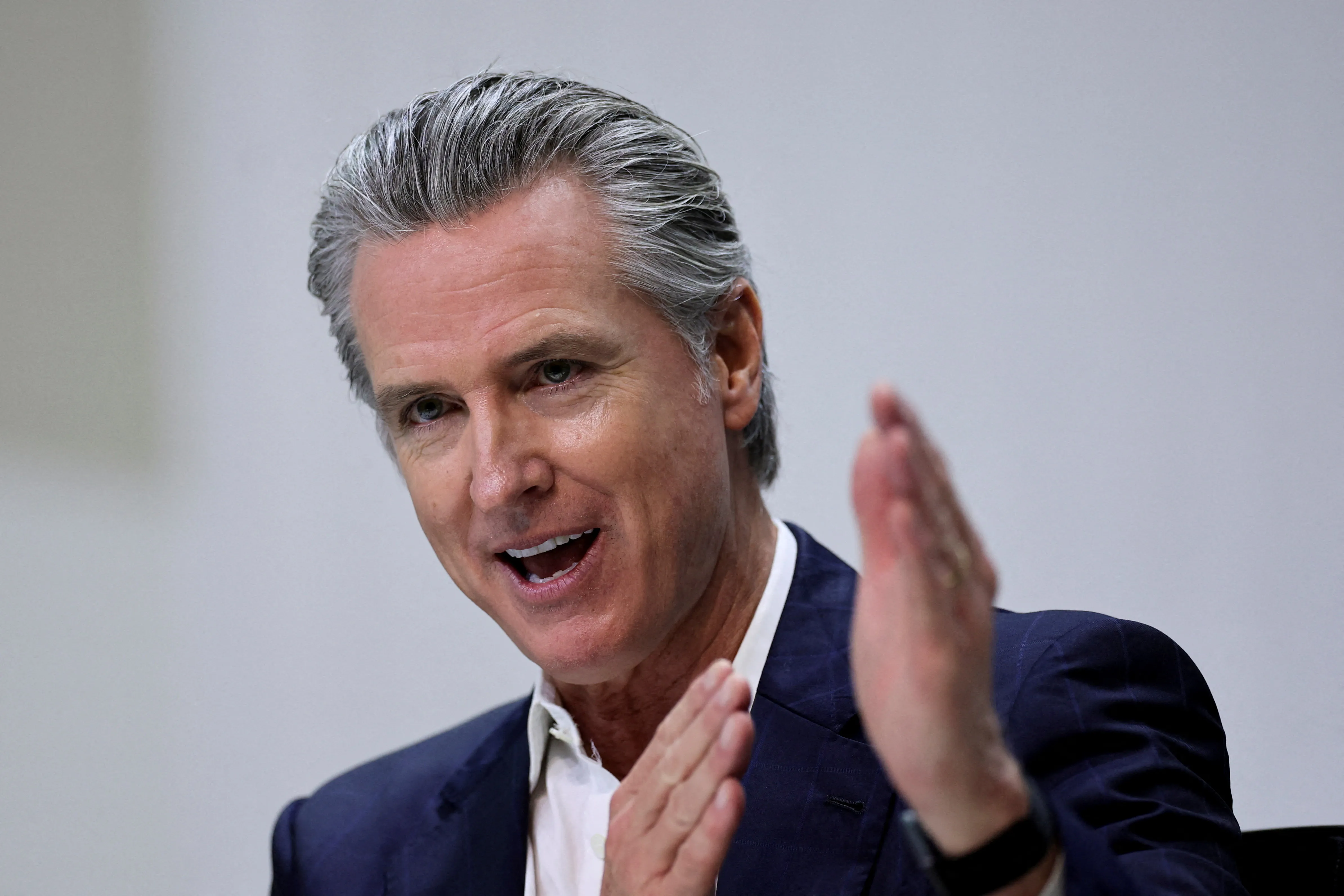
January 8, 2026
Daniel Cohen
World News
In the first days of 2026, the headlines are not whispering anymore. They are shouting. President Trump, Maduro, Venezuela, narco terrorism, the war on drugs, the U.S. military, Trump foreign policy, and the fight for freedom are all colliding in real time. And if you care about current events through a biblical worldview, you should be paying attention, because this is not just geopolitics. This is consequences. This is accountability. This is a warning to dictators, terrorists, and the political class that has protected them. I’m Daniel Cohen, and on RLN News and The Daniel Cohen Show on Real Life Network, we are watching a new pattern form: America’s enemies are learning that there is a price for harming the American people, and 2026 is looking like a year of reckoning.
For four years under Joe Biden and the Democrat machine, the world watched America project weakness. The southern border became a pipeline for fentanyl and cartel profit. Terror proxies took notes. Dictators grew bolder. And narco traffickers operated like they were untouchable. But then President Trump returned, and the message became unmistakable: there are consequences.
Maduro dared Trump. He mocked him. He acted like he was shielded by geography and protected by alliances with bad actors. Now, according to the script you just read, Maduro and his wife are in handcuffs, headed for the justice system, and the question is not only “how did this happen so fast,” but “who is next?”
Operation Absolute Resolve and the End of Impunity
Let’s back up and talk about why this moment matters. What the script describes is not a long, grinding war. It is not nation building. It is not an endless occupation. It is a swift strike built on a principle the political class forgot: when a regime becomes a hub for narco terrorism, weapons smuggling, and the poisoning of Americans through fentanyl, it becomes a direct threat.
In the story we are watching unfold, President Trump gives the green light to Operation Absolute Resolve, and within hours, Maduro is captured and brought to face justice. That speed is the point. It sends a message that is louder than any speech at the United Nations. Dictators who rely on delay, distance, and bureaucracy are suddenly forced to calculate risk again.
The Democrats and their media allies immediately reached for the same old talking points. They accused Trump of “gunboat diplomacy.” They claimed it was about oil. They tried to dress moral confusion in moral slogans. But here is what the script exposes: the same political movement that tolerated strongmen for decades suddenly finds its voice when someone finally removes one.
You remember the history. Hugo Chavez insulting an American president at the U.N. Democrats applauding. Obama shaking hands with Chavez. The left treating anti-American propaganda like sophistication. That is not compassion. That is ideological blindness.
And it is not just Venezuela. It is the entire Western Hemisphere. When adversaries like Iran, China, and Russia seek footholds in Latin America, they are not doing charity work. They are positioning. They are building leverage. They are looking for bases of operation. And the point Secretary Rubio makes in the script is clear: America does not “need” Venezuela’s oil, but America cannot allow hostile regimes to control strategic energy infrastructure in the Western Hemisphere and use it to fund terror networks and criminal pipelines.
That is not imperialism. That is sovereignty. That is security. That is protecting American families.
The Democrat Reaction and the Moral Slogan Trap
One of the most telling moments in the script is not a battlefield image. It is the reaction. The Democrat ecosystem instinctively picks the wrong side, again and again, because it is driven more by opposition to Trump than by a consistent moral framework.
They called Maduro illegitimate when it was convenient, then condemned consequences when they arrived. They speak of human rights while defending organizations and narratives that empower terrorists. They want you to believe that strong action is automatically corrupt, and that weakness is automatically virtuous. But victims of tyranny do not live by slogans. They live by reality.
That Venezuelan Jewish woman in the script nails it. Outsiders love to explain Venezuela to Venezuelans and Israel to Jews using phrases that sound morally correct while ignoring the lived experience of people under threat. That same pattern shows up everywhere right now. People who have never lived under socialism preach to those who escaped it. People who have never faced existential danger lecture Israelis about survival. People who have never buried family members from cartel violence minimize border chaos as politics.
The script makes another uncomfortable point: Democrats have trained America’s enemies to assume there will be no serious consequences. That assumption is now collapsing. When Trump says “watch it,” the world understands it is not theater.
That is why Colombia’s socialist leadership is nervous. That is why Cuba becomes part of the conversation. That is why dictators and narco traffickers are suddenly weighing escape plans instead of victory speeches.
This is what deterrence looks like when it is credible.
Iran, Israel, and the Reckoning Spreading Beyond Venezuela
The script pivots from Venezuela to Iran for a reason. These stories are connected. When a narco terrorist dictator falls quickly, it reshapes the psychological map for every regime that survives by fear. Iran is not just a distant foreign policy issue. Iran is a regime obsessed with destroying Israel and undermining America, while its own people suffer under economic collapse and brutal repression.
The details in the script are staggering. Currency collapse. Inflation. Food prices soaring. Protesters killed. Women punished for a strand of hair. And in the middle of that, the regime pours resources into terror and ideology instead of water, electricity, and dignity. That is what totalitarian systems do. They feed the machinery of control and starve the human beings trapped under it.
And when the script references biblical truth about Israel’s endurance, it is not an aside. It is worldview. The point is this: regimes can rage, but they cannot rewrite the covenant purposes of God. The Iranian regime can threaten. Proxies can posture. Campuses can chant. But truth does not bend to propaganda.
Which brings me to one of the most chilling parts of the script: American professors on Zoom calls encouraging revolutionary violence, praising Hamas talking points, and normalizing the ideology that led to October 7 atrocities. This is not “free speech as an abstract concept.” This is the shaping of young minds. This is radicalization packaged as education. And it explains why socialist and Islamist aligned narratives are gaining traction in places like New York City.
When you see leaders talk openly about property as a “collective good,” you are watching Marxism shed the mask. The abolition of private property is not a misunderstanding. It is the point. And when Americans vote for it, they discover too late that ideology always has consequences, just like dictators do.
The script ties it all together with a final development: even as Trump confronts threats abroad, the administration pressures institutions to stop irreversible medical interventions on minors. That is part of the same theme. Boundaries. Reality. Consequences. A refusal to pretend that lies are compassion.
And I’ll end where the script ends: Isaiah 54:17 reminds us that no weapon formed against you shall prosper. That promise is not political branding. It is spiritual assurance. America is not finished, and God is not done.
If you want news, culture, Israel coverage, and current events through biblical truth, watch The Daniel Cohen Show on Real Life Network. Download the free app and watch the full episode at reallifenetwork.com.
25 min
2026: The Year of Reckoning for Dictators, Narco Terror, and America’s Enemies
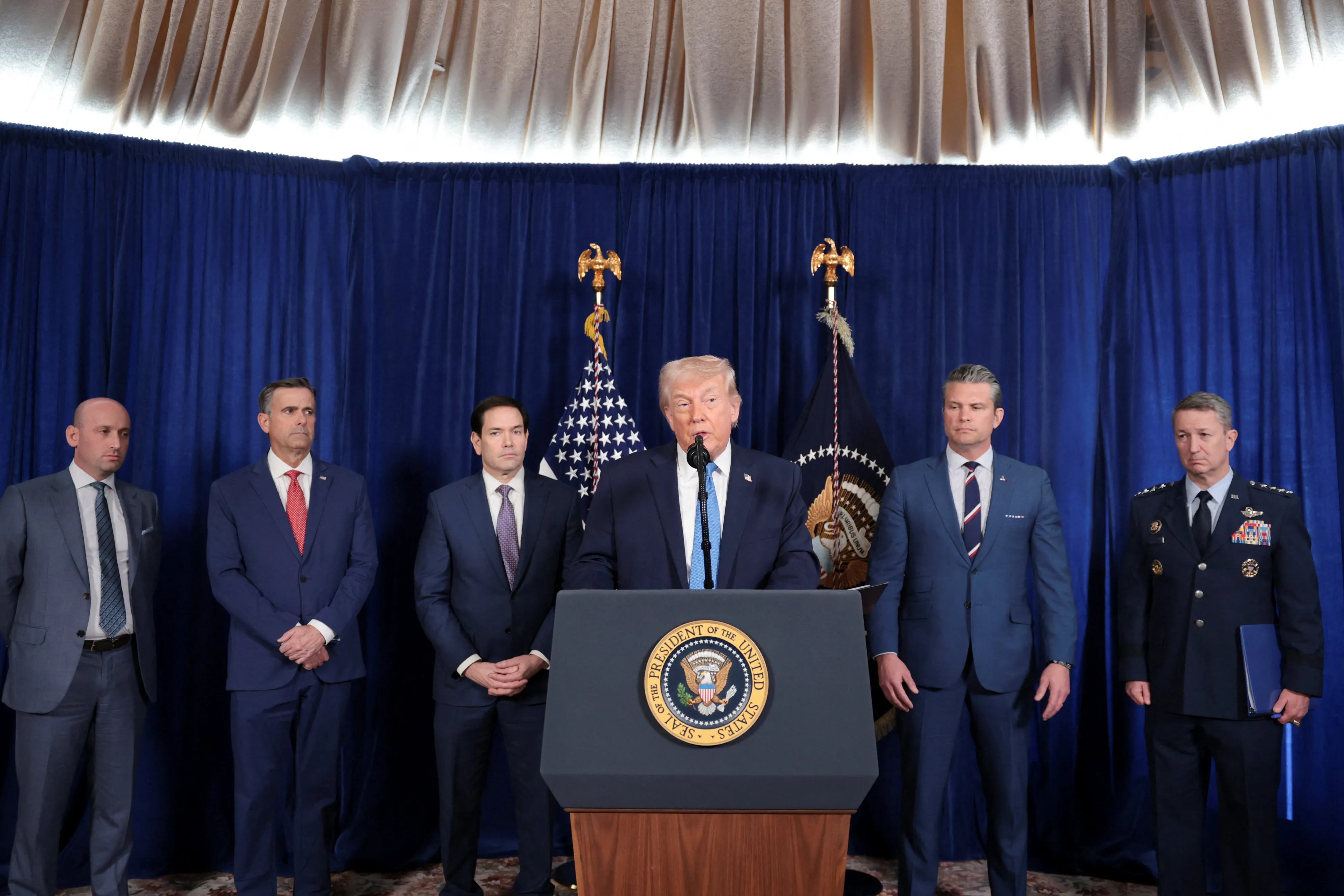
January 6, 2026
Daniel Cohen
World News
It is the first official show of 2026, and I can say this without hesitation. It is already a happy new year in Venezuela. In less than four hours, President Trump dismantled one of the most brutal communist dictatorships in the Western Hemisphere without a single American casualty. Nicholas Maduro, the narco terrorism strongman who poisoned the United States with fentanyl and enriched Iranian terror proxies, is no longer untouchable. He is sitting in an American prison cell.
While the American left mourns the fall of another socialist idol, the people of Venezuela are dancing in the streets. They are crying tears of joy. They are hugging strangers. They are tasting freedom for the first time in decades.
This is not just a headline. It is a historic turning point. And it exposes everything wrong with the last generation of weak foreign policy.
Maduro Arrested and a Dictatorship Collapses
Venezuela was once the wealthiest nation in South America. It was rich in oil, rich in resources, and rich in opportunity. Then socialism arrived, and it rotted the nation from the inside out.
Hugo Chavez promised justice, equality, and redistribution. What he delivered was Marxist communism. When Chavez died, Maduro doubled down. Political opponents were imprisoned. Dissidents disappeared. The military became an enforcement arm of tyranny.
The economy collapsed. Inflation exploded. Food vanished. Families scavenged for survival. Millions fled because staying meant death. Meanwhile, Maduro lived in luxury, enriching himself and his inner circle while an entire nation starved.
And this regime was not contained within Venezuela. It exported chaos. Drugs flowed north. Fentanyl killed tens of thousands of Americans every year. Terror money flowed east toward Iran and its proxies. Venezuela became a narco state aligned with America’s enemies.
This is why Maduro’s arrest matters. He was not a misunderstood leader. He was a criminal dictator who kidnapped an entire country and poisoned another.
America First Means Strength That Ends Tyranny
For decades, Americans were told that decisive action leads to endless war. That is a lie. Endless war comes from weakness, indecision, and appeasement.
President Trump proved that again. No occupation. No boots stuck on the ground for a generation. No flag draped coffins. Just overwhelming American capability applied with clarity and resolve.
Maduro was warned. Sanctions were imposed. Diplomatic isolation followed. He ignored every warning. And then the United States acted.
This is what smart foreign policy looks like. The United States is the world’s strongest superpower. When that power is used correctly, evil regimes collapse quickly.
America First does not mean America isolated. It means American strength used to advance freedom, protect lives, and stop threats before they metastasize. Ending narco terrorism abroad saves American lives at home.
That is the connection the media refuses to make.
A Global Signal to Iran and Every Dictator Watching
Do not miss what else happened when Maduro fell. The message went far beyond Venezuela. Iran heard it. China heard it. Russia heard it. Every dictator and every terror aligned regime heard it. When America draws real red lines, the world adjusts. And when tyrants fall, oppressed people take notice.
That is why this moment matters so deeply. Venezuelans are celebrating, but they are not alone. Iranians are watching. Women are defying compulsory hijab laws. Protesters are filling the streets. Courage spreads when fear is broken.
Freedom is contagious. So is hope. The left calls this reckless. They call it regime change. They pretend to care about human rights while defending systems that crush human dignity. That hypocrisy is now fully exposed.
You cannot claim to stand with women while defending regimes that torture them. You cannot claim to stand with the oppressed while mourning the fall of their oppressors. The people of Venezuela have spoken. They did not ask for socialism. They rejected it. They did not want sanctions relief. They wanted freedom. And now they have a future again. This moment is bigger than one country. It is about whether the world bends toward tyranny or toward liberty. It is about whether America leads or retreats.
Today, America led. God bless the people of Venezuela. God bless those who stood for freedom. And God bless the United States of America.
Watch the full episode of The Daniel Cohen Show on Real Life Network.
25 min
Trump Arrests Maduro and Venezuela Tastes Freedom Again
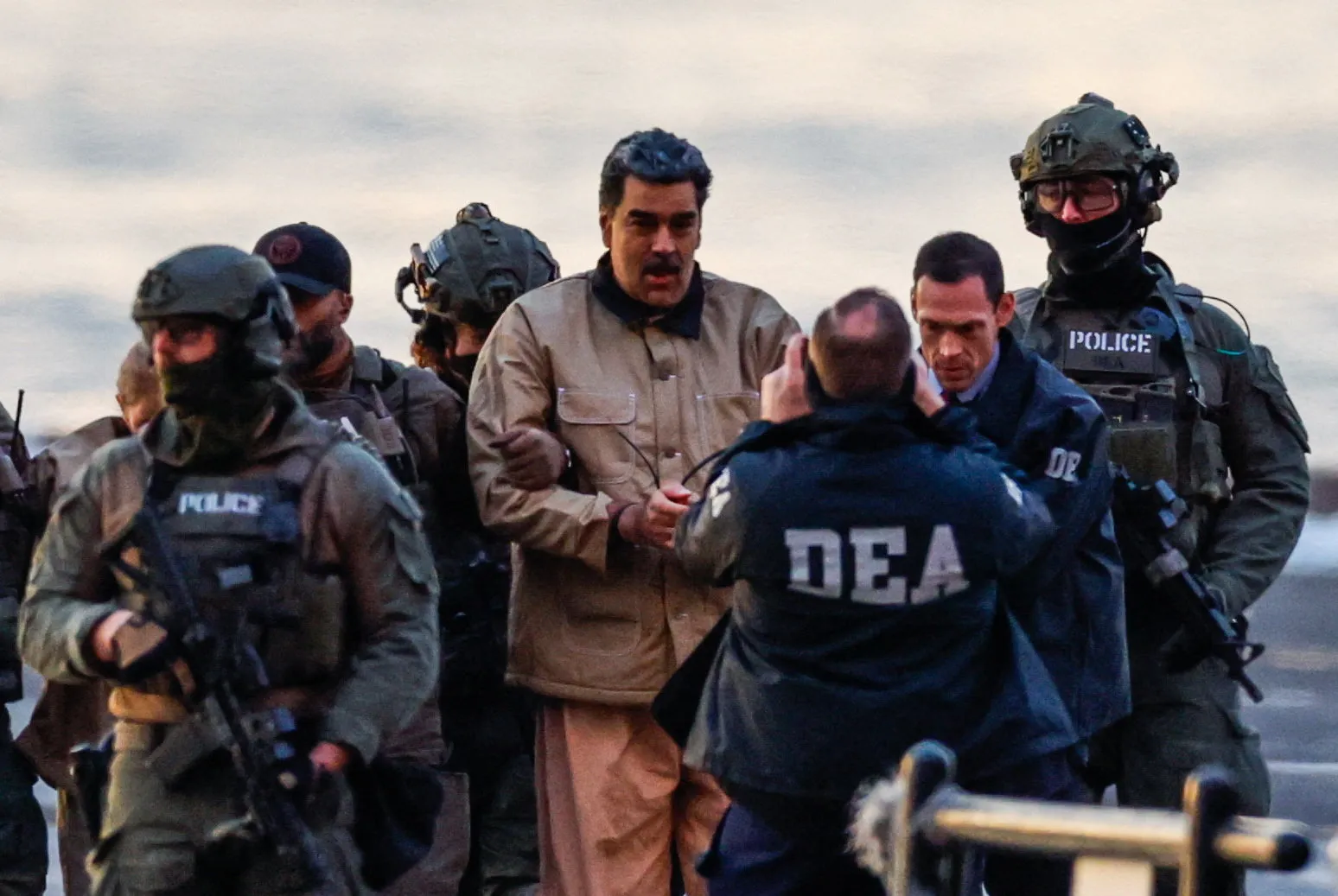
January 5, 2026
Daniel Cohen
World News
The world watched another red line disappear as Jews gathered peacefully for Hanukkah were slaughtered at Bondi Beach in Sydney, Australia. Families came to light candles, celebrate faith, and remember resilience. Instead, they were met with shotgun fire. This was not random violence. It was targeted terror. And it exposed a truth the West has spent years refusing to face.
On The Daniel Cohen Show on Real Life Network, Daniel Cohen connects the dots between the Bondi Beach massacre, rising antisemitism, radical Islam, and the moral collapse of Western civilization. When leaders choose cowardice over clarity, the cost is measured in blood.
Hanukkah in Australia Ends in Terror at Bondi Beach
Hanukkah is a celebration of light overcoming darkness. That is precisely why it was targeted. Roughly two thousand Jews gathered at Bondi Beach for a Chabad organized candle lighting. Children were present. Families stood shoulder to shoulder. Within moments, gunmen opened fire from an elevated position, unleashing dozens of rounds into the crowd.
This was not an accident. It was an act of terror rooted in hatred of Jews and hatred of the West. One of the attackers was identified as a Pakistani Muslim radicalized by the same ideology that has fueled attacks from Israel to Europe. Australia has seen a fivefold increase in antisemitic incidents since October 7, and this massacre did not come out of nowhere.
Synagogues have been firebombed. Rabbis have been threatened. Jewish communities have been told to hide while authorities urge restraint. This is not tolerance. This is surrender masquerading as virtue.
Pray for Australia. Pray for the families who lost loved ones. Pray for the Jewish community mourning during what should have been a season of joy.
Radical Islam and the Failure of Western Leadership
From Sydney to Paris to Berlin, the pattern is unmistakable. Radical Islam advances while Western governments retreat. France cancels public celebrations because it cannot guarantee safety. Christmas markets require concrete barriers and armed guards. Churches are vandalized while hate speech against Jews is tolerated in the name of multiculturalism.
Daniel Cohen warns that this ideology does not stop with Jews. It always moves from the Saturday people to the Sunday people. Judaism first. Christianity next. Anyone who believes they are immune because they do not attend church is mistaken. Western values themselves are the target.
The same cowardice is visible in global politics. Australia recognizes a Palestinian state while failing to protect its Jewish citizens. Canada moves to criminalize biblical speech while ignoring open support for Hamas and Hezbollah in the streets. This is not neutrality. It is moral inversion.
Truth matters. When governments refuse to name evil, they enable it.
From Syria to America, Strength Still Speaks
The same episode addressed the murder of two Iowa National Guard soldiers and an American civilian interpreter by an ISIS gunman in Syria. President Trump responded with clarity and resolve. He spoke the language ISIS understands. Strength. Consequence. Power.
In the Middle East, weakness invites violence. Cohen explains that leadership requires asking not only the cost of action, but the cost of inaction. America’s presence abroad matters, especially when adversaries like Iran, Hamas, and ISIS seek to fill any vacuum.
Meanwhile, hypocrisy at home continues to rot public trust. Black Lives Matter leaders accused of stealing millions. Alexandria Ocasio Cortez preaching against oligarchy while spending tens of thousands in campaign funds on luxury hotels, catering, and private suites. Socialism for the people, luxury for the elites.
This double standard fuels anger, division, and disillusionment. But it does not erase truth.
The answer is not silence. The answer is courage. Scripture teaches that standing idly by while evil advances makes us complicit. Western civilization was built on biblical truth, moral clarity, and the willingness to defend what is good.
Pray for Australia. Pray for Israel. Pray for courage in the West. And do not look away.
Watch and Share:
The Daniel Cohen Show, streaming on Real Life Network.
25 min
Bondi Beach Massacre Exposes the Cost of Cowardice in the West

December 15, 2025
Daniel Cohen
World News
The Daniel Cohen Show on Real Life Network keeps pulling on the same thread: truth is being punished, lies are being rewarded, and the public square is being discipled by whoever speaks the loudest. From Elon Musk acknowledging the Creator, to Hollywood celebrities demanding the release of a convicted terrorist, to Hamas being exposed for hoarding baby formula while accusing Israel of starvation, the battle is not just political. It is spiritual. And it touches everything from universities to immigration to the Middle East.
Elon Musk Admits a Creator and the Door That Opens
Elon Musk is not a pastor. He is not a theologian. He is an engineer’s engineer, the kind of mind that lives inside systems, design, and cause and effect. That is why his words land with weight when he says he looks up to “the Creator” and affirms that the universe came from “something.” For a culture trained to treat God like a punchline, even a small confession like that is a crack of light.
Scripture has always said creation testifies. The universe is ordered, mathematical, fine tuned, and breathtaking. Artwork implies an artist. Design implies a designer. And when a man who builds rockets and studies complexity admits there is a Creator behind it all, the next question becomes unavoidable: Who is that Creator, and what does He require of us?
That is where so many public figures stall. They may respect “principles” of Christianity, admire forgiveness, or call themselves “cultural Christians,” but never cross the line into the name above every name. Yet the Bible does not present God as an idea to admire. He is a personal, holy Creator, and every human being will stand before Him.
And that question is not just for billionaires. It is for you, for your family, and for a nation that has tried to replace worship with technology, politics, and entertainment. We are watching a society that can build advanced machines yet cannot answer the simplest human question: Why are we here?
Hollywood Defends a Convicted Terrorist as Hamas is Caught Hoarding Aid
While one headline hints at awakening, another exposes moral collapse. Hollywood celebrities signing petitions for the release of Marwan Barghouti is not “human rights advocacy.” It is propaganda. Barghouti is not a misunderstood freedom fighter. He is a convicted terrorist tied to attacks that targeted civilians. The attempt to rebrand him as a Mandela figure is a lie that collapses the definition of justice.
This is what happens when a culture loses its moral compass. It starts calling evil good, calls violence “resistance,” and treats the shedding of innocent blood like an unfortunate footnote. When celebrities with global platforms use their influence to sanctify terror, they are not standing for peace. They are laundering evil through fame.
At the same time, Israel continues to be vindicated as the narrative machine breaks down. A new discovery inside Gaza reveals Hamas hiding baby formula in secret warehouses while accusing Israel of starving children. Read that again. Hamas hoarded supplies, hid them, and then weaponized images and headlines to smear Israel. Terror groups do what terror groups do. But the scandal is how quickly major outlets and global institutions have repeated Hamas talking points like scripture.
This is not a minor media failure. It is blood libel in real time. If Hamas can hide formula and still win sympathy, it proves how powerful misinformation becomes when truth is treated as optional. And this is why the battle lines feel so clear. When truth is inconvenient, the powerful do not debate it, they bury it. They elevate narratives, not facts. They protect images, not lives.
Universities, Elections, and the Hope of the Gospel
This same war on truth shows up at home. Universities increasingly operate like re education systems where dissent is treated like harm and biology is treated like hate. Politics follows the same pattern. Consider the Jasmine Crockett comments and the backpedaling when receipts are read aloud. The playbook is predictable: say something inflammatory, deny you meant it, then accuse critics of being the problem.
It is also why Europe is becoming a warning sign. When public celebrations require barriers, metal detectors, and guards, something deeper is happening than “crime.” When Christmas markets become security hazards and churches are desecrated, the question is not whether it is happening. The question is why leaders keep pretending it is normal.
Then add the algorithmic pipeline aimed at children. If a major streamer is comfortable pushing sexual ideology into kids programming, parents must wake up. Your home has windows. Eyes and ears are gates. And what discipled a generation will shape a nation.
Still, the Daniel Cohen Show does not end in despair, because the gospel is not fragile. Revival is not powered by celebrity petitions or political spin. It is powered by the Spirit of God through ordinary believers who repent, pray, and speak truth without fear.
The hope of the gospel is not that we will engineer our way out of sin, vote our way out of judgment, or entertain our way into meaning. The hope is Jesus Christ. God the Creator entered His creation. He lived without sin. He died as a substitute for sinners. He rose again. He commands repentance and faith. And He offers real forgiveness, not the kind that pretends evil is good, but the kind that names sin honestly and washes it clean by His blood. Heaven will not be filled with people who claimed moral superiority. It will be filled with forgiven people who trusted Christ.
If you are watching the West fracture, do not only rage. Pray. Speak. Stand. And do not forget: the loudest voices in the culture are not the final authority. God is.
Watch and share:
Watch The Daniel Cohen Show on Real Life Network
25 min
Elon Musk, Hollywood, and the War on Truth
December 12, 2025
Daniel Cohen
World News
The tension building beneath America’s surface is no longer subtle. From a viral confrontation in Wisconsin to massive welfare fraud in Minnesota, from ideological battles inside American universities to shifting loyalties within immigrant communities, one truth becomes unavoidable. The United States is facing a cultural and spiritual crisis shaped by forces both domestic and global. On the Daniel Cohen Show, Daniel exposes how these threads connect and why Americans must no longer ignore the transformation happening right in front of them.
The stories may seem unrelated at first. A Cinnabon worker fired. A multimillion dollar fraud scheme tied to Somali networks. A university system demanding ideological conformity. A media personality buying a mansion in Qatar. But step back for a moment, and the pattern becomes clear. We are a nation being reshaped while citizens are told to stay silent.
Below is the breakdown of how these stories intersect and what they reveal about the future of America.
Eruption in Wisconsin
The viral video from a Wisconsin shopping mall did not go viral because an employee used horrific language. That behavior is wrong and no one should defend it. The story went viral because millions of ordinary Americans recognized something deeper. They recognized the frustration brewing in communities across the country where rapid demographic changes and cultural clashes are creating pressure.
Reports now say the Somali couple involved may have been antagonizing the worker for not wearing a hijab. If that is true, then the edited clip tells only one side of the encounter. It would not be the first time viral outrage ignored inconvenient context. But the moment symbolizes something larger. Americans have been told for years to tolerate everything while their communities, customs, and expectations are rewritten around them.
As Daniel Cohen points out, when assimilation is no longer required and when criticism is immediately labeled hate or racism, frustration will eventually boil over. This is not a justification. It is an explanation. The American people feel unheard. And they are tired.
Minnesota’s Welfare Fraud
Minnesota is experiencing the largest welfare fraud scandal in American history. Billions of taxpayer dollars stolen through programs hijacked by networks operating inside the Somali community. Federal authorities now confirm some of that money may have been funneled to al Shabaab, a terror organization with American blood on its hands.
Over 480 state employees warned Governor Tim Walz. They begged him to intervene. Instead, whistleblowers say they were intimidated, monitored, and silenced. The media refused to cover the story until President Trump publicly called out the corruption. Only then did outlets acknowledge the scandal.
Daniel Cohen rightly notes that the question is no longer whether fraud occurred. It is whether political leaders were incompetent or complicit. The problem is not isolated to Minnesota. In Ohio, a state representative openly declared that his priority in office is lobbying for Somalia. In Minneapolis, political rallies look like foreign campaign events.
This is not normal immigration. This is political bloc formation shaped by foreign loyalties. When assimilation fails, national unity fractures. That is exactly what we are witnessing now.
Universities, Media Figures, and Cultural Elites
While the working class struggles with cultural upheaval, American universities are training the next generation to accept an ideology that rejects biology, suppresses dissent, and punishes disagreement. The UC system now requires students to score 100 percent on an ideological exam or lose access to class registration.
Disagree with transgender ideology. Object to men using women’s restrooms. Believe in biological sex. You fail.
This is not education. This is enforced doctrine.
Meanwhile major public voices are signaling where cultural power is shifting. Tucker Carlson announced he is buying a home in Qatar, a government that funds terror groups and restricts women’s rights. American cultural icons now praise regimes that reject the very freedoms America was built upon. At the same time, the Pope minimizes the danger posed by unchecked immigration from Islamic regions despite centuries of historical evidence.
Daniel Cohen traces a painful reality. Wherever radical Islam gains demographic power, Christian populations collapse. Lebanon. Syria. Iraq. Egypt. Bethlehem. The pattern is undeniable. And yet America continues to import populations from regions where assimilation is not guaranteed and where ideology often conflicts with Western freedoms.
Bethlehem lighting its Christmas tree for the first time in two years is treated as a joyful headline. But the truth is darker. The tree was dark not because of war but because local Muslim authorities canceled Christmas in solidarity with Gaza. The Christian population has fallen from over 80 percent to less than 10 percent. Christian presence is disappearing across the Middle East. Why should the West believe it will be different here?
In the end, the stories of Wisconsin, Minnesota, the universities, and the Middle East all converge.
America is being reshaped culturally, politically, and spiritually. Truth is punished. Dissent is criminalized. Citizens are shamed for wanting the country they grew up in. Immigrant political blocs are forming with loyalties that do not point to the United States. And those who raise the alarm are smeared as hateful or extreme.
Daniel Cohen ends his show with clarity. This is a spiritual war. Christians and conservatives cannot afford to sit quietly while the foundations of Western civilization erode beneath them. This is the moment to speak truth. To defend what is good. To pray for strength. To contend for the soul of the nation.
Watch the Daniel Cohen Show
Stream every episode of the Daniel Cohen Show on Real Life Network:
https://reallifenetwork.com/danielcohen
25 min
When A Nation Loses its Way
December 9, 2025
Daniel Cohen
World News
The collapse of Western resolve and the rise of radical Islam have collided in what Daniel Cohen calls Somalia Gate, the largest welfare fraud in American history. On The Daniel Cohen Show from Real Life Network, Cohen exposes how corruption, open borders, political cowardice, and spiritual blindness are eroding the foundation of the United States. With billions stolen, terror networks empowered, and government leaders like Ilhan Omar and Tim Walz under scrutiny, Cohen connects the crisis to a deeper war on truth itself. For viewers seeking conservative news, a biblical worldview, and honest reporting, this episode reveals why America is at a breaking point and why the fight for truth has never been more urgent.
Somaliagate and the Rise of Lawlessness
Somaliagate is the biggest welfare fraud in American history. Daniel Cohen reveals how billions of dollars were stolen through criminal networks tied primarily to Somali operatives in Minnesota. While the Biden administration, Governor Tim Walz, and Ilhan Omar deflect and deny accountability, whistleblowers say they were silenced, threatened, and punished for exposing corruption.
More than 480 Minnesota DHS employees warned Governor Walz about fraudulent schemes. Instead of action, they say they received intimidation and retaliation. Cohen calls it what it is: an organized crime syndicate masquerading as government.
The scale is staggering. A child nutrition program claimed to feed thousands when surveillance showed only a handful of people entering the facility. Federal agents discovered millions of stolen taxpayer dollars being funneled to al Shabaab, an al Qaeda linked terror group responsible for massacres in East Africa.
Ilhan Omar publicly promoted restaurants and organizations now tied to the fraud while receiving campaign support from those same networks. Video resurfaced of Somalia’s former prime minister bragging that Omar represents Somalia, not Minnesota. The evidence, Cohen says, is undeniable. This is not negligence. It is the deliberate dismantling of American systems in the name of political gain.
And Minnesota is only the beginning. Reports from Ohio and other states show similar patterns. Fraud. Kickbacks. Luxury cars funded by government assistance. American families struggle while corrupt actors and foreign networks drain the system dry. Cohen warns that denying this reality does not make it disappear. It emboldens it.
A Border in Crisis and a Culture Under Siege
Cohen draws the connection between domestic fraud and the consequences of a completely unsecured border. Criminals deported multiple times walk back into the country with ease. Violent offenders roam sanctuary cities with no fear of consequences. Americans pay the price, including recent tragedies in Charlotte and across the nation.
President Trump responded by authorizing strikes against narco terrorists poisoning American streets with fentanyl. Yet Democrats accuse him of war crimes while ignoring the real carnage that destroys families. Cohen calls this moral confusion an indictment of a political class that values ideology over human life.
The same inversion of truth is visible in Europe. In the United Kingdom, a man was arrested at 4 a.m. simply for saying he disliked Palestinian flags in his neighborhood. Cohen warns that America is headed toward the same destiny if it continues to sacrifice truth on the altar of political correctness.
The cultural assault extends even into entertainment. Cohen highlights the growing influence of left wing ideology in major studios, including reports of Netflix acquiring Warner Bros. and the role of high profile political figures in shaping children’s content. Transgender storylines and radical messages have become commonplace in programming aimed at children.
The message is clear. When truth is abandoned, society unravels.
Israel, Biblical Truth, and the Hope That Cannot Be Silenced
In the final section of the episode, Cohen returns to the spiritual center of the crisis. Radical Islam understands only one language: strength. Israel embodies that principle as it fights daily for survival. From deterring Hamas attacks to deploying the revolutionary Iron Beam defense system, Israel is showing the world that peace is impossible without truth and courage.
Meanwhile, the same weaponization of the judicial system used against President Trump is now being used against Prime Minister Netanyahu. Cohen points out the global pattern. Strong leaders who defend their nations are targeted while radicals are celebrated.
Yet there is hope. Cohen highlights the powerful ministry of Jeff Morgan in Israel, sharing the Gospel with Jewish people through Scripture itself. Isaiah 53, Micah 5, Zechariah 12, and Proverbs 30 point unmistakably to Jesus as Messiah. Hearts are softening. Curiosity is growing. Truth is breaking through.
And thousands of American pastors recently traveled to Israel to stand in solidarity, pray at the Western Wall, and commit to preaching biblical truth without compromise.
Cohen reminds readers that America is not just facing political corruption. It is facing a spiritual crisis. The collapse of borders, the rise of radical Islam, the fraud in Minnesota, and the war against Israel are all symptoms of a deeper battle between truth and deception. The answer is not despair. The answer is the Gospel. Christ remains victorious. Scripture remains true. And the Church must remain awake.
If you want honest Christian news, biblical worldview content, and real reporting that refuses to bow to political pressure, watch The Daniel Cohen Show on Real Life Network.
Watch here: https://bit.ly/DanielCohenShowRLN
25 min
Somaliagate and the Surrender of the West: Corruption, Chaos, and the Battle for Truth
December 8, 2025
Daniel Cohen
World News
There is a language radical Islam understands. It is not Arabic. It is power. Strength. Resolve. On The Daniel Cohen Show from Real Life Network, Daniel Cohen warns that while Europe has grown weak, the United States is not weak but asleep. From National Guard shootings to terror plots and welfare fraud funding Islamic extremism, Cohen lays out a sober message for anyone who cares about America, Israel, and a biblical worldview. This is conservative news that refuses to pretend the enemy is still outside the gates.
Radical Islam, Open Borders, and a Sleeping West
Cohen begins with the heartbreaking story of National Guard members Sarah Bextrom and Andrew Wolf, both shot by an Afghan national who entered the United States under a refugee program. Sarah died on Thanksgiving Day. Andrew is fighting to recover, and his family is pleading for prayer. Cohen rejoices that God is answering those prayers, but he refuses to stop at sentimental sympathy.
He points out what many leaders will not say aloud. These tragedies are not random. They are the fruit of reckless policies that imported more than one hundred thousand Afghans after the chaotic withdrawal from Kabul, while promising Americans that every single person had been “thoroughly vetted.” Now a National Guard hero is dead, another is clinging to life, and the media tries to sanitize the story with headlines about a man struggling with “dark isolation.”
Cohen calls that spin what it is: a whitewash of Islamic terror. He reminds viewers that Islamists from failed states are often impossible to vet properly, especially when they come from cultures shaped by jihad, corruption, and hostility to Western values. America, he argues, has no biblical or constitutional obligation to import the world’s problems simply because life is hard in other countries.
For Cohen, this is not about hating immigrants. He is an immigrant himself. It is about telling the truth. The West is inviting in people from nations shaped by radical Islam and then pretending that worldview does not matter. That denial is costing lives.
Demographic Destiny, Welfare Fraud, and a War on Truth
From there, Cohen widens the lens. He highlights data showing collapsing birthrates in the bluest states and growing families among Muslim immigrants. In his view, Democrats are not only tolerating lawless migration. They are counting on it. A party that refuses to build strong families must import future voters. Cohen calls this “demographic destiny,” and he urges Christian families to respond by obeying Scripture, building strong homes, and discipling children to love God, Scripture, and country.
Then he turns to Minnesota, where Somali welfare fraud has exploded into a multi billion dollar scandal. Through fake autism claims, padded food programs, and sham nonprofits, money meant for vulnerable children was siphoned off and sent overseas. Federal investigators have already linked parts of this fraud to al Shabaab, a brutal Islamic terror group in East Africa.
Cohen asks the obvious question. How can any leader who claims to care about justice tolerate a welfare system that effectively launders American tax dollars to jihadists who murder Christians, attack malls, and bomb hotels? Yet instead of contrition, he sees excuses, word salad, and accusations of racism for anyone who dares raise the alarm.
He connects these stories to a growing hostility toward biblical Christianity at home. From professors failing Christian students for citing the Bible to pastors declaring Jesus “pro abortion” or announcing their own gender transitions, Cohen shows how confusion inside the church and cowardice in the culture open the door for spiritual deception.
This is not just about immigration policy or crime statistics. It is about a West that has rejected God’s design for life, family, and truth. When a society abandons the fear of God, it begins to call evil good and good evil.
Israel, Strength, and The Hope of the Gospel
Cohen then turns to Israel, where radical Islam is not a theoretical threat but a daily reality. He highlights the way the Israel Defense Forces confront terror with clarity and strength, and he showcases new defensive technology like the Iron Beam laser system that can neutralize rockets for just a few dollars a shot. It is, he says, what happens when a nation fights for survival instead of chasing cultural fads.
At the same time, he notes that Israel cannot depend forever on shifting American foreign policy. One administration may fully support Israel, while another pressures it to compromise with those who openly seek its destruction. That uncertainty is why Israel continues to invest in its own defense, even as believers around the world pray for the peace of Jerusalem.
Ultimately, Cohen reminds viewers that this is a spiritual war before it is a political one. From terror cells and welfare fraud to confused pastors and captured universities, the same dark powers are at work. Policies matter. Borders matter. Elections matter. But none of them can change the human heart. Only the gospel can do that.
The Hope of the Gospel
From a biblical worldview, the deepest problem facing America, Europe, and the Middle East is not immigration, socialism, or even radical Islam. It is sin. Every person, whether born in Dearborn, Tel Aviv, or Mogadishu, has rebelled against a holy God and stands guilty before Him. No political system and no human strength can fix that.
The good news is that God has not left us in that condition. In His mercy, the Father sent His Son, Jesus Christ, fully God and fully man, to live a sinless life, die on the cross as a substitute for sinners, and rise again in victory over sin, death, and the powers of darkness. All who turn from sin and trust in Christ alone are forgiven, adopted into God’s family, and given new hearts that love truth instead of lies.
That is why, even as he sounds the alarm, Daniel Cohen continues to point back to Jesus. Laws can restrain evil, borders can protect nations, and strong leaders can buy time. Only the crucified and risen Christ can bring real peace, real transformation, and real hope.
If you want conservative news, in depth analysis of Israel and the West, and a steady focus on the gospel, you can watch The Daniel Cohen Show on Real Life Network. Fill your home with content that tells the truth and exalts Christ in a world that desperately needs both.
25 min
The Language Radical Islam Understands: Strength, Truth, and the Hope of the Gospel
December 3, 2025
Daniel Cohen
World News
The pain of Joe Biden’s disastrous presidency is not abstract. It has names and faces. On The Daniel Cohen Show from Real Life Network, Daniel Cohen shows how an Autopen presidency in Washington, a broken border, unvetted Afghan migration, socialist indoctrination, and Islamic pressure in Europe are all connected. This is Conservative News with a Biblical Worldview, not to stir rage for its own sake, but to wake up Christians to the spiritual war behind the headlines. Daniel Cohen, Charlie Kirk, and other bold voices are calling believers to see Biden, Trump, Radical Islam, and the open border through the lens of Scripture, not spin.
The Autopen Presidency and Blood at the Border
Cohen begins with grief. Twenty year old National Guard member Sarah Bexstrom died on Thanksgiving Day after being shot near the White House by an Afghan national brought into the United States under Joe Biden’s Operation Allies Welcome. Her father held her hand as she slipped into eternity. Fellow Guardsman Andrew Wolf was shot twice in the head and is now fighting for his life. His family is begging believers to pray, and Cohen urges viewers to intercede for a miracle.
Then he asks the question everyone in Conservative News should be asking. How did we get here?
For four years the media told America that Joe Biden was sharp and in control, even as the world watched him fall off bikes, lose his place, and whisper that he would “get in trouble” if he took questions. Now, President Trump has called the whole thing what it was. An Autopen presidency. Trump says that virtually all of Biden’s executive orders were signed by machine, not by the man whose name is on them. If that is true, Cohen says, then who was actually running the country. Deep State handlers. Obama era operatives. People the American public never elected.
While Biden’s staff and an Autopen were authorizing open border policies, the southern barrier was literally being pulled up by heavy equipment so migrants could stream through. It was not just families from Mexico. Young, fighting age men from the Middle East were allowed in. Biden’s team promised these Afghans were carefully vetted. Then two Afghan nationals in the same week were either arrested for plotting terror or accused of carrying it out. One, according to investigators, drove across the country to ambush American soldiers near the White House. Another allegedly built a bomb in Texas and posted video threats online.
This is not compassion, Cohen says. It is negligence. Immigration without assimilation is invasion. And the cost is now measured in American blood.
From Kabul to Campus: Immigration, Islam, and Indoctrination
Cohen then zooms out. What is happening through Biden’s immigration policies has a spiritual twin in America’s classrooms and Europe’s streets.
In Minneapolis, a reporter walked through “Little Mogadishu” and could barely find anyone who spoke English. Somali gang members claimed parts of the neighborhood as their turf. Cohen is not attacking legal immigrants. He is an immigrant himself who moved with his family to Israel. The difference, he says, is that biblical immigration expects people to love their new nation, learn its language, and adopt its values. Modern multiculturalism does the opposite. It demands that the host country change everything for newcomers and then calls any discomfort Islamophobia.
He points to Europe as a warning. In England, an Islamic activist declared that the cross on the national flag is unacceptable under Sharia. In Brussels, Muslims disrupted a Christmas market, filling the air with chants and black smoke. Christmas, one of the most sacred Christian holidays, is being treated as an offense in lands built on Christian heritage. Cohen notes that there is one Jewish state, Israel, and more than fifty Muslim majority nations. Yet Israel is accused of colonization while Islamic activists demand that Europe change its flags, food, and festivals.
Even the Vatican is not immune. Cohen describes Pope Francis placing a wreath at the tomb of Ataturk, the man whose regime helped erase Christianity from Turkey, and the Vatican Library providing a prayer rug for Muslims. To Cohen, that is surrender, not bridge building.
Back in America, the same spirit shows up in the classroom. At the University of Oklahoma, Christian psychology student Samantha Fulnecke wrote a short essay defending traditional gender roles and citing the Bible. Her trans identifying professor failed her with a grade of zero and called her beliefs offensive. Cohen contrasts this with his own university experience in the late 1990s, when professors at least allowed debate. Today, he says, the only diversity allowed is the kind that makes everyone think exactly the same.
Add to this a Heartland Institute poll showing that a majority of young adults prefer a Democrat socialist for president in 2028, and the pattern is clear. Mass migration, endless printing and inflation, useless degrees, and constant propaganda have primed a generation to embrace socialism and resent the country that gave them more opportunity than any place in history.
The Hope of the Gospel in a Shaking West
Despite the heaviness of the stories, Cohen refuses to end in despair. He reminds viewers that the deepest problem is not Biden, Trump, socialism, or Radical Islam. The deepest problem is sin. Human beings in Brussels, Kabul, Minneapolis, and Washington have all rebelled against a holy God. When societies forget Him, they lose their minds and their morals. Borders collapse, gratitude dies, and grievance becomes a way of life. That is why even wealthy figures like Michelle Obama can frame life as oppression, and why some conservative voices like Candace Owens can drift into confusion about Israel. Without a firm biblical anchor, anyone can be swept away.
The answer is not nostalgia for a better past. It is repentance and faith in Jesus Christ.
The Gospel says that God created the world good, that humanity fell into sin, and that no political system can repair what sin destroyed. In love, God sent His Son. Jesus lived without sin, died on the cross as a substitute for sinners, and rose again so that all who repent and trust Him alone are forgiven and given new life. That is the only foundation strong enough to withstand the pressures of globalism, jihad, socialism, and cultural decay.
Cohen urges believers to know their Bibles, to test every voice, whether from the left or the right, against Scripture, and to reject political idolatry. Christians can support strong borders, call out Islamic terror, resist socialist lies, and still love their enemies because their identity is rooted in Christ, not in cable news. He commends resources like Pastor Jack Hibbs’ devotional “Watching Waiting” to help believers stay awake in the last days and live with hope, not fear.
In the end, he says, nations rise and fall, but the kingdom of God cannot be shaken.
If you are tired of media that hides these connections, you need more than another channel. You need a Christian streaming service that tells the truth. On Real Life Network, The Daniel Cohen Show delivers Conservative News from Israel, America, and the wider world through a clear Biblical Worldview.
Visit RealLifeNetwork.com today, download the free app, and watch The Daniel Cohen Show for unfiltered coverage that points you back to Christ, not chaos.
25 min
The Autopen Presidency, Open Borders, and a Nation Asleep: Daniel Cohen Connects the Dots
December 1, 2025
Daniel Cohen
World News
The West is facing a crisis of truth that cannot be explained by politics alone. On The Daniel Cohen Show from Real Life Network, Daniel Cohen connects stories from Germany, the Middle East, and America to show how Radical Islam, cultural confusion, political corruption, and media manipulation are symptoms of a deeper spiritual war. His message blends Conservative News with a Biblical Worldview that refuses to look away from the real enemy. Tags such as Daniel Cohen, Muslim Brotherhood, Trump, Trump Executive Order, Comey, Letitia James, Iran, Water Crisis, Christmas Markets, Germany, Islamic Terror, Trans Athlete, Womens Sports, Erika Kirk, Turning Point USA, Faith, Forgiveness, Israel, and Real Life Network become threads in a much larger story.
A Crisis of Discernment in Germany and the West
Cohen begins with a moment that shocked even seasoned journalists. In Germany, during one of the oldest Christmas Markets in Europe, a German church allowed the Muslim call to prayer to echo through its sanctuary. Even the German reporter who filmed it admitted a sense of deep unease. Cohen ties this to growing influence from Iran and the Muslim Brotherhood, who continue to use Western institutions as platforms to expand their ideology.
Qatar alone has spent billions to reshape Western thought, funding activists, politicians, media outlets, and university programs that advance pro Hamas sentiment and anti Israel narratives. These same networks celebrated on the streets of Berlin and Hamburg after the October 7 attacks, waving Hamas flags and shouting chants that once would have been unthinkable in Europe.
Cohen reminds viewers that discernment is the missing ingredient. When nations reject biblical truth, they lose the ability to distinguish good from evil. Political leaders offer appeasement instead of justice. Media outlets rewrite reality. Churches remain silent to avoid offense. Germany, a place once known for theological conviction, now struggles to define right and wrong at its own Christmas Market.
This is not simply geopolitical confusion. It is spiritual blindness.
The Collapse of Courage in America
From Europe Daniel Cohen turns to the United States, where political corruption and cultural decline reveal similar patterns. He highlights a case in which a Christian school teacher in Kentucky repeatedly abused young boys while school officials looked the other way. According to the report, the school treated the teacher as a victim rather than a danger, a tragic example of the collapse of moral courage.
Cohen connects this with larger failures of leadership. He points to political figures like James Comey and Letitia James, whose selective prosecutions demonstrate a pattern of weaponized justice. He contrasts this with President Trump’s willingness to take bold action, including a Trump Executive Order targeting foreign influence campaigns. Cohen shows how Trump faced endless resistance from entrenched Deep State networks who feared the exposure of their alliances with groups like the Muslim Brotherhood and the Iranian regime.
He also highlights Ilhan Omar’s recent statement saying she is representing “the people of Somalia” rather than American citizens. This, Cohen says, is the natural result of electing leaders whose loyalties lie with foreign interests over biblical principles.
The madness shows up not only in politics but in culture. Cohen plays footage from the World’s Strongest Woman competition where a biological male dominated female athletes. Women who had trained for years were pushed aside by an ideology that denies biological reality. Cohen says this is what happens when a society abandons truth. The women’s sports crisis is not an isolated problem. It is a symptom of a culture at war with creation itself.
The Church’s Calling in an Age of Chaos
Despite the darkness Daniel Cohen refuses despair. He highlights leaders like Erika Kirk and Turning Point USA Faith who are helping Christians speak with courage and clarity. Erika’s message on forgiveness struck Cohen deeply. She explained that forgiveness does not erase accountability but frees the believer from bitterness. It allows Christians to fight for truth without losing compassion.
Cohen applies this to the war in Israel. He reminds viewers that Israel is not just another country. It is a nation God set apart in Genesis 12 and defended throughout Scripture. Any worldview that refuses to recognize God’s covenant with Israel will falter when interpreting world events. Radical Islam understands this spiritually even if the modern West does not.
Cohen warns that many Western churches have been silent about Islamic Terror, Iran’s aggression, and Hamas’s goals because they fear criticism. He urges pastors to recover biblical conviction. The early Church faced Rome. Modern believers face ideologies built on deception, intimidation, and moral relativism. The Church must stand between culture and collapse.
Yet Cohen also stresses hope. Forgiveness and Faith are powerful weapons when wielded through the Gospel. Christians can expose evil without becoming hateful. They can defend women’s sports without mocking the broken. They can stand with Israel without despising their neighbors. Courage is born from conviction, not rage.
The Hope of the Gospel
Cohen closes with clarity. The enemies of truth are active. Whether through the Muslim Brotherhood, foreign influence from Iran, cultural confusion about identity, or the collapse of discernment in American institutions, the real battle is spiritual. The crisis is not just Radical Islam or political corruption or collapsing borders. The crisis is sin.
Humanity has rebelled against God. No government can heal that wound. No election can rescue a nation that rejects its Creator. But Christ can.
Jesus lived without sin, died for sinners, and rose again so that all who repent and believe may be saved. This is the hope that can revive a nation, restore courage, and lead believers to stand with conviction.
Cohen urges viewers to fill their minds with truth and anchor their worldview in Scripture rather than media spin. Real Life Network exists for this purpose, offering Conservative News, biblical teaching, and Christian worldview content that strengthens believers for a time such as this.
Call to Action
If you want unfiltered truth and a biblical lens for the cultural battles shaping our world, watch The Daniel Cohen Show on Real Life Network. Explore Christian streaming, Conservative News, faith based content, and powerful teaching that refuses to compromise.
Visit RealLifeNetwork.com to watch today.
25 min
The Muslim Brotherhood’s Influence and the Collapse of Western Discernment: Daniel Cohen Sounds the Alarm
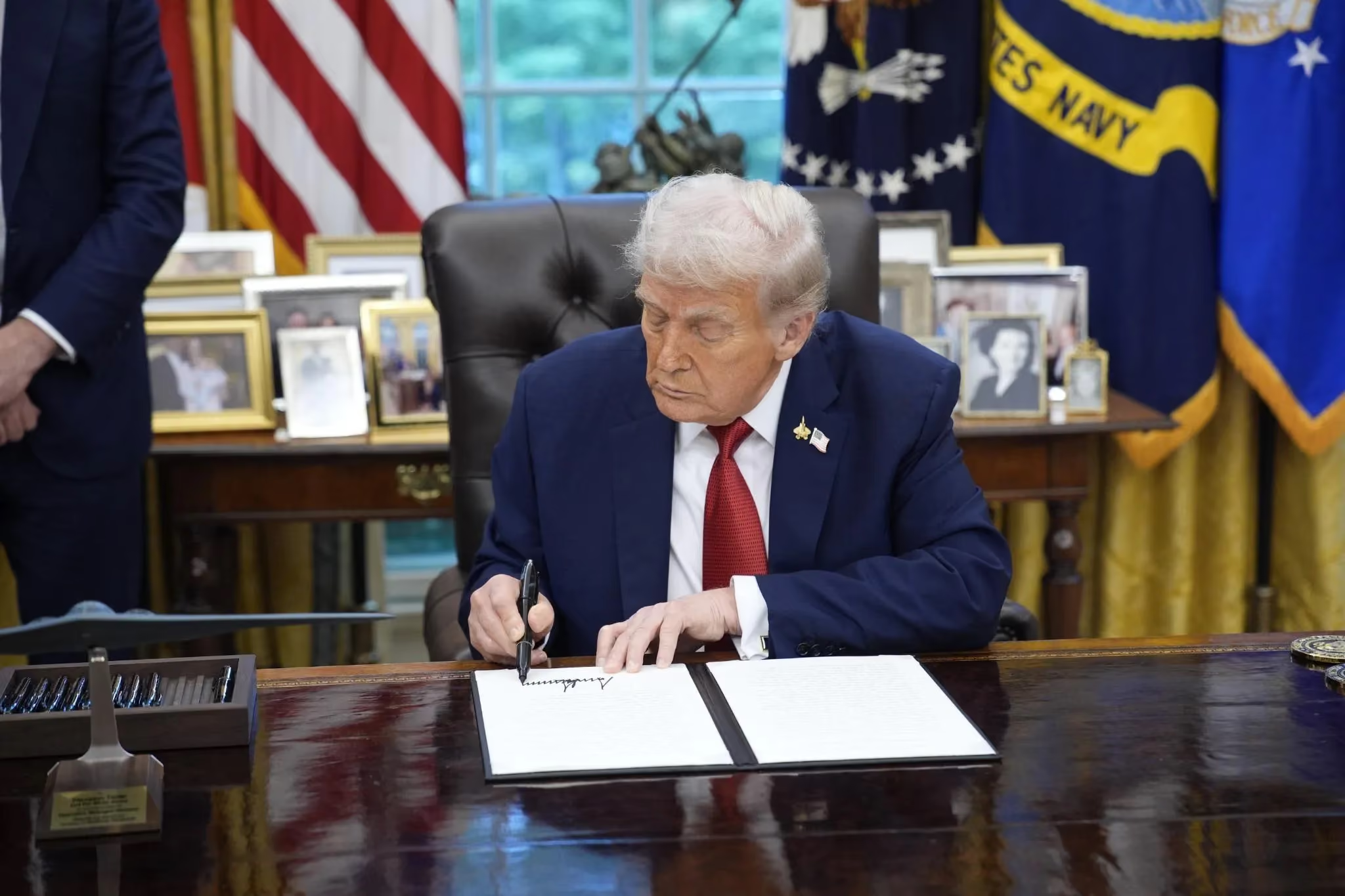
November 26, 2025
Daniel Cohen