
Stream Real Life Network Now

WATCH NOW
Charlie Kirk


World News
25 min
September 11, Twenty-Five Years Later: What Does It Mean to Never Forget?
Twenty-five years after September 11, a new generation is inheriting the story of 9/11. Remembering means honoring the victims and heroes while also preserving the truth about who attacked America, what motivated them, and why those lessons still matter.
Twenty-five years after September 11, 2001, two words remain inseparable from that day: Never forget. As a new generation inherits the story of 9/11, Real Life Network and The Daniel Cohen Show are committed to examining the history, ideas, and cultural questions that Americans cannot afford to forget.
But remembering September 11 requires more than remembering its pain.
An entire generation of Americans has now grown up without any personal memory of the attacks. Roughly 100 million Americans have been born since 9/11. They did not watch the second plane strike the South Tower. They did not see smoke pouring across Manhattan or experience the uncertainty that gripped the country. For them, September 11 is history.
That raises an increasingly important question: What exactly are Americans promising never to forget?
Remembering the Victims Means Remembering the Truth
Calling September 11 a tragedy is true, but incomplete.
September 11 was an intentional terrorist attack carried out by 19 al-Qaeda hijackers. Osama bin Laden and al-Qaeda were not secretive about their worldview, grievances, or objectives. Their own statements repeatedly framed their conflict with America in explicitly religious as well as political terms.
America must be capable of acknowledging that history.
That does not mean treating every Muslim as a terrorist or holding peaceful Muslim neighbors responsible for crimes they did not commit. Americans should defend religious liberty, reject harassment, and protect the freedom of peaceful people to worship according to their beliefs.
But religious liberty cannot require historical amnesia.
There is a profound difference between refusing to hate Muslims and refusing to acknowledge Islamist extremism. America must be capable of doing the first without falling into the second.
For too long, political leaders, academics, and media figures have sometimes preferred vague descriptions of terrorism because specificity can be uncomfortable. Yet future generations cannot understand September 11 if the ideology of its perpetrators is removed from the history they inherit.
“Never forget” cannot mean remembering only the victims while becoming increasingly reluctant to explain why they became victims.
The Next Generation Will Remember What We Teach
This matters because the people who remember September 11 firsthand will not always be here to tell the story.
Already, debates over the meaning of 9/11 reveal dramatically different interpretations of what happened. Some emphasize American foreign policy, imperialism, economics, or Western actions as the primary explanation for terrorism. Others have gone considerably further, portraying America itself as deserving the violence directed against it.
Those ideas should not be allowed to replace historical clarity.
The terrorists who attacked America were responsible for their actions. The men aboard those airplanes chose innocent civilians as their targets. No disagreement with American foreign policy makes hijacking commercial airplanes and deliberately murdering civilians morally defensible.
The responsibility to preserve that truth belongs especially to parents.
Children should know about the people who boarded airplanes expecting to arrive home later that day. They should hear about the firefighters carrying equipment up stairwells as thousands rushed downward. They should know about Flight 93 and the passengers who fought back. They should understand what happened at the Pentagon and what unfolded at Ground Zero.
And they should know who carried out the attacks and what motivated them.
If parents do not teach their children what happened on September 11, someone else will eventually tell them what September 11 is supposed to mean.
History never remains an empty space. When one explanation disappears, another takes its place.
That is why remembrance is about more than nostalgia. It is a responsibility to those who died and to those who were not yet born.
Remembering Without Living in Fear
There is another part of September 11 worth remembering: what America looked like afterward.
For a brief period, the country rediscovered a sense of national unity that now seems almost unimaginable. Political labels became less important. American flags appeared on homes and businesses. Tens of thousands stood together at Yankee Stadium and sang “God Bless the USA.” President George W. Bush stood among firefighters and rescue workers at Ground Zero and promised that America would respond.
That unity did not last.
But the courage behind it should not disappear.
Charlie Kirk understood the importance of courage in the public square. He repeatedly warned younger Americans about ideological movements he believed threatened faith, family, and the American way of life. His words were often pointed because he believed dangerous ideas had to be identified rather than accommodated. His Christian convictions also became increasingly central to the way he understood the cultural battles around him.
That willingness to speak should challenge Christians today.
Courage does not require hatred. Conviction does not require cruelty. Christians can identify dangerous ideologies while remembering that human beings are not the ultimate enemy. Scripture reminds believers that the struggle is ultimately “not against flesh and blood,” but against spiritual forces of evil (Ephesians 6:12).
Christian courage tells the truth about evil without allowing hatred of people to take root in the heart.
Twenty-five years after September 11, America does not need to live in the fear of that morning. Neither should it erase the lessons purchased at such an enormous cost.
Remember the victims. Remember their families. Remember the first responders. Remember the passengers who fought back. Remember the courage that emerged from the rubble. Remember the enemy that attacked America and the ideology that animated its extremists.
Then make sure the children who were not there understand why it matters.
One day, September 11 will exist entirely outside living memory. When that day arrives, never forget will mean only as much as the truth one generation was willing to pass to the next. Continue examining the stories shaping America through a biblical worldview on The Daniel Cohen Show, streaming free on Real Life Network.
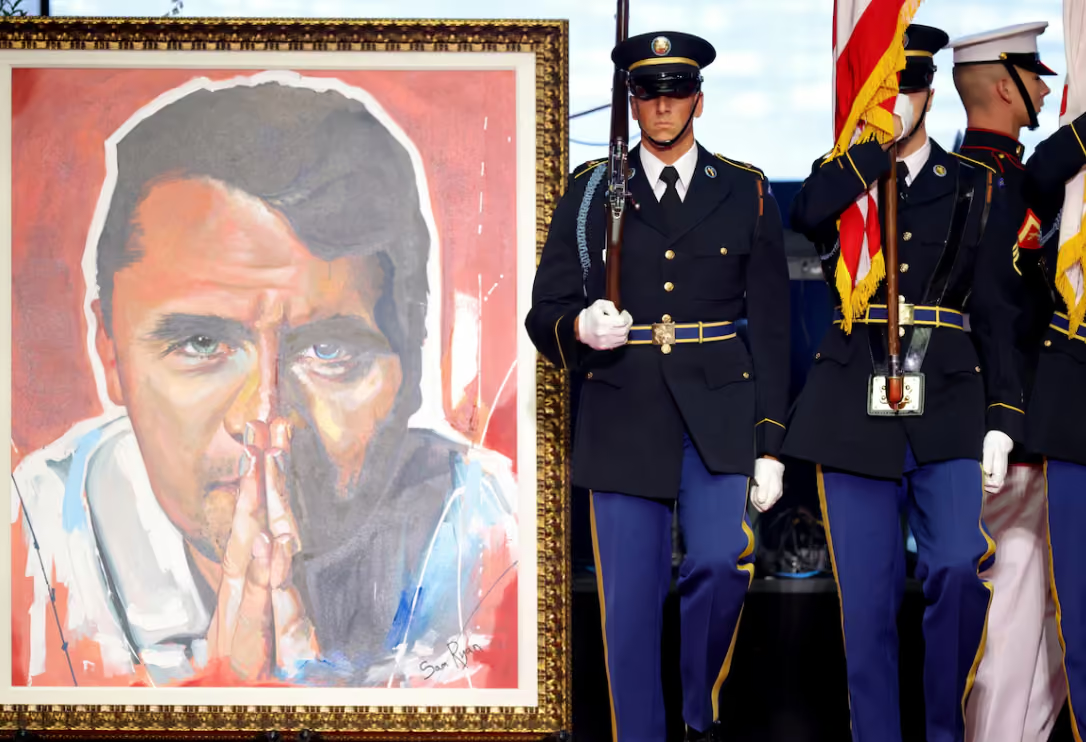
World News
25 min
Remembering Charlie Kirk: A Life of Faith, Family, and Courage
One year after Charlie Kirk’s death, his commitment to Christ, family, courage, and America offers a lasting challenge to live faithfully, strengthen our homes, invest in the next generation, and stand courageously for our convictions.
One year after the death of Charlie Kirk, there is much worth remembering about a life that ended far too soon. He was known across the country as a conservative activist, speaker, and founder of Turning Point USA. But the convictions that increasingly defined his public life went deeper than politics. Kirk spoke openly about his faith in Jesus Christ, his love for his wife and children, and his belief that strong families were essential to the future of America.
When asked how he wanted to be remembered, Kirk pointed to courage and his Christian faith. Those who worked closely with him likewise described his relationship with Christ as the most important part of his life. He used an enormous platform not simply to discuss elections and public policy, but to encourage people to follow Jesus and take their faith seriously.
That priority deserves to be remembered.
Kirk also understood something increasingly countercultural: the future of a nation is inseparable from the health of its families.
He married Erika in 2021, and they had two children. Fatherhood became an important part of the message he shared with young Americans. He encouraged young adults to pursue marriage, welcome children, leave behind empty pursuits, and build something that could endure beyond themselves. His wife later recalled that marriage and family were among the greatest joys of his life.
That message mattered because Kirk spent much of his career speaking directly to young people. He founded Turning Point USA at only 18 and built an organization centered on engaging the next generation in the future of the country.
Yet preserving America was about more than winning elections. A country ultimately depends upon the character of its people, the strength of its homes, and the convictions parents pass to their children.
If we want to honor Kirk's life, admiration is not enough. We should imitate what was worthy of imitation.
Go to Real Life Network to watch great moments from the life of Charlie Kirk.
That means having the courage to profess Christ when doing so carries a cost. It means building strong marriages and treating parenthood as a calling rather than an inconvenience. It means investing in young people instead of surrendering the next generation to whatever ideas happen to dominate the culture. And it means being willing to enter conversations with people who disagree rather than retreating from difficult questions.
Kirk became famous in part because he was willing to walk onto college campuses, take questions, defend his convictions, and invite disagreement. His example should encourage Christians to develop convictions strong enough to withstand opposition without becoming afraid of the people on the other side.
Most importantly, his legacy should point beyond politics.
Political victories pass. Organizations change. Elections are won and lost. But faithfulness to Christ, love within the home, children raised with conviction, and lives invested in others carry significance far beyond an election cycle.
Charlie Kirk cared deeply about America's future. His life offered a reminder that the work of building that future begins with faithfulness to God, courage in the public square, and commitment to the family at home.
Go to Real Life Network to watch great moments from the life of Charlie Kirk.
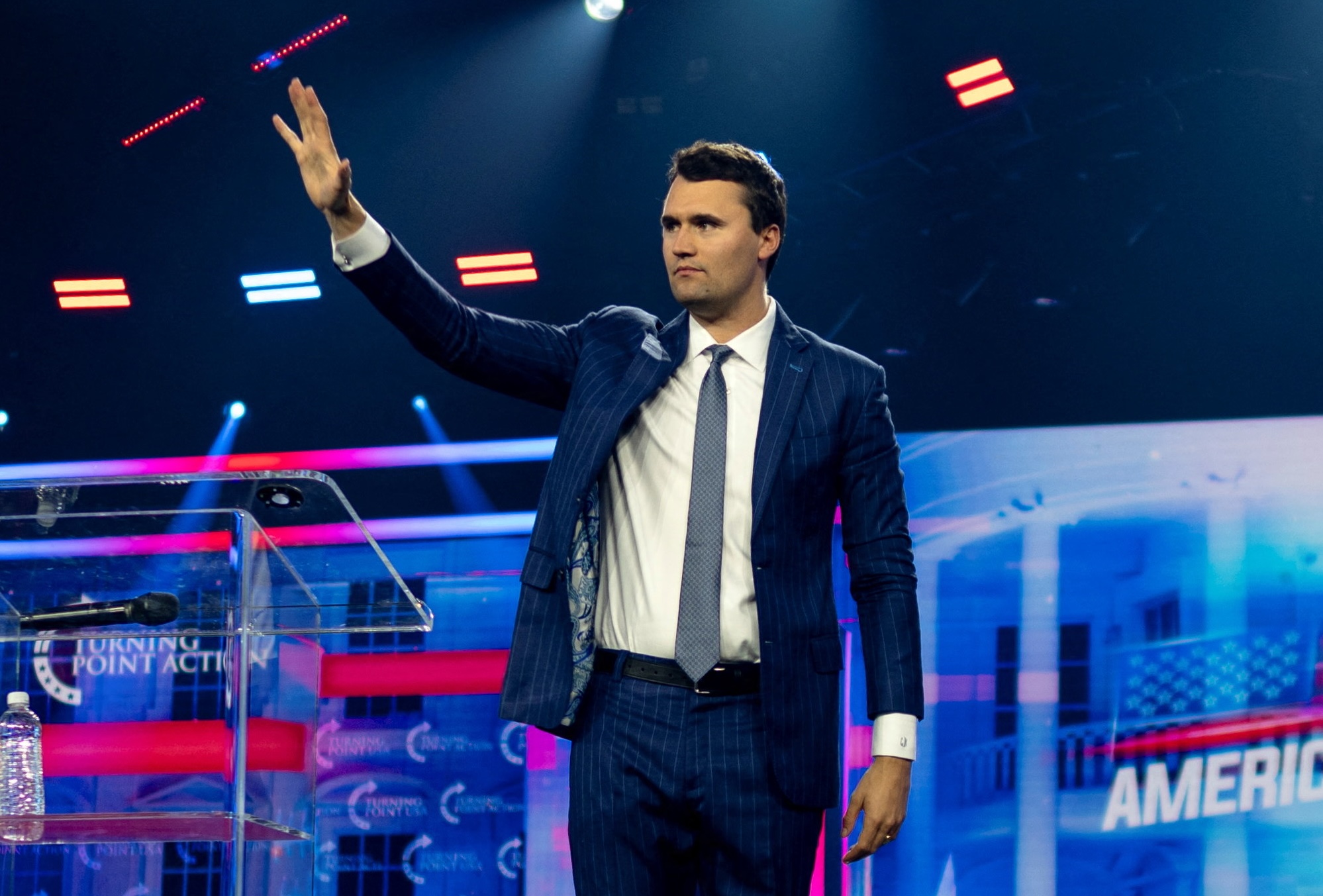
World News
25 min
What the Response to Charlie Kirk’s Death Reveals About America
From political extremism and cultural confusion to the responsibility of parents, this article examines what happens when biblical truth is removed from the center of society and something else fills the void.
America’s political and cultural divisions are increasingly about more than elections or disagreements over public policy. From the growth of democratic socialism and the normalization of political contempt to debates over children, religious influence, and the future of the Republican Party, the deeper conflict concerns the values that will shape the country. The latest stories examined on Real Life Network reveal a common thread: when biblical truth is removed from the center of a culture, something else inevitably takes its place.
That replacement does not necessarily happen overnight. It happens gradually as ideas once considered extreme become acceptable, institutions abandon their founding principles, and basic moral convictions become increasingly difficult to defend in public.
A culture that removes God does not remain morally neutral. Something will always fill the void.
Political Contempt and the Battle Over America’s Future
One example can be seen in the growing influence of the Democratic Socialists of America and political figures associated with the movement.
The episode highlighted Hasan Piker, the influential left-wing streamer who has generated controversy through inflammatory political commentary. Cohen argued that Piker represents something larger than one provocative media personality: a political movement becoming increasingly comfortable with rhetoric that would once have remained on the fringes.
That concern becomes especially serious when political disagreement turns into contempt for human life.
The episode pointed to a viral gathering where Piker and others were described as mocking the assassination of Charlie Kirk while also ridiculing Christians. For Cohen, the significance was not simply partisan. It represented a culture becoming comfortable turning the violent death of a political opponent into entertainment.
That raises a basic question that should transcend politics: When did murder become funny?
Political disagreements are unavoidable in a free country. Republicans and Democrats will disagree about taxes, abortion, immigration, foreign policy, education, and countless other issues. But constitutional government requires something more fundamental than agreement. It requires citizens who recognize the humanity of their opponents.
The episode also featured comments about the DSA’s relationship with the Democratic Party, including a clip in which New York Times reporter Jeremy Peters argued that democratic socialists represent a distinct political organization whose ambitions extend beyond simply joining the existing Democratic coalition.
Whether democratic socialist candidates ultimately reshape the Democratic Party will be decided by voters. But Americans should listen carefully when political movements explain their objectives rather than assuming radical rhetoric will inevitably moderate once candidates obtain power.
Political movements should be evaluated not merely by polished candidates or campaign slogans, but by the ideas they openly advocate.
The same scrutiny should apply to the Republican Party.
Looking toward 2028, the episode examined Vice President J.D. Vance’s growing political and fundraising network, including a Hamptons fundraiser hosted by investor Omid Malik. Cohen raised concerns about Malik’s investment in Tucker Carlson’s media company and questioned what Carlson’s influence and changing posture toward Israel could mean for the future direction of the conservative movement.
The larger principle applies equally to both parties: voters should examine candidates, donors, advisers, relationships, and ideas before handing anyone political power.
What Are Adults Teaching the Next Generation?
Some of the most disturbing cultural questions have nothing to do with political parties.
The episode discussed the ongoing criminal case involving Lindsay Clancy, the Massachusetts mother accused of killing her three young children in 2023. Her defense has argued that she suffered from severe postpartum psychosis, while prosecutors have maintained that the killings were deliberate.
Mental illness deserves serious attention and compassion. Determining Clancy’s criminal responsibility belongs to the judicial process.
But Cohen focused particularly on public demonstrations of support outside the courthouse, where supporters gathered as Clancy arrived for proceedings. He argued that compassion for someone suffering from severe mental illness should remain distinguishable from appearing to celebrate or minimize the deaths of three children.
Scripture describes children as a heritage from the Lord. That gives parents an extraordinary responsibility to protect, teach, and care for those entrusted to them.
That responsibility also extends to what children are taught.
The episode subsequently highlighted Florida politician Angie Nixon discussing a community bookstore and the services associated with it. Cohen objected particularly to the combination of material intended for young audiences, sexually explicit content, and access to services such as Plan B. His conclusion was straightforward: parents cannot outsource the responsibility of raising their children to schools, political activists, government institutions, or cultural organizations.
If parents surrender their responsibility to form their children, someone else will gladly assume it.
Children are constantly being discipled by something. Their understanding of morality, sexuality, identity, truth, and purpose will be influenced by the people and institutions surrounding them.
Christian parents therefore cannot merely react when objectionable ideas appear. They must actively teach what is true.
From Harvard to Jerusalem: What Fills the Void?
Few institutions illustrate America's religious transformation as dramatically as Harvard.
Founded in 1636, Harvard's early mission was closely connected to preparing educated clergy. Nearly four centuries later, its religious and cultural environment looks dramatically different. The episode used footage of a Harvard ceremony that included a Quran recitation as a picture of that transformation.
The issue is larger than a single ceremony.
Institutions rarely remain philosophically empty after abandoning the beliefs that created them. Something new fills the space. The same principle applies to universities, governments, families, churches, and individuals.
Yet the episode ended with a dramatically different picture of religious life.
At a gathering in Jerusalem, Arab Christian children and Jewish followers of Jesus worshiped alongside one another at Succat Hallel, or “Tabernacle of Praise.” Against the backdrop of war, ethnic tension, religious division, and political hostility, children from different backgrounds were united in worship of Jesus.
That image offers an important contrast to the division dominating so much of modern culture.
Politics cannot ultimately reconcile the human heart. Neither can ideology, education, wealth, activism, or government. Christianity makes a radically different claim: reconciliation begins with God and extends outward to others through Jesus Christ.
The world insists that some divisions are permanent. Scripture offers another answer.
The gospel does not require people to pretend meaningful differences do not exist. It does not erase truth for the sake of superficial unity. Instead, it offers reconciliation grounded in the One who transcends nationality, ethnicity, political affiliation, and social status.
America's cultural struggles are real. Political extremism should be taken seriously. Parents should guard their children. Institutions should be held accountable. Citizens should carefully examine those seeking power.
But Christians cannot stop at identifying everything that is wrong.
The answer to a culture that has lost its moral center is not simply winning another election. It is recovering the truth that gives morality its foundation in the first place.
That is why the image from Jerusalem matters. In a world increasingly defined by contempt and division, Arab and Jewish believers worshiping Jesus together demonstrate that reconciliation is still possible.
Explore more coverage connecting the news to the good news through The Daniel Cohen Show on Real Life Network.
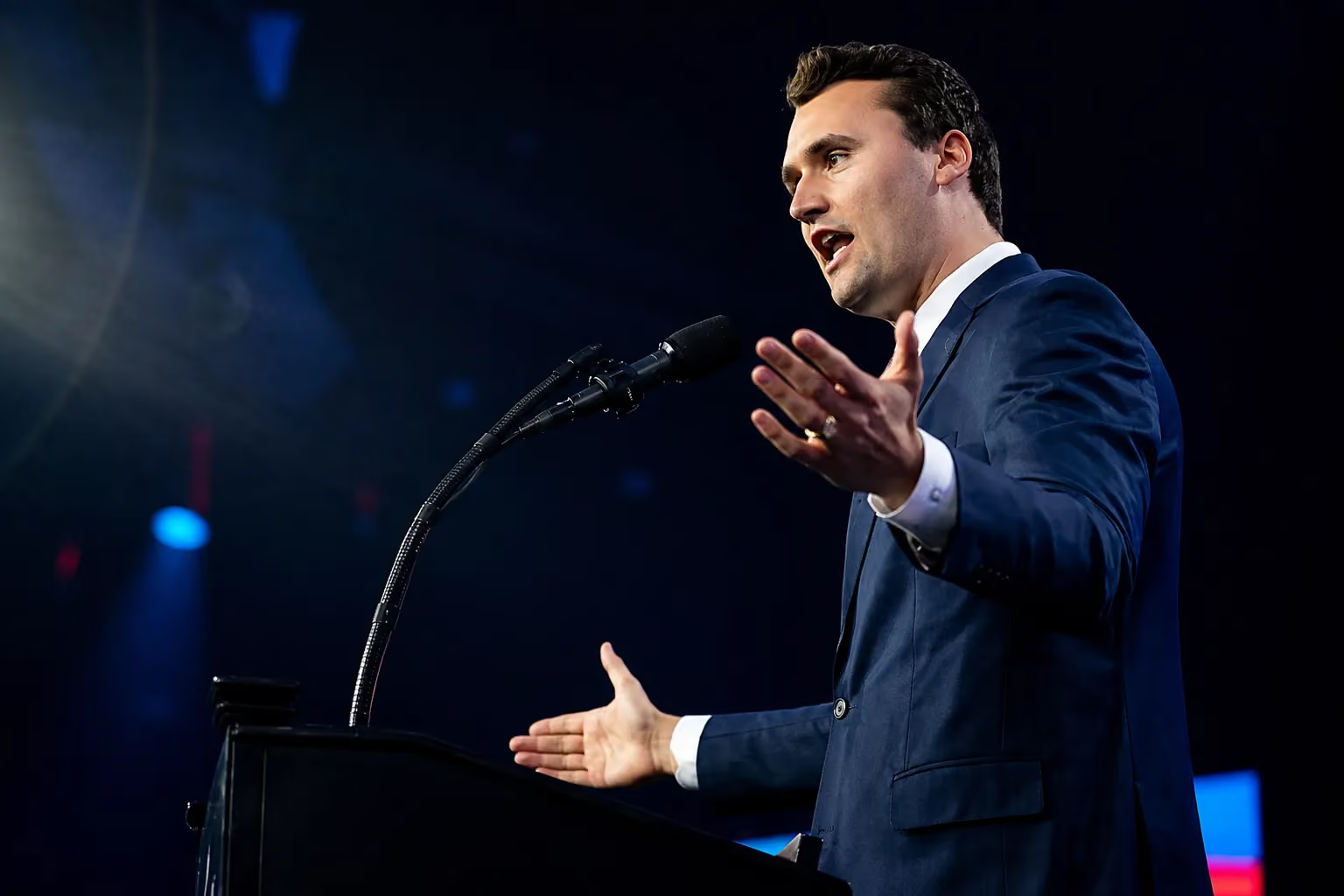
World News
25 min
Charlie Kirk's Greatest Legacy Was Bigger Than Politics
Charlie Kirk's legacy extends far beyond politics. His life reminds Christians that courage, truth, and the hope of the gospel remain the Church's greatest witness in a culture searching for meaning and lasting hope.
In a culture hungry for truth and hope, Real Life Network exists to connect today's biggest conversations with the timeless truth of God's Word. One life that continues to spark those conversations is Charlie Kirk. While many remember him as a gifted communicator and fearless defender of constitutional principles, those who knew him best point to something deeper. His greatest legacy was not simply changing minds. It was pointing people toward truth with courage, conviction, and genuine compassion.
In an age when disagreement too often gives way to hostility, Charlie demonstrated that convictions and kindness are not enemies. He challenged ideas without abandoning respect for the people holding them. Whether speaking to skeptical college students, political opponents, or fellow Christians, he consistently modeled the belief that every person possesses inherent dignity because every person is created in the image of God.
Truth Requires Courage
History has always rewarded those willing to speak when silence would have been easier. Every generation faces moments when standing for truth carries a cost. For Charlie Kirk, that meant entering environments where his beliefs would be challenged rather than applauded.
Yet courage is not measured by the size of an audience or the intensity of opposition. It is measured by faithfulness.
Christians are called to "speak the truth in love" (Ephesians 4:15), refusing to compromise either truth or love. One without the other ultimately fails. Truth without love becomes harshness. Love without truth becomes compromise. Charlie's public ministry reminded many believers that biblical conviction and genuine compassion belong together.
His example also raises an important question for every Christian: Are we willing to speak faithfully where God has placed us? Most believers will never stand before thousands of people with a microphone. But every believer has opportunities to represent Christ in conversations with family members, coworkers, neighbors, and friends.
Faithfulness begins long before public influence.
Hope That Outlives Death
The Christian response to tragedy has never been denial. Scripture never asks believers to pretend suffering doesn't hurt. Jesus Himself wept at the tomb of Lazarus.
Instead, Christianity offers something the world cannot manufacture: hope.
The apostle Paul writes that believers grieve, "but not as others do who have no hope" (1 Thessalonians 4:13). That hope rests entirely upon the resurrection of Jesus Christ. Because Christ conquered death, those who belong to Him know that death is not the end of the story.
This confidence changes the way Christians endure suffering. Grief remains real, but despair does not have the final word. The gospel reminds believers that eternity has already begun for those who trust Christ.
That hope is needed now more than ever. In a culture searching for meaning amid uncertainty, the resurrection offers more than comfort. It offers certainty.
The Church's Greatest Opportunity
It is tempting to believe that America's future will ultimately be determined by elections, legislation, or political movements. Those matters are important, but lasting cultural renewal has always begun somewhere deeper.
Throughout history, genuine transformation has occurred when ordinary Christians have faithfully lived out the gospel in their homes, churches, workplaces, and communities.
The Church's mission has never changed. Jesus commissioned His followers to make disciples, proclaim the gospel, and be salt and light in a world desperate for hope. Political influence rises and falls. Public figures come and go. But the mission Christ gave His Church remains unchanged.
Perhaps that is the greatest lesson Charlie Kirk leaves behind.
His influence was significant, but his greatest contribution was reminding Christians that truth matters because eternity matters. His life encourages believers not simply to admire courage from a distance, but to cultivate it in their own lives.
The world does not merely need louder voices. It needs faithful witnesses.
And while Charlie's voice has been silenced on this side of eternity, the message he sought to defend remains as powerful as ever. God's truth has not changed, the gospel still transforms lives, and Christ continues to call His people to stand with conviction, humility, and hope. At Real Life Network, we're committed to sharing stories and conversations that encourage believers to live out their faith boldly while pointing people to the lasting hope found in Jesus Christ.
Thank you! Your submission has been received!
Oops! Something went wrong while submitting the form.
World News
Twenty-five years after September 11, 2001, two words remain inseparable from that day: Never forget. As a new generation inherits the story of 9/11, Real Life Network and The Daniel Cohen Show are committed to examining the history, ideas, and cultural questions that Americans cannot afford to forget.
But remembering September 11 requires more than remembering its pain.
An entire generation of Americans has now grown up without any personal memory of the attacks. Roughly 100 million Americans have been born since 9/11. They did not watch the second plane strike the South Tower. They did not see smoke pouring across Manhattan or experience the uncertainty that gripped the country. For them, September 11 is history.
That raises an increasingly important question: What exactly are Americans promising never to forget?
Remembering the Victims Means Remembering the Truth
Calling September 11 a tragedy is true, but incomplete.
September 11 was an intentional terrorist attack carried out by 19 al-Qaeda hijackers. Osama bin Laden and al-Qaeda were not secretive about their worldview, grievances, or objectives. Their own statements repeatedly framed their conflict with America in explicitly religious as well as political terms.
America must be capable of acknowledging that history.
That does not mean treating every Muslim as a terrorist or holding peaceful Muslim neighbors responsible for crimes they did not commit. Americans should defend religious liberty, reject harassment, and protect the freedom of peaceful people to worship according to their beliefs.
But religious liberty cannot require historical amnesia.
There is a profound difference between refusing to hate Muslims and refusing to acknowledge Islamist extremism. America must be capable of doing the first without falling into the second.
For too long, political leaders, academics, and media figures have sometimes preferred vague descriptions of terrorism because specificity can be uncomfortable. Yet future generations cannot understand September 11 if the ideology of its perpetrators is removed from the history they inherit.
“Never forget” cannot mean remembering only the victims while becoming increasingly reluctant to explain why they became victims.
The Next Generation Will Remember What We Teach
This matters because the people who remember September 11 firsthand will not always be here to tell the story.
Already, debates over the meaning of 9/11 reveal dramatically different interpretations of what happened. Some emphasize American foreign policy, imperialism, economics, or Western actions as the primary explanation for terrorism. Others have gone considerably further, portraying America itself as deserving the violence directed against it.
Those ideas should not be allowed to replace historical clarity.
The terrorists who attacked America were responsible for their actions. The men aboard those airplanes chose innocent civilians as their targets. No disagreement with American foreign policy makes hijacking commercial airplanes and deliberately murdering civilians morally defensible.
The responsibility to preserve that truth belongs especially to parents.
Children should know about the people who boarded airplanes expecting to arrive home later that day. They should hear about the firefighters carrying equipment up stairwells as thousands rushed downward. They should know about Flight 93 and the passengers who fought back. They should understand what happened at the Pentagon and what unfolded at Ground Zero.
And they should know who carried out the attacks and what motivated them.
If parents do not teach their children what happened on September 11, someone else will eventually tell them what September 11 is supposed to mean.
History never remains an empty space. When one explanation disappears, another takes its place.
That is why remembrance is about more than nostalgia. It is a responsibility to those who died and to those who were not yet born.
Remembering Without Living in Fear
There is another part of September 11 worth remembering: what America looked like afterward.
For a brief period, the country rediscovered a sense of national unity that now seems almost unimaginable. Political labels became less important. American flags appeared on homes and businesses. Tens of thousands stood together at Yankee Stadium and sang “God Bless the USA.” President George W. Bush stood among firefighters and rescue workers at Ground Zero and promised that America would respond.
That unity did not last.
But the courage behind it should not disappear.
Charlie Kirk understood the importance of courage in the public square. He repeatedly warned younger Americans about ideological movements he believed threatened faith, family, and the American way of life. His words were often pointed because he believed dangerous ideas had to be identified rather than accommodated. His Christian convictions also became increasingly central to the way he understood the cultural battles around him.
That willingness to speak should challenge Christians today.
Courage does not require hatred. Conviction does not require cruelty. Christians can identify dangerous ideologies while remembering that human beings are not the ultimate enemy. Scripture reminds believers that the struggle is ultimately “not against flesh and blood,” but against spiritual forces of evil (Ephesians 6:12).
Christian courage tells the truth about evil without allowing hatred of people to take root in the heart.
Twenty-five years after September 11, America does not need to live in the fear of that morning. Neither should it erase the lessons purchased at such an enormous cost.
Remember the victims. Remember their families. Remember the first responders. Remember the passengers who fought back. Remember the courage that emerged from the rubble. Remember the enemy that attacked America and the ideology that animated its extremists.
Then make sure the children who were not there understand why it matters.
One day, September 11 will exist entirely outside living memory. When that day arrives, never forget will mean only as much as the truth one generation was willing to pass to the next. Continue examining the stories shaping America through a biblical worldview on The Daniel Cohen Show, streaming free on Real Life Network.
25 min
September 11, 2026
Daniel Cohen
World News
One year after the death of Charlie Kirk, there is much worth remembering about a life that ended far too soon. He was known across the country as a conservative activist, speaker, and founder of Turning Point USA. But the convictions that increasingly defined his public life went deeper than politics. Kirk spoke openly about his faith in Jesus Christ, his love for his wife and children, and his belief that strong families were essential to the future of America.
When asked how he wanted to be remembered, Kirk pointed to courage and his Christian faith. Those who worked closely with him likewise described his relationship with Christ as the most important part of his life. He used an enormous platform not simply to discuss elections and public policy, but to encourage people to follow Jesus and take their faith seriously.
That priority deserves to be remembered.
Kirk also understood something increasingly countercultural: the future of a nation is inseparable from the health of its families.
He married Erika in 2021, and they had two children. Fatherhood became an important part of the message he shared with young Americans. He encouraged young adults to pursue marriage, welcome children, leave behind empty pursuits, and build something that could endure beyond themselves. His wife later recalled that marriage and family were among the greatest joys of his life.
That message mattered because Kirk spent much of his career speaking directly to young people. He founded Turning Point USA at only 18 and built an organization centered on engaging the next generation in the future of the country.
Yet preserving America was about more than winning elections. A country ultimately depends upon the character of its people, the strength of its homes, and the convictions parents pass to their children.
If we want to honor Kirk's life, admiration is not enough. We should imitate what was worthy of imitation.
Go to Real Life Network to watch great moments from the life of Charlie Kirk.
That means having the courage to profess Christ when doing so carries a cost. It means building strong marriages and treating parenthood as a calling rather than an inconvenience. It means investing in young people instead of surrendering the next generation to whatever ideas happen to dominate the culture. And it means being willing to enter conversations with people who disagree rather than retreating from difficult questions.
Kirk became famous in part because he was willing to walk onto college campuses, take questions, defend his convictions, and invite disagreement. His example should encourage Christians to develop convictions strong enough to withstand opposition without becoming afraid of the people on the other side.
Most importantly, his legacy should point beyond politics.
Political victories pass. Organizations change. Elections are won and lost. But faithfulness to Christ, love within the home, children raised with conviction, and lives invested in others carry significance far beyond an election cycle.
Charlie Kirk cared deeply about America's future. His life offered a reminder that the work of building that future begins with faithfulness to God, courage in the public square, and commitment to the family at home.
Go to Real Life Network to watch great moments from the life of Charlie Kirk.
25 min
Remembering Charlie Kirk: A Life of Faith, Family, and Courage
September 10, 2026
Real Life Network
World News
America’s political and cultural divisions are increasingly about more than elections or disagreements over public policy. From the growth of democratic socialism and the normalization of political contempt to debates over children, religious influence, and the future of the Republican Party, the deeper conflict concerns the values that will shape the country. The latest stories examined on Real Life Network reveal a common thread: when biblical truth is removed from the center of a culture, something else inevitably takes its place.
That replacement does not necessarily happen overnight. It happens gradually as ideas once considered extreme become acceptable, institutions abandon their founding principles, and basic moral convictions become increasingly difficult to defend in public.
A culture that removes God does not remain morally neutral. Something will always fill the void.
Political Contempt and the Battle Over America’s Future
One example can be seen in the growing influence of the Democratic Socialists of America and political figures associated with the movement.
The episode highlighted Hasan Piker, the influential left-wing streamer who has generated controversy through inflammatory political commentary. Cohen argued that Piker represents something larger than one provocative media personality: a political movement becoming increasingly comfortable with rhetoric that would once have remained on the fringes.
That concern becomes especially serious when political disagreement turns into contempt for human life.
The episode pointed to a viral gathering where Piker and others were described as mocking the assassination of Charlie Kirk while also ridiculing Christians. For Cohen, the significance was not simply partisan. It represented a culture becoming comfortable turning the violent death of a political opponent into entertainment.
That raises a basic question that should transcend politics: When did murder become funny?
Political disagreements are unavoidable in a free country. Republicans and Democrats will disagree about taxes, abortion, immigration, foreign policy, education, and countless other issues. But constitutional government requires something more fundamental than agreement. It requires citizens who recognize the humanity of their opponents.
The episode also featured comments about the DSA’s relationship with the Democratic Party, including a clip in which New York Times reporter Jeremy Peters argued that democratic socialists represent a distinct political organization whose ambitions extend beyond simply joining the existing Democratic coalition.
Whether democratic socialist candidates ultimately reshape the Democratic Party will be decided by voters. But Americans should listen carefully when political movements explain their objectives rather than assuming radical rhetoric will inevitably moderate once candidates obtain power.
Political movements should be evaluated not merely by polished candidates or campaign slogans, but by the ideas they openly advocate.
The same scrutiny should apply to the Republican Party.
Looking toward 2028, the episode examined Vice President J.D. Vance’s growing political and fundraising network, including a Hamptons fundraiser hosted by investor Omid Malik. Cohen raised concerns about Malik’s investment in Tucker Carlson’s media company and questioned what Carlson’s influence and changing posture toward Israel could mean for the future direction of the conservative movement.
The larger principle applies equally to both parties: voters should examine candidates, donors, advisers, relationships, and ideas before handing anyone political power.
What Are Adults Teaching the Next Generation?
Some of the most disturbing cultural questions have nothing to do with political parties.
The episode discussed the ongoing criminal case involving Lindsay Clancy, the Massachusetts mother accused of killing her three young children in 2023. Her defense has argued that she suffered from severe postpartum psychosis, while prosecutors have maintained that the killings were deliberate.
Mental illness deserves serious attention and compassion. Determining Clancy’s criminal responsibility belongs to the judicial process.
But Cohen focused particularly on public demonstrations of support outside the courthouse, where supporters gathered as Clancy arrived for proceedings. He argued that compassion for someone suffering from severe mental illness should remain distinguishable from appearing to celebrate or minimize the deaths of three children.
Scripture describes children as a heritage from the Lord. That gives parents an extraordinary responsibility to protect, teach, and care for those entrusted to them.
That responsibility also extends to what children are taught.
The episode subsequently highlighted Florida politician Angie Nixon discussing a community bookstore and the services associated with it. Cohen objected particularly to the combination of material intended for young audiences, sexually explicit content, and access to services such as Plan B. His conclusion was straightforward: parents cannot outsource the responsibility of raising their children to schools, political activists, government institutions, or cultural organizations.
If parents surrender their responsibility to form their children, someone else will gladly assume it.
Children are constantly being discipled by something. Their understanding of morality, sexuality, identity, truth, and purpose will be influenced by the people and institutions surrounding them.
Christian parents therefore cannot merely react when objectionable ideas appear. They must actively teach what is true.
From Harvard to Jerusalem: What Fills the Void?
Few institutions illustrate America's religious transformation as dramatically as Harvard.
Founded in 1636, Harvard's early mission was closely connected to preparing educated clergy. Nearly four centuries later, its religious and cultural environment looks dramatically different. The episode used footage of a Harvard ceremony that included a Quran recitation as a picture of that transformation.
The issue is larger than a single ceremony.
Institutions rarely remain philosophically empty after abandoning the beliefs that created them. Something new fills the space. The same principle applies to universities, governments, families, churches, and individuals.
Yet the episode ended with a dramatically different picture of religious life.
At a gathering in Jerusalem, Arab Christian children and Jewish followers of Jesus worshiped alongside one another at Succat Hallel, or “Tabernacle of Praise.” Against the backdrop of war, ethnic tension, religious division, and political hostility, children from different backgrounds were united in worship of Jesus.
That image offers an important contrast to the division dominating so much of modern culture.
Politics cannot ultimately reconcile the human heart. Neither can ideology, education, wealth, activism, or government. Christianity makes a radically different claim: reconciliation begins with God and extends outward to others through Jesus Christ.
The world insists that some divisions are permanent. Scripture offers another answer.
The gospel does not require people to pretend meaningful differences do not exist. It does not erase truth for the sake of superficial unity. Instead, it offers reconciliation grounded in the One who transcends nationality, ethnicity, political affiliation, and social status.
America's cultural struggles are real. Political extremism should be taken seriously. Parents should guard their children. Institutions should be held accountable. Citizens should carefully examine those seeking power.
But Christians cannot stop at identifying everything that is wrong.
The answer to a culture that has lost its moral center is not simply winning another election. It is recovering the truth that gives morality its foundation in the first place.
That is why the image from Jerusalem matters. In a world increasingly defined by contempt and division, Arab and Jewish believers worshiping Jesus together demonstrate that reconciliation is still possible.
Explore more coverage connecting the news to the good news through The Daniel Cohen Show on Real Life Network.
25 min
What the Response to Charlie Kirk’s Death Reveals About America
August 25, 2026
Daniel Cohen
World News
In a culture hungry for truth and hope, Real Life Network exists to connect today's biggest conversations with the timeless truth of God's Word. One life that continues to spark those conversations is Charlie Kirk. While many remember him as a gifted communicator and fearless defender of constitutional principles, those who knew him best point to something deeper. His greatest legacy was not simply changing minds. It was pointing people toward truth with courage, conviction, and genuine compassion.
In an age when disagreement too often gives way to hostility, Charlie demonstrated that convictions and kindness are not enemies. He challenged ideas without abandoning respect for the people holding them. Whether speaking to skeptical college students, political opponents, or fellow Christians, he consistently modeled the belief that every person possesses inherent dignity because every person is created in the image of God.
Truth Requires Courage
History has always rewarded those willing to speak when silence would have been easier. Every generation faces moments when standing for truth carries a cost. For Charlie Kirk, that meant entering environments where his beliefs would be challenged rather than applauded.
Yet courage is not measured by the size of an audience or the intensity of opposition. It is measured by faithfulness.
Christians are called to "speak the truth in love" (Ephesians 4:15), refusing to compromise either truth or love. One without the other ultimately fails. Truth without love becomes harshness. Love without truth becomes compromise. Charlie's public ministry reminded many believers that biblical conviction and genuine compassion belong together.
His example also raises an important question for every Christian: Are we willing to speak faithfully where God has placed us? Most believers will never stand before thousands of people with a microphone. But every believer has opportunities to represent Christ in conversations with family members, coworkers, neighbors, and friends.
Faithfulness begins long before public influence.
Hope That Outlives Death
The Christian response to tragedy has never been denial. Scripture never asks believers to pretend suffering doesn't hurt. Jesus Himself wept at the tomb of Lazarus.
Instead, Christianity offers something the world cannot manufacture: hope.
The apostle Paul writes that believers grieve, "but not as others do who have no hope" (1 Thessalonians 4:13). That hope rests entirely upon the resurrection of Jesus Christ. Because Christ conquered death, those who belong to Him know that death is not the end of the story.
This confidence changes the way Christians endure suffering. Grief remains real, but despair does not have the final word. The gospel reminds believers that eternity has already begun for those who trust Christ.
That hope is needed now more than ever. In a culture searching for meaning amid uncertainty, the resurrection offers more than comfort. It offers certainty.
The Church's Greatest Opportunity
It is tempting to believe that America's future will ultimately be determined by elections, legislation, or political movements. Those matters are important, but lasting cultural renewal has always begun somewhere deeper.
Throughout history, genuine transformation has occurred when ordinary Christians have faithfully lived out the gospel in their homes, churches, workplaces, and communities.
The Church's mission has never changed. Jesus commissioned His followers to make disciples, proclaim the gospel, and be salt and light in a world desperate for hope. Political influence rises and falls. Public figures come and go. But the mission Christ gave His Church remains unchanged.
Perhaps that is the greatest lesson Charlie Kirk leaves behind.
His influence was significant, but his greatest contribution was reminding Christians that truth matters because eternity matters. His life encourages believers not simply to admire courage from a distance, but to cultivate it in their own lives.
The world does not merely need louder voices. It needs faithful witnesses.
And while Charlie's voice has been silenced on this side of eternity, the message he sought to defend remains as powerful as ever. God's truth has not changed, the gospel still transforms lives, and Christ continues to call His people to stand with conviction, humility, and hope. At Real Life Network, we're committed to sharing stories and conversations that encourage believers to live out their faith boldly while pointing people to the lasting hope found in Jesus Christ.
25 min
Charlie Kirk's Greatest Legacy Was Bigger Than Politics
July 30, 2026
Daniel Cohen