
Stream Real Life Network Now

WATCH NOW
Thanksgiving


Devotional
25 min
5 Bible Stories That Teach Children the Meaning of Thankfulness
Teach children the meaning of biblical gratitude through five Bible stories. From the healed leper to Noah, discover how Scripture encourages children to recognize God's blessings, trust Him through difficulties, and develop lifelong habits of thankfulness.
Children often learn thankfulness first through simple habits: saying thank you, appreciating a gift, or naming something they are grateful for before Thanksgiving dinner. Scripture can take that lesson deeper by showing them what gratitude looks like in real life.
The Bible is filled with people who thanked God after receiving help, trusted Him before they knew the outcome, and remembered His goodness after difficult seasons. These five accounts can help children see that biblical gratitude is more than good manners. It is recognizing who God is and responding to what He has done.
1. The One Leper Who Came Back to Say Thank You
Read: Luke 17:11–19
Jesus once encountered ten men with leprosy who called out to Him for mercy. He told them to go show themselves to the priests, and as they went, all ten were healed.
But only one came back.
Luke tells us that the man returned “glorifying God with a loud voice” and fell at Jesus’ feet, giving Him thanks. Jesus then asked a striking question: “Were there not ten cleansed? But where are the nine?” (Luke 17:17, NKJV).
Children can easily understand the contrast. All ten received the same incredible gift, but only one stopped to thank the One who had given it. This account teaches children not to become so excited about a blessing that they forget the Giver.
Ask your child: What are some things God has given us that we might forget to thank Him for?
2. Hannah Thanked God for Answering Her Prayer
Read: 1 Samuel 1–2
Hannah desperately wanted a child and prayed to God through years of sadness. She promised that if God gave her a son, she would dedicate him to the Lord.
God answered her prayer, and Hannah gave birth to Samuel. She remembered the promise she had made and later brought Samuel to serve the Lord under Eli. Her response was not simply relief that she finally had what she wanted. She worshiped God and praised Him for His faithfulness.
In 1 Samuel 2:1, Hannah prayed, “My heart rejoices in the LORD” (NKJV). Her gratitude was directed toward God rather than only toward the blessing she had received.
Hannah’s example can teach children that answered prayer is an opportunity to remember God’s goodness. Families often spend plenty of time asking God for help, but it is just as important to return to Him afterward and say thank you.
3. Daniel Gave Thanks Even When Life Was Dangerous
Read: Daniel 6
Thankfulness is easy when everything is going well. Daniel shows children that gratitude can also be part of trusting God when circumstances are frightening.
King Darius had signed a law stating that anyone who prayed to someone other than the king would be thrown into a den of lions. Daniel knew about the decree, but he continued doing what he had always done.
Daniel 6:10 says he went home, opened his windows toward Jerusalem, knelt down three times that day, “and prayed and gave thanks before his God, as was his custom since early days” (NKJV).
Daniel did not wait until the danger disappeared before thanking God. Gratitude was already part of his relationship with Him.
That can be a valuable lesson for children who may think being thankful means pretending nothing is wrong. Daniel shows that we can have concerns, face difficult situations, and still remember that God is worthy of our trust and thanks.
4. Jesus Gave Thanks before Feeding the Crowd
Read: John 6:1–13
Thousands of people had followed Jesus, and they needed food. The disciples saw an enormous problem: how could they possibly feed so many people?
A boy had five barley loaves and two small fish, but even the disciples wondered what such a small amount could accomplish. Jesus took the food, gave thanks, and distributed it to the people. Everyone ate until they were satisfied, and twelve baskets of leftovers remained.
John 6:11 tells us, “And Jesus took the loaves, and when He had given thanks He distributed them to the disciples” (NKJV).
Notice when Jesus gave thanks: before the miracle unfolded.
This can help children understand that gratitude is not limited to having an abundance. We can thank God for what He has already provided and trust Him with what we still need.
The next time your family prays before a meal, remind children that Jesus also stopped to give thanks for food before sharing it with others.
5. Noah Worshiped God after the Flood
Read: Genesis 6–9
The account of Noah is often remembered for the ark and the animals, but what Noah did after the flood is just as important.
Noah and his family had lived through a terrifying judgment and spent many months aboard the ark. When the waters finally receded and God told them to come out, Noah’s first recorded action was to build an altar to the Lord (Genesis 8:20). His response to God’s protection and provision was worship.
Children can learn from Noah that gratitude sometimes means stopping to remember how God has brought us through something difficult. When a problem is finally over, it is easy to rush immediately toward whatever comes next. Noah stopped first.
Families can practice the same habit by remembering answered prayers, difficult seasons God helped them through, or times He provided exactly what was needed.
Help Thankfulness Become a Habit
These five Bible accounts show children several sides of gratitude. The healed leper remembered to return and say thank you. Hannah praised God for answered prayer. Daniel gave thanks even while facing danger. Jesus thanked God for what was available before the crowd was fed, and Noah worshiped after God brought his family safely through the flood.
Those lessons can become simple family habits too. Thank God when He answers prayer. Give thanks before meals. Remember how He has helped your family through difficult times, and encourage children to recognize everyday blessings that can easily be overlooked.
Thanksgiving is a wonderful time to begin those conversations, but gratitude was never meant to last for only one holiday. As children learn to notice God’s goodness throughout the year, thankfulness can become part of the way they know, trust, and worship Him.
Real Life Network offers free Bible teaching, kids’ programming, Christian movies, and family content that can help make Scripture and faith part of everyday life at home.
Explore free Christian kids’ programming and Bible-based family content on Real Life Network.

Faith & Culture
25 min
Passing America’s Story to the Next Generation
Help your children discover America's history through stories of faith, courage, and freedom. Explore how The American Story documentary and Give Thanks: A Holiday Kids Guide can spark meaningful family conversations and pass our nation's heritage to the next generation.
Every generation inherits a story.
For American families, that story includes courage and sacrifice, faith and freedom, conflict and conviction, great accomplishments and hard lessons. But children do not automatically inherit an understanding of that history simply because they live in this country. They have to be taught.
Parents and grandparents have a unique opportunity to help younger generations understand not only what happened in America’s past, but why people made the choices they did, what they believed, and what those decisions can teach us today.
That doesn’t require turning the dinner table into a history classroom. Often, it begins with a good story and a few thoughtful questions.
Start With the People
Children tend to connect with people before they connect with timelines. Instead of beginning with a list of dates, introduce them to the people behind the events.
Tell them about the Pilgrims crossing the Atlantic in search of a place where they could live out their faith. Talk about George Washington facing overwhelming challenges during the American Revolution. Introduce them to Samuel and John Adams, Abigail Adams, Benjamin Franklin, and the pastors and revivalists who helped shape the ideas spreading through the colonies.
Then ask questions that bring those stories closer to home:
- What do you think it would have been like to leave everything familiar and cross the ocean?
- Why do you think freedom was worth sacrificing for?
- What does courage look like when the outcome is uncertain?
- Why is it important to know what people actually believed instead of only remembering their names?
- What freedoms are we grateful for today?
- How can we use those freedoms responsibly?
There is no need to rush toward the “right” answer. Sometimes the best family conversations begin when children are given room to think out loud.
Let Them See Where History Happened
History also becomes easier to understand when it feels real. That is one of the strengths of The American Story, the first Real Life Network Original documentary featuring Pastor Jack Hibbs and historian Tim Barton.
Tim travels to many of the actual places where America’s story unfolded, including Plymouth, Boston, Lexington, Washington, D.C., Philadelphia, and Valley Forge. Instead of encountering these events only as words on a page, families can see the places connected to the people and decisions they are learning about.
Pastor Jack then helps connect those stories to questions of faith, courage, liberty, responsibility, and what it means to live faithfully in the present.
Watching together gives parents and grandparents an easy opportunity to pause, talk, ask questions, and keep the conversation going after the film ends.
Give Younger Children a Way into the Story
For younger family members, the Give Thanks: A Holiday Kids Guide offers another way to explore America’s history.
Created for children, the guide introduces the history and meaning behind Thanksgiving through stories and activities designed to keep kids engaged. Mercy, a Pilgrim child, and Wamsu, a Wampanoag child, help lead readers through the story while interactive elements give them something to do, not just something to read.
That makes it a natural companion to The American Story.
Older children and adults can explore the broader history in the film, while younger children have a resource created specifically for them. Then everyone can come back together and talk about what they learned.
Make History Part of Family Life
Passing on history doesn’t require knowing every fact. It requires being willing to remember, learn, and talk together.
Read an old document aloud. Visit a historic site when you travel. Look up the story behind a monument. Ask grandparents what they remember learning about American history when they were children. Let kids ask difficult questions. Encourage them to look at original sources when they are old enough.
Most of all, help them see that history is not simply about people who lived a long time ago. It is about choices, beliefs, consequences, and the inheritance one generation leaves to the next.
This Thanksgiving season, The American Story and the Give Thanks: A Holiday Kids Guide can help your family begin those conversations together.
Pre-order The American Story bundle today.
Pre-Orders Are Open for The American Story
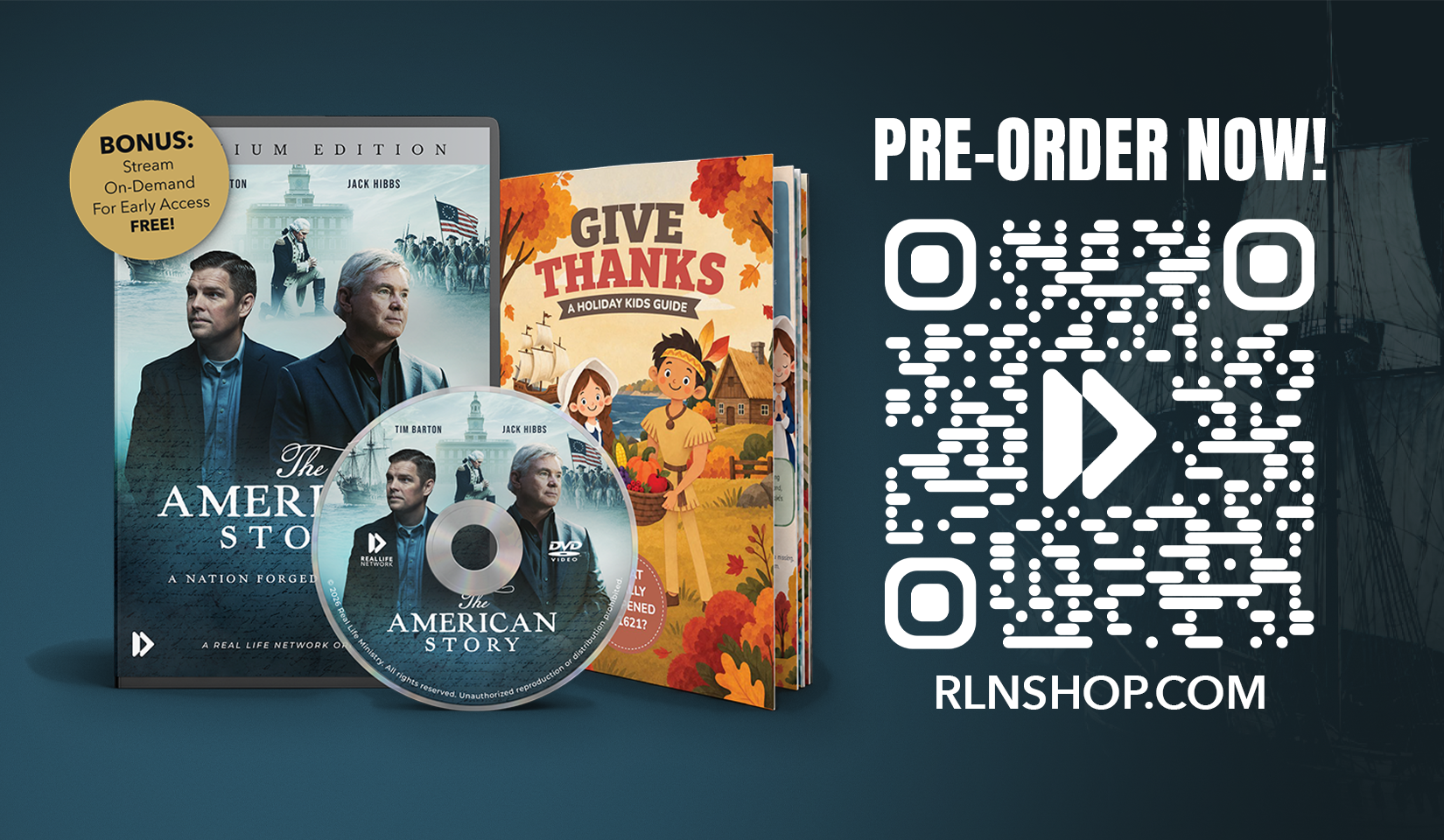
Discover the faith, courage, and sacrifices that shaped America in The American Story, the first Real Life Network Original documentary featuring Pastor Jack Hibbs and historian Tim Barton. Pre-order today and explore America's heritage with your family this Thanksgiving.
America’s history is filled with familiar names, places, and moments. Plymouth. George Washington. The American Revolution. Independence Hall. The Liberty Bell.
But behind those familiar pieces of history are remarkable stories of faith, courage, sacrifice, prayer, and a closely held belief that liberty comes from God.
The American Story, the first Real Life Network Original documentary, featuring Pastor Jack Hibbs and historian Tim Barton, goes beyond the familiar accounts to explore the people, convictions, and events that helped shape a nation.
And beginning today, you can pre-order it.
Go Back to Where the Story Happened
Rather than simply revisiting familiar events, The American Story looks beneath the surface to uncover the beliefs, sacrifices, and people behind the history.
Tim Barton travels to many of the places where America’s story actually unfolded, including Plymouth, Boston, Lexington, Washington, D.C., Philadelphia, and Valley Forge. Standing at historic sites such as Plymouth Rock, the Monument to the Forefathers, Independence Hall, the Liberty Bell, and Valley Forge, he brings context to people and events that can too easily become little more than names and dates.
You’ll encounter the Pilgrims and their vision for the New World. The pastors and revivalists whose preaching helped shape colonial America. George Washington and the faith that sustained him through extraordinary challenges. Samuel and John Adams. Benjamin Franklin. The Continental Congress. The fight for liberty.
Along the way, Pastor Jack Hibbs connects those events to something more than history. He asks what Christians today can learn from the faith, courage, and sense of responsibility demonstrated by generations who came before us.
The American Story is not simply about remembering the past. It is about considering what we will do with the inheritance we have received.
A Story Worth Passing On
America is celebrating its 250th birthday this year, making this an especially important time to know how our nation began and to pass that history to another generation.
That is why the pre-order offering includes more than the film itself.
The American Story bundle includes the DVD, digital access to the documentary, and the Give Thanks: A Holiday Kids Guide, a fun, faith-centered resource created to help children discover the history and meaning behind Thanksgiving.
While The American Story takes families deeper into America’s founding and Christian heritage, the kids’ guide gives younger family members an age-appropriate way to explore history for themselves.
Together, they create an opportunity to do something increasingly rare: sit down as a family, learn together, ask questions, and talk about the people and principles that helped shape the country we call home.
The Story Begins This Thanksgiving
The American Story arrives Thanksgiving Day, November 26.
It is fitting that a film about America’s beginnings would arrive during a holiday rooted so deeply in remembrance and gratitude.
This Thanksgiving season, go beyond the familiar version of the story. Visit the places where history happened. Meet the people behind the names. Discover the faith that influenced generations of Americans.
And then pass the story on.
Pre-order The American Story bundle today.
Thank you! Your submission has been received!
Oops! Something went wrong while submitting the form.
Devotional
Children often learn thankfulness first through simple habits: saying thank you, appreciating a gift, or naming something they are grateful for before Thanksgiving dinner. Scripture can take that lesson deeper by showing them what gratitude looks like in real life.
The Bible is filled with people who thanked God after receiving help, trusted Him before they knew the outcome, and remembered His goodness after difficult seasons. These five accounts can help children see that biblical gratitude is more than good manners. It is recognizing who God is and responding to what He has done.
1. The One Leper Who Came Back to Say Thank You
Read: Luke 17:11–19
Jesus once encountered ten men with leprosy who called out to Him for mercy. He told them to go show themselves to the priests, and as they went, all ten were healed.
But only one came back.
Luke tells us that the man returned “glorifying God with a loud voice” and fell at Jesus’ feet, giving Him thanks. Jesus then asked a striking question: “Were there not ten cleansed? But where are the nine?” (Luke 17:17, NKJV).
Children can easily understand the contrast. All ten received the same incredible gift, but only one stopped to thank the One who had given it. This account teaches children not to become so excited about a blessing that they forget the Giver.
Ask your child: What are some things God has given us that we might forget to thank Him for?
2. Hannah Thanked God for Answering Her Prayer
Read: 1 Samuel 1–2
Hannah desperately wanted a child and prayed to God through years of sadness. She promised that if God gave her a son, she would dedicate him to the Lord.
God answered her prayer, and Hannah gave birth to Samuel. She remembered the promise she had made and later brought Samuel to serve the Lord under Eli. Her response was not simply relief that she finally had what she wanted. She worshiped God and praised Him for His faithfulness.
In 1 Samuel 2:1, Hannah prayed, “My heart rejoices in the LORD” (NKJV). Her gratitude was directed toward God rather than only toward the blessing she had received.
Hannah’s example can teach children that answered prayer is an opportunity to remember God’s goodness. Families often spend plenty of time asking God for help, but it is just as important to return to Him afterward and say thank you.
3. Daniel Gave Thanks Even When Life Was Dangerous
Read: Daniel 6
Thankfulness is easy when everything is going well. Daniel shows children that gratitude can also be part of trusting God when circumstances are frightening.
King Darius had signed a law stating that anyone who prayed to someone other than the king would be thrown into a den of lions. Daniel knew about the decree, but he continued doing what he had always done.
Daniel 6:10 says he went home, opened his windows toward Jerusalem, knelt down three times that day, “and prayed and gave thanks before his God, as was his custom since early days” (NKJV).
Daniel did not wait until the danger disappeared before thanking God. Gratitude was already part of his relationship with Him.
That can be a valuable lesson for children who may think being thankful means pretending nothing is wrong. Daniel shows that we can have concerns, face difficult situations, and still remember that God is worthy of our trust and thanks.
4. Jesus Gave Thanks before Feeding the Crowd
Read: John 6:1–13
Thousands of people had followed Jesus, and they needed food. The disciples saw an enormous problem: how could they possibly feed so many people?
A boy had five barley loaves and two small fish, but even the disciples wondered what such a small amount could accomplish. Jesus took the food, gave thanks, and distributed it to the people. Everyone ate until they were satisfied, and twelve baskets of leftovers remained.
John 6:11 tells us, “And Jesus took the loaves, and when He had given thanks He distributed them to the disciples” (NKJV).
Notice when Jesus gave thanks: before the miracle unfolded.
This can help children understand that gratitude is not limited to having an abundance. We can thank God for what He has already provided and trust Him with what we still need.
The next time your family prays before a meal, remind children that Jesus also stopped to give thanks for food before sharing it with others.
5. Noah Worshiped God after the Flood
Read: Genesis 6–9
The account of Noah is often remembered for the ark and the animals, but what Noah did after the flood is just as important.
Noah and his family had lived through a terrifying judgment and spent many months aboard the ark. When the waters finally receded and God told them to come out, Noah’s first recorded action was to build an altar to the Lord (Genesis 8:20). His response to God’s protection and provision was worship.
Children can learn from Noah that gratitude sometimes means stopping to remember how God has brought us through something difficult. When a problem is finally over, it is easy to rush immediately toward whatever comes next. Noah stopped first.
Families can practice the same habit by remembering answered prayers, difficult seasons God helped them through, or times He provided exactly what was needed.
Help Thankfulness Become a Habit
These five Bible accounts show children several sides of gratitude. The healed leper remembered to return and say thank you. Hannah praised God for answered prayer. Daniel gave thanks even while facing danger. Jesus thanked God for what was available before the crowd was fed, and Noah worshiped after God brought his family safely through the flood.
Those lessons can become simple family habits too. Thank God when He answers prayer. Give thanks before meals. Remember how He has helped your family through difficult times, and encourage children to recognize everyday blessings that can easily be overlooked.
Thanksgiving is a wonderful time to begin those conversations, but gratitude was never meant to last for only one holiday. As children learn to notice God’s goodness throughout the year, thankfulness can become part of the way they know, trust, and worship Him.
Real Life Network offers free Bible teaching, kids’ programming, Christian movies, and family content that can help make Scripture and faith part of everyday life at home.
Explore free Christian kids’ programming and Bible-based family content on Real Life Network.
25 min
November 25, 2026
Real Life Network
Devotional
Thanksgiving gives families a natural opportunity to stop and recognize the good things God has provided. Around the table, people often name blessings from the past year, remember answered prayers, and express gratitude for family, friends, health, provision, or the chance to be together.
But biblical gratitude goes deeper than being thankful when life is going well. Scripture repeatedly calls believers to give thanks because of who God is, what He has done, and the hope we have in Him. Gratitude can shape the way Christians approach abundance, difficulty, prayer, worship, and everyday life.
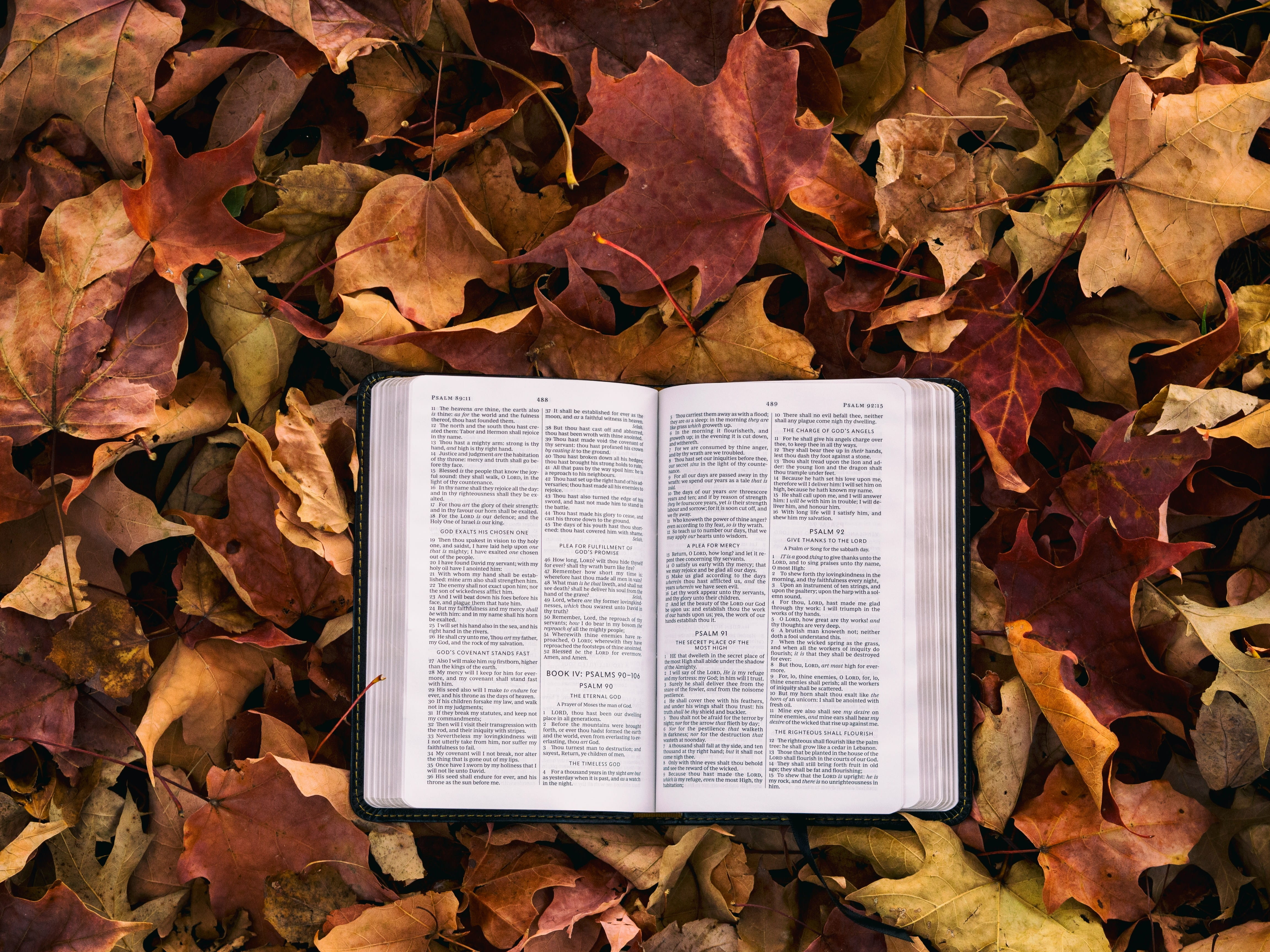
These seven Bible verses are worth reading together this Thanksgiving and carrying with you long after the holiday is over.
1. Psalm 107:1: Give Thanks for God’s Goodness
“Oh, give thanks to the LORD, for He is good! For His mercy endures forever.” — Psalm 107:1 (NKJV)
Thanksgiving begins with God Himself. Psalm 107 does not tell us to give thanks because every circumstance is easy. It points instead to the goodness and enduring mercy of the Lord.
That gives Christians a foundation for gratitude even during difficult seasons. Circumstances may change, but God’s character does not. His mercy, faithfulness, and goodness give believers reasons to thank Him whether the year has brought celebration, hardship, or a mixture of both.
2. 1 Thessalonians 5:18: Give Thanks in Every Circumstance
“In everything give thanks; for this is the will of God in Christ Jesus for you.” — 1 Thessalonians 5:18 (NKJV)
This verse does not say that Christians must be thankful for everything that happens. Pain, loss, injustice, and suffering are not suddenly good because believers experience them.
Instead, Christians can give thanks in every circumstance because God remains present and faithful within it. Gratitude does not require pretending hardship is pleasant. It means remembering that difficulty does not erase God’s goodness or remove His ability to work in ways we may not yet understand.
That can be an especially meaningful truth around Thanksgiving when some people at the table may be carrying grief, uncertainty, or disappointment alongside their gratitude.
3. Psalm 100:4: Let Thanksgiving Become Worship
“Enter into His gates with thanksgiving, and into His courts with praise. Be thankful to Him, and bless His name.” — Psalm 100:4 (NKJV)
Biblical thanksgiving naturally leads toward worship. Gratitude turns our attention away from simply enjoying God’s gifts and toward recognizing the One who gave them.
This Thanksgiving, families can do more than list things they appreciate. Take time to thank God directly for His provision, His Word, salvation through Christ, answered prayer, and the ways He has carried your family through the year.
Gratitude becomes especially meaningful when it moves from “I am thankful for this” to “God, thank You for this.”
4. Philippians 4:6–7: Bring Thanksgiving into Your Prayers
“Be anxious for nothing, but in everything by prayer and supplication, with thanksgiving, let your requests be made known to God.” — Philippians 4:6 (NKJV)
Thanksgiving and prayer belong together. Paul tells believers to bring their requests to God while also remembering what He has already done.
That combination can change the way Christians approach worry. When anxiety focuses attention on what might happen next, gratitude reminds us of God’s faithfulness in what has already happened.
A simple Thanksgiving practice can be to name both: something you are asking God to do and something you can already thank Him for. Prayer does not require waiting until every problem is solved before gratitude begins.
5. James 1:17: Remember the Giver behind Every Good Gift
“Every good gift and every perfect gift is from above, and comes down from the Father of lights.” — James 1:17 (NKJV)
Thanksgiving tables are often filled with good gifts: food, family, laughter, traditions, and memories. James reminds Christians to look beyond the gift to its source.
Recognizing God as the giver helps protect gratitude from becoming entitlement. The blessings in our lives are not simply things we earned or happened to acquire. They are opportunities to recognize God’s generosity and respond with humility.
This verse can also help children understand why Christians give thanks to God rather than simply saying they feel thankful in a general sense.
6. Colossians 3:17: Make Gratitude Part of Everyday Life
“And whatever you do in word or deed, do all in the name of the Lord Jesus, giving thanks to God the Father through Him.” — Colossians 3:17 (NKJV)
Thanksgiving is one day on the calendar, but gratitude is meant to become part of ordinary Christian life.
Colossians connects giving thanks with what believers say and do. That means gratitude can shape the way Christians work, serve, speak to family members, handle responsibilities, and respond to the people around them.
A thankful heart should eventually become visible. It may show up through generosity, patience, hospitality, service, or simply becoming quicker to recognize what God has provided instead of concentrating on what is missing.
7. Hebrews 13:15: Keep Offering Thanks
“Therefore by Him let us continually offer the sacrifice of praise to God, that is, the fruit of our lips, giving thanks to His name.” — Hebrews 13:15 (NKJV)
The word continually makes this verse especially fitting for Thanksgiving. Gratitude is not intended to disappear when the leftovers are gone and the Christmas decorations come out.
Sometimes praise even feels like a sacrifice because circumstances make thankfulness difficult. Yet Christians can still praise God for His character, salvation, promises, and presence.
Thanksgiving can therefore become more than a holiday tradition. It can remind believers of the kind of life Scripture calls us to live throughout the year.
Carry Thanksgiving beyond the Holiday
There is something valuable about setting aside a day to remember blessings, gather with people we love, and give thanks. But Scripture invites Christians into something even richer: a life in which gratitude becomes a regular response to God.
Read one or more of these verses around your Thanksgiving table. Ask family members which one stands out to them and why. Spend a few minutes remembering ways God has been faithful during the past year, including blessings that may have been easy to overlook at the time.
Then keep the practice going after Thanksgiving ends. Gratitude grows when believers regularly remember who God is, recognize what He has provided, and return their thanks to Him.
Real Life Network offers free Bible teaching, kids’ programming, documentaries, Christian movies, podcasts, and family content that can help keep biblical truth part of your home throughout the holiday season and beyond.
Explore free Christian programming for the whole family on Real Life Network.
25 min
7 Thanksgiving Bible Verses about Gratitude and Giving Thanks
November 23, 2026
Real Life Network
Entertainment & Lifestyle
Thanksgiving break gives kids a few welcome days away from school, but it can also leave parents looking for something worthwhile to fill the extra downtime. Real Life Network has several Thanksgiving programs that combine entertainment with history, gratitude, generosity, and lessons families can continue talking about around the dinner table.
Whether you have younger children who enjoy animated stories or older kids ready for a little American history and trivia, here are a few Thanksgiving picks to add to the holiday weekend.
Star-Spangled Adventures: The Pilgrims and the First Thanksgiving
For elementary-age children, Star-Spangled Adventures: The Pilgrims and the First Thanksgiving offers an animated way to bring history to life.
Star-Spangled Adventures takes children through important moments in American history, and this episode looks at the Pilgrims, the hardships they faced after arriving in America, and the first Thanksgiving. The series was created to introduce young viewers to American history and foundational values in an accessible format.
It is an easy choice for families who want Thanksgiving screen time to be both fun and educational, especially for children who learn best when they can see history unfold rather than simply read about it.
Otto’s Tales: Today Is Thanksgiving
Otto the bulldog and his friend Dennis take younger viewers back in time in Otto’s Tales: Today Is Thanksgiving.
Created for early elementary-age children, the episode explores the first Thanksgiving while emphasizing gratitude and family. The Otto’s Tales series uses colorful, time-traveling adventures to help young children learn about American holidays, traditions, and values.
Afterward, parents might ask children what they are most thankful for this year or invite them to name someone they would like to thank during the holiday.
Otto’s Tales: Mr. Rabbit’s Thanksgiving
Thanksgiving is about more than knowing what happened in 1621. It is also a good time to teach children what gratitude looks like in the way we treat other people.
Mr. Rabbit’s Thanksgiving focuses on compassion, generosity, sharing, and community. The accompanying educational materials encourage children to notice how the characters care for others and then think about ways they can practice those same qualities themselves.
That makes it a natural program to watch before Thanksgiving dinner, especially if you want to follow it with a simple family conversation about giving, helping, and noticing the needs of others.
Street Smarts: American Holidays
Have older children at home? Street Smarts: American Holidays brings some friendly competition into the mix.
Designed for middle and high school students, Street Smarts uses a quiz-show format to test kids’ knowledge of American civics and history. In this episode, Uncle Sam quizzes contestants about Thanksgiving, Independence Day, Memorial Day, and Veterans Day and why Americans observe these important national holidays.
It can be a fun choice when younger kids have outgrown storytime programming but parents still want something educational during the school break.
Take Thanksgiving Learning off the Screen
For families who want to continue beyond streaming, The Kids Guide to the Mayflower and the First Thanksgiving gives children another way to explore the holiday. The guide covers the Pilgrims’ desire to worship freely, their voyage aboard the Mayflower, their arrival in America, and the first Thanksgiving.
Try pairing a program with the guide, then letting children tell the rest of the family one new thing they learned. Thanksgiving history does not have to feel like another school assignment. A good story, a few thoughtful questions, and some family conversation can make learning part of the holiday itself.
Real Life Network makes it easy to add something meaningful to your children’s Thanksgiving break while still giving them time to relax and enjoy being out of school.
Gather the kids, choose a Thanksgiving program, and watch free on Real Life Network!
25 min
Thanksgiving Kids Content to Watch on Real Life Network

November 19, 2026
Real Life Network
Faith & Culture
Thanksgiving gives families a natural reason to slow down, gather together, and remember what we have received. It can also be an opportunity to remember some of the history behind the holiday and the generations who came before us.
This year, Real Life Network has created resources to help bring those conversations into your home. And if you would like the Give Thanks: A Holiday Kids Guide in hand for Thanksgiving, today, November 17, is the deadline to order the Thanksgiving bundle for delivery in time for the holiday.
You don’t need a formal lesson plan or a table full of history books. A few stories, questions, and simple activities can turn Thanksgiving into a meaningful conversation about faith, gratitude, freedom, and the blessings we often take for granted.
Put a Little History on the Table
Before dinner, choose one person or event from early American history and learn something new together.
You might talk about the Pilgrims and the hardships they endured after arriving at Plymouth. Ask younger family members what they think it would have been like to cross the Atlantic and begin again in an unfamiliar land.
Or talk about the importance of giving thanks even during difficult circumstances. What does gratitude look like when life isn’t easy? Why is it important to remember where our blessings come from?
Even a ten-minute conversation can help children begin to see Thanksgiving as more than food, football, and a long weekend.
Give the Kids Something of Their Own
The Give Thanks: A Holiday Kids Guide was created to help younger family members explore the story and meaning of Thanksgiving in an engaging way.
Guided by Mercy, a Pilgrim child, and Wamsu, a Wampanoag child, kids can discover the history behind the holiday through interesting facts and interactive activities.
Try setting the guide at the kids’ table, working through a page together before dinner, or letting children share one thing they learned with the rest of the family.
Order the Thanksgiving bundle by the end of today, November 17, to receive the kids’ guide in time for Thanksgiving.
Ask Questions That Go Beyond the History
Facts are important, but some of the best conversations begin with what those facts make us think about. Around the table, try questions such as:
- What is something our family is especially thankful for this year?
- What freedom do you appreciate most?
- Why do you think remembering history is important?
- What do we have today because someone before us sacrificed?
- What would we like the next generation of our family to remember about us?
The answers don’t have to be long. The goal is simply to get everyone talking.
Then Continue the Story on Thanksgiving Day
The kids’ guide can begin the conversation before Thanksgiving. Then, on Thanksgiving Day, November 26, The American Story arrives.
The first Real Life Network Original documentary features Pastor Jack Hibbs and historian Tim Barton and travels to the places where America’s history unfolded, from Plymouth and Boston to Washington, D.C., Philadelphia, and Valley Forge.
Tim brings viewers into the stories of the Pilgrims, pastors, Founding Fathers, and families who helped shape the nation, while Pastor Jack considers what their faith, courage, sacrifice, and commitment to liberty can teach Christians today.
It makes Thanksgiving Day an especially fitting time to continue the story together.
Remember. Give Thanks. Pass It On.
History gives gratitude context. When we understand what previous generations endured, built, defended, and handed down, we gain a deeper appreciation for what we have received. And when families learn those stories together, history becomes more than something studied at school.
It becomes part of what one generation passes to another.
This Thanksgiving, make room around the table for good food, gratitude, family stories, and a little American history too.
Today is the deadline to order the Thanksgiving bundle in time for the holiday.
25 min
Bring History and Gratitude to Your Thanksgiving
November 17, 2026
Real Life Network
Faith & Culture
Every generation inherits a story.
For American families, that story includes courage and sacrifice, faith and freedom, conflict and conviction, great accomplishments and hard lessons. But children do not automatically inherit an understanding of that history simply because they live in this country. They have to be taught.
Parents and grandparents have a unique opportunity to help younger generations understand not only what happened in America’s past, but why people made the choices they did, what they believed, and what those decisions can teach us today.
That doesn’t require turning the dinner table into a history classroom. Often, it begins with a good story and a few thoughtful questions.
Start With the People
Children tend to connect with people before they connect with timelines. Instead of beginning with a list of dates, introduce them to the people behind the events.
Tell them about the Pilgrims crossing the Atlantic in search of a place where they could live out their faith. Talk about George Washington facing overwhelming challenges during the American Revolution. Introduce them to Samuel and John Adams, Abigail Adams, Benjamin Franklin, and the pastors and revivalists who helped shape the ideas spreading through the colonies.
Then ask questions that bring those stories closer to home:
- What do you think it would have been like to leave everything familiar and cross the ocean?
- Why do you think freedom was worth sacrificing for?
- What does courage look like when the outcome is uncertain?
- Why is it important to know what people actually believed instead of only remembering their names?
- What freedoms are we grateful for today?
- How can we use those freedoms responsibly?
There is no need to rush toward the “right” answer. Sometimes the best family conversations begin when children are given room to think out loud.
Let Them See Where History Happened
History also becomes easier to understand when it feels real. That is one of the strengths of The American Story, the first Real Life Network Original documentary featuring Pastor Jack Hibbs and historian Tim Barton.
Tim travels to many of the actual places where America’s story unfolded, including Plymouth, Boston, Lexington, Washington, D.C., Philadelphia, and Valley Forge. Instead of encountering these events only as words on a page, families can see the places connected to the people and decisions they are learning about.
Pastor Jack then helps connect those stories to questions of faith, courage, liberty, responsibility, and what it means to live faithfully in the present.
Watching together gives parents and grandparents an easy opportunity to pause, talk, ask questions, and keep the conversation going after the film ends.
Give Younger Children a Way into the Story
For younger family members, the Give Thanks: A Holiday Kids Guide offers another way to explore America’s history.
Created for children, the guide introduces the history and meaning behind Thanksgiving through stories and activities designed to keep kids engaged. Mercy, a Pilgrim child, and Wamsu, a Wampanoag child, help lead readers through the story while interactive elements give them something to do, not just something to read.
That makes it a natural companion to The American Story.
Older children and adults can explore the broader history in the film, while younger children have a resource created specifically for them. Then everyone can come back together and talk about what they learned.
Make History Part of Family Life
Passing on history doesn’t require knowing every fact. It requires being willing to remember, learn, and talk together.
Read an old document aloud. Visit a historic site when you travel. Look up the story behind a monument. Ask grandparents what they remember learning about American history when they were children. Let kids ask difficult questions. Encourage them to look at original sources when they are old enough.
Most of all, help them see that history is not simply about people who lived a long time ago. It is about choices, beliefs, consequences, and the inheritance one generation leaves to the next.
This Thanksgiving season, The American Story and the Give Thanks: A Holiday Kids Guide can help your family begin those conversations together.
Pre-order The American Story bundle today.
25 min
Passing America’s Story to the Next Generation
November 12, 2026
Real Life Network
Entertainment & Lifestyle
America’s history is filled with familiar names, places, and moments. Plymouth. George Washington. The American Revolution. Independence Hall. The Liberty Bell.
But behind those familiar pieces of history are remarkable stories of faith, courage, sacrifice, prayer, and a closely held belief that liberty comes from God.
The American Story, the first Real Life Network Original documentary, featuring Pastor Jack Hibbs and historian Tim Barton, goes beyond the familiar accounts to explore the people, convictions, and events that helped shape a nation.
And beginning today, you can pre-order it.
Go Back to Where the Story Happened
Rather than simply revisiting familiar events, The American Story looks beneath the surface to uncover the beliefs, sacrifices, and people behind the history.
Tim Barton travels to many of the places where America’s story actually unfolded, including Plymouth, Boston, Lexington, Washington, D.C., Philadelphia, and Valley Forge. Standing at historic sites such as Plymouth Rock, the Monument to the Forefathers, Independence Hall, the Liberty Bell, and Valley Forge, he brings context to people and events that can too easily become little more than names and dates.
You’ll encounter the Pilgrims and their vision for the New World. The pastors and revivalists whose preaching helped shape colonial America. George Washington and the faith that sustained him through extraordinary challenges. Samuel and John Adams. Benjamin Franklin. The Continental Congress. The fight for liberty.
Along the way, Pastor Jack Hibbs connects those events to something more than history. He asks what Christians today can learn from the faith, courage, and sense of responsibility demonstrated by generations who came before us.
The American Story is not simply about remembering the past. It is about considering what we will do with the inheritance we have received.
A Story Worth Passing On
America is celebrating its 250th birthday this year, making this an especially important time to know how our nation began and to pass that history to another generation.
That is why the pre-order offering includes more than the film itself.
The American Story bundle includes the DVD, digital access to the documentary, and the Give Thanks: A Holiday Kids Guide, a fun, faith-centered resource created to help children discover the history and meaning behind Thanksgiving.
While The American Story takes families deeper into America’s founding and Christian heritage, the kids’ guide gives younger family members an age-appropriate way to explore history for themselves.
Together, they create an opportunity to do something increasingly rare: sit down as a family, learn together, ask questions, and talk about the people and principles that helped shape the country we call home.
The Story Begins This Thanksgiving
The American Story arrives Thanksgiving Day, November 26.
It is fitting that a film about America’s beginnings would arrive during a holiday rooted so deeply in remembrance and gratitude.
This Thanksgiving season, go beyond the familiar version of the story. Visit the places where history happened. Meet the people behind the names. Discover the faith that influenced generations of Americans.
And then pass the story on.
Pre-order The American Story bundle today.
25 min
Pre-Orders Are Open for The American Story
October 30, 2026
Real Life Network