
Stream Real Life Network Now

WATCH NOW
Parenthood


World News
25 min
Blue-State Voters Rejected Trans Extremism despite Democrats’ Gains
Despite major Democratic victories in the 2026 midterms, voters in Washington, Arizona, and Colorado supported measures restricting transgender participation in girls' sports. Discover what these results reveal about voter priorities and the future of transgender policies.
Far-left activist groups like the Human Rights Campaign are already calling on Democrats to pass pro-transgender legislation like the Equality Act. But a closer look at the 2026 election results would caution the incoming congressional majorities against interpreting the election as a mandate to do so. Although American voters elected Democrats in overwhelming numbers, voters in Democrat-controlled states still voted against transgender extremism.
The facts of this issue dawn slowly, as the relevant states count ballots slowly. Still, at 9:14 p.m. on Wednesday, the Associated Press decided there was enough information, with 68% of votes counted, to declare that Washington voters had chosen to restrict participation in school sports by biological sex by approving Ballot Measure 638.
According to the official ballot title, “this measure would prohibit students it defines as ‘biologically male’ from competing in certain school athletic activities intended for female students only. It would require verification of biological sex by students’ healthcare providers.”
Washington voters were asked, “Should this measure be enacted into law?” Thus far, 1,252,863 voters (56.6%) have voted “yes,” while 961,810 voters (43.4%) have voted “no.” That’s a lead of 290,000 votes (or 13.2% of the total votes cast), with two-thirds of the ballots already counted.
The dominant popularity of Measure 638 is evident from the county breakdown. The “no” votes hold a majority in only three of Washington’s 39 counties, and even in those counties the margins are relatively close. In far-north Whatcom (home to Bellingham, Wash.), “no” votes lead 50.6% to 49.4%. In King County (Seattle), “no” votes lead 57.2% to 42.8%; this county’s large population is the only reason the contest even took this long to determine. And, in sparsely-populated Jefferson County, “no” votes lead 57.5% to 42.5%.
In the other 36 counties, a majority of Washington voters preferred to protect girls’ sports. That includes counties with other large cities, including Snohomish (Everett), Pierce (Tacoma), Thurston (Olympia), Clark (Vancouver), Benton (Richland), and Spokane (Spokane).
When the suburbs of Seattle and Portland are voting against a transgender policy item, Democratic politicians would be wise to pay attention.
The vote was not some conservative fluke, where Washingtonians zigged right while the country zagged left. The very same Washington voters rejected Measure 645, which would have repealed the state’s millionaire tax, by a margin of 57.9% to 42.1%. Washington voters remain their usual progressive selves, but allowing confused boys to compete in girls’ sports is one wilderness trail they refused to hike.
Meanwhile, Arizona voters approved Ballot Proposition 318, which protected both girls’ sports and girls’ locker rooms. According to its title, it “requires all schools and athletic associations to designate athletic teams as male, female, or coed based on the biological sex of the athletes as defined at birth; [and] prohibits these entities from authorizing use of private spaces not designated for a person’s sex.”
As of Thursday, Arizona voters favored the proposition 58.9% to 41.1%, with an estimated 86.4% of the vote recorded (enough to make the outcome mathematically certain). While Arizona is less solidly Democratic than Washington state, it has grown steadily bluer; the same preliminary election results show Democrats flipping both legislative chambers to give them a governing trifecta in January.
Once again, the widespread appeal of the proposition is apparent at the county level. In only one of Arizona’s 15 counties did “no” votes outnumber “yes” votes. In Cococino County (Flagstaff), 54.1% of voters voted “no,” compared to 45.9% of voters who voted “yes.” Even this result defied partisan odds, as 61% of the county usually votes for Democrats.
A third western state offered voters the chance to protect girls’ sports on the ballot, and there the outcome appears to be closer. In deep-blue Colorado, with 87% of the votes recorded as of Thursday, the outcome of two transgender-related ballot measures remain too close to call.
Colorado Proposition 134 would:
- “require that all elementary through collegiate school-based athletic teams and sports be designated as male-only or female-only based on biological sex, unless the team or sport is designated as open to participation by individuals of any sex or gender;
- “require schools and school districts to implement policies to ensure that students are assigned to gender-designated teams that align with their biological sex; and
- “prohibit investigations of, or penalties for, a school that designates a team or sport as female-only.”
Current reporting shows 1,232,721 “yes” votes (52.7%) and 1,107,376 “no” votes (47.3%), for a lead of 5.4%.
Colorado Proposition 135 would:
- “prohibit surgeries on minors that alter their biological sex characteristics as a treatment in response to a minor’s perception of sex or gender, with certain exceptions; and
- “prohibit the use of state or federal funds or insurance coverage to pay for these surgeries.”
As of this writing, there are 1,224,683 “yes” votes (52.3%) and 1,118,057 “no” votes (47.7%), for a lead of 4.6%.
With an estimated 13% of the vote left to be counted, neither proposition is over the finish line yet. But they are certainly outperforming other propositions. On Colorado Amendment 81, which would require law enforcement agencies to coordinate with the Department of Homeland Security, “no” votes are leading 54.8% to 45.2%. This means that protecting girls’ sports and protecting children from irreversible, harmful surgeries is significantly more popular — even among Colorado’s progressive population — than enforcing federal immigration law.
It’s noteworthy that each of the transgender-related measures came in left-leaning states. This is because the legislatures in those states have refused to protect girls’ sports and gender-confused children on their own.
When more than half the state legislatures protected female athletes from male intrusion and children from gender transition surgeries, pro-transgender activists argued that these were irrelevant or niche issues, driven by “transphobic hate” and an activist class. In reality, these commonsense policies are popular even among voters in Democratic-leaning states. It is the transgender activists and the politicians they control who are truly out of touch.
Such results in ballot initiatives also invite another conclusion. Despite the Democrats’ historic victory in the 2026 midterm elections, the simultaneous success of girls’ sports initiatives in Democrat-controlled states suggests that voters did not choose them because they wanted to see radical pro-transgender policies implemented. If Democrats misinterpret their electoral victory as a signal to return to the radicalism of the Biden administration, they might provoke the type of voter anger that delivered victory to Republicans in 2024.
This article was written by Joshua Arnold and origianlly published on The Washington Stand. For more content like this, visit Real Life Network.

World News
25 min
Virginia Pastor to Sue State over Amendment to Codify Same-Sex Marriage
A Virginia pastor is challenging a proposed constitutional amendment protecting same-sex marriage, alleging violations of state procedures. More than 400 pastors have joined efforts to defend biblical teachings on marriage, religious freedom, and the role of faith in public life.
A Virginia pastor is challenging the lawfulness of a proposed state constitutional amendment to codify same-sex marriage and spread gender ideology. The Founding Freedoms Law Center (FFLC) filed a lawsuit last week in Prince William County Circuit Court on behalf of Pastor Ben Purves of Occoquan Bible Church in Woodbridge, Va.
The Amendment 2 initiative on the ballot in the Cavalier State this November would “(i) remove the ban on same-sex marriage; (ii) affirm that two adults may marry regardless of sex, gender, or race; and (iii) require all legally valid marriages to be treated equally under the law” should the Supreme Court ever overturn Obergefell v. Hodges, according to the Virginia Department of Elections.
The amendment would repeal the provision of Article I, Section 15-A of the Virginia constitution defining marriage as a “union between one man and one woman,” and would instead say marriage is “one of the vital personal rights essential to the orderly pursuit of happiness,” explains the FFLC press release.
The legal group explained its reasoning for the lawsuit, stating, “This Complaint does not concern the wisdom or policy merits of the Proposed Amendment. It concerns whether the Proposed Amendment was brought forward to the November 2026 ballot through the process that the Constitution of Virginia requires. It was not. The Proposed Amendment reached the ballot through a process that departed from the mandatory requirements of Article XII, § 1 of the Constitution of Virginia through Virginia Code § 30-13.”
It continues, “Virginia Code § 30-13 requires the Clerk of the House of Delegates to have published and distributed copies of a proposed amendment to the clerks of Virginia’s circuit courts, and requires each circuit court clerk to post a copy ‘at the front door of the courthouse’ and make a second copy ‘available for public inspection,’ no later than three months before the intervening general election of members of the House of Delegates. These steps exist to inform the voters before the pivotal House of Delegates election. They were not performed before the November 4, 2025 general election by the Clerk of the House of Delegates or the Circuit Court Clerk or any other Virginia circuit court.”
The complaint asserts that even if the amendment is favored by most voters, it should be considered invalid.
Purves, the plaintiff on the Complaint, told The Washington Stand that it is the responsibility of a pastor to proclaim biblical truth when it comes to every issue, even the polarizing ones.
“It’s my hope that pastors will become more bold in proclaiming the gospel and the truth of God’s word, and not letting it be restricted to the church building or to church members’ homes. We really need to amplify truth in the public square, and if we do not, we will find it increasingly anti-Christian,” Purves asserted.
“Pastors — the shepherds — are called to care for their sheep,” he added. “That means giving their sheep the food of God’s word, and not just some of it, but all of it. And so, when churches are setting aside parts of Scripture and not teaching those parts, and not willing to proclaim those parts of Scripture to the world, they are failing in their duty as shepherds. And when pastors do not stand to protect their flock from wolves that will prey on their church and on the vulnerable in their community, they are failing in their pastoral duty.”
Over 400 pastors have signed a letter Purves helped orchestrate asking Virginians to vote no on Amendment 2, as well as an additional amendment to codify abortion in the Constitution of Virginia. The Pastors of Virginia group is also asking Virginia voters to participate in a day or prayer and fasting for the state on November 3.
“We call upon every voter to oppose these amendments to protect pre-born children, to defend the institution of marriage, and to stand against the destruction of transgender ideology. God created mankind as male and female as a part of God’s good and perfect creation (Gen 1:27). God creates life in the womb, and every child is a blessing (Ps 127, 139). God created the institution of marriage as a lifelong covenant between a man and a woman which is to be a portrait of Christ’s love for the church (Eph 5:32). Instead of defacing marriage, we must honor it (Heb 13:4),” the group stated.
Any pastor in the state who affirms the Apostles’ Creed, the Nicene Creed, and the Five Solas of the Protestant Reformation is eligible to sign the Open Letter from Virginia Pastors to the Commonwealth until voting closes after Election Day.
“To voters who are discouraged and maybe thinking of not voting — you should not lose heart,” Purves implored. “We’re called to be faithful, and we need to stand for truth, even when and if we are a minority. If we only stand for truth and we’re a majority, what does this say about us? So, it’s important for us to do the right thing and vote for the sake of truth.”
This article was written by Quinn Delamater and originally published on The Washington Stand. For more content like this, visit Real Life Network.

Faith & Culture
25 min
Poison at the Gates: The Drug War Still Crossing Our Border
America’s drug crisis threatens families and communities. Discover why parents, churches, and communities must respond with awareness, honest conversations, prayer, and hope.
Adapted from my conversation on Rose Unplugged with Derek Maltz, former Acting Administrator of the U.S. Drug Enforcement Administration. Watch the full episode here: Is China Waging Chemical Warfare on America?
There is something coming for your family. Whether you live in a city or a suburb. Whether your kids are in middle school or college. Whether you think this is someone else's problem — or you've already lived it.
It is the drug crisis pouring across our border. Not one drug. Not one cartel. Not one route. A flood. And it is changing — and ending — American lives every single day.
Not a Single-Drug Crisis
I want to be clear about something from the start, because the news often focuses on one drug at a time, and that gives us a false sense of the scale of what we're facing.
Yes — fentanyl is the headline. And it should be. It’s the deadliest drug ever to hit this country. It’s synthetic, lab-made, and lethal at just two milligrams — the weight of a few grains of salt.
It's driving the majority of overdose deaths in America. At the peak of this crisis, we were losing more than 70,000 people a year to fentanyl alone. That’s nearly 200 lives every single day.
But fentanyl isn’t coming alone. Methamphetamine, cartel-produced, and ultra-potent, is flooding communities from coast to coast. It's not the meth of 20 years ago. It's cheaper, stronger, and more widely available than ever.
Cocaine trafficking remains massive and increasingly, it's being laced with fentanyl without the user's knowledge.
And now there are emerging threats most Americans have never even heard of: xylazine, a veterinary tranquilizer mixed with fentanyl that Narcan can't fully reverse, and nitazenes, a synthetic opioids so powerful they make fentanyl look mild by comparison.
This is not a single-drug crisis. This is a chemical assault on the American people. And it is being orchestrated deliberately by foreign adversaries and transnational criminal networks that don't care how many of us they kill.
Even with a decline of nearly 24% in overdose deaths — and yes, we should acknowledge that progress — we are still talking about roughly 87,000 overdose deaths in a single year. That’s not a statistic. That’s a national emergency.
Drug overdoses remain one of the leading causes of death for American adults. And for every death, there are dozens more lives derailed; families broken, futures stolen, and communities hollowed out.
Follow the Supply Chain
So where is all of this coming from? Because this is where truth gets complicated and where the political noise gets loudest.
Here is what the evidence shows: The precursor chemicals, the building blocks, are largely manufactured in China. They are shipped to Mexican drug cartels. The cartels synthesize, press, and package the drugs. And then they move them north into the United States.
Now, here is the part that gets lost: the vast majority of these drugs are not being carried across open desert by migrants on foot. They are being driven through legal ports of entry. In passenger vehicles, commercial trucks, and in cargo shipments often by U.S. citizens.
U.S. Customs and Border Protection seized over 19,000 pounds of fentanyl in 2024 alone. And fentanyl now makes up nearly 90% of all opioid seizures at the border.
Which means this is not just a border wall conversation. It is a technology conversation. An intelligence conversation. A cartel conversation. And a China conversation — because none of this happens without China supplying the chemicals.
A Counterfeit Answer
This is not just about policy. When a nation loses its sense of purpose, when truth becomes relative, and when emptiness fills the space where meaning used to live, people look for escape.
And what is crossing our border right now is not just a drug. It is a counterfeit answer to a real spiritual hunger. One that ends in destruction.
We need stronger enforcement. Absolutely. We need to go after the cartels and hold China accountable. Without question. But we also need something no government can legislate. We need restored families. Engaged parents. Communities that are awake. And young people who know their worth — not from culture, but from their Creator.
This Is a Spiritual Battle
Fentanyl, Methamphetamine, Cocaine, Xylazine, Cartels, all weapons of destruction. But the scale of this, the sophistication of the networks, the multiple poisons being unleashed on our families — all of it confirms something I believe with everything in me.
This is not just a policy fight. This isn't just a border fight. This is a spiritual battle. And we need to start treating it that way.
In 1 Peter 5:8 we are told:
Be of sober spirit, be on the alert. Your adversary, the devil, prowls around like a roaring lion, seeking someone to devour. (1 Peter 5:8, NASB)
Think about that word — devour. Not inconvenience. Not discourage. Devour.
And “be of sober spirit” — not just physically, but clear-minded, alert, and aware. Because the danger isn't always obvious. It doesn't announce itself.
It comes as a pill that looks like medicine. As meth that looks manageable. As cocaine that looks like recreation. As something a friend hands you and says — it's fine.
But Scripture also tells us in John 10:10:
The thief comes only to steal and kill and destroy. (John 10:10, NASB)
Steal innocence, and kill potential. Our families or being destroyed. And if we are honest, with every drug coming across that border, that is exactly what we are watching play out.
Ephesians 6:12 tells us:
For our struggle is not against flesh and blood, but against the rulers, against the powers, against the world forces of this darkness, against the spiritual forces of wickedness in the heavenly places. (Ephesians 6:12, NASB)
Which means this: if we only fight this battle at the surface level and if we only debate policy and argue about which party deserves the credit or the blame, we will always be reacting. And reacting is not the same as overcoming.
Yes, we need stronger enforcement across every drug, every route, every cartel. Yes, we need to hold China accountable for the chemical warfare they are enabling. Yes, we need the technology and the intelligence to stay ahead of networks that never sleep.
But we also need something that no legislation can provide. We need discernment. We need truth spoken in our homes, in our churches, and our schools. We need families and communities that are not just alarmed but awake. We need to fight a spiritual battle on our knees. Collectively.
To the Young People
I want to speak directly to young people for a moment. I don't care what it was called. I don't care how it was offered or who gave it to you. What's being disguised as relief, escape, or just a good time has a body count.
And I want you to know — really know — that your life has value. Not because of what the culture tells you. Not because of what shows up on your screen. But because you were created on purpose, for a purpose.
And there is nothing, no substance, no moment, no amount of pressure from anyone worth trading that for.
To Every Parent
To every parent reading this: the time to lean in is now. Not when you find something. Not when the call comes. Now.
Talk to your kids about all of it — not just fentanyl. Talk about the counterfeit pills made to look like medicine. The meth that doesn't look like meth anymore. The pill some other kid promises will help them get through an exam. The powder hidden in something they never even knew to question.
Not out of fear, but out of love. Because silence is not protection anymore. Awareness is.
Darkness Does Not Win
Romans 12:21 tells us:
Do not be overcome by evil but overcome evil with good. (Romans 12:21, NASB)
That’s not wishful thinking. That is not passive. That is a call to action.
Darkness may be real. The threat may be sophisticated. The enemy may be relentless. But darkness does not win.
Not when truth is spoken. Not when families are engaged. Not when communities stand up and say — not here. Not our children. Not on our watch.
So yes, this is about drugs, fentanyl, meth, and the poisons being trafficked across our border. It’s also about cartels and chemicals and a fight that is far from over.
For More Information check out my guest’s website; Lost Voices of Fentanyl https://lvof.org

World News
25 min
The Rise of Islam and the Challenge for Christians
As Islam grows worldwide, Christians face important questions about religious differences, biblical prophecy, and Israel's future. Explore the theological divide between Islam and Christianity and why believers are called to defend their faith and share the Gospel.
Over the last two decades, we’ve seen increasing rhetoric from the Left, media sources, and the up-and-coming generation claiming that Islam is a religion of peace. My challenge to that assumption is how and where do you find grounds to believe that Islam is a peaceful religion? Is it the history of the Ottoman conquest? The vicious attacks against Israel over the last 50 years? The 9/11 attacks?
When I look at all these examples, I see a religion that has paved the streets with blood, tears, sexual violence, and pain. I’ve heard too many stories that show the brutality of a religion that is being described as peaceful. Jesus said, “Blessed are the peacemakers for theirs is the kingdom of heaven” (Matthew 5:10). He told His disciples to go low and to be servant-hearted. Yes, He came with a sword in His mouth, and He flipped tables and offended the Pharisees. But everything He did, He did for the love of His people, to establish the Kingdom of God, to free the captive, and to fulfill Isaiah 61.
Islam, however, does not espouse this love of God, but rather a thirst for conquest. And the religion is spreading. The Pew Research Center states that Islam is the fastest-growing religion worldwide. This should cause great concern among Christians. This change is primarily because Christians are simply not getting married and having enough children to repopulate. But perhaps the biggest problem is that many Christians don’t understand why this is concerning.
Since its inception, Islam has not been as welcomed or embraced as it is now. Why should Islam’s quick ascent to popularity concern Christians? Islam’s tenets are in direct opposition to Christianity, and its eschatological doctrine (their beliefs on the end times) seeks the destruction of Israel and its people.
Islam prides itself on being a religion that provides you the biggest upgrade to heaven if you commit suicide and bring others with you, also known as mujahid. Granted, not all Muslims practice to this extent, but this is concerning at best and is in complete opposition to Christianity at worst. Were people killed during the Christian Crusades? Yes, but did Christians go around killing people hoping to gain a better afterlife with more virgins and more spoils of the flesh? Absolutely not.
A few passages in the Quran that demonstrate this lust for martyrdom are listed below:
- “Indeed, Allah has purchased from the believers their lives and their properties [exchanging them] for that they will have Paradise. They fight in the cause of Allah, so they kill and are killed. [It is] a true promise [binding] upon Him in the Torah and the Gospel and the Qur’an...” (Surah Al-Tawbah 9:111).
- “Allah guarantees that He will admit the person who goes out to fight in His cause (and nothing compels him to go out except jihad in His cause and belief in His words) into Paradise, or He will return him as a winner to his home with rewards or booty” (Tasfir 4:84-4:87).
Perhaps one of the biggest concerns Christians should have with Islam is its eschatological view on Israel and Jesus. First, Muslims don’t believe Jesus is the Son of God, or that He died on the cross. They say he will come back as Isa and descend to liberate the Islamic people from their oppression.[i] The Bible refutes that, warning against these false religions:
“Dear children, this is the last hour; and as you have heard that the antichrist is coming, even now many antichrists have come. This is how we know it is the last hour. ... Who is the liar? It is whoever denies that Jesus is the Christ. Such a person is the antichrist — denying the Father and the Son. No one who denies the Son has the Father; whoever acknowledges the Son has the Father also” (1 John 18-19, 22-23).
What this scripture tells us is that any religion that challenges the deity of Christ is of the anti-Christ spirit. This anti-Christ spirit continues to fill and deceive this generation. Wrapped up in this doctrine is also the belief that a false messiah will arise out of Israel while their messiah arrives. This false messiah will be the sign that they are to wipe out the entire Jewish population. Their literature states:
“Abu Hurairah (May Allah be pleased with him) said: The Messenger of Allah said, “The Last Hour will not come until the Muslims fight against the Jews, until a Jew will hide himself behind a stone or a tree, and the stone or the tree will say: ‘O Muslim, there is a Jew behind me. Come and kill him,’ but Al-Gharqad tree will not say so, for it is the tree of the Jews” Riyad as-Salihin 1820 (Book 18, Hadith 13).
Israel’s existence is preeminent in the Christian perspective of the end times and in Scripture. It’s not just a minor detail — it’s a necessary part of the fulfillment of thousands of years of prophecy. Our very own messiah arose out of Israel, so for Islamic literature to say that their anti-Christ will arise out of Israel is a direct contradiction of two very different religions. In fact, many pastors, writers, and scholars even argue that our anti-Christ is their messiah, and our messiah is their anti-Christ.
The great battle for earth started when Adam and Eve were in the garden, but it continues today and until Jesus returns. As we look at the cultural moment, we are in, we must pause and ask the Lord what His will would be for the church as we watch a false doctrine that seeks to destroy our homeland, our history, and our faith rise across the world. Islam is a religion that directly contradicts Christian values and seeks the destruction of Israel, a historically, politically, and spiritually vital nation. As Christians, we must take a stand, refusing to compromise or sit quietly while a religion that does not please the heart of God seeks to overrun our nation and the nations of the earth.
What can you do? First, educate yourself and share the gospel! Remember, they do not have a savior or helper to get them to the finish line. So, remind them that Jesus came to help and save them through His sacrifice! Second, go to your local city halls and meetings. Push back when legislation to build communities ruled by Sharia law is presented, as what recently occurred in Texas. Stand against the influence they have in our nation. This is a Western country — don’t be ashamed of that. Lastly, pray that the Holy Spirit would open their eyes to see the deception of Islam and that they would come to know the true Messiah.
“Therefore, do not grow weary in doing good, for in due season we will reap, if we do not give up” (Galatians 6:9).
This article was written by Rebekah Harper and originally published on The Washington Stand. For more content like this, visit Real Life Network.

World News
25 min
Lawsuit over School Policy to Hide Bibles Reaches Settlement in Battle for Religious Liberty
A Washington school district has agreed to a $275,000 settlement after restricting LifeWise Academy's voluntary Bible education program. The agreement marks a victory for religious liberty, parental rights, and students' freedom to practice their faith.
A settlement has been reached in the fight for religious liberty in the case of LifeWise Academy against the Everett Public School District in Washington state. In December 2025, the Christian nonprofit that seeks to evangelize to public school students through a release time program sued the school district after it established various oppressive limitations to its venture.
The settlement will require the Board Everett Public Schools Board of Directors to undergo religious liberty training, make changes to the district’s policies governing religious activities, issue a public written apology for its actions visible for six months, and pay $275,000 in attorney’s fees, according to an October 13 press release by First Liberty Institute.
Holly Randall, counsel at First Liberty Institute, the firm that defended LifeWise, detailed the ministry’s road to justice during a Friday appearance on “Washington Watch.”
“[The LifeWise] program allows students to attend Bible education classes on a voluntary basis during school hours, provided that they take place off school property. So, it all happens sort of pursuant to a Supreme Court decision from 1952. This is long been the law,” Randall said. “The program at Everett was operating successfully, but then the school started implementing different burdensome restrictions and sort of obstacles to its operation. So, they implemented a permission slip process that was incredibly burdensome for parents.”
Randall shared that the district also prohibited LifeWise from participating in community affairs with other organizations.
“And it required students to pack up their Bible and other religious literature they were given at LifeWise in sealed packages to take back to school, and they were unable to access them during class even if it was an appropriate free reading time. So, they were just adding challenges to the program that we saw as sort of unconstitutional obstacles that the school district was putting in LifeWise’s way,” Randall elaborated.
She further explained that just because a student is on public school property doesn’t mean they don’t have the right to religious liberties. “You don’t shed your constitutional rights when you enter the schoolhouse gate. That’s another long settled Supreme Court law. … The school was restricting the exercise of students and parents’ constitutional rights to direct the religious upbringing of their children.”
In April 2026, a federal judge in Washington issued a preliminary injunction against Everett schools, a ruling that was good news for LifeWise. “So, that’s how we’ve arrived at where we’re at now, which is the district acknowledging it’s probably wise to settle this and eliminate some of those burdens that are happening to the LifeWise program,” Randall clarified.
Randall went on to recall one of the most remarkable aspects of the case was the Everett school board’s unfriendliness towards LifeWise. “The judge’s order on the preliminary injunction was that the statements board members were making while at board meetings were expressing hostility toward LifeWise. And then they were taking actions that reflected that hostility.”
“The apology that the school district is being required to make, [and] the attorneys’ fees they’re being required to pay are really a reflection that school board members can’t just say whatever they want from the dais, express that hostility, take hostile actions, and get away with it. So, we’re hoping that this sends a message to board members across the country that they need to be careful when they’re speaking about religious organizations and treat them equally, not with hostility.”
Randall concluded by observing that the students who participate in LifeWise are the true heroes of the story.
“The students that attend that program are really the brave ones in this situation,” asserted Randall. “They are the type of students we want to be able to bring more Bible education to and expand their access. … The impact of a student in elementary, middle, or high school, hearing the word of God can only lead to life change and good.”
This article was written by Quinn Delamater and originally published on The Washington Stand. For more content like this, visit Real Life Network.
Faith & Culture
25 min
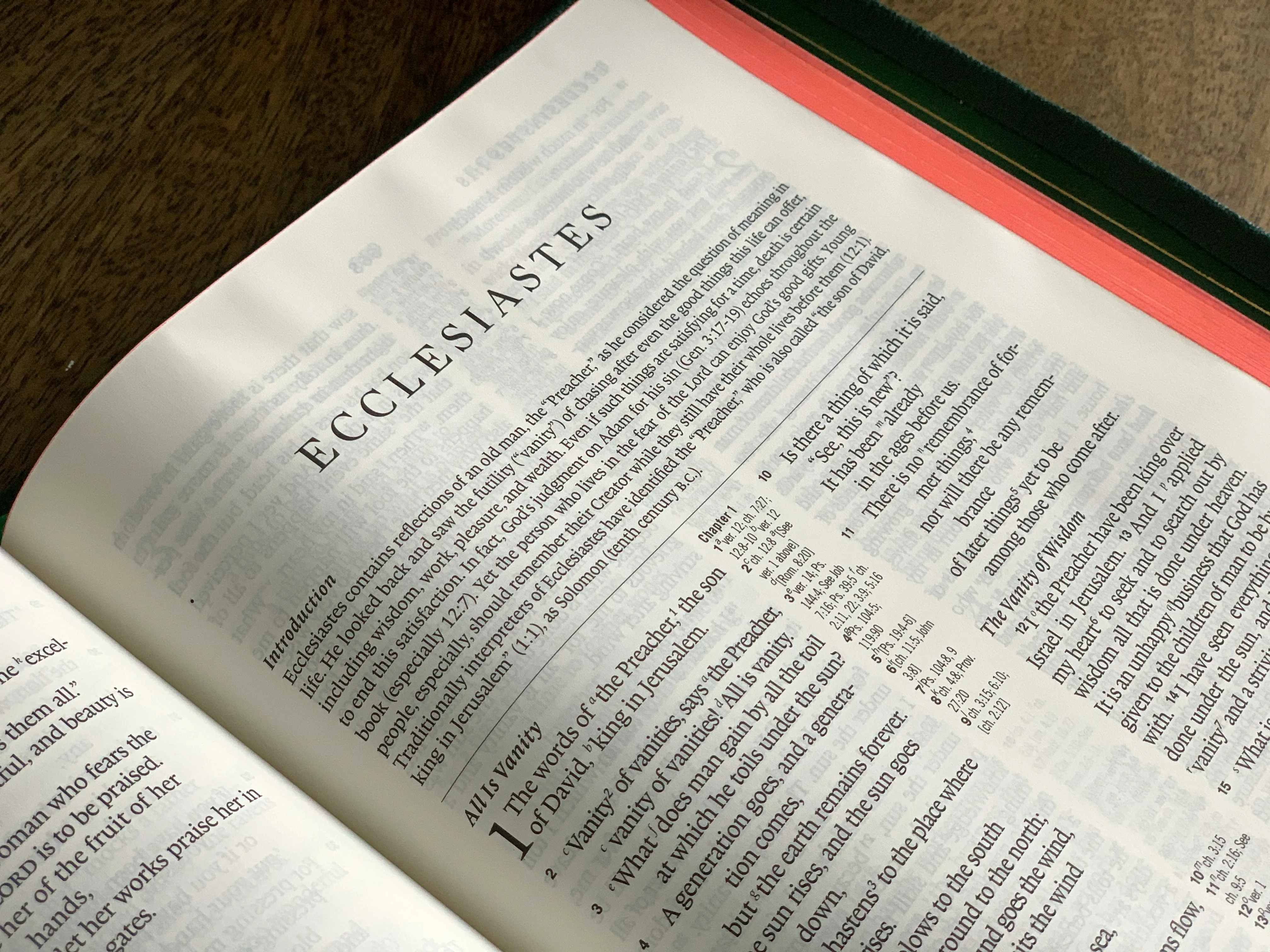
The Wisdom of Ecclesiastes for the Age of Superintelligence
As AI safety researchers warn about the risks of superintelligence, questions about the industry's priorities are growing. Discover why technological advancement must be guided by wisdom, and how Scripture calls Christians to trust God rather than fear the future.
The artificial intelligence community just waved goodbye to yet another top safety and regulation official — and he offers a unique angle in his warning to the world.
David Robinson had been leading safety reports for OpenAI, the maker of ChatGPT. Robinson resigned in the first week of October, stating that the industry’s approach to safety has been stemming from a broken culture. He penned the following words in a piece for The Atlantic, which contain more truth than perhaps he even knows: “The future depends on wisdom that Silicon Valley lacks.”
We’ll come back to that.
His departure comes on the heels of several other prominent AI safety researchers abandoning the industry. Their exits have paired with dreadful public warnings about the future of this technology, leaving the American people to grapple with the headlines and the unknown.
Take Jacob Coxon, for example. After leaving Claude developer Anthropic in September, he wrote on X that top tech labs are “gambling with our lives” by racing toward self-improving superintelligence. He went on to reveal that the people building AI “earnestly believe that it could kill us all by the end of the decade.”
Comforting.
For clarity, the industry term “superintelligence” refers to a hypothetical AI system that developers believe could surpass humans in overall knowledge and capability. This could happen through recursive self-improvement (RSI) in which AI models design and continually improve their own successors.
While the Trump administration has taken to using the term as a reference to AI more broadly, Coxon used it as the industry intends: the potential nightmare of AI evolving beyond our ability to contain.
Let’s go back to David Robinson for a second. Beyond diagnosing the issue of a “lack of wisdom,” he went on in his article to describe the kind of wisdom that is desperately needed — the kind that shows us “how to handle dangerous technology and, more fundamentally … what it means to care for people.”
This kind of wisdom has only one source.
Proverbs 4:7 states, “The beginning of wisdom is: Acquire wisdom; And with all your acquiring, acquire understanding.” The natural question is, how can true wisdom be acquired? Well, it is not gained by happenstance or by any means of passivity.
The word of God teaches that wisdom is found only, “if you look for it as for silver and search for it as for hidden treasure” (Proverbs 2:4).
That same proverb states that when wisdom enters the human heart, it bears fruits of knowledge, discretion, and understanding. Knowledge is pleasant, discretion brings protection, and understanding guards the one who finds it.
If those spearheading AI labs begin searching for wisdom with the same fervency as they do innovation, capital gain, and victory in the arms race, perhaps we might reap the benefits of honing a brilliant technology for human flourishing, rather than threatening it entirely.
In the absence of wisdom, we ought not to expect flourishing. Thus, the need for appropriate guardrails toward that end is becoming increasingly dire.
Whistleblowers coming forward to expose carelessness in the industry is a good thing. Speaking up when danger is on the horizon is profitable. What is not profitable, however, is responding in fear.
The wisest man in history, King Solomon, tells us, “There is nothing new under the sun” (Ecclesiastes 1:9).
The pride of man has reared its head through the latest technology and means of production before. As soon as human beings had the chance, they took brick and mortar and built the tower of Babel, aiming to reach as high as heaven to make a name for themselves — not for the God who gave them clay, water, and sun in the first place.
Today, we are seeing the latest expression of that sinful pride: men thinking they can hold infinite knowledge without it destroying them. Casting wisdom aside, they trust in their own minds and technical ability rather than in God.
In the Garden of Eden, Adam and Eve fell to the temptation of wanting to be all-knowing, like God. He judged that decision then, and He will not be mocked now (Galatians 6:7).
There is nothing more urgent for the unbeliever than to humble themselves, fall on their knees, and cry out to the Creator for salvation. There is, likewise, nothing more urgent for the believer than to refuse every temptation to fear in these times — to live the joyful, abundant life offered to them in Christ.
It is not a suggestion to be unafraid. It is a commandment given us by God, time and time again throughout the Scriptures.
Do not stifle your witness to the watching world.
The book of Ecclesiastes warns us that there are many dark days in this life under the sun, and that we will encounter circumstances which are difficult, perplexing, and often don’t make sense. Yet, there are a few things that author King Solomon found to be good: “Behold, what I have seen to be good and fitting is to eat and drink and find enjoyment in all the toil with which one toils under the sun the few days of his life that God has given him, for this is his lot” (Ecclesiastes 5:18).
New threats to our livelihood may come at alarming rates, but our responsibility as Christians remains the same: Do not dread the future or fear the potential of “superintelligence.” Rather, “fear God and keep his commandments, for this is the whole duty of man” (Ecclesiastes 12:13).
So, keep breaking bread with those you love. Keep enjoying the toil and the lot that God has given you with a grateful heart. Regardless of the news cycle, and whatever may come out of Washington and Silicon Valley — rejoice in what you have been given.
Our lives are but a vapor, a mist, Solomon says. The years go by quickly, and soon, we will return to dust.
That need not be depressing — in fact, let it be motivating as you live the most upright, joyous, and noble life possible along the way. Be encouraged, for we have all the instruction we need to please God in every circumstance, including the ones out of our control.
God says, “I am the Alpha and the Omega, the first and the last, the beginning and the end” in Revelation 22:13. If God is the Omega just as much as He is the Alpha, what is there to fear?
At the end of all things, just as much as at the beginning — He is there. And He rules and reigns at every point in between.
Human history was born from and ends in perfect wisdom, and God will tie the final bow on our story.
Not Sam Altman, or Dario and Daniela Amodei, or Donald Trump, or Xi Jinping — but Jesus Christ will do it, who is the same “yesterday, today, and forever” (Hebrews 13:8).
This article was written by Erica Mendel and originally published on The Washington Stand. For more content like this, visit Real Life Network.
Thank you! Your submission has been received!
Oops! Something went wrong while submitting the form.
Entertainment & Lifestyle
In the early days of online entertainment, Netflix was nearly synonymous with streaming. It offered convenience, an enormous catalog, and a constant flow of new shows and movies. But as viewing habits have evolved, so has the conversation around what families are consuming. Parents and Christian households are increasingly evaluating the moral, spiritual, and emotional impact of what enters the home through television screens and mobile devices.
Many have begun asking a new kind of question: Is there a better option? And more specifically, Why choose a Christian streaming platform instead of Netflix?
Christian streaming is no longer a niche corner of the digital world. It has become a robust alternative for individuals and families who want content that aligns with their faith, strengthens their worldview, and offers a trusted environment without constant vigilance over content filters or parental controls. Understanding the differences between mainstream platforms and Christian services helps clarify why this shift is happening.
1. The Content Priorities Are Entirely Different
Mainstream platforms like Netflix are designed to appeal to the broadest possible audience. That means content often includes dark or cynical themes, rising levels of violence, sexualized material, inappropriate language, and spiritual ideas presented without biblical grounding.
Even shows marketed as family-friendly can introduce content parents would prefer to avoid. In contrast, Christian streaming platforms curate material through a completely different lens. A faith-based platform prioritizes:
- Biblical worldview
- Clean and uplifting entertainment
- Programs designed to encourage spiritual growth
- Storytelling that reinforces hope, redemption, and truth
The entire library is built around a core mission rather than mass appeal. Viewers do not have to wonder what might appear in the next scene or whether a show will undermine the values they work hard to instill in their families.
2. Christian Platforms Remove the Need for Constant Content Policing
Parents know the feeling: sitting with a remote in hand, ready to mute, skip, or stop a show before it exposes their children to something inappropriate. Streaming should reduce stress, not increase it. Choosing a Christian platform means:
- No surprise graphic scenes
- No suggestive themes buried in teen or children’s shows
- No spiritual confusion wrapped in entertainment
- No need to pre-screen every episode
The platform itself acts as the filter, giving families a break from guarding every moment of viewing.
Real Life Network, for example, offers a library intentionally free of disturbing or explicit content, allowing parents to relax and trust the environment their family is watching in.
3. Christian Streaming Prioritizes Spiritual Growth, Not Entertainment Volume
Netflix excels at volume, offering thousands of titles in dozens of genres. But quantity doesn’t always equal meaning. Much of the content is designed to entertain without offering any deeper value. For viewers who want their media habits to reinforce biblical thinking, that wide-open environment can feel spiritually thin. Christian streaming platforms intentionally offer:
- Teaching series
- Documentaries grounded in Scripture
- Programs that help believers understand culture through a biblical lens
- Wholesome feature films
- Children’s shows that point toward faith rather than away from it
- Podcasts and conversations that sharpen understanding
More than entertainment, this content reinforces discipleship, encouragement, worldview formation, and spiritual nourishment.
Real Life Network places this purpose at the center of everything it provides, ensuring that viewers receive not only enjoyment but also edification.
4. Christian Streaming Helps Protect the Hearts and Minds of Young Viewers
Children today face more exposure to complex ideas than any previous generation. Streaming platforms often introduce mature topics earlier than parents anticipate, and even “clean” entertainment can include messages that contradict biblical teaching.
A Christian streaming platform creates a reliable environment for young people by offering:
- Safe, meaningful alternatives to mainstream shows
- Content that reinforces positive choices and character
- Stories that emphasize courage, kindness, faith, and integrity
- A worldview that prepares them to navigate culture thoughtfully
Instead of absorbing constant messages rooted in secular assumptions, children and teens can engage with stories shaped by truth and purpose.
5. Netflix and other major platforms often promote content that conflicts with a Christian worldview
Mainstream platforms prioritize cultural relevance and trending topics, which means their content often reflects values at odds with biblical teaching. This includes how relationships, spirituality, identity, morality, and purpose are portrayed.
While there may be neutral or even uplifting shows on Netflix, the surrounding environment often requires viewers to sift through a great deal of material that works against Christian convictions.
In contrast, Christian streaming platforms intentionally reinforce biblical truth, hope rather than despair, virtue rather than sensationalism, and discernment rather than cultural confusion.
The guiding question for content creation and curation is not “What will attract the largest audience?” but “What will strengthen and encourage people?”
6. Faith-Based Platforms Offer Content You Cannot Find Anywhere Else
Christian streaming platforms are not simply offering sanitized versions of secular shows. They provide content built from the ground up for Christian audiences. This includes:
- Historical documentaries
- Worldview and apologetics programs
- Bible teaching and discipleship series
- Faith-based movies unavailable on mainstream platforms
- Testimonies and stories of transformation
- Prophecy conferences
- Sermons from respected pastors
- Children’s programming that teaches Scripture
Real Life Network, for example, features exclusive content created with believers in mind—programming that Netflix simply does not offer because it is not part of its mission or business model.
7. Christian Streaming Helps Build a Healthier Media Diet
Media shapes the way people think, feel, and interpret the world. Over time, even passive exposure to dark or unsettling entertainment can affect a person’s outlook, peace of mind, and sense of hope.
Choosing a Christian platform doesn’t mean avoiding culture; it means balancing it with content that strengthens the soul. Faith-based streaming encourages peace, encouragement, engagement with Scripture, thoughtfulness about cultural issues, and conversations grounded in truth.
Families often find that replacing even a portion of their mainstream viewing with faith-driven content produces noticeable benefits in their home environment.
Streaming has become one of the most influential forces in shaping worldview, imagination, and daily thought patterns. Choosing a Christian platform instead of—or in addition to—Netflix is ultimately about choosing an environment that aligns with what matters most.
For families wanting entertainment that brings peace instead of concern, conviction instead of confusion, and hope instead of heaviness, faith-based streaming offers a refreshing and necessary alternative.
Explore biblically grounded films, teachings, and family-safe programming anytime on Real Life Network.
25 min

January 7, 2026
Real Life Network
Entertainment & Lifestyle
Screens are an unavoidable part of life, and today’s families face more entertainment choices than ever. Yet one trend has become increasingly clear: mainstream media is growing more graphic. Scenes that were once considered inappropriate for network television are now commonplace in streaming shows, movies, and even animated programs marketed to teens.
Parents who want to protect their children from unnecessary violence often feel caught between cultural norms and their desire to shield young minds. The question many are asking is whether this level of exposure is healthy, and what alternatives exist for families who want content that edifies rather than unsettles.
Understanding how violent imagery affects children, teens, and even adults is the first step in shaping healthier viewing habits. And as more families seek meaningful, non-graphic entertainment, faith-based platforms like Real Life Network are becoming welcome havens.
The Rise of Violence in Modern Media
Over the last twenty years, violence on television and in film has not only become more frequent, but it has become more explicit. Streaming platforms have pushed boundaries that traditional networks once maintained, introducing darker themes, grittier realism, and scenes designed to shock or provoke.
Several factors contribute to this shift:
- The pressure to keep audiences engaged through intensity
- The popularity of dark, post-apocalyptic, or dystopian storylines
- The influence of horror and action genres on mainstream storytelling
- The demand for “edgier” content to stand out in crowded streaming libraries
Not all conflict is harmful, of course. Stories have always included tension and struggle. The concern arises when violence becomes graphic, celebrated, or normalized to the point where viewers—especially young ones—absorb it without context or caution.
How Violent Content Affects Children and Teens
Researchers have studied the effects of violent media for decades. While findings vary, there is consistent agreement on several key points.
1. Increased Anxiety
Children who watch violent or intense scenes, particularly at night or in binge-style viewing, often experience:
- Heightened worry
- Nightmares
- Trouble sleeping
- Difficulty distinguishing entertainment from reality
Younger children are especially vulnerable because their brains are still developing the ability to process and evaluate emotionally charged material.
2. Emotional Numbing
Repeated exposure to graphic or sensational violence can cause children and teens to become less sensitive to suffering or danger. This “numbing” effect doesn’t make them harmful; it simply dulls their normal emotional responses, making serious situations seem trivial.
3. Stress Responses and PTSD-Like Symptoms
While the word “trauma” should not be used lightly, psychologists note that graphic or disturbing imagery can trigger stress responses similar to those seen in real-life traumatic events. Children with anxiety disorders, past trauma, or high sensitivity are particularly at risk.
4. Difficulty Processing Conflict in Healthy Ways
Entertainment that resolves everything through aggression subtly teaches that force is a first resort rather than a last one. Over time, it can influence how young people understand:
- Anger
- Problem-solving
- Emotional regulation
- Respect for others
These concerns don’t mean that one action movie will harm a child. But consistent exposure over time can shape patterns of thinking and emotional responses without families even noticing.
What About Violence in Video Games?
Video games vary widely, and not every game is harmful. Many are educational, peaceful, or creative. But games that reward aggression or immerse players in graphic imagery can influence how young people process conflict and stress.
Potential concerns include:
- Increased heart rate and stress levels
- Difficulty calming down after play
- Desensitization to violent behavior
- Reduced sleep quality when gaming at night
- Potential addiction patterns connected to adrenaline-driven gameplay
The issue isn’t simply “video games are bad,” but rather how frequently children engage with fast-paced, violent content and how little downtime their minds receive afterward.
But Isn’t There Violence in the Bible?
Yes, the Bible contains accounts of war, persecution, and injustice. These passages are not hidden; they have value and purpose. Scripture is honest about the brokenness of the world and the consequences of sin.
The key difference is this:
Biblical violence is descriptive, not sensational.
It’s presented within moral framework:
- God condemns unjust violence
- Scripture calls believers to peace and self-control
- Violence is shown as the result of humanity’s fallenness, not entertainment
- Biblical narratives point toward redemption, not spectacle
In contrast, modern entertainment often uses violence purely to shock, entertain, or escalate intensity.
Reading about a battle described in Scripture is not the same as watching a graphic portrayal of one. Visual imagery affects the brain differently, especially in children, triggering emotional responses that linger longer and cut deeper.
Are Faith-Based Shows Less Violent Than Mainstream TV?
Generally speaking, yes. Faith-based programming tends to handle conflict with purpose, moderation, and respect for the audience.
These characteristics set faith-driven content apart:
- Less graphic imagery
- No glorification of brutality
- Stories built around redemption, courage, or moral decisions
- Violence (when present) handled with restraint
- Themes focused on hope rather than darkness
This doesn’t mean faith-based production avoids difficult topics. It means they approach those topics with care and a commitment to honoring both truth and viewer well-being.
Families looking for a safer media environment often find that faith-based platforms offer the emotional, spiritual, and developmental benefits that mainstream entertainment lacks.
Why Real Life Network Offers a Safer Alternative
Real Life Network was created for families who want content that builds up rather than tears down. In a culture where violent media is becoming more common, RLN provides a refuge of clean, encouraging, and thoughtful programming.
Here’s what sets it apart:
- No graphic violence
- No sensationalized brutality
- Teaching and stories rooted in Scripture
- Content that promotes emotional health and biblical worldview
- Options for kids, teens, adults, and small groups
- Sermons, documentaries, studies, and conversations centered on truth, not shock value
Parents can know exactly what their children are watching and can feel confident that the material won’t expose young minds to images they aren’t prepared to process.
Whether a family wants animated stories, biblical teaching, worldview discussions, or documentaries with depth but not intensity, RLN provides content that is safe, uplifting, and grounded in truth.
Violence in media isn’t going away, and families can’t avoid every difficult topic. But they can choose what enters the home, what fills the mind, and what shapes a child’s imagination. Faith-based content offers a healthier path—one that brings peace rather than anxiety, strength rather than confusion, and encouragement rather than disturbance.
Explore safe, family-friendly, and biblically grounded content anytime on Real Life Network.
25 min
Is There Too Much Violence in Media? What Parents Should Know Today

December 29, 2025
Real Life Network
Entertainment & Lifestyle
Finding a movie that everyone in the family can enjoy is not always easy. Parents want something uplifting and clean, older kids want a story that feels engaging, and younger children need something visually warm and easy to follow. Thankfully, there are high-quality Christian films available today that accomplish all three.
Real Life Network offers several free streaming options that combine strong storytelling with biblical themes, historical inspiration, and messages that encourage meaningful discussion. Whether you want an animated adventure, a true story of courage, or a film that sparks deeper conversations about faith, these five titles provide excellent choices for your next movie night.
Below are five family-friendly films you can stream for free, each selected for its strong values, engaging story, and ability to spark conversations around Scripture and real-world faith.
1. Sabina
Why It’s Worth Watching
Set during World War II, Sabina tells the remarkable true story of Sabina and Richard Wurmbrand, co-founders of The Voice of the Martyrs. At its heart, this film explores what it means to love and forgive in circumstances that most people could hardly imagine. While the setting includes the tension of the era, the film stays rooted in themes of redemption and forgiveness rather than graphic content.
Families with older children and teens will appreciate the emotional depth of the story, especially its portrayal of choosing compassion over hatred. The film creates a valuable opportunity to discuss how biblical love is more than a feeling; it is a choice that reflects the heart of Christ.
A Scripture Connection
Romans 12:21 (NKJV) says, “Do not be overcome by evil, but overcome evil with good.” Sabina’s story embodies this command through real-world actions that challenge viewers to consider how they might respond in moments of hurt or injustice.
You can stream Sabina anytime on Real Life Network.
2. The Pilgrim’s Progress (Animated)
Why It’s Worth Watching
Based on John Bunyan’s enduring classic, this animated adaptation introduces children and adults alike to one of the most influential Christian stories ever written. The movie follows Christian, an ordinary man who leaves the City of Destruction on a quest toward the Celestial City. Along the way, he faces challenges that mirror the spiritual struggles believers encounter today.
The animation style makes the story accessible for children, while the symbolism offers deeper meaning for teens and adults. The film’s moments of tension never cross into inappropriate territory, keeping it family-friendly while still meaningful.
A Scripture Connection
Psalm 119:105 (NKJV) teaches, “Your word is a lamp to my feet and a light to my path.” Christian’s journey visually demonstrates the way God’s truth guides believers through confusion, temptation, and fear.
Families can find The Pilgrim’s Progress available for free streaming on Real Life Network.
3. Seven Days in Utopia
Why It’s Worth Watching
For families who enjoy sports films with deeper life lessons, Seven Days in Utopia is an excellent choice. The story centers on a young golfer whose career is unraveling. After an unexpected detour, he ends up in a small Texas town where he meets a mentor who teaches him that the condition of the heart matters far more than the perfection of a swing.
This film stands out for its gentle pace, clean content, and emphasis on character over competition. The movie’s themes—purpose, humility, and discipline—make it ideal for older children and teens navigating questions about identity and success.
A Scripture Connection
Proverbs 4:23 (NKJV) says, “Keep your heart with all diligence, for out of it spring the issues of life.” The film illustrates this truth through its message that the inner life drives outward choices, goals, and motivations.
You can stream Seven Days in Utopia for free on Real Life Network and enjoy a movie night that encourages reflection long after the credits roll.
4. Corrie ten Boom: A Faith Undefeated
Why It’s Worth Watching
This documentary-style film examines the powerful life of Corrie ten Boom, a Dutch Christian who, along with her family, risked everything to protect Jewish refugees during World War II. Her story continues to inspire believers around the world with its message of courage, forgiveness, and trust in God in the darkest circumstances.
Although the subject matter deals with historical oppression, the film handles the material with care, avoiding unnecessary intensity while still portraying the weight of the choices Corrie and her family made. For middle schoolers, teens, and adults, this is a meaningful look at faith in action.
A Scripture Connection
Psalm 46:1 (NKJV) reminds us, “God is our refuge and strength, a very present help in trouble.” Corrie’s story reflects this assurance, showing how reliance on the Lord can sustain believers through unimaginable trials.
Families can explore Corrie ten Boom: A Faith Undefeated on Real Life Network to spark important conversations about faithfulness, courage, and hope.
5. The Jesus Film
Why It’s Worth Watching
Few films have had a greater global impact than The Jesus Film. It presents the life of Jesus directly from the Gospel of Luke, making it both a cinematic experience and an accessible introduction to Scripture. Because the film remains close to the biblical text, it provides a helpful visual foundation for understanding the ministry, miracles, and teachings of Christ.
For families with younger children, this movie offers a clear and gentle way to introduce the story of Jesus. For older kids and adults, it strengthens understanding of the gospel message and prompts meaningful discussion.
A Scripture Connection
John 20:31 (NKJV) explains the purpose of the Gospel accounts: “These are written that you may believe that Jesus is the Christ, the Son of God, and that believing you may have life in His name.” The Jesus Film offers a faithful way to encounter that message visually.
You can stream The Jesus Film for free on Real Life Network anytime.
A meaningful family movie night doesn’t have to involve searching endlessly through crowded streaming menus. The titles available on Real Life Network offer clean storytelling, uplifting themes, and opportunities to talk about faith in ways that resonate with all ages. Whether your family enjoys animated adventures, historical accounts, sports stories, or biblical narratives, these five films provide a great place to start.
Each one invites conversation about Scripture, character, courage, and the hope found in Christ. And because they are available to stream for free, they offer easy access to uplifting entertainment that brings the family together.
Explore more films and biblical content anytime on Real Life Network.
25 min
5 Family-Friendly Movies to Stream for Free
December 9, 2025
Real Life Network